EP1294348B1 - Skin preparation - Google Patents
Skin preparation Download PDFInfo
- Publication number
- EP1294348B1 EP1294348B1 EP01934648A EP01934648A EP1294348B1 EP 1294348 B1 EP1294348 B1 EP 1294348B1 EP 01934648 A EP01934648 A EP 01934648A EP 01934648 A EP01934648 A EP 01934648A EP 1294348 B1 EP1294348 B1 EP 1294348B1
- Authority
- EP
- European Patent Office
- Prior art keywords
- ala
- skin
- derivative
- skin preparation
- ppix
- Prior art date
- Legal status (The legal status is an assumption and is not a legal conclusion. Google has not performed a legal analysis and makes no representation as to the accuracy of the status listed.)
- Expired - Lifetime
Links
- 238000002360 preparation method Methods 0.000 title claims abstract description 23
- 239000002250 absorbent Substances 0.000 claims abstract description 10
- 239000000126 substance Substances 0.000 claims abstract description 5
- ZGXJTSGNIOSYLO-UHFFFAOYSA-N 88755TAZ87 Chemical class NCC(=O)CCC(O)=O ZGXJTSGNIOSYLO-UHFFFAOYSA-N 0.000 claims description 97
- 239000006071 cream Substances 0.000 claims description 36
- -1 methoxybenzoyl Chemical class 0.000 claims description 27
- 206010028980 Neoplasm Diseases 0.000 claims description 12
- 150000004702 methyl esters Chemical class 0.000 claims description 10
- 230000000694 effects Effects 0.000 claims description 9
- 201000011510 cancer Diseases 0.000 claims description 7
- 150000002148 esters Chemical class 0.000 claims description 7
- 230000003217 anti-cancerogenic effect Effects 0.000 claims description 5
- 238000004519 manufacturing process Methods 0.000 claims description 5
- DCKVNWZUADLDEH-UHFFFAOYSA-N sec-butyl acetate Chemical compound CCC(C)OC(C)=O DCKVNWZUADLDEH-UHFFFAOYSA-N 0.000 claims description 5
- 230000037072 sun protection Effects 0.000 claims description 5
- VTYYLEPIZMXCLO-UHFFFAOYSA-L Calcium carbonate Chemical compound [Ca+2].[O-]C([O-])=O VTYYLEPIZMXCLO-UHFFFAOYSA-L 0.000 claims description 4
- UQSXHKLRYXJYBZ-UHFFFAOYSA-N Iron oxide Chemical compound [Fe]=O UQSXHKLRYXJYBZ-UHFFFAOYSA-N 0.000 claims description 4
- GWEVSGVZZGPLCZ-UHFFFAOYSA-N Titan oxide Chemical compound O=[Ti]=O GWEVSGVZZGPLCZ-UHFFFAOYSA-N 0.000 claims description 4
- XLOMVQKBTHCTTD-UHFFFAOYSA-N Zinc monoxide Chemical compound [Zn]=O XLOMVQKBTHCTTD-UHFFFAOYSA-N 0.000 claims description 4
- 230000005779 cell damage Effects 0.000 claims description 4
- 208000037887 cell injury Diseases 0.000 claims description 4
- 150000001875 compounds Chemical class 0.000 claims description 4
- 241000124008 Mammalia Species 0.000 claims description 3
- 150000001412 amines Chemical class 0.000 claims description 3
- CNXZMGRWEYQCOQ-UHFFFAOYSA-N 2-methoxy-3-phenylprop-2-enoic acid Chemical class COC(C(O)=O)=CC1=CC=CC=C1 CNXZMGRWEYQCOQ-UHFFFAOYSA-N 0.000 claims description 2
- LOIBXBUXWRVJCF-UHFFFAOYSA-N 4-(4-aminophenyl)-3-phenylaniline Chemical class C1=CC(N)=CC=C1C1=CC=C(N)C=C1C1=CC=CC=C1 LOIBXBUXWRVJCF-UHFFFAOYSA-N 0.000 claims description 2
- 239000005995 Aluminium silicate Substances 0.000 claims description 2
- 235000012211 aluminium silicate Nutrition 0.000 claims description 2
- 150000008366 benzophenones Chemical class 0.000 claims description 2
- 229910000019 calcium carbonate Inorganic materials 0.000 claims description 2
- NLYAJNPCOHFWQQ-UHFFFAOYSA-N kaolin Chemical compound O.O.O=[Al]O[Si](=O)O[Si](=O)O[Al]=O NLYAJNPCOHFWQQ-UHFFFAOYSA-N 0.000 claims description 2
- 239000000395 magnesium oxide Substances 0.000 claims description 2
- CPLXHLVBOLITMK-UHFFFAOYSA-N magnesium oxide Inorganic materials [Mg]=O CPLXHLVBOLITMK-UHFFFAOYSA-N 0.000 claims description 2
- AXZKOIWUVFPNLO-UHFFFAOYSA-N magnesium;oxygen(2-) Chemical compound [O-2].[Mg+2] AXZKOIWUVFPNLO-UHFFFAOYSA-N 0.000 claims description 2
- 150000003902 salicylic acid esters Chemical class 0.000 claims description 2
- 239000000454 talc Substances 0.000 claims description 2
- 229910052623 talc Inorganic materials 0.000 claims description 2
- 239000004408 titanium dioxide Substances 0.000 claims description 2
- 239000011787 zinc oxide Substances 0.000 claims description 2
- 230000006378 damage Effects 0.000 claims 2
- 231100000219 mutagenic Toxicity 0.000 claims 1
- 230000003505 mutagenic effect Effects 0.000 claims 1
- 210000003491 skin Anatomy 0.000 description 58
- KSFOVUSSGSKXFI-GAQDCDSVSA-N CC1=C/2NC(\C=C3/N=C(/C=C4\N\C(=C/C5=N/C(=C\2)/C(C=C)=C5C)C(C=C)=C4C)C(C)=C3CCC(O)=O)=C1CCC(O)=O Chemical compound CC1=C/2NC(\C=C3/N=C(/C=C4\N\C(=C/C5=N/C(=C\2)/C(C=C)=C5C)C(C=C)=C4C)C(C)=C3CCC(O)=O)=C1CCC(O)=O KSFOVUSSGSKXFI-GAQDCDSVSA-N 0.000 description 46
- 229950003776 protoporphyrin Drugs 0.000 description 46
- 241000699670 Mus sp. Species 0.000 description 23
- 208000000453 Skin Neoplasms Diseases 0.000 description 18
- 201000000849 skin cancer Diseases 0.000 description 16
- 241000024188 Andala Species 0.000 description 14
- 206010015150 Erythema Diseases 0.000 description 14
- 231100000321 erythema Toxicity 0.000 description 14
- YUUAYBAIHCDHHD-UHFFFAOYSA-N methyl 5-aminolevulinate Chemical compound COC(=O)CCC(=O)CN YUUAYBAIHCDHHD-UHFFFAOYSA-N 0.000 description 14
- 230000019612 pigmentation Effects 0.000 description 11
- 230000000699 topical effect Effects 0.000 description 11
- 229940079593 drug Drugs 0.000 description 10
- 239000003814 drug Substances 0.000 description 10
- 239000000203 mixture Substances 0.000 description 8
- 210000001519 tissue Anatomy 0.000 description 8
- 241000699666 Mus <mouse, genus> Species 0.000 description 7
- 239000000516 sunscreening agent Substances 0.000 description 7
- 238000002474 experimental method Methods 0.000 description 6
- 239000002674 ointment Substances 0.000 description 6
- 230000005855 radiation Effects 0.000 description 6
- RYQOILLJDKPETL-UHFFFAOYSA-N 5-aminolevulinic acid hexyl ester Chemical compound CCCCCCOC(=O)CCC(=O)CN RYQOILLJDKPETL-UHFFFAOYSA-N 0.000 description 5
- 229950000258 5-aminolevulinic acid hexyl ester Drugs 0.000 description 5
- 230000001965 increasing effect Effects 0.000 description 5
- 241000700159 Rattus Species 0.000 description 4
- 206010042496 Sunburn Diseases 0.000 description 4
- 210000004369 blood Anatomy 0.000 description 4
- 239000008280 blood Substances 0.000 description 4
- 230000008099 melanin synthesis Effects 0.000 description 4
- 201000001441 melanoma Diseases 0.000 description 4
- 238000002428 photodynamic therapy Methods 0.000 description 4
- 230000001681 protective effect Effects 0.000 description 4
- 241001465754 Metazoa Species 0.000 description 3
- OKKJLVBELUTLKV-UHFFFAOYSA-N Methanol Chemical compound OC OKKJLVBELUTLKV-UHFFFAOYSA-N 0.000 description 3
- 206010036186 Porphyria non-acute Diseases 0.000 description 3
- 230000008901 benefit Effects 0.000 description 3
- 230000015572 biosynthetic process Effects 0.000 description 3
- 208000035250 cutaneous malignant susceptibility to 1 melanoma Diseases 0.000 description 3
- 230000003111 delayed effect Effects 0.000 description 3
- 201000010099 disease Diseases 0.000 description 3
- 208000037265 diseases, disorders, signs and symptoms Diseases 0.000 description 3
- 238000009826 distribution Methods 0.000 description 3
- 230000002014 erythemogenic effect Effects 0.000 description 3
- 201000008220 erythropoietic protoporphyria Diseases 0.000 description 3
- 210000000245 forearm Anatomy 0.000 description 3
- 210000004185 liver Anatomy 0.000 description 3
- 230000003061 melanogenesis Effects 0.000 description 3
- 230000000886 photobiology Effects 0.000 description 3
- 239000003981 vehicle Substances 0.000 description 3
- 230000005778 DNA damage Effects 0.000 description 2
- 231100000277 DNA damage Toxicity 0.000 description 2
- XUMBMVFBXHLACL-UHFFFAOYSA-N Melanin Chemical compound O=C1C(=O)C(C2=CNC3=C(C(C(=O)C4=C32)=O)C)=C2C4=CNC2=C1C XUMBMVFBXHLACL-UHFFFAOYSA-N 0.000 description 2
- 206010029098 Neoplasm skin Diseases 0.000 description 2
- 230000037338 UVA radiation Effects 0.000 description 2
- 238000009825 accumulation Methods 0.000 description 2
- 238000001720 action spectrum Methods 0.000 description 2
- 238000004061 bleaching Methods 0.000 description 2
- 230000006735 deficit Effects 0.000 description 2
- 239000003995 emulsifying agent Substances 0.000 description 2
- 238000002189 fluorescence spectrum Methods 0.000 description 2
- 210000000987 immune system Anatomy 0.000 description 2
- 210000000936 intestine Anatomy 0.000 description 2
- 230000004807 localization Effects 0.000 description 2
- 238000000034 method Methods 0.000 description 2
- 210000003470 mitochondria Anatomy 0.000 description 2
- 230000037311 normal skin Effects 0.000 description 2
- 239000003921 oil Substances 0.000 description 2
- 230000001590 oxidative effect Effects 0.000 description 2
- VLTRZXGMWDSKGL-UHFFFAOYSA-N perchloric acid Chemical compound OCl(=O)(=O)=O VLTRZXGMWDSKGL-UHFFFAOYSA-N 0.000 description 2
- 239000000049 pigment Substances 0.000 description 2
- 210000004927 skin cell Anatomy 0.000 description 2
- 239000002884 skin cream Substances 0.000 description 2
- 230000007480 spreading Effects 0.000 description 2
- 238000003892 spreading Methods 0.000 description 2
- 239000000725 suspension Substances 0.000 description 2
- 230000003442 weekly effect Effects 0.000 description 2
- XYGVIBXOJOOCFR-BTJKTKAUSA-N (z)-but-2-enedioic acid;8-chloro-6-(2-fluorophenyl)-1-methyl-4h-imidazo[1,5-a][1,4]benzodiazepine Chemical compound OC(=O)\C=C/C(O)=O.C12=CC(Cl)=CC=C2N2C(C)=NC=C2CN=C1C1=CC=CC=C1F XYGVIBXOJOOCFR-BTJKTKAUSA-N 0.000 description 1
- UGBLISDIHDMHJX-UHFFFAOYSA-N 1-(4-fluorophenyl)-4-[4-(2-methoxyphenyl)piperazin-1-yl]butan-1-one;hydrochloride Chemical compound [Cl-].COC1=CC=CC=C1N1CC[NH+](CCCC(=O)C=2C=CC(F)=CC=2)CC1 UGBLISDIHDMHJX-UHFFFAOYSA-N 0.000 description 1
- ILBBNQMSDGAAPF-UHFFFAOYSA-N 1-(6-hydroxy-6-methylcyclohexa-2,4-dien-1-yl)propan-1-one Chemical compound CCC(=O)C1C=CC=CC1(C)O ILBBNQMSDGAAPF-UHFFFAOYSA-N 0.000 description 1
- NHBKXEKEPDILRR-UHFFFAOYSA-N 2,3-bis(butanoylsulfanyl)propyl butanoate Chemical compound CCCC(=O)OCC(SC(=O)CCC)CSC(=O)CCC NHBKXEKEPDILRR-UHFFFAOYSA-N 0.000 description 1
- 206010002091 Anaesthesia Diseases 0.000 description 1
- 238000011725 BALB/c mouse Methods 0.000 description 1
- 208000005440 Basal Cell Neoplasms Diseases 0.000 description 1
- 206010004146 Basal cell carcinoma Diseases 0.000 description 1
- 208000005623 Carcinogenesis Diseases 0.000 description 1
- KCXVZYZYPLLWCC-UHFFFAOYSA-N EDTA Chemical compound OC(=O)CN(CC(O)=O)CCN(CC(O)=O)CC(O)=O KCXVZYZYPLLWCC-UHFFFAOYSA-N 0.000 description 1
- 208000028782 Hereditary disease Diseases 0.000 description 1
- 206010022998 Irritability Diseases 0.000 description 1
- 208000024556 Mendelian disease Diseases 0.000 description 1
- 208000012641 Pigmentation disease Diseases 0.000 description 1
- 238000011804 SKH1 hairless mouse Methods 0.000 description 1
- 206010040914 Skin reaction Diseases 0.000 description 1
- 241000499883 Solaria <angiosperm> Species 0.000 description 1
- 239000013543 active substance Substances 0.000 description 1
- 239000000853 adhesive Substances 0.000 description 1
- 230000001070 adhesive effect Effects 0.000 description 1
- 229960002749 aminolevulinic acid Drugs 0.000 description 1
- 230000037005 anaesthesia Effects 0.000 description 1
- 238000001949 anaesthesia Methods 0.000 description 1
- 239000003963 antioxidant agent Substances 0.000 description 1
- 230000003078 antioxidant effect Effects 0.000 description 1
- 238000011717 athymic nude mouse Methods 0.000 description 1
- 230000037396 body weight Effects 0.000 description 1
- 210000004556 brain Anatomy 0.000 description 1
- 230000036952 cancer formation Effects 0.000 description 1
- 230000000711 cancerogenic effect Effects 0.000 description 1
- 231100000504 carcinogenesis Toxicity 0.000 description 1
- 210000004027 cell Anatomy 0.000 description 1
- 210000003855 cell nucleus Anatomy 0.000 description 1
- 230000008859 change Effects 0.000 description 1
- 238000006243 chemical reaction Methods 0.000 description 1
- 239000002537 cosmetic Substances 0.000 description 1
- 210000000805 cytoplasm Anatomy 0.000 description 1
- 238000001514 detection method Methods 0.000 description 1
- 239000003085 diluting agent Substances 0.000 description 1
- 239000002270 dispersing agent Substances 0.000 description 1
- 239000003937 drug carrier Substances 0.000 description 1
- 230000002500 effect on skin Effects 0.000 description 1
- 238000000295 emission spectrum Methods 0.000 description 1
- 210000002615 epidermis Anatomy 0.000 description 1
- 210000003743 erythrocyte Anatomy 0.000 description 1
- 230000005284 excitation Effects 0.000 description 1
- 238000000605 extraction Methods 0.000 description 1
- 238000000799 fluorescence microscopy Methods 0.000 description 1
- 238000001506 fluorescence spectroscopy Methods 0.000 description 1
- 238000009472 formulation Methods 0.000 description 1
- 239000000499 gel Substances 0.000 description 1
- 239000003349 gelling agent Substances 0.000 description 1
- 231100000722 genetic damage Toxicity 0.000 description 1
- 230000036449 good health Effects 0.000 description 1
- 150000003278 haem Chemical class 0.000 description 1
- 230000009931 harmful effect Effects 0.000 description 1
- 238000000265 homogenisation Methods 0.000 description 1
- 238000005286 illumination Methods 0.000 description 1
- 238000001727 in vivo Methods 0.000 description 1
- 230000006698 induction Effects 0.000 description 1
- 230000001939 inductive effect Effects 0.000 description 1
- 230000002401 inhibitory effect Effects 0.000 description 1
- 230000000670 limiting effect Effects 0.000 description 1
- 210000004072 lung Anatomy 0.000 description 1
- 210000003205 muscle Anatomy 0.000 description 1
- 231100000189 neurotoxic Toxicity 0.000 description 1
- 230000002887 neurotoxic effect Effects 0.000 description 1
- 210000004940 nucleus Anatomy 0.000 description 1
- 230000036407 pain Effects 0.000 description 1
- 239000006072 paste Substances 0.000 description 1
- 230000035515 penetration Effects 0.000 description 1
- 230000002165 photosensitisation Effects 0.000 description 1
- 210000002381 plasma Anatomy 0.000 description 1
- 150000004032 porphyrins Chemical class 0.000 description 1
- 230000008092 positive effect Effects 0.000 description 1
- 239000003755 preservative agent Substances 0.000 description 1
- 230000002829 reductive effect Effects 0.000 description 1
- 210000005245 right atrium Anatomy 0.000 description 1
- 230000037380 skin damage Effects 0.000 description 1
- 230000035483 skin reaction Effects 0.000 description 1
- 231100000430 skin reaction Toxicity 0.000 description 1
- 239000002904 solvent Substances 0.000 description 1
- 238000001228 spectrum Methods 0.000 description 1
- 239000007921 spray Substances 0.000 description 1
- 206010041823 squamous cell carcinoma Diseases 0.000 description 1
- 239000006228 supernatant Substances 0.000 description 1
- 239000000375 suspending agent Substances 0.000 description 1
- 238000003786 synthesis reaction Methods 0.000 description 1
- 230000009885 systemic effect Effects 0.000 description 1
- 239000008399 tap water Substances 0.000 description 1
- 235000020679 tap water Nutrition 0.000 description 1
- 239000002562 thickening agent Substances 0.000 description 1
- 231100000331 toxic Toxicity 0.000 description 1
- 230000002588 toxic effect Effects 0.000 description 1
- 230000036642 wellbeing Effects 0.000 description 1
Images






Classifications
-
- A—HUMAN NECESSITIES
- A61—MEDICAL OR VETERINARY SCIENCE; HYGIENE
- A61K—PREPARATIONS FOR MEDICAL, DENTAL OR TOILETRY PURPOSES
- A61K31/00—Medicinal preparations containing organic active ingredients
- A61K31/185—Acids; Anhydrides, halides or salts thereof, e.g. sulfur acids, imidic, hydrazonic or hydroximic acids
- A61K31/19—Carboxylic acids, e.g. valproic acid
- A61K31/195—Carboxylic acids, e.g. valproic acid having an amino group
-
- A—HUMAN NECESSITIES
- A61—MEDICAL OR VETERINARY SCIENCE; HYGIENE
- A61K—PREPARATIONS FOR MEDICAL, DENTAL OR TOILETRY PURPOSES
- A61K8/00—Cosmetics or similar toiletry preparations
- A61K8/18—Cosmetics or similar toiletry preparations characterised by the composition
- A61K8/30—Cosmetics or similar toiletry preparations characterised by the composition containing organic compounds
- A61K8/40—Cosmetics or similar toiletry preparations characterised by the composition containing organic compounds containing nitrogen
- A61K8/44—Aminocarboxylic acids or derivatives thereof, e.g. aminocarboxylic acids containing sulfur; Salts; Esters or N-acylated derivatives thereof
-
- A—HUMAN NECESSITIES
- A61—MEDICAL OR VETERINARY SCIENCE; HYGIENE
- A61Q—SPECIFIC USE OF COSMETICS OR SIMILAR TOILETRY PREPARATIONS
- A61Q17/00—Barrier preparations; Preparations brought into direct contact with the skin for affording protection against external influences, e.g. sunlight, X-rays or other harmful rays, corrosive materials, bacteria or insect stings
- A61Q17/04—Topical preparations for affording protection against sunlight or other radiation; Topical sun tanning preparations
Definitions
- the present invention relates to a skin preparation containing derivatives of ⁇ -aminolevulinic acid (ALA) and substances which absorb UVA rays and UVB rays, a method for protecting the skin of mammals, and the use of the preparation for sun protection.
- ALA ⁇ -aminolevulinic acid
- Sun creams with added "sun factor” which absorbs UVB (wavelengths between 280 and 320 nm) and UVA (wavelengths between 320 and 400 nm) are widely used over large parts of the world. These sun creams, however, do not provide complete protection against such radiation, but have the effect of reducing the dose to a greater or lesser extent.
- sun creams with sun factor does not seem to have reduced the incidence of skin cancer. Nor does the opposite seem to be the case. It may be assumed that since the sun creams offer protection against sunburn, they give a false feeling of security, with the result that people are tempted to stay out in the sun longer than they should. This offsets the protection provided by the sun cream of increased exposure time.
- A2 cosmetic and dermatological composition which contains absorbent agents for UVA rays and UVB rays in addition to a combination of ⁇ -aminolevulinic acid (ALA) and at least one antioxidant.
- ALA ⁇ -aminolevulinic acid
- This composition is stated to provide protection against skin damage due to light exposure. From Photochemistry and Photobiology, 1997, 66(4): 493-496 it is furthermore known that when ALA was applied topically to naked mice and exposed to treatment with simulated solar UV radiation, the exposed areas became erythematous, in addition to which photo-induced carcinogenesis was delayed.
- the present invention relates to a skin preparation which takes advantage of the protective effect which ALA derivatives can provide in connection with sunlight.
- the invention thus relates to a preparation based on a standard, commercial base to which is added a UVB-absorbent agent, a UVA-absorbent agent and an ALA derivative.
- the derivative is chosen from the group comprising ester and amino derivatives of ALA.
- Commercially available and tested UVB and UVA-absorbent agents are employed in concentrations which provide a protection factor of at least 20.
- ALA derivatives a concentration is used which is 1000 to 50 times lower than that used for photodynamic treatment of skin cancer (20% on a weight basis).
- the preparation is applied like ordinary sun cream/oil before going out in the sun.
- ALA ⁇ -aminolevulinic acid
- ALA derivatives have a tanning effect in an entirely different way from UVB and UVA.
- Porphyrin synthesis is stimulated by putting to use the skin cells' biosynthesis of haem.
- Small quantities of protoporphyrin IX (PpIX) thereby accumulate in the skin cells.
- PpIX is a photosensitising substance which causes oxidative cell damage during exposure. PpIX is formed in the cells' mitochondria, but is not absorbed in the nucleus.
- PpIX will not cause any genetic damage which may form the basis for cancer development, as is the case with UVB and UVA.
- the oxidative cell damage which arises when skin is exposed after treatment with ALA derivatives stimulates melanin synthesis, i.e. pigmentation.
- the detailed biosynthesis of melanin is not known, either for UVB, UVA or for exposure to PpIX, but it is assumed that UVB works via DNA damage.
- ALA esters have some extremely surprising advantages over ALA: When ALA is applied on the skin of mice, it goes rapidly into the circulation and induces PpIX in the whole mouse, in skin and all over, in liver, in intestine and so on. ALA esters on the other hand, do not enter the circulation, and produce PpIX only on the skin location where they were applied. This is surprising, since the esters are more lipophilic than ALA itself and are thus expected to penetrate more easily through the epidermis and into the circulation. Furthermore, their kinetics of PpIX production are different from that of ALA. While inducing pigmentation during light exposure, they seem to act more superficially in the skin than ALA does. These differences make them better suited for sun cream use than ALA.
- a preparation or a composition which is applied to the skin in connection with sunbathing, and which promotes the formation of skin pigments, protects against the carcinogenic effect of UVA and UVB rays and has an anti-carcinogenic effect.
- the preparation comprises UVA-absorbent agents, UVB-absorbent agents, ALA derivative, pharmaceutically acceptable carriers, emulsifiers, diluents and preserving agents which are suitable for dermal topical application.
- UVB and UVA-absorbent agents are chosen from known, commercially available substances which are approved for use in sun creams, such as oxybenzenes, methoxycinnamates, salicylates, benzophenone derivatives, phenylbenzidine derivatives and methoxybenzoyl derivatives, in addition to physical filters such as titanium dioxide, zinc oxide, calcium carbonate, kaolin, magnesium oxide, iron oxide or talc.
- Compounds are preferably chosen which infiltrate the circulation to the least possible extent, and in concentrations which provide a protection factor of at least 20.
- the ALA derivatives are found in concentrations from 0.02% to 0.4%, based on the weight of the complete composition.
- composition can be formulated as oil, gel, cream, ointment, paste, spray, sticks or in other forms known in the art.
- formulations also contain the active compounds, thickening agents, gelling agents, suspension agents, emulsifiers, dispersing agents and dyestuffs well known to a person skilled in the art of pharmacy.
- a preferred embodiment comprises a preparation on an ordinary commercial basis, where the concentrations of UVA and UVB-absorbent agents provide a protection factor of at least 20 and the ALA derivative is an ALA ester, e.g. ALA methylester, with a concentration from 0.02% to 0.4% based on the weight of the cream.
- the concentrations of UVA and UVB-absorbent agents provide a protection factor of at least 20 and the ALA derivative is an ALA ester, e.g. ALA methylester, with a concentration from 0.02% to 0.4% based on the weight of the cream.
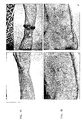
- a high concentration of ALA and ALA-methyl ester (20%, Sigma) in a cream (Unguentum Merck) was applied to a circular area of 1 cm diameter for 5 hours on both hands of a person, fig. 1 (A, B).
- the areas of application are shown by the dotted circles on the figure.
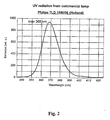
- the cream with the drugs were carefully washed away and the areas were exposed to ordinary blacklight from a fluorescence tube. The wavelengths of the light fall within the region 350-400nm, fig 2.
- An exposure of 5 minutes was given to the left hand and an exposure of 1 minute was given to the right hand. Both these exposures are much larger than would be experienced by a sun cream user, but were chosen to demonstrate the difference in penetration depth between ALA and ALA-methyl ester.
- ALA seems to penetrate thicker skin and induce PpIX deeper than ALA methyl ester is able to do. This is surprising in view of the fact that ALA methyl ester is the most lipophilic one of the two drugs. For application in a sun cream ALA methyl ester has therefore a strong advantage since it would have a lower potential to penetrate into the blood.
- This example demonstrates differences in photobleaching rates of PpIX produced in the skin of nude rats after application of ALA and ALA methyl ester.
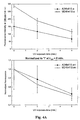
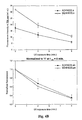
- ALA and its methyl ester derivative were applied to the skin of nude rats (RWT Nu/Nu) for 2 (Fig. 3 a and b) and for 24 hours (Fig. 4 a and b). Then the skin was exposed to light in a wavelength band around 368 nm. The intensity was of the order of 20 W/m 2 . It can be seen that the PpIX produced from ALA-Me is faster bleached than PpIX produced from ALA. This is consistent with the result of Example 2, and indicate that ALA produces PpIX deeper in rat skin than ALA-Me does.
- This example presents evidence supporting that both ALA and ALA derivates induce pigmentation in mouse skin and human skin.
- ALA methyl ester (1% in Unguentum Merck cream) was applied to the skin of C3H/Tif hairless mice. One hour after the application, the mice were exposed to light for 1 min (red laser light, 100 m/Wcm 2 , 633 nm). No erythema was observed. The treatment was repeated 10 times within 2 weeks.
- ALA and ALA derivatives in cream was applied to different areas on the forearm of a person. Four hours afterwards the cream was removed and the arm was exposed to black light, 380 nm, for 1-5 min. The skin of the arm was examined for two weeks.
- Topical application of ALA or ALA derivatives mouse and human skin followed by light exposure leads to melanogenesis (brown pigmentation. High doses of drug and light gives erythema. Pigmentation can be achieved both by erythemogenic single exposures and repeated nonerythemogenic exposures.
- ALA, ALA methyl ester and ALA hexyl ester containing cream was applied locally on the skin surface of hairless mice. Fluorescence intensities were used as indications of the concentration of PpIX on the application site (skin), in remote skin spots, in liver, intestine, lungs, muscle and brain and plasma.
- 5-aminolevulinic acid (ALA) and 5-aminolevulinic acid methyl ester (ALA-Me) were purchased from Sigma. St. Louis, MO.
- 5-aminolevulinic acid hexyl ester (ALA-Hex) was obtained from PhotoCure AS (Oslo, Norway).
- a cream was prepared using 20 % (wt/wt) ALA, ALA-Me or ALA-Hex in an ointment (Unguentum, Merck, Darmstadt, Germany). Approximately 0.2 mg of the freshly prepared cream was applied on a single spot of 1 cm diameter on normal skin of each mouse. An adhesive dressing (OpSite Flexigrid, Smith and Nephew Medical, LTD, Hull, England) with a punched hole of 1 cm in diameter was first put on the skin. Then the cream was applied on the skin in the punched hole and covered with another similar dressing. 20 hours application time was used.
- mice Female Balb/c athymic nude mice were obtained from Bomholt Gaard (Ry, Denmark). At the start of each experiment, they were 7-8 weeks old and weighed 18-25 g. Three mice were housed per cage with autoclaved filter covers in a room with subdued light at constant temperature (24-26°C) and humidity (30-50 %). Food and bedding were sterilized and the mice were given tap water ad libitum in sterilized bottles. For proper application of the cream, anaesthesia, hypnorm dormicum (approximately 4 ml/kg body weight), was i.p. injected into the mice. The mice woke up within 1 hr and appeared normally active during the ALA application.
- Levels of PpIX in the supernatants were quantitatively determined by recording fluorescence emission spectra of the samples using a Perkin-Elmer (Norwalk, CT) LS 50B spectrofluorimeter.
- the excitation wavelength was 407 nm
- the slit width corresponded to a resolution of 15 nm
- the emission wavelength was scanned from 550 to 700 nm.
- a cut-off filter was used to remove scattered light of wavelengths shorter than 515 nm from the light reaching the detection system of the spectrometer.
- Concentrations of PpIX in the samples were determined by adding a known amount of the drug (internal standard) comparable to that already present in the extraction medium and recording the emission spectra once more. The concentrations are given in micrograms PpIX per gram wet tissue.
- mice Immediately after mice were killed, whole blood was drawn directly from the right atrium of the heart. The total volume of blood obtained from each mouse was approximately 0.2 ml and was selected in EDTA-treated micro-tubes. The red blood cells were fluorimetrically determined as described above.
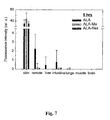
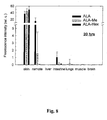
- ALA produced significally more PpIX outside the application site, both after 5 hrs application time (fig. 7) and after 20 hrs application time (fig. 8), compared to ALA methyl ester.
- concentration of ALA in plasma was higher than both ALA methylester and ALA hexylester (fig. 9).
- Example 6 This example demonstrates that contrary to ALA; applied ALA methylester is confined to the skin area where it is applied.
- Cream containing 20 % ALA and 20 % ALA methyl ester was applied on the area marked by broken circles (figure 9) on the skin of nude BALB/c mice and photos were taken under UV lamp illumination after 8 hours. The photos show a marked difference in localization of protoporphyrin IX (PpIX) fluorescence.
- PpIX protoporphyrin IX
- ALA methyl ester has produced PpIX only in the area where the cream was applied while PpIX produced from ALA is localized all over the skin. This demonstrates that ALA is distributed by the blood (figure 9) to the whole body while ALA methyl ester produced PpIX is localiced only in the part of the skin where the ester was applied.
- Example 7 This example demonstrates that ALA butyl ester and ALA hexyl ester applied on the forearm skin of a caucasian man produced less erythema than ALA.
- a cream (Unguentum, Merck) containing 20 % ALA, ALA butyl ester and ALA hexyl ester respectively, was applied on three separate areas on the skin of the forearm of a caucasian man. Two hours later the skin areas were exposed to UVA light from a black light lamp for 5 min. Twenty four hours later a significant pronounced erythema was observed in the ALA area, while significant but weaker erythema was observed for ALA butyl ester and ALA hexyl ester (data not enclosed).
- the content of PpIX produced in the skin areas was assessed by measuring the fluorescence emission spectra. Corresponding to the observed erythemas the ALA demonstrated the highest concentration of PpIX, while it was smaller in the ALA butyl ester area and smallest in the ALA hexyl ester area.
- Example 8 This example demonstrates that ALA methylester prevents skin cancer induced by UV radiation.
- mice treated weekly with 8% topical ALA-Me followed 2 hours later by 1.2 J/cm 2 of light from a slide projector The number, location, and size of skin tumors were registered weekly.Other study groups included: mice treated with 8% ALA-Me and not exposed to light, mice exposed to UV and vehicle, mice exposed to topical ALA-Me and light but not UV, as well as mice exposed to UV with half of their bodies treated with 8% ALA-Me and half of their bodies treated with the vehicle.
- ALA-Me-PDT induced a significant delay in the time when the first tumor appeared as compared to mice only exposed to UV (p ⁇ 0.0001).
Landscapes
- Health & Medical Sciences (AREA)
- Life Sciences & Earth Sciences (AREA)
- Animal Behavior & Ethology (AREA)
- Veterinary Medicine (AREA)
- Public Health (AREA)
- General Health & Medical Sciences (AREA)
- Epidemiology (AREA)
- Pharmacology & Pharmacy (AREA)
- Medicinal Chemistry (AREA)
- Chemical & Material Sciences (AREA)
- Dermatology (AREA)
- Birds (AREA)
- Acyclic And Carbocyclic Compounds In Medicinal Compositions (AREA)
- Cosmetics (AREA)
- Medicinal Preparation (AREA)
- Bakery Products And Manufacturing Methods Therefor (AREA)
Abstract
Description
- The present invention relates to a skin preparation containing derivatives of δ-aminolevulinic acid (ALA) and substances which absorb UVA rays and UVB rays, a method for protecting the skin of mammals, and the use of the preparation for sun protection.
- All three skin cancer types, basal cell cancer (BCC, 10,000 per annum in Norway), squamous cell carcinoma (SCC, 6-700 per annum in Norway) and cutant malignant melanoma (CMM, 900-1,000 per annum in Norway) are mainly caused by solar radiation. This is clearly demonstrated by their pattern of localisation on the body and by the north-south gradient in the incidence (e.g. three times more frequent on the south coast of Norway than in northern Norway). For decades the incidence of skin cancer has been increasing more rapidly than the incidence of most other types of cancer, and there is little doubt that this is due to increased sunbathing, more travel to southern destinations and more use of solaria. A similar increase to that in Norway can be observed in most western countries with a white population. The increase in sunbathing is probably due primarily to culturally-based pressure, a tanned skin being a sign of affluence, well-being and good health.
- Sun creams with added "sun factor" which absorbs UVB (wavelengths between 280 and 320 nm) and UVA (wavelengths between 320 and 400 nm) are widely used over large parts of the world. These sun creams, however, do not provide complete protection against such radiation, but have the effect of reducing the dose to a greater or lesser extent.
- The use of sun creams with sun factor, however, does not seem to have reduced the incidence of skin cancer. Nor does the opposite seem to be the case. It may be assumed that since the sun creams offer protection against sunburn, they give a false feeling of security, with the result that people are tempted to stay out in the sun longer than they should. This offsets the protection provided by the sun cream of increased exposure time.
- Recent research shows that the sun creams probably do not provide as good protection against impairment of the immune system and the development of malignant melanoma as they do against sunburn. This is associated with the fact that while sunburn (erythema) is mainly due to UVB, it appears that the UVA radiation, of which there is 30-50 times more than there is of UVB radiation in the solar spectrum, causes both impairment of the immune system and the development of melanoma. This appears to apply to shortwave, (blue) visible light, which is not stopped by the sun creams now in use. Since the action spectra for pigmentation, sunburn and skin cancer are almost identical in the UVB range, while UVA and visible blue light dominate the action spectrum for malignant melanoma, it is therefore not possible to achieve pigmentation (a tan) in the traditional manner, even with the use of cream with "sun factor", without also being exposed to an increased risk of skin cancer. Both UVB and UVA induce synthesis of melanin, the pigment which makes the skin tan. Melanin absorbs both UVB and UVA and thus has a protective effect. This protection, however, is not sufficient to prevent the development of skin cancer in people with fair skin (types I-III).
- There is therefore a great need for a skin cream which protects against the sun's harmful effects as set forth above, while providing an acceptable pigmentation of the skin.
- In both US patent No. 5,520,905 and EP 0 633 017 A2 cosmetic and dermatological composition is known which contains absorbent agents for UVA rays and UVB rays in addition to a combination of δ-aminolevulinic acid (ALA) and at least one antioxidant. This composition is stated to provide protection against skin damage due to light exposure. From Photochemistry and Photobiology, 1997, 66(4): 493-496 it is furthermore known that when ALA was applied topically to naked mice and exposed to treatment with simulated solar UV radiation, the exposed areas became erythematous, in addition to which photo-induced carcinogenesis was delayed. Subsequent experiments have shown that light exposure of ALA, which induces production of protoporphyrin IX (PpIX) spreads over skin areas which are considerably larger than the area where ALA was initially applied (Proc. Photochemotherapy of Cancer and Other Diseases, Volume 3563, 1999). Together with the observation that the light exposure of the naked mice in Photochemistry and Photobiology (1997, 66(4): 493-496) clearly caused discomfort and pain, judged on the basis of the animals' irritability, and the widespread area of skin involved when using ALA, the use of ALA in skin cream seems to have substantial side effects.
- As documented in the following, application of ALA containing sun cream over large skin areas will lead to a widespread distribution of the compound in the body. It is well known in the art of porhyria diseases that accumulation of ALA in the body may produce side effects since it is known that ALA may be both liver toxic and neuro toxic.
- It is therefore an object of the present invention to provide a sun protection composition without the above-mentioned side effects.
- This object is achieved with the present invention, characterized by that which is set forth in the claims.
- The present invention relates to a skin preparation which takes advantage of the protective effect which ALA derivatives can provide in connection with sunlight. The invention thus relates to a preparation based on a standard, commercial base to which is added a UVB-absorbent agent, a UVA-absorbent agent and an ALA derivative. The derivative is chosen from the group comprising ester and amino derivatives of ALA. Commercially available and tested UVB and UVA-absorbent agents are employed in concentrations which provide a protection factor of at least 20. Of ALA derivatives a concentration is used which is 1000 to 50 times lower than that used for photodynamic treatment of skin cancer (20% on a weight basis).
- The cream according to the invention thereby has the following effect:
- 1) It eliminates both UVB and UVA radiation and prevents ordinary skin cancer development.
- 2) It stimulates melanogenesis in the skin by the production of PpIX from the ALA derivative, thus making it possible to become tanned without the risk of skin cancer.
- 3) It has an anti-carcinogenic effect (counteracts cancer development).
- The preparation is applied like ordinary sun cream/oil before going out in the sun.
- The present inventors have carried out research which demonstrates that melanin synthesis can be further stimulated by applying to the skin derivatives of δ-aminolevulinic acid (ALA), especially esters or amino derivatives. ALA derivatives have a tanning effect in an entirely different way from UVB and UVA. Porphyrin synthesis is stimulated by putting to use the skin cells' biosynthesis of haem. Small quantities of protoporphyrin IX (PpIX) thereby accumulate in the skin cells. PpIX is a photosensitising substance which causes oxidative cell damage during exposure. PpIX is formed in the cells' mitochondria, but is not absorbed in the nucleus. During sunbathing, therefore, PpIX will not cause any genetic damage which may form the basis for cancer development, as is the case with UVB and UVA. The oxidative cell damage which arises when skin is exposed after treatment with ALA derivatives stimulates melanin synthesis, i.e. pigmentation. The detailed biosynthesis of melanin is not known, either for UVB, UVA or for exposure to PpIX, but it is assumed that UVB works via DNA damage.
- It has been shown that the presence of small quantities of PpIX generated by ALA in the skin of mice irradiated with UV has an anti-carcinogenic effect. PpIX inhibits the development of UV-induced skin cancer in the animals. ALA derivatives also produce PpIX.
- ALA derivatives thereby have a doubly protective effect:
- 1) They stimulate, i.e. accelerate pigmentation (which has a protective effect against UVB and UVA) without causing DNA damage which in turn can lead to cancer development. Thus fluorescence microscopic experiments demonstrated that the active substance formed by these creams, PpIX, does not exist in cell nuclei where there is DNA, but in cytoplasm, principally in the mitochondria (data not enclosed). Furthermore, patients with the inherited disease erythropoietic protoporphyria (EPP) have large amounts of PpIX in their skin. No cases of skin cancer are reported in these patients. Even though the disease is rare, reports should be expected of skin cancer in EPP patients over a long period of time and in many countries, since their skin is monitored with particular attention.
- 2) ALA derivatives have an inhibiting effect on the development of skin cancer. Small amounts of UVB and UVA will pass through any sun cream regardless of the protection factor. The PpIX formed in the skin by ALA derivatives will protect the skin against UVB and UVA-induced cancer development. In addition, the present inventor has observed that the skin reaction on light exposure of ALA derivative-treated skin is restricted to those areas which are covered by the composition. It is a surprising and positive effect compared to the effect of ALA. Moreover, ALA esters have completely different pharmacokinetics and are anti-carcinogenic compared to ALA.
- In summary ALA esters have some extremely surprising advantages over ALA: When ALA is applied on the skin of mice, it goes rapidly into the circulation and induces PpIX in the whole mouse, in skin and all over, in liver, in intestine and so on. ALA esters on the other hand, do not enter the circulation, and produce PpIX only on the skin location where they were applied. This is surprising, since the esters are more lipophilic than ALA itself and are thus expected to penetrate more easily through the epidermis and into the circulation. Furthermore, their kinetics of PpIX production are different from that of ALA. While inducing pigmentation during light exposure, they seem to act more superficially in the skin than ALA does. These differences make them better suited for sun cream use than ALA.
- According to the invention a preparation or a composition is provided which is applied to the skin in connection with sunbathing, and which promotes the formation of skin pigments, protects against the carcinogenic effect of UVA and UVB rays and has an anti-carcinogenic effect. The preparation comprises UVA-absorbent agents, UVB-absorbent agents, ALA derivative, pharmaceutically acceptable carriers, emulsifiers, diluents and preserving agents which are suitable for dermal topical application.
- UVB and UVA-absorbent agents are chosen from known, commercially available substances which are approved for use in sun creams, such as oxybenzenes, methoxycinnamates, salicylates, benzophenone derivatives, phenylbenzidine derivatives and methoxybenzoyl derivatives, in addition to physical filters such as titanium dioxide, zinc oxide, calcium carbonate, kaolin, magnesium oxide, iron oxide or talc. Compounds are preferably chosen which infiltrate the circulation to the least possible extent, and in concentrations which provide a protection factor of at least 20.
- The ALA derivatives are found in concentrations from 0.02% to 0.4%, based on the weight of the complete composition.
- The composition can be formulated as oil, gel, cream, ointment, paste, spray, sticks or in other forms known in the art. The formulations also contain the active compounds, thickening agents, gelling agents, suspension agents, emulsifiers, dispersing agents and dyestuffs well known to a person skilled in the art of pharmacy.
- A preferred embodiment comprises a preparation on an ordinary commercial basis, where the concentrations of UVA and UVB-absorbent agents provide a protection factor of at least 20 and the ALA derivative is an ALA ester, e.g. ALA methylester, with a concentration from 0.02% to 0.4% based on the weight of the cream.
- The invention will now be supported by examples and figures, which in no way will be limiting for the scope of protection, defined by the attached claims.
- Figure 1 Human hands with ALA and ALA methyl ester containing cream applied on the skin surface (A: ALA; M:ALA methyl ester). The lower panels (B) are enlargements of the corresponding upper panels (A). In the left panels the skin was exposed to light (350-400nm) for 5 min., in the right panels the light exposure was 1 min. The exposed areas are marked with broken circles.
- Figure 2 Light emision (rel.u) versus wave length (nm) of the black light used in figure 1.
- Figure 3A, B PpIX photo bleaching under UV exposure at 368 nm. ALA (A) and ALA methyl ester (M) were topically applied for 2 hours on the skin of the nude rat. Fluorescence kinetics for exitation wavelength was 410 nm. The lower panel shows normalized intensities in that the fluorescence intensity at 0 time is set to 1.
- Figure 4A, B PpIX photo bleaching under UV exposure as in fig. 3A, B, wherein the ALA and ALA methyl ester containing cream was applied for 24 hours.
- Figure 5 Hairless mouse with a cream containing ALA methyl ester applied between the arrows, after exposure for 1 min. laser light, wherein the light exposure was repeated 10 times in 2 weeks.
- Figure 6 Upper panels (A). Human arms with ALA (A) and ALA methyl ester (M) containing cream was applied for 4 hours whereupon the cream was removed and the arm light exposed for 3 min. Lower left panel (B). Human arm one week after a single non erythemogenic treatment within the arrows. Lower right panel (B).
Human arm 2 weeks after light exposure (20 % ALA; 1 min. light). - Figure 7 Tissue distribution of PpIX fluorescence intensity in mice after topical 5 h application of 20 % ALA/ALA-Me/ALA-Hex cream.
- Figure 8 Tissue distribution of PpIX fluorescence intensity after topical 20 hr application of 20 % ALA/ALA-Me/ALA-Hex cream. The fluorescence was measured by LS 50B spectrofluorimeter.
- Figure 9 Concentration of PpIX in
plasma 20 hr after topical application of 20 % ALA, ALA-methyl ester (Me) or ALA-hexyl ester (Hex). - Figure 10 Nude BALB/C mice photographed 8 hours after creams containing ALA and ALA methyl ester were applied to areas of the skin marked with broken circles.
- Animal experiments show that UV induction of skin cancer is delayed by ALA creams producing PpIX (Photochemistry and Photobiology, 1997, 66(4): 493-496) as creams containing ALA esters.
- This example demonstrates that ALA penetrates deeper into human skin, and the resulting erythema covers a larger skin surface that after application of ALA methyl ester.
- A high concentration of ALA and ALA-methyl ester (20%, Sigma) in a cream (Unguentum Merck) was applied to a circular area of 1 cm diameter for 5 hours on both hands of a person, fig. 1 (A, B). A means ALA, M means ALA-methyl ester. The areas of application are shown by the dotted circles on the figure. The cream with the drugs were carefully washed away and the areas were exposed to ordinary blacklight from a fluorescence tube. The wavelengths of the light fall within the region 350-400nm, fig 2. An exposure of 5 minutes was given to the left hand and an exposure of 1 minute was given to the right hand. Both these exposures are much larger than would be experienced by a sun cream user, but were chosen to demonstrate the difference in penetration depth between ALA and ALA-methyl ester.
- The large exposures given here induce, as intended for demonstration, erythema spreading out from the area of application. The spreading was significally more pronounced for ALA than ALA-methyl ester. For ALA the erythema was circular, covering both the upper and the lower part of the hand, while for ALA methyl ester erythema developed only in a half-circle in the upper part of the hand where the skin is thinner according to well established physiological knowledge. The fluorescence pattern of PpIX was clearly seen and coincided with the erythema (data not shown).
- ALA seems to penetrate thicker skin and induce PpIX deeper than ALA methyl ester is able to do. This is surprising in view of the fact that ALA methyl ester is the most lipophilic one of the two drugs. For application in a sun cream ALA methyl ester has therefore a strong advantage since it would have a lower potential to penetrate into the blood.
- This example demonstrates differences in photobleaching rates of PpIX produced in the skin of nude rats after application of ALA and ALA methyl ester.
- ALA and its methyl ester derivative were applied to the skin of nude rats (RWT Nu/Nu) for 2 (Fig. 3 a and b) and for 24 hours (Fig. 4 a and b). Then the skin was exposed to light in a wavelength band around 368 nm. The intensity was of the order of 20 W/m2. It can be seen that the PpIX produced from ALA-Me is faster bleached than PpIX produced from ALA. This is consistent with the result of Example 2, and indicate that ALA produces PpIX deeper in rat skin than ALA-Me does.
- This example presents evidence supporting that both ALA and ALA derivates induce pigmentation in mouse skin and human skin.
- ALA methyl ester (1% in Unguentum Merck cream) was applied to the skin of C3H/Tif hairless mice. One hour after the application, the mice were exposed to light for 1 min (red laser light, 100 m/Wcm2, 633 nm). No erythema was observed. The treatment was repeated 10 times within 2 weeks.
- ALA and ALA derivatives in cream was applied to different areas on the forearm of a person. Four hours afterwards the cream was removed and the arm was exposed to black light, 380 nm, for 1-5 min. The skin of the arm was examined for two weeks.
-
- A. The skin of the mice that were exposed to drug and light was gradually pigmented. The skin outside the spot of application of drug did not change in colour nor in morphology (Fig. 5).
- B. High doses of light (3 min) and drug (20%) led to erythema as exemplified for ALA (A) and ALA methyl ester (M) in figure 6 upper panels (A). Lower doses of drug and light did not give observable erythema, however, one week after such a low dose of single nonerythemogenic treatment of ALA a clearly visible pigmentation (melanogenesis) was evident (figure 6, lower left panel area marked by arrows) (B). A slightly erythemogenic light exposure (20% ALA, 1 min light) also led to later pigmentation as exemplified on the lower right panel of figure 6 which is taken 2 weeks after light exposure (areas marked with A and arrows). The light exposure gave no reaction outside the area of drug application which is shown by arrows. Neither did drug application alone give any effect.
- Topical application of ALA or ALA derivatives mouse and human skin followed by light exposure leads to melanogenesis (brown pigmentation. High doses of drug and light gives erythema. Pigmentation can be achieved both by erythemogenic single exposures and repeated nonerythemogenic exposures.
- This example demonstrates that topical application of ALA results in a clearly more widespread production of PpIX than topical application of ALA derivatives.
- ALA, ALA methyl ester and ALA hexyl ester containing cream was applied locally on the skin surface of hairless mice. Fluorescence intensities were used as indications of the concentration of PpIX on the application site (skin), in remote skin spots, in liver, intestine, lungs, muscle and brain and plasma.
- 5-aminolevulinic acid (ALA) and 5-aminolevulinic acid methyl ester (ALA-Me) were purchased from Sigma. St. Louis, MO. 5-aminolevulinic acid hexyl ester (ALA-Hex) was obtained from PhotoCure AS (Oslo, Norway).
- A cream was prepared using 20 % (wt/wt) ALA, ALA-Me or ALA-Hex in an ointment (Unguentum, Merck, Darmstadt, Germany). Approximately 0.2 mg of the freshly prepared cream was applied on a single spot of 1 cm diameter on normal skin of each mouse. An adhesive dressing (OpSite Flexigrid, Smith and Nephew Medical, LTD, Hull, England) with a punched hole of 1 cm in diameter was first put on the skin. Then the cream was applied on the skin in the punched hole and covered with another similar dressing. 20 hours application time was used.
- Female Balb/c athymic nude mice were obtained from Bomholt Gaard (Ry, Denmark). At the start of each experiment, they were 7-8 weeks old and weighed 18-25 g. Three mice were housed per cage with autoclaved filter covers in a room with subdued light at constant temperature (24-26°C) and humidity (30-50 %). Food and bedding were sterilized and the mice were given tap water ad libitum in sterilized bottles. For proper application of the cream, anaesthesia, hypnorm dormicum (approximately 4 ml/kg body weight), was i.p. injected into the mice. The mice woke up within 1 hr and appeared normally active during the ALA application.
- The method for determining the amounts of PpIX in tissues was described previously (Ma et al., 1998). Briefly, immediately after tissues collection, the fresh tissue samples were rinsed twice in PBS, blotted dry on clean paper, weighed and then brought into suspension in a solution of 1 % SDS in 1 N perchloric acid/methanol (1:1 v/v) by means of an Y stral (Dottingen, Germany) mechanical homogenizer. After homogenization, tissue suspensions were frozen, thawed, sonicated, diluted in the same solvent and centrifuged. Levels of PpIX in the supernatants were quantitatively determined by recording fluorescence emission spectra of the samples using a Perkin-Elmer (Norwalk, CT) LS 50B spectrofluorimeter. The excitation wavelength was 407 nm, the slit width corresponded to a resolution of 15 nm and the emission wavelength was scanned from 550 to 700 nm. A cut-off filter was used to remove scattered light of wavelengths shorter than 515 nm from the light reaching the detection system of the spectrometer. Concentrations of PpIX in the samples were determined by adding a known amount of the drug (internal standard) comparable to that already present in the extraction medium and recording the emission spectra once more. The concentrations are given in micrograms PpIX per gram wet tissue.
- Immediately after mice were killed, whole blood was drawn directly from the right atrium of the heart. The total volume of blood obtained from each mouse was approximately 0.2 ml and was selected in EDTA-treated micro-tubes. The red blood cells were fluorimetrically determined as described above.
- As demonstrated in fig. 7 and 8 ALA produced significally more PpIX outside the application site, both after 5 hrs application time (fig. 7) and after 20 hrs application time (fig. 8), compared to ALA methyl ester. Correspondingly the concentration of ALA in plasma was higher than both ALA methylester and ALA hexylester (fig. 9).
- Example 6. This example demonstrates that contrary to ALA; applied ALA methylester is confined to the skin area where it is applied.
- Cream containing 20 % ALA and 20 % ALA methyl ester was applied on the area marked by broken circles (figure 9) on the skin of nude BALB/c mice and photos were taken under UV lamp illumination after 8 hours. The photos show a marked difference in localization of protoporphyrin IX (PpIX) fluorescence. ALA methyl ester has produced PpIX only in the area where the cream was applied while PpIX produced from ALA is localized all over the skin. This demonstrates that ALA is distributed by the blood (figure 9) to the whole body while ALA methyl ester produced PpIX is localiced only in the part of the skin where the ester was applied.
- Example 7. This example demonstrates that ALA butyl ester and ALA hexyl ester applied on the forearm skin of a caucasian man produced less erythema than ALA.
- A cream (Unguentum, Merck) containing 20 % ALA, ALA butyl ester and ALA hexyl ester respectively, was applied on three separate areas on the skin of the forearm of a caucasian man. Two hours later the skin areas were exposed to UVA light from a black light lamp for 5 min. Twenty four hours later a significant pronounced erythema was observed in the ALA area, while significant but weaker erythema was observed for ALA butyl ester and ALA hexyl ester (data not enclosed).
- The content of PpIX produced in the skin areas was assessed by measuring the fluorescence emission spectra. Corresponding to the observed erythemas the ALA demonstrated the highest concentration of PpIX, while it was smaller in the ALA butyl ester area and smallest in the ALA hexyl ester area.
- Example 8. This example demonstrates that ALA methylester prevents skin cancer induced by UV radiation.
- The ability of multiple photodynamic therapy (PDT) sessions with topical ALA methylester (ALA-Me) to prevent skin cancer induced by ultraviolet radiation (UV) was studied in the SKH1 hairless mouse. Groups of 20 mice were exposed 5 days per week to UV from FS20 tubes. One group was treated weekly with 8% topical ALA-Me followed 2 hours later by 1.2 J/cm2 of light from a slide projector, The number, location, and size of skin tumors were registered weekly.Other study groups included: mice treated with 8% ALA-Me and not exposed to light, mice exposed to UV and vehicle, mice exposed to topical ALA-Me and light but not UV, as well as mice exposed to UV with half of their bodies treated with 8% ALA-Me and half of their bodies treated with the vehicle. ALA-Me-PDT induced a significant delay in the time when the first tumor appeared as compared to mice only exposed to UV (p< 0.0001). After 26 weeks of UV exposure large tumors (≥ 4 mm) were present in 14 mice of the UV group as compared to only one mouse in the UV-ALA-Me group. In mice treated on one side with ALA-Me and on one side with the vehicle, the delay in tumor appearance was observed only on the side treated with ALA-Me, suggesting that a local rather than a systemic effect is responsible for this phenomenon. In vivo fluorescence spectroscopy and quantitative fluorescence microscopy showed that there was a preferential accumulation of protoporhyrin IX in tumors as compared to adjacent UV exposed skin and normal skin at the time of light exposure. In conclusion, topical ALA-Me-PDT delayed the appearance of UV-induced skin tumors as well as the incidence of large tumors without increasing mortality or morbidity.
Claims (13)
- A skin preparation with anti-carcinogenic and sun-protection effect containing UVA and UVB-absorbent agents,
characterized in that in addition it contains a derivative of δ-aminolevulinic acid (ALA) in an ordinary commercial basis with conventional supplementary substances. - A skin preparation according to claim 1,
characterized in that it has a sun protection factor of at least 20 and the concentration of the ALA derivative is from 0.01% to 1 %, based on the weight of the preparation. - A skin preparation according to claim 2,
characterized in that the concentration of the ALA derivative is from 0.02% to 0.4%, based on the weight of the preparation. - A skin preparation according to claims 1-3,
characterized in that the sun protection factor is obtained by adding compounds selected from oxybenzenes, methoxycinnamates, salicylates, benzophenone derivatives, phenylbenzidine derivatives and methoxybenzoyl derivatives and physical filters, such as titanium dioxide, zinc oxide, calcium carbonate, kaolin, magnesium oxide, iron oxide or talc. - A skin preparation according to claims 1-4,
characterized in that the ALA derivative is an ester derivative or amino derivative. - A skin preparation according to claim 5,
characterized in that the ester derivative of ALA is a methylester. - A skin preparation according to claim 5,
characterized in that the ester derivative is a butylester. - A skin preparation according to claim 5,
characterized in that the ester derivative is a hexylester. - A skin preparation as indicated in claims 1-8,
characterized in that it is a cream or oil. - The use of an ALA derivative to manufacture a preparation as indicated in claims 1-8, in order to protect the skin of a mammal from damage caused by sunlight.
- The use as indicated in claim 10 where the mammal is a human being.
- The use as indicated in claims 10 or 11 where the damage is cell changes, such as cell damage.
- The use as indicated in claim 12 where the cell damage is mutagenic, such as cancer.
Applications Claiming Priority (3)
| Application Number | Priority Date | Filing Date | Title |
|---|---|---|---|
| NO20002428 | 2000-05-10 | ||
| NO20002428A NO20002428D0 (en) | 2000-05-10 | 2000-05-10 | A skin preparation |
| PCT/NO2001/000189 WO2001085125A2 (en) | 2000-05-10 | 2001-05-04 | Skin preparation |
Publications (2)
| Publication Number | Publication Date |
|---|---|
| EP1294348A2 EP1294348A2 (en) | 2003-03-26 |
| EP1294348B1 true EP1294348B1 (en) | 2006-05-31 |
Family
ID=19911129
Family Applications (1)
| Application Number | Title | Priority Date | Filing Date |
|---|---|---|---|
| EP01934648A Expired - Lifetime EP1294348B1 (en) | 2000-05-10 | 2001-05-04 | Skin preparation |
Country Status (9)
| Country | Link |
|---|---|
| US (1) | US6911194B2 (en) |
| EP (1) | EP1294348B1 (en) |
| AT (1) | ATE327727T1 (en) |
| AU (1) | AU2001260809A1 (en) |
| CA (1) | CA2424088C (en) |
| DE (1) | DE60120159T2 (en) |
| ES (1) | ES2263619T3 (en) |
| NO (1) | NO20002428D0 (en) |
| WO (1) | WO2001085125A2 (en) |
Families Citing this family (4)
| Publication number | Priority date | Publication date | Assignee | Title |
|---|---|---|---|---|
| AU2004318989B2 (en) * | 2004-04-28 | 2007-08-09 | Cosmo Ala Co., Ltd. | Hair restorer |
| MX2007013623A (en) * | 2005-04-28 | 2008-02-12 | Cosmo Oil Co Ltd | External preparation for skin. |
| WO2011107478A1 (en) * | 2010-03-01 | 2011-09-09 | Photocure Asa | Cosmetic compositions |
| US20200100997A1 (en) * | 2017-02-06 | 2020-04-02 | 3Skin As | Sunscreen Composition |
Family Cites Families (3)
| Publication number | Priority date | Publication date | Assignee | Title |
|---|---|---|---|---|
| DE4320871C2 (en) * | 1993-06-24 | 1995-05-04 | Beiersdorf Ag | Cosmetic and dermatological preparations containing delta-aminolevulinic acid |
| WO1996006602A1 (en) * | 1993-08-27 | 1996-03-07 | Noven Pharmaceuticals, Inc. | COMPOSITIONS AND METHODS FOR THE ADMINISTRATION OF δ-AMINOLEVULINIC ACID AND PHARMACEUTICAL EQUIVALENTS THEREOF |
| NZ303251A (en) | 1995-03-10 | 2000-10-27 | Photocure Asa | Use of esters of 5-aminolevulinic acid as photosensitising agents in photochemotherapy |
-
2000
- 2000-05-10 NO NO20002428A patent/NO20002428D0/en unknown
-
2001
- 2001-05-04 WO PCT/NO2001/000189 patent/WO2001085125A2/en not_active Ceased
- 2001-05-04 CA CA002424088A patent/CA2424088C/en not_active Expired - Fee Related
- 2001-05-04 DE DE60120159T patent/DE60120159T2/en not_active Expired - Lifetime
- 2001-05-04 AU AU2001260809A patent/AU2001260809A1/en not_active Abandoned
- 2001-05-04 US US10/275,557 patent/US6911194B2/en not_active Expired - Lifetime
- 2001-05-04 ES ES01934648T patent/ES2263619T3/en not_active Expired - Lifetime
- 2001-05-04 EP EP01934648A patent/EP1294348B1/en not_active Expired - Lifetime
- 2001-05-04 AT AT01934648T patent/ATE327727T1/en not_active IP Right Cessation
Also Published As
| Publication number | Publication date |
|---|---|
| ES2263619T3 (en) | 2006-12-16 |
| CA2424088A1 (en) | 2001-11-15 |
| US20030133888A1 (en) | 2003-07-17 |
| AU2001260809A1 (en) | 2001-11-20 |
| US6911194B2 (en) | 2005-06-28 |
| DE60120159D1 (en) | 2006-07-06 |
| ATE327727T1 (en) | 2006-06-15 |
| CA2424088C (en) | 2009-04-14 |
| EP1294348A2 (en) | 2003-03-26 |
| NO20002428D0 (en) | 2000-05-10 |
| DE60120159T2 (en) | 2007-03-29 |
| WO2001085125A3 (en) | 2002-04-11 |
| WO2001085125A2 (en) | 2001-11-15 |
Similar Documents
| Publication | Publication Date | Title |
|---|---|---|
| Malik et al. | Topical application of 5-aminolevulinic acid, DMSO and EDTA: protoporphyrin IX accumulation in skin and tumours of mice | |
| US5556612A (en) | Methods for phototherapeutic treatment of proliferative skin diseases | |
| Damoiseau et al. | Increase of the photosensitizing efficiency of the Bacteriochlorin a by liposome-incorporation | |
| US8303985B2 (en) | Skin treatment compositions containing copper-pigment complexes | |
| JP3917661B2 (en) | Composition useful for phototherapy treatment of proliferative skin disease | |
| JP2001513760A (en) | Mitochondrial protection method and composition therefor | |
| AU2008337067A1 (en) | Novel compounds useful in therapeutic and cosmetic methods | |
| EP2236129A2 (en) | Liposomal ALA Pharmaceutical and Cosmeceutical Compositions and Methods of Treatment | |
| Epstein | Photomedicine | |
| US6911194B2 (en) | Skin preparation | |
| Fischer et al. | Suppression of uv-induced erythema by topical treatment with melatonin: Influence of the application time point | |
| Juzeniene et al. | Topical applications of iron chelators in photosensitization | |
| JP2000264827A (en) | Outdoor cosmetic | |
| WO1997006779A1 (en) | Protection from ultraviolet (uv) radiation-induced skin damage by topical treatment with melatonin (n-acetyl-5-metroxytryptamine) | |
| JP3819369B2 (en) | Whitening cosmetic | |
| Oleinick et al. | Topical delivery of a preformed photosensitizer for photodynamic therapy of cutaneous lesions | |
| Sen et al. | Light, skin and drugs | |
| Alexandratou et al. | Distribution studies of m-THPC after topical application of m-THPC thermogel in a murine non-melanoma skin cancer tumor model by fluorescence spectroscopic and imaging techniques | |
| Maccormac et al. | Case of Hydroa Æstivale | |
| Rego et al. | Comparative in vivo study of precursors of PpIX (ALA and MAL) used topically in Photodynamic Therapy | |
| Kreipke et al. | 282 Beyth et al. | |
| Parrish et al. | Uses of UV-A involving exposure of humans | |
| MACCORMAC et al. | By H. MACCORMAC, CBE, MD | |
| Behrens et al. | PUVA-turban therapy: Experiences in treating patients with alopecia areata | |
| JPH10182446A (en) | Agent for prevention and treatment of dyspigmentation |
Legal Events
| Date | Code | Title | Description |
|---|---|---|---|
| PUAI | Public reference made under article 153(3) epc to a published international application that has entered the european phase |
Free format text: ORIGINAL CODE: 0009012 |
|
| 17P | Request for examination filed |
Effective date: 20021210 |
|
| AK | Designated contracting states |
Kind code of ref document: A2 Designated state(s): AT BE CH CY DE DK ES FI FR GB GR IE IT LI LU MC NL PT SE TR |
|
| AX | Request for extension of the european patent |
Extension state: AL LT LV MK RO SI |
|
| 17Q | First examination report despatched |
Effective date: 20040309 |
|
| GRAP | Despatch of communication of intention to grant a patent |
Free format text: ORIGINAL CODE: EPIDOSNIGR1 |
|
| RIC1 | Information provided on ipc code assigned before grant |
Ipc: A61Q 17/00 00000000ALI20051202BHEP Ipc: A61K 8/44 00000000AFI20051202BHEP Ipc: A61Q 17/04 00000000ALI20051202BHEP |
|
| GRAS | Grant fee paid |
Free format text: ORIGINAL CODE: EPIDOSNIGR3 |
|
| GRAA | (expected) grant |
Free format text: ORIGINAL CODE: 0009210 |
|
| RAP1 | Party data changed (applicant data changed or rights of an application transferred) |
Owner name: PHOTOCURE ASA |
|
| AK | Designated contracting states |
Kind code of ref document: B1 Designated state(s): AT BE CH CY DE DK ES FI FR GB GR IE IT LI LU MC NL PT SE TR |
|
| PG25 | Lapsed in a contracting state [announced via postgrant information from national office to epo] |
Ref country code: BE Free format text: LAPSE BECAUSE OF FAILURE TO SUBMIT A TRANSLATION OF THE DESCRIPTION OR TO PAY THE FEE WITHIN THE PRESCRIBED TIME-LIMIT Effective date: 20060531 Ref country code: CH Free format text: LAPSE BECAUSE OF FAILURE TO SUBMIT A TRANSLATION OF THE DESCRIPTION OR TO PAY THE FEE WITHIN THE PRESCRIBED TIME-LIMIT Effective date: 20060531 Ref country code: LI Free format text: LAPSE BECAUSE OF FAILURE TO SUBMIT A TRANSLATION OF THE DESCRIPTION OR TO PAY THE FEE WITHIN THE PRESCRIBED TIME-LIMIT Effective date: 20060531 Ref country code: FI Free format text: LAPSE BECAUSE OF FAILURE TO SUBMIT A TRANSLATION OF THE DESCRIPTION OR TO PAY THE FEE WITHIN THE PRESCRIBED TIME-LIMIT Effective date: 20060531 Ref country code: AT Free format text: LAPSE BECAUSE OF FAILURE TO SUBMIT A TRANSLATION OF THE DESCRIPTION OR TO PAY THE FEE WITHIN THE PRESCRIBED TIME-LIMIT Effective date: 20060531 |
|
| REG | Reference to a national code |
Ref country code: GB Ref legal event code: FG4D Ref country code: CH Ref legal event code: EP |
|
| REG | Reference to a national code |
Ref country code: IE Ref legal event code: FG4D |
|
| REF | Corresponds to: |
Ref document number: 60120159 Country of ref document: DE Date of ref document: 20060706 Kind code of ref document: P |
|
| PG25 | Lapsed in a contracting state [announced via postgrant information from national office to epo] |
Ref country code: DK Free format text: LAPSE BECAUSE OF FAILURE TO SUBMIT A TRANSLATION OF THE DESCRIPTION OR TO PAY THE FEE WITHIN THE PRESCRIBED TIME-LIMIT Effective date: 20060831 |
|
| REG | Reference to a national code |
Ref country code: SE Ref legal event code: TRGR |
|
| PG25 | Lapsed in a contracting state [announced via postgrant information from national office to epo] |
Ref country code: PT Free format text: LAPSE BECAUSE OF FAILURE TO SUBMIT A TRANSLATION OF THE DESCRIPTION OR TO PAY THE FEE WITHIN THE PRESCRIBED TIME-LIMIT Effective date: 20061031 |
|
| REG | Reference to a national code |
Ref country code: CH Ref legal event code: PL |
|
| REG | Reference to a national code |
Ref country code: ES Ref legal event code: FG2A Ref document number: 2263619 Country of ref document: ES Kind code of ref document: T3 |
|
| ET | Fr: translation filed | ||
| PLBE | No opposition filed within time limit |
Free format text: ORIGINAL CODE: 0009261 |
|
| STAA | Information on the status of an ep patent application or granted ep patent |
Free format text: STATUS: NO OPPOSITION FILED WITHIN TIME LIMIT |
|
| 26N | No opposition filed |
Effective date: 20070301 |
|
| PG25 | Lapsed in a contracting state [announced via postgrant information from national office to epo] |
Ref country code: MC Free format text: LAPSE BECAUSE OF NON-PAYMENT OF DUE FEES Effective date: 20070531 |
|
| PG25 | Lapsed in a contracting state [announced via postgrant information from national office to epo] |
Ref country code: GR Free format text: LAPSE BECAUSE OF FAILURE TO SUBMIT A TRANSLATION OF THE DESCRIPTION OR TO PAY THE FEE WITHIN THE PRESCRIBED TIME-LIMIT Effective date: 20060901 |
|
| PG25 | Lapsed in a contracting state [announced via postgrant information from national office to epo] |
Ref country code: IE Free format text: LAPSE BECAUSE OF NON-PAYMENT OF DUE FEES Effective date: 20070504 |
|
| PG25 | Lapsed in a contracting state [announced via postgrant information from national office to epo] |
Ref country code: CY Free format text: LAPSE BECAUSE OF FAILURE TO SUBMIT A TRANSLATION OF THE DESCRIPTION OR TO PAY THE FEE WITHIN THE PRESCRIBED TIME-LIMIT Effective date: 20060531 Ref country code: LU Free format text: LAPSE BECAUSE OF NON-PAYMENT OF DUE FEES Effective date: 20070504 |
|
| PG25 | Lapsed in a contracting state [announced via postgrant information from national office to epo] |
Ref country code: TR Free format text: LAPSE BECAUSE OF FAILURE TO SUBMIT A TRANSLATION OF THE DESCRIPTION OR TO PAY THE FEE WITHIN THE PRESCRIBED TIME-LIMIT Effective date: 20060531 |
|
| REG | Reference to a national code |
Ref country code: FR Ref legal event code: PLFP Year of fee payment: 16 |
|
| REG | Reference to a national code |
Ref country code: FR Ref legal event code: PLFP Year of fee payment: 17 |
|
| REG | Reference to a national code |
Ref country code: FR Ref legal event code: PLFP Year of fee payment: 18 |
|
| PGFP | Annual fee paid to national office [announced via postgrant information from national office to epo] |
Ref country code: ES Payment date: 20180601 Year of fee payment: 18 Ref country code: DE Payment date: 20180529 Year of fee payment: 18 |
|
| PGFP | Annual fee paid to national office [announced via postgrant information from national office to epo] |
Ref country code: NL Payment date: 20180526 Year of fee payment: 18 Ref country code: FR Payment date: 20180525 Year of fee payment: 18 Ref country code: IT Payment date: 20180522 Year of fee payment: 18 |
|
| PGFP | Annual fee paid to national office [announced via postgrant information from national office to epo] |
Ref country code: SE Payment date: 20180529 Year of fee payment: 18 |
|
| PGFP | Annual fee paid to national office [announced via postgrant information from national office to epo] |
Ref country code: GB Payment date: 20180529 Year of fee payment: 18 |
|
| REG | Reference to a national code |
Ref country code: DE Ref legal event code: R119 Ref document number: 60120159 Country of ref document: DE |
|
| REG | Reference to a national code |
Ref country code: NL Ref legal event code: MM Effective date: 20190601 |
|
| GBPC | Gb: european patent ceased through non-payment of renewal fee |
Effective date: 20190504 |
|
| PG25 | Lapsed in a contracting state [announced via postgrant information from national office to epo] |
Ref country code: SE Free format text: LAPSE BECAUSE OF NON-PAYMENT OF DUE FEES Effective date: 20190505 |
|
| PG25 | Lapsed in a contracting state [announced via postgrant information from national office to epo] |
Ref country code: GB Free format text: LAPSE BECAUSE OF NON-PAYMENT OF DUE FEES Effective date: 20190504 Ref country code: IT Free format text: LAPSE BECAUSE OF NON-PAYMENT OF DUE FEES Effective date: 20190504 Ref country code: NL Free format text: LAPSE BECAUSE OF NON-PAYMENT OF DUE FEES Effective date: 20190601 Ref country code: DE Free format text: LAPSE BECAUSE OF NON-PAYMENT OF DUE FEES Effective date: 20191203 |
|
| REG | Reference to a national code |
Ref country code: SE Ref legal event code: EUG |
|
| PG25 | Lapsed in a contracting state [announced via postgrant information from national office to epo] |
Ref country code: FR Free format text: LAPSE BECAUSE OF NON-PAYMENT OF DUE FEES Effective date: 20190531 |
|
| REG | Reference to a national code |
Ref country code: ES Ref legal event code: FD2A Effective date: 20200925 |
|
| PG25 | Lapsed in a contracting state [announced via postgrant information from national office to epo] |
Ref country code: ES Free format text: LAPSE BECAUSE OF NON-PAYMENT OF DUE FEES Effective date: 20190505 |