EP1293563A1 - Inhibition of apoptosis by the expression of antisense rna of caspase-3 - Google Patents
Inhibition of apoptosis by the expression of antisense rna of caspase-3 Download PDFInfo
- Publication number
- EP1293563A1 EP1293563A1 EP02020798A EP02020798A EP1293563A1 EP 1293563 A1 EP1293563 A1 EP 1293563A1 EP 02020798 A EP02020798 A EP 02020798A EP 02020798 A EP02020798 A EP 02020798A EP 1293563 A1 EP1293563 A1 EP 1293563A1
- Authority
- EP
- European Patent Office
- Prior art keywords
- caspase
- cells
- apoptosis
- expression
- antisense rna
- Prior art date
- Legal status (The legal status is an assumption and is not a legal conclusion. Google has not performed a legal analysis and makes no representation as to the accuracy of the status listed.)
- Granted
Links
Images




Classifications
-
- C—CHEMISTRY; METALLURGY
- C12—BIOCHEMISTRY; BEER; SPIRITS; WINE; VINEGAR; MICROBIOLOGY; ENZYMOLOGY; MUTATION OR GENETIC ENGINEERING
- C12N—MICROORGANISMS OR ENZYMES; COMPOSITIONS THEREOF; PROPAGATING, PRESERVING, OR MAINTAINING MICROORGANISMS; MUTATION OR GENETIC ENGINEERING; CULTURE MEDIA
- C12N15/00—Mutation or genetic engineering; DNA or RNA concerning genetic engineering, vectors, e.g. plasmids, or their isolation, preparation or purification; Use of hosts therefor
- C12N15/09—Recombinant DNA-technology
- C12N15/11—DNA or RNA fragments; Modified forms thereof; Non-coding nucleic acids having a biological activity
- C12N15/52—Genes encoding for enzymes or proenzymes
-
- C—CHEMISTRY; METALLURGY
- C12—BIOCHEMISTRY; BEER; SPIRITS; WINE; VINEGAR; MICROBIOLOGY; ENZYMOLOGY; MUTATION OR GENETIC ENGINEERING
- C12N—MICROORGANISMS OR ENZYMES; COMPOSITIONS THEREOF; PROPAGATING, PRESERVING, OR MAINTAINING MICROORGANISMS; MUTATION OR GENETIC ENGINEERING; CULTURE MEDIA
- C12N15/00—Mutation or genetic engineering; DNA or RNA concerning genetic engineering, vectors, e.g. plasmids, or their isolation, preparation or purification; Use of hosts therefor
- C12N15/09—Recombinant DNA-technology
- C12N15/11—DNA or RNA fragments; Modified forms thereof; Non-coding nucleic acids having a biological activity
- C12N15/113—Non-coding nucleic acids modulating the expression of genes, e.g. antisense oligonucleotides; Antisense DNA or RNA; Triplex- forming oligonucleotides; Catalytic nucleic acids, e.g. ribozymes; Nucleic acids used in co-suppression or gene silencing
- C12N15/1137—Non-coding nucleic acids modulating the expression of genes, e.g. antisense oligonucleotides; Antisense DNA or RNA; Triplex- forming oligonucleotides; Catalytic nucleic acids, e.g. ribozymes; Nucleic acids used in co-suppression or gene silencing against enzymes
-
- A—HUMAN NECESSITIES
- A61—MEDICAL OR VETERINARY SCIENCE; HYGIENE
- A61P—SPECIFIC THERAPEUTIC ACTIVITY OF CHEMICAL COMPOUNDS OR MEDICINAL PREPARATIONS
- A61P43/00—Drugs for specific purposes, not provided for in groups A61P1/00-A61P41/00
-
- C—CHEMISTRY; METALLURGY
- C12—BIOCHEMISTRY; BEER; SPIRITS; WINE; VINEGAR; MICROBIOLOGY; ENZYMOLOGY; MUTATION OR GENETIC ENGINEERING
- C12Y—ENZYMES
- C12Y304/00—Hydrolases acting on peptide bonds, i.e. peptidases (3.4)
- C12Y304/22—Cysteine endopeptidases (3.4.22)
- C12Y304/22056—Caspase-3 (3.4.22.56)
-
- A—HUMAN NECESSITIES
- A61—MEDICAL OR VETERINARY SCIENCE; HYGIENE
- A61K—PREPARATIONS FOR MEDICAL, DENTAL OR TOILETRY PURPOSES
- A61K38/00—Medicinal preparations containing peptides
-
- C—CHEMISTRY; METALLURGY
- C12—BIOCHEMISTRY; BEER; SPIRITS; WINE; VINEGAR; MICROBIOLOGY; ENZYMOLOGY; MUTATION OR GENETIC ENGINEERING
- C12N—MICROORGANISMS OR ENZYMES; COMPOSITIONS THEREOF; PROPAGATING, PRESERVING, OR MAINTAINING MICROORGANISMS; MUTATION OR GENETIC ENGINEERING; CULTURE MEDIA
- C12N2310/00—Structure or type of the nucleic acid
- C12N2310/10—Type of nucleic acid
- C12N2310/11—Antisense
- C12N2310/111—Antisense spanning the whole gene, or a large part of it
Definitions
- the present invention relates to an antisense nucleotide of caspase-3, an expression vector encoding antisense RNA of caspase-3, and an inhibition method of cellular apoptosis in recombinant Chinese hamster ovary (CHO) cells using the same. More precisely, the present invention relates to an antisense nucleotide composed of a base sequence represented by Sequence ID No.
- apoptosis can be inhibited by suppressing the activation of caspase-3, which is related to the apoptosis, and the integrity of target protein produced in the recombinant cells can be enhanced.
- the CHO cell line has been widely used for the production of target proteins such as recombinant antibody, human interferon-gamma (Goldman, et al., 1997, Cytotechnology, 23, 103-111), factor VIII (Ganne and Mignot, 1991, Cytotechnology, 6, 233-40), and thrombopoietin (Kim, et al., 2000, Biotechnol. Prog., 16, 775-781).
- target proteins such as recombinant antibody, human interferon-gamma (Goldman, et al., 1997, Cytotechnology, 23, 103-111), factor VIII (Ganne and Mignot, 1991, Cytotechnology, 6, 233-40), and thrombopoietin (Kim, et al., 2000, Biotechnol. Prog., 16, 775-781).
- production speed rate indicated the amounts of produced proteins per time unit from the live cells is important.
- NaBu sodium butyrate
- survival protein Although the overexpression of survival protein can endow the cells with more robustness in various culture modes and sub-optimal culture conditions (Cotter and Al-Rubeai, 1995, TIBTECH, 13, 150-155), most survival proteins have oncogenic properties. The oncogenic property may give rise to regulatory problems in the commercial production of therapeutic proteins. Thus, it may be necessary to screen potent apoptosis inhibitors other than survival proteins.
- the cellular pathway leading to apoptosis involves the activation of members of a family of protease, caspases.
- caspases members of a family of protease, caspases.
- fourteen members of the caspase family have been identified in vertebrates, and at least eight are known to be involved in apoptotic cell death (Saunders, et al., 2000, Anal. Biochem., 284, 114-124).
- caspase-3 extensive research has been performed on caspase-3, because caspase-3 has a broad range of intracellular protein substrates (Han, et al., 1997, J. Biol. Chem., 272, 13432-13436).
- the antisense technology may be an alternative to suppress NaBu-induced apoptosis in recombinant CHO cells.
- Antisense strategy can be performed as transcription of antisense full sequence or partial fragment of target gene, or as introduction of an exogenous antisense oligonucleotide. Despite the time-consuming, laborious process in specific gene knockout, the transcription of antisense sequence is preferred to the introduction of exogenous antisense oligonucleotides because of its efficiency and low cost (Prati, et al., 1998, Biotechnol. Bioeng ., 59, 445-450).
- antisense RNA of caspase seems to be able to achieve complete inhibition of apoptotic cell death at a low level of expression of antisense RNA, removing the negative effect on growth rate and productivity originated from the synthesis of large quantities of survival protein (Singh, et al., 1997, Cytotechnology, 23, 87-93).
- the present inventors adopted the antisense technology to suppress the NaBu-induced apoptosis.
- the present invention has been accomplished by confirming that apoptosis caused by sodium butyrate is suppressed when the expression vector inducing antisense RNA transcription for caspase-3 is introduced to the recombinant CHO cells producing a humanized antibody specific to S-surface antigen of hepatitis B virus.
- the present invention provides an antisense nucleotide composed of base sequence represented by SEQ. ID No. 1 which is suppressing the expression of caspase-3, an expression vector containing the above antisense nucleotide and expressing antisense RNA of caspase-3, and an inhibition method of apoptosis of recombinant cells by suppressing the expression of caspase-3 through introducing the above expression vector into the recombinant cells and then expressing antisense RNA of caspase-3.
- the expression vector ASCASP3-200 containing the antisense nucleotide of caspase-3 represented by the SEQ. ID No. 1 suppressing the expression of caspase-3 of the present invention was constructed as follows.
- the cDNA pool was prepared from mRNAs of CHO cells by reverse transcription polymerase chain reaction.
- the caspase-3 cDNA fragment was amplified from cDNA templates by polymerase chain reaction using two primers (i.e., casp3L and casp3R) containing the start codon and stop codon of caspase-3 gene.
- the primer sequences were derived from caspase-3 sequence of human Jurkat T-lymphocytes (Fernandes-Alnemri, et al., 1994, J. Biol.
- caspase-3 cDNA fragment was inserted into the multi-cloning site of pBluescript II SK(-) cloning vector (manufactured by Stratagene of La Jolla, California), yielding pBlue-casp3.
- the partial fragment containing 5' 200 bp of caspase-3 cDNA was amplified using two primers (i.e., casp3L and casp3R200) containing the stop codon and caspase-3 cDNA internal region, which is approximately 200 bp apart from the 5' start codon.
- the amplified partial fragment of caspase-3 cDNA was inserted, in inverted orientation, into the multi-cloning site of pcDNA3.1-zeo (manufactured by InVitrogen of Carlsbad, California), yielding ASCASP3-200.
- the present inventors have deposited the above expression vector, ASCASP3-200, at Korean Collection for Type Cultures, Korea Research Institute of Bioscience and Biotechnology on August 13, 2001 (Accession No: KCTC 10038BP).
- caspase-3 is known as effector caspase, which works at the final stage of caspase activation.
- Cytotoxic materials induce cellular apoptosis in a variety of manners according to type. Since such variously induced apoptosis eventually induces the activation of effector caspase, like caspase-3, the various types of apoptosis signals are gathered by the activation of one or two caspases. In addition, it is known that the caspase-3 has a broad range of intracellular protein substrates.
- the present inventors induced the expression of antisense RNA of caspase-3 to inhibit cellular apoptosis.
- the expression vector containing the 5' region of antisense nucleotide against caspase-3 is introduced into CHO cells and is expressed, the cellular apoptosis can be inhibited.
- the expressed antisense RNA restrains translation process during which mRNA information is transferred to peptides by ribosome by combining specifically with sense mRNA sequence which is coding caspase-3, or suppresses the expression of caspase-3 by making mRNA decomposed by antisense-sense RNA double helix structure-specific RNase.
- recombinant CHO cells producing a humanized antibody against the S-surface antigen of hepatitis B virus were used.
- the NaBu-induced apoptosis of the recombinant CHO cells was inhibited by introducing the expression vector, which can induce the expression of antisense RNA of caspase-3 into the cells.
- Example 1 Construction of expression vector (ASCASP3-200) expressing antisense RNA of caspase-3
- the present inventors constructed the expression vector ASCASP3-200 expressing antisense RNA of caspase-3 as follows.
- the cDNA pool was prepared from mRNAs of CHO cells (DUKX-B11, ATCC CRL-9096) using a MarrathonTM cDNA amplification kit (manufactured by Clontech of Palo Alto, California).
- the full-length caspase-3 cDNA fragment was amplified from cDNA templates (manufactured by Perkin Elmer) by polymerase chain reaction using two primers, i.e., casp3L (SEQ. ID No. 2) and casp3R (SEQ. ID No. 3).
- the primer sequences were derived from caspase-3 sequence of human Jurkat T lymphocytes reported previously (Fernandes-Alnemri, et al., 1994, J. Biol. Chem., 269, 30761-30764).
- the casp3L primer included XbaI restriction enzyme site and 5' start codon.
- the casp3R primer included BamHI restriction enzyme site and 3' stop codon.
- the full-length caspase-3 cDNA fragment was inserted into the multi-cloning site of pBluescript II SK(-) cloning vector (obtained from Stratagene of La Jolla, California), yielding pBlue-casp3.
- the inserted full-length caspase-3 cDNA of CHO cell was sequenced using automated DNA sequencer (ABI prism model 377 by Perkin-Elmer of Poster City, California).
- the partial fragment containing 5' 200 bp of caspase-3 cDNA was amplified using two primers, i.e., casp3L and casp3R200 (SEQ. ID No. 4).
- the casp3R200 primer included EcoRI restriction enzyme site and caspase-3 cDNA internal region, which is approximately 200 bp apart from the 5' start codon.
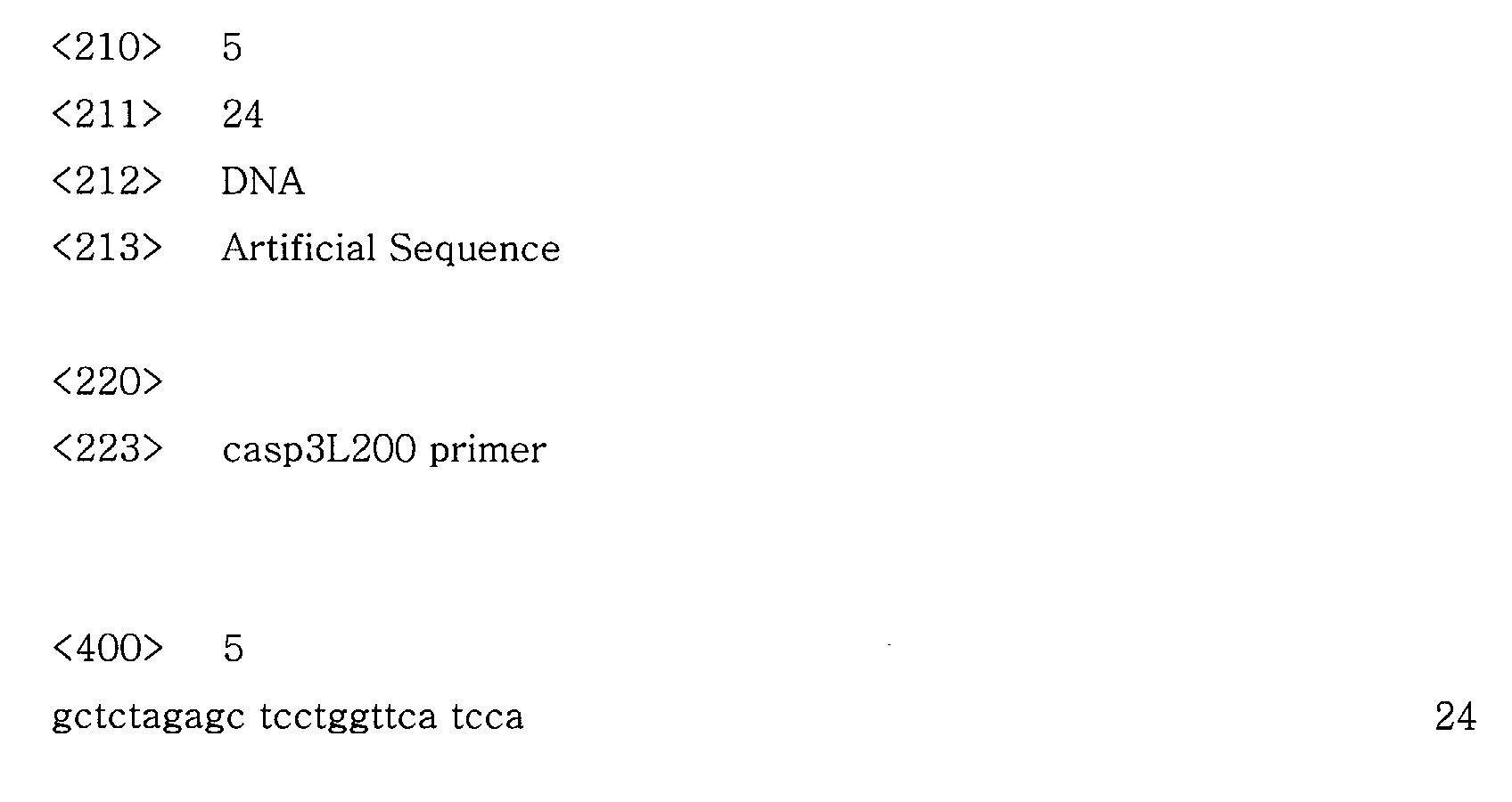
- partial cDNA fragment containing about 200 bp of 3' region was amplified by PCR with primers of casp3R and casp3L200 (SEQ. ID No. 5).
- ASCASP3-200R was also constructed by inserting partial cDNA fragment of 3' region into pcDNA3.1-zeo(+) vector.
- the present inventors deposited the above expression vector, ASCASP3-200, at the Korean Collection for Type Cultures, Korea Research Institute of Bioscience and Biotechnology on August 13, 2001 (Accession No. KCTC 10038BP).
- Dihydrofolate reductase (dhfr) negative CHO cells (DUKX-B11, ATCC CRL 9096) were maintained in a DMEM/F12 medium (Gibco) supplemented with 10%(V/V) fetal bovine serum (Gibco), 1% hypoxanthine/thymidine (Gibco). The cells were plated in a 60 mm culture dish at densities of 1 ⁇ 10 5 cells/ml and cultured for 24 hours. Then, humanized antibody expression vector (pKC-dhfr-HC-hus, FIG. 1) was inserted into the cells using liposome.
- antibiotics-resistant cells were selected in an alpha-minimum essential medium (Gibco) containing 550 ⁇ g/ml of G418 and 10%(V/V) dialyzed fetal bovine serum for two to three weeks.
- the selected cells were treated with 20 nM, 80 nM, and 320 nM of methotrexate (manufactured by Sigma Chemical Co. of St. Louis Missouri) to enhance antibody productivity.
- methotrexate manufactured by Sigma Chemical Co. of St. Louis Missouri
- SH2-0.32 cells were transfected with ASCASP3-200 (FIG. 2) using liposome.
- Drug selection was performed for two weeks by seeding 10 4 cells/well in 96-well tissue culture plates (manufactured by Nunc of Roskilde, Denmark) containing 200 ⁇ l of an alpha-minimum essential medium (Gibco) supplemented with 10% dialyzed fetal bovine serum (Gibco), 500 ⁇ g/ml of zeocin (manufactured by Invitrogen), and 0.32 ⁇ M of methotrexate (manufactured by Sigma Chemical Co. of St. Louis, Missouri). From this, thirty antibiotics (zeocin)-resistant clones were obtained. To screen the stable clones expressing a reduced level of caspase-3, the antibiotics-resistant clones were assayed by Western blotting against mRNA of caspase-3.
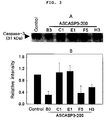
- FIGS. 3A and 3B are electrophoresis photographs each showing the result of Western blotting to screen stable clones expressing a reduced level of caspase-3, with FIG. 3 showing a band intensity quantified using computerized software.
- each of B3, C1, E1, F5, and H3 are cell clones containing the expression vector ASCASP3-200, with the B3 cells showing a suppressed caspase-3 expression, the C1 cells showing no suppressed caspase-3 expression, the E1 cells showing no suppressed caspase-3 expression, the F5 cells showing a reduced caspase-3 expression, and the H3 cells showing a reduced caspase-3 expression.
- a cell clone showed significantly reduced level of caspase-3 expression was selected and designated "ASCASP3-200 B3" (hereinafter, simply “B3").
- B3 The B3 cells were used in further experiments. At this time, cells constructed by transfecting SH2-0.32 cells with null pcDNA3.1-zeo(+) without antisense caspase-3 fragment were used as a control. In addition, cells constructed by transfecting SH2-0.32 cells with ASCASP3-200R containing 3' partial fragment of antisense RNA were used as a comparative group.
- control cells and B3 cells obtained in Example ⁇ 1-1> were seeded at a concentration of 4x10 4 cells/ml in 6-well culture plates containing 5 ml of an alpha-minimum essential medium supplemented with 5% dialyzed fetal bovine serum and 0.32 ⁇ M of methotrexate. After three days of cultivation, the spent medium was replaced with fresh medium containing 0-5 mM of sodium butyrate. Cells were harvested periodically. Viable cells were distinguished from dead cells using the trypan blue dye exclusion method to determine cell viability. In addition, secreted humanized antibody concentration was measured by enzyme-linked immunosorbent assay (ELISA).
- ELISA enzyme-linked immunosorbent assay
- the integrity of protein product is influenced by the degree of cell lysis because some proteolytic enzymes and glycosidases released from the cellular membrane ruptured-dead cells influence the molecular integrity of the product (Goldman, et al., 1997, Cytotechnology, 23, 103-111; Hansen, et al., 1997, Cytotechnology, 24, 227-234; Teige, et al., 1994, J. Biotechnol., 34, 101-105).
- the amount of lysed cells can be determined by measuring the amount of lactate dehydrogenase (LDH) released into the culture supernatant (Cruz, et al., 2000, Biotechnol. Lett., 22, 677-682).
- LDH lactate dehydrogenase
- the LDH activity increased rapidly in the control cells for the first two days after the addition of sodium butyrate and thereafter increased gradually to the end of cultivation.
- the LDH activity also increased in the B3 cells, but much more slowly than that of the control or comparative cells, indicating that the cellular membrane integrity of B3 cells was improved by inhibition of apoptotic cell death (FIG. 7). Therefore, inhibition of caspase-3 by expressing 5' region of antisense RNA of caspase-3 contributes to enhance the integrity of produced foreign protein but not productivity of the protein.
- the antisense RNA of the present invention can be effectively used to produce protease-sensitive foreign proteins such as interferon-gamma, factor VIII, thrombopoietin, and erythropoietin.
- apoptosis can be inhibited by suppressing the activation of caspase-3, which is related to the apoptosis. Further, the integrity of target protein produced in the recombinant cells can be enhanced.
Landscapes
- Health & Medical Sciences (AREA)
- Life Sciences & Earth Sciences (AREA)
- Engineering & Computer Science (AREA)
- Genetics & Genomics (AREA)
- Organic Chemistry (AREA)
- Chemical & Material Sciences (AREA)
- Bioinformatics & Cheminformatics (AREA)
- Biomedical Technology (AREA)
- Zoology (AREA)
- Wood Science & Technology (AREA)
- General Engineering & Computer Science (AREA)
- Molecular Biology (AREA)
- Biotechnology (AREA)
- General Health & Medical Sciences (AREA)
- Biochemistry (AREA)
- Biophysics (AREA)
- Microbiology (AREA)
- Plant Pathology (AREA)
- Physics & Mathematics (AREA)
- Virology (AREA)
- Pharmacology & Pharmacy (AREA)
- General Chemical & Material Sciences (AREA)
- Medicinal Chemistry (AREA)
- Nuclear Medicine, Radiotherapy & Molecular Imaging (AREA)
- Chemical Kinetics & Catalysis (AREA)
- Animal Behavior & Ethology (AREA)
- Public Health (AREA)
- Veterinary Medicine (AREA)
- Medicines That Contain Protein Lipid Enzymes And Other Medicines (AREA)
- Micro-Organisms Or Cultivation Processes Thereof (AREA)
- Enzymes And Modification Thereof (AREA)
- Pharmaceuticals Containing Other Organic And Inorganic Compounds (AREA)
Abstract
Description
- The present invention relates to an antisense nucleotide of caspase-3, an expression vector encoding antisense RNA of caspase-3, and an inhibition method of cellular apoptosis in recombinant Chinese hamster ovary (CHO) cells using the same. More precisely, the present invention relates to an antisense nucleotide composed of a base sequence represented by Sequence ID No. 1, which suppresses the expression of caspase-3, an expression vector containing the above antisense nucleotide and expressing antisense RNA of caspase-3, and an inhibition method of apoptosis of recombinant cells by suppressing the expression of caspase-3 through introducing the above expression vector into the recombinant cells and then expressing antisense RNA of caspase-3. According to the present invention, apoptosis can be inhibited by suppressing the activation of caspase-3, which is related to the apoptosis, and the integrity of target protein produced in the recombinant cells can be enhanced.
- The CHO cell line has been widely used for the production of target proteins such as recombinant antibody, human interferon-gamma (Goldman, et al., 1997, Cytotechnology, 23, 103-111), factor VIII (Ganne and Mignot, 1991, Cytotechnology, 6, 233-40), and thrombopoietin (Kim, et al., 2000, Biotechnol. Prog., 16, 775-781). For the production of target proteins in recombinant CHO cell cultures, production speed rate indicated the amounts of produced proteins per time unit from the live cells is important. In order to enhance the production speed rate, sodium butyrate (NaBu), which is known to enhance productivity by inducing transcription of foreign gene, has been used (Palermo, et al., 1991, J. Biotechnol., 19, 35-47). Despite the positive effect of sodium butyrate on protein production, there is a limitation in its application at a relatively high concentration to recombinant CHO cell culture for foreign protein production, since sodium butyrate can also inhibit cell growth, followed by rapid induction of apoptotic cell death of CHO cells. To fully exploit the beneficial effect of sodium butyrate on foreign protein production, a strategy of overcoming its cytotoxic effect has been attempted by the overexpression of survival proteins like Bcl-2 in CHO cells (Tey, et al., 2000, Biotechnol. Bioeng., 68, 31-43). Overexpression of Bcl-2 extended the culture longevity of recombinant CHO cells during batch culture by suppressing the NaBu-induced apoptosis and thereby resulted in doubling the final antibody concentration (Kim and Lee, 2000, Biotechnol. Bioeng., 71, 184-193). Although the overexpression of survival protein can endow the cells with more robustness in various culture modes and sub-optimal culture conditions (Cotter and Al-Rubeai, 1995, TIBTECH, 13, 150-155), most survival proteins have oncogenic properties. The oncogenic property may give rise to regulatory problems in the commercial production of therapeutic proteins. Thus, it may be necessary to screen potent apoptosis inhibitors other than survival proteins.
- The cellular pathway leading to apoptosis involves the activation of members of a family of protease, caspases. To date, fourteen members of the caspase family have been identified in vertebrates, and at least eight are known to be involved in apoptotic cell death (Saunders, et al., 2000, Anal. Biochem., 284, 114-124). Among the various apoptosis-related caspases, extensive research has been performed on caspase-3, because caspase-3 has a broad range of intracellular protein substrates (Han, et al., 1997, J. Biol. Chem., 272, 13432-13436). Previously, the present inventors demonstrated that significant elevation in caspase-3 activity preceded the apparent physiological apoptotic progress induced by sodium butyrate and that the overexpression of Bcl-2 inhibited the NaBu-induced apoptosis by suppressing the activation of caspase-3 (Kim and Lee, 2000, Biotechnol. Bioeng., 71, 184-193). There are some reports that apoptosis is blocked successfully in NS0 and CHO cells by inhibiting the activity of caspase-3 or caspase-3-like proteases. At this time, peptide caspase inhibitor (McKenna and Cotter, 2000, Biotechnol. Bioeng., 67, 165-176) or metal cadmium (Yuan, et al., 2000, Toxicol. Appl. Pharmacol., 164, 321-329) is used to inhibit the caspase-3 activity. The use of peptide and metallic inhibitors of apoptosis, however, is unfavorable in large-scale commercial production of recombinant protein because of the high cost of peptide inhibitor and the carcinogenic properties of metallic inhibitor.
- The antisense technology may be an alternative to suppress NaBu-induced apoptosis in recombinant CHO cells. Antisense strategy can be performed as transcription of antisense full sequence or partial fragment of target gene, or as introduction of an exogenous antisense oligonucleotide. Despite the time-consuming, laborious process in specific gene knockout, the transcription of antisense sequence is preferred to the introduction of exogenous antisense oligonucleotides because of its efficiency and low cost (Prati, et al., 1998, Biotechnol. Bioeng., 59, 445-450). Furthermore, although depending on both the sense and antisense sequences, the expression of antisense RNA of caspase seems to be able to achieve complete inhibition of apoptotic cell death at a low level of expression of antisense RNA, removing the negative effect on growth rate and productivity originated from the synthesis of large quantities of survival protein (Singh, et al., 1997, Cytotechnology, 23, 87-93).
- Thus, the present inventors adopted the antisense technology to suppress the NaBu-induced apoptosis. The present invention has been accomplished by confirming that apoptosis caused by sodium butyrate is suppressed when the expression vector inducing antisense RNA transcription for caspase-3 is introduced to the recombinant CHO cells producing a humanized antibody specific to S-surface antigen of hepatitis B virus.
- It is an object of the present invention to provide an antisense nucleotide of caspase-3, which is related to cellular apoptosis, an expression vector encoding antisense RNA of caspase-3, and an inhibition method of cellular apoptosis in recombinant CHO cells using the same.
- The application of the preferred embodiments of the present invention is best understood with reference to the accompanying drawings, wherein:
- FIG. 1 is a schematic diagram showing the structure of an expression vector designed to express light and heavy chains of humanized antibody specific to the S-surface antigen of hepatitis B virus in CHO cells;
- FIG. 2 is a schematic diagram showing the structure of an expression vector ASCASP3-200 designed to express antisense RNA against caspase-3 in recombinant CHO cells producing humanized antibody specific to the S-surface antigen of hepatitis B virus;
- FIGS. 3A and 3B are electrophoresis photographs each showing the result of Western blotting, to screen stable clones expressing a reduced level of caspase-3;
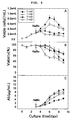
- FIGS. 4A, 4B, and 4C are graphs showing the cell growth, viability, and the extent of antibody expression, respectively, after treating a batch culture of control cells with various concentrations of sodium butyrate;
- FIGS. 5A, 5B, and 5C are graphs showing the cell growth, viability, and the extent of antibody expression, respectively, after treating a batch culture of B3 cells with various concentrations of sodium butyrate;
- FIG. 6A, 6B, and 6C are graphs showing the cell growth, viability, and the extent of antibody expression, respectively, after treating a batch culture of comparative cells with various concentrations of sodium butyrate; and
- FIG. 7 is a graph showing the time-course changes in extracellular LDH activity in a culture medium after treatment with 5mM of sodium butyrate.
-
- The present invention provides an antisense nucleotide composed of base sequence represented by SEQ. ID No. 1 which is suppressing the expression of caspase-3, an expression vector containing the above antisense nucleotide and expressing antisense RNA of caspase-3, and an inhibition method of apoptosis of recombinant cells by suppressing the expression of caspase-3 through introducing the above expression vector into the recombinant cells and then expressing antisense RNA of caspase-3.
- Hereinafter, the present invention is described in detail.
- The expression vector ASCASP3-200 containing the antisense nucleotide of caspase-3 represented by the SEQ. ID No. 1 suppressing the expression of caspase-3 of the present invention was constructed as follows. The cDNA pool was prepared from mRNAs of CHO cells by reverse transcription polymerase chain reaction. The caspase-3 cDNA fragment was amplified from cDNA templates by polymerase chain reaction using two primers (i.e., casp3L and casp3R) containing the start codon and stop codon of caspase-3 gene. The primer sequences were derived from caspase-3 sequence of human Jurkat T-lymphocytes (Fernandes-Alnemri, et al., 1994, J. Biol. Chem., 269, 30761-30764). The full-length caspase-3 cDNA fragment was inserted into the multi-cloning site of pBluescript II SK(-) cloning vector (manufactured by Stratagene of La Jolla, California), yielding pBlue-casp3. The partial fragment containing 5' 200 bp of caspase-3 cDNA was amplified using two primers (i.e., casp3L and casp3R200) containing the stop codon and caspase-3 cDNA internal region, which is approximately 200 bp apart from the 5' start codon. The amplified partial fragment of caspase-3 cDNA was inserted, in inverted orientation, into the multi-cloning site of pcDNA3.1-zeo (manufactured by InVitrogen of Carlsbad, California), yielding ASCASP3-200.
- The present inventors have deposited the above expression vector, ASCASP3-200, at Korean Collection for Type Cultures, Korea Research Institute of Bioscience and Biotechnology on August 13, 2001 (Accession No: KCTC 10038BP).
- The inhibition method of cellular apoptosis of the present invention is hereinafter described in detail.
- The cellular pathway leading to apoptosis involves the activation of members of a family of protease, namely, caspases. Among the various apoptosis-related caspases, caspase-3 is known as effector caspase, which works at the final stage of caspase activation.
- Cytotoxic materials induce cellular apoptosis in a variety of manners according to type. Since such variously induced apoptosis eventually induces the activation of effector caspase, like caspase-3, the various types of apoptosis signals are gathered by the activation of one or two caspases. In addition, it is known that the caspase-3 has a broad range of intracellular protein substrates.
- Accordingly, in the preferred embodiment of the present invention, the present inventors induced the expression of antisense RNA of caspase-3 to inhibit cellular apoptosis. When the expression vector containing the 5' region of antisense nucleotide against caspase-3 is introduced into CHO cells and is expressed, the cellular apoptosis can be inhibited. The expressed antisense RNA restrains translation process during which mRNA information is transferred to peptides by ribosome by combining specifically with sense mRNA sequence which is coding caspase-3, or suppresses the expression of caspase-3 by making mRNA decomposed by antisense-sense RNA double helix structure-specific RNase. In the preferred embodiment of the present invention, recombinant CHO cells producing a humanized antibody against the S-surface antigen of hepatitis B virus were used. The NaBu-induced apoptosis of the recombinant CHO cells was inhibited by introducing the expression vector, which can induce the expression of antisense RNA of caspase-3 into the cells.
- Practical and presently preferred embodiments of the present invention are illustrative as shown in the following Examples. It will be appreciated, however, that those skilled in the art, on consideration of this disclosure, may make modifications and improvements within the spirit and scope of the present invention.
- The present inventors constructed the expression vector ASCASP3-200 expressing antisense RNA of caspase-3 as follows. Particularly, the cDNA pool was prepared from mRNAs of CHO cells (DUKX-B11, ATCC CRL-9096) using a Marrathon™ cDNA amplification kit (manufactured by Clontech of Palo Alto, California). The full-length caspase-3 cDNA fragment was amplified from cDNA templates (manufactured by Perkin Elmer) by polymerase chain reaction using two primers, i.e., casp3L (SEQ. ID No. 2) and casp3R (SEQ. ID No. 3). The primer sequences were derived from caspase-3 sequence of human Jurkat T lymphocytes reported previously (Fernandes-Alnemri, et al., 1994, J. Biol. Chem., 269, 30761-30764). The casp3L primer included XbaI restriction enzyme site and 5' start codon. The casp3R primer included BamHI restriction enzyme site and 3' stop codon. The full-length caspase-3 cDNA fragment was inserted into the multi-cloning site of pBluescript II SK(-) cloning vector (obtained from Stratagene of La Jolla, California), yielding pBlue-casp3. The inserted full-length caspase-3 cDNA of CHO cell was sequenced using automated DNA sequencer (ABI prism model 377 by Perkin-Elmer of Poster City, California). The partial fragment containing 5' 200 bp of caspase-3 cDNA was amplified using two primers, i.e., casp3L and casp3R200 (SEQ. ID No. 4). The casp3R200 primer included EcoRI restriction enzyme site and caspase-3 cDNA internal region, which is approximately 200 bp apart from the 5' start codon. In addition, partial cDNA fragment containing about 200 bp of 3' region was amplified by PCR with primers of casp3R and casp3L200 (SEQ. ID No. 5).
- The amplified partial fragment of caspase-3 cDNA was inserted, in inverted orientation, into the site between XbaI and EcoRI of mammalian expression vector, pcDNA3.1-zeo(+)(manufactured by InVitrogen of Carlsbad, California), yielding ASCASP3-200. In addition, ASCASP3-200R was also constructed by inserting partial cDNA fragment of 3' region into pcDNA3.1-zeo(+) vector.
- The present inventors deposited the above expression vector, ASCASP3-200, at the Korean Collection for Type Cultures, Korea Research Institute of Bioscience and Biotechnology on August 13, 2001 (Accession No. KCTC 10038BP).
- Dihydrofolate reductase (dhfr) negative CHO cells (DUKX-B11, ATCC CRL 9096) were maintained in a DMEM/F12 medium (Gibco) supplemented with 10%(V/V) fetal bovine serum (Gibco), 1% hypoxanthine/thymidine (Gibco). The cells were plated in a 60 mm culture dish at densities of 1×10⁵ cells/ml and cultured for 24 hours. Then, humanized antibody expression vector (pKC-dhfr-HC-hus, FIG. 1) was inserted into the cells using liposome. After 48 hours, antibiotics-resistant cells were selected in an alpha-minimum essential medium (Gibco) containing 550 µg/ml of G418 and 10%(V/V) dialyzed fetal bovine serum for two to three weeks. The selected cells were treated with 20 nM, 80 nM, and 320 nM of methotrexate (manufactured by Sigma Chemical Co. of St. Louis Missouri) to enhance antibody productivity. Of the group treated with 320 nM of methotrexate, cells showing the highest antibody productivity were obtained and designated "SH2-0.32." SH2-0.32 cells were transfected with ASCASP3-200 (FIG. 2) using liposome. Drug selection was performed for two weeks by seeding 104 cells/well in 96-well tissue culture plates (manufactured by Nunc of Roskilde, Denmark) containing 200 µl of an alpha-minimum essential medium (Gibco) supplemented with 10% dialyzed fetal bovine serum (Gibco), 500 µg/ml of zeocin (manufactured by Invitrogen), and 0.32 µM of methotrexate (manufactured by Sigma Chemical Co. of St. Louis, Missouri). From this, thirty antibiotics (zeocin)-resistant clones were obtained. To screen the stable clones expressing a reduced level of caspase-3, the antibiotics-resistant clones were assayed by Western blotting against mRNA of caspase-3.
- FIGS. 3A and 3B are electrophoresis photographs each showing the result of Western blotting to screen stable clones expressing a reduced level of caspase-3, with FIG. 3 showing a band intensity quantified using computerized software. Here, each of B3, C1, E1, F5, and H3 are cell clones containing the expression vector ASCASP3-200, with the B3 cells showing a suppressed caspase-3 expression, the C1 cells showing no suppressed caspase-3 expression, the E1 cells showing no suppressed caspase-3 expression, the F5 cells showing a reduced caspase-3 expression, and the H3 cells showing a reduced caspase-3 expression.
- As can be seen from FIGS. 3A and 3B, a cell clone showed significantly reduced level of caspase-3 expression was selected and designated "ASCASP3-200 B3" (hereinafter, simply "B3"). The B3 cells were used in further experiments. At this time, cells constructed by transfecting SH2-0.32 cells with null pcDNA3.1-zeo(+) without antisense caspase-3 fragment were used as a control. In addition, cells constructed by transfecting SH2-0.32 cells with ASCASP3-200R containing 3' partial fragment of antisense RNA were used as a comparative group.
- The present inventors confirmed whether the expression of antisense RNA of caspase-3 could inhibit the NaBu-induced apoptosis. Particularly, control cells and B3 cells obtained in Example <1-1> were seeded at a concentration of 4x10⁴ cells/ml in 6-well culture plates containing 5 ml of an alpha-minimum essential medium supplemented with 5% dialyzed fetal bovine serum and 0.32 µM of methotrexate. After three days of cultivation, the spent medium was replaced with fresh medium containing 0-5 mM of sodium butyrate. Cells were harvested periodically. Viable cells were distinguished from dead cells using the trypan blue dye exclusion method to determine cell viability. In addition, secreted humanized antibody concentration was measured by enzyme-linked immunosorbent assay (ELISA).
- As a result, it was confirmed that the cytotoxic effect of sodium butyrate on the cell growth was dose-dependent. Especially, cellular apoptosis was induced in the presence of 5 mM of sodium butyrate (FIGS. 4A and 5A). From 24 hours after the treatment with 5 mM of sodium butyrate, the viability of control cells began to decrease significantly and was under 50% three days later (FIG. 4B). In the case of B3 cells, sodium butyrate also decreased the cell growth rate, as in the control group, but there was a significant difference when treated with 5 mM of sodium butyrate. That is, the drastic decrease of viability was not observed in B3 cells even after 24 hours of the treatment (FIG. 5B). In case of comparative group, the viability began to decrease from 24 hours after the treatment with 5 mM of sodium butyrate (FIG. 6B). This result came from a caspase-3 activity of B3 cells that was lower than that of the control or comparative group, by suppressing the expression of caspase-3 by antisense RNA of caspase-3. Nevertheless, the final antibody concentration, obtained in B3 cells subjected to the treatment with 5 mM of sodium butyrate, was similar to that obtained in the control or comparative cells (FIGS. 4C, 5C and 6C) despite its improved cell viability by the inhibition of caspase-3 activation. This similarity is because the ATP energy synthesis, necessary for the protein synthesis metabolism of cells, was inhibited by the mitochondrial membrane depolarization caused by the disruption of mitochondrial membrane by sodium butyrate.
- Although the improved cell viability due to the resistance against the cytotoxicity of sodium butyrate acquired by efficient expression of antisense RNA of caspase-3 does not increase the final foreign protein concentration, it may improve the integrity of the foreign protein. The integrity of protein product is influenced by the degree of cell lysis because some proteolytic enzymes and glycosidases released from the cellular membrane ruptured-dead cells influence the molecular integrity of the product (Goldman, et al., 1997, Cytotechnology, 23, 103-111; Hansen, et al., 1997, Cytotechnology, 24, 227-234; Teige, et al., 1994, J. Biotechnol., 34, 101-105). The amount of lysed cells can be determined by measuring the amount of lactate dehydrogenase (LDH) released into the culture supernatant (Cruz, et al., 2000, Biotechnol. Lett., 22, 677-682). Thus, to determine the degree of cell lysis, the LDH activity in culture supernatant was measured daily after treatment with 5mM of sodium butyrate.
- As a result, the LDH activity increased rapidly in the control cells for the first two days after the addition of sodium butyrate and thereafter increased gradually to the end of cultivation. The LDH activity also increased in the B3 cells, but much more slowly than that of the control or comparative cells, indicating that the cellular membrane integrity of B3 cells was improved by inhibition of apoptotic cell death (FIG. 7). Therefore, inhibition of caspase-3 by expressing 5' region of antisense RNA of caspase-3 contributes to enhance the integrity of produced foreign protein but not productivity of the protein. The antisense RNA of the present invention can be effectively used to produce protease-sensitive foreign proteins such as interferon-gamma, factor VIII, thrombopoietin, and erythropoietin.
- As shown above, apoptosis can be inhibited by suppressing the activation of caspase-3, which is related to the apoptosis. Further, the integrity of target protein produced in the recombinant cells can be enhanced.
- Those skilled in the art will appreciate that the conceptions and specific embodiments disclosed in the foregoing description may be readily utilized as a basis for modifying or designing other embodiments for carrying out the same purposes of the present invention. Those skilled in the art will also appreciate that such equivalent embodiments do not depart from the spirit and scope of the invention as set forth in the appended claims.


Claims (4)
- An antisense nucleotide represented by SEQ. ID No. 1 to suppress the expression of caspase-3.
- An expression vector ASCASP3-200 containing the antisense nucleotide of claim 1 and expressing antisense RNA of caspase-3 (Accession No: KCTC 10038BP).
- An inhibition method of apoptosis of recombinant cells, comprising steps of: suppressing the expression of caspase-3 by introducing the expression vector of claim 2 into the recombinant cells; and expressing antisense RNA of caspase-3.
- The inhibition method as set forth in claim 3, wherein a Chinese hamster ovary (CHO) cell line is used as the recombinant cells.
Applications Claiming Priority (2)
| Application Number | Priority Date | Filing Date | Title |
|---|---|---|---|
| KR2001057353 | 2001-09-17 | ||
| KR10-2001-0057353A KR100434118B1 (en) | 2001-09-17 | 2001-09-17 | Inhibition of apoptosis by the expression of antisense RNA of caspase-3 |
Publications (2)
| Publication Number | Publication Date |
|---|---|
| EP1293563A1 true EP1293563A1 (en) | 2003-03-19 |
| EP1293563B1 EP1293563B1 (en) | 2005-12-07 |
Family
ID=36915027
Family Applications (1)
| Application Number | Title | Priority Date | Filing Date |
|---|---|---|---|
| EP02020798A Expired - Lifetime EP1293563B1 (en) | 2001-09-17 | 2002-09-17 | Inhibition of apoptosis by the expression of antisense rna of caspase-3 |
Country Status (6)
| Country | Link |
|---|---|
| US (1) | US6943022B2 (en) |
| EP (1) | EP1293563B1 (en) |
| JP (1) | JP3641259B2 (en) |
| KR (1) | KR100434118B1 (en) |
| AT (1) | ATE312170T1 (en) |
| DE (1) | DE60207798T2 (en) |
Families Citing this family (2)
| Publication number | Priority date | Publication date | Assignee | Title |
|---|---|---|---|---|
| EP2292274A1 (en) * | 2004-09-16 | 2011-03-09 | Sangamo BioSciences, Inc. | Compositions and methods for protein production |
| JP2014501097A (en) * | 2009-07-06 | 2014-01-20 | アルナイラム ファーマシューティカルズ, インコーポレイテッド | Composition and method for enhancing production of biological material |
Family Cites Families (2)
| Publication number | Priority date | Publication date | Assignee | Title |
|---|---|---|---|---|
| US6303374B1 (en) * | 2000-01-18 | 2001-10-16 | Isis Pharmaceuticals Inc. | Antisense modulation of caspase 3 expression |
| US20020001806A1 (en) * | 2000-05-16 | 2002-01-03 | Yuanhui Huang | Caspase-3s splicing variant |
-
2001
- 2001-09-17 KR KR10-2001-0057353A patent/KR100434118B1/en not_active Expired - Fee Related
-
2002
- 2002-09-13 JP JP2002269275A patent/JP3641259B2/en not_active Expired - Fee Related
- 2002-09-17 DE DE60207798T patent/DE60207798T2/en not_active Expired - Fee Related
- 2002-09-17 EP EP02020798A patent/EP1293563B1/en not_active Expired - Lifetime
- 2002-09-17 US US10/245,813 patent/US6943022B2/en not_active Expired - Fee Related
- 2002-09-17 AT AT02020798T patent/ATE312170T1/en not_active IP Right Cessation
Non-Patent Citations (5)
| Title |
|---|
| CHAN S W ET AL: "Sensitivity to Fas-mediated apoptosis is determined below receptor level in human vascular smooth muscle cells.", CIRCULATION RESEARCH. UNITED STATES 26 MAY 2000, vol. 86, no. 10, 26 May 2000 (2000-05-26), pages 1038 - 1046, XP002221404, ISSN: 1524-4571 * |
| FERNANDES-ALNEMRI T ET AL: "CPP32, A NOVEL HUMAN APOPTOTIC PROTEIN WITH HOMOLOGY TO CAENORHABDITIS ELEGANS CELL DEATH PROTEON CED-3 AND MAMMALIAN INTERLEUKIN-1BETA-CONVERTING ENZYME", JOURNAL OF BIOLOGICAL CHEMISTRY, AMERICAN SOCIETY OF BIOLOGICAL CHEMISTS, BALTIMORE, MD, US, vol. 269, no. 49, 9 December 1994 (1994-12-09), pages 30761 - 30764, XP000616157, ISSN: 0021-9258 * |
| KIM NO SOO ET AL: "Inhibition of sodium butyrate-induced apoptosis in recombinant CHO cells by overexpression of antisense RNA of caspase 3.", ABSTRACTS OF PAPERS AMERICAN CHEMICAL SOCIETY, vol. 221, no. 1-2, 2001, 221st National Meeting of the American Chemical Society;San Diego, California, USA; April 01-05, 2001, pages BIOT 196, XP000119649, ISSN: 0065-7727 * |
| PRATI ELISABETTA G P ET AL: "Antisense strategies for glycosylation engineering of Chinese hamster ovary (CHO) cells.", BIOTECHNOLOGY AND BIOENGINEERING, vol. 59, no. 4, 20 August 1998 (1998-08-20), pages 445 - 450, XP002221406, ISSN: 0006-3592 * |
| YAMADA KENTARO ET AL: "Essential role of Caspase-3 in apoptosis of mouse beta-cells transfected with human Fas.", DIABETES, vol. 48, no. 3, March 1999 (1999-03-01), pages 478 - 483, XP002221405, ISSN: 0012-1797 * |
Also Published As
| Publication number | Publication date |
|---|---|
| EP1293563B1 (en) | 2005-12-07 |
| JP3641259B2 (en) | 2005-04-20 |
| US20030060443A1 (en) | 2003-03-27 |
| JP2003180380A (en) | 2003-07-02 |
| US6943022B2 (en) | 2005-09-13 |
| KR100434118B1 (en) | 2004-06-04 |
| ATE312170T1 (en) | 2005-12-15 |
| DE60207798D1 (en) | 2006-01-12 |
| KR20030024290A (en) | 2003-03-26 |
| DE60207798T2 (en) | 2006-09-14 |
Similar Documents
| Publication | Publication Date | Title |
|---|---|---|
| AU2024219682A1 (en) | Gene editing of pcsk9 | |
| Kim et al. | Inhibition of sodium butyrate‐induced apoptosis in recombinant Chinese hamster ovary cells by constitutively expressing antisense RNA of caspase‐3 | |
| Kinoshita et al. | Primary structure and expression of a gamete lytic enzyme in Chlamydomonas reinhardtii: similarity of functional domains to matrix metalloproteases. | |
| US20040219529A1 (en) | Compositions and methods of using a synthetic DNase I | |
| CN1033838A (en) | ribozyme | |
| AU2016201429B2 (en) | Methods for improving viability and productivity in cell culture | |
| JP2022508470A (en) | Carbon source regulatory protein production in recombinant host cells | |
| KR20180117189A (en) | Cell culture process | |
| EP1293563B1 (en) | Inhibition of apoptosis by the expression of antisense rna of caspase-3 | |
| JP5147692B2 (en) | Host cell protein knockout cells for the production of therapeutic proteins | |
| JP6956417B2 (en) | Human α-N-acetylgalactosaminidase polypeptide | |
| US20240101983A1 (en) | Programmable rna editing platform | |
| CN119185591A (en) | Application of TRIM21/OTUD4 in removing SHBs/HBsAg | |
| CN116602243B (en) | Application of flounder 17β-hydroxysteroid dehydrogenase 12b | |
| JP2001046078A (en) | High expression system for protein | |
| JPWO1999045107A1 (en) | Novel calpain and DNA encoding it | |
| KR100397791B1 (en) | Method for Increasing Humanized Antibody Production in CHO Cells by Overexpression of bcl-2 Gene and Treatment of Sodium Butyrate | |
| US20230172933A1 (en) | Use of a compound or composition comprising an inhibitor of nlrp1 inflammasome activation for the treatment of human airway inflammation | |
| Seol et al. | Involvement of cathepsin D in apoptosis of mammary epithelial cells | |
| US20100062488A1 (en) | Preparation process of recombinant human p43 protein | |
| Baek et al. | Antiapoptosis Engineering for Improved Protein Production | |
| KR101447227B1 (en) | A pharmaceutical composition for inhibiting metastasis comprising siRNA of BC200 RNA | |
| KR100887882B1 (en) | Floating cell line expressing antisense lactic acid dehydrogenase mRNA and overexpressing MNSOD for the production of recombinant human EPO | |
| CN114026239B (en) | MUT-Methanol-trophic yeast | |
| KR20070121676A (en) | Recombinant Expression of Defensin in Filamentous Fungi |
Legal Events
| Date | Code | Title | Description |
|---|---|---|---|
| PUAI | Public reference made under article 153(3) epc to a published international application that has entered the european phase |
Free format text: ORIGINAL CODE: 0009012 |
|
| 17P | Request for examination filed |
Effective date: 20020917 |
|
| AK | Designated contracting states |
Kind code of ref document: A1 Designated state(s): AT BE BG CH CY CZ DE DK EE ES FI FR GB GR IE IT LI LU MC NL PT SE SK TR |
|
| AX | Request for extension of the european patent |
Extension state: AL LT LV MK RO SI |
|
| AKX | Designation fees paid |
Designated state(s): AT BE BG CH CY CZ DE DK EE ES FI FR GB GR IE IT LI LU MC NL PT SE SK TR |
|
| 17Q | First examination report despatched |
Effective date: 20040407 |
|
| GRAP | Despatch of communication of intention to grant a patent |
Free format text: ORIGINAL CODE: EPIDOSNIGR1 |
|
| GRAS | Grant fee paid |
Free format text: ORIGINAL CODE: EPIDOSNIGR3 |
|
| GRAA | (expected) grant |
Free format text: ORIGINAL CODE: 0009210 |
|
| AK | Designated contracting states |
Kind code of ref document: B1 Designated state(s): AT BE BG CH CY CZ DE DK EE ES FI FR GB GR IE IT LI LU MC NL PT SE SK TR |
|
| PG25 | Lapsed in a contracting state [announced via postgrant information from national office to epo] |
Ref country code: IT Free format text: LAPSE BECAUSE OF FAILURE TO SUBMIT A TRANSLATION OF THE DESCRIPTION OR TO PAY THE FEE WITHIN THE PRESCRIBED TIME-LIMIT;WARNING: LAPSES OF ITALIAN PATENTS WITH EFFECTIVE DATE BEFORE 2007 MAY HAVE OCCURRED AT ANY TIME BEFORE 2007. THE CORRECT EFFECTIVE DATE MAY BE DIFFERENT FROM THE ONE RECORDED. Effective date: 20051207 Ref country code: NL Free format text: LAPSE BECAUSE OF FAILURE TO SUBMIT A TRANSLATION OF THE DESCRIPTION OR TO PAY THE FEE WITHIN THE PRESCRIBED TIME-LIMIT Effective date: 20051207 Ref country code: BE Free format text: LAPSE BECAUSE OF FAILURE TO SUBMIT A TRANSLATION OF THE DESCRIPTION OR TO PAY THE FEE WITHIN THE PRESCRIBED TIME-LIMIT Effective date: 20051207 Ref country code: LI Free format text: LAPSE BECAUSE OF FAILURE TO SUBMIT A TRANSLATION OF THE DESCRIPTION OR TO PAY THE FEE WITHIN THE PRESCRIBED TIME-LIMIT Effective date: 20051207 Ref country code: FI Free format text: LAPSE BECAUSE OF FAILURE TO SUBMIT A TRANSLATION OF THE DESCRIPTION OR TO PAY THE FEE WITHIN THE PRESCRIBED TIME-LIMIT Effective date: 20051207 Ref country code: SK Free format text: LAPSE BECAUSE OF FAILURE TO SUBMIT A TRANSLATION OF THE DESCRIPTION OR TO PAY THE FEE WITHIN THE PRESCRIBED TIME-LIMIT Effective date: 20051207 Ref country code: CZ Free format text: LAPSE BECAUSE OF FAILURE TO SUBMIT A TRANSLATION OF THE DESCRIPTION OR TO PAY THE FEE WITHIN THE PRESCRIBED TIME-LIMIT Effective date: 20051207 Ref country code: CH Free format text: LAPSE BECAUSE OF FAILURE TO SUBMIT A TRANSLATION OF THE DESCRIPTION OR TO PAY THE FEE WITHIN THE PRESCRIBED TIME-LIMIT Effective date: 20051207 Ref country code: AT Free format text: LAPSE BECAUSE OF FAILURE TO SUBMIT A TRANSLATION OF THE DESCRIPTION OR TO PAY THE FEE WITHIN THE PRESCRIBED TIME-LIMIT Effective date: 20051207 |
|
| REG | Reference to a national code |
Ref country code: GB Ref legal event code: FG4D |
|
| REG | Reference to a national code |
Ref country code: CH Ref legal event code: EP |
|
| REG | Reference to a national code |
Ref country code: IE Ref legal event code: FG4D |
|
| REF | Corresponds to: |
Ref document number: 60207798 Country of ref document: DE Date of ref document: 20060112 Kind code of ref document: P |
|
| PG25 | Lapsed in a contracting state [announced via postgrant information from national office to epo] |
Ref country code: SE Free format text: LAPSE BECAUSE OF FAILURE TO SUBMIT A TRANSLATION OF THE DESCRIPTION OR TO PAY THE FEE WITHIN THE PRESCRIBED TIME-LIMIT Effective date: 20060307 Ref country code: GR Free format text: LAPSE BECAUSE OF FAILURE TO SUBMIT A TRANSLATION OF THE DESCRIPTION OR TO PAY THE FEE WITHIN THE PRESCRIBED TIME-LIMIT Effective date: 20060307 Ref country code: DK Free format text: LAPSE BECAUSE OF FAILURE TO SUBMIT A TRANSLATION OF THE DESCRIPTION OR TO PAY THE FEE WITHIN THE PRESCRIBED TIME-LIMIT Effective date: 20060307 Ref country code: BG Free format text: LAPSE BECAUSE OF FAILURE TO SUBMIT A TRANSLATION OF THE DESCRIPTION OR TO PAY THE FEE WITHIN THE PRESCRIBED TIME-LIMIT Effective date: 20060307 |
|
| PG25 | Lapsed in a contracting state [announced via postgrant information from national office to epo] |
Ref country code: ES Free format text: LAPSE BECAUSE OF FAILURE TO SUBMIT A TRANSLATION OF THE DESCRIPTION OR TO PAY THE FEE WITHIN THE PRESCRIBED TIME-LIMIT Effective date: 20060318 |
|
| PG25 | Lapsed in a contracting state [announced via postgrant information from national office to epo] |
Ref country code: PT Free format text: LAPSE BECAUSE OF FAILURE TO SUBMIT A TRANSLATION OF THE DESCRIPTION OR TO PAY THE FEE WITHIN THE PRESCRIBED TIME-LIMIT Effective date: 20060508 |
|
| NLV1 | Nl: lapsed or annulled due to failure to fulfill the requirements of art. 29p and 29m of the patents act | ||
| REG | Reference to a national code |
Ref country code: CH Ref legal event code: PL |
|
| PG25 | Lapsed in a contracting state [announced via postgrant information from national office to epo] |
Ref country code: IE Free format text: LAPSE BECAUSE OF NON-PAYMENT OF DUE FEES Effective date: 20060918 |
|
| PG25 | Lapsed in a contracting state [announced via postgrant information from national office to epo] |
Ref country code: MC Free format text: LAPSE BECAUSE OF NON-PAYMENT OF DUE FEES Effective date: 20060930 |
|
| PLBE | No opposition filed within time limit |
Free format text: ORIGINAL CODE: 0009261 |
|
| STAA | Information on the status of an ep patent application or granted ep patent |
Free format text: STATUS: NO OPPOSITION FILED WITHIN TIME LIMIT |
|
| 26N | No opposition filed |
Effective date: 20060908 |
|
| EN | Fr: translation not filed | ||
| REG | Reference to a national code |
Ref country code: IE Ref legal event code: MM4A |
|
| PG25 | Lapsed in a contracting state [announced via postgrant information from national office to epo] |
Ref country code: FR Free format text: LAPSE BECAUSE OF FAILURE TO SUBMIT A TRANSLATION OF THE DESCRIPTION OR TO PAY THE FEE WITHIN THE PRESCRIBED TIME-LIMIT Effective date: 20070126 |
|
| PG25 | Lapsed in a contracting state [announced via postgrant information from national office to epo] |
Ref country code: EE Free format text: LAPSE BECAUSE OF FAILURE TO SUBMIT A TRANSLATION OF THE DESCRIPTION OR TO PAY THE FEE WITHIN THE PRESCRIBED TIME-LIMIT Effective date: 20051207 |
|
| PG25 | Lapsed in a contracting state [announced via postgrant information from national office to epo] |
Ref country code: TR Free format text: LAPSE BECAUSE OF FAILURE TO SUBMIT A TRANSLATION OF THE DESCRIPTION OR TO PAY THE FEE WITHIN THE PRESCRIBED TIME-LIMIT Effective date: 20051207 Ref country code: LU Free format text: LAPSE BECAUSE OF NON-PAYMENT OF DUE FEES Effective date: 20060917 |
|
| PG25 | Lapsed in a contracting state [announced via postgrant information from national office to epo] |
Ref country code: FR Free format text: LAPSE BECAUSE OF FAILURE TO SUBMIT A TRANSLATION OF THE DESCRIPTION OR TO PAY THE FEE WITHIN THE PRESCRIBED TIME-LIMIT Effective date: 20051207 Ref country code: CY Free format text: LAPSE BECAUSE OF FAILURE TO SUBMIT A TRANSLATION OF THE DESCRIPTION OR TO PAY THE FEE WITHIN THE PRESCRIBED TIME-LIMIT Effective date: 20051207 |
|
| PGFP | Annual fee paid to national office [announced via postgrant information from national office to epo] |
Ref country code: GB Payment date: 20080917 Year of fee payment: 7 |
|
| PGFP | Annual fee paid to national office [announced via postgrant information from national office to epo] |
Ref country code: DE Payment date: 20081002 Year of fee payment: 7 |
|
| GBPC | Gb: european patent ceased through non-payment of renewal fee |
Effective date: 20090917 |
|
| PG25 | Lapsed in a contracting state [announced via postgrant information from national office to epo] |
Ref country code: DE Free format text: LAPSE BECAUSE OF NON-PAYMENT OF DUE FEES Effective date: 20100401 |
|
| PG25 | Lapsed in a contracting state [announced via postgrant information from national office to epo] |
Ref country code: GB Free format text: LAPSE BECAUSE OF NON-PAYMENT OF DUE FEES Effective date: 20090917 |