EP1292081A2 - Presence watcher proxy - Google Patents
Presence watcher proxy Download PDFInfo
- Publication number
- EP1292081A2 EP1292081A2 EP02013889A EP02013889A EP1292081A2 EP 1292081 A2 EP1292081 A2 EP 1292081A2 EP 02013889 A EP02013889 A EP 02013889A EP 02013889 A EP02013889 A EP 02013889A EP 1292081 A2 EP1292081 A2 EP 1292081A2
- Authority
- EP
- European Patent Office
- Prior art keywords
- user
- proxy
- message
- presence information
- agent
- Prior art date
- Legal status (The legal status is an assumption and is not a legal conclusion. Google has not performed a legal analysis and makes no representation as to the accuracy of the status listed.)
- Withdrawn
Links
Images



Classifications
-
- H—ELECTRICITY
- H04—ELECTRIC COMMUNICATION TECHNIQUE
- H04L—TRANSMISSION OF DIGITAL INFORMATION, e.g. TELEGRAPHIC COMMUNICATION
- H04L65/00—Network arrangements, protocols or services for supporting real-time applications in data packet communication
- H04L65/1066—Session management
- H04L65/1101—Session protocols
- H04L65/1104—Session initiation protocol [SIP]
-
- H—ELECTRICITY
- H04—ELECTRIC COMMUNICATION TECHNIQUE
- H04L—TRANSMISSION OF DIGITAL INFORMATION, e.g. TELEGRAPHIC COMMUNICATION
- H04L65/00—Network arrangements, protocols or services for supporting real-time applications in data packet communication
- H04L65/1066—Session management
- H04L65/1101—Session protocols
-
- H—ELECTRICITY
- H04—ELECTRIC COMMUNICATION TECHNIQUE
- H04L—TRANSMISSION OF DIGITAL INFORMATION, e.g. TELEGRAPHIC COMMUNICATION
- H04L67/00—Network arrangements or protocols for supporting network services or applications
- H04L67/50—Network services
- H04L67/54—Presence management, e.g. monitoring or registration for receipt of user log-on information, or the connection status of the users
-
- H—ELECTRICITY
- H04—ELECTRIC COMMUNICATION TECHNIQUE
- H04L—TRANSMISSION OF DIGITAL INFORMATION, e.g. TELEGRAPHIC COMMUNICATION
- H04L9/00—Cryptographic mechanisms or cryptographic arrangements for secret or secure communications; Network security protocols
- H04L9/40—Network security protocols
Definitions
- the present invention pertains to communication networks and more particularly to a method for optimizing message exchanges for presence information.
- Presence may mean that a user is there or not there.
- a user's presence status could be available for family members, or their boss, but do not disturb for the general public.
- Presence information may also include information about what methods of communication a user is open to or available to. For example, a common wireless phone may be available only for voice calls, whereas an office communication system maybe available for voice, text messages or even video capability.
- Presence information is currently implemented in the various instant messenger technologies. It allows entities or users to maintain a passive check on the communication status of other entities or users with whom they may wish to communicate.
- SIP session initiation protocol
- the SIP protocol provides a means to communicate presence information.
- the user or user agent sends a register message to the network using a SIP message.
- the user's presence information may then be transmitted throughout the network as applicable or needed.
- Presence information is defined in very broad terms these days. It includes not only things like on/off hook but it includes different statuses that a user chooses to advertise. Presence information can be customized so that someone can define their presence dependent upon who is asking. For example, a user's status could be available for family members or their boss but "do not disturb" for the general public.
- Presence information may also include information about what methods of communication a user is capable of using. For example, voice only, text messaging, video capabilities, etc.
- Presence information is defined as follows.
- a logical model of the presence information consists of an arbitrary number of elements. Each such element may contain information as:
- the present invention pertains to a presence information proxy which provides for the following functions:
- Presence information allows users to maintain passive checks on the communication state of other users or entities with whom they may wish to communicate (e.g., a buddy list).
- Session initiation protocol provides a means to communicate presence information.
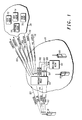
- Mobile station (user agent) 10 transmits a subscribe request through wireless network 20 to presence proxy 40.
- the subscribe request 101 enumerates a list of buddies (1-5) about which mobile station 10 desires presence information.
- Buddies 1-5 comprise mobile station 80, user agents 72, 74, and 76 and mobile station 85 respectively.
- Presence proxy 40 then transmits two subscribe requests 102 and 103 to presence agent 60.
- Subscribe request 102 is a request for presence information concerning mobile station 80 or buddy 1
- subscribe request 103 is a request for presence information concerning mobile station 85, buddy 5. See also FIG. 2.
- presence proxy 40 transmits subscribe requests 104 105 and 106 to presence agent 50 which is part of the internet protocol network 30.
- Presence agent 50 maintains the presence of user agent 72, 74 and 76. Presence agent 50 is aware of the status of each of the user agents 72, 74 and 76. For example, the status of user agents 72 and 76 would be open to communication and the status of user agent 74 would be access as denied. Presence agent 50 transfers message 109 to presence proxy 40 which indicates that user agent 72 (buddy 2) has accepted communication. Presence agent 50 also transmits message 110 to presence proxy 40 which indicates that user agent 74 has denied acceptance of the communication. Similarly, presence agent 50 transmits message 111 to presence proxy 40 which indicates that user agent 76 has accepted the communication and is providing the appropriate presence information. Presence agents may respond to subscribe messages with either ok, accept, or denied messages.
- Presence agent 60 maintains the presence state of mobile stations 80 and 85. Presence agent 60 transfers messages 107 and 108 to presence proxy 40 which indicate that mobile stations 80 and 85 are open and will provide presence status.
- presence proxy 40 transmits message 112 to mobile station 10.
- Message 112 indicates that both buddies 1 and 5 (mobile stations 80 and 85) are in an open status.
- presence proxy 40 transmits message 113 to user agent 10 which indicates that buddies 2 and 4 (user agents 72 and 76) have accepted the communication.
- presence proxy 40 transmits message 114 which indicates that buddy 3 (user agent 74) has denied communication.
- the mobile station or user agent 10 has received the presence information of each of the buddies some being internet protocol subscribers and some being other mobile stations.
- the mobile station 10 was able to request presence information using a single message and received one or more messages containing consolidated responses. This reduces the communication between the presence proxy 40 and the user agent 10 since message overhead is reduced.
- user agent 10 is a mobile station with an air interface connection to the presence proxy, this reduction in overhead is a significant savings in bandwidth for the wireless network.
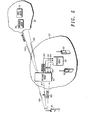
- FIGs. 3 and 4 depict a similar scenario to FIGs. 1 and 2, except that messages involved in FIGs. 3 and 4 are notifications that occur after the initial subscription scenario has completed.
- FIG. 3 is a block diagram of a communication network similar to FIG. 1 while FIG. 4 is a message flow chart embodying the message flow of FIG. 3.
- presence proxy 14 instead of the presence proxy 40 transmitting each of the notify messages 112, 113 and 114 back to user agent 10, presence proxy 14 performs a message consolidation of the notify messages and transmits a single message back to user agent 10.
- FIGS. 3 and 4 it is assumed that all the messages from 101 through 114 have been sent in a similar fashion as was shown in FIG. 2.
- Presence proxy 40 The various presence agents 50 and 60 of FIG. 3 will notify the presence proxy 40 when the state of a buddy has changed. Presence proxy 40 consolidates these individual notify messages into a single message as explained below.
- Presence agent 60 would, for example, transmit a notify message 120 to presence proxy 40 which indicates that buddy 1 is away from his mobile station 80.
- presence proxy 40 would transmit an ok message 121 which is an acknowledgment back to presence agent 60.
- present agent 50 transmits a notify message 122 to presence proxy 40.
- This notify message 122 indicates that user agent 72 has closed his internet device (computer) and is no longer receiving or transmitting.
- presence proxy 40 transmits another ok message 123 to presence agent 50 which acknowledges notify message 122.
- presence agent 60 transmits a notify message 124 to presence proxy 40. This message indicates that buddy 5, mobile station 85, is open for communication.
- Presence proxy 40 responds with another ok or acknowledge message 125 to presence agent 60.
- Presence proxy 40 then consolidates the individual notify messages 120, 122 and 124 into a single notify message 126.
- Presence proxy 40 has determined that it is time to send a consolidated notify message 126 to user agent 10 based on a timeout or another equivalent mechanism.
- Presence proxy 40 transmits notify message 126 to user agent 10.
- Notify message 126 includes the status that buddy 1, mobile unit 80, was away from the mobile unit; buddy 2, user agent 72 was closed for communication; and buddy 5, mobile unit 85, was open for communication.
- User agent 10 then responds by transmitting an ok or acknowledge message 127 to presence proxy 40.
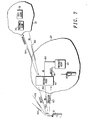
- the scenario of FIGs. 5 and 6 is a list subscription whereby the presence proxy 40 keeps a list of the buddies for user agent 10, for example.
- User agent 10 transmits a subscribe message 140 to presence proxy 40.
- Presence proxy 40 keeps a list of user agent 10 buddies for the list of buddies indicated by the subscribe message 140.
- Presence proxy 40 determines that the buddies at mobile stations 80 and 85 and user agent 74 are to be contacted for their presence information.
- Presence proxy 40 then generates a subscribe message 141 and transmits this message to presence agent 60 which maintains mobile unit 80 (buddy 1). Further, presence proxy transmits subscribe message 142 to presence agent 60 for obtaining presence information about mobile station 85(buddy 2). Lastly, presence proxy 40 generates subscribe message 143 and transmits it to presence agent 50 through internet network 30. As a result, one subscribe message by user agent 10 has produced several subscribe messages 141-143, each transmitted to the appropriate presence agent for maintaining the particular user agent or buddy.
- Presence agent 60 in response to subscribe message 141 transmits ok message 144 to presence proxy 40 which indicates that mobile station 80 is open. Similarly, in response to subscribe message 142, presence agent 60 transmits ok message 145 to presence proxy 40 which indicates that mobile unit 85 or buddy 2 is open. Next, presence agent 50 transmits through the internet network 30 message 146 to presence proxy 40. Message 146 indicates that access to buddy 2 user agent 74 is denied.
- Presence proxy 40 transmits ok message 147 which indicates that mobile units 80 and 85 are open for communication to user agent 10. Presence proxy 40 then also transmits message 148 to user agent 10. Message 148 indicates that access to user agent 74 is denied.
- a single subscribe request by user agent 10 has generated multiple subscribe messages according to a predefined buddy list stored within presence proxy 40.
- Mobile station 10 may have several such stored lists and select from a number of them.
- FIGs. 7 and 8 The scenario of FIGs. 7 and 8 is that user agent 10 is losing connection to the network as in the case of a wireless network such as network 20 where mobile unit 10 may periodically lose connections.
- FIGs. 7 and 8 it is assumed that user agent 10 has previously requested a presence subscription that included mobile station 80 (buddy 1) and received a response that he will be provided with presence information.
- User agent 10 loses or drops access 150 to SIP presence proxy 40. Notify message 160 concerning the open status of mobile unit 80 is transmitted from presence agent 60 to presence proxy 40. An ok acknowledge message 161 is transmitted back to presence agent 60 from presence proxy 40.
- presence proxy 40 transmits a notify message 162 to user agent 10 indicating that mobile unit 80 has an open status for communication.
- user agent 10 has lost his connection 150 to presence proxy 40.
- no ok message is received back by presence proxy 40.
- user agent 10 is again able to communicate 170 with presence proxy 40.
- user agent 10 renews its request for subscriptions and includes an additional request for presence subscription to a new buddy, user agent 78.
- An alternative would be for the presence proxy to detect the loss and re-establishment of communication and then deliver updated presence information to the user agent.
- subscribe message 163 is transmitted by user agent 10 to presence proxy 40.
- Presence proxy 40 transmits subscribe message 164 to presence agent 50 for the status of user agent 78 (the new buddy). Presence agent 50 responds with an ok message 165 that indicates that user agent 78 is open for communication. Presence proxy 40 then transmits an ok message 166 indicating that the status of mobile unit 80 and user agent 78 is open for communication.
- presence proxy 40 When presence proxy 40 does not receive an acknowledge from a previously sent notify message, presence proxy 40 stores the status of the notify message so that it may be retransmitted when communication is again reestablished with the user agent 10. This not only prevents the loss of presence information which has been requested by user agent 10 but also minimizes the message responses received by user agent 10 and minimizes the messaging sent to presence agents to renew subscriptions and gather presence information when communication is restored to user agent 10.
- the present invention maintains presence information of buddies even when a user agent is not reachable.
- the present invention optimizes the air interface in that it consolidates presence information from multiple sources; it permits a user to specify a list of users in a subscribe message; and it permits a user to issue a subscribe message to predefined lists of users.
- the present invention also optimizes messaging in non-wireless networks and its use is not limited to a wireless environment.
Landscapes
- Engineering & Computer Science (AREA)
- Computer Networks & Wireless Communication (AREA)
- Signal Processing (AREA)
- Business, Economics & Management (AREA)
- General Business, Economics & Management (AREA)
- Multimedia (AREA)
- Computer Security & Cryptography (AREA)
- Mobile Radio Communication Systems (AREA)
- Telephonic Communication Services (AREA)
- Information Transfer Between Computers (AREA)
Abstract
Description
Claims (10)
- A method for obtaining presence information by a first user (10) through a first network (20), the method comprising the steps of:transmitting (101) by the first user a subscribe message for presence information of a second user to a presence proxy (40);transmitting (104) by the presence proxy the subscribe message to a presence agent (40), the presence agent related to the second user; andtransmitting (80) by the presence agent the presence information to the presence proxy.
- The method for obtaining presence information as claimed in claim 1, wherein there is further included the step of transmitting (126) by the presence proxy the presence information to the first user.
- The method for obtaining presence information as claimed in claim 1, wherein there is further included the steps of:storing by the presence proxy the presence information; andtransmitting (126) the stored presence information to the first user at a later time.
- The method for obtaining presence information as claimed in claim 1, wherein the step of transmitting by a first user a subscribe message for presence information of a second user includes the step of transmitting (102) by the first user the subscribe message for presence information of a plurality of second users, at least one of said plurality of second users being located in a second network.
- The method for obtaining presence information as claimed in claim 4, wherein the step of transmitting (112-114) by the presence proxy the presence information to the first user further includes the step of transmitting by the presence proxy a plurality of response messages to the first user, each of the plurality of response messages including presence information of one of the plurality of second users.
- A method for obtaining presence information by a first user through a first network, the method comprising the steps of:transmitting (122) by a presence agent a notify message to a presence proxy, the notify message including presence information of a second user;transmitting (126) the notify message by the presence proxy to the first user; andstoring (127) the presence information of the second user by the presence proxy, if the presence proxy fails to receive (127) an acknowledgment message from the first user.
- The method for obtaining presence information as claimed in claim 16 wherein there is further included a step of regaining (170) access by the first user to the presence proxy through the first network.
- The method for obtaining presence information as claimed in claim 17 wherein there is further included the step of transmitting (163) a subscribe message by the first user, the subscribe message including a request for presence information of a third user.
- The method for obtaining presence information as claimed in claim 18 wherein there is further included the steps of:responsive to the step of transmitting a subscribe message for presence information of the third user, transmitting (164) by the presence proxy a subscribe message for presence information of the third user to a presence agent; andtransmitting (165) by the presence agent a response message to the presence proxy, the response message including the presence information of he third user.
- The method for obtaining presence information as claimed in claim 19 wherein there is further included the step of transmitting (166) by the presence proxy to the first user the presence information of the third user and the presence information of the second user.
Applications Claiming Priority (2)
| Application Number | Priority Date | Filing Date | Title |
|---|---|---|---|
| US09/939,155 US20030041101A1 (en) | 2001-08-24 | 2001-08-24 | Presence watcher proxy |
| US939155 | 2001-08-24 |
Publications (2)
| Publication Number | Publication Date |
|---|---|
| EP1292081A2 true EP1292081A2 (en) | 2003-03-12 |
| EP1292081A3 EP1292081A3 (en) | 2004-03-10 |
Family
ID=25472636
Family Applications (1)
| Application Number | Title | Priority Date | Filing Date |
|---|---|---|---|
| EP02013889A Withdrawn EP1292081A3 (en) | 2001-08-24 | 2002-06-24 | Presence watcher proxy |
Country Status (2)
| Country | Link |
|---|---|
| US (1) | US20030041101A1 (en) |
| EP (1) | EP1292081A3 (en) |
Cited By (9)
| Publication number | Priority date | Publication date | Assignee | Title |
|---|---|---|---|---|
| WO2008104236A1 (en) * | 2007-02-28 | 2008-09-04 | Sony Ericsson Mobile Communications Ab | Presence system, communication terminal, server and computer program product therefor |
| WO2008152586A3 (en) * | 2007-06-11 | 2009-02-05 | Nokia Corp | System and method for using presence information |
| WO2009064226A1 (en) * | 2007-11-16 | 2009-05-22 | Telefonaktiebogalet Lm Ericsson (Publ) | A method for event packet handling |
| WO2009050620A3 (en) * | 2007-10-16 | 2009-06-18 | Nokia Corp | System and method for providing presence notifications based upon watcher status |
| WO2010096252A1 (en) * | 2009-02-20 | 2010-08-26 | Sprint Communications Company L.P. | Selective delivery of presence messages for wireless communication devices |
| US8261307B1 (en) | 2007-10-25 | 2012-09-04 | Qurio Holdings, Inc. | Wireless multimedia content brokerage service for real time selective content provisioning |
| US8400961B1 (en) | 2007-08-27 | 2013-03-19 | Qurio Holdings, Inc. | Wireless multimedia brokerage service for real time content provisioning |
| US8560487B2 (en) | 2010-12-10 | 2013-10-15 | International Business Machines Corporation | Determining and conveying user availability |
| US10873494B2 (en) | 2002-10-09 | 2020-12-22 | Nokia Technologies Oy | User presence information communication system |
Families Citing this family (55)
| Publication number | Priority date | Publication date | Assignee | Title |
|---|---|---|---|---|
| US20030048195A1 (en) * | 2001-08-31 | 2003-03-13 | Dirk Trossen | Apparatus and method to sense and subscribe to presence information |
| US8644475B1 (en) | 2001-10-16 | 2014-02-04 | Rockstar Consortium Us Lp | Telephony usage derived presence information |
| US7299286B2 (en) * | 2001-12-27 | 2007-11-20 | Nortel Networks Limited | Personal user agent |
| JP2005518114A (en) * | 2002-02-14 | 2005-06-16 | アバイア テクノロジー コーポレーション | Presence tracking and namespace interconnect technology |
| US7227937B1 (en) * | 2002-03-19 | 2007-06-05 | Nortel Networks Limited | Monitoring natural interaction for presence detection |
| US7139797B1 (en) | 2002-04-10 | 2006-11-21 | Nortel Networks Limited | Presence information based on media activity |
| US7035923B1 (en) * | 2002-04-10 | 2006-04-25 | Nortel Networks Limited | Presence information specifying communication preferences |
| US7552204B2 (en) * | 2002-05-15 | 2009-06-23 | Microsoft Corporation | Method and system for supporting the communication of presence information among computing devices of a network |
| US20030217142A1 (en) * | 2002-05-15 | 2003-11-20 | Microsoft Corporation | Method and system for supporting the communication of presence information regarding one or more telephony devices |
| US20030217098A1 (en) * | 2002-05-15 | 2003-11-20 | Microsoft Corporation | Method and system for supporting the communication of presence information regarding one or more telephony devices |
| US8392609B2 (en) | 2002-09-17 | 2013-03-05 | Apple Inc. | Proximity detection for media proxies |
| US7555108B2 (en) | 2002-10-01 | 2009-06-30 | Nortel Networks Limited | Presence information for telephony users |
| AU2002368268A1 (en) * | 2002-10-09 | 2004-05-04 | Nokia Corporation | A communication system |
| US7685315B2 (en) * | 2002-10-28 | 2010-03-23 | Nokia Corporation | System and method for conveying terminal capability and user preferences-dependent content characteristics for content adaptation |
| US7023980B2 (en) * | 2002-12-04 | 2006-04-04 | Avaya Technology Corp. | Outbound dialing decision criteria based |
| US20040122901A1 (en) * | 2002-12-20 | 2004-06-24 | Nortel Networks Limited | Providing computer presence information to an integrated presence system |
| US7711810B2 (en) | 2003-01-03 | 2010-05-04 | Nortel Networks Limited | Distributed services based on presence technology |
| US7474741B2 (en) * | 2003-01-20 | 2009-01-06 | Avaya Inc. | Messaging advise in presence-aware networks |
| US8046476B2 (en) | 2003-01-29 | 2011-10-25 | Nokia Corporation | Access right control using access control alerts |
| EP2296343B1 (en) * | 2003-02-19 | 2015-04-15 | Nokia Technologies OY | Routing messages via an IMS system |
| FR2851704A1 (en) * | 2003-02-20 | 2004-08-27 | France Telecom | SELECTIVE PRESENCE MANAGEMENT METHOD FOR INSTANT MESSAGING SERVICE WITHIN A TELECOMMUNICATION NETWORK SUCH AS THE INTERNET NETWORK |
| US9118574B1 (en) | 2003-11-26 | 2015-08-25 | RPX Clearinghouse, LLC | Presence reporting using wireless messaging |
| US9398152B2 (en) * | 2004-02-25 | 2016-07-19 | Avaya Inc. | Using business rules for determining presence |
| US20050210109A1 (en) * | 2004-03-22 | 2005-09-22 | International Business Machines Corporation | Load balancing mechanism for publish/subscribe broker messaging system |
| US8229454B1 (en) | 2004-03-22 | 2012-07-24 | Avaya Inc. | Personal location information management |
| US20050228895A1 (en) * | 2004-03-30 | 2005-10-13 | Rajesh Karunamurthy | Method, Web service gateway (WSG) for presence, and presence server for presence information filtering and retrieval |
| US7698307B2 (en) | 2004-05-01 | 2010-04-13 | Microsoft Corporation | System and method for synchronizing between a file system and presence of contacts on a network |
| US7607096B2 (en) * | 2004-05-01 | 2009-10-20 | Microsoft Corporation | System and method for a user interface directed to discovering and publishing presence information on a network |
| US8239452B2 (en) * | 2004-05-01 | 2012-08-07 | Microsoft Corporation | System and method for discovering and publishing of presence information on a network |
| US20060080428A1 (en) * | 2004-06-07 | 2006-04-13 | Nokia Corporation | Method, system and computer program to enable semantic mediation for SIP events through support of dynamically binding to and changing of application semantics of SIP events |
| US8903820B2 (en) * | 2004-06-23 | 2014-12-02 | Nokia Corporation | Method, system and computer program to enable querying of resources in a certain context by definition of SIP even package |
| US20050289096A1 (en) * | 2004-06-23 | 2005-12-29 | Nokia Corporation | Method, system and computer program to enable SIP event-based discovery of services and content within a community built on context information |
| US8176086B2 (en) * | 2004-11-30 | 2012-05-08 | Avaya Inc. | Methods and apparatus for determining a presence of a user |
| US9094508B2 (en) * | 2004-11-30 | 2015-07-28 | Avaya Inc. | Methods and apparatus for determining a proxy presence of a user |
| JP4327142B2 (en) * | 2005-09-29 | 2009-09-09 | パナソニック株式会社 | Information processing system, tunnel communication device, tunnel communication method, proxy response device, and proxy response method |
| CN1863200A (en) * | 2005-09-30 | 2006-11-15 | 华为技术有限公司 | Method and system for subscribing to present information |
| US20070088839A1 (en) * | 2005-10-19 | 2007-04-19 | Nortel Networks Limited | Local time related presence automation and session control |
| US8649485B2 (en) | 2005-12-28 | 2014-02-11 | Sap Ag | System and method for automated connection triggered by availability status |
| US8254537B2 (en) | 2006-02-03 | 2012-08-28 | Motorola Mobility Llc | Method and apparatus for updating a presence attribute |
| US8005073B2 (en) * | 2006-02-13 | 2011-08-23 | Nokia Corporation | Representing network availability status information in presence information |
| KR101226145B1 (en) | 2007-01-10 | 2013-01-25 | 싱크로니카 피엘씨 | A system and method of updating presence information |
| US8150003B1 (en) | 2007-01-23 | 2012-04-03 | Avaya Inc. | Caller initiated undivert from voicemail |
| US8095603B2 (en) * | 2007-02-21 | 2012-01-10 | Research In Motion Limited | Efficient transmission of presence update information to presence service clients |
| US9686367B2 (en) * | 2007-03-15 | 2017-06-20 | Scenera Technologies, Llc | Methods, systems, and computer program products for providing predicted likelihood of communication between users |
| US20080288649A1 (en) * | 2007-05-18 | 2008-11-20 | International Business Machines Corporation | Using presence proxies to group presence notifications |
| US9392070B2 (en) * | 2008-12-19 | 2016-07-12 | Telefonaktiebolaget Lm Ericsson (Publ) | Method and arrangement for handling resource data |
| US20100268767A1 (en) * | 2009-04-09 | 2010-10-21 | Research In Motion Limited | System and Method for Information Retrieval from a Context Aware Mechanism |
| US9516123B2 (en) * | 2009-08-20 | 2016-12-06 | Motorola Solutions, Inc. | Method for presence information subscription in a group communications system |
| US8301581B2 (en) * | 2009-09-24 | 2012-10-30 | Avaya Inc. | Group compositing algorithms for presence |
| US8193934B2 (en) * | 2009-09-30 | 2012-06-05 | Motorola Solutions, Inc. | Method for using recording rules and previous value selection rules for presence information in a communications system |
| US8499035B2 (en) * | 2010-01-06 | 2013-07-30 | Tekelec, Inc. | Methods, systems and computer readable media for providing session initiation protocol (SIP) event watcher entity information in a communications network |
| US8661077B2 (en) * | 2010-01-06 | 2014-02-25 | Tekelec, Inc. | Methods, systems and computer readable media for providing a failover measure using watcher information (WINFO) architecture |
| US9015231B1 (en) * | 2012-03-27 | 2015-04-21 | Emc Corporation | Distributed anonymized communications |
| JP6201432B2 (en) | 2013-05-30 | 2017-09-27 | 富士ゼロックス株式会社 | Information processing apparatus, information processing system, and information processing program |
| US10417881B2 (en) * | 2016-05-02 | 2019-09-17 | Norman R. Byrne | Wireless status indicator light |
Family Cites Families (5)
| Publication number | Priority date | Publication date | Assignee | Title |
|---|---|---|---|---|
| KR20010021111A (en) * | 1999-07-23 | 2001-03-15 | 스테븐 디.피터스 | Messaging and status indication for wireless communication devices |
| US7603411B1 (en) * | 1999-12-14 | 2009-10-13 | Nortel Networks Limited | Presence management system |
| US20020042839A1 (en) * | 2000-10-10 | 2002-04-11 | Christopher Peiffer | HTTP multiplexor/demultiplexor |
| US20030005455A1 (en) * | 2001-06-29 | 2003-01-02 | Bowers J. Rob | Aggregation of streaming media to improve network performance |
| US6963911B2 (en) * | 2001-07-19 | 2005-11-08 | General Instrument Corporation | Distributed element network management |
-
2001
- 2001-08-24 US US09/939,155 patent/US20030041101A1/en not_active Abandoned
-
2002
- 2002-06-24 EP EP02013889A patent/EP1292081A3/en not_active Withdrawn
Cited By (22)
| Publication number | Priority date | Publication date | Assignee | Title |
|---|---|---|---|---|
| US10873494B2 (en) | 2002-10-09 | 2020-12-22 | Nokia Technologies Oy | User presence information communication system |
| WO2008104236A1 (en) * | 2007-02-28 | 2008-09-04 | Sony Ericsson Mobile Communications Ab | Presence system, communication terminal, server and computer program product therefor |
| JP2010521835A (en) * | 2007-02-28 | 2010-06-24 | ソニー エリクソン モバイル コミュニケーションズ, エービー | Presence system, communication terminal, server, and computer program product therefor |
| RU2457630C2 (en) * | 2007-02-28 | 2012-07-27 | Сони Эрикссон Мобайл Коммьюникейшнз Аб | Presence system, communication terminal, server and computer program product therefor |
| US9055116B2 (en) | 2007-02-28 | 2015-06-09 | Sony Corporation | Presence system, communication terminal, server and computer program product therefor |
| WO2008152586A3 (en) * | 2007-06-11 | 2009-02-05 | Nokia Corp | System and method for using presence information |
| CN105592158B (en) * | 2007-06-11 | 2020-04-17 | 诺基亚技术有限公司 | System and method for using presence information |
| US9912763B2 (en) | 2007-06-11 | 2018-03-06 | Nokia Technologies Oy | System and method for using presence information |
| CN105592158A (en) * | 2007-06-11 | 2016-05-18 | 诺基亚技术有限公司 | System And Method For Using Presence Information |
| US9083758B2 (en) | 2007-06-11 | 2015-07-14 | Nokia Technologies Oy | System and method for using presence information |
| US8400961B1 (en) | 2007-08-27 | 2013-03-19 | Qurio Holdings, Inc. | Wireless multimedia brokerage service for real time content provisioning |
| US9019897B2 (en) | 2007-08-27 | 2015-04-28 | Qurio Holdings, Inc. | Wireless multimedia brokerage service for real time content provisioning |
| WO2009050620A3 (en) * | 2007-10-16 | 2009-06-18 | Nokia Corp | System and method for providing presence notifications based upon watcher status |
| US8695044B1 (en) | 2007-10-25 | 2014-04-08 | Qurio Holdings, Inc. | Wireless multimedia content brokerage service for real time selective content provisioning |
| US8261307B1 (en) | 2007-10-25 | 2012-09-04 | Qurio Holdings, Inc. | Wireless multimedia content brokerage service for real time selective content provisioning |
| US8386616B2 (en) | 2007-11-16 | 2013-02-26 | Telefonaktiebolaget Lm Ericsson (Publ) | Method of retrieving information from a notifying node of SIP/IMS network to a watcher client |
| JP2011505722A (en) * | 2007-11-16 | 2011-02-24 | テレフオンアクチーボラゲット エル エム エリクソン(パブル) | Event packet processing method |
| WO2009064226A1 (en) * | 2007-11-16 | 2009-05-22 | Telefonaktiebogalet Lm Ericsson (Publ) | A method for event packet handling |
| US8718678B2 (en) | 2009-02-20 | 2014-05-06 | Sprint Communications Company L.P. | Selective delivery of presence messages for wireless communication devices |
| US9154911B2 (en) | 2009-02-20 | 2015-10-06 | Sprint Communications Company L.P. | Selective delivery of presence messages for wireless communication devices |
| WO2010096252A1 (en) * | 2009-02-20 | 2010-08-26 | Sprint Communications Company L.P. | Selective delivery of presence messages for wireless communication devices |
| US8560487B2 (en) | 2010-12-10 | 2013-10-15 | International Business Machines Corporation | Determining and conveying user availability |
Also Published As
| Publication number | Publication date |
|---|---|
| EP1292081A3 (en) | 2004-03-10 |
| US20030041101A1 (en) | 2003-02-27 |
Similar Documents
| Publication | Publication Date | Title |
|---|---|---|
| EP1292081A2 (en) | Presence watcher proxy | |
| CN100581159C (en) | Update presence information | |
| EP1397923B1 (en) | Mobile instant messaging and presence service | |
| US6807423B1 (en) | Communication and presence spanning multiple access networks | |
| JP3822559B2 (en) | Method and apparatus for negotiating mobile services | |
| US20060286993A1 (en) | Throttling server communications in a communication network | |
| JP5436571B2 (en) | Method and apparatus for providing communication history | |
| US8239464B2 (en) | Method and instantaneous messaging system for mobile terminals equipped with a virtual presence server configured to manage different contact lists of a single user | |
| US20050228895A1 (en) | Method, Web service gateway (WSG) for presence, and presence server for presence information filtering and retrieval | |
| US20020024947A1 (en) | Communications availability | |
| US20050033852A1 (en) | System, apparatus, and method for providing presence boosted message service reports | |
| US20020129103A1 (en) | Instant messaging presence service protocol | |
| EP1882348B1 (en) | System and method for providing interactive communications | |
| US9124645B2 (en) | Method and instantaneous messaging system for mobile terminals equipped with a virtual presence server allowing an instantaneous messaging session to be managed automatically | |
| CN100464537C (en) | Method and system for sharing presence information, group server and presence server | |
| US20070005711A1 (en) | System and method for building instant messaging applications | |
| US20020159569A1 (en) | Messaging protocol over internet protocol | |
| JP2005353056A (en) | State information synchronizing method of imps client | |
| WO2007079645A1 (en) | A method and system of notification using an instant messaging block message | |
| JP4560844B2 (en) | Selective attendance management method for instant messaging service in telecommunication networks such as the Internet | |
| US8001234B2 (en) | Method and server for coordination of telecommunication services | |
| JP4989713B2 (en) | Information distribution method in presence service system | |
| CN1822542B (en) | Presence management server and system | |
| GB2366032A (en) | Method and apparatus for providing a scalable pervasive notification service | |
| US20060129673A1 (en) | Method and system for providing entity status information in a communication network |
Legal Events
| Date | Code | Title | Description |
|---|---|---|---|
| PUAI | Public reference made under article 153(3) epc to a published international application that has entered the european phase |
Free format text: ORIGINAL CODE: 0009012 |
|
| AK | Designated contracting states |
Kind code of ref document: A2 Designated state(s): AT BE CH CY DE DK ES FI FR GB GR IE IT LI LU MC NL PT SE TR Designated state(s): AT BE CH CY DE DK ES FI FR GB GR IE IT LI LU MC NL PT SE TR |
|
| AX | Request for extension of the european patent |
Extension state: AL LT LV MK RO SI |
|
| PUAL | Search report despatched |
Free format text: ORIGINAL CODE: 0009013 |
|
| AK | Designated contracting states |
Kind code of ref document: A3 Designated state(s): AT BE CH CY DE DK ES FI FR GB GR IE IT LI LU MC NL PT SE TR |
|
| AX | Request for extension of the european patent |
Extension state: AL LT LV MK RO SI |
|
| 17P | Request for examination filed |
Effective date: 20040910 |
|
| AKX | Designation fees paid |
Designated state(s): AT BE CH CY DE DK ES FI FR GB GR IE IT LI LU MC NL PT SE TR |
|
| STAA | Information on the status of an ep patent application or granted ep patent |
Free format text: STATUS: THE APPLICATION HAS BEEN WITHDRAWN |
|
| 18W | Application withdrawn |
Effective date: 20060111 |
|
| P01 | Opt-out of the competence of the unified patent court (upc) registered |
Effective date: 20230520 |