EP1288306A1 - Method of analyzing components in biological samples - Google Patents
Method of analyzing components in biological samples Download PDFInfo
- Publication number
- EP1288306A1 EP1288306A1 EP01934540A EP01934540A EP1288306A1 EP 1288306 A1 EP1288306 A1 EP 1288306A1 EP 01934540 A EP01934540 A EP 01934540A EP 01934540 A EP01934540 A EP 01934540A EP 1288306 A1 EP1288306 A1 EP 1288306A1
- Authority
- EP
- European Patent Office
- Prior art keywords
- vldl
- cholesterol
- assaying
- component
- addition
- Prior art date
- Legal status (The legal status is an assumption and is not a legal conclusion. Google has not performed a legal analysis and makes no representation as to the accuracy of the status listed.)
- Granted
Links
Classifications
-
- C—CHEMISTRY; METALLURGY
- C12—BIOCHEMISTRY; BEER; SPIRITS; WINE; VINEGAR; MICROBIOLOGY; ENZYMOLOGY; MUTATION OR GENETIC ENGINEERING
- C12Q—MEASURING OR TESTING PROCESSES INVOLVING ENZYMES, NUCLEIC ACIDS OR MICROORGANISMS; COMPOSITIONS OR TEST PAPERS THEREFOR; PROCESSES OF PREPARING SUCH COMPOSITIONS; CONDITION-RESPONSIVE CONTROL IN MICROBIOLOGICAL OR ENZYMOLOGICAL PROCESSES
- C12Q1/00—Measuring or testing processes involving enzymes, nucleic acids or microorganisms; Compositions therefor; Processes of preparing such compositions
- C12Q1/34—Measuring or testing processes involving enzymes, nucleic acids or microorganisms; Compositions therefor; Processes of preparing such compositions involving hydrolase
- C12Q1/44—Measuring or testing processes involving enzymes, nucleic acids or microorganisms; Compositions therefor; Processes of preparing such compositions involving hydrolase involving esterase
-
- C—CHEMISTRY; METALLURGY
- C12—BIOCHEMISTRY; BEER; SPIRITS; WINE; VINEGAR; MICROBIOLOGY; ENZYMOLOGY; MUTATION OR GENETIC ENGINEERING
- C12Q—MEASURING OR TESTING PROCESSES INVOLVING ENZYMES, NUCLEIC ACIDS OR MICROORGANISMS; COMPOSITIONS OR TEST PAPERS THEREFOR; PROCESSES OF PREPARING SUCH COMPOSITIONS; CONDITION-RESPONSIVE CONTROL IN MICROBIOLOGICAL OR ENZYMOLOGICAL PROCESSES
- C12Q1/00—Measuring or testing processes involving enzymes, nucleic acids or microorganisms; Compositions therefor; Processes of preparing such compositions
- C12Q1/60—Measuring or testing processes involving enzymes, nucleic acids or microorganisms; Compositions therefor; Processes of preparing such compositions involving cholesterol
-
- G—PHYSICS
- G01—MEASURING; TESTING
- G01N—INVESTIGATING OR ANALYSING MATERIALS BY DETERMINING THEIR CHEMICAL OR PHYSICAL PROPERTIES
- G01N33/00—Investigating or analysing materials by specific methods not covered by groups G01N1/00 - G01N31/00
- G01N33/48—Biological material, e.g. blood, urine; Haemocytometers
- G01N33/50—Chemical analysis of biological material, e.g. blood, urine; Testing involving biospecific ligand binding methods; Immunological testing
- G01N33/92—Chemical analysis of biological material, e.g. blood, urine; Testing involving biospecific ligand binding methods; Immunological testing involving lipids, e.g. cholesterol, lipoproteins, or their receptors
-
- Y—GENERAL TAGGING OF NEW TECHNOLOGICAL DEVELOPMENTS; GENERAL TAGGING OF CROSS-SECTIONAL TECHNOLOGIES SPANNING OVER SEVERAL SECTIONS OF THE IPC; TECHNICAL SUBJECTS COVERED BY FORMER USPC CROSS-REFERENCE ART COLLECTIONS [XRACs] AND DIGESTS
- Y10—TECHNICAL SUBJECTS COVERED BY FORMER USPC
- Y10S—TECHNICAL SUBJECTS COVERED BY FORMER USPC CROSS-REFERENCE ART COLLECTIONS [XRACs] AND DIGESTS
- Y10S435/00—Chemistry: molecular biology and microbiology
- Y10S435/975—Kit
Definitions
- the present invention relates to a method for the assay of components in very low-density lipoprotein (VLDL) in blood. More particularly, it relates to a method for the selective assay of cholesterol in VLDL.
- VLDL very low-density lipoprotein
- lipoprotein serum contains four kinds of lipoprotein, i.e. high-density lipoprotein (HDL), low-density lipoprotein (LDL), very low-density lipoprotein (VLDL) and chylomicron (CM).
- HDL high-density lipoprotein
- LDL low-density lipoprotein
- VLDL very low-density lipoprotein
- CM chylomicron
- Fractionation of lipoprotein has been carried out by means of an ultracentrifugal operation from ancient days. The operation therefor needs skillfulness and is conducted by installing an ultracentrifuge separately and centrifugation is carried out for several days. Therefore, it was not possible to treat many samples. Besides that, there are a method where lipoprotein is separated by electrophoresis and amount of protein is determined and a method for the assay of cholesterol for each lipoprotein by HPLC but they are lacking in processing ability and, in addition, expensive apparatus in addition to the popular automatic analysis apparatus is necessary.
- an insoluble aggregate is formed during the reaction resulting in turbidity which affects the assayed result and causes the assay error and, further, reaction cell is polluted by the aggregate which significantly affects the assayed result for other biochemical items being assayed at the same time.
- Such an art comprises a device for assaying method and common technique for inhibiting the enzymatic reaction by the formation of complex and aggregate and the bad affection inherent to the turbidity is not solved.
- An object of the present invention is to provide a method for a selective assay of components, particularly cholesterol, in VLDL which is one of serum lipoproteins.
- the present inventors have carried out intensive investigations for a quantitative determination of the components in VLDL in biological samples, particularly in serum, using a commonly used automatic analysis apparatus without separation by means of centrifugal separation and without forming turbidity by complex or aggregate in the reaction solution.
- the present invention comprises (1) a method for assaying the components in very low-density lipoprotein (VLDL) fraction by an enzymatic reaction, the method which is characterized in that a reaction by enzyme showing a high specificity to VLDL is carried out under the control by addition of at least calixarene or a salt thereof; (2) the method for assaying the component in VLDL according to the above (1) wherein the reaction by enzyme is carried out under the control by addition of at least albumin in addition to the calixarene or the salt thereof; (3) the method for assaying the component in VLDL according to the above (1) wherein the reaction by enzyme is carried out under the control by addition of at least basic amino acid in addition to the calixarene or the salt thereof; (4) the method for assaying the component in VLDL according to the above (1) wherein the reaction by enzyme is carried out under the control by addition of at least albumin and basic amino acid in addition to the calixarene or the salt thereof; (5) the method for assaying the component in V
- LPL or CE cholesterol ester hydrolase
- LPL or CE which is derived for example from Chromobacterium viscosum or Pseudomonas is preferably used since it dominantly reacts with VLDL as compared with other lipoproteins.
- an enzyme which is modified, for example, with an object of stabilization of the enzyme may be used so far as it is an enzyme dominantly reacting with VLDL and able to achieve the object of the present invention. Therefore, there is no particular limitation whether or not it is modified.
- calixarene and a salt thereof such as calix[4]arene, calix[6]arene, calix[8]arene, calix[4]arene sulfate, calix[6]arene sulfate, calix[8]arene sulfate, calix[4]arene acetate, calix[6]arene acetate, calix[8]arene acetate, carboxycalix[4]arene, carboxycalix[6]arene, carboxycalix[8]arene, calix[4]areneamine, calix[6]areneamine and calix[8]areneamine.
- Appropriate one may be selected therefrom and the concentration for actual use may be decided by simple experimental repetition.
- One or more kind(s) of calixarene may be used for the method of assay according to the present invention.
- albumin in addition to calixarenes.
- LPL or CE having selectivity to VLDL inherently acts on HDL as well.
- LPL or CE shows a high reactivity with HDL and VLDL while it weakly reacts with LDL.
- albumin is added, the reactivity of LPL or CE with HDL is suppressed whereupon the enzyme reacts only with VLDL.
- Bovine serum albumin is usually used as albumin although there is no particular limitation for its origin. Concentration in actual may be determined by experiments and the range of 0.05 ⁇ 10% is usable.
- arginine there may be usually used arginine, arginine hydrochloride, lysine, lysine hydrochloride, histidine, histidine hydrochloride, hydroxylysine and hydroxylysine hydrochloride and they may be appropriately selected and used. Concentration in actual may be determined by experiments and the range of 0.1 ⁇ 1,000 mmol/L is usable.
- One or more kind(s) of basic amino acid may be used for the method of assay according to the present invention.
- assay of cholesterol is carried out in accordance with the common method for assaying the total cholesterol.
- a method where cholesterol is made to react with cholesterol dehydrogenase (CDH) and oxidized coenzyme and the reduced coenzyme which is a product of the said reaction is spectrometrically detected.
- CDH cholesterol dehydrogenase
- CDH requires hydrazine for potentiating the quantifying property of the reaction [an art of Japanese Patent Laid-Open No. 05/176,797 (December 27, 1991)] and is used by combining with other conditions such as activator and stabilizer.
- Known art may be applied therefor.
- activators and stabilizers are nonionic surface-active agents and cholic acids. Concentration thereof in actual may be determined by experiments.
- the oxidized coenzyme are oxidized ⁇ -nicotinamide adenine dinucleotide (NAD), oxidized thio-nicotinamide adenine dinucleotide (t-NAD), oxidized ⁇ -nicotinamide adenine dinucleotide phosphate (NADP) and oxidized thio-nicotinamide adenine dinucleotide phosphate (t-NADP).
- NAD oxidized ⁇ -nicotinamide adenine dinucleotide
- t-NAD oxidized thio-nicotinamide adenine dinucleotide phosphate
- t-NADP oxidized thio-nicotinamide adenine dinucleotide phosphate
- the present invention further provides a reagent kit equipped with reagents necessary for carrying out the above-mentioned method for assaying the components in VLDL according to the present invention.
- the reagent kit of the present invention contains one or more substances selected at least from calixarenes, albumin and basic amino acids and is a reagent kit for the assay of the components in the manufactured VLDL.
- the following reagents were prepared. With regard to the samples, 30 human serum examples from volunteers were used. The assay was carried out using an Automatic Analysis Apparatus, Type 7170, of Hitachi. Firstly, 180 ⁇ L of the reagent 1 were added to 18 ⁇ L of the sample followed by keeping at 37°C for 5 minutes and, at that stage, absorbance 1 was measured at the dominant wavelength of 340 nm and non-dominant wavelength of 570 nm. Then 60 ⁇ L of the reagent 2 were added followed by keeping at 37°C for 5 minutes and, at that stage, absorbance 2 was measured at the dominant wavelength of 340 nm and non-dominant wavelength of 570 nm. Difference between the absorbance 1 and the absorbance 2 was calculated and converted to the amount of the sample using a control of known VLDL-cholesterol concentration as a standard solution.
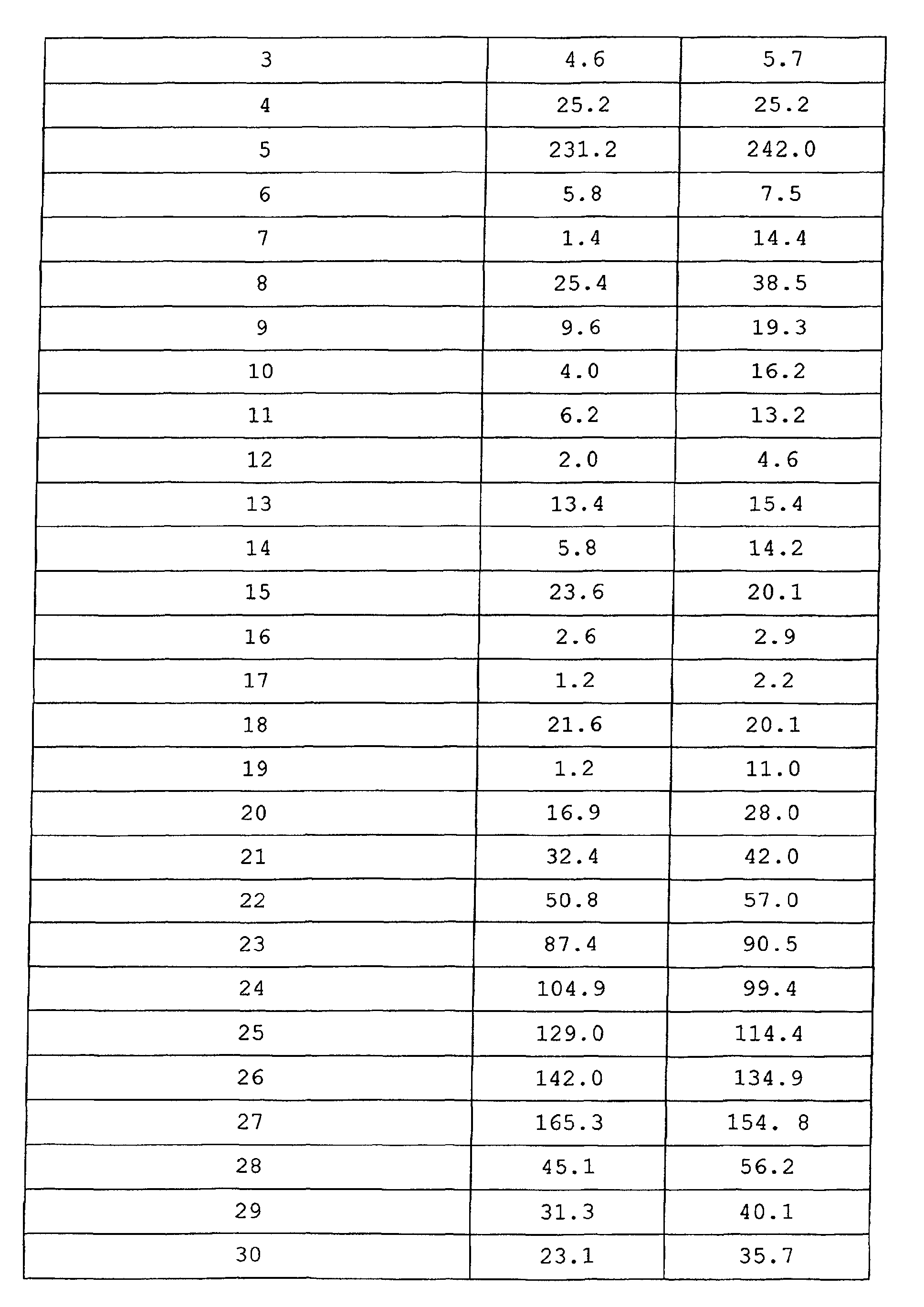
- the control method was in accordance with a method by Havel et al. [Have RJ, Eder HA, Bragdon JH: The distribution and chemical composition of ultracentrifugally separated lipoproteins in human serum, J. Clin. Invest., 34 , l345 ⁇ l353 (1955)]. Cholesterol in the fractionated VLDL fraction was determined by a T-CHO reagent L "Kokusai” (International Reagents Corporation) . Table 1 shows the result of assay using 30 cases of human serum. In the present method, the correlation coefficient was 0.993 (p ⁇ 0.05) and the result was good well coinciding with the control method.
- Reagent 1 HEPES buffer (pH 7.5) 50 mmol/L Hydrazinium dichloride 60 mmol/L Sodium cholate (activator) 0.4% Oxidized ⁇ -nicotinamide adenine dinucleotide 6.0 mmol/L Calix[8]arene sulfate 10.0 mmol/L Bovine serum albumin 2.0% Arginine 200 mmol/L Reagent 2 HEPES buffer (pH 8.0) 50 mmol/L Cholesterol dehydrogenase 20 U/mL Cholesterol ester hydrolase (derived from Pseudomonas sp.) 3 U/mL Sodium cholate 0.1%
- the following reagents were prepared. With regard to the samples, 10 human serum examples from normal healthy persons were used. The assay was carried out using an Automatic Analysis Apparatus, Type 7170, of Hitachi. Firstly, 180 ⁇ L of the reagent 3 were added to 15 ⁇ L of the sample followed by keeping at 37°C for 5 minutes and, at that stage, absorbance 1 was measured at the dominant wavelength of 600 nm and non-dominant wavelength of 700 nm. Then 60 ⁇ L of the reagent 4 were added followed by keeping at 37°C for 5 minutes and, at that stage, absorbance 2 was measured at the dominant wavelength of 360 nm and non-dominant wavelength of 700 nm.
- Difference between the absorbance 1 and the absorbance 2 was calculated and converted to the amount of the sample using a control of known VLDL-cholesterol concentration as a standard solution.
- the control method used was as same as that in Example 1.
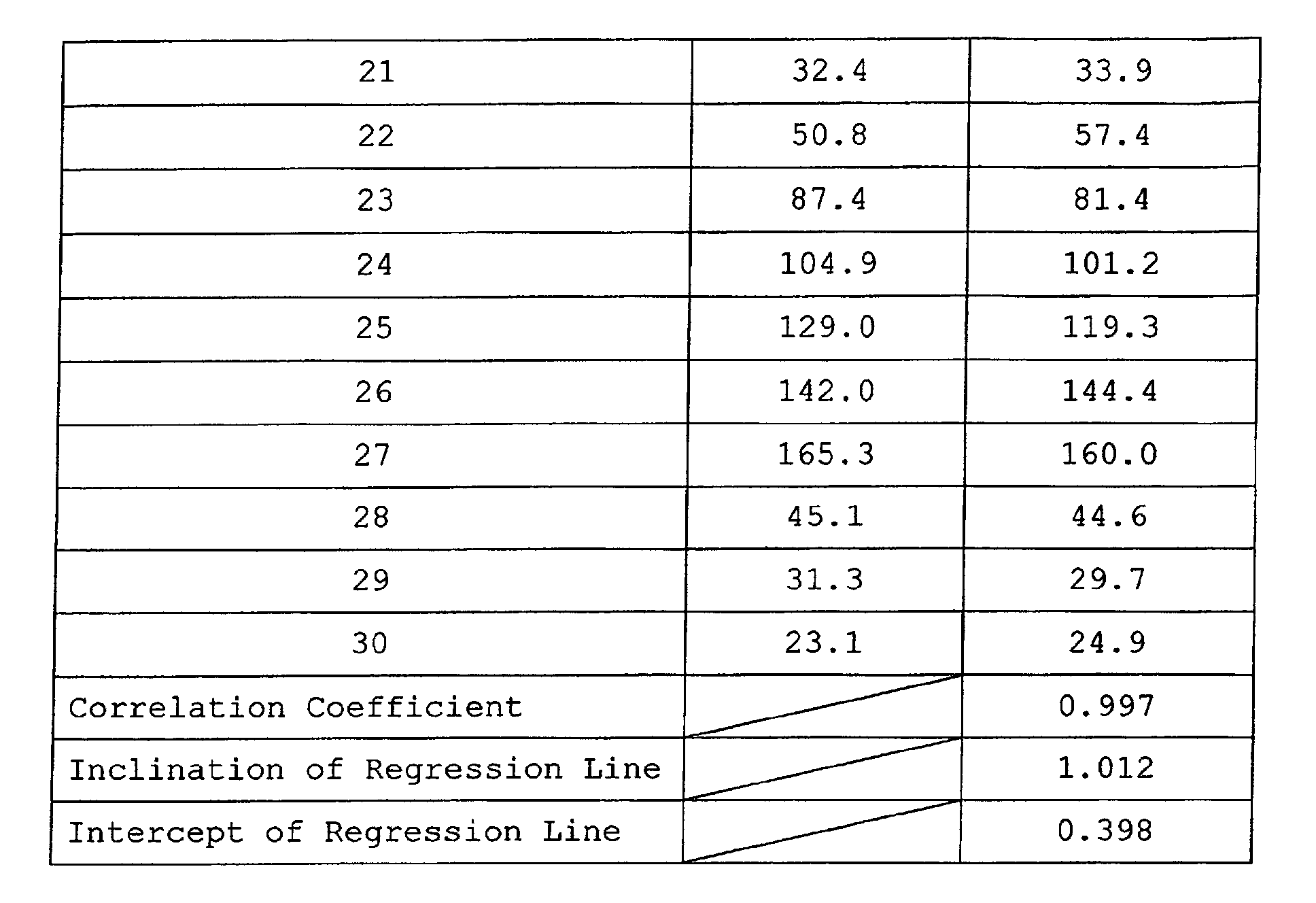
- Table 2 shows the result of assay using 30 cases of human serum. In the present method, the correlation coefficient was 0.997 (p ⁇ 0.05) and the result was good well coinciding with the control method.
- Reagent 3 MES buffer (pH 6.5) 50 mmol/L HDAOS 2.0 mmol/L Emulgen 913 (activator) 0.02% Sodium cholate (activator) 0.5% Calix[8]arene sulfate 10.0 mmol/L Bovine serum albumin 1.5% Ascorbic acid oxidase 3 U/mL Arginine 200 mmol/L Reagent 4 MES reagent (pH 6.5) 50 mmol/L Cholesterol oxidase 2 U/mL Cholesterol ester hydrolase derived from Chromobacterium viscosum 3 U/mL 4-Aminoantipyrine 10 mmol/L Sodium cholate 0.1% Peroxidase 15 U/mL
- the present invention established as such provides a method for the assay of the component, particularly cholesterol, in VLDL which is one of serum lipoproteins and, since measurement of amount of the component, particularly cholesterol, in VLDL can be carried out selectively and easily, it is useful for clinical test, investigation, etc. for diseases which are related to lipoprotein such as hyperlipemia.
Landscapes
- Life Sciences & Earth Sciences (AREA)
- Chemical & Material Sciences (AREA)
- Health & Medical Sciences (AREA)
- Engineering & Computer Science (AREA)
- Organic Chemistry (AREA)
- Molecular Biology (AREA)
- Zoology (AREA)
- Immunology (AREA)
- Wood Science & Technology (AREA)
- Proteomics, Peptides & Aminoacids (AREA)
- General Health & Medical Sciences (AREA)
- Biotechnology (AREA)
- Microbiology (AREA)
- Biophysics (AREA)
- Analytical Chemistry (AREA)
- Physics & Mathematics (AREA)
- Biochemistry (AREA)
- Genetics & Genomics (AREA)
- Urology & Nephrology (AREA)
- Bioinformatics & Cheminformatics (AREA)
- General Engineering & Computer Science (AREA)
- Biomedical Technology (AREA)
- Hematology (AREA)
- Cell Biology (AREA)
- Endocrinology (AREA)
- Food Science & Technology (AREA)
- Medicinal Chemistry (AREA)
- General Physics & Mathematics (AREA)
- Pathology (AREA)
- Investigating Or Analysing Biological Materials (AREA)
- Measuring Or Testing Involving Enzymes Or Micro-Organisms (AREA)
Abstract
Description
| Reagent 1 | |
| HEPES buffer (pH 7.5) | 50 mmol/L |
| Hydrazinium dichloride | 60 mmol/L |
| Sodium cholate (activator) | 0.4% |
| Oxidized β-nicotinamide adenine dinucleotide | 6.0 mmol/L |
| Calix[8]arene sulfate | 10.0 mmol/L |
| Bovine serum albumin | 2.0% |
| Arginine | 200 mmol/L |
| Reagent 2 | |
| HEPES buffer (pH 8.0) | 50 mmol/L |
| Cholesterol dehydrogenase | 20 U/mL |
| Cholesterol ester hydrolase (derived from Pseudomonas sp.) | 3 U/mL |
| Sodium cholate | 0.1% |
| Reagent 3 | |
| MES buffer (pH 6.5) | 50 mmol/L |
| HDAOS | 2.0 mmol/L |
| Emulgen 913 (activator) | 0.02% |
| Sodium cholate (activator) | 0.5% |
| Calix[8]arene sulfate | 10.0 mmol/L |
| Bovine serum albumin | 1.5% |
| Ascorbic acid oxidase | 3 U/mL |
| Arginine | 200 mmol/L |
| Reagent 4 | |
| MES reagent (pH 6.5) | 50 mmol/L |
| Cholesterol oxidase | 2 U/mL |
| Cholesterol ester hydrolase derived from Chromobacterium viscosum | 3 U/mL |
| 4-Aminoantipyrine | 10 mmol/L |
| Sodium cholate | 0.1% |
| Peroxidase | 15 U/mL |



Claims (9)
- A method for assaying the components in very low-density lipoprotein (VLDL) fraction by an enzymatic reaction, the method which is characterized in that a reaction by enzyme showing a high specificity to VLDL is carried out under the control by addition of at least calixarene or a salt thereof.
- The method for assaying the component in VLDL according to claim 1, wherein the reaction by enzyme is carried out under the control by addition of at least albumin in addition to the calixarene or the salt thereof.
- The method for assaying the component in VLDL according to claim 1, wherein the reaction by enzyme is carried out under the control by addition of at least basic amino acid in addition to the calixarene or the salt thereof.
- The method for assaying the component in VLDL according to claim 1, wherein the reaction by enzyme is carried out under the control by addition of at least albumin and basic amino acid in addition to the calixarene or the salt thereof.
- The method for assaying the component in VLDL according to any of claims 1 to 4, wherein the enzyme showing a high specificity to VLDL is lipoprotein lipase (LPL) and/or cholesterol esterase (CE) derived from Chromobacterium or Pseudomonas.
- The method for assaying the component in VLDL according to any of claims 1 to 5, wherein the component in VLDL to be assayed is cholesterol, the enzymatic reaction for the assay of cholesterol use cholesterol dehydrogenase and oxidizing coenzyme, and a reduced coenzyme which is a product of the enzymatic reaction is spectrometrically detected.
- The method for assaying the component in VLDL according to any of claims 1 to 5, wherein the component in VLDL to be assayed is cholesterol, the enzymatic reaction for the assay of cholesterol use cholesterol oxidase, and hydrogen peroxide which is a product of the enzymatic reaction is spectrometrically detected using peroxidase.
- A reagent kit equipped with reagents necessary for conducting the method for assaying the component in VLDL mentioned in any of claims 1 to 7.
- A method for the manufacture of the reagent kit mentioned in claim 8.
Applications Claiming Priority (3)
| Application Number | Priority Date | Filing Date | Title |
|---|---|---|---|
| JP2000171136 | 2000-06-07 | ||
| JP2000171136 | 2000-06-07 | ||
| PCT/JP2001/004721 WO2001094619A1 (en) | 2000-06-07 | 2001-06-05 | Method of analyzing components in biological samples |
Publications (3)
| Publication Number | Publication Date |
|---|---|
| EP1288306A1 true EP1288306A1 (en) | 2003-03-05 |
| EP1288306A4 EP1288306A4 (en) | 2006-05-10 |
| EP1288306B1 EP1288306B1 (en) | 2009-10-21 |
Family
ID=18673729
Family Applications (1)
| Application Number | Title | Priority Date | Filing Date |
|---|---|---|---|
| EP01934540A Expired - Lifetime EP1288306B1 (en) | 2000-06-07 | 2001-06-05 | Method of analyzing components in biological samples |
Country Status (6)
| Country | Link |
|---|---|
| US (1) | US6986998B2 (en) |
| EP (1) | EP1288306B1 (en) |
| AT (1) | ATE446378T1 (en) |
| AU (1) | AU2001260714A1 (en) |
| DE (1) | DE60140251D1 (en) |
| WO (1) | WO2001094619A1 (en) |
Cited By (4)
| Publication number | Priority date | Publication date | Assignee | Title |
|---|---|---|---|---|
| EP1388735A1 (en) * | 2002-08-09 | 2004-02-11 | Sysmex Corporation | Reagent for assaying lipids |
| EP1555327A4 (en) * | 2002-10-16 | 2006-08-02 | Kyowa Medex Co Ltd | Method and reagent for measuring cholesterol in high-density lipoproteins |
| KR20150005625A (en) * | 2012-04-20 | 2015-01-14 | 덴카 세이켄 가부시키가이샤 | Method for removal of triglycerides in lipoproteins other than low-density lipoproteins |
| CN105137098A (en) * | 2015-08-24 | 2015-12-09 | 巩晓东 | Determination reagent of cholesterols in serum high density lipoprotein |
Families Citing this family (9)
| Publication number | Priority date | Publication date | Assignee | Title |
|---|---|---|---|---|
| JP4456715B2 (en) * | 2000-02-28 | 2010-04-28 | 協和メデックス株式会社 | Method and reagent for measuring cholesterol in remnant-like lipoprotein |
| EP1288306B1 (en) * | 2000-06-07 | 2009-10-21 | Sysmex Corporation | Method of analyzing components in biological samples |
| JP4527950B2 (en) * | 2002-08-09 | 2010-08-18 | シスメックス株式会社 | Lipid measuring reagent |
| CN1748036B (en) * | 2002-12-13 | 2012-01-11 | 电化生研株式会社 | Method of multiple quantification of cholesterol in low-density lipoproteins |
| JP4643212B2 (en) * | 2003-11-28 | 2011-03-02 | シスメックス株式会社 | Cholesterol dehydrogenase stabilization method, cholesterol dehydrogenase-containing composition, and cholesterol measurement reagent |
| WO2006057377A1 (en) * | 2004-11-29 | 2006-06-01 | Jimro Co., Ltd. | Method of measuring cholesterol in remnant-like lipoproteins |
| US8119360B2 (en) * | 2005-02-14 | 2012-02-21 | Kyowa Medex Co., Ltd. | Method, reagent and kit for determination of cholesterol in remnant-like particles (RLP) |
| JP4735069B2 (en) * | 2005-06-16 | 2011-07-27 | 東ソー株式会社 | Judgment method of drug treatment effect by ultra-low density lipoprotein cholesterol level |
| CN110042146B (en) | 2011-11-11 | 2023-09-01 | 雅培快速诊断国际无限公司 | Method for testing blood sample |
Family Cites Families (12)
| Publication number | Priority date | Publication date | Assignee | Title |
|---|---|---|---|---|
| JP2994831B2 (en) | 1991-12-27 | 1999-12-27 | 国際試薬株式会社 | Cholesterol assay and reagents |
| JP3107492B2 (en) | 1994-04-05 | 2000-11-06 | 国際試薬株式会社 | Method for quantification of components in lipoprotein fraction |
| JP3614485B2 (en) | 1994-09-12 | 2005-01-26 | 国際試薬株式会社 | Method for quantifying cholesterol in lipoprotein fractions |
| CN1148891A (en) | 1995-03-20 | 1997-04-30 | 协和梅迪克斯株式会社 | Quantification of cholesterol in low density lipoprotein or very low density lipoprotein |
| JP3446486B2 (en) | 1995-07-21 | 2003-09-16 | 和光純薬工業株式会社 | Method for measuring components in lipoproteins |
| JPH0943234A (en) | 1995-07-31 | 1997-02-14 | Iatron Lab Inc | Measuring reagent and measuring method for preventing turbidity derived from heparin |
| JP3193634B2 (en) | 1996-05-29 | 2001-07-30 | 第一化学薬品株式会社 | LDL cholesterol determination method |
| JP4034851B2 (en) | 1997-06-19 | 2008-01-16 | 株式会社三菱化学ヤトロン | Specific measurement method and measurement composition for low density lipoprotein cholesterol, and specific measurement method for low density and high density lipoprotein cholesterol |
| JP3251304B2 (en) | 1997-06-25 | 2002-01-28 | 国際試薬株式会社 | Method for analyzing substances in biological sample components and reagents used in the method |
| US6114134A (en) * | 1997-06-25 | 2000-09-05 | International Reagents Corporation | Method for assaying biological specimens for substances contained in the components thereof and reagent to be used in this method |
| US6126090A (en) | 1999-01-12 | 2000-10-03 | Calmar Inc. | Nozzle cap for trigger sprayer |
| EP1288306B1 (en) * | 2000-06-07 | 2009-10-21 | Sysmex Corporation | Method of analyzing components in biological samples |
-
2001
- 2001-06-05 EP EP01934540A patent/EP1288306B1/en not_active Expired - Lifetime
- 2001-06-05 US US10/297,241 patent/US6986998B2/en not_active Expired - Lifetime
- 2001-06-05 AU AU2001260714A patent/AU2001260714A1/en not_active Abandoned
- 2001-06-05 WO PCT/JP2001/004721 patent/WO2001094619A1/en not_active Ceased
- 2001-06-05 DE DE60140251T patent/DE60140251D1/en not_active Expired - Lifetime
- 2001-06-05 AT AT01934540T patent/ATE446378T1/en not_active IP Right Cessation
Cited By (5)
| Publication number | Priority date | Publication date | Assignee | Title |
|---|---|---|---|---|
| EP1388735A1 (en) * | 2002-08-09 | 2004-02-11 | Sysmex Corporation | Reagent for assaying lipids |
| EP1555327A4 (en) * | 2002-10-16 | 2006-08-02 | Kyowa Medex Co Ltd | Method and reagent for measuring cholesterol in high-density lipoproteins |
| KR20150005625A (en) * | 2012-04-20 | 2015-01-14 | 덴카 세이켄 가부시키가이샤 | Method for removal of triglycerides in lipoproteins other than low-density lipoproteins |
| EP2840145B1 (en) * | 2012-04-20 | 2020-09-02 | Denka Seiken Co., Ltd. | Method for removal of triglycerides in lipoproteins other than low-density lipoproteins |
| CN105137098A (en) * | 2015-08-24 | 2015-12-09 | 巩晓东 | Determination reagent of cholesterols in serum high density lipoprotein |
Also Published As
| Publication number | Publication date |
|---|---|
| AU2001260714A1 (en) | 2001-12-17 |
| EP1288306B1 (en) | 2009-10-21 |
| ATE446378T1 (en) | 2009-11-15 |
| EP1288306A4 (en) | 2006-05-10 |
| US20030129681A1 (en) | 2003-07-10 |
| WO2001094619A1 (en) | 2001-12-13 |
| DE60140251D1 (en) | 2009-12-03 |
| US6986998B2 (en) | 2006-01-17 |
Similar Documents
| Publication | Publication Date | Title |
|---|---|---|
| US8178311B2 (en) | Multiple quantification of cholesterol in low density lipoprotein | |
| US6986998B2 (en) | Method of analyzing components in biological samples | |
| US8765394B2 (en) | Method of quantifying cholesterol in high density lipoprotein and reagent compositions | |
| EP1132482B1 (en) | Method and reagent for determination of cholesterol in remnant-like lipoprotein particles | |
| EP1598426B1 (en) | Method of pretreatment of sample for quantitating cholesterol and method for quantitating cholesterol in specific lipoproteins by using the same | |
| US20090188812A1 (en) | Cholesterol Sensor | |
| KR100682082B1 (en) | Method of measuring biological sample components | |
| JP4708531B2 (en) | Method for measuring cholesterol in HDL subfractions | |
| EP1020532B1 (en) | Method for assaying biological specimens for substances contained in the components thereof and reagent to be used in this method | |
| US6114134A (en) | Method for assaying biological specimens for substances contained in the components thereof and reagent to be used in this method | |
| JPWO1998059068A1 (en) | Method for analyzing substances in biological sample components and reagents used therefor | |
| EP1818412B1 (en) | Method of measuring cholesterol in remnant-like lipoproteins | |
| JPWO2001094619A1 (en) | Method for analyzing biological sample components (VLDL) | |
| Kusu et al. | Fluorometric determination of pseudocholinesterase activity in postmortem blood samples | |
| AU2015202990A1 (en) | Method of pretreatment of sample for quantitating cholesterol and method for quantitating cholesterol in specific lipoproteins by using the same |
Legal Events
| Date | Code | Title | Description |
|---|---|---|---|
| PUAI | Public reference made under article 153(3) epc to a published international application that has entered the european phase |
Free format text: ORIGINAL CODE: 0009012 |
|
| 17P | Request for examination filed |
Effective date: 20021118 |
|
| AK | Designated contracting states |
Kind code of ref document: A1 Designated state(s): AT BE CH CY DE DK ES FI FR GB GR IE IT LI LU MC NL PT SE TR |
|
| AX | Request for extension of the european patent |
Extension state: AL LT LV MK RO SI |
|
| RAP1 | Party data changed (applicant data changed or rights of an application transferred) |
Owner name: SYSMEX CORPORATION |
|
| A4 | Supplementary search report drawn up and despatched |
Effective date: 20060327 |
|
| 17Q | First examination report despatched |
Effective date: 20061221 |
|
| GRAP | Despatch of communication of intention to grant a patent |
Free format text: ORIGINAL CODE: EPIDOSNIGR1 |
|
| GRAS | Grant fee paid |
Free format text: ORIGINAL CODE: EPIDOSNIGR3 |
|
| GRAA | (expected) grant |
Free format text: ORIGINAL CODE: 0009210 |
|
| AK | Designated contracting states |
Kind code of ref document: B1 Designated state(s): AT BE CH CY DE DK ES FI FR GB GR IE IT LI LU MC NL PT SE TR |
|
| REG | Reference to a national code |
Ref country code: GB Ref legal event code: FG4D |
|
| REG | Reference to a national code |
Ref country code: CH Ref legal event code: EP |
|
| REG | Reference to a national code |
Ref country code: IE Ref legal event code: FG4D |
|
| REF | Corresponds to: |
Ref document number: 60140251 Country of ref document: DE Date of ref document: 20091203 Kind code of ref document: P |
|
| NLV1 | Nl: lapsed or annulled due to failure to fulfill the requirements of art. 29p and 29m of the patents act | ||
| PG25 | Lapsed in a contracting state [announced via postgrant information from national office to epo] |
Ref country code: FI Free format text: LAPSE BECAUSE OF FAILURE TO SUBMIT A TRANSLATION OF THE DESCRIPTION OR TO PAY THE FEE WITHIN THE PRESCRIBED TIME-LIMIT Effective date: 20091021 Ref country code: PT Free format text: LAPSE BECAUSE OF FAILURE TO SUBMIT A TRANSLATION OF THE DESCRIPTION OR TO PAY THE FEE WITHIN THE PRESCRIBED TIME-LIMIT Effective date: 20100222 Ref country code: ES Free format text: LAPSE BECAUSE OF FAILURE TO SUBMIT A TRANSLATION OF THE DESCRIPTION OR TO PAY THE FEE WITHIN THE PRESCRIBED TIME-LIMIT Effective date: 20100201 Ref country code: SE Free format text: LAPSE BECAUSE OF FAILURE TO SUBMIT A TRANSLATION OF THE DESCRIPTION OR TO PAY THE FEE WITHIN THE PRESCRIBED TIME-LIMIT Effective date: 20091021 |
|
| PG25 | Lapsed in a contracting state [announced via postgrant information from national office to epo] |
Ref country code: BE Free format text: LAPSE BECAUSE OF FAILURE TO SUBMIT A TRANSLATION OF THE DESCRIPTION OR TO PAY THE FEE WITHIN THE PRESCRIBED TIME-LIMIT Effective date: 20091021 Ref country code: AT Free format text: LAPSE BECAUSE OF FAILURE TO SUBMIT A TRANSLATION OF THE DESCRIPTION OR TO PAY THE FEE WITHIN THE PRESCRIBED TIME-LIMIT Effective date: 20091021 |
|
| PG25 | Lapsed in a contracting state [announced via postgrant information from national office to epo] |
Ref country code: DK Free format text: LAPSE BECAUSE OF FAILURE TO SUBMIT A TRANSLATION OF THE DESCRIPTION OR TO PAY THE FEE WITHIN THE PRESCRIBED TIME-LIMIT Effective date: 20091021 |
|
| PLBE | No opposition filed within time limit |
Free format text: ORIGINAL CODE: 0009261 |
|
| STAA | Information on the status of an ep patent application or granted ep patent |
Free format text: STATUS: NO OPPOSITION FILED WITHIN TIME LIMIT |
|
| 26N | No opposition filed |
Effective date: 20100722 |
|
| PG25 | Lapsed in a contracting state [announced via postgrant information from national office to epo] |
Ref country code: GR Free format text: LAPSE BECAUSE OF FAILURE TO SUBMIT A TRANSLATION OF THE DESCRIPTION OR TO PAY THE FEE WITHIN THE PRESCRIBED TIME-LIMIT Effective date: 20100122 |
|
| PG25 | Lapsed in a contracting state [announced via postgrant information from national office to epo] |
Ref country code: MC Free format text: LAPSE BECAUSE OF NON-PAYMENT OF DUE FEES Effective date: 20100630 |
|
| REG | Reference to a national code |
Ref country code: CH Ref legal event code: PL |
|
| GBPC | Gb: european patent ceased through non-payment of renewal fee |
Effective date: 20100605 |
|
| REG | Reference to a national code |
Ref country code: FR Ref legal event code: ST Effective date: 20110228 |
|
| PG25 | Lapsed in a contracting state [announced via postgrant information from national office to epo] |
Ref country code: IT Free format text: LAPSE BECAUSE OF FAILURE TO SUBMIT A TRANSLATION OF THE DESCRIPTION OR TO PAY THE FEE WITHIN THE PRESCRIBED TIME-LIMIT Effective date: 20091021 |
|
| PG25 | Lapsed in a contracting state [announced via postgrant information from national office to epo] |
Ref country code: CH Free format text: LAPSE BECAUSE OF NON-PAYMENT OF DUE FEES Effective date: 20100630 Ref country code: LI Free format text: LAPSE BECAUSE OF NON-PAYMENT OF DUE FEES Effective date: 20100630 Ref country code: IE Free format text: LAPSE BECAUSE OF NON-PAYMENT OF DUE FEES Effective date: 20100605 |
|
| PG25 | Lapsed in a contracting state [announced via postgrant information from national office to epo] |
Ref country code: FR Free format text: LAPSE BECAUSE OF NON-PAYMENT OF DUE FEES Effective date: 20100630 |
|
| PG25 | Lapsed in a contracting state [announced via postgrant information from national office to epo] |
Ref country code: GB Free format text: LAPSE BECAUSE OF NON-PAYMENT OF DUE FEES Effective date: 20100605 |
|
| PG25 | Lapsed in a contracting state [announced via postgrant information from national office to epo] |
Ref country code: CY Free format text: LAPSE BECAUSE OF FAILURE TO SUBMIT A TRANSLATION OF THE DESCRIPTION OR TO PAY THE FEE WITHIN THE PRESCRIBED TIME-LIMIT Effective date: 20091021 |
|
| PG25 | Lapsed in a contracting state [announced via postgrant information from national office to epo] |
Ref country code: NL Free format text: LAPSE BECAUSE OF FAILURE TO SUBMIT A TRANSLATION OF THE DESCRIPTION OR TO PAY THE FEE WITHIN THE PRESCRIBED TIME-LIMIT Effective date: 20091021 Ref country code: LU Free format text: LAPSE BECAUSE OF NON-PAYMENT OF DUE FEES Effective date: 20100605 |
|
| PG25 | Lapsed in a contracting state [announced via postgrant information from national office to epo] |
Ref country code: TR Free format text: LAPSE BECAUSE OF FAILURE TO SUBMIT A TRANSLATION OF THE DESCRIPTION OR TO PAY THE FEE WITHIN THE PRESCRIBED TIME-LIMIT Effective date: 20091021 |
|
| PGFP | Annual fee paid to national office [announced via postgrant information from national office to epo] |
Ref country code: DE Payment date: 20150602 Year of fee payment: 15 |
|
| REG | Reference to a national code |
Ref country code: DE Ref legal event code: R119 Ref document number: 60140251 Country of ref document: DE |
|
| PG25 | Lapsed in a contracting state [announced via postgrant information from national office to epo] |
Ref country code: DE Free format text: LAPSE BECAUSE OF NON-PAYMENT OF DUE FEES Effective date: 20170103 |