EP1287645B1 - Systeme und verfahren zur presentation und/oder umwandlung von nachrichten - Google Patents
Systeme und verfahren zur presentation und/oder umwandlung von nachrichten Download PDFInfo
- Publication number
- EP1287645B1 EP1287645B1 EP01932027A EP01932027A EP1287645B1 EP 1287645 B1 EP1287645 B1 EP 1287645B1 EP 01932027 A EP01932027 A EP 01932027A EP 01932027 A EP01932027 A EP 01932027A EP 1287645 B1 EP1287645 B1 EP 1287645B1
- Authority
- EP
- European Patent Office
- Prior art keywords
- wireless device
- message
- received message
- display
- text
- Prior art date
- Legal status (The legal status is an assumption and is not a legal conclusion. Google has not performed a legal analysis and makes no representation as to the accuracy of the status listed.)
- Expired - Lifetime
Links
- 238000000034 method Methods 0.000 title claims abstract description 26
- 230000001413 cellular effect Effects 0.000 claims description 3
- 238000004891 communication Methods 0.000 description 7
- 239000000463 material Substances 0.000 description 5
- 238000010586 diagram Methods 0.000 description 3
- 230000005540 biological transmission Effects 0.000 description 2
- 238000006467 substitution reaction Methods 0.000 description 2
- 230000000694 effects Effects 0.000 description 1
- 238000005516 engineering process Methods 0.000 description 1
- 230000006870 function Effects 0.000 description 1
- 239000004973 liquid crystal related substance Substances 0.000 description 1
- 230000004044 response Effects 0.000 description 1
- 230000005236 sound signal Effects 0.000 description 1
- 239000010409 thin film Substances 0.000 description 1
- 230000000007 visual effect Effects 0.000 description 1
Images

Classifications
-
- H—ELECTRICITY
- H04—ELECTRIC COMMUNICATION TECHNIQUE
- H04W—WIRELESS COMMUNICATION NETWORKS
- H04W4/00—Services specially adapted for wireless communication networks; Facilities therefor
- H04W4/12—Messaging; Mailboxes; Announcements
-
- H—ELECTRICITY
- H04—ELECTRIC COMMUNICATION TECHNIQUE
- H04L—TRANSMISSION OF DIGITAL INFORMATION, e.g. TELEGRAPHIC COMMUNICATION
- H04L51/00—User-to-user messaging in packet-switching networks, transmitted according to store-and-forward or real-time protocols, e.g. e-mail
- H04L51/58—Message adaptation for wireless communication
-
- H—ELECTRICITY
- H04—ELECTRIC COMMUNICATION TECHNIQUE
- H04L—TRANSMISSION OF DIGITAL INFORMATION, e.g. TELEGRAPHIC COMMUNICATION
- H04L67/00—Network arrangements or protocols for supporting network services or applications
- H04L67/2866—Architectures; Arrangements
- H04L67/30—Profiles
- H04L67/303—Terminal profiles
-
- H—ELECTRICITY
- H04—ELECTRIC COMMUNICATION TECHNIQUE
- H04L—TRANSMISSION OF DIGITAL INFORMATION, e.g. TELEGRAPHIC COMMUNICATION
- H04L67/00—Network arrangements or protocols for supporting network services or applications
- H04L67/50—Network services
- H04L67/56—Provisioning of proxy services
- H04L67/565—Conversion or adaptation of application format or content
-
- H—ELECTRICITY
- H04—ELECTRIC COMMUNICATION TECHNIQUE
- H04L—TRANSMISSION OF DIGITAL INFORMATION, e.g. TELEGRAPHIC COMMUNICATION
- H04L67/00—Network arrangements or protocols for supporting network services or applications
- H04L67/2866—Architectures; Arrangements
- H04L67/289—Intermediate processing functionally located close to the data consumer application, e.g. in same machine, in same home or in same sub-network
-
- H—ELECTRICITY
- H04—ELECTRIC COMMUNICATION TECHNIQUE
- H04M—TELEPHONIC COMMUNICATION
- H04M1/00—Substation equipment, e.g. for use by subscribers
- H04M1/72—Mobile telephones; Cordless telephones, i.e. devices for establishing wireless links to base stations without route selection
- H04M1/724—User interfaces specially adapted for cordless or mobile telephones
-
- H—ELECTRICITY
- H04—ELECTRIC COMMUNICATION TECHNIQUE
- H04M—TELEPHONIC COMMUNICATION
- H04M1/00—Substation equipment, e.g. for use by subscribers
- H04M1/72—Mobile telephones; Cordless telephones, i.e. devices for establishing wireless links to base stations without route selection
- H04M1/724—User interfaces specially adapted for cordless or mobile telephones
- H04M1/72403—User interfaces specially adapted for cordless or mobile telephones with means for local support of applications that increase the functionality
- H04M1/72445—User interfaces specially adapted for cordless or mobile telephones with means for local support of applications that increase the functionality for supporting Internet browser applications
-
- H—ELECTRICITY
- H04—ELECTRIC COMMUNICATION TECHNIQUE
- H04W—WIRELESS COMMUNICATION NETWORKS
- H04W4/00—Services specially adapted for wireless communication networks; Facilities therefor
- H04W4/18—Information format or content conversion, e.g. adaptation by the network of the transmitted or received information for the purpose of wireless delivery to users or terminals
-
- H—ELECTRICITY
- H04—ELECTRIC COMMUNICATION TECHNIQUE
- H04W—WIRELESS COMMUNICATION NETWORKS
- H04W8/00—Network data management
- H04W8/22—Processing or transfer of terminal data, e.g. status or physical capabilities
-
- H—ELECTRICITY
- H04—ELECTRIC COMMUNICATION TECHNIQUE
- H04W—WIRELESS COMMUNICATION NETWORKS
- H04W88/00—Devices specially adapted for wireless communication networks, e.g. terminals, base stations or access point devices
- H04W88/02—Terminal devices
Definitions
- the invention relates to configuring a mobile receiver device, such as a cell phone, to output to a user the maximum amount of a received message.
- Wireless communication devices are fast becoming the communications media of choice for transporting data, and communicating data between users of the devices.
- Many types of wireless devices are currently being used such as cellular phones, wireless telephones, personal digital assistants (PDAs), laptop computers and other devices with small displays which display text and icons to users of the devices.
- PDAs personal digital assistants
- laptop computers and other devices with small displays which display text and icons to users of the devices.
- the strong push in current wireless technology development is for increasingly smaller devices with greater computing power so that businessmen, students, and other users can always be in contact with the important people in their lives while maintaining adequate communication power to receive and transmit all of the data and information which has an impact on them.
- WML wireless markup language
- WAP wireless application protocol
- HTML hyper-text markup language
- HTML Hyper-text markup language
- HTML is particularly well - suited for designing browsers to be used on a typical computer screen, usually a 15", 17" " or 19" color monitor. This provides nearly unlimited space for text messages and content.
- WML is de signed for wireless devices with very small screens or displays, and so there is much less room for displaying data, messages, text and other content on a wireless device.
- 3COM international application WO 99 62268
- PDAs which have a low bandwidth wireless communication link with the Internet
- 3COM has a proxy server acting as a translator between the PDA and the website, where the complicated website material intended for the relatively large monitors connected to personal computers is translated to simplified and compressed material intended for the smaller screen of the PDA.
- Geoworks International application WO 99 52932 A (hereinafter referred to as "Geoworks”) is directed to a user interface (or Man-Machine Interface, "MMI") in a wireless communication device. More precisely, Geoworks describes an Internet browser written for a cell phone, through which the user can both access websites and other Internet material and access the telecommunication capabilities of the cell phone (e.g., calling a phone number, speed dial, redial, number search, etc.). However, Geoworks does not disclose or suggest where, if anywhere, Internet material transmitted to the wireless device is configured so that it is within the capabilities of the wireless device.
- MMI Man-Machine Interface
- U.S. Patent 5,724,410 (hereinafter referred to as "Parvulescu") is directed to a paging system which is capable of two-way voice communication and, more particularly, to the situation where the paging device receiving an audio message is incapable of reproducing an audio signal.
- the sender of the voice message is presumed to have a sending device (the "voice messaging terminal") which 1) can determine the reproduction capabilities of the receiving device (the "receiving terminal"), and 2) can convert a voice message to a text message before transmitting the message to a receiving terminal incapable of receiving voice messages.
- the user of the sending device (voice messaging terminal) can choose to convert a text message received from the receiving device into synthesized speech for output (see, col. 6, lines 53-67).
- the capabilities of a message receiver device is determined.
- the maximum length is determined of a text message that can be displayed on a display of the receiver, that is the number of characters of a particular font size that can be presented on the receiver's display.
- images messages includes still images and moving images (i.e., videos).
- the receiver is capable of outputting the entire message or only a portion. The portion of the message that cannot be output is either suppressed or is converted to another form of output recognizable by a user of a device.
- a display of the receiver device such as a cell phone
- the portion of the message which cannot be displayed is converted to another form which is accessible to, and recognizable by, the user, such as an audio output.
- a received message when a received message comprises more than one form, such as a text portion, an audio portion, and an image or graphical portion, only those portions of the message which the device is able to output are actually output by the device.
- a portion of the received message is output in another form, either instead of its original form or in addition to its original form, even though the device is capable of outputting the initial form.
- a received message may include text and a picture; both can be and are outputted by the device, but the text is also output as speech.
- the devices are wireless devices which employ a WML-based browser, although other forms of browsers may be implemented.
- the present invention is implementable with other than wireless devices, especially when such devices, for example laptop computers and PDAs, are equipped with small displays that cannot accommodate large volumes of text.
- the present invention also may provide voice recognition capability which will allow for fast and efficient access to data by a user which would otherwise be required to use a manual input device such as a keyboard, mouse, trackball, keypad or capacitive input device.
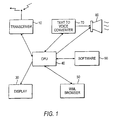
- FIG. 1 is shown a block diagram of a wireless device in accordance with the present invention.
- the wireless device is any wireless device which can communicate data and other information between users of wireless devices, between users of wireless devices and users of landline based instrumentalities, or between a user and the internet.
- the wireless device may be a mobile telephone, PDA, personal computer, laptop computer, beeper or other advanced communicator currently on the market. It is envisioned that new wireless devices will be developed in the future which will also fall within the scope of the present invention. Any device which can convert text-based content to another form of content to be output to a user, and equivalents thereof, is within the scope of the present invention.
- the other form of content may be within a wide ranging genus of forms of content. Without intending to limit the invention in any way, the other forms of content may be pure data, voice-based content, vision-based content (such as still and moving images), tactile-based content, audio-based (other than voice) content, or smell-based content.
- the wireless device of FIG. 1 conventionally includes a transceiver 10 which receives and transmits electromagnetic signals which comprise digital and/or analog and/or packet data having messages which are to be transmitted to and from users.
- the display device is appropriate to display text and optionally images and includes a liquid crystal display, thin-film transistor (TFT) display, a flat panel display, cathode ray tube (CRT) or other display which is a low-power consumption display appropriate for a portable, mobile wireless-type device.
- TFT thin-film transistor
- CRT cathode ray tube
- the wireless device also preferably has a central processor unit (CPU) 40 which manages, controls, monitors and provides all of the functionality required to run the wireless device and is able to process data that is received by the device as incoming and outgoing messages.
- the wireless device further includes a WML browser module 50 which allows the user of the wireless device to browse through the text-based content at any time.
- the WML browser 50 relies on WAP and is therefore constrained by the protocols set up by WAP. Since WAP and WML have become standard in wireless devices which utilize wideband, code division multiple access (WCDMA) data (as is the case with virtually all such devices), the constraints of WAP and WML are strictly imposed on the wireless device.
- WCDMA code division multiple access
- WML is capable of displaying images and is responsible for downloading and/or displaying text-based content. While WAP and WML are currently implemented for wireless devices, other browser protocols and markup languages could conceivably be used in the future. The inventive systems and methods will be readily implementable with all such protocols and markup languages whenever the size of display 30 is an issue in displaying text-based content, as will be described in more detail below. The present invention will be described throughout with respect to the WML browser.
- wireless devices oftentimes will not be able to display the entirety of a text-based message at a single time to the user. This leaves the user in the uncomfortable position of having to ignore the message until he or she can fully view it by manipulating the wireless device, or attempting to manipulate the wireless device while driving or while engaged in some other, potentially dangerous, activity. Moreover, the user may simply not wish to wait for the rest of the text-based content and so will desire to receive it in some other content form, such as voice-based content.
- a software module 60 is provided to the wireless device which determines the capabilities of the wireless device and whether the text-based content exceeds the text display capability of the display 30 for a selected text font size and implements the WML browser 50 to set a limitation on the length (i.e., number of characters) of the text-based message that may be displayed on the display 30.
- software module 60 may be a separate module, or may be integrated in CPU 40 for convenience.
- software residing in module 60 may be written in any appropriate computer language such as C++, JAVA, VISUALBASIC, or others, or may be simply executable code that is permanently burned into module 60.
- the software module may alternatively reside at least in part in the wireless network servicing the wireless device.
- the capabilities of the wireless device may be stored in memory of the wireless device or transmitted by the wireless device to the wireless network which then determines how to modify the message to be transmitted, if at all.
- the excess text (or the entire text message, if desired) is converted by CPU 40 and/or software 60 to a "spoken" voice which will essentially read the message to the user.
- the voice is heard over a conventional speaker 80 and may be a female or male voice.
- the voice may be of a variable pitch and could therefore emulate a child or even an animal if so desired.
- the voice may also be that of a particular user-selected person, such as a spouse, whose voice has be preprogrammed into the device.
- the received message exceeds other of the capabilities of the receiver, only those portions of the received message are outputted by the receiver.
- An example of such an event would be if the message contained an audio component, an associated text component, and an associated image component. If the receiver had the capability of outputting only the audio and text component, the image component would be detected and suppressed by the CPU 40 and/or software 60, and the remainder of the received message would be outputted by the receiver device.
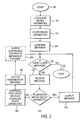
- FIG. 2 is a flow chart which represents an exemplary method which may be programmed in software to accomplish the present invention.
- the method starts at step 90 and at step 100 the method checks the capabilities of the receiver device. For example, it is determined what types of messages can be outputted by the receiver, such as voice, text and/or images (still or moving), and for text messages the length of the text message that can be shown on the display of the receiver device. If the font size used in the display of the wireless device can be adjusted by the user, the limitation of text to be displayed would take this variable into account. Additionally, if the receiver device has more than one output means, such as more than one display, the capabilities of each output means are determined. The capabilities of the device are then stored, step 110, in a memory associated with the CPU 40 and/or software module 60 or in a memory of a server of the wireless network. At step 120, the WML browser 50 is loaded to the CPU 40.
- types of messages can be outputted by the receiver, such as voice, text and/or images (still or moving), and for text messages
- a message is received by the wireless receiver device.
- the received message may comprise components in one or more forms, which may be linked, such as, for example, text, voice, sound, and visual (still and/or moving images, either pictures or graphical images).
- step 140 determines whether the message is within the capabilities of the receiver. If message is within those capabilities, then at step 150 the entire message is output by the device for receipt by the user.
- the method determines at steps 130 and 132 whether a new message has been received and, if so, the new message is compared to the device capabilities in step 140. If there is no new message, then the method stops at step 170.
- step 140 it is determined that the message exceeds the capabilities of the receiver device, then at step 180 the portion of the message that exceeds these capabilities is suppressed or truncated, and the remainder of the message is outputted by the device at step 190 over speaker 80. If the device is capable of outputting the suppressed portion of the message, that portion is outputted at optional step 200. For example, if the suppressed portion of the message is text, it is converted to audio and outputted through speaker 80. It is then determined at steps 130 and 132 whether there is a new message and, if so, again whether the message is within the device capabilities, step 140. If there is no new message, the method stops, step 170.
- a received message is a text message
- the entirety of the received message may be converted into a voice message and then outputted through the device's speaker, either instead of displaying the text message or in addition to displaying the text message.
- FIG. 3 shows a cartoon or comic strip frame image having a text message in a bubble 200.
- the entire image is output to the display of the mobile terminal, while the text message in the bubble 200 is converted to a voice signal and output by the speaker 80.
- Such a cartoon image may be sent to a user's mobile terminal by the system shown in FIG. 4 .
- a wireless network 210 communicates wirelessly with a mobile terminal, shown as cell phone 220.
- the wireless network 210 may be connected to a server 240 directly or indirectly through the internet 230.
- the server 240 either in response to a request by the user's mobile terminal 220 or periodically through a subscription service, transmits to the user's mobile terminal 220 a comic strip message which the server 240 retrieves from a cartoon database 250.
- the tone, pitch, loudness or other properties associated with the sound of a voice output may be selected so that a pleasing and informative voice will be associated with the messages that are read out to the user. Additionally, music, tones or and other sounds may be prompted to be played to the user in addition to, or in lieu of, the message when it is appropriate to do so. Additionally, a voice-converted message could be automatically routed to a voice mail storage system and retrieved by the user at a convenient time. Moreover, a graphical portion and a voice-based portion of a received message may be outputted by the receiver to the user simultaneously when the software module 60 contains software to separate graphical content from voice-based content or text-based content and indicates that both should be outputted simultaneously. All such embodiments and equivalents thereof are intended to be within the scope of the present invention.
- the present invention overcomes the capability limitations of a receiver, for example by allowing graphical information and text messages to be displayed simultaneously, and the tail end of, or the entirety of, a received text message may be outputted audibly. Consequently, large volumes of data may be outputted by a wireless device in accordance with the present invention.
Landscapes
- Engineering & Computer Science (AREA)
- Computer Networks & Wireless Communication (AREA)
- Signal Processing (AREA)
- Mobile Radio Communication Systems (AREA)
- Information Transfer Between Computers (AREA)
Claims (18)
- Verfahren zum Ausgeben einer Nachricht, welche von einer drahtlosen Vorrichtung empfangen wird, umfassend:Speichern (110) einer Ausgabeleistungsfähigkeit von einer Anzeige der drahtlosen Vorrichtung;Empfangen (132) von einer textbasierten Inhaltsnachricht durch die drahtlose Vorrichtung;Bestimmen (140), dass wenigstens ein Abschnitt der empfangenen Nachricht nicht innerhalb der gespeicherten Ausgabeleistungsfähigkeit der Anzeige der drahtlosen Vorrichtung ist;Ausgeben (190) eines ersten Abschnittes der empfangenen Nachricht, für den bestimmt wird, dass er innerhalb der gespeicherten Ausgabeleistungsfähigkeit der Anzeige der drahtlosen Vorrichtung ist;Durchführen (180) eines Vorganges durch die drahtlose Vorrichtung von wenigstens einem von Unterdrücken, Abschneiden oder Umwandeln eines zweiten Abschnittes der empfangenen Nachricht, wobei für den zweiten Abschnitt der empfangenen Nachricht bestimmt wird, dass er nicht innerhalb der gespeicherten Ausgabeleistungsfähigkeit der Anzeige der drahtlosen Vorrichtung ist, wobei dieser Vorgang ein Unterdrücken des Textes des zweiten Abschnittes und ein Umwandeln davon in ein audiobasiertes Format umfasst; undAusgeben (200) des zweiten Abschnittes der empfangenen Nachricht, wobei der zweite Abschnitt der empfangenen Nachricht durch die drahtlose Vorrichtung in eine Form innerhalb der gespeicherten Ausgabeleistungsfähigkeit der Anzeige der drahtlosen Vorrichtung in dem Vorgang von wenigstens einem von Unterdrücken, Abschneiden oder Umwandeln des zweiten Abschnittes der empfangenen Nachricht umgewandelt ist.
- Verfahren nach Anspruch 1, bei welchem der Schritt des Ausgebens des zweiten Abschnittes den Schritt umfasst:Ausgeben des umgewandelten zweiten Abschnittes an einem Lautsprecher der drahtlosen Vorrichtung.
- Verfahren nach Anspruch 1, bei welchem die empfangene Nachricht eine Cartoon-Nachricht ist, welche die Anzeigeleistungsfähigkeit einer Anzeige der drahtlosen Vorrichtung übersteigt, wobei die Cartoon-Nachricht ein Bild enthält, welches Text innerhalb einer Blase umfasst, und der Vorgang von wenigstens einem von Unterdrücken, Abschneiden oder Umwandeln des zweiten Abschnittes der empfangenen Nachricht umfasst:Umwandeln des Textes in der Blase in ein audiobasiertes Format.
- Verfahren nach Anspruch 3, bei welchem der Schritt des Ausgebens des zweiten Abschnittes den Schritt umfasst:Ausgeben des umgewandelten Textes an einem Lautsprecher der drahtlosen Vorrichtung.
- Verfahren nach Anspruch 1, bei welchem die drahtlose Vorrichtung ein Mobiltelefon, ein PDA, einen Personal-Computer, einen Laptop-Computer oder einen Pager umfasst.
- Verfahren nach Anspruch 1, bei welchem die empfangene Nachricht eine Mehrzahl von verbundenen Komponenten unterschiedlicher Inhaltsformen enthält.
- Verfahren nach Anspruch 1, bei welchem der Vorgang von wenigstens einem von Unterdrücken, Abschneiden oder Umwandeln eines zweiten Abschnittes der empfangenen Nachricht umfasst:Umwandeln einer verbundenen Komponente in eine verschiedene Inhaltsform.
- Verfahren nach Anspruch 1, bei welchem der Vorgang von wenigstens einem von Unterdrücken, Abschneiden oder Umwandeln eines zweiten Abschnitts der empfangenen Nachricht umfasst:Umwandeln des zweiten Abschnittes von einer ersten Inhaltsform in eine zweite Inhaltsform.
- Verfahren nach Anspruch 8, bei welchem wenigstens eine der ersten Inhaltsform und der zweiten Inhaltsform eines von reinen Daten, Text-, Audio-, Bild-, Video-, Haptic- oder Geruchsinhalt enthält.
- Drahtlose Vorrichtung zum Empfangen einer Nachricht, umfassend:ein Speichermittel zum Speichern einer Ausgabeleistungsfähigkeit einer Anzeige (30) der drahtlosen Vorrichtung;ein Mittel (10) zum Empfangen einer textbasierten Inhaltsnachricht durch die drahtlose Vorrichtung;ein Mittel (60) zum Bestimmen, dass wenigstens ein Abschnitt der empfangenen Nachricht nicht innerhalb der gespeicherten Ausgabeleistungsfähigkeit der Anzeige der drahtlosen Vorrichtung ist;ein erstes Ausgabemittel (30) zum Ausgeben eines ersten Abschnittes der empfangenen Nachricht, für den festgestellt wird, dass er innerhalb der gespeicherten Ausgabeleistungsfähigkeit der Anzeige der drahtlosen Vorrichtung ist;ein Mittel (40, 60) zum wenigstens einem von Unterdrücken, Abschneiden oder Umwandeln eines zweiten Abschnittes der empfangenen Nachricht, für den festgestellt wird, dass er nicht innerhalb der gespeicherten Ausgabeleistungsfähigkeit der Anzeige der drahtlosen Vorrichtung ist, wobei das Mittel zum wenigstens einem von Unterdrücken, Abschneiden oder Umwandeln des zweiten Abschnittes der empfangenen Nachricht angeordnet ist, um den Text des zweiten Abschnittes zu unterdrücken und in ein audiobasiertes Format umzuwandeln; undein zweites Ausgabemittel (80) zum Ausgeben des zweiten Abschnittes der empfangenen Nachricht, wobei der zweite Abschnitt der empfangenen Nachricht in eine Form innerhalb der gespeicherten Ausgabeleistungsfähigkeit der Anzeige der drahtlosen Vorrichtung durch wenigstens eines von Unterdrücken, Abschneiden oder Umwandeln des zweiten Abschnittes der empfangenen Nachricht durch die drahtlose Vorrichtung umgewandelt ist.
- Drahtlose Vorrichtung nach Anspruch 10, bei welcher das erste Ausgabemittel eine Anzeige (30) ist, wobei die empfangene Nachricht eine Cartoon-Nachricht ist, welche die Anzeigeleistungsfähigkeit der Anzeige übersteigt, wobei die Cartoon-Nachricht ein Bild enthält, welches Text innerhalb einer Blase hat, und das Mittel (40, 80) zum wenigstens einem von Unterdrücken, Abschneiden oder Umwandeln des zweiten Abschnitts der empfangenen Nachricht den Text in der Blase in ein audiobasiertes Format umwandelt.
- Drahtlose Vorrichtung nach Anspruch 10 oder 11, bei welcher das zweite Ausgabemittel ein Lautsprecher (80) zum Ausgeben des umgewandelten zweiten Abschnittes ist.
- Drahtlose Vorrichtung nach Anspruch 10, bei welcher die drahtlose Vorrichtung ein Mobiltelefon, ein PDA, einen Personal-Computer, einen Laptop-Computer oder einen Pager umfasst.
- Drahtlose Vorrichtung nach Anspruch 10, bei welcher die empfangene Nachricht eine Mehrzahl von verbundenen Komponenten in unterschiedlichen Inhaltsformen umfasst.
- Drahtlose Vorrichtung nach Anspruch 10, bei welcher das Mittel zum wenigstens einem von Unterdrücken, Abschneiden oder Umwandeln eines zweiten Abschnitts der empfangenen Nachricht eine verbundene Komponente in eine verschiedene Inhaltsform umwandelt.
- Drahtlose Vorrichtung nach Anspruch 10, bei welcher das Mittel zum wenigstens einem von Unterdrücken, Abschneiden oder Umwandeln eines zweiten Abschnittes der empfangenen Nachricht aufweist:ein Mittel (70) zum Umwandeln des zweiten Abschnittes von einer ersten Inhaltsform in eine zweite Inhaltsform.
- Drahtlose Vorrichtung nach Anspruch 16, bei welcher wenigstens eine der ersten Inhaltsform und der zweiten Inhaltsform eines von reinen Daten, Text-, Audio-, Bild-, Video-, Haptic- oder Geruchsinhalt umfasst.
- Drahtlose Vorrichtung nach Anspruch 10, bei welcher das erste Ausgabemittel und das zweite Ausgabemittel dasselbe Ausgabemittel und eines von einer Anzeige oder einem Lautsprecher sind.
Applications Claiming Priority (3)
| Application Number | Priority Date | Filing Date | Title |
|---|---|---|---|
| US585994 | 2000-06-02 | ||
| US09/585,994 US6801793B1 (en) | 2000-06-02 | 2000-06-02 | Systems and methods for presenting and/or converting messages |
| PCT/IB2001/000958 WO2001093507A2 (en) | 2000-06-02 | 2001-05-31 | Systems and methods for presenting and/or converting messages |
Publications (2)
| Publication Number | Publication Date |
|---|---|
| EP1287645A2 EP1287645A2 (de) | 2003-03-05 |
| EP1287645B1 true EP1287645B1 (de) | 2011-10-05 |
Family
ID=24343842
Family Applications (1)
| Application Number | Title | Priority Date | Filing Date |
|---|---|---|---|
| EP01932027A Expired - Lifetime EP1287645B1 (de) | 2000-06-02 | 2001-05-31 | Systeme und verfahren zur presentation und/oder umwandlung von nachrichten |
Country Status (4)
| Country | Link |
|---|---|
| US (2) | US6801793B1 (de) |
| EP (1) | EP1287645B1 (de) |
| AU (1) | AU2001258701A1 (de) |
| WO (1) | WO2001093507A2 (de) |
Families Citing this family (55)
| Publication number | Priority date | Publication date | Assignee | Title |
|---|---|---|---|---|
| US7149514B1 (en) | 1997-07-30 | 2006-12-12 | Bellsouth Intellectual Property Corp. | Cellular docking station |
| US20080207197A1 (en) * | 1997-07-30 | 2008-08-28 | Steven Tischer | Apparatus, method, and computer-readable medium for interfacing devices with communications networks |
| US7865528B2 (en) * | 2001-01-09 | 2011-01-04 | Nextair Corporation | Software, devices and methods facilitating execution of server-side applications at mobile devices |
| US7546298B2 (en) * | 2001-01-09 | 2009-06-09 | Nextair Corporation | Software, devices and methods facilitating execution of server-side applications at mobile devices |
| JP2002297508A (ja) * | 2001-03-30 | 2002-10-11 | Fujitsu Ltd | 情報処理装置、制御装置、記録媒体、およびプログラム |
| US7366712B2 (en) * | 2001-05-31 | 2008-04-29 | Intel Corporation | Information retrieval center gateway |
| JP2002359647A (ja) * | 2001-06-01 | 2002-12-13 | Canon Inc | 情報提供装置及び情報処理装置及びシステムとそれらの方法 |
| KR100442941B1 (ko) * | 2001-07-06 | 2004-08-04 | 엘지전자 주식회사 | 방송형 메시지 전송장치 및 그 방법 |
| JP4636219B2 (ja) * | 2001-08-21 | 2011-02-23 | 日本電気株式会社 | 音声伝送方法、通信システム及び通信端末 |
| AU2002340033A1 (en) * | 2001-09-25 | 2003-04-07 | Wildseed, Ltd. | Wireless mobile image messaging |
| US7062444B2 (en) * | 2002-01-24 | 2006-06-13 | Intel Corporation | Architecture for DSR client and server development platform |
| US8416804B2 (en) | 2002-07-15 | 2013-04-09 | At&T Intellectual Property I, L.P. | Apparatus and method for providing a user interface for facilitating communications between devices |
| US8543098B2 (en) | 2002-07-15 | 2013-09-24 | At&T Intellectual Property I, L.P. | Apparatus and method for securely providing communications between devices and networks |
| US8000682B2 (en) | 2002-07-15 | 2011-08-16 | At&T Intellectual Property I, L.P. | Apparatus and method for restricting access to data |
| US8526466B2 (en) | 2002-07-15 | 2013-09-03 | At&T Intellectual Property I, L.P. | Apparatus and method for prioritizing communications between devices |
| US7200424B2 (en) | 2002-07-15 | 2007-04-03 | Bellsouth Intelectual Property Corporation | Systems and methods for restricting the use and movement of telephony devices |
| US8275371B2 (en) | 2002-07-15 | 2012-09-25 | At&T Intellectual Property I, L.P. | Apparatus and method for providing communications and connection-oriented services to devices |
| US8554187B2 (en) | 2002-07-15 | 2013-10-08 | At&T Intellectual Property I, L.P. | Apparatus and method for routing communications between networks and devices |
| US7116976B2 (en) | 2003-12-08 | 2006-10-03 | Thomas C Douglass | Adaptable communication techniques for electronic devices |
| US7630705B2 (en) * | 2003-06-30 | 2009-12-08 | Motorola, Inc. | Message format conversion in communications terminals and networks |
| US20050015500A1 (en) * | 2003-07-16 | 2005-01-20 | Batchu Suresh K. | Method and system for response buffering in a portal server for client devices |
| US20050027839A1 (en) * | 2003-07-31 | 2005-02-03 | International Business Machiness Corporation | Method, system and program product for dynamic transmission in a messaging session |
| US7729688B2 (en) | 2003-12-08 | 2010-06-01 | Ipventure, Inc. | Systems and processes to manage multiple modes of communication |
| US8538386B2 (en) * | 2004-03-01 | 2013-09-17 | Blackberry Limited | Communications system providing text-to-speech message conversion features using audio filter parameters and related methods |
| US7650170B2 (en) | 2004-03-01 | 2010-01-19 | Research In Motion Limited | Communications system providing automatic text-to-speech conversion features and related methods |
| US11011153B2 (en) | 2004-03-01 | 2021-05-18 | Blackberry Limited | Communications system providing automatic text-to-speech conversion features and related methods |
| US20050207390A1 (en) * | 2004-03-16 | 2005-09-22 | Ramin Soheili | Method and system for sending text-based communications to a network access device for an application with video or audio output |
| US20050257752A1 (en) * | 2004-05-20 | 2005-11-24 | Shirley Langer | PET accessory with wireless telephonic voice transmitter |
| US20060103871A1 (en) * | 2004-11-16 | 2006-05-18 | Erwin Weinans | Methods, apparatus and computer program products supporting display generation in peripheral devices for communications terminals |
| US8880612B1 (en) * | 2004-12-16 | 2014-11-04 | Sprint Spectrum L.P. | Mobile device proxy for instant messaging |
| US7848736B2 (en) * | 2006-01-18 | 2010-12-07 | Sms.Ac, Inc. | Package billing for micro-transactions |
| US20070043878A1 (en) * | 2005-08-18 | 2007-02-22 | Microsoft Corporation | Virtual robot communication format customized by endpoint |
| US8204950B2 (en) | 2005-09-15 | 2012-06-19 | Qwest Communications International Inc. | Webpage search |
| US9060260B2 (en) * | 2005-10-25 | 2015-06-16 | Sony Corporation | Method and apparatus for tailoring electronic content retrieval according to wireless communication device capabilities |
| US8170189B2 (en) * | 2005-11-02 | 2012-05-01 | Qwest Communications International Inc. | Cross-platform message notification |
| US20070239832A1 (en) * | 2006-04-05 | 2007-10-11 | Qwest Communications International Inc. | Communication presentation in a calendar perspective |
| US20070239895A1 (en) * | 2006-04-05 | 2007-10-11 | Qwest Communications International Inc. | Cross-platform push of various media types |
| US8078476B2 (en) | 2006-04-05 | 2011-12-13 | Qwest Communications International Inc. | Cross-platform calendar notifications |
| US9323821B2 (en) | 2006-04-05 | 2016-04-26 | Qwest Communications International Inc. | Network repository auto sync wireless handset |
| US8214469B2 (en) | 2006-04-06 | 2012-07-03 | Qwest Communications International Inc. | Multiple use of common perspectives |
| US8320535B2 (en) | 2006-04-06 | 2012-11-27 | Qwest Communications International Inc. | Selectable greeting messages |
| US8819751B2 (en) | 2006-05-16 | 2014-08-26 | Qwest Communications International Inc. | Socially networked television experience |
| US7912187B1 (en) * | 2006-06-01 | 2011-03-22 | At&T Mobility Ii Llc | Transcoding voice to/from text based on location of a communication device |
| KR100699050B1 (ko) | 2006-06-30 | 2007-03-28 | 삼성전자주식회사 | 문자정보를 음성정보로 출력하는 이동통신 단말기 및 그방법 |
| US20080177858A1 (en) * | 2007-01-19 | 2008-07-24 | Ari Aarnio | Arranging dynamic bookmarks based on service provider inputs |
| CA2691608A1 (en) * | 2007-06-27 | 2008-12-31 | Karen Knowles Enterprises Pty Ltd | Communication method, system and products |
| CN101448040B (zh) * | 2007-11-26 | 2011-11-16 | 深圳富泰宏精密工业有限公司 | 一种手机及手机来电显示的方法 |
| US8373541B2 (en) * | 2008-09-16 | 2013-02-12 | Lear Corporation | Vehicle remote control system |
| US11487347B1 (en) * | 2008-11-10 | 2022-11-01 | Verint Americas Inc. | Enhanced multi-modal communication |
| US8447690B2 (en) * | 2009-09-09 | 2013-05-21 | Triceratops Corp. | Business and social media system |
| FR3009916A1 (fr) * | 2013-08-26 | 2015-02-27 | Orange | Procede et dispositif d'enrichissement d'une communication |
| US9467968B2 (en) | 2013-10-07 | 2016-10-11 | Ickovic & Bliss, Inc. | Wearable mobile broadcasting recovery system and device |
| US20150271228A1 (en) * | 2014-03-19 | 2015-09-24 | Cory Lam | System and Method for Delivering Adaptively Multi-Media Content Through a Network |
| US9912800B2 (en) | 2016-05-27 | 2018-03-06 | International Business Machines Corporation | Confidentiality-smart voice delivery of text-based incoming messages |
| EP4171212A4 (de) | 2020-06-29 | 2024-07-24 | Ickovic & Bliss, Inc. | Systeme, verfahren und programmprodukte zur digitalen pet-identifizierung |
Family Cites Families (19)
| Publication number | Priority date | Publication date | Assignee | Title |
|---|---|---|---|---|
| DE69227269T2 (de) * | 1991-02-25 | 1999-06-02 | Motorola, Inc., Fort Worth, Tex. | Gegenstandsortungssystem |
| US5704029A (en) * | 1994-05-23 | 1997-12-30 | Wright Strategies, Inc. | System and method for completing an electronic form |
| JP3525353B2 (ja) * | 1994-09-28 | 2004-05-10 | 株式会社リコー | デジタル電子スチル・カメラ |
| US5724410A (en) | 1995-12-18 | 1998-03-03 | Sony Corporation | Two-way voice messaging terminal having a speech to text converter |
| US5918013A (en) * | 1996-06-03 | 1999-06-29 | Webtv Networks, Inc. | Method of transcoding documents in a network environment using a proxy server |
| US6313734B1 (en) * | 1996-07-03 | 2001-11-06 | Sony Corporation | Voice synthesis of e-mail for delivery to voice pager or voice mail |
| US5966451A (en) * | 1997-02-20 | 1999-10-12 | Kabushiki Kaisha Toshiba | Distributed network computing system, and data exchange apparatus and method and storage medium used in this system |
| US5948066A (en) * | 1997-03-13 | 1999-09-07 | Motorola, Inc. | System and method for delivery of information over narrow-band communications links |
| US5983073A (en) * | 1997-04-04 | 1999-11-09 | Ditzik; Richard J. | Modular notebook and PDA computer systems for personal computing and wireless communications |
| US6212175B1 (en) * | 1997-04-22 | 2001-04-03 | Telxon Corporation | Method to sustain TCP connection |
| US6173316B1 (en) | 1998-04-08 | 2001-01-09 | Geoworks Corporation | Wireless communication device with markup language based man-machine interface |
| EP2273393A3 (de) | 1998-05-29 | 2012-12-12 | Palm, Inc. | Verfahren und Vorrichtung zur Informationsübertragung über Kommunikationsnetze mit geringer Bandbreite |
| US6253326B1 (en) * | 1998-05-29 | 2001-06-26 | Palm, Inc. | Method and system for secure communications |
| US6269336B1 (en) * | 1998-07-24 | 2001-07-31 | Motorola, Inc. | Voice browser for interactive services and methods thereof |
| US6249808B1 (en) | 1998-12-15 | 2001-06-19 | At&T Corp | Wireless delivery of message using combination of text and voice |
| US6430624B1 (en) * | 1999-10-21 | 2002-08-06 | Air2Web, Inc. | Intelligent harvesting and navigation system and method |
| US6549221B1 (en) * | 1999-12-09 | 2003-04-15 | International Business Machines Corp. | User interface management through branch isolation |
| US6697796B2 (en) * | 2000-01-13 | 2004-02-24 | Agere Systems Inc. | Voice clip search |
| EP1580963A3 (de) * | 2000-02-21 | 2011-12-28 | NTT DoCoMo, Inc. | Verfahren, System und Server zur Verteilung von Informationen; mobiles Kommunikationsnetz-system und verfahren zur Erbringung eines Kommunikationsdienstes |
-
2000
- 2000-06-02 US US09/585,994 patent/US6801793B1/en not_active Expired - Lifetime
-
2001
- 2001-05-31 WO PCT/IB2001/000958 patent/WO2001093507A2/en not_active Ceased
- 2001-05-31 AU AU2001258701A patent/AU2001258701A1/en not_active Abandoned
- 2001-05-31 EP EP01932027A patent/EP1287645B1/de not_active Expired - Lifetime
-
2004
- 2004-08-17 US US10/919,703 patent/US7117020B2/en not_active Expired - Lifetime
Also Published As
| Publication number | Publication date |
|---|---|
| EP1287645A2 (de) | 2003-03-05 |
| US7117020B2 (en) | 2006-10-03 |
| US6801793B1 (en) | 2004-10-05 |
| WO2001093507A3 (en) | 2002-09-06 |
| US20050059426A1 (en) | 2005-03-17 |
| AU2001258701A1 (en) | 2001-12-11 |
| WO2001093507A2 (en) | 2001-12-06 |
Similar Documents
| Publication | Publication Date | Title |
|---|---|---|
| US6801793B1 (en) | Systems and methods for presenting and/or converting messages | |
| US9755999B2 (en) | Method and apparatus for changing font size of message in a mobile communication terminal | |
| US7093198B1 (en) | Skins for mobile communication devices | |
| US6874018B2 (en) | Method and system for playing associated audible advertisement simultaneously with the display of requested content on handheld devices and sending a visual warning when the audio channel is off | |
| US8577995B2 (en) | World wide web content synchronization between wireless devices | |
| US7768536B2 (en) | Methods of displaying information at different zoom settings and related devices and computer program products | |
| US8564406B2 (en) | Pager with a touch-sensitive display screen and method for transmitting a message therefrom | |
| US20070229556A1 (en) | Display data size adjustment apparatus and method for portable terminal | |
| US20110050704A1 (en) | Method and System For Zoomable Attachment Handling on a Portable Electronic Device | |
| US8380515B2 (en) | Method and apparatus for scrolling text display of voice call or message during video display session | |
| WO2004066125A2 (en) | Multi-modal information retrieval system | |
| KR20090004444A (ko) | 모바일 장치로 정보를 전송하는 시스템 및 방법 | |
| US20090248820A1 (en) | Interactive unified access and control of mobile devices | |
| US7580702B2 (en) | Systems and methods for discovering features in a communication device | |
| JP2003529974A (ja) | 機器を制御するシステム及び方法 | |
| JP3538407B2 (ja) | 携帯型端末装置、画像再現システム、プログラム、情報記憶媒体および画像表示方法 | |
| US20090237489A1 (en) | Dynamic image distribution device and method thereof | |
| US20030191819A1 (en) | Client aware notification in a wireless portal server | |
| Chu | The possibilities are wireless: Designing and delivering information in the wireless space | |
| KR100395634B1 (ko) | 디스플레이장치 | |
| KR100640444B1 (ko) | 이동통신단말기에서 호 이력 정보 관리 방법 | |
| Ong et al. | Pixel Navigator-a simple mobile Internet paradigm | |
| KR20070052036A (ko) | 휴대용 단말기의 북마크 전송 및 저장 방법 | |
| Chapman | Lucent's MCS provides voice browsing [Mobile Communication System] | |
| KR20050052860A (ko) | 이동통신 메시지 전송 시스템 및 방법 |
Legal Events
| Date | Code | Title | Description |
|---|---|---|---|
| PUAI | Public reference made under article 153(3) epc to a published international application that has entered the european phase |
Free format text: ORIGINAL CODE: 0009012 |
|
| 17P | Request for examination filed |
Effective date: 20021118 |
|
| AK | Designated contracting states |
Kind code of ref document: A2 Designated state(s): AT BE CH CY DE DK ES FI FR GB GR IE IT LI LU MC NL PT SE TR |
|
| AX | Request for extension of the european patent |
Extension state: AL LT LV MK RO SI |
|
| R17D | Deferred search report published (corrected) |
Effective date: 20020906 |
|
| RBV | Designated contracting states (corrected) |
Designated state(s): DE FI FR GB SE |
|
| 17Q | First examination report despatched |
Effective date: 20090122 |
|
| GRAP | Despatch of communication of intention to grant a patent |
Free format text: ORIGINAL CODE: EPIDOSNIGR1 |
|
| RIC1 | Information provided on ipc code assigned before grant |
Ipc: H04L 12/28 20060101AFI20110225BHEP Ipc: H04L 29/06 20060101ALI20110225BHEP Ipc: H04L 29/08 20060101ALI20110225BHEP |
|
| GRAS | Grant fee paid |
Free format text: ORIGINAL CODE: EPIDOSNIGR3 |
|
| GRAA | (expected) grant |
Free format text: ORIGINAL CODE: 0009210 |
|
| AK | Designated contracting states |
Kind code of ref document: B1 Designated state(s): DE FI FR GB SE |
|
| REG | Reference to a national code |
Ref country code: GB Ref legal event code: FG4D |
|
| REG | Reference to a national code |
Ref country code: DE Ref legal event code: R096 Ref document number: 60145441 Country of ref document: DE Effective date: 20111124 |
|
| PG25 | Lapsed in a contracting state [announced via postgrant information from national office to epo] |
Ref country code: SE Free format text: LAPSE BECAUSE OF FAILURE TO SUBMIT A TRANSLATION OF THE DESCRIPTION OR TO PAY THE FEE WITHIN THE PRESCRIBED TIME-LIMIT Effective date: 20111005 |
|
| PLBE | No opposition filed within time limit |
Free format text: ORIGINAL CODE: 0009261 |
|
| STAA | Information on the status of an ep patent application or granted ep patent |
Free format text: STATUS: NO OPPOSITION FILED WITHIN TIME LIMIT |
|
| 26N | No opposition filed |
Effective date: 20120706 |
|
| REG | Reference to a national code |
Ref country code: DE Ref legal event code: R097 Ref document number: 60145441 Country of ref document: DE Effective date: 20120706 |
|
| GBPC | Gb: european patent ceased through non-payment of renewal fee |
Effective date: 20120531 |
|
| REG | Reference to a national code |
Ref country code: FR Ref legal event code: ST Effective date: 20130131 |
|
| REG | Reference to a national code |
Ref country code: DE Ref legal event code: R119 Ref document number: 60145441 Country of ref document: DE Effective date: 20121201 |
|
| PG25 | Lapsed in a contracting state [announced via postgrant information from national office to epo] |
Ref country code: FR Free format text: LAPSE BECAUSE OF NON-PAYMENT OF DUE FEES Effective date: 20120531 Ref country code: GB Free format text: LAPSE BECAUSE OF NON-PAYMENT OF DUE FEES Effective date: 20120531 |
|
| PG25 | Lapsed in a contracting state [announced via postgrant information from national office to epo] |
Ref country code: DE Free format text: LAPSE BECAUSE OF NON-PAYMENT OF DUE FEES Effective date: 20121201 Ref country code: FI Free format text: LAPSE BECAUSE OF FAILURE TO SUBMIT A TRANSLATION OF THE DESCRIPTION OR TO PAY THE FEE WITHIN THE PRESCRIBED TIME-LIMIT Effective date: 20111005 |