EP1285914B1 - Nr1h4 nuclear receptor binding compounds - Google Patents
Nr1h4 nuclear receptor binding compounds Download PDFInfo
- Publication number
- EP1285914B1 EP1285914B1 EP01119473A EP01119473A EP1285914B1 EP 1285914 B1 EP1285914 B1 EP 1285914B1 EP 01119473 A EP01119473 A EP 01119473A EP 01119473 A EP01119473 A EP 01119473A EP 1285914 B1 EP1285914 B1 EP 1285914B1
- Authority
- EP
- European Patent Office
- Prior art keywords
- substituted
- alkyl
- compound according
- formula
- protected
- Prior art date
- Legal status (The legal status is an assumption and is not a legal conclusion. Google has not performed a legal analysis and makes no representation as to the accuracy of the status listed.)
- Expired - Lifetime
Links
- 150000001875 compounds Chemical class 0.000 title claims abstract description 90
- 230000027455 binding Effects 0.000 title claims abstract description 31
- 101150027485 NR1H4 gene Proteins 0.000 title 1
- 102100038495 Bile acid receptor Human genes 0.000 claims abstract description 54
- 101000603876 Homo sapiens Bile acid receptor Proteins 0.000 claims abstract description 54
- 239000003814 drug Substances 0.000 claims abstract description 28
- 238000004519 manufacturing process Methods 0.000 claims abstract description 21
- 238000011282 treatment Methods 0.000 claims abstract description 19
- 208000037265 diseases, disorders, signs and symptoms Diseases 0.000 claims abstract description 18
- 201000010099 disease Diseases 0.000 claims abstract description 15
- 108090000623 proteins and genes Proteins 0.000 claims description 33
- HVYWMOMLDIMFJA-DPAQBDIFSA-N cholesterol Chemical compound C1C=C2C[C@@H](O)CC[C@]2(C)[C@@H]2[C@@H]1[C@@H]1CC[C@H]([C@H](C)CCCC(C)C)[C@@]1(C)CC2 HVYWMOMLDIMFJA-DPAQBDIFSA-N 0.000 claims description 31
- 241000282414 Homo sapiens Species 0.000 claims description 27
- 125000001997 phenyl group Chemical group [H]C1=C([H])C([H])=C(*)C([H])=C1[H] 0.000 claims description 26
- 125000002252 acyl group Chemical group 0.000 claims description 24
- 125000000623 heterocyclic group Chemical group 0.000 claims description 22
- 239000003613 bile acid Substances 0.000 claims description 20
- 102000005962 receptors Human genes 0.000 claims description 20
- 108020003175 receptors Proteins 0.000 claims description 20
- 241000124008 Mammalia Species 0.000 claims description 18
- 229910052736 halogen Inorganic materials 0.000 claims description 17
- 150000002367 halogens Chemical class 0.000 claims description 17
- 125000001072 heteroaryl group Chemical group 0.000 claims description 16
- IJGRMHOSHXDMSA-UHFFFAOYSA-N Atomic nitrogen Chemical compound N#N IJGRMHOSHXDMSA-UHFFFAOYSA-N 0.000 claims description 14
- 125000003545 alkoxy group Chemical group 0.000 claims description 14
- 230000001105 regulatory effect Effects 0.000 claims description 14
- 125000000547 substituted alkyl group Chemical group 0.000 claims description 14
- 229910052757 nitrogen Inorganic materials 0.000 claims description 13
- HSINOMROUCMIEA-FGVHQWLLSA-N (2s,4r)-4-[(3r,5s,6r,7r,8s,9s,10s,13r,14s,17r)-6-ethyl-3,7-dihydroxy-10,13-dimethyl-2,3,4,5,6,7,8,9,11,12,14,15,16,17-tetradecahydro-1h-cyclopenta[a]phenanthren-17-yl]-2-methylpentanoic acid Chemical compound C([C@@]12C)C[C@@H](O)C[C@H]1[C@@H](CC)[C@@H](O)[C@@H]1[C@@H]2CC[C@]2(C)[C@@H]([C@H](C)C[C@H](C)C(O)=O)CC[C@H]21 HSINOMROUCMIEA-FGVHQWLLSA-N 0.000 claims description 11
- 230000014509 gene expression Effects 0.000 claims description 11
- 230000002265 prevention Effects 0.000 claims description 11
- 125000002347 octyl group Chemical group [H]C([*])([H])C([H])([H])C([H])([H])C([H])([H])C([H])([H])C([H])([H])C([H])([H])C([H])([H])[H] 0.000 claims description 10
- 230000001404 mediated effect Effects 0.000 claims description 8
- 239000012453 solvate Substances 0.000 claims description 8
- 208000008589 Obesity Diseases 0.000 claims description 7
- 235000014113 dietary fatty acids Nutrition 0.000 claims description 7
- 239000000194 fatty acid Substances 0.000 claims description 7
- 229930195729 fatty acid Natural products 0.000 claims description 7
- 235000020824 obesity Nutrition 0.000 claims description 7
- 241000282412 Homo Species 0.000 claims description 6
- 150000004665 fatty acids Chemical class 0.000 claims description 6
- 125000003884 phenylalkyl group Chemical group 0.000 claims description 6
- 150000003839 salts Chemical class 0.000 claims description 6
- 238000010521 absorption reaction Methods 0.000 claims description 5
- 210000000936 intestine Anatomy 0.000 claims description 5
- 150000002632 lipids Chemical class 0.000 claims description 5
- 125000000266 alpha-aminoacyl group Chemical group 0.000 claims description 4
- 230000000903 blocking effect Effects 0.000 claims description 4
- 201000001320 Atherosclerosis Diseases 0.000 claims description 3
- 208000024172 Cardiovascular disease Diseases 0.000 claims description 3
- 230000003213 activating effect Effects 0.000 claims description 3
- 150000001408 amides Chemical class 0.000 claims description 3
- 210000000941 bile Anatomy 0.000 claims description 3
- 201000001883 cholelithiasis Diseases 0.000 claims description 3
- 208000035475 disorder Diseases 0.000 claims description 3
- UFTFJSFQGQCHQW-UHFFFAOYSA-N triformin Chemical compound O=COCC(OC=O)COC=O UFTFJSFQGQCHQW-UHFFFAOYSA-N 0.000 claims description 3
- 125000003178 carboxy group Chemical group [H]OC(*)=O 0.000 claims description 2
- 150000002148 esters Chemical class 0.000 claims description 2
- 102000006255 nuclear receptors Human genes 0.000 abstract description 17
- 108020004017 nuclear receptors Proteins 0.000 abstract description 17
- 108020005497 Nuclear hormone receptor Proteins 0.000 abstract description 13
- 239000000556 agonist Substances 0.000 abstract description 6
- 239000005557 antagonist Substances 0.000 abstract description 3
- -1 hydroxy, protected hydroxy, oxo, protected oxo, cyclohexyl Chemical group 0.000 description 211
- 150000003857 carboxamides Chemical class 0.000 description 40
- 125000004051 hexyl group Chemical group [H]C([H])([H])C([H])([H])C([H])([H])C([H])([H])C([H])([H])C([H])([H])* 0.000 description 32
- 210000004027 cell Anatomy 0.000 description 17
- OKKJLVBELUTLKV-UHFFFAOYSA-N Methanol Chemical compound OC OKKJLVBELUTLKV-UHFFFAOYSA-N 0.000 description 16
- 235000012000 cholesterol Nutrition 0.000 description 14
- 125000002887 hydroxy group Chemical group [H]O* 0.000 description 14
- 235000018102 proteins Nutrition 0.000 description 13
- 102000004169 proteins and genes Human genes 0.000 description 13
- IAZDPXIOMUYVGZ-UHFFFAOYSA-N Dimethylsulphoxide Chemical compound CS(C)=O IAZDPXIOMUYVGZ-UHFFFAOYSA-N 0.000 description 12
- 108020001305 NR1 subfamily Proteins 0.000 description 12
- 102000034570 NR1 subfamily Human genes 0.000 description 12
- 230000000694 effects Effects 0.000 description 12
- 125000004029 hydroxymethyl group Chemical group [H]OC([H])([H])* 0.000 description 11
- 125000001624 naphthyl group Chemical group 0.000 description 11
- 125000001424 substituent group Chemical group 0.000 description 11
- 125000006539 C12 alkyl group Chemical group [H]C([H])([H])C([H])([H])C([H])([H])C([H])([H])C([H])([H])C([H])([H])C([H])([H])C([H])([H])C([H])([H])C([H])([H])C([H])([H])C([H])([H])* 0.000 description 9
- 231100000491 EC50 Toxicity 0.000 description 9
- 230000015572 biosynthetic process Effects 0.000 description 9
- 239000003446 ligand Substances 0.000 description 9
- 239000000243 solution Substances 0.000 description 9
- 239000003875 Wang resin Substances 0.000 description 8
- 238000000034 method Methods 0.000 description 8
- 238000003786 synthesis reaction Methods 0.000 description 8
- 238000013518 transcription Methods 0.000 description 8
- 230000035897 transcription Effects 0.000 description 8
- 108020004414 DNA Proteins 0.000 description 7
- 125000004423 acyloxy group Chemical group 0.000 description 7
- 235000001014 amino acid Nutrition 0.000 description 7
- 150000001413 amino acids Chemical class 0.000 description 7
- 239000005556 hormone Substances 0.000 description 7
- 229940088597 hormone Drugs 0.000 description 7
- 125000000449 nitro group Chemical group [O-][N+](*)=O 0.000 description 7
- 239000008194 pharmaceutical composition Substances 0.000 description 7
- 125000002924 primary amino group Chemical group [H]N([H])* 0.000 description 7
- TWRXJAOTZQYOKJ-UHFFFAOYSA-L Magnesium chloride Chemical compound [Mg+2].[Cl-].[Cl-] TWRXJAOTZQYOKJ-UHFFFAOYSA-L 0.000 description 6
- 108010038912 Retinoid X Receptors Proteins 0.000 description 6
- 102000034527 Retinoid X Receptors Human genes 0.000 description 6
- 125000004093 cyano group Chemical group *C#N 0.000 description 6
- 229940121360 farnesoid X receptor (fxr) agonists Drugs 0.000 description 6
- 239000000203 mixture Substances 0.000 description 6
- 238000002360 preparation method Methods 0.000 description 6
- 125000002023 trifluoromethyl group Chemical group FC(F)(F)* 0.000 description 6
- KWOLFJPFCHCOCG-UHFFFAOYSA-N Acetophenone Chemical compound CC(=O)C1=CC=CC=C1 KWOLFJPFCHCOCG-UHFFFAOYSA-N 0.000 description 5
- 229940122361 Bisphosphonate Drugs 0.000 description 5
- 101000602930 Homo sapiens Nuclear receptor coactivator 2 Proteins 0.000 description 5
- 230000004913 activation Effects 0.000 description 5
- 125000004390 alkyl sulfonyl group Chemical group 0.000 description 5
- 150000001409 amidines Chemical class 0.000 description 5
- 125000002057 carboxymethyl group Chemical group [H]OC(=O)C([H])([H])[*] 0.000 description 5
- 238000006243 chemical reaction Methods 0.000 description 5
- 239000012634 fragment Substances 0.000 description 5
- 210000004185 liver Anatomy 0.000 description 5
- 239000011347 resin Substances 0.000 description 5
- 229920005989 resin Polymers 0.000 description 5
- 238000012216 screening Methods 0.000 description 5
- 239000002904 solvent Substances 0.000 description 5
- 125000005415 substituted alkoxy group Chemical group 0.000 description 5
- 125000000472 sulfonyl group Chemical group *S(*)(=O)=O 0.000 description 5
- 239000003826 tablet Substances 0.000 description 5
- 230000032258 transport Effects 0.000 description 5
- RUDATBOHQWOJDD-UHFFFAOYSA-N (3beta,5beta,7alpha)-3,7-Dihydroxycholan-24-oic acid Natural products OC1CC2CC(O)CCC2(C)C2C1C1CCC(C(CCC(O)=O)C)C1(C)CC2 RUDATBOHQWOJDD-UHFFFAOYSA-N 0.000 description 4
- 0 *Nc1cc(C2CCC=CCCCCC2)cc(-c2ccccc2)n1 Chemical compound *Nc1cc(C2CCC=CCCCCC2)cc(-c2ccccc2)n1 0.000 description 4
- 102100030426 Gastrotropin Human genes 0.000 description 4
- 101001062849 Homo sapiens Gastrotropin Proteins 0.000 description 4
- 102100037226 Nuclear receptor coactivator 2 Human genes 0.000 description 4
- 102000016978 Orphan receptors Human genes 0.000 description 4
- 108070000031 Orphan receptors Proteins 0.000 description 4
- DNIAPMSPPWPWGF-UHFFFAOYSA-N Propylene glycol Chemical compound CC(O)CO DNIAPMSPPWPWGF-UHFFFAOYSA-N 0.000 description 4
- NINIDFKCEFEMDL-UHFFFAOYSA-N Sulfur Chemical compound [S] NINIDFKCEFEMDL-UHFFFAOYSA-N 0.000 description 4
- NERFNHBZJXXFGY-UHFFFAOYSA-N [4-[(4-methylphenyl)methoxy]phenyl]methanol Chemical compound C1=CC(C)=CC=C1COC1=CC=C(CO)C=C1 NERFNHBZJXXFGY-UHFFFAOYSA-N 0.000 description 4
- 125000004414 alkyl thio group Chemical group 0.000 description 4
- 230000000259 anti-tumor effect Effects 0.000 description 4
- QVGXLLKOCUKJST-UHFFFAOYSA-N atomic oxygen Chemical compound [O] QVGXLLKOCUKJST-UHFFFAOYSA-N 0.000 description 4
- 230000015556 catabolic process Effects 0.000 description 4
- RUDATBOHQWOJDD-BSWAIDMHSA-N chenodeoxycholic acid Chemical compound C([C@H]1C[C@H]2O)[C@H](O)CC[C@]1(C)[C@@H]1[C@@H]2[C@@H]2CC[C@H]([C@@H](CCC(O)=O)C)[C@@]2(C)CC1 RUDATBOHQWOJDD-BSWAIDMHSA-N 0.000 description 4
- 229960001091 chenodeoxycholic acid Drugs 0.000 description 4
- 238000006731 degradation reaction Methods 0.000 description 4
- 238000002474 experimental method Methods 0.000 description 4
- 230000006870 function Effects 0.000 description 4
- 239000000843 powder Substances 0.000 description 4
- 239000007787 solid Substances 0.000 description 4
- 229910052717 sulfur Inorganic materials 0.000 description 4
- 239000011593 sulfur Substances 0.000 description 4
- 208000024891 symptom Diseases 0.000 description 4
- 150000003573 thiols Chemical class 0.000 description 4
- CRDAMVZIKSXKFV-FBXUGWQNSA-N (2-cis,6-cis)-farnesol Chemical compound CC(C)=CCC\C(C)=C/CC\C(C)=C/CO CRDAMVZIKSXKFV-FBXUGWQNSA-N 0.000 description 3
- 239000000260 (2E,6E)-3,7,11-trimethyldodeca-2,6,10-trien-1-ol Substances 0.000 description 3
- DQFBYFPFKXHELB-UHFFFAOYSA-N Chalcone Natural products C=1C=CC=CC=1C(=O)C=CC1=CC=CC=C1 DQFBYFPFKXHELB-UHFFFAOYSA-N 0.000 description 3
- 108090000943 Cholesterol 7-alpha-monooxygenases Proteins 0.000 description 3
- RTZKZFJDLAIYFH-UHFFFAOYSA-N Diethyl ether Chemical compound CCOCC RTZKZFJDLAIYFH-UHFFFAOYSA-N 0.000 description 3
- 241000588724 Escherichia coli Species 0.000 description 3
- LFQSCWFLJHTTHZ-UHFFFAOYSA-N Ethanol Chemical compound CCO LFQSCWFLJHTTHZ-UHFFFAOYSA-N 0.000 description 3
- PEDCQBHIVMGVHV-UHFFFAOYSA-N Glycerine Chemical compound OCC(O)CO PEDCQBHIVMGVHV-UHFFFAOYSA-N 0.000 description 3
- 108090000895 Hydroxymethylglutaryl CoA Reductases Proteins 0.000 description 3
- 102000004286 Hydroxymethylglutaryl CoA Reductases Human genes 0.000 description 3
- 239000004743 Polypropylene Substances 0.000 description 3
- RWRDLPDLKQPQOW-UHFFFAOYSA-N Pyrrolidine Chemical compound C1CCNC1 RWRDLPDLKQPQOW-UHFFFAOYSA-N 0.000 description 3
- 108091027981 Response element Proteins 0.000 description 3
- 239000007983 Tris buffer Substances 0.000 description 3
- 125000002777 acetyl group Chemical group [H]C([H])([H])C(*)=O 0.000 description 3
- 150000001299 aldehydes Chemical class 0.000 description 3
- 125000003236 benzoyl group Chemical group [H]C1=C([H])C([H])=C(C([H])=C1[H])C(*)=O 0.000 description 3
- 239000011230 binding agent Substances 0.000 description 3
- 230000037396 body weight Effects 0.000 description 3
- 239000002775 capsule Substances 0.000 description 3
- 235000005513 chalcones Nutrition 0.000 description 3
- 239000003795 chemical substances by application Substances 0.000 description 3
- 238000001514 detection method Methods 0.000 description 3
- 231100000673 dose–response relationship Toxicity 0.000 description 3
- 239000003937 drug carrier Substances 0.000 description 3
- 229940043259 farnesol Drugs 0.000 description 3
- 229930002886 farnesol Natural products 0.000 description 3
- 125000002883 imidazolyl group Chemical group 0.000 description 3
- 125000001041 indolyl group Chemical group 0.000 description 3
- 239000007788 liquid Substances 0.000 description 3
- 229910001629 magnesium chloride Inorganic materials 0.000 description 3
- 230000023603 positive regulation of transcription initiation, DNA-dependent Effects 0.000 description 3
- 125000000719 pyrrolidinyl group Chemical group 0.000 description 3
- CRDAMVZIKSXKFV-UHFFFAOYSA-N trans-Farnesol Natural products CC(C)=CCCC(C)=CCCC(C)=CCO CRDAMVZIKSXKFV-UHFFFAOYSA-N 0.000 description 3
- DQFBYFPFKXHELB-VAWYXSNFSA-N trans-chalcone Chemical compound C=1C=CC=CC=1C(=O)\C=C\C1=CC=CC=C1 DQFBYFPFKXHELB-VAWYXSNFSA-N 0.000 description 3
- LENZDBCJOHFCAS-UHFFFAOYSA-N tris Chemical compound OCC(N)(CO)CO LENZDBCJOHFCAS-UHFFFAOYSA-N 0.000 description 3
- CABVTRNMFUVUDM-VRHQGPGLSA-N (3S)-3-hydroxy-3-methylglutaryl-CoA Chemical compound O[C@@H]1[C@H](OP(O)(O)=O)[C@@H](COP(O)(=O)OP(O)(=O)OCC(C)(C)[C@@H](O)C(=O)NCCC(=O)NCCSC(=O)C[C@@](O)(CC(O)=O)C)O[C@H]1N1C2=NC=NC(N)=C2N=C1 CABVTRNMFUVUDM-VRHQGPGLSA-N 0.000 description 2
- UWYZHKAOTLEWKK-UHFFFAOYSA-N 1,2,3,4-tetrahydroisoquinoline Chemical compound C1=CC=C2CNCCC2=C1 UWYZHKAOTLEWKK-UHFFFAOYSA-N 0.000 description 2
- YQTCQNIPQMJNTI-UHFFFAOYSA-N 2,2-dimethylpropan-1-one Chemical group CC(C)(C)[C]=O YQTCQNIPQMJNTI-UHFFFAOYSA-N 0.000 description 2
- 150000003930 2-aminopyridines Chemical class 0.000 description 2
- 125000001340 2-chloroethyl group Chemical group [H]C([H])(Cl)C([H])([H])* 0.000 description 2
- QTBSBXVTEAMEQO-UHFFFAOYSA-N Acetic acid Chemical compound CC(O)=O QTBSBXVTEAMEQO-UHFFFAOYSA-N 0.000 description 2
- 102100028282 Bile salt export pump Human genes 0.000 description 2
- 102000004410 Cholesterol 7-alpha-monooxygenases Human genes 0.000 description 2
- 102000008169 Co-Repressor Proteins Human genes 0.000 description 2
- 108010060434 Co-Repressor Proteins Proteins 0.000 description 2
- 108700039691 Genetic Promoter Regions Proteins 0.000 description 2
- 108090001030 Lipoproteins Proteins 0.000 description 2
- 102000004895 Lipoproteins Human genes 0.000 description 2
- 108010093662 Member 11 Subfamily B ATP Binding Cassette Transporter Proteins 0.000 description 2
- 108090000301 Membrane transport proteins Proteins 0.000 description 2
- 102000003939 Membrane transport proteins Human genes 0.000 description 2
- YNAVUWVOSKDBBP-UHFFFAOYSA-N Morpholine Chemical compound C1COCCN1 YNAVUWVOSKDBBP-UHFFFAOYSA-N 0.000 description 2
- 206010028980 Neoplasm Diseases 0.000 description 2
- OXYRADXCZFYRSX-UHFFFAOYSA-N OC(C1CCC(CNc2cc(-c3ccc[s]3)cc(-c(cccc3)c3O)n2)CC1)=O Chemical compound OC(C1CCC(CNc2cc(-c3ccc[s]3)cc(-c(cccc3)c3O)n2)CC1)=O OXYRADXCZFYRSX-UHFFFAOYSA-N 0.000 description 2
- 241000282320 Panthera leo Species 0.000 description 2
- GLUUGHFHXGJENI-UHFFFAOYSA-N Piperazine Chemical compound C1CNCCN1 GLUUGHFHXGJENI-UHFFFAOYSA-N 0.000 description 2
- NQRYJNQNLNOLGT-UHFFFAOYSA-N Piperidine Chemical compound C1CCNCC1 NQRYJNQNLNOLGT-UHFFFAOYSA-N 0.000 description 2
- 102000007056 Recombinant Fusion Proteins Human genes 0.000 description 2
- 108010008281 Recombinant Fusion Proteins Proteins 0.000 description 2
- 108700008625 Reporter Genes Proteins 0.000 description 2
- WQDUMFSSJAZKTM-UHFFFAOYSA-N Sodium methoxide Chemical compound [Na+].[O-]C WQDUMFSSJAZKTM-UHFFFAOYSA-N 0.000 description 2
- 102000040945 Transcription factor Human genes 0.000 description 2
- 108091023040 Transcription factor Proteins 0.000 description 2
- 150000008062 acetophenones Chemical class 0.000 description 2
- 239000004480 active ingredient Substances 0.000 description 2
- 239000013543 active substance Substances 0.000 description 2
- 125000000217 alkyl group Chemical group 0.000 description 2
- 150000001412 amines Chemical class 0.000 description 2
- 230000009286 beneficial effect Effects 0.000 description 2
- 125000001797 benzyl group Chemical group [H]C1=C([H])C([H])=C(C([H])=C1[H])C([H])([H])* 0.000 description 2
- 102000030904 bile acid binding Human genes 0.000 description 2
- 108091022863 bile acid binding Proteins 0.000 description 2
- 230000033228 biological regulation Effects 0.000 description 2
- 125000004063 butyryl group Chemical group O=C([*])C([H])([H])C([H])([H])C([H])([H])[H] 0.000 description 2
- 201000011510 cancer Diseases 0.000 description 2
- 239000000969 carrier Substances 0.000 description 2
- 230000008859 change Effects 0.000 description 2
- 125000001309 chloro group Chemical group Cl* 0.000 description 2
- 125000004218 chloromethyl group Chemical group [H]C([H])(Cl)* 0.000 description 2
- 230000001587 cholestatic effect Effects 0.000 description 2
- 229940110456 cocoa butter Drugs 0.000 description 2
- 235000019868 cocoa butter Nutrition 0.000 description 2
- 125000004122 cyclic group Chemical group 0.000 description 2
- NKLCHDQGUHMCGL-UHFFFAOYSA-N cyclohexylidenemethanone Chemical group O=C=C1CCCCC1 NKLCHDQGUHMCGL-UHFFFAOYSA-N 0.000 description 2
- 230000003247 decreasing effect Effects 0.000 description 2
- 230000001419 dependent effect Effects 0.000 description 2
- ZUOUZKKEUPVFJK-UHFFFAOYSA-N diphenyl Chemical compound C1=CC=CC=C1C1=CC=CC=C1 ZUOUZKKEUPVFJK-UHFFFAOYSA-N 0.000 description 2
- 238000005516 engineering process Methods 0.000 description 2
- 238000000105 evaporative light scattering detection Methods 0.000 description 2
- 239000000284 extract Substances 0.000 description 2
- 125000001153 fluoro group Chemical group F* 0.000 description 2
- 125000002485 formyl group Chemical group [H]C(*)=O 0.000 description 2
- 108020001507 fusion proteins Proteins 0.000 description 2
- 102000037865 fusion proteins Human genes 0.000 description 2
- 239000011521 glass Substances 0.000 description 2
- 238000010438 heat treatment Methods 0.000 description 2
- 125000000268 heptanoyl group Chemical group O=C([*])C([H])([H])C([H])([H])C([H])([H])C([H])([H])C([H])([H])C([H])([H])[H] 0.000 description 2
- 125000005842 heteroatom Chemical group 0.000 description 2
- 239000000833 heterodimer Substances 0.000 description 2
- 125000003104 hexanoyl group Chemical group O=C([*])C([H])([H])C([H])([H])C([H])([H])C([H])([H])C([H])([H])[H] 0.000 description 2
- 230000013632 homeostatic process Effects 0.000 description 2
- 150000004677 hydrates Chemical class 0.000 description 2
- 230000006698 induction Effects 0.000 description 2
- 230000003993 interaction Effects 0.000 description 2
- 108020001756 ligand binding domains Proteins 0.000 description 2
- 125000000040 m-tolyl group Chemical group [H]C1=C([H])C(*)=C([H])C(=C1[H])C([H])([H])[H] 0.000 description 2
- HQKMJHAJHXVSDF-UHFFFAOYSA-L magnesium stearate Chemical compound [Mg+2].CCCCCCCCCCCCCCCCCC([O-])=O.CCCCCCCCCCCCCCCCCC([O-])=O HQKMJHAJHXVSDF-UHFFFAOYSA-L 0.000 description 2
- 239000000463 material Substances 0.000 description 2
- 238000005259 measurement Methods 0.000 description 2
- 230000007246 mechanism Effects 0.000 description 2
- 238000002844 melting Methods 0.000 description 2
- 108020004999 messenger RNA Proteins 0.000 description 2
- 125000003261 o-tolyl group Chemical group [H]C1=C([H])C(*)=C(C([H])=C1[H])C([H])([H])[H] 0.000 description 2
- 229910052760 oxygen Inorganic materials 0.000 description 2
- 239000001301 oxygen Substances 0.000 description 2
- 238000007911 parenteral administration Methods 0.000 description 2
- YBYRMVIVWMBXKQ-UHFFFAOYSA-N phenylmethanesulfonyl fluoride Chemical compound FS(=O)(=O)CC1=CC=CC=C1 YBYRMVIVWMBXKQ-UHFFFAOYSA-N 0.000 description 2
- 125000001501 propionyl group Chemical group O=C([*])C([H])([H])C([H])([H])[H] 0.000 description 2
- 235000013772 propylene glycol Nutrition 0.000 description 2
- 238000005215 recombination Methods 0.000 description 2
- 238000004064 recycling Methods 0.000 description 2
- 229920006395 saturated elastomer Polymers 0.000 description 2
- 125000002914 sec-butyl group Chemical group [H]C([H])([H])C([H])([H])C([H])(*)C([H])([H])[H] 0.000 description 2
- 230000019491 signal transduction Effects 0.000 description 2
- 239000008174 sterile solution Substances 0.000 description 2
- 239000003270 steroid hormone Substances 0.000 description 2
- 239000000126 substance Substances 0.000 description 2
- 239000000829 suppository Substances 0.000 description 2
- 238000012546 transfer Methods 0.000 description 2
- 125000003774 valeryl group Chemical group O=C([*])C([H])([H])C([H])([H])C([H])([H])C([H])([H])[H] 0.000 description 2
- XLYOFNOQVPJJNP-UHFFFAOYSA-N water Chemical compound O XLYOFNOQVPJJNP-UHFFFAOYSA-N 0.000 description 2
- UVGHPGOONBRLCX-NJSLBKSFSA-N (2,5-dioxopyrrolidin-1-yl) 6-[5-[(3as,4s,6ar)-2-oxo-1,3,3a,4,6,6a-hexahydrothieno[3,4-d]imidazol-4-yl]pentanoylamino]hexanoate Chemical compound C([C@H]1[C@H]2NC(=O)N[C@H]2CS1)CCCC(=O)NCCCCCC(=O)ON1C(=O)CCC1=O UVGHPGOONBRLCX-NJSLBKSFSA-N 0.000 description 1
- 125000004169 (C1-C6) alkyl group Chemical group 0.000 description 1
- 125000004209 (C1-C8) alkyl group Chemical group 0.000 description 1
- OJISWRZIEWCUBN-QIRCYJPOSA-N (E,E,E)-geranylgeraniol Chemical compound CC(C)=CCC\C(C)=C\CC\C(C)=C\CC\C(C)=C\CO OJISWRZIEWCUBN-QIRCYJPOSA-N 0.000 description 1
- 108091032973 (ribonucleotides)n+m Proteins 0.000 description 1
- LLAPDLPYIYKTGQ-UHFFFAOYSA-N 1-aminoethyl Chemical group C[CH]N LLAPDLPYIYKTGQ-UHFFFAOYSA-N 0.000 description 1
- 125000006083 1-bromoethyl group Chemical group 0.000 description 1
- 125000001478 1-chloroethyl group Chemical group [H]C([H])([H])C([H])(Cl)* 0.000 description 1
- 125000004776 1-fluoroethyl group Chemical group [H]C([H])([H])C([H])(F)* 0.000 description 1
- HNEGJTWNOOWEMH-UHFFFAOYSA-N 1-fluoropropane Chemical group [CH2]CCF HNEGJTWNOOWEMH-UHFFFAOYSA-N 0.000 description 1
- KLIDCXVFHGNTTM-UHFFFAOYSA-N 2,6-dimethoxyphenol Chemical group COC1=CC=CC(OC)=C1O KLIDCXVFHGNTTM-UHFFFAOYSA-N 0.000 description 1
- NNWUEBIEOFQMSS-UHFFFAOYSA-N 2-Methylpiperidine Chemical compound CC1CCCCN1 NNWUEBIEOFQMSS-UHFFFAOYSA-N 0.000 description 1
- 125000000022 2-aminoethyl group Chemical group [H]C([*])([H])C([H])([H])N([H])[H] 0.000 description 1
- 125000006276 2-bromophenyl group Chemical group [H]C1=C([H])C(Br)=C(*)C([H])=C1[H] 0.000 description 1
- 125000004182 2-chlorophenyl group Chemical group [H]C1=C([H])C(Cl)=C(*)C([H])=C1[H] 0.000 description 1
- KKZUMAMOMRDVKA-UHFFFAOYSA-N 2-chloropropane Chemical group [CH2]C(C)Cl KKZUMAMOMRDVKA-UHFFFAOYSA-N 0.000 description 1
- 125000004777 2-fluoroethyl group Chemical group [H]C([H])(F)C([H])([H])* 0.000 description 1
- 125000004198 2-fluorophenyl group Chemical group [H]C1=C([H])C(F)=C(*)C([H])=C1[H] 0.000 description 1
- 125000004204 2-methoxyphenyl group Chemical group [H]C1=C([H])C(*)=C(OC([H])([H])[H])C([H])=C1[H] 0.000 description 1
- 125000000094 2-phenylethyl group Chemical group [H]C1=C([H])C([H])=C(C([H])=C1[H])C([H])([H])C([H])([H])* 0.000 description 1
- 125000004189 3,4-dichlorophenyl group Chemical group [H]C1=C([H])C(Cl)=C(Cl)C([H])=C1* 0.000 description 1
- 125000006275 3-bromophenyl group Chemical group [H]C1=C([H])C(Br)=C([H])C(*)=C1[H] 0.000 description 1
- 125000004179 3-chlorophenyl group Chemical group [H]C1=C([H])C(*)=C([H])C(Cl)=C1[H] 0.000 description 1
- 125000004180 3-fluorophenyl group Chemical group [H]C1=C([H])C(*)=C([H])C(F)=C1[H] 0.000 description 1
- 125000004208 3-hydroxyphenyl group Chemical group [H]OC1=C([H])C([H])=C([H])C(*)=C1[H] 0.000 description 1
- KYINPWAJIVTFBW-UHFFFAOYSA-N 3-methylpyrrolidine Chemical compound CC1CCNC1 KYINPWAJIVTFBW-UHFFFAOYSA-N 0.000 description 1
- 125000004800 4-bromophenyl group Chemical group [H]C1=C([H])C(*)=C([H])C([H])=C1Br 0.000 description 1
- 125000004801 4-cyanophenyl group Chemical group [H]C1=C([H])C(C#N)=C([H])C([H])=C1* 0.000 description 1
- 125000004860 4-ethylphenyl group Chemical group [H]C1=C([H])C(=C([H])C([H])=C1*)C([H])([H])C([H])([H])[H] 0.000 description 1
- 125000001255 4-fluorophenyl group Chemical group [H]C1=C([H])C(*)=C([H])C([H])=C1F 0.000 description 1
- 125000004203 4-hydroxyphenyl group Chemical group [H]OC1=C([H])C([H])=C(*)C([H])=C1[H] 0.000 description 1
- 125000004172 4-methoxyphenyl group Chemical group [H]C1=C([H])C(OC([H])([H])[H])=C([H])C([H])=C1* 0.000 description 1
- 125000000590 4-methylphenyl group Chemical group [H]C1=C([H])C(=C([H])C([H])=C1*)C([H])([H])[H] 0.000 description 1
- 125000004199 4-trifluoromethylphenyl group Chemical group [H]C1=C([H])C(=C([H])C([H])=C1*)C(F)(F)F 0.000 description 1
- 229920000936 Agarose Polymers 0.000 description 1
- 241000416162 Astragalus gummifer Species 0.000 description 1
- NOWKCMXCCJGMRR-UHFFFAOYSA-N Aziridine Chemical compound C1CN1 NOWKCMXCCJGMRR-UHFFFAOYSA-N 0.000 description 1
- 210000003771 C cell Anatomy 0.000 description 1
- TXMUEFXTYXRTMY-LHBAHBFXSA-N CC(C)C(C(C(C([C@H](CCC1)Cl)C1Cl)I)OC(C=CC1CCC2=CCCC=C2)=CC1Cl)O Chemical compound CC(C)C(C(C(C([C@H](CCC1)Cl)C1Cl)I)OC(C=CC1CCC2=CCCC=C2)=CC1Cl)O TXMUEFXTYXRTMY-LHBAHBFXSA-N 0.000 description 1
- QSEZAWBKXLEAOR-UHFFFAOYSA-N CC1C=C(C(C)(C)CCC2(C)C)C2=CC1C1(CC1)C(CC1)[N-]C1C(O)=O Chemical compound CC1C=C(C(C)(C)CCC2(C)C)C2=CC1C1(CC1)C(CC1)[N-]C1C(O)=O QSEZAWBKXLEAOR-UHFFFAOYSA-N 0.000 description 1
- QTDXSEZXAPHVBI-LJGSYFOKSA-N C[C@H](CC1)CC[C@@H]1C(O)=O Chemical compound C[C@H](CC1)CC[C@@H]1C(O)=O QTDXSEZXAPHVBI-LJGSYFOKSA-N 0.000 description 1
- 108010077544 Chromatin Proteins 0.000 description 1
- 102100038637 Cytochrome P450 7A1 Human genes 0.000 description 1
- 230000004568 DNA-binding Effects 0.000 description 1
- 239000004375 Dextrin Substances 0.000 description 1
- 229920001353 Dextrin Polymers 0.000 description 1
- XTHFKEDIFFGKHM-UHFFFAOYSA-N Dimethoxyethane Chemical compound COCCOC XTHFKEDIFFGKHM-UHFFFAOYSA-N 0.000 description 1
- 239000006144 Dulbecco’s modified Eagle's medium Substances 0.000 description 1
- UPEZCKBFRMILAV-JNEQICEOSA-N Ecdysone Natural products O=C1[C@H]2[C@@](C)([C@@H]3C([C@@]4(O)[C@@](C)([C@H]([C@H]([C@@H](O)CCC(O)(C)C)C)CC4)CC3)=C1)C[C@H](O)[C@H](O)C2 UPEZCKBFRMILAV-JNEQICEOSA-N 0.000 description 1
- 241000672609 Escherichia coli BL21 Species 0.000 description 1
- 101150083413 GRIP1 gene Proteins 0.000 description 1
- 108090000079 Glucocorticoid Receptors Proteins 0.000 description 1
- 102100033417 Glucocorticoid receptor Human genes 0.000 description 1
- 102000003964 Histone deacetylase Human genes 0.000 description 1
- 108090000353 Histone deacetylase Proteins 0.000 description 1
- 101000957672 Homo sapiens Cytochrome P450 7A1 Proteins 0.000 description 1
- 101001093899 Homo sapiens Retinoic acid receptor RXR-alpha Proteins 0.000 description 1
- WRYCSMQKUKOKBP-UHFFFAOYSA-N Imidazolidine Chemical compound C1CNCN1 WRYCSMQKUKOKBP-UHFFFAOYSA-N 0.000 description 1
- SHGAZHPCJJPHSC-NUEINMDLSA-N Isotretinoin Chemical compound OC(=O)C=C(C)/C=C/C=C(C)C=CC1=C(C)CCCC1(C)C SHGAZHPCJJPHSC-NUEINMDLSA-N 0.000 description 1
- GUBGYTABKSRVRQ-QKKXKWKRSA-N Lactose Natural products OC[C@H]1O[C@@H](O[C@H]2[C@H](O)[C@@H](O)C(O)O[C@@H]2CO)[C@H](O)[C@@H](O)[C@H]1O GUBGYTABKSRVRQ-QKKXKWKRSA-N 0.000 description 1
- 108060001084 Luciferase Proteins 0.000 description 1
- 239000005089 Luciferase Substances 0.000 description 1
- 108090001146 Nuclear Receptor Coactivator 1 Proteins 0.000 description 1
- 108090001145 Nuclear Receptor Coactivator 3 Proteins 0.000 description 1
- 102100037223 Nuclear receptor coactivator 1 Human genes 0.000 description 1
- 102100022883 Nuclear receptor coactivator 3 Human genes 0.000 description 1
- 102100022935 Nuclear receptor corepressor 1 Human genes 0.000 description 1
- 101710153661 Nuclear receptor corepressor 1 Proteins 0.000 description 1
- 108091028043 Nucleic acid sequence Proteins 0.000 description 1
- GCTQBQRPSSGTKH-UHFFFAOYSA-N OC(C1CCC(CNc2cc(-c(c(F)ccc3)c3F)cc(-c3ccccc3O)n2)CC1)=O Chemical compound OC(C1CCC(CNc2cc(-c(c(F)ccc3)c3F)cc(-c3ccccc3O)n2)CC1)=O GCTQBQRPSSGTKH-UHFFFAOYSA-N 0.000 description 1
- 108700026244 Open Reading Frames Proteins 0.000 description 1
- 108090000854 Oxidoreductases Proteins 0.000 description 1
- 102000004316 Oxidoreductases Human genes 0.000 description 1
- 102100035178 Retinoic acid receptor RXR-alpha Human genes 0.000 description 1
- 108091006611 SLC10A1 Proteins 0.000 description 1
- 240000004808 Saccharomyces cerevisiae Species 0.000 description 1
- 229920002684 Sepharose Polymers 0.000 description 1
- 101150004781 Slc10a1 gene Proteins 0.000 description 1
- 101710195873 Sodium/bile acid cotransporter Proteins 0.000 description 1
- 102100021988 Sodium/bile acid cotransporter Human genes 0.000 description 1
- 229920002472 Starch Polymers 0.000 description 1
- 108010090804 Streptavidin Proteins 0.000 description 1
- 244000269722 Thea sinensis Species 0.000 description 1
- AUYYCJSJGJYCDS-LBPRGKRZSA-N Thyrolar Chemical class IC1=CC(C[C@H](N)C(O)=O)=CC(I)=C1OC1=CC=C(O)C(I)=C1 AUYYCJSJGJYCDS-LBPRGKRZSA-N 0.000 description 1
- 229920001615 Tragacanth Polymers 0.000 description 1
- 229930003316 Vitamin D Natural products 0.000 description 1
- QYSXJUFSXHHAJI-XFEUOLMDSA-N Vitamin D3 Natural products C1(/[C@@H]2CC[C@@H]([C@]2(CCC1)C)[C@H](C)CCCC(C)C)=C/C=C1\C[C@@H](O)CCC1=C QYSXJUFSXHHAJI-XFEUOLMDSA-N 0.000 description 1
- HCHKCACWOHOZIP-UHFFFAOYSA-N Zinc Chemical compound [Zn] HCHKCACWOHOZIP-UHFFFAOYSA-N 0.000 description 1
- DPXJVFZANSGRMM-UHFFFAOYSA-N acetic acid;2,3,4,5,6-pentahydroxyhexanal;sodium Chemical compound [Na].CC(O)=O.OCC(O)C(O)C(O)C(O)C=O DPXJVFZANSGRMM-UHFFFAOYSA-N 0.000 description 1
- 239000002253 acid Substances 0.000 description 1
- 210000004100 adrenal gland Anatomy 0.000 description 1
- 230000008484 agonism Effects 0.000 description 1
- 230000001270 agonistic effect Effects 0.000 description 1
- 125000002947 alkylene group Chemical group 0.000 description 1
- SHGAZHPCJJPHSC-YCNIQYBTSA-N all-trans-retinoic acid Chemical compound OC(=O)\C=C(/C)\C=C\C=C(/C)\C=C\C1=C(C)CCCC1(C)C SHGAZHPCJJPHSC-YCNIQYBTSA-N 0.000 description 1
- UPEZCKBFRMILAV-UHFFFAOYSA-N alpha-Ecdysone Natural products C1C(O)C(O)CC2(C)C(CCC3(C(C(C(O)CCC(C)(C)O)C)CCC33O)C)C3=CC(=O)C21 UPEZCKBFRMILAV-UHFFFAOYSA-N 0.000 description 1
- 230000004075 alteration Effects 0.000 description 1
- 125000000539 amino acid group Chemical group 0.000 description 1
- 230000037354 amino acid metabolism Effects 0.000 description 1
- 125000004202 aminomethyl group Chemical group [H]N([H])C([H])([H])* 0.000 description 1
- 150000003927 aminopyridines Chemical class 0.000 description 1
- 238000004458 analytical method Methods 0.000 description 1
- 230000003042 antagnostic effect Effects 0.000 description 1
- 230000008485 antagonism Effects 0.000 description 1
- 230000006907 apoptotic process Effects 0.000 description 1
- 125000006615 aromatic heterocyclic group Chemical group 0.000 description 1
- 238000003556 assay Methods 0.000 description 1
- XYOVOXDWRFGKEX-UHFFFAOYSA-N azepine Chemical compound N1C=CC=CC=C1 XYOVOXDWRFGKEX-UHFFFAOYSA-N 0.000 description 1
- HONIICLYMWZJFZ-UHFFFAOYSA-N azetidine Chemical compound C1CNC1 HONIICLYMWZJFZ-UHFFFAOYSA-N 0.000 description 1
- 239000003858 bile acid conjugate Substances 0.000 description 1
- 239000003833 bile salt Substances 0.000 description 1
- 239000004305 biphenyl Substances 0.000 description 1
- 235000010290 biphenyl Nutrition 0.000 description 1
- 125000006267 biphenyl group Chemical group 0.000 description 1
- 150000004663 bisphosphonates Chemical class 0.000 description 1
- 239000008280 blood Substances 0.000 description 1
- 210000004369 blood Anatomy 0.000 description 1
- 125000001246 bromo group Chemical group Br* 0.000 description 1
- 125000005997 bromomethyl group Chemical group 0.000 description 1
- 150000001720 carbohydrates Chemical class 0.000 description 1
- 235000014633 carbohydrates Nutrition 0.000 description 1
- 239000001768 carboxy methyl cellulose Substances 0.000 description 1
- 230000024245 cell differentiation Effects 0.000 description 1
- 230000004663 cell proliferation Effects 0.000 description 1
- 230000001413 cellular effect Effects 0.000 description 1
- 230000036755 cellular response Effects 0.000 description 1
- 238000005119 centrifugation Methods 0.000 description 1
- 239000003153 chemical reaction reagent Substances 0.000 description 1
- 125000003907 chenodeoxycholic acid group Chemical group 0.000 description 1
- 150000001841 cholesterols Chemical class 0.000 description 1
- 210000003483 chromatin Anatomy 0.000 description 1
- 238000003776 cleavage reaction Methods 0.000 description 1
- 238000010367 cloning Methods 0.000 description 1
- 230000003081 coactivator Effects 0.000 description 1
- 210000001072 colon Anatomy 0.000 description 1
- 239000002299 complementary DNA Substances 0.000 description 1
- 208000029078 coronary artery disease Diseases 0.000 description 1
- 125000004802 cyanophenyl group Chemical group 0.000 description 1
- 125000000753 cycloalkyl group Chemical group 0.000 description 1
- 235000019425 dextrin Nutrition 0.000 description 1
- 239000003085 diluting agent Substances 0.000 description 1
- UPEZCKBFRMILAV-JMZLNJERSA-N ecdysone Chemical compound C1[C@@H](O)[C@@H](O)C[C@]2(C)[C@@H](CC[C@@]3([C@@H]([C@@H]([C@H](O)CCC(C)(C)O)C)CC[C@]33O)C)C3=CC(=O)[C@@H]21 UPEZCKBFRMILAV-JMZLNJERSA-N 0.000 description 1
- 239000000839 emulsion Substances 0.000 description 1
- 230000002708 enhancing effect Effects 0.000 description 1
- 125000005745 ethoxymethyl group Chemical group [H]C([H])([H])C([H])([H])OC([H])([H])* 0.000 description 1
- 125000001495 ethyl group Chemical group [H]C([H])([H])C([H])([H])* 0.000 description 1
- 230000029142 excretion Effects 0.000 description 1
- 239000006277 exogenous ligand Substances 0.000 description 1
- 239000013613 expression plasmid Substances 0.000 description 1
- 238000000605 extraction Methods 0.000 description 1
- 230000004129 fatty acid metabolism Effects 0.000 description 1
- 230000009123 feedback regulation Effects 0.000 description 1
- 239000000796 flavoring agent Substances 0.000 description 1
- 235000013355 food flavoring agent Nutrition 0.000 description 1
- 238000009472 formulation Methods 0.000 description 1
- 238000010230 functional analysis Methods 0.000 description 1
- 238000001641 gel filtration chromatography Methods 0.000 description 1
- 230000002068 genetic effect Effects 0.000 description 1
- XWRJRXQNOHXIOX-UHFFFAOYSA-N geranylgeraniol Natural products CC(C)=CCCC(C)=CCOCC=C(C)CCC=C(C)C XWRJRXQNOHXIOX-UHFFFAOYSA-N 0.000 description 1
- OJISWRZIEWCUBN-UHFFFAOYSA-N geranylnerol Natural products CC(C)=CCCC(C)=CCCC(C)=CCCC(C)=CCO OJISWRZIEWCUBN-UHFFFAOYSA-N 0.000 description 1
- 230000009229 glucose formation Effects 0.000 description 1
- RWSXRVCMGQZWBV-WDSKDSINSA-N glutathione Chemical compound OC(=O)[C@@H](N)CCC(=O)N[C@@H](CS)C(=O)NCC(O)=O RWSXRVCMGQZWBV-WDSKDSINSA-N 0.000 description 1
- 235000003969 glutathione Nutrition 0.000 description 1
- 229960003180 glutathione Drugs 0.000 description 1
- 239000008187 granular material Substances 0.000 description 1
- 230000012010 growth Effects 0.000 description 1
- 239000001963 growth medium Substances 0.000 description 1
- 230000002440 hepatic effect Effects 0.000 description 1
- 210000003494 hepatocyte Anatomy 0.000 description 1
- 239000008240 homogeneous mixture Substances 0.000 description 1
- 102000055185 human NCOA2 Human genes 0.000 description 1
- 230000036571 hydration Effects 0.000 description 1
- 238000006703 hydration reaction Methods 0.000 description 1
- 125000004435 hydrogen atom Chemical group [H]* 0.000 description 1
- 230000008676 import Effects 0.000 description 1
- 238000000338 in vitro Methods 0.000 description 1
- 238000001727 in vivo Methods 0.000 description 1
- 238000011065 in-situ storage Methods 0.000 description 1
- 230000002401 inhibitory effect Effects 0.000 description 1
- 230000005764 inhibitory process Effects 0.000 description 1
- 102000027411 intracellular receptors Human genes 0.000 description 1
- 108091008582 intracellular receptors Proteins 0.000 description 1
- 238000007918 intramuscular administration Methods 0.000 description 1
- 238000001990 intravenous administration Methods 0.000 description 1
- 125000002346 iodo group Chemical group I* 0.000 description 1
- 125000000959 isobutyl group Chemical group [H]C([H])([H])C([H])(C([H])([H])[H])C([H])([H])* 0.000 description 1
- BPHPUYQFMNQIOC-NXRLNHOXSA-N isopropyl beta-D-thiogalactopyranoside Chemical compound CC(C)S[C@@H]1O[C@H](CO)[C@H](O)[C@H](O)[C@H]1O BPHPUYQFMNQIOC-NXRLNHOXSA-N 0.000 description 1
- 125000001449 isopropyl group Chemical group [H]C([H])([H])C([H])(*)C([H])([H])[H] 0.000 description 1
- 210000003734 kidney Anatomy 0.000 description 1
- 238000002372 labelling Methods 0.000 description 1
- 239000008101 lactose Substances 0.000 description 1
- 125000005647 linker group Chemical group 0.000 description 1
- 102000004311 liver X receptors Human genes 0.000 description 1
- 108090000865 liver X receptors Proteins 0.000 description 1
- 239000000314 lubricant Substances 0.000 description 1
- ZLNQQNXFFQJAID-UHFFFAOYSA-L magnesium carbonate Chemical compound [Mg+2].[O-]C([O-])=O ZLNQQNXFFQJAID-UHFFFAOYSA-L 0.000 description 1
- 239000001095 magnesium carbonate Substances 0.000 description 1
- 229910000021 magnesium carbonate Inorganic materials 0.000 description 1
- 235000019359 magnesium stearate Nutrition 0.000 description 1
- 239000012528 membrane Substances 0.000 description 1
- GRWIABMEEKERFV-UHFFFAOYSA-N methanol;oxolane Chemical compound OC.C1CCOC1 GRWIABMEEKERFV-UHFFFAOYSA-N 0.000 description 1
- 125000000956 methoxy group Chemical group [H]C([H])([H])O* 0.000 description 1
- JIQNWFBLYKVZFY-UHFFFAOYSA-N methoxycyclohexatriene Chemical compound COC1=C[C]=CC=C1 JIQNWFBLYKVZFY-UHFFFAOYSA-N 0.000 description 1
- 125000004184 methoxymethyl group Chemical group [H]C([H])([H])OC([H])([H])* 0.000 description 1
- 229920000609 methyl cellulose Polymers 0.000 description 1
- 125000002496 methyl group Chemical group [H]C([H])([H])* 0.000 description 1
- 239000001923 methylcellulose Substances 0.000 description 1
- 235000010981 methylcellulose Nutrition 0.000 description 1
- 238000012544 monitoring process Methods 0.000 description 1
- 239000012452 mother liquor Substances 0.000 description 1
- 125000004108 n-butyl group Chemical group [H]C([H])([H])C([H])([H])C([H])([H])C([H])([H])* 0.000 description 1
- 125000003136 n-heptyl group Chemical group [H]C([H])([H])C([H])([H])C([H])([H])C([H])([H])C([H])([H])C([H])([H])C([H])([H])* 0.000 description 1
- 125000000740 n-pentyl group Chemical group [H]C([H])([H])C([H])([H])C([H])([H])C([H])([H])C([H])([H])* 0.000 description 1
- 125000004123 n-propyl group Chemical group [H]C([H])([H])C([H])([H])C([H])([H])* 0.000 description 1
- 230000035407 negative regulation of cell proliferation Effects 0.000 description 1
- 125000006501 nitrophenyl group Chemical group 0.000 description 1
- 125000002801 octanoyl group Chemical group C(CCCCCCC)(=O)* 0.000 description 1
- 210000001672 ovary Anatomy 0.000 description 1
- 125000004043 oxo group Chemical group O=* 0.000 description 1
- 125000003854 p-chlorophenyl group Chemical group [H]C1=C([H])C(*)=C([H])C([H])=C1Cl 0.000 description 1
- 125000000636 p-nitrophenyl group Chemical group [H]C1=C([H])C(=C([H])C([H])=C1*)[N+]([O-])=O 0.000 description 1
- 230000037361 pathway Effects 0.000 description 1
- 239000001814 pectin Substances 0.000 description 1
- 235000010987 pectin Nutrition 0.000 description 1
- 229920001277 pectin Polymers 0.000 description 1
- 230000000858 peroxisomal effect Effects 0.000 description 1
- 125000000286 phenylethyl group Chemical group [H]C1=C([H])C([H])=C(C([H])=C1[H])C([H])([H])C([H])([H])* 0.000 description 1
- 125000005544 phthalimido group Chemical group 0.000 description 1
- 230000010399 physical interaction Effects 0.000 description 1
- 125000004193 piperazinyl group Chemical group 0.000 description 1
- 239000013612 plasmid Substances 0.000 description 1
- 229920001155 polypropylene Polymers 0.000 description 1
- LPNYRYFBWFDTMA-UHFFFAOYSA-N potassium tert-butoxide Chemical compound [K+].CC(C)(C)[O-] LPNYRYFBWFDTMA-UHFFFAOYSA-N 0.000 description 1
- 230000003389 potentiating effect Effects 0.000 description 1
- 102000004196 processed proteins & peptides Human genes 0.000 description 1
- 108090000765 processed proteins & peptides Proteins 0.000 description 1
- 238000011321 prophylaxis Methods 0.000 description 1
- 230000017854 proteolysis Effects 0.000 description 1
- 238000000746 purification Methods 0.000 description 1
- 125000003373 pyrazinyl group Chemical group 0.000 description 1
- USPWKWBDZOARPV-UHFFFAOYSA-N pyrazolidine Chemical compound C1CNNC1 USPWKWBDZOARPV-UHFFFAOYSA-N 0.000 description 1
- 125000002098 pyridazinyl group Chemical group 0.000 description 1
- 125000004076 pyridyl group Chemical group 0.000 description 1
- 125000000714 pyrimidinyl group Chemical group 0.000 description 1
- NGXSWUFDCSEIOO-UHFFFAOYSA-N pyrrolidin-3-amine Chemical compound NC1CCNC1 NGXSWUFDCSEIOO-UHFFFAOYSA-N 0.000 description 1
- JHHZLHWJQPUNKB-UHFFFAOYSA-N pyrrolidin-3-ol Chemical compound OC1CCNC1 JHHZLHWJQPUNKB-UHFFFAOYSA-N 0.000 description 1
- 150000003254 radicals Chemical class 0.000 description 1
- 230000009467 reduction Effects 0.000 description 1
- 230000009711 regulatory function Effects 0.000 description 1
- 230000033458 reproduction Effects 0.000 description 1
- 238000002165 resonance energy transfer Methods 0.000 description 1
- 229930002330 retinoic acid Natural products 0.000 description 1
- 238000010839 reverse transcription Methods 0.000 description 1
- 230000007017 scission Effects 0.000 description 1
- 230000028327 secretion Effects 0.000 description 1
- 238000011896 sensitive detection Methods 0.000 description 1
- 101150096065 shp gene Proteins 0.000 description 1
- 230000011664 signaling Effects 0.000 description 1
- 210000000813 small intestine Anatomy 0.000 description 1
- 235000019812 sodium carboxymethyl cellulose Nutrition 0.000 description 1
- 229920001027 sodium carboxymethylcellulose Polymers 0.000 description 1
- 239000007909 solid dosage form Substances 0.000 description 1
- 239000008107 starch Substances 0.000 description 1
- 235000019698 starch Nutrition 0.000 description 1
- 239000007858 starting material Substances 0.000 description 1
- 239000008223 sterile water Substances 0.000 description 1
- 238000003756 stirring Methods 0.000 description 1
- 238000007920 subcutaneous administration Methods 0.000 description 1
- 235000000346 sugar Nutrition 0.000 description 1
- 239000000375 suspending agent Substances 0.000 description 1
- 239000000725 suspension Substances 0.000 description 1
- 239000000454 talc Substances 0.000 description 1
- 229910052623 talc Inorganic materials 0.000 description 1
- 125000000999 tert-butyl group Chemical group [H]C([H])([H])C(*)(C([H])([H])[H])C([H])([H])[H] 0.000 description 1
- 229940036555 thyroid hormone Drugs 0.000 description 1
- 239000005495 thyroid hormone Substances 0.000 description 1
- 102000004217 thyroid hormone receptors Human genes 0.000 description 1
- 108090000721 thyroid hormone receptors Proteins 0.000 description 1
- 238000002877 time resolved fluorescence resonance energy transfer Methods 0.000 description 1
- 239000000196 tragacanth Substances 0.000 description 1
- 235000010487 tragacanth Nutrition 0.000 description 1
- 229940116362 tragacanth Drugs 0.000 description 1
- 108091006106 transcriptional activators Proteins 0.000 description 1
- 108091006108 transcriptional coactivators Proteins 0.000 description 1
- 230000037426 transcriptional repression Effects 0.000 description 1
- 230000014616 translation Effects 0.000 description 1
- 229960001727 tretinoin Drugs 0.000 description 1
- RIOQSEWOXXDEQQ-UHFFFAOYSA-N triphenylphosphine Substances C1=CC=CC=C1P(C=1C=CC=CC=1)C1=CC=CC=C1 RIOQSEWOXXDEQQ-UHFFFAOYSA-N 0.000 description 1
- 210000004881 tumor cell Anatomy 0.000 description 1
- 235000019166 vitamin D Nutrition 0.000 description 1
- 239000011710 vitamin D Substances 0.000 description 1
- 150000003710 vitamin D derivatives Chemical class 0.000 description 1
- 229940046008 vitamin d Drugs 0.000 description 1
- 239000003643 water by type Substances 0.000 description 1
- 239000011701 zinc Substances 0.000 description 1
- 229910052725 zinc Inorganic materials 0.000 description 1
Images


Classifications
-
- C—CHEMISTRY; METALLURGY
- C07—ORGANIC CHEMISTRY
- C07D—HETEROCYCLIC COMPOUNDS
- C07D261/00—Heterocyclic compounds containing 1,2-oxazole or hydrogenated 1,2-oxazole rings
- C07D261/02—Heterocyclic compounds containing 1,2-oxazole or hydrogenated 1,2-oxazole rings not condensed with other rings
- C07D261/06—Heterocyclic compounds containing 1,2-oxazole or hydrogenated 1,2-oxazole rings not condensed with other rings having two or more double bonds between ring members or between ring members and non-ring members
- C07D261/08—Heterocyclic compounds containing 1,2-oxazole or hydrogenated 1,2-oxazole rings not condensed with other rings having two or more double bonds between ring members or between ring members and non-ring members with only hydrogen atoms, hydrocarbon or substituted hydrocarbon radicals, directly attached to ring carbon atoms
-
- A—HUMAN NECESSITIES
- A61—MEDICAL OR VETERINARY SCIENCE; HYGIENE
- A61P—SPECIFIC THERAPEUTIC ACTIVITY OF CHEMICAL COMPOUNDS OR MEDICINAL PREPARATIONS
- A61P3/00—Drugs for disorders of the metabolism
- A61P3/04—Anorexiants; Antiobesity agents
-
- A—HUMAN NECESSITIES
- A61—MEDICAL OR VETERINARY SCIENCE; HYGIENE
- A61P—SPECIFIC THERAPEUTIC ACTIVITY OF CHEMICAL COMPOUNDS OR MEDICINAL PREPARATIONS
- A61P35/00—Antineoplastic agents
-
- A—HUMAN NECESSITIES
- A61—MEDICAL OR VETERINARY SCIENCE; HYGIENE
- A61P—SPECIFIC THERAPEUTIC ACTIVITY OF CHEMICAL COMPOUNDS OR MEDICINAL PREPARATIONS
- A61P9/00—Drugs for disorders of the cardiovascular system
-
- C—CHEMISTRY; METALLURGY
- C07—ORGANIC CHEMISTRY
- C07D—HETEROCYCLIC COMPOUNDS
- C07D213/00—Heterocyclic compounds containing six-membered rings, not condensed with other rings, with one nitrogen atom as the only ring hetero atom and three or more double bonds between ring members or between ring members and non-ring members
- C07D213/02—Heterocyclic compounds containing six-membered rings, not condensed with other rings, with one nitrogen atom as the only ring hetero atom and three or more double bonds between ring members or between ring members and non-ring members having three double bonds between ring members or between ring members and non-ring members
- C07D213/04—Heterocyclic compounds containing six-membered rings, not condensed with other rings, with one nitrogen atom as the only ring hetero atom and three or more double bonds between ring members or between ring members and non-ring members having three double bonds between ring members or between ring members and non-ring members having no bond between the ring nitrogen atom and a non-ring member or having only hydrogen or carbon atoms directly attached to the ring nitrogen atom
- C07D213/60—Heterocyclic compounds containing six-membered rings, not condensed with other rings, with one nitrogen atom as the only ring hetero atom and three or more double bonds between ring members or between ring members and non-ring members having three double bonds between ring members or between ring members and non-ring members having no bond between the ring nitrogen atom and a non-ring member or having only hydrogen or carbon atoms directly attached to the ring nitrogen atom with hetero atoms or with carbon atoms having three bonds to hetero atoms with at the most one bond to halogen, e.g. ester or nitrile radicals, directly attached to ring carbon atoms
- C07D213/72—Nitrogen atoms
- C07D213/74—Amino or imino radicals substituted by hydrocarbon or substituted hydrocarbon radicals
-
- C—CHEMISTRY; METALLURGY
- C07—ORGANIC CHEMISTRY
- C07D—HETEROCYCLIC COMPOUNDS
- C07D239/00—Heterocyclic compounds containing 1,3-diazine or hydrogenated 1,3-diazine rings
- C07D239/02—Heterocyclic compounds containing 1,3-diazine or hydrogenated 1,3-diazine rings not condensed with other rings
- C07D239/24—Heterocyclic compounds containing 1,3-diazine or hydrogenated 1,3-diazine rings not condensed with other rings having three or more double bonds between ring members or between ring members and non-ring members
- C07D239/28—Heterocyclic compounds containing 1,3-diazine or hydrogenated 1,3-diazine rings not condensed with other rings having three or more double bonds between ring members or between ring members and non-ring members with hetero atoms or with carbon atoms having three bonds to hetero atoms with at the most one bond to halogen, directly attached to ring carbon atoms
- C07D239/32—One oxygen, sulfur or nitrogen atom
- C07D239/42—One nitrogen atom
-
- C—CHEMISTRY; METALLURGY
- C07—ORGANIC CHEMISTRY
- C07D—HETEROCYCLIC COMPOUNDS
- C07D409/00—Heterocyclic compounds containing two or more hetero rings, at least one ring having sulfur atoms as the only ring hetero atoms
- C07D409/02—Heterocyclic compounds containing two or more hetero rings, at least one ring having sulfur atoms as the only ring hetero atoms containing two hetero rings
- C07D409/04—Heterocyclic compounds containing two or more hetero rings, at least one ring having sulfur atoms as the only ring hetero atoms containing two hetero rings directly linked by a ring-member-to-ring-member bond
-
- C—CHEMISTRY; METALLURGY
- C07—ORGANIC CHEMISTRY
- C07B—GENERAL METHODS OF ORGANIC CHEMISTRY; APPARATUS THEREFOR
- C07B2200/00—Indexing scheme relating to specific properties of organic compounds
- C07B2200/11—Compounds covalently bound to a solid support
Definitions
- Multicellular organisms are dependent on advanced mechanisms of information transfer between cells and body compartments.
- the information that is transmitted can be highly complex and can result in the alteration of genetic programs involved in cellular differentiation, proliferation, or reproduction.
- the signals, or hormones are often simple molecules, such as peptides, fatty acid, or cholesterol derivatives.
- NR nuclear receptors
- Orphan receptors may be indicative of unknown signaling pathways in the cell or may be nuclear receptors that function without ligand activation. The activation of transcription by some of these orphan receptors may occur in the absence of an exogenous ligand and/or through signal transduction pathways originating from the cell surface ( Mangelsdorf, D. J. et al., The nuclear receptor superfamily: the second decade, Cell 83, 835-839, 1995 ).
- a DNA-binding domain hereinafter referred to as "DBD” usually comprises two zinc finger elements and recognizes a specific Hormone Responsive Element hereinafter referred to as "HRE" within the promoters of responsive genes.
- HRE Hormone Responsive Element
- Specific amino acid residues in the “DBD” have been shown to confer DNA sequence binding specificity ( Schena, M. & Yamamoto, K.R., Mammalian Glucocorticoid Receptor Derivatives Enhance Transcription in Yeast, Science, 241:965-967, 1988 ).
- a Ligand-binding-domain hereinafter referred to as "LBD" is at the carboxy-terminal region of known NRs.
- the LBD appears to interfere with the interaction of the DBD with its HRE.
- Hormone binding seems to result in a conformational change in the NR and thus opens this interference ( Brzozowski et al., Molecular basis of agonism and antagonism in the oestogen receptor, Nature, 389, 753 - 758, 1997 ; Wagner et al., A structural role for hormone in the thyroid hormone receptor, Nature, 378, 690 - 697. 1995 ).
- a NR without the HBD constitutively activates transcription but at a low level.
- Coactivators or transcriptional activators are proposed to bridge between sequence specific transcription factors, the basal transcription machinery and in addition to influence the chromatin structure of a target cell.
- proteins like SRC-1, ACTR, and Grip1 interact with NRs in a ligand enhanced manner ( Heery et al., A signature motif in transcriptional coactivators mediates binding to nuclear receptors, Nature, 387, 733 - 736 ; Heinzel et al., A complex containing N-CoR, mSin3 and histone deacetylase mediates transcriptional repression, Nature 387, 43-47, 1997 ).
- Nuclear receptor modulators like steroid hormones affect the growth and function of specific cells by binding to intracellular receptors and forming nuclear receptor-ligand complexes. Nuclear receptor-hormone complexes then interact with a hormone response element (HRE) in the control region of specific genes and alter specific gene expression.
- HRE hormone response element
- the Farnesoid X Receptor alpha (hereinafter also often referred to as NR1 H4 when referring to the human receptor) is a prototypical type 2 nuclear receptor which activates genes upon binding to promoter region of target genes in a heterodimeric fashion with Retinoid X Receptor (hereinafter RXR, Forman et al., Cell, 81, 687-93, 1995 ).
- RXR Retinoid X Receptor
- the relevant physiological ligands of NR1H4 seem to be bile acids ( Makishima et al., Science, 284, 1362-65, 1999 ; Parks et al., Science, 284, 1365-68, 1999 ).
- chenodeoxycholic acid which regulates the expression of several genes that participate in bile acid homeostasis.
- Famesoid originally described to activate the rat ortholog at high concentration does not activate the human or mouse receptor.
- FXR is expressed in the liver, small intestine, colon, ovary, adrenal gland and kidney. Like LXR- ⁇ ⁇ NR1H4 is involved in intracrine signaling.
- FXR is proposed to be a nuclear bile acid sensor. As a result, it modulates both, the synthetic output of bile acids in the liver and their recycling in the intestine (by regulating bile acid binding proteins). Upon activation (e.g. binding of chenodeoxycholic acid) it influences the conversion of dietary cholesterol into bile acids by by inhibiting the transcription of key genes which are involved in bile acid synthesis such as CYP7A1. This seems to be a major mechanism of feedback regulation onto bile acid synthesis.
- the synthetic compounds, 1,1-bisphosphonate esters appear to display a number of similar activities to the two identified prototypes of natural FXR agonists, farnesol, and chenodeoxycholc acid.
- the 1,1- bisphosphonate esters increase the rate of 3-Hydroxy-3-methylglutaryl-CoA (HMG-CoA) Reductase degradation and like bile acids they induce the expression of the Intestinal Bile Acid Binding Protein (I-BABP) and repress the cholesterol 7 ⁇ -hydroxylase gene.
- HMG-CoA 3-Hydroxy-3-methylglutaryl-CoA Reductase degradation and like bile acids they induce the expression of the Intestinal Bile Acid Binding Protein (I-BABP) and repress the cholesterol 7 ⁇ -hydroxylase gene.
- I-BABP Intestinal Bile Acid Binding Protein
- the FXR agonist chenodeoxycholic acid does not change cholesterol and lipoprotein levels significantly in patients, although a repression of bile acid synthesis as well as a decreased HMG-CoA Reductase activity was observed ( Einarsson et al., Hepatology, 33(5), 1189-93, 2001 ) confirming that cellular cholesterol synthesis and degradation are controlled by numerous regulatory loops including the coordinate regulation of HMGCoA reductase and cholesterol 7 ⁇ -hydroxylase and that compounds modulating FXR acitvity might have different effects on blood lipid parameters.
- compounds may be used for the manufacture of antitumor medicaments.
- the present invention provides, inter alia, novel NR1 H4 nuclear receptor protein binding compounds according to the general formula (1) shown below. Said compounds are also binders of mammalian homologues of said receptor. Further the object of the invention was solved by providing for amongst the NR1H4 nuclear receptor protein binding compounds according to the general formula (1) such compounds which act as agonists and such compounds which act as antagonists of the human FXR receptor or a mammalian homologue thereof.
- the invention provides for FXR agonists which may be used for the manufacture of a medicament for the treatment of cholesterol associated conditions or diseases.
- cholesterol lowering or cholestatic compounds are disclosed.
- the compounds according to the invention may used for manufacture of antitumor medicaments and/or for the treatment of diseases such as cancer.
- the invention provides for a compound of the formula (1), or pharmaceutical acceptable salts or solvates thereof, hereinafter also referred to as the "compounds according to the invention” including particular and preferred embodiments thereof.
- R 1 is H, C 1 to C 7 acyl or C 1 to C 7 substituted acyl
- R 2 is phenyl, substituted phenyl, C 5 to C 6 heteroaryl, C 5 to C 6 substituted heteroaryl, napthyl or substituted napthyl
- R 3 is H, C 1 to C 8 alkyl, C 1 to C 8 substituted alkyl, C 7 to C 12 alkylphenyl or C 7 to C 12 substituted phenylalkyl
- R 4 is H, C 1 to C 8 alkyl, C 1 to C 8 substituted alkyl, C 7 to C 12 alkylphenyl or C 7 to C 12 substituted phenylalkyl
- R 3 and R 4 may be taken together with nitrogen to form a heterocycle or substituted heterocycle or a heteroaryl or substituted heteroaryl ring
- R 5 is H, C 1 to C 8 alkyl, halogen, C 1 to C 8 alkoxy, carboxy, ester,
- the inventors have unexpectedly identified the compounds as well as the general structure capable of effectively binding FXR and as claimed in the present invention amongst approximately 16280 compounds that were within a compound library as disclosed in WO 01/23887 entitled "2-aminopyridine derivatives and combinatorial libraries thereof'.
- the compounds of the invention can also exist as solvates and hydrates. Thus, these compounds may crystallize with, for example, waters of hydration, or one, a number of, or any fraction thereof of molecules of the mother liquor solvent.
- the solvates and hydrates of such compounds are included within the scope of this invention.
- halogen refers to the fluoro, chloro, bromo or iodo atoms. There can be one or more halogen, which are the same or different. Preferred halogens are chloro and fluoro.
- H denotes a hydrogen atom
- C 1 to C 7 acyl encompasses groups such as formyl, acetyl, propionyl, butyryl, pentanoyl, pivaloyl, hexanoyl, heptanoyl, benzoyl and the like. Preferred acyl groups are acetyl and benzoyl.
- C 1 to C 7 substituted acyl denotes the acyl group substituted by one or more, and preferably one or two, halogen, hydroxy, protected hydroxy, oxo, protected oxo, cyclohexyl, naphthyl, amino, protected amino, (monosubstituted)amino, protected (monosubstituted)amino, (disubstituted)amino, guanidino, heterocyclic ring, substituted heterocyclic ring, imidazolyl, indolyl, pyrrolidinyl, C 1 to C 7 alkoxy, C 1 to C 7 acyl, C 1 to C 7 acyloxy, nitro, C 1 to C 6 alkyl ester, carboxy, protected carboxy, carbamoyl, carboxamide, protected carboxamide, N-(C 1 to C 6 alkyl)carboxamide, protected N-(C 1 to C 6 alkyl)carboxamide, N
- C 1 to C 7 substituted acyl groups include 4-phenylbutyroyl, 3-phenylbutyroyl, 3-phenylpropanoyl, 2- cyclohexanylacetyl, cyclohexanecarbonyl, 2-furanoyl and 3-dimethylaminobenzoyl and the like.
- substituted phenyl specifies a phenyl group substituted with one or more, and preferably one or two, moieties chosen from the groups consisting of halogen, hydroxy, protected hydroxy, cyano, nitro, C 1 to C 6 alkyl, C 1 to C 6 substituted alkyl, C 1 to C 7 alkoxy, C 1 to C 7 substituted alkoxy, C 1 to C 7 acyl, C 1 to C 7 substituted acyl, C 1 to C 7 acyloxy, carboxy, protected carboxy, carboxymethyl, protected carboxymethyl, hydroxymethyl, protected hydroxymethyl, amino, protected amino, (monosubstituted)amino, protected (monosubstituted)amino, (disubstituted)amino, carboxamide, protected carboxamide, N-(C 1 to C 6 alkyl)carboxamide, protected N-(C 1 to C 6 alkyl)carboxamide, N, N-di(C 1
- substituted phenyl includes a mono- or di(halo)phenyl group such as 2, 3 or 4-chlorophenyl, 2,6-dichlorophenyl, 2,5-dichlorophenyl, 3,4-dichlorophenyl, 2, 3 or 4-bromophenyl, 3,4-dibromophenyl, 3-chloro-4-fluorophenyl, 2, 3 or 4-fluorophenyl and the like; a mono or di(hydroxy)phenyl group such as 2, 3 or 4-hydroxyphenyl, 2,4-dihydroxyphenyl, the protected-hydroxy derivatives thereof and the like; a nitrophenyl group such as 2, 3 or 4-nitrophenyl; a cyanophenyl group, for example, 2, 3 or 4-cyanophenyl; a mono- or di(alkyl)phenyl group such as 2, 3 or 4-methylphenyl, 2,4-dimethylphenyl, 2, 3 or 4-(iso
- substituted phenyl represents disubstituted phenyl groups wherein the substituents are different, for example, 3-methyl-4-hydroxyphenyl, 3-chloro-4-hydroxyphenyl, 2-methoxy-4-bromophenyl, 4-ethyl-2-hydroxyphenyl, 3-hydroxy-4-nitrophenyl, 2-hydroxy 4-chlorophenyl and the like.
- heteroaryl means a heterocyclic aromatic derivative which is a five-membered or six-membered ring system having from 1 to 4 heteroatoms, such as oxygen, sulfur and/or nitrogen, in particular nitrogen, either alone or in conjunction with sulfur or oxygen ring atoms.
- heteroaryls include pyridinyl, pyrimidinyl, and pyrazinyl, pyridazinyl, pyrrolo, furano, thiopheno, oxazolo, isoxazolo, phthalimido, thiazolo and the like.
- substituted heteroaryl means the above-described heteroaryl is substituted with, for example, one or more, and preferably one or two, substituents which are the same or different which substituents can be halogen, hydroxy, protected hydroxy, cyano, nitro, C 1 to C 6 alkyl, C 1 to C 7 alkoxy, C 1 to C 7 substituted alkoxy, C 1 to C 7 acyl, C 1 to C 7 substituted acyl, C 1 to C 7 acyloxy, carboxy, protected carboxy, carboxymethyl, protected carboxymethyl, hydroxymethyl, protected hydroxymethyl, amino, protected amino, (monosubstituted)amino, protected (monosubstituted)amino, (disubstituted)amino, carboxamide, protected carboxamide, N-(C 1 to C 6 alkyl)carboxamide, protected N-(C 1 to C 6 alkyl)carboxamide, N, N-di(C 1 to C 1 to C
- substituted naphthyl specifies a naphthyl group substituted with one or more, and preferably one or two, moieties either on the same ring or on different rings chosen from the groups consisting of halogen, hydroxy, protected hydroxy, cyano, nitro, C 1 to C 6 alkyl, C 1 to C 7 alkoxy, C 1 to C 7 acyl, C 1 to C 7 acyloxy, carboxy, protected carboxy, carboxymethyl, protected carboxymethyl, hydroxymethyl, protected hydroxymethyl, amino, protected amino, (monosubstituted)amino, protected (monosubstituted)amino, (disubstituted)amino, carboxamide, protected carboxamide, N-(C 1 to C 6 alkyl)carboxamide, protected N-(C 1 to C 6 alkyl)carboxamide, N, N-di(C 1 to C 6 alkyl)carboxamide, trifluoromethyl, N-(((((())
- substituted naphthyl includes a mono or di(halo)naphthyl group such as 1, 2, 3, 4, 5, 6, 7 or 8-chloronaphthyl, 2, 6-dichloronaphthyl, 2, 5-dichloronaphthyl, 3, 4-dichloronaphthyl, 1, 2, 3, 4, 5, 6, 7 or 8-bromonaphthyl, 3, 4-dibromonaphthyl, 3-chloro-4-fluoronaphthyl, 1, 2, 3, 4, 5, 6, 7 or 8-fluoronaphthyl and the like; a mono or di(hydroxy)naphthyl group such as 1, 2, 3, 4, 5, 6, 7 or 8-hydroxynaphthyl, 2, 4-dihydroxynaphthyl, the protected-hydroxy derivatives thereof and the like; a nitronaphthyl group such as 3- or 4-nitronaphthyl; a nitronaphthy
- substituted naphthyl represents disubstituted naphthyl groups wherein the substituents are different, for example, 3-methyl-4-hydroxynaphth-1-yl, 3-chloro-4-hydroxynaphth-2-yl, 2-methoxy-4-bromonaphth-1-yl, 4-ethyl-2-hydroxynaphth-1-yl, 3-hydroxy-4-nitronaphth-2-yl, 2-hydroxy-4-chloronaphth-1-yl, 2-methoxy-7-bromonaphth-1-yl, 4-ethyl-5-hydroxynaphth-2-yl, 3-hydroxy-8-nitronaphth-2-yl, 2-hydroxy-5-chloronaphth-1-yl and the like.
- C 1 to C 8 alkyl denotes such radicals as methyl, ethyl, n-propyl, isopropyl, n-butyl, iso-butyl, sec-butyl, tert-butyl, amyl, tert-amyl, hexyl, n-heptyl, 2-heptyl, 3-heptyl, 4-heptyl, 2-methyl-1 hexyl, 2-methyl-2hexyl, 2-methyl-3-hexyl, n-octyl and the like.
- Examples of the above substituted alkyl groups include the 2-oxo-prop-1-yl, 3-oxo-but-1-yl, cyanomethyl, nitromethyl, chloromethyl, hydroxymethyl, tetrahydropyranyloxymethyl, trityloxymethyl, propionyloxymethyl, amino, methylamino, aminomethyl, dimethylamino, carboxymethyl, allyloxycarbonylmethyl, allyloxycarbonylaminomethyl, methoxymethyl, ethoxymethyl, t-butoxymethyl, acetoxymethyl, chloromethyl, bromomethyl, iodomethyl, trifluoromethyl, 6-hydroxyhexyl, 2,4-dichloro(n-butyl), 2-aminopropyl, 1-chloroethyl, 2-chloroethyl, 1-bromoethyl, 2-chloroethyl, 1-fluoroethyl, 2-fluoroethyl, 1- iodo
- C 1 to C 8 substituted alkyl denotes that the above C 1 to C 8 alkyl groups are substituted by one or more, and preferably one or two, halogen, hydroxy, protected hydroxy, oxo, protected oxo, C 3 to C 7 cycloalkyl, naphthyl, amino, protected amino, (monosubstituted)amino, protected (monosubstituted)amino, (disubstituted)amino, guanidino, protected guanidino, heterocyclic ring, substituted heterocyclic ring, imidazolyl, indolyl, pyrrolidinyl, C 1 to C 7 alkoxy, C 1 to C 7 acyl, C 1 to C 7 acyloxy, nitro, carboxy, protected carboxy, carbamoyl, carboxamide, protected carboxamide, N-(C 1 to C 6 alkyl)carboxamide, protected N-(C 1 to C 6 alkyl)
- C 7 to C 12 phenylalkyl denotes a C 1 to C 6 alkyl group substituted at any position by a phenyl, substituted phenyl, heteroaryl or substituted heteroaryl. Examples of such a group include benzyl, 2-phenylethyl, 3-phenyl(n-propyl), 4-phenylhexyl, 3-phenyl(n-amyl), 3-phenyl(sec-butyl) and the like.
- Preferred C 7 to C 12 phenylalkyl groups are the benzyl and the phenylethyl groups.
- C 7 to C 12 substituted phenylalkyl denotes a C 7 to C 12 phenylalkyl group substituted on the C 1 to C 6 alkyl portion with one or more, and preferably one or two, groups chosen from halogen, hydroxy, protected hydroxy, oxo, protected oxo, amino, protected amino, (monosubstituted)amino, protected (monosubstituted)amino, (disubstituted)amino, guanidino, protected guanidino, heterocyclic ring, substituted heterocyclic ring, C 1 to C 6 alkyl, C 1 to C 6 substituted alkyl, C 1 to C 7 alkoxy, C 1 to C 7 substituted alkoxy, C 1 to C 7 acyl, C 1 to C 7 substituted acyl, C 1 to C 7 acyloxy, nitro, carboxy, protected carboxy, carbamoyl, carboxamide, protected carboxamide, N-
- C 7 to C 12 substituted phenylalkyl examples include groups such as 2-phenyl-1-chloroethyl, 2-(4-methoxyphenyl)ethyl, 4-(2,6-dihydroxy phenyl)n-hexyl, 2-(5-cyano-3-methoxyphenyl)n-pentyl, 3-(2,6-dimethylphenyl)n-propyl, 4-chloro-3-aminobenzyl, 6-(4-methoxyphenyl)-3-carboxy(n-hexyl), 5-(4-aminomethylphenyl)- 3-(aminomethyl)n-pentyl, 5-phenyl-3-oxo-n-pent-1-yl and the like.
- R 3 and R 4 may be taken together with nitrogen to form a heterocycle or substituted heterocycle of the following kind aziridine, azetidine, pyrrolidine, 3-methylpyrrolidine, 3-aminopyrrolidine, 3-hydroxypyrrolidine, pyrazolidine, imidazolidine, piperidine, 2-methylpiperidine, piperazine, morpholine, azepine, tetrahydroisoquinoline
- heterocycle or “heterocyclic ring” denotes optionally substituted five-membered to eight-membered rings that have 1 to 4 heteroatoms, such as oxygen, sulfur and/or nitrogen, in particular nitrogen, either alone or in conjunction with sulfur or oxygen ring atoms.
- heteroatoms such as oxygen, sulfur and/or nitrogen, in particular nitrogen, either alone or in conjunction with sulfur or oxygen ring atoms.
- These five-membered to eight-membered rings may be saturated, fully unsaturated or partially unsaturated, with fully saturated rings being preferred.
- Preferred heterocyclic rings include morpholino, piperidinyl, piperazinyl, 2-amino-imidazoyl, tetrahydrofurano, pyrrolo, tetrahydrothiophen-yl, hexylmethyleneimino and heptylmethyleneimino.
- substituted heterocycle or "substituted heterocyclic ring” means the above-described heterocyclic ring is substituted with, for example, one or more, and preferably one or two, substituents which are the same or different which substituents can be halogen, hydroxy, protected hydroxy, cyano, nitro, C 1 to C 12 alkyl, C 1 to C 12 alkoxy, C 1 to C 12 substituted alkoxy, C 1 to C 12 acyl, C 1 to C 12 acyloxy, carboxy, protected carboxy, carboxymethyl, protected carboxymethyl, hydroxymethyl, protected hydroxymethyl, amino, protected amino, (monosubstituted)amino, protected (monosubstituted)amino, (disubstituted)amino carboxamide, protected carboxamide, N-(C 1 to C 12 alkyl)carboxamide, protected N-(C 1 to C 12 alkyl)carboxamide, N, N-di(C 1
- C 1 to C 8 alkoxy denotes groups such as methoxy, ethoxy, n-propoxy, isopropoxy, n-butoxy, t-butoxy and like groups.
- a preferred alkoxy is methoxy.
- C 1 to C 8 substituted alkoxy means the alkyl portion of the alkoxy can be substituted in the same manner as in relation to C 1 to C 8 substituted alkyl.
- C 1 to C 8 aminoacyl encompasses groups such as formyl, acetyl, propionyl, butyryl, pentanoyl, pivaloyl, hexanoyl, heptanoyl, octanoyl, benzoyl and the like.
- C 1 to C 8 substituted aminoacyl denotes the acyl group substituted by one or more, and preferably one or two, halogen, hydroxy, protected hydroxy, oxo, protected oxo, cyclohexyl, naphthyl, amino, protected amino, (monosubstituted)amino, protected (monosubstituted)amino, (disubstituted)amino, guanidino, heterocyclic ring, substituted heterocyclic ring, imidazolyl, indolyl, pyrrolidinyl, C 1 to C 12 alkoxy, C 1 to C 12 acyl, C 1 to C 12 acyloxy, nitro, C 1 to C 12 alkyl ester, carboxy, protected carboxy, carbamoyl, carboxamide, protected carboxamide, N-(C 1 to C 12 alkyl)carboxamide, protected N-(C 1 to C 12 alkyl)carboxamide, N-(C
- C 1 to C 8 substituted acyl groups include 4-phenylbutyroyl, 3-phenylbutyroyl, 3-phenylpropanoyl, 2- cyclohexanylacetyl, cyclohexanecarbonyl, 2-furanoyl and 3-dimethylaminobenzoyl.
- This invention provides a pharmaceutical composition comprising an effective amount of a compound according to the invention.
- Such compounds can be administered by various routes, for example oral, subcutaneous, intramuscular, intravenous or intracerebral.
- the preferred route of administration would be oral at daily doses of the compound for adult human treatment of about 0.01 -5000 mg, preferably 1-1500 mg per day.
- the appropriate dose may be administered in a single dose or as divided doses presented at appropriate intervals for example as two, three four or more subdoses per day.
- inert, pharmaceutically acceptable carriers are used.
- the pharmaceutical carrier can be either solid or liquid.
- Solid form preparations include, for example, powders, tablets, dispersible granules, capsules, cachets, and suppositories.
- a solid carrier can be one or more substances which can also act as diluents, flavoring agents, solubilizers, lubricants, suspending agents, binders, or tablet disintegrating agents; it can also be an encapsulating material.
- the carrier is generally a finely divided solid which is in a mixture with the finely divided active component.
- the active compound is mixed with the carrier having the necessary binding properties in suitable proportions and compacted in the shape and size desired.
- a low-melting wax such as a mixture of fatty acid glycerides and cocoa butter is first melted and the active ingredient is dispersed therein by, for example, stirring. The molten homogeneous mixture is then poured into convenient-sized molds and allowed to cool and solidify.
- Powders and tablets preferably contain between about 5% to about 70% by weight of the active ingredient.
- Suitable carriers include, for example, magnesium carbonate, magnesium stearate, talc, lactose, sugar, pectin, dextrin, starch, tragacanth, methyl cellulose, sodium carboxymethyl cellulose, a low-melting wax, cocoa butter and the like.
- compositions can include the formulation of the active compound with encapsulating material as a carrier providing a capsule in which the active component (with or without other carriers) is surrounded by a carrier, which is thus in association with it.
- a carrier which is thus in association with it.
- cachets are also included. Tablets, powders, cachets, and capsules can be used as solid dosage forms suitable for oral administration.
- Liquid pharmaceutical compositions include, for example, solutions suitable for oral or parenteral administration, or suspensions, and emulsions suitable for oral administration.
- Sterile water solutions of the active component or sterile solutions of the active component in solvents comprising water, ethanol, or propylene glycol are examples of liquid compositions suitable for parenteral administration.
- Sterile solutions can be prepared by dissolving the active component in the desired solvent system, and then passing the resulting solution through a membrane filter to sterilize it or, alternatively, by dissolving the sterile compound in a previously sterilized solvent under sterile conditions.
- a compound is claimed according to formula (1) above, or pharmaceutical acceptable salts or solvates thereof, wherein R 1 is H, R 2 is substituted phenyl, C 5 to C 6 heteroaryl, C 5 to C 6 substituted heteroaryl, R 3 is H, R 4 in formula (1) is a structure according to formula (2) shown below, R 5 is H or a halogen, R 6 is H and R 7 is N.
- a compound is claimed, or pharmaceutical acceptable salts or solvates thereof, wherein R 1 is H, R 2 is substituted phenyl, R 3 is H, R 4 in formula (1) is a structure according to formula (2) shown above, R 5 is H, R 6 is H and R 7 is H.
- a particularly preferred compound which may act as agonist of NR1H4 is shown in formula (6) below.
- the inventors have been able to demonstrate that the compound according to formula (3) has a low effective concentration at FXR with an EC 50 of 0,5 ⁇ M wherein the EC 50 reflects the half-maximal effective concentration, and which is higher than the EC 50 of 0,015 ⁇ M for the published FXR agonist GW4064 ( B.Goodwin et al., Molecular Cell 6, 517-526, 2000 )
- the inventors have also found the compounds according to formula (4, 5 and 6) (shown below) to be active as agonist of the NR1H4 human nuclear receptor (see figures for details).
- the invention relates to a compound as described above wherein said compounds is capable of binding the NR1 H4 receptor protein or a portion thereof according to SEQ ID NO. 1 (Fig. 3 A to D) or a mammalian homologue thereof
- the claimed compound can bind to the NR1 H4 receptor protein or a portion thereof in a mixture comprising 10-200 ng of NR1 H4 receptor protein or a portion thereof, preferably the ligand binding domain, 20 mM Tris /HCl at pH 7.9; 60 mM KCI; 5 mM MgCl2; 160ng/ ⁇ l BSA in a total volume of preferably about 25 ⁇ l.
- NR1 H4 is a protein that performs substantially the same task as NR1 H4 does in humans and shares at least 40% sequence identity at the amino acid level, preferably 50 % sequence identity at the amino acid level more preferably 65 % sequence identity at the amino acid level, even more preferably 75 % sequence identity at the amino acid level and most preferably over 85 % sequence identity at the amino acid level.
- the invention in particular concerns the use of a compound as described above for the preperation of a medicament for prevention or treatment of a NR1H4 receptor protein or NR1H4 receptor protein homologue mediated disease or condition in a mammal wherein the prevention or treatment is directly or indirectly accomplished through the binding of a compound according to the invention to the NR1H4 receptor protein or to the NR1H4 receptor protein homologue.
- mediated herein means that the physiological pathway in which the NR1 H4 receptor protein acts is either directly or indirectly involved in the disease or condition to be treated or prevented.
- indirectly involved it could be that, e.g. modulating the activity of NR1H4 by a compound according to the invention influences a parameter which has a beneficial effect on a disease or a condition.
- modulation of NR1H4 activity leads to decreased levels of serum cholesterol or certain lipoproteins which in turn have a beneficial effect on the prevention and treatment of artherosclerosis.
- a condition is a physiological or phenotypic state which is desirably altered.
- One such example would be obesity which is not necessarily medically harmful but nonetheless a non desirable phenotypic condition.
- the method for prevention or treatment of a NR1 H4 receptor protein mediated disease or condition is applied to a human. This may be male or female.
- compositions generally are administered in an amount effective for treatment or prophylaxis of a specific condition or conditions. Initial dosing in human is accompanied by clinical monitoring of symptoms, such symptoms for the selected condition.
- the compositions are administered in an amount of active agent of at least about 100 ⁇ g/kg body weight. In most cases they will be administered in one or more doses in an amount not in excess of about 20 mg/kg body weight per day. Preferably, in most cases, doses is from about 100 ⁇ g/kg to about 5 mg/kg body weight, daily.
- the daily dosage level of active agent will be 0,1 mg/kg to 10 mg/kg and typically around 1 mg/kg.
- terapéuticaally effective amount is meant a symptom- alleviating or symptom-reducing amount, a cholesterol-reducing amount, a fatty acid absorption blocking amount, a protein and/or carbohydrate digestion-blocking amount and/or a de novo cholesterol biosynthesis-blocking amount of a compound according to the invention.
- FXR is proposed to be a bile acid sensor. As a result, it modulates both, the synthetic output of bile acids in the liver and their recycling in the intestine, by regulating bile acid binding proteins.
- the invention concerns the preparation of a medicament for regulating the bile transport system in a mammal, in a preferred embodiment a human, which comprises activating the NR1H4 receptor with a therapeutically effective amount of a compound according to the invention.
- the invention concerns the preparation of a medicament for treating in mammal a disease which is affected by cholesterol, triglyceride, or bile acid levels comprising administering to a mammal in need of such treatment a therapeutically effective amount of a compound according to the invention.
- the compounds according to the invention may also be used for the manufacture of a medicament useful for the prevention or treatment of mammalian atherosclerosis, gallstone disease, lipid disorders, obesity or cardiovascular disorders such as coronary heart disease or stroke.
- the invention further concerns the manufacture of a medicament capable of blocking in a mammal the fatty acid absorption in the intestine.
- the invention may also be used for the manufacture of a medicament for treating obesity in humans.
- the Farnesoid X Receptor alpha is a prototypical type 2 nuclear receptor which activates genes upon binding to the promoter region of target genes in a heterodimeric fashion with Retinoid X Receptor.
- the relevant physiological ligands of NR1H4 are bile acids.
- the present compounds according to the invention have been demonstrated to have a high binding efficacy[binding coefficients measured as IC50 in the range 400 nM to 1000 nM as well as agonistic and / or antagonistic properties. Consequently they may be applied to regulate genes that participate in bile acid homeostasis as well as other downstream regulated genes.
- genes are but are not limited to lipid absorption, cholesterol biosynthesis, cholesterol transport or binding, bile acid transport or binding, proteolysis, amino acid metabolism, glucose biosynthesis, protein translation, electron transport, and hepatic fatty acid metabolism.
- FXR often functions in vivo as a heterodimer with the Retinoid X Receptor. Published FXR agonists such as the Glaxo SmithKlinecompound "GW 4064" (See figure 5) are known to influence the regulation of various liver genes. Genes found to be regulated by GW 4064 can be found in figure 6.
- the invention also concerns a method of modulating a gene whose expression is regulated by the NR1 H4 receptor in a mammal comprising administration of a therapeutically effective amount of a compound according to the invention to said mammal
- the orphan receptor FXR can bind the response element of the shp gene as a heterodimer with RXR (9-cis retinoic acid receptor) and the SHP-protein, in turn, prevents efficient transcription from the cyp7a1 promoter ( Lu et al., Mol Cell, 6(3):505-17 ; Goodwin et al. Mol Cell, 6(3), 717-26, 2000 ).
- ntcp Sodium / Bile Acid Cotransporter gene which is required for the import of conjugated bile acids in the hepatocyte ( Denson et al., Gastroenterology;121(1):218-20, 2001 ).
- the gene for the Bile Salt Export Pump, a membrane transporter responsible for the secretion of bile acids into the gall is directly activated by FXR ( Ananthanarayanan et al., J Biol Chem, 3;276(31):28857-28865, 2001 ).
- the invention likewise concerns a method for lowering the expression of cholesterol 7-alpha-hydroxylase and NTCP and increasing expression of BSEP in parallel by use of the compounds according to the invention.
- the invention concerns a method for enhancing the expression of the Intestinal Bile Acid Binding Protein (I-BABP) ( Grober et al., J Biol Chem, 15;274(42):29749-54, 1999 and/or the activity of the canicular bile salt excretion pump
- I-BABP Intestinal Bile Acid Binding Protein
- the compounds according to the invention may be used as medicaments, in particular for the manufacture of a medicament for the prevention or treatment of a NR1 H4 receptor protein or NR1H4 receptor protein homologue mediated disease or condition in a mammal wherein the prevention or treatment is directly or indirectly accomplished through the binding of the compound according to the invention to the NR1H4 receptor protein or NR1H4 receptor protein homologue.
- These pharmaceutical compositions contain 0,1 % to 99,5 % of the compound according to the invention, more particularly 0,5 % to 90 % of the compound according to the invention in combination with a pharmaceutically acceptable carrier.
- the invention concerns also the use of a compound according to the invention for the manufacture of a medicament for the prevention or treatment of a NR1 H4 receptor protein mediated disease or condition wherein the mammal described above is a human.
- the medicament may be used for regulating the bile transport system in a mammal preferentially a human by activating the NR1H4 receptor, for regulating levels of cholesterol, triglyceride, and/or bile acid in mammals, preferentially humans.
- the medicament may be used for the treatment of atherosclerosis, gallstone disease, lipid disorders, obesity or a cardiovascular disorder.
- the invention further concerns the use of a compound according to the invention for the manufacture of antitumor medicaments.
- a fragment of the open reading frame of human FXR alpha (NR1H4 - (Acc. No:AF384555)) encoding aminoacids 187-472 was amplified by standard RT PCR procedures (see figures; SEQ ID NO. 1 and 2).
- Starting material was total RNA derived from human liver.
- the resulting cDNA obtained after reverse transcription was subsequently cloned using the GatewayTM recombination technology (Invitrogen, USA) into the expression plasmid pDest15 (Invitrogen, USA). This construct was used to express a recombinant GST-FXR fusion protein in E.coli (BL21 strain).
- a pDEST 17 derivative clone harboring an additional sequence encoding amino acids 548-878 of human TIF2 (Acc. No: XM_011633 RefSeq) was constructed using GatewayTM recombination technology (Invitrogen, USA) in order to obtain a construct which was used to express recombinant His-tagged TIF2 fragment could be expressed in E. coli.
- GatewayTM recombination technology Invitrogen, USA
- plasmid DNA was transformed into chemically competent E. coli BL21 (Invitrogen, USA) and cells were grown to an OD600 of 0.4-0.7 before expression was induced by addition of 0,5 mM IPTG according instructions of the manufacturer (Invitrogen).
- Fusion proteins were affinity purified using Glutathion sepharose (Pharmacia) or Ni-NTA Agarose (QIAGEN) according to the instructions of the respective manufacturer. Recombinant proteins were dialyzed against 20 mM Tris/HCL pH 7.9; 60 mM KCI; 5 mM MgCl 2 ; 1 mM DTT, 0,2 mM PMSF; 10% glycerol.
- the TIF2 fragment was subsequently biotinylated by addition of 40-120 ⁇ l of a Biotinamidocaproate N-Hydroxysuccinimide-ester (Sigma) solution (20 mg/ml in DMSO). Overhead rotating samples were incubated for 2 hours at room temperature. Unincorporated label was then separated using G25 Gel filtration chromatography (Pharmacia Biotech, Sweden). Protein containing fractions from the column were pooled and tested for activity in the assay as described below.
- a Biotinamidocaproate N-Hydroxysuccinimide-ester Sigma
- the Perkin Elmer LANCE technology was applied. This method relies on the binding dependent energy transfer from a donor to an acceptor fluorophore attached to the binding partners of interest.
- the LANCE signal was detected by a Perkin Elmer VICTOR2VTM Multilabel Counter applying the detection parameters listed in Fig. 2. The results were visualized by plotting the ratio between the emitted light at 665 nm and at 615 nm. For every batch of recombinant proteins amount of proteins and labeling reagents giving the most sensitive detection of hits was determined individually by analysis of dose response curves for chenodeoxycholic acid.
- Each packet containing freshly prepared Br-Wang resin was transferred to an appropriate glass bottle, to which an Acetophenone (20 mmol, 10 equivalents, 0.2 M), anhydrous DMA (100 ml) and KOtBu (20 mmol, 10 equivalents, 0.2 M) were added sequentially. After heating at 50°C for 24 hours, the packet was washed alternatively with DMF (3x80 ml) and MeOH (2x80 ml) followed by DCM (2x80 ml) and MeOH (3x80 ml). The packet was air-dried overnight to afford off-white to pale brown resin, depending on the Acetophenone used in the synthesis.
- Step 4 In situ preparation of Amidines from the reactions of BtCH 2 CN and the corresponding amines.
- the amidines required for step 5 were prepared as follows: For each well, an amine (0.5 mmol, 10 equivalents, 0.4 M), BtCH 2 CN (0. 5 mmol, 10 equivalents, 0.4 M) and MeOEtOH, glyme or methylethyleneglycol (1.25 ml) were added to a glass bottle and mixed until completely dissolved. After heating at 80°C for 24 hours, the solutions of amidines were carried to step 5 without purification.
- Step 5 Reaction of amidines with the Wang resin-bound chalcone.
- the tea bag containing the Chalcone on Wang resin from step 3 was cut open and the resin was distributed equally into 40 wells of a microtiter.
- a solution of the amidine (0.5 mmol, 10 equivalents, 0.4 M) in MeOEtOH (1.25 ml) was added to the corresponding well.
- the plate was tightly capped, gently shaken and incubated at 75 °C for 40 hours.
- Each plate was washed alternatively with DMF (6x 1 ml/well) and MEOH (8x 1 ml/well). The plate was air-dried overnight and under vacuum for 4 hours..
- Stable HEK293FXR reporter cell lines were generated by stably transfecting with the pTRexDest30 (Invitrogen) derivatives pTRexDest30-hFXR, pTRexDest30-hRXR ⁇ and the pGL2promoter (Promega) derivative pGL2promoter-FXRRE.
- the full length human FXR (accession U68233) and the full length human RXR ⁇ (accession P19793) were cloned into the pTRexDest30 applying the manufacturer protocols for the GatewayTM system (Invitrogen).
- the FXR response elements were (upper case and undrelined) 5' - ccca GGGTGAaTAACCT cggggctctgtccctccaatccca GGGTGAaTAACCT cggg 3' (SEQ ID NO. 5) was created from the human IBAB-P promoter ( Grober et al 1999, JBC 274, pp. 29749-29754 ). A stable clone was selected and seeded at a density of 5x10 4 cells per well in 48 well plates.
- Luciferase reporter activity was measured in duplicates from extracts of cells after incubating cells in culture medium (DMEM [Gibco-BRL] + 10% FCS [PAA laboratories]) for 16 hours (5% CO 2 , 37 0 C) containing 0,5% DMSO (control) or 0,5% DMSO with increasing concentrations of TR0800012996 .
- culture medium DMEM [Gibco-BRL] + 10% FCS [PAA laboratories]
- FIGURE CAPTIONS
Landscapes
- Organic Chemistry (AREA)
- Chemical & Material Sciences (AREA)
- Health & Medical Sciences (AREA)
- Pharmacology & Pharmacy (AREA)
- Nuclear Medicine, Radiotherapy & Molecular Imaging (AREA)
- Veterinary Medicine (AREA)
- Chemical Kinetics & Catalysis (AREA)
- General Chemical & Material Sciences (AREA)
- Medicinal Chemistry (AREA)
- Life Sciences & Earth Sciences (AREA)
- Public Health (AREA)
- General Health & Medical Sciences (AREA)
- Animal Behavior & Ethology (AREA)
- Bioinformatics & Cheminformatics (AREA)
- Engineering & Computer Science (AREA)
- Heart & Thoracic Surgery (AREA)
- Cardiology (AREA)
- Child & Adolescent Psychology (AREA)
- Diabetes (AREA)
- Hematology (AREA)
- Obesity (AREA)
- Pharmaceuticals Containing Other Organic And Inorganic Compounds (AREA)
Abstract
Description
- Multicellular organisms are dependent on advanced mechanisms of information transfer between cells and body compartments. The information that is transmitted can be highly complex and can result in the alteration of genetic programs involved in cellular differentiation, proliferation, or reproduction. The signals, or hormones, are often simple molecules, such as peptides, fatty acid, or cholesterol derivatives.
- Many of these signals produce their effects by ultimately changing the transcription of specific genes. One well-studied group of proteins that mediate a cell's response to a variety of signals is the family of transcription factors known as nuclear receptors, hereinafter referred to often as "NR". Members of this group include receptors for steroid hormones, vitamin D, ecdysone, cis and trans retinoic acid, thyroid hormone, bile acids, cholesterol-derivatives, fatty acids (and other peroxisomal proliferators), as well as so-called orphan receptors, proteins that are structurally similar to other members of this group, but for which no ligands are known (Escriva, H. et al., Ligand binding was acquired during evolution of nuclear receptors, PNAS, 94, 6803 - 6808, 1997). Orphan receptors may be indicative of unknown signaling pathways in the cell or may be nuclear receptors that function without ligand activation. The activation of transcription by some of these orphan receptors may occur in the absence of an exogenous ligand and/or through signal transduction pathways originating from the cell surface (Mangelsdorf, D. J. et al., The nuclear receptor superfamily: the second decade, Cell 83, 835-839, 1995).
- In general, three functional domains have been defined in NRs. An amino terminal domain is believed to have some regulatory function. A DNA-binding domain hereinafter referred to as "DBD" usually comprises two zinc finger elements and recognizes a specific Hormone Responsive Element hereinafter referred to as "HRE" within the promoters of responsive genes. Specific amino acid residues in the "DBD" have been shown to confer DNA sequence binding specificity (Schena, M. & Yamamoto, K.R., Mammalian Glucocorticoid Receptor Derivatives Enhance Transcription in Yeast, Science, 241:965-967, 1988). A Ligand-binding-domain hereinafter referred to as "LBD" is at the carboxy-terminal region of known NRs. In the absence of hormone, the LBD appears to interfere with the interaction of the DBD with its HRE. Hormone binding seems to result in a conformational change in the NR and thus opens this interference (Brzozowski et al., Molecular basis of agonism and antagonism in the oestogen receptor, Nature, 389, 753 - 758, 1997; Wagner et al., A structural role for hormone in the thyroid hormone receptor, Nature, 378, 690 - 697. 1995). A NR without the HBD constitutively activates transcription but at a low level.
- Coactivators or transcriptional activators are proposed to bridge between sequence specific transcription factors, the basal transcription machinery and in addition to influence the chromatin structure of a target cell. Several proteins like SRC-1, ACTR, and Grip1 interact with NRs in a ligand enhanced manner (Heery et al., A signature motif in transcriptional coactivators mediates binding to nuclear receptors, Nature, 387, 733 - 736; Heinzel et al., A complex containing N-CoR, mSin3 and histone deacetylase mediates transcriptional repression, Nature 387, 43-47, 1997). Furthermore, the physical interaction with negative receptor-interacting proteins or corepressors has been demonstrated (Xu et al., Coactivator and Corepressor complexes in nuclear receptor function, Curr Opin Genet Dev, 9 (2), 140 - 147, 1999).
- Nuclear receptor modulators like steroid hormones affect the growth and function of specific cells by binding to intracellular receptors and forming nuclear receptor-ligand complexes. Nuclear receptor-hormone complexes then interact with a hormone response element (HRE) in the control region of specific genes and alter specific gene expression.
- The Farnesoid X Receptor alpha (hereinafter also often referred to as NR1 H4 when referring to the human receptor) is a
prototypical type 2 nuclear receptor which activates genes upon binding to promoter region of target genes in a heterodimeric fashion with Retinoid X Receptor (hereinafter RXR, Forman et al., Cell, 81, 687-93, 1995). The relevant physiological ligands of NR1H4 seem to be bile acids (Makishima et al., Science, 284, 1362-65, 1999; Parks et al., Science, 284, 1365-68, 1999). The most potent is chenodeoxycholic acid, which regulates the expression of several genes that participate in bile acid homeostasis. Famesoid, originally described to activate the rat ortholog at high concentration does not activate the human or mouse receptor. FXR is expressed in the liver, small intestine, colon, ovary, adrenal gland and kidney. Like LXR-α α NR1H4 is involved in intracrine signaling. - FXR is proposed to be a nuclear bile acid sensor. As a result, it modulates both, the synthetic output of bile acids in the liver and their recycling in the intestine (by regulating bile acid binding proteins). Upon activation (e.g. binding of chenodeoxycholic acid) it influences the conversion of dietary cholesterol into bile acids by by inhibiting the transcription of key genes which are involved in bile acid synthesis such as CYP7A1. This seems to be a major mechanism of feedback regulation onto bile acid synthesis.
- The synthetic compounds, 1,1-bisphosphonate esters, appear to display a number of similar activities to the two identified prototypes of natural FXR agonists, farnesol, and chenodeoxycholc acid. Like farnesol, the 1,1- bisphosphonate esters increase the rate of 3-Hydroxy-3-methylglutaryl-CoA (HMG-CoA) Reductase degradation and like bile acids they induce the expression of the Intestinal Bile Acid Binding Protein (I-BABP) and repress the
cholesterol 7 α-hydroxylase gene. Certain 1,1-bisphosphonate esters also bind to FXR. (Niesor et al., Curr Pharm Des,7(4):231-59, 2001)..That means that activation of FXR could lead to opposing effects (lowering the rate of cholesterol synthesis by increasing degradation of HMG-CoA Reductase and increasing the cholesterol pool by inhibition of cholesterol degradation into bile acids). The FXR agonist chenodeoxycholic acid does not change cholesterol and lipoprotein levels significantly in patients, although a repression of bile acid synthesis as well as a decreased HMG-CoA Reductase activity was observed (Einarsson et al., Hepatology, 33(5), 1189-93, 2001) confirming that cellular cholesterol synthesis and degradation are controlled by numerous regulatory loops including the coordinate regulation of HMGCoA reductase and cholesterol 7α-hydroxylase and that compounds modulating FXR acitvity might have different effects on blood lipid parameters. - In the course of functional analysis of certain 1,1-bisphosphonate esters, it was shown that these compounds which are known to bind to FXR also induce apoptosis in a variety of cell types, similar to the isporenoids farnesol and geranylgeraniol which are also known as weak FXR binders (Flach et al., Biochem Biophys Res Com, 270, 240-46, 2000).
- To date only very few compounds have been described which bind the NR1H4 receptor and thus show utility for treating diseases or conditions which are due to or influenced by said nuclear receptor (Maloney at al., J Med Chem, 10; 43(16):2971-4, 2000).
- It was thus an object of the present invention to provide for a novel NR1 H4 binding compound. It was thus an object of the present invention to provide for compounds which by means of binding the NR1H4 receptor act as agonist or antagonist of said receptor and thus show utility for treating diseases or conditions which are due to or influenced by said nuclear receptor.
- It was further an object of the invention to provide for compounds which may be used for the manufacture of a medicament for the treatment of cholesterol associated conditions or diseases. In a preferred embodiment of the invention it was an object of the invention to provide for cholesterol lowering or cholestatic compounds. It was also an object of the invention to provide for compounds may be used for the manufacture of antitumor medicaments.
- The present invention provides, inter alia, novel NR1 H4 nuclear receptor protein binding compounds according to the general formula (1) shown below. Said compounds are also binders of mammalian homologues of said receptor. Further the object of the invention was solved by providing for amongst the NR1H4 nuclear receptor protein binding compounds according to the general formula (1) such compounds which act as agonists and such compounds which act as antagonists of the human FXR receptor or a mammalian homologue thereof.
- The invention provides for FXR agonists which may be used for the manufacture of a medicament for the treatment of cholesterol associated conditions or diseases. In a preferred embodiment of the invention cholesterol lowering or cholestatic compounds are disclosed. The compounds according to the invention may used for manufacture of antitumor medicaments and/or for the treatment of diseases such as cancer.
- The foregoing merely summarizes certain aspects of the present invention and is not intended, nor should it be construed, to limit the invention in any manner. All patents and other publications recited herein are hereby incorporated by reference in their entirety.
- The invention provides for a compound of the formula (1), or pharmaceutical acceptable salts or solvates thereof, hereinafter also referred to as the "compounds according to the invention" including particular and preferred embodiments thereof.

- Wherein in formula (1) as shown above, R1 is H, C1 to C7 acyl or C1 to C7 substituted acyl, R2 is phenyl, substituted phenyl, C5 to C6 heteroaryl, C5 to C6 substituted heteroaryl, napthyl or substituted napthyl, R3 is H, C1 to C8 alkyl, C1 to C8 substituted alkyl, C7 to C12 alkylphenyl or C7 to C12 substituted phenylalkyl, R4 is H, C1 to C8 alkyl, C1 to C8 substituted alkyl, C7 to C12 alkylphenyl or C7 to C12 substituted phenylalkyl, R3 and R4 may be taken together with nitrogen to form a heterocycle or substituted heterocycle or a heteroaryl or substituted heteroaryl ring, R5 is H, C1 to C8 alkyl, halogen, C1 to C8 alkoxy, carboxy, ester, amide, susbstituted amide or C1 to C8 aminoacyl, R6 is H, C1 to C8 alkyl, C1 to C8 substituted alkyl and R7 is H C1 to C8 alkyl, C1 to C8 sustituted alkyl, halogen, C1 to C8 alkoxyl, C1 to C8 susbstituted alkoxy, with the proviso that one of R3 or R4 is H.
- The inventors have unexpectedly identified the compounds as well as the general structure capable of effectively binding FXR and as claimed in the present invention amongst approximately 16280 compounds that were within a compound library as disclosed in
WO 01/23887 - The compounds of the invention can also exist as solvates and hydrates. Thus, these compounds may crystallize with, for example, waters of hydration, or one, a number of, or any fraction thereof of molecules of the mother liquor solvent. The solvates and hydrates of such compounds are included within the scope of this invention.
- The term "halogen" refers to the fluoro, chloro, bromo or iodo atoms. There can be one or more halogen, which are the same or different. Preferred halogens are chloro and fluoro.
- The symbol "H" denotes a hydrogen atom.
- The term "C1 to C7 acyl" encompasses groups such as formyl, acetyl, propionyl, butyryl, pentanoyl, pivaloyl, hexanoyl, heptanoyl, benzoyl and the like. Preferred acyl groups are acetyl and benzoyl.
- The term "C1 to C7 substituted acyl" denotes the acyl group substituted by one or more, and preferably one or two, halogen, hydroxy, protected hydroxy, oxo, protected oxo, cyclohexyl, naphthyl, amino, protected amino, (monosubstituted)amino, protected (monosubstituted)amino, (disubstituted)amino, guanidino, heterocyclic ring, substituted heterocyclic ring, imidazolyl, indolyl, pyrrolidinyl, C1 to C7 alkoxy, C1 to C7 acyl, C1 to C7 acyloxy, nitro, C1 to C6 alkyl ester, carboxy, protected carboxy, carbamoyl, carboxamide, protected carboxamide, N-(C1 to C6 alkyl)carboxamide, protected N-(C1 to C6 alkyl)carboxamide, N,N-di(C1 to C6 alkyl)carboxamide, cyano, methylsulfonylamino, thiol, C1 to C4 alkylthio or C1 to C4 alkylsulfonyl groups. The substituted acyl groups may be substituted once or more, and preferably once or twice, with the same or with different substituents.
- Examples of C1 to C7 substituted acyl groups include 4-phenylbutyroyl, 3-phenylbutyroyl, 3-phenylpropanoyl, 2- cyclohexanylacetyl, cyclohexanecarbonyl, 2-furanoyl and 3-dimethylaminobenzoyl and the like.
- The term "substituted phenyl" specifies a phenyl group substituted with one or more, and preferably one or two, moieties chosen from the groups consisting of halogen, hydroxy, protected hydroxy, cyano, nitro, C1 to C6 alkyl, C1 to C6 substituted alkyl, C1 to C7 alkoxy, C1 to C7 substituted alkoxy, C1 to C7 acyl, C1 to C7 substituted acyl, C1 to C7 acyloxy, carboxy, protected carboxy, carboxymethyl, protected carboxymethyl, hydroxymethyl, protected hydroxymethyl, amino, protected amino, (monosubstituted)amino, protected (monosubstituted)amino, (disubstituted)amino, carboxamide, protected carboxamide, N-(C1 to C6 alkyl)carboxamide, protected N-(C1 to C6 alkyl)carboxamide, N, N-di(C1 to C6 alkyl)carboxamide, trifluoromethyl, N-((C1 to C6 alkyl)sulfonyl)amino, N- (phenylsulfonyl)amino or phenyl, wherein the phenyl is substituted or unsubstituted, such that, for example, a biphenyl results.
- Examples of the term "substituted phenyl" includes a mono- or di(halo)phenyl group such as 2, 3 or 4-chlorophenyl, 2,6-dichlorophenyl, 2,5-dichlorophenyl, 3,4-dichlorophenyl, 2, 3 or 4-bromophenyl, 3,4-dibromophenyl, 3-chloro-4-fluorophenyl, 2, 3 or 4-fluorophenyl and the like; a mono or di(hydroxy)phenyl group such as 2, 3 or 4-hydroxyphenyl, 2,4-dihydroxyphenyl, the protected-hydroxy derivatives thereof and the like; a nitrophenyl group such as 2, 3 or 4-nitrophenyl; a cyanophenyl group, for example, 2, 3 or 4-cyanophenyl; a mono- or di(alkyl)phenyl group such as 2, 3 or 4-methylphenyl, 2,4-dimethylphenyl, 2, 3 or 4-(iso-propyl)phenyl, 2, 3 or 4-ethylphenyl, 2, 3 or 4-(n-propyl)phenyl and the like; a mono or di(alkoxyl)phenyl group, for example, 2,6-dimethoxyphenyl, 2, 3 or 4-methoxyphenyl, 2, 3 or 4-ethoxyphenyl, 2, 3 or 4-(isopropoxy)phenyl, 2, 3 or 4-(t-butoxy)phenyl, 3-ethoxy-4-methoxyphenyl and the like; 2, 3 or 4-trifluoromethylphenyl; a mono- or dicarboxyphenyl or (protected carboxy)phenyl group such as 2, 3 or 4-carboxyphenyl or 2,4-di(protected carboxy)phenyl; a mono-or di(hydroxymethyl)phenyl or (protected hydroxymethyl)phenyl such as 2, 3, or 4-(protected hydroxymethyl)phenyl or 3,4-di(hydroxymethyl)phenyl; a mono- or di(aminomethyl)phenyl or (protected aminomethyl)phenyl such as 2, 3 or 4-(aminomethyl)phenyl or 2,4-(protected aminomethyl)phenyl; or a mono- or di(N-(methylsulfonylamino))phenyl such as 2, 3 or 4-(N-(methylsulfonylamino))phenyl. Also, the term "substituted phenyl" represents disubstituted phenyl groups wherein the substituents are different, for example, 3-methyl-4-hydroxyphenyl, 3-chloro-4-hydroxyphenyl, 2-methoxy-4-bromophenyl, 4-ethyl-2-hydroxyphenyl, 3-hydroxy-4-nitrophenyl, 2-hydroxy 4-chlorophenyl and the like.
- The term "heteroaryl" means a heterocyclic aromatic derivative which is a five-membered or six-membered ring system having from 1 to 4 heteroatoms, such as oxygen, sulfur and/or nitrogen, in particular nitrogen, either alone or in conjunction with sulfur or oxygen ring atoms. Examples of heteroaryls include pyridinyl, pyrimidinyl, and pyrazinyl, pyridazinyl, pyrrolo, furano, thiopheno, oxazolo, isoxazolo, phthalimido, thiazolo and the like.
- The term "substituted heteroaryl" means the above-described heteroaryl is substituted with, for example, one or more, and preferably one or two, substituents which are the same or different which substituents can be halogen, hydroxy, protected hydroxy, cyano, nitro, C1 to C6 alkyl, C1 to C7 alkoxy, C1 to C7 substituted alkoxy, C1 to C7 acyl, C1 to C7 substituted acyl, C1 to C7 acyloxy, carboxy, protected carboxy, carboxymethyl, protected carboxymethyl, hydroxymethyl, protected hydroxymethyl, amino, protected amino, (monosubstituted)amino, protected (monosubstituted)amino, (disubstituted)amino, carboxamide, protected carboxamide, N-(C1 to C6 alkyl)carboxamide, protected N-(C1 to C6 alkyl)carboxamide, N, N-di(C1 to C6 alkyl)carboxamide, trifluoromethyl, N-((C1 to C6 alkyl)sulfonyl)amino or N-(phenylsulfonyl)amino groups.
- The term "substituted naphthyl" specifies a naphthyl group substituted with one or more, and preferably one or two, moieties either on the same ring or on different rings chosen from the groups consisting of halogen, hydroxy, protected hydroxy, cyano, nitro, C1 to C6 alkyl, C1 to C7 alkoxy, C1 to C7 acyl, C1 to C7 acyloxy, carboxy, protected carboxy, carboxymethyl, protected carboxymethyl, hydroxymethyl, protected hydroxymethyl, amino, protected amino, (monosubstituted)amino, protected (monosubstituted)amino, (disubstituted)amino, carboxamide, protected carboxamide, N-(C1 to C6 alkyl)carboxamide, protected N-(C1 to C6 alkyl)carboxamide, N, N-di(C1 to C6 alkyl)carboxamide, trifluoromethyl, N-((C1 to C6 alkyl)sulfonyl)amino or N-(phenylsulfonyl)amino.
- Examples of the term "substituted naphthyl" includes a mono or di(halo)naphthyl group such as 1, 2, 3, 4, 5, 6, 7 or 8-chloronaphthyl, 2, 6-dichloronaphthyl, 2, 5-dichloronaphthyl, 3, 4-dichloronaphthyl, 1, 2, 3, 4, 5, 6, 7 or 8-bromonaphthyl, 3, 4-dibromonaphthyl, 3-chloro-4-fluoronaphthyl, 1, 2, 3, 4, 5, 6, 7 or 8-fluoronaphthyl and the like; a mono or di(hydroxy)naphthyl group such as 1, 2, 3, 4, 5, 6, 7 or 8-hydroxynaphthyl, 2, 4-dihydroxynaphthyl, the protected-hydroxy derivatives thereof and the like; a nitronaphthyl group such as 3- or 4-nitronaphthyl; a cyanonaphthyl group, for example, 1, 2, 3, 4, 5, 6, 7 or 8-cyanonaphthyl; a mono- or di(alkyl)naphthyl group such as 2, 3, 4, 5, 6, 7 or 8-methylnaphthyl, 1, 2, 4-dimethylnaphthyl, 1, 2, 3, 4, 5, 6, 7 or 8-(isopropyl)naphthyl, 1, 2, 3, 4, 5, 6, 7 or 8-ethylnaphthyl, 1, 2, 3, 4, 5, 6, 7 or 8-(n-propyl)naphthyl and the like; a mono or di(alkoxy)naphthyl group, for example, 2, 6-dimethoxynaphthyl, 1, 2, 3, 4, 5, 6, 7 or 8-methoxynaphthyl, 1, 2, 3, 4, 5, 6, 7 or 8-ethoxynaphthyl, I, 2, 3, 4, 5, 6, 7 or 8-(isopropoxy)naphthyl, 1, 2, 3, 4, 5, 6, 7 or 8-(t-butoxy)naphthyl, 3-ethoxy-4-methoxynaphthyl and the like; 1, 2, 3, 4, 5, 6, 7 or 8-trifluoromethylnaphthyl; a mono-or dicarboxynaphthyl or (protected carboxy)naphthyl group such as 1, 2, 3, 4, 5, 6, 7 or 8-carboxynaphthyl or 2, 4-di(-protected carboxy)naphthyl; a mono-or di(hydroxymethyl)naphthyl or (protected hydroxymethyl)naphthyl such as 1, 2, 3, 4, 5, 6, 7 or 8-(protected hydroxymethyl)naphthyl or 3, 4-di(hydroxymethyl)naphthyl; a mono- or di(amino)naphthyl or (protected amino)naphthyl such as 1, 2, 3, 4, 5, 6, 7 or 8-(amino)naphthyl or 2, 4-(protected amino)-naphthyl, a mono- or di(aminomethyl)naphthyl or (protected aminomethyl)naphthyl such as 2, 3, or 4-(aminomethyl)naphthyl or 2, 4-(protected aminomethyl)-naphthyl; or a mono- or di-(N-methylsulfonylamino) naphthyl such as 1, 2, 3, 4, 5, 6, 7 or 8-(N-methylsulfonylamino)naphthyl. Also, the term "substituted naphthyl" represents disubstituted naphthyl groups wherein the substituents are different, for example, 3-methyl-4-hydroxynaphth-1-yl, 3-chloro-4-hydroxynaphth-2-yl, 2-methoxy-4-bromonaphth-1-yl, 4-ethyl-2-hydroxynaphth-1-yl, 3-hydroxy-4-nitronaphth-2-yl, 2-hydroxy-4-chloronaphth-1-yl, 2-methoxy-7-bromonaphth-1-yl, 4-ethyl-5-hydroxynaphth-2-yl, 3-hydroxy-8-nitronaphth-2-yl, 2-hydroxy-5-chloronaphth-1-yl and the like.
- The term "C1 to C8 alkyl" denotes such radicals as methyl, ethyl, n-propyl, isopropyl, n-butyl, iso-butyl, sec-butyl, tert-butyl, amyl, tert-amyl, hexyl, n-heptyl, 2-heptyl, 3-heptyl, 4-heptyl, 2-methyl-1 hexyl, 2-methyl-2hexyl, 2-methyl-3-hexyl, n-octyl and the like.
- Examples of the above substituted alkyl groups include the 2-oxo-prop-1-yl, 3-oxo-but-1-yl, cyanomethyl, nitromethyl, chloromethyl, hydroxymethyl, tetrahydropyranyloxymethyl, trityloxymethyl, propionyloxymethyl, amino, methylamino, aminomethyl, dimethylamino, carboxymethyl, allyloxycarbonylmethyl, allyloxycarbonylaminomethyl, methoxymethyl, ethoxymethyl, t-butoxymethyl, acetoxymethyl, chloromethyl, bromomethyl, iodomethyl, trifluoromethyl, 6-hydroxyhexyl, 2,4-dichloro(n-butyl), 2-aminopropyl, 1-chloroethyl, 2-chloroethyl, 1-bromoethyl, 2-chloroethyl, 1-fluoroethyl, 2-fluoroethyl, 1- iodoethyl, 2-iodoethyl, 1-chloropropyl, 2-chloropropyl, 3- chloropropyl, 1-bromopropyl, 2-bromopropyl, 3-bromopropyl, 1-fluoropropyl, 2-fluoropropyl, 3-fluoropropyl, 1- iodopropyl, 2-iodopropyl, 3-iodopropyl, 2-aminoethyl, 1- aminoethyl, N-benzoyl-2-aminoethyl, N-acetyl-2-aminoethyl, N-benzoyl-1-aminoethyl, N-acetyl-1-aminoethyl and the like.
- The term "C1 to C8 substituted alkyl" denotes that the above C1 to C8 alkyl groups are substituted by one or more, and preferably one or two, halogen, hydroxy, protected hydroxy, oxo, protected oxo, C3 to C7 cycloalkyl, naphthyl, amino, protected amino, (monosubstituted)amino, protected (monosubstituted)amino, (disubstituted)amino, guanidino, protected guanidino, heterocyclic ring, substituted heterocyclic ring, imidazolyl, indolyl, pyrrolidinyl, C1 to C7 alkoxy, C1 to C7 acyl, C1 to C7 acyloxy, nitro, carboxy, protected carboxy, carbamoyl, carboxamide, protected carboxamide, N-(C1 to C6 alkyl)carboxamide, protected N-(C1 to C6 alkyl)carboxamide, N,N-di(C1 to C6 alkyl)carboxamide, cyano, methylsulfonylamino, thiol, C1 to C4 alkylthio or C1 to C4 alkylsulfonyl groups. The substituted alkyl groups may be substituted once or more, and preferably once or twice, with the same or with different substituents.
- The term "C7 to C12 phenylalkyl" denotes a C1 to C6 alkyl group substituted at any position by a phenyl, substituted phenyl, heteroaryl or substituted heteroaryl. Examples of such a group include benzyl, 2-phenylethyl, 3-phenyl(n-propyl), 4-phenylhexyl, 3-phenyl(n-amyl), 3-phenyl(sec-butyl) and the like. Preferred C7 to C12 phenylalkyl groups are the benzyl and the phenylethyl groups.
The term "C7 to C12 substituted phenylalkyl" denotes a C7 to C12 phenylalkyl group substituted on the C1 to C6 alkyl portion with one or more, and preferably one or two, groups chosen from halogen, hydroxy, protected hydroxy, oxo, protected oxo, amino, protected amino, (monosubstituted)amino, protected (monosubstituted)amino, (disubstituted)amino, guanidino, protected guanidino, heterocyclic ring, substituted heterocyclic ring, C1 to C6 alkyl, C1 to C6 substituted alkyl, C1 to C7 alkoxy, C1 to C7 substituted alkoxy, C1 to C7 acyl, C1 to C7 substituted acyl, C1 to C7 acyloxy, nitro, carboxy, protected carboxy, carbamoyl, carboxamide, protected carboxamide, N-(C1 to C6 alkyl)carboxamide, protected N-(C1 to C6 alkyl)carboxamide, N, N-(C1 to C6 dialkyl)carboxamide, cyano, N-(C1 to C6 alkylsulfonyl)amino, thiol, C1 to C4 alkylthio, C1 to C4 alkylsulfonyl groups; and/or the phenyl group may be substituted with one or more, and preferably one or two, substituents chosen from halogen, hydroxy, protected hydroxy, cyano, nitro, C1 to C6 alkyl, C1 to C6 substituted alkyl, C1 to C7 alkoxy, C1 to C7 substituted alkoxy, C1 to C7 acyl, C1 to C7 substituted acyl, C1 to C7 acyloxy, carboxy, protected carboxy, carboxymethyl, protected carboxymethyl, hydroxymethyl, protected hydroxymethyl, amino, protected amino, (monosubstituted)amino, protected (monosubstituted)amino, (disubstituted)amino, carboxamide, protected carboxamide, N-(C1 to C6 alkyl) carboxamide, protected N-(C1 to C6 alkyl) carboxamide, N, N-di(C1 to C6 alkyl)carboxamide, trifluoromethyl, N-((C1 to C6 alkyl)sulfonyl)amino, N-(phenylsulfonyl)amino, cyclic C2 to C7 alkylene or a phenyl group, substituted or unsubstituted, for a resulting biphenyl group. The substituted alkyl or phenyl groups may be substituted with one or more, and preferably one or two, substituents which can be the same or different. - Examples of the term "C7 to C12 substituted phenylalkyl" include groups such as 2-phenyl-1-chloroethyl, 2-(4-methoxyphenyl)ethyl, 4-(2,6-dihydroxy phenyl)n-hexyl, 2-(5-cyano-3-methoxyphenyl)n-pentyl, 3-(2,6-dimethylphenyl)n-propyl, 4-chloro-3-aminobenzyl, 6-(4-methoxyphenyl)-3-carboxy(n-hexyl), 5-(4-aminomethylphenyl)- 3-(aminomethyl)n-pentyl, 5-phenyl-3-oxo-n-pent-1-yl and the like.
- As outlined above R3 and R4 may be taken together with nitrogen to form a heterocycle or substituted heterocycle of the following kind aziridine, azetidine, pyrrolidine, 3-methylpyrrolidine, 3-aminopyrrolidine, 3-hydroxypyrrolidine, pyrazolidine, imidazolidine, piperidine, 2-methylpiperidine, piperazine, morpholine, azepine, tetrahydroisoquinoline
- The term "heterocycle" or "heterocyclic ring" denotes optionally substituted five-membered to eight-membered rings that have 1 to 4 heteroatoms, such as oxygen, sulfur and/or nitrogen, in particular nitrogen, either alone or in conjunction with sulfur or oxygen ring atoms. These five-membered to eight-membered rings may be saturated, fully unsaturated or partially unsaturated, with fully saturated rings being preferred. Preferred heterocyclic rings include morpholino, piperidinyl, piperazinyl, 2-amino-imidazoyl, tetrahydrofurano, pyrrolo, tetrahydrothiophen-yl, hexylmethyleneimino and heptylmethyleneimino.
- The term "substituted heterocycle" or "substituted heterocyclic ring" means the above-described heterocyclic ring is substituted with, for example, one or more, and preferably one or two, substituents which are the same or different which substituents can be halogen, hydroxy, protected hydroxy, cyano, nitro, C1 to C12 alkyl, C1 to C12 alkoxy, C1 to C12 substituted alkoxy, C1 to C12 acyl, C1 to C12 acyloxy, carboxy, protected carboxy, carboxymethyl, protected carboxymethyl, hydroxymethyl, protected hydroxymethyl, amino, protected amino, (monosubstituted)amino, protected (monosubstituted)amino, (disubstituted)amino carboxamide, protected carboxamide, N-(C1 to C12 alkyl)carboxamide, protected N-(C1 to C12 alkyl)carboxamide, N, N-di(C1 to C12 alkyl)carboxamide, trifluoromethyl, N-((C1 to C12 alkyl)sulfonyl)amino, N-(phenylsulfonyl)amino, heterocycle or substituted heterocycle groups.
- The term "C1 to C8 alkoxy" as used herein denotes groups such as methoxy, ethoxy, n-propoxy, isopropoxy, n-butoxy, t-butoxy and like groups. A preferred alkoxy is methoxy. The term "C1 to C8 substituted alkoxy" means the alkyl portion of the alkoxy can be substituted in the same manner as in relation to C1 to C8 substituted alkyl.
- The term "C1 to C8 aminoacyl" encompasses groups such as formyl, acetyl, propionyl, butyryl, pentanoyl, pivaloyl, hexanoyl, heptanoyl, octanoyl, benzoyl and the like.
- The term "C1 to C8 substituted aminoacyl" denotes the acyl group substituted by one or more, and preferably one or two, halogen, hydroxy, protected hydroxy, oxo, protected oxo, cyclohexyl, naphthyl, amino, protected amino, (monosubstituted)amino, protected (monosubstituted)amino, (disubstituted)amino, guanidino, heterocyclic ring, substituted heterocyclic ring, imidazolyl, indolyl, pyrrolidinyl, C1 to C12 alkoxy, C1 to C12 acyl, C1 to C12 acyloxy, nitro, C1 to C12 alkyl ester, carboxy, protected carboxy, carbamoyl, carboxamide, protected carboxamide, N-(C1 to C12 alkyl)carboxamide, protected N-(C1 to C12 alkyl)carboxamide, N,N-di(C1 to C12 alkyl)carboxamide, cyano, methylsulfonylamino, thiol, C1 to C10 alkylthio or C1 to C10 alkylsulfonyl groups. The substituted acyl groups may be substituted once or more, and preferably once or twice, with the same or with different substituents.
- Examples of C1 to C8 substituted acyl groups include 4-phenylbutyroyl, 3-phenylbutyroyl, 3-phenylpropanoyl, 2- cyclohexanylacetyl, cyclohexanecarbonyl, 2-furanoyl and 3-dimethylaminobenzoyl.
- This invention provides a pharmaceutical composition comprising an effective amount of a compound according to the invention. Such compounds can be administered by various routes, for example oral, subcutaneous, intramuscular, intravenous or intracerebral. The preferred route of administration would be oral at daily doses of the compound for adult human treatment of about 0.01 -5000 mg, preferably 1-1500 mg per day. The appropriate dose may be administered in a single dose or as divided doses presented at appropriate intervals for example as two, three four or more subdoses per day.
- For preparing pharmaceutical compositions containing compounds of the invention, inert, pharmaceutically acceptable carriers are used. The pharmaceutical carrier can be either solid or liquid. Solid form preparations include, for example, powders, tablets, dispersible granules, capsules, cachets, and suppositories.
- A solid carrier can be one or more substances which can also act as diluents, flavoring agents, solubilizers, lubricants, suspending agents, binders, or tablet disintegrating agents; it can also be an encapsulating material.
- In powders, the carrier is generally a finely divided solid which is in a mixture with the finely divided active component. In tablets, the active compound is mixed with the carrier having the necessary binding properties in suitable proportions and compacted in the shape and size desired.
- For preparing pharmaceutical composition in the form of suppositories, a low-melting wax such as a mixture of fatty acid glycerides and cocoa butter is first melted and the active ingredient is dispersed therein by, for example, stirring. The molten homogeneous mixture is then poured into convenient-sized molds and allowed to cool and solidify.
- Powders and tablets preferably contain between about 5% to about 70% by weight of the active ingredient. Suitable carriers include, for example, magnesium carbonate, magnesium stearate, talc, lactose, sugar, pectin, dextrin, starch, tragacanth, methyl cellulose, sodium carboxymethyl cellulose, a low-melting wax, cocoa butter and the like.
- The pharmaceutical compositions can include the formulation of the active compound with encapsulating material as a carrier providing a capsule in which the active component (with or without other carriers) is surrounded by a carrier, which is thus in association with it. In a similar manner, cachets are also included. Tablets, powders, cachets, and capsules can be used as solid dosage forms suitable for oral administration.
- Liquid pharmaceutical compositions include, for example, solutions suitable for oral or parenteral administration, or suspensions, and emulsions suitable for oral administration. Sterile water solutions of the active component or sterile solutions of the active component in solvents comprising water, ethanol, or propylene glycol are examples of liquid compositions suitable for parenteral administration.
- Sterile solutions can be prepared by dissolving the active component in the desired solvent system, and then passing the resulting solution through a membrane filter to sterilize it or, alternatively, by dissolving the sterile compound in a previously sterilized solvent under sterile conditions.
- In one embodiment of the present invention a compound is claimed according to formula (1) above, or pharmaceutical acceptable salts or solvates thereof, wherein R1 is H, R2 is substituted phenyl, C5 to C6 heteroaryl, C5 to C6 substituted heteroaryl, R3 is H, R4 in formula (1) is a structure according to formula (2) shown below, R5 is H or a halogen, R6 is H and R7 is N.

- In a preferred embodiment of the invention a compound is claimed, or pharmaceutical acceptable salts or solvates thereof, wherein R1 is H, R2 is substituted phenyl, R3 is H, R4 in formula (1) is a structure according to formula (2) shown above, R5 is H, R6 is H and R7 is H.
- A particularly preferred compound which may act as agonist of NR1H4 is shown in formula (6) below. The inventors have been able to demonstrate that the compound according to formula (3) has a low effective concentration at FXR with an EC50 of 0,5 µM wherein the EC50 reflects the half-maximal effective concentration, and which is higher than the EC50 of 0,015 µM for the published FXR agonist GW4064 (B.Goodwin et al., )


- The inventors have also found the compounds according to formula (4, 5 and 6) (shown below) to be active as agonist of the NR1H4 human nuclear receptor (see figures for details).


- In particular the invention relates to a compound as described above wherein said compounds is capable of binding the NR1 H4 receptor protein or a portion thereof according to SEQ ID NO. 1 (Fig. 3 A to D) or a mammalian homologue thereofThe claimed compound can bind to the NR1 H4 receptor protein or a portion thereof in a mixture comprising 10-200 ng of NR1 H4 receptor protein or a portion thereof, preferably the ligand binding domain, 20 mM Tris /HCl at pH 7.9; 60 mM KCI; 5 mM MgCl2; 160ng/µl BSA in a total volume of preferably about 25 µl.
A mammalian receptor protein homologue of the protein according to SEQ ID NO. 1 as used herein is a protein that performs substantially the same task as NR1 H4 does in humans and shares at least 40% sequence identity at the amino acid level, preferably 50 % sequence identity at the amino acid level more preferably 65 % sequence identity at the amino acid level, even more preferably 75 % sequence identity at the amino acid level and most preferably over 85 % sequence identity at the amino acid level. - The invention in particular concerns the use of a compound as described above for the preperation of a medicament for prevention or treatment of a NR1H4 receptor protein or NR1H4 receptor protein homologue mediated disease or condition in a mammal wherein the prevention or treatment is directly or indirectly accomplished through the binding of a compound according to the invention to the NR1H4 receptor protein or to the NR1H4 receptor protein homologue.
- The term mediated herein means that the physiological pathway in which the NR1 H4 receptor protein acts is either directly or indirectly involved in the disease or condition to be treated or prevented. In the case where it is indirectly involved it could be that, e.g. modulating the activity of NR1H4 by a compound according to the invention influences a parameter which has a beneficial effect on a disease or a condition. One such example is that modulation of NR1H4 activity leads to decreased levels of serum cholesterol or certain lipoproteins which in turn have a beneficial effect on the prevention and treatment of artherosclerosis. Herein a condition is a physiological or phenotypic state which is desirably altered. One such example would be obesity which is not necessarily medically harmful but nonetheless a non desirable phenotypic condition. In a preferred embodiment of the invention the method for prevention or treatment of a NR1 H4 receptor protein mediated disease or condition is applied to a human. This may be male or female.
- Pharmaceutical compositions generally are administered in an amount effective for treatment or prophylaxis of a specific condition or conditions. Initial dosing in human is accompanied by clinical monitoring of symptoms, such symptoms for the selected condition. In general, the compositions are administered in an amount of active agent of at least about 100 µg/kg body weight. In most cases they will be administered in one or more doses in an amount not in excess of about 20 mg/kg body weight per day. Preferably, in most cases, doses is from about 100 µg/kg to about 5 mg/kg body weight, daily.
- For administration particularly to mammals, and particularly humans, it is expected that the daily dosage level of active agent will be 0,1 mg/kg to 10 mg/kg and typically around 1 mg/kg.
- By "therapeutically effective amount" is meant a symptom- alleviating or symptom-reducing amount, a cholesterol-reducing amount, a fatty acid absorption blocking amount, a protein and/or carbohydrate digestion-blocking amount and/or a de novo cholesterol biosynthesis-blocking amount of a compound according to the invention.
- FXR is proposed to be a bile acid sensor. As a result, it modulates both, the synthetic output of bile acids in the liver and their recycling in the intestine, by regulating bile acid binding proteins. In one embodiment of the invention the invention concerns the preparation of a medicament for regulating the bile transport system in a mammal, in a preferred embodiment a human, which comprises activating the NR1H4 receptor with a therapeutically effective amount of a compound according to the invention.
- Likewise the invention concerns the preparation of a medicament for treating in mammal a disease which is affected by cholesterol, triglyceride, or bile acid levels comprising administering to a mammal in need of such treatment a therapeutically effective amount of a compound according to the invention.
- Accordingly, the compounds according to the invention may also be used for the manufacture of a medicament useful for the prevention or treatment of mammalian atherosclerosis, gallstone disease, lipid disorders, obesity or cardiovascular disorders such as coronary heart disease or stroke.
- The invention further concerns the manufacture of a medicament capable of blocking in a mammal the fatty acid absorption in the intestine. The invention may also be used for the manufacture of a medicament for treating obesity in humans.
- The Farnesoid X Receptor alpha is a
prototypical type 2 nuclear receptor which activates genes upon binding to the promoter region of target genes in a heterodimeric fashion with Retinoid X Receptor. The relevant physiological ligands of NR1H4 are bile acids. The present compounds according to the invention have been demonstrated to have a high binding efficacy[binding coefficients measured as IC50 in the range 400 nM to 1000 nM as well as agonistic and / or antagonistic properties. Consequently they may be applied to regulate genes that participate in bile acid homeostasis as well as other downstream regulated genes. Examples of such genes are but are not limited to lipid absorption, cholesterol biosynthesis, cholesterol transport or binding, bile acid transport or binding, proteolysis, amino acid metabolism, glucose biosynthesis, protein translation, electron transport, and hepatic fatty acid metabolism. FXR often functions in vivo as a heterodimer with the Retinoid X Receptor. Published FXR agonists such as the Glaxo SmithKlinecompound "GW 4064" (See figure 5) are known to influence the regulation of various liver genes. Genes found to be regulated byGW 4064 can be found in figure 6. Thus, the invention also concerns a method of modulating a gene whose expression is regulated by the NR1 H4 receptor in a mammal comprising administration of a therapeutically effective amount of a compound according to the invention to said mammal - It is known that the orphan receptor FXR can bind the response element of the shp gene as a heterodimer with RXR (9-cis retinoic acid receptor) and the SHP-protein, in turn, prevents efficient transcription from the cyp7a1 promoter (Lu et al., Mol Cell, 6(3):505-17; Goodwin et al. Mol Cell, 6(3), 717-26, 2000).. Another gene that is repressed via SHP upon FXR activation is the Sodium / Bile Acid Cotransporter gene ntcp, a membrane transport protein which is required for the import of conjugated bile acids in the hepatocyte (Denson et al., Gastroenterology;121(1):218-20, 2001). The gene for the Bile Salt Export Pump, a membrane transporter responsible for the secretion of bile acids into the gall is directly activated by FXR (Ananthanarayanan et al., J Biol Chem, 3;276(31):28857-28865, 2001). Consequently, the invention likewise concerns a method for lowering the expression of cholesterol 7-alpha-hydroxylase and NTCP and increasing expression of BSEP in parallel by use of the compounds according to the invention. In one embodiment the invention concerns a method for enhancing the expression of the Intestinal Bile Acid Binding Protein (I-BABP) (Grober et al., J Biol Chem, 15;274(42):29749-54, 1999and/or the activity of the canicular bile salt excretion pump
- The compounds according to the invention may be used as medicaments, in particular for the manufacture of a medicament for the prevention or treatment of a NR1 H4 receptor protein or NR1H4 receptor protein homologue mediated disease or condition in a mammal wherein the prevention or treatment is directly or indirectly accomplished through the binding of the compound according to the invention to the NR1H4 receptor protein or NR1H4 receptor protein homologue. These pharmaceutical compositions contain 0,1 % to 99,5 % of the compound according to the invention, more particularly 0,5 % to 90 % of the compound according to the invention in combination with a pharmaceutically acceptable carrier.
- The invention concerns also the use of a compound according to the invention for the manufacture of a medicament for the prevention or treatment of a NR1 H4 receptor protein mediated disease or condition wherein the mammal described above is a human. The medicament may be used for regulating the bile transport system in a mammal preferentially a human by activating the NR1H4 receptor, for regulating levels of cholesterol, triglyceride, and/or bile acid in mammals, preferentially humans. The medicament may be used for the treatment of atherosclerosis, gallstone disease, lipid disorders, obesity or a cardiovascular disorder.
- The further concerns the use of a compound according to the invention for the manufacture of a medicament capable for blocking in a mammal, preferentially a human the fatty acid absorption in the intestine. Further the claimed compound may be used for the manufacture of a medicament for treating obesity in humans and for modulating a gene whose expression is regulated by the NR1H4 receptor (see details above and figures). The invention further concerns the use of a compound according to the invention for the manufacture of antitumor medicaments. The antitumor effects of such medicaments could be excerted by selective inhibition of cell proliferation and induction of apotptosis of tumor cells in a way similar to described activities for certain bisphosphonates (Alberts DS, et al., Clin Cancer Res 2001 May;7(5):1246-50
- In vitro screening for compounds which influence FXR binding to coactivators.
- For screening purposes a fragment of the open reading frame of human FXR alpha (NR1H4 - (Acc. No:AF384555)) encoding aminoacids 187-472 was amplified by standard RT PCR procedures (see figures; SEQ ID NO. 1 and 2). Starting material was total RNA derived from human liver. The resulting cDNA obtained after reverse transcription was subsequently cloned using the Gateway™ recombination technology (Invitrogen, USA) into the expression plasmid pDest15 (Invitrogen, USA). This construct was used to express a recombinant GST-FXR fusion protein in E.coli (BL21 strain). A pDEST 17 derivative clone harboring an additional sequence encoding amino acids 548-878 of human TIF2 (Acc. No: XM_011633 RefSeq) was constructed using Gateway™ recombination technology (Invitrogen, USA) in order to obtain a construct which was used to express recombinant His-tagged TIF2 fragment could be expressed in E. coli. For E. coli expression of both constructs, plasmid DNA was transformed into chemically competent E. coli BL21 (Invitrogen, USA) and cells were grown to an OD600 of 0.4-0.7 before expression was induced by addition of 0,5 mM IPTG according instructions of the manufacturer (Invitrogen). After induction for 8 hours at 30°C cells were harvested by centrifugation for 10 minutes at 5000 x g. Fusion proteins were affinity purified using Glutathion sepharose (Pharmacia) or Ni-NTA Agarose (QIAGEN) according to the instructions of the respective manufacturer. Recombinant proteins were dialyzed against 20 mM Tris/HCL pH 7.9; 60 mM KCI; 5 mM MgCl2; 1 mM DTT, 0,2 mM PMSF; 10% glycerol. The TIF2 fragment was subsequently biotinylated by addition of 40-120 µl of a Biotinamidocaproate N-Hydroxysuccinimide-ester (Sigma) solution (20 mg/ml in DMSO). Overhead rotating samples were incubated for 2 hours at room temperature. Unincorporated label was then separated using G25 Gel filtration chromatography (Pharmacia Biotech, Sweden). Protein containing fractions from the column were pooled and tested for activity in the assay as described below.
- For screening of compound libraries as provided for by the methods shown below in the examples for substances which influence the FXR/
Tif 2 interaction, the Perkin Elmer LANCE technology was applied. This method relies on the binding dependent energy transfer from a donor to an acceptor fluorophore attached to the binding partners of interest. For ease of handling and reduction of background from compound fluorescence LANCE technology makes use of generic fluorophore labels and time resoved detection (for detailed description see Hemmilä I, Blomberg K and Hurskainen P, Time-resolved resonance energy transfer (TR-FRET) principle in LANCE, Abstract of Papers Presented at the 3 rd Annual Conference of the Society for Biomolecular Screening, Sep., California (1997))
For screening, 20-200 ng ofbiotinylated Tif 2 fragment and 10-200 ng of GST-FXR fragment were combined with 0.5-2 nM LANCE Eu-(W1024) labelled anti-GST antibody (Perkin Elmer) and 0,5-2µg of Highly fluorescent APC-labelled streptavidin (Perkin Elmer) in the presence of 50µM of individual compounds to be screened in a total volume of 25 µl of 20 mM Tris /HCl pH 7.9; 60 mM KCI; 5 mM MgCl2 ; 160ng/µl BSA. DMSO content of the samples was kept below 4%. Samples were incubated for a minimum of 60 minutes in the dark at room temperature in FIA-Plates black 384well med. binding (Greiner). - The LANCE signal was detected by a Perkin Elmer VICTOR2V™ Multilabel Counter applying the detection parameters listed in Fig. 2. The results were visualized by plotting the ratio between the emitted light at 665 nm and at 615 nm. For every batch of recombinant proteins amount of proteins and labeling reagents giving the most sensitive detection of hits was determined individually by analysis of dose response curves for chenodeoxycholic acid.
- Experimental procedure for the preparation of the compounds according to the invention.
- 1.6 g of Wang resin (1.28 mmol/g, 2.0 mmol/bag) was placed in a porous polypropylene packets (Tea-bag, 60 mm x 50 mm, 65 µ), sealed and transferred to a 125 ml PP bottle. A freshly prepared solution of PPh3Br2 (6.1 mmol, 3.0 equivalents, 0.15 M) in DCM (40 mL) was added to each packet. After shaking for 4-6 hours at room temperature, the packet was washed with DCM (5x80 ml) and diethyl ether (4x80 ml). The packet was dried overnight under vacuum to afford off-white resin.
- Each packet containing freshly prepared Br-Wang resin was transferred to an appropriate glass bottle, to which an Acetophenone (20 mmol, 10 equivalents, 0.2 M), anhydrous DMA (100 ml) and KOtBu (20 mmol, 10 equivalents, 0.2 M) were added sequentially. After heating at 50°C for 24 hours, the packet was washed alternatively with DMF (3x80 ml) and MeOH (2x80 ml) followed by DCM (2x80 ml) and MeOH (3x80 ml). The packet was air-dried overnight to afford off-white to pale brown resin, depending on the Acetophenone used in the synthesis.
- Each packet of Acetophenone-Wang resin was transferred to a 250 mL PP bottle, to which a solution of NaOMe (40 mmol, 20 eq, 0.25 M) in 50%THF-MeOH (160 ml) and an Aldehyde (40 mmol, 20 equivalents, 0.25 M ) were added sequentially. After shaking at room temperature for 3 days, the packet was washed several times with MeOH (3x80 ml) and alternatively with DMF (80 ml) and MeOH (80 ml) for 3 cycles, followed by washes of DCM (2x80 ml) and MeOH (3x80 ml). The packet was air-dried overnight to afford a resin-bound chalcone, that varied in color from yellow to dark red depending on the aldehyde used.
- The amidines required for step 5 were prepared as follows: For each well, an amine (0.5 mmol, 10 equivalents, 0.4 M), BtCH2CN (0. 5 mmol, 10 equivalents, 0.4 M) and MeOEtOH, glyme or methylethyleneglycol (1.25 ml) were added to a glass bottle and mixed until completely dissolved. After heating at 80°C for 24 hours, the solutions of amidines were carried to step 5 without purification.
- The tea bag containing the Chalcone on Wang resin from
step 3 was cut open and the resin was distributed equally into 40 wells of a microtiter. A solution of the amidine (0.5 mmol, 10 equivalents, 0.4 M) in MeOEtOH (1.25 ml) was added to the corresponding well. The plate was tightly capped, gently shaken and incubated at 75 °C for 40 hours. Each plate was washed alternatively with DMF (6x 1 ml/well) and MEOH (8x 1 ml/well). The plate was air-dried overnight and under vacuum for 4 hours.. - To dry microtiter plates containing the aminopyridine resins was added 0.5 ml of 20% TFA/DCM to each well. The plates were capped and placed on a shaker at room temperature for 3 hours. The plates were transferred to a GENEVAC to remove the volatile TFA/DCM solution. The plates were extracted with AcOH and the extract frozen and lyophilized to afford the title compounds. All of the final products were analyzed using an Evaporative Light Scattering Detector (ELSD) detection to determine purity.
- A detailed protocol for the synthesis of various 2-aminopyridine derivatives is also given in
WO 01/23887 - This example illustrates that a compound according to the invention (experiments shown were done with MOLSTRUCTURE 12996 (see figures 4 for structural formula)) can mediate transactivation of FXR mediated transcription in a HEK293 reporter cell line.
- Stable HEK293FXR reporter cell lines were generated by stably transfecting with the pTRexDest30 (Invitrogen) derivatives pTRexDest30-hFXR, pTRexDest30-hRXRα and the pGL2promoter (Promega) derivative pGL2promoter-FXRRE. The full length human FXR (accession U68233) and the full length human RXRα (accession P19793) were cloned into the pTRexDest30 applying the manufacturer protocols for the Gateway™ system (Invitrogen).
- The FXR response elements were (upper case and undrelined) 5' - ccca GGGTGAaTAACCT cggggctctgtccctccaatccca GGGTGAaTAACCT cggg 3' (SEQ ID NO. 5) was created from the human IBAB-P promoter (Grober et al 1999, JBC 274, pp. 29749-29754). A stable clone was selected and seeded at a density of 5x10⁴ cells per well in 48 well plates. Luciferase reporter activity was measured in duplicates from extracts of cells after incubating cells in culture medium (DMEM [Gibco-BRL] + 10% FCS [PAA laboratories]) for 16 hours (5% CO2, 370C) containing 0,5% DMSO (control) or 0,5% DMSO with increasing concentrations of
TR0800012996 - A dose-dependent transactivation (EC50 ~ 1 µM) of the reporter gene by FXR was observed (Fig. 7). Variations of duplicate measurements are within 20%.
-
- FIG. 1:
Fig. 1 shows the synthesis of the compounds according to the invention as also described in Example 2. - FIG. 2:
Fig. 2 shows the measurement parameters employed by the Wallace VICTOR2V™ Multilabel Counter which was used for measuring the EC50 values - FIG. 3 A, B, C AND D:
Figure 3 A shows SEQ ID NO. 1 which is the protein sequence of the FRX protein aportion of which was used for cloning as described in the examples . Figure 3 B shows SEQ ID NO. 2 which is the mRNA sequence of the FRX protein. Figure 3 C shows SEQ ID NO. 3 which is the protein sequence of TIF2 (Acc. No: XM_011633 RefSeq DB), Figure 3 D shows SEQ ID NO. 4 which is the respective mRNA sequence corresponding to the TIF2 protein. - FIG. 4 A TO C:
Fig. 4 shows the internal molecular name used by the applicant (MOLNAME) as well as the corresponding structures of preferred compounds according to the invention. The figure further shows their respective EC50 values (EC50 AVG) as established according to the experiment 1 n multiple experiments (see above), as well as their respective average efficacy (% activity relative to CDCA control agonist). - FIG. 5:
Figure 5 shows various known FXR ligands. It is apparent from their structures that the inventors have identified novel compounds which are structurally not related to these known ligands. - FIG. 6 A AND B:
Figure 5 shows various genes that have been found to be regulated through binding of an FXR agonist to the FXR protein. - FIG. 7:
A dose-dependent transactivation (EC50 - 1 µM) of the reporter gene by FXR. -
- <110> LION Bioscience AG
- <120> NR1H4 Nuclear Receptor Binding Compounds
- <130> L-0055-00-EP-01
- <160> 5
- <170> PatentIn version 3.0
- <210> 1
<211> 476
<212> PRT
<213> Homo sapiens - <400> 1


- <210> 2
<211> 1431
<212> DNA
<213> Homo sapiens - <400> 2


- <210> 3
<211> 1263
<212> PRT
<213> Homo sapiens - <400> 3


- <210> 4
<211> 6158
<212> DNA
<213> Homo sapiens - <400> 4


- <210> 5
<211> 58
<212> DNA
<213> Homo sapiens - <400> 5
cccagggtga ataacctcgg ggctctgtcc ctccaatccc agggtgaata acctcggg 58 -
- <110> LION Bioscience AG
- <120> NR1H4 Nuclear Receptor Binding Compounds
- <130> L-0055-00-EP-01
- <160> 5
- <170> Patent In version 3.0
- <210> 1
<211> 476
<212> PRT
<213> Homo sapiens - <400> 1


- <210> 2
<211> 1431
<212> DNA
<213> Homo sapiens - <400> 2


- <210> 3
<211> 1263
<212> PRT
<213> Homo sapiens - <400> 3



- <210> 4
<211> 6158
<212> DNA
<213> Homo sapiens - <400> 4


- <210> 5
<211> 58
<212> DNA
<213> Homo sapiens - <400> 5
cccagggtga ataacctcgg ggctctgtcc ctccaatccc agggtgaata acctcggg 58
Claims (15)
- A compound of the formula (1), or pharmaceutical acceptable salts or solvates thereof,
 R1in formula (1) is H, C1 to C7 acyl or C1 to C7 substituted acyl,R2is phenyl, substituted phenyl, C5 to C6 heteroaryl, C5 to C6 substituted heteroaryl, napthyl or substituted napthyl,R3 is H, C1 to C8 alkyl, C1 to C8 substituted alkyl, C7 to C12 alkylphenyl or C7 to C12 substituted phenylalkyl,R4 is H, C1 to C8 alkyl, C1 to C8 substituted alkyl, C7 to C12 alkylphenyl or C7 to C12 substituted phenylalkyl,R3 and R4 may be taken together with nitrogen to form a heterocycle or substituted heterocycle,R5 is H, C1 to C8 alkyl, halogen, C1 to C8 alkoxy, carboxy, ester, amide or C1 to C8 aminoacyl,R6 is H, C1 to C8 alkyl, C1 to C8 substituted alkyl, andR7 is H,with the provisio that one of R3 or R4 is H.
 - A compound of claim 1, or pharmaceutical acceptable salts or solvates thereof, wherein:R1is H,R2 is substituted phenyl, C5 to C6 heteroaryl, C5 to C6 substituted heteroaryl,R3 is H,R4 in formula (1) is a structure according to formula (2),
 R5 is H or a halogen,R6 is H andR7 is H.
 - A compound of claim 2, or pharmaceutical acceptable salts or solvates thereof, wherein:R1is H,R2 is substituted phenyl,R3 is H,R4in formula (1) is a structure according to formula (2),
 R5 is H,R6 is H andR7 is H.
 - A compound according to claim 1 of the formula (3)

- A compound according to claim 1 of the formula (4)

- A compound according to claims 1 to 4 of the formula (5)
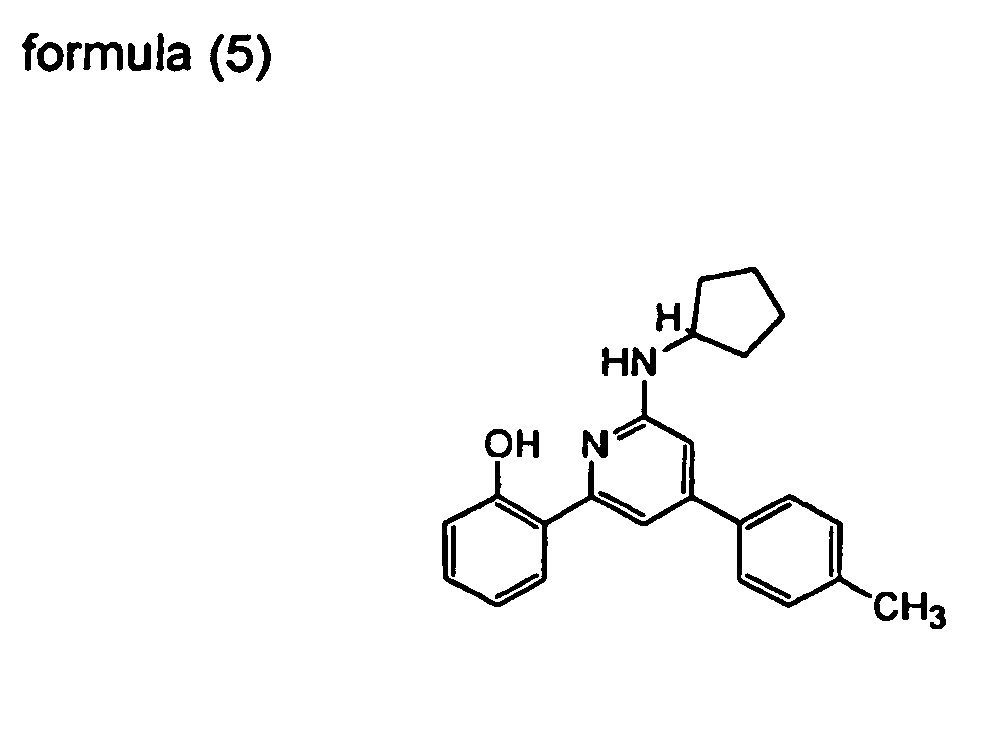
- A compound according to claims 1 to 4 of the formula (6)

- Use of a compound according to any of claims 1 to 7 for the manufacture of a medicament for the prevention or treatment of a NR1 H4 receptor protein or NR1H4 receptor protein homologue mediated disease or condition in a mammal wherein the prevention or treatment is directly or indirectly accomplished through the binding of the compound according claims 1 to 7 to the NR1 H4 receptor protein or NR1 H4 receptor protein homologue.
- Use of a compound according to any of claims 1 to 7 for the manufacture of a medicament for prevention or treatment of a NR1 H4 receptor protein mediated disease or condition according to claim 8 wherein the mammal is a human.
- Use of a compound according to any of claims 1 to 7 for the manufacture of a medicament for regulating the bile transport system in a mammal by activating the NR1 H4 receptor.
- Use of a compound according to any of claims 1 to 7 for the manufacture of a medicament for regulating levels of cholesterol, triglyceride, and/or bile acid.
- Use of a compound according to any of claims 1 to 7 for the manufacture of a medicament for treating in a mammal atherosclerosis, gallstone disease, lipid disorders, obesity or a cardiovascular disorder.
- Use of a compound according to any of claims 1 to 7 for the manufacture of a medicament capable for blocking in a mammal the fatty acid absorption in the intestine.
- Use of the compound according to claim 9 for the manufacture of a medicament for treating obesity in humans.
- Use of a compound according to any of claims 1 to 7 for the manufacture of a medicament for modulating a gene whose expression is regulated by the NR1H4 receptor.
Priority Applications (14)
| Application Number | Priority Date | Filing Date | Title |
|---|---|---|---|
| AT01119473T ATE381542T1 (en) | 2001-08-13 | 2001-08-13 | NR1H4 CORE RECEPTOR BINDING COMPOUNDS |
| DE60131967T DE60131967D1 (en) | 2001-08-13 | 2001-08-13 | Nr1h4 nuclear receptor binding compounds |
| EP01119473A EP1285914B1 (en) | 2001-08-13 | 2001-08-13 | Nr1h4 nuclear receptor binding compounds |
| US10/185,721 US7034046B2 (en) | 2001-08-13 | 2002-07-01 | NR1H4 nuclear receptor binding compounds |
| US10/185,731 US6974830B2 (en) | 2001-08-13 | 2002-07-01 | NR1H4 nuclear receptor binding compounds |
| PCT/EP2002/009076 WO2003016280A1 (en) | 2001-08-13 | 2002-08-13 | Nr1h4 nuclear receptor binding compounds |
| PCT/US2002/025438 WO2003015777A1 (en) | 2001-08-13 | 2002-08-13 | Nr1h4 nuclear receptor binding compounds |
| PCT/US2002/025437 WO2003015771A1 (en) | 2001-08-13 | 2002-08-13 | Fxr nr1h4 nuclear receptor binding compounds |
| US10/217,141 US7098336B2 (en) | 2001-08-13 | 2002-08-13 | FXR NR1H4 nuclear receptor binding compounds |
| PCT/US2002/025436 WO2003016288A1 (en) | 2001-08-13 | 2002-08-13 | Fxr nr1h4 nuclear receptor binding compounds |
| EP02750474A EP1423113A4 (en) | 2001-08-13 | 2002-08-13 | Nr1h4 nuclear receptor binding compounds |
| US10/486,748 US20070010562A1 (en) | 2001-08-13 | 2002-08-13 | Nr1h4 nuclear receptor binding compounds |
| EP02750472A EP1423370A4 (en) | 2001-08-13 | 2002-08-13 | Fxr nr1h4 nuclear receptor binding compounds |
| EP02750473A EP1423111A4 (en) | 2001-08-13 | 2002-08-13 | Fxr nr1h4 nuclear receptor binding compounds |
Applications Claiming Priority (1)
| Application Number | Priority Date | Filing Date | Title |
|---|---|---|---|
| EP01119473A EP1285914B1 (en) | 2001-08-13 | 2001-08-13 | Nr1h4 nuclear receptor binding compounds |
Publications (2)
| Publication Number | Publication Date |
|---|---|
| EP1285914A1 EP1285914A1 (en) | 2003-02-26 |
| EP1285914B1 true EP1285914B1 (en) | 2007-12-19 |
Family
ID=8178316
Family Applications (3)
| Application Number | Title | Priority Date | Filing Date |
|---|---|---|---|
| EP01119473A Expired - Lifetime EP1285914B1 (en) | 2001-08-13 | 2001-08-13 | Nr1h4 nuclear receptor binding compounds |
| EP02750472A Withdrawn EP1423370A4 (en) | 2001-08-13 | 2002-08-13 | Fxr nr1h4 nuclear receptor binding compounds |
| EP02750473A Withdrawn EP1423111A4 (en) | 2001-08-13 | 2002-08-13 | Fxr nr1h4 nuclear receptor binding compounds |
Family Applications After (2)
| Application Number | Title | Priority Date | Filing Date |
|---|---|---|---|
| EP02750472A Withdrawn EP1423370A4 (en) | 2001-08-13 | 2002-08-13 | Fxr nr1h4 nuclear receptor binding compounds |
| EP02750473A Withdrawn EP1423111A4 (en) | 2001-08-13 | 2002-08-13 | Fxr nr1h4 nuclear receptor binding compounds |
Country Status (5)
| Country | Link |
|---|---|
| US (3) | US6974830B2 (en) |
| EP (3) | EP1285914B1 (en) |
| AT (1) | ATE381542T1 (en) |
| DE (1) | DE60131967D1 (en) |
| WO (2) | WO2003016288A1 (en) |
Families Citing this family (97)
| Publication number | Priority date | Publication date | Assignee | Title |
|---|---|---|---|---|
| ATE303399T1 (en) | 2001-03-12 | 2005-09-15 | Intercept Pharmaceuticals Inc | STEROIDS AS AGONISTS FOR FXR |
| US6987121B2 (en) | 2002-04-25 | 2006-01-17 | Smithkline Beecham Corporation | Compositions and methods for hepatoprotection and treatment of cholestasis |
| US20060148858A1 (en) * | 2002-05-24 | 2006-07-06 | Tsuyoshi Maekawa | 1, 2-Azole derivatives with hypoglycemic and hypolipidemic activity |
| JP2006515838A (en) * | 2002-11-22 | 2006-06-08 | スミスクライン ビーチャム コーポレーション | Farnesoid X receptor agonist |
| CN1874780A (en) * | 2003-09-26 | 2006-12-06 | 福布斯梅迪泰克公司 | Method of inhibiting the expression of a multi-drug resistance genes and inhibiting the production of proteins resulting from the expression of such genes thereby enhancing the effectiveness of chemot |
| WO2005042692A2 (en) * | 2003-10-31 | 2005-05-12 | Forbes Medi-Tech Inc. | A method of inhibiting the expression of genes which mediate cellular cholesterol influx in animal cells and inhibiting the production of proteins resulting from the expression of such genes using cholesterol absorption inhibitors |
| EP1689383B1 (en) | 2003-11-19 | 2012-10-31 | Metabasis Therapeutics, Inc. | Novel phosphorus-containing thyromimetics |
| JP4638355B2 (en) * | 2003-12-26 | 2011-02-23 | 協和発酵キリン株式会社 | Thiazole derivative |
| PL1734970T3 (en) | 2004-03-12 | 2015-05-29 | Intercept Pharmaceuticals Inc | Treatment of fibrosis using fxr ligands |
| US10987362B2 (en) | 2004-03-12 | 2021-04-27 | Intercept Pharmaceuticals, Inc. | Treatment of fibrosis using FXR ligands |
| WO2006017211A1 (en) * | 2004-07-12 | 2006-02-16 | Research Development Foundation | Guggulsterone as an inhibitor of nuclear factor-kb and ikbalpha kinase activation |
| US8026237B2 (en) | 2004-07-30 | 2011-09-27 | Exelixis, Inc. | Pyrrole derivatives as pharmaceutical agents |
| WO2006029719A2 (en) * | 2004-09-14 | 2006-03-23 | Bayer Healthcare Ag | Diagnostics and therapeutics for diseases associated with nuclear receptor subfamily 1, group h, member 4 (nr1h4) |
| US20060252670A1 (en) * | 2004-10-14 | 2006-11-09 | Intercept Pharmaceuticals Inc. | Method of reducing drug-induced adverse side effects in a patient |
| ITMI20050912A1 (en) | 2005-05-19 | 2006-11-20 | Erregierre Spa | PROCESS OF PREPARATION OF ACIDS 3-A-YA (B) -DIDROSSI-6-A (B) -ALCHIL-5B-COLANICI |
| CA2606499C (en) | 2005-05-26 | 2017-06-13 | Metabasis Therapeutics, Inc. | Thyromimetics for the treatment of fatty liver diseases |
| US7618956B2 (en) * | 2005-05-31 | 2009-11-17 | The Gillette Company | Reduction of hair growth |
| WO2007052843A1 (en) * | 2005-11-04 | 2007-05-10 | Takeda Pharmaceutical Company Limited | Heterocyclic amide compound and use thereof |
| WO2007076260A2 (en) | 2005-12-19 | 2007-07-05 | Smithkline Beecham Corporation | Farnesoid x receptor agonists |
| JP5301286B2 (en) * | 2006-02-03 | 2013-09-25 | イーライ リリー アンド カンパニー | Compounds and methods for modulating FX receptors |
| AU2007267692B2 (en) * | 2006-05-24 | 2012-06-14 | Eli Lilly And Company | Compounds and methods for modulating FXR |
| DK2029547T3 (en) | 2006-05-24 | 2010-07-26 | Lilly Co Eli | FXR agonists |
| EP1886685A1 (en) | 2006-08-11 | 2008-02-13 | INSERM (Institut National de la Santé et de la Recherche Médicale) | Methods, uses and compositions for modulating replication of hcv through the farnesoid x receptor (fxr) activation or inhibition |
| EP1894924A1 (en) * | 2006-08-29 | 2008-03-05 | Phenex Pharmaceuticals AG | Heterocyclic FXR binding compounds |
| EP1894928A1 (en) | 2006-08-29 | 2008-03-05 | PheneX Pharmaceuticals AG | Heterocyclic fxr binding compounds |
| CL2007003035A1 (en) * | 2006-10-24 | 2008-05-16 | Smithkline Beechman Corp | COMPOUNDS DERIVED FROM ISOXAZOL REPLACED, FARNESOID X RECEIVER AGONISTS; PREPARATION PROCEDURE; PHARMACEUTICAL COMPOSITION THAT UNDERSTANDS IT; AND USE OF THE COMPOUND IN THE TREATMENT OF OBESITY, DIABETES MELLITUS, FIBROSIS IN ORGANS, |
| JP5292310B2 (en) * | 2007-01-19 | 2013-09-18 | インターセプト ファーマシューティカルズ, インコーポレイテッド | 23-substituted bile acids as TGR5 modulators and methods of use thereof |
| AU2008270784A1 (en) * | 2007-07-02 | 2009-01-08 | Glaxosmithkline Llc | Farnesoid X receptor agonists |
| TW200906823A (en) | 2007-07-16 | 2009-02-16 | Lilly Co Eli | Compounds and methods for modulating FXR |
| CA2706990C (en) | 2007-12-04 | 2016-05-10 | F. Hoffmann-La Roche Ag | Isoxazolo-pyrazine derivatives |
| US7943619B2 (en) | 2007-12-04 | 2011-05-17 | Hoffmann-La Roche Inc. | Isoxazolo-pyridazine derivatives |
| US7902201B2 (en) | 2007-12-04 | 2011-03-08 | Hoffmann-La Roche Inc. | Isoxazolo-pyrazine derivatives |
| EP2128158A1 (en) | 2008-05-26 | 2009-12-02 | Phenex Pharmaceuticals AG | Heterocyclic cyclopropyl-substituted FXR binding compounds |
| EA020310B1 (en) | 2008-07-30 | 2014-10-30 | Интерсепт Фармасьютикалз, Инк. | Tgr5 modulators and use thereof |
| JP2012506386A (en) * | 2008-10-21 | 2012-03-15 | メタボレックス, インコーポレイテッド | Aryl GPR120 receptor agonist and uses thereof |
| ES2663948T3 (en) | 2008-11-19 | 2018-04-17 | Intercept Pharmaceuticals, Inc. | TGR5 modulators and their method of use |
| US20110257139A1 (en) | 2008-12-19 | 2011-10-20 | Royal College Of Surgeons In Ireland | Treatment of diarrhoea |
| TW201033201A (en) | 2009-02-19 | 2010-09-16 | Hoffmann La Roche | Isoxazole-isoxazole and isoxazole-isothiazole derivatives |
| US8389550B2 (en) | 2009-02-25 | 2013-03-05 | Hoffmann-La Roche Inc. | Isoxazoles / O-pyridines with ethyl and ethenyl linker |
| US8222246B2 (en) | 2009-04-02 | 2012-07-17 | Hoffmann-La Roche Inc. | Substituted isoxazoles |
| US20100280019A1 (en) | 2009-04-30 | 2010-11-04 | Roland Jakob-Roetne | Isoxazoles |
| AU2010244552A1 (en) | 2009-05-05 | 2011-09-29 | F. Hoffmann-La Roche Ag | Isoxazole-pyrazole derivatives |
| SG175869A1 (en) | 2009-05-05 | 2011-12-29 | Hoffmann La Roche | Isoxazole-thiazole derivatives as gaba a receptor inverse agonists for use in the treatment of cognitive disorders |
| WO2010127976A1 (en) | 2009-05-05 | 2010-11-11 | F. Hoffmann-La Roche Ag | Isoxazole-pyridine derivatives |
| ES2467701T3 (en) | 2009-05-05 | 2014-06-12 | F. Hoffmann-La Roche Ag | Isoxazol-Pyridazine Derivatives |
| AU2010244555A1 (en) | 2009-05-07 | 2011-11-03 | F. Hoffmann-La Roche Ag | Isoxazole-pyridine derivatives as GABA modulators |
| EP2289883A1 (en) | 2009-08-19 | 2011-03-02 | Phenex Pharmaceuticals AG | Novel FXR (NR1H4) binding and activity modulating compounds |
| EP2545964A1 (en) | 2011-07-13 | 2013-01-16 | Phenex Pharmaceuticals AG | Novel FXR (NR1H4) binding and activity modulating compounds |
| WO2013037482A1 (en) | 2011-09-15 | 2013-03-21 | Phenex Pharmaceuticals Ag | Farnesoid x receptor agonists for cancer treatment and prevention |
| US8785435B2 (en) | 2011-10-20 | 2014-07-22 | Hoffmann-La Roche Inc. | Solid forms |
| US9982008B2 (en) | 2012-06-19 | 2018-05-29 | Intercept Pharmaceuticals, Inc. | Preparation and uses of obeticholic acid |
| PT3336097T (en) | 2012-06-19 | 2020-10-29 | Intercept Pharmaceuticals Inc | Preparation of the non-crystalline form of obeticholic acid |
| PL3043865T3 (en) | 2013-09-11 | 2021-07-05 | Institut National De La Santé Et De La Recherche Médicale (Inserm) | Methods and pharmaceutical compositions for the treatment of hepatitis b virus infection |
| EP3006939A1 (en) | 2014-10-06 | 2016-04-13 | Gilead Sciences, Inc. | Histidine-rich Glycoprotein as a marker for hepatic Farnesoid X receptor activation |
| US10208081B2 (en) | 2014-11-26 | 2019-02-19 | Enanta Pharmaceuticals, Inc. | Bile acid derivatives as FXR/TGR5 agonists and methods of use thereof |
| EP3034501A1 (en) | 2014-12-17 | 2016-06-22 | Gilead Sciences, Inc. | Hydroxy containing FXR (NR1H4) modulating compounds |
| EP3034499A1 (en) | 2014-12-17 | 2016-06-22 | Gilead Sciences, Inc. | Novel FXR (NR1H4) modulating compounds |
| TN2017000344A1 (en) | 2015-02-06 | 2019-01-16 | Intercept Pharmaceuticals Inc | Pharmaceutical compositions for combination therapy |
| TWI698430B (en) | 2015-02-13 | 2020-07-11 | 南北兄弟藥業投資有限公司 | Tricyclic compounds and uses thereof in medicine |
| WO2016161003A1 (en) | 2015-03-31 | 2016-10-06 | Enanta Phamraceuticals, Inc. | Bile acid derivatives as fxr/tgr5 agonists and methods of use thereof |
| US10894054B2 (en) | 2015-04-07 | 2021-01-19 | Intercept Pharmaceuticals, Inc. | FXR agonist compositions for combination therapy |
| WO2017189652A1 (en) | 2016-04-26 | 2017-11-02 | Enanta Pharmaceuticals, Inc. | Isoxazole derivatives as fxr agonists and methods of use thereof |
| WO2017189663A1 (en) | 2016-04-26 | 2017-11-02 | Enanta Pharmaceuticals, Inc. | Isoxazole derivatives as fxr agonists and methods of use thereof |
| US10080742B2 (en) | 2016-04-26 | 2018-09-25 | Enanta Pharmaceuticals, Inc. | Isoxazole derivatives as FXR agonists and methods of use thereof |
| US10144729B2 (en) | 2016-05-18 | 2018-12-04 | Enanta Pharmaceuticals, Inc. | Isoxazole analogs as FXR agonists and methods of use thereof |
| WO2017201155A1 (en) | 2016-05-18 | 2017-11-23 | Enanta Pharmaceuticals, Inc. | lSOXAZOLE DERIVATIVES AS FXR AGONISTS AND METHODS OF USE THEREOF |
| WO2017201152A1 (en) | 2016-05-18 | 2017-11-23 | Enanta Pharmaceuticals, Inc. | Isoxazole derivatives as fxr agonists and methods of use thereof |
| BR112018075734A2 (en) | 2016-06-13 | 2019-04-02 | Gilead Sciences, Inc. | compound, pharmaceutical composition, method of treating a patient with a disease or condition mediated at least in part by fxr, and use of a compound. |
| CA3252823A1 (en) | 2016-06-13 | 2025-02-25 | Gilead Sciences, Inc. | Substituted tert-butyl-3-(2-chloro-phenyl)-3-hydroxyazetidine-1-carboxylate compounds |
| TW201808283A (en) | 2016-08-05 | 2018-03-16 | 廣東東陽光藥業有限公司 | Nitrogen-containing tricyclic compounds and uses thereof in medicine |
| WO2018067704A1 (en) | 2016-10-04 | 2018-04-12 | Enanta Pharmaceuticals, Inc. | Isoxazole analogs as fxr agonists and methods of use thereof |
| US10597391B2 (en) | 2016-10-26 | 2020-03-24 | Enanta Pharmaceuticals, Inc. | Urea-containing isoxazole derivatives as FXR agonists and methods of use thereof |
| CA3044059A1 (en) | 2016-11-21 | 2018-05-24 | Viking Therapeutics, Inc. | Method of treating glycogen storage disease |
| CN110461328A (en) | 2017-03-28 | 2019-11-15 | 吉利德科学公司 | Combinations of treatments for liver disease |
| US20210085662A1 (en) | 2017-03-30 | 2021-03-25 | INSERM (Institut National de la Santé et de la Recherche Médicale) | Methods and pharmaceutical compositions for reducing persistence and expression of episomal viruses |
| JP6886074B2 (en) | 2017-04-12 | 2021-06-16 | イルドン ファーマシューティカル カンパニー リミテッド | Isoxazole derivatives that are nuclear receptor efficacy agents and their uses |
| EA201992703A1 (en) | 2017-06-05 | 2020-04-15 | Вайкинг Терапьютикс, Инк. | COMPOSITIONS FOR TREATING FIBROSIS |
| CN111511731B (en) | 2017-11-01 | 2023-05-23 | 百时美施贵宝公司 | Olefin compounds as modulators of the farnesol X receptor |
| EP3704107B1 (en) | 2017-11-01 | 2023-04-12 | Bristol-Myers Squibb Company | Multicyclic compounds as farnesoid x receptor modulators |
| WO2019089665A1 (en) | 2017-11-01 | 2019-05-09 | Bristol-Myers Squibb Company | Alkene spirocyclic compounds as farnesoid x receptor modulators |
| US10689391B2 (en) | 2017-12-12 | 2020-06-23 | Enanta Pharmaceuticals, Inc. | Isoxazole analogs as FXR agonists and methods of use thereof |
| CN110128432B (en) | 2018-02-02 | 2021-03-02 | 广东东阳光药业有限公司 | Nitrogen-containing tricyclic compounds and their application in medicine |
| US10829486B2 (en) | 2018-02-14 | 2020-11-10 | Enanta Pharmacueticals, Inc. | Isoxazole derivatives as FXR agonists and methods of use thereof |
| CA3094167A1 (en) | 2018-03-22 | 2019-09-26 | Viking Therapeutics, Inc. | Crystalline forms and methods of producing crystalline forms of a compound |
| IT201800007265A1 (en) * | 2018-07-17 | 2020-01-17 | ISOXAZOLS AS FXR RECEPTOR AGONISTS | |
| WO2020117962A1 (en) | 2018-12-05 | 2020-06-11 | Viking Therapeutics, Inc. | Compositions for the treatment of fibrosis and inflammation |
| EP4360632B1 (en) | 2019-01-15 | 2025-10-29 | Gilead Sciences, Inc. | Fxr (nr1h4) modulating compounds |
| US11524005B2 (en) | 2019-02-19 | 2022-12-13 | Gilead Sciences, Inc. | Solid forms of FXR agonists |
| WO2020231917A1 (en) | 2019-05-13 | 2020-11-19 | Enanta Pharmaceuticals, Inc. | Isoxazole derivatives as fxr agonists and methods of use thereof |
| EA202193334A1 (en) | 2019-05-30 | 2022-03-14 | Интерсепт Фармасьютикалз, Инк. | PHARMACEUTICAL COMPOSITIONS CONTAINING FXR AGONIST AND FIBRATE FOR USE IN THE TREATMENT OF CHOLESTATIC LIVER DISEASE |
| AU2020312735A1 (en) | 2019-07-18 | 2021-12-16 | Enyo Pharma | Method for decreasing adverse-effects of interferon |
| CN112824394B (en) * | 2019-11-21 | 2024-08-13 | 中国科学院上海药物研究所 | PPARs-FXR multi-target small molecule agonist and its preparation method and use |
| WO2021108974A1 (en) | 2019-12-03 | 2021-06-10 | Gannex Pharma Co., Ltd | Compounds for modulating activity of fxr and uses thereof |
| US20230060715A1 (en) | 2020-01-15 | 2023-03-02 | INSERM (Institut National de la Santé et de la Recherche Médicale) | Use of fxr agonists for treating an infection by hepatitis d virus |
| US11478533B2 (en) | 2020-04-27 | 2022-10-25 | Novo Nordisk A/S | Semaglutide for use in medicine |
| US20240100125A1 (en) | 2021-01-14 | 2024-03-28 | Enyo Pharma | Synergistic effect of a fxr agonist and ifn for the treatment of hbv infection |
| CN117320722A (en) | 2021-04-28 | 2023-12-29 | 埃尼奥制药公司 | Use of FXR agonists as combination therapy strongly potentiates the effects of TLR3 agonists |
Family Cites Families (23)
| Publication number | Priority date | Publication date | Assignee | Title |
|---|---|---|---|---|
| US2863874A (en) * | 1955-05-26 | 1958-12-09 | Goodrich Co B F | Process of preparing 2-aminothiazoles |
| AU545463B2 (en) * | 1982-06-25 | 1985-07-18 | Kowa Co. Ltd. | Benzoyl piperacine esters |
| JPS59139357A (en) * | 1983-01-28 | 1984-08-10 | Torii Yakuhin Kk | Amidine derivative |
| DE3621372A1 (en) * | 1986-06-26 | 1988-01-07 | Thomae Gmbh Dr K | Heterocyclically substituted 3,5-dihydroxyhept-6-enecarboxylic acids, their derivatives, processes for the preparation of these compounds and medicaments containing them |
| DE4237768A1 (en) * | 1991-11-12 | 1993-05-13 | Ciba Geigy Ag | New polyarylene ether derivs. with reduced viscosity - used to prepare moulded bodies, foils, fibres and membranes, as matrix resins, adhesives or coating agents or as polymer additives |
| DE4219247A1 (en) * | 1992-06-12 | 1993-12-16 | Bayer Ag | Use of 3-aryl-substituted 5-alkylisoxazole-4-carboxylic acid derivatives for the control of endoparasites, novel 3-aryl-substituted 5-alkylisoxazole-4-carboxylic acid derivatives and process for their preparation |
| FR2692893B1 (en) * | 1992-06-24 | 1994-09-02 | Sanofi Elf | Branched alkylamino thiazole derivatives, processes for their preparation and pharmaceutical compositions containing them. |
| US6005103A (en) * | 1993-11-19 | 1999-12-21 | Warner-Lambert Company | Pyrone derivatives as protease inhibitors and antiviral agents |
| FR2714059B1 (en) * | 1993-12-21 | 1996-03-08 | Sanofi Elf | Branched amino derivatives of thiazole, processes for their preparation and pharmaceutical compositions containing them. |
| WO1996003392A1 (en) * | 1994-07-27 | 1996-02-08 | G.D. Searle & Co. | Substituted thiazoles for the treatment of inflammation |
| AU689972B2 (en) * | 1994-11-29 | 1998-04-09 | Hisamitsu Pharmaceutical Co., Inc. | Antibacterial preparation or bactericide comprising 2-aminothiazole derivative and/or salt thereof |
| ATE223390T1 (en) * | 1995-02-13 | 2002-09-15 | Searle & Co | SUBSTITUTED ISOXAZOLES FOR THE TREATMENT OF INFLAMMATION |
| DE69624437T2 (en) * | 1995-04-13 | 2003-08-07 | Taiho Pharmaceutical Co. Ltd., Tokio/Tokyo | 4,6-DIARYLPYRIMIDINE DERIVATIVES AND THEIR SALTS |
| JP4136024B2 (en) | 1995-12-29 | 2008-08-20 | 富山化学工業株式会社 | 2-aminothiazol derivative or salt thereof |
| US5883105A (en) | 1996-04-03 | 1999-03-16 | Merck & Co., Inc. | Inhibitors of farnesyl-protein transferase |
| JPH11263775A (en) * | 1997-09-08 | 1999-09-28 | Sankyo Co Ltd | Hydroxyaniline derivative |
| WO2000008001A1 (en) * | 1998-08-07 | 2000-02-17 | Chiron Corporation | Substituted isoxazole as estrogen receptor modulators |
| ES2326850T3 (en) * | 1998-12-23 | 2009-10-20 | Glaxo Group Limited | TESTS FOR NUCLEAR RECEPTORS LIGANDOS. |
| US6201020B1 (en) * | 1998-12-31 | 2001-03-13 | Guilford Pharmaceuticals, Inc. | Ortho-diphenol compounds, methods and pharmaceutical compositions for inhibiting parp |
| PT1177176E (en) * | 1999-04-28 | 2006-08-31 | Aventis Pharma Gmbh | DERIVATIVES OF TRIARILIC ACIDS AS LIGANDS OF PPAR RECEPTORS. |
| DE19943636A1 (en) * | 1999-09-13 | 2001-03-15 | Bayer Ag | Novel dicarboxylic acid derivatives with pharmaceutical properties |
| AU2001242629B2 (en) * | 2000-03-29 | 2005-08-11 | Cyclacel Limited | 2-substituted 4-heteroaryl-pyrimidines and their use in the treatment of proliferative disorders |
| GB0030710D0 (en) * | 2000-12-15 | 2001-01-31 | Hoffmann La Roche | Piperazine derivatives |
-
2001
- 2001-08-13 EP EP01119473A patent/EP1285914B1/en not_active Expired - Lifetime
- 2001-08-13 DE DE60131967T patent/DE60131967D1/en not_active Expired - Lifetime
- 2001-08-13 AT AT01119473T patent/ATE381542T1/en not_active IP Right Cessation
-
2002
- 2002-07-01 US US10/185,731 patent/US6974830B2/en not_active Expired - Lifetime
- 2002-07-01 US US10/185,721 patent/US7034046B2/en not_active Expired - Lifetime
- 2002-08-13 WO PCT/US2002/025436 patent/WO2003016288A1/en not_active Ceased
- 2002-08-13 EP EP02750472A patent/EP1423370A4/en not_active Withdrawn
- 2002-08-13 EP EP02750473A patent/EP1423111A4/en not_active Withdrawn
- 2002-08-13 US US10/217,141 patent/US7098336B2/en not_active Expired - Fee Related
- 2002-08-13 WO PCT/US2002/025437 patent/WO2003015771A1/en not_active Ceased
Also Published As
| Publication number | Publication date |
|---|---|
| US20030187042A1 (en) | 2003-10-02 |
| EP1423370A1 (en) | 2004-06-02 |
| EP1285914A1 (en) | 2003-02-26 |
| EP1423111A4 (en) | 2007-04-18 |
| WO2003015771A1 (en) | 2003-02-27 |
| WO2003016288A1 (en) | 2003-02-27 |
| DE60131967D1 (en) | 2008-01-31 |
| US20030130296A1 (en) | 2003-07-10 |
| EP1423370A4 (en) | 2007-04-18 |
| EP1423111A1 (en) | 2004-06-02 |
| US20030149087A1 (en) | 2003-08-07 |
| US7034046B2 (en) | 2006-04-25 |
| US6974830B2 (en) | 2005-12-13 |
| US7098336B2 (en) | 2006-08-29 |
| ATE381542T1 (en) | 2008-01-15 |
Similar Documents
| Publication | Publication Date | Title |
|---|---|---|
| EP1285914A1 (en) | Nr1h4 nuclear receptor binding compounds | |
| US20070010562A1 (en) | Nr1h4 nuclear receptor binding compounds | |
| EP1423113A1 (en) | Nr1h4 nuclear receptor binding compounds | |
| EP1407774A1 (en) | 2-Amino-4-quinazolinones as LXR nuclear receptor binding compounds | |
| EP1398029A1 (en) | NR3B1 nuclear receptor binding 3-substituted pyrazole derivatives | |
| KR100518142B1 (en) | 5-membered n-heterocyclic compounds with hypoglycemic and hypolipidemic activity | |
| JP6556154B2 (en) | Isoquinoline derivatives and uses thereof | |
| US6699879B1 (en) | Phenyl urea and phenyl thiourea derivatives as orexin receptor antagonists | |
| EP1398032A1 (en) | 4-Oxo-quinazolines as LXR nuclear receptor binding compounds | |
| CN101679298B (en) | Fused bicyclic heteroaryl derivatives | |
| JP2003534327A (en) | Benzophenone as inhibitor of IL-1β and TNF-α | |
| EP1092711A1 (en) | Retinoid-associated receptor regulators | |
| SK288236B6 (en) | Quinolinyl phenyl sulfonamide compound, its use as medicament and pharmaceutical preparation comprising it | |
| RU2424227C2 (en) | S1p3 receptor antagonist | |
| JP2005528384A (en) | Compounds and methods for inducing apoptosis in proliferating cells | |
| JP2020506226A (en) | Amide compounds and uses thereof | |
| US7358267B2 (en) | Bis-aryl thiazole derivatives | |
| CN103044460A (en) | 3,5,7-triphenyl-5H-thiazolo[3,2-a]pyrimidin derivatives and application thereof | |
| ZA200600435B (en) | PPAR active compounds | |
| HK1036972A (en) | Retinoid-associated receptor regulators | |
| JPWO2000001679A1 (en) | Retinoid-related receptor function modulators |
Legal Events
| Date | Code | Title | Description |
|---|---|---|---|
| PUAI | Public reference made under article 153(3) epc to a published international application that has entered the european phase |
Free format text: ORIGINAL CODE: 0009012 |
|
| AK | Designated contracting states |
Kind code of ref document: A1 Designated state(s): AT BE CH CY DE DK ES FI FR GB GR IE IT LI LU MC NL PT SE TR |
|
| AX | Request for extension of the european patent |
Extension state: AL LT LV MK RO SI |
|
| RAP1 | Party data changed (applicant data changed or rights of an application transferred) |
Owner name: LION BIOSCIENCE AG |
|
| 17P | Request for examination filed |
Effective date: 20030813 |
|
| 17Q | First examination report despatched |
Effective date: 20030919 |
|
| AKX | Designation fees paid |
Designated state(s): AT BE CH CY DE DK ES FI FR GB GR IE IT LI LU MC NL PT SE TR |
|
| RAP1 | Party data changed (applicant data changed or rights of an application transferred) |
Owner name: PHENEX PHARMACEUTICALS AG |
|
| RAP1 | Party data changed (applicant data changed or rights of an application transferred) |
Owner name: PHENEX PHARMACEUTICALS AG |
|
| GRAP | Despatch of communication of intention to grant a patent |
Free format text: ORIGINAL CODE: EPIDOSNIGR1 |
|
| GRAJ | Information related to disapproval of communication of intention to grant by the applicant or resumption of examination proceedings by the epo deleted |
Free format text: ORIGINAL CODE: EPIDOSDIGR1 |
|
| GRAP | Despatch of communication of intention to grant a patent |
Free format text: ORIGINAL CODE: EPIDOSNIGR1 |
|
| RIN1 | Information on inventor provided before grant (corrected) |
Inventor name: DEUSCHLE, ULRICH, DR. Inventor name: FOROOD, BEHROUZ, PH.D. Inventor name: BAUER, ULRIKE Inventor name: OTTE, KERSTIN, DR. Inventor name: SAGE, CARLETON, PH.D. Inventor name: HANECAK, RONNIE, PH.D. Inventor name: LEE, MATTHEW, PH.D. Inventor name: GRIFFITH, MICHAEL, PH.D. Inventor name: LEVIN, NANCY, PH.D. Inventor name: GAHMAN, TIM, PH.D. Inventor name: HEBERT, NORMAND, PH.D. Inventor name: SUD, MANISH Inventor name: KOBER, INGO, DR. Inventor name: DNEPROVSKAIA, ELENA, PH.D. Inventor name: KREMOSER, CLAUS, DR. Inventor name: KOEGL, MANFRED, DR. Inventor name: CHERUVALLATH, ZACH, PH.D. Inventor name: MACDONALD, JAMES, PH.D. Inventor name: KIELY, JOHN, PH.D. |
|
| GRAS | Grant fee paid |
Free format text: ORIGINAL CODE: EPIDOSNIGR3 |
|
| GRAA | (expected) grant |
Free format text: ORIGINAL CODE: 0009210 |
|
| AK | Designated contracting states |
Kind code of ref document: B1 Designated state(s): AT BE CH CY DE DK ES FI FR GB GR IE IT LI LU MC NL PT SE TR |
|
| REG | Reference to a national code |
Ref country code: GB Ref legal event code: FG4D |
|
| REG | Reference to a national code |
Ref country code: IE Ref legal event code: FG4D |
|
| REG | Reference to a national code |
Ref country code: CH Ref legal event code: EP |
|
| REF | Corresponds to: |
Ref document number: 60131967 Country of ref document: DE Date of ref document: 20080131 Kind code of ref document: P |
|
| PG25 | Lapsed in a contracting state [announced via postgrant information from national office to epo] |
Ref country code: CH Free format text: LAPSE BECAUSE OF FAILURE TO SUBMIT A TRANSLATION OF THE DESCRIPTION OR TO PAY THE FEE WITHIN THE PRESCRIBED TIME-LIMIT Effective date: 20071219 Ref country code: LI Free format text: LAPSE BECAUSE OF FAILURE TO SUBMIT A TRANSLATION OF THE DESCRIPTION OR TO PAY THE FEE WITHIN THE PRESCRIBED TIME-LIMIT Effective date: 20071219 Ref country code: SE Free format text: LAPSE BECAUSE OF FAILURE TO SUBMIT A TRANSLATION OF THE DESCRIPTION OR TO PAY THE FEE WITHIN THE PRESCRIBED TIME-LIMIT Effective date: 20080319 |
|
| PG25 | Lapsed in a contracting state [announced via postgrant information from national office to epo] |
Ref country code: FI Free format text: LAPSE BECAUSE OF FAILURE TO SUBMIT A TRANSLATION OF THE DESCRIPTION OR TO PAY THE FEE WITHIN THE PRESCRIBED TIME-LIMIT Effective date: 20071219 Ref country code: NL Free format text: LAPSE BECAUSE OF FAILURE TO SUBMIT A TRANSLATION OF THE DESCRIPTION OR TO PAY THE FEE WITHIN THE PRESCRIBED TIME-LIMIT Effective date: 20071219 |
|
| NLV1 | Nl: lapsed or annulled due to failure to fulfill the requirements of art. 29p and 29m of the patents act | ||
| REG | Reference to a national code |
Ref country code: CH Ref legal event code: PL |
|
| PG25 | Lapsed in a contracting state [announced via postgrant information from national office to epo] |
Ref country code: AT Free format text: LAPSE BECAUSE OF FAILURE TO SUBMIT A TRANSLATION OF THE DESCRIPTION OR TO PAY THE FEE WITHIN THE PRESCRIBED TIME-LIMIT Effective date: 20071219 |
|
| PG25 | Lapsed in a contracting state [announced via postgrant information from national office to epo] |
Ref country code: ES Free format text: LAPSE BECAUSE OF FAILURE TO SUBMIT A TRANSLATION OF THE DESCRIPTION OR TO PAY THE FEE WITHIN THE PRESCRIBED TIME-LIMIT Effective date: 20080330 |
|
| PG25 | Lapsed in a contracting state [announced via postgrant information from national office to epo] |
Ref country code: BE Free format text: LAPSE BECAUSE OF FAILURE TO SUBMIT A TRANSLATION OF THE DESCRIPTION OR TO PAY THE FEE WITHIN THE PRESCRIBED TIME-LIMIT Effective date: 20071219 |
|
| PG25 | Lapsed in a contracting state [announced via postgrant information from national office to epo] |
Ref country code: PT Free format text: LAPSE BECAUSE OF FAILURE TO SUBMIT A TRANSLATION OF THE DESCRIPTION OR TO PAY THE FEE WITHIN THE PRESCRIBED TIME-LIMIT Effective date: 20080519 |
|
| EN | Fr: translation not filed | ||
| PLBE | No opposition filed within time limit |
Free format text: ORIGINAL CODE: 0009261 |
|
| STAA | Information on the status of an ep patent application or granted ep patent |
Free format text: STATUS: NO OPPOSITION FILED WITHIN TIME LIMIT |
|
| PG25 | Lapsed in a contracting state [announced via postgrant information from national office to epo] |
Ref country code: DK Free format text: LAPSE BECAUSE OF FAILURE TO SUBMIT A TRANSLATION OF THE DESCRIPTION OR TO PAY THE FEE WITHIN THE PRESCRIBED TIME-LIMIT Effective date: 20071219 Ref country code: DE Free format text: LAPSE BECAUSE OF FAILURE TO SUBMIT A TRANSLATION OF THE DESCRIPTION OR TO PAY THE FEE WITHIN THE PRESCRIBED TIME-LIMIT Effective date: 20080320 |
|
| 26N | No opposition filed |
Effective date: 20080922 |
|
| PG25 | Lapsed in a contracting state [announced via postgrant information from national office to epo] |
Ref country code: GR Free format text: LAPSE BECAUSE OF FAILURE TO SUBMIT A TRANSLATION OF THE DESCRIPTION OR TO PAY THE FEE WITHIN THE PRESCRIBED TIME-LIMIT Effective date: 20080320 |
|
| PG25 | Lapsed in a contracting state [announced via postgrant information from national office to epo] |
Ref country code: MC Free format text: LAPSE BECAUSE OF NON-PAYMENT OF DUE FEES Effective date: 20080831 |
|
| PG25 | Lapsed in a contracting state [announced via postgrant information from national office to epo] |
Ref country code: FR Free format text: LAPSE BECAUSE OF FAILURE TO SUBMIT A TRANSLATION OF THE DESCRIPTION OR TO PAY THE FEE WITHIN THE PRESCRIBED TIME-LIMIT Effective date: 20081010 |
|
| PG25 | Lapsed in a contracting state [announced via postgrant information from national office to epo] |
Ref country code: CY Free format text: LAPSE BECAUSE OF FAILURE TO SUBMIT A TRANSLATION OF THE DESCRIPTION OR TO PAY THE FEE WITHIN THE PRESCRIBED TIME-LIMIT Effective date: 20071219 |
|
| PG25 | Lapsed in a contracting state [announced via postgrant information from national office to epo] |
Ref country code: LU Free format text: LAPSE BECAUSE OF NON-PAYMENT OF DUE FEES Effective date: 20080813 |
|
| PG25 | Lapsed in a contracting state [announced via postgrant information from national office to epo] |
Ref country code: TR Free format text: LAPSE BECAUSE OF FAILURE TO SUBMIT A TRANSLATION OF THE DESCRIPTION OR TO PAY THE FEE WITHIN THE PRESCRIBED TIME-LIMIT Effective date: 20071219 |
|
| PG25 | Lapsed in a contracting state [announced via postgrant information from national office to epo] |
Ref country code: IT Free format text: LAPSE BECAUSE OF NON-PAYMENT OF DUE FEES Effective date: 20080831 |
|
| PGFP | Annual fee paid to national office [announced via postgrant information from national office to epo] |
Ref country code: IE Payment date: 20130812 Year of fee payment: 13 |
|
| PGFP | Annual fee paid to national office [announced via postgrant information from national office to epo] |
Ref country code: GB Payment date: 20130807 Year of fee payment: 13 |
|
| GBPC | Gb: european patent ceased through non-payment of renewal fee |
Effective date: 20140813 |
|
| REG | Reference to a national code |
Ref country code: IE Ref legal event code: MM4A |
|
| PG25 | Lapsed in a contracting state [announced via postgrant information from national office to epo] |
Ref country code: GB Free format text: LAPSE BECAUSE OF NON-PAYMENT OF DUE FEES Effective date: 20140813 |
|
| PG25 | Lapsed in a contracting state [announced via postgrant information from national office to epo] |
Ref country code: IE Free format text: LAPSE BECAUSE OF NON-PAYMENT OF DUE FEES Effective date: 20140813 |