EP1285833A2 - Systems and method incorporating dynamic feedforward for integrated control of motor vehicle steering and braking - Google Patents
Systems and method incorporating dynamic feedforward for integrated control of motor vehicle steering and braking Download PDFInfo
- Publication number
- EP1285833A2 EP1285833A2 EP02078090A EP02078090A EP1285833A2 EP 1285833 A2 EP1285833 A2 EP 1285833A2 EP 02078090 A EP02078090 A EP 02078090A EP 02078090 A EP02078090 A EP 02078090A EP 1285833 A2 EP1285833 A2 EP 1285833A2
- Authority
- EP
- European Patent Office
- Prior art keywords
- control
- subsystem
- control value
- vehicle
- function
- Prior art date
- Legal status (The legal status is an assumption and is not a legal conclusion. Google has not performed a legal analysis and makes no representation as to the accuracy of the status listed.)
- Granted
Links
- 238000000034 method Methods 0.000 title claims description 15
- 238000012546 transfer Methods 0.000 claims description 23
- 230000003467 diminishing effect Effects 0.000 claims description 5
- 230000004044 response Effects 0.000 description 5
- 230000008901 benefit Effects 0.000 description 4
- 238000013016 damping Methods 0.000 description 4
- 238000010586 diagram Methods 0.000 description 3
- 230000003068 static effect Effects 0.000 description 3
- 230000001133 acceleration Effects 0.000 description 2
- 238000013459 approach Methods 0.000 description 2
- 239000000725 suspension Substances 0.000 description 2
- 230000001052 transient effect Effects 0.000 description 2
- 230000009471 action Effects 0.000 description 1
- 230000006978 adaptation Effects 0.000 description 1
- 230000003247 decreasing effect Effects 0.000 description 1
- 230000007812 deficiency Effects 0.000 description 1
- 238000013461 design Methods 0.000 description 1
- 230000007613 environmental effect Effects 0.000 description 1
- 238000001914 filtration Methods 0.000 description 1
- 230000005484 gravity Effects 0.000 description 1
- 230000010354 integration Effects 0.000 description 1
- 238000012986 modification Methods 0.000 description 1
- 230000004048 modification Effects 0.000 description 1
- 238000005192 partition Methods 0.000 description 1
Images


Classifications
-
- B—PERFORMING OPERATIONS; TRANSPORTING
- B62—LAND VEHICLES FOR TRAVELLING OTHERWISE THAN ON RAILS
- B62D—MOTOR VEHICLES; TRAILERS
- B62D6/00—Arrangements for automatically controlling steering depending on driving conditions sensed and responded to, e.g. control circuits
-
- B—PERFORMING OPERATIONS; TRANSPORTING
- B60—VEHICLES IN GENERAL
- B60G—VEHICLE SUSPENSION ARRANGEMENTS
- B60G17/00—Resilient suspensions having means for adjusting the spring or vibration-damper characteristics, for regulating the distance between a supporting surface and a sprung part of vehicle or for locking suspension during use to meet varying vehicular or surface conditions, e.g. due to speed or load
- B60G17/015—Resilient suspensions having means for adjusting the spring or vibration-damper characteristics, for regulating the distance between a supporting surface and a sprung part of vehicle or for locking suspension during use to meet varying vehicular or surface conditions, e.g. due to speed or load the regulating means comprising electric or electronic elements
- B60G17/0195—Resilient suspensions having means for adjusting the spring or vibration-damper characteristics, for regulating the distance between a supporting surface and a sprung part of vehicle or for locking suspension during use to meet varying vehicular or surface conditions, e.g. due to speed or load the regulating means comprising electric or electronic elements characterised by the regulation being combined with other vehicle control systems
-
- B—PERFORMING OPERATIONS; TRANSPORTING
- B60—VEHICLES IN GENERAL
- B60T—VEHICLE BRAKE CONTROL SYSTEMS OR PARTS THEREOF; BRAKE CONTROL SYSTEMS OR PARTS THEREOF, IN GENERAL; ARRANGEMENT OF BRAKING ELEMENTS ON VEHICLES IN GENERAL; PORTABLE DEVICES FOR PREVENTING UNWANTED MOVEMENT OF VEHICLES; VEHICLE MODIFICATIONS TO FACILITATE COOLING OF BRAKES
- B60T8/00—Arrangements for adjusting wheel-braking force to meet varying vehicular or ground-surface conditions, e.g. limiting or varying distribution of braking force
- B60T8/17—Using electrical or electronic regulation means to control braking
- B60T8/1755—Brake regulation specially adapted to control the stability of the vehicle, e.g. taking into account yaw rate or transverse acceleration in a curve
-
- B—PERFORMING OPERATIONS; TRANSPORTING
- B60—VEHICLES IN GENERAL
- B60G—VEHICLE SUSPENSION ARRANGEMENTS
- B60G2600/00—Indexing codes relating to particular elements, systems or processes used on suspension systems or suspension control systems
- B60G2600/11—Feedforward signal
-
- B—PERFORMING OPERATIONS; TRANSPORTING
- B60—VEHICLES IN GENERAL
- B60G—VEHICLE SUSPENSION ARRANGEMENTS
- B60G2600/00—Indexing codes relating to particular elements, systems or processes used on suspension systems or suspension control systems
- B60G2600/18—Automatic control means
- B60G2600/187—Digital Controller Details and Signal Treatment
- B60G2600/1875—Other parameter or state estimation methods not involving the mathematical modelling of the vehicle
-
- B—PERFORMING OPERATIONS; TRANSPORTING
- B60—VEHICLES IN GENERAL
- B60G—VEHICLE SUSPENSION ARRANGEMENTS
- B60G2600/00—Indexing codes relating to particular elements, systems or processes used on suspension systems or suspension control systems
- B60G2600/18—Automatic control means
- B60G2600/187—Digital Controller Details and Signal Treatment
- B60G2600/1877—Adaptive Control
-
- B—PERFORMING OPERATIONS; TRANSPORTING
- B60—VEHICLES IN GENERAL
- B60G—VEHICLE SUSPENSION ARRANGEMENTS
- B60G2800/00—Indexing codes relating to the type of movement or to the condition of the vehicle and to the end result to be achieved by the control action
- B60G2800/90—System Controller type
- B60G2800/91—Suspension Control
-
- B—PERFORMING OPERATIONS; TRANSPORTING
- B60—VEHICLES IN GENERAL
- B60G—VEHICLE SUSPENSION ARRANGEMENTS
- B60G2800/00—Indexing codes relating to the type of movement or to the condition of the vehicle and to the end result to be achieved by the control action
- B60G2800/90—System Controller type
- B60G2800/92—ABS - Brake Control
-
- B—PERFORMING OPERATIONS; TRANSPORTING
- B60—VEHICLES IN GENERAL
- B60G—VEHICLE SUSPENSION ARRANGEMENTS
- B60G2800/00—Indexing codes relating to the type of movement or to the condition of the vehicle and to the end result to be achieved by the control action
- B60G2800/90—System Controller type
- B60G2800/96—ASC - Assisted or power Steering control
-
- B—PERFORMING OPERATIONS; TRANSPORTING
- B60—VEHICLES IN GENERAL
- B60G—VEHICLE SUSPENSION ARRANGEMENTS
- B60G2800/00—Indexing codes relating to the type of movement or to the condition of the vehicle and to the end result to be achieved by the control action
- B60G2800/90—System Controller type
- B60G2800/97—Engine Management System [EMS]
-
- B—PERFORMING OPERATIONS; TRANSPORTING
- B60—VEHICLES IN GENERAL
- B60T—VEHICLE BRAKE CONTROL SYSTEMS OR PARTS THEREOF; BRAKE CONTROL SYSTEMS OR PARTS THEREOF, IN GENERAL; ARRANGEMENT OF BRAKING ELEMENTS ON VEHICLES IN GENERAL; PORTABLE DEVICES FOR PREVENTING UNWANTED MOVEMENT OF VEHICLES; VEHICLE MODIFICATIONS TO FACILITATE COOLING OF BRAKES
- B60T2260/00—Interaction of vehicle brake system with other systems
- B60T2260/02—Active Steering, Steer-by-Wire
-
- B—PERFORMING OPERATIONS; TRANSPORTING
- B60—VEHICLES IN GENERAL
- B60T—VEHICLE BRAKE CONTROL SYSTEMS OR PARTS THEREOF; BRAKE CONTROL SYSTEMS OR PARTS THEREOF, IN GENERAL; ARRANGEMENT OF BRAKING ELEMENTS ON VEHICLES IN GENERAL; PORTABLE DEVICES FOR PREVENTING UNWANTED MOVEMENT OF VEHICLES; VEHICLE MODIFICATIONS TO FACILITATE COOLING OF BRAKES
- B60T2260/00—Interaction of vehicle brake system with other systems
- B60T2260/06—Active Suspension System
-
- B—PERFORMING OPERATIONS; TRANSPORTING
- B60—VEHICLES IN GENERAL
- B60T—VEHICLE BRAKE CONTROL SYSTEMS OR PARTS THEREOF; BRAKE CONTROL SYSTEMS OR PARTS THEREOF, IN GENERAL; ARRANGEMENT OF BRAKING ELEMENTS ON VEHICLES IN GENERAL; PORTABLE DEVICES FOR PREVENTING UNWANTED MOVEMENT OF VEHICLES; VEHICLE MODIFICATIONS TO FACILITATE COOLING OF BRAKES
- B60T2270/00—Further aspects of brake control systems not otherwise provided for
- B60T2270/86—Optimizing braking by using ESP vehicle or tyre model
-
- B—PERFORMING OPERATIONS; TRANSPORTING
- B60—VEHICLES IN GENERAL
- B60W—CONJOINT CONTROL OF VEHICLE SUB-UNITS OF DIFFERENT TYPE OR DIFFERENT FUNCTION; CONTROL SYSTEMS SPECIALLY ADAPTED FOR HYBRID VEHICLES; ROAD VEHICLE DRIVE CONTROL SYSTEMS FOR PURPOSES NOT RELATED TO THE CONTROL OF A PARTICULAR SUB-UNIT
- B60W50/00—Details of control systems for road vehicle drive control not related to the control of a particular sub-unit, e.g. process diagnostic or vehicle driver interfaces
- B60W2050/0001—Details of the control system
- B60W2050/0002—Automatic control, details of type of controller or control system architecture
- B60W2050/0012—Feedforward or open loop systems
-
- B—PERFORMING OPERATIONS; TRANSPORTING
- B60—VEHICLES IN GENERAL
- B60W—CONJOINT CONTROL OF VEHICLE SUB-UNITS OF DIFFERENT TYPE OR DIFFERENT FUNCTION; CONTROL SYSTEMS SPECIALLY ADAPTED FOR HYBRID VEHICLES; ROAD VEHICLE DRIVE CONTROL SYSTEMS FOR PURPOSES NOT RELATED TO THE CONTROL OF A PARTICULAR SUB-UNIT
- B60W50/00—Details of control systems for road vehicle drive control not related to the control of a particular sub-unit, e.g. process diagnostic or vehicle driver interfaces
- B60W2050/0001—Details of the control system
- B60W2050/0043—Signal treatments, identification of variables or parameters, parameter estimation or state estimation
- B60W2050/0057—Frequency analysis, spectral techniques or transforms
Definitions
- the present invention relates to control systems for motor vehicle subsystems, and more particularly to a system and method including a dynamic feedforward feature for integrated control of the motor vehicle steering and brakes.
- Unified or integrated chassis control systems have been proposed which control the brakes, steering, and suspension of a motor vehicle.
- the purpose of unified chassis control is to improve vehicle performance in all driving conditions by coordinating control of the chassis subsystems.
- Unified chassis control systems typically utilize a supervisory control concept that utilizes three fundamental blocks: a reference model, a state estimator, and a vehicle control.
- the vehicle control element normally incorporates a feedback control. This element computes control values by comparing actual states obtained from the state estimator with desired states from the reference model.
- the present invention is a system and method for controlling a motor vehicle subsystem.
- the control system comprises a reference model and a feedforward controller.
- the reference model computes desired states of the subsystem.
- the feedforward controller computes a first control value based on input from the reference model, and computes a second control value based on yaw rate of the vehicle and a control variable for the subsystem.
- Another object of the present invention is to provide a control system of the type described above which improves control response.
- Still another object of the present invention is to provide a control system of the type described above which allows single-point tuning.
- Still another object of the present invention is to provide a control system of the type described above which incorporates dynamic feedforward logic.
- FIG. 1 shows a control system 10 according to the present invention for chassis subsystems 12 of a motor vehicle 14 .
- the chassis subsystems may include front and/or rear steering and braking.
- a supervisory controller 16 performs many estimation and control functions conventionally performed by the subsystems themselves.
- the supervisory controller 16 includes a reference model 18, an estimator 20 of vehicle state and environment, and a vehicle level controller including a feedforward controller 22 and a feedback controller 24 .
- the reference model 18 determines the desired vehicle response, in terms of measureable variables, to driver inputs using measured inputs from sensors 26 and some estimates.
- the estimator 20 uses measured inputs such as from sensors 26 , measured outputs such as from sensors 28 , and some preliminary estimates from individual modules to generate estimates of vehicle states which are not measured directly.
- the estimator 20 may also estimate variables describing potentially relevant environmental effects such as surface coefficient of adhesion, bank angle of the road surface, roughness of the road surface, and others.
- the supervisory controller 16 uses the desired, measured and estimated values to determine the corrective action on the vehicle level, for example moments and forces acting on the vehicle, that will bring the vehicle response into conformance with the desired response.
- the supervisory controller 16 also performs partition of control among the subsystems 12 . Thus, the supervisory controller 16 decides whether and to what extent to activate any subsystem(s) in a given situation.
- the feedforward controller 22 computes a control value based on input from the reference model 18 .
- the present invention optionally provides a driver to chassis-subsystem transfer function 30. In the case of steering, this could represent the transfer function between steering wheel position and road wheel position. In the case of braking, this could represent the transfer function between pedal force and caliper forces at each of the braked wheels of the motor vehicle.
- This transfer function can be included in the feedforward and feedback control design. For suspension systems, however, this block does not exist. It should be noted that the lines on the block diagram in FIG. 1 show primary control paths. In reality, due to the non-linear nature of vehicle dynamics, the present invention contemplates other links such as bank angle from the state estimator 20 to the feedforward controller 22 .
- a control term based on the driver inputs (inputs to the reference model) are also appropriate and fit the definition of feedforward control.
- a dynamic feedforward control is represented by line 32 .
- the dynamic feedforward control is determined by the vehicle yaw-plane dynamics, which can be described by equations using variables for rearwheel steer ⁇ r (if present), front active steer ⁇ fc , and differential brake ⁇ F b systems.
- X p A p X p + D f ⁇ + D r ⁇ r + D fc ⁇ fc + B p ⁇ F b
- the variable P 2 represents the transfer function to relate the yaw rate to the control variables for the rear steer (if present), front active steer, and braking systems.
- the variables G ref , G ff , G fb , G s respectively represent the transfer functions for the desired reference model, the feedforward control, the feedback control, and the actuator dynamics shown in FIG. 1.
- ⁇ r G ff G ref ⁇
- G ff G p + G i s - a 33 + G d s
- G p (- a 11 - a 22 - ⁇ d b ⁇ 2 k d a 12 + ⁇ d b ⁇ 1 k d a 22 + G d b r 1 a 33 - b ⁇ 1 k d )/ b r 1
- G i (- b ⁇ 2 k d a 12 + b ⁇ 1 k d a 22 + a 11 a 22 - a 12 a 21 +
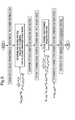
- FIG. 2 shows a dynamic feedforward control method for a rear steer application assuming a first-order transfer function.
- the bicycle model parameters are first obtained at block 100, and then at block 102 the desired time constant ⁇ d is determined according to the equations discussed previously.
- a cornering stiffness adaptation based on an estimate of road friction is then performed at 104 , followed by filtering the steering wheel position, the steering wheel rate, and the vehicle speed as shown by block 106.
- the diminishing integral gains G i and a 33 are then determined at block 108, and the proportional and derivative control gains G p and G d , respectively, determined at block 110.
- the dynamic feedforward control gain is determined according to the equation discussed above.
- the dynamic feedforward control command for the rear steer system is then determined at block 114 .
- the static feedforward and feedback controls are added at block 116 to the dynamic feedforward control to obtain the total steering control command.
- the dynamic feedforward control gains can be represented as four separate table lookups. For example, when the first-order time constant is assumed to be 0.05 seconds, the proportional, the diminishing integral, and the derivative control gains are plotted as a function of vehicle speed and stored in a computer memory.
- G ref_2nd K d ⁇ 2 d (1+ T 1 s ) s 2 + 2 ⁇ d ⁇ d s + ⁇ 2 d
- ⁇ d and ⁇ d are the desired natural frequency and damping ratio, which can be defined in the reference model using a single-point tuning approach, to enhance the transient handling performance of the rear steer system.
- G p_2nd a 2 b 1 - a 1 b 2 b 2 1
- FIG. 3 shows the dynamic feedforward control for the rear steer system assuming a second-order reference model.
- the dynamic feedforward control command can be represented as the summation of a proportional term, a differential term, and an integral term with a second-order transfer function as given above.
- the dynamic feedforward control gains can be represented as four separate table lookups. For example, when a vehicle handling characteristic with a desired natural frequency of 1.5 Hz and a desired damping ratio of 1.5 are specified, the control gains are represented as a function of vehicle speed and stored in the computer memory.
- the total rear steer control command is the summation of the static feedforward, the dynamic feedforward, and the feedback control.
- G p (- a 11 - a 22 - ⁇ d b ⁇ 2 k d a 12 + ⁇ d b ⁇ 1 k d a 22 + G d b fc 1 a 33 - b ⁇ 1 k d )/ b fc 1
- G i (- b ⁇ 2 k d a 12 + b ⁇ 1 k d a 22 + a 11 a 22 - a 12 a 21 + b fc 1 G p a 33 )/ b fc 1
- the vehicle's transient handling performance can be enhanced by choosing the natural frequency and damping ratio of the vehicle's reference model with a single point tuning approach.
- the dynamic feedforward control of the active steering and braking integration can be tuned to provide either a first-order or a second-order desired reference model behavior, which is a great benefit in systematically tuning the vehicle to a desired level of handling performance.
- the addition of dynamic feedforward control reduces the lag in vehicle yaw rate and lateral acceleration responses to steering inputs and enhances the vehicle's directional stability performance as compared to the static feedforward control alone.
- the feedforward control can provide many of the system dynamics benefits and tunability function if the closed-loop control system is disabled due to failure of, e.g., yaw rate or lateral acceleration sensors.
Landscapes
- Engineering & Computer Science (AREA)
- Mechanical Engineering (AREA)
- Transportation (AREA)
- Automation & Control Theory (AREA)
- Chemical & Material Sciences (AREA)
- Combustion & Propulsion (AREA)
- Steering Control In Accordance With Driving Conditions (AREA)
- Control Of Driving Devices And Active Controlling Of Vehicle (AREA)
- Regulating Braking Force (AREA)
Abstract
Description
- The present invention relates to control systems for motor vehicle subsystems, and more particularly to a system and method including a dynamic feedforward feature for integrated control of the motor vehicle steering and brakes.
- Unified or integrated chassis control systems have been proposed which control the brakes, steering, and suspension of a motor vehicle. The purpose of unified chassis control is to improve vehicle performance in all driving conditions by coordinating control of the chassis subsystems. Unified chassis control systems typically utilize a supervisory control concept that utilizes three fundamental blocks: a reference model, a state estimator, and a vehicle control. The vehicle control element normally incorporates a feedback control. This element computes control values by comparing actual states obtained from the state estimator with desired states from the reference model.
- It is well known that when brakes are applied during a steering maneuver, a yaw rate error is induced. It such circumstances, the conventional chassis control systems are relatively slow to compensate.
- The present invention is a system and method for controlling a motor vehicle subsystem. The control system comprises a reference model and a feedforward controller. The reference model computes desired states of the subsystem. The feedforward controller computes a first control value based on input from the reference model, and computes a second control value based on yaw rate of the vehicle and a control variable for the subsystem.
- Accordingly, it is an object of the present invention to provide a control system of the type described above which presents a standard methodology to integrate feedforward control into a unified chassis control supervisor that overcomes several known deficiencies.
- Another object of the present invention is to provide a control system of the type described above which improves control response.
- Still another object of the present invention is to provide a control system of the type described above which allows single-point tuning.
- Still another object of the present invention is to provide a control system of the type described above which incorporates dynamic feedforward logic.
- The foregoing and other features and advantages of the invention will become further apparent from the following detailed description of the presently preferred embodiments, read in conjunction with the accompanying drawings. The detailed description and drawings are merely illustrative of the invention rather than limiting, the scope of the invention being defined by the appended claims and equivalents thereof.
- The present invention will now be described, by way of example, with reference to the accompanying drawings, in which:
- Figure 1 is a schematic view of a chassis control system according to the present invention for a motor vehicle;
- Figure 2 is a block diagram of a dynamic feedforward control system using a first-order reference model; and
- Figure 3 is a block diagram of a dynamic feedforward control system using a second-order reference model.
-
- FIG. 1 shows a control system 10 according to the present invention for chassis subsystems 12 of a motor vehicle 14. The chassis subsystems may include front and/or rear steering and braking. A supervisory controller 16 performs many estimation and control functions conventionally performed by the subsystems themselves. The supervisory controller 16 includes a reference model 18, an estimator 20 of vehicle state and environment, and a vehicle level controller including a feedforward controller 22 and a feedback controller 24.
- The reference model 18 determines the desired vehicle response, in terms of measureable variables, to driver inputs using measured inputs from sensors 26 and some estimates. The estimator 20 uses measured inputs such as from sensors 26, measured outputs such as from sensors 28, and some preliminary estimates from individual modules to generate estimates of vehicle states which are not measured directly. The estimator 20 may also estimate variables describing potentially relevant environmental effects such as surface coefficient of adhesion, bank angle of the road surface, roughness of the road surface, and others. The supervisory controller 16 uses the desired, measured and estimated values to determine the corrective action on the vehicle level, for example moments and forces acting on the vehicle, that will bring the vehicle response into conformance with the desired response. The supervisory controller 16 also performs partition of control among the subsystems 12. Thus, the supervisory controller 16 decides whether and to what extent to activate any subsystem(s) in a given situation.
- The feedforward controller 22 computes a control value based on input from the reference model 18. The present invention optionally provides a driver to chassis-subsystem transfer function 30. In the case of steering, this could represent the transfer function between steering wheel position and road wheel position. In the case of braking, this could represent the transfer function between pedal force and caliper forces at each of the braked wheels of the motor vehicle. This transfer function can be included in the feedforward and feedback control design. For suspension systems, however, this block does not exist. It should be noted that the lines on the block diagram in FIG. 1 show primary control paths. In reality, due to the non-linear nature of vehicle dynamics, the present invention contemplates other links such as bank angle from the state estimator 20 to the feedforward controller 22. A control term based on the driver inputs (inputs to the reference model) are also appropriate and fit the definition of feedforward control.
- A dynamic feedforward control is represented by line 32. The dynamic feedforward control is determined by the vehicle yaw-plane dynamics, which can be described by equations using variables for rearwheel steer Δδ r (if present), front active steer Δδ fc , and differential brake ΔFb systems. The two degrees-of-freedom bicycle model is described by:
 where ϕ and Vy are the vehicle yaw rate and side slip velocity, respectively, and the system coefficients, aij's (i = 1,2; j = 1,2), bfi's,bri's,bfci's,bp 1 are functions of vehicle mass M , vehicle speed Vx , vehicle inertia Iz , front and rear cornering stiffness Cf, Cr , vehicle track width, tw , and the location of vehicle center of gravity described by parameters a and b :
- The actual yaw rate ϕ of the vehicle 14 measured by the sensors 28 is mathematically stated from FIG. 1 as ϕ = P 1 + P 2 GS [Gff ϕ r + Gfb (ϕ-ϕ r )]. The transfer function to relate the yaw rate, ϕ, to the road wheel angle, , is expressed as
- The variable P 2 represents the transfer function to relate the yaw rate to the control variables for the rear steer (if present), front active steer, and braking systems. The variables Gref, Gff, Gfb, Gs respectively represent the transfer functions for the desired reference model, the feedforward control, the feedback control, and the actuator dynamics shown in FIG. 1.
- Assuming that the yaw rate is equal to the desired yaw rate ϕr, the last equation above can be rewritten as (1 - P 2 GSGff )ϕ r = P 1. Assuming further that ϕ r = Gref , the general dynamic feedforward transfer function is given by Gff = P -1 / 2G -1 / S[1-G -1 / ref P 1].
- The transfer function to relate the yaw rate to the rear road wheel angle control, if present, is given by
- If the desired yaw rate (or reference model) is represented as a first-order transfer function as
- The dynamic feedforward control with a proportional term, a derivative term, and a diminishing integrator term of the steering wheel position is employed to achieve the desired dynamic feedforward control function. FIG. 2 shows a dynamic feedforward control method for a rear steer application assuming a first-order transfer function. The bicycle model parameters are first obtained at block 100, and then at block 102 the desired time constant τd is determined according to the equations discussed previously. A cornering stiffness adaptation based on an estimate of road friction is then performed at 104, followed by filtering the steering wheel position, the steering wheel rate, and the vehicle speed as shown by block 106. The diminishing integral gains Gi and a33 are then determined at block 108, and the proportional and derivative control gains Gp and Gd, respectively, determined at block 110. At block 112, the dynamic feedforward control gain is determined according to the equation discussed above. The dynamic feedforward control command for the rear steer system is then determined at block 114. Finally, the static feedforward and feedback controls are added at block 116 to the dynamic feedforward control to obtain the total steering control command. The dynamic feedforward control gains can be represented as four separate table lookups. For example, when the first-order time constant is assumed to be 0.05 seconds, the proportional, the diminishing integral, and the derivative control gains are plotted as a function of vehicle speed and stored in a computer memory.
- If the reference model is modeled as a second-order transfer function as
- The parameters of the second-order transfer function are:
- The variables ω d and ξ d are the desired natural frequency and damping ratio, which can be defined in the reference model using a single-point tuning approach, to enhance the transient handling performance of the rear steer system.
- The dynamic feedforward transfer function Gff_2nd can be rearranged as the summation of a proportional term, a differential term, and a second-order term as:
- The vehicle's natural frequency and damping ratio are preferably generally decreased as the vehicle speed is increased. An advantage of the second-order transfer function is that it allows a driver to choose a desired handling characteristic of a vehicle. FIG. 3 shows the dynamic feedforward control for the rear steer system assuming a second-order reference model. The dynamic feedforward control command can be represented as the summation of a proportional term, a differential term, and an integral term with a second-order transfer function as given above. The dynamic feedforward control gains can be represented as four separate table lookups. For example, when a vehicle handling characteristic with a desired natural frequency of 1.5
Hz and a desired damping ratio of 1.5 are specified, the control gains are represented as a function of vehicle speed and stored in the computer memory. The total rear steer control command is the summation of the static feedforward, the dynamic feedforward, and the feedback control. - The transfer function to relate the yaw rate to the front active steering control is given by:
- If the reference model is represented as a first-order transfer function, then the dynamic feedforward part of the front active steering control is given by:
- The transfer function to relate the yaw rate to the active brake control is given by
- If the reference model is represented as a first-order transfer function, then the dynamic feedforward part of the active brake control is given by:
- The vehicle's transient handling performance, such as during step steer or slalom maneuvering, can be enhanced by choosing the natural frequency and damping ratio of the vehicle's reference model with a single point tuning approach. The dynamic feedforward control of the active steering and braking integration can be tuned to provide either a first-order or a second-order desired reference model behavior, which is a great benefit in systematically tuning the vehicle to a desired level of handling performance. The addition of dynamic feedforward control reduces the lag in vehicle yaw rate and lateral acceleration responses to steering inputs and enhances the vehicle's directional stability performance as compared to the static feedforward control alone. Furthermore, the feedforward control can provide many of the system dynamics benefits and tunability function if the closed-loop control system is disabled due to failure of, e.g., yaw rate or lateral acceleration sensors.
- While the embodiments of the invention disclosed herein are presently considered to be preferred, various changes and modifications can be made without departing from the spirit and scope of the invention. The scope of the invention is indicated in the appended claims, and all changes that come within the meaning and range of equivalents are intended to be embraced therein.
Claims (20)
- A control system for a motor vehicle subsystem, the control system comprising:a reference model which computes desired states of the subsystem;a feedforward controller which computes a first control value based on input from the reference model, and computes a second control value based on yaw rate of the vehicle and a control variable for the subsystem; andmeans for affecting the subsystem based on the first and second control values.
- The control system of claim 1 further comprising a state estimator which estimates actual states of the vehicle.
- The control system of claim 2 further comprising a feedback controller which computes a third control value by comparing the estimates of actual states with desired states.
- The control system of claim 1 wherein the first control value is a function of vehicle speed.
- The control system of claim 1 wherein the first control value is a function of an estimate of surface friction.
- The control system of claim 1 wherein the second control value is a function of a first-order transfer function.
- The control system of claim 1 wherein the second control value is a function of a second-order transfer function.
- The control system of claim 1 wherein the second control value is a function of proportional, derivative, and diminishing integrator terms.
- The control system of claim 1 wherein the second control value is a function of steering wheel position.
- The control system of claim 1 wherein the subsystem is a rear wheel steering system.
- The control system of claim 1 wherein the subsystem is a front wheel steering system.
- The control system of claim 1 wherein the subsystem is a braking system.
- A method of controlling a motor vehicle subsystem, the method comprising:computing desired states of the subsystem;computing a first control value based on the desired states of the subsystem;computing a second control value based on yaw rate of the vehicle and a control variable for the subsystem; andaffecting the subsystem based on the first and second control values.
- The method of claim 13 further comprising estimating actual states of the vehicle.
- The method of claim 14 further comprising a computing a third control value by comparing the estimates of actual states with desired states.
- The method of claim 13 wherein the first control value is a function of vehicle speed and an estimate of surface friction.
- The method of claim 13 wherein the second control value is a function of a second-order transfer function.
- The method of claim 13 wherein the second control value is a function of proportional, derivative, and diminishing integrator terms.
- The method of claim 13 wherein the second control value is a function of steering wheel position.
- A method of controlling motor vehicle steering and braking subsystems, the method comprising:computing desired states of the steering and braking subsystems;computing a first control value based on the desired state of the steering subsystem;computing a second control value based on the desired state of the braking subsystem;computing a third control value based on yaw rate of the vehicle and a control variable for the steering subsystem;computing a fourth control value based on yaw rate of the vehicle and a control variable for the braking subsystem;affecting the steering and braking subsystems based on the first, second, third, and fourth control values.
Applications Claiming Priority (6)
| Application Number | Priority Date | Filing Date | Title |
|---|---|---|---|
| US935274 | 2001-08-22 | ||
| US09/935,274 US6567731B2 (en) | 2001-08-22 | 2001-08-22 | System and method incorporating feedforward for motor vehicle chassis control |
| US31559101P | 2001-08-29 | 2001-08-29 | |
| US315591P | 2001-08-29 | ||
| US10/008,251 US6546324B1 (en) | 2001-08-22 | 2001-11-13 | System and method incorporating dynamic feedforward for integrated control of motor vehicle steering and braking |
| US8251 | 2001-11-13 |
Publications (3)
| Publication Number | Publication Date |
|---|---|
| EP1285833A2 true EP1285833A2 (en) | 2003-02-26 |
| EP1285833A3 EP1285833A3 (en) | 2003-09-24 |
| EP1285833B1 EP1285833B1 (en) | 2006-09-13 |
Family
ID=27358563
Family Applications (1)
| Application Number | Title | Priority Date | Filing Date |
|---|---|---|---|
| EP20020078090 Expired - Lifetime EP1285833B1 (en) | 2001-08-22 | 2002-07-29 | Systems and method incorporating dynamic feedforward for integrated control of motor vehicle steering and braking |
Country Status (2)
| Country | Link |
|---|---|
| EP (1) | EP1285833B1 (en) |
| DE (1) | DE60214637T2 (en) |
Cited By (7)
| Publication number | Priority date | Publication date | Assignee | Title |
|---|---|---|---|---|
| EP1640231A1 (en) * | 2004-09-27 | 2006-03-29 | Delphi Technologies, Inc. | Motor vehicle control using a dynamic feedforward approach |
| WO2007017081A1 (en) * | 2005-08-09 | 2007-02-15 | Bayerische Motoren Werke Aktiengesellschaft | System for controlling the driving dynamics of a two-track motor vehicle |
| EP1837262A1 (en) | 2004-09-27 | 2007-09-26 | Delphi Technologies, Inc. | Motor vehicle control using a dynamic feedforward approach |
| WO2007141439A1 (en) | 2006-06-09 | 2007-12-13 | Renault S.A.S. | Process and control system for vehicle steering wheel |
| WO2008046586A3 (en) * | 2006-10-16 | 2008-06-19 | Magna Steyr Fahrzeugtechnik Ag | Method for regulating the yaw rate of a motor vehicle |
| DE102005034650B4 (en) * | 2004-07-26 | 2011-12-08 | Gm Global Technology Operations Llc (N.D.Ges.D. Staates Delaware) | A control system that effects active rear-wheel steering for a vehicle using an estimate of vehicle dynamics parameters |
| US9452778B2 (en) | 2012-08-20 | 2016-09-27 | Robert Bosch Automotive Steering Gmbh | Method for operating an electric power assisted steering system for a motor vehicle |
Families Citing this family (3)
| Publication number | Priority date | Publication date | Assignee | Title |
|---|---|---|---|---|
| DE102010017704B4 (en) * | 2010-07-02 | 2017-08-24 | Ford Global Technologies, Llc. | Vehicle dynamics controller for a stability control system of a motor vehicle, and method for operating a stability control system |
| DE102013113872B4 (en) * | 2013-12-11 | 2018-04-05 | Audi Ag | Devices and methods for compensating a direction-dependent longitudinal speed influence |
| DE102020201516A1 (en) | 2020-02-07 | 2021-08-12 | Continental Automotive Gmbh | System for steering control of a vehicle |
Family Cites Families (6)
| Publication number | Priority date | Publication date | Assignee | Title |
|---|---|---|---|---|
| JP3091038B2 (en) * | 1992-12-02 | 2000-09-25 | 本田技研工業株式会社 | Control device for front and rear wheel steering vehicles |
| JP2982595B2 (en) * | 1993-12-27 | 1999-11-22 | 日産自動車株式会社 | Actual steering angle control device for vehicle |
| DE69506741T2 (en) * | 1994-01-14 | 1999-09-02 | Matsushita Electric Industrial Co. | Steering angle control device |
| JP3360528B2 (en) * | 1996-06-19 | 2002-12-24 | 日産自動車株式会社 | Vehicle motion control device |
| JP3348619B2 (en) * | 1997-03-04 | 2002-11-20 | トヨタ自動車株式会社 | Vehicle behavior control device |
| WO2001019653A1 (en) * | 1999-09-10 | 2001-03-22 | Continental Teves Ag & Co. Ohg | Method for controlling a yawing moment |
-
2002
- 2002-07-29 EP EP20020078090 patent/EP1285833B1/en not_active Expired - Lifetime
- 2002-07-29 DE DE2002614637 patent/DE60214637T2/en not_active Expired - Lifetime
Non-Patent Citations (1)
| Title |
|---|
| None |
Cited By (7)
| Publication number | Priority date | Publication date | Assignee | Title |
|---|---|---|---|---|
| DE102005034650B4 (en) * | 2004-07-26 | 2011-12-08 | Gm Global Technology Operations Llc (N.D.Ges.D. Staates Delaware) | A control system that effects active rear-wheel steering for a vehicle using an estimate of vehicle dynamics parameters |
| EP1640231A1 (en) * | 2004-09-27 | 2006-03-29 | Delphi Technologies, Inc. | Motor vehicle control using a dynamic feedforward approach |
| EP1837262A1 (en) | 2004-09-27 | 2007-09-26 | Delphi Technologies, Inc. | Motor vehicle control using a dynamic feedforward approach |
| WO2007017081A1 (en) * | 2005-08-09 | 2007-02-15 | Bayerische Motoren Werke Aktiengesellschaft | System for controlling the driving dynamics of a two-track motor vehicle |
| WO2007141439A1 (en) | 2006-06-09 | 2007-12-13 | Renault S.A.S. | Process and control system for vehicle steering wheel |
| WO2008046586A3 (en) * | 2006-10-16 | 2008-06-19 | Magna Steyr Fahrzeugtechnik Ag | Method for regulating the yaw rate of a motor vehicle |
| US9452778B2 (en) | 2012-08-20 | 2016-09-27 | Robert Bosch Automotive Steering Gmbh | Method for operating an electric power assisted steering system for a motor vehicle |
Also Published As
| Publication number | Publication date |
|---|---|
| DE60214637D1 (en) | 2006-10-26 |
| DE60214637T2 (en) | 2007-08-30 |
| EP1285833B1 (en) | 2006-09-13 |
| EP1285833A3 (en) | 2003-09-24 |
Similar Documents
| Publication | Publication Date | Title |
|---|---|---|
| US6546324B1 (en) | System and method incorporating dynamic feedforward for integrated control of motor vehicle steering and braking | |
| US5925083A (en) | Method of correcting steering of a road driven vehicle | |
| Yamamoto | Active control strategy for improved handling and stability | |
| CA2568220C (en) | Control device for vehicle | |
| US6804594B1 (en) | Active steering for handling/stability enhancement | |
| US6547343B1 (en) | Brake system control | |
| US6968920B2 (en) | Steering control during split-mu ABS braking | |
| US6549842B1 (en) | Method and apparatus for determining an individual wheel surface coefficient of adhesion | |
| US5931887A (en) | Brake control method based on a linear transfer function reference model | |
| US6453226B1 (en) | Integrated control of active tire steer and brakes | |
| Tian et al. | Integrated control with DYC and DSS for 4WID electric vehicles | |
| US6112147A (en) | Vehicle yaw rate control with bank angle compensation | |
| Hac et al. | Unified control of brake-and steer-by-wire systems using optimal control allocation methods | |
| US7273127B2 (en) | Rack force disturbance rejection | |
| EP1640231A1 (en) | Motor vehicle control using a dynamic feedforward approach | |
| Tseng et al. | Technical challenges in the development of vehicle stability control system | |
| Hac | Influence of active chassis systems on vehicle propensity to maneuver-induced rollovers | |
| JP2022189780A (en) | Control method of road vehicle having independent engine acting on wheels of same axle and relevant road vehicle | |
| EP0982206A2 (en) | Method of estimating vehicle yaw rate | |
| US7502675B2 (en) | Feedforward control of motor vehicle roll angle | |
| EP1285833A2 (en) | Systems and method incorporating dynamic feedforward for integrated control of motor vehicle steering and braking | |
| WO2020003549A1 (en) | Steering control device and steering device | |
| US20240278755A1 (en) | Apparatus and method for controlling brake system in case of steering system failure | |
| Hirano et al. | Development of an Integrated System of 4WS and 4WD by H∞ Control | |
| CN119459660A (en) | A heavy commercial vehicle yaw control system and method with delay compensation and slip suppression |
Legal Events
| Date | Code | Title | Description |
|---|---|---|---|
| PUAI | Public reference made under article 153(3) epc to a published international application that has entered the european phase |
Free format text: ORIGINAL CODE: 0009012 |
|
| AK | Designated contracting states |
Kind code of ref document: A2 Designated state(s): AT BE BG CH CY CZ DE DK EE ES FI FR GB GR IE IT LI LU MC NL PT SE SK TR |
|
| AX | Request for extension of the european patent |
Extension state: AL LT LV MK RO SI |
|
| PUAL | Search report despatched |
Free format text: ORIGINAL CODE: 0009013 |
|
| AK | Designated contracting states |
Kind code of ref document: A3 Designated state(s): AT BE BG CH CY CZ DE DK EE ES FI FR GB GR IE IT LI LU MC NL PT SE SK TR |
|
| AX | Request for extension of the european patent |
Extension state: AL LT LV MK RO SI |
|
| 17P | Request for examination filed |
Effective date: 20040324 |
|
| AKX | Designation fees paid |
Designated state(s): DE FR GB IT |
|
| 17Q | First examination report despatched |
Effective date: 20040512 |
|
| GRAP | Despatch of communication of intention to grant a patent |
Free format text: ORIGINAL CODE: EPIDOSNIGR1 |
|
| RIN1 | Information on inventor provided before grant (corrected) |
Inventor name: CHEN, HSIEN HENG Inventor name: CHANDY, ASHOK |
|
| GRAS | Grant fee paid |
Free format text: ORIGINAL CODE: EPIDOSNIGR3 |
|
| GRAA | (expected) grant |
Free format text: ORIGINAL CODE: 0009210 |
|
| AK | Designated contracting states |
Kind code of ref document: B1 Designated state(s): DE FR GB IT |
|
| PG25 | Lapsed in a contracting state [announced via postgrant information from national office to epo] |
Ref country code: IT Free format text: LAPSE BECAUSE OF FAILURE TO SUBMIT A TRANSLATION OF THE DESCRIPTION OR TO PAY THE FEE WITHIN THE PRESCRIBED TIME-LIMIT;WARNING: LAPSES OF ITALIAN PATENTS WITH EFFECTIVE DATE BEFORE 2007 MAY HAVE OCCURRED AT ANY TIME BEFORE 2007. THE CORRECT EFFECTIVE DATE MAY BE DIFFERENT FROM THE ONE RECORDED. Effective date: 20060913 |
|
| REG | Reference to a national code |
Ref country code: GB Ref legal event code: FG4D |
|
| REF | Corresponds to: |
Ref document number: 60214637 Country of ref document: DE Date of ref document: 20061026 Kind code of ref document: P |
|
| EN | Fr: translation not filed | ||
| PLBE | No opposition filed within time limit |
Free format text: ORIGINAL CODE: 0009261 |
|
| STAA | Information on the status of an ep patent application or granted ep patent |
Free format text: STATUS: NO OPPOSITION FILED WITHIN TIME LIMIT |
|
| 26N | No opposition filed |
Effective date: 20070614 |
|
| GBPC | Gb: european patent ceased through non-payment of renewal fee |
Effective date: 20070729 |
|
| PG25 | Lapsed in a contracting state [announced via postgrant information from national office to epo] |
Ref country code: FR Free format text: LAPSE BECAUSE OF FAILURE TO SUBMIT A TRANSLATION OF THE DESCRIPTION OR TO PAY THE FEE WITHIN THE PRESCRIBED TIME-LIMIT Effective date: 20070518 |
|
| PG25 | Lapsed in a contracting state [announced via postgrant information from national office to epo] |
Ref country code: GB Free format text: LAPSE BECAUSE OF NON-PAYMENT OF DUE FEES Effective date: 20070729 |
|
| PG25 | Lapsed in a contracting state [announced via postgrant information from national office to epo] |
Ref country code: FR Free format text: LAPSE BECAUSE OF FAILURE TO SUBMIT A TRANSLATION OF THE DESCRIPTION OR TO PAY THE FEE WITHIN THE PRESCRIBED TIME-LIMIT Effective date: 20060913 |
|
| PGFP | Annual fee paid to national office [announced via postgrant information from national office to epo] |
Ref country code: DE Payment date: 20110727 Year of fee payment: 10 |
|
| PG25 | Lapsed in a contracting state [announced via postgrant information from national office to epo] |
Ref country code: DE Free format text: LAPSE BECAUSE OF NON-PAYMENT OF DUE FEES Effective date: 20130201 |
|
| REG | Reference to a national code |
Ref country code: DE Ref legal event code: R119 Ref document number: 60214637 Country of ref document: DE Effective date: 20130201 |