EP1284727B1 - Intracorporeal medicaments for photodynamic treatment of disease - Google Patents
Intracorporeal medicaments for photodynamic treatment of disease Download PDFInfo
- Publication number
- EP1284727B1 EP1284727B1 EP01920579A EP01920579A EP1284727B1 EP 1284727 B1 EP1284727 B1 EP 1284727B1 EP 01920579 A EP01920579 A EP 01920579A EP 01920579 A EP01920579 A EP 01920579A EP 1284727 B1 EP1284727 B1 EP 1284727B1
- Authority
- EP
- European Patent Office
- Prior art keywords
- administration
- conditions affecting
- medicament
- related organs
- injection
- Prior art date
- Legal status (The legal status is an assumption and is not a legal conclusion. Google has not performed a legal analysis and makes no representation as to the accuracy of the status listed.)
- Expired - Lifetime
Links
Images
Classifications
-
- A—HUMAN NECESSITIES
- A61—MEDICAL OR VETERINARY SCIENCE; HYGIENE
- A61K—PREPARATIONS FOR MEDICAL, DENTAL OR TOILETRY PURPOSES
- A61K31/00—Medicinal preparations containing organic active ingredients
- A61K31/33—Heterocyclic compounds
- A61K31/335—Heterocyclic compounds having oxygen as the only ring hetero atom, e.g. fungichromin
- A61K31/35—Heterocyclic compounds having oxygen as the only ring hetero atom, e.g. fungichromin having six-membered rings with one oxygen as the only ring hetero atom
- A61K31/352—Heterocyclic compounds having oxygen as the only ring hetero atom, e.g. fungichromin having six-membered rings with one oxygen as the only ring hetero atom condensed with carbocyclic rings, e.g. methantheline
-
- A—HUMAN NECESSITIES
- A61—MEDICAL OR VETERINARY SCIENCE; HYGIENE
- A61K—PREPARATIONS FOR MEDICAL, DENTAL OR TOILETRY PURPOSES
- A61K31/00—Medicinal preparations containing organic active ingredients
- A61K31/33—Heterocyclic compounds
- A61K31/335—Heterocyclic compounds having oxygen as the only ring hetero atom, e.g. fungichromin
- A61K31/35—Heterocyclic compounds having oxygen as the only ring hetero atom, e.g. fungichromin having six-membered rings with one oxygen as the only ring hetero atom
-
- A—HUMAN NECESSITIES
- A61—MEDICAL OR VETERINARY SCIENCE; HYGIENE
- A61K—PREPARATIONS FOR MEDICAL, DENTAL OR TOILETRY PURPOSES
- A61K41/00—Medicinal preparations obtained by treating materials with wave energy or particle radiation ; Therapies using these preparations
- A61K41/0038—Radiosensitizing, i.e. administration of pharmaceutical agents that enhance the effect of radiotherapy
-
- A—HUMAN NECESSITIES
- A61—MEDICAL OR VETERINARY SCIENCE; HYGIENE
- A61K—PREPARATIONS FOR MEDICAL, DENTAL OR TOILETRY PURPOSES
- A61K41/00—Medicinal preparations obtained by treating materials with wave energy or particle radiation ; Therapies using these preparations
- A61K41/0057—Photodynamic therapy with a photosensitizer, i.e. agent able to produce reactive oxygen species upon exposure to light or radiation, e.g. UV or visible light; photocleavage of nucleic acids with an agent
-
- A—HUMAN NECESSITIES
- A61—MEDICAL OR VETERINARY SCIENCE; HYGIENE
- A61K—PREPARATIONS FOR MEDICAL, DENTAL OR TOILETRY PURPOSES
- A61K41/00—Medicinal preparations obtained by treating materials with wave energy or particle radiation ; Therapies using these preparations
- A61K41/0057—Photodynamic therapy with a photosensitizer, i.e. agent able to produce reactive oxygen species upon exposure to light or radiation, e.g. UV or visible light; photocleavage of nucleic acids with an agent
- A61K41/0071—PDT with porphyrins having exactly 20 ring atoms, i.e. based on the non-expanded tetrapyrrolic ring system, e.g. bacteriochlorin, chlorin-e6, or phthalocyanines
-
- A—HUMAN NECESSITIES
- A61—MEDICAL OR VETERINARY SCIENCE; HYGIENE
- A61K—PREPARATIONS FOR MEDICAL, DENTAL OR TOILETRY PURPOSES
- A61K41/00—Medicinal preparations obtained by treating materials with wave energy or particle radiation ; Therapies using these preparations
- A61K41/0057—Photodynamic therapy with a photosensitizer, i.e. agent able to produce reactive oxygen species upon exposure to light or radiation, e.g. UV or visible light; photocleavage of nucleic acids with an agent
- A61K41/008—Two-Photon or Multi-Photon PDT, e.g. with upconverting dyes or photosensitisers
-
- A—HUMAN NECESSITIES
- A61—MEDICAL OR VETERINARY SCIENCE; HYGIENE
- A61K—PREPARATIONS FOR MEDICAL, DENTAL OR TOILETRY PURPOSES
- A61K47/00—Medicinal preparations characterised by the non-active ingredients used, e.g. carriers or inert additives; Targeting or modifying agents chemically bound to the active ingredient
- A61K47/06—Organic compounds, e.g. natural or synthetic hydrocarbons, polyolefins, mineral oil, petrolatum or ozokerite
- A61K47/08—Organic compounds, e.g. natural or synthetic hydrocarbons, polyolefins, mineral oil, petrolatum or ozokerite containing oxygen, e.g. ethers, acetals, ketones, quinones, aldehydes, peroxides
- A61K47/10—Alcohols; Phenols; Salts thereof, e.g. glycerol; Polyethylene glycols [PEG]; Poloxamers; PEG/POE alkyl ethers
-
- A—HUMAN NECESSITIES
- A61—MEDICAL OR VETERINARY SCIENCE; HYGIENE
- A61K—PREPARATIONS FOR MEDICAL, DENTAL OR TOILETRY PURPOSES
- A61K47/00—Medicinal preparations characterised by the non-active ingredients used, e.g. carriers or inert additives; Targeting or modifying agents chemically bound to the active ingredient
- A61K47/06—Organic compounds, e.g. natural or synthetic hydrocarbons, polyolefins, mineral oil, petrolatum or ozokerite
- A61K47/08—Organic compounds, e.g. natural or synthetic hydrocarbons, polyolefins, mineral oil, petrolatum or ozokerite containing oxygen, e.g. ethers, acetals, ketones, quinones, aldehydes, peroxides
- A61K47/12—Carboxylic acids; Salts or anhydrides thereof
-
- A—HUMAN NECESSITIES
- A61—MEDICAL OR VETERINARY SCIENCE; HYGIENE
- A61K—PREPARATIONS FOR MEDICAL, DENTAL OR TOILETRY PURPOSES
- A61K47/00—Medicinal preparations characterised by the non-active ingredients used, e.g. carriers or inert additives; Targeting or modifying agents chemically bound to the active ingredient
- A61K47/06—Organic compounds, e.g. natural or synthetic hydrocarbons, polyolefins, mineral oil, petrolatum or ozokerite
- A61K47/20—Organic compounds, e.g. natural or synthetic hydrocarbons, polyolefins, mineral oil, petrolatum or ozokerite containing sulfur, e.g. dimethyl sulfoxide [DMSO], docusate, sodium lauryl sulfate or aminosulfonic acids
-
- A—HUMAN NECESSITIES
- A61—MEDICAL OR VETERINARY SCIENCE; HYGIENE
- A61K—PREPARATIONS FOR MEDICAL, DENTAL OR TOILETRY PURPOSES
- A61K49/00—Preparations for testing in vivo
- A61K49/001—Preparation for luminescence or biological staining
- A61K49/0013—Luminescence
- A61K49/0017—Fluorescence in vivo
- A61K49/0019—Fluorescence in vivo characterised by the fluorescent group, e.g. oligomeric, polymeric or dendritic molecules
- A61K49/0021—Fluorescence in vivo characterised by the fluorescent group, e.g. oligomeric, polymeric or dendritic molecules the fluorescent group being a small organic molecule
- A61K49/0041—Xanthene dyes, used in vivo, e.g. administered to a mice, e.g. rhodamines, rose Bengal
-
- A—HUMAN NECESSITIES
- A61—MEDICAL OR VETERINARY SCIENCE; HYGIENE
- A61K—PREPARATIONS FOR MEDICAL, DENTAL OR TOILETRY PURPOSES
- A61K49/00—Preparations for testing in vivo
- A61K49/04—X-ray contrast preparations
- A61K49/0433—X-ray contrast preparations containing an organic halogenated X-ray contrast-enhancing agent
-
- A—HUMAN NECESSITIES
- A61—MEDICAL OR VETERINARY SCIENCE; HYGIENE
- A61K—PREPARATIONS FOR MEDICAL, DENTAL OR TOILETRY PURPOSES
- A61K9/00—Medicinal preparations characterised by special physical form
- A61K9/0012—Galenical forms characterised by the site of application
- A61K9/0019—Injectable compositions; Intramuscular, intravenous, arterial, subcutaneous administration; Compositions to be administered through the skin in an invasive manner
-
- A—HUMAN NECESSITIES
- A61—MEDICAL OR VETERINARY SCIENCE; HYGIENE
- A61N—ELECTROTHERAPY; MAGNETOTHERAPY; RADIATION THERAPY; ULTRASOUND THERAPY
- A61N5/00—Radiation therapy
- A61N5/06—Radiation therapy using light
- A61N5/0601—Apparatus for use inside the body
-
- A—HUMAN NECESSITIES
- A61—MEDICAL OR VETERINARY SCIENCE; HYGIENE
- A61N—ELECTROTHERAPY; MAGNETOTHERAPY; RADIATION THERAPY; ULTRASOUND THERAPY
- A61N5/00—Radiation therapy
- A61N5/06—Radiation therapy using light
- A61N5/0613—Apparatus adapted for a specific treatment
- A61N5/062—Photodynamic therapy, i.e. excitation of an agent
-
- A—HUMAN NECESSITIES
- A61—MEDICAL OR VETERINARY SCIENCE; HYGIENE
- A61P—SPECIFIC THERAPEUTIC ACTIVITY OF CHEMICAL COMPOUNDS OR MEDICINAL PREPARATIONS
- A61P1/00—Drugs for disorders of the alimentary tract or the digestive system
-
- A—HUMAN NECESSITIES
- A61—MEDICAL OR VETERINARY SCIENCE; HYGIENE
- A61P—SPECIFIC THERAPEUTIC ACTIVITY OF CHEMICAL COMPOUNDS OR MEDICINAL PREPARATIONS
- A61P1/00—Drugs for disorders of the alimentary tract or the digestive system
- A61P1/04—Drugs for disorders of the alimentary tract or the digestive system for ulcers, gastritis or reflux esophagitis, e.g. antacids, inhibitors of acid secretion, mucosal protectants
-
- A—HUMAN NECESSITIES
- A61—MEDICAL OR VETERINARY SCIENCE; HYGIENE
- A61P—SPECIFIC THERAPEUTIC ACTIVITY OF CHEMICAL COMPOUNDS OR MEDICINAL PREPARATIONS
- A61P11/00—Drugs for disorders of the respiratory system
-
- A—HUMAN NECESSITIES
- A61—MEDICAL OR VETERINARY SCIENCE; HYGIENE
- A61P—SPECIFIC THERAPEUTIC ACTIVITY OF CHEMICAL COMPOUNDS OR MEDICINAL PREPARATIONS
- A61P13/00—Drugs for disorders of the urinary system
-
- A—HUMAN NECESSITIES
- A61—MEDICAL OR VETERINARY SCIENCE; HYGIENE
- A61P—SPECIFIC THERAPEUTIC ACTIVITY OF CHEMICAL COMPOUNDS OR MEDICINAL PREPARATIONS
- A61P13/00—Drugs for disorders of the urinary system
- A61P13/02—Drugs for disorders of the urinary system of urine or of the urinary tract, e.g. urine acidifiers
-
- A—HUMAN NECESSITIES
- A61—MEDICAL OR VETERINARY SCIENCE; HYGIENE
- A61P—SPECIFIC THERAPEUTIC ACTIVITY OF CHEMICAL COMPOUNDS OR MEDICINAL PREPARATIONS
- A61P15/00—Drugs for genital or sexual disorders; Contraceptives
-
- A—HUMAN NECESSITIES
- A61—MEDICAL OR VETERINARY SCIENCE; HYGIENE
- A61P—SPECIFIC THERAPEUTIC ACTIVITY OF CHEMICAL COMPOUNDS OR MEDICINAL PREPARATIONS
- A61P17/00—Drugs for dermatological disorders
-
- A—HUMAN NECESSITIES
- A61—MEDICAL OR VETERINARY SCIENCE; HYGIENE
- A61P—SPECIFIC THERAPEUTIC ACTIVITY OF CHEMICAL COMPOUNDS OR MEDICINAL PREPARATIONS
- A61P17/00—Drugs for dermatological disorders
- A61P17/06—Antipsoriatics
-
- A—HUMAN NECESSITIES
- A61—MEDICAL OR VETERINARY SCIENCE; HYGIENE
- A61P—SPECIFIC THERAPEUTIC ACTIVITY OF CHEMICAL COMPOUNDS OR MEDICINAL PREPARATIONS
- A61P31/00—Antiinfectives, i.e. antibiotics, antiseptics, chemotherapeutics
-
- A—HUMAN NECESSITIES
- A61—MEDICAL OR VETERINARY SCIENCE; HYGIENE
- A61P—SPECIFIC THERAPEUTIC ACTIVITY OF CHEMICAL COMPOUNDS OR MEDICINAL PREPARATIONS
- A61P31/00—Antiinfectives, i.e. antibiotics, antiseptics, chemotherapeutics
- A61P31/04—Antibacterial agents
-
- A—HUMAN NECESSITIES
- A61—MEDICAL OR VETERINARY SCIENCE; HYGIENE
- A61P—SPECIFIC THERAPEUTIC ACTIVITY OF CHEMICAL COMPOUNDS OR MEDICINAL PREPARATIONS
- A61P31/00—Antiinfectives, i.e. antibiotics, antiseptics, chemotherapeutics
- A61P31/10—Antimycotics
-
- A—HUMAN NECESSITIES
- A61—MEDICAL OR VETERINARY SCIENCE; HYGIENE
- A61P—SPECIFIC THERAPEUTIC ACTIVITY OF CHEMICAL COMPOUNDS OR MEDICINAL PREPARATIONS
- A61P31/00—Antiinfectives, i.e. antibiotics, antiseptics, chemotherapeutics
- A61P31/12—Antivirals
-
- A—HUMAN NECESSITIES
- A61—MEDICAL OR VETERINARY SCIENCE; HYGIENE
- A61P—SPECIFIC THERAPEUTIC ACTIVITY OF CHEMICAL COMPOUNDS OR MEDICINAL PREPARATIONS
- A61P33/00—Antiparasitic agents
-
- A—HUMAN NECESSITIES
- A61—MEDICAL OR VETERINARY SCIENCE; HYGIENE
- A61P—SPECIFIC THERAPEUTIC ACTIVITY OF CHEMICAL COMPOUNDS OR MEDICINAL PREPARATIONS
- A61P35/00—Antineoplastic agents
-
- A—HUMAN NECESSITIES
- A61—MEDICAL OR VETERINARY SCIENCE; HYGIENE
- A61P—SPECIFIC THERAPEUTIC ACTIVITY OF CHEMICAL COMPOUNDS OR MEDICINAL PREPARATIONS
- A61P41/00—Drugs used in surgical methods, e.g. surgery adjuvants for preventing adhesion or for vitreum substitution
-
- A—HUMAN NECESSITIES
- A61—MEDICAL OR VETERINARY SCIENCE; HYGIENE
- A61P—SPECIFIC THERAPEUTIC ACTIVITY OF CHEMICAL COMPOUNDS OR MEDICINAL PREPARATIONS
- A61P43/00—Drugs for specific purposes, not provided for in groups A61P1/00-A61P41/00
-
- A—HUMAN NECESSITIES
- A61—MEDICAL OR VETERINARY SCIENCE; HYGIENE
- A61P—SPECIFIC THERAPEUTIC ACTIVITY OF CHEMICAL COMPOUNDS OR MEDICINAL PREPARATIONS
- A61P5/00—Drugs for disorders of the endocrine system
-
- A—HUMAN NECESSITIES
- A61—MEDICAL OR VETERINARY SCIENCE; HYGIENE
- A61P—SPECIFIC THERAPEUTIC ACTIVITY OF CHEMICAL COMPOUNDS OR MEDICINAL PREPARATIONS
- A61P9/00—Drugs for disorders of the cardiovascular system
-
- C—CHEMISTRY; METALLURGY
- C07—ORGANIC CHEMISTRY
- C07D—HETEROCYCLIC COMPOUNDS
- C07D311/00—Heterocyclic compounds containing six-membered rings having one oxygen atom as the only hetero atom, condensed with other rings
- C07D311/02—Heterocyclic compounds containing six-membered rings having one oxygen atom as the only hetero atom, condensed with other rings ortho- or peri-condensed with carbocyclic rings or ring systems
- C07D311/78—Ring systems having three or more relevant rings
- C07D311/80—Dibenzopyrans; Hydrogenated dibenzopyrans
- C07D311/82—Xanthenes
-
- A—HUMAN NECESSITIES
- A61—MEDICAL OR VETERINARY SCIENCE; HYGIENE
- A61B—DIAGNOSIS; SURGERY; IDENTIFICATION
- A61B17/00—Surgical instruments, devices or methods
- A61B2017/00017—Electrical control of surgical instruments
- A61B2017/00022—Sensing or detecting at the treatment site
- A61B2017/00057—Light
-
- A—HUMAN NECESSITIES
- A61—MEDICAL OR VETERINARY SCIENCE; HYGIENE
- A61B—DIAGNOSIS; SURGERY; IDENTIFICATION
- A61B17/00—Surgical instruments, devices or methods
- A61B17/22—Implements for squeezing-off ulcers or the like on inner organs of the body; Implements for scraping-out cavities of body organs, e.g. bones; for invasive removal or destruction of calculus using mechanical vibrations; for removing obstructions in blood vessels, not otherwise provided for
- A61B2017/22051—Implements for squeezing-off ulcers or the like on inner organs of the body; Implements for scraping-out cavities of body organs, e.g. bones; for invasive removal or destruction of calculus using mechanical vibrations; for removing obstructions in blood vessels, not otherwise provided for with an inflatable part, e.g. balloon, for positioning, blocking, or immobilisation
- A61B2017/22062—Implements for squeezing-off ulcers or the like on inner organs of the body; Implements for scraping-out cavities of body organs, e.g. bones; for invasive removal or destruction of calculus using mechanical vibrations; for removing obstructions in blood vessels, not otherwise provided for with an inflatable part, e.g. balloon, for positioning, blocking, or immobilisation to be filled with liquid
-
- A—HUMAN NECESSITIES
- A61—MEDICAL OR VETERINARY SCIENCE; HYGIENE
- A61B—DIAGNOSIS; SURGERY; IDENTIFICATION
- A61B17/00—Surgical instruments, devices or methods
- A61B17/22—Implements for squeezing-off ulcers or the like on inner organs of the body; Implements for scraping-out cavities of body organs, e.g. bones; for invasive removal or destruction of calculus using mechanical vibrations; for removing obstructions in blood vessels, not otherwise provided for
- A61B2017/22082—Implements for squeezing-off ulcers or the like on inner organs of the body; Implements for scraping-out cavities of body organs, e.g. bones; for invasive removal or destruction of calculus using mechanical vibrations; for removing obstructions in blood vessels, not otherwise provided for after introduction of a substance
- A61B2017/22087—Implements for squeezing-off ulcers or the like on inner organs of the body; Implements for scraping-out cavities of body organs, e.g. bones; for invasive removal or destruction of calculus using mechanical vibrations; for removing obstructions in blood vessels, not otherwise provided for after introduction of a substance photodynamic
-
- A—HUMAN NECESSITIES
- A61—MEDICAL OR VETERINARY SCIENCE; HYGIENE
- A61F—FILTERS IMPLANTABLE INTO BLOOD VESSELS; PROSTHESES; DEVICES PROVIDING PATENCY TO, OR PREVENTING COLLAPSING OF, TUBULAR STRUCTURES OF THE BODY, e.g. STENTS; ORTHOPAEDIC, NURSING OR CONTRACEPTIVE DEVICES; FOMENTATION; TREATMENT OR PROTECTION OF EYES OR EARS; BANDAGES, DRESSINGS OR ABSORBENT PADS; FIRST-AID KITS
- A61F7/00—Heating or cooling appliances for medical or therapeutic treatment of the human body
-
- Y—GENERAL TAGGING OF NEW TECHNOLOGICAL DEVELOPMENTS; GENERAL TAGGING OF CROSS-SECTIONAL TECHNOLOGIES SPANNING OVER SEVERAL SECTIONS OF THE IPC; TECHNICAL SUBJECTS COVERED BY FORMER USPC CROSS-REFERENCE ART COLLECTIONS [XRACs] AND DIGESTS
- Y02—TECHNOLOGIES OR APPLICATIONS FOR MITIGATION OR ADAPTATION AGAINST CLIMATE CHANGE
- Y02A—TECHNOLOGIES FOR ADAPTATION TO CLIMATE CHANGE
- Y02A50/00—TECHNOLOGIES FOR ADAPTATION TO CLIMATE CHANGE in human health protection, e.g. against extreme weather
- Y02A50/30—Against vector-borne diseases, e.g. mosquito-borne, fly-borne, tick-borne or waterborne diseases whose impact is exacerbated by climate change
-
- Y—GENERAL TAGGING OF NEW TECHNOLOGICAL DEVELOPMENTS; GENERAL TAGGING OF CROSS-SECTIONAL TECHNOLOGIES SPANNING OVER SEVERAL SECTIONS OF THE IPC; TECHNICAL SUBJECTS COVERED BY FORMER USPC CROSS-REFERENCE ART COLLECTIONS [XRACs] AND DIGESTS
- Y10—TECHNICAL SUBJECTS COVERED BY FORMER USPC
- Y10T—TECHNICAL SUBJECTS COVERED BY FORMER US CLASSIFICATION
- Y10T436/00—Chemistry: analytical and immunological testing
- Y10T436/15—Inorganic acid or base [e.g., hcl, sulfuric acid, etc. ]
- Y10T436/153333—Halogen containing
-
- Y—GENERAL TAGGING OF NEW TECHNOLOGICAL DEVELOPMENTS; GENERAL TAGGING OF CROSS-SECTIONAL TECHNOLOGIES SPANNING OVER SEVERAL SECTIONS OF THE IPC; TECHNICAL SUBJECTS COVERED BY FORMER USPC CROSS-REFERENCE ART COLLECTIONS [XRACs] AND DIGESTS
- Y10—TECHNICAL SUBJECTS COVERED BY FORMER USPC
- Y10T—TECHNICAL SUBJECTS COVERED BY FORMER US CLASSIFICATION
- Y10T436/00—Chemistry: analytical and immunological testing
- Y10T436/19—Halogen containing
-
- Y—GENERAL TAGGING OF NEW TECHNOLOGICAL DEVELOPMENTS; GENERAL TAGGING OF CROSS-SECTIONAL TECHNOLOGIES SPANNING OVER SEVERAL SECTIONS OF THE IPC; TECHNICAL SUBJECTS COVERED BY FORMER USPC CROSS-REFERENCE ART COLLECTIONS [XRACs] AND DIGESTS
- Y10—TECHNICAL SUBJECTS COVERED BY FORMER USPC
- Y10T—TECHNICAL SUBJECTS COVERED BY FORMER US CLASSIFICATION
- Y10T436/00—Chemistry: analytical and immunological testing
- Y10T436/19—Halogen containing
- Y10T436/193333—In aqueous solution
Definitions
- the present invention is related to certain photodynamic medicaments and methods for treatment of human or animal tissue using photodynamic therapy (PDT).
- PDT photodynamic therapy
- the inventors of the present invention have found that such medicaments are useful for the treatment of a variety of conditions affecting the skin and related organs, the mouth and digestive tract and related organs, the urinary and reproductive tracts and related organs, the respiratory tract and related organs, the circulatory system and related organs, the head and neck, the endocrine and lymphoreticular systems and related organs, various other tissues, such as connective tissues and various tissue surfaces exposed during surgery, as well as various tissues exhibiting microbial, viral, fungal or parasitic infection.
- medicaments are available in various formulations that may include liquid, semisolid, solid or aerosol delivery vehicles, and are suitable for intracorporeal administration via various conventional modes and routes, including intravenous injection ( i.v .), intraperitoneal injection ( i.p .), intramuscular injection ( i.m .), intracranial injection ( i.c .), intratumoral injection ( i.t .), intraepithelial injection ( i.e .), transcutaneous delivery ( t.c .), and per oesophageal ( p.o .) administration.
- intravenous injection i.v .
- intraperitoneal injection i.p .
- intramuscular injection i.m .
- intracranial injection i.c .
- intratumoral injection i.t .
- intraepithelial injection i.e .
- transcutaneous delivery t.c .
- per oesophageal p.o .
- photoactive ingredients contain intracorporeal medicaments, the photoactivation of which produces a desirable therapeutic response, such as destruction of microbial infection, reduction or elimination of tissue irritation, reduction or elimination of hyperproliferative tissue, reduction or elimination of cancerous or precancerous tissue, reduction or elimination of surface or subsurface lipocytes or lipid deposits, and many other similar indications.
- PDT was originally developed to treat cancer and other diseases with the promise of limiting the invasiveness of the therapeutic intervention and lessening potential collateral damage to normal, non-diseased tissue.
- PDT is the combination of a photosensitive agent with special forms of illumination to produce a therapeutic response in certain tissues, such as a tumor.
- the agent attains an excited, active state when it absorbs one or more photons, and then is or becomes efficacious.
- Key elements of a successful PDT regimen include either selective application or selective uptake of a photosensitive agent into the diseased tissue and site-specific application of the activating light.
- PDT agents are typically applied systemically (for example, via intravenous injection or oral administration) or via localized topical application directly to diseased tissues (for example, via topical creams, ointments, or sprays). Subsequent to administration of the agent (typically 30 minutes to 72 hours later), activating light is applied to the disease site, locally activating the agent, and destroying the diseased tissue. Light is typically applied by direct illumination of the site, or by delivery of light energy to internal locations using a fiberoptic catheter or similar approach.
- porphyrin-based agents include porfimer sodium (PHOTOFRIN®), hematoporphyrin-derivative (HPD), benzoporphyrin derivative (BPD), Lutex, BOPP and SnET 2 .
- PHOTOFRIN® is one of the few agents currently licensed by the U.S. FDA.
- Porphyrin-based agents generally are derived from complex mixtures of natural or synthetically prepared materials and may contain components that are lipophilic.
- porphyrin-based agents have shown a slight tendency to accumulate preferentially in some tumors and other diseased tissues.
- the targeting of such agents to diseased tissue is still unacceptably low when compared to uptake in normal tissue, (i.e., at most 2-10x greater uptake in diseased tissue relative to normal tissue).
- the psoralens such as 8-MOP. 5-MOP, trioxsalen, and AMT, are nucleic acid intercalators that function by disrupting cell regulation or impairing cellular physiology upon photoactivation. This mechanism of action appears to be relatively indiscriminate in terms of tissue type, and as a result these agents also exhibit minimal specificity for diseased tissue.
- current PDT agents have not exhibited high specificity and may exhibit additional disadvantages, including persistent systemic or localized photosensitivity, systemic or localized toxicity, and high treatment cost (due to high agent cost or excessive dosage requirements).
- US Patent No. 5,576,013 discloses a therapy involving the application of photosensitizing agent followed by precisely directed and calibrated laser activation to induce photothrombosis within target vascular tissue.
- European Patent Application No. 85401776.1 discloses halogenated xanthenes with antibody targeting moietics.
- US patent No. 4,973,848 discloses an apparatus in which two laser beams are concurrently scanned across a region of tissue to be treated by laser therapy.
- a first "analysis” beam is used to excite characteristic light emission or reflection from the surface. This scattered light is detected and analyzed to determine the properties of the small portion of the surface under illumination and at that instant by the analysis beam.
- a second "treatment” beam is scanned concurrently with the analysis beam.
- WO97/40829 discloses a method of ablating the growth of or eradicating tumors in mammals having prolactin, growth hormone, and melatonin daily rhythms by adjusting one or more of the prolactin, growth hormone, and melatonin profiles of the mammal to conform to or approach the corresponding normal profile for healthy members of the same species and sex as said mammal, contacting the cells of the tumor with a photoactive photosensitizer, and, exposing the photosensitizer-contact tumor cells to light of a prederermined wavelength, power density, and energy level.
- Voprosy onkologii, vol. 45, no. 5, 1999, p557-559 discloses the use of rose Bengal in photodynamic therapy of tumors.
- WO97/03697 discloses fluorogenic substrates susceptible of fluorescence emission and photosensitization by enzyme transformation suitable for diagnosis and photodynamic treatment of tumours, consisting of fluorescent substances with photosensitisation activity, chemically modified with a group quenching the fluorescence and photosensitization properties, the said quencher group being removable by the cell enzyme activity with restoration of the properties of fluorescence and photosensitisation activity of the original substance.
- the present invention is directed to an intracorporeal medicament for use in the treatment of human or animal tissue using photodynamic therapy, which medicament comprises a disodium salt of 4,5,6,7-Tetrabromoerythrosin present in a concentration of greater than about 0.001 1% to less than about 20%.
- the halogenated xanthenes constitute a family of potent photosensitizers that become photoactivated upon illumination of the treatment site with visible wavelengths of light.
- Such medicaments are suitable for intracorporeal administration, and are thus intracorporeal medicaments.
- Such medicaments can also be called pharmaceutical compositions or agents.
- a second aspect of the invention is provided by use of a disodium salt of 4,5,6,7-Tetrabromoerythrosin for the preparation of an intracorporeal medicament for treatment of human and animal tissue using photodynamic therapy, and wherein the disodium salt of 4,5,6,7-Tetrabromoerythrosin is present in a concentration of greater than about 0.001% to less than about 20%.
- such medicaments are used for photodynamic treatment of a variety of conditions affecting the skin and related organs.
- such medicaments are used for photodynamic treatment of a variety of conditions affecting the mouth and digestive tract and related organs.
- such medicaments are used for photodynamic treatment of a variety of conditions affecting the urinary and reproductive tracts and related organs.
- such medicaments are used for photodynamic treatment of a variety of conditions affecting the respiratory system and related organs.
- such medicaments are used for photodynamic treatment of a variety of conditions affecting the circulatory system and related organs.
- such medicaments are used for photodynamic treatment of a variety of conditions affecting the head and neck.
- such medicaments are used for photodynamic treatment of a variety of conditions affecting the endocrine and lymphoreticular systems and related organs.
- such medicaments are used for photodynamic treatment of a variety of conditions affecting various other tissues, such as connective tissues and various tissue surfaces exposed during surgery.
- such medicaments are used for photodynamic treatment of a variety of conditions related to microbial or parasitic infection.
- such medicaments are produced in various formulations including liquid, semisolid, solid or aerosol delivery vehicles, as well as in tablet, capsule, suppository, and other similar forms.
- the present invention is directed to new photodynamic medicaments and certain medical uses of such photodynamic medicaments, wherein the primary active component of such medicaments is the disodium salt of 4,5,6,7-Tetrabromoerythrosin.
- the inventors of the present invention have discovered that such halogenated xanthenes, as discussed in more detail infra , exhibit desirable photodynamic effects when applied to or otherwise delivered to certain human or animal tissues.
- the desirable effects include reduction or elimination of disease or diseased tissue or other undesirable conditions, including eradication of cancerous or pre-cancerous tumors and infectious agents.
- the treatment is applicable to a variety of conditions affecting the skin and related organs, the mouth and digestive tract and related organs, the urinary and reproductive tracts and related organs, the respiratory tract and related organs, the circulatory system and related organs, the head and neck, the endocrine and lymphoreticular systems and related organs, various other tissues, such as tissues exposed during surgery, as well as various tissues exhibiting microbial, viral, fungal or parasitic infection.
- such medicaments are produced in various formulations suitable for intracorporeal administration, including in various liquid, semisolid, solid or aerosol delivery vehicles, as well as in tablet, capsule, suppository, and other similar forms.
- Such medicament formulations are suitable for delivery via various conventional modes and routes (hereafter defined as intracorporeal administration), including intravenous injection ( i.v. ), intraperitoneal injection ( i.p.
- intramuscular injection i.m .
- intracranial injection i.c .
- intratumoral injection i.t .
- intraepithelial injection i.e .
- transcutaneous delivery t.c .
- per oesophageal p.o .
- additional administrative modes and routes include intraabdominal, intraapendicular, intraarterial, intraarticular, intrabronchial, intrabuccal, intracapsular, intracardial, intracartilaginous, intracavitary, intracephalic, intracolic, intracutaneous, intracystic, intradermal, intraductal, intraduodenal, intrafascicular, intrafat, intrafilar, intrafissural, intragastric, intraglandular, intrahepatic, intraintestinal, intralamellar, intralesional, intraligamentous, intralingual, intramammary, intramedullary, intrameningeal, intramyocardial, intrana
- photoactive agents that are broadly applicable for producing intracoporeal medicaments for photodynamic treatment of disease in certain human and animal tissues.
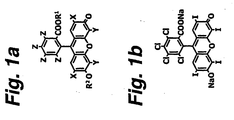
- These photoactive agents are referred to as halogenated xanthenes and are illustrated in Figure 1 a , where the symbols X, Y, and Z represent various elements present at the designated positions, and the symbols R 1 and R 2 represent various functionalities present at the designated positions.
- the halogenated xanthenes are characterized by a low dark cytotoxicity (toxicity to cells or tissues in the absence of photoactivation), by high light cytotoxicity (toxicity to cells or tissues upon photoactivation) and by chemical and photochemical properties that are substantially unaffected by the local chemical environment or by the attachment of functional derivatives at positions R 1 and R 2 .
- Such factors make these chemical agents, and in particular intracorporeal medicaments formulated from such agents, excellent PDT agents for the treatment of disease in human and animal tissues.
- the medicament according to the present invention contains the disodium salt of 4,5,6,7-Tetrabromoerythrosin as an active ingredient, at a concentration of from greater than approximately 0,001 % to less than approximately 20%.
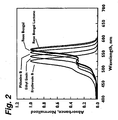
- halogenated xanthenes share common spectroscopic properties, including a high single-photon cross-section extending from approximately 500 nm to 600 nm. These properties are substantially invariant regardless of state of functional derivatization (for example, at positions R 1 and R 2 ) or of chemical or biological environment. This feature facilitates photoactivation with commonly available visible light sources operating in the band from approximately 500 nm to 600 nm and circumvents the need to substantively change sources if the specific photoactive component of the medicament is varied or modified, as discussed herein.
- the inventors of the present invention have shown that the halogenated xanthenes are capable of being activated using non-linear, multi-photon excitation under certain conditions when using light in the near infrared band from approximately 700 nm to 1200 nm (using methods such as, for example, those taught in US Patent 6,042,603 and in USSN 09/096,832, filed June 12, 1998 (entitled “Improved Methods And Apparatus For Multi-Photon Photo-Activation Of Therapeutic Agents”), both of which is incorporated herein by reference in their entireties).
- excitation methods provide additional utility in the activation of medicaments formulated from these agents, for example when it is desirable to increase the depth of photoactivation to positions substantially beyond that readily accessible using visible light excitation methods.
- the inventors have found that the prototypical halogenated xanthene, Rose Bengal, will accumulate preferentially in (i.e. target) some tumors and other tissues and pathogenic entities, has negligible dark cytotoxicity, high light cytotoxicity upon illumination with visible light, relatively low cost, and the ability to clear rapidly from the body.
- K p the partition coefficient
- This in vitro parameter is purported to have predictive value relating to in vivo agent delivery at the cellular level.
- a value greater than unity is considered to indicate agents capable of localizing in tumor or other diseased tissue, and more specifically in plasma membranes of cells composing such tissue, and thereby being capable of exhibiting enhanced photodynamic efficacy in such tissue.
- tumor cell suspensions e.g. melanoma, breast tumor, liver tumor, renal carcinoma, gall bladder tumor or prostate tumor
- tumor cell suspensions were injected subcutaneously into the flanks of nude mice resulting in formation of primary tumors, within a few weeks, at the injection site having a volume of approximately 0.1 cm 3 to 0.5 cm 3 .
- Intratumoral injection i.t .
- a similar Rose Bengal formulation resulted in persistent accumulation and retention of Rose Bengal uniformly throughout the tumor volume, with more than 75% of injected Rose Bengal dose remaining in the tumor after several weeks.
- illumination using light at 532 nm resulted in selective tumor destruction (see Table 4, infra ).
- Peritumoral injection i . e ., injection into normal tissue around the outside margins of the tumor
- the inventors of the present invention have shown that the halogenated xanthenes, and in particular Rose Bengal, exhibit an unexpectedly marked preference for accumulation and retention in tumor and other diseased tissue upon intracorporeal administration, and that once present in such tissue, said halogenated xanthenes can be utilized as potent, highly tissue or disease specific PDT agents.
- the preference of the halogenated xanthenes for accumulation in certain types of tissues provides a basis for highly-selective, systemic delivery of the halogenated xanthenes to such tissues.
- Rose Bengal's relatively large partition coefficient is indicative of a preference for accumulation in lipophilic tissue, such as cutaneous lipocytes.
- the inventors of the present invention have found that systemic administration of Rose Bengal, for example as an aqueous solution administered via intraperitoneal injection ( i.p .) or per oesophagus ( p.o.
- halogenated xanthenes and halogenated xanthene derivatives exhibit a remarkable combination of low dark cytotoxicity and high light cytotoxicity. This is evidenced by the following: addition of Rose Bengal and other halogenated xanthenes to procaryotic or eucaryotic cell cultures at concentrations equivalent to or greater than 100 mg/kg generally resulted in no measurable effect on the viability of such cultures. However, subsequent illumination of such cultures with light at wavelengths between about 500 nm and 600 nm generally resulted in an immediate and complete kill of such cell cultures.
- Intracorporeal administration of these agents at these levels into tumor-bearing laboratory animals resulted in negligible biological effects in the absence of illumination.
- illumination of tumor tissue in these animals subsequent to this administration resulted in marked destruction of such tumor tissue.
- the inventors of the present invention have shown that these agents are readily cleared from healthy tissues in a matter of several hours and are known to be rapidly excreted in bile, urine and feces, without doing damage to those healthy tissues while it was there. This is in dramatic contrast to most conventional PDT agents, some of which exhibit half-lives in healthy tissues on the order of many weeks.
- halogenated xanthenes and halogenated xanthene derivatives are easily synthesized using simple, low-cost synthetic methods, can be readily purified and exhibit excellent stability (such as a long shelf life without need for refrigeration or storage under an inert atmosphere).
- halogenated xanthenes are, in general, fine solid powders in their pure form, it is preferred that, for proper delivery to desired tissues, such agents be formulated in appropriate delivery vehicles. Approaches to such formulation will be generally known to those of ordinary skill in the art. Specifically, such formulations are preferred so as to facilitate agent delivery into the body and subsequent contact with, and delivery to, desired tissues to be treated.
- An intracorporeal medicament is in a form suitable for intracorporeal administration via various conventional modes and routes.
- suitable forms include, for example, medicaments formulated in a liquid, semisolid, solid or aerosol delivery vehicle, including in vehicles of the following natures: aqueous suspensions, non-aqueous suspensions, solutions, creams, ointments, gels, syrups, micro-droplet sprays, suppositories, tablets and capsules.
- the halogenated xanthene may be dissolved or suspended in such delivery vehicle, wherein this vehicle may, in addition to the at least one halogenated xanthene, include various builders, stabilizers, emulsifiers or dispersants, preservatives, buffers, electrolytes, and tissue penetrating or softening agents.
- Such components of the delivery vehicle may be present as the primary component (by weight or volume) of the medicament, or as a minor component that serves in an adjuvant role in agent delivery with no adverse affect on tissue or treatment outcome.
- appropriate builders include cellulose and cellulose derivatives, such as starch, methylcellulose, carboxymethylcellulose, and alginates.
- Examples of appropriate stabilizers, emulsifiers or dispersants include liposomes, nanoparticulates and nanodispersions, microparticulates and microdispersions, as well as various lipids, detergents and other surfactants.
- preservatives examples include benzalkonium chloride, thimerosal, quaternary amines and urea.
- buffers examples include monobasic or dibasic phosphate salts, citrate salts, bicarbonate salts, and ethanolamine.
- electrolytes examples include sodium, potassium, calcium and magnesium chlorides, phosphates, and nitrates.
- tissue penetrating, softening or solvating agents and adjuvants include:
- the present invention is not limited to the above recited examples, as other formulations familiar to those of ordinary skill in the art, including various simple or complex combinations of vehicles and adjuvants, are also useful for improving delivery of the photoactive component of the medicament to target tissues.
- the inventors have discovered that the intracorporeal medicaments disclosed herein are broadly applicable to improved photodynamic treatment of various conditions affecting the skin and related organs of humans and animals.
- the medicament can be applied, using conventional intracorporeal administration modes, directly or indirectly to, or substantially proximal to, tissues to be treated, including those of the skin, nails and scalp.
- Such administration modes provide direct delivery of medicament to, into or substantially proximal to, tissues to be treated, or systemic delivery of medicament to, into or substantially proximal to, tissues to be treated.
- Example indications include treatment for: Psoriasis and Pustular Psoriasis; Reiter's Syndrome; Skin Ulcers, including Stasis Dermatitis, Stasis Ulcers, Ischemic Ulcers, Sickle Cell Leg Ulcers, Diabetic Ulcers, Inflammatory Ulcers; Eczematous Disease and Eczematous Reaction; various Ichthyoses; Atopic Dermatitis; Superficial Wrinkles; Near Surface Fat Reduction; Benign and Malignant Proliferative Disorders, such as Benign Epithelial Tumors and Hamartomas; Premalignant and Malignant Epithelial Tumors, including Actinic Keratoses, Basal Cell Carcinoma, Squamous Cell Carcinoma, and Keratoacanthoma; Benign and Malignant Adnexal Tumors; Tumors of Pigment-Producing Cells, including Malignant Melanoma, Solar Lentigines, Nevi, and Café-au-lait; Sarcom
- the inventors have discovered that the intracorporeal medicaments disclosed herein are broadly applicable to improved photodynamic treatment of various conditions affecting the mouth and digestive tract and related organs of humans and animals.
- the medicament can be applied, using conventional intracorporeal administration modes, directly or indirectly to, or substantially proximal to, tissues to be treated, including those of the mouth, gums, tongue, larynx, pharynx, esophagus, stomach, intestines and colon.
- Such administration modes provide direct delivery of medicament to, into or substantially proximal to, tissues to be treated, or systemic delivery of medicament to, into or substantially proximal to, tissues to be treated.
- Example indications include treatment for: Benign Esophageal Lesions, Barretts Esophagus and other Esophageal Hyperplasia and Dysplasia, and Esophageal Cancer, including Squamous Cell Carcinoma, Adenocarcinoma, Carsinosarcoma, Pseudosarcoma, and Sarcoma; Gastric Ulcers, Leiomyomas, Polyps, Neoplasms, Lymphoma and Pseudolymphoma, Adenocarcinoma, Primary Lymphoma, Leiomyosarcoma; Oral and Oropharynx Cancer and Premaligancies, Ulcers and Inflammatory Lesions, including Squamous Cell Carcinoma, Lymphoma, Actinic Cheilitis, Nicotine Stomatitis, Leukoplakia, Erythroplakia; Gum and Other Peridontal Disease, including Gingivitis; Laryngeal Hyperplasia, Dysplasia and Neo
- the inventors have found that per oesophageal administration of a medicament solution containing Rose Bengal at a concentration of approximately 1.0% W/V to canines, followed by illumination of a region of esophageal tissue with green light in the 500-600 am band, leads to controlled, localized photodynamic destruction of tissues in the treated region.
- the present invention is not limited to this preferred embodiment, as other medicaments disclosed herein can also be used.
- other formulations of the halogenated xanthenes as described herein have similar applications for the specific indications described herein, and for various other similar indications, including those related to therapeutic or cosmetic treatment of the mouth and digestive tract and related organs of humans and animals.
- the inventors have discovered that the intracorporeal medicaments disclosed herein are broadly applicable to improved photodynamic treatment of various conditions affecting the urinary and reproductive tract and related organs of humans and animals.
- the medicament can be applied, using conventional intracorporeal administration modes, directly or indirectly to, or substantially proximal to, tissues to be treated, including those of the urethra, bladder, ureter, kidneys, vulva, vagina, cervix, uterus, fallopian tubes, ovaries, penis, testes, vas deferens, prostate, and epididymis.
- Such administration modes provide direct delivery of medicament to, into or substantially proximal to, tissues to be treated, or systemic delivery of medicament to, into or substantially proximal to, tissues to be treated.
- Example indications include treatment for: Urinary Tract Disease, including Cancerous and Pre-Cancerous Hyperplasia, Dysplasia and Neoplasms, Tumors and other Growths, Inflammation, and Infection of the Bladder, Ureter, Urethra, and Kidney; Cancerous and Pre-Cancerous Hyperlasia, Dysplasia and Neoplasms, Tumors and other Growth, inflammation, and Infection of the Cervix, Endometrium, Myometrium, Ovaries, Fallopian Tubes, Uterus, Vulva, and Vagina, including Vaginal Warts; Cancerous and Pre-Cancerous Hyperlasia, Dysplasia and Neoplasms, Tumours and other Growths,_ Inflammation, and Infection of the Prostate and Testes; Cancerous and Pre-Cancerous Hyperlasia, Dysplasia and Neoplasms, Tumors and other Growths, Inflammation, and Infection of the Breast, Reproductive Tract Infections, including Tinea Cr
- Other formulations of the halogenated xanthenes as described herein have similar applications for the specific indications described herein, and for various other similar indications, including those related to therapeutic or cosmetic treatment of the urinary and reproductive tracts and related organs of humans and animals.
- the inventors have discovered that the intracorporeal medicaments disclosed herein are broadly applicable to improved photodynamic treatment of various conditions affecting the respiratory tract and related organs of humans and animals.
- the medicament can be applied, using conventional intracorporeal administration modes, directly or indirectly to, or substantially proximal to, tissues to be treated, including those of the lung and alveoli, bronchi, trachea, hypopharynx, larynx, nasopharynx, tear ducts, sinuses and nasal cavities.
- Much administration modes provide direct delivery of medicament to, into or substantially proximal to, tissues to be treated, or systemic delivery of medicaments to, into or substantially proximal to, tissues to be treated.
- Example indications include treatment for: Hyperplasia, Dysplasis and Neoplasia, Cancer, Inflammation and Infection of the Nasal Cavity, Paranasal Sinuses, Tear Ducts, Eustachian Tubes, Nasopharynx, Hypopharynx, Larynx, Trachea, Bronchi, Lung and Alveoli. These examples are provided for illustrative purposes, as the present invention is not limited to the recited examples and includes other indications known to those skilled in the art.
- a medicament solution containing Rose Bengal at a concentration of approximately 10% W/V into tumor tissue; such as that of a lung tumor, followed by illumination of such tumor with green light in the 500-600 nm band leads to controlled, localized photodynamic eradication of such tumors.
- Other formulations of the halogenated xanthenes as described herein have similar applications for the specific indications described herein, and for various other similar indications, including those related to therapeutic treatment of the respiratory tract and related organs of humans and animals,
- the inventors have discovered that the intracorporeal medicaments disclosed herein are broadly applicable to improved photodynamic treatment ofvarious conditions affecting the circulatory system and related organs of humans and animals.
- the medicament can be applied, using conventional intracorporeal administration modes, directly or indirectly to, or substantially proximal to, tissues to be treated, including those of the heart, kidneys, liver and blood vessels.
- Such administration modes provide direct delivery of medicament to, into or substantially proximal to, tissues to be treated, or systemic delivery of medicament to, into or substantially proximal to, tissues to be treated.
- Example indications include treatment for: Disease of Cardiac and Pericardial Tissues and Circulatory Tissues, including Arteries and Veins, including Plaques and Infections of such tissues, such as Bacterial Endocarditis; and destruction of unwanted blood vessels, such as spider veins.
- Disease of Cardiac and Pericardial Tissues and Circulatory Tissues including Arteries and Veins, including Plaques and Infections of such tissues, such as Bacterial Endocarditis; and destruction of unwanted blood vessels, such as spider veins.
- the inventors have discovered that the intracorporeal medicaments disclosed herein are broadly applicable to improved photodynamic treatment of various conditions affecting the head and neck of humans and animals.
- the medicament can be applied, using conventional intracorporeal administration modes, directly or indirectly to, or substantially proximal to, tissues to be treated, including those of the head, neck, brain, eyes and ears.
- Such administration modes provide direct delivery of medicament to, into or substantially proximal to, tissues to be treated, or systemic delivery of medicament to, into or substantially proximal to, tissues to be treated.
- Example indications include treatment for: Tumors or Resected Tumor Beds or Intra-cranial and other Head and Neck Tumors; Ophthalmic Tumors and other diseases, including Macular Degeneration and Diabetic Retinopathy; Metastatic Tumors, such as Metastases of Melanoma, Breast or Other Tumors to the Skin of the Head or Neck.
- Ophthalmic Tumors and other diseases including Macular Degeneration and Diabetic Retinopathy
- Metastatic Tumors such as Metastases of Melanoma, Breast or Other Tumors to the Skin of the Head or Neck.
- Other formulations of the halogenated xanthenes as described herein have similar applications for the specific indications described herein, and for various other similar indications, including those related to therapeutic or cosmetic treatment of the head and neck of humans and animals.
- the inventors have discovered that the intracorporeal medicaments disclosed herein are broadly applicable to improved photodynamic treatment of various conditions affecting the endocrine and lymphoreticular systems and related organs of humans and animals.
- the medicament can be applied, using conventional intracorporeal administration modes, directly or indirectly to, or substantially proximal to, tissues to be treated, including those of the thyroid gland, the thalamus and hypothalamus, the pituitary gland, lymph nodes and lymphoreticular system.
- Such administration modes provide direct delivery of medicament to, into or substantially proximal to, tissues to be treated, or systemic delivery of medicament to, into or substantially proximal to, tissues to be treated.
- Example indications include treatment for: Hyperplasia, Dysplasia and Neoplasia, Cancer, Inflammation and Infection of the Thyroid, Thalamus and Hypothalamus, Pituitary Gland, Lymph Nodes and Lymphoreticular system, including Graves' Disease. These examples are provided for illustrative purposes, as the present invention is not limited to the recited examples and includes other indications known to those skilled in the art.
- Other formulations of the halogenated xanthenes as described herein have similar applications for the specific indications described herein, and for various other similar indications, including those related to therapeutic treatment of the endocrine and lymphoreticular systems and related organs of humans and animals.
- the inventors have discovered that the intracorporeal medicaments disclosed herein are broadly applicable to improved photodynamic treatment of various conditions affecting various other internal or external tissues of humans and animals, such as connective tissues and various tissue surfaces exposed during surgery.
- the medicament can be applied, using conventional intracorporeal administration modes, directly or indirectly to, or substantially proximal to, tissues to be treated, including those of tissue surfaces exposed during surgery, including endoscopic surgery or other endoscopic procedures.
- Such application modes provide direct delivery ofmedicament to, into or substantially proximal to, tissues to be treated, or systemic delivery of medicament to, into or substantially proximal to, tissues to be treated.
- Example indications include treatment for: Joint Inflammation, such as that of Arthritis; Resected Tumor Beds of Thoracic, Abdominal, or other Tumors, Metastatic Tumors, such as Metastases of Breast Tumors to the Skin; Tumors or Infections of the Pleura, Peritoneum or Pericardium; and various other substantially similar indications.
- Joint Inflammation such as that of Arthritis
- Resected Tumor Beds of Thoracic, Abdominal, or other Tumors such as Metastases of Breast Tumors to the Skin
- Tumors or Infections of the Pleura, Peritoneum or Pericardium and various other substantially similar indications.
- Other formulations of the halogenated xanthenes as described herein have similar applications for the specific indications described herein, and for various other similar indications, including those related to therapeutic or cosmetic treatment of conditions affecting various other tissues of humans and animals, such as connective tissues and various tissue surfaces exposed during surgery.
- the inventors have discovered that the intracorporeal medicaments disclosed herein are broadly applicable to improved photodynamic treatment of various conditions related to microbial, viral, fungal or parasitic infection of humans and animals.
- the medicament can be applied, using conventional intracorporeal administration modes, directly or indirectly to, or substantially proximal to, tissues to be treated, including those of tissue surfaces exposed during surgery, including endoscopic surgery or other endoscopic procedures.
- Such administration modes provide direct delivery of medicament to, into or substantially proximal to, tissues to be treated, or systemic delivery of medicament to, into or substantially proximal to, tissues to be treated.
- Example indications include treatment for: Bacterial and Antibiotic Resistant Bacterial Infection, including those caused by Gram Positives and Gram Negatives, Streptomycetes, Actinomycetes, Staphylococci, Streptococci, Pseudomonas, Escherichia coli, Mycobacteria and others; Infection caused by Pilamentous Fungi and Non-filamentous Fungi like Cryptosporidium, Histoplasma, Aspergillus, Blastomyces, Candida and others; Parasitic Infection caused by Amoeba (including for use in lysing and killing amoeba in amoebic cysts), Trichinella, Dirodfilaria (Heart worm in dogs) and various other substantially similar indications.
- Bacterial and Antibiotic Resistant Bacterial Infection including those caused by Gram Positives and Gram Negatives, Streptomycetes, Actinomycetes, Staphylococci, Streptoco
- Subcutaneous tumors were injected with approximately 30 ⁇ L of a 10% Rose Bengal medicament solution or similar quantity of an indocyanine green (ICG) medicament.
- ICG indocyanine green
- the tumor and peritumoral area were illuminated using continuous wave green light (at a wavelength of 532 nm for Rose Bengal, 805 nm for ICG).
- the apparent cure rate was determined by measuring reoccurrence of the primary tumor at a period of approximately 2-3 weeks following illumination.
Landscapes
- Health & Medical Sciences (AREA)
- Chemical & Material Sciences (AREA)
- Life Sciences & Earth Sciences (AREA)
- Veterinary Medicine (AREA)
- Public Health (AREA)
- Animal Behavior & Ethology (AREA)
- General Health & Medical Sciences (AREA)
- Medicinal Chemistry (AREA)
- Pharmacology & Pharmacy (AREA)
- Engineering & Computer Science (AREA)
- Epidemiology (AREA)
- Organic Chemistry (AREA)
- General Chemical & Material Sciences (AREA)
- Chemical Kinetics & Catalysis (AREA)
- Nuclear Medicine, Radiotherapy & Molecular Imaging (AREA)
- Bioinformatics & Cheminformatics (AREA)
- Biomedical Technology (AREA)
- Oil, Petroleum & Natural Gas (AREA)
- Molecular Biology (AREA)
- Biochemistry (AREA)
- Oncology (AREA)
- Radiology & Medical Imaging (AREA)
- Dermatology (AREA)
- Communicable Diseases (AREA)
- Pathology (AREA)
- Endocrinology (AREA)
- Urology & Nephrology (AREA)
- Biophysics (AREA)
- Surgery (AREA)
- Diabetes (AREA)
- Virology (AREA)
- Heart & Thoracic Surgery (AREA)
- Cardiology (AREA)
- Pulmonology (AREA)
- Tropical Medicine & Parasitology (AREA)
- Reproductive Health (AREA)
- Pharmaceuticals Containing Other Organic And Inorganic Compounds (AREA)
- Medicinal Preparation (AREA)
Description
- The present invention is related to certain photodynamic medicaments and methods for treatment of human or animal tissue using photodynamic therapy (PDT). The inventors of the present invention have found that such medicaments are useful for the treatment of a variety of conditions affecting the skin and related organs, the mouth and digestive tract and related organs, the urinary and reproductive tracts and related organs, the respiratory tract and related organs, the circulatory system and related organs, the head and neck, the endocrine and lymphoreticular systems and related organs, various other tissues, such as connective tissues and various tissue surfaces exposed during surgery, as well as various tissues exhibiting microbial, viral, fungal or parasitic infection. These medicaments are available in various formulations that may include liquid, semisolid, solid or aerosol delivery vehicles, and are suitable for intracorporeal administration via various conventional modes and routes, including intravenous injection (i.v.), intraperitoneal injection (i.p.), intramuscular injection (i.m.), intracranial injection (i.c.), intratumoral injection (i.t.), intraepithelial injection (i.e.), transcutaneous delivery (t.c.), and per oesophageal (p.o.) administration. These photoactive ingredients contain intracorporeal medicaments, the photoactivation of which produces a desirable therapeutic response, such as destruction of microbial infection, reduction or elimination of tissue irritation, reduction or elimination of hyperproliferative tissue, reduction or elimination of cancerous or precancerous tissue, reduction or elimination of surface or subsurface lipocytes or lipid deposits, and many other similar indications.
- PDT was originally developed to treat cancer and other diseases with the promise of limiting the invasiveness of the therapeutic intervention and lessening potential collateral damage to normal, non-diseased tissue. In its simplest form, PDT is the combination of a photosensitive agent with special forms of illumination to produce a therapeutic response in certain tissues, such as a tumor. The agent attains an excited, active state when it absorbs one or more photons, and then is or becomes efficacious. Key elements of a successful PDT regimen include either selective application or selective uptake of a photosensitive agent into the diseased tissue and site-specific application of the activating light. PDT agents are typically applied systemically (for example, via intravenous injection or oral administration) or via localized topical application directly to diseased tissues (for example, via topical creams, ointments, or sprays). Subsequent to administration of the agent (typically 30 minutes to 72 hours later), activating light is applied to the disease site, locally activating the agent, and destroying the diseased tissue. Light is typically applied by direct illumination of the site, or by delivery of light energy to internal locations using a fiberoptic catheter or similar approach.
- Most current PDT regimens are based on systemic application of porphyrin-based agents or topical or systemic application of psoralen-based agents. Examples of porphyrin-based agents include porfimer sodium (PHOTOFRIN®), hematoporphyrin-derivative (HPD), benzoporphyrin derivative (BPD), Lutex, BOPP and SnET2. PHOTOFRIN® is one of the few agents currently licensed by the U.S. FDA. Porphyrin-based agents generally are derived from complex mixtures of natural or synthetically prepared materials and may contain components that are lipophilic. As a possible result of this lipophilicity, porphyrin-based agents have shown a slight tendency to accumulate preferentially in some tumors and other diseased tissues. However, the targeting of such agents to diseased tissue is still unacceptably low when compared to uptake in normal tissue, (i.e., at most 2-10x greater uptake in diseased tissue relative to normal tissue). The psoralens, such as 8-MOP. 5-MOP, trioxsalen, and AMT, are nucleic acid intercalators that function by disrupting cell regulation or impairing cellular physiology upon photoactivation. This mechanism of action appears to be relatively indiscriminate in terms of tissue type, and as a result these agents also exhibit minimal specificity for diseased tissue. Thus, current PDT agents have not exhibited high specificity and may exhibit additional disadvantages, including persistent systemic or localized photosensitivity, systemic or localized toxicity, and high treatment cost (due to high agent cost or excessive dosage requirements).
-
US Patent No. 5,576,013 discloses a therapy involving the application of photosensitizing agent followed by precisely directed and calibrated laser activation to induce photothrombosis within target vascular tissue. -
US Patent No. 5,573,773 discloses stable highly concentrated formulations of fluorescein derivatives. - European Patent Application No.
85401776.1 -
US patent No. 4,973,848 discloses an apparatus in which two laser beams are concurrently scanned across a region of tissue to be treated by laser therapy. A first "analysis" beam is used to excite characteristic light emission or reflection from the surface. This scattered light is detected and analyzed to determine the properties of the small portion of the surface under illumination and at that instant by the analysis beam. A second "treatment" beam is scanned concurrently with the analysis beam. - Photochemistry and Photobiology vol. 35, p 343 to 350, 1982, discusses the relative potency of 10 fluorescein derivates as sensitizers of delayed photohemolysis.
-
WO97/40829 - Voprosy onkologii, vol. 45, no. 5, 1999, p557-559 discloses the use of rose Bengal in photodynamic therapy of tumors.
-
WO97/03697 - PDT has not become widespread, given background problems of target specificity and cost of treatment.
- Therefore, it is an object of the present invention to provide new medicaments, new medical uses for such medicaments based on improved specificity of such medicaments for the desired target tissue to be treated, and methods for treatment using such medicaments, thereby resulting in improved treatment outcomes, increased efficacy and safety and reduced cost of treatment.
- The present invention is directed to an intracorporeal medicament for use in the treatment of human or animal tissue using photodynamic therapy, which medicament comprises a disodium salt of 4,5,6,7-Tetrabromoerythrosin present in a concentration of greater than about 0.001 1% to less than about 20%.
- The halogenated xanthenes constitute a family of potent photosensitizers that become photoactivated upon illumination of the treatment site with visible wavelengths of light. Such medicaments are suitable for intracorporeal administration, and are thus intracorporeal medicaments. Such medicaments can also be called pharmaceutical compositions or agents.
- A second aspect of the invention is provided by use of a disodium salt of 4,5,6,7-Tetrabromoerythrosin for the preparation of an intracorporeal medicament for treatment of human and animal tissue using photodynamic therapy, and wherein the disodium salt of 4,5,6,7-Tetrabromoerythrosin is present in a concentration of greater than about 0.001% to less than about 20%.
- In a preferred embodiment, such medicaments are used for photodynamic treatment of a variety of conditions affecting the skin and related organs.
- In another preferred embodiment, such medicaments are used for photodynamic treatment of a variety of conditions affecting the mouth and digestive tract and related organs.
- In another preferred embodiment, such medicaments are used for photodynamic treatment of a variety of conditions affecting the urinary and reproductive tracts and related organs.
- In another preferred embodiment, such medicaments are used for photodynamic treatment of a variety of conditions affecting the respiratory system and related organs.
- In another preferred embodiment, such medicaments are used for photodynamic treatment of a variety of conditions affecting the circulatory system and related organs.
- In another preferred embodiment, such medicaments are used for photodynamic treatment of a variety of conditions affecting the head and neck.
- In another preferred embodiment, such medicaments are used for photodynamic treatment of a variety of conditions affecting the endocrine and lymphoreticular systems and related organs.
- In another preferred embodiment, such medicaments are used for photodynamic treatment of a variety of conditions affecting various other tissues, such as connective tissues and various tissue surfaces exposed during surgery.
- In another preferred embodiment, such medicaments are used for photodynamic treatment of a variety of conditions related to microbial or parasitic infection.
- In another preferred embodiment, such medicaments are produced in various formulations including liquid, semisolid, solid or aerosol delivery vehicles, as well as in tablet, capsule, suppository, and other similar forms.
- In describing the preferred embodiments, reference is made to the accompanying drawings wherein:
-
FIGURE 1(a) shows a generalized chemical structure of halogenated xanthenes. -
FIGURE 1(b) shows the chemical structure of Rose Bengal (not according to the present invention). -
FIGURE 2 shows example absorbance spectra of several halogenated xanthenes (not according to the present invention). - The present invention is directed to new photodynamic medicaments and certain medical uses of such photodynamic medicaments, wherein the primary active component of such medicaments is the disodium salt of 4,5,6,7-Tetrabromoerythrosin. The inventors of the present invention have discovered that such halogenated xanthenes, as discussed in more detail infra, exhibit desirable photodynamic effects when applied to or otherwise delivered to certain human or animal tissues. The desirable effects include reduction or elimination of disease or diseased tissue or other undesirable conditions, including eradication of cancerous or pre-cancerous tumors and infectious agents. The treatment is applicable to a variety of conditions affecting the skin and related organs, the mouth and digestive tract and related organs, the urinary and reproductive tracts and related organs, the respiratory tract and related organs, the circulatory system and related organs, the head and neck, the endocrine and lymphoreticular systems and related organs, various other tissues, such as tissues exposed during surgery, as well as various tissues exhibiting microbial, viral, fungal or parasitic infection.
- In a preferred embodiment, such medicaments are produced in various formulations suitable for intracorporeal administration, including in various liquid, semisolid, solid or aerosol delivery vehicles, as well as in tablet, capsule, suppository, and other similar forms. Such medicament formulations are suitable for delivery via various conventional modes and routes (hereafter defined as intracorporeal administration), including intravenous injection (i.v.), intraperitoneal injection (i.p.), intramuscular injection (i.m.), intracranial injection (i.c.), intratumoral injection (i.t.), intraepithelial injection (i.e.), transcutaneous delivery (t.c.), and per oesophageal (p.o.) administration; additional administrative modes and routes include intraabdominal, intraapendicular, intraarterial, intraarticular, intrabronchial, intrabuccal, intracapsular, intracardial, intracartilaginous, intracavitary, intracephalic, intracolic, intracutaneous, intracystic, intradermal, intraductal, intraduodenal, intrafascicular, intrafat, intrafilar, intrafissural, intragastric, intraglandular, intrahepatic, intraintestinal, intralamellar, intralesional, intraligamentous, intralingual, intramammary, intramedullary, intrameningeal, intramyocardial, intranasal, intraocular, intraoperative, intraoral, intraosseous, intraovarian, intrapancreatic, intraparietal, intrapelvic, intrapericardial, intraperineal, intraperitoneal, intraplacental, intrapleural, intrapontine, intraprostatic, intrapulmonary, intrarachidian, intrarectal, intrarenal, intrascleral, intrascrotal, intrasegmental, intrasellar, intraspinal, intrasplenic, intrasternal, intrastromal, intrasynovial, intratarsal, intratesticular, intrathoracic, intratonsillar, intratracheal, intratubal, intratympanic, intraureteral, intraurethral, intrauterine, intravaginal, intravascular, intraventricular, intravertebral, intravesical, or intravitreous administration. Such medicaments will thus be referred to as intracorporeal medicaments (i.e., medicaments suitable for intracorporeal administration).
- The inventors of the present invention have discovered a class of photoactive agents that are broadly applicable for producing intracoporeal medicaments for photodynamic treatment of disease in certain human and animal tissues. These photoactive agents are referred to as halogenated xanthenes and are illustrated in
Figure 1 a , where the symbols X, Y, and Z represent various elements present at the designated positions, and the symbols R1 and R2 represent various functionalities present at the designated positions. - Selected chemical and physical properties (such as chemical constituents at positions X, Y, and Z and functionalities R1 and R2, along with molecular weight and photochemical characteristics) of representative halogenated xanthenes are summarized in attached Table 1. Certain general properties of this class of agents are discussed in further detail in
USSN 09/130, 041, filed on August 6, 1998 USSN 09/184, 388, filed on November 2, 1998 USSN 09/216, 787, filed on December 21, 1998 - In general, the halogenated xanthenes are characterized by a low dark cytotoxicity (toxicity to cells or tissues in the absence of photoactivation), by high light cytotoxicity (toxicity to cells or tissues upon photoactivation) and by chemical and photochemical properties that are substantially unaffected by the local chemical environment or by the attachment of functional derivatives at positions R1 and R2. Such factors make these chemical agents, and in particular intracorporeal medicaments formulated from such agents, excellent PDT agents for the treatment of disease in human and animal tissues.
- The medicament according to the present invention contains the disodium salt of 4,5,6,7-Tetrabromoerythrosin as an active ingredient, at a concentration of from greater than approximately 0,001 % to less than approximately 20%.
- Further, as evidenced by the data shown in Table 1 (infra) and in
Figure 2 , halogenated xanthenes share common spectroscopic properties, including a high single-photon cross-section extending from approximately 500 nm to 600 nm. These properties are substantially invariant regardless of state of functional derivatization (for example, at positions R1 and R2) or of chemical or biological environment. This feature facilitates photoactivation with commonly available visible light sources operating in the band from approximately 500 nm to 600 nm and circumvents the need to substantively change sources if the specific photoactive component of the medicament is varied or modified, as discussed herein. Furthermore, the inventors of the present invention have shown that the halogenated xanthenes are capable of being activated using non-linear, multi-photon excitation under certain conditions when using light in the near infrared band from approximately 700 nm to 1200 nm (using methods such as, for example, those taught inUS Patent 6,042,603 and inUSSN 09/096,832, filed June 12, 1998 - As an example of these desirable chemical, biochemical, and physical properties, the inventors have found that the prototypical halogenated xanthene, Rose Bengal, will accumulate preferentially in (i.e. target) some tumors and other tissues and pathogenic entities, has negligible dark cytotoxicity, high light cytotoxicity upon illumination with visible light, relatively low cost, and the ability to clear rapidly from the body.
- For example, it is possible to estimate an agent's potential for tissue accumulation based on the partition coefficient, Kp. This in vitro parameter is purported to have predictive value relating to in vivo agent delivery at the cellular level. In particular, a value greater than unity is considered to indicate agents capable of localizing in tumor or other diseased tissue, and more specifically in plasma membranes of cells composing such tissue, and thereby being capable of exhibiting enhanced photodynamic efficacy in such tissue. Kp is determined by measuring the ratio of equilibrium concentrations of an agent in a lipophilic phase (n-octanol) contacted with an aqueous phase (phosphate buffered saline, PBS, pH = 7.4). Comparative values of Kp are shown in Table 2, infra. The large Kp values for the halogenated xanthenes relative to many of the porphyrin-based PDT agents suggest that the halogenated xanthenes will exhibit an enhanced tendency to concentrate or accumulate in tumor or other diseased tissue, and should thereby be capable of exhibiting superior photodynamic efficacy in such tissue.
- The following examples illustrate this preference for accumulation in tumor tissue by the halogenated xanthenes:
- Initially, tumor cell suspensions (e.g. melanoma, breast tumor, liver tumor, renal carcinoma, gall bladder tumor or prostate tumor) were injected subcutaneously into the flanks of nude mice resulting in formation of primary tumors, within a few weeks, at the injection site having a volume of approximately 0.1 cm3 to 0.5 cm3.
- Thereafter, a solution of Rose Bengal (10-30 µL of 10% Rose Bengal, i. e., 1-3 mg Rose Bengal p.o.) was administered per oesophageal to the mice, followed by illumination of the tumor 3-48 hours post administration using light at 532 nm (50-200 J/cm2 at the tumor surface). This resulted in selective destruction of tumor tissue with no substantive effect in healthy surrounding tissue. These example results are summarized in Table 3, infra.
- Intratumoral injection (i.t.) of a similar Rose Bengal formulation resulted in persistent accumulation and retention of Rose Bengal uniformly throughout the tumor volume, with more than 75% of injected Rose Bengal dose remaining in the tumor after several weeks. As in the per oesophageal example above, illumination using light at 532 nm resulted in selective tumor destruction (see Table 4, infra).
- Peritumoral injection (i.e., injection into normal tissue around the outside margins of the tumor) exhibited no such retention in normal tissue, with less than 1% of Rose Bengal remaining in the vicinity of the tumor after 24 hours.
- In contrast, i.t. administration of a different class of agent, indocyanine green (Kp = 99), showed that within 24 hours this agent had substantively migrated out of the tumor, and instead exhibited a tendency to accumulate in peritumoral tissues. Hence, while the Kp value for indocyanine green is nearly ten-fold larger than that of Rose Bengal (and as such, indocyanine green is, by the conventional model based on Kp, expected to accumulate strongly in tumor tissue), the tissue localization properties of the two agents are clearly completely different.
- Thus, the inventors of the present invention have shown that the halogenated xanthenes, and in particular Rose Bengal, exhibit an unexpectedly marked preference for accumulation and retention in tumor and other diseased tissue upon intracorporeal administration, and that once present in such tissue, said halogenated xanthenes can be utilized as potent, highly tissue or disease specific PDT agents.
- In addition to superior suitability for direct administration into desired targeted tissue to be treated, such as a focal tumor, the preference of the halogenated xanthenes for accumulation in certain types of tissues provides a basis for highly-selective, systemic delivery of the halogenated xanthenes to such tissues. For example, Rose Bengal's relatively large partition coefficient is indicative of a preference for accumulation in lipophilic tissue, such as cutaneous lipocytes. The inventors of the present invention have found that systemic administration of Rose Bengal, for example as an aqueous solution administered via intraperitoneal injection (i.p.) or per oesophagus (p.o.) administration, resulted in highly selective accumulation of said agent in certain tissues, such as in the cutaneous fat deposits of obese laboratory mice. Histologic examination of skin samples from such animals showed that accumulated agent is substantively limited to cutaneous lipocytes. Furthermore, illumination of the skin of such animals with light at approximately 532 nm resulted in photodynamic activation of this accumulated agent only in such lipocytes. Such photodynamic activation of accumulated agent precipitated selective photodynamic destruction of such lipocytes with no effect in overlying skin or underlying muscle tissue.
- As a further example of the desirable chemical, biochemical, and physical properties of the halogenated xanthenes and halogenated xanthene derivatives, the inventors of the present invention have shown that these agents exhibit a remarkable combination of low dark cytotoxicity and high light cytotoxicity. This is evidenced by the following: addition of Rose Bengal and other halogenated xanthenes to procaryotic or eucaryotic cell cultures at concentrations equivalent to or greater than 100 mg/kg generally resulted in no measurable effect on the viability of such cultures. However, subsequent illumination of such cultures with light at wavelengths between about 500 nm and 600 nm generally resulted in an immediate and complete kill of such cell cultures. Intracorporeal administration of these agents at these levels into tumor-bearing laboratory animals resulted in negligible biological effects in the absence of illumination. However, illumination of tumor tissue in these animals subsequent to this administration resulted in marked destruction of such tumor tissue. Further, the inventors of the present invention have shown that these agents are readily cleared from healthy tissues in a matter of several hours and are known to be rapidly excreted in bile, urine and feces, without doing damage to those healthy tissues while it was there. This is in dramatic contrast to most conventional PDT agents, some of which exhibit half-lives in healthy tissues on the order of many weeks.
- Further examples of the desirable properties of the halogenated xanthene according to the present invention are u follows: halogenated xanthenes and halogenated xanthene derivatives are easily synthesized using simple, low-cost synthetic methods, can be readily purified and exhibit excellent stability (such as a long shelf life without need for refrigeration or storage under an inert atmosphere).
- Because the halogenated xanthenes are, in general, fine solid powders in their pure form, it is preferred that, for proper delivery to desired tissues, such agents be formulated in appropriate delivery vehicles. Approaches to such formulation will be generally known to those of ordinary skill in the art. Specifically, such formulations are preferred so as to facilitate agent delivery into the body and subsequent contact with, and delivery to, desired tissues to be treated.
- An intracorporeal medicament is in a form suitable for intracorporeal administration via various conventional modes and routes. Such suitable forms include, for example, medicaments formulated in a liquid, semisolid, solid or aerosol delivery vehicle, including in vehicles of the following natures: aqueous suspensions, non-aqueous suspensions, solutions, creams, ointments, gels, syrups, micro-droplet sprays, suppositories, tablets and capsules. The halogenated xanthene may be dissolved or suspended in such delivery vehicle, wherein this vehicle may, in addition to the at least one halogenated xanthene, include various builders, stabilizers, emulsifiers or dispersants, preservatives, buffers, electrolytes, and tissue penetrating or softening agents. Such components of the delivery vehicle may be present as the primary component (by weight or volume) of the medicament, or as a minor component that serves in an adjuvant role in agent delivery with no adverse affect on tissue or treatment outcome.
- For example, appropriate builders include cellulose and cellulose derivatives, such as starch, methylcellulose, carboxymethylcellulose, and alginates.
- Examples of appropriate stabilizers, emulsifiers or dispersants include liposomes, nanoparticulates and nanodispersions, microparticulates and microdispersions, as well as various lipids, detergents and other surfactants.
- Examples of appropriate preservatives include benzalkonium chloride, thimerosal, quaternary amines and urea.
- Examples of appropriate buffers include monobasic or dibasic phosphate salts, citrate salts, bicarbonate salts, and ethanolamine.
- Examples of appropriate electrolytes include sodium, potassium, calcium and magnesium chlorides, phosphates, and nitrates.
- Examples of appropriate tissue penetrating, softening or solvating agents and adjuvants include:
- various sulfoxides, such as DMSO and decylmethylsulfoxide;
- various aliphatic and fatty alcohols, such as ethanol, propanol, hexanol, octanol, benzyl alcohol, decyl alcohol, lauryl alcohol, and stearyl alcohol;
- various linear and branched, saturated and unsaturated fatty acids, such as lauric acid, caproic acid, capric acid, myristic acid, stearic acid, oleic acid, isovaleric acid, neopentanoic acid, trimethyl hexanoic acid, neodecanoic acid and isostearic acid;
- various aliphatic and alkyl fatty acid esters, such as isopropyl n-butyrate, isopropyl n-hexanoate, isopropyl n-decanoate, isopropyl myristate, isopropyl palmitate, octyldodecyl myristate, ethyl acetate, butyl acetate, methyl acetate, methylvalerate, methylpropionate, diethyl sebacate and ethyl oleate;
- various polyols, such as propylene glycol, polyethylene glycol, ethylene glycol, diethylene glycol, triethylene glycol, diproplyene glycol, glycerol, propanediol, butanediol, pentanediol and hexanetriol;
- various amides, such as urea, dimethylacetamide, diethyltoluamide, dimethylformamide, dimethyloctamide, dimethyldecamide; biodegradable cyclic urea, such as 1-alkyl-4-imidazolin-2-one; pyrrolidone derivatives, such as 1-methyl-2-pyrrolidone, 2-pyrrolidone, 1-lauryl-2-pyrrolidone, 1-methyl-4-carboxy-2-pyrrolidone, 1-hexyl-4-carboxy-2-pyrrolidone, 1-lauryl-4-carboxy-2-pyrrolidone, 1-methyl-4-methyoxycarbonyl-2-pyrrolidone, 1-methyl-4-methyoxycarbonyl-2-pyrrolidone, 1-lauryl-4-methyoxycarbonyl-2-pyrrolidone, N-cyclohexylpyrrolidone, N-dimethylaminopropylpyrrolidone, N-cocoalkypyrrolidone, N-tallowalkylpyrrolidone; biodegradable pyrrolidone derivatives, such as fatty acid esters of N-(2-hyroxyethyl)-2-pyrrolidone; cyclic amides, such as 1-dodecylazacycloheptane-2-one (Azone®), 1-geranylazacycloheptan-2-one, 1-farnesylazacycloheptan-2-one, 1-geranylgeranylazacycloheptan-2-one, 1-(3,7-dimethyloctyl)azacycloheptan-2-one, 1-(3,7,11-trimethydodecyl)azacycloheptan-2-one, 1-geranylazacyclohexane-2-one, 1-geranylazacyclopentan-2,5-dione, 1-farnesylazacyclopentan-2-one; hexamethylenelauramide and its derivatives; and diethanolamine and triethanolamine;
- various surfactants, such as anionic surfactants, including sodium laurate and sodium lauryl sulfate; cationic surfactants, including cetyltrimethyl ammonium bromide, tetradecyltrimethylammonium bromide, benzalkonium chloride, octadecyltrimethylammonium chloride, cetylpyridinium chloride, dodecyltrimethylammonium chloride, hexadecyltrimethylammonium chloride; nonionic surfactants, such as Polaxamer (231, 182, 184), Brij (30, 93, 96, 99), Span (20, 40, 60, 80, 85), Tween (20, 40, 60, 80), Myrj (45, 51, 52), Miglyol 840; various bile salts, such as sodium cholate, sodium salts of taurocholic, glycholic, desoxycholic acids; lecithin;
- various terpenes, including hydrocarbons, such as D-limonene, α-pinene, β-carene; various terpene alcohols, including α-Terpineol, terpinen-4-ol, carvol; various terpene ketones, including carvone, pulegone, piperitone, menthone; various terpene oxides, including cyclohexane oxide, limonene oxide, α-pinene oxide, cyclopentene oxide, 1,8-cineole; various terpene oils, including ylang ylang, anise, chenopodium, eucalyptus;
- various alkanones, such as N-heptane,N-octane,N-nonsne, N-decane,N-undecane, N-dodecane, N-tridecane, N-tetradecane, N-hexadecane;
- various organic acids, such as salicylic acid and salicylites (including their methyl, ethyl, and propyl glycol derivatives), citric and succinic acid.
- The present invention is not limited to the above recited examples, as other formulations familiar to those of ordinary skill in the art, including various simple or complex combinations of vehicles and adjuvants, are also useful for improving delivery of the photoactive component of the medicament to target tissues.
- The inventors have discovered that the intracorporeal medicaments disclosed herein are broadly applicable to improved photodynamic treatment of various conditions affecting the skin and related organs of humans and animals. The medicament can be applied, using conventional intracorporeal administration modes, directly or indirectly to, or substantially proximal to, tissues to be treated, including those of the skin, nails and scalp. Such administration modes provide direct delivery of medicament to, into or substantially proximal to, tissues to be treated, or systemic delivery of medicament to, into or substantially proximal to, tissues to be treated.
- Example indications include treatment for: Psoriasis and Pustular Psoriasis; Reiter's Syndrome; Skin Ulcers, including Stasis Dermatitis, Stasis Ulcers, Ischemic Ulcers, Sickle Cell Leg Ulcers, Diabetic Ulcers, Inflammatory Ulcers; Eczematous Disease and Eczematous Reaction; various Ichthyoses; Atopic Dermatitis; Superficial Wrinkles; Near Surface Fat Reduction; Benign and Malignant Proliferative Disorders, such as Benign Epithelial Tumors and Hamartomas; Premalignant and Malignant Epithelial Tumors, including Actinic Keratoses, Basal Cell Carcinoma, Squamous Cell Carcinoma, and Keratoacanthoma; Benign and Malignant Adnexal Tumors; Tumors of Pigment-Producing Cells, including Malignant Melanoma, Solar Lentigines, Nevi, and Café-au-lait; Sarcomas; Lymphomas; Vascular Disorders, such as Hemangiomas and Port Wine Stain; Microbial Infection, such as Bacterial, Fungal, Yeast, Parasitic or Other Infections; Warts; and Acne. These examples are provided for illustrative purposes, as the present invention is not limited to the recited examples and includes other indications known to those skilled in the art.
- Per oesophageal administration of a medicament solution containing Rose Bengal at a concentration of approximately 10% WN to mice exhibiting cutaneous tumors, followed by illumination of such tumors with green light in the 500-600 nm band, leads to substantial or complete photodynamic eradication of such tumors. Further, other formulations of the halogenated xanthenes as described in the present application have similar applications for the specific indications described herein, and for various other similar indications, including those related to therapeutic or cosmetic treatment of the skin and related organs of humans and animals.
- The inventors have discovered that the intracorporeal medicaments disclosed herein are broadly applicable to improved photodynamic treatment of various conditions affecting the mouth and digestive tract and related organs of humans and animals. The medicament can be applied, using conventional intracorporeal administration modes, directly or indirectly to, or substantially proximal to, tissues to be treated, including those of the mouth, gums, tongue, larynx, pharynx, esophagus, stomach, intestines and colon. Such administration modes provide direct delivery of medicament to, into or substantially proximal to, tissues to be treated, or systemic delivery of medicament to, into or substantially proximal to, tissues to be treated.
- Example indications include treatment for: Benign Esophageal Lesions, Barretts Esophagus and other Esophageal Hyperplasia and Dysplasia, and Esophageal Cancer, including Squamous Cell Carcinoma, Adenocarcinoma, Carsinosarcoma, Pseudosarcoma, and Sarcoma; Gastric Ulcers, Leiomyomas, Polyps, Neoplasms, Lymphoma and Pseudolymphoma, Adenocarcinoma, Primary Lymphoma, Leiomyosarcoma; Oral and Oropharynx Cancer and Premaligancies, Ulcers and Inflammatory Lesions, including Squamous Cell Carcinoma, Lymphoma, Actinic Cheilitis, Nicotine Stomatitis, Leukoplakia, Erythroplakia; Gum and Other Peridontal Disease, including Gingivitis; Laryngeal Hyperplasia, Dysplasia and Neoplasms; Colorectal Cancer and Polyps. These examples are provided for illustrative purposes, as the present invention is not limited to the recited examples and includes other indications known to those skilled in the art.
- In an example of a preferred embodiment of this method of treatment or medical use, the inventors have found that per oesophageal administration of a medicament solution containing Rose Bengal at a concentration of approximately 1.0% W/V to canines, followed by illumination of a region of esophageal tissue with green light in the 500-600 am band, leads to controlled, localized photodynamic destruction of tissues in the treated region. The present invention, however, is not limited to this preferred embodiment, as other medicaments disclosed herein can also be used. Further, other formulations of the halogenated xanthenes as described herein have similar applications for the specific indications described herein, and for various other similar indications, including those related to therapeutic or cosmetic treatment of the mouth and digestive tract and related organs of humans and animals.
- The inventors have discovered that the intracorporeal medicaments disclosed herein are broadly applicable to improved photodynamic treatment of various conditions affecting the urinary and reproductive tract and related organs of humans and animals. The medicament can be applied, using conventional intracorporeal administration modes, directly or indirectly to, or substantially proximal to, tissues to be treated, including those of the urethra, bladder, ureter, kidneys, vulva, vagina, cervix, uterus, fallopian tubes, ovaries, penis, testes, vas deferens, prostate, and epididymis. Such administration modes provide direct delivery of medicament to, into or substantially proximal to, tissues to be treated, or systemic delivery of medicament to, into or substantially proximal to, tissues to be treated.
- Example indications include treatment for: Urinary Tract Disease, including Cancerous and Pre-Cancerous Hyperplasia, Dysplasia and Neoplasms, Tumors and other Growths, Inflammation, and Infection of the Bladder, Ureter, Urethra, and Kidney; Cancerous and Pre-Cancerous Hyperlasia, Dysplasia and Neoplasms, Tumors and other Growth, inflammation, and Infection of the Cervix, Endometrium, Myometrium, Ovaries, Fallopian Tubes, Uterus, Vulva, and Vagina, including Vaginal Warts; Cancerous and Pre-Cancerous Hyperlasia, Dysplasia and Neoplasms, Tumours and other Growths,_ Inflammation, and Infection of the Prostate and Testes; Cancerous and Pre-Cancerous Hyperlasia, Dysplasia and Neoplasms, Tumors and other Growths, Inflammation, and Infection of the Breast, Reproductive Tract Infections, including Tinea Cruris, Candidiasis, Condylomata Acuminata, Molluscum Contagiosum, Genital Herpes Simplex Infection, Lymphogranuloma Venereum, Chancroid, Granuloma Inguinale, Erythrasma; Psoriasis; and Lichen Planus and Lichen Sclerosus. These examples are provided for illustrative purposes, as the present invention is not limited to the recited examples and includes other indications known to those skilled in the art.
- Intratumoral injection of a medicament solution containing Rose Bengal at a concentration of approximately 10% W/V into tumor tissue, such as that of a prostate tumor, followed by illumination of said tumor tissue with green light in the 500-600 mu band, leads to controlled, localized photodynamic eradication of such tumors. Other formulations of the halogenated xanthenes as described herein have similar applications for the specific indications described herein, and for various other similar indications, including those related to therapeutic or cosmetic treatment of the urinary and reproductive tracts and related organs of humans and animals.
- The inventors have discovered that the intracorporeal medicaments disclosed herein are broadly applicable to improved photodynamic treatment of various conditions affecting the respiratory tract and related organs of humans and animals. The medicament can be applied, using conventional intracorporeal administration modes, directly or indirectly to, or substantially proximal to, tissues to be treated, including those of the lung and alveoli, bronchi, trachea, hypopharynx, larynx, nasopharynx, tear ducts, sinuses and nasal cavities. Much administration modes provide direct delivery of medicament to, into or substantially proximal to, tissues to be treated, or systemic delivery of medicaments to, into or substantially proximal to, tissues to be treated.
- Example indications include treatment for: Hyperplasia, Dysplasis and Neoplasia, Cancer, Inflammation and Infection of the Nasal Cavity, Paranasal Sinuses, Tear Ducts, Eustachian Tubes, Nasopharynx, Hypopharynx, Larynx, Trachea, Bronchi, Lung and Alveoli. These examples are provided for illustrative purposes, as the present invention is not limited to the recited examples and includes other indications known to those skilled in the art.
- Intratumoral injection of a medicament solution containing Rose Bengal at a concentration of approximately 10% W/V into tumor tissue; such as that of a lung tumor, followed by illumination of such tumor with green light in the 500-600 nm band, leads to controlled, localized photodynamic eradication of such tumors. Other formulations of the halogenated xanthenes as described herein have similar applications for the specific indications described herein, and for various other similar indications, including those related to therapeutic treatment of the respiratory tract and related organs of humans and animals,
- The inventors have discovered that the intracorporeal medicaments disclosed herein are broadly applicable to improved photodynamic treatment ofvarious conditions affecting the circulatory system and related organs of humans and animals. The medicament can be applied, using conventional intracorporeal administration modes, directly or indirectly to, or substantially proximal to, tissues to be treated, including those of the heart, kidneys, liver and blood vessels. Such administration modes provide direct delivery of medicament to, into or substantially proximal to, tissues to be treated, or systemic delivery of medicament to, into or substantially proximal to, tissues to be treated.
- Example indications include treatment for: Disease of Cardiac and Pericardial Tissues and Circulatory Tissues, including Arteries and Veins, including Plaques and Infections of such tissues, such as Bacterial Endocarditis; and destruction of unwanted blood vessels, such as spider veins. These examples are provided for illustrative purposes, as the present invention is not limited to the recited examples and includes other indications known to those skilled in the art.
- Per oesophageal administration of a medicament solution containing Rose Bengal at a concentration of approximately 10% W/V leads to transient elevation of serum levels of Rose Bengal; such circulating Rose Bengal can accumulate in lipophilic deposits, such as those in arterial plaques, and can thereby potentiate destruction of such plaques upon illumination with green light in the 500-600 nm band, Other formulations of the halogenated xanthenes as described herein have similar applications for the specific indications described herein, and for various other similar indications, including those related to therapeutic treatment of the circulatory system and related organs of humans and animals.
- The inventors have discovered that the intracorporeal medicaments disclosed herein are broadly applicable to improved photodynamic treatment of various conditions affecting the head and neck of humans and animals. The medicament can be applied, using conventional intracorporeal administration modes, directly or indirectly to, or substantially proximal to, tissues to be treated, including those of the head, neck, brain, eyes and ears. Such administration modes provide direct delivery of medicament to, into or substantially proximal to, tissues to be treated, or systemic delivery of medicament to, into or substantially proximal to, tissues to be treated.
- Example indications include treatment for: Tumors or Resected Tumor Beds or Intra-cranial and other Head and Neck Tumors; Ophthalmic Tumors and other diseases, including Macular Degeneration and Diabetic Retinopathy; Metastatic Tumors, such as Metastases of Melanoma, Breast or Other Tumors to the Skin of the Head or Neck. These examples are provided for illustrative purposes, as the present invention is not limited to the recited examples and includes other indications known to those skilled in the art.
- Intratumoral injection of a medicament solution containing Rose Bengal at a concentration of approximately 10% W/V into tumor tissue, such as that of a metastatic breast tumor, followed by illumination of such tumor with green light in the 500-600 nm band, leads to controlled, localized photodynamic eradication of such tumor. Other formulations of the halogenated xanthenes as described herein have similar applications for the specific indications described herein, and for various other similar indications, including those related to therapeutic or cosmetic treatment of the head and neck of humans and animals.
- The inventors have discovered that the intracorporeal medicaments disclosed herein are broadly applicable to improved photodynamic treatment of various conditions affecting the endocrine and lymphoreticular systems and related organs of humans and animals. The medicament can be applied, using conventional intracorporeal administration modes, directly or indirectly to, or substantially proximal to, tissues to be treated, including those of the thyroid gland, the thalamus and hypothalamus, the pituitary gland, lymph nodes and lymphoreticular system. Such administration modes provide direct delivery of medicament to, into or substantially proximal to, tissues to be treated, or systemic delivery of medicament to, into or substantially proximal to, tissues to be treated. Example indications include treatment for: Hyperplasia, Dysplasia and Neoplasia, Cancer, Inflammation and Infection of the Thyroid, Thalamus and Hypothalamus, Pituitary Gland, Lymph Nodes and Lymphoreticular system, including Graves' Disease. These examples are provided for illustrative purposes, as the present invention is not limited to the recited examples and includes other indications known to those skilled in the art.
- Intratumoral injection of a medicament solution containing Rose Bengal at a concentration of approximately 10% W/V into tumor tissue, such as that of a thyroid tumor, followed by illumination of such tumor with green light in the 500-600 nm band, leads to controlled, localized photodynamic eradication of such tumor. Other formulations of the halogenated xanthenes as described herein have similar applications for the specific indications described herein, and for various other similar indications, including those related to therapeutic treatment of the endocrine and lymphoreticular systems and related organs of humans and animals.
- The inventors have discovered that the intracorporeal medicaments disclosed herein are broadly applicable to improved photodynamic treatment of various conditions affecting various other internal or external tissues of humans and animals, such as connective tissues and various tissue surfaces exposed during surgery. The medicament can be applied, using conventional intracorporeal administration modes, directly or indirectly to, or substantially proximal to, tissues to be treated, including those of tissue surfaces exposed during surgery, including endoscopic surgery or other endoscopic procedures. Such application modes provide direct delivery ofmedicament to, into or substantially proximal to, tissues to be treated, or systemic delivery of medicament to, into or substantially proximal to, tissues to be treated.
- Example indications include treatment for: Joint Inflammation, such as that of Arthritis; Resected Tumor Beds of Thoracic, Abdominal, or other Tumors, Metastatic Tumors, such as Metastases of Breast Tumors to the Skin; Tumors or Infections of the Pleura, Peritoneum or Pericardium; and various other substantially similar indications. These examples are provided for illustrative purposes, as the present invention is not tinted to the recited examples and includes other indications known to those skilled in the art.
- Intratumoral injection of a medicament solution containing Rose Bengal at a concentration of approximately 10% W/V into tumor tissue, such as that of a metastatic breast tumor, followed by illumination of such tumor with green light in the 500-600 nm band, leads to controlled, localized photodynamic eradication of such tumor. Other formulations of the halogenated xanthenes as described herein have similar applications for the specific indications described herein, and for various other similar indications, including those related to therapeutic or cosmetic treatment of conditions affecting various other tissues of humans and animals, such as connective tissues and various tissue surfaces exposed during surgery.
- The inventors have discovered that the intracorporeal medicaments disclosed herein are broadly applicable to improved photodynamic treatment of various conditions related to microbial, viral, fungal or parasitic infection of humans and animals. The medicament can be applied, using conventional intracorporeal administration modes, directly or indirectly to, or substantially proximal to, tissues to be treated, including those of tissue surfaces exposed during surgery, including endoscopic surgery or other endoscopic procedures. Such administration modes provide direct delivery of medicament to, into or substantially proximal to, tissues to be treated, or systemic delivery of medicament to, into or substantially proximal to, tissues to be treated.
- Example indications include treatment for: Bacterial and Antibiotic Resistant Bacterial Infection, including those caused by Gram Positives and Gram Negatives, Streptomycetes, Actinomycetes, Staphylococci, Streptococci, Pseudomonas, Escherichia coli, Mycobacteria and others; Infection caused by Pilamentous Fungi and Non-filamentous Fungi like Cryptosporidium, Histoplasma, Aspergillus, Blastomyces, Candida and others; Parasitic Infection caused by Amoeba (including for use in lysing and killing amoeba in amoebic cysts), Trichinella, Dirodfilaria (Heart worm in dogs) and various other substantially similar indications. These examples are provided for illustrative purposes, as the present invention is not limited to the recited examples and includes other indications known to those skilled in the art,
- Application of an aqueous solution containing Rose Bengal at a concentration of approximately 1 to 10 micromolar to antibiotic resistant Staphylococcus aureus, Escherichia coli, various other gram positive and gram negative bacteria, and various yeasts, followed by illumination with green light in the 500-600 nm band, leads to substantial or complete eradication of such microbes. Other formulations of the halogenated xanthenes as described herein have similar applications for the specific indications described herein, and for various other similar indications, including those related to therapeutic or cosmetic treatment of microbial, viral, fungal or parasitic infection of humans and animals.
Table 1. Chemical, Physical and Photochemical Properties of Some Example Halogenated Xanthenes. Compound Substitution MW (g) λmax (nm) α (cm-1-mol-1-L) ϕ (triplet) ϕ (singlet oxygen) X Y Z R1 R2 H2O EtOH MeOH MeOH H2O EtOH MeOH Comparative Example Fluorescein H H H Na Na 376 490 499 492 6.4x10⁴ 0.03 0.03 0.03 0.09 Comparative Example 4',5'-Dichlorofluorescein Cl H H Na Na 445 502 511 0.04 0.07 Comparative Example 2',7'-Dichlorofluorescein H Cl H Na Na 445 502 571 0.04 0.07 Comparative Example 4,5,6,7-Tetrachlorofluorescein H H Cl H H 470 515 2.9x10⁴ Comparative Example 2',4',5',7'-Tetrachlorofluorescein Cl Cl H Na Na 514 510 520 0.05 0.05 Comparative Example Dibromofluorescein Br H H Na Na 534 504 510 1.4x10⁴ 0.32 0.42 Comparative Example Solvent Red 72 H Br H H H 490 450 1.4x10⁴ Comparative Example Diiodofluorescein I H H Na Na 626 506 513 5.8x10⁴ 0.33 0.48 Comparative Example Eosin B NO2 Br H Na Na 624 522 3.8x10⁴ Comparative Example Eosin Y Br Br H Na Na 692 517 523 527 9.1x10⁴ 0.28 0.32 0.57 0.39 Comparative Example Ethyl Eosin Br Br H C2H5 K 714 532 1.1x10⁴ Comparative Example Erylthrosin B I I H Na Ma 880 528 512 529 2.1x10⁴ 0.62 0.69 0.63 0.62 Comparative Example Phloxine B Br Br Cl Na Na 830 541 548 547 1.0x10⁵ 0.40 0.63 Comparative Example Rose Bengal I I Cl Na Na 1018 547 557 556 1.0x10⁵ 0.76 0.86 0.75 0.78 Comparative Example Rose Bengal Lithium Salt I I Cl Li Li 988 559 Comparative Example Rose Bengal Derivative I I I Cl C2H5 (C2H4)3NH 1100 563 0.74 Comparative Example Rose Bengal Derivative II I I Cl (C2H5)3NH (C2H4)3NH 1166 559 According to the invention 4,5,6,7-Tetrabromoerythrosin I I Br Na Na 1195 Table 2. Partition coefficients for several halogenated xanthenes and selected other photodynamic agents; Kp is the ratio of equilibrium concentrations of agent in a lipophilic phase (n-octanol) contacted with an aqueous phase (phosphate buffered saline, PBS, pH. =7.4). Agent Kp Comparative Example Phloxine B 1.1 Comparative Example Erythrosin B 1.9 Comparative Example Rose Bengal 11.5 Comparative Example Indocyanine Green 99 Comparative Example Porphyrin Agent P (PHOTOFRIN) 0.1 Comparative Example Porphyrin Agent Bo 1.0 Comparative Example Porphyrin Agent H (Hematoporphyrin Derivative) 1.5 Comparative Example Porphyrin Agent L 11.5 Comparative Example Porphyrin Agent Bp > 1000 Table 3. Per oesophageal administration using murine renal adenocarcinoma tumor model. Balb C Nude (nu/nu) mice were injected subcutaneously with approximately 1 x 10⁴ renal adenocarcinoma cells, and tumors allowed to develop over a 2-3 week period. Mice were then administered a 10% Rose Bengal solution p.o. at a dose approximately equal to 50 mg/kg body weight. 3-20 hours after administration, the tumor and peritumoral area were illuminated using continuous wave green light (100 J/cm2 of 532 nm light at an intensity of 200 mW/cm2). Response was determined 24 hours after illumination by visual evaluation. Positive response was scored based on eschar formation selectively at the tumor site. No damage was noted in peritumoral tissues. "No Light" and "No Drug" controls (Light Dose = 0 J/cm2 or no medicament, respectively) indicate that neither medicament alone (in the absence of illumination) nor light alone (in the absence of medicament) is capable of tumor destruction. Tumor Type Medicament Light Dose Latency Period Between Drug Delivery and Light Delivery No. Tumors Treated No. Tumors With Positive Response Cure Rate Renal Adenocarcinoma Rose Bengal 100 J/cm2 3 hr 5 3 60%
(3/5)Renal Adenocarcinoma Rose Bengal 100 J/cm2 20 hr 9 7 78%
(7/9)Renal Adenocarcinoma None 100 J/cm2 - 5 0 0%
(0/5)Renal Adenocarcinoma Rose Bengal 0 J/cm2 - 2 0 0%
(0/2)Table 4. Intratumoral injection using various murine tumor models. Subcutaneous tumors were injected with approximately 30 µL of a 10% Rose Bengal medicament solution or similar quantity of an indocyanine green (ICG) medicament. 24-48 hours after agent administration, the tumor and peritumoral area were illuminated using continuous wave green light (at a wavelength of 532 nm for Rose Bengal, 805 nm for ICG). The apparent cure rate was determined by measuring reoccurrence of the primary tumor at a period of approximately 2-3 weeks following illumination. "No Light" controls for Rose Bengal and ICG (Light Dose = 0 J/cm2) indicate that medicament alone (in the absence of illumination) does not destroy the tumors tested. Tumor Type Medicament Average Tumor Size Light Dose No. Tumors Treated No. Tumors Cured Cure Rate BNL/SV40 Liver Cell Rose Bengal 8x10x 5 mm 50 J/cm2 8 2 25% (2/8) Human Breast Adenocarcinoma (MCF-7) Rose Bengal 3x4x4 mm 100 J/cm2 2 2 100% (2/2) Renal Adenocarcinoma Rose Bengal 2x3x3 mm 100 J/cm2 4 4 100% (4/4) Renal Adenocarcinoma Rose Bengal 5x8x8 mm 100 J/cm2 4 2 50% (2/4) Renal Adenocarcinoma Rose Bengal 2x3x3 mm 0 J/cm2 4 0 0% (0/4) Renal Adenocarcinoma ICG 3x4x5 mm 50 J/cm2 4 0 0% (0/4) Renal Adenocarcinoma ICG 3x4x5 mm 0 J/cm2 4 0 0% (0/4) - This description has been offered for illustrative purposes only and is not intended to limit the invention of this application.
- What is claimed as new and desired to be protected by Letters Patent is set forth in the appended claims.
Claims (15)
- An intracorporeal medicament for use in the treatment of human or animal tissue using photodynamic therapy, which medicament comprises a disodium salt of 4,5,6,7-Tetrabromoerythrosin present in a concentration of greater than about 0.001% to less than about 20%.
- An intracorporeal medicament according to claim 1, wherein said treatment comprises administering said medicament using a route of administration selected from the group consisting of intravenous injection, intraperitoneal injection, intramuscular injection, intracranial injection, intratumoral injection, intraepithelial injection, transcutaneous delivery, per oesophageal administration, intraabdominal administration, intraapendicular administration, intraarterial administration, intraarticular administration, intrabronchial administration, intrabuccal administration, intracapsular administration, intracardial administration, intracartilaginous administration, intracavitary administration, intracephalic administration, intracolic administration, intracutaneous administration, intracystic administration, intradermal administration, intraductal administration, intraduodenal administration, intrafascicular administration, intrafat administration, intrafilar administration, intrafissural administration, intragastric administration, intraglandular administration, intrahepatic administration, intraintestinal administration, intralamellar administration, intralesional administration, intraligamentous administration, intralingual administration, intramammary administration, intramedullary administration, intrameningeal administration, intramyocardial administration, intranasal administration, intraocular administration, intraoperative administration, intraoral administration, intraosseous administration, intraovarian administration, intrapancreatic administration, intraparietal administration, intrapelvic administration, intrapericardial administration, intraperineal administration, intraperitoneal administration, intraplacental administration, intrapleural administration, intrapontine administration, intraprostatic administration, intrapulmonary administration, intrarachidian administration, intrarectal administration, intrarenal administration, intrascleral administration, intrascrotal administration, intrasegmental administration, intrasellar administration, intraspinal administration, intrasplenic administration, intrasternal administration, intrastromal administration, intrasynovial administration, intratarsal administration, intratesticular administration, intrathoracic administration, intratonsillar administration, intratracheal administration, intratubal administration, intratympanic administration, intraureteral administration, intraurethral administration, intrauterine administration, intravaginal administration, intravascular administration, intraventricular administration, intravertebral administration, intravesical administration, and intravitreous administration.
- An intracorporeal medicament according to claim 1 or claim 2 for use in the treatment of disease indications selected from the group consisting of conditions affecting the skin and related organs, conditions affecting the mouth and digestive tract and related organs, conditions affecting the urinary and reproductive tracts and related organs, conditions affecting the respiratory tract and related organs, conditions affecting the circulatory system and related organs, conditions affecting the head and neck, conditions affecting the endocrine and lymphoreticular systems and related organs, conditions affecting connective tissues, conditions affecting tissue surfaces exposed during surgery, and conditions related to microbial, viral, fungal, and parasitic infection.
- An intracorporeal medicament according to any one of claims 1-3, wherein said halogenated xanthene is photoactivated with light having a wavelength of between approximately 500 nm and 600 nm.
- Use of a disodium salt of 4,5,6,7-Tetrabromoerythrosin for the preparation of an intracorporeal medicament for treatment of human and animal tissue using photodynamic therapy, and wherein the disodium salt of 4,5,6,7-Tetrabromoerythrosin is present in a concentration of greater than about 0.001% to less than about 20%.
- Use according to claim 5, wherein said treatment comprises administering said medicament using a route of administration selected from the group consisting of intravenous injection, intraperitoneal injection, intramuscular injection, intracranial infection, intratumoral injection, intraepithelial injection, transcutaneous delivery, per oesophageal administration, intraabdominal administration, intraapendicular administration, intraarterial administration, intraarticular administration, intrabronchial administration, intrabuccal administration, intracapsular administration, intracardial administration, intracartilaginous administration, intracavitary administration, intracephalic administration, intracolic administration, intracutaneous administration, intracystic administration, intradermal administration, intraductal administration, intraduodenal administration, intrafascicular administration, intrafat administration, intrafilar administration, intrafissural administration, intragastric administration, intraglandular administration, intrahepatic administration, intraintestinal administration, intralamellar administration, intralesional administration, intraligamentous administration, intralingual administration, intramammary administration, intramedullary administration, intrameningeal administration, intramyocardial administration, intranasal administration, intraocular administration, intraoperative administration, intraoral administration, intraosseous administration, intraovarian administration, intrapancreatic administration, intraparietal administration, intrapelvic administration, intrapericardial administration, intraperineal administration, intraperitoneal administration, intraplacental administration, intrapleural administration, intrapontine administration, intraprostatic administration, intrapulmonary administration, intrarachidian administration, intrarectal administration, intrarenal administration, intrascleral administration, intrascrotal administration, intrasegmental administration, intrasellar administration, intraspinal administration, intrasplenic administration, intrasternal administration, intrastromal administration, intrasynovial administration, intratarsal administration, intratesticular administration, intrathoracic administration, intratonsillar administration, intratracheal administration, intratubal administration, intratympanic administration, intraureteral administration, intraurethral administration, intrauterine administration, intravaginal administration, intravascular administration, intraventricular administration, intravertebral administration, intravesical administration, and intravitreous administration.
- Use according to claim 5 or claim 6 for the treatment of disease indications selected from the group consisting of conditions affecting the skin and related organs, conditions affecting the mouth and digestive tract and related organs, conditions affecting the urinary and reproductive tracts and related organs, conditions affecting the respiratory tract and related organs, conditions affecting the circulatory system and related organs, conditions affecting the head and neck, conditions affecting the endocrine and lymphoreticular systems and related organs, conditions affecting connective tissues, conditions affecting tissue surfaces exposed during surgery, and conditions related to microbial, viral, fungal, and parasitic infection.
- Use according to any one of claims 5-7, wherein said halogenated xanthene is photoactivated with light having a wavelength of between approximately 500 nm and 600 nm.
- A pharmaceutical composition or medicament adapted for intracorporeal administration comprising a disodium salt of 4,5,6,7-Tetrabromoerythrosin present in a concentration of greater than about 0.001% to less than about 20% for treatment using photodynamic therapy.
- The pharmaceutical composition or medicament according to claim 9, wherein said medicament is formulated in a delivery vehicle selected from the group consisting of liquids, semisolids, solids and aerosols.
- The pharmaceutical composition or medicament of claim 9 or claim 10, wherein said vehicle is selected from the group consisting of aqueous suspensions, non-aqueous suspensions, solutions, creams, ointments, gels, syrups, suppositories, tablets, capsules and micro-droplet sprays.
- The pharmaceutical composition or medicament of any of claims 9 to 11, wherein said halogenated xanthene is in a delivery vehicle that includes an adjuvant selected from the group consisting of builders, stabilizers, emulsifiers, dispersants, preservatives, buffers, electrolytes, tissue penetrating agents and tissue softening agents.
- The pharmaceutical composition or medicament of any one of claims 9 to 12, wherein said medicament is useful for the treatment of disease indications selected from the group consisting of conditions affecting the skin and related organs, conditions affecting the mouth and digestive tract and related organs, conditions affecting the urinary and reproductive tracts and related organs, conditions affecting the respiratory tract and related organs, conditions affecting the circulatory system and related organs, conditions affecting the head and neck, conditions affecting the endocrine and lymphoreticular systems and related organs, conditions affecting connective tissues, conditions affecting tissue surfaces exposed during surgery, and conditions related to microbial, viral, fungal and parasitic infection.
- The pharmaceutical composition or medicament of any one of claims 9-13, wherein said medicament is useful for or uses photodynamic treatment using light having a wavelength of between approximately 500 nm and 600 nm.
- The pharmaceutical composition or medicament of any one of claims 9-14, wherein said intracorporeal administration comprises a route of administration selected the group consisting of intravenous injection, intraperitoneal injection, intramuscular injection, intracranial injection, intratumoral injection, intraepithelial injection, transcutaneous delivery, per oesophageal administration, intraabdominal administration, intraapendicular administration, intraarterial administration, intraarticular administration, intrabronchial administration, intrabuccal administration, intracapsular administration, intracardial administration, intracartilaginous administration, intracavitary administration, intracephalic administration, intracolic administration, intracutaneous administration, intracystic administration, intradermal administration, intraductal administration, intraduodenal administration, intrafascicular administration, intrafat administration, intrafilar administration, intrafissural administration, intragastric administration, intraglandular administration, intrahepatic administration, intraintestinal administration, intralamellar administration, intralesional administration, intraligamentous administration, intralingual administration, intramammary administration, intramedullary administration, intrameningeal administration, intramyocardial administration, intranasal administration, intraocular administration, intraoperative administration, intraoral administration, intraosseous administration, intraovarian administration, intrapancreatic administration, intraparietal administration, intrapelvic administration, intrapericardial administration, intraperineal administration, intraperitoneal administration, intraplacental administration, intrapleural administration, intrapontine administration, intraprostatic administration, intrapulmonary administration, intrarachidian administration, intrarectal administration, intrarenal administration, intrascleral administration, intrascrotal administration, intrasegmental administration, intrasellar administration, intraspinal administration, intrasplenic administration, intrasternal administration, intrastromal administration, intrasynovial administration, intratarsal administration, intratesticular administration, intrathoracic administration, intratonsillar administration, intratracheal administration, intratubal administration, intratympanic administration, intraureteral administration, intraurethral administration, intrauterine administration, intravaginal administration, intravascular administration, intraventricular administration, intravertebral administration, intravesical administration, and intravitreous administration.
Applications Claiming Priority (5)
| Application Number | Priority Date | Filing Date | Title |
|---|---|---|---|
| US19180300P | 2000-03-24 | 2000-03-24 | |
| US191803P | 2000-03-24 | ||
| US799785 | 2001-03-06 | ||
| US09/799,785 US7390668B2 (en) | 1996-10-30 | 2001-03-06 | Intracorporeal medicaments for photodynamic treatment of disease |
| PCT/US2001/008924 WO2001072301A1 (en) | 2000-03-24 | 2001-03-20 | Intracorporeal medicaments for photodynamic treatment of disease |
Publications (3)
| Publication Number | Publication Date |
|---|---|
| EP1284727A1 EP1284727A1 (en) | 2003-02-26 |
| EP1284727A4 EP1284727A4 (en) | 2004-06-02 |
| EP1284727B1 true EP1284727B1 (en) | 2010-06-30 |
Family
ID=39431698
Family Applications (1)
| Application Number | Title | Priority Date | Filing Date |
|---|---|---|---|
| EP01920579A Expired - Lifetime EP1284727B1 (en) | 2000-03-24 | 2001-03-20 | Intracorporeal medicaments for photodynamic treatment of disease |
Country Status (15)
| Country | Link |
|---|---|
| US (6) | US7390668B2 (en) |
| EP (1) | EP1284727B1 (en) |
| JP (1) | JP2003528143A (en) |
| KR (1) | KR20030019329A (en) |
| CN (1) | CN1423557A (en) |
| AR (1) | AR028285A1 (en) |
| AT (1) | ATE472325T1 (en) |
| AU (1) | AU2001247615A1 (en) |
| BR (1) | BR0109446A (en) |
| CA (1) | CA2402187A1 (en) |
| DE (1) | DE60142473D1 (en) |
| ES (1) | ES2346289T3 (en) |
| IL (1) | IL151689A0 (en) |
| MX (1) | MXPA02009329A (en) |
| WO (1) | WO2001072301A1 (en) |
Cited By (1)
| Publication number | Priority date | Publication date | Assignee | Title |
|---|---|---|---|---|
| WO2019032683A3 (en) * | 2017-08-08 | 2019-03-21 | Board Of Trustees Of Michigan State University | Tunable luminescent organic salts for enhanced imaging and photodynamic therapy |
Families Citing this family (51)
| Publication number | Priority date | Publication date | Assignee | Title |
|---|---|---|---|---|
| US7390668B2 (en) * | 1996-10-30 | 2008-06-24 | Provectus Pharmatech, Inc. | Intracorporeal medicaments for photodynamic treatment of disease |
| US8974363B2 (en) * | 1997-12-11 | 2015-03-10 | Provectus Pharmatech, Inc. | Topical medicaments and methods for photodynamic treatment of disease |
| US8557298B2 (en) * | 1998-08-06 | 2013-10-15 | Provectus Pharmatech, Inc. | Medicaments for chemotherapeutic treatment of disease |
| US7648695B2 (en) * | 1998-08-06 | 2010-01-19 | Provectus Pharmatech, Inc. | Medicaments for chemotherapeutic treatment of disease |
| US6602274B1 (en) | 1999-01-15 | 2003-08-05 | Light Sciences Corporation | Targeted transcutaneous cancer therapy |
| ATE234114T1 (en) * | 1999-01-15 | 2003-03-15 | Light Sciences Corp | THERAPEUTIC COMPOSITIONS FOR BONE METABOLIC DISORDERS OR BONE METASTASIS CONTAINING A PHOTOSENSITIZER AND A BISPHOSPHONATE |
| US7897140B2 (en) | 1999-12-23 | 2011-03-01 | Health Research, Inc. | Multi DTPA conjugated tetrapyrollic compounds for phototherapeutic contrast agents |
| HU224941B1 (en) * | 2001-08-10 | 2006-04-28 | Bgi Innovacios Kft | Phototerapy apparatus |
| AU2003248747A1 (en) | 2002-06-27 | 2004-01-19 | Health Research, Inc. | Fluorinated chlorin and bacteriochlorin photosensitizers for photodynamic therapy |
| WO2004005289A2 (en) | 2002-07-02 | 2004-01-15 | Health Research, Inc. | Efficient synthesis of pyropheophorbide a and its derivatives |
| DE10311027A1 (en) * | 2003-03-13 | 2004-09-30 | Siemens Ag | Testing and process simulation system for machine tool, comprising facility for representing measured data and simulation results on single screen |
| US20050053895A1 (en) | 2003-09-09 | 2005-03-10 | The Procter & Gamble Company Attention: Chief Patent Counsel | Illuminated electric toothbrushes emitting high luminous intensity toothbrush |
| US20050059731A1 (en) * | 2003-09-16 | 2005-03-17 | Ceramoptec Industries, Inc. | Erythrosin-based antimicrobial photodynamic therapy compound and its use |
| CA2570687C (en) * | 2004-06-10 | 2013-07-09 | Xantech Pharmaceuticals, Inc. | Diagnostic agents for positron emission imaging using radiolabeled halogenated xanthenes and methods for positron emission imaging with radiolabeled halogenated xanthene diagnostic agents |
| US20060222592A1 (en) * | 2005-04-05 | 2006-10-05 | Clemens Burda | Nanoparticles and methods of manufacturing nanoparticles for electronic and non-electronic applications |
| CN101340887B (en) | 2005-11-09 | 2014-01-29 | 科洛斯科技公司 | Compositions and methods for whitening teeth |
| WO2007130465A2 (en) * | 2006-05-02 | 2007-11-15 | Green Medical, Inc. | Systems and methods for treating superficial venous malformations like spider veins |
| US20090326435A1 (en) * | 2006-05-02 | 2009-12-31 | Green Medical, Inc. | Systems and methods for treating superficial venous malformations like varicose or spider veins |
| US7465312B2 (en) | 2006-05-02 | 2008-12-16 | Green Medical, Inc. | Systems and methods for treating superficial venous malformations like spider veins |
| US20080275432A1 (en) * | 2006-05-11 | 2008-11-06 | Ceramoptec Industries, Inc. | Photodynamic foam composition and sclerosis treatment |
| JP2010500091A (en) * | 2006-08-09 | 2010-01-07 | コーニンクレッカ フィリップス エレクトロニクス エヌ ヴィ | Apparatus and method for activating physiologically effective substance by ultrasound and capsule |
| US20100266989A1 (en) | 2006-11-09 | 2010-10-21 | Klox Technologies Inc. | Teeth whitening compositions and methods |
| US9358292B2 (en) | 2007-04-08 | 2016-06-07 | Immunolight, Llc | Methods and systems for treating cell proliferation disorders |
| AU2016210665B2 (en) * | 2007-04-08 | 2017-12-07 | Immunolight, Llc | Methods and systems for treating cell proliferation disorders |
| US20080291541A1 (en) * | 2007-05-23 | 2008-11-27 | 3M Innovative Properties Company | Light redirecting solar control film |
| EA029534B1 (en) * | 2008-11-07 | 2018-04-30 | Клокс Текнолоджиз Инк. | COMBINATION OF OXIDANT AND PHOTOACTIVATOR FOR THE HEALING OF RAS |
| DK2453922T3 (en) | 2009-07-17 | 2018-01-02 | Klox Tech Inc | ANTIBACTERIAL ORAL COMPOSITION |
| US10010439B2 (en) | 2010-06-13 | 2018-07-03 | Synerz Medical, Inc. | Intragastric device for treating obesity |
| US9526648B2 (en) | 2010-06-13 | 2016-12-27 | Synerz Medical, Inc. | Intragastric device for treating obesity |
| US8628554B2 (en) | 2010-06-13 | 2014-01-14 | Virender K. Sharma | Intragastric device for treating obesity |
| US10420665B2 (en) | 2010-06-13 | 2019-09-24 | W. L. Gore & Associates, Inc. | Intragastric device for treating obesity |
| US9642687B2 (en) | 2010-06-15 | 2017-05-09 | The Procter & Gamble Company | Methods for whitening teeth |
| FR2962436B1 (en) * | 2010-07-09 | 2012-12-14 | Fabre Pierre Dermo Cosmetique | XANTHEDEDIONES DERIVATIVES FOR THE TREATMENT OF PIGMENTATION AND SKIN AGING DISORDERS |
| ES2653916T3 (en) | 2011-03-08 | 2018-02-09 | Universite Laval | Centripetal fluidic device |
| US8630703B2 (en) * | 2011-03-09 | 2014-01-14 | Technion Research & Development Foundation Limited | Treatment utilizing hydrophobic weak bases chemotherapeutic agents and illumination |
| US20130281913A1 (en) | 2012-04-20 | 2013-10-24 | Klox Technologies Inc. | Biophotonic compositions and methods for providing biophotonic treatment |
| US11116841B2 (en) * | 2012-04-20 | 2021-09-14 | Klox Technologies Inc. | Biophotonic compositions, kits and methods |
| MX351267B (en) | 2012-09-14 | 2017-10-06 | Valeant Pharmaceuticals Int Inc | Compositions and methods for teeth whitening. |
| US20140276354A1 (en) | 2013-03-14 | 2014-09-18 | Klox Technologies Inc. | Biophotonic materials and uses thereof |
| KR20210108505A (en) | 2013-07-03 | 2021-09-02 | 광동 클록스 바이오메디컬 그룹 씨오., 엘티디 | Biophotonic Compositions Comprising a Chromophore and a Gelling Agent for Treating Wounds |
| WO2015149177A1 (en) | 2014-04-01 | 2015-10-08 | Klox Technologies Inc. | Tissue filler compositions and methods of use |
| EP3212826B1 (en) | 2014-10-31 | 2020-10-14 | Klox Technologies Inc. | Photoactivatable fibers and fabric media |
| USD799715S1 (en) | 2015-10-23 | 2017-10-10 | Gene POC, Inc. | Fluidic centripetal device |
| US10779980B2 (en) | 2016-04-27 | 2020-09-22 | Synerz Medical, Inc. | Intragastric device for treating obesity |
| EP3773548B1 (en) | 2018-05-16 | 2023-08-09 | Provectus Pharmatech, Inc. | In vitro and xenograft anti-tumor activity of a halogenated-xanthene against refractory pediatric solid tumors |
| US20220152413A1 (en) * | 2019-03-04 | 2022-05-19 | Photopill Medical Ltd. | Method and device for gut microbiota manipulation |
| CN110498802B (en) * | 2019-07-03 | 2021-02-02 | 山西大学 | A kind of dibromofluorescein derivative and its synthesis method and application |
| US11419844B2 (en) | 2019-11-19 | 2022-08-23 | Provectus Pharmatech, Inc. | Halogenated xanthene composition and method for treating hematologic cancers |
| US12064507B2 (en) | 2019-11-19 | 2024-08-20 | Provectus Pharmatech, Inc. | Composition and method for oral treatment of leukemia |
| EP4103283A4 (en) | 2020-03-26 | 2024-02-28 | Provectus Pharmatech, Inc. | Novel uses of halogenated xanthenes in oncology and virology |
| US11938182B2 (en) | 2020-03-26 | 2024-03-26 | Provectus Pharmatech, Inc. | Halogenated xanthenes as vaccine adjuvants |
Citations (3)
| Publication number | Priority date | Publication date | Assignee | Title |
|---|---|---|---|---|
| WO1997003697A2 (en) * | 1995-07-19 | 1997-02-06 | Consiglio Nazionale Delle Ricerche | Fluorogenic substrates for diagnosis and photodynamic treatment of tumours |
| WO1997040829A1 (en) * | 1996-05-01 | 1997-11-06 | Ergo Research Corporation | Growth inhibition and eradication of solid tumors using neuroendocrine resetting therapy and photodynamic therapy |
| WO2000002576A2 (en) * | 1998-07-13 | 2000-01-20 | Parker Hughes Institute | Egf-genistein for prevention of restenosis |
Family Cites Families (39)
| Publication number | Priority date | Publication date | Assignee | Title |
|---|---|---|---|---|
| FR2504535B1 (en) * | 1981-04-28 | 1987-08-14 | Choay Sa | DISACCHARIDES DERIVED FROM URONIC ACID AND GLUCOSAMINE AND PHARMACEUTICAL COMPOSITIONS CONTAINING THEM FOR THE CONTROL OF BLOOD COAGULATION |
| EP0097012B2 (en) * | 1982-06-10 | 1990-12-19 | Jotun Polymer (UK) LTD. | Photocurable resins and their use |
| US4846789A (en) * | 1982-07-19 | 1989-07-11 | L. S. Van Landingham, Jr. | Combatting internal parasites in warm blooded animals |
| US4490543A (en) | 1982-11-12 | 1984-12-25 | University Of Northern Iowa Foundation | Low toxicity radiation sensitizer |
| US4599227A (en) | 1983-11-07 | 1986-07-08 | Wisconsin Alumni Research Foundation | Injectable pharmaceutical preparation for the induction of multiple follicular growth |
| US4647578A (en) | 1983-12-02 | 1987-03-03 | Sterling Drug Inc. | Phototoxic insecticidal compositions and method of use thereof |
| AU583854B2 (en) | 1984-09-13 | 1989-05-11 | Cytogen Corporation | Antibody therapeutic agent conjugates |
| US4957481A (en) | 1987-10-01 | 1990-09-18 | U.S. Bioscience | Photodynamic therapeutic technique |
| JPH0796669B2 (en) * | 1988-03-09 | 1995-10-18 | 日本化薬株式会社 | Discolorable adhesive |
| US5053006A (en) | 1988-04-19 | 1991-10-01 | Watson Brant D | Method for the permanent occlusion of arteries |
| US5177073A (en) * | 1988-09-30 | 1993-01-05 | Baylor Research Institute | Therapeutic compositions derived from photoactive compounds |
| US4973848A (en) | 1989-07-28 | 1990-11-27 | J. Mccaughan | Laser apparatus for concurrent analysis and treatment |
| US5654423A (en) | 1990-11-21 | 1997-08-05 | Regents Of The University Of California | Boronated metalloporphyrine and therapeutic methods |
| US5149801A (en) | 1990-11-21 | 1992-09-22 | The Regents Of The University Of California | Boronated porphyrin compounds |
| US5128139A (en) | 1991-02-15 | 1992-07-07 | Nu Skin International, Inc. | Composition containing liposome-entrapped grapefruit seed extract and method for making |
| TW251236B (en) | 1992-09-10 | 1995-07-11 | Ciba Vision Ag | |
| KR960009640B1 (en) * | 1992-10-16 | 1996-07-23 | 주식회사 태평양 | Hair color rinse composition |
| US5556992A (en) | 1994-09-02 | 1996-09-17 | Universite De Montreal | Novel rhodamine derivatives for photodynamic therapy of cancer and in vitro purging of the leukemias |
| US5837677A (en) * | 1995-02-03 | 1998-11-17 | Keystone Biomedical, Inc. | Method for the treatment of cancer with Exochelins of Mycobacterium tuberculosis |
| US5576013A (en) | 1995-03-21 | 1996-11-19 | Eastern Virginia Medical School | Treating vascular and neoplastic tissues |
| US5591422A (en) | 1995-06-02 | 1997-01-07 | Pharmacyclics, Inc. | Texaphyrin complexes having improved functionalization |
| DE19602295C2 (en) | 1996-01-23 | 2003-08-14 | Deutsches Krebsforsch | Use of a conjugate of a compound capable of fluorescence, cyanuric chloride or a derivative thereof as a linker and a protein |
| US6162931A (en) | 1996-04-12 | 2000-12-19 | Molecular Probes, Inc. | Fluorinated xanthene derivatives |
| US5829448A (en) | 1996-10-30 | 1998-11-03 | Photogen, Inc. | Method for improved selectivity in photo-activation of molecular agents |
| US5832931A (en) | 1996-10-30 | 1998-11-10 | Photogen, Inc. | Method for improved selectivity in photo-activation and detection of molecular diagnostic agents |
| US7390668B2 (en) * | 1996-10-30 | 2008-06-24 | Provectus Pharmatech, Inc. | Intracorporeal medicaments for photodynamic treatment of disease |
| US6331286B1 (en) | 1998-12-21 | 2001-12-18 | Photogen, Inc. | Methods for high energy phototherapeutics |
| US6493570B1 (en) * | 1998-11-02 | 2002-12-10 | Photogen, Inc. | Method for improved imaging and photodynamic therapy |
| US7353829B1 (en) * | 1996-10-30 | 2008-04-08 | Provectus Devicetech, Inc. | Methods and apparatus for multi-photon photo-activation of therapeutic agents |
| WO1998037456A1 (en) * | 1997-02-24 | 1998-08-27 | Omd Devices Llc | Silver halide material for optical memory devices with luminescent reading and methods for the treatment thereof |
| US5827186A (en) | 1997-04-11 | 1998-10-27 | Light Sciences Limited Partnership | Method and PDT probe for minimizing CT and MRI image artifacts |
| US6514983B1 (en) * | 1997-09-03 | 2003-02-04 | Guilford Pharmaceuticals Inc. | Compounds, methods and pharmaceutical compositions for treating neural or cardiovascular tissue damage |
| US8974363B2 (en) * | 1997-12-11 | 2015-03-10 | Provectus Pharmatech, Inc. | Topical medicaments and methods for photodynamic treatment of disease |
| KR20010072307A (en) * | 1998-08-06 | 2001-07-31 | 스무크 존 | Improved method for targeted topical treatment of disease |
| US7648695B2 (en) * | 1998-08-06 | 2010-01-19 | Provectus Pharmatech, Inc. | Medicaments for chemotherapeutic treatment of disease |
| EP1124580A1 (en) | 1998-10-29 | 2001-08-22 | The General Hospital Corporation | Enhanced radiation therapy |
| US20020001567A1 (en) * | 1998-12-21 | 2002-01-03 | Photogen, Inc. | Intracorporeal medicaments for high energy phototherapeutic treatment of disease |
| US7384623B1 (en) * | 1998-12-21 | 2008-06-10 | Provectus Pharmatech, Inc. | High energy phototherapeutic agents |
| CN1372467A (en) * | 1999-08-13 | 2002-10-02 | 福托金公司 | Improved topical medicaments and methods for photodynamic treatment of disease |
-
2001
- 2001-03-06 US US09/799,785 patent/US7390668B2/en not_active Expired - Fee Related
- 2001-03-20 IL IL15168901A patent/IL151689A0/en unknown
- 2001-03-20 WO PCT/US2001/008924 patent/WO2001072301A1/en not_active Ceased
- 2001-03-20 KR KR1020027012497A patent/KR20030019329A/en not_active Withdrawn
- 2001-03-20 CA CA002402187A patent/CA2402187A1/en not_active Abandoned
- 2001-03-20 ES ES01920579T patent/ES2346289T3/en not_active Expired - Lifetime
- 2001-03-20 AU AU2001247615A patent/AU2001247615A1/en not_active Abandoned
- 2001-03-20 MX MXPA02009329A patent/MXPA02009329A/en active IP Right Grant
- 2001-03-20 AT AT01920579T patent/ATE472325T1/en active
- 2001-03-20 JP JP2001570262A patent/JP2003528143A/en active Pending
- 2001-03-20 EP EP01920579A patent/EP1284727B1/en not_active Expired - Lifetime
- 2001-03-20 BR BR0109446-7A patent/BR0109446A/en not_active IP Right Cessation
- 2001-03-20 CN CN01808111A patent/CN1423557A/en active Pending
- 2001-03-20 DE DE60142473T patent/DE60142473D1/en not_active Expired - Lifetime
- 2001-03-23 AR ARP010101381A patent/AR028285A1/en not_active Application Discontinuation
-
2004
- 2004-11-30 US US10/999,313 patent/US7402299B2/en not_active Expired - Fee Related
-
2005
- 2005-07-22 US US11/187,122 patent/US20050282889A1/en not_active Abandoned
-
2006
- 2006-09-15 US US11/522,145 patent/US20070010575A1/en not_active Abandoned
-
2008
- 2008-04-25 US US12/150,330 patent/US7863047B2/en not_active Expired - Fee Related
-
2010
- 2010-12-30 US US12/981,977 patent/US20110097280A1/en not_active Abandoned
Patent Citations (3)
| Publication number | Priority date | Publication date | Assignee | Title |
|---|---|---|---|---|
| WO1997003697A2 (en) * | 1995-07-19 | 1997-02-06 | Consiglio Nazionale Delle Ricerche | Fluorogenic substrates for diagnosis and photodynamic treatment of tumours |
| WO1997040829A1 (en) * | 1996-05-01 | 1997-11-06 | Ergo Research Corporation | Growth inhibition and eradication of solid tumors using neuroendocrine resetting therapy and photodynamic therapy |
| WO2000002576A2 (en) * | 1998-07-13 | 2000-01-20 | Parker Hughes Institute | Egf-genistein for prevention of restenosis |
Non-Patent Citations (4)
| Title |
|---|
| "Remington: The Science and Practice of Pharmacy", 1995, US * |
| KAPLAN M A ET AL.: "The potential...", VOPROSY ONKOLOGII, vol. 45, no. 5, 1999, St. Petersburg, pages 557 - 559 * |
| MC GUIRE J L: "Pharmaceuticals", 2000, WILEY-VCH, WEINHEIM (DE), 4 * |
| VALENZENO D P ET AL.: "Cell Membrane...", PHOTOCHEMISTRY AND PHOTOBIOLOGY, vol. 35, 1982, Great Britain, pages 343 - 350 * |
Cited By (2)
| Publication number | Priority date | Publication date | Assignee | Title |
|---|---|---|---|---|
| WO2019032683A3 (en) * | 2017-08-08 | 2019-03-21 | Board Of Trustees Of Michigan State University | Tunable luminescent organic salts for enhanced imaging and photodynamic therapy |
| US12478677B2 (en) | 2017-08-08 | 2025-11-25 | Board Of Trustees Of Michigan State University | Tunable luminescent organic salts for enhanced imaging and photodynamic therapy |
Also Published As
| Publication number | Publication date |
|---|---|
| CA2402187A1 (en) | 2001-10-04 |
| EP1284727A4 (en) | 2004-06-02 |
| US20050282889A1 (en) | 2005-12-22 |
| US20070010575A1 (en) | 2007-01-11 |
| US20010022970A1 (en) | 2001-09-20 |
| US7863047B2 (en) | 2011-01-04 |
| MXPA02009329A (en) | 2003-02-12 |
| BR0109446A (en) | 2003-06-24 |
| CN1423557A (en) | 2003-06-11 |
| US7390668B2 (en) | 2008-06-24 |
| US20110097280A1 (en) | 2011-04-28 |
| IL151689A0 (en) | 2003-04-10 |
| ATE472325T1 (en) | 2010-07-15 |
| US7402299B2 (en) | 2008-07-22 |
| KR20030019329A (en) | 2003-03-06 |
| DE60142473D1 (en) | 2010-08-12 |
| JP2003528143A (en) | 2003-09-24 |
| AR028285A1 (en) | 2003-04-30 |
| ES2346289T3 (en) | 2010-10-14 |
| WO2001072301A1 (en) | 2001-10-04 |
| US20080207746A1 (en) | 2008-08-28 |
| AU2001247615A1 (en) | 2001-10-08 |
| US20050154049A1 (en) | 2005-07-14 |
| EP1284727A1 (en) | 2003-02-26 |
Similar Documents
| Publication | Publication Date | Title |
|---|---|---|
| US7402299B2 (en) | Intracorporeal medicaments for photodynamic treatment of disease | |
| EP1210078B1 (en) | Improved topical medicaments and methods for photodynamic treatment of disease | |
| US7648695B2 (en) | Medicaments for chemotherapeutic treatment of disease | |
| US20080118578A1 (en) | Topical Medicaments and Methods for Photodynamic Treatment of Disease | |
| EP1292298B1 (en) | Intracorporeal medicaments for high energy phototherapeutic treatment of disease | |
| WO1998025610A1 (en) | Use of green porphyrins for the manufacture of a medicament for the treatment of secondary cataracts | |
| US20060199859A1 (en) | Topical medicaments and methods for photodynamic treatment of disease | |
| US8470296B2 (en) | Intracorporeal medicaments for high energy phototherapeutic treatment of disease | |
| US20100076246A1 (en) | Intracorporeal Medicaments for High Energy Phototherapeutic Treatment of Disease | |
| HK1056839A (en) | Intracorporeal medicaments for photodynamic treatment of disease | |
| MXPA02001530A (en) | Improved topical medicaments and methods for photodynamic treatment of disease |
Legal Events
| Date | Code | Title | Description |
|---|---|---|---|
| PUAI | Public reference made under article 153(3) epc to a published international application that has entered the european phase |
Free format text: ORIGINAL CODE: 0009012 |
|
| 17P | Request for examination filed |
Effective date: 20021023 |
|
| AK | Designated contracting states |
Kind code of ref document: A1 Designated state(s): AT BE CH CY DE DK ES FI FR GB GR IE IT LI LU MC NL PT SE TR |
|
| AX | Request for extension of the european patent |
Extension state: AL LT LV MK RO SI |
|
| A4 | Supplementary search report drawn up and despatched |
Effective date: 20040421 |
|
| RIC1 | Information provided on ipc code assigned before grant |
Ipc: 7A 61P 17/06 B Ipc: 7A 61P 35/00 B Ipc: 7A 61K 47/48 B Ipc: 7A 61P 31/00 B Ipc: 7A 61K 31/352 A |
|
| 17Q | First examination report despatched |
Effective date: 20060526 |
|
| RAP1 | Party data changed (applicant data changed or rights of an application transferred) |
Owner name: PROVECTUS PHARMATECH, INC. |
|
| GRAP | Despatch of communication of intention to grant a patent |
Free format text: ORIGINAL CODE: EPIDOSNIGR1 |
|
| GRAS | Grant fee paid |
Free format text: ORIGINAL CODE: EPIDOSNIGR3 |
|
| GRAA | (expected) grant |
Free format text: ORIGINAL CODE: 0009210 |
|
| AK | Designated contracting states |
Kind code of ref document: B1 Designated state(s): AT BE CH CY DE DK ES FI FR GB GR IE IT LI LU MC NL PT SE TR |
|
| REG | Reference to a national code |
Ref country code: CH Ref legal event code: EP Ref country code: GB Ref legal event code: FG4D |
|
| REG | Reference to a national code |
Ref country code: IE Ref legal event code: FG4D |
|
| REF | Corresponds to: |
Ref document number: 60142473 Country of ref document: DE Date of ref document: 20100812 Kind code of ref document: P |
|
| REG | Reference to a national code |
Ref country code: CH Ref legal event code: NV Representative=s name: BOVARD AG PATENTANWAELTE |
|
| REG | Reference to a national code |
Ref country code: GR Ref legal event code: EP Ref document number: 20100401835 Country of ref document: GR |
|
| REG | Reference to a national code |
Ref country code: NL Ref legal event code: T3 |
|
| REG | Reference to a national code |
Ref country code: ES Ref legal event code: FG2A Ref document number: 2346289 Country of ref document: ES Kind code of ref document: T3 |
|
| PG25 | Lapsed in a contracting state [announced via postgrant information from national office to epo] |
Ref country code: SE Free format text: LAPSE BECAUSE OF FAILURE TO SUBMIT A TRANSLATION OF THE DESCRIPTION OR TO PAY THE FEE WITHIN THE PRESCRIBED TIME-LIMIT Effective date: 20100630 |
|
| PG25 | Lapsed in a contracting state [announced via postgrant information from national office to epo] |
Ref country code: FI Free format text: LAPSE BECAUSE OF FAILURE TO SUBMIT A TRANSLATION OF THE DESCRIPTION OR TO PAY THE FEE WITHIN THE PRESCRIBED TIME-LIMIT Effective date: 20100630 |
|
| PG25 | Lapsed in a contracting state [announced via postgrant information from national office to epo] |
Ref country code: CY Free format text: LAPSE BECAUSE OF FAILURE TO SUBMIT A TRANSLATION OF THE DESCRIPTION OR TO PAY THE FEE WITHIN THE PRESCRIBED TIME-LIMIT Effective date: 20100630 Ref country code: PT Free format text: LAPSE BECAUSE OF FAILURE TO SUBMIT A TRANSLATION OF THE DESCRIPTION OR TO PAY THE FEE WITHIN THE PRESCRIBED TIME-LIMIT Effective date: 20101102 |
|
| REG | Reference to a national code |
Ref country code: CH Ref legal event code: PFA Owner name: PROVECTUS PHARMATECH, INC. Free format text: PROVECTUS PHARMATECH, INC.#7327 OAKRIDGE HIGHWAY, SUITE A#KNOXVILLE TN 37931 (US) -TRANSFER TO- PROVECTUS PHARMATECH, INC.#7327 OAKRIDGE HIGHWAY, SUITE A#KNOXVILLE TN 37931 (US) |
|
| PG25 | Lapsed in a contracting state [announced via postgrant information from national office to epo] |
Ref country code: DK Free format text: LAPSE BECAUSE OF FAILURE TO SUBMIT A TRANSLATION OF THE DESCRIPTION OR TO PAY THE FEE WITHIN THE PRESCRIBED TIME-LIMIT Effective date: 20100630 |
|
| PLBE | No opposition filed within time limit |
Free format text: ORIGINAL CODE: 0009261 |
|
| STAA | Information on the status of an ep patent application or granted ep patent |
Free format text: STATUS: NO OPPOSITION FILED WITHIN TIME LIMIT |
|
| 26N | No opposition filed |
Effective date: 20110331 |
|
| REG | Reference to a national code |
Ref country code: DE Ref legal event code: R097 Ref document number: 60142473 Country of ref document: DE Effective date: 20110330 |
|
| REG | Reference to a national code |
Ref country code: DE Ref legal event code: R119 Ref document number: 60142473 Country of ref document: DE Ref country code: DE Ref legal event code: R409 Ref document number: 60142473 Country of ref document: DE |
|
| PG25 | Lapsed in a contracting state [announced via postgrant information from national office to epo] |
Ref country code: MC Free format text: LAPSE BECAUSE OF NON-PAYMENT OF DUE FEES Effective date: 20110331 |
|
| REG | Reference to a national code |
Ref country code: DE Ref legal event code: R409 Ref document number: 60142473 Country of ref document: DE |
|
| PG25 | Lapsed in a contracting state [announced via postgrant information from national office to epo] |
Ref country code: LU Free format text: LAPSE BECAUSE OF NON-PAYMENT OF DUE FEES Effective date: 20110320 |
|
| PG25 | Lapsed in a contracting state [announced via postgrant information from national office to epo] |
Ref country code: TR Free format text: LAPSE BECAUSE OF FAILURE TO SUBMIT A TRANSLATION OF THE DESCRIPTION OR TO PAY THE FEE WITHIN THE PRESCRIBED TIME-LIMIT Effective date: 20100630 |
|
| REG | Reference to a national code |
Ref country code: FR Ref legal event code: PLFP Year of fee payment: 16 |
|
| REG | Reference to a national code |
Ref country code: FR Ref legal event code: PLFP Year of fee payment: 17 |
|
| REG | Reference to a national code |
Ref country code: FR Ref legal event code: PLFP Year of fee payment: 18 |
|
| PGFP | Annual fee paid to national office [announced via postgrant information from national office to epo] |
Ref country code: NL Payment date: 20180314 Year of fee payment: 18 Ref country code: DE Payment date: 20180306 Year of fee payment: 18 Ref country code: CH Payment date: 20180314 Year of fee payment: 18 Ref country code: GB Payment date: 20180214 Year of fee payment: 18 |
|
| PGFP | Annual fee paid to national office [announced via postgrant information from national office to epo] |
Ref country code: AT Payment date: 20180226 Year of fee payment: 18 Ref country code: FR Payment date: 20180227 Year of fee payment: 18 Ref country code: IT Payment date: 20180321 Year of fee payment: 18 Ref country code: IE Payment date: 20180312 Year of fee payment: 18 Ref country code: GR Payment date: 20180227 Year of fee payment: 18 Ref country code: BE Payment date: 20180223 Year of fee payment: 18 |
|
| PGFP | Annual fee paid to national office [announced via postgrant information from national office to epo] |
Ref country code: ES Payment date: 20180402 Year of fee payment: 18 |
|
| REG | Reference to a national code |
Ref country code: DE Ref legal event code: R119 Ref document number: 60142473 Country of ref document: DE |
|
| REG | Reference to a national code |
Ref country code: CH Ref legal event code: PL |
|
| REG | Reference to a national code |
Ref country code: NL Ref legal event code: MM Effective date: 20190401 |
|
| REG | Reference to a national code |
Ref country code: AT Ref legal event code: MM01 Ref document number: 472325 Country of ref document: AT Kind code of ref document: T Effective date: 20190320 |
|
| GBPC | Gb: european patent ceased through non-payment of renewal fee |
Effective date: 20190320 |
|
| REG | Reference to a national code |
Ref country code: BE Ref legal event code: MM Effective date: 20190331 |
|
| PG25 | Lapsed in a contracting state [announced via postgrant information from national office to epo] |
Ref country code: IE Free format text: LAPSE BECAUSE OF NON-PAYMENT OF DUE FEES Effective date: 20190320 Ref country code: NL Free format text: LAPSE BECAUSE OF NON-PAYMENT OF DUE FEES Effective date: 20190401 Ref country code: AT Free format text: LAPSE BECAUSE OF NON-PAYMENT OF DUE FEES Effective date: 20190320 Ref country code: GB Free format text: LAPSE BECAUSE OF NON-PAYMENT OF DUE FEES Effective date: 20190320 Ref country code: CH Free format text: LAPSE BECAUSE OF NON-PAYMENT OF DUE FEES Effective date: 20190331 Ref country code: LI Free format text: LAPSE BECAUSE OF NON-PAYMENT OF DUE FEES Effective date: 20190331 Ref country code: DE Free format text: LAPSE BECAUSE OF NON-PAYMENT OF DUE FEES Effective date: 20191001 |
|
| PG25 | Lapsed in a contracting state [announced via postgrant information from national office to epo] |
Ref country code: BE Free format text: LAPSE BECAUSE OF NON-PAYMENT OF DUE FEES Effective date: 20190331 Ref country code: IT Free format text: LAPSE BECAUSE OF NON-PAYMENT OF DUE FEES Effective date: 20190320 Ref country code: GR Free format text: LAPSE BECAUSE OF NON-PAYMENT OF DUE FEES Effective date: 20191007 Ref country code: FR Free format text: LAPSE BECAUSE OF NON-PAYMENT OF DUE FEES Effective date: 20190331 |
|
| REG | Reference to a national code |
Ref country code: ES Ref legal event code: FD2A Effective date: 20200728 |
|
| PG25 | Lapsed in a contracting state [announced via postgrant information from national office to epo] |
Ref country code: ES Free format text: LAPSE BECAUSE OF NON-PAYMENT OF DUE FEES Effective date: 20190321 |