EP1284263A1 - Derivatives of p- hydroxy phenyl propionic acid as antiproliferative agents - Google Patents
Derivatives of p- hydroxy phenyl propionic acid as antiproliferative agents Download PDFInfo
- Publication number
- EP1284263A1 EP1284263A1 EP01911771A EP01911771A EP1284263A1 EP 1284263 A1 EP1284263 A1 EP 1284263A1 EP 01911771 A EP01911771 A EP 01911771A EP 01911771 A EP01911771 A EP 01911771A EP 1284263 A1 EP1284263 A1 EP 1284263A1
- Authority
- EP
- European Patent Office
- Prior art keywords
- added
- cell
- mmoles
- cdcl
- nmr
- Prior art date
- Legal status (The legal status is an assumption and is not a legal conclusion. Google has not performed a legal analysis and makes no representation as to the accuracy of the status listed.)
- Granted
Links
- 230000001028 anti-proliverative effect Effects 0.000 title description 9
- 239000003795 chemical substances by application Substances 0.000 title description 2
- ZHMMPVANGNPCBW-UHFFFAOYSA-N 4-Hydroxyhydratropate Chemical class OC(=O)C(C)C1=CC=C(O)C=C1 ZHMMPVANGNPCBW-UHFFFAOYSA-N 0.000 title 1
- 150000001875 compounds Chemical class 0.000 claims abstract description 12
- 230000001900 immune effect Effects 0.000 claims abstract description 12
- 239000003814 drug Substances 0.000 claims abstract description 9
- 230000000144 pharmacologic effect Effects 0.000 claims abstract description 8
- 208000037265 diseases, disorders, signs and symptoms Diseases 0.000 claims abstract description 3
- 208000035475 disorder Diseases 0.000 claims abstract 2
- 238000002360 preparation method Methods 0.000 claims description 16
- 150000002148 esters Chemical class 0.000 claims 1
- 229930182470 glycoside Natural products 0.000 claims 1
- 150000002338 glycosides Chemical class 0.000 claims 1
- 229940002612 prodrug Drugs 0.000 claims 1
- 239000000651 prodrug Substances 0.000 claims 1
- NMHMNPHRMNGLLB-UHFFFAOYSA-N phloretic acid Chemical compound OC(=O)CCC1=CC=C(O)C=C1 NMHMNPHRMNGLLB-UHFFFAOYSA-N 0.000 abstract description 9
- HEDRZPFGACZZDS-MICDWDOJSA-N Trichloro(2H)methane Chemical compound [2H]C(Cl)(Cl)Cl HEDRZPFGACZZDS-MICDWDOJSA-N 0.000 description 52
- RTZKZFJDLAIYFH-UHFFFAOYSA-N Diethyl ether Chemical compound CCOCC RTZKZFJDLAIYFH-UHFFFAOYSA-N 0.000 description 41
- 210000004027 cell Anatomy 0.000 description 29
- 150000002596 lactones Chemical class 0.000 description 28
- HEDRZPFGACZZDS-UHFFFAOYSA-N Chloroform Chemical compound ClC(Cl)Cl HEDRZPFGACZZDS-UHFFFAOYSA-N 0.000 description 26
- YMWUJEATGCHHMB-UHFFFAOYSA-N Dichloromethane Chemical compound ClCCl YMWUJEATGCHHMB-UHFFFAOYSA-N 0.000 description 24
- PMZURENOXWZQFD-UHFFFAOYSA-L Sodium Sulfate Chemical compound [Na+].[Na+].[O-]S([O-])(=O)=O PMZURENOXWZQFD-UHFFFAOYSA-L 0.000 description 23
- 230000004044 response Effects 0.000 description 20
- 238000000034 method Methods 0.000 description 19
- 230000035755 proliferation Effects 0.000 description 19
- XLYOFNOQVPJJNP-UHFFFAOYSA-N water Substances O XLYOFNOQVPJJNP-UHFFFAOYSA-N 0.000 description 18
- 239000003226 mitogen Substances 0.000 description 16
- 239000000203 mixture Substances 0.000 description 14
- 238000001644 13C nuclear magnetic resonance spectroscopy Methods 0.000 description 13
- 238000005160 1H NMR spectroscopy Methods 0.000 description 13
- 108010062580 Concanavalin A Proteins 0.000 description 13
- 230000000694 effects Effects 0.000 description 13
- 239000000047 product Substances 0.000 description 13
- 238000004611 spectroscopical analysis Methods 0.000 description 13
- 230000008569 process Effects 0.000 description 12
- 229910052938 sodium sulfate Inorganic materials 0.000 description 12
- 235000011152 sodium sulphate Nutrition 0.000 description 12
- 239000000126 substance Substances 0.000 description 11
- 238000012360 testing method Methods 0.000 description 11
- 230000015572 biosynthetic process Effects 0.000 description 10
- 210000000987 immune system Anatomy 0.000 description 10
- 125000000956 methoxy group Chemical group [H]C([H])([H])O* 0.000 description 10
- CSCPPACGZOOCGX-UHFFFAOYSA-N Acetone Chemical compound CC(C)=O CSCPPACGZOOCGX-UHFFFAOYSA-N 0.000 description 9
- UHOVQNZJYSORNB-UHFFFAOYSA-N Benzene Chemical compound C1=CC=CC=C1 UHOVQNZJYSORNB-UHFFFAOYSA-N 0.000 description 9
- XEKOWRVHYACXOJ-UHFFFAOYSA-N Ethyl acetate Chemical compound CCOC(C)=O XEKOWRVHYACXOJ-UHFFFAOYSA-N 0.000 description 9
- OKKJLVBELUTLKV-UHFFFAOYSA-N Methanol Chemical compound OC OKKJLVBELUTLKV-UHFFFAOYSA-N 0.000 description 9
- 210000004698 lymphocyte Anatomy 0.000 description 9
- 230000007246 mechanism Effects 0.000 description 9
- 239000002609 medium Substances 0.000 description 9
- 239000000243 solution Substances 0.000 description 9
- FAPWRFPIFSIZLT-UHFFFAOYSA-M Sodium chloride Chemical compound [Na+].[Cl-] FAPWRFPIFSIZLT-UHFFFAOYSA-M 0.000 description 8
- 238000000605 extraction Methods 0.000 description 8
- 125000000325 methylidene group Chemical group [H]C([H])=* 0.000 description 8
- 238000003786 synthesis reaction Methods 0.000 description 8
- RGHHSNMVTDWUBI-UHFFFAOYSA-N 4-hydroxybenzaldehyde Chemical compound OC1=CC=C(C=O)C=C1 RGHHSNMVTDWUBI-UHFFFAOYSA-N 0.000 description 7
- 241001529936 Murinae Species 0.000 description 7
- 238000011161 development Methods 0.000 description 7
- 230000018109 developmental process Effects 0.000 description 7
- 210000003819 peripheral blood mononuclear cell Anatomy 0.000 description 7
- 210000001519 tissue Anatomy 0.000 description 7
- NJCVPQRHRKYSAZ-UHFFFAOYSA-N 3-(4-Hydroxyphenyl)-1-propanol Chemical compound OCCCC1=CC=C(O)C=C1 NJCVPQRHRKYSAZ-UHFFFAOYSA-N 0.000 description 6
- QTBSBXVTEAMEQO-UHFFFAOYSA-N Acetic acid Chemical compound CC(O)=O QTBSBXVTEAMEQO-UHFFFAOYSA-N 0.000 description 6
- 229940079593 drug Drugs 0.000 description 6
- 239000000463 material Substances 0.000 description 6
- 230000007170 pathology Effects 0.000 description 6
- 239000002504 physiological saline solution Substances 0.000 description 6
- 210000004988 splenocyte Anatomy 0.000 description 6
- 230000001225 therapeutic effect Effects 0.000 description 6
- 230000001173 tumoral effect Effects 0.000 description 6
- WSFSSNUMVMOOMR-UHFFFAOYSA-N Formaldehyde Chemical compound O=C WSFSSNUMVMOOMR-UHFFFAOYSA-N 0.000 description 5
- 239000012981 Hank's balanced salt solution Substances 0.000 description 5
- 230000004071 biological effect Effects 0.000 description 5
- 230000000903 blocking effect Effects 0.000 description 5
- 230000004663 cell proliferation Effects 0.000 description 5
- 238000010586 diagram Methods 0.000 description 5
- 150000004702 methyl esters Chemical class 0.000 description 5
- 125000002496 methyl group Chemical group [H]C([H])([H])* 0.000 description 5
- 238000003756 stirring Methods 0.000 description 5
- 239000000725 suspension Substances 0.000 description 5
- ZOXCMZXXNOSBHU-UHFFFAOYSA-N 3-(4-methoxyphenyl)propanal Chemical compound COC1=CC=C(CCC=O)C=C1 ZOXCMZXXNOSBHU-UHFFFAOYSA-N 0.000 description 4
- IKHGUXGNUITLKF-UHFFFAOYSA-N Acetaldehyde Chemical compound CC=O IKHGUXGNUITLKF-UHFFFAOYSA-N 0.000 description 4
- IAZDPXIOMUYVGZ-UHFFFAOYSA-N Dimethylsulphoxide Chemical compound CS(C)=O IAZDPXIOMUYVGZ-UHFFFAOYSA-N 0.000 description 4
- BAPJBEWLBFYGME-UHFFFAOYSA-N Methyl acrylate Chemical compound COC(=O)C=C BAPJBEWLBFYGME-UHFFFAOYSA-N 0.000 description 4
- PCLIMKBDDGJMGD-UHFFFAOYSA-N N-bromosuccinimide Chemical compound BrN1C(=O)CCC1=O PCLIMKBDDGJMGD-UHFFFAOYSA-N 0.000 description 4
- JUJWROOIHBZHMG-UHFFFAOYSA-N Pyridine Chemical compound C1=CC=NC=C1 JUJWROOIHBZHMG-UHFFFAOYSA-N 0.000 description 4
- 230000004913 activation Effects 0.000 description 4
- 239000008186 active pharmaceutical agent Substances 0.000 description 4
- 239000000427 antigen Substances 0.000 description 4
- 102000036639 antigens Human genes 0.000 description 4
- 108091007433 antigens Proteins 0.000 description 4
- GLNADSQYFUSGOU-UHFFFAOYSA-J chembl1640 Chemical compound [Na+].[Na+].[Na+].[Na+].C1=C(S([O-])(=O)=O)C=C2C=C(S([O-])(=O)=O)C(N=NC3=CC=C(C=C3C)C=3C=C(C(=CC=3)N=NC=3C(=CC4=CC(=CC(N)=C4C=3O)S([O-])(=O)=O)S([O-])(=O)=O)C)=C(O)C2=C1N GLNADSQYFUSGOU-UHFFFAOYSA-J 0.000 description 4
- 238000006243 chemical reaction Methods 0.000 description 4
- 229960001760 dimethyl sulfoxide Drugs 0.000 description 4
- 239000002158 endotoxin Substances 0.000 description 4
- 239000012259 ether extract Substances 0.000 description 4
- 239000001963 growth medium Substances 0.000 description 4
- 239000012678 infectious agent Substances 0.000 description 4
- 230000005764 inhibitory process Effects 0.000 description 4
- 229920006008 lipopolysaccharide Polymers 0.000 description 4
- 239000007788 liquid Substances 0.000 description 4
- 230000001404 mediated effect Effects 0.000 description 4
- AXCXHFKZHDEKTP-UHFFFAOYSA-N para-methoxycinnamaldehyde Natural products COC1=CC=C(C=CC=O)C=C1 AXCXHFKZHDEKTP-UHFFFAOYSA-N 0.000 description 4
- 239000004033 plastic Substances 0.000 description 4
- 238000012545 processing Methods 0.000 description 4
- 230000009696 proliferative response Effects 0.000 description 4
- 239000011780 sodium chloride Substances 0.000 description 4
- 210000000952 spleen Anatomy 0.000 description 4
- UCSJYZPVAKXKNQ-HZYVHMACSA-N streptomycin Chemical compound CN[C@H]1[C@H](O)[C@@H](O)[C@H](CO)O[C@H]1O[C@@H]1[C@](C=O)(O)[C@H](C)O[C@H]1O[C@@H]1[C@@H](NC(N)=N)[C@H](O)[C@@H](NC(N)=N)[C@H](O)[C@H]1O UCSJYZPVAKXKNQ-HZYVHMACSA-N 0.000 description 4
- IMNIMPAHZVJRPE-UHFFFAOYSA-N triethylenediamine Chemical compound C1CN2CCN1CC2 IMNIMPAHZVJRPE-UHFFFAOYSA-N 0.000 description 4
- DGVVWUTYPXICAM-UHFFFAOYSA-N β‐Mercaptoethanol Chemical compound OCCS DGVVWUTYPXICAM-UHFFFAOYSA-N 0.000 description 4
- IQFYYKKMVGJFEH-OFKYTIFKSA-N 1-[(2r,4s,5r)-4-hydroxy-5-(tritiooxymethyl)oxolan-2-yl]-5-methylpyrimidine-2,4-dione Chemical compound C1[C@H](O)[C@@H](CO[3H])O[C@H]1N1C(=O)NC(=O)C(C)=C1 IQFYYKKMVGJFEH-OFKYTIFKSA-N 0.000 description 3
- LALDELVQASOQTB-UHFFFAOYSA-N 3-(4-acetylphenyl)propanoic acid Chemical compound CC(=O)C1=CC=C(CCC(O)=O)C=C1 LALDELVQASOQTB-UHFFFAOYSA-N 0.000 description 3
- WFDIJRYMOXRFFG-UHFFFAOYSA-N Acetic anhydride Chemical compound CC(=O)OC(C)=O WFDIJRYMOXRFFG-UHFFFAOYSA-N 0.000 description 3
- LFQSCWFLJHTTHZ-UHFFFAOYSA-N Ethanol Chemical compound CCO LFQSCWFLJHTTHZ-UHFFFAOYSA-N 0.000 description 3
- 206010028980 Neoplasm Diseases 0.000 description 3
- VYPSYNLAJGMNEJ-UHFFFAOYSA-N Silicium dioxide Chemical compound O=[Si]=O VYPSYNLAJGMNEJ-UHFFFAOYSA-N 0.000 description 3
- 238000004458 analytical method Methods 0.000 description 3
- 239000002260 anti-inflammatory agent Substances 0.000 description 3
- 230000003110 anti-inflammatory effect Effects 0.000 description 3
- 210000004369 blood Anatomy 0.000 description 3
- 239000008280 blood Substances 0.000 description 3
- 244000309466 calf Species 0.000 description 3
- 238000004113 cell culture Methods 0.000 description 3
- 230000022131 cell cycle Effects 0.000 description 3
- 239000006285 cell suspension Substances 0.000 description 3
- 239000000306 component Substances 0.000 description 3
- 238000013461 design Methods 0.000 description 3
- 230000004069 differentiation Effects 0.000 description 3
- 230000004064 dysfunction Effects 0.000 description 3
- 239000012636 effector Substances 0.000 description 3
- 238000002474 experimental method Methods 0.000 description 3
- 235000019256 formaldehyde Nutrition 0.000 description 3
- 108700039708 galantide Proteins 0.000 description 3
- LNTHITQWFMADLM-UHFFFAOYSA-N gallic acid Chemical compound OC(=O)C1=CC(O)=C(O)C(O)=C1 LNTHITQWFMADLM-UHFFFAOYSA-N 0.000 description 3
- 239000011521 glass Substances 0.000 description 3
- 230000012010 growth Effects 0.000 description 3
- 230000028993 immune response Effects 0.000 description 3
- 230000036039 immunity Effects 0.000 description 3
- 238000011534 incubation Methods 0.000 description 3
- 239000003112 inhibitor Substances 0.000 description 3
- CFTUQSLVERGMHL-UHFFFAOYSA-N methyl 2-(bromomethyl)prop-2-enoate Chemical compound COC(=O)C(=C)CBr CFTUQSLVERGMHL-UHFFFAOYSA-N 0.000 description 3
- RFUCOAQWQVDBEU-UHFFFAOYSA-N methyl 2-(hydroxymethyl)prop-2-enoate Chemical compound COC(=O)C(=C)CO RFUCOAQWQVDBEU-UHFFFAOYSA-N 0.000 description 3
- VLCAYQIMSMPEBW-UHFFFAOYSA-N methyl 3-hydroxy-2-methylidenebutanoate Chemical compound COC(=O)C(=C)C(C)O VLCAYQIMSMPEBW-UHFFFAOYSA-N 0.000 description 3
- 239000002243 precursor Substances 0.000 description 3
- 230000002062 proliferating effect Effects 0.000 description 3
- 239000012047 saturated solution Substances 0.000 description 3
- 210000002966 serum Anatomy 0.000 description 3
- NIIDHUCLROLCBU-UHFFFAOYSA-N 3-(4-methoxyphenyl)propan-1-ol Chemical compound COC1=CC=C(CCCO)C=C1 NIIDHUCLROLCBU-UHFFFAOYSA-N 0.000 description 2
- KTFKRVMXIVSARW-UHFFFAOYSA-N 4-acetylbenzaldehyde Chemical compound CC(=O)C1=CC=C(C=O)C=C1 KTFKRVMXIVSARW-UHFFFAOYSA-N 0.000 description 2
- LPWAAHWDEKWSAT-UHFFFAOYSA-N 5-[2-(4-methoxyphenyl)ethyl]-3-methylideneoxolan-2-one Chemical compound C1=CC(OC)=CC=C1CCC1OC(=O)C(=C)C1 LPWAAHWDEKWSAT-UHFFFAOYSA-N 0.000 description 2
- 208000030507 AIDS Diseases 0.000 description 2
- 206010003210 Arteriosclerosis Diseases 0.000 description 2
- 241001016474 Asplenium onopteris Species 0.000 description 2
- IJGRMHOSHXDMSA-UHFFFAOYSA-N Atomic nitrogen Chemical compound N#N IJGRMHOSHXDMSA-UHFFFAOYSA-N 0.000 description 2
- 208000023275 Autoimmune disease Diseases 0.000 description 2
- QMMFVYPAHWMCMS-UHFFFAOYSA-N Dimethyl sulfide Chemical compound CSC QMMFVYPAHWMCMS-UHFFFAOYSA-N 0.000 description 2
- HTTJABKRGRZYRN-UHFFFAOYSA-N Heparin Chemical compound OC1C(NC(=O)C)C(O)OC(COS(O)(=O)=O)C1OC1C(OS(O)(=O)=O)C(O)C(OC2C(C(OS(O)(=O)=O)C(OC3C(C(O)C(O)C(O3)C(O)=O)OS(O)(=O)=O)C(CO)O2)NS(O)(=O)=O)C(C(O)=O)O1 HTTJABKRGRZYRN-UHFFFAOYSA-N 0.000 description 2
- 241000282412 Homo Species 0.000 description 2
- ZDXPYRJPNDTMRX-VKHMYHEASA-N L-glutamine Chemical compound OC(=O)[C@@H](N)CCC(N)=O ZDXPYRJPNDTMRX-VKHMYHEASA-N 0.000 description 2
- UFWIBTONFRDIAS-UHFFFAOYSA-N Naphthalene Chemical compound C1=CC=CC2=CC=CC=C21 UFWIBTONFRDIAS-UHFFFAOYSA-N 0.000 description 2
- KDLHZDBZIXYQEI-UHFFFAOYSA-N Palladium Chemical compound [Pd] KDLHZDBZIXYQEI-UHFFFAOYSA-N 0.000 description 2
- 229930182555 Penicillin Natural products 0.000 description 2
- JGSARLDLIJGVTE-MBNYWOFBSA-N Penicillin G Chemical compound N([C@H]1[C@H]2SC([C@@H](N2C1=O)C(O)=O)(C)C)C(=O)CC1=CC=CC=C1 JGSARLDLIJGVTE-MBNYWOFBSA-N 0.000 description 2
- 240000005546 Piper methysticum Species 0.000 description 2
- 235000016787 Piper methysticum Nutrition 0.000 description 2
- UIIMBOGNXHQVGW-UHFFFAOYSA-M Sodium bicarbonate Chemical compound [Na+].OC([O-])=O UIIMBOGNXHQVGW-UHFFFAOYSA-M 0.000 description 2
- IQFYYKKMVGJFEH-XLPZGREQSA-N Thymidine Chemical compound O=C1NC(=O)C(C)=CN1[C@@H]1O[C@H](CO)[C@@H](O)C1 IQFYYKKMVGJFEH-XLPZGREQSA-N 0.000 description 2
- ATJFFYVFTNAWJD-UHFFFAOYSA-N Tin Chemical compound [Sn] ATJFFYVFTNAWJD-UHFFFAOYSA-N 0.000 description 2
- WGLPBDUCMAPZCE-UHFFFAOYSA-N Trioxochromium Chemical compound O=[Cr](=O)=O WGLPBDUCMAPZCE-UHFFFAOYSA-N 0.000 description 2
- 230000009471 action Effects 0.000 description 2
- 230000001154 acute effect Effects 0.000 description 2
- 230000004075 alteration Effects 0.000 description 2
- 229940121363 anti-inflammatory agent Drugs 0.000 description 2
- 230000006907 apoptotic process Effects 0.000 description 2
- 239000012300 argon atmosphere Substances 0.000 description 2
- 208000011775 arteriosclerosis disease Diseases 0.000 description 2
- 230000001363 autoimmune Effects 0.000 description 2
- 230000005784 autoimmunity Effects 0.000 description 2
- 230000003115 biocidal effect Effects 0.000 description 2
- 230000005540 biological transmission Effects 0.000 description 2
- 238000001815 biotherapy Methods 0.000 description 2
- 201000011510 cancer Diseases 0.000 description 2
- 230000003197 catalytic effect Effects 0.000 description 2
- 230000020411 cell activation Effects 0.000 description 2
- 210000003855 cell nucleus Anatomy 0.000 description 2
- 230000001413 cellular effect Effects 0.000 description 2
- 239000003153 chemical reaction reagent Substances 0.000 description 2
- NEHMKBQYUWJMIP-UHFFFAOYSA-N chloromethane Chemical compound ClC NEHMKBQYUWJMIP-UHFFFAOYSA-N 0.000 description 2
- HVYWMOMLDIMFJA-DPAQBDIFSA-N cholesterol Chemical compound C1C=C2C[C@@H](O)CC[C@]2(C)[C@@H]2[C@@H]1[C@@H]1CC[C@H]([C@H](C)CCCC(C)C)[C@@]1(C)CC2 HVYWMOMLDIMFJA-DPAQBDIFSA-N 0.000 description 2
- 230000001684 chronic effect Effects 0.000 description 2
- 238000011109 contamination Methods 0.000 description 2
- 230000006378 damage Effects 0.000 description 2
- 239000012973 diazabicyclooctane Substances 0.000 description 2
- 238000010790 dilution Methods 0.000 description 2
- 239000012895 dilution Substances 0.000 description 2
- XBDQKXXYIPTUBI-UHFFFAOYSA-N dimethylselenoniopropionate Natural products CCC(O)=O XBDQKXXYIPTUBI-UHFFFAOYSA-N 0.000 description 2
- 230000007613 environmental effect Effects 0.000 description 2
- DNJIEGIFACGWOD-UHFFFAOYSA-N ethyl mercaptane Natural products CCS DNJIEGIFACGWOD-UHFFFAOYSA-N 0.000 description 2
- 230000005713 exacerbation Effects 0.000 description 2
- 239000000284 extract Substances 0.000 description 2
- ZPAKPRAICRBAOD-UHFFFAOYSA-N fenbufen Chemical compound C1=CC(C(=O)CCC(=O)O)=CC=C1C1=CC=CC=C1 ZPAKPRAICRBAOD-UHFFFAOYSA-N 0.000 description 2
- 229960002897 heparin Drugs 0.000 description 2
- 229920000669 heparin Polymers 0.000 description 2
- 239000002955 immunomodulating agent Substances 0.000 description 2
- 229940121354 immunomodulator Drugs 0.000 description 2
- 231100000619 immunotoxicology Toxicity 0.000 description 2
- 230000008595 infiltration Effects 0.000 description 2
- 238000001764 infiltration Methods 0.000 description 2
- 230000002757 inflammatory effect Effects 0.000 description 2
- 230000004054 inflammatory process Effects 0.000 description 2
- INQOMBQAUSQDDS-UHFFFAOYSA-N iodomethane Chemical compound IC INQOMBQAUSQDDS-UHFFFAOYSA-N 0.000 description 2
- DKYWVDODHFEZIM-UHFFFAOYSA-N ketoprofen Chemical compound OC(=O)C(C)C1=CC=CC(C(=O)C=2C=CC=CC=2)=C1 DKYWVDODHFEZIM-UHFFFAOYSA-N 0.000 description 2
- 229940043355 kinase inhibitor Drugs 0.000 description 2
- 239000012280 lithium aluminium hydride Substances 0.000 description 2
- 201000001268 lymphoproliferative syndrome Diseases 0.000 description 2
- 238000004519 manufacturing process Methods 0.000 description 2
- CWMAKDYRWVQEAR-UHFFFAOYSA-N methyl 2-(bromomethyl)but-2-enoate Chemical compound COC(=O)C(CBr)=CC CWMAKDYRWVQEAR-UHFFFAOYSA-N 0.000 description 2
- GRVDJDISBSALJP-UHFFFAOYSA-N methyloxidanyl Chemical compound [O]C GRVDJDISBSALJP-UHFFFAOYSA-N 0.000 description 2
- 244000005700 microbiome Species 0.000 description 2
- 230000002297 mitogenic effect Effects 0.000 description 2
- 210000005087 mononuclear cell Anatomy 0.000 description 2
- VLKZOEOYAKHREP-UHFFFAOYSA-N n-Hexane Chemical compound CCCCCC VLKZOEOYAKHREP-UHFFFAOYSA-N 0.000 description 2
- 125000001624 naphthyl group Chemical group 0.000 description 2
- 239000013642 negative control Substances 0.000 description 2
- 229940049954 penicillin Drugs 0.000 description 2
- 210000005259 peripheral blood Anatomy 0.000 description 2
- 239000011886 peripheral blood Substances 0.000 description 2
- 239000012071 phase Substances 0.000 description 2
- -1 phenyl-OCH3 Chemical class 0.000 description 2
- 239000013641 positive control Substances 0.000 description 2
- BWHMMNNQKKPAPP-UHFFFAOYSA-L potassium carbonate Chemical compound [K+].[K+].[O-]C([O-])=O BWHMMNNQKKPAPP-UHFFFAOYSA-L 0.000 description 2
- UMJSCPRVCHMLSP-UHFFFAOYSA-N pyridine Natural products COC1=CC=CN=C1 UMJSCPRVCHMLSP-UHFFFAOYSA-N 0.000 description 2
- LEHBURLTIWGHEM-UHFFFAOYSA-N pyridinium chlorochromate Chemical compound [O-][Cr](Cl)(=O)=O.C1=CC=[NH+]C=C1 LEHBURLTIWGHEM-UHFFFAOYSA-N 0.000 description 2
- 150000004053 quinones Chemical class 0.000 description 2
- 230000005855 radiation Effects 0.000 description 2
- 102000005962 receptors Human genes 0.000 description 2
- 108020003175 receptors Proteins 0.000 description 2
- 206010039073 rheumatoid arthritis Diseases 0.000 description 2
- 229930009674 sesquiterpene lactone Natural products 0.000 description 2
- 150000002107 sesquiterpene lactone derivatives Chemical class 0.000 description 2
- 239000000741 silica gel Substances 0.000 description 2
- 229910002027 silica gel Inorganic materials 0.000 description 2
- 239000002904 solvent Substances 0.000 description 2
- 210000000130 stem cell Anatomy 0.000 description 2
- 230000000638 stimulation Effects 0.000 description 2
- 229960005322 streptomycin Drugs 0.000 description 2
- 238000002560 therapeutic procedure Methods 0.000 description 2
- 230000000451 tissue damage Effects 0.000 description 2
- 231100000827 tissue damage Toxicity 0.000 description 2
- 238000010361 transduction Methods 0.000 description 2
- 230000026683 transduction Effects 0.000 description 2
- 230000009466 transformation Effects 0.000 description 2
- 230000035899 viability Effects 0.000 description 2
- UWGWQGQPCBDJGT-QPJJXVBHSA-N (e)-3-(4-acetylphenyl)prop-2-enoic acid Chemical compound CC(=O)C1=CC=C(\C=C\C(O)=O)C=C1 UWGWQGQPCBDJGT-QPJJXVBHSA-N 0.000 description 1
- IPDRTIBDOPMMIQ-VAOFZXAKSA-N 1-[(2r,4s,5r)-4-hydroxy-5-(hydroxymethyl)-2-methyloxolan-2-yl]-5-methylpyrimidine-2,4-dione Chemical compound O=C1NC(=O)C(C)=CN1[C@]1(C)O[C@H](CO)[C@@H](O)C1 IPDRTIBDOPMMIQ-VAOFZXAKSA-N 0.000 description 1
- BDERNNFJNOPAEC-UHFFFAOYSA-N 1-propanol Substances CCCO BDERNNFJNOPAEC-UHFFFAOYSA-N 0.000 description 1
- JKMHFZQWWAIEOD-UHFFFAOYSA-N 2-[4-(2-hydroxyethyl)piperazin-1-yl]ethanesulfonic acid Chemical compound OCC[NH+]1CCN(CCS([O-])(=O)=O)CC1 JKMHFZQWWAIEOD-UHFFFAOYSA-N 0.000 description 1
- REEQXZCFSBLNDH-UHFFFAOYSA-N 4-Hydroxydihydrocinnamaldehyde Chemical compound OC1=CC=C(CCC=O)C=C1 REEQXZCFSBLNDH-UHFFFAOYSA-N 0.000 description 1
- HJDRXEQUFWLOGJ-AJNGGQMLSA-N Ac-Ser-Asp-Lys-Pro-OH Chemical compound CC(=O)N[C@@H](CO)C(=O)N[C@@H](CC(O)=O)C(=O)N[C@@H](CCCCN)C(=O)N1CCC[C@H]1C(O)=O HJDRXEQUFWLOGJ-AJNGGQMLSA-N 0.000 description 1
- QTBSBXVTEAMEQO-UHFFFAOYSA-M Acetate Chemical compound CC([O-])=O QTBSBXVTEAMEQO-UHFFFAOYSA-M 0.000 description 1
- 102000007469 Actins Human genes 0.000 description 1
- 108010085238 Actins Proteins 0.000 description 1
- 241001081440 Annonaceae Species 0.000 description 1
- 241001465318 Aspergillus terreus Species 0.000 description 1
- 101150085479 CHS2 gene Proteins 0.000 description 1
- 208000017667 Chronic Disease Diseases 0.000 description 1
- 239000006144 Dulbecco’s modified Eagle's medium Substances 0.000 description 1
- 241000196324 Embryophyta Species 0.000 description 1
- 102000004190 Enzymes Human genes 0.000 description 1
- 108090000790 Enzymes Proteins 0.000 description 1
- IAYPIBMASNFSPL-UHFFFAOYSA-N Ethylene oxide Chemical compound C1CO1 IAYPIBMASNFSPL-UHFFFAOYSA-N 0.000 description 1
- 229920001917 Ficoll Polymers 0.000 description 1
- 101001002657 Homo sapiens Interleukin-2 Proteins 0.000 description 1
- VEXZGXHMUGYJMC-UHFFFAOYSA-N Hydrochloric acid Chemical compound Cl VEXZGXHMUGYJMC-UHFFFAOYSA-N 0.000 description 1
- 206010020751 Hypersensitivity Diseases 0.000 description 1
- 206010062016 Immunosuppression Diseases 0.000 description 1
- SIKJAQJRHWYJAI-UHFFFAOYSA-N Indole Chemical class C1=CC=C2NC=CC2=C1 SIKJAQJRHWYJAI-UHFFFAOYSA-N 0.000 description 1
- 206010061218 Inflammation Diseases 0.000 description 1
- 102000000588 Interleukin-2 Human genes 0.000 description 1
- 108010002350 Interleukin-2 Proteins 0.000 description 1
- 102000004195 Isomerases Human genes 0.000 description 1
- 108090000769 Isomerases Proteins 0.000 description 1
- 239000003810 Jones reagent Substances 0.000 description 1
- 229930182816 L-glutamine Natural products 0.000 description 1
- 108090001090 Lectins Proteins 0.000 description 1
- 102000004856 Lectins Human genes 0.000 description 1
- 206010025323 Lymphomas Diseases 0.000 description 1
- 241001465754 Metazoa Species 0.000 description 1
- 241000699670 Mus sp. Species 0.000 description 1
- 239000007832 Na2SO4 Substances 0.000 description 1
- CMWTZPSULFXXJA-UHFFFAOYSA-N Naproxen Natural products C1=C(C(C)C(O)=O)C=CC2=CC(OC)=CC=C21 CMWTZPSULFXXJA-UHFFFAOYSA-N 0.000 description 1
- 241001614207 Pamplona Species 0.000 description 1
- 229930040373 Paraformaldehyde Natural products 0.000 description 1
- 240000007643 Phytolacca americana Species 0.000 description 1
- 235000009074 Phytolacca americana Nutrition 0.000 description 1
- 239000012980 RPMI-1640 medium Substances 0.000 description 1
- 206010040047 Sepsis Diseases 0.000 description 1
- KEAYESYHFKHZAL-UHFFFAOYSA-N Sodium Chemical compound [Na] KEAYESYHFKHZAL-UHFFFAOYSA-N 0.000 description 1
- 229930182558 Sterol Natural products 0.000 description 1
- QAOWNCQODCNURD-UHFFFAOYSA-N Sulfuric acid Chemical compound OS(O)(=O)=O QAOWNCQODCNURD-UHFFFAOYSA-N 0.000 description 1
- 208000018359 Systemic autoimmune disease Diseases 0.000 description 1
- 210000001744 T-lymphocyte Anatomy 0.000 description 1
- SMAWCSOVJJHIOI-UHFFFAOYSA-N Terrecyclic acid A Natural products OC(=O)C1CCC2C(C)(C)CC31C2CC(=O)C3=C SMAWCSOVJJHIOI-UHFFFAOYSA-N 0.000 description 1
- WYURNTSHIVDZCO-UHFFFAOYSA-N Tetrahydrofuran Chemical compound C1CCOC1 WYURNTSHIVDZCO-UHFFFAOYSA-N 0.000 description 1
- 102000007501 Thymosin Human genes 0.000 description 1
- 108010046075 Thymosin Proteins 0.000 description 1
- YZCKVEUIGOORGS-NJFSPNSNSA-N Tritium Chemical compound [3H] YZCKVEUIGOORGS-NJFSPNSNSA-N 0.000 description 1
- 206010067584 Type 1 diabetes mellitus Diseases 0.000 description 1
- TUCNEACPLKLKNU-UHFFFAOYSA-N acetyl Chemical compound C[C]=O TUCNEACPLKLKNU-UHFFFAOYSA-N 0.000 description 1
- 125000002777 acetyl group Chemical group [H]C([H])([H])C(*)=O 0.000 description 1
- 230000021736 acetylation Effects 0.000 description 1
- 238000006640 acetylation reaction Methods 0.000 description 1
- 239000002253 acid Substances 0.000 description 1
- 150000001299 aldehydes Chemical class 0.000 description 1
- 230000007815 allergy Effects 0.000 description 1
- 238000005937 allylation reaction Methods 0.000 description 1
- 206010002022 amyloidosis Diseases 0.000 description 1
- 230000000202 analgesic effect Effects 0.000 description 1
- 210000004102 animal cell Anatomy 0.000 description 1
- 230000002927 anti-mitotic effect Effects 0.000 description 1
- 229940111131 antiinflammatory and antirheumatic product propionic acid derivative Drugs 0.000 description 1
- 239000003080 antimitotic agent Substances 0.000 description 1
- 229940054051 antipsychotic indole derivative Drugs 0.000 description 1
- 238000003782 apoptosis assay Methods 0.000 description 1
- 239000008346 aqueous phase Substances 0.000 description 1
- 239000007864 aqueous solution Substances 0.000 description 1
- 206010003246 arthritis Diseases 0.000 description 1
- 125000003118 aryl group Chemical group 0.000 description 1
- 239000012298 atmosphere Substances 0.000 description 1
- 230000003305 autocrine Effects 0.000 description 1
- 210000003719 b-lymphocyte Anatomy 0.000 description 1
- 230000008901 benefit Effects 0.000 description 1
- 230000033228 biological regulation Effects 0.000 description 1
- 239000012503 blood component Substances 0.000 description 1
- AOJDZKCUAATBGE-UHFFFAOYSA-N bromomethane Chemical compound Br[CH2] AOJDZKCUAATBGE-UHFFFAOYSA-N 0.000 description 1
- 231100000504 carcinogenesis Toxicity 0.000 description 1
- 230000007681 cardiovascular toxicity Effects 0.000 description 1
- 239000003054 catalyst Substances 0.000 description 1
- 230000010261 cell growth Effects 0.000 description 1
- 230000007248 cellular mechanism Effects 0.000 description 1
- 239000007795 chemical reaction product Substances 0.000 description 1
- 235000012000 cholesterol Nutrition 0.000 description 1
- 230000008576 chronic process Effects 0.000 description 1
- 230000004087 circulation Effects 0.000 description 1
- 239000003086 colorant Substances 0.000 description 1
- 238000004440 column chromatography Methods 0.000 description 1
- 230000004940 costimulation Effects 0.000 description 1
- 238000002425 crystallisation Methods 0.000 description 1
- 239000000824 cytostatic agent Substances 0.000 description 1
- 230000001085 cytostatic effect Effects 0.000 description 1
- 231100000433 cytotoxic Toxicity 0.000 description 1
- 201000010099 disease Diseases 0.000 description 1
- 238000006073 displacement reaction Methods 0.000 description 1
- 238000002224 dissection Methods 0.000 description 1
- 238000004821 distillation Methods 0.000 description 1
- 239000012153 distilled water Substances 0.000 description 1
- 230000009189 diving Effects 0.000 description 1
- 230000035620 dolor Effects 0.000 description 1
- 231100000673 dose–response relationship Toxicity 0.000 description 1
- 206010013663 drug dependence Diseases 0.000 description 1
- 229920001971 elastomer Polymers 0.000 description 1
- 239000003480 eluent Substances 0.000 description 1
- 210000000750 endocrine system Anatomy 0.000 description 1
- 239000003256 environmental substance Substances 0.000 description 1
- 238000011156 evaluation Methods 0.000 description 1
- 230000007717 exclusion Effects 0.000 description 1
- 230000003721 exogen phase Effects 0.000 description 1
- 229960001395 fenbufen Drugs 0.000 description 1
- 230000004907 flux Effects 0.000 description 1
- 125000002485 formyl group Chemical group [H]C(*)=O 0.000 description 1
- 230000006870 function Effects 0.000 description 1
- 229940074391 gallic acid Drugs 0.000 description 1
- 235000004515 gallic acid Nutrition 0.000 description 1
- 210000001035 gastrointestinal tract Anatomy 0.000 description 1
- ZDXPYRJPNDTMRX-UHFFFAOYSA-N glutamine Natural products OC(=O)C(N)CCC(N)=O ZDXPYRJPNDTMRX-UHFFFAOYSA-N 0.000 description 1
- 108010031357 goralatide Proteins 0.000 description 1
- 239000003102 growth factor Substances 0.000 description 1
- 230000003394 haemopoietic effect Effects 0.000 description 1
- 230000002440 hepatic effect Effects 0.000 description 1
- 208000006454 hepatitis Diseases 0.000 description 1
- 231100000283 hepatitis Toxicity 0.000 description 1
- 102000055277 human IL2 Human genes 0.000 description 1
- HEFNNWSXXWATRW-UHFFFAOYSA-M ibuprofen(1-) Chemical compound CC(C)CC1=CC=C(C(C)C([O-])=O)C=C1 HEFNNWSXXWATRW-UHFFFAOYSA-M 0.000 description 1
- 210000002865 immune cell Anatomy 0.000 description 1
- 230000007233 immunological mechanism Effects 0.000 description 1
- 239000003022 immunostimulating agent Substances 0.000 description 1
- 230000001506 immunosuppresive effect Effects 0.000 description 1
- 230000007688 immunotoxicity Effects 0.000 description 1
- 231100000386 immunotoxicity Toxicity 0.000 description 1
- 238000010348 incorporation Methods 0.000 description 1
- 150000002475 indoles Chemical class 0.000 description 1
- 230000006698 induction Effects 0.000 description 1
- 230000036512 infertility Effects 0.000 description 1
- 208000027866 inflammatory disease Diseases 0.000 description 1
- 230000028709 inflammatory response Effects 0.000 description 1
- 230000002401 inhibitory effect Effects 0.000 description 1
- 230000003993 interaction Effects 0.000 description 1
- 230000002452 interceptive effect Effects 0.000 description 1
- 229960000991 ketoprofen Drugs 0.000 description 1
- 239000002523 lectin Substances 0.000 description 1
- 230000003902 lesion Effects 0.000 description 1
- 208000032839 leukemia Diseases 0.000 description 1
- 210000000207 lymphocyte subset Anatomy 0.000 description 1
- 230000001589 lymphoproliferative effect Effects 0.000 description 1
- 230000010534 mechanism of action Effects 0.000 description 1
- 102000006240 membrane receptors Human genes 0.000 description 1
- 108020004084 membrane receptors Proteins 0.000 description 1
- 239000000401 methanolic extract Substances 0.000 description 1
- 230000011278 mitosis Effects 0.000 description 1
- 230000000394 mitotic effect Effects 0.000 description 1
- 230000004048 modification Effects 0.000 description 1
- 238000012986 modification Methods 0.000 description 1
- 230000035772 mutation Effects 0.000 description 1
- 230000000978 myorelaxation Effects 0.000 description 1
- 229960002009 naproxen Drugs 0.000 description 1
- CMWTZPSULFXXJA-VIFPVBQESA-M naproxen(1-) Chemical compound C1=C([C@H](C)C([O-])=O)C=CC2=CC(OC)=CC=C21 CMWTZPSULFXXJA-VIFPVBQESA-M 0.000 description 1
- 230000017095 negative regulation of cell growth Effects 0.000 description 1
- 230000010309 neoplastic transformation Effects 0.000 description 1
- 210000000653 nervous system Anatomy 0.000 description 1
- 229910052757 nitrogen Inorganic materials 0.000 description 1
- 239000012740 non-selective inhibitor Substances 0.000 description 1
- 235000016709 nutrition Nutrition 0.000 description 1
- 230000035764 nutrition Effects 0.000 description 1
- 230000003287 optical effect Effects 0.000 description 1
- 210000000056 organ Anatomy 0.000 description 1
- 239000012074 organic phase Substances 0.000 description 1
- 230000003076 paracrine Effects 0.000 description 1
- 229920002866 paraformaldehyde Polymers 0.000 description 1
- 239000008188 pellet Substances 0.000 description 1
- 230000003285 pharmacodynamic effect Effects 0.000 description 1
- 239000003757 phosphotransferase inhibitor Substances 0.000 description 1
- 230000008288 physiological mechanism Effects 0.000 description 1
- 229910000027 potassium carbonate Inorganic materials 0.000 description 1
- 230000005522 programmed cell death Effects 0.000 description 1
- 230000009757 proliferative dysfunction Effects 0.000 description 1
- 235000019260 propionic acid Nutrition 0.000 description 1
- 150000005599 propionic acid derivatives Chemical class 0.000 description 1
- QQONPFPTGQHPMA-UHFFFAOYSA-N propylene Natural products CC=C QQONPFPTGQHPMA-UHFFFAOYSA-N 0.000 description 1
- 125000004805 propylene group Chemical group [H]C([H])([H])C([H])([*:1])C([H])([H])[*:2] 0.000 description 1
- 239000003909 protein kinase inhibitor Substances 0.000 description 1
- 238000000746 purification Methods 0.000 description 1
- 238000000197 pyrolysis Methods 0.000 description 1
- IUVKMZGDUIUOCP-BTNSXGMBSA-N quinbolone Chemical compound O([C@H]1CC[C@H]2[C@H]3[C@@H]([C@]4(C=CC(=O)C=C4CC3)C)CC[C@@]21C)C1=CCCC1 IUVKMZGDUIUOCP-BTNSXGMBSA-N 0.000 description 1
- 239000012217 radiopharmaceutical Substances 0.000 description 1
- 229940121896 radiopharmaceutical Drugs 0.000 description 1
- 230000002799 radiopharmaceutical effect Effects 0.000 description 1
- 239000011541 reaction mixture Substances 0.000 description 1
- 230000007115 recruitment Effects 0.000 description 1
- 238000001953 recrystallisation Methods 0.000 description 1
- 238000010992 reflux Methods 0.000 description 1
- 238000012552 review Methods 0.000 description 1
- 230000009758 senescence Effects 0.000 description 1
- 230000019491 signal transduction Effects 0.000 description 1
- 229910000030 sodium bicarbonate Inorganic materials 0.000 description 1
- 235000017557 sodium bicarbonate Nutrition 0.000 description 1
- 239000012312 sodium hydride Substances 0.000 description 1
- 229910000104 sodium hydride Inorganic materials 0.000 description 1
- YEENEYXBHNNNGV-XEHWZWQGSA-M sodium;3-acetamido-5-[acetyl(methyl)amino]-2,4,6-triiodobenzoate;(2r,3r,4s,5s,6r)-2-[(2r,3s,4s,5r)-3,4-dihydroxy-2,5-bis(hydroxymethyl)oxolan-2-yl]oxy-6-(hydroxymethyl)oxane-3,4,5-triol Chemical compound [Na+].CC(=O)N(C)C1=C(I)C(NC(C)=O)=C(I)C(C([O-])=O)=C1I.O[C@H]1[C@H](O)[C@@H](CO)O[C@]1(CO)O[C@@H]1[C@H](O)[C@@H](O)[C@H](O)[C@@H](CO)O1 YEENEYXBHNNNGV-XEHWZWQGSA-M 0.000 description 1
- 239000007787 solid Substances 0.000 description 1
- 241000894007 species Species 0.000 description 1
- 230000002269 spontaneous effect Effects 0.000 description 1
- 235000003702 sterols Nutrition 0.000 description 1
- 230000004936 stimulating effect Effects 0.000 description 1
- 208000011117 substance-related disease Diseases 0.000 description 1
- 239000001117 sulphuric acid Substances 0.000 description 1
- 235000011149 sulphuric acid Nutrition 0.000 description 1
- 230000001629 suppression Effects 0.000 description 1
- 230000009885 systemic effect Effects 0.000 description 1
- 230000008685 targeting Effects 0.000 description 1
- SMAWCSOVJJHIOI-KIGUWFBYSA-N terrecyclic acid a Chemical compound CC([C@H]1CC[C@H]2C(O)=O)(C)C[C@@]32[C@@H]1CC(=O)C3=C SMAWCSOVJJHIOI-KIGUWFBYSA-N 0.000 description 1
- 238000004809 thin layer chromatography Methods 0.000 description 1
- LCJVIYPJPCBWKS-NXPQJCNCSA-N thymosin Chemical compound SC[C@@H](N)C(=O)N[C@H](CO)C(=O)N[C@H](CC(O)=O)C(=O)N[C@@H](C)C(=O)N[C@@H](C)C(=O)N[C@H](C(C)C)C(=O)N[C@H](CC(O)=O)C(=O)N[C@H](C(C)C)C(=O)N[C@H](CO)C(=O)N[C@H](CO)C(=O)N[C@H](CCC(O)=O)C(=O)N[C@H]([C@@H](C)CC)C(=O)N[C@H]([C@H](C)O)C(=O)N[C@H](C(C)C)C(=O)N[C@H](CCCCN)C(=O)N[C@H](CC(O)=O)C(=O)N[C@H](CC(C)C)C(=O)N[C@H](CCCCN)C(=O)N[C@H](CCC(O)=O)C(=O)N[C@H](CCCCN)C(=O)N[C@H](CCCCN)C(=O)N[C@H](CCC(O)=O)C(=O)N[C@H](C(C)C)C(=O)N[C@H](C(C)C)C(=O)N[C@H](CCC(O)=O)C(=O)N[C@H](CCC(O)=O)C(=O)N[C@@H](C)C(=O)N[C@H](CCC(O)=O)C(O)=O LCJVIYPJPCBWKS-NXPQJCNCSA-N 0.000 description 1
- JOXIMZWYDAKGHI-UHFFFAOYSA-N toluene-4-sulfonic acid Chemical compound CC1=CC=C(S(O)(=O)=O)C=C1 JOXIMZWYDAKGHI-UHFFFAOYSA-N 0.000 description 1
- 238000000844 transformation Methods 0.000 description 1
- 230000001960 triggered effect Effects 0.000 description 1
- 229910052722 tritium Inorganic materials 0.000 description 1
- 238000005406 washing Methods 0.000 description 1
Classifications
-
- C—CHEMISTRY; METALLURGY
- C07—ORGANIC CHEMISTRY
- C07D—HETEROCYCLIC COMPOUNDS
- C07D307/00—Heterocyclic compounds containing five-membered rings having one oxygen atom as the only ring hetero atom
- C07D307/02—Heterocyclic compounds containing five-membered rings having one oxygen atom as the only ring hetero atom not condensed with other rings
- C07D307/34—Heterocyclic compounds containing five-membered rings having one oxygen atom as the only ring hetero atom not condensed with other rings having two or three double bonds between ring members or between ring members and non-ring members
- C07D307/56—Heterocyclic compounds containing five-membered rings having one oxygen atom as the only ring hetero atom not condensed with other rings having two or three double bonds between ring members or between ring members and non-ring members with hetero atoms or with carbon atoms having three bonds to hetero atoms with at the most one bond to halogen, e.g. ester or nitrile radicals, directly attached to ring carbon atoms
- C07D307/58—One oxygen atom, e.g. butenolide
-
- A—HUMAN NECESSITIES
- A61—MEDICAL OR VETERINARY SCIENCE; HYGIENE
- A61P—SPECIFIC THERAPEUTIC ACTIVITY OF CHEMICAL COMPOUNDS OR MEDICINAL PREPARATIONS
- A61P37/00—Drugs for immunological or allergic disorders
Definitions
- propionic acid derivatives occupy an outstanding place from both the therapeutic and commercial points of view.
- the central idea of the present invention therefore consists of obtaining a series of molecules on the basis of an adequate functionalisation using compound VI of Diagram 1 and using the corresponding derivatives of the aromatic rings, benzene and naphthalene, as functionalised syntones.
- the cell the structural and functional unit of all living beings, is governed by a series of mechanisms that take decisions which in turn determine different conducts: proliferation, differentiation, activation, senescence and apoptosie.
- proliferation the proliferation, differentiation, activation, senescence and apoptosie.
- stem cells that generate the functional mature cells by proliferation and differentiation.
- the immunological system constitutes an essential defence mechanism for preserving the viability of the individual.
- Multicellular beings including humans, find themselves in an environment with a great many microorganisms that can penetrate into their interior and use them for their own growth.
- the immune system is capable of recognising microorganisms and triggering an effector response leading to their destruction or functional cancellation.
- multicellular beings undergo errors in cell proliferation processes and they accumulate mutations that lead to the tumoral transformation of some of their components.
- the immune system is also capable of recognising cells that have undergone neoplastic transformation and of successfully suppressing tumoral growth and dissemination. Nevertheless, the effector capacity of the immune system can provoke inflammatory tissue alterations with lesions to parenchymatous components.
- autoimmune processes are accompanied by infiltration and proliferation of cells from the immune system into the tissues.
- Other inflammatory processes mediated by the immune system are those known as autoimmune, which are triggered in the presence of the actual components of the organism, such as rheumatoid arthritis, inflammatory disease of the digestive tract, etc.
- the immune system can also undergo tumoral transformations giving rise to malign lymphoproliferative syndromes.
- the immune system can also participate in aptogenis of tissue damage by chronic processes such as some demencias and arteriosclerosis.
- immunological responses In the analysis of immunological responses, a distinction is drawn between natural or non-specific immunity and acquired or specific immunity. The latter is in turn divided into tumoral immunity characterised by the production of antibodies by type B lymphocytes and in cell mediation response via T lymphocytes.
- the immunological response consists of a complex feedback network in which autocrine and paracrine mediators, cytokins, growth factors, etc., all play a role, in addition to the mediators responsible for connection with the endocrine system and the nervous system.
- An essential element in the generation of the specific immunological response is the capacity to expand lymphocyte subpopulations by antigen stimulus determined via a complex process of recognition and processing of the antigen followed by a process of presentation to the effector cell that finally generates the response.
- This process can be summarised by saying that the proliferation of the subpopulations corresponding to the antigen is the essential property of mature lymphocytes (Assas AK, Lichtman AH, Pober JS. Cellular and Molecular Immunology. 2nd ed. W.B. USA: Sanders Company, 1994:31-3).
- the cellular mechanisms for proliferation in turn imply a complex mechanism for the reception of signals external to the cell via membrane receptors, and the transmission of those signals to the cell nucleus in order to put into operation the mitotic mechanisms which likewise imply nuclear and cytoplasmatic processes (Metezeau PH, Ronot X, Le loan-Merliquac Q, Ratinard MH. La Citometrie en Flux. In: Le Gorde Cellulaire. Paris: MEDSI/Mc Gram Hin, 1988:77-87).
- the physiological mechanisms of the immunological system must necessarily include an availability of "defensive” cells at sites where their activity is needed, hence the existence of "call” mechanisms, circulation, recruitment and adhesion.
- Proliferative dysfunction that in which a cell population or subpopulation proliferates out of control, giving rise to various types of leukaemias and lymphomas and other malign and benign lymphoproliferative syndromes.
- Functional dysfunction therefore implies an exacerbation of the response that gives to, for example, autoimmune pathologies due to errors in antigen recognition, or a decrease in the type of response giving rise to different situations of immunosuppression.
- autoimmune pathologies due to errors in antigen recognition, or a decrease in the type of response giving rise to different situations of immunosuppression.
- One particular case consists of pathologies or situations of inflammation (chronic or acute) with the concomitant tissue destruction and functional alteration, which can be produced in the context of systemic autoimmune diseases or specific organs as well as in response to various infectious agents.
- immunomodulators substances capable of therapeutically manipulating the immunological system
- lymphocytes One of the essential aspects already mentioned and to which this present invention is especially tied is the capacity of one type of immune cell, the lymphocytes, to enter into proliferation (mitosis) via different stimuli for which it has specific receptors.
- one way of blocking this proliferative phenomenon could be to block one or several of the activation mechanisms, i.e., the blocking of specific receptors, to interference with the transmitters of the signal as far as the cell nucleus.
- the present invention describes the obtaining of a set of substances capable of interfering with different mechanisms for the transmission of activation signals in immunocompetent cells, thereby blocking processes of cell proliferation.
- This will be able to permit the therapeutic use of those substances in processes accompanied by an inadequate proliferation of immune system cells.
- the lymphocyte proliferation also participates pathogenically in various chronic diseases such as amyloidosis, Alzheimer type demencia, arteriosclerosis, etc., which could benefit from the use of these agents.
- Another antecedent consists of lactones derived from kava, a plant used in traditional medicine in Indonesia (Lebot V, Levesque J. El Kava ⁇ un remedio contra el estrés?. Mundo Cientifico 1987;178:366-70).
- Antiproliferative products must necessarily act at the level of controlling the cell cycle, which means that it is necessary to have a knowledge of the biochemical mechanisms involved in it. This permits (and will permit) the design of inhibitors with greater safety and specificity (Morgan DO. Principles of CDK regulation. Nature 1995;374:131-4., Edgar BA, Lehner CA. Developmental control of cell cycle regulators: A fly's perspective. Science 1996;374:1646-52).
- Antiproliferative effects of SR31747A in animal cell lines are mediated by inhibition of cholesterol biosynthesis at the sterol isomerase step.
- Antiproliferative naphthopyrans biological activity, mechanistic studies and therapeutic potential.
- Current Medicinal Chemistry 1998;5:179-94. Kamei H, Koide T, Kojima T, Hashimoto Y, Hasegawa M. Inhibition of cell growth in cultures by quinones. Cancer Biotherapy & growth in cultures by quinones.
- the compounds of the invention have the following chemical structures:
- the precursors would be: with all the synthesis steps of Diagram 1 being maintained up to the obtaining of the end products. (I), where the product (IIa) is the corresponding precursor of the naphthyl series.
- the aldehyde (III) was treated with acetic anhyride [(CH 3 -CO) 2 O] and pyridine (C 5 H 5 N).
- lactone Biological activities are described of the product described in example 1 (henceforth referred to as "lactone").
- Fine curved forceps Broad flat forceps - Separator forceps - Fine scissors - Plastic Petri dishes of 60 x 15 mm (FLOW) - Fine wire mesh - Pipettes of 5 ml - Pasteur pipettes - 10 ml plastic tubes for centrifuging - Filter paper - Rubber support for dissection - 70% ethanol - Hank's balanced solution (HBSS) (FLOW)
- Negative control cells in the presence of complete culture medium.
- Positive control cells in the presence of some mitogen.
- Proliferation of murine splenocytes Mitogen (cpm ⁇ DS) Lactone ⁇ g/ml Con A 2.5 ⁇ g/ml PHA 50 ⁇ g/ml a CD3 20 ⁇ g/ml LPS 10 ⁇ g/ml 100 147 ⁇ 10 19,500 ⁇ 285 ⁇ 20 614 ⁇ 35 2,000 50 190 ⁇ 10 19,000 ⁇ 1,235 ⁇ 2,700 ⁇ 120 1,800 200 25 244 ⁇ 15 21,000 ⁇ 5,600 ⁇ 3,200 ⁇ 400 2,000 300 12 370 ⁇ 20 6 78,200 ⁇ 725 3 92,600 ⁇ 100 1.5 150,400 ⁇ 12,500 0.75 131,523 ⁇ 10,000 0 150,000 ⁇ 20,000 ⁇ 40,000 ⁇ 30,000 ⁇ 15,000 2,000 4,000 1,600
- lactone clearly demonstrated its capacity for inhibiting proliferation induced by various mitogenic agents: ConA, antiCD3 and LPS, but not that induced by PHA.
- CMSP peripheral blood mononuclear cells
- RPMI 1640 culture medium (Whitaker Bioproducts, Walkersville, USA) supplemented with 10% of decomplemented foetal calf serum (Biochrom KG, Berlin), L-glutamin (2 mM, Biochrom KG), Hepes (25 mM, Biochrom KG) and antibiotic (1% penicillin streptomycin, Difco Lab, Detroit, MI, USA).
- Venous blood The CMSP were obtained from venous blood extracted by antecubital venous puncture. 50 ml of blood were extracted to which were added 50 U of calcic heparin and the mixture was diluted 1/1 (vol/vol) with PSS.
- Human mononucleated cells In order to isolate the CMSP they were proceeded to be separated from the rest of the blood components by means of the formation of a density gradient on Ficoll. The cells thus obtained are resuspended in PSS and centrifuged at 400 x g for 10 minutes (washing process) and then resuspended in PSS. This operation is repeated three times. In the last of them, PSS is replaced with complete medium.
- the method used for quantifying the cell proliferation was analysis of the incorporation of 3H-thymidine (3H-T) into DNA synthesised de novo, detecting the emission of ⁇ radiation from the dry extracts of cell cultures to which the tritiated base had been added before its finalisation and collection.
- the synthesis of DNA was done in triplicate on sterile dishes with 96 flat-bottom wells.
- the spontaneous blastogen response of the CMSP falls by 50% if 0.66 ⁇ g/ml of lactone are added to the culture.
- the blastogen response induced in CMSP due to phytohaemaglutinin M (PHA) falls by 50% if 0.25 ⁇ g/ml of lactone are added to the culture.
- the blastogen response induced in CMSP by immobilised anti-CD3 (aCD3) falls by 50% if 0.06 g/ml of lactone are added to the culture.
- the blastogen response induced in CMSP by aCD3 + PHA falls by 50% if 0.24 ⁇ g/ml of lactone are added to the culture.
- the blastogen response induced in CMSP by aCD3 + Con A falls by 50% if 0.21 ⁇ g/ml of lactone are added to the culture.
- Proliferative response of peripheral blood mononuclear cells Proliferation of human peripheral blood mononuclear cells Mitogens (cpm ⁇ DS) Lact one ⁇ g/ml Medium PHA 10 ⁇ g/ml Con A 2 ⁇ g/ml aCD3 5 ⁇ g/ml aCD3 + PHA aCD3 + Con A 100 104 ⁇ 1086 ⁇ 204 ⁇ 43 39 ⁇ 10 13 ⁇ 4 8 ⁇ 6 26 308 10 72 ⁇ 72 71 ⁇ 14 48 ⁇ 7 119 ⁇ 7 23 ⁇ 7 11 ⁇ 1 1 1805 ⁇ 25118 ⁇ 13294 ⁇ 1286 ⁇ 8689 ⁇ 829 ⁇ 1870 6642 3395 255 5361 484 0.01 2867 ⁇ 71092 ⁇ 55503 ⁇ 40378 ⁇ 67011 ⁇
- the blastogen response induced in CMSP by rhIL-2 falls by 50% if 0.26 ⁇ g/ml of lactone are added to the culture.
- the blastogen response induced in CMSP by PHA + rhIL-2 falls by 50% if 0.29 ⁇ g/ml of lactone are added to the culture.
- the blastogen response induced in CMSP by Con A + rhIL-2 falls by 50% if 0.27 ⁇ g/ml of lactone are added to the culture.
- the blastogen response induced in CMSP by immobilised aCD3 + rhIL-2 falls by 50% if 0.24 ⁇ g/ml of lactone are added to the culture.
- the blastogen response induced in CMSP by immobilised aCD3 + PHA + rhIL-2 falls by 50% if 0.26 ⁇ g/ml of lactone are added to the culture.
- the blastogen response induced in CMSP by immobilised aCD3 + Con A + rhIL-2 falls by 50% if 0.25 ⁇ g/ml of lactone are added to the culture. Proliferative response of peripheral blood mononuclear cells in the presence of rhIL-2.
- the sample remains for one year at room temperature and at a concentration of 40.0 mg/ml in DMSO.
Landscapes
- Chemical & Material Sciences (AREA)
- Organic Chemistry (AREA)
- Health & Medical Sciences (AREA)
- Engineering & Computer Science (AREA)
- Bioinformatics & Cheminformatics (AREA)
- Immunology (AREA)
- Chemical Kinetics & Catalysis (AREA)
- General Chemical & Material Sciences (AREA)
- Medicinal Chemistry (AREA)
- Nuclear Medicine, Radiotherapy & Molecular Imaging (AREA)
- Pharmacology & Pharmacy (AREA)
- Life Sciences & Earth Sciences (AREA)
- Animal Behavior & Ethology (AREA)
- General Health & Medical Sciences (AREA)
- Public Health (AREA)
- Veterinary Medicine (AREA)
- Organic Low-Molecular-Weight Compounds And Preparation Thereof (AREA)
- Acyclic And Carbocyclic Compounds In Medicinal Compositions (AREA)
- Pharmaceuticals Containing Other Organic And Inorganic Compounds (AREA)
Abstract
Description
- Within the therapeutic group of non-steriod antiinflammatories propionic acid derivatives occupy an outstanding place from both the therapeutic and commercial points of view.
- Within this subgroup we can distinguish first of all ibuprofen (1), which was the first of a series in which we can today find naproxen (2), ketoprofen (3) and fenbufen (4) among others.

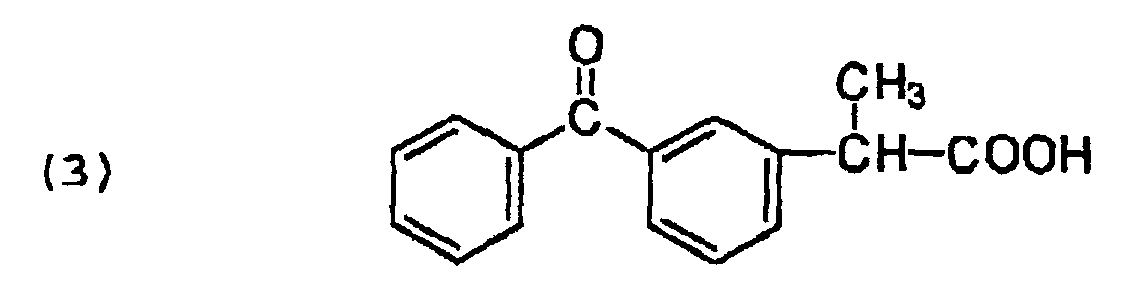

- The pharmacodynamic characteristics of all these products is similar, which they present in varying degrees of antiinflammatory, antithermic, analgesic and antiplatlet activity, all of them being non-selective inhibitors of ciclooxygenases (Cox I y Cox II) (Terapéutica farmacológica del dolor. Jesus Flores 1993. Ed. EUNSA. Pamplona 1993. Colección clínica de la salud. Capitulo 5, pag: 121-156.).
- The structural analogy between compounds (1) and (VI) (the latter being originally found and described from a fern "Asplenium onopteris") has led us to a pharmacological study of the two series of functionalised molecules starting from
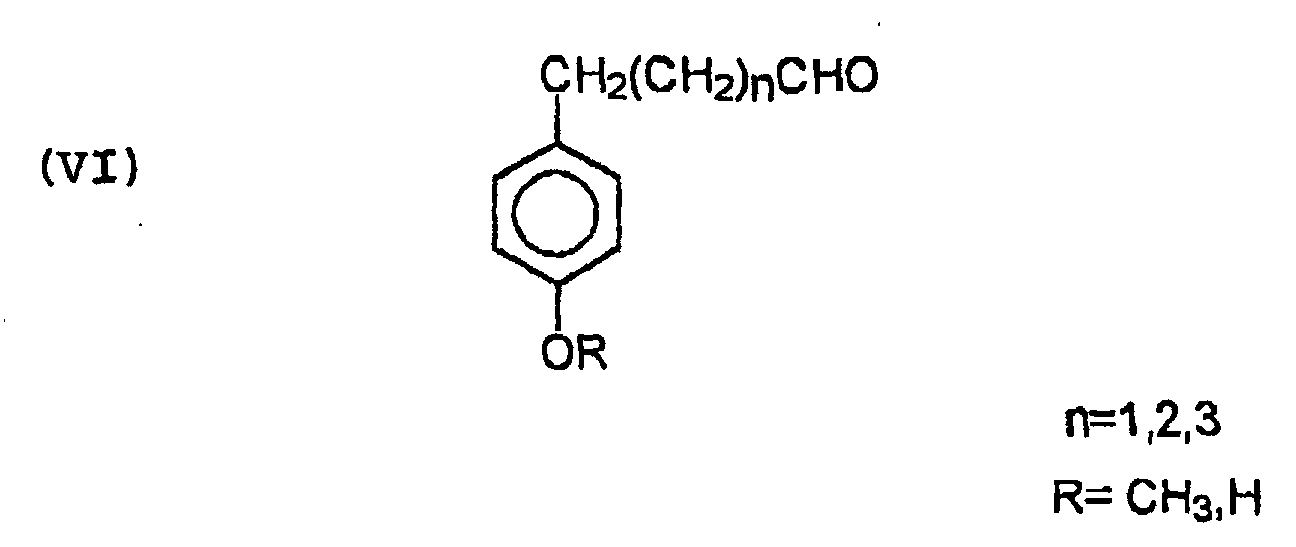 in accordance with that shown in diagrams 1 and 2.
- The central idea of the present invention therefore consists of obtaining a series of molecules on the basis of an adequate functionalisation using compound VI of Diagram 1 and using the corresponding derivatives of the aromatic rings, benzene and naphthalene, as functionalised syntones.
- The cell, the structural and functional unit of all living beings, is governed by a series of mechanisms that take decisions which in turn determine different conducts: proliferation, differentiation, activation, senescence and apoptosie. In higher organisms, there are some tissues in which there exist stem cells that generate the functional mature cells by proliferation and differentiation.
- Within the systems of higher organisms, the immunological system constitutes an essential defence mechanism for preserving the viability of the individual. Multicellular beings, including humans, find themselves in an environment with a great many microorganisms that can penetrate into their interior and use them for their own growth. The immune system is capable of recognising microorganisms and triggering an effector response leading to their destruction or functional cancellation. Moreover, multicellular beings undergo errors in cell proliferation processes and they accumulate mutations that lead to the tumoral transformation of some of their components. The immune system is also capable of recognising cells that have undergone neoplastic transformation and of successfully suppressing tumoral growth and dissemination. Nevertheless, the effector capacity of the immune system can provoke inflammatory tissue alterations with lesions to parenchymatous components. These processes are accompanied by infiltration and proliferation of cells from the immune system into the tissues. Some originate in the response to infectious agents and can be acute and systemic, such as sepsis and multiorganic inflammatory response, or they can be chronic and localised such as hepatitis, tubercular arthritis, etc. Other inflammatory processes mediated by the immune system are those known as autoimmune, which are triggered in the presence of the actual components of the organism, such as rheumatoid arthritis, inflammatory disease of the digestive tract, etc. As a cellular system, the immune system can also undergo tumoral transformations giving rise to malign lymphoproliferative syndromes. The immune system can also participate in aptogenis of tissue damage by chronic processes such as some demencias and arteriosclerosis.
- In the analysis of immunological responses, a distinction is drawn between natural or non-specific immunity and acquired or specific immunity. The latter is in turn divided into tumoral immunity characterised by the production of antibodies by type B lymphocytes and in cell mediation response via T lymphocytes. The immunological response consists of a complex feedback network in which autocrine and paracrine mediators, cytokins, growth factors, etc., all play a role, in addition to the mediators responsible for connection with the endocrine system and the nervous system.
- An essential element in the generation of the specific immunological response is the capacity to expand lymphocyte subpopulations by antigen stimulus determined via a complex process of recognition and processing of the antigen followed by a process of presentation to the effector cell that finally generates the response. This process can be summarised by saying that the proliferation of the subpopulations corresponding to the antigen is the essential property of mature lymphocytes (Assas AK, Lichtman AH, Pober JS. Cellular and Molecular Immunology. 2nd ed. W.B. USA: Sanders Company, 1994:31-3).
- The cellular mechanisms for proliferation in turn imply a complex mechanism for the reception of signals external to the cell via membrane receptors, and the transmission of those signals to the cell nucleus in order to put into operation the mitotic mechanisms which likewise imply nuclear and cytoplasmatic processes (Metezeau PH, Ronot X, Le Loan-Merliquac Q, Ratinard MH. La Citometrie en Flux. In: Le Gorde Cellulaire. Paris: MEDSI/Mc Gram Hin, 1988:77-87).
- The physiological mechanisms of the immunological system must necessarily include an availability of "defensive" cells at sites where their activity is needed, hence the existence of "call" mechanisms, circulation, recruitment and adhesion.
- The efficiency of the immunological system is nevertheless subject to dysfunctions which can in general terms be separated into three fundamental types, as has been stated previously. Proliferative dysfunction, that in which a cell population or subpopulation proliferates out of control, giving rise to various types of leukaemias and lymphomas and other malign and benign lymphoproliferative syndromes. Functional dysfunction therefore implies an exacerbation of the response that gives to, for example, autoimmune pathologies due to errors in antigen recognition, or a decrease in the type of response giving rise to different situations of immunosuppression. One particular case consists of pathologies or situations of inflammation (chronic or acute) with the concomitant tissue destruction and functional alteration, which can be produced in the context of systemic autoimmune diseases or specific organs as well as in response to various infectious agents.
- The pathology of the immunological system is in some aspects, and paradoxically so, parallel to the course of technological and social processes. For example, there can be no doubting the close relation between the development of the AIDS pandemic with social factors such as the enormous increase in displacements, the liberalisation of customs or the unemployment situation with its consequences of margination and drug addiction (Balter M, Cohen J. International AIDS Meeting Infects a dose of realism. Science (New Fows) 1998;281:159-60., Mann JM, Tarantola DJ. HIV 1998: the global picture. Sci Am 1998;279(1):82-3., Bartlett JG, Moore RD. Improving HIV therapy. Sci Am 1998;279(1):84-7).
- Another important factor of immunological pathology is the development of the chemical industry and environmental contamination which propitiates the development of allergies and immunotoxicity (Descotes J. Immunotoxicology of drugs and chemicals. Elsevier Press, 1990., Herchman E, Kimber I, Purches IFH. Immunotoxicology: Suppressive and stimulatory effect of drugs and environmental chemicals on the immune system. Arch Toxicol 1989;63:257-73).
- Finally, we can mention that, at least in developed countries, the increase in life expectancy, changes in nutrition, modifications to interactions with infectious agents, the present-day life-style, have all been associated with a greater incidence and prevalence of autoimmune disease and autoimmunity with inadequate recognition of tissues, which are seen as "not one's own", as in rheumatoid arthritis (Lugmano R, Gordon C; Bacon P. Clinical Pharmacology and modificator of autoimmunity and inflammatorion in rheumatoid disease. Drugs 1994;47(2);259-83), autoimmune diabetes (Riestra Moriegue JL, Guerro Silva R, Fernandez Sanchez JA, Balio Hernández J, Rodriguez Pérez A. Revisión de los immunesupresores en el tratamiento de la artricis reumatoide. Inflamación 1993;IV (6):368-81), etc.
- Finally, among the aspects tied to technological and environmental development, we can mention the repercussions of exposure to ionising radiations.
- Knowledge of the immunological mechanisms and the growing social repercussions of immunological pathologies have, in the last 30 years, led to the development of substances capable of therapeutically manipulating the immunological system (immunomodulators).
- In short, we have to understand that immunological dysfunction is always ambivalent and the development of the suppression of some of the functions can occasion the exacerbation of others (and vice versa), and that this implies a special difficulty in the effective therapeutic manipulation of the immunological system.
- One of the most surprising pharmacological facts is the structural disparity of the different types of products specifically classified as immunomodulators (werner GF, Jolle's P. Immunostimulating agents: what next? A review of their present and potential medical applications. Eur J Biochem.1996;242:1-19), even leaving to one side antiinflammatory substances and cytostatic agents (antimitotics).
- On the basis of these considerations, there is a clear possibility of designing new active principles provided with pharmacological activity towards the immunological system based on some type of interference with uncontrolled processes of differentiation, activation, proliferation or programmed cell death (apoptosis).
- One of the essential aspects already mentioned and to which this present invention is especially tied is the capacity of one type of immune cell, the lymphocytes, to enter into proliferation (mitosis) via different stimuli for which it has specific receptors.
- So, one way of blocking this proliferative phenomenon could be to block one or several of the activation mechanisms, i.e., the blocking of specific receptors, to interference with the transmitters of the signal as far as the cell nucleus.
- The present invention describes the obtaining of a set of substances capable of interfering with different mechanisms for the transmission of activation signals in immunocompetent cells, thereby blocking processes of cell proliferation. This will be able to permit the therapeutic use of those substances in processes accompanied by an inadequate proliferation of immune system cells. This implies processes of inflammatory tissue infiltration with lymphocyte proliferation such as what are known as autoimmune diseases and inadequate responses to infectious agents with induction of tissue damage mediated by the immune system, and evidently also including malign and benign lymphoproliferative processes. The lymphocyte proliferation also participates pathogenically in various chronic diseases such as amyloidosis, Alzheimer type demencia, arteriosclerosis, etc., which could benefit from the use of these agents.
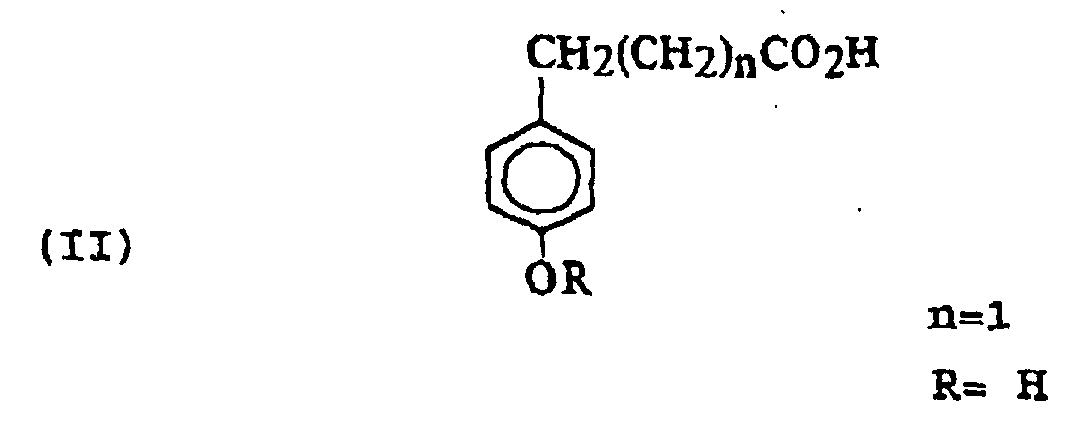
- The design of such substances starts from the presence of 3-(4-hdroxyphenyl)propionic acid (II) in methanolic extracts of the fern Asplenium onopteris (Hernández Silva H. Aportación a la fitoquimica de helechos. Síntesis y funcionalización de una nueva molécula natural bioactiva. Tesis Doctoral, Universidad de La Laguna (1996)). The structural similarity of this molecule to certain non-steriod antiinflammatories led to its use as lead product for its functionalisation and pharmacological evaluation.
- There exist antecedents of pharmacological activity of lactones, in particular cytostatic activity of sesquiterpene lactones (Kupchan SM, Eakin MA, Thomas AM. Tumour inhibitors. 69. Structure-cytotoxicity relationships among the sesquiterpene lactones. J Med Chem 1971;14(12):1147-52., 13., Nakagawa M, Hirota A, Sakai H., Isogai A.Terrecyclic acid A, a new antibiotic from Aspergillus terreus. I. Taxonomy, production, and chemical and biological properties. J Antibiot 1982;35:778-82).
- Another antecedent consists of lactones derived from kava, a plant used in traditional medicine in Indonesia (Lebot V, Levesque J. El Kava ¿un remedio contra el estrés?. Mundo Cientifico 1987;178:366-70).
- These products are being tested in a wide field of clinical situations such as clinical depressions and myorelaxation, though hepatic and blood toxicity has recently been described for this type of product (Jappe V, Framke X, Reinhold D, Gollmick H Sebotropia drug reaction resventing from kava-kava extract therapy. A new entity? J Am Acad Dermatology 1988; 38(1):104-6).
- Antiproliferative products must necessarily act at the level of controlling the cell cycle, which means that it is necessary to have a knowledge of the biochemical mechanisms involved in it. This permits (and will permit) the design of inhibitors with greater safety and specificity (Morgan DO. Principles of CDK regulation. Nature 1995;374:131-4., Edgar BA, Lehner CA. Developmental control of cell cycle regulators: A fly's perspective. Science 1996;374:1646-52).
- The outline has very recently been published of the general synthesis of a "library" of protein-kinase inhibitor products with the idea of obtaining therapeutic effects starting from specific blockings of enzyme systems responsible for the progression of the cell cycle (Gray N, Wodicka L, Thunnissen A, Norman T, Kwon S, Espinoza FH et al.. Exploiting chemical libraries, structure and genomics in the search for kinase inhibitors. Science 1998; 281:533-8).
- Various indole derivatives have recently also recently been discovered (Garoti L, Roberti M, Rossi T, Castelli M, Malagolis M. Synthesis and antiproliferative activity of 3-substituted 1H indole [3,2-d]-1,2,3-triazin-4(3H)-ones. Eur J Med Chem 1993; 33:43-6.) as have those of gallic acid (Serrano A, Palacios C, Roy G, Crespón C, Villar M, Nocito M et al. Derivatives of gallic acid induce apoptosis in tumoral cell lines and inhibit lymphocyte proliferation. Arch Bioch Biophysicos 1998;330 (1) :49-54.), containing this pharmacological activity, though via different mechanisms.
- From everything stated above, it clearly emerges that the maladjustment of the transduction paths for signals controlling cell growth can lead to the development of tumoral pathologies. Consequently, the possibility exists of a design of drugs aimed specifically at blocking the transduction of signals (whether these be of the protein-protein type or of thecascade phosphylation
 type (Saltiel AR, Samyer TK. Targeting signal transduction in the discovery of antiproliferative drugs. Chem and Biology 1996;3(11):887-93.). Finally, mention is made of novel antecedents in relation to antiproliferative substances (Babit-Le-Bouteiller C, Jamme MF, David M, Silve S, Lanau C, Dhers C et al. Antiproliferative effects of SR31747A in animal cell lines are mediated by inhibition of cholesterol biosynthesis at the sterol isomerase step. Eur J Biochem 1998;256:342-59., Dell CP. Antiproliferative naphthopyrans: biological activity, mechanistic studies and therapeutic potential. Current Medicinal Chemistry 1998;5:179-94., Kamei H, Koide T, Kojima T, Hashimoto Y, Hasegawa M. Inhibition of cell growth in cultures by quinones. Cancer Biotherapy & growth in cultures by quinones. Cancer Biotherapy & Radiopharmaceuticals 1998;13(3) :185-188., Zafra-Polo MC, Figadere B, Gallardo T, Tormo JR, Cortes D. Natural acetogenins from annonaceae, synthesis and mechanism of action. Phytochemistry- 1998;48(7):1087-117., Cheviron N, Grillon C, Carlier MF, Wdzieczak-Bakala J. The antiproliferative activity of the tetrapectide acetyl-N-SerAspLysPro, an inhibitor of haematopoietic stem cell proliferation, is not mediated by a thymosin β4-like effect on actin assembly. Cell Prolif 1996;29:437-46).
- The compounds of the invention have the following chemical structures:

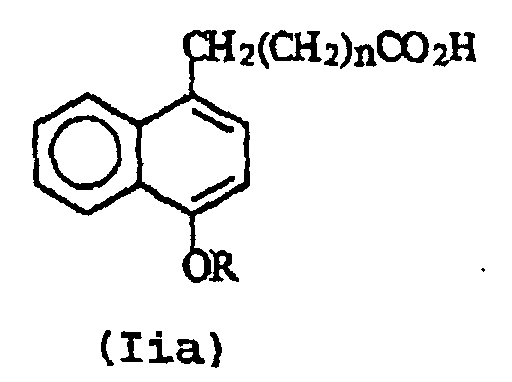
- For the purposes of the general description of the invention, we consider the synthesis of the precursor (II) or of that corresponding to the naphthyl series (IIa).
 For this we start from the substances (III), (IV) and (V) as per Diagram 1: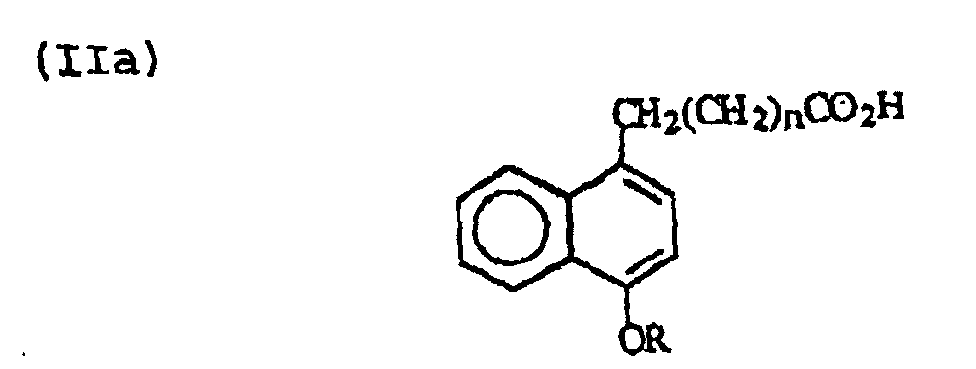


- A functionalised allylation of(IX) and (VII) as in the diagram 1 gave us (Ia)
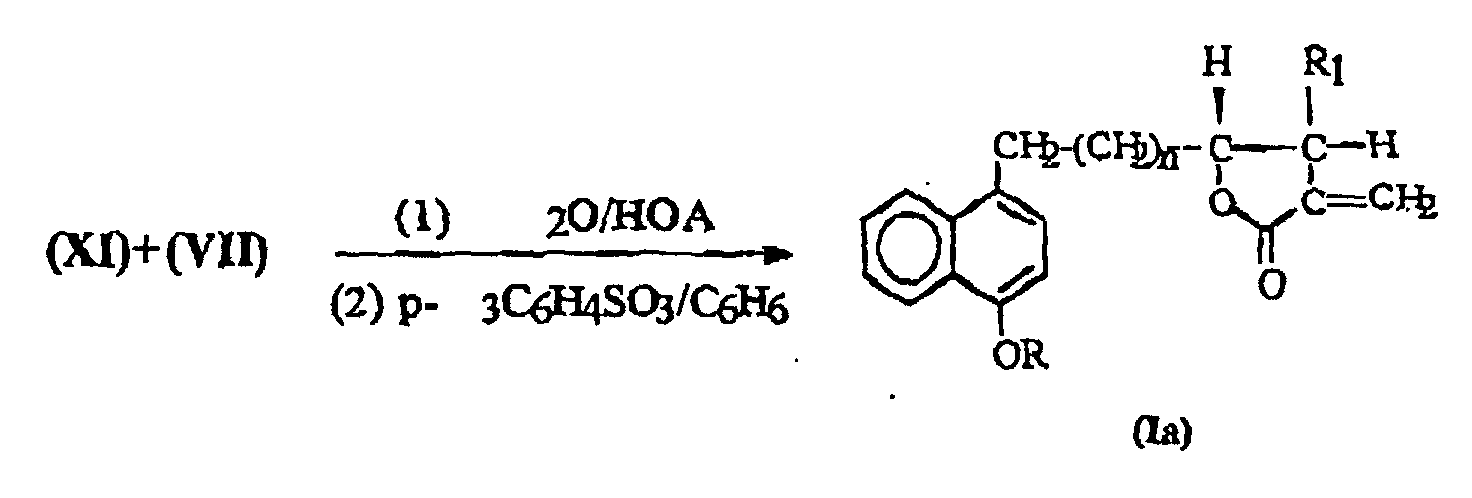
- The precursors would be:

 with all the synthesis steps of Diagram 1 being maintained up to the obtaining of the end products. (I), where the product (IIa) is the corresponding precursor of the naphthyl series.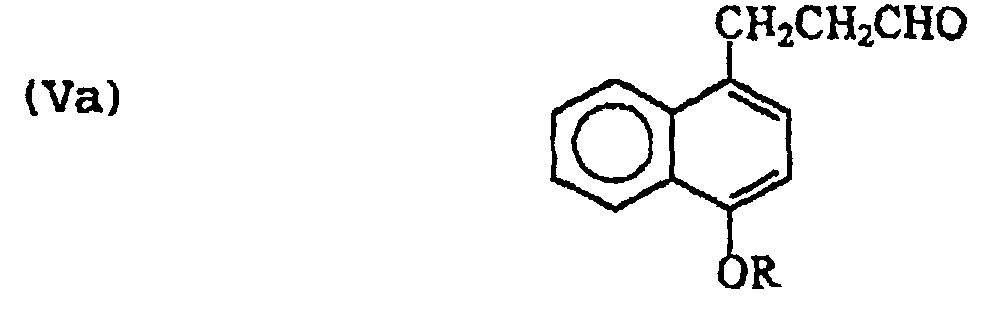
- Described below is the synthesis of the product of the invention (I) when n=1, R=R1=CH3; n=1, R=CH3, R1=H.
- For this, we have prepared the following compounds: 3-(4-Hydroxyphenyl) propionic acid, having the following structural formula:which can be prepared from commercial 4-hydroxybenzaldehyde, of formula:
 For the preparation of the acetyl derivative of (III), of formula: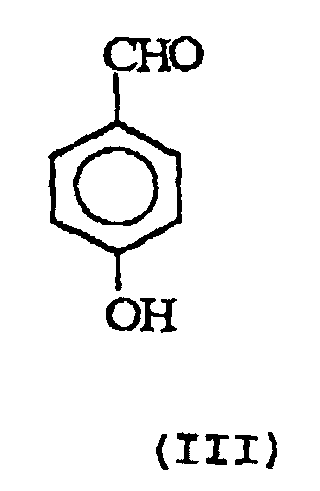
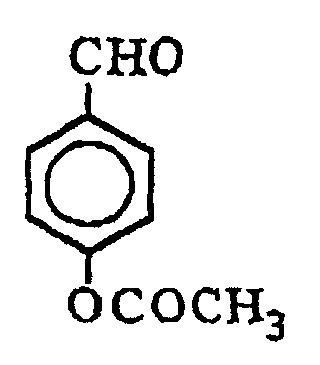
- The aldehyde (III) was treated with acetic anhyride [(CH3-CO)2O] and pyridine (C5H5N).
- The invention is explained via the following experiments:
- 6.0 g (48.18 mmoles) of (III) were dissolved in 1 ml of pyridine and 2 ml of acetic anhydride were added. The mixture was left to rest at room temperature for 24 h. It was poured onto water (200 ml) and an extraction was performed with diethyl ether (3 x 100 ml). The ether extracts were washed three times, each time with 100 ml of a solution of dilute hydrochloric acid (0.5 N) and then with sodium bicarbonate. The ether extracts were dried over anhydrous sodium sulphate and vacuum concentrated to give an oil 6.3 g. (100% yield) of 4-acetylbenzaldehyde.Spectroscopic data.-

- IR νmax (CHCl3) cm-1:
- 2830, 2743, 1762, 1702, 1601, 1503, 1370, 1300, 1194, 1156, 1013, 911, 860, 830, 781, 711.
- EM m/z (rel. int.):
- 164 [M]+ (4), 122 [M-42]+ (17), 121 [M-43]+ (34) , 92 (20), 93 (14) , 65 (100).
- 1H NMR (δ, CDCl3):
- 2.09 (s, 3H, CH3CO), 7.05 (d, J= 8.3 Hz, 2H), 7.68 (d, J= 8.3 Hz, 2H), 9.74 (s, 1H).
- 13C NMR (δ, CDCl3):
- 20.84 (q), 122.16 (d) (intensity for 2CH), 131,42 (d) (intensity for 2CH), 155.14 (s), 168.56 (s), 190.92 (s).
- In a two-neck flask containing 250 ml of dry benzene, 2 g were added of a suspension of sodium hydride (1.19 g, 49.98 mmoles) in an argon atmosphere and at 0°C. Trimethylphosphone acetate was then slowly added (8.24 ml, 49.98 mmoles). When the ilide had formed, 4-acetylbenzaldehyde was added (5.47 g, 33.33 mmoles). At the end of one hour, the reaction was complete and the mixture was poured onto a saturated solution of NaCl. It was extracted three times with diethyl ether and the phases were washed twice with distilled water. It was dried over anhydrous Na2SO4, filtered and the solvent was removed by distillation. After purification in a column Of silica gel, 6.74 g (92% yield) were obtained of a white crystalline product, m.p. 61-62°C.Spectroscopic data.-
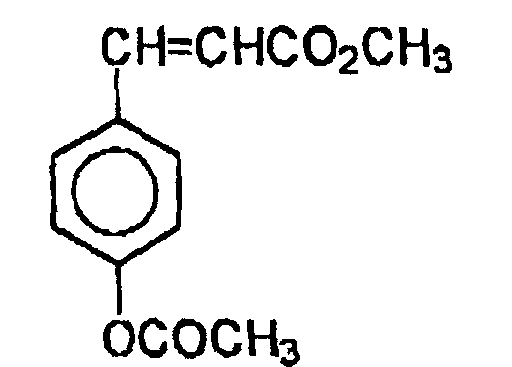
- IR νmax (CHCl3) cm-1:
- 1763, 1712, 1637, 1435, 1370, 1204, 1165, 985, 834, 791.
- EM m/z (rel. int.):
- 220 [M+] (9), 189 [M-OCH3]+ (6), 178 [M-OCH3]+ (92), 148 [M-72]+ (10), 147 [M-CH2CO2CH3]+ (100), 119 [M-CO2CH3 + COCH3]+ (22), 91 (23), 77 (5).
- 1H NMR (δ, CDCl3) :
- 2.19 (s, 3H, -COCH3), 3.70 (s, 3H, -CO2CH3), 6.31 (d, J= 16 Hz, 1H, -CH=CH-), 7.03 (d, J= 8.5 Hz, 2H), 7.43 (d, J= 8.6 Hz, 2H,), 7.58 (d, J= 16 Hz, 1H, -CH=CH-).
- 13C NMR (δ, CDCl3) :
- 21.02 (q), 51.64 (d), 117.83 (d), 122.05 (d), 129.11 (d, intensity for 2CH), 131.98 (s), 143.65 (d), 151.99 (s), 167.21 (s), 169.05 (s).
- 6.70 g (30.45 mmoles) of the methyl ester of 4-acetylcinamic acid were dissolved in 100 ml of ethyl acetate and hydrogenated using 5% Pd/C (1.5 g) as catalyst under H2, for four hours. It was filtered and concentrated to give an oil, 6.17 g (99.2% yield) of methyl ester of 3-(4-acetylphenyl) propionic acid.Spectroscopic data.
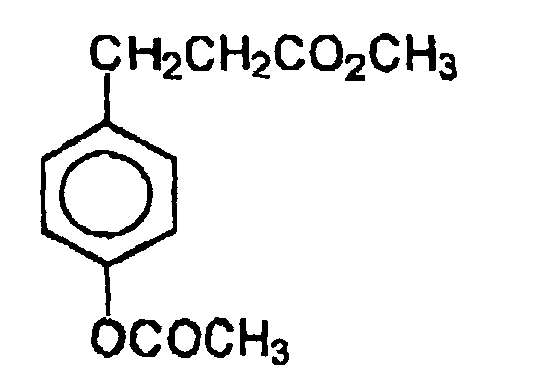
- IR νmax (CHCl3) cm-1:
- 3025, 2952, 2852, 1750, 1723, 1602, 1507, 1437, 1369, 1369, 1296, 1228, 1194, 1166, 1102, 913, 849, 638.
- EM m/z (rel. int.):
- 222 [M+] (6), 180 [M-(CHCO2CH3 + COCH3)]+ (98), 149 [M-CH2CO2CH3]+ (10), 107 [M-(CHCO2CH3 + COCH3) ]+ (100), 91 (5), 77 (4).
- 1H NMR (δ, CDCl3):
- 2.25 (s, 3H, COCH3), 2.60 (t, J= 7.6 Hz, 2H), 2.29 (t, J= 7.7 Hz, 2H), 3.64 (s, 3H, OCH3), 6.98 (d, J= 8.5 Hz, 2H), 7.18 (d, J= 8.5 Hz, 2H).
- 13C NMR (δ, CDCl3):
- 20.73 (q), 29.96 (t), 35.25 (t), 121.26 (d, intensity for 2CH), 128.96 (d, intensity for 2CH), 138 (s), 148.99 (s), 169.56 (s), 173.13 (s).
- To 3.82 g (17.36 mmoles) of methyl ester of 3-(4-acetylphenyl) propionic acid were added 100 ml of dry tetrahydrofurane. To this solution were slowly added 1.80 g (47.43 mmoles) of lithium aluminium hydride (LiAlH4). The reaction mixture was refluxed in an argon atmosphere for 4 hours. At the end of the reaction, water was carefully added, extraction was performed three times with diethyl ether and the result was vacuum dried over anhydrous sodium sulphate, giving 1.70 g (65% yield) of 3-(4-hydroxyphenyl)-1-propanol.
Crystallisation in methanol gave a white crystalline solid m, .p. = 52-53°C.Spectroscopic data.-
- IR νmax (CHCl3) cm-1:
- 3338, 2924, 2853, 1612, 1514, 1460, 1376, 1240, 1037, 824.
- EM m/z (rel. int.):
- 152 [M+] (81), 134 [M-18]+ (39), 121 [M-CH2OH]+ (8), 108 [M-C2H5OH]+ (30), 107 [M-C2H5O]+ (100), 91 (12), 77 (7).
- 1H NMR (δ, CDCl3):
- 1.87 (m, 2H, -CH2-), 2.65 (t, J= 7.5 Hz, aryl-CH2), 3.69 (t, J= 6.5 Hz, 2H, CH2O), 6.76 (d, J= 8 Hz, 2H), 7.06 (d, J= 8 Hz, 2H).
- 13C NMR (δ, CDCl3):
- 29.68 (t) , 62.3 (t), 115.22 (d, intensity for 2CH), 129.45 (d, intensity for 2CH), 133.68 (s), 153.80 (s).
- 2.26 g (14.87 mmoles) of 3-(4-hydroxyphenyl)-1-propanol were dissolved in dry acetone (20 ml) and potassium carbonate (2.05 g, 14.87 mmoles) was added, followed by methyl iodide (MeI) (2.11 g, 14.87 mmoles). The mixture was kept at reflux in a water bath at 60-70°C for 48 h. After that period of time, it was diluted with water and the acetone was removed at reduced pressure. Extraction was performed with diethyl ether, and the result was washed with water, dried over sodium sulphate, filtered and the solvent was evaporated in a vacuum to give an oil (2.35 g) (94.93% yield) of 3-(4-methoxyphenyl)-1-propanol.
Spectroscopic data.- - IR νmax (CHCl3) cm-1:
- 3360, 2937, 2832, 1604, 1578, 1515, 1460, 1260, 1034, 1030, 835.
- EM m/z (rel. int.) :
- 166 [M+] (32), 148 [M-18]+ (15), 135 [M-31]+ (5), 121 [M-C2H5O]+ (100), 107 [M-C3H7O]+ (5), 91 (25).
- 1H NMR (δ, CDCl3) :
- 1.89 (m, 2H, -CH2-), 2.66 (t, J= 7.8 Hz, 2H, phenyl-CH2-), 3.67 (t, J= 6.5 Hz, -CH2O), 3.80 (s, 3H, phenyl-OCH3), 6.84 (d, J= 8.4 Hz, 2H), 7.13 (d, J= 8.4 Hz, 2H).
- 13C NMR (δ, CDCl3) :
- 30.94 (t) , 34.23 (t), 55.04 (q), 61.77 (t), 113.60 (d), 113.68 (d), 129.12 (d), 129.20 (d), 133.80 (s), 157.52 (s).
- 2.34 g (14.10 mmoles) of 3-(4-methoxyphenyl)-1-propanol were dissolved in 20 ml of dry dichloromethane and slowly added to a suspension of 4.56 g (21.15 mmoles) of pyridinium chlorochromate in 25 ml of dichloromethane. Once the reaction was completed, which was followed by thin layer chromatography, 3 ml of diethyl ether were added in portions and the mixture was filtered over celite. The ether phase was washed three times with water and left to dry over anhydrous sodium sulphate for an entire night. The 3-(4-methoxyphenyl)-propanal was purified by column chromatography using as eluent ethyl acetate: dichloromethane in increasing polarity, with 1.20 g of an oil being obtained (52% yield).Spectroscopic data.-

- IR νmax (CHCl3) cm-1:
- 2840, 2730, 1716, 1600, 1580, 1511, 1440, 1175, 1109, 1076, 814.
- EM m/z (rel. ink.):
- 164 [M+] (23), 121 (100), 108 (30), 91 (25), 78 (20), 77 (16).
- 1H NMR (δ, CDCl3):
- 2.70 (t, J=7.5 Hz, 2H, -CH2-) 2.91 t, J= 7.3 Hz, 2H, phenyl-CH2-), 3.79 s, 3H, phenyl-OCH3), 6.84 (d, J= 8.4 Hz, 2H), 7.12 (d, J= 8.4 Hz, 2H), 9.60 (s, 1H, CHO).
- 13C NMR (δ, CDCl3) :
- 27.11 (t), 45.38 (t), 55.09 (q), 113.75 (d), 113.84 (d), 129.10 (d), 129.15 (d), 132.21 (s), 157.94 (s), 201.72 (s).
- 0.79 g (5.19 mmoles) of 3-(4-hydroxyphenyl)-1-propanal were dissolved in acetone (20 ml) and Jones reagent (chromic anhydride in sulphuric acid) (8 ml) was added to it drop by drop until the yellow-brown colour persisted. The solution was stirred for one hour at 0°C. The excess reagent was destroyed with methanol and the solution was filtered and evaporated at reduced pressure. The residue
was extracted in ethyl acetate, dried over anhydrous sodium sulphate and concentrated, diving an impure residue (0.6470 g), which was chromatographed - over silica gel, obtaining 0.545 g (63.1% yield) of 3-(4-hydroxyphenyl) propionic acid. Recrystallisation in methanol gave m.p. = 121°C.Spectroscopic data.-
- IR νmax (CHCl3) cm-1:
- 3400, 2930, 1702, 1597, 1511, 1460, 1377, 1298, 1222, 1176, 1105, 919, 928, 774, 722.
- EM m/z (rel. int.):
- 166 [M+] (46), 107 [M-59]+ (100), 91 (6), 77 (7).
- 1H NMR (δ, CDCl3):
- 2.53 (t, J= 7.5 Hz, 2H), 2.80 (t, J= 7.5 Hz, 2H), 6.73 (d, J= 8.4 Hz, 2H), 7.06 (d, J= 8.4 Hz, 2H).
- 13C NMR (δ, CDCl3):
- 30.57 (t), 36.33 (t), 115.93 (d, intensity for 2CH), 130.03 (d, intensity for 2CR), 132.53 (s), 156.50 (s), 174.18 (s).
- 8.8 g (0.2 ml, 11.3 moles) of recently distilled acetaldehyde were made to react with 25.83 g (27.0 ml, 0.30 moles) of methyl acrylate and 2.5 g (0.002 moles) of 1,4-diazabicyclo[2,2,2]-octane (DABCO). The mixture was left to react at room temperature with stirring, until all the acetaldehyde had reacted (approximately seven days). At the end of that time, extraction was performed with diethyl ether (2 x 100 ml) and the result was washed with water (2 x 400 ml). The ether extracts were dried over anhydrous sodium sulphate and vacuum concentrated, giving 23.4 g (90% yield) of a colourless oil of methyl 3-hydroxy-2-methylidene-butanoate.Spectroscopic data.-
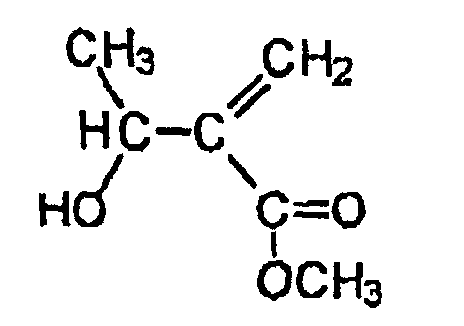
- IR νmax (CHCl3) cm-1:
- 3446, 2976, 2855, 1716, 1629, 1438, 1282, 1196, 1163, 1094, 1041, 957, 925, 821.
- EM m/z (rel. int.):
- 130 [M+] (1), 115 [M-15]+ (74), 112 [M-18]+ (8), 99 [M-OCH3]+ (25), 98 [M-CH3OH]+ (37), 71 [M-59 (CO2CH3)]+ (32), 55 (100).
- 1H NMR (δ, CDCl3):
- 1.27 (d, J= 6.8 Hz, 3H, CH3-), 3.26 (s wide, 1H, OH), 3.68 (s, 3H, CH3O-), 4.55 (q, J= 6.3 Hz, 1H, HC-OH), 5.79 (s wide, 1H, CH2=C-), 6.13 (s wide, 1H, CH2=C-).
- 13C NMR (δ, CDCl3):
- 21.75 (q), 51.69 (q), 66.63 (d), 123.87 (t), 143.60 (s), 166.91 (s).
- 8.0 g (46 mmoles) of N-bromosuccinimide were dissolved in 60 ml of dry dichloromethane and were cooled to 0°C. To the mixture were added drop by drop 4 ml (50 mmoles) of dimethyl sulphide dissolved in 40 ml of chloromethane. The mixture was stirred for 10 minutes at 0°C. At the end of that time 5.46 (42 mmoles) of a solution of methyl 3-hydroxy-2-methylidene-butanoate in 40 ml of dichloromethane were slowly added to it. The resulting suspension was stirred for 24 hours at room temperature until a transparent solution was obtained. To this mixture was added n-hexane (100 ml) and it was poured into a separating funnel containing 200 ml of a saturated solution of sodium chloride and ice. The organic phase was washed with 100 ml of a saturated solution of sodium chloride. The aqueous phases were extracted with diethyl ether (2 x 100 ml), they were washed with water (3 x 100 ml) and they were dried over anhydrous sodium sulphate. They were vacuum concentrated giving 7.45 g (92% yield) of a syrupy liquid of methyl 2-bromomethyl-2-butanoate.Spectroscopic data.-

- IR νmax (CHCl3) cm-1:
- 1715, 1646, 1435, 1284, 1194, 1165, 1083, 1049, 876, 766.
- EM m/z (rel. int.):
- 194 (5), 193 [M+] (5), 163 (7), 161 [M-OCH3]+ (6), 135 (4), 133 [M-CO2CH3]+ (4), 113 [M-Br]+ (95), 81 (53), 59 (97), 53 (100).
- 1H NMR (δ, CDCl3):
- 1.84 (d, J= 6.7 Hz, 3H, H3CCH=), 3.66 (s, 3H, OCH3), 4.14 (s, 2H, -CH2Br), 6.97 (q, J= 7 Hz, 1H, HC=H).
- 13C NMR (δ, CDCl3):
- 14.36 (q), 23.78 (t), 51.77 (q), 129.95 (s), 143.04 (d), 165.55 (s).
- To a suspension of metallic tin (1.34 g, 11.30 mmoles) in diethyl ether (22.6 ml) and water (5.65 ml), 2.18 g (11.30 mmoles) of methyl 2-bromomethyl-2-butenoate, 2.04 g (12.44 mmoles) of 3-(4-methoxyphenyl) propanal and sufficient quantities of acetic acid were added with stirring. The mixture was refluxed with stirring for 9 hours at 50°C. At the end of that time, water was added and an extraction was performed with diethyl ether (3 x 100 ml), it was washed with water and dried over anhydrous sodium sulphate. The result was concentrated obtaining 6.42 g of an oily product which, by means of later treatment with catalytic quantities of p-toluensulphonic acid in benzene at room temperature for 12 h, gave 7.92 g (69.5% yield) of 5-[2-(4-methoxyphenyl-ethyl]-4-methyl-3-methylene -dihydrofuran-2-one [(I), n=1, R=H; R1=CH3] in oil form.Spectroscopic data.-

- IR νmax (CHCl3) cm-1:
- 2938, 2837, 1736, 1663, 1611, 1513, 1456, 1246, 1178, 1124, 1034, 948, 832.
- EM m/z (rel. int.):
- 246 [M+] (99), 147 [M- (C5H7O)]+ (98), 135 [M-(C6H7O2)]+ (19), 134 [M-112]+ (29), 121 [M-(C7H9O2)]+ (100), 107 [M-(C8H11O2)]+ (14), 92 (29), 91 (84).
- 1H NMR (δ, CDCl3):
- 1.13 (d, J= 7 Hz, 3H, CH3-), 1.74 (t, J= 7.8 Hz, 2H, CH2),2.67 (m, 2H,O-CH2-), 3.17 (deformed quartet, 1H, CH), 3.81 (s, 3H, O-OCH3), 4.46 (quartet, J= 5.8 Hz, 1H, HCO), 5.57 (d, J= 2.5 Hz, 1H, =CH2), 6.25 (d, J= 2.5 Hz, 1H, =CH2), 6.88 (d, J= 8.6 Hz, 2H), 7.16 (d, J= 8.6 Hz, 2H).
- 13C NMR (δ, CDCl3):
- 13.61 (q), 30.59 (t), 32.64 (t), 37.14 (d), 55.00 (q), 79.82 (d), 113.72 (d, intensity for 2CH), 120.52 (t), 129.25 (d, intensity for 2CH), 132.68 (s), 140.62 (s), 157.81 (s), 170.30 (s).
- To a mixture containing 27 ml (25.83 g, 0.30 mmoles of methyl acrylate and 2.5 g (22.29 mmoles) of 1,4-diazabicyclo[2,2,2]-octane (DABCO), formaldehyde was added (generated by pyrolysis of paraformaldehyde at 200°C) in a nitrogen current for 1 h. The mixture was then left to react for 7 days at room temperature. At the end of that time an extraction was performed with diethyl ether (2 x 100 ml) and the result was washed with water (2 x 400 ml). The ether extracts were dried over anhydrous sodium sulphate, filtered and vacuum concentrated, giving 19.5 g (77% yield) of methyl 3-hydroxy-2-methylidene-propanoate in oil form.
Spectroscopic data.- - IR νmax (CHCl3) cm-1:
- 3428, 3009, 2953, 1718, 1636, 1513, 1439, 1309, 1272, 1159, 1057, 953, 819.
- EM m/z (rel. int.):
- 115 [M+-1] (2), 101 [M-15]+ (3), 98 [M-18]+ (2), 85 [M-OCH3]+ (89), 84 [M-CH3OH]+ (73), 83 [M-15-18]+ (69), 61 (12), 55 (100).
- 1H NMR (δ, CDCl3):
- 3.68 (s, 3H, CH3O), 4.22 (s, 2H, CH2O), 5.78 (s, 1H, CH2=C-), 6.17 (s, 1H, CH2=C-).
- 13C NMR (δ, CDCl3) :
- 51.82 (q), 61.69 (t), 125.50 (t), 139.39 (s), 166.77 (s).
- To a solution of N-bromosuccinimide (5.17 g, 26.8 mmoles) in dry dichloromethane (40 ml) were added dimethyl sulphide (4 ml) in dichloromethane (50 ml), drop by drop with stirring at 0°C for 10 min. To the resulting mixture was added methyl 3-hydroxy-2-metylidene-propanoate (3.15 g, 31.50 mmoles) dissolved in dichloromethane (40 ml), leaving it for 24 hours at room temperature. At the end of that time, it was poured into an aqueous solution of sodium chloride and ice. An extraction was performed with diethyl ether (3 x 100 ml), and the result was washed with water and dried over anhydrous sodium sulphate. Following vacuumconcentration, 4.33 g of a yellow oil was obtained (89% yield) of methyl 2-bromomethyl-2-propenoate.

Spectroscopic data.- - IR νmax (CHCl3) cm-1:
- 2997, 2954, 2835, 1736, 1612, 1584, 1513, 1437, 1299, 1248, 1176, 1128, 1035, 960, 825, 772.
- EM m/z (rel. int.):
- 181, 179 [M+] (22), 164 [M-15]+ (20), 1488 [M-OCH3]+ (5), 121 [M-CO2CH3]+ (93), 85 [M-CH2Br]+ (13), 61 (100).
- 1H NMR (δ, CDCl3):
- 3.76 (s wide, 3H, CH3O), 4.07 (m, 2H, CH2Br), 5.90 (s wide, 1H, HC=C), 6.25 (s wide, 1H, HC=C).
- 13C NMR (δ, CDCl3):
- 33.95 (t), 53.59 (q), 129.19 (19 (t), 137.27 (s), 168.20 (s).
- To a suspension formed from metallic tin (730 mg, 6.15 mmoles), diethyl ether (12.5 ml) and water (3.1 ml) were added 1.10 g (6.15 mmoles) of methyl 2-bromomethyl-2-propenoate and 1.11 g (6.77 mmoles) of 3-(4-methoxyphenyl) propanal, with catalytic quantities of acetic acid. The mixture was kept warm at 50°C with stirring for 9 hours. At the end of this time it was poured into water (200 ml) and an extraction was performed with diethyl ether (3 x 100 ml). The result was dried over anhydrous sodium sulphate and vacuum concentrated, giving an oil 780 mg (70% yield) of 5-[2-(4-methoxyphenyl)-ethyl]-3-metylene-dihydrofuran-2-one [(I), R=CH3; R1=H].Spectroscopic data.-
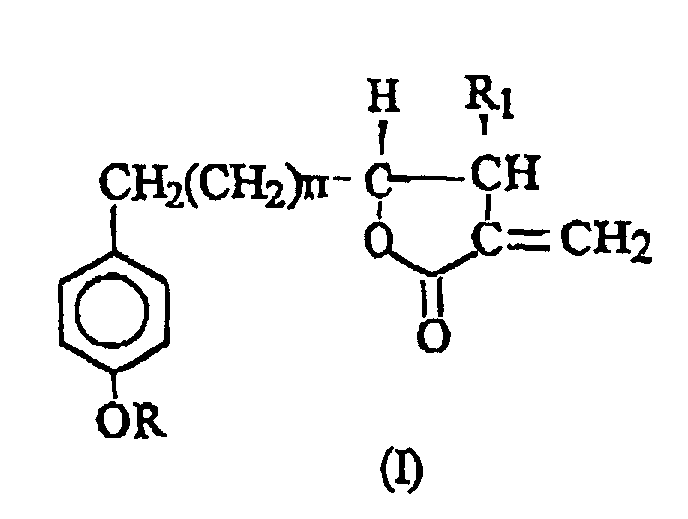
- IR νmax (CHCl3) cm-1:
- 2996, 2926, 2854, 1760, 1665, 1612, 1584, 1513, 1464, 1398, 1352, 1300, 1279, 1247, 1178, 1129, 1035, 983, 886.
- EM m/z (rel. int.):
- 232 [M+] (23), 147 [M-C4H5O2]+ (31), 135 [M-C5H5O2]+ (6), 121 [M-C6H7O2]+ (100), 91 (27), 77 (27), 65 (13).
- 1H NMR (δ, CDCl3):
- 1,96 (m, 2H, CH2), 2.70 (, 2H, -CH2-), 3.78 (s, 3H, O-OCH3), 4.48 (m, 1H, -CHO-), 5.62 (d, J= 5.0 Hz, 1H), 6.22 (d, J= 5.0 Hz, 1H), 6.83 (d, J= 8.5 Hz, 2H), 7.11 (d, J= 8.5 Hz, 2H).
- 13C NMR (δ, CDCl3) :
- 33.23 (t), 33.35 (t), 38.13 (t), 55.10 (q), 76.40 (d), 113.61 (d, intensity for 2CH), 121 (t), 129.23 (d, intensity for 2CH), 132.48 (s), 157.89 (s), 170.18 (s).
- Biological activities are described of the product described in example 1 (henceforth referred to as "lactone").
-
Processing of the spleen: - Fine curved forceps - Broad flat forceps - Separator forceps - Fine scissors - Plastic Petri dishes of 60 x 15 mm (FLOW) - Fine wire mesh - Pipettes of 5 ml - Pasteur pipettes - 10 ml plastic tubes for centrifuging - Filter paper - Rubber support for dissection - 70% ethanol - Hank's balanced solution (HBSS) (FLOW) -
- Culture medium: DMEM + penicillin 50 UI/ml + streptomycin 50 µg/ml + glutamine 2mM + 10% foetal calf serum (complete medium) (FLOW).
- 2 Mercaptoethanol (2ME) (Sigma).
- Mitogenous controls: Concanavalin A (Con A) (SIGMA) Phytohaemaglutinin (PHA) (SIGMA) Pokeweed (PWM) (SIGMA) Lipopolysaccharide 055:B5 (LPS) (SIGMA)
- Tripan blue
- Dishes with 96 flat-bottom wells (FLOW)
- Pipette tips (NUNC)
- Tritiated thymidine (AMERSHAM)
- Wathman filter papers (Titerted/Skatrom)
-
- Refrigerated centrifuge (BECKMAN)
- Liquid scintillation counter LKB 1211 Rack-beta
- Optical microscope
- Skatron Harvester
- Ba1b/c mice were used, male, aged 6-8 weeks (IFFA-CREDO).
- Processing of the spleen:
- The spleen is extracted under sterile conditions
- It is washed with 5 ml of HBSS in a Petri dish
- The spleen is laid on wire mesh
- It is disintegrated with the aid of broad forceps
- The mesh is washed with 5 ml of HBSS and placed in a Petri dish
- The tissue pulp is collected with a Pasteur pipette and taken to a sterile centrifuge tube of 10 ml
- It is washed twice in 10 ml of HBSS and centrifuged at 1,200 r.p.m.
- It is resuspended in 11 ml de HBSS
- It is left to rest for 5 minutes
- 10.5 ml are transferred to another centrifuge tube of 10 ml
- A variables count is conducted with tripan blue
- The cell suspension is centrifuged at 1,200 r.p.m.
- The cell "pellet" is resuspended in complete medium at a concentration of 4 x10⁶ cells/ml
-
- In a dish with 96 flat-bottom wells, sexiated dilutions are made of the mitogen problem sample with or without "lactone" in a volume of 10 µl in complete medium to which 5 x 10⁵ M 2ME have been added. All the determinations are made in triplicate.
- 100 µl of the cell suspension are then added, leaving a final volume of 200 µl.
- The dish is incubated in a stove at 37°C, 5% CO2 for 66 h.
- Following that incubation period, 1 µCi of tritiated thymidine is added to each well.
- The dish is again incubated for 6 h.
- Once that new incubation period has ended, the dish is processed in a Skatron Harvester, using special Wathman filter paper for this.
- The filter is dried in air.
- The filters are distributed in µ counter tubes to which have been added 2 ml of scintillation liquid.
- Each tube is introduced into a vial of 12 ml.
- The cpm are determined in a liquid scintillation counter.
- These are expressed as:
- (1) Arithmetic mean of cpm + standard deviation
- (2) Stimulation index = mean cpm of sample / mean cpm of control medium The statistical significance is determined by the Student t method.
-
- A study is first made of the "lactone" effect per se in relation to possible proliferative efgects on murine splenocytes. No effect is found in the range 100-0.75 µg/ml (the sample was dissolved in DMSO at 40.0 mg/ml). Nor was are cytotoxicity effects found in the stated ranges.
Proliferative response of murine splenocytes following 72 h of incubation. Proliferation of murine splenocytes
Mitogen (cpm ± DS)Lactone
µg/mlCon A
2.5 µg/mlPHA
50 µg/mla CD3
20 µg/mlLPS
10 µg/ml100 147 ± 10 19,500 ± 285 ± 20 614 ± 35 2,000 50 190 ± 10 19,000 ± 1,235 ± 2,700 ± 120 1,800 200 25 244 ± 15 21,000 ± 5,600 ± 3,200 ± 400 2,000 300 12 370 ± 20 6 78,200 ± 725 3 92,600 ± 100 1.5 150,400 ± 12,500 0.75 131,523 ± 10,000 0 150,000 ± 20,000 ± 40,000 ± 30,000 ± 15,000 2,000 4,000 1,600 - Nevertheless, the lactone clearly demonstrated its capacity for inhibiting proliferation induced by various mitogenic agents: ConA, antiCD3 and LPS, but not that induced by PHA.
- The results are summarised in the following tables (the cpm are stated following a pulse of tritiated thymidine. The samples of splenocytes were cultivated for 72 h in the presence of mitogen and lactone at the stated concentrations).
- The results indicate the capacity of lactone to specifically inhibit some action signals and not others while in the studies conducted on murine splenocytes, it is seen how the action indicated by the lectin of Phaseulis vulgaris (PHA) is not inhibited.
- In order to study more deeply the effects of lactone on cell proliferation, we checked whether the effects described in the above section on cells of murine origin were specific to the cell type and the species or whether, on the other hand, these effects were xeno-independent. For this, we purified human peripheral blood mononuclear cells from healthy controls and we proceeded to study the possible effects of inhibition on the proliferative activity of peripheral blood mononuclear cells (CMSP) from humans, induced by different mitogenic agents acting alone and/or in costimulation with other mitogens and in the presence or absence of recombinant human interleukin 2 (rhIL-2).
-
- Air pump for pipetting, Pipetus (Flow Lab., Germany).
- Neubauer counting chamber (Saaringia, Germany).
- Gelaire TC 48 vertical laminar flow chamber (Flows labs., Germany).
- GPR refrigerated centrifuge (Beckman, United Kingdom).
- SKATRON AS culture collector (Flow Lab. Lierbayen, Norway).
- -30°C freezer (Selecta, Tarrasa, Spain).
- -70°C freezer (Selecta, Tarrasa, Spain).
- Beta counter. Betamatic (Kontron).
- Eppendorf multipipette 4780 (Hamburg, Germany).
- CO2 culture stove Napco digital 6100 (National Appliance Co., Portland, USA).
- Sterile filters of 22 µm Millex-GS (Millipore, Molshein, France).
- Olympus CHS-2 microscope (Olympus, Tokyo, Japan).
- Glass pipettes of 1, 5 and 10 ml, sterile.
- Piptman P Adjustable volume pipettes of 20, 200, 1000 and 5000 µl (Gilson, France).
- Sterile dishes with 96 flat-bottom wells (Costar, Cambridge, MA., USA).
- Glass slides and cover slips (Hirschman, Germany).
- Virgin propylene tips, sterile (Daslab, Madrid, Spain).
- Eppendorf sterile tips (Hamburg, Germany).
- Sterile plastic tubes of 5, 10, 15 and 50 ml (Daslab, Madrid, Spain).
- Non-sterile plastic tubes of 3 ml (Indubages, S.A., Manresa, Spain).
-
- Tripan blue (Flucke AG., Buchs SG., Germany).
- Heparin Leo (Lab. Leo, Madrid, Spain).
- Lymphoprep (Ficoll-Hypaque) (Nyegaard Co, Oslo, Norway).
- Physiological saline solution (PSS) Simple chlorated apiroserum (Ibys, Madrid, Spain).
- Opticint "hisafe" scintillation solution (FSA, Leics, United Kingdom).
- Foetal calf serum (FCS) (Gibco, Grand Island, NY, USA).
- Tritium methyl-3H thymidine. Specific activity 1 µCi/ml. (Amersham inter., United Kingdom).
- Mitogens : Phytohaemaglutinin M (PHA) (Difco Lab., Detroit, Mi., USA), Concanavalin A (Con A, 2 µg/ml, Sigma Chemical Co., MI, USA), immobilised anti-CD3 (OKT3, 5 µg/ml, Ortho-mune, Orthodiagnostic System) and rhIL-2 (100 IU/ml, Hoffman-La Roche, NJ, USA).
- All the reagents included in these tests were diluted in RPMI 1640 culture medium (Whitaker Bioproducts, Walkersville, USA) supplemented with 10% of decomplemented foetal calf serum (Biochrom KG, Berlin), L-glutamin (2 mM, Biochrom KG), Hepes (25 mM, Biochrom KG) and antibiotic (1% penicillin streptomycin, Difco Lab, Detroit, MI, USA).
- Also, all the mitogens were optimised in a dose response way in order to obtaining the maximum proliferative response after 5 days of culture.
- Venous blood: The CMSP were obtained from venous blood extracted by antecubital venous puncture. 50 ml of blood were extracted to which were added 50 U of calcic heparin and the mixture was diluted 1/1 (vol/vol) with PSS.
- Human mononucleated cells: In order to isolate the CMSP they were proceeded to be separated from the rest of the blood components by means of the formation of a density gradient on Ficoll. The cells thus obtained are resuspended in PSS and centrifuged at 400 x g for 10 minutes (washing process) and then resuspended in PSS. This operation is repeated three times. In the last of them, PSS is replaced with complete medium.
- In all the cell suspensions a determination was made of the cell concentration and the viability by means of dilution with 0.1% Tripan Blue and microscope counting in a Neubauer chamber. The percentage of live cells was established by the exclusion capacity of the colorant.
- General culture conditions: All cell cultures were developed under conditions of sterility in a vertical laminar flow chamber, using single-use sterile materials or materials sterilised in an autoclave or with ethylene oxide. The cultures were conserved in a stove kept at a temperature of 37°C, in an atmosphere with 5% CO2 and relative humidity of 95%. In the various experiments performed, the purified CMSP cell preparations were incubated in sterile dishes with 96 wells at concentrations of 5 x 10⁴ cells/well (200 µl) in the presence of different concentrations of different mitogens for 5 days.
- The method used for quantifying the cell proliferation was analysis of the incorporation of 3H-thymidine (3H-T) into DNA synthesised de novo, detecting the emission of β radiation from the dry extracts of cell cultures to which the tritiated base had been added before its finalisation and collection. The synthesis of DNA was done in triplicate on sterile dishes with 96 flat-bottom wells.
- From 20 to 24 hour prior to terminating the cell culture, 1 µCi of 3H-T was added to each well containing medium; the cultures were gathered by suction through a glass filter, using a Skatron culture collector for this.
- The synthesis of DNA has been expressed in counts per minute (cpm). Each test was conducted in triplicate, with those data having a variability greater than 10% compared to the mean of the triplicate being rejected, since they could indicate a technical error or contamination in the culture. The cultures were carried out at a constant cell volume per well, as well as at a constant volume of 200 µl.
-
- Negative control : cells in the presence of complete culture medium.
- Positive control: stimulation of cells without the presence of lactone.
-
- The effect was studied of inhibition on the mitogenic activity of human lymphocytes, induced by different mitogenic agents, and of cell activation, acting alone and/or in combination (Table 2).
- The spontaneous blastogen response of the CMSP falls by 50% if 0.66 µg/ml of lactone are added to the culture.
- The blastogen response induced in CMSP due to phytohaemaglutinin M (PHA) falls by 50% if 0.25 µg/ml of lactone are added to the culture.
- The blastogen response induced in CMSP by Concavalin A (Con A) falls by 50% if 0.5 µg/ml of lactone are added to the culture.
- The blastogen response induced in CMSP by immobilised anti-CD3 (aCD3), falls by 50% if 0.06g/ml of lactone are added to the culture.

- The blastogen response induced in CMSP by aCD3 + PHA falls by 50% if 0.24 µg/ml of lactone are added to the culture.
- The blastogen response induced in CMSP by aCD3 + Con A falls by 50% if 0.21 µg/ml of lactone are added to the culture.
Proliferative response of peripheral blood mononuclear cells. Proliferation of human peripheral blood mononuclear cells Mitogens (cpm ± DS) Lact one µg/ml Medium PHA
10 µg/mlCon A
2 µg/mlaCD3
5 µg/mlaCD3 +
PHAaCD3 +
Con A100 104 ± 1086 ± 204 ± 43 39 ± 10 13 ± 4 8 ± 6 26 308 10 72 ± 72 71 ± 14 48 ± 7 119 ± 7 23 ± 7 11 ± 1 1 1805 ± 25118 ± 13294 ± 1286 ± 8689 ± 829 ± 1870 6642 3395 255 5361 484 0.01 2867 ± 71092 ± 55503 ± 40378 ± 67011 ± 93139 ± 1527 3555 9023 219 8270 3070 0.00 3175 ± 76612 ± 75329 ± 44721 ± 105395 ± 115090 ± 01 1574 15020 9144 4082 375 4133 0 2064 ± 77189 ± 73639 ± 34088 ± 95158 ± 87804 ± 39 686 9993 9498 7752 14148 - Afterwards, a study is made of the effect of inhibition on the mitogenic activity in human lymphocytes, induced by different mitogenic agents, and of cell activation, acting alone and/or in combination following the addition of exogen interleukin 2 (Table 3).
- The blastogen response induced in CMSP by rhIL-2 falls by 50% if 0.26 µg/ml of lactone are added to the culture.
- The blastogen response induced in CMSP by PHA + rhIL-2 falls by 50% if 0.29 µg/ml of lactone are added to the culture.
- The blastogen response induced in CMSP by Con A + rhIL-2 falls by 50% if 0.27 µg/ml of lactone are added to the culture.
- The blastogen response induced in CMSP by immobilised aCD3 + rhIL-2 falls by 50% if 0.24 µg/ml of lactone are added to the culture.
- The blastogen response induced in CMSP by immobilised aCD3 + PHA + rhIL-2 falls by 50% if 0.26 µg/ml of lactone are added to the culture.
- The blastogen response induced in CMSP by immobilised aCD3 + Con A + rhIL-2 falls by 50% if 0.25 µg/ml of lactone are added to the culture.
Proliferative response of peripheral blood mononuclear cells in the presence of rhIL-2. Proliferation of human peripheral blood mononuclear cells
Mitogens in the presence of rhIL-2 (100 UI/ml) (cpm ± DS)Lact one µg/ml Medium PHA
10 µg/mlCon A
2 µg/mlaCD3
5 µg/mlaCD3 +
PHAaCD3 +
Con A100 918 ± 1 892 ± 532 ± 109 400 ± 44 286 ± 10 237 ±1 199 09 10 866 ± 66 579 ± 611 ± 75 489 ± 25 304 ± 35 164 ± 1033 65 1 9548 ± 110507 ± 71210 ± 36280 ± 88220 ± 66429 808 698 5211 77 3174 ± 9241 0.01 42568 ± 106754 ± 54196 ± 80 39771 ± 94165 ± 130949 8631 698 3258 15647 ± 16623 0.00 56451 ± 130524 ± 96972 ± 87091 ± 133621 ± 154981 01 4965 8929 18274 7078 12440 ± 15723 0 45902 ± 123500 ± 118716 ± 112214 ± 147591 ± 146999 7074 3682 4052 15621 16848 ± 12727 Methodological control over the observed effect of lactone towards different mitogens. Proliferation of human peripheral blood mononuclear cells Mitogens (cpm ± DS) Lactone
µg/mlMedium PHA
10 µg/mlPHA + rhIL-2 100 47 ± 5 906 ± 251 341 ± 21 0.25 283 ± 9 60428 ± 5820 144693 ± 9470 0 318 ± 37 113032 ± 1649 158221 ± 6856 - Finally, we analyse the stability over time of the product dissolved in dimethylsulphoxide (DMSO) by means of new experiments in which, once again, the antiproliferative biological activity of lactone is demonstrated (Table 4).
- The sample remains for one year at room temperature and at a concentration of 40.0 mg/ml in DMSO.
Claims (6)
- Derivatives of the compound,characterised in that they have the following general formula:
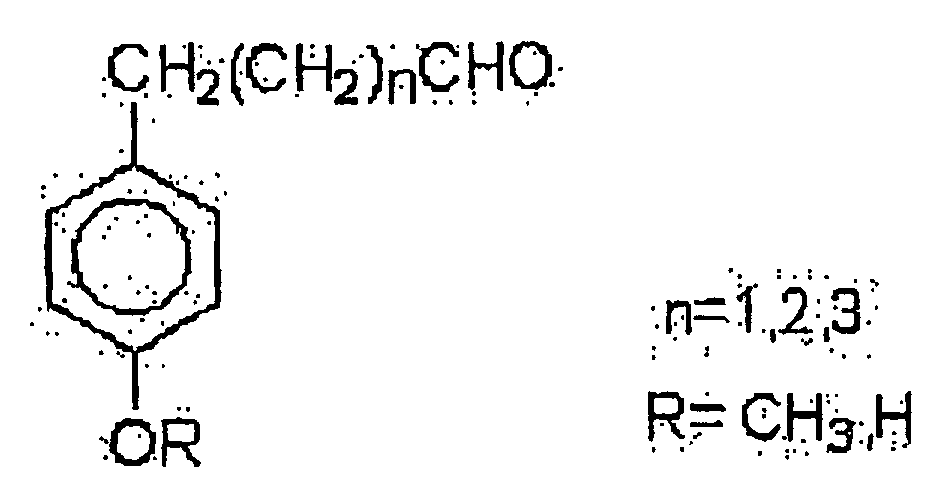 where n can take the values 1,2,3; R can be H or CH3 and R1 can be CH3 or H.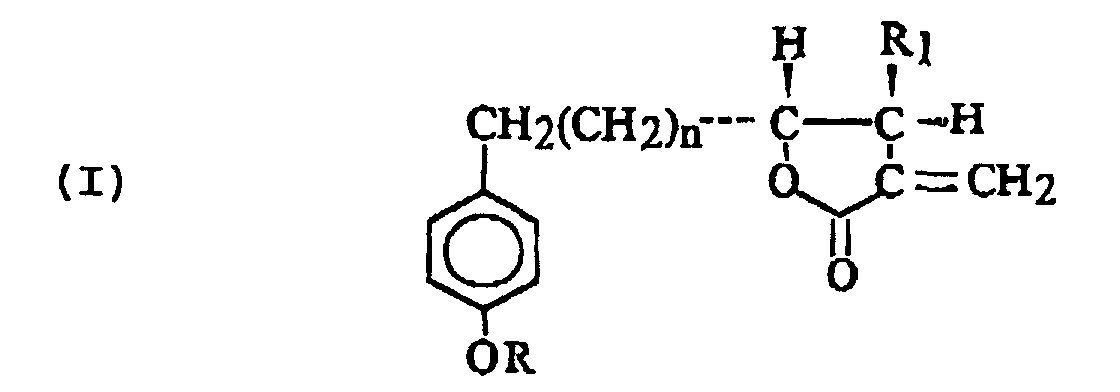
- Compounds according to claim 1 presenting any of the possible combinations among the different values of n and the structures corresponding to the radicals R and R1.
- Derivatives of the compound,characterised in that they have the following general formula:
 where n can take the values 1,2,3; R can be H or CH3 and R1 can be CH3 or H.
- Compounds according to claim 3 presenting any of the possible combinations among the different values of n and the structures corresponding to the radicals R and R1.
- Compounds according to claims 1 and 3 with pharmacological activity and their application in medicine for the treatment of disorders of the immunological system.
- Compounds according to claims 1 and 3 and their application in pharmacy for their use in the preparation of the usual galenic forms including in them the original compounds and pro-drugs such as esters, glycosides, etc.
Applications Claiming Priority (3)
| Application Number | Priority Date | Filing Date | Title |
|---|---|---|---|
| ES200000660 | 2000-03-20 | ||
| ES200000660A ES2160093B1 (en) | 2000-03-20 | 2000-03-20 | DERIVATIVES OF PROPIONIC P-HYDROXIFENIL ACID AS ANTIPROLIFERATIVE AGENTS. |
| PCT/ES2001/000102 WO2001072733A1 (en) | 2000-03-20 | 2001-03-16 | Derivatives of p- hydroxy phenyl propionic acid as antiproliferative agents |
Publications (2)
| Publication Number | Publication Date |
|---|---|
| EP1284263A1 true EP1284263A1 (en) | 2003-02-19 |
| EP1284263B1 EP1284263B1 (en) | 2003-12-10 |
Family
ID=8492770
Family Applications (1)
| Application Number | Title | Priority Date | Filing Date |
|---|---|---|---|
| EP01911771A Expired - Lifetime EP1284263B1 (en) | 2000-03-20 | 2001-03-16 | Derivatives of p- hydroxy phenyl propionic acid as antiproliferative agents |
Country Status (6)
| Country | Link |
|---|---|
| US (1) | US6818780B2 (en) |
| EP (1) | EP1284263B1 (en) |
| AU (1) | AU2001240702A1 (en) |
| DE (1) | DE60101472T2 (en) |
| ES (2) | ES2160093B1 (en) |
| WO (1) | WO2001072733A1 (en) |
Cited By (4)
| Publication number | Priority date | Publication date | Assignee | Title |
|---|---|---|---|---|
| CN102212007A (en) * | 2011-04-11 | 2011-10-12 | 启东东岳药业有限公司 | Preparation method of high-purity 2-mehtylol methyl acrylate |
| ES2379925A1 (en) * | 2010-10-06 | 2012-05-07 | Apoteknos Para La Piel, S.L. | Procedure for the synthesis of lactons derived from p-hydroxypenil propionic acid (Machine-translation by Google Translate, not legally binding) |
| ES2388965A1 (en) * | 2011-03-24 | 2012-10-22 | Apoteknos Para La Piel S.L. | Procedure for the synthesis of lactons derived from improved propionic p-hydroxypenyl acid. (Machine-translation by Google Translate, not legally binding) |
| WO2026013449A3 (en) * | 2024-07-11 | 2026-02-26 | Sea4Us - Biotecnologia E Recursos Marinhos, Sa | Oxazolidone-derived compounds and their use in the treatment of chronic and acute pain |
Families Citing this family (1)
| Publication number | Priority date | Publication date | Assignee | Title |
|---|---|---|---|---|
| EP2070533B1 (en) * | 2007-12-11 | 2014-05-07 | Apoteknos Para La Piel, s.l. | Use of a compound derived from P-hydroxyphenyl propionic acid for the treatment of psoriasis |
-
2000
- 2000-03-20 ES ES200000660A patent/ES2160093B1/en not_active Expired - Fee Related
-
2001
- 2001-03-16 AU AU2001240702A patent/AU2001240702A1/en not_active Abandoned
- 2001-03-16 DE DE60101472T patent/DE60101472T2/en not_active Expired - Lifetime
- 2001-03-16 ES ES01911771T patent/ES2213106T3/en not_active Expired - Lifetime
- 2001-03-16 EP EP01911771A patent/EP1284263B1/en not_active Expired - Lifetime
- 2001-03-16 WO PCT/ES2001/000102 patent/WO2001072733A1/en not_active Ceased
-
2002
- 2002-09-20 US US10/251,914 patent/US6818780B2/en not_active Expired - Fee Related
Non-Patent Citations (1)
| Title |
|---|
| See references of WO0172733A1 * |
Cited By (4)
| Publication number | Priority date | Publication date | Assignee | Title |
|---|---|---|---|---|
| ES2379925A1 (en) * | 2010-10-06 | 2012-05-07 | Apoteknos Para La Piel, S.L. | Procedure for the synthesis of lactons derived from p-hydroxypenil propionic acid (Machine-translation by Google Translate, not legally binding) |
| ES2388965A1 (en) * | 2011-03-24 | 2012-10-22 | Apoteknos Para La Piel S.L. | Procedure for the synthesis of lactons derived from improved propionic p-hydroxypenyl acid. (Machine-translation by Google Translate, not legally binding) |
| CN102212007A (en) * | 2011-04-11 | 2011-10-12 | 启东东岳药业有限公司 | Preparation method of high-purity 2-mehtylol methyl acrylate |
| WO2026013449A3 (en) * | 2024-07-11 | 2026-02-26 | Sea4Us - Biotecnologia E Recursos Marinhos, Sa | Oxazolidone-derived compounds and their use in the treatment of chronic and acute pain |
Also Published As
| Publication number | Publication date |
|---|---|
| US20030199575A1 (en) | 2003-10-23 |
| US6818780B2 (en) | 2004-11-16 |
| ES2160093A1 (en) | 2001-10-16 |
| DE60101472D1 (en) | 2004-01-22 |
| EP1284263B1 (en) | 2003-12-10 |
| ES2160093B1 (en) | 2002-06-16 |
| DE60101472T2 (en) | 2004-10-07 |
| AU2001240702A1 (en) | 2001-10-08 |
| ES2213106T3 (en) | 2004-08-16 |
| WO2001072733A1 (en) | 2001-10-04 |
Similar Documents
| Publication | Publication Date | Title |
|---|---|---|
| KR100888466B1 (en) | Retinoid Derivatives with Inhibition of Angiogenesis, Antitumor and Total Apoptosis | |
| Jain et al. | Pyrano-isochromanones as IL-6 inhibitors: synthesis, in vitro and in vivo antiarthritic activity | |
| SA96170405B1 (en) | methyl sulfonyl phenyl-2-(5h)-furanones cox-2 | |
| KR20020010581A (en) | Novel ligands of nuclear receptors ppar's | |
| EP0013960B1 (en) | Substituted acetophenones, preparations containing them and processes for their preparation | |
| CA2424555A1 (en) | Triptolide analogs for the treatment of autoimmune and inflammatory disorders | |
| CA2398996A1 (en) | Compounds having antitumor activity: process for their preparation and pharmaceutical compositions containing them | |
| EP1284263B1 (en) | Derivatives of p- hydroxy phenyl propionic acid as antiproliferative agents | |
| JP5542930B2 (en) | Sterol derivatives and their synthesis and use | |
| CN115636809A (en) | Synthesis of chalcone derivative and pharmaceutical application thereof | |
| HU184288B (en) | Process for preparing substituted acetophenone derivatives | |
| Xiao et al. | Novel 2-phenyl-4H-chromen derivatives: synthesis and anti-inflammatory activity evaluation in vitro and in vivo | |
| CN1126538C (en) | Carcinostatics | |
| JP2846418B2 (en) | Naphthalene derivative | |
| JP2004509167A (en) | Benzoic acid derivatives and methods of using the same | |
| JP2013520484A (en) | Pyrrolidine-substituted flavones for the treatment of inflammatory diseases | |
| CN101050179B (en) | 2,3,4,5-tetrasubstituted derivatives of benzyl ethylene class, preparation method and application | |
| JP4182218B2 (en) | Novel glucose derivative that induces apoptosis, process for its production and its use as a medicament | |
| JPH08269066A (en) | Pyripyropene derivative | |
| JP2006503049A (en) | Sorubicil lactone A and sorbicil lactone A derivatives, methods for producing them, agents containing them, and uses thereof | |
| CN101307080A (en) | Preparation of 5-(4-β-D-alopyranoside-phenyl)-3-aryl-4,5-dihydropyrazole-1-thioamides with sedative activity | |
| CN1148353C (en) | Phosphatidase A2 inhibitor and its prepn process and use | |
| JP2013194050A (en) | New compound having dna polymerase inhibitory activity | |
| EP2240024A1 (en) | Compounds for the treatment of metabolic disorders | |
| CN114478464B (en) | Inflammatory corpuscle selective inhibitor and synthetic method and application thereof |
Legal Events
| Date | Code | Title | Description |
|---|---|---|---|
| PUAI | Public reference made under article 153(3) epc to a published international application that has entered the european phase |
Free format text: ORIGINAL CODE: 0009012 |
|
| 17P | Request for examination filed |
Effective date: 20021018 |
|
| AK | Designated contracting states |
Designated state(s): AT BE CH CY DE DK ES FI FR GB GR IE IT LI LU MC NL PT SE TR |
|
| AX | Request for extension of the european patent |
Extension state: AL LT LV MK RO SI |
|
| GRAH | Despatch of communication of intention to grant a patent |
Free format text: ORIGINAL CODE: EPIDOS IGRA |
|
| GRAS | Grant fee paid |
Free format text: ORIGINAL CODE: EPIDOSNIGR3 |
|
| GRAA | (expected) grant |
Free format text: ORIGINAL CODE: 0009210 |
|
| AK | Designated contracting states |
Kind code of ref document: B1 Designated state(s): DE ES FR GB IT |
|
| REG | Reference to a national code |
Ref country code: GB Ref legal event code: FG4D |
|
| REG | Reference to a national code |
Ref country code: IE Ref legal event code: FG4D |
|
| REF | Corresponds to: |
Ref document number: 60101472 Country of ref document: DE Date of ref document: 20040122 Kind code of ref document: P |
|
| LTIE | Lt: invalidation of european patent or patent extension |
Effective date: 20031210 |
|
| REG | Reference to a national code |
Ref country code: ES Ref legal event code: FG2A Ref document number: 2213106 Country of ref document: ES Kind code of ref document: T3 |
|
| ET | Fr: translation filed | ||
| PLBE | No opposition filed within time limit |
Free format text: ORIGINAL CODE: 0009261 |
|
| STAA | Information on the status of an ep patent application or granted ep patent |
Free format text: STATUS: NO OPPOSITION FILED WITHIN TIME LIMIT |
|
| 26N | No opposition filed |
Effective date: 20040913 |
|
| REG | Reference to a national code |
Ref country code: IE Ref legal event code: MM4A |
|
| PGFP | Annual fee paid to national office [announced via postgrant information from national office to epo] |
Ref country code: IT Payment date: 20140327 Year of fee payment: 14 |
|
| REG | Reference to a national code |
Ref country code: FR Ref legal event code: PLFP Year of fee payment: 15 |
|
| PGFP | Annual fee paid to national office [announced via postgrant information from national office to epo] |
Ref country code: DE Payment date: 20150930 Year of fee payment: 15 Ref country code: GB Payment date: 20150921 Year of fee payment: 15 |
|
| PGFP | Annual fee paid to national office [announced via postgrant information from national office to epo] |
Ref country code: FR Payment date: 20150928 Year of fee payment: 15 |
|
| PG25 | Lapsed in a contracting state [announced via postgrant information from national office to epo] |
Ref country code: IT Free format text: LAPSE BECAUSE OF NON-PAYMENT OF DUE FEES Effective date: 20150316 |
|
| PGFP | Annual fee paid to national office [announced via postgrant information from national office to epo] |
Ref country code: ES Payment date: 20160610 Year of fee payment: 16 |
|
| REG | Reference to a national code |
Ref country code: DE Ref legal event code: R119 Ref document number: 60101472 Country of ref document: DE |
|
| GBPC | Gb: european patent ceased through non-payment of renewal fee |
Effective date: 20160316 |
|
| REG | Reference to a national code |
Ref country code: FR Ref legal event code: ST Effective date: 20161130 |
|
| PG25 | Lapsed in a contracting state [announced via postgrant information from national office to epo] |
Ref country code: FR Free format text: LAPSE BECAUSE OF NON-PAYMENT OF DUE FEES Effective date: 20160331 Ref country code: DE Free format text: LAPSE BECAUSE OF NON-PAYMENT OF DUE FEES Effective date: 20161001 Ref country code: GB Free format text: LAPSE BECAUSE OF NON-PAYMENT OF DUE FEES Effective date: 20160316 |
|
| REG | Reference to a national code |
Ref country code: ES Ref legal event code: FD2A Effective date: 20180704 |
|
| PG25 | Lapsed in a contracting state [announced via postgrant information from national office to epo] |
Ref country code: ES Free format text: LAPSE BECAUSE OF NON-PAYMENT OF DUE FEES Effective date: 20170317 |