EP1284256A1 - Process of the preparation of high-purity alkyladamantyl esters - Google Patents
Process of the preparation of high-purity alkyladamantyl esters Download PDFInfo
- Publication number
- EP1284256A1 EP1284256A1 EP01930153A EP01930153A EP1284256A1 EP 1284256 A1 EP1284256 A1 EP 1284256A1 EP 01930153 A EP01930153 A EP 01930153A EP 01930153 A EP01930153 A EP 01930153A EP 1284256 A1 EP1284256 A1 EP 1284256A1
- Authority
- EP
- European Patent Office
- Prior art keywords
- compound
- group
- alkyladamantyl ester
- ester
- carbon atoms
- Prior art date
- Legal status (The legal status is an assumption and is not a legal conclusion. Google has not performed a legal analysis and makes no representation as to the accuracy of the status listed.)
- Withdrawn
Links
Classifications
-
- C—CHEMISTRY; METALLURGY
- C07—ORGANIC CHEMISTRY
- C07C—ACYCLIC OR CARBOCYCLIC COMPOUNDS
- C07C67/00—Preparation of carboxylic acid esters
- C07C67/48—Separation; Purification; Stabilisation; Use of additives
- C07C67/52—Separation; Purification; Stabilisation; Use of additives by change in the physical state, e.g. crystallisation
- C07C67/54—Separation; Purification; Stabilisation; Use of additives by change in the physical state, e.g. crystallisation by distillation
-
- C—CHEMISTRY; METALLURGY
- C07—ORGANIC CHEMISTRY
- C07C—ACYCLIC OR CARBOCYCLIC COMPOUNDS
- C07C2603/00—Systems containing at least three condensed rings
- C07C2603/56—Ring systems containing bridged rings
- C07C2603/58—Ring systems containing bridged rings containing three rings
- C07C2603/70—Ring systems containing bridged rings containing three rings containing only six-membered rings
- C07C2603/74—Adamantanes
Definitions
- the present invention relates to a method for producing a high purity alkyladamantyl ester by distilling and purifying a crude alkyladamantyl ester containing impurities.
- the alkyladamantyl ester can be produced by reacting 2-alkyl-2-adamantanol or 2-alkylideneadamantane which is obtained via 2-adamantanone from adamantane as a starting material or 2-adamantanone with an organometallic reagent such as methyl magnesium bromide so as to obtain a metal alkoxide and reacting a carboxylic acid derivative such as a carboxylic acid ester, a carboxylic anhydride or a carboxylic acid halide or a carboxylic acid with the obtained metal alkoxide.
- an organometallic reagent such as methyl magnesium bromide
- the alkyladamantyl ester is easily decomposed when stimulated by acid, heat or the like.
- the alkyladamantyl ester is decomposed into a carboxylic acid or the like when heated in the presence of a catalytic amount of acid.
- the alkyladamantyl ester is used as a raw material for a chemically amplified resist in a semiconductor production process. Therefore, to purify the alkyladamantyl ester by distillation, it is commonly practiced to wash the alkyladamantyl ester with an alkali solution such as a sodium hydroxide solution as a pretreatment so as to remove acid components.
- An object of the present invention is to provide a method for producing a high purity alkyladamantyl ester by applying an efficient purification method to a crude alkyladamantyl ester for which an efficient distillation and purification method has not been known.
- the present inventor has made intensive studies so as to solve the above problems. As a result, he has found that a crude alkyladamantyl ester can be purified efficiently by distilling the alkyladamantyl ester in the presence of a heterocyclic compound and/or a basic compound and that the above compounds also have an effect of improving storage stability of the alkyladamantyl ester.
- the present inventor has completed the present invention by these findings.
- the crude alkyladamantyl ester obtained by such a process contains an impurity which can decompose the alkyladamantyl ester. Although the impurity has not heretofore been identified yet, the present inventors assume that it may be a compound which decomposes under distillation conditions and produces acid.
- -OM group or R group (wherein M is an alkali metal atom or MgX (wherein X represents a halogen atom), and R is a divalent aliphatic hydrocarbon group) in the adamantane compound which is a raw material of the crude alkyladamantyl ester, the alkali metal atom represented by M is a potassium atom, a sodium atom or the like, and the halogen atom represented by X is a chlorine atom, a bromine atom, an iodine atom or the like.
- the divalent aliphatic hydrocarbon group represented by R is exemplified by a divalent group having 1 to 4 carbon atoms such as a methylidene group, an ethylidene group, a propylidene group, an isopropylidene group and the like.
- Illustrative examples of a specific production method of the crude alkyladamantyl ester include a method comprising the steps of alkylating 2-adamantanone with a Grignard reagent such as an alkyl magnesium halide or an organometallic reagent such as alkyl lithium so as to obtain an adamantane compound having an -OM group and then esterifying the adamantane compound with a carboxylic acid halide; a method comprising the steps of alkylating 2-adamantanone with an organometallic reagent so as to obtain 2-alkyl-2-admantanol and then esterifying the compound with a carboxylic acid halide, carboxylic anhydride or carboxylic acid ester; and a method comprising the steps of alkylating 2-adamantanone with an organometallic reagent, dehydrating an alcohol obtained from decomposition of a metal alkoxide so as to obtain 2-alkylideneadamant
- the crude alkyladamantyl ester may contain impurities other than the aforementioned impurity which decomposes the alkyladamantyl ester as long as the impurities are those which can be separated by distillation.
- impurities include adamantane and 2-adamantanone which are used as a raw material upon synthesis of the alkyladamantyl ester, 1-adamantanol which is an impurity derived from the raw material, 1-adamatyl ester and 2-alkylideneadamantane which are by-produced at the time of the synthesis, and tetrahydrofuran and hexane which are used as a solvent at the time of the synthesis.
- the content of these other impurities is not particularly limited.
- a total amount of the other impurities is about 1 to 50 parts by weight when the weight of the alkyladamantyl ester is 100 parts by weight.
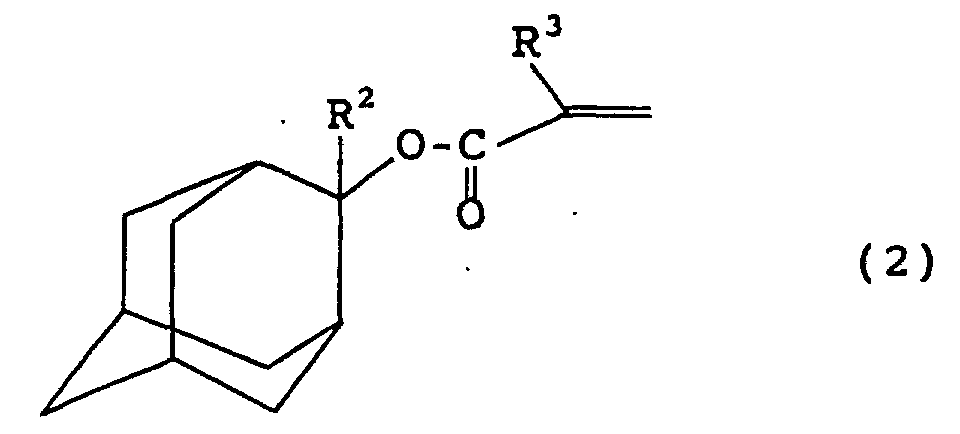
- alkyladamantyl ester to be purified in the present invention a compound represented by the following formula (2): (wherein R 2 is a hydrogen atom or an alkyl group having 1 to 6 carbon atoms, and R 3 is a hydrogen atom or a methyl group) is preferably used.
- Illustrative examples of the alkyl group having 1 to 6 carbon atoms which is represented by R 2 in the above formula (2) include linear alkyl groups such as a methyl group, ethyl group, propyl group, butyl group and hexyl group; and branched alkyl groups such as an isopropyl group, tertiary butyl group and neopentyl group.
- an alkyladamantyl ester represented by the above formula (2) in which R 2 is a methyl group, ethyl group or butyl group and R 3 is a hydrogen atom or methyl group is suitable since it is useful as a raw material for a resist for a semiconductor and a high degree of purification in particular is important.
- the above crude alkyladamantyl ester is distilled in the presence of a heterocyclic compound and/or a basic compound (hereinafter also referred to as "decomposition inhibiting materials").
- the heterocyclic compound which is one of the decomposition inhibiting materials a compound having, in a molecule, at least one heterocyclic ring having at least one hetero atom selected from the group consisting of oxygen, nitrogen, sulfur, selenium and silicon and 2 to 6 carbon atoms as ring-member atoms is preferably used.
- the heterocyclic compound may have a plurality of hetero atoms in the same heterocyclic ring.
- the heterocyclic compound may have a plurality of the same or different heterocyclic rings in a molecule independently, and may have heterocyclic rings as condensed rings of the heterocyclic rings or as condensed rings of the heterocyclic rings and aromatic hydrocarbon rings.
- heterocyclic compound a known heterocyclic compound may be used without limitation.
- a compound as one described in "Chemistry of Heterocyclic Compound, Third Revised Edition” (published in 1980 by Kagaku Gijutsu Syuppansya) can be used.
- heterocyclic ring contained in the heterocyclic compound in the present invention a saturated three-to-five-membered ring is preferred.
- Illustrative examples of such a heterocyclic ring include cyclic ethers such as oxirane, oxetane and oxolane; cyclic thioethers such as thiirane, thiethane and thiolane; cyclic amines or N-alkyl substitution products thereof such as aziridine, N-methylaziridine and azetidine; cyclic siloxanes; and oxazines.
- a decomposition inhibiting material which exhibits a great effect of inhibiting decomposition of the alkyladamantyl ester and with which a higher purity target compound can be obtained
- a heterocyclic compound having a cyclic ether structure in a molecule can be used.
- a heterocyclic compound containing an oxirane ring or oxetane ring it generally provides an effective decomposition inhibiting effect even in a small amount.
- heterocyclic compound containing the cyclic ether structure known compounds can be used without particular limitations.
- heterocyclic compound having the oxirane ring compounds such as those described in a section in the 14 th category (thermosetting resin) of "Chemical Commodity Product of 13599" (published in 1999 by Kagaku Kougyo Nippou Sya), in a section of the second chapter (epoxy resin) of "Epoxy Resin Handbook” (published in 1987 by Nikkan Kougyo Shinbun Sya) and in a section of the third chapter (special epoxy resin) of "New Epoxy Resin” (published in 1975 by Syokodo) can be used.
- oxirane compounds substituted by an alkyl group or an aryl group such as propylene oxide, 6,7-epoxydodecane, styrene oxide and ⁇ , ⁇ '-epoxydibenzyl
- glycidyl ether compounds (including monomers and oligomers formed from two or more molecules) having a plurality of glycidyl groups such as phenyl glycidyl ether, glycerol diglycidyl ether, diglycidyl bisphenol A, brominated diglycidyl bisphenol A, diglycidyl bisphenol C, tetraglycidyl benzophenone, diglycidyl bisphenol F, triglycidyl-p-aminophenol, diglycidyl cyclohexane 1,3-dicarboxylate and novolac-type epoxy; glycidyl ester compounds such as diglycidyl phthalate, diglycidyl
- heterocyclic compound having the oxetane ring examples include 3-ethyl-3-hydroxymethyloxetane and 1,4-bis ⁇ [(3-ethyl-3-oxetanyl)methoxy]methyl ⁇ benzene.
- the basic compound which is the other decomposition inhibiting material is a compound which has an aqueous phase having a pH of larger than 7 when mixed with water (when not easily dissolved in water, a water-insoluble organic solvent such as hexane is further added thereto and shaken).
- Illustrative examples of such a basic compound include an oxide or hydroxide of an alkali metal or alkaline earth metal such as sodium hydroxide, potassium hydroxide, barium hydroxide, sodium oxide, magnesium oxide and calcium oxide; an inorganic weak base comprising a weak acid and a strong base such as potassium hydrogencarbonate, magnesium carbonate and sodium acetate; aluminum hydroxide and alumina; organic hydroxides such as tetramethylammonium hydroxide and tetrabutylammonium hydroxide; aliphatic amines such as triethylamine, trioctylamine, ethanolamine, diethanolamine and triethanolamine; aromatic amines such as pyridine, dimethylaminopyridine, phenothiazine, dibutylphenothiazine, dioctylphenothiazine, N,N'-diphenyl-p-phenylenediamine and N,N'-dinaphthyl-p-phenylened
- decomposition inhibiting materials are preferably those which do not react with the alkyladamantyl ester which is the target compound and do not decompose under distillation conditions. Further, to obtain a high purity alkyladamantyl ester, these decomposition inhibiting materials are preferably those which are not distilled out together with the target compound or can be easily separated from the target compound to be distilled out even if contained in the target compound.
- the decomposition inhibiting materials preferably shows such a high boiling point that does not allow the decomposition inhibiting materials to be distilled out at the time of distillation, has neither a boiling point nor a sublimation point or shows such a low boiling point that does not allow the decomposition inhibiting materials to be distilled out together with the target compound.
- the decomposition inhibiting materials are more preferably compounds which show such a high boiling point which does not allow the compounds to be distilled out at the time of the distillation or have neither a boiling point nor a sublimation point.
- the target compound can be obtained at a high purity since the decomposition inhibiting materials can be removed easily. For example, if the target compound does not have compatibility with the decomposition inhibiting materials, the target compound can be obtained easily through liquid separation. Further, if water-soluble decomposition inhibiting materials are used when the target compound is insoluble in water, the target compound can be obtained easily by washing a distillate with water.
- the target compound can be obtained easily by dissolving a distillate in water, an acid solution or an alkali solution, removing the decomposition inhibiting materials by a liquid separating operation or the like, performing a neutralization operation as required, and removing water.
- acid or alkali decomposition inhibiting materials can be used. In this case, the target compound can be obtained easily by washing a distillate with an alkali or acid solution.
- the decomposition inhibiting materials are added in an amount sufficient to maintain the decomposition inhibiting effect and inhibit decomposition of the target compound.
- the amount of the decomposition inhibiting materials should be determined in consideration of an amount of decomposition promoting materials and is generally 0.0001 to 500 parts by weight, preferably 0.1 to 10 parts by weight, based on 100 parts by weight of the crude alkyladamantyl ester.
- distillation of the crude alkyladamantyl ester is carried out in the presence of the decomposition inhibiting materials.
- a means for adding the decomposition inhibiting materials to the crude alkyladamantyl ester is not particularly limited.
- the decomposition inhibiting materials may be mixed with the crude alkyladamantyl ester prior to initiation of the distillation or may be fed to a distiller directly or through a distillation column, distillation tube or reflux line after the initiation of the distillation.
- the decomposition inhibiting materials a plurality of compounds can be used in combination.
- a mode in which the distillation is carried out in the presence of the decomposition inhibiting materials is not particularly limited, and simple distillation or fractional distillation is used.
- a fractionating column a thin-film fractionating column such as a vigoureux-type fractional column, a concentric fractional column, a spinning band fractional column and a packed fractional column or a plate fractionating column such as a bubble-cap fractionating column and a porous plate-type fractionating column is suitably used.
- a thin-film fractionating column which undergoes little pressure loss is suitably used.
- a known distillation mode such as a Kugel roll or thin-film distillation can be used without any limitations.
- distillation conditions including temperature, pressure and a reflux ratio are not particularly limited and may be determined as appropriate according to composition of the crude alkyladamantyl ester, types and amounts of the decomposition inhibiting materials, purity of the target compound to be obtained at the end, and the like.
- the alkyladamantyl ester is the compound represented by the above formula (2), conditions including a temperature of 80 to 150°C and a pressure of 0.01 to 100 mmHg are preferably used.
- an effect of facilitating handling of the compound to be purified by decreasing the viscosity of the compound to be purified or forming the compound to be purified into a solution or suspension through addition of the decomposition inhibiting materials can also be expected, for example, even when the target compound is solid at room temperature.
- a liquid decomposition inhibiting material having a boiling point which is close to that of the target compound is suitably added, as a second decomposition inhibiting material, to the compound to be purified.
- the decomposition inhibiting materials also have an effect of improving storage stability of the alkyladamantyl ester.
- a compound having an oxirane ring as a heterocyclic ring and an aromatic amine are particularly preferred among the aforementioned decomposition inhibiting materials.
- the decomposition inhibiting materials are added in such an amount that can inhibit decomposition of a stored alkyladamantyl ester.
- the amount should be determined in consideration of efficacy of decomposition inhibiting materials to be used, solubility of the decomposition inhibiting materials against the alkyladamantyl ester and use of the alkyladamantyl ester.
- the amount is preferably 0.0001 to 100 parts by weight, more preferably 0.001 to 10 parts by weight, based on 100 parts by weight of the alkyladamantyl ester.
- decomposition inhibiting materials which can be easily separated from the target compound are preferably used so as to be able to remove the decomposition inhibiting materials easily by carrying out appropriate treatment before use of the target compound.
- a method of separating the decomposition inhibiting materials from the target compound methods which are the same as those mentioned above can be used.
- the reduced-pressure distillation was carried out at a temperature of 120°C and a degree of vacuum of 0.3 mmHg by use of a 5-cm vigoureux fractionating column and a whole-condensation-type reflux fractionating device while air was being introduced by means of a glass capillary.
- a first distillate was removed, and a main distillate started to be collected at a point where purity of the 2-methyl-2-adamantyl methacrylate exceeded 80%. From the collected main distillate, 2-methyl-2-adamantyl methacrylate with a purity of 95.3 wt% could be obtained.
- the reduced-pressure distillation was carried out at a temperature of 120°C and a degree of vacuum of 0.3 mmHg by use of a 5-cm vigoureux fractionating column and a whole-condensation-type reflux fractionating device while pure oxygen was being introduced by means of a glass capillary.
- a first distillate was removed, and a main distillate started to be collected at a point where purity of the 2-methyl-2-adamantyl methacrylate exceeded 80%. From the collected main distillate, 2-methyl-2-adamantyl methacrylate with a purity of 95.7 wt% could be obtained.
- Example 2 Distillation was carried out in accordance with Example 1 except that 1 part by weight of 2-hexadecylthiirane was used as a decomposition inhibiting material based on 100 parts by weight of the crude 2-methyl-2-adamantyl methacrylate in place of 0.05 parts by weight of 3-ethyl-3-hydroxymethyloxetane, in Example 1.
- a first distillate was removed, and a main distillate started to be collected at a point where purity of the 2-methyl-2-adamantyl methacrylate exceeded 80%. From the collected main distillate, 2-methyl-2-adamantyl methacrylate with a purity of 93.4 wt% could be obtained.
- the reduced-pressure distillations were carried out at a temperature of 90 to 140°C and a degree of vacuum of 0.1 to 0.3 mmHg by use of a 5-cm vigoureux fractionating column and a whole-condensation-type reflux fractionating device while air was being introduced by means of a glass capillary. Purities of thus obtained main distillates are shown in Table 1. As shown in Table 1, by use of the decomposition inhibiting materials of the present invention, high purity alkyladamantyl ester can be obtained.
- the crude 2-methyl-2-adamantyl methacrylate obtained in Synthesis Example 1 was distilled under a reduced pressure as it was. A first distillate was removed, and a main distillate started to be collected at a point where purity of the 2-methyl-2-adamantyl methacrylate exceeded 80%. From the collected main distillate, purity of the purified 2-methyl-2-adamantyl methacrylate was merely 85.3 wt%.
- a crude alkyladamantyl ester which contains impurities that decompose the alkyladamantyl ester and has been difficult to purify by distillation can be easily purified by distillation.
- a high purity alkyladamantyl ester which is expected to be used as a resist material for a semiconductor can be obtained easily. Further, the alkyladamantyl ester can be stored stably over a long time period.
Landscapes
- Chemical & Material Sciences (AREA)
- Organic Chemistry (AREA)
- Crystallography & Structural Chemistry (AREA)
- Organic Low-Molecular-Weight Compounds And Preparation Thereof (AREA)
Abstract
There is provided a method for obtaining an
alkyladamantyl ester efficiently by distilling and purifying
a crude alkyladamantyl ester containing impurities which
decompose the alkyladamantyl ester without decomposing the
alkyladamantyl ester.
The crude alkyladamantyl ester such as crude
2-methyl-2-adamantyl methacrylate is distilled in the
presence of a heterocyclic compound and/or a basic compound
such as 3-ethyl-3-hydroxymethyloxetane or diglycidyl
bisphenol A.
Description
The present invention relates to a method for producing
a high purity alkyladamantyl ester by distilling and
purifying a crude alkyladamantyl ester containing
impurities.
Heretofore, when a solution to be distilled which
contains a target compound also contains materials which
promote decomposition of the target compound despite the fact
that the target compound is a compound which is easily
decomposed under influence of heat, a catalyst or the like,
the target compound is easily decomposed during distillation.
Therefore, it is difficult to obtain the target compound at
a high purity or a high yield by purification by distillation.
In general, even if a very small amount of materials which
exhibit a decomposition promoting action is contained, it
is very difficult to identify and remove the materials to
such an amount that does not adversely affect the target
compound because they cause decomposition of the target
compound at the time of heating. In such a case, a
purification method other than distillation must be used so
as to purify a easily decomposable target compound with good
reproducibility and at a high purity.
Meanwhile, demand for products of higher purity has
been increasing every year. In particular, a reduction in
metal components of a product used in a semiconductor
production process is strongly demanded. As a purification
method which can remove such metal components efficiently,
purification by distillation is suitable.
In recent years, it has been reported that polymers
obtained from alkyladamantyl esters having polymerizable
groups have high dry etching resistance in a semiconductor
production process (refer to JP-A 5-265212), and a
possibility of their use as resist materials for
semiconductors has been receiving attention. When these
alkyladamantyl esters are used as resist materials for
semiconductors, high purity alkyladamantyl esters having
reduced metal components are required.
It is known that the alkyladamantyl ester can be
produced by reacting 2-alkyl-2-adamantanol or
2-alkylideneadamantane which is obtained via 2-adamantanone
from adamantane as a starting material or 2-adamantanone with
an organometallic reagent such as methyl magnesium bromide
so as to obtain a metal alkoxide and reacting a carboxylic
acid derivative such as a carboxylic acid ester, a carboxylic
anhydride or a carboxylic acid halide or a carboxylic acid
with the obtained metal alkoxide.
In general, the alkyladamantyl ester is easily
decomposed when stimulated by acid, heat or the like. For
example, it is known that the alkyladamantyl ester is
decomposed into a carboxylic acid or the like when heated
in the presence of a catalytic amount of acid. By use of such
a characteristic, the alkyladamantyl ester is used as a raw
material for a chemically amplified resist in a semiconductor
production process. Therefore, to purify the alkyladamantyl
ester by distillation, it is commonly practiced to wash the
alkyladamantyl ester with an alkali solution such as a sodium
hydroxide solution as a pretreatment so as to remove acid
components.
However, when a crude alkyladamantyl ester which has
been subjected to a conventional pretreatment such as washing
with an alkali solution so as to remove acid components is
distilled by a commonly used method, the alkyladamantyl ester
is decomposed during distillation for some reason, thereby
producing a decomposition product such as a carboxylic acid
or 2-alkylideneadamantane. Thus, a high purity
alkyladamantyl ester has not been able to be obtained at a
good yield.
Further, it has been found that a crude alkyladamantyl
ester or a distilled and purified alkyladamantyl ester is
decomposed during storage for some reason, thereby causing
such a problem as coloration. In addition, it has also been
found that an alkyladamantyl ester having a polymerizable
group has a problem that when the alkyladamantyl ester is
decomposed during storage to have coloration, a molecular
weight does not increase even if it is polymerized.
An object of the present invention is to provide a
method for producing a high purity alkyladamantyl ester by
applying an efficient purification method to a crude
alkyladamantyl ester for which an efficient distillation and
purification method has not been known.
The present inventor has made intensive studies so as
to solve the above problems. As a result, he has found that
a crude alkyladamantyl ester can be purified efficiently by
distilling the alkyladamantyl ester in the presence of a
heterocyclic compound and/or a basic compound and that the
above compounds also have an effect of improving storage
stability of the alkyladamantyl ester. The present inventor
has completed the present invention by these findings.
That is, the present invention is a method for producing
a high purity alkyladamantyl ester which comprises the steps
of esterifying an adamantane compound having an -OH group,
-OM group or =R group (wherein M is an alkali metal atom or
MgX (wherein X represents a halogen atom), and R is a divalent
aliphatic hydrocarbon group) and distilling a crude
alkyladamantyl ester obtained to form a high purity
alkyladamantyl ester, wherein the distillation is carried
out in the presence of a heterocyclic compound and/or a basic
compound.
In the present invention, a crude alkyladamantyl ester
to be distilled is obtained by esterification of an adamantane
compound having an -OH group, -OM group or =R group (wherein
M is an alkali metal atom or MgX (wherein X represents a
halogen atom), and R is a divalent aliphatic hydrocarbon
group). The crude alkyladamantyl ester obtained by such a
process contains an impurity which can decompose the
alkyladamantyl ester. Although the impurity has not
heretofore been identified yet, the present inventors assume
that it may be a compound which decomposes under distillation
conditions and produces acid.
In the -OH group, -OM group or =R group (wherein M is
an alkali metal atom or MgX (wherein X represents a halogen
atom), and R is a divalent aliphatic hydrocarbon group) in
the adamantane compound which is a raw material of the crude
alkyladamantyl ester, the alkali metal atom represented by
M is a potassium atom, a sodium atom or the like, and the
halogen atom represented by X is a chlorine atom, a bromine
atom, an iodine atom or the like. Further, the divalent
aliphatic hydrocarbon group represented by R is exemplified
by a divalent group having 1 to 4 carbon atoms such as a
methylidene group, an ethylidene group, a propylidene group,
an isopropylidene group and the like.
Illustrative examples of the adamantane compound
having the -OH group, -OM group or =R group include
2-alkyl-2-adamantanol (wherein the alkyl group has 1 to 6
carbon atoms) having an -OH group, 2-alkylideneadamantane
(wherein the alkylidene group has 1 to 4 carbon atoms) having
an =R group, and a compound represented by the following
formula (1)
 (wherein R1 is a hydrogen atom or an alkyl group having 1 to
6 carbon atoms, and M is an alkali metal atom or MgX (wherein
X represents a halogen atom)).
(wherein R1 is a hydrogen atom or an alkyl group having 1 to
6 carbon atoms, and M is an alkali metal atom or MgX (wherein
X represents a halogen atom)).
Illustrative examples of a specific production method
of the crude alkyladamantyl ester include a method comprising
the steps of alkylating 2-adamantanone with a Grignard
reagent such as an alkyl magnesium halide or an organometallic
reagent such as alkyl lithium so as to obtain an adamantane
compound having an -OM group and then esterifying the
adamantane compound with a carboxylic acid halide; a method
comprising the steps of alkylating 2-adamantanone with an
organometallic reagent so as to obtain 2-alkyl-2-admantanol
and then esterifying the compound with a carboxylic acid
halide, carboxylic anhydride or carboxylic acid ester; and
a method comprising the steps of alkylating 2-adamantanone
with an organometallic reagent, dehydrating an alcohol
obtained from decomposition of a metal alkoxide so as to
obtain 2-alkylideneadamantane and then esterifying the
compound with a carboxylic acid by means of an addition
reaction.
The crude alkyladamantyl ester may contain impurities
other than the aforementioned impurity which decomposes the
alkyladamantyl ester as long as the impurities are those which
can be separated by distillation. Illustrative examples of
such impurities include adamantane and 2-adamantanone which
are used as a raw material upon synthesis of the
alkyladamantyl ester, 1-adamantanol which is an impurity
derived from the raw material, 1-adamatyl ester and
2-alkylideneadamantane which are by-produced at the time of
the synthesis, and tetrahydrofuran and hexane which are used
as a solvent at the time of the synthesis.
The content of these other impurities is not
particularly limited. When the crude alkyladamantyl ester
is produced by any of the above methods, a total amount of
the other impurities is about 1 to 50 parts by weight when
the weight of the alkyladamantyl ester is 100 parts by weight.
As the alkyladamantyl ester to be purified in the
present invention, a compound represented by the following
formula (2):
 (wherein R2 is a hydrogen atom or an alkyl group having 1 to
6 carbon atoms, and R3 is a hydrogen atom or a methyl group)
is preferably used.
(wherein R2 is a hydrogen atom or an alkyl group having 1 to
6 carbon atoms, and R3 is a hydrogen atom or a methyl group)
is preferably used.
Illustrative examples of the alkyl group having 1 to
6 carbon atoms which is represented by R2 in the above formula
(2) include linear alkyl groups such as a methyl group, ethyl
group, propyl group, butyl group and hexyl group; and branched
alkyl groups such as an isopropyl group, tertiary butyl group
and neopentyl group. In particular, an alkyladamantyl ester
represented by the above formula (2) in which R2 is a methyl
group, ethyl group or butyl group and R3 is a hydrogen atom
or methyl group is suitable since it is useful as a raw
material for a resist for a semiconductor and a high degree
of purification in particular is important.
In the present invention, the above crude
alkyladamantyl ester is distilled in the presence of a
heterocyclic compound and/or a basic compound (hereinafter
also referred to as "decomposition inhibiting materials").
In the present invention, as the heterocyclic compound
which is one of the decomposition inhibiting materials, a
compound having, in a molecule, at least one heterocyclic
ring having at least one hetero atom selected from the group
consisting of oxygen, nitrogen, sulfur, selenium and silicon
and 2 to 6 carbon atoms as ring-member atoms is preferably
used. The heterocyclic compound may have a plurality of
hetero atoms in the same heterocyclic ring. Further, the
heterocyclic compound may have a plurality of the same or
different heterocyclic rings in a molecule independently,
and may have heterocyclic rings as condensed rings of the
heterocyclic rings or as condensed rings of the heterocyclic
rings and aromatic hydrocarbon rings.
As the heterocyclic compound, a known heterocyclic
compound may be used without limitation. For example, such
a compound as one described in "Chemistry of Heterocyclic
Compound, Third Revised Edition" (published in 1980 by Kagaku
Gijutsu Syuppansya) can be used.
As the heterocyclic ring contained in the heterocyclic
compound in the present invention, a saturated
three-to-five-membered ring is preferred. Illustrative
examples of such a heterocyclic ring include cyclic ethers
such as oxirane, oxetane and oxolane; cyclic thioethers such
as thiirane, thiethane and thiolane; cyclic amines or N-alkyl
substitution products thereof such as aziridine,
N-methylaziridine and azetidine; cyclic siloxanes; and
oxazines.
Of these, as a decomposition inhibiting material which
exhibits a great effect of inhibiting decomposition of the
alkyladamantyl ester and with which a higher purity target
compound can be obtained, a heterocyclic compound having a
cyclic ether structure in a molecule can be used. Above all,
when a heterocyclic compound containing an oxirane ring or
oxetane ring is used, it generally provides an effective
decomposition inhibiting effect even in a small amount.
As the heterocyclic compound containing the cyclic
ether structure, known compounds can be used without
particular limitations. As the heterocyclic compound having
the oxirane ring, compounds such as those described in a
section in the 14th category (thermosetting resin) of
"Chemical Commodity Product of 13599" (published in 1999 by
Kagaku Kougyo Nippou Sya), in a section of the second chapter
(epoxy resin) of "Epoxy Resin Handbook" (published in 1987
by Nikkan Kougyo Shinbun Sya) and in a section of the third
chapter (special epoxy resin) of "New Epoxy Resin" (published
in 1975 by Syokodo) can be used.
Illustrative examples of such compounds include
oxirane compounds substituted by an alkyl group or an aryl
group such as propylene oxide, 6,7-epoxydodecane, styrene
oxide and α,α'-epoxydibenzyl; glycidyl ether compounds
(including monomers and oligomers formed from two or more
molecules) having a plurality of glycidyl groups such as
phenyl glycidyl ether, glycerol diglycidyl ether, diglycidyl
bisphenol A, brominated diglycidyl bisphenol A, diglycidyl
bisphenol C, tetraglycidyl benzophenone, diglycidyl
bisphenol F, triglycidyl-p-aminophenol, diglycidyl
cyclohexane 1,3-dicarboxylate and novolac-type epoxy;
glycidyl ester compounds such as diglycidyl phthalate,
diglycidyl tetrahydrophthalate, diglycidyl
hexahydrophthalate, glycidyl dimer acid ester, diglycidyl
hexahydrophthalate and diglycidyl-p-oxybenzoic acid;
alicyclic epoxy compounds such as vinylcyclohexene dioxide
and
7-oxabicyclo[4.1.0]hepta-3-ylmethyl-7-oxabicyclo[4.1.0]
heptane-3-carboxylate; glycidyl amine compounds such as
tetraglycidyl diaminodiphenylmethane, triglycidyl
p-aminophenol and diglycidyl aniline; and heterocyclic
epoxys having other heterocyclic structures together with
an oxirane ring such as 1,3-diglycidyl hydantoin, glycidyl
glycideoxyethyl hydantoin and triglycidyl isocyanurate.
Further, illustrative examples of the heterocyclic
compound having the oxetane ring include
3-ethyl-3-hydroxymethyloxetane and
1,4-bis{[(3-ethyl-3-oxetanyl)methoxy]methyl}benzene.
The basic compound which is the other decomposition
inhibiting material is a compound which has an aqueous phase
having a pH of larger than 7 when mixed with water (when not
easily dissolved in water, a water-insoluble organic solvent
such as hexane is further added thereto and shaken).
Illustrative examples of such a basic compound include an
oxide or hydroxide of an alkali metal or alkaline earth metal
such as sodium hydroxide, potassium hydroxide, barium
hydroxide, sodium oxide, magnesium oxide and calcium oxide;
an inorganic weak base comprising a weak acid and a strong
base such as potassium hydrogencarbonate, magnesium
carbonate and sodium acetate; aluminum hydroxide and
alumina; organic hydroxides such as tetramethylammonium
hydroxide and tetrabutylammonium hydroxide; aliphatic
amines such as triethylamine, trioctylamine, ethanolamine,
diethanolamine and triethanolamine; aromatic amines such as
pyridine, dimethylaminopyridine, phenothiazine,
dibutylphenothiazine, dioctylphenothiazine,
N,N'-diphenyl-p-phenylenediamine and
N,N'-dinaphthyl-p-phenylenediamine; inorganic complex
compounds such as hydrotalcite, e.g., Mg6Al2(OH)16CO3·4H2O and
zeolite, e.g., A-type zeolite; Lewis bases; and the like.
The above decomposition inhibiting materials are
preferably those which do not react with the alkyladamantyl
ester which is the target compound and do not decompose under
distillation conditions. Further, to obtain a high purity
alkyladamantyl ester, these decomposition inhibiting
materials are preferably those which are not distilled out
together with the target compound or can be easily separated
from the target compound to be distilled out even if contained
in the target compound.
In order not to be distilled out together with the
target compound, the decomposition inhibiting materials
preferably shows such a high boiling point that does not allow
the decomposition inhibiting materials to be distilled out
at the time of distillation, has neither a boiling point nor
a sublimation point or shows such a low boiling point that
does not allow the decomposition inhibiting materials to be
distilled out together with the target compound.
Particularly, to maintain the decomposition inhibiting
effect until completion of the distillation of the target
compound, the decomposition inhibiting materials are more
preferably compounds which show such a high boiling point
which does not allow the compounds to be distilled out at
the time of the distillation or have neither a boiling point
nor a sublimation point.
In a case where decomposition inhibiting materials
which can be easily separated from the target compound are
used, even when the target compound is distilled out and mixed
with the decomposition inhibiting materials as the
distillation proceeds, the target compound can be obtained
at a high purity since the decomposition inhibiting materials
can be removed easily. For example, if the target compound
does not have compatibility with the decomposition
inhibiting materials, the target compound can be obtained
easily through liquid separation. Further, if water-soluble
decomposition inhibiting materials are used when the target
compound is insoluble in water, the target compound can be
obtained easily by washing a distillate with water. Further,
if water-insoluble decomposition inhibiting materials are
used when the target compound is easily soluble in water,
an acid solution or an alkali solution, the target compound
can be obtained easily by dissolving a distillate in water,
an acid solution or an alkali solution, removing the
decomposition inhibiting materials by a liquid separating
operation or the like, performing a neutralization operation
as required, and removing water. In addition, when the
target compound is insoluble in water and stable in acid or
alkali, acid or alkali decomposition inhibiting materials
can be used. In this case, the target compound can be obtained
easily by washing a distillate with an alkali or acid
solution.
The decomposition inhibiting materials are added in an
amount sufficient to maintain the decomposition inhibiting
effect and inhibit decomposition of the target compound. The
amount of the decomposition inhibiting materials should be
determined in consideration of an amount of decomposition
promoting materials and is generally 0.0001 to 500 parts by
weight, preferably 0.1 to 10 parts by weight, based on 100
parts by weight of the crude alkyladamantyl ester.
In the production method of the present invention,
distillation of the crude alkyladamantyl ester is carried
out in the presence of the decomposition inhibiting materials.
A means for adding the decomposition inhibiting materials
to the crude alkyladamantyl ester is not particularly limited.
For example, the decomposition inhibiting materials may be
mixed with the crude alkyladamantyl ester prior to initiation
of the distillation or may be fed to a distiller directly
or through a distillation column, distillation tube or reflux
line after the initiation of the distillation. Further, as
the decomposition inhibiting materials, a plurality of
compounds can be used in combination.
In the production method of the present invention, a
mode in which the distillation is carried out in the presence
of the decomposition inhibiting materials is not
particularly limited, and simple distillation or fractional
distillation is used. In the case of the fractional
distillation, as a fractionating column, a thin-film
fractionating column such as a vigoureux-type fractional
column, a concentric fractional column, a spinning band
fractional column and a packed fractional column or a plate
fractionating column such as a bubble-cap fractionating
column and a porous plate-type fractionating column is
suitably used. Particularly, when vacuum distillation is
performed, a thin-film fractionating column which undergoes
little pressure loss is suitably used. Further, a known
distillation mode such as a Kugel roll or thin-film
distillation can be used without any limitations.
In addition, distillation conditions including
temperature, pressure and a reflux ratio are not particularly
limited and may be determined as appropriate according to
composition of the crude alkyladamantyl ester, types and
amounts of the decomposition inhibiting materials, purity
of the target compound to be obtained at the end, and the
like. When the alkyladamantyl ester is the compound
represented by the above formula (2), conditions including
a temperature of 80 to 150°C and a pressure of 0.01 to 100
mmHg are preferably used.
As effects of the decomposition inhibiting materials,
in addition to the above decomposition inhibiting effect,
an effect of facilitating handling of the compound to be
purified by decreasing the viscosity of the compound to be
purified or forming the compound to be purified into a
solution or suspension through addition of the decomposition
inhibiting materials can also be expected, for example, even
when the target compound is solid at room temperature. In
a case where such an effect is expected, a liquid
decomposition inhibiting material having a boiling point
which is close to that of the target compound is suitably
added, as a second decomposition inhibiting material, to the
compound to be purified.
Further, in the present invention, the decomposition
inhibiting materials also have an effect of improving storage
stability of the alkyladamantyl ester. From the viewpoint
of such an effect, as the decomposition inhibiting materials,
a compound having an oxirane ring as a heterocyclic ring and
an aromatic amine are particularly preferred among the
aforementioned decomposition inhibiting materials.
In this case, the decomposition inhibiting materials
are added in such an amount that can inhibit decomposition
of a stored alkyladamantyl ester. The amount should be
determined in consideration of efficacy of decomposition
inhibiting materials to be used, solubility of the
decomposition inhibiting materials against the
alkyladamantyl ester and use of the alkyladamantyl ester.
The amount is preferably 0.0001 to 100 parts by weight, more
preferably 0.001 to 10 parts by weight, based on 100 parts
by weight of the alkyladamantyl ester.
When it is not desirable that the decomposition
inhibiting materials remain upon use of the target compound,
decomposition inhibiting materials which can be easily
separated from the target compound are preferably used so
as to be able to remove the decomposition inhibiting materials
easily by carrying out appropriate treatment before use of
the target compound. As a method of separating the
decomposition inhibiting materials from the target compound,
methods which are the same as those mentioned above can be
used.
The present invention will be further described with
reference to Examples and Comparative Examples hereinafter.
However, the present invention shall not be limited by these
Examples in any way.
30 g of 2-adamantanone was dissolved in tetrahydrofuran
anhydride. Then, 200 ml of solution of methyl magnesium
bromide dissolved in tetrahydrofuran in an amount of 1
mol/liter was added thereto at room temperature. After 3
hours, 5 g of pyridine was added, 26 g of methacrylic acid
chloride was then added, and the resulting mixture was stirred
at 50° C for 3 hours. After the obtained reaction mixture was
concentrated, hexane and a 1N ammonium chloride solution were
added to the mixture, and the resulting mixture was shaken
to separate an organic phase. Then, the organic phase was
washed with a 5% sodium hydroxide solution and then with water,
and it was confirmed that the pH of an aqueous phase became
8. The washed organic phase was concentrated so as to obtain
crude 2-methyl-2-adamantyl methacrylate containing 90% by
weight of 2-methyl-2-adamantyl methacrylate.
70 g of 2-ethyl-2-adamantanol was dissolved in toluene,
1 g of p-toluenesulfonic acid was added, and water was removed
by distillation by use of a Dean and Stark dehydrator under
heating so as to obtain 2-ethylideneadamantane. To 50 g of
the obtained 2-ethylideneadamantane, 500 g of methacrylic
acid and 0.1 ml of concentrated sulphuric acid were added,
and the resulting mixture was heated at 80°C for 5 hours.
After hexane was added to the obtained reaction mixture, the
mixture was washed with water, a 5% sodium hydroxide solution,
and water in turn, and it was confirmed that the pH of an
aqueous phase became 8. After the washed organic phase was
concentrated, unreacted 2-ethylideneadamantane was
partially removed by sublimation so as to obtain crude
2-ethyl-2-adamantyl methacrylate containing 80% by weight
of 2-ethyl-2-adamantyl methacrylate.
To 100 parts by weight of the crude
2-methyl-2-adamantyl methacrylate obtained in Synthesis
Example 1, 0.05 parts by weight of
3-ethyl-3-hydroxymethyloxetane was added as a decomposition
inhibiting material, and the resulting mixture was distilled
under a reduced pressure.
The reduced-pressure distillation was carried out at
a temperature of 120°C and a degree of vacuum of 0.3 mmHg
by use of a 5-cm vigoureux fractionating column and a
whole-condensation-type reflux fractionating device while
air was being introduced by means of a glass capillary. A
first distillate was removed, and a main distillate started
to be collected at a point where purity of the
2-methyl-2-adamantyl methacrylate exceeded 80%. From the
collected main distillate, 2-methyl-2-adamantyl
methacrylate with a purity of 95.3 wt% could be obtained.
To 100 parts by weight of the crude
2-methyl-2-adamantyl methacrylate obtained in Synthesis
Example 1, 0.03 parts by weight of
diglycidyl-bisphenol-A-based epoxy compound (mixture
comprising diglycidyl bisphenol A (86 wt%) and a dimer of
diglycidyl bisphenol A (14 wt%)) was added as a decomposition
inhibiting material, and the resulting mixture was distilled
under a reduced pressure.
The reduced-pressure distillation was carried out at
a temperature of 120°C and a degree of vacuum of 0.3 mmHg
by use of a 5-cm vigoureux fractionating column and a
whole-condensation-type reflux fractionating device while
pure oxygen was being introduced by means of a glass capillary.
A first distillate was removed, and a main distillate started
to be collected at a point where purity of the
2-methyl-2-adamantyl methacrylate exceeded 80%. From the
collected main distillate, 2-methyl-2-adamantyl
methacrylate with a purity of 95.7 wt% could be obtained.
Distillation was carried out in accordance with Example
1 except that 1 part by weight of 2-hexadecylthiirane was
used as a decomposition inhibiting material based on 100 parts
by weight of the crude 2-methyl-2-adamantyl methacrylate in
place of 0.05 parts by weight of
3-ethyl-3-hydroxymethyloxetane, in Example 1. A first
distillate was removed, and a main distillate started to be
collected at a point where purity of the 2-methyl-2-adamantyl
methacrylate exceeded 80%. From the collected main
distillate, 2-methyl-2-adamantyl methacrylate with a purity
of 93.4 wt% could be obtained.
As shown in Table 1, to 100 parts by weight of the crude
2-methyl-2-adamantyl methacrylate (indicated as "crude
methyl compound" in Table 1) obtained in Synthesis Example
1 or 100 parts by weight of the crude 2-ethyl-2-adamantyl
methacrylate (indicated as "crude ethyl compound" in Table
1) obtained in Synthesis Example 2, decomposition inhibiting
materials shown in Table 1 were added in predetermined amounts,
and distillations were carried out under a reduced pressure.
The reduced-pressure distillations were carried out at
a temperature of 90 to 140°C and a degree of vacuum of 0.1
to 0.3 mmHg by use of a 5-cm vigoureux fractionating column
and a whole-condensation-type reflux fractionating device
while air was being introduced by means of a glass capillary.
Purities of thus obtained main distillates are shown in Table
1. As shown in Table 1, by use of the decomposition inhibiting
materials of the present invention, high purity
alkyladamantyl ester can be obtained.

The crude 2-methyl-2-adamantyl methacrylate obtained
in Synthesis Example 1 was distilled under a reduced pressure
as it was. A first distillate was removed, and a main
distillate started to be collected at a point where purity
of the 2-methyl-2-adamantyl methacrylate exceeded 80%. From
the collected main distillate, purity of the purified
2-methyl-2-adamantyl methacrylate was merely 85.3 wt%.
As shown in Table 2, to 100 parts by weight of the
2-methyl-2-adamantyl methacrylate (indicated as "methyl
compound A" in Table 2) purified in Example 1 or 100 parts
by weight of the 2-methyl-2-adamantyl methacrylate
(indicated as "methyl compound B" in Table 2) purified in
Comparative Example 1, decomposition inhibiting materials
were added so as to examine storage stabilities at 40°C.
As shown in Table 2, storage stability of
alkyladamantyl ester is improved by use of the decomposition
inhibiting materials in the present invention.

As described above, according to the present invention,
a crude alkyladamantyl ester which contains impurities that
decompose the alkyladamantyl ester and has been difficult
to purify by distillation can be easily purified by
distillation. By use of the production method of the present
invention, a high purity alkyladamantyl ester which is
expected to be used as a resist material for a semiconductor
can be obtained easily. Further, the alkyladamantyl ester
can be stored stably over a long time period.
Claims (12)
- A method for producing a high purity alkyladamantyl ester which comprises the steps of esterifying an adamantane compound having an -OH group, -OM group or =R group (wherein M is an alkali metal atom or MgX (wherein X represents a halogen atom), and R is a divalent aliphatic hydrocarbon group) and distilling a crude alkyladamantyl ester obtained to form a high purity alkyladamantyl ester, wherein the distillation is carried out in the presence of a heterocyclic compound and/or a basic compound.
- The method of claim 1, wherein the adamantane compound is 2-alkyl-2-adamantanol (wherein the alkyl group has 1 to 6 carbon atoms), 2-alkylideneadamantane (wherein the alkylidene group has 1 to 4 carbon atoms), or a compound represented by the following formula (1):(wherein R1 is a hydrogen atom or an alkyl group having 1 to 6 carbon atoms, and M is an alkali metal atom or MgX (wherein X represents a halogen atom)).

- The method of claim 1, wherein the crude alkyladamantyl ester is obtained by esterifying 2-alkyl-2-adamantanol (wherein the alkyl group has 1 to 6 carbon atoms), 2-alkylideneadamantane (wherein the alkylidene group has 1 to 4 carbon atoms) or a compound represented by the following formula (1):(wherein R1 is a hydrogen atom or an alkyl group having 1 to 6 carbon atoms, and M is an alkali metal atom or MgX (wherein X represents a halogen atom))

with a carboxylic acid, a carboxylic acid halide, a carboxylic anhydride or a carboxylic acid ester. - The method of claim 1, wherein the alkyladamantyl ester is a compound represented by the following formula (2):(wherein R2 is a hydrogen atom or an alkyl group having 1 to 6 carbon atoms, and R3 is a hydrogen atom or a methyl group) .
- The method of claim 1, wherein the heterocyclic compound has, in a molecule, at least one heterocyclic ring having at least one hetero atom selected from the group consisting of oxygen, nitrogen, sulfur, selenium and silicon and 2 to 6 carbon atoms as ring-member atoms.
- The method of claim 5, wherein the heterocyclic ring is a saturated three-to-five-membered ring.
- The method of claim 5, wherein the heterocyclic ring is oxirane, oxetane, oxolane, thiirane, thiethane, thiolane, aziridine, azetidine or an N-alkyl substituted product thereof.
- The method of claim 1, wherein the basic compound is an alkali metal oxide, an alkali metal hydroxide, an alkaline earth metal oxide, an alkaline earth metal hydroxide, an inorganic weak base comprising a weak acid and a strong base, an organic hydroxide, an aliphatic amine, an aromatic amine, a hydrotalcite, a zeolite or a Lewis base.
- The method of claim 1, wherein the heterocyclic compound and the basic compound do not react with the alkyladamantyl ester and do not decompose under distillation conditions.
- The method of claim 1, wherein the heterocyclic compound and the basic compound exhibit such a high boiling point that does not allow the compounds to be distilled out at the time of the distillation or have neither a boiling point nor a sublimation point.
- The method of claim 1, which uses the heterocyclic compound and/or the basic compound in an amount of 0.0001 to 500 parts by weight based on 100 parts by weight of the crude alkyladamantyl ester.
- An alkyladamantyl ester composition comprising 100 parts by weight of alkyladamantyl ester and 0.0001 to 100 parts by weight of heterocyclic compound and/or basic compound.
Applications Claiming Priority (3)
| Application Number | Priority Date | Filing Date | Title |
|---|---|---|---|
| JP2000149635A JP4171570B2 (en) | 2000-05-22 | 2000-05-22 | Method for producing high-purity alkyladamantyl ester |
| JP2000149635 | 2000-05-22 | ||
| PCT/JP2001/004036 WO2001090045A1 (en) | 2000-05-22 | 2001-05-15 | Process of the preparation of high-purity alkyladamantyl esters |
Publications (2)
| Publication Number | Publication Date |
|---|---|
| EP1284256A1 true EP1284256A1 (en) | 2003-02-19 |
| EP1284256A4 EP1284256A4 (en) | 2005-06-15 |
Family
ID=18655465
Family Applications (1)
| Application Number | Title | Priority Date | Filing Date |
|---|---|---|---|
| EP01930153A Withdrawn EP1284256A4 (en) | 2000-05-22 | 2001-05-15 | METHOD FOR THE PRODUCTION OF HIGH-PURITY ALKYLADAMANTYL ESTERS |
Country Status (7)
| Country | Link |
|---|---|
| US (1) | US6696595B2 (en) |
| EP (1) | EP1284256A4 (en) |
| JP (1) | JP4171570B2 (en) |
| KR (1) | KR100615931B1 (en) |
| CN (2) | CN1781898A (en) |
| TW (1) | TWI246507B (en) |
| WO (1) | WO2001090045A1 (en) |
Cited By (1)
| Publication number | Priority date | Publication date | Assignee | Title |
|---|---|---|---|---|
| EP1284252A4 (en) * | 2000-05-22 | 2005-06-15 | Tokuyama Corp | PROCESS FOR PREPARING ORGANIC COMPOUNDS WITH HIGH PURITY |
Families Citing this family (5)
| Publication number | Priority date | Publication date | Assignee | Title |
|---|---|---|---|---|
| KR100733536B1 (en) * | 2000-07-19 | 2007-06-28 | 신에쓰 가가꾸 고교 가부시끼가이샤 | Chemically Amplified Positive Resist Composition |
| JP4046021B2 (en) * | 2003-06-16 | 2008-02-13 | 三菱化学株式会社 | Method for producing and purifying 2-methyladamantan-2-yl (meth) acrylate |
| CN101010286A (en) * | 2004-08-19 | 2007-08-01 | 三菱化学株式会社 | Method for producing 2-methyladamantan-2-yl (meth)acrylate and 2-methyladamantan-2-yl (meth)acrylate |
| WO2006035955A1 (en) * | 2004-09-30 | 2006-04-06 | Tokuyama Corporation | Curable diamantane compound |
| WO2009014112A1 (en) * | 2007-07-26 | 2009-01-29 | Nippon Steel Chemical Co., Ltd. | Volume phase hologram recording material and optical information recording medium using the same |
Family Cites Families (8)
| Publication number | Priority date | Publication date | Assignee | Title |
|---|---|---|---|---|
| US3518241A (en) * | 1967-03-24 | 1970-06-30 | Sun Oil Co | Acrylate and methacrylate esters and polymers thereof |
| JPH05265212A (en) | 1992-03-17 | 1993-10-15 | Fujitsu Ltd | Resist material and pattern forming using it |
| JPH0952864A (en) * | 1995-08-09 | 1997-02-25 | Nippon Oil & Fats Co Ltd | Production of acrylic acid tertially-alkyl ester |
| KR100417098B1 (en) * | 1998-07-27 | 2004-02-05 | 니폰 쇼쿠바이 컴파니 리미티드 | Method for inhibiting polymerization of a vinyl compound |
| JP4140743B2 (en) | 1999-05-07 | 2008-08-27 | ヤスハラケミカル株式会社 | Method for producing tertiary alcohol organic carboxylic acid ester |
| JP3871243B2 (en) * | 1999-07-29 | 2007-01-24 | 株式会社トクヤマ | Method for producing alkyladamantyl ester |
| JP3998892B2 (en) * | 1999-07-29 | 2007-10-31 | 株式会社トクヤマ | Method for producing high-purity alkyladamantyl ester |
| KR20010081853A (en) * | 2000-02-19 | 2001-08-29 | 김동석 | 2-Alkyl-2-adamantyl 5-norbornene-2-carboxylates and producing method therefor |
-
2000
- 2000-05-22 JP JP2000149635A patent/JP4171570B2/en not_active Expired - Fee Related
-
2001
- 2001-05-15 KR KR1020027014894A patent/KR100615931B1/en not_active Expired - Fee Related
- 2001-05-15 WO PCT/JP2001/004036 patent/WO2001090045A1/en not_active Ceased
- 2001-05-15 US US10/296,320 patent/US6696595B2/en not_active Expired - Fee Related
- 2001-05-15 EP EP01930153A patent/EP1284256A4/en not_active Withdrawn
- 2001-05-15 CN CNA2005100228752A patent/CN1781898A/en active Pending
- 2001-05-15 CN CNB018099513A patent/CN1279015C/en not_active Expired - Fee Related
- 2001-05-17 TW TW090111845A patent/TWI246507B/en not_active IP Right Cessation
Cited By (1)
| Publication number | Priority date | Publication date | Assignee | Title |
|---|---|---|---|---|
| EP1284252A4 (en) * | 2000-05-22 | 2005-06-15 | Tokuyama Corp | PROCESS FOR PREPARING ORGANIC COMPOUNDS WITH HIGH PURITY |
Also Published As
| Publication number | Publication date |
|---|---|
| US20030120107A1 (en) | 2003-06-26 |
| JP4171570B2 (en) | 2008-10-22 |
| KR100615931B1 (en) | 2006-08-28 |
| CN1279015C (en) | 2006-10-11 |
| CN1781898A (en) | 2006-06-07 |
| CN1430595A (en) | 2003-07-16 |
| WO2001090045A1 (en) | 2001-11-29 |
| TWI246507B (en) | 2006-01-01 |
| US6696595B2 (en) | 2004-02-24 |
| KR20020097255A (en) | 2002-12-31 |
| EP1284256A4 (en) | 2005-06-15 |
| JP2001328967A (en) | 2001-11-27 |
Similar Documents
| Publication | Publication Date | Title |
|---|---|---|
| CN104024210B (en) | The method of vinylformic acid 2-monooctyl ester is manufactured by direct esterification | |
| CN112142574B (en) | Synthesis method of 9, 9-bis [4- (2-hydroxyethoxy) phenyl ] fluorene | |
| US6696595B2 (en) | Process of the preparation of high-purity alkyladamantyl esters | |
| JP5559205B2 (en) | Method for purifying azeotropic fraction generated during synthesis of N, N-dimethylaminoethyl acrylate | |
| JP4456939B2 (en) | Method for purifying adamantyl esters | |
| JP4545459B2 (en) | Method for producing cyclic skeleton-containing (meth) acrylic acid ester | |
| CN117924086A (en) | Dodecyl phenol polyoxyethylene ether acrylate and preparation method and device thereof | |
| US4205184A (en) | Method for processing a tar containing benzyl benzoate | |
| CN112094203B (en) | Preparation method of 1-cyano-2-propenyl acetate | |
| CN1252030C (en) | By-product decomposition method in the production of (meth)acrylate | |
| CN103261179A (en) | Process for preparing divinylarene oxides | |
| JP2005255583A (en) | Method for producing lactone skeleton-containing (meth) acrylic acid ester | |
| US7026504B2 (en) | Process for preparing alkyladamantyl esters and compositions | |
| KR20030043919A (en) | Processes for Preparation of 2-Alkyl-2-Adamantyl Esters | |
| JP3871243B2 (en) | Method for producing alkyladamantyl ester | |
| CN107954948B (en) | The preparation method of diepoxide | |
| JPH04182452A (en) | Method for producing aliphatic dicarboxylic acid monoester | |
| KR100540539B1 (en) | Purification of glycidyl esters by thin film evaporation | |
| US20080051597A1 (en) | Process for Producing 2-Methyladamantan-2-Yl (Meth)Acrylate and 2-Methyladamantan-2-Yl (Meth)Acrylate | |
| KR20130075839A (en) | Method for preparing phosphinate flame retardant | |
| JPS6327456A (en) | Production of acetin | |
| EP2684860A1 (en) | Method for concentrating aqueous 3-hydroxy-2,2-dimethylpropanal solution | |
| JP2005255586A (en) | Method for producing lactone skeleton-containing (meth) acrylic acid ester | |
| EP1284252A1 (en) | Process for preparation of high-purity organic compounds | |
| JP2004339111A (en) | How to remove allyl alcohol from acetonitrile |
Legal Events
| Date | Code | Title | Description |
|---|---|---|---|
| PUAI | Public reference made under article 153(3) epc to a published international application that has entered the european phase |
Free format text: ORIGINAL CODE: 0009012 |
|
| 17P | Request for examination filed |
Effective date: 20021121 |
|
| AK | Designated contracting states |
Designated state(s): AT BE CH CY DE DK ES FI FR GB GR IE IT LI LU MC NL PT SE TR |
|
| RBV | Designated contracting states (corrected) |
Designated state(s): AT BE DE GB |
|
| A4 | Supplementary search report drawn up and despatched |
Effective date: 20050429 |
|
| STAA | Information on the status of an ep patent application or granted ep patent |
Free format text: STATUS: THE APPLICATION IS DEEMED TO BE WITHDRAWN |
|
| 18D | Application deemed to be withdrawn |
Effective date: 20060502 |