EP1284076B1 - Ipsec-verarbeitung - Google Patents
Ipsec-verarbeitung Download PDFInfo
- Publication number
- EP1284076B1 EP1284076B1 EP01930369A EP01930369A EP1284076B1 EP 1284076 B1 EP1284076 B1 EP 1284076B1 EP 01930369 A EP01930369 A EP 01930369A EP 01930369 A EP01930369 A EP 01930369A EP 1284076 B1 EP1284076 B1 EP 1284076B1
- Authority
- EP
- European Patent Office
- Prior art keywords
- security
- packets
- module
- forwarder
- ipsec
- Prior art date
- Legal status (The legal status is an assumption and is not a legal conclusion. Google has not performed a legal analysis and makes no representation as to the accuracy of the status listed.)
- Expired - Lifetime
Links
Images


Classifications
-
- H—ELECTRICITY
- H04—ELECTRIC COMMUNICATION TECHNIQUE
- H04L—TRANSMISSION OF DIGITAL INFORMATION, e.g. TELEGRAPHIC COMMUNICATION
- H04L63/00—Network architectures or network communication protocols for network security
- H04L63/04—Network architectures or network communication protocols for network security for providing a confidential data exchange among entities communicating through data packet networks
- H04L63/0428—Network architectures or network communication protocols for network security for providing a confidential data exchange among entities communicating through data packet networks wherein the data content is protected, e.g. by encrypting or encapsulating the payload
-
- H—ELECTRICITY
- H04—ELECTRIC COMMUNICATION TECHNIQUE
- H04L—TRANSMISSION OF DIGITAL INFORMATION, e.g. TELEGRAPHIC COMMUNICATION
- H04L63/00—Network architectures or network communication protocols for network security
- H04L63/16—Implementing security features at a particular protocol layer
- H04L63/164—Implementing security features at a particular protocol layer at the network layer
-
- H—ELECTRICITY
- H04—ELECTRIC COMMUNICATION TECHNIQUE
- H04L—TRANSMISSION OF DIGITAL INFORMATION, e.g. TELEGRAPHIC COMMUNICATION
- H04L63/00—Network architectures or network communication protocols for network security
- H04L63/02—Network architectures or network communication protocols for network security for separating internal from external traffic, e.g. firewalls
- H04L63/0227—Filtering policies
-
- H—ELECTRICITY
- H04—ELECTRIC COMMUNICATION TECHNIQUE
- H04L—TRANSMISSION OF DIGITAL INFORMATION, e.g. TELEGRAPHIC COMMUNICATION
- H04L63/00—Network architectures or network communication protocols for network security
- H04L63/06—Network architectures or network communication protocols for network security for supporting key management in a packet data network
- H04L63/061—Network architectures or network communication protocols for network security for supporting key management in a packet data network for key exchange, e.g. in peer-to-peer networks
Definitions
- the present invention relates to IPSec processing and in particular, though not necessarily, to IPSec processing at intermediate networking devices such as routers.
- IPSec Internet Protocol Security
- RRC2401 Internet Engineering Taskforce
- IPSec protects IP packets (or more specifically IPSec packets) and upper layer protocols during transmission between peer nodes by introducing proof of origin and encryption.
- ESP Encapsulating Security Payload
- AH Authentication Header
- SAs are negotiated between peer nodes using a mechanism known as "Internet Key Exchange” (IKE), and are allocated an identification known as a "Security Parameter Index” (SPI).
- IKE Internet Key Exchange
- SPI Security Parameter Index
- the appropriate SA is identified to the receiving node by including the corresponding SPI in the ESP (or AH) header. Details of the existing SAs and the respective SPIs are maintained in a Security Association Database (SAD) which is associated with each IPSec node.
- SAD Security Association Database
- IPSec The precise way in which IPSec is implemented in a system depends to a large extent upon the security policy of the organisation wishing to employ IPSec.
- the organisation may specify end-points (e.g. user terminals) to which IP packets may be sent, or from which they may be received, the particular security levels to be used for encrypting packets, etc.
- Policy is stored in a Security Policy Database (SPD) which is also associated with each IPSec node.
- SPD Security Policy Database
- the SPD is distributed amongst a plurality of entities of the IPSec node.
- IPSec In the case of intermediate networking devices, e.g. routers, there is a requirement for the throughput of a high volume of traffic.
- the implementation of IPSec at such devices should not result in any serious deterioration of the throughput rates. This is best achieved by handling IPSec traffic using a plurality of IPSec processors operating in parallel. Parallel processing may also be advantageously employed to handle IPSec at end nodes.
- a network device for implementing IPSec and comprising:
- Embodiments of the present invention provide an efficient mechanism for handling multiple SAs in parallel, such as is required for a high throughput IP router.
- the mechanism seeks to minimise the modifications required to existing IPSec protocols and hardware.
- the network device in which the invention is employed may be, for example, an intermediate networking device (e.g. a router) or an end node (i.e. host).
- the security procedure modules are coupled together to allow the forwarding of an IP packet from one security procedure module to another.
- the security controller is responsible for creating and modifying IP packet filters in the IP forwarder(s), wherein the filters are responsible for routing IP packets to the security procedure modules. Filtering of packets is carried out using one or more selectors. More preferably, one of the selectors is the Security Parameter Index (SPI) which identifies a SA and which is contained in a header of the IP packets.
- SPI Security Parameter Index
- the security controller is coupled to an Internet Key Exchange (IKE) module which is responsible for negotiating SAs with peer IKE modules.
- IKE Internet Key Exchange
- the security controller is arranged to receive from the IKE module details of negotiated SAs.
- IP forwarder(s), security procedure modules, and/or security controller may be implemented in software or in hardware, or in a combination of hardware and software.
- a method of processing IP packets at a network device comprising:
- FIG. 1 illustrates a typical scenario where IPSec may be used.
- a corporate Local Area Network (LAN) 1 is connected via a router/firewall 2 to the Internet 3.
- Remote hosts 4 may connect to the router 2 via the Internet 3.
- VPN Virtual Private Network
- Each remote host 4 wishing to participate in the VPN must negotiate at least one pair of SAs (one for sending data and one for receiving data) with the router 2 prior to exchanging user generated traffic with the LAN 5.
- SAs one for sending data and one for receiving data
- PD Policy Database
- the PD may actually be distributed amongst the various IPSec entities of the router 2).
- the result is that for each remote host 4 participating in the VPN the router 2 maintains a set of SAs in its Security Association Database (SAD) 7 which may also be a distributed database.
- SAD Security Association Database
- FIG. 2 illustrates the IPSec architecture used by the router 2. Each of the components of this architecture will now be described in turn.
- a Management module handles the distribution of all management information. This information includes static IP routes (1), manual IPSec SAs and IPSec policies (2), IKE policies (3) and IP filter information (4).
- the MGMT module is an existing module although some changes are likely to be necessary in order to implement this embodiment of the invention.
- the distribution of IPSec policies for example, must be changed from the former IPFW/IPSec modules to the new Security Controller module (see below).
- the Security Controller module might also need other management information to perform its functionalities.
- IPRT IP routing process
- IP forwarder modules make the decisions as to where each individual packet is sent inside the system. These modules have responsibility for matching each packet against IP filters (see below), for identifying the local routing information for the destination of the packets, and for forwarding the packets towards their destinations.
- the destination can be some interface process (e.g. LAN or PPP), local UDP/TCP/ICMP/etc. handling process, or another IPFW.
- IPFW has to know whether IPSec processing is needed for a packet or not.
- the Security Controller (SC) module therefore dynamically introduces special IP filters into the IPFW modules. These filters match the "selectors" in the packets according to the IPSec policy that is deployed.
- the filter points to the security processor (SecProc) that handles the IPSec processing for a packet.
- the SC module updates the filter data so that the SecProc allocation is always correct.
- the SC module always assigns some SecProc to filters as the default SecProc used by the IPFW module. If no SAs exist, the default SecProc is used for handling packets and it is then that SecProc's responsibility to figure out how to get a new SA created.
- the filters in the IPFWs must have a Security Parameter Index (SPI) as one of the selectors.
- SPI Security Parameter Index
- the incoming IPSec packets can be routed to the right SecProcs. All incoming IPSec packets (destined to the router itself) that do not match the IPSec filter can be dropped.
- IPFW does not need access to either the SAD or SPD. Rather, it only makes decisions based on IP filtering mechanisms. In this way the changes in IPFW can be kept to a minimum. If IPFW is implemented in hardware, the only changes that are needed are:
- Device processes like PPP or LAN, feed the IPFW modules with packets. They also receive routed packets from the IPFW modules. The device processes do not have to have any knowledge of IPSec. Device processes do not need any changes in order to implement the mechanism described here.
- the Internet Key Exchange (IKE) module takes care of SA negotiations with other nodes in the VPN.
- the IKE module stores IKE policies and negotiates IKE SAs in according with these policies.
- the IKE module communicates with the SC module using an enhanced PF_KEY v2 interface (8).
- the IKE module does not have IPSec policies but makes queries to the SC module about IPSec connections.
- the two scenarios in which the IKE module may be involved are a first in which the IKE module initiates IPSec SA negotiation and a second in which the IKE module responds to an initiation request from a peer IKE module (of another IPSec node).
- IKE module as initiator:
- the IKE process with policy manager should not need any changes, except in so far as the PF_KEY is used to interface with the SC, i.e. not IPFW/IPSec directly.
- the Security controller (SC) module handles the distribution of IPSec SAs to different SecProc modules. It stores the IPSec policies (2) and knows in which SecProc modules all IPSec SAs are located. When new SAs are created, the SC module selects the SecProc modules into which the SAs are placed (10). The SC module also installs the following types of IP filters into the IPFW modules.
- the filters that specify IPSec policies for outgoing packets select the SecProcs that handle IPSec processing. These filters are installed when IPSec policies are created. They are removed only if IPSec policies are removed or the configuration changes so that the IPFW module does not have to take care of packets that match the existing IPSec policies.
- a further set of filters are employed which match the outgoing IPSec SAs. These filters allow packets to be sorted within a given SA and pre-defined actions taken for the sorted packets.
- each incoming IPSec SA requires filters in those IPFW modules that need to handle IPSec packets with the SA (some specific SPI-destination address pair). These filters are only installed when the SAs are created or if the configuration changes so that the IPFW module does not have to take care of packets that match the SAs created according to the existing IPSec policies.
- the SC module Every time new SAs are created or old SAs deleted, the SC module has to update information in the IPFW modules (9). More particularly, the SC module updates IP filter information so that the filters point to the SecProc that owns the SA or, if no SA exists at the moment, the filters point to the default SecProc.
- the procedure by which the SC selects suitable SecProc modules is affected by some properties in SecProcs. For example, the SC module needs to know how much load the SecProc modules have in the system. In order to distribute IPSec processing as evenly as possible between different processors of the boards in the system, the SC module should select the SecProc module that has the least load at the time of SA creation. Of course, the SC module should be aware of different penalties the system introduces when sending packets from process to process. For example, if packets are sent between processes that are located on different cards, the penalty is much bigger than that where packets are sent between processes in the same card (depending on the overall system architecture of course).
- the SC module should be capable of redistributing SAs if the system load changes drastically. Also, the SC module needs to access the SPD for IPSec policies and the SAD for all SAs.
- the SC module is a completely new module in this architecture.
- the SecProc modules can be seen as the main modules in IPSec packet handling. They require access to both IPSec SAD and SPD as it is SecProcs' responsibility to do all IPSec policy look-ups and make decisions on how or who should do the IPSec processing.
- a SecProc module is a process that actually executes IPSec encryption, decryption and authentication - using either software or some dedicated hardware. It has information about the SAs it has to handle. It stores the SA and all information needed in processing, like sequence number counters, statistics and what algorithms and keys to use.
- a SecProc module must also know which SecProc modules handle the other SAs. This is important if SA bundles are used (see below).
- a SecProc module might need to forward the packet to another SecProc module (13) that handles other SAs. As the SecProc module has access to IPSec policy and SA information, this module can see what are the SAs that need to be deployed for a given policy.
- the first SecProc module that processes a packet must tell the next SecProc module what is the path for the packet (the following SecProc module and SAs, SA-SecProc pairs). Each SecProc module then removes its own pairs (when it has processed the packet) and forwards the packet to the next SecProc module.
- the advantage of this procedure is that the policy look-up is only done once (by the first SecProc module).
- IPSec packets In some circumstances multiple levels of security may be applied to IPSec packets. This results in a "bundle" of SA for given communication. If all IPSec processing is done using only software, it is better to handle each SA in a bundle using the same SecProc module. Unnecessary packet forwarding is thus avoided. On the other hand, if dedicated hardware is used, there might be problems in handling all SAs in one SecProc module. For example, if a SecProc module uses the hardware that is only capable of doing some of the algorithms needed in the bundle, that SecProc module cannot be used to handle the whole SA bundle.
- each SecProc module needs to register with the SC module. During the registration process, the SecProc module tells the SC module what it is capable of (algorithms, key lengths etc.).
- a SecProc module always receives IP packets either from another SecProc module (i.e. in the case of a SA bundle or the where an IPFW module has sent packets to the wrong SecProc module and that SecProc module forwards the packets to the correct SecProc module) or from an IPFW module.
- a SecProc module needs to be able to forward the IP packets to the correct IPFW module (or device process, PPP, LAN) after IPSec processing.
- a SecProc module can have a default IPFW module to which all packets are forwarded. The SC module has to set this IPFW module, which knows how the packet is forwarded. It is also possible to allow the SecProc module to make the forwarding decision itself (routing tables). This enables the SecProc module to send the packets directly to some device process if that process is visible to the SecProc module. Thus, one forwarding step can be avoided.
- the current combined IPFW/IPSec module is separated into an IPFW module and an IPSec module, i.e. a SecProc module.
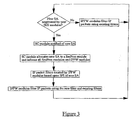
- Figure 3 is a flow diagram further illustrating the method of operation of the IPSec router.
Landscapes
- Engineering & Computer Science (AREA)
- Computer Security & Cryptography (AREA)
- Computer Hardware Design (AREA)
- Computing Systems (AREA)
- General Engineering & Computer Science (AREA)
- Computer Networks & Wireless Communication (AREA)
- Signal Processing (AREA)
- Data Exchanges In Wide-Area Networks (AREA)
- Enzymes And Modification Thereof (AREA)
- Transition And Organic Metals Composition Catalysts For Addition Polymerization (AREA)
- Medicines Containing Material From Animals Or Micro-Organisms (AREA)
Claims (7)
- Netzwerkvorrichtung zum Implementieren von IPSec, umfassend:zumindest einen IP-Forwarder, der dafür eingerichtet ist, IP-Pakete zu empfangen, von denen jedes mit einer Sicherheits-Assoziierung (SA) assoziiert ist, um die Destinationen der Pakete zu bestimmen und die Pakete an ihre Destinationen weiterzuleiten;eine Mehrzahl von Sicherheitsprozedurmodulen, die mit dem/den IP-Forwarder(n) gekoppelt und dafür eingerichtet sind, Sicherheitsprozeduren für empfangene Pakete parallel zu implementieren; undeine Sicherheitssteuerung, die dafür eingerichtet ist, vermittelte SAs unter den Sicherheitsprozedurmodulen zu allozieren und die Sicherheitsprozedurmodule und den/die IP-Forwarder von der Allozierung zu unterrichten, wodurch der/die IP-Forwarder IP-Pakete an das die assoziierte SA implementierende Sicherheitsmodulmodul senden kann.
- Vorrichtung gemäß Anspruch 1, wobei die Sicherheitsprozedurmodule miteinander gekoppelt sind, um das Weiterleiten eines IP-Pakets von einem Sicherheitsprozedurmodul zu einem anderen zu gestatten.
- Vorrichtung gemäß Anspruch 1 oder 2, wobei die Sicherheitssteuerung für das Erzeugen und Modifizieren von IP-Paketfiltern in dem/den IP-Forwarder(n) verantwortlich ist, wobei die Filter für das Routen von IP-Paketen an die Sicherheitsprozedurmodule verantwortlich sind.
- Vorrichtung gemäß Anspruch 3, wobei das Filtern von Paketen unter Verwendung eines oder mehrerer Selektoren ausgeführt wird, wobei der oder einer der Selektoren der Sicherheitsparameterindex (SPI) ist, der eine SA identifiziert und der in einem Kopf der IP-Pakete enthalten ist.
- Vorrichtung gemäß einem der vorstehenden Ansprüche, wobei die Sicherheitssteuerung mit einem Internet-Schlüssellaustauschmodul (ISA) gekoppelt ist, das für das Vermitteln von SAs mit Gleichrang-ISA-Modulen verantwortlich ist, und die Sicherheitssteuerung dafür eingerichtet ist, vom ISA-Modul Details zu den vermittelten SAs zu empfangen.
- Vorrichtung gemäß einem der vorstehenden Ansprüche, wobei der/die IP-Forwarder, die Sicherheitsprozedurmodule, und/oder die Sicherheitssteuerung in Software oder in Hardware oder in einer Kombination von Hardware und Software implementiert sind.
- Verfahren zum Prozessieren von IP-Paketen in einer Netzwerkvernetzungsvorrichtung, das umfasst:Allozierung von vermittelten Sicherheitsassoziierungen SAs in einer Sicherheitssteuerung, unter einer Mehrzahl von Sicherheitsprozedurmodulen, die dafür eingerichtet sind, Sicherheitsprozeduren für empfangene IP-Pakete parallel zu implementieren;Unterrichten der Sicherheitsprozedurmodule und zumindest eines IP-Forwarders von der Allozierung; undEmpfangen von IP-Paketen an dem/den IP-Forwardern, Identifizieren der mit den Paketen assoziierten SAs und Weiterleiten der Pakete an die, die assoziierten SAs implementierenden Sicherheitsprozedurmodule.
Applications Claiming Priority (3)
| Application Number | Priority Date | Filing Date | Title |
|---|---|---|---|
| GB0012475A GB2365717B (en) | 2000-05-24 | 2000-05-24 | IPsec processing |
| GB0012475 | 2000-05-24 | ||
| PCT/SE2001/000960 WO2001091413A2 (en) | 2000-05-24 | 2001-05-03 | Ipsec processing |
Publications (2)
| Publication Number | Publication Date |
|---|---|
| EP1284076A2 EP1284076A2 (de) | 2003-02-19 |
| EP1284076B1 true EP1284076B1 (de) | 2006-07-26 |
Family
ID=9892169
Family Applications (1)
| Application Number | Title | Priority Date | Filing Date |
|---|---|---|---|
| EP01930369A Expired - Lifetime EP1284076B1 (de) | 2000-05-24 | 2001-05-03 | Ipsec-verarbeitung |
Country Status (9)
| Country | Link |
|---|---|
| US (1) | US20010047487A1 (de) |
| EP (1) | EP1284076B1 (de) |
| JP (1) | JP4636401B2 (de) |
| AT (1) | ATE334546T1 (de) |
| AU (1) | AU2001256901A1 (de) |
| CA (1) | CA2409294C (de) |
| DE (1) | DE60121755T2 (de) |
| GB (1) | GB2365717B (de) |
| WO (1) | WO2001091413A2 (de) |
Families Citing this family (25)
| Publication number | Priority date | Publication date | Assignee | Title |
|---|---|---|---|---|
| US6708218B1 (en) * | 2000-06-05 | 2004-03-16 | International Business Machines Corporation | IpSec performance enhancement using a hardware-based parallel process |
| US7181012B2 (en) * | 2000-09-11 | 2007-02-20 | Telefonaktiebolaget Lm Ericsson (Publ) | Secured map messages for telecommunications networks |
| US7003118B1 (en) * | 2000-11-27 | 2006-02-21 | 3Com Corporation | High performance IPSEC hardware accelerator for packet classification |
| FI118170B (fi) * | 2002-01-22 | 2007-07-31 | Netseal Mobility Technologies | Menetelmä ja järjestelmä viestin lähettämiseksi turvallisen yhteyden läpi |
| US7203957B2 (en) * | 2002-04-04 | 2007-04-10 | At&T Corp. | Multipoint server for providing secure, scaleable connections between a plurality of network devices |
| US7188365B2 (en) * | 2002-04-04 | 2007-03-06 | At&T Corp. | Method and system for securely scanning network traffic |
| FR2840137B1 (fr) * | 2002-05-22 | 2004-09-10 | Sistech Sa | Outil de securisation de messages electroniques |
| US7437553B2 (en) * | 2002-10-15 | 2008-10-14 | Alten Alex I | Systems and methods for providing autonomous security |
| JP4437650B2 (ja) * | 2003-08-25 | 2010-03-24 | 株式会社日立製作所 | ストレージシステム |
| US20150341812A1 (en) | 2003-08-29 | 2015-11-26 | Ineoquest Technologies, Inc. | Video quality monitoring |
| US8625455B2 (en) * | 2006-10-17 | 2014-01-07 | Ineoquest Technologies, Inc. | System and method for handling streaming media |
| US20050071274A1 (en) * | 2003-09-27 | 2005-03-31 | Utstarcom, Inc. | Method and Apparatus in a Digital Rights Client and a Digital Rights Source and associated Digital Rights Key |
| US7826614B1 (en) | 2003-11-05 | 2010-11-02 | Globalfoundries Inc. | Methods and apparatus for passing initialization vector information from software to hardware to perform IPsec encryption operation |
| CN100512278C (zh) * | 2003-11-13 | 2009-07-08 | 中兴通讯股份有限公司 | 一种把ipsec嵌入到ip协议栈的方法 |
| US7581093B2 (en) * | 2003-12-22 | 2009-08-25 | Nortel Networks Limited | Hitless manual cryptographic key refresh in secure packet networks |
| US20050177713A1 (en) * | 2004-02-05 | 2005-08-11 | Peter Sim | Multi-protocol network encryption system |
| US7676838B2 (en) * | 2004-07-26 | 2010-03-09 | Alcatel Lucent | Secure communication methods and systems |
| US7783880B2 (en) * | 2004-11-12 | 2010-08-24 | Microsoft Corporation | Method and apparatus for secure internet protocol (IPSEC) offloading with integrated host protocol stack management |
| US20070006294A1 (en) * | 2005-06-30 | 2007-01-04 | Hunter G K | Secure flow control for a data flow in a computer and data flow in a computer network |
| US7962652B2 (en) * | 2006-02-14 | 2011-06-14 | International Business Machines Corporation | Detecting network topology when negotiating IPsec security associations that involve network address translation |
| US8752131B2 (en) * | 2008-04-30 | 2014-06-10 | Fujitsu Limited | Facilitating protection of a maintenance entity group |
| US20120317410A1 (en) * | 2011-06-08 | 2012-12-13 | Cirque Corporation | Protecting data from data leakage or misuse while supporting multiple channels and physical interfaces |
| US9021577B2 (en) * | 2012-03-30 | 2015-04-28 | Futurewei Technologies, Inc. | Enhancing IPSEC performance and security against eavesdropping |
| US9729574B2 (en) | 2014-02-14 | 2017-08-08 | Alcatel Lucent | Seamless switchover for anti-replay connections in multiple network processor systems |
| US9473466B2 (en) | 2014-10-10 | 2016-10-18 | Freescale Semiconductor, Inc. | System and method for internet protocol security processing |
Family Cites Families (5)
| Publication number | Priority date | Publication date | Assignee | Title |
|---|---|---|---|---|
| US6253321B1 (en) * | 1998-06-19 | 2001-06-26 | Ssh Communications Security Ltd. | Method and arrangement for implementing IPSEC policy management using filter code |
| JP2000083055A (ja) * | 1998-09-04 | 2000-03-21 | Hitachi Ltd | ルータ |
| US6438612B1 (en) * | 1998-09-11 | 2002-08-20 | Ssh Communications Security, Ltd. | Method and arrangement for secure tunneling of data between virtual routers |
| US6505192B1 (en) * | 1999-08-12 | 2003-01-07 | International Business Machines Corporation | Security rule processing for connectionless protocols |
| US6725056B1 (en) * | 2000-02-09 | 2004-04-20 | Samsung Electronics Co., Ltd. | System and method for secure over-the-air provisioning of a mobile station from a provisioning server via a traffic channel |
-
2000
- 2000-05-24 GB GB0012475A patent/GB2365717B/en not_active Revoked
-
2001
- 2001-05-03 WO PCT/SE2001/000960 patent/WO2001091413A2/en not_active Ceased
- 2001-05-03 AU AU2001256901A patent/AU2001256901A1/en not_active Abandoned
- 2001-05-03 AT AT01930369T patent/ATE334546T1/de not_active IP Right Cessation
- 2001-05-03 CA CA2409294A patent/CA2409294C/en not_active Expired - Lifetime
- 2001-05-03 JP JP2001586879A patent/JP4636401B2/ja not_active Expired - Fee Related
- 2001-05-03 EP EP01930369A patent/EP1284076B1/de not_active Expired - Lifetime
- 2001-05-03 DE DE60121755T patent/DE60121755T2/de not_active Expired - Lifetime
- 2001-05-24 US US09/864,593 patent/US20010047487A1/en not_active Abandoned
Also Published As
| Publication number | Publication date |
|---|---|
| GB2365717B (en) | 2004-01-21 |
| WO2001091413A3 (en) | 2002-03-28 |
| WO2001091413A2 (en) | 2001-11-29 |
| CA2409294C (en) | 2011-07-12 |
| DE60121755T2 (de) | 2007-08-02 |
| CA2409294A1 (en) | 2001-11-29 |
| AU2001256901A1 (en) | 2001-12-03 |
| GB2365717A (en) | 2002-02-20 |
| ATE334546T1 (de) | 2006-08-15 |
| JP2003534722A (ja) | 2003-11-18 |
| DE60121755D1 (de) | 2006-09-07 |
| GB0012475D0 (en) | 2000-07-12 |
| JP4636401B2 (ja) | 2011-02-23 |
| US20010047487A1 (en) | 2001-11-29 |
| EP1284076A2 (de) | 2003-02-19 |
Similar Documents
| Publication | Publication Date | Title |
|---|---|---|
| EP1284076B1 (de) | Ipsec-verarbeitung | |
| US11283772B2 (en) | Method and system for sending a message through a secure connection | |
| AU2002327757B2 (en) | Method and apparatus for implementing a layer 3/layer 7 firewall in an L2 device | |
| EP2823620B1 (de) | Erhöhung einer ipsec-leistung und einer abhörsicherheit | |
| US20030074584A1 (en) | System and method for maintaining N number of simultaneous cryptographic sessions using a distributed computing environment | |
| EP1657880A1 (de) | Kreuzungen von virtuellen privaten Netzwerken basierend auf Zertifikaten | |
| US7000120B1 (en) | Scheme for determining transport level information in the presence of IP security encryption | |
| Keromytis et al. | Transparent Network Security Policy Enforcement. | |
| EP1189410B1 (de) | Der Verarbeitung von Datenpaketen in einer Netzwerkgruppe | |
| CN121264018A (zh) | Sd-wan流量工程 | |
| Wright | Transparent Network Security Policy Enforcement | |
| HK1088741B (en) | Virtual private network crossovers based on certificates |
Legal Events
| Date | Code | Title | Description |
|---|---|---|---|
| PUAI | Public reference made under article 153(3) epc to a published international application that has entered the european phase |
Free format text: ORIGINAL CODE: 0009012 |
|
| 17P | Request for examination filed |
Effective date: 20021031 |
|
| AK | Designated contracting states |
Designated state(s): AT BE CH CY DE DK ES FI FR GB GR IE IT LI LU MC NL PT SE TR |
|
| AX | Request for extension of the european patent |
Extension state: AL LT LV MK RO SI |
|
| RAP1 | Party data changed (applicant data changed or rights of an application transferred) |
Owner name: TELEFONAKTIEBOLAGET LM ERICSSON (PUBL) |
|
| GRAP | Despatch of communication of intention to grant a patent |
Free format text: ORIGINAL CODE: EPIDOSNIGR1 |
|
| GRAS | Grant fee paid |
Free format text: ORIGINAL CODE: EPIDOSNIGR3 |
|
| GRAA | (expected) grant |
Free format text: ORIGINAL CODE: 0009210 |
|
| AK | Designated contracting states |
Kind code of ref document: B1 Designated state(s): AT BE CH CY DE DK ES FI FR GB GR IE IT LI LU MC NL PT SE TR |
|
| PG25 | Lapsed in a contracting state [announced via postgrant information from national office to epo] |
Ref country code: LI Free format text: LAPSE BECAUSE OF FAILURE TO SUBMIT A TRANSLATION OF THE DESCRIPTION OR TO PAY THE FEE WITHIN THE PRESCRIBED TIME-LIMIT Effective date: 20060726 Ref country code: IT Free format text: LAPSE BECAUSE OF FAILURE TO SUBMIT A TRANSLATION OF THE DESCRIPTION OR TO PAY THE FEE WITHIN THE PRESCRIBED TIME-LIMIT;WARNING: LAPSES OF ITALIAN PATENTS WITH EFFECTIVE DATE BEFORE 2007 MAY HAVE OCCURRED AT ANY TIME BEFORE 2007. THE CORRECT EFFECTIVE DATE MAY BE DIFFERENT FROM THE ONE RECORDED. Effective date: 20060726 Ref country code: BE Free format text: LAPSE BECAUSE OF FAILURE TO SUBMIT A TRANSLATION OF THE DESCRIPTION OR TO PAY THE FEE WITHIN THE PRESCRIBED TIME-LIMIT Effective date: 20060726 Ref country code: FI Free format text: LAPSE BECAUSE OF FAILURE TO SUBMIT A TRANSLATION OF THE DESCRIPTION OR TO PAY THE FEE WITHIN THE PRESCRIBED TIME-LIMIT Effective date: 20060726 Ref country code: NL Free format text: LAPSE BECAUSE OF FAILURE TO SUBMIT A TRANSLATION OF THE DESCRIPTION OR TO PAY THE FEE WITHIN THE PRESCRIBED TIME-LIMIT Effective date: 20060726 Ref country code: CH Free format text: LAPSE BECAUSE OF FAILURE TO SUBMIT A TRANSLATION OF THE DESCRIPTION OR TO PAY THE FEE WITHIN THE PRESCRIBED TIME-LIMIT Effective date: 20060726 Ref country code: AT Free format text: LAPSE BECAUSE OF FAILURE TO SUBMIT A TRANSLATION OF THE DESCRIPTION OR TO PAY THE FEE WITHIN THE PRESCRIBED TIME-LIMIT Effective date: 20060726 |
|
| REG | Reference to a national code |
Ref country code: GB Ref legal event code: FG4D |
|
| REG | Reference to a national code |
Ref country code: CH Ref legal event code: EP |
|
| REG | Reference to a national code |
Ref country code: IE Ref legal event code: FG4D |
|
| REF | Corresponds to: |
Ref document number: 60121755 Country of ref document: DE Date of ref document: 20060907 Kind code of ref document: P |
|
| PG25 | Lapsed in a contracting state [announced via postgrant information from national office to epo] |
Ref country code: SE Free format text: LAPSE BECAUSE OF FAILURE TO SUBMIT A TRANSLATION OF THE DESCRIPTION OR TO PAY THE FEE WITHIN THE PRESCRIBED TIME-LIMIT Effective date: 20061026 Ref country code: DK Free format text: LAPSE BECAUSE OF FAILURE TO SUBMIT A TRANSLATION OF THE DESCRIPTION OR TO PAY THE FEE WITHIN THE PRESCRIBED TIME-LIMIT Effective date: 20061026 |
|
| PG25 | Lapsed in a contracting state [announced via postgrant information from national office to epo] |
Ref country code: ES Free format text: LAPSE BECAUSE OF FAILURE TO SUBMIT A TRANSLATION OF THE DESCRIPTION OR TO PAY THE FEE WITHIN THE PRESCRIBED TIME-LIMIT Effective date: 20061106 |
|
| PG25 | Lapsed in a contracting state [announced via postgrant information from national office to epo] |
Ref country code: PT Free format text: LAPSE BECAUSE OF FAILURE TO SUBMIT A TRANSLATION OF THE DESCRIPTION OR TO PAY THE FEE WITHIN THE PRESCRIBED TIME-LIMIT Effective date: 20061226 |
|
| NLV1 | Nl: lapsed or annulled due to failure to fulfill the requirements of art. 29p and 29m of the patents act | ||
| ET | Fr: translation filed | ||
| PLBE | No opposition filed within time limit |
Free format text: ORIGINAL CODE: 0009261 |
|
| STAA | Information on the status of an ep patent application or granted ep patent |
Free format text: STATUS: NO OPPOSITION FILED WITHIN TIME LIMIT |
|
| 26N | No opposition filed |
Effective date: 20070427 |
|
| PGFP | Annual fee paid to national office [announced via postgrant information from national office to epo] |
Ref country code: GB Payment date: 20070921 Year of fee payment: 7 |
|
| PG25 | Lapsed in a contracting state [announced via postgrant information from national office to epo] |
Ref country code: MC Free format text: LAPSE BECAUSE OF NON-PAYMENT OF DUE FEES Effective date: 20070531 |
|
| PG25 | Lapsed in a contracting state [announced via postgrant information from national office to epo] |
Ref country code: GR Free format text: LAPSE BECAUSE OF FAILURE TO SUBMIT A TRANSLATION OF THE DESCRIPTION OR TO PAY THE FEE WITHIN THE PRESCRIBED TIME-LIMIT Effective date: 20061027 |
|
| PG25 | Lapsed in a contracting state [announced via postgrant information from national office to epo] |
Ref country code: IE Free format text: LAPSE BECAUSE OF NON-PAYMENT OF DUE FEES Effective date: 20070503 |
|
| GBPC | Gb: european patent ceased through non-payment of renewal fee |
Effective date: 20080503 |
|
| PG25 | Lapsed in a contracting state [announced via postgrant information from national office to epo] |
Ref country code: GB Free format text: LAPSE BECAUSE OF NON-PAYMENT OF DUE FEES Effective date: 20080503 |
|
| PG25 | Lapsed in a contracting state [announced via postgrant information from national office to epo] |
Ref country code: LU Free format text: LAPSE BECAUSE OF NON-PAYMENT OF DUE FEES Effective date: 20070503 Ref country code: CY Free format text: LAPSE BECAUSE OF FAILURE TO SUBMIT A TRANSLATION OF THE DESCRIPTION OR TO PAY THE FEE WITHIN THE PRESCRIBED TIME-LIMIT Effective date: 20060726 |
|
| PG25 | Lapsed in a contracting state [announced via postgrant information from national office to epo] |
Ref country code: TR Free format text: LAPSE BECAUSE OF FAILURE TO SUBMIT A TRANSLATION OF THE DESCRIPTION OR TO PAY THE FEE WITHIN THE PRESCRIBED TIME-LIMIT Effective date: 20060726 |
|
| REG | Reference to a national code |
Ref country code: FR Ref legal event code: PLFP Year of fee payment: 15 |
|
| PGFP | Annual fee paid to national office [announced via postgrant information from national office to epo] |
Ref country code: DE Payment date: 20150528 Year of fee payment: 15 |
|
| PGFP | Annual fee paid to national office [announced via postgrant information from national office to epo] |
Ref country code: FR Payment date: 20150519 Year of fee payment: 15 Ref country code: IT Payment date: 20150527 Year of fee payment: 15 |
|
| REG | Reference to a national code |
Ref country code: DE Ref legal event code: R119 Ref document number: 60121755 Country of ref document: DE |
|
| PG25 | Lapsed in a contracting state [announced via postgrant information from national office to epo] |
Ref country code: IT Free format text: LAPSE BECAUSE OF NON-PAYMENT OF DUE FEES Effective date: 20160503 |
|
| REG | Reference to a national code |
Ref country code: FR Ref legal event code: ST Effective date: 20170131 |
|
| PG25 | Lapsed in a contracting state [announced via postgrant information from national office to epo] |
Ref country code: DE Free format text: LAPSE BECAUSE OF NON-PAYMENT OF DUE FEES Effective date: 20161201 Ref country code: FR Free format text: LAPSE BECAUSE OF NON-PAYMENT OF DUE FEES Effective date: 20160531 |