EP1283442A2 - Photographic materials and process for their production - Google Patents
Photographic materials and process for their production Download PDFInfo
- Publication number
- EP1283442A2 EP1283442A2 EP02016405A EP02016405A EP1283442A2 EP 1283442 A2 EP1283442 A2 EP 1283442A2 EP 02016405 A EP02016405 A EP 02016405A EP 02016405 A EP02016405 A EP 02016405A EP 1283442 A2 EP1283442 A2 EP 1283442A2
- Authority
- EP
- European Patent Office
- Prior art keywords
- photographic material
- mordant
- coating
- binder
- dyes
- Prior art date
- Legal status (The legal status is an assumption and is not a legal conclusion. Google has not performed a legal analysis and makes no representation as to the accuracy of the status listed.)
- Withdrawn
Links
Images

Classifications
-
- G—PHYSICS
- G03—PHOTOGRAPHY; CINEMATOGRAPHY; ANALOGOUS TECHNIQUES USING WAVES OTHER THAN OPTICAL WAVES; ELECTROGRAPHY; HOLOGRAPHY
- G03C—PHOTOSENSITIVE MATERIALS FOR PHOTOGRAPHIC PURPOSES; PHOTOGRAPHIC PROCESSES, e.g. CINE, X-RAY, COLOUR, STEREO-PHOTOGRAPHIC PROCESSES; AUXILIARY PROCESSES IN PHOTOGRAPHY
- G03C1/00—Photosensitive materials
- G03C1/76—Photosensitive materials characterised by the base or auxiliary layers
- G03C1/7614—Cover layers; Backing layers; Base or auxiliary layers characterised by means for lubricating, for rendering anti-abrasive or for preventing adhesion
-
- G—PHYSICS
- G03—PHOTOGRAPHY; CINEMATOGRAPHY; ANALOGOUS TECHNIQUES USING WAVES OTHER THAN OPTICAL WAVES; ELECTROGRAPHY; HOLOGRAPHY
- G03C—PHOTOSENSITIVE MATERIALS FOR PHOTOGRAPHIC PURPOSES; PHOTOGRAPHIC PROCESSES, e.g. CINE, X-RAY, COLOUR, STEREO-PHOTOGRAPHIC PROCESSES; AUXILIARY PROCESSES IN PHOTOGRAPHY
- G03C1/00—Photosensitive materials
- G03C1/76—Photosensitive materials characterised by the base or auxiliary layers
- G03C1/775—Photosensitive materials characterised by the base or auxiliary layers the base being of paper
- G03C1/79—Macromolecular coatings or impregnations therefor, e.g. varnishes
-
- G—PHYSICS
- G03—PHOTOGRAPHY; CINEMATOGRAPHY; ANALOGOUS TECHNIQUES USING WAVES OTHER THAN OPTICAL WAVES; ELECTROGRAPHY; HOLOGRAPHY
- G03C—PHOTOSENSITIVE MATERIALS FOR PHOTOGRAPHIC PURPOSES; PHOTOGRAPHIC PROCESSES, e.g. CINE, X-RAY, COLOUR, STEREO-PHOTOGRAPHIC PROCESSES; AUXILIARY PROCESSES IN PHOTOGRAPHY
- G03C7/00—Multicolour photographic processes or agents therefor; Regeneration of such processing agents; Photosensitive materials for multicolour processes
- G03C7/30—Colour processes using colour-coupling substances; Materials therefor; Preparing or processing such materials
- G03C7/3046—Processing baths not provided for elsewhere, e.g. final or intermediate washings
-
- G—PHYSICS
- G03—PHOTOGRAPHY; CINEMATOGRAPHY; ANALOGOUS TECHNIQUES USING WAVES OTHER THAN OPTICAL WAVES; ELECTROGRAPHY; HOLOGRAPHY
- G03C—PHOTOSENSITIVE MATERIALS FOR PHOTOGRAPHIC PURPOSES; PHOTOGRAPHIC PROCESSES, e.g. CINE, X-RAY, COLOUR, STEREO-PHOTOGRAPHIC PROCESSES; AUXILIARY PROCESSES IN PHOTOGRAPHY
- G03C1/00—Photosensitive materials
- G03C1/005—Silver halide emulsions; Preparation thereof; Physical treatment thereof; Incorporation of additives therein
- G03C1/06—Silver halide emulsions; Preparation thereof; Physical treatment thereof; Incorporation of additives therein with non-macromolecular additives
- G03C1/061—Hydrazine compounds
-
- G—PHYSICS
- G03—PHOTOGRAPHY; CINEMATOGRAPHY; ANALOGOUS TECHNIQUES USING WAVES OTHER THAN OPTICAL WAVES; ELECTROGRAPHY; HOLOGRAPHY
- G03C—PHOTOSENSITIVE MATERIALS FOR PHOTOGRAPHIC PURPOSES; PHOTOGRAPHIC PROCESSES, e.g. CINE, X-RAY, COLOUR, STEREO-PHOTOGRAPHIC PROCESSES; AUXILIARY PROCESSES IN PHOTOGRAPHY
- G03C1/00—Photosensitive materials
- G03C1/76—Photosensitive materials characterised by the base or auxiliary layers
- G03C1/7614—Cover layers; Backing layers; Base or auxiliary layers characterised by means for lubricating, for rendering anti-abrasive or for preventing adhesion
- G03C2001/7628—Back layer
-
- G—PHYSICS
- G03—PHOTOGRAPHY; CINEMATOGRAPHY; ANALOGOUS TECHNIQUES USING WAVES OTHER THAN OPTICAL WAVES; ELECTROGRAPHY; HOLOGRAPHY
- G03C—PHOTOSENSITIVE MATERIALS FOR PHOTOGRAPHIC PURPOSES; PHOTOGRAPHIC PROCESSES, e.g. CINE, X-RAY, COLOUR, STEREO-PHOTOGRAPHIC PROCESSES; AUXILIARY PROCESSES IN PHOTOGRAPHY
- G03C2200/00—Details
- G03C2200/47—Polymer
-
- G—PHYSICS
- G03—PHOTOGRAPHY; CINEMATOGRAPHY; ANALOGOUS TECHNIQUES USING WAVES OTHER THAN OPTICAL WAVES; ELECTROGRAPHY; HOLOGRAPHY
- G03C—PHOTOSENSITIVE MATERIALS FOR PHOTOGRAPHIC PURPOSES; PHOTOGRAPHIC PROCESSES, e.g. CINE, X-RAY, COLOUR, STEREO-PHOTOGRAPHIC PROCESSES; AUXILIARY PROCESSES IN PHOTOGRAPHY
- G03C5/00—Photographic processes or agents therefor; Regeneration of such processing agents
- G03C5/26—Processes using silver-salt-containing photosensitive materials or agents therefor
- G03C5/268—Processing baths not provided for elsewhere, e.g. pre-treatment, stop, intermediate or rinse baths
Definitions
- This invention relates to the processing, and particularly to the washing or stabilizing of photographic material in which the material passes through a plurality of stages.
- the invention also relates to a novel photographic material having improved resistance to staining and also to a process for the production of the photographic material.
- Silver halide photographic materials are well known and are processed to generate a silver or dye image by means of a development stage followed by a series of baths to stabilize and provide permanence to the image.
- Such baths convert and remove unwanted materials from the coated photographic layers which would either interfere with the quality of the final image or cause degradation of the image with time.
- the development stage is followed by a bleach stage to oxidize the developed silver to a form which can be dissolved by a fixing agent in the same or a separate bath.
- Such silver removal stages are then followed by a washing stage using water or other wash solution or a stabilization stage using a stabilizer solution. For convenience this last mentioned stage will hereafter be referred to generically as washing.
- Such stages remove residual chemicals and may also include conversion reactions between stabilizer solution components and materials within the coated layers. These stages are needed to give the required degree of permanence to the final image.
- the wash stage is performed in a multitank arrangement.
- the replenishment of this stage which keeps the concentration of substances removed from the photographic material at a constant and sufficiently low level, is carried out by adding fresh wash solution to the final tank of the sequence and arranging overflow from the final tank to flow into the previous tank and so on, the overflow from the first tank of this stage being then discarded as effluent.
- This is known in the art as a countercurrent mode of operation. This arrangement allows significantly lower amounts of solution to be used compared with one or two tanks especially when these are replenished separately.
- processing is carried out with the photographic material immersed in a tank of solution even though many but not all, photographic materials are sensitised with an emulsion only on one side thereof.
- the purpose of the wash stage is to remove dyes such as sensitising dyes and absorber dyes which would interfere with the quality of the final image.
- concentration of such species in a seasoned stabilizer bath the better.
- the key parameters are time, number of tanks and replenishment rate. For a given number of tanks, higher replenishment and longer times provide for improved results but both of these parameters are ones that it is desirable to reduce.
- United States Patent No 6,106,169 describes a washing process in which a series of baths are employed and in which the process is controlled so that, with the exception of the final bath, the baths do not achieve an equilibrium state between the sensitised material and the seasoned (steady state) condition of the bath. Controlling the wash process in this way enables the time in each bath to be reduced.
- the present invention provides a different solution to this problem by the provision of a photographic material which has a coating layer containing a mordant to absorb during the processing the dyes such as absorber and sensitising dyes that contribute to staining of the final image.
- an opaque reflective photographic material having the non image side coated with a mordant in an amount to absorb, during washing of the photographic material dyes that contribute to staining of the final image.
- the photographic material of the invention enables the processing to be either faster, employ fewer washing stages or produce a higher quality image.
- photographic material we mean an opaque material for example paper which may produce a black and white or color image and may be in continuous web form or comprise discrete sheets.
- the mordant which is preferably a colorless organic material which may be polymeric and will usually be a quaternary nitrogen-containing compound.
- a suitable class of materials are quaternized vinylimidazole polymers and benzyl ammonium compounds, particularly those containing repeating units of polymerised 1-vinylimidazole and/or 2-alkyl-1-vinylimidazole which have been partly quaternized e.g. with 1-chloromethyl-carbonyloxy-2,3-dihydroxypropane.
- Mordants suitable for use in the present invention are described in United States Patent No. 4,229,915 and U.K. Patent Application No 2,093,041 which are hereby incorporated by reference.
- nitrogen-containing polymers it is preferred that from about 5 to 35% more preferably about 10 to about 25% of the available quaternizable nitrogen atoms in the polymer are quaternized.
- a suitable quaternizing agent is chloroethanol or an analogue thereof although other agents such as benzyl chloride and its analogues may be used.
- Copolymer mordants made by the quaternization of copolymers of N-vinylimidazole and vinylpyrrolidone are also effective.
- the molecular weight may vary within wide ranges. Polymers with molecular weights in the range about 10,000 to about 100,000 may be used.
- Polyvinylimidozoles used in the present invention typically have a molecular weight of about 15,000 to about 30,000.
- the mordant is conveniently coated to provide a lay down of from 100 mg/square ft to 400 mg/square ft, preferably from 150 to 300 mg/square foot.
- the coating also preferably contains a binder e.g. gelatin in an amount to give a ratio of mordant to binder of from about 1:3 to about 3:1.
- a binder e.g. gelatin in an amount to give a ratio of mordant to binder of from about 1:3 to about 3:1.
- the photographic material is a paper having the non image side coated with a mordant which is capable of absorbing during washing of the photographic material dyes that contribute to staining of the final image.
- a process for the production of a photographic material having improved resistance to staining comprises depositing on the non image side of the photographic material a mordant capable of absorbing during washing of the photographic material dyes such as absorber and sensitising dyes that contribute to staining of the final image.
- the coating of the photographic material eg paper may be effected before the emulsion layer(s) are applied. Therefore included within the scope of the present invention are photographic materials such as paper having one side coated with the mordant and the other side ready to receive the emulsion layer(s).
- the application of the coating is conveniently effected dispersing the mordant in water together with a binder such as gelatin optionally together with a hardener and surfactant and coating the photographic material by standard methods known for coating photographic materials.
- a binder such as gelatin optionally together with a hardener and surfactant
- the photographic material in the form of a moving web may for example be passed by a hopper from which the dispersion of mordant is continuously fed.
- a spreading means may be employed to ensure a uniform coating.
- the mordant is preferably deposited to form a coating at a lay down of from 100 to 400.mg/square foot, more preferably 150 to 300 mg/square foot of the photographic material.
- a washing process for photographic materials which comprises subjecting a photographic material as hereinbefore defined which has been subjected to the stages of development and fixing to a washing stage and allowing the mordant to absorb dyes such as absorber and sensitising dyes present in the wash solution that would contribute to staining of the final image.
- the title polymer (4g) dissolved in water (150ml) was added to an aqueous gelatin solution (12.5%, 32g) at 40 degrees C .
- the pH of the mixture was adjusted to 5.5 by the addition of dilute hydrochloric acid.
- the volume of the mixture was made up 200ml with deoxygenated water prior to coating onto the photographic material.
- the mixture is coated onto the non image side of EKTACOLOR (Registered Trade Mark) paper using the standard coating method known for coating pohotographic elements such as paper.
- brackets refer to coating weights of each component in mg/square foot.
- Hardener 1 was formaldehyde and hardener 2 was Araldite diluent DY022 active constituent butane-diol-di-glycidyl ether.
- Surfactant was nonyl phenoxypolyglycidol N-10.
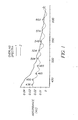
- Coatings of mordants 1 and 2 on clear Estar film base were prepared as described above in Example 1 and were then soaked in seasoned stabilizer solution (RA4) for 100 seconds and then washed for several minutes with cold Harrow tap water. They were dried and their spectra recorded. ⁇
- the data is shown in Table and Fig 1.
- the spectra in Fig 1 show that several dyes were absorbed permanently by the mordant and in particular coating (2) displays 10 separate absorption peaks showing absorption of sensitising and absorber dyes used in EKTACOLOR (Registered Trade Mark) and other coloured components seasoned into the process while processing KODAK (Registered Trade Mark) EKTACOLOR (Registered Trade Mark) paper.
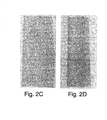
- the pair of specimens in Figs 2A and Fig 2B are Estar film base coated with mordant (1) and the pair in Figs 2C and Fig 2D are coated with mordant (2).
- the right hand specimen shows the dye absorbed in each case when the specimens were soaked in seasoned RA 4 stabilizer solution, washed and dried.
- the left hand specimens were not subjected to the soaking and are included for comparison.
- This Example shows that mordant coated on the reverse of EKTACOLOR (Registered Trade Mark) paper can be used to remove significant levels of dyes whose presence limit the washing replenishment rates and times. By removing these dyes the process will benefit by either reduced staining of the product or the same product produced with a washing stage having a lower replenishment rate or shorter time.
- EKTACOLOR Registered Trade Mark
Landscapes
- Physics & Mathematics (AREA)
- General Physics & Mathematics (AREA)
- Chemical & Material Sciences (AREA)
- Engineering & Computer Science (AREA)
- Materials Engineering (AREA)
- Spectroscopy & Molecular Physics (AREA)
- Silver Salt Photography Or Processing Solution Therefor (AREA)
- Paper (AREA)
Abstract
Description
| Polymer (200) | hardener 1 (10) |
| surfactant | (10) |
| Gelatin (200) | hardener 2 (10) |
| Paper |
| Mordant | Peaks | Abs (AU) |
| 1 | 487.0 | 0.0237 |
| 1 | 507.0 | 0.0187 |
| 1 | 554.0 | 0.012 |
| 1 | 573.0 | 0.0092 |
| 1 | 579.0 | 0.0089 |
| 1 | 603.0 | 0.006 |
| 1 | 641.0 | 0.0056 |
| 1 | 633.0 | 0.005 |
| 1 | 657.0 | 0.0047 |
| 2 | 436.0 | 0.251 |
| 2 | 450.0 | 0.243 |
| 2 | 465.0 | 0.0182 |
| 2 | 485.0 | 0.0167 |
| 2 | 504.0 | 0.0163 |
| 2 | 524.0 | 0.0135 |
| 2 | 548.0 | 0.0103 |
| 2 | 574.0 | 0.0087 |
| 2 | 603.0 | 0.008 |
| 2 | 635.0 | 0.0073 |
Claims (10)
- An opaque reflective photographic material whose non image side is coated with a mordant in an amount to absorb during washing of the photographic material dyes that would contribute to staining of the final image.
- A photographic material as claimed in claim 1 wherein the mordant is a quaternary nitrogen-containing compound, preferably a quaternized vinylimidazole polymer or vinyl benzylammonium compound.
- A photographic material as claimed in claim 1 or claim 2 wherein the mordant is coated at a lay down of from 100 to 400 mg/square ft, preferably from 150 to 300 mg/square foot of the photographic material.
- A photographic material as claimed in any one of claims 1 to 3 wherein the coating includes a binder.
- A photographic material as claimed in claim 4 wherein the binder is gelatin.
- A process for the production of a photographic material having improved resistance to staining which process comprises coating the non image side of the photographic material with a composition containing a mordant capable of absorbing during washing of the photographic material dyes that would cause staining of the final image.
- A process as claimed in claim 5 wherein the depositing of the coating is effected by coating from an aqueous mixture of mordant and binder.
- A process as claimed in claim 6 or 7 wherein the binder is gelatin.
- A process as claim in any one of claims 6 to 8 wherein the mordant is deposited to form a coating from 100 to 400 mg/square foot, preferably from 150 to 300 mg/square foot.
- A photographic washing process which comprises subjecting a photographic material as claimed in any one of claims 1 to 5 which has been subjected to the stages of development and fixing to a washing stage and allowing the mordant to absorb dyes present in the wash solution that would cause staining of the final image.
Applications Claiming Priority (2)
| Application Number | Priority Date | Filing Date | Title |
|---|---|---|---|
| GB0118835 | 2001-08-02 | ||
| GBGB0118835.8A GB0118835D0 (en) | 2001-08-02 | 2001-08-02 | Photographic materials and process for their production |
Publications (2)
| Publication Number | Publication Date |
|---|---|
| EP1283442A2 true EP1283442A2 (en) | 2003-02-12 |
| EP1283442A3 EP1283442A3 (en) | 2003-11-05 |
Family
ID=9919661
Family Applications (1)
| Application Number | Title | Priority Date | Filing Date |
|---|---|---|---|
| EP02016405A Withdrawn EP1283442A3 (en) | 2001-08-02 | 2002-07-22 | Photographic materials and process for their production |
Country Status (4)
| Country | Link |
|---|---|
| US (1) | US20030031963A1 (en) |
| EP (1) | EP1283442A3 (en) |
| JP (1) | JP2003057787A (en) |
| GB (1) | GB0118835D0 (en) |
Family Cites Families (6)
| Publication number | Priority date | Publication date | Assignee | Title |
|---|---|---|---|---|
| JPS59140448A (en) * | 1983-01-31 | 1984-08-11 | Fuji Photo Film Co Ltd | Silver halide color reversal photosensitive material |
| JPH07117701B2 (en) * | 1985-07-18 | 1995-12-18 | 富士写真フイルム株式会社 | Silver halide light-sensitive material and its processing method |
| JPS63250651A (en) * | 1987-04-07 | 1988-10-18 | Fuji Photo Film Co Ltd | Method for processing silver halide color photographic sensitive material |
| US6187518B1 (en) * | 1998-10-23 | 2001-02-13 | Eastman Kodak Company | Backing layers with reduced scum formation for photographic films |
| DE19916649A1 (en) * | 1999-02-06 | 2000-08-10 | Agfa Gevaert Ag | Photographic silver halide film or paper had coating containing hardened binder, dye fixative and optionally dye stabilizer for retouching or printing with other information |
| JP2000275784A (en) * | 1999-03-25 | 2000-10-06 | Mitsubishi Paper Mills Ltd | Manufacturing method of photographic photosensitive material support |
-
2001
- 2001-08-02 GB GBGB0118835.8A patent/GB0118835D0/en not_active Ceased
-
2002
- 2002-05-21 US US10/152,877 patent/US20030031963A1/en not_active Abandoned
- 2002-07-22 EP EP02016405A patent/EP1283442A3/en not_active Withdrawn
- 2002-08-01 JP JP2002224626A patent/JP2003057787A/en active Pending
Also Published As
| Publication number | Publication date |
|---|---|
| US20030031963A1 (en) | 2003-02-13 |
| JP2003057787A (en) | 2003-02-26 |
| EP1283442A3 (en) | 2003-11-05 |
| GB0118835D0 (en) | 2001-09-26 |
Similar Documents
| Publication | Publication Date | Title |
|---|---|---|
| DE2026252C3 (en) | Rapid processing of photographic material | |
| DE1015682B (en) | Light-insensitive image receiving layer for the silver salt diffusion process | |
| DE1797387A1 (en) | Photographic silver halide developer | |
| DE851723C (en) | Process for the preparation of colored photographic images in a multicolor photographic emulsion | |
| EP1283442A2 (en) | Photographic materials and process for their production | |
| EP0382058B1 (en) | Process of simultaneously applying multiple layers of hydrophilic colloidal aqueous compositions to a hydrophobic support and multilayer photographic material | |
| DE2844314A1 (en) | LIGHT-SENSITIVE MATERIAL FOR THE PRODUCTION OF CORRECTION PROOFS AND PROOF PRINTS | |
| DE2300772C3 (en) | Color diffusion transfer process and recording unit for color diffusion transfer process | |
| DE19525777A1 (en) | Dye soln. for non-dampening silicone rubber layered printing plates | |
| DE2259871A1 (en) | PROCESS FOR DEVELOPING A LIGHT SENSITIVE PHOTOGRAPHIC RECORDING MATERIAL | |
| DE2805680C2 (en) | Recording materials for the vesicular process and processes for increasing the photosensitivity of such recording materials | |
| DE69100480T2 (en) | FIXING BATH FOR PHOTOGRAPHIC BLACK AND WHITE ELEMENTS. | |
| DE69200658T2 (en) | Silver halide photographic light-sensitive material. | |
| DE2058243A1 (en) | Photosensitive materials | |
| JPH07152103A (en) | Multilayered photograph element | |
| JPH05265153A (en) | Article to remove iodine ton from photographic treating liquid having fixing ability, and its use method. | |
| DE69427101T2 (en) | Medical radiographic film with quick access and procedures | |
| DE2310825C2 (en) | Process for the production of colored relief structures | |
| DE69827063T2 (en) | Novel process for processing a photographic product | |
| DE2332426A1 (en) | PHOTOGRAPHIC RECORDING MATERIAL CONTAINING ACYCLIC UREA AS ALDEHYDE REMOVER AND METHOD FOR MANUFACTURING IT | |
| DE68919264T2 (en) | Image receiving element for a diffusion transfer photographic product. | |
| DE1572304B2 (en) | LIGHT-SENSITIVE MATERIAL FOR THE IMAGE-WAY PRODUCTION OF ACID-RESISTANT LAYERS ON METALLIC LAYER BASES OF PRINTING FORMS | |
| US3977875A (en) | Method for modifying vesicular images | |
| DE2311276A1 (en) | Antistatic/antifrothing treatment - for photographic material,using quat polyalkylammonium polymer salt | |
| DE69722123T2 (en) | Process for refreshing an ascorbic acid developer |
Legal Events
| Date | Code | Title | Description |
|---|---|---|---|
| PUAI | Public reference made under article 153(3) epc to a published international application that has entered the european phase |
Free format text: ORIGINAL CODE: 0009012 |
|
| AK | Designated contracting states |
Designated state(s): AT BE BG CH CY CZ DE DK EE ES FI FR GB GR IE IT LI LU MC NL PT SE SK TR |
|
| AX | Request for extension of the european patent |
Extension state: AL LT LV MK RO SI |
|
| PUAL | Search report despatched |
Free format text: ORIGINAL CODE: 0009013 |
|
| AK | Designated contracting states |
Kind code of ref document: A3 Designated state(s): AT BE BG CH CY CZ DE DK EE ES FI FR GB GR IE IT LI LU MC NL PT SE SK TR |
|
| AX | Request for extension of the european patent |
Extension state: AL LT LV MK RO SI |
|
| AKX | Designation fees paid | ||
| REG | Reference to a national code |
Ref country code: DE Ref legal event code: 8566 |
|
| STAA | Information on the status of an ep patent application or granted ep patent |
Free format text: STATUS: THE APPLICATION IS DEEMED TO BE WITHDRAWN |
|
| 18D | Application deemed to be withdrawn |
Effective date: 20040507 |