EP1282102A2 - Light emitting flat-panel display - Google Patents
Light emitting flat-panel display Download PDFInfo
- Publication number
- EP1282102A2 EP1282102A2 EP02077959A EP02077959A EP1282102A2 EP 1282102 A2 EP1282102 A2 EP 1282102A2 EP 02077959 A EP02077959 A EP 02077959A EP 02077959 A EP02077959 A EP 02077959A EP 1282102 A2 EP1282102 A2 EP 1282102A2
- Authority
- EP
- European Patent Office
- Prior art keywords
- display
- light emitting
- useful life
- controller
- remaining useful
- Prior art date
- Legal status (The legal status is an assumption and is not a legal conclusion. Google has not performed a legal analysis and makes no representation as to the accuracy of the status listed.)
- Withdrawn
Links
Images
Classifications
-
- G—PHYSICS
- G09—EDUCATION; CRYPTOGRAPHY; DISPLAY; ADVERTISING; SEALS
- G09G—ARRANGEMENTS OR CIRCUITS FOR CONTROL OF INDICATING DEVICES USING STATIC MEANS TO PRESENT VARIABLE INFORMATION
- G09G3/00—Control arrangements or circuits, of interest only in connection with visual indicators other than cathode-ray tubes
- G09G3/20—Control arrangements or circuits, of interest only in connection with visual indicators other than cathode-ray tubes for presentation of an assembly of a number of characters, e.g. a page, by composing the assembly by combination of individual elements arranged in a matrix no fixed position being assigned to or needed to be assigned to the individual characters or partial characters
- G09G3/22—Control arrangements or circuits, of interest only in connection with visual indicators other than cathode-ray tubes for presentation of an assembly of a number of characters, e.g. a page, by composing the assembly by combination of individual elements arranged in a matrix no fixed position being assigned to or needed to be assigned to the individual characters or partial characters using controlled light sources
- G09G3/30—Control arrangements or circuits, of interest only in connection with visual indicators other than cathode-ray tubes for presentation of an assembly of a number of characters, e.g. a page, by composing the assembly by combination of individual elements arranged in a matrix no fixed position being assigned to or needed to be assigned to the individual characters or partial characters using controlled light sources using electroluminescent panels
- G09G3/32—Control arrangements or circuits, of interest only in connection with visual indicators other than cathode-ray tubes for presentation of an assembly of a number of characters, e.g. a page, by composing the assembly by combination of individual elements arranged in a matrix no fixed position being assigned to or needed to be assigned to the individual characters or partial characters using controlled light sources using electroluminescent panels semiconductive, e.g. using light-emitting diodes [LED]
- G09G3/3208—Control arrangements or circuits, of interest only in connection with visual indicators other than cathode-ray tubes for presentation of an assembly of a number of characters, e.g. a page, by composing the assembly by combination of individual elements arranged in a matrix no fixed position being assigned to or needed to be assigned to the individual characters or partial characters using controlled light sources using electroluminescent panels semiconductive, e.g. using light-emitting diodes [LED] organic, e.g. using organic light-emitting diodes [OLED]
-
- G—PHYSICS
- G09—EDUCATION; CRYPTOGRAPHY; DISPLAY; ADVERTISING; SEALS
- G09G—ARRANGEMENTS OR CIRCUITS FOR CONTROL OF INDICATING DEVICES USING STATIC MEANS TO PRESENT VARIABLE INFORMATION
- G09G2320/00—Control of display operating conditions
- G09G2320/02—Improving the quality of display appearance
- G09G2320/029—Improving the quality of display appearance by monitoring one or more pixels in the display panel, e.g. by monitoring a fixed reference pixel
-
- G—PHYSICS
- G09—EDUCATION; CRYPTOGRAPHY; DISPLAY; ADVERTISING; SEALS
- G09G—ARRANGEMENTS OR CIRCUITS FOR CONTROL OF INDICATING DEVICES USING STATIC MEANS TO PRESENT VARIABLE INFORMATION
- G09G2320/00—Control of display operating conditions
- G09G2320/04—Maintaining the quality of display appearance
- G09G2320/043—Preventing or counteracting the effects of ageing
-
- G—PHYSICS
- G09—EDUCATION; CRYPTOGRAPHY; DISPLAY; ADVERTISING; SEALS
- G09G—ARRANGEMENTS OR CIRCUITS FOR CONTROL OF INDICATING DEVICES USING STATIC MEANS TO PRESENT VARIABLE INFORMATION
- G09G2320/00—Control of display operating conditions
- G09G2320/04—Maintaining the quality of display appearance
- G09G2320/043—Preventing or counteracting the effects of ageing
- G09G2320/048—Preventing or counteracting the effects of ageing using evaluation of the usage time
-
- G—PHYSICS
- G09—EDUCATION; CRYPTOGRAPHY; DISPLAY; ADVERTISING; SEALS
- G09G—ARRANGEMENTS OR CIRCUITS FOR CONTROL OF INDICATING DEVICES USING STATIC MEANS TO PRESENT VARIABLE INFORMATION
- G09G2360/00—Aspects of the architecture of display systems
- G09G2360/14—Detecting light within display terminals, e.g. using a single or a plurality of photosensors
- G09G2360/145—Detecting light within display terminals, e.g. using a single or a plurality of photosensors the light originating from the display screen
-
- G—PHYSICS
- G09—EDUCATION; CRYPTOGRAPHY; DISPLAY; ADVERTISING; SEALS
- G09G—ARRANGEMENTS OR CIRCUITS FOR CONTROL OF INDICATING DEVICES USING STATIC MEANS TO PRESENT VARIABLE INFORMATION
- G09G3/00—Control arrangements or circuits, of interest only in connection with visual indicators other than cathode-ray tubes
- G09G3/20—Control arrangements or circuits, of interest only in connection with visual indicators other than cathode-ray tubes for presentation of an assembly of a number of characters, e.g. a page, by composing the assembly by combination of individual elements arranged in a matrix no fixed position being assigned to or needed to be assigned to the individual characters or partial characters
- G09G3/22—Control arrangements or circuits, of interest only in connection with visual indicators other than cathode-ray tubes for presentation of an assembly of a number of characters, e.g. a page, by composing the assembly by combination of individual elements arranged in a matrix no fixed position being assigned to or needed to be assigned to the individual characters or partial characters using controlled light sources
- G09G3/30—Control arrangements or circuits, of interest only in connection with visual indicators other than cathode-ray tubes for presentation of an assembly of a number of characters, e.g. a page, by composing the assembly by combination of individual elements arranged in a matrix no fixed position being assigned to or needed to be assigned to the individual characters or partial characters using controlled light sources using electroluminescent panels
- G09G3/32—Control arrangements or circuits, of interest only in connection with visual indicators other than cathode-ray tubes for presentation of an assembly of a number of characters, e.g. a page, by composing the assembly by combination of individual elements arranged in a matrix no fixed position being assigned to or needed to be assigned to the individual characters or partial characters using controlled light sources using electroluminescent panels semiconductive, e.g. using light-emitting diodes [LED]
Definitions
- the present invention relates to light emitting flat-panel displays, and more particularly to means for signaling the remaining useful life of such displays.
- Emissive flat-panel display devices are widely used in conjunction with computing devices and in particular with portable devices. Over time, the efficiency and effectiveness of the displays change and the quality of the displays, particularly for sensitive applications such as imaging, declines. This decrease in quality can be due to changes in the materials comprising the display, degradation in electronic components, and the like.
- organic light emitting diode (OLED) display devices suffer from changes in the organic light emitting materials within the display.
- the changes affect the efficiency and brightness of the display.
- These changes may also be color dependent, that is, the changes affect the different colors in the display device in different ways so that over time not only does the power efficiency of the display device decrease but the color balance changes. These changes result in an inferior display with poor image and color rendition.
- Imaging applications are critical, that is, they cannot be allowed to fail. For example, some applications within the military and medical fields fall into this critical category. Moreover, within large systems, regular maintenance is often used to replace components, such as display devices, at fixed intervals whether or not the device is about to fail. Unnecessary replacement wastes resources. To address these concerns, some imaging systems, such as white-light projectors, utilizing radiation sources measure the time that the radiation source is turned on. Comparing this measurement to known life times allows a system to recommend maintenance or replacement. However, this approach is not useful for displays with light emitting elements and variable display content since the degradation of the light emitting elements is dependent on the exercise of each element.
- a light emitting flat-panel display that includes a plurality of light emitting diodes; a sensor for sensing the light output of at least one of the light emitting diodes to produce a light output signal; and a display controller responsive to the light output signal for producing a signal representing the remaining useful life of the display.
- the display is an organic light emitting diode display.
- the present invention has the advantage that it reduces the life-cycle costs and improves the reliability of an emissive flat-panel display device.
- Flat-panel display devices degrade over time as they are used.
- the light emitting or controlling materials become less effective and accurate, resulting in a loss of brightness and accuracy in color rendition.
- the present invention provides a system wherein a detector supplies a light output signal to a controller.
- the controller processes the light output signal and calculates an estimated lifetime for the display device. This estimated lifetime may be made accessible to an external system or the controller may signal an external system when particular display device lifetime parameters are met.
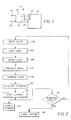
- a flat-panel display system 10 includes a flat-panel display 12 with light emitting diodes 14 , a display controller 18 includes a storage device 20 , a sensor 24 (such as a photo diode) to produce a light output signal, and produces a signal 28 representing the remaining useful life of the display.
- the controller 18 signals the light emitting diode 14 to produce a desired light output value.
- the sensor 24 detects the light emitted by the light emitting diode 14 in the display and provides this information to the controller 18 .
- the controller 18 calculates an estimate of the lifetime of the display by comparing the light output value to the desired value originally sent to the display element by extrapolating the comparison according to known degradation rates. This estimate is stored in the storage device 20.
- This storage device may be accessible from an external system using traditional read and write signals 22 applied to the storage device 20 . Alternatively, when a particular lifetime parameter is exceeded, the controller may signal an external system with the signal 28.
- the controller first signals 40 a light emitting diode to produce a desired light output value.
- the light emitting diode emits 42 an amount of light in response to the signal.
- the sensor detects 44 the emitted light and provides 46 a light output signal to the controller.
- the controller compares 48 the light output signal to the desired light output value and calculates 50 an estimate of the remaining lifetime of the display.
- the estimate is stored 52 in the memory device and is available for access 54 by an external system (not shown). Alternatively, when the estimate of the remaining useful lifetime is zero 56 , the controller generates 58 a signal that is supplied to an external system (not shown).
- the sensor 24 and controller 18 can be integrated on a common substrate or contained within a common package with the display 12 .
- the sensor and/or controller may be implemented externally to the display on a separate integrated circuit or printed circuit board as was shown in Fig. 1.
- the display device is an Organic Light Emitting Diode (OLED) display which is composed of small molecule polymeric OLEDs as disclosed in but not limited to US Patent 4,769,292, issued September 6, 1988 to Tang et al., and US Patent 5,061,569, issued October 29, 1991 to VanSlyke et al. Many combinations and variations of organic light emitting displays can be used to fabricate such a device.
- OLED Organic Light Emitting Diode
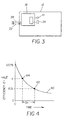
- a graph 60 of the efficiency of an OLED display vs. time used is shown.
- the graph can be generated empirically by measuring the decrease in efficiency of a number of diodes over time and averaging the results.
- the remaining useful life of an OLED display can be calculated, for example, by taking the ratio of the signal S from the sensor with an expected signal S N that would be produced if the display was new to produce an efficiency value E.
- a predetermined threshold 62 e.g. 50%
- the display is said to have reached the end of its useful life (EOL).
- the remaining useful life of the display is calculated using the efficiency function 60 .
- the remaining useful life ⁇ t is the difference between the measured efficiency 64 and the threshold efficiency 62 .
Landscapes
- Engineering & Computer Science (AREA)
- Physics & Mathematics (AREA)
- Computer Hardware Design (AREA)
- General Physics & Mathematics (AREA)
- Theoretical Computer Science (AREA)
- Control Of Indicators Other Than Cathode Ray Tubes (AREA)
- Electroluminescent Light Sources (AREA)
- Control Of El Displays (AREA)
- Transforming Electric Information Into Light Information (AREA)
Abstract
Description
Claims (11)
- A light emitting flat-panel display comprising:a plurality of light emitting diodes;a sensor for sensing the light output of at least one of the light emitting diodes to produce a light output signal; anda display controller responsive to the light output signal for producing a signal representing the remaining useful life of the display.
- The light emitting display claimed in claim 1, wherein the controller includes means for comparing the light output signal to a predetermined criterion to determine the remaining useful life of the display.
- The light emitting display claimed in claim 1, wherein the display is a color display having groups of differently colored light emitting diodes and further comprising a separate sensor for each group in the flat-panel display.
- The light emitting display claimed in claim 2, wherein the display is a color display having groups of differently colored light emitting diodes and further comprising a separate sensor for each group in the flat-panel display and wherein there is a different pre-determined criterion for each group.
- The light emitting display claimed in claim 1, wherein the light emitting diodes, the sensor, and the controller are integrated on a common substrate.
- The light emitting display claimed in claim 1, wherein the light emitting diodes, the sensor, and the controller are contained within a common package.
- The light emitting display claimed in claim 1, wherein the display further comprises an addressable memory connected to the controller and wherein the signal representing the remaining useful life of the display is stored in the memory and accessible external to the display.
- The light emitting display claimed in claim 1, wherein the controller includes means for generating an interrupt signal when the remaining useful life of the display is less than a pre-determined criterion for communication to a device external to the display.
- The light emitting display claimed in claim 1, wherein the signal representing the remaining useful life of the display has a range of values corresponding to the expected life-time of the display.
- The light emitting display claimed in claim 1, wherein the signal representing the remaining useful life of the display is a binary value representing whether or not the display has reached the end of useful life.
- The light emitting display claimed in claim 1, wherein the diodes are organic light emitting diodes.
Applications Claiming Priority (2)
| Application Number | Priority Date | Filing Date | Title |
|---|---|---|---|
| US919442 | 1992-07-27 | ||
| US09/919,442 US6836260B2 (en) | 2001-07-31 | 2001-07-31 | Light emitting flat-panel display |
Publications (2)
| Publication Number | Publication Date |
|---|---|
| EP1282102A2 true EP1282102A2 (en) | 2003-02-05 |
| EP1282102A3 EP1282102A3 (en) | 2006-05-03 |
Family
ID=25442086
Family Applications (1)
| Application Number | Title | Priority Date | Filing Date |
|---|---|---|---|
| EP02077959A Withdrawn EP1282102A3 (en) | 2001-07-31 | 2002-07-19 | Light emitting flat-panel display |
Country Status (5)
| Country | Link |
|---|---|
| US (1) | US6836260B2 (en) |
| EP (1) | EP1282102A3 (en) |
| JP (1) | JP2003162252A (en) |
| KR (1) | KR20030011678A (en) |
| TW (1) | TWI265540B (en) |
Cited By (1)
| Publication number | Priority date | Publication date | Assignee | Title |
|---|---|---|---|---|
| EP1562406A1 (en) * | 2004-02-03 | 2005-08-10 | Teknoware Oy | Method and apparatus for monitoring the condition of LEDs |
Families Citing this family (12)
| Publication number | Priority date | Publication date | Assignee | Title |
|---|---|---|---|---|
| DE60321852D1 (en) * | 2002-04-15 | 2008-08-14 | Pioneer Corp | Control device with deterioration detection for a self-luminous display device |
| DE60320765D1 (en) * | 2003-05-23 | 2008-06-19 | Barco Nv | Method for displaying images on a large-screen display made of organic light-emitting diodes and the display used therefor |
| US20060145994A1 (en) * | 2003-06-19 | 2006-07-06 | Koninklijke Philips Electronics N.V. | Display system with impending failure indicator |
| US7508387B2 (en) | 2003-09-30 | 2009-03-24 | International Business Machines Corporation | On demand calibration of imaging displays |
| US7880381B2 (en) * | 2006-07-05 | 2011-02-01 | Avago Technologies General Ip (Singapore) Pte. Ltd. | LED with light absorbing encapsulant and related methodology |
| US20090102757A1 (en) * | 2007-10-18 | 2009-04-23 | Yu-Wen Chiou | Apparatus and method to compensate a driving current of a light emitting diode |
| KR20110045198A (en) * | 2009-10-26 | 2011-05-04 | 삼성전자주식회사 | Method of calculating the usage time of a light source, a method of displaying the life of the light source using the same and a display device for performing the same |
| CN102750897B (en) * | 2012-07-12 | 2015-02-11 | 合肥华耀电子工业有限公司 | Simple test circuit for LED (light emitting diode) display module |
| TWI463459B (en) * | 2012-09-27 | 2014-12-01 | E Ink Holdings Inc | Flat panel display and threshold voltage sensing circuit thereof |
| CN105513516A (en) * | 2016-01-18 | 2016-04-20 | 江门市唯是半导体科技有限公司 | Platform device for inspecting quality of display screen panel |
| CN105467633A (en) * | 2016-01-18 | 2016-04-06 | 江门市唯是半导体科技有限公司 | Display screen panel test machine |
| CN105609028B (en) * | 2016-03-23 | 2018-03-27 | 武汉华星光电技术有限公司 | Vacation pressure method of testing and device |
Family Cites Families (18)
| Publication number | Priority date | Publication date | Assignee | Title |
|---|---|---|---|---|
| JPS59210435A (en) * | 1983-05-14 | 1984-11-29 | Sharp Corp | Automatic exposure system of copying machine |
| US4769292A (en) | 1987-03-02 | 1988-09-06 | Eastman Kodak Company | Electroluminescent device with modified thin film luminescent zone |
| GB2237400B (en) * | 1989-10-27 | 1994-04-20 | Eev Ltd | Control of liquid crystal display visual properties |
| US5061569A (en) * | 1990-07-26 | 1991-10-29 | Eastman Kodak Company | Electroluminescent device with organic electroluminescent medium |
| JPH05257430A (en) * | 1991-08-29 | 1993-10-08 | Canon Inc | Electroluminescence device, image sensor, liquid crystal device |
| JPH05260386A (en) * | 1992-03-16 | 1993-10-08 | Sony Corp | Defective pixel detection circuit for solid-state image sensor |
| US5327373A (en) * | 1992-08-21 | 1994-07-05 | Board Of Regents, The University Of Texas System | Optoelectronic memories with photoconductive thin films |
| US5594463A (en) * | 1993-07-19 | 1997-01-14 | Pioneer Electronic Corporation | Driving circuit for display apparatus, and method of driving display apparatus |
| US6081073A (en) * | 1995-12-19 | 2000-06-27 | Unisplay S.A. | Matrix display with matched solid-state pixels |
| US5776623A (en) * | 1996-07-29 | 1998-07-07 | Eastman Kodak Company | Transparent electron-injecting electrode for use in an electroluminescent device |
| JP2762993B2 (en) * | 1996-11-19 | 1998-06-11 | 日本電気株式会社 | Light emitting device and method of manufacturing the same |
| US5937272A (en) * | 1997-06-06 | 1999-08-10 | Eastman Kodak Company | Patterned organic layers in a full-color organic electroluminescent display array on a thin film transistor array substrate |
| US5910792A (en) * | 1997-11-12 | 1999-06-08 | Candescent Technologies, Corp. | Method and apparatus for brightness control in a field emission display |
| US6144162A (en) * | 1999-04-28 | 2000-11-07 | Intel Corporation | Controlling polymer displays |
| US6359398B1 (en) * | 1999-11-29 | 2002-03-19 | Mitsubishi Digital Electronics America Inc. | Method to control CRT phosphor aging |
| US6414661B1 (en) * | 2000-02-22 | 2002-07-02 | Sarnoff Corporation | Method and apparatus for calibrating display devices and automatically compensating for loss in their efficiency over time |
| US6320325B1 (en) * | 2000-11-06 | 2001-11-20 | Eastman Kodak Company | Emissive display with luminance feedback from a representative pixel |
| US6501230B1 (en) * | 2001-08-27 | 2002-12-31 | Eastman Kodak Company | Display with aging correction circuit |
-
2001
- 2001-07-31 US US09/919,442 patent/US6836260B2/en not_active Expired - Lifetime
-
2002
- 2002-06-10 TW TW091112509A patent/TWI265540B/en not_active IP Right Cessation
- 2002-07-19 EP EP02077959A patent/EP1282102A3/en not_active Withdrawn
- 2002-07-30 JP JP2002220620A patent/JP2003162252A/en active Pending
- 2002-07-30 KR KR1020020044855A patent/KR20030011678A/en not_active Ceased
Cited By (1)
| Publication number | Priority date | Publication date | Assignee | Title |
|---|---|---|---|---|
| EP1562406A1 (en) * | 2004-02-03 | 2005-08-10 | Teknoware Oy | Method and apparatus for monitoring the condition of LEDs |
Also Published As
| Publication number | Publication date |
|---|---|
| US6836260B2 (en) | 2004-12-28 |
| TWI265540B (en) | 2006-11-01 |
| KR20030011678A (en) | 2003-02-11 |
| EP1282102A3 (en) | 2006-05-03 |
| JP2003162252A (en) | 2003-06-06 |
| US20030057420A1 (en) | 2003-03-27 |
Similar Documents
| Publication | Publication Date | Title |
|---|---|---|
| US6836260B2 (en) | Light emitting flat-panel display | |
| CN101278327B (en) | A method of compensating for the aging process of lighting equipment | |
| US7348946B2 (en) | Energy sensing light emitting diode display | |
| JP2005539252A (en) | Display device | |
| US20080218451A1 (en) | Organic electroluminescence display | |
| EP1260959A2 (en) | Active matrix organic light emitting diode flat-panel display | |
| US8643588B2 (en) | Display device and control method thereof | |
| US6919691B2 (en) | Organic EL display device with gamma correction | |
| US6144162A (en) | Controlling polymer displays | |
| US20070115685A1 (en) | Flat lighting source, luminance correcting circuit, luminance correcting method and liquid crystal display | |
| US7903263B2 (en) | Position detection sensor | |
| US12106691B2 (en) | Display device | |
| CN104036727A (en) | DC driving voltage regulation device and method, power supply device and display panel | |
| US7589701B2 (en) | Systems and methods for driving a display device and interrupting a feedback | |
| KR102563527B1 (en) | Organic light emitting display and method for the same | |
| JP3628632B2 (en) | Display adjustment system for display device | |
| KR100955045B1 (en) | Panel Aging Measurement and Compensation Device and Its Method | |
| JP4882379B2 (en) | Self-luminous display device, conversion table update device, correction amount determination device, and program | |
| US20060204166A1 (en) | Method and apparatus for monitoring and calibrating an emissive pixel | |
| US20060159473A1 (en) | Device and method for adjusting the detected amount of remaining toner | |
| KR100624127B1 (en) | Organic EL device having a power cutoff device |
Legal Events
| Date | Code | Title | Description |
|---|---|---|---|
| PUAI | Public reference made under article 153(3) epc to a published international application that has entered the european phase |
Free format text: ORIGINAL CODE: 0009012 |
|
| AK | Designated contracting states |
Designated state(s): AT BE BG CH CY CZ DE DK EE ES FI FR GB GR IE IT LI LU MC NL PT SE SK TR |
|
| AX | Request for extension of the european patent |
Extension state: AL LT LV MK RO SI |
|
| PUAL | Search report despatched |
Free format text: ORIGINAL CODE: 0009013 |
|
| AK | Designated contracting states |
Kind code of ref document: A3 Designated state(s): AT BE BG CH CY CZ DE DK EE ES FI FR GB GR IE IT LI LU MC NL PT SE SK TR |
|
| AX | Request for extension of the european patent |
Extension state: AL LT LV MK RO SI |
|
| 17P | Request for examination filed |
Effective date: 20060925 |
|
| AKX | Designation fees paid |
Designated state(s): DE FR GB |
|
| 17Q | First examination report despatched |
Effective date: 20080519 |
|
| STAA | Information on the status of an ep patent application or granted ep patent |
Free format text: STATUS: THE APPLICATION IS DEEMED TO BE WITHDRAWN |
|
| 18D | Application deemed to be withdrawn |
Effective date: 20080930 |