EP1281761A1 - Hepatitis B virus pre-S1 derived synthetic polypeptides and their use thereof. - Google Patents
Hepatitis B virus pre-S1 derived synthetic polypeptides and their use thereof. Download PDFInfo
- Publication number
- EP1281761A1 EP1281761A1 EP01402048A EP01402048A EP1281761A1 EP 1281761 A1 EP1281761 A1 EP 1281761A1 EP 01402048 A EP01402048 A EP 01402048A EP 01402048 A EP01402048 A EP 01402048A EP 1281761 A1 EP1281761 A1 EP 1281761A1
- Authority
- EP
- European Patent Office
- Prior art keywords
- hbv
- infection
- polypeptide according
- seq
- amino acid
- Prior art date
- Legal status (The legal status is an assumption and is not a legal conclusion. Google has not performed a legal analysis and makes no representation as to the accuracy of the status listed.)
- Withdrawn
Links
Images



Classifications
-
- C—CHEMISTRY; METALLURGY
- C07—ORGANIC CHEMISTRY
- C07K—PEPTIDES
- C07K14/00—Peptides having more than 20 amino acids; Gastrins; Somatostatins; Melanotropins; Derivatives thereof
- C07K14/005—Peptides having more than 20 amino acids; Gastrins; Somatostatins; Melanotropins; Derivatives thereof from viruses
-
- A—HUMAN NECESSITIES
- A61—MEDICAL OR VETERINARY SCIENCE; HYGIENE
- A61P—SPECIFIC THERAPEUTIC ACTIVITY OF CHEMICAL COMPOUNDS OR MEDICINAL PREPARATIONS
- A61P1/00—Drugs for disorders of the alimentary tract or the digestive system
- A61P1/16—Drugs for disorders of the alimentary tract or the digestive system for liver or gallbladder disorders, e.g. hepatoprotective agents, cholagogues, litholytics
-
- A—HUMAN NECESSITIES
- A61—MEDICAL OR VETERINARY SCIENCE; HYGIENE
- A61P—SPECIFIC THERAPEUTIC ACTIVITY OF CHEMICAL COMPOUNDS OR MEDICINAL PREPARATIONS
- A61P31/00—Antiinfectives, i.e. antibiotics, antiseptics, chemotherapeutics
- A61P31/12—Antivirals
-
- A—HUMAN NECESSITIES
- A61—MEDICAL OR VETERINARY SCIENCE; HYGIENE
- A61P—SPECIFIC THERAPEUTIC ACTIVITY OF CHEMICAL COMPOUNDS OR MEDICINAL PREPARATIONS
- A61P31/00—Antiinfectives, i.e. antibiotics, antiseptics, chemotherapeutics
- A61P31/12—Antivirals
- A61P31/20—Antivirals for DNA viruses
-
- A—HUMAN NECESSITIES
- A61—MEDICAL OR VETERINARY SCIENCE; HYGIENE
- A61P—SPECIFIC THERAPEUTIC ACTIVITY OF CHEMICAL COMPOUNDS OR MEDICINAL PREPARATIONS
- A61P31/00—Antiinfectives, i.e. antibiotics, antiseptics, chemotherapeutics
- A61P31/12—Antivirals
- A61P31/20—Antivirals for DNA viruses
- A61P31/22—Antivirals for DNA viruses for herpes viruses
-
- A—HUMAN NECESSITIES
- A61—MEDICAL OR VETERINARY SCIENCE; HYGIENE
- A61K—PREPARATIONS FOR MEDICAL, DENTAL OR TOILETRY PURPOSES
- A61K39/00—Medicinal preparations containing antigens or antibodies
-
- C—CHEMISTRY; METALLURGY
- C12—BIOCHEMISTRY; BEER; SPIRITS; WINE; VINEGAR; MICROBIOLOGY; ENZYMOLOGY; MUTATION OR GENETIC ENGINEERING
- C12N—MICROORGANISMS OR ENZYMES; COMPOSITIONS THEREOF; PROPAGATING, PRESERVING, OR MAINTAINING MICROORGANISMS; MUTATION OR GENETIC ENGINEERING; CULTURE MEDIA
- C12N2730/00—Reverse transcribing DNA viruses
- C12N2730/00011—Details
- C12N2730/10011—Hepadnaviridae
- C12N2730/10111—Orthohepadnavirus, e.g. hepatitis B virus
- C12N2730/10122—New viral proteins or individual genes, new structural or functional aspects of known viral proteins or genes
-
- C—CHEMISTRY; METALLURGY
- C12—BIOCHEMISTRY; BEER; SPIRITS; WINE; VINEGAR; MICROBIOLOGY; ENZYMOLOGY; MUTATION OR GENETIC ENGINEERING
- C12N—MICROORGANISMS OR ENZYMES; COMPOSITIONS THEREOF; PROPAGATING, PRESERVING, OR MAINTAINING MICROORGANISMS; MUTATION OR GENETIC ENGINEERING; CULTURE MEDIA
- C12N2730/00—Reverse transcribing DNA viruses
- C12N2730/00011—Details
- C12N2730/10011—Hepadnaviridae
- C12N2730/10111—Orthohepadnavirus, e.g. hepatitis B virus
- C12N2730/10133—Use of viral protein as therapeutic agent other than vaccine, e.g. apoptosis inducing or anti-inflammatory
Definitions
- the present invention relates to new polypeptides and derivatives thereof that block Hepatitis B infection at an early step.
- Hepadnaviruses are a group of small-enveloped partially double stranded DNA viruses, which have been found in mammals and birds.
- the human hepatitis B virus (HBV) representing the prototype of this group, causes acute and chronic hepatitis in man. Infections with the HBV represent a severe health problem, leading to an estimated one million death per year.
- the virus shell of HBV contains the large (L-), the middle (M-) and the small (S-) viral envelope proteins.
- Avian hepadnaviruses comprise only L- and S- protein.
- the surface proteins of all hepadnaviruses are encoded in single open reading frames of the viral DNA such that the L-protein contains the complete S- domain which serves as an anchor in the ER membrane-derived lipid bilayer.
- L- and M-proteins differ from S-protein in an hydrophilic N-terminal extension of 163 to 174 amino acids, termed pre-S.
- This pre-S extension is further divided into a pre-S2 (55 amino acids) and a pre-S1 (108 amino acids in subtype ayw) domain, towards the amino terminus.
- the pre-S1 domain shows some sequence variation and in case of subtype adr carries an insertion of additional 11 amino acids.
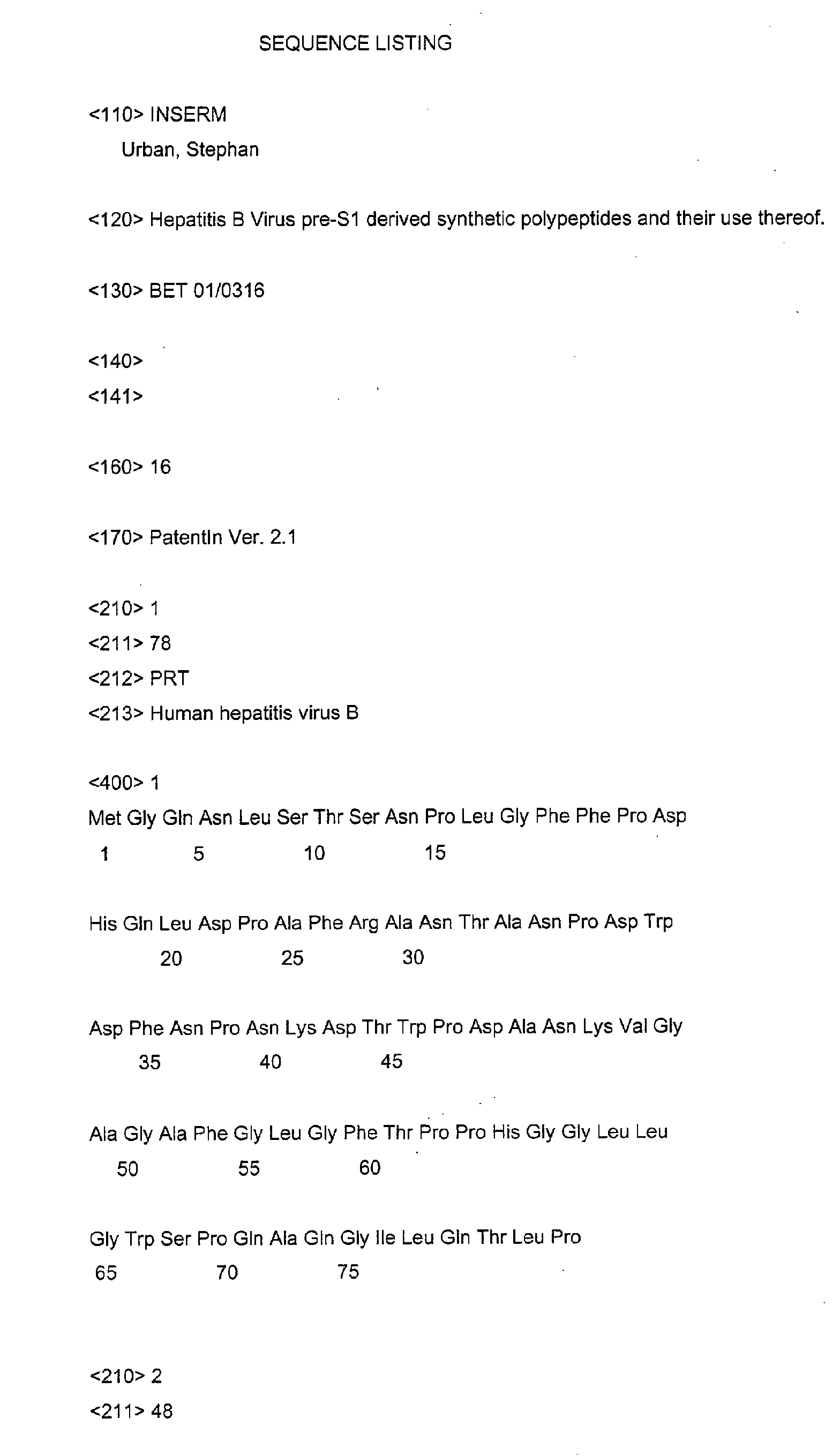
- polypeptides were designed from the sequence of the pre-S1 amino acids 1 to 78 (SEQ ID N°1) of the Hepatitis B virus subtype ayw. However, although these polypeptides are shorter than the pre-S1 region, they surprisingly show a better inhibitory activity than longer polypeptides that would mimic the entire pre-S1 region.
- the isolated synthetic polypeptides, or variant thereof, of the present invention have an aminoacid sequence of the formula : X-Y-Z wherein :
- the hydrophobic moiety corresponds to the acyl rest of a saturated or unsaturated fatty acid having at least 4 carbon atoms, preferably at least 6 carbon atoms, more preferably at least 8 carbon atoms, such as myristic acid, palmitic acid, stearic acid, oleate, linoleate, linolenate or arachidonate for instance, or the hydrophobic moiety corresponds to a cholesterol group or the like.
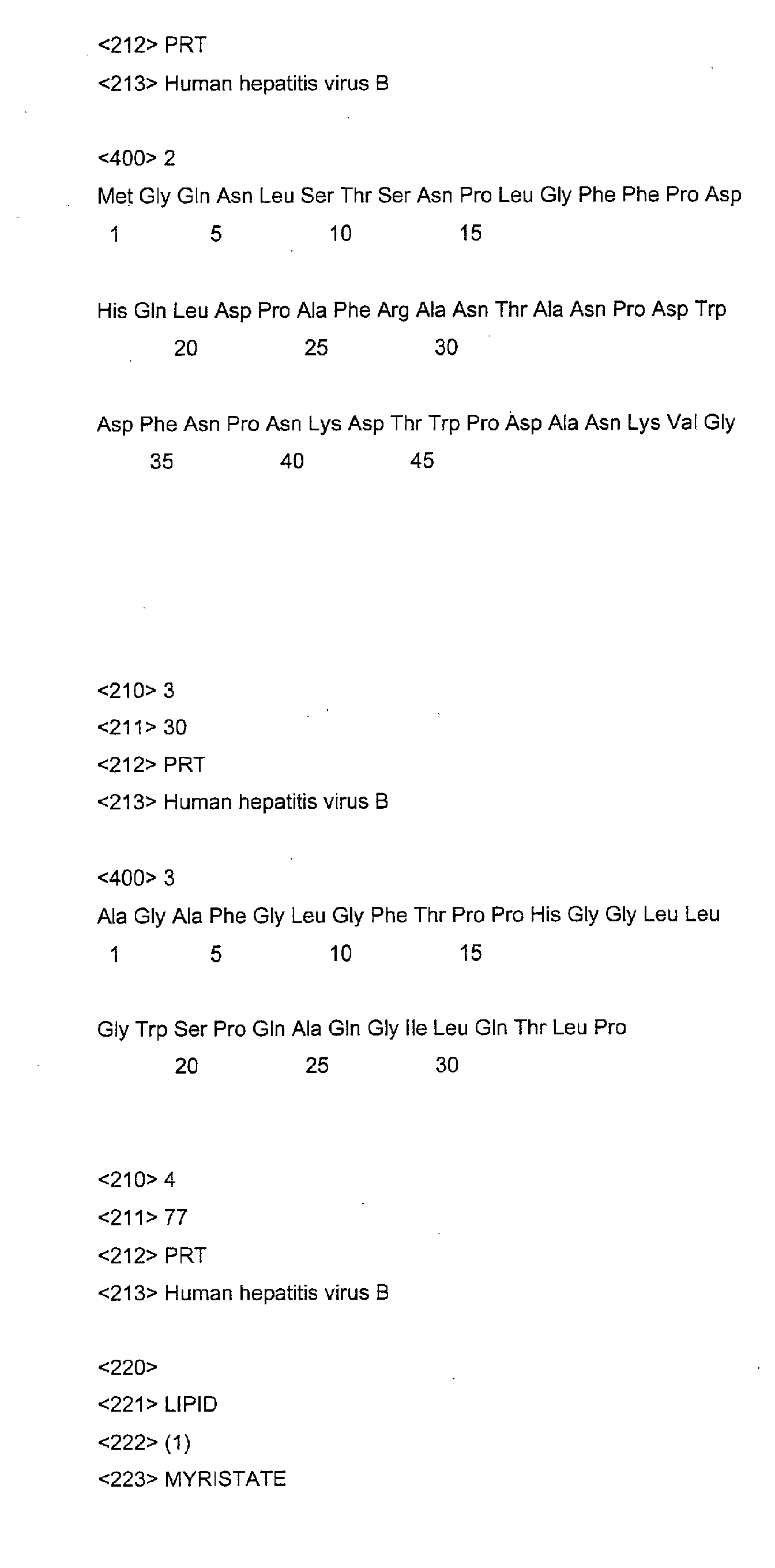
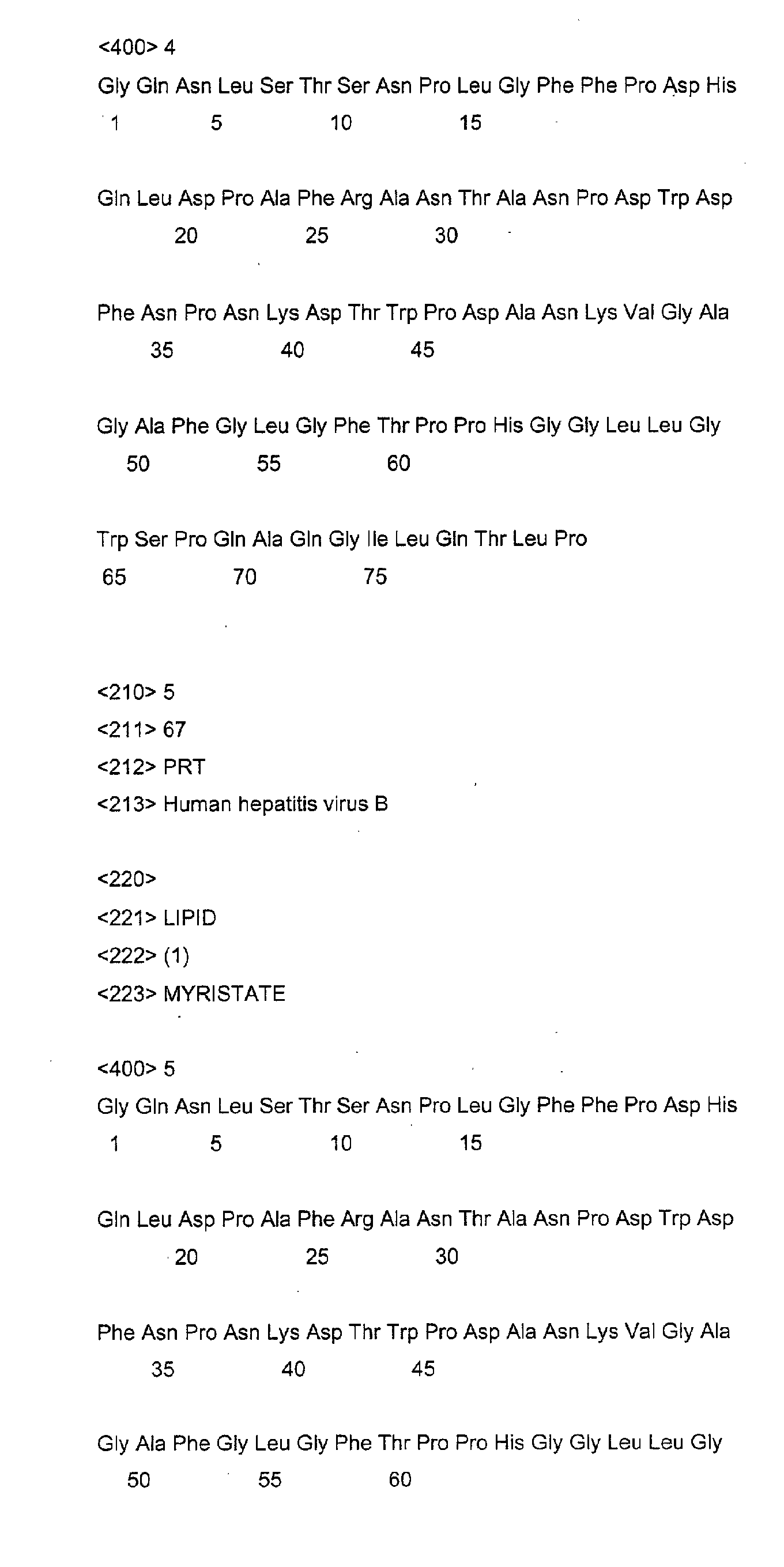
- the polypeptides of the present invention are myristoylated. More preferably, the polypeptides comprise the entire amino acid sequence from 2 to 48 of SEQ ID N° 1, amino acid 2 (glycine) carrying a myristyl group: Myr-GQNLSTSNPLGFFPDHQLDPAFRANTANPDWDFNPNKDTWPDANKVG (Myr 2-48, SEQ ID N° 4).
- variant refers to the homologous polynucleotidic sequences found in the different strains or subtypes of the Hepatitis B virus, such as HBV strain alpha1, HBV strain LSH (chimpanzee isolate), woodchuck HBV, Woolly Monkey HBV (WMHBV), or strains selected from the group consisting of the HBV subtypes AD, ADR, ADW, ADYW, AR and AYW.
- Analogs involve amino acid deletions, amino acid substitutions such as conservative or non conservative replacement by other amino acids or by isosteres (modified amino acids that bear close structural and spatial similarity to protein amino acids), amino acid additions or isostere additions, as long as the sequences elicit 70 % inhibition of human hepatocyte primary cultures HBV infection with a peptide concentration below at least 100 ⁇ M, preferably below 10 ⁇ M, and preferably below 1 ⁇ M.
- Conservative amino acid substitutions typically relates to substitutions among amino acids of the same class.
- These classes include, for example, amino acids having uncharged polar side chains, such as asparagine, glutamine, serine, threonine and tyrosine ; amino acids having basic side chains, such as lysine, arginine, and histidine ; amino acids having acidic side chains, such as aspartic acid and glutamic acid ; and amino acids having nonpolar side chains, such as glycine, alanine, valine, leucine, isoleucine, proline, phenylalanine, methionine, tryptophan, and cysteine.
- peptides according to the invention are modified to resist proteolysis. This can be achieved for instance by substituting L-amino acids at exposed sites with their D-amino acid counterpart.
- polypeptides of the invention can incorporate short peptidic or non peptidic linkers so as to design three-dimensionally constrained peptides (Root M.J. et al., 2001).
- the polypeptides of this invention can be prepared by a variety of procedures readily known to those skilled in the art. Such procedures include more particularly the solid phase sequential and block synthesis (B.W. Erickson and R.B. Merrifield, 1976).
- the solid phase sequential procedure can be performed using established automated methods such as by use of an automated polypeptide synthesizer.
- an ⁇ -amino protected amino acid is bound to a resin support.
- the resin support employed can be any suitable resin conventionally employed in the art for the solid phase preparation of polypeptides, preferably polystyrene which has been copolymerized with polyoxyethylen to provide sites for ester formation with the initially introduced o-amino protected amino acid. This optimized method, applied by the investors, has been explicitly described by Gausepohl et al, 1989 and 1990.
- the amino acids are introduced one by one.
- Each synthesis cycle corresponding to the introduction of one amino acid includes a deprotection step, successive washing steps, a coupling step with activation of the amino acid, and subsequent washing steps. Each of these steps is followed by a filtration.
- the reactive agents for coupling are the classical reactive agents for polypeptide synthesis such as dicyclohexylcarbodiimide, hydroxybenzotriazole, benzotriazil-1-yl-oxytris (dimethylamino) phosphonium hexafluorophosphate, and diphenylphosphorylazide.
- the polypeptide is separated from the resin by a treatment with a strong acid such as trifluoroacetic acid in the presence of anisole, ethanedithiol or 2-methylindole.
- a strong acid such as trifluoroacetic acid in the presence of anisole, ethanedithiol or 2-methylindole.
- the compound is then purified by the classical techniques of purification, in particular by means of high pressure liquid chromatography (HPLC).
- polypeptides of the present invention may also be obtained by coupling polypeptide fragments that are selectively protected, this coupling being effected in a solution.
- polypeptides of the present invention can be used to inhibit in vitro or in vivo hepatocyte infection by HBV through preventing binding and/or internalisation of HBV particles to hepatocytes.
- the polypeptides of the invention can be used as a drug.
- a drug can be particularly useful for blocking or preventing HBV infection or as hepatitis B immunogen.
- the present invention include a vaccinal composition comprising, in a pharmaceutical acceptable support, a polypeptide disclosed herein.
- polypeptides of the invention can also be used in vitro and in vivo to identify a hepatocyte receptor involved in the attachment and/or penetration of HBV and quantitate its expression. This can be achieved according to classical procedures well-known by the skilled in the art. For instance, this could involve radioactive or fluorescent labelling of the polypeptides of the invention, and subsequent detection with an appropriate method.
- polypeptides of the invention can be modified to have increased antigenic properties.
- increased antigenic properties refer for instance to increasing the range of antibodies elicited following immunization, or to allowing the production of antibodies capable of neutralizing infection by various viral strains.
- polypeptides of the invention can be modified to decrease their immunogenic properties.
- Such polypeptides would be particularly useful in a therapeutical application to inhibit in vivo HBV infection while avoiding or limiting adverse effects.
- Polypeptides of the invention can be used for ex vivo diagnosing HBV infection through detecting the interaction of said polypeptides with antibodies present in a biological sample and directed against a fragment of the pre-S1 region of HBV viral particles.
- the specific interaction of said polypeptides with endogenous antibodies can be detected by any suitable detection method readily known by the skilled in the art.
- the present invention also relates to antibodies directed against a polypeptide according to the invention, or a fragment of said polypeptide.
- the antibodies of the present invention can be chimeric antibodies, humanized antibodies, or antigen binding fragments Fab and F(ab')2. They can also be immunoconjugated or labelled antibodies.
- Polyclonal antibodies can be obtained from serum of an animal immunized against a polypeptide of the invention, according to standard methods well-known by one skilled in the art.
- the specificity of the polyclonal serum can be further increased through immuno-affinity chromatography using polypeptides of the formula (I), or fragment thereof, immobilised on a solid phase.
- the antibody is contacted with the immobilised immunising polypeptide during a time sufficient to allow the formation of a complex antibody-immobilised polypeptide.
- Monoclonal antibodies can be obtained according to the standard method of hybridoma culture (Kohler and Milstein, 1975).
- Antibodies according to the invention can be used ex vivo for assessing the infectivity of HBV particles. In another embodiment, said antibodies can be used as a drug, notably for blocking or preventing HBV infection.
- the present invention is also directed to diagnostic methods relating to the detection antibodies to pre-S1 gene-encoded HBV antigens.
- Such antibodies can be detected ex vivo in a biological sample with the synthetic peptidic immunogens disclosed herein by both sandwich type immunoassays and competition type immunoassays, such as those immunoassays in which antigen in the sample competes with labelled immunogen for antibody. Therefore, the invention further concerns a method for detecting a HBV infection comprising effecting quantitative immunoassays on a serum taken form a human to determine the amount of antibodies present therein, which are antibodies to an antigen coded by the pre-S1 region, employing the above-described HBV peptide immunogen and comparing the value with a known standard.
- the invention also relates to a method for detecting the presence of HBV infection comprising effecting quantitative immunoassays on a serum taken form a human to determine the amount of antigens coded by the pre-S1 region, employing the above-described antibodies to the HBV peptide immunogen and comparing the value with a known standard.
- Both peptides or antibodies according to the invention can similarly be used to determine the outcome of HBV infection by periodically carrying out an immunoassay on a biological sample from a patient so as to assess the amount of antibodies to an antigen coded by the pre-S1 region, or antigens coded by the pre-S1 region.
- compositions comprising, in a pharmaceutical acceptable support, either a polypeptide or an antibody according to the invention are within the scope of the invention. Said pharmaceutical compositions are intended for inhibiting in vivo HBV infection and/or for vaccination purposes.
- EXAMPLE 1 material and methods for the inhibition of HBV infection with pre-S1-HBV synthetic polypeptides
- Hepatocytes were isolated by the procedure of Guguen-Guillouzo and Guillouzo and cultured in H medium supplemented with 3.5 x 10 -6 M hydrocortisone hemisuccinate, 2 mM L-glutamine, 50 mg of gentamicin per litre, 2% dimethyl sulfoxide, 5% adult human serum, and 5% FCS. Three days after seeding, the cells were infected.
- HepaRG hepatoma derived cell line
- HBV infection a new hepatoma derived cell line
- cells were allowed to differentiate, allowing cells to gain an hepatocyte-like morphology (patent application FR 0109044). Cells were then infected.
- Polypeptide competition assays were performed by pre-incubating cells with the analyzed polypeptide for 30 min, at 37°C, prior to the addition of the infectious source.
- Human hepatocytes were HBV infected in the presence of myristoylated or non-myristoylated peptides corresponding to parts of the Pre-S1 domain of the HBV L protein.
- the concentration of peptides ranged from 0.8 to 800 nM.
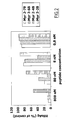
- Figure 2 shows the inhibition activity of myristoylated truncated peptides. Results obtained with non-myristoylated peptides are displayed in Table 1 (infra).
- peptide Myr 2-48 shows the highest inhibitory activity.
- the smaller peptide Myr 2-28 is largely less active although a 50 % inhibition is observed at 800 nM.
- WMHBV Wolly Monkey Hepatitis B virus
- FIG. 4 illustrates the comparative inhibitory activity of WMHBV and HBV derived myristoylated 2-48 peptides (64% sequence identity).
- This experiment clearly shows that the WMHBV derived peptide is surprisingly nearly as efficient as the HBV derived peptide in inhibiting the HBV infection. This result is in contrast with the complete absence of activity of a DHBV derived peptide (PreS Myr 2-41 (SEQ ID n°16), see table 1) on HBV infection although this peptide is a strong inhibitor of DHBV infection.
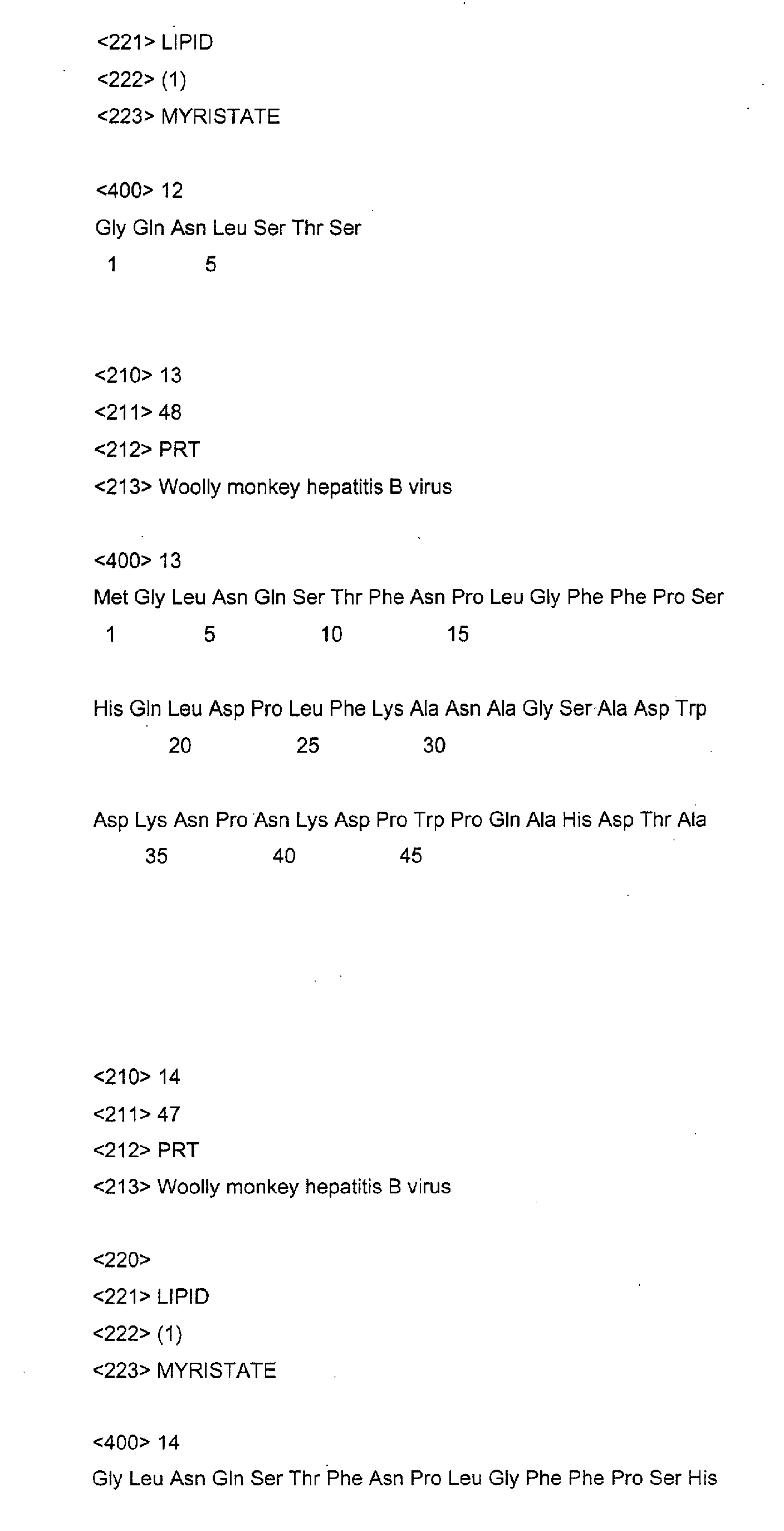
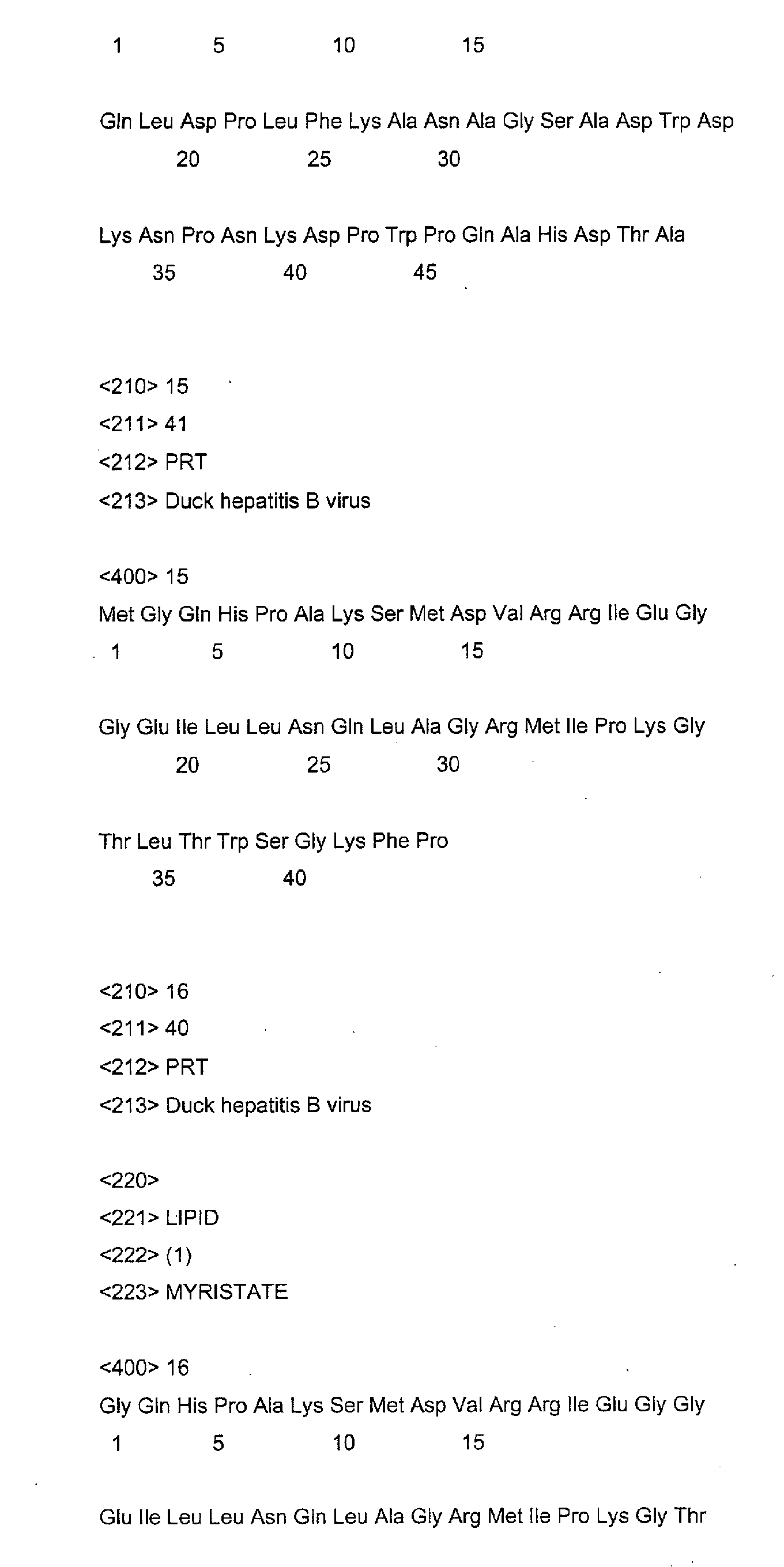
- PreS Myr 2-41 SEQ ID n°16
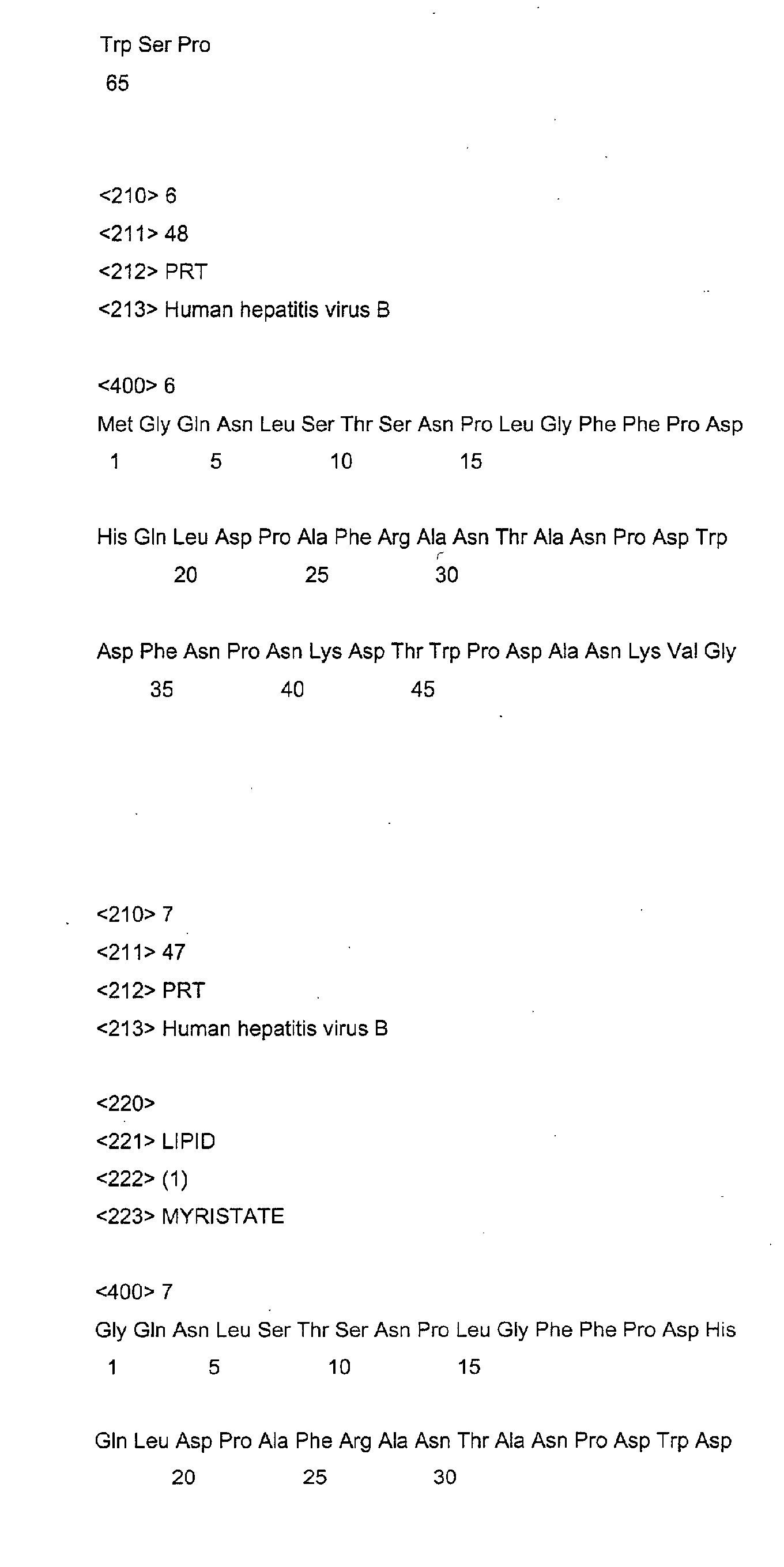
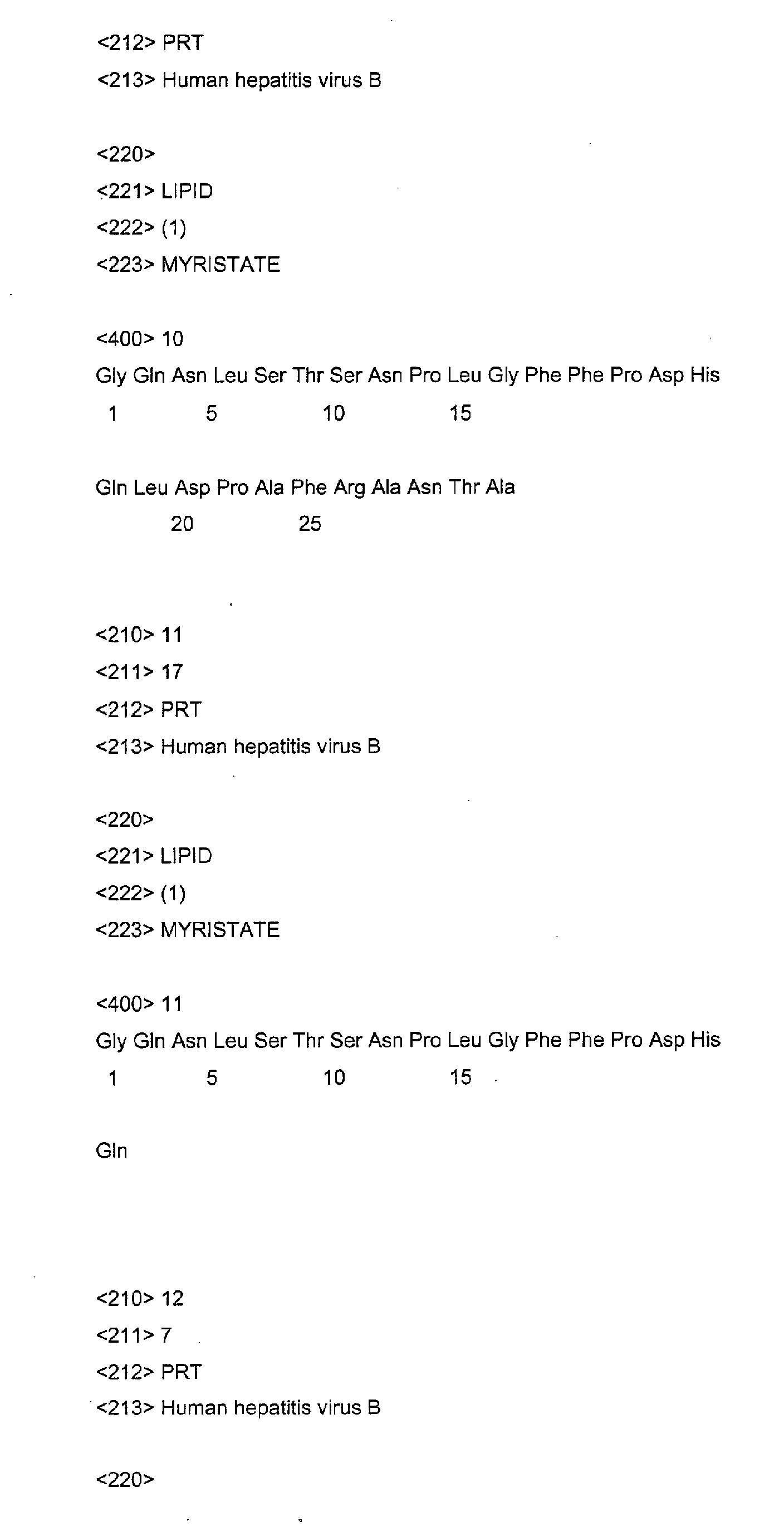
- Non myristoylated polypeptides (100 ⁇ M) HBV infectivity of human hepatocytes hepatocytes inhibition Myristoylated polypeptides (1 ⁇ M) HBV infectivity of human hepatocytes hepatocytes inhibition HBV PreS 1-78 (SEQ ID n°1) ND HBV Myr PreS 2-78 (SEQ ID n° 4) ++++ HBV PreS 1-68 ND HBV Myr PreS 2-68 (SEQ ID n°5) ++++ HBV PreS 1-48 (SEQ ID n°6) +++ HBV Myr PreS 2-48 (SEQ ID n°7) +++++++ HBV PreS 1-38 ND HBV Myr PreS 2-38 (SEQ ID n°8) +++ HBV PreS 1-28 (SEQ ID n°9) + HBV Myr PreS 2-28 (SEQ ID n°10) ++ HBV PreS 1-18 ND HBV Myr PreS 2-18 (SEQ ID n°11) - HBV Pre
Landscapes
- Health & Medical Sciences (AREA)
- Life Sciences & Earth Sciences (AREA)
- Chemical & Material Sciences (AREA)
- Organic Chemistry (AREA)
- Virology (AREA)
- Medicinal Chemistry (AREA)
- General Health & Medical Sciences (AREA)
- Molecular Biology (AREA)
- Public Health (AREA)
- General Chemical & Material Sciences (AREA)
- Pharmacology & Pharmacy (AREA)
- Animal Behavior & Ethology (AREA)
- Chemical Kinetics & Catalysis (AREA)
- Nuclear Medicine, Radiotherapy & Molecular Imaging (AREA)
- Veterinary Medicine (AREA)
- Gastroenterology & Hepatology (AREA)
- Oncology (AREA)
- Engineering & Computer Science (AREA)
- Communicable Diseases (AREA)
- Proteomics, Peptides & Aminoacids (AREA)
- Biochemistry (AREA)
- Biophysics (AREA)
- Genetics & Genomics (AREA)
- Biotechnology (AREA)
- Bioinformatics & Cheminformatics (AREA)
- Peptides Or Proteins (AREA)
- Medicines That Contain Protein Lipid Enzymes And Other Medicines (AREA)
- Measuring Or Testing Involving Enzymes Or Micro-Organisms (AREA)
- Medicines Containing Antibodies Or Antigens For Use As Internal Diagnostic Agents (AREA)
- Investigating Or Analysing Biological Materials (AREA)
Abstract
This invention relates to a group of synthetic polypeptides, derived from the pre-S1
region of HBV, that efficiently interfere with early steps of an HBV infection.
The peptides of the invention can be used in diagnostics for the detection of
antigens and antibodies.
Description
- The present invention relates to new polypeptides and derivatives thereof that block Hepatitis B infection at an early step.
- Hepadnaviruses are a group of small-enveloped partially double stranded DNA viruses, which have been found in mammals and birds. The human hepatitis B virus (HBV), representing the prototype of this group, causes acute and chronic hepatitis in man. Infections with the HBV represent a severe health problem, leading to an estimated one million death per year.
- The intracellular replication cycle of hepadnaviruses, in particular transcription of the viral DNA, packaging and reverse transcription of genomic RNA and establishment of an intracellular pool of covalently closed circular HBV-DNA has been elucidated in some detail (Nassal et al, 1993 ; Nassal et al, 1996). However, until now the lack of an HBV-infectable cell line and the restricted availability of primary human hepatocytes for in vitro infection studies relentlessly prevented progress in the understanding of the early steps of the HBV-infection. Accordingly a variety of HBV-receptor candidates have been proposed on the bases of binding studies (reviewed by DeMeyer et al, 1997), but none of them could be convincingly demonstrated to be involved in the entry process.
- However, more progress has been made recently in determining the sequence requirements for infection in the envelope proteins of duck and human hepatitis B virus (Urban et al., 1998, LeSeyec et al., 1998, LeSeyec et al., 1999).
- The virus shell of HBV contains the large (L-), the middle (M-) and the small (S-) viral envelope proteins. Avian hepadnaviruses comprise only L- and S- protein. The surface proteins of all hepadnaviruses are encoded in single open reading frames of the viral DNA such that the L-protein contains the complete S- domain which serves as an anchor in the ER membrane-derived lipid bilayer. In the case of HBV, L- and M-proteins differ from S-protein in an hydrophilic N-terminal extension of 163 to 174 amino acids, termed pre-S. This pre-S extension is further divided into a pre-S2 (55 amino acids) and a pre-S1 (108 amino acids in subtype ayw) domain, towards the amino terminus. Depending on the HBV subtype, the pre-S1 domain shows some sequence variation and in case of subtype adr carries an insertion of additional 11 amino acids.
- The analysis of the infectivity of pseudotyped HBVs carrying mutations in the exterior pre-S part of the L-protein has shown that the infection depends on an extended sequence within the pre-S1 domain of the HBV L-protein (Le Seyec, 1999). In contrast, major parts of the pre-S2 domain turned out to be dispensable for infectivity (Le Seyec et al, 1998). This indicates that the sequence between amino acids 3 and 77 of the pre-S1 domain is involved in the infection step.
- Due to the availability of primary duck hepatocytes more progress has been achieved in the related duck hepatitis B virus model system. Using this system it was shown that E.coli-derived preS-polypeptides of the duck hepatitis B virus L-protein inhibit DHBV-infection of primary duck hepatocytes by interfering with receptor binding (Urban et al.,1998). It was further demonstrated that the DHBV-preS binding protein Carboxypeptidase D, initially identified by Kuroki et al., (1994) functions as a common receptor component for avian HBVs (Urban et al, 1998 ; Breiner et al, 1998 ; Urban et al, 2000).
- In the case of HBV infection, a similar state of knowledge is still missing and there is yet no experimental evidence for peptide components that efficiently interfere with early steps of an HBV-infection.
- The authors of the present invention have investigated whether recombinant, E. coli derived preS-polypeptides and chemically synthesized preSpeptides of HBV L-protein could interfere with a HBV-infection.
- They have identified a group of synthetic peptides that exhibits an excellent inhibitory activity against HBV infection.
- These polypeptides were designed from the sequence of the
pre-S1 amino acids 1 to 78 (SEQ ID N°1) of the Hepatitis B virus subtype ayw. However, although these polypeptides are shorter than the pre-S1 region, they surprisingly show a better inhibitory activity than longer polypeptides that would mimic the entire pre-S1 region. - The isolated synthetic polypeptides, or variant thereof, of the present invention have an aminoacid sequence of the formula :
- X is an amino radical, or an amino acid, for instance a methionine ;
- Y is the
amino acid sequence 2 to 48 of pre-S1 region shown in SEQ ID N° 2, or a N-terminally and/or C-terminally truncated form of this sequence, or variants thereof; - Z, linked to the -CO- group of the last residue of Y, is an amino group or an amino acid sequence comprising 1 to 30 consecutive amino acids from the pre-S1 region shown in SEQ ID N° 3;
- Preferably, the hydrophobic moiety corresponds to the acyl rest of a saturated or unsaturated fatty acid having at least 4 carbon atoms, preferably at least 6 carbon atoms, more preferably at least 8 carbon atoms, such as myristic acid, palmitic acid, stearic acid, oleate, linoleate, linolenate or arachidonate for instance, or the hydrophobic moiety corresponds to a cholesterol group or the like.
- In a preferred embodiment, the polypeptides of the present invention are myristoylated. More preferably, the polypeptides comprise the entire amino acid sequence from 2 to 48 of SEQ ID N° 1, amino acid 2 (glycine) carrying a myristyl group: Myr-GQNLSTSNPLGFFPDHQLDPAFRANTANPDWDFNPNKDTWPDANKVG (Myr 2-48, SEQ ID N° 4).
- The term "variant" refers to the homologous polynucleotidic sequences found in the different strains or subtypes of the Hepatitis B virus, such as HBV strain alpha1, HBV strain LSH (chimpanzee isolate), woodchuck HBV, Woolly Monkey HBV (WMHBV), or strains selected from the group consisting of the HBV subtypes AD, ADR, ADW, ADYW, AR and AYW.
- Any analogs to the pre-S1 synthetic polypeptides are part of the present invention. Analogs involve amino acid deletions, amino acid substitutions such as conservative or non conservative replacement by other amino acids or by isosteres (modified amino acids that bear close structural and spatial similarity to protein amino acids), amino acid additions or isostere additions, as long as the sequences elicit 70 % inhibition of human hepatocyte primary cultures HBV infection with a peptide concentration below at least 100 µM, preferably below 10 µM, and preferably below 1 µM.
- Conservative amino acid substitutions typically relates to substitutions among amino acids of the same class. These classes include, for example, amino acids having uncharged polar side chains, such as asparagine, glutamine, serine, threonine and tyrosine ; amino acids having basic side chains, such as lysine, arginine, and histidine ; amino acids having acidic side chains, such as aspartic acid and glutamic acid ; and amino acids having nonpolar side chains, such as glycine, alanine, valine, leucine, isoleucine, proline, phenylalanine, methionine, tryptophan, and cysteine.
- Advantageously, peptides according to the invention are modified to resist proteolysis. This can be achieved for instance by substituting L-amino acids at exposed sites with their D-amino acid counterpart.
- In another embodiment, the polypeptides of the invention can incorporate short peptidic or non peptidic linkers so as to design three-dimensionally constrained peptides (Root M.J. et al., 2001).
- The polypeptides of this invention can be prepared by a variety of procedures readily known to those skilled in the art. Such procedures include more particularly the solid phase sequential and block synthesis (B.W. Erickson and R.B. Merrifield, 1976). The solid phase sequential procedure can be performed using established automated methods such as by use of an automated polypeptide synthesizer. In this procedure an α-amino protected amino acid is bound to a resin support. The resin support employed can be any suitable resin conventionally employed in the art for the solid phase preparation of polypeptides, preferably polystyrene which has been copolymerized with polyoxyethylen to provide sites for ester formation with the initially introduced o-amino protected amino acid. This optimized method, applied by the investors, has been explicitly described by Gausepohl et al, 1989 and 1990.
- The amino acids are introduced one by one. Each synthesis cycle corresponding to the introduction of one amino acid includes a deprotection step, successive washing steps, a coupling step with activation of the amino acid, and subsequent washing steps. Each of these steps is followed by a filtration.
- The reactive agents for coupling are the classical reactive agents for polypeptide synthesis such as dicyclohexylcarbodiimide, hydroxybenzotriazole, benzotriazil-1-yl-oxytris (dimethylamino) phosphonium hexafluorophosphate, and diphenylphosphorylazide.
- After synthesis of the polypeptide on the resin, the polypeptide is separated from the resin by a treatment with a strong acid such as trifluoroacetic acid in the presence of anisole, ethanedithiol or 2-methylindole. The compound is then purified by the classical techniques of purification, in particular by means of high pressure liquid chromatography (HPLC).
- The polypeptides of the present invention may also be obtained by coupling polypeptide fragments that are selectively protected, this coupling being effected in a solution.
- The polypeptides of the present invention can be used to inhibit in vitro or in vivo hepatocyte infection by HBV through preventing binding and/or internalisation of HBV particles to hepatocytes. In another embodiment, the polypeptides of the invention can be used as a drug. Such a drug can be particularly useful for blocking or preventing HBV infection or as hepatitis B immunogen. Accordingly, the present invention include a vaccinal composition comprising, in a pharmaceutical acceptable support, a polypeptide disclosed herein.
- The polypeptides of the invention can also be used in vitro and in vivo to identify a hepatocyte receptor involved in the attachment and/or penetration of HBV and quantitate its expression. This can be achieved according to classical procedures well-known by the skilled in the art. For instance, this could involve radioactive or fluorescent labelling of the polypeptides of the invention, and subsequent detection with an appropriate method.
- The polypeptides of the invention can be modified to have increased antigenic properties. Such increased antigenic properties refer for instance to increasing the range of antibodies elicited following immunization, or to allowing the production of antibodies capable of neutralizing infection by various viral strains.
- In another embodiment, the polypeptides of the invention can be modified to decrease their immunogenic properties. Such polypeptides would be particularly useful in a therapeutical application to inhibit in vivo HBV infection while avoiding or limiting adverse effects.
- 6 Polypeptides of the invention can be used for ex vivo diagnosing HBV infection through detecting the interaction of said polypeptides with antibodies present in a biological sample and directed against a fragment of the pre-S1 region of HBV viral particles. The specific interaction of said polypeptides with endogenous antibodies can be detected by any suitable detection method readily known by the skilled in the art.
- The present invention also relates to antibodies directed against a polypeptide according to the invention, or a fragment of said polypeptide. The antibodies of the present invention can be chimeric antibodies, humanized antibodies, or antigen binding fragments Fab and F(ab')2. They can also be immunoconjugated or labelled antibodies.
- Polyclonal antibodies can be obtained from serum of an animal immunized against a polypeptide of the invention, according to standard methods well-known by one skilled in the art. The specificity of the polyclonal serum can be further increased through immuno-affinity chromatography using polypeptides of the formula (I), or fragment thereof, immobilised on a solid phase. The antibody is contacted with the immobilised immunising polypeptide during a time sufficient to allow the formation of a complex antibody-immobilised polypeptide.
- Monoclonal antibodies can be obtained according to the standard method of hybridoma culture (Kohler and Milstein, 1975).
- Said antibodies are particularly useful for inhibiting in vitro or in vivo HBV infection of hepatocytes. Antibodies according to the invention can be used ex vivo for assessing the infectivity of HBV particles. In another embodiment, said antibodies can be used as a drug, notably for blocking or preventing HBV infection.
- The present invention is also directed to diagnostic methods relating to the detection antibodies to pre-S1 gene-encoded HBV antigens. Such antibodies can be detected ex vivo in a biological sample with the synthetic peptidic immunogens disclosed herein by both sandwich type immunoassays and competition type immunoassays, such as those immunoassays in which antigen in the sample competes with labelled immunogen for antibody. Therefore, the invention further concerns a method for detecting a HBV infection comprising effecting quantitative immunoassays on a serum taken form a human to determine the amount of antibodies present therein, which are antibodies to an antigen coded by the pre-S1 region, employing the above-described HBV peptide immunogen and comparing the value with a known standard.
- The invention also relates to a method for detecting the presence of HBV infection comprising effecting quantitative immunoassays on a serum taken form a human to determine the amount of antigens coded by the pre-S1 region, employing the above-described antibodies to the HBV peptide immunogen and comparing the value with a known standard.
- Both peptides or antibodies according to the invention can similarly be used to determine the outcome of HBV infection by periodically carrying out an immunoassay on a biological sample from a patient so as to assess the amount of antibodies to an antigen coded by the pre-S1 region, or antigens coded by the pre-S1 region.
- Pharmaceutical compositions comprising, in a pharmaceutical acceptable support, either a polypeptide or an antibody according to the invention are within the scope of the invention. Said pharmaceutical compositions are intended for inhibiting in vivo HBV infection and/or for vaccination purposes.
- The invention will be further understood in view of the following examples and the annexed figures wherein:
- Figure 1 is the comparison of HBV infectivity of human hepatocytes cultured in the presence of a myristoylated or non myristoylated peptide corresponding to a pre-S1 region domain (1-78). The infection efficiency was evaluated by measuring HBsAg in the supernatant of infected cells, 14 days post-infection. Values are expressed as a % of the control (no peptide).
- Figure 2 illustrates the comparison of inhibitory activity of C-terminally truncated myristoylated peptides. Human hepatocytes were HBV infected in the presence of myristoylated or non-myristoylated peptides corresponding to parts of the Pre-S1 domain of the HBV L protein. The concentration of peptides ranged from 0.8 to 800 nM. Infection efficiency was evaluated by measuring HBsAg secretion 7 days after infection and expressed as a % of the positive control.
- Figure 3 is the comparison of the inhibitory activity of C-terminally
truncated peptides shorter than Myr 2-48. The concentration of peptides ranged
from 0.8 to 8 µM. Infection efficiency was evaluated by measuring
HBsAg secretion 8 days after infection and expressed in ng/ml. - Figure 4 illustrates the comparative inhibitory activity of WMHBV and
HBV derived myristoylated 2-48 peptides. Infection of human primary human
hepatocytes with HBV was performed in the presence of decreasing
concentration of peptides. The supernatant of infected cells was collected at
day 10 post-infection and analysed for the presence of HbsAg. - Fragments of normal adult human liver were obtained from patients undergoing hepatic resection for liver metastases (the fragments were taken at a distance from the metastasis in macroscopically normal liver). Access to this biopsy material was in agreement with French laws and satisfied the requirements of the French National Ethics Committee. Hepatocytes were isolated by the procedure of Guguen-Guillouzo and Guillouzo and cultured in H medium supplemented with 3.5 x 10⁻⁶ M hydrocortisone hemisuccinate, 2 mM L-glutamine, 50 mg of gentamicin per litre, 2% dimethyl sulfoxide, 5% adult human serum, and 5% FCS. Three days after seeding, the cells were infected.
- Alternatively, for some experiments, instead of using primary cultures, we made use of a new hepatoma derived cell line, called HepaRG, which is also susceptible to HBV infection (patent application FR 0109044). Before the infection procedure cells were allowed to differentiate, allowing cells to gain an hepatocyte-like morphology (patent application FR 0109044). Cells were then infected.
- As an infectious inoculum, a 50-fold concentrated culture medium of HepG2 clone 2.2.15 cells was used, because of an unlimited supply and a constant quality.
- It was prepared as described previously. Differentiated cells were incubated with the concentrated infectious source, 10-fold diluted in culture medium supplemented with 5 % PEG 8000 (Sigma), for 20 h at 37°C as described previously (Gripon et al., 1988 ; Gripon et al., 1993). Control cultures were incubated with 5 % PEG and 25 % FCS diluted in phosphate-buffered saline (PBS) instead of the infectious source. At the end of the incubation, cells were washed three times with the culture medium and maintained in the presence of 2 % DMSO and 5x10⁻⁵ M hydrocortisone hemisuccinate and harvested at indicated times.
- Polypeptide competition assays were performed by pre-incubating cells with the analyzed polypeptide for 30 min, at 37°C, prior to the addition of the infectious source.
-
- HBsAg assay HBsAg was detected in the medium by an ELISA kit (Monolisa AgHBs plus) obtained from Bio-Rad Laboratories. Values are expressed in ng/ml of supernatant or percent of control (absence of peptide).
- RNA extraction and analysis Total cellular RNA was extracted by Total SV RNA kit (Promega, France), fractionated on a 1.5% agarose gel and analyzed by standard Northern blot procedure (Sambrook et al., 1989). Control of the RNA amount transferred onto filters was performed after methylene blue staining. Hybridization was performed with P32 labeled HBV DNA.
- Mutagenesis experiments have previously shown that a part (amino acids (AA) 3-77) of the pre-S1 region was essential for HBV infectivity (Le Seyec et al., 1999). In addition we have also demonstrated that myristoylation of the
AA 2, a glycine residue, associated with the removal ofAA 1, a methionine residue, was also critical (Gripon et al., 1995). We have therefore postulated that a peptide comprising amino acids 2-77, with a myristoylated glycin, could interfere with the HBV infection process. To evaluate this hypothesis two peptides were synthesized : PreS 1-78 and Myr PreS 2-78. These peptides were then added prior and during the infection process of human hepatocyte cultures, the infection level was evaluated by measuring the HBsAg secretion of infected cells. Figure 1 displays that although the non-myristoylated peptide has only a faint effect on HBV infectivity at 1 µM, the same amount of the myristoylated peptide did almost completely abolish it, lower doses were partly inhibitory. These results were confirmed by RNA analysis. - Other experiments conducted with higher peptide concentrations (up to 100 µM) indicate that myristoylation is not absolutely required for the inhibition of HBV infection but strongly enhances the activity of the peptides by a factor of about 100 fold.
- Human hepatocytes were HBV infected in the presence of myristoylated or non-myristoylated peptides corresponding to parts of the Pre-S1 domain of the HBV L protein. The concentration of peptides ranged from 0.8 to 800 nM. Figure 2 shows the inhibition activity of myristoylated truncated peptides. Results obtained with non-myristoylated peptides are displayed in Table 1 (infra).
- It appears that peptide Myr 2-48 shows the highest inhibitory activity. The larger peptides, Myr 2-68 and Myr 2-78, although very efficient at 800 nM are less active at lower doses. The smaller peptide Myr 2-28 is largely less active although a 50 % inhibition is observed at 800 nM.
- As some activity still persists for the peptide smaller than 2-48, in order to evaluate the contribution of the N-terminal amino acids, we have produced and evaluated a new set of short peptides. The results are shown on figure 3. From this figure it is obvious that Myr 2-38 and Myr 2-28 peptides still retain a significant inhibitory activity as they almost completely blocks HBV infection at 8 µM. By contrast the 2 shorter peptides are no longer active and the shorter one tends to increase HBV infectivity, for unknown reasons.
- The effect of myristoylation and C-terminal truncation of pre-S1 peptides was also studied through RNA analysis. The results confirm that myristoylated truncated peptides displayed enhanced inhibitory activity as compared to the corresponding non myristoylated peptides, and that the highest inhibitory activity is obtained with Myr 2-48.
- A recently discovered primate hepadnavirus, the Wolly Monkey Hepatitis B virus (WMHBV) has been shown very poorly infectious for Chimpanzee and for human hepatocyte primary cultures. The WMHBV pre-S 1-78 polypeptidic sequence shows 66 % sequence identity to the original HBV derived peptide. We have investigated the inhibitory activity of a WMHBV derived Myr 2-48 peptide (SEQ ID n°14) towards HBV infection of human cells.
- Figure 4 illustrates the comparative inhibitory activity of WMHBV and HBV derived myristoylated 2-48 peptides (64% sequence identity). This experiment clearly shows that the WMHBV derived peptide is surprisingly nearly as efficient as the HBV derived peptide in inhibiting the HBV infection. This result is in contrast with the complete absence of activity of a DHBV derived peptide (PreS Myr 2-41 (SEQ ID n°16), see table 1) on HBV infection although this peptide is a strong inhibitor of DHBV infection.
- From these results we can conclude that it is possible to efficiently inhibit the HBV infection. The tolerance of up to 46 % variations in the peptide sequence suggests that it will be possible to inhibit the infection of HBV viruses of all genotypes with a single peptide.
summary of the results of the competition experiments. Non myristoylated polypeptides (100 µM) HBV infectivity of human hepatocytes hepatocytes inhibition Myristoylated polypeptides (1 µM) HBV infectivity of human hepatocytes hepatocytes inhibition HBV PreS 1-78 (SEQ ID n°1) ND HBV Myr PreS 2-78 (SEQ ID n° 4) ++++ HBV PreS 1-68 ND HBV Myr PreS 2-68 (SEQ ID n°5) ++++ HBV PreS 1-48 (SEQ ID n°6) +++ HBV Myr PreS 2-48 (SEQ ID n°7) +++++ HBV PreS 1-38 ND HBV Myr PreS 2-38 (SEQ ID n°8) +++ HBV PreS 1-28 (SEQ ID n°9) + HBV Myr PreS 2-28 (SEQ ID n°10) ++ HBV PreS 1-18 ND HBV Myr PreS 2-18 (SEQ ID n°11) - HBV PreS 1-8 ND HBV Myr PreS 2-8 (SEQ ID n°12) - WMHBV PreS 1-48 (SEQ ID n°13) +++ WMHBV Myr PreS 2-48 (SEQ ID n°14) +++++ DHBV PreS 1-41 (SEQ ID n°15) - DHBV Myr PreS 2-41 (SEQ ID n°16) - ND: Not Determined -
- Breiner et al. (1998). Carboxypeptidase D (gp180), a Golgi-resident protein, functions in the attachment and entry of avian hepatitis B viruses. J. Virol. 72:8098-8104 ;
- DeMeyer et al. (1997). Organ and species specificity of hepatitis B virus (HBV) infection: a review of literature with a special reference to preferential attachment of HBV to human hepatocytes. J. Viral Hepat. 4, 145-153;
- Gausepohl, H. et al. (1989). Int. J. Prot. Pept. Res. 34, 287-294.
- Gausepohl, H. (1990). Peptidsynthesen an Polystyrol-Polyoxyethylen Pfropfcopolymeren im Vergleich zu anderen Trägern in der Festphasensynthese nach dem Durchflussprinzip, PhD thesis University of Tübingen.
- Gripon, P., C. et al. (1988). Hepatitis B virus infection of adult human hepatocytes cultured in the presence of dimethyl sulfoxide. Journal of Virology. 62:4136-43.
- Gripon, P., et al. (1993). Reproducible high level infection of cultured adult human hepatocytes by hepatitis B virus: effect of polyethylene glycol on adsorption and penetration. Virology. 192:534-40.
- Guguen-Guillouzo et Guillouzo (1986). Methods for preparation of adult and fetal hepatocytes. p 1-12. In A. Guillouzo and C. Guguen-Guillouzo (ed.), Isolated and cultured hepatocytes. Les Editions INSERM Paris. John Libbey and Co, Ltd., London, United Kingdom.
- Kuroki et al. (1994). A cell surface protein that binds avian hepatitis B virus particles. J. Virol. 68:2091-2096;
- Le Seyec et al. (1998). Role of the preS2-domain of the large envelope protein in hepatitis B virus assembly and infectivity. J. Virol., 72, 5573-5578.
- Le Seyec et al. (1999). Infection process of the hepatitis B virus depends on the presence of a defined sequence in the pre-S1-domain. J. Virol., 73, 2052-2057.
- Nassal et al. (1993). Hepatitis B Virus replication. Trends Microbiol. 1, 221-228.
- Nassal et al. (1996). H. Hepatitis B virus replication, an update. J. Viral Hepatitis, 3, 217-226.
- Root, M.J. et al. (2001). Science, 291:884-888.
- Schlicht et al. (1987). Biochemical and immunological characterization of the duck hepatitis B virus envelope proteins. J. Virol. 61:2280-2285.
- Urban et al. (1998). Avian hepatitis B virus infection is initiated by the interaction of a distinct preS-subdomain with the cellular receptor gp180. J Virol. 72:8089-8097.
- Urban et al. (2000). Receptor recognition by a hepatitis B virus reveals a novel mode of high affinity virus-receptor interaction. EMBO J. 19 (6):1217-1227.
- Urban et al. (1998). Avian hepatitis B virus infection is initiated by the interaction of a distinct preS-subdomain with the cellular receptor gp180. J Virol. 72: 8089-8097.
- Sambrook, J., E. F. Fritsh, and T. Maniatis. (1989). Molecular cloning, a laboratory manual. Cold Spring Harbor Laboratory Press, New York.


Claims (16)
- An isolated synthetic polypeptide of the formula X-Y-Z (I) wherein :said polypeptides being optionally chemically modified to bear a hydrophobic moiety.X is an amino radical, or an amino acid, for instance a methionine;Y is the amino acid sequence SEQ ID N° 2, or a N-terminally and/or C-terminally truncated form of this sequence, or variants thereof ;Z, linked to the -CO- group of the last residue of Y, is an amino group or an amino acid sequence comprising 1 to 30 consecutive amino acids from the pre-S1 region shown in SEQ ID N° 3 ;
- An isolated polypeptide according to claim 1, wherein the chemical modification consists in a myristoylation.
- An isolated polypeptide according to claim 2, wherein amino acid 1 of SEQ ID N°2 is myristoylated.
- An isolated polypeptide according to claim 1, 2 or 3, comprising the entire amino acid sequence of SEQ ID N°2.
- An isolated polypeptide according to one of the claims 1 to 4, which amino acid sequence is SEQ ID N°4.
- Use of a polypeptide according to one of the claims 1 to 5 to inhibit in vitro hepatocyte infection by HBV.
- Use of a polypeptide according to one of the claims 1 to 5 to identify in vitro a hepatocyte receptor involved in the attachment and/or penetration of HBV.
- Use of a polypeptide according to one of the claims 1 to 5 for ex vivo diagnosing HBV infection.
- Polypeptide according to one of the claims 1 to 5 as a drug.
- Pharmaceutical composition comprising, in a pharmaceutical acceptable support, a polypeptide according to one of the claims 1 to 5.
- Pharmaceutical composition according to claim 10 intended for inhibiting in vivo HBV infection.
- Antibody directed against a polypeptide according to one of the claims 1 to 5.
- Antibody according to claim 12 as a drug.
- Use of an antibody according to claim 12 for assessing ex vivo the infectivity of HBV particles.
- Pharmaceutical composition comprising, in a pharmaceutical acceptable support, an antibody according to claim 12.
- Pharmaceutical composition according to claim 15 intended for inhibiting in vivo HBV infection.
Priority Applications (10)
| Application Number | Priority Date | Filing Date | Title |
|---|---|---|---|
| EP01402048A EP1281761A1 (en) | 2001-07-27 | 2001-07-27 | Hepatitis B virus pre-S1 derived synthetic polypeptides and their use thereof. |
| ES02758669T ES2399356T3 (en) | 2001-07-27 | 2002-07-26 | Synthetic polypeptides derived from hepatitis B virus pre-S1 and uses thereof |
| JP2003517281A JP4663980B2 (en) | 2001-07-27 | 2002-07-26 | Synthetic polypeptide derived from hepatitis B pre-S1 and use thereof |
| EP02758669A EP1412501B1 (en) | 2001-07-27 | 2002-07-26 | Hepatitis b virus pre-s1 derived synthetic polypeptides and uses thereof |
| US10/484,923 US20050053914A1 (en) | 2001-07-27 | 2002-07-26 | Hepatitis b virus pre-s1 derived synthetic polypeptides and uses thereof |
| PCT/IB2002/002915 WO2003012107A1 (en) | 2001-07-27 | 2002-07-26 | Hepatitis b virus pre-s1 derived synthetic polypeptides and uses thereof |
| US11/641,066 US7892754B2 (en) | 2001-07-27 | 2006-12-19 | Hepatitis B virus pre-S1 derived synthetic polypeptides and uses thereof |
| US13/014,070 US20110178004A1 (en) | 2001-07-27 | 2011-01-26 | Hepatitis b virus pre-s1 derived synthetic polypeptides and uses thereof |
| US13/571,175 US20120329706A1 (en) | 2001-07-27 | 2012-08-09 | Hepatitis b virus pre-s1 derived synthetic polypeptides and uses thereof |
| US14/945,384 US10323068B2 (en) | 2001-07-27 | 2015-11-18 | Hepatitis B virus pre-S1 derived synthetic polypeptides and uses thereof |
Applications Claiming Priority (1)
| Application Number | Priority Date | Filing Date | Title |
|---|---|---|---|
| EP01402048A EP1281761A1 (en) | 2001-07-27 | 2001-07-27 | Hepatitis B virus pre-S1 derived synthetic polypeptides and their use thereof. |
Publications (1)
| Publication Number | Publication Date |
|---|---|
| EP1281761A1 true EP1281761A1 (en) | 2003-02-05 |
Family
ID=8182830
Family Applications (2)
| Application Number | Title | Priority Date | Filing Date |
|---|---|---|---|
| EP01402048A Withdrawn EP1281761A1 (en) | 2001-07-27 | 2001-07-27 | Hepatitis B virus pre-S1 derived synthetic polypeptides and their use thereof. |
| EP02758669A Expired - Lifetime EP1412501B1 (en) | 2001-07-27 | 2002-07-26 | Hepatitis b virus pre-s1 derived synthetic polypeptides and uses thereof |
Family Applications After (1)
| Application Number | Title | Priority Date | Filing Date |
|---|---|---|---|
| EP02758669A Expired - Lifetime EP1412501B1 (en) | 2001-07-27 | 2002-07-26 | Hepatitis b virus pre-s1 derived synthetic polypeptides and uses thereof |
Country Status (5)
| Country | Link |
|---|---|
| US (5) | US20050053914A1 (en) |
| EP (2) | EP1281761A1 (en) |
| JP (1) | JP4663980B2 (en) |
| ES (1) | ES2399356T3 (en) |
| WO (1) | WO2003012107A1 (en) |
Cited By (7)
| Publication number | Priority date | Publication date | Assignee | Title |
|---|---|---|---|---|
| CN100582781C (en) * | 2006-06-27 | 2010-01-20 | 厦门大学 | Method and diagnostic kit for combined detection of HBV pre-S1 antigen and core antigen |
| RU2492182C2 (en) * | 2008-01-25 | 2013-09-10 | Рупрехт-Карлс-Универзитэт Хайдельберг | HYDROPHOBIC MODIFIED preS-DERIVED PEPTIDES OF HEPATITIS B VIRUS (HBV) AND USE THEREOF AS HBV AND HDV ENTRY INHIBITORS |
| CN104910365A (en) * | 2014-03-13 | 2015-09-16 | 上海吉贝医药科技有限公司 | Preparation of targeted liposome and application thereof |
| WO2018206168A1 (en) | 2017-05-11 | 2018-11-15 | Zentrum Für Forschungsförderung In Der Pädiatrie Gmbh | Concept for the treatment of monogenetic disorders |
| US10323068B2 (en) | 2001-07-27 | 2019-06-18 | Institut National De La Sante Et De La Recherche Medicale (Inserm) | Hepatitis B virus pre-S1 derived synthetic polypeptides and uses thereof |
| CN115160433A (en) * | 2022-06-28 | 2022-10-11 | 吉林大学 | Humanized HBV B and C genotype pre-S1 protein antibody and application thereof |
| US12370237B2 (en) | 2012-11-12 | 2025-07-29 | Ruprecht - Karls - Universität Heidelberg | Lipopeptides for use in treating liver diseases and cardiovascular diseases |
Families Citing this family (7)
| Publication number | Priority date | Publication date | Assignee | Title |
|---|---|---|---|---|
| CN104130316B (en) * | 2005-08-12 | 2017-04-19 | 上海贺普药业股份有限公司 | Hepatitis B virus (HBV) surface L protein related peptide |
| CN102675430B (en) * | 2005-08-12 | 2014-08-27 | 上海贺普药业股份有限公司 | Hepatitis B virus surface L protein related peptide |
| CN102015753A (en) * | 2008-01-25 | 2011-04-13 | 海德堡吕布莱希特-卡尔斯大学 | Hydrophobic modified preS-derived peptides of hepatitis b virus (HBV) and their use as vehicles for the specific delivery of compounds to the liver |
| ES2896275T3 (en) | 2015-05-22 | 2022-02-24 | Huahui Health Ltd | HBV anti-Pre-S1 antibodies |
| US12509504B2 (en) * | 2019-07-20 | 2025-12-30 | Huahui Health Ltd. | Method of treating HBV infection by using anti-pre-S1 HBV antibodies |
| EP3804750A1 (en) | 2019-10-10 | 2021-04-14 | Universität Heidelberg | Conjugate compounds for preventing and/or treating hbv and/or hdv infections, liver diseases and for targeting ntcp |
| KR20260007648A (en) * | 2024-07-05 | 2026-01-15 | 광주과학기술원 | A novel PreS1 derivative compound for inhibiting host invasion of hepatitis B virus |
Citations (5)
| Publication number | Priority date | Publication date | Assignee | Title |
|---|---|---|---|---|
| EP0250253A2 (en) * | 1986-06-20 | 1987-12-23 | Scripps Clinic And Research Foundation | T and B cell epitopes of the pre-S region of hepatitis B virus surface antigen |
| US4935235A (en) * | 1979-05-24 | 1990-06-19 | The Regents Of The University Of California | Non-passageable viruses |
| WO1991005059A1 (en) * | 1988-10-05 | 1991-04-18 | Institut National De La Sante Et De La Recherche Medicale | Monoclonal antibody recognizing a pre-s1 region of the large envelope protein of the b hepatitis virus |
| WO1999015671A1 (en) * | 1997-09-19 | 1999-04-01 | Medeva Europe Limited | Hepatitis b virus polypeptides |
| EP1088830A2 (en) * | 1987-06-22 | 2001-04-04 | Medeva Holdings B.V. | Hepatitis b surface antigen particles |
Family Cites Families (12)
| Publication number | Priority date | Publication date | Assignee | Title |
|---|---|---|---|---|
| US4861588A (en) * | 1985-02-05 | 1989-08-29 | New York Blood Center, Inc. | Pre-S gene coded peptide hepatitis B immunogens, vaccines, diagnostics, and synthetic lipid vesicle carriers |
| US5158769A (en) * | 1984-03-07 | 1992-10-27 | New York Blood Center, Inc. | Pre-S gene coded peptide hepatitis B immunogens, vaccines, diagnostics, and synthetic lipid vesicle carriers |
| US5039522A (en) * | 1988-01-29 | 1991-08-13 | New York Blood Center, Inc. | Immunogens containing peptides with an attached hydrophobic tail for adsorption to hepatitis B virus surface antigen |
| US5929220A (en) | 1995-07-21 | 1999-07-27 | The General Hospital Corporation | Hepadnavirus receptor |
| US6217858B1 (en) * | 1997-02-11 | 2001-04-17 | Hadasit & Medical Research Services & Development Company, Ltd. | Pharmaceutical composition for treating hepatitis B virus (HBV) infection |
| US6864402B1 (en) * | 1998-09-18 | 2005-03-08 | Albert Einstein College Of Medicine Of Yeshiva University | Chronic hepatitis virus infection and clonal hepatocellular carcinoma in mouse repopulated livers |
| US6589534B1 (en) | 1999-09-30 | 2003-07-08 | Yeda Research And Development Co., Ltd. | Hepatitis B virus binding proteins and uses thereof |
| US7060291B1 (en) * | 1999-11-24 | 2006-06-13 | Transave, Inc. | Modular targeted liposomal delivery system |
| EP1281761A1 (en) * | 2001-07-27 | 2003-02-05 | Institut National De La Sante Et De La Recherche Medicale (Inserm) | Hepatitis B virus pre-S1 derived synthetic polypeptides and their use thereof. |
| WO2003102166A2 (en) | 2002-02-26 | 2003-12-11 | Maxygen, Inc. | Novel flavivirus antigens |
| CN102015753A (en) | 2008-01-25 | 2011-04-13 | 海德堡吕布莱希特-卡尔斯大学 | Hydrophobic modified preS-derived peptides of hepatitis b virus (HBV) and their use as vehicles for the specific delivery of compounds to the liver |
| WO2009092396A1 (en) | 2008-01-25 | 2009-07-30 | Universitätsklinikum Heidelberg | Hydrophobic modified pres-derived peptides of hepatitis b virus (hbv) and their use as hbv and hdv entry inhibitors |
-
2001
- 2001-07-27 EP EP01402048A patent/EP1281761A1/en not_active Withdrawn
-
2002
- 2002-07-26 ES ES02758669T patent/ES2399356T3/en not_active Expired - Lifetime
- 2002-07-26 EP EP02758669A patent/EP1412501B1/en not_active Expired - Lifetime
- 2002-07-26 US US10/484,923 patent/US20050053914A1/en not_active Abandoned
- 2002-07-26 WO PCT/IB2002/002915 patent/WO2003012107A1/en not_active Ceased
- 2002-07-26 JP JP2003517281A patent/JP4663980B2/en not_active Expired - Lifetime
-
2006
- 2006-12-19 US US11/641,066 patent/US7892754B2/en not_active Expired - Lifetime
-
2011
- 2011-01-26 US US13/014,070 patent/US20110178004A1/en not_active Abandoned
-
2012
- 2012-08-09 US US13/571,175 patent/US20120329706A1/en not_active Abandoned
-
2015
- 2015-11-18 US US14/945,384 patent/US10323068B2/en not_active Expired - Fee Related
Patent Citations (5)
| Publication number | Priority date | Publication date | Assignee | Title |
|---|---|---|---|---|
| US4935235A (en) * | 1979-05-24 | 1990-06-19 | The Regents Of The University Of California | Non-passageable viruses |
| EP0250253A2 (en) * | 1986-06-20 | 1987-12-23 | Scripps Clinic And Research Foundation | T and B cell epitopes of the pre-S region of hepatitis B virus surface antigen |
| EP1088830A2 (en) * | 1987-06-22 | 2001-04-04 | Medeva Holdings B.V. | Hepatitis b surface antigen particles |
| WO1991005059A1 (en) * | 1988-10-05 | 1991-04-18 | Institut National De La Sante Et De La Recherche Medicale | Monoclonal antibody recognizing a pre-s1 region of the large envelope protein of the b hepatitis virus |
| WO1999015671A1 (en) * | 1997-09-19 | 1999-04-01 | Medeva Europe Limited | Hepatitis b virus polypeptides |
Non-Patent Citations (5)
| Title |
|---|
| D'MELLO F ET AL: "Definition of the primary structure of hepatitis B virus (HBV) pre-S hepatocyte binding domain using random peptide libraries", VIROLOGY, ACADEMIC PRESS,ORLANDO, US, vol. 237, no. 2, 27 October 1997 (1997-10-27), pages 319 - 326, XP002136700, ISSN: 0042-6822 * |
| GRIPON P ET AL: "Myristylation of the hepatitis B virus large surface protein is essential for viral infectivity.", VIROLOGY, vol. 213, no. 2, 1995, pages 292 - 299, XP001019032, ISSN: 0042-6822 * |
| LE SEYEC J ET AL: "Infection process of the hepatitis B virus depends on the presence of a defined sequence in the pre-S1 domain.", JOURNAL OF VIROLOGY, vol. 73, no. 3, March 1999 (1999-03-01), pages 2052 - 2057, XP002177120, ISSN: 0022-538X * |
| NEURATH A R ET AL: "ANTIBODIES TO SYNTHETIC PEPTIDES FROM THE PRE-SI AND PRE-S2 REGIONSOF ONE SUBTYPE OF THE HEPATITIS B VIRUS (HBV) ENVELOPE PROTEIN RECOGNIZE ALL HBV SUBTYPES", MOLECULAR IMMUNOLOGY, ELMSFORD, NY, US, vol. 24, no. 9, 1 September 1987 (1987-09-01), pages 975 - 980, XP002052884, ISSN: 0161-5890 * |
| PARK JUNG-HYUN ET AL: "Detection of cellular receptors specific for the hepatitis B virus preS surface protein on cell lines of extrahepatic origin.", BIOCHEMICAL AND BIOPHYSICAL RESEARCH COMMUNICATIONS, vol. 277, no. 1, 14 October 2000 (2000-10-14), pages 246 - 254, XP002177121, ISSN: 0006-291X * |
Cited By (9)
| Publication number | Priority date | Publication date | Assignee | Title |
|---|---|---|---|---|
| US10323068B2 (en) | 2001-07-27 | 2019-06-18 | Institut National De La Sante Et De La Recherche Medicale (Inserm) | Hepatitis B virus pre-S1 derived synthetic polypeptides and uses thereof |
| CN100582781C (en) * | 2006-06-27 | 2010-01-20 | 厦门大学 | Method and diagnostic kit for combined detection of HBV pre-S1 antigen and core antigen |
| RU2492182C2 (en) * | 2008-01-25 | 2013-09-10 | Рупрехт-Карлс-Универзитэт Хайдельберг | HYDROPHOBIC MODIFIED preS-DERIVED PEPTIDES OF HEPATITIS B VIRUS (HBV) AND USE THEREOF AS HBV AND HDV ENTRY INHIBITORS |
| US9562076B2 (en) | 2008-01-25 | 2017-02-07 | RUPRECHT-KARLS-UNIVERSITÄT-HEIDELBERG (Rektorat) | Hydrophobic modified pres-derived peptides of hepatitis B virus (HBV) and their use as HBV and HDV entry inhibitors |
| US12370237B2 (en) | 2012-11-12 | 2025-07-29 | Ruprecht - Karls - Universität Heidelberg | Lipopeptides for use in treating liver diseases and cardiovascular diseases |
| CN104910365A (en) * | 2014-03-13 | 2015-09-16 | 上海吉贝医药科技有限公司 | Preparation of targeted liposome and application thereof |
| CN104910365B (en) * | 2014-03-13 | 2019-02-22 | 上海吉贝医药科技有限公司 | The preparation and its application of target liposomes |
| WO2018206168A1 (en) | 2017-05-11 | 2018-11-15 | Zentrum Für Forschungsförderung In Der Pädiatrie Gmbh | Concept for the treatment of monogenetic disorders |
| CN115160433A (en) * | 2022-06-28 | 2022-10-11 | 吉林大学 | Humanized HBV B and C genotype pre-S1 protein antibody and application thereof |
Also Published As
| Publication number | Publication date |
|---|---|
| EP1412501B1 (en) | 2012-12-05 |
| US20070116721A1 (en) | 2007-05-24 |
| US20160130307A1 (en) | 2016-05-12 |
| US20110178004A1 (en) | 2011-07-21 |
| US7892754B2 (en) | 2011-02-22 |
| US10323068B2 (en) | 2019-06-18 |
| WO2003012107A1 (en) | 2003-02-13 |
| US20050053914A1 (en) | 2005-03-10 |
| US20120329706A1 (en) | 2012-12-27 |
| ES2399356T3 (en) | 2013-03-27 |
| JP4663980B2 (en) | 2011-04-06 |
| EP1412501A1 (en) | 2004-04-28 |
| JP2004536886A (en) | 2004-12-09 |
Similar Documents
| Publication | Publication Date | Title |
|---|---|---|
| US10323068B2 (en) | Hepatitis B virus pre-S1 derived synthetic polypeptides and uses thereof | |
| US11401304B2 (en) | Cyclic NTCP-targeting peptides and their uses as entry inhibitors | |
| Glebe et al. | Viral and cellular determinants involved in hepadnaviral entry | |
| KR900006574B1 (en) | Pre-S Gene Coded Peptides, Hepatitis B Immune, Wax, Diagnostics and Synthetic Liposomal Carrier | |
| Stemler et al. | Mapping of B-cell epitopes of the human hepatitis B virus X protein | |
| Bremer et al. | N-terminal myristoylation-dependent masking of neutralizing epitopes in the preS1 attachment site of hepatitis B virus | |
| EP0250253A2 (en) | T and B cell epitopes of the pre-S region of hepatitis B virus surface antigen | |
| JP4459054B2 (en) | HBV precore protein with particle forming ability | |
| Alberti et al. | Nature and display of hepatitis B virus envelope proteins and the humoral immune response | |
| EP0569309B1 (en) | Hepatitis C virus synthetic polypeptides usable for detection of the virus | |
| EP1326895B1 (en) | Monoclonal antibodies directed against hepatitis b viruses | |
| JP2008120814A (en) | Hepatitis b virus inhibitor | |
| Jacob et al. | Hepatic expression of the woodchuck hepatitis virus X‐antigen during acute and chronic infection and detection of a woodchuck hepatitis virus X‐antigen antibody response | |
| WO1998029442A1 (en) | ANNEXIN V-BINDING POLYPEPTIDES DERIVED FROM HBsAg AND THEIR USES | |
| Núñez et al. | Cloning, expression, and purification of histidine-tagged preS domains of hepatitis B virus | |
| CA1280972C (en) | Complex immunogen containing synthetic peptides | |
| WO2002096941A2 (en) | Polypeptide which reacts with the antibodies of patients infected by hcv and uses thereof | |
| WO1991005059A1 (en) | Monoclonal antibody recognizing a pre-s1 region of the large envelope protein of the b hepatitis virus | |
| FR2825363A1 (en) | POLYPEPTIDES REACTING WITH HCV-INFECTED PATIENT ANTIBODIES AND USES THEREOF | |
| Köcka et al. | Hepatitis B virus infection of primary tupaia hepatocytes | |
| Clayton | Investigations into the surface antigens of Hepatitis B Virus | |
| Laras et al. | High incidenceof HBV pred-core gene translation initiation mutations in e antigen-negative patients | |
| Tong et al. | Interaction between a carboxypeptidase-like protein and neutralizing epitopes of duck hepatitis B virus pres-S protein | |
| AU8142201A (en) | Annexin V-binding polypeptides derived from HBsAg and their uses |
Legal Events
| Date | Code | Title | Description |
|---|---|---|---|
| PUAI | Public reference made under article 153(3) epc to a published international application that has entered the european phase |
Free format text: ORIGINAL CODE: 0009012 |
|
| AK | Designated contracting states |
Designated state(s): AT BE CH CY DE DK ES FI FR GB GR IE IT LI LU MC NL PT SE TR |
|
| AX | Request for extension of the european patent |
Extension state: AL LT LV MK RO SI |
|
| STAA | Information on the status of an ep patent application or granted ep patent |
Free format text: STATUS: THE APPLICATION HAS BEEN WITHDRAWN |
|
| 18W | Application withdrawn |
Effective date: 20030718 |