EP1277840A1 - Drug sensitivity measuring method - Google Patents
Drug sensitivity measuring method Download PDFInfo
- Publication number
- EP1277840A1 EP1277840A1 EP01912513A EP01912513A EP1277840A1 EP 1277840 A1 EP1277840 A1 EP 1277840A1 EP 01912513 A EP01912513 A EP 01912513A EP 01912513 A EP01912513 A EP 01912513A EP 1277840 A1 EP1277840 A1 EP 1277840A1
- Authority
- EP
- European Patent Office
- Prior art keywords
- cell
- drug
- measurement
- drug susceptibility
- signals
- Prior art date
- Legal status (The legal status is an assumption and is not a legal conclusion. Google has not performed a legal analysis and makes no representation as to the accuracy of the status listed.)
- Granted
Links
Images


Classifications
-
- C—CHEMISTRY; METALLURGY
- C12—BIOCHEMISTRY; BEER; SPIRITS; WINE; VINEGAR; MICROBIOLOGY; ENZYMOLOGY; MUTATION OR GENETIC ENGINEERING
- C12Q—MEASURING OR TESTING PROCESSES INVOLVING ENZYMES, NUCLEIC ACIDS OR MICROORGANISMS; COMPOSITIONS OR TEST PAPERS THEREFOR; PROCESSES OF PREPARING SUCH COMPOSITIONS; CONDITION-RESPONSIVE CONTROL IN MICROBIOLOGICAL OR ENZYMOLOGICAL PROCESSES
- C12Q1/00—Measuring or testing processes involving enzymes, nucleic acids or microorganisms; Compositions therefor; Processes of preparing such compositions
- C12Q1/02—Measuring or testing processes involving enzymes, nucleic acids or microorganisms; Compositions therefor; Processes of preparing such compositions involving viable microorganisms
- C12Q1/025—Measuring or testing processes involving enzymes, nucleic acids or microorganisms; Compositions therefor; Processes of preparing such compositions involving viable microorganisms for testing or evaluating the effect of chemical or biological compounds, e.g. drugs, cosmetics
-
- C—CHEMISTRY; METALLURGY
- C12—BIOCHEMISTRY; BEER; SPIRITS; WINE; VINEGAR; MICROBIOLOGY; ENZYMOLOGY; MUTATION OR GENETIC ENGINEERING
- C12Q—MEASURING OR TESTING PROCESSES INVOLVING ENZYMES, NUCLEIC ACIDS OR MICROORGANISMS; COMPOSITIONS OR TEST PAPERS THEREFOR; PROCESSES OF PREPARING SUCH COMPOSITIONS; CONDITION-RESPONSIVE CONTROL IN MICROBIOLOGICAL OR ENZYMOLOGICAL PROCESSES
- C12Q1/00—Measuring or testing processes involving enzymes, nucleic acids or microorganisms; Compositions therefor; Processes of preparing such compositions
- C12Q1/02—Measuring or testing processes involving enzymes, nucleic acids or microorganisms; Compositions therefor; Processes of preparing such compositions involving viable microorganisms
- C12Q1/18—Testing for antimicrobial activity of a material
Definitions
- This invention relates to a drug susceptibility measurement method, more particularly, to a method to measure drug susceptibility using an electrode for detection of dissolved oxygen concentration.
- the present invention was made in view of the above problems.
- a drug susceptibility measurement method of claim 1 is a method which has already provided electrodes for detection of dissolved oxygen concentration within a first cell and a second cell, respectively, the first cell containing solvent of measurement drug solution and the second cell containing drug solution. The method then supplies microbe suspension of a predetermined concentration to the first and second cells. The method detects a peak of each signal based upon each signal, each signal being continuously output from each of the electrodes for detection of dissolved oxygen concentration. The method then obtains drug susceptibility based upon the relationship between both signals which are obtained for a predetermined time period starting from the peak timing.
- a drug susceptibility measurement method of claim 2 is a method which has already provided electrodes for detection of dissolved oxygen concentration within a first cell and a second cell, respectively the first and second cells containing microbe suspension of a predetermined concentration. The method then supplies solvent of measurement drug solution to the first cell and supplies drug solution to the second cell. The method detects a peak of each signal based upon each signal, each signal being continuously output from each of the electrodes for detection of dissolved oxygen concentration. The method then obtains drug susceptibility based upon the relationship between both signals which are obtained for a predetermined time period staring from the peak timing.
- a drug susceptibility measurement method of claim 3 is a method which corrects the both signals so as to determine the peak values of the both signals to be previously determined predetermined values. The method then obtains drug susceptibility based upon the relationship between both corrected signals.
- a drug susceptibility measurement method of claim 4 is a method which employs gradient of each signal as the relationship between signals.
- the method has already provided the electrodes for detection of dissolved oxygen concentration within the first cell and the second cell, respectively, the first and second cells containing microbe suspension of a predetermined concentration.
- the method then supplies solvent of measurement drug solution to the first cell and supplies drug solution to the second cell.
- the method detects a peak of each signal based upon each signal, each signal being continuously output from each of the electrodes for detection of dissolved oxygen concentration.
- the method obtains drug sensitivity based upon the relationship between both signals which are obtained for a predetermined time period starting from the peak timing. Consequently, drug susceptibility can be measured rapidly based upon the signals for a short time period starting from the peak timing. Therefore, in clinical use, treatment can be carried out by rapidly detecting proper drug (antibiotics etc.). As a result, cure rate is improved and resistant microbe is suppressed in generation.
- the method corrects the both signals so as to determine the peak values of the both signals to be previously determined predetermined values. The method then obtains drug susceptibility based upon the relationship between both corrected signals. Therefore, accuracy in drug susceptibility measurement is improved in addition to the operation and effect of claim 1 or claim 2.
- Fig. 1 is a flowchart useful in understanding a drug susceptibility measurement method of an embodiment according to the present invention.
- step SP4 current from each electrode for measurement of dissolved oxygen concentration is measured at a second time interval for a third time period (for example, at every 1 second for 60 seconds). In step SP5, each time is obtained based upon each of the measured currents at which the maximum current is obtained. In step SP6, each current value within a fourth time period which starts from the time at which the maximum current is obtained. In step SP7, drug susceptibility is detected based upon the variation condition of each current value during the fourth time period. Then, the series of operation is finished.
- Processing for waiting till a current variation amount for 1 minute becomes equal to or less than a predetermined threshold current may be carried out instead the remaining processing in quiet condition for the first predetermined time (for t minutes) which processing is carried out in step SP2.
- a predetermined threshold current for example, b nA
- current variation rate is employed, from points of view such as simplification in processing.
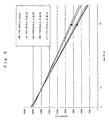
- the drug susceptibility measurement method corresponding to Fig. 1 When the drug susceptibility measurement method corresponding to Fig. 1 is employed, and when microbe suspension is poured into the first, second and third cells and dissolved oxygen concentrations are measured, dissolved oxygen concentration within the first cell is decreased following respiration of microbe. With respect to the first cell, microbe is suppressed its respiration concentration when drug susceptibility exists, while microbe respires without suppressing of respiration concentration when drug susceptibility does not exist, within the second and third cells. Therefore, the second and third cells represent tendency which corresponds to the condition that dissolved oxygen concentration scarcely decreases or the condition that dissolved oxygen concentration decreases similarly to the first cell, responding to the existence and non-existence of drug susceptibility.
- Ampicillin hereinafter, referred to as ABPC
- ABPC Ampicillin
- E . coli ⁇ 2 species of sensitive strain JM109 and resistant strain 5W (ABPC plasmid introduction) ⁇ is employed as the bacteria.
- physiological salt solution with its concentration of 0.7% is employed as, the concentration of the ABPC solution is adjusted to be 5.3 ⁇ g/ml, and the 2 species of E . coli are adjusted to McFarland2.
- the physiological salt solution and the drug solution are contained with the ratio represented in table 1, within the first, second and third cells.
- the bacteria suspension is contained within syringes each provided in correspondence with each cell. Entire amount species of bacteria poured bacteria amount physiological salt solution drug solution Control 500 ⁇ l JM109 40 ⁇ l 500 ⁇ l 0 ⁇ l 250 ⁇ l JM109 20 ⁇ l 250 ⁇ l 0 ⁇ l ABPC sensitivity 500 ⁇ l JM109 40 ⁇ l 460 ⁇ l 40 ⁇ l 250 ⁇ l JM109 20 ⁇ l 230 ⁇ l 20 ⁇ l ABPC resistance 500 ⁇ l 5W 40 ⁇ l 460 ⁇ l 40 ⁇ l 250 ⁇ l 5W 20 ⁇ l 230 ⁇ l 20 ⁇ l
- bacteria is determined to be a control, and the sensitive bacteria and the resistant bacteria are compared.
- bacteria is resistant bacteria, measured current variation characteristic following passage in time which is nearly equal to the control should be obtained because the bacteria scarcely affected by drug so as to scarcely varied oxygen consumption concentration.
- bacteria is sensitive bacteria, oxygen consumption concentration is decreased, measured current variation characteristic following passage in time should be more gentle with respect to the control, because the bacteria is interfered its respiration by pouring the drug.
- the threshold value is determined to be 90% when the inclination corresponding to the control is determined to be 100%.
- the threshold value is determined to be 90% when the inclination corresponding to the control is determined to be 100%.
- the sensitivity judgement may be carried out based upon an inclination for 5 seconds after the peak timing.
- the sensitivity judgement may also be carried out based upon a tendency in measurement current other than the inclination.
- the invention of claim 1 has characteristic operation and effect such that drug susceptibility can be measured rapidly based upon the signals for a short time period starting from the peak timing, that treatment can be carried out by rapidly detecting proper drug (antibiotics etc.) in clinical use, and that cure rate is improved and resistant microbe is suppressed in generation.
- the invention of claim 2 has characteristic operation and effect such that drug susceptibility can be measured rapidly based upon the signals for a short time period starting from the peak timing, that treatment can be carried out by rapidly detecting proper drug (antibiotics etc.) in clinical use, and that cure rate is improved and resistant microbe is suppressed in generation.
- the invention of claim 4 has characteristic operation and effect such that signal processing is simplified improved in addition to the operation and effect of one of claim 1 through claim 3.
Landscapes
- Chemical & Material Sciences (AREA)
- Life Sciences & Earth Sciences (AREA)
- Organic Chemistry (AREA)
- Health & Medical Sciences (AREA)
- Engineering & Computer Science (AREA)
- Proteomics, Peptides & Aminoacids (AREA)
- Zoology (AREA)
- Wood Science & Technology (AREA)
- Bioinformatics & Cheminformatics (AREA)
- Biochemistry (AREA)
- Analytical Chemistry (AREA)
- Biotechnology (AREA)
- Immunology (AREA)
- Microbiology (AREA)
- Molecular Biology (AREA)
- Biophysics (AREA)
- Genetics & Genomics (AREA)
- Toxicology (AREA)
- Physics & Mathematics (AREA)
- General Engineering & Computer Science (AREA)
- General Health & Medical Sciences (AREA)
- Medicinal Chemistry (AREA)
- Measuring Or Testing Involving Enzymes Or Micro-Organisms (AREA)
Abstract
Description
| Entire amount | species of bacteria | poured bacteria amount | physiological salt solution | drug solution | ||
| Control | 500µl | JM109 | 40µl | 500µl | 0µl | |
| 250µl | JM109 | 20µl | 250µl | 0µl | ||
| ABPC sensitivity | 500µl | JM109 | 40µl | 460µl | 40µl | |
| 250µl | JM109 | 20µl | 230µl | 20µl | ||
| ABPC | 500µl | 5W | 40µl | 460µl | 40µl | |
| 250µl | 5W | 20µl | 230µl | 20µl |
Claims (4)
- A drug susceptibility measurement method which has already provided electrodes for detection of dissolved oxygen concentration within a first cell and a second cell, respectively, the first cell containing solvent of measurement drug solution and the second cell containing drug solution, the method comprising the steps of:Supplying microbe suspension of a predetermined concentration into the first and second cells;Detecting a peak of each signal based upon each signal, each signal being continuously output from each of the electrodes for detection of dissolved oxygen concentration; andObtaining drug susceptibility based upon the relationship between both signals which are obtained for a predetermined time period starting from the peak timing.
- A drug susceptibility measurement method which has already provided electrodes for detection of dissolved oxygen concentration within a first cell and a second cell, respectively, the first and second cells containing microbe suspension of a predetermined concentration, the method comprising the steps of:Supplying solvent of measurement drug solution to the first cell and supplies drug solution to the second cell;Detecting a peak of each signal based upon each signal, each signal being continuously output from each of the electrodes for detection of dissolved oxygen concentration; andObtaining drug susceptibility based upon the relationship between both signals which are obtained for a predetermined time period starting from the peak timing.
- A drug susceptibility measurement method as set forth in claim 1 or claim 2, wherein the both signals are corrected so as to determine the peak values of the both signals to be previously determined predetermined values, and drug susceptibility is obtained based upon the relationship between both corrected signals.
- A drug susceptibility measurement method as set forth in one of claim 1 through claim 3, wherein gradient of each signal is employed as the relationship between signals.
Applications Claiming Priority (3)
| Application Number | Priority Date | Filing Date | Title |
|---|---|---|---|
| JP2000081765 | 2000-03-17 | ||
| JP2000081765A JP4470078B2 (en) | 2000-03-17 | 2000-03-17 | Drug sensitivity measurement method |
| PCT/JP2001/002198 WO2001068905A1 (en) | 2000-03-17 | 2001-03-19 | Drug sensitivity measuring method |
Publications (4)
| Publication Number | Publication Date |
|---|---|
| EP1277840A1 true EP1277840A1 (en) | 2003-01-22 |
| EP1277840A4 EP1277840A4 (en) | 2005-02-02 |
| EP1277840B1 EP1277840B1 (en) | 2008-06-11 |
| EP1277840B8 EP1277840B8 (en) | 2008-09-03 |
Family
ID=18598657
Family Applications (1)
| Application Number | Title | Priority Date | Filing Date |
|---|---|---|---|
| EP01912513A Expired - Lifetime EP1277840B8 (en) | 2000-03-17 | 2001-03-19 | Drug sensitivity measuring method |
Country Status (6)
| Country | Link |
|---|---|
| US (1) | US7198906B2 (en) |
| EP (1) | EP1277840B8 (en) |
| JP (1) | JP4470078B2 (en) |
| DE (1) | DE60134401D1 (en) |
| ES (1) | ES2305059T3 (en) |
| WO (1) | WO2001068905A1 (en) |
Cited By (1)
| Publication number | Priority date | Publication date | Assignee | Title |
|---|---|---|---|---|
| KR100857808B1 (en) | 2004-11-24 | 2008-09-09 | 다이킨 고교 가부시키가이샤 | Microbe counting method and microbe counting device |
Families Citing this family (4)
| Publication number | Priority date | Publication date | Assignee | Title |
|---|---|---|---|---|
| JP3788478B1 (en) * | 2004-11-24 | 2006-06-21 | ダイキン工業株式会社 | Microbe count measuring method and microbe count measuring apparatus |
| DE602006005333D1 (en) * | 2006-03-06 | 2009-04-09 | Gen Electric | Automatic calibration of a person's sensitivity to a drug |
| JP7066087B2 (en) * | 2018-10-16 | 2022-05-13 | 防衛装備庁長官 | Drug susceptibility measurement method |
| CN114113510B (en) * | 2021-11-23 | 2024-05-03 | 杭州汉菁生物科技有限公司 | Method for determining MIC value of medicine and storage medium |
Family Cites Families (10)
| Publication number | Priority date | Publication date | Assignee | Title |
|---|---|---|---|---|
| US4009078A (en) | 1975-01-24 | 1977-02-22 | The United States Of America As Represented By The Administrator Of The National Aeronautics And Space Administration | Detecting the presence of microorganisms |
| US4209586A (en) * | 1977-07-14 | 1980-06-24 | Noller Hans G | Method of testing the effectiveness of a growth inhibiting agent on a microorganism |
| US4311794A (en) | 1978-11-09 | 1982-01-19 | Baylor College Of Medicine | Determination of bacterial growth activity and antibiotic sensitivity by catalase measurement |
| US4321322A (en) | 1979-06-18 | 1982-03-23 | Ahnell Joseph E | Pulsed voltammetric detection of microorganisms |
| EP0128527A3 (en) | 1983-06-09 | 1986-06-11 | Marvin Murray | Accelerated determination of antimicrobial susceptibility of bacteria |
| AU675444B2 (en) * | 1992-07-22 | 1997-02-06 | Daikin Industries, Ltd. | Method of examining with antibacterial and apparatus therefor |
| AU665854B2 (en) | 1992-07-22 | 1996-01-18 | Daikin Industries, Ltd. | Infectious disease inspection method and apparatus therefor |
| US5876959A (en) | 1992-07-22 | 1999-03-02 | Daikin Industries, Ltd. | Method for testing infectious disease causing microorganisms |
| US5654165A (en) | 1992-07-22 | 1997-08-05 | Daikin Industries, Ltd. | Antibacterial drug inspection method and apparatus therefor |
| JP3240952B2 (en) * | 1997-04-08 | 2001-12-25 | ダイキン工業株式会社 | Physiological activity measuring method and device therefor |
-
2000
- 2000-03-17 JP JP2000081765A patent/JP4470078B2/en not_active Expired - Lifetime
-
2001
- 2001-03-19 WO PCT/JP2001/002198 patent/WO2001068905A1/en not_active Ceased
- 2001-03-19 DE DE60134401T patent/DE60134401D1/en not_active Expired - Lifetime
- 2001-03-19 EP EP01912513A patent/EP1277840B8/en not_active Expired - Lifetime
- 2001-03-19 ES ES01912513T patent/ES2305059T3/en not_active Expired - Lifetime
- 2001-03-19 US US10/221,800 patent/US7198906B2/en not_active Expired - Fee Related
Cited By (1)
| Publication number | Priority date | Publication date | Assignee | Title |
|---|---|---|---|---|
| KR100857808B1 (en) | 2004-11-24 | 2008-09-09 | 다이킨 고교 가부시키가이샤 | Microbe counting method and microbe counting device |
Also Published As
| Publication number | Publication date |
|---|---|
| WO2001068905A1 (en) | 2001-09-20 |
| DE60134401D1 (en) | 2008-07-24 |
| JP4470078B2 (en) | 2010-06-02 |
| US20030180831A1 (en) | 2003-09-25 |
| EP1277840B1 (en) | 2008-06-11 |
| EP1277840A4 (en) | 2005-02-02 |
| JP2001258591A (en) | 2001-09-25 |
| EP1277840B8 (en) | 2008-09-03 |
| ES2305059T3 (en) | 2008-11-01 |
| US7198906B2 (en) | 2007-04-03 |
Similar Documents
| Publication | Publication Date | Title |
|---|---|---|
| Dimmer et al. | The low-affinity monocarboxylate transporter MCT4 is adapted to the export of lactate in highly glycolytic cells | |
| JP2023144023A5 (en) | ||
| Starke et al. | The action profiles of human NPH insulin preparations | |
| Kao et al. | Insulin-like growth factor-I comparisons in healthy twin children | |
| CN118240917B (en) | Method for detecting biological activity of GLP-1, GLP-1 analogue or GLP-1 fusion protein | |
| Rettig et al. | Quantitative bioluminescence imaging of transgene expression in vivo | |
| EP1277840B1 (en) | Drug sensitivity measuring method | |
| Frystyk et al. | Determination of free insulin-like growth factor-I in human serum: comparison of ultrafiltration and direct immunoradiometric assay | |
| CN103884846A (en) | Detection method for biological activity of liraglutide | |
| Van der Voort et al. | Interferon-β bioactivity measurement in multiple sclerosis: feasibility for routine clinical practice | |
| Weidler et al. | The structure of human parathyroid hormone-related protein (1–34) in near-physiological solution | |
| US11246512B2 (en) | Measuring apparatus, computer readable medium storing measuring program and measuring method | |
| CN112608977B (en) | A kind of γ-glutamyl transpeptidase detection kit and detection method thereof | |
| CN112964709B (en) | Method for detecting protein in sample | |
| Gross et al. | Screening for diabetic nephropathy: is measurement of urinary albumin-to-creatinine ratio worthwhile? | |
| US5654165A (en) | Antibacterial drug inspection method and apparatus therefor | |
| EP0632131B1 (en) | Method of examining with antibacterial and apparatus therefor | |
| CN103424496B (en) | Method for determining trace quantity exenatide | |
| Bărcă et al. | Spectrofluorimetric methotrexate assay in human plasma | |
| CN115166077A (en) | Double internal standard reagent for determination of enrofloxacin residue in aquatic product and detection method | |
| CN107436311B (en) | Method for identifying insulin monomer or insulin polymer | |
| JPH10276796A (en) | Physiological activity measuring method and device therefor | |
| Rele Rajan et al. | A Validated Potentiometric Titration Method for Quantitative Determination of Molnupiravir from Pharmaceutical Preparation | |
| RU2181889C1 (en) | Method for determining living organism sensitivity to cytokine | |
| CN114910579B (en) | Quantitative determination method for deoxyuridine in serum and application of quantitative determination method in myocardial infarction diagnosis |
Legal Events
| Date | Code | Title | Description |
|---|---|---|---|
| PUAI | Public reference made under article 153(3) epc to a published international application that has entered the european phase |
Free format text: ORIGINAL CODE: 0009012 |
|
| 17P | Request for examination filed |
Effective date: 20021104 |
|
| AK | Designated contracting states |
Kind code of ref document: A1 Designated state(s): AT BE CH CY DE DK ES FI FR GB GR IE IT LI LU MC NL PT SE TR |
|
| RBV | Designated contracting states (corrected) |
Designated state(s): DE ES FR GB |
|
| A4 | Supplementary search report drawn up and despatched |
Effective date: 20041222 |
|
| 17Q | First examination report despatched |
Effective date: 20061004 |
|
| GRAP | Despatch of communication of intention to grant a patent |
Free format text: ORIGINAL CODE: EPIDOSNIGR1 |
|
| GRAS | Grant fee paid |
Free format text: ORIGINAL CODE: EPIDOSNIGR3 |
|
| RIN1 | Information on inventor provided before grant (corrected) |
Inventor name: OKUMURA, CHIAKI Inventor name: ARAI, JUNICHIRO Inventor name: AMANO, YOSHIHISA Inventor name: MACHIDA, KATSUHIKO Inventor name: HOSHINA, SADAYORI Inventor name: USHIDA, TAKASHINAT. INST. ADV. INTERDISCIPLINARY Inventor name: KATAYAMA, HIDEO |
|
| GRAA | (expected) grant |
Free format text: ORIGINAL CODE: 0009210 |
|
| AK | Designated contracting states |
Kind code of ref document: B1 Designated state(s): DE ES FR GB |
|
| REG | Reference to a national code |
Ref country code: GB Ref legal event code: FG4D |
|
| RTI1 | Title (correction) |
Free format text: DRUG SENSITIVITY MEASURING METHOD |
|
| RAP2 | Party data changed (patent owner data changed or rights of a patent transferred) |
Owner name: NATIONAL INSTITUTE OF ADVANCED INDUSTRIAL SCIENCE Owner name: JIKEI UNIVERSITY SCHOOL OF MEDICINE Owner name: DAIKIN INDUSTRIES, LTD. |
|
| REF | Corresponds to: |
Ref document number: 60134401 Country of ref document: DE Date of ref document: 20080724 Kind code of ref document: P |
|
| REG | Reference to a national code |
Ref country code: ES Ref legal event code: FG2A Ref document number: 2305059 Country of ref document: ES Kind code of ref document: T3 |
|
| PLBE | No opposition filed within time limit |
Free format text: ORIGINAL CODE: 0009261 |
|
| STAA | Information on the status of an ep patent application or granted ep patent |
Free format text: STATUS: NO OPPOSITION FILED WITHIN TIME LIMIT |
|
| 26N | No opposition filed |
Effective date: 20090312 |
|
| PGFP | Annual fee paid to national office [announced via postgrant information from national office to epo] |
Ref country code: GB Payment date: 20130313 Year of fee payment: 13 Ref country code: ES Payment date: 20130314 Year of fee payment: 13 Ref country code: DE Payment date: 20130314 Year of fee payment: 13 Ref country code: FR Payment date: 20130325 Year of fee payment: 13 |
|
| REG | Reference to a national code |
Ref country code: DE Ref legal event code: R119 Ref document number: 60134401 Country of ref document: DE |
|
| GBPC | Gb: european patent ceased through non-payment of renewal fee |
Effective date: 20140319 |
|
| REG | Reference to a national code |
Ref country code: FR Ref legal event code: ST Effective date: 20141128 |
|
| REG | Reference to a national code |
Ref country code: DE Ref legal event code: R119 Ref document number: 60134401 Country of ref document: DE Effective date: 20141001 |
|
| PG25 | Lapsed in a contracting state [announced via postgrant information from national office to epo] |
Ref country code: DE Free format text: LAPSE BECAUSE OF NON-PAYMENT OF DUE FEES Effective date: 20141001 Ref country code: GB Free format text: LAPSE BECAUSE OF NON-PAYMENT OF DUE FEES Effective date: 20140319 Ref country code: FR Free format text: LAPSE BECAUSE OF NON-PAYMENT OF DUE FEES Effective date: 20140331 |
|
| REG | Reference to a national code |
Ref country code: ES Ref legal event code: FD2A Effective date: 20150424 |
|
| PG25 | Lapsed in a contracting state [announced via postgrant information from national office to epo] |
Ref country code: ES Free format text: LAPSE BECAUSE OF NON-PAYMENT OF DUE FEES Effective date: 20140320 |