EP1277469A1 - Activators for peroxisome proliferator-activated receptor - Google Patents
Activators for peroxisome proliferator-activated receptor Download PDFInfo
- Publication number
- EP1277469A1 EP1277469A1 EP01921989A EP01921989A EP1277469A1 EP 1277469 A1 EP1277469 A1 EP 1277469A1 EP 01921989 A EP01921989 A EP 01921989A EP 01921989 A EP01921989 A EP 01921989A EP 1277469 A1 EP1277469 A1 EP 1277469A1
- Authority
- EP
- European Patent Office
- Prior art keywords
- polyprenyl compound
- polyprenyl
- ppar
- activator
- medicament
- Prior art date
- Legal status (The legal status is an assumption and is not a legal conclusion. Google has not performed a legal analysis and makes no representation as to the accuracy of the status listed.)
- Granted
Links
Images
Classifications
-
- A—HUMAN NECESSITIES
- A61—MEDICAL OR VETERINARY SCIENCE; HYGIENE
- A61K—PREPARATIONS FOR MEDICAL, DENTAL OR TOILETRY PURPOSES
- A61K31/00—Medicinal preparations containing organic active ingredients
- A61K31/185—Acids; Anhydrides, halides or salts thereof, e.g. sulfur acids, imidic, hydrazonic or hydroximic acids
- A61K31/19—Carboxylic acids, e.g. valproic acid
- A61K31/20—Carboxylic acids, e.g. valproic acid having a carboxyl group bound to a chain of seven or more carbon atoms, e.g. stearic, palmitic, arachidic acids
-
- A—HUMAN NECESSITIES
- A61—MEDICAL OR VETERINARY SCIENCE; HYGIENE
- A61K—PREPARATIONS FOR MEDICAL, DENTAL OR TOILETRY PURPOSES
- A61K31/00—Medicinal preparations containing organic active ingredients
- A61K31/185—Acids; Anhydrides, halides or salts thereof, e.g. sulfur acids, imidic, hydrazonic or hydroximic acids
- A61K31/19—Carboxylic acids, e.g. valproic acid
- A61K31/20—Carboxylic acids, e.g. valproic acid having a carboxyl group bound to a chain of seven or more carbon atoms, e.g. stearic, palmitic, arachidic acids
- A61K31/202—Carboxylic acids, e.g. valproic acid having a carboxyl group bound to a chain of seven or more carbon atoms, e.g. stearic, palmitic, arachidic acids having three or more double bonds, e.g. linolenic
-
- A—HUMAN NECESSITIES
- A61—MEDICAL OR VETERINARY SCIENCE; HYGIENE
- A61P—SPECIFIC THERAPEUTIC ACTIVITY OF CHEMICAL COMPOUNDS OR MEDICINAL PREPARATIONS
- A61P3/00—Drugs for disorders of the metabolism
- A61P3/06—Antihyperlipidemics
-
- A—HUMAN NECESSITIES
- A61—MEDICAL OR VETERINARY SCIENCE; HYGIENE
- A61P—SPECIFIC THERAPEUTIC ACTIVITY OF CHEMICAL COMPOUNDS OR MEDICINAL PREPARATIONS
- A61P3/00—Drugs for disorders of the metabolism
- A61P3/08—Drugs for disorders of the metabolism for glucose homeostasis
- A61P3/10—Drugs for disorders of the metabolism for glucose homeostasis for hyperglycaemia, e.g. antidiabetics
-
- A—HUMAN NECESSITIES
- A61—MEDICAL OR VETERINARY SCIENCE; HYGIENE
- A61P—SPECIFIC THERAPEUTIC ACTIVITY OF CHEMICAL COMPOUNDS OR MEDICINAL PREPARATIONS
- A61P43/00—Drugs for specific purposes, not provided for in groups A61P1/00-A61P41/00
Definitions
- the present invention relates to an activator of peroxisome proliferator-activated receptors (abbreviated sometimes as "PPAR" in the specification).
- PPAR peroxisome proliferator-activated receptors
- clofibrate derivatives including clofibrate as a typical example, thiazolidine derivatives including pioglitazone and troglitazone as typical examples and the like have been used.
- the clofibrate derivatives have an activating action on PPAR ⁇ (Reference: Nature, 347, 645-650 (1990)) and are considered to improve lipid metabolism through the aid of fatty acid ⁇ -oxidation enzymes in the liver.
- the thiazolidine derivatives have an activating action on PPAR ⁇ (Reference: J. Biol. Chem., 270, 112953-112956 (1995)) and are considered to ameliorate insulin resistance and thereby lower a blood sugar level (Reference: Diabetes, 45, 1661-1669 (1996)).
- PPAR agonists are reported to generally have adverse effects such as liver function failure, and accordingly, a patient with liver function failure contraindicates the use of troglitazone, one of the PPAR ⁇ agonists (Reference: Rinsho Iyaku, 14, 461-466 (1998)), and the sale of said drug was currently discontinued.
- medicaments having the PPAR activation activity are useful as therapeutic agents for hyperlipidemia and diabetes.
- medicaments activating PPAR have been desired which have reduced adverse effects.
- NIK-333 (2E,4E,6E,10E)-3,7,11,15-Tetramethyl-2,4,6,10,14-hexadecapentaenoic acid
- NIK-333 is proved to be a safe drug, because almost no liver function failure or almost no other adverse effect, generally accompanied with retinoids, was observed during the administration (Reference: N. Eng. J. Med., 334, 1561-1567 (1996)).
- an object of the present invention is to provide PPAR activators with reduced adverse effects.
- the inventors of the present invention conducted various researches to find PPAR activators. As a result, they found that polyprenyl compounds induced expression of PPAR ⁇ and PPAR ⁇ mRNAs and that the compounds had ligand activity for PPAR ⁇ . On the basis of these results, they found that the polyprenyl compounds activated PPAR, and as a result of further researches, they achieved the present invention.
- the present invention thus provides an activator of peroxisome proliferator-activated receptor (PPAR) comprising a polyprenyl compound as an active ingredient.
- PPAR peroxisome proliferator-activated receptor
- the present invention further provides a medicament for preventive and/or therapeutic treatment of hyperlipidemia or non-insulin dependent diabetes mellitus which comprises a polyprenyl compound as an active ingredient.
- the present invention provides a use of a polyprenyl compound for manufacture of the aforementioned medicament; a methods for activating peroxisome proliferator-activated receptor (PPAR) in a mammal including human, which comprise a step of administering an effective amount of a polyprenyl compound to a mammal including human; and a method for preventive and/or therapeutic treatment of hyperlipidemia or non-insulin dependent diabetes mellitus, which comprise the step of administering a preventively and/or therapeutically effective amount of a polyprenyl compound to a mammal including human in need of such preventive and/or therapeutic treatment.
- PPAR peroxisome proliferator-activated receptor
- a particularly preferred compound includes (2E,4E,6E,10E)-3,7,11,15-tetramethyl-2,4,6,10,14-hexadecapentaenoic acid (NIK-333).
- Other examples of the polyprenyl compounds include conjugated polyprenylcarboxylic acids (polyprenoic acids) such as 3,7,11,15-tetramethyl-2,4,6,10,14-hexadecapentaenoic acid and esters thereof described in Japanese Patent Publication (Kokoku) No. 63-34855 and the like.
- the polyprenyl compounds used in the present invention can be synthesized by a known method (Japanese Patent Publication (Kokoku) No. 63-32058, J. Chem. Soc. (C), 2154 (1966)).
- a pharmaceutical composition comprising the polyprenyl compound can be generally prepared and administered via an appropriate administration route, i.e., oral or parenteral route.
- an appropriate administration route i.e., oral or parenteral route.
- forms of the pharmaceutical composition suitable for oral administration include tablets, granules, capsules, soft capsules, pills, powders, solutions and the like.
- forms of the pharmaceutical composition suitable for parenteral administration include injections, suppositories and the like.
- compositions can be prepared by an ordinary method using a polyprenyl compound or a pharmacologically acceptable salt thereof and one or more kinds of ordinary pharmaceutically acceptable pharmaceutical carriers. Two or more kinds of polyprenyl compounds as active ingredients may be used in combination.
- desired pharmaceutical compositions can be prepared by using, as pharmaceutical carriers, excipients such as lactose, glucose, corn starch, and sucrose, disintegrants such as carboxymethylcellulose calcium, and hydroxypropylcellulose, lubricants such as calcium stearate, magnesium stearate, talc, polyethylene glycol, and hydrogenated oil, binders such as hydroxypropylcellulose, hydroxypropylmethylcellulose, carboxymethylcellulose, polyvinyl alcohol, gelatin, and gum arabic, moistening agents such as glycerine and ethylene glycol, as well as surfactants, flavoring agents and the like as optionally required.
- excipients such as lactose, glucose, corn starch, and sucrose
- disintegrants such as carboxymethylcellulose calcium, and hydroxypropylcellulose
- lubricants such as calcium stearate, magnesium stearate, talc
- polyethylene glycol and hydrogenated oil
- binders such as hydroxypropylcellulose, hydroxypropyl
- diluents such as water, ethanol, glycerine, propylene glycol, polyethylene glycol, vegetable oil, agar, and gum tragacanth may be used as pharmaceutical carriers, as well as solubilizing agents, suspending agents, emulsifiers, buffers, isotonic agents, preservatives, soothing agents and the like may be used as optionally required.
- the medicament of the present invention can be applied to diseases that are therapeutically and/or preventively treatable by PPAR activation, and the medicament can be used for mammals including human.
- PPAR that can be activated by the medicament of the present invention include PPAR ⁇ or PPAR ⁇ as preferred targets.
- Examples of conditions to which the medicaments of the present invention can be preferably applied include non-insulin dependent diabetes mellitus and hyperlipidemia, as well as complications of these diseases, for example, hyperinsulinemia, hypo HDL cholesterolemia, hypertension, obesity and the like.
- doses are not particularly limited. For example, 1 to 2,000 mg, preferably 20 and 800 mg, can be administered per day for an adult for oral administration. For parenteral administration, doses may be in the range of 1 to 1,000 mg, preferably in the range of 10 to 100 mg. Desired preventive and/or therapeutic effects can be expected by administration of the aforementioned dose once to 3 times a day.
- Example 1 Expression of PPAR ⁇ and PPAR ⁇ mRNA in human cell line
- Caco-2 cells (derived from colon cancer) as a human cell line were cultured at 37°C in RPMI-1640 medium containing 10% fetal calf serum in the presence of 5% CO 2 . The medium was then replaced with serum-free RPMI-1640 medium and the cells were cultured for 48 hours.
- a solution of NIK-333 in ethanol was added at a final concentration of 10 ⁇ M.
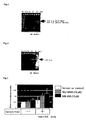
- RNA was extracted to observe mRNA for PPAR ⁇ , PPAR ⁇ 1 and PPAR ⁇ 2 by the RT-PCR method.
- PPAR ⁇ mRNA was observed from 0.5 hour after the addition of NIK-333 (Fig. 1). Further, expression of PPAR ⁇ 1 mRNA was also observed from 0.5 hour after the addition of NIK-333 (Fig. 2), whilst expression of PPAR ⁇ 2 mRNA was not observed.
- COS-7 cells a cell line derived from monkey kidney, were cultured at 37°C in DMEM medium containing 10% fetal calf serum in the presence of 5% CO 2 . Then, expression vectors of RXR ⁇ (retinoic acid X receptor ⁇ ) and PPAR ⁇ , and a reporter vector incorporated with PPRE (peroxisome proliferator-responsive element) as a PPAR-responsive element were cotransfected into the cells, and the cells were cultured for 24 hours.
- a solution of NIK-333 or Wy-14643 (selective agonist of PPAR ⁇ ) in ethanol was added at a final concentration of 10 ⁇ M. After cultivation for 24 hours, the activity of firefly luciferase was measured. The measured values were represented as values standardized by using the renilla luciferase activity.
- NIK-333 and Wy-14643 failed to increase the luciferase activity when the PPAR ⁇ expression vector was not introduced (-), whereas they increased the luciferase activity only when the PPAR ⁇ expression vector was introduced (+).
- NIK-333 exhibited increasing action of ligand activity almost equivalent to the action of Wy-14643.
- Polyprenyl compounds induce expression of PPAR ⁇ and PPAR ⁇ and also have ligand activity for PPAR ⁇ . Therefore, these compounds have a PPAR activation action and are useful for preventive and/or therapeutic treatment of hyperlipidemia or non-insulin dependent diabetes mellitus.
Landscapes
- Health & Medical Sciences (AREA)
- Medicinal Chemistry (AREA)
- Veterinary Medicine (AREA)
- Public Health (AREA)
- General Health & Medical Sciences (AREA)
- Animal Behavior & Ethology (AREA)
- Chemical & Material Sciences (AREA)
- Life Sciences & Earth Sciences (AREA)
- Pharmacology & Pharmacy (AREA)
- Diabetes (AREA)
- Epidemiology (AREA)
- Bioinformatics & Cheminformatics (AREA)
- Nuclear Medicine, Radiotherapy & Molecular Imaging (AREA)
- Organic Chemistry (AREA)
- General Chemical & Material Sciences (AREA)
- Chemical Kinetics & Catalysis (AREA)
- Engineering & Computer Science (AREA)
- Obesity (AREA)
- Hematology (AREA)
- Endocrinology (AREA)
- Emergency Medicine (AREA)
- Acyclic And Carbocyclic Compounds In Medicinal Compositions (AREA)
Abstract
Description
Claims (13)
- An activator of peroxisome proliferator-activated receptor which comprises a polyprenyl compound as an active ingredient.
- The activator according to Claim 1, wherein the polyprenyl compound is a polyprenylcarboxylic acid.
- The activator according to Claim 1, wherein the polyprenyl compound is 3,7,11,15-tetramethyl-2,4,6,10,14-hexadecapentaenoic acid.
- The activator according to Claim 1, wherein the polyprenyl compound is (2E,4E,6E,10E)-3,7,11,15-tetramethyl-2,4,6,10,14-hexadecapentaenoic acid.
- The activator according to any one of Claims 1 to 4, which is in a form of a pharmaceutical composition comprising a pharmaceutically acceptable carrier for pharmaceutical preparation.
- The activator according to any one of Claims 1 to 5, which is in an orally administrable form.
- The activator according to any one of Claims 1 to 6, wherein the peroxisome proliferator-activated receptor is PPARα or PPARγ.
- A medicament for preventive and/or therapeutic treatment of hyperlipidemia or non-insulin dependent diabetes mellitus which comprises a polyprenyl compound as an active ingredient.
- The medicament according to Claim 8, wherein the polyprenyl compound is a polyprenylcarboxylic acid.
- The medicament according to Claim 8, wherein the polyprenyl compound is 3,7,11,15-tetramethyl-2,4,6,10,14-hexadecapentaenoic acid.
- The medicament according to Claim 8, wherein the polyprenyl compound is (2E,4E,6E,10E)-3,7,11,15-tetramethyl-2,4,6,10,14-hexadecapentaenoic acid.
- The medicament according to any one of Claims 8 to 11, which is in a form of a pharmaceutical composition comprising a pharmaceutically acceptable carrier for pharmaceutical preparation.
- The medicament according to any one of Claims 8 to 12, which is in an orally administrable form.
Applications Claiming Priority (3)
| Application Number | Priority Date | Filing Date | Title |
|---|---|---|---|
| JP2000122974 | 2000-04-24 | ||
| JP2000122974 | 2000-04-24 | ||
| PCT/JP2001/003442 WO2001080854A1 (en) | 2000-04-24 | 2001-04-23 | Activators for peroxisome proliferator-activated receptor |
Publications (3)
| Publication Number | Publication Date |
|---|---|
| EP1277469A1 true EP1277469A1 (en) | 2003-01-22 |
| EP1277469A4 EP1277469A4 (en) | 2008-05-21 |
| EP1277469B1 EP1277469B1 (en) | 2010-05-05 |
Family
ID=18633382
Family Applications (1)
| Application Number | Title | Priority Date | Filing Date |
|---|---|---|---|
| EP01921989A Expired - Lifetime EP1277469B1 (en) | 2000-04-24 | 2001-04-23 | Activators for peroxisome proliferator-activated receptor |
Country Status (7)
| Country | Link |
|---|---|
| US (4) | US20050250671A1 (en) |
| EP (1) | EP1277469B1 (en) |
| JP (1) | JP2011219496A (en) |
| CA (1) | CA2407421C (en) |
| DE (1) | DE60142038D1 (en) |
| ES (1) | ES2343166T3 (en) |
| WO (1) | WO2001080854A1 (en) |
Cited By (1)
| Publication number | Priority date | Publication date | Assignee | Title |
|---|---|---|---|---|
| CN101652134B (en) * | 2007-03-30 | 2015-07-15 | 兴和株式会社 | Drug for preventing and/or treating fatty liver or nonalcoholic fatty liver disease |
Families Citing this family (9)
| Publication number | Priority date | Publication date | Assignee | Title |
|---|---|---|---|---|
| EP1277469B1 (en) | 2000-04-24 | 2010-05-05 | Kowa Company, Ltd. | Activators for peroxisome proliferator-activated receptor |
| WO2003097034A1 (en) * | 2002-05-17 | 2003-11-27 | Nikken Chemicals Co., Ltd. | TGF-α EXPRESSION INHIBITORS |
| WO2004017958A1 (en) | 2002-08-20 | 2004-03-04 | Nikken Chemicals Co., Ltd. | Soft capsule preparation |
| CN1956716B (en) * | 2004-02-25 | 2010-12-15 | 国立大学法人东京大学 | Drugs that inhibit the activation of the transcription factor KLF5 |
| EP1772143A4 (en) * | 2004-05-20 | 2009-12-30 | Arkray Inc | Peroxisome proliferator-activated receptor (ppar) activator and drugs, supplements, functional foods and food additives using the same |
| US20100184859A1 (en) * | 2007-06-21 | 2010-07-22 | Josai University Educational Corporation | Medicament having promoting action on hepatocyte proliferation |
| US8655718B2 (en) * | 2007-12-18 | 2014-02-18 | Yahoo! Inc. | Methods for augmenting user-generated content using a monetizable feature |
| JP7127817B2 (en) | 2018-09-07 | 2022-08-30 | 国立大学法人 東京大学 | pulmonary hypertension drug |
| WO2024187697A1 (en) * | 2023-03-14 | 2024-09-19 | 苏州海益生物医药科技有限公司 | 1,4-polyisoprene dispersion system, pharmaceutical active ingredient and use thereof |
Family Cites Families (29)
| Publication number | Priority date | Publication date | Assignee | Title |
|---|---|---|---|---|
| US250671A (en) * | 1881-12-13 | Mugilage-holder | ||
| US94784A (en) * | 1869-09-14 | Improvement in clod-fenders for growing plants | ||
| JPS5446821A (en) | 1977-09-22 | 1979-04-13 | Grelan Pharmaceut Co Ltd | Preparation of drug for soft capsule |
| JPS5522645A (en) | 1978-08-07 | 1980-02-18 | Fujisawa Pharmaceut Co Ltd | Soft capsule for encapsulation of light-unstable compound |
| JPS55138457A (en) | 1979-04-18 | 1980-10-29 | Tokai Capsule Co Ltd | Fusible soft capsule |
| DE3113149A1 (en) * | 1980-04-07 | 1982-01-28 | Eisai Co Ltd | 3,7,11,15-TETRAMETHYL-2,4,6,10,14-HEXADECAPENTANIC ACID, METHOD FOR THE PRODUCTION THEREOF, THE MEDICINAL PRODUCTS CONTAINING IT AND THEIR USE AS ANTI-DRIVING AGENTS AND THERAPEUTICAL AGENTS FOR THE TREATMENT OF THE HOUSE |
| JPS56140949A (en) * | 1980-04-07 | 1981-11-04 | Eisai Co Ltd | 3,7,11,15-tetramethyl-2,4,6,10,14-hexadecapentaenic acid |
| JPS5731615A (en) * | 1980-07-31 | 1982-02-20 | Eisai Co Ltd | Remedy for skin disease with keratinization |
| JPS57106638A (en) * | 1980-12-24 | 1982-07-02 | Eisai Co Ltd | Conjugated polyprenylcarboxylic acid and its derivative |
| JPS6059205B2 (en) | 1981-12-24 | 1985-12-24 | 帝三製薬株式会社 | Method for manufacturing soft capsules for encapsulating photolabile drugs |
| JPS5973516A (en) * | 1982-10-21 | 1984-04-25 | Eisai Co Ltd | Antiphlogistic agent |
| JPS6122054A (en) * | 1984-05-09 | 1986-01-30 | Eisai Co Ltd | Polyprenyl compound |
| JPH0629218B2 (en) * | 1985-03-15 | 1994-04-20 | エーザイ株式会社 | Polyprenyl compound |
| JPS6277317A (en) | 1985-09-28 | 1987-04-09 | Kyowa Hakko Kogyo Co Ltd | Beta-carotene pharmaceutical and production thereof |
| US4841038A (en) * | 1986-06-02 | 1989-06-20 | Wisconsin Alumni Research Foundation | Method for preparing coenzyme a esters of all-trans- and 13-cis retinoic acids |
| US4757140A (en) * | 1986-06-02 | 1988-07-12 | Wisconsin Alumni Research Foundation | Coenzyme a derivatives of all-trans- and 13-cis retionic acid |
| JPS6332058A (en) | 1986-07-22 | 1988-02-10 | 株式会社 梅彦 | Method for lining floor with stone material |
| JPS6334855A (en) | 1986-07-29 | 1988-02-15 | Mitsubishi Electric Corp | Laminate type fuel cell |
| JPS63166824A (en) | 1986-12-29 | 1988-07-11 | Toyo Jozo Co Ltd | Soft capsule |
| WO1994022818A1 (en) | 1993-04-05 | 1994-10-13 | Pfizer Inc. | Method for the preparation of 9-cis retinoic acid |
| DK0859608T3 (en) | 1995-09-18 | 2004-06-14 | Ligand Pharm Inc | Treatment of NIDDM with RXR agonists |
| JPH10167960A (en) | 1996-12-12 | 1998-06-23 | Les-Bell:Kk | Hepatocellular carcinoma recurrence inhibitor |
| JP3415456B2 (en) | 1998-10-19 | 2003-06-09 | 日本電気株式会社 | Network system, command use authority control method, and storage medium storing control program |
| EP1046630B1 (en) * | 1999-04-23 | 2003-03-19 | Nikken Chemicals Company, Limited | Method of purification of 3,7,11,15-tetramethyl-2,4,6,10,14-hexadecapentaenoic acid |
| CN1179725C (en) | 1999-08-31 | 2004-12-15 | 中外制药株式会社 | soft capsule |
| EP1277469B1 (en) * | 2000-04-24 | 2010-05-05 | Kowa Company, Ltd. | Activators for peroxisome proliferator-activated receptor |
| WO2003097034A1 (en) | 2002-05-17 | 2003-11-27 | Nikken Chemicals Co., Ltd. | TGF-α EXPRESSION INHIBITORS |
| WO2004017958A1 (en) | 2002-08-20 | 2004-03-04 | Nikken Chemicals Co., Ltd. | Soft capsule preparation |
| US6984742B2 (en) * | 2003-04-18 | 2006-01-10 | Nikken Chemicals Co., Ltd. | Method for preparing polyprenyl compounds |
-
2001
- 2001-04-23 EP EP01921989A patent/EP1277469B1/en not_active Expired - Lifetime
- 2001-04-23 WO PCT/JP2001/003442 patent/WO2001080854A1/en not_active Ceased
- 2001-04-23 US US10/257,391 patent/US20050250671A1/en not_active Abandoned
- 2001-04-23 DE DE60142038T patent/DE60142038D1/en not_active Expired - Lifetime
- 2001-04-23 CA CA002407421A patent/CA2407421C/en not_active Expired - Lifetime
- 2001-04-23 ES ES01921989T patent/ES2343166T3/en not_active Expired - Lifetime
-
2005
- 2005-11-15 US US11/272,864 patent/US20060063838A1/en not_active Abandoned
-
2007
- 2007-08-27 US US11/845,684 patent/US7547730B2/en not_active Expired - Fee Related
-
2009
- 2009-05-08 US US12/463,197 patent/US8017652B2/en not_active Expired - Fee Related
-
2011
- 2011-07-13 JP JP2011154477A patent/JP2011219496A/en active Pending
Cited By (1)
| Publication number | Priority date | Publication date | Assignee | Title |
|---|---|---|---|---|
| CN101652134B (en) * | 2007-03-30 | 2015-07-15 | 兴和株式会社 | Drug for preventing and/or treating fatty liver or nonalcoholic fatty liver disease |
Also Published As
| Publication number | Publication date |
|---|---|
| CA2407421A1 (en) | 2002-10-23 |
| US20060063838A1 (en) | 2006-03-23 |
| JP2011219496A (en) | 2011-11-04 |
| US20080119553A1 (en) | 2008-05-22 |
| US20090264529A1 (en) | 2009-10-22 |
| US7547730B2 (en) | 2009-06-16 |
| US20050250671A1 (en) | 2005-11-10 |
| EP1277469A4 (en) | 2008-05-21 |
| EP1277469B1 (en) | 2010-05-05 |
| ES2343166T3 (en) | 2010-07-26 |
| US8017652B2 (en) | 2011-09-13 |
| CA2407421C (en) | 2009-11-03 |
| DE60142038D1 (en) | 2010-06-17 |
| WO2001080854A1 (en) | 2001-11-01 |
Similar Documents
| Publication | Publication Date | Title |
|---|---|---|
| US8017652B2 (en) | Activators of peroxisome proliferator-activated receptors | |
| KR20080106455A (en) | Combination Treatment of Metabolic Disorders | |
| US7645772B2 (en) | Treatment of metabolic disorders | |
| US8673976B2 (en) | Medicament for prophylactic and/or therapeutic treatment of hepatic steatosis or non-alcoholic steatohepatitis | |
| WO2000035867A1 (en) | Novel ligands of nuclear receptor | |
| KR101391905B1 (en) | Compounds for the treatment of metabolic disorders | |
| US3426125A (en) | Method of treating diabetes mellitus | |
| WO2006001092A1 (en) | Insulin secretion promoter | |
| WO2004058251A1 (en) | Cannabinoid analogs as peroxisome proliferator activated nuclear receptor gamma activators | |
| CN117695277A (en) | Use of optical isomer compositions of phenylpropionic acid analogs for treating or preventing metabolic disorders | |
| CA2099346A1 (en) | Lipid metabolism improving composition | |
| US20250009692A1 (en) | Micronutrient composition to prevent and reverse protein glycation during oxidative stress in human | |
| US7666899B2 (en) | Pharmaceutical composition for treatment of lipid metabolism disorder | |
| JPWO2001080854A1 (en) | Activators of peroxisome proliferator-activated receptors | |
| KR20010024550A (en) | Use of Glycosaminoglycans for Producing Pharmaceutical Preparations for Treating Diabetes-Associated Diseases of the Eye | |
| WO1998043645A1 (en) | Inhibitors for the formation of glycosylated protein denaturation products | |
| JPWO2000035867A1 (en) | Novel ligands for nuclear receptors |
Legal Events
| Date | Code | Title | Description |
|---|---|---|---|
| PUAI | Public reference made under article 153(3) epc to a published international application that has entered the european phase |
Free format text: ORIGINAL CODE: 0009012 |
|
| 17P | Request for examination filed |
Effective date: 20021023 |
|
| AK | Designated contracting states |
Kind code of ref document: A1 Designated state(s): AT BE CH CY DE DK ES FI FR GB GR IE IT LI LU MC NL PT SE TR |
|
| RBV | Designated contracting states (corrected) |
Designated state(s): AT BE CH CY DE ES FR GB IT LI |
|
| RAP1 | Party data changed (applicant data changed or rights of an application transferred) |
Owner name: NIKKEN CHEMICALS COMPANY, LIMITED Owner name: NAGASAKI PREFECTURAL AND MUNICIPAL UNIVERSITIES CO |
|
| A4 | Supplementary search report drawn up and despatched |
Effective date: 20080418 |
|
| 17Q | First examination report despatched |
Effective date: 20081013 |
|
| GRAP | Despatch of communication of intention to grant a patent |
Free format text: ORIGINAL CODE: EPIDOSNIGR1 |
|
| GRAJ | Information related to disapproval of communication of intention to grant by the applicant or resumption of examination proceedings by the epo deleted |
Free format text: ORIGINAL CODE: EPIDOSDIGR1 |
|
| GRAP | Despatch of communication of intention to grant a patent |
Free format text: ORIGINAL CODE: EPIDOSNIGR1 |
|
| GRAS | Grant fee paid |
Free format text: ORIGINAL CODE: EPIDOSNIGR3 |
|
| RAP1 | Party data changed (applicant data changed or rights of an application transferred) |
Owner name: NAGASAKI PREFECTURAL AND MUNICIPAL UNIVERSITIES CO Owner name: KOWA PHARMACEUTICAL CO., LTD. |
|
| GRAA | (expected) grant |
Free format text: ORIGINAL CODE: 0009210 |
|
| RAP1 | Party data changed (applicant data changed or rights of an application transferred) |
Owner name: KOWA COMPANY, LTD. Owner name: NAGASAKI PREFECTURAL AND MUNICIPAL UNIVERSITIES CO |
|
| AK | Designated contracting states |
Kind code of ref document: B1 Designated state(s): DE ES FR GB IT |
|
| REG | Reference to a national code |
Ref country code: GB Ref legal event code: FG4D |
|
| REF | Corresponds to: |
Ref document number: 60142038 Country of ref document: DE Date of ref document: 20100617 Kind code of ref document: P |
|
| REG | Reference to a national code |
Ref country code: ES Ref legal event code: FG2A Ref document number: 2343166 Country of ref document: ES Kind code of ref document: T3 |
|
| RIN2 | Information on inventor provided after grant (corrected) |
Inventor name: ISHIBASHI, NAOTO,C Inventor name: SHIDOJI, YOSHIHIRO,C/O SIEBOLD UNIV OF NAGASAKI |
|
| PLBE | No opposition filed within time limit |
Free format text: ORIGINAL CODE: 0009261 |
|
| STAA | Information on the status of an ep patent application or granted ep patent |
Free format text: STATUS: NO OPPOSITION FILED WITHIN TIME LIMIT |
|
| 26N | No opposition filed |
Effective date: 20110208 |
|
| REG | Reference to a national code |
Ref country code: DE Ref legal event code: R097 Ref document number: 60142038 Country of ref document: DE Effective date: 20110207 |
|
| REG | Reference to a national code |
Ref country code: DE Ref legal event code: R082 Ref document number: 60142038 Country of ref document: DE Representative=s name: GODEMEYER BLUM LENZE PARTNERSCHAFT, PATENTANWA, DE Ref country code: DE Ref legal event code: R082 Ref document number: 60142038 Country of ref document: DE Representative=s name: GODEMEYER BLUM LENZE PATENTANWAELTE, PARTNERSC, DE |
|
| REG | Reference to a national code |
Ref country code: FR Ref legal event code: PLFP Year of fee payment: 15 |
|
| PGFP | Annual fee paid to national office [announced via postgrant information from national office to epo] |
Ref country code: ES Payment date: 20150327 Year of fee payment: 15 |
|
| PGFP | Annual fee paid to national office [announced via postgrant information from national office to epo] |
Ref country code: DE Payment date: 20150414 Year of fee payment: 15 Ref country code: GB Payment date: 20150422 Year of fee payment: 15 |
|
| PGFP | Annual fee paid to national office [announced via postgrant information from national office to epo] |
Ref country code: IT Payment date: 20150414 Year of fee payment: 15 Ref country code: FR Payment date: 20150408 Year of fee payment: 15 |
|
| REG | Reference to a national code |
Ref country code: DE Ref legal event code: R119 Ref document number: 60142038 Country of ref document: DE |
|
| GBPC | Gb: european patent ceased through non-payment of renewal fee |
Effective date: 20160423 |
|
| REG | Reference to a national code |
Ref country code: FR Ref legal event code: ST Effective date: 20161230 |
|
| PG25 | Lapsed in a contracting state [announced via postgrant information from national office to epo] |
Ref country code: DE Free format text: LAPSE BECAUSE OF NON-PAYMENT OF DUE FEES Effective date: 20161101 Ref country code: FR Free format text: LAPSE BECAUSE OF NON-PAYMENT OF DUE FEES Effective date: 20160502 Ref country code: GB Free format text: LAPSE BECAUSE OF NON-PAYMENT OF DUE FEES Effective date: 20160423 |
|
| PG25 | Lapsed in a contracting state [announced via postgrant information from national office to epo] |
Ref country code: IT Free format text: LAPSE BECAUSE OF NON-PAYMENT OF DUE FEES Effective date: 20160423 |
|
| PG25 | Lapsed in a contracting state [announced via postgrant information from national office to epo] |
Ref country code: ES Free format text: LAPSE BECAUSE OF NON-PAYMENT OF DUE FEES Effective date: 20160424 |
|
| REG | Reference to a national code |
Ref country code: ES Ref legal event code: FD2A Effective date: 20181204 |