EP1275956A2 - Security system and method of security service business - Google Patents
Security system and method of security service business Download PDFInfo
- Publication number
- EP1275956A2 EP1275956A2 EP02003920A EP02003920A EP1275956A2 EP 1275956 A2 EP1275956 A2 EP 1275956A2 EP 02003920 A EP02003920 A EP 02003920A EP 02003920 A EP02003920 A EP 02003920A EP 1275956 A2 EP1275956 A2 EP 1275956A2
- Authority
- EP
- European Patent Office
- Prior art keywords
- mass spectrometric
- communication
- determination
- communication line
- dangerous substance
- Prior art date
- Legal status (The legal status is an assumption and is not a legal conclusion. Google has not performed a legal analysis and makes no representation as to the accuracy of the status listed.)
- Withdrawn
Links
Images





Classifications
-
- G—PHYSICS
- G08—SIGNALLING
- G08B—SIGNALLING SYSTEMS, e.g. PERSONAL CALLING SYSTEMS; ORDER TELEGRAPHS; ALARM SYSTEMS
- G08B21/00—Alarms responsive to a single specified undesired or abnormal condition and not otherwise provided for
- G08B21/02—Alarms for ensuring the safety of persons
- G08B21/12—Alarms for ensuring the safety of persons responsive to undesired emission of substances, e.g. pollution alarms
-
- H—ELECTRICITY
- H01—ELECTRIC ELEMENTS
- H01J—ELECTRIC DISCHARGE TUBES OR DISCHARGE LAMPS
- H01J49/00—Particle spectrometers or separator tubes
- H01J49/02—Details
- H01J49/04—Arrangements for introducing or extracting samples to be analysed, e.g. vacuum locks; Arrangements for external adjustment of electron- or ion-optical components
Definitions
- the present invention relates to a security system and a method of security service business, for example, relates to a system for inspecting for the presence or absence of a dangerous substance in a parcel, cargo, or a suspicious object in order to secure safeguard against dangerous substances.
- dangerous substance means gunpowder which includes explosives, poisonous gases and inflammables.
- the two most well-known and commonly used methods to detect dangerous substances are the gas chromatograph method and the mass spectrometric method. Both methods sample (sampling) any trace of gas emitting from a parcel or a suspicious object, analyze the sampled gas (sample gas), and inspect for the presence or absence of an element that is a part of a dangerous substance, such as an explosive.
- the principle of the gas chromatograph method is as follows: A silica column having a treated inner surface, an iron column filled with adsorbent, or a glass column is heated and a sample gas is injected into it, and then, a carrier gas, such as nitrogen, helium or hydrogen, is injected into the column. This causes each element of the sample gas to separate and flow out from the column because of the difference of the boiling point or the difference of affinity between inner-surface treatment or filler material. This means that each element contained in the sample gas moves in the column at a different speed and therefore each element flows out from the column at a separate rate.
- the gas chromatograph method properly measures the degree of heat conductivity of the elements that separately flow out, confirms the mixing state of the sample and analyzes the elements.
- RDX and TNT the commonly used explosives
- NO 2 which is an element of the explosives.
- NO 2 is only one element in the explosive and it is difficult to confirm the structure of the compound based on the element. Therefore, reference data is obtained beforehand and relative comparison with the outflow time is conducted, and then it is determined whether or not a substance is an explosive, and in case of an explosive, the type of the explosive is identified. It takes several minutes to conduct a series of detecting processes. Also, a large amount of labor is required to maintain the device including the acquisition of the reference data for conducting relative comparison.
- the mass spectrometric method ionizes a sample gas and measures the mass of the ion (accurately, the value m/z which has been obtained by dividing the ion mass m by electric charge z) by using a mass spectrometer placed in the vacuum.
- the mass spectrometer is classified into two types: a quadrupole mass spectrometer and an ion trap mass spectrometer.
- the quadrupole mass spectrometer is a mass spectrometer which consists of four bar-shaped electrodes, wherein an electric field is formed at each electrode by the application of the direct current voltage and the high frequency voltage being superimposed.
- the ionized molecules of a sample gas are introduced to the electric field. Ions that pass through the electric field vibrate in three-dimensionally complicated behaviors, and only those ions that have a m/z ratio corresponding to the applied direct current voltage and high-frequency voltage are able to pass through the electric field and be detected. Other ions collide with one of the electrodes and become extinct. As a result, it is possible to obtain a spectrum by keeping the ratio of the direct current voltage and the high-frequency voltage constant and scanning the ions.
- the ion trap mass spectrometer consists of two end cap electrodes and one ring electrode.
- the ions are enclosed (i.e. trapped) in the electric field which has been formed by the high frequency voltage applied to the ring electrode.
- the trapped ions are released according to their mass as a result of being scanned by another high frequency voltage which has been applied to the end cap electrodes. Accordingly, it is possible to obtain a spectrum by detecting the released ions. Ions are stored in the electric field and released after a certain time duration (e.g. dozens of msec order). This integrated effect makes it possible to attain supersensitivity.
- the mass spectrometric method is highly reliable and its reliability can be increased further by employing a multiplex analysis which repeatedly conducts mass spectrometric processes by separating only ions (parent ion) characteristic of explosives from an ion mixture, activating the parent ions, and then detecting fragment ions (daughter ion) coming from the parent ions.
- a first purpose of the present invention is to provide an easily employable security system to make society safer.
- a second purpose of the present invention is to increase the speed and reliability of inspecting dangerous substances.
- a third purpose of the present invention is to ensure the safety of inspectors in the event that dangerous substances, such as explosives, have been detected.
- the present invention provides means to do so, as described hereafter.
- the present invention applies the mass spectrometric method to a system for detecting dangerous substances. This reduces the inspection time (preferably to several seconds ⁇ 3 to 8 seconds>) thereby making it easier to introduce this system.
- a security service business is established, and the service company conducts equipment management that includes maintenance, checkups, adjustments, repairs, alteration, and changes of the entire security system including a dangerous substance inspection device and other operation administration.
- equipment management that includes maintenance, checkups, adjustments, repairs, alteration, and changes of the entire security system including a dangerous substance inspection device and other operation administration.
- This enables users to easily introduce the security system.
- a user who is a manager of an inspection area purchases a security system as property.
- leasing may be able to reduce initial equipment costs, however, a lot of effort is required to recruit and retain a certain number of personnel necessary for equipment management, train the personnel and also a large expense is required for other operation management.
- establishment of a security service business that specializes in operation administration of the security system is able to reduce at least equipment management costs that include maintenance and checkup expenses.
- a terminal system which has functions for inspecting for dangerous substances and is installed in an inspection area and a support system which is not necessarily installed in an inspection area.
- a communication line such as a dedicated communication line or a public communication line (Internet, etc.)
- a security system can be established.
- a required number of terminal systems are installed at one or more inspection areas, and the support system that supports those terminal systems can be installed in an office (e.g. one location) at the security service enterprise.
- an office e.g. one location
- various other arrangements of the security service business can be considered.
- a business arrangement in which a user purchases a terminal system or a business arrangement in which a security service enterprise provides a user with a terminal system free of charge.
- the security service enterprise would charge (accounting) the user related costs of the security system, expenses of equipment management, such as maintenance, and operation administration and other service related costs.
- the security service enterprise In case of an event which is held for a limited time, it is preferable for the security service enterprise to provide the user with terminal systems free of charge.
- equipment management of terminal systems such as maintenance, checkups, adjustments, repairs, alteration, and changes, and operation administration including personnel dispatch and information provision.
- an expected business arrangement is as follows: A terminal system which has mass spectrometric means for performing dangerous substance inspections is installed in an inspection area, and a support system is installed in a security service enterprise's office. Based on the mass spectrometric data on the target element to be inspected that has been measured by said mass spectrometric means, the support system determines whether or not a dangerous substance is present and identifies the type of the substance if such a substance exists. Said terminal system and said support system are connected via a communication network so that they can transmit information to each other, and said support system can send a determination result of dangerous substances to said terminal system via said communication network.
- the security service enterprise receives, via a communication line, mass spectrometric data which has been analyzed by said mass spectrometric means, collates the received data with the reference data related to dangerous substances, and then sends the checked results to said user.
- said support system can integrate billing data for determination cost together with said determination results into the database and can also send the data and results to said terminal system.
- a security system suitable for the above-stated security service businesses can be structured in various ways as described below.
- a terminal system of the present invention comprises sampling means for sampling gases including the ambient air around a target object to be inspected, mass spectrometric means for analyzing the mass of the target gas to be inspected which has been sampled by said sampling means, communication means for sending and receiving information via a communication line, display means for displaying information, and control means for controlling said each means, wherein said control means outputs mass spectrometric data, which has been analyzed by said mass spectrometric means, to a communication line via said communication means, imports the determination result of a dangerous substance associated with said mass spectrometric data which has been received by said communication means via said communication line and then displays the result on said display means.
- a terminal system of the present invention can comprise sampling means for sampling gases including the ambient air around a target object to be inspected, mass spectrometric means for analyzing the mass of the target gas to be inspected which has been sampled by said sampling means, determination means for determining whether or not a dangerous substance is present in the target gas and identifying the type of the substance, based on the mass spectrometric data which has been analyzed by said mass spectrometric means, communication means for sending and receiving information via a communication line, display means for displaying information, and control means for controlling said each means, wherein when the determination result by said determination means indicates the presence of a dangerous substance, said control means issues a command to said mass spectrometric means to change analysis conditions and execute a mass spectrometric process, outputs the revised mass spectrometric data, which has been analyzed by said mass spectrometric means, to a communication line via said communication means, imports the determination result of a dangerous substance associated with said revised mass spectrometric data received by said communication means via said communication
- a measuring device that measures the weight of said target object to be inspected
- an X-ray device that photographs an X-ray image of said target object
- said control means imports the weight and X-ray image of said target object from said measuring device and said X-ray device, sends them to a communication line via said communication means and then displays a guide to precautions against said dangerous substance, on said display means, which has been received by said communication means via said communication line.
- a support system of the present invention comprises determination means for determining whether or not a dangerous substance is present and identifying the type of the substance by collating mass spectrometric data of a mass spectrum with the reference data used for the determination of the dangerous substance, communication means for sending and receiving information via a communication line, and control means for controlling said each means, wherein said control means inputs said mass spectrometric data received by said communication means into said determination means and then outputs the determination result which is output by said determination means to said communication line via said communication means.
- a support system of the present invention can comprise first determination means for at least determining whether or not a dangerous substance is present by collating first mass spectrometric data of the target gas to be inspected with the first reference data, second determination means for determining whether or not a dangerous substance is present and identifying the type of the substance by collating second mass spectrometric data of the target gas with the second reference data, communication means for sending and receiving information via a communication line, and control means for controlling said each means, wherein said control means inputs the first mass spectrometric data received by said communication means into said first determination means, and outputs the first determination result which is output by said first determination means to said communication line via said communication means, and when the first determination result indicates the presence of a dangerous substance, said control means issues a command to change analysis conditions and measure second mass spectrometric data to a communication line via said communication means.
- control means can output said precautions guide to said communication line via said communication means.
- a security system of the present invention can consist of the above-mentioned terminal system and support system being connected to each other via a communication line.
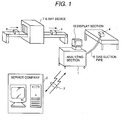
- Figure 1 is a conceptual diagram of a security system which is an embodiment of the present invention.
- Figure 2 is a block diagram of a security system which is an embodiment of the present invention.
- a security system consists of a terminal system 1 installed at a parcel inspection area of an airport, which is a user, and a support system 2 installed in a service company, which is an office for a security service business.
- the terminal system 1 and the support system 2 are connected via a communication line 3 so that they can send and receive information between each other.
- the terminal system 1 comprises a gas suction pipe 5 which takes in a trace of gas, which is a target to be inspected, leaking from a parcel 4 together with the ambient air, and a display section 15 which displays information, such as results of dangerous substance inspections.
- an X-ray device 7 is installed in an inspection area to photograph X-ray images of parcels 4 being moving along a belt conveyor 8 and to look at metals or the like through the fluoroscope.
- a target gas to be inspected is taken in and channeled into a gas sampling section 11 of the terminal system 1 via the gas suction pipe 5.
- the gas which has been sampled by the gas sampling section 11 is channeled into a mass spectrometric section 12 where a mass spectrometric process of the sample gas is conducted.
- Mass spectrometric data obtained by the mass spectrometric section 12 is sent to an explosives determination section (I) 14 via an operational and control section 13.
- the explosives determination section (I) 14 collates the mass spectrometric data with reference data I and determines whether or not the sample gas contains an explosive element.
- the determination section (I) 14 provides the first-stage determination (MS1) about the type of the element. This determination result is output to the operational and control section 13 and then displayed on the display section 15. Furthermore, when the determination result indicates the presence of an explosive, the operational and control section 13 issues a command to the mass spectrometric section 12 to change analysis conditions and conduct the second-stage analysis.
- the second-stage mass spectrometric data which is output from the mass spectrometric section 12 is output to a communication line 3 by the operational and control section 13 via a communication section 17.
- the communication section 17 organizes transmitted data into a specified transmission format, assigns a destination address, and then outputs the data to the communication line 3.
- the communication section 17 imports the data. It is preferable to provide a function to encrypt and decrypt data as the need arises. Moreover, the operational and control section 13 imports X-ray images of parcels from an X-ray device 7 and data on the parcel weight from a measuring device 9.
- the second-stage mass spectrometric data sent by the communication section 17 of the terminal system 1 is imported into the communication section 21 of the support system 2 via the communication line 3, and then sent to the explosives determination section (II) 23 via the operational and control section 22.
- the explosives determination section (II) 23 collates the second-stage mass spectrometric data with reference data II to provide the second-stage determination (MS2) that determines whether or not the sample gas contains an explosive element and identifies the type of the explosive if such an element is contained.
- the second-stage determination result is sent to the terminal system 1 via the operational and control section 22 and the communication section 21 and then displayed on the display section 15 of the terminal system 1.
- the communication section 21 has the same functions as the communication section 17 of the terminal system 1.
- the support system 2 comprises a database 24, a precautions guidance section 25 and an input section 26.
- the database 24 is structured to store mass spectrum data (MS1), mass spectrum data (MS2), mass spectrometric data (MS1), mass spectrometric data (MS2), maintenance and management data, and accounting data.
- the mass spectrometric section 12 consists of a sample gas intake section 31, a decompression chamber 32, and a high vacuum chamber 33.
- the sample gas intake section 31 absorbs a target gas to be inspected 30 by using a vacuum pump through an inlet to the sample gas flow path 34.
- a needle electrode 35 is placed in the opening 36 of the sample gas flow path 34. The needle electrode 35 releases electrons by corona discharge and ionizes oxygen in the air (primary ionization). If an element characteristic of an explosive is contained in the target gas 30, ionized oxygen reacts with the molecules characteristic of the explosive and then ionizes those molecules (secondary ionization).
- ions characteristic of explosives which have been generated under an atmospheric pressure are channeled through an opening 37 of the sample gas flow path 34 and through an opening 38 of the decompression chamber 32 into the decompression chamber 32, and then channeled through the opening 38 into the vacuum chamber 33.
- the ions characteristic of the explosive which have been channeled into the vacuum chamber 33 are carried through an ion convergence section 40 to an ion trapping section 41.
- the ion trapping section 41 consists of two end cap electrodes and one ring electrode.
- the trapped ions are released according to their mass as a result of being scanned by another high frequency voltage which has been applied to the end cap electrodes. Accordingly, it is possible to obtain a spectrum by detecting the released ions. Ions are stored in the electric field and released after a certain time duration (e.g. dozens of msec order). This integrated effect makes it possible to attain supersensitivity.
- ions parent ion characteristic of explosives are separated from an ion mixture, then the parent ions are collided with helium gas to convert their kinetic energy into internal energy so as to generate fragment ions (daughter ion) coming from the parent ions, and then the daughter ions are detected.
- MS1 mass spectrometric
- MS2 mass spectrometric
- a mass spectrum of daughter ions is measured, and based on the MS2 mass spectrometric data, it is determined whether or not an explosive is present.
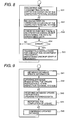
- Figure 5 illustrates a processing procedure for the terminal system 1
- Figure 6 illustrates a processing procedure for the support system 2.
- the terminal system 1 starts a series of processes in response to the inspection start command which is input from the input section 16 into the operational and control section 13.
- the operational and control section 13 issues a command to the gas sampling section 11 to sample a specified quantity of target gas to be inspected (S1).
- the sample gas is channeled into the mass spectrometric section 12 where the first-stage (MS1) mass spectrometric process is executed according to the procedure explained in Figure 4 (S2).
- the MS1 analysis provides a mass spectrum of sample gas elements as mass spectrometric data.
- the mass spectrometric section 12 outputs mass spectrometric data on ion elements (parent ion) characteristic of explosives.
- the operational and control section 13 imports the mass spectrometric data and sends it to the explosives determination section (I) 14 (S3).
- the explosives determination section (I) 14 has stored preset reference data I which corresponds to the mass of the ion elements (parent ion) characteristic of explosives. And, the explosives determination section (I) 14 collates the input mass spectrometric data with the reference data I to determine whether or not the corresponding element is present (S4).
- the determination result is displayed on the display section 5 via the operational and control section 13. When the determination result indicates "No explosive is present.”, the operational and control section 13 ends the processing (S6).
- the operational and control section 13 issues a command to the mass spectrometric section 12 to execute the second-stage (MS2) analysis (S6).
- the mass spectrometric section 12 executes the MS2 analysis (S7).
- MS2 analysis process only ion elements (parent ion) are separated from an ion mixture which has been trapped in the MS1 analysis process, then the parent ions are activated, and finally fragment ions (daughter ion) coming from the parent ions are detected. By doing this, reliability of the explosives determination function can be increased.
- the MS2 mass spectrometric data is sent to the communication section 17 via the operational and control section 13.
- the communication section 17 writes a command of executing MS2 determination together with MS2 mass spectrometric data into the transmission format addressed to the support system 2 and then outputs them to the communication line 3 (S8).
- the command of executing MS2 determination and mass spectrometric data which have sent to the support system 2 are received by the communication section 21 of the support system 2 via the communication line 3.
- the support system 2 confirms that the command of executing MS2 determination has been received by the operational and control section 22 (S11), imports the MS2 mass spectrometric data and then sends it to the explosives determination section (II) 23 (S12).
- the explosives determination section (II) 23 has stored preset reference data II which corresponds to the mass of the fragment ions (daughter ion) characteristic of explosives.
- the explosives determination section (II) 23 collates the input MS2 mass spectrometric data with reference data II to determine whether or not the corresponding element is present (S13).
- the MS2 determination result is sent to the communication section 21 via the operational and control section 22, is written into the transmission format addressed to the terminal system 1, and then output to the communication line 3 (S14).
- a report on the MS2 determination is registered in the database 24 together with the accounting data (S14).
- the MS2 determination result sent to the terminal system 1 is received by the communication section 17 of the terminal system 1 via the communication line 3 (S9). Then, the operational and control section 22 will display the MS2 determination result on the display section 15 (S10). After a series of processes is finished, the explosives inspection procedure will end. If the MS2 determination result indicates "An explosive is present.”, a precautions guidance function described later is activated.
- the security system mentioned above which detects an explosive by the mass spectrometric method, requires the relatively short inspection time and is highly reliable. Furthermore, because it employs a two-stage multiplex analysis (MS1/MS2) to inspect for an explosive, when the MS1 determination result indicates "No explosive is present.”, the inspection can be finished. As a result, the inspection time can be reduced thereby helping to prevent jams in an inspection area.
- MS1/MS2 two-stage multiplex analysis
- the terminal system 1 is equipped with the explosives determination section (II) 14, when the determination result indicates "No explosive is present.”, the time spent communicating with the support system 2 becomes unnecessary, which increases inspection efficiency. In the event that the MS1 determination result is doubtful, re-determination is to be conducted by executing an MS2 analysis. Consequently, reliability can be further increased.
- Figure 7 shows a processing procedure when the MS2 determination result indicates "An explosive is present.”
- single lines illustrate a processing block of the terminal system 1 and double lines illustrate a processing block of the support system 2.
- the terminal system 1 When the terminal system 1 receives the determination result that indicates the presence of an explosive from the support system 2, it issues a command to the X-ray device 7 and the measuring device 8 to request transmission of the weight and X-ray image (shape information) record of the parcel 4 being inspected so as to collect data. If no such record exists, the terminal system 1 requests that a measurement and X-ray photograph of the parcel 4 be made. Collected weight data and X-ray images are sent to the support system 2 via the communication section 17. The transmission procedure conducted by the communication section 17 are the same as mentioned above.
- the communication section 21 of the support system 2 receives the weight data and X-ray images of the parcel 4 and send them to the operational and control section 22.
- the operational and control section 22 sends the precautions guidance section 25 the weight data and X-ray images of the parcel 4 and the type of the explosive, which has been identified by the explosives determination section (11) 23, together with a command to create a guide to precautions against an explosive contained in the parcel 4.
- the precautions guidance section 25 calculates the weight of the explosive based on the weight and X-ray image of the parcel 4 and estimates the power of the explosion by considering the type of explosive. In this case, the presence or absence of a detonating device, such as a fuze or primer detonator, is determined by analyzing the pixel of the X-ray image.
- the created precautions guide is sent to the terminal system 1 by the operational and control section 22 via the communication section 21.
- the precautions guide for example, includes the following:
- Necessary precautions are determined depending on the composition and type of the explosive. When necessary precautions are determined, each of the precautions is prioritized.
- the terminal system 1 receives the precautions guide and sends it to the display section 15 to display the guide.
- the precautions guide can also be printed out. This enables inspectors to take precautions for evacuation or safeguards according to the precautions guide displayed on the display section 15 thereby protecting people from being harmed and ensuring safety. If a facility which protects against explosions, such as a protective shelter, is installed in an inspection area, the protective shelter will be automatically operated to confine the parcel containing the explosive so as to isolate the parcel from people.
- a user of the terminal system 1 can take proper precautions by referring to the precautions guide displayed on the display section 15 even though the user does not have sufficient technical knowledge about explosives.
- Figure 8 shows a flow chart of a processing procedure for the management of operation condition of the terminal system 1.
- single lines illustrate a processing block of the terminal system 1 and double lines illustrate a processing block of the support system 2.
- the operational and control section 13 of the support system 1 periodically collects data on operation condition of each section during normal operation.
- the collected operation condition data is then sent to the support system 2 via the communication section 17.
- the support system 2 receives the operation condition data of the terminal system 1 and stores it in the database.
- the operational and control section 22 checks the operation condition data of the terminal system 1 according to the maintenance and management data stored in the database 24, determines whether or not an error is present, and then registers the data in the database.
- the operational and control section 22 retrieves the checkup and adjustment procedures for correcting the error which have been stored in the maintenance and management data and sends them to the terminal system 1.
- the terminal system 1 checks the system according to the transmitted checkup and adjustment procedures and makes adjustments.
- the security service enterprise can dispatch checkup staff if necessary.
- a user of the terminal system 1 can be aided by the support system 2 from the security service enterprise even though the user does not have sufficient knowledge about operation management. As a consequence, the user can devote itself to inspection operations.
- Figure 9 shows a flow chart of updating the database 24.
- the support system 2 when the support system 2 obtains information for updating the database from a manufacturer of explosives via online or via other communication means (S41), the support system 2 updates data stored in its own database 24, and when the update data is related to the terminal system 1, the support system 2 sends the terminal system 1 an instruction to update its data (S42). In response to this, when the terminal system 1 receives the instruction to update its data, if the changes are for the reference data I, the terminal system 1 accesses the explosives determination section (I) 14 to update the reference data I. If the changes are for analysis conditions of MS1 or MS2, it accesses the mass spectrometric section 12 to update those analysis conditions (S43). When finishing the update, the terminal system 1 sends an update completion report to the support system 2 (S44). The support system 2 receives and confirms the database update completion report and then finishes the processing procedure (S45).
- Figure 10 shows a conceptual diagram of an embodiment of a security service business which employs the security system shown in Figure 2.
- this embodiment places a service company 51, which is an office of a security service enterprise, at its center and organically combines a user 52, detection system provider 53, a manufacturer of explosives 54, and organizations concerned 55, such as public authorities.
- the service company 51 supports various administrative tasks which include a variety of services, maintenance, and checkups associated with the inspection and determination of dangerous substances (explosives) and precautions to be taken so that it can receive payment for the cost which has been specified by a contract.
- the service company 51 purchases database update information from the detection system provider 53 and pays for the cost.
- the service company 51 also purchases a dangerous substance (explosives) treatment system (e.g. protective device, etc.) from a manufacturer of explosives 54 and pays for the cost. Moreover, in accordance with laws and regulations, the service company 51 notifies proper authorities concerned 55 and gives them information about explosives, specifically, the fact that an explosive has been detected and the identity of the explosive, such as type and quantity.
- a dangerous substance explosive
- the service company 51 notifies proper authorities concerned 55 and gives them information about explosives, specifically, the fact that an explosive has been detected and the identity of the explosive, such as type and quantity.
- the detection system provider 53 furnishes the user 52 with a detection system for the terminal system 1 and receives payment for the purchase cost.
- the manufacturer of explosives 54 provides the detection system provider 53 with information on explosives and samples which are useful for updating the database of the detection system and improving the system. Then, the detection system provider 53 provides the algorithm and database for detecting explosives. Furthermore, the manufacturer of explosives 54 receives information about altered explosives from the proper authorities concerned 55, and then to utilize the information for the security system, the manufacturer of explosives 54 notifies the service company 51 and the detection system provider 53 of various information and changes to the database.
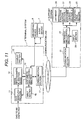
- Figure 11 shows a block diagram of a security system which is another embodiment of the present invention
- Figure 12 and Figure 13 show the flow charts of the processing procedure.
- the difference between this embodiment and the embodiment shown in Figure 2 through Figure 9 is that the explosives determination section (I) 14 of the terminal system 1 is moved to the support system 2.
- the explosives determination section (I) 27 of the support system 2 is not different from the explosives determination section (I) 14.
- both MS1 and MS2 analysis data is transmitted to the support system 2, and then the support system 2 checks and determines the both MS1 and MS2 analysis data.
- the terminal system 1 starts a series of processes in response to the inspection start command which is input into the operational and control section 13 from the input section 16.
- the operational and control section 13 issues a command to the gas sampling section 11 to sample a specified quantity of the target gas to be inspected (S61).
- the sample gas is channeled into the mass spectrometric section 12 where the first-stage (MS1) mass spectrometric process is executed according to the procedures described in Figure 4 (S62).
- MS1 mass spectrometric data obtained by the MS1 analysis is sent to the support system 2 together with a command of executing MS1 determination by the operational and control section 13 (S63).
- the support system 2 when receiving the command of executing MS1 determination (S71), the support system 2 sends mass spectrometric data to the explosives determination section (I) 27 to execute the determination (S72).
- the explosives determination section (I) 27 collates the input mass spectrometric data with reference data I to determine whether or not the corresponding element is present (S73).
- the determination result is sent to the terminal system 1 via the operational and control section 22 (S74).
- the operational and control section 22 stores the determination result and accounting data in the database 24.
- the accounting data is also sent to the terminal system 1.
- the terminal system 1 receives the MS1 determination result (S64) and displays the result on the display section 15 (S65).
- the operational and control section 13 finishes processing.
- the operational and control section 13 sends a command to the mass spectrometric section 12 to execute the second-stage (MS2) analysis (S66).
- the mass spectrometric section 12 executes the MS2 analysis (S67).
- the MS2 mass spectrometric data and the command of executing determination are sent to the support system 2 via the communication section 17 (S68).
- the support system 2 confirms that the command of executing MS2 determination has been received by the operational and control section 22 (S11), imports the MS2 mass spectrometric data and then sends it to the explosives determination section (II) 23 (S12).
- the explosives determination section (II) 23 collates the input MS2 mass spectrometric data with reference data II to determine whether or not the corresponding element is present (S13).
- the MS2 determination result is sent to the communication section 21 via the operational and control section 22 and then output to the communication line 3 (S14).
- a report on the MS2 determination is registered in the database 24 together with the accounting data (S14).
- accounting data on the determination cost to the terminal system 1.
- the operational and control section 22 of the terminal system 1 receives the MS2 determination result via a communication line 3 (S69) and displays the result on the display section 15 (S70). After a series of processes is finished, the explosives inspection procedure will end. If the MS2 determination result indicates "An explosive is present.”, a precautions guidance function described in Figure 7 is activated.
- this embodiment has an advantage of being able to avoid leaks of confidential information, such as know-how related to explosives determination (I) because the service company's support system 2 can store reference data I and II which are required for the explosives determination.
- confidential information such as know-how related to explosives determination (I) because the service company's support system 2 can store reference data I and II which are required for the explosives determination.
- the operational and control section 13 or the operational and control section 22 issues a command to the mass spectrometric section 12 to execute MS2.
- the present invention when the present invention is applied to explosives detection, it is possible to program for the mass spectrometric section 12 to continuously conduct MS1 and MS2 mass spectrometric processes. For inspecting for an explosive, it is possible to specify MS2 analysis conditions without waiting for the MS1 mass spectrometry result.
- the operational and control section 13 temporarily saves mass spectrometric data I and II which is continuously output from the mass spectrometric section 12, and in the event that the MS1 determination result indicates the presence of an explosive, the operational and control section 13 outputs mass spectrometric data II to the explosives determination section (II).
- FIG 14 shows a conceptual diagram of a security system which is another embodiment of the present invention. This embodiment is applied to a security system for inspecting suspicious objects located at ordinary places.
- the terminal system 1 and the support system 2 are the same as the embodiment shown in Figure 2 through Figure 9.
- the terminal system 1 absorbs the ambient air around a bag 9 by means of a suction pipe and then inspects for the presence or absence of a dangerous substance.
- X-ray devices are not always installed and it is expected that a portable X-ray device 10 will be provided by a service company.
- the present invention is not limited to detecting explosives, but can be adopted by a security service business of inspecting dangerous substances and providing precautions to be taken.
- dangerous substances include gunpowder, poisonous gases, inflammables, and other material which are generally harmful to people and society. Inspections for the presence or absence of such material and determination of the type of the material can be done by using mass spectrometry to detect ion elements characteristic of the material, in the same manner as the inspection of explosives mentioned above.
- the present invention it is possible to employ a security system thereby making society safer. It is also possible to increase inspection speed and reliability. Furthermore, in cases where the system can display a precautions guide when explosives are detected, it is possible to ensure the safety of inspection staff located in an inspection area.
Landscapes
- Chemical & Material Sciences (AREA)
- Analytical Chemistry (AREA)
- Emergency Management (AREA)
- Physics & Mathematics (AREA)
- Environmental & Geological Engineering (AREA)
- General Health & Medical Sciences (AREA)
- Toxicology (AREA)
- Business, Economics & Management (AREA)
- Health & Medical Sciences (AREA)
- Engineering & Computer Science (AREA)
- General Physics & Mathematics (AREA)
- Other Investigation Or Analysis Of Materials By Electrical Means (AREA)
- Analysing Materials By The Use Of Radiation (AREA)
- Management, Administration, Business Operations System, And Electronic Commerce (AREA)
- Sampling And Sample Adjustment (AREA)
- Emergency Alarm Devices (AREA)
- Data Exchanges In Wide-Area Networks (AREA)
- Telephonic Communication Services (AREA)
Abstract
Description
This method requires only several seconds to detect an explosive (e.g. 3 to 8 seconds). And the reliability can be increased further by employing a multiplex analysis (MS/MS). In the multiplex analysis, only ions (parent ion) characteristic of explosives are separated from an ion mixture, then the parent ions are collided with helium gas to convert their kinetic energy into internal energy so as to generate fragment ions (daughter ion) coming from the parent ions, and then the daughter ions are detected.
The determination result is displayed on the
Moreover, in accordance with laws and regulations, the
Claims (13)
- A security terminal system, comprising sampling means for sampling gases including the ambient air around a target object to be inspected, mass spectrometric means for analyzing the mass of the target gas to be inspected which has been sampled by said sampling means, communication means for sending and receiving information via a communication line, display means for displaying information, and control means for controlling said each means, wherein said control means outputs mass spectrometric data, which has been analyzed by said mass spectrometric means, to a communication line via said communication means, imports the determination result of a dangerous substance associated with said mass spectrometric data which has been received by said communication means via said communication line and then displays the result on said display means.
- A security terminal system, comprising sampling means for sampling gases including the ambient air around a target object to be inspected, mass spectrometric means for analyzing the mass of the target gas to be inspected which has been sampled by said sampling means, determination means for determining whether or not a dangerous substance is present in the target gas and identifying the type of the substance, based on the mass spectrometric data which has been analyzed by said mass spectrometric means, communication means for sending and receiving information via a communication line, display means for displaying information, and control means for controlling said each means, wherein when the determination result by said determination means indicates the presence of a dangerous substance, said control means issues a command to said mass spectrometric means to change analysis conditions and execute a mass spectrometric process, outputs the revised mass spectrometric data, which has been analyzed by said mass spectrometric means, to a communication line via said communication means, imports the determination result of a dangerous substance associated with said revised mass spectrometric data received by said communication means via said communication line and then displays the result on said display means.
- A security terminal system as claimed in Claim 1 or 2, further comprising a measuring device that measures the weight of said target object to be inspected, and an X-ray device that photographs an X-ray image of said target object,
wherein when the determination result by said determination means indicates the presence of a dangerous substance, said control means imports the weight and X-ray image of said target object from said measuring device and said X-ray device, sends them to a communication line via said communication means and then displays a guide to precautions against said dangerous substance, on said display means, which has been received by said communication means via said communication line. - A security support system, comprising determination means for determining whether or not a dangerous substance is present and identifying the type of the substance by collating mass spectrometric data of a mass spectrum with the reference data used for the determination of the dangerous substance, communication means for sending and receiving information via a communication line, and control means for controlling said each means,
wherein said control means inputs said mass spectrometric data received by said communication means into said determination means and then outputs the determination result which is output by said determination means to said communication line via said communication means. - A security support system, comprising first determination means for at least determining whether or not a dangerous substance is present by collating first mass spectrometric data of the target gas to be inspected with the first reference data used for the determination of the dangerous substance, second determination means for determining whether or not a dangerous substance is present and identifying the type of the substance by collating second mass spectrometric data of the target gas with the second reference data used for the determination of the dangerous substance, communication means for sending and receiving information via a communication line, and control means for controlling said each means,
wherein said control means inputs first mass spectrometric data received by said communication means into said first determination means, and outputs the first determination result which is output by said first determination means to said communication line via said communication means, and when said first determination result indicates the presence of a dangerous substance, said control means issues a command to change analysis conditions and measure second mass spectrometric data to a communication line via said communication means. - A security support system as claimed in Claim 4 or 5, further comprising means for creating a guide to precautions against dangerous substances based on the weight and X-ray image of said dangerous substance, the type and shape of said dangerous substance and its storage vessel information which are received by said communication line via said communication means when the determination result indicates the presence of a dangerous substance,
wherein said control means outputs said precautions guide to said communication line via said communication means. - A security system consisting of a terminal system and a support system being connected to each other via a communication line so that they can communicate with each other,
wherein said terminal system comprises sampling means for sampling gases including the ambient air around a target object to be inspected, mass spectrometric means for analyzing the mass of the target gas to be inspected which has been sampled by said sampling means, communication means for sending and receiving information via a communication line, display means for displaying information, and terminal system control means for controlling said each means,said terminal system control means outputting mass spectrometric data analyzed by said mass spectrometric means to a communication line via said communication means, importing the determination result of a dangerous substance associated with said mass spectrometric data received by said communication means via said communication line and then displaying the result on said display means; andsaid support system comprises determination means for determining whether or not a dangerous substance is present and identifying the type of the substance by collating mass spectrometric data of a mass spectrum with the reference data used for the determination of the dangerous substance, communication means for sending and receiving information via a communication line, and support system control means for controlling said each means,said support system control means inputting said mass spectrometric data received by said communication means into said determination means and then outputting the determination result output by said determination means to said communication line via said communication means. - A security system consisting of a terminal system and a support system being connected to each other via a communication line so that they can communicate with each other,
wherein said terminal system comprises sampling means for sampling gases including the ambient air around a target object to be inspected, mass spectrometric means for analyzing the mass of the target gas to be inspected which has been sampled by said sampling means, first determination means for determining whether or not a dangerous substance is present in the target gas and identifying the type of the substance by collating first mass spectrometric data analyzed by said mass spectrometric means with first reference data used for the determination of the dangerous substance, communication means for sending and receiving information via a communication line, display means for displaying information, and terminal system control means for controlling said each means,said terminal system control means issuing a command to said mass spectrometric means to change analysis conditions and execute second mass spectrometric process when the determination result by said first determination means indicates the presence of a dangerous substance, outputting second mass spectrometric data analyzed by said mass spectrometric means to a communication line via said communication means, importing the determination result of the dangerous substance associated with said second mass spectrometric data received by said communication means via said communication line and then displaying the result on said display means; andsaid support system comprises second determination means for determining whether or not a dangerous substance is present and identifying the type of the substance by collating said second mass spectrometric data with second reference data used for the determination of the dangerous substance, communication means for sending and receiving information via a communication line, and support system control means for controlling said each means,said support system control means inputting said second mass spectrometric data received by said communication means into said second determination means and outputting the determination result output by said determination means to said communication line via said communication means. - A security system consisting of a terminal system and a support system being connected to each other via a communication line so that they can communicate with each other,
wherein said terminal system comprises sampling means for sampling gases including the ambient air around a target object to be inspected, mass spectrometric means for analyzing the mass of the target gas to be inspected which has been sampled by said sampling means, communication means for sending and receiving information via a communication line, display means for displaying information, and terminal system control means for controlling said each means,said terminal system control means outputting first mass spectrometric data analyzed by said mass spectrometric means to a communication line via said communication means, importing the determination result of the dangerous substance associated with said first mass spectrometric data received by said communication means via said communication line and displaying the result on said display means, and issuing a command to said mass spectrometric means to change analysis conditions and execute second mass spectrometric process when said determination result indicates the presence of a dangerous substance, then outputting second mass spectrometric data analyzed by said mass spectrometric means to a communication line via said communication means, importing the determination result of the dangerous substance associated with said second mass spectrometric data received by said communication means via said communication line and then displaying the result on said display means; andsaid support system comprises first determination means for at least determining whether or not a dangerous substance is present by collating first mass spectrometric data of the target gas to be inspected with the first reference data used for the determination of the dangerous substance, second determination means for determining whether or not a dangerous substance is present and identifying the type of the substance by collating second mass spectrometric data of the target gas with the second reference data used for the determination of the dangerous substance, communication means for sending and receiving information via a communication line, and support system control means for controlling said each means,said support system control means inputting first mass spectrometric data received by said communication means into said first determination means, outputting the first determination result output by said first determination means to said communication line via said communication means, and then issuing a command to change analysis conditions and measure second mass spectrometric data to a communication line via said communication means when said first determination result indicates the presence of a dangerous substance. - A security system as claimed in any one of Claims 7 through 9, whereinsaid terminal system further comprises a measuring device that measures the weight of said target object to be inspected, and an X-ray device that photographs an X-ray image of said target object,said terminal system control means, when the determination result by said determination means indicates the presence of a dangerous substance, importing the weight and X-ray image of said target object from said measuring device and said X-ray device, sending them to a communication line via said communication means and then displaying a guide to precautions against said dangerous substance, on said display means, which has been received by said communication means via said communication line; andsaid support system further comprises means for creating a guide to precautions against dangerous substances based on the weight and X-ray image of said dangerous substance, the type and shape of said dangerous substance and its storage vessel information received by said communication line via said communication means when the determination result indicates the presence of a dangerous substance,said support system control means outputting said precautions guide to said communication line via said communication means.
- A method of security service business wherein a terminal system equipped with mass spectrometric means is installed in an inspection area and a support system for determining whether or not a dangerous substance is present and identifying the type of the substance based on the mass spectrometric data on the target element which is measured by said mass spectrometric means is installed in an office at a security service enterprise; said terminal system and said support system being connected to each other via a communication line so that they can communicate with each other, and said support system sending the determination result the dangerous substance to said terminal system via said communication network.
- A method of security service business as claimed in Claim 11, wherein said support system sends billing data for determination cost together with said determination result to said terminal system.
- A method of security service business which provides a user with mass spectrometric means for analyzing the mass of the target element to be inspected either at the user's expense or free of charge, receives, via a communication line, mass spectrometric data which has been analyzed by said mass spectrometric means, collates the received data with the reference data related to dangerous substances, and then sends the checked results to said user.
Applications Claiming Priority (2)
| Application Number | Priority Date | Filing Date | Title |
|---|---|---|---|
| JP2001204668A JP3855153B2 (en) | 2001-07-05 | 2001-07-05 | Security system |
| JP2001204668 | 2001-07-05 |
Publications (2)
| Publication Number | Publication Date |
|---|---|
| EP1275956A2 true EP1275956A2 (en) | 2003-01-15 |
| EP1275956A3 EP1275956A3 (en) | 2004-02-18 |
Family
ID=19041100
Family Applications (1)
| Application Number | Title | Priority Date | Filing Date |
|---|---|---|---|
| EP02003920A Withdrawn EP1275956A3 (en) | 2001-07-05 | 2002-02-21 | Security system and method of security service business |
Country Status (7)
| Country | Link |
|---|---|
| US (1) | US7091870B2 (en) |
| EP (1) | EP1275956A3 (en) |
| JP (1) | JP3855153B2 (en) |
| KR (1) | KR100494297B1 (en) |
| IL (1) | IL148352A (en) |
| NO (1) | NO20020971L (en) |
| RU (1) | RU2236041C2 (en) |
Families Citing this family (26)
| Publication number | Priority date | Publication date | Assignee | Title |
|---|---|---|---|---|
| US8173431B1 (en) | 1998-11-13 | 2012-05-08 | Flir Systems, Inc. | Mail screening to detect mail contaminated with biological harmful substances |
| US7583710B2 (en) * | 2001-01-30 | 2009-09-01 | Board Of Trustees Operating Michigan State University | Laser and environmental monitoring system |
| US7734066B2 (en) * | 2003-11-19 | 2010-06-08 | L-3 Communications Security And Detection Systems, Inc. | Security system with distributed computing |
| JP4515819B2 (en) * | 2003-08-13 | 2010-08-04 | 株式会社日立ハイテクノロジーズ | Mass spectrometry system |
| US7473892B2 (en) | 2003-08-13 | 2009-01-06 | Hitachi High-Technologies Corporation | Mass spectrometer system |
| US7366281B2 (en) * | 2003-11-12 | 2008-04-29 | Ge Invision Inc. | System and method for detecting contraband |
| JP4515134B2 (en) * | 2004-04-06 | 2010-07-28 | 成田国際空港株式会社 | Airline baggage management system |
| US7337686B2 (en) * | 2004-09-10 | 2008-03-04 | Qylur Security Systems, Inc. | Multi-threat detection system |
| JP4620446B2 (en) * | 2004-12-24 | 2011-01-26 | 株式会社日立ハイテクノロジーズ | Mass spectrometry method, mass spectrometry system, diagnostic system, inspection system, and mass spectrometry program |
| US20090019957A1 (en) * | 2005-04-21 | 2009-01-22 | Ishak Kalman Eisenman | Method and system for detecting bombs in trash cans |
| RU2303818C1 (en) * | 2006-01-10 | 2007-07-27 | Николай Борисович Болотин | Method for provision of object safety and system realizing it |
| JP4241734B2 (en) * | 2006-01-11 | 2009-03-18 | 三菱重工業株式会社 | Security gate system and security gate control method |
| JP4500780B2 (en) * | 2006-02-13 | 2010-07-14 | 株式会社日立製作所 | Security system, terminal system of the same system, and support system |
| RU2349961C2 (en) * | 2007-03-26 | 2009-03-20 | Николай Борисович Болотин | Method of provision of object safety |
| US8047053B2 (en) | 2007-05-09 | 2011-11-01 | Icx Technologies, Inc. | Mail parcel screening using multiple detection technologies |
| RU2351922C1 (en) * | 2007-12-12 | 2009-04-10 | Общество с ограниченной ответственностью "Лаванда-Ю" | Device for detection of dangerous substances on hands of person or documents |
| JP5183221B2 (en) | 2008-01-22 | 2013-04-17 | 株式会社日立製作所 | Security system, security center apparatus, and security management method |
| JP5010501B2 (en) * | 2008-02-28 | 2012-08-29 | 三菱重工業株式会社 | Inspection system |
| US8243274B2 (en) * | 2009-03-09 | 2012-08-14 | Flir Systems, Inc. | Portable diesel particulate monitor |
| IT1398577B1 (en) * | 2010-03-05 | 2013-03-01 | Finmeccanica Societa Per Azioni | SYSTEM FOR SURVEILLANCE OF AN AREA WITHIN WHICH PEOPLE TRANSIT |
| RU2438184C1 (en) * | 2010-08-03 | 2011-12-27 | Геннадий Николаевич Лукьянов | Fire alarm sensor |
| RU2463664C1 (en) * | 2011-05-25 | 2012-10-10 | Владимир Андреевич Куделькин | Method and system to maintain airport safety |
| JP5813520B2 (en) * | 2012-01-24 | 2015-11-17 | 成田空港警備株式会社 | Mobile inspection vehicle and inspection method |
| EP3099061A4 (en) | 2014-01-23 | 2017-08-23 | Hitachi Kokusai Electric Inc. | Image search system and image search method |
| US10048172B2 (en) * | 2014-03-24 | 2018-08-14 | Hitachi, Ltd. | Substance-testing apparatus, substance-testing system, and substance-testing method |
| CN112666092A (en) * | 2020-12-02 | 2021-04-16 | 中国科学院新疆理化技术研究所 | Method for detecting and identifying explosives with high anti-interference performance and application thereof |
Family Cites Families (24)
| Publication number | Priority date | Publication date | Assignee | Title |
|---|---|---|---|---|
| US4008388A (en) * | 1974-05-16 | 1977-02-15 | Universal Monitor Corporation | Mass spectrometric system for rapid, automatic and specific identification and quantitation of compounds |
| JPS57148866A (en) * | 1981-03-11 | 1982-09-14 | Hitachi Ltd | Quadrupole mass spectrograph |
| US4795253A (en) * | 1987-04-24 | 1989-01-03 | Mobay Corporation | Remote sensing gas analyzer |
| US5068798A (en) * | 1989-03-03 | 1991-11-26 | Precision Systems, Inc. | Process environment monitoring system |
| US5270945A (en) * | 1989-03-03 | 1993-12-14 | Precision Systems, Inc. | Process environment monitoring system |
| US4999498A (en) * | 1989-06-05 | 1991-03-12 | Mobay Corporation | Remote sensing gas analyzer |
| JPH04129157A (en) * | 1990-09-19 | 1992-04-30 | Hitachi Ltd | Analysis condition setting device for mass analysis device |
| US5164998A (en) * | 1991-03-04 | 1992-11-17 | Reinsch Roger A | Apparatus and method for image pattern analysis |
| NZ237767A (en) * | 1992-04-09 | 1994-09-27 | Inst Geolog Nuclear Sciences | Luggage scanning by fast neutrons and gamma radiation |
| KR920704134A (en) * | 1992-06-08 | 1992-12-19 | ||
| JP3317111B2 (en) | 1995-10-24 | 2002-08-26 | トヨタ自動車株式会社 | Automatic baggage handling equipment |
| US6138082A (en) * | 1996-12-20 | 2000-10-24 | The Perkin Elmer Corporation | Standardizing between analytical instruments |
| US6003010A (en) * | 1997-03-21 | 1999-12-14 | Scolly; Robert A. | Apparatus and method for improved airborne transportation of small packages |
| US6147348A (en) * | 1997-04-11 | 2000-11-14 | University Of Florida | Method for performing a scan function on quadrupole ion trap mass spectrometers |
| JP3101586B2 (en) | 1997-06-02 | 2000-10-23 | 株式会社セタ | Home medical system and medical device used for this system |
| JPH1114576A (en) | 1997-06-25 | 1999-01-22 | Toshiba Corp | Method and apparatus for diagnosing deterioration of mounting board |
| KR19990017304A (en) * | 1997-08-22 | 1999-03-15 | 구자홍 | Telemedicine system |
| RU2152104C1 (en) * | 1998-05-15 | 2000-06-27 | Войсковая часть 75360 | Pulse radiation-optical gaseous-discharge luminescent transducer |
| RU2145096C1 (en) * | 1998-06-08 | 2000-01-27 | Корпорация "Диалог Интернэшнл Инк" | Gas coordinate electroluminescent detector |
| JP2000028579A (en) | 1998-07-08 | 2000-01-28 | Hitachi Ltd | Sample gas sampling device and dangerous substance detection device |
| JP2001093059A (en) * | 1999-09-16 | 2001-04-06 | Applied Materials Inc | Gas leak detection device and method |
| EP2296167B1 (en) * | 1999-09-20 | 2012-11-07 | Hitachi, Ltd. | Ion source, mass spectrometer, detector and monitoring system |
| JP4452783B2 (en) | 1999-10-07 | 2010-04-21 | 学校法人日本大学 | Cirrhosis test method and apparatus using breath analysis apparatus |
| KR100434777B1 (en) * | 2001-04-07 | 2004-06-09 | 맹일희 | Remote Medical Examination System for Skin Administration on Internet and method for employment thereof |
-
2001
- 2001-07-05 JP JP2001204668A patent/JP3855153B2/en not_active Expired - Fee Related
-
2002
- 2002-02-21 EP EP02003920A patent/EP1275956A3/en not_active Withdrawn
- 2002-02-21 US US10/078,374 patent/US7091870B2/en not_active Expired - Fee Related
- 2002-02-25 IL IL148352A patent/IL148352A/en not_active IP Right Cessation
- 2002-02-27 RU RU2002104958/09A patent/RU2236041C2/en not_active IP Right Cessation
- 2002-02-27 NO NO20020971A patent/NO20020971L/en not_active Application Discontinuation
- 2002-02-27 KR KR10-2002-0010632A patent/KR100494297B1/en not_active Expired - Fee Related
Also Published As
| Publication number | Publication date |
|---|---|
| KR20030004986A (en) | 2003-01-15 |
| NO20020971L (en) | 2003-01-06 |
| NO20020971D0 (en) | 2002-02-27 |
| JP3855153B2 (en) | 2006-12-06 |
| US7091870B2 (en) | 2006-08-15 |
| RU2002104958A (en) | 2004-02-10 |
| IL148352A0 (en) | 2002-09-12 |
| KR100494297B1 (en) | 2005-06-10 |
| IL148352A (en) | 2006-08-20 |
| RU2236041C2 (en) | 2004-09-10 |
| US20030009661A1 (en) | 2003-01-09 |
| JP2003014695A (en) | 2003-01-15 |
| EP1275956A3 (en) | 2004-02-18 |
Similar Documents
| Publication | Publication Date | Title |
|---|---|---|
| US7091870B2 (en) | Security system and method of security service business | |
| CN100445767C (en) | security checkpoint | |
| JP5183221B2 (en) | Security system, security center apparatus, and security management method | |
| Rhykerd | Guide for the selection of commercial explosives detection systems for law enforcement applications | |
| CN101300845A (en) | Threat detection and monitoring apparatus with integrated display system | |
| RU2463664C1 (en) | Method and system to maintain airport safety | |
| US20120294483A1 (en) | Image Analysis for Disposal of Explosive Ordinance and Safety Inspections | |
| EP1418611A1 (en) | Chemical agent detection apparatus and method | |
| RU111939U1 (en) | AIRPORT SECURITY SYSTEM | |
| JP4500780B2 (en) | Security system, terminal system of the same system, and support system | |
| McDonald et al. | Developments and applications of field mass spectrometers | |
| Mander et al. | Current state of the practice for facility siting studies | |
| Parmeter | Guide for the selection of drug detectors for law enforcement applications | |
| Neudorfl et al. | Research programme on explosives vapour detection at NRC | |
| Elias et al. | On-site sampling and detection of drug particulates | |
| Snyder et al. | Mobile Munitions Assessment System Field Capabilities | |
| Edelia et al. | Baker Engineering and Risk Consultants, Inc. | |
| Khattatov | Development, calibration and deployment of an airborne chemical ionization mass spectrometer for trace gas measurements | |
| WO2019165024A1 (en) | Mass spectrometer method and apparatus for monitoring for tatp | |
| Bach et al. | US Army Environmental Center’s Development of AP-42 Emission Factors for Munitions Use | |
| Cross et al. | Hydrazine monitoring in spacecraft | |
| Krausa et al. | equipment makes about 10-13 g/cm3 for ion mobility spectroscopy and achieves 10-14-10-16 g/cm3 for | |
| Kinser | Engineering materials: a bibliography | |
| Mass | Іммо% 7/V/15 DOE/EM-0421 | |
| Reznev | Methods of Detection of Vapors and Traces of Explosives: A Modern Condition and Perspectives of Researches and Development |
Legal Events
| Date | Code | Title | Description |
|---|---|---|---|
| PUAI | Public reference made under article 153(3) epc to a published international application that has entered the european phase |
Free format text: ORIGINAL CODE: 0009012 |
|
| AK | Designated contracting states |
Kind code of ref document: A2 Designated state(s): AT BE CH CY DE DK ES FI FR GB GR IE IT LI LU MC NL PT SE TR |
|
| AX | Request for extension of the european patent |
Free format text: AL;LT;LV;MK;RO;SI |
|
| PUAL | Search report despatched |
Free format text: ORIGINAL CODE: 0009013 |
|
| AK | Designated contracting states |
Kind code of ref document: A3 Designated state(s): AT BE CH CY DE DK ES FI FR GB GR IE IT LI LU MC NL PT SE TR |
|
| AX | Request for extension of the european patent |
Extension state: AL LT LV MK RO SI |
|
| RIC1 | Information provided on ipc code assigned before grant |
Ipc: 7H 01J 49/42 B Ipc: 7G 06F 17/00 B Ipc: 7H 01J 49/04 B Ipc: 7H 01J 49/02 A |
|
| 17P | Request for examination filed |
Effective date: 20040811 |
|
| AKX | Designation fees paid |
Designated state(s): DE FI FR GB NL SE |
|
| 17Q | First examination report despatched |
Effective date: 20090213 |
|
| STAA | Information on the status of an ep patent application or granted ep patent |
Free format text: STATUS: THE APPLICATION IS DEEMED TO BE WITHDRAWN |
|
| 18D | Application deemed to be withdrawn |
Effective date: 20090624 |