EP1274086A2 - System and method for jumping to a time point in an MPEG file - Google Patents
System and method for jumping to a time point in an MPEG file Download PDFInfo
- Publication number
- EP1274086A2 EP1274086A2 EP02011992A EP02011992A EP1274086A2 EP 1274086 A2 EP1274086 A2 EP 1274086A2 EP 02011992 A EP02011992 A EP 02011992A EP 02011992 A EP02011992 A EP 02011992A EP 1274086 A2 EP1274086 A2 EP 1274086A2
- Authority
- EP
- European Patent Office
- Prior art keywords
- file
- storage
- calculating
- estimated
- timepoint
- Prior art date
- Legal status (The legal status is an assumption and is not a legal conclusion. Google has not performed a legal analysis and makes no representation as to the accuracy of the status listed.)
- Granted
Links
Images
Classifications
-
- H—ELECTRICITY
- H04—ELECTRIC COMMUNICATION TECHNIQUE
- H04N—PICTORIAL COMMUNICATION, e.g. TELEVISION
- H04N21/00—Selective content distribution, e.g. interactive television or video on demand [VOD]
- H04N21/80—Generation or processing of content or additional data by content creator independently of the distribution process; Content per se
- H04N21/83—Generation or processing of protective or descriptive data associated with content; Content structuring
- H04N21/845—Structuring of content, e.g. decomposing content into time segments
- H04N21/8455—Structuring of content, e.g. decomposing content into time segments involving pointers to the content, e.g. pointers to the I-frames of the video stream
-
- G—PHYSICS
- G11—INFORMATION STORAGE
- G11B—INFORMATION STORAGE BASED ON RELATIVE MOVEMENT BETWEEN RECORD CARRIER AND TRANSDUCER
- G11B21/00—Head arrangements not specific to the method of recording or reproducing
- G11B21/02—Driving or moving of heads
- G11B21/08—Track changing or selecting during transducing operation
- G11B21/081—Access to indexed tracks or parts of continuous track
- G11B21/083—Access to indexed tracks or parts of continuous track on discs
-
- G—PHYSICS
- G11—INFORMATION STORAGE
- G11B—INFORMATION STORAGE BASED ON RELATIVE MOVEMENT BETWEEN RECORD CARRIER AND TRANSDUCER
- G11B27/00—Editing; Indexing; Addressing; Timing or synchronising; Monitoring; Measuring tape travel
- G11B27/10—Indexing; Addressing; Timing or synchronising; Measuring tape travel
- G11B27/102—Programmed access in sequence to addressed parts of tracks of operating record carriers
- G11B27/105—Programmed access in sequence to addressed parts of tracks of operating record carriers of operating discs
-
- G—PHYSICS
- G11—INFORMATION STORAGE
- G11B—INFORMATION STORAGE BASED ON RELATIVE MOVEMENT BETWEEN RECORD CARRIER AND TRANSDUCER
- G11B27/00—Editing; Indexing; Addressing; Timing or synchronising; Monitoring; Measuring tape travel
- G11B27/10—Indexing; Addressing; Timing or synchronising; Measuring tape travel
- G11B27/19—Indexing; Addressing; Timing or synchronising; Measuring tape travel by using information detectable on the record carrier
- G11B27/28—Indexing; Addressing; Timing or synchronising; Measuring tape travel by using information detectable on the record carrier by using information signals recorded by the same method as the main recording
- G11B27/30—Indexing; Addressing; Timing or synchronising; Measuring tape travel by using information detectable on the record carrier by using information signals recorded by the same method as the main recording on the same track as the main recording
- G11B27/3027—Indexing; Addressing; Timing or synchronising; Measuring tape travel by using information detectable on the record carrier by using information signals recorded by the same method as the main recording on the same track as the main recording used signal is digitally coded
-
- H—ELECTRICITY
- H04—ELECTRIC COMMUNICATION TECHNIQUE
- H04N—PICTORIAL COMMUNICATION, e.g. TELEVISION
- H04N5/00—Details of television systems
- H04N5/76—Television signal recording
- H04N5/78—Television signal recording using magnetic recording
- H04N5/782—Television signal recording using magnetic recording on tape
- H04N5/783—Adaptations for reproducing at a rate different from the recording rate
-
- H—ELECTRICITY
- H04—ELECTRIC COMMUNICATION TECHNIQUE
- H04N—PICTORIAL COMMUNICATION, e.g. TELEVISION
- H04N7/00—Television systems
- H04N7/16—Analogue secrecy systems; Analogue subscription systems
- H04N7/173—Analogue secrecy systems; Analogue subscription systems with two-way working, e.g. subscriber sending a programme selection signal
- H04N7/17309—Transmission or handling of upstream communications
- H04N7/17336—Handling of requests in head-ends
-
- G—PHYSICS
- G11—INFORMATION STORAGE
- G11B—INFORMATION STORAGE BASED ON RELATIVE MOVEMENT BETWEEN RECORD CARRIER AND TRANSDUCER
- G11B2220/00—Record carriers by type
- G11B2220/20—Disc-shaped record carriers
- G11B2220/25—Disc-shaped record carriers characterised in that the disc is based on a specific recording technology
- G11B2220/2537—Optical discs
- G11B2220/2562—DVDs [digital versatile discs]; Digital video discs; MMCDs; HDCDs
-
- H—ELECTRICITY
- H04—ELECTRIC COMMUNICATION TECHNIQUE
- H04N—PICTORIAL COMMUNICATION, e.g. TELEVISION
- H04N9/00—Details of colour television systems
- H04N9/79—Processing of colour television signals in connection with recording
- H04N9/80—Transformation of the television signal for recording, e.g. modulation, frequency changing; Inverse transformation for playback
- H04N9/804—Transformation of the television signal for recording, e.g. modulation, frequency changing; Inverse transformation for playback involving pulse code modulation of the colour picture signal components
- H04N9/8042—Transformation of the television signal for recording, e.g. modulation, frequency changing; Inverse transformation for playback involving pulse code modulation of the colour picture signal components involving data reduction
Definitions
- the present invention relates generally to digital audio and/or video data storage and playback, and, more particularly, to seeking a particular time point within a Moving Pictures Expert Group (MPEG) file.
- MPEG Moving Pictures Expert Group
- MPEG is a popular standard for the recording and playback of digitally stored audio-visual files.
- the MPEG format provides an effective mechanism for efficiently compressing and decompressing digital video and/or audio signals and for supplying the decompressed signals to a playback mechanism for viewing.
- MPEG MPEG
- MPEG MPEG
- the term "MPEG” will be used herein to reference video and/or audio encoding and decoding algorithms and protocols promulgated in old, current, and future versions of MPEG.
- MPEG plays back the stored audio-visual content at a constant frame rate
- the standard stores the audio-visual content using a variable data rate. This is done to maximize the storage capacity of an MPEG file by taking advantage of the fact that sections of a video image do not change from frame to frame. Because these sections do not change, there is no need to store the data representing those sections when storing each sequential frame.
- the MPEG format encodes and records only those parts of sequential frames that are altered from frame to frame. But this results in the number of bytes representing a frame varying from frame to frame, depending on the amount of alteration between frames.
- the stored MPEG format has a variable data rate (the number of bytes representing one frame may be twenty times greater than the number of bytes representing the next frame) but the frames are viewed (played back) at a constant data rate (usually between 30 and 50 frames per second), it is difficult to perform a seek, or jump, function (such as fast-forwarding to particular time point) in an MPEG file.
- a seek, or jump, function such as fast-forwarding to particular time point
- prior art systems have resorted to parsing through the entire file until the time point (or frame number) that was sought is encountered in the encoded data. This method of seeking is time-consuming and uses up precious processing resources to perform the parsing.
- U.S. Patent No. 5,630,005 a requested playback location referenced by a time or frame number is approximated by using the upper rate bound (maximum data rate) from a system header of the MPEG file.
- the method multiplies the upper rate bound by the requested playback time (which can be calculated from the frame number) in order to determine an approximate byte location in the MPEG file.
- a time stamp in the MPEG file near to the approximate byte location is read to determine whether the approximate byte location matches the requested playback time to within a predetermined degree. If it does not match within the predetermined degree, a new data rate is calculated and is used to determine a new approximate location. This repeats until a match is found.
- the upper rate bound is often set to 15 Mb/s by default, regardless of the actual value, to ensure that all rate variations will be covered, resulting in very large errors when the approximate byte location is calculated, requiring many iterations of the method before finding a correct match. Furthermore, recalculating the data rate during each iteration is wasteful of processing resources.
- the requested playback location is approximated by calculating a byte rate using the system clock reference (SCR) bits in nearby pack headers.
- the MPEG data stream is broken down into packs, each of which consist of header information and a series of data packets.
- the pack header information includes the SCR, which is a snapshot of the system clock (of the original encoder).
- Each packet within the pack also has header information, which includes the time stamps mentioned above.
- the two SCRs neighboring the current byte position are found.
- the byte rate is calculated by using the distances (in bytes) between the current position and the two SCRs and the difference in time between the two SCRs.
- an approximate byte location is determined and found (thus becoming the current byte position).
- a nearby time stamp is found and it is determined whether the approximate byte location matches the requested playback time within a predetermined degree. If it does not, the byte rate is re-calculated using the currently neighboring SCRs, and the process repeats. This means that the byte rate is being continually recalculated as the process iterates, thus using up processing resources.
- the requested playback location is approximated by first estimating the total number of frames in the MPEG file and then estimating the byte location using the estimated total number of frames, the file size in bytes, and the target frame number. The method then subtracts a predetermined number of seconds (in bytes) from the estimated byte location and then jumps to that calculated position. It is determined whether the next group of pictures (GOP) header indicates a frame number greater than the target frame number. GOPs hold many frames and are several orders of magnitude greater in size than packs or packets. If the indicated frame number is greater than the target frame number, the method backs up to the previous GOP header and reads a predetermined number of frames forward to identify the target frame.
- GOP group of pictures
- the method jumps to the next GOP header and repeats.
- this type of seeking works best if the bit rate is constant, and may involve a great deal of jumping in MPEG files that have a great variation in the number of bytes per frame.
- the presently preferred embodiment provides a method for performing a jump function to a desired timepoint in a digital audiovisual file.
- recording headers each of which contains a timestamp, are set in the audiovisual file when first storing the audiovisual file on a storage medium. These recording headers are distinct from the datastream of the audiovisual file.
- an estimated storage position on the storage medium of the desired timepoint is calculated.
- the recording header nearest to the estimated storage position is found and its timestamp is read. If a timepoint indicated by the timestamp is within a predetermined time of the desired timepoint, the jump has been successiveful. If not, a new estimated position is calculated and then jumped to in order to repeat the process until the timepoint indicated by the nearest timestamp is within the predetermined time.
- the presently preferred embodiment provides a method for performing a jump function to a desired timepoint in a MPEG file.
- recording headers each of which contains a timestamp, are set in the MPEG file when first storing the MPEG file on a storage medium.
- an associated filenode containing a total timelength of the MPEG file and a total storage unit length of the MPEG file, is stored on the storage medium.
- the total timelength and the total storage unit length of the MPEG file are retrieved from the filenode so that an average storage unit per time unit rate can be calculated by dividing the total storage unit length by the total timelength.
- the estimated storage position is calculated by multiplying the average storage unit per time unit by the desired timepoint.
- the method jumps to the estimated storage position, finds a recording header near to the estimated storage position, and reads a timestamp in the recording header. It is determined if a timepoint indicated by the timestamp is within a predetermined time of the desired timepoint. If it is not within the predetermined time, the number of times the method has iterated through these steps is determined. If the number of iterations exceeds a predetermined limit (or if the indicated timepoint is within the predetermined time), the method ends leaving the current estimated position. If not, an offset, or delta distance, is calculated and then applied to the current estimated position to calculate a new estimated position. At this point the method loops back to the jump step.
- the presently preferred embodiment provides a digital audiovisual file storage system for performing a jump function to a desired timepoint in a digital audiovisual file.
- the system has a storage medium for storing the audiovisual file and a means for storing the audiovisual file on the storage medium.
- the system has: a means for setting recording headers in the audiovisual file on the storage medium, wherein the recording headers are distinct from a datastream of the audiovisual file; a means for setting a timestamp in each recording header; a means for calculating an estimated storage position on the storage medium of the desired timepoint; a means for jumping to the estimated storage position; a means for finding a recording header near to the estimated storage position; a means for reading a timestamp in the recording header; a means for determining if a timepoint indicated by the timestamp is within a predetermined time of the desired timepoint; and a means for re-calculating an estimated storage position.
- the presently preferred embodiment provides a Moving Pictures Expert Group (MPEG) file storage and retrieval system for performing a jump function to a desired timepoint in an MPEG file.
- MPEG file source supplies the MPEG file to an integrated receiver decoder (IRD).
- IRD integrated receiver decoder
- the IRD is comprised of a first and second storage mediums and a processor.
- the first storage medium stores the received MPEG file and an associated filenode, which contains the total timelength and the total storage unit length of the MPEG file.
- the second storage medium stores programming code executable on said processor and the processor runs the stored code.
- the stored code includes: code for setting recording headers in the MPEG file on the storage medium, wherein the recording headers are distinct from a MPEG file datastream; code for setting a timestamp in each recording header; code for storing an associated filenode on the storage medium; code for calculating an estimated storage position on the storage medium of the desired timepoint; code for jumping to the estimated storage position; code for finding a recording header near to the estimated storage position; code for reading a timestamp in the recording header; code for determining if a timepoint indicated by the timestamp is within a predetermined time of the desired timepoint; and code for re-calculating a new estimated storage position.
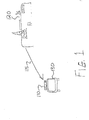
- the presently preferred embodiment of the present invention is implemented in a set-top box (STB), or integrated receiver decoder (IRD), as shown in FIG. 1.
- the IRD 110 receives television programming being broadcast in MPEG format from digital video broadcast (DVB) center 120 and presents a decoded signal to television set 130.
- the DVB center 120 broadcasts in MPEG-2 format.
- the communication link 115 over which the television programming is broadcast may be wired (e.g., cable, fiber-optic, etc.) or wireless (e.g., radiofrequency broadcast, satellite broadcast, etc.).
- the presently preferred embodiment is an IRD/STB in a digital television broadcast environment
- other embodiments of the present invention may be implemented in computers, cell phones, personal digital assistants (PDAs), or any devices capable of playing back stored MPEG files.
- the source of the MPEG files may be a portable storage medium, such as a digital versatile disc (DVD), the Internet, a cellular phone network, etc.
- DVD digital versatile disc
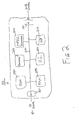
- IRD 110 is comprised of an input 240 for receiving the broadcast MPEG signals, an MPEG decoder 250 for decoding the MPEG signals, an output 260 for sending the decoded signals to the television set, a hard drive (HD) 210 for storing television programming in MPEG format, a processor 220 for controlling the IRD 110 and its components, a user interface unit 230 by which the user controls the IRD 110, a system bus 270, a read-only memory (ROM) module 280 for storing permanent data, and a random access memory (RAM) module 290 for storing temporary data.
- MPEG decoder 250 is an abstract representation of the function of MPEG decoding, and may be implemented in various parts of hardware and software in IRD 110.
- system bus 270 is a simplification of the one or more dedicated or non-dedicated (i.e., broadcast, like over a system bus) communication links that would be needed between the various components of IRD 110.
- IRD 110 uses HD 210 for a storage medium, but any non-volatile storage medium would do, including solid state memories, such as flash memory, or a removable module, such as an optical disc.
- ROM 280 stores the operating system and other software required for the functioning of IRD 110. It should be noted that IRD 110 would require many additional components to perform its functions of receiving and decoding, as one skilled in the art would know, but these are not shown so as not to obscure the preferred embodiment of the present invention in unnecessary detail.
- a filenode is created in RAM 280 and, once the recording has completed, the filenode is saved on HD 210 as well.
- the filenode contains the name, length in time (timelength), length in sectors (sectorlength), location (i.e., starting point) of the MPEG file on HD 210, and other information about the recorded MPEG file.
- a sector is a section on a hard drive (such as HD 210) and it is used as part of the file system of a hard drive. Because of the relatively small size of these sectors, they are a sufficiently exact measure when searching for a particular time position in an MPEG file. Yet they are larger than the MPEG packets, and so allow for faster seeking and searching on the hard drive.
- the unit of file storage length could be bytes or any other applicable binary unit length or device-dependent unit length.
- the presently preferred embodiment uses the information stored in the filenodes to perform seek (jump) operations.
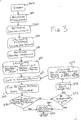
- FIG. 3 shows the method employed by the presently preferred embodiment of the present invention.
- these steps are performed by an application running on processor 220.
- the jump function (which performs the steps of the method) is called by the application environment (a higher level of software structure) of the IRD.
- the particular timepoint to which it is desired to jump in the MPEG file is given as an argument to the jump function when it is called by the application environment.
- either the relative timepoint (e.g. 15 minutes from what is now playing) or the absolute timepoint (e.g., 15 minutes from the start of the MPEG file) may be used as the argument to the jump function.
- the user has more options when asking for a particular timepoint to jump to.
- step 300 of FIG. 3 the method for finding a particular timepoint in a MPEG file starts.
- the timelength of the MPEG file is retrieved from the filenode corresponding to the MPEG file in step 310.
- the timelength is given in units of seconds, although any time unit (including "clocks" or “ticks” of the standard MPEG 90 kHz reference clock) may be used.
- the sectorlength of the MPEG file is retrieved from the filenode in step 320.
- step 330 the average sectors per second of the MPEG file is calculated, by dividing the previously retrieved sectorlength by the timelength.
- the desired particular absolute or relative timepoint in the MPEG file is now retrieved in step 340. In the presently preferred embodiment, this step is superfluous because the desired timepoint was given as an argument to the jump function.
- the estimated position of the desired timepoint is calculated in step 350 by multiplying the average sectors per second of the MPEG file (derived in step 330) by the desired timepoint (retrieved in step 340).
- the estimated position is given as a certain number of sectors to jump, either from the beginning of the MPEG file (if absolute) or from the current playback position in the MPEG file (if relative).
- the method jumps to the estimated position.
- step 360 the recording header nearest to the estimated position is found and the timestamp in the recording header is read.
- the recording headers are set in MPEG datastream as it is recorded to HD 210. As such, the recording headers are easily separable and identifiable from the MPEG file when they are searched for.
- the recording header timestamps are also set during the recording process by IRD 110. In the presently preferred embodiment, the recording headers occur approximately 20 times per second of recording in the MPEG file. In the beginning of the recording header there is a header identifier pattern designed in such a way that it cannot be mistaken for MPEG data.
- the recording header timestamp is provided by the IRD system clock and has a resolution of 1/100 second.
- step 370 it is determined whether the time indicated by the recording header timestamp is close enough to the desired timepoint in the MPEG file.
- "close enough" is less than or equal to one second. A greater exactitude than one second is not needed because it is unlikely to be detected by the viewer, although another threshold may be used. Because the presently preferred embodiment of the present invention uses such a coarse granularity (within one second of the desired timepoint) in comparison to the prior art, which often focussed on finding a particular frame within the MPEG file, the presently preferred embodiment uses much less processing and storage resources than the prior art.
- the estimated position is output in step 380 and the method is finished at 390.
- the jump function returns, in step 380, the estimated position to the application environment, which will use another function call to display the MPEG file starting at the estimated position.
- step 373 If the indicated time is not close enough to the desired timepoint in step 370, it is determined in step 373 whether the number of times the method has iterated through the loop of steps 360, 370, 373, 375, 377, and 355 has exceeded a predetermined limit. This is done to avoid lengthy processing times. In the presently preferred embodiment, the predetermined limit is 10 times. If the limit is exceeded in step 373, the method outputs whatever the current estimate is.
- the delta distance is calculated in step 375.
- the delta distance is the distance from the estimated position of the last iteration to the new estimated position, where the next iteration will continue.
- the calculation of the delta distance is based on the difference between the average sector per second rate calculated in step 330 and the actual average sector per second rate as determined from the indicated time in step 360 of the iteration.
- the average sector per second rate is calculated and used to determine the number of sectors to skip while "winding" in one direction or the other.
- the average sector per second rate is used in order to guarantee that the winding is proportionate to the playback duration time as perceived by the viewer, rather than proportionate to the variable data rate of the MPEG file.
- the MPEG file contains less than five seconds of data from the point where fast forwarding or rewinding is initiated, a rate of 900 sectors per second is used for video files and 25 sectors per second for audio-only files.
- the attached appendix shows exemplary programming code for a jump function call according to the presently preferred embodiment.
- This jump function programming code is only intended as an example and in no way limits the present invention to any particular programming code.
- the method according to the present invention is not limited to being implemented in software, and may be implemented in hardware, or a mixture of hardware and software.
- the system and method according to presently preferred embodiment as described above make some of the beneficial and unique features of the present invention apparent.
- the presently preferred embodiment does not re-calculate the byte rate at each iteration, but rather calculates a delta distance in order to jump to the next estimated position.
- the presently preferred embodiment uses an earlier determined (and, thus, static) byte rate to estimate the byte distance between the current position and where the desired timepoint should be, and then jumps that byte distance in the appropriate direction.
- the presently preferred embodiment allows for much more granularity (within one second) in the search parameters in comparison to the prior art which sought one particular frame of the MPEG file.
Landscapes
- Engineering & Computer Science (AREA)
- Multimedia (AREA)
- Signal Processing (AREA)
- Television Signal Processing For Recording (AREA)
- Signal Processing For Digital Recording And Reproducing (AREA)
- Indexing, Searching, Synchronizing, And The Amount Of Synchronization Travel Of Record Carriers (AREA)
Abstract
Description

Claims (24)
- A method for performing a jump function to a desired timepoint in a digital audiovisual file comprising:a) when storing the audiovisual file to a storage medium:adding recording headers in the audiovisual file on the storage medium, wherein the recording headers are distinct from a datastream of the audiovisual file; andsetting a timestamp in each recording header;b) calculating an estimated storage position on the storage medium of the desired timepoint;c) jumping to the estimated storage position;d) finding a recording header near the estimated storage position;e) reading a timestamp in the recording header;f) determining if a timepoint indicated by the timestamp is within a predetermined time of the desired timepoint; andg) if the indicated timepoint is not within the predetermined time:re-calculating an estimated storage position; andrepeating steps (c) through (g).
- The method as recited in claim 1, wherein step (b) comprises:determining a total timelength of the audiovisual file;determining a total storage unit length of the audiovisual file;calculating an average storage unit per time unit rate by dividing the total storage unit length by the total timelength; andcalculating an estimated storage position by multiplying the average storage unit per time unit by the desired timepoint.
- The method as recited in claim 2, wherein the storage medium is a hard disk and a storage unit used in the total storage unit length is a sector.
- The method as recited in claim 2, wherein, when performing rewinding or fast forwarding through the audiovisual file, the average storage unit per time unit rate is used to calculate how much of the storage medium to skip over.
- The method as recited in claim 1, wherein step (g) further comprises:determining a number of iterations of steps (c) through (g) that have been previously performed; andending the method if the determined number of iterations exceeds a predetermined limit.
- The method as recited in claim 1, wherein the re-calculating an estimated storage position sub-step of step (g) further comprises:calculating a delta distance, wherein the delta distance may be a positive or negative number; andcalculating a new estimated storage position by adding the calculated delta distance to the current estimated storage position.
- The method as recited in claim 6, wherein the delta distance is calculated using the following equation:wherein Sectorlength is the total storage unit length of the audiovisual file, Timelength is the total timelength of the audiovisual file, and Estimated Timepoint is the indicated timepoint in step (f).

- The method as recited in claim 1, wherein the audiovisual file is in Moving Pictures Expert Group (MPEG) format.
- A method for performing a jump function to a desired timepoint in a Moving Picture Expert Group (MPEG) file comprising:a) when storing the MPEG file to a storage medium:(1) adding recording headers in the MPEG file on the storage medium, wherein the recording headers are distinct from a MPEG file datastream;(2) setting a timestamp in each recording header; and(3) storing an associated filenode on the storage medium, wherein the filenode comprises a total timelength of the MPEG file and a total storage unit length of the MPEG file;b) calculating an estimated storage position on the storage medium of the desired timepoint by:(1) retrieving a total timelength of the MPEG file from the associated filenode;(2) retrieving a total storage unit length of the MPEG file from the associated filenode;(3) calculating an average storage unit per time unit rate by dividing the total storage unit length by the total timelength;(4) calculating an estimated storage position by multiplying the average storage unit per time unit by the desired timepoint;c) jumping to the estimated storage position;d) finding a recording header near to the estimated storage position;e) reading a timestamp in the recording header;f) determining if a timepoint indicated by the timestamp is within a predetermined time of the desired timepoint; andg) if the indicated timepoint is not within the predetermined time:(1) determining a number of iterations of steps (c) through (g) that have been previously performed;(2) ending the method if the determined number of iterations exceeds a predetermined limit;(3) calculating a delta distance, wherein the delta distance may be a positive or negative number;(4) calculating a new estimated storage position by adding the calculated delta distance to the current estimated storage position; and(5) repeating steps (c) through (g).
- A digital audiovisual file storage system for performing a jump function to a desired timepoint in a digital audiovisual file comprising:wherein the recording headers are distinct from a datastream of the audiovisual file;a storage medium for storing the audiovisual file;a means for storing the audiovisual file on the storage medium;a means for adding recording headers in the audiovisual file on the storage medium,a means for setting a timestamp in each recording header;a means for calculating an estimated storage position on the storage medium of the desired timepoint;a means for jumping to the estimated storage position;a means for finding a recording header near to the estimated storage position;a means for reading a timestamp in the recording header;a means for determining if a timepoint indicated by the timestamp is within a predetermined time of the desired timepoint; anda means for re-calculating an estimated storage position.
- The digital audiovisual file storage system as recited in claim 10, further comprising:a processor being comprised of the means for calculating an estimated storage position on the storage medium of the desired timepoint, the means for finding a recording header near to the estimated storage position, the means for reading a timestamp in the recording header, the means for determining if a timepoint indicated by the timestamp is within a predetermined time of the desired timepoint; and the means for re-calculating an estimated storage position.
- The digital audiovisual file storage system as recited in claim 11, further comprising:an integrated receiver decoder (IRD) for receiving digital video broadcast signals, said IRD being comprised of the processor.
- The digital audiovisual file storage system as recited in claim 10, wherein the storage medium is a non-volatile memory.
- The digital audiovisual file storage system as recited in claim 10, wherein the storage medium is one of a hard disk, an optical disk, and a solid-state memory.
- The digital audiovisual file storage system as recited in claim 10, wherein the audiovisual file is in Moving Pictures Expert Group (MPEG) format.
- The digital audiovisual file storage system as recited in claim 10, wherein the means for calculating an estimated storage position on the storage medium of the desired timepoint comprises:a means for determining a total timelength of the audiovisual file;a means for determining a total storage unit length of the audiovisual file;a means for calculating an average storage unit per time unit rate by dividing the total storage unit length by the total timelength; anda means for calculating an estimated storage position by multiplying the average storage unit per time unit by the desired timepoint.
- The digital audiovisual file storage system as recited in claim 16, wherein the storage medium is a hard disk and a storage unit used in the total storage unit length is a sector.
- The digital audiovisual file storage system as recited in claim 16, further comprising:a means for performing rewinding or fast forwarding through the audiovisual file by using the average storage unit per time unit rate to calculate how much of the storage medium to skip over.
- The digital audiovisual file storage system as recited in claim 10, wherein the means for re-calculating an estimated storage position comprises:a means for determining a number of iterations that have been previously performed; anda means for ending the method if the determined number of iterations exceeds a predetermined limit.
- The digital audiovisual file storage system as recited in claim 10, wherein the means for re-calculating an estimated storage position comprises:a means for calculating a delta distance, wherein the delta distance may be a positive or negative number; anda means for calculating a new estimated storage position by adding the calculated delta distance to the current estimated storage position.
- The digital audiovisual file storage system as recited in claim 20, wherein the delta distance is calculated using the following equation:wherein Sectorlength is the total storage unit length of the audiovisual file, Timelength is the total timelength of the audiovisual file, and Estimated Timepoint is the indicated timepoint in step (f).

- A Moving Pictures Expert Group (MPEG) file storage and retrieval system for performing a jump function to a desired timepoint in an MPEG file comprising:at least one MPEG file source for supplying the MPEG file;an integrated receiver decoder (IRD) for receiving the MPEG file from the at least one MPEG source, said IRD comprising:a first storage medium for storing the received MPEG file and an associated filenode, wherein the filenode comprises a total timelength of the MPEG file and a total storage unit length of the MPEG file;a processor;a second storage medium for storing programming code executable on said processor, the stored programming code including:code for adding recording headers in the MPEG file on the storage medium, wherein the recording headers are distinct from a MPEG file datastream;code for setting a timestamp in each recording header;code for storing an associated filenode on the storage medium;code for calculating an estimated storage position on the storage medium of the desired timepoint;code for jumping to the estimated storage position;code for finding a recording header near to the estimated storage position;code for reading a timestamp in the recording header;code for determining if a timepoint indicated by the timestamp is within a predetermined time of the desired timepoint; andcode for re-calculating a new estimated storage position.
- The MPEG file storage and retrieval system as recited in claim 22, wherein the code for calculating an estimated storage position on the storage medium of the desired timepoint comprises:code for retrieving a total timelength of the MPEG file from the associated filenode;code for retrieving a total storage unit length of the MPEG file from the associated filenode;code for calculating an average storage unit per time unit rate by dividing the total storage unit length by the total timelength; andcode for calculating an estimated storage position by multiplying the average storage unit per time unit by the desired timepoint.
- The MPEG file storage and retrieval system as recited in claim 22, wherein the code for re-calculating a new estimated storage position comprises:code for determining a number of iterations that have been previously performed;code for returning a current estimated position if the determined number of iterations exceeds a predetermined limit;code for calculating a delta distance, wherein the delta distance may be a positive or negative number; andcode for calculating a new estimated storage position by adding the calculated delta distance to the current estimated storage position.
Applications Claiming Priority (6)
| Application Number | Priority Date | Filing Date | Title |
|---|---|---|---|
| US893132 | 1992-06-03 | ||
| US29449701P | 2001-05-30 | 2001-05-30 | |
| US294497P | 2001-05-30 | ||
| US29466701P | 2001-05-31 | 2001-05-31 | |
| US294667P | 2001-05-31 | ||
| US09/893,132 US7106944B2 (en) | 2001-05-30 | 2001-06-27 | System and method for jumping to a timepoint in a MPEG file |
Publications (3)
| Publication Number | Publication Date |
|---|---|
| EP1274086A2 true EP1274086A2 (en) | 2003-01-08 |
| EP1274086A3 EP1274086A3 (en) | 2003-01-22 |
| EP1274086B1 EP1274086B1 (en) | 2007-12-19 |
Family
ID=27404281
Family Applications (1)
| Application Number | Title | Priority Date | Filing Date |
|---|---|---|---|
| EP02011992A Expired - Lifetime EP1274086B1 (en) | 2001-05-30 | 2002-05-30 | System and method for jumping to a time point in an MPEG file |
Country Status (3)
| Country | Link |
|---|---|
| US (1) | US7106944B2 (en) |
| EP (1) | EP1274086B1 (en) |
| DE (1) | DE60224135T2 (en) |
Cited By (6)
| Publication number | Priority date | Publication date | Assignee | Title |
|---|---|---|---|---|
| EP2381680A1 (en) * | 2010-04-26 | 2011-10-26 | Eldon Technology Limited trading as Echostar Europe | A method of presenting video frames at a non-standard speed and a video content device |
| EP2439741A1 (en) * | 2010-10-08 | 2012-04-11 | Samsung Electronics Co., Ltd. | Video playing apparatus and location search method thereof |
| EP2647211A4 (en) * | 2010-11-30 | 2014-05-21 | Echostar Technologies Llc | SYSTEMS AND METHODS FOR FAST FORWARD, FAST RETURN, AND HIGH-PRECISION DIGITAL VIDEO JUMPING |
| CN104717571A (en) * | 2013-12-13 | 2015-06-17 | 中国移动通信集团公司 | Key playing time point determination method, video playing method and related device |
| CN106101867A (en) * | 2016-07-20 | 2016-11-09 | 深圳芯智汇科技有限公司 | A kind of FLV of raising video jumps the method broadcasting speed and location accuracy |
| EP3449636A4 (en) * | 2016-08-18 | 2019-03-06 | Samsung Electronics Co., Ltd. | DISPLAY APPARATUS AND METHOD FOR DISPLAYING CORRESPONDING CONTENT |
Families Citing this family (22)
| Publication number | Priority date | Publication date | Assignee | Title |
|---|---|---|---|---|
| JP3660649B2 (en) * | 2002-06-07 | 2005-06-15 | 株式会社東芝 | File information reproducing apparatus and file information reproducing method |
| JP4459590B2 (en) * | 2003-10-10 | 2010-04-28 | パナソニック株式会社 | DTV data processing device |
| MX2007015263A (en) * | 2005-06-03 | 2008-02-22 | Nielsen Media Res Inc | Methods and apparatus to detect a time-shift event associated with the presentation of media content. |
| US20070220118A1 (en) * | 2006-03-15 | 2007-09-20 | Loyer Douglas E | Systems, Methods, and Apparatus for Delivering Randomly Accessible Audio and Video Media |
| US8996421B2 (en) * | 2006-05-15 | 2015-03-31 | The Directv Group, Inc. | Methods and apparatus to conditionally authorize content delivery at broadcast headends in pay delivery systems |
| US8001565B2 (en) * | 2006-05-15 | 2011-08-16 | The Directv Group, Inc. | Methods and apparatus to conditionally authorize content delivery at receivers in pay delivery systems |
| US7992175B2 (en) * | 2006-05-15 | 2011-08-02 | The Directv Group, Inc. | Methods and apparatus to provide content on demand in content broadcast systems |
| US20070265966A1 (en) * | 2006-05-15 | 2007-11-15 | The Directv Group, Inc. | Content delivery systems and methods to operate the same |
| US20070265973A1 (en) * | 2006-05-15 | 2007-11-15 | The Directv Group, Inc. | Methods and apparatus to protect content in home networks |
| US8775319B2 (en) | 2006-05-15 | 2014-07-08 | The Directv Group, Inc. | Secure content transfer systems and methods to operate the same |
| US8095466B2 (en) * | 2006-05-15 | 2012-01-10 | The Directv Group, Inc. | Methods and apparatus to conditionally authorize content delivery at content servers in pay delivery systems |
| JP4795212B2 (en) * | 2006-12-05 | 2011-10-19 | キヤノン株式会社 | Recording device, terminal device, and processing method |
| US20080240227A1 (en) * | 2007-03-30 | 2008-10-02 | Wan Wade K | Bitstream processing using marker codes with offset values |
| US7975225B2 (en) * | 2007-05-02 | 2011-07-05 | Microsoft Corporation | Iteratively locating a position corresponding to a desired seek time |
| US9143493B2 (en) | 2007-12-20 | 2015-09-22 | The Directv Group, Inc. | Method and apparatus for communicating between a user device and a gateway device to form a system to allow a partner service to be provided to the user device |
| US8543230B2 (en) * | 2008-05-30 | 2013-09-24 | Nokia Corporation | Optimizing seek functionality in media content |
| JP2011253589A (en) * | 2010-06-02 | 2011-12-15 | Funai Electric Co Ltd | Image/voice reproducing device |
| US8745654B1 (en) | 2012-02-09 | 2014-06-03 | The Directv Group, Inc. | Method and system for managing digital rights for content |
| CN104301783B (en) * | 2014-10-27 | 2018-06-15 | 科大讯飞股份有限公司 | Generation method, playback method and the device of audio file |
| CN104934049B (en) * | 2015-06-24 | 2018-03-16 | 深圳市九洲电器有限公司 | A kind of variable bit rate MP3 reproduction times acquisition methods and system |
| US9467726B1 (en) | 2015-09-30 | 2016-10-11 | The Directv Group, Inc. | Systems and methods for provisioning multi-dimensional rule based entitlement offers |
| CN112231169B (en) * | 2020-09-10 | 2023-06-06 | 北京空间飞行器总体设计部 | Satellite storage resource prediction method applied to Wei Xingyun control |
Family Cites Families (8)
| Publication number | Priority date | Publication date | Assignee | Title |
|---|---|---|---|---|
| US5659539A (en) * | 1995-07-14 | 1997-08-19 | Oracle Corporation | Method and apparatus for frame accurate access of digital audio-visual information |
| US5715176A (en) * | 1996-01-23 | 1998-02-03 | International Business Machines Corporation | Method and system for locating a frame position in an MPEG data stream |
| US5630005A (en) * | 1996-03-22 | 1997-05-13 | Cirrus Logic, Inc | Method for seeking to a requested location within variable data rate recorded information |
| US6157771A (en) * | 1996-11-15 | 2000-12-05 | Futuretel, Inc. | Method and apparatus for seeking within audiovisual files |
| US6012086A (en) * | 1997-06-24 | 2000-01-04 | Sony Corporation | Internet event timer recording for video and/or audio |
| US6144691A (en) * | 1997-09-30 | 2000-11-07 | Nokia Mobile Phones Limited | Method and apparatus for synchronizing to a direct sequence spread spectrum signal |
| KR100618961B1 (en) * | 1998-12-16 | 2006-09-01 | 삼성전자주식회사 | Method for generating information for fast search of packet data, recording medium storing the information, recording and / or reproducing apparatus using same |
| DE60134311D1 (en) * | 2000-04-18 | 2008-07-17 | Matsushita Electric Industrial Co Ltd | PLAYING ARRANGEMENT AND REPRODUCTION PROCESS |
-
2001
- 2001-06-27 US US09/893,132 patent/US7106944B2/en not_active Expired - Lifetime
-
2002
- 2002-05-30 DE DE60224135T patent/DE60224135T2/en not_active Expired - Lifetime
- 2002-05-30 EP EP02011992A patent/EP1274086B1/en not_active Expired - Lifetime
Cited By (11)
| Publication number | Priority date | Publication date | Assignee | Title |
|---|---|---|---|---|
| EP2381680A1 (en) * | 2010-04-26 | 2011-10-26 | Eldon Technology Limited trading as Echostar Europe | A method of presenting video frames at a non-standard speed and a video content device |
| US8588575B2 (en) | 2010-04-26 | 2013-11-19 | Eldon Technology Limited | Apparatus and methods for high-speed video presentation |
| EP2439741A1 (en) * | 2010-10-08 | 2012-04-11 | Samsung Electronics Co., Ltd. | Video playing apparatus and location search method thereof |
| US8611721B2 (en) | 2010-10-08 | 2013-12-17 | Samsung Electronics Co., Ltd. | Video playing apparatus and location search method thereof |
| EP2647211A4 (en) * | 2010-11-30 | 2014-05-21 | Echostar Technologies Llc | SYSTEMS AND METHODS FOR FAST FORWARD, FAST RETURN, AND HIGH-PRECISION DIGITAL VIDEO JUMPING |
| US9148642B2 (en) | 2010-11-30 | 2015-09-29 | Echostar Technologies L.L.C. | Systems and methods for digital video high accuracy fast forward, rewind and skip |
| CN104717571A (en) * | 2013-12-13 | 2015-06-17 | 中国移动通信集团公司 | Key playing time point determination method, video playing method and related device |
| CN106101867A (en) * | 2016-07-20 | 2016-11-09 | 深圳芯智汇科技有限公司 | A kind of FLV of raising video jumps the method broadcasting speed and location accuracy |
| CN106101867B (en) * | 2016-07-20 | 2019-01-22 | 深圳芯智汇科技有限公司 | A method of it improving the jump of FLV video and broadcasts speed and location accuracy |
| EP3449636A4 (en) * | 2016-08-18 | 2019-03-06 | Samsung Electronics Co., Ltd. | DISPLAY APPARATUS AND METHOD FOR DISPLAYING CORRESPONDING CONTENT |
| US10834435B2 (en) | 2016-08-18 | 2020-11-10 | Samsung Electronics Co., Ltd. | Display apparatus and content display method thereof |
Also Published As
| Publication number | Publication date |
|---|---|
| EP1274086A3 (en) | 2003-01-22 |
| DE60224135D1 (en) | 2008-01-31 |
| EP1274086B1 (en) | 2007-12-19 |
| DE60224135T2 (en) | 2008-12-11 |
| US7106944B2 (en) | 2006-09-12 |
| US20020026640A1 (en) | 2002-02-28 |
Similar Documents
| Publication | Publication Date | Title |
|---|---|---|
| US7106944B2 (en) | System and method for jumping to a timepoint in a MPEG file | |
| US8249419B2 (en) | Method for generating additional information for guaranteeing seamless playback between data streams, recording medium storing the information, and recording, editing and/or playback apparatus using the same | |
| EP0965991B1 (en) | Recording medium, data recording unit and data playback unit reading from and writing to the recording medium | |
| CN101958136B (en) | Video audio recording/playback apparatus and method | |
| US20050147383A1 (en) | Method and apparatus for playing-back moving image data | |
| HU228606B1 (en) | A method and an apparatus for stream conversion, a method and an apparatus for data recording, and data recording medium | |
| WO2004008759A1 (en) | Data processing device | |
| US6693959B1 (en) | Method and apparatus for indexing and locating key frames in streaming and variable-frame-length data | |
| TW450007B (en) | Information recording system and information recording method | |
| US8503868B2 (en) | Method for recording AV data and associated data, AV data recording apparatus, AV data reproducing apparatus and method, and recording medium | |
| US20070110396A1 (en) | Data processor | |
| US20090268811A1 (en) | Dynamic Image Reproducing Method And Device | |
| JP4145103B2 (en) | Movie data playback method and playback apparatus | |
| CN100484223C (en) | Apparatus and method for processing information | |
| KR101391600B1 (en) | Apparatus and method for recording contents adaptively | |
| JP2006236475A (en) | Encoded data reproduction device | |
| US20070146803A1 (en) | Information recording apparatus and recorded information management method | |
| KR100643989B1 (en) | How to record digital data streams | |
| JP2004064210A (en) | Recording device | |
| CN101964200A (en) | Editing device, edit methods and program | |
| JP2004120289A (en) | Digital broadcast recording and playback device | |
| KR20050084154A (en) | Editing of data frames | |
| KR20020015577A (en) | Method for recording a digital data stream |
Legal Events
| Date | Code | Title | Description |
|---|---|---|---|
| PUAI | Public reference made under article 153(3) epc to a published international application that has entered the european phase |
Free format text: ORIGINAL CODE: 0009012 |
|
| PUAL | Search report despatched |
Free format text: ORIGINAL CODE: 0009013 |
|
| AK | Designated contracting states |
Kind code of ref document: A2 Designated state(s): AT BE CH CY DE DK ES FI FR GB GR IE IT LI LU MC NL PT SE TR |
|
| AX | Request for extension of the european patent |
Free format text: AL;LT;LV;MK;RO;SI |
|
| AK | Designated contracting states |
Kind code of ref document: A3 Designated state(s): AT BE CH CY DE DK ES FI FR GB GR IE IT LI LU MC NL PT SE TR |
|
| AX | Request for extension of the european patent |
Free format text: AL;LT;LV;MK;RO;SI |
|
| RIC1 | Information provided on ipc code assigned before grant |
Free format text: 7G 11B 27/10 A, 7H 04N 7/24 B |
|
| 17P | Request for examination filed |
Effective date: 20030717 |
|
| AKX | Designation fees paid |
Designated state(s): DE FR GB |
|
| 17Q | First examination report despatched |
Effective date: 20041124 |
|
| GRAP | Despatch of communication of intention to grant a patent |
Free format text: ORIGINAL CODE: EPIDOSNIGR1 |
|
| GRAS | Grant fee paid |
Free format text: ORIGINAL CODE: EPIDOSNIGR3 |
|
| GRAA | (expected) grant |
Free format text: ORIGINAL CODE: 0009210 |
|
| AK | Designated contracting states |
Kind code of ref document: B1 Designated state(s): DE FR GB |
|
| REG | Reference to a national code |
Ref country code: GB Ref legal event code: FG4D |
|
| REF | Corresponds to: |
Ref document number: 60224135 Country of ref document: DE Date of ref document: 20080131 Kind code of ref document: P |
|
| ET | Fr: translation filed | ||
| PLBE | No opposition filed within time limit |
Free format text: ORIGINAL CODE: 0009261 |
|
| STAA | Information on the status of an ep patent application or granted ep patent |
Free format text: STATUS: NO OPPOSITION FILED WITHIN TIME LIMIT |
|
| 26N | No opposition filed |
Effective date: 20080922 |
|
| REG | Reference to a national code |
Ref country code: GB Ref legal event code: 732E Free format text: REGISTERED BETWEEN 20150910 AND 20150916 |
|
| REG | Reference to a national code |
Ref country code: DE Ref legal event code: R082 Ref document number: 60224135 Country of ref document: DE Representative=s name: BECKER, KURIG, STRAUS, DE Ref country code: DE Ref legal event code: R081 Ref document number: 60224135 Country of ref document: DE Owner name: NOKIA TECHNOLOGIES OY, FI Free format text: FORMER OWNER: NOKIA CORP., 02610 ESPOO, FI |
|
| REG | Reference to a national code |
Ref country code: FR Ref legal event code: PLFP Year of fee payment: 15 |
|
| REG | Reference to a national code |
Ref country code: FR Ref legal event code: TP Owner name: NOKIA TECHNOLOGIES OY, FI Effective date: 20170109 |
|
| REG | Reference to a national code |
Ref country code: FR Ref legal event code: PLFP Year of fee payment: 16 |
|
| REG | Reference to a national code |
Ref country code: FR Ref legal event code: PLFP Year of fee payment: 17 |
|
| PGFP | Annual fee paid to national office [announced via postgrant information from national office to epo] |
Ref country code: DE Payment date: 20180522 Year of fee payment: 17 |
|
| PGFP | Annual fee paid to national office [announced via postgrant information from national office to epo] |
Ref country code: FR Payment date: 20180522 Year of fee payment: 17 |
|
| PGFP | Annual fee paid to national office [announced via postgrant information from national office to epo] |
Ref country code: GB Payment date: 20180518 Year of fee payment: 17 |
|
| REG | Reference to a national code |
Ref country code: GB Ref legal event code: 732E Free format text: REGISTERED BETWEEN 20190124 AND 20190130 |
|
| REG | Reference to a national code |
Ref country code: DE Ref legal event code: R082 Ref document number: 60224135 Country of ref document: DE Representative=s name: BECKER, KURIG, STRAUS, DE Ref country code: DE Ref legal event code: R081 Ref document number: 60224135 Country of ref document: DE Owner name: PROVENANCE ASSET GROUP LLC, PITTSFORD, US Free format text: FORMER OWNER: NOKIA TECHNOLOGIES OY, ESPOO, FI Ref country code: DE Ref legal event code: R082 Ref document number: 60224135 Country of ref document: DE Representative=s name: BECKER-KURIG-STRAUS PATENTANWAELTE PARTNERSCHA, DE Ref country code: DE Ref legal event code: R082 Ref document number: 60224135 Country of ref document: DE Representative=s name: BECKER & KURIG PARTNERSCHAFT PATENTANWAELTE MB, DE Ref country code: DE Ref legal event code: R082 Ref document number: 60224135 Country of ref document: DE Representative=s name: BECKER & KURIG PARTNERSCHAFT PATENTANWAELTE PA, DE |
|
| REG | Reference to a national code |
Ref country code: DE Ref legal event code: R119 Ref document number: 60224135 Country of ref document: DE |
|
| GBPC | Gb: european patent ceased through non-payment of renewal fee |
Effective date: 20190530 |
|
| PG25 | Lapsed in a contracting state [announced via postgrant information from national office to epo] |
Ref country code: DE Free format text: LAPSE BECAUSE OF NON-PAYMENT OF DUE FEES Effective date: 20191203 Ref country code: GB Free format text: LAPSE BECAUSE OF NON-PAYMENT OF DUE FEES Effective date: 20190530 |
|
| PG25 | Lapsed in a contracting state [announced via postgrant information from national office to epo] |
Ref country code: FR Free format text: LAPSE BECAUSE OF NON-PAYMENT OF DUE FEES Effective date: 20190531 |