EP1265428A2 - Method of processing an outgoing call and transmitting digit code in a telephone - Google Patents
Method of processing an outgoing call and transmitting digit code in a telephone Download PDFInfo
- Publication number
- EP1265428A2 EP1265428A2 EP02012443A EP02012443A EP1265428A2 EP 1265428 A2 EP1265428 A2 EP 1265428A2 EP 02012443 A EP02012443 A EP 02012443A EP 02012443 A EP02012443 A EP 02012443A EP 1265428 A2 EP1265428 A2 EP 1265428A2
- Authority
- EP
- European Patent Office
- Prior art keywords
- characters
- dtmf
- call
- phone number
- code
- Prior art date
- Legal status (The legal status is an assumption and is not a legal conclusion. Google has not performed a legal analysis and makes no representation as to the accuracy of the status listed.)
- Withdrawn
Links
Images




Classifications
-
- H—ELECTRICITY
- H04—ELECTRIC COMMUNICATION TECHNIQUE
- H04M—TELEPHONIC COMMUNICATION
- H04M1/00—Substation equipment, e.g. for use by subscribers
- H04M1/26—Devices for calling a subscriber
- H04M1/27—Devices whereby a plurality of signals may be stored simultaneously
-
- H—ELECTRICITY
- H04—ELECTRIC COMMUNICATION TECHNIQUE
- H04M—TELEPHONIC COMMUNICATION
- H04M1/00—Substation equipment, e.g. for use by subscribers
- H04M1/26—Devices for calling a subscriber
Definitions
- the present invention relates generally to a telephone having a phone book function for registering phone numbers and a DTMF (Dual Tone Multi-Frequency) transmission code storing function, and in particular, to a method of originating a call to a phone number registered in a phone book or transmitting a DTMF signal according to a DTMF transmission code.
- DTMF Dual Tone Multi-Frequency
- a phone with a phone book function such as a mobile phone, can register a phone number in a phone book by digits and originate a call to a selected phone number. This will be described referring to FIG. 1.
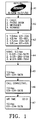
- FIG. 1 illustrates display examples generated while originating a call to a phone number registered by digits in a phone book of a typical mobile phone for overseas use.
- FIG. 1 when a user enters a menu key in a standby state indicated by A1, menu items are displayed as indicated by A2. If the user enters digit "2", a phone number list A3 is displayed. Then, if the user enters digit '1", a name "Y. D. Heo" is displayed with his phone numbers in a display A4. Here, his home phone number, office phone number, and mobile phone number are numbered 1 through 3. If the user enters digit "1", his home phone number is displayed under the name of "Y. D. Heo" in a display A5. If the user enters a call origination key, for example, a display/speech key, a display A6 is provided while a call connection is being attempted. Upon call connection, a display A7 is provided.
- a call origination key for example, a display/speech key
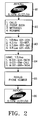
- FIG. 2 illustrates display examples generated while originating a call to a phone number registered by characters in a phone book of the typical mobile phone for overseas use.
- the call connection failure in relation with a phone number with characters will now be described referring to FIG. 2.
- displays B1, B2, and B3 are identical to A1, A2, and A3 as illustrated in FIG. 1.
- phone numbers including characters are displayed under the name of "Y. D. Heo” as indicated by B4, by way of example. If the user enters digit "2" in this state, a message "invalid phone number" is displayed, notifying a call connection failure as indicated by B5 and a standby display B6 is provided.
- a phone number having a DTMF transmission code storing function can transmit a DTMF signal corresponding to a pre-registered code during a call.
- ARS Audio Response System
- a pause function is used to transmit the numbers automatically and separately.
- the pause function is largely divided into a hard pause using a DTMF transmission code including a character "#" and a time pause using a DTMF transmission code including a character "*".
- a DTMF signal following "#" is transmitted every time a user enters the speech key during a call.
- the DTMF signal after "*" is transmitted after a predetermined time, for example, 2 seconds during a call.
- FIG. 3 shows display examples.
- menu items C2 are displayed.
- a tone list C3 is displayed.
- a DTMF signal corresponding to a digit code "12" before “#” in the code "12p23t3927” is transmitted to a called party and then a display C4 is provided.
- the display indicating the call in progress returns as indicated by C5.
- a DTMF signal corresponding the digit code "23" between “#” and “*” is transmitted to the called and a display C6 is provided.
- a DTMF signal corresponding to the digit code "3927” after "*" is transmitted to the called party and a display C7 is provided.
- a display C8 is provide to indicate the call in progress.
- displays D1 and D2 are identical to C1 and C2 as illustrated in FIG. 3. If the user enters digit "4" in the display D2, a DTMF code including "IBM CALL" is displayed as indicated by D3. Upon input of digit "1" in this state, a message “invalid number” is displayed, notifying a failed DTMF signal transmission as indicated by D4 and a display D5 returns to indicate the call in progress.
- an object of the present invention to provide an outgoing call processing method in which a call can be originated to a phone number registered partially or wholly by characters in a phone number field of a phone book.
- a phone number selected from a phone book is checked to determine whether it includes characters. If it does, the characters are converted to digits assigned to keys having the characters and a call is originated to the phone number with the characters converted to the digits.
- a DTMF code selected in a DTMF code search mode during a call is checked to determine whether it includes characters. If it does, the characters are converted to digits assigned to keys having the characters and a DTMF signal corresponding to the DTMF code with the characters converted to the digits is transmitted.
- FIG. 5 is a block diagram of a typical mobile phone having a phone book function and a DTMF transmission code storing function, to which the present invention is applied.
- an MPU (Micro-Processor Unit) 100 is a control block for phone calls, data communication, and Internet access. In addition to normal operations, the MPU 100 processes an outgoing call and transmits a DTMF code according to the present invention.
- a ROM (Read Only Memory) 102 stores the micro-codes of operation and control programs and reference data for the MPU 100. According to the present invention, the ROM 102 also stores program data needed to convert characters included in phone numbers or DTMF transmission codes, and program data needed to control the operation of the mobile phone.
- a RAM (Random Access Memory) 104 functions as a working memory for the MPU 100.
- a flash RAM 106 provides an area for storing updateable data to be kept and builds a phone book database and a DTMF database.
- a keypad 108 includes a plurality of digit keys 0 to 9 and function keys such as menu, speech, erase, end, *, #, and volume, and feeds key input data corresponding to a key pressed by a user.
- a display 110 displays image information under the control of the MPU 100.
- a CODEC 112 connected to the MPU 100 forms a voice input/output block with a microphone 114 and a speaker 116 connected to the CODEC 112.
- An RF (Radio Frequency) module 120 exchanges radio signals with a base station through an antenna 118.
- the RF module 120 modulates a transmission signal received from the MPU 100 through a baseband processor 122 and transmits the modulated RF signal through the antenna 118.
- the RF module 120 also demodulates an RF signal received via the antenna 118 and feeds the demodulated signal to the MPU 100 via the baseband processor 122.
- the baseband processor 122 processes baseband signals exchanged between the RF module 120 and the MPU 100.
- FIG. 6 is a flowchart illustrating call origination in the MPU 100 according to an embodiment of the present invention.
- the MPU 100 determines whether the selected phone number includes characters in step 204. If it does, the MPU 100 converts the characters to digits marked on keys corresponding to the characters in step 206 and displays the resulting phone number with all digits on the display 110 in step 208.
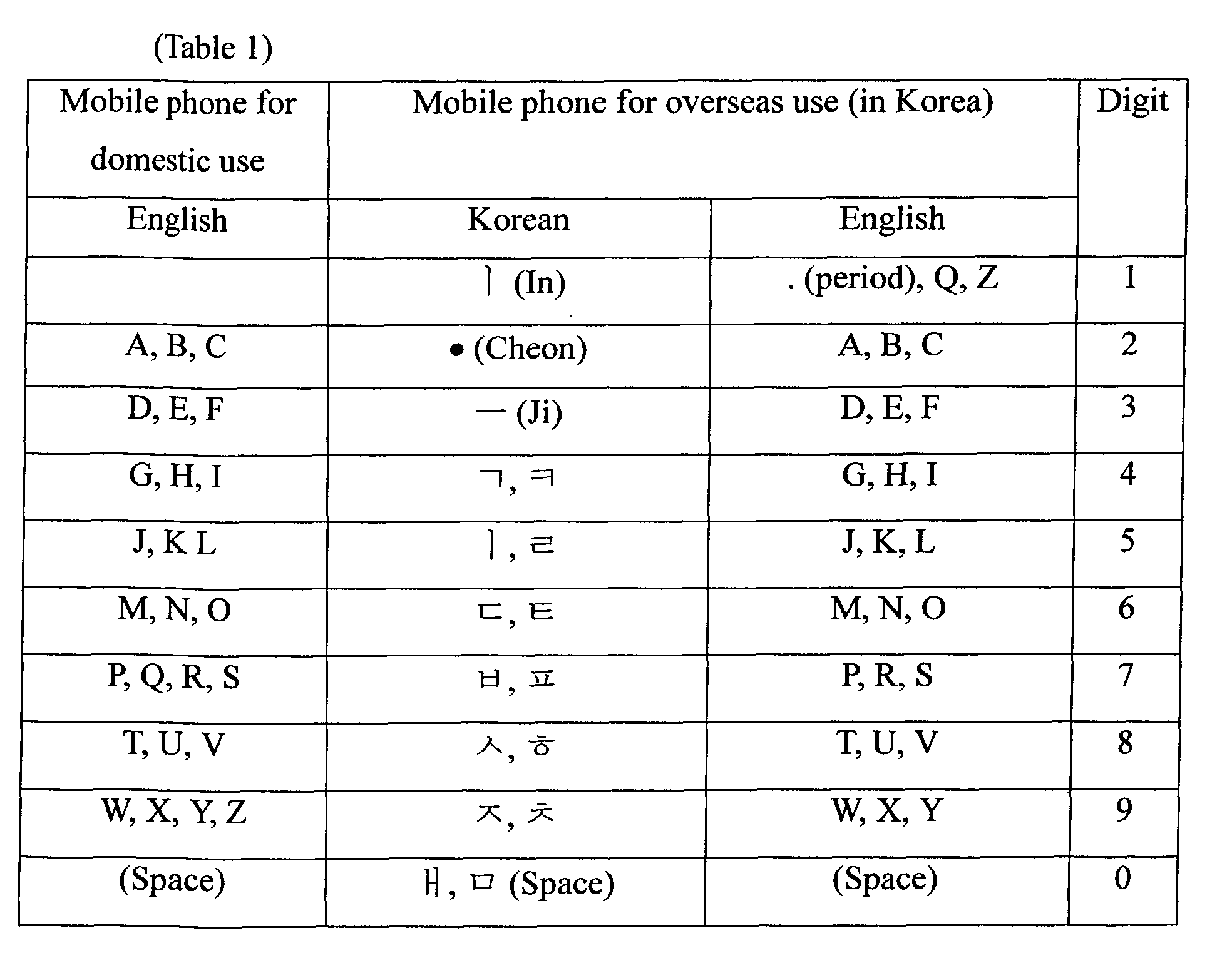
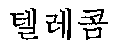
- Table 1 lists digits versus characters on the same keys. Since there are no letters from the English alphabet for digit 1 in a mobile phone for domestic use, the character area for digit 1 is blank. When using the Korean alphabet, Table 1 relies on a so-called "Cheon-Ji-In” input scheme. For example, “1-800-PAY-CARD” is converted to “1-800-729-2273" in the mobile phone for overseas use, whereas “080- " and “080-SAMSUNG” are converted respectively to "080-8120-8210" and "080-726-7864" in a mobile phone for overseas use.
- the MPU 100 displays the selected phone number on the display 110 in step 208.
- the displayed phone number is dialed in step 212 and a call is connected in step 214.
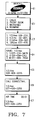
- FIG. 7 displays E1 to E4 are identical to B 1 to B4 as illustrated in FIG. 2.
- "IBM-CALL” is converted to "426-2255" as shown in a display E5 in the present invention, while a message "invalid phone number” is displayed as indicated by B5 of FIG. 2.
- a display E6 is provided while a call connection is attempted.
- a display E7 is provided.
- FIG. 8 displays F1 to F7 are made in the same manner as E1 to E7 as illustrated in FIG. 7. As shown in a display F5, " " in F4 is converted to "8236-2115". Upon input of the call origination key, a display F6 is provided while a call connection is attempted. When a call is connected, a display F7 is provided.
- a user can register a phone number or a collect call number presented in an advertisement on TV or via other media in a phone book without any conversion of characters to digits even if it includes characters, and dial the phone number directly.
- a user has only to register phone numbers by characters without the need of memorizing all-digit phone numbers and dial them via a phone book function.
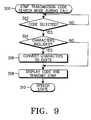
- FIG. 9 when a DTMF transmission code search mode is set during a call in step 300 and the user selects a DTMF code in step 302, the MPU 100 checks whether the selected DTMF code includes characters in step 304. If it does, the MPU 100 converts the characters to corresponding digits, referring to Table 1, in step 306 and displays the converted digit code on the display 110, while transmitting a corresponding DTMF signal to the other party in step 308. In step 310, the MPU 100 returns to a speech state.
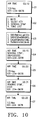
- FIG. 10 displays G1 to G3 are identical to D1 to D3 as illustrated in FIG. 4.
- "IBM-CALL” is converted to "426-2255” and a digit code "0804262255" before "#” is displayed, while a corresponding DTMF signal is transmitted, as shown in a display G4 in the present invention.
- a message "invalid phone number” is displayed as indicated by D4 of FIG. 4.
- a display E6 is provided while a call connection is attempted.
- a display E7 When a call is connected, a display E7 is provided. Then, a speech state is returned as shown in a display G5. When the user presses the speech key again, a digit code "2324" after "#" is displayed as indicated by G6, while a corresponding DTMF signal is transmitted to the other party. In a display G7, the speech state is returned.
- FIG. 11 displays H1 to H7 are performed in the same manner as G1 to G7 as illustrated in FIG. 10.
- displays H1 to H7 are performed in the same manner as G1 to G7 as illustrated in FIG. 10.
- "LG " is converted to "546211552114230”
- a corresponding DTMF signal is transmitted, as shown in a display H4.
- "*" follows "LG ", the speech state is returned as shown in H5 and two seconds later, a digit code "465873” after "*” is displayed as indicated by H6, while a corresponding DTMF signal is transmitted to the other party. Then, a speech state is returned as shown in a display H7.
- a DTMF signal corresponding to the DTMF transmission code can be transmitted during a call. Therefore, a user has only to store a DTMF code by characters without the need of memorizing it by digits to transmit a DTMF signal corresponding to the digit code using a DTMF transmission code storing function.
- the present invention enables call origination even if a phone number selected from a phone book includes characters. Also, even when a DTMF transmission code includes characters, a corresponding DTMF signal can be transmitted during a call.
Landscapes
- Engineering & Computer Science (AREA)
- Signal Processing (AREA)
- Telephone Function (AREA)
- Mobile Radio Communication Systems (AREA)
- Transceivers (AREA)
Abstract
Description



Claims (5)
- A method for call origination to a phone number selected from a phone book in a telephone having a phone book function by which a phone number including characters can be registered, comprising the steps of:checking whether the phone number selected from the phone book includes characters;converting characters to digits assigned to keys having the characters if the selected phone number includes the characters;originating a call to the phone number with the characters converted to the digits; andoriginating a call to the selected phone number if the phone number has no characters.
- The method of claim 1, wherein each call origination step comprises the steps of:displaying the selected phone number; andoriginating a call to the phone number when a call origination key is pressed while the phone number is displayed, and connecting a call.
- A method of transmitting a DTMF signal corresponding to a DTMF code in a DTMF transmission code search mode during a call in a telephone having a function of storing a DTMF transmission code including characters, comprising the steps of:checking whether the selected DTMF code includes characters;converting characters to digits assigned to keys having the characters if the selected DTMF code includes the characters;transmitting a DTMF signal corresponding to the DTMF code with the characters converted to the digits; andtransmitting a DTMF signal corresponding to the DTMF code if the selected DTMF code has no characters.
- The method of claim 3, wherein each transmission step comprises the step of displaying the selected DTMF code.
- The method of claim 3, further comprising the step of returning to a speech state after the DTMF signal transmission.
Applications Claiming Priority (2)
| Application Number | Priority Date | Filing Date | Title |
|---|---|---|---|
| KR2001032239 | 2001-06-09 | ||
| KR10-2001-0032239A KR100387065B1 (en) | 2001-06-09 | 2001-06-09 | Method for processing dialing and transmitting digit code in telephone |
Publications (2)
| Publication Number | Publication Date |
|---|---|
| EP1265428A2 true EP1265428A2 (en) | 2002-12-11 |
| EP1265428A3 EP1265428A3 (en) | 2003-11-19 |
Family
ID=19710591
Family Applications (1)
| Application Number | Title | Priority Date | Filing Date |
|---|---|---|---|
| EP02012443A Withdrawn EP1265428A3 (en) | 2001-06-09 | 2002-06-10 | Method of processing an outgoing call and transmitting digit code in a telephone |
Country Status (3)
| Country | Link |
|---|---|
| US (1) | US20020196931A1 (en) |
| EP (1) | EP1265428A3 (en) |
| KR (1) | KR100387065B1 (en) |
Cited By (1)
| Publication number | Priority date | Publication date | Assignee | Title |
|---|---|---|---|---|
| WO2007005223A1 (en) * | 2005-06-30 | 2007-01-11 | Motorola Inc. | Method and apparatus for non-numeric telephone address |
Families Citing this family (3)
| Publication number | Priority date | Publication date | Assignee | Title |
|---|---|---|---|---|
| US20040037399A1 (en) * | 2002-08-21 | 2004-02-26 | Siemens Information And Communication Mobile, Llc | System and method for transferring phone numbers during a voice call |
| US7519164B1 (en) | 2008-04-01 | 2009-04-14 | International Business Machines Corporation | System and method for sending information between users with a teleponic device while a call is in progress |
| US10686940B2 (en) * | 2014-06-02 | 2020-06-16 | Lenovo (Singapore) Pte. Ltd. | Virtual conference room for telephonic conferencing |
Family Cites Families (9)
| Publication number | Priority date | Publication date | Assignee | Title |
|---|---|---|---|---|
| US5966652A (en) * | 1996-08-29 | 1999-10-12 | Qualcomm Incorporated | System and method for the insertion and extraction of telephone numbers from a wireless text message |
| KR19990000864A (en) * | 1997-06-11 | 1999-01-15 | 윤종용 | Character Key Dialing Method |
| US6125287A (en) * | 1997-09-05 | 2000-09-26 | Fujitsu Limited | Wireless telephone having an improved user interface |
| GB2338623A (en) * | 1998-06-19 | 1999-12-22 | Ericsson Telefon Ab L M | Mobile phone operable in private numbering plan mode |
| US6526292B1 (en) * | 1999-03-26 | 2003-02-25 | Ericsson Inc. | System and method for creating a digit string for use by a portable phone |
| JP2000332881A (en) * | 1999-05-10 | 2000-11-30 | Yili Electronic Ind Co Ltd | A digital telephone dialing system that can be used in conjunction with a hands-free handset. |
| KR20010001743A (en) * | 1999-06-08 | 2001-01-05 | 김동섭 | Mothod for call based on character information in a telephone |
| DE60114759T3 (en) * | 2000-03-31 | 2010-03-18 | Qualcomm Inc., San Diego | Method and apparatus for converting address book entries in a wireless communication device |
| KR20020019870A (en) * | 2000-09-07 | 2002-03-13 | 이충호 | The calling method and system of hangul_phone_number using the phone connection |
-
2001
- 2001-06-09 KR KR10-2001-0032239A patent/KR100387065B1/en not_active Expired - Fee Related
-
2002
- 2002-06-10 EP EP02012443A patent/EP1265428A3/en not_active Withdrawn
- 2002-06-10 US US10/166,478 patent/US20020196931A1/en not_active Abandoned
Cited By (1)
| Publication number | Priority date | Publication date | Assignee | Title |
|---|---|---|---|---|
| WO2007005223A1 (en) * | 2005-06-30 | 2007-01-11 | Motorola Inc. | Method and apparatus for non-numeric telephone address |
Also Published As
| Publication number | Publication date |
|---|---|
| KR100387065B1 (en) | 2003-06-12 |
| US20020196931A1 (en) | 2002-12-26 |
| KR20020093466A (en) | 2002-12-16 |
| EP1265428A3 (en) | 2003-11-19 |
Similar Documents
| Publication | Publication Date | Title |
|---|---|---|
| EP1265428A2 (en) | Method of processing an outgoing call and transmitting digit code in a telephone | |
| KR100396283B1 (en) | Method and apparatus for making a call using a bluetooth headset | |
| US7761104B2 (en) | Method for transmitting a character message from mobile communication terminal | |
| KR20110070088A (en) | Apparatus and method for checking user information of a specific region on a portable terminal | |
| JP3033666B2 (en) | Method of registering data between communication devices and communication device | |
| JP4601908B2 (en) | Mobile communication terminal | |
| US7515942B2 (en) | Method and device for telephone number search in a mobile terminal | |
| CN100536499C (en) | Method for preventing mistalking of mobile phone | |
| KR100839838B1 (en) | How to send a short message | |
| JPH0282824A (en) | Auto dialer device and paging receiver with message sending function | |
| KR100696095B1 (en) | Improved phone number selection | |
| KR101605306B1 (en) | Apparatus and method for inputting dial using voice in mobile communication terminal | |
| KR20010053011A (en) | Call origination in a mobile telephone apparatus | |
| JPH11298966A (en) | Mobile phone communication system | |
| KR20020068838A (en) | Message transmission device and method in a mobile phone having short message service | |
| KR200277255Y1 (en) | Processing module of letter data for mobile phone | |
| KR100664559B1 (en) | Multiple Number Selection Method Using Pose Function in Mobile Communication Terminal | |
| KR100406955B1 (en) | method for transferring a short telephone number of the communication terminal | |
| KR100260620B1 (en) | Method for setting up radio data call in radio communication equipment | |
| KR20020036870A (en) | Numerical information service based on mobile communication system | |
| KR100863040B1 (en) | How to choose a redial phone number | |
| KR20060056603A (en) | How to send a phone number from a mobile terminal | |
| JPH09205664A (en) | Tone dialer, telephone and selective call receiver | |
| JP2005094431A (en) | Cordless parent and child telephone device | |
| JPH10112747A (en) | Mobile phone |
Legal Events
| Date | Code | Title | Description |
|---|---|---|---|
| PUAI | Public reference made under article 153(3) epc to a published international application that has entered the european phase |
Free format text: ORIGINAL CODE: 0009012 |
|
| 17P | Request for examination filed |
Effective date: 20020610 |
|
| AK | Designated contracting states |
Kind code of ref document: A2 Designated state(s): AT BE CH CY DE DK ES FI FR GB GR IE IT LI LU MC NL PT SE TR |
|
| AX | Request for extension of the european patent |
Free format text: AL;LT;LV;MK;RO;SI |
|
| PUAL | Search report despatched |
Free format text: ORIGINAL CODE: 0009013 |
|
| AK | Designated contracting states |
Kind code of ref document: A3 Designated state(s): AT BE CH CY DE DK ES FI FR GB GR IE IT LI LU MC NL PT SE TR |
|
| AX | Request for extension of the european patent |
Extension state: AL LT LV MK RO SI |
|
| RIC1 | Information provided on ipc code assigned before grant |
Ipc: 7H 04M 1/56 A |
|
| AKX | Designation fees paid |
Designated state(s): DE FR GB |
|
| STAA | Information on the status of an ep patent application or granted ep patent |
Free format text: STATUS: THE APPLICATION HAS BEEN WITHDRAWN |
|
| 18W | Application withdrawn |
Effective date: 20050825 |