EP1262778B1 - A differential labelling method using platinum complexes - Google Patents
A differential labelling method using platinum complexes Download PDFInfo
- Publication number
- EP1262778B1 EP1262778B1 EP01202007A EP01202007A EP1262778B1 EP 1262778 B1 EP1262778 B1 EP 1262778B1 EP 01202007 A EP01202007 A EP 01202007A EP 01202007 A EP01202007 A EP 01202007A EP 1262778 B1 EP1262778 B1 EP 1262778B1
- Authority
- EP
- European Patent Office
- Prior art keywords
- platinum compound
- platinum
- entity
- marker
- reactive sites
- Prior art date
- Legal status (The legal status is an assumption and is not a legal conclusion. Google has not performed a legal analysis and makes no representation as to the accuracy of the status listed.)
- Expired - Lifetime
Links
- 238000002372 labelling Methods 0.000 title claims abstract description 72
- 150000003057 platinum Chemical class 0.000 title 1
- 238000000034 method Methods 0.000 claims abstract description 62
- QJGQUHMNIGDVPM-UHFFFAOYSA-N nitrogen group Chemical group [N] QJGQUHMNIGDVPM-UHFFFAOYSA-N 0.000 claims abstract description 22
- NINIDFKCEFEMDL-UHFFFAOYSA-N Sulfur Chemical compound [S] NINIDFKCEFEMDL-UHFFFAOYSA-N 0.000 claims abstract description 19
- 239000005864 Sulphur Substances 0.000 claims abstract description 19
- 238000009007 Diagnostic Kit Methods 0.000 claims abstract description 8
- BASFCYQUMIYNBI-UHFFFAOYSA-N platinum Chemical compound [Pt] BASFCYQUMIYNBI-UHFFFAOYSA-N 0.000 claims description 107
- 150000003058 platinum compounds Chemical class 0.000 claims description 62
- 239000003550 marker Substances 0.000 claims description 51
- 102000004169 proteins and genes Human genes 0.000 claims description 35
- 108090000623 proteins and genes Proteins 0.000 claims description 35
- 229910052697 platinum Inorganic materials 0.000 claims description 22
- UFBJCMHMOXMLKC-UHFFFAOYSA-N 2,4-dinitrophenol Chemical group OC1=CC=C([N+]([O-])=O)C=C1[N+]([O-])=O UFBJCMHMOXMLKC-UHFFFAOYSA-N 0.000 claims description 16
- 238000002360 preparation method Methods 0.000 claims description 14
- 239000000203 mixture Substances 0.000 claims description 13
- HNDVDQJCIGZPNO-YFKPBYRVSA-N L-histidine Chemical compound OC(=O)[C@@H](N)CC1=CN=CN1 HNDVDQJCIGZPNO-YFKPBYRVSA-N 0.000 claims description 12
- HNDVDQJCIGZPNO-UHFFFAOYSA-N histidine Natural products OC(=O)C(N)CC1=CN=CN1 HNDVDQJCIGZPNO-UHFFFAOYSA-N 0.000 claims description 12
- -1 Cl- Chemical compound 0.000 claims description 11
- 108090000765 processed proteins & peptides Proteins 0.000 claims description 10
- 125000006850 spacer group Chemical group 0.000 claims description 9
- YBJHBAHKTGYVGT-ZKWXMUAHSA-N (+)-Biotin Chemical compound N1C(=O)N[C@@H]2[C@H](CCCCC(=O)O)SC[C@@H]21 YBJHBAHKTGYVGT-ZKWXMUAHSA-N 0.000 claims description 8
- 108090001008 Avidin Proteins 0.000 claims description 8
- 150000001413 amino acids Chemical class 0.000 claims description 8
- 238000004458 analytical method Methods 0.000 claims description 8
- BFMYDTVEBKDAKJ-UHFFFAOYSA-L disodium;(2',7'-dibromo-3',6'-dioxido-3-oxospiro[2-benzofuran-1,9'-xanthene]-4'-yl)mercury;hydrate Chemical group O.[Na+].[Na+].O1C(=O)C2=CC=CC=C2C21C1=CC(Br)=C([O-])C([Hg])=C1OC1=C2C=C(Br)C([O-])=C1 BFMYDTVEBKDAKJ-UHFFFAOYSA-L 0.000 claims description 8
- 125000000487 histidyl group Chemical group [H]N([H])C(C(=O)O*)C([H])([H])C1=C([H])N([H])C([H])=N1 0.000 claims description 8
- 102000004196 processed proteins & peptides Human genes 0.000 claims description 8
- XLYOFNOQVPJJNP-UHFFFAOYSA-N water Substances O XLYOFNOQVPJJNP-UHFFFAOYSA-N 0.000 claims description 8
- 239000000872 buffer Substances 0.000 claims description 7
- 125000004432 carbon atom Chemical group C* 0.000 claims description 7
- 108091093037 Peptide nucleic acid Proteins 0.000 claims description 6
- 125000000217 alkyl group Chemical group 0.000 claims description 6
- 239000000126 substance Substances 0.000 claims description 6
- 229910001428 transition metal ion Inorganic materials 0.000 claims description 6
- 108090000790 Enzymes Proteins 0.000 claims description 5
- 102000004190 Enzymes Human genes 0.000 claims description 5
- 108060003951 Immunoglobulin Proteins 0.000 claims description 5
- 229960002685 biotin Drugs 0.000 claims description 5
- 239000011616 biotin Substances 0.000 claims description 5
- 102000018358 immunoglobulin Human genes 0.000 claims description 5
- 150000003839 salts Chemical class 0.000 claims description 5
- QTBSBXVTEAMEQO-UHFFFAOYSA-M Acetate Chemical compound CC([O-])=O QTBSBXVTEAMEQO-UHFFFAOYSA-M 0.000 claims description 4
- BVKZGUZCCUSVTD-UHFFFAOYSA-M Bicarbonate Chemical compound OC([O-])=O BVKZGUZCCUSVTD-UHFFFAOYSA-M 0.000 claims description 4
- KRKNYBCHXYNGOX-UHFFFAOYSA-K Citrate Chemical compound [O-]C(=O)CC(O)(CC([O-])=O)C([O-])=O KRKNYBCHXYNGOX-UHFFFAOYSA-K 0.000 claims description 4
- MUBZPKHOEPUJKR-UHFFFAOYSA-N Oxalic acid Chemical compound OC(=O)C(O)=O MUBZPKHOEPUJKR-UHFFFAOYSA-N 0.000 claims description 4
- 229910019142 PO4 Inorganic materials 0.000 claims description 4
- 235000020958 biotin Nutrition 0.000 claims description 4
- 150000007942 carboxylates Chemical class 0.000 claims description 4
- 239000003086 colorant Substances 0.000 claims description 4
- IDNUEBSJWINEMI-UHFFFAOYSA-N ethyl nitrate Chemical compound CCO[N+]([O-])=O IDNUEBSJWINEMI-UHFFFAOYSA-N 0.000 claims description 4
- 108020004707 nucleic acids Proteins 0.000 claims description 4
- 102000039446 nucleic acids Human genes 0.000 claims description 4
- 150000007523 nucleic acids Chemical class 0.000 claims description 4
- NBIIXXVUZAFLBC-UHFFFAOYSA-K phosphate Chemical compound [O-]P([O-])([O-])=O NBIIXXVUZAFLBC-UHFFFAOYSA-K 0.000 claims description 4
- 239000010452 phosphate Substances 0.000 claims description 4
- UEZVMMHDMIWARA-UHFFFAOYSA-M phosphonate Chemical compound [O-]P(=O)=O UEZVMMHDMIWARA-UHFFFAOYSA-M 0.000 claims description 4
- 229920001184 polypeptide Polymers 0.000 claims description 4
- 230000003019 stabilising effect Effects 0.000 claims description 4
- 108091034117 Oligonucleotide Proteins 0.000 claims description 3
- 102000015636 Oligopeptides Human genes 0.000 claims description 3
- 108010038807 Oligopeptides Proteins 0.000 claims description 3
- 108010090804 Streptavidin Proteins 0.000 claims description 3
- 150000001412 amines Chemical class 0.000 claims description 3
- 239000012491 analyte Substances 0.000 claims description 3
- 239000000427 antigen Substances 0.000 claims description 3
- 125000003118 aryl group Chemical group 0.000 claims description 3
- 229940072221 immunoglobulins Drugs 0.000 claims description 3
- 239000007788 liquid Substances 0.000 claims description 3
- 229910052751 metal Inorganic materials 0.000 claims description 3
- 239000002184 metal Substances 0.000 claims description 3
- 108091033319 polynucleotide Proteins 0.000 claims description 3
- 102000040430 polynucleotide Human genes 0.000 claims description 3
- 239000002157 polynucleotide Substances 0.000 claims description 3
- VEXZGXHMUGYJMC-UHFFFAOYSA-M Chloride anion Chemical compound [Cl-] VEXZGXHMUGYJMC-UHFFFAOYSA-M 0.000 claims description 2
- JPVYNHNXODAKFH-UHFFFAOYSA-N Cu2+ Chemical compound [Cu+2] JPVYNHNXODAKFH-UHFFFAOYSA-N 0.000 claims description 2
- BWGNESOTFCXPMA-UHFFFAOYSA-N Dihydrogen disulfide Chemical compound SS BWGNESOTFCXPMA-UHFFFAOYSA-N 0.000 claims description 2
- RWSOTUBLDIXVET-UHFFFAOYSA-N Dihydrogen sulfide Chemical compound S RWSOTUBLDIXVET-UHFFFAOYSA-N 0.000 claims description 2
- 108090000288 Glycoproteins Proteins 0.000 claims description 2
- 102000003886 Glycoproteins Human genes 0.000 claims description 2
- UCKMPCXJQFINFW-UHFFFAOYSA-N Sulphide Chemical compound [S-2] UCKMPCXJQFINFW-UHFFFAOYSA-N 0.000 claims description 2
- PTFCDOFLOPIGGS-UHFFFAOYSA-N Zinc dication Chemical compound [Zn+2] PTFCDOFLOPIGGS-UHFFFAOYSA-N 0.000 claims description 2
- JLCPHMBAVCMARE-UHFFFAOYSA-N [3-[[3-[[3-[[3-[[3-[[3-[[3-[[3-[[3-[[3-[[3-[[5-(2-amino-6-oxo-1H-purin-9-yl)-3-[[3-[[3-[[3-[[3-[[3-[[5-(2-amino-6-oxo-1H-purin-9-yl)-3-[[5-(2-amino-6-oxo-1H-purin-9-yl)-3-hydroxyoxolan-2-yl]methoxy-hydroxyphosphoryl]oxyoxolan-2-yl]methoxy-hydroxyphosphoryl]oxy-5-(5-methyl-2,4-dioxopyrimidin-1-yl)oxolan-2-yl]methoxy-hydroxyphosphoryl]oxy-5-(6-aminopurin-9-yl)oxolan-2-yl]methoxy-hydroxyphosphoryl]oxy-5-(6-aminopurin-9-yl)oxolan-2-yl]methoxy-hydroxyphosphoryl]oxy-5-(6-aminopurin-9-yl)oxolan-2-yl]methoxy-hydroxyphosphoryl]oxy-5-(6-aminopurin-9-yl)oxolan-2-yl]methoxy-hydroxyphosphoryl]oxyoxolan-2-yl]methoxy-hydroxyphosphoryl]oxy-5-(5-methyl-2,4-dioxopyrimidin-1-yl)oxolan-2-yl]methoxy-hydroxyphosphoryl]oxy-5-(4-amino-2-oxopyrimidin-1-yl)oxolan-2-yl]methoxy-hydroxyphosphoryl]oxy-5-(5-methyl-2,4-dioxopyrimidin-1-yl)oxolan-2-yl]methoxy-hydroxyphosphoryl]oxy-5-(5-methyl-2,4-dioxopyrimidin-1-yl)oxolan-2-yl]methoxy-hydroxyphosphoryl]oxy-5-(6-aminopurin-9-yl)oxolan-2-yl]methoxy-hydroxyphosphoryl]oxy-5-(6-aminopurin-9-yl)oxolan-2-yl]methoxy-hydroxyphosphoryl]oxy-5-(4-amino-2-oxopyrimidin-1-yl)oxolan-2-yl]methoxy-hydroxyphosphoryl]oxy-5-(4-amino-2-oxopyrimidin-1-yl)oxolan-2-yl]methoxy-hydroxyphosphoryl]oxy-5-(4-amino-2-oxopyrimidin-1-yl)oxolan-2-yl]methoxy-hydroxyphosphoryl]oxy-5-(6-aminopurin-9-yl)oxolan-2-yl]methoxy-hydroxyphosphoryl]oxy-5-(4-amino-2-oxopyrimidin-1-yl)oxolan-2-yl]methyl [5-(6-aminopurin-9-yl)-2-(hydroxymethyl)oxolan-3-yl] hydrogen phosphate Polymers Cc1cn(C2CC(OP(O)(=O)OCC3OC(CC3OP(O)(=O)OCC3OC(CC3O)n3cnc4c3nc(N)[nH]c4=O)n3cnc4c3nc(N)[nH]c4=O)C(COP(O)(=O)OC3CC(OC3COP(O)(=O)OC3CC(OC3COP(O)(=O)OC3CC(OC3COP(O)(=O)OC3CC(OC3COP(O)(=O)OC3CC(OC3COP(O)(=O)OC3CC(OC3COP(O)(=O)OC3CC(OC3COP(O)(=O)OC3CC(OC3COP(O)(=O)OC3CC(OC3COP(O)(=O)OC3CC(OC3COP(O)(=O)OC3CC(OC3COP(O)(=O)OC3CC(OC3COP(O)(=O)OC3CC(OC3COP(O)(=O)OC3CC(OC3COP(O)(=O)OC3CC(OC3COP(O)(=O)OC3CC(OC3COP(O)(=O)OC3CC(OC3CO)n3cnc4c(N)ncnc34)n3ccc(N)nc3=O)n3cnc4c(N)ncnc34)n3ccc(N)nc3=O)n3ccc(N)nc3=O)n3ccc(N)nc3=O)n3cnc4c(N)ncnc34)n3cnc4c(N)ncnc34)n3cc(C)c(=O)[nH]c3=O)n3cc(C)c(=O)[nH]c3=O)n3ccc(N)nc3=O)n3cc(C)c(=O)[nH]c3=O)n3cnc4c3nc(N)[nH]c4=O)n3cnc4c(N)ncnc34)n3cnc4c(N)ncnc34)n3cnc4c(N)ncnc34)n3cnc4c(N)ncnc34)O2)c(=O)[nH]c1=O JLCPHMBAVCMARE-UHFFFAOYSA-N 0.000 claims description 2
- 150000001408 amides Chemical class 0.000 claims description 2
- 229940126575 aminoglycoside Drugs 0.000 claims description 2
- 150000004982 aromatic amines Chemical class 0.000 claims description 2
- 150000001540 azides Chemical class 0.000 claims description 2
- 239000003638 chemical reducing agent Substances 0.000 claims description 2
- AEOCXXJPGCBFJA-UHFFFAOYSA-N ethionamide Chemical compound CCC1=CC(C(N)=S)=CC=N1 AEOCXXJPGCBFJA-UHFFFAOYSA-N 0.000 claims description 2
- 150000003949 imides Chemical class 0.000 claims description 2
- 150000002466 imines Chemical class 0.000 claims description 2
- ODUCDPQEXGNKDN-UHFFFAOYSA-N nitroxyl Chemical compound O=N ODUCDPQEXGNKDN-UHFFFAOYSA-N 0.000 claims description 2
- 239000002777 nucleoside Substances 0.000 claims description 2
- 125000003835 nucleoside group Chemical group 0.000 claims description 2
- 239000002773 nucleotide Substances 0.000 claims description 2
- 125000003729 nucleotide group Chemical group 0.000 claims description 2
- 229920000642 polymer Polymers 0.000 claims description 2
- 150000003141 primary amines Chemical class 0.000 claims description 2
- 230000002285 radioactive effect Effects 0.000 claims description 2
- 150000003335 secondary amines Chemical class 0.000 claims description 2
- 230000009870 specific binding Effects 0.000 claims description 2
- 150000003512 tertiary amines Chemical class 0.000 claims description 2
- WGTODYJZXSJIAG-UHFFFAOYSA-N tetramethylrhodamine chloride Chemical compound [Cl-].C=12C=CC(N(C)C)=CC2=[O+]C2=CC(N(C)C)=CC=C2C=1C1=CC=CC=C1C(O)=O WGTODYJZXSJIAG-UHFFFAOYSA-N 0.000 claims description 2
- 150000003568 thioethers Chemical class 0.000 claims description 2
- 150000003573 thiols Chemical class 0.000 claims description 2
- 230000000007 visual effect Effects 0.000 claims description 2
- UFHFLCQGNIYNRP-UHFFFAOYSA-N Hydrogen Chemical compound [H][H] UFHFLCQGNIYNRP-UHFFFAOYSA-N 0.000 claims 1
- QAOWNCQODCNURD-UHFFFAOYSA-L Sulfate Chemical compound [O-]S([O-])(=O)=O QAOWNCQODCNURD-UHFFFAOYSA-L 0.000 claims 1
- 229910052739 hydrogen Inorganic materials 0.000 claims 1
- 239000001257 hydrogen Substances 0.000 claims 1
- 229910021653 sulphate ion Inorganic materials 0.000 claims 1
- 235000018102 proteins Nutrition 0.000 description 34
- 108091003079 Bovine Serum Albumin Proteins 0.000 description 23
- 229940098773 bovine serum albumin Drugs 0.000 description 23
- 239000002953 phosphate buffered saline Substances 0.000 description 23
- 238000006243 chemical reaction Methods 0.000 description 19
- PYWVYCXTNDRMGF-UHFFFAOYSA-N rhodamine B Chemical compound [Cl-].C=12C=CC(=[N+](CC)CC)C=C2OC2=CC(N(CC)CC)=CC=C2C=1C1=CC=CC=C1C(O)=O PYWVYCXTNDRMGF-UHFFFAOYSA-N 0.000 description 17
- 239000000243 solution Substances 0.000 description 16
- 229940045985 antineoplastic platinum compound Drugs 0.000 description 14
- 210000002966 serum Anatomy 0.000 description 12
- 239000003153 chemical reaction reagent Substances 0.000 description 9
- 239000003446 ligand Substances 0.000 description 9
- 239000000523 sample Substances 0.000 description 9
- 235000001014 amino acid Nutrition 0.000 description 8
- 229940024606 amino acid Drugs 0.000 description 8
- 150000001875 compounds Chemical class 0.000 description 8
- 230000015572 biosynthetic process Effects 0.000 description 7
- 230000000694 effects Effects 0.000 description 7
- GNBHRKFJIUUOQI-UHFFFAOYSA-N fluorescein Chemical compound O1C(=O)C2=CC=CC=C2C21C1=CC=C(O)C=C1OC1=CC(O)=CC=C21 GNBHRKFJIUUOQI-UHFFFAOYSA-N 0.000 description 7
- 230000008569 process Effects 0.000 description 7
- 238000002474 experimental method Methods 0.000 description 6
- 229930182817 methionine Natural products 0.000 description 6
- 241000283707 Capra Species 0.000 description 5
- FFEARJCKVFRZRR-BYPYZUCNSA-N L-methionine Chemical compound CSCC[C@H](N)C(O)=O FFEARJCKVFRZRR-BYPYZUCNSA-N 0.000 description 5
- 241000283973 Oryctolagus cuniculus Species 0.000 description 5
- BFNBIHQBYMNNAN-UHFFFAOYSA-N ammonium sulfate Chemical compound N.N.OS(O)(=O)=O BFNBIHQBYMNNAN-UHFFFAOYSA-N 0.000 description 5
- XUJNEKJLAYXESH-UHFFFAOYSA-N cysteine Natural products SCC(N)C(O)=O XUJNEKJLAYXESH-UHFFFAOYSA-N 0.000 description 5
- 238000001514 detection method Methods 0.000 description 5
- 238000010790 dilution Methods 0.000 description 5
- 239000012895 dilution Substances 0.000 description 5
- 239000002904 solvent Substances 0.000 description 5
- KDXKERNSBIXSRK-UHFFFAOYSA-N Lysine Natural products NCCCCC(N)C(O)=O KDXKERNSBIXSRK-UHFFFAOYSA-N 0.000 description 4
- 229920001213 Polysorbate 20 Polymers 0.000 description 4
- FAPWRFPIFSIZLT-UHFFFAOYSA-M Sodium chloride Chemical compound [Na+].[Cl-] FAPWRFPIFSIZLT-UHFFFAOYSA-M 0.000 description 4
- 238000010521 absorption reaction Methods 0.000 description 4
- 235000018417 cysteine Nutrition 0.000 description 4
- 239000013024 dilution buffer Substances 0.000 description 4
- 239000000975 dye Substances 0.000 description 4
- 230000007935 neutral effect Effects 0.000 description 4
- 235000010486 polyoxyethylene sorbitan monolaurate Nutrition 0.000 description 4
- 239000000256 polyoxyethylene sorbitan monolaurate Substances 0.000 description 4
- 230000009257 reactivity Effects 0.000 description 4
- 238000012360 testing method Methods 0.000 description 4
- UAIUNKRWKOVEES-UHFFFAOYSA-N 3,3',5,5'-tetramethylbenzidine Chemical compound CC1=C(N)C(C)=CC(C=2C=C(C)C(N)=C(C)C=2)=C1 UAIUNKRWKOVEES-UHFFFAOYSA-N 0.000 description 3
- 239000004472 Lysine Substances 0.000 description 3
- 229910052921 ammonium sulfate Inorganic materials 0.000 description 3
- 239000001166 ammonium sulphate Substances 0.000 description 3
- 235000011130 ammonium sulphate Nutrition 0.000 description 3
- 125000000129 anionic group Chemical group 0.000 description 3
- 125000004429 atom Chemical group 0.000 description 3
- 239000005018 casein Substances 0.000 description 3
- BECPQYXYKAMYBN-UHFFFAOYSA-N casein, tech. Chemical compound NCCCCC(C(O)=O)N=C(O)C(CC(O)=O)N=C(O)C(CCC(O)=N)N=C(O)C(CC(C)C)N=C(O)C(CCC(O)=O)N=C(O)C(CC(O)=O)N=C(O)C(CCC(O)=O)N=C(O)C(C(C)O)N=C(O)C(CCC(O)=N)N=C(O)C(CCC(O)=N)N=C(O)C(CCC(O)=N)N=C(O)C(CCC(O)=O)N=C(O)C(CCC(O)=O)N=C(O)C(COP(O)(O)=O)N=C(O)C(CCC(O)=N)N=C(O)C(N)CC1=CC=CC=C1 BECPQYXYKAMYBN-UHFFFAOYSA-N 0.000 description 3
- 235000021240 caseins Nutrition 0.000 description 3
- 150000001768 cations Chemical class 0.000 description 3
- 230000005284 excitation Effects 0.000 description 3
- 238000002866 fluorescence resonance energy transfer Methods 0.000 description 3
- 150000002500 ions Chemical class 0.000 description 3
- 239000002244 precipitate Substances 0.000 description 3
- 238000000746 purification Methods 0.000 description 3
- 238000011002 quantification Methods 0.000 description 3
- 230000035945 sensitivity Effects 0.000 description 3
- 238000000926 separation method Methods 0.000 description 3
- 239000011550 stock solution Substances 0.000 description 3
- 239000006228 supernatant Substances 0.000 description 3
- QGKMIGUHVLGJBR-UHFFFAOYSA-M (4z)-1-(3-methylbutyl)-4-[[1-(3-methylbutyl)quinolin-1-ium-4-yl]methylidene]quinoline;iodide Chemical compound [I-].C12=CC=CC=C2N(CCC(C)C)C=CC1=CC1=CC=[N+](CCC(C)C)C2=CC=CC=C12 QGKMIGUHVLGJBR-UHFFFAOYSA-M 0.000 description 2
- XKRFYHLGVUSROY-UHFFFAOYSA-N Argon Chemical compound [Ar] XKRFYHLGVUSROY-UHFFFAOYSA-N 0.000 description 2
- IJGRMHOSHXDMSA-UHFFFAOYSA-N Atomic nitrogen Chemical compound N#N IJGRMHOSHXDMSA-UHFFFAOYSA-N 0.000 description 2
- OKTJSMMVPCPJKN-UHFFFAOYSA-N Carbon Chemical compound [C] OKTJSMMVPCPJKN-UHFFFAOYSA-N 0.000 description 2
- XUJNEKJLAYXESH-REOHCLBHSA-N L-Cysteine Chemical compound SC[C@H](N)C(O)=O XUJNEKJLAYXESH-REOHCLBHSA-N 0.000 description 2
- KDXKERNSBIXSRK-YFKPBYRVSA-N L-lysine Chemical compound NCCCC[C@H](N)C(O)=O KDXKERNSBIXSRK-YFKPBYRVSA-N 0.000 description 2
- KZSNJWFQEVHDMF-UHFFFAOYSA-N Valine Natural products CC(C)C(N)C(O)=O KZSNJWFQEVHDMF-UHFFFAOYSA-N 0.000 description 2
- 238000002835 absorbance Methods 0.000 description 2
- 239000003513 alkali Substances 0.000 description 2
- 230000009286 beneficial effect Effects 0.000 description 2
- 230000008901 benefit Effects 0.000 description 2
- 230000027455 binding Effects 0.000 description 2
- 229910052799 carbon Inorganic materials 0.000 description 2
- 238000004587 chromatography analysis Methods 0.000 description 2
- DQLATGHUWYMOKM-UHFFFAOYSA-L cisplatin Chemical compound N[Pt](N)(Cl)Cl DQLATGHUWYMOKM-UHFFFAOYSA-L 0.000 description 2
- 229960004316 cisplatin Drugs 0.000 description 2
- 239000007979 citrate buffer Substances 0.000 description 2
- 239000011248 coating agent Substances 0.000 description 2
- 238000000576 coating method Methods 0.000 description 2
- 238000010668 complexation reaction Methods 0.000 description 2
- 230000001419 dependent effect Effects 0.000 description 2
- LOKCTEFSRHRXRJ-UHFFFAOYSA-I dipotassium trisodium dihydrogen phosphate hydrogen phosphate dichloride Chemical compound P(=O)(O)(O)[O-].[K+].P(=O)(O)([O-])[O-].[Na+].[Na+].[Cl-].[K+].[Cl-].[Na+] LOKCTEFSRHRXRJ-UHFFFAOYSA-I 0.000 description 2
- 238000001962 electrophoresis Methods 0.000 description 2
- 239000003480 eluent Substances 0.000 description 2
- 125000003916 ethylene diamine group Chemical group 0.000 description 2
- 238000002523 gelfiltration Methods 0.000 description 2
- ZDXPYRJPNDTMRX-UHFFFAOYSA-N glutamine Natural products OC(=O)C(N)CCC(N)=O ZDXPYRJPNDTMRX-UHFFFAOYSA-N 0.000 description 2
- 125000004435 hydrogen atom Chemical group [H]* 0.000 description 2
- 238000000338 in vitro Methods 0.000 description 2
- 238000001727 in vivo Methods 0.000 description 2
- 230000001939 inductive effect Effects 0.000 description 2
- 230000005764 inhibitory process Effects 0.000 description 2
- 125000005647 linker group Chemical group 0.000 description 2
- 238000005259 measurement Methods 0.000 description 2
- 108010029942 microperoxidase Proteins 0.000 description 2
- 239000003068 molecular probe Substances 0.000 description 2
- 235000010482 polyoxyethylene sorbitan monooleate Nutrition 0.000 description 2
- 229920000053 polysorbate 80 Polymers 0.000 description 2
- 239000000047 product Substances 0.000 description 2
- 230000035484 reaction time Effects 0.000 description 2
- 238000012552 review Methods 0.000 description 2
- 238000012216 screening Methods 0.000 description 2
- 239000011734 sodium Substances 0.000 description 2
- 239000011780 sodium chloride Substances 0.000 description 2
- 229910052717 sulfur Inorganic materials 0.000 description 2
- 125000005931 tert-butyloxycarbonyl group Chemical group [H]C([H])([H])C(OC(*)=O)(C([H])([H])[H])C([H])([H])[H] 0.000 description 2
- 239000004474 valine Substances 0.000 description 2
- MBLULWRYRPSPRG-KMYAIRHXSA-N (2S)-2-amino-3-(1H-imidazol-5-yl)propanoic acid (2S)-2-aminopropanoic acid (2R)-2-amino-3-sulfanylpropanoic acid (2S)-2,5-diamino-5-oxopentanoic acid Chemical compound C[C@H](N)C(O)=O.SC[C@H](N)C(O)=O.OC(=O)[C@@H](N)CCC(N)=O.OC(=O)[C@@H](N)CC1=CNC=N1 MBLULWRYRPSPRG-KMYAIRHXSA-N 0.000 description 1
- QKNYBSVHEMOAJP-UHFFFAOYSA-N 2-amino-2-(hydroxymethyl)propane-1,3-diol;hydron;chloride Chemical compound Cl.OCC(N)(CO)CO QKNYBSVHEMOAJP-UHFFFAOYSA-N 0.000 description 1
- GHCZTIFQWKKGSB-UHFFFAOYSA-N 2-hydroxypropane-1,2,3-tricarboxylic acid;phosphoric acid Chemical compound OP(O)(O)=O.OC(=O)CC(O)(C(O)=O)CC(O)=O GHCZTIFQWKKGSB-UHFFFAOYSA-N 0.000 description 1
- DEQPBRIACBATHE-FXQIFTODSA-N 5-[(3as,4s,6ar)-2-oxo-1,3,3a,4,6,6a-hexahydrothieno[3,4-d]imidazol-4-yl]-2-iminopentanoic acid Chemical compound N1C(=O)N[C@@H]2[C@H](CCCC(=N)C(=O)O)SC[C@@H]21 DEQPBRIACBATHE-FXQIFTODSA-N 0.000 description 1
- 238000009020 BCA Protein Assay Kit Methods 0.000 description 1
- BVKZGUZCCUSVTD-UHFFFAOYSA-L Carbonate Chemical compound [O-]C([O-])=O BVKZGUZCCUSVTD-UHFFFAOYSA-L 0.000 description 1
- 108020003215 DNA Probes Proteins 0.000 description 1
- 239000003298 DNA probe Substances 0.000 description 1
- YZCKVEUIGOORGS-OUBTZVSYSA-N Deuterium Chemical compound [2H] YZCKVEUIGOORGS-OUBTZVSYSA-N 0.000 description 1
- SHIBSTMRCDJXLN-UHFFFAOYSA-N Digoxigenin Natural products C1CC(C2C(C3(C)CCC(O)CC3CC2)CC2O)(O)C2(C)C1C1=CC(=O)OC1 SHIBSTMRCDJXLN-UHFFFAOYSA-N 0.000 description 1
- PIICEJLVQHRZGT-UHFFFAOYSA-N Ethylenediamine Chemical compound NCCN PIICEJLVQHRZGT-UHFFFAOYSA-N 0.000 description 1
- 229910052693 Europium Inorganic materials 0.000 description 1
- 102000002068 Glycopeptides Human genes 0.000 description 1
- 108010015899 Glycopeptides Proteins 0.000 description 1
- 239000007836 KH2PO4 Substances 0.000 description 1
- QIVBCDIJIAJPQS-VIFPVBQESA-N L-tryptophane Chemical compound C1=CC=C2C(C[C@H](N)C(O)=O)=CNC2=C1 QIVBCDIJIAJPQS-VIFPVBQESA-N 0.000 description 1
- KZSNJWFQEVHDMF-BYPYZUCNSA-N L-valine Chemical compound CC(C)[C@H](N)C(O)=O KZSNJWFQEVHDMF-BYPYZUCNSA-N 0.000 description 1
- BAVYZALUXZFZLV-UHFFFAOYSA-N Methylamine Chemical compound NC BAVYZALUXZFZLV-UHFFFAOYSA-N 0.000 description 1
- PFZRXJIYAFANHP-IBGZPJMESA-N N-[(1S)-1-cyclopropyl-2,2,2-trifluoroethyl]-4-[6-(4-fluorophenyl)pyrazolo[1,5-a]pyrimidin-3-yl]thiophene-2-carboxamide Chemical compound Fc1ccc(cc1)-c1cnc2c(cnn2c1)-c1csc(c1)C(=O)N[C@@H](C1CC1)C(F)(F)F PFZRXJIYAFANHP-IBGZPJMESA-N 0.000 description 1
- BAQMYDQNMFBZNA-UHFFFAOYSA-N N-biotinyl-L-lysine Natural products N1C(=O)NC2C(CCCCC(=O)NCCCCC(N)C(O)=O)SCC21 BAQMYDQNMFBZNA-UHFFFAOYSA-N 0.000 description 1
- 238000005481 NMR spectroscopy Methods 0.000 description 1
- 102000029797 Prion Human genes 0.000 description 1
- 108091000054 Prion Proteins 0.000 description 1
- OFOBLEOULBTSOW-UHFFFAOYSA-N Propanedioic acid Natural products OC(=O)CC(O)=O OFOBLEOULBTSOW-UHFFFAOYSA-N 0.000 description 1
- KJTLSVCANCCWHF-UHFFFAOYSA-N Ruthenium Chemical compound [Ru] KJTLSVCANCCWHF-UHFFFAOYSA-N 0.000 description 1
- BUGBHKTXTAQXES-UHFFFAOYSA-N Selenium Chemical compound [Se] BUGBHKTXTAQXES-UHFFFAOYSA-N 0.000 description 1
- 229920005654 Sephadex Polymers 0.000 description 1
- 239000012507 Sephadex™ Substances 0.000 description 1
- QAOWNCQODCNURD-UHFFFAOYSA-N Sulfuric acid Chemical compound OS(O)(=O)=O QAOWNCQODCNURD-UHFFFAOYSA-N 0.000 description 1
- AYFVYJQAPQTCCC-UHFFFAOYSA-N Threonine Natural products CC(O)C(N)C(O)=O AYFVYJQAPQTCCC-UHFFFAOYSA-N 0.000 description 1
- 239000004473 Threonine Substances 0.000 description 1
- 101710120037 Toxin CcdB Proteins 0.000 description 1
- 239000007983 Tris buffer Substances 0.000 description 1
- QIVBCDIJIAJPQS-UHFFFAOYSA-N Tryptophan Natural products C1=CC=C2C(CC(N)C(O)=O)=CNC2=C1 QIVBCDIJIAJPQS-UHFFFAOYSA-N 0.000 description 1
- 241000700605 Viruses Species 0.000 description 1
- NPRDEIDCAUHOJU-UHFFFAOYSA-N [Pt].N1C(C=C2N=C(C=C3NC(=C4)C=C3)C=C2)=CC=C1C=C1C=CC4=N1 Chemical compound [Pt].N1C(C=C2N=C(C=C3NC(=C4)C=C3)C=C2)=CC=C1C=C1C=CC4=N1 NPRDEIDCAUHOJU-UHFFFAOYSA-N 0.000 description 1
- 230000002378 acidificating effect Effects 0.000 description 1
- 230000009471 action Effects 0.000 description 1
- 125000000539 amino acid group Chemical group 0.000 description 1
- 125000003277 amino group Chemical group 0.000 description 1
- 230000001745 anti-biotin effect Effects 0.000 description 1
- 230000000259 anti-tumor effect Effects 0.000 description 1
- 102000036639 antigens Human genes 0.000 description 1
- 108091007433 antigens Proteins 0.000 description 1
- 229910052786 argon Inorganic materials 0.000 description 1
- 238000004380 ashing Methods 0.000 description 1
- 238000001479 atomic absorption spectroscopy Methods 0.000 description 1
- QVGXLLKOCUKJST-UHFFFAOYSA-N atomic oxygen Chemical compound [O] QVGXLLKOCUKJST-UHFFFAOYSA-N 0.000 description 1
- 238000000889 atomisation Methods 0.000 description 1
- 238000003705 background correction Methods 0.000 description 1
- 230000003851 biochemical process Effects 0.000 description 1
- BAQMYDQNMFBZNA-MNXVOIDGSA-N biocytin Chemical compound N1C(=O)N[C@@H]2[C@H](CCCCC(=O)NCCCC[C@H](N)C(O)=O)SC[C@@H]21 BAQMYDQNMFBZNA-MNXVOIDGSA-N 0.000 description 1
- 229910052793 cadmium Inorganic materials 0.000 description 1
- BDOSMKKIYDKNTQ-UHFFFAOYSA-N cadmium atom Chemical compound [Cd] BDOSMKKIYDKNTQ-UHFFFAOYSA-N 0.000 description 1
- 238000005119 centrifugation Methods 0.000 description 1
- 230000008859 change Effects 0.000 description 1
- 239000013522 chelant Substances 0.000 description 1
- 238000012937 correction Methods 0.000 description 1
- ZYGHJZDHTFUPRJ-UHFFFAOYSA-N coumarin Chemical compound C1=CC=C2OC(=O)C=CC2=C1 ZYGHJZDHTFUPRJ-UHFFFAOYSA-N 0.000 description 1
- 230000009849 deactivation Effects 0.000 description 1
- 229910052805 deuterium Inorganic materials 0.000 description 1
- 238000003745 diagnosis Methods 0.000 description 1
- 238000000502 dialysis Methods 0.000 description 1
- QONQRTHLHBTMGP-UHFFFAOYSA-N digitoxigenin Natural products CC12CCC(C3(CCC(O)CC3CC3)C)C3C11OC1CC2C1=CC(=O)OC1 QONQRTHLHBTMGP-UHFFFAOYSA-N 0.000 description 1
- SHIBSTMRCDJXLN-KCZCNTNESA-N digoxigenin Chemical compound C1([C@@H]2[C@@]3([C@@](CC2)(O)[C@H]2[C@@H]([C@@]4(C)CC[C@H](O)C[C@H]4CC2)C[C@H]3O)C)=CC(=O)OC1 SHIBSTMRCDJXLN-KCZCNTNESA-N 0.000 description 1
- WZRZTHMJPHPAMU-UHFFFAOYSA-L disodium;(3e)-3-[(4-amino-3-sulfonatophenyl)-(4-amino-3-sulfophenyl)methylidene]-6-imino-5-methylcyclohexa-1,4-diene-1-sulfonate Chemical compound [Na+].[Na+].C1=C(S([O-])(=O)=O)C(=N)C(C)=CC1=C(C=1C=C(C(N)=CC=1)S([O-])(=O)=O)C1=CC=C(N)C(S(O)(=O)=O)=C1 WZRZTHMJPHPAMU-UHFFFAOYSA-L 0.000 description 1
- 239000006185 dispersion Substances 0.000 description 1
- 239000012153 distilled water Substances 0.000 description 1
- 238000001035 drying Methods 0.000 description 1
- YQGOJNYOYNNSMM-UHFFFAOYSA-N eosin Chemical compound [Na+].OC(=O)C1=CC=CC=C1C1=C2C=C(Br)C(=O)C(Br)=C2OC2=C(Br)C(O)=C(Br)C=C21 YQGOJNYOYNNSMM-UHFFFAOYSA-N 0.000 description 1
- IINNWAYUJNWZRM-UHFFFAOYSA-L erythrosin B Chemical compound [Na+].[Na+].[O-]C(=O)C1=CC=CC=C1C1=C2C=C(I)C(=O)C(I)=C2OC2=C(I)C([O-])=C(I)C=C21 IINNWAYUJNWZRM-UHFFFAOYSA-L 0.000 description 1
- IWBOPFCKHIJFMS-UHFFFAOYSA-N ethylene glycol bis(2-aminoethyl) ether Chemical compound NCCOCCOCCN IWBOPFCKHIJFMS-UHFFFAOYSA-N 0.000 description 1
- OGPBJKLSAFTDLK-UHFFFAOYSA-N europium atom Chemical compound [Eu] OGPBJKLSAFTDLK-UHFFFAOYSA-N 0.000 description 1
- 238000011156 evaluation Methods 0.000 description 1
- 238000011010 flushing procedure Methods 0.000 description 1
- 239000007789 gas Substances 0.000 description 1
- UYTPUPDQBNUYGX-UHFFFAOYSA-N guanine Chemical group O=C1NC(N)=NC2=C1N=CN2 UYTPUPDQBNUYGX-UHFFFAOYSA-N 0.000 description 1
- XLYOFNOQVPJJNP-ZSJDYOACSA-N heavy water Substances [2H]O[2H] XLYOFNOQVPJJNP-ZSJDYOACSA-N 0.000 description 1
- 125000005842 heteroatom Chemical group 0.000 description 1
- NAQMVNRVTILPCV-UHFFFAOYSA-N hexane-1,6-diamine Chemical compound NCCCCCCN NAQMVNRVTILPCV-UHFFFAOYSA-N 0.000 description 1
- 238000013537 high throughput screening Methods 0.000 description 1
- 239000005556 hormone Substances 0.000 description 1
- 229940088597 hormone Drugs 0.000 description 1
- 230000028993 immune response Effects 0.000 description 1
- 230000006872 improvement Effects 0.000 description 1
- 238000011534 incubation Methods 0.000 description 1
- 150000002484 inorganic compounds Chemical class 0.000 description 1
- 239000004816 latex Substances 0.000 description 1
- 229920000126 latex Polymers 0.000 description 1
- HWYHZTIRURJOHG-UHFFFAOYSA-N luminol Chemical compound O=C1NNC(=O)C2=C1C(N)=CC=C2 HWYHZTIRURJOHG-UHFFFAOYSA-N 0.000 description 1
- VZCYOOQTPOCHFL-UPHRSURJSA-N maleic acid Chemical compound OC(=O)\C=C/C(O)=O VZCYOOQTPOCHFL-UPHRSURJSA-N 0.000 description 1
- 239000011976 maleic acid Substances 0.000 description 1
- 238000004949 mass spectrometry Methods 0.000 description 1
- 239000000463 material Substances 0.000 description 1
- QSHDDOUJBYECFT-UHFFFAOYSA-N mercury Chemical compound [Hg] QSHDDOUJBYECFT-UHFFFAOYSA-N 0.000 description 1
- 229910052753 mercury Inorganic materials 0.000 description 1
- 230000004060 metabolic process Effects 0.000 description 1
- 229910021645 metal ion Inorganic materials 0.000 description 1
- 238000002493 microarray Methods 0.000 description 1
- 244000005700 microbiome Species 0.000 description 1
- 238000012544 monitoring process Methods 0.000 description 1
- 229910000402 monopotassium phosphate Inorganic materials 0.000 description 1
- 229910052757 nitrogen Inorganic materials 0.000 description 1
- 150000002894 organic compounds Chemical class 0.000 description 1
- 239000003960 organic solvent Substances 0.000 description 1
- 229910052760 oxygen Inorganic materials 0.000 description 1
- 239000001301 oxygen Substances 0.000 description 1
- 230000037361 pathway Effects 0.000 description 1
- 239000008363 phosphate buffer Substances 0.000 description 1
- GNSKLFRGEWLPPA-UHFFFAOYSA-M potassium dihydrogen phosphate Chemical compound [K+].OP(O)([O-])=O GNSKLFRGEWLPPA-UHFFFAOYSA-M 0.000 description 1
- 230000000069 prophylactic effect Effects 0.000 description 1
- 238000010926 purge Methods 0.000 description 1
- 238000011160 research Methods 0.000 description 1
- 229910052707 ruthenium Inorganic materials 0.000 description 1
- 238000003118 sandwich ELISA Methods 0.000 description 1
- 229910052711 selenium Inorganic materials 0.000 description 1
- 239000011669 selenium Substances 0.000 description 1
- 239000012064 sodium phosphate buffer Substances 0.000 description 1
- 238000004611 spectroscopical analysis Methods 0.000 description 1
- 238000010561 standard procedure Methods 0.000 description 1
- 238000006467 substitution reaction Methods 0.000 description 1
- 230000001225 therapeutic effect Effects 0.000 description 1
- VZCYOOQTPOCHFL-UHFFFAOYSA-N trans-butenedioic acid Natural products OC(=O)C=CC(O)=O VZCYOOQTPOCHFL-UHFFFAOYSA-N 0.000 description 1
- 238000012546 transfer Methods 0.000 description 1
- LENZDBCJOHFCAS-UHFFFAOYSA-N tris Chemical compound OCC(N)(CO)CO LENZDBCJOHFCAS-UHFFFAOYSA-N 0.000 description 1
- RYFMWSXOAZQYPI-UHFFFAOYSA-K trisodium phosphate Chemical class [Na+].[Na+].[Na+].[O-]P([O-])([O-])=O RYFMWSXOAZQYPI-UHFFFAOYSA-K 0.000 description 1
- 238000000870 ultraviolet spectroscopy Methods 0.000 description 1
- 238000012800 visualization Methods 0.000 description 1
- 150000003751 zinc Chemical class 0.000 description 1
Images


Classifications
-
- G—PHYSICS
- G01—MEASURING; TESTING
- G01N—INVESTIGATING OR ANALYSING MATERIALS BY DETERMINING THEIR CHEMICAL OR PHYSICAL PROPERTIES
- G01N33/00—Investigating or analysing materials by specific methods not covered by groups G01N1/00 - G01N31/00
- G01N33/48—Biological material, e.g. blood, urine; Haemocytometers
- G01N33/50—Chemical analysis of biological material, e.g. blood, urine; Testing involving biospecific ligand binding methods; Immunological testing
- G01N33/84—Chemical analysis of biological material, e.g. blood, urine; Testing involving biospecific ligand binding methods; Immunological testing involving inorganic compounds or pH
-
- G—PHYSICS
- G01—MEASURING; TESTING
- G01N—INVESTIGATING OR ANALYSING MATERIALS BY DETERMINING THEIR CHEMICAL OR PHYSICAL PROPERTIES
- G01N33/00—Investigating or analysing materials by specific methods not covered by groups G01N1/00 - G01N31/00
- G01N33/48—Biological material, e.g. blood, urine; Haemocytometers
- G01N33/50—Chemical analysis of biological material, e.g. blood, urine; Testing involving biospecific ligand binding methods; Immunological testing
- G01N33/58—Chemical analysis of biological material, e.g. blood, urine; Testing involving biospecific ligand binding methods; Immunological testing involving labelled substances
Definitions
- the invention relates to a method for differentially labelling one or more entities, together comprising distinct reactive sites, to an entity that has been labelled by a method according to the invention and to a diagnostic kit for employing a method according to the invention.
- An entity may be labelled with a detectable marker to detect, visualise, quantify or monitor the entity e.g . in chemical, biological or medical research or diagnosis.
- a detectable marker to detect, visualise, quantify or monitor the entity e.g . in chemical, biological or medical research or diagnosis.
- a wide variety of labelling methods are known from the art (for a review see Hermanson, 1996, Bioconjugate techniques, Academic Press , ISBN 0-12-342335-X).
- Platinum compounds may react with a variety of reactive moieties on an entity.
- a cis -platinum compound has been described in PCT patent application no. WO 96/035696 .
- a method is disclosed for linking bio-organic molecules and markers through cis -platinum compounds, of which two co-ordination sites are occupied by two ends of a stabilising bridge, such as an ethylene diamine group.
- These known cis -platinum compounds are suitable for linking labels to several kinds of bio-organic molecules, such as peptides, polypeptides, proteins, and nucleic acids.
- Methods using trans -platinum compounds have also been reported ( EP application 0 870 770 ) to be suitable to label a variety of bio-organic molecules.
- Reedijk in Chemical Reviews, vol. 99, no. 9, 8 September 1999, pp. 2499-2510 , has published a paper titled "Why Does Cisplatin Reach Guanin-N7 with Competing S-Donor Ligands Available in the Cell?”. In this paper, Reedijk addresses the question why Pt antitumor compounds do not end up bound at S-donor ligands. He indicates that the major adduct formed after attack of cisplatin on DNA is the intrastrand cross-link between N7 atoms of two adjacent guanine residues, despite the fact that basic coordination chemistry knowledge would not predict this behaviour.
- pre-selected sites may be labelled in complex samples such as those samples comprising various types of bio-organic compounds. Differential or selective labelling often circumvents the need of sample purification and may be directed in such a way that targeted entities do not loose their native characteristics, e.g. 3D structure, activity, avidity, etc.
- the invention relates to a method for differentially labelling one or more entities through a platinum-linker, said entities together comprising one or more sulphur containing reactive sites and one or more nitrogen containing reactive sites, wherein a complex of a platinum compound and a marker is formed, and wherein said platinum compound is reacted with said one or more entities, such that substantially only sulphur containing reactive sites or substantially only nitrogen containing reactive sites are linked to said platinum compound, wherein the pH, the ionic strength or the stereochemical structure of said platinum compound is used to discriminate between labelling of sulphur containing reactive sites and nitrogen containing reaction sites.
- Entity as used herein is to be interpreted as something that comprises one or more sulphur containing reactive sites and/or one or more nitrogen containing reactive sites.
- an entity relates to an inorganic or organic compound, including a bio-organic compound.
- a bio-organic compound as used herein refers to a biological carbon containing compound.
- a bio-organic compound refers to a compound capable of inducing or affecting an action in a biological system, e.g. by inducing or affecting a therapeutic or prophylactic effect, an immune response, a metabolic process etc.
- Entity further relates to a micro-organism, a virus or a prion, or to a material comprising one or more of said sulphur reactive or nitrogen reactive types of reactive sites, or a product made thereof, such as a micro-array, a microtitre plate, a test strip or a test tube.
- Distinct reactive sites -which are to be labelled differentially - may be present together in one entity or in a combination (a mixture, a solution, a dispersion etc. ) of more entities having only one or some of the to be labelled reactive sites, but together comprising said distinct reactive sites.
- Such a combination is for example a combination of an entity with only a nitrogen containing reactive site and an entity with only a sulphur containing reactive site.
- any type of nitrogen containing reactive site or sulphur containing reactive site may be labelled using a method according to the invention.
- Preferred reactive sites include reactive sites comprising a primary amine, a secondary amine, a tertiary amine, an aromatic amine, a thiol, a thioether, a sulfide, a disulfide, a thioamide, a thion, an amide, an imide, an imine, an iminoether,or an azide.
- entities that can be labelled are entities chosen from the group of amino acids (preferably methionine, cysteine, histidine, lysine, and tryptophan), peptides, oligopeptides, polypeptides, proteins, immunoglobulins, enzymes, synzymes, phospholipides, glycoproteins, nucleic acids, nucleosides, nucleotides, oligonucleotides, polynucleotides, peptide nucleic acids, peptide nucleic acid oligomers, peptide nucleic acid polymers, amines, aminoglycosides, nucleopeptides, and glycopeptides.
- the entity is chosen from the group of amino acids, peptides, oligopeptides and polypeptides.
- An entity linked to a platinum compound may be referred to as a Pt-S adduct (when attached to a sulphur containing reactive site), to a Pt-N adduct (when attached to a nitrogen containing reactive site), or in general to a Pt-adduct.
- a sulphur containing reactive site may hereafter be referred to as a S-reactive site, and a nitrogen containing reactive site may hereafter be referred to as N-reactive site.
- a platinum linker a platinum moiety is meant that can be used to couple a marker to an entity.
- a preferred linker compound as used in this invention is a platinum compound to which ligands are bound.
- a method according to the invention is highly suitable to direct the labelling of an entity towards a specified reactive site within an entity or a group of entities that together comprise a variety of reactive sites. Furthermore a method according to the invention has been found to have an excellent sensitivity towards the targeted (reactive site of the) entity, even in complex matrices.
- the prowess of a method according to the invention to distinguish to which reactive site a marker is labelled is inter alia extremely beneficial for analytical purposes. Not only may the excellent selectivity contribute to the accuracy and the dynamic range of quantification, but it also may improve the homogeneity of the labelled entity.
- the improved homogeneity generally has a beneficial effect upon band broadening during separation of a sample for analysis or for purification, e.g. by a chromatographic or electrophoretic method.
- the present invention can be used to label an entity in such a way that the configuration of the entity largely remains unaffected after the entity has been labelled.
- This embodiment of the invention is for example particularly suitable for labelling an antibody-antigen complex or a double stranded oligo- or polynucleotide without disturbing the complex.
- This aspect of the invention may also be very useful for visualisation of the entity and/or certain chemical or biochemical processes in vivo or in vitro.
- platinum compounds are cis- or trans -platinum compounds of the formula [Pt(II)(X1)(X2)(A)(D)] or a cis -platinum compound of the formula [Pt(II)(X3)(A)(D)].
- Pt represents platinum (Pt)
- a and D represent the same or different reactive moieties, respectively involved in the complexation of the platinum compound to a marker and the linking of the platinum compound to the entity.
- the entities, X1 and X2 represent the same or different inert moieties, and X3 represents an inert moiety that may act as a stabilising bridge, e.g. a bidentate ligand.
- a platinum(II) compound, for use in a method of the invention can be prepared via any method known in the art. References can for example be found in Reedijk et al. (Structure and Bonding, 67, pp. 53-89, 1987 ). The preparation of some trans- platinum compounds is disclosed in EP-A 0870770 . Further preparation methods can be found in WO 98/15564 and WO 96/035696 . In a preferred embodiment of the invention platinum compounds are prepared according to the spacer - tert butoxycarbonyl / NHS - label pathway.
- the reactive moieties (A, D) of a platinum compound are preferably good leaving ligands.
- a platinum compound, wherein A and/or D are independently chosen from the group of Cl - , NO 3 - , HCO 3 - , CO 3 2- , SO 3 2- , ZSO 3 - , I - , Br - , F - , acetate, carboxylate, phosphate, ethylnitrate, oxalate, citrate, a phosphonate, ZO - , and water has been found to be particularly suitable for use in a method according to the invention.
- Z is defined herein as a hydrogen moiety or an alkyl or aryl group having from 1 to 10 carbon atoms. Of these ligands, Cl - and NO 3 - are most preferred.
- inert moiety Any type of inert moiety may be chosen.
- Inert as used herein indicates that the moiety remains attached to the platinum compound during the labelling process and thereafter without chemically reacting with an entity.
- a platinum compound comprising one or two inert moieties chosen from the group of NH 3 , NH 2 R, NHRR', NRR'R' groups, wherein R, R' and R" preferably represent an alkyl group having from 1 to 6 carbon atoms have been found to be particularly suitable for use in a method of the present invention.
- H 2 NCH 3 is a particularly preferred inert moiety for use in a method according to the invention.
- alkyl diamine wherein the alkylgroup has 2 to 6 carbon atoms is a preferred bidentate inert moiety in a cis -platinum compound (e.g. X3 in formula 1c).
- X3 represents ethylene diamine.
- Preferred platinum compounds for use in a method according to the invention include cis[Pt(en)Cl 2 ], cis[Pt(en)Cl(NO 3 )], cis[Pt(en)(NO 3 ) 2 ], trans[Pt(NH 3 ) 2 Cl 2 ], trans[Pt(NH 3 ) 2 Cl(NO 3 )], and trans[Pt(NH 3 ) 2 (NO 3 ) 2 ].
- labelling is used herein to refer to connecting a marker with an entity, possibly via a platinum linker.
- a marker as used herein may be any moiety that can be attached to the platinum compound or the entity, and that can be used to detect, monitor or visualise the entity.
- a marker may be reacted with the platinum compound at any time.
- a platinum linker is first reacted with a marker to obtain a linker-marker complex, which is then reacted with the entity, or that the order is reversed.
- the platinum linker is first reacted with the marker.
- marker may be a radioactive marker, an enzyme , a specific binding pair component such as avidin, streptavidin or biotin, biocytin, iminobiotin, a colloidal dye substance, a phosphorescent marker (e.g. an Europium chelate, a platinum porphyrine), a chemiluminescent marker (e.g.
- luminol a fluorochrome, including a cyanine, a Alexa dye (Molecular Probes), or Bodipy-colourant (Molecular Probes), a rhodamine, dinitrophenol (DNP), carboxyrhodamine, tert -butoxycarbonyl, a reducing substance (eosin, erythrosin, etc. ) , a (coloured) latex sol, digoxigenin, a metal (ruthenium), a metal sol or another particulate sol (selenium, carbon and the like), dansyl lysin, a UV dye, a VIS dye, Infra Red Dye, coumarine ( e.g. amino methyl coumarine), an antibody, protein A, protein G, etc.
- DNP DNP
- fluorescein cyanine-colorants
- tetramethylrhodamine inter alia because they can form stable complexes with platinum linked to an entity and they may give rise to excellent limits of detection.
- markers can very suitably be used for a technique referred to as multi-colour labelling. Thus several colorants of this kind, optionally having similar chemical structures while having different colours, may be used.
- Other preferred markers include biotin, avidin, streptavidin and digoxygenin.
- the marker and/or a reactive site of the entity may be connected to platinum through a spacer.
- a spacer comprises a chain having at least four atoms, and preferably not more than 20 atoms, which chain comprises an electron donating moiety on one end and a moiety for reacting with a marker or an entity on the other end, wherein the chain is attached to platinum through the electron donating moiety.
- the spacer(s), the marker, the entity and the platinum linker may be attached to each other in any order. For instance, the spacer(s) may first be attached to the linker followed by reacting the obtained compound with a marker and the entity.
- the electron donating moiety of the spacer may for example be an amine group or a thiolate anion.
- the chain further comprises at least one hetero-atom.
- Highly preferred spacers are 1,6-diaminohexane and 1,8-diamino-3,6-dioxaoctane.
- 1,6-diaminohexane tert- butoxycarbonyl as an intermediate linker-spacer complex, prior to attaching to a marker and/or entity.
- the labelling complex may contain more than one platinum, e.g . two platinum atoms, such as for example described in European Patent Appllication 97201066.4 .
- the pH value is the pH value.
- the pH as used herein should be interpreted as the pH value of a composition or product according to the invention in water at 20 °C.
- pK w solvent autoprotolytic constant
- a pH mentioned herein should be interpreted based upon the pH range at 20 °C in water.
- Pt-S adducts In general, the formation of Pt-S adducts is pH independent whereas formation of Pt-N adducts is pH dependent.
- one or more S-reactive sites are selectively labelled over one or more nitrogen containing sites by making use of the pH.
- the pH of the invention at a pH below the lowest pKa of any of an entity's N-reactive sites that should not be labelled, allowing differential labelling of one or more S-reactive sites.
- pKa the pH of the invention at a pH below the lowest pKa of any of an entity's N-reactive sites that should not be labelled, allowing differential labelling of one or more S-reactive sites.
- other factors may play a role, including the influence of the micro-environment in the vicinity of an entity that is to be labelled.
- the S-reactive site or sites are selectively labelled at a neutral or acidic pH. In a more preferred embodiment the S-reactive site or sites are differentially labelled over N-reactive sites at a pH of 5 or less.
- a residue of a compound as used herein should be interpreted as the compound itself or as part of a larger entity, e.g. an amino acid residue in a protein.
- Pt-S adduct is a one step process.
- a reactive group leaves the platinum compound upon S donating an electron pair to platinum.
- This process the direct conversion Pt-X into Pt-S, is believed to be pH independent.
- N donors require replacement of a reactive group of the platinum compound by oxygen prior to N substitution.
- Pt-X becomes Pt-O and eventual Pt-N.
- the presence of ions may also be used to control the selectivity of the platinum compound for N-reactive sites.
- one or more leaving ligands preferably anionic moieties, are used in the inhibition of labelling a platinum compound to a N-reactive site, in order to enhance differentiated labelling of a S-reactive site.
- leaving ligands include Cl - , NO 3 - , HCO 3 - , CO 3 2- , ZSO 3 -, SO 3 - , I - , Br - , F - , acetate, carboxylate, phosphate, ethylnitrate, oxalate, citrate, a phosphonate, ZO - , and water.
- Z is defined herein as a hydrogen moiety or an alkyl or aryl group having from 1 to 10 carbon atoms. Particularly good results have been achieved by using salts comprising an anionic moiety, of which chloride is particularly preferred.
- the counter ions are preferably alkali cations, alkali earth cations or cations also used to direct the labelling.
- the total ionic strength of said anionic moieties used in the inhibition of labelling to a N-reactive site is at least 0.1 mol/l. More preferably the total ionic strength is in the range of 0.1 to 0.5 mol/l.
- metal ions such as transition metal ions
- transition metal ions may also be used for selection of the reactive site to be labelled.
- such ions have been found suitable to prevent or slow down labelling of an S-reactive site or to make a labelled Pt-S adduct labile, so that effectively one or more N-reactive sites are differentially labelled over said S-reactive site.
- it is also possible to direct the labelling by making use of geometrical isomers of a platinum compound - e.g. a cis- platinum compound and a trans- platinum compound, - such that the platinum compound is specifically labelled to either a sulphur containing reactive site or to a nitrogen containing reactive site
- the presence of a bulky inert moiety at the platinum compound may for example be used to prevent labelling at a reactive site of an entity, wherein said reactive site is partially shielded from a platinum compound with a particular stereochemical structure by the structure of the entity. This may for example be the case if the entity has a complex 3D structure, e.g. a protein, a conglomerate of molecules, etc.
- Shielding as used herein is to be interpreted as deactivation of the affinity of a reactive site for a marker, by reaction of the reactive site with a moiety that prevents attachment of a marker directly to said reactive site or complexation of a marker with platinum linked with the reactive site.
- the shielding moiety is present in excess over the number of reactive sites that are to be shielded. The preferred reaction time for the shielding process will depend upon the application, and it will be clear to the skilled professional how to choose the reaction conditions.
- the shielding moiety is selectively removed from the shielded reactive site, after the platinum compound has been reacted such that said platinum compound is differentially linked to said entity.
- one or more S-reactive sites may be shielded, e.g . by a trans -platinum compound under conditions as described above, prior to selectively labelling one or more N-reactive sites of one or more entities.
- a trans -platinum compound under conditions as described above, prior to selectively labelling one or more N-reactive sites of one or more entities.
- Rhodamine trans -Pt trans[Pt(II)(NH 3 ) 2 (NH 2 -(CH 2 ) 6 -NH-rhodamine)Cl](NO 3 )
- the reaction was performed at a pH chosen between 2 and 5, after which the pH was increased to an alkaline pH for labelling N-reactive sites.
- Other preferred shielding compounds are cadmium, mercury, or zinc complexes.
- transition metal ions such as Cu(II), Zn(II) or a mixture thereof has been found to be particularly suitable to selectively remove a trans -platinum compound from an S-reactive site , whilst a labelled N-reactive site of a Pt-adduct substantially remains stable.
- the type of solvent may also be used to differentiate the labelling.
- the reactivity towards N-reactive sites can vary depending upon the solvent.
- solvents that may act as a ligand to the platinum compound may decrease the reactivity towards N-reactive sites, and thus such a solvent may favour the labelling of S-reactive sites .
- a method according to the invention may further be fine tuned by parameters such as temperature, preferably varied in the range between 0 °C and 120 °C, more preferably in the range between 20 °C and 70 °C; reaction time, commonly in the range between 1 min and 48 hours, preferably in the range between 10 min and 24 hours, more preferably in the range between 25 min and 15 hours; concentration of the reagents, molar ratio of the reagents, overall net charge of the platinum labelling complex, and the like.
- concentration of the reagents, molar ratio of the reagents, overall net charge of the platinum labelling complex may be adjusted depending upon the particular application in any way known in the art.
- the overall net charge of the platinum labelling complex affects the specificity of Pt-N adduct formation in histidine at neutral pH.
- Neutral Pt-complexes such as fluorescein- and cyanine Pt complexes, form Pt-N adducts whereas positively charged platinum labelling complexes, e.g. rhodamine- and dinitrophenol Pt complexes, do not.
- Positively charged Pt labelling complexes display differential labelling towards N adducts above the isoelectric point of the peptide, protein, and the like.
- a method according to the present invention also makes it possible to differentiate between distinct N-reactive sites or distinct S-reactive sites, by choosing the correct conditions, such as described herein.
- one or more N-reactive sites of histidine residues may be labelled differentially over one or more other N-reactive sites by linking a platinum compound with a marker, and choosing the reaction conditions such that said platinum compound is differentially linked to a histidine residue of said entity.
- Such a method can be employed in the presence of S-reactive sites- which may be shielded during the labelling of histidine - but also in the absence thereof.
- an entity such as a peptide or a protein
- an entity can be selectively labelled at one or more histidine residues in a mixture of amino acids or other N-reactive site containing entities.
- differentially labelling of histidine is accomplished by choosing a pH of about 7 and a Pt labelling complex, with a overall neutral charge.
- the selective labelling of a particular type of S -reactive sites or a particular type of N reactive site offers a solution in several application areas. It may for example be used to screen for a particular type of reactive site in a entity of unknown composition or the presence of a particular entity in a sample. (e.g. the presence of histidine in an amino acid mixture).
- a particular type of reactive site in a entity of unknown composition or the presence of a particular entity in a sample. (e.g. the presence of histidine in an amino acid mixture).
- several entities can one after another be labelled with a different marker, which may be useful for screening of several components without requiring separation of a sample, e.g. by chromatography, electrophoresis and/or mass spectrometry.
- one or more labelled entities can be prepared.
- the invention also relates to such entities, differentially linked with a platinum compound at a N-reactive site or a S- reactive site.
- the invention further relates to a labelled entity wherein a marker is attached to the entity via a platinum compound linked to a specific reactive site of the entity, as defined in the claims.
- At least one other reactive entity is differentially or non-differentially labelled, after selective labelling of a first reactive site of an entity or a mixture of entities.
- Such subsequent labelling may take place with a different marker that is reacted with a platinum compound according to the invention, but it is also possible to use another type of labelling reaction known in the art.
- a subsequent labelling may take place with a label that is reactive towards amines.
- subsequent labelling also involves differential labelling.
- differential labelling it is possible to prepare an entity to which different markers are labelled at distinct reactive sites.
- the invention relates to entities having two or even a plurality of markers. Labelling with more than one marker can be very useful in various applications. It may for example be used to screen for particular entities in a mixture, without needing an analytical separation, e.g. screening for the presence of methionine and histidine in an amino acid mixture. In another embodiment it may be used to monitor a process in which a labelled entity is involved, e.g. a process in which an entity is split into several entities, each having a different label or vice versa. It goes without saying that the invention is not restricted to qualitative analyses but also includes quantitative analyses of differential labelled entities.
- a labelled entity may be subsequently analysed using any liquid based analyte analysis system.
- the labelled entity is analysed using a high throughput screening liquid based multiple analyte analysis system, e.g. a flow cytometry-system.
- the present invention further relates to a diagnostic kit comprising an entity according to the invention.
- a diagnostic kit according to the invention preferably also comprises one or more preparations selected from the group formed by platinum-linker preparations, buffers, marker preparations, transition metal ion preparations, preparations for adjusting the ionic strength and preparations comprising a shielding moiety.
- kits for employing a method according to the invention.
- a kit may for example comprise reaction instructions, one or more platinum compounds for labelling the entity, one or more markers, one or more entities according to the invention, one or more test samples, one or more other reagents, one or more test tubes or strips and the like.
- Rhodamine cis- Pt cis[Pt(II)(en)(NH 2 -(CH 2 ) 6 -NH-rhodamine)Cl](NO 3 )
- Rhodamine trans -Pt trans[Pt(II)(NH 3 ) 2 (NH 2 -(CH 2 ) 6 -NH-rhodamine)-Cl](NO 3 ) was added.
- F/P ratio 112.4 ⁇ A ⁇ 521 95.0 ⁇ BSA
- A521 absorbance at 521 nm
- ABSA protein concentration in g/ ⁇ l was determined with BCA reagent (BCA protein assay kit nr. 23225, Pierce)
- BSA is rich in methionine and cystein residues (S-reactive sites), at the above conditions reaction to N-reactive sites is slow.
- the Pt/P ratio shows that both the cis and the trans -Platinum compound successfully react with the protein.
- the F/P ratio shows however that under the conditions of this experiment only the marker (rhodamine) is released from the trans -platinum compound, while the cis -platinum compound remains bound to the protein . This illustrates that a trans -platinum compound may be used to shield a reactive site from attachment of a marker to the trans -platinum bound reactive site.
- Bovine serum albumin (BSA, Sigma; A-9647), Avidin-D (Vector; A-2000) and Goat IgG anti-mouse IgG (total IgG fraction; Dept. Nephrology, Leiden University Medical Centre) were used to be labelled with biotin-Pt (cis[Pt(II)(en)(NH 2 -(CH 2 ) 2 -CO-(CH 2 ) 2 -CO-(CH 2 ) 2 -NH-biotin)CL](NO 3 )) (KREATECH, ULK001), DNP-Pt (cis[Pt(II)(en)(NH 2 -(CH 2 ) 6 -NH-DNP)CL](NO 3 )) (KREATECH, ULK003), Rhodamine-Pt (cis[Pt(II)(en)(NH 2 -(CH 2 ) 6 -NH-rhodamine)CL](NO 3 )) (KREATECH,
- Avidin-D was labelled at different protein:label ratios and at fixed ratios in 75 mM and 500 mM Na-phosphate-, TrisHCl- or Na-carbonate buffers with pH varying from 7 to 10. Protein concentrations during labelling remained 0.5 mg/ml, whereas label-Pt reagent concentrations varied between 0.25 to 0.75 mg/ml.
- Fluorochrome to protein ratios (F/P ratio) as well as DNP to protein ratios (D/P ratio) were calculated by measuring the absorption at the fluorochrome absorption maximum (DNP: 363 nm, dGreen: 507 nm and rhodamine: 521 nm).
- a correction factor is introduced which adjusts the measurement for cis -platinum contributions at a particular wavelength and protein concentrations are determined using BCA reagent (Pierce; 23225). Calculating protein concentrations at 280 nm is disrupted by A280 nm contributions of the Pt reagent and can not be used.
- F/P-ratio formulas were then extracted using UV/VIS spectroscopy and Platinum flameless atomic absorbance spectroscopy (Pt-FAAS).
- Pt-FAAS Platinum flameless atomic absorbance spectroscopy
- the formulas used to calculate F/P and D/P-ratios are listed in Table 2.
- Table 3 shows that BSA and IgG contain more platinum bound fluorochromes compared to avidin-D.
- Rhodamine-Pt BSA contains 1 fluorochrome/16.6 kD
- IgG has 1 fluorochrome/19.5 kD and avidin 1 fluorochrome/82.5 kD.
- DNP-Pt and Rhodamine-Pt have comparable reactivity and both are more reactive than dGreen-Pt.
- mice IgG Normal goat serum and serum of a goat immunised with mouse IgG, were labelled with DNP-Pt (cis[Pt(II)(en)(NH 2 -(CH 2 ) 6 -NH-DNP)CL](NO 3 )) at a total protein to DNP-Pt ratio of 2:1 (w/w) for 16 hrs at 37 °C.
- Mouse IgG was immobilised on a micro titre plate in a dilution series of coating concentrations of 0, 0.1, 0.3, 1, 3, 10, 30, 100, 300 and 1000 ng/ml per well. After this coating step the plates were rinsed with PBS-0.05% Tween 20 for three successive times and finally post-coated with 125 ⁇ l PBS/2% casein/3% BSA for 30 minutes at 37 °C.
- serum was diluted in maleic acid buffer (Roche Diagnostics) to a solution with a protein concentration of 0.5 ng/ ⁇ l.
- 100 ⁇ l of labelled serum was added to the immobilised mouse IgG and was allowed to react for 60 min at 37 °C.
- the micro titre plate was washed with 1xPBS-0.05% Tween 20 followed by an 1 hour incubation at 37°C with an HRP labelled anti-DNP antibody (#NEN 7-1-99) diluted in maleic buffer. Unbound anti DNP-HRP was removed by 3 washes with 1xPBS-0.05 Tween 20, 1min. each.
- Micro titre plates (MB, 762070, Griener) were coated with either Rabbit anti-humane IgG (DAKO, A0424), Rabbit anti-humane IgA (DAKO, A0092), Rabbit anti-humane IgM (DAKO, A0426), Rabbit anti-humane IgD (DAKO, A0093), or Rabbit anti-humane IgE (DAKO, A0094).
- Each antibody was dissolved in 1xPBS at a concentration of 10 ⁇ g/ml.
- the micro titre plates were coated with 100 ⁇ l overnight at room temperature.
- the plates were rinsed with rinsing buffer (0.15 M NaCl, 4.9 mM Na 2 HPO 4 .2H 2 O, 1.2 mM KH 2 PO 4 , 0.05% Tween 80, 0.005% thimerasol) and post coated with 150 ⁇ l 1xPBS, 2% casein, 3% BSA (30 min at 37 °C).
- rinsing buffer (0.15 M NaCl, 4.9 mM Na 2 HPO 4 .2H 2 O, 1.2 mM KH 2 PO 4 , 0.05% Tween 80, 0.005% thimerasol
- Untreated whole human serum at various dilution rates ranging from 1:250 up to 1:9.10 5 (in serum dilution buffer: 0.1 M Tris pH 7, 0.15 M NaCl, 1% BSA, 2% casein, 0.05% Tween 80, 0.025% thimerasol), was added (100 ⁇ l) to the anti-humane IgG and anti-humane IgA coated plates and incubated for one hour at 37 °C.
- the same untreated whole humane serum sample was labelled by adding DNP-Pt (cis[Pt(II)(en)(NH 2 -(CH 2 ) 6 -NH-DNP)CL](NO 3 )) in a total protein to DNP-Pt ratio of 4:1 (w/w) and allowing the mixture to react overnight at room temperature.
- DNP-Pt cis[Pt(II)(en)(NH 2 -(CH 2 ) 6 -NH-DNP)CL](NO 3 )
- Detection limit was determined by using anti-DNP-HRP conjugate (#NEN 7-1-99, 1:1000 dilution in serum dilution buffer; 100 ⁇ l/well; 1 hour at 37 °C) and TMB substrate (30 min. at room temperature).
- Microperoxidase mp-11 (Sigma M6765) consists of 11 amino acids with two N reactive sites (lysine and histidine) and two S-reactive sites (cysteine). The full length sequence of mp-11 is: valine - glutamine - lysine (N) - cysteine (S) - alanine - glutamine - cysteine (S)-histidine (N) - threonine - valine - glutamine. Mp-11 was dissolved in 0.5 x PBS (pH 7.2) at a concentration of 1 mg/ml.
- Table 2 Formulas used to calculate fluorochrome to protein and DNP to protein ratios BSA-DNP 3.78 ⁇ A ⁇ 363 BSA IgG-DNP 11.67 ⁇ A ⁇ 363 IgG Av-DNP 5.5 ⁇ A ⁇ 363 Avidin BSA-Rhod 1.29 ⁇ A ⁇ 521 BSA IgG-Rhod 3.63 ⁇ A ⁇ 521 IgG Av-Rhod 1.95 ⁇ A ⁇ 521 Avidin BSA-dGreen 1.66 ⁇ A ⁇ 507 BSA IgG-dGreen 3.85 ⁇ A ⁇ 507 IgG Av-dGreen 2.37 ⁇ A ⁇ 507 Avidin Table 3: F/P- and D/P-ratios obtained from labelling experiments protein label protein:label ratio ( ⁇ g : ⁇ g) labeling buffer F/P ratio or D/P ratio BSA Rhodamine 1 : 0.5 0.25x PBS 4.0 pH7.4 4.1 0.5 x PBS
Landscapes
- Health & Medical Sciences (AREA)
- Life Sciences & Earth Sciences (AREA)
- Engineering & Computer Science (AREA)
- Chemical & Material Sciences (AREA)
- Immunology (AREA)
- Urology & Nephrology (AREA)
- Biomedical Technology (AREA)
- Molecular Biology (AREA)
- Hematology (AREA)
- Biotechnology (AREA)
- Analytical Chemistry (AREA)
- Cell Biology (AREA)
- Pathology (AREA)
- Food Science & Technology (AREA)
- Medicinal Chemistry (AREA)
- Physics & Mathematics (AREA)
- Microbiology (AREA)
- Biochemistry (AREA)
- General Health & Medical Sciences (AREA)
- General Physics & Mathematics (AREA)
- Inorganic Chemistry (AREA)
- Investigating Or Analysing Biological Materials (AREA)
- Investigating Or Analysing Materials By The Use Of Chemical Reactions (AREA)
- Labeling Devices (AREA)
Abstract
Description
- The invention relates to a method for differentially labelling one or more entities, together comprising distinct reactive sites, to an entity that has been labelled by a method according to the invention and to a diagnostic kit for employing a method according to the invention.
- An entity may be labelled with a detectable marker to detect, visualise, quantify or monitor the entity e.g. in chemical, biological or medical research or diagnosis. A wide variety of labelling methods are known from the art (for a review see Hermanson, 1996, Bioconjugate techniques, Academic Press, ISBN 0-12-342335-X).
- Many factors may play a role in choosing a particular detectable marker and a particular method of labelling. Such factors include the nature of the entity, reaction conditions, detection limits of the labelled entity, sensitivity during the labelling reaction and specificity towards the entity.
- Methods using platinum compounds to label bio-organic molecules have been considered interesting for a very long time. Various types of detectable marker moieties can be adhered to ionic platinum. Platinum compounds may react with a variety of reactive moieties on an entity.
- The use of a cis-platinum compound has been described in PCT patent application no.
WO 96/035696 EP application 0 870 770 - Reedijk, in Chemical Reviews, vol. 99, no. 9, 8 September 1999, pp. 2499-2510, has published a paper titled "Why Does Cisplatin Reach Guanin-N7 with Competing S-Donor Ligands Available in the Cell?". In this paper, Reedijk addresses the question why Pt antitumor compounds do not end up bound at S-donor ligands. He indicates that the major adduct formed after attack of cisplatin on DNA is the intrastrand cross-link between N7 atoms of two adjacent guanine residues, despite the fact that basic coordination chemistry knowledge would not predict this behaviour.
- The reactivity of platinum compounds towards a variety of reactive sites is a benefit in many applications, since it may allow fast labelling reactions and an excellent sensitivity towards a wide variety of entities.
- It may however be desired to direct the label to a specific reactive site of an entity, e.g. to improve the selectivity of the labelling. Also, pre-selected sites may be labelled in complex samples such as those samples comprising various types of bio-organic compounds. Differential or selective labelling often circumvents the need of sample purification and may be directed in such a way that targeted entities do not loose their native characteristics, e.g. 3D structure, activity, avidity, etc.
- Furthermore it may be advantageous to label an entity at a controlled number of reactive sites. This may improve accuracy of the quantification and facilitate identification of a labelled entity. Such an improvement would be very valuable for various applications such as in the organochemical, biological or medical fields.
- Moreover it is often a challenge in labelling chemistry to find a labelling method that does not affect the structure or the activity of an entity, e.g. of an enzyme, an immunoglobulin or a DNA-probe, to a high extent.
- It is an objective of the present invention to provide a method to differentially label one or more entities together comprising distinct reactive sites, at a targeted reactive site.
- Surprisingly it has been found that according to the invention one or more entities can be labelled through a platinum-linker. Accordingly, the invention relates to a method for differentially labelling one or more entities through a platinum-linker, said entities together comprising one or more sulphur containing reactive sites and one or more nitrogen containing reactive sites, wherein a complex of a platinum compound and a marker is formed, and wherein said platinum compound is reacted with said one or more entities, such that substantially only sulphur containing reactive sites or substantially only nitrogen containing reactive sites are linked to said platinum compound, wherein the pH, the ionic strength or the stereochemical structure of said platinum compound is used to discriminate between labelling of sulphur containing reactive sites and nitrogen containing reaction sites.
- Entity as used herein is to be interpreted as something that comprises one or more sulphur containing reactive sites and/or one or more nitrogen containing reactive sites. In particular an entity relates to an inorganic or organic compound, including a bio-organic compound. A bio-organic compound as used herein refers to a biological carbon containing compound. Also, a bio-organic compound refers to a compound capable of inducing or affecting an action in a biological system, e.g. by inducing or affecting a therapeutic or prophylactic effect, an immune response, a metabolic process etc. "Entity" further relates to a micro-organism, a virus or a prion, or to a material comprising one or more of said sulphur reactive or nitrogen reactive types of reactive sites, or a product made thereof, such as a micro-array, a microtitre plate, a test strip or a test tube. Distinct reactive sites -which are to be labelled differentially - may be present together in one entity or in a combination (a mixture, a solution, a dispersion etc.) of more entities having only one or some of the to be labelled reactive sites, but together comprising said distinct reactive sites. Such a combination is for example a combination of an entity with only a nitrogen containing reactive site and an entity with only a sulphur containing reactive site.
- In principle, any type of nitrogen containing reactive site or sulphur containing reactive site may be labelled using a method according to the invention. Preferred reactive sites include reactive sites comprising a primary amine, a secondary amine, a tertiary amine, an aromatic amine, a thiol, a thioether, a sulfide, a disulfide, a thioamide, a thion, an amide, an imide, an imine, an iminoether,or an azide. Examples of entities that can be labelled are entities chosen from the group of amino acids (preferably methionine, cysteine, histidine, lysine, and tryptophan), peptides, oligopeptides, polypeptides, proteins, immunoglobulins, enzymes, synzymes, phospholipides, glycoproteins, nucleic acids, nucleosides, nucleotides, oligonucleotides, polynucleotides, peptide nucleic acids, peptide nucleic acid oligomers, peptide nucleic acid polymers, amines, aminoglycosides, nucleopeptides, and glycopeptides. Preferably in accordance with the invention, the entity is chosen from the group of amino acids, peptides, oligopeptides and polypeptides.
- An entity linked to a platinum compound may be referred to as a Pt-S adduct (when attached to a sulphur containing reactive site), to a Pt-N adduct (when attached to a nitrogen containing reactive site), or in general to a Pt-adduct.
- A sulphur containing reactive site may hereafter be referred to as a S-reactive site, and a nitrogen containing reactive site may hereafter be referred to as N-reactive site.
- With a platinum linker, a platinum moiety is meant that can be used to couple a marker to an entity. A preferred linker compound as used in this invention is a platinum compound to which ligands are bound.
- It has been found that a method according to the invention is highly suitable to direct the labelling of an entity towards a specified reactive site within an entity or a group of entities that together comprise a variety of reactive sites. Furthermore a method according to the invention has been found to have an excellent sensitivity towards the targeted (reactive site of the) entity, even in complex matrices. The prowess of a method according to the invention to distinguish to which reactive site a marker is labelled is inter alia extremely beneficial for analytical purposes. Not only may the excellent selectivity contribute to the accuracy and the dynamic range of quantification, but it also may improve the homogeneity of the labelled entity. The improved homogeneity generally has a beneficial effect upon band broadening during separation of a sample for analysis or for purification, e.g. by a chromatographic or electrophoretic method.
- Furthermore it has been found possible to selectively label an entity without significantly affecting the structure or activity of a labelled entity, even if such an entity contains a fragile or labile part. This is a highly advantageous feature of the invention since it facilitates the detection or monitoring of a labelled entity while the entity retains activity - preferably substantially all of its activity - in vivo or in vitro. To the benefit of retaining activity, it has been found possible to direct labelling of an entity, like an immunoglobulin, an enzyme, a hormone, a nucleic acid in such a way that essentially no marker is labelled at one or more N- or S-reactive sites at a functional part of said entity.
- Furthermore it was found that the present invention can be used to label an entity in such a way that the configuration of the entity largely remains unaffected after the entity has been labelled. This embodiment of the invention is for example particularly suitable for labelling an antibody-antigen complex or a double stranded oligo- or polynucleotide without disturbing the complex. This aspect of the invention may also be very useful for visualisation of the entity and/or certain chemical or biochemical processes in vivo or in vitro.
- Examples of preferred platinum compounds are cis- or trans-platinum compounds of the formula [Pt(II)(X1)(X2)(A)(D)] or a cis-platinum compound of the formula [Pt(II)(X3)(A)(D)].
- Herein, Pt represents platinum (Pt), A and D represent the same or different reactive moieties, respectively involved in the complexation of the platinum compound to a marker and the linking of the platinum compound to the entity. The entities, X1 and X2 represent the same or different inert moieties, and X3 represents an inert moiety that may act as a stabilising bridge, e.g. a bidentate ligand.
- A structural representation of some examples of such platinum compounds is shown below:

- A platinum(II) compound, for use in a method of the invention can be prepared via any method known in the art. References can for example be found in Reedijk et al. (Structure and Bonding, 67, pp. 53-89, 1987). The preparation of some trans- platinum compounds is disclosed in
EP-A 0870770 . Further preparation methods can be found inWO 98/15564 WO 96/035696 - The reactive moieties (A, D) of a platinum compound are preferably good leaving ligands. A platinum compound, wherein A and/or D are independently chosen from the group of Cl-, NO3 -, HCO3 -, CO3 2-, SO3 2-, ZSO3 -, I-, Br-, F-, acetate, carboxylate, phosphate, ethylnitrate, oxalate, citrate, a phosphonate, ZO-, and water has been found to be particularly suitable for use in a method according to the invention. Z is defined herein as a hydrogen moiety or an alkyl or aryl group having from 1 to 10 carbon atoms. Of these ligands, Cl- and NO3 - are most preferred.
- Any type of inert moiety may be chosen. Inert as used herein indicates that the moiety remains attached to the platinum compound during the labelling process and thereafter without chemically reacting with an entity. A platinum compound comprising one or two inert moieties chosen from the group of NH3, NH2R, NHRR', NRR'R'' groups, wherein R, R' and R" preferably represent an alkyl group having from 1 to 6 carbon atoms have been found to be particularly suitable for use in a method of the present invention. H2NCH3 is a particularly preferred inert moiety for use in a method according to the invention. An alkyl diamine, wherein the alkylgroup has 2 to 6 carbon atoms is a preferred bidentate inert moiety in a cis-platinum compound (e.g. X3 in formula 1c). In a particularly preferred embodiment X3 represents ethylene diamine.
- Preferred platinum compounds for use in a method according to the invention include cis[Pt(en)Cl2], cis[Pt(en)Cl(NO3)], cis[Pt(en)(NO3)2], trans[Pt(NH3)2Cl2], trans[Pt(NH3)2Cl(NO3)], and trans[Pt(NH3)2(NO3)2].
- The term labelling is used herein to refer to connecting a marker with an entity, possibly via a platinum linker. A marker as used herein may be any moiety that can be attached to the platinum compound or the entity, and that can be used to detect, monitor or visualise the entity. A marker may be reacted with the platinum compound at any time. Hence, in accordance with the invention it is possible that a platinum linker is first reacted with a marker to obtain a linker-marker complex, which is then reacted with the entity, or that the order is reversed. In a preferred embodiment, the platinum linker is first reacted with the marker.
- Any type of marker may be used as long as it can be attached to the platinum compound. Such a marker may be a radioactive marker, an enzyme , a specific binding pair component such as avidin, streptavidin or biotin, biocytin, iminobiotin, a colloidal dye substance, a phosphorescent marker (e.g. an Europium chelate, a platinum porphyrine), a chemiluminescent marker (e.g. luminol), a fluorochrome, including a cyanine, a Alexa dye (Molecular Probes), or Bodipy-colourant (Molecular Probes), a rhodamine, dinitrophenol (DNP), carboxyrhodamine, tert-butoxycarbonyl, a reducing substance (eosin, erythrosin, etc.), a (coloured) latex sol, digoxigenin, a metal (ruthenium), a metal sol or another particulate sol (selenium, carbon and the like), dansyl lysin, a UV dye, a VIS dye, Infra Red Dye, coumarine (e.g.amino methyl coumarine), an antibody, protein A, protein G, etc.
- Particular preferred are DNP, fluorescein, cyanine-colorants and tetramethylrhodamine, inter alia because they can form stable complexes with platinum linked to an entity and they may give rise to excellent limits of detection. These markers can very suitably be used for a technique referred to as multi-colour labelling. Thus several colorants of this kind, optionally having similar chemical structures while having different colours, may be used. Other preferred markers include biotin, avidin, streptavidin and digoxygenin.
- In an embodiment of the invention the marker and/or a reactive site of the entity may be connected to platinum through a spacer. Preferably such a spacer comprises a chain having at least four atoms, and preferably not more than 20 atoms, which chain comprises an electron donating moiety on one end and a moiety for reacting with a marker or an entity on the other end, wherein the chain is attached to platinum through the electron donating moiety. Of course, the spacer(s), the marker, the entity and the platinum linker may be attached to each other in any order. For instance, the spacer(s) may first be attached to the linker followed by reacting the obtained compound with a marker and the entity. It is also possible first to attach the spacer(s) to the marker before the reaction with the linker. The electron donating moiety of the spacer may for example be an amine group or a thiolate anion. Preferably the chain further comprises at least one hetero-atom. Highly preferred spacers are 1,6-diaminohexane and 1,8-diamino-3,6-dioxaoctane. In a preferred embodiment of the invention use is made of 1,6-diaminohexane tert-butoxycarbonyl, as an intermediate linker-spacer complex, prior to attaching to a marker and/or entity. It goes without saying that the labelling complex may contain more than one platinum, e.g. two platinum atoms, such as for example described in European Patent Appllication
97201066.4 - One of the reaction parameters that have been found particularly useful to choose such that an entity is differentially labelled in a method according to the invention, is the pH value. The pH as used herein should be interpreted as the pH value of a composition or product according to the invention in water at 20 °C. In case an embodiment of the invention is employed in an environment leading to an altered solvent autoprotolytic constant (pKw), (e.g. presence of organic solvents, altered temperature) a pH mentioned herein should be interpreted based upon the pH range at 20 °C in water.
- In general, the formation of Pt-S adducts is pH independent whereas formation of Pt-N adducts is pH dependent. In a preferred embodiment one or more S-reactive sites are selectively labelled over one or more nitrogen containing sites by making use of the pH.
- As a guideline, in a preferred embodiment, one may choose the pH of the invention at a pH below the lowest pKa of any of an entity's N-reactive sites that should not be labelled, allowing differential labelling of one or more S-reactive sites. As the skilled professional will understand, besides pKa, other factors may play a role, including the influence of the micro-environment in the vicinity of an entity that is to be labelled.
- In a preferred embodiment the S-reactive site or sites are selectively labelled at a neutral or acidic pH. In a more preferred embodiment the S-reactive site or sites are differentially labelled over N-reactive sites at a pH of 5 or less.
- It has also been found possible to label histidine residues distinctively over other N-reactive sites at a pH between about 6 and 8. A residue of a compound as used herein should be interpreted as the compound itself or as part of a larger entity, e.g. an amino acid residue in a protein.
- An overview on the formation of Pt-S and Pt-N adducts at various pH values is given in Table 1.
Table 1: pH dependent formation of Pt-S and Pt-N adducts in proteins pH>10 pH=7 pH<5 S donor(s) all all all N donor(s) all Histidine only none - In theory, the formation of a Pt-S adduct is a one step process. A reactive group leaves the platinum compound upon S donating an electron pair to platinum. This process, the direct conversion Pt-X into Pt-S, is believed to be pH independent. On the other hand, N donors require replacement of a reactive group of the platinum compound by oxygen prior to N substitution. First, Pt-X becomes Pt-O and eventual Pt-N. This is a two step scheme in which the first step can be controlled by changing pH. Factors influencing pH of a solution might interfere with Pt-N adduct formation.
- The presence of ions may also be used to control the selectivity of the platinum compound for N-reactive sites. In an embodiment one or more leaving ligands, preferably anionic moieties, are used in the inhibition of labelling a platinum compound to a N-reactive site, in order to enhance differentiated labelling of a S-reactive site. Examples of such leaving ligands include Cl-, NO3 -, HCO3 -, CO3 2-, ZSO3-, SO3 -, I-, Br-, F-, acetate, carboxylate, phosphate, ethylnitrate, oxalate, citrate, a phosphonate, ZO-, and water. Z is defined herein as a hydrogen moiety or an alkyl or aryl group having from 1 to 10 carbon atoms. Particularly good results have been achieved by using salts comprising an anionic moiety, of which chloride is particularly preferred. The counter ions are preferably alkali cations, alkali earth cations or cations also used to direct the labelling. In a preferred embodiment the total ionic strength of said anionic moieties used in the inhibition of labelling to a N-reactive site is at least 0.1 mol/l. More preferably the total ionic strength is in the range of 0.1 to 0.5 mol/l.
- The presence of metal ions, such as transition metal ions, may also be used for selection of the reactive site to be labelled. In particular such ions have been found suitable to prevent or slow down labelling of an S-reactive site or to make a labelled Pt-S adduct labile, so that effectively one or more N-reactive sites are differentially labelled over said S-reactive site. Within a method according to the invention it is also possible to direct the labelling by making use of geometrical isomers of a platinum compound - e.g. a cis-platinum compound and a trans-platinum compound, - such that the platinum compound is specifically labelled to either a sulphur containing reactive site or to a nitrogen containing reactive site
- The presence of a bulky inert moiety at the platinum compound may for example be used to prevent labelling at a reactive site of an entity, wherein said reactive site is partially shielded from a platinum compound with a particular stereochemical structure by the structure of the entity. This may for example be the case if the entity has a complex 3D structure, e.g. a protein, a conglomerate of molecules, etc.
- It is also possible to differentially label an entity according to the invention by first shielding one or more reactive sites that should not be labelled with a shielding moiety and thereafter react a targeted reactive site of the entity with the platinum compound to which also a marker is attached.
- Shielding as used herein is to be interpreted as deactivation of the affinity of a reactive site for a marker, by reaction of the reactive site with a moiety that prevents attachment of a marker directly to said reactive site or complexation of a marker with platinum linked with the reactive site. Preferably the shielding moiety is present in excess over the number of reactive sites that are to be shielded. The preferred reaction time for the shielding process will depend upon the application, and it will be clear to the skilled professional how to choose the reaction conditions.
- In another preferred embodiment the shielding moiety is selectively removed from the shielded reactive site, after the platinum compound has been reacted such that said platinum compound is differentially linked to said entity.
- In a preferred embodiment one or more S-reactive sites may be shielded, e.g. by a trans-platinum compound under conditions as described above, prior to selectively labelling one or more N-reactive sites of one or more entities. Particularly good results have been achieved with Rhodamine trans-Pt (trans[Pt(II)(NH3)2(NH2-(CH2)6-NH-rhodamine)Cl](NO3)) as the shielding moiety. To improve shielding even further the reaction was performed at a pH chosen between 2 and 5, after which the pH was increased to an alkaline pH for labelling N-reactive sites. Other preferred shielding compounds are cadmium, mercury, or zinc complexes.
- The addition of transition metal ions, such as Cu(II), Zn(II) or a mixture thereof has been found to be particularly suitable to selectively remove a trans-platinum compound from an S-reactive site , whilst a labelled N-reactive site of a Pt-adduct substantially remains stable.
- The type of solvent may also be used to differentiate the labelling. In particular the reactivity towards N-reactive sites can vary depending upon the solvent. In particular solvents that may act as a ligand to the platinum compound may decrease the reactivity towards N-reactive sites, and thus such a solvent may favour the labelling of S-reactive sites .
- In addition to the parameters as mentioned above a method according to the invention may further be fine tuned by parameters such as temperature, preferably varied in the range between 0 °C and 120 °C, more preferably in the range between 20 °C and 70 °C; reaction time, commonly in the range between 1 min and 48 hours, preferably in the range between 10 min and 24 hours, more preferably in the range between 25 min and 15 hours; concentration of the reagents, molar ratio of the reagents, overall net charge of the platinum labelling complex, and the like. These parameters may be adjusted depending upon the particular application in any way known in the art. The overall net charge of the platinum labelling complex, for example, affects the specificity of Pt-N adduct formation in histidine at neutral pH. Neutral Pt-complexes, such as fluorescein- and cyanine Pt complexes, form Pt-N adducts whereas positively charged platinum labelling complexes, e.g. rhodamine- and dinitrophenol Pt complexes, do not. Positively charged Pt labelling complexes display differential labelling towards N adducts above the isoelectric point of the peptide, protein, and the like. Apart from allowing the selective labelling of N-reactive sites over S-reactive sites or vice versa, a method according to the present invention also makes it possible to differentiate between distinct N-reactive sites or distinct S-reactive sites, by choosing the correct conditions, such as described herein.
- For example, one or more N-reactive sites of histidine residues may be labelled differentially over one or more other N-reactive sites by linking a platinum compound with a marker, and choosing the reaction conditions such that said platinum compound is differentially linked to a histidine residue of said entity. Such a method can be employed in the presence of S-reactive sites- which may be shielded during the labelling of histidine - but also in the absence thereof.
- Thus an entity, such as a peptide or a protein, can be selectively labelled at one or more histidine residues in a mixture of amino acids or other N-reactive site containing entities. In a preferred embodiment differentially labelling of histidine is accomplished by choosing a pH of about 7 and a Pt labelling complex, with a overall neutral charge.
- The selective labelling of a particular type of S -reactive sites or a particular type of N reactive site offers a solution in several application areas. It may for example be used to screen for a particular type of reactive site in a entity of unknown composition or the presence of a particular entity in a sample. (e.g. the presence of histidine in an amino acid mixture). Thus in a repeated differential labelling process, several entities can one after another be labelled with a different marker, which may be useful for screening of several components without requiring separation of a sample, e.g. by chromatography, electrophoresis and/or mass spectrometry.
- It may also add further specificity towards the labelling in order to avoid labelling at an undesired reactive site (e.g. at a functional part of an entity).
- Furthermore discrimination between distinct N-reactive site or distinct S reactive sites, allows the creation of an entity with a multitude of different markers.
- With a method according to the invention one or more labelled entities can be prepared. The invention also relates to such entities, differentially linked with a platinum compound at a N-reactive site or a S- reactive site. The invention further relates to a labelled entity wherein a marker is attached to the entity via a platinum compound linked to a specific reactive site of the entity, as defined in the claims.
- In a particular embodiment according to the invention, at least one other reactive entity is differentially or non-differentially labelled, after selective labelling of a first reactive site of an entity or a mixture of entities. Such subsequent labelling may take place with a different marker that is reacted with a platinum compound according to the invention, but it is also possible to use another type of labelling reaction known in the art. For example, after differentially labelling an S-reactive site a subsequent labelling may take place with a label that is reactive towards amines.
- In a preferred embodiment subsequent labelling also involves differential labelling. Thus it is possible to prepare an entity to which different markers are labelled at distinct reactive sites.
- Thus it has been found possible to label an entity or a mixture of entities with several of different markers. Accordingly, the invention relates to entities having two or even a plurality of markers. Labelling with more than one marker can be very useful in various applications. It may for example be used to screen for particular entities in a mixture, without needing an analytical separation, e.g. screening for the presence of methionine and histidine in an amino acid mixture. In another embodiment it may be used to monitor a process in which a labelled entity is involved, e.g. a process in which an entity is split into several entities, each having a different label or vice versa. It goes without saying that the invention is not restricted to qualitative analyses but also includes quantitative analyses of differential labelled entities. In principle, a labelled entity may be subsequently analysed using any liquid based analyte analysis system. In a particularly suitable method according to the invention, comprising the analysis of a labelled entity, the labelled entity is analysed using a high throughput screening liquid based multiple analyte analysis system, e.g. a flow cytometry-system.
- The present invention further relates to a diagnostic kit comprising an entity according to the invention. A diagnostic kit according to the invention preferably also comprises one or more preparations selected from the group formed by platinum-linker preparations, buffers, marker preparations, transition metal ion preparations, preparations for adjusting the ionic strength and preparations comprising a shielding moiety.
- Another embodiment of the invention relates to a diagnostic kit, for employing a method according to the invention. Such a kit may for example comprise reaction instructions, one or more platinum compounds for labelling the entity, one or more markers, one or more entities according to the invention, one or more test samples, one or more other reagents, one or more test tubes or strips and the like.
- The invention will now further be illustrated by the following nonlimiting examples.
- Two amino acids (histidine and methionine, 0.1 mmol each) were dissolved in 500 µl deuterated sodium phosphate buffer (50 mM, pD = 7.00) and incubated at room temperature with a slight excess (0.44 mmol) of [Pt(en)(NH2-NH-Boc)Cl](NO)3 (=PtN3-Cl), wherein Boc is a marker ((en)= ethylenediamine, Boc= tert-butoxycarbonyl).The reaction process was monitored using high-resolution NMR (Bruker DPX-300) visualising 1H and 195Pt nuclei. The results are shown in Figures 1 and 2. The data showed almost completion of the reaction for the S-reactive sites (methionine, Figure 1) within 120 min, demonstrated by change in signal from PtN3-Cl to Pt N3-S-adduct whereas the reaction between the N-reactive sites and the platinum compound proceeded slow (Figure 2). After 24 hours only a quarter of the histidine molecules had been labelled.
- Bovine serum albumin (BSA) was dissolved in 0.5 x PBS (phosphate buffered saline, pH = 7.4) to a 1 mg/ml solution. To 1 ml sample of the BSA solution, 0.5 mg Rhodamine cis-Pt (cis[Pt(II)(en)(NH2-(CH2)6-NH-rhodamine)Cl](NO3)) was added. To another 1 ml sample of BSA solution, 0.5 mg Rhodamine trans-Pt (trans[Pt(II)(NH3)2(NH2-(CH2)6-NH-rhodamine)-Cl](NO3)) was added. Both samples were allowed to react for 16 hrs at 37 °C. Thereafter unbound fluorophores (unbound Rhodamine and unbound Rhodamine-Pt compound) were removed by gel filtration (10 ml Sephadex G50 column, 10 cm length, 1 cm diameter) using 1x PBS as an eluent. Next, the ratios of bound fluorophore per protein (F/P ratio) were determined using the following formula:

wherein A521 (absorbance at 521 nm) was determined using a Ultrospec 4000 spectrophotometer (APB), and [BSA] (protein concentration in g/µl was determined with BCA reagent (BCA protein assay kit nr. 23225, Pierce) - Platinum compound to protein ratios (Pt/P ratio) was determined using the following formula:

wherein [Pt] (platinum concentration in µg/l was determined by atomic absorption spectroscopy. Briefly, the extend of platinum-protein binding was determined by a Perkin Elmer Atomic Absorption Spectrometer 3100 set to a slitband of 0.70 nm to monitor the Pt line at 265.9 nm. The linear range for quantification was 100-1500 ng/mL. Deuterium background correction was used throughout analysis and the sample volume was between 0.020-0.060mL. Furnace parameters were: drying 120°C/90 sec., ashing 1300°C/60 sec., flushing 20°C/15 sec. and atomization at 2650°C/5 sec. Argon gas was used to purge the furnace. - The results were as follows:
Platinum compound F/P ratio Pt/P ratio Cis 4.1 4.0 Trans 0.9 3.6 - BSA is rich in methionine and cystein residues (S-reactive sites), at the above conditions reaction to N-reactive sites is slow. The Pt/P ratio shows that both the cis and the trans-Platinum compound successfully react with the protein. The F/P ratio shows however that under the conditions of this experiment only the marker (rhodamine) is released from the trans-platinum compound, while the cis-platinum compound remains bound to the protein . This illustrates that a trans-platinum compound may be used to shield a reactive site from attachment of a marker to the trans-platinum bound reactive site.
- Bovine serum albumin (BSA, Sigma; A-9647), Avidin-D (Vector; A-2000) and Goat IgG anti-mouse IgG (total IgG fraction; Dept. Nephrology, Leiden University Medical Centre) were used to be labelled with biotin-Pt (cis[Pt(II)(en)(NH2-(CH2)2-CO-(CH2)2-CO-(CH2)2-NH-biotin)CL](NO3)) (KREATECH, ULK001), DNP-Pt (cis[Pt(II)(en)(NH2-(CH2)6-NH-DNP)CL](NO3)) (KREATECH, ULK003), Rhodamine-Pt (cis[Pt(II)(en)(NH2-(CH2)6-NH-rhodamine)CL](NO3)) (KREATECH, ULK101) and dGreen-Pt (cis[Pt(II)(en)(NH2-(CH2)6-NH-dGreen)CL](NO3)) (KREATECH,ULK301).
- For each labelling of BSA and IgG, 250 µg protein in 250 µl PBS was mixed with 250 µl water containing 125 µg labelling reagent (protein to label ratio = 1:0.5). When needed the volume was adjusted to 0.5 ml with distilled water. The reaction was allowed to proceed for 16 hrs at 37°C. Unbound labelling reagents were removed by gel filtration (SephadexG25, PD10; APB) with TBS/0.05
% Tween 20 as eluent. DNP-Pt labelling of avidin-D was chosen to optimise labelling of proteins with none or non-accessible cysteine and methionine amino acids. Avidin-D was labelled at different protein:label ratios and at fixed ratios in 75 mM and 500 mM Na-phosphate-, TrisHCl- or Na-carbonate buffers with pH varying from 7 to 10. Protein concentrations during labelling remained 0.5 mg/ml, whereas label-Pt reagent concentrations varied between 0.25 to 0.75 mg/ml. - Fluorochrome to protein ratios (F/P ratio) as well as DNP to protein ratios (D/P ratio) were calculated by measuring the absorption at the fluorochrome absorption maximum (DNP: 363 nm, dGreen: 507 nm and rhodamine: 521 nm). A correction factor is introduced which adjusts the measurement for cis-platinum contributions at a particular wavelength and protein concentrations are determined using BCA reagent (Pierce; 23225). Calculating protein concentrations at 280 nm is disrupted by A280 nm contributions of the Pt reagent and can not be used. F/P-ratio formulas were then extracted using UV/VIS spectroscopy and Platinum flameless atomic absorbance spectroscopy (Pt-FAAS). Pt-FAAS was used to determine the number of protein-bound platinum compounds, which provided an accurate measurement of bound fluorochromes or DNP-molecules. The formulas used to calculate F/P and D/P-ratios are listed in Table 2.
- Table 3 shows that BSA and IgG contain more platinum bound fluorochromes compared to avidin-D. In case of Rhodamine-Pt: BSA contains 1 fluorochrome/16.6 kD, IgG has 1 fluorochrome/19.5 kD and
avidin 1 fluorochrome/82.5 kD. Furthermore, DNP-Pt and Rhodamine-Pt have comparable reactivity and both are more reactive than dGreen-Pt. - Experiments performed to increase D/P-ratios for avidin labelling are also listed in Table 3. It is shown that increase in pH of the labelling solution from pH 7 to
pH 10 hardly increases the D/P-ratio at low salt conditions. A significant increase is found when the same experiment is performed at high salt conditions, however, a maximum D/P-ratio of 2 was found that could not be raised by varying salt or pH conditions. Increase of the label-Pt concentration during labelling was found to increase D/P-ratios further. - Normal goat serum and serum of a goat immunised with mouse IgG, were labelled with DNP-Pt (cis[Pt(II)(en)(NH2-(CH2)6-NH-DNP)CL](NO3)) at a total protein to DNP-Pt ratio of 2:1 (w/w) for 16 hrs at 37 °C. Mouse IgG was immobilised on a micro titre plate in a dilution series of coating concentrations of 0, 0.1, 0.3, 1, 3, 10, 30, 100, 300 and 1000 ng/ml per well. After this coating step the plates were rinsed with PBS-0.05
% Tween 20 for three successive times and finally post-coated with 125 µl PBS/2% casein/3% BSA for 30 minutes at 37 °C. - Next serum was diluted in maleic acid buffer (Roche Diagnostics) to a solution with a protein concentration of 0.5 ng/µl. Next 100 µl of labelled serum was added to the immobilised mouse IgG and was allowed to react for 60 min at 37 °C. The micro titre plate was washed with 1xPBS-0.05
% Tween 20 followed by an 1 hour incubation at 37°C with an HRP labelled anti-DNP antibody (#NEN 7-1-99) diluted in maleic buffer. Unbound anti DNP-HRP was removed by 3 washes with 1xPBS-0.05Tween 20, 1min. each. Next, 100 µl TMB substrate, diluted in a citrate-phosphate buffer pH 5.3, was added to the wells and allowed to react in the dark for 30 min at room temperature (20-22°C). To stop thereaction 100 µl of 1N H2SO4 was added. Absorption at 450 nm was determined as a measure for the anti Mouse IgG - labelled according to the invention - bound to Mouse IgG. The results are shown in Figure 3. In contrast to the non-immunised goat serum the experiment with the immunised goat serum showed a signal of bound anti DNP, indicating that anti-mouse IgG has specifically bound to mouse IgG. - This experiment was repeated with biotin as the marker instead of DNP and anti-biotin instead of anti-DNP. Similar results were observed.
- Micro titre plates (MB, 762070, Griener) were coated with either Rabbit anti-humane IgG (DAKO, A0424), Rabbit anti-humane IgA (DAKO, A0092), Rabbit anti-humane IgM (DAKO, A0426), Rabbit anti-humane IgD (DAKO, A0093), or Rabbit anti-humane IgE (DAKO, A0094). Each antibody was dissolved in 1xPBS at a concentration of 10 µg/ml. The micro titre plates were coated with 100 µl overnight at room temperature. Next, the plates were rinsed with rinsing buffer (0.15 M NaCl, 4.9 mM Na2HPO4.2H2O, 1.2 mM KH2PO4, 0.05
% Tween 80, 0.005% thimerasol) and post coated with 150 µl 1xPBS, 2% casein, 3% BSA (30 min at 37 °C). Untreated whole human serum, at various dilution rates ranging from 1:250 up to 1:9.105 (in serum dilution buffer: 0.1 M Tris pH 7, 0.15 M NaCl, 1% BSA, 2% casein, 0.05% Tween 80, 0.025% thimerasol), was added (100 µl) to the anti-humane IgG and anti-humane IgA coated plates and incubated for one hour at 37 °C. The wells were rinsed thoroughly and the detection limit established by using anti-humane IgG-HRP (DAKO, P-214 / stock solution: 1:20 dilution in Stabilzyme Select (Surmodics), finally 1:100 diluted in serum dilution buffer) and anti-humane IgA-HRP (DAKO, P-216 / 1:35 dilution in Stabilzyme Select (Surmodics), finally 1:100 diluted in serum dilution buffer) conjugates and TMB substrate according to standard procedures. - The same untreated whole humane serum sample was labelled by adding DNP-Pt (cis[Pt(II)(en)(NH2-(CH2)6-NH-DNP)CL](NO3)) in a total protein to DNP-Pt ratio of 4:1 (w/w) and allowing the mixture to react overnight at room temperature. Next, the sample was diluted, added to the plates (100 µl/well), and incubated as above. Detection limit was determined by using anti-DNP-HRP conjugate (#NEN 7-1-99, 1:1000 dilution in serum dilution buffer; 100 µl/well; 1 hour at 37 °C) and TMB substrate (30 min. at room temperature).
- The results were as follows:
Entity Classical sandwich ELISA DNP-Pt format IgG 1:3.105 1:2.105 IgA 1:8.104 1:4.104 IgM n.a. 1:2.104 IgD n.a. 1:2.103 IgE n.a. 1:2.103 - All subclasses were shown to maintain their antigen binding capacity.
- The effect of ammonium sulphate was evaluated. First proteins were precipitated with either 50, 100, 200 or 400 µl of a saturated (NH4)2SO4 solution (30 min on ice - 30 min room temperature - centrifugation). The supernatant was separated from the precipitate. The precipitates were dissolved to a 0.5 mg/ml concentration in 0.5 x PBS (without dialysis). The protein concentration was determined with BCA reagens (Pierce, see above). Next, the re-dissolved precipitate was labelled with DNP-Pt (cis[Pt(II)(en)(NH2-(CH2)6-NH-DNP)CL](NO3)) at a 4:1 ratio (w/w) for 4 hrs at 50 °C. The results are shown in Figure 4.
- Also, the supernatants, transferred to new tubes, were labelled with DNP-Pt. To 0.5 mg protein (in the supernatant) 0.125 of DNP-Pt (cis[Pt(II)(en)(NH2-(CH2)6-NH-DNP)CL](NO3)) was added. The mixture was allowed to react for 4 hrs at 50 °C. The results are shown in Figure 5.
- The results demonstrate that a method according to the invention can be used to label either a entity that has been precipitated in ammonium sulphate or an entity that is dissolved in an ammonium sulphate solution without need for remove any excess ammonium sulphate. The latter is not possible with standard labelling moieties, e.g. HNS-esters.
- In this example differential labelling is demonstrated by making use of fluorescence resonance energy transfer (FRET). The bio-organic molecule of choice is microperoxidase. Microperoxidase mp-11 (Sigma M6765) consists of 11 amino acids with two N reactive sites (lysine and histidine) and two S-reactive sites (cysteine). The full length sequence of mp-11 is: valine - glutamine - lysine (N) - cysteine (S) - alanine - glutamine - cysteine (S)-histidine (N) - threonine - valine - glutamine. Mp-11 was dissolved in 0.5 x PBS (pH 7.2) at a concentration of 1 mg/ml. An aliquot of this solution (0.25 mg) was labelled with Flu-ULS at a 1:0.25 ratio in 0.5 x PBS (final volume 499.5 µl) at 50 °C for 4 hours. The fluorescein labelled mp-11 solution was purified over a PD-10 column (APB, nr. 17-0851-01). Prior to the purification of the solution the column was rinsed three times with 5 ml 0.5 x PBS. The fluorescein labelled mp-11 solution was analysed on a Ultrospec 4000 spectrophotometer (APB) Subsequent, fluorescein labelled mp-11 was labelled with rhodamine-ULS (ratio 1:0.25). Labelling was allowed to take place overnight at 4 °C. Next, the solution was purified and analysed as described above.
- The results are presented in Figure 6. The data show that mp-11 is labelled with fluorescein (A470 FAM 50) and rhodamine (
A510 FAM 50 Rho 4). An elevated rhodamine specific emission was obvious when the double labelled mp-11 was illuminated at 470 nm (this is the excitation wavelength of fluorescein) (A470 FAM 50 Rho 4). After excitation fluorescein transfers sufficient energy to the nearby rhodamine leading to fluorescence of rhodamine at 570 nm without direct excitation of rhodamine at 510 nm, this is FRET. - Bovine serum albumin (BSA) was labelled with cis or trans rhodamine-Pt at
pH 4 or 7. BSA was dissolved in 1 x PBS (phosphate buffered saline, pH = 7.4) at an amount of 3%. Small aliquots of this solution (3.3 µl) were labelled according the following scheme: (a) plus 25 µl rhodamine cis-Pt (cis[Pt(II)(en)(NH2-(CH2)6-NH-rhodamine)CL](NO3)) of a 1mg/ml stock solution in 0.075 M NaAC/citrate buffer pH 4 (final volume 1ml); (b) plus 12.5 µl Rhodamine trans-Pt (trans[Pt(II)(NH3)2(NH2-(CH2)6-NH-rhodamine)CL](NO3)) of a 2 mg/ml stock solution in 0.075 M NaAC/citrate buffer pH 4 (final volume 1ml); (c) same as (a) but in 0.5 x PBS pH 7; (d) same as (b) but in 0.5 x PBS pH 7. In all cases the protein to label ratio is 1:0.25. Labelling took place at 50 °C for 4 hours. Thereafter the labelled BSAs were column purified. Visual evaluation of the samples clearly showed no coloured solution in (b) and (d) whereas (a) and (c) were coloured (c stronger then a).Table 2: Formulas used to calculate fluorochrome to protein and DNP to protein ratios BSA-DNP 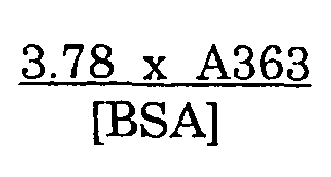
IgG-DNP 
Av-DNP 
BSA-Rhod 
IgG-Rhod 
Av-Rhod 
BSA-dGreen 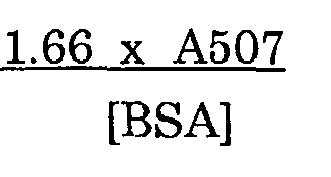
IgG-dGreen 
Av-dGreen 
Table 3: F/P- and D/P-ratios obtained from labelling experiments protein label protein:label ratio (µg : µg) labeling buffer F/P ratio or D/P ratio BSA Rhodamine 1 : 0.5 0.25x PBS 4.0 pH7.4 4.1 0.5 x PBS 3.6 DNP 1 : 0.5 1 x PBS 6.1 dGreen 1 : 0.5 0.5 x PBS 2.4 0.5 x PBS Goat IgG DNP 1 : 0.5 0.5 x PBS 8.4 Rhodamine 1 : 0.5 0.5 x PBS 7.7 dGreen 1 : 0.5 0.5 x PBS 3.9 Avidin-D DNP 1 : 0.5 0.5 x PBS 1.6 Rhodamine 1 : 0.5 0.5 x PBS 0.8 dGreen 1 : 0.5 0.5 x PBS 0.3 Avidin-D DNP 1 : 0.5 TrisHCl 500 mM: pH7 0.2 75 mM; pH7 1.6 75 mM; pH8 1.4 75 mM; pH9 1.6 Avidin-D DNP 1 : 0.5 Na carbonate 500 mM: pH8 0.8 500 mM; pH9 1.2 500 mM; pH10 1.9 75 mM; pH8 1.6 75 mM; pH9 1.5 75 mM; pH10 2.0 1 : 1.0 75 mM; pH10 2.4 1 : 1.25 75 mM; pH10 2.9
Claims (24)
- A method for differentially labelling one or more entities through a platinum-linker, said entities together comprising one or more sulphur containing reactive sites and one or more nitrogen containing reactive sites, wherein a complex of a platinum compound and a marker is formed, and wherein said platinum compound is reacted with said one or more entities such that substantially only sulphur containing reactive sites or substantially only nitrogen containing reactive sites are linked to said platinum compound, wherein the pH, the ionic strength or the stereochemical structure of said platinum compound is used to discriminate between labelling of sulphur containing reactive sites and nitrogen containing reactive sites.
- A method according to claim 1 wherein said ionic strength is realised by one or more salts comprising chloride, Cl-, NO3 -, HCO3 -, CO3 2-, SO3 -, I-, Br-, acetate, carboxylate, phosphate, sulphate, ethylnitrate, oxalate, citrate, a phosphonate or a mixture thereof.
- A method according to claim 1 or 2 wherein said sulphur containing site or sites are first differentially shielded by a shielding moiety and thereafter said platinum compound is differentially linked to the nitrogen containing reactive site.
- A method according to claim 1 or 2, wherein said nitrogen containing site or sites are first differentially shielded by a shielding moiety and thereafter said platinum compound is differentially linked to the sulphur containing reactive site.
- A method according to claim 3 or 4, wherein said shielding moiety is a trans-platinum compound.
- A method to any of the claims 3-5 wherein the shielding moiety is selectively removed from the shielded reactive site, after the platinum compound has been reacted such that said platinum is differentially linked to said entity.
- A method according to any of the preceding claims wherein one or more transition metal ions are used in a concentration chosen such that said platinum compound is differentially labelled to a nitrogen containing reactive site.
- A method according to claim 7, wherein said one or more transition metal ions are chosen from the group of Cu(II), Zn(II).
- A method according to any of the preceding claims, wherein at least one of the nitrogen containing reactive sites is a histidine residue, wherein a complex of a platinum compound and a marker is formed, and wherein said platinum compound is reacted with said one or more entities such that substantially only histidine residues or only non-histidine reactive sites are linked to said platinum compound.
- A method for labelling one or more entities through a platinum-linker, said entities together comprising one or more histidine residues and one or more other nitrogen containing reactive sites, wherein a complex of a platinum compound and a marker is formed, and wherein said platinum compound is reacted with said one or more entities such that substantially only histidine residues or only non-histidine reactive sites are linked to said platinum compound.
- A method according to any of the preceding claims wherein nitrogen containing reacting sites and sulphur containing reactive sites are labelled with different markers.
- A method according to any of the preceding claims wherein, said platinum compound is represented by one of the following formulas:


wherein X1 and X2 are independently chosen from the group of inert moieties formed by NH3, NH2R, NHRR', NRR'R" groups, wherein R, R' and R" represent an alkyl group having from 1 to 6 carbon atoms;
and wherein X3 represents a stabilising bridge. - A method according to claim 12 wherein the stabilising bridge is an alkyl diamine.
- A method according to claim 13, wherein said alkyl diamine has 2 to 6 carbon atoms.
- A method according to any of the preceding claims, wherein the marker and/or a reactive site of the entity are connected to the platinum moiety of the platinum compound through a spacer.
- A method according to any of the preceding claims wherein said marker is a fluorochrome, a phosphorescent marker, chemiluminescent marker, a specific binding pair component, a UV or visual light absorbing marker ,a radioactive marker, a colloidal dye substance , a reducing substance, a particulate sol or a metal.
- A method according to claim 16 wherein said marker is dinitrophenol (DNP) tetramethylrhodamine, digoxygenin, a cyanine-colorant, biotin, avidin or streptavidin.
- A method according to any of the preceding claims wherein said entity comprises a primary amine, a secondary amine, a tertiary amine, an aromatic amine, a thiol, a thioether, a sulfide, a disulfide, a thioamide, a thion, an amide, an imide, an imine, an iminoether, or an azide.
- A method according to any of the preceding claims wherein one or more entities are chosen from the group of amino acids, peptides, oligopeptide, polypeptides, proteins, immunoglobulins, enzyms, synzyms, phospholipides, glycoproteins, nucleic acids, nucleosides, nucleotides, oligonucleotides, polynucleotides, peptide nucleic acids, peptide nucleic acid oligomers, peptide nucleic acid polymers, amines, aminoglycosides.
- A method according to claim 19 wherein one or more entities are chosen from the group of immunoglobulins, enzymes, antibody-antigen complexes.
- A method according to any of the preceding claims, wherein the labelled entity is subsequently analysed using a liquid based analyte analysis system.
- An entity differentially linked to a platinum compound at one or more nitrogen containing reactive sites and/or one or more sulphur containing reactive sites, wherein a marker is attached to said platinum compound, and wherein the entity is labelled with different markers at respectively nitrogen containing reactive sites and sulphur containing reactive sites.
- A diagnostic kit comprising an entity according to claim 22, and one or more preparations selected from the group formed by platinum-linker preparations, buffers, marker preparations, transition metal ion preparations, preparations for adjusting the ionic strength and preparations comprising a shielding moiety.
- A diagnostic kit according to claim 23 for employing a method according to any of the claims 1-21.
Priority Applications (10)
| Application Number | Priority Date | Filing Date | Title |
|---|---|---|---|
| EP01202007A EP1262778B1 (en) | 2001-05-28 | 2001-05-28 | A differential labelling method using platinum complexes |
| AT01202007T ATE376675T1 (en) | 2001-05-28 | 2001-05-28 | A METHOD FOR DIFFERENTIAL MARKING USING PLATINUM COMPLEXES |
| DK01202007T DK1262778T3 (en) | 2001-05-28 | 2001-05-28 | Method for differentiated labeling using platinum complexes |
| DE60131070T DE60131070T2 (en) | 2001-05-28 | 2001-05-28 | A method for differential labeling using platinum complexes |
| JP2003500567A JP4213029B2 (en) | 2001-05-28 | 2002-05-24 | Specific labeling method |
| AU2002311679A AU2002311679A1 (en) | 2001-05-28 | 2002-05-24 | A differential labelling method |
| PCT/NL2002/000334 WO2002097439A2 (en) | 2001-05-28 | 2002-05-24 | A differential labelling method |
| CA2448587A CA2448587C (en) | 2001-05-28 | 2002-05-24 | A differential labelling method with a platinum compound |
| US10/156,730 US7704755B2 (en) | 2001-05-28 | 2002-05-28 | Differential labelling method |
| US12/767,157 US20100267056A1 (en) | 2001-05-28 | 2010-04-26 | Differential labelling method |
Applications Claiming Priority (1)
| Application Number | Priority Date | Filing Date | Title |
|---|---|---|---|
| EP01202007A EP1262778B1 (en) | 2001-05-28 | 2001-05-28 | A differential labelling method using platinum complexes |
Publications (2)
| Publication Number | Publication Date |
|---|---|
| EP1262778A1 EP1262778A1 (en) | 2002-12-04 |
| EP1262778B1 true EP1262778B1 (en) | 2007-10-24 |
Family
ID=8180378
Family Applications (1)
| Application Number | Title | Priority Date | Filing Date |
|---|---|---|---|
| EP01202007A Expired - Lifetime EP1262778B1 (en) | 2001-05-28 | 2001-05-28 | A differential labelling method using platinum complexes |
Country Status (9)
| Country | Link |
|---|---|
| US (2) | US7704755B2 (en) |
| EP (1) | EP1262778B1 (en) |
| JP (1) | JP4213029B2 (en) |
| AT (1) | ATE376675T1 (en) |
| AU (1) | AU2002311679A1 (en) |
| CA (1) | CA2448587C (en) |
| DE (1) | DE60131070T2 (en) |
| DK (1) | DK1262778T3 (en) |
| WO (1) | WO2002097439A2 (en) |
Families Citing this family (12)
| Publication number | Priority date | Publication date | Assignee | Title |
|---|---|---|---|---|
| DK1262778T3 (en) * | 2001-05-28 | 2008-02-18 | Kreatech Biotech Bv | Method for differentiated labeling using platinum complexes |
| US7138520B2 (en) | 2003-01-13 | 2006-11-21 | Massachusetts Institute Of Technology | Coordination complexes having tethered therapeutic agents and/or targeting moieties, and methods of making and using the same |
| EP1505394A1 (en) * | 2003-08-08 | 2005-02-09 | Kreatech Biotechnology B.V. | Platinum complexes for differential mass labelling |
| EP1735619A4 (en) * | 2004-04-01 | 2007-09-26 | Rules Based Medicine Inc | MULTIPLE UNIVERSAL ANALYSIS |
| EP1669760A1 (en) | 2004-12-08 | 2006-06-14 | Kreatech Biotechnology B.V. | Labeled transition metal complexes |
| EP1745802A1 (en) * | 2005-07-20 | 2007-01-24 | Kreatech Biotechnology B.V. | Method of conjugating therapeutic compounds to cell targeting moieties via metal complexes |
| AU2010248203A1 (en) * | 2009-05-14 | 2012-01-19 | Rhino Research Europe B.V. | Product marking |
| JP6077735B2 (en) * | 2011-06-08 | 2017-02-08 | 日本電子株式会社 | Staining agent for electron microscope observation and staining method for sample for electron microscope observation |
| JP6120416B2 (en) | 2012-01-06 | 2017-04-26 | リンクシス ビー.ヴイ. | Methods for preparing cell-targeted conjugates and resulting complexes |
| WO2016044619A1 (en) * | 2014-09-19 | 2016-03-24 | Li-Cor, Inc. | Multifunctional protein molecular weight ladders |
| CN106749423A (en) * | 2016-11-25 | 2017-05-31 | 上海市同仁医院 | A kind of cis-platinum fluorescence complex and its application |
| NL2020120B1 (en) * | 2017-12-19 | 2019-06-26 | Linxis B V | Methods for preparing cell targeting conjugates and conjugates obtainable by said methods |
Family Cites Families (10)
| Publication number | Priority date | Publication date | Assignee | Title |
|---|---|---|---|---|
| US6165729A (en) * | 1986-04-30 | 2000-12-26 | Hyperion Catalysis International, Inc. | Electrochemiluminescent reaction utilizing amine-derived reductant |
| US5714327A (en) * | 1990-07-19 | 1998-02-03 | Kreatech Diagnostics | Platinum-containing compounds, methods for their preparation and applications thereof |
| NL9001639A (en) * | 1990-07-19 | 1992-02-17 | Amc Amsterdam | PT-CONTAINING COMPOUND, METHOD FOR PREPARING IT, AND USE OF SUCH COMPOUNDS. |
| US5277892A (en) * | 1990-08-08 | 1994-01-11 | Rhomed Incorporated | In vivo lymphocyte tagging |
| US5175256A (en) * | 1990-09-28 | 1992-12-29 | Neorx Corporation | Protein labeling reagents |
| DE69629403T2 (en) * | 1995-05-09 | 2004-06-24 | Kreatech Biotechnology B.V. | METHOD FOR PRODUCING LINKERS BETWEEN MARKING GROUPS AND ORGANIC ORGANIC MOLECULES BASED ON PLATIN FOR MARKING ORGANIC ORGANIC MOLECULES TO DISCOVER INTERESTING BIOLOGICAL SUBSTANCES |
| AU726692B2 (en) * | 1996-10-08 | 2000-11-16 | Leica Biosystems Newcastle Ltd | Methods for labeling nucleotides, labeled nucleotides and useful intermediates |
| EP0973785B1 (en) * | 1997-04-10 | 2003-12-03 | Kreatech Biotechnology B.V. | Trans-platinum compound, and diagnostic kit |
| FI982422A0 (en) * | 1998-11-09 | 1998-11-09 | Arctic Diagnostics Oy | Porphyrin compounds, their conjugates and assay methods based on the use of said conjugate |
| DK1262778T3 (en) * | 2001-05-28 | 2008-02-18 | Kreatech Biotech Bv | Method for differentiated labeling using platinum complexes |
-
2001
- 2001-05-28 DK DK01202007T patent/DK1262778T3/en active
- 2001-05-28 DE DE60131070T patent/DE60131070T2/en not_active Expired - Lifetime
- 2001-05-28 AT AT01202007T patent/ATE376675T1/en not_active IP Right Cessation
- 2001-05-28 EP EP01202007A patent/EP1262778B1/en not_active Expired - Lifetime
-
2002
- 2002-05-24 JP JP2003500567A patent/JP4213029B2/en not_active Expired - Lifetime
- 2002-05-24 AU AU2002311679A patent/AU2002311679A1/en not_active Abandoned
- 2002-05-24 WO PCT/NL2002/000334 patent/WO2002097439A2/en not_active Ceased
- 2002-05-24 CA CA2448587A patent/CA2448587C/en not_active Expired - Fee Related
- 2002-05-28 US US10/156,730 patent/US7704755B2/en not_active Expired - Lifetime
-
2010
- 2010-04-26 US US12/767,157 patent/US20100267056A1/en not_active Abandoned
Also Published As
| Publication number | Publication date |
|---|---|
| US7704755B2 (en) | 2010-04-27 |
| EP1262778A1 (en) | 2002-12-04 |
| WO2002097439A3 (en) | 2003-01-23 |
| US20100267056A1 (en) | 2010-10-21 |
| WO2002097439A2 (en) | 2002-12-05 |
| AU2002311679A1 (en) | 2002-12-09 |
| CA2448587C (en) | 2012-07-24 |
| CA2448587A1 (en) | 2002-12-05 |
| US20030060647A1 (en) | 2003-03-27 |
| DK1262778T3 (en) | 2008-02-18 |
| DE60131070T2 (en) | 2008-08-07 |
| JP2004530885A (en) | 2004-10-07 |
| JP4213029B2 (en) | 2009-01-21 |
| DE60131070D1 (en) | 2007-12-06 |
| ATE376675T1 (en) | 2007-11-15 |
Similar Documents
| Publication | Publication Date | Title |
|---|---|---|
| US20100267056A1 (en) | Differential labelling method | |
| CA2096495C (en) | Dual analyte immunoassay | |
| DE69902265T2 (en) | REDOX REVERSIBLE IMIDAZOLE OSMIUM COMPLEX CONJUGATES | |
| DE69214942T2 (en) | METHOD FOR SPECIFIC BINDING ASSAYS USING A RELEASABLE LIGAND | |
| JP4188701B2 (en) | Process for analyzing protein samples | |
| US6750065B1 (en) | Immunoassays involving surface enhanced Raman scattering | |
| US5631172A (en) | Metal ion-ligand coordination complexes, antibodies directed thereto, and assays using such antibodies | |
| US20020081617A1 (en) | Fluorescence and FRET based assays for biomolecules on beads | |
| Liu et al. | A smartphone-based fluorescent biosensor with metal-organic framework biocomposites and cotton swabs for the rapid determination of tetrodotoxin in seafood | |
| Lu et al. | A multiplex fluorescent microsphere immunochromatography assay for simultaneous detection of phorate, fenthion, and profenofos | |
| Johnson | A fluorescence polarization immunoassay for cadmium (II) | |
| Buranda et al. | Detection of epitope-tagged proteins in flow cytometry: Fluorescence resonance energy transfer-based assays on beads with femtomole resolution | |
| Parola et al. | Synthesis and photophysical properties of dansyl-based polyamine ligands and their Zn (II) complexes | |
| RU1838787C (en) | Method of triazine herbicide assay | |
| US6190923B1 (en) | Diethylenetriamine-N,N′,N″-triacetic acid derivatives | |
| JPH08327548A (en) | Interference removing reagent for measuring analyte by usingmetal complex capable of light emission | |
| EP2457916A1 (en) | Compound for the covalent attachment of the chemiluminescent probe N-(4-Aminobutyl)-N-ethylisoluminol (ABEI) to target molecules and uses thereof | |
| Deng et al. | Reaction cell inductively coupled plasma mass spectrometry-based immunoassay using ferrocene tethered hydroxysuccinimide ester as label for the determination of 2, 4-dichlorophenoxyacetic acid | |
| CA2431864C (en) | Elemental analysis of tagged biologically active materials | |
| JP5592057B2 (en) | Labeled transition metal complex | |
| Bacigalupo et al. | Homogeneous immunoassay of atrazine in water by terbium-entrapping liposomes as fluorescent markers | |
| CN113811770B (en) | Suppression of interference in pharmacokinetic immunoassays | |
| US20020072625A1 (en) | Materials and methods for measuring chelate: anti-chelate binding by fluorescence polarization immunoassay | |
| EP1505394A1 (en) | Platinum complexes for differential mass labelling | |
| Ecke | Integrated Diagnostics of Pharmaceutical Contaminants in Water Supply and Management Systems |
Legal Events
| Date | Code | Title | Description |
|---|---|---|---|
| PUAI | Public reference made under article 153(3) epc to a published international application that has entered the european phase |
Free format text: ORIGINAL CODE: 0009012 |
|
| AK | Designated contracting states |
Kind code of ref document: A1 Designated state(s): AT BE CH CY DE DK ES FI FR GB GR IE IT LI LU MC NL PT SE TR |
|
| AX | Request for extension of the european patent |
Free format text: AL;LT;LV;MK;RO;SI |
|
| 17P | Request for examination filed |
Effective date: 20030519 |
|
| RAP1 | Party data changed (applicant data changed or rights of an application transferred) |
Owner name: KREATECH BIOTECHNOLOGY B.V. |
|
| AKX | Designation fees paid |
Designated state(s): AT BE CH CY DE DK ES FI FR GB GR IE IT LI LU MC NL PT SE TR |
|
| 17Q | First examination report despatched |
Effective date: 20030829 |
|
| 17Q | First examination report despatched |
Effective date: 20030829 |
|
| GRAP | Despatch of communication of intention to grant a patent |
Free format text: ORIGINAL CODE: EPIDOSNIGR1 |
|
| GRAS | Grant fee paid |
Free format text: ORIGINAL CODE: EPIDOSNIGR3 |
|
| GRAA | (expected) grant |
Free format text: ORIGINAL CODE: 0009210 |
|
| AK | Designated contracting states |
Kind code of ref document: B1 Designated state(s): AT BE CH CY DE DK ES FI FR GB GR IE IT LI LU MC NL PT SE TR |
|
| REG | Reference to a national code |
Ref country code: GB Ref legal event code: FG4D |
|
| REG | Reference to a national code |
Ref country code: CH Ref legal event code: EP |
|
| REG | Reference to a national code |
Ref country code: IE Ref legal event code: FG4D |
|
| REF | Corresponds to: |
Ref document number: 60131070 Country of ref document: DE Date of ref document: 20071206 Kind code of ref document: P |
|
| REG | Reference to a national code |
Ref country code: CH Ref legal event code: NV Representative=s name: TROESCH SCHEIDEGGER WERNER AG |
|
| REG | Reference to a national code |
Ref country code: SE Ref legal event code: TRGR |
|
| REG | Reference to a national code |
Ref country code: DK Ref legal event code: T3 |
|
| PG25 | Lapsed in a contracting state [announced via postgrant information from national office to epo] |
Ref country code: ES Free format text: LAPSE BECAUSE OF FAILURE TO SUBMIT A TRANSLATION OF THE DESCRIPTION OR TO PAY THE FEE WITHIN THE PRESCRIBED TIME-LIMIT Effective date: 20080204 |
|
| PG25 | Lapsed in a contracting state [announced via postgrant information from national office to epo] |
Ref country code: PT Free format text: LAPSE BECAUSE OF FAILURE TO SUBMIT A TRANSLATION OF THE DESCRIPTION OR TO PAY THE FEE WITHIN THE PRESCRIBED TIME-LIMIT Effective date: 20080324 |
|
| PG25 | Lapsed in a contracting state [announced via postgrant information from national office to epo] |
Ref country code: AT Free format text: LAPSE BECAUSE OF FAILURE TO SUBMIT A TRANSLATION OF THE DESCRIPTION OR TO PAY THE FEE WITHIN THE PRESCRIBED TIME-LIMIT Effective date: 20071024 |
|
| ET | Fr: translation filed | ||
| PLBE | No opposition filed within time limit |
Free format text: ORIGINAL CODE: 0009261 |
|
| STAA | Information on the status of an ep patent application or granted ep patent |
Free format text: STATUS: NO OPPOSITION FILED WITHIN TIME LIMIT |
|
| 26N | No opposition filed |
Effective date: 20080725 |
|
| PG25 | Lapsed in a contracting state [announced via postgrant information from national office to epo] |
Ref country code: MC Free format text: LAPSE BECAUSE OF NON-PAYMENT OF DUE FEES Effective date: 20080531 |
|
| PG25 | Lapsed in a contracting state [announced via postgrant information from national office to epo] |
Ref country code: GR Free format text: LAPSE BECAUSE OF FAILURE TO SUBMIT A TRANSLATION OF THE DESCRIPTION OR TO PAY THE FEE WITHIN THE PRESCRIBED TIME-LIMIT Effective date: 20080125 |
|
| PG25 | Lapsed in a contracting state [announced via postgrant information from national office to epo] |
Ref country code: FI Free format text: LAPSE BECAUSE OF FAILURE TO SUBMIT A TRANSLATION OF THE DESCRIPTION OR TO PAY THE FEE WITHIN THE PRESCRIBED TIME-LIMIT Effective date: 20071024 |
|
| PG25 | Lapsed in a contracting state [announced via postgrant information from national office to epo] |
Ref country code: CY Free format text: LAPSE BECAUSE OF FAILURE TO SUBMIT A TRANSLATION OF THE DESCRIPTION OR TO PAY THE FEE WITHIN THE PRESCRIBED TIME-LIMIT Effective date: 20071024 |
|
| PG25 | Lapsed in a contracting state [announced via postgrant information from national office to epo] |
Ref country code: IT Free format text: LAPSE BECAUSE OF NON-PAYMENT OF DUE FEES Effective date: 20080528 |
|
| PG25 | Lapsed in a contracting state [announced via postgrant information from national office to epo] |
Ref country code: LU Free format text: LAPSE BECAUSE OF NON-PAYMENT OF DUE FEES Effective date: 20080528 |
|
| PGFP | Annual fee paid to national office [announced via postgrant information from national office to epo] |
Ref country code: IE Payment date: 20100527 Year of fee payment: 10 Ref country code: DK Payment date: 20100512 Year of fee payment: 10 |
|
| PG25 | Lapsed in a contracting state [announced via postgrant information from national office to epo] |
Ref country code: TR Free format text: LAPSE BECAUSE OF FAILURE TO SUBMIT A TRANSLATION OF THE DESCRIPTION OR TO PAY THE FEE WITHIN THE PRESCRIBED TIME-LIMIT Effective date: 20071024 |
|
| PGFP | Annual fee paid to national office [announced via postgrant information from national office to epo] |
Ref country code: CH Payment date: 20100525 Year of fee payment: 10 Ref country code: BE Payment date: 20100517 Year of fee payment: 10 |
|
| PGFP | Annual fee paid to national office [announced via postgrant information from national office to epo] |
Ref country code: SE Payment date: 20100517 Year of fee payment: 10 |
|
| BERE | Be: lapsed |
Owner name: KREATECH BIOTECHNOLOGY B.V. Effective date: 20110531 |
|
| REG | Reference to a national code |
Ref country code: CH Ref legal event code: PL |
|
| REG | Reference to a national code |
Ref country code: DK Ref legal event code: EBP |
|
| REG | Reference to a national code |
Ref country code: SE Ref legal event code: EUG |
|
| PG25 | Lapsed in a contracting state [announced via postgrant information from national office to epo] |
Ref country code: CH Free format text: LAPSE BECAUSE OF NON-PAYMENT OF DUE FEES Effective date: 20110531 Ref country code: LI Free format text: LAPSE BECAUSE OF NON-PAYMENT OF DUE FEES Effective date: 20110531 |
|
| REG | Reference to a national code |
Ref country code: IE Ref legal event code: MM4A |
|
| PG25 | Lapsed in a contracting state [announced via postgrant information from national office to epo] |
Ref country code: BE Free format text: LAPSE BECAUSE OF NON-PAYMENT OF DUE FEES Effective date: 20110531 |
|
| PG25 | Lapsed in a contracting state [announced via postgrant information from national office to epo] |
Ref country code: IE Free format text: LAPSE BECAUSE OF NON-PAYMENT OF DUE FEES Effective date: 20110530 |
|
| PG25 | Lapsed in a contracting state [announced via postgrant information from national office to epo] |
Ref country code: DK Free format text: LAPSE BECAUSE OF NON-PAYMENT OF DUE FEES Effective date: 20110531 |
|
| PG25 | Lapsed in a contracting state [announced via postgrant information from national office to epo] |
Ref country code: SE Free format text: LAPSE BECAUSE OF NON-PAYMENT OF DUE FEES Effective date: 20110529 |
|
| REG | Reference to a national code |
Ref country code: GB Ref legal event code: 732E Free format text: REGISTERED BETWEEN 20150507 AND 20150513 |
|
| REG | Reference to a national code |
Ref country code: NL Ref legal event code: SD Effective date: 20150626 |
|
| REG | Reference to a national code |
Ref country code: DE Ref legal event code: R082 Ref document number: 60131070 Country of ref document: DE Representative=s name: BLUMBACH ZINNGREBE PATENT- UND RECHTSANWAELTE, DE Ref country code: DE Ref legal event code: R081 Ref document number: 60131070 Country of ref document: DE Owner name: LEICA BIOSYSTEMS NEWCASTLE LTD., GB Free format text: FORMER OWNER: PRIMOSA INTERNATIONAL N.V., CURACAO, NL Ref country code: DE Ref legal event code: R081 Ref document number: 60131070 Country of ref document: DE Owner name: LEICA BIOSYSTEMS NEWCASTLE LTD., GB Free format text: FORMER OWNER: KREATECH BIOTECHNOLOGY B.V., AMSTERDAM, NL Ref country code: DE Ref legal event code: R082 Ref document number: 60131070 Country of ref document: DE Representative=s name: BLUMBACH ZINNGREBE PATENT- UND RECHTSANWAELTE , DE |
|
| REG | Reference to a national code |
Ref country code: FR Ref legal event code: TP Owner name: LEICA BIOSYSTEMS NEWCASTLE LTD., GB Effective date: 20150721 |
|
| REG | Reference to a national code |
Ref country code: FR Ref legal event code: PLFP Year of fee payment: 16 |
|
| REG | Reference to a national code |
Ref country code: FR Ref legal event code: PLFP Year of fee payment: 17 |
|
| PGFP | Annual fee paid to national office [announced via postgrant information from national office to epo] |
Ref country code: NL Payment date: 20170519 Year of fee payment: 17 |
|
| REG | Reference to a national code |
Ref country code: FR Ref legal event code: PLFP Year of fee payment: 18 |
|
| REG | Reference to a national code |
Ref country code: NL Ref legal event code: MM Effective date: 20180601 |
|
| PG25 | Lapsed in a contracting state [announced via postgrant information from national office to epo] |
Ref country code: NL Free format text: LAPSE BECAUSE OF NON-PAYMENT OF DUE FEES Effective date: 20180601 |
|
| PGFP | Annual fee paid to national office [announced via postgrant information from national office to epo] |
Ref country code: FR Payment date: 20200522 Year of fee payment: 20 Ref country code: DE Payment date: 20200520 Year of fee payment: 20 |
|
| PGFP | Annual fee paid to national office [announced via postgrant information from national office to epo] |
Ref country code: GB Payment date: 20200527 Year of fee payment: 20 |
|
| REG | Reference to a national code |
Ref country code: DE Ref legal event code: R071 Ref document number: 60131070 Country of ref document: DE |
|
| REG | Reference to a national code |
Ref country code: GB Ref legal event code: PE20 Expiry date: 20210527 |
|
| PG25 | Lapsed in a contracting state [announced via postgrant information from national office to epo] |
Ref country code: GB Free format text: LAPSE BECAUSE OF EXPIRATION OF PROTECTION Effective date: 20210527 |