EP1261200A2 - Display control apparatus and method, and recording medium and program therefor - Google Patents
Display control apparatus and method, and recording medium and program therefor Download PDFInfo
- Publication number
- EP1261200A2 EP1261200A2 EP02253655A EP02253655A EP1261200A2 EP 1261200 A2 EP1261200 A2 EP 1261200A2 EP 02253655 A EP02253655 A EP 02253655A EP 02253655 A EP02253655 A EP 02253655A EP 1261200 A2 EP1261200 A2 EP 1261200A2
- Authority
- EP
- European Patent Office
- Prior art keywords
- picture
- images
- display
- display control
- image
- Prior art date
- Legal status (The legal status is an assumption and is not a legal conclusion. Google has not performed a legal analysis and makes no representation as to the accuracy of the status listed.)
- Withdrawn
Links
Images








Classifications
-
- H—ELECTRICITY
- H04—ELECTRIC COMMUNICATION TECHNIQUE
- H04N—PICTORIAL COMMUNICATION, e.g. TELEVISION
- H04N5/00—Details of television systems
- H04N5/44—Receiver circuitry for the reception of television signals according to analogue transmission standards
- H04N5/445—Receiver circuitry for the reception of television signals according to analogue transmission standards for displaying additional information
- H04N5/45—Picture in picture, e.g. displaying simultaneously another television channel in a region of the screen
-
- H—ELECTRICITY
- H04—ELECTRIC COMMUNICATION TECHNIQUE
- H04N—PICTORIAL COMMUNICATION, e.g. TELEVISION
- H04N21/00—Selective content distribution, e.g. interactive television or video on demand [VOD]
- H04N21/40—Client devices specifically adapted for the reception of or interaction with content, e.g. set-top-box [STB]; Operations thereof
- H04N21/43—Processing of content or additional data, e.g. demultiplexing additional data from a digital video stream; Elementary client operations, e.g. monitoring of home network or synchronising decoder's clock; Client middleware
- H04N21/431—Generation of visual interfaces for content selection or interaction; Content or additional data rendering
- H04N21/4312—Generation of visual interfaces for content selection or interaction; Content or additional data rendering involving specific graphical features, e.g. screen layout, special fonts or colors, blinking icons, highlights or animations
- H04N21/4316—Generation of visual interfaces for content selection or interaction; Content or additional data rendering involving specific graphical features, e.g. screen layout, special fonts or colors, blinking icons, highlights or animations for displaying supplemental content in a region of the screen, e.g. an advertisement in a separate window
-
- H—ELECTRICITY
- H04—ELECTRIC COMMUNICATION TECHNIQUE
- H04N—PICTORIAL COMMUNICATION, e.g. TELEVISION
- H04N21/00—Selective content distribution, e.g. interactive television or video on demand [VOD]
- H04N21/40—Client devices specifically adapted for the reception of or interaction with content, e.g. set-top-box [STB]; Operations thereof
- H04N21/43—Processing of content or additional data, e.g. demultiplexing additional data from a digital video stream; Elementary client operations, e.g. monitoring of home network or synchronising decoder's clock; Client middleware
- H04N21/443—OS processes, e.g. booting an STB, implementing a Java virtual machine in an STB or power management in an STB
- H04N21/4438—Window management, e.g. event handling following interaction with the user interface
-
- H—ELECTRICITY
- H04—ELECTRIC COMMUNICATION TECHNIQUE
- H04N—PICTORIAL COMMUNICATION, e.g. TELEVISION
- H04N21/00—Selective content distribution, e.g. interactive television or video on demand [VOD]
- H04N21/40—Client devices specifically adapted for the reception of or interaction with content, e.g. set-top-box [STB]; Operations thereof
- H04N21/45—Management operations performed by the client for facilitating the reception of or the interaction with the content or administrating data related to the end-user or to the client device itself, e.g. learning user preferences for recommending movies, resolving scheduling conflicts
- H04N21/4508—Management of client data or end-user data
- H04N21/4532—Management of client data or end-user data involving end-user characteristics, e.g. viewer profile, preferences
-
- H—ELECTRICITY
- H04—ELECTRIC COMMUNICATION TECHNIQUE
- H04N—PICTORIAL COMMUNICATION, e.g. TELEVISION
- H04N21/00—Selective content distribution, e.g. interactive television or video on demand [VOD]
- H04N21/40—Client devices specifically adapted for the reception of or interaction with content, e.g. set-top-box [STB]; Operations thereof
- H04N21/45—Management operations performed by the client for facilitating the reception of or the interaction with the content or administrating data related to the end-user or to the client device itself, e.g. learning user preferences for recommending movies, resolving scheduling conflicts
- H04N21/454—Content or additional data filtering, e.g. blocking advertisements
-
- H—ELECTRICITY
- H04—ELECTRIC COMMUNICATION TECHNIQUE
- H04N—PICTORIAL COMMUNICATION, e.g. TELEVISION
- H04N21/00—Selective content distribution, e.g. interactive television or video on demand [VOD]
- H04N21/40—Client devices specifically adapted for the reception of or interaction with content, e.g. set-top-box [STB]; Operations thereof
- H04N21/45—Management operations performed by the client for facilitating the reception of or the interaction with the content or administrating data related to the end-user or to the client device itself, e.g. learning user preferences for recommending movies, resolving scheduling conflicts
- H04N21/462—Content or additional data management e.g. creating a master electronic programme guide from data received from the Internet and a Head-end or controlling the complexity of a video stream by scaling the resolution or bit-rate based on the client capabilities
- H04N21/4622—Retrieving content or additional data from different sources, e.g. from a broadcast channel and the Internet
-
- H—ELECTRICITY
- H04—ELECTRIC COMMUNICATION TECHNIQUE
- H04N—PICTORIAL COMMUNICATION, e.g. TELEVISION
- H04N21/00—Selective content distribution, e.g. interactive television or video on demand [VOD]
- H04N21/40—Client devices specifically adapted for the reception of or interaction with content, e.g. set-top-box [STB]; Operations thereof
- H04N21/47—End-user applications
- H04N21/482—End-user interface for programme selection
-
- G—PHYSICS
- G09—EDUCATION; CRYPTOGRAPHY; DISPLAY; ADVERTISING; SEALS
- G09G—ARRANGEMENTS OR CIRCUITS FOR CONTROL OF INDICATING DEVICES USING STATIC MEANS TO PRESENT VARIABLE INFORMATION
- G09G5/00—Control arrangements or circuits for visual indicators common to cathode-ray tube indicators and other visual indicators
- G09G5/14—Display of multiple viewports
-
- H—ELECTRICITY
- H04—ELECTRIC COMMUNICATION TECHNIQUE
- H04N—PICTORIAL COMMUNICATION, e.g. TELEVISION
- H04N21/00—Selective content distribution, e.g. interactive television or video on demand [VOD]
- H04N21/40—Client devices specifically adapted for the reception of or interaction with content, e.g. set-top-box [STB]; Operations thereof
- H04N21/41—Structure of client; Structure of client peripherals
- H04N21/426—Internal components of the client ; Characteristics thereof
-
- H—ELECTRICITY
- H04—ELECTRIC COMMUNICATION TECHNIQUE
- H04N—PICTORIAL COMMUNICATION, e.g. TELEVISION
- H04N21/00—Selective content distribution, e.g. interactive television or video on demand [VOD]
- H04N21/40—Client devices specifically adapted for the reception of or interaction with content, e.g. set-top-box [STB]; Operations thereof
- H04N21/41—Structure of client; Structure of client peripherals
- H04N21/426—Internal components of the client ; Characteristics thereof
- H04N21/42607—Internal components of the client ; Characteristics thereof for processing the incoming bitstream
- H04N21/4263—Internal components of the client ; Characteristics thereof for processing the incoming bitstream involving specific tuning arrangements, e.g. two tuners
-
- H—ELECTRICITY
- H04—ELECTRIC COMMUNICATION TECHNIQUE
- H04N—PICTORIAL COMMUNICATION, e.g. TELEVISION
- H04N21/00—Selective content distribution, e.g. interactive television or video on demand [VOD]
- H04N21/40—Client devices specifically adapted for the reception of or interaction with content, e.g. set-top-box [STB]; Operations thereof
- H04N21/47—End-user applications
- H04N21/485—End-user interface for client configuration
- H04N21/4858—End-user interface for client configuration for modifying screen layout parameters, e.g. fonts, size of the windows
-
- H—ELECTRICITY
- H04—ELECTRIC COMMUNICATION TECHNIQUE
- H04N—PICTORIAL COMMUNICATION, e.g. TELEVISION
- H04N5/00—Details of television systems
- H04N5/44—Receiver circuitry for the reception of television signals according to analogue transmission standards
- H04N5/445—Receiver circuitry for the reception of television signals according to analogue transmission standards for displaying additional information
-
- H—ELECTRICITY
- H04—ELECTRIC COMMUNICATION TECHNIQUE
- H04N—PICTORIAL COMMUNICATION, e.g. TELEVISION
- H04N5/00—Details of television systems
- H04N5/44—Receiver circuitry for the reception of television signals according to analogue transmission standards
- H04N5/50—Tuning indicators; Automatic tuning control
Definitions
- the present invention relates to a display control apparatus, and a method therefor, for enabling the display of a plurality of images by using a main picture and at least one child picture.
- presently-available television reception unit can display not only a main picture but also, as a child picture, an additional analog broadcast program image.
- An example television reception unit that includes such a function is disclosed in Japanese Laid-Open Patent Application No. 2-96486.
- a recently-introduced multi-picture television reception unit now in practical use, divides a child picture to obtain a plurality of picture segments, corresponding in number to the available broadcast programs, and incorporates a single-tuner-controlled time sharing process for cyclically displaying moving images in the picture segments.
- a user registers favorite programs in advance and the programs to be displayed are then selected in accordance with the registered contents.
- An example television reception unit that includes such a function is disclosed in Japanese Laid-Open Patent Application No. 10-51709.
- EPG Electronic Program Guide
- a multi-picture display system which divides a child picture to obtain a plurality of picture segments, corresponding in number to the programs being broadcast, and displays a program list, can satisfactorily cope with analog broadcasting for which several tens of channels are available.
- analog broadcasting for which several hundred channels are available, it is difficult for this system to divide a child picture to obtain picture segments for all the channels.
- display resolution of the program video is reduced because of the increase in the number of picture segments, and visibility of a video image is deteriorated.
- entry programs favorite registered programs
- the user need only employ a remote controller to switch to a selected picture segment.
- this function to search for and view a favorite broadcast program
- the following problem is encountered. Since the programs to be switched to are displayed in order in accordance with priority levels established at the time programs are registered, and the display switching operation must be repetitively performed to bring up a desired program having a low priority level, thereby requiring a user a troublesome operation when a user desires to immediately display a target program.
- Such repetitive switching becomes especially irritating when multi-channel digital broadcasting is employed, since many entry programs may be registered and the likelihood is great that the number of switching operations will be increased, and as a result, a demand for improved program selection procedures and devices has been raised.
- digital broadcasting EPG is known as a preferable program selection means for users who have programs they wish to view, or for those who are familiar with computers
- the EPG can be a very inconvenient and troublesome selection means for users who desire to choose programs while viewing pictures, or for those who are not familiar with computers, because the operating sensation users experience when selecting programs with the EPG, differs greatly from that experienced when analog broadcasting is employed.
- a display control apparatus for controlling display means to display a plurality of images in a main picture and at least one sub-picture, comprises:
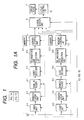
- Figs. 1A and 1B are schematic block diagrams showing the configuration of a multi-picture display apparatus according to a first embodiment of the present invention.
- the multi-picture display apparatus in Figs. 1A and 1B is so arranged that, based on a predetermined layout, it synthesizes and displays four independent program video sources. It should be noted that the number of program video sources to be synthesized and displayed is not limited to four, and may be larger or smaller.
- BS digital broadcasts and CS digital broadcasts are received at an antenna 1 (parabola antenna).
- antenna 1 parbola antenna
- satellite broadcasting is employed; however, a broadcast program may be received through a ground wave or an optical cable.
- Tuner units 2-1 to 2-4 pass a wave received at the antenna 1 through incorporated band-pass filters or down converters, and output it to demodulation units 3-1 to 3-4.
- the demodulation units 3-1 to 3-4 perform on the received wave, a demodulation process that matches the modulation performed on the transmission side, performs an error correction process on a desired transport stream (hereinafter referred to as a TS), and transmits the resultant TS to demultiplexers 4-1 to 4-4.
- This TS is so arranged that multiple program packets coded using MPEG-2, for example, are multiplexed.
- the demultiplexers 4-1 to 4-4 separate from the desired TS, video data, audio data and additional information of a desired program.
- the obtained audio data is decoded using an audio decoder (not shown), and the obtained audio signal is output.
- an amplifier and a loudspeaker are connected to the audio decoder, the sound produced from a received program can be heard.
- the video data separated from the TS is decoded using video decoders 5-1 to 5-4, and the decoded data is converted into data having a raster scan display format, which is then transmitted as a program video source to enlargement and reduction units 6-1 to 6-4.
- the additional information is then transmitted to a control unit 12.
- the control unit 12 interprets the BML (Broadcast Markup Language) and obtains a contents scenario structured by a multimedia information service provider.
- the control unit 12 obtains program information (e.g., a program, an on-air time, a title and a category) by interpreting the PSI/SI information.
- the pre-process When the pre-process is performed on video data by a matrix circuit for converting a YUV color difference signal into an RGB signal, an I-P conversion circuit for converting the scan type from interlace to progressive, and other circuits, and when the control unit 12 sets a display format (the number of displayed lines, the number of dots and the number of colors) and resolution conversion parameters (an enlargement rate, a reduction rate, a weighting filter coefficient for enlargement and reduction, etc.) based on picture layout information that is set up in advance, the enlargement and reduction units 6-1 to 6-4 perform the enlargement, reduction or equal magnification of the video data obtained through the pre-process.
- a display format the number of displayed lines, the number of dots and the number of colors
- resolution conversion parameters an enlargement rate, a reduction rate, a weighting filter coefficient for enlargement and reduction, etc.
- Memory control units 7-1 to 7-4 write to memories 8-1 to 8-4, video data received from the enlargement and reduction units 6-1 to 6-4 at the input rate (a transfer rate synchronized with the horizontal and vertical sync signals on the input side).
- the memory control units 7-1 to 7-4 read out video data from the memories 8-1 to 8-4 at the rate for the output of data from a synthesization unit 9 to a display device 11 in Figs. 1A and 1B (a display rate synchronized with the horizontal and vertical sync signals on the output side).
- the operation of the memory control units 7-1 to 7-4 is performed based on memory control parameters (input data capture areas and output data reading areas in the memories 8-1 to 8-4) that are set by the control unit 12.
- the size of each of the memories 8-1 to 8-4 is the equivalent of at least one picture on the display device 11.
- the synthesization unit 9 is an arithmetic operation unit for synthesizing video data that are, at the least, equivalent to two of the pictures that are read from the memory control units 7-1 to 7-4, which are independently operated. In this embodiment, all the video data are output by the synthesization unit 9 at a common timing synchronizing with of the horizontal and vertical sync signals of the display device 11.
- the data area to be transferred during one frame is the same as the actual image display area.
- the method described above is one means employed to easily align the positions of images when the video data supplied by four video sources are synthesized. Further, the effective data area of the video data that is transmitted to the synthesization unit 9 for each video source can be identified by using an effective data signal that, together with video data, is received from the memory control units 7-1 to 7-4 during a horizontal time period.
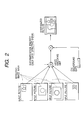
- Fig. 2 is a diagram showing an image representing a synthesized picture provided by the synthesization unit 9.
- the picture synthesizing process performed by the synthesization unit 9 will now be described while referring to Fig. 2.
- the synthesization unit 9 monitors data effective signals that are received, together with the video data, from the memory control units 7-1 to 7-4, and selects and outputs only the video data for which the data effective signal is rendered active.
- the synthesization unit 9 initiates the synthesization of video data.
- the control unit 12 determines display priority levels for the superimposition based on the picture layout information and the determined priority levels are set up in the synthesization unit 9, the video data synthesization performed by the synthesization unit 9 is based on the display priority levels. As a result, the synthesized video data are used to obtain a synthesized picture.
- the control unit 12 controls a GUI (Graphical User Interface) generation unit 15 to generate OSD data as GUI data that are then output to the synthesization unit 9, whereat the GUI data (GUI background data) are further synthesized with the synthesized video data to prepare a background picture.
- GUI Graphic User Interface
- the synthesized picture shown in Fig. 2 can be generated. While in this embodiment the GUI background data is synthesized with the synthesized video data, EPG picture data or other operating support picture data may be so synthesized.
- a display control unit 10 controls the display, and converts a display format, in accordance with the characteristic of the display device 11. Further, the display control unit 10 includes an output timing generator. This output timing generator, whose main function is the generation of a timing control signal for the display device 11, employs a reference clock to generate a horizontal sync signal and a vertical sync signal that are output to the display device 11, and that are also transmitted to the synthesization unit 9.
- the display device 11 that can be applied to the present invention can be any type of display device, such as a flat panel (liquid crystal, plasma, etc.) or a CRT having a matrix electrode structure, on which an image can be displayed. While taking into account that the display device 11 is employed for the application in this embodiment, a visual wide-field high definition display device is especially preferable on which a high-definition image of 720 P or higher can be displayed.
- the control unit 12 which controls the entire system, includes a RAM 14 for temporarily storing data processed by a CPU, a ROM 13 for storing a control program, a counter for measuring a time (not shown), and a peripheral input/output interface (not shown).
- the control unit 12 that can be applied to this embodiment may be constituted either by only logical units, or by a CPU or a media processor that can perform parallel processing.
- the control program may be stored in the ROM 13, or may be transmitted from the outside through the peripheral input/output interface.
- a remote control light reception unit 16 is connected to the control unit 12 to accept a command transmitted by a remote controller 17 using infrared light. With the remote controller 17, an operation initiated by a user (a user action) can be accepted.
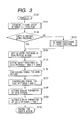
- Fig. 3 is a flowchart showing the system initialization processing perfomed when the system is powered on.
- the control unit 12 detects the power on state, the control unit 12 obtains picture layout information from the ROM 13 (step S101).
- the picture layout information refers to the layout for the screen of the main picture, child pictures and a tiling development picture.
- the picture layout in Fig. 5 is based on the assumption that, while viewing a favorite program in the main picture, the user searches for or views other broadcast programs using two child pictures.
- the control unit 12 determines whether default entry programs are designated for display in the main picture and child pictures 1 and 2 (step S102). When it is ascertained by the control unit 12 that entry programs for the main picture and the child pictures 1 and 2 have already been determined (step S102/YES), the control unit 12 loads, into the RAM 14, information referring to the entry program for the main picture (step S104) and the entry programs for the child pictures 1 and 2 (step S105).
- control unit 12 When it is ascertained by the control unit 12 that the entry programs for the main picture and the child pictures 1 and 2 have not yet been determined (step S102/NO), the control unit 12 employs a filtering process to extract entry programs for these pictures and loads them into the RAM 14 (step S103). The process performed at step S103 will be described in detail later.
- Fig. 6 the number of entry programs for the main screen is one (program #0), and the number of entry programs for each of the child pictures 1 and 2 is five (child picture 1: program #1, program #2, program #3, program #4 and program #5, and child picture 2: program #6, program #7, program #8, program #9 and program #10).
- the entry program choices for a child picture be narrowed down so as to reduce load imposed on a user during the channel tuning.
- the priority levels of the entry programs are set so that the entry program for the main picture (main picture entry program) > the entry program for the child picture 1 (child picture 1 entry program) > the entry program for the child picture 2 (child picture 2 entry program).
- the vertical axis in Fig. 6 shows the priority levels of the entry programs for child pictures 1 and 2.
- the priority levels of the entry programs for the child picture 1 are: program #1 (Sub1(L0)) > program #2 (Sub1(L1)) > program #3 (Sub1(L2)) > program #4 (Sub1(L3)) > program #5 (Sub1(L4)); while the priority levels of the entry programs for the child picture 2 are: program #6 (Sub2(L0)) > program #7 (Sub2(L1)) > program #8 (Sub2(L2)) > program #9 (Sub2(L3)) > program #10 (Sub2(L4)).
- program #0 Main(L0)
- program #1 Sub1(L0)
- program #6 Sub2(L0)
- program #0 Main(L0)
- program #1 Sub1(L0)
- program #6 Sub2(L0)
- program #0 Main(L0)
- program #1 Sub1(L0)
- program #6 Sub2(L0)
- the remaining entry programs for the child pictures 1 and 2 are held in the RAM 14 as members of standby queues.
- the control unit 12 then controls the tuning performed for the main picture (step S106).
- Tuning control refers to the following series of control processes.
- the control unit 12 obtains, from the RAM 14, information referring to entry program #0 of Main(L0), and employs this information to control the tuner unit 2-1. This control enables the tuner unit 2-1 to selectively receive a TS that includes program #0.
- control unit 12 controls the demultiplexer 4-1 to separate, from the TS, video data, audio data and additional information for program #0. Finally, the control unit 12 controls the video decoder 5-1 to decode the MPEG2 video data. Thereafter, the control unit 12 controls the tuning for the child pictures 1 and 2 in the same manner (step S107). At this time, the sections 2-2, 3-2, 4-2 and 5-2 are employed as the processing system for the child picture 1, and the sections 2-3, 3-3, 4-3 and 5-3 are employed as the processing system for the child picture 2.
- the control unit 12 sets display parameters for the main picture (step S108).
- the setup of the display parameters denotes a setup of resolution conversion parameters (an enlargement and reduction rate, a weighting filter coefficient for enlargement and reduction, etc.) for the main picture in the enlargement and reduction unit 6-1, and the setup of memory control parameters (an area for capturing data input to the memory 8-1 and an area for reading data output by the memory 8-1) in the memory control unit 7-1.
- the resolution conversion parameters and the memory control parameters are calculated by the control unit 12 based on the picture layout information obtained at step S101.
- control unit 12 sets the display parameters for the child pictures 1 and 2 (step S109).
- the enlargement and reduction unit 6-2 and the memory control unit 7-2 are employed to set the display parameters for the child picture 1
- the enlargement and reduction unit 6-3 and the memory control unit 7-3 are employed to set the display parameters for the child picture 2.
- the control unit 12 waits to receive a user action from the remote controller 17 (step S110). As is described above, when a multi-picture shown in Fig. 5 is displayed, as is shown in Fig. 6 the multi-picture display apparatus according to the embodiment determines the priority levels of the entry programs for the pictures and terminates the initialization.
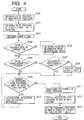
- step S103 for filtering the entry programs will now be described in detail while referring to the flowchart in Fig. 4.
- the control unit 12 obtains, from the ROM 13, the maximum number of entry programs for the main picture (step S200), which in this embodiment, as is shown in Fig. 6, is one.
- the control unit 12 obtains, from the ROM 13, the maximum number of entry programs for the child pictures 1 and 2 (step S201), which in this embodiment, as is shown in Fig. 6, is five each.
- the control unit 12 also obtains the current time from the ROM 13 (step S203).
- the description of the time stamp included in the TS may be employed, or a date timer may be referred to if one is included in the control unit 12.
- the control unit 12 determines whether the entry program to be displayed at the current time has already been set in the RAM 14 (step S204). When the control unit 12 ascertains that the entry program to be displayed at the current time has already been set in the RAM 14 (step S204/YES), the process shifts to the process at step S206.
- control unit 2 When at step S204 the control unit 2 ascertains that the entry program to be displayed at the current time has not yet been loaded into the RAM 14 (step S204/NO), the control unit 12 controls the process sections 2-1 to 5-1 to obtain, from the received TS, program information that can be so displayed.
- the program information can be obtained from a whole-net EPG service transmitted with the TS, and for CS digital broadcasting, the program information can be obtained from a promotion channel.
- the control unit 12 determines whether the entry program designated at step S204 for display at the current time or the program obtained from the TS at step S205 is a viewing-restricted program (step S206). When the control unit 12 ascertains that the entry program designated at step S204 or the program obtained at step S205 is a viewing-restricted program (step S206/YES), the control unit 12 then determines whether the accounting processing for this program has been completed (step S207).
- step S207/YES When the control unit 12 ascertains at step S207 that the accounting processing has been completed (step S207/YES), the process shifts to the process at step S209. And when the control unit ascertains that the accounting processing is incomplete (step S207/NO), the control unit 12 removes, from an entry subject, the entry program designated at step S204 or the program obtained at step S205 (step S208).
- control unit 12 needs information to identify the accounting state of the user, and this information can be obtained from an IC card, for example, on which various information for the limited reception of viewing-restricted programs is recorded.
- control unit 12 When the control unit 12 ascertains that after being narrowed down the number of programs is still greater than the maximum number of entry programs (step S209/YES), the control unit 12 reads, from the RAM 14, favorite information (the category, the cast, the user's viewing history, etc.) that is set in advance by the user using separate means, and based on this favorite information narrows down the program count so that the number of programs is reduced so as not to exceed the maximum number of entry programs (step S210).
- favorite information the category, the cast, the user's viewing history, etc.
- control unit 12 When at step S209 programs have been narrowed down so that the total number of programs does not exceed the maximum number of entry programs (step S209/NO), the control unit 12 performs the prioritizing processing on the entry programs based on the favorite information (step S211).
- the higher priorities for the main picture and the child picture 1 can be given in the descending order beginning with the entry program having the greatest weight under the first search condition
- the higher priorities for the child picture 2 can be given in the descending order beginning with the entry program having the greatest weight under the second search condition.
- appropriate search conditions based on the favorite information can be set, and one or more search conditions can be established to determine the priority level for the entry program for each picture.
- the control unit 12 loads the entry program having the highest priority into the RAM 14 (step S212), and then, for the child pictures 1 and 2, loads the remaining entry programs into the RAM 14 in the order of their priority levels.
- the prioritizing processing is performed on the ten entry programs other than the entry program for the main picture, for which the highest priority is allocated.
- the entry programs can be set near the display layer in the descending order of their priority levels, and the priority level for the child picture 1 can be set higher than that for the child picture 2.
- the entry programs be allocated beginning with the entry program having the highest priority level, in the order for program #1 (Sub1(L0)) > program #6 (Sub2(L0)) > program #2 (Sub1(L1)) > program #7 (Sub2(L1)) > program #3 (Sub1(L2)) > program #8 (sub2(L2)) > program #4 (Sub1(L3)) > program #9 (Sub2(L3)) > program #5 (Sub1(L4)) > program #10 (Sub2(L4)).
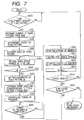
- Fig. 7 is a flowchart showing the tiling development and display processing during which the list of entry programs that are broadcast can be displayed.
- Figs. 8A to 8D are diagrams showing an example image for the display of a tiling development picture.
- the independent processing system from 2-1 to 8-1 in Figs. 1A and 1B is defined as the main picture processing system
- the independent processing system from 2-2 to 8-2 is defined as the child picture 1 processing system
- the independent processing system from 2-3 to 8-3 is defined as the child picture 2 processing system
- the independent processing system from 2-4 to 8-4 is defined as the processing system used in common for the child pictures 1 and 2.
- the synthesization unit 9 is capable of handling all four of these independent processing systems at the same time.
- the user can select either one of the child pictures 1 and 2 by using the remote controller 17, and can request the tiling development window be displayed for the selected child picture.
- the control unit 12 determines whether the tiling development display request from the user has been accepted in the display state prior to tiling development shown in Fig. 8A (step S300). When the control unit 12 ascertains that the tiling development display request from the user has been accepted (step S300/YES), the control unit 12 obtains N tiling pictures from the RAM 14 (step S301).
- the N tiling pictures are equivalent in number to the entry programs that belong to the non-display layer for the child pictures 1 and 2.
- program #2 Sub1(L1)
- program #5 Sub1(L4)
- the tiling picture number N is four.
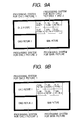
- the control unit 12 determines the layout for the tiling development picture (step S302). In this embodiment, assume it is determined that, as is shown in Fig. 9A, the layout for the tiling development picture will include six segments.
- the tiling development picture is then generated by the enlargement reduction unit 6-4 and the memory control unit 7-4 under the control of the control unit 12. The processing for generating the tiling development picture will now be described in detail.
- control unit 12 controls the memory control unit 7-1 to write blackout data into the address area of the memory 8-4 that corresponds to the tiling development picture area. Then, when this blackout data is read from the memory 8-4, as is shown in Fig. 8B, the tiling development picture area is blacked out on the screen (Fig. 8A) for the multi-picture display (step S303).
- This processing is performed because when the number of tiling pictures required to display the entry programs in the non-display layer is smaller than the maximum number of segments allocated for the tiling development picture, unestablished data in the remaining picture segment areas must be prevented from being displayed.
- the maximum number of picture segments is six and the number of entry programs in the non-display layer is four, the remaining two tiling pictures are blacked out.
- the data for blacking out the tiling development picture is not limited to blackout data.
- control unit 12 initializes to one, the tiling group number M used to represent the position of each tiling picture (step S304), and shifts the process into the tiling display loop beginning at step S305.
- the control unit 12 sets a tiling picture parameter to display an entry program in a tiling picture 1 that corresponds to tiling group number 1 (step S306).
- control unit 12 writes a layout coordinate parameter into the memory control unit 7-4 to set up a memory area that corresponds to the tiling picture 1, and writes a resolution conversion parameter into the enlargement and reduction unit 6-4 to reduce the size of the entry program to that of the tiling picture 1.
- control unit 12 obtains, from the RAM 14, information referring to the entry program of the priority level that corresponds to the tiling picture 1 (step S307).
- program #2 (Sub1(L1)) corresponds to this program.
- the control unit 12 then performs channel tuning to select program #2 (step S308). That is, the control unit 12 controls the tuner unit 2-4 to tune in to the TS that includes program #2, controls the demodulation unit 3-4 to demodulate the TS, and controls the multiplexer 4-4 to separate from the TS the video data, the audio data and the additional information for program #2.
- the control unit 12 waits to execute the next control process until the program tuning series is completed (step S309).
- control unit 12 When the control unit 12 ascertains that the program tuning series has been completed (step S309/YES), the control unit 12 controls the enlargement and reduction unit 6-4 and the memory control unit 7-4 to begin to update the memory 8-4 for program #2 (step S310). At this time, the memory control unit 7-4 performs the updating process based on the tiling picture parameter that is set by the control unit 12. As a result, the moving images for program #2 are displayed in the tiling picture 1, as is shown in Fig. 8C. The moving image display time period corresponds to the period for the updating at step S311 of program #2 in the memory 8-4.
- control unit 12 controls the memory control unit 7-4 to halt the updating of the memory 8-4 for program #2 in order to shift to the display control for the next tiling picture (tiling picture 2 in Figs. 8A to 8D) (step S312).
- the tiling picture 1 in Fig. 8C is displayed as a captured still image.
- the control unit 12 increments the tiling group number M by one (step S313), and thereafter, repeats the process beginning at step S305.
- control unit 12 Since the control unit 12 repeats the process at steps S305 to 313 while reading, from the RAM 14, information referring to the entry program for the priority level that corresponds to each tiling picture, the control unit assigns program #3 (Sub1(L2)) to tiling picture 2, assigns program #4 (Sub1(L3)) to tiling picture 3, and assigns program #5 (Sub1(L4)) to tiling picture 4.
- program #3 Sub1(L2)
- control unit #4 Sub1(L3)
- program #5 Sub1(L4)
- control unit 12 accepts a cancel request and a tiling focus request from the user (the tiling focus request will be described in detail later during the explanation for a third embodiment) (steps S314 and S315). So long as the control unit 12 does not receive the cancel request or the tiling focus request from the user, the control unit 12 repetitively continues to perform the process at steps S305 to S313.
- the tiling development display for the child picture 1 has been explained, and the same processing can be performed for the tiling development display for the child picture 2. Since these processing steps are performed, the list of the entry programs belonging to the non-display layer of the child picture can be displayed, and program tuning can be performed whereby the user can quickly select a desired program.
- the entry programs belonging to the display layer of the child picture are constantly displayed in the child picture as fixed, and only the entry programs belonging to the non-display layer are displayed in the tiling development picture.
- this display method even when the tiling development picture is displayed, an entry program belonging to the display layer can be distinguished from an entry program belonging to the non-display layer, and the user can easily identify the priority level of each entry program. This is an effect inherent to this embodiment.
- the independent processing system from 2-4 to 8-4 in Figs. 1A and 1B which is used in common for the child pictures 1 and 2, is assigned for the tiling development display of the child pictures 1 and 2
- the independent child picture 1 processing system from 2-2 to 8-2 in Figs. 1A and 1B is assigned for the tiling development display of the child picture 1
- the independent child picture 2 processing system from 2-3 to 8-3 in Figs. 1A and 1B is assigned for the tiling development display of the child picture 2.
- the entry programs belonging to the display layer of the child pictures 1 and 2 are displayed as fixed in the child pictures 1 and 2, instead of being displayed in the individual tiling pictures. Therefore, as a new possible usage, while the entry programs having the highest priority levels for the child pictures 1 and 2 are displayed as moving images in the child pictures 1 and 2, the entry programs of lower priority levels are displayed as secondary moving images in the tiling development picture.
- FIG. 9B An image for a tiling development picture according to the embodiment is as shown in Fig. 9B.
- the processing system 2-1 to 8-1 in Figs. 1A and 1B for the main picture is assigned to the main picture
- the child picture 1 processing system from 2-2 to 8-2 is assigned to the child picture 1 and the tiling development picture thereof
- the child picture 2 processing system 2-3 to 8-3 is assigned to the child picture 2.
- control unit 12 when the control unit 12 accepts a request from a user to display a tiling development picture, before performing the tuning to program #2, the control unit 12 controls the memory control unit 7-2 to halt the updating process for program #0. Then, the moving image displayed in the child picture 1 for program #0 is displayed as a still image that has been captured.
- control unit 12 controls the processing system 2-2 to 5-2 to perform the tuning for program #2. And when the program tuning is completed, the processing system 6-2 to 7-2 initiates the updating of the memory 8-2 for program #2. Thereafter, by repeating the processing shown in Fig. 7, as in the first embodiment, the entry programs belonging to the non-display layer can be displayed as secondary moving images in the tiling development picture.
- the list of entry programs belonging to the non-display layer can be displayed as secondary moving images, while the entry program for the child picture is displayed as a static image.
- the child picture 1 has been employed; however, when the same process is performed on the child picture 2, the tiling development display can be obtained without the processing system, which is used in common for the child pictures 1 and 2, being required.
- FIG. 10 is a flowchart showing the tiling focusing processing
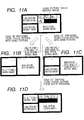
- Figs. 11A to 11D are diagrams showing images for the display of pictures during the tiling focusing processing.
- a user can either select in the tiling development picture a tiling picture in which a moving image for an entry program is to be constantly displayed, or can either display in another picture the entry program for a selected tiling picture or delete from the tiling development picture the entry program for a selected tiling picture.
- a selected tiling picture is called a tiling focus picture
- a request for the constant display in the tiling focus picture of the moving image for the entry program is called a tiling focus request.
- the control unit 12 determines whether the tiling focus request includes a request for the selection of a tiling focus picture (step S400).
- the control unit 12 determines that a tiling focus picture is included in the selection request (step S400/YES)
- the control unit 12 controls the GUI generation unit 15 to draw a focus frame in the tiling focus picture (step S401). The user can move this focus frame by operating the remote controller 17, and can select an arbitrary tiling picture as a tiling focus picture.
- the control unit 12 then employs the processing system 2-4 to 5-4 to perform program tuning of the entry program in the tiling focus picture (step S402). Then, once the program tuning has been completed, the control unit 12 employs the processing system 6-4 to 7-4 to update the memory 8-4 for the relevant entry program. Further, during the updating period, the control unit 12 halts the updating of the other entry programs in the memory 8-4.
- the display in the tiling development picture of additional secondary moving images is halted, and the only moving image for the entry program is displayed, while for other entry programs, still images are captured and displayed in the remaining tiling pictures. Then, following the completion of the above processing steps, the displayed pictures are updated (step S403). The image of the picture displayed at this time is shown in Fig. 11A.
- the processing performed in the first embodiment is employed.
- the above operation can also be applied to the second embodiment. Specifically, when a tiling focus request is issued, the only moving image displayed is the one for an entry program in a tiling focus picture, while a still image in displayed in the child picture 2 and still images for other entry programs are captured and displayed in the remaining tiling pictures.
- control unit 12 displays the moving image for the entry program in the tiling focus picture, it determines whether a focus movement request from the user has been received (step S404).
- a focus movement request is one issued by a user who employs the remote controller 17 to move an entry program displayed in a tiling focus picture to another tiling picture.
- step S404/YES the control unit 12 determines whether the picture at the movement destination is an effective picture (step S405).
- effective pictures are the main picture, the child pictures 1 and 2 and the tiling pictures 1 to 4, and ineffective pictures are blacked out, ineffective data areas.
- step S405/YES When the control unit 12 ascertains at step S405 that the picture at the movement destination designated in the focus movement request is an effective picture (step S405/YES), the control unit 12 exchanges the contents of the display pictures (step S409). That is, the control unit 12 displays in the picture at the movement destination the entry program that initially was displayed in the tiling focus picture, and displays in the original tiling focus picture the entry program that initially was displayed in the picture at the movement destination.
- FIG. 11B A first example is shown in Fig. 11B. Specifically, the entry program displayed in the tiling focus picture (tiling picture 2) is displayed in the child picture 1, and the entry program displayed in the child picture 1 is displayed in the tiling picture 2 that is originally the selected tiling focus picture.
- This function is effective when, before or after the tiling development is performed, the user desires to display in a child picture, wherein, as in the main picture, a moving image can be displayed, the entry program that currently is displayed in the tiling focus picture. Further, through this action, the priority levels in Fig. 6 for the entry programs for the child picture 1 are changed as follows (step S410). Main(L0) ⁇ program #0 Sub1(L0) ⁇ program #3 Sub1(L1) ⁇ program #1 Sub1(L2) ⁇ program #2 Sub1(L3) ⁇ program #4 Sub1(L4) ⁇ program #5 In this manner, the control unit 12 changes the order of the priorities of the entry programs, and rewrites the data in the RAM 14.
- FIG. 11C A second example is as shown in Fig. 11C. Specifically, the entry program initially displayed in the tiling focus picture is now displayed in the main picture, while the entry program initially displayed in the main picture is now displayed in the tiling picture 2, which originally was selected as the tiling focus picture.
- control unit 12 changes the priority levels of the entry programs and rewrites the data in the RAM 14.
- control unit 12 upon receiving the request for the exchange of the display pictures, submitted as the result of a user action, the control unit 12 reads, from the RAM 14, information referring to program #3, which is the entry program for the tiling picture 2, and information referring to program #1, which is the entry program for the child picture 1. Then, the control unit 12 controls the memory control units 7-2 and 7-4 to halt the updating of the memories 8-2 and 8-4.
- the control unit 12 employs the processing system 2-2 to 2-5 to perform program tuning of program #3, and employs the processing system 2-4 to 5-4 to perform program tuning of program #1.
- the control unit 12 employs the processing system 6-2 to 7-2 to initiate updating of program #3 in the memory 8-2.
- the control unit 12 employs the processing system 6-4 to 7-4 to initiate updating of program #1 in the memory 8-4.
- the exchange of the display pictures as explained in the first example, is effected.
- the control unit 12 controls the memory control unit 7-3 to switch the memory areas of program #3 and program #0 in the memory 8-3. As a result, the exchange of the display pictures can be implemented.
- the process for halting the updating of the memory 8-2 or 8-4 need not always be performed after information referring to program #3 or information referring to program #1 is read from the RAM 14.
- the process for halting the updating of program #3 in the memory 8-2 or the updating of program #1 in the memory 8-4 is performed immediately after the updating is initiated, the display pictures can be smoothly exchanged, and satisfactory program viewing can be provided.
- the control unit 12 Upon receiving a request for the exchange of display pictures, submitted as a result of a user action, the control unit 12 reads from the RAM 14 information referring to program #3, which is the entry program for the tiling picture 2, and information referring to program #0, which is the entry program for the main picture. Then, the control unit 12 controls the processing systems 6-1 to 7-1 and 6-4 to 7-4 to halt the updating of the memories 8-1 and 8-4.
- the control unit 12 employs the processing system 2-1 to 5-1 to perform program tuning of program #3, and employs the processing systems 2-4 to 5-4 to perform program tuning of program #0.
- the control unit 12 employs the processing system 6-1 to 7-1 to initiate the updating of program #3 in the memory 8-1.
- the control unit 12 employs the processing system 6-4 to 7-4 to initiate the updating of program #0 in the memory 8-4.
- the exchange of the display pictures as in the second example, is implemented.
- the processing system 6-4 to 7-4 which is used in this explanation, need merely be replaced by the processing system 6-3 to 7-3.
- the process for halting the updating may be performed.
- control unit 12 determines whether it receives a request for the deletion of program #3, which is the entry program for the current tiling focus picture, i.e., the tiling picture 2 (step 406).
- control unit 12 deletes program #3 from the display picture. This function is effective when a user desires to reduce the number of tiling pictures in the tiling development picture, or when a program that is not a favorite of the user is displayed in the tiling picture.
- control unit 12 when the control unit 12 ascertains at step S406 that as a result of a user action the deletion request is accepted, the control unit 12 changes the layout of the tiling development picture (step S407) and deletes program #3 from the tiling picture 2 (step S408).
- control unit 12 changes the priority levels of the entry programs, and rewrites the data in the RAM 14.
- control unit 12 controls the memory control unit 7-4 to exchange the memory area of program #4 for the area corresponding to the tiling picture 2, and to exchange the memory area of program #5 for the area corresponding to the tiling picture 3.
- the remaining tiling picture 4 is colored using blackout data; and therefore, after program #3 has been deleted, the obtained display picture is as shown in Fig. 11D.
- this embodiment has been applied to an apparatus that includes the processing system used in common for the child pictures 1 and 2.
- this embodiment is not thereby limited, and can also be applied to the system in the second embodiment.
- the control unit 12 controls the memory control unit 7-4 to shift and display the layout of the tiling development picture.
- the embodiment which will be described below is based on the assumption that the operation in the first embodiment will be used. However, by performing in the same manner the operation explained in the second embodiment, the embodiment described below can also be applied to a configuration that does not include the processing system used in common for the child pictures 1 and 2.
- FIGs. 12A and 12B are diagrams showing display picture images when tiling picture development is performed in this embodiment. The embodiment will now be described in detail while referring to Figs. 12A and 12B.
- control unit 12 controls the GUI generation unit 15 to draw shadow frames along the peripheral edges of the child picture 1 and the tiling development picture, so as to clearly define the boundaries between the child picture 1 and the tiling development picture, and the main picture.
- a shadow frame may be drawn only around the tiling development picture.
- the control unit 12 controls the memory control unit 7-1 to reduce the size of the memory area that is allocated for the main picture, so that overall the main picture is reduced and restored so that it does not overlap the tiling development picture.
- the process employed for the reduction and restoration of the main picture can be performed at the same time as the tiling development picture is displayed.
- another method is effective whereby the main picture is reduced and is restored after a predetermined period of time has elapsed following the overlaying of the main picture by the tiling development picture.
- the number N for the tiling picture counts was smaller than the maximum number of segments in the tiling development pictures. But when the number N for a tiling picture count exceeds the maximum number of segments in a tiling development picture, the display of the tiling development picture may have to be enlarged, or the sizes of the tiling pictures that are displayed may have to be reduced. However, from the viewpoint that the most important factor is providing acceptable program viewing, it is preferable that the ratios of tiling development pictures to main pictures be reduced, and that the resolutions of the tiling pictures that are displayed be maintained, so that there is no deterioration of visibility.
- FIGS. 13A and 13B are diagrams showing display picture images when tiling picture development is performed.
- the fifth embodiment will now be described in detail while referring to Figs. 13A and 13B.
- tiling pictures 1 to 6 are displayed in a tiling development picture, and an icon "go" is displayed outside the tiling development picture in order to notify a user that there are tiling pictures that are not displayed on the screen.
- the user need only select the icon "go". Then, when the additional tiling development pictures in Fig. 13B are displayed, the user can view the tiling pictures 7 to 10 in the tiling development picture.
- all the tiling pictures can be viewed by a single operation of an icon.
- the user need only repeat the operation with the icon to switch between the tiling development pictures.
- control unit 12 determines that the number of entry programs in the non-display layer is greater than the maximum number of segments in the tiling development picture, it controls the GUI generation unit 15 to generate the icon described above. Further, when as the result of an act by a user the icon is selected, the control unit 12 performs the program tuning and memory updating explained in the flowchart in Fig. 7, and writes the remaining entry program images in the memory areas that correspond to the tiling pictures of the next tiling development picture. As a result, as is shown in Fig. 13B, the next tiling development picture is displayed. The same operation can be applied to the second embodiment.
- the probability is taken into account that a user, while viewing an image in a main picture, will experience an oppressive sensation produced by the presence on a display of a tiling development picture.
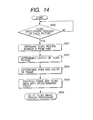
- the control unit 12 determines whether a tiling development display request from a user is accepted in the display state in Fig. 8A before tiling development is performed (step S500). When the control unit 12 ascertains that the tiling development display request from the user is accepted (step S500/YES), the control unit 12 obtains from the RAM 14 the number N of tiling pictures (step S501).
- the number N of tiling pictures equals the number of entry programs belonging to the non-display layers for the child pictures 1 and 2.
- program #2 Sub1(L1)
- program #5 Sub1(L4)
- the control unit 12 determines the layout of the tiling development picture (step S502).
- a tiling development picture has six segments, as is shown in Fig. 9A.
- the tiling development picture is generated by the enlargement and reduction unit 6-4 and the memory control unit 7-4 under the control of the control unit 12. The processing performed to generate the tiling development picture for this embodiment will now be described in detail.
- the control unit 12 determines the frame area that encloses the child picture 1 from which the tiling development display is requested, the frame area (tiling frame area) that encloses the tiling development picture, and the colors of these frames (step S503).
- the areas and colors of the frames may be either set in advance for the control unit 12, or may be generated by the GUI generation unit 15 under the control of the control unit 12.
- the display area for the tiling development picture indicated by the picture layout information always designates the lower portion of the display picture.
- control unit 12 employs the memory control units 7-2 and 7-4 to write the frame color data into the external frame area of the child picture 1 and the display area for the tiling development picture, so that the frame area of the child picture 1 and the display area for the tiling development picture are blacked out.
- This process is performed because when the number of entry programs belonging to the non-display layer is smaller than the number of tiling pictures in the tiling development picture, non-established data is prevented from being displayed in the remaining tiling picture area.
- Fig. 15A is a diagram showing an image for the picture displayed when the frame area of the child picture 1 and the display area of the tiling development picture are being blacked out with the frame color data.
- the frame area of the child picture 1 is blacked out and the right side of the frame is extended in the direction indicated by a downward pointing arrow.
- the portion enclosed by a broken line is blacked out continuously from the right in the direction indicated by a leftward pointing arrow.
- the display state wherein the black out process is completed is shown in Fig. 15B.
- Fig. 15C tiling pictures are displayed in the tiling development picture.
- the tiling development picture is displayed adjacently to the child picture 2.
- the entry program of the non-display layer for the child picture 2 is displayed in the tiling development picture.
- the tiling development picture can be displayed without being overlapped by the upper portion of the main picture, so that the tiling development display shown in Fig. 15C or Fig. 16 can be obtained.
- an excellent user interface can be provided.
- the position for displaying the tiling development picture is limited to the lower portion of the screen, so that a user can easily identify a child picture for an entry program that is to be displayed through the tiling development process.
- the positions for the display of the child pictures 1 and 2 are switched so that the child picture 1 is displayed in the lower portion and the child picture 2 is displayed in the upper portion of the screen, and the tiling development picture is displayed adjacently to the child picture 1.
- control unit 12 determines whether the display position of the subjected child picture should be changed. That is, when the control unit 12 employs the priority level of the child picture recorded in the RAM 14 to ascertain that the display position of the child picture is in the upper portion of the screen, the control unit 12 thereafter determines that the display position of the child picture should be changed.
- control unit 12 When, however, the control unit 12 ascertains that the display position of the child picture is in the lower portion of the screen, instead of changing the display position of the child picture, the control unit 12 needs only display the tiling development picture, by superimposing it on the part of the main picture image that is displayed in the lower portion of the display screen.
- the control unit 12 controls the memory control units 7-2 and 7-3 to halt the updating of the video data in the memories 8-2 and 8-3.
- the secondary moving images of programs #1 and #6, which are displayed in the child pictures 1 and 2 are captured, and still images thereof are displayed.
- the control unit 12 controls the GUI generation unit 15 to draw the outer frame for the child picture 1 that is the subject of the tiling development display request.
- the control unit 12 controls the synthesization unit 9 to set the display priority of the child picture 1 higher than that of the child picture 2, and to sequentially move the display position of the child picture 1 to the lower portion of the screen. As a result, the child picture 1 is moved to the lower portion of the screen and is superimposed on the child picture 2.
- the state wherein the display position of the child picture 1 is being moved is shown in Fig. 17A. As is shown in Fig. 17A, the background of the picture appears at the original display position of the child picture 1.
- the control unit 12 controls the synthesization unit 9 to sequentially move the display position of the child picture 2 to the upper portion of the screen. Consequently, the child picture 2 is moved toward the upper screen portion (directed toward the position whereat the child picture was originally displayed).
- the state wherein the display position of the child picture 2 is being moved is shown in Fig. 17B.
- the control unit 12 While the display position of the child picture 2 is being moved, the control unit 12 displays the tiling development picture at the position adjacent to the child picture 1. Finally, the display positions of the child pictures 1 and 2 are exchanged and the tiling development picture is displayed adjacently to the child picture 1.
- two child pictures are employed for the display.
- the number of child pictures is not limited to two; rather, a larger number is preferable.
- the exchange of display positions is initiated beginning with the movement of the display position of the child picture 1.
- the child pictures 1 and 2 may be moved at the same time, or during the exchange of the display positions, an ⁇ blending process may also be performed to render the child pictures 1 and 2 semi-transparent.
- control unit 12 controls the memory control units 7-2 and 7-3 to capture and display still images produced by the entry programs of the child pictures 1 and 2.
- This control procedure may not be employed, so that while the child pictures 1 and 2 are transposed, moving images are displayed therein. This same process can also be applied to the second embodiment.
- the above embodiments be selected in accordance with the preferences of a user, or the positioning or the configuration of a product.
- the child pictures, the programs and the channels have been explained using examples wherein the tuner receives multi-channel programs.
- the present invention is not limited to this, and various other image input sources may be accessed to obtain programs for entry in the child pictures and the tiling development picture.
- the present invention can also be applied to the usage in Fig. 5 wherein the tuner displays a program and accesses a channel for the child picture 1, and wherein, for the child picture 2, image information recorded on an HDD is displayed. Further, for the child picture 2, an image information index or image information read out from a DVD connected to the display device may be used.
- two child pictures are employed for the displays.
- the present invention is not limited to this number; it can be applied to any number of child pictures and the same effects obtained.
- the scope of the present invention also includes a configuration wherein, to achieve the functions of the embodiments, software program code that implements the functions of the embodiments is supplied to an apparatus or a system computer that is connected to various devices, and the devices are operated in accordance with a program stored in the apparatus or in the computer (a CPU or an MPU) of the system.
- the functions of the embodiments are provided by the software program code, and the program code and means for supplying the program code to the computer, such as a storage medium on which the program code is stored, also constitute the present invention.
- the storage medium used for storing the program code can be, for example, a flexible disk, a hard disk, an optical disk, a magneto-optical disk, a CD-ROM, a magnetic tape, a nonvolatile memory card or a ROM.
- program code read from a storage medium can be written in a memory that is mounted on a function expansion board inserted into a computer, or in a function expansion unit connected to the computer, and in consonance with instructions in the program code, a CPU mounted on the function expansion board, or in the function expansion unit, can perform part or all of the actual processing required to implement the functions of the above described embodiments.
- a tiling development picture is provided outside the display area of the child picture to display a list of programs having lower priority levels than the program that currently is being displayed in the child picture.
- a program having a lower priority level can also be easily identified without deterioration of the visibility of the program in the child picture.
- the program filtering process is performed based on the preferences of a user.
- the user can select program pictures beginning with those that correspond to programs corresponding to the user's preferences.
- the size of the main picture can be reduced, or the main picture can be restored when the tiling development picture is displayed, the visibility of the main picture, which is a subject picture, can be improved.
- the switching and display of multiple tiling development pictures can be effected by employing a simple operation, and all the entry programs can be efficiently displayed.
- a child picture in the upper portion of a screen is moved to the lower portion, and a tiling development picture is displayed adjacently to the child picture. Therefore, when the tiling development picture is displayed, the video for the main picture can be viewed without a user experiencing an oppressive sensation.
Landscapes
- Engineering & Computer Science (AREA)
- Multimedia (AREA)
- Signal Processing (AREA)
- Databases & Information Systems (AREA)
- Human Computer Interaction (AREA)
- Business, Economics & Management (AREA)
- Marketing (AREA)
- Software Systems (AREA)
- Controls And Circuits For Display Device (AREA)
- Television Signal Processing For Recording (AREA)
- Two-Way Televisions, Distribution Of Moving Picture Or The Like (AREA)
- Studio Circuits (AREA)
Abstract
Description
(Sub1(L0)) > program #6 (Sub2(L0)) >
(Sub1(L1)) > program #7 (Sub2(L1)) >
(Sub1(L2)) > program #8 (sub2(L2)) >
(Sub1(L3)) > program #9 (Sub2(L3)) >
(Sub1(L4)) > program #10 (Sub2(L4)).
And when the program tuning of
Claims (43)
- A display control apparatus for controlling display means to display a plurality of images in a main picture and at least one sub-picture, comprising:wherein, while displaying said synthesized images in said main picture and said sub-picture, said display control means displays a list of said plurality of images adjacently to said sub-picture.input means for entering image signals related to said plurality of images;image processing means for performing image processing on said image signals entered by said input means; anddisplay control means for synthesizing images corresponding to the image signals processed by said image processing means, and for displaying the synthesized images in said main picture and said sub-picture,
- An apparatus according to claim 1, further comprising:wherein, upon the reception by said instruction means of an instruction for the list display operation, while said images are being displayed in said main picture and said sub-picture, said display control means controls the display so as to position said plurality of images adjacently to said sub-picture.instruction means for instructing display of said list of said plurality of images,
- An apparatus according to claim 1, wherein said main picture and said sub-picture are displayed at predetermined locations on said display means without overlapping.
- An apparatus according to claim 1, wherein said sub-picture is smaller than said main picture.
- An apparatus according to claim 1, wherein the pictures of said plurality of images in said list are smaller than said sub-picture.
- An apparatus according to claim 1, further comprising:wherein said display control means displays a moving image for said image selected by said selection means, and displays still images for said other images.selection means for selecting one of said plurality of images,
- An apparatus according to claim 6, wherein said selection means changes said selected image at every predetermined time period.
- An apparatus according to claim 6, wherein said input means inputs image signals corresponding to said images each time a predetermined period of time has elapsed; and wherein said display control means displays a still image for said image, while switching said image signals at every predetermined time period.
- An apparatus according to claim 1, wherein said display control means controls the pictures for said list and/or the display position of said main picture and/or the display size of said main picture so that said plurality of images on said list and said main picture do not overlap.
- An apparatus according to claim 9, wherein, when the display of said list is initiated, said display control means changes the size and the display position of said main picture so that said plurality of images on the list and said main picture do not overlap.
- An apparatus according to claim 1, wherein said display control means displays said plurality of images on said list in the lower portion of said display means.
- An apparatus according to claim 11, wherein, when the display of said list is initiated, said display control means moves, to the lower portion of said display means, said child picture and said images on said list adjacent to said child picture.
- An apparatus according to claim 1, further comprising:wherein said display control means displays said image designated by said designation means and an image displayed in said sub-picture, while exchanging said two images.designation means for designating one of said plurality of images on said list,
- An apparatus according to claim 13, wherein, after said designated image is displayed in said sub-picture, said display control means displays said designated image as a moving image.
- An apparatus according to claim 1, further comprising:wherein said display control means displays said image designated by said designation means and an image displayed in said main picture, while exchanging said two images.designation means for designating one of said plurality of images on said list,
- An apparatus according to claim 15, wherein, after said designated image is displayed in said main picture, said display control means displays said designated image as a moving image.
- An apparatus according to claim 1, wherein said display control means displays the list of a predetermined number of images of said plurality of images.
- An apparatus according to claim 17, wherein said display control means displays, on the next list display screen, a plurality of images that are not displayed on said list.
- An apparatus according to claim 17, wherein, based on preference information for each user, said display control means selects from said plurality of images a predetermined number of images and displays a list of said images.
- An apparatus according to claim 1, wherein said plurality of images are program videos acquired via television broadcasts.
- An apparatus according to claim 20, further comprising:wherein said display control means displays adjacently to said sub-picture, a list of the videos for said programs that are set up.setup means for setting up arbitrary programs, and
- An apparatus according to claim 21, wherein said setup means sets up said programs in correlation with priority levels, and said display control means controls said list based on said priority levels.
- A television broadcast reception apparatus comprising:wherein, while said images for said multiple programs are displayed in said main picture and said sub-picture, said display control means displays a list of said multiple programs adjacently to said sub-picture.reception means for receiving, via television broadcasts, video signals for a plurality of programs;image processing means for performing image processing on said video signals received by said reception means;display control means for, in accordance with said video signals processed by said image processing means, controlling said display means to display images for said plurality of programs in a main picture and a sub-picture,
- An apparatus according to claim 23, further comprising:wherein said display control means displays, adjacently to said sub-picture, a list of the videos for said programs that are set up.setup means for setting up arbitrary programs, and
- An apparatus according to claim 24, wherein said setup means sets up said programs in correlation with priority levels, and said display control means controls said list based on said priority levels.
- A display control method of controlling display means to display a plurality of images in a main picture and at least one sub-picture, comprising:wherein, while displaying said synthesized images are displayed in said main picture and said sub-picture, said display control step displays a list of said plurality of images adjacently to said sub-picture.an input step of entering image signals related to said plurality of images;an image processing step of performing image processing on said image signals entered in said input step; anda display control step of synthesizing images corresponding to the image signals processed in said image processing step, and displaying the synthesized images in said main picture and said sub-picture,
- A method according to claim 26, further comprising:wherein, upon the reception in said instruction step of an instruction for the list display operation, while said images are being displayed in said main picture and said sub-picture, said display control step controls the display so as to position said a plurality of images adjacently to said sub-picture.an instruction step of instructing the display of said list of said plurality of images,
- A method according to claim 26, wherein said main picture and said sub-picture are displayed at predetermined locations on said display means without overlapping.
- A method according to claim 26, wherein said sub-picture is smaller than said main picture.
- A method according to claim 26, wherein the pictures of said plurality of images in said list are smaller than said sub-picture.
- A method according to claim 26, further comprising:wherein said display control step includes a step of displaying a moving image for said image selected in said selection step and still images for said other images.a selection step of selecting one of said plurality of images,
- A method according to claim 31, wherein said selection step changes said selected image is changed at every predetermined time period.
- A method according to claim 31, wherein said input step inputs image signals corresponding to said images at every predetermined time period, and
wherein said display control step includes a step of displaying a still image for said image, while switching said image signals at every predetermined time period. - A method according to claim 26, wherein said display control step includes a step of controlling the pictures for said list and/or the display position of said main picture and/or the display size of said main picture so that said plurality of images on said list and said main picture do not overlap.
- A method according to claim 34, wherein, when the display of said list is initiated, said display control step changes the size and the display position of said main picture so that said plurality of images on the list and said main picture do not overlap.
- A method according to claim 26, wherein said display control step includes a step of displaying said plurality of images on said list in the lower portion of said display means.
- A method according to claim 36, wherein, when the display of said list is initiated, at said display control step moves said child picture and said images on said list adjacent to said child picture to the lower portion of said display means.
- A method according to claim 26, further comprising:wherein said display control step includes a step of displaying said image designated in said designation step and an image displayed in said sub-picture, while exchanging said two images.a designation step of designating one of said plurality of images on said list,
- A method according to claim 38, wherein, after said designated image is displayed in said sub-picture, at said display control step displays said designated image as a moving image.
- A method according to claim 26, further comprising:wherein said display control step includes a step of displaying said image designated in said designation step and an image displayed in said main picture, while exchanging said two images.a designation step of designating one of said plurality of images on said list,
- A method according to claim 40, wherein, after said designated image is displayed in said main picture, at said display control step displays said designated image as a moving image.
- A computer program which executes a display control method as defined in any one of claims 26 to 41.
- A storage medium on which is stored a computer program which executes a display control method as defined in any one of claims 26 to 41.
Applications Claiming Priority (2)
| Application Number | Priority Date | Filing Date | Title |
|---|---|---|---|
| JP2001157340A JP2002354367A (en) | 2001-05-25 | 2001-05-25 | Multi-screen display device, multi-screen display method, recording medium, and program |
| JP2001157340 | 2001-05-25 |
Publications (2)
| Publication Number | Publication Date |
|---|---|
| EP1261200A2 true EP1261200A2 (en) | 2002-11-27 |
| EP1261200A3 EP1261200A3 (en) | 2004-01-02 |
Family
ID=19001224
Family Applications (1)
| Application Number | Title | Priority Date | Filing Date |
|---|---|---|---|
| EP02253655A Withdrawn EP1261200A3 (en) | 2001-05-25 | 2002-05-23 | Display control apparatus and method, and recording medium and program therefor |
Country Status (3)
| Country | Link |
|---|---|
| US (1) | US7154558B2 (en) |
| EP (1) | EP1261200A3 (en) |
| JP (1) | JP2002354367A (en) |
Families Citing this family (34)
| Publication number | Priority date | Publication date | Assignee | Title |
|---|---|---|---|---|
| US8181215B2 (en) | 2002-02-12 | 2012-05-15 | Comcast Cable Holdings, Llc | System and method for providing video program information or video program content to a user |
| KR100873437B1 (en) * | 2002-11-28 | 2008-12-11 | 삼성전자주식회사 | Dual mode signal processing device using PI screen |
| GB0229245D0 (en) * | 2002-12-13 | 2003-01-22 | Koninkl Philips Electronics Nv | Television display unit |
| JP3968584B2 (en) * | 2003-10-02 | 2007-08-29 | 船井電機株式会社 | Panel display television |
| US7375768B2 (en) * | 2004-08-24 | 2008-05-20 | Magix Ag | System and method for automatic creation of device specific high definition material |
| JP2006067063A (en) * | 2004-08-25 | 2006-03-09 | Fujitsu Ltd | Switching device, electronic equipment, data transferring method and program for making computer execute the same method |
| TWI244342B (en) * | 2004-10-12 | 2005-11-21 | Beyond Innovation Tech Co Ltd | Method and apparatus for image timing convert |
| KR100743520B1 (en) * | 2005-01-04 | 2007-07-27 | 삼성전자주식회사 | Video Scaler and Scaling Methods |
| US20070008338A1 (en) * | 2005-05-28 | 2007-01-11 | Young-Chan Kim | Display system, display apparatus, and method of controlling video source and display apparatus |
| KR101392626B1 (en) * | 2005-07-18 | 2014-05-07 | 톰슨 라이센싱 | Method for handling multiple video streams |
| US20070035560A1 (en) * | 2005-08-05 | 2007-02-15 | Samsung Electronics Co., Ltd. | Apparatus for providing multiple screens and method of dynamically configuring multiple screens |
| TWI292893B (en) * | 2005-10-05 | 2008-01-21 | Myson Century Inc | Method for prevention of distorted sub-picture display on flat panel display |
| CN100459674C (en) * | 2005-11-24 | 2009-02-04 | 腾讯科技(深圳)有限公司 | A video communication screen display control device and method |
| CN100530343C (en) * | 2006-03-15 | 2009-08-19 | 深圳迈瑞生物医疗电子股份有限公司 | Multi-panel synthesized display apparatus and process |
| JP2008178075A (en) * | 2006-12-18 | 2008-07-31 | Sony Corp | Display control apparatus, display control method, and program |
| KR101058040B1 (en) * | 2006-12-21 | 2011-08-19 | 삼성전자주식회사 | Content output method and device therefor |
| JP4838746B2 (en) | 2007-03-19 | 2011-12-14 | 富士フイルム株式会社 | CONTENT DISPLAY METHOD, PROGRAM, DEVICE, AND RECORDING MEDIUM |
| US20090063542A1 (en) * | 2007-09-04 | 2009-03-05 | Bull William E | Cluster Presentation of Digital Assets for Electronic Devices |
| US8717339B2 (en) * | 2008-09-26 | 2014-05-06 | Kyocera Corporation | Image display apparatus |
| US11076189B2 (en) * | 2009-03-30 | 2021-07-27 | Time Warner Cable Enterprises Llc | Personal media channel apparatus and methods |
| CN101742221B (en) * | 2009-11-09 | 2012-06-13 | 中兴通讯股份有限公司 | Method and device for synthesizing multiple pictures in video conference system |
| US20110119719A1 (en) * | 2009-11-13 | 2011-05-19 | Echostar Technologies L.L.C. | Mosaic Application for Generating Output Utilizing Content from Multiple Television Receivers |
| US20110157473A1 (en) * | 2009-12-30 | 2011-06-30 | Hoon Choi | Method, apparatus, and system for simultaneously previewing contents from multiple protected sources |
| WO2011149558A2 (en) | 2010-05-28 | 2011-12-01 | Abelow Daniel H | Reality alternate |
| JP5427911B2 (en) * | 2012-04-11 | 2014-02-26 | Eizo株式会社 | Cursor movement control method, computer program, cursor movement control device, and image display system |
| CN103517126A (en) * | 2012-06-19 | 2014-01-15 | 华为技术有限公司 | Mosaic video display method, display control device and terminal |
| US20150304593A1 (en) * | 2012-11-27 | 2015-10-22 | Sony Corporation | Display apparatus, display method, and computer program |
| JP2015102567A (en) * | 2013-11-21 | 2015-06-04 | 三菱電機株式会社 | Multi-vision display control device and multi-vision system |
| WO2015103373A1 (en) * | 2014-01-06 | 2015-07-09 | Johnson Controls Technology Company | Presenting and interacting with audio-visual content in a vehicle |
| KR101917844B1 (en) * | 2014-02-19 | 2018-11-13 | 삼성전자주식회사 | Display apparatus |
| EP3125542B1 (en) * | 2014-03-28 | 2021-02-24 | Hitachi Kokusai Electric Inc. | Monitoring system and monitoring method |
| KR20160028272A (en) * | 2014-09-03 | 2016-03-11 | 삼성전자주식회사 | Display apparatus and method for controlling the same |
| CN113473083B (en) * | 2021-06-29 | 2022-09-16 | 杭州海康威视数字技术股份有限公司 | Display screen control method and device |
| CN113891164B (en) * | 2021-09-28 | 2024-08-20 | 北京字跳网络技术有限公司 | Video list display method, device, electronic device and storage medium |
Family Cites Families (41)
| Publication number | Priority date | Publication date | Assignee | Title |
|---|---|---|---|---|
| KR920004854B1 (en) | 1988-06-14 | 1992-06-19 | 삼성전자 주식회사 | Page up/down mode processing method of multi channel system |
| US5506628A (en) * | 1988-06-14 | 1996-04-09 | Samsung Electronics Co., Ltd. | Menu-type multi-channel system having a page up/down mode feature |
| JPH0213074A (en) * | 1988-06-29 | 1990-01-17 | Toshiba Corp | Multichannel image display circuit |
| KR910013904A (en) * | 1989-12-21 | 1991-08-08 | 강진구 | POP playback TV using HD screen |
| US5442406A (en) * | 1990-06-01 | 1995-08-15 | Thomson Consumer Electronics, Inc. | Wide screen television |
| US5398074A (en) * | 1992-11-24 | 1995-03-14 | Thomson Consumer Electronics, Inc. | Programmable picture-outside-picture display |
| US6469746B1 (en) * | 1992-12-28 | 2002-10-22 | Sanyo Electric Co., Ltd. | Multi-vision screen adapter |
| US5621429A (en) * | 1993-03-16 | 1997-04-15 | Hitachi, Ltd. | Video data display controlling method and video data display processing system |
| US6791623B1 (en) * | 1994-10-24 | 2004-09-14 | Hitachi, Ltd. | Image display system |
| US5933550A (en) * | 1994-10-27 | 1999-08-03 | Nec Corporation | Data inputting device |
| JP3801242B2 (en) * | 1995-10-31 | 2006-07-26 | 株式会社日立製作所 | Reduced image display device |
| US5754253A (en) * | 1996-01-11 | 1998-05-19 | Lg Electronics Inc. | Apparatus for generating a plurality of quasi-moving PIP/POP screens |
| US6154203A (en) * | 1996-03-15 | 2000-11-28 | E Guide, Inc. | System and method for grazing television channels from an electronic program guide |
| US5929850A (en) * | 1996-07-01 | 1999-07-27 | Thomson Consumer Electronices, Inc. | Interactive television system and method having on-demand web-like navigational capabilities for displaying requested hyperlinked web-like still images associated with television content |
| JPH1051709A (en) | 1996-08-05 | 1998-02-20 | Hitachi Ltd | Television receiver |
| KR100200616B1 (en) * | 1996-09-02 | 1999-06-15 | 윤종용 | Display device for watching-screen dividing and method therefor |
| US6177931B1 (en) * | 1996-12-19 | 2001-01-23 | Index Systems, Inc. | Systems and methods for displaying and recording control interface with television programs, video, advertising information and program scheduling information |
| US5978046A (en) * | 1996-12-24 | 1999-11-02 | Sony Corporation | Television receiver with picture-in-picture function displays titles of reduced screen programs |
| US5900868A (en) * | 1997-04-01 | 1999-05-04 | Ati International | Method and apparatus for multiple channel display |
| US6809776B1 (en) * | 1997-04-23 | 2004-10-26 | Thomson Licensing S.A. | Control of video level by region and content of information displayed |
| US6384868B1 (en) * | 1997-07-09 | 2002-05-07 | Kabushiki Kaisha Toshiba | Multi-screen display apparatus and video switching processing apparatus |
| JP3509060B2 (en) * | 1998-05-28 | 2004-03-22 | 松下電器産業株式会社 | Display control device and method |
| US6295646B1 (en) * | 1998-09-30 | 2001-09-25 | Intel Corporation | Method and apparatus for displaying video data and corresponding entertainment data for multiple entertainment selection sources |
| US20030056215A1 (en) * | 1998-11-30 | 2003-03-20 | Rajesh Kanungo | Tv pip using java api classes and java implementation classes |
| EP1052849B1 (en) | 1998-11-30 | 2011-06-15 | Sony Corporation | Set-top box and method for operating same |
| US6204887B1 (en) * | 1998-12-11 | 2001-03-20 | Hitachi America, Ltd. | Methods and apparatus for decoding and displaying multiple images using a common processor |
| US6870573B2 (en) * | 1999-01-22 | 2005-03-22 | Intel Corporation | Method and apparatus for dynamically generating a visual program summary from a multi-source video feed |
| EP1024661A3 (en) | 1999-01-27 | 2002-07-17 | Hughes Electronics Corporation | Pictographic electronic program guide |
| ES2220403T3 (en) | 1999-02-08 | 2004-12-16 | United Video Properties, Inc. | ELECTRONIC PROGRAM GUIDE WITH SUPPORT FOR ENRICHED PROGRAM CONTENTS. |
| KR100311468B1 (en) * | 1999-03-25 | 2001-11-02 | 구자홍 | Apparatus and Method for Guiding Broadcasting Information of TV |
| US6281940B1 (en) * | 1999-03-31 | 2001-08-28 | Sony Corporation | Display of previewed channels with rotation of multiple previewed channels along an arc |
| JP3409734B2 (en) * | 1999-04-20 | 2003-05-26 | 日本電気株式会社 | Image synthesis system and method |
| US6456334B1 (en) * | 1999-06-29 | 2002-09-24 | Ati International Srl | Method and apparatus for displaying video in a data processing system |
| US6784945B2 (en) * | 1999-10-01 | 2004-08-31 | Microtune (Texas), L.P. | System and method for providing fast acquire time tuning of multiple signals to present multiple simultaneous images |
| US6556253B1 (en) * | 1999-10-26 | 2003-04-29 | Thomson Licensing S.A. | Multi-window picture adjustment arrangement for a video display |
| FR2803420A1 (en) * | 1999-12-30 | 2001-07-06 | Thomson Multimedia Sa | METHOD AND DEVICE FOR REPRESENTATION ON A DIGITAL TELEVISION SCREEN |
| US7206344B1 (en) * | 2000-01-05 | 2007-04-17 | Genesis Microchip Inc. | Method and apparatus for displaying video |
| KR20010073711A (en) * | 2000-01-19 | 2001-08-01 | 구자홍 | method for time shifting support of picture in picture type |
| JP4541482B2 (en) * | 2000-02-29 | 2010-09-08 | キヤノン株式会社 | Image processing apparatus and image processing method |
| US6493038B1 (en) * | 2000-06-21 | 2002-12-10 | Koninklijke Philips Electronics N.V. | Multi-window pip television with the ability to watch two sources of video while scanning an electronic program guide |
| US7206029B2 (en) * | 2000-12-15 | 2007-04-17 | Koninklijke Philips Electronics N.V. | Picture-in-picture repositioning and/or resizing based on video content analysis |
-
2001
- 2001-05-25 JP JP2001157340A patent/JP2002354367A/en not_active Withdrawn
-
2002
- 2002-05-22 US US10/152,022 patent/US7154558B2/en not_active Expired - Fee Related
- 2002-05-23 EP EP02253655A patent/EP1261200A3/en not_active Withdrawn
Also Published As
| Publication number | Publication date |
|---|---|
| JP2002354367A (en) | 2002-12-06 |
| EP1261200A3 (en) | 2004-01-02 |
| US20020196367A1 (en) | 2002-12-26 |
| US7154558B2 (en) | 2006-12-26 |
Similar Documents
| Publication | Publication Date | Title |
|---|---|---|
| EP1261200A2 (en) | Display control apparatus and method, and recording medium and program therefor | |
| JP4240785B2 (en) | Receiving device and control method of receiving device | |
| JP4672856B2 (en) | Multi-screen display device and multi-screen display method | |
| JP4541476B2 (en) | Multi-image display system and multi-image display method | |
| CA2365199C (en) | Method and device for providing two different types of service in a menu | |
| EP0656727B1 (en) | Teletext receiver | |
| JP4353440B2 (en) | Video signal processing apparatus and method | |
| US20020157094A1 (en) | Display control apparatus and method, receiving apparatus and recording medium | |
| US20100165200A1 (en) | Display control device, display control method and display control program | |
| EP1257121A2 (en) | Display control apparatus | |
| US20100245680A1 (en) | Television operation method | |
| US20110255002A1 (en) | Method and apparatus for display of a digital video signal | |
| JP2000115652A (en) | EPG information display method, EPG information display device, recording / playback device, and program recording medium | |
| US7051280B1 (en) | Method for displaying reservation guide/confirmation screen in a TV | |
| JP2006246019A (en) | Remote control system for multi-screen display | |
| JP2002534858A (en) | System and method for default channel calendar and display with electronic program guide grid customization | |
| JPH11266413A (en) | Information processing apparatus and method, digital signal demodulation apparatus and method, and providing medium | |
| JPH1198428A (en) | Electronic program information display device | |
| JP2005167712A (en) | Program display method, program display device, computer program, and computer-readable recording medium | |
| CN101312512B (en) | Method and device for displaying application program and menu | |
| JP3296718B2 (en) | Paid program reservation purchase control device | |
| JP2007129332A (en) | Operation method and apparatus for each image on multi-screen | |
| JPH11284927A (en) | Information processing apparatus and method, and providing medium | |
| JPH09331484A (en) | Program guide display controller and television receiver | |
| JP2002232804A (en) | Electronic program information processor |
Legal Events
| Date | Code | Title | Description |
|---|---|---|---|
| PUAI | Public reference made under article 153(3) epc to a published international application that has entered the european phase |
Free format text: ORIGINAL CODE: 0009012 |
|
| AK | Designated contracting states |
Kind code of ref document: A2 Designated state(s): AT BE CH CY DE DK ES FI FR GB GR IE IT LI LU MC NL PT SE TR |
|
| AX | Request for extension of the european patent |
Free format text: AL;LT;LV;MK;RO;SI |
|
| PUAL | Search report despatched |
Free format text: ORIGINAL CODE: 0009013 |
|
| AK | Designated contracting states |
Kind code of ref document: A3 Designated state(s): AT BE CH CY DE DK ES FI FR GB GR IE IT LI LU MC NL PT SE TR |
|
| AX | Request for extension of the european patent |
Extension state: AL LT LV MK RO SI |
|
| RIC1 | Information provided on ipc code assigned before grant |
Ipc: 7H 04N 5/445 B Ipc: 7H 04N 5/45 A |
|
| 17P | Request for examination filed |
Effective date: 20040514 |
|
| 17Q | First examination report despatched |
Effective date: 20040615 |
|
| AKX | Designation fees paid |
Designated state(s): DE FR GB |
|
| STAA | Information on the status of an ep patent application or granted ep patent |
Free format text: STATUS: THE APPLICATION HAS BEEN WITHDRAWN |
|
| 18W | Application withdrawn |
Effective date: 20090126 |