EP1261097A1 - Current adjusting apparatus and current adjusting method - Google Patents
Current adjusting apparatus and current adjusting method Download PDFInfo
- Publication number
- EP1261097A1 EP1261097A1 EP01972594A EP01972594A EP1261097A1 EP 1261097 A1 EP1261097 A1 EP 1261097A1 EP 01972594 A EP01972594 A EP 01972594A EP 01972594 A EP01972594 A EP 01972594A EP 1261097 A1 EP1261097 A1 EP 1261097A1
- Authority
- EP
- European Patent Office
- Prior art keywords
- voltage
- current
- correction
- alternating current
- power source
- Prior art date
- Legal status (The legal status is an assumption and is not a legal conclusion. Google has not performed a legal analysis and makes no representation as to the accuracy of the status listed.)
- Withdrawn
Links
Images


Classifications
-
- H—ELECTRICITY
- H02—GENERATION; CONVERSION OR DISTRIBUTION OF ELECTRIC POWER
- H02J—ELECTRIC POWER NETWORKS; CIRCUIT ARRANGEMENTS OR SYSTEMS FOR SUPPLYING OR DISTRIBUTING ELECTRIC POWER; SYSTEMS FOR STORING ELECTRIC ENERGY
- H02J3/00—Circuit arrangements for AC mains or AC distribution networks
- H02J3/04—Arrangements for connecting networks of the same frequency but supplied from different sources
- H02J3/06—Controlling the transfer of power between connected networks; Controlling load sharing between connected networks
-
- H—ELECTRICITY
- H02—GENERATION; CONVERSION OR DISTRIBUTION OF ELECTRIC POWER
- H02J—ELECTRIC POWER NETWORKS; CIRCUIT ARRANGEMENTS OR SYSTEMS FOR SUPPLYING OR DISTRIBUTING ELECTRIC POWER; SYSTEMS FOR STORING ELECTRIC ENERGY
- H02J3/00—Circuit arrangements for AC mains or AC distribution networks
- H02J3/38—Arrangements for feeding a single network from two or more generators or sources in parallel; Arrangements for feeding already energised networks from additional generators or sources in parallel
-
- H—ELECTRICITY
- H02—GENERATION; CONVERSION OR DISTRIBUTION OF ELECTRIC POWER
- H02J—ELECTRIC POWER NETWORKS; CIRCUIT ARRANGEMENTS OR SYSTEMS FOR SUPPLYING OR DISTRIBUTING ELECTRIC POWER; SYSTEMS FOR STORING ELECTRIC ENERGY
- H02J9/00—Circuit arrangements for emergency or stand-by power supply, e.g. for emergency lighting
- H02J9/04—Circuit arrangements for emergency or stand-by power supply, e.g. for emergency lighting in which the distribution system is disconnected from the normal source and connected to a standby source
- H02J9/06—Circuit arrangements for emergency or stand-by power supply, e.g. for emergency lighting in which the distribution system is disconnected from the normal source and connected to a standby source with automatic change-over, e.g. UPS systems
- H02J9/062—Circuit arrangements for emergency or stand-by power supply, e.g. for emergency lighting in which the distribution system is disconnected from the normal source and connected to a standby source with automatic change-over, e.g. UPS systems for AC powered loads
-
- Y—GENERAL TAGGING OF NEW TECHNOLOGICAL DEVELOPMENTS; GENERAL TAGGING OF CROSS-SECTIONAL TECHNOLOGIES SPANNING OVER SEVERAL SECTIONS OF THE IPC; TECHNICAL SUBJECTS COVERED BY FORMER USPC CROSS-REFERENCE ART COLLECTIONS [XRACs] AND DIGESTS
- Y02—TECHNOLOGIES OR APPLICATIONS FOR MITIGATION OR ADAPTATION AGAINST CLIMATE CHANGE
- Y02B—CLIMATE CHANGE MITIGATION TECHNOLOGIES RELATED TO BUILDINGS, e.g. HOUSING, HOUSE APPLIANCES OR RELATED END-USER APPLICATIONS
- Y02B70/00—Technologies for an efficient end-user side electric power management and consumption
- Y02B70/30—Systems integrating technologies related to power network operation and communication or information technologies for improving the carbon footprint of the management of residential or tertiary loads, i.e. smart grids as climate change mitigation technology in the buildings sector, including also the last stages of power distribution and the control, monitoring or operating management systems at local level
-
- Y—GENERAL TAGGING OF NEW TECHNOLOGICAL DEVELOPMENTS; GENERAL TAGGING OF CROSS-SECTIONAL TECHNOLOGIES SPANNING OVER SEVERAL SECTIONS OF THE IPC; TECHNICAL SUBJECTS COVERED BY FORMER USPC CROSS-REFERENCE ART COLLECTIONS [XRACs] AND DIGESTS
- Y04—INFORMATION OR COMMUNICATION TECHNOLOGIES HAVING AN IMPACT ON OTHER TECHNOLOGY AREAS
- Y04S—SYSTEMS INTEGRATING TECHNOLOGIES RELATED TO POWER NETWORK OPERATION, COMMUNICATION OR INFORMATION TECHNOLOGIES FOR IMPROVING THE ELECTRICAL POWER GENERATION, TRANSMISSION, DISTRIBUTION, MANAGEMENT OR USAGE, i.e. SMART GRIDS
- Y04S20/00—Management or operation of end-user stationary applications or the last stages of power distribution; Controlling, monitoring or operating thereof
- Y04S20/20—End-user application control systems
Definitions
- the present invention relates to a current regulator and a current regulation method, and particularly relates to a current regulator and a current regulation method which regulate a current supplied from a power source to a load.
- Alternating current electricity is used for driving a load having various electric characteristics.
- the present invention was made in view of the above circumstances, and it is an object of the present invention to provide a current regulator and a current regulation method capable of preventing occurrence of a reverse power flow with a simple structure.
- a current flowing between an alternating current power source and a load is canceled by application of a correction voltage to a current path including the load, and an electricity is efficiently supplied to the load while occurrence of a reverse power flow is prevented with a simple structure.
- the current detection circuit may comprise a circuit (11B) which generates a detection voltage having a polarity and magnitude which represent the direction and voltage of the detected current.
- the correction voltage application circuit may apply the correction voltage by comprising:
- the correction power source may comprise a secondary battery (13).
- the correction voltage application circuit comprises a circuit (12) which rectifies an electricity caused by a power flow when the power flow flows in from outside to a node which generates the correction voltage, and charges the secondary battery with a direct current electricity obtained by the rectifying, excess electricity is charged, and utilization of electricity becomes more efficient.
- the current regulator comprises a charge forcing circuit (R1, R2, RY1, 15) which lowers the correction voltage by dividing the voltage obtained by superimposing the correction alternating current voltage and the detection voltage, and forces a power flow to flow in from outside to the node which generates the correction voltage, charging of the secondary battery is securely performed.
- a charge forcing circuit R1, R2, RY1, 15
- the charge forcing circuit may lower the correction voltage, and force a power flow to flow in from outside to the node which generates the correction voltage by, for example, comprising:
- the current regulator comprises a power failure monitor circuit (17, RY2) which determines whether or not a power failure occurs in the alternating current power source, and when determining that a power failure occurs, cuts off the node which generates the correction voltage from the load and the alternating current power source, abrupt consumption of the secondary battery can be avoided. And if the secondary battery supplies electricity to the external load even after the node which generates the correction voltage is cut off from the alternating current power source, this external load can be supplied with electricity even if a power failure occurs in the alternating current power source.
- the power failure monitor circuit may comprise:
- the current regulator comprises a circuit (18) which generates a direct current electricity by generating an electricity, and charges the secondary battery with the direct current electricity, generation of the correction voltage becomes more efficient.
- the correction alternating current voltage generation circuit may generate the correction alternating current voltage without substantially consuming an electricity supplied by the alternating current power source.
- the correction alternating current voltage generation means when a power failure occurs in the alternating current power source, if the correction alternating current voltage generation means generates as the correction alternating current voltage, a voltage having a phase substantially equal to that of an alternating current voltage which has been generated by the alternating current power source before the power failure occurs, the correction voltage is continuously generated even in case of a power failure. Therefore, by application of the correction voltage to the external load, this load can be driven even in a case where a power failure occurs.
- the current detection circuit may comprise, for example, a transformer (11) which comprises:
- a current regulation method comprises:
- a current flowing between an alternating current power source and a load is canceled by application of a correction voltage to a current path including the load, and an electricity is efficiently supplied to the load while occurrence of a reverse power flow is prevented with a simple structure.
- the current regulation method may comprise generating (11B) a detection voltage having a polarity and magnitude which represent the direction and magnitude of the detected current.
- the current regulation method may apply the correction voltage by:
- the correction power source may be supplied from a secondary battery (13).
- the method comprises rectifying an electricity caused by a power flow when the power flow flows in from outside to a node which generates the correction voltage, and charging the secondary battery with a direct current electricity obtained by the rectifying (12), excess electricity is charged, and utilization of electricity becomes more efficient.
- the current regulation method comprises lowering the correction voltage by dividing the voltage obtained by superimposing the correction alternating current voltage and the detection voltage, and forcing a power flow to flow in from outside to the node which generates the correction voltage (R1, R2, RY1, 15), charging of the secondary battery is securely performed.
- the current regulation method may lower the correction voltage, and force a power flow to flow in from outside to the node which generates the correction voltage by:
- the current regulation method may comprise determining whether or not a power failure occurs in the alternating current power source, and when determining that a power failure occurs, cutting off the node which generates the correction voltage from the load and the alternating current power source (17, RY2), abrupt consumption of the secondary battery can be avoided. And if the secondary battery supplies electricity to the external load even after the node which generates the correction voltage is cut off from the alternating current power source, this external load can be supplied with electricity even if a power failure occurs in the alternating current power source.
- the current regulation method may comprise, for example:
- the current regulation method comprises generating a direct current electricity by generating an electricity, and charging the secondary battery with the direct current electricity (18), generation of the correction voltage becomes more efficient.
- the current regulation method may comprise generating the correction alternating current voltage without substantially consuming an electricity supplied by the alternating current power source.
- the current regulation method comprises generating as the correction alternating current voltage, a voltage having a phase substantially equal to that of an alternating current voltage which has been generated by the alternating current power source before the power source occurs, the correction voltage is continuously generated even in case of a power failure. Therefore, by application of the correction voltage to the external load, this load can be driven even in a case where a power failure occurs.
- the detecting a direction and a magnitude of a current flowing between the alternating current power source and the load may be performed based on a signal which is generated by a secondary winding (11B) included in a transformer (11) which comprises a primary winding (11A) which is connected between the alternating current power source and the load, and the secondary winding which is inductively coupled to the primary winding.
- a current regulator and a current regulation method according to an embodiment of the present invention will now be explained below with reference to the drawings, and by employing a current regulator as an example.
- FIG. 1 is a block diagram showing the structure of a current regulator according to the embodiment of the present invention.
- this current regulator 10 comprises a current transformer 11, a resistor R1, and a synchronous power source S.
- the current transformer 11 comprises a primary winding 11A and a secondary winding 11B.
- the primary winding 11A and the secondary winding 11B are inductively coupled to each other.
- One terminal of the primary winding 11A is connected to one of a pair of terminals of a commercial power source 20 which generates a single-phase AC (alternating current) voltage.
- the other terminal of the primary winding 11A is connected to one of a pair of terminals of an external load 30, and to a later-described AC input/output terminal ACIO of the synchronous power source S.
- the other one of the pair of terminals of the commercial power source 20 and the other one of the pair of terminals of the load 30 are both grounded.
- One terminal of the secondary winding 11B is connected to the connection point of the commercial power source 20 and the primary winding 11A.
- the other terminal of the secondary winding 11B is connected to a synchronous input terminal of the synchronous power source S.
- the resistor R1 is connected between the both terminals of the secondary winding 11B.
- the synchronous power source S comprises the synchronous input terminal SYNC1, the AC input/output terminal ACIO, and a ground terminal GND.
- the synchronous power source S generates to the AC input/output terminal ACIO, a voltage having an instantaneous value substantially the same as an instantaneous value of a voltage which is applied to the synchronous input terminal SYNC1.
- the synchronous power source S buffers the voltage supplied to the synchronous input terminal SYNC1. That is, the synchronous power source S does not substantially consume the electricity supplied to the synchronous input terminal SYNC1, but supplies electricity to the AC input/output terminal ACIO from an external power source other than the commercial power source 20, or from a power source included in the synchronous power source S.
- the synchronous input terminal SYNC1 of the synchronous power source S is connected to the one out of the both terminals of the secondary winding 11B that is not connected to the commercial power source 20, as described above.
- the AC input/output terminal ACIO is connected to the connection point of the primary winding 11A and the load 30.
- an instantaneous value of the voltage of the connection point of the AC input/output terminal ACIO of the synchronous power source S and the current transformer 11 becomes substantially the same as an instantaneous value of the AC voltage generated by the commercial power source 20, and a current substantially ceases to flow through the primary winding 11A. That is, it is so regulated that a current does not flow between the commercial power source 20 and the load 30. Therefore, even if an external power source such as a private electricity generator, etc. is connected to the load 30 in parallel, a reverse power flow does not substantially occur from this power source to the commercial power source 20.
- the structure of the current regulator 10 is not limited to the above-described one.
- the current regulator 10 may have a structure shown in FIG. 2. That is, the synchronous power source S may comprise a bidirectional inverter 12, a secondary battery 13, and a battery voltage monitor circuit 14.
- the bidirectional inverter 12 comprises a DC (direct current) input/output terminal DCIO, a control input terminal CIN, a synchronous input terminal which constitutes the synchronous input terminal SYNC1 of the synchronous power source S, an AC input/output terminal which constitutes the AC input/output terminal ACIO of the synchronous power source S, and a ground terminal which constitutes the ground terminal GND of the synchronous power source S.
- the DC input/output terminal DCIO is connected to both of an anode and cathode of the secondary battery 13.
- the control input terminal CIN is connected to a later-described control output terminal COUT1 of the battery voltage monitor circuit 14.
- the bidirectional inverter 12 generates to the AC input/output terminal ACIO, a voltage having an instantaneous value substantially the same as an instantaneous value of a voltage which is applied to the synchronous input terminal SYNC1. Then, in a case where a power flow flows out from the AC input/output terminal ACIO to the outside of the bidirectional inverter 12, the bidirectional inverter 12 supplies electricity from the secondary battery 13 to the AC input/output terminal ACIO via the DC input/output terminal DCIO. On the other hand, in a case where a power flow flows in from the outside of the bidirectional inverter 12 to the AC input/output terminal ACIO, the bidirectional inverter 12 rectifies the current flowing in to the AC input/output terminal ACIO. Then, the bidirectional inverter 12 supplies a direct current obtained by the rectification to the secondary battery 13 via the DC input/output terminal DCIO. Thus, the secondary battery 13 is charged.
- the bidirectional inverter 12 When a predetermined operation stop signal is supplied to the control input terminal CIN, the bidirectional inverter 12 substantially cuts off the AC input/output terminal ACIO. In other words, the bidirectional inverter 12 controls the input impedance and output impedance of the AC input/output terminal ACIO to be infinitely great. That is, when an operation stop signal is supplied to the control input terminal CIN, the bidirectional inverter 12 substantially stops operating.
- the bidirectional inverter 12 may have a function for substantially cutting off the AC input/output terminal ACIO when a magnitude of a current flowing through the AC input/output terminal ACIO or the DC input/output terminal DCIO exceeds a predetermined rated value.
- the battery voltage monitor circuit 14 comprises a pair of input terminals REF 1, and the control output terminal COUT1.
- the pair of input terminals REF 1 are connected to different one of the anode and cathode of the secondary battery 13.
- the control output terminal COUT1 is connected to the control input terminal CIN of the bidirectional inverter 12.
- the battery voltage monitor circuit 14 determines whether a voltage between the both terminals of the secondary battery 13 (that is, a voltage between the input terminals REF 1) is too high a voltage that exceeds a predetermined value or too low a voltage. Then, when determining that the voltage is either too high a voltage or too low a voltage, the battery voltage monitor circuit 14 supplies the above-mentioned operation stop signal from the control output terminal COUT1 to the control input terminal CIN of the bidirectional inverter 12.
- the current regulator 10 may comprise a relay RY1, a timer circuit 15, and a resistor R2, as shown in FIG. 2.
- the relay RY1 comprises a current path and a control input terminal.
- One terminal of the current path of the relay RY1 is connected to the synchronous input terminal SYNC 1 of the synchronous power source S via the resistor R2.
- the other terminal of the current path of the relay RY1 is grounded.
- the control input terminal of the relay RY1 is connected to a later-described control output terminal COUT2 of the timer circuit 15.
- the relay RY1 turns on the current path thereof when a control signal is supplied to the control input terminal thereof, and substantially cuts off the current path thereof when the supply of the control signal is stopped.
- the timer circuit 15 comprises the control output terminal COUT2.
- the control output terminal COUT2 is connected to the control input terminal of the relay RY1, as described above.
- the timer circuit 15 repeatedly determines whether or not a predetermined time zone has come. Then, in a case where determining that the predetermined time zone has come, the timer circuit 15 supplies a control signal to the control input terminal of the relay RY1 from the control output terminal COUT2, so that the current path of the relay RY1 is turned on. And in a case where determining that the current time is not included in the time zone, the timer circuit 15 stops supplying the control signal, so that the current path of the relay RY1 is cut off.
- the current path of the relay RY1 is turned on.
- the amplitude of an AC voltage to be applied to the synchronous input terminal SYNC1 of the synchronous power source S becomes lower.
- the amplitude of an AC voltage to be generated to the AC input/output terminal ACIO also becomes lower, thereby a power flow flows in to the synchronous power source S from the AC input/output terminal ACIO.
- the secondary battery 13 is charged.
- the current regulator 10 may have a structure shown in FIG. 3. That is, in addition to the structure shown in FIG. 2, the current regulator 10 may further comprise a synchronous oscillator 16, a power failure detection circuit 17, and a relay RY2. And as shown in FIG. 3, the current regulator 10 may be connected to an essential load 31 that needs to be driven even in a case where a power failure occurs in the commercial power source 20.
- the synchronous oscillator 16 comprises a synchronous input terminal SYNC2 and an output terminal OSCOUT.
- the synchronous input terminal SYNC2 of the synchronous oscillator 16 is connected to the connection point of the commercial power source 20 and the current transformer 11.
- the terminal out of the both terminals of the secondary winding 11B that was, in FIG. 2, connected to the connection point of the commercial power source 20 and the primary winding 11A, is, instead of this connection point, connected to the output terminal OSCOUT of the synchronous oscillator 16.
- the synchronous oscillator 16 outputs from the output terminal OSCOUT, an AC voltage having a fixed amplitude (hereinafter, this amplitude is referred to as a reference amplitude) and also having substantially the same phase as that of an AC voltage which is applied to the synchronous input terminal SYNC2. It should be noted that the synchronous oscillator 16 does not substantially consume electricity supplied to the synchronous input terminal SYNC2.
- the value of the reference amplitude is within a range of possible values that the amplitude of an AC voltage generated by the commercial power source 20 under normal operation can take.
- the synchronous oscillator 16 starts outputting an AC voltage from the output terminal OSCOUT, it continues outputting an AC voltage having the reference amplitude with keeping the same phase from the output terminal OSCOUT, even if application of an AC voltage to the synchronous input terminal SYNC2 is stopped after the start of outputting.
- the relay RY2 comprises a current path and a control input terminal.
- the AC input/output terminal ACIO of the synchronous power source S is connected to one terminal of the current path of the relay RY2, instead of being connected to the connection point of the current transformer 11 and the load 30.
- the other terminal of the current path of the relay RY2 is connected to this connection point.
- the control input terminal of the relay RY2 is connected to a later-described control output terminal COUT3 of the power failure detection circuit 17.
- the relay RY2 substantially cuts off the current path thereof when a control signal is supplied to the control input terminal thereof. On the other hand, when the supply of the control signal is stopped, the relay RY2 turns on the current path thereof.
- the power failure detection circuit 17 comprises a reference terminal REF2 and a control output terminal COUT3.
- the reference terminal REF2 is connected to the connection point of the current transformer 11 and the load 30.
- the control output terminal COUT3 is connected to the control input terminal of the relay RY2, as described above.
- the power failure detection circuit 17 determines whether or not a power failure occurs in the commercial power source 20 based on a voltage applied to the reference terminal REF2. When determining that a power failure occurs, the power failure detection circuit 17 supplies a control signal to the control input terminal of the relay RY2 from the control output terminal COUT3, so that the current path of the relay RY2 is cut off. On the other hand, when determining that no power failure occurs, the power failure detection circuit 17 stops supply of the control signal, so that the current path of the relay RY2 is turned on.
- One of both terminals of the essential load 31 is connected to the AC input/output terminal ACIO of the synchronous power source S, and the other terminal is grounded.
- the structure shown in FIG. 3 functions as an uninterruptible power supply that keeps supply of electricity to the essential load 31 from the synchronous power source S, in spite of the power failure occurring in the commercial power source 20.
- the current regulator 10 may have a structure shown in FIG. 4. That is, the synchronous power source S may comprise a DC power source 18 which generates a DC voltage, in addition to the structure shown in FIG. 2 (or in FIG. 3).
- the DC power source 18 comprises, for example, a solar battery, a wind power generator and a rectifier, etc. and comprises an anode and a cathode.
- the anode of the DC power source 18 is connected to the anode of the secondary battery 13, while the cathode of the DC power source 18 is connected to the cathode of the secondary battery 13.
- the secondary battery 13 is charged with DC electricity generated by the DC power source 18.
- a current regulator and a current regulation method capable of preventing occurrence of a reverse power flow with a simple structure can be realized.
- a current regulator and a current regulation method for efficiently supplying electricity to a load can be realized.
Landscapes
- Engineering & Computer Science (AREA)
- Power Engineering (AREA)
- Business, Economics & Management (AREA)
- Emergency Management (AREA)
- Charge And Discharge Circuits For Batteries Or The Like (AREA)
- Supply And Distribution Of Alternating Current (AREA)
- Inverter Devices (AREA)
Abstract
Description
- The present invention relates to a current regulator and a current regulation method, and particularly relates to a current regulator and a current regulation method which regulate a current supplied from a power source to a load.
- Generally, commercial electricity supplied by power supply service providers is alternating current electricity. Alternating current electricity is used for driving a load having various electric characteristics.
- Recently, other than commercial electricity, private electricity generators have been used as private power sources. Also, electricity sales have been started. In electricity sales, one supplies electricity generated by a private power source to existing commercial electric power systems, and charges for the supplied electricity.
- When practicing electricity sales, there is a problem that an inflow of a power flow occurs from the private electricity generator to the commercial electric power system (i.e., a reverse power flow occurs). A reverse power flow causes unfavorable influence on devices driven by the commercial electricity. Further, an integrating wattmeter may not function properly due to a reverse power flow. If the integrating wattmeter malfunctions, the electricity seller cannot receive correct charges for the electricity.
- As a method of preventing a reverse power flow, there has been a method of slightly changing the frequency of an alternating current voltage generated by a private electricity generator, monitoring changes of an alternating current, and determining the existence of a reverse power flow in accordance with the monitoring result.
- However, according to this method, the structure of a private electricity generator becomes complicated. Further, according to this method, a load to be driven by commercial electricity will be supplied with an alternating current voltage having a complicated waveform. Because of this, electricity cannot be supplied to this load efficiently (that is, the power factor falls). Furthermore, according to this method, other unfavorable influences may be caused on operations of the load.
- The present invention was made in view of the above circumstances, and it is an object of the present invention to provide a current regulator and a current regulation method capable of preventing occurrence of a reverse power flow with a simple structure.
- And it is another object of the present invention to provide a current regulator and a current regulation method for efficiently supplying electricity to a load (that is, for improving power factor).
- To accomplish the above objects, a current regulator according to a first aspect of the present invention comprises:
- a current detection circuit (11) which detects a direction and a magnitude of a current flowing between an external alternating current power source and an external load; and
- a correction voltage application circuit (S, 11, 16) which generates a correction voltage having a value for lowering the current detected by the current detection circuit, and applies the correction voltage between both terminals of a current path including the load.
-
- According to such a current regulator, a current flowing between an alternating current power source and a load is canceled by application of a correction voltage to a current path including the load, and an electricity is efficiently supplied to the load while occurrence of a reverse power flow is prevented with a simple structure.
- The current detection circuit may comprise a circuit (11B) which generates a detection voltage having a polarity and magnitude which represent the direction and voltage of the detected current.
- In this case, the correction voltage application circuit may apply the correction voltage by comprising:
- a correction alternating current voltage generation circuit (12, 16) which obtains a correction alternating current voltage having a phase substantially equal to that of an alternating current voltage generated by the alternating current power source; and
- a correction voltage generation circuit (11B, 12) which superimposes the correction alternating current voltage and the detection voltage, and generates the correction voltage having a value determined by a voltage obtained by the superimposing, by converting a correction electricity supplied by a correction power source which does not substantially consume an electricity supplied by the alternating current power source.
-
- The correction power source may comprise a secondary battery (13).
- In this case, if the correction voltage application circuit comprises a circuit (12) which rectifies an electricity caused by a power flow when the power flow flows in from outside to a node which generates the correction voltage, and charges the secondary battery with a direct current electricity obtained by the rectifying, excess electricity is charged, and utilization of electricity becomes more efficient.
- If the current regulator comprises a charge forcing circuit (R1, R2, RY1, 15) which lowers the correction voltage by dividing the voltage obtained by superimposing the correction alternating current voltage and the detection voltage, and forces a power flow to flow in from outside to the node which generates the correction voltage, charging of the secondary battery is securely performed.
- The charge forcing circuit may lower the correction voltage, and force a power flow to flow in from outside to the node which generates the correction voltage by, for example, comprising:
- a control circuit (15) which determines whether or not a predetermined condition has come, and when determining that the condition has come, outputs a signal for notifying that charging will be performed; and
- a voltage dividing circuit (R1, R2, RY1) which obtains the signal output by the control circuit, and in response to the signal, divides the voltage obtained by superimposing the correction alternating current voltage and the detection voltage.
-
- If the current regulator comprises a power failure monitor circuit (17, RY2) which determines whether or not a power failure occurs in the alternating current power source, and when determining that a power failure occurs, cuts off the node which generates the correction voltage from the load and the alternating current power source, abrupt consumption of the secondary battery can be avoided. And if the secondary battery supplies electricity to the external load even after the node which generates the correction voltage is cut off from the alternating current power source, this external load can be supplied with electricity even if a power failure occurs in the alternating current power source.
- The power failure monitor circuit may comprise:
- a determination circuit (17) which determines whether or not a power failure occurs in the alternating current power source based on a voltage of a connection point of the load and the current detection circuit, and when determining that a power failure occurs, outputs a signal for notifying the power failure; and
- a current path (RY2) which obtains the signal output by the determination circuit, and in response to the signal, cuts off the node which generates the correction voltage from the load and the alternating current power source.
-
- If the current regulator comprises a circuit (18) which generates a direct current electricity by generating an electricity, and charges the secondary battery with the direct current electricity, generation of the correction voltage becomes more efficient.
- The correction alternating current voltage generation circuit may generate the correction alternating current voltage without substantially consuming an electricity supplied by the alternating current power source.
- In this case, when a power failure occurs in the alternating current power source, if the correction alternating current voltage generation means generates as the correction alternating current voltage, a voltage having a phase substantially equal to that of an alternating current voltage which has been generated by the alternating current power source before the power failure occurs, the correction voltage is continuously generated even in case of a power failure. Therefore, by application of the correction voltage to the external load, this load can be driven even in a case where a power failure occurs.
- The current detection circuit may comprise, for example, a transformer (11) which comprises:
- a primary winding (11A) which is connected between the alternating current power source and the load; and
- a secondary winding (11B) which is inductively coupled to the primary winding.
-
- A current regulation method according to a second aspect of the present invention comprises:
- detecting (11) a direction and a magnitude of a current flowing between an external alternating current power source and an external load; and
- generating a correction voltage having a value for lowering the detected current, and applying the correction voltage between both terminals of a current path including the load (S, 11, 16).
-
- According to such a current regulation method, a current flowing between an alternating current power source and a load is canceled by application of a correction voltage to a current path including the load, and an electricity is efficiently supplied to the load while occurrence of a reverse power flow is prevented with a simple structure.
- The current regulation method may comprise generating (11B) a detection voltage having a polarity and magnitude which represent the direction and magnitude of the detected current.
- In this case, the current regulation method may apply the correction voltage by:
- obtaining (12, 16) a correction alternating current voltage having a phase which is substantially the same as that of an alternating current voltage generated by the alternating current power source; and
- superimposing the correction alternating current voltage and the detection voltage, and generating the correction voltage having a value determined by a voltage obtained by the superimposing, by converting a correction electricity supplied by a correction power source which does not substantially consume an electricity supplied by the alternating current power source (11B, 12).
-
- The correction power source may be supplied from a secondary battery (13).
- In this case, if the method comprises rectifying an electricity caused by a power flow when the power flow flows in from outside to a node which generates the correction voltage, and charging the secondary battery with a direct current electricity obtained by the rectifying (12), excess electricity is charged, and utilization of electricity becomes more efficient.
- If the current regulation method comprises lowering the correction voltage by dividing the voltage obtained by superimposing the correction alternating current voltage and the detection voltage, and forcing a power flow to flow in from outside to the node which generates the correction voltage (R1, R2, RY1, 15), charging of the secondary battery is securely performed.
- Specifically, the current regulation method may lower the correction voltage, and force a power flow to flow in from outside to the node which generates the correction voltage by:
- determining whether or not a predetermined condition has come, and when determining that the condition has come, outputting a signal for notifying that charging will be performed (15); and
- obtaining the signal for notifying that charging will be performed, and in response to the signal, dividing the voltage obtained by superimposing the correction alternating current voltage and the detection voltage (R1, R2, RY1).
-
- If the current regulation method may comprise determining whether or not a power failure occurs in the alternating current power source, and when determining that a power failure occurs, cutting off the node which generates the correction voltage from the load and the alternating current power source (17, RY2), abrupt consumption of the secondary battery can be avoided. And if the secondary battery supplies electricity to the external load even after the node which generates the correction voltage is cut off from the alternating current power source, this external load can be supplied with electricity even if a power failure occurs in the alternating current power source.
- Specifically, the current regulation method may comprise, for example:
- determining whether or not a power failure occurs in the alternating current power source based on a voltage of a connection point of the load and the current detection circuit, and when determining that a power flow occurs, outputting a signal for notifying the power failure (17); and
- obtaining the signal for notifying the power failure, and in response to the signal, cutting off the node which generates the correction voltage from the load and the alternating current power source (RY2).
-
- If the current regulation method comprises generating a direct current electricity by generating an electricity, and charging the secondary battery with the direct current electricity (18), generation of the correction voltage becomes more efficient.
- The current regulation method may comprise generating the correction alternating current voltage without substantially consuming an electricity supplied by the alternating current power source.
- In this case, when a power failure occurs in the alternating current power source, if the current regulation method comprises generating as the correction alternating current voltage, a voltage having a phase substantially equal to that of an alternating current voltage which has been generated by the alternating current power source before the power source occurs, the correction voltage is continuously generated even in case of a power failure. Therefore, by application of the correction voltage to the external load, this load can be driven even in a case where a power failure occurs.
- The detecting a direction and a magnitude of a current flowing between the alternating current power source and the load may be performed based on a signal which is generated by a secondary winding (11B) included in a transformer (11) which comprises a primary winding (11A) which is connected between the alternating current power source and the load, and the secondary winding which is inductively coupled to the primary winding.
-
- FIG. 1 is a block diagram showing a structure of a current regulator according to an embodiment of the present invention.
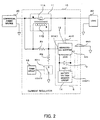
- FIG. 2 is a block diagram showing a structure of an example of modification of the current regulator shown in FIG. 1.
- FIG. 3 is a block diagram showing a structure of an example of modification of the current regulator shown in FIG. 2.
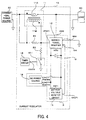
- FIG. 4 is a block diagram showing a structure of an example of modification of the current regulator shown in FIG. 2.
-
- A current regulator and a current regulation method according to an embodiment of the present invention will now be explained below with reference to the drawings, and by employing a current regulator as an example.
- FIG. 1 is a block diagram showing the structure of a current regulator according to the embodiment of the present invention.
- As illustrated, this
current regulator 10 comprises acurrent transformer 11, a resistor R1, and a synchronous power source S. - The
current transformer 11 comprises a primary winding 11A and a secondary winding 11B. The primary winding 11A and the secondary winding 11B are inductively coupled to each other. One terminal of the primary winding 11A is connected to one of a pair of terminals of acommercial power source 20 which generates a single-phase AC (alternating current) voltage. The other terminal of the primary winding 11A is connected to one of a pair of terminals of anexternal load 30, and to a later-described AC input/output terminal ACIO of the synchronous power source S. The other one of the pair of terminals of thecommercial power source 20 and the other one of the pair of terminals of theload 30 are both grounded. - One terminal of the secondary winding 11B is connected to the connection point of the
commercial power source 20 and the primary winding 11A. The other terminal of the secondary winding 11B is connected to a synchronous input terminal of the synchronous power source S. The resistor R1 is connected between the both terminals of the secondary winding 11B. - It should be noted that when an alternating current flows through the primary winding 11A, and thereby a voltage of the terminal out of the both terminals of the primary winding 11A that is connected to the
commercial power source 20 becomes positive polarity with respect to the other terminal, such a voltage is induced to the secondary winding 11B that the terminal out of the both terminals of the secondary winding 11B that is connected to the synchronous power source S becomes positive polarity with respect to the other terminal. - The synchronous power source S comprises the synchronous input terminal SYNC1, the AC input/output terminal ACIO, and a ground terminal GND. The synchronous power source S generates to the AC input/output terminal ACIO, a voltage having an instantaneous value substantially the same as an instantaneous value of a voltage which is applied to the synchronous input terminal SYNC1.
- It should be noted that the synchronous power source S buffers the voltage supplied to the synchronous input terminal SYNC1. That is, the synchronous power source S does not substantially consume the electricity supplied to the synchronous input terminal SYNC1, but supplies electricity to the AC input/output terminal ACIO from an external power source other than the
commercial power source 20, or from a power source included in the synchronous power source S. - The synchronous input terminal SYNC1 of the synchronous power source S is connected to the one out of the both terminals of the secondary winding 11B that is not connected to the
commercial power source 20, as described above. The AC input/output terminal ACIO is connected to the connection point of the primary winding 11A and theload 30. - Next, an operation of the
current regulator 10 for regulating a current flowing from thecommercial power source 20 to theload 30 will be explained. - When the
commercial power source 20 generates a single-phase AC voltage, a current flows between thecommercial power source 20 and theload 30 via the primary winding 11A. As a result, an AC voltage is induced to the secondary winding 11B. And such a voltage is applied to the synchronous input terminal SYNC1 of the synchronous power source S as equal to a superimposed voltage made of the voltage between the both terminals of the secondary winding 11B, and the voltage generated by thecommercial power source 20. - Let it be assumed that an instantaneous value of the AC voltage generated by the
commercial power source 20 becomes higher than an instantaneous value of a voltage of the connection point of the AC input/output terminal ACIO of the synchronous power source S and thecurrent transformer 11. At this instant, an electromotive force which is in a direction in which the voltage to be applied to the synchronous input terminal SYNC1 of the synchronous power source S becomes higher than the AC voltage generated by thecommercial power source 20, is induced to the secondary winding 11B. Consequently, a voltage to be generated to the AC input/output terminal ACIO of the synchronous power source S becomes higher. - In contrast, let it be assumed that an instantaneous value of the AC voltage generated by the
commercial power source 20 becomes lower than an instantaneous value of the voltage of the connection point of the AC input/output terminal ACIO and thecurrent transformer 11. At this instant, the voltage to be applied to the synchronous input terminal SYNC1 becomes lower than the AC voltage generated by thecommercial power source 20 due to an electromotive force induced to the secondary winding 11B. Consequently, a voltage to be generated to the AC input/output terminal ACIO becomes lower. - By continuously performing those operations, an instantaneous value of the voltage of the connection point of the AC input/output terminal ACIO of the synchronous power source S and the
current transformer 11 becomes substantially the same as an instantaneous value of the AC voltage generated by thecommercial power source 20, and a current substantially ceases to flow through the primary winding 11A. That is, it is so regulated that a current does not flow between thecommercial power source 20 and theload 30. Therefore, even if an external power source such as a private electricity generator, etc. is connected to theload 30 in parallel, a reverse power flow does not substantially occur from this power source to thecommercial power source 20. - The structure of the
current regulator 10 is not limited to the above-described one. - For example, the
current regulator 10 may have a structure shown in FIG. 2. That is, the synchronous power source S may comprise abidirectional inverter 12, asecondary battery 13, and a batteryvoltage monitor circuit 14. - The
bidirectional inverter 12 comprises a DC (direct current) input/output terminal DCIO, a control input terminal CIN, a synchronous input terminal which constitutes the synchronous input terminal SYNC1 of the synchronous power source S, an AC input/output terminal which constitutes the AC input/output terminal ACIO of the synchronous power source S, and a ground terminal which constitutes the ground terminal GND of the synchronous power source S. - The DC input/output terminal DCIO is connected to both of an anode and cathode of the
secondary battery 13. The control input terminal CIN is connected to a later-described control output terminal COUT1 of the batteryvoltage monitor circuit 14. - The
bidirectional inverter 12 generates to the AC input/output terminal ACIO, a voltage having an instantaneous value substantially the same as an instantaneous value of a voltage which is applied to the synchronous input terminal SYNC1. Then, in a case where a power flow flows out from the AC input/output terminal ACIO to the outside of thebidirectional inverter 12, thebidirectional inverter 12 supplies electricity from thesecondary battery 13 to the AC input/output terminal ACIO via the DC input/output terminal DCIO. On the other hand, in a case where a power flow flows in from the outside of thebidirectional inverter 12 to the AC input/output terminal ACIO, thebidirectional inverter 12 rectifies the current flowing in to the AC input/output terminal ACIO. Then, thebidirectional inverter 12 supplies a direct current obtained by the rectification to thesecondary battery 13 via the DC input/output terminal DCIO. Thus, thesecondary battery 13 is charged. - When a predetermined operation stop signal is supplied to the control input terminal CIN, the
bidirectional inverter 12 substantially cuts off the AC input/output terminal ACIO. In other words, thebidirectional inverter 12 controls the input impedance and output impedance of the AC input/output terminal ACIO to be infinitely great. That is, when an operation stop signal is supplied to the control input terminal CIN, thebidirectional inverter 12 substantially stops operating. - The
bidirectional inverter 12 may have a function for substantially cutting off the AC input/output terminal ACIO when a magnitude of a current flowing through the AC input/output terminal ACIO or the DC input/output terminal DCIO exceeds a predetermined rated value. - The battery
voltage monitor circuit 14 comprises a pair ofinput terminals REF 1, and the control output terminal COUT1. The pair ofinput terminals REF 1 are connected to different one of the anode and cathode of thesecondary battery 13. The control output terminal COUT1 is connected to the control input terminal CIN of thebidirectional inverter 12. - The battery
voltage monitor circuit 14 determines whether a voltage between the both terminals of the secondary battery 13 (that is, a voltage between the input terminals REF 1) is too high a voltage that exceeds a predetermined value or too low a voltage. Then, when determining that the voltage is either too high a voltage or too low a voltage, the batteryvoltage monitor circuit 14 supplies the above-mentioned operation stop signal from the control output terminal COUT1 to the control input terminal CIN of thebidirectional inverter 12. - The
current regulator 10 may comprise a relay RY1, atimer circuit 15, and a resistor R2, as shown in FIG. 2. - The relay RY1 comprises a current path and a control input terminal. One terminal of the current path of the relay RY1 is connected to the synchronous
input terminal SYNC 1 of the synchronous power source S via the resistor R2. The other terminal of the current path of the relay RY1 is grounded. The control input terminal of the relay RY1 is connected to a later-described control output terminal COUT2 of thetimer circuit 15. - The relay RY1 turns on the current path thereof when a control signal is supplied to the control input terminal thereof, and substantially cuts off the current path thereof when the supply of the control signal is stopped.
- The
timer circuit 15 comprises the control output terminal COUT2. The control output terminal COUT2 is connected to the control input terminal of the relay RY1, as described above. - The
timer circuit 15 repeatedly determines whether or not a predetermined time zone has come. Then, in a case where determining that the predetermined time zone has come, thetimer circuit 15 supplies a control signal to the control input terminal of the relay RY1 from the control output terminal COUT2, so that the current path of the relay RY1 is turned on. And in a case where determining that the current time is not included in the time zone, thetimer circuit 15 stops supplying the control signal, so that the current path of the relay RY1 is cut off. - In the structure shown in FIG. 2, when electricity is to be supplied from the synchronous power source S, this electricity is supplied from the
secondary battery 13 via thebidirectional inverter 12. And in a case where a power flow flows in to the synchronous power source S from an external power source which is connected to theload 30 in parallel or from thecommercial power source 20 via the AC input/output terminal ACIO for example, energy corresponding to this power flow is stored in thesecondary battery 13. - Further, in the structure shown in FIG. 2, when a predetermined time zone (for example, this may be a time zone where midnight power rates are applied) comes, the current path of the relay RY1 is turned on. As a result, the amplitude of an AC voltage to be applied to the synchronous input terminal SYNC1 of the synchronous power source S becomes lower. In response to this, the amplitude of an AC voltage to be generated to the AC input/output terminal ACIO also becomes lower, thereby a power flow flows in to the synchronous power source S from the AC input/output terminal ACIO. Thus, the
secondary battery 13 is charged. - Further, the
current regulator 10 may have a structure shown in FIG. 3. That is, in addition to the structure shown in FIG. 2, thecurrent regulator 10 may further comprise asynchronous oscillator 16, a powerfailure detection circuit 17, and a relay RY2. And as shown in FIG. 3, thecurrent regulator 10 may be connected to anessential load 31 that needs to be driven even in a case where a power failure occurs in thecommercial power source 20. - The
synchronous oscillator 16 comprises a synchronous input terminal SYNC2 and an output terminal OSCOUT. The synchronous input terminal SYNC2 of thesynchronous oscillator 16 is connected to the connection point of thecommercial power source 20 and thecurrent transformer 11. The terminal out of the both terminals of the secondary winding 11B that was, in FIG. 2, connected to the connection point of thecommercial power source 20 and the primary winding 11A, is, instead of this connection point, connected to the output terminal OSCOUT of thesynchronous oscillator 16. - The
synchronous oscillator 16 outputs from the output terminal OSCOUT, an AC voltage having a fixed amplitude (hereinafter, this amplitude is referred to as a reference amplitude) and also having substantially the same phase as that of an AC voltage which is applied to the synchronous input terminal SYNC2. It should be noted that thesynchronous oscillator 16 does not substantially consume electricity supplied to the synchronous input terminal SYNC2. The value of the reference amplitude is within a range of possible values that the amplitude of an AC voltage generated by thecommercial power source 20 under normal operation can take. - Once the
synchronous oscillator 16 starts outputting an AC voltage from the output terminal OSCOUT, it continues outputting an AC voltage having the reference amplitude with keeping the same phase from the output terminal OSCOUT, even if application of an AC voltage to the synchronous input terminal SYNC2 is stopped after the start of outputting. - The relay RY2 comprises a current path and a control input terminal. The AC input/output terminal ACIO of the synchronous power source S is connected to one terminal of the current path of the relay RY2, instead of being connected to the connection point of the
current transformer 11 and theload 30. The other terminal of the current path of the relay RY2 is connected to this connection point. The control input terminal of the relay RY2 is connected to a later-described control output terminal COUT3 of the powerfailure detection circuit 17. - The relay RY2 substantially cuts off the current path thereof when a control signal is supplied to the control input terminal thereof. On the other hand, when the supply of the control signal is stopped, the relay RY2 turns on the current path thereof.
- The power
failure detection circuit 17 comprises a reference terminal REF2 and a control output terminal COUT3. The reference terminal REF2 is connected to the connection point of thecurrent transformer 11 and theload 30. The control output terminal COUT3 is connected to the control input terminal of the relay RY2, as described above. - The power
failure detection circuit 17 determines whether or not a power failure occurs in thecommercial power source 20 based on a voltage applied to the reference terminal REF2. When determining that a power failure occurs, the powerfailure detection circuit 17 supplies a control signal to the control input terminal of the relay RY2 from the control output terminal COUT3, so that the current path of the relay RY2 is cut off. On the other hand, when determining that no power failure occurs, the powerfailure detection circuit 17 stops supply of the control signal, so that the current path of the relay RY2 is turned on. - One of both terminals of the
essential load 31 is connected to the AC input/output terminal ACIO of the synchronous power source S, and the other terminal is grounded. - In the structure shown in FIG. 3, when a power failure occurs in the
commercial power source 20, the AC input/output terminal ACIO of the synchronous power source S is electrically disconnected from both of thecommercial power source 20 and theload 30. On the other hand, even after the power failure occurs in thecommercial power source 20, an AC voltage having the reference voltage and substantially the same phase as that of the AC voltage which has been generated by thecommercial power source 20 by the time the power failure occurs, is applied to the synchronous input terminal SYNC1 of the synchronous power source S. Because of this, an AC voltage having the reference voltage and substantially the same phase as that of the AC voltage generated by thecommercial power source 20 is generated to the AC input/output terminal ACIO. - Thus, the structure shown in FIG. 3 functions as an uninterruptible power supply that keeps supply of electricity to the
essential load 31 from the synchronous power source S, in spite of the power failure occurring in thecommercial power source 20. - Further, the
current regulator 10 may have a structure shown in FIG. 4. That is, the synchronous power source S may comprise aDC power source 18 which generates a DC voltage, in addition to the structure shown in FIG. 2 (or in FIG. 3). - The
DC power source 18 comprises, for example, a solar battery, a wind power generator and a rectifier, etc. and comprises an anode and a cathode. The anode of theDC power source 18 is connected to the anode of thesecondary battery 13, while the cathode of theDC power source 18 is connected to the cathode of thesecondary battery 13. - In the structure shown in FIG. 4, the
secondary battery 13 is charged with DC electricity generated by theDC power source 18. - The present invention is not limited to the above-described embodiments, but can be modified and applied in various ways.
- As described above, according to the present invention, a current regulator and a current regulation method capable of preventing occurrence of a reverse power flow with a simple structure can be realized.
- Further, according to the present invention, a current regulator and a current regulation method for efficiently supplying electricity to a load can be realized.
- The patent application claims the Paris Convention Priority based on Japanese Patent Application No. 2000-295784 filed with the Japan Patent Office on September 28, 2000, the complete disclosure of which is hereby incorporated by reference.
Claims (20)
- A current regulator comprising:a current detection circuit (11) which detects a direction and a magnitude of a current flowing between an external alternating current power source and an external load; anda correction voltage application circuit (S, 11, 16) which generates a correction voltage having a value for lowering the current detected by said current detection circuit, and applies the correction voltage between both terminals of a current path including said load.
- The current regulator according to claim 1, wherein:said current detection circuit comprises a circuit (11B) which generates a detection voltage having a polarity and magnitude which represent the direction and voltage of the detected current, andsaid correction voltage application circuit comprises:a correction alternating current voltage generation circuit (12, 16) which obtains a correction alternating current voltage having a phase substantially equal to that of an alternating current voltage generated by said alternating current power source; anda correction voltage generation circuit (11B, 12) which superimposes the correction alternating current voltage and the detection voltage, and generates the correction voltage having a value determined by a voltage obtained by the superimposing, by converting a correction electricity supplied by a correction power source which does not substantially consume an electricity supplied by said alternating current power source.
- The current regulator according to claim 2, wherein:said correction power source comprises a secondary battery (13); andsaid correction voltage application circuit comprises a circuit (12) which rectifies an electricity caused by a power flow when the power flow flows in from outside to a node which generates the correction voltage, and charges said secondary battery with a direct current electricity obtained by the rectifying.
- The current regulator according to claim 3, comprising
a charge forcing circuit (R1, R2, RY1, 15) which lowers the correction voltage by dividing the voltage obtained by superimposing the correction alternating current voltage and the detection voltage, and forces a power flow to flow in from outside to said node which generates the correction voltage. - The current regulator according to claim 4, wherein
said charge forcing circuit comprises:a control circuit (15) which determines whether or not a predetermined condition has come, and when determining that the condition has come, outputs a signal for notifying that charging will be performed; anda voltage dividing circuit (R1, R2, RY1) which obtains the signal output by said control circuit, and in response to the signal, divides the voltage obtained by superimposing the correction alternating current voltage and the detection voltage. - The current regulator according to claim 3, comprising
a power failure monitor circuit (17, RY2) which determines whether or not a power failure occurs in said alternating current power source, and when determining that a power failure occurs, cuts off said node which generates the correction voltage from said load and said alternating current power source. - The current regulator according to claim 6, wherein
said power failure monitor circuit comprises:a determination circuit (17) which determines whether or not a power failure occurs in said alternating current power source based on a voltage of a connection point of said load and said current detection circuit, and when determining that a power failure occurs, outputs a signal for notifying the power failure; anda current path (RY2) which obtains the signal output by said determination circuit, and in response to the signal, cuts off said node which generates the correction voltage from said load and said alternating current power source. - The current regulator according to claim 3, comprising:a circuit (18) which generates a direct current electricity by generating an electricity, and charges said secondary battery with the direct current electricity.
- The current regulator according to claim 2, wherein:said correction alternating current voltage generation circuit generates the correction alternating current voltage without substantially consuming an electricity supplied by said alternating current power source; andwhen a power failure occurs in said alternating current power source, said correction alternating current voltage generation circuit generates as the correction alternating current voltage, a voltage having a phase substantially equal to that of an alternating current voltage which has been generated by said alternating current power source before the power failure occurs.
- The current regulator according to claim 1, wherein
said current detection circuit comprises a transformer (11) which comprises:a primary winding (11A) which is connected between said alternating current power source and said load; anda secondary winding (11B) which is inductively coupled to said primary winding. - A current regulation method comprising:detecting (11) a direction and a magnitude of a current flowing between an external alternating current power source and an external load; andgenerating a correction voltage having a value for lowering the detected current, and applying the correction voltage between both terminals of a current path including said load (S, 11, 16).
- The current regulation method according to claim 11, comprising:generating (11B) a detection voltage having a polarity and magnitude which represent the direction and magnitude of the detected current;obtaining (12, 16) a correction alternating current voltage having a phase which is substantially the same as that of an alternating current voltage generated by said alternating current power source; andsuperimposing the correction alternating current voltage and the detection voltage, and generating the correction voltage having a value determined by a voltage obtained by said superimposing, by converting a correction electricity supplied by a correction power source which does not substantially consume an electricity supplied by said alternating current power source (11B, 12).
- The current regulation method according to claim 12, wherein
said correction power source is supplied from a secondary battery (13), and
said method comprises rectifying an electricity caused by a power flow when the power flow flows in from outside to a node which generates the correction voltage, and charging said secondary battery with a direct current electricity obtained by said rectifying (12). - The current regulation method according to claim 13, comprising
lowering the correction voltage by dividing the voltage obtained by superimposing the correction alternating current voltage and the detection voltage, and forcing a power flow to flow in from outside to said node which generates the correction voltage (R1, R2, RY1, 15). - The current regulation method according to claim 14, comprising:determining whether or not a predetermined condition has come, and when determining that the condition has come, outputting a signal for notifying that charging will be performed (15); andobtaining the signal for notifying that charging will be performed, and in response to the signal, dividing the voltage obtained by superimposing the correction alternating current voltage and the detection voltage (R1, R2, RY1).
- The current regulation method according to claim 13, comprising
determining whether or not a power failure occurs in said alternating current power source, and when determining that a power failure occurs, cutting off said node which generates the correction voltage from said load and said alternating current power source (17, RY2). - The current regulation method according to claim 16, comprising:determining whether or not a power failure occurs in said alternating current power source based on a voltage of a connection point of said load and said current detection circuit, and when determining that a power flow occurs, outputting a signal for notifying the power failure (17); andobtaining the signal for notifying the power failure, and in response to the signal, cutting off said node which generates the correction voltage from said load and said alternating current power source (RY2).
- The current regulation method according to claim 13, comprising
generating a direct current electricity by generating an electricity, and charging said secondary battery with the direct current electricity (18). - The current regulation method according to claim 12, comprising:generating the correction alternating current voltage without substantially consuming an electricity supplied by said alternating current power source; andwhen a power failure occurs in said alternating current power source, generating as the correction alternating current voltage, a voltage having a phase substantially equal to that of an alternating current voltage which has been generated by said alternating current power source before the power source occurs.
- The current regulation method according to claim 11, wherein
said detecting a direction and a magnitude of a current flowing between said alternating current power source and said load is performed based on a signal which is generated by a secondary winding (11B) included in a transformer (11) which comprises a primary winding (11A) which is connected between said alternating current power source and said load, and said secondary winding which is inductively coupled to said primary winding.
Applications Claiming Priority (3)
| Application Number | Priority Date | Filing Date | Title |
|---|---|---|---|
| JP2000295784A JP3452885B2 (en) | 2000-09-28 | 2000-09-28 | Current regulator |
| JP2000295784 | 2000-09-28 | ||
| PCT/JP2001/008554 WO2002027891A1 (en) | 2000-09-28 | 2001-09-28 | Current adjusting apparatus and current adjusting method |
Publications (1)
| Publication Number | Publication Date |
|---|---|
| EP1261097A1 true EP1261097A1 (en) | 2002-11-27 |
Family
ID=18778155
Family Applications (1)
| Application Number | Title | Priority Date | Filing Date |
|---|---|---|---|
| EP01972594A Withdrawn EP1261097A1 (en) | 2000-09-28 | 2001-09-28 | Current adjusting apparatus and current adjusting method |
Country Status (5)
| Country | Link |
|---|---|
| US (1) | US6879061B2 (en) |
| EP (1) | EP1261097A1 (en) |
| JP (1) | JP3452885B2 (en) |
| KR (1) | KR100480478B1 (en) |
| WO (1) | WO2002027891A1 (en) |
Cited By (1)
| Publication number | Priority date | Publication date | Assignee | Title |
|---|---|---|---|---|
| WO2005093926A1 (en) * | 2004-03-09 | 2005-10-06 | Eaton Power Quality Corporation | Multi-mode uninterruptible power supplies and methods of operation thereof |
Families Citing this family (8)
| Publication number | Priority date | Publication date | Assignee | Title |
|---|---|---|---|---|
| US20040087016A1 (en) * | 2000-05-12 | 2004-05-06 | University Of Utah Research Foundation | Compositions and methods for cell dedifferentiation and tissue regeneration |
| US20060259202A1 (en) * | 2005-01-24 | 2006-11-16 | Vaish Himangshu R | Signaling system |
| TWI332746B (en) * | 2006-04-17 | 2010-11-01 | Delta Electronics Inc | Low cost, low power loss ups device |
| US7652393B2 (en) * | 2006-09-14 | 2010-01-26 | American Power Conversion Corporation | Apparatus and method for employing a DC source with an uninterruptible power supply |
| US7881079B2 (en) * | 2008-03-24 | 2011-02-01 | American Power Conversion Corporation | UPS frequency converter and line conditioner |
| CN113389602B (en) * | 2020-03-11 | 2023-05-12 | 南京南瑞继保电气有限公司 | Error prevention method and device for additional excitation damping control signal of steam turbine generator unit |
| CN112821409A (en) * | 2021-01-21 | 2021-05-18 | 辽宁太阳能研究应用有限公司 | Power grid overvoltage regulating system |
| US11909258B2 (en) | 2021-03-22 | 2024-02-20 | Schneider Electric It Corporation | Method to detect back-feed and mis-wiring events by a UPS system |
Family Cites Families (9)
| Publication number | Priority date | Publication date | Assignee | Title |
|---|---|---|---|---|
| US4010381A (en) * | 1975-04-24 | 1977-03-01 | Bell Telephone Laboratories, Incorporated | No-break ac power supply |
| JPH0234050B2 (en) | 1983-02-15 | 1990-08-01 | Nippon Denji Sotsuki Kk | JIFUNTANSHOYONOTEIDENRYUJIKADENGENSOCHI |
| JPH0638711B2 (en) * | 1986-03-28 | 1994-05-18 | 三菱電機株式会社 | DC power supply for inverter |
| US4763014A (en) * | 1987-09-21 | 1988-08-09 | American Telephone And Telegraph Company, At&T Bell Laboratories | Backup protection switch to prevent reverse power flow in a UPS |
| US4891744A (en) * | 1987-11-20 | 1990-01-02 | Mitsubishi Denki Kaubshiki Kaisha | Power converter control circuit |
| JPH01298414A (en) | 1988-05-26 | 1989-12-01 | Nec Corp | Constant current circuit |
| JP3805835B2 (en) | 1996-07-23 | 2006-08-09 | 関西電力株式会社 | Distribution line voltage and reactive power adjustment device |
| JP4156150B2 (en) | 1999-11-01 | 2008-09-24 | 東京瓦斯株式会社 | Uninterruptible power supply system |
| JP2001161098A (en) | 1999-11-30 | 2001-06-12 | Tokyo Gas Co Ltd | Instantaneous received power control system with reverse power flow |
-
2000
- 2000-09-28 JP JP2000295784A patent/JP3452885B2/en not_active Expired - Fee Related
-
2001
- 2001-09-28 KR KR10-2002-7006577A patent/KR100480478B1/en not_active Expired - Fee Related
- 2001-09-28 US US10/148,723 patent/US6879061B2/en not_active Expired - Fee Related
- 2001-09-28 EP EP01972594A patent/EP1261097A1/en not_active Withdrawn
- 2001-09-28 WO PCT/JP2001/008554 patent/WO2002027891A1/en not_active Ceased
Non-Patent Citations (1)
| Title |
|---|
| See references of WO0227891A1 * |
Cited By (2)
| Publication number | Priority date | Publication date | Assignee | Title |
|---|---|---|---|---|
| WO2005093926A1 (en) * | 2004-03-09 | 2005-10-06 | Eaton Power Quality Corporation | Multi-mode uninterruptible power supplies and methods of operation thereof |
| US7050312B2 (en) | 2004-03-09 | 2006-05-23 | Eaton Power Quality Corporation | Multi-mode uninterruptible power supplies and methods of operation thereof |
Also Published As
| Publication number | Publication date |
|---|---|
| US20030090156A1 (en) | 2003-05-15 |
| KR100480478B1 (en) | 2005-04-07 |
| JP3452885B2 (en) | 2003-10-06 |
| US6879061B2 (en) | 2005-04-12 |
| JP2002112462A (en) | 2002-04-12 |
| KR20020075866A (en) | 2002-10-07 |
| WO2002027891A1 (en) | 2002-04-04 |
Similar Documents
| Publication | Publication Date | Title |
|---|---|---|
| EP2750262B1 (en) | Uninterruptible power supply | |
| EP3661037B1 (en) | Pulsed rectifier architecture | |
| EP1408594B1 (en) | DC ground fault detector and system-interconnected generation device using the DC ground fault detector | |
| WO2014017141A1 (en) | Charging device | |
| JP7246977B2 (en) | Contactless power transmission device, power transmission device, and power receiving device | |
| US6879061B2 (en) | Current adjusting apparatus and current adjusting method | |
| WO2012063667A1 (en) | Dc power supply system | |
| KR100903461B1 (en) | Contactless charger and battery charging set with same | |
| EP3591801B1 (en) | Adaptive charger | |
| JP3748394B2 (en) | Uninterruptible power system | |
| EP3264557B1 (en) | Power conditioning system and power conditioning method | |
| US11539215B2 (en) | Voltage control inverter, power source apparatus, and control method | |
| KR970008804A (en) | Voltage regulator for vehicle alternator | |
| KR100661470B1 (en) | Switching mode uninterruptible power supply. | |
| JP2001025299A (en) | Alarm device for vehicle alternator | |
| WO2016085844A1 (en) | Battery backup arrangement | |
| JP2000184739A (en) | Power converter control method | |
| JP3370308B2 (en) | Power system | |
| JPH01234100A (en) | Power source employing engine generator | |
| JPH07118870B2 (en) | Switching regulator power supply | |
| KR200165152Y1 (en) | Charge system | |
| JP5771116B2 (en) | Uninterruptible power system | |
| WO2014064337A2 (en) | Dynamo-electric machine | |
| JPH02133072A (en) | Control method of inverter device | |
| JPH08163793A (en) | Power supply system for optical terminal device |
Legal Events
| Date | Code | Title | Description |
|---|---|---|---|
| PUAI | Public reference made under article 153(3) epc to a published international application that has entered the european phase |
Free format text: ORIGINAL CODE: 0009012 |
|
| 17P | Request for examination filed |
Effective date: 20020523 |
|
| AK | Designated contracting states |
Kind code of ref document: A1 Designated state(s): DE FR GB |
|
| RAP1 | Party data changed (applicant data changed or rights of an application transferred) |
Owner name: SINANO ELECTRIC CO., LTD., Owner name: NTT DATA EX TECHNO CORORATION |
|
| RAP1 | Party data changed (applicant data changed or rights of an application transferred) |
Owner name: DAIICHI COMPONENTS, LTD Owner name: NTT DATA EX TECHNO CORPORATION |
|
| STAA | Information on the status of an ep patent application or granted ep patent |
Free format text: STATUS: THE APPLICATION IS DEEMED TO BE WITHDRAWN |
|
| 18D | Application deemed to be withdrawn |
Effective date: 20080401 |