EP1256348A1 - Remedies for hepatitis c - Google Patents
Remedies for hepatitis c Download PDFInfo
- Publication number
- EP1256348A1 EP1256348A1 EP01904385A EP01904385A EP1256348A1 EP 1256348 A1 EP1256348 A1 EP 1256348A1 EP 01904385 A EP01904385 A EP 01904385A EP 01904385 A EP01904385 A EP 01904385A EP 1256348 A1 EP1256348 A1 EP 1256348A1
- Authority
- EP
- European Patent Office
- Prior art keywords
- amino acid
- hepatitis
- seq
- protein
- antibody
- Prior art date
- Legal status (The legal status is an assumption and is not a legal conclusion. Google has not performed a legal analysis and makes no representation as to the accuracy of the status listed.)
- Granted
Links
Images




Classifications
-
- A—HUMAN NECESSITIES
- A61—MEDICAL OR VETERINARY SCIENCE; HYGIENE
- A61K—PREPARATIONS FOR MEDICAL, DENTAL OR TOILETRY PURPOSES
- A61K39/00—Medicinal preparations containing antigens or antibodies
- A61K39/395—Antibodies; Immunoglobulins; Immune serum, e.g. antilymphocytic serum
-
- A—HUMAN NECESSITIES
- A61—MEDICAL OR VETERINARY SCIENCE; HYGIENE
- A61K—PREPARATIONS FOR MEDICAL, DENTAL OR TOILETRY PURPOSES
- A61K31/00—Medicinal preparations containing organic active ingredients
- A61K31/70—Carbohydrates; Sugars; Derivatives thereof
- A61K31/715—Polysaccharides, i.e. having more than five saccharide radicals attached to each other by glycosidic linkages; Derivatives thereof, e.g. ethers, esters
- A61K31/737—Sulfated polysaccharides, e.g. chondroitin sulfate, dermatan sulfate
-
- A—HUMAN NECESSITIES
- A61—MEDICAL OR VETERINARY SCIENCE; HYGIENE
- A61P—SPECIFIC THERAPEUTIC ACTIVITY OF CHEMICAL COMPOUNDS OR MEDICINAL PREPARATIONS
- A61P31/00—Antiinfectives, i.e. antibiotics, antiseptics, chemotherapeutics
- A61P31/12—Antivirals
- A61P31/20—Antivirals for DNA viruses
-
- C—CHEMISTRY; METALLURGY
- C07—ORGANIC CHEMISTRY
- C07K—PEPTIDES
- C07K16/00—Immunoglobulins [IG], e.g. monoclonal or polyclonal antibodies
- C07K16/08—Immunoglobulins [IG], e.g. monoclonal or polyclonal antibodies against material from viruses
- C07K16/10—RNA viruses
- C07K16/116—Togaviridae (F); Matonaviridae (F); Flaviviridae (F)
- C07K16/118—Hepatitis C virus; GB virus C [GBV-C]
-
- A—HUMAN NECESSITIES
- A61—MEDICAL OR VETERINARY SCIENCE; HYGIENE
- A61K—PREPARATIONS FOR MEDICAL, DENTAL OR TOILETRY PURPOSES
- A61K39/00—Medicinal preparations containing antigens or antibodies
- A61K2039/505—Medicinal preparations containing antigens or antibodies comprising antibodies
-
- C—CHEMISTRY; METALLURGY
- C07—ORGANIC CHEMISTRY
- C07K—PEPTIDES
- C07K2317/00—Immunoglobulins specific features
- C07K2317/20—Immunoglobulins specific features characterized by taxonomic origin
- C07K2317/21—Immunoglobulins specific features characterized by taxonomic origin from primates, e.g. man
-
- C—CHEMISTRY; METALLURGY
- C07—ORGANIC CHEMISTRY
- C07K—PEPTIDES
- C07K2317/00—Immunoglobulins specific features
- C07K2317/60—Immunoglobulins specific features characterized by non-natural combinations of immunoglobulin fragments
- C07K2317/62—Immunoglobulins specific features characterized by non-natural combinations of immunoglobulin fragments comprising only variable region components
- C07K2317/622—Single chain antibody (scFv)
Definitions
- HCV non-A non-B hepatitis virus
- HCV comprise three types of structural proteins, i.e., core protein, envelope 1 protein (hereinafter sometimes referred to as "E1” or “E1 protein”) and envelope 2 protein (hereinafter sometimes referred to as "E2/NS1” or “E2/NS1 protein”) and 6 types of non-structural proteins.
- HCV gene is considered to very easily undergo mutation and HCV, because of its high mutation ability, was presumed to escape from the immunity in the body of a patient.
- E2/NS1 of HCV there is presumed to be a region of 25 to 30 amino acids, referred to as a "hyper variable region," which is rich in mutation, and Kato et al. deduce that an epitope of a human immune system is a hyper variable region (J. Virol., Vol. 67, No. 7, 3923-3930, 1993) (J. Virol., Vol. 68, No. 8, 4776-4784, 1994).
- CD81 was a receptor of HCV.
- HCV is known to be RNA virus and, thus, is highly likely to undergo mutation. This mutation causes mutation in many sites, both in the structural protein and the non-structural protein of HCV. Because of this mutation, the development of a substance for inhibiting HCV infection, for example, an antibody which recognizes a given protein sequence, has been considered to be difficult. However, the present inventors have focused on the point that the neutralizing antibody reported by Ishii et al. inhibits the binding to only one type of E2/NS1 even though the sequence of the infected virus are different for each recovered patient.
- a substance recognizing a specific region or a configuration of the antigen can inhibit the binding between E2/NS1 and a human cell infectious with HCV, a CD81 expressing cell, or CD81 and prevent infection regardless of the diversity of viral sequences.
- the present inventors have conducted concentrated search on substances which inhibit the binding between E2/NS1 and the cell infectious with HCV, the cell expressing CD81, or CD81, and as a result, succeeded in obtaining a substance capable of inhibiting the binding and infection of HCV to a cell infectious with HCV.
- the present invention provides a substance which inhibits the binding between E2/NS1 protein of hepatitis C virus and a cell infectious with hepatitis C virus, a cell expressing CD81, or CD81.
- the preferred embodiment of the present invention provides: a substance which inhibits, upon binding to a region having a positively charged regions of E2/NS1 protein of hepatitis C virus, the binding between E2/NS1 protein of hepatitis C virus and a cell infectious with hepatitis C virus, a cell expressing CD81, or CD81; a substance in which E2/NS1 protein of hepatitis C virus is a protein prepared by adding a substance capable of recognizing E2/NS1 protein to E2/NS1 protein of hepatitis C virus; a substance in which E2/NS1 protein of hepatitis C virus is a protein prepared by adding a substance capable of detecting E2/NS1 protein by a fluorescence method or a luminescence method to E2/NS1 protein of hepatitis C virus; a substance in which E2/NS1 protein of hepatitis C virus is a protein prepared by adding a tag to E2/NS1 protein of hepatitis C virus; a substance in which E2/NS
- a further aspect of the present invention provides:
- a further aspect of the present invention provides:
- a further aspect of the present invention provides a single-chain antibody having an affinity to E2/NS1 protein of hepatitis C virus, which comprises an amino acid sequence shown by SEQ ID NO: 26, 27, 28, or 29 in the Sequence Listing or the amino acid sequence having a deletion, a substitution, or an addition of one or several amino acids in the amino acid sequence shown by SEQ ID NO: 26, 27, 28, or 29.
- a further aspect of the present invention provides a single-chain antibody having an affinity to E2/NS1 protein of hepatitis C virus, which comprises an amino acid sequence shown by SEQ ID NO: 36, 37, 38, or 39 in the Sequence Listing or the amino acid sequence having a deletion, a substitution, or an addition of one or several amino acids in the amino acid sequence shown by SEQ ID NO: 36, 37, 38, or 39.
- a further aspect of the present invention provides a single-chain antibody having an affinity to E2/NS1 protein of hepatitis C virus, which comprises an amino acid sequence shown by SEQ ID NO: 62, 63, 64, or 65 in the Sequence Listing or the amino acid sequence having a deletion, a substitution, or an addition of one or several amino acids in the amino acid sequence shown by SEQ ID NO: 62, 63, 64, or 65.
- a further aspect of the present invention provides a nucleic acid which encodes the aforementioned antibody of the present invention.
- the nucleic acid which comprises a nucleotide sequence shown by any of SEQ ID NO: 21, 22, 23, 24, 25, 35, 58, 59, 60, or 61 in the Sequence Listing; the nucleic acid which comprises a nucleotide sequence shown by SEQ ID NO: 40 or 41 in the Sequence Listing; the nucleic acid which comprises a nucleotide sequence shown by any of SEQ ID NO: 26, 27, 28, or 29 in the Sequence Listing; the nucleic acid which comprises a nucleotide sequence shown by any of SEQ ID NO: 36, 37, 38, or 39 in the Sequence Listing; and the nucleic acid which comprises a nucleotide sequence shown by any of SEQ ID NO: 62, 63, 64, or 65 in the Sequence Listing.
- a still further aspect of the present invention provides a method for producing an antibody using any of the above-described nucleic acids.
- a further aspect of the present invention provides a recombinant antibody which can be obtained by the above method and has an affinity to E2/NS 1 protein of hepatitis C virus.
- a recombinant antibody in which the Fc region is of a human type, and a recombinant antibody which is a single-strand antibody are provided.
- a further aspect of the present invention provides: a medicament which comprises the aforementioned substance of the present invention as an active ingredient; a medicament which comprises the aforementioned antibody of the present invention as an active ingredient; and a medicament which comprises the aforementioned recombinant antibody of the present invention as an active ingredient.
- a medicament for treating and/or preventing hepatitis C and a medicament for diagnosing hepatitis C.
- the present invention provides an anti-HCV agent which comprises the aforementioned substance of the present invention as an active ingredient, an anti-HCV agent which comprises the aforementioned antibody of the present invention as an active ingredient, and an anti-HCV agent which comprises the recombinant antibody of the present invention as an active ingredient.
- a further aspect of the present invention provides an antibody having a sequence of the variable region obtained by the above-described method.
- a further aspect of the present invention provides a method for screening a substance which inhibits the binding between E2/NS1 of hepatitis C virus and a cell infectious with hepatitis C, a cell expressing CD81, or CD81, which comprises steps of: contacting E2/NS1 of hepatitis C virus with a cell infectious with hepatitis C, a cell expressing CD81, or CD81 in the presence and absence of a test substance; and comparing the bindings between E2/NS1 of hepatitis C virus and the cell infectious with hepatitis C, the cell expressing CD81, or CD81 in the presence and absence of a test substance.
- a screening method in which E2/NS1 protein of hepatitis C virus is a protein prepared by adding a substance capable of recognizing E2/NS1 protein to E2/NS1 protein of hepatitis C virus; a screening method in which E2/NS1 protein of hepatitis C virus is a protein prepared by adding a substance capable of detecting E2/NS1 protein by a fluorescence method or a luminescence method to E2/NS1 protein of hepatitis C virus; a screening method in which E2/NS1 protein of hepatitis C virus is a protein prepared by adding a tag to E2/NS1 protein of hepatitis C virus; a screening method in which E2/NS1 protein of hepatitis C virus is a protein prepared by adding a tag to the C-terminus of E2/NS1 protein of hepatitis C virus; a screening method in which the cell expressing CD81 is a cell which expresses human CD81; a screening method in which CD81 is
- a still further aspect of the present invention provides a substance which inhibits the binding between E2/NS1 protein of hepatitis C virus and the cell infectious with hepatitis C, the cell expressing CD81, or CD81, which is obtained by any of the above screening methods.
- a further aspect of the present invention provides a substance which inhibits a life cycle of hepatitis C virus, which is obtained by the screening method which comprises steps of assaying the binding between a cell infectious with HCV and a cell expressing HCV protein in the presence and absence of the test substance, and comparing it with the binding in the absence of the test substance; and a substance which inhibits a life cycle of hepatitis C virus, which is obtained by the screening method which comprises steps of, after the cell infectious with HCV has bound with the HCV protein expressing cell in the presence or absence of the test substance, assaying the fusion between the cell infectious with HCV and the HCV protein expressing cell, and comparing it with the fusion in the absence of the test substance.
- the test substance is a protein, sulfated polysaccharides, or a low molecular weight compound.
- a further aspect of the present invention provides: an anti-HCV agent which comprises the above substance as an active ingredient, and a method for producing the anti-HCV agent which comprises formulating the anti-HCV agent using the above substance.
- the method for production preferably comprises a step of confirming the inhibition of proliferation of hepatitis C virus by the above screening method.
- the substance according to the present invention is a substance which inhibits the binding between E2/NS1 protein of hepatitis C virus and a cell infectious with hepatitis C virus (hereinafter sometimes referred to as "HCV infectious cell”), a cell expressing CD81 (hereinafter sometimes referred to as “CD81 expressing cell”), or CD81.
- HCV infectious cell a cell infectious with hepatitis C virus
- CD81 expressing cell a cell expressing CD81
- E2/NS1 comprises the amino acids 384 to 746 in the protein expressed from the HCV genome.
- the binding of E2/NS1 to the HCV infectious cell was confirmed, for example, by expressing a protein prepared by adding a tag to the C-terminus of E2/NS1 of HCV genes in a solubilized state, binding it to the HCV infectious cell or the CD81 expressing cell, and confirming the binding of E2/NS1 to the above cell by a light-emission method or a luminescence method using an antibody against the tag.
- Sulfated polysaccharides such as heparin are known to be of strong negative charge and are known to bind to a region having a strong positive charge in proteins such as antithrombin III and a fibroblast growth factor (FEBS Lett, Vol. 69, 51-54, 1976) (Cell, Vol. 64, 841-848, 1991). Further, as described in Examples below, in the present invention it was found that E2/NS1 bound to heparin. That is, among the substances described in Examples, because heparin couples to a region in E2/NS1 with a strong positive charge, it is easily deduced that it inhibits the binding between E2/NS1 and the HCV infectious cell, the CD81 expressing cell, or CD81. Any substance which binds to the region having a positive charge in E2/NS1 can inhibit the binding between E2/NS1 and the HCV infectious cell, the CD81 expressing cell, or CD81.
- “Negative charge” and “positive charge” used herein refer to charged sites which are present on the protein or the sugar chain bound thereto.
- the site is a domain in which E2/NS1 binds to Heparin sepharose CL-6B (Pharmacia) and binds to a column when it is not eluted by 10 mM phosphate buffer containing 0.15 M NaCl.
- a substance which can recognize E2/NS1 protein of hepatitis C virus refers to a tagged protein as described below and a substance capable of detecting E2/NS1 protein by an antibody such as hapten.
- E2/NS1 when E2/NS1 is expressed after binding a tag thereto, use of those having a tag bound to the C-terminus is preferred. Proteins thus obtained are soluble. This soluble E2/NS1 can be used without particular limitation as long as the outermembrane domain of E2/NS1 between the amino acid 384 and the amino acid 746 is expressed. A tagged and solubilized E2/NS1 protein can be expressed in cells capable of adding a sugar chain to proteins, such as animal cells, insect cells, and yeast.
- the protein prepared by adding a substance detectable by antibodies such as hapten to E2/NS1 protein of hepatitis C virus refers to a substance prepared by expressing an outermembrane domain of E2/NS1 between the amino acid 384 and the amino acid 746 of E2/NS1, and binding it with a low molecular weight compound which can be recognized by antibodies, such as biotin, fluorescein or DIG.
- a low molecular weight compound which can be recognized by antibodies such as biotin, fluorescein or DIG.
- the substances which recognize a low molecular weight compound in the case of the exemplified biotin, for example, the substance can be recognized by proteins such as avidin and streptoavidin in addition to antibodies. Therefore, it is not particularly limited to an antibody and a protein, as long as it is capable of recognizing the substance.
- HCV infectious cell refers to human hepatic cells such as Huh7, HepG2, and WRL68 and lymphocyte cells such as Molt-4, MT-2, and Daudi as cells in which HCV could proliferate or infect.
- the cells are not limited to these as long as the cell shows the HCV infectivity.
- Examples of cells expressing CD81 include those prepared by introducing a vector which is obtained by inserting human CD81 genes (GenBank Registration No. M33680) into a multicloning site of pCDNA3.1(+) (Invitrogen), in the NIH3T3 cell using Lipofectin (GIBCO BRL).
- a vector for expressing CD81, an expression cell, and a method for introducing a gene are not particularly limited, as long as the human CD81 expression can be confirmed in the cell constructed by a conventional gene recombination technique by means of a method for detecting protein or mRNA such as Western blotting, a fluorescence detection method using an anti-CD81 antibody or Northern blotting.
- CD81 used herein can be a solubilized human CD81.
- Any solubilized human CD81 can be used without particular limitation so far as the outermembrane domain of CD81 is expressed.
- the solubilized CD81 can be expressed in accordance with a conventional gene recombination technique using animal cells, insect cells, yeast, Escherichia coli , and the like. Further, it is not necessary that the solubilized CD81 is one obtained by expressing only the outermembrane domain. For example, a tagged one or a modified one can be used without any problem for the purpose of purification or detection.
- Examples of the light emission method and the luminescence method mentioned in the method for detecting the binding between E2/NS1 and the HCV infectious cell, the CD81 expressing cell, or CD81 using an antibody against a tag preferably include flow cytometry, cell ELISA, and ELISA.
- the methods are not particularly limited so far as the binding between E2/NS1 and the CD81 expressing cell or CD81 can be detected.
- the “antibody” used herein includes, in addition to an antibody normally existing in a living organism, a peptide comprising at least one antigen binding site formed by the variable region in the H chain or L chain of the antibody or a combination thereof, Fab composed of a set of H chain fragment and L chain fragment, F(ab')2 composed of two sets of H chain fragments and L chain fragments, and a single-chain antibody composed of H chain fragment and L chain fragment bound in series to the same peptide (hereinafter sometimes referred to as "scFv").
- scFv single-chain antibody composed of H chain fragment and L chain fragment bound in series to the same peptide
- a monoclonal antibody was prepared by obtaining a gene of an antibody from the B-cell of a patient who recovered from hepatitis C.
- Conventional methods for isolating only the genes of antibody of interest from a plurality of B-cells derived from human include a method in which EBV is transformed into the B-cell of a patient to immortalize the B cell, followed by the cloning of only the cells which produce the antibody of interest.
- the present inventors have succeeded in obtaining scFv by the phage display method.
- an antibody was obtained by the phage display method by sampling heparin blood from a patient who recovered from hepatitis C, obtaining peripheral blood mononuclear cells by the Ficoll method, and purifying the B-cells only using an anti-CD19 antibody support. Thereafter, human IL-2, human IL-10, E2/NS1 antigen(1 ng/ml), and anti-human CD40 antibody (1 ⁇ g/ml) were used to stimulate the B-cell for the transcription of genes of antibody to mRNA.
- the purification of B-cell is not particularly limited as long as the B-cells can be specifically separated.
- the stimulation of B-cell can be carried out in a manner different from the above method and can be carried out in an appropriately abbreviated manner without problem.
- antibody mRNA and antibody cDNA were obtained from the B-cell. Further, a frame of a gene of a single chain antibody was prepared which was capable of incorporating genes in the H chain and the L chain variable regions into scFv expression plasmid, and gene 3 gene of M13 phage was ligated to the downstream thereof. An H chain and an L chain randomly obtained from the cDNA by PCR were incorporated into the sites into which the variable regions of the H chain and the L chain were to be incorporated. Using this plasmid, a single chain antibody which was incorporated in the form of fused protein with gene 3 protein at the end of M13 phage was expressed, and only those bound to E2/NS1 were selected therefrom.
- scFv1-1 and a phage expressing the scFv1-1 had a particularly strong affinity to E2/NS1 and strongly inhibited the binding between E2/NS1 and the HCV infectious cell, the CD81 expressing cell, or CD81.
- any method can be used without particular limitation so far as the "antibody” and the protein expressed on the surface of the phage can be expressed in the form of a fusion protein.
- scFv1-1 which was exemplified as a representative example of the antibody according to the present invention, showed the binding constant Ka to E2/NS1 of 4.5 x 10 8 (M) and the dissociation constant Kd of 2.2 x 10 -9 (1/M) as a result of measurement using BIACORE (BIACORE).
- the present inventors obtained a plurality of single chain antibodies having the same variable region of the H chain as that of scFv1-1 and a variable region of the L chain that was different from that of scFv1-1, and for each single chain antibody the binding ability and the ability of inhibiting the binding between E2/NS1 and the HCV infectious cell and the human CD81 expressing cell were compared.
- a single-chain antibody scFv1-1 having a binding constant of 10 8 (M) or more and a dissociation constant of 10 -8 (1/M) or less can be judged as being satisfactory as a medicament from the viewpoint of the inhibitory activity. That is, an antibody having a binding constant to E2/NS1 of 10 8 (M) or more and a dissociation constant of 10 -8 (1/M) or less as a result of measurement using BIACORE is more preferred as a medicament for inhibiting infection to the HCV infectious cell. In order to further enhance the ability of the antibody, an antibody having a binding constant of 10 9 (M) or more and a dissociation constant of 10 -9 (1/M) or less is further preferred.
- an antibody comprises two types of polypeptides, i.e., a large polypeptide and a small polypeptide, and a larger subunit is referred to as an "H chain” and a smaller subunit is referred to as an "L chain.”
- the peptides respectively comprise a "variable region” which is present at the N-terminal side and forms an antigen binding site and a "constant region” which is defined by each antibody class.
- the variable region is further divided into complementarity-determining regions "CDRs" which are deeply involved in the formation of the antigen binding site and "frameworks” which are present therebetween.
- a CDR is known to have three regions, “CDR-1,” “CDR-2,” and “CDR-3" from the N-terminal side for each of the H chain and the L chain.
- the antibodies ScFv1-1, ScFv1-2, ScFv1-3, and ScFv1-4 of the present invention are described below as examples.
- the amino acid sequences of the antibodies ScFv1-1, ScFv1-2, ScFv1-3, and ScFv1-4 are shown in SEQ ID NOS: 1 to 20 in the Sequence Listing, and the DNA sequences are shown in SEQ ID NOS: 21 to 25.
- SEQ ID NO: 16 represents a sequence for expressing scFv in Escherichia coli , i.e., a sequence having 2 amino acids added to the N terminus of the H chain of scFv1-1.
- the amino acids 3 to 32 in SEQ ID NO: 16 represent framework 1
- the amino acids 33 to 37 represent “CDR-1”
- the amino acids 38 to 51 represent framework 2
- the amino acids 52 to 68 represent “CDR-2”
- the amino acids 69 to 100 represent framework 3
- the amino acids 101 to 117 represent “CDR-3”
- the amino acids 118 to 128 represent framework 4.
- the amino acid sequence in the L chain portion of ScFv1-1 is shown in SEQ ID NO: 17.
- amino acids 1 to 23 in SEQ ID NO: 18 represent framework 1
- amino acids 24 to 34 represent “CDR-1”
- amino acids 35 to 49 represent framework 2
- amino acids 50 to 56 represent “CDR-2”
- amino acids 57 to 88 represent framework 3
- amino acids 89 to 97 represent “CDR-3”
- amino acids 98 to 111 represent framework 4.
- the amino acid sequence in the L chain portion of ScFv1-3 is shown in SEQ ID NO: 19.
- amino acids 1 to 23 in SEQ ID NO: 19 represent framework 1
- amino acids 24 to 34 represent “CDR-1”
- amino acids 35 to 49 represent framework 2
- amino acids 50 to 56 represent “CDR-2”
- amino acids 57 to 88 represent framework 3
- amino acids 89 to 97 represent “CDR-3”
- amino acids 98 to 111 represent framework 4.
- the amino acid sequence in the L chain portion of ScFv1-4 is shown in SEQ ID NO: 20.
- the amino acids 1 to 22 in SEQ ID NO: 20 represent framework 1
- the amino acids 23 to 36 represent “CDR-1”
- the amino acids 37 to 51 represent framework 2
- the amino acids 52 to 58 represent “CDR-2”
- the amino acids 59 to 90 represent framework 3
- the amino acids 91 to 102 represent “CDR-3”
- the amino acids 103 to 116 represent framework 4.
- the boundary between these frameworks and CDRs was determined based on Kabat et al., "Immunologically useful protein sequence" (National Institutes of Health, Bethesda, MD, (1987) and (1991)).
- ScFv can be prepared using, for example, Recombinant Phage Antibody System (Pharmacia).
- the single-chain antibody is toxic to Escherichia coli as a production host and causes extinction of Escherichia coli or decomposition of the single-chain antibody, the kit cannot be effectively used and a lot of contrivances are required.
- the single-chain antibody can be prepared by selecting inducible vectors such as pSE380 plasmid (Invitrogen) or pET24d(+) plasmid (Novagen) and host bacterial cells.
- an animal cell expression system, an insect cell expression system, and a yeast cell expression system can be effectively utilized.
- SEQ ID NO: 21 in the Sequence Listing represents the nucleotide sequence of the nucleic acid corresponding to the amino acids 1 to 128 of SEQ ID NO: 16 in the Sequence Listing.
- SEQ ID NO: 22 in the Sequence Listing represents the nucleotide sequence of the nucleic acid corresponding to the amino acids 1 to 111 of SEQ ID NO: 17 in the Sequence Listing.
- SEQ ID NO: 23 in the Sequence Listing represents the nucleotide sequence of the nucleic acid corresponding to the amino acids 1 to 111 of SEQ ID NO: 18 in the Sequence Listing.
- SEQ ID NO: 24 in the Sequence Listing represents the nucleotide sequence of the nucleic acid corresponding to the amino acids 1 to 111 of SEQ ID NO: 19 in the Sequence Listing.
- SEQ ID NO: 25 in the Sequence Listing represents the nucleotide sequence of the nucleic acid corresponding to the amino acids 1 to 116 of SEQ ID NO: 20 in the Sequence Listing.
- a nucleotide sequence having a deletion, a substitution, or an addition of one or several nucleotides is included in the scope of the present invention as long as the sequence exhibits the effects as described in the present application.
- an antibody of a form which is usually present in a living organism can be prepared from scFv.
- scFv For example, only the variable regions of the H chain and the L chain are amplified by PCR from scFv plasmid which binds to E2/NS1.
- Each fragment is, for example, integrated into a plasmid having the H chain gene and/or the L chain gene of the human antibody, thereby forming an antibody having a variable region on the scFv and being a form usually present in a living organism.
- suitable restriction enzyme cleavage sites are introduced at both ends of the gene fragment obtained when amplifying the variable regions of the H chain and the L chain from the plasmid, and they are combined with a suitable restriction enzyme cleavage site on the plasmid having the H chain and/or the L chain of the human antibody, thereby replacing genes in the variable region without causing frame-shift.
- an antibody of a form usually present in a living organism which has a sequence of the variable region on a plasmid as it is, can be prepared.
- a peptide containing at least one antigen binding site formed by the variable region of the H chain or L chain of the antibody or a combination thereof, Fab composed of a set of an H chain fragment and an L chain fragment, and (Fab'2) composed of 2 sets of H chain fragments and L chain fragments can also be prepared from the antibody.
- substitution of sequences of antibodies mentioned below can enhance the binding force to E2/NS1 and the neutralizing activity; an antibody in which CDR-1, CDR-2, and CDR-3 in the variable region of the H chain in the present invention are, respectively, amino acid sequences shown by SEQ ID NOS: 1, 2, and 3 in the Sequence Listing and CDR-1, CDR-2, and CDR-3 in the variable region of the L chain are, respectively, amino acid sequences shown by SEQ ID NOS: 4, 5, and 6 in the Sequence Listing; an antibody in which CDR-1, CDR-2, and CDR-3 in the variable region of the H chain are, respectively, amino acid sequences shown by SEQ ID NOS: 1, 2, and 3 in the Sequence Listing and CDR-1, CDR-2, and CDR-3 in the variable region of the L chain are, respectively, amino acid sequences shown by SEQ ID NOS: 7, 8, and 9 in the Sequence Listing; an antibody in which CDR-1, CDR-2, and CDR-3 in the variable region of the H chain are, respectively, amino acid sequences shown by
- the sequence of CDR-3 can be randomly substituted to obtain another antibody.
- a highly active antibody can be also obtained by substituting the amino acid sequences and gene sequences of CDR-1, CDR-2, and CDR-3 of the H chain and the L chain.
- an antibody having a modified amino acid sequence has no problem unless the neutralizing activity is deteriorated. That is, in the present invention, an amino acid sequence having modifications such as a substitution, a deletion, or an insertion is included in the scope of the present invention as long as the sequence has ability to inhibit the binding between E2/NS1 and the HCV infectious cell, the CD81 expressing cell, or CD81.
- the antibodies of the present invention are antibodies having amino acid substitutions in the H chains of the above-described antibodies ScFv1-1, ScFv1-2, ScFv1-3, and ScFv1-4.
- the amino acid sequences and the DNA sequences of the H chains of the antibodies ScFv2-1, ScFv2-2, ScFv2-3, and ScFv2-4 are shown in SEQ ID NOS: 34 and 35 in the Sequence Listing.
- amino acid sequences and the DNA sequences of the antibodies ScFv3-1, ScFv3-2, ScFv3-3, and ScFv3-4 of the present invention are shown in SEQ ID NOs: 42 to 65 in the Sequence Listing.
- a full-length antibody is preferably used.
- the expression of antibody in the present invention can carried out by employing Escherichia coli , yeast, insect cells, animal cells, and the like. If the antibody is to be administered to a human as a medicament, an animal cell showing a sugar chain modification which is closer to that of human, is preferably used.
- an antibody when an antibody is expressed in COS cell or CHO cell, pCDNA3.1(+) or pMAMneo (CLONETECH) can be used.
- pCDNA3.1(+) or pMAMneo (CLONETECH) can be used.
- a gene of the H chain of the antibody obtained in the above method is incorporated into a multicloning site of pCDNA3.1(+), and a gene of the L chain is incorporated into pMAMneo.
- An expression unit having a gene of the L chain between a promoter and poly A is then incorporated into an adequate site of the vector having the H chain incorporated therein.
- Introduction of this vector into a COS cell, a CHO-K1, or a CHO DG44 by a conventional genetic engineering technique enables the production of the antibody of interest.
- the expression unit of the DHFR gene is cleaved out from for example, pSV2/DHFR (Nature, 1981. Vol. 294, Lee F. et al.) into the above prepared vector, and is incorporated into a vector which expresses the H chain and the L chain.
- This vector is introduced into the CHO DG44 by a conventional genetic engineering technique.
- the thus selected cells can be used to significantly improve the producibility of antibodies by utilizing the DHFR gene amplification system using MTX.
- the antibody In the COS cell, the antibody can be expressed only in the transient manner.
- the antibody In the CHO cell, the antibody can be expressed in a state in which the antibody genes are incorporated into a chromosome.
- the above-described DHFR gene amplification system can be used to express an antibody at a high level, and the use of the CHO cell is more preferred in the industrial production since the antibody can be produced in a serum-free medium.
- the COS cell is generally cultured in Dulbecco's Modified Eagle's Medium (DMEM) supplemented with 10% fetal bovine serum (FBS) under 5% CO 2 at 37°C.
- DMEM Dulbecco's Modified Eagle's Medium
- FBS fetal bovine serum
- the method for breeding and producing cells after gene introduction into the COS cell is described in protocols such as "Bio Manual Series 4, Gene Introduction and Expression - Analytical Method); Takashi Yokota, Ken-ichi Arai” (YODOSHA Co., Ltd., 1994).
- a method for introducing a gene into the COS cell may be electroporation, as well as a DEAE-dextran method and a method using a transfection reagent such as lipofectin.
- CHO K-1 cell and CHO-DG44 cell can be cultured in DMEM supplemented with 10% FBS, as well as a commercially available serum-free medium such as CHO S SFM2 (GIBCO), under 5% CO 2 at 37°C.
- a commercially available serum-free medium such as CHO S SFM2 (GIBCO)
- gene introduction into the CHO cell can be carried out by electroporation, as well as a DEAE-dextran method and a method using a transfection reagent such as lipofectin.
- the antibody produced in the present invention can be used to decrease HCV particles in the blood of an HCV infected patient.
- the amount of HCV particles in the blood can be decreased, thereby preventing re-infection with HCV and leading the patient to recovery from HCV.
- this antibody can bind in particular to cells which present E2/NS1 on the cell surface among HCV infected cells in the body of the HCV patient. It can also be expected that this binding and the activation of an immune system such as a complement in the living organism will result in killing ability against HCV infected cells.
- an antibody which recognizes an antigen in a more multivalent manner as IgM can also be prepared.
- a bispecific or multispecific antibody can be produced by producing and purifying monoclonal antibodies and then binding the antibodies to each other. This procedure to make the antibody bispecific can be carried out by combining not only with the same antigen, but also with another antigen.
- an antibody against E1 which is considered to be presented on the surface of the HCV particles can be used to prepare a bispecific antibody and a multispecific antibody.
- amino acid sequences of the single-chain antibodies ScFv1-1, ScFv1-2, ScFv1-3, and ScFv1-4 are shown in SEQ ID NO: 26, SEQ ID NO: 27, SEQ ID NO: 28, and SEQ ID NO: 29 in the Sequence Listing. Examples of nucleic acid sequences encoding those are shown together with the amino acid sequences.
- amino acids 1 to 22 of the amino acid sequence shown by SEQ ID NO: 26 represent a sequence containing a secretion signal from Escherichia coli
- amino acids 23 to 148 represent a variable region of the H chain
- amino acids 149 to 165 represent a linker
- the amino acids 166 to 276 represent a variable region of the L chain
- the amino acids 277 to 299 represent a sequence containing a tag.
- amino acids 1 to 22 of the amino acid sequence shown by SEQ ID NO: 28 represent a sequence containing a secretion signal from Escherichia coli
- amino acids 23 to 148 represent a variable region of the H chain
- amino acids 149 to 165 represent a linker
- the amino acids 166 to 276 represent a variable region of the L chain
- the amino acids 277 to 299 represent a sequence containing a tag.
- amino acids 1 to 22 of the amino acid sequences shown by SEQ ID NO: 26, SEQ ID NO: 27, SEQ ID NO: 28, and SEQ ID NO: 29 and express a single-chain antibody in the cells of Escherichia coli.
- the amino acids 277 to 299 of the amino acid sequences shown by SEQ ID NO: 26, SEQ ID NO: 27, and SEQ ID NO: 28 represent a sequence for detecting and purifying the single-chain antibody, and this sequence can be deleted or substituted with any sequence.
- amino acids 282 to 304 of the amino acid sequence shown by SEQ ID NO: 29 are a sequence for detecting and purifying the single-chain antibody, and the sequence can be deleted or substituted with any sequence.
- amino acid sequences of single-chain antibodies ScFv2-1, ScFv2-2, ScFv2-3, and ScFv2-4 are shown in SEQ ID NO: 36, SEQ ID NO: 37, SEQ ID NO: 38, and SEQ ID NO: 39 in the Sequence Listing, and examples of nucleic acid sequences encoding those are shown together with the amino acid sequences.
- amino acid sequences of single-chain antibodies ScFv3-1, ScFv3-2, ScFv3-3, and ScFv3-4 are shown in SEQ ID NO: 62, SEQ ID NO: 63, SEQ ID NO: 64, and SEQ ID NO: 65 in the Sequence Listing. Examples of nucleic acid sequences encoding those are shown together with the amino acid sequences.
- a single-chain antibody can be made bispecific and multispecific. For example, it can be produced by repeatedly arranging the H chains and the L chains of a plurality of combinations of antigen recognition sites in a peptide. Ligation after production and purification is also possible.
- the H chain or the L chain can be used alone instead of a combined use of the H chain and the L chain.
- the type of the antibody can be selected depending on the application for use, and can be selected based on a binding intensity, an antigen binding site, and the like.
- the present invention further provides a medicament which comprises, as an active ingredient, the above-described antibody, a substance having the function equivalent thereto and inhibiting the binding between E2/NS1 and the HCV infectious cell, the CD81 expressing cell, or CD81 as defined in the present invention, for example, a pharmaceutical composition comprising the above substance and a pharmaceutically acceptable carrier.
- a pharmaceutical composition comprising the above substance and a pharmaceutically acceptable carrier.
- the anti-E2/NS1 antibody gene of the present invention can efficiently produce the anti-E2/NS1 antibody, and provides various forms of therapeutic preparations.
- the recombinant antibodies thus produced may be contained in the pharmaceutical composition together with the substance which is used for sustaining the activity of the antibody at the time of administration to human, such as a carrier having a pharmaceutically acceptable composition and a stabilizer.
- Such carriers and stabilizers include human serum albumin and gelatin.
- pharmaceutically acceptable means that neither undesirable side-effects accompanying administration, such as nausea, vertigo and retching, nor an immune response to the preparation at a time of frequent administration occurs.
- the antibody prepared by binding a substance such as a toxin to the antibody of the present invention can be used as a medicament.
- a liquid pharmaceutical composition dissolved with a pharmaceutically acceptable suitable solvent, diluent, or stabilizer, may also be used.
- the antibody was described as a representative example.
- Applicable examples of a substance which inhibits the binding between E2/NS1 and the HCV infectious cell, CD81 expression cell, or CD81 in the present invention include the antibody, as well as a protein other than an antibody, sulfated polysaccharides, or low molecular weight compounds, unless the activity of the present invention is deteriorated.
- Proteins other than the antibody include lactoferrin, and the preparation as a pharmaceutical composition and the administration method can be selected in accordance with those in the case of the aforementioned antibody.
- “Sulfated polysaccharides” used in the present invention refers to, for example, what are called glycosaminoglycans and dextran sulfate, such as heparin, heparan sulfate, chondroitin sulfate A, chondroitin sulfate C, dermatan sulfate, keratan sulfate 1, and keratan sulfate 2, having an average molecular weight of 5,000 Da to 1,000,000 Da. Heparin having a size of about 5,000 Da to 30,000 Da is preferred.
- Examples of administration methods include, but are not limited to: intravenous drip of 10,000 to 30,000 units diluted with 5% liquid glucose, physiological saline, or Ringer's solution; intermittent intravenous infusion administering 5,000 to 10,000 units per dose every 4 to 8 hours, from 3 hours after the initiation of injection, every 2 to 4 hours; and subcutaneous/intramuscular injection of 15,000 to 20,000 units of concentrated solution preparation initially, followed by administration of a maintenance dosage twice a day of 10,000 to 15,000 units per dose.
- Various binding sites of the low molecular weight compound can be considered. If the substance binds to a site to which the heparin binds, a compound having a sulfate group added thereto is preferred.
- the single-chain antibody it can be preferably used for diagnosing hepatitis C virus.
- the antibody obtained in the present invention is a novel substance which can competitively neutralize the assay system.
- the cell fusion assay system is a system used in the assay of the cell fusion activity of viruses in HTLV-1 and the like.
- the assay system of the present invention is a system which falsely exhibits cell fusion of HCV.
- a substance which inhibits this assay system has an effect of inhibiting HCV infection, particularly inhibiting the binding to cells and the enucleation.
- PCR reaction was performed using Perkin Elmer Cetus DNA Thermal Cycler and KOD polymerase (purchased from Toyobo Co., Ltd., the reaction conditions were in accordance with the instructions). Thereafter, a desired DNA fragment was purified by 5% acrylamide electrophoresis in accordance with the method described in "Molecular Cloning, Section 6.46-6.48, Cold Spring Harbor.” 1 ⁇ g of the purified DNA fragment was reacted in 50 ⁇ L of system M (10 mM Tris-HCl, 50 mM NaCl, 2 mM MgCl 2 ) using 1 unit of HindIII and XbaI at 37°C for 2 hours and cleaved. The enzyme was deactivated by heating at 70°C for 10 minutes.
- system M 10 mM Tris-HCl, 50 mM NaCl, 2 mM MgCl 2
- the product and 1 ⁇ g of expression vector pCDNA3.1(+) for animal cells (purchased from Invitrogen) was reacted in 50 ⁇ L of system M (10 mM Tris-HCl, 50 mM NaCl, 2 mM MgCl 2 ) using 1 unit of HindIII and XbaI at 37°C for 2 hours and cleaved, and the enzyme was deactivated by heating at 70°C for 10 minutes.
- the resultant mixture was centrifuged, and only a water layer was collected (this operation is hereinafter referred to as "phenol-chloroform extraction"). Further, 1/10 volume of 3M sodium acetate and 2.5x volume of ethanol were mixed with the collected water layer, and the mixture was allowed to stand at -20°C overnight or at -80°C for 15 minutes. The mixture was centrifuged to collect a DNA fragment. After the addition of 70% ethanol, decantation was performed and vacuum drying was conducted (this series of operations of adding ethanol followed by collection of DNA fragments is hereinafter referred to as "ethanol precipitation"). Thereafter, the collected DNA fragments were dissolved in 5 ⁇ L of sterilized water.
- Escherichia coli carrying plasmid pE2tag was cultured in a 50 mL baffle flask overnight. Bacterial cells were collected by centrifugation at 8,000 rpm for 10 minutes and a plasmid was purified using QIAGEN Plasmid Midi kit (purchased from QIAGEN) in accordance with the instructions.
- the purified plasmid was transfected to strain CHO DG44 cultured in EX-CELL302 (purchased from JRH) supplemented with 5% FBS by using lipofectin (purchased from LIFETECH) in accordance with the instructions.
- CHO DG44 was cultured in 5% CO 2 at 37°C. 2 days after the transfection, cells were treated with 0.25% trypsin, and the cells were then inoculated in EX-CELL302 supplemented with G418 at 400 ⁇ g/mL. Media were exchanged using G418-added media for about 2 weeks and the rise of colonies was observed.
- E2tag expression in the obtained cell was observed by Western blotting of the cell supernatant.
- Western blotting was performed in accordance with the instructions of Anti-E Tag Antibody purchased from Pharmacia. HRP-bound goat anti-mouse IgG antibody was used as a detection antibody.
- the light emission reaction was performed using ECL Western blotting detection reagents (purchased from Amersham Pharmacia Biotech) in accordance with the instructions by exposing X-ray film. Among the selected clones, the cell expressing the highest amount of E2tag was used in the later experiments.
- the clone expressing E2tag which obtained by the above method was cultured in EX-CELL302 so as to obtain a necessary amount of supernatant.
- the cells were removed by centrifugation and the supernatant was collected. Contaminant was further removed from the supernatant using a 0.45 ⁇ m filter.
- the supernatant thus obtained was subjected to affinity purification using RPAS Purification Module (purchased from Pharmacia). Purification was performed in accordance with the instructions attached to RPAS Purification Module. E2tag was substituted into PBS since E2tag can be obtained in the Elution buffer attached to RPAS Purification Module.
- the elution fraction containing the above E2tag was added to the upper portion of the filter of Centricon 30 (purchased from Amicon), and centrifugation was performed at 5,000 rpm until the amount of the buffer contained therein became 100 ⁇ L or below. About 2 mL of PBS was added thereto and centrifugation was performed in the same manner. This procedure was repeated four times or more to collect E2tag dissolved in PBS.
- cDNA was synthesized from 1 ⁇ g of mRNA purified from Hela cell using RT-PCR kit ver 2.1 (TAKARA) in accordance with the attached information and using a random primer. Subsequently, in accordance with the information attached to this kit, PCR reaction was carried out by setting GCGCCGCCATGGGAGTGGAGGGCTGC (SEQ ID NO: 32) for the 5'-side and CTCAGTACACGGAGCTGTTCCGGA (SEQ ID NO: 33) for the 3'-side as primers for PCR amplification.
- the PCR product was subjected to 0.8% agarose gel electrophoresis, and the band of interest was purified using QIAEX II Gel Extraction Kit (purchased from QIAGEN) in accordance with the attached instructions.
- QIAEX II Gel Extraction Kit purchased from QIAGEN
- TOPO TA Cloning KIT TOP10F' Cells (purchased from Invitrogen)
- pCR2.1-TOPO was ligated with the fragment of the CD81 of interest, and Escherichia coli was transformed with the ligation product in accordance with the attached instructions, thereby obtaining pCRhCD81 of interest.
- pCRhCD81 1 ⁇ g was reacted using 1 unit of EcoRI in 50 ⁇ L of system H (10 mM Tris-HCl, 100 mM NaCl, 2 mM MgCl 2 ) at 37°C for 2 hours and cleaved, and the enzyme was deactivated by heating at 70°C for 10 minutes. Then, the fragment containing CD81 genes was purified using QIAEXII Gel Extraction Kit (purchased from QIAGEN) in accordance with the attached instructions. Separately, pCDNA3.1(+) was also treated with EcoRI in the similar system and the enzyme was deactivated.
- both fragments were ligated to each other using a ligase kit (purchased from Takara Shuzo Co., Ltd., the reaction was in accordance with the instructions), and Escherichia coli strain JM109 (purchased from Takara Shuzo Co., Ltd., the reaction was in accordance with the instructions) was transformed to obtain the desired CD81 expression plasmid, pCDNA3.1(+)/CD81.
- a ligase kit purchased from Takara Shuzo Co., Ltd., the reaction was in accordance with the instructions
- Escherichia coli strain JM109 purchased from Takara Shuzo Co., Ltd., the reaction was in accordance with the instructions
- Escherichia coli carrying plasmid pCDNA3.1(+)/CD81 was cultured in a 50 mL baffle flask overnight. Bacterial cells were centrifuged at 8,000 rpm and a plasmid was purified using QIAGEN Plasmid Midi kit (purchased from QIAGEN) in accordance with the instructions.
- the purified plasmid was transfected into NIH3T3 strain cultured in Dulbecco's Modified Eagle's Medium (DMEM) supplemented with 10% FBS using lipofectin (purchased from LIFETECH) in accordance with the instructions.
- DMEM Dulbecco's Modified Eagle's Medium
- lipofectin purchased from LIFETECH
- NIH3T3 was hereinafter cultured in 5% CO 2 at 37°C. 2 days after the transfection, the cells were treated with 0.25% trypsin and the cells were then inoculated in DMEM supplemented with 10% FBS and 800 ⁇ g/mL of G418.
- the medium was exchanged using G418-added medium for about 2 weeks, and the rise of colonies was confirmed.
- CD81 expression in the obtained cell lines was confirmed in accordance with the following procedure.
- the obtained cell lines were cultured in the selective medium on the 6-well plate until the cell lines became confluent.
- the cells were washed once with PBS/0.05% EDTA, then detouched using PBS/0.05% EDTA, and suspended in 20 ⁇ L of PBS containing 0.1% BSA and 0.1% azide (hereinafter referred to as "FACS buffer").
- An anti-CD81 antibody purchased from Pharmingen
- the collected cells were suspended in 30 ⁇ L of FACS buffer, FITC-labeled rabbit anti-mouse Igs antibody (purchased from Cappel) was added in the final concentration of 0.05 mg/mL, followed by mixing. The mixture was incubated under a shaded condition on ice for 1 hour. 200 ⁇ L of FACS buffer was added, and the cells were then collected by centrifugation at 3,000 rpm. After this procedure was repeated twice, the cells were suspended in 200 ⁇ L of FACS buffer, and the fluorescence level of the cells was measured using FACScan (Becton Dickinson Company, Ltd.). The cell showing the highest fluorescence level was selected, and was designated "NIH3T3/CD81.”
- the final concentration of Molt-4 (RIKEN, RCB No. 0206) or NIH3T3/CD81 was set at 5 x 10 6 cell/mL, and mixed with E2tag by separately setting the concentrations so as to bring the final concentration of E2tag to 50 ⁇ g/mL or below, and the mixture was incubated in RPMI 1640 containing 1% FBS in 20 ⁇ L of system on ice for 1 hour. 200 ⁇ L of PBS containing 5% FBS was added and the cells were then collected by centrifugation at 3,000 rpm. This procedure was repeated twice.
- the anti-Etag antibody was diluted to 10 ⁇ g/mL with RPMI 1640 containing 1% FBS, and 10 ⁇ L of the diluted antibody was added to each sample and mixed. Thereafter, the mixture was incubated on ice for 1 hour. 200 ⁇ L of PBS containing 5% FBS was added, and the cells were then collected by centrifugation at 3,000 rpm. This procedure was repeated twice. 10 ⁇ L of solution prepared by diluting FITC-labeled rabbit anti-mouse Igs (purchased from Cappel) to a final concentration of 25 ⁇ g/mL with PBS containing 5% FBS was added to each sample and mixed. Thereafter, the mixture was incubated on ice for 1 hour.
- a solution prepared by diluting E2tag with RPMI 1640 containing 1% FBS to the final concentration of 50 ⁇ g/mL was mixed with 10 ⁇ L each of a solution prepared by diluting scFv (the antibody obtained by the screening method described below in the present specification) in the range of 0.125 ⁇ g/mL to 12.5 ⁇ g/mL, a solution prepared by diluting heparin (SIGMA, H3393) in the range of 4 ⁇ g/mL to 400 ⁇ g/mL, and a solution prepared by diluting suramin (SIGMA, S2671) in the range of 50 ⁇ g/mL to 5,000 ⁇ g/mL, with RPMI 1640 containing 1% FBS, respectively.
- a solution prepared by diluting scFv the antibody obtained by the screening method described below in the present specification
- SIGMA, H3393 a solution prepared by diluting heparin
- SIGMA, S2671 a solution prepared
- the resultant mixtures were incubated at 37°C for 30 minutes.
- 10 ⁇ L of solution prepared by suspending Molt-4 or NIH3T3/CD81 in RPMI 1640 containing 1% FBS at a concentration of 1 x 10 7 cell/mL was mixed therewith and the resultant mixture was incubated on ice for 1 hour.
- 200 ⁇ L of PBS containing 5% FBS was added and the cells were then collected by centrifugation at 3,000 rpm. This procedure was repeated twice.
- the anti-Etag antibody was diluted to 10 ⁇ g/mL with RPMI 1640 containing 1% FBS, 10 ⁇ L thereof was added to each sample, and mixed. The mixture was then incubated on ice for 1 hour.
- the sample was suspended in 200 ⁇ L of PBS containing 5% FBS, and the change in the fluorescence level of the cells was then measured by FACScan (Becton Dickinson Company, Ltd.). Thus, it was confirmed that the binding between E2tag and Molt-4 or NIH3T3/CD81 was inhibited by the added patient's serum or antibody.
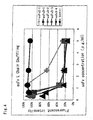
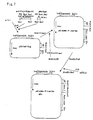
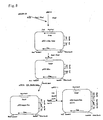
- Figs. 1 to 3 Results are shown in Figs. 1 to 3.
- Fig. 1 shows the neutralizing activity of the antibody shown by the aforementioned amino acid sequence.
- scFv1-1 and scFv1-4 correspond to antibodies shown by the aforementioned amino acid sequence, and the control shows a single-chain antibody which recognizes VLA 4.
- Fig. 2 shows the neutralizing activity when heparin is used, and Fig. 3 shows the neutralizing activity when suramin is used.
- the cells purified by the anti-CD19 antibody were stained to confirm by flow cytometry that the level of purification was 95% or higher.
- the purified B-cells were cultured for 72 hours under the stimulation of 200 unit/mL of human IL-2 (Genzyme), 10 ng/mL of human IL-10 (Genzyme), 1 ng/mL of E2/NS1 antigen and 1 ⁇ g/mL of anti-human CD40 antibody (Genzyme) in the condition of 5 x 10 5 B-cell/ml of 10% FCS RPMI.
- Activation of B-cells was confirmed using a microscope, the cells were washed with PBS twice, and mRNA was obtained and purified from B-cells using RNAlater (Ambion) in accordance with the instructions.
- the antibody library was prepared in accordance with the method described in "By-Passing Immunization Human Antibodies from V-gene Libraries Displayed on Phage (Journal of Molecular Biology 1991 222 582-597).”
- cDNA was synthesized from 1 ⁇ g of purified mRNA using RT-PCR kit ver 2.1 (TAKARA) in accordance with the attached information by using random primer.
- TAKARA RT-PCR kit ver 2.1
- H chain and L chain ( ⁇ chain, ⁇ chain) of the antibody were then amplified by PCR using this cDNA as a template.
- the primer and the linker for cloning antibody genes were prepared and used in accordance with the description in the above literature.
- PCR product was subjected to 1% agarose gel electrophoresis, and the bands of H chain and L chain of the antibody were cut out. From the agarose gel which was cut out, DNA was extracted using QIAEX II Gel extraction kit (QIAGEN). Subsequently, the extracted H chain, L chain, and linker were mixed so that their moles became equivalent to each other, and PCR was performed using a primer for ligation. PCR was performed in 50 ⁇ L of system using 1 unit of Taq polymerase (Perkin Elmer) by heating at 94°C for 5 minutes, repeating 30 cycles of 94°C for 30 seconds, 55°C for 30 seconds and 72°C for 30 seconds, and then heating at 72°C for 5 minutes.
- Taq polymerase Perkin Elmer
- the PCR product was subjected to 1% agarose gel electrophoresis, and a band having H chain, L chain and the linker ligated to each other in single band was cut out.
- DNA was extracted using QIAEX II Gel extraction kit (QIAGEN). Subsequently, the extracted DNA was reacted with a restriction enzyme SfiI in 50 ⁇ L of system M (10mM Tris-HCl, 50 mM NaCl, 2 mM MgCl 2 ) at 55°C for 2 hours and cleaved, and the enzyme was deactivated by heating at 70°C for 10 minutes.
- the restriction enzyme NotI was further added, and the DNA was reacted in 50 ⁇ L of system M (10mM Tris-HCl, 50mM NaCl, 2 mM MgCl 2 ) at 37°C for 2 hours and cleaved, and the enzyme was deactivated by heating at 70°C for 10 minutes.
- the DNA was successively purified by phenol-chloroform extraction and ethanol precipitation and then dissolved in 50 ⁇ L of sterilized water.
- pCantab5MycHis a vector prepared by substituting Etag sequence of pCantab5E (Amersham Pharmacia) with Myc-Histag
- TAKARA ligase kit
- the ligation sample was successively purified by phenol-chloroform extraction and ethanol precipitation and then dissolved in 10 ⁇ L of sterilized water. A half aliquot thereof was used to perform transformation in accordance with Molecular Cloning (1982) p249, Cold Spring Harbor Labs. Thus, 1 x 10 6 colonies were obtained. This colony was hereinafter used as a single-chain antibody library.
- Escherichia coli grown on the plate was collected with 2 ml of 2x TY liquid medium, and 20 ⁇ l thereof was added to 20 ml of 2x TY liquid medium (containing 100 ⁇ g/L ampicillin and 2% glucose).
- the Escherichia coli was cultured until the absorbance at 600 nm became 1.0 while shaking at 37°C at 200 rpm.
- 1 x 10 11 pfu/mL helper phage M13KO7 was added to the culture solution, and the mixture was allowed to stand at 37°C for 30 minutes. Subsequently, the mixture was shaken at 37°C at 200 rpm. 30 minutes later, the solution was centrifuged at 3,000 rpm for 10 minutes to collect Escherichia coli.
- Escherichia coli was suspended in 20 ml of 2x TY liquid medium (containing 100 ⁇ g/L ampicillin and 50 ⁇ g/L kanamycin), and cultured overnight while shaking at 37°C at 200 rpm. On the following day, the culture solution was centrifuged at 15,000 rpm to precipitate Escherichia coli , and the supernatant was collected. This supernatant was used as a phage solution.
- This Escherichia coli was inoculated on the 2x TY plate medium (containing 100 ⁇ g/L ampicillin and 2% glucose) and incubated at 37°C overnight. On the following day, phages were collected from Escherichia coli grown on the plate in accordance with the operation described in (Preparation of phage), and the operation described in (Screening operation) was repeated. This screening operation was repeated 3 times.
- SEQ ID NOS: 1 to 3 in the Sequence Listing represent amino acid sequences of CDR-1, CDR-2, and CDR-3 of the H chains of the antibodies ScFv1-1, ScFv1-2, ScFv1-3, and ScFv1-4.
- SEQ ID NOS: 4 to 6 in the Sequence Listing represent amino acid sequences of CDR-1, CDR-2, and CDR-3 of the L chain of the antibody ScFv1-1.
- SEQ ID NOS: 10 to 12 in the Sequence Listing represent amino acid sequences of CDR-1, CDR-2, and CDR-3 of the L chain of the antibody ScFv1-3.
- SEQ ID NOS: 13 to 15 in the Sequence Listing represent amino acid sequences of CDR-1, CDR-2, and CDR-3 of the L chain of the antibody ScFv1-4.
- SEQ ID NO: 16 in the Sequence Listing represents the amino acid sequence of the H chains of the antibodies ScFv1-1, ScFv1-2, ScFv1-3, and ScFv1-4.
- SEQ ID NOS: 17 to 20 in the Sequence Listing respectively represent the amino acid sequences of the L chains of the antibodies ScFv1-1, ScFv1-2, ScFv1-3, and ScFv1-4.
- SEQ ID NO: 21 in the Sequence Listing represents the nucleotide sequence of the H chains of the antibodies ScFv1-1, ScFv1-2, ScFv1-3, and ScFv1-4.
- SEQ ID NOS: 22 to 25 in the Sequence Listing respectively represent the nucleotide sequences of the L chains of the antibodies ScFv1-1, ScFv1-2, ScFv1-3, and ScFv1-4.
- SEQ ID NOS: 26 to 29 in the Sequence Listing respectively represent the nucleotide sequences and the amino acid sequences of the antibodies ScFv1-1, ScFv1-2, ScFv1-3, and ScFv1-4.
- SEQ ID NO: 34 in the Sequence Listing represents the amino acid sequence of the H chains of the antibodies ScFv2-1, ScFv2-2, ScFv2-3, and ScFv2-4.
- SEQ ID NO: 35 in the Sequence Listing represents the nucleotide sequence of the H chains of the antibodies ScFv2-1, ScFv2-2, ScFv2-3, and ScFv2-4.
- SEQ ID NOS: 36 to 39 in the Sequence Listing represent the nucleotide sequences and the amino acid sequences of the antibodies ScFv2-1, ScFv2-2, ScFv2-3, and ScFv2-4.
- the antibody library was prepared in the same manner as described in the above section of "Preparation of antibody library".
- cDNA was synthesized from 1 ⁇ g of purified mRNA using RT-PCR kit ver 2.1 (TAKARA) in accordance with the attached information and using a random primer.
- L chain ( ⁇ chain, ⁇ chain) of the antibody were then amplified by PCR using this cDNA as a template.
- the primer for cloning antibody genes was prepared and used in accordance with the description in the above literature.
- the PCR product was subjected to 1% agarose gel electrophoresis, and the bands of H chain and L chain of the antibody were cut out. From the agarose gel which was cut out, DNA was extracted using QIAEX II Gel extraction kit (QIAGEN).
- the DNA was reacted with a restriction enzyme Alw44I in 50 ⁇ L of system M (10 mM Tris-HCl, 50 mM NaCl, 2 mM MgCl 2 ) at 37°C for 2 hours and cleaved, and the enzyme was deactivated by heating at 70°C for 10 minutes.
- the restriction enzyme NotI was further added, and the DNA was reacted in 100 ⁇ L of system H (10 mM Tris-HCl, 50 mM NaCl, 2 mM MgCl 2 ) at 37°C for 2 hours and cleaved, and the enzyme was deactivated by heating at 70°C for 10 minutes.
- SEQ ID NOS: 42 to 44 in the Sequence Listing represent amino acid sequences of CDR-1, CDR-2, and CDR-3 of the L chain of the antibody ScFv3-1.
- SEQ ID NOS: 51 to 53 in the Sequence Listing represent amino acid sequences of CDR-1, CDR-2, and CDR-3 of the L chain of the antibody ScFv3-4.
- SEQ ID NOS: 54 to 57 in the Sequence Listing respectively represent amino acid sequences of the L chains of the antibodies ScFv3-1, ScFv3-2, ScFv3-3, and ScFv3-4.
- SEQ ID NOS: 58 to 61 in the Sequence Listing respectively represent nucleotide sequences of the L chains of the antibodies ScFv3-1, ScFv3-2, ScFv3-3, and ScFv3-4.
- SEQ ID NOS: 62 to 65 in the Sequence Listing respectively represent nucleotide sequences and amino acid sequences of the antibodies ScFv3-1, ScFv3-2, ScFv3-3, and ScFv3-4.
- a candidate colony was inoculated on 100 mL of 2x TY liquid medium (containing 100 ⁇ g/L ampicillin and 2% glucose), and the colony was cultured at 30°C at 200 rpm overnight.
- the culture solution was added to 900 ml of 2x TY liquid medium (containing 100 ⁇ g/L ampicillin and 0.1% glucose), and cultured for 1 hour at 30°C at 200 rpm.
- 1 mL of 1M IPTG (isopropyl- ⁇ -D-thio-galactopyranoside) was added, and the mixture was further cultured under the same condition for 5 hours.
- the culture solution was centrifuged at 8,000 rpm for 10 minutes to precipitate bacteria.
- the precipitate was suspended in 50 ml of 50 mM Tris-HCl (pH 8), 20% sucrose and 1 mM EDTA solution, and then allowed to stand in ice for 15 minutes. Subsequently, the suspension was centrifuged at 10,000 rpm for 15 minutes, the supernatant was collected, and MgCl 2 was added to bring the solution to 1 mM.
- ScFv obtained from the Escherichia coli was purified using Ni-NTA agarose (purchased from QIAGEN) in accordance with the instructions. 1 mL of Ni-NTA agarose was washed by adding 30 ml of solution A (50 mM Na-phosphate, 300 mM NaCl, pH 7.4), stirred and centrifuged at 1,000 rpm for 2 minutes, and the supernatant was then discarded. The above-described supernatant was added to the Ni-NTA agarose. The mixture was stirred for 45 minutes at 4°C, and His tag site of ScFv was bound to Ni-NTA agarose.
- solution A 50 mM Na-phosphate, 300 mM NaCl, pH 7.4
- E2tag (1 ⁇ g/ml) dissolved in a 50 mM NaHCO 3 (pH 9.6) solution was added to 96-well plates (FALCON) in an amount of 50 ⁇ L respectively, and was incubated at 37°C for 1 hour. At this time, the same number of wells containing a buffer only and no E2tag, were also prepared as blank wells. The solution in each well was discarded by decantation, and 200 ⁇ L of PBS containing 0.1% Tween 20 was added to each well, followed by discard by decantation. This procedure was repeated 5 times.
- sequences of the used primers are 5'CCC TGA TCA GAA TTC GCA GGA TCC CTC GAG ACT AGT GAT GAT CGG GCC AGA TAT ACG CG 3' (SEQ ID NO: 66) for the 5'-side and 5'CCC TGA TCA AGA TCT GCT AGC GTC GAC TCC CCA GCA TGC CTG CTG CTA TTG 3' (SEQ ID NO: 67) for the 3'-side.
- the primers were synthesized using Applied Biosystems Model 394 and then prepared by a conventional method.
- PCR was performed using Perkin Elmer Cetus DNA Thermal Cycler and KOD polymerase (purchased from Toyobo Co., Ltd., the reaction conditions were set in accordance with the instructions). Thereafter, the desired about 1.0 Kbp DNA fragment was purified by 5% acrylamide electrophoresis in accordance with the method described in Molecular Cloning, sections 6.46-6.48, Cold Spring Harbor. About 1 ⁇ g of purified DNA fragment was reacted in 50 ⁇ l of system H using 1 unit of BclI at 37°C for 2 hours and cleaved.
- ppUC119 purchased from Takara Shuzo Co., Ltd.
- DNA was reacted using 1 unit of BamHI in 50 ⁇ l of system H at 37°C for 2 hours and cleaved.
- the cleaved DNA fragment and the cleaved plasmid were ligated to each other using a ligase kit (purchased from Takara Shuzo Co., Ltd., the reaction was carried out in accordance with the instructions), Escherichia coli strain JM109 (purchased from Takara Shuzo Co., Ltd., the reaction was carried out in accordance with the instructions) was transformed, and the desired expression plasmid pKS 1 was obtained.
- pKS1 (1 ⁇ g) was reacted using 1 unit of SpeI in 50 ⁇ l of system M at 37°C for 2 hours and cleaved.
- the loxP-Hygromycin fused gene was amplified by PCR using pcDNA3.1/Hygro(+) (purchased from Invitrogen).
- the sequences of the used primers were Hyg-stop: ccccagatctctattcctttgccctcggacgag (SEQ ID NO: 68) for the 5'-side and Hy-atg: ccccaagcttatgaaaaagcctgaactcaccgcg 3' (SEQ ID NO: 69) for the 3'-side.
- the synthesis was ordered to SciMedia Ltd. and purchased therefrom.
- PCR was performed using Perkin Elmer Cetus DNA Thermal Cycler and KOD polymerase (purchased from Toyobo Co., Ltd., the reaction conditions were set in accordance with the instructions). Thereafter, the desired DNA fragment was purified by 5% acrylamide electrophoresis in accordance with the method described in Molecular Cloning, sections 6.46-6.48, Cold Spring Harbor. About 1 ⁇ g of purified DNA fragment was reacted in 50 ⁇ l of system M using 1 unit of NheI and NaeI at 37°C for 2 hours and cleaved.
- DNA containing TK(A)n was amplified by PCR using pNeo ⁇ gal (purchased from Stratagene).
- the sequences of the used primers were cccgccggctgggtgtggcggaccgc3' (SEQ ID NO: 70) for the 5'-side and 5'cccctctagaaagtataggaacttcaagc 3' (SEQ ID NO: 71) for the 3'-side.
- the primers were synthesized using Applied Biosystems Model 394 and then prepared by a conventional method.
- PCR reaction was performed using Perkin Elmer Cetus DNA Thermal Cycler and KOD polymerase (purchased from Toyobo Co., Ltd., the reaction conditions were set in accordance with the instructions). Thereafter, a desired DNA fragment was purified by 5% acrylamide electrophoresis in accordance with the method described in Molecular Cloning, Section 6.46-6.48, Cold Spring Harbor. About 1 ⁇ g of purified DNA fragment was reacted in 50 ⁇ L of system M using 1 unit of XbaI and NaeI at 37°C for 2 hours and cleaved.
- the cleaved plasmid, the cleaved loxP-hygromycin DNA fragment, and the Tk(A)nDNA fragment were ligated to each other using a ligase kit (purchased from Takara Shuzo Co., Ltd., the reaction was carried out in accordance with the instructions), Escherichia coli strain JM109 (purchased from Takara Shuzo Co., Ltd., the reaction was carried out in accordance with the instructions) was transformed, and the desired expression plasmid, pEX loxP-Hyg was obtained.
- a DNA fragment containing a heavy chain constant region was amplified by PCR using pEX1-3-1W (Japanese Patent Application No. 2000-172684).
- the sequences of the used primers were 5'ccccaagcttctcgagactagtaccaagggcccatcggtcttccc3' (SEQ ID NO: 72) for the 5'-side and 5'ccccgggccctctagtagctttcatttacccggagacaggg3' (SEQ ID NO: 73) for the 3'-side.
- the synthesis was ordered to SciMedia Ltd. and purchased therefrom.
- PCR reaction was performed using Perkin Elmer Cetus DNA Thermal Cycler and KOD polymerase (purchased from Toyobo Co., Ltd., the reaction conditions were set in accordance with the instructions). Thereafter, the desired DNA fragment was purified by 5% acrylamide electrophoresis in accordance with the method described in Molecular Cloning, sections 6.46-6.48, Cold Spring Harbor. About 1 ⁇ g of purified DNA fragment was reacted in 50 ⁇ l of system M using 1 unit of HindIII and ApaI at 37°C for 2 hours and cleaved.
- the cleaved plasmid and the cleaved DNA fragment containing a heavy chain constant region were ligated to each other using a ligase kit (purchased from Takara Shuzo Co., Ltd., the reaction was carried out in accordance with the instructions), Escherichia coli strain JM109 (purchased from Takara Shuzo Co., Ltd., the reaction was carried out in accordance with the instructions) was transformed, and the desired expression plasmid, pEX gamma1 loxP-Hyg, was obtained.
- a DNA fragment containing a heavy chain variable region was amplified by PCR using ScFv1-1.
- the sequences of the used primers were HB1-N 5'cccaagcttcaccATGAAACACCTGTGGTTCTTCCTCCTGCTGGTGGCAGCTCCC AGATGGGTCCTGTCCCAGGTGCAGCtggtgcagtctg3' (SEQ ID NO: 74) and HB1-C 5'cccgctagcACTCGAGACGGTGACCAGGGTGCC3' (SEQ ID NO: 75).
- the synthesis was ordered to SciMedia Ltd. and purchased therefrom.
- PCR reaction was performed using Perkin Elmer Cetus DNA Thermal Cycler and KOD polymerase (purchased from Toyobo Co., Ltd., the reaction conditions were set in accordance with the instructions). Thereafter, the desired DNA fragment was purified by 5% acrylamide electrophoresis in accordance with the method described in Molecular Cloning, sections 6.46-6.48, Cold Spring Harbor. About 1 ⁇ g of purified DNA fragment was reacted in 50 ⁇ l of system M using 1 unit of HindIII and NheI at 37°C for 2 hours and cleaved.
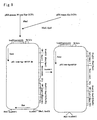
- the cleaved plasmid and the cleaved DNA fragment containing a heavy chain variable region were ligated to each other using a ligase kit (purchased from Takara Shuzo Co., Ltd., the reaction was carried out in accordance with the instructions), Escherichia coli strain JM109 (purchased from Takara Shuzo Co., Ltd., the reaction was carried out in accordance with the instructions) was transformed, and the desired expression plasmid, pEX gamma1 loxP-Hyg HCV1 was obtained (Fig. 7).
- a DNA fragment containing kanamycin-resistant genes was amplified by PCR using pEGFPN2 (purchased from Clonetech).
- the sequences of the used primers were 5'ccccagagctagtcctgcaggcggggaaatgtgcgcggaacccct3' (SEQ ID NO: 76) for the 5'-side of the H chain and 5'ccccgctagcctgcaagtcatttcgaaccccagcgtccc3' (SEQ ID NO: 77) for the 3'-side.
- the synthesis was ordered to SciMedia Ltd. and purchased therefrom.
- PCR reaction was performed using Perkin Elmer Cetus DNA Thermal Cycler and KOD polymerase (purchased from Toyobo Co., Ltd., the reaction conditions were set in accordance with the instruction). Thereafter, the desired DNA fragment was purified by 5% acrylamide electrophoresis in accordance with the method described in Molecular Cloning, sections 6.46-6.48, Cold Spring Harbor. About 1 ⁇ g of purified DNA fragment was reacted in 50 ⁇ l of system M using 1 unit of SpeI and NheI at 37°C for 2 hours, and then reacted at 37°C for 2 hours to be cleaved.
- the cleaved plasmid and the cleaved DNA fragment containing kanamycin-resistant genes were ligated to each other using a ligase kit (purchased from Takara Shuzo Co., Ltd., the reaction was carried out in accordance with the instructions), Escherichia coli strain JM109 (purchased from Takara Shuzo Co., Ltd., the reaction was carried out in accordance with the instructions) was transformed, and the desired expression plasmid, pEX-1 Km, Amp, was obtained.
- the cleaved plasmid was ligated using a ligase kit (purchased from Takara Shuzo Co., Ltd., the reaction was carried out in accordance with the instructions), Escherichia coli strain JM109 (purchased from Takara Shuzo Co., Ltd., the reaction was carried out in accordance with the instructions) was transformed, and the desired expression plasmid, pEX-1 Km, was obtained.
- sequences of the used primers were 5'ccccaagcttctagagtcgacggtaccgtggaaatcaaacgaactgtgg3' (SEQ ID NO: 78) for the 5'-side of the H chain and 5'ccccgggccctctagcggccgcctaacactctcccctgttgaagc3' (SEQ ID NO: 79) for the 3'-side.
- the synthesis was ordered to SciMedia Ltd. and purchased therefrom. PCR reaction was performed using Perkin Elmer Cetus DNA Thermal Cycler and KOD polymerase (purchased from Toyobo Co., Ltd., the reaction conditions were set in accordance with the instructions).
- the desired DNA fragment was purified by 5% acrylamide electrophoresis in accordance with the method described in Molecular Cloning, sections 6.46-6.48, Cold Spring Harbor. About 1 ⁇ g of purified DNA fragment was reacted in 50 ⁇ l of system M using 1 unit of HindIII and ApaI at 37°C for 2 hours and cleaved.
- the cleaved plasmid and the cleaved DNA fragment containing a light chain constant region were ligated to each other using a ligase kit (purchased from Takara Shuzo Co., Ltd., the reaction was set in accordance with the instructions), Escherichia coli strain JM109 (purchased from Takara Shuzo Co., Ltd., the reaction was carried out in accordance with the instructions) was transformed, and the desired expression plasmid, pEX kappa Km, was obtained.
- a DNA fragment containing a light chain variable region was amplified by PCR using scFv1-1.
- the sequences of the used primers were LK1-N 5'cccaagcttcaccATGGCGTTGCAGACCCAGGTCTTCATTTCTCTGTTGCTCTGG ATCTCTGGTGCCTACGGGgacatccagatgacccagtctcc3' (SEQ ID NO: 80) and LK1-C 5'CcccgtacgTTTGATTTCCACCTTGGTCCCCCCG3' (SEQ ID NO: 81).
- the synthesis was ordered to SciMedia Ltd. and purchased therefrom.
- PCR reaction was performed using Perkin Elmer Cetus DNA Thermal Cycler and KOD polymerase (purchased from Toyobo Co., Ltd., the reaction conditions were set in accordance with the instructions). Thereafter, the desired DNA fragment was purified by 5% acrylamide electrophoresis in accordance with the method described in Molecular Cloning, sections 6.46-6.48, Cold Spring Harbor. About 1 ⁇ g of purified DNA fragment was reacted in 50 ⁇ l of system M using 1 unit of HindIII and BsiWI at 37°C for 2 hours, and reacted at 50°C for 2 hours to be cleaved.
- the cleaved plasmid and the cleaved DNA fragment containing a heavy chain variable region were ligated to each other using a ligase kit (purchased from Takara Shuzo Co., Ltd., the reaction was carried out in accordance with the instructions), Escherichia coli strain JM109 (purchased from Takara Shuzo Co., Ltd., the reaction was carried out in accordance with the instruction) was transformed, and the desired expression plasmid, pEX kappa Km HCV1, was obtained (Fig. 8).
- the above described cleaved plasmids were ligated to each other using a ligase kit (purchased from Takara Shuzo Co., Ltd., the reaction was carried out in accordance with the instructions), Escherichia coli strain JM109 (purchased from Takara Shuzo Co., Ltd., the reaction was carried out in accordance with the instructions) was transformed, and the desired plasmid, pEX loxp-Hyg HCV1 W Km, was obtained.
- the cleaved plasmid was ligated using a ligase kit (purchased from Takara Shuzo Co., Ltd., the reaction was carried out in accordance with the instructions), Escherichia coli strain JM109 (purchased from Takara Shuzo Co., Ltd., the reaction was carried out in accordance with the instructions) was transformed, and the desired expression plasmid, pEX loxp-Hyg HCV1 W, was obtained (Fig. 9).
- pBS185 site-specific recombinant enzyme expression plasmid, purchased from Lifetech
- pEX loxp-Hyg HCV1 W were transfected (1.0 ⁇ g each of DNA was used for 2,000,000 cells) using strain MKamp1 (strain described in Japanese Patent Application No. 2000-172684) in accordance with the instructions.
- the cells were cultured in the CHO-S-SFM-II medium containing 5% FBS (fetal bovine serum, purchased from Lifetech) at 37°C under 5% CO 2 for 48 hours.
- FBS fetal bovine serum
- the cells were selectively cultured in the same medium supplemented with 200 mg/l hygromycin (purchased from SIGMA) at 37°C under 5% CO 2 for 25 days, and a hygromycin-resistant colony was selected (strain MkampHCV1).
- a solution of anti-human immunoglobulin goat antibody (diluted to 10 ⁇ g/ml with solution 1; purchased from Zymed) was added to a 96-well plate at 50 ⁇ l/well, and the plate was treated at 37°C for 2 hours. Thereafter, the solution in the well was discarded, 250 ⁇ l of solution 2 was added to each well, and incubated at 4°C for 16 hours or longer. After the solution was removed, each well was washed with solution 3 five times. An antibody (standard) diluted with solution 4 or a sample solution (a culture supernatant was optionally diluted with solution 4) was added at 50 ⁇ l/well, and incubated at 37°C for 2 hours.
- solution 5 was added at 50 ⁇ l/well, and the mixture was incubated at 20°C for 40 minutes.
- solution 9 was added at 100 ⁇ l/well, and reaction was performed at room temperature under a shaded condition for about 5 minutes.
- a calibration curve was prepared using a diluted standard solution to measure the concentration of the 1-3-1 antibody (used as a standard) in the sample.
- Cell fusion assay was performed in accordance with the method of Takikawa et al. (Takikawa et al., J. Virol., 74, 5066-5074, 2000).
- 20,000 CHO cells (Matsuura et al., unpublished) expressing recombinant E1 and E2 proteins on cell surfaces were respectively inoculated in each well on a collagen-coated 96-well plate and cultured under 5% CO 2 at 37°C.
- the cells were immersed in 10 mM EDTA-added phosphate buffer saline (PBS) for 5 minutes, a flask was shaken to disperse the cells as much as possible, and the cells were detouched while slowly pipetting. After culturing for 24 hours, the cells were washed with 200 ⁇ L of Opti-MEM (Gibco BRL) twice.
- PBS phosphate buffer saline
- a reporter plasmid pT7EMCLuc (Aoki et al., Virology, 250, 140-150, 1998) having a firefly luciferase gene incorporated downstream of T7 promoter and pRL-CMV (Promega) having a sea pansy luciferase gene incorporated downstream of CMV promoter for standardizing the gene-introducing efficiency were introduced into cells using Trans IT-LT1 (Mirus).
- the medium was prepared in the following formulation for each plate. After the media were allowed to stand for 15 minutes, 30 ⁇ L each thereof was added to each well. 2 hours later, 150 ⁇ l of D-MEM (Gibco) supplemented with 10% serum was added, and culturing is continued.
- HepG2 cells derived from human hepatocellular cancer were used as receptor cells for cell fusion. HepG2 cells were inoculated in each well on a 6-well plate at 8.0 x 10 5 cells and cultured under 5% CO 2 at 37°C. After culturing for 24 hours, plasmid pCAGT7pol (Ishii et al., unpublished) expressing T7 RNA polymerase was introduced into the cell in the following formulation per well, and 2 hours later, 1.5 ml of D-MEM supplemented with 10% serum was added.
- plasmid pCAGT7pol Ishii et al., unpublished
- the assay of the cell fusion inhibitory activity by the antibody was performed in basically the same manner as in the above cell fusion assay except that, before the addition of HepG2 cells to the CHO cells, HepG2 cells were washed with Opti-MEM twice, reacted with the test antibody (whole antibody 1-1) which was stepwisely diluted with Opti-MEM for 60 minutes, and then co-culture was performed. Thereafter, the luciferase activity was measured in the same manner, and the cell fusion inhibitory activity was evaluated. As a result, a substance which specifically inhibits the cell fusion by the envelope protein of HCV was observed in the complete antibodies which were prepared based on the single-chain antibody which exhibited the NOB activity.
- the binding constant of the obtained ScFv was measured using BIACORE X in accordance with the attached instructions.
- HBS buffer 10 mM HEPES (pH 7.4), 0.15 M NaCl, 3.4 mM EDTA, 0.005% Tween 20
- This scFv1-1 solution was injected onto the previously prepared E2tag sensor chip using BIACORE X (BIACORE) at 5 ⁇ L/min to obtain a sensorgram at the time of binding. Thereafter, only the HBS solution was injected onto the sensor chip at 5 ⁇ L/min to obtain a sensorgram at the time of dissociation.
- a binding constant of 4.5 x 10 8 (M) and a dissociation constant of 2.2 x 10 -9 (M) between E2tag and scFv1-1 were obtained.
- Heparin-Sepharose CL-6B purchased from Pharmacia
- Heparin-Sepharose CL-6B was equilibrated using 0.15 M NaCl, 10 mM phosphate buffer (pH 7.0).
- the present invention can provide a novel medicament which has an anti-viral effects such as an inhibitory action against HCV infection.
Landscapes
- Health & Medical Sciences (AREA)
- Life Sciences & Earth Sciences (AREA)
- Chemical & Material Sciences (AREA)
- Medicinal Chemistry (AREA)
- General Health & Medical Sciences (AREA)
- Virology (AREA)
- Molecular Biology (AREA)
- Organic Chemistry (AREA)
- Animal Behavior & Ethology (AREA)
- Pharmacology & Pharmacy (AREA)
- Public Health (AREA)
- Veterinary Medicine (AREA)
- Epidemiology (AREA)
- Immunology (AREA)
- Genetics & Genomics (AREA)
- Engineering & Computer Science (AREA)
- Proteomics, Peptides & Aminoacids (AREA)
- Dermatology (AREA)
- Biophysics (AREA)
- Biochemistry (AREA)
- Nuclear Medicine, Radiotherapy & Molecular Imaging (AREA)
- Microbiology (AREA)
- Communicable Diseases (AREA)
- General Chemical & Material Sciences (AREA)
- Chemical Kinetics & Catalysis (AREA)
- Oncology (AREA)
- Bioinformatics & Cheminformatics (AREA)
- Biotechnology (AREA)
- Mycology (AREA)
- Peptides Or Proteins (AREA)
- Micro-Organisms Or Cultivation Processes Thereof (AREA)
- Medicines That Contain Protein Lipid Enzymes And Other Medicines (AREA)
- Transition And Organic Metals Composition Catalysts For Addition Polymerization (AREA)
- Steroid Compounds (AREA)
Abstract
Description
| Parent strain | Fluorescence | Antibody gene-introduced strain Hygromycin-resistance | Antibody productivity |
| Mkamp 1 | None | Resistant | 10 mg/l |
| Opti-MEM | 3 ml |
| Trans IT-LT1 | 50 µL |
| pT7EMCLuc | 9 µg |
| pRL-CMV | 0.6 µg |
| Opti-MEM | 100 µL |
| Trans IT-LT11 | 5 µL |
| pCAGT7pol | 1 µg |

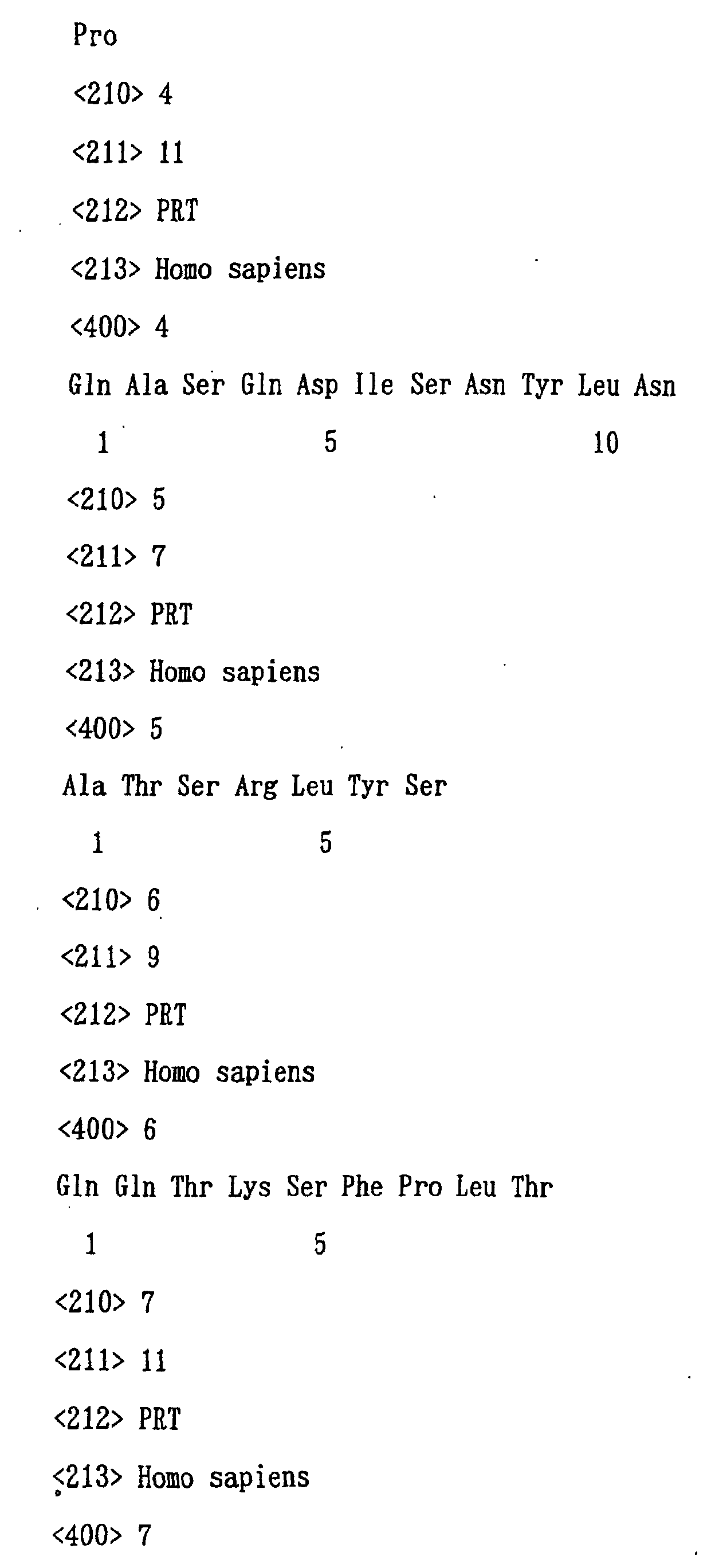
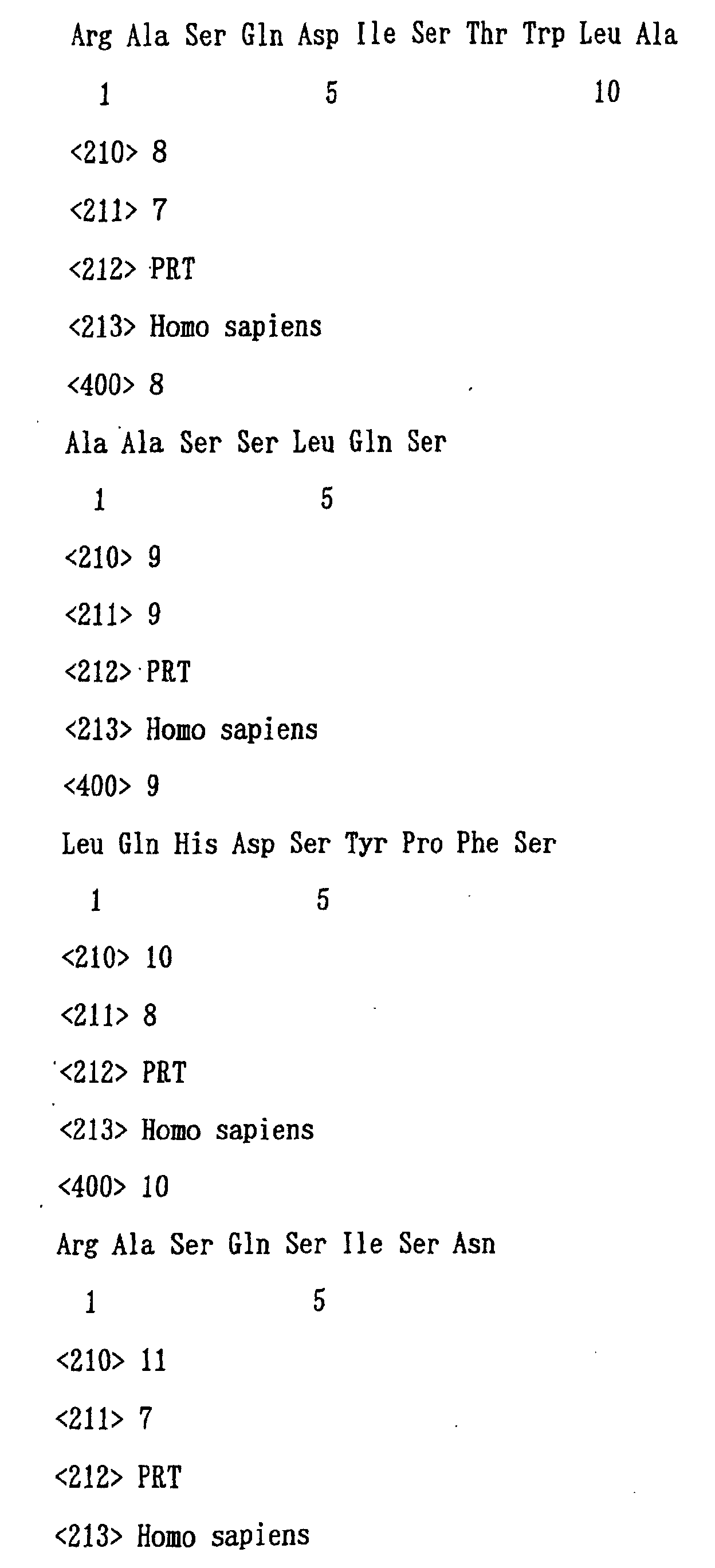


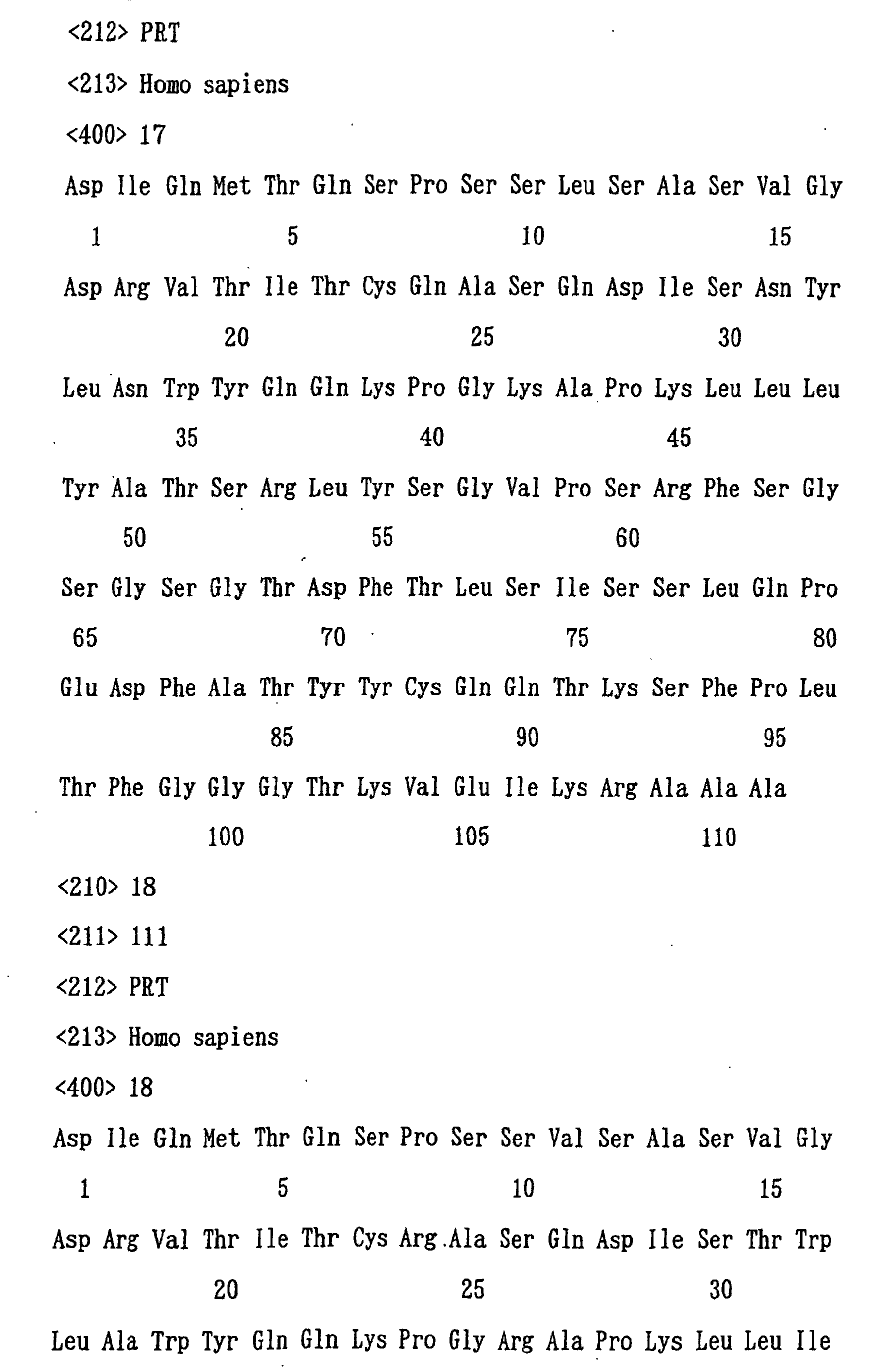


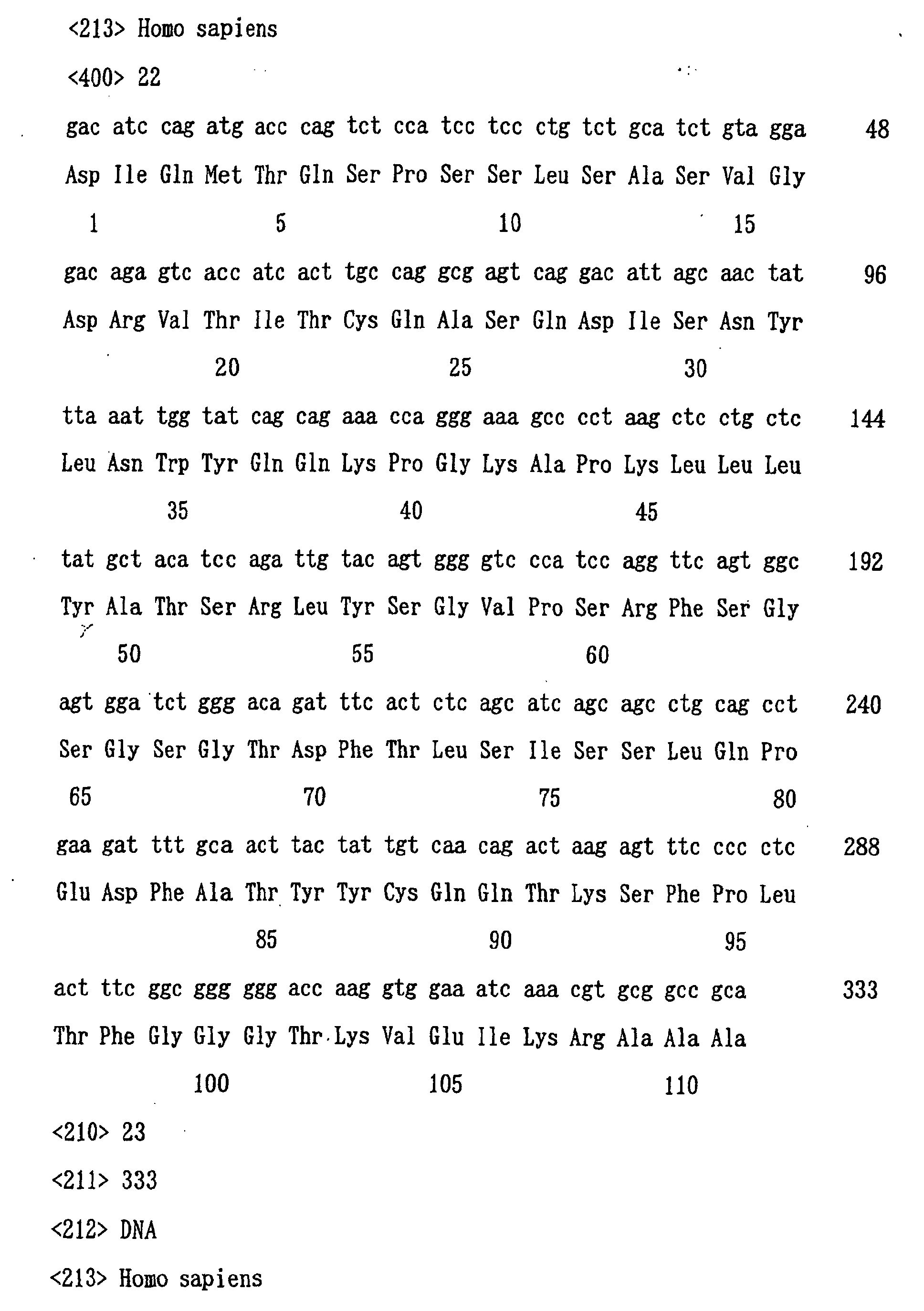


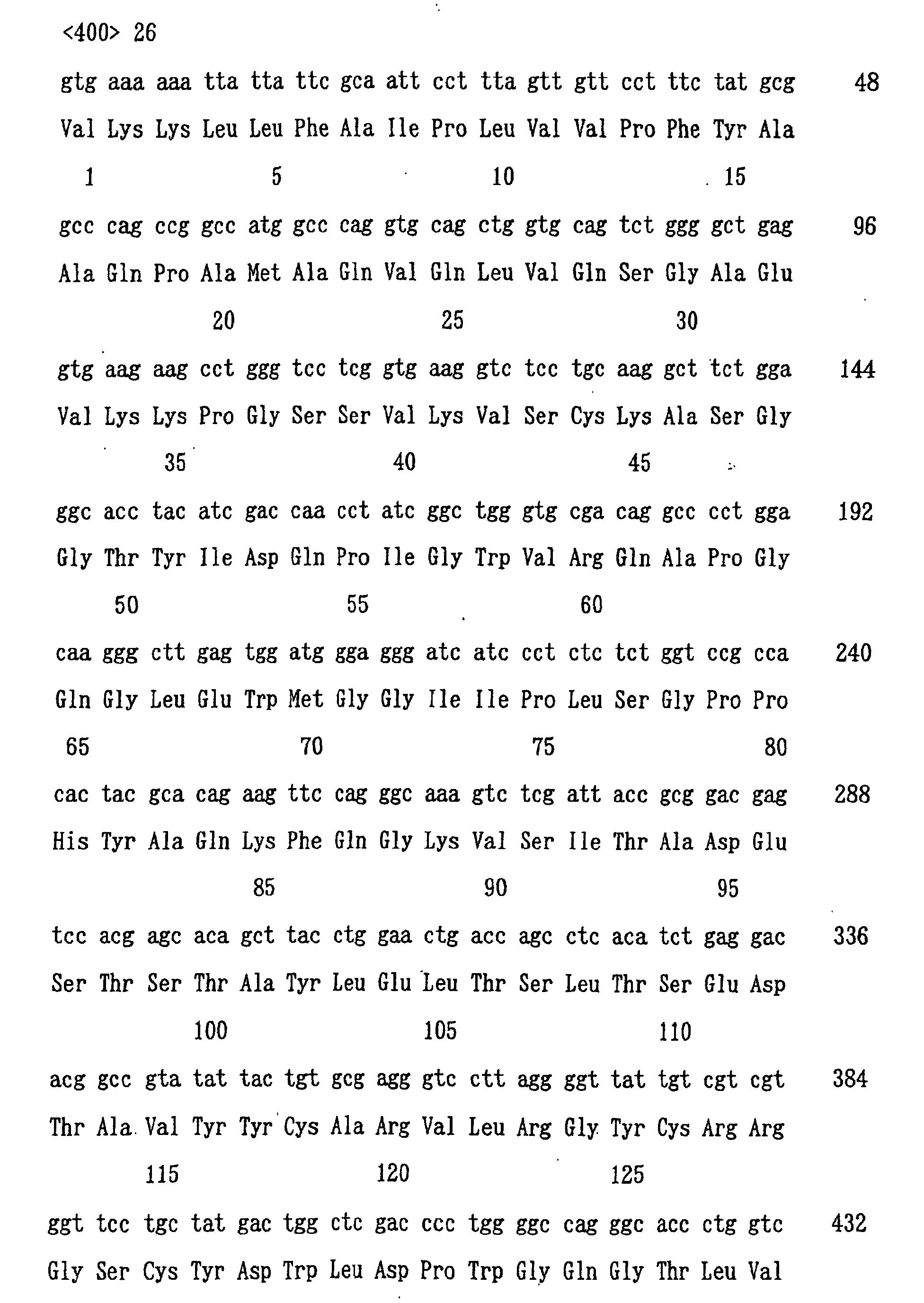


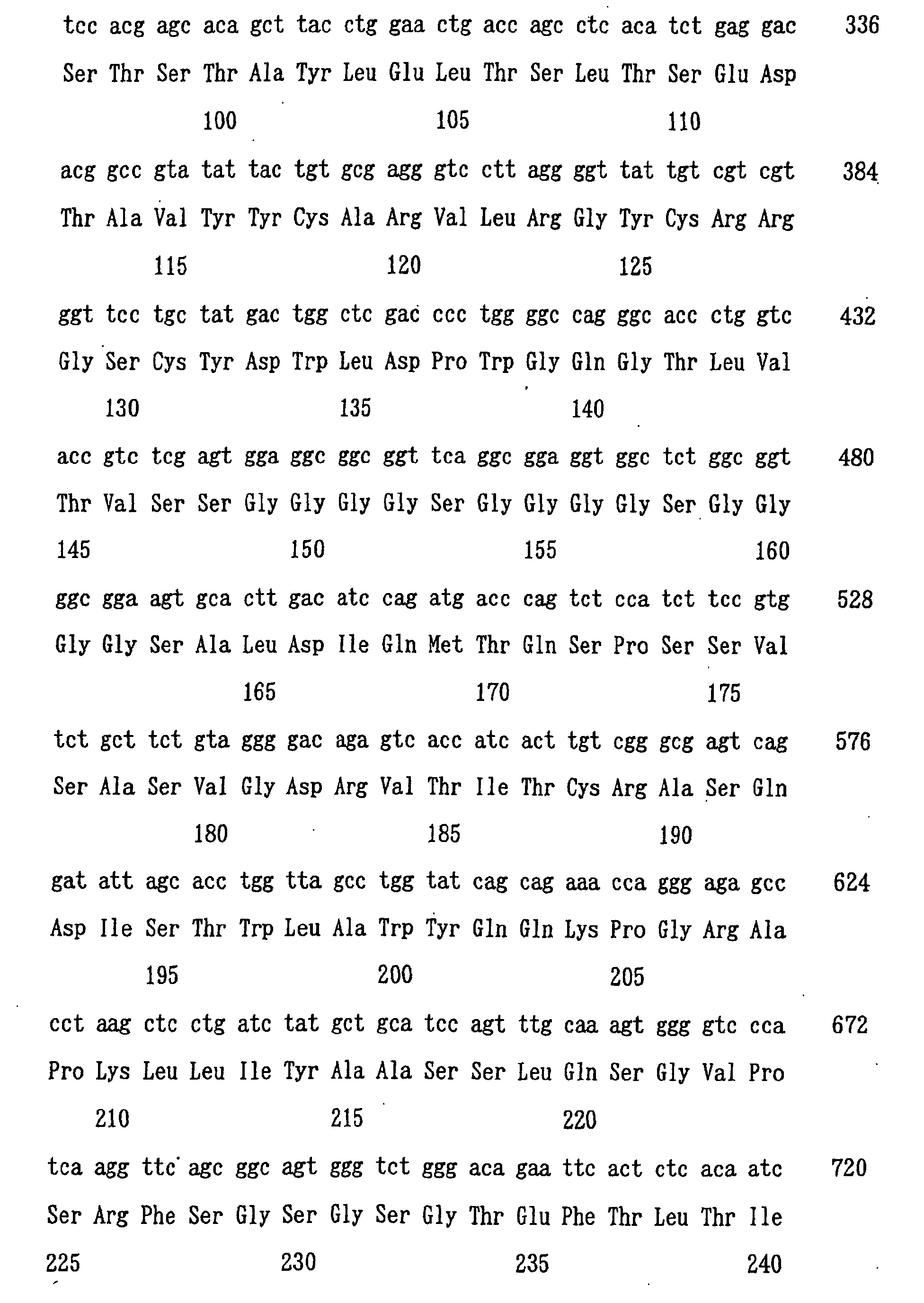
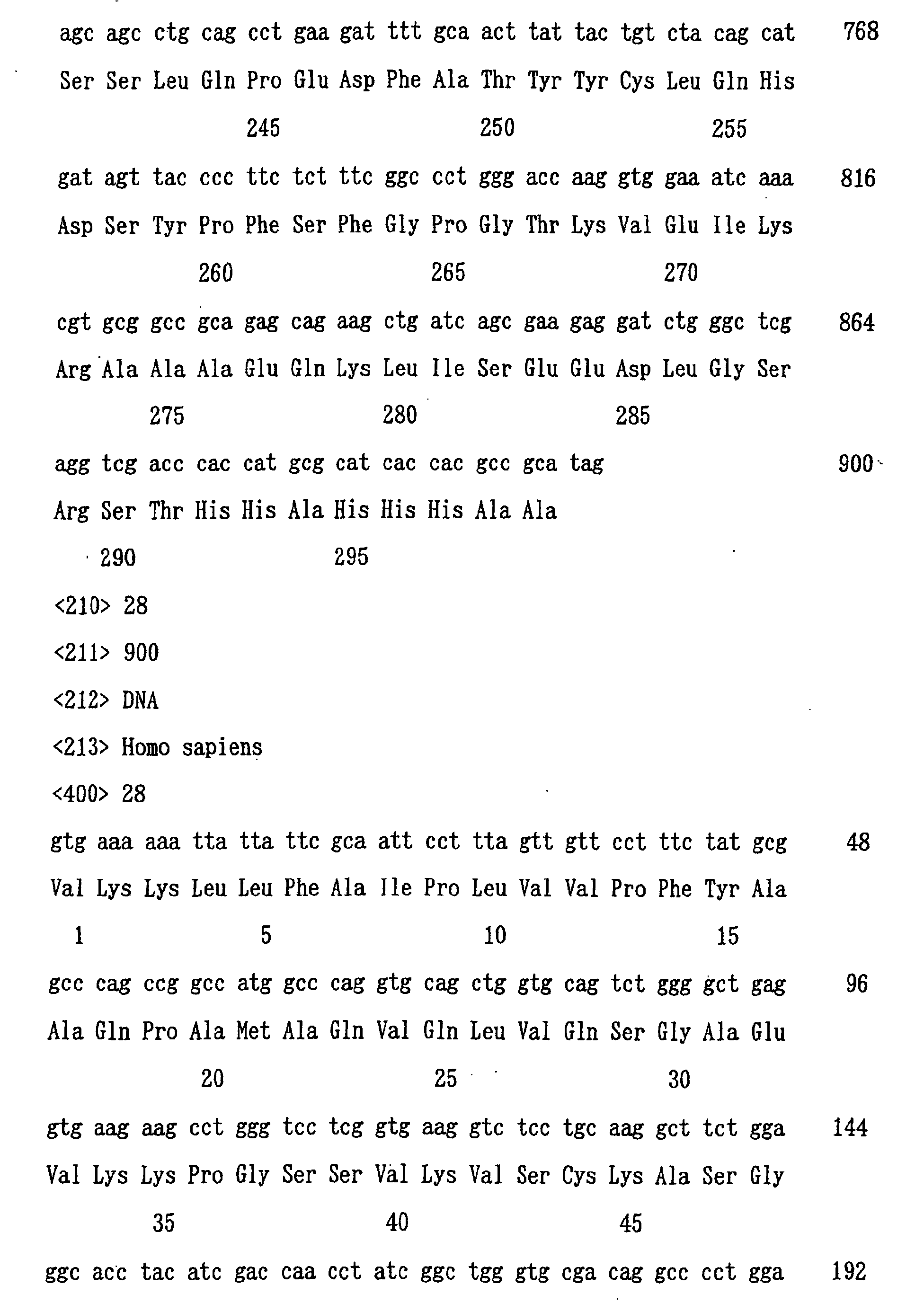
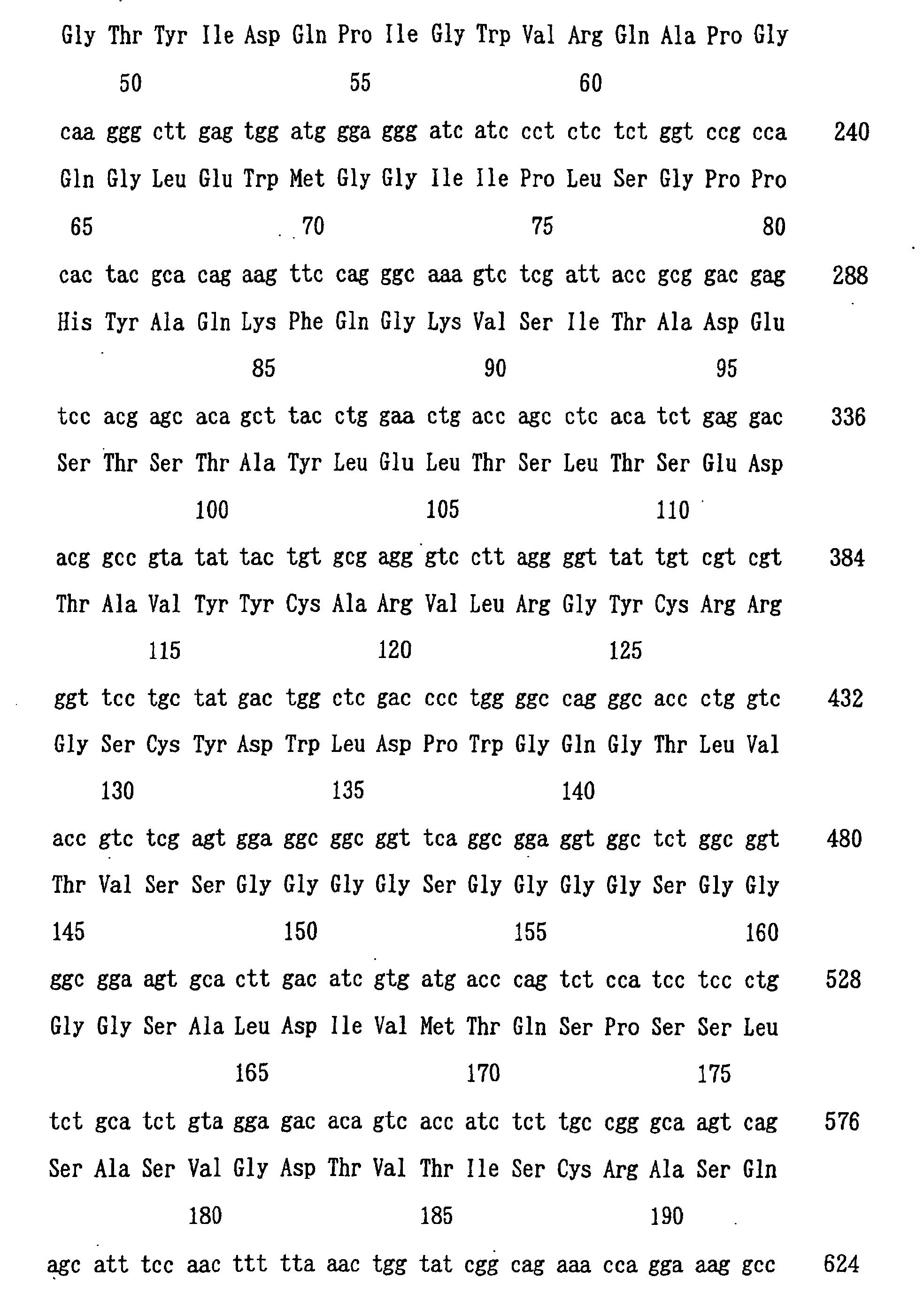
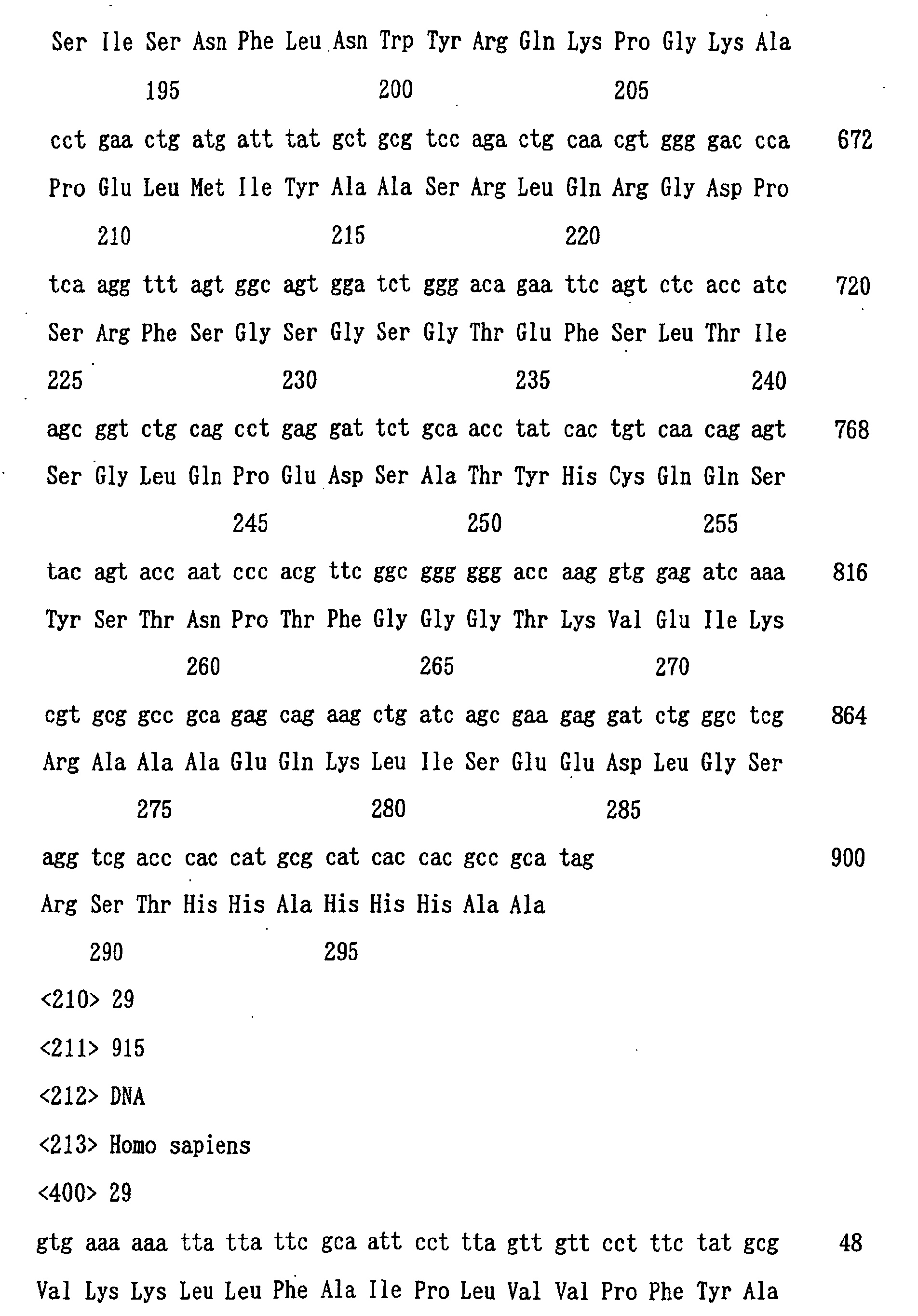

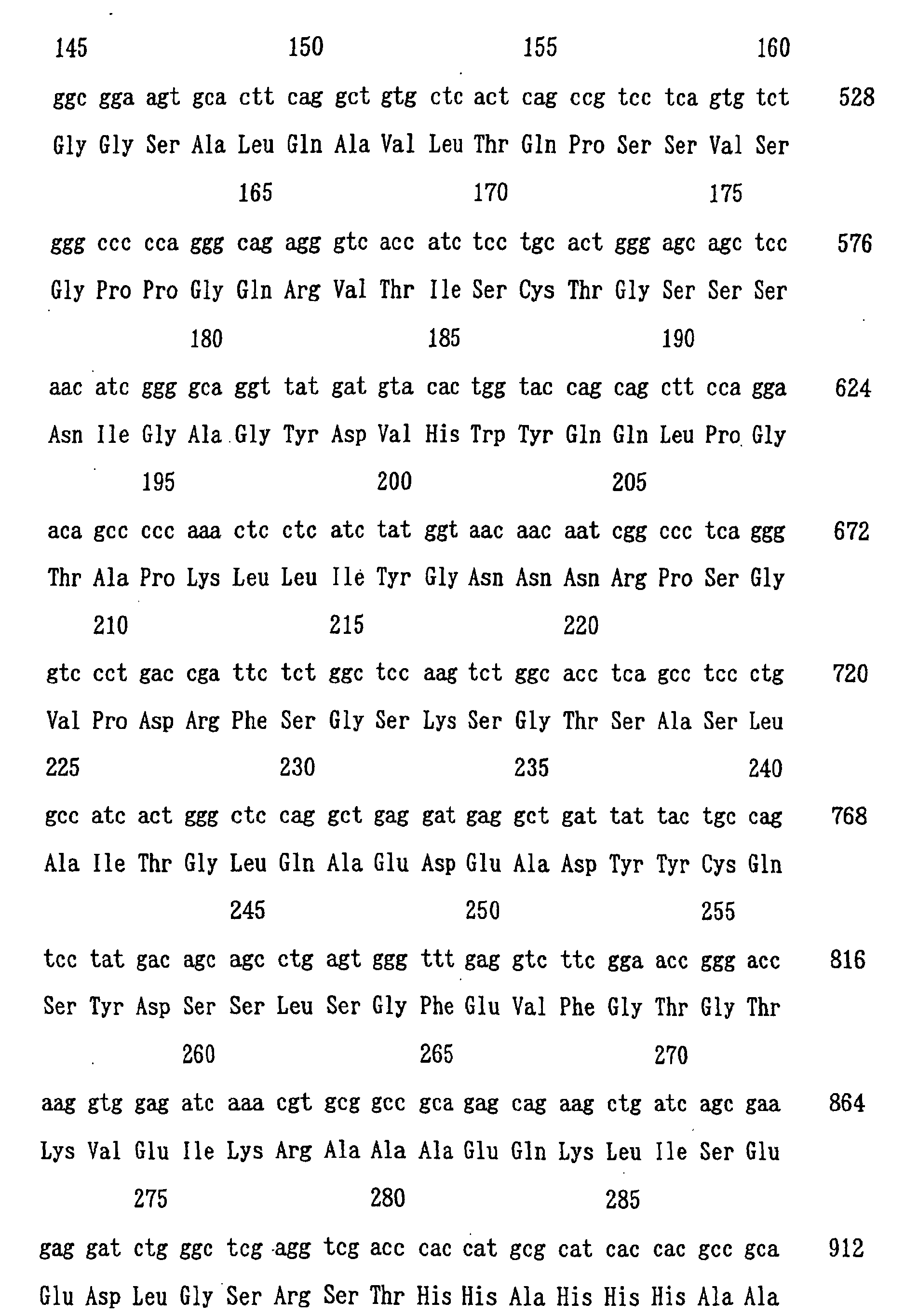
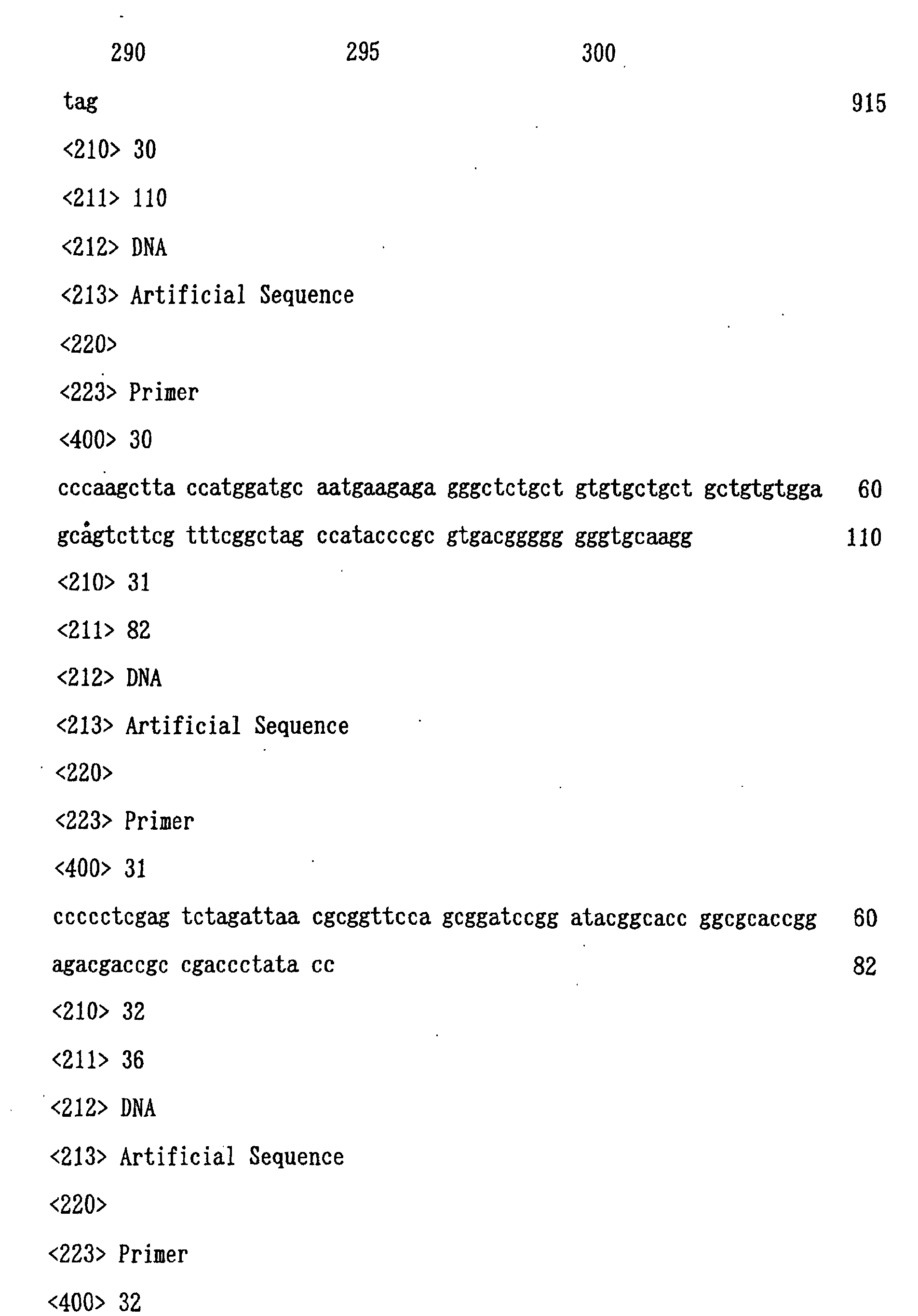


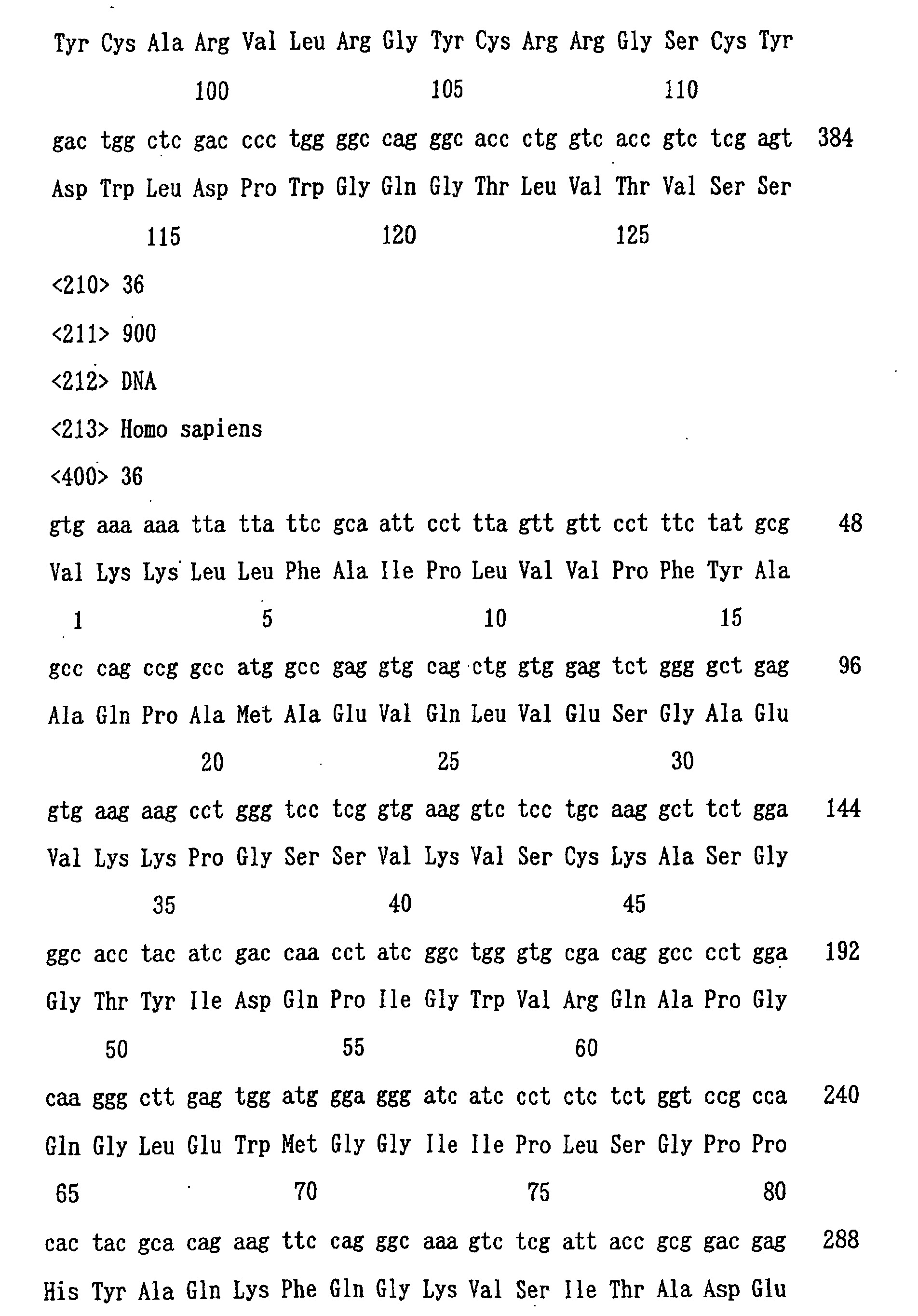
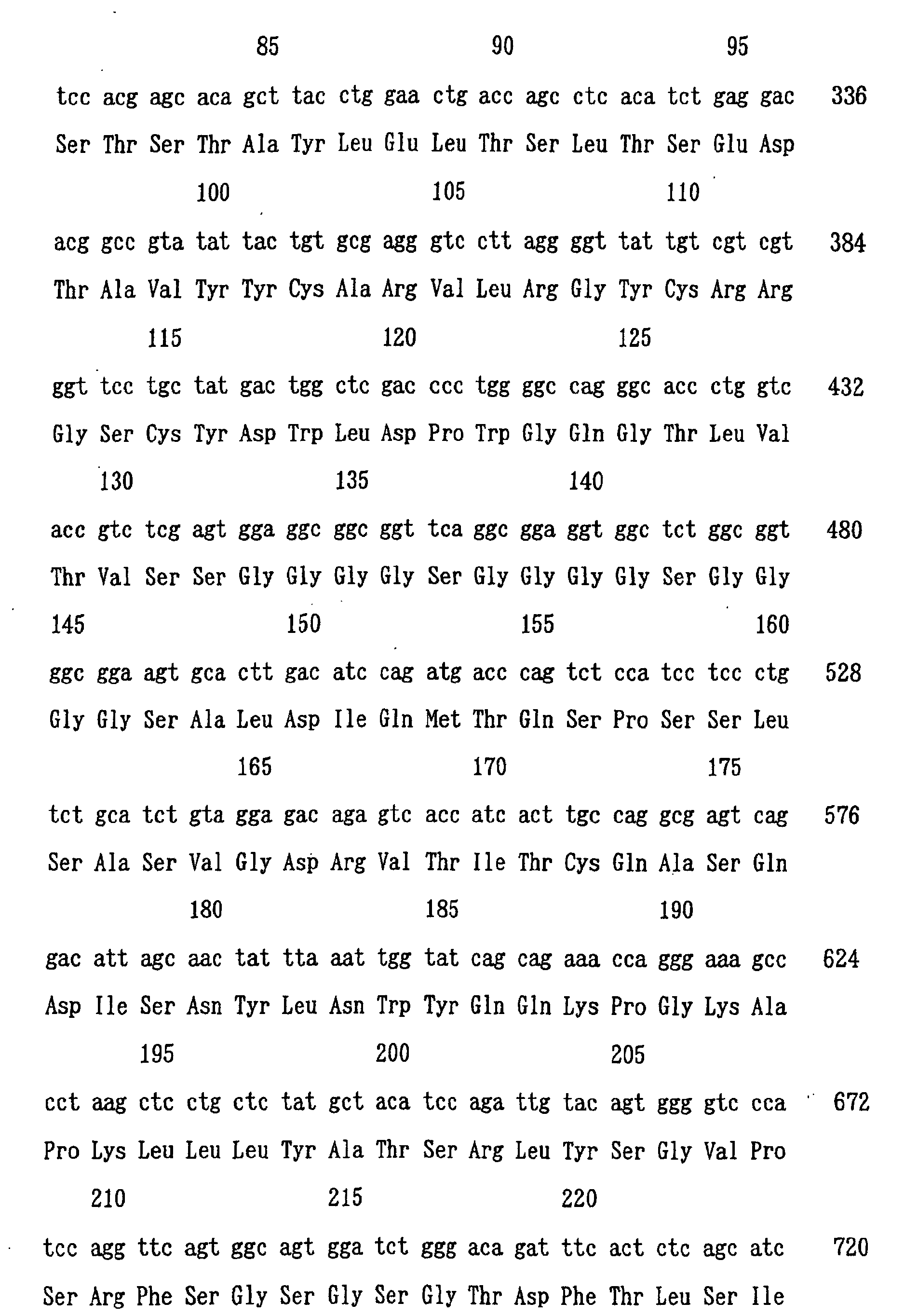


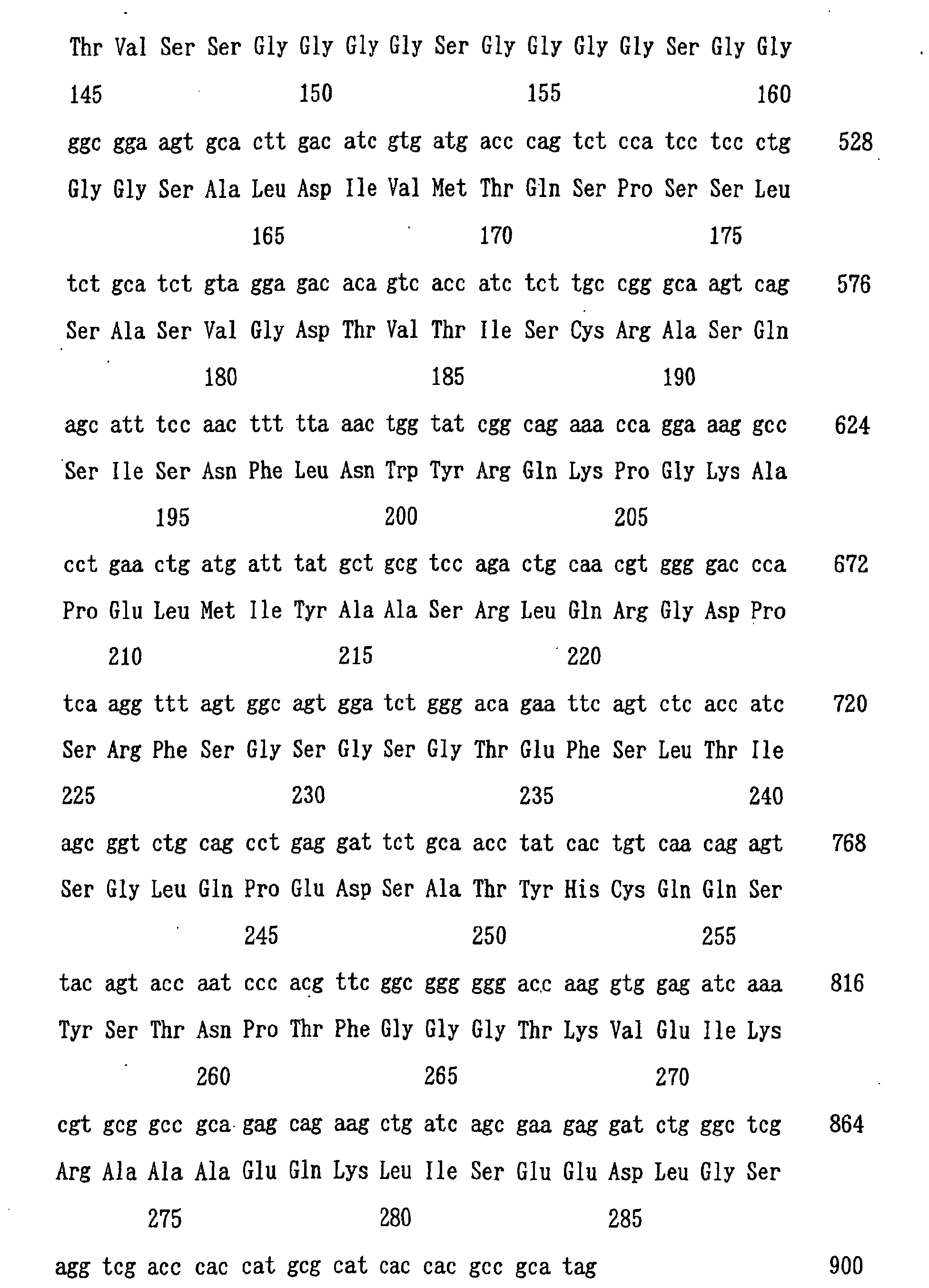
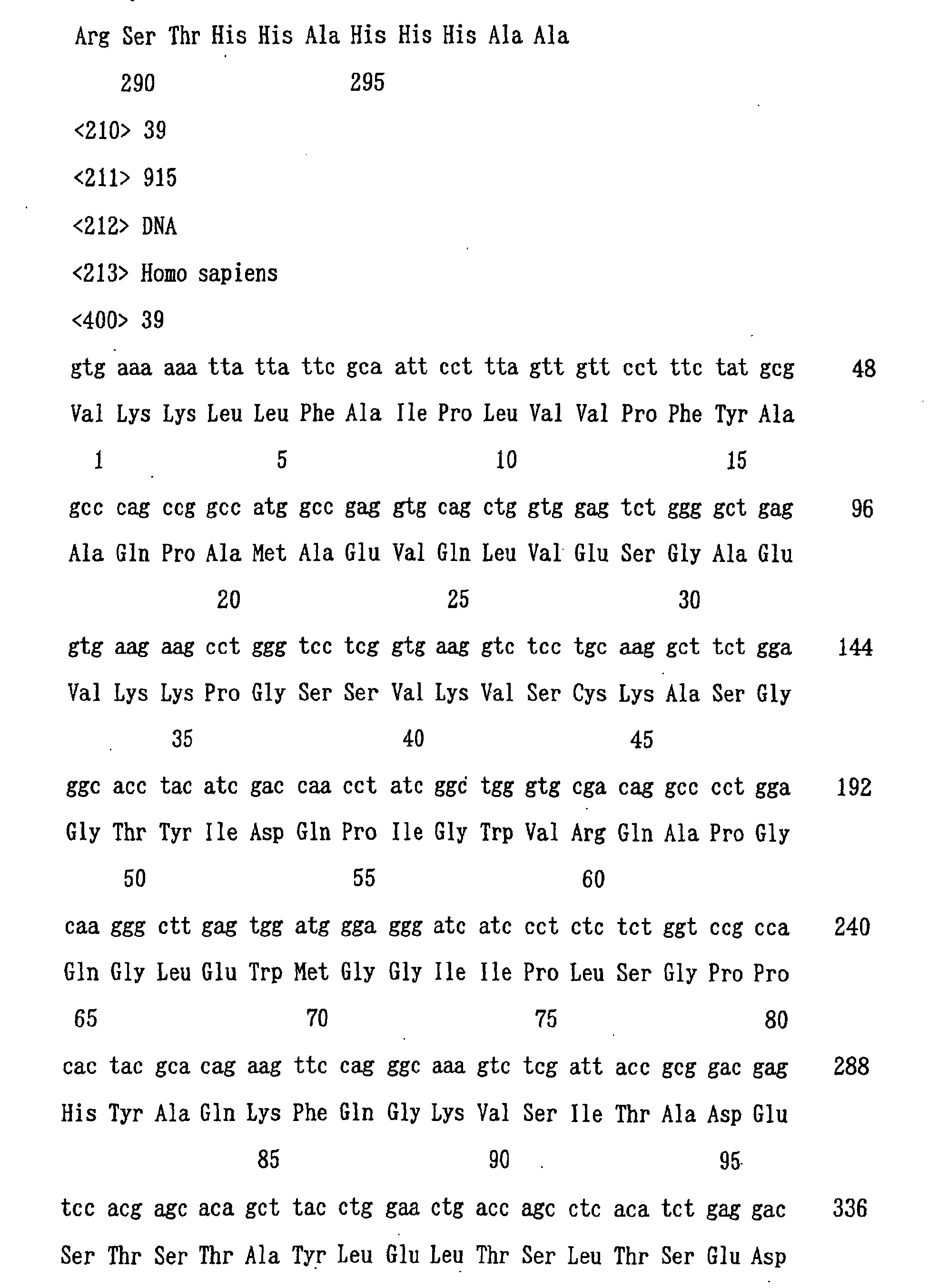


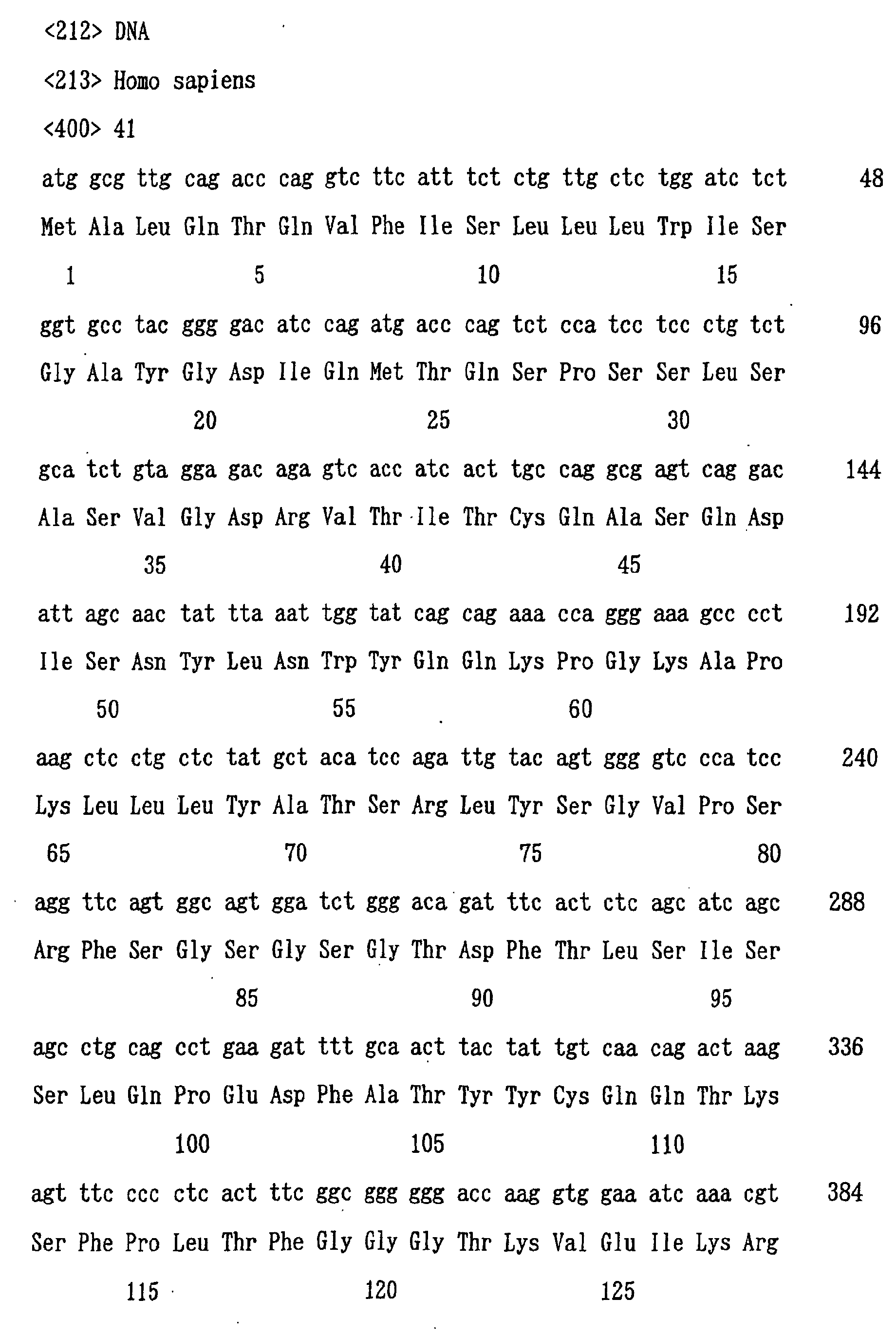
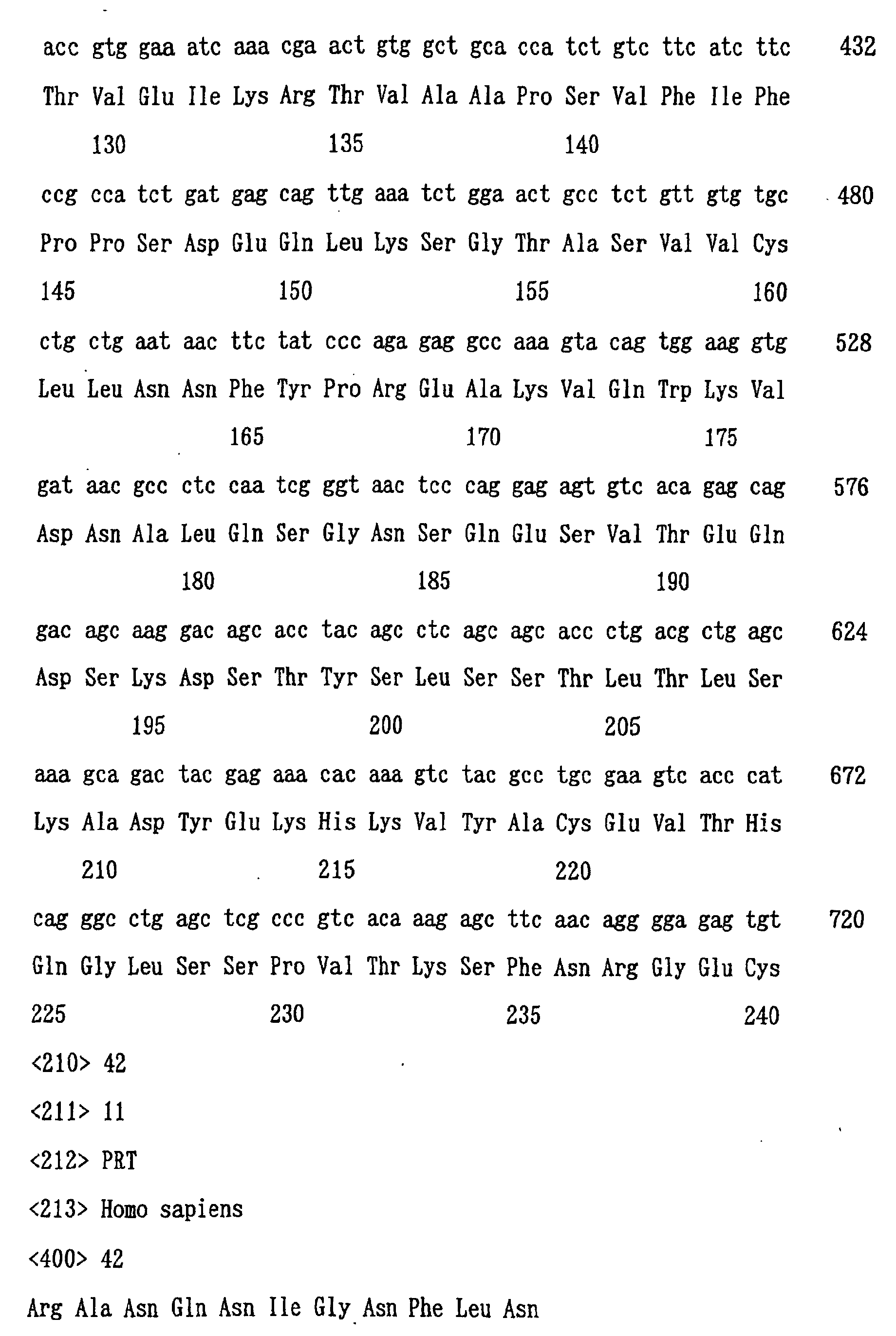


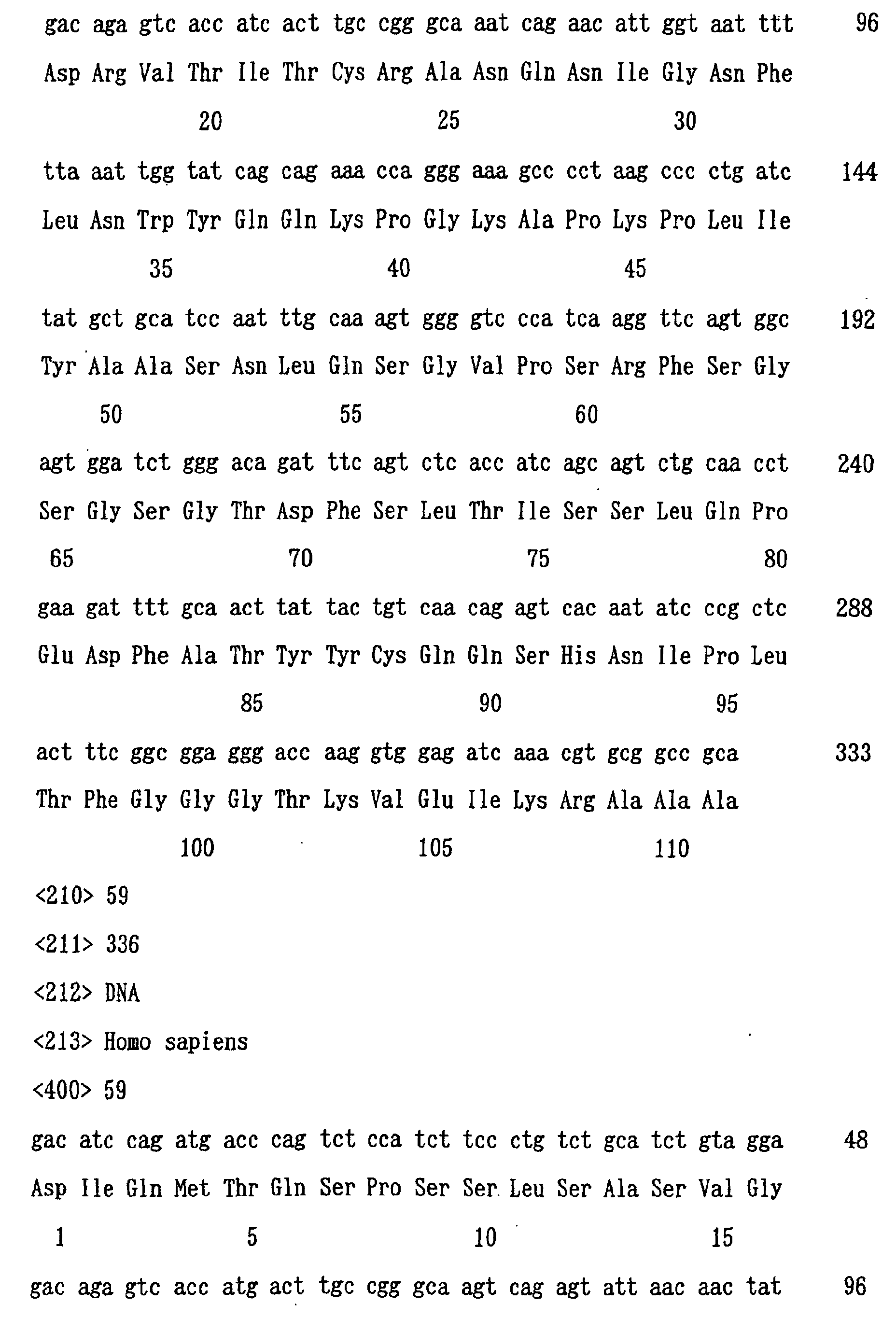


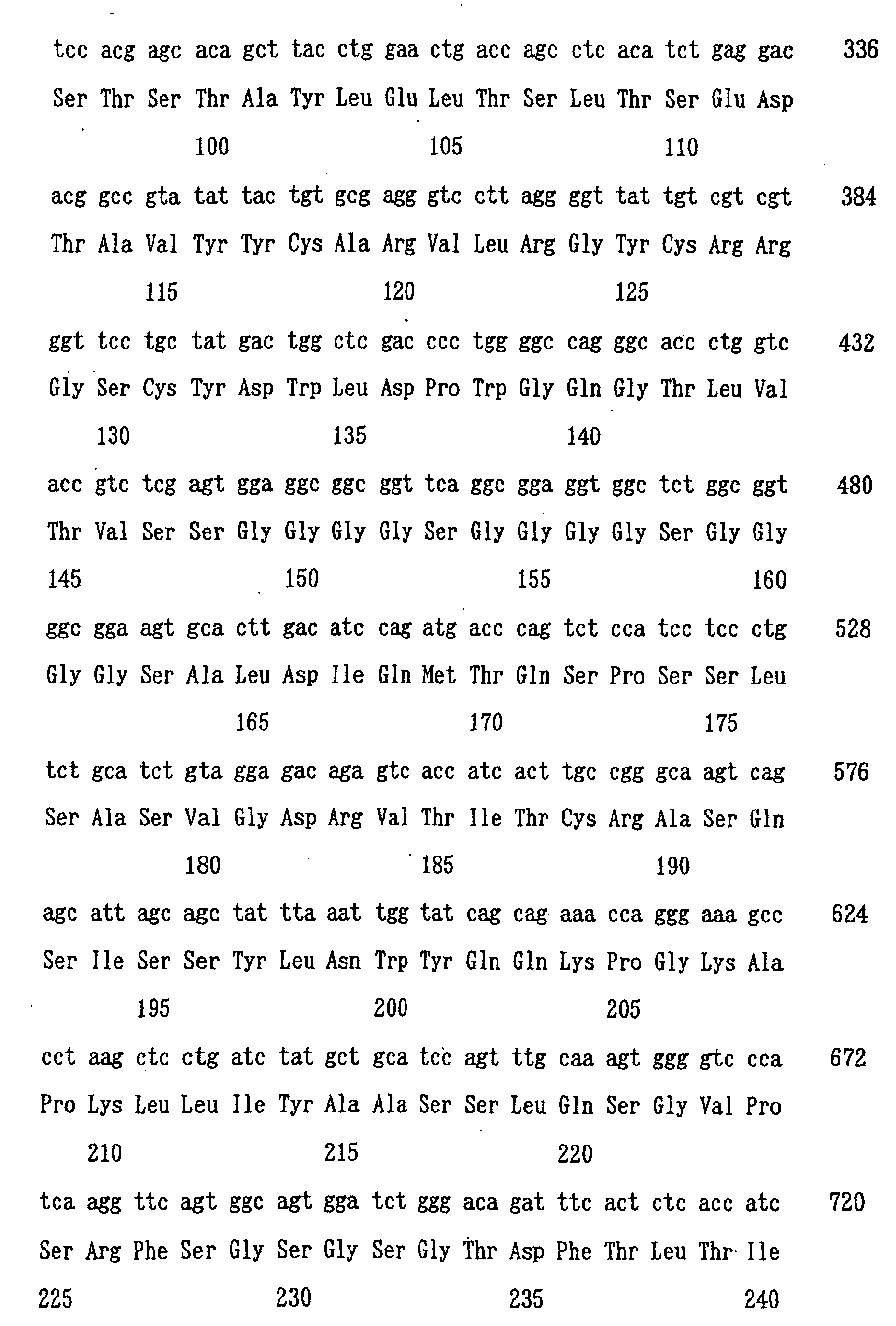
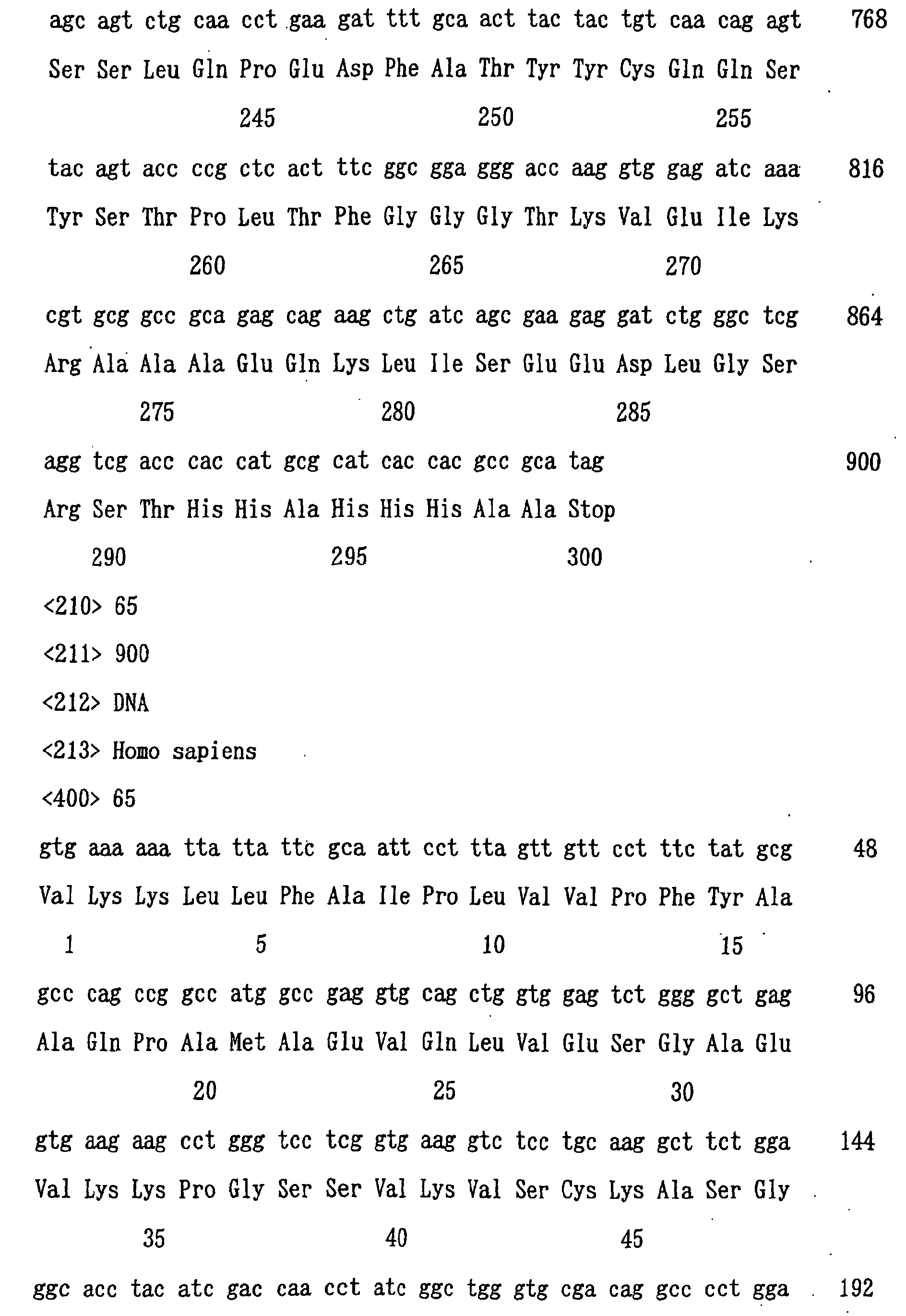

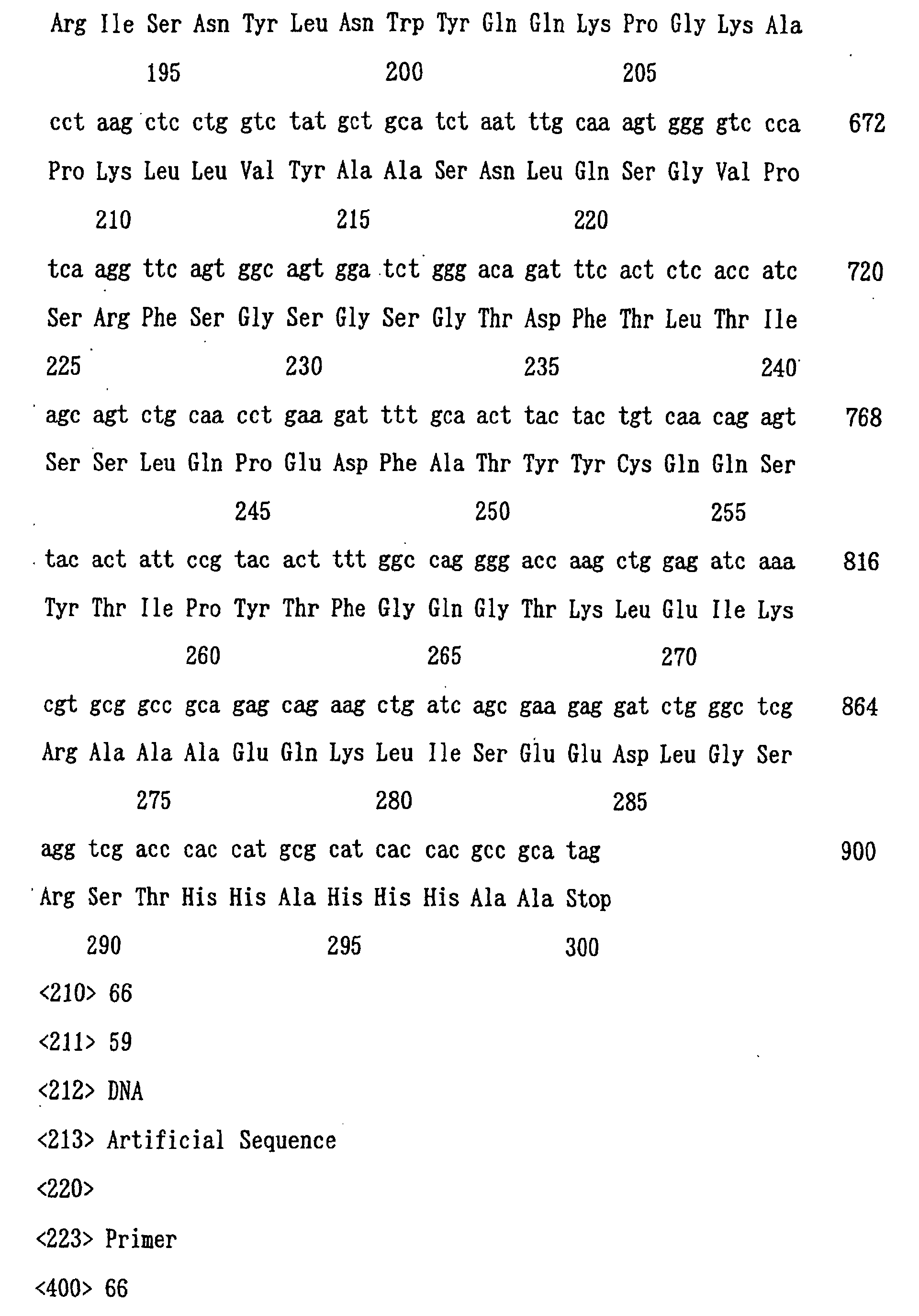
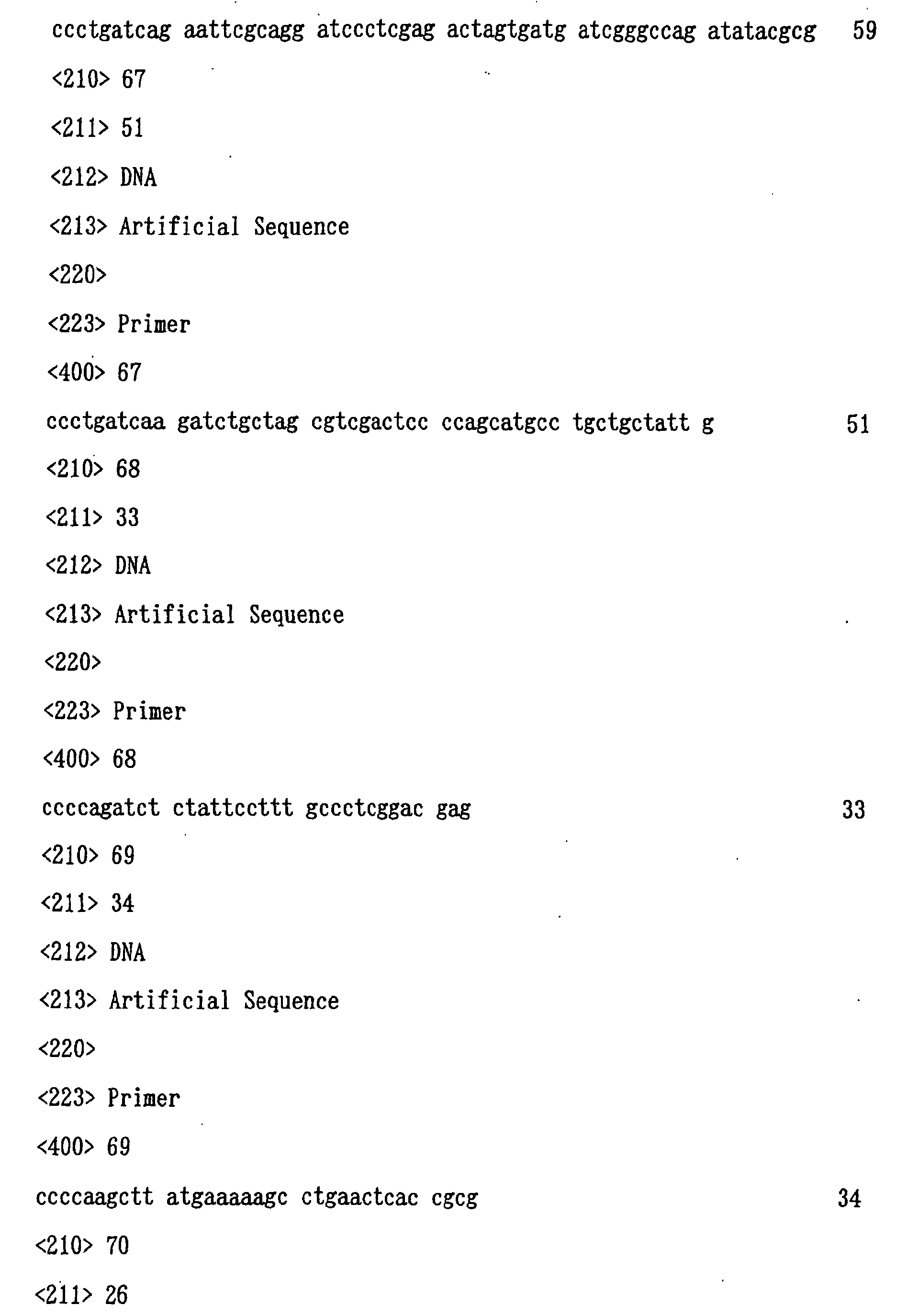
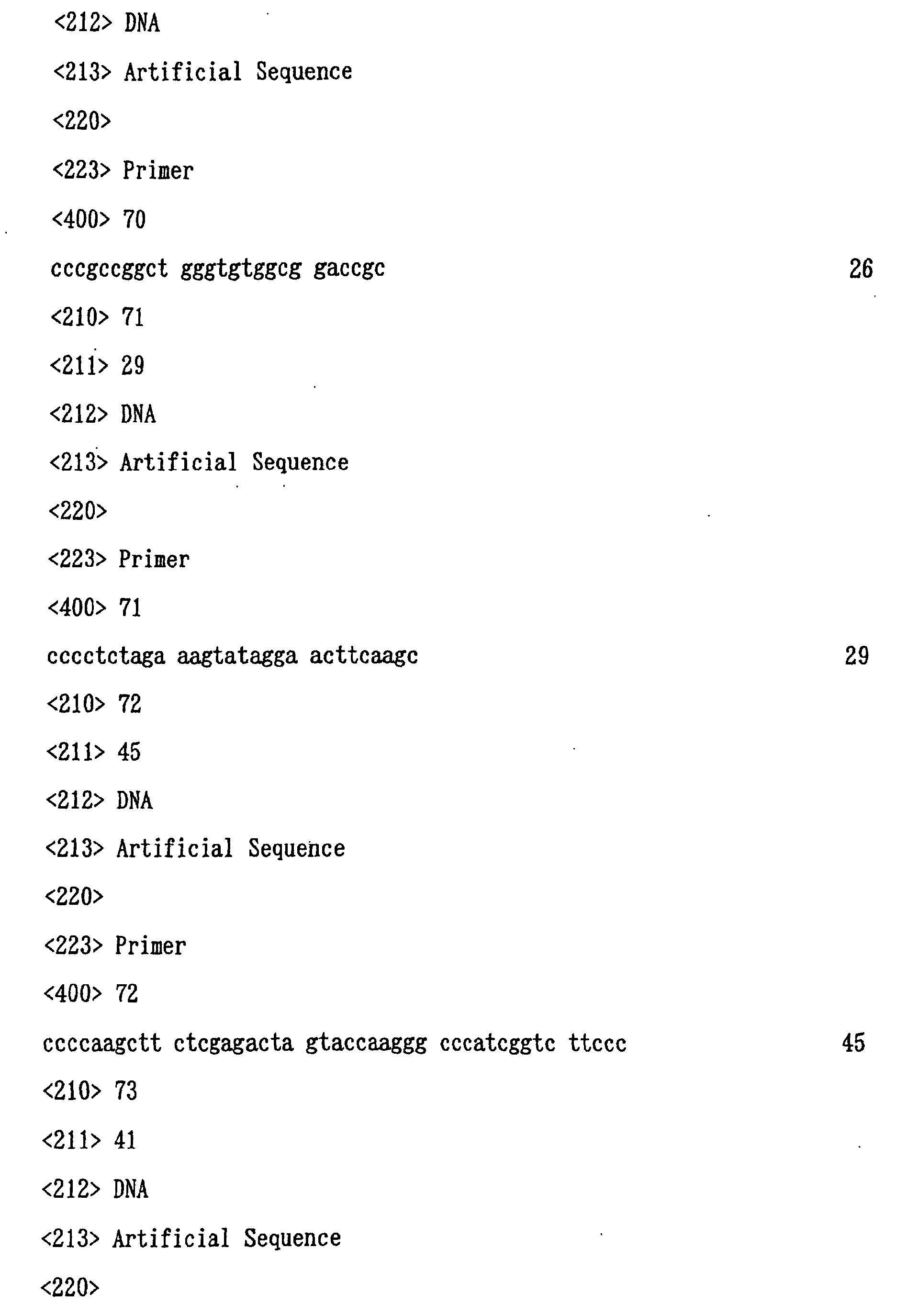
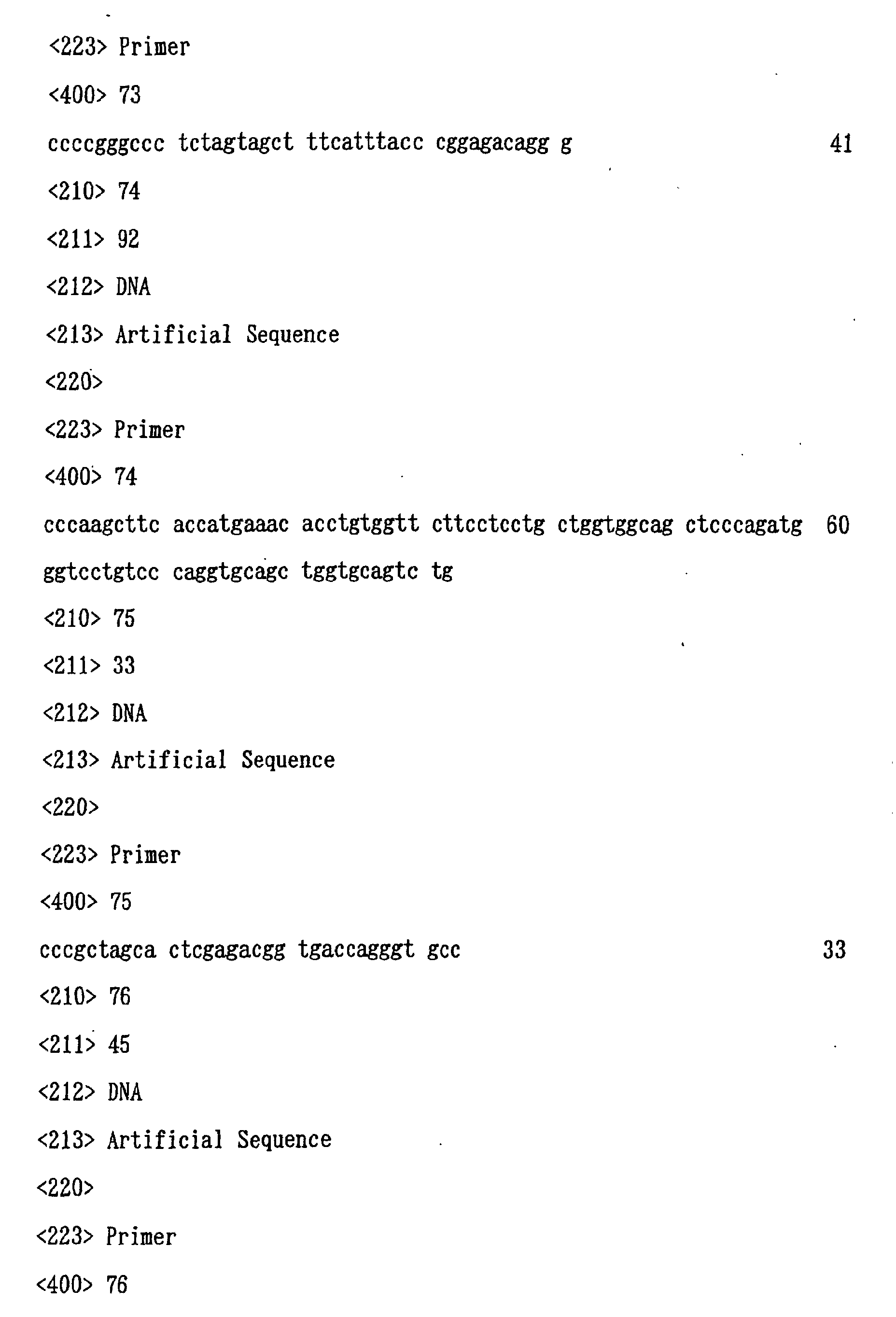
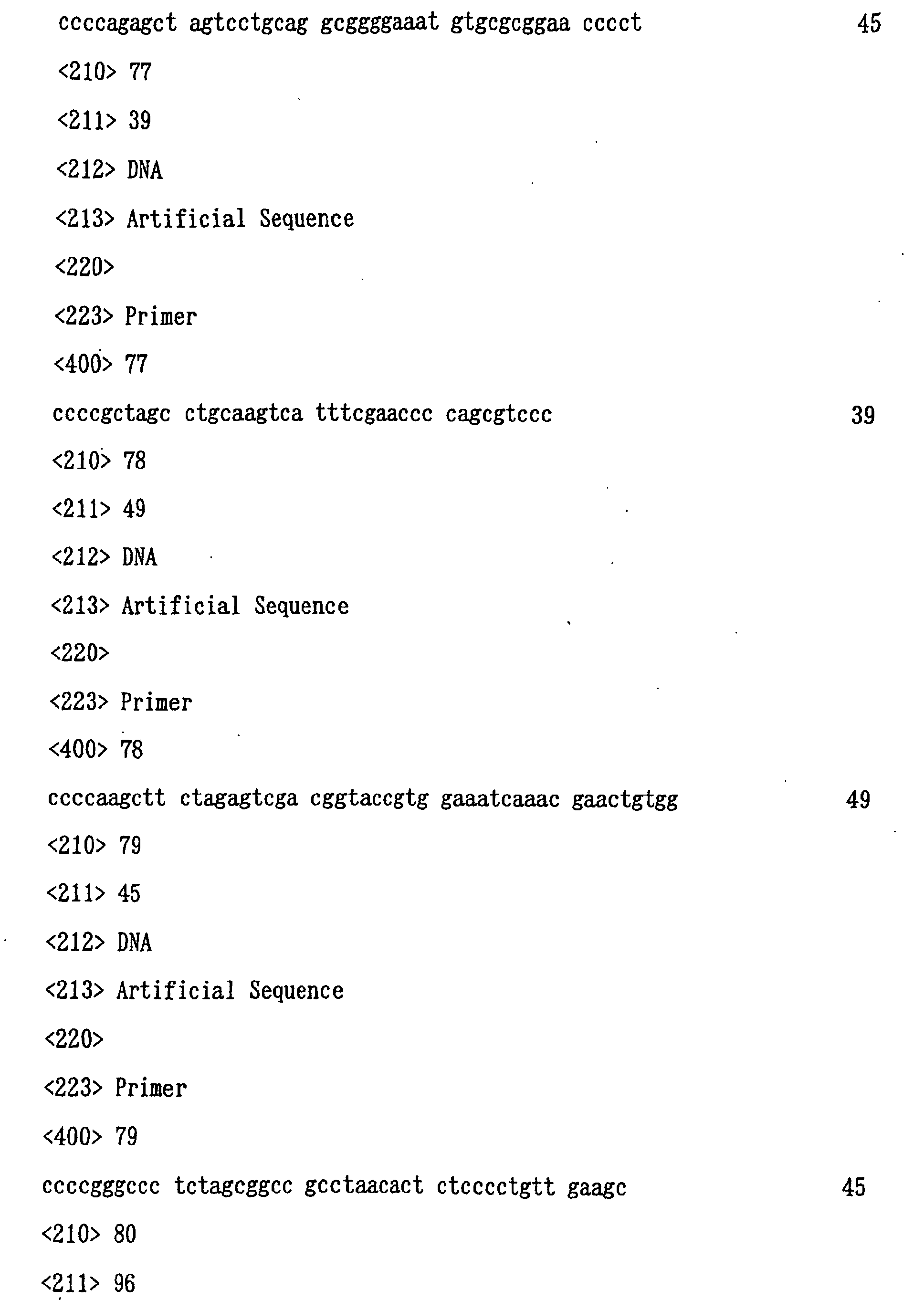
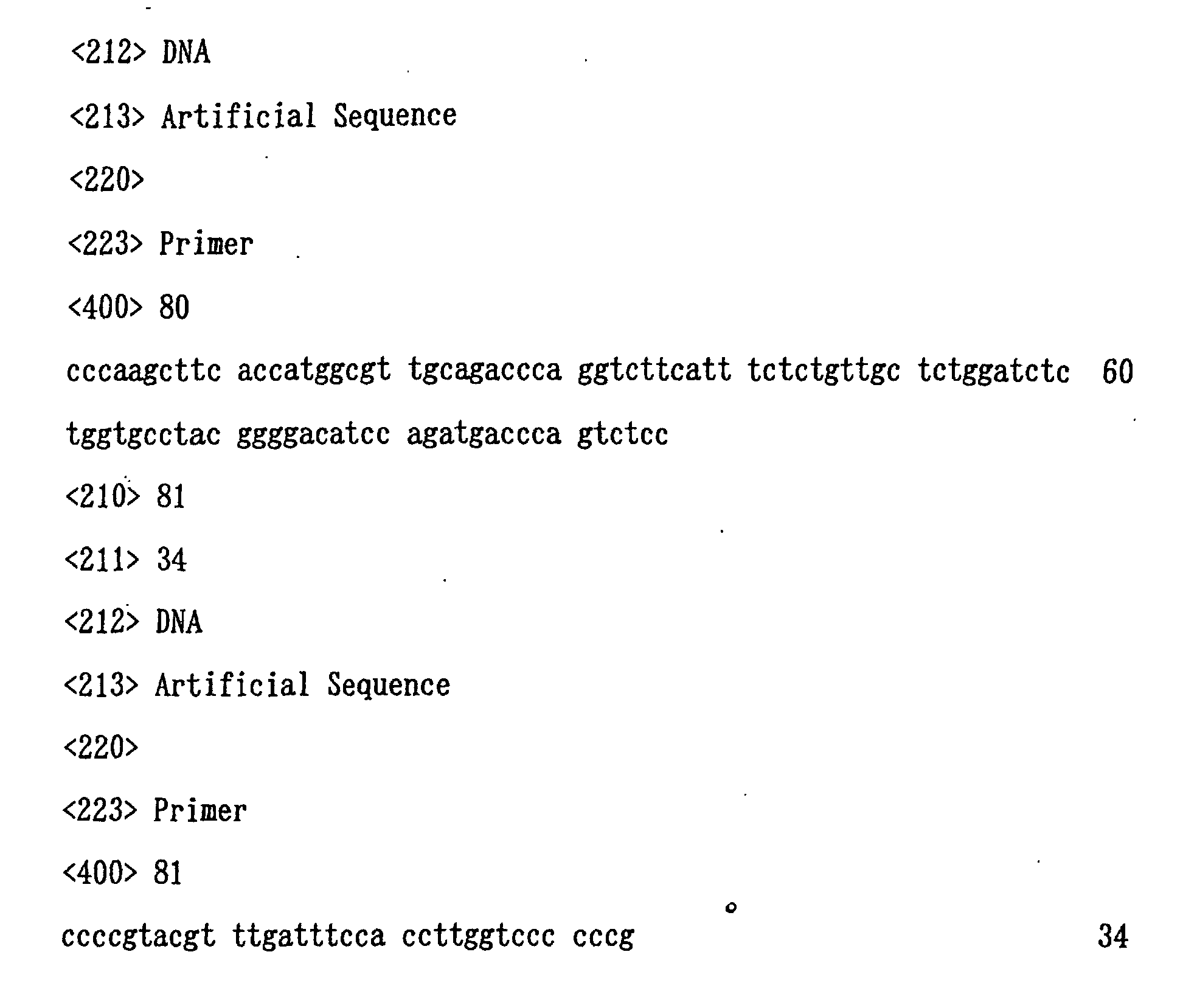
Claims (74)
- A substance which inhibits the binding between E2/NS1 protein of hepatitis C virus and a cell infectious with hepatitis C virus, a cell expressing CD81, or CD81.
- The substance of claim 1 which inhibits, upon binding to a region having a positively charged regions of E2/NS1 protein of hepatitis C virus, the binding between E2/NS1 protein of hepatitis C virus and a cell infectious with hepatitis C virus, a cell expressing CD81, or CD81.
- The substance of claim 1 or 2 wherein E2/NS1 protein of hepatitis C virus is a protein prepared by adding a substance capable of recognizing E2/NS1 protein to E2/NS1 protein of hepatitis C virus.
- The substance of any one of claims 1 to 3 wherein E2/NS1 protein of hepatitis C virus is a protein prepared by adding a substance capable of detecting E2/NS1 protein by a fluorescence method or a luminescence method to E2/NS1 protein of hepatitis C virus.
- The substance of any one of claims 1 to 4 wherein E2/NS1 protein of hepatitis C virus is a protein prepared by adding a tag to E2/NS1 protein of hepatitis C virus.
- The substance of claim 5 wherein E2/NS1 protein of hepatitis C virus is a protein prepared by adding a tag to the C-terminus of E2/NS1 protein of hepatitis C virus.
- The substance of any one of claims 1 to 6 wherein a cell expressing CD81 is a cell which expresses human CD81.
- The substance of any one of claims 1 to 7 wherein CD81 is human CD81 and expressed by solubilized form.
- The substance of any one of claims 1 to 8 which has an association constant to E2/NS1 protein of hepatitis C virus is higher than 108, or a dissociation constant to E2/NS1 protein of hepatitis C virus is lower than 10-8.
- The substance of claim 9 which has an association constant to E2/NS1 protein of hepatitis C virus is higher than 109, or a dissociation constant to E2/NS1 protein of hepatitis C virus is lower than 10-9.
- The substance of any one of claims 1 to 10 which is a protein, sulfated polysaccharide, or a low molecular weight compound.
- The substance of claim 11 wherein a protein is an antibody.
- The substance of claim 12 wherein an antibody is derived from the B cell of a patient who recovered from hepatitis C.
- The substance of claim 13 wherein an antibody is derived from genes in the B cell of a patient who recovered from hepatitis C.
- The substance of claim 13 or 14 wherein a patient is recovered from hepatitis C without any antiviral treatment and the B cell is peripheral blood mononuclear cell.
- An antibody wherein CDR-1, CDR-2, and CDR-3 of a variable region of the H chain respectively comprise amino acid sequences shown by SEQ ID NOS: 1, 2, and 3 in the Sequence Listing or the amino acid sequences having a deletion, a substitution, or an addition of one or several amino acids in the amino acid sequences shown by SEQ ID NOS: 1, 2, and 3, and which has an affinity to E2/NS1 protein of hepatitis C virus.
- The antibody of claim 16 which comprises an amino acid sequence shown by SEQ ID NO: 16 or 34 in the Sequence Listing or the amino acid sequence having a deletion, a substitution, or an addition of one or several amino acids in the amino acid sequence shown by SEQ ID NO: 16 or 34.
- An antibody wherein CDR-1, CDR-2, and CDR-3 of a variable region of the L chain respectively comprise amino acid sequences shown by SEQ ID NOS: 4, 5, and 6 in the Sequence Listing or the amino acid sequences having a deletion, a substitution, or an addition of one or several amino acids in the amino acid sequences shown by SEQ ID NOS: 4, 5, and 6, and which has an affinity to E2/NS1 protein of hepatitis C virus.
- The antibody of claim 18 which comprises an amino acid sequence shown by SEQ ID NO: 17 in the Sequence Listing or the amino acid sequence having a deletion, a substitution, or an addition of one or several amino acids in the amino acid sequence shown by SEQ ID NO: 17.
- An antibody wherein CDR-1, CDR-2, and CDR-3 of a variable region of the L chain respectively comprise amino acid sequences shown by SEQ ID NOS: 7, 8, and 9 in the Sequence Listing or the amino acid sequences having a deletion, a substitution, or an addition of one or several amino acids in the amino acid sequences shown by SEQ ID NOS: 7, 8, and 9, and which has an affinity to E2/NS1 protein of hepatitis C virus.
- The antibody of claim 20 which comprises an amino acid sequence shown by SEQ ID NO: 18 in the Sequence Listing or the amino acid sequence having a deletion, a substitution, or an addition of one or several amino acids in the amino acid sequence shown by SEQ ID NO: 18.
- An antibody wherein CDR-1, CDR-2, and CDR-3 of a variable region of the L chain respectively comprise amino acid sequences shown by SEQ ID NOS: 10, 11, and 12 in the Sequence Listing or the amino acid sequences having a deletion, a substitution, or an addition of one or several amino acids in the amino acid sequences shown by SEQ ID NOS: 10, 11, and 12, and which has an affinity to E2/NS1 protein of hepatitis C virus.
- The antibody of claim 22 which comprises an amino acid sequence shown by SEQ ID NO: 19 in the Sequence Listing or the amino acid sequence having a deletion, a substitution, or an addition of one or several amino acids in the amino acid sequence shown by SEQ ID NO: 19.
- An antibody wherein CDR-1, CDR-2, and CDR-3 of a variable region of the L chain respectively comprise amino acid sequences shown by SEQ ID NOS: 13, 14, and 15 in the Sequence Listing or the amino acid sequences having a deletion, a substitution, or an addition of one or several amino acids in the amino acid sequences shown by SEQ ID NOS: 13, 14, and 15, and which has an affinity to E2/NS1 protein of hepatitis C virus.
- The antibody of claim 24 which comprises an amino acid sequence shown by SEQ ID NO: 20 in the Sequence Listing or the amino acid sequence having a deletion, a substitution, or an addition of one or several amino acids in the amino acid sequence shown by SEQ ID NO: 20.
- An antibody wherein CDR-1, CDR-2, and CDR-3 of a variable region of the L chain respectively comprise amino acid sequences shown by SEQ ID NOS: 42, 43, and 44 in the Sequence Listing or the amino acid sequences having a deletion, a substitution, or an addition of one or several amino acids in the amino acid sequences shown by SEQ ID NOS: 42, 43, and 44, and Which has an affinity to E2/NS1 protein of hepatitis C virus.
- The antibody of claim 26 which comprises an amino acid sequence shown by SEQ ID NO: 54 in the Sequence Listing or the amino acid sequence having a deletion, a substitution, or an addition of one or several amino acids in the amino acid sequence shown by SEQ ID NO: 54.
- An antibody wherein CDR-1, CDR-2, and CDR-3 of a variable region of the L chain respectively comprise amino acid sequences shown by SEQ ID NOS: 45, 46, and 47 in the Sequence Listing or the amino acid sequences having a deletion, a substitution, or an addition of one or several amino acids in the amino acid sequences shown by SEQ ID NOS: 45, 46, and 47, and which has an affinity to E2/NS1 protein of hepatitis C virus.
- The antibody of claim 28 which comprises an amino acid sequence shown by SEQ ID NO: 55 in the Sequence Listing or the amino acid sequence having a deletion, a substitution, or an addition of one or several amino acids in the amino acid sequence shown by SEQ ID NO: 55.
- An antibody wherein CDR-1, CDR-2, and CDR-3 of a variable region of the L chain respectively comprise amino acid sequences shown by SEQ ID NOS: 48, 49, and 50 in the Sequence Listing or the amino acid sequences having a deletion, a substitution, or an addition of one or several amino acids in the amino acid sequences shown by SEQ ID NOS: 48, 49, and 50, and which has an affinity to E2/NS1 protein of hepatitis C virus.
- The antibody of claim 30 which comprises an amino acid sequence shown by SEQ ID NO: 56 in the Sequence Listing or the amino acid sequence having a deletion, a substitution, or an addition of one or several amino acids in the amino acid sequence shown by SEQ ID NO: 56.
- An antibody wherein CDR-1, CDR-2, and CDR-3 of a variable region of the L chain respectively comprise amino acid sequences shown by SEQ ID NOS: 51, 52, and 53 in the Sequence Listing or the amino acid sequences having a deletion, a substitution, or an addition of one or several amino acids in the amino acid sequences shown by SEQ ID NOS: 51, 52, and 53, and which has an affinity to E2/NS1 protein of hepatitis C virus.
- The antibody of claim 32 which comprises an amino acid sequence shown by SEQ ID NO: 57 in the Sequence Listing or the amino acid sequence having a deletion, a substitution, or an addition of one or several amino acids in the amino acid sequence shown by SEQ ID NO: 57.
- An antibody which comprises, as an amino acid sequence of a heavy chain, an amino acid sequences shown by SEQ ID NO: 40 in the Sequence Listing or the amino acid sequences having a deletion, a substitution, or an addition of one or several amino acids in the amino acid sequences shown by SEQ ID NO: 40, and which has an affinity to E2/NS1 protein of hepatitis C virus.
- An antibody which comprises, as an amino acid sequence of a light chain, an amino acid sequences shown by SEQ ID NO: 41 in the Sequence Listing or the amino acid sequences having a deletion, a substitution, or an addition of one or several amino acids in the amino acid sequences shown by SEQ ID NO: 41, and which has an affinity to E2/NS1 protein of hepatitis C virus.
- A single-chain antibody having an affinity to E2/NS1 protein of hepatitis C virus, which comprises an amino acid sequence shown by SEQ ID NO: 26, 27, 28, or 29 in the Sequence Listing or the amino acid sequence having a deletion, a substitution, or an addition of one or several amino acids in the amino acid sequence shown by SEQ ID NO: 26, 27, 28, or 29.
- A single-chain antibody having an affinity to E2/NS1 protein of hepatitis C virus, which comprises an amino acid sequence shown by SEQ ID NO: 36, 37, 38, or 39 in the Sequence Listing or the amino acid sequence having a deletion, a substitution, or an addition of one or several amino acids in the amino acid sequence shown by SEQ ID NO: 36, 37, 38, or 39.
- A single-chain antibody having an affinity to E2/NS1 protein of hepatitis C virus, which comprises an amino acid sequence shown by SEQ ID NO: 62, 63, 64, or 65 in the Sequence Listing or the amino acid sequence having a deletion, a substitution, or an addition of one or several amino acids in the amino acid sequence shown by SEQ ID NO: 62, 63, 64, or 65.
- A nucleic acid which encodes the antibody of any of claims 16 to 38.
- The nucleic acid of claim 39 which comprises a nucleotide sequence shown by any of SEQ ID NO: 21, 22, 23, 24, 25, 35, 58, 59, 60, or 61 in the Sequence Listing.
- The nucleic acid of claim 39 which comprises a nucleotide sequence shown by SEQ ID NO: 40 or 41 in the Sequence Listing.
- The nucleic acid of claim 39 which comprises a nucleotide sequence shown by any of SEQ ID NO: 26, 27, 28, or 29 in the Sequence Listing.
- The nucleic acid of claim 39 which comprises a nucleotide sequence shown by any of SEQ ID NO: 36, 37, 38, or 39 in the Sequence Listing.
- The nucleic acid of claim 39 which comprises a nucleotide sequence shown by any of SEQ ID NO: 62, 63, 64, or 65 in the Sequence Listing.
- A method for producing an antibody using the nucleic acid of any of claims 39 to 44.
- A recombinant antibody which can be obtained by the method of claim 45 and has an affinity to E2/NS1 protein of hepatitis C virus.
- The recombinant antibody of claim 46 wherein the Fc region is of a human type.
- The recombinant antibody of claim 46 or 47 which is a single-strand antibody.
- A medicament which comprises the substance of any of claims 1 to 15 as an active ingredient.
- A medicament which comprises the antibody of any of claims 16 to 38 as an active ingredient.
- A medicament which comprises the recombinant antibody of any of claims 46 to 48 as an active ingredient.
- A medicament of any of claims 49 to 51 for treating and/or preventing hepatitis C.
- A medicament of any of claims 49 to 51 for diagnosing hepatitis C.
- An anti-HCV agent which comprises the substance of any of claims 1 to 15 as an active ingredient.
- An anti-HCV agent which comprises the antibody of any of claims 16 to 38 as an active ingredient.
- An anti-HCV agent which comprises the recombinant antibody of any of claims 46 to 48.
- A method for obtaining a sequence of the variable region of the antibody binding to E2/NS 1 wherein the B cell of a patient who recovered from hepatitis C is stimulated to express mRNA of the antibody against E2/NS1 protein of hepatitis C virus, and thereby mRNA of the antibody and cDNA of the antibody are obtained from the B cell.
- The method for obtaining a sequence of the variable region of the antibody according to claim 57, wherein a patient who recovered from hepatitis C is one who recovered without antiviral treatment and the B cell is a peripheral blood mononuclear cell.
- An antibody having a sequence of the variable region obtained by the method of claims 57 or 58.
- A method for screening a substance which inhibits the binding between E2/NS1 of hepatitis C virus and a cell infectious with hepatitis C, a cell expressing CD81, or CD81, which comprises steps of: contacting E2/NS1 of hepatitis C virus with a cell infectious with hepatitis C, a cell expressing CD81, or CD81 in the presence and absence of a test substance; and comparing the bindings between E2/NS1 of hepatitis C virus and the cell infectious with hepatitis C, the cell expressing CD81, or CD81 in the presence and absence of a test substance.
- The screening method of claim 60 wherein E2/NS1 protein of hepatitis C virus is a protein prepared by adding a substance capable of recognizing E2/NS1 protein to E2/NS 1 protein of hepatitis C virus.
- The screening method of claim 60 or 61 wherein E2/NS1 protein of hepatitis C virus is a protein prepared by adding a substance capable of detecting E2/NS protein by a fluorescence method or a luminescence method to E2/NS1 protein of hepatitis C virus.
- The screening method of any of claims 60 to 62 wherein E2/NS1 protein of hepatitis C virus is a protein prepared by adding a tag to E2/NS1 protein of hepatitis C virus.
- The screening method of claims 63 wherein E2/NS1 protein of hepatitis C virus is a protein prepared by adding a tag to the C-terminus of E2/NS 1 protein of hepatitis C virus.
- The screening method of any of claims 60 to 63 wherein the cell expressing CD81 is a cell which expresses human CD81.
- The screening method of any of claims 60 to 63 wherein CD81 is human CD81 and expressed by solubilized form.
- A screening method of any of claims 60 to 66 wherein the test substance is a protein, sulfated polysaccharides, or a low molecular weight compound.
- A substance which inhibits the binding between E2/NS1 protein of hepatitis C virus and the cell infectious with hepatitis C, the cell expressing CD81, or CD81, which is obtained by the screening method of any of claims 60 to 67.
- A substance which inhibits a life cycle of hepatitis C virus, which is obtained by the screening method which comprises steps of assaying the binding between a cell infectious with HCV and a cell expressing HCV protein in the presence and absence of the test substance, and comparing it with the binding in the absence of the test substance.
- A substance which inhibits a life cycle of hepatitis C virus, which is obtained by the screening method which comprises steps of, after the cell infectious with HCV has bound with the HCV protein expressing cell in the presence or absence of the test substance, assaying the fusion between the cell infectious with HCV and the HCV protein expressing cell, and comparing it with the fusion in the absence of the test substance.
- The substance which inhibits a life cycle of hepatitis C virus according to claim 69 or 70, wherein the test substance is a protein, sulfated polysaccharides, or a low molecular weight compound.
- An anti-HCV agent which comprises the substance of any of claims 68 to 71 as an active ingredient.
- A method for producing the anti-HCV agent which comprises formulating the anti-HCV agent using the substance of any of claims 68 to 71.
- The method for producing the anti-HCV agent according to claim 73, which comprises a step of confirming the inhibition of proliferation of hepatitis C virus by the screening method of any of claims 68 to 71.
Applications Claiming Priority (3)
| Application Number | Priority Date | Filing Date | Title |
|---|---|---|---|
| JP2000034906 | 2000-02-14 | ||
| JP2000034906 | 2000-02-14 | ||
| PCT/JP2001/000967 WO2001058459A1 (en) | 2000-02-14 | 2001-02-13 | Remedies for hepatitis c |
Publications (3)
| Publication Number | Publication Date |
|---|---|
| EP1256348A1 true EP1256348A1 (en) | 2002-11-13 |
| EP1256348A4 EP1256348A4 (en) | 2005-07-27 |
| EP1256348B1 EP1256348B1 (en) | 2012-05-02 |
Family
ID=18559171
Family Applications (1)
| Application Number | Title | Priority Date | Filing Date |
|---|---|---|---|
| EP01904385A Expired - Lifetime EP1256348B1 (en) | 2000-02-14 | 2001-02-13 | Remedies for hepatitis c |
Country Status (8)
| Country | Link |
|---|---|
| US (1) | US7101551B2 (en) |
| EP (1) | EP1256348B1 (en) |
| KR (1) | KR20020091093A (en) |
| CN (1) | CN100391469C (en) |
| AT (1) | ATE555794T1 (en) |
| AU (1) | AU2001232267A1 (en) |
| BR (1) | BR0108499A (en) |
| WO (1) | WO2001058459A1 (en) |
Cited By (10)
| Publication number | Priority date | Publication date | Assignee | Title |
|---|---|---|---|---|
| US8017748B2 (en) | 2005-04-18 | 2011-09-13 | Micromet Ag | Antibody neutralizers of human granulocyte macrophage colony stimulating factor |
| WO2011147863A1 (en) | 2010-05-25 | 2011-12-01 | INSERM (Institut National de la Santé et de la Recherche Médicale) | Combination of anti-envelope antibodies and anti-receptor antibodies for the treatment and prevention of hcv infection |
| WO2013024155A1 (en) | 2011-08-17 | 2013-02-21 | Inserm (Institut National De La Sante Et De La Recherche Medicale) | Combinations of anti-hcv-entry factor antibodies and direct acting antivirals for the treatment and the prevention of hcv infection |
| WO2013024156A2 (en) | 2011-08-17 | 2013-02-21 | INSERM (Institut National de la Santé et de la Recherche Médicale) | Combinations of anti-hcv-entry factor antibodies and interferons for the treatment and the prevention of hcv infection |
| WO2013024158A1 (en) | 2011-08-17 | 2013-02-21 | INSERM (Institut National de la Santé et de la Recherche Médicale) | Combinations of protein kinase inhibitors and interferons or of protein kinase inhibitors and direct acting antivirals for the treatment and the prevention of hcv infection |
| WO2013024157A2 (en) | 2011-08-17 | 2013-02-21 | INSERM (Institut National de la Santé et de la Recherche Médicale) | Combinations of host targeting agents for the treatment and the prevention of hcv infection |
| WO2014033266A1 (en) | 2012-08-31 | 2014-03-06 | INSERM (Institut National de la Santé et de la Recherche Médicale) | Anti-sr-bi antibodies for the inhibition of hepatitis c virus infection |
| US9833410B2 (en) | 2012-10-31 | 2017-12-05 | Takeda Gmbh | Lyophilized formulation comprising GM-CSF neutralizing compound |
| US9919051B2 (en) | 2012-10-31 | 2018-03-20 | Amgen Research (Munich) Gmbh | Liquid formulation comprising GM-CSF neutralizing compound |
| US10745475B2 (en) | 2013-08-30 | 2020-08-18 | Takeda Gmbh | Antibodies neutralizing GM-CSF for use in the treatment of rheumatoid arthritis or as analgesics |
Families Citing this family (9)
| Publication number | Priority date | Publication date | Assignee | Title |
|---|---|---|---|---|
| US7261893B2 (en) * | 2002-10-22 | 2007-08-28 | Wyeth | Neutralizing antibodies against GDF-8 and uses therefor |
| ES2363770T3 (en) * | 2003-08-28 | 2011-08-16 | Dainippon Sumitomo Pharma Co., Ltd. | PREVENTIVE OR REMEDY FOR INFLAMMATORY DISEASES OF THE INTESTINE CONTAINING ANTIBODY ANTI-CD81 AS ACTIVE PRINCIPLE. |
| KR101045438B1 (en) * | 2004-03-31 | 2011-06-30 | 톳쿄기쥬츠 가이하츠 가부시키가이샤 | Epithelial cell proliferation promoter |
| US9296810B2 (en) * | 2008-05-02 | 2016-03-29 | Novartis Ag | Fibronectin-based binding molecules and uses thereof |
| ES2860453T3 (en) | 2009-10-30 | 2021-10-05 | Novartis Ag | Universal libraries of type III fibronectin underside binding domain |
| AU2011339414A1 (en) * | 2010-12-06 | 2013-07-04 | Sumitomo Dainippon Pharma Co., Ltd. | Human monoclonal antibody |
| EP3151854B1 (en) | 2014-06-06 | 2020-02-26 | Memorial Sloan Kettering Cancer Center | Mesothelin-targeted chimeric antigen receptors and uses thereof |
| US11542332B2 (en) | 2016-03-26 | 2023-01-03 | Bioatla, Inc. | Anti-CTLA4 antibodies, antibody fragments, their immunoconjugates and uses thereof |
| KR20210032488A (en) | 2018-07-20 | 2021-03-24 | 서피스 온콜로지, 인크. | Anti-CD112R compositions and methods |
Family Cites Families (8)
| Publication number | Priority date | Publication date | Assignee | Title |
|---|---|---|---|---|
| US5574132A (en) * | 1991-04-05 | 1996-11-12 | Biochem Immunosystems Inc. | Peptides and mixtures thereof for detecting antibodies to hepatitis C virus (HCV) |
| DE69433160T2 (en) * | 1993-05-12 | 2004-07-08 | Chiron Corp. (N.D.Ges.D. Staates Delaware), Emeryville | Preserved motif of the hepatitis C virus E2 / NS1 region |
| CN1044384C (en) * | 1994-08-25 | 1999-07-28 | 中国药品生物制品检定所 | Establishment of Anti-HCV Antigen Monoclonal Antibody Cell Line and Its Monoclonal Antibody |
| CN1072482C (en) * | 1996-11-08 | 2001-10-10 | 山东医科大学 | Low-molecular heparin liposome spray preparation and its preparation |
| ATE449847T1 (en) | 1997-10-06 | 2009-12-15 | Novartis Vaccines & Diagnostic | HEPATITIS C RECEPTOR PROTEIN CD81 |
| EP1097172A1 (en) * | 1998-07-21 | 2001-05-09 | Genmab A/S | Anti hepatitis c virus antibody and uses thereof |
| EP1127170A4 (en) | 1998-11-05 | 2005-04-27 | Univ Leland Stanford Junior | HUMAN MONOCLONAL ANTIBODIES OF THE HEPATITIS C VIRUS (HCV) PAN |
| EP1293564A4 (en) | 2000-06-08 | 2005-08-17 | Mitsubishi Pharma Corp | EXPRESSION VECTOR FOR SCREENING CELLS HAVING HIGH EXPRESSION OF RECOMBINANT PROTEIN, TRANSFORMING AT HIGH EXPRESSION OF RECOMBINANT PROTEIN, AND USE THEREOF |
-
2001
- 2001-02-13 AU AU2001232267A patent/AU2001232267A1/en not_active Abandoned
- 2001-02-13 EP EP01904385A patent/EP1256348B1/en not_active Expired - Lifetime
- 2001-02-13 BR BR0108499-2A patent/BR0108499A/en not_active Application Discontinuation
- 2001-02-13 CN CNB018080596A patent/CN100391469C/en not_active Expired - Fee Related
- 2001-02-13 WO PCT/JP2001/000967 patent/WO2001058459A1/en not_active Ceased
- 2001-02-13 KR KR1020027010642A patent/KR20020091093A/en not_active Withdrawn
- 2001-02-13 AT AT01904385T patent/ATE555794T1/en active
- 2001-02-13 US US10/203,754 patent/US7101551B2/en not_active Expired - Fee Related
Cited By (14)
| Publication number | Priority date | Publication date | Assignee | Title |
|---|---|---|---|---|
| US10138297B2 (en) | 2005-04-18 | 2018-11-27 | Amgen Research (Munich) Gmbh | Antibody neutralizers of human granulocyte macrophage colony stimulating factor |
| US8017748B2 (en) | 2005-04-18 | 2011-09-13 | Micromet Ag | Antibody neutralizers of human granulocyte macrophage colony stimulating factor |
| US9067993B2 (en) | 2005-04-18 | 2015-06-30 | Amgen Research (Munich) Gmbh | Antibody neutralizers of human granulocyte macrophage colony stimulating factor |
| WO2011147863A1 (en) | 2010-05-25 | 2011-12-01 | INSERM (Institut National de la Santé et de la Recherche Médicale) | Combination of anti-envelope antibodies and anti-receptor antibodies for the treatment and prevention of hcv infection |
| WO2013024155A1 (en) | 2011-08-17 | 2013-02-21 | Inserm (Institut National De La Sante Et De La Recherche Medicale) | Combinations of anti-hcv-entry factor antibodies and direct acting antivirals for the treatment and the prevention of hcv infection |
| WO2013024156A2 (en) | 2011-08-17 | 2013-02-21 | INSERM (Institut National de la Santé et de la Recherche Médicale) | Combinations of anti-hcv-entry factor antibodies and interferons for the treatment and the prevention of hcv infection |
| WO2013024158A1 (en) | 2011-08-17 | 2013-02-21 | INSERM (Institut National de la Santé et de la Recherche Médicale) | Combinations of protein kinase inhibitors and interferons or of protein kinase inhibitors and direct acting antivirals for the treatment and the prevention of hcv infection |
| WO2013024157A2 (en) | 2011-08-17 | 2013-02-21 | INSERM (Institut National de la Santé et de la Recherche Médicale) | Combinations of host targeting agents for the treatment and the prevention of hcv infection |
| WO2014033266A1 (en) | 2012-08-31 | 2014-03-06 | INSERM (Institut National de la Santé et de la Recherche Médicale) | Anti-sr-bi antibodies for the inhibition of hepatitis c virus infection |
| US9919051B2 (en) | 2012-10-31 | 2018-03-20 | Amgen Research (Munich) Gmbh | Liquid formulation comprising GM-CSF neutralizing compound |
| US9833410B2 (en) | 2012-10-31 | 2017-12-05 | Takeda Gmbh | Lyophilized formulation comprising GM-CSF neutralizing compound |
| US10758621B2 (en) | 2012-10-31 | 2020-09-01 | Amgen Research (Munich) Gmbh | Liquid formulation comprising GM-CSF neutralizing compound |
| US10745475B2 (en) | 2013-08-30 | 2020-08-18 | Takeda Gmbh | Antibodies neutralizing GM-CSF for use in the treatment of rheumatoid arthritis or as analgesics |
| US11795216B2 (en) | 2013-08-30 | 2023-10-24 | Takeda Pharmaceutical Company Limited | Antibodies neutralizing GM-CSF for use in the treatment of rheumatoid arthritis or as analgesics |
Also Published As
| Publication number | Publication date |
|---|---|
| EP1256348A4 (en) | 2005-07-27 |
| US20030157132A1 (en) | 2003-08-21 |
| WO2001058459A1 (en) | 2001-08-16 |
| KR20020091093A (en) | 2002-12-05 |
| CN1423561A (en) | 2003-06-11 |
| EP1256348B1 (en) | 2012-05-02 |
| CN100391469C (en) | 2008-06-04 |
| ATE555794T1 (en) | 2012-05-15 |
| AU2001232267A1 (en) | 2001-08-20 |
| BR0108499A (en) | 2003-03-11 |
| US7101551B2 (en) | 2006-09-05 |
Similar Documents
| Publication | Publication Date | Title |
|---|---|---|
| US7101551B2 (en) | Remedies for hepatitis C | |
| CN111620945B (en) | Monoclonal antibody or derivative thereof for resisting novel coronavirus | |
| TWI785583B (en) | Monoclonal antibody against new coronavirus and use thereof | |
| US20090110685A1 (en) | Treatment and prevention of viral infections | |
| US20090162373A1 (en) | Materials and methods for treatment of hepatitis c | |
| JP2025506172A (en) | Broadly targeted human monoclonal antibodies against coronaviruses | |
| CN101802211A (en) | Anti-RANTES antibodies and methods of use thereof | |
| JP2004529647A (en) | Human TIMP-1 antibody | |
| RU2596409C2 (en) | Anti-hcv monoclonal antibody as therapeutic agent for medical treatment and prevention of hcv infections | |
| JP4270473B2 (en) | Human monoclonal antibody specific for hepatitis C virus (HCV) E2 antigen | |
| CN102596996A (en) | Antibody having activity of inhibiting infection with hepatitis c virus (hcv) and use of same | |
| JP4221292B2 (en) | Hepatitis C drug | |
| TW201620931A (en) | Antibody having anti-hepatitis C virus infection inhibitory activity | |
| JP6771725B2 (en) | Antibodies, fragments, molecules and anti-HCV therapeutics | |
| JPWO2001058459A1 (en) | Hepatitis C treatment drug | |
| WO2025091755A1 (en) | Antibodies binding to hla-a02/hbsag complex and use thereof | |
| CN120051487A (en) | Novel coronavirus XBB.1.5 and related variant broad-spectrum neutralizing antibody and application thereof | |
| JP2013230152A (en) | Treatment and prevention of viral infection or improvement in treatment and prevention of viral infection | |
| HK1173979A (en) | Improvements in or relating to treatment and prevention of hepatitis c viral infections | |
| AU2012254920A1 (en) | Improvements in or relating to treatment and prevention of viral infections |
Legal Events
| Date | Code | Title | Description |
|---|---|---|---|
| PUAI | Public reference made under article 153(3) epc to a published international application that has entered the european phase |
Free format text: ORIGINAL CODE: 0009012 |
|
| 17P | Request for examination filed |
Effective date: 20020820 |
|
| AK | Designated contracting states |
Kind code of ref document: A1 Designated state(s): AT BE CH CY DE DK ES FI FR GB GR IE IT LI LU MC NL PT SE TR |
|
| AX | Request for extension of the european patent |
Free format text: AL;LT;LV;MK;RO;SI |
|
| A4 | Supplementary search report drawn up and despatched |
Effective date: 20050609 |
|
| RAP1 | Party data changed (applicant data changed or rights of an application transferred) |
Owner name: MITSUBISHI TANABE PHARMA CORPORATION Owner name: JAPAN AS REPRESENTED BY DIRECTOR GENERAL OF NATION |
|
| 17Q | First examination report despatched |
Effective date: 20080626 |
|
| GRAP | Despatch of communication of intention to grant a patent |
Free format text: ORIGINAL CODE: EPIDOSNIGR1 |
|
| RAP1 | Party data changed (applicant data changed or rights of an application transferred) |
Owner name: JAPAN AS REPRESENTED BY DIRECTOR GENERAL OF A Owner name: MITSUBISHI TANABE PHARMA CORPORATION |
|
| GRAS | Grant fee paid |
Free format text: ORIGINAL CODE: EPIDOSNIGR3 |
|
| GRAA | (expected) grant |
Free format text: ORIGINAL CODE: 0009210 |
|
| AK | Designated contracting states |
Kind code of ref document: B1 Designated state(s): AT BE CH CY DE DK ES FI FR GB GR IE IT LI LU MC NL PT SE TR |
|
| REG | Reference to a national code |
Ref country code: GB Ref legal event code: FG4D |
|
| REG | Reference to a national code |
Ref country code: CH Ref legal event code: EP Ref country code: AT Ref legal event code: REF Ref document number: 555794 Country of ref document: AT Kind code of ref document: T Effective date: 20120515 |
|
| REG | Reference to a national code |
Ref country code: IE Ref legal event code: FG4D |
|
| REG | Reference to a national code |
Ref country code: DE Ref legal event code: R096 Ref document number: 60146491 Country of ref document: DE Effective date: 20120705 |
|
| REG | Reference to a national code |
Ref country code: NL Ref legal event code: VDEP Effective date: 20120502 |
|
| PG25 | Lapsed in a contracting state [announced via postgrant information from national office to epo] |
Ref country code: CY Free format text: LAPSE BECAUSE OF FAILURE TO SUBMIT A TRANSLATION OF THE DESCRIPTION OR TO PAY THE FEE WITHIN THE PRESCRIBED TIME-LIMIT Effective date: 20120502 Ref country code: FI Free format text: LAPSE BECAUSE OF FAILURE TO SUBMIT A TRANSLATION OF THE DESCRIPTION OR TO PAY THE FEE WITHIN THE PRESCRIBED TIME-LIMIT Effective date: 20120502 Ref country code: SE Free format text: LAPSE BECAUSE OF FAILURE TO SUBMIT A TRANSLATION OF THE DESCRIPTION OR TO PAY THE FEE WITHIN THE PRESCRIBED TIME-LIMIT Effective date: 20120502 |
|
| REG | Reference to a national code |
Ref country code: AT Ref legal event code: MK05 Ref document number: 555794 Country of ref document: AT Kind code of ref document: T Effective date: 20120502 |
|
| PG25 | Lapsed in a contracting state [announced via postgrant information from national office to epo] |
Ref country code: PT Free format text: LAPSE BECAUSE OF FAILURE TO SUBMIT A TRANSLATION OF THE DESCRIPTION OR TO PAY THE FEE WITHIN THE PRESCRIBED TIME-LIMIT Effective date: 20120903 Ref country code: GR Free format text: LAPSE BECAUSE OF FAILURE TO SUBMIT A TRANSLATION OF THE DESCRIPTION OR TO PAY THE FEE WITHIN THE PRESCRIBED TIME-LIMIT Effective date: 20120803 |
|
| PG25 | Lapsed in a contracting state [announced via postgrant information from national office to epo] |
Ref country code: BE Free format text: LAPSE BECAUSE OF FAILURE TO SUBMIT A TRANSLATION OF THE DESCRIPTION OR TO PAY THE FEE WITHIN THE PRESCRIBED TIME-LIMIT Effective date: 20120502 |
|
| PG25 | Lapsed in a contracting state [announced via postgrant information from national office to epo] |
Ref country code: NL Free format text: LAPSE BECAUSE OF FAILURE TO SUBMIT A TRANSLATION OF THE DESCRIPTION OR TO PAY THE FEE WITHIN THE PRESCRIBED TIME-LIMIT Effective date: 20120502 Ref country code: AT Free format text: LAPSE BECAUSE OF FAILURE TO SUBMIT A TRANSLATION OF THE DESCRIPTION OR TO PAY THE FEE WITHIN THE PRESCRIBED TIME-LIMIT Effective date: 20120502 Ref country code: DK Free format text: LAPSE BECAUSE OF FAILURE TO SUBMIT A TRANSLATION OF THE DESCRIPTION OR TO PAY THE FEE WITHIN THE PRESCRIBED TIME-LIMIT Effective date: 20120502 |
|
| PG25 | Lapsed in a contracting state [announced via postgrant information from national office to epo] |
Ref country code: IT Free format text: LAPSE BECAUSE OF FAILURE TO SUBMIT A TRANSLATION OF THE DESCRIPTION OR TO PAY THE FEE WITHIN THE PRESCRIBED TIME-LIMIT Effective date: 20120502 |
|
| PLBE | No opposition filed within time limit |
Free format text: ORIGINAL CODE: 0009261 |
|
| STAA | Information on the status of an ep patent application or granted ep patent |
Free format text: STATUS: NO OPPOSITION FILED WITHIN TIME LIMIT |
|
| 26N | No opposition filed |
Effective date: 20130205 |
|
| PG25 | Lapsed in a contracting state [announced via postgrant information from national office to epo] |
Ref country code: ES Free format text: LAPSE BECAUSE OF FAILURE TO SUBMIT A TRANSLATION OF THE DESCRIPTION OR TO PAY THE FEE WITHIN THE PRESCRIBED TIME-LIMIT Effective date: 20120813 |
|
| REG | Reference to a national code |
Ref country code: DE Ref legal event code: R097 Ref document number: 60146491 Country of ref document: DE Effective date: 20130205 |
|
| PG25 | Lapsed in a contracting state [announced via postgrant information from national office to epo] |
Ref country code: MC Free format text: LAPSE BECAUSE OF NON-PAYMENT OF DUE FEES Effective date: 20130228 |
|
| REG | Reference to a national code |
Ref country code: CH Ref legal event code: PL |
|
| PG25 | Lapsed in a contracting state [announced via postgrant information from national office to epo] |
Ref country code: CH Free format text: LAPSE BECAUSE OF NON-PAYMENT OF DUE FEES Effective date: 20130228 Ref country code: LI Free format text: LAPSE BECAUSE OF NON-PAYMENT OF DUE FEES Effective date: 20130228 |
|
| REG | Reference to a national code |
Ref country code: IE Ref legal event code: MM4A |
|
| PG25 | Lapsed in a contracting state [announced via postgrant information from national office to epo] |
Ref country code: IE Free format text: LAPSE BECAUSE OF NON-PAYMENT OF DUE FEES Effective date: 20130213 |
|
| REG | Reference to a national code |
Ref country code: DE Ref legal event code: R082 Ref document number: 60146491 Country of ref document: DE Representative=s name: GODEMEYER BLUM LENZE PARTNERSCHAFT, PATENTANWA, DE Ref country code: DE Ref legal event code: R082 Ref document number: 60146491 Country of ref document: DE Representative=s name: GODEMEYER BLUM LENZE PATENTANWAELTE, PARTNERSC, DE |
|
| REG | Reference to a national code |
Ref country code: FR Ref legal event code: PLFP Year of fee payment: 15 |
|
| PGFP | Annual fee paid to national office [announced via postgrant information from national office to epo] |
Ref country code: DE Payment date: 20150210 Year of fee payment: 15 |
|
| PGFP | Annual fee paid to national office [announced via postgrant information from national office to epo] |
Ref country code: GB Payment date: 20150211 Year of fee payment: 15 Ref country code: FR Payment date: 20150210 Year of fee payment: 15 |
|
| PG25 | Lapsed in a contracting state [announced via postgrant information from national office to epo] |
Ref country code: TR Free format text: LAPSE BECAUSE OF FAILURE TO SUBMIT A TRANSLATION OF THE DESCRIPTION OR TO PAY THE FEE WITHIN THE PRESCRIBED TIME-LIMIT Effective date: 20120502 |
|
| PG25 | Lapsed in a contracting state [announced via postgrant information from national office to epo] |
Ref country code: LU Free format text: LAPSE BECAUSE OF NON-PAYMENT OF DUE FEES Effective date: 20130213 |
|
| REG | Reference to a national code |
Ref country code: DE Ref legal event code: R119 Ref document number: 60146491 Country of ref document: DE |
|
| GBPC | Gb: european patent ceased through non-payment of renewal fee |
Effective date: 20160213 |
|
| REG | Reference to a national code |
Ref country code: FR Ref legal event code: ST Effective date: 20161028 |
|
| PG25 | Lapsed in a contracting state [announced via postgrant information from national office to epo] |
Ref country code: DE Free format text: LAPSE BECAUSE OF NON-PAYMENT OF DUE FEES Effective date: 20160901 Ref country code: FR Free format text: LAPSE BECAUSE OF NON-PAYMENT OF DUE FEES Effective date: 20160229 Ref country code: GB Free format text: LAPSE BECAUSE OF NON-PAYMENT OF DUE FEES Effective date: 20160213 |