EP1255413A2 - Verfahren zur Anpassung einer Charakteristik eines Anrufservers - Google Patents
Verfahren zur Anpassung einer Charakteristik eines Anrufservers Download PDFInfo
- Publication number
- EP1255413A2 EP1255413A2 EP02252040A EP02252040A EP1255413A2 EP 1255413 A2 EP1255413 A2 EP 1255413A2 EP 02252040 A EP02252040 A EP 02252040A EP 02252040 A EP02252040 A EP 02252040A EP 1255413 A2 EP1255413 A2 EP 1255413A2
- Authority
- EP
- European Patent Office
- Prior art keywords
- call server
- network
- indication
- change
- condition
- Prior art date
- Legal status (The legal status is an assumption and is not a legal conclusion. Google has not performed a legal analysis and makes no representation as to the accuracy of the status listed.)
- Withdrawn
Links
- 238000000034 method Methods 0.000 title claims abstract description 50
- 230000008859 change Effects 0.000 claims description 47
- 238000004891 communication Methods 0.000 claims description 29
- 230000006978 adaptation Effects 0.000 claims description 25
- 230000004044 response Effects 0.000 claims description 15
- 238000012545 processing Methods 0.000 claims description 8
- 238000012544 monitoring process Methods 0.000 claims description 3
- 238000004590 computer program Methods 0.000 claims 3
- 230000008569 process Effects 0.000 description 7
- 238000004458 analytical method Methods 0.000 description 4
- 230000000694 effects Effects 0.000 description 3
- 230000004048 modification Effects 0.000 description 3
- 238000012986 modification Methods 0.000 description 3
- 230000009471 action Effects 0.000 description 2
- 230000007246 mechanism Effects 0.000 description 2
- 230000000116 mitigating effect Effects 0.000 description 2
- 230000015556 catabolic process Effects 0.000 description 1
- 238000006243 chemical reaction Methods 0.000 description 1
- 238000006731 degradation reaction Methods 0.000 description 1
- 230000001419 dependent effect Effects 0.000 description 1
- 238000005516 engineering process Methods 0.000 description 1
- 230000000737 periodic effect Effects 0.000 description 1
- 230000003068 static effect Effects 0.000 description 1
- 230000001052 transient effect Effects 0.000 description 1
Images





Classifications
-
- H—ELECTRICITY
- H04—ELECTRIC COMMUNICATION TECHNIQUE
- H04Q—SELECTING
- H04Q3/00—Selecting arrangements
- H04Q3/64—Distributing or queueing
- H04Q3/66—Traffic distributors
-
- H—ELECTRICITY
- H04—ELECTRIC COMMUNICATION TECHNIQUE
- H04M—TELEPHONIC COMMUNICATION
- H04M7/00—Arrangements for interconnection between switching centres
- H04M7/12—Arrangements for interconnection between switching centres for working between exchanges having different types of switching equipment, e.g. power-driven and step by step or decimal and non-decimal
- H04M7/1205—Arrangements for interconnection between switching centres for working between exchanges having different types of switching equipment, e.g. power-driven and step by step or decimal and non-decimal where the types of switching equipement comprises PSTN/ISDN equipment and switching equipment of networks other than PSTN/ISDN, e.g. Internet Protocol networks
- H04M7/1245—Arrangements for interconnection between switching centres for working between exchanges having different types of switching equipment, e.g. power-driven and step by step or decimal and non-decimal where the types of switching equipement comprises PSTN/ISDN equipment and switching equipment of networks other than PSTN/ISDN, e.g. Internet Protocol networks where a network other than PSTN/ISDN interconnects two PSTN/ISDN networks
Definitions
- the invention relates to a method of adapting a characteristic of a call server. Particularly but not exclusively, to a method of adapting a characteristic of a call server to optimise the call server's usage of available network resources.
- a call server is a media gateway controller (MGC).
- MMC media gateway controller
- a call server is capable of determining ingress/egress gateways and of providing instruction to selected gateways on the required inter-gateway connection.
- An example of a call server is Nortel's DMSTM Call Server 2K call processing engine.
- a call server does not receive any indication of the current network state from network elements such as gateways or network management server(s).
- network elements such as gateways or network management server(s).
- the call server itself does not provide any routing instructions regarding the path of the inter-gateway connection. Instead, the level of complexity of the connection path is determined by the characteristics of the intermediate network, i.e., in a packet-switched network, the characteristics of the packet backbone network.
- This method of establishing a gateway inter-connection has several disadvantages, particularly in the event that the gateways are not able to process the call server's requests. If this is the case, the gateways will respond by sending the call server a Negative ACKnowledgement (a "NACK"). As the gateways themselves have a limited knowledge of network conditions, the NACK normally does not contain any indication why the connection could not be established. The call server responds to a NACK by moving down through a predetermined series or "list" of alternative routes until a connection can be established.
- FIG. 2 of the accompanying drawings illustrates a communications network 10.
- the symbols used in Fig. 2 are explained by the key shown in Fig. 1.
- the network 10 has a call server 12 which is able to communicate with gateway 14, gateway 16, and gateway 18 across the packet backbone 20 of the network 10.
- a call is established over the packet backbone 20 via network nodes 30, 32, 34, 36.
- Each gateway 14, 16, 18, enables the call server 12 to communicate over time division multiplexed (TDM) networks 22, 24.
- Gateway 14 accesses TDM network 22 via trunk group 26.
- Gateways 16 and 18 access TDM network 24 via trunk group 28.
- Network management element 50 presides over the network 10 and is able to monitor and/or control certain aspects of the network 10.
- a call server 12 is able to determine the service state of a termination end points of the gateways 14,16,18 i.e., it is aware of the service state of the trunk group members.
- the call server 12 has no knowledge of the condition of the packet backbone, and so the call server 12 is not able, for example, to determine the available bandwidth between gateway 14 and gateway 16 across the packet backbone 20a using the user plane connection path illustrated by the dashed line in Fig. 1.
- a conventional network scenario is for the call server to initially request gateways 14, 16 to provide an inter-gateway connection via control plane connections 20a, 20b in order for traffic from trunk group 26 to reach trunk group 28.
- the gateways 14, 16 are unable to establish sufficient bandwidth for this connection due to the condition of link 44, and an alternative connection is established along an alternative route.
- this re-routing is totally transparent to the call server 12 as well as the gateways 14, 16, and relies on the presence of sophisticated network routing protocols for the packet backbone.
- the network management element 50 has visibility of the packet backbone activity (for example, alarms or logs etc.) and so is aware of the condition of link 44 unlike the call server 12.
- the control plane connections 20a, 20b over the packet backbone between the call server 12 and the gateways 14, 16 do not provide any information relating to the adjusted user connection path.
- the call server 12 is unaware of the location of the condition, it may try to use gateway 16 again when seeking to reestablish the call in a conventional network scenario.
- the user plane connection can be appropriately adjusted to reroute calls already in progress.
- the adjusted route could be via gateway 14, nodes 30, 32, 40, and 42, and gateway 16.
- An example of such an adjusted route is shown in Fig. 3 of the drawings (described in more detail hereinbelow).
- a thick dotted line represents the adjusted route user plane connection path 32. The adjusted user plane connection thus avoids the congested/ failed link 44.
- Fig. 4 of the accompanying drawings, where like elements to the elements referred to in Figs. 2 and 3 retain the same numbering scheme.
- the scenario shown in Fig. 4 reflects the case where an extreme packet backbone failure or congestion event occurs.
- the Packet Backbone is not able to establish a user plane connection as link failure/congestion has occurred between nodes 34 and 36 and also between node 36 and 40.
- a Negative Acknowledgement (NACK) is generated in the case of connection oriented Packet Backbone (for example, ATM), which provides the call server with feedback of the failure of the gateways to establish the inter-gateway connection.
- NACK Negative Acknowledgement
- the packet backbone is connectionless, e.g. as in current IP transport, no NACK is generated.
- the two gateways In a connectionless packet backbone scenario, even if the initial attempt by the Call Server to establish a connection succeeds, the two gateways (once set up at each end) will attempt to verify the inter-gateway communications path with "heartbeat" messages (i.e. repeated periodic messages to indicate the presence of a path). If the path isn't established, the heartbeat will fail and the Gateway will send a "call failure" indication to the call server.
- Some gateways are smart enough to send these heartbeat messages prior to the initial ACK (acknowledgement), however, in which case the resulting behaviour could be the same as the ATM connection-oriented case.
- the net result is that the caller attempt will fail, and the Call Server has to take some action.
- the action that the Call Server takes will be dependent on its internal call state mechanisms (and provision data). Two options are as follows:
- the invention seeks to mitigate and/or obviate the above disadvantages by enabling the characteristics of the call server to be modified in response to the condition of the network.
- the invention further seeks to mitigate and/or obviate the above disadvantages by providing a method of mitigating the effect of congestion between a plurality of gateways used by a call server.
- the invention further seeks to mitigate and/or obviate the above disadvantages by providing technology which can be used in a packet telephony network environment and which enables a characteristic of the call server to be adapted to accommodate transient or steady state changes in the underlining packet backbone infrastructure.
- the invention further seeks to mitigate and/or obviate the above disadvantages by enabling the routing algorithm of a call server to be modified by a network management application which is able to determine traffic levels and congestion states over the network.
- a network management application which is able to determine traffic levels and congestion states over the network.
- a first aspect of the invention seeks to provide a method of adapting a routing algorithm used by a call server connected to a communications network comprising the steps of:
- trunk groups can be connected more efficiently in the event that a connection over the network to a specific gateway to one trunk group suffers a degradation in condition.
- the indication provides an indication of at least one rule governing the routing algorithm which is to be adapted.
- the change in the level of congestion over the network is analyzed.
- the call server is able to process connection requests more efficiently by routing traffic through available gateways.
- the change in the topology of the network may be analyzed.
- the change in the available bandwidth over at least a portion of the network analyzed is analyzed.
- this enables connections to be made more quickly as the call server will no longer attempt to connect calls via unavailable gateways or along congested or failed links.
- the step of analyzing said change is performed and the step of providing the indication may occur dynamically.
- the step of analyzing said change may include assessing the impact of the change in the at least one condition on the future condition of the network.
- the at least one condition may occur on the packet backbone of the communications network.
- the method of the first aspect enables the call server to use available network resource more efficiently.
- connections can be made by the call server which avoid network resources which are unavailable.
- the type of traffic affected by the change in condition is determined.
- the indication provides sufficient information for the call server to efficiently utilize available network resources for said type of traffic affected by the change.
- the type of data may be determined by the bandwidth of the data.
- the invention can enable a call server seeking to route high volume traffic, e.g. a high bandwidth packet, to route the traffic more efficiently.
- the call server is able to route traffic via the most accessible gateway for such traffic and so avoid gateways which are only accessible via congested links, or low capacity links.
- the network is a packet backbone network and the type of data is determined by packet size.
- the condition of the communication network may include a condition of a gateway of the network.
- a method of modifying at least one characteristic of a call server in a communications network which includes a network management element capable of monitoring a condition of the network comprising:
- this enables any characteristic of any call server to be altered to adapt the call server to the prevailing network conditions.
- call servers from various vendors may have different characteristics, depending on the capabilities of the specific Call Server, other functions influencing routing may require modification.
- the condition of the network monitored by the network management element is provided by the network management element in a suitable form to the call server to receive.
- the method may further comprise the initial step of the call server requesting information from the network management element.
- this ensures that a call server is able to receive sufficient information for the call server to efficiently utilise available network resources.
- the method may further comprise the initial step of the call server requesting information from the network management element, and the step of the network management element polling at least part of the network to determine the condition of said at least part of the network.
- the network management element may poll the network periodically to determine the condition of the network.
- the network management element may provide an indication to the call server subsequently.
- the network management element may provide an indication to the call server whenever a change in the network condition is determined.
- the network management element may provide the indication dynamically in response to a change in the condition of the network being notified to the network management element.
- At least one informational element is provided which relates to a rule determining said at least one characteristic of the call server to be modified.
- the condition may be taken from the group including: a topological condition, a failure condition, and a fault condition.
- said at least one characteristic relates to a route influencing function of the call server.
- said at least one characteristic is taken from the group including: a routing algorithm of the call server; a trunk selection algorithm of the call server; a call carrying capacity of the call server.
- the communication network may be a packet backbone network.
- the indication may provide an indication of at least one rule governing the routing algorithm which is to be adapted.
- the network may be a packet backbone network and said at least one characteristic of the call server may include a routing algorithm.
- at least one informational element may be provided which indicates at least one rule to be adapted according to the condition of the network.
- the rule may be used in said routing algorithm to determine which gateways the call server shall to use to connect a plurality of trunk groups over the packet backbone network.
- a third aspect of the invention relates to a network management element capable of determining a condition of a communications network and capable of communicating said condition with a call server connected to the network for use in a method according to the first aspect of the invention, the network management element being adapted to correlate information received from a packet backbone network relating to the condition of the network with an instruction set comprising at least one informational element, each informational element providing an instruction to a call server to modify at least one of the characteristics of the call server so as to optimise the manner in which the call server utilises the available resources of the packet backbone network.
- a fourth aspect of the invention relates to a network management element capable of determining a condition of a communications network and capable of communicating said condition with a call server connected to the network for use in a method according to the second aspect of the invention, the network management element being adapted to correlate information received from a packet backbone network relating to the condition of the network with an instruction set comprising at least one informational element, each informational element providing an instruction to a call server to modify at least one of the characteristics of the call server so as to optimise the manner in which the call server utilises the available resources of the packet backbone network.
- the performance of the call server may be improved and the call server may be able to use the available network resources more efficiently.
- the network management may provide an indication to the call server such that the call server modifies its routing algorithm to minimises the call failure rate or alternatively to provide an indication of other characteristics which are to be adjusted under certain other network conditions.
- a fifth aspect of the invention relates to a call server adapted for use in a method according to either the first or second aspects of the invention.
- the call server may include: a receiving element for interfacing with said indication; an processing element for processing information provided by said indication; and a routing algorithm adapting element for adapting said routing algorithm.
- a sixth aspect of the invention relates to a routing algorithm for a call server adapted for use in a method according to the first aspect, the routing algorithm operable in accordance with a set of rules which determine route selection over a communication network, at least one rule capable of being adapted in response to the call server receiving an indication relating to the adaptation of the said at least one rule.
- At least one rule may be adapted differently for different types of data.
- a seventh aspect of the invention relates to a communication network having means to modify a characteristic of a call server for use in a method according to either the first or second aspect.
- One embodiment of the invention provides a call server for a network, for example, a packet backbone network.
- the call server is provided with means to receive information from a network management element of the network.
- the information received reflects the condition of the network.
- the call server is able to analyse and/or process the received information to change an internal characteristics, for example, to modify the call servers internal routing algorithm to adapt to the condition of the network.
- the adaptation can be achieved by changing the rules by which the routing algorithm selects a network gateway to ensure access to a certain trunk group of the network is achieved.
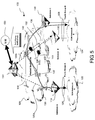
- FIG. 5 a sketched network scenario similar to that shown in Fig. 4 is illustrated in which similar elements to those shown in Fig. 4 are prefixed by "1" in their numbering scheme.
- a packet backbone network 120 which has a number of trunk groups, for example, two trunk groups 126, 128. Trunk groups 126, 128 link the packet backbone network 120 to other networks, for example TDM networks 122, 124.
- the network 120 is managed by at least one network management element, here network management element 150.
- Network management element 150 is capable of determining and/or monitoring at least one characteristic of the packet backbone network 120. For example, a performance characteristic, e.g., a traffic level characteristic, for example available bandwidth, link and/or node congestion and/or failure.
- a performance characteristic e.g., a traffic level characteristic, for example available bandwidth, link and/or node congestion and/or failure.
- a call server 112 of the packet backbone network 120 shown in Fig. 5 is capable of receiving information on the condition of the packet backbone network 120.
- the network management element 150 is adapted to provide information to the call server 112 which enables the call server 112 to adapt to changes in the condition of the packet backbone network 120.
- the network management element 150 may provide information to the call server 112 which reflects a performance characteristic of the packet backbone network 120 such as mentioned above. This enables the call server 112 to alter at least one of its internal characteristics, for example, a routing algorithm, with the objective of routing traffic more efficiently over the packet backbone network 120.
- the information provided by the network management element 150 may be sent periodically or dynamically in response to changing conditions of the packet backbone network 120.
- the call server 112 may actively request information from the network management 150.
- a performance characteristic of the packet backbone network 120 may be provided dynamically by the packet backbone network 120 and/or passively, in response to requests from the network management element 150 so that information can be passed on either directly to the call server 112, or via the network management element 150.
- the call server 112 seeks to establish a connection between the two trunk groups 126, 128.
- the information which the call server 112 receives enables the call server 112 to modify its internal routing algorithm to adapt to the conditions over the network 120 to establish a connection between the two trunk groups 126,128.
- the condition may be a link failure or congestion, such as Fig. 5 illustrates, or any other condition affecting traffic over the link.
- the call server 112 is adapted to receive information from the network management element 150 which allows the call server to adapt to the congestion on links 144, 152. In the example illustrated in Fig. 5, the information enables the call server 112 to adapt its routing algorithm to use gateway 118 to reach trunk group 128.
- the adaptation of the routing algorithm is achieved by conveying information to the call server 112.
- the information conveyed enables a modification to the call server's rule set to be made.
- the rule(s) modified select trunk group member(s) used to access a certain trunk group, i.e. they enable selection of an appropriate gateway to be used.
- the required modification to the rule set is determined by the network management 150 which is able to assess the impact of the congestion/failure of links 144, 152 on the performance of the call server 112.
- the rule set are modified so that the call server is optimised towards the available network resources, which in this example, enables traffic to be routed through the alternative gateway 118 providing access to trunk group 128.
- the rule set comprises at least one rule and is used by the call server 112 to determine indicates the order the call server 112 should route to the egress network 124, i.e., TDM Network B.
- a rule set might include;
- a rule #3 is executed which enables the call server 112 to identify the specific trunk member 116, 118 (or collection of trunk members) within the selected trunk group 128 .
- Rule #3 indicates that under normal conditions, a specific algorithm for choosing a trunk member within Trunk Group B exists and should be used. For example, MIDL (Most idle), i.e., select a trunk member that is historically frequently used; LIDL (least idle), i.e., select a member that is historically infrequently used; Linear, select the first unused trunk, starting at the lowest trunk identifier index; and Linear_alt, which is similar to Linear except that the lowest/highest trunk identifier indexes are selected from.
- MIDL i.e., select a trunk member that is historically frequently used
- LIDL least idle
- Linear select the first unused trunk, starting at the lowest trunk identifier index
- Linear_alt which is similar to Linear except that the lowest/highest trunk identifier indexes are selected from.
- the network management element 150 indicates to the call server 112 that this rule #3 for the particular trunk group, here trunk group B, needs to be modified in a manner that causes it to select only members that conform to the new rule attributes. For example, depending on how the trunk members are assigned that could mean that a given range is now no longer selected, or some other variation.
- the call server 112 replaces the existing (i.e. default) rule attributes with the attributes received from the netwrok management element 150.
- the information received is processed by a high priority task (but not as high a priority as call processing task) by the call server 112, to ensure that the rule(s) is(are) updated as quickly as possible to reduce the impact of the network event.
- the call server 112 is adapted by the network management 150 to request a connection betweeen gateways 114, 118., e.g., to request gateway 118 to establish a connection with gateway 114.
- Gateways 114, 118 are able to establish an inter-gateway connection via network nodes 130, 132, 140, and 142, which negotiates around the link failure/congestion between nodes 136 and 134, and nodes 136 and 140.
- the network management element 150 processes information relating to the performance and/or fault management of the network. Various embodiments of the invention may involve the network management element 150 receiving and processing information continuously, periodically or aperiodically, i.e., in response to a change in network condition. .
- the network management element 150 is aware of the topology of the network, and so can assess the impact of any congestion and/or failure indications it receives on the network.
- a failure indication 152 and congestion indication 154 provide information to the network routing application 156
- the network management 150 is able to determine the impact of the failure/congestion of link indications 152, 154 provided by the packet backbone network 120 due to the failure/congestion of links 144,152.
- the network management element 150 is able to analyse the network using its applications such as a network routing application 156 which interfaces with performance management 158 and/or fault management 160 applications and topology models 162 of the network. In this way, the network management 150 can determine the condition of the network 120 such as, for example, which links are congested, what is the available bandwidth over a link, when the network topology changes or is updated as a new link, trunk group, or gateway is added, and/or trunk group accessibility, etc.
- applications such as a network routing application 156 which interfaces with performance management 158 and/or fault management 160 applications and topology models 162 of the network.
- the network management 150 can determine the condition of the network 120 such as, for example, which links are congested, what is the available bandwidth over a link, when the network topology changes or is updated as a new link, trunk group, or gateway is added, and/or trunk group accessibility, etc.
- the network management element 150 is thus able to interface with the call server 112 and provide the call server 112 with sufficient information for the call server 112 to use the available network resources efficiently.
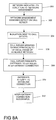
- Fig. 7 steps in the process by which a call server is optimised to use available network resources is shown schematically.
- the network management element 150 adapts a characteristic of the call server 112 using the following steps:
- the indication from the network management 150 is sent as a simple instruction to the call server 112 to change a particular element, for example, a rule in the routing algorithm of the call server.
- the call server 112 may be sent an objective/information item by the network management 150 which the call server uses to reconfigure itself.
- the network management may indicate that the gateway capacity has increased, or that a new gateway has been added, or that a trunk group can be accessed by an alternative gateway .
- the call server 112 is able to respond to the dynamic changes of the packet backbone network 120 without any additional network analytical functionality of the call server 112 being required.
- the analysis of the packet backbone network 120 is performed by the network management element150 and the call server 112 is adapted merely by receiving an appropriate instruction/instruction set from the network management element 150.
- the network management 150 may monitor the performance characteristics of the network and send appropriate indications to the call server 112 continuously, periodically or aperiodically depending on the desired performance requirements of the network 120.
- the network management 150 polls the packet network 120 periodically and is also able to react to asynchronous inputs from the packet backbone reflecting changes its condition.
- the call server 120 can thus adapt any suitable characteristic, for example, its routing algorithm in the case where link failure or congestion has occurred, or its overall call carrying capacity, providing the network management 150 has been able to provide a suitable indication on how the call server is to optimise that characteristic. This is the case whenever a call server characteristic is determined by a set of operation or engineering rules which the network management 150 can alter.
- the call server 112 can modify its call processing scheduler or its call origination rate for example, in response to an appropriate rule change being indicated by the network management 150.
- any asynchronous network event such as a link failure or congestion condition initiates a reaction in the call server via the following sequence:
- the network management 150 assesses in step 302 what the impact of the two congested links 144 and 152 is on the caller server 112. In this example, the call server 112 can no longer able to access gateway 116.
- the network management 150 can determine that the call server 112 wishes to connect trunk group 126 to trunk group 128, and can also determine that gateway 118 provides alternative access to trunk group 128. Accordingly the network management 150 determines that the call server's routing algorithm is the characteristic of the call server 112 which is to be adapted. The network management indicates to the call server 112 to modify its routing algorithm and/or other characteristics of the call server which could be adapted to optimise the call server's performance.
- the indication sent may provide the call server 112 with enough guidance to recognise that members of trunk route B on gateway B have restricted availability.
- the trunk selection algorithm is adjusted accordingly by the call server 112 without any information on the state or configuration of the packet backbone being provided to the call server.
- the indication may provide some state or configuration information to the call server.
- the call server 112 When the call server 112 receives an indication that the packet backbone network 120 is experiencing failure/congestion, the call server 112 is able to reset its trunk selection algorithm to select an alternative trunk member. In this example, the call server 112 requests gateway 118 and the other gateway 114 to establish an appropriate inter-gateway connection (step 308). As this gateway has already been established by the network management to be accessible in step 302, the call server does not attempt to request gateways 114 and 116 to establish a connection. Gateways 114, 118 are able to establish a successful connection (steps 310, 312).
- the call server may first attempt to interconnect two gateways, such as gateways 114, 116 as Fig. 8B shows.
- the network management element 150 intervenes to ensure that the call server 112 resets its characteristics appropriately.
- the trunk selection algorithm may be reset to use another range of trunk members where call attempts are failed by the gateways 114,116, and thereby access the trunk group 128 via gateway 118.
- Each trunk member is assigned a static Circuit Identification Code number, thus by indicating a rule change which resets the CIC range or which provides a specific CIC, the network management element 150 is able to act as an intermediary between the call server 112 and the packet backbone network 120 which enables the call server to respond appropriately to the condition of a network.
- the indication send by the network management element 150 contains instructions to modify specific engineering rule(s) which are able in this example to segment trunk members (gateways 116, 118) within the trunk group 128 and to override any random trunk assignment mechanism.
- the network management 150 has access to trunk group/member provisioning applications, and is able to correlate congestion with individual trunk group/member physical locations. This enables the call server 112 to be provided with proactive routing updates which enable it to minimise the number of call failures.
- the network management may provide an indication which is packet and/or bandwidth specific. For example, an indication that packets of bandwidth "x" are experiencing congestion to gateway Y, accordingly update routing algorithm for packets of bandwidth "x" to ensure that they are routed via alternative gateway Z.
- the ability to provide packet specific indications of the condition of the packet backbone network 120 is highly advantageous.
- the call server 120 is able to modify its characteristic(s) not only to suit the condition of the packet backbone generally but also to suit the nature of the traffic which the call server is routing over the packet backbone.
- the invention enables the call server's usage of available resources to be optimised in a manner which enables the call server to react to various dynamic packet backbone characteristics, for example, such as congestion of the packet backbone.
- the invention can be adapted in a manner obvious to those skilled in the art to other networks.
- the invention may be implemented by any suitable combination of hardware and/or software.
- the adaptation provided by the invention may affect the characteristic of the invention for a finite period of time, or until the condition of the network changes or reverts back to its operation state, or be permanent pending a further indication being sent by the network management 150.
Landscapes
- Engineering & Computer Science (AREA)
- Computer Networks & Wireless Communication (AREA)
- Signal Processing (AREA)
- Data Exchanges In Wide-Area Networks (AREA)
Applications Claiming Priority (2)
| Application Number | Priority Date | Filing Date | Title |
|---|---|---|---|
| US846095 | 1992-03-05 | ||
| US09/846,095 US20020161922A1 (en) | 2001-04-30 | 2001-04-30 | Method for adapting a characteristic of a call server |
Publications (1)
| Publication Number | Publication Date |
|---|---|
| EP1255413A2 true EP1255413A2 (de) | 2002-11-06 |
Family
ID=25296925
Family Applications (1)
| Application Number | Title | Priority Date | Filing Date |
|---|---|---|---|
| EP02252040A Withdrawn EP1255413A2 (de) | 2001-04-30 | 2002-03-21 | Verfahren zur Anpassung einer Charakteristik eines Anrufservers |
Country Status (3)
| Country | Link |
|---|---|
| US (1) | US20020161922A1 (de) |
| EP (1) | EP1255413A2 (de) |
| CA (1) | CA2380334A1 (de) |
Cited By (1)
| Publication number | Priority date | Publication date | Assignee | Title |
|---|---|---|---|---|
| US8023406B2 (en) | 2009-02-27 | 2011-09-20 | Research In Motion Limited | Route reflector for a communication system |
Families Citing this family (1)
| Publication number | Priority date | Publication date | Assignee | Title |
|---|---|---|---|---|
| AU2001213843A1 (en) * | 2000-10-09 | 2002-04-22 | Nokia Corporation | Method and system for establishing a connection between network elements |
Family Cites Families (6)
| Publication number | Priority date | Publication date | Assignee | Title |
|---|---|---|---|---|
| US5761502A (en) * | 1995-12-29 | 1998-06-02 | Mci Corporation | System and method for managing a telecommunications network by associating and correlating network events |
| US6578077B1 (en) * | 1997-05-27 | 2003-06-10 | Novell, Inc. | Traffic monitoring tool for bandwidth management |
| US6680694B1 (en) * | 1997-08-19 | 2004-01-20 | Siemens Vdo Automotive Corporation | Vehicle information system |
| US6560329B1 (en) * | 1999-04-29 | 2003-05-06 | Teloquent Communications Corporation | Automated call routing system |
| US6643706B1 (en) * | 1999-06-29 | 2003-11-04 | Cisco Technology, Inc. | Scaleable route redistribution mechanism |
| US6385796B1 (en) * | 2001-05-08 | 2002-05-14 | David N. Muir, Jr. | Self flushing urinal with integrated gaming and reward system |
-
2001
- 2001-04-30 US US09/846,095 patent/US20020161922A1/en not_active Abandoned
-
2002
- 2002-03-21 EP EP02252040A patent/EP1255413A2/de not_active Withdrawn
- 2002-04-03 CA CA002380334A patent/CA2380334A1/en not_active Abandoned
Cited By (1)
| Publication number | Priority date | Publication date | Assignee | Title |
|---|---|---|---|---|
| US8023406B2 (en) | 2009-02-27 | 2011-09-20 | Research In Motion Limited | Route reflector for a communication system |
Also Published As
| Publication number | Publication date |
|---|---|
| CA2380334A1 (en) | 2002-10-30 |
| US20020161922A1 (en) | 2002-10-31 |
Similar Documents
| Publication | Publication Date | Title |
|---|---|---|
| KR100255626B1 (ko) | 클러스터의 경계를 지나서 착신 메시지를 라우팅하는 방법 및 게이트웨이 | |
| EP3528440B1 (de) | Pfadauswahlverfahren und -system, netzwerkbeschleunigungsknoten und netzwerkbeschleunigungssystem | |
| JP4317522B2 (ja) | ピアツーピア環境におけるネットワーク・トラフィック制御 | |
| US7130305B2 (en) | Processing of data packets within a network element cluster | |
| US7315896B2 (en) | Server network controller including packet forwarding and method therefor | |
| EP0986229A2 (de) | Verfahren und System zur Überwachung und Steuerung der Netzzugriffe | |
| US20080165686A1 (en) | Cognitive Network | |
| EP2936771B1 (de) | Überlastungssteuerung für sitzungsaufbau | |
| US10164845B2 (en) | Network service aware routers, and applications thereof | |
| EP4311248A2 (de) | Echtzeitdetektion der beendigung der sensor-wrap-ausführung in der gnmi-telemetrie einer netzwerkvorrichtung | |
| EP1762069B1 (de) | Verfahren zur auswahl eines servers aus einer servermenge | |
| US6763375B1 (en) | Method for defining and controlling the overall behavior of a network processor device | |
| Montazerolghaem et al. | A load scheduler for SIP proxy servers: design, implementation and evaluation of a history weighted window approach | |
| CN1937570A (zh) | 路由选择控制装置、方法和系统 | |
| US6973503B2 (en) | Preventing at least in part control processors from being overloaded | |
| Josbert et al. | Solution for industrial networks: Resilience-based sdn technology | |
| KR20220128896A (ko) | 클라우드 서버 스케일링 방법 및 그 장치 | |
| Ghorab et al. | SDN-based service discovery and assignment framework to preserve service availability in Telco-based multi-access edge computing | |
| US7907599B2 (en) | Determination of SIP transport to reduce call setup delays | |
| US6510214B1 (en) | System and method of detecting overload in a service control point of a telecommunications network | |
| US8964596B1 (en) | Network service aware routers, and applications thereof | |
| EP1255413A2 (de) | Verfahren zur Anpassung einer Charakteristik eines Anrufservers | |
| EP4164192B1 (de) | Verwaltung einer aktualisierung einer konfiguration eines endgerätes | |
| KR20190048324A (ko) | 다중 네트워크 기반의 서비스를 제공하는 방법 및 장치 | |
| JP5668503B2 (ja) | 有害サイトフィルタリングシステム及びフィルタリング方法 |
Legal Events
| Date | Code | Title | Description |
|---|---|---|---|
| PUAI | Public reference made under article 153(3) epc to a published international application that has entered the european phase |
Free format text: ORIGINAL CODE: 0009012 |
|
| AK | Designated contracting states |
Kind code of ref document: A2 Designated state(s): AT BE CH CY DE DK ES FI FR GB GR IE IT LI LU MC NL PT SE TR |
|
| AX | Request for extension of the european patent |
Free format text: AL;LT;LV;MK;RO;SI |
|
| RIN1 | Information on inventor provided before grant (corrected) |
Inventor name: PARTON, WILLIAM Inventor name: SCOTT, FRANK |
|
| STAA | Information on the status of an ep patent application or granted ep patent |
Free format text: STATUS: THE APPLICATION HAS BEEN WITHDRAWN |
|
| 18W | Application withdrawn |
Effective date: 20050721 |