EP1255249A2 - Decoder, decoding method, re-encoder, re-encoding method, decoding program and re-encoding program embodied on computer-readable medium - Google Patents
Decoder, decoding method, re-encoder, re-encoding method, decoding program and re-encoding program embodied on computer-readable medium Download PDFInfo
- Publication number
- EP1255249A2 EP1255249A2 EP02252886A EP02252886A EP1255249A2 EP 1255249 A2 EP1255249 A2 EP 1255249A2 EP 02252886 A EP02252886 A EP 02252886A EP 02252886 A EP02252886 A EP 02252886A EP 1255249 A2 EP1255249 A2 EP 1255249A2
- Authority
- EP
- European Patent Office
- Prior art keywords
- information
- decoded
- status
- encoded
- decoding
- Prior art date
- Legal status (The legal status is an assumption and is not a legal conclusion. Google has not performed a legal analysis and makes no representation as to the accuracy of the status listed.)
- Granted
Links
Images


Classifications
-
- H—ELECTRICITY
- H04—ELECTRIC COMMUNICATION TECHNIQUE
- H04N—PICTORIAL COMMUNICATION, e.g. TELEVISION
- H04N19/00—Methods or arrangements for coding, decoding, compressing or decompressing digital video signals
- H04N19/46—Embedding additional information in the video signal during the compression process
- H04N19/467—Embedding additional information in the video signal during the compression process characterised by the embedded information being invisible, e.g. watermarking
-
- G—PHYSICS
- G06—COMPUTING OR CALCULATING; COUNTING
- G06T—IMAGE DATA PROCESSING OR GENERATION, IN GENERAL
- G06T1/00—General purpose image data processing
- G06T1/0021—Image watermarking
- G06T1/005—Robust watermarking, e.g. average attack or collusion attack resistant
-
- G—PHYSICS
- G06—COMPUTING OR CALCULATING; COUNTING
- G06T—IMAGE DATA PROCESSING OR GENERATION, IN GENERAL
- G06T1/00—General purpose image data processing
- G06T1/0021—Image watermarking
- G06T1/0085—Time domain based watermarking, e.g. watermarks spread over several images
-
- H—ELECTRICITY
- H04—ELECTRIC COMMUNICATION TECHNIQUE
- H04N—PICTORIAL COMMUNICATION, e.g. TELEVISION
- H04N21/00—Selective content distribution, e.g. interactive television or video on demand [VOD]
- H04N21/20—Servers specifically adapted for the distribution of content, e.g. VOD servers; Operations thereof
- H04N21/23—Processing of content or additional data; Elementary server operations; Server middleware
- H04N21/238—Interfacing the downstream path of the transmission network, e.g. adapting the transmission rate of a video stream to network bandwidth; Processing of multiplex streams
- H04N21/2389—Multiplex stream processing, e.g. multiplex stream encrypting
- H04N21/23892—Multiplex stream processing, e.g. multiplex stream encrypting involving embedding information at multiplex stream level, e.g. embedding a watermark at packet level
-
- H—ELECTRICITY
- H04—ELECTRIC COMMUNICATION TECHNIQUE
- H04N—PICTORIAL COMMUNICATION, e.g. TELEVISION
- H04N21/00—Selective content distribution, e.g. interactive television or video on demand [VOD]
- H04N21/40—Client devices specifically adapted for the reception of or interaction with content, e.g. set-top-box [STB]; Operations thereof
- H04N21/41—Structure of client; Structure of client peripherals
- H04N21/426—Internal components of the client ; Characteristics thereof
-
- H—ELECTRICITY
- H04—ELECTRIC COMMUNICATION TECHNIQUE
- H04N—PICTORIAL COMMUNICATION, e.g. TELEVISION
- H04N21/00—Selective content distribution, e.g. interactive television or video on demand [VOD]
- H04N21/80—Generation or processing of content or additional data by content creator independently of the distribution process; Content per se
- H04N21/83—Generation or processing of protective or descriptive data associated with content; Content structuring
- H04N21/835—Generation of protective data, e.g. certificates
- H04N21/8358—Generation of protective data, e.g. certificates involving watermark
-
- G—PHYSICS
- G06—COMPUTING OR CALCULATING; COUNTING
- G06T—IMAGE DATA PROCESSING OR GENERATION, IN GENERAL
- G06T2201/00—General purpose image data processing
- G06T2201/005—Image watermarking
- G06T2201/0065—Extraction of an embedded watermark; Reliable detection
-
- G—PHYSICS
- G11—INFORMATION STORAGE
- G11B—INFORMATION STORAGE BASED ON RELATIVE MOVEMENT BETWEEN RECORD CARRIER AND TRANSDUCER
- G11B20/00—Signal processing not specific to the method of recording or reproducing; Circuits therefor
- G11B20/00086—Circuits for prevention of unauthorised reproduction or copying, e.g. piracy
-
- G—PHYSICS
- G11—INFORMATION STORAGE
- G11B—INFORMATION STORAGE BASED ON RELATIVE MOVEMENT BETWEEN RECORD CARRIER AND TRANSDUCER
- G11B20/00—Signal processing not specific to the method of recording or reproducing; Circuits therefor
- G11B20/00086—Circuits for prevention of unauthorised reproduction or copying, e.g. piracy
- G11B20/00884—Circuits for prevention of unauthorised reproduction or copying, e.g. piracy involving a watermark, i.e. a barely perceptible transformation of the original data which can nevertheless be recognised by an algorithm
Definitions
- the present invention relates to a technical field of a decoder, a decoding method, a re-encoder, a re-encoding method, an information recording medium, a decoding program and a re-encoding program, and more specifically, a decoder and a decoding method for decoding information once encoded, a re-encoder and a re-encoding method for encoding again the decoded information, a decoding program and a re-encoding program for the decoding process and the re-encoding process, and an information recording medium having the programs recorded therein.
- MPEG method has become popular as an international standard for compressing and encoding a motion image composed of a plurality of still images.
- GOP Group of Picture
- Each GOP contains a plurality of types of 15 encoded still images (hereinafter, the encoded still image will be referred to as a "picture"), and thus, a motion image encoded as a whole is composed.
- the pictures contained in the GOP will be described.
- the pictures include ones described below.
- one GOP contains three types of pictures: an I picture (Intra-coded picture); a P picture (Predictive-coded picture); and a B picture (Bidirectionally predictive-coded picture).
- the I picture refers to a picture that can be decoded to reproduce a complete still image using only the picture itself.
- the P picture refers to a prediction image that is decoded by decoding a difference between itself and a prediction image reproduced through complementation using a decoded I picture or another P picture.
- the B picture refers to a prediction image that is decoded by using not only an I picture or P picture decoded prior to the B picture but also an I picture or P picture following the B picture.
- the information indicative of the type of the picture decoded to reproduce each of the still images constituting the motion image after decoding is incorporated in the vertical blanking interval of the still image. Furthermore, there is disclosed a technique of decoding an encoded motion image by handling it as digital information, and describing the information indicative of the type of the picture decoded to reproduce each of the still images constituting the motion image after decoding in a format associated with the still image.
- the information indicative of the type of the picture is described in the format as digital information
- the still image is converted into another format during the re-encoding, the original information indicative of the type of picture may be erased.
- an object of the present invention is to provide a decoder and decoding method that can minimize degradation in the quality of information even when encoded information obtained by encoding a motion image or the like is repeatedly decoded and re-encoded, a re-encoder and a re-encoding method for conducting the re-encoding, a decoding program for the decoding embodied on computer-readable medium, a re-encoding program for the re-encoding embodied on computer-readable medium.
- the above object of the present invention can be achieved by a decoder of the present invention for generating decoded information by decoding encoded information.
- the decoder is provided with: a detection device for detecting a status of encoding in the encoded information based on the encoded information; and a generation device for generating the decoded information by embedding status information indicative of the detected status in image information contained in the decoded information.
- the decoded information is generated by embedding the status information in the image information
- re-encoding the decoded information by using the status information embedded therein enables the quality of information after being re-encoded to be improved compared with the case where the re-encoding does not involve usage of the status information.
- the decoded information is generated by embedding the status information in the image information, the status information is not lost in the re-encoding.
- the generation device embeds the status information in the image information only when copy of the encoded information is permitted to be executed.
- the re-encoding using the status information can be accomplished only when the decoded information is permitted to be duplicated, the quality of the decoded information, which is permitted to be duplicated, after being re-encoded can be improved.
- the status information cannot be used when the copy is not permitted, the quality of the information cannot be maintained in the re-encoding in the case where the decoded information not permitted to be duplicated is illegally duplicated, and consequently, the copy of the decoded information can be restricted.
- the generation device embeds dummy information different from the status information in the image information only when copy of the encoded information is prohibited from being executed.
- the re-encoding is accomplished by using the dummy information different from the status information only when the decoded information is prohibited from being duplicated, the quality of the information cannot be maintained in the re-encoding in the case where the decoded information not permitted to be duplicated is illegally duplicated, and consequently, the copy of the decoded information can be restricted.
- the generation device embeds the status information in the image information by digital watermarking.
- the status information since the status information is embedded in the image information by digital watermarking, the status information can be prevented from being lost in the re-encoding while enhancing the secrecy of the status information.
- the generation device embeds the dummy information in the image information by digital watermarking.
- the dummy information since the dummy information is embedded in the image information by digital watermarking, the dummy information can be prevented from being lost in the re-encoding, and consequently, illegal re-encoding of the decoded information can be effectively suppressed.
- the above object of the present invention can be achieved by a decoder of the present invention for generating decoded information by decoding encoded information containing copy control information that restricts copy of the decoded information obtained by decoding the encoded information.
- the decoder is provided with: a detection device for detecting a status of encoding in the encoded information based on the encoded information; and a generation device for generating the decoded information by superimposing status information indicative of the detected status thereon only when the copy control information is the copy control information for permitting the copy to be executed.
- the decoded information having the status information superimposed thereon is generated, the decoded information is re-encoded by using the superimposed status information, so that the quality of the information after being re-encoded can be improved compared with the case where the re-encoding does not involve usage of the status information.
- the re-encoding using the status information can be accomplished only when the decoded information is permitted to be duplicated, the quality of the decoded information, which is permitted to be duplicated, after being re-encoded can be improved, and the status information cannot be used when the copy is not permitted. Therefore, the quality of the information cannot be maintained in the re-encoding in the case where the decoded information not permitted to be duplicated is illegally duplicated, and consequently, the copy of the decoded information can be restricted.
- the above object of the present invention can be achieved by a decoder of the present invention for generating decoded information by decoding encoded information containing copy control information that restricts copy of the decoded information obtained by decoding the encoded information.
- the decoder is provided with: a detection device for detecting a status of encoding in the encoded information based on the encoded information; and a generation device for generating the decoded information by superimposing dummy information different from the detected status information indicative of the detected status thereon only when the copy control information is the copy control information for prohibiting the copy from being executed.
- the decoded information having the status information superimposed thereon is generated, the decoded information is re-encoded by using the superimposed status information, so that the quality of the information after being re-encoded can be improved compared with the case where the re-encoding does not involve usage of the status information.
- the re-encoding is accomplished by using the dummy information different from the status information only when the decoded information is prohibited from being duplicated, the quality of the information cannot be maintained in the re-encoding in the case where the decoded information not permitted to be duplicated is illegally duplicated, and consequently, the copy of the decoded information can be restricted.
- the encoded information is compressed motion image information comprising a plurality of compressed still images
- the status information is type information indicative of the type of the still image
- the re-encoding of the decoded information can be controlled according to the type of the still image, so that the quality of the motion image after being re-encoded can be improved compared with the case where the re-encoding does not involve usage of the type information.
- the compressed motion image information is compressed according to an MPEG (Moving Picture Experts Group) method, and the type information indicates that the still image is an intra-coded picture.
- MPEG Motion Picture Experts Group
- the re-encoding can be accomplished with reference to the intra-coded picture with a high quality.
- a re-encoder of the present invention for encoding again decoded information generated by the decoder for generating decoded information by decoding encoded information
- the decoder comprising: a detection device for detecting a status of encoding in the encoded information based on the encoded information; and a generation device for generating the decoded information by embedding status information indicative of the detected status in image information contained in the decoded information.
- the re-encoder is provided with: a detection device for detecting status information from the decoded information; and an encoding device for encoding again the decoded information using the detected status information.
- the decoded information is encoded again by using the status information detected therefrom, the quality of the information after being re-encoded can be improved compared with the case where the re-encoding does not involve usage of the status information.
- the decoded information is generated by embedding the status information in the image information, the status information is not lost in the re-encoding.
- the above object of the present invention can be achieved by a decoding method of the present invention for generating decoded information by decoding enabled information.
- the method is provided with: a detecting process of detecting a status of encoding in the encoded information based on the encoded information; and a generating process of generating the decoded information by embedding status information indicative of the detected status in image information contained in the decoded information.
- the decoded information is generated by embedding the status information in the image information
- re-encoding the decoded information by using the status information embedded therein enables the quality of information after being re-encoded to be improved compared with the case where the re-encoding does not involve usage of the status information.
- the decoded information is generated by embedding the status information in the image information, the status information is not lost in the re-encoding.
- the status information is embedded in the image information only when copy of the encoded information is permitted to be executed.
- the re-encoding using the status information can be accomplished only when the decoded information is permitted to be duplicated, the quality of the decoded information, which is permitted to be duplicated, after being re-encoded can be improved.
- the status information cannot be used when the copy is not permitted, the quality of the information cannot be maintained in the re-encoding in the case where the decoded information not permitted to be duplicated is illegally duplicated, and consequently, the copy of the decoded information can be restricted.
- dummy information different from the status information is embedded in the image information only when copy of the encoded information is prohibited from being executed.
- the re-encoding is accomplished by using the dummy information different from the status information only when the decoded information is prohibited from being duplicated, the quality of the information cannot be maintained in the re-encoding in the case where the decoded information not permitted to be duplicated is illegally duplicated, and consequently, the copy of the decoded information can be restricted.
- the status information is embedded in the image information by digital watermarking.
- the status information since the status information is embedded in the image information by digital watermarking, the status information can be prevented from being lost in the re-encoding while enhancing the secrecy of the status information.
- the dummy information is embedded in the image information by digital watermarking.
- the dummy information since the dummy information is embedded in the image information by digital watermarking, the dummy information can be prevented from being lost in the re-encoding, and consequently, illegal re-encoding of the decoded information can be effectively suppressed.
- the above object of the present invention can be achieved by a decoding method of the present invention for generating decoded information by decoding encoded information containing copy control information that restricts copy of the decoded information obtained by decoding the encoded information.
- the method is provided with: a detecting process of detecting a status of encoding in the encoded information based on the encoded information; and a generating process of generating the decoded information by superimposing status information indicative of the detected status thereon only when the copy control information is the copy control information for permitting the copy to be executed.
- the decoded information having the status information superimposed thereon is generated, the decoded information is re-encoded by using the superimposed status information, so that the quality of the information after being re-encoded can be improved compared with the case where the re-encoding does not involve usage of the status information.
- the re-encoding using the status information can be accomplished only when the decoded information is permitted to be duplicated, the quality of the decoded information, which is permitted to be duplicated, after being re-encoded can be improved, and the status information cannot be used when the copy is not permitted. Therefore, the quality of the information cannot be maintained in the re-encoding in the case where the decoded information not permitted to be duplicated is illegally duplicated, and consequently, the copy of the decoded information can be restricted.
- the above object of the present invention can be achieved by a decoding method of the present invention for generating decoded information by decoding encoded information containing copy control information that restricts copy of the decoded information obtained by decoding the encoded information.
- the method is provided with: a detecting process of detecting a status of encoding in the encoded information based on the encoded information; and a generating process of generating the decoded information by superimposing dummy information different from the detected status information indicative of the detected status thereon only when the copy control information is the copy control information for permitting the copy to be executed.
- the decoded information having the status information superimposed thereon is generated, the decoded information is re-encoded by using the superimposed status information, so that the quality of the information after being re-encoded can be improved compared with the case where the re-encoding does not involve usage of the status information.
- the re-encoding is accomplished by using the dummy information different from the status information only when the decoded information is prohibited from being duplicated, the quality of the information cannot be maintained in the re-encoding in the case where the decoded information not permitted to be duplicated is illegally duplicated, and consequently, the copy of the decoded information can be restricted.
- the encoded information is compressed motion image information composed of a plurality of compressed still images
- the status information is type information indicative of the type of the still image
- the re-encoding of the decoded information can be controlled according to the type of the still image, so that the quality of the motion image after being re-encoded can be improved compared with the case where the re-encoding does not involve usage of the type information.
- the compressed motion image information is compressed according to an MPEG method, and the type information indicates that the still image is an intra-coded picture.
- the re-encoding can be accomplished with reference to the intra-coded picture with a high quality.
- the above object of the present invention can be achieved by a re-encoding method of the present invention for encoding again decoded information generated by a decoder for generating decoded information by decoding encoded information.
- the method is provided with: a detecting process of detecting status information from the decoded information; and an encoding process of encoding again the decoded information using the detected status information.
- the decoded information is encoded again by using the status information detected therefrom, the quality of the information after being re-encoded can be improved compared with the case where the re-encoding does not involve usage of the status information.
- the decoded information is generated by embedding the status information in the image information, the status information is not lost in the re-encoding.
- an information recording medium of the present invention having a decoding program recorded therein so as to be read by a decoding computer included in a decoder that generates decoded information by decoding encoded information.
- the decoding program causes the decoding computer to function as: a detection device for detecting a status of encoding in the encoded information based on the encoded information; and a generation device for generating the decoded information by embedding status information indicative of the detected status in image information contained in the decoded information.
- the decoded information is generated by embedding the status information in the image information
- re-encoding the decoded information by using the status information embedded therein enables the quality of information after being re-encoded to be improved compared with the case where the re-encoding does not involve usage of the status information.
- the decoded information is generated by embedding the status information in the image information, the status information is not lost in the re-encoding.
- the generation device embeds the status information in the image information only when copy of the encoded information is permitted to be executed.
- the re-encoding using the status information can be accomplished only when the decoded information is permitted to be duplicated, the quality of the decoded information, which is permitted to be duplicated, after being re-encoded can be improved.
- the status information cannot be used when the copy is not permitted, the quality of the information cannot be maintained in the re-encoding in the case where the decoded information not permitted to be duplicated is illegally duplicated, and consequently, the copy of the decoded information can be restricted.
- the generation device embeds dummy information different from the status information in the image information only when copy of the encoded information is prohibited from being executed.
- the re-encoding is accomplished by using the dummy information different from the status information only when the decoded information is prohibited from being duplicated, the quality of the information cannot be maintained in the re-encoding in the case where the decoded information not permitted to be duplicated is illegally duplicated, and consequently, the copy of the decoded information can be restricted.
- the generation device embeds the status information in the image information by digital watermarking.
- the status information since the status information is embedded in the image information by digital watermarking, the status information can be prevented from being lost in the re-encoding while enhancing the secrecy of the status information.
- the generation device embeds the dummy information in the image information by digital watermarking.
- the dummy information since the dummy information is embedded in the image information by digital watermarking, the dummy information can be prevented from being lost in the re-encoding, and consequently, illegal re-encoding of the decoded information can be effectively suppressed.
- an information recording medium of the present invention having a decoding program recorded therein so as to be read by a decoding computer included in a decoder that generates decoded information by decoding encoded information containing copy control information that restricts copy of the decoded information obtained by decoding the encoded information.
- the decoding program causes the decoding computer to function as: a detection device for detecting a status of encoding in the encoded information based on the encoded information; and a generation device for generating the decoded information by superimposing status information indicative of the detected status thereon only when the copy control information is the copy control information for permitting the copy to be executed.
- the decoded information having the status information superimposed thereon is generated, the decoded information is re-encoded by using the superimposed status information, so that the quality of the information after being re-encoded can be improved compared with the case where the re-encoding does not involve usage of the status information.
- the re-encoding using the status information can be accomplished only when the decoded information is permitted to be duplicated, the quality of the decoded information, which is permitted to be duplicated, after being re-encoded can be improved, and the status information cannot be used when the copy is not permitted. Therefore, the quality of the information cannot be maintained in the re-encoding in the case where the decoded information not permitted to be duplicated is illegally duplicated, and consequently, the copy of the decoded information can be restricted.
- an information recording medium of the present invention having a decoding program recorded therein so as to be read by a decoding computer included in a decoder that generates decoded information by decoding encoded information containing copy control information that restricts copy of the decoded information obtained by decoding the encoded information.
- the decoding program causes the decoding computer to function as: a detection device for detecting a status of encoding in the encoded information based on the encoded information; and a generation device for generating the decoded information by superimposing dummy information indicative of the detected status thereon only when the copy control information is the copy control information for prohibiting the copy from being executed.
- the decoded information having the status information superimposed thereon is generated, the decoded information is re-encoded by using the superimposed status information, so that the quality of the information after being re-encoded can be improved compared with the case where the re-encoding does not involve usage of the status information.
- the re-encoding is accomplished by using the dummy information different from the status information only when the decoded information is prohibited from being duplicated, the quality of the information cannot be maintained in the re-encoding in the case where the decoded information not permitted to be duplicated is illegally duplicated, and consequently, the copy of the decoded information can be restricted.
- the encoded information is compressed motion image information composed of a plurality of compressed still images
- the status information is type information indicative of the type of the still image
- the re-encoding of the decoded information can be controlled according to the type of the still image, so that the quality of the motion image after being re-encoded can be improved compared with the case where the re-encoding does not involve usage of the type information.
- the compressed motion image information is compressed according to an MPEG method, and the type information indicates that the still image is an intra-coded picture.
- the re-encoding can be accomplished with reference to the intra-coded picture with a high quality.
- an information recording medium of the present invention having a re-encoding program therein so as to be read by an encoding computer included in a re-encoder that encodes again decoded information generated by the decoder for generating decoded information by decoding encoded information, comprising: a detection device for detecting a status of encoding in the encoded information based on the encoded information; and a generation device for generating the decoded information by embedding status information indicative of the detected status in image information contained in the decoded information.
- the re-encoding program causes the encoding computer to function as: a detection device for detecting status information from the decoded information; and an encoding device for encoding again the decoded information using the detected status information.
- the decoded information is encoded again by using the status information detected therefrom, the quality of the information after being re-encoded can be improved compared with the case where the re-encoding does not involve usage of the status information.
- the decoded information is generated by embedding the status information in the image information, the status information is not lost in the re-encoding.
- AV Audio/Visual
- a set-top box serving as a decoder for decoding a motion image compressed and encoded according to the MPEG method described above and distributed on a broadcasting radio wave
- a recorder/player including an information recording apparatus for encoding the decoded motion image again and recording the motion image on an optical disc.
- FIG. 1 shows an example of a plurality of pictures constituting one GOP.
- the motion image in the distribution stage is composed of information units referred to as video packs, each of which contains one or more GOP.
- FIG. 1 shows a case where one GOP 100 is composed of 15 pictures substantially equivalent to 0.5 seconds of replay time. This number of pictures is illustrative, and one GOP 100 may contain various numbers of pictures in the MPEG method.
- the 15 pictures include one leading I picture, and four P pictures and ten B pictures in the order shown in FIG. 1, which have a prediction relationship (interpolation relationship) therebetween indicated by arrows in FIG. 1.
- the quantity of data for constructing each of the pictures is increased, so that the quantity of data contained in one GOP 100 is increased.
- the motion image can be edited per the GOP 100 as the minimum unit, and since one P picture is contained per a preset number of B pictures, the original motion image can be compressed and encoded with a high compressibility.
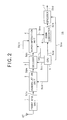
- FIG. 2 is a block diagram showing a schematic configuration of a set-top box according to this embodiment
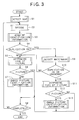
- FIG. 3 is a flow chart illustrating a decoding process conducted in the set-top box
- FIG. 4 is a schematic diagram illustrating a status of the motion image before and after the decoding process
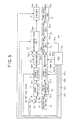
- FIG. 5 is a block diagram showing a schematic configuration of a recorder/player according to this embodiment.
- a set-top box SB As shown in FIG. 2, a set-top box SB according to this embodiment is provided with a front end unit 1 having an antenna AT; a demodulation unit 2; a decoder 3 serving as a detection device; a superimposition unit 4 serving as a generation device; a CPU 5; a down-converter 6; and an encoder 7.
- the motion image information and audio information associated therewith that are distributed after compression and encoding are received by the antenna AT, subject to a preset receipt processing such as amplification in the front end unit 1, and output to the demodulation unit 2 in the form of a reception signal Sfe.
- the demodulation unit 2 performs a descrambling process for decryption and a demultiplexing process for separating the motion image information from the audio information on the output reception signal Sfe, and outputs a demodulated signal Sdm to the decoder 3.
- the separated motion image information contained in the demodulated signal Sdm contains the above-described GOP 100.
- the decoder 3 decodes the motion image information and the audio information contained in the demodulated signal Sdm according to the MPEG method to generate a decoded signal Sdc containing the encoded motion image information and audio information and outputs the decoded signal Sdc to the superimposition unit 4.
- the decoder 3 outputs to the superimposition unit 4 a picture signal Spic, which is information indicative of the still image reproduced from the I picture in the GOP 100 before being decoded.
- the superimposition unit 4 embeds the picture signal Spic in the still image (decoded still image) in the decoded signal Sdc input at the time when the picture signal Spic is generated and outputs a superimposed signal Smx to the down-converter 6.
- the down-converter 6 converts the decoded motion image information contained in the superimposed signal Smx into an image signal conforming to the NTSC (National Television System Committee) and outputs a converted signal Sdb to the encoder 7.
- NTSC National Television System Committee
- the encoder 7 performs a demodulation or the like according to the NTSC method on the converted signal Sdb and outputs an output signal Sed to a recorder/player described in detail later.
- the CPU 5 In parallel with this process, the CPU 5 generates the respective control signals described above to control comprehensively the operation of the set-top box SB.
- the decoding process is conducted on the assumption that the motion image information and the audio information received via the front end unit 1 are composed of information sectors each containing the motion image itself or sound itself composed of the above-described video packs, respectively, the information sector contains, at the head thereof, identification information indicative of whether or not the motion image information and the audio information are prohibited from being duplicated into another information recording medium or the like after being decoded, and the identification information is embedded also in the motion image information and the audio information themselves (that is, part other than the identification information) according to the watermark method.
- the decoder 3 detects the head of each GOP 100 contained in the demodulated signal Sdm generated in the demodulation unit 2 (step S1), and then conducts the decoding process for the detected GOP 100 (step S2).
- the detection of the head of one GOP 100 attained by detecting the I picture contained in the demodulated signal Sdm is regarded as the detection of the GOP 100.
- step S3 the identification information contained at the head of the information sector, which is an information unit of the demodulated information Smd before being decoded is detected (step S3), and based on the identification information, it is determined whether or not the motion image information and the audio information input in the form of the demodulated information Sdm are those prohibited from being duplicated (step S4).
- step S9 the identification information embedded in the motion image information or audio information itself as a watermark as the assumption for the decoding process of the first embodiment as described above is detected (step S9), and based on the detected identification information, it is determined whether the motion image information or the audio information is permitted to be duplicated or it is unknown due to a failure in detection of the watermark whether the copy is permitted or not (step S10).
- step S10 If it is determined that the motion image information and the audio information are not permitted to be duplicated (if NO in step S10), then the process continues to step S5. On the other hand, if it is determined that it is unknown whether the motion image information or the audio information is permitted to be duplicated or not due to a failure in detection of the watermark (if YES in step S10), the type of the picture contained in the demodulated signal Sdm input at that timing, specifically, I picture, P picture, or B picture, is determined (step S11).
- step S12 it is determined whether or not the picture input at that timing is an I picture in the detection in step S11 (step S12), and if it is determined to be the I picture (if YES in step S12), the picture signal Spic indicative of the I picture is generated and output to the superimposition unit 4.
- the superimposition unit 4 embeds the received picture signal Spic (that is, picture signal Spic indicating that the still image is decoded from the I picture in the GOP 100 before being decoded) as the watermark in the still image in the decoded signal Sdc, which is decoded by the decoder 3 and input to the superimposition unit 4 at the same timing (step S13), to generate the superimposed signal Smx and outputs it to the down-converter 6, and then, the process continues to step S8.
- Spic that is, picture signal Spic indicating that the still image is decoded from the I picture in the GOP 100 before being decoded
- a picture signal Spic can be embedded by setting two least significant bits of pixel data at the address of (0, 0) in a still image decoded from an I picture to "1", setting two least significant bits of pixel data at the address of (0, 0) in a still image decoded from a picture other than the I picture to "0", setting two least significant bits of pixel data at the address of (0, 1) in the still image decoded from the I picture to "0", and setting two least significant bits of pixel data at the address of (0, 2) in the still image decoded from an I picture to "1".
- the two least significant bits of the pixel data at the address of (0, 0) in the still image decoded from the I picture are all set to "1"
- the two least significant bits of the pixel data at the address of (0, 1) in the still image decoded from the I picture are all set to "0”
- the two least significant bits of the pixel data at the address of (0, 2) in the still image decoded from the I picture are all set to "1”
- the still image decoded from the I picture has a data pattern rarely appearing in typical reproduced still images so that the picture signal Spic can be embedded therein so as to be identified.
- step S8 it is checked whether or not the decoding process is completed for all the pictures (step S8), and if the process is completed (if YES in step S8), the sequence of the decoding process is ended. On the other hand, if the GOP 100 contains a picture not decoded (if NO in step S8), the process continues to step S2 to perform the above-described decoding process on the picture.
- step S12 If it is determined that the picture input is not the I picture in the determination in step S12 (if NO in step S12), the process continues to step S8 by passing the above-described embedding (step S13) of the picture signal Spic.
- step S4 if it is determined, based on the identification information contained at the head of the information sector, that the motion image information and the audio information input in the form of the demodulated information Sdm are not those permitted to be duplicated (if NO in step S4), then the type of the received picture contained in the demodulated signal Sdm is detected as in the processing in step S11 described above (step S5), and it is determined whether the picture is determined to be the I picture or not (step S6).
- step S6 if the picture is determined to be the I picture in the determination in step S6 (if YES in step S6), the process continues to step S8 bypassing the embedding of the picture signal Spic.
- step S6 if the picture is determined not to be the I picture in the determination in step S6 (if NO in step S6), one still image decoded from a picture other than the I picture in the GOP 100 before being decoded is selected, or one still image decoded is randomly selected, and the picture signal Spic is embedded in the selected still image as dummy information according to the watermark method in the superimposition unit 4 (step S7) to generate the superimposed signal Smx, the superimposition signal Smx is output to the down-converter 6, and then the process continues to step S8.
- the picture signal Spic indicating that a still image is the still image FG decoded from the I picture is embedded in one of the still images FG reproduced from pictures other than the I picture in the GOP 100 before being decoded (see the second stage in FIG. 4), or randomly embedded in a number of still images FG, the number being associated with the original GOP (see bottom stage in FIG. 4).
- FIG. 5 shows a recorder/player having a recording function of encoding again the output signal Sed generated through the decoding process in the set-top box SB described with reference to FIGS. 1 to 4 and optically recording the same in an optical disk DK, and a decoding function of decoding the motion image information and the audio information recorded in the optical disk DK according to, for example, the MPEG method through the same process as in the set-top box SB.
- the recorder/player PR is provided with: a pickup 23; a head amplifier 10; a format decoder 11; a decoder 12; a superimposition unit 13; an encoder 14; a recording driver 15; a pulse generator circuit 16; a format encoder 17; an encoder 18 serving as an encoding device; an extraction unit 19 serving as a detecting device; a separation unit 20; a time base correction unit 21; and a CPU 22.
- the pickup 23 irradiates the optical disk DK having the motion image information recorded therein with a light beam B for information reproduction, receives the reflected light, generates a detection signal Sp varying with the change in the reception intensity thereof, and outputs the detection signal to the head amplifier 10.
- the head amplifier 10 amplifies the detection signal Sp with a preset amplification factor to generate an amplified signal Sft, and output the amplified signal to the format decoder 11.
- the motion image information contained in the amplified signal Sft includes the GOP 100 described above.
- the format decoder 11 interprets the format structure of the motion image information contained in the amplified signal Sft, separates the motion image information from other control information, generates a demodulated signal Sdm similar to that in the set-top box SB, and outputs the demodulated signal to the decoder 12.
- the decoder 12 and the superimposition unit 13 performs exactly the same processes in the decoder 3 and the superimposition unit 4 in the set-top box SB (specifically, the decoding and the embedding of the picture signal Spic described above with reference to FIGS. 2 to 4), and the superimposition unit 13 generates a superimposed signal Smx containing the motion image information composed of the still image decoded and having the picture signal Spic embedded therein and outputs the superimposed signal to the encoder 14.
- the encoder 14 performs a demodulation according to the NTSC or the like on the superimposed signal Smx in the same manner as the encoder 7 in the set-top box SB, and outputs an output signal Sed to an external display, speaker, or the like.
- the output signal Sed output from the set-top box SB is input to the time base correction unit 21. Then, the time base correction unit 21 performs a time base correction on the output signal Sed to generate a correction signal Std, and outputs the correction signal Std to the separation unit 20.
- the separation unit 20 separates the correction signal Std into a luminance signal (Y signal) and a color signal (C signal), and separately outputs the luminance signal and the color signal as a separation signal Ssp to the extraction unit 19.
- the extraction unit 19 extracts the picture signal Spic contained in the separation signal Ssp as the watermark from the separation signal Ssp, outputs the extracted picture signal Spic to the encoder 18 as it is, and besides the picture signal Spic, outputs the separation signal Ssp after extraction of the picture signal Spic to the encoder 18 as the decoded signal Sdc.
- the encoder 18 Based on the control signal Scee from the CPU 22 and according to the MPEG method, the encoder 18 re-encodes the decoded signal Sdc by forming the GOP 100 in such a manner that the I picture in the GOP 100 after being encoded is generated from the still image having the picture signal Spic embedded therein in the decoded signal Sdc, generates the demodulated signal Sdm and outputs the demodulated signal to the format encoder 17.
- the pictures in the GOP 100 other than the I picture are generated in the basis of the I picture generated again from the still image decoded from the I picture in the original GOP 100 before being decoded.
- the re-encoding results in a new GOP 100 being formed in the basis of an picture (serving as an I picture) other than the I picture in the GOP 100 before being decoded, so that the quality of the image for the motion image information containing the new GOP 100 is degraded.
- the format encoder 17 hierarchically formats the demodulated information Sdm according to the format of the MPEG method to generate a formatted signal Sft, and outputs the formatted signal to the pulse generator circuit 16.
- the pulse generator circuit 16 generates a drive signal Spl for driving the recording driver 15, the drive signal having an intensity variation associated with the information contained in the formatted signal Sft, and outputs the drive signal to the recording driver 15.
- the recording driver 15 in response to the drive signal Spl, the recording driver 15 generates a laser driving signal Sr for driving a semiconductor laser (not shown) in the pickup 23, and outputs the laser driving signal to the pickup 23.
- the laser driving signal Sr has an intensity variation associated with the variation pits (or marks) formed on the optical disc DK when the motion image information contained in the original output signal Sed is recorded in the optical disc DK.
- the semiconductor laser (not shown) in the pick up 23 irradiates the optical disc DK with a light beam B for recording having an intensity variation represented by the laser driving signal Sr, and thereby the pits or marks are formed on the optical disc and the motion image information is recorded.
- the CPU22 In parallel with this process, the CPU22 generates the respective control signals described above to control comprehensively the operation of the recorder/player PR.
- the output signal Sed is generated by embedding in a still image the picture signal Spic indicating that the still image is one decoded from the I picture in the GOP 100 as a watermark, and the output signal Sed is re-encoded in the recorder/player PR by using the embedded picture signal Spic, the re-encoding also results in the I picture being generated from the still image decoded from the I picture in the GOP 100 before being decoded, and the other pictures in the GOP 100 can be generated with respect to the I picture generated by the re-encoding.
- the quality of the motion image information after being re-encoded can be improved.
- the picture signal Spic is not lost in the re-encoding.
- the re-encoding using the picture signal Spic can be accomplished only when the output signal Sed is permitted to be duplicated, the quality of the image after the output signal Sed permitted to be duplicated is re-encoded can be improved.
- the picture signal Spic is embedded by digital watermarking, the picture signal Spic can be prevented from being lost in the re-encoding while enhancing the secrecy of the picture signal Spic.
- the recorder/player PR encodes the output signal Sed again using the picture signal Spic extracted from the output signal Sed, compared to the re-encoding not using the picture signal Spic, the quality of the image for the motion image information after being re-encoded can be improved.
- the superimposition unit 4 is disposed between the decoder 3 and the down-converter 6.
- the superimposition unit 4 may be disposed not at the position shown in FIG. 2 but between the down-converter 6 and the encoder 7 in FIG. 2 so that the picture signal Spic is input from the decoder 3 to the superimposition unit 4.
- the picture signal Spic is one indicating that the picture before being decoded associated therewith is the I picture. Assuming that the number of pictures in one GOP 100 and the order of the pictures in one GOP 100 in terms of the types thereof are fixed, however, the information indicating that the picture before being decoded associated therewith is a B picture or P picture may be used as the picture signal Spic.
- the picture before being decoded can be determined to be a B picture or P picture, the still image for which the picture before being decoded is the I picture can be specified.
- the picture signal Spic may be information indicating that the picture following the picture currently being decoded is the I picture or that the picture ahead by a preset number of the picture currently being decoded, and superimposed on the still image currently reproduced by decoding.
- the still image for which the picture before being decoded is the I picture can be specified.
- a general-purpose microcomputer may be made to serve as the CPU 5 or 22 by recording a program ready for the operation of the set-top box SB or recorder/player PR in a flexible disc, hard disc, semiconductor memory or the like, and reading and executing the program with the microcomputer.
Landscapes
- Engineering & Computer Science (AREA)
- Multimedia (AREA)
- Signal Processing (AREA)
- Physics & Mathematics (AREA)
- General Physics & Mathematics (AREA)
- Theoretical Computer Science (AREA)
- Computer Security & Cryptography (AREA)
- Compression Or Coding Systems Of Tv Signals (AREA)
- Television Signal Processing For Recording (AREA)
- Television Systems (AREA)
- Storage Device Security (AREA)
- Signal Processing For Digital Recording And Reproducing (AREA)
Abstract
Description
Claims (30)
- A decoder (SB) for generating decoded information by decoding encoded information, characterized by:a detection device (3) for detecting a status of encoding in the encoded information based on the encoded information; anda generation device (4) for generating the decoded information by embedding status information indicative of the detected status in image information contained in the decoded information.
- The decoder according to Claim 1, wherein
the generation device (4) embeds the status information in the image information only when copy of the encoded information is permitted to be executed. - The decoder according to Claim 1, wherein
the generation device (4) embeds dummy information different from the status information in the image information only when copy of the encoded information is prohibited from being executed. - The decoder according to Claim 1, wherein
the generation device (4) embeds the status information in the image information by digital watermarking. - The decoder according to Claim 3, wherein
the generation device (4) embeds the dummy information in the image information by digital watermarking. - A decoder (SB) for generating decoded information by decoding encoded information containing copy control information that restricts copy of the decoded information obtained by decoding the encoded information, characterized by:a detection device (3) for detecting a status of encoding in the encoded information based on the encoded information; anda generation device (4) for generating the decoded information by superimposing status information indicative of the detected status thereon only when the copy control information is an information for permitting the copy to be executed.
- A decoder (SB) for generating decoded information by decoding encoded information containing copy control information that restricts copy of the decoded information obtained by decoding the encoded information, characterized by:a detection device (3) for detecting a status of encoding in the encoded information based on the encoded information; anda generation device (4) for generating the decoded information by superimposing dummy information different from the detected status information indicative of the detected status thereon only when the copy control information is the copy control information for prohibiting the copy from being executed.
- The decoder (SB) according to claim 1, whereinthe encoded information is compressed motion image information comprising a plurality of compressed still images, andthe status information is type information indicative of the type of the still image.
- The decoder (SB) according to claim 8, whereinthe compressed motion image information is compressed according to an MPEG (Moving Picture Experts Group) method, andthe type information indicates that the still image is an intra-coded picture.
- A re-encoder (PR) for encoding again decoded information generated by a decoder (SB) for generating decoded information by decoding encoded information, the decoder comprising: a detection device (3) for detecting a status of encoding in the encoded information based on the encoded information; and a generation device (4) for generating the decoded information by embedding status information indicative of the detected status in image information contained in the decoded information, characterized by:a detection device (19) for detecting status information from the decoded information; andan encoding device (18) for encoding again the decoded information using the detected status information.
- A decoding method for generating decoded information by decoding enabled information, characterized by:a detecting process of detecting a status of encoding in the encoded information based on the encoded information; anda generating process of generating the decoded information by embedding status information indicative of the detected status in image information contained in the decoded information.
- The decoding method according to claim 11, wherein
in the generating process, the status information is embedded in the image information only when copy of the encoded information is permitted to be executed. - The decoding method according to claim 11, wherein
in the generating process, dummy information different from the status information is embedded in the image information only when copy of the encoded information is prohibited from being executed. - The decoding method according to claim 11, wherein
in the generating process, the status information is embedded in the image information by digital watermarking. - The decoding method according to claim 13, wherein
in the generating process, the dummy information is embedded in the image information by digital watermarking. - A decoding method for generating decoded information by decoding encoded information containing copy control information that restricts copy of the decoded information obtained by decoding the encoded information, characterized by:a detecting process of detecting a status of encoding in the encoded information based on the encoded information; anda generating process of generating the decoded information by superimposing status information indicative of the detected status thereon only when the copy control information is the copy control information for permitting the copy to be executed.
- A decoding method for generating decoded information by decoding encoded information containing copy control information that restricts copy of the decoded information obtained by decoding the encoded information, characterized by:a detecting process of detecting a status of encoding in the encoded information based on the encoded information; anda generating process of generating the decoded information by superimposing dummy information different from the detected status information indicative of the detected status thereon only when the copy control information is the copy control information for permitting the copy to be executed.
- The decoding method according to claim 11, whereinthe encoded information is compressed motion image information composed of a plurality of compressed still images, andthe status information is type information indicative of the type of the still image.
- The decoding method according to claim 18, whereinthe compressed motion image information is compressed according to an MPEG method, andthe type information indicates that the still image is an intra-coded picture.
- A re-encoding method for encoding again decoded information generated by a decoder for generating decoded information by decoding encoded information, the decoder comprising: a detection device (3) for detecting a status of encoding in the encoded information based on the encoded information; and a generation device (4) for generating the decoded information by embedding status information indicative of the detected status in image information contained in the decoded information, characterized by:a detecting process of detecting status information from the decoded information; andan encoding process of encoding again the decoded information using the detected status information.
- An information recording medium having a decoding program recorded therein so as to be read by a decoding computer included in a decoder (SB) that generates decoded information by decoding encoded information, wherein the decoding program causes the decoding computer to function as:a detection device (3) for detecting a status of encoding in the encoded information based on the encoded information; anda generation device (4) for generating the decoded information by embedding status information indicative of the detected status in image information contained in the decoded information.
- The information recording medium according to claim 21, wherein the generation device embeds the status information in the image information only when copy of the encoded information is permitted to be executed.
- The information recording medium according to claim 21, wherein the generation device embeds dummy information different from the status information in the image information only when copy of the encoded information is prohibited from being executed.
- The information recording medium according to claim 21, wherein the generation device embeds the status information in the image information by digital watermarking.
- The information recording medium according to claim 23, the generation device embeds the dummy information in the image information by digital watermarking.
- An information recording medium having a decoding program recorded therein so as to be read by a decoding computer included in a decoder (SB) that generates decoded information by decoding encoded information containing copy control information that restricts copy of the decoded information obtained by decoding the encoded information, wherein the decoding program causes the decoding computer to function as:a detection device (3) for detecting a status of encoding in the encoded information based on the encoded information; anda generation device (4) for generating the decoded information by superimposing status information indicative of the detected status thereon only when the copy control information is the copy control information for permitting the copy to be executed.
- An information recording medium having a decoding program recorded therein so as to be read by a decoding computer included in a decoder (SB) that generates decoded information by decoding encoded information containing copy control information that restricts copy of the decoded information obtained by decoding the encoded information, wherein the decoding program causes the decoding computer to function as:a detection device (3) for detecting a status of encoding in the encoded information based on the encoded information; anda generation device (4) for generating the decoded information by superimposing dummy information indicative of the detected status thereon only when the copy control information is the copy control information for prohibiting the copy from being executed.
- The information recording medium according to claim 21, wherein the encoded information is compressed motion image information composed of a plurality of compressed still images, and
the status information is type information indicative of the type of the still image. - The information recording medium according to claim 28, wherein the compressed motion image information is compressed according to an MPEG method, and
the type information indicates that the still image is an intra-coded picture. - An information recording medium having a re-encoding program therein so as to be read by an encoding computer included in a re-encoder (PR) that encodes again decoded information generated by a decoder (SB) for generating decoded information by decoding encoded information, comprising: a detection device (3) for detecting a status of encoding in the encoded information based on the encoded information; and a generation device (4) for generating the decoded information by embedding status information indicative of the detected status in image information contained in the decoded information, wherein the re-encoding program causes the encoding computer to function as:a detection device (19) for detecting status information from the decoded information; andan encoding device (18) for encoding again the decoded information using the detected status information.
Priority Applications (1)
| Application Number | Priority Date | Filing Date | Title |
|---|---|---|---|
| DE60204627T DE60204627T3 (en) | 2001-04-27 | 2002-04-24 | Decoder, decoding method, decoder, decoding method, decoding program and decoding program on a computer-readable medium |
Applications Claiming Priority (2)
| Application Number | Priority Date | Filing Date | Title |
|---|---|---|---|
| JP2001133466 | 2001-04-27 | ||
| JP2001133466A JP2002330434A (en) | 2001-04-27 | 2001-04-27 | Decoder and decoding method, re-encoder and re-encoding method, information recording medium, and decoding program and re-encoding program |
Publications (4)
| Publication Number | Publication Date |
|---|---|
| EP1255249A2 true EP1255249A2 (en) | 2002-11-06 |
| EP1255249A3 EP1255249A3 (en) | 2003-07-23 |
| EP1255249B1 EP1255249B1 (en) | 2005-06-15 |
| EP1255249B2 EP1255249B2 (en) | 2011-02-02 |
Family
ID=18981324
Family Applications (1)
| Application Number | Title | Priority Date | Filing Date |
|---|---|---|---|
| EP20020252886 Expired - Lifetime EP1255249B2 (en) | 2001-04-27 | 2002-04-24 | Decoder, decoding method and decoding program embodied on computer-readable medium |
Country Status (4)
| Country | Link |
|---|---|
| US (1) | US20020159755A1 (en) |
| EP (1) | EP1255249B2 (en) |
| JP (1) | JP2002330434A (en) |
| DE (1) | DE60204627T3 (en) |
Cited By (1)
| Publication number | Priority date | Publication date | Assignee | Title |
|---|---|---|---|---|
| CN105049929A (en) * | 2015-08-11 | 2015-11-11 | 广东欧珀移动通信有限公司 | A video rendering method and device |
Families Citing this family (5)
| Publication number | Priority date | Publication date | Assignee | Title |
|---|---|---|---|---|
| JP3782369B2 (en) * | 2002-04-05 | 2006-06-07 | 株式会社日立製作所 | Storage device, content distribution system, and content distribution method |
| JP4325657B2 (en) * | 2006-10-02 | 2009-09-02 | ソニー株式会社 | Optical disc reproducing apparatus, signal processing method, and program |
| WO2009072276A1 (en) * | 2007-12-06 | 2009-06-11 | Panasonic Corporation | Image coder, video camera, integrated circuit, and image coding method |
| KR101490686B1 (en) * | 2010-10-29 | 2015-02-06 | 에스케이플래닛 주식회사 | Apparatus and Method for Encoding Video |
| KR101756759B1 (en) | 2016-01-07 | 2017-07-12 | 주식회사 마크애니 | Additional data insertion method and apparatus for moving image stream to prevent quality damage |
Family Cites Families (8)
| Publication number | Priority date | Publication date | Assignee | Title |
|---|---|---|---|---|
| JP3163830B2 (en) * | 1993-03-29 | 2001-05-08 | ソニー株式会社 | Image signal transmission method and apparatus |
| JP3058028B2 (en) * | 1994-10-31 | 2000-07-04 | 三菱電機株式会社 | Image encoded data re-encoding device |
| EP0891674A2 (en) * | 1997-01-13 | 1999-01-20 | Koninklijke Philips Electronics N.V. | Embedding supplemental data in a digital video signal |
| DE69840308D1 (en) * | 1997-02-24 | 2009-01-22 | Nec Corp | System for encoding digital data |
| DE69925243T2 (en) * | 1998-10-08 | 2006-02-23 | Matsushita Electric Industrial Co., Ltd., Kadoma | DATA PROCESSOR AND DATA STORAGE MEDIUM |
| US6778757B1 (en) * | 1998-10-23 | 2004-08-17 | Hitachi, Ltd. | Data recording/reproduction apparatus and method |
| JP2001061052A (en) * | 1999-08-20 | 2001-03-06 | Nec Corp | Method for inserting electronic watermark data, its device and electronic watermark data detector |
| US6512836B1 (en) * | 2000-07-28 | 2003-01-28 | Verizon Laboratories Inc. | Systems and methods for etching digital watermarks |
-
2001
- 2001-04-27 JP JP2001133466A patent/JP2002330434A/en active Pending
-
2002
- 2002-04-24 EP EP20020252886 patent/EP1255249B2/en not_active Expired - Lifetime
- 2002-04-24 DE DE60204627T patent/DE60204627T3/en not_active Expired - Lifetime
- 2002-04-25 US US10/131,217 patent/US20020159755A1/en not_active Abandoned
Cited By (1)
| Publication number | Priority date | Publication date | Assignee | Title |
|---|---|---|---|---|
| CN105049929A (en) * | 2015-08-11 | 2015-11-11 | 广东欧珀移动通信有限公司 | A video rendering method and device |
Also Published As
| Publication number | Publication date |
|---|---|
| JP2002330434A (en) | 2002-11-15 |
| EP1255249A3 (en) | 2003-07-23 |
| EP1255249B1 (en) | 2005-06-15 |
| DE60204627T2 (en) | 2006-05-11 |
| DE60204627T3 (en) | 2011-07-14 |
| DE60204627D1 (en) | 2005-07-21 |
| EP1255249B2 (en) | 2011-02-02 |
| US20020159755A1 (en) | 2002-10-31 |
Similar Documents
| Publication | Publication Date | Title |
|---|---|---|
| CN1123221C (en) | marking a video and/or audio signal | |
| US7113612B2 (en) | Apparatus for embedding and reproducing watermark into and from contents data | |
| EP1020077B1 (en) | Method and apparatus for a copy-once watermark for video recording | |
| JP4617049B2 (en) | Method and apparatus for embedding data in an encoded digital bitstream | |
| EP1085754B1 (en) | A system for acquiring and replaying television programs | |
| US5859950A (en) | Information recording device and information output device | |
| US7013078B2 (en) | Data processing apparatus, data processing method, data reading apparatus, and recording apparatus | |
| EP1255249B1 (en) | Decoder, decoding method, re-encoder, re-encoding method, decoding program and re-encoding program embodied on computer-readable medium | |
| EP1241882A2 (en) | Duplication controlling method, duplication controlling apparatus, recording medium, and program embodied on computer-readable medium | |
| US6643414B1 (en) | Image processing method, image processing apparatus, and data storage media | |
| US7333716B2 (en) | Duplication controlling method, duplication controlling apparatus, recording medium, and duplication controlling program embodied on computer-readable medium | |
| US20050254364A1 (en) | Information generation device, information reproduction device, and information recording device | |
| JP2003302960A (en) | Image display device, image display method, and computer program | |
| JP3978559B2 (en) | Digital data management method and apparatus | |
| JPH1141571A (en) | Signal synthesizing device, signal synthesizing method, video signal recording device, video signal recording method, and recording medium | |
| JPH10276395A (en) | Image processing apparatus, image processing method, and recording medium | |
| EP1026902B1 (en) | Picture reproduction method | |
| JP4588287B2 (en) | Recording apparatus and method, recording medium, and program | |
| JP4265143B2 (en) | Video signal output method, digital signal output apparatus, image processing apparatus, image processing method, information recording medium, and computer program | |
| JP2004080153A (en) | Information superimposition device, information superimposition method, information detection device, information detection method, and superimposition information detection system | |
| JP4455154B2 (en) | Digital watermark extraction device | |
| JP2002118820A (en) | Information signal processing device, information signal processing method, and information signal recording medium | |
| US20020110259A1 (en) | Digital watermark embedding method, digital watermark embedding apparatus and recording medium having a digital watermark | |
| JP2010206587A (en) | Imaging apparatus | |
| JP2007300459A (en) | Video recording and editing device |
Legal Events
| Date | Code | Title | Description |
|---|---|---|---|
| PUAI | Public reference made under article 153(3) epc to a published international application that has entered the european phase |
Free format text: ORIGINAL CODE: 0009012 |
|
| AK | Designated contracting states |
Kind code of ref document: A2 Designated state(s): AT BE CH CY DE DK ES FI FR GB GR IE IT LI LU MC NL PT SE TR |
|
| AX | Request for extension of the european patent |
Free format text: AL;LT;LV;MK;RO;SI |
|
| PUAL | Search report despatched |
Free format text: ORIGINAL CODE: 0009013 |
|
| AK | Designated contracting states |
Designated state(s): AT BE CH CY DE DK ES FI FR GB GR IE IT LI LU MC NL PT SE TR |
|
| AX | Request for extension of the european patent |
Extension state: AL LT LV MK RO SI |
|
| RIC1 | Information provided on ipc code assigned before grant |
Ipc: 7G 11B 20/00 A Ipc: 7H 04N 1/32 B Ipc: 7G 06T 1/00 B Ipc: 7H 04N 7/16 B Ipc: 7H 04N 5/913 B Ipc: 7H 04N 7/26 B |
|
| 17P | Request for examination filed |
Effective date: 20030808 |
|
| 17Q | First examination report despatched |
Effective date: 20030915 |
|
| AKX | Designation fees paid |
Designated state(s): DE FR GB |
|
| GRAP | Despatch of communication of intention to grant a patent |
Free format text: ORIGINAL CODE: EPIDOSNIGR1 |
|
| GRAS | Grant fee paid |
Free format text: ORIGINAL CODE: EPIDOSNIGR3 |
|
| GRAA | (expected) grant |
Free format text: ORIGINAL CODE: 0009210 |
|
| AK | Designated contracting states |
Kind code of ref document: B1 Designated state(s): DE FR GB |
|
| REG | Reference to a national code |
Ref country code: GB Ref legal event code: FG4D |
|
| REF | Corresponds to: |
Ref document number: 60204627 Country of ref document: DE Date of ref document: 20050721 Kind code of ref document: P |
|
| PLBI | Opposition filed |
Free format text: ORIGINAL CODE: 0009260 |
|
| REG | Reference to a national code |
Ref country code: GB Ref legal event code: 746 Effective date: 20060301 |
|
| ET | Fr: translation filed | ||
| PLAX | Notice of opposition and request to file observation + time limit sent |
Free format text: ORIGINAL CODE: EPIDOSNOBS2 |
|
| 26 | Opposition filed |
Opponent name: INTERESSENGEMEINSCHAFT FUER RUNDFUNKSCHUTZRECHTE E Effective date: 20060314 |
|
| PLAF | Information modified related to communication of a notice of opposition and request to file observations + time limit |
Free format text: ORIGINAL CODE: EPIDOSCOBS2 |
|
| PLBB | Reply of patent proprietor to notice(s) of opposition received |
Free format text: ORIGINAL CODE: EPIDOSNOBS3 |
|
| PLAY | Examination report in opposition despatched + time limit |
Free format text: ORIGINAL CODE: EPIDOSNORE2 |
|
| PLBC | Reply to examination report in opposition received |
Free format text: ORIGINAL CODE: EPIDOSNORE3 |
|
| RTI2 | Title (correction) |
Free format text: DECODER, DECODING METHOD AND DECODING PROGRAM EMBODIED ON COMPUTER-READABLE MEDIUM |
|
| PUAH | Patent maintained in amended form |
Free format text: ORIGINAL CODE: 0009272 |
|
| STAA | Information on the status of an ep patent application or granted ep patent |
Free format text: STATUS: PATENT MAINTAINED AS AMENDED |
|
| RAP2 | Party data changed (patent owner data changed or rights of a patent transferred) |
Owner name: PIONEER CORPORATION |
|
| 27A | Patent maintained in amended form |
Effective date: 20110202 |
|
| AK | Designated contracting states |
Kind code of ref document: B2 Designated state(s): DE FR GB |
|
| REG | Reference to a national code |
Ref country code: DE Ref legal event code: R102 Ref document number: 60204627 Country of ref document: DE Effective date: 20110202 |
|
| PGFP | Annual fee paid to national office [announced via postgrant information from national office to epo] |
Ref country code: FR Payment date: 20110426 Year of fee payment: 10 Ref country code: DE Payment date: 20110420 Year of fee payment: 10 |
|
| PGFP | Annual fee paid to national office [announced via postgrant information from national office to epo] |
Ref country code: GB Payment date: 20110420 Year of fee payment: 10 |
|
| GBPC | Gb: european patent ceased through non-payment of renewal fee |
Effective date: 20120424 |
|
| REG | Reference to a national code |
Ref country code: FR Ref legal event code: ST Effective date: 20121228 |
|
| PG25 | Lapsed in a contracting state [announced via postgrant information from national office to epo] |
Ref country code: GB Free format text: LAPSE BECAUSE OF NON-PAYMENT OF DUE FEES Effective date: 20120424 |
|
| REG | Reference to a national code |
Ref country code: DE Ref legal event code: R119 Ref document number: 60204627 Country of ref document: DE Effective date: 20121101 |
|
| PG25 | Lapsed in a contracting state [announced via postgrant information from national office to epo] |
Ref country code: FR Free format text: LAPSE BECAUSE OF NON-PAYMENT OF DUE FEES Effective date: 20120430 |
|
| PG25 | Lapsed in a contracting state [announced via postgrant information from national office to epo] |
Ref country code: DE Free format text: LAPSE BECAUSE OF NON-PAYMENT OF DUE FEES Effective date: 20121101 |
|
| PLAB | Opposition data, opponent's data or that of the opponent's representative modified |
Free format text: ORIGINAL CODE: 0009299OPPO |
|
| R26 | Opposition filed (corrected) |
Opponent name: INTERESSENGEMEINSCHAFT FUER RUNDFUNKSCHUTZRECHTE E Effective date: 20060314 |