EP1253798A2 - Radio communication terminal and radio communication system - Google Patents

Radio communication terminal and radio communication system Download PDF

Info

Publication number
EP1253798A2
EP1253798A2 EP02009229A EP02009229A EP1253798A2 EP 1253798 A2 EP1253798 A2 EP 1253798A2 EP 02009229 A EP02009229 A EP 02009229A EP 02009229 A EP02009229 A EP 02009229A EP 1253798 A2 EP1253798 A2 EP 1253798A2
Authority
EP
European Patent Office
Prior art keywords
area
emergency call
radio communication
unit
basis
Prior art date
Legal status (The legal status is an assumption and is not a legal conclusion. Google has not performed a legal analysis and makes no representation as to the accuracy of the status listed.)
Withdrawn
Application number
EP02009229A
Other languages
German (de)
French (fr)
Other versions
EP1253798A3 (en
Inventor
Atsushi Intell. Property Division Tsuchihashi
Current Assignee (The listed assignees may be inaccurate. Google has not performed a legal analysis and makes no representation or warranty as to the accuracy of the list.)
Toshiba Corp
Original Assignee
Toshiba Corp
Priority date (The priority date is an assumption and is not a legal conclusion. Google has not performed a legal analysis and makes no representation as to the accuracy of the date listed.)
Filing date
Publication date
Application filed by Toshiba Corp filed Critical Toshiba Corp
Publication of EP1253798A2 publication Critical patent/EP1253798A2/en
Publication of EP1253798A3 publication Critical patent/EP1253798A3/en
Withdrawn legal-status Critical Current

Links

Images

Classifications

    • HELECTRICITY
    • H04ELECTRIC COMMUNICATION TECHNIQUE
    • H04WWIRELESS COMMUNICATION NETWORKS
    • H04W4/00Services specially adapted for wireless communication networks; Facilities therefor
    • H04W4/90Services for handling of emergency or hazardous situations, e.g. earthquake and tsunami warning systems [ETWS]
    • HELECTRICITY
    • H04ELECTRIC COMMUNICATION TECHNIQUE
    • H04WWIRELESS COMMUNICATION NETWORKS
    • H04W76/00Connection management
    • H04W76/50Connection management for emergency connections

Definitions

  • the present invention relates to a radio communication terminal and a radio communication system.
  • the usage environment such as the user and the using country of the radio communication terminal and the like, and conditions such as the mother tongue of the user and the like, are not considered in, for example, emergency situations. There has been the problem that inconveniences arise for the user.
  • the object of the present invention is to provide a radio communication terminal and a radio communication system which can provide services such that communication to a predetermined facility can be certainly carried out and the situation of the user is considered, at the time of an emergency or when a special number service is received.
  • a radio communication terminal comprising:
  • a radio communication system comprising:
  • a radio communication method using preset information including a first emergency call number used for issuing an emergency call in a first area and a second emergency call number having a corresponding relationship with the first emergency call number and used for issuing an emergency call in a second area, comprising:
  • FIG. 1 is a diagram showing a configuration of a radio communication terminal according to an embodiment of the present invention.
  • 1-1 is an external medium such as a memory IC card or the like
  • 1-2 is an external medium interface section
  • 1-3 is a memory section
  • 1-4 is a key/LCD
  • 1-5 is a human interface section
  • 1-6 is a terminal call control managing section
  • 107 is a terminal call controlling section
  • 1-8 is a radio call control terminating section
  • 1-9 is a movement managing section
  • 1-10 is a radio resource managing section
  • 1-11 is a radio baseband/layer 2 controlling section
  • 1-12 is a radio baseband section
  • 1-13 is an RF section
  • 1-14 is a radio communication terminal.
  • FIG. 2C is a table in which emergency call numbers per nation for base station set countries are registered. A plurality of emergency call numbers used by the codes of the respective countries are preset. With the emergency call numbers in the respective base station set countries and the emergency call number in the user's country being stored with a corresponding relationship to each other, the emergency call number in the user's country can be converted to a emergency call number in the base station set country at the time of issuing an emergency call.
  • step S4 it is determined whether or not there is a state in which news information from the base station found by the searching can be received.
  • the base station set country code is received and stored (step S5).
  • the searching operation is repeated until news information can be received.
  • step S6 it is determined whether or not these two codes are the same (step S6). When the two codes do not coincide, due to a country code difference flag being set, it is shown that there is the possibility that the emergency call number will be converted at the time of issuing an emergency call.
  • step S11 when the country code difference flag is OFF in step S11 and the emergency call number in the user's country is not used, only the emergency call number in the base station set country is used to determine whether or not it is an emergency call (step S12). In any case, when it is determined to not be an emergency, the usual dialing processing is carried out (step S17).
  • the aforementioned user's mother tongue information is set in a call setting message as shown in FIG. 5 needed at the time of issuing an emergency call, and is transmitted to the exchange apparatus.
  • the exchange apparatus by analyzing the user's mother tongue information set in the call setting message, can carry out a service such as carrying out switching of the call connecting destinations, or carrying out connecting to a specific operator, or the like.
  • a service such as carrying out switching of the call connecting destinations, or carrying out connecting to a specific operator, or the like.
  • selection of a radio channel with respect to the radio base station 6-2 is carried out from the base station controlling apparatus 6-3.
  • selection of a radio channel is carried out regardless of the validity of the subscriber.
  • the base station controlling apparatus 6-3 connects a line to the fixed network connecting apparatus 6-4 in order to carry out line connecting to the calling destination.
  • the fixed network connecting apparatus 6-4 selection of the partner carrying out a registered service is carried out via the fixed network 6-5 by using the calling destination information and the added mother tongue information, and connecting of the line is carried out with respect to a service facility in each partner destination.
  • FIG. 6 shows an example in which the special number service center 6-6 provides language A service, language B service, language C service 6-7.

Landscapes

  • Engineering & Computer Science (AREA)
  • Computer Networks & Wireless Communication (AREA)
  • Signal Processing (AREA)
  • Business, Economics & Management (AREA)
  • Health & Medical Sciences (AREA)
  • Emergency Management (AREA)
  • Environmental & Geological Engineering (AREA)
  • Public Health (AREA)
  • Mobile Radio Communication Systems (AREA)
  • Telephonic Communication Services (AREA)
  • Alarm Systems (AREA)

Abstract

A radio communication terminal receives from a base station area identification information identifying a current position area. A storing unit (1-3) stores with a corresponding relationship a first emergency call number used for issuing an emergency call in a first area and a second emergency call number used for issuing an emergency call in a second area. A converting unit (1-6) converts on the basis of the contents of the storing unit (1-3) the second emergency call number to the first emergency call number when it is determined, on the basis of the area identification information, that the terminal is in the first area, and when in the first area, it is determined that the emergency call in the second area is to be issued. <IMAGE>

Description

The present invention relates to a radio communication terminal and a radio communication system.
Currently, in a third generation radio communication system, universal specifications are enacted, and the radio communication terminal bodies, the users and the using countries use the radio communication system in arbitrary states, respectively. In this case, it is thought that there are many cases in which, for example, a user uses a radio communication terminal contracted and used in country A, or the user attaches an external storage medium (a memory, an IC card, or the like) which stores user information onto a radio communication terminal and uses it in country B in which it cannot be used in country A.
In this case, for example, even if in an emergency situation, there is the need for the user to dial an emergency call number which is assigned in the country which the user has contracted and can use. The psychological state of the user and the difference in mother tongues and the like are not considered, which is inconvenient for the user.
As described above, in the conventional radio communication system, the usage environment such as the user and the using country of the radio communication terminal and the like, and conditions such as the mother tongue of the user and the like, are not considered in, for example, emergency situations. There has been the problem that inconveniences arise for the user.
Accordingly, the object of the present invention is to provide a radio communication terminal and a radio communication system which can provide services such that communication to a predetermined facility can be certainly carried out and the situation of the user is considered, at the time of an emergency or when a special number service is received.
In order to achieve the above-described object, according to a first aspect of the present invention, there is provided a radio communication terminal comprising:
  • a receiving unit which receives, from a base station, area identification information identifying a current position area;
  • a storing unit which stores with a corresponding relationship a first emergency call number used for issuing an emergency call in a first area and a second emergency call number used for issuing an emergency call in a second area; and
  • a converting unit which, on the basis of the contents of the storing unit, converts the second emergency call number to the first emergency call number when it is determined, on the basis of the area identification information from the receiving unit, that the terminal is in the first area, and when in the first area, it is determined that the emergency call in the second area is to be issued.
  • Further, according to a second aspect of the present invention, there is provided a radio communication system comprising:
  • a radio communication terminal including:
  • a receiving unit which receives, from a base station, area identification information identifying a current position area;
  • a storing unit which stores with a corresponding relationship a first emergency call number used for issuing an emergency call in a first area and a second emergency call number used for issuing an emergency call in a second area;
  • a converting unit which, on the basis of the contents of the storing unit, converts the second emergency call number to the first emergency call number when it is determined, on the basis of the area identification information from the receiving unit, that the terminal is in the first area, and when in the first area, it is determined that the emergency call in the second area is to be issued; and
  • a connecting apparatus which analyzes information relating to a language used in the second area, which is received from the radio communication terminal, and carries out a specific service on the basis of results of the analysis.
  • Further, according to a third aspect of the present invention, there is provided a radio communication terminal comprising:
  • a receiving unit which receives, from a base station, area identification information identifying a current position area;
  • a storing unit which stores with a corresponding relationship a first telephone number used for carrying out a specific service in a first area and a second telephone number used for carrying out a specific services in a second area; and
  • a converting unit which, on the basis of the contents of the storing unit, converts the second telephone number to the first telephone number when it is determined, on the basis of the area identification information from the receiving unit, that the terminal is in the first area, and when in the first area, it is determined that the second telephone number used for carrying out a specific service in a second area is to be issued.
  • Further, according to a fourth aspect of the present invention, there is provided a radio communication method using preset information including a first emergency call number used for issuing an emergency call in a first area and a second emergency call number having a corresponding relationship with the first emergency call number and used for issuing an emergency call in a second area, comprising:
  • receiving from a base station area identification information identifying a current position area; and
  • converting on the basis of the preset information the second emergency call number to the first emergency call number when it is determined, on the basis of the received area identification information, that
    a terminal is in the first area, and when in the first area, it is determined that the emergency call in the second area is to be issued.
  • Further, according to a fifth aspect of the present invention, there is provided a radio communication method using preset information including a first telephone number used for carrying out a specific service in a first area and a second telephone number having a corresponding relationship with the first telephone number and used for carrying out a specific services in a second area, comprising:
  • receiving from a base station area identification information identifying a current position area; and
  • converting on the basis of the preset information the second telephone number to the first telephone number when it is determined, on the basis of the received area identification information, that a terminal is in the first area, and when in the first area, it is determined that the emergency call in the second area is to be issued.
  • This summary of the invention does not necessarily describe all necessary features so that the invention may also be a sub-combination of these described features.
    The invention can be more fully understood from the following detailed description when taken in conjunction with the accompanying drawings, in which:
  • FIG. 1 is a diagram showing a configuration of a radio communication terminal 1-14 according to an embodiment of the present invention.
  • FIGS. 2A, 2B and 2C are diagrams showing information that the radio communication terminal 1-14 of the present invention holds.
  • FIG. 3 is a flowchart for explaining details of a country code reading flow.
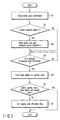
  • FIGS. 4A and 4B are flowcharts for explaining details of an emergency call dialing flow of the radio communication terminal 1-14.
  • FIG. 5 is a diagram showing a configuration of an information element of call setting used for emergency calling.
  • FIG. 6 is a diagram showing a configuration of a radio communication system including an exchange apparatus which provides the present service.
  • FIG. 1 is a diagram showing a configuration of a radio communication terminal according to an embodiment of the present invention. 1-1 is an external medium such as a memory IC card or the like, 1-2 is an external medium interface section, 1-3 is a memory section, 1-4 is a key/LCD, 1-5 is a human interface section, 1-6 is a terminal call control managing section, 107 is a terminal call controlling section, 1-8 is a radio call control terminating section, 1-9 is a movement managing section, 1-10 is a radio resource managing section, 1-11 is a radio baseband/layer 2 controlling section, 1-12 is a radio baseband section, 1-13 is an RF section, and 1-14 is a radio communication terminal.
    When the power is turned on, the radio communication terminal 1-14 generally carries out searching a base station of the system to which the terminal itself belongs, and at the time of completing the searching, various news information can be received from the base station. The news information is, via an air interface, transferred to the movement controlling section 1-9 through the RF section 1-13, the radio baseband section 1-12, the radio baseband/layer 2 controlling section 1-11, and the radio resource managing section 1-10.
    At this time, the staying country code can be obtained from the news information from the base station. The received country code is informed from the movement managing section 1-9 to the terminal call control managing section 1-6 via the radio call control terminating section 1-8.
    Further, when the power is turned on, verification of the connecting state of the external medium 1-1 is carried out via the external medium interface section 2-1. When the connecting of the external medium 1-1 is verified, reading of a user's country code and an emergency call (police, fire, ambulance, and the like) number stored in the external medium 1-1 is carried out. The respective read information is stored in the memory section 1-3. Further, when the connecting of the external medium 1-1 is not verified when the power is turned on, a country code and an emergency call number which are inputted via the key/LCD 1-4 and the human interface section 1-5, or the preset same data is stored in the memory section 1-3.
    The terminal call control managing section 1-6 carries out comparison of a base station set country code received from the base station in this way, and the above-described user's country code and emergency call number, and when they do not coincide, an identification flag thereof is set on the memory section 1-3.
    With the terminal user carrying out dialing operation via the key/LCD 1-4, issuing of an emergency call is carried out. The dialed number is transferred via the human interface section 1-5 to the terminal call control managing section 1-6. The terminal call control managing section 1-6 carries out analysis of the inputted dialed number, and carries out a determination as to whether or not it is an emergency call. At this time, the terminal call control managing section 1-6 carries out a determination as to whether the emergency call corresponds to an emergency call number in the base station set country, or whether the emergency call corresponds to an emergency call number in the terminal user's country. When the emergency call corresponds to an emergency call number in the base station set country, the terminal call control managing section 1-6 adds the user's mother tongue information to the inputted emergency call number, and gives a calling instruction to the terminal call controlling section 1-7.
    Further, when the result of the determination is that it is an emergency call number in the user's country, after the inputted emergency call number is converted to the corresponding emergency call number in the base station country, the terminal call control managing section 1-6 adds the user's mother tongue information, and gives a calling instruction to the terminal call controlling section 1-7.
    In accordance with the above-described operations, the user always can carry out calling by an emergency call number in the terminal user's country in an emergency situation without being aware of the emergency call number in his/her country and the other country. In this way, at the time of an emergency, more convenient service can be provided.
    FIGS. 2A, 2B and 2C are diagrams showing information that the radio communication terminal 1-14 of the present invention holds. 2-1 (FIG. 2A) is a base station set country code informed from the base station, and after the power is turned on, is stored in the memory section 1-3 immediately after the radio communication terminal 1-14 is set in a state in which it can receive news information from the base station. 2-2 (FIG. 2B) is user's information inputted or preset via the external medium 1-1 or the key/LCD 1-4. The user's information is formed from a user's country code, emergency call numbers in the user's country (1, 2, ···), and the user's mother tongue information. A plurality of emergency call numbers can be set in accordance with the situations.
    2-3 (FIG. 2C) is a table in which emergency call numbers per nation for base station set countries are registered. A plurality of emergency call numbers used by the codes of the respective countries are preset. With the emergency call numbers in the respective base station set countries and the emergency call number in the user's country being stored with a corresponding relationship to each other, the emergency call number in the user's country can be converted to a emergency call number in the base station set country at the time of issuing an emergency call.
    With the radio communication terminal 1-14 having the above-described information, the emergency call number inputted by the user can be converted to an emergency call number in the base station set country, and a user's mother tongue information can be added to the converted emergency call number.
    FIG. 3 is a flowchart for explaining details of a country code reading flow. Firstly, when the power is turned on, the radio communication terminal 1-14 carries out verification of the preset user's information (step S1). Although the information can be reset by using the key/LCD 1-4 provided in the radio communication terminal 1-14 or the like, the present embodiment will be described supposing that the information has been preset. Next, verification of the connecting of the external medium 1-1 is carried out (step S2), and if the external medium 1-1 is connected, reading of the user's country code from the external medium 1-1 is carried out, and transposition with the aforementioned preset information is carried out (step S3). On the other hand, if the external medium 1-1 is not connected, the preset information is used as is (step S3).
    At the time of completing the base station searching operation of the radio communication terminal 1-14, it is determined whether or not there is a state in which news information from the base station found by the searching can be received (step S4). When there is a receivable state, the base station set country code is received and stored (step S5). On the other hand, when the news information cannot be received, the searching operation is repeated until news information can be received. At the time of carrying out receiving of the user's country code and the base station set country code, it is determined whether or not these two codes are the same (step S6). When the two codes do not coincide, due to a country code difference flag being set, it is shown that there is the possibility that the emergency call number will be converted at the time of issuing an emergency call.
    FIGS. 4A and 4B are flowcharts for explaining details of an emergency call dialing flow of the radio communication terminal 1-14. When a dialing processing (step S10) is carried out by the user, checking of the aforementioned country code difference flag is carried out, and whether or not there is a difference between the user's country code and the base station set country code is determined by whether the country code difference flag is ON or not (step S11). When the country code difference flag is ON, the emergency call number in the user's country and the emergency call number in the base station set country are referred to for emergency call determination (step S13). Further, when the country code difference flag is OFF in step S11 and the emergency call number in the user's country is not used, only the emergency call number in the base station set country is used to determine whether or not it is an emergency call (step S12). In any case, when it is determined to not be an emergency, the usual dialing processing is carried out (step S17).
    On the other hand, when it is determined to be an emergency call in step S13, after the user's mother tongue information included in the user's information in FIG. 2B is added to the emergency call number, issuing process of the emergency call is carried out. At this time, whether or not the dialed number is a number in the user's country is checked (step S14), and when it is an emergency call number in the user's country, the dialed number is converted to an emergency call number in the base station set country (step S15). The user's mother tongue information is added to the converted emergency call number, and dialing processing is carried out (step S16).
    Further, when it is determined to be an emergency call in step S12, after the user's mother tongue information is added without converting the dialed number, dialing processing is carried out (step S16).
    Note that the aforementioned user's mother tongue information is set in a call setting message as shown in FIG. 5 needed at the time of issuing an emergency call, and is transmitted to the exchange apparatus. The exchange apparatus, by analyzing the user's mother tongue information set in the call setting message, can carry out a service such as carrying out switching of the call connecting destinations, or carrying out connecting to a specific operator, or the like. Hereinafter, such a service will be described in detail.
    FIG. 6 is a diagram showing a configuration of a radio communication system including an exchange apparatus providing the present service. 6-1 denotes a radio communication terminal, 6-2 denotes a radio base station, 6-3 denotes a base station controlling apparatus, 6-4 denotes a fixed network connecting apparatus, 6-5 denotes a fixed network, 6-6 denotes a special number (time signal, weather forecast) service center or emergency call contact destination (police, fire, and the like), and 6-7 denotes a facility or an operator providing respective language services provided at each facility. 6-8 is a home memory for carrying out movement management of the radio communication terminal. Further, the fixed network 6-5 is connected to another communication network 6-9 and can communicate with the other communication network.
    In the above-described configuration, when issuing of an emergency call is carried out from the radio communication terminal 6-1, the mother tongue information added to a calling request via the radio base station 6-2 is transmitted to the base station controlling apparatus 6-3. The base station controlling apparatus 6-3 changes information such as a position registration information and the like on the basis of the dialed number in the calling request received from the radio base station 6-2, and reads out subscriber information in the home memory and carries out determination of the validity of the subscriber or the like.
    When the validity of the subscriber is verified, selection of a radio channel with respect to the radio base station 6-2 is carried out from the base station controlling apparatus 6-3. In the case of issuing an emergency call, selection of a radio channel is carried out regardless of the validity of the subscriber.
    When securing of a radio channel is completed by the radio base station 6-2, the base station controlling apparatus 6-3 connects a line to the fixed network connecting apparatus 6-4 in order to carry out line connecting to the calling destination. At the fixed network connecting apparatus 6-4, selection of the partner carrying out a registered service is carried out via the fixed network 6-5 by using the calling destination information and the added mother tongue information, and connecting of the line is carried out with respect to a service facility in each partner destination. FIG. 6 shows an example in which the special number service center 6-6 provides language A service, language B service, language C service 6-7.
    In accordance with the above-described embodiment, even if the user carries out calling by using an emergency call number in the user's country in a situation in which the user carries out calling of an emergency call in another country, because the emergency call number in the user's country is automatically converted to an emergency call number in the user's staying country and the calling is carried out, communication to a predetermined facility can be certainly carried out.
    Further, even if the user carries out calling by using a special number service number in the user's country in a situation in which the user carries out calling of a special number service number in another country, because the special number service number in the user's country is automatically converted to the special number service number in the user's staying country and the calling is carried out, communication to a predetermined facility providing the service can be certainly carried out.
    Moreover, with the user's mother tongue information being added to an emergency call number at the time of issuing an emergency call or a special number service number, because the user can talk by using the user's mother tongue provided at the receiving facility regardless of the usage country, a communication system considering the situation of the user can be provided.
    In accordance with the present invention, even if the user carries out calling by using an emergency call number in the user's country in a situation in which the user carries out calling of an emergency call in another country, because the emergency call number in the user's country is automatically converted to the emergency call number in the user's staying country and the calling is carried out, communication to a predetermined facility can be certainly carried out.
    Further, even if the user carries out calling by using a special number service number in the user's country in a situation in which the user carries out calling of the special number service number in another country, because the special number service number in the user's country is automatically converted to the special number service number in the user's staying country and the calling is carried out, communication to the facility providing the service can be certainly carried out.
    Moreover, with the user's mother tongue information being added to an emergency call number at the time of calling an emergency call or a special number service number, because the user can talk by using the user's mother tongue provided at the receiving facility regardless of the usage country, a communication system considering the situation of the user can be provided.

    Claims (13)

    1. A radio communication terminal characterized by comprising:
      a receiving unit (1-13) which receives, from a base station, area identification information identifying a current position area;
      a storing unit (1-3) which stores with a corresponding relationship a first emergency call number used for issuing an emergency call in a first area and a second emergency call number used for issuing an emergency call in a second area; and
      a converting unit (1-6) which, on the basis of the contents of the storing unit (1-3), converts the second emergency call number to the first emergency call number when it is determined, on the basis of the area identification information from the receiving unit (1-13), that the terminal is in the first area, and when in the first area, it is determined that the emergency call in the second area is to be issued.
    2. A radio communication terminal according to claim 1, characterized by further comprising:
      a detecting unit (1-2) which detects connection of a storing medium (1-1) externally connected; and
      a reading unit (1-6) which reads out information stored in the storing medium (1-1) when the detecting unit (1-6) detects the connection of the storing medium (1-1).
    3. A radio communication terminal according to claim 1, characterized by further comprising an adding unit (1-6) which adds information relating to a language used in the second area, when the second emergency call is issued.
    4. A radio communication system characterized by comprising:
      a radio communication terminal (6-1) including:
      a receiving unit (1-13) which receives, from a base station, area identification information identifying a current position area;
      a storing unit (1-3) which stores with a corresponding relationship a first emergency call number used for issuing an emergency call in a first area and a second emergency call number used for issuing an emergency call in a second area;
      a converting unit (1-6) which, on the basis of the contents of the storing unit (1-3), converts the second emergency call number to the first emergency call number when it is determined, on the basis of the area identification information from the receiving unit (1-13), that the terminal is in the first area, and when in the first area, it is determined that the emergency call in the second area is to be issued; and
      a connecting apparatus (6-4) which analyzes information relating to a language used in the second area, which is received from the radio communication terminal, and carries out a specific service on the basis of results of the analysis.
    5. A radio communication terminal characterized by comprising:
      a receiving unit (1-13) which receives, from a base station, area identification information identifying a current position area;
      a storing unit (1-3) which stores with a corresponding relationship a first telephone number used for carrying out a specific service in a first area and a second telephone number used for carrying out a specific services in a second area; and
      a converting unit (1-6) which, on the basis of the contents of the storing unit (1-3), converts the second telephone number to the first telephone number when it is determined, on the basis of the area identification information from the receiving unit (1-13), that the terminal is in the first area, and when in the first area, it is determined that the second telephone number used for carrying out a specific service in a second area is to be issued.
    6. A radio communication terminal according to claim 5, characterized by further comprising:
      a detecting unit (1-2) which detects connection of a storing medium (1-1) externally connected; and
      a reading unit (1-6) which reads out information stored in the storing medium (1-1) when the detecting unit detects the connection of the storing medium (1-1).
    7. A radio communication terminal according to claim 5, characterized by further comprising an adding unit (1-6) which adds information relating to a language used in the second area, when the specific service in the second area is carried out.
    8. A radio communication method using preset information including a first emergency call number used for issuing an emergency call in a first area and a second emergency call number having a corresponding relationship with the first emergency call number and used for issuing an emergency call in a second area, characterized by comprising:
      receiving from a base station area identification information identifying a current position area; and
      converting on the basis of the preset information the second emergency call number to the first emergency call number when it is determined, on the basis of the received area identification information, that a terminal is in the first area, and when in the first area, it is determined that the emergency call in the second area is to be issued.
    9. A radio communication method according to claim 8, characterized by further comprising:
      detecting connection of a storing medium (1-1) externally connected; and
      a reading out information stored in the storing medium (1-1) when the connection of the storing medium (1-1) is detected.
    10. A radio communication method according to claim 8, characterized by further comprising adding information relating to a language used in the second area, when the second emergency call is issued.
    11. A radio communication method using preset information including a first telephone number used for carrying out a specific service in a first area and a second telephone number having a corresponding relationship with the first telephone number and used for carrying out a specific services in a second area, characterized by comprising:
      receiving from a base station area identification information identifying a current position area; and
      converting on the basis of the preset information the second telephone number to the first telephone number when it is determined, on the basis of the received area identification information, that a terminal is in the first area, and when in the first area, it is determined that the emergency call in the second area is to be issued.
    12. A radio communication method according to claim 11, characterized by further comprising:
      detecting connection of a storing medium (1-1) externally connected; and
      a reading out information stored in the storing medium (1-1) when the connection of the storing medium (1-1) is detected.
    13. A radio communication method according to claim 11, characterized by further comprising adding information relating to a language used in the second area, when the second emergency call is issued.
    EP02009229A 2001-04-26 2002-04-25 Radio communication terminal and radio communication system Withdrawn EP1253798A3 (en)

    Applications Claiming Priority (2)

    Application Number Priority Date Filing Date Title
    JP2001129783 2001-04-26
    JP2001129783A JP2002325274A (en) 2001-04-26 2001-04-26 Wireless communication terminal and wireless communication system

    Publications (2)

    Publication Number Publication Date
    EP1253798A2 true EP1253798A2 (en) 2002-10-30
    EP1253798A3 EP1253798A3 (en) 2003-03-12

    Family

    ID=18978263

    Family Applications (1)

    Application Number Title Priority Date Filing Date
    EP02009229A Withdrawn EP1253798A3 (en) 2001-04-26 2002-04-25 Radio communication terminal and radio communication system

    Country Status (4)

    Country Link
    US (1) US20020160747A1 (en)
    EP (1) EP1253798A3 (en)
    JP (1) JP2002325274A (en)
    CN (1) CN1383334A (en)

    Cited By (5)

    * Cited by examiner, † Cited by third party
    Publication number Priority date Publication date Assignee Title
    EP1689204A1 (en) * 2005-02-03 2006-08-09 Research In Motion Limited Method and apparatus for the autoselection of an emergency number in a mobile station
    EP1705942A1 (en) * 2005-03-22 2006-09-27 Fujitsu Limited Mobile communication device and position search method
    US7853240B2 (en) 2007-02-15 2010-12-14 Research In Motion Limited Emergency number selection for mobile communications device
    US8045953B2 (en) 2005-02-03 2011-10-25 Research In Motion Limited Method and apparatus for the autoselection of an emergency number in a mobile station
    EP1835781A3 (en) * 2006-03-14 2012-12-26 Samsung Electronics Co., Ltd. Method and apparatus for making an emergency call using a mobile communication terminal

    Families Citing this family (5)

    * Cited by examiner, † Cited by third party
    Publication number Priority date Publication date Assignee Title
    US7546112B2 (en) 2003-03-21 2009-06-09 Qisda Corporation Single telephone number calling method and calling apparatus for mobile unit
    JP2008187597A (en) * 2007-01-31 2008-08-14 Sharp Corp Destination conversion system, mobile communication device, destination conversion service server, program, and recording medium
    CN101384049A (en) * 2008-09-28 2009-03-11 深圳华为通信技术有限公司 Urgent number calling method and communication terminal
    WO2015030337A1 (en) * 2013-08-30 2015-03-05 Lg Electronics Inc. Mobile terminal and method for supporting emergency call
    US10356710B2 (en) * 2015-05-01 2019-07-16 Huawei Technologies Co., Ltd. Method and system for mobile device to utilize channels with low power consumption

    Family Cites Families (9)

    * Cited by examiner, † Cited by third party
    Publication number Priority date Publication date Assignee Title
    JPH08307508A (en) * 1995-05-02 1996-11-22 Ribu & Rabu:Kk International telephone device
    US6078804A (en) * 1995-12-19 2000-06-20 Ericsson Inc. Providing different routing treatments for emergency calls based on subscriber specified data
    US5719929A (en) * 1995-12-28 1998-02-17 Lucent Technologies Inc. Generalizing specialized telephone numbers
    JPH1070499A (en) * 1996-08-27 1998-03-10 Saitama Nippon Denki Kk Information system
    US6073005A (en) * 1997-04-22 2000-06-06 Ericsson Inc. Systems and methods for identifying emergency calls in radiocommunication systems
    JP4059605B2 (en) * 1999-06-14 2008-03-12 三菱電機株式会社 Portable communication device and automatic call processing method
    JP4019563B2 (en) * 1999-07-27 2007-12-12 ソニー株式会社 Mobile communication device and mobile communication method
    JP2001086562A (en) * 1999-09-17 2001-03-30 Toshiba Corp Mobile radio communication system, mobile radio communication terminal, and mobile radio communication base station
    JP2001101115A (en) * 1999-09-29 2001-04-13 Ikeno Tsuken Kk Guidance and guidance information provision method in the management area

    Cited By (8)

    * Cited by examiner, † Cited by third party
    Publication number Priority date Publication date Assignee Title
    EP1689204A1 (en) * 2005-02-03 2006-08-09 Research In Motion Limited Method and apparatus for the autoselection of an emergency number in a mobile station
    US8045953B2 (en) 2005-02-03 2011-10-25 Research In Motion Limited Method and apparatus for the autoselection of an emergency number in a mobile station
    US8270936B2 (en) 2005-02-03 2012-09-18 Research In Motion Limited Method and apparatus for the autoselection of an emergency number in a mobile station
    EP1705942A1 (en) * 2005-03-22 2006-09-27 Fujitsu Limited Mobile communication device and position search method
    US7486947B2 (en) 2005-03-22 2009-02-03 Fujitsu Limited Mobile communication device and position search method
    EP1835781A3 (en) * 2006-03-14 2012-12-26 Samsung Electronics Co., Ltd. Method and apparatus for making an emergency call using a mobile communication terminal
    US7853240B2 (en) 2007-02-15 2010-12-14 Research In Motion Limited Emergency number selection for mobile communications device
    US8437735B2 (en) 2007-02-15 2013-05-07 Research In Motion Limited Emergency number selection for mobile communications device

    Also Published As

    Publication number Publication date
    US20020160747A1 (en) 2002-10-31
    JP2002325274A (en) 2002-11-08
    EP1253798A3 (en) 2003-03-12
    CN1383334A (en) 2002-12-04

    Similar Documents

    Publication Publication Date Title
    US5950137A (en) Method for supplying subscriber location information in a mobile communications system
    CN1759595B (en) Emergency call-back for a wireless communication device equipped with a user removable module
    US5870677A (en) Private mobile communication system easily connecting portable or mobile radio telephone equipment to public network
    US6070081A (en) Private mobile communication system easily connecting portable or mobile radio telephone equipment to public network
    EP1835781B1 (en) Method and apparatus for making an emergency call using a mobile communication terminal
    EP1237384B1 (en) User-tagging of cellular telephone locations
    JP3798542B2 (en) Cellular emergency call system and method
    EP1073298A2 (en) Mobile communication device and mobile communication method
    JP3188249B2 (en) Mobile station exchange location registration request method
    US6041231A (en) Mobile communication system with roaming function
    US20020160747A1 (en) Radio communication terminal and radio communication system
    US7010296B2 (en) Method of registering services in mobile-communication system
    US20080293388A1 (en) Method and apparatus for providing a phone book forwarding list in a communication system
    KR100216571B1 (en) Life information service method using sms in cdma mobile communi cation network
    KR100292705B1 (en) Temporary Reference Number Structure for Wireless Registration of Mobile Phones
    KR20010097867A (en) A wireless communication system of wireless terminals
    US20050119021A1 (en) Telephone apparatus and method for call transfer function
    JP2002057621A (en) Telephone number informing system for emergency call
    JP2001331562A (en) System and method for taxi dispatch service
    US20030119560A1 (en) Radio communication control station device and radio communication device
    KR100424467B1 (en) Roaming service indication method in mobile phone and mobile phone thereof
    JPH11351903A (en) Simplified navigation system
    KR20000001118A (en) METHOD TO CONFIRM LOCATION USING WIRELESS BASE STATION OF SMALL power
    JPH1013528A (en) System cordless telephone equipment
    KR100194755B1 (en) Cell-based two-way wireless data service system and method using wireless call network and mobile communication network

    Legal Events

    Date Code Title Description
    PUAI Public reference made under article 153(3) epc to a published international application that has entered the european phase

    Free format text: ORIGINAL CODE: 0009012

    17P Request for examination filed

    Effective date: 20020425

    AK Designated contracting states

    Kind code of ref document: A2

    Designated state(s): AT BE CH CY DE DK ES FI FR GB GR IE IT LI LU MC NL PT SE TR

    AX Request for extension of the european patent

    Free format text: AL;LT;LV;MK;RO;SI

    PUAL Search report despatched

    Free format text: ORIGINAL CODE: 0009013

    AK Designated contracting states

    Kind code of ref document: A3

    Designated state(s): AT BE CH CY DE DK ES FI FR GB GR IE IT LI LU MC NL PT SE TR

    Designated state(s): AT BE CH CY DE DK ES FI FR GB GR IE IT LI LU MC NL PT SE TR

    AX Request for extension of the european patent

    Extension state: AL LT LV MK RO SI

    17Q First examination report despatched

    Effective date: 20030417

    AKX Designation fees paid

    Designated state(s): DE GB

    STAA Information on the status of an ep patent application or granted ep patent

    Free format text: STATUS: THE APPLICATION IS DEEMED TO BE WITHDRAWN

    18D Application deemed to be withdrawn

    Effective date: 20030828