EP1253495A2 - Method and system for assessing adjustment factors in testing or monitoring process - Google Patents
Method and system for assessing adjustment factors in testing or monitoring process Download PDFInfo
- Publication number
- EP1253495A2 EP1253495A2 EP02252963A EP02252963A EP1253495A2 EP 1253495 A2 EP1253495 A2 EP 1253495A2 EP 02252963 A EP02252963 A EP 02252963A EP 02252963 A EP02252963 A EP 02252963A EP 1253495 A2 EP1253495 A2 EP 1253495A2
- Authority
- EP
- European Patent Office
- Prior art keywords
- adjustment factor
- user
- testing
- current adjustment
- data
- Prior art date
- Legal status (The legal status is an assumption and is not a legal conclusion. Google has not performed a legal analysis and makes no representation as to the accuracy of the status listed.)
- Withdrawn
Links
Images





Classifications
-
- G—PHYSICS
- G05—CONTROLLING; REGULATING
- G05B—CONTROL OR REGULATING SYSTEMS IN GENERAL; FUNCTIONAL ELEMENTS OF SUCH SYSTEMS; MONITORING OR TESTING ARRANGEMENTS FOR SUCH SYSTEMS OR ELEMENTS
- G05B19/00—Program-control systems
- G05B19/02—Program-control systems electric
- G05B19/418—Total factory control, i.e. centrally controlling a plurality of machines, e.g. direct or distributed numerical control [DNC], flexible manufacturing systems [FMS], integrated manufacturing systems [IMS] or computer integrated manufacturing [CIM]
- G05B19/41885—Total factory control, i.e. centrally controlling a plurality of machines, e.g. direct or distributed numerical control [DNC], flexible manufacturing systems [FMS], integrated manufacturing systems [IMS] or computer integrated manufacturing [CIM] characterised by modeling, simulation of the manufacturing system
-
- G—PHYSICS
- G05—CONTROLLING; REGULATING
- G05B—CONTROL OR REGULATING SYSTEMS IN GENERAL; FUNCTIONAL ELEMENTS OF SUCH SYSTEMS; MONITORING OR TESTING ARRANGEMENTS FOR SUCH SYSTEMS OR ELEMENTS
- G05B19/00—Program-control systems
- G05B19/02—Program-control systems electric
- G05B19/18—Numerical control [NC], i.e. automatically operating machines, in particular machine tools, e.g. in a manufacturing environment, so as to execute positioning, movement or co-ordinated operations by means of program data in numerical form
- G05B19/406—Numerical control [NC], i.e. automatically operating machines, in particular machine tools, e.g. in a manufacturing environment, so as to execute positioning, movement or co-ordinated operations by means of program data in numerical form characterised by monitoring or safety
-
- G—PHYSICS
- G05—CONTROLLING; REGULATING
- G05B—CONTROL OR REGULATING SYSTEMS IN GENERAL; FUNCTIONAL ELEMENTS OF SUCH SYSTEMS; MONITORING OR TESTING ARRANGEMENTS FOR SUCH SYSTEMS OR ELEMENTS
- G05B19/00—Program-control systems
- G05B19/02—Program-control systems electric
- G05B19/418—Total factory control, i.e. centrally controlling a plurality of machines, e.g. direct or distributed numerical control [DNC], flexible manufacturing systems [FMS], integrated manufacturing systems [IMS] or computer integrated manufacturing [CIM]
- G05B19/4184—Total factory control, i.e. centrally controlling a plurality of machines, e.g. direct or distributed numerical control [DNC], flexible manufacturing systems [FMS], integrated manufacturing systems [IMS] or computer integrated manufacturing [CIM] characterised by fault tolerance, reliability of production system
-
- G—PHYSICS
- G05—CONTROLLING; REGULATING
- G05B—CONTROL OR REGULATING SYSTEMS IN GENERAL; FUNCTIONAL ELEMENTS OF SUCH SYSTEMS; MONITORING OR TESTING ARRANGEMENTS FOR SUCH SYSTEMS OR ELEMENTS
- G05B2219/00—Program-control systems
- G05B2219/30—Nc systems
- G05B2219/32—Operator till task planning
- G05B2219/32017—Adapt real process as function of changing simulation model, changing for better results
-
- G—PHYSICS
- G05—CONTROLLING; REGULATING
- G05B—CONTROL OR REGULATING SYSTEMS IN GENERAL; FUNCTIONAL ELEMENTS OF SUCH SYSTEMS; MONITORING OR TESTING ARRANGEMENTS FOR SUCH SYSTEMS OR ELEMENTS
- G05B2219/00—Program-control systems
- G05B2219/30—Nc systems
- G05B2219/32—Operator till task planning
- G05B2219/32338—Use new conditions for model, check, calculate if model meets objectives
-
- Y—GENERAL TAGGING OF NEW TECHNOLOGICAL DEVELOPMENTS; GENERAL TAGGING OF CROSS-SECTIONAL TECHNOLOGIES SPANNING OVER SEVERAL SECTIONS OF THE IPC; TECHNICAL SUBJECTS COVERED BY FORMER USPC CROSS-REFERENCE ART COLLECTIONS [XRACs] AND DIGESTS
- Y02—TECHNOLOGIES OR APPLICATIONS FOR MITIGATION OR ADAPTATION AGAINST CLIMATE CHANGE
- Y02P—CLIMATE CHANGE MITIGATION TECHNOLOGIES IN THE PRODUCTION OR PROCESSING OF GOODS
- Y02P90/00—Enabling technologies with a potential contribution to greenhouse gas [GHG] emissions mitigation
- Y02P90/02—Total factory control, e.g. smart factories, flexible manufacturing systems [FMS] or integrated manufacturing systems [IMS]
Definitions
- the present invention relates generally to a method and system for assessing adjustment factors used in a process for testing or monitoring an operational system.
- the present invention further relates to a method and system for updating these adjustment factors if needed or desired as the result of such an assessment.
- Operational systems are frequently tested or monitored to determine whether they are within operating norms.
- the operational system being tested or monitored can be a device or piece of equipment such as a gas turbine engine or a process such as a manufacturing process for the gas turbine engine.
- a device or piece of equipment such as a gas turbine engine or a process such as a manufacturing process for the gas turbine engine.
- variations in the conditions under which the testing or monitoring is carried out that are unrelated or extraneous to the operational system.
- These variations in conditions include differences unique to the testing or monitoring location, differences in environmental conditions (e.g., temperature, pressure, relative humidity, etc.) at the testing or monitoring site, differences in the equipment used in carrying out the testing or monitoring process, and like factors.
- Such variations in conditions can impact the reliability and reproducibility of data generated during the testing or monitoring of the operational system.
- differences in the design of the operational system e.g., a different component design
- the testing or monitoring process will usually need to incorporate adjustment factors to compensate for these variations in testing or monitoring conditions (or variations in operational system design) to ensure that the data obtained is reliable, reproducible and comparable, no matter where (or when) it is generated.
- adjustment factors can be used to account and compensate for known causes of variation in the testing or monitoring process, these adjustment factors can themselves be subject to variations over time. Indeed, due to a better understanding of the effect of these adjustment factors, modifications or changes in existing testing or monitoring configurations, the use of additional testing or monitoring, or other unknown or unquantified influences, these adjustment factors can require updating, improvement, alteration and/or correction.
- Updating, improving, altering and/or correcting these adjustment factors requires an understanding of what can impact and influence these factors and can cause them to vary over time.
- the average person responsible for testing and monitoring these operational systems may not have the expertise to determine or understand what can impact and influence variations in these adjustment factors.
- they may need to have guidance in assessing these adjustment factors and in determining when (and if) these adjustment factors need to be updated, improved, altered and/or corrected so that the testing or monitoring process will provide reliable, reproducible and comparable data on the operational system.
- a method and system for assessing adjustment factors used in a process for testing or monitoring an operational system that: (1) determines whether the current adjustment factors need to be changed; (2) provides the ability to change and update these adjustment factors if needed or desired, and to reliably validate and incorporate the updated factors into the testing/monitoring process; (3) provides the ability to guide the average user on how to utilize this method and system without the need of significant expertise in or understanding of adjustment factors, and (4) provides a standardized, efficient and optimized approach to assessing such factors, even for those who have significant experience and expertise with such factors, as well as the testing and monitoring process impacted and influenced by these factors.
- the present invention relates to a method and system for assessing whether adjustment factors used in a process for testing or monitoring an operational system need to be updated or changed, as well as changing and updating these adjustment factors if needed or desired.
- the method of the present invention comprises the steps of and the system of the present invention is capable of:
- the method and system of the present invention provides a number of benefits and advantages in assessing adjustment factors used in a testing or monitoring process for the operational system.
- the method and system of the present invention allows an accurate and statistical approach to determining whether the current adjustment factors used in the testing or monitoring process need to be changed and updated so that the testing or monitoring process will provide reliable, reproducible and comparable data on the operational system. If the adjustment factors do need to be changed and updated as a result of the assessment, the method and system of the present invention allows for these updated factors to be reliably validated and incorporated in the testing or monitoring process.
- the method and system of the present invention can also be set up to guide the average user through the various steps in assessing these adjustment factors, even if the user does not have significant expertise in or understanding of adjustment factors.
- the method and system of the present invention can also provide a standardized, efficient and optimized approach to assessing such factors, even for those who have significant experience and expertise with such factors.
- adjustment factor refers to those factors that are incorporated into the testing or monitoring process for the operational system to account and compensate for variations in the conditions under which the testing or monitoring process is carried out that are unrelated or extraneous to the operational system or related to differences in the design of the operational system.
- Such conditions that can require the use of adjustment factors include differences unique to the testing or monitoring location, differences in environmental conditions (e.g., temperature, pressure, relative humidity, etc.) at the testing or monitoring site, differences in the equipment used in carrying out the testing or monitoring process, differences in the test procedure (e.g., the number of test conditions, the time between test conditions, the order of test conditions, etc.), differences in the data acquisition process (e.g., manual recording of data versus automated computerized recording of the data), as well as differences in the design of the operational system(s).
- differences in environmental conditions e.g., temperature, pressure, relative humidity, etc.
- differences in the equipment used in carrying out the testing or monitoring process e.g., the number of test conditions, the time between test conditions, the order of test conditions, etc.
- differences in the data acquisition process e.g., manual recording of data versus automated computerized recording of the data
- differences in the design of the operational system(s) e.g., manual recording of data versus automated computerized recording of the data
- the term "user” refers to the individual (or group of individuals) who are using the method and system of the present invention.
- testing or monitoring process refers, without limitation, to processes used to test or monitor manufactured devices, equipment, components or systems, processes used to correct related data for known influences, as well as statistical process controls or related techniques for monitoring the trend(s) of various device, equipment, component and process parameters.
- operation system refers to the device, equipment, component, system or process that is being tested or monitored.
- the term "host computer” refers to a computer system (or systems), typically a server computer(s) but also possibly a main frame computer(s), that can be used to store data, can have software residing thereon for analyzing, comparing and otherwise processing the data, and which is accessible from, or in communication with, the user workstation.
- the term "user workstation” refers to a terminal, computer or other electronic device that is normally used by the user of the method and system of the present invention as the means to access the host computer.
- transmission refers to any type of transmission that can be carried out electronically by wired methods, wireless methods or combinations thereof.
- Typical electronic transmissions within the scope of the present invention can be carried out by a variety of remote electronic transmission methods, such as by using Local or Wide Area Network (LAN or WAN)-based, Internet-based, or web-based transmission methods, cable television or wireless telecommunications networks, or any other suitable remote transmission method.
- LAN or WAN Local or Wide Area Network
- Internet-based Internet-based
- web-based transmission methods cable television or wireless telecommunications networks, or any other suitable remote transmission method.
- software refers to any form of programmed machine-readable language or instructions (e.g., object code) that, when loaded or otherwise installed, provides operating instructions to a machine capable of reading those instructions, such as a computer or other computer program reader.
- Software useful in the present invention can be stored or reside on, as well as be loaded or installed from, one or more floppy disks, CD ROM disks, hard disks or any other form of suitable non-volatile electronic storage media.
- Software useful in the present invention can also be installed by downloading or other form of remote transmission.
- the term “comprising” means various components, capabilities and/or steps can be conjointly employed in the present invention. Accordingly, the term “comprising” encompasses the more restrictive terms “consisting essentially of” and “consisting of.”
- FIG. 1 which is indicated generally as 100.
- steps 101 to 110 shown in FIG. 1 (and the embodiments of these steps shown FIGs. 2 through 12) will be discussed in certain instances with specific reference to the operational system being the monitoring or testing of the performance of a gas turbine engine.
- FIG. 1 the flowchart shown in FIG. 1
- steps 101 to 110 of FIG.1 will be illustrated from the perspective of an average user who is being guided through the method of the present invention by appropriate prompts, instructions, tutorials or other guidance materials.
- the method of the present invention will also be useful for those having significant experience or expertise with adjustment factors.
- step 101 the need to assess the current adjustment factors is determined. If it is decided that an assessment is not needed at this time (the answer to "Need to Assess Factors" is "No"), the user typically exits, as shown in step 102. If it is determined that the assessment is needed (the answer to "Need to Assess Factors” is "Yes"), at least one current adjustment factor is selected for assessment, as shown in step 103. Typically, more than one current adjustment factor is assessed at the same time. After the current adjustment factor(s) is selected, along with the data relevant to the selected adjustment factor(s), an analysis of the relevant data is carried out to generate the results required to determine whether the selected adjustment factor(s) needs to be changed and updated, as shown in step 104.
- the results generated during the analysis are collected to allow for an adequate and statistical determination of whether the current adjustment factor(s) needs to be changed. If it is decided based on the collected results that the current adjustment factor(s) does not need to be changed (the answer to "Change Factors?" is “No"), this again terminates the assessment and the user typically exits from it, as shown in step 107. If it is decided based on the collected results that the current adjustment factor(s) does need to be changed (the answer to "Change Factors?" is “Yes"), the current adjustment factor(s) are changed and updated to provide new adjustment factors, as shown in step 108. As shown in step 109, these new adjustment factors are preferably validated, and after validation, incorporated into the testing or monitoring process, as shown in step 110.
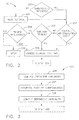
- step 101 A flowchart of an embodiment of the steps (200 through 206) that can comprise step 101 (Need to Assess Factors?) is shown in FIG. 2.
- the user is queried as to whether they understand the testing and monitoring process and why it is being performed. If the user does not understand the process (the answer to "Understand Process?" is "No"), the user is typically then prompted to review instructional and tutorial materials to understand and become educated about the process, such as through the use of a computer tutorial, as shown in step 201.
- step 202 the user is then queried in step 202 as to whether related anomalies in the data have been seen during testing/monitoring of the operational system that might be related to variations in the current adjustment factors, as shown in step 202. If such anomalies may have been seen (the answer to "Related Anomalies Seen?" is “Yes”), the user then proceeds to step 206 (to be described hereafter). If such anomalies have not been seen (the answer to "Related Anomalies Seen?" is "No"), the user can then be queried in step 203 as to whether it is time for a periodic review of the current adjustment factors.
- step 206 the user then proceeds to step 206 (to be described hereafter). If the time for periodic review has not arrived (the answer to "Time for Review” is "No"), the user can then be queried in step 204 as to whether review of the current adjustment factors has been requested by others (e.g., the user's manager or management). If review has been requested (the answer to "Review Requested?" is “Yes”), the user then proceeds to step 206 (to be described hereafter). If review has not been requested, (the answer to "Review Requested" is "No"), the user then typically exits (per step 102) since there is no reason to assess whether the current adjustment factors need to be changed at this particular time.
- step 103 Select Factors
- a list of the predictor variables e.g., temperature, humidity, test cell, etc.
- the functionality of those variables e.g., linear, exponential, etc.
- step 207 a baseline configuration (e.g., for hardware) for the operational system is then typically established.
- step 208 a list of dependent parameters, i.e., those parameters indicating the quality or functionality of the device or process (e.g., fuel consumption or flow, operating temperature, power output, noise, emissions, efficiency, etc.) for the operational system is then typically selected and compiled.
- the user then proceeds to step 300 (to be described hereafter).
- step 300 the process data for the operational system that is to be used is imported or otherwise brought into the analysis.
- step 301 the user is then queried as to whether the imported data is appropriate for the analysis. If the imported data is not appropriate for the analysis (the answer to "Data Appropriate?" is "No"), the user proceeds back to step 300 and imports different data (or alternatively can discontinue the assessment per step 102).
- step 302 the user proceeds in step 302 to carry out an analysis on the imported data (e.g., a regression analysis) to generate data results for the purpose of determining whether the current adjustment factors need to be changed.
- step 303 the user is queried as to whether the analysis results make sense (i.e., are the results meaningful?). If the analysis results do not make sense, (the answer to "Analysis Results Meaningful?" is “No"), the user then returns to and carries out steps 206 through 208 (or step 300) again, as appropriate. If the analysis results do make sense, (the answer to "Analysis Results Meaningful?" is “Yes"), the user then proceeds to step 304 (to be described hereafter).
- step 301 The process for determining whether the imported data is appropriate for the assessment in step 301 is typically fairly rigorous and usually involves the user being directed to produce several statistical plots and analyses of the independent parameters. This allows the user to identify and delete data that could undesirably skew the results of the analysis.
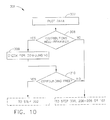
- a flowchart of an embodiment the steps (307 through 310) that can comprise step 301 is shown in FIG. 10.
- initial step 307 one or more graphical plots of the imported data are generated.
- step 308 the user is then queried as to whether the distribution(s) of the plotted data satisfies the designated statistical criteria, i.e., are the distributions of the plotted data well-behaved with no outlier values?
- step 300 the user, as appropriate, proceeds back to step 300 and imports different or additional data, proceeds back to steps 206 through 208 to change the list of variables selected or compiled, or alternatively can discontinue the assessment per step 102. If the distributions are well-behaved (the answer to "Distributions Well-Behaved?" is "Yes), the user then proceeds in step 309 to check whether there is any unexpected confounding of the parameters that would make it impossible to discriminate between the effects of each.
- certain equipment e.g., a particular cowl and bellmouth
- certain equipment e.g., a particular cowl and bellmouth
- Another example of confounding would be if two versions of the same equipment (e.g., cowl A and cowl B) were used under different testing or monitoring conditions (e.g., cowl A on hot days and cowl B on cold days) so that it would be impossible to determine whether the differences observed were due to the equipment or the conditions of the testing or monitoring process.
- the user is then queried as to whether the check on the parameters shows that they are free of unexpected confounding.
- step 300 If there is unexpected confounding (the answer to "Confounding Free?" is "No"), the user, as appropriate, proceeds back to step 300 and imports different or additional data, proceeds back to steps 206 through 208 to change the list of variables selected or compiled, or alternatively can discontinue the assessment per step 102. If there is no unexpected confounding (the answer to "Confounding Free?" is "Yes"), the user then proceeds to step 302.
- step 303 The process of determining whether the assessment results make sense in step 303 also typically involves guiding the user through a rigorous set of statistical checks. These include evaluations of the quality of the data for the independent parameters and evaluations of the quality of the regression model used.
- a flowchart of an embodiment of the steps (311 through 314) that can comprise step 303 is shown in FIG. 11.
- initial step 311 the user is queried as to whether the data is free of outliers, i.e., is all of the data within the defined statistical tolerances? If there is outlying data (the answer to "Data Free of Outliers? Is "No"), the user then returns to and carries out steps 206 through 208 (or step 300) again, as appropriate.
- step 312 evaluates whether the regression model used in assessing the data worked as expected. This usually involves several evaluations of the data, including whether the data is normally distributed, whether the data is well-behaved relative to continuous predictors, discrete predictors, fitted values, observed order, etc. If, after this evaluation, the regression model is found to not work as expected (the answer to "Regression Work as Expected?" is "No"), the user then returns to and carries out steps 206 through 208 (or step 300) again, as appropriate.
- step 313 the user then queried in step 313 as to whether the levels of coefficients (i.e., the magnitude of the existing errors in the current adjustment factors) make sense. If the levels of coefficients do not make sense (the answer to "Coefficients Make Sense?" is “No"), the user then returns to and carries out steps 206 through 208 (or step 300) again, as appropriate. If the levels of coefficients do make sense (the answer to "Coefficients Make Sense?" is “Yes"), the user is then queried in step 314 as to whether the remaining variation in the dependent parameters (i.e., the data scatter remaining after all errors in the current adjustment factors have been removed) make sense.
- the remaining variation in the dependent parameters i.e., the data scatter remaining after all errors in the current adjustment factors have been removed
- step 300 the user then returns to and carries out steps 206 through 208 (or step 300) again, as appropriate. If the remaining variation in the dependent parameters does make sense (the answer to "Remaining Variation Makes Sense?" is "Yes"), the user then proceeds to collect and summarize the data per step 304 (as described hereafter).
- step 304 A flowchart of an embodiment of the steps (304 through 400) that can comprise step 105 (Collect Results) is shown in FIG. 5.
- the analysis results generated in step 302 are typically collected and summarized in a suitable format.
- step 305 from these summarized results, the user alone, or typically in conjunction with others, will develop recommendations with regard to the need to change the current adjustment factor(s).
- step 306 the summarized results, together with the recommendations developed, are then typically communicated in a appropriate manner (e.g., memorandum or report) to others (e.g., the user's manager or management) for review, approval and implementation.
- the user then proceeds to step 400 (to be described hereafter).
- step 304 can greatly influence what the recommendations in step 305 are and thus the ability of those responsible for making the decision on the need to change the current adjustment factor(s) to appropriately understand those recommendations when communicated in step 306. Indeed, incomplete or inconsistent summaries of these results could adversely impact the ability of those to whom the recommendations are communicated to correctly make such decisions.
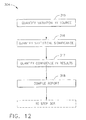
- a flowchart of an embodiment of the steps (315 through 318) that can comprise step 304 for providing meaningful result summaries is shown in FIG. 12.
- initial step 315 the contribution of the adjustment factor(s) to the variation in the dependent variables is quantified and displayed by source. This typically includes calculating, recording and plotting the coefficients of determination (also referred to as "R 2 values”) for the adjustment factors separately and in aggregate.
- step 316 the statistical significance of the contribution of the adjustment factors to the variation found is then quantified to minimize the possibility of incorrectly concluding that there is an influence by the adjustment factor(s) when none exists. This typically includes calculating, recording and plotting the statistical p-values for each adjustment factor.
- step 317 the statistical confidence in the contribution of the adjustment factor(s) to the variation found is quantified. This typically includes calculating, recording and plotting the statistical confidence intervals for each adjustment factor.
- a report is compiled that typically includes all of the collected analysis results, as well as the plots generated from carrying out steps 316-318. The user then proceeds to develop recommendations from this compiled report per step 305.
- step 400 the user is queried as to whether the results communicated in step 306 suggest or indicate appreciable errors in the current adjustment factors. If there are no appreciable errors in the current adjustment factors (the answer to "Errors in Current Factors?" is “No"), the user then typically proceeds to step 411 (to be described hereafter). If there are appreciable errors in the current adjustment factors (the answer to "Errors in Current Factors?" is "Yes"), the user in step 401 typically reviews these errors in the current adjustment factors with experts to determine how significant these errors are.
- step 402 After reviewing the errors in the current adjustment factors with the experts, the user is then queried in step 402 as to whether the advantages of changing the current adjustment factor(s) outweigh the disadvantages, i.e., is a change in the adjustment factor(s) desirable? If it is decided that the disadvantages in changing the current adjustment factors outweigh the advantages (the answer to "Change in Factors Desirable?" is “No"), the user then proceeds to step 411 (to be described hereafter). If it is decided that the advantages in changing the current adjustment factors outweigh the disadvantages (the answer to "Change in Factors Desirable?" is "Yes"), the user then proceeds to step 403 (to be described hereafter.
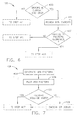
- step 108 A flowchart of an embodiment of the steps (403 through 407) that can comprise step 108 (New Factors) is shown in FIG. 7.
- the user carries out an analysis that repeats steps 208 through 304 using the uncorrected values of the dependent parameters to generated new or updated adjustment factors.
- step 404 the new or updated adjustment factors are then typically plotted.
- the user is then queried in step 405 as to whether the plotted new/updated adjustment factors satisfy the designated statistical criteria, i.e., are the plotted factors well-behaved? If the plotted factors are not well-behaved (the answer to "Factors Well-Behaved?" is "No"), they are then statistically smoothed or "debugged" as appropriate, as shown in step 406.
- step 407 (to be described hereafter).
- step 109 (Validate Factors) is shown in FIG. 8.
- the new or updated adjustment factor(s) are typically incorporated into a model of the testing or monitoring process.
- the imported process data is then reprocessed through the model of the testing or monitoring process using the new/updated adjustment factor(s) to generate new corrected values of the dependent parameters.
- the user then typically carries out an analysis that repeats steps 208 through 304 using the corrected values of the dependent parameters to determine if the new/updated adjustment factor(s) are performing as expected.
- step 410 the user is then queried as to whether the new/updated adjustment factor(s) are performing as expected, e.g., are within the designated statistical limits. If the new/updated adjustment factor(s) are not performing as expected (the answer to "Expected Results?" is "No"), the user then typically returns to step 406 to fix or debug the new/updated adjustment factors and reenters step 407, as appropriate. (This debugging can also lead the user to reenter at an earlier step if it is determined that an error led to the poor behavior of the factors.) If the new/updated adjustment factor(s) are performing as expected (the answer to "Expected Results?" is "Yes"), the user then proceeds to step 411 (to be described hereafter).
- step 411 the results of the analysis (from step 306 or 410) are typically documented (e.g., a memorandum or report). Based on the documented results, a decision can then be made as to whether to permanently change or update the adjustment factor(s), as shown in step 412. If it is decided that current adjustment factors should not be changed (the answer to "Change Factors?" is "No"), that terminates the assessment per step 107. If it is decided that current adjustment factors should be changed (the answer to "Change Factors?" is "Yes"), the new/updated factors are then permanently incorporated into the testing or monitoring process, as shown in step 413.
- the new/updated factors are then permanently incorporated into the testing or monitoring process, as shown in step 413.
- One of the desirable features of the method of the present invention is the inclusion of tutorials and other instructional materials to guide the user through the various steps in assessing the need to change the adjustment factors.
- tutorials and other instructional materials can include explanations as why such assessments need to be carried out, what are causes of variation in the operational system being tested or monitored, detailed descriptions and graphics of the operational system and its various components, explanations on how to carry out the various steps of the assessment of the adjustment factors (including why and how to carry out various statistical analytical checks on the data and results generated during the assessment).
- These instructional materials can be provided in various forms, including hard copy manuals or printed materials, CD-ROM or other computerized instructional guides and can be integral component of the software by which the user carries out the assessment.
- FIG. 13 shows an embodiment of a computerized system indicated generally as 510 for implementing the method of the present invention, especially where the user is accessing or using this method remotely.
- System 510 includes a host computer, typically in the form of a server or main frame computer (or multiple servers or main frame computers depending on the type and number of host computers involved) indicated generally as 512, as well as a user workstation indicated generally as 514.
- Workstation 514 is shown as communicating with server 512 via a communications pathway indicated generally as 516 that can use Internet or web-based transmission methods, cable television or other cable networks or cable-linked systems, or wireless telecommunications network-based transmission methods, Local or Wide Area Network (LAN or WAN)-based transmission methods, or any other suitable remote transmission method that is wired, wireless or a combination thereof.
- Workstation 514 can be a variety of electronic devices such as a personal desktop computer, personal digital assistant (PDA), a portable laptop computer, a palm pilot, a cellular or other portable phone, or the like.
- PDA personal
- a source of testing or monitoring data that is indicated generally as 520 and is shown as being connected to workstation 514 by a communications pathway indicated generally as 522.
- Source 520 can also be optionally or additionally connected to server 512.
- communications pathway 522 can use Internet or web-based transmission methods, cable television network or wireless telecommunications network-based transmission methods, Local or Wide Area Network (LAN or WAN)-based transmission methods, or any other suitable remote transmission method that is wired, wireless or a combination thereof.
- the source of testing or monitoring data 520 can be in the form of the testing or monitoring equipment used to evaluate the operational system (including associated computer equipment), another server or mainframe computer that is used to simulate the testing or monitoring equipment or can be server 512 if it is also used to simulate the testing or monitoring equipment.
- Server 512, workstation 514 and data source 520 can be in the same location, or can be a different locations relatively remote from each other.
- the description of the testing or monitoring process generally indicated as 524, as well as the instructional and reference materials to guide the user in using system 510 that are generally indicated as 526, can be stored on server 512, or can alternatively be stored on another computerized system in communication with server 512 and workstation 514.
- Server 512 typically has software indicated generally as 528 that resides thereon and controls access to the process description 524 and instructional materials 526, and in particular is capable of providing the ability to communicate with workstation 514 to process data transmitted from the workstation 514 during the assessment.
- Workstation 514 also typically has user software indicated generally as 532 residing thereon that interfaces with or otherwise permits electronic communication between workstation 514, server 512 and data source 520, and in particular is capable of transmitting data between workstation 514, and server 512, so that the user can perform the assessment of adjustment factors according to the method of the present invention.
- Data source 520 (or its associated computer and electronic devices) which generates or has stored thereon process data indicated generally as 534 can also have data source software indicated generally as 536 associated therewith or residing thereon that interfaces with or otherwise permits electronic communication between data source 520, server 512 and workstation 514, and in particular is capable of transmitting data from data source 520 to at least workstation 514 (and potentially server 512).
- the present invention can also be provided in the form of downloadable or otherwise installable software that can be used in system 510, and in particular as the combination of the server software component 528 (used with server 512), the user software component 532 (used with workstation 514) and the data source software component 536 (used with data source 520 and/or its associated computer devices).
- This software can be provided or associated with a set of instructions for downloading or installation of the software on the system and/or use of the software with the system that are written or printed on one or more sheets of paper, in a multi-page manual, at the location where the software is located for remote downloading or installation (e.g., a server-based web site), on or inside the packaging in which the software is provided or sold, and/or on the electronic media (e.g., floppy disk or CD ROM disk) from which the software is loaded or installed, or any other suitable method for providing instructions on how to load, install and/or use the software.
- a server-based web site e.g., a server-based web site
- the electronic media e.g., floppy disk or CD ROM disk
Landscapes
- Engineering & Computer Science (AREA)
- Manufacturing & Machinery (AREA)
- Physics & Mathematics (AREA)
- General Physics & Mathematics (AREA)
- Automation & Control Theory (AREA)
- General Engineering & Computer Science (AREA)
- Quality & Reliability (AREA)
- Human Computer Interaction (AREA)
- Testing And Monitoring For Control Systems (AREA)
- Management, Administration, Business Operations System, And Electronic Commerce (AREA)
Abstract
Description
Claims (10)
- A method for assessing whether adjustment factors used in a process for testing or monitoring an operational system need to be updated, the method comprising the steps of:(a) selecting at least one current adjustment factor used in the testing or monitoring process;(b) selecting data relevant to the at least one current adjustment factor;(c) analyzing relevant data to generate analysis results for determining whether the selected at least one current adjustment factor needs to be changed;(d) collecting the analysis results so that a determination can be made as to whether the selected at least one current adjustment factor needs to be changed;(e) determining from the collected results whether the selected at least one current adjustment factor needs to be changed;(f) if the selected at least one current adjustment factor needs to be changed, changing the selected at least one current adjustment factor to provide at least one updated adjustment factor.
- The method of claim 1 which comprises the further steps of:(g) validating the at least one updated adjustment factor in the testing or monitoring process to provide at least one validated adjustment factor; and(h) incorporating the at least one validated adjustment factor into the testing or monitoring process.
- The method of claim 2 wherein step (b) comprises the steps of: (1) compiling a list of predictor variables and determining the functionality of the predictor variables for the operational system; (2) establishing a baseline configuration for the operational system; and (3) compiling a list of dependent parameters for the operational system.
- A computerized system for allowing a user thereof to assess whether adjustment factors used in a process for testing or monitoring an operational system need to be updated, and which comprises:(a) a host computer;(b) a user workstation in communication with the host computer;(c) a source of testing or monitoring data in communication with at least the user workstation;(d) software residing on the host computer for controlling access to a description of the testing or monitoring process and instructional materials for using the system, for permitting electronic communication with at least the user workstation, and for processing data transmitted from the user workstation;(e) software residing on the user workstation for permitting electronic communication between the data source, the host computer and the user workstation and for transmitting data between the user workstation and the host computer;(f) software associated with the data source for permitting electronic communication between the data source, the host computer and the user workstation;(g) the system being capable of allowing the user thereof to:(1) select at least one current adjustment factor used in the testing or monitoring process;(2) select data relevant to the at least one current adjustment factor;(3) analyze the relevant data to generate analysis results for determining whether the selected at least one current adjustment factor needs to be changed;(4) collect the analysis results generated so that a determination can be made as to whether the selected at least one current adjustment factor needs to be changed;(5) determine from the collected results whether the selected at least one current adjustment factor needs to be changed;(6) if the selected at least one current adjustment factor needs to be changed, change the selected at least one current adjustment factor to provide at least one updated adjustment factor.
- The computerized system of claim 4 which is further capable of allowing the user thereof to:(7) validate the at least one updated adjustment factor in the testing or monitoring process to provide at least one validated adjustment factor; and(8) incorporate the at least one validated adjustment factor into the testing or monitoring process.
- The computerized system of claim 5 wherein the user during step (2) can: (i) compile a list of predictor variables and determine the functionality of the predictor variables for the operational system; (ii) establish a baseline configuration for the operational system; and (iii) compile a list of dependent parameters for the operational system.
- The computerized system of claim 6 wherein the user during step (3) can: (i) import process data for the operational system that is appropriate for the analysis; (ii) carry out an analysis of the imported data to generate analysis results for the purpose of determining whether the at least one current adjustment factor needs to be changed; and (iii) if the analysis results make sense, proceed to step (4).
- The computerized system of claim 7 wherein the user during step (4) can: (i) collect and summarize the analysis results; and (ii) develop recommendations based on the analysis results regarding the need to change the at least one current adjustment factor.
- The computerized system of claim 8 wherein the user during step (7) can: (i) incorporate the updated adjustment factors into a model of the testing or monitoring process; (ii) reprocess the imported process data in the model of the testing or monitoring process to generate corrected values of the dependent parameters; (iii) analyze the corrected values to see if the updated adjustment factors perform as expected; and (iv) if the updated adjustment factors perform as expected, proceed to step (8).
- Software for use in a computerized system for assessing whether adjustment factors used in a process for testing or monitoring an operational system need to be updated, the system including a server, a user computer in communication with the server, and a source of testing or monitoring data in communication with at least the user computer; the software comprising:(a) a server software component that can reside on the server that is capable of controlling access to a description of the testing or monitoring process and instructional materials for using the system, permitting electronic communication with at least to user workstation, and processing data transmitted from the user workstation;(b) a user software component that can reside on-the user computer and is capable of permitting electronic communication between the data source, the server and the user computer and for transmitting data between the user computer and the server;(c) a data source software component that can be associated with the data source and is capable of permitting electronic between the data source, the server and the user computer;(d) the software when used with the system being capable of allowing a user thereof to:(1) select at least one current adjustment factor used in the testing or monitoring process;(2) select data relevant to the at least one current adjustment factor;(3) analyze the relevant data to generate analysis results for determining whether the selected at least one current adjustment factor needs to be changed;(4) collect the analysis results so that a determination can be made as to whether the selected at least one current adjustment factor needs to be changed;(5) determine from the collected results whether the selected at least one current adjustment factor needs to be changed;(6) if the selected at least one current adjustment factor needs to be changed, change the selected at least one current adjustment factor to provide at least one updated adjustment factor.
Applications Claiming Priority (2)
| Application Number | Priority Date | Filing Date | Title |
|---|---|---|---|
| US09/842,509 US6643600B2 (en) | 2001-04-26 | 2001-04-26 | Method and system for assessing adjustment factors in testing or monitoring process |
| US842509 | 2001-04-26 |
Publications (2)
| Publication Number | Publication Date |
|---|---|
| EP1253495A2 true EP1253495A2 (en) | 2002-10-30 |
| EP1253495A3 EP1253495A3 (en) | 2004-09-01 |
Family
ID=25287492
Family Applications (1)
| Application Number | Title | Priority Date | Filing Date |
|---|---|---|---|
| EP02252963A Withdrawn EP1253495A3 (en) | 2001-04-26 | 2002-04-26 | Method and system for assessing adjustment factors in testing or monitoring process |
Country Status (3)
| Country | Link |
|---|---|
| US (1) | US6643600B2 (en) |
| EP (1) | EP1253495A3 (en) |
| JP (1) | JP2003044122A (en) |
Cited By (1)
| Publication number | Priority date | Publication date | Assignee | Title |
|---|---|---|---|---|
| CN106932164A (en) * | 2017-02-16 | 2017-07-07 | 北京临近空间飞行器系统工程研究所 | A kind of aerodynamic data modification method based on aerodynamic derivative identification result |
Families Citing this family (48)
| Publication number | Priority date | Publication date | Assignee | Title |
|---|---|---|---|---|
| US6973396B1 (en) * | 2004-05-28 | 2005-12-06 | General Electric Company | Method for developing a unified quality assessment and providing an automated fault diagnostic tool for turbine machine systems and the like |
| US7590942B2 (en) * | 2004-09-16 | 2009-09-15 | Novatech Llc | System, method and computer program product for documenting and managing execution of procedures in a graphical interface environment |
| US7738975B2 (en) * | 2005-10-04 | 2010-06-15 | Fisher-Rosemount Systems, Inc. | Analytical server integrated in a process control network |
| US20080154530A1 (en) * | 2006-09-01 | 2008-06-26 | Murray David W | Method for normalized test line limits with measurement uncertainty |
| US7953508B2 (en) * | 2008-04-01 | 2011-05-31 | Toyota Motor Engineering & Manufacturing North America, Inc. | Quality control system and method thereof |
| US8626901B2 (en) * | 2010-04-05 | 2014-01-07 | Comscore, Inc. | Measurements based on panel and census data |
| RU2474804C1 (en) * | 2011-08-29 | 2013-02-10 | Открытое акционерное общество "Научно-производственное объединение "Сатурн" | Method of engine development |
| US9016862B2 (en) * | 2012-05-10 | 2015-04-28 | Sonomed Ip Holdings, Inc. | Multimodality correlation of optical coherence tomography using secondary reference images |
| GB2508858A (en) * | 2012-12-13 | 2014-06-18 | Ibm | Using environmental signatures for test scheduling |
| EP2881822A1 (en) * | 2013-12-05 | 2015-06-10 | Bayer Technology Services GmbH | Computer-implemented method and system for automatic monitoring and status detection of entire process stages in a process unit |
| US10176032B2 (en) | 2014-12-01 | 2019-01-08 | Uptake Technologies, Inc. | Subsystem health score |
| US10254751B2 (en) | 2015-06-05 | 2019-04-09 | Uptake Technologies, Inc. | Local analytics at an asset |
| US10176279B2 (en) | 2015-06-05 | 2019-01-08 | Uptake Technologies, Inc. | Dynamic execution of predictive models and workflows |
| US10579750B2 (en) | 2015-06-05 | 2020-03-03 | Uptake Technologies, Inc. | Dynamic execution of predictive models |
| US10878385B2 (en) | 2015-06-19 | 2020-12-29 | Uptake Technologies, Inc. | Computer system and method for distributing execution of a predictive model |
| AU2016324159A1 (en) | 2015-09-17 | 2018-04-05 | Uptake Technologies, Inc. | Computer systems and methods for sharing asset-related information between data platforms over a network |
| WO2017100306A1 (en) | 2015-12-07 | 2017-06-15 | Uptake Technologies, Inc. | Local analytics device |
| US11295217B2 (en) | 2016-01-14 | 2022-04-05 | Uptake Technologies, Inc. | Localized temporal model forecasting |
| US10809156B2 (en) | 2016-02-15 | 2020-10-20 | General Electric Company | Automated system and method for generating engine test cell analytics and diagnostics |
| US10510006B2 (en) | 2016-03-09 | 2019-12-17 | Uptake Technologies, Inc. | Handling of predictive models based on asset location |
| US10796235B2 (en) | 2016-03-25 | 2020-10-06 | Uptake Technologies, Inc. | Computer systems and methods for providing a visualization of asset event and signal data |
| US10333775B2 (en) | 2016-06-03 | 2019-06-25 | Uptake Technologies, Inc. | Facilitating the provisioning of a local analytics device |
| US10210037B2 (en) | 2016-08-25 | 2019-02-19 | Uptake Technologies, Inc. | Interface tool for asset fault analysis |
| US10474932B2 (en) | 2016-09-01 | 2019-11-12 | Uptake Technologies, Inc. | Detection of anomalies in multivariate data |
| US10228925B2 (en) | 2016-12-19 | 2019-03-12 | Uptake Technologies, Inc. | Systems, devices, and methods for deploying one or more artifacts to a deployment environment |
| US10579961B2 (en) | 2017-01-26 | 2020-03-03 | Uptake Technologies, Inc. | Method and system of identifying environment features for use in analyzing asset operation |
| US10671039B2 (en) | 2017-05-03 | 2020-06-02 | Uptake Technologies, Inc. | Computer system and method for predicting an abnormal event at a wind turbine in a cluster |
| US10255526B2 (en) | 2017-06-09 | 2019-04-09 | Uptake Technologies, Inc. | Computer system and method for classifying temporal patterns of change in images of an area |
| US11232371B2 (en) | 2017-10-19 | 2022-01-25 | Uptake Technologies, Inc. | Computer system and method for detecting anomalies in multivariate data |
| US10552246B1 (en) | 2017-10-24 | 2020-02-04 | Uptake Technologies, Inc. | Computer system and method for handling non-communicative assets |
| US10379982B2 (en) | 2017-10-31 | 2019-08-13 | Uptake Technologies, Inc. | Computer system and method for performing a virtual load test |
| US10635519B1 (en) | 2017-11-30 | 2020-04-28 | Uptake Technologies, Inc. | Systems and methods for detecting and remedying software anomalies |
| US10815966B1 (en) | 2018-02-01 | 2020-10-27 | Uptake Technologies, Inc. | Computer system and method for determining an orientation of a wind turbine nacelle |
| US10169135B1 (en) | 2018-03-02 | 2019-01-01 | Uptake Technologies, Inc. | Computer system and method of detecting manufacturing network anomalies |
| US10554518B1 (en) | 2018-03-02 | 2020-02-04 | Uptake Technologies, Inc. | Computer system and method for evaluating health of nodes in a manufacturing network |
| US10635095B2 (en) | 2018-04-24 | 2020-04-28 | Uptake Technologies, Inc. | Computer system and method for creating a supervised failure model |
| US10860599B2 (en) | 2018-06-11 | 2020-12-08 | Uptake Technologies, Inc. | Tool for creating and deploying configurable pipelines |
| US10579932B1 (en) | 2018-07-10 | 2020-03-03 | Uptake Technologies, Inc. | Computer system and method for creating and deploying an anomaly detection model based on streaming data |
| US11119472B2 (en) | 2018-09-28 | 2021-09-14 | Uptake Technologies, Inc. | Computer system and method for evaluating an event prediction model |
| US11181894B2 (en) | 2018-10-15 | 2021-11-23 | Uptake Technologies, Inc. | Computer system and method of defining a set of anomaly thresholds for an anomaly detection model |
| US11480934B2 (en) | 2019-01-24 | 2022-10-25 | Uptake Technologies, Inc. | Computer system and method for creating an event prediction model |
| US11030067B2 (en) | 2019-01-29 | 2021-06-08 | Uptake Technologies, Inc. | Computer system and method for presenting asset insights at a graphical user interface |
| US11797550B2 (en) | 2019-01-30 | 2023-10-24 | Uptake Technologies, Inc. | Data science platform |
| US11208986B2 (en) | 2019-06-27 | 2021-12-28 | Uptake Technologies, Inc. | Computer system and method for detecting irregular yaw activity at a wind turbine |
| US10975841B2 (en) | 2019-08-02 | 2021-04-13 | Uptake Technologies, Inc. | Computer system and method for detecting rotor imbalance at a wind turbine |
| CN111537187B (en) * | 2020-04-29 | 2022-01-25 | 中国汽车工程研究院股份有限公司 | Force and flow field multi-technology linkage measurement control method and system |
| US11892830B2 (en) | 2020-12-16 | 2024-02-06 | Uptake Technologies, Inc. | Risk assessment at power substations |
| CN114491385A (en) * | 2022-01-21 | 2022-05-13 | 中国民航信息网络股份有限公司 | Cabin adjusting method and device |
Family Cites Families (28)
| Publication number | Priority date | Publication date | Assignee | Title |
|---|---|---|---|---|
| JPS55138101A (en) * | 1979-04-13 | 1980-10-28 | Hitachi Ltd | Engine controller |
| JPH03500465A (en) | 1988-12-19 | 1991-01-31 | ディジタル イクイプメント コーポレーション | Attribute induction data analysis |
| US5047725A (en) * | 1989-11-28 | 1991-09-10 | Cascade Microtech, Inc. | Verification and correction method for an error model for a measurement network |
| US5282213A (en) | 1991-01-02 | 1994-01-25 | Compaq Computer Corporation | Computer-based logic analyzer timing and analysis system |
| US5399844A (en) | 1993-01-12 | 1995-03-21 | Facility Management Systems, Inc. | Inspection prompting and reading recording system |
| US5557514A (en) | 1994-06-23 | 1996-09-17 | Medicode, Inc. | Method and system for generating statistically-based medical provider utilization profiles |
| US5737494A (en) | 1994-12-08 | 1998-04-07 | Tech-Metrics International, Inc. | Assessment methods and apparatus for an organizational process or system |
| US5623403A (en) | 1995-05-11 | 1997-04-22 | Vintek, Inc. | System for proactively and periodically identifying noncompliance with motor vehicle registration laws |
| US5845254A (en) | 1995-06-07 | 1998-12-01 | Cigna Health Corporation | Method and apparatus for objectively monitoring and assessing the performance of health-care providers based on the severity of sickness episodes treated by the providers |
| GB9514008D0 (en) * | 1995-07-10 | 1995-09-06 | Secr Defence | Sensor fault detection system |
| US5864480A (en) | 1995-08-17 | 1999-01-26 | Ncr Corporation | Computer-implemented electronic product development |
| US5819229A (en) | 1995-11-07 | 1998-10-06 | Northrop Grumman Corporation | Surgical assistance and monitoring system |
| US5801970A (en) * | 1995-12-06 | 1998-09-01 | Martin Marietta Corporation | Model-based feature tracking system |
| US5710700A (en) * | 1995-12-18 | 1998-01-20 | International Business Machines Corporation | Optimizing functional operation in manufacturing control |
| US5691895A (en) | 1995-12-18 | 1997-11-25 | International Business Machines Corporation | Mechanism and architecture for manufacturing control and optimization |
| US5760289A (en) * | 1996-01-02 | 1998-06-02 | General Electric Company | System for balancing loads on a thrust bearing of a gas turbine engine rotor and process for calibrating control therefor |
| US5737727A (en) | 1996-01-25 | 1998-04-07 | Electronic Data Systems Corporation | Process management system and method |
| US6025837A (en) | 1996-03-29 | 2000-02-15 | Micrsoft Corporation | Electronic program guide with hyperlinks to target resources |
| US5889860A (en) * | 1996-11-08 | 1999-03-30 | Sunhawk Corporation, Inc. | Encryption system with transaction coded decryption key |
| WO1998037473A2 (en) | 1997-02-07 | 1998-08-27 | General Internet, Inc. | Collaborative internet data mining system |
| US5847957A (en) * | 1997-06-16 | 1998-12-08 | Base Ten Systems, Inc. | Web access for a manufacturing execution system |
| WO1999015255A1 (en) * | 1997-09-19 | 1999-04-01 | Baker Hughes Incorporated | Method and apparatus for monitoring, controlling and operating rotary drum filters |
| US6076067A (en) | 1997-11-05 | 2000-06-13 | Sabre Inc. | System and method for incorporating origination and destination effects into a vehicle assignment process |
| US6182275B1 (en) * | 1998-01-26 | 2001-01-30 | Dell Usa, L.P. | Generation of a compatible order for a computer system |
| AU2495799A (en) * | 1998-02-06 | 1999-08-23 | Baker Hughes Incorporated | Adaptive expert control system for a recausticizing system |
| US6138081A (en) * | 1998-04-09 | 2000-10-24 | Cmr Technologies, Inc. | Data acquisition system and method for monitoring gas turbine engine testing |
| US6032107A (en) * | 1998-05-19 | 2000-02-29 | Micron Technology, Inc. | Calibrating test equipment |
| US6304827B1 (en) * | 1999-09-16 | 2001-10-16 | Sensonor Asa | Sensor calibration |
-
2001
- 2001-04-26 US US09/842,509 patent/US6643600B2/en not_active Expired - Fee Related
-
2002
- 2002-04-25 JP JP2002123284A patent/JP2003044122A/en not_active Withdrawn
- 2002-04-26 EP EP02252963A patent/EP1253495A3/en not_active Withdrawn
Cited By (2)
| Publication number | Priority date | Publication date | Assignee | Title |
|---|---|---|---|---|
| CN106932164A (en) * | 2017-02-16 | 2017-07-07 | 北京临近空间飞行器系统工程研究所 | A kind of aerodynamic data modification method based on aerodynamic derivative identification result |
| CN106932164B (en) * | 2017-02-16 | 2019-02-19 | 北京临近空间飞行器系统工程研究所 | A Pneumatic Data Correction Method Based on Aerodynamic Derivative Identification Results |
Also Published As
| Publication number | Publication date |
|---|---|
| US6643600B2 (en) | 2003-11-04 |
| JP2003044122A (en) | 2003-02-14 |
| EP1253495A3 (en) | 2004-09-01 |
| US20020161544A1 (en) | 2002-10-31 |
Similar Documents
| Publication | Publication Date | Title |
|---|---|---|
| US6643600B2 (en) | Method and system for assessing adjustment factors in testing or monitoring process | |
| Øien | A framework for the establishment of organizational risk indicators | |
| Matinnejad et al. | Test generation and test prioritization for simulink models with dynamic behavior | |
| EP3751370B1 (en) | Additive manufacturing-coupled digital twin ecosystem based on multi-variant distribution model of performance | |
| Matinnejad et al. | Automated test suite generation for time-continuous simulink models | |
| US6601017B1 (en) | Process and system for quality assurance for software | |
| Gyimóthy et al. | Empirical validation of object-oriented metrics on open source software for fault prediction | |
| US20080222608A1 (en) | Method and system for managing software testing | |
| US20120016701A1 (en) | Intelligent timesheet assistance | |
| US8874463B2 (en) | Trouble ticket management system | |
| Koziolek et al. | A large-scale industrial case study on architecture-based software reliability analysis | |
| Serban et al. | Predicting reliability by severity and priority of defects | |
| CN118377470B (en) | RPA login component automatic generation tool | |
| Damm | Early and cost-effective software fault detection: measurement and implementation in an industrial setting | |
| Raza et al. | A model for analyzing performance problems and root causes in the personal software process | |
| KR100839048B1 (en) | CDM business baseline setting and monitoring automatic management method | |
| Lipke | Earned Schedule: Forecasting Project Duration Increase from Rework | |
| Khoshgoftaar et al. | An information theory-based approach to quantifying the contribution of a software metric | |
| Lennselius et al. | Software fault content and reliability estimations for telecommunication systems | |
| Pádua | Measuring complexity, effectiveness and efficiency in software course projects | |
| Bukowski et al. | A new look at safety metrics in a world of evolving operational practices | |
| CN114049098B (en) | Insurance practitioner training platform and training method | |
| CN119294698A (en) | A process modification auxiliary method based on workflow engine | |
| Nishionoa et al. | Dependency Analysis Within Human Failure Events for Nuclear Power Plant: Comparison Between Phoenix and SPAR‐H | |
| Antinyan | Proactive Software Complexity Assessment |
Legal Events
| Date | Code | Title | Description |
|---|---|---|---|
| PUAI | Public reference made under article 153(3) epc to a published international application that has entered the european phase |
Free format text: ORIGINAL CODE: 0009012 |
|
| AK | Designated contracting states |
Kind code of ref document: A2 Designated state(s): AT BE CH CY DE DK ES FI FR GB GR IE IT LI LU MC NL PT SE TR |
|
| AX | Request for extension of the european patent |
Free format text: AL;LT;LV;MK;RO;SI |
|
| PUAL | Search report despatched |
Free format text: ORIGINAL CODE: 0009013 |
|
| AK | Designated contracting states |
Kind code of ref document: A3 Designated state(s): AT BE CH CY DE DK ES FI FR GB GR IE IT LI LU MC NL PT SE TR |
|
| AX | Request for extension of the european patent |
Extension state: AL LT LV MK RO SI |
|
| RIC1 | Information provided on ipc code assigned before grant |
Ipc: 7G 05B 19/418 B Ipc: 7G 05B 19/406 A |
|
| 17P | Request for examination filed |
Effective date: 20050301 |
|
| AKX | Designation fees paid |
Designated state(s): DE FR GB |
|
| RBV | Designated contracting states (corrected) |
Designated state(s): DE FR GB |
|
| 17Q | First examination report despatched |
Effective date: 20060123 |
|
| STAA | Information on the status of an ep patent application or granted ep patent |
Free format text: STATUS: THE APPLICATION IS DEEMED TO BE WITHDRAWN |
|
| 18D | Application deemed to be withdrawn |
Effective date: 20111101 |