EP1251698A2 - Program distribution system - Google Patents
Program distribution system Download PDFInfo
- Publication number
- EP1251698A2 EP1251698A2 EP02008867A EP02008867A EP1251698A2 EP 1251698 A2 EP1251698 A2 EP 1251698A2 EP 02008867 A EP02008867 A EP 02008867A EP 02008867 A EP02008867 A EP 02008867A EP 1251698 A2 EP1251698 A2 EP 1251698A2
- Authority
- EP
- European Patent Office
- Prior art keywords
- program
- frame images
- frame
- distribution
- compressed
- Prior art date
- Legal status (The legal status is an assumption and is not a legal conclusion. Google has not performed a legal analysis and makes no representation as to the accuracy of the status listed.)
- Withdrawn
Links
Images






Classifications
-
- G—PHYSICS
- G06—COMPUTING OR CALCULATING; COUNTING
- G06F—ELECTRIC DIGITAL DATA PROCESSING
- G06F15/00—Digital computers in general; Data processing equipment in general
-
- H—ELECTRICITY
- H04—ELECTRIC COMMUNICATION TECHNIQUE
- H04H—BROADCAST COMMUNICATION
- H04H20/00—Arrangements for broadcast or for distribution combined with broadcast
- H04H20/65—Arrangements characterised by transmission systems for broadcast
- H04H20/76—Wired systems
-
- G—PHYSICS
- G06—COMPUTING OR CALCULATING; COUNTING
- G06Q—INFORMATION AND COMMUNICATION TECHNOLOGY [ICT] SPECIALLY ADAPTED FOR ADMINISTRATIVE, COMMERCIAL, FINANCIAL, MANAGERIAL OR SUPERVISORY PURPOSES; SYSTEMS OR METHODS SPECIALLY ADAPTED FOR ADMINISTRATIVE, COMMERCIAL, FINANCIAL, MANAGERIAL OR SUPERVISORY PURPOSES, NOT OTHERWISE PROVIDED FOR
- G06Q30/00—Commerce
- G06Q30/06—Buying, selling or leasing transactions
- G06Q30/0601—Electronic shopping [e-shopping]
-
- H—ELECTRICITY
- H04—ELECTRIC COMMUNICATION TECHNIQUE
- H04H—BROADCAST COMMUNICATION
- H04H60/00—Arrangements for broadcast applications with a direct linking to broadcast information or broadcast space-time; Broadcast-related systems
- H04H60/02—Arrangements for generating broadcast information; Arrangements for generating broadcast-related information with a direct linking to broadcast information or to broadcast space-time; Arrangements for simultaneous generation of broadcast information and broadcast-related information
- H04H60/04—Studio equipment; Interconnection of studios
-
- H—ELECTRICITY
- H04—ELECTRIC COMMUNICATION TECHNIQUE
- H04N—PICTORIAL COMMUNICATION, e.g. TELEVISION
- H04N21/00—Selective content distribution, e.g. interactive television or video on demand [VOD]
- H04N21/20—Servers specifically adapted for the distribution of content, e.g. VOD servers; Operations thereof
- H04N21/23—Processing of content or additional data; Elementary server operations; Server middleware
- H04N21/234—Processing of video elementary streams, e.g. splicing of video streams or manipulating encoded video stream scene graphs
- H04N21/2343—Processing of video elementary streams, e.g. splicing of video streams or manipulating encoded video stream scene graphs involving reformatting operations of video signals for distribution or compliance with end-user requests or end-user device requirements
- H04N21/234309—Processing of video elementary streams, e.g. splicing of video streams or manipulating encoded video stream scene graphs involving reformatting operations of video signals for distribution or compliance with end-user requests or end-user device requirements by transcoding between formats or standards, e.g. from MPEG-2 to MPEG-4 or from Quicktime to Realvideo
-
- H—ELECTRICITY
- H04—ELECTRIC COMMUNICATION TECHNIQUE
- H04N—PICTORIAL COMMUNICATION, e.g. TELEVISION
- H04N21/00—Selective content distribution, e.g. interactive television or video on demand [VOD]
- H04N21/40—Client devices specifically adapted for the reception of or interaction with content, e.g. set-top-box [STB]; Operations thereof
- H04N21/41—Structure of client; Structure of client peripherals
- H04N21/414—Specialised client platforms, e.g. receiver in car or embedded in a mobile appliance
- H04N21/41407—Specialised client platforms, e.g. receiver in car or embedded in a mobile appliance embedded in a portable device, e.g. video client on a mobile phone, PDA, laptop
-
- H—ELECTRICITY
- H04—ELECTRIC COMMUNICATION TECHNIQUE
- H04N—PICTORIAL COMMUNICATION, e.g. TELEVISION
- H04N21/00—Selective content distribution, e.g. interactive television or video on demand [VOD]
- H04N21/60—Network structure or processes for video distribution between server and client or between remote clients; Control signalling between clients, server and network components; Transmission of management data between server and client, e.g. sending from server to client commands for recording incoming content stream; Communication details between server and client
- H04N21/63—Control signaling related to video distribution between client, server and network components; Network processes for video distribution between server and clients or between remote clients, e.g. transmitting basic layer and enhancement layers over different transmission paths, setting up a peer-to-peer communication via Internet between remote STB's; Communication protocols; Addressing
- H04N21/647—Control signaling between network components and server or clients; Network processes for video distribution between server and clients, e.g. controlling the quality of the video stream, by dropping packets, protecting content from unauthorised alteration within the network, monitoring of network load, bridging between two different networks, e.g. between IP and wireless
- H04N21/64784—Data processing by the network
- H04N21/64792—Controlling the complexity of the content stream, e.g. by dropping packets
-
- H—ELECTRICITY
- H04—ELECTRIC COMMUNICATION TECHNIQUE
- H04N—PICTORIAL COMMUNICATION, e.g. TELEVISION
- H04N21/00—Selective content distribution, e.g. interactive television or video on demand [VOD]
- H04N21/60—Network structure or processes for video distribution between server and client or between remote clients; Control signalling between clients, server and network components; Transmission of management data between server and client, e.g. sending from server to client commands for recording incoming content stream; Communication details between server and client
- H04N21/65—Transmission of management data between client and server
- H04N21/658—Transmission by the client directed to the server
- H04N21/6581—Reference data, e.g. a movie identifier for ordering a movie or a product identifier in a home shopping application
-
- H—ELECTRICITY
- H04—ELECTRIC COMMUNICATION TECHNIQUE
- H04N—PICTORIAL COMMUNICATION, e.g. TELEVISION
- H04N21/00—Selective content distribution, e.g. interactive television or video on demand [VOD]
- H04N21/80—Generation or processing of content or additional data by content creator independently of the distribution process; Content per se
- H04N21/83—Generation or processing of protective or descriptive data associated with content; Content structuring
- H04N21/845—Structuring of content, e.g. decomposing content into time segments
- H04N21/8456—Structuring of content, e.g. decomposing content into time segments by decomposing the content in the time domain, e.g. in time segments
-
- H—ELECTRICITY
- H04—ELECTRIC COMMUNICATION TECHNIQUE
- H04N—PICTORIAL COMMUNICATION, e.g. TELEVISION
- H04N7/00—Television systems
- H04N7/24—Systems for the transmission of television signals using pulse code modulation
Definitions
- the present invention relates to program distribution technology for distributing program data via a distribution network.
- program information is stored in a server apparatus and, in accordance with requests placed by the client apparatus, is distributed to the client apparatus by the server apparatus.
- program information refers to images recorded by an operator of a digital video camera or the like.
- this program information is precisely that which is recorded by a camera operator and, therefore, it can include various types of images, such as images that the operator would prefer not to share with the public, images of interest to only certain individuals, test images, etc.
- image such as images that the operator would prefer not to share with the public, images of interest to only certain individuals, test images, etc.
- program information is distributed as is, there would not be ample protection of the camera operator's professional rights, and viewers are likely to be forced to view unnecessary images. Consequently, there is presently a demand to be able to distribute only select portions of program information.
- the present invention is a program distribution system for distributing, via a distribution network, a distribution program extracted from an original program
- the program distribution system including: an original program storage unit operable to store one original program, the original program including inter-frame compressed original frame images, inter-frame compression being a method whereby each frame image is compressed, with at least one frame image being compressed using as a reference one or more neighboring frame images; a reception unit operable to receive segment information indicating a segment of the original frame images;.
- a decompression unit operable to decompress sections of the compressed original frame images to generate intermediate frame images that include the frame images indicated by the segment information
- a re-compression unit operable to a) extract from the intermediate frame images the frame images indicated by the segment information, and b) generate re-compressed frame images by performing inter-frame compression on the extracted frame images
- a distribution unit operable to distribute, via a distribution network, the re-compressed frame images as the distribution program.
- the present invention is a program distribution system for distributing, via a distribution network, a distribution program extracted from an original program
- the program distribution system including: an original program storage unit operable to store one original program, the original program including inter-frame compressed original frame images, and the inter-frame compressed original frame images including a plurality of compressed frame image groups, each made up of a prescribed number of frame images subjected to inter-frame compression, inter-frame compression being a method whereby each frame image is compressed, with at least one frame image using as a reference one or more neighboring frame images; a reception unit operable to receive segment information indicating a segment of the original frame images; a retrieval unit operable to retrieve, from the inter-frame compressed original frame images, a compressed frame image group that includes frame images indicated by the segment information; a transmission unit operable to transmit, as the distribution program, the retrieved compressed frame image group; a receiving unit operable to receive the transmitted compressed frame image group; a decompression unit operable to decompress the received compressed frame image group to produce a plurality
- a compressed frame image group that includes the frame images indicated by the segment information is extracted from the inter-frame compressed original frame images. Then this extracted compressed frame image group is transmitted as a distribution program and received as a distribution program. After being received, the compressed frame image group is decompressed, forming temporarily decompressed frame images. Finally, only the frame images that correspond to those indicated by the segment information are extracted out of these temporarily decompressed frame images. This also ensures that the user reproduces only the appropriate program.
- the program distribution system may further include: a segment information transmission unit operable to transmit the segment information received by the reception unit; and a segment information reception unit operable to receive the transmitted segment information, wherein the extraction unit extracts decompressed frame images indicated by the segment information received by the segment information reception unit.
- the segment information is transmitted and then received. Then, only the frame images that correspond to those indicated by the received segment information are extracted, thus ensuring that the user's apparatus extracts only the desired program.
- the program distribution system may further include: a computer program storage unit operable to store a) a decompression computer program for producing a plurality of temporarily decompressed frame images by decompressing the received compressed frame image group, and b) an extraction computer program for extracting the temporarily decompressed frame images indicated by the segment information; a computer program transmission unit operable to read the decompression computer program and the extraction computer program from the computer program storage unit, and to transmit the read decompression computer program and the read extraction computer program; and a computer program reception unit operable to receive the transmitted decompression computer program and the transmitted extraction computer program, wherein the decompression unit and the extraction unit share a microprocessor that operates in accordance with the decompression computer program and the extraction computer program to c) produce a plurality of temporarily decompressed frame images by decompressing the received compressed frame image groups, and d) extract the temporarily decompressed frame images indicated by the segment information received by the segment information reception unit.
- a computer program storage unit operable to store a) a decompression
- the microprocessor operates in accordance with the computer programs to a) produce a plurality of temporarily decompressed frame images by decompressing the compressed frame image group, and b) extract the frame images that correspond to those indicated by the segment information. Therefore, the above-described processing is possible in various computer systems.
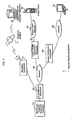
- program distribution sub-system 1 includes distribution contents subsystem 10, CH (contents holder) distribution subsystem 20, mobile retailer distribution subsystem 30, retailer distribution subsystem 40, broadcast subsystem 70, mobile phone 50, PC (personal computer) 60, and digital broadcast reception apparatus 75.
- CH content holder
- PC personal computer
- the contents produced by distribution contents production subsystem 10 are sent via CH distribution subsystem 20, mobile retailer distribution subsystem 30, retailer distribution subsystem 40 and internet 80 to the corresponding mobile phone 50, PC 60, and digital broadcast reception apparatus 75.
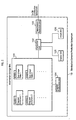
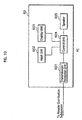
- distribution contents production subsystem 10 is made up of information storage unit 101, extraction unit 102, transmission/reception unit 103, program production unit 104, display unit 105, and input unit 106.
- distribution contents production subsystem 10 is a computer system comprising a microprocessor, a ROM, a RAM, a hard disk unit, a display unit, a keyboard, a mouse, an LAN connection unit.
- a computer program is stored on the hard disk unit, and the microprocessor operates in accordance with the computer program.
- distribution contents production subsystem 10 functions based on the operations of the microprocessor.
- information storage unit 101 Within information storage unit 101, a plurality of individual program structures and a plurality of units of raw image data are stored in advance.
- the units of raw image data are compressed code streams produced by compression encoding a moving image according to a certain standard, the moving image being made up of a plurality of consecutive frame images.
- the units of raw image data are identified by file name.
- the above-mentioned standard can be MPEG, Motion JPEG or the like.
- the above-mentioned compression encoding method includes intra-frame compression and inter-frame compression (inter-frame predictive encoding).
- Inter-frame compression is a compression process wherein a plurality of consecutive frame images are compressed, each frame being compressed after referring to the pixels of one or more neighboring frame images.
- intra-frame compression is a compression process wherein a frame image is compressed using the pixels within that very same frame.
- the raw image data includes data that indicates the various standards, as well as data that indicates whether the compression encoding took place via intra-frame compression or inter-frame compression.
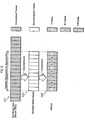
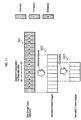
- This selected code string that corresponds to a prescribed number of frame images is called a basic compressed frame image group.
- a concrete example of a basic compressed frame image group would be a GOP (Group of Pictures).
- a program is made up of a plurality of scenes, and each scene includes a plurality of frame images. Normally, this program would be called the main program. And based on this main program, the one responsible for the final product (in this case, the director) can edit and reproduce the program to make a what is called a "director's cut” edition (hereinafter referred to as the DC edition). Additionally, if one were to insert commercial messages into the main program, that would be called a CM edition.
- the function of the program structure is to regulate the plurality of scenes that make up the above-mentioned program and to regulate the order in which these scenes are reproduced.
- the program structure is identified through the use of program identifiers.
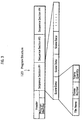
- the program structure comprises a header and at least one sequence section.
- the header includes a program identifier that serves the purpose of identifying the program.
- the sequence section includes a plurality of units of scene data.
- the scene data includes a file name, a frame identification number, and a frame quantity.
- the file name serves as an identifier for the purpose of identifying particular raw image data stored in information storage unit 101.
- the frame identification number serves as an identifier for the purpose of identifying one particular frame image within the raw image data identified above.
- the frame quantity indicates the number of frame images that continue on from the frame image identified by the frame identification number. This indicates the number of frames to be distributed and reproduced.
- the plurality of frame images specified by the file name, frame identification number and frame quantity included in the scene data are what make up the scene that corresponds to that scene data.
- the program structure 120 of FIG. 3 includes a sequence section #1, a sequence section #2, and a sequence section #3. These sequence sections #1 through #3 respectively correspond to the earlier-mentioned main program, DC edition program, and CM edition program.
- program production unit 104 produces the above program structure by using a plurality of raw image data stored in information storage unit 101.
- a program production unit such as this referred to as an image editing apparatus, is commonly known by those practiced in the field, so no further explanation will be provided here.
- Input unit 106 receives from the user inputs of program identifiers used for identifying the program structure. Then input unit 106 outputs those program identifiers to extraction unit 102.
- Extraction unit 102 receives the program identifiers from input unit 106. Then it retrieves from information storage unit 101 the program structures identified by the program identifiers.
- extraction unit 102 retrieves from information storage unit 101 the raw image data identified by the file name included in each unit of scene data from within every sequence section that is included within the program structure retrieved above.
- extraction unit 102 transmits the retrieved program structure and raw image data to CH distribution system 20 via transmission/reception unit 103.
- Transmission/reception unit 103 serves transmitting and receiving functions between extraction unit 102 and CH distribution system 20.
- Display unit 105 displays the information.
- CH distribution subsystem 20 comprises transmission/reception unit 201, information storage unit 202, transmission/reception unit 203, and control unit 204.
- CH distribution subsystem 20 is, concretely speaking, a computer system, and it performs its functions based on the running of a computer program by a microprocessor.
- Transmission/reception unit 201 receives the program structure and raw image data from extraction unit 102 of distribution contents production subsystem 10. Then it writes the received program structure and raw image data onto information storage unit 202.
- Information storage unit 202 has a distribution destination list stored in advance. And it is provided with a storage area for the storage of a plurality of program structures and raw image data.
- the distribution destination list includes a plurality of distribution destination names. These distribution destination names serve as identifiers for identifying the distribution destination of the information.
- Control unit 204 outputs transmission commands to transmission/reception unit 203 to have it transmit the program structure and the raw image data.
- Transmission/reception unit 203 receives transmission commands from control unit 204. Upon receiving the transmission commands, it retrieves a) every distribution destination name from the distribution destination list, and b) every raw image data and every program structure from information storage unit 202. Then, via internet 80, it transmits the retrieved program structures and raw image data to the distribution destinations identified by each distribution destination name.
- Mobile retailer Distribution Subsystem 30 comprises transmission/reception unit 301, information storage unit 302, transmission/reception unit 303, and control unit 304.
- mobile retailer distribution subsystem 30 is, concretely speaking, a computer system, and it performs its functions based on the running of a computer program by a microprocessor.
- Information storage unit 302 is provided with an area designated for the storage of a plurality of program structures and a plurality raw image data.
- Transmission/reception unit 301 receives the program structures and raw image data from CH distribution subsystem 20. Then it writes this information onto information storage unit 302.
- Control unit 303 receives program identifiers from mobile phone 50 via mobile phone network 90 and transmission/reception unit 304.
- control unit 303 Upon receiving the program identifiers, control unit 303 retrieves from information storage unit 302 the program structures identified by the identifiers. Using these retrieved program structures, control unit 303 then uses the process explained below to produce a program based on a plurality of frame images. Then, control unit 303 transmits the produced program to mobile phone 50 via transmission/reception unit 304 and mobile phone network 90.
- control unit 303 below is an explanation of the production of a program by control unit 303.
- Control unit 303 extracts sequence section #1 from the retrieved program structure. Then, for each unit of scene data included within sequence section #1, control unit 303 repeats the steps below.
- control unit 303 repeats the steps to produce a plurality of new compression encoded streams from each unit of scene data included in sequence section #1. Then it combines these newly produced compression encoded streams in the order in which they were produced, thus forming a new program.
- Transmission/reception unit 304 transmits and receives data between control unit 303 and mobile phone 50 via mobile phone network 90.
- Retailer distribution subsystem 40 comprises transmission/reception unit 401, information storage unit 402, transmission/reception unit 403, and control unit 404.
- retailer distribution subsystem 40 is, concretely speaking, a computer system, and it performs its functions based on the running of a computer program by a microprocessor.
- Information storage unit 402 is provided with an area designated for the storage of a plurality of program structures and a plurality of units of raw image data.
- Transmission/reception unit 401 receives the program structures and raw image data from CH distribution subsystem 20. Then it writes this information onto information storage unit 402.
- Control unit 403 receives program identifiers from PC 60 via internet 80 and transmission/reception unit 404.
- control unit 403 Upon receiving the program identifiers, control unit 403 retrieves from information storage unit 402 the program structures identified by the identifiers.
- control unit 403 extracts sequence section #1 from the retrieved program structure. Then, for each unit of scene data included within the extracted sequence section #1, control unit 403 retrieves from information storage unit 402 the raw image data identified by the file name within the scene data.
- control unit 403 extracts from this raw image data one or more basic compressed frame image groups that include compression coded streams that correspond to the plurality of frame images designated by the frame identification numbers and the frame quantities, both of these identifiers found within the scene data. These one or more extracted basic compressed groups are then combined to create new raw image data. This newly produced raw image data can then be transmitted to PC 60. In this case, the volume of data transmitted to PC 60 will be less than the above instance, and this newly formed data will cause a shift in the frame identification number
- Transmission/reception unit 404 transmits and receives data between control unit 403 and PC 60 via internet 80.
- Mobile Phone 50 comprises transmission/reception unit 501, input unit 502, display unit 503, control unit 504, speaker 505, and microphone 506.
- Mobile phone 50 is a portable telephone device capable of mobile communication via radio waves. Concretely speaking, it is a computer system including a microprocessor, ROM, RAM, a liquid crystal display unit, a key pad, a communication unit, and an antenna. Stored within the RAM are mobile phone computer programs for communication, key functions, liquid crystal display, and the management of the various data. Mobile phone 50 performs its functions based on the running of the mobile phone computer programs by the above-mentioned microprocessor.
- Input Unit 502 receives program identifier inputs from the user. Then, it transmits the received program identifiers to mobile retailer distribution subsystem 30 via control unit 504, transmission/reception unit 501 and mobile phone network 90.
- control unit 504 Via mobile phone network 90 and transmission/reception unit 501, control unit 504 receives one complete program set. Then it produces decoded frame images by decompressing this program according to MPEG4 standards. Next, it outputs these decoded frame images to display unit 503. Additionally, if the program includes audio data, control unit 504 decodes that and outputs the decoded audio signals to speaker 505. Finally, control unit 504 receives, one by one in sequence, the plurality of compression encoded streams that make up an individual program set. The rate at which this occurs depends on the rate at which the program is received and the capacity of the buffer within the phone intended for storing the program.
- Display unit 503 receives decoded frame images from control unit 504 and displays them in the order in which they were received.
- Speaker 505 receives audio signals from control unit 504 and outputs that audio.
- Transmission/reception unit 501 transmits and receives data between mobile retailer distribution subsystem 30 and control unit 504 via mobile phone network 90.
- PC 60 comprises transmission/reception unit 601, input unit 602, display unit 603, control unit 604, and speaker 604.
- PC 60 is a computer system comprising a microprocessor, ROM, RAM, a hard disc unit, a liquid crystal display unit, a key board, a mouse, and a LAN connection unit.
- a computer program is stored on the hard disc unit.
- PC 60 performs its functions based on the running of the computer program by the microprocessor.
- Input Unit 602 receives program identifier inputs from the user. Then, it transmits the received program identifiers to retailer distribution subsystem 40 via control unit 604, transmission/reception unit 601 and internet 80.
- control unit 604 receives the program structure and raw image data from retailer distribution subsystem 40. Then it stores this information.
- control unit 604 extracts sequence section #1 from the received program structure, then it performs the steps below for each unit of scene data included within sequence section #1.
- control unit 604 decodes that data and sends the audio signals to speaker 605.
- Display unit 603 receives decoded frame images from control unit 604 and displays them in the order in which they were received.
- Speaker 605 outputs audio after receiving audio signal from control unit 604.
- Transmission/reception unit 601 transmits and receives data between retailer distribution subsystem 40 and control unit 604 via internet 80.
- Broadcast subsystem 70 has the same structure as mobile retailer distribution subsystem 30 or retailer distribution subsystem 40.
- Broadcast subsystem 70 receives program structures and raw image data from CH distribution subsystem 20. Then, in accordance with these received program structures and raw image data, it reproduces the program, or the program structures and all of the raw image data, in a manner similar to mobile retailer distribution subsystem 30 or retailer distribution subsystem 40. Then, via broadcast satellite 71, it broadcasts the program, or program structures and raw image data, on digital broadcast waves.
- Digital broadcast reception apparatus 75 has the same structure as mobile phone 50 or PC 60.
- digital broadcast reception apparatus 75 receives digital broadcast waves broadcast from broadcast subsystem 70. Then it extracts the program from the received digital broadcast waves and reproduces the program in the same manner as mobile phone 50. Alternatively, if it is processing program structures and all of the raw image data, digital broadcast reception apparatus 75 extracts from the digital broadcast waves the program structures and the raw image data and uses it to produce the program in the same manner as PC 60. Then this program is played.
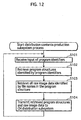
- Input unit 106 receives from the user input of a program identifier used for identifying the program structure, then it outputs that program identifier to extraction unit 102 (Step S101).
- Extraction unit 102 receives the program identifier from input unit 106. Then it retrieves from information storage unit 101 the program structure identified by the program identifier (Step S102).
- extraction unit 102 retrieves from information storage unit 101 the raw image data identified by the file names included in each unit of scene data from within every sequence section that is included within the program structure retrieved above (Step S103).
- extraction unit 102 transmits the retrieved program structure and raw image data to CH distribution system 20 via transmission/reception unit 103 (Step S104). Then the process is repeated from Step S101.
- Transmission/reception unit 201 receives the program structure and raw image data from extraction unit 102 of distribution contents production subsystem 10 (Step S111). Then it writes the received program structure and raw image data onto information storage unit 202 (Step S112).
- Control unit 204 outputs transmission commands to transmission/reception unit 203 to have it transmit the program structure and the raw image data.
- Transmission/reception unit 203 receives transmission commands from control unit 204. Upon receiving the transmission commands, it retrieves a) every distribution destination name from the distribution destination list (Step S113), and b) every raw image data and every program structure from information storage unit 202 (Step S114). Then, via internet 80, it transmits the retrieved program structures and raw image data to the distribution destinations identified by each distribution destination name (Step S115).
- FIG. 14 The flowchart of FIG. 14 will be used in explaining the operations of mobile retailer distribution subsystem 30 and mobile phone 50.
- Transmission/reception unit 301 receives the program structures and raw image data from CH distribution subsystem 20 (Step S131). Then it writes this information onto information storage unit 302 (Step S132).
- input unit 502 receives from the user inputted program identifiers (Step S141). Then it transmits these received program identifiers to mobile retailer distribution subsystem 30 via control unit 504, transmission/reception unit 501, and mobile phone network 90 (Step S142).
- Control unit 303 receives program identifiers from mobile phone 50 via mobile phone network 90 and transmission/reception unit 304 (also included in Step S142).
- control unit 303 Upon receiving the program identifiers, control unit 303 retrieves from information storage unit 302 the program structures identified by the identifiers (Step S143). Using these retrieved program structures, control unit 303 then uses the process explained below to produce a program based on a plurality of frame images (Step S144). Then, control unit 303 transmits the produced program to mobile phone 50 via transmission/reception unit 34 and mobile phone network 90 (Step S145).
- control unit 504 receives one complete program set. Then it produces decoded frame images by decompressing this program according to MPEG4 standards. Next, it outputs these decoded frame images to display unit 503, which then displays them (Step 146).
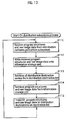
- Control unit 303 extracts sequence section #1 from the retrieved program structure (Step S161). Then, for each unit of scene data included within sequence section #1, control unit 303 repeats the steps below. This entire process makes up steps S162 through S172.
- Control unit 303 retrieves from information storage unit 302 the raw image data identified by the file names within the scene data (Step S163).
- control unit 303 extracts from this raw image data a compression coded stream that corresponds the plurality of frame images designated by the frame identification number and the frame quantity, both of these found within the scene data (Step S165). Next, it decompresses the extracted compressed code stream, producing the plurality of frame images in their decoded form (Step S166). Then control unit 303 continues by creating a new compressed code stream by re-compressing the decoded frame images using the MPEG4 standard (Step S167).
- control unit 303 extracts from this raw image data at least one basic compression unit that includes a compression coded stream that corresponds the plurality of frame images designated by the frame identification number and the frame quantity, both of these found within the scene data (Step S168). Next, by decompressing the extracted basic compression unit, it produces a plurality of frame images in their decoded form (Step S169). Then, out of the plurality of decoded frame images formed, control unit 303 extracts specific decoded frame images designated by the above-mentioned frame identification number and frame quantity (Step S170). And following this, it produces a new compressed code stream by compression encoding these extracted decoded frame images according to the MPEG4 standard (Step S171).
- FIG. 16 The flowchart of FIG. 16 will be used for explaining the operations of retailer distribution subsystem 40 and PC 60.
- Transmission/reception unit 401 receives the program structures and raw image data from CH distribution subsystem 20 (Step S191). Then it writes this information onto information storage unit 402 (Step S192).
- Input Unit 602 receives program identifier inputs from the user (Step S201). Then, it transmits the received program identifiers to retailer distribution subsystem 40 via control unit 604, transmission/reception unit 601 and internet 80 (Step S202).
- Control unit 403 receives program identifiers from PC 60 via internet 80 and transmission/reception unit 404 (Step S202).
- control unit 403 Upon receiving the program identifiers, control unit 403 retrieves from information storage unit 402 the program structures identified by the identifiers (Step S203).
- control unit 403 extracts sequence section #1 from the retrieved program structure, and for each unit of scene data included within the extracted sequence section #1, it retrieves from information storage unit 402 the raw image data identified by the file name within the scene data (Step S204). Then, via transmission/reception unit 404 and internet 80, it transmits the retrieved program structures and all of the retrieved raw image data to PC 60 (Step S205).
- control unit 604 receives the program structure and raw image data from retailer distribution subsystem 40, and then it stores this information (Step S205). Next, PC 60 reproduces the program (Step S206).
- Control unit 604 extracts sequence section #1 from the received program structure (Step S221), then it performs the steps below for each unit of scene data included within sequence section #1. These steps make up Steps S222 through S228.
- Control unit 604 retrieves the raw image data identified by the file name included within the scene data (Step S223).
- Step S224 it extracts from this raw image data at least one basic compressed frame image group that includes a compression coded stream that corresponds the plurality of frame images designated by the frame identification number and the frame quantity, both of these found within the scene data.
- Step S225 by decompressing the extracted basic compressed frame image group, a plurality of frame images in their decoded form are produced.
- control unit 604 extracts specific decoded frame images designated by the above-mentioned frame identification number and frame quantity (Step 226). Finally, it outputs these extracted decoded frame images to display unit 603 which then displays them (Step S227).
- An object of the present invention is to provide a method for, at the time when a server apparatus distributes data, automatically producing the raw image data to be distributed.
- the present invention is a program distribution system including: a) a program storage apparatus for storing either non-compressed raw image data or raw image data that has been compressed via intra-frame compression; and b) a program distribution server apparatus having (i) a system for extracting a set segment of frame images from the above-mentioned raw image data, and (ii) a system for compressing the extracted frame images via inter-frame compression and distributing those compressed images.
- the present invention is a program distribution system including: a) a program storage apparatus for storing raw image data that has been compressed via inter-frame compression; and b) a program distribution server apparatus having (i) a system for extracting and expanding a set segment of frame images, as a part of a group of inter-frame compressed frame images extracted from the above-mentioned raw image data, and (ii) a system for. recompressing only the set segment of frame images and distributing those compressed frame images.
- the present invention is a program distribution system including: a) a program storage apparatus for storing raw image data that has been compressed via inter-frame compression; b) a program distribution server apparatus having a system for extracting a set segment of frame images, as a part of a group of inter-frame compressed frame images, from the above-mentioned raw image data, and then distributing the extracted frame images; and c) a program reproduction apparatus having a system for (i) extracting, from the inter-frame compressed raw image data, a group of frame images that correspond to a designated section, (ii) expanding that group of frame images, and (iii) reproducing only that designated section.
- the present invention is a program distribution system including: a) a distribution server apparatus that performs (i) a designated section reproduction procedure for reproducing a designated section of frame images from inter-frame compressed raw image data and (ii) distribution of the reproduced segment data by including it as a part of distribution data; b) a terminal apparatus provided with the ability to use the distributed data to perform the terminal-end reproduction functions listed thus far; and c) a distribution server apparatus capable of performing the distribution server functions mentioned thus far.
- the present invention is a distribution system including a) a distribution server apparatus capable of distributing a computer program for reproducing segments of frame images in the same manner as the above-mentioned distribution terminal apparatus, and b) a distribution terminal apparatus capable of accepting this computer program and performing the reproductive functions accordingly.
- distribution contents production subsystem 10 further includes a computer program storage unit and a computer program transmission unit.
- the above-mentioned computer program storage unit has stored within it: a) a decompression computer program for producing a plurality of temporarily decompressed frame images by decompressing raw image data; and b) an extraction computer program for extracting, from the above temporarily decompressed frame images, those frame images that correspond to frame images designated by the above-mentioned designating information.
- the above-mentioned computer program transmission unit retrieves the decompression computer program and the extraction computer program from the computer program storage unit and transmits them to PC 60.
- Transmission/reception unit 601 of PC 60 receives the decompression computer program and the extraction program. Then, the microprocessor within PC 60 operates in accordance with the decompression computer program and extraction computer program to: a) decompress the received raw image data and produce a plurality of temporarily decompressed frame images; and b) extract, from the above temporarily decompressed frame images, those frame images that correspond to frame images designated by the received designating information. Display unit 603 displays the frame images that are extracted.
- the present invention is a program distribution system including: a) a distribution server apparatus that performs (i) a designated segment reproduction procedure for reproducing a designated segment of frame images from inter-frame compressed raw image data and (ii) distribution of the reproduced segment of frame images by including them in distribution data; b) a server apparatus within the distribution network capable of processing the distributed data; and c) a distribution server apparatus capable of the distribution server functions mentioned thus far.
- the present invention is capable of reproducing only the frame images that are designated. As a result, not only does this eliminate the limitations on the forms of compression applied to the raw image data accrued within the distribution server apparatus, it also eliminates the limitations on the forms of compression applied to raw image data used in the production of distribution contents.
- the reproduction terminal apparatus and distribution server apparatus of the present invention it is possible to distribute, along with the raw image data, data regarding which reproduction method should be used to reproduce the designated frame images. This means that the reproduction method used on the designated frame images is not predetermined and can be changed automatically. Additionally, it is possible to distribute the reproduction algorithm itself, making it unnecessary to install a new reproduction terminal apparatus in order to perform a new method of reproduction.
Landscapes
- Engineering & Computer Science (AREA)
- Signal Processing (AREA)
- Multimedia (AREA)
- Business, Economics & Management (AREA)
- Computer Networks & Wireless Communication (AREA)
- Accounting & Taxation (AREA)
- Finance (AREA)
- Theoretical Computer Science (AREA)
- Physics & Mathematics (AREA)
- General Engineering & Computer Science (AREA)
- General Physics & Mathematics (AREA)
- Computer Security & Cryptography (AREA)
- Strategic Management (AREA)
- Marketing (AREA)
- General Business, Economics & Management (AREA)
- Economics (AREA)
- Development Economics (AREA)
- Computer Hardware Design (AREA)
- Two-Way Televisions, Distribution Of Moving Picture Or The Like (AREA)
- Compression Or Coding Systems Of Tv Signals (AREA)
- Television Signal Processing For Recording (AREA)
- Information Transfer Between Computers (AREA)
Abstract
Description
Claims (12)
- A program distribution system for distributing, via a distribution network, a distribution program extracted from an original program, the program distribution system comprising:an original program storage unit operable to store one original program, the original program including inter-frame compressed original frame images, inter-frame compression being a method whereby each frame image is compressed, with at least one frame image being compressed using as a reference one or more neighboring frame images;a reception unit operable to receive segment information indicating a segment of the original frame images;a decompression unit operable to decompress sections of the compressed original frame images to generate intermediate frame images that include the frame images indicated by the segment information;.a re-compression unit operable to a) extract from the intermediate frame images the frame images indicated by the segment information, and b) generate re-compressed frame images by performing inter-frame compression on the extracted frame images; anda distribution unit operable to distribute, via a distribution network, the re-compressed frame images as the distribution program.
- The program distribution system of Claim 1, further comprising:a receiving unit operable to receive the distributed re-compressed frame images; anda reproduction unit operable to reproduce the received re-compressed frame images.
- The program distribution system of Claim 2, being composed of a program storage apparatus, a program distribution server apparatus, and a reproduction terminal apparatus,
whereinthe program storage apparatus and the program distribution server apparatus are connected,the program distribution server apparatus and the reproduction terminal apparatus are connected via a network,the program storage apparatus includes the original program storage unit,the program distribution server apparatus includes the reception unit, the decompression unit, the re-compression unit, and the distribution unit, andthe reproduction terminal apparatus includes the receiving unit and the reproduction unit. - A program distribution system for distributing, via a distribution network, a distribution program extracted from an original program, the program distribution system comprising:an original program storage unit operable to store one original program, the original program including inter-frame compressed original frame images, and the inter-frame compressed original frame images including a plurality of compressed frame image groups, each made up of a prescribed number of frame images subjected to inter-frame compression, inter-frame compression being a method whereby each frame image is compressed, with at least one frame image using as a reference one or more neighboring frame images;a reception unit operable to receive segment information indicating a segment of the original frame images;a retrieval unit operable to retrieve, from the inter-frame compressed original frame images, a compressed frame image group that includes frame images indicated by the segment information;a transmission unit operable to transmit, as the distribution program, the retrieved compressed frame image group;a receiving unit operable to receive the transmitted compressed frame image group;a decompression unit operable to decompress the received compressed frame image group to produce a plurality of temporarily decompressed frame images;an extraction unit operable to extract, from the produced temporarily decompressed frame images, the frame images indicated by the segment information; anda reproduction unit operable to reproduce the extracted frame images.
- The program distribution system of Claim 4, being composed of a program storage apparatus, a program distribution server. apparatus, and a reproduction terminal apparatus, the program storage apparatus and the program distribution server apparatus being connected, and the program distribution server apparatus and the reproduction terminal apparatus being connected via a network, whereinthe program storage apparatus includes the original program storage unit,the program distribution server apparatus includes the reception unit, the retrieval unit, and the transmission unit, andthe reproduction terminal apparatus includes the receiving unit, the decompression unit, the extraction unit, and the reproduction unit.
- The program distribution system of Claim 4, further comprising:a segment information transmission unit operable to transmit the segment information received by the reception unit; anda segment information reception unit operable to receive the transmitted segment information, whereinthe extraction unit extracts decompressed frame images indicated by the segment information received by the segment information reception unit.
- The program distribution system of Claim 4, further comprising:a computer program storage unit operable to store a) a decompression computer program for producing a plurality of temporarily decompressed frame images by decompressing the received compressed frame image group, and b) an extraction computer program for extracting the temporarily decompressed frame images indicated by the segment information;a computer program transmission unit operable to read the decompression computer program and the extraction computer program from the computer program storage unit, and to transmit the read decompression computer program and the read extraction computer program; anda computer program reception unit operable to receive the transmitted decompression computer program and the transmitted extraction computer program, whereinthe decompression unit and the extraction unit share a microprocessor that operates in accordance with the decompression computer program and the extraction computer program to c) produce a plurality of temporarily decompressed frame images by decompressing the received compressed frame image groups, and d) extract the temporarily decompressed frame images indicated by the segment information received by the segment information reception unit.
- A program distribution method used in a program distribution system for distributing, via a distribution network, a distribution program extracted from an original program, the program distribution system including an original program storage unit operable to store one original program, the original program including inter-frame compressed original frame images, inter-frame compression being a method whereby each frame image is compressed, with at least one frame image being compressed using as a reference one or more neighboring frame images,
the program distribution method comprising:a reception step for receiving segment information indicating a segment of the original frame images;a decompression step for decompressing sections of the compressed original frame images to generate intermediate frame images that include the frame images indicated by the segment information;a re-compression step for a) extracting from the intermediate frame images the frame images indicated by the segment information, and b) generating re-compressed frame images by performing inter-frame compression on the extracted frame images; anda distribution step for distributing, via a distribution network, the re-compressed frame images as the distribution program. - A program distribution computer program used in a program distribution system for distributing, via a distribution network, a distribution program extracted from an original program, the program distribution system including an original program storage unit operable to store one original program, the original program including inter-frame compressed original frame images, inter-frame compression being a method whereby each frame image is compressed, with at least one frame image being compressed using as a reference one or more neighboring frame images,
the program distribution computer program comprising:a reception step for receiving segment information indicating a segment of the original frame images;a decompression step for decompressing sections of the compressed original frame images to generate intermediate frame images that include the frame images indicated by the segment information;a re-compression step for a) extracting from the intermediate frame images the frame images indicated by the segment information, and b) generating re-compressed frame images by performing inter-frame compression on the extracted frame images; anda distribution step for distributing, via a distribution network, the re-compressed frame images as the distribution program. - A computer-readable recording medium having stored thereon a program distribution computer program used in a program distribution system for distributing, via a distribution network, a distribution program extracted from an original program, the program distribution system including an original program storage unit operable to store one original program, the original program including inter-frame compressed original frame images, inter-frame compression being a method whereby each frame image is compressed, with at least one frame image being compressed using as a reference one or more neighboring frame images,
the program distribution computer program comprising:a reception step for receiving segment information indicating a segment of the original frame images;a decompression step for decompressing sections of the compressed original frame images to generate intermediate frame images that include the frame images indicated by the segment information;a re-compression step for a) extracting from the intermediate frame images the frame images indicated by the segment information, and b) generating re-compressed frame images by performing inter-frame compression on the extracted frame images; anda distribution step for distributing, via a distribution network, the re-compressed frame images as the distribution program. - A program distribution server apparatus that together with a program storage apparatus and a reproduction apparatus composes a program distribution system that extracts a distribution program from an original program and distributes the extracted distribution program via a distribution network, the program storage apparatus and the program distribution server apparatus being connected, and the program distribution server apparatus being connected to the reproduction terminal apparatus via a network,
the program storage apparatus comprising:the program server apparatus comprising:an original program storage unit operable to store one original program, the original program including inter-frame compressed original frame images, inter-frame compression being a method whereby each frame image is compressed, with at least one frame image being compressed using as a reference one or more neighboring frame images,the reproduction terminal apparatus comprising:a reception unit operable to receive segment information indicating a segment of the original frame images;a decompression unit operable to decompress sections of the compressed original frame images to generate intermediate frame images that include the frame images indicated by the segment information;a re-compression unit operable to a) extract from the intermediate frame images the frame images indicated by the segment information, and b) generate re-compressed frame images by performing inter-frame compression on the extracted frame images; anda distribution unit operable to distribute, via a distribution network, the re-compressed frame images as the distribution program, anda receiving unit operable to receive the distributed re-compressed frame images; anda reproduction unit operable to reproduce the received re-compressed frame images. - A reproduction terminal apparatus that together with a program storage apparatus and a reproduction apparatus composes a program distribution system that extracts a distribution program from an original program and distributes the extracted distribution program via a distribution network, the program storage apparatus and the program distribution server apparatus being connected, and the program distribution server apparatus being connected to the reproduction terminal apparatus via a network,
the program storage apparatus comprising:the program server apparatus comprising:an original program storage unit operable to store one original program, the original program including inter-frame compressed original frame images, inter-frame compression being a method whereby each frame image is compressed, with at least one frame image being compressed using as a reference one or more neighboring frame images,the reproduction terminal apparatus comprising:a reception unit operable to receive segment information indicating a segment of the original frame images;a decompression unit operable to decompress sections of the compressed original frame images to generate intermediate frame images that include the frame images indicated by the segment information;a re-compression unit operable to a) extract from the intermediate frame images the frame images indicated by the segment information, and b) generate re-compressed frame images by performing inter-frame compression on the extracted frame images; anda distribution unit operable to distribute, via a distribution network, the re-compressed frame images as the distribution program, anda receiving unit operable to receive the distributed re-compressed frame images; anda reproduction unit operable to reproduce the received re-compressed frame images.
Applications Claiming Priority (4)
| Application Number | Priority Date | Filing Date | Title |
|---|---|---|---|
| JP2001121713 | 2001-04-19 | ||
| JP2001121713 | 2001-04-19 | ||
| JP2001282245 | 2001-09-17 | ||
| JP2001282245A JP2003009115A (en) | 2001-04-19 | 2001-09-17 | Video distribution system |
Publications (2)
| Publication Number | Publication Date |
|---|---|
| EP1251698A2 true EP1251698A2 (en) | 2002-10-23 |
| EP1251698A3 EP1251698A3 (en) | 2003-07-02 |
Family
ID=26613878
Family Applications (1)
| Application Number | Title | Priority Date | Filing Date |
|---|---|---|---|
| EP02008867A Withdrawn EP1251698A3 (en) | 2001-04-19 | 2002-04-19 | Program distribution system |
Country Status (4)
| Country | Link |
|---|---|
| US (1) | US20020165796A1 (en) |
| EP (1) | EP1251698A3 (en) |
| JP (1) | JP2003009115A (en) |
| KR (1) | KR20020082418A (en) |
Families Citing this family (1)
| Publication number | Priority date | Publication date | Assignee | Title |
|---|---|---|---|---|
| KR101020039B1 (en) * | 2010-03-11 | 2011-03-09 | 한명국 | Multi Zone Media Distribution Control System |
Family Cites Families (2)
| Publication number | Priority date | Publication date | Assignee | Title |
|---|---|---|---|---|
| CA2271555C (en) * | 1992-12-09 | 2003-11-11 | Discovery Communications, Inc. | Remote control for cable television delivery system |
| US6104441A (en) * | 1998-04-29 | 2000-08-15 | Hewlett Packard Company | System for editing compressed image sequences |
-
2001
- 2001-09-17 JP JP2001282245A patent/JP2003009115A/en active Pending
-
2002
- 2002-04-18 US US10/124,317 patent/US20020165796A1/en not_active Abandoned
- 2002-04-19 KR KR1020020021404A patent/KR20020082418A/en not_active Abandoned
- 2002-04-19 EP EP02008867A patent/EP1251698A3/en not_active Withdrawn
Also Published As
| Publication number | Publication date |
|---|---|
| EP1251698A3 (en) | 2003-07-02 |
| KR20020082418A (en) | 2002-10-31 |
| US20020165796A1 (en) | 2002-11-07 |
| JP2003009115A (en) | 2003-01-10 |
Similar Documents
| Publication | Publication Date | Title |
|---|---|---|
| KR100717008B1 (en) | Method and apparatus for transmitting and receiving of partial font file | |
| JPH10508440A (en) | Method and apparatus for electronic distribution of digital multimedia information | |
| EP2151970B1 (en) | Processing and supplying video data | |
| JP4644852B2 (en) | Video sequence supply method, video stream transmission device, video stream reception device, card-type video stream reception device, and video stream transmission system | |
| JPH10504953A (en) | Method for forming and transmitting high quality interactive multimedia information | |
| JP2007506305A (en) | Adaptive management of video storage resources | |
| JP2003534684A (en) | How to edit compressed video downstream | |
| KR100428590B1 (en) | Split Imige Data Transmission Method and System | |
| JPH09326873A (en) | Information transmission system | |
| JP3462267B2 (en) | Information communication terminal equipment | |
| JP4178631B2 (en) | Receiving apparatus and method, transmitting apparatus | |
| JP4198331B2 (en) | Recording device | |
| EP1251698A2 (en) | Program distribution system | |
| US20060002682A1 (en) | Recording apparatus and recording control method | |
| CN104333765A (en) | Processing method and device of video live streams | |
| CN101185341B (en) | Recording and reproducing device and integrated circuit | |
| JP2002077855A (en) | Multimedia information processing system and method | |
| JP3900384B2 (en) | Video signal processing apparatus and video signal processing method | |
| JP3588153B2 (en) | Data editing method and editing device | |
| US20090055932A1 (en) | Information distributing apparatus and method, receiving apparatus and method, distribution system, and computer program | |
| JP3646074B2 (en) | Information embedding device and information extracting device | |
| EP1517562A2 (en) | Video coding including auxiliary information for performing and tracking successive processing steps like editing, splicing, fingerprinting | |
| US20030091336A1 (en) | Method of copying compressed digital data | |
| JP2005176068A (en) | Video distribution system and method | |
| JPH08274902A (en) | Data server system, terminal, and data transmission method |
Legal Events
| Date | Code | Title | Description |
|---|---|---|---|
| PUAI | Public reference made under article 153(3) epc to a published international application that has entered the european phase |
Free format text: ORIGINAL CODE: 0009012 |
|
| AK | Designated contracting states |
Kind code of ref document: A2 Designated state(s): AT BE CH CY DE DK ES FI FR GB GR IE IT LI LU MC NL PT SE TR |
|
| AX | Request for extension of the european patent |
Free format text: AL;LT;LV;MK;RO;SI |
|
| PUAL | Search report despatched |
Free format text: ORIGINAL CODE: 0009013 |
|
| AK | Designated contracting states |
Designated state(s): AT BE CH CY DE DK ES FI FR GB GR IE IT LI LU MC NL PT SE TR |
|
| AX | Request for extension of the european patent |
Extension state: AL LT LV MK RO SI |
|
| RIC1 | Information provided on ipc code assigned before grant |
Ipc: 7H 04N 7/26 B Ipc: 7H 04N 7/24 B Ipc: 7H 04N 5/00 B Ipc: 7H 04N 7/173 A |
|
| AKX | Designation fees paid | ||
| REG | Reference to a national code |
Ref country code: DE Ref legal event code: 8566 |
|
| STAA | Information on the status of an ep patent application or granted ep patent |
Free format text: STATUS: THE APPLICATION IS DEEMED TO BE WITHDRAWN |
|
| 18D | Application deemed to be withdrawn |
Effective date: 20040103 |