EP1249847A2 - Soft-magnetic hexagonal ferrite composite particles, and green sheet using the same and soft-magnetic hexagonal ferrite sintered ceramics. - Google Patents
Soft-magnetic hexagonal ferrite composite particles, and green sheet using the same and soft-magnetic hexagonal ferrite sintered ceramics. Download PDFInfo
- Publication number
- EP1249847A2 EP1249847A2 EP02252467A EP02252467A EP1249847A2 EP 1249847 A2 EP1249847 A2 EP 1249847A2 EP 02252467 A EP02252467 A EP 02252467A EP 02252467 A EP02252467 A EP 02252467A EP 1249847 A2 EP1249847 A2 EP 1249847A2
- Authority
- EP
- European Patent Office
- Prior art keywords
- soft
- hexagonal ferrite
- particles
- magnetic hexagonal
- weight
- Prior art date
- Legal status (The legal status is an assumption and is not a legal conclusion. Google has not performed a legal analysis and makes no representation as to the accuracy of the status listed.)
- Granted
Links
Images

Classifications
-
- C—CHEMISTRY; METALLURGY
- C04—CEMENTS; CONCRETE; ARTIFICIAL STONE; CERAMICS; REFRACTORIES
- C04B—LIME, MAGNESIA; SLAG; CEMENTS; COMPOSITIONS THEREOF, e.g. MORTARS, CONCRETE OR LIKE BUILDING MATERIALS; ARTIFICIAL STONE; CERAMICS; REFRACTORIES; TREATMENT OF NATURAL STONE
- C04B35/00—Shaped ceramic products characterised by their composition; Ceramics compositions; Processing powders of inorganic compounds preparatory to the manufacturing of ceramic products
- C04B35/622—Forming processes; Processing powders of inorganic compounds preparatory to the manufacturing of ceramic products
- C04B35/626—Preparing or treating the powders individually or as batches ; preparing or treating macroscopic reinforcing agents for ceramic products, e.g. fibres; mechanical aspects section B
- C04B35/63—Preparing or treating the powders individually or as batches ; preparing or treating macroscopic reinforcing agents for ceramic products, e.g. fibres; mechanical aspects section B using additives specially adapted for forming the products, e.g.. binder binders
- C04B35/632—Organic additives
-
- H—ELECTRICITY
- H01—ELECTRIC ELEMENTS
- H01F—MAGNETS; INDUCTANCES; TRANSFORMERS; SELECTION OF MATERIALS FOR THEIR MAGNETIC PROPERTIES
- H01F1/00—Magnets or magnetic bodies characterised by the magnetic materials therefor; Selection of materials for their magnetic properties
- H01F1/01—Magnets or magnetic bodies characterised by the magnetic materials therefor; Selection of materials for their magnetic properties of inorganic materials
- H01F1/03—Magnets or magnetic bodies characterised by the magnetic materials therefor; Selection of materials for their magnetic properties of inorganic materials characterised by their coercivity
- H01F1/12—Magnets or magnetic bodies characterised by the magnetic materials therefor; Selection of materials for their magnetic properties of inorganic materials characterised by their coercivity of soft-magnetic materials
- H01F1/34—Magnets or magnetic bodies characterised by the magnetic materials therefor; Selection of materials for their magnetic properties of inorganic materials characterised by their coercivity of soft-magnetic materials non-metallic substances, e.g. ferrites
-
- C—CHEMISTRY; METALLURGY
- C01—INORGANIC CHEMISTRY
- C01G—COMPOUNDS CONTAINING METALS NOT COVERED BY SUBCLASSES C01D OR C01F
- C01G49/00—Compounds of iron
- C01G49/009—Compounds containing iron, with or without oxygen or hydrogen, and containing two or more other elements
-
- C—CHEMISTRY; METALLURGY
- C01—INORGANIC CHEMISTRY
- C01G—COMPOUNDS CONTAINING METALS NOT COVERED BY SUBCLASSES C01D OR C01F
- C01G51/00—Compounds of cobalt
- C01G51/80—Compounds containing cobalt, with or without oxygen or hydrogen, and containing one or more other elements
- C01G51/82—Compounds containing cobalt, with or without oxygen or hydrogen, and containing two or more other elements
-
- C—CHEMISTRY; METALLURGY
- C01—INORGANIC CHEMISTRY
- C01G—COMPOUNDS CONTAINING METALS NOT COVERED BY SUBCLASSES C01D OR C01F
- C01G53/00—Compounds of nickel
- C01G53/80—Compounds containing nickel, with or without oxygen or hydrogen, and containing one or more other elements
- C01G53/82—Compounds containing nickel, with or without oxygen or hydrogen, and containing two or more other elements
-
- C—CHEMISTRY; METALLURGY
- C04—CEMENTS; CONCRETE; ARTIFICIAL STONE; CERAMICS; REFRACTORIES
- C04B—LIME, MAGNESIA; SLAG; CEMENTS; COMPOSITIONS THEREOF, e.g. MORTARS, CONCRETE OR LIKE BUILDING MATERIALS; ARTIFICIAL STONE; CERAMICS; REFRACTORIES; TREATMENT OF NATURAL STONE
- C04B35/00—Shaped ceramic products characterised by their composition; Ceramics compositions; Processing powders of inorganic compounds preparatory to the manufacturing of ceramic products
- C04B35/01—Shaped ceramic products characterised by their composition; Ceramics compositions; Processing powders of inorganic compounds preparatory to the manufacturing of ceramic products based on oxide ceramics
- C04B35/26—Shaped ceramic products characterised by their composition; Ceramics compositions; Processing powders of inorganic compounds preparatory to the manufacturing of ceramic products based on oxide ceramics based on ferrites
- C04B35/2608—Compositions containing one or more ferrites of the group comprising manganese, zinc, nickel, copper or cobalt and one or more ferrites of the group comprising rare earth metals, alkali metals, alkaline earth metals or lead
- C04B35/2633—Compositions containing one or more ferrites of the group comprising manganese, zinc, nickel, copper or cobalt and one or more ferrites of the group comprising rare earth metals, alkali metals, alkaline earth metals or lead containing barium, strontium or calcium
-
- C—CHEMISTRY; METALLURGY
- C04—CEMENTS; CONCRETE; ARTIFICIAL STONE; CERAMICS; REFRACTORIES
- C04B—LIME, MAGNESIA; SLAG; CEMENTS; COMPOSITIONS THEREOF, e.g. MORTARS, CONCRETE OR LIKE BUILDING MATERIALS; ARTIFICIAL STONE; CERAMICS; REFRACTORIES; TREATMENT OF NATURAL STONE
- C04B35/00—Shaped ceramic products characterised by their composition; Ceramics compositions; Processing powders of inorganic compounds preparatory to the manufacturing of ceramic products
- C04B35/622—Forming processes; Processing powders of inorganic compounds preparatory to the manufacturing of ceramic products
- C04B35/626—Preparing or treating the powders individually or as batches ; preparing or treating macroscopic reinforcing agents for ceramic products, e.g. fibres; mechanical aspects section B
- C04B35/63—Preparing or treating the powders individually or as batches ; preparing or treating macroscopic reinforcing agents for ceramic products, e.g. fibres; mechanical aspects section B using additives specially adapted for forming the products, e.g.. binder binders
- C04B35/632—Organic additives
- C04B35/634—Polymers
- C04B35/63448—Polymers obtained otherwise than by reactions only involving carbon-to-carbon unsaturated bonds
- C04B35/63472—Condensation polymers of aldehydes or ketones
-
- H—ELECTRICITY
- H01—ELECTRIC ELEMENTS
- H01F—MAGNETS; INDUCTANCES; TRANSFORMERS; SELECTION OF MATERIALS FOR THEIR MAGNETIC PROPERTIES
- H01F1/00—Magnets or magnetic bodies characterised by the magnetic materials therefor; Selection of materials for their magnetic properties
- H01F1/01—Magnets or magnetic bodies characterised by the magnetic materials therefor; Selection of materials for their magnetic properties of inorganic materials
- H01F1/03—Magnets or magnetic bodies characterised by the magnetic materials therefor; Selection of materials for their magnetic properties of inorganic materials characterised by their coercivity
- H01F1/12—Magnets or magnetic bodies characterised by the magnetic materials therefor; Selection of materials for their magnetic properties of inorganic materials characterised by their coercivity of soft-magnetic materials
- H01F1/34—Magnets or magnetic bodies characterised by the magnetic materials therefor; Selection of materials for their magnetic properties of inorganic materials characterised by their coercivity of soft-magnetic materials non-metallic substances, e.g. ferrites
- H01F1/342—Oxides
- H01F1/344—Ferrites, e.g. having a cubic spinel structure (X2+O)(Y23+O3), e.g. magnetite Fe3O4
- H01F1/348—Hexaferrites with decreased hardness or anisotropy, i.e. with increased permeability in the microwave (GHz) range, e.g. having a hexagonal crystallographic structure
-
- H—ELECTRICITY
- H01—ELECTRIC ELEMENTS
- H01F—MAGNETS; INDUCTANCES; TRANSFORMERS; SELECTION OF MATERIALS FOR THEIR MAGNETIC PROPERTIES
- H01F1/00—Magnets or magnetic bodies characterised by the magnetic materials therefor; Selection of materials for their magnetic properties
- H01F1/01—Magnets or magnetic bodies characterised by the magnetic materials therefor; Selection of materials for their magnetic properties of inorganic materials
- H01F1/03—Magnets or magnetic bodies characterised by the magnetic materials therefor; Selection of materials for their magnetic properties of inorganic materials characterised by their coercivity
- H01F1/12—Magnets or magnetic bodies characterised by the magnetic materials therefor; Selection of materials for their magnetic properties of inorganic materials characterised by their coercivity of soft-magnetic materials
- H01F1/34—Magnets or magnetic bodies characterised by the magnetic materials therefor; Selection of materials for their magnetic properties of inorganic materials characterised by their coercivity of soft-magnetic materials non-metallic substances, e.g. ferrites
- H01F1/36—Magnets or magnetic bodies characterised by the magnetic materials therefor; Selection of materials for their magnetic properties of inorganic materials characterised by their coercivity of soft-magnetic materials non-metallic substances, e.g. ferrites in the form of particles
-
- C—CHEMISTRY; METALLURGY
- C01—INORGANIC CHEMISTRY
- C01P—INDEXING SCHEME RELATING TO STRUCTURAL AND PHYSICAL ASPECTS OF SOLID INORGANIC COMPOUNDS
- C01P2002/00—Crystal-structural characteristics
- C01P2002/30—Three-dimensional structures
- C01P2002/32—Three-dimensional structures spinel-type (AB2O4)
-
- C—CHEMISTRY; METALLURGY
- C01—INORGANIC CHEMISTRY
- C01P—INDEXING SCHEME RELATING TO STRUCTURAL AND PHYSICAL ASPECTS OF SOLID INORGANIC COMPOUNDS
- C01P2002/00—Crystal-structural characteristics
- C01P2002/70—Crystal-structural characteristics defined by measured X-ray, neutron or electron diffraction data
- C01P2002/74—Crystal-structural characteristics defined by measured X-ray, neutron or electron diffraction data by peak-intensities or a ratio thereof only
-
- C—CHEMISTRY; METALLURGY
- C01—INORGANIC CHEMISTRY
- C01P—INDEXING SCHEME RELATING TO STRUCTURAL AND PHYSICAL ASPECTS OF SOLID INORGANIC COMPOUNDS
- C01P2004/00—Particle morphology
- C01P2004/51—Particles with a specific particle size distribution
-
- C—CHEMISTRY; METALLURGY
- C01—INORGANIC CHEMISTRY
- C01P—INDEXING SCHEME RELATING TO STRUCTURAL AND PHYSICAL ASPECTS OF SOLID INORGANIC COMPOUNDS
- C01P2004/00—Particle morphology
- C01P2004/60—Particles characterised by their size
- C01P2004/61—Micrometer sized, i.e. from 1-100 micrometer
-
- C—CHEMISTRY; METALLURGY
- C01—INORGANIC CHEMISTRY
- C01P—INDEXING SCHEME RELATING TO STRUCTURAL AND PHYSICAL ASPECTS OF SOLID INORGANIC COMPOUNDS
- C01P2004/00—Particle morphology
- C01P2004/60—Particles characterised by their size
- C01P2004/62—Submicrometer sized, i.e. from 0.1-1 micrometer
-
- C—CHEMISTRY; METALLURGY
- C01—INORGANIC CHEMISTRY
- C01P—INDEXING SCHEME RELATING TO STRUCTURAL AND PHYSICAL ASPECTS OF SOLID INORGANIC COMPOUNDS
- C01P2006/00—Physical properties of inorganic compounds
- C01P2006/10—Solid density
-
- C—CHEMISTRY; METALLURGY
- C01—INORGANIC CHEMISTRY
- C01P—INDEXING SCHEME RELATING TO STRUCTURAL AND PHYSICAL ASPECTS OF SOLID INORGANIC COMPOUNDS
- C01P2006/00—Physical properties of inorganic compounds
- C01P2006/11—Powder tap density
-
- C—CHEMISTRY; METALLURGY
- C01—INORGANIC CHEMISTRY
- C01P—INDEXING SCHEME RELATING TO STRUCTURAL AND PHYSICAL ASPECTS OF SOLID INORGANIC COMPOUNDS
- C01P2006/00—Physical properties of inorganic compounds
- C01P2006/12—Surface area
-
- C—CHEMISTRY; METALLURGY
- C01—INORGANIC CHEMISTRY
- C01P—INDEXING SCHEME RELATING TO STRUCTURAL AND PHYSICAL ASPECTS OF SOLID INORGANIC COMPOUNDS
- C01P2006/00—Physical properties of inorganic compounds
- C01P2006/40—Electric properties
-
- C—CHEMISTRY; METALLURGY
- C01—INORGANIC CHEMISTRY
- C01P—INDEXING SCHEME RELATING TO STRUCTURAL AND PHYSICAL ASPECTS OF SOLID INORGANIC COMPOUNDS
- C01P2006/00—Physical properties of inorganic compounds
- C01P2006/42—Magnetic properties
-
- Y—GENERAL TAGGING OF NEW TECHNOLOGICAL DEVELOPMENTS; GENERAL TAGGING OF CROSS-SECTIONAL TECHNOLOGIES SPANNING OVER SEVERAL SECTIONS OF THE IPC; TECHNICAL SUBJECTS COVERED BY FORMER USPC CROSS-REFERENCE ART COLLECTIONS [XRACs] AND DIGESTS
- Y10—TECHNICAL SUBJECTS COVERED BY FORMER USPC
- Y10S—TECHNICAL SUBJECTS COVERED BY FORMER USPC CROSS-REFERENCE ART COLLECTIONS [XRACs] AND DIGESTS
- Y10S428/00—Stock material or miscellaneous articles
- Y10S428/90—Magnetic feature
-
- Y—GENERAL TAGGING OF NEW TECHNOLOGICAL DEVELOPMENTS; GENERAL TAGGING OF CROSS-SECTIONAL TECHNOLOGIES SPANNING OVER SEVERAL SECTIONS OF THE IPC; TECHNICAL SUBJECTS COVERED BY FORMER USPC CROSS-REFERENCE ART COLLECTIONS [XRACs] AND DIGESTS
- Y10—TECHNICAL SUBJECTS COVERED BY FORMER USPC
- Y10T—TECHNICAL SUBJECTS COVERED BY FORMER US CLASSIFICATION
- Y10T428/00—Stock material or miscellaneous articles
- Y10T428/29—Coated or structually defined flake, particle, cell, strand, strand portion, rod, filament, macroscopic fiber or mass thereof
-
- Y—GENERAL TAGGING OF NEW TECHNOLOGICAL DEVELOPMENTS; GENERAL TAGGING OF CROSS-SECTIONAL TECHNOLOGIES SPANNING OVER SEVERAL SECTIONS OF THE IPC; TECHNICAL SUBJECTS COVERED BY FORMER USPC CROSS-REFERENCE ART COLLECTIONS [XRACs] AND DIGESTS
- Y10—TECHNICAL SUBJECTS COVERED BY FORMER USPC
- Y10T—TECHNICAL SUBJECTS COVERED BY FORMER US CLASSIFICATION
- Y10T428/00—Stock material or miscellaneous articles
- Y10T428/29—Coated or structually defined flake, particle, cell, strand, strand portion, rod, filament, macroscopic fiber or mass thereof
- Y10T428/2982—Particulate matter [e.g., sphere, flake, etc.]
Definitions
- the present invention relates to soft-magnetic hexagonal ferrite composite particles, and a green sheet using the same and a soft-magnetic hexagonal ferrite sintered ceramics. More particularly, the present invention relates to soft-magnetic hexagonal ferrite composite particles comprising soft-magnetic hexagonal ferrite particles, and barium carbonate particles and/or strontium carbonate particles; a green sheet using the soft-magnetic hexagonal ferrite composite particles; and a soft-magnetic hexagonal ferrite sintered ceramics using the soft-magnetic hexagonal ferrite composite particles which is produced by forming the soft-magnetic hexagonal ferrite composite particles into a compact and then sintering the compact, and which exhibits a high sintering density and a high volume resistivity as well as such frequency characteristics that an imaginary part of permeability thereof is not more than 1 at 400 MHz and becomes large at a frequency near several GHz, while a real part of permeability is kept substantially constant without lowering the real part in
- soft-magnetic cubic spinel ferrite sintered ceramics show a high imaginary part of permeability in a frequency range of several hundreds MHz, and, therefore, have been used as impedance elements for attenuating noises over a frequency range of several hundreds MHz due to magnetic loss thereof caused in such a frequency range, or electromagnetic wave absorbers for absorbing electromagnetic waves.
- the soft-magnetic cubic spinel ferrite sintered ceramics show a constant real part of permeability over a frequency range of from low frequency to several tens MHz and, therefore, have also been widely used as inductor elements owing to a high inductance thereof.
- inductor element capable of exhibiting a constant high inductance in a frequency range of from low frequency to several hundreds MHz.
- real part of permeability of the inductor element is kept substantially constant without lowering in a frequency range of from low frequency to several hundreds MHz.
- the soft-magnetic cubic spinel ferrite sintered ceramics have a so-called Snoek's limit, so that it is not possible to reduce the imaginary part of permeability thereof in a frequency range of several hundreds MHz. Therefore, when the conventional soft-magnetic cubic spinel ferrite sintered ceramics are used as impedance elements or electromagnetic wave absorbers in electronic devices using signals having a frequency range of several hundreds MHz, there arises such a problem that the signal frequencies of several hundreds MHz required for operating the electronic devices are disadvantageously attenuated or absorbed because of magnetic loss thereof.
- the real part of permeability of the conventional sintered ceramics is reduced in a frequency range beyond several hundreds MHz according to the Snoek's limit.
- inductor elements using the conventional soft-magnetic cubic spinel ferrite sintered ceramics tend to be inapplicable to the electronic devices using signals having a frequency range of several hundreds MHz.
- soft-magnetic hexagonal ferrite sintered ceramics having a crystal structure of Z-type ferrite, Y-type ferrite or W-type ferrite which can exhibit a small imaginary part of permeability in a frequency range of several hundreds MHz and a large imaginary part of permeability in a frequency range near several GHz exceeding the Snoek's limit.
- the soft-magnetic hexagonal ferrite sintered ceramics are used as impedance elements or electromagnetic wave absorbers, it is possible to use signals having a frequency range of several hundreds MHz, and it is also expected to attenuate and absorb noises near several GHz which are produced as harmonic of these signal frequencies.
- soft-magnetic hexagonal ferrite sintered ceramics capable of keeping a real part of permeability thereof substantially constant in a frequency range of several hundreds MHz without lowering. Namely, when the soft-magnetic hexagonal ferrite sintered ceramics are used as inductor elements, it is possible to use signals having a frequency range of several hundreds MHz.
- the soft-magnetic hexagonal ferrite sintered ceramics have such a disadvantage that the sintering density thereof is as low as about 4.9 x 10 3 kg/m 3 at most, thereby rendering the sintered ceramics practically unusable.
- Japanese Patent Application Laid-Open (KOKAI) No. 2001-39718 describes that "hexagonal ferrite has a low sintering density despite excellent permeability in a higher frequency range, resulting in insufficient mechanical strength of the obtained sintered ceramics, and it has been, therefore, difficult to use the hexagonal ferrite as surface mounting parts of electronic devices".
- the soft-magnetic cubic spinel ferrite sintered ceramics presently used have a sintering density of not less than 5.0 x 10 3 kg/m 3 , it has been strongly required that the soft-magnetic hexagonal ferrite sintered ceramics also exhibit a high sintering density substantially identical to that of the soft-magnetic cubic spinel ferrite sintered ceramics. Also, the sintering density and permeability of the soft-magnetic hexagonal ferrite sintered ceramics have a specific close relationship to each other. Therefore, when the sintering density becomes lower, it may be difficult to exhibit a good permeability inherent to the soft-magnetic hexagonal ferrite sintered ceramics.
- the soft-magnetic hexagonal ferrite sintered ceramics have such a disadvantage that the volume resistivity thereof is as low as 1 x 10 5 ⁇ m at most, resulting in defective insulation.
- the above Japanese Patent Application Laid-Open (KOKAI) No. 2001-39718 describes that "hexagonal ferrite ⁇ .
- the hexagonal ferrite since the hexagonal ferrite has a low resistivity as compared to spinel ferrite, it may be required to take sufficient measures for insulation upon the production of coils, resulting in troublesome production process".
- the soft-magnetic cubic spinel ferrite sintered ceramics Ni-Zn-based sintered ceramics
- the soft-magnetic hexagonal ferrite sintered ceramics have also been strongly required to have the substantially same high volume resistivity as that of the soft-magnetic cubic spinel ferrite sintered ceramics.
- the soft-magnetic hexagonal ferrite sintered ceramics have been required to not only have enhanced sintering density and volume resistivity, but also exhibit a small imaginary part of permeability thereof at 400 MHz and a large imaginary part of permeability at a frequency near several GHz in order to obtain impedance elements and electromagnetic wave absorbers capable of attenuating and absorbing noises and electromagnetic waves in a frequency range near several GHz without adversely affecting signals and electromagnetic waves having a frequency range of several hundreds MHz, as described above.
- the soft-magnetic hexagonal ferrite sintered ceramics have been required to keep a constant real part of permeability thereof in a frequency range of from low frequency to several hundreds MHz without lowering.
- soft-magnetic hexagonal ferrite sintered ceramics not only having a high sintering density and a high volume resistivity, but also exhibiting such frequency characteristics that the imaginary part of permeability thereof is sufficiently small in a frequency range of several hundreds MHz and becomes large at a frequency near several GHz while keeping the real part of permeability substantially constant in a frequency range of from low frequency to several hundreds MHz without lowering.
- soft-magnetic hexagonal ferrite sintered ceramics satisfying such properties have not been obtained.
- the above Japanese Patent Application Laid-Open (KOKAI) No. 10-92624(1998) aims at obtaining the soft-magnetic hexagonal ferrite sintered ceramics having both a high sintering density and a high volume resistivity.
- the obtained soft-magnetic hexagonal ferrite sintered ceramics is still unsatisfactory in these properties.
- the soft-magnetic hexagonal ferrite sintered ceramics must be handled carefully since harmful PbO is contained therein.
- the soft-magnetic hexagonal ferrite sintered ceramics described in Japanese Patent Application Laid-Open (KOKAI) No. 2001-39718 is improved in sintering density and volume resistivity as well as frequency characteristics of permeability thereof.
- the obtained soft-magnetic hexagonal ferrite sintered ceramics fails to show a sufficiently small imaginary part of permeability in a frequency range of several hundreds MHz.
- soft-magnetic hexagonal ferrite sintered ceramics described in Japanese Patent Application Laid-Open (KOKAI) No. 2002-15913 can be produced at a sintering temperature as low as not more than 960°C, but fails to show a sufficient volume resistivity as described below in Comparative Example 11.
- the obtained soft-magnetic hexagonal ferrite sintered ceramics can exhibit not only a high sintering density and a high volume resistivity, but also have such frequency characteristics that the imaginary part of permeability thereof is sufficiently small in a frequency range of several hundreds MHz and becomes large at a frequency near several GHz.
- the present invention has been attained on the basis of this finding.
- An object of the present invention is to provide soft-magnetic hexagonal ferrite composite particles used as a raw material for producing a soft-magnetic hexagonal ferrite sintered ceramics capable of exhibiting not only a high sintering density and a high volume resistivity, but also such frequency characteristics that the imaginary part of permeability thereof is sufficiently small in a frequency range of several hundreds MHz and becomes large at a frequency near several GHz.
- Another object of the present invention is to provide a soft-magnetic hexagonal ferrite sintered ceramics capable of exhibiting not only a high sintering density and a high volume resistivity, but also such frequency characteristics that the imaginary part of permeability thereof is sufficiently small in a frequency range of several hundreds MHz and becomes large at a frequency near several GHz.
- a further object of the present invention is to provide a green sheet containing the soft-magnetic hexagonal ferrite composite particles which is used as a raw material for producing a laminated chip element.
- soft-magnetic hexagonal ferrite composite particles comprising: 100 parts by weight of soft-magnetic hexagonal ferrite particles containing Z-type ferrite, Y-type ferrite or W-type ferrite as a main phase; 0.3 to 10 parts by weight of barium carbonate particles, strontium carbonate particles or a mixture thereof; and 0.1 to 5 parts by weight of silicon dioxide particles.
- soft-magnetic hexagonal ferrite composite particles comprising: 100 parts by weight of soft-magnetic hexagonal ferrite particles containing Z-type ferrite, Y-type ferrite or W-type ferrite as a main phase; 0.3 to 10 parts by weight of barium carbonate particles, strontium carbonate particles or a mixture thereof; 0.1 to 5 parts by weight of silicon dioxide particles; 1 to 20 parts by weight of bismuth oxide particles; and 0.3 to 7 parts by weight of copper oxide particles.
- a green sheet comprising a binder and the soft-magnetic hexagonal ferrite composite particles comprising:. 100 parts by weight of soft-magnetic hexagonal ferrite particles containing Z-type ferrite, Y-type ferrite or W-type ferrite as a main phase; 0.3 to 10 parts by weight of barium carbonate particles, strontium carbonate particles or a mixture thereof; and 0.1 to 5 parts by weight of silicon dioxide particles.
- a green sheet comprising a binder and the soft-magnetic hexagonal ferrite composite particles comprising: 100 parts by weight of soft-magnetic hexagonal ferrite particles containing Z-type ferrite, Y-type ferrite or W-type ferrite as a main phase; 0.3 to 10 parts by weight of barium carbonate particles, strontium carbonate particles or a mixture thereof; 0.1 to 5 parts by weight of silicon dioxide particles; 1 to 20 parts by weight of bismuth oxide particles; and 0.3 to 7 parts by weight of copper oxide particles.
- a soft-magnetic hexagonal ferrite sintered ceramics having a sintering density of not less than 5.0 x 10 3 kg/m 3 , a volume resistivity of not less than 1 x 10 6 ⁇ m and an imaginary part of permeability at 400 MHz of not more than 1, which is produced by forming the soft-magnetic hexagonal ferrite composite particles comprising: 100 parts by weight of soft-magnetic hexagonal ferrite particles containing Z-type ferrite, Y-type ferrite or W-type ferrite as a main phase; 0.3 to 10 parts by weight of barium carbonate particles, strontium carbonate particles or a mixture thereof; and 0.1 to 5 parts by weight of silicon dioxide particles, into a compact, and then sintering the compact.
- a soft-magnetic hexagonal ferrite sintered ceramics having a sintering density of not less than 5.0 x 10 3 kg/m 3 , a volume resistivity of not less than 1 x 10 6 ⁇ m and an imaginary part of permeability at 400 MHz of not more than 1, which is produced by forming the soft-magnetic hexagonal ferrite composite particles comprising: 100 parts by weight of soft-magnetic hexagonal ferrite particles containing Z-type ferrite, Y-type ferrite or W-type ferrite as a main phase; 0.3 to 10 parts by weight of barium carbonate particles, strontium carbonate particles or a mixture thereof; 0.1 to 5 parts by weight of silicon dioxide particles; 1 to 20 parts by weight of bismuth oxide particles; and 0.3 to 7 parts by weight of copper oxide particles into a compact, and then sintering the compact.
- a soft-magnetic hexagonal ferrite sintered ceramics having a sintering density of not less than 5.0 x 10 3 kg/m 3 , a volume resistivity of not less than 1 x 10 6 ⁇ m and an imaginary part of permeability at 400 MHz of not more than 1, which is produced by laminating a green sheet comprising a binder and the soft-magnetic hexagonal ferrite composite particles comprising: 100 parts by weight of soft-magnetic hexagonal ferrite particles containing Z-type ferrite, Y-type ferrite or W-type ferrite as a main phase; 0.3 to 10 parts by weight of barium carbonate particles, strontium carbonate particles or a mixture thereof; and 0.1 to 5 parts by weight of silicon dioxide particles, and then sintering the resultant laminate.
- a soft-magnetic hexagonal ferrite sintered ceramics having a sintering density of not less than 5.0 x 10 3 kg/m 3 , a volume resistivity of not less than 1 x 10 6 ⁇ m and an imaginary part of permeability at 400 MHz of not more than 1, which is produced by laminating a green sheet comprising a binder and the soft-magnetic hexagonal ferrite composite particles comprising: 100 parts by weight of soft-magnetic hexagonal ferrite particles containing Z-type ferrite, Y-type ferrite or W-type ferrite as a main phase; 0.3 to 10 parts by weight of barium carbonate particles, strontium carbonate particles or a mixture thereof; 0.1 to 5 parts by weight of silicon dioxide particles; 1 to 20 parts by weight of bismuth oxide particles; arid 0.3 to 7 parts by weight of copper oxide particles, and then sintering the resultant laminate.
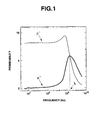
- Fig. 1 is a graph showing frequency characteristics of permeability of the soft-magnetic hexagonal ferrite sintered ceramics obtained in Example 1.
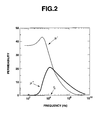
- Fig. 2 is a graph showing frequency characteristics of permeability of the conventional soft-magnetic cubic spinel ferrite sintered ceramics obtained in Comparative Example 7.
- Fig. 3 is a graph showing frequency characteristics of permeability of the soft-magnetic hexagonal ferrite. sintered ceramics obtained in Example 2.
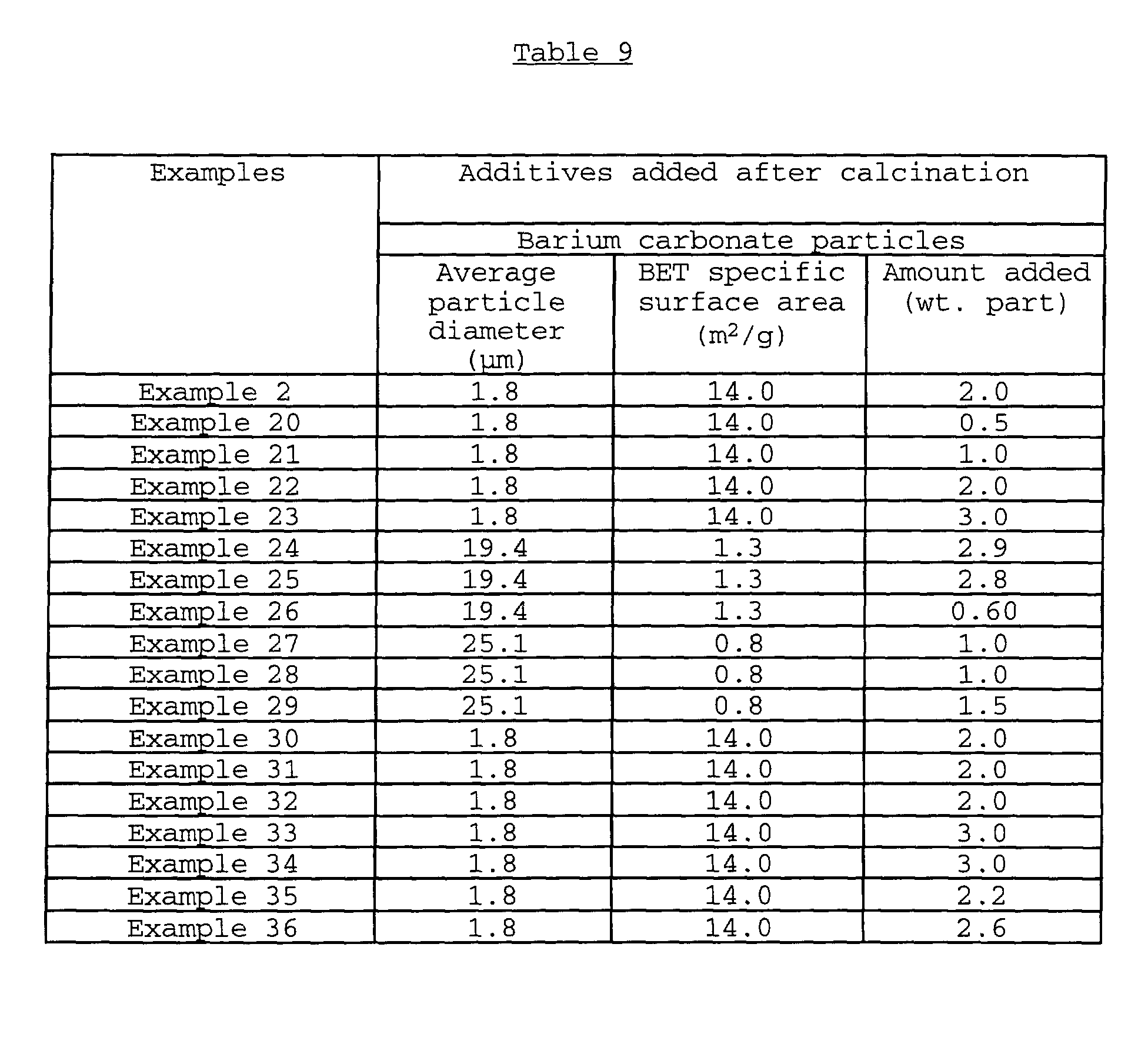
- the soft-magnetic hexagonal ferrite composite particles of the present invention are (1) composite particles comprising 100 parts by weight of soft-magnetic hexagonal ferrite particles containing Z-type ferrite, Y-type ferrite or W-type ferrite as a main phase, usually 0.3 to 10 parts by weight, preferably 1 to 10 parts by weight of barium carbonate particles and/or strontium carbonate particles, and usually 0.1 to 5 parts by weight, preferably 0.5 to 5 parts by weight of silicon dioxide particles (first aspect), or (2) composite particles comprising 100 parts by weight of soft-magnetic hexagonal ferrite particles containing Z-type ferrite, Y-type ferrite or W-type ferrite as a main phase, usually 0.3 to 10 parts by weight, preferably 0.3 to 7 parts by weight of barium carbonate particles and/or strontium carbonate particles, usually 0.1 to 5 parts by weight of silicon dioxide particles, usually 1 to 20 parts by weight of bismuth oxide particles, and usually 0.3 to 7 parts by weight of copper oxide particles (
- the soft-magnetic hexagonal ferrite particles containing Z-type ferrite as a main phase have a composition comprising AO wherein A represents Ba, Sr or Ba-Sr, in an amount of usually 15 to 25 mol%, preferably 16 to 22 mol% (calculated as oxide); Me 1 O wherein Me 1 represents Co and at least one element selected from the group consisting of Ni, Zn, Cu, Mg and Mn, in an amount of usually 5 to 15 mol%', preferably 8 to 14 mol% (calculated as oxide), with the proviso that the Co content is usually at least 30 mol% based on the total amount of Me 1 ; and Fe 2 O 3 in an amount of usually 65 to 75 mol%, preferably 67 to 73 mol% (calculated as oxide).
- the obtained soft-magnetic hexagonal ferrite particles tends to contain in addition to the Z-type ferrite main phase, a large amount of Y-type ferrite and W-type ferrite as subphases, thereby failing to exhibit good frequency characteristics of permeability inherent to the Z-type ferrite sintered ceramics.
- the soft-magnetic hexagonal ferrite particles containing Y-type ferrite as a main phase have a composition comprising AO wherein A represents Ba, Sr or Ba-Sr, in an amount of usually 10 to 30 mol%, preferably 13 to 27 mol% (calculated as oxide); Me 2 O wherein Me 2 represents at least one element selected from the group consisting of Ni, Zn, Cu, Mg and Mn, in an amount of usually 10 to 30 mol%, preferably 13 to 27 mol% (calculated as oxide); and Fe 2 O 3 in an amount of usually 55 to 65 mol%, preferably 57 to 63 mol% (calculated as oxide).
- the obtained soft-magnetic hexagonal ferrite particles tend to contain in addition to the Y-type ferrite main phase, a large amount of Z-type ferrite and W-type ferrite as subphases, thereby failing to exhibit good frequency characteristics of permeability inherent to the Y-type ferrite sintered ceramics.
- the soft-magnetic hexagonal ferrite particles containing W-type ferrite as a main phase have a composition comprising AO wherein A represents Ba, Sr or Ba-Sr, in an amount of usually 5 to 14 mol%, preferably 7 to 13 mol% (calculated as oxide); Me 1 O wherein Me 1 represents Co and at least one element selected from the group consisting of Ni, Zn, Cu, Mg and Mn, in an amount of usually 10 to 30 mol%, preferably 13 to 27 mol% (calculated as oxide), with the proviso that the Co content is usually at least 30 mol% based on the total amount of Me 1 ; and Fe 2 O 3 in an amount of usually 65 to 80 mol%, preferably 66 to 77 mol% (calculated as oxide).
- the obtained soft-magnetic hexagonal ferrite particles tend to contain in addition to the W-type ferrite main phase, a large amount of Z-type ferrite and Y-type ferrite as subphases, thereby failing to exhibit good frequency characteristics of permeability inherent to the W-type ferrite sintered ceramics.
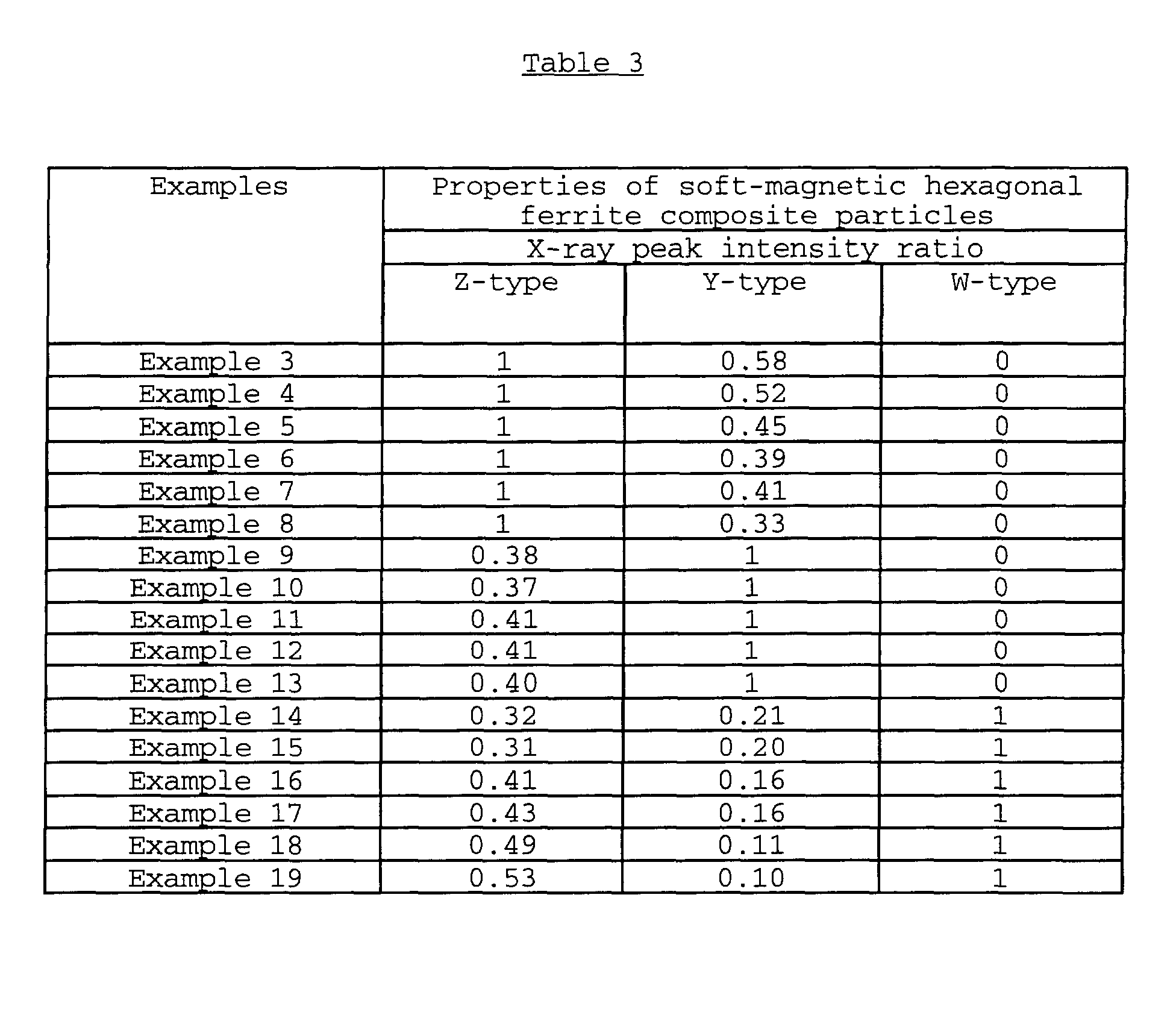
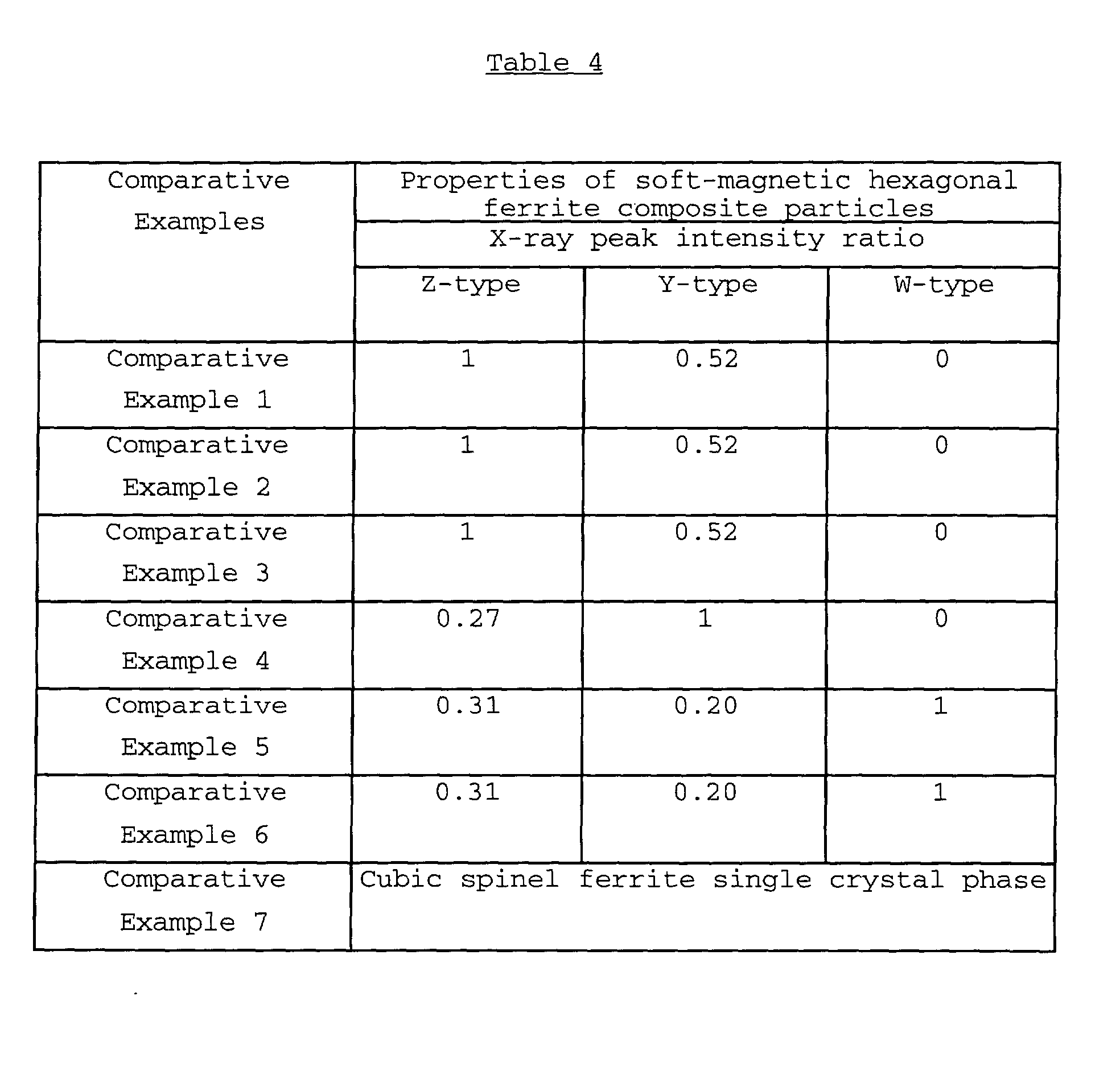
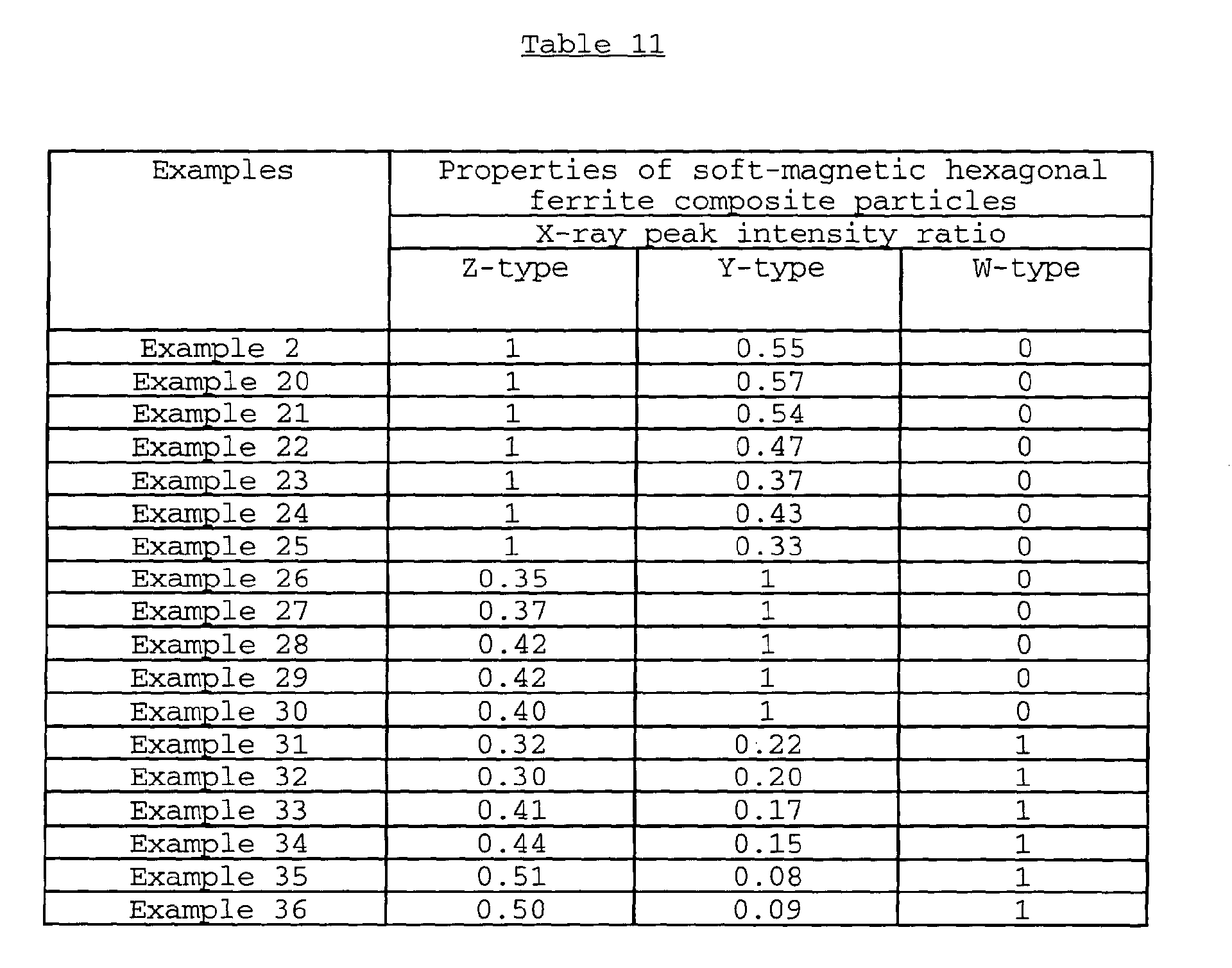
- the structure of the main phase of the soft-magnetic hexagonal ferrite particles may be determined by an X-ray diffraction method. More specifically, those particles exhibiting the strongest reflected ray intensity from (1 0 16) plane of Z-type ferrite phase are determined to be soft-magnetic hexagonal ferrite particles containing Z-type ferrite as a main phase; those particles exhibiting the strongest reflected ray intensity from (1 0 13) plane of Y-type ferrite phase are determined to be soft-magnetic hexagonal ferrite particles containing Y-type ferrite as a main phase; and those particles exhibiting the strongest reflected ray intensity from (1 1 6) plane of W-type ferrite phase are determined to be soft-magnetic hexagonal ferrite particles containing W-type ferrite as a main phase.
- the amount of each subphase contained in the soft-magnetic hexagonal ferrite particles containing Z-type ferrite, Y-type ferrite or W-type ferrite as a main phase is expressed by a relative intensity calculated assuming that the strongest reflected ray intensity due to the main phase is 1.
- the total relative intensity of the respective subphases is preferably not more than 0.7, more preferably not more than 0.65. When the total relative intensity of the subphases is more than the above-specified range, it may be difficult to attain frequency characteristics of permeability inherent to each main phase.
- the lower limit of the total relative intensity of the subphases is 0.
- the soft-magnetic hexagonal ferrite composite particles containing Z-type ferrite, Y-type ferrite or W-type ferrite as a main phase can be produced by mixing oxides, carbonates, oxalates, hydroxides, etc. of respective elements as raw materials together at the above-specified mixing ratio; calcining the resultant mixture in atmospheric air at a temperature of 1,100 to 1,300°C for 1 to 20 hours by ordinary method; and then pulverizing the obtained calcined product.
- the optimum calcination temperatures for producing the soft-magnetic hexagonal ferrite composite particles containing Z-type ferrite as a main phase is about 1,250°C
- the optimum calcination temperatures for producing the soft-magnetic hexagonal ferrite composite particles containing Y-type ferrite as a main phase is about 1,200°C
- the optimum calcination temperatures for producing the soft-magnetic hexagonal ferrite composite particles containing W-type ferrite as a main phase is about 1,250°C.
- the barium carbonate particles or the strontium carbonate particles used as raw materials in the present invention have an average particle diameter of preferably 0.5 to 50 ⁇ m, more preferably 0.5 to 40 ⁇ m; and a BET specific surface area of preferably 0.1 to 40 m 2 /g, more preferably 0.1 to 30 m 2 /g.
- the amount of the barium carbonate particles and/or the strontium carbonate particles blended is usually 0.3 to 10 parts by weight, preferably 1 to 10 parts by weight, more preferably 1 to 7 parts by weight based on 100 parts by weight of the soft-magnetic hexagonal ferrite particles.
- the amount of the barium carbonate particles and/or the strontium carbonate particles blended is out of the above-specified range, it may be difficult to obtain a soft-magnetic hexagonal ferrite sintered ceramics having a sintering density of not less than 5.0 x 10 3 kg/m 3 as aimed by the present invention, so that the obtained soft-magnetic hexagonal ferrite sintered ceramics tends to become insufficient in mechanical strength.
- the amount of the barium carbonate particles and/or the strontium carbonate particles blended is usually 0.3 to 10 parts by weight, preferably 0.3 to 7 parts by weight, more preferably 0.5 to 5 parts by weight based on 100 parts by weight of the soft-magnetic hexagonal ferrite particles.
- the amount of the barium carbonate particles and/or the strontium carbonate particles blended is out of the above-specified range, it may be difficult to obtain a soft-magnetic hexagonal ferrite sintered ceramics having a sintering density of not less than 5.0 x 10 3 kg/m 3 as aimed by the present invention, so that the obtained soft-magnetic hexagonal ferrite sintered ceramics tends to become insufficient in mechanical strength.
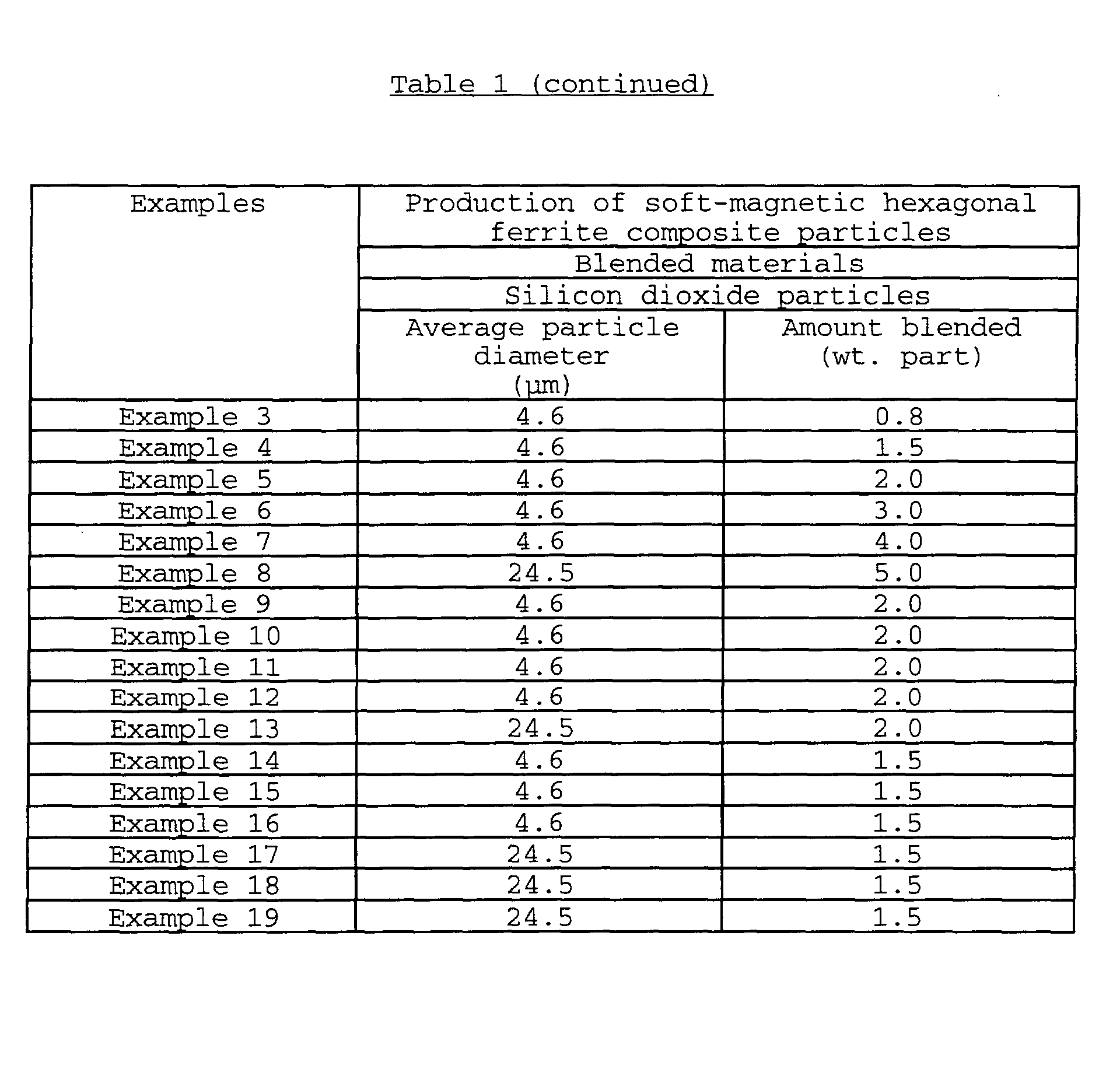
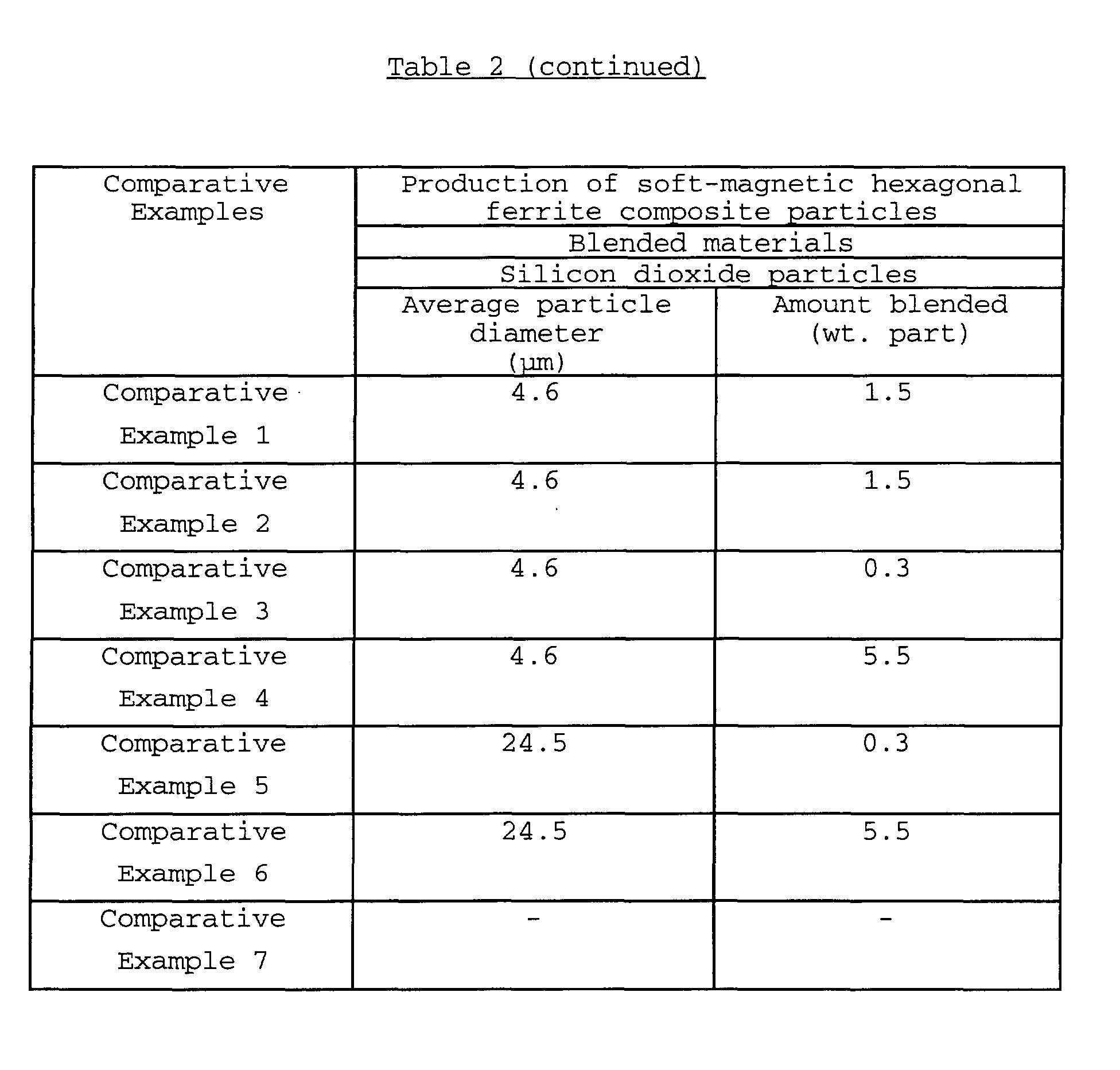
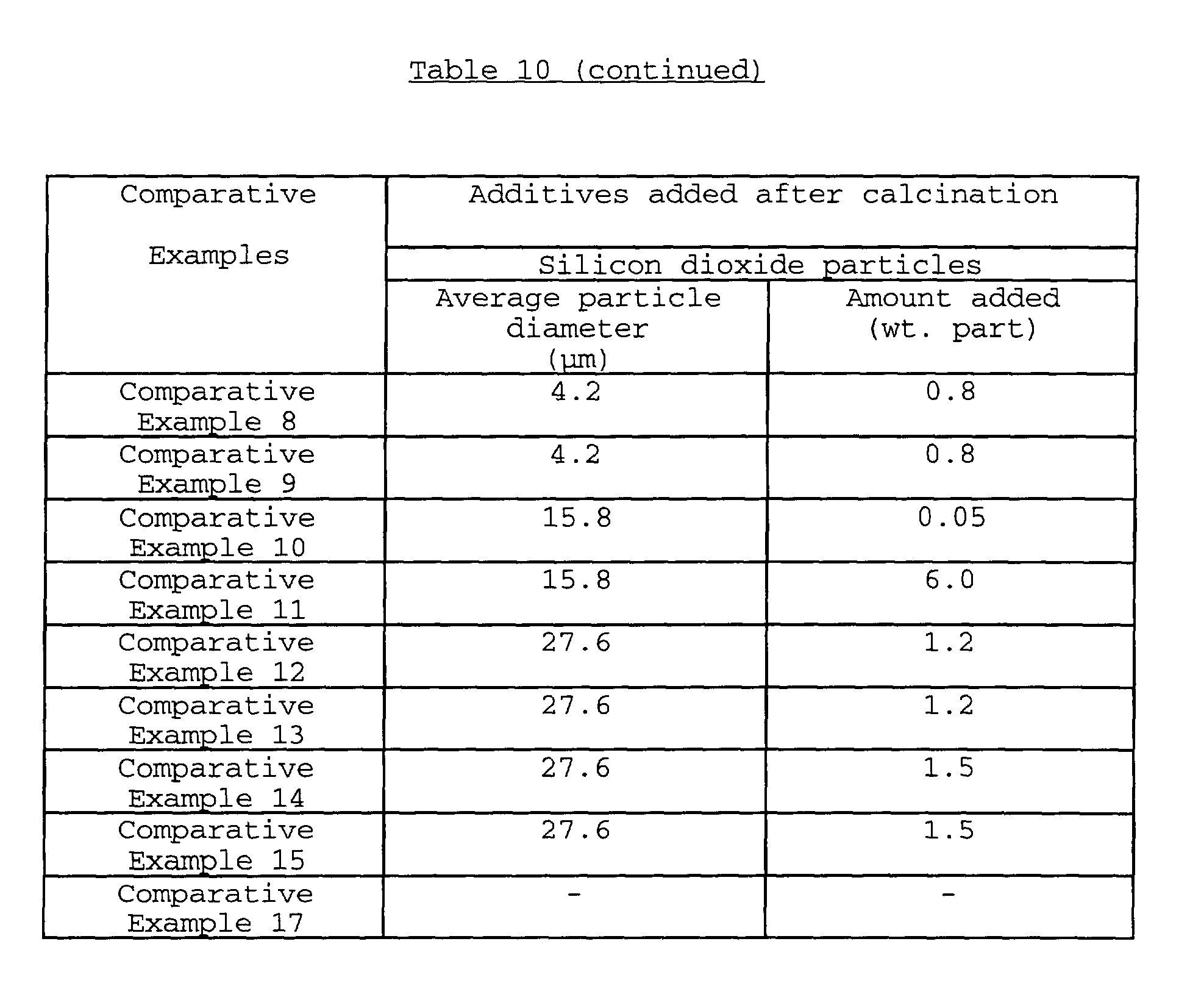
- the silicon dioxide particles used as raw material in the present invention have an average particle diameter of preferably 0.5 to 50 ⁇ m, more preferably 1 to 40 ⁇ m.
- the amount of the silicon dioxide particles blended is usually 0.1 to 5 parts by weight, preferably 0.5 to 5 parts by weight, more preferably 0.7 to 4 parts by weight based on 100 parts by weight of the soft-magnetic hexagonal ferrite particles.
- the amount of the silicon dioxide particles blended is usually 0.1 to 5 parts by weight, preferably 0.1 to 4 parts by weight based on 100 parts by weight of the soft-magnetic hexagonal ferrite particles.
- the amount of the silicon dioxide particles blended is less than 0.1 part by weight, it may be difficult to obtain a soft-magnetic hexagonal ferrite sintered ceramics having a volume resistivity of not less than 1 x 10 6 ⁇ m as aimed by the present invention. Further, the obtained soft-magnetic hexagonal ferrite sintered ceramics has an imaginary part of permeability at 400 MHz of more than 1, resulting in increased magnetic loss in a frequency range of several hundreds MHz. As a result, it may be difficult to apply signals having such a frequency range to the soft-magnetic hexagonal ferrite sintered ceramics.
- the amount of the silicon dioxide particles blended is more than 5 parts by weight, although the imaginary part of permeability at 400 MHz is less than 1, it may be difficult to obtain a soft-magnetic hexagonal ferrite sintered ceramics having a sintering density of not less than 5.0 x 10 3 kg/m 3 as aimed by the present invention, so that the obtained soft-magnetic hexagonal ferrite sintered ceramics tends to become insufficient in mechanical strength.
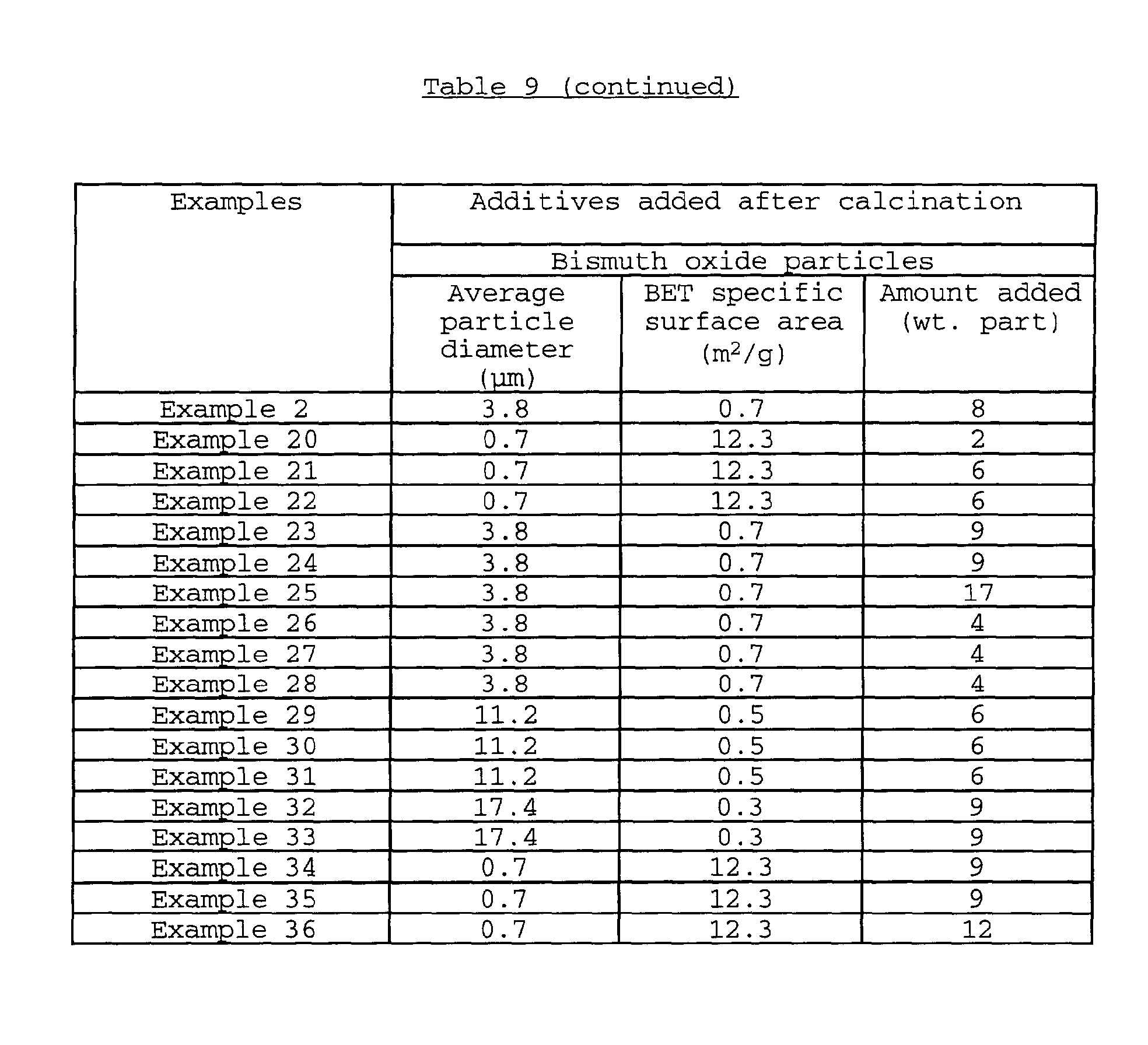
- the bismuth oxide particles blended have an average particle diameter of preferably 0.5 to 30 ⁇ m, more preferably 0.5 to 20 ⁇ m; and a BET specific surface area of preferably 0.1 to 30 m 2 /g, more preferably 0.1 to 20 m 2 /g.
- the amount of the bismuth oxide particles blended is usually not more than 20 parts by weight, preferably 1 to 20 parts by weight, more preferably 2 to 17 parts by weight based on 100 parts by weight of the soft-magnetic hexagonal ferrite particles.
- the amount of the bismuth oxide particles blended is less than 1 part by weight, it may be difficult to obtain a soft-magnetic hexagonal ferrite sintered ceramics having a sintering density of not less than 5.0 x 10 3 kg/m 3 as aimed by the present invention, so that the obtained soft-magnetic hexagonal ferrite sintered ceramics tends to become insufficient in mechanical strength.
- both the imaginary part and real part of permeability become small, so that the obtained sintered ceramics may fail to show functions required for impedance elements, electromagnetic wave absorbers and inductor elements.
- the copper oxide particles blended have an average particle diameter of preferably 0.1 to 30 ⁇ m, more preferably 0.1 to 20 ⁇ m; and a BET specific surface area of preferably 0.1 to 30 m 2 /g, more preferably 0.1 to 20 m 2 /g.
- the amount of the copper oxide particles blended is usually not more than 7 parts by weight, preferably 0.3 to 7 parts by weight, more preferably 0.5 to 5 parts by weight based on 100 parts by weight of the soft-magnetic hexagonal ferrite particles.
- the amount of the copper oxide particles blended is less than 0.3 part by weight, it may be difficult to obtain a soft-magnetic hexagonal ferrite sintered ceramics having a sintering density of not less than 5.0 x 10 3 kg/m 3 as aimed by the present invention, so that the obtained soft-magnetic hexagonal ferrite sintered ceramics tends to become in insufficient in mechanical strength.
- both the imaginary part and real part of permeability become small, so that the obtained sintered ceramics may fail to show functions required for impedance elements, electromagnetic wave absorbers and inductor elements. Further, it may be difficult to obtain a soft-magnetic hexagonal ferrite sintered ceramics having a volume resistivity of not less than 1 x 10 6 ⁇ m as aimed by the present invention.
- the amount of the bismuth oxide particles is usually 1.5 to 20 parts by weight, preferably 2.0 to 18 parts by weight based on one part by weight of the copper oxide particles.
- the amount of the bismuth oxide particles is less than 1.5 parts by weight based one part by weight of the copper oxide particles, it may be difficult to obtain a soft-magnetic hexagonal ferrite sintered ceramics having a volume resistivity of not less than 1 x 10 6 ⁇ m as aimed by the present invention.
- the amount of the bismuth oxide particles is more than 20 parts by weight based one part by weight of the copper oxide particles, it may be difficult to obtain a soft-magnetic hexagonal ferrite sintered ceramics having a sintering density of not less than 5.0 x 10 3 kg/m 3 as aimed by the present invention, so that the obtained soft-magnetic hexagonal ferrite sintered ceramics tends to become insufficient in mechanical strength.
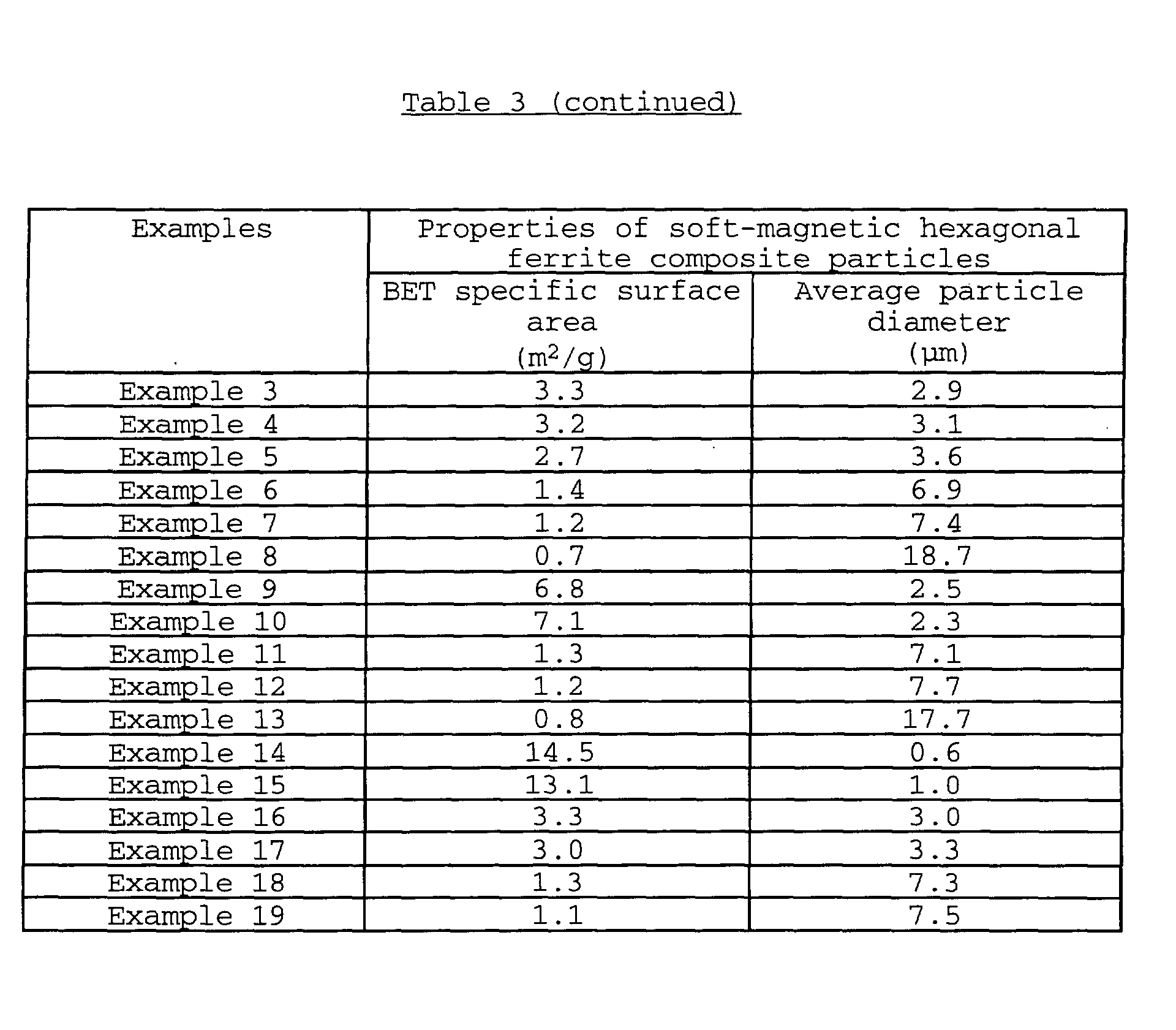
- the soft-magnetic hexagonal ferrite composite particles of the present invention have an average particle diameter of preferably 0.1 to 30 ⁇ m, more preferably 0.1 to 20 ⁇ m; and a BET specific surface area of preferably 0.1 to 40 m 2 /g, more preferably 0.5 to 40 m 2 /g.
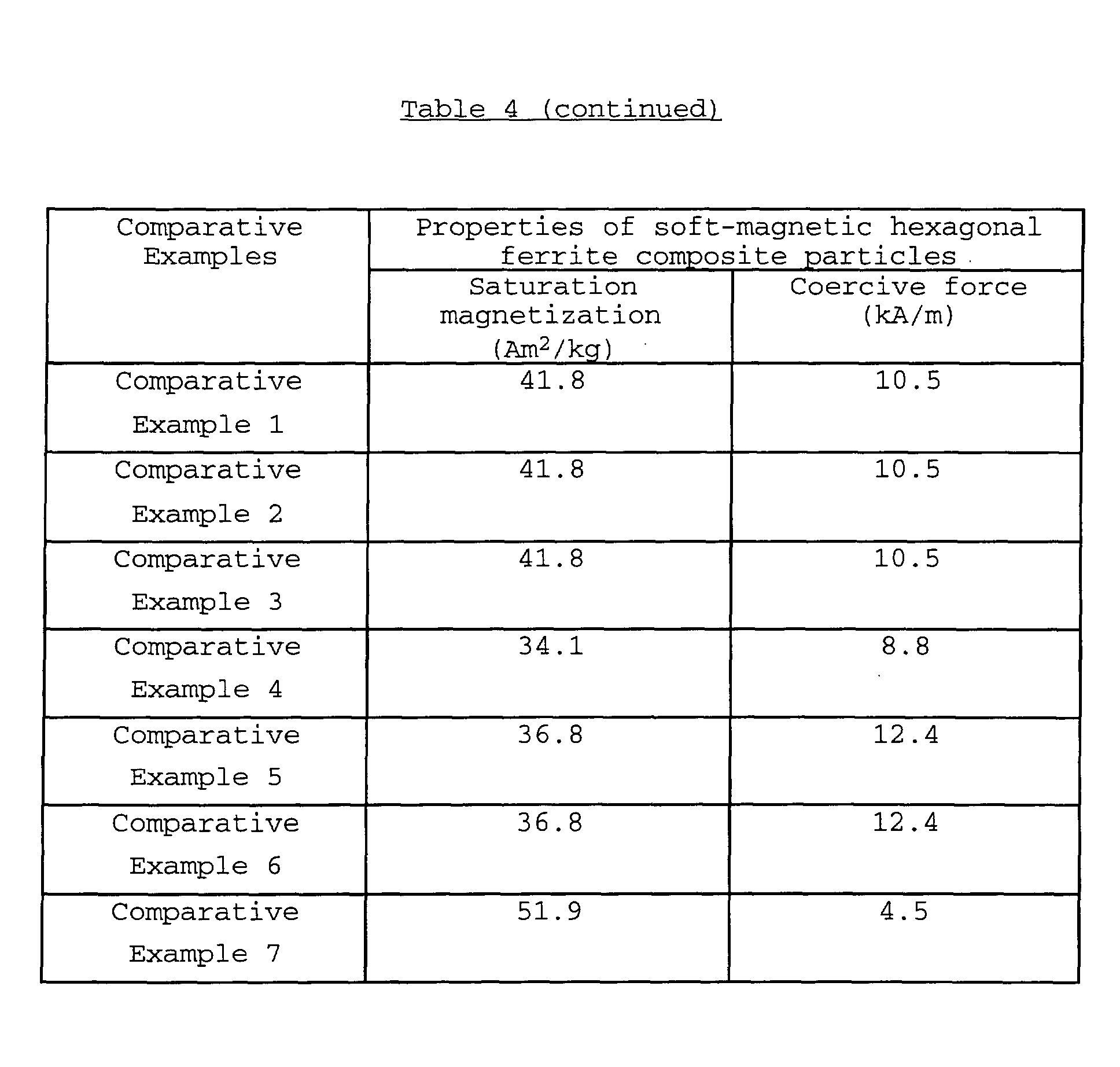
- the saturation magnetization thereof is preferably 20 to 60 Am 2 /kg, more preferably 25 to 55 Am 2 /kg; and the coercive force thereof is preferably 0.50 to 50 kA/m, more preferably 1.0 to 30 kA/m.
- the average particle diameter and BET specific surface area of the soft-magnetic hexagonal ferrite composite particles are out of the above-specified range, it may be difficult to uniformly disperse the soft-magnetic hexagonal ferrite composite particles in a coating material upon the below-mentioned production process of the green sheet, so that the sintered ceramics obtained using such composite particles tends to exhibit uneven properties.
- the saturation magnetization and coercive force of the soft-magnetic hexagonal ferrite composite particles are out of the above-specified ranges, it may be difficult to obtain the soft-magnetic hexagonal ferrite sintered ceramics as aimed by the present invention.
- the green sheet described herein is a raw material used for production of laminated chip elements, and is a sheet material produced by blending the soft-magnetic hexagonal ferrite composite particles with a binder, a plasticizer, a solvent and the like to form a coating material, forming the coating material into a film having a thickness of several ⁇ m to several hundreds ⁇ m, and then drying the resultant film.
- the thus obtained green sheets are laminated on an electrode so as to sandwich the electrode therebetween and the obtained laminate is sintered, thereby obtaining a laminated chip element.
- the green sheet of the present invention comprises 100 parts by weight of the soft-magnetic hexagonal ferrite composite particles containing Z-type ferrite, Y-type ferrite or W-type ferrite as a main phase; preferably 2 to 20 parts by weight, more preferably 4 to 15 parts by weight of a binder; and preferably 0.5 to 15 parts by weight, more preferably 2 to 10 parts by weight of a plasticizer. Further, the green sheet may contain a residual solvent due to insufficient drying after the film formation.
- binder examples include polyvinyl butyral, polyacrylic acid esters, polymethyl methacrylate, vinyl chloride, polymethacrylic acid esters, ethyl cellulose, abietic acid resins or the like.
- polyvinyl butyral is preferred.
- the amount of the binder blended is less than 2 parts by weight, the obtained green sheet tends to become brittle.
- the upper limit of the binder blended is 20 parts by weight since such an amount is sufficient to obtain a green sheet having a good mechanical strength.
- plasticizer examples include n-butyl benzyl phthalate, dibutyl phthalate, dimethyl phthalate, polyethylene glycol, phthalic acid esters, butyl stearate, methyl adipate or the like. Among these plasticizers, n-butyl benzyl phthalate is preferred.
- the obtained green sheet tends to become too hard and suffer from cracks.
- the amount of the plasticizer blended is more than 15 part by weight, the obtained green sheet tends to become too soft.
- a suitable solvent may be used in an amount of usually 20 to 150 parts by weight, preferably 30 to 120 parts by weight based on 100 parts by weight of the soft-magnetic hexagonal ferrite composite particles containing Z-type ferrite, Y-type ferrite or W-type ferrite as a main phase.
- the amount of the solvent used is out of the above-specified range, it may be difficult to obtain a uniform green sheet, and the obtained sintered ceramics tends to exhibit uneven properties.
- Examples of the solvent usable for production of the green sheet may include acetone, ethyl alcohol, benzene, butanol, ethanol, methyl ethyl ketone, toluene, propyl alcohol or the like. Among these solvents, methyl ethyl ketone and toluene are preferred.
- the soft-magnetic hexagonal ferrite sintered ceramics of the present invention has the substantially same composition as described above as to the soft-magnetic hexagonal ferrite particles containing Z-type ferrite, Y-type ferrite or W-type ferrite as a main phase.
- the composition of the soft-magnetic hexagonal ferrite sintered ceramics is out of the above-specified range, a large amount of the subphases tend to be produced, thereby failing to exhibit the frequency characteristics of permeability inherent to the main phase.
- the soft-magnetic hexagonal ferrite sintered ceramics of the present invention has a sintering density of usually not less than 5.0 x 10 3 kg/m 3 , preferably 5.0 x 10 3 to 5.0 x 10 3 kg/m 3 ; and a volume resistivity of usually not less than 1 x 10 6 ⁇ m, preferably 1.0 x 10 6 to 5 x 10 9 ⁇ m.
- the sintering density of the soft-magnetic hexagonal ferrite sintered ceramics is less than 5.0 x 10 3 kg/m 3 , the obtained sintered ceramics tends to be insufficient in mechanical strength.
- the sintering density is preferably as high as possible from the standpoint of good mechanical strength, the upper limit of the sintering density is 5.3 x 10 3 kg/m 3 in the consideration of well-balanced properties of the obtained sintered ceramics.
- the volume resistivity of the soft-magnetic hexagonal ferrite sintered ceramics is less than 1 x 10 6 ⁇ m, the obtained sintered ceramics tends to suffer from defective insulation.
- the volume resistivity is preferably as high as possible in order to prevent the defective insulation, the upper limit of the volume resistivity is 5 x 10 9 ⁇ m in the consideration of well-balanced properties of the obtained sintered ceramics.
- the soft-magnetic hexagonal ferrite sintered ceramics of the present invention has an imaginary part of permeability at 400 MHz of usually not more than 1, preferably not more than 0.7, more preferably not more than 0.5.
- the real part of permeability of the soft-magnetic hexagonal ferrite sintered ceramics can be kept substantially constant in a frequency range of from low frequency to several hundreds MHz without lowering.
- Fig. 1 The frequency characteristics of permeability of the soft-magnetic hexagonal ferrite sintered ceramics obtained in Example 1 below is shown in Fig. 1.
- the thin line indicates the change in real part of permeability (hereinafter referred to merely ⁇ ') while the thick line indicates the change in imaginary part of permeability (hereinafter referred to merely ⁇ ").
- ⁇ ' is kept constant on a low frequency side, and after temporarily increasing from about 300 MHz, starts to decrease from about 800 MHz and reaches substantially 1 at about 5 GHz.
- the frequency characteristics of permeability of the soft-magnetic hexagonal ferrite sintered ceramics obtained in Example 2 below is shown in Fig. 3.
- the thin line indicates the change in real part of permeability ( ⁇ ') while the thick line indicates the change in imaginary part of permeability ( ⁇ ").
- ⁇ ' is kept constant on a low frequency side, and after temporarily increasing from about 450 MHz, starts to decrease from about 1.7 GHz and reaches substantially 1 at about 10 GHz.
- Fig. 2 the frequency characteristics of permeability of the conventional soft-magnetic cubic spinel ferrite sintered ceramics obtained in Comparative Example 7 below is shown in Fig. 2.
- ⁇ ' starts to decrease from about 50 MHz and reaches substantially 1 at several GHz.
- the peak of ⁇ " of the respective soft-magnetic hexagonal ferrite sintered ceramics according to the present invention is offset toward the high frequency side as compared to that of the conventional soft-magnetic cubic spinel ferrite sintered ceramics.
- the frequency range in which ⁇ ' is kept constant without lowering extends up to the high frequency side.
- ⁇ " at 400 MHz can be controlled to not more than 1, preferably not more than 0.7, more preferably not more than 0.5, and the resonance frequency can be controlled to not less than several GHz.
- ⁇ " at the resonance frequency it is possible to control ⁇ " at the resonance frequency to preferably not less than 0.3.
- ⁇ ' corresponding to inductance components.
- ⁇ ' is kept substantially constant in the frequency range without lowering.
- the frequency at which ⁇ ' starts to decrease can be controlled to more than several hundreds MHz.
- the values of the imaginary part ( ⁇ ")of permeability respectively measured at 400 MHz and the resonance frequency are used as an index indicating a magnitude of the imaginary part of permeability.
- the frequency from which the real part ( ⁇ ') of permeability starts to decrease is used as an index indicating an upper limit of the frequency range where the real part of permeability is kept constant without lowering.
- ⁇ " at 400 MHz is more than 1, resulting in large magnetic loss in a frequency range of several hundreds MHz. Therefore, it has not been possible to pass signals having a frequency range of several hundreds MHz through impedance elements produced from such sintered ceramics.
- the resonance frequency is preferably not less than 1 GHz.
- the imaginary part of permeability i.e., magnetic loss
- the resonance frequency is less than 1 GHz, the imaginary part of permeability, i.e., magnetic loss, is increased in a frequency range of several hundreds MHz, resulting in attenuation of signals having such a frequency range of several hundreds MHz.
- the imaginary part of permeability at the resonance frequency is preferably not less than 0.3.
- the imaginary part of permeability at the resonance frequency is less than 0.3, it may be difficult to sufficiently reduce noises near several GHz.
- the frequency at which the real part of permeability starts to decrease is preferably not less than 500 MHz, more preferably not less than 700 MHz.
- the frequency is less than 500 MHz, it may be difficult to keep the real part of permeability constant without lowering over a frequency range of from low frequency to several hundreds MHz.
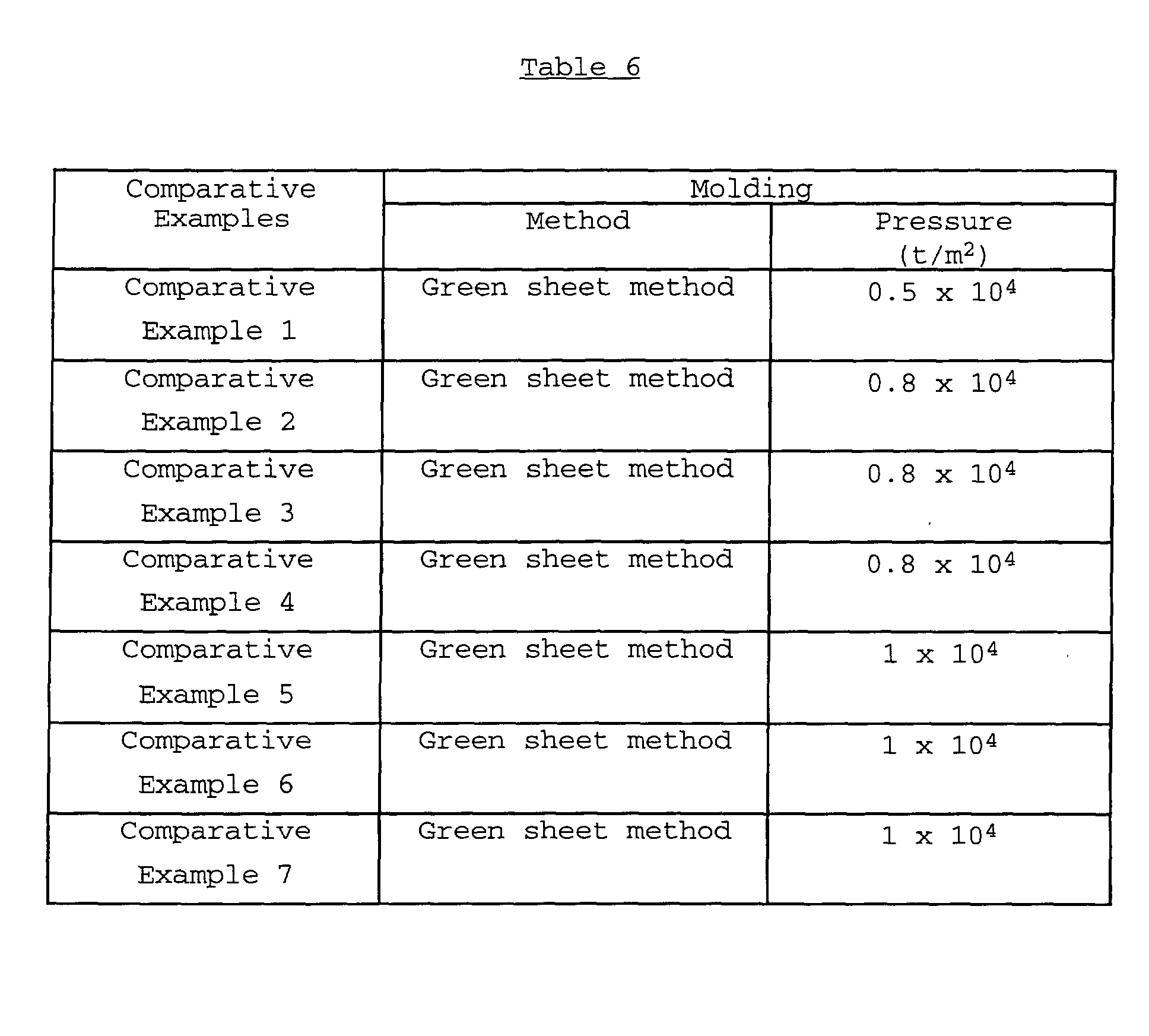
- the soft-magnetic hexagonal ferrite sintered ceramics of the present invention can be produced by molding the soft-magnetic hexagonal ferrite composite particles according to the first aspect of the present invention in a metal mold under a pressure of usually 0.3 x 10 4 to 3 x 10 4 t/m 2 by a so-called particle pressure-molding method, or laminating green sheets containing the soft-magnetic hexagonal ferrite composite particles according to the first aspect of the present invention by a so-called green sheet method; and then sintering the obtained molded product or laminate at a temperature of usually 1,100 to 1,300°C for a period of usually 1 to 20 hours, preferably 2 to 10 hours.
- the above particle pressure-molding method and the green sheet method are preferred.
- the sintering temperature is less than 1,100°C, it may be difficult to obtain a soft-magnetic hexagonal ferrite sintered ceramics having a sintering density of not less than 5.0 x 10 3 kg/m 3 as aimed by the present invention. Even though the sintering temperature is more than 1,300°C, it is possible to obtain the aimed soft-magnetic hexagonal ferrite sintered ceramics.
- the upper limit of the sintering temperature is preferably set to 1,300°C from industrial and economical viewpoints.
- the soft-magnetic hexagonal ferrite sintered ceramics of the present invention can be produced by molding the soft-magnetic hexagonal ferrite composite particles according to the second aspect of the present invention in a metal mold under a pressure of usually 0.3 10 4 to 3 x 10 4 t/m 2 by a so-called particle pressure-molding method, or laminating green sheets containing the soft-magnetic hexagonal ferrite composite particles according to the second aspect of the present invention by a so-called green sheet method; and then sintering the obtained molded product or laminate at a temperature of usually 800 to 960°C, preferably 830 to 930°C for a period of usually 1 to 20 hours, preferably 1 to 10 hours.
- the above particle pressure-molding method and the green sheet method are preferred.
- the sintering temperature is less than 800°C, it may be difficult to obtain a soft-magnetic hexagonal ferrite sintered ceramics having a sintering density of not less than 5.0 x 10 3 kg/m 3 as aimed by the present invention.
- silver conductive materials used upon the production of laminated chip elements have a melting point of 960°C, it may be difficult to sinter the soft-magnetic hexagonal ferrite composite particles and the silver conductive materials at a temperature of more than 960°C at the same time.
- the point of the present invention is that by using soft-magnetic hexagonal ferrite composite particles comprising soft-magnetic hexagonal ferrite particles containing Z-type ferrite, Y-type ferrite or W-type ferrite as a main phase, barium carbonate particles and/or strontium carbonate particles and silicon dioxide particles at a specific blending ratio, it is possible to obtain a soft-magnetic hexagonal ferrite sintered ceramics capable of exhibiting a sintering density of usually not less than 5.0 x 10 3 kg/m 3 , a volume resistivity of usually not less than 1 x 10 6 ⁇ m and an imaginary part of permeability at 400 MHz of usually not more than 1.
- the soft-magnetic hexagonal ferrite sintered ceramics of the present invention can exhibit a high sintering density and a high volume resistivity, is considered to be due to the following synergistic effect. That is, the sintering between the crystal grains can be promoted by specific amounts of barium carbonate, etc. preliminarily blended, and the specific amount of silicon dioxide also preliminarily blended can be selectively introduced at the grain boundary so as to function as an insulating layer.
- soft-magnetic hexagonal ferrite composite particles comprising soft-magnetic hexagonal ferrite particles containing Z-type ferrite, Y-type ferrite or W-type ferrite as a main phase, barium carbonate particles and/or strontium carbonate particles, silicon dioxide particles, bismuth oxide particles and copper oxide particles at a specific blending ratio, it is possible to produce a soft-magnetic hexagonal ferrite sintered ceramics capable of exhibiting a sintering density as high as not less than 5.0 x 10 3 kg/m 3 , a volume resistivity as high as not less than 1 x 10 6 ⁇ m and an imaginary part of permeability at 400 MHz of not more than 1 while keeping a real part of permeability substantially constant in a frequency range of from low frequency to several hundreds MHz without lowering, by sintering at a temperature as low as not more than 960°C.
- the soft-magnetic hexagonal ferrite sintered ceramics of the present invention exhibiting a high sintering density and a high volume resistivity can be produced at a low sintering temperature. That is, the sintering between the crystal grains is promoted by specific amounts of the carbonate, bismuth oxide and copper oxide preliminarily blended, so that the sintering density of the obtained sintered ceramics can be enhanced. Further, the specific amount of silicon dioxide preliminarily blended is selectively introduced at the grain boundary so as to act as an insulating layer, so that the volume resistivity of the obtained sintered ceramics can be enhanced.
- the soft-magnetic hexagonal ferrite sintered ceramics of the present invention can exhibit an imaginary part of permeability at 400 MHz of not more than 1, is considered as follows. That is, the silicon dioxide selectively introduced at the grain boundary interrupts a magnetic circuit formed in the sintered ceramics, resulting in formation of a diamagnetic field therein. The thus produced diamagnetic field shifts the resonance frequency toward the high frequency side.
- the soft-magnetic hexagonal ferrite composite particles according to the first aspect of the present invention are used, it is possible to produce a soft-magnetic hexagonal ferrite sintered ceramics capable of exhibiting a high sintering density and a high volume resistivity as well as such frequency characteristics that the imaginary part of permeability is sufficiently small in a frequency range of several hundreds MHz and becomes large at a frequency near several GHz while keeping a real part of permeability substantially constant in a frequency range of from low frequency to several hundreds MHz without lowering, in an industrially and economically useful manner.
- the soft-magnetic hexagonal ferrite composite particles according to the second aspect of the present invention are used, it is possible to sinter at a temperature as low as not more than 960°C.
- the obtained soft-magnetic hexagonal ferrite sintered ceramics can be suitably used as raw materials for impedance elements capable of attenuating noises near several GHz, electromagnetic wave absorbers for absorbing electromagnetic waves, or inductor elements using signals having a frequency range of several hundreds MHz.
- ⁇ -Fe 2 O 3 , CoCO 3 and BaCO 3 were weighed so as to obtain a composition containing 18.7 mol% of BaO, 11.6 mol% of CoO and 69.7 mol% of Fe 2 O 3 , and mixed together for one hour using a wet attritor. The resultant mixture was filtrated and dried. The obtained raw mixed particles were calcined in atmospheric air at 1,250°C for 5 hours, thereby obtaining soft-magnetic hexagonal ferrite containing a Z-type ferrite main phase.
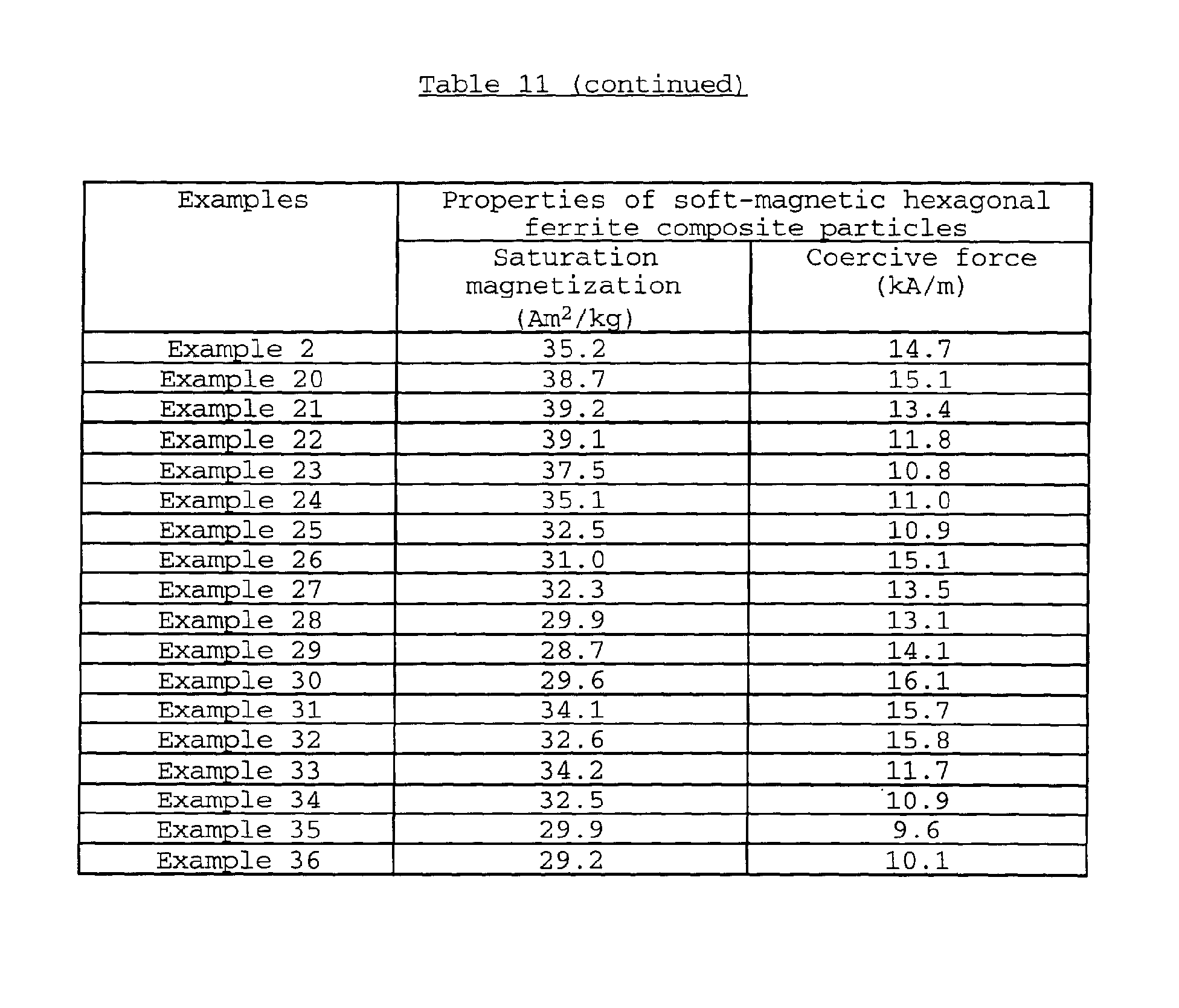
- the obtained soft-magnetic hexagonal ferrite composite particles had an average particle diameter of 3.0 ⁇ m, a BET specific surface area of 3.1 m 2 /g, a saturation magnetization of 41.0 Am 2 /kg, and a coercive force of 11.1 kA/m.
- the obtained coating material was applied onto a PET film using a doctor blade-type coater and then dried, thereby obtaining a green sheet having a thickness of 120 ⁇ m.
- the thus obtained sheet was cut into square sheets having a size of 5 cm x 5 cm. Twenty cut sheets obtained were laminated and pressed under a pressure of 0.5 x 10 4 t/m 2 , thereby obtaining a green sheet laminate having a thickness of 1.4 mm.
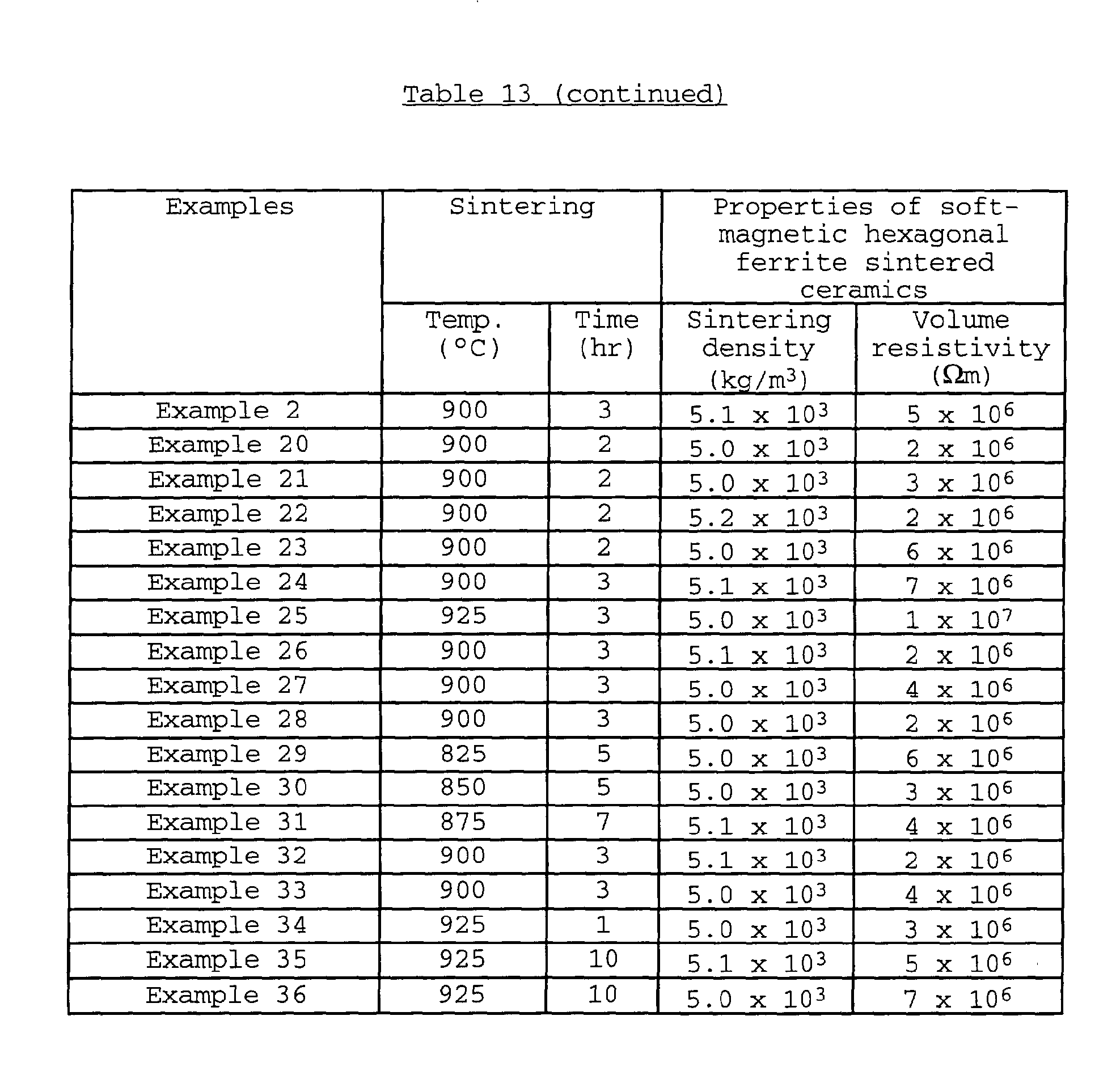
- the above-obtained green sheet laminate was sintered in atmospheric air at 1,250°C for 7 hours, thereby obtaining a soft-magnetic hexagonal ferrite sintered ceramics. It was confirmed that the obtained soft-magnetic hexagonal ferrite sintered ceramics had a density of 5.1 x 10 3 kg/m 3 , a volume resistivity of 1 x 10 9 ⁇ m, a real part of permeability at 400 MHz of 5.2 and an imaginary part of permeability at 400 MHz of 0.3.
- the resonance frequency was 2.2 GHz
- the imaginary part of permeability at the resonance frequency was 3.2
- the frequency at which the real part of permeability started to decrease was 958 MHz.
- ⁇ -Fe 2 O 3 , CoCO 3 and BaCO 3 were weighed so as to obtain a composition containing 18.6 mol% of BaO, 11.6 mol% of CoO and 69.8 mol% of Fe 2 O 3 , and mixed together for one hour using a wet attritor. The resultant mixture was filtrated and then dried. The obtained raw mixed particles were calcined in atmospheric air at 1,250°C for 5 hours, thereby obtaining soft-magnetic hexagonal ferrite containing a Z-type ferrite main phase.
- the obtained soft-magnetic hexagonal ferrite composite particles had an average particle diameter of 1.2 ⁇ m, a BET specific surface area of 6.2 m 2 /g, a saturation magnetization of 35.2 Am 2 /kg, and a coercive force of 14.7 kA/m.
- the obtained coating material was applied onto a PET film using a doctor blade-type coater and then dried, thereby obtaining a green sheet having a thickness of 100 ⁇ m.
- the thus obtained sheet was cut into square sheets having a size of 5 cm x 5 cm. Twenty cut sheets thus obtained were laminated and pressed under a pressure of 0.5 x 10 4 t/m 2 , thereby obtaining a green sheet laminate having a thickness of 1.2 mm.
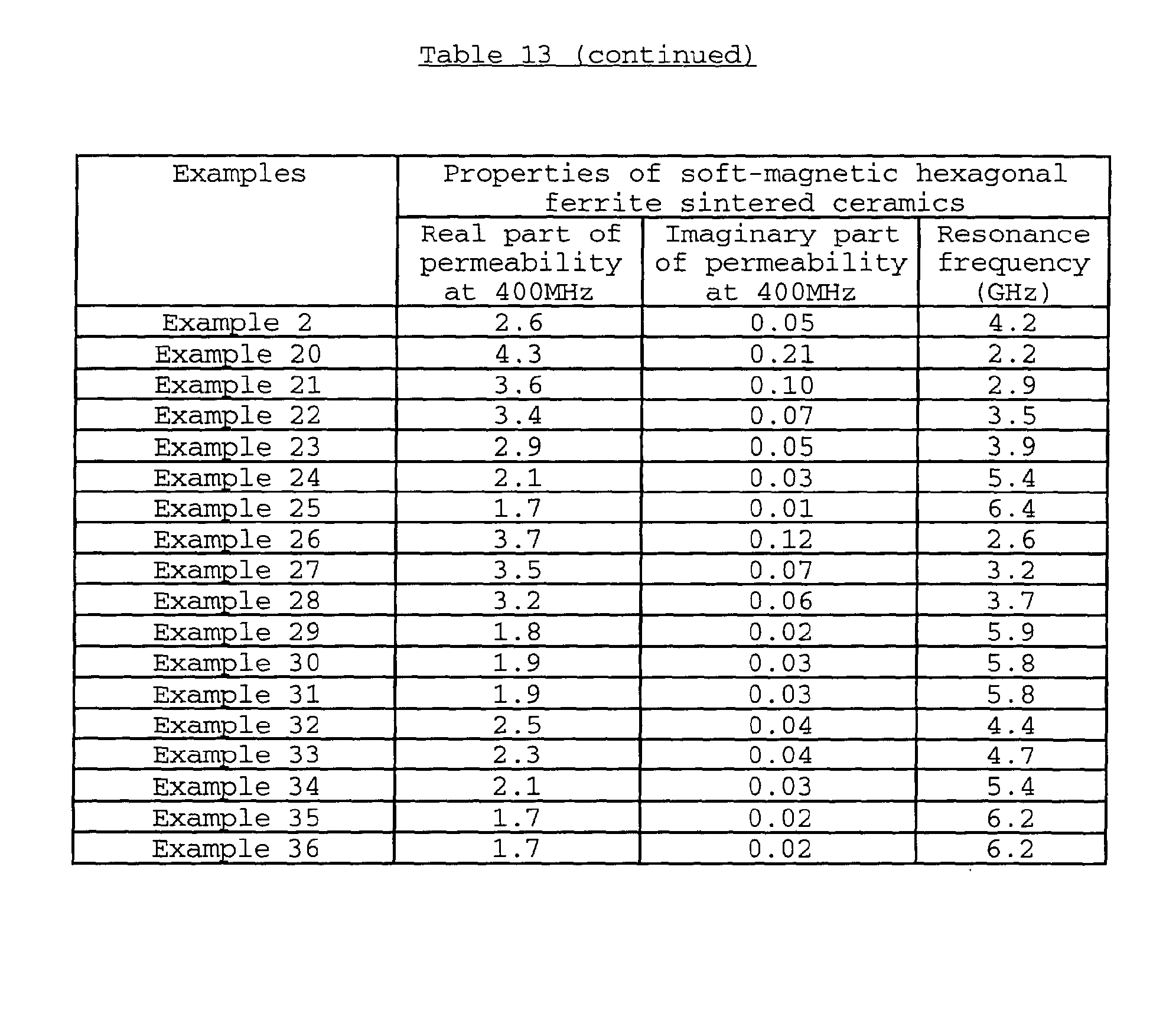
- the above-obtained green sheet laminate was sintered in atmospheric air at 900°C for 3 hours, thereby obtaining a soft-magnetic hexagonal ferrite sintered ceramics. It was confirmed that the obtained soft-magnetic hexagonal ferrite sintered ceramics had a density of 5.1 x 10 3 kg/m 3 , a volume resistivity of 5 x 10 6 ⁇ m, a real part of permeability at 400 MHz of 2.6, and an imaginary part of permeability at 400 MHz of 0.05.
- the resonance frequency was 4.2 GHz
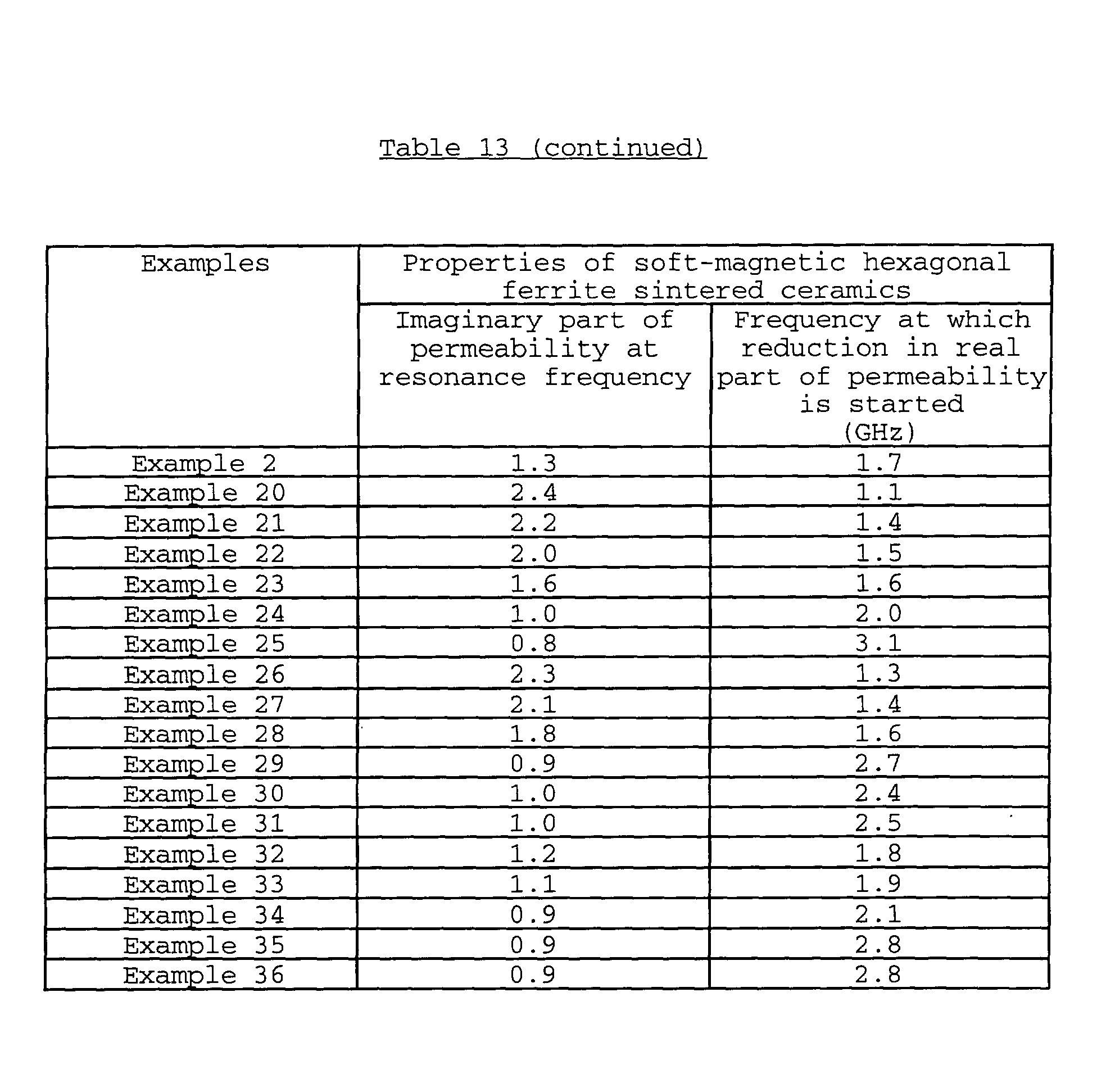
- the imaginary part of permeability at the resonance frequency was 1.3
- the frequency at which the real part of permeability started to decrease was 1.7 GHz.
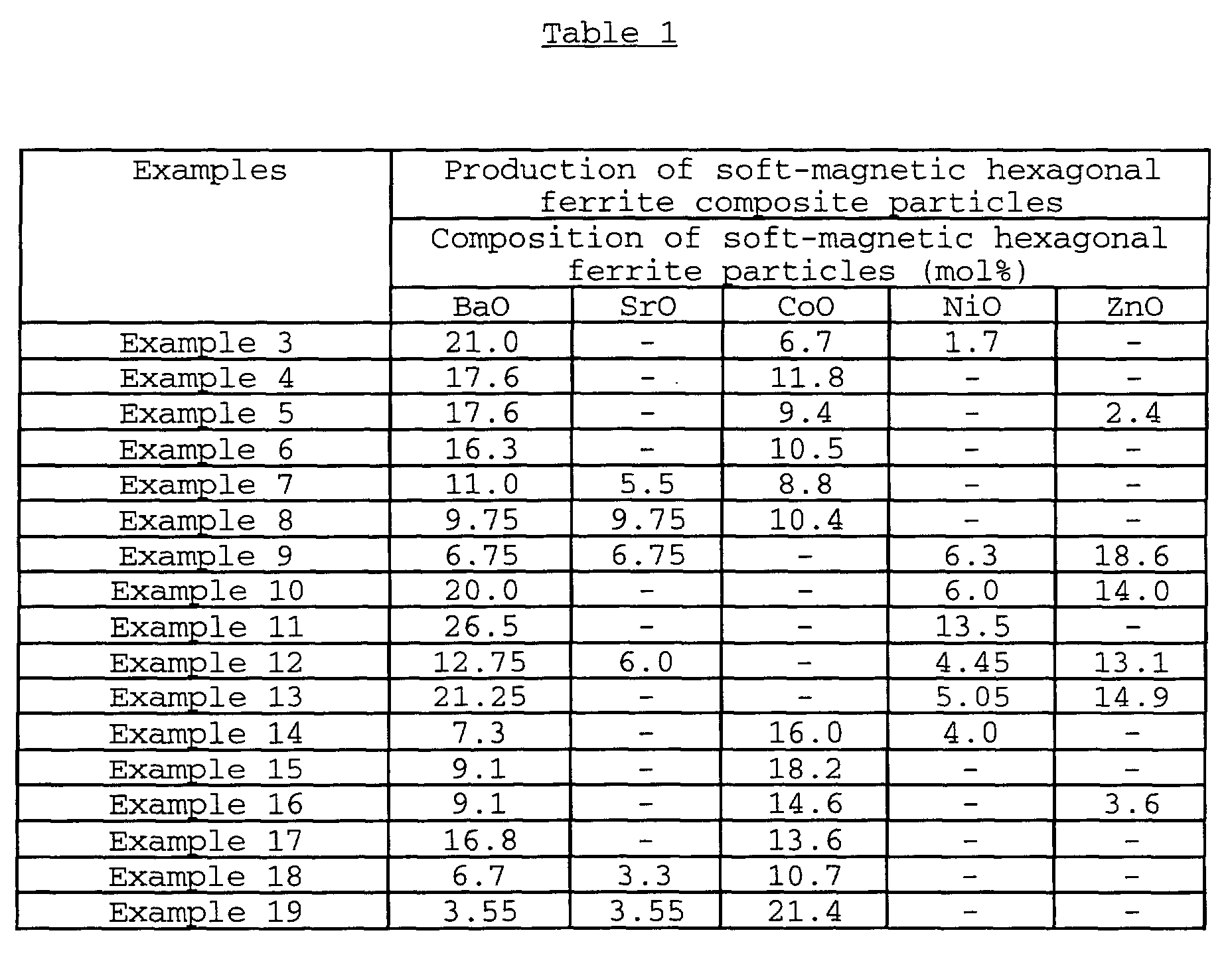
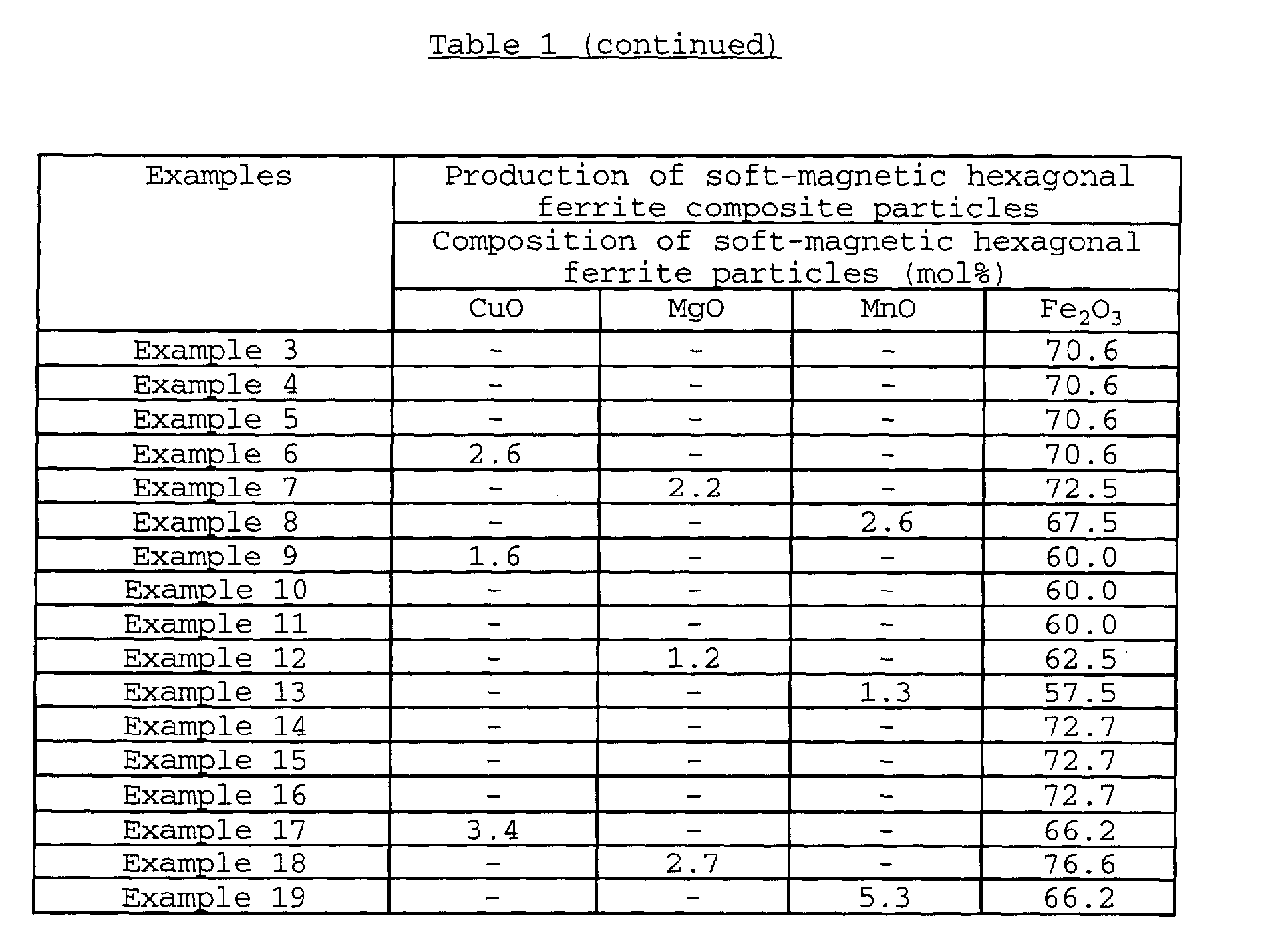
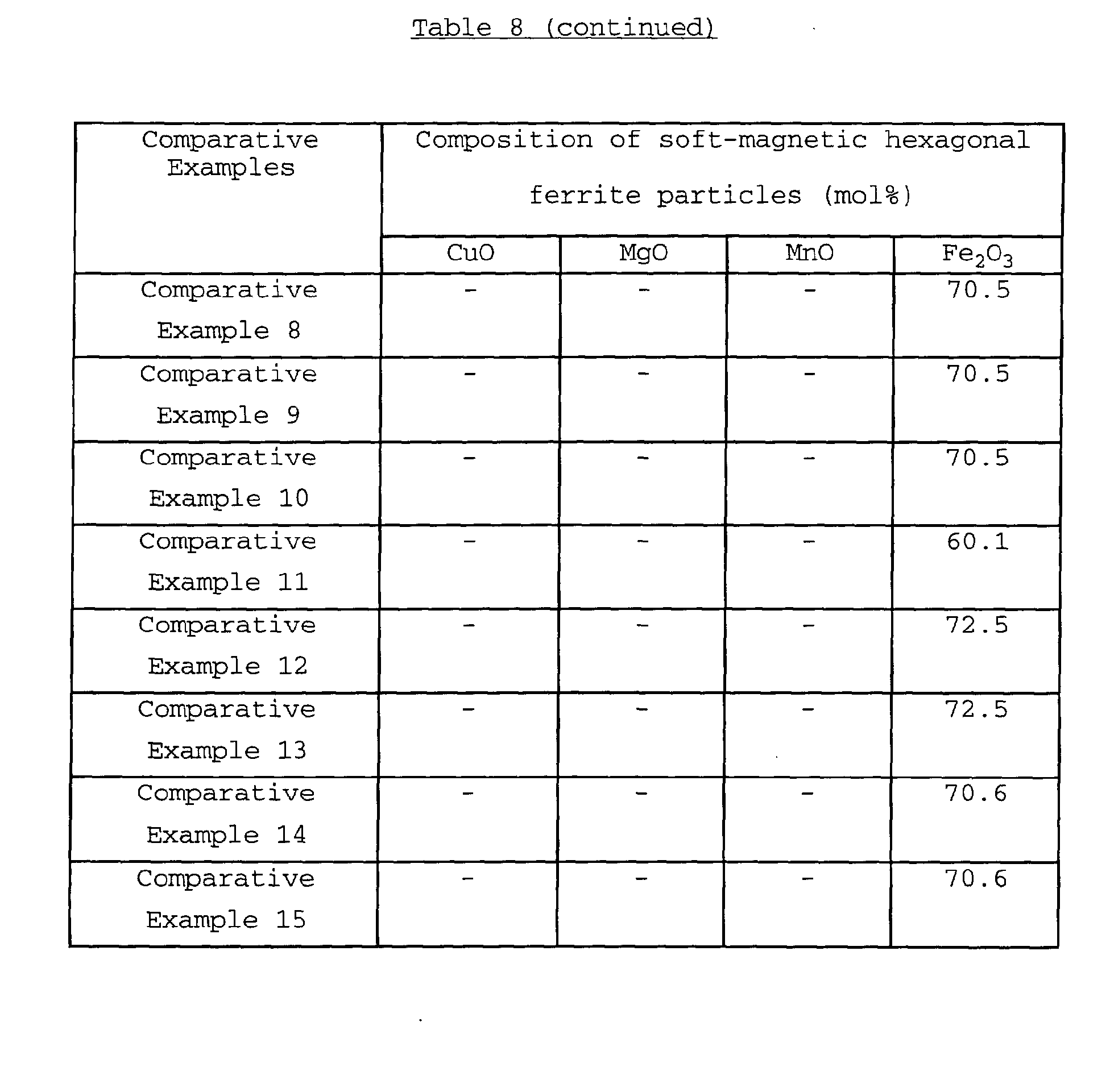
- Example 2 The same procedure as defined in Example 1 was conducted except that composition and amount of soft-magnetic hexagonal ferrite particles, average particle diameter, amount and BET specific surface area of barium carbonate particles, strontium carbonate particles or silicon dioxide particles blended, and pressure used upon lamination of the green sheet using soft-magnetic hexagonal ferrite composite particles, sintering temperature and sintering time of soft-magnetic hexagonal ferrite composite particles, were changed variously. The results are shown in Tables 1 to 6.
- the sintered ceramics obtained in Comparative Example 7 was a typical one of conventionally known soft-magnetic cubic spinel ferrite sintered ceramics.
- Soft-magnetic hexagonal ferrite composite particles were produced by the same method as defined in Example 1 except that composition and amount of soft-magnetic hexagonal ferrite particles, and average particle diameter, amount and BET specific surface area of barium carbonate particles, strontium carbonate particles or silicon dioxide particles were changed variously.
- the thus produced soft-magnetic hexagonal ferrite composite particles were filled in a metal mold, and press-molded under a pressure of 1 x 10 4 t/m 2 , thereby obtaining a disk-shaped sample having a diameter of 30 mm and a thickness of 2.5 mm.
- the obtained disk-shaped sample was sintered in atmospheric air at 1,250°C for 5 hours, thereby obtaining a soft-magnetic hexagonal ferrite sintered ceramics. It was confirmed that the thus obtained sintered ceramics had a sintering density of 5.2 x 10 3 kg/m 3 , a volume resistivity of 1 x 10 9 ⁇ m, and an imaginary part of permeability at 400 MHz of 0.2
- Example 7 The same procedure as defined in Example 7 was conducted except that composition and amount of soft-magnetic hexagonal ferrite particles, and average particle diameter, amount and BET specific surface area of barium carbonate particles, strontium carbonate particles or silicon dioxide particles were changed variously, thereby obtaining soft-magnetic hexagonal ferrite sintered ceramics.
- Example 2 The same procedure as defined in Example 2 was conducted except that composition of soft-magnetic hexagonal ferrite particles, average particle diameter, BET specific surface area and amount of barium carbonate particles, strontium carbonate particles, silicon dioxide particles, bismuth oxide particles and copper oxide particles, pressure used upon lamination of green sheets using soft-magnetic hexagonal ferrite composite particles, sintering temperature and sintering time were changed variously, thereby obtaining soft-magnetic hexagonal ferrite sintered ceramics.
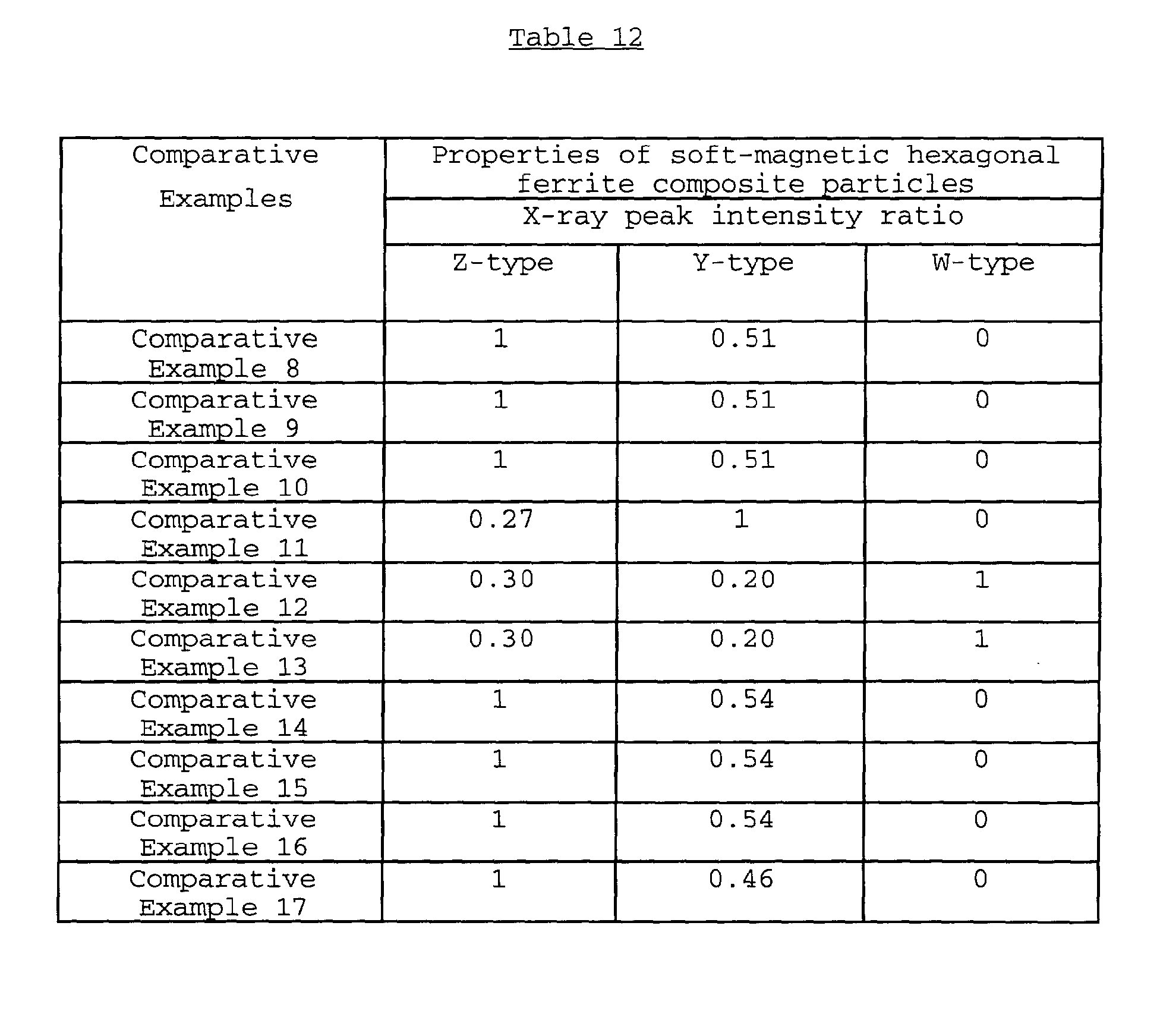
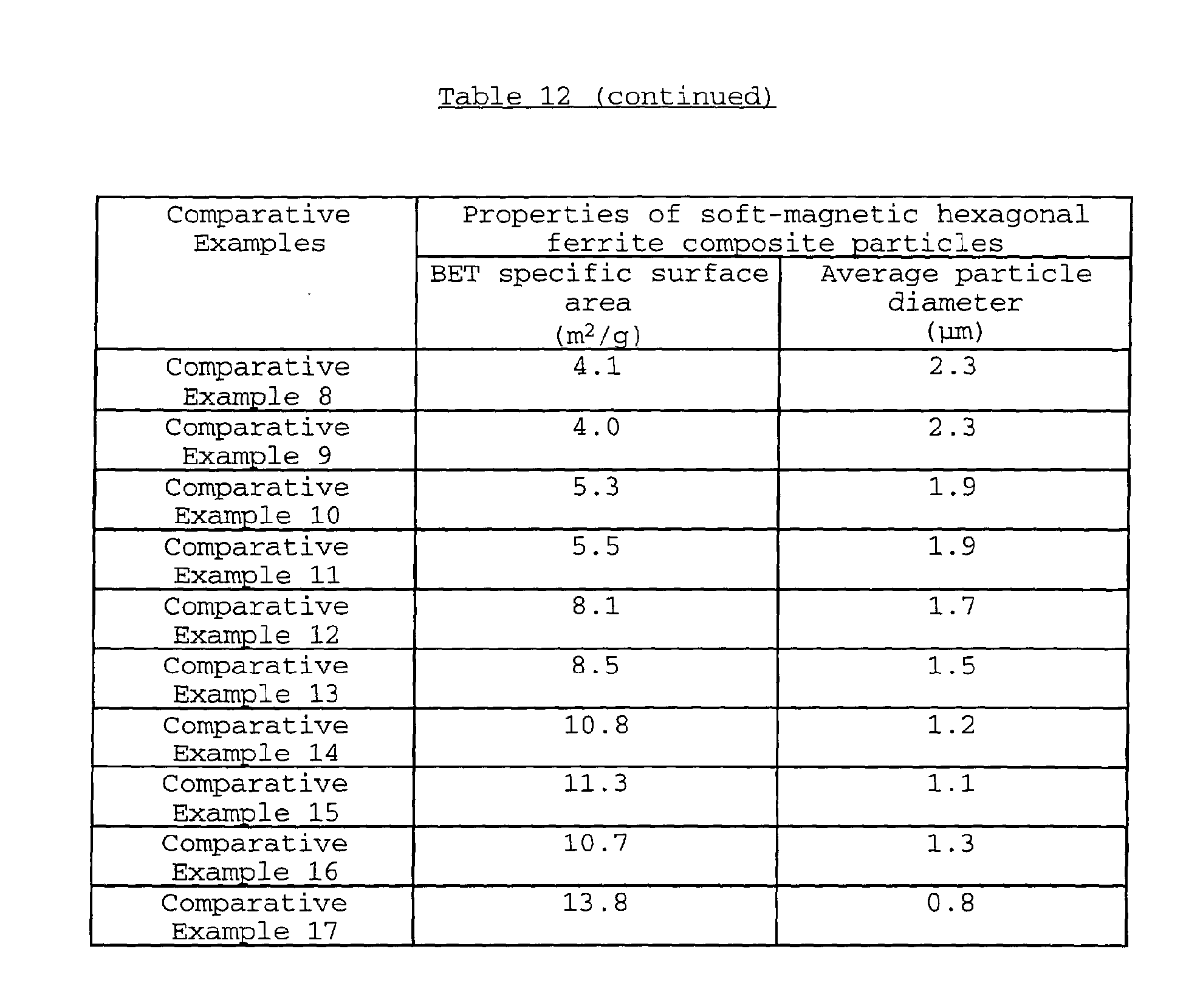
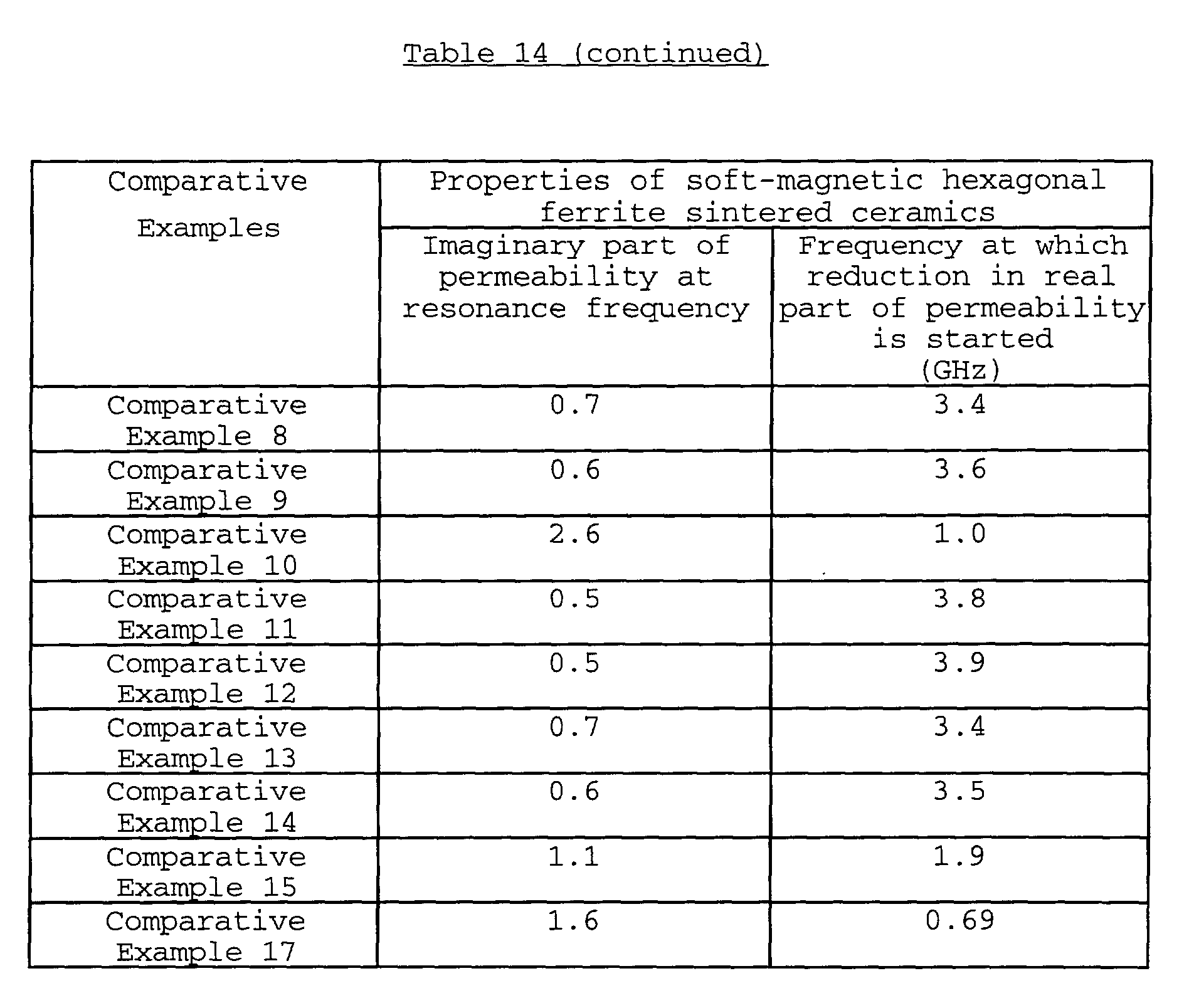
- Comparative Example 16 the same procedure as defined in Comparative Example 14 was conducted except that the amount of bismuth oxide particles blended was changed to 0.5 part by weight, thereby obtaining a sintered ceramics. It was confirmed that the obtained sintered ceramics had a sintering density of 4.1 x 10 3 kg/m 3 and a volume resistivity of 1 x 10 6 ⁇ m, and that the real part ( ⁇ ') of permeability was kept at about 1 over a frequency range up to 20 GHz (measurement limit), and the imaginary part ( ⁇ ") of permeability was kept at about 0.
- ⁇ -Fe 2 O 3 , CoCO 3 and BaCO 3 were weighed such that the peak intensity of (1 0 13) plane of Y-type ferrite phase of a calcined product obtained therefrom was about 0.45 assuming that the peak intensity of (1 0 16) plane of Z-type ferrite phase was 1, and then mixed together in a stainless steel ball mill pot for 16 hours. The resultant mixture was filtrated and then dried. The obtained raw mixed particles were pre-calcined in atmospheric air at 1,250°C for 2 hours, thereby obtaining soft-magnetic hexagonal ferrite containing a Z-type ferrite main phase.
- the obtained soft-magnetic hexagonal ferrite composite particles had an average particle diameter of 0.8 ⁇ m, a BET specific surface area of 13.8 m 2 /g, a saturation magnetization of 37.8 Am 2 /kg, and a coercive force of 12.1 kA/m. Then, the green sheet laminate was produced by the same method as defined in Example 2 except for using the above soft-magnetic hexagonal ferrite composite particles, and sintered in atmospheric air at 910°C for 2 hours, thereby obtaining a soft-magnetic hexagonal ferrite sintered ceramics.
- the obtained soft-magnetic hexagonal ferrite sintered ceramics had a density of 5.2 x 10 3 kg/m 3 , a volume resistivity of 2 x 10 5 ⁇ m, a real part of permeability at 400 MHz of 3.7, and an imaginary part of permeability at 400 MHz of 0.21. Further, it was confirmed that the resonance frequency was 1.6 GHz, the imaginary part of permeability at the resonance frequency was 1.6, and the frequency at which the real part of permeability started to decrease was 0.69 GHz.
- the obtained disk-shaped sample was sintered in atmospheric air at 900°C for 3 hours, thereby obtaining a soft-magnetic hexagonal ferrite sintered ceramics.
- the thus obtained sintered ceramics had a sintering density of 5.1 x 10 3 kg/m 3 , a volume resistivity of 7 x 10 6 ⁇ m, a real part of permeability at 400 MHz of 2.1, and an imaginary part of permeability at 400 MHz of 0.03. Further, it was confirmed that the resonance frequency was 5.4 GHz, the imaginary part of permeability at the resonance frequency was 1.0, and the frequency at which the real part of permeability started to decrease was 2.0 GHz.
- Example 24 The same procedure as defined in Example 24 was conducted except that composition of soft-magnetic hexagonal ferrite particles, average particle diameter, BET specific surface area and amount of barium carbonate particles, strontium carbonate particles, silicon dioxide particles, bismuth oxide particles or copper oxide particles, pressure used upon molding, sintering temperature and sintering time were changed variously, thereby obtaining soft-magnetic hexagonal ferrite sintered ceramics.
Landscapes
- Chemical & Material Sciences (AREA)
- Engineering & Computer Science (AREA)
- Organic Chemistry (AREA)
- Ceramic Engineering (AREA)
- Manufacturing & Machinery (AREA)
- Inorganic Chemistry (AREA)
- Structural Engineering (AREA)
- Materials Engineering (AREA)
- Dispersion Chemistry (AREA)
- Power Engineering (AREA)
- Chemical Kinetics & Catalysis (AREA)
- Crystallography & Structural Chemistry (AREA)
- Magnetic Ceramics (AREA)
- Compounds Of Iron (AREA)
- Soft Magnetic Materials (AREA)
- Fertilizers (AREA)
- Hard Magnetic Materials (AREA)
Abstract
Description




















Claims (12)
- Soft-magnetic hexagonal ferrite composite particles comprising:100 parts by weight of soft-magnetic hexagonal ferrite particles containing Z-type ferrite, Y-type ferrite or W-type ferrite as a main phase;from 0.3 to 10 parts by weight of barium carbonate particles, strontium carbonate particles or a mixture thereof; andfrom 0.1 to 5 parts by weight of silicon dioxide particles.
- Soft-magnetic hexagonal ferrite composite particles according to claim 1, which have an average particle diameter of from 0.1 to 30 µm, a BET specific surface area of from 0.1 to 40 m2/g, a saturation magnetization of from 20 to 60 Am2/kg and a coercive force of from 0.50 to 50 kA/m.
- Soft-magnetic hexagonal ferrite composite particles according to claim 1 or claim 2, wherein the soft-magnetic hexagonal ferrite particles which contain Z-type ferrite as a main phase comprise:the soft-magnetic hexagonal ferrite particles which contain Y-type ferrite as a main phase comprise:i) AO wherein A represents Ba, Sr or Ba-Sr, in an amount of from 15 to 25 mol%, calculated as oxide;ii) Me1O wherein Me1 represents Co and at least one element selected from Ni, Zn, Cu, Mg and Mn, in an amount of from 5 to 15 mol%, calculated as oxide; with the proviso that the Co content is at least 30 mol% based on the total amount of Me1; andiii) Fe2O3 in an amount of from 65 to 75 mol%, calculated as oxide;the soft-magnetic hexagonal ferrite particles which contain W-type ferrite as a main phase comprise:i) AO wherein A represents Ba, Sr or Ba-Sr, in an amount of from 10 to 30 mol%, calculated as oxide;ii) Me2O wherein Me2 represents at least one element selected from Ni, Zn, Cu, Mg and Mn, in an amount of from 10 to 30 mol%, calculated as oxide; andiii) Fe2O3 in an amount of from 55 to 65 mol%, calculated as oxide;i) AO wherein A represents Ba, Sr or Ba-Sr, in an amount of from 5 to 14 mol%, calculated as oxide;ii) Me1O wherein Me1 represents Co and at least one element selected from Ni, Zn, Cu, Mg and Mn, in an amount of from 10 to 30 mol%, calculated as oxide, with the proviso that the Co content is at least 30 mol% based on the total amount of Me1; andiii) Fe2O3 in an amount of from 65 to 80 mol%, calculated as oxide.
- Soft-magnetic hexagonal ferrite composite particles according to any one of claims 1 to 3, wherein the amount of the barium carbonate particles, the strontium carbonate particles or the mixture thereof is from 1 to 10 parts by weight based on 100 parts by weight of the soft-magnetic hexagonal ferrite particles;
and the amount of the silicon dioxide particles is from 0.5 to 5 parts by weight based on 100 parts by weight of the soft-magnetic hexagonal ferrite particles. - Soft-magnetic hexagonal ferrite composite particles according to any one of claims 1 to 4 which further comprise:1 to 20 parts by weight of bismuth oxide particles based on 100 parts by weight of the soft-magnetic hexagonal ferrite particles; andfrom 0.3 to 7 parts by weight of copper oxide particles based on 100 parts by weight of the soft-magnetic hexagonal ferrite particles.
- Soft-magnetic hexagonal ferrite composite particles according to claim 5, wherein:the amount of the barium carbonate particles, the strontium carbonate particles or the mixture thereof is from 0.3 to 7 parts by weight based on 100 parts by weight of the soft-magnetic hexagonal ferrite particles; andthe amount of the silicon dioxide particles is from 0.1 to 5 parts by weight based on 100 parts by weight of the soft-magnetic hexagonal ferrite particles.
- A green sheet which comprises the soft-magnetic hexagonal ferrite composite particles as defined in any one of claims 1 to 6 and a binder.
- A green sheet according to claim 7, which comprises 100 parts by weight of soft-magnetic hexagonal ferrite composite particles; and
2 to 20 parts by weight of binder. - A soft-magnetic hexagonal ferrite sintered ceramic which has a sintering density of not less than 5.0 x 10³ kg/m3, a volume resistivity of not less than 1 x 10⁶ Ωm and an imaginary part of permeability at 400 MHz of not more than 1.
- A soft-magnetic hexagonal ferrite sintered ceramic according to claim 9 which is obtainable by forming the soft-magnetic hexagonal ferrite composite particles as defined in any one of claims 1 to 5 into a compact and then sintering the compact.
- A soft-magnetic hexagonal ferrite sintered ceramic according to claim 9 which is obtainable by laminating the green sheet as defined in claim 7 or 8 and then sintering the resultant laminate.
- A soft-magnetic hexagonal ferrite sintered ceramic according to any one of claims 9 to 11, which has a sintering density of from 5.0 x 10³ to 5.3 x 10³ kg/m3, a volume resistivity of from 1 x 10⁶ to 5 x 10⁹ Ωm and an imaginary part of permeability at 400 MHz of not more than 0.7.
Applications Claiming Priority (4)
| Application Number | Priority Date | Filing Date | Title |
|---|---|---|---|
| JP2001109790 | 2001-04-09 | ||
| JP2001109790 | 2001-04-09 | ||
| JP2002035226 | 2002-02-13 | ||
| JP2002035226A JP4045410B2 (en) | 2002-02-13 | 2002-02-13 | Soft magnetic hexagonal ferrite composite particle powder, green sheet using the soft magnetic hexagonal ferrite composite particle powder, and soft magnetic hexagonal ferrite sintered body |
Publications (3)
| Publication Number | Publication Date |
|---|---|
| EP1249847A2 true EP1249847A2 (en) | 2002-10-16 |
| EP1249847A3 EP1249847A3 (en) | 2003-01-02 |
| EP1249847B1 EP1249847B1 (en) | 2004-10-27 |
Family
ID=26613283
Family Applications (1)
| Application Number | Title | Priority Date | Filing Date |
|---|---|---|---|
| EP02252467A Expired - Lifetime EP1249847B1 (en) | 2001-04-09 | 2002-04-05 | Soft-magnetic hexagonal ferrite composite particles, and green sheet using the same and soft-magnetic hexagonal ferrite sintered ceramics. |
Country Status (6)
| Country | Link |
|---|---|
| US (1) | US6623879B2 (en) |
| EP (1) | EP1249847B1 (en) |
| KR (1) | KR100794066B1 (en) |
| CN (1) | CN1212627C (en) |
| DE (1) | DE60201699T2 (en) |
| TW (1) | TW587257B (en) |
Cited By (3)
| Publication number | Priority date | Publication date | Assignee | Title |
|---|---|---|---|---|
| EP1193723A4 (en) * | 2000-04-28 | 2008-06-25 | Tdk Corp | MAGNETIC FERRITE POWDER, MAGNETIC FERRITE AGGLOMER, LAYERED FERRITE STRUCTURE, AND PROCESS FOR THE PRODUCTION OF LAYERED FERRITE STRUCTURE |
| EP1707536A3 (en) * | 2005-03-31 | 2008-07-02 | Hitachi Metals, Ltd. | Ferrite sintered body and method of manufacturing same |
| CN117735973A (en) * | 2023-12-28 | 2024-03-22 | 安徽龙磁科技股份有限公司 | Preparation method of high-performance permanent magnetic ferrite |
Families Citing this family (7)
| Publication number | Priority date | Publication date | Assignee | Title |
|---|---|---|---|---|
| JP4204329B2 (en) * | 2002-01-21 | 2009-01-07 | 三洋電機株式会社 | Method for producing oxide magnetic material |
| JP5256612B2 (en) * | 2004-12-17 | 2013-08-07 | 日立金属株式会社 | Hexagonal ferrite and antenna and communication equipment using the same |
| KR100725546B1 (en) * | 2006-02-22 | 2007-06-08 | 요업기술원 | Magnetic material for magnetic core and manufacturing method thereof |
| JP4780460B2 (en) * | 2006-03-23 | 2011-09-28 | 日立金属株式会社 | Chip antenna, antenna device, and communication device |
| KR101620307B1 (en) * | 2009-07-28 | 2016-05-13 | 삼성전자주식회사 | Y-type hexagonal ferrite, antenna apparatus therewith, and method for manufacturing the same |
| DE202014008347U1 (en) | 2014-10-16 | 2014-10-28 | Würth Elektronik eiSos Gmbh & Co. KG | induction component |
| CN105439552A (en) * | 2015-12-29 | 2016-03-30 | 陕西科技大学 | A kind of Ba3Co2Fe24O41/Ba2Co2Fe12O22 microwave magnetic material and its preparation method |
Family Cites Families (4)
| Publication number | Priority date | Publication date | Assignee | Title |
|---|---|---|---|---|
| US5607615A (en) * | 1994-05-13 | 1997-03-04 | Tdk Corporation | Hexagonal ba-ferrite sintered magnet, its making method, and polar anisotropy ring magnet |
| US5954992A (en) * | 1996-07-26 | 1999-09-21 | Tdk Corporation | Hexagonal Z type magnetic oxide sintered material, method for making and impedance device |
| JPH118112A (en) * | 1997-06-17 | 1999-01-12 | Tdk Corp | Balun transformer, core and core material for the same |
| US6379579B1 (en) * | 1999-03-09 | 2002-04-30 | Tdk Corporation | Method for the preparation of soft magnetic ferrite powder and method for the production of laminated chip inductor |
-
2002
- 2002-03-27 TW TW091106053A patent/TW587257B/en not_active IP Right Cessation
- 2002-04-04 KR KR1020020018526A patent/KR100794066B1/en not_active Expired - Fee Related
- 2002-04-05 CN CNB021062293A patent/CN1212627C/en not_active Expired - Lifetime
- 2002-04-05 US US10/116,110 patent/US6623879B2/en not_active Expired - Lifetime
- 2002-04-05 EP EP02252467A patent/EP1249847B1/en not_active Expired - Lifetime
- 2002-04-05 DE DE60201699T patent/DE60201699T2/en not_active Expired - Fee Related
Cited By (3)
| Publication number | Priority date | Publication date | Assignee | Title |
|---|---|---|---|---|
| EP1193723A4 (en) * | 2000-04-28 | 2008-06-25 | Tdk Corp | MAGNETIC FERRITE POWDER, MAGNETIC FERRITE AGGLOMER, LAYERED FERRITE STRUCTURE, AND PROCESS FOR THE PRODUCTION OF LAYERED FERRITE STRUCTURE |
| EP1707536A3 (en) * | 2005-03-31 | 2008-07-02 | Hitachi Metals, Ltd. | Ferrite sintered body and method of manufacturing same |
| CN117735973A (en) * | 2023-12-28 | 2024-03-22 | 安徽龙磁科技股份有限公司 | Preparation method of high-performance permanent magnetic ferrite |
Also Published As
| Publication number | Publication date |
|---|---|
| DE60201699D1 (en) | 2004-12-02 |
| TW587257B (en) | 2004-05-11 |
| KR100794066B1 (en) | 2008-01-10 |
| EP1249847B1 (en) | 2004-10-27 |
| EP1249847A3 (en) | 2003-01-02 |
| CN1212627C (en) | 2005-07-27 |
| CN1380663A (en) | 2002-11-20 |
| KR20020079484A (en) | 2002-10-19 |
| US6623879B2 (en) | 2003-09-23 |
| US20030148147A1 (en) | 2003-08-07 |
| DE60201699T2 (en) | 2005-10-06 |
Similar Documents
| Publication | Publication Date | Title |
|---|---|---|
| EP2141136B1 (en) | Ni-zn-cu ferrite powder, green sheet and method of making a sintered ni-zn-cu ferrite body | |
| JP3693398B2 (en) | Ceramic magnetic material and high frequency circuit component using the same | |
| JPWO2006064839A1 (en) | Hexagonal ferrite and antenna and communication equipment using the same | |
| JPH10163018A (en) | Soft-magnetic material for inductor and manufacture of inductor using the same | |
| JP4158081B2 (en) | Soft magnetic hexagonal ferrite composite particle powder, green sheet using the soft magnetic hexagonal ferrite composite particle powder, and soft magnetic hexagonal ferrite sintered body | |
| EP1364927A1 (en) | Magnetic oxide sinter and high-frequency circuit part employing the same | |
| EP1249847B1 (en) | Soft-magnetic hexagonal ferrite composite particles, and green sheet using the same and soft-magnetic hexagonal ferrite sintered ceramics. | |
| JPH10163017A (en) | High frequency soft-magnetic material for low temp. sintering and manufacture of inductor using the same | |
| JP2004247603A (en) | MnZn-BASED FERRITE WAVE ABSORBER | |
| CN101037326B (en) | Ferrite sintered body and method of manufacturing same | |
| JP2002068830A (en) | Hexagonal y type oxide magnetic material and inductor element | |
| JP4587542B2 (en) | Ferrite material, ferrite substrate using the same, and electromagnetic wave absorbing member | |
| JP4069284B2 (en) | Magnetic ferrite materials and multilayer ferrite parts | |
| JP2002015913A (en) | Magnetic ferrite powder, magnetic ferrite sintered body, laminated ferrite part and its manufacturing method | |
| JP3492802B2 (en) | Low loss ferrite material | |
| JPH06310320A (en) | Oxide magnetic substance material | |
| JP4045410B2 (en) | Soft magnetic hexagonal ferrite composite particle powder, green sheet using the soft magnetic hexagonal ferrite composite particle powder, and soft magnetic hexagonal ferrite sintered body | |
| JP2001010820A (en) | Ferrite composition, ferrite sintered compact laminate- type electronic part and production thereof | |
| EP1447393A1 (en) | Electromagnetic wave absorber formed of Mn-Zn ferrite | |
| JP2003221232A (en) | Ferrite material and its production method | |
| JP2004262682A (en) | Magnetic oxide sintered compact and high-frequency circuit part using the same | |
| JP4074437B2 (en) | Magnetic oxide sintered body and high-frequency circuit component using the same | |
| JP2002260914A (en) | Sintered magnetic oxide and high-frequency circuit part using the same | |
| JP2802839B2 (en) | Oxide soft magnetic material | |
| JP4436493B2 (en) | High frequency low loss ferrite material and ferrite core using the same |
Legal Events
| Date | Code | Title | Description |
|---|---|---|---|
| PUAI | Public reference made under article 153(3) epc to a published international application that has entered the european phase |
Free format text: ORIGINAL CODE: 0009012 |
|
| AK | Designated contracting states |
Kind code of ref document: A2 Designated state(s): AT BE CH CY DE DK ES FI FR GB GR IE IT LI LU MC NL PT SE TR |
|
| AX | Request for extension of the european patent |
Free format text: AL;LT;LV;MK;RO;SI |
|
| PUAL | Search report despatched |
Free format text: ORIGINAL CODE: 0009013 |
|
| AK | Designated contracting states |
Kind code of ref document: A3 Designated state(s): AT BE CH CY DE DK ES FI FR GB GR IE IT LI LU MC NL PT SE TR |
|
| AX | Request for extension of the european patent |
Free format text: AL;LT;LV;MK;RO;SI |
|
| RIC1 | Information provided on ipc code assigned before grant |
Free format text: 7H 01F 1/36 A, 7C 04B 35/26 B, 7H 01F 1/34 B, 7H 01F 1/37 B |
|
| 17P | Request for examination filed |
Effective date: 20030207 |
|
| 17Q | First examination report despatched |
Effective date: 20030415 |
|
| AKX | Designation fees paid |
Designated state(s): DE FR GB NL |
|
| GRAP | Despatch of communication of intention to grant a patent |
Free format text: ORIGINAL CODE: EPIDOSNIGR1 |
|
| GRAS | Grant fee paid |
Free format text: ORIGINAL CODE: EPIDOSNIGR3 |
|
| GRAA | (expected) grant |
Free format text: ORIGINAL CODE: 0009210 |
|
| AK | Designated contracting states |
Kind code of ref document: B1 Designated state(s): DE FR GB NL |
|
| REG | Reference to a national code |
Ref country code: GB Ref legal event code: FG4D |
|
| REF | Corresponds to: |
Ref document number: 60201699 Country of ref document: DE Date of ref document: 20041202 Kind code of ref document: P |
|
| PGFP | Annual fee paid to national office [announced via postgrant information from national office to epo] |
Ref country code: DE Payment date: 20050407 Year of fee payment: 4 |
|
| PGFP | Annual fee paid to national office [announced via postgrant information from national office to epo] |
Ref country code: FR Payment date: 20050408 Year of fee payment: 4 |
|
| PLBE | No opposition filed within time limit |
Free format text: ORIGINAL CODE: 0009261 |
|
| STAA | Information on the status of an ep patent application or granted ep patent |
Free format text: STATUS: NO OPPOSITION FILED WITHIN TIME LIMIT |
|
| ET | Fr: translation filed | ||
| 26N | No opposition filed |
Effective date: 20050728 |
|
| PGFP | Annual fee paid to national office [announced via postgrant information from national office to epo] |
Ref country code: NL Payment date: 20060403 Year of fee payment: 5 |
|
| PG25 | Lapsed in a contracting state [announced via postgrant information from national office to epo] |
Ref country code: GB Free format text: LAPSE BECAUSE OF NON-PAYMENT OF DUE FEES Effective date: 20060405 |
|
| PG25 | Lapsed in a contracting state [announced via postgrant information from national office to epo] |
Ref country code: DE Free format text: LAPSE BECAUSE OF NON-PAYMENT OF DUE FEES Effective date: 20061101 |
|
| GBPC | Gb: european patent ceased through non-payment of renewal fee |
Effective date: 20060405 |
|
| REG | Reference to a national code |
Ref country code: FR Ref legal event code: ST Effective date: 20061230 |
|
| NLV4 | Nl: lapsed or anulled due to non-payment of the annual fee |
Effective date: 20071101 |
|
| PG25 | Lapsed in a contracting state [announced via postgrant information from national office to epo] |
Ref country code: NL Free format text: LAPSE BECAUSE OF NON-PAYMENT OF DUE FEES Effective date: 20071101 |
|
| PG25 | Lapsed in a contracting state [announced via postgrant information from national office to epo] |
Ref country code: FR Free format text: LAPSE BECAUSE OF NON-PAYMENT OF DUE FEES Effective date: 20060502 |