EP1246498A2 - Handover control method and apparatus, and mobile communication system - Google Patents
Handover control method and apparatus, and mobile communication system Download PDFInfo
- Publication number
- EP1246498A2 EP1246498A2 EP02252076A EP02252076A EP1246498A2 EP 1246498 A2 EP1246498 A2 EP 1246498A2 EP 02252076 A EP02252076 A EP 02252076A EP 02252076 A EP02252076 A EP 02252076A EP 1246498 A2 EP1246498 A2 EP 1246498A2
- Authority
- EP
- European Patent Office
- Prior art keywords
- handover
- mobile station
- residence time
- handover method
- overlapping zone
- Prior art date
- Legal status (The legal status is an assumption and is not a legal conclusion. Google has not performed a legal analysis and makes no representation as to the accuracy of the status listed.)
- Granted
Links
Images




Classifications
-
- H—ELECTRICITY
- H04—ELECTRIC COMMUNICATION TECHNIQUE
- H04W—WIRELESS COMMUNICATION NETWORKS
- H04W36/00—Hand-off or reselection arrangements
- H04W36/16—Performing reselection for specific purposes
- H04W36/22—Performing reselection for specific purposes for handling the traffic
Definitions
- the present invention generally relates to a handover control method in a mobile communication system, more particularly to a handover control method and apparatus for varying a handover method according to an overlapping zone residence time of a handover-performing mobile station, and for varying a route of a handover path according to load on each node in a network.
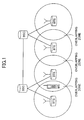
- an area within radio range of a radio base station is referred to as a cell, and there is a zone where the cells overlap each other, which is referred to as an overlapping zone hereinafter, as shown in FIG.1.
- base station controllers are denoted by BSC
- base transceiver stations are denoted by BTS
- MS mobile station
- a handover process of the mobile station takes place when the mobile station comes into the overlapping zone.
- Three methods for performing handover have mainly been proposed: (a) a gateway handover method as shown in FIG.2, (b) a base station controller path extension handover method as shown in FIG.3, and (c) a radio link path extension handover method as shown in FIG.4.
- the base station controller path extension handover method may be employed, in which a path set up to the base station controller is extended, while in a packet exchange method in which a delay requirement is not so severe, (a) the gateway handover method may be employed, in which a path set up among relay nodes is reset up, in order to use network resources effectively.
- the handover process must be completed while the mobile station stays in the overlapping zone. If the mobile station goes out from the overlapping zone without completing the handover process, packet losses or a line disconnection may occur because the mobile station has not established a connection with a handover-targeted base station.
- both path routes before and after the handover process run through the same route to the gateway, and are adaptively routed in each optimal path route from the gateway to the mobile station, taking into account the load on each node.
- both paths before and after the handover process are routed in the same route to the base station controller, and are adaptively routed in each optimal path from the base station controller to the mobile station, taking into account the load on each node.
- both paths before and after the handover process are routed in the same route to the previous base station before the handover process, and are adaptively routed in radio link paths via each optimal base station from the base station to the mobile station, taking into account the load on each base station.
- the handover process time in method (a) is longer than one in method (b), which is longer than one in method (c), in short, (a)>(b)>(c).
- the load with method (a) may be smaller than one with method (b), which may be smaller than one with method (c), in short, (a) ⁇ (b) ⁇ (c).
- the relationship between the handover process time and the efficiency of use of the network resources is a trade-off. Therefore, if it is intended to reduce the handover process time as a priority whenever the handover method is determined, it would not always be efficient from the point of view of use of the network resources.
- the present invention aims at the above-described characteristics in the selection of the handover method, and is directed at avoiding the above-described traffic congestion on a certain node and at improving the efficiency of use of the network resources.
- the object of the present invention is to provide a handover control method and apparatus for changing the handover method to be used according to the overlapping zone residence time of the mobile station, and for changing the path route according to the load on each node in the network.
- a handover control method for use in a mobile communication system comprising the step of changing a handover method according to an overlapping zone residence time of a mobile station is provided.
- the handover method may be selected among a gateway handover method, a base station controller path extension handover method, and a radio link path extension handover method.
- the gateway handover method may be selected; when the residence time is very short, the radio link path extension handover method may be selected; and otherwise the base station controller path extension handover method may be selected.
- the overlapping zone residence time may be estimated on the basis of a velocity of the mobile station and a configuration of cells. Alternatively, the overlapping zone residence time may be estimated on the basis of the history of electric field intensity of the handover-performing mobile station.
- a mobile communication system carrying out the above method is provided.
- a handover control apparatus that is provided in a communication network and carries out the above method is provided.
- the handover control method according to the present invention employs a method for changing the handover method to be used according to the overlapping zone residence time of the mobile station.
- the relationship between the handover process time and the efficiency of use of the network resources is a trade-off. Therefore, if it is intended all the time to reduce the handover process time as a priority, the network resources would not be used efficiently.
- the handover method must be determined putting priority on the handover process time in order to avoid line disconnection.
- the mobile station of which the overlapping zone residence time is relatively long there is no need to complete the handover process within a time shorter than necessary, and therefore in this case it is possible to put priority on improving the efficiency of use of network resources.
- the handover control method makes the handover method variable and dependent on the overlapping zone residence time of the mobile station.
- the "overlapping zone residence time” is not always in proportion to the movement speed (scalar quantity) of the mobile station.
- the speed (scalar quantity) of MS1 is the same as the speed of MS2
- the overlapping zone residence time of MS2 is estimated to be longer than the overlapping zone residence time of MS1
- the speed (scalar quantity) of MS1 is different from the speed of MS2
- the overlapping zone residence time of MS1 could be longer than the overlapping zone residence time of MS2.
- the parameter should be set to an estimate that is an overlapping zone residence time estimated on the basis of the velocity (vector quantity having speed and direction) of the mobile station and of a configuration of the cells (especially shapes of the overlapping zones).
- a "speed” is a scalar quantity and a "velocity” is a vector quantity having a speed and a direction.
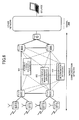
- FIG.6 is a schematic showing this mobile communication system.
- a movement profile management apparatus 601 holds and controls movement characteristics of each user (or each mobile station).
- the movement characteristic may be a movement velocity of the mobile station.
- a load profile management apparatus 602 keeps track of the load on each node by, for example, monitoring data quantities (or data lengths) queued on each node in the network, and holds and controls each load status.
- a handover path determination apparatus 603 determines the handover method to be used and the route for the handover path when the mobile station requests to perform the handover process, and controls the whole system based on the determined handover method and route.
- FIG.7 is a schematic showing the configurations of the movement profile management apparatus 601, the load profile management apparatus 602, and the handover path determination apparatus 603 of this embodiment.
- a mobile station 701 includes a movement characteristic measurement part 702 for measuring the movement characteristics of the mobile station such as a movement velocity, a handover decision part 703 for detecting the mobile station coming into an overlapping zone, and a movement characteristic indication part 704 for indicating the movement characteristic measured by the movement characteristic measurement part 702 to the movement profile management apparatus 601.
- a movement characteristic measurement part 702 for measuring the movement characteristics of the mobile station such as a movement velocity
- a handover decision part 703 for detecting the mobile station coming into an overlapping zone
- a movement characteristic indication part 704 for indicating the movement characteristic measured by the movement characteristic measurement part 702 to the movement profile management apparatus 601.
- the movement profile management apparatus 601 includes movement profile management parts 705 provided for each mobile station, and controller 706 for controlling the movement profile management parts 705.
- the load profile management apparatus 602 includes a handover path selector 707 for picking up all possible handover path candidates that can be employed by the handover method determined to be used, a load monitor 708 for monitoring the load status on each node in the network, a load calculator 709 for calculating the load on the network due to each of the handover path candidates picked up by the handover path selector 707.
- the handover path determination apparatus 603 includes a movement profile look-up part 710 for making reference to the movement profile management part 705 of the mobile station requesting the handover process, a handover method determination part 711 for estimating the overlapping zone residence time of the handover-requesting mobile station on the basis of the movement characteristic of that mobile station and a pre-stored cell configuration, and for determining a handover method to be used, a load profile look-up part 712 for indicating the handover method determined by the handover method determination part 711 to the load profile apparatus 602, and for obtaining the loads that will occur on the network when each of the possible handover path candidates employed by the handover method is employed from the load profile apparatus 602, a handover path determination part 713 for selecting a final handover path having the lowest load among the possible handover paths that can be employed by the determined handover method, and a handover controller 714 for controlling each node such that the handover-requesting mobile station can make a connection using the final handover path.
- FIG.8 is a flowchart showing a process of the handover control method according to this embodiment.
- the movement characteristic measurement part 702 of the mobile station measures the movement characteristics such as the movement velocity of the mobile station.
- the load monitor 708 monitors the load status on each node in the network.
- the handover decision part 703 of the mobile station monitors whether the mobile station comes into an overlapping zone (S801).
- a handover request is transmitted to the handover path determination apparatus 603 (S802), and the movement characteristic indication part 704 makes a report of the latest result of measured movement characteristics to the movement profile management apparatus 601.
- the reported movement characteristic is stored in the movement profile management part 705 for that mobile station.
- the latest result may be measured during a predetermined period immediately preceding the time when it is detected that the mobile station comes into the overlapping zone. This predetermined period may be set at any length. However it should be noted that too-old history is not useful because it is considered that such history does not reflect exactly the current movement status.
- the profile look-up part 710 accesses to the movement profile management apparatus 601, and obtains the movement profile of the handover-requesting mobile station from the movement profile management part 705 that holds and controls the movement profile of that mobile station (S803).
- the handover method determination part 711 estimates an overlapping zone residence time of the handover-requesting mobile station on the basis of the movement profile (for example, a history of the movement velocity) of that mobile station from the movement profile look-up part 710 and the pre-stored cell configuration (S804), and selects the handover method to be used based on the estimate (S805).
- the movement profile for example, a history of the movement velocity
- the above selection process may use a threshold value. For example, in the case that the estimated residence time is relatively long, the gateway handover method of which load on the network is lowest will be selected (S808), while in the case that the estimated residence time is very short, the radio link path extension handover method that requires the shortest time to perform the handover process will be selected (S806), and otherwise the base station controller path extension handover method will be selected (S807).
- the radio link path extension handover method When the radio link path extension handover method is employed at S806, the route of the handover path over the wired section in the network is uniquely determined (S811), and the control process proceeds to S812. On the other hand, when the base station controller path extension handover method is employed at S807 or the gateway handover method is employed at S808, the process proceeds to S809 in order to minimize the load on the network.
- the load profile look-up part 712 indicates the determined handover method to the handover path selector 707 in the load profile management apparatus 602.
- the handover path selector 707 lists all possible routes of the handover path that can be employed by the determined handover method (S809).
- the handover path candidates picked up by the handover path selector 707 an example of a case in which the gateway handover method is employed is shown in FIG.9.
- FIG.9 Although only four handover path candidates are shown here for convenience of representation, other routes can be employed in the case of FIG.9, and in practice more routes can be employed because there will be more nodes in an actual network.
- the load calculator 709 computes how the load status on each node in the network will change by employing each route of the handover path candidates picked up by the handover path selector 707 with reference to the monitoring result from the load monitoring part 708, and provides the computation result to the load profile look-up part 712 (S810).
- the handover path determination part 713 determines a single handover path on the basis of the computation result obtained by the load profile look-up part 712 such that the load over the whole system will be minimized without load congestion at a certain node by employing this handover path (S811).
- the handover controller 714 then controls the base stations and the nodes in the network such that the handover-requesting mobile station can make a connection using the handover path determined by the handover path determination part 713 (S812).
- the handover method that requires the shortest time to perform the handover process is employed for the mobile station of which overlapping zone residence time is short in order to avoid a line disconnection, while the handover method that requires relatively longer time to perform the handover process but improves the efficiency of use of the network resources is employed for the mobile station of which overlapping zone residence time is relatively long. Consequently the efficiency of use of the network resources is improved on the whole.
- the overlapping zone residence time of the mobile station is estimated using the movement velocity and the cell configuration
- the present invention is not limited to that aspect and can use an overlapping zone residence time estimated in a different manner.
- an overlapping zone residence time can be estimated by measuring an attenuation factor of electric field intensity from the previous base station before the handover process to the mobile station to estimate how soon the handover-performing mobile station will no longer be able to receive electric waves from that base station on the basis of this attenuation factor.
- the present invention is not limited to that aspect.
- This system can be located anywhere on the network.
- Each of the components can be located on any of more than one apparatus.
- the efficiency of use of the network resources is improved.
Landscapes
- Engineering & Computer Science (AREA)
- Computer Networks & Wireless Communication (AREA)
- Signal Processing (AREA)
- Mobile Radio Communication Systems (AREA)
- Small-Scale Networks (AREA)
Abstract
Description
Claims (11)
- A handover control method for use in a mobile communication system, the method characterized by the step of:changing a handover method according to an overlapping zone residence time of a mobile station.
- The handover control method as claimed in claim 1, characterized in that,
the step of changing a handover method comprising the sub-steps of:ranking the handover methods for the mobile station including a gateway handover method, a base station controller path extension handover method, and a radio link path extension handover method in association with how long the overlapping zone residence time of the mobile station is; andselecting one of the handover methods for the mobile station among the three methods, which method corresponds to the overlapping zone residence time of the mobile station. - The handover control method as claimed in claim 2, the method characterized by the step of:selecting a handover path of which load on the system is minimum among the handover paths that can be employed by the selected handover method, when either the gateway handover method or the base station controller path extension handover method is selected for use.
- The handover control method as claimed in claim 3, characterized in that:the overlapping zone residence time is estimated on the basis of a velocity of the mobile station and a configuration of cells.
- The handover control method as claimed in claim 3, characterized in that:the overlapping zone residence time is estimated on the basis of an attenuation factor of electric field intensity from a previous base station before a handover process to a handover-performing mobile station.
- A mobile communication system comprising base stations that can communicate with mobile stations, a communication network including a plurality of nodes, and a handover control apparatus, characterized in that,
the mobile station comprises:a part for indicating a movement characteristic of the mobile station and a handover request to the handover control apparatus,the handover control apparatus comprises:a part for holding movement characteristics of the mobile stations;a part for determining a handover method on the basis of the movement characteristic of a mobile station upon receiving a handover request from the mobile station;a part for determining a handover path of which load on the system is minimum among the handover paths that can be employed by the determined handover method; anda part for controlling the nodes and the base stations such that the mobile station are connected with the base station and the nodes using the determined handover path. - The mobile communication system as claimed in claim 6, characterized in that,
the movement characteristic is a velocity of the mobile station,
the part for determining a handover method comprises:a part for estimating an overlapping zone residence time of the mobile station on the basis of the velocity of the mobile station and a configuration of cells; anda determination part for determining a handover method on the basis of the overlapping zone residence time of the mobile station,the determination part for determining a handover method selects one handover method used for the mobile station among three handover methods, which method corresponds to the overlapping zone residence time of the mobile station, andthe three handover methods include a gateway handover method, a base station controller path extension handover method, and a radio link path extension handover method, and are ranked in association with how long the overlapping zone residence time of the mobile station is. - The mobile communication system as claimed in claim 6, characterized in that,
the movement characteristic of the mobile station is an attenuation factor of electric field intensity from a previous base station before a handover process to a handover-performing mobile station,
the part for determining a handover method comprises:a part for estimating an overlapping zone residence time of the mobile station on the basis of the attenuation factor; anda determination part for determining a handover method on the basis of the overlapping zone residence time of the mobile station,the determination part for determining a handover method selects one handover method used for the mobile station among three handover methods, which method corresponds to the overlapping zone residence time of the mobile station, andthe three handover methods includes a gateway handover method, a base station controller path extension handover method, and a radio link path extension handover method, and are ranked in association with how long the overlapping zone residence time of the mobile station is. - A handover control apparatus provided in a communication network including a plurality of nodes and base stations that can communicate with mobile stations, the apparatus characterized by:a part for holding movement characteristics reported from the mobile stations;a part for determining a handover method on the basis of the movement characteristic of a mobile station upon receiving a handover request from the mobile station;a part for determining a handover path of which load on the network is minimum among the handover paths that can be employed by the determined handover method; anda part for controlling the nodes and the base stations such that the mobile station is connected with the base station and the nodes using the determined handover path.
- The handover control apparatus as claimed in claim 9, characterized by,
the movement characteristic is a velocity of the mobile station,
the part for determining a handover method comprises:a part for estimating an overlapping zone residence time of the mobile station on the basis of the velocity of the mobile station and a configuration of cells; anda determination part for determining a handover method on the basis of the overlapping zone residence time of the mobile station,the determination part for determining a handover method selects one handover method used for the mobile station among three handover methods, which method corresponds to the overlapping zone residence time of the mobile station, andthe three handover methods include a gateway handover method, a base station controller path extension handover method, and a radio link path extension handover method, and are ranked in association with how long the overlapping zone residence time of the mobile station is. - The handover control apparatus as claimed in claim 9, characterized in that,
the movement characteristic of the mobile station is an attenuation factor of electric field intensity from a previous base station before a handover process to a handover-performing mobile station,
the part for determining a handover method comprises:a part for estimating an overlapping zone residence time of the mobile station on the basis of the attenuation factor; anda determination part for determining a handover method on the basis of the overlapping zone residence time of the mobile station,the determination part for determining a handover method selects one handover method used for the mobile station among three handover methods, which method corresponds to the overlapping zone residence time of the mobile station, andthe three handover methods include a gateway handover method, a base station controller path extension handover method, and a radio link path extension handover method, and are ranked in association with how long the overlapping zone residence time of the mobile station is.
Applications Claiming Priority (2)
| Application Number | Priority Date | Filing Date | Title |
|---|---|---|---|
| JP2001088532 | 2001-03-26 | ||
| JP2001088532A JP3717798B2 (en) | 2001-03-26 | 2001-03-26 | HANDOVER CONTROL METHOD AND DEVICE, AND MOBILE COMMUNICATION SYSTEM |
Publications (3)
| Publication Number | Publication Date |
|---|---|
| EP1246498A2 true EP1246498A2 (en) | 2002-10-02 |
| EP1246498A3 EP1246498A3 (en) | 2003-08-27 |
| EP1246498B1 EP1246498B1 (en) | 2005-06-01 |
Family
ID=18943609
Family Applications (1)
| Application Number | Title | Priority Date | Filing Date |
|---|---|---|---|
| EP02252076A Expired - Lifetime EP1246498B1 (en) | 2001-03-26 | 2002-03-22 | Handover control method and apparatus, and mobile communication system |
Country Status (9)
| Country | Link |
|---|---|
| US (1) | US6970707B2 (en) |
| EP (1) | EP1246498B1 (en) |
| JP (1) | JP3717798B2 (en) |
| KR (1) | KR100447307B1 (en) |
| CN (1) | CN1378394B (en) |
| AU (1) | AU762293B2 (en) |
| CA (1) | CA2378874C (en) |
| DE (1) | DE60204381T2 (en) |
| SG (1) | SG107097A1 (en) |
Cited By (1)
| Publication number | Priority date | Publication date | Assignee | Title |
|---|---|---|---|---|
| FR3072845A1 (en) * | 2017-10-19 | 2019-04-26 | Renault S.A.S. | INTERCELLULAR TRANSFER MANAGEMENT OF A WIRELESS COMMUNICATIONS EQUIPMENT LOCATED IN A VEHICLE |
Families Citing this family (19)
| Publication number | Priority date | Publication date | Assignee | Title |
|---|---|---|---|---|
| KR100440201B1 (en) * | 2001-08-31 | 2004-07-12 | 유티스타콤코리아 유한회사 | Method for adaptive hand-over in a IMT-2000 radio network |
| US6868271B2 (en) * | 2002-03-28 | 2005-03-15 | Nortel Networks Limited | Adaptive fast cell switching in cellular communications systems |
| US7940724B2 (en) * | 2002-11-18 | 2011-05-10 | Motorola Mobility, Inc. | Network assisted cell reselection in wireless communications systems and methods |
| JP2004260444A (en) | 2003-02-25 | 2004-09-16 | Ntt Docomo Inc | Handover control system and method, mobile terminal, handover control device |
| DE102004038588A1 (en) * | 2004-08-06 | 2006-03-16 | Deutsche Telekom Ag | A method for providing services of different service providers and a central, computer-based platform for carrying out such a method |
| RU2407164C2 (en) * | 2005-08-25 | 2010-12-20 | Эл Джи Электроникс Инк. | Method of readdressing data stream transmission channel in radio communication system |
| KR101238993B1 (en) | 2005-08-25 | 2013-03-04 | 엘지전자 주식회사 | Traffic transmission path relocation method for radio communication system |
| AU2006309464B2 (en) | 2005-10-31 | 2009-10-29 | Lg Electronics Inc. | Method for processing control information in a wireless mobile communication system |
| US8081602B2 (en) * | 2006-10-31 | 2011-12-20 | Alcatel Lucent | Selecting a handover algorithm |
| KR100845236B1 (en) * | 2006-12-04 | 2008-07-09 | 한국전자통신연구원 | Method for controlling handover of the mobile of cell-dwelling-time estimation |
| JP2007336581A (en) * | 2007-08-03 | 2007-12-27 | Ntt Docomo Inc | HANDOVER CONTROL SYSTEM AND METHOD, MOBILE TERMINAL, HANDOVER CONTROL DEVICE |
| KR100987242B1 (en) * | 2008-02-29 | 2010-10-12 | 고려대학교 산학협력단 | How to Perform a Handoff |
| WO2009122523A1 (en) * | 2008-03-31 | 2009-10-08 | 富士通株式会社 | Communication controller, communication control method, and communication control program |
| CN101674622A (en) * | 2008-09-09 | 2010-03-17 | 三星电子株式会社 | User Migration Method Triggered by Home Base Station Gateway |
| JP4809407B2 (en) * | 2008-09-12 | 2011-11-09 | 株式会社エヌ・ティ・ティ・ドコモ | Mobile communication system, radio network apparatus and method |
| JP5241645B2 (en) * | 2009-08-04 | 2013-07-17 | 株式会社日立製作所 | Mobile communication system, line connection control method and control station in mobile communication system |
| GB2479934B (en) * | 2010-04-30 | 2014-10-01 | Nokia Solutions & Networks Oy | Handover preparations |
| US20130163508A1 (en) * | 2010-09-03 | 2013-06-27 | Nokia Siemens Networks Oy | Relay Nodes in Multi-Operator Scenario |
| CN109391897A (en) * | 2017-08-02 | 2019-02-26 | 中兴通讯股份有限公司 | Site selection method, device and storage medium towards the deployment of intensive small station |
Family Cites Families (36)
| Publication number | Priority date | Publication date | Assignee | Title |
|---|---|---|---|---|
| US4670899A (en) * | 1985-05-31 | 1987-06-02 | Northern Telecom Limited | Load balancing for cellular radiotelephone system |
| DE69325844T2 (en) * | 1992-04-17 | 2000-08-31 | Ericsson Inc., Research Triangle Park | Mobile-assisted handoff with code division multiple access |
| WO1997008910A1 (en) * | 1995-08-31 | 1997-03-06 | Nokia Telecommunications Oy | A method for selecting the way to perform a handover, and a cellular radio system |
| FR2739996B1 (en) * | 1995-10-12 | 1998-01-30 | Alcatel Mobile Comm France | CELL LEVEL CHANGE CONTROL DEVICE FOR MOBILE RADIO COMMUNICATION NETWORK WITH MULTIPLE CELL LEVELS |
| US5794149A (en) * | 1995-12-29 | 1998-08-11 | Lucent Technologies Inc. | Base station controlled handoff method and apparatus |
| FI103007B1 (en) * | 1996-04-16 | 1999-03-31 | Nokia Telecommunications Oy | Handover in a mobile communication system with multi-level coverage |
| JP3370902B2 (en) * | 1997-06-03 | 2003-01-27 | 株式会社エヌ・ティ・ティ・ドコモ | Handover control method in mobile radio communication |
| US6052598A (en) * | 1997-09-30 | 2000-04-18 | At&T Corp | Method for predicting the location of a mobile station in a mobile communications network |
| KR19990042505A (en) * | 1997-11-27 | 1999-06-15 | 윤종용 | Wireless Feature Mobile Switching Center Handoff Algorithm |
| KR19990048321A (en) | 1997-12-09 | 1999-07-05 | 윤종용 | Hard Handoff Processing Method in Digital Mobile Communication System |
| GB2332340B (en) * | 1997-12-12 | 2003-04-02 | Orange Personal Comm Serv Ltd | Transmission of measurement reports in a cellular communication system |
| KR19990055979A (en) * | 1997-12-29 | 1999-07-15 | 윤종용 | Improved Handoff Method in Wireless Private Switching System |
| KR100262663B1 (en) * | 1998-03-23 | 2000-08-01 | 윤덕용 | Satellite transmitting antenna beam pattern in low orbit satellite communication system and call connection method |
| KR19990075972A (en) * | 1998-03-26 | 1999-10-15 | 김영환 | Handover Method of Switching Period Using Intelligent Network and IMT-2 Network System |
| JP3092662B2 (en) * | 1998-04-10 | 2000-09-25 | 日本電気株式会社 | Handoff control method |
| US6633554B1 (en) * | 1998-09-01 | 2003-10-14 | Samsung Electronics Co., Ltd. | System and method for soft handoff setup during system access idle handoff in a wireless network |
| KR100407933B1 (en) * | 1998-11-11 | 2005-05-09 | 엘지전자 주식회사 | Handoff system between exchange |
| US6654359B1 (en) * | 1998-12-11 | 2003-11-25 | Lucent Technologies Inc. | Wireless access to packet-based networks |
| CN1258946C (en) * | 1998-12-18 | 2006-06-07 | 艾利森电话股份有限公司 | Method and system for controlling hard and soft handoffs in radio communication systems |
| US6370127B1 (en) * | 1998-12-21 | 2002-04-09 | Nortel Networks Limited | Multilevel distributed frame selection and power control CDMA architecture method and apparatus for telecommunication networks |
| JP2000217130A (en) * | 1999-01-21 | 2000-08-04 | Matsushita Electric Ind Co Ltd | Video signal processing device |
| GB9903125D0 (en) * | 1999-02-11 | 1999-04-07 | Nokia Telecommunications Oy | Handover in a mobile communication system |
| GB9913221D0 (en) * | 1999-06-07 | 1999-08-04 | Nokia Telecommunications Oy | Cell update in a cellular communications system |
| KR100340033B1 (en) * | 1999-07-21 | 2002-06-12 | 이계철 | Method for rerouting handover route in satellite system |
| EP1081969B1 (en) * | 1999-08-31 | 2008-12-03 | Lucent Technologies Inc. | System for a handover in a cellular radio communication system |
| CA2316440A1 (en) * | 1999-08-31 | 2001-02-28 | Lucent Technologies Inc. | System for performing handoffs using location information for a wireless unit |
| JP3506072B2 (en) * | 1999-11-10 | 2004-03-15 | 日本電気株式会社 | CDMA mobile communication system and communication control method |
| EP1102511A1 (en) * | 1999-11-15 | 2001-05-23 | TELEFONAKTIEBOLAGET LM ERICSSON (publ) | Method for a handover between different nodes in a mobile communication system |
| GB2361837B (en) * | 1999-11-25 | 2003-11-05 | Nokia Corp | Logical channel control procedures for handover |
| GB2359220A (en) * | 2000-02-03 | 2001-08-15 | Orange Personal Comm Serv Ltd | Handover in accordance with a network policy |
| US6711408B1 (en) * | 2000-02-05 | 2004-03-23 | Ericsson Inc. | Position assisted handoff within a wireless communications network |
| US6721567B1 (en) * | 2000-03-30 | 2004-04-13 | Nokia Corporation | Apparatus, and an associated method, for selecting a likely target cell in a cellular communication system |
| US6799039B2 (en) * | 2000-04-17 | 2004-09-28 | Nortel Networks Limited | Network resource sharing during handover of a mobile station between cellular wireless networks |
| US6337983B1 (en) * | 2000-06-21 | 2002-01-08 | Motorola, Inc. | Method for autonomous handoff in a wireless communication system |
| US6798757B2 (en) * | 2001-01-11 | 2004-09-28 | Hitachi, Ltd. | Establishing a route with a level of quality of service in a mobile network |
| US6836471B2 (en) * | 2001-02-02 | 2004-12-28 | Nokia Mobile Phones Ltd. | Method and system for inter-operator handover between WCDMA and GSM |
-
2001
- 2001-03-26 JP JP2001088532A patent/JP3717798B2/en not_active Expired - Fee Related
-
2002
- 2002-03-22 SG SG200201676A patent/SG107097A1/en unknown
- 2002-03-22 EP EP02252076A patent/EP1246498B1/en not_active Expired - Lifetime
- 2002-03-22 DE DE60204381T patent/DE60204381T2/en not_active Expired - Lifetime
- 2002-03-25 KR KR10-2002-0016213A patent/KR100447307B1/en not_active Expired - Fee Related
- 2002-03-25 US US10/103,711 patent/US6970707B2/en not_active Expired - Fee Related
- 2002-03-25 CA CA002378874A patent/CA2378874C/en not_active Expired - Fee Related
- 2002-03-26 AU AU27674/02A patent/AU762293B2/en not_active Ceased
- 2002-03-26 CN CN02107878.5A patent/CN1378394B/en not_active Expired - Fee Related
Cited By (1)
| Publication number | Priority date | Publication date | Assignee | Title |
|---|---|---|---|---|
| FR3072845A1 (en) * | 2017-10-19 | 2019-04-26 | Renault S.A.S. | INTERCELLULAR TRANSFER MANAGEMENT OF A WIRELESS COMMUNICATIONS EQUIPMENT LOCATED IN A VEHICLE |
Also Published As
| Publication number | Publication date |
|---|---|
| AU2767402A (en) | 2002-10-17 |
| US20020137515A1 (en) | 2002-09-26 |
| KR100447307B1 (en) | 2004-09-07 |
| CA2378874A1 (en) | 2002-09-26 |
| CA2378874C (en) | 2007-06-05 |
| AU762293B2 (en) | 2003-06-19 |
| DE60204381D1 (en) | 2005-07-07 |
| DE60204381T2 (en) | 2005-11-10 |
| US6970707B2 (en) | 2005-11-29 |
| JP3717798B2 (en) | 2005-11-16 |
| EP1246498A3 (en) | 2003-08-27 |
| EP1246498B1 (en) | 2005-06-01 |
| CN1378394A (en) | 2002-11-06 |
| KR20020076151A (en) | 2002-10-09 |
| CN1378394B (en) | 2010-04-28 |
| JP2002291015A (en) | 2002-10-04 |
| SG107097A1 (en) | 2004-11-29 |
Similar Documents
| Publication | Publication Date | Title |
|---|---|---|
| EP1246498B1 (en) | Handover control method and apparatus, and mobile communication system | |
| ES2629986T3 (en) | Transfer control method, and corresponding mobile communication system and software product | |
| JP4700065B2 (en) | Wireless communication system, base station, mobile device, and handover control server | |
| JP4706840B2 (en) | Transmission time difference measuring method and system | |
| CN101595751B (en) | Wireless mobile station, wireless base station control device, wireless system, and wireless cell management method | |
| JP4261769B2 (en) | Method and apparatus for determining handoff candidates in a communication system | |
| US20070133469A1 (en) | Sensor node device and method for supporting mobility of mobile node in sensor network | |
| KR101702488B1 (en) | Handover method and base station in a radio communication network | |
| JP5048831B2 (en) | Method and network node for controlling output uplink and downlink power levels in a mobile communication system | |
| KR20110096456A (en) | Handover Method and Control Device for Mobile IPTV Services in Heterogeneous Wireless Communication Networks | |
| KR100626903B1 (en) | Hand-off control method and wireless communication apparatus using the method | |
| US7054646B2 (en) | Transmission method in a communication system | |
| US20080025270A1 (en) | Initiation of routing convergence by a mobile router in a mobile ad hoc network in response to reaching a minimum interval of stable relative proximity between at least one neighbor | |
| US9271212B1 (en) | Managing access node selection for a wireless device | |
| JP2019036773A (en) | Base station apparatus, terminal apparatus, communication system, and communication control method | |
| JP4287480B2 (en) | Motion-aware gateway selection method and apparatus for multi-hop handover | |
| KR20000028665A (en) | Response determination method, communication method, and wireless transceiver | |
| JP2002544736A (en) | Routing in networks | |
| KR20120113495A (en) | Route reconfiguration method and apparatus in mobile wireless mesh networks | |
| KR100548399B1 (en) | Handoff Method of Mobile Communication System | |
| KR20170123884A (en) | Method and system for sensor handoff in LoRaWAN | |
| KR100779165B1 (en) | Sensor node device for mobility support of mobile node in sensor network and thereof method | |
| KR20020093322A (en) | Method for multi network connection handover of high speed mobile terminal in pico cell environment | |
| KR101235648B1 (en) | Apparatus and Method for Controlling Parameters in Mobile Communication System | |
| US20250220545A1 (en) | Network assistance for sampling rate adaptation |
Legal Events
| Date | Code | Title | Description |
|---|---|---|---|
| PUAI | Public reference made under article 153(3) epc to a published international application that has entered the european phase |
Free format text: ORIGINAL CODE: 0009012 |
|
| 17P | Request for examination filed |
Effective date: 20020416 |
|
| AK | Designated contracting states |
Kind code of ref document: A2 Designated state(s): AT BE CH CY DE DK ES FI FR GB GR IE IT LI LU MC NL PT SE TR |
|
| AX | Request for extension of the european patent |
Free format text: AL;LT;LV;MK;RO;SI |
|
| PUAL | Search report despatched |
Free format text: ORIGINAL CODE: 0009013 |
|
| AK | Designated contracting states |
Designated state(s): AT BE CH CY DE DK ES FI FR GB GR IE IT LI LU MC NL PT SE TR |
|
| AX | Request for extension of the european patent |
Extension state: AL LT LV MK RO SI |
|
| 17Q | First examination report despatched |
Effective date: 20031029 |
|
| AKX | Designation fees paid |
Designated state(s): DE FR GB IT |
|
| GRAP | Despatch of communication of intention to grant a patent |
Free format text: ORIGINAL CODE: EPIDOSNIGR1 |
|
| RIN1 | Information on inventor provided before grant (corrected) |
Inventor name: IGARASHI, KEN Inventor name: HAYASHI, YASUHISA Inventor name: YABUSAKI, MASAMI |
|
| GRAS | Grant fee paid |
Free format text: ORIGINAL CODE: EPIDOSNIGR3 |
|
| GRAA | (expected) grant |
Free format text: ORIGINAL CODE: 0009210 |
|
| AK | Designated contracting states |
Kind code of ref document: B1 Designated state(s): DE FR GB IT |
|
| REG | Reference to a national code |
Ref country code: GB Ref legal event code: FG4D |
|
| REF | Corresponds to: |
Ref document number: 60204381 Country of ref document: DE Date of ref document: 20050707 Kind code of ref document: P |
|
| ET | Fr: translation filed | ||
| PLBE | No opposition filed within time limit |
Free format text: ORIGINAL CODE: 0009261 |
|
| STAA | Information on the status of an ep patent application or granted ep patent |
Free format text: STATUS: NO OPPOSITION FILED WITHIN TIME LIMIT |
|
| 26N | No opposition filed |
Effective date: 20060302 |
|
| PGFP | Annual fee paid to national office [announced via postgrant information from national office to epo] |
Ref country code: IT Payment date: 20120317 Year of fee payment: 11 |
|
| PGFP | Annual fee paid to national office [announced via postgrant information from national office to epo] |
Ref country code: DE Payment date: 20130320 Year of fee payment: 12 Ref country code: FR Payment date: 20130325 Year of fee payment: 12 Ref country code: GB Payment date: 20130320 Year of fee payment: 12 |
|
| REG | Reference to a national code |
Ref country code: DE Ref legal event code: R119 Ref document number: 60204381 Country of ref document: DE |
|
| REG | Reference to a national code |
Ref country code: DE Ref legal event code: R079 Ref document number: 60204381 Country of ref document: DE Free format text: PREVIOUS MAIN CLASS: H04Q0007380000 Ipc: H04W0004000000 |
|
| GBPC | Gb: european patent ceased through non-payment of renewal fee |
Effective date: 20140322 |
|
| REG | Reference to a national code |
Ref country code: FR Ref legal event code: ST Effective date: 20141128 |
|
| REG | Reference to a national code |
Ref country code: DE Ref legal event code: R119 Ref document number: 60204381 Country of ref document: DE Effective date: 20141001 Ref country code: DE Ref legal event code: R079 Ref document number: 60204381 Country of ref document: DE Free format text: PREVIOUS MAIN CLASS: H04Q0007380000 Ipc: H04W0004000000 Effective date: 20141121 |
|
| PG25 | Lapsed in a contracting state [announced via postgrant information from national office to epo] |
Ref country code: GB Free format text: LAPSE BECAUSE OF NON-PAYMENT OF DUE FEES Effective date: 20140322 Ref country code: DE Free format text: LAPSE BECAUSE OF NON-PAYMENT OF DUE FEES Effective date: 20141001 Ref country code: FR Free format text: LAPSE BECAUSE OF NON-PAYMENT OF DUE FEES Effective date: 20140331 |
|
| PG25 | Lapsed in a contracting state [announced via postgrant information from national office to epo] |
Ref country code: IT Free format text: LAPSE BECAUSE OF NON-PAYMENT OF DUE FEES Effective date: 20140322 |