EP1244057A2 - Technical support system - Google Patents
Technical support system Download PDFInfo
- Publication number
- EP1244057A2 EP1244057A2 EP01115612A EP01115612A EP1244057A2 EP 1244057 A2 EP1244057 A2 EP 1244057A2 EP 01115612 A EP01115612 A EP 01115612A EP 01115612 A EP01115612 A EP 01115612A EP 1244057 A2 EP1244057 A2 EP 1244057A2
- Authority
- EP
- European Patent Office
- Prior art keywords
- technical support
- report
- solution
- section
- support system
- Prior art date
- Legal status (The legal status is an assumption and is not a legal conclusion. Google has not performed a legal analysis and makes no representation as to the accuracy of the status listed.)
- Withdrawn
Links
Images




Classifications
-
- G—PHYSICS
- G06—COMPUTING OR CALCULATING; COUNTING
- G06Q—INFORMATION AND COMMUNICATION TECHNOLOGY [ICT] SPECIALLY ADAPTED FOR ADMINISTRATIVE, COMMERCIAL, FINANCIAL, MANAGERIAL OR SUPERVISORY PURPOSES; SYSTEMS OR METHODS SPECIALLY ADAPTED FOR ADMINISTRATIVE, COMMERCIAL, FINANCIAL, MANAGERIAL OR SUPERVISORY PURPOSES, NOT OTHERWISE PROVIDED FOR
- G06Q30/00—Commerce
- G06Q30/02—Marketing; Price estimation or determination; Fundraising
-
- G—PHYSICS
- G06—COMPUTING OR CALCULATING; COUNTING
- G06N—COMPUTING ARRANGEMENTS BASED ON SPECIFIC COMPUTATIONAL MODELS
- G06N5/00—Computing arrangements using knowledge-based models
- G06N5/04—Inference or reasoning models
-
- G—PHYSICS
- G06—COMPUTING OR CALCULATING; COUNTING
- G06Q—INFORMATION AND COMMUNICATION TECHNOLOGY [ICT] SPECIALLY ADAPTED FOR ADMINISTRATIVE, COMMERCIAL, FINANCIAL, MANAGERIAL OR SUPERVISORY PURPOSES; SYSTEMS OR METHODS SPECIALLY ADAPTED FOR ADMINISTRATIVE, COMMERCIAL, FINANCIAL, MANAGERIAL OR SUPERVISORY PURPOSES, NOT OTHERWISE PROVIDED FOR
- G06Q10/00—Administration; Management
- G06Q10/06—Resources, workflows, human or project management; Enterprise or organisation planning; Enterprise or organisation modelling
- G06Q10/063—Operations research, analysis or management
- G06Q10/0631—Resource planning, allocation, distributing or scheduling for enterprises or organisations
- G06Q10/06311—Scheduling, planning or task assignment for a person or group
- G06Q10/063112—Skill-based matching of a person or a group to a task
Definitions
- the present invention relates to technical support system and method for providing technical support to various claims for a manufacturer's own products acquired through a worldwide technical service network.
- the engineering and service department acts as an agent between the subsidiary, which is a customer, and a product technology department of a factory or a third party vender.
- the engineering and service department demands a solution to the claim reported by the subsidiary from an engineer in charge in the product technology department.
- the engineer confirms the content of the claim, studies the cause of the claim, and carries out a supporting task for preparing the solution that can eliminate the cause.
- the engineering and service department confirms the solution provided by the engineer after the supporting task, produces a claim handling plan based on the solution, so as to meet individual technical support policies varying from market to market, and delivers the claim handling plan to the subsidiary as an answer document to the claim.
- each service layer is always required to search databases, etc. to find solutions to claim reports, which have been sent from a lower-level service layer by e-mail. If solutions are not found, each service layer is required to request an upper-level service layer. Thus, arrears of claim reports may possibly occur in an escalation from the lowermost service layer to the uppermost service layer.
- the object of the present invention is to provide a technical support system and a technical support method capable of quickly solving claims relating to products.
- a technical support system comprising:
- a technical support method using a knowledge base section for storing various claim reports and solutions answered by an engineer with respect to the claim reports comprising: a step of providing web pages as an information input and output interface; and a step of registering in the knowledge base section a new claim report in which at least a claim title is structured as a combination of predetermined items of definition information on the basis of a claim content input to a client web page, and managing the registered new claim report as an unsolved claim requiring an answer from the engineer.
- a new claim report in which at least a claim title is structured as a combination of predetermined items of definition information on the basis of a claim content input to a client web page, is registered in the knowledge base section, and the registered new claim report is managed as an unsolved claim requiring an answer from the engineer. Therefore, whether a solution to a claim report has already been obtained can be found by a high-precision search. If the solution is found by the search, an answer from the engineer is not needed and the claim can be quickly solved.
- the technical support system 1 is constructed to be also applicable to a hierarchical structure of technical service shown in FIG. 1, and serves as a server disposed in an engineering and service department in Tokyo, for example.
- This server is connected over the Internet to worldwide major subsidiaries as clients, which serve as sales footholds of products such as copiers and facsimile machines.
- the server on behalf of staff of the engineering and service department, functions as an agent between the customer and the product technology department of the factory or third party vender.
- FIG. 2 shows the technical support system 1 and a network connected thereto.
- the technical support system 1 comprises a service information portal (SIP) section 10, a management information system (MIS) section 12, a claim handling (CH) section 14, a knowledge base (KB) section 16, a master database (MDB) section 18, a data warehouse (DWH) section 20, and a communication interface 22.
- SIP service information portal
- MIS management information system
- CH claim handling
- KB knowledge base
- MDB master database
- DWH data warehouse
- the SIP section 10, MIS section 12, CH section 14, KB section 16, MDB section 18, DWH section 20 and communication interface 22 for intra-company LAN are constructed as a combination of plural server computers connected, for example, over a shared system bus.
- the MIS section 12 and CH section 14 are incorporated into the technical support system 1 as application software of the server computers.
- the SIP section 10 provides web pages to client terminals 24 over the Internet 26 as an information input and output interface.
- the MIS section 12 can access the client terminals 24 via the SIP section 10 and it collects and analyzes various report information.
- the master database 18 stores the overall information collected by the MIS section 12 as well as other information.
- the DWH section 20 stores an analysis tool for enabling the MIS section 12 to analyze the information stored in the MDB section 18.
- the KB section 16 stores various claim reports backed up also in the MDB section 18 and solutions answered by engineers of the product technology department with respect to the claim reports.
- the CH section 14 registers in the KB section 16 a new claim report in which at least a claim title is structured as combinations of predetermined items of definition information on the basis of claims input to the client web page provided by the SIP section 10.
- the CH section 14 manages the new claim report as an unsolved claim requiring an answer from engineers.
- FIG. 3 shows a flow of information in the technical support system 1. If the client terminal 24, or a web user, issues a claim inquiry, it is delivered to the CH section 14 as a claim report.
- the CH section 14 checks the KB section 16 for a solution to the claim, and acquires the solution from the KB section 16. If there is no solution, the CH section 14 requests a solution from the product technology department and registers an acquired solution in the KB section 16 as a new solution. At the same time, the CH section 14 informs the client of the new solution as an answer document.
- the KB section 16 stores not only various reports and solutions thereto, but also country specific information and Tokyo central information supplied from the intra-company LAN.
- the country specific information includes individual technical support policies varying from market to market, the Tokyo central information includes inside materials and third party materials of related technologies.
- the CH section 14 is so constructed as to permit an operator working at the engineering and service department to confirm, through a console of the server computer, the current state of support for unsolved claim reports.
- the MIS section 12 collects various report information such as warrantee report data, call center data, set-up report data, service parts use data and claim report data, which are accumulated in the client terminal 24 side.
- FIG. 4 shows an example wherein the technical support system 1 is applied to the conventional hierarchical structure shown in FIG. 1.
- the major subsidiaries alone are permitted to access the technical support system 1 via the Internet 26. None of the dealers, direct service organizations, distributors and ordinary subsidiaries are permitted to access the technical support system 1.
- a field serviceman performs, in step ST101, a field service such as maintenance and repair of products.
- step ST102 if a work report from the field serviceman is filed after the field service, the work report is analyzed in step ST103. If an emergency situation where a number of identical claims exist is detected, a claim report is issued in step ST104 to the major subsidiary, which is an upper-level service layer.
- step ST105 an employee confirms, in step ST105, the content of the claim report along with the independently collected various report information such as warrantee report data, call center data, set-up report data, service parts use data and claim report data. Then, the computer operator registers the confirmed information in the database.
- step ST106 the operator checks the database for an existing solution to the claim of the claim report. If it is determined in step ST107 that the solution is present in the database, an answer document based on the solution is sent to the dealer in step ST108. On the other hand, if there is no existing solution, the operator accesses, in step ST109, the technical support system 1 in Tokyo over the Internet 26, which is an upper-level service layer. The claim is reported to the engineering and service department through the client web page, which is provided to the client terminal 24 of the major subsidiary by the technical support system 1.
- step ST110 the technical support system 1 confirms and verifies the content of the claim report.
- step ST111 it is checked whether there is a solution to the claim. If it has been determined in step ST112 that the solution is present in the database, an answer document based on this solution is sent to the major subsidiary in step ST113. On the other hand, if the solution is not present, the claim report is escalated to the product technology department at the upper service level in step ST114. In a case where the product technology department comprises, for example, a product planning section, a design and manufacturing section, and other sections, one of these sections is designated and a solution to the claim is requested therefrom. In FIG. 4, all the steps beginning with step ST110 are carried out within the technical support system 1.
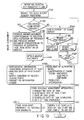
- FIG. 5 illustrates a reporting process for an unformatted claim such as a claim report issued in the dealer.
- This reporting process is a process to be performed within the technical support system 1.
- the CH section 14 performs, in step ST201, a knowledge search for confirming the presence of similar claims specified by information available from the claim content input to the client web page in a format close to a natural language, for example, information on product units or problems.
- a knowledge search for confirming the presence of similar claims specified by information available from the claim content input to the client web page in a format close to a natural language, for example, information on product units or problems.
- product units and problems expressed in various local languages are converted to unit codes and problem codes using synonym tables, as shown in FIGS. 6 and 7.
- the KB section 16 is searched on the basis of these codes.
- step ST202 If it is determined in step ST202 that a solution to the similar claims is present in the KB section 16, an answer document based on this solution is automatically produced in step ST203 using a response assistance module 14A.
- the answer document is issued to the major subsidiary.
- the response assistance module 14A produces the answer document so as to meet the technical support policy which differs from market to market.
- FIGS. 6 and 7 English and Japanese synonyms are associated.
- these tables may be provided as conversion tables for unifying languages within the system by converting languages such as Japanese or German to English, or a standard language. Thereby, it becomes possible to find a solution to similar claims from major subsidiaries managing other market regions.
- a claim report is newly produced in step ST205 using a report assisting module 14B.
- the claim report is issued in step ST206.
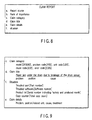
- the report assisting module 14B automatically incorporates into the claim report the information available from the content of the claim input to the client web page, and requests input of information which is necessary for a study of a solution by the engineer but is lacking. Based on the information input in response to this request, the claim report is formatted. Specifically, as shown in FIG. 8, the production of the claim report requires information such as a) report source, b) rank of importance, c) claim category, d) claim title, e) claim details, and f) situation.
- FIG. 9 shows details of items c, d, e and f incorporated in the claim report.
- Item c is prepared for searching for similar claims from a claim category on the basis of simple coincidence of keywords and codes, and item c includes a product model, a problem code, a unit code, a cause code and an error code.
- Item d is prepared for searching for similar claims on the basis of the claim title, and item d is produced as a phrase constructed by combining words indicative of definition information items such as a problem, a position and a cause. Examples of the claim title other than that shown in FIG.
- Item 9 are "Dark copy image due to poor adjustment in optical unit", "Abnormal noise from drive gear in fuser unit", and "Breakage of front cover due to poor package material.”
- Item e is prepared for searching for similar claims based on claim details and is produced as a free description including items such as a problem, position/related unit, cause and treatment.
- Item f is prepared for searching for similar claims based on situations, and it is produced to include a part number, software version number, part number indicative of a problem part, and total copy counter value.
- FIG. 10 illustrates a reporting process for a formatted claim such as the claim report shown in FIG. 8.
- This reporting process is a process to be performed within the technical support system 1. This process is performed when the claim report has been issued in the reporting process illustrated in FIG. 5 and when a formatted claim report has been input by choosing on the client web page.
- the CH section 14 performs in step ST301 a search for the claim report on the basis of the claim category, claim title, claim details and situation. If it is determined in step ST302 that the claim report has already been registered in the KB section 16, an answering document is automatically produced in step ST303 using the answer assisting module 14A and it is issued to the major subsidiary. In this case, where there is a solution to the claim report, the answer assisting module 14A produces an answering document based the solution. Where there is no solution, the answer assisting module 14A produces an answering document based on the state of progress in the supporting task.
- step ST304 the content of the claim report is checked in step ST304 as to whether there is an item missing. If there is a missing item in step ST305, the input of this item is requested on the client web page in step ST306. After the input of information of this item is detected in step ST307, the KB section 16 is searched once again. If it is determined that the claim report is not registered in this case, too, it is confirmed in step ST304 that there is no missing item. Then, in step ST308, the claim report is newly registered in the KB section 16.
- step ST309 the CH section 14 performs a division designation process for assigning a supporting task to a division-in-charge in the product technology department, which is responsible for the registered claim report.
- the product technology department is divided in advance into divisions for design relating to machinery, electricity and software, production, and specification. Thus, it is found from the content of the claim report which division is associated with the product model and the cause.
- the CH section 14 adds schedule management information to the claim report registered in the KB section 16, and appends thereto support backup documents obtained from the MIS section 12, and requests a support task for the claim report to the division-in-charge.
- This request is effected on an engineer web page provided by the SIP section 10 on the Internet 26 or intra-company LAN.
- the support backup documents comprise, for example, supplemental information concerning the importance or seriousness of the claim, the analysis data of a field service call, the supply condition of related service parts, the product PSI information, and others.
- the schedule management information includes data representative of a requesting date of a supporting task, a scheduled date of supporting task start, a date of supporting task start, a scheduled date of supporting task completion, a date of supporting task completion, and a supervisory engineer and a staff engineer in the division-in-charge.
- the data on the requesting date of the supporting task and the division-in-charge is automatically recorded by the CH section 14.
- the data on the scheduled date of supporting task start, the date of supporting task start, the scheduled date of supporting task completion, the date of supporting task completion, the supervisory engineer and the staff engineer are input and recorded on the engineer web page.
- the work schedule table stored in the MDB section 18 can be referred to so that the schedule of each engineer in the division-in-charge may be checked.
- step ST311 the most suitable engineer for solving the claim is decided in consideration of the field-in-charge, experience and technical level. Besides, a message to the effect that a solution to the claim report is now being studied and a supporting task schedule are sent to the subsidiary.
- step ST312 the data on the scheduled date of supporting task start, the scheduled date of supporting task completion, the supervisory engineer and the staff engineer is input and recorded on the engineer web page.
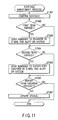
- FIG. 11 illustrates a schedule management process for an unsolved claim report.
- the schedule management process is a process to be carried out within the technical support system 1.
- the schedule management process is executed when the date of supporting task completion is not recorded in the schedule management information.
- the scheduled date of supporting task start and the scheduled date of supporting task completion in the schedule management information are confirmed in step ST401.
- a second term which is closer to the scheduled date of supporting task completion than the first term, has expired.
- a reminder is sent in step ST405 to the supervisory engineer by e-mail and an alert is issued to the system. Subsequently, it is checked in step ST406 whether there is a report on the supporting task from the engineer. If the report is present, the state of progress of the supporting task is updated based on the report in step ST407.
- the schedule management process is periodically performed on a daily basis. If claim reports newly registered after the request for a supporting task include a claim report similar to the claim report relating to the supporting task, this claim report is also appended as a backup document at the time of sending the reminder.
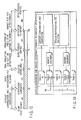
- FIG. 12 shows a stepwise transition in the supporting task managed by the schedule management process. If the claim report is accepted in the product technology department, the content of the claim report is confirmed and verified in a first stage. An investigation of the cause and a study for a solution are carried out in a second stage. Trial production and a test for effectiveness are performed in a third stage. If the content of the claim requires alteration of parts in the future, production of parts to be applied to markets is carried out in a fourth stage, and a market test for effectiveness in markets is conducted in a fifth stage.
- the CH section 14 has a function of presenting the state of progress in the supporting task in a visible format as shown in FIG. 12.
- the results of the first, second, third, fourth and fifth stages are reported as answer documents to the technical support system 1.
- the state of progress in the supporting task is displayed by statuses or percentages, which are successively updated according to the task reports, like VR, CE, ET, CP and MN.
- the state of progress in the supporting task may be managed by a sub-task sheet on which the status is automatically updated within the technical support system 1, as shown in FIG. 13.
- FIG. 14 illustrates an answering process for preparing an answer document on the basis of a solution acquired in the supporting task.
- a reference answer document from the engineer comprises a cause and a solution.
- the CH section 14 receives the reference answer document from the engineer web page.
- a solution to the answer document is checked by referring to a support treatment rule dictionary DB storing technical support policies prepared for the subsidiaries in the market regions. If it is detected in step ST502 that a common treatment is possible for all market regions, a common answer document R1 is sent to all subsidiaries in step ST503. If a common treatment is not possible, a specified answer document R2 is sent to a specified subsidiary in step ST504 and a common answer document R3 is sent to other subsidiaries.
- the common answer documents R1 and R3 show a fundamental solution such as "CUT PATTERN ON PRINTED CIRCUIT BOARD (A) AND CONNECT PATTERN WITH JUMPER.”
- the specified answer document R2 shows a drastic solution such as "SEND BACK PRINTED CIRCUIT BOARD TO REPAIR CENTER.”
- FIG. 15 shows an example in which the technical support system 1 is applied to a novel technical service structure.
- the client terminals 24 of the dealers, direct service organization, distributors and ordinary subsidiaries can access the technical support system 1 over the Internet 26.
- the operator of the client terminal 24 analyzes task reports filed in the database as results of field services such as product maintenance and repair by field servicemen. If an emergency situation where a number of identical claims exist is detected, the operator of the client terminal 24 accesses over the Internet 26 the technical support system 1 disposed in the engineering and service department in Tokyo and reports the claim through the client web page provided by the technical support system 1 to the client terminal 24 of the dealer.
- the claim report is processed as in the case of the major subsidiary.
- the intermediate service layer between the dealer and the engineering and service department can be omitted.
- the MIS section 12 accesses not only the major subsidiary but also the client terminals 24 of the dealer, direct service organization, distributor and ordinary subsidiary, and collects claim reports stored in the databases DB in the client terminals 24. Furthermore, the MIS section 12 can directly access the call center and service parts system without intervention of the major subsidiaries.
- the MIS section 12 can collect service call data and call center information from the call center, as well as service parts usage data from the service part system. The collected information is accumulated in the field service central database in the MDB section 18 in step ST601. In step ST602, the MIS section 12 analyzes the collected information.
- step ST603 the CH section 14 cooperates with the MIS section 12 and searches the KB section 16 with respect to claims acquired from the analysis results of the collection information. If there are no similar claims in the KB section 16, a claim report is produced in step ST604.
- step ST605 support backup documents on the supply condition of parts, back order condition, etc. are attached.
- step ST606 a supporting task for this claim report is requested from the division-in-charge. In short, the escalation of the claim report is automatically effected by the above process, and the claim report is processed similarly with that from the subsidiary.
- the CH section 14 registers in the knowledge base section a new claim report in which at least a claim title is structured as a combination of predetermined items of definition information on the basis of a claim content input to the client web page.
- the CH section 14 manages the registered new claim report as an unsolved claim that requires an answer from the engineer. Thus, whether a solution to a claim report has already been obtained can be found by a high-precision search. If the solution is found by the search, an answer from the engineer is not needed and the claim can be quickly solved.
- the CH section 14 performs a knowledge search for confirming the presence of similar claims specified by information available from the claim content input to the client web page in a format close to a natural language, for example, information on product units or problems.
- a natural language for example, information on product units or problems.
- unformatted claims such as claim reports from dealers can be utilized for the knowledge search.
- the product units and problems expressed in various local languages are converted to unit codes and problem codes, for example, using synonym tables, the precision in the search does not depend on the languages in the market regions.
- an answer document based on the solution is automatically produced using the answer assisting module 14A and the answer document is issued to the major subsidiary.
- the response assistance module 14A produces the answer document so as to meet the technical support policy which differs from market region to market region. Therefore, suitable answers can be produced for subsidiaries in various market regions.
- a claim report is newly produced using the report assistance module 14B.
- the report assisting module 14B automatically incorporates into the claim report the information available from the content of the claim input to the client web page, and requests input of information which is necessary for a study of a solution by the engineer but is lacking. Based on the information input in response to this request, the claim report is formatted. Therefore, defects in the claim report can be effectively improved.
- the state of progress in the supporting task is visualized on a display as statuses or percentages, which are successively updated according to the task reports, like VR, CE, ET, CP and MN shown in FIG. 12. Therefore, the state of progress can be easily understood.
- the technical support system 1 has been described as processing claims relating to products such as copiers and facsimile machines.
- the present invention is not limited to this embodiment.
- the present invention is applicable not only to the worldwide technical service network, but also to a case where plural market regions are present in a single country.
- at least one of the SIP section 10, MIS section 12, CH section 14, KB section 16, MDB section 18, and DWH section 20 of the technical support system 1 may be composed of a server computer, in which application software of the functions described in connection with the above embodiment is installed from a recording medium or downloaded via the interface 22.
Landscapes
- Business, Economics & Management (AREA)
- Engineering & Computer Science (AREA)
- Human Resources & Organizations (AREA)
- Strategic Management (AREA)
- Theoretical Computer Science (AREA)
- Economics (AREA)
- Physics & Mathematics (AREA)
- General Physics & Mathematics (AREA)
- Entrepreneurship & Innovation (AREA)
- Development Economics (AREA)
- Game Theory and Decision Science (AREA)
- Finance (AREA)
- Educational Administration (AREA)
- Marketing (AREA)
- General Business, Economics & Management (AREA)
- Accounting & Taxation (AREA)
- Artificial Intelligence (AREA)
- Evolutionary Computation (AREA)
- Computing Systems (AREA)
- General Engineering & Computer Science (AREA)
- Mathematical Physics (AREA)
- Software Systems (AREA)
- Data Mining & Analysis (AREA)
- Computational Linguistics (AREA)
- Operations Research (AREA)
- Quality & Reliability (AREA)
- Tourism & Hospitality (AREA)
- Management, Administration, Business Operations System, And Electronic Commerce (AREA)
- Information Retrieval, Db Structures And Fs Structures Therefor (AREA)
Abstract
A technical support system includes a service information portal section (10) for providing web pages as an information input and output interface, and a knowledge base section (16) for storing various claim reports and solutions answered by an engineer with respect to the claim reports. In particular, the server further includes a claim handling section (14) for registering in the knowledge base section (16) a new claim report in which at least a claim title is structured as a combination of predetermined items of definition information on the basis of a claim content input to a client web page, and managing the registered new claim report as an unsolved claim requiring an answer from the engineer. <IMAGE>
Description
The present invention relates to technical support
system and method for providing technical support to
various claims for a manufacturer's own products
acquired through a worldwide technical service network.
In recent years, many enterprises have overseas
subsidiaries established as footholds for the marketing
of products. In a typical enterprise, the subsidiaries
sell products to end-users via, e.g. distributors
and dealers. Besides, technical services such as
maintenance and repair of products are provided to
end-users from the dealers and direct service
organizations. Major subsidiaries handle various
claims reported directly from the dealers and direct
service organizations in their assigned marketing
regions, or indirectly from the distributors and
subsidiaries. If the major subsidiaries have received
claims that cannot be handled, they report such claims
to an engineering and service department of the
headquarters.
The engineering and service department acts as an
agent between the subsidiary, which is a customer, and
a product technology department of a factory or a third
party vender. The engineering and service department
demands a solution to the claim reported by the
subsidiary from an engineer in charge in the product
technology department. The engineer confirms the
content of the claim, studies the cause of the claim,
and carries out a supporting task for preparing the
solution that can eliminate the cause. The engineering
and service department confirms the solution provided
by the engineer after the supporting task, produces
a claim handling plan based on the solution, so as to
meet individual technical support policies varying from
market to market, and delivers the claim handling plan
to the subsidiary as an answer document to the claim.
In the prior art, the dealers, direct service
organizations, distributors, subsidiaries, major
subsidiaries, engineering and service department,
and product technology department are connected
over a dedicated line or the Internet so as to
have a hierarchical structure, as shown in FIG. 1.
E-mail is used as an information transmission media.
In the technical support, each service layer is
always required to search databases, etc. to find
solutions to claim reports, which have been sent from
a lower-level service layer by e-mail. If solutions
are not found, each service layer is required to
request an upper-level service layer. Thus, arrears of
claim reports may possibly occur in an escalation from
the lowermost service layer to the uppermost service
layer.
Since the main task of the product technology
department is designing and manufacture of products, a
delay in the support task will often occur even if it
receives a request from the engineering and service
depart. In such a situation that the supporting task
cannot be started, the supporting task has to be
suspended, or the cause of the claim cannot easily be
identified.
Moreover, the engineering and service department
cannot completely grasp the condition of progress in
the delayed supporting tasks, and unsolved claim
reports tend to accumulate. Besides, a solution to
a claim that has arisen in connection with a product
is not necessarily applicable to a similar claim
that has arisen in connection with another product
sold in a different market in which different product
specifications are adopted. Thus, the engineering and
service department needs to accept all claim reports
from the subsidiaries that manage different markets.
Under the circumstances, the above-described
technical support system will ultimately impose a heavy
load on the engineering and service department and it
would be difficult to fulfill their roles in the future
without increasing the scale thereof.
The object of the present invention is to provide
a technical support system and a technical support
method capable of quickly solving claims relating to
products.
According to the present invention, there is
provided a technical support system comprising:
According to the present invention, there is
provided a technical support method using a knowledge
base section for storing various claim reports and
solutions answered by an engineer with respect to
the claim reports, the method comprising: a step of
providing web pages as an information input and output
interface; and a step of registering in the knowledge
base section a new claim report in which at least
a claim title is structured as a combination of
predetermined items of definition information on
the basis of a claim content input to a client web
page, and managing the registered new claim report
as an unsolved claim requiring an answer from the
engineer.
According to the technical support system and the
technical support method, a new claim report in which
at least a claim title is structured as a combination
of predetermined items of definition information on
the basis of a claim content input to a client web
page, is registered in the knowledge base section, and
the registered new claim report is managed as an
unsolved claim requiring an answer from the engineer.
Therefore, whether a solution to a claim report has
already been obtained can be found by a high-precision
search. If the solution is found by the search, an
answer from the engineer is not needed and the claim
can be quickly solved.
This summary of the invention does not necessarily
describe all necessary features so that the invention
may also be a sub-combination of these described
features.
The invention can be more fully understood from
the following detailed description when taken in
conjunction with the accompanying drawings, in which:
A technical support system 1 according to
an embodiment of the present invention will now be described with reference to the accompanying drawings. Thetechnical support system 1 is constructed to be
also applicable to a hierarchical structure of
technical service shown in FIG. 1, and serves as
a server disposed in an engineering and service
department in Tokyo, for example. This server is
connected over the Internet to worldwide major
subsidiaries as clients, which serve as sales footholds
of products such as copiers and facsimile machines.
The server, on behalf of staff of the engineering and
service department, functions as an agent between
the customer and the product technology department of
the factory or third party vender.
an embodiment of the present invention will now be described with reference to the accompanying drawings. The
FIG. 2 shows the technical support system 1 and
a network connected thereto. The technical support
system 1 comprises a service information portal (SIP)
section 10, a management information system (MIS)
section 12, a claim handling (CH) section 14, a
knowledge base (KB) section 16, a master database (MDB)
section 18, a data warehouse (DWH) section 20, and
a communication interface 22. The SIP section 10, MIS
section 12, CH section 14, KB section 16, MDB section
18, DWH section 20 and communication interface 22 for
intra-company LAN are constructed as a combination of
plural server computers connected, for example, over
a shared system bus. The MIS section 12 and CH section
14 are incorporated into the technical support system 1
as application software of the server computers.
The SIP section 10 provides web pages to client
terminals 24 over the Internet 26 as an information
input and output interface. The MIS section 12 can
access the client terminals 24 via the SIP section 10
and it collects and analyzes various report
information. The master database 18 stores the overall
information collected by the MIS section 12 as well as
other information. The DWH section 20 stores an
analysis tool for enabling the MIS section 12 to
analyze the information stored in the MDB section 18.
The KB section 16 stores various claim reports backed
up also in the MDB section 18 and solutions answered by
engineers of the product technology department with
respect to the claim reports. The CH section 14
registers in the KB section 16 a new claim report
in which at least a claim title is structured as
combinations of predetermined items of definition
information on the basis of claims input to the client
web page provided by the SIP section 10. The CH
section 14 manages the new claim report as an unsolved
claim requiring an answer from engineers.
FIG. 3 shows a flow of information in the
technical support system 1. If the client terminal 24,
or a web user, issues a claim inquiry, it is delivered
to the CH section 14 as a claim report. The CH
section 14 checks the KB section 16 for a solution to
the claim, and acquires the solution from the KB
section 16. If there is no solution, the CH section 14
requests a solution from the product technology
department and registers an acquired solution in the KB
section 16 as a new solution. At the same time, the CH
section 14 informs the client of the new solution as
an answer document. The KB section 16 stores not only
various reports and solutions thereto, but also country
specific information and Tokyo central information
supplied from the intra-company LAN. The country
specific information includes individual technical
support policies varying from market to market, the
Tokyo central information includes inside materials and
third party materials of related technologies. The CH
section 14 is so constructed as to permit an operator
working at the engineering and service department to
confirm, through a console of the server computer,
the current state of support for unsolved claim
reports. The MIS section 12 collects various report
information such as warrantee report data, call center
data, set-up report data, service parts use data and
claim report data, which are accumulated in the client
terminal 24 side.
FIG. 4 shows an example wherein the technical
support system 1 is applied to the conventional
hierarchical structure shown in FIG. 1. In this
example, the major subsidiaries alone are permitted
to access the technical support system 1 via the
Internet 26. None of the dealers, direct service
organizations, distributors and ordinary subsidiaries
are permitted to access the technical support system 1.
In the dealership, a field serviceman performs, in step
ST101, a field service such as maintenance and repair
of products. In step ST102, if a work report from
the field serviceman is filed after the field service,
the work report is analyzed in step ST103. If an
emergency situation where a number of identical claims
exist is detected, a claim report is issued in step
ST104 to the major subsidiary, which is an upper-level
service layer.
In major subsidiaries, an employee confirms, in
step ST105, the content of the claim report along with
the independently collected various report information
such as warrantee report data, call center data, set-up
report data, service parts use data and claim report
data. Then, the computer operator registers the
confirmed information in the database. In step ST106,
the operator checks the database for an existing
solution to the claim of the claim report. If it is
determined in step ST107 that the solution is present
in the database, an answer document based on the
solution is sent to the dealer in step ST108. On the
other hand, if there is no existing solution, the
operator accesses, in step ST109, the technical support
system 1 in Tokyo over the Internet 26, which is
an upper-level service layer. The claim is reported
to the engineering and service department through
the client web page, which is provided to the client
terminal 24 of the major subsidiary by the technical
support system 1.
In the engineering and service department, in step
ST110, the technical support system 1 confirms and
verifies the content of the claim report. In step
ST111, it is checked whether there is a solution to
the claim. If it has been determined in step ST112
that the solution is present in the database, an answer
document based on this solution is sent to the major
subsidiary in step ST113. On the other hand, if
the solution is not present, the claim report is
escalated to the product technology department at the
upper service level in step ST114. In a case where the
product technology department comprises, for example,
a product planning section, a design and manufacturing
section, and other sections, one of these sections is
designated and a solution to the claim is requested
therefrom. In FIG. 4, all the steps beginning with
step ST110 are carried out within the technical support
system 1.
FIG. 5 illustrates a reporting process for
an unformatted claim such as a claim report issued in
the dealer. This reporting process is a process to
be performed within the technical support system 1.
If the reporting process is selected on the client web
page, the CH section 14 performs, in step ST201, a
knowledge search for confirming the presence of similar
claims specified by information available from the
claim content input to the client web page in a format
close to a natural language, for example, information
on product units or problems. In the knowledge search,
product units and problems expressed in various local
languages are converted to unit codes and problem
codes using synonym tables, as shown in FIGS. 6 and 7.
The KB section 16 is searched on the basis of these
codes. If it is determined in step ST202 that a
solution to the similar claims is present in the KB
section 16, an answer document based on this solution
is automatically produced in step ST203 using a
response assistance module 14A. In step ST204,
the answer document is issued to the major subsidiary.
In this case, the response assistance module 14A
produces the answer document so as to meet the
technical support policy which differs from market to
market. Aside from the above-mentioned synonym tables,
it is possible to use tables applicable to cases where
different model numbers are assigned to the same models
in accordance with different countries. In the synonym
tables shown in FIGS. 6 and 7, English and Japanese
synonyms are associated. However, these tables may be
provided as conversion tables for unifying languages
within the system by converting languages such as
Japanese or German to English, or a standard language.
Thereby, it becomes possible to find a solution to
similar claims from major subsidiaries managing other
market regions.
On the other hand, if a solution to the similar
claims is not present in the KB section 16, a claim
report is newly produced in step ST205 using a report
assisting module 14B. The claim report is issued
in step ST206. The report assisting module 14B
automatically incorporates into the claim report the
information available from the content of the claim
input to the client web page, and requests input of
information which is necessary for a study of a
solution by the engineer but is lacking. Based on the
information input in response to this request, the
claim report is formatted. Specifically, as shown in
FIG. 8, the production of the claim report requires
information such as a) report source, b) rank of
importance, c) claim category, d) claim title, e) claim
details, and f) situation.
FIG. 9 shows details of items c, d, e and f
incorporated in the claim report. Item c is prepared
for searching for similar claims from a claim category
on the basis of simple coincidence of keywords and
codes, and item c includes a product model, a problem
code, a unit code, a cause code and an error code.
Item d is prepared for searching for similar claims on
the basis of the claim title, and item d is produced as
a phrase constructed by combining words indicative of
definition information items such as a problem,
a position and a cause. Examples of the claim title
other than that shown in FIG. 9 are "Dark copy image
due to poor adjustment in optical unit", "Abnormal
noise from drive gear in fuser unit", and "Breakage of
front cover due to poor package material." Item e is
prepared for searching for similar claims based on
claim details and is produced as a free description
including items such as a problem, position/related
unit, cause and treatment. Item f is prepared for
searching for similar claims based on situations, and
it is produced to include a part number, software
version number, part number indicative of a problem
part, and total copy counter value.
FIG. 10 illustrates a reporting process for
a formatted claim such as the claim report shown in
FIG. 8. This reporting process is a process to be
performed within the technical support system 1. This
process is performed when the claim report has been
issued in the reporting process illustrated in FIG. 5
and when a formatted claim report has been input by
choosing on the client web page. In this reporting
process, the CH section 14 performs in step ST301 a
search for the claim report on the basis of the claim
category, claim title, claim details and situation.
If it is determined in step ST302 that the claim report
has already been registered in the KB section 16, an
answering document is automatically produced in step
ST303 using the answer assisting module 14A and it is
issued to the major subsidiary. In this case, where
there is a solution to the claim report, the answer
assisting module 14A produces an answering document
based the solution. Where there is no solution, the
answer assisting module 14A produces an answering
document based on the state of progress in the
supporting task.
On the other hand, if the claim report is not
registered in the KB section 16, the content of the
claim report is checked in step ST304 as to whether
there is an item missing. If there is a missing item
in step ST305, the input of this item is requested on
the client web page in step ST306. After the input of
information of this item is detected in step ST307,
the KB section 16 is searched once again. If it is
determined that the claim report is not registered in
this case, too, it is confirmed in step ST304 that
there is no missing item. Then, in step ST308, the
claim report is newly registered in the KB section 16.
Subsequently, in step ST309, the CH section 14
performs a division designation process for assigning a
supporting task to a division-in-charge in the product
technology department, which is responsible for the
registered claim report. Specifically, the product
technology department is divided in advance into
divisions for design relating to machinery, electricity
and software, production, and specification. Thus, it
is found from the content of the claim report which
division is associated with the product model and the
cause.
Then, in step ST310, the CH section 14 adds
schedule management information to the claim report
registered in the KB section 16, and appends thereto
support backup documents obtained from the MIS section
12, and requests a support task for the claim report to
the division-in-charge. This request is effected on
an engineer web page provided by the SIP section 10 on
the Internet 26 or intra-company LAN. The support
backup documents comprise, for example, supplemental
information concerning the importance or seriousness
of the claim, the analysis data of a field service
call, the supply condition of related service parts,
the product PSI information, and others. The schedule
management information includes data representative of
a requesting date of a supporting task, a scheduled
date of supporting task start, a date of supporting
task start, a scheduled date of supporting task
completion, a date of supporting task completion,
and a supervisory engineer and a staff engineer in
the division-in-charge. The data on the requesting
date of the supporting task and the division-in-charge
is automatically recorded by the CH section 14. The
data on the scheduled date of supporting task start,
the date of supporting task start, the scheduled date
of supporting task completion, the date of supporting
task completion, the supervisory engineer and the staff
engineer are input and recorded on the engineer web
page. On the engineer web page, the work schedule
table stored in the MDB section 18 can be referred to
so that the schedule of each engineer in the division-in-charge
may be checked. Furthermore, in step ST311,
the most suitable engineer for solving the claim is
decided in consideration of the field-in-charge,
experience and technical level. Besides, a message to
the effect that a solution to the claim report is now
being studied and a supporting task schedule are sent
to the subsidiary.
The above-described claim reporting process is
finished in step ST312 in which the data on the
scheduled date of supporting task start, the scheduled
date of supporting task completion, the supervisory
engineer and the staff engineer is input and recorded
on the engineer web page.
FIG. 11 illustrates a schedule management process
for an unsolved claim report. The schedule management
process is a process to be carried out within
the technical support system 1. The schedule
management process is executed when the date of
supporting task completion is not recorded in the
schedule management information. In this management
process, the scheduled date of supporting task start
and the scheduled date of supporting task completion in
the schedule management information are confirmed in
step ST401. Then, it is checked in step ST402 whether
a first term has passed the scheduled date of task
start and approached the scheduled date of task
completion. If the first term has expired, a reminder
is sent in step ST403 to the staff engineer by e-mail
and an alert is issued to the system. It is then
checked in step ST404 whether a second term, which is
closer to the scheduled date of supporting task
completion than the first term, has expired. If the
second term has expired, a reminder is sent in step
ST405 to the supervisory engineer by e-mail and an
alert is issued to the system. Subsequently, it is
checked in step ST406 whether there is a report on
the supporting task from the engineer. If the report
is present, the state of progress of the supporting
task is updated based on the report in step ST407.
The schedule management process is periodically
performed on a daily basis. If claim reports newly
registered after the request for a supporting task
include a claim report similar to the claim report
relating to the supporting task, this claim report is
also appended as a backup document at the time of
sending the reminder.
FIG. 12 shows a stepwise transition in the
supporting task managed by the schedule management
process. If the claim report is accepted in the
product technology department, the content of the claim
report is confirmed and verified in a first stage. An
investigation of the cause and a study for a solution
are carried out in a second stage. Trial production
and a test for effectiveness are performed in a third
stage. If the content of the claim requires alteration
of parts in the future, production of parts to be
applied to markets is carried out in a fourth stage,
and a market test for effectiveness in markets is
conducted in a fifth stage.
The CH section 14 has a function of presenting the
state of progress in the supporting task in a visible
format as shown in FIG. 12. The results of the first,
second, third, fourth and fifth stages are reported as
answer documents to the technical support system 1.
In the technical support system 1, the state of
progress in the supporting task is displayed by
statuses or percentages, which are successively
updated according to the task reports, like VR, CE, ET,
CP and MN. In addition, the state of progress in the
supporting task may be managed by a sub-task sheet on
which the status is automatically updated within
the technical support system 1, as shown in FIG. 13.
FIG. 14 illustrates an answering process for
preparing an answer document on the basis of a solution
acquired in the supporting task. A reference answer
document from the engineer comprises a cause and a
solution. The CH section 14 receives the reference
answer document from the engineer web page. In step
ST501, a solution to the answer document is checked by
referring to a support treatment rule dictionary DB
storing technical support policies prepared for the
subsidiaries in the market regions. If it is detected
in step ST502 that a common treatment is possible
for all market regions, a common answer document R1 is
sent to all subsidiaries in step ST503. If a common
treatment is not possible, a specified answer document
R2 is sent to a specified subsidiary in step ST504
and a common answer document R3 is sent to other
subsidiaries. The common answer documents R1 and R3
show a fundamental solution such as "CUT PATTERN ON
PRINTED CIRCUIT BOARD (A) AND CONNECT PATTERN WITH
JUMPER." The specified answer document R2 shows
a drastic solution such as "SEND BACK PRINTED CIRCUIT
BOARD TO REPAIR CENTER."
FIG. 15 shows an example in which the technical
support system 1 is applied to a novel technical
service structure. In this example, like the major
subsidiaries, the client terminals 24 of the dealers,
direct service organization, distributors and ordinary
subsidiaries can access the technical support system 1
over the Internet 26. For example, in the dealer,
the operator of the client terminal 24 analyzes task
reports filed in the database as results of field
services such as product maintenance and repair by
field servicemen. If an emergency situation where
a number of identical claims exist is detected, the
operator of the client terminal 24 accesses over the
Internet 26 the technical support system 1 disposed in
the engineering and service department in Tokyo and
reports the claim through the client web page provided
by the technical support system 1 to the client
terminal 24 of the dealer. In the technical support
system 1, the claim report is processed as in the case
of the major subsidiary. As a result, the intermediate
service layer between the dealer and the engineering
and service department can be omitted.
In addition, in this technical support system 1,
the MIS section 12 accesses not only the major
subsidiary but also the client terminals 24 of the
dealer, direct service organization, distributor and
ordinary subsidiary, and collects claim reports stored
in the databases DB in the client terminals 24.
Furthermore, the MIS section 12 can directly access
the call center and service parts system without
intervention of the major subsidiaries. The MIS
section 12 can collect service call data and call
center information from the call center, as well as
service parts usage data from the service part system.
The collected information is accumulated in the field
service central database in the MDB section 18 in step
ST601. In step ST602, the MIS section 12 analyzes the
collected information. In step ST603, the CH section
14 cooperates with the MIS section 12 and searches
the KB section 16 with respect to claims acquired from
the analysis results of the collection information.
If there are no similar claims in the KB section 16,
a claim report is produced in step ST604. In addition,
in step ST605, support backup documents on the supply
condition of parts, back order condition, etc. are
attached. In step ST606, a supporting task for this
claim report is requested from the division-in-charge.
In short, the escalation of the claim report is
automatically effected by the above process, and
the claim report is processed similarly with that from
the subsidiary.
It is thus possible to acquire claim reports that
directly reflect claims of end-users but are hidden in
the major subsidiaries or lower-level service layers.
In the technical support system 1 according to
the present embodiment, the CH section 14 registers in
the knowledge base section a new claim report in which
at least a claim title is structured as a combination
of predetermined items of definition information on the
basis of a claim content input to the client web page.
The CH section 14 manages the registered new claim
report as an unsolved claim that requires an answer
from the engineer. Thus, whether a solution to a claim
report has already been obtained can be found by a
high-precision search. If the solution is found by the
search, an answer from the engineer is not needed and
the claim can be quickly solved.
The CH section 14 performs a knowledge search for
confirming the presence of similar claims specified by
information available from the claim content input to
the client web page in a format close to a natural
language, for example, information on product units or
problems. Thus, unformatted claims such as claim
reports from dealers can be utilized for the knowledge
search. Moreover, since the product units and problems
expressed in various local languages are converted to
unit codes and problem codes, for example, using
synonym tables, the precision in the search does not
depend on the languages in the market regions.
When a solution is obtained by the knowledge
search with respect to an unformatted claim, an answer
document based on the solution is automatically
produced using the answer assisting module 14A and the
answer document is issued to the major subsidiary.
The response assistance module 14A produces the answer
document so as to meet the technical support policy
which differs from market region to market region.
Therefore, suitable answers can be produced for
subsidiaries in various market regions.
On the other hand, even if a solution to similar
claims is not obtained, a claim report is newly
produced using the report assistance module 14B. The
report assisting module 14B automatically incorporates
into the claim report the information available from
the content of the claim input to the client web page,
and requests input of information which is necessary
for a study of a solution by the engineer but is
lacking. Based on the information input in response
to this request, the claim report is formatted.
Therefore, defects in the claim report can be
effectively improved.
The state of progress in the supporting task is
visualized on a display as statuses or percentages,
which are successively updated according to the task
reports, like VR, CE, ET, CP and MN shown in FIG. 12.
Therefore, the state of progress can be easily
understood.
In a case where a solution to a claim report,
although being present in the KB section 16, has not
been acquired, a response indicating the state
of progress in the supporting task is produced.
Thus, the client of the subsidiary can easily know
when the solution is to be obtained.
In the above-described embodiment, the technical
support system 1 has been described as processing
claims relating to products such as copiers and
facsimile machines. However, the present invention is
not limited to this embodiment. The present invention
is applicable not only to the worldwide technical
service network, but also to a case where plural market
regions are present in a single country. Moreover, at
least one of the SIP section 10, MIS section 12, CH
section 14, KB section 16, MDB section 18, and DWH
section 20 of the technical support system 1 may be
composed of a server computer, in which application
software of the functions described in connection with
the above embodiment is installed from a recording
medium or downloaded via the interface 22.
Claims (32)
- A technical support system comprising:characterized by further comprising a claim handling section (14) for registering in the knowledge base section (16) a new claim report in which at least a claim title is structured as a combination of predetermined items of definition information on the basis of a claim content input to a client web page, and managing the registered new claim report as an unsolved claim requiring an answer from the engineer.a service information portal section (10) for providing web pages as an information input and output interface; anda knowledge base section (16) for storing various claim reports and solutions answered by an engineer with respect to the claim reports;
- A technical support system according to claim 1, characterized in that the claim handling section (14) is constructed to search the knowledge base section (16) for similar claims specified by information available from the claim content input to the client web page in a format close to a natural language.
- A technical support system according to claim 2, characterized in that the claim handling section (14) has a synonym table (FIG. 6, FIG. 7) for converting information of different languages available from the claim content input to the client web page to common codes.
- A technical support system according to claim 2, characterized in that the claim handling section (14) has a answer assisting module (14A) for producing, where a solution has been obtained as a search result of the knowledge base section (16), an answer based on the solution so as to meet a technical support policy varying from market region to market region.
- A technical support system according to claim 2, characterized in that the claim handling section (14) has a report assisting module (14B) for automatically incorporating, where a solution has not been obtained as a search result of the knowledge base section (16), information available from the claim content input to the client web page into the claim report, and requesting additional input of information which is necessary for a study of a solution by the engineer but is lacking.
- A technical support system according to claim 1, characterized in that the claim handling section (14) is constructed to assign a supporting task for acquiring a solution to a claim of the claim report to a technical division responsible for the claim, and to request the solution from the technical division.
- A technical support system according to claim 6, characterized in that the claim handling section (14) is constructed to attach to the claim report a backup document for backing up the supporting task.
- A technical support system according to claim 6, characterized in that the claim handling section (14) is constructed to set a schedule of the supporting task, and to send a reminder when a scheduled date of supporting task completion is drawing near.
- A technical support system according to claim 8, characterized in that the claim handling section (14) is constructed to attach to the reminder, where there is a new claim report similar to the claim of the supporting task, the new claim report as a backup document.
- A technical support system according to claim 6, characterized in that the claim handling section (14) is constructed to visualize the state of progress of the supporting task.
- A technical support system according to claim 1, characterized in that the claim handling section (14) has a table for converting the claim content to a specific language.
- A technical support system according to claim 1, characterized in that the claim handling section (14) has a table applicable to a case where different model numbers are assigned to a model of the claim content in accordance with different market regions.
- A technical support system according to claim 6, characterized in that the claim handling section (14) is constructed to decide on an engineer in charge on the basis of at least one of a schedule, a field in charge, experience, and a technical level of each engineer in a technical division to which the supporting task has been assigned.
- A technical support system according to claim 6, characterized in that the claim handling section (14) is constructed to issue, where a solution has not been obtained as a search result of the knowledge base section (16), a notice to the effect that the solution is now being studied.
- A technical support system according to claim 6, characterized in that the claim handling section (14) is constructed to issue, where a solution has not been obtained as a search result of the knowledge base section (16), a notice of a schedule of the supporting task.
- A technical support system according to claim 6, characterized in that the claim handling section (14) is constructed to produce an answer document in which a solution answered on an engineer web page is modified so as to meet a technical support policy which varies from market region to market region.
- A technical support method using a knowledge base section (16) for storing in various claim reports and solutions answered by an engineer with respect to the claim reports, the method comprising:a step of providing web pages as an information input and output interface; anda step of registering in the knowledge base section (16) a new claim report in which at least a claim is structured as a combination of predetermined items of definition information on the basis of a claim content input to a client web page, and managing the registered new claim report as an unsolved claim requiring an answer from the engineer.
- A technical support method according to claim 17, characterized by further comprising a step of searching the knowledge base section (16) for similar claims specified by information available from the claim content input to the client web page in a format close to a natural language.
- A technical support method according to claim 18, characterized by further comprising a step of converting information of different languages available from the claim content input to the client web page to common codes.
- A technical support method according to claim 18, characterized by further comprising a step of producing, where a solution has been obtained as a search result of the knowledge base section (16), an answer based on the solution so as to meet a technical support policy varying from market region to market region.
- A technical support method according to claim 18, characterized by further comprising a step of automatically incorporating, where a solution has not been obtained as a search result of the knowledge base section (16), information available from the claim content input to the client web page into the claim report, and requesting additional input of information which is necessary for a study of a solution by the engineer but is lacking.
- A technical support method according to claim 17, characterized by further comprising a step of assigning a supporting task for acquiring a solution to a claim of the claim report to a technical division responsible for the claim, and requesting the solution from the technical division.
- A technical support method according to claim 22, characterized by further comprising a step of attaching to the claim report a backup document for backing up the supporting task.
- A technical support method according to claim 22, characterized by further comprising a step of setting a schedule of the supporting task, and sending a reminder when a scheduled date of supporting task completion is drawing near.
- A technical support method according to claim 24, characterized by further comprising a step of attaching to the reminder, where there is a new claim report similar to the claim of the supporting task, the new claim report as a backup document.
- A technical support method according to claim 22, characterized by further comprising a step of visualizing the state of progress of the supporting task.
- A technical support method according to claim 17, characterized by further comprising a step of converting the claim content to a specific language.
- A technical support method according to claim 17, characterized by further comprising a step applicable to a case where different model numbers are assigned to a model of the claim content in accordance with different market regions.
- A technical support method according to claim 22, characterized by further comprising a step of deciding on an engineer in charge on the basis of at least one of a schedule, a field in charge, experience, and a technical level of each engineer in a technical division to which the supporting task has been assigned.
- A technical support method according to claim 22, characterized by further comprising a step of issuing, where a solution has not been obtained as a search result of the knowledge base section (16), a notice to the effect that the solution is now being studied.
- A technical support method according to claim 22, characterized by further comprising a step of issuing, where a solution has not been obtained as a search result of the knowledge base section (16), a notice of a schedule of the supporting task.
- A technical support method according to claim 22, characterized by further comprising a step of producing an answer document in which a solution answered on an engineer web page is modified so as to meet a technical support policy which varies from market region to market region.
Applications Claiming Priority (2)
| Application Number | Priority Date | Filing Date | Title |
|---|---|---|---|
| US813209 | 1985-12-24 | ||
| US09/813,209 US20020138315A1 (en) | 2001-03-20 | 2001-03-20 | Technical support system |
Publications (1)
| Publication Number | Publication Date |
|---|---|
| EP1244057A2 true EP1244057A2 (en) | 2002-09-25 |
Family
ID=25211767
Family Applications (1)
| Application Number | Title | Priority Date | Filing Date |
|---|---|---|---|
| EP01115612A Withdrawn EP1244057A2 (en) | 2001-03-20 | 2001-07-03 | Technical support system |
Country Status (3)
| Country | Link |
|---|---|
| US (1) | US20020138315A1 (en) |
| EP (1) | EP1244057A2 (en) |
| JP (1) | JP2002279097A (en) |
Families Citing this family (7)
| Publication number | Priority date | Publication date | Assignee | Title |
|---|---|---|---|---|
| US7058860B2 (en) * | 2001-06-29 | 2006-06-06 | Hewlett-Packard Development Company, L.P. | System and method of automatic parameter collection and problem solution generation for computer storage devices |
| US20060235953A1 (en) * | 2004-10-31 | 2006-10-19 | Assurant Solutions | Systems and methods for installing, configuring, and supporting computer networks |
| US20070006050A1 (en) * | 2005-06-30 | 2007-01-04 | Xerox Corporation | Automatic notification of applicable bulletins and tags based on fault analysis |
| US20070136342A1 (en) * | 2005-12-13 | 2007-06-14 | Sap Ag | Processing a user inquiry |
| JP2007310622A (en) * | 2006-05-18 | 2007-11-29 | Tokyo Electric Power Co Inc:The | Guidance presentation method and apparatus |
| JP5427761B2 (en) * | 2010-12-10 | 2014-02-26 | 株式会社日立製作所 | Defect prevention support system, defect prevention support method, and defect prevention support program |
| JP5791588B2 (en) * | 2012-12-26 | 2015-10-07 | ビッグローブ株式会社 | Agency alarm system and agency alarm notification method |
Family Cites Families (39)
| Publication number | Priority date | Publication date | Assignee | Title |
|---|---|---|---|---|
| US5819110A (en) * | 1995-06-05 | 1998-10-06 | Ricoh Company, Ltd. | System for determining whether connection or connectionless modes of communication should be used to transmit information between devices in accordance with priorities of events |
| JPH0644242B2 (en) * | 1988-03-17 | 1994-06-08 | インターナショナル・ビジネス・マシーンズ・コーポレーション | How to solve problems in computer systems |
| US5197005A (en) * | 1989-05-01 | 1993-03-23 | Intelligent Business Systems | Database retrieval system having a natural language interface |
| JPH0670047A (en) * | 1992-08-19 | 1994-03-11 | Minolta Camera Co Ltd | Image forming device |
| US5446883A (en) * | 1992-10-23 | 1995-08-29 | Answer Systems, Inc. | Method and system for distributed information management and document retrieval |
| US5365310A (en) * | 1993-07-30 | 1994-11-15 | Xerox Corporation | Remote diagnosis of copy quality defects |
| US5758257A (en) * | 1994-11-29 | 1998-05-26 | Herz; Frederick | System and method for scheduling broadcast of and access to video programs and other data using customer profiles |
| US5895450A (en) * | 1995-02-22 | 1999-04-20 | Sloo; Marshall A. | Method and apparatus for handling complaints |
| US6032184A (en) * | 1995-12-29 | 2000-02-29 | Mci Worldcom, Inc. | Integrated interface for Web based customer care and trouble management |
| US5819272A (en) * | 1996-07-12 | 1998-10-06 | Microsoft Corporation | Record tracking in database replication |
| US6219648B1 (en) * | 1997-03-31 | 2001-04-17 | Sbc Technology Resources, Inc. | Apparatus and method for monitoring progress of customer generated trouble tickets |
| US5964891A (en) * | 1997-08-27 | 1999-10-12 | Hewlett-Packard Company | Diagnostic system for a distributed data access networked system |
| US6073161A (en) * | 1997-12-16 | 2000-06-06 | International Business Machines Corporation | Method and apparatus for determining editing conflicts in a multi-authoring system |
| US6289333B1 (en) * | 1998-01-16 | 2001-09-11 | Aspect Communications Corp. | Methods and apparatus enabling dynamic resource collaboration when collaboration session host is distinct from resource host |
| US6332154B2 (en) * | 1998-09-11 | 2001-12-18 | Genesys Telecommunications Laboratories, Inc. | Method and apparatus for providing media-independent self-help modules within a multimedia communication-center customer interface |
| US6449622B1 (en) * | 1999-03-08 | 2002-09-10 | Starfish Software, Inc. | System and methods for synchronizing datasets when dataset changes may be received out of order |
| US20020059369A1 (en) * | 1998-12-08 | 2002-05-16 | Christoph Kern | Method and apparatus for creating and distributing non-sensitized information summaries to users |
| US6802042B2 (en) * | 1999-06-01 | 2004-10-05 | Yodlee.Com, Inc. | Method and apparatus for providing calculated and solution-oriented personalized summary-reports to a user through a single user-interface |
| US6389426B1 (en) * | 1999-02-09 | 2002-05-14 | Worldcom, Inc. | Central trouble ticket database and system and method for managing same to facilitate ticketing, trending, and tracking processes |
| DE60043873D1 (en) * | 1999-06-01 | 2010-04-08 | Hitachi Ltd | Method for data backup |
| US6467088B1 (en) * | 1999-06-30 | 2002-10-15 | Koninklijke Philips Electronics N.V. | Reconfiguration manager for controlling upgrades of electronic devices |
| US6591258B1 (en) * | 1999-08-24 | 2003-07-08 | Stream International, Inc. | Method of incorporating knowledge into a knowledge base system |
| US6560589B1 (en) * | 1999-08-24 | 2003-05-06 | Stream International, Inc. | Method and system for use and maintenance of a knowledge base system |
| US6694335B1 (en) * | 1999-10-04 | 2004-02-17 | Microsoft Corporation | Method, computer readable medium, and system for monitoring the state of a collection of resources |
| EP1247181A1 (en) * | 1999-12-13 | 2002-10-09 | Connected Corporation | Multiple copy capability for network backup systems |
| US6513052B1 (en) * | 1999-12-15 | 2003-01-28 | Imation Corp. | Targeted advertising over global computer networks |
| US6463437B1 (en) * | 1999-12-16 | 2002-10-08 | General Electric Company | Method and system for processing customer issues |
| US6912502B1 (en) * | 1999-12-30 | 2005-06-28 | Genworth Financial, Inc., | System and method for compliance management |
| WO2001057739A1 (en) * | 2000-01-31 | 2001-08-09 | Pharsight Corporation | Method and apparatus for research management |
| US20010013063A1 (en) * | 2000-02-08 | 2001-08-09 | Hall David M. | System and method for applying printer-specific formatting |
| US7305401B2 (en) * | 2000-03-09 | 2007-12-04 | The Web Access, Inc. | Method and apparatus for performing a research task by interchangeably utilizing a multitude of search methodologies |
| CA2374578C (en) * | 2000-03-17 | 2016-01-12 | Siemens Aktiengesellschaft | Plant maintenance technology architecture |
| JP4550215B2 (en) * | 2000-03-29 | 2010-09-22 | 株式会社東芝 | Analysis equipment |
| US6766320B1 (en) * | 2000-08-24 | 2004-07-20 | Microsoft Corporation | Search engine with natural language-based robust parsing for user query and relevance feedback learning |
| US7089295B2 (en) * | 2000-09-06 | 2006-08-08 | Oracle International Corporation | Customizing content provided by a service |
| US6678764B2 (en) * | 2000-10-20 | 2004-01-13 | Sony Corporation | Medical image processing system |
| US6735592B1 (en) * | 2000-11-16 | 2004-05-11 | Discern Communications | System, method, and computer program product for a network-based content exchange system |
| US7058663B2 (en) * | 2001-03-13 | 2006-06-06 | Koninklijke Philips Electronics, N.V. | Automatic data update |
| US20020156692A1 (en) * | 2001-04-20 | 2002-10-24 | Squeglia Mark R. | Method and system for managing supply of replacement parts of a piece of equipment |
-
2001
- 2001-03-20 US US09/813,209 patent/US20020138315A1/en not_active Abandoned
- 2001-06-25 JP JP2001191799A patent/JP2002279097A/en not_active Abandoned
- 2001-07-03 EP EP01115612A patent/EP1244057A2/en not_active Withdrawn
Also Published As
| Publication number | Publication date |
|---|---|
| US20020138315A1 (en) | 2002-09-26 |
| JP2002279097A (en) | 2002-09-27 |
Similar Documents
| Publication | Publication Date | Title |
|---|---|---|
| US6901377B1 (en) | Methods and systems for aviation parts, information and services | |
| US7305352B2 (en) | System for and method of facilitating sales activities, and program generator for generating a program for realizing the same | |
| US20040073569A1 (en) | System and method for integrating a personal adaptive agent | |
| US20040019578A1 (en) | Method for collecting and storing data regarding terms and conditions of contractual agreements | |
| JP2005523491A (en) | Integrated asset management method and system | |
| US10817522B1 (en) | Product information integration | |
| US6934686B1 (en) | Warranty transaction system and method | |
| WO2003038707A2 (en) | Technical support system | |
| US20050222912A1 (en) | System and method of processing commercial transactions through an internet website | |
| WO2000030005A1 (en) | Electronic commerce search, retrieval and transaction system | |
| US20020138315A1 (en) | Technical support system | |
| US20180005282A1 (en) | System for generating a phonebook directory and phone number evaluation | |
| US20030088451A1 (en) | Technical support system | |
| US20070050332A1 (en) | Method and apparatus for providing a comparative product information of related products | |
| JP2004240673A (en) | Repair quote system and repair quote program | |
| WO2003038709A2 (en) | Technical support system | |
| US20150310509A1 (en) | Method and system for number searching and displaying requested telephonic numbers | |
| JP4859911B2 (en) | Product information providing server and product information providing program | |
| JP3200299B2 (en) | Sales planning support system | |
| US20030101082A1 (en) | Systems and methods for managing customer-related communications | |
| JP2003162597A (en) | Rank assignment system, rank assignment method, and rank assignment processing program | |
| JP4343465B2 (en) | Vehicle maintenance information providing method and vehicle maintenance information providing system | |
| JP7784591B1 (en) | Business support method, information processing system, and computer program | |
| US20030101157A1 (en) | Method and system for inquiring product exportation | |
| JP2004280443A (en) | Business activity support system, program, and recording medium using telemarketing |
Legal Events
| Date | Code | Title | Description |
|---|---|---|---|
| PUAI | Public reference made under article 153(3) epc to a published international application that has entered the european phase |
Free format text: ORIGINAL CODE: 0009012 |
|
| 17P | Request for examination filed |
Effective date: 20010703 |
|
| AK | Designated contracting states |
Kind code of ref document: A2 Designated state(s): AT BE CH CY DE DK ES FI FR GB GR IE IT LI LU MC NL PT SE TR |
|
| AX | Request for extension of the european patent |
Free format text: AL;LT;LV;MK;RO;SI |
|
| STAA | Information on the status of an ep patent application or granted ep patent |
Free format text: STATUS: THE APPLICATION HAS BEEN WITHDRAWN |
|
| 18W | Application withdrawn |
Effective date: 20060922 |