EP1240295B1 - Surface cleaner - Google Patents
Surface cleaner Download PDFInfo
- Publication number
- EP1240295B1 EP1240295B1 EP00987586A EP00987586A EP1240295B1 EP 1240295 B1 EP1240295 B1 EP 1240295B1 EP 00987586 A EP00987586 A EP 00987586A EP 00987586 A EP00987586 A EP 00987586A EP 1240295 B1 EP1240295 B1 EP 1240295B1
- Authority
- EP
- European Patent Office
- Prior art keywords
- sol
- composition
- sensitised
- tio
- mixture
- Prior art date
- Legal status (The legal status is an assumption and is not a legal conclusion. Google has not performed a legal analysis and makes no representation as to the accuracy of the status listed.)
- Expired - Lifetime
Links
- 239000000203 mixture Substances 0.000 claims abstract description 105
- 238000000034 method Methods 0.000 claims abstract description 47
- 238000004140 cleaning Methods 0.000 claims abstract description 9
- GWEVSGVZZGPLCZ-UHFFFAOYSA-N Titan oxide Chemical compound O=[Ti]=O GWEVSGVZZGPLCZ-UHFFFAOYSA-N 0.000 claims description 112
- CHEANNSDVJOIBS-MHZLTWQESA-N (3s)-3-cyclopropyl-3-[3-[[3-(5,5-dimethylcyclopenten-1-yl)-4-(2-fluoro-5-methoxyphenyl)phenyl]methoxy]phenyl]propanoic acid Chemical compound COC1=CC=C(F)C(C=2C(=CC(COC=3C=C(C=CC=3)[C@@H](CC(O)=O)C3CC3)=CC=2)C=2C(CCC=2)(C)C)=C1 CHEANNSDVJOIBS-MHZLTWQESA-N 0.000 claims description 28
- XLOMVQKBTHCTTD-UHFFFAOYSA-N Zinc monoxide Chemical compound [Zn]=O XLOMVQKBTHCTTD-UHFFFAOYSA-N 0.000 claims description 18
- YAYGSLOSTXKUBW-UHFFFAOYSA-N ruthenium(2+) Chemical compound [Ru+2] YAYGSLOSTXKUBW-UHFFFAOYSA-N 0.000 claims description 16
- 231100000489 sensitizer Toxicity 0.000 claims description 15
- 239000004408 titanium dioxide Substances 0.000 claims description 15
- 239000002253 acid Substances 0.000 claims description 12
- 150000001412 amines Chemical class 0.000 claims description 10
- 229910052736 halogen Inorganic materials 0.000 claims description 10
- 125000003118 aryl group Chemical group 0.000 claims description 9
- 229910052739 hydrogen Inorganic materials 0.000 claims description 9
- 239000001257 hydrogen Substances 0.000 claims description 9
- 239000011787 zinc oxide Substances 0.000 claims description 9
- 125000003545 alkoxy group Chemical group 0.000 claims description 8
- 125000000217 alkyl group Chemical group 0.000 claims description 8
- 125000003710 aryl alkyl group Chemical group 0.000 claims description 8
- 150000002148 esters Chemical class 0.000 claims description 8
- 150000002367 halogens Chemical class 0.000 claims description 8
- 125000000623 heterocyclic group Chemical group 0.000 claims description 8
- 150000002431 hydrogen Chemical class 0.000 claims description 8
- ROFVEXUMMXZLPA-UHFFFAOYSA-N Bipyridyl Chemical group N1=CC=CC=C1C1=CC=CC=N1 ROFVEXUMMXZLPA-UHFFFAOYSA-N 0.000 claims description 7
- KJTLSVCANCCWHF-UHFFFAOYSA-N Ruthenium Chemical compound [Ru] KJTLSVCANCCWHF-UHFFFAOYSA-N 0.000 claims description 4
- 229910052707 ruthenium Inorganic materials 0.000 claims description 4
- 230000002378 acidificating effect Effects 0.000 claims description 2
- 239000000539 dimer Substances 0.000 claims description 2
- 239000002019 doping agent Substances 0.000 claims description 2
- 239000011941 photocatalyst Substances 0.000 claims 4
- 239000006194 liquid suspension Substances 0.000 claims 2
- DGEZNRSVGBDHLK-UHFFFAOYSA-N [1,10]phenanthroline Chemical compound C1=CN=C2C3=NC=CC=C3C=CC2=C1 DGEZNRSVGBDHLK-UHFFFAOYSA-N 0.000 claims 1
- 239000011248 coating agent Substances 0.000 claims 1
- 238000000576 coating method Methods 0.000 claims 1
- 230000001699 photocatalysis Effects 0.000 abstract description 20
- 239000002689 soil Substances 0.000 abstract description 15
- 238000009825 accumulation Methods 0.000 abstract description 5
- 239000004599 antimicrobial Substances 0.000 abstract 1
- 230000000694 effects Effects 0.000 description 65
- 239000000243 solution Substances 0.000 description 47
- HEMHJVSKTPXQMS-UHFFFAOYSA-M Sodium hydroxide Chemical compound [OH-].[Na+] HEMHJVSKTPXQMS-UHFFFAOYSA-M 0.000 description 45
- 239000003795 chemical substances by application Substances 0.000 description 34
- 230000001235 sensitizing effect Effects 0.000 description 30
- 229920002451 polyvinyl alcohol Polymers 0.000 description 29
- 239000002244 precipitate Substances 0.000 description 29
- ZXJXZNDDNMQXFV-UHFFFAOYSA-M crystal violet Chemical compound [Cl-].C1=CC(N(C)C)=CC=C1[C+](C=1C=CC(=CC=1)N(C)C)C1=CC=C(N(C)C)C=C1 ZXJXZNDDNMQXFV-UHFFFAOYSA-M 0.000 description 25
- 239000000975 dye Substances 0.000 description 25
- 229960001235 gentian violet Drugs 0.000 description 25
- 239000008367 deionised water Substances 0.000 description 24
- 238000002371 ultraviolet--visible spectrum Methods 0.000 description 20
- 230000008859 change Effects 0.000 description 17
- 239000004065 semiconductor Substances 0.000 description 17
- XLYOFNOQVPJJNP-UHFFFAOYSA-N water Substances O XLYOFNOQVPJJNP-UHFFFAOYSA-N 0.000 description 15
- 239000011521 glass Substances 0.000 description 13
- 239000002245 particle Substances 0.000 description 13
- 230000008569 process Effects 0.000 description 13
- LFQSCWFLJHTTHZ-UHFFFAOYSA-N Ethanol Chemical compound CCO LFQSCWFLJHTTHZ-UHFFFAOYSA-N 0.000 description 12
- 229910003074 TiCl4 Inorganic materials 0.000 description 11
- 239000010408 film Substances 0.000 description 11
- XJDNKRIXUMDJCW-UHFFFAOYSA-J titanium tetrachloride Chemical compound Cl[Ti](Cl)(Cl)Cl XJDNKRIXUMDJCW-UHFFFAOYSA-J 0.000 description 11
- OGHBATFHNDZKSO-UHFFFAOYSA-N propan-2-olate Chemical compound CC(C)[O-] OGHBATFHNDZKSO-UHFFFAOYSA-N 0.000 description 10
- 239000006096 absorbing agent Substances 0.000 description 9
- SECXISVLQFMRJM-UHFFFAOYSA-N N-Methylpyrrolidone Chemical compound CN1CCCC1=O SECXISVLQFMRJM-UHFFFAOYSA-N 0.000 description 8
- GRYLNZFGIOXLOG-UHFFFAOYSA-N Nitric acid Chemical compound O[N+]([O-])=O GRYLNZFGIOXLOG-UHFFFAOYSA-N 0.000 description 8
- 238000002835 absorbance Methods 0.000 description 8
- 239000000872 buffer Substances 0.000 description 8
- 239000003446 ligand Substances 0.000 description 8
- 229910017604 nitric acid Inorganic materials 0.000 description 8
- 238000001935 peptisation Methods 0.000 description 8
- 230000015556 catabolic process Effects 0.000 description 7
- 238000002360 preparation method Methods 0.000 description 7
- GVDJZECYTFJMBQ-UHFFFAOYSA-L 2-(4-carboxypyridin-2-yl)pyridine-4-carboxylic acid dichlororuthenium Chemical compound Cl[Ru]Cl.OC(=O)C1=CC=NC(C=2N=CC=C(C=2)C(O)=O)=C1.OC(=O)C1=CC=NC(C=2N=CC=C(C=2)C(O)=O)=C1.OC(=O)C1=CC=NC(C=2N=CC=C(C=2)C(O)=O)=C1 GVDJZECYTFJMBQ-UHFFFAOYSA-L 0.000 description 6
- 229920005439 Perspex® Polymers 0.000 description 6
- KYQCOXFCLRTKLS-UHFFFAOYSA-N Pyrazine Chemical compound C1=CN=CC=N1 KYQCOXFCLRTKLS-UHFFFAOYSA-N 0.000 description 6
- 150000001875 compounds Chemical class 0.000 description 6
- 238000006731 degradation reaction Methods 0.000 description 6
- 238000000502 dialysis Methods 0.000 description 6
- DHCWLIOIJZJFJE-UHFFFAOYSA-L dichlororuthenium Chemical compound Cl[Ru]Cl DHCWLIOIJZJFJE-UHFFFAOYSA-L 0.000 description 6
- 239000000463 material Substances 0.000 description 6
- 239000004926 polymethyl methacrylate Substances 0.000 description 6
- 238000003756 stirring Methods 0.000 description 6
- 229910052721 tungsten Inorganic materials 0.000 description 6
- 239000010937 tungsten Substances 0.000 description 6
- CQPFMGBJSMSXLP-UHFFFAOYSA-M acid orange 7 Chemical compound [Na+].OC1=CC=C2C=CC=CC2=C1N=NC1=CC=C(S([O-])(=O)=O)C=C1 CQPFMGBJSMSXLP-UHFFFAOYSA-M 0.000 description 5
- 239000007853 buffer solution Substances 0.000 description 5
- -1 carboxylate anions Chemical class 0.000 description 5
- 230000007062 hydrolysis Effects 0.000 description 5
- 238000006460 hydrolysis reaction Methods 0.000 description 5
- WXNZTHHGJRFXKQ-UHFFFAOYSA-N 4-chlorophenol Chemical compound OC1=CC=C(Cl)C=C1 WXNZTHHGJRFXKQ-UHFFFAOYSA-N 0.000 description 4
- KDLHZDBZIXYQEI-UHFFFAOYSA-N Palladium Chemical compound [Pd] KDLHZDBZIXYQEI-UHFFFAOYSA-N 0.000 description 4
- 229910010413 TiO 2 Inorganic materials 0.000 description 4
- 229910052751 metal Inorganic materials 0.000 description 4
- 239000002184 metal Substances 0.000 description 4
- 238000001556 precipitation Methods 0.000 description 4
- 239000007787 solid Substances 0.000 description 4
- 238000001179 sorption measurement Methods 0.000 description 4
- 238000001228 spectrum Methods 0.000 description 4
- 239000006228 supernatant Substances 0.000 description 4
- VXUYXOFXAQZZMF-UHFFFAOYSA-N titanium(IV) isopropoxide Chemical compound CC(C)O[Ti](OC(C)C)(OC(C)C)OC(C)C VXUYXOFXAQZZMF-UHFFFAOYSA-N 0.000 description 4
- 238000004627 transmission electron microscopy Methods 0.000 description 4
- WFKWXMTUELFFGS-UHFFFAOYSA-N tungsten Chemical compound [W] WFKWXMTUELFFGS-UHFFFAOYSA-N 0.000 description 4
- RZZPDXZPRHQOCG-OJAKKHQRSA-O CDP-choline(1+) Chemical compound O[C@@H]1[C@H](O)[C@@H](COP(O)(=O)OP(O)(=O)OCC[N+](C)(C)C)O[C@H]1N1C(=O)N=C(N)C=C1 RZZPDXZPRHQOCG-OJAKKHQRSA-O 0.000 description 3
- OKTJSMMVPCPJKN-UHFFFAOYSA-N Carbon Chemical compound [C] OKTJSMMVPCPJKN-UHFFFAOYSA-N 0.000 description 3
- VEXZGXHMUGYJMC-UHFFFAOYSA-M Chloride anion Chemical compound [Cl-] VEXZGXHMUGYJMC-UHFFFAOYSA-M 0.000 description 3
- RTZKZFJDLAIYFH-UHFFFAOYSA-N Diethyl ether Chemical compound CCOCC RTZKZFJDLAIYFH-UHFFFAOYSA-N 0.000 description 3
- PCNDJXKNXGMECE-UHFFFAOYSA-N Phenazine Natural products C1=CC=CC2=NC3=CC=CC=C3N=C21 PCNDJXKNXGMECE-UHFFFAOYSA-N 0.000 description 3
- 230000015572 biosynthetic process Effects 0.000 description 3
- 229910052799 carbon Inorganic materials 0.000 description 3
- 238000004042 decolorization Methods 0.000 description 3
- 239000003344 environmental pollutant Substances 0.000 description 3
- SYJRVVFAAIUVDH-UHFFFAOYSA-N ipa isopropanol Chemical compound CC(C)O.CC(C)O SYJRVVFAAIUVDH-UHFFFAOYSA-N 0.000 description 3
- 125000000325 methylidene group Chemical group [H]C([H])=* 0.000 description 3
- 239000000523 sample Substances 0.000 description 3
- 238000004528 spin coating Methods 0.000 description 3
- 239000000126 substance Substances 0.000 description 3
- 239000004094 surface-active agent Substances 0.000 description 3
- 238000003786 synthesis reaction Methods 0.000 description 3
- 238000012360 testing method Methods 0.000 description 3
- MWVTWFVJZLCBMC-UHFFFAOYSA-N 4,4'-bipyridine Chemical group C1=NC=CC(C=2C=CN=CC=2)=C1 MWVTWFVJZLCBMC-UHFFFAOYSA-N 0.000 description 2
- ZVZFHCZCIBYFMZ-UHFFFAOYSA-N 6-methylheptoxybenzene Chemical compound CC(C)CCCCCOC1=CC=CC=C1 ZVZFHCZCIBYFMZ-UHFFFAOYSA-N 0.000 description 2
- QGZKDVFQNNGYKY-UHFFFAOYSA-N Ammonia Chemical compound N QGZKDVFQNNGYKY-UHFFFAOYSA-N 0.000 description 2
- 101000652691 Arabidopsis thaliana tRNA(adenine(34)) deaminase, chloroplastic Proteins 0.000 description 2
- 101100203596 Caenorhabditis elegans sol-1 gene Proteins 0.000 description 2
- RYGMFSIKBFXOCR-UHFFFAOYSA-N Copper Chemical compound [Cu] RYGMFSIKBFXOCR-UHFFFAOYSA-N 0.000 description 2
- VEXZGXHMUGYJMC-UHFFFAOYSA-N Hydrochloric acid Chemical compound Cl VEXZGXHMUGYJMC-UHFFFAOYSA-N 0.000 description 2
- XEEYBQQBJWHFJM-UHFFFAOYSA-N Iron Chemical compound [Fe] XEEYBQQBJWHFJM-UHFFFAOYSA-N 0.000 description 2
- PXHVJJICTQNCMI-UHFFFAOYSA-N Nickel Chemical compound [Ni] PXHVJJICTQNCMI-UHFFFAOYSA-N 0.000 description 2
- 229920003171 Poly (ethylene oxide) Polymers 0.000 description 2
- CZPWVGJYEJSRLH-UHFFFAOYSA-N Pyrimidine Chemical compound C1=CN=CN=C1 CZPWVGJYEJSRLH-UHFFFAOYSA-N 0.000 description 2
- 239000012327 Ruthenium complex Substances 0.000 description 2
- 206010070834 Sensitisation Diseases 0.000 description 2
- UIIMBOGNXHQVGW-UHFFFAOYSA-M Sodium bicarbonate Chemical compound [Na+].OC([O-])=O UIIMBOGNXHQVGW-UHFFFAOYSA-M 0.000 description 2
- 239000011358 absorbing material Substances 0.000 description 2
- 238000010521 absorption reaction Methods 0.000 description 2
- 239000011149 active material Substances 0.000 description 2
- 239000003242 anti bacterial agent Substances 0.000 description 2
- 239000007864 aqueous solution Substances 0.000 description 2
- 125000004429 atom Chemical group 0.000 description 2
- 150000007942 carboxylates Chemical class 0.000 description 2
- 238000006243 chemical reaction Methods 0.000 description 2
- 229910052802 copper Inorganic materials 0.000 description 2
- 239000010949 copper Substances 0.000 description 2
- 238000000354 decomposition reaction Methods 0.000 description 2
- 230000003292 diminished effect Effects 0.000 description 2
- 239000000839 emulsion Substances 0.000 description 2
- 238000002474 experimental method Methods 0.000 description 2
- 239000004615 ingredient Substances 0.000 description 2
- 239000007788 liquid Substances 0.000 description 2
- 239000012528 membrane Substances 0.000 description 2
- 150000002739 metals Chemical class 0.000 description 2
- 125000000449 nitro group Chemical group [O-][N+](*)=O 0.000 description 2
- 230000003647 oxidation Effects 0.000 description 2
- 238000007254 oxidation reaction Methods 0.000 description 2
- 239000002304 perfume Substances 0.000 description 2
- 150000005041 phenanthrolines Chemical class 0.000 description 2
- UEZVMMHDMIWARA-UHFFFAOYSA-M phosphonate Chemical compound [O-]P(=O)=O UEZVMMHDMIWARA-UHFFFAOYSA-M 0.000 description 2
- 238000006552 photochemical reaction Methods 0.000 description 2
- BASFCYQUMIYNBI-UHFFFAOYSA-N platinum Chemical compound [Pt] BASFCYQUMIYNBI-UHFFFAOYSA-N 0.000 description 2
- 231100000719 pollutant Toxicity 0.000 description 2
- 239000000843 powder Substances 0.000 description 2
- 239000003755 preservative agent Substances 0.000 description 2
- 150000003254 radicals Chemical class 0.000 description 2
- 230000009467 reduction Effects 0.000 description 2
- 238000010992 reflux Methods 0.000 description 2
- 239000002904 solvent Substances 0.000 description 2
- 238000000527 sonication Methods 0.000 description 2
- 239000003381 stabilizer Substances 0.000 description 2
- 239000000725 suspension Substances 0.000 description 2
- 239000002562 thickening agent Substances 0.000 description 2
- 239000010409 thin film Substances 0.000 description 2
- NWZSZGALRFJKBT-KNIFDHDWSA-N (2s)-2,6-diaminohexanoic acid;(2s)-2-hydroxybutanedioic acid Chemical compound OC(=O)[C@@H](O)CC(O)=O.NCCCC[C@H](N)C(O)=O NWZSZGALRFJKBT-KNIFDHDWSA-N 0.000 description 1
- POILWHVDKZOXJZ-ARJAWSKDSA-M (z)-4-oxopent-2-en-2-olate Chemical compound C\C([O-])=C\C(C)=O POILWHVDKZOXJZ-ARJAWSKDSA-M 0.000 description 1
- DRGAZIDRYFYHIJ-UHFFFAOYSA-N 2,2':6',2''-terpyridine Chemical group N1=CC=CC=C1C1=CC=CC(C=2N=CC=CC=2)=N1 DRGAZIDRYFYHIJ-UHFFFAOYSA-N 0.000 description 1
- AJKVQEKCUACUMD-UHFFFAOYSA-N 2-Acetylpyridine Chemical compound CC(=O)C1=CC=CC=N1 AJKVQEKCUACUMD-UHFFFAOYSA-N 0.000 description 1
- BXRFQSNOROATLV-UHFFFAOYSA-N 4-nitrobenzaldehyde Chemical compound [O-][N+](=O)C1=CC=C(C=O)C=C1 BXRFQSNOROATLV-UHFFFAOYSA-N 0.000 description 1
- USFZMSVCRYTOJT-UHFFFAOYSA-N Ammonium acetate Chemical compound N.CC(O)=O USFZMSVCRYTOJT-UHFFFAOYSA-N 0.000 description 1
- 239000005695 Ammonium acetate Substances 0.000 description 1
- 241000195940 Bryophyta Species 0.000 description 1
- VYZAMTAEIAYCRO-UHFFFAOYSA-N Chromium Chemical compound [Cr] VYZAMTAEIAYCRO-UHFFFAOYSA-N 0.000 description 1
- KCXVZYZYPLLWCC-UHFFFAOYSA-N EDTA Chemical compound OC(=O)CN(CC(O)=O)CCN(CC(O)=O)CC(O)=O KCXVZYZYPLLWCC-UHFFFAOYSA-N 0.000 description 1
- 239000004150 EU approved colour Substances 0.000 description 1
- UFHFLCQGNIYNRP-UHFFFAOYSA-N Hydrogen Chemical compound [H][H] UFHFLCQGNIYNRP-UHFFFAOYSA-N 0.000 description 1
- 239000004642 Polyimide Substances 0.000 description 1
- 229910019891 RuCl3 Inorganic materials 0.000 description 1
- XUIMIQQOPSSXEZ-UHFFFAOYSA-N Silicon Chemical compound [Si] XUIMIQQOPSSXEZ-UHFFFAOYSA-N 0.000 description 1
- BQCADISMDOOEFD-UHFFFAOYSA-N Silver Chemical compound [Ag] BQCADISMDOOEFD-UHFFFAOYSA-N 0.000 description 1
- 230000009471 action Effects 0.000 description 1
- 239000000443 aerosol Substances 0.000 description 1
- 238000005054 agglomeration Methods 0.000 description 1
- 230000002776 aggregation Effects 0.000 description 1
- 239000005030 aluminium foil Substances 0.000 description 1
- 238000005576 amination reaction Methods 0.000 description 1
- 125000003277 amino group Chemical group 0.000 description 1
- 229910021529 ammonia Inorganic materials 0.000 description 1
- 229940043376 ammonium acetate Drugs 0.000 description 1
- 235000019257 ammonium acetate Nutrition 0.000 description 1
- 239000002280 amphoteric surfactant Substances 0.000 description 1
- 238000004458 analytical method Methods 0.000 description 1
- 125000000129 anionic group Chemical group 0.000 description 1
- 239000003945 anionic surfactant Substances 0.000 description 1
- 150000001450 anions Chemical class 0.000 description 1
- 230000000844 anti-bacterial effect Effects 0.000 description 1
- QVGXLLKOCUKJST-UHFFFAOYSA-N atomic oxygen Chemical compound [O] QVGXLLKOCUKJST-UHFFFAOYSA-N 0.000 description 1
- 230000009286 beneficial effect Effects 0.000 description 1
- 229940092714 benzenesulfonic acid Drugs 0.000 description 1
- 239000007844 bleaching agent Substances 0.000 description 1
- 150000001732 carboxylic acid derivatives Chemical class 0.000 description 1
- 230000003197 catalytic effect Effects 0.000 description 1
- 238000006555 catalytic reaction Methods 0.000 description 1
- 229910052804 chromium Inorganic materials 0.000 description 1
- 239000011651 chromium Substances 0.000 description 1
- 239000011538 cleaning material Substances 0.000 description 1
- 229910017052 cobalt Inorganic materials 0.000 description 1
- 239000010941 cobalt Substances 0.000 description 1
- GUTLYIVDDKVIGB-UHFFFAOYSA-N cobalt atom Chemical compound [Co] GUTLYIVDDKVIGB-UHFFFAOYSA-N 0.000 description 1
- 239000003086 colorant Substances 0.000 description 1
- 239000013068 control sample Substances 0.000 description 1
- 150000004696 coordination complex Chemical class 0.000 description 1
- 238000005260 corrosion Methods 0.000 description 1
- 230000007797 corrosion Effects 0.000 description 1
- 239000006071 cream Substances 0.000 description 1
- 239000013078 crystal Substances 0.000 description 1
- 238000005520 cutting process Methods 0.000 description 1
- 230000003226 decolorizating effect Effects 0.000 description 1
- 230000007423 decrease Effects 0.000 description 1
- 230000003247 decreasing effect Effects 0.000 description 1
- 238000000151 deposition Methods 0.000 description 1
- 230000008021 deposition Effects 0.000 description 1
- 239000000645 desinfectant Substances 0.000 description 1
- 239000003599 detergent Substances 0.000 description 1
- 238000011161 development Methods 0.000 description 1
- 238000007865 diluting Methods 0.000 description 1
- 239000006185 dispersion Substances 0.000 description 1
- 230000009881 electrostatic interaction Effects 0.000 description 1
- 230000005284 excitation Effects 0.000 description 1
- 230000005281 excited state Effects 0.000 description 1
- 238000005562 fading Methods 0.000 description 1
- 230000002349 favourable effect Effects 0.000 description 1
- 239000000499 gel Substances 0.000 description 1
- 238000007429 general method Methods 0.000 description 1
- PCHJSUWPFVWCPO-UHFFFAOYSA-N gold Chemical compound [Au] PCHJSUWPFVWCPO-UHFFFAOYSA-N 0.000 description 1
- 229910052737 gold Inorganic materials 0.000 description 1
- 239000010931 gold Substances 0.000 description 1
- 239000004519 grease Substances 0.000 description 1
- 150000004820 halides Chemical class 0.000 description 1
- 231100001261 hazardous Toxicity 0.000 description 1
- 238000010438 heat treatment Methods 0.000 description 1
- 239000004009 herbicide Substances 0.000 description 1
- IKDUDTNKRLTJSI-UHFFFAOYSA-N hydrazine monohydrate Substances O.NN IKDUDTNKRLTJSI-UHFFFAOYSA-N 0.000 description 1
- 238000005286 illumination Methods 0.000 description 1
- 238000002347 injection Methods 0.000 description 1
- 239000007924 injection Substances 0.000 description 1
- INQOMBQAUSQDDS-UHFFFAOYSA-N iodomethane Chemical compound IC INQOMBQAUSQDDS-UHFFFAOYSA-N 0.000 description 1
- 150000002505 iron Chemical class 0.000 description 1
- 229910052742 iron Inorganic materials 0.000 description 1
- 230000031700 light absorption Effects 0.000 description 1
- 229920000609 methyl cellulose Polymers 0.000 description 1
- 125000002496 methyl group Chemical group [H]C([H])([H])* 0.000 description 1
- 239000001923 methylcellulose Substances 0.000 description 1
- CXKWCBBOMKCUKX-UHFFFAOYSA-M methylene blue Chemical compound [Cl-].C1=CC(N(C)C)=CC2=[S+]C3=CC(N(C)C)=CC=C3N=C21 CXKWCBBOMKCUKX-UHFFFAOYSA-M 0.000 description 1
- 229960000907 methylthioninium chloride Drugs 0.000 description 1
- 239000004530 micro-emulsion Substances 0.000 description 1
- 235000011929 mousse Nutrition 0.000 description 1
- 229910052759 nickel Inorganic materials 0.000 description 1
- 229910052757 nitrogen Inorganic materials 0.000 description 1
- IJGRMHOSHXDMSA-UHFFFAOYSA-N nitrogen Substances N#N IJGRMHOSHXDMSA-UHFFFAOYSA-N 0.000 description 1
- QJGQUHMNIGDVPM-UHFFFAOYSA-N nitrogen group Chemical group [N] QJGQUHMNIGDVPM-UHFFFAOYSA-N 0.000 description 1
- 239000002736 nonionic surfactant Substances 0.000 description 1
- 229940006093 opthalmologic coloring agent diagnostic Drugs 0.000 description 1
- 239000001048 orange dye Substances 0.000 description 1
- 229910052760 oxygen Inorganic materials 0.000 description 1
- 239000001301 oxygen Substances 0.000 description 1
- 229910052763 palladium Inorganic materials 0.000 description 1
- 230000037361 pathway Effects 0.000 description 1
- 230000002572 peristaltic effect Effects 0.000 description 1
- 230000000886 photobiology Effects 0.000 description 1
- 238000007146 photocatalysis Methods 0.000 description 1
- 230000002165 photosensitisation Effects 0.000 description 1
- 239000001007 phthalocyanine dye Substances 0.000 description 1
- 229910052697 platinum Inorganic materials 0.000 description 1
- 229920001721 polyimide Polymers 0.000 description 1
- 230000001376 precipitating effect Effects 0.000 description 1
- 239000002243 precursor Substances 0.000 description 1
- 239000000047 product Substances 0.000 description 1
- 150000003216 pyrazines Chemical class 0.000 description 1
- 238000006798 ring closing metathesis reaction Methods 0.000 description 1
- AZJPTIGZZTZIDR-UHFFFAOYSA-L rose bengal Chemical compound [K+].[K+].[O-]C(=O)C1=C(Cl)C(Cl)=C(Cl)C(Cl)=C1C1=C2C=C(I)C(=O)C(I)=C2OC2=C(I)C([O-])=C(I)C=C21 AZJPTIGZZTZIDR-UHFFFAOYSA-L 0.000 description 1
- 229940081623 rose bengal Drugs 0.000 description 1
- 229930187593 rose bengal Natural products 0.000 description 1
- STRXNPAVPKGJQR-UHFFFAOYSA-N rose bengal A Natural products O1C(=O)C(C(=CC=C2Cl)Cl)=C2C21C1=CC(I)=C(O)C(I)=C1OC1=C(I)C(O)=C(I)C=C21 STRXNPAVPKGJQR-UHFFFAOYSA-N 0.000 description 1
- 150000003303 ruthenium Chemical class 0.000 description 1
- YBCAZPLXEGKKFM-UHFFFAOYSA-K ruthenium(iii) chloride Chemical compound [Cl-].[Cl-].[Cl-].[Ru+3] YBCAZPLXEGKKFM-UHFFFAOYSA-K 0.000 description 1
- 150000003839 salts Chemical class 0.000 description 1
- 238000000926 separation method Methods 0.000 description 1
- 229910052710 silicon Inorganic materials 0.000 description 1
- 239000010703 silicon Substances 0.000 description 1
- 229910052709 silver Inorganic materials 0.000 description 1
- 239000004332 silver Substances 0.000 description 1
- 229910000030 sodium bicarbonate Inorganic materials 0.000 description 1
- 238000010561 standard procedure Methods 0.000 description 1
- 239000000375 suspending agent Substances 0.000 description 1
- 230000002195 synergetic effect Effects 0.000 description 1
- XOLBLPGZBRYERU-UHFFFAOYSA-N tin dioxide Chemical compound O=[Sn]=O XOLBLPGZBRYERU-UHFFFAOYSA-N 0.000 description 1
- 229910001887 tin oxide Inorganic materials 0.000 description 1
- 239000010936 titanium Substances 0.000 description 1
- 239000000080 wetting agent Substances 0.000 description 1
Images




Classifications
-
- C—CHEMISTRY; METALLURGY
- C11—ANIMAL OR VEGETABLE OILS, FATS, FATTY SUBSTANCES OR WAXES; FATTY ACIDS THEREFROM; DETERGENTS; CANDLES
- C11D—DETERGENT COMPOSITIONS; USE OF SINGLE SUBSTANCES AS DETERGENTS; SOAP OR SOAP-MAKING; RESIN SOAPS; RECOVERY OF GLYCEROL
- C11D3/00—Other compounding ingredients of detergent compositions covered in group C11D1/00
- C11D3/40—Dyes ; Pigments
-
- C—CHEMISTRY; METALLURGY
- C11—ANIMAL OR VEGETABLE OILS, FATS, FATTY SUBSTANCES OR WAXES; FATTY ACIDS THEREFROM; DETERGENTS; CANDLES
- C11D—DETERGENT COMPOSITIONS; USE OF SINGLE SUBSTANCES AS DETERGENTS; SOAP OR SOAP-MAKING; RESIN SOAPS; RECOVERY OF GLYCEROL
- C11D3/00—Other compounding ingredients of detergent compositions covered in group C11D1/00
- C11D3/0005—Other compounding ingredients characterised by their effect
- C11D3/0063—Photo- activating compounds
-
- C—CHEMISTRY; METALLURGY
- C11—ANIMAL OR VEGETABLE OILS, FATS, FATTY SUBSTANCES OR WAXES; FATTY ACIDS THEREFROM; DETERGENTS; CANDLES
- C11D—DETERGENT COMPOSITIONS; USE OF SINGLE SUBSTANCES AS DETERGENTS; SOAP OR SOAP-MAKING; RESIN SOAPS; RECOVERY OF GLYCEROL
- C11D3/00—Other compounding ingredients of detergent compositions covered in group C11D1/00
- C11D3/02—Inorganic compounds ; Elemental compounds
- C11D3/12—Water-insoluble compounds
- C11D3/1213—Oxides or hydroxides, e.g. Al2O3, TiO2, CaO or Ca(OH)2
Definitions
- the present invention relates to sensitising agents and compositions effective to degrade soils deposited on a surface, methods employing said agents and compositions, and uses thereof.
- compositions intended for general and specific uses are well known in the art. Such compositions will normally comprise one or more surfactants, solvents thickening agents, abrasive particles, bleaching agents, disinfectant/antibacterial agents, perfumes, preservatives and colouring agents. Although these compositions are effective at removing soils, inevitably resoiling occurs after cleaning and thus recleaning is required.
- a means to reduce the frequency of cleaning and recleaning would thus be advantageous.
- the present invention seeks to address these problems.
- the present inventors have found, however, that the use of a sensitising agent in addition to the light absorbing material reduces the amount of energy required to be absorbed by said light absorber in order for charge separation to take place, and subsequently for the photocatalysed degradation of surface soils to occur.
- the present inventors have found that ambient light, for example sunlight or artificial light is sufficient in the presence of a sensitising agent and a light absorbing material to induce such a degradation.
- the present inventors have found, in addition, that the use of highly conjugated bi- or tri-pyridyl on phenanthroline complexes with Ru as centrally coordinated atom can be used to sensitise titania or Zinc oxide a light absorbing agent not only when the light absorbing agent is coated onto a surface, but also when the agent is in solution.
- Bendig et al J Photochem Photobiology A: Chemistry 108 (1997) 89), describe the sensitised photocatalytic oxidation of herbicides using tris(2,2'-bipyridyl - 4,4'-dicarboxylate) ruthenium (II) dichloride, tris(2,2'-bipridyl) ruthenium (II) dichloride and a methylated form of the latter.
- sensitising agents carrying a negatively charged group can bind via electrostatic interaction, whereas positively charged groups will tend to be repelled.
- pH greater than the PZC value for titania molecular moieties with positively charged groups will tend to bind more strongly with the TiO 2 surface.
- FR 2,729,673 relates to the use of a detergent composition comprising photooxidatively active titanium dioxide, being effective when it is exposed to UV light.
- sensitisation for sensitisation to be most effective at a particular working pH, on semiconductors such as titania, zinc oxide, tin oxide etc, charged groups of the appropriate sign should be present on the absorbing sensitiser-molecule to promote binding.
- a sensitising molecule should preferably have a positively charged group or groups in its structure.
- the present invention therefore provides: wording of claim 1.
- the term 'functional residue' in the context of the present invention means a residue or layer of photocatalytic composition provided on a surface whereby soils deposited on the residue or layer or soils which are present on the surface prior to the deposition of the residue or layer are subject to a photocatalytic or other photochemical oxidation, reduction, free radical or other photochemical reaction effective to substantially break down, or otherwise decompose the soil.
- a photocatalytic or other photochemical oxidation, reduction, free radical or other photochemical reaction effective to substantially break down, or otherwise decompose the soil.
- the cleaning process continues after the conventional act of soil removal is completed.
- these reactions may also provide an ongoing antibacterial effect that continues after the physical cleaning process has been completed.
- a functional residue of photocatalytic material is applied to a substantially clean or sterile surface then the rate of accumulation of soils on the surface will be reduced.
- photocatalyic agent in the context of the present invention refers to an agent that has a favourable combination of electronic structure, light absorption properties, charge transport characteristics and excited-state lifetimes.
- Primary light absorbers for photocatalysis include but are not limited to semiconductor materials.
- D.+ may oxidise organic molecules.
- the sensitising agent is working in a catalytic manner i.e it is not significantly altered itself during the photocatalytic cleaning process, and is therefore active over a long period of time.
- the photocatalytic composition further comprises a metal complex sensitiser.
- the central atom of such sensitisers is ruthenium.
- the sensitising agent includes any one or more of the following groups: terpyridyls, bipyridyls, phenanthrolines and derivatives thereof.
- the sensitisng agent may further include any one or more of R 4 N+ or R 4 P+ groups wherein each R group may be the same or different and is any one or more of the following groups: hydrogen, halogen, amine, alkyl, aryl, arylalkyl, alkoxy, heterocyclic groups, or derivatives thereof, including acid and ester derivatives, any of which may be branched or unbranched, substituted or unsubstituted.
- sensitising agents are specifically designed wherein the molecular structure functions in combination with semiconductors where the desired operating condition is such that the un-coated semiconductor surface presents adsorption sites with a negative charge. This will occur for instance where the composition containing said agent is of alkaline pH.
- the sensitising agent may include a terpyridyl group of general formula I shown below.
- R1, R2 and R3 are positively charged groups which has the general formula II shown below:
- R5-R7 are any one or more of the following groups: hydrogen, halogen, amine, alkyl, aryl, arylalkyl, alkoxy, heterocyclic groups, or derivatives thereof, including acid and ester derivatives, any of which may be branched or unbranched, substituted or unsubstituted.
- the sensitising agent may include a bipyridyl group having the general formula III shown below:
- R8 and R9 can be the same or different and is any one or more of the following groups: hydrogen, halogen, amine, alkyl, aryl, arylalkyl, alkoxy, heterocyclic groups, or derivatives thereof, including acid and ester derivatives, any of which may be branched or unbranched, substituted or unsubstituted,
- R2 may be the same or different from R3 and is any one or more of the following groups: hydrogen, halogen, amine, alkyl, aryl, arylalkyl, alkoxy, heterocyclic groups, or derivatives thereof, including acid and ester derivatives, any of which may be branched or unbranched, substituted or unsubstituted.
- bipyridyl compounds tris(2,2'-bipyridyl - 4,4'-dicarboxylate) ruthenium (II) dichloride and tris(2,2'-bipridyl) ruthenium (II) dichloride can be dimerised using pyrazine derivitives such as pyrazine, pyrimidine and 4, 4'-bipyridyl linking ligands using procedures well known in the art. Again as previously discussed these will be most suitable for use in operating conditions such that the un-coated semiconductor presents absorption sites with a negative charge
- compositions according to the present invention will most preferably be in the form of a liquid. They may also be in the form of an emulsion, suspension, or in particulate form.
- the light absorbing agent will comprise no more than 50% w/v of the photocatalytic composition, more preferably the light absorbing agent will comprise no more than 10% w/v of the photocatalytic composition. More preferably still the light absorbing agent will comprise no more than 1% w/v of the photocatalytic composition. Yet more preferably the light absorbing agent will comprise no more than 0.1% w/v of the photocatalytic composition.
- the sensitising agent will comprise no more than 1% w/v of the photocatalytic composition. More preferably the sensitising agent will comprise no more than 0.1% w/v of the photocatalytic composition.
- compositions according to the present invention are effective at a whole range of pH values from 1 to 14.
- compositions comprising a sensitising agent according to the present invention which includes any one or more of the following groups: terpyridyl, bipyridyls, phenanthralines and derivitives thereof and may further include any one or more of R 4 N+ or R 4 P+ groups wherein each R group is as hereinbefore described
- the preferred pH of the composition corresponds to the value where the semi-conductor component has a negatively charged surface.
- the preferred pH of the composition corresponds to the value where the semi-conductor component has a negatively charged surface.
- the preferred pH of the composition corresponds to the value where the semi-conductor component has a negatively charged surface.
- the preferred pH of the composition corresponds to the value where the semi-conductor component has a negatively charged surface.
- the preferred pH of the composition corresponds to the value where the semi-conductor component has a negatively charged surface.
- this is pH 7 or greater. Even more preferred is a pH of greater than 8, more preferred still a pH of greater than
- the sensitising agents listed above further includes any one or more of R 4 N+ or R 4 P+
- R5-R7 are any one or more of the following groups: hydrogen, halogen, amine, alkyl, aryl, arylalkyl, alkoxy, heterocyclic groups, or derivatives thereof, including acid and ester derivatives, any of which may be branched or unbranched, substituted or unsubstituted,.
- These groups may be derivatised to produce compounds containing positively-charged binding sites suitable for attachment to semiconductors as hereinbefore described.
- the rate of accumulation of soils is significantly diminished' in the context of the present invention means that the rate is significantly diminished as compared with a similar sample in which no sensitising agent has been applied.
- the photocatalytically active composition may be doped with an additional element which has the effect of reducing the energy required to promote an electron of the photochemically active material to the conductance band.
- Suitable doping agents may include but are not limited to platinum, palladium, cobalt, silver, copper, nickel or iron, tungsten, chromium. These may be present as the metals themselves, and/or as complexes and/or compounds thereof.
- Compositions according to the present invention may further include a wetting agent which may be any one or more of the following.
- a wetting agent which may be any one or more of the following.
- Igepal® CA-520 polyoxyethylene(5) isooctylphenyl ether
- Igepal® CA-630 [(octylphenoxy)polyethoxyethanol]
- Igepal® CA-730 polyoxyethylene(12) isooctylphenyl ether.
- concentration used will be between 0.5-5.0 wt%, even more preferably between 0.5 and 3 wt%, more preferably still between 0.5 and 2.0 wt%.
- the photocatalytic compositions and/or sensitising agents according to the present invention can be used in conjunction with those conventional ingredients of cleaning materials known to those skilled in the art. These may include but are not limited to water, anionic, non-ionic or amphoteric surfactants. Grease cutting, surfactant synergistic or other solvents may also be included as may antibacterial agents, suspending agents, colourants, perfumes, thickeners, preservatives and so on. Some or all of the ingredients may be of high volatility whereby a residue of photochemically active material can be left behind on a surface in a controlled manner.
- sensitising agent or compositions according to the present invention may be applied to the surface in any appropriate form such as, for example, a liquid, cream, mousse, emulsion, microemulsion or gel form and may be dispensed either directly from the bottle or by means of for example an aerosol, pump action dispenser. These means will be known to those in the art.
- compositions and/or sensitising agent according to the present invention once deposited on the surface should be substantially imperceptible to the user. This may be achieved by using materials, agents and compositions with a microscopic particle size.
- the microscopic particle size also aids in achieving a uniform dispersion throughout the materials and/or compositions thus maximising the efficiency of the photochemical reaction.
- the particle size is less than 100nm, more preferably the particle size is less than 50nm and more preferably still it is less than 20nm
- OHP represents overhead projector
- GV stands for Gentian Violet dye
- a nanocrystalline titanium dioxide sol was applied to the surface of a previously cleaned glass microscope slide by spin coating 0.5ml of the titanium dioxide sol at 1500rpm for 30 seconds. The glass slide was then fired at 450°C for 30 minutes. Once cool the process was repeated two further times to give 3 coats of the nanocrystalline titanium dioxide. The slide was then immersed in an aqueous 1x10 - 6M solution of tris(2,2'-bipyridyl-4,4'-dicarboxylate)Ru(II)(dichloride) for 30 minutes to allow adsorption of the sensitising agent to the titanium dioxide.
- the slide was removed, rinsed with water to remove any unbound ruthenium complex and then stained with a 0.3% Gentian Violet solution (N-4[Bis[4-dimethylamino)-phenyl]methylene]-2,5-cyclohexadien-1-ylidene]-N-methylmethanaminium chloride) in 20% ethanol by immersing in the dye for 5 minutes. Once again the slide was washed with water to remove any unbound dye.
- Gentian Violet solution N-4[Bis[4-dimethylamino)-phenyl]methylene]-2,5-cyclohexadien-1-ylidene]-N-methylmethanaminium chloride
- a nanocrystalline titanium dioxide sol thickened with methylcellulose was screen printed on to a series of cleaned glass microscope slides.
- the printed titanium dioxide films were then fired at 450°C for 30 minutes.
- Half of the slides were then immersed in an aqueous 1x10 -6 M solution of tris(2,2'-bipyridyl-4,4' -dicarboxylate)Ru(II)(dichloride) for 30 minutes to allow adsorption of the sensitising agent to the titanium dioxide.
- the slides were then removed from the sensitising solution and washed with water to remove any unbound ruthenium complex. All the slides, both sensitised and unsensitised were then divided into two groups.
- Gentian Violet solution N-4-[Bis[4-dimethylamino)-phenyl]methylene]-2,5-cyclohexadien-1-ylidene]-N-methylmethanaminium chloride
- Acid Orange dye 4-[(2-hydroxy-1-napthalenyl)azo]-benzenesulfonic acid monsodium salt
- a sensitised and unsensitised slide dyed with either the Gentian Violet or Acid Orange stains was placed in total darkness and used as a control for each treatment.
- a second equivalent set was left exposed to daylight next to the window of a south-facing window.
- a third and final set was also left exposed to the daylight through a south-facing window but these slides were covered with a 6mm thick piece of Perspex which substantially absorbs the UV component of the light. Decolourisation of both the purple and orange colours was monitored as both the Gentian Violet and Acid Orange were decomposed photocatalytically. After 48 hours exposure to light the slides dyed with Gentian Violet and left directly on the open bench were partially decolourised. The slides stored under the Perspex had begun to decolourize but at a slower rate than those not under Perspex. By day 7 the dye on all the slides left just on the bench had either completely or almost completely disappeared. The slides under Perspex reached the same amount of decolourization on day 14. There was no change in the colour of the slides stored in the dark.
- Kormann method (C. Kormann, D.W. Bahnemann, M.R. Hoffmann, J. Phys. Chem., 1988, 92, 5196)
- aqueous TiCl 4 solution (50ml of TiCl 4 diluted in 500ml de-ionised water) was added into a beaker containing de-ionised water (3L) and concentrated ammonia (40ml) with continuous stirring. The white mixture was stirred for about 20 minutes then allowed to settle. The supernatant was removed using a peristaltic pump. The volume was completed again to 3L with de-ionised water, stirred then allowed to settle. The supernatant was removed. This process was repeated twice. The volume was completed with de-ionised water to 3.5L. The mixture was stirred, the pH was checked (pH 8.8) then a nitric acid solution (1M) was added slowly to get pH close to 3.3.
- the mixture was stirred for 30-45 minutes then allowed to settle.
- the supernatant was removed and the volume was made up with de-ionised water to 3-3.5L.
- the mixture was washed until the conductivity was below 500 ⁇ S.
- the supernatant was removed then nitric acid (1M, 23.2ml) was added to the white mixture.
- the mixture was stirred for about 20 minutes then was left to age for about a week.
- the mixture can be heated gently to 60-70°C for 30 minutes then allowed to settle.
- Titanium-isopropoxide (Aldrich, 400ml, 97%) was added rapidly to a beaker containing de-ionised water (1L). The precipitated TiO 2 was decanted and washed 4 times with de-ionised water (4x500ml) then filtered. The wet filtered solid was digested at 70°C with concentrated nitric acid (16.7ml) and de-ionised water (volume total 800ml) for 30 to 1h 30min to produce a sol.
- RuCl 3 ,xH 2 O (1.33mmol Ru), 1-methyl-2-pyrrolidinone (15ml) and 2,2'-dipyridyl-4,4'-dicarboxylate (4.1mmol) were added into a round bottomed flask and then purged with Ar or N 2 . The mixture was heated to reflux in the dark for 1h30min. 1-methyl-2-pyrrolidinone (25ml) was added to the flask and the reflux was continued for a further 2 hours under Ar or N 2 . The mixture was allowed to cool to room temperature and kept under Ar or N 2 overnight. The dark mixture was filtered.
- the vial containing the mixture was placed onto an overhead projector (2cm height from the glass, in order to reduce heat).
- the pH of the sensitised sol (TiO 2 sol prepared by Kormann method) was found to be different at each step of the process. The results are summarised in Table 2. The pH was measured using a pH meter (HANNA Instruments- HI8424 microcomputer). Table 2. Effect of different steps of the process on activity. Steps of the process pH of the sensitised sol Time to decolourise 0.08ml Gentian Violet Before dialysis 1.85 2h45min After dialysis 2.95 2h20min Sol dried using rotary-evaporator then re-suspended 3.16 4h40min Sol dried using freeze-drier then resuspended * 3.08 2h45min mixture still purple. * TiO 2 was very difficult to re-suspend. After sonication the sol was cloudy.
- the results indicate that the activity may be related to pH.
- Buffer solutions were obtained by diluting the powder buffer (BDH chemicals) into the required amount of de-ionised water.
- Solutions (1) and (4) were found to be cloudier than solutions (2) and (3).
- the particle size was higher for (1) and (4) this may correspond to the cloudiness of the solutions.
- Poly(vinyl alcohol) (PVA) was tested as a potential stabiliser for TiO 2 sols. It was found that addition of a large excess or too little caused precipitation of the sols when the pH was increased with sodium hydroxide. PVA can be dissolved by sonication or by gentle heating in water then can be added to a TiO 2 sol. Addition of PVA directly to a TiO 2 sol, produced a precipitate.
- the ratioTiO 2 :Sensitiser or TiO 2 :Ru has been looked at for a particular TiO 2 sol (Kormann method, TiO 2 sol dialysed only).
- the sol tested was obtained from hydrolysis of TiCl 4 followed by a dialysis.
- the experiment involved variation of ruthenium and kept the TiO 2 fixed.
- the target dye was decolourised quicker in 1:6 TiO 2 :Ru ratio than in 1:2 TiO 2 :Ru ratio
- the target dye gentian violet (0.05ml, 0.03 wt/v%) was decolourised within 3 hours in 1:6 TiO 2 :Ru ratio whereas in 1:4 TiO 2 :Ru ratio and 1:2 TiO 2 :Ru ratio the gentian violet decolourised within 4 and 5 hours, respectively.
- a range of dyes have been tested as potential sensitising agent. They include: copper or iron complexes containing sulfonated phtalocyanine ligands, silicon complex containing phtalocyanine ligand and ruthenium complexes containing bipyridyl or functionalised bipyridyl complexes (e.g: carboxylate, phosphonate) ligands and anions (e.g.: Cl, NCS) and rose bengal.
- TiO 2 sols have been tested for their activity including commercially available types from the Millennium Performance Chemicals, 85 Avenue Victor Hugo, 92563 Rueil-Malmaison Cedex, France.
- the TiO 2 sol (made from isopropoxide route) containing PVA (MW:15,000) was prepared as follows. PVA (0.10g, MW:15,000) was diluted in hot de-ionised water (50ml) then allowed to cool to room temperature. A known amount of concentrated TiO 2 sol was added to the PVA solution under vigorous stirring. The volume was completed to 100ml with de-ionised water. Final TiO2 concentration 1g/L.
- a mixture of TiO 2 sol containing PVA at pH 10.03 (1ml, 1g/L) and tris(2,2'-dipyridyl-4,4'-dicarboxylate)ruthenium(II)(dichloride) also at pH 10.1 (4ml, c 3.4x10- 5 M) was stirred for about 1 minute using a rotamixer.
- Gentian violet (0.08ml, 0.03 wt/v%) was added to the mixture.
- the pH was adjusted with a sodium hydroxide solution (0.1M) to pH 10.
- Gentian violet (0.08ml, 0.03 wt/v%) was added to the mixture (volume used: 5ml).
- a solution containing a Ti02 sol (Millennium TiO2 sol in basic medium, 10g/L, 5.0ml), tris(2,2'-bipyridyl-4,4'-dicarboxylate)ruthenium(II)(dichloride) (1.8ml, 3.4x10 -5 M), Igepal® CO-720 (0.18g) and de-ionised water (3.2ml) was stirred for few minutes using a rotamixer. The pH was adjusted to 10 by addition of a sodium hydroxide solution (0.1M). The mixture was wrapped into some aluminium foil and left standing overnight to equilibrate.
- a Ti02 sol Millennium TiO2 sol in basic medium, 10g/L, 5.0ml
- tris(2,2'-bipyridyl-4,4'-dicarboxylate)ruthenium(II)(dichloride) (1.8ml, 3.4x10 -5 M)
- Igepal® CO-720
- a solution containing a Ti02 sol (Millennium Ti02 sol in basic medium, 10g/L, 5.0ml), Igepal® CO-720 (0.18g) and de-ionised water (5.0ml) was stirred for few minutes using a rotamixer.
- the pH was adjusted to 10 by addition of a sodium hydroxide solution (0.1M).
- Thin films of these solutions were prepared by spin coating 0.1ml of these solutions at 100 to 500rpm on a clean glass microscope slide for 80 seconds. The film was dried using a hot air gun and the process repeated to give a total of 2 coats on the microscope slide. A second slide was then prepared in exactly the same way. All slides were then immersed into a solution of 0.3% Gentian Violet in 20% ethanol for 5 minutes. The slides were removed, rinsed with water to remove any excess stain and allowed to air dry. One slide was kept in total darkness and the second was placed onto an overhead projector (Model Ensign. Lamp: 24V-250W-3860 lux). The purple colour on the films faded after 3hours 30 min. There was no change in the colour of the slide stored in darkness.
- the titania sols have been characterised by TEM (transmission electron microscopy).
- the samples were prepared by pipetting a few drops of the sol onto holey carbon films. Gold grids were used to avoid support corrosion.
- the microscope used was a Philips CM20, operated at 200kV.
- Table 7 TEM results of different source of titania.
- TiO 2 sol source TEM results Prepared as per example 1 of GB 1412 937 (Woodhead) (peptised at 60°C) (A) Irregularly shaped titania crystallites mainly anatase with a size of 10 nm.
- the TiO 2 sol (made from isopropoxide route) containing PVA (MW:15,000) was prepared as follows. PVA (0.10g, MW: 15,000) was diluted in hot de-ionised water (50ml) then allowed to cool to room temperature. A known amount of concentrated TiO 2 sol was added to the PVA solution under vigorous stirring. The volume was completed to 100ml with de-ionised water. Final TiO2 concentration 1g/L. A mixture of TiO 2 sol containing PVA (1ml, 1g/L) and de-ionised water (4ml) was stirred for about 1 minute using a rotamixer. Gentian violet (0.08ml, 0.03wt/v%) was added to the mixture.
- the TiO 2 sol (made from isopropoxide route) containing PVA (MW15,000) was prepared as follows. PVA (0.10g, MW 15,000) was diluted in hot de-ionised water (50ml) then allowed to cool to room temperature. A known amount of concentrated TiO 2 sol was added to the PVA solution under vigorous stirring. The volume was completed to 100ml with de-ionised water. Final Ti02 concentration 1g/L.
- the pH was adjusted with a sodium hydroxide solution (0.1M) to pH 10.
- Gentian violet (0.08ml, 0.03 wt/v%) was added to the mixture (volume used: 5ml).
- Zinc oxide was prepared according to the method outlined by Bruemann et al, J. Phys. Chem., (1987), 91, 3789.
- the oxide suspension (made by stirring the ZnO solid into a sodium hydroxide solution at pH9) was then sensitised with 4,4'-dicarboxa late,tris (2,2'bibyridyl) Ru (II) dichloride according to the method outlined in previous examples.
- Gentian violet dye was added to both the sensitised sample and the non-sensitised control sample, and the UV/visible spectrum was recorded as a function of time under illumination with white light (5,000 lux). The results demonstrate that the absorption peak associated with Gentian Violet decreases faster with the sensitised ZnO compared to the control.
- Typical positively charged groups for use as binding sites include, but are not limited to R 4 N+ groups and R 4 P+ groups, where R is as hereinbefore described
- Terpyridyl-based sensitisers with phosphonate chelating ligands have been used in conjunction with titania in dye-sensitised solar cells.
- the terpyridyl group of general formula I can be synthesised with e.g. R1 as a positively charged unit.
- R5-7 of formula II are methyl, is synthesised according to procedures where the intermediate is made by the method outlined in Recl.Trav. Chim. Pays. Bas, 1959, v78, 408.
- This nitrated aryl group is then changed into the terpyridyl unit by the method outlined by McWhinne et al (J Organoetallic chem.., 1968, v11, 499).
- the nitro group is then reduced to the amine by hydrazine hydrate under Pd/C catalysis followed by reaction with excess methyl iodide to form the quaternary nitrogen terpyridyl ligand desired.
- terpyridyl molecule [described by general formula I] can be synthesised by reacting 2-acetylpyridine with 4-nitrobenzaldehyde in base followed by ring closure with ammonium acetate according to methods outlined by E Constable et al (J Chem Soc Dalton Trans, 1992, 2947), followed by reduction of the nitro group to the amine and quaternisation as described previously to form a compound described by formula I with R2 and R 3 as hydrogen and R1 as
- Phthalocyanine dyes can be synthesised with amine nitrogen groups by e.g. Buchwald ammination of halide precursors to produce outer-ring derivatives such as (J Org Chem 2000, V65, 1158), the amine groups of which are then quartemised.
- TADAs Tetra-aza-annulenes
- TADAs of the general formula V can be derivatised at R1, R2, R3, and R4 by the general methods outlined above.
- the bipyridyl compounds tris(2,2'-bipyridyl - 4,4'-dicarboxylate) ruthenium (II) dichloride and tris(2,2'-bipridyl) ruthenium (II) dichloride can be dimerised using pyrazine derivatives such as pyrazine, pyrimidine and 4,4'-bipyridyl linking ligands according to procedures detailed in (E A Seddon & K R Seddon, The Chemistry of Ruthenium, Elsevier, New York 1984, p 436).
Landscapes
- Chemical & Material Sciences (AREA)
- Wood Science & Technology (AREA)
- Life Sciences & Earth Sciences (AREA)
- Engineering & Computer Science (AREA)
- Chemical Kinetics & Catalysis (AREA)
- Oil, Petroleum & Natural Gas (AREA)
- Organic Chemistry (AREA)
- Inorganic Chemistry (AREA)
- Catalysts (AREA)
- Polishing Bodies And Polishing Tools (AREA)
- Mechanical Treatment Of Semiconductor (AREA)
- Crystals, And After-Treatments Of Crystals (AREA)
- Cleaning Implements For Floors, Carpets, Furniture, Walls, And The Like (AREA)
- Paints Or Removers (AREA)
Abstract
Description
- The present invention relates to sensitising agents and compositions effective to degrade soils deposited on a surface, methods employing said agents and compositions, and uses thereof.
- Cleaning compositions intended for general and specific uses are well known in the art. Such compositions will normally comprise one or more surfactants, solvents thickening agents, abrasive particles, bleaching agents, disinfectant/antibacterial agents, perfumes, preservatives and colouring agents. Although these compositions are effective at removing soils, inevitably resoiling occurs after cleaning and thus recleaning is required.
- A means to reduce the frequency of cleaning and recleaning would thus be advantageous. In addition it would be beneficial if one could reduce the rate of accumulation of surface soils in the first instance. The present invention seeks to address these problems.
- The photocatalysed degradation of organic environmental pollutants in the presence of a semiconductor such as titanium dioxide or zinc oxide is well known (Ollis et al, Environ. Sci. and Technol., 12 (1991) 1522; Heller Am. Chem. Res. 28 (1995), 503). However, the chemical characteristics of these semiconductors necessitate excitation of these metals in the ultraviolet region of the spectrum in order for the degradation of the pollutants to occur. This requirement therefore makes the use of photocatalysed degradation of soils on surfaces within a residential environment both potentially hazardous and impractical.
- The present inventors have found, however, that the use of a sensitising agent in addition to the light absorbing material reduces the amount of energy required to be absorbed by said light absorber in order for charge separation to take place, and subsequently for the photocatalysed degradation of surface soils to occur. The present inventors have found that ambient light, for example sunlight or artificial light is sufficient in the presence of a sensitising agent and a light absorbing material to induce such a degradation.
- The present inventors have found, in addition, that the use of highly conjugated bi- or tri-pyridyl on phenanthroline complexes with Ru as centrally coordinated atom can be used to sensitise titania or Zinc oxide a light absorbing agent not only when the light absorbing agent is coated onto a surface, but also when the agent is in solution. This makes the use of a light absorbing agent in conjunction with certain metal complexes in solution ideally suited for applying to a surface to provide a residue which will photocatalyse the decomposition of surface soils, and will also reduce the rate of accumulation of soils.
- Previously, the photosensitisation of nanocrystalline titanium dioxide (Ti02) films by polyimide bearing pendant substituted-Ru (bpy)3 +2 groups has been reported (Osora et al, J. Photochem. Photobiol. B: Biol. 43 (1998) 232). In this study it was found that these photosensitised complexes could degrade methylene blue.
- Additionally, the use of metal complexes as photosensitisers in electrochemical cells is well established (Kalyanasundaram et al. Photo. Sens. And Photocat Using Inorg. And Organomet. Comps, 247-271). Now the use of particulate semiconductors such as Ti02 with sensitisers is resulting in the development of a new class of solar cell (Graetzel et al, Nature, 1991, v353, 737).
- Graetzel et al (JACS V107, (1985), 2988 showed that tris(2,2'-bipyridyl - 4,4'-dicarboxylate) ruthenium (II) dichloride is a superior sensitising agent for charge injection into titania at acid pH compared to tris(2,2'-bipridyl) ruthenium (II) dichloride due to the former having carboxylate anions capable of binding with titania under acid conditions. In this same work it was also shown that the sensitising properties of tris(2,2'-bipridyl) ruthenium (II) dichloride improve at pH 7 compared with lower pH.
- Bendig et al (J Photochem Photobiology A: Chemistry 108 (1997) 89), describe the sensitised photocatalytic oxidation of herbicides using tris(2,2'-bipyridyl - 4,4'-dicarboxylate) ruthenium (II) dichloride, tris(2,2'-bipridyl) ruthenium (II) dichloride and a methylated form of the latter. Bendig et al showed that only tris(2,2'-bipyridyl - 4,4'-dicarboxylate) ruthenium (II) dichloride is active under acid conditions (pH 3) under their experimental conditions, and the authors presented data showing that tris(2,2'-bipyridyl- 4,4'-dicarboxylate) ruthenium (II) dichloride desorbs progressively as the pH is raised whereas tris(2,2'-bipridyl) ruthenium (II) dichloride is more strongly absorbed with increasing pH. The authors explain the results on the basis that titania has a point of zero charge (PZC) such that the surface is positively charged below approximately pH6 and negatively charged at higher pH. Accordingly, under acid conditions sensitising agents carrying a negatively charged group can bind via electrostatic interaction, whereas positively charged groups will tend to be repelled. Conversely, at pH greater than the PZC value for titania, molecular moieties with positively charged groups will tend to bind more strongly with the TiO2 surface.
- FR 2,729,673 relates to the use of a detergent composition comprising photooxidatively active titanium dioxide, being effective when it is exposed to UV light.
- It follows therefore, that for sensitisation to be most effective at a particular working pH, on semiconductors such as titania, zinc oxide, tin oxide etc, charged groups of the appropriate sign should be present on the absorbing sensitiser-molecule to promote binding. Thus for application at pH conditions where the semiconductor material has an excess negative charge, a sensitising molecule should preferably have a positively charged group or groups in its structure.
- The present invention therefore provides: wording of
claim 1. - The term 'functional residue', in the context of the present invention means a residue or layer of photocatalytic composition provided on a surface whereby soils deposited on the residue or layer or soils which are present on the surface prior to the deposition of the residue or layer are subject to a photocatalytic or other photochemical oxidation, reduction, free radical or other photochemical reaction effective to substantially break down, or otherwise decompose the soil. In effect, the cleaning process continues after the conventional act of soil removal is completed. In addition, these reactions may also provide an ongoing antibacterial effect that continues after the physical cleaning process has been completed. Finally, if a functional residue of photocatalytic material is applied to a substantially clean or sterile surface then the rate of accumulation of soils on the surface will be reduced.
- The term photocatalyic agent in the context of the present invention refers to an agent that has a favourable combination of electronic structure, light absorption properties, charge transport characteristics and excited-state lifetimes. Primary light absorbers for photocatalysis include but are not limited to semiconductor materials.
- One model of dye sensitisation of the semi-conductor titanium dioxide, suggests that surface adsorbed dye molecules (sensitising agents) absorb visible light and inject electrons into the conduction band thus:

D* + TiO2 -> D.+ + (TiO2 + e-CB)
The conduction band electrons may then reduce oxygen to reactive species such as OH radicals, which can rapidly attack organic molecules, i.e.
3D + 3hv + O2 + -> 3D. + .OD + H2O
on Ti02 - Alternatively or simultaneously D.+ may oxidise organic molecules. In this invention it will be understood by those skilled in the art that the sensitising agent is working in a catalytic manner i.e it is not significantly altered itself during the photocatalytic cleaning process, and is therefore active over a long period of time.
- In the present invention, the photocatalytic composition further comprises a metal complex sensitiser. The central atom of such sensitisers is ruthenium.
- The sensitising agent includes any one or more of the following groups: terpyridyls, bipyridyls, phenanthrolines and derivatives thereof.
- These groups may be derivatised to produce compounds containing positively-charged binding sites suitable for attachment to semiconductors. Thus the sensitisng agent may further include any one or more of R4N+ or R4P+ groups wherein each R group may be the same or different and is any one or more of the following groups: hydrogen, halogen, amine, alkyl, aryl, arylalkyl, alkoxy, heterocyclic groups, or derivatives thereof, including acid and ester derivatives, any of which may be branched or unbranched, substituted or unsubstituted.
- In this way sensitising agents are specifically designed wherein the molecular structure functions in combination with semiconductors where the desired operating condition is such that the un-coated semiconductor surface presents adsorption sites with a negative charge. This will occur for instance where the composition containing said agent is of alkaline pH.
- On one embodiment the sensitising agent may include a terpyridyl group of general formula I shown below.


- Alternatively, or in addition the sensitising agent may include a bipyridyl group having the general formula III shown below:

- R2 may be the same or different from R3 and is any one or more of the following groups: hydrogen, halogen, amine, alkyl, aryl, arylalkyl, alkoxy, heterocyclic groups, or derivatives thereof, including acid and ester derivatives, any of which may be branched or unbranched, substituted or unsubstituted.
- Alternatively, or in addition the bipyridyl compounds tris(2,2'-bipyridyl - 4,4'-dicarboxylate) ruthenium (II) dichloride and tris(2,2'-bipridyl) ruthenium (II) dichloride can be dimerised using pyrazine derivitives such as pyrazine, pyrimidine and 4, 4'-bipyridyl linking ligands using procedures well known in the art. Again as previously discussed these will be most suitable for use in operating conditions such that the un-coated semiconductor presents absorption sites with a negative charge
- Compositions according to the present invention will most preferably be in the form of a liquid. They may also be in the form of an emulsion, suspension, or in particulate form. Preferably, the light absorbing agent will comprise no more than 50% w/v of the photocatalytic composition, more preferably the light absorbing agent will comprise no more than 10% w/v of the photocatalytic composition. More preferably still the light absorbing agent will comprise no more than 1% w/v of the photocatalytic composition. Yet more preferably the light absorbing agent will comprise no more than 0.1% w/v of the photocatalytic composition. Preferably the sensitising agent will comprise no more than 1% w/v of the photocatalytic composition. More preferably the sensitising agent will comprise no more than 0.1% w/v of the photocatalytic composition.
- The compositions according to the present invention are effective at a whole range of pH values from 1 to 14.
- For compositions comprising a sensitising agent according to the present invention which includes any one or more of the following groups: terpyridyl, bipyridyls, phenanthralines and derivitives thereof and may further include any one or more of R4N+ or R4P+ groups wherein each R group is as hereinbefore described, the preferred pH of the composition corresponds to the value where the semi-conductor component has a negatively charged surface. For titania this is pH 7 or greater. Even more preferred is a pH of greater than 8, more preferred still a pH of greater than 9.
- It is also the case that even where the semiconductor component has a surface-excess of positive charge at a particular pH, negatively charged sites for binding positively charged sensitising agents may well be present so that both-charge types of sensitiser may effectively be used. Similarly, for systems where mixed semiconductor components e.g. titania with zinc oxide, are used both charge types of sensitising agents may be employed.
- The sensitising agents listed above further includes any one or more of R4N+ or R4P+ Where R5-R7 are any one or more of the following groups: hydrogen, halogen, amine, alkyl, aryl, arylalkyl, alkoxy, heterocyclic groups, or derivatives thereof, including acid and ester derivatives, any of which may be branched or unbranched, substituted or unsubstituted,. These groups may be derivatised to produce compounds containing positively-charged binding sites suitable for attachment to semiconductors as hereinbefore described.
- The term 'the rate of accumulation of soils is significantly diminished' in the context of the present invention means that the rate is significantly diminished as compared with a similar sample in which no sensitising agent has been applied.
- The photocatalytically active composition, may be doped with an additional element which has the effect of reducing the energy required to promote an electron of the photochemically active material to the conductance band. Suitable doping agents may include but are not limited to platinum, palladium, cobalt, silver, copper, nickel or iron, tungsten, chromium. These may be present as the metals themselves, and/or as complexes and/or compounds thereof.
- Compositions according to the present invention may further include a wetting agent which may be any one or more of the following. Igepal® CA-520 [polyoxyethylene(5) isooctylphenyl ether], Igepal® CA-630 [(octylphenoxy)polyethoxyethanol], Igepal® CA-730 [polyoxyethylene(12) isooctylphenyl ether]. Preferably the concentration used will be between 0.5-5.0 wt%, even more preferably between 0.5 and 3 wt%, more preferably still between 0.5 and 2.0 wt%.
- The photocatalytic compositions and/or sensitising agents according to the present invention can be used in conjunction with those conventional ingredients of cleaning materials known to those skilled in the art. These may include but are not limited to water, anionic, non-ionic or amphoteric surfactants. Grease cutting, surfactant synergistic or other solvents may also be included as may antibacterial agents, suspending agents, colourants, perfumes, thickeners, preservatives and so on. Some or all of the ingredients may be of high volatility whereby a residue of photochemically active material can be left behind on a surface in a controlled manner.
- The sensitising agent, or compositions according to the present invention may be applied to the surface in any appropriate form such as, for example, a liquid, cream, mousse, emulsion, microemulsion or gel form and may be dispensed either directly from the bottle or by means of for example an aerosol, pump action dispenser. These means will be known to those in the art.
- One skilled in the art will appreciate that generally the compositions and/or sensitising agent according to the present invention once deposited on the surface should be substantially imperceptible to the user. This may be achieved by using materials, agents and compositions with a microscopic particle size. The microscopic particle size also aids in achieving a uniform dispersion throughout the materials and/or compositions thus maximising the efficiency of the photochemical reaction. Preferably the particle size is less than 100nm, more preferably the particle size is less than 50nm and more preferably still it is less than 20nm
- In some circumstances one skilled in the art will appreciate the need for the photocatalytic composition and/or sensitising agent to possess larger particle sizes.
- The invention will now be described with reference to the following examples in which are in no way limiting of the invention, and in which:
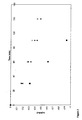
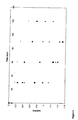
- Figure 1 represents the UV/Visible spectra of the λ max of the target dye Gentian Violet disappearing with time as described in example 6. Horizontal axis is wavelength in nm. Vertical axis is absorbance in units measured using UV spectrometer (UV / vis spectrometer-UV 4-UNICAM)
◆ represents sensitised TiO2+0.1ml Gentian Violet dye (GV) at T=0mins, ■ Sensitised TiO2+0.1ml GV T=30mins, ▲ Sensitised TiO2+0.1ml GV T=1hour, × Sensitised Ti02+0.1ml GV T=2hours, - Sensitised TiO2+0.1ml GV T=3hours, ● Sensitised TiO2+0.1ml GV T=4hours. - Figure 2 represents the activity of Ti02 sol (sol 1) as described in example 8. Horizontal axis represents time and the vertical axis represents the change in absorbance measured using a (UV / vis spectrometer-UV 4-UNICAM)
◆ represents the activity of sensitised Ti02 at pH 3.28, ■ Activity of sensitised Ti02 at pH 2.08, ▲ Activity of sensitised Ti02 at pH 2.72, × Activity of sensitised Ti02 at pH 4.02. - Figure 3 represents the activity of TiO2 sol (sol 2) as described in example 8. Horizontal axis represents time and the vertical axis represents the change in absorbance measured using a (UV / vis spectrometer-UV 4-UNICAM)
◆ represents the activity of sensitised Ti02 at pH 2.00, ■ Activity of sensitised Ti02 at pH 2.64, ▲ Activity of sensitised Ti02 at pH 4.12, × Activity of sensitised Ti02 at pH 3.39, * Activity of sensitised Ti02 at pH 5.00, • Activity of sensitised Ti02 at pH 5.98. - Figure 4 represents the activity of Ti02 sol (sol 3) as described in example 8. Horizontal axis represents time and the vertical axis represents the change in absorbance measured using a (UV / vis spectrometer-UV 4-UNICAM)
◆ represents the activity of sensitised Ti02 at pH 4.1, ■ Activity of sensitised Ti02 at pH 3.2, ▲ Activity of sensitised TiO2 at pH 2.7, × Activity of sensitised Ti02 at pH 2.1, * Activity of sensitised TiO2 at pH 5.2, • Activity of sensitised Ti02 at pH 6.0, - Activity of sensitised Ti02 at pH 6.5-7.0. - Figure 5 represents the activity of Ti02 sol (sol 4) as described in example 8. Horizontal axis represents time and the vertical axis represents the change in absorbance measured using a (UV / vis spectrometer-UV 4-UNICAM)
◆ represents the activity of sensitised Ti02 at pH 2.74, ■ Activity of sensitised Ti02 at pH 2.12, ▲ Activity of sensitised TiO2 at pH 3.38, × Activity of sensitised Ti02 at pH 4.00. - Figure 6 represents the activity of sensitised Ti02 sol at different pH as described in example 9. Horizontal axis represents time and the vertical axis represents the change in absorbance measured using a (UV / vis spectrometer-UV 4-UNICAM)
◆ represents the activity of sensitised solution (1) at pH 6.7, ■ Activity of sensitised Ti02 at pH 5.2, ▲ Activity of sensitised Ti02 at pH 8.8. - Figure 7 represents the effect of the light source in photocatalytic activity as described in example 11. Horizontal axis represents time and the vertical axis represents the change in absorbance measured using a (UV / vis spectrometer-UV 4-UNICAM)
◆ represents the ratio: TiO2:Ru:1:6, ■ Ratio:Ti02: Ru:1:4, ▲ Ratio:TiO2:Ru:1:2. - In the following examples OHP represents overhead projector, GV stands for Gentian Violet dye.
- A nanocrystalline titanium dioxide sol was applied to the surface of a previously cleaned glass microscope slide by spin coating 0.5ml of the titanium dioxide sol at 1500rpm for 30 seconds. The glass slide was then fired at 450°C for 30 minutes. Once cool the process was repeated two further times to give 3 coats of the nanocrystalline titanium dioxide. The slide was then immersed in an aqueous 1x10⁻⁶M solution of tris(2,2'-bipyridyl-4,4'-dicarboxylate)Ru(II)(dichloride) for 30 minutes to allow adsorption of the sensitising agent to the titanium dioxide. The slide was removed, rinsed with water to remove any unbound ruthenium complex and then stained with a 0.3% Gentian Violet solution (N-4[Bis[4-dimethylamino)-phenyl]methylene]-2,5-cyclohexadien-1-ylidene]-N-methylmethanaminium chloride) in 20% ethanol by immersing in the dye for 5 minutes. Once again the slide was washed with water to remove any unbound dye. The whole process was repeated once more for a second identical slide and then twice more, but omitting immersing these two slides in the tris(2,2'-bipyridyl-4,4'-dicarboxylate)Ru(II)(dichloride) to give two un-sensitized control slides.
- One each of the sensitised and un-sensitised slides was kept in total darkness. The other two slides were placed on top of an overhead projector fitted with two 24V 250W tungsten halogen bulbs. Decolourisation of the purple colour was monitored as the Gentian Violet was decomposed photocatalytically. Within 50 minutes there was a noticeable difference between the colour of the sensitised and un-sensitised slides particularly when compared to the controls stored in the dark. On the slide with the sensitised titanium dioxide the Gentian Violet was decomposing and hence the purple colour fading. This continued until there was no purple colour left. Decomposition of the Gentian Violet did also occur on the un-sensitised slide but at a significantly slower rate.
- A nanocrystalline titanium dioxide sol thickened with methylcellulose was screen printed on to a series of cleaned glass microscope slides. The printed titanium dioxide films were then fired at 450°C for 30 minutes. Half of the slides were then immersed in an aqueous 1x10⁻⁶M solution of tris(2,2'-bipyridyl-4,4' -dicarboxylate)Ru(II)(dichloride) for 30 minutes to allow adsorption of the sensitising agent to the titanium dioxide. The slides were then removed from the sensitising solution and washed with water to remove any unbound ruthenium complex. All the slides, both sensitised and unsensitised were then divided into two groups. One set was immersed in 0.3% Gentian Violet solution (N-4-[Bis[4-dimethylamino)-phenyl]methylene]-2,5-cyclohexadien-1-ylidene]-N-methylmethanaminium chloride) in 20% ethanol for 5 minutes and the second set into a 0.3% aqueous solution of Acid Orange dye (4-[(2-hydroxy-1-napthalenyl)azo]-benzenesulfonic acid monsodium salt) for 5 minutes. A sensitised and unsensitised slide dyed with either the Gentian Violet or Acid Orange stains was placed in total darkness and used as a control for each treatment. A second equivalent set was left exposed to daylight next to the window of a south-facing window. A third and final set was also left exposed to the daylight through a south-facing window but these slides were covered with a 6mm thick piece of Perspex which substantially absorbs the UV component of the light. Decolourisation of both the purple and orange colours was monitored as both the Gentian Violet and Acid Orange were decomposed photocatalytically. After 48 hours exposure to light the slides dyed with Gentian Violet and left directly on the open bench were partially decolourised. The slides stored under the Perspex had begun to decolourize but at a slower rate than those not under Perspex. By day 7 the dye on all the slides left just on the bench had either completely or almost completely disappeared. The slides under Perspex reached the same amount of decolourization on day 14. There was no change in the colour of the slides stored in the dark. All the light exposed slides were re-dyed with either Gentian Violet or Acid Orange and treated exactly as before. None of the Acid Orange stained slides would re-stain. The sensitised titanium dioxide slides stained with Gentian Violet and exposed directly to daylight decolourised completely within 24 hours. The unsensitised slide had still not completely decolourised 5 days after restaining. The slides under Perspex were still coloured 5 days after restaining, however the sensitised slide had faded to a greater extent than the unsensitised slide.
- To 1.0ml of a nanocrystalline titanium dioxide solution, 4.0ml of a 3.4x10⁻⁵ M aqueous solution of tris(2,2'-bipyridyl-4,4'-dicarboxylate)Ru(II)(dichloride) were added and the resulting solution mixed well using a vortex mixer. A film of this solution was prepared by spin coating 0.1ml of this solution at 1500rpm on a clean glass microscope slide for 30 seconds. The film was dried using a hand held hot air drier and the process repeated twice more to give a total of 3 coats on the microscope slide. A second slide was then prepared in exactly the same way. Both slides were then immersed into a solution of 0.3% Gentian Violet (N-4-[Bis[4-dimethylamino)-phenyl]methylene]-2,5-cyclohexadien-1-ylidene)-N-methylmethanaminium chloride) in 20% ethanol for 5 minutes. The slides were removed, rinsed with water to remove any excess stain and allowed to air dry. One slide was kept in total darkness and the second was placed on top of a piece of 6mm thick Perspex (to remove any UV light) on an overhead projector fitted with two 24V 250W tungsten halogen bulbs. The purple colour on the light exposed slide steadily decomposed and after 3 hours had completely faded. There was no change in the colour of the slide stored in darkness.
- Kormann method. (C. Kormann, D.W. Bahnemann, M.R. Hoffmann, J. Phys. Chem., 1988, 92, 5196)
- TiCl4 (3.5ml) was slowly added to cold de-ionised water (900ml) under vigorous stirring. The resulting clear solution was stirred at 0°C for 3 hours then dialysed between 2 hours and 24 hours. The clear solution is then dried using a rotary-evaporator (Temperature of water bath=30°C). The resulting white powder (TiO2) is then re-suspended into de-ionised water at the desired concentration. The dialysis membrane-Visking-Size1350/1 MWCO 1350 Daltons was treated prior to use. The membrane was left for 30 minutes at 80°C in a solution containing EDTA (1mM) and 2% NaHCO3. The membrane was then washed thoroughly with de-ionised water.
- An aqueous TiCl4 solution (50ml of TiCl4 diluted in 500ml de-ionised water) was added into a beaker containing de-ionised water (3L) and concentrated ammonia (40ml) with continuous stirring. The white mixture was stirred for about 20 minutes then allowed to settle. The supernatant was removed using a peristaltic pump. The volume was completed again to 3L with de-ionised water, stirred then allowed to settle. The supernatant was removed. This process was repeated twice. The volume was completed with de-ionised water to 3.5L. The mixture was stirred, the pH was checked (pH 8.8) then a nitric acid solution (1M) was added slowly to get pH close to 3.3. The mixture was stirred for 30-45 minutes then allowed to settle. The supernatant was removed and the volume was made up with de-ionised water to 3-3.5L. The mixture was washed until the conductivity was below 500µS. The supernatant was removed then nitric acid (1M, 23.2ml) was added to the white mixture. The mixture was stirred for about 20 minutes then was left to age for about a week. In order to increase the peptisation step, the mixture can be heated gently to 60-70°C for 30 minutes then allowed to settle.
- Titanium-isopropoxide (Aldrich, 400ml, 97%) was added rapidly to a beaker containing de-ionised water (1L). The precipitated TiO2 was decanted and washed 4 times with de-ionised water (4x500ml) then filtered. The wet filtered solid was digested at 70°C with concentrated nitric acid (16.7ml) and de-ionised water (volume total 800ml) for 30 to 1h 30min to produce a sol.
- RuCl3,xH 2O (1.33mmol Ru), 1-methyl-2-pyrrolidinone (15ml) and 2,2'-dipyridyl-4,4'-dicarboxylate (4.1mmol) were added into a round bottomed flask and then purged with Ar or N2. The mixture was heated to reflux in the dark for 1h30min. 1-methyl-2-pyrrolidinone (25ml) was added to the flask and the reflux was continued for a further 2 hours under Ar or N2. The mixture was allowed to cool to room temperature and kept under Ar or N2 overnight. The dark mixture was filtered. The resulting reddish brown solid was washed with 1-methyl-2-pyrrolidinone (2x20ml) and diethyl ether (3x20ml) then dried under vacuum. Yield = 0.61 g. Product contained 1.2moles of 1-methyl-2-pyrrolidinone.
- A mixture of TiO2 sol (1ml, 1g/L) and tris(2,2'-dipyridyl-4,4'-dicarboxylate) ruthenium(II)(dichloride) (4ml, c=3.4x10⁻⁵M) was stirred for about 1 minute using a rotamixer. The pH was recorded then the target dye gentian violet (GV dissolved in 20% ethanol solution, 0.05ml or 0.08ml, 0.03 wt/v%) was added and the mixture was stirred again. The initial colour of the sensitised TiO2 sol was yellow. Addition of gentian violet produced a purple colour at pH 3 and higher. A UV/Visible spectrum was taken at this stage. The vial containing the mixture was placed onto an overhead projector (2cm height from the glass, in order to reduce heat). A UV/Visible spectrum was used to observe the colour change over a period of time at lamda max of the Target dye (Gentian violet or crystal violet) = 588nm in the white light spectrum.
(OHP used: Model Ensign. Lamp:24V-250W-3860 lux) - In order to get quantitative data a UV/Visible spectrum was taken at different times. The results are shown in figure 1.
- The "activity" has been tested at different stages of the preparation of the TiO2 by hydrolysis of TiCl4 (Kormann Method-see example 4 for details). The effect of peptisation has also been looked at. From the results shown in Table 1, the peptisation as well as the particle size seemed to have little effect on the activity.
- The details of the different preparations as well as the activity test are summarised in Example 4 and 6.
Table 1. Effect of peptisation on activity. Code Ti Source TiO2 sol Preparation Temp of Peptisation Time for Peptisation Particle size (nm) Time to decolourise 0.05ml GV Sol A TiCl4 Prepared as per example 1 of GB 1412 937 (Woodhead) 60-65C for 30mins 99% after 48hours 22.5 30min Sol B Ti isopropoxide Isopropoxide route Ambient 99% after 7 days 20.7 90min Sol C Ti isopropoxide Isopropoxide route 60C for 30mins * 95% after 7 days 34.5 40min Sol D Ti isopropoxide Isopropoxide route 70C for 30mins 30min 95.4 55min Sol E TiCl4 Prepared as per example 1 of GB 1412 937 (Woodhead) Ambient 99% after 7 days 20.3 60min *Significant amount of non-dispersed material present after 5 days so further nitric acid (1M) was added to give NO3-:Ti ca 0.27 Note: the mixture was 1ml Ti02 (1g/L) and 3ml sensitiser (c=3.4x10⁻⁵M) - The pH of the sensitised sol (TiO2 sol prepared by Kormann method) was found to be different at each step of the process. The results are summarised in Table 2. The pH was measured using a pH meter (HANNA Instruments- HI8424 microcomputer).
Table 2. Effect of different steps of the process on activity. Steps of the process pH of the sensitised sol Time to decolourise 0.08ml Gentian Violet Before dialysis 1.85 2h45min After dialysis 2.95 2h20min Sol dried using rotary-evaporator then re-suspended 3.16 4h40min Sol dried using freeze-drier then resuspended * 3.08 2h45min mixture still purple. * TiO2 was very difficult to re-suspend. After sonication the sol was cloudy. - The results indicate that the activity may be related to pH.
- The effect of pH on activity of various sols
- Four different sols have been tested at pH ranging from 2 to 7. They are:
- (Sol 1) Hydrolysis of TiCl4 followed by a dialysis, dried on rotary-evaporator then re-suspended. The pH of the sol was adjusted with HCl (1M) or NaOH (0.01M).
- (Sol 2) Hydrolysis of TiCl4 followed by a dialysis only. The pH of the sol was adjusted with HCl (1M) or NaOH (0.01M).
- (Sol 3) Precipitation of titanium -isopropoxide followed by peptisation with nitric acid. The pH of the sol was adjusted with HNO3 (0.1M) or NaOH (0.01M).
- (Sol 4) Precipitation of TiCl4 followed by preptisation with nitric acid. The pH of the sol was adjusted with HNO3 (0.1M) orNaOH (0.01M).
- This experiment was carried out over a 2 hour period. All sols were prepared at 1g/L and the amount of Gentian Violet (0.08ml, 0.03 wt/v%) was kept the same for each type of sol. Most of the sensitised sols had a precipitate or were precipitating. However, the systems were still working even in presence of a precipitate. The "activity" was reduced with an increase of pH. The results are summarised in Table 3.
- A mixture of TiO2 sol (1ml, 1g/L) and tris(2,2'-dipyridyl-4,4'-dicarboxylate) ruthenium(II)(dichloride) (4ml, c=3.4x10⁻⁵M) was stirred for about 1 minute using a rotamixer. The pH was adjusted then the target dye gentian violet (GV dissolved in 20% ethanol solution, 0.08ml, 0.03 wt/v%) was added and the mixture was stirred again. The initial colour of the sensitised TiO2 sol was yellow. Addition of gentian violet produced a purple colour at pH 2.5 and higher. Below pH 2.5, addition of gentian violet produced a blue-green colour. A UV/Visible spectrum was taken at this stage. The vial containing the mixture was placed onto an overhead projector (2cm height from the glass, in order to reduce heat). A UV/Visible spectrum was used to observe the colour change over a period of time. (OHP used: Model Ensign. Lamp:24V-250W-3860 lux). In order to get quantitative data a UV/Visible spectrum was taken at different times.
Table 3. pH effect on the activity of different type of sols. Sol preparation pHof sensitised sols Time to decolourise 0.08ml Gentian Violet Activity rank 1 2.08 The mixture was nearly yellow and clear after 2hours. High 2.72 The mixture was orange-pink with a slight precipitate after 2 hours. Medium 3.28 The mixture was still purple with a precipitate after 2hours. Low 4.02 The mixture was orange-pink with a precipitate after 2 hours. Medium 2 2.00 The mixture was green-yellow with no real precipitate after 2 hours. High 2.64 The mixture was orange-pink with a precipitate after 2 hours. Medium 3.39 The mixture was orange-pink with a precipitate after 2 hours. Medium 4.12 The mixture was orange-pink with a precipitate after 2 hours. medium 5.00 The mixture was purple with a precipitate after 2 hours. Low 5.98 The mixture was purple with precipitate a after 2 hours. Low 3 2.1 The mixture was yellow with precipitate a after 25 minutes. High 2.7 The mixture was yellow with precipitate a after 35 minutes. High 3.2 The mixture was yellow with precipitate a after 1h30min High 4.1 The mixture was yellow with precipitate a after 2 hours. High 5.2 The mixture was yellow with precipitate a after 2hours. High 6.0 The mixture was orange-pink with a precipitate after 2 hours. Medium 7.6 The mixture was purple with precipitate a after 2 hours. Low 4 2.12 The mixture was yellow after 30 minutes. High 2.74 The mixture was yellow with a precipitate after 25 minutes. High 3.38 The mixture was yellow with a precipitate after 1h30min. High 4.00 The mixture was yellow with a precipitate after 2 hours. High - The results are also shown in Figure, Figure 3, and Figure 4, and Figure 5.
- Buffer solutions were obtained by diluting the powder buffer (BDH chemicals) into the required amount of de-ionised water.
- Attempts to stabilise TiO2 sols prepared from the hydrolysis of TiCl4 (Kormann method) were made using buffer solution pH 7 and pH 9.2. Addition of buffer solution pH 7 into a TiO2 sol (10ml, 1g/L) produced a precipitate at pH 7. Addition of a buffer solution pH 7 or pH 9.2, de-ionised water and solid TiO2 produced cloudy solutions at different pHs (see Table 4).
Table 4. Buffer solutions addition effect. No solutions Sols Compositions pH Particle size (nm) Observations 1 2ml buffer pH7 10ml water 9-10mg TiO2 6.8 208nm Cloudy. No apparent precipitate. 2 2ml buffer pH7 8ml water 9-10mg TiO2 6.9 120nm Cloudy. No apparent precipitate. 3 1ml buffer pH7 10ml water 9-10mg TiO2 6.5 121nm Cloudy. No apparent precipitate. 4 1ml buffer pH7 9ml water 9-10mg TiO2 5.2 189nm Cloudy. No apparent precipitate. 5 0.5ml buffer pH7 9.5ml water 9-10mg TiO2 5.2 Cloudy. A precipitate was observed after 1h30min. 6 1ml buffer pH9.2 10ml water 9-10mgTiO2 8.2 Cloudy. 7 2ml buffer pH9.2 10ml water 9-10mg TiO2 8.8 Cloudy. - Solutions (1) and (4) were found to be cloudier than solutions (2) and (3). The particle size was higher for (1) and (4) this may correspond to the cloudiness of the solutions. After 24 hours, a slight precipitate was observed in solutions (1) and (4).
- Attempts were made to increase pH with sodium hydroxide solutions failed. Addition of acetylacetonate to a TiO2 sol produced a stable sol with a pH of 2.3-2.4. Increasing the pH with a sodium hydroxide solution produced precipitation at pH around 7.
- The activity was tested for the sensitised solution (1), sensitised TiO2 sols at pH 5.0 and 8.8 (note: the pH was increased by addition of NaOH (0.0 1 M)). The target dye decolourised quicker at
pH 5 although for all three samples there was some target dye left not decolourised after 2 hours. The results are summarised in figure 6. - Poly(vinyl alcohol) (PVA) was tested as a potential stabiliser for TiO2 sols. It was found that addition of a large excess or too little caused precipitation of the sols when the pH was increased with sodium hydroxide. PVA can be dissolved by sonication or by gentle heating in water then can be added to a TiO2 sol. Addition of PVA directly to a TiO2 sol, produced a precipitate.
- The activity of a sensitised sol containing PVA at pH around 3 and 7 was tested. The results show that PVA and an increase in pH slowed down the activity.
- The ratioTiO2:Sensitiser or TiO2:Ru has been looked at for a particular TiO2 sol (Kormann method, TiO2 sol dialysed only). The sol tested was obtained from hydrolysis of TiCl4 followed by a dialysis. The experiment involved variation of ruthenium and kept the TiO2 fixed. The target dye was decolourised quicker in 1:6 TiO2:Ru ratio than in 1:2 TiO2:Ru ratio
- The target dye gentian violet (0.05ml, 0.03 wt/v%) was decolourised within 3 hours in 1:6 TiO2:Ru ratio whereas in 1:4 TiO2:Ru ratio and 1:2 TiO2:Ru ratio the gentian violet decolourised within 4 and 5 hours, respectively.
- A mixture of TiO2 sol (1ml, 1g/L) and tris(2,2'-dipyridyl-4,4'-dicarboxylate) ruthenium(II)(dichloride) (3ml, c=3.4x10⁻⁵M) was stirred for about 1 minute using a rotamixer. Addition of gentian violet (0.05ml, 0.03 wt/v%) produced a purple colour. A UV/Visible spectrum was taken at this stage. The vial containing the mixture was placed onto an overhead projector (2cm height from the glass, in order to reduce heat) or in a light box. UV/Visible spectra were used to observe the colour change over a period of time. Normally all the activity work was done using an overhead projector as a light source. Other light sources such as daylight bulbs (40W and 100W), tungsten filament tube (35W), tungsten filament bulb (100W) and fluorescent tube (8W) have also been investigated during this study. The results showed that the process still works with all light sources tried albeit much slower using daylight or tungsten filament bulbs than the light from an overhead projector because of the higher intensity of the overhead projector.
- The results are shown in Figure 7
- A range of dyes have been tested as potential sensitising agent. They include: copper or iron complexes containing sulfonated phtalocyanine ligands, silicon complex containing phtalocyanine ligand and ruthenium complexes containing bipyridyl or functionalised bipyridyl complexes (e.g: carboxylate, phosphonate) ligands and anions (e.g.: Cl, NCS) and rose bengal.
- A mixture of TiO2 sol (1ml, 1g/L) and sensitizing agent (3ml, c=3.4x10⁻⁵M) was stirred for about 1 minute using a rotamixer. Addition of gentian violet (0.05ml, 0.03wt/v%) was added as a target dye. A UV/Visible spectrum was taken at this stage. The vial containing the mixture was placed onto an overhead projector (2cm height from the glass, in order to reduce heat). UV/Visible spectra were used to observe the colour change over a period of time. All dyes tested decolourised the target dye gentian violet at different rates.
- Activity of different TiO2 sols.
- Several TiO2 sols have been tested for their activity including commercially available types from the Millennium Performance Chemicals, 85 Avenue Victor Hugo, 92563 Rueil-Malmaison Cedex, France. A mixture of TiO2 sol (1ml, 1g/L) and tris(2,2'-dipyridyl-4,4'-dicarboxylate)ruthenium(II)(dichloride) (4ml, c=3.4x10⁻⁵M) was stirred for about 1 minute using a rotamixer. Addition of gentian violet (0.08ml, 0.03wt/v%) produced a purple colour. A UV/Visible spectrum was taken at this stage. The vial containing the mixture was placed onto an overhead projector (2cm height from the glass, in order to reduce heat). UV/Visible spectra were used to observe the colour change over a period of time. The results are summarised in Table 5.
Table 5: Activity of different sols. TiO2 sol source Time required to decolourise 0.08ml of gentian violet (0.03wt/v%) Kormann method >4hours J. Woodhead Patent 1h30mins Isopropoxide route 1h30mins Millennium sol in acidic medium 15mins - Activity of different sols in basic medium.
- The TiO2 sol (made from isopropoxide route) containing PVA (MW:15,000) was prepared as follows. PVA (0.10g, MW:15,000) was diluted in hot de-ionised water (50ml) then allowed to cool to room temperature. A known amount of concentrated TiO2 sol was added to the PVA solution under vigorous stirring. The volume was completed to 100ml with de-ionised water. Final TiO2 concentration 1g/L.
- A mixture of Ti02 sol (isopropoxide route, 10ml, 1g/L) and tris(2,2'-dipyridyl-4,4'-dicarboxylate)ruthenium(II)(dichloride) (40ml, 3.4x10⁻⁵M) was stirred using a stirrer hotplate. The pH was adjusted by addition of a sodium hydroxide solution (0.1 M) to pH 10. Gentian violet (0.08ml, 0.03wt/v%) was added to the mixture (volume used: 5ml).
- A mixture of TiO2 sol containing PVA at pH 10.03 (1ml, 1g/L) and tris(2,2'-dipyridyl-4,4'-dicarboxylate)ruthenium(II)(dichloride) also at pH 10.1 (4ml, c=3.4x10⁻⁵M) was stirred for about 1 minute using a rotamixer. The pH (9.85) was adjusted with a sodium hydroxide solution (0.1M) in order to get pH 10. Gentian violet (0.08ml, 0.03 wt/v%) was added to the mixture.
- A mixture of Ti02 sol containing PVA (10ml) and tris(2,2'-dipyridyl-4,4'-dicarboxylate)ruthenium(II)(dichloride) (40ml, c=3.4x10⁻⁵M) was stirred using a stirrer hotplate. The pH was adjusted with a sodium hydroxide solution (0.1M) to pH 10. Gentian violet (0.08ml, 0.03 wt/v%) was added to the mixture (volume used: 5ml).
- A mixture of Millennium TiO2 sol in Basic medium(1ml, 1g/L) and tris(2,2'-dipyridyl-4,4'-dicarboxylate)ruthenium(II)dichloride (4ml, c=3.4x10⁻⁵M) was stirred for about 1 minute using a rotamixer. The pH was adjusted with a sodium hydroxide solution (0.1M) to pH 10.
- Addition of gentian violet (0.05ml, 0.03 wt/v%) produced a purple colour in all systems. A UV/Visible spectrum was taken at this stage. The vial containing the mixtures were placed onto an overhead projector (2cm height from the glass, in order to reduce heat). UV/Visible spectra were used to observe the colour change over a period of time.
The results are summarised in table 6.Table 6: Activity of TiO2 sols in basic medium TiO2 sol source Time required to decolourise 0.08ml of gentian violet Remarks Isopropoxide route no PVA > 4 hours Only stable for a short period of time. Isopropoxide route with PVA > (1) 4 hours PVA helped stabilised the system. Isopropoxide route with PVA> (2) 4 hours PVA helped stabilised the system. Millennium in basic medium 1h10min Stable sol. No need to add any surfactant. - A solution containing a Ti02 sol (Millennium TiO2 sol in basic medium, 10g/L, 5.0ml), tris(2,2'-bipyridyl-4,4'-dicarboxylate)ruthenium(II)(dichloride) (1.8ml, 3.4x10⁻⁵M), Igepal® CO-720 (0.18g) and de-ionised water (3.2ml) was stirred for few minutes using a rotamixer. The pH was adjusted to 10 by addition of a sodium hydroxide solution (0.1M). The mixture was wrapped into some aluminium foil and left standing overnight to equilibrate. A solution containing a Ti02 sol (Millennium Ti02 sol in basic medium, 10g/L, 5.0ml), Igepal® CO-720 (0.18g) and de-ionised water (5.0ml) was stirred for few minutes using a rotamixer. The pH was adjusted to 10 by addition of a sodium hydroxide solution (0.1M).
- Thin films of these solutions were prepared by spin coating 0.1ml of these solutions at 100 to 500rpm on a clean glass microscope slide for 80 seconds. The film was dried using a hot air gun and the process repeated to give a total of 2 coats on the microscope slide. A second slide was then prepared in exactly the same way. All slides were then immersed into a solution of 0.3% Gentian Violet in 20% ethanol for 5 minutes. The slides were removed, rinsed with water to remove any excess stain and allowed to air dry. One slide was kept in total darkness and the second was placed onto an overhead projector (Model Ensign. Lamp: 24V-250W-3860 lux). The purple colour on the films faded after 3hours 30 min. There was no change in the colour of the slide stored in darkness.
- The titania sols have been characterised by TEM (transmission electron microscopy). The samples were prepared by pipetting a few drops of the sol onto holey carbon films. Gold grids were used to avoid support corrosion. The microscope used was a Philips CM20, operated at 200kV.The results are summarised in Table 7.
Table 7: TEM results of different source of titania. TiO2 sol source TEM results Prepared as per example 1 of GB 1412 937 (Woodhead) (peptised at 60°C) (A) Irregularly shaped titania crystallites mainly anatase with a size of 10 nm. Prepared as per example 1 of GB 1412 937 (Woodhead) (peptised at room temperature) (B) Irregularly shaped titania crystallites mainly anatase with a size of 10 nm. Sensitised TiO2 sol* (C) Irregularly shaped titania crystallites mainly anatase with a size of 10 nm. Isopropoxide route (D) Sample had to be diluted. The titania crystallites were more tightly packed together. The crystallite size is very small. The particles formed self-supporting films over holes on the carbon film. Millennium sol Basic medium (E) Titania particles appeared to be much more agglomerated than samples A and C. As a result of this agglomeration, the particles formed self-supporting films over holes on the carbon film. * Ti02 sol (Prepared as per example 1 of GB 1412 937 (Woodhead) 10g/L, 5.0ml), tris(2,2'-bipyridyl-4,4'-dicarboxylate) ruthenium(II)(dichloride) (1.8ml, 3.4x10⁻⁵M) and de-ionised water (3.2ml) - The TiO2 sol (made from isopropoxide route) containing PVA (MW:15,000) was prepared as follows. PVA (0.10g, MW: 15,000) was diluted in hot de-ionised water (50ml) then allowed to cool to room temperature. A known amount of concentrated TiO2 sol was added to the PVA solution under vigorous stirring. The volume was completed to 100ml with de-ionised water. Final TiO2 concentration 1g/L.
A mixture of TiO2 sol containing PVA (1ml, 1g/L) and de-ionised water (4ml) was stirred for about 1 minute using a rotamixer. Gentian violet (0.08ml, 0.03wt/v%) was added to the mixture. - The TiO2 sol (made from isopropoxide route) containing PVA (MW15,000) was prepared as follows. PVA (0.10g, MW 15,000) was diluted in hot de-ionised water (50ml) then allowed to cool to room temperature. A known amount of concentrated TiO2 sol was added to the PVA solution under vigorous stirring. The volume was completed to 100ml with de-ionised water. Final Ti02 concentration 1g/L. A mixture of TiO2 sol containing PVA (1ml, 1g/L) and tris(2,2'-dipyridyl-4,4'-dicarboxylate)ruthenium(II)(dichloride) (4ml, c=4.3x10⁻⁵M) was stirred for about 1 minute using a rotamixer. Gentian violet (0.08ml, 0.03wt/v%) was added to the mixture.
- A mixture of TiO2 sol containing PVA (10ml) and tris(2,2'-dipyridyl-4,4'-dicarboxylate)ruthenium(II)(dichloride) (40ml, c=3.4x10⁻⁵M) was stirred using a stirrer hotplate. The pH was adjusted with a sodium hydroxide solution (0.1M) to pH 10. Gentian violet (0.08ml, 0.03 wt/v%) was added to the mixture (volume used: 5ml).
- A UV/Visible spectrum is taken at this stage. The vials containing the mixtures were placed onto an overhead projector (2cm height from the glass, in order to reduce heat). UV/Visible spectra were used to observe the colour change over a period of time. Ti02 without dye has significantly slower photocatalytic activity when compared with sensitised TiO2
- A microscope slide containing a thin film of sensitised TiO2 was added into a solution of 4-chlorophenol (99+%, Aldrich, 8ml, 10-4M). The vial containing the solution and the slide was placed onto an overhead projector. The degradation of 4-chlorophenol was monitored using UV/Visible analysis. A spectrum was taken over a period of time at max of the 4-chlorophenol (=280nm).
The absorbance at 280nm was decreasing over time. - A mixture of TiO2 sol (5ml, 10g/L), tris(2,2'-dipyridyl-4,4'-dicarboxylate)ruthenium(II)(dichloride) (1.8ml, 3.4x10⁻⁵M) and de-ionised water (3.2ml) was stirred for about 1 minute using a rotamixer. Half of the volume of the mixture was used for testing. A target dye, gentian violet (0.08ml, 0.03wt/v%) was added to the mixture producing a blue-purple colour. A UV/Visible spectrum was taken. The vial containing the mixture was placed onto an overhead projector (2cm height from the glass in order to reduce heat). A UV/Visible spectrum was taken over a period of time in order to observe the colour change. Once the spectrum showed no trace of target dye, the same amount of gentian violet was added to the same mixture. The all process was repeated twice. The target dye gentian violet was still decolourising on the third addition but at a slower rate than on the first addition.
- Zinc oxide was prepared according to the method outlined by Bahnemann et al, J. Phys. Chem., (1987), 91, 3789. The oxide suspension (made by stirring the ZnO solid into a sodium hydroxide solution at pH9) was then sensitised with 4,4'-dicarboxa late,tris (2,2'bibyridyl) Ru (II) dichloride according to the method outlined in previous examples. Gentian violet dye was added to both the sensitised sample and the non-sensitised control sample, and the UV/visible spectrum was recorded as a function of time under illumination with white light (5,000 lux). The results demonstrate that the absorption peak associated with Gentian Violet decreases faster with the sensitised ZnO compared to the control.
- The methods described below offer general synthetic pathways to sensitising agents specifically designed to function in combination with semiconductors where the desired operating condition is such that the un-coated semiconductor surface presents a significant number of adsorption sites with a negative charge. Typical positively charged groups for use as binding sites include, but are not limited to R4N+ groups and R4P+ groups, where R is as hereinbefore described
- Terpyridyl-based sensitisers with phosphonate chelating ligands (Graetzel at al, WO 95/29924) and with other ligand types (Graetzel et al, WO 94/0449) have been used in conjunction with titania in dye-sensitised solar cells. The terpyridyl group of general formula I can be synthesised with e.g. R1 as a positively charged unit. One example where R5-7 of formula II are methyl, is synthesised according to procedures where the intermediate is made by the method outlined in Recl.Trav. Chim. Pays. Bas, 1959, v78, 408. This nitrated aryl group is then changed into the terpyridyl unit by the method outlined by McWhinne et al (J Organoetallic chem.., 1968, v11, 499). The nitro group is then reduced to the amine by hydrazine hydrate under Pd/C catalysis followed by reaction with excess methyl iodide to form the quaternary nitrogen terpyridyl ligand desired.
- Yet another variant of the positively charged terpyridyl molecule [described by general formula I] can be synthesised by reacting 2-acetylpyridine with 4-nitrobenzaldehyde in base followed by ring closure with ammonium acetate according to methods outlined by E Constable et al (J Chem Soc Dalton Trans, 1992, 2947), followed by reduction of the nitro group to the amine and quaternisation as described previously to form a compound described by formula I with R2 and R 3 as hydrogen and R1 as

- Yet another general preparative method for a terpyridal group of general formula I is based on derivatising the structure below (Potts et al, JACS 1987, v109, 3961) by oxidising it to the carboxylic acid by e.g. the methodology outlined by Dodd et al (Synthesis (1993), V3, 295). Amination of the carboxylate is then carried out by standard procedures outlined in e.g. Chem Rev. (1981) V81, p589.

- The synthesis of a compound of general formula III with R8,9 = NH2 is described in (JACS 1958, V80, 2745) and (J Chem
Soc Perkin Trans 2, 1996, 613) and a compound of formula III can be quarternised by the preceding methods outlined for terpyridyls. - Phthalocyanine dyes can be synthesised with amine nitrogen groups by e.g. Buchwald ammination of halide precursors to produce outer-ring derivatives such as (J Org Chem 2000, V65, 1158), the amine groups of which are then quartemised.
- TADAs of the general formula V can be derivatised at R1, R2, R3, and R4 by the general methods outlined above.
- The bipyridyl compounds tris(2,2'-bipyridyl - 4,4'-dicarboxylate) ruthenium (II) dichloride and tris(2,2'-bipridyl) ruthenium (II) dichloride can be dimerised using pyrazine derivatives such as pyrazine, pyrimidine and 4,4'-bipyridyl linking ligands according to procedures detailed in (E A Seddon & K R Seddon, The Chemistry of Ruthenium, Elsevier, New York 1984, p 436).
Claims (14)
- A method of cleaning a surface, which method comprising coating said surface with a composition comprising a photocatalyst selected from the group consisting of titania and zinc oxide and a ruthenium bi- or ter- pyridyl or phenanthroline-based sensitiser, and exposing the surface to visible or infra-red light.
- A method according to claim 1, wherein the sensitiser used includes a terpyridyl group of general formula I:


- A method according to claim 1, wherein the sensitiser used includes a bipyridyl group of the general formula III:

- A method according to claim 3, wherein the sensitiser used is selected from the group consisting of tris (2,2'-dipyridyl-4,4' dicarboxylate) ruthenium (II) and tris (2,2'-dipyridyl) dichloruthenium (II) and their dimers.
- A method according to claim 4, wherein the sensitiser used is tris (2,2'-dipyridyl-4,4' dicarboxylate) ruthenium (II) (dichloride).
- A method according to any preceding claim, wherein the photocatalyst used is a nanocrystalline titanium dioxide sol and/or zinc oxide sol.
- A method according to any preceding claim, wherein the composition is in the form of an acidic or liquid suspension or sol having a pH less than 7.
- A method according to claim 7, wherein the composition has a pH less than 5.
- A method according to any of claims 1 to 6, wherein the composition is in the form of a liquid suspension, or sol having a pH of 7 or more.
- A method according to claim 9, wherein the composition has a pH greater than 9.
- A method according to any preceding claim, wherein the composition comprises a doping agent.
- A method according to any preceding claim, wherein the photocatalyst used comprises no more than 1% w/v of the composition.
- A method according to claim 12, wherein the photocatalyst used is present in an amount no more than 0.1 % w/v of the composition.
- A method according to any preceding claim, wherein the sensitiser used is present in an amount no more than 0.1% w/v of the composition.
Applications Claiming Priority (3)
| Application Number | Priority Date | Filing Date | Title |
|---|---|---|---|
| GBGB9930248.1A GB9930248D0 (en) | 1999-12-22 | 1999-12-22 | Surface cleaner |
| GB9930248 | 1999-12-22 | ||
| PCT/IB2000/001950 WO2001046368A2 (en) | 1999-12-22 | 2000-12-22 | Surface cleaner |
Publications (2)
| Publication Number | Publication Date |
|---|---|
| EP1240295A2 EP1240295A2 (en) | 2002-09-18 |
| EP1240295B1 true EP1240295B1 (en) | 2006-05-17 |
Family
ID=10866781
Family Applications (1)
| Application Number | Title | Priority Date | Filing Date |
|---|---|---|---|
| EP00987586A Expired - Lifetime EP1240295B1 (en) | 1999-12-22 | 2000-12-22 | Surface cleaner |
Country Status (11)
| Country | Link |
|---|---|
| US (2) | US20030171446A1 (en) |
| EP (1) | EP1240295B1 (en) |
| JP (1) | JP2003518163A (en) |
| AT (1) | ATE326518T1 (en) |
| AU (1) | AU2388701A (en) |
| CA (1) | CA2394899A1 (en) |
| DE (1) | DE60028080T2 (en) |
| ES (1) | ES2261268T3 (en) |
| GB (1) | GB9930248D0 (en) |
| TW (1) | TW585908B (en) |
| WO (1) | WO2001046368A2 (en) |
Families Citing this family (21)
| Publication number | Priority date | Publication date | Assignee | Title |
|---|---|---|---|---|
| DE10064069A1 (en) | 2000-12-21 | 2002-07-04 | Karl F Massholder | Aqueous composition containing a semiconductor |
| EP1217056A1 (en) * | 2000-12-21 | 2002-06-26 | Johnson Matthey Public Limited Company | Photocatalytic material |
| EP1383857B1 (en) * | 2001-04-30 | 2006-05-31 | Ciba SC Holding AG | Use of metal complex compounds as oxidation catalysts |
| AUPR501901A0 (en) * | 2001-05-16 | 2001-06-07 | Sustainable Technologies International Pty Ltd | Improved method for large scale manufacturing of dye-seusitised solar cells |
| GB2378185B (en) * | 2001-06-27 | 2003-12-17 | Reckitt Benckiser | Improvements in relation to organic compositions |
| JP4643259B2 (en) * | 2002-07-11 | 2011-03-02 | チバ ホールディング インコーポレーテッド | Metal complex compounds and their use as oxidation catalysts |
| US20060019853A1 (en) * | 2002-10-29 | 2006-01-26 | Torsten Wieprecht | Use of metal complex compounds as catalysts for oxidation using molecular oxygen or air |
| GB2394720A (en) * | 2002-10-30 | 2004-05-05 | Reckitt Benckiser Nv | Metal complex compounds in dishwasher formulations |
| GB2409207B (en) * | 2003-12-20 | 2006-08-09 | Reckitt Benckiser Nv | Use of metal complex compounds as oxidation catalysts |
| US8106101B2 (en) * | 2004-11-16 | 2012-01-31 | The Hong Kong Polytechnic University | Method for making single-phase anatase titanium oxide |
| US7255847B2 (en) * | 2004-11-16 | 2007-08-14 | The Hong Kong Polytechnic University | Method for making single-phase anatase titanium oxide |
| WO2007117332A2 (en) * | 2005-12-29 | 2007-10-18 | The Board Of Trustees Of The University Of Illinois | Titanium oxide base photocatalysts |
| US7521394B2 (en) * | 2005-12-29 | 2009-04-21 | The Board Of Trustees Of The University Of Illinois | Nanoparticles containing titanium oxide |
| CN100340616C (en) * | 2006-01-17 | 2007-10-03 | 福州大学 | Method for preparing composite sterilization coating |
| DE102008020755A1 (en) * | 2008-04-18 | 2009-10-22 | Fraunhofer-Gesellschaft zur Förderung der angewandten Forschung e.V. | Use of photosensitizer for cleaning air, water or contaminated surfaces and in filters, where the photosensitizer is covalently linked and/or linked over physical interaction to surface and activated by visible light to form singlet oxygen |
| US20100193449A1 (en) * | 2009-02-02 | 2010-08-05 | Jian-Ku Shang | Materials and methods for removing arsenic from water |
| KR101021567B1 (en) * | 2009-05-25 | 2011-03-16 | 성균관대학교산학협력단 | Photocatalyst, preparation method thereof and decomposition method of volatile organics using same |
| JP2012179531A (en) * | 2011-02-28 | 2012-09-20 | Silicon Plus Corp | Dye-sensitized photocatalyst, carried-type dye-sensitized photocatalyst, and coating composition for forming coating film |
| WO2015059467A1 (en) * | 2013-10-22 | 2015-04-30 | SETNA, Rohan | Rose bengal for detection of oxidative decomposition of contaminants |
| CN108452773A (en) * | 2018-03-07 | 2018-08-28 | 南昌航空大学 | A kind of preparation method that can adsorb and detect simultaneously trivalent chromic ion and the nano-functional material with photocatalytic activity |
| TWI707725B (en) * | 2019-06-27 | 2020-10-21 | 奇鼎科技股份有限公司 | Preparation method of photocatalytic decomposition material and filter structure using photocatalytic decomposition material |
Family Cites Families (15)
| Publication number | Priority date | Publication date | Assignee | Title |
|---|---|---|---|---|
| GB1372035A (en) * | 1971-05-12 | 1974-10-30 | Procter & Gamble Ltd | Bleaching process |
| GB1412937A (en) | 1971-10-22 | 1975-11-05 | Atomic Energy Authority Uk | Titanium dioxide gels and sols |
| JPS5933522B2 (en) * | 1980-08-29 | 1984-08-16 | 理化学研究所 | Hydrogen generation method using cation radicals of viologens catalyzed by cyclic polydentate metal complexes |
| DE3246080A1 (en) * | 1982-12-13 | 1984-06-14 | Henkel KGaA, 4000 Düsseldorf | CLEANING PROCEDURE |
| US5376288A (en) * | 1989-06-21 | 1994-12-27 | Noro Nordisk A/S | Detergent additive granulate and detergent |
| US5292409A (en) * | 1990-04-10 | 1994-03-08 | Cape Cod Research, Inc. | Cathode and process for degrading halogenated carbon compounds in aqueous solvents |
| GB9217811D0 (en) | 1992-08-21 | 1992-10-07 | Graetzel Michael | Organic compounds |
| US5789592A (en) | 1994-05-02 | 1998-08-04 | Ecole Polytechnique Federale De Lausanne | Phosphonated polypyridyl compounds and their complexes |
| FR2729673A1 (en) | 1995-01-25 | 1996-07-26 | Rhone Poulenc Chimie | DETERGENT COMPOSITION CONTAINING TITANIUM DIOXIDE WITH BACTERICIDAL AND PHOTO-OXIDIZING FUNCTION |
| JP3814698B2 (en) | 1995-12-27 | 2006-08-30 | 株式会社ネオス | Cleaning composition |
| US6413924B2 (en) * | 1997-01-24 | 2002-07-02 | Case Western Reserve University | Photobleaching compositions comprising mixed metallocyanines |
| WO1998032832A1 (en) * | 1997-01-24 | 1998-07-30 | The Procter & Gamble Company | Low hue photobleaches |
| CN1250472A (en) * | 1997-01-24 | 2000-04-12 | 普罗格特-甘布尔公司 | Photochemical superoxide generators |
| JP3430254B2 (en) * | 2000-03-13 | 2003-07-28 | 独立行政法人産業技術総合研究所 | Metal complex having β-diketonate, method for producing the same, photoelectric conversion element, and photochemical cell |
| US20060019853A1 (en) * | 2002-10-29 | 2006-01-26 | Torsten Wieprecht | Use of metal complex compounds as catalysts for oxidation using molecular oxygen or air |
-
1999
- 1999-12-22 GB GBGB9930248.1A patent/GB9930248D0/en not_active Ceased
-
2000
- 2000-12-22 AT AT00987586T patent/ATE326518T1/en not_active IP Right Cessation
- 2000-12-22 ES ES00987586T patent/ES2261268T3/en not_active Expired - Lifetime
- 2000-12-22 US US10/168,933 patent/US20030171446A1/en not_active Abandoned
- 2000-12-22 AU AU23887/01A patent/AU2388701A/en not_active Abandoned
- 2000-12-22 DE DE60028080T patent/DE60028080T2/en not_active Expired - Lifetime
- 2000-12-22 CA CA002394899A patent/CA2394899A1/en not_active Abandoned
- 2000-12-22 JP JP2001546866A patent/JP2003518163A/en active Pending
- 2000-12-22 EP EP00987586A patent/EP1240295B1/en not_active Expired - Lifetime
- 2000-12-22 WO PCT/IB2000/001950 patent/WO2001046368A2/en not_active Ceased
- 2000-12-26 TW TW089127838A patent/TW585908B/en active
-
2006
- 2006-08-31 US US11/513,783 patent/US7351294B2/en not_active Expired - Fee Related
Also Published As
| Publication number | Publication date |
|---|---|
| WO2001046368A2 (en) | 2001-06-28 |
| TW585908B (en) | 2004-05-01 |
| GB9930248D0 (en) | 2000-02-09 |
| AU2388701A (en) | 2001-07-03 |
| EP1240295A2 (en) | 2002-09-18 |
| US20060289035A1 (en) | 2006-12-28 |
| DE60028080T2 (en) | 2006-12-21 |
| US7351294B2 (en) | 2008-04-01 |
| ES2261268T3 (en) | 2006-11-16 |
| WO2001046368A3 (en) | 2001-12-06 |
| US20030171446A1 (en) | 2003-09-11 |
| CA2394899A1 (en) | 2001-06-28 |
| DE60028080D1 (en) | 2006-06-22 |
| JP2003518163A (en) | 2003-06-03 |
| ATE326518T1 (en) | 2006-06-15 |
Similar Documents
| Publication | Publication Date | Title |
|---|---|---|
| US7351294B2 (en) | Surface cleaner | |
| Momeni et al. | Preparation of TiO2 and WO3–TiO2 nanotubes decorated with PbO nanoparticles by chemical bath deposition process: a stable and efficient photo catalyst | |
| Zhang et al. | Ag-decorated ZnO-based nanocomposites for visible light-driven photocatalytic degradation: basic understanding and outlook | |
| Wang et al. | Controllable assembly of well-defined monodisperse Au nanoparticles on hierarchical ZnO microspheres for enhanced visible-light-driven photocatalytic and antibacterial activity | |
| Aggarwal et al. | Energy funneling from water-dispersed perovskites to chromophores | |
| Hamdi et al. | Enhancement of Eu and Ce doped TiO2 thin films photoactivity: application on Amido Black photodegradation | |
| Xiong et al. | Ambient controlled synthesis of advanced core–shell plasmonic Ag@ ZnO photocatalysts | |
| Ediati et al. | Addition of graphene oxide to ZIF-8/HKUST-1 composite for enhanced adsorptive and photocatalytic removal of congo red in wastewater | |
| WO2007085911A2 (en) | Modified nanostructured titania materials and methods of manufacture | |
| Joseita dos Santos Costa et al. | Photocurrent response and progesterone degradation by employing WO3 films modified with platinum and silver nanoparticles | |
| KR20220024165A (en) | antibacterial coating composition | |
| Duan et al. | Preparation and photocatalytic performance of MWCNTs/TiO2 nanocomposites for degradation of aqueous substrate | |
| Yonezawa et al. | Photoreduction of silver ions in a colloidal titanium dioxide suspension | |
| CN105195143A (en) | Mesoporous photocatalytic material and preparation method thereof | |
| Bansal et al. | Photoreduction of dye with noble metal gold permeated with metal oxide titania | |
| Warangule et al. | Investigating the photocatalytic degradation of amaranth dye in water environment using visible light‐activated Fe‐doped ZnO nanoparticles | |
| Wang et al. | Hydrostable Z-scheme Cs2AgBiBr6-TiO2 heterojunction: A lead-free visible-light photocatalyst enabling enhanced tetracycline hydrochloride degradation in aquatic environments | |
| CN107282038B (en) | Tungsten oxide and titanium oxide composite photocatalyst and preparation method thereof | |
| WO2023035451A1 (en) | Photocatalytic antibacterial material, preparation method therefor, and photocatalytic antibacterial agent | |
| CN110314658B (en) | Preparation method of nano material for adsorbing and photocatalytic degradation of dye wastewater | |
| EP1217056A1 (en) | Photocatalytic material | |
| CN112973798A (en) | Photocatalytic material and preparation method and application thereof | |
| Wang et al. | Study on inactivation of marine microorganisms by AgI/Bi2O2CO3 composite photocatalyst | |
| Zhang et al. | UV–visible light-activated Au@ pre-sulphated, monodisperse TiO2 aggregates for treatment of congo red and phthalylsulfathiazole | |
| Rabani et al. | Electron injection, charge recombination, and energy migration in surface-modified TiO2 nanocrystallite layers. A laser photolysis study |
Legal Events
| Date | Code | Title | Description |
|---|---|---|---|
| PUAI | Public reference made under article 153(3) epc to a published international application that has entered the european phase |
Free format text: ORIGINAL CODE: 0009012 |
|
| 17P | Request for examination filed |
Effective date: 20020617 |
|
| AK | Designated contracting states |
Kind code of ref document: A2 Designated state(s): AT BE CH CY DE DK ES FI FR GB GR IE IT LI LU MC NL PT SE TR |
|
| AX | Request for extension of the european patent |
Free format text: AL;LT;LV;MK;RO;SI |
|
| 17Q | First examination report despatched |
Effective date: 20030924 |
|
| RAP1 | Party data changed (applicant data changed or rights of an application transferred) |
Owner name: RECKITT BENCKISER (UK) LIMITED |
|
| GRAP | Despatch of communication of intention to grant a patent |
Free format text: ORIGINAL CODE: EPIDOSNIGR1 |
|
| GRAS | Grant fee paid |
Free format text: ORIGINAL CODE: EPIDOSNIGR3 |
|
| GRAA | (expected) grant |
Free format text: ORIGINAL CODE: 0009210 |
|
| AK | Designated contracting states |
Kind code of ref document: B1 Designated state(s): AT BE CH CY DE DK ES FI FR GB GR IE IT LI LU MC NL PT SE TR |
|
| PG25 | Lapsed in a contracting state [announced via postgrant information from national office to epo] |
Ref country code: LI Free format text: LAPSE BECAUSE OF FAILURE TO SUBMIT A TRANSLATION OF THE DESCRIPTION OR TO PAY THE FEE WITHIN THE PRESCRIBED TIME-LIMIT Effective date: 20060517 Ref country code: NL Free format text: LAPSE BECAUSE OF FAILURE TO SUBMIT A TRANSLATION OF THE DESCRIPTION OR TO PAY THE FEE WITHIN THE PRESCRIBED TIME-LIMIT Effective date: 20060517 Ref country code: AT Free format text: LAPSE BECAUSE OF FAILURE TO SUBMIT A TRANSLATION OF THE DESCRIPTION OR TO PAY THE FEE WITHIN THE PRESCRIBED TIME-LIMIT Effective date: 20060517 Ref country code: FI Free format text: LAPSE BECAUSE OF FAILURE TO SUBMIT A TRANSLATION OF THE DESCRIPTION OR TO PAY THE FEE WITHIN THE PRESCRIBED TIME-LIMIT Effective date: 20060517 Ref country code: CH Free format text: LAPSE BECAUSE OF FAILURE TO SUBMIT A TRANSLATION OF THE DESCRIPTION OR TO PAY THE FEE WITHIN THE PRESCRIBED TIME-LIMIT Effective date: 20060517 Ref country code: BE Free format text: LAPSE BECAUSE OF FAILURE TO SUBMIT A TRANSLATION OF THE DESCRIPTION OR TO PAY THE FEE WITHIN THE PRESCRIBED TIME-LIMIT Effective date: 20060517 |
|
| REG | Reference to a national code |
Ref country code: GB Ref legal event code: FG4D |
|
| RIN1 | Information on inventor provided before grant (corrected) |
Inventor name: POTTER, ROBERT, JOHN Inventor name: OGRODNIK, VIRGINIE Inventor name: MURRER, BARRY, ANTHONY |
|
| REG | Reference to a national code |
Ref country code: CH Ref legal event code: EP |
|
| REG | Reference to a national code |
Ref country code: IE Ref legal event code: FG4D |
|
| REF | Corresponds to: |
Ref document number: 60028080 Country of ref document: DE Date of ref document: 20060622 Kind code of ref document: P |
|
| PG25 | Lapsed in a contracting state [announced via postgrant information from national office to epo] |
Ref country code: SE Free format text: LAPSE BECAUSE OF FAILURE TO SUBMIT A TRANSLATION OF THE DESCRIPTION OR TO PAY THE FEE WITHIN THE PRESCRIBED TIME-LIMIT Effective date: 20060817 Ref country code: DK Free format text: LAPSE BECAUSE OF FAILURE TO SUBMIT A TRANSLATION OF THE DESCRIPTION OR TO PAY THE FEE WITHIN THE PRESCRIBED TIME-LIMIT Effective date: 20060817 |
|
| PG25 | Lapsed in a contracting state [announced via postgrant information from national office to epo] |
Ref country code: PT Free format text: LAPSE BECAUSE OF FAILURE TO SUBMIT A TRANSLATION OF THE DESCRIPTION OR TO PAY THE FEE WITHIN THE PRESCRIBED TIME-LIMIT Effective date: 20061017 |
|
| NLV1 | Nl: lapsed or annulled due to failure to fulfill the requirements of art. 29p and 29m of the patents act | ||
| REG | Reference to a national code |
Ref country code: ES Ref legal event code: FG2A Ref document number: 2261268 Country of ref document: ES Kind code of ref document: T3 |
|
| REG | Reference to a national code |
Ref country code: CH Ref legal event code: PL |
|
| ET | Fr: translation filed | ||
| PG25 | Lapsed in a contracting state [announced via postgrant information from national office to epo] |
Ref country code: IE Free format text: LAPSE BECAUSE OF NON-PAYMENT OF DUE FEES Effective date: 20061222 |
|
| PG25 | Lapsed in a contracting state [announced via postgrant information from national office to epo] |
Ref country code: MC Free format text: LAPSE BECAUSE OF NON-PAYMENT OF DUE FEES Effective date: 20061231 |
|
| PLBE | No opposition filed within time limit |
Free format text: ORIGINAL CODE: 0009261 |
|
| STAA | Information on the status of an ep patent application or granted ep patent |
Free format text: STATUS: NO OPPOSITION FILED WITHIN TIME LIMIT |
|
| 26N | No opposition filed |
Effective date: 20070220 |
|
| PG25 | Lapsed in a contracting state [announced via postgrant information from national office to epo] |
Ref country code: GR Free format text: LAPSE BECAUSE OF FAILURE TO SUBMIT A TRANSLATION OF THE DESCRIPTION OR TO PAY THE FEE WITHIN THE PRESCRIBED TIME-LIMIT Effective date: 20060818 |
|
| PG25 | Lapsed in a contracting state [announced via postgrant information from national office to epo] |
Ref country code: TR Free format text: LAPSE BECAUSE OF FAILURE TO SUBMIT A TRANSLATION OF THE DESCRIPTION OR TO PAY THE FEE WITHIN THE PRESCRIBED TIME-LIMIT Effective date: 20060517 Ref country code: LU Free format text: LAPSE BECAUSE OF NON-PAYMENT OF DUE FEES Effective date: 20061222 |
|
| PG25 | Lapsed in a contracting state [announced via postgrant information from national office to epo] |
Ref country code: CY Free format text: LAPSE BECAUSE OF FAILURE TO SUBMIT A TRANSLATION OF THE DESCRIPTION OR TO PAY THE FEE WITHIN THE PRESCRIBED TIME-LIMIT Effective date: 20060517 |
|
| PGFP | Annual fee paid to national office [announced via postgrant information from national office to epo] |
Ref country code: ES Payment date: 20121226 Year of fee payment: 13 |
|
| REG | Reference to a national code |
Ref country code: ES Ref legal event code: FD2A Effective date: 20150401 |
|
| PG25 | Lapsed in a contracting state [announced via postgrant information from national office to epo] |
Ref country code: ES Free format text: LAPSE BECAUSE OF NON-PAYMENT OF DUE FEES Effective date: 20131223 |
|
| REG | Reference to a national code |
Ref country code: FR Ref legal event code: PLFP Year of fee payment: 16 |
|
| REG | Reference to a national code |
Ref country code: FR Ref legal event code: PLFP Year of fee payment: 17 |
|
| PG25 | Lapsed in a contracting state [announced via postgrant information from national office to epo] |
Ref country code: IT Free format text: LAPSE BECAUSE OF NON-PAYMENT OF DUE FEES Effective date: 20151222 |
|
| PG25 | Lapsed in a contracting state [announced via postgrant information from national office to epo] |
Ref country code: IT Free format text: LAPSE BECAUSE OF NON-PAYMENT OF DUE FEES Effective date: 20151222 |
|
| PGRI | Patent reinstated in contracting state [announced from national office to epo] |
Ref country code: IT Effective date: 20170710 |
|
| REG | Reference to a national code |
Ref country code: FR Ref legal event code: PLFP Year of fee payment: 18 |
|
| PGFP | Annual fee paid to national office [announced via postgrant information from national office to epo] |
Ref country code: DE Payment date: 20181211 Year of fee payment: 19 |
|
| PGFP | Annual fee paid to national office [announced via postgrant information from national office to epo] |
Ref country code: FR Payment date: 20181123 Year of fee payment: 19 Ref country code: GB Payment date: 20181219 Year of fee payment: 19 |
|
| PGFP | Annual fee paid to national office [announced via postgrant information from national office to epo] |
Ref country code: IT Payment date: 20181220 Year of fee payment: 19 |
|
| REG | Reference to a national code |
Ref country code: DE Ref legal event code: R119 Ref document number: 60028080 Country of ref document: DE |
|
| GBPC | Gb: european patent ceased through non-payment of renewal fee |
Effective date: 20191222 |
|
| PG25 | Lapsed in a contracting state [announced via postgrant information from national office to epo] |
Ref country code: IT Free format text: LAPSE BECAUSE OF NON-PAYMENT OF DUE FEES Effective date: 20191222 Ref country code: GB Free format text: LAPSE BECAUSE OF NON-PAYMENT OF DUE FEES Effective date: 20191222 Ref country code: FR Free format text: LAPSE BECAUSE OF NON-PAYMENT OF DUE FEES Effective date: 20191231 Ref country code: DE Free format text: LAPSE BECAUSE OF NON-PAYMENT OF DUE FEES Effective date: 20200701 |