EP1238855A1 - Ladebordwandsystem für Fahrzeuge - Google Patents
Ladebordwandsystem für Fahrzeuge Download PDFInfo
- Publication number
- EP1238855A1 EP1238855A1 EP01105721A EP01105721A EP1238855A1 EP 1238855 A1 EP1238855 A1 EP 1238855A1 EP 01105721 A EP01105721 A EP 01105721A EP 01105721 A EP01105721 A EP 01105721A EP 1238855 A1 EP1238855 A1 EP 1238855A1
- Authority
- EP
- European Patent Office
- Prior art keywords
- control
- actuator
- folding
- control unit
- tail lift
- Prior art date
- Legal status (The legal status is an assumption and is not a legal conclusion. Google has not performed a legal analysis and makes no representation as to the accuracy of the status listed.)
- Withdrawn
Links
- 230000001105 regulatory effect Effects 0.000 claims description 5
- 230000001960 triggered effect Effects 0.000 claims description 5
- 230000007257 malfunction Effects 0.000 description 14
- 238000012423 maintenance Methods 0.000 description 4
- 238000000034 method Methods 0.000 description 4
- 230000006378 damage Effects 0.000 description 3
- 230000007547 defect Effects 0.000 description 3
- 238000013461 design Methods 0.000 description 2
- 230000000694 effects Effects 0.000 description 2
- 230000001771 impaired effect Effects 0.000 description 2
- 108010076504 Protein Sorting Signals Proteins 0.000 description 1
- 230000009286 beneficial effect Effects 0.000 description 1
- 239000004020 conductor Substances 0.000 description 1
- 238000010276 construction Methods 0.000 description 1
- 238000001816 cooling Methods 0.000 description 1
- 238000010586 diagram Methods 0.000 description 1
- 239000000428 dust Substances 0.000 description 1
- 230000004064 dysfunction Effects 0.000 description 1
- 239000003517 fume Substances 0.000 description 1
- 230000010354 integration Effects 0.000 description 1
- 238000004519 manufacturing process Methods 0.000 description 1
- 238000005259 measurement Methods 0.000 description 1
- 239000002184 metal Substances 0.000 description 1
- -1 moisture Substances 0.000 description 1
- 238000011022 operating instruction Methods 0.000 description 1
- 230000035515 penetration Effects 0.000 description 1
- BASFCYQUMIYNBI-UHFFFAOYSA-N platinum Chemical compound [Pt] BASFCYQUMIYNBI-UHFFFAOYSA-N 0.000 description 1
- 238000003825 pressing Methods 0.000 description 1
- 238000012546 transfer Methods 0.000 description 1
- XLYOFNOQVPJJNP-UHFFFAOYSA-N water Substances O XLYOFNOQVPJJNP-UHFFFAOYSA-N 0.000 description 1
- 238000004804 winding Methods 0.000 description 1
Images



Classifications
-
- B—PERFORMING OPERATIONS; TRANSPORTING
- B60—VEHICLES IN GENERAL
- B60P—VEHICLES ADAPTED FOR LOAD TRANSPORTATION OR TO TRANSPORT, TO CARRY, OR TO COMPRISE SPECIAL LOADS OR OBJECTS
- B60P1/00—Vehicles predominantly for transporting loads and modified to facilitate loading, consolidating the load, or unloading
- B60P1/44—Vehicles predominantly for transporting loads and modified to facilitate loading, consolidating the load, or unloading having a loading platform thereon raising the load to the level of the load-transporting element
- B60P1/4471—General means for controlling movements of the loading platform, e.g. hydraulic systems
Definitions
- the invention relates to a tail lift system, in particular for vehicles, including a loading platform for Lifting and lowering a load, possibly also for folding out from the horizontal to the vertical and from the vertical in the horizontal, by means of a stroke actuator and if necessary a folding actuator, the stroke actuator and possibly the Folding actuator via hand and / or foot operated control elements, those with a control unit and others Control elements interact, for lifting and lowering and possibly controlled to fold the loading platform or will.
- Tail lift systems of the type mentioned are in various constructional designs since Known for decades and are regularly backwards Positioned end of a folding vehicle chassis, i.e. are usually permanently installed there to withstand loads of a lower loading and unloading level, regularly the Road surface, on the level of a loading area of the Vehicle on which the tail lift system is attached, to convey so that the goods on the loading area of the Vehicle can be spent.
- Be reversed Goods from the loading area in the same way to the on the level of the loading platform of the vehicle is raised Loading platform and then moved to the unloading level, again regularly formed by the road surface, lowered and then removed from the loading platform.
- the Loading platform itself as in the vehicle's longitudinal direction rear boundary wall of the loading area, i.e. to The loading platform becomes the end of the loading and unloading process essentially to the level of the cargo area raised and from the horizontal to the vertical folded so that the rear boundary wall of the loading area of a vehicle.
- the folding function is missing in other tail lift systems the loading platform from the horizontal to the vertical and vice versa, for example if the vehicles are box-type Have body, for example in the form of thermos or Cooling suitcases. Such bodies point to the hermetic Lock the box body own rear Doors open to lock the interior securely to ensure the suitcase.
- Vehicle tail lift systems are used regularly so-called folding loading platforms used when not in use about to be folded in the middle and under the rear of the vehicle can be moved.
- the lifting and lowering function of the loading platform is included executed at least one stroke actuator and, to the extent required as intended, the folding function will caused by at least one folding actuator.
- the Lift actuators and also the folding actuators can be in Form of piston-cylinder systems hydraulic and / or pneumatically operated, but they are also electric actuated lifting and folding actuators possible and also mixed forms from the aforementioned drive means.
- tail lift system Not only due to control errors such tail lift systems by the operator, but also through external influences such as penetration of water, moisture, dust, oil and automotive fumes and the like. Or also by overload or the break of pneumatic, hydraulic and electrical Wires may pass through the tail lift system during the loading and unloading process except Function is set. If, for example, the tail lift system then a disabling event occurs, if, for example, the tail lift on the road surface is lowered or, if the tail lift also to Folding should be suitable, the folding process of the tail lift after the occurrence of the impaired function Event no longer from the horizontal to the The vehicle may be carried out vertically with its own power not to be moved to it For example, in a workshop to remedy the malfunction to drive.
- This problem which is known per se, has more or less complex measures in the event of a malfunction or the decommissioning of the tail lift system tries to remedy by, for example Ropes were carried in the vehicle to do so at least one lifting and possibly also folding the tail lift from the lowered or folded horizontally State in the raised or vertical state to be able to make.
- This is with small tail lift systems possibly on small motor vehicles still possible manually, due to the considerable Dead weight of the loading platform and the lifting actuator and if necessary the folding actuator and the corresponding one Structures that rotate and pivot the loading platform connect with the vehicle, as well as through the drives
- the counterforce generated by the actuators is a manual one Handling no longer possible in said cases.
- Tail lift systems should find application, but also retrospectively in existing tail lift systems can be integrated as a retrofit should be able to.
- an auxiliary control device is provided by means of which at least one control signal or a control sequence for Operation of the stroke actuator and possibly for the operation of the Folding actuator in the event of a fault and / or one Failure of control elements and / or the control unit and / or a handling error to obtain at least Can be generated by vital functions of the tail lift system is.
- vital functions in the sense described above Functions of the tail lift system with regard to the possible movements of the loading platform in the above described meaning in such a way that even in the event of malfunctions the tail lift system or a complete one Failure of the normal control possibility of the tail lift system nevertheless operability of the tail lift system is possible that is crucial Significance for the independent mobility of the vehicle to a repair or maintenance site with your own Strength is. So in this sense at least the really vital functions in it be executable in an auxiliary or emergency control mode, that, as I said, the vehicle to someone without help Repair or maintenance location is movable.
- the advantage of the solution according to the invention is that that the operator, be it the professional driver on the one hand or the inexperienced driver on the other hand, who is equipped with a tail lift system Vehicle has temporarily borrowed equally is easily able to do that in its Function faulty or completely out of order Tail lift system so "emergency control" that the vehicle in a repair shop without outside help or maintenance site can be transferred with a force can and even loading tailgate systems already in use afterwards in a relatively simple manner can be converted or equipped in such a way that with these the solution-related auxiliary or emergency function is also executable.
- the vital function includes at least lifting the Loading platform.
- Tail lift system in another advantageous embodiment of the Tail lift system, if necessary alone or with the The advantageous embodiment of the auxiliary or. Is provided, includes the Vital function at least the folding of the loading platform from the horizontal to the vertical. So if that The tail lift system malfunctions when For example, the loading platform is raised the loading platform can be moved from the horizontal into the vertical can be folded up so that in this Trap in the transfer of the motor vehicle in one Repair or maintenance facility not even rear Security measures are required.
- the stroke actuator or, if there are several stroke actuators, can the stroke actuators, which is the same if present one or more folding actuators applies from different media that actuate the actuators e.g. driven, hydraulic, pneumatic or electrical.
- the controller can therefore advantageously hydraulic, pneumatic or be electrical, even in this case any suitable mixed forms are possible.
- the tail lift system be equipped such that the control sequence, such as said is an electrical control sequence, wherein in in this case the control sequence is advantageous triggered by an electrical actuator becomes.
- a decoupling for example, one with hydraulic and / or pneumatic means operated folding actuator or operated folding actuators and / or one Stroke actuators or several stroke actuators from the actual ones Control means, preferably electric and / or are or act electronically, creates additional redundancy to increase the Operational safety of the tail lift system, so that e.g. an electrical or electronically trained or acting auxiliary control unit advantageously in the Control and regulation system of the tail lift system can be integrated is.
- auxiliary control unit whether electrical or electronically and / or hydraulically and / or pneumatic, can preferably be firmly in the control and Control system take place what is regularly done on newly manufactured Tail lift systems will be the case - but not only -
- auxiliary control unit designed in this way can also preferably in the form of a from or in that Control and regulating system removable or usable Emergency control element be formed, these Design preferably in retrofitted according to the invention Tail lift systems - but not only - Application.
- This auxiliary control element can preferably according to Art a plug-in card can be formed, for example Motorists in the man or suitably positioned in the Cab of the vehicle is located to them when needed, i.e. in the event of malfunction or malfunction of the tail lift system.
- This also prevents the emergency or vital functions of the tail lift system is not misused can be used to ensure the emergency or Vital functions of the tail lift system safety devices and safeguards such as shutdown when reaching a stop when lifting or lowering or if necessary folding operation of the tail lift system possibly no functional influence or have no functional effect and improper executed emergency operation thus damage or Destruction of the tail lift system cannot be excluded is.
- Auxiliary control element also in the form of a so-called “smart card” be trained, which may also also be user or can be coded driver-specifically to ensure that the emergency or vital functions according to the solution actually only by authorized persons can be triggered.
- the actuator can acc. another one advantageous embodiment of the tail lift system
- be a microswitch or in another advantageous embodiment in the form of a sensor switch will be realized.
- Mixed forms of these are also Switch forms possible or those switches that are in the State of the art referred to as so-called "pin switches" that, for example, only with a pointed object such as a metal tip or a ballpoint pen tip or can be operated.
- the auxiliary control unit can be connected to any suitable position, insofar as it is for the operator is accessible on the vehicle itself or on the tail lift system be arranged. But about the tail lift system to manufacture as a completely prefabricated unit and to be provided and, if necessary, for exchange purposes Having it available in this form is beneficial form the tail lift system such that the Auxiliary control unit in the area of the pressure generating device for the actuation of the stroke actuator and if necessary the folding actuator is arranged or if the Stroke actuator or the stroke actuators and possibly the folding actuator and the folding actuators are electrically operated be in the area of the facility for actuation of the stroke actuator and, if applicable, the folding actuator.
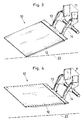
- Loading platform system 10 with auxiliary control unit 19 is first briefly on the representation of the tail lift system 10 acc. 3 to 6 reference, the purely mechanical part of the tail lift system 10 in Cooperation with a stroke actuator 13 and one Show folding actuator 14, i.e. the individual positions, the loading platform 12 attached to a vehicle 11 attached, show.
- the loading platform 12 By means of one stroke actuator 13 or possibly several Lift actuators 13, the loading platform 12 from a lower position on the road surface 23, cf. Fig. 4, in an upper position, cf. 5, raised, where in the raised position the level of the loading platform 12 the height level of the loading area (not shown) corresponds to a vehicle 11.
- the stroke actuator 13 or more stroke actuators 13 is or are also for the controlled lowering of the loading platform 12 a raised position, cf. Fig. 5, in a lowered Position, cf. Fig. 4, responsible. From the lower position acc. Fig.
- the loading platform 12 in which the loading platform 12 is aligned substantially vertically, this can by a folding actuator 14 by a small tilt angle «Be tilted by a few degrees so that the leading edge of the loading platform 12 on the ground or a roadway 23 and thus loads thereon can be moved without thresholds or removed.
- the Folding actuator 14 is also used in a raised position Position of the loading platform 12 acc. Fig. 4 the Loading platform 12 from the horizontal shown there in the vertical, cf. Fig. 6 to fold and thus a closure for the rear end of a loading area to form a vehicle 11 or if that Vehicle 11 with a box-shaped body own rear door is provided to the area to fold the door.
- a loading platform designed as a folding loading platform 12, which no tilt function acc. Figure 6 is not shown separately here, since all movements, a loading platform 12 in the manner described above can perform, with the exception of the pivoting movement of the Horizontal to vertical acc. that shown in FIG End position, also from a folding loading platform trained loading platform can.
- Fig. 1 in which the loading platform 12, a control unit 18, a pressure generating device 21, for example Hydraulic unit with the associated control and Pressure elements is arranged.
- a power supply 24 provides for the operation of the Tail lift system 10 by means of the control unit 18 and the remaining control elements of the tail lift system 10 necessary electrical voltage is ready and is also with the electrical control system of the tail lift system 10 linked.
- At least two foot control members are on the loading platform 12 16 arranged, which in a known manner Raising or lowering the loading platform 12 in the Order of FIGS. 3, 4 and 5 by corresponding Foot actuation of an operator, not shown here control and also in reverse order.
- the control unit 18 is accordingly also suitable electrical control lines with the loading platform 12 or the foot control members 16 of the loading platform 12 connected.
- Manual control elements 15 are located on the control unit 18 provided by which the operator the various, previously described movements of the loading platform 12 acc. 3 to 6 can perform.
- the Movements of the tail lift system according to the invention 10 as shown in the figures and here are or will be described by way of example a combination of electrical control sequences that by means of the various control elements 15, 16 and 17 triggered or controlled and not here shown hydraulic links that directly on the Actuators 14, 15 act, causes them, for example as Piston-cylinder systems designed to the different To cause movements.
- auxiliary control unit 19 integrated, which here consists of several individual Auxiliary controls 22, which is an externally accessible Have actuator 20.
- the auxiliary controls 22 of the auxiliary control unit 19 are such in the control and / or regulating system of the tail lift system 10 integrated that with these at least one Control signal or a control sequence for actuating the Stroke actuator 13 and, if applicable, for actuation of the folding actuator 14 can be generated if
- control elements 15; 16; 17 or the control unit 18 are disturbed in their function, for example caused by a defect in these limbs or due to external Influencing that leads to destruction or dysfunction has led.
- the system may malfunction.
- a repair or Service center can be reached via the Auxiliary control unit 19 according to of the invention at least the Maintain vital functions of the tail lift system 10 become, i.e. by pressing a button dedicated actuator 20 of an associated Auxiliary control element 22 can, for example, alternatively the stroke actuator 13 are still operated so that it, for example, from the Position acc. 3, in which the error persists or for example, the malfunction still occurred in a position at least according to Fig. 4 are transferred can. It is true that driving a vehicle 11 with a gem. 4 horizontally oriented loading platform 12 traffic-related, by suitable safety measures such as warning devices or a vehicle 11 moving behind, the loading platform 12 to the rear securing vehicle to the nearest repair location is driving the vehicle 11 with a restriction Speed possible.
- auxiliary control unit 19 is trained in such a way that, even if in auxiliary operation, virtually all movements of the loading platform 12 in the case a malfunction or a complete failure of the normal Control system of the tail lift system 10 at least can be run once in case any disturbance of being able to move the vehicle 11, i.e. to a repair or maintenance center under your own steam to reach.
- the invention ensures that that all vital functions of the tail lift system 10 in fact in an emergency or auxiliary actuation mode can be exercised.
- auxiliary control unit 19 or one of the actuators 20 of the auxiliary control unit 19 triggerable control signals or control sequences for the different movements of the loading platform 12 in the sense described above is here an electrical control signal or an electrical Control sequence that the intended emergency or Auxiliary vital function in the sense of that described above Movements or movements of the loading platform 12 initiate via the actuators 13 and possibly also 14 or can perform.
- the control system of the tail lift system 10 essentially as described above electrical means is built up, the emergency or auxiliary vital functions by acting directly on the Actuators 13 and possibly 14 by a hydraulic Control signal or a hydraulic control sequence and / or a pneumatic control signal or a pneumatic control sequence. This will depend on the overall structure of the tail lift system 10 and possibly also the size of the tail lift system 10 and the desired type of operability of the Disconnect tailgate system 10.
- auxiliary control unit 19 For a better understanding of the function of the auxiliary control unit 19, by means of which the signal or the signal sequence for the stroke actuator 13 or the folding actuator 14 is generated, is given on the example Technical structure of the auxiliary control unit 19 in FIG. 8 i.V.m. Figures 7 and 1 referenced.
- From the power supply 24 of the vehicle 11 or the tail lift system 10 positive voltage reaches the fuse 190 and from there, not shown in FIG. 8 the control unit 18.
- the auxiliary controls 22 are designed as a button.
- a light emitting diode 191 the after fuse 190 connected there with their anode and with its cathode via a resistor 192 via the auxiliary control element 22 YA at the negative pole Supply voltage is present, lights up when supply voltage is present and that in the negative line of associated valve coil (YA, control element 17) associated Thermal switch Th from motor 193 has not switched (interrupts the current flow). If the LED 191 not glow, there is either no voltage on the positive terminal of the auxiliary control unit 19 is present (Power supply device 24 not connected), or there is a short circuit on the line to Control unit 18 present or the thermal switch Th am Motor 193 has triggered.
- the auxiliary controls 22 YA, Y1, Y3 and KM actuated the positive supply voltage arrives, removed after fuse 190, via the contact of the actuated actuator 20 to the corresponding Valve coil (control elements 17) or the motor contactor (Control element 17) and switches them on electrically.
- the auxiliary controls 22 can thus move the loading platform 12 can be achieved. Should e.g. the loading platform 12 are raised, the auxiliary control element 22 with the designation KM and the auxiliary control element 22 with the Designation Y3 activated.
- the supply voltage arrives now via fuse 190 via the auxiliary control element 22 with the designation KM for the associated motor contactor and via the auxiliary control element 22 labeled Y3 to the corresponding control element 17 (valve) and controls them electrically. Raising the loading platform 12 is running.
- FIG. 9 A functional scheme on that shown in Fig. 9 Housing of the auxiliary control unit 19 indicates which Auxiliary control element 22 or which actuator 20 of the auxiliary control element 22 must be operated to the to achieve the desired movement of the loading platform 12.
- control elements 17 valves, Motor contactor
- the control elements 17 valve coils, Motor contactor
- auxiliary control unit 19 there is the possibility with a voltage measuring device to check whether and what voltage at the respective Control element 17 (valve, motor contactor) is present. So can by means of the auxiliary control unit 19 not just an alternative Raising and lowering or folding from the horizontal into the vertical and vice versa of the loading platform 12 can be achieved, but it can also be These can be used to quickly determine where in the electrical Control system there is an error. Furthermore there is the possibility of a current measurement at this measuring point that can provide information about whether a control element 17, for example a valve coil, a has increased current flow, which, for example short circuit in the coil winding indicates.
- the auxiliary control unit 19 is about the one surrounding it Housing 194, cf. Fig. 9, more suitable and more accessible Job in the area of the pressure generating device 21 (hydraulic unit) arranged and enabled in addition to maintaining the vital functions of the Tail lift system also a relief Checking the electrical functions of the tail lift system 10th
- the electrical connection is made via the terminals 195 of the control, regulation and voltage supply system of the Tail lift system 10 with the auxiliary control unit 19.
- the electrical connections are in Figs. 9 and 10 not shown for reasons of clarity.
- the auxiliary control unit arranged on a printed circuit board for example 19, cf. 7 and 10, is in the Housing 194 inserted so that the actuators 20 with holes 196 formed in the housing 194 aligned. Then the auxiliary control unit 19 comprehensive circuit board in the direction of arrow 197 after pressed on top, so that the circuit board over the two sides protruding into the interior of the housing 194 Can snap projections 198, then the circuit board is firmly accommodated in the housing 194 and the Actuators 22 through the holes 196 of the housing 194 protrude and thus for the triggering of the auxiliary functions of the tail lift system 10 in the foregoing described senses are accessible.
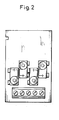
- Control system of the tail lift system 10 can, for example Auxiliary control element 22 designed in the manner of a plug-in card be, cf. Fig. 2, on which a plurality of Actuators 20 is arranged.
- the actuators 20 can, for example, microswitches or sensor switches his.
- the auxiliary control element 22 in Form a so-called "Smart Card”, if necessary can have a user-specific coding, so that in fact only the vital functions of the person Tail lift system 10 in the event of malfunction or Failure of the controller can do that have been authorized.
- This smart card can, for example. also have so-called pin switches, so that the actuators the emergency control unit 19 directly from the Smart Card can be actuated, making an even larger one Security in relation to unauthorized execution of the Vital functions of the tail lift system 10 can be reached is.
Landscapes
- Engineering & Computer Science (AREA)
- Transportation (AREA)
- Mechanical Engineering (AREA)
- Vehicle Step Arrangements And Article Storage (AREA)
Abstract
Description
- Fig. 1
- in einem Blockschaltbild unter teilweiser Darstellung schaltungstechnischer Einzelheiten den Aufbau eines Steuerungssystems im Zusammenwirken mit dem zu steuernden Ladebordwandsystem unter Einschluß einer Hilfssteuereinheit,
- Fig. 2
- sehr schematisch eine auf einer Steckkarte angeordnete Hilfssteuereinheit,
- Fig. 3
- in perspektivischer Darstellung den typischen Aufbau eines mit einem Hubaktuator und einem Klappaktuator versehenen Ladebordwandsystems, das mittels der in den Fig. 1 und 2 dargestellten Elemente gesteuert werden kann einschließlich der Hilfssteuerung zum Erhalt der Vitalfunktionen des Ladebordwandsystems in auf einem Boden bzw. Fahrbahnuntergrund abgesenkter und abgeneigter Stellung,
- Fig. 4
- eine Darstellung gem. Fig. 3, bei dem die Ladebordwand um den möglichen Neigungswinkel α geschwenkt sich in waagerechter bzw. horizontaler Stellung, aber noch abgesenkt, befindet,
- Fig. 5
- eine Darstellung gem. Fig. 3, bei der die Ladebordwand in auf das Niveau einer Ladefläche eines Fahrzeugs angehoben ist,
- Fig. 6
- die Ladebordwand gem. Fig. 3 in aus der Horizontalen gem. Fig. 5 in die Vertikale geklapptem Zustand,
- Fig. 7
- die in Fig. 1 enthaltene Hilfssteuereinheit in größerer Einzelheit auf einer Platine angeordnet,
- Fig. 8
- ein beispielhaft realisierter schaltungstechnischer Aufbau der in den Fig. 1 und 7 dargestellten Hilfssteuereinheit und die beispielhafte Verknüpfung der Hilfssteuereinheit mit den elektromagnetisch betriebenen Hydraulikventilen für den Betrieb des Hubaktuators und des Klappaktuators sowie des den Hydraulikmotor schaltenden elektromagnetischen Ventils bzw. Motorschützes,
- Fig. 9
- in perspektivischer Darstellung die in einem Gehäuse aufgenommene Hilfssteuereinheit, die im Bereich der druckerzeugenden Einrichtung bzw. im Bereich des Hydraulikaggregats angeordnet werden kann, und
- Fig. 10
- in perspektivischer Darstellung die aus dem Gehäuse gem. Fig. 9 herausgezogene, auf einer Leiterplatte gem. Fig. 7 ausgebildete Hilfssteuereinheit.
- 10
- Ladebordwandsystem
- 11
- Fahrzeug
- 12
- Ladeplattform
- 13
- Hubaktuator
- 14
- Klappaktuator
- 15
- Handsteuerglied
- 16
- Fußsteuerglied
- 17
- Steuerglied (sonstiges)
- 18
- Steuereinheit
- 19
- Hilfssteuereinheit
- 190
- Sicherung
- 191
- Leuchtdiode
- 192
- Widerstand
- 193
- Motor
- 194
- Gehäuse
- 195
- Klemme
- 196
- Loch
- 197
- Pfeil
- 198
- Rastvorsprung
- 20
- Betätigungsorgan
- 21
- druckerzeugende Einrichtung (Hydraulikaggregat)
- 22
- Hilfssteuerelement
- 23
- Untergrund/Fahrbahn
- 24
- Spannungsversorgung
- 25
- Schalter mit Indikator
Claims (15)
- Ladebordwandsystem, insbesondere für Fahrzeuge, umfassend eine Ladebordwand zum Heben und Absenken einer Last, ggf. auch zum Klappen aus der Horizontalen in die Vertikale und aus der Vertikalen in die Horizontale, mittels eines Hubaktuators und ggf. eines Klappaktuators, wobei der Hubaktuator und ggf. der Klappaktuator über hand- und/oder fußbetätigbare Steuerglieder, die mit einer Steuereinheit sowie sonstigen Steuergliedern zusammenwirken, zum Heben und Absenken und ggf. zum Klappen der Ladebordwand gesteuert wird bzw. werden, dadurch gekennzeichnet, daß eine Hilfssteuereinrichtung (19) vorgesehen ist, mittels der wenigstens ein Steuersignal oder eine Steuersequenz zum Betrieb des Hubaktuators (13) und ggf. zum Betrieb des Klappaktuators (14) im Falle einer Störung und/oder eines Ausfalls von Steuergliedern (15; 16; 17) und/oder der Steuereinheit (18) und/oder eines Handhabungsfehlers wenigstens zum Erhalt von Vitalfunktionen des Ladebordwandsystems (10) erzeugbar ist.
- Ladebordwandsystem nach Anspruch 1, dadurch gekennzeichnet, daß die Vitalfunktion wenigstens das Anheben der Ladeplattform (12) umfaßt.
- Ladebordwandsystem nach Anspruch 1, dadurch gekennzeichnet, daß die Vitalfunktion wenigstens das Klappen der Ladeplattform (12) aus der Horizontalen in die Vertikale umfaßt.
- Ladebordwandsystem nach einem oder mehreren der Ansprüche 1 bis 3, dadurch gekennzeichnet, daß das Steuersignal oder die Steuersequenz ein elektrisches Steuersignal oder eine elektrische Steuersequenz ist.
- Ladebordwandsystem nach einem oder mehreren der Ansprüche 1 bis 3, dadurch gekennzeichnet, daß das Steuersignal oder die Steuersequenz ein hydraulisches Steuersignal oder eine hydraulische Steuersequenz ist.
- Ladebordwandsystem nach einem oder mehreren der Ansprüche 1 bis 3, dadurch gekennzeichnet, daß das Steuersignal oder die Steuersequenz ein pneumatisches Steuersignal oder eine pneumatische Steuersequenz ist.
- Ladebordwandsystem nach einem oder mehreren der Ansprüche 1 bis 4, dadurch gekennzeichnet, daß das Steuersignal oder die Steuersequenz mittels eines elektrischen Betätigungsorgans (20) ausgelöst wird.
- Ladebordwandsystem nach einem oder mehreren der Ansprüche 1 bis 7, dadurch gekennzeichnet, daß die Hilfssteuereinheit (19) fest in dessen Steuer- und Regelsystem integriert ist.
- Ladebordwandsystem nach einem oder mehreren der Ansprüche 1 bis 8, dadurch gekennzeichnet, daß die Hilfssteuereinheit (19) im Bereich der druckerzeugenden Einrichtung (21) für die Betätigung des Hubaktuators(13) und ggf. des Klappaktuators (14) angeordnet ist.
- Ladebordwandsystem nach einem oder mehreren der Ansprüche 1 bis 9, dadurch gekennzeichnet, daß die Hilfssteuereinheit (19) in Form eines aus dem bzw. in das Steuer- und Regelsystem herausnehmbaren bzw. einsetzbaren Hilfssteuerelementes (22) ausgebildet ist.
- Ladebordwandsystem nach Anspruch 10, dadurch gekennzeichnet, daß das Hilfssteuerelement (22) nach Art einer Steckkarte ausgebildet ist.
- Ladebordwandsystem nach einem oder mehreren der Ansprüche 8 bis 11, dadurch gekennzeichnet, daß das Betätigungsorgan (20) ein Mikroschalter ist.
- Ladebordwandsystem nach einem oder mehreren der Ansprüche 8 bis 11, dadurch gekennzeichnet, daß das Betätigungsorgan (20) ein Sensorschalter ist.
- Ladebordwandsystem nach einem oder mehreren der Ansprüche 1 bis 13, dadurch gekennzeichnet, daß die Hilfssteuereinheit (19) nach Art einer einsteckbaren und herausnehmbaren Smart-Card ausgebildet ist.
- Ladebordwandsystem nach einem oder mehreren der Ansprüche 8 bis 11, dadurch gekennzeichnet, daß das Betätigungsorgan (20) in Form einer numerischen oder ggf. alpha-numerischen Tastatur ausgebildet ist.
Priority Applications (1)
| Application Number | Priority Date | Filing Date | Title |
|---|---|---|---|
| EP01105721A EP1238855A1 (de) | 2001-03-07 | 2001-03-07 | Ladebordwandsystem für Fahrzeuge |
Applications Claiming Priority (1)
| Application Number | Priority Date | Filing Date | Title |
|---|---|---|---|
| EP01105721A EP1238855A1 (de) | 2001-03-07 | 2001-03-07 | Ladebordwandsystem für Fahrzeuge |
Publications (1)
| Publication Number | Publication Date |
|---|---|
| EP1238855A1 true EP1238855A1 (de) | 2002-09-11 |
Family
ID=8176715
Family Applications (1)
| Application Number | Title | Priority Date | Filing Date |
|---|---|---|---|
| EP01105721A Withdrawn EP1238855A1 (de) | 2001-03-07 | 2001-03-07 | Ladebordwandsystem für Fahrzeuge |
Country Status (1)
| Country | Link |
|---|---|
| EP (1) | EP1238855A1 (de) |
Cited By (1)
| Publication number | Priority date | Publication date | Assignee | Title |
|---|---|---|---|---|
| DE102006048162B4 (de) | 2006-09-06 | 2018-12-27 | Wüllhorst GmbH & Co. Kommanditgesellschaft | Transportfahrzeug mit Ladefläche und Hubladebühne |
Citations (4)
| Publication number | Priority date | Publication date | Assignee | Title |
|---|---|---|---|---|
| WO1995003951A1 (en) * | 1993-08-02 | 1995-02-09 | Ralph Edward Gray | Dual power pack for double acting tailgate lifts |
| DE29616247U1 (de) * | 1996-09-18 | 1997-03-06 | Metec Metallbautechnik GmbH i.G., 39167 Irxleben | Steuerung / Steuerlogik / Schaltungen von Hubladebühnen |
| DE29722334U1 (de) * | 1997-12-12 | 1998-06-18 | Sörensen Hydraulik GmbH, 21031 Hamburg | Ladebordwandsystem mit Überlastschutz |
| WO1998040239A1 (de) * | 1997-03-07 | 1998-09-17 | Gisela Weber | Steuervorrichtung für hydraulische arbeitszylinder |
-
2001
- 2001-03-07 EP EP01105721A patent/EP1238855A1/de not_active Withdrawn
Patent Citations (4)
| Publication number | Priority date | Publication date | Assignee | Title |
|---|---|---|---|---|
| WO1995003951A1 (en) * | 1993-08-02 | 1995-02-09 | Ralph Edward Gray | Dual power pack for double acting tailgate lifts |
| DE29616247U1 (de) * | 1996-09-18 | 1997-03-06 | Metec Metallbautechnik GmbH i.G., 39167 Irxleben | Steuerung / Steuerlogik / Schaltungen von Hubladebühnen |
| WO1998040239A1 (de) * | 1997-03-07 | 1998-09-17 | Gisela Weber | Steuervorrichtung für hydraulische arbeitszylinder |
| DE29722334U1 (de) * | 1997-12-12 | 1998-06-18 | Sörensen Hydraulik GmbH, 21031 Hamburg | Ladebordwandsystem mit Überlastschutz |
Cited By (1)
| Publication number | Priority date | Publication date | Assignee | Title |
|---|---|---|---|---|
| DE102006048162B4 (de) | 2006-09-06 | 2018-12-27 | Wüllhorst GmbH & Co. Kommanditgesellschaft | Transportfahrzeug mit Ladefläche und Hubladebühne |
Similar Documents
| Publication | Publication Date | Title |
|---|---|---|
| DE69717690T2 (de) | Gerät und Verfahren zum Steuern eines Scherenhebers | |
| DE19944873C1 (de) | Steueranlage zum Heben und Senken des Fahrzeugaufbaus von luftgefederten Fahrzeugen mit Niveauregelung | |
| DE102004035691B4 (de) | Luftfederungseinrichtung für ein Fahrzeug | |
| WO2017076893A1 (de) | Pneumatische bremseinrichtung für ein nutzfahrzeug | |
| WO2009039908A1 (de) | Ventileinrichtung für eine luftfederungsanlage | |
| DE10104188A1 (de) | Antriebssteuerung für eine Antriebsmotoranordnung einer Anhängerkupplung | |
| WO2017076892A1 (de) | Pneumatische bremseinrichtung | |
| EP0890463A2 (de) | Verfahren zum Ändern der Höhenlage wenigstens eines Bereiches eines Fahrzeugaufbaues | |
| DE102007056349B4 (de) | Fahrzeugtüranlage | |
| EP1225068A2 (de) | Anhängerkupplung mit Anhängererkennung | |
| DE102008039754A1 (de) | Anlage zum Heben und Senken eines Fahrzeugaufbaus | |
| DE20103868U1 (de) | Ladebordwandsystem für Fahrzeuge | |
| EP1238855A1 (de) | Ladebordwandsystem für Fahrzeuge | |
| DE4430568B4 (de) | Hubladebühne für ein Lastfahrzeug | |
| EP1123835B1 (de) | Steuereinheit für Ladebordwandsysteme | |
| DE3141701A1 (de) | Vorrichtung zum reservieren eines parkplatzes mit einer zwischen einer die zufahrt sperrenden sperrstellung und einer die zufahrt freigebenden offenstellung gesteuert bewegbaren absperreinrichtung | |
| DE102017004719A1 (de) | Vorrichtung für einen gesicherten Bereich in einem Aufzugschacht | |
| DE4120837C2 (de) | ||
| DE4441003A1 (de) | Hydrauliksystem | |
| DE19938071B4 (de) | Schienenfahrzeug | |
| DE20309190U1 (de) | Elektrohydraulische Steuervorrichtung und Hebezeug | |
| DE69302766T2 (de) | Zentrale Steuereinrichtung für betätigbare Aufstellstützen eines Brandschutzfahrzeuges mit Drehleiter oder dergleichen | |
| DE69723281T2 (de) | Niveauregeleinrichtung | |
| EP1010575B1 (de) | Ladebordwandsystem mit wenigstens einem Hubaktuator | |
| DE102006008158A1 (de) | Luftfederungseinrichtung für ein Kraftfahrzeug mit Luftfederbälgen |
Legal Events
| Date | Code | Title | Description |
|---|---|---|---|
| PUAI | Public reference made under article 153(3) epc to a published international application that has entered the european phase |
Free format text: ORIGINAL CODE: 0009012 |
|
| AK | Designated contracting states |
Kind code of ref document: A1 Designated state(s): AT BE CH CY DE DK ES FI FR GB GR IE IT LI LU MC NL PT SE TR |
|
| AX | Request for extension of the european patent |
Free format text: AL PAYMENT 20010331;LT PAYMENT 20010331;LV PAYMENT 20010331;MK PAYMENT 20010331;RO PAYMENT 20010331;SI PAYMENT 20010331 |
|
| 17P | Request for examination filed |
Effective date: 20030204 |
|
| AKX | Designation fees paid |
Designated state(s): AT BE CH CY DE DK ES FI FR GB GR IE IT LI LU MC NL PT SE TR |
|
| AXX | Extension fees paid |
Extension state: SI Payment date: 20010331 Extension state: AL Payment date: 20010331 Extension state: RO Payment date: 20010331 Extension state: MK Payment date: 20010331 Extension state: LV Payment date: 20010331 Extension state: LT Payment date: 20010331 |
|
| 17Q | First examination report despatched |
Effective date: 20050215 |
|
| STAA | Information on the status of an ep patent application or granted ep patent |
Free format text: STATUS: THE APPLICATION IS DEEMED TO BE WITHDRAWN |
|
| 18D | Application deemed to be withdrawn |
Effective date: 20060426 |