EP1237114A2 - Probe designing method and information processing apparatus - Google Patents
Probe designing method and information processing apparatus Download PDFInfo
- Publication number
- EP1237114A2 EP1237114A2 EP02251415A EP02251415A EP1237114A2 EP 1237114 A2 EP1237114 A2 EP 1237114A2 EP 02251415 A EP02251415 A EP 02251415A EP 02251415 A EP02251415 A EP 02251415A EP 1237114 A2 EP1237114 A2 EP 1237114A2
- Authority
- EP
- European Patent Office
- Prior art keywords
- base sequence
- probe
- partial
- partial base
- evaluation
- Prior art date
- Legal status (The legal status is an assumption and is not a legal conclusion. Google has not performed a legal analysis and makes no representation as to the accuracy of the status listed.)
- Withdrawn
Links
Images



Classifications
-
- G—PHYSICS
- G16—INFORMATION AND COMMUNICATION TECHNOLOGY [ICT] SPECIALLY ADAPTED FOR SPECIFIC APPLICATION FIELDS
- G16B—BIOINFORMATICS, i.e. INFORMATION AND COMMUNICATION TECHNOLOGY [ICT] SPECIALLY ADAPTED FOR GENETIC OR PROTEIN-RELATED DATA PROCESSING IN COMPUTATIONAL MOLECULAR BIOLOGY
- G16B25/00—ICT specially adapted for hybridisation; ICT specially adapted for gene or protein expression
-
- G—PHYSICS
- G16—INFORMATION AND COMMUNICATION TECHNOLOGY [ICT] SPECIALLY ADAPTED FOR SPECIFIC APPLICATION FIELDS
- G16B—BIOINFORMATICS, i.e. INFORMATION AND COMMUNICATION TECHNOLOGY [ICT] SPECIALLY ADAPTED FOR GENETIC OR PROTEIN-RELATED DATA PROCESSING IN COMPUTATIONAL MOLECULAR BIOLOGY
- G16B25/00—ICT specially adapted for hybridisation; ICT specially adapted for gene or protein expression
- G16B25/20—Polymerase chain reaction [PCR]; Primer or probe design; Probe optimisation
Definitions
- One superior advantage of this embodiment is that the discrimination tree codes a partial base sequence having an arbitrary length, so the process of selecting probe candidates having lengths within a certain range or having melting temperatures within a certain range can be performed at very high speed.
- a set of base sequences as probe candidates is divided into a plurality of subsets, in order to prevent a redundant probe set from being chosen.
- Information indicating the specificity of a probe can be expressed by a bit string which indicates whether the probe is contained in individual base sequence types. For example, if t base sequence types are present, the specificity of a probe can be expressed by t-bit information. Assuming that a bit is set to 1 if a base sequence type contains a probe and set to 0 if not, a probe contained in all base sequence types is expressed by the value of t bits all of which are 1. When probes having different t-bit strings are divided into different groups, subsets each reflecting the specificity of a probe are formed.
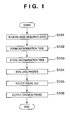
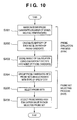
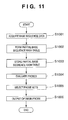
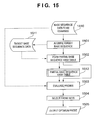
- step S1004 a probe evaluation process is executed to evaluate whether each probe candidate present in the partial base sequence table is adequate as a probe.
- step S1005 probe set selection is performed to select an optimum probe as a final outcome on the basis of the probe evaluation results.
- step S1006 the optimum probe obtained as a final outcome is output.
- the input is target base sequence data
- the output is a probe suited to be mounted on a microarray.
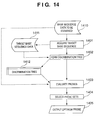
- probe candidates are selected using a hash table. This increases the simplicity and rapidness of the processing.
- step S1401 a target base sequence 1411 containing all base sequences which can exist in a specimen is acquired.
- a base sequence 1410 to be examined is contained in this target base sequence 1411.
- this target base sequence 1411 is a base sequence set 1301 containing a base sequence 1302 to be examined as shown in Fig. 13.
Landscapes
- Health & Medical Sciences (AREA)
- Life Sciences & Earth Sciences (AREA)
- Physics & Mathematics (AREA)
- Bioinformatics & Computational Biology (AREA)
- Evolutionary Biology (AREA)
- Biophysics (AREA)
- Genetics & Genomics (AREA)
- Molecular Biology (AREA)
- Engineering & Computer Science (AREA)
- Bioinformatics & Cheminformatics (AREA)
- Theoretical Computer Science (AREA)
- Biotechnology (AREA)
- Spectroscopy & Molecular Physics (AREA)
- General Health & Medical Sciences (AREA)
- Medical Informatics (AREA)
- Chemical Kinetics & Catalysis (AREA)
- Chemical & Material Sciences (AREA)
- Measuring Or Testing Involving Enzymes Or Micro-Organisms (AREA)
- Apparatus Associated With Microorganisms And Enzymes (AREA)
- Information Retrieval, Db Structures And Fs Structures Therefor (AREA)
Abstract
Description

Claims (52)
- A probe designing method of designing a base sequence to be used as a probe which is hybridized with an unknown nucleic acid fragment to perform gene analysis, comprising:the generation step of generating a tree in which a plurality of partial base sequences obtained on the basis of a target base sequence is arranged on nodes;the evaluation step of evaluating the suitability as a probe of a partial base sequence represented by a desired node, on the basis of partial base sequences indicated by nodes present on that path on the tree, which is connected to the desired node; andthe determination step of determining a partial base sequence to be used as a probe on the basis of the evaluation result in the evaluation step.
- The method according to claim 1, wherein the plurality of partial base sequences in the generation step are partial base sequences obtained from a complementary base sequence of the target base sequence.
- The method according to claim 1, wherein
the plurality of partial base sequences in the generation step are partial base sequences obtained from the target base sequence, and
the determination step comprises selecting a partial base sequence on the basis of the evaluation result in the evaluation step, and determining a complementary base sequence of the selected partial base sequence as a partial base sequence to be used as a probe. - The method according to any one of claims 1 to 3, wherein the generation step comprises generating a tree for typing all partial base sequences obtained on the basis of the target base sequence.
- The method according to any one of claims 1 to 3, wherein the evaluation step comprises introducing an evaluation function which, when a base sequence whose specificity with respect to the target changes exists near the center of a partial base sequence represented by the desired node, evaluates that the partial base sequence is adequate as a probe.
- The method according to any one of claims 1 to 3, wherein the evaluation step comprises calculating the entropy of each node present on the path on the basis of the number of times of appearance, in the target, of a partial base sequence corresponding to the node, and performing evaluation on the basis of a decrease of the calculated entropy.
- The method according to claim 6, wherein the evaluation step comprises introducing an evaluation function which attaches importance to a change in the entropy near the center of a partial base sequence corresponding to the desired node.
- The method according to claim 5 or 7, wherein the determination step comprises determining, as a probe, a partial base sequence corresponding to a node whose value calculated by the evaluation function in the evaluation step exceeds a predetermined value.
- The method according to claim 6, wherein the determination step comprises determining, as a probe, a partial base sequence corresponding to a node whose change in the entropy exceeds a predetermined value.
- The method according to any one of claims 1 to 9, further comprising the grouping step of grouping the plurality of partial base sequences in accordance with specificity with respect to the target base sequence,
wherein the determination step comprises determining a partial base sequence to be used as a probe from each group on the basis of the evaluation result in the evaluation step. - The method according to any one of claims 1 to 9, further comprising:wherein the determination step comprises determining a partial base sequence to be used as a probe, from each group selected in the selecting step, on the basis of the evaluation result in the evaluation step.the grouping step of grouping the plurality of partial base sequences in accordance with specificity with respect to the target base sequence; andthe selecting step of selecting a group having specificity appropriate as a probe from groups obtained in the grouping step,
- The method according to claim 11, wherein the selecting step comprises selecting only a necessary and sufficient group completely independent in terms of information.
- The method according to claim 11, wherein the selecting step comprises eliminating at least a group having no specificity with respect to all targets to be analyzed.
- The method according to claim 11, wherein the evaluation step comprises evaluating partial base sequences in a group selected in the selecting step.
- The method according to any one of claims 10 to 14,
wherein
the target contains a plurality of base sequence patterns, and
the grouping step comprises assigning, to the same group, partial base sequences which react or do not react identically with each of the plurality of base sequence patterns. - The method according to any one of claims 1 to 15, wherein in the tree, the base sequence order of partial base sequences represented by node connections is consistent with the base sequence order in the target.
- The method according to any one of claims 1 to 15, wherein in the tree, the base sequence order of partial base sequences represented by node connections is changed such that the central one of corresponding partial base sequences in the target is the first one.
- The method according to any one of claims 1 to 17, wherein the evaluation step comprises evaluating only a partial base sequence having a length within a previously designated range.
- The method according to any one of claims 1 to 17, wherein the evaluation step comprises evaluating only a partial base sequence meeting a melting temperature condition within a previously designated range.
- The method according to any one of claims 1 to 17, wherein the determination step comprises determining a partial base sequence as a probe, from partial base sequences having lengths within a previously designated range, on the basis of the evaluation result in the evaluation step.
- The method according to any one of claims 1 to 17, wherein the determination step comprises determining a partial base sequence as a probe, from partial base sequences meeting a melting temperature condition within a previously designated range, on the basis of the evaluation result in the evaluation step.
- A probe designing method of designing a base sequence to be used as a probe which is hybridized with an unknown nucleic acid fragment to perform gene analysis, comprising:the generation step of generating a partial base sequence hash table for typing partial base sequences obtained on the basis of a target base sequence and having a specific length;the evaluation step of evaluating the suitability as a probe of a partial base sequence present in the base sequence hash table, on the basis of the base sequence thereof; andthe determination step of determining a partial base sequence to be used as a probe on the basis of the evaluation result in the evaluation step.
- The method according to claim 22, wherein the partial base sequences in the generation step are partial base sequences obtained from a complementary base sequence of the target base sequence.
- The method according to claim 22, wherein
the partial base sequences in the generation step are partial base sequences obtained from the target base sequence, and
the determination step comprises selecting a partial base sequence on the basis of the evaluation result in the evaluation step, and determining a complementary base sequence of the selected partial base sequence as a partial base sequence to be used as a probe. - The method according to any one of claims 22 to 24, wherein the generation step comprises generating a plurality of hash tables in accordance with partial base sequences having different lengths.
- The method according to any one of claims 22 to 24, wherein the evaluation step comprises introducing an evaluation function which, when a base sequence whose specificity with respect to the target changes exists near the center of a partial base sequence, evaluates that the partial base sequence is adequate as a probe.
- The method according to any one of claims 22 to 25, wherein
a plurality of targets exist, and
the evaluation step comprises obtaining a specific position at which base sequences are different between a plurality of base sequences of the plurality of targets, and evaluating the suitability as a probe on the basis of the specific position in a partial base sequence registered in the hash table. - The method according to claim 27, wherein the evaluation step comprises checking whether the specific position is in the center of a base sequence, in order to evaluate the suitability as a probe.
- The method according to claim 26, wherein the determination step comprises selecting a probe whose value calculated by the evaluation function in the evaluation step exceeds a predetermined value.
- The method according to any one of claims 22 to 29, further comprising the grouping step of grouping the plurality of partial base sequences in accordance with specificity with respect to the target,
wherein the determination step comprises determining a partial base sequence to be used as a probe from each group on the basis of the evaluation result in the evaluation step. - The method according to any one of claims 22 to 29, further comprising:wherein the determination step comprises determining a partial base sequence to be used as a probe, from each group selected in the selecting step, on the basis of the evaluation result in the evaluation step.the grouping step of grouping the plurality of partial base sequences in accordance with specificity with respect to the target; andthe selecting step of selecting a group having specificity appropriate as a probe from groups obtained in the grouping step,
- The method according to claim 31, wherein the selecting step comprises selecting only a necessary and sufficient group completely independent in terms of information.
- The method according to claim 31, wherein the selecting step comprises eliminating at least a group having no specificity with respect to a plurality of targets to be analyzed.
- The method according to claim 31, wherein the evaluation step comprises evaluating partial base sequences in a group selected in the selecting step.
- The method according to any one of claims 30 to 34,
wherein
the target contains a plurality of base sequence patterns, and
the grouping step comprises assigning, to the same group, partial base sequences which react or do not react identically with each of the plurality of base sequence patterns. - The method according to any one of claims 22 to 35, wherein the evaluation step comprises evaluating only a partial base sequence meeting a melting temperature condition within a previously designated range.
- The method according to any one of claims 22 to 35, wherein the determination step comprises determining a partial base sequence as a probe, from partial base sequences meeting a melting temperature condition within a previously designated range, on the basis of the evaluation result in the evaluation step.
- A probe designing method of designing a base sequence to be used as a probe which is hybridized with an unknown nucleic acid fragment to perform gene analysis, comprising:the generation step of generating a discrimination tree for typing a list of a plurality of partial base sequences obtained from target base sequence data;the evaluation step of evaluating the suitability as a probe of a probe candidate present in the discrimination tree; andthe selecting step of selecting a probe to be used on the basis of the evaluation result in the evaluation step.
- The method according to claim 38, wherein the target base sequence data contains all base sequences which can exist in a specimen.
- The method according to claim 38, wherein the target base sequence data contains all base sequences which can exist in a specimen and a specific base sequence.
- The method according to claim 40, wherein the evaluation step comprises evaluating a probe candidate formed by a partial sequence of the specific base sequence.
- A probe designing method of designing a base sequence to be used as a probe which is hybridized with an unknown nucleic acid fragment to perform gene analysis, comprising:the generation step of generating a partial base sequence hash table for typing a list of a plurality of partial base sequences obtained from target base sequence data and having a specific length;the evaluation step of evaluating the suitability as a probe of a probe candidate present in the partial base sequence hash table; andthe selecting step of selecting a probe to be used on the basis of the evaluation result in the evaluation step.
- The method according to claim 42, wherein the target base sequence data contains all base sequences which can exist in a specimen.
- The method according to claim 42, wherein the target base sequence data contains all base sequences which can exist in a specimen and a specific base sequence.
- The method according to claim 44, wherein the evaluation step comprises evaluating a probe candidate formed by a partial sequence of the specific base sequence.
- An information processing apparatus for realizing the probe designing method according to any one of claims 1 to 45.
- A program for allowing a computer to realize the probe designing method according to any one of claims 1 to 45.
- A storage medium storing a program for allowing a computer to realize the probe designing method according to any one of claims 1 to 45.
- A DNA microarray comprising a base probe determined by using the probe designing method according to any one of claims 1 to 45.
- A gene inspecting apparatus comprising a base probe determined by using the probe designing method according to any one of claims 1 to 45.
- A method of manufacturing a probe array for hybridizing with nucleic acid fragments, the method comprising:obtaining base sequence data of a target or targets;providing discrimination means formed on the basis of the obtained base sequence data;storing the discrimination means in storage means;evaluating probe candidates in the discrimination means to determine their adequacy as probes;selecting a set of optimum probes on the basis of said evaluation; andplacing on a substrate a probe array having the optimum probes selected in said selecting step.
- A method as claimed in claim 51 wherein the discrimination means is a discrimination tree or a hash table.
Applications Claiming Priority (4)
| Application Number | Priority Date | Filing Date | Title |
|---|---|---|---|
| JP2001055465 | 2001-02-28 | ||
| JP2001055465 | 2001-02-28 | ||
| JP2002023953 | 2002-01-31 | ||
| JP2002023953A JP4109873B2 (en) | 2001-02-28 | 2002-01-31 | Probe design method and information processing apparatus |
Publications (2)
| Publication Number | Publication Date |
|---|---|
| EP1237114A2 true EP1237114A2 (en) | 2002-09-04 |
| EP1237114A3 EP1237114A3 (en) | 2005-12-28 |
Family
ID=26610355
Family Applications (1)
| Application Number | Title | Priority Date | Filing Date |
|---|---|---|---|
| EP20020251415 Withdrawn EP1237114A3 (en) | 2001-02-28 | 2002-02-28 | Probe designing method and information processing apparatus |
Country Status (3)
| Country | Link |
|---|---|
| US (1) | US7254488B2 (en) |
| EP (1) | EP1237114A3 (en) |
| JP (1) | JP4109873B2 (en) |
Cited By (1)
| Publication number | Priority date | Publication date | Assignee | Title |
|---|---|---|---|---|
| EP1634959A3 (en) * | 2004-09-14 | 2006-03-22 | Samsung Electronics Co.,Ltd. | Method of designing probe set, microarray using it, and computer readable medium with a program for executing the said method |
Families Citing this family (2)
| Publication number | Priority date | Publication date | Assignee | Title |
|---|---|---|---|---|
| JPWO2004079627A1 (en) * | 2003-03-07 | 2006-06-08 | 株式会社ダイナコム | Method for selecting an action element to identify a gene |
| JP2005190427A (en) | 2003-12-26 | 2005-07-14 | Canon Inc | Method for extracting a set of mutation elements to identify a sequence |
Family Cites Families (6)
| Publication number | Priority date | Publication date | Assignee | Title |
|---|---|---|---|---|
| US4621321A (en) * | 1984-02-16 | 1986-11-04 | Honeywell Inc. | Secure data processing system architecture |
| US5556749A (en) * | 1992-11-12 | 1996-09-17 | Hitachi Chemical Research Center, Inc. | Oligoprobe designstation: a computerized method for designing optimal DNA probes |
| US6600996B2 (en) | 1994-10-21 | 2003-07-29 | Affymetrix, Inc. | Computer-aided techniques for analyzing biological sequences |
| JPH08317790A (en) | 1995-05-24 | 1996-12-03 | Toagosei Co Ltd | Method for analyzing stability of oligoribonucleotide / oligodeoxyribonucleotide complementary base pair structure |
| JP4313861B2 (en) | 1997-08-01 | 2009-08-12 | キヤノン株式会社 | Manufacturing method of probe array |
| US6251588B1 (en) * | 1998-02-10 | 2001-06-26 | Agilent Technologies, Inc. | Method for evaluating oligonucleotide probe sequences |
-
2002
- 2002-01-31 JP JP2002023953A patent/JP4109873B2/en not_active Expired - Fee Related
- 2002-02-22 US US10/081,554 patent/US7254488B2/en not_active Expired - Fee Related
- 2002-02-28 EP EP20020251415 patent/EP1237114A3/en not_active Withdrawn
Cited By (4)
| Publication number | Priority date | Publication date | Assignee | Title |
|---|---|---|---|---|
| EP1634959A3 (en) * | 2004-09-14 | 2006-03-22 | Samsung Electronics Co.,Ltd. | Method of designing probe set, microarray using it, and computer readable medium with a program for executing the said method |
| KR100682891B1 (en) | 2004-09-14 | 2007-02-15 | 삼성전자주식회사 | A method of designing a set of probes, a microarray having a substrate on which the probe designed is immobilized, and a computer readable medium having recorded thereon a program for a computer to perform the method |
| US7657381B2 (en) | 2004-09-14 | 2010-02-02 | Samsung Electronics Co., Ltd. | Method of designing probe set, microarray having substrate on which probe designed by the method is immobilized, and computer readable medium on which program for executing the method is recorded |
| CN1782097B (en) * | 2004-09-14 | 2010-05-12 | 三星电子株式会社 | Methods for designing probe sets and their use in microarrays |
Also Published As
| Publication number | Publication date |
|---|---|
| JP2003000280A (en) | 2003-01-07 |
| US7254488B2 (en) | 2007-08-07 |
| EP1237114A3 (en) | 2005-12-28 |
| US20030008303A1 (en) | 2003-01-09 |
| JP4109873B2 (en) | 2008-07-02 |
Similar Documents
| Publication | Publication Date | Title |
|---|---|---|
| EP3539035B1 (en) | Methods for expression profile classification | |
| JP2007054070A (en) | Technique for synthesis integrity evaluation utilizing cycle fidelity probe | |
| WO2003034270A1 (en) | Method and apparatus for identifying diagnostic components of a system | |
| AU2002332967A1 (en) | Method and apparatus for identifying diagnostic components of a system | |
| US20070143031A1 (en) | Method of analyzing a bio chip | |
| JP5051126B2 (en) | Individual identification method and apparatus | |
| US7254488B2 (en) | Probe designing method and information processing apparatus | |
| Romualdi et al. | Improved detection of differentially expressed genes in microarray experiments through multiple scanning and image integration | |
| Wu et al. | A single-molecule long-read survey of human transcriptomes using LoopSeq synthetic long read sequencing | |
| EP1134687A2 (en) | Method for displaying results of hybridization experiments | |
| JP2006092478A (en) | Gene expression profile search device, gene expression profile search method and program | |
| US7848890B2 (en) | Method and system for predicting gene pathway using gene expression pattern data and protein interaction data | |
| KR101906970B1 (en) | Method and apparatus for analyzing nucleic acid sequence using distributed processing, Distributed processing system for analyzing nucleic acid sequence | |
| US20160378914A1 (en) | Method of and apparatus for identifying phenotype-specific gene network using gene expression data | |
| KR20050096044A (en) | A method for analyzing function of gene | |
| JP7554835B2 (en) | Design method for dividing primer pairs into reaction vessels, method for amplifying target nucleic acid, tube set, list of primer pairs, and program for dividing primer pairs into reaction vessels | |
| KR100772435B1 (en) | Method and apparatus for determining gene expression levels | |
| JP5129809B2 (en) | Haplotype estimation apparatus and program | |
| Preparata | Sequencing-by-hybridization revisited: the analog-spectrum proposal | |
| KR101879329B1 (en) | RNA-seq expression data simulation method for differential gene expression analysis, and recording medium thereof | |
| EP1239398A2 (en) | Method, system and computer program product for identifying conditional associations among structures in samples | |
| JP4991287B2 (en) | Specific nucleotide sequence search method | |
| JP2003000280A5 (en) | ||
| WO2023171482A1 (en) | Method, device, and program | |
| Weir et al. | Sample barcoding-associated technical variation in probe-based single-cell RNA sequencing |
Legal Events
| Date | Code | Title | Description |
|---|---|---|---|
| PUAI | Public reference made under article 153(3) epc to a published international application that has entered the european phase |
Free format text: ORIGINAL CODE: 0009012 |
|
| AK | Designated contracting states |
Kind code of ref document: A2 Designated state(s): AT BE CH CY DE DK ES FI FR GB GR IE IT LI LU MC NL PT SE TR |
|
| AX | Request for extension of the european patent |
Free format text: AL;LT;LV;MK;RO;SI |
|
| PUAL | Search report despatched |
Free format text: ORIGINAL CODE: 0009013 |
|
| AK | Designated contracting states |
Kind code of ref document: A3 Designated state(s): AT BE CH CY DE DK ES FI FR GB GR IE IT LI LU MC NL PT SE TR |
|
| AX | Request for extension of the european patent |
Extension state: AL LT LV MK RO SI |
|
| 17P | Request for examination filed |
Effective date: 20060628 |
|
| AKX | Designation fees paid |
Designated state(s): DE FR GB |
|
| 17Q | First examination report despatched |
Effective date: 20080409 |
|
| STAA | Information on the status of an ep patent application or granted ep patent |
Free format text: STATUS: THE APPLICATION HAS BEEN WITHDRAWN |
|
| 18W | Application withdrawn |
Effective date: 20151116 |