EP1235773B1 - Process for vinyl chloride manufacture from ethane and ethylene with partial hcl recovery from reactor effluent - Google Patents
Process for vinyl chloride manufacture from ethane and ethylene with partial hcl recovery from reactor effluent Download PDFInfo
- Publication number
- EP1235773B1 EP1235773B1 EP00976557A EP00976557A EP1235773B1 EP 1235773 B1 EP1235773 B1 EP 1235773B1 EP 00976557 A EP00976557 A EP 00976557A EP 00976557 A EP00976557 A EP 00976557A EP 1235773 B1 EP1235773 B1 EP 1235773B1
- Authority
- EP
- European Patent Office
- Prior art keywords
- stream
- reactor
- hydrogen chloride
- ethane
- ethylene
- Prior art date
- Legal status (The legal status is an assumption and is not a legal conclusion. Google has not performed a legal analysis and makes no representation as to the accuracy of the status listed.)
- Expired - Lifetime
Links
- BZHJMEDXRYGGRV-UHFFFAOYSA-N Vinyl chloride Chemical compound ClC=C BZHJMEDXRYGGRV-UHFFFAOYSA-N 0.000 title claims description 114
- OTMSDBZUPAUEDD-UHFFFAOYSA-N Ethane Chemical compound CC OTMSDBZUPAUEDD-UHFFFAOYSA-N 0.000 title claims description 108
- VGGSQFUCUMXWEO-UHFFFAOYSA-N Ethene Chemical compound C=C VGGSQFUCUMXWEO-UHFFFAOYSA-N 0.000 title claims description 108
- 239000005977 Ethylene Substances 0.000 title claims description 108
- 238000000034 method Methods 0.000 title claims description 84
- 238000004519 manufacturing process Methods 0.000 title claims description 43
- 230000008569 process Effects 0.000 title description 61
- 238000011084 recovery Methods 0.000 title description 19
- VEXZGXHMUGYJMC-UHFFFAOYSA-N Hydrochloric acid Chemical compound Cl VEXZGXHMUGYJMC-UHFFFAOYSA-N 0.000 claims description 153
- IXCSERBJSXMMFS-UHFFFAOYSA-N hydrogen chloride Substances Cl.Cl IXCSERBJSXMMFS-UHFFFAOYSA-N 0.000 claims description 114
- 229910000041 hydrogen chloride Inorganic materials 0.000 claims description 114
- 239000003054 catalyst Substances 0.000 claims description 103
- WSLDOOZREJYCGB-UHFFFAOYSA-N 1,2-Dichloroethane Chemical compound ClCCCl WSLDOOZREJYCGB-UHFFFAOYSA-N 0.000 claims description 65
- 239000000460 chlorine Substances 0.000 claims description 61
- ZAMOUSCENKQFHK-UHFFFAOYSA-N Chlorine atom Chemical compound [Cl] ZAMOUSCENKQFHK-UHFFFAOYSA-N 0.000 claims description 57
- 229910052801 chlorine Inorganic materials 0.000 claims description 57
- 239000000203 mixture Substances 0.000 claims description 47
- 229910052761 rare earth metal Inorganic materials 0.000 claims description 40
- XLYOFNOQVPJJNP-UHFFFAOYSA-N water Substances O XLYOFNOQVPJJNP-UHFFFAOYSA-N 0.000 claims description 35
- 239000000463 material Substances 0.000 claims description 24
- 229910052684 Cerium Inorganic materials 0.000 claims description 22
- QVGXLLKOCUKJST-UHFFFAOYSA-N atomic oxygen Chemical compound [O] QVGXLLKOCUKJST-UHFFFAOYSA-N 0.000 claims description 22
- 239000001301 oxygen Substances 0.000 claims description 22
- 229910052760 oxygen Inorganic materials 0.000 claims description 22
- 150000002910 rare earth metals Chemical class 0.000 claims description 20
- RYGMFSIKBFXOCR-UHFFFAOYSA-N Copper Chemical compound [Cu] RYGMFSIKBFXOCR-UHFFFAOYSA-N 0.000 claims description 17
- 229910052802 copper Inorganic materials 0.000 claims description 17
- 239000010949 copper Substances 0.000 claims description 17
- KFUSEUYYWQURPO-OWOJBTEDSA-N trans-1,2-dichloroethene Chemical group Cl\C=C\Cl KFUSEUYYWQURPO-OWOJBTEDSA-N 0.000 claims description 17
- XEEYBQQBJWHFJM-UHFFFAOYSA-N Iron Chemical compound [Fe] XEEYBQQBJWHFJM-UHFFFAOYSA-N 0.000 claims description 16
- 239000007789 gas Substances 0.000 claims description 16
- HRYZWHHZPQKTII-UHFFFAOYSA-N chloroethane Chemical compound CCCl HRYZWHHZPQKTII-UHFFFAOYSA-N 0.000 claims description 14
- KFUSEUYYWQURPO-UPHRSURJSA-N cis-1,2-dichloroethene Chemical group Cl\C=C/Cl KFUSEUYYWQURPO-UPHRSURJSA-N 0.000 claims description 14
- 229960003750 ethyl chloride Drugs 0.000 claims description 13
- 239000000178 monomer Substances 0.000 claims description 12
- 238000004064 recycling Methods 0.000 claims description 12
- 229910052746 lanthanum Inorganic materials 0.000 claims description 11
- FZLIPJUXYLNCLC-UHFFFAOYSA-N lanthanum atom Chemical compound [La] FZLIPJUXYLNCLC-UHFFFAOYSA-N 0.000 claims description 11
- 238000001816 cooling Methods 0.000 claims description 9
- 229910052742 iron Inorganic materials 0.000 claims description 9
- 238000010926 purge Methods 0.000 claims description 8
- UBOXGVDOUJQMTN-UHFFFAOYSA-N 1,1,2-trichloroethane Chemical compound ClCC(Cl)Cl UBOXGVDOUJQMTN-UHFFFAOYSA-N 0.000 claims description 6
- 229910052779 Neodymium Inorganic materials 0.000 claims description 6
- 229910052777 Praseodymium Inorganic materials 0.000 claims description 6
- QEFYFXOXNSNQGX-UHFFFAOYSA-N neodymium atom Chemical compound [Nd] QEFYFXOXNSNQGX-UHFFFAOYSA-N 0.000 claims description 6
- PUDIUYLPXJFUGB-UHFFFAOYSA-N praseodymium atom Chemical compound [Pr] PUDIUYLPXJFUGB-UHFFFAOYSA-N 0.000 claims description 6
- 239000000376 reactant Substances 0.000 claims description 5
- VZGDMQKNWNREIO-UHFFFAOYSA-N tetrachloromethane Chemical compound ClC(Cl)(Cl)Cl VZGDMQKNWNREIO-UHFFFAOYSA-N 0.000 claims description 4
- SCYULBFZEHDVBN-UHFFFAOYSA-N 1,1-Dichloroethane Chemical compound CC(Cl)Cl SCYULBFZEHDVBN-UHFFFAOYSA-N 0.000 claims description 2
- VNWKTOKETHGBQD-UHFFFAOYSA-N methane Chemical class C VNWKTOKETHGBQD-UHFFFAOYSA-N 0.000 claims description 2
- 150000002894 organic compounds Chemical class 0.000 claims description 2
- GWXLDORMOJMVQZ-UHFFFAOYSA-N cerium Chemical group [Ce] GWXLDORMOJMVQZ-UHFFFAOYSA-N 0.000 claims 2
- 239000000047 product Substances 0.000 description 37
- 238000005660 chlorination reaction Methods 0.000 description 34
- 238000006243 chemical reaction Methods 0.000 description 26
- ZMIGMASIKSOYAM-UHFFFAOYSA-N cerium Chemical compound [Ce][Ce][Ce][Ce][Ce][Ce][Ce][Ce][Ce][Ce][Ce][Ce][Ce][Ce][Ce][Ce][Ce][Ce][Ce][Ce][Ce][Ce][Ce][Ce][Ce][Ce][Ce][Ce][Ce][Ce][Ce][Ce][Ce][Ce][Ce][Ce][Ce][Ce] ZMIGMASIKSOYAM-UHFFFAOYSA-N 0.000 description 20
- 238000000926 separation method Methods 0.000 description 18
- 229920002554 vinyl polymer Polymers 0.000 description 16
- 239000012071 phase Substances 0.000 description 15
- 230000003647 oxidation Effects 0.000 description 14
- 238000007254 oxidation reaction Methods 0.000 description 14
- 238000001035 drying Methods 0.000 description 12
- 238000010521 absorption reaction Methods 0.000 description 11
- 238000005984 hydrogenation reaction Methods 0.000 description 11
- -1 vinyl halides Chemical class 0.000 description 11
- 239000006227 byproduct Substances 0.000 description 9
- 229930195733 hydrocarbon Natural products 0.000 description 9
- 150000002430 hydrocarbons Chemical class 0.000 description 9
- XKRFYHLGVUSROY-UHFFFAOYSA-N Argon Chemical compound [Ar] XKRFYHLGVUSROY-UHFFFAOYSA-N 0.000 description 8
- 239000002585 base Substances 0.000 description 8
- 230000008901 benefit Effects 0.000 description 8
- 239000012530 fluid Substances 0.000 description 8
- 238000000746 purification Methods 0.000 description 8
- 239000000243 solution Substances 0.000 description 8
- 230000003197 catalytic effect Effects 0.000 description 7
- QJGQUHMNIGDVPM-UHFFFAOYSA-N nitrogen group Chemical group [N] QJGQUHMNIGDVPM-UHFFFAOYSA-N 0.000 description 7
- 150000003839 salts Chemical class 0.000 description 7
- CURLTUGMZLYLDI-UHFFFAOYSA-N Carbon dioxide Chemical compound O=C=O CURLTUGMZLYLDI-UHFFFAOYSA-N 0.000 description 6
- KZBUYRJDOAKODT-UHFFFAOYSA-N Chlorine Chemical compound ClCl KZBUYRJDOAKODT-UHFFFAOYSA-N 0.000 description 6
- PXHVJJICTQNCMI-UHFFFAOYSA-N Nickel Chemical compound [Ni] PXHVJJICTQNCMI-UHFFFAOYSA-N 0.000 description 6
- 239000000908 ammonium hydroxide Substances 0.000 description 6
- 239000008346 aqueous phase Substances 0.000 description 6
- 238000011161 development Methods 0.000 description 6
- 230000018109 developmental process Effects 0.000 description 6
- 239000002244 precipitate Substances 0.000 description 6
- 239000007787 solid Substances 0.000 description 6
- 239000000126 substance Substances 0.000 description 6
- 150000001335 aliphatic alkanes Chemical class 0.000 description 5
- 238000013459 approach Methods 0.000 description 5
- 229910052786 argon Inorganic materials 0.000 description 5
- 150000008280 chlorinated hydrocarbons Chemical class 0.000 description 5
- 150000001875 compounds Chemical class 0.000 description 5
- 238000005336 cracking Methods 0.000 description 5
- 230000004907 flux Effects 0.000 description 5
- ICAKDTKJOYSXGC-UHFFFAOYSA-K lanthanum(iii) chloride Chemical compound Cl[La](Cl)Cl ICAKDTKJOYSXGC-UHFFFAOYSA-K 0.000 description 5
- 230000001590 oxidative effect Effects 0.000 description 5
- 238000005191 phase separation Methods 0.000 description 5
- 229910052727 yttrium Inorganic materials 0.000 description 5
- VWQVUPCCIRVNHF-UHFFFAOYSA-N yttrium atom Chemical compound [Y] VWQVUPCCIRVNHF-UHFFFAOYSA-N 0.000 description 5
- IJGRMHOSHXDMSA-UHFFFAOYSA-N Atomic nitrogen Chemical compound N#N IJGRMHOSHXDMSA-UHFFFAOYSA-N 0.000 description 4
- 239000004215 Carbon black (E152) Substances 0.000 description 4
- 229910052692 Dysprosium Inorganic materials 0.000 description 4
- 229910052691 Erbium Inorganic materials 0.000 description 4
- 229910052693 Europium Inorganic materials 0.000 description 4
- 229910052688 Gadolinium Inorganic materials 0.000 description 4
- 229910052689 Holmium Inorganic materials 0.000 description 4
- 229910052765 Lutetium Inorganic materials 0.000 description 4
- 229910052772 Samarium Inorganic materials 0.000 description 4
- 229910052771 Terbium Inorganic materials 0.000 description 4
- 229910052775 Thulium Inorganic materials 0.000 description 4
- 229910052769 Ytterbium Inorganic materials 0.000 description 4
- 150000001336 alkenes Chemical class 0.000 description 4
- 125000004429 atom Chemical group 0.000 description 4
- 230000015572 biosynthetic process Effects 0.000 description 4
- 229910002092 carbon dioxide Inorganic materials 0.000 description 4
- KBQHZAAAGSGFKK-UHFFFAOYSA-N dysprosium atom Chemical compound [Dy] KBQHZAAAGSGFKK-UHFFFAOYSA-N 0.000 description 4
- 238000005516 engineering process Methods 0.000 description 4
- UYAHIZSMUZPPFV-UHFFFAOYSA-N erbium Chemical compound [Er] UYAHIZSMUZPPFV-UHFFFAOYSA-N 0.000 description 4
- OGPBJKLSAFTDLK-UHFFFAOYSA-N europium atom Chemical compound [Eu] OGPBJKLSAFTDLK-UHFFFAOYSA-N 0.000 description 4
- UIWYJDYFSGRHKR-UHFFFAOYSA-N gadolinium atom Chemical compound [Gd] UIWYJDYFSGRHKR-UHFFFAOYSA-N 0.000 description 4
- 239000000499 gel Substances 0.000 description 4
- 229910052734 helium Inorganic materials 0.000 description 4
- KJZYNXUDTRRSPN-UHFFFAOYSA-N holmium atom Chemical compound [Ho] KJZYNXUDTRRSPN-UHFFFAOYSA-N 0.000 description 4
- 238000011065 in-situ storage Methods 0.000 description 4
- OHSVLFRHMCKCQY-UHFFFAOYSA-N lutetium atom Chemical compound [Lu] OHSVLFRHMCKCQY-UHFFFAOYSA-N 0.000 description 4
- 238000005259 measurement Methods 0.000 description 4
- 239000012074 organic phase Substances 0.000 description 4
- 238000002360 preparation method Methods 0.000 description 4
- 238000010791 quenching Methods 0.000 description 4
- KZUNJOHGWZRPMI-UHFFFAOYSA-N samarium atom Chemical compound [Sm] KZUNJOHGWZRPMI-UHFFFAOYSA-N 0.000 description 4
- 229920006395 saturated elastomer Polymers 0.000 description 4
- GZCRRIHWUXGPOV-UHFFFAOYSA-N terbium atom Chemical compound [Tb] GZCRRIHWUXGPOV-UHFFFAOYSA-N 0.000 description 4
- 238000004227 thermal cracking Methods 0.000 description 4
- 125000000391 vinyl group Chemical group [H]C([*])=C([H])[H] 0.000 description 4
- NAWDYIZEMPQZHO-UHFFFAOYSA-N ytterbium Chemical compound [Yb] NAWDYIZEMPQZHO-UHFFFAOYSA-N 0.000 description 4
- VHUUQVKOLVNVRT-UHFFFAOYSA-N Ammonium hydroxide Chemical group [NH4+].[OH-] VHUUQVKOLVNVRT-UHFFFAOYSA-N 0.000 description 3
- OKTJSMMVPCPJKN-UHFFFAOYSA-N Carbon Chemical compound [C] OKTJSMMVPCPJKN-UHFFFAOYSA-N 0.000 description 3
- VEXZGXHMUGYJMC-UHFFFAOYSA-M Chloride anion Chemical compound [Cl-] VEXZGXHMUGYJMC-UHFFFAOYSA-M 0.000 description 3
- 241000196324 Embryophyta Species 0.000 description 3
- 229910002249 LaCl3 Inorganic materials 0.000 description 3
- 238000004458 analytical method Methods 0.000 description 3
- 238000001354 calcination Methods 0.000 description 3
- 238000010276 construction Methods 0.000 description 3
- 239000008367 deionised water Substances 0.000 description 3
- 229910021641 deionized water Inorganic materials 0.000 description 3
- 238000004821 distillation Methods 0.000 description 3
- 230000000694 effects Effects 0.000 description 3
- 229910052736 halogen Inorganic materials 0.000 description 3
- 150000002367 halogens Chemical class 0.000 description 3
- 239000001307 helium Substances 0.000 description 3
- SWQJXJOGLNCZEY-UHFFFAOYSA-N helium atom Chemical compound [He] SWQJXJOGLNCZEY-UHFFFAOYSA-N 0.000 description 3
- 229910000039 hydrogen halide Inorganic materials 0.000 description 3
- 239000012433 hydrogen halide Substances 0.000 description 3
- 229910052747 lanthanoid Inorganic materials 0.000 description 3
- 150000002602 lanthanoids Chemical class 0.000 description 3
- 239000007788 liquid Substances 0.000 description 3
- CPLXHLVBOLITMK-UHFFFAOYSA-N magnesium oxide Inorganic materials [Mg]=O CPLXHLVBOLITMK-UHFFFAOYSA-N 0.000 description 3
- 229910052751 metal Inorganic materials 0.000 description 3
- 239000002184 metal Substances 0.000 description 3
- 229910052759 nickel Inorganic materials 0.000 description 3
- 239000002245 particle Substances 0.000 description 3
- 239000002904 solvent Substances 0.000 description 3
- 238000012360 testing method Methods 0.000 description 3
- 229910052723 transition metal Inorganic materials 0.000 description 3
- 150000003624 transition metals Chemical class 0.000 description 3
- 239000002699 waste material Substances 0.000 description 3
- UGFAIRIUMAVXCW-UHFFFAOYSA-N Carbon monoxide Chemical compound [O+]#[C-] UGFAIRIUMAVXCW-UHFFFAOYSA-N 0.000 description 2
- MYMOFIZGZYHOMD-UHFFFAOYSA-N Dioxygen Chemical compound O=O MYMOFIZGZYHOMD-UHFFFAOYSA-N 0.000 description 2
- LFQSCWFLJHTTHZ-UHFFFAOYSA-N Ethanol Chemical compound CCO LFQSCWFLJHTTHZ-UHFFFAOYSA-N 0.000 description 2
- PWHULOQIROXLJO-UHFFFAOYSA-N Manganese Chemical compound [Mn] PWHULOQIROXLJO-UHFFFAOYSA-N 0.000 description 2
- 229910000990 Ni alloy Inorganic materials 0.000 description 2
- RTAQQCXQSZGOHL-UHFFFAOYSA-N Titanium Chemical compound [Ti] RTAQQCXQSZGOHL-UHFFFAOYSA-N 0.000 description 2
- JEROREPODAPBAY-UHFFFAOYSA-N [La].ClOCl Chemical compound [La].ClOCl JEROREPODAPBAY-UHFFFAOYSA-N 0.000 description 2
- 239000002253 acid Substances 0.000 description 2
- 229910045601 alloy Inorganic materials 0.000 description 2
- 239000000956 alloy Substances 0.000 description 2
- PNEYBMLMFCGWSK-UHFFFAOYSA-N aluminium oxide Inorganic materials [O-2].[O-2].[O-2].[Al+3].[Al+3] PNEYBMLMFCGWSK-UHFFFAOYSA-N 0.000 description 2
- 230000009286 beneficial effect Effects 0.000 description 2
- 239000013590 bulk material Substances 0.000 description 2
- 239000001569 carbon dioxide Substances 0.000 description 2
- 229910002091 carbon monoxide Inorganic materials 0.000 description 2
- 238000012512 characterization method Methods 0.000 description 2
- 150000003841 chloride salts Chemical class 0.000 description 2
- 125000001309 chloro group Chemical group Cl* 0.000 description 2
- 238000010960 commercial process Methods 0.000 description 2
- 230000000052 comparative effect Effects 0.000 description 2
- 238000006704 dehydrohalogenation reaction Methods 0.000 description 2
- 230000001419 dependent effect Effects 0.000 description 2
- 229910001882 dioxygen Inorganic materials 0.000 description 2
- 239000008246 gaseous mixture Substances 0.000 description 2
- 239000010439 graphite Substances 0.000 description 2
- 229910002804 graphite Inorganic materials 0.000 description 2
- 230000005484 gravity Effects 0.000 description 2
- 239000000395 magnesium oxide Substances 0.000 description 2
- 229910052748 manganese Inorganic materials 0.000 description 2
- 239000011572 manganese Substances 0.000 description 2
- 150000002739 metals Chemical class 0.000 description 2
- 229910052757 nitrogen Inorganic materials 0.000 description 2
- 239000011368 organic material Substances 0.000 description 2
- 239000007800 oxidant agent Substances 0.000 description 2
- 230000033116 oxidation-reduction process Effects 0.000 description 2
- 238000006464 oxidative addition reaction Methods 0.000 description 2
- JTJMJGYZQZDUJJ-UHFFFAOYSA-N phencyclidine Chemical class C1CCCCN1C1(C=2C=CC=CC=2)CCCCC1 JTJMJGYZQZDUJJ-UHFFFAOYSA-N 0.000 description 2
- 238000000634 powder X-ray diffraction Methods 0.000 description 2
- 238000012545 processing Methods 0.000 description 2
- 239000002994 raw material Substances 0.000 description 2
- 238000003756 stirring Methods 0.000 description 2
- 229910052719 titanium Inorganic materials 0.000 description 2
- 239000010936 titanium Substances 0.000 description 2
- 238000010977 unit operation Methods 0.000 description 2
- KFUSEUYYWQURPO-UHFFFAOYSA-N 1,2-dichloroethene Chemical class ClC=CCl KFUSEUYYWQURPO-UHFFFAOYSA-N 0.000 description 1
- 238000004438 BET method Methods 0.000 description 1
- ZOXJGFHDIHLPTG-UHFFFAOYSA-N Boron Chemical compound [B] ZOXJGFHDIHLPTG-UHFFFAOYSA-N 0.000 description 1
- 238000007138 Deacon process reaction Methods 0.000 description 1
- UFHFLCQGNIYNRP-UHFFFAOYSA-N Hydrogen Chemical compound [H][H] UFHFLCQGNIYNRP-UHFFFAOYSA-N 0.000 description 1
- 235000008673 Persea americana Nutrition 0.000 description 1
- 240000002426 Persea americana var. drymifolia Species 0.000 description 1
- VYPSYNLAJGMNEJ-UHFFFAOYSA-N Silicium dioxide Chemical compound O=[Si]=O VYPSYNLAJGMNEJ-UHFFFAOYSA-N 0.000 description 1
- XUIMIQQOPSSXEZ-UHFFFAOYSA-N Silicon Chemical compound [Si] XUIMIQQOPSSXEZ-UHFFFAOYSA-N 0.000 description 1
- NINIDFKCEFEMDL-UHFFFAOYSA-N Sulfur Chemical compound [S] NINIDFKCEFEMDL-UHFFFAOYSA-N 0.000 description 1
- GWEVSGVZZGPLCZ-UHFFFAOYSA-N Titan oxide Chemical compound O=[Ti]=O GWEVSGVZZGPLCZ-UHFFFAOYSA-N 0.000 description 1
- 238000002441 X-ray diffraction Methods 0.000 description 1
- 229910021536 Zeolite Inorganic materials 0.000 description 1
- QCWXUUIWCKQGHC-UHFFFAOYSA-N Zirconium Chemical compound [Zr] QCWXUUIWCKQGHC-UHFFFAOYSA-N 0.000 description 1
- CBWUNQZJGJFJLZ-UHFFFAOYSA-N [Cl].Cl Chemical compound [Cl].Cl CBWUNQZJGJFJLZ-UHFFFAOYSA-N 0.000 description 1
- 239000006096 absorbing agent Substances 0.000 description 1
- 230000009471 action Effects 0.000 description 1
- 239000000654 additive Substances 0.000 description 1
- 229910052783 alkali metal Inorganic materials 0.000 description 1
- 150000001340 alkali metals Chemical class 0.000 description 1
- 150000003973 alkyl amines Chemical class 0.000 description 1
- 125000005210 alkyl ammonium group Chemical group 0.000 description 1
- 229910052782 aluminium Inorganic materials 0.000 description 1
- XAGFODPZIPBFFR-UHFFFAOYSA-N aluminium Chemical compound [Al] XAGFODPZIPBFFR-UHFFFAOYSA-N 0.000 description 1
- 239000007864 aqueous solution Substances 0.000 description 1
- 150000004982 aromatic amines Chemical class 0.000 description 1
- 150000003975 aryl alkyl amines Chemical class 0.000 description 1
- 229910001570 bauxite Inorganic materials 0.000 description 1
- 229910052796 boron Inorganic materials 0.000 description 1
- 229910052799 carbon Inorganic materials 0.000 description 1
- 238000006555 catalytic reaction Methods 0.000 description 1
- 239000007795 chemical reaction product Substances 0.000 description 1
- 239000003153 chemical reaction reagent Substances 0.000 description 1
- 229910017052 cobalt Inorganic materials 0.000 description 1
- 239000010941 cobalt Substances 0.000 description 1
- GUTLYIVDDKVIGB-UHFFFAOYSA-N cobalt atom Chemical compound [Co] GUTLYIVDDKVIGB-UHFFFAOYSA-N 0.000 description 1
- 230000003750 conditioning effect Effects 0.000 description 1
- 230000006378 damage Effects 0.000 description 1
- 230000007423 decrease Effects 0.000 description 1
- 238000009795 derivation Methods 0.000 description 1
- RCJVRSBWZCNNQT-UHFFFAOYSA-N dichloridooxygen Chemical compound ClOCl RCJVRSBWZCNNQT-UHFFFAOYSA-N 0.000 description 1
- HNPSIPDUKPIQMN-UHFFFAOYSA-N dioxosilane;oxo(oxoalumanyloxy)alumane Chemical compound O=[Si]=O.O=[Al]O[Al]=O HNPSIPDUKPIQMN-UHFFFAOYSA-N 0.000 description 1
- 230000008030 elimination Effects 0.000 description 1
- 238000003379 elimination reaction Methods 0.000 description 1
- 230000007613 environmental effect Effects 0.000 description 1
- 238000011010 flushing procedure Methods 0.000 description 1
- 239000000446 fuel Substances 0.000 description 1
- 238000004817 gas chromatography Methods 0.000 description 1
- 229910052732 germanium Inorganic materials 0.000 description 1
- GNPVGFCGXDBREM-UHFFFAOYSA-N germanium atom Chemical compound [Ge] GNPVGFCGXDBREM-UHFFFAOYSA-N 0.000 description 1
- 229910052735 hafnium Inorganic materials 0.000 description 1
- VBJZVLUMGGDVMO-UHFFFAOYSA-N hafnium atom Chemical compound [Hf] VBJZVLUMGGDVMO-UHFFFAOYSA-N 0.000 description 1
- 150000008282 halocarbons Chemical class 0.000 description 1
- XLYOFNOQVPJJNP-ZSJDYOACSA-N heavy water Substances [2H]O[2H] XLYOFNOQVPJJNP-ZSJDYOACSA-N 0.000 description 1
- BHEPBYXIRTUNPN-UHFFFAOYSA-N hydridophosphorus(.) (triplet) Chemical compound [PH] BHEPBYXIRTUNPN-UHFFFAOYSA-N 0.000 description 1
- 239000001257 hydrogen Substances 0.000 description 1
- 229910052739 hydrogen Inorganic materials 0.000 description 1
- 239000012535 impurity Substances 0.000 description 1
- 239000003701 inert diluent Substances 0.000 description 1
- 239000011261 inert gas Substances 0.000 description 1
- 229910052500 inorganic mineral Inorganic materials 0.000 description 1
- 238000011835 investigation Methods 0.000 description 1
- 150000002603 lanthanum Chemical class 0.000 description 1
- 239000007791 liquid phase Substances 0.000 description 1
- 230000007774 longterm Effects 0.000 description 1
- 238000007726 management method Methods 0.000 description 1
- WPBNNNQJVZRUHP-UHFFFAOYSA-L manganese(2+);methyl n-[[2-(methoxycarbonylcarbamothioylamino)phenyl]carbamothioyl]carbamate;n-[2-(sulfidocarbothioylamino)ethyl]carbamodithioate Chemical compound [Mn+2].[S-]C(=S)NCCNC([S-])=S.COC(=O)NC(=S)NC1=CC=CC=C1NC(=S)NC(=O)OC WPBNNNQJVZRUHP-UHFFFAOYSA-L 0.000 description 1
- 238000013508 migration Methods 0.000 description 1
- 230000005012 migration Effects 0.000 description 1
- 230000003278 mimic effect Effects 0.000 description 1
- 239000011707 mineral Substances 0.000 description 1
- 238000012544 monitoring process Methods 0.000 description 1
- 230000007935 neutral effect Effects 0.000 description 1
- JRZJOMJEPLMPRA-UHFFFAOYSA-N olefin Natural products CCCCCCCC=C JRZJOMJEPLMPRA-UHFFFAOYSA-N 0.000 description 1
- RVTZCBVAJQQJTK-UHFFFAOYSA-N oxygen(2-);zirconium(4+) Chemical compound [O-2].[O-2].[Zr+4] RVTZCBVAJQQJTK-UHFFFAOYSA-N 0.000 description 1
- 229910001404 rare earth metal oxide Inorganic materials 0.000 description 1
- 230000008929 regeneration Effects 0.000 description 1
- 238000011069 regeneration method Methods 0.000 description 1
- 238000011160 research Methods 0.000 description 1
- 229910052706 scandium Inorganic materials 0.000 description 1
- SIXSYDAISGFNSX-UHFFFAOYSA-N scandium atom Chemical compound [Sc] SIXSYDAISGFNSX-UHFFFAOYSA-N 0.000 description 1
- 239000000741 silica gel Substances 0.000 description 1
- 229910002027 silica gel Inorganic materials 0.000 description 1
- 229910052710 silicon Inorganic materials 0.000 description 1
- 239000010703 silicon Substances 0.000 description 1
- HBMJWWWQQXIZIP-UHFFFAOYSA-N silicon carbide Chemical compound [Si+]#[C-] HBMJWWWQQXIZIP-UHFFFAOYSA-N 0.000 description 1
- 229910010271 silicon carbide Inorganic materials 0.000 description 1
- 229910052709 silver Inorganic materials 0.000 description 1
- 239000004332 silver Substances 0.000 description 1
- 238000004088 simulation Methods 0.000 description 1
- 238000001179 sorption measurement Methods 0.000 description 1
- 238000001694 spray drying Methods 0.000 description 1
- 230000006641 stabilisation Effects 0.000 description 1
- 238000011105 stabilization Methods 0.000 description 1
- 229910052717 sulfur Inorganic materials 0.000 description 1
- 239000011593 sulfur Substances 0.000 description 1
- 150000005622 tetraalkylammonium hydroxides Chemical group 0.000 description 1
- OGIDPMRJRNCKJF-UHFFFAOYSA-N titanium oxide Inorganic materials [Ti]=O OGIDPMRJRNCKJF-UHFFFAOYSA-N 0.000 description 1
- 238000009834 vaporization Methods 0.000 description 1
- 230000008016 vaporization Effects 0.000 description 1
- 238000005406 washing Methods 0.000 description 1
- 239000010457 zeolite Substances 0.000 description 1
- 229910052726 zirconium Inorganic materials 0.000 description 1
- 229910001928 zirconium oxide Inorganic materials 0.000 description 1
- GFQYVLUOOAAOGM-UHFFFAOYSA-N zirconium(iv) silicate Chemical compound [Zr+4].[O-][Si]([O-])([O-])[O-] GFQYVLUOOAAOGM-UHFFFAOYSA-N 0.000 description 1
Images


Classifications
-
- C—CHEMISTRY; METALLURGY
- C07—ORGANIC CHEMISTRY
- C07C—ACYCLIC OR CARBOCYCLIC COMPOUNDS
- C07C17/00—Preparation of halogenated hydrocarbons
- C07C17/25—Preparation of halogenated hydrocarbons by splitting-off hydrogen halides from halogenated hydrocarbons
-
- B—PERFORMING OPERATIONS; TRANSPORTING
- B01—PHYSICAL OR CHEMICAL PROCESSES OR APPARATUS IN GENERAL
- B01J—CHEMICAL OR PHYSICAL PROCESSES, e.g. CATALYSIS OR COLLOID CHEMISTRY; THEIR RELEVANT APPARATUS
- B01J23/00—Catalysts comprising metals or metal oxides or hydroxides, not provided for in group B01J21/00
- B01J23/10—Catalysts comprising metals or metal oxides or hydroxides, not provided for in group B01J21/00 of rare earths
-
- B—PERFORMING OPERATIONS; TRANSPORTING
- B01—PHYSICAL OR CHEMICAL PROCESSES OR APPARATUS IN GENERAL
- B01J—CHEMICAL OR PHYSICAL PROCESSES, e.g. CATALYSIS OR COLLOID CHEMISTRY; THEIR RELEVANT APPARATUS
- B01J23/00—Catalysts comprising metals or metal oxides or hydroxides, not provided for in group B01J21/00
- B01J23/70—Catalysts comprising metals or metal oxides or hydroxides, not provided for in group B01J21/00 of the iron group metals or copper
- B01J23/72—Copper
-
- B—PERFORMING OPERATIONS; TRANSPORTING
- B01—PHYSICAL OR CHEMICAL PROCESSES OR APPARATUS IN GENERAL
- B01J—CHEMICAL OR PHYSICAL PROCESSES, e.g. CATALYSIS OR COLLOID CHEMISTRY; THEIR RELEVANT APPARATUS
- B01J27/00—Catalysts comprising the elements or compounds of halogens, sulfur, selenium, tellurium, phosphorus or nitrogen; Catalysts comprising carbon compounds
- B01J27/06—Halogens; Compounds thereof
- B01J27/08—Halides
- B01J27/10—Chlorides
-
- B—PERFORMING OPERATIONS; TRANSPORTING
- B01—PHYSICAL OR CHEMICAL PROCESSES OR APPARATUS IN GENERAL
- B01J—CHEMICAL OR PHYSICAL PROCESSES, e.g. CATALYSIS OR COLLOID CHEMISTRY; THEIR RELEVANT APPARATUS
- B01J27/00—Catalysts comprising the elements or compounds of halogens, sulfur, selenium, tellurium, phosphorus or nitrogen; Catalysts comprising carbon compounds
- B01J27/06—Halogens; Compounds thereof
- B01J27/08—Halides
- B01J27/122—Halides of copper
-
- C—CHEMISTRY; METALLURGY
- C07—ORGANIC CHEMISTRY
- C07C—ACYCLIC OR CARBOCYCLIC COMPOUNDS
- C07C17/00—Preparation of halogenated hydrocarbons
- C07C17/093—Preparation of halogenated hydrocarbons by replacement by halogens
- C07C17/15—Preparation of halogenated hydrocarbons by replacement by halogens with oxygen as auxiliary reagent, e.g. oxychlorination
-
- C—CHEMISTRY; METALLURGY
- C07—ORGANIC CHEMISTRY
- C07C—ACYCLIC OR CARBOCYCLIC COMPOUNDS
- C07C17/00—Preparation of halogenated hydrocarbons
- C07C17/093—Preparation of halogenated hydrocarbons by replacement by halogens
- C07C17/15—Preparation of halogenated hydrocarbons by replacement by halogens with oxygen as auxiliary reagent, e.g. oxychlorination
- C07C17/152—Preparation of halogenated hydrocarbons by replacement by halogens with oxygen as auxiliary reagent, e.g. oxychlorination of hydrocarbons
-
- C—CHEMISTRY; METALLURGY
- C07—ORGANIC CHEMISTRY
- C07C—ACYCLIC OR CARBOCYCLIC COMPOUNDS
- C07C17/00—Preparation of halogenated hydrocarbons
- C07C17/093—Preparation of halogenated hydrocarbons by replacement by halogens
- C07C17/15—Preparation of halogenated hydrocarbons by replacement by halogens with oxygen as auxiliary reagent, e.g. oxychlorination
- C07C17/152—Preparation of halogenated hydrocarbons by replacement by halogens with oxygen as auxiliary reagent, e.g. oxychlorination of hydrocarbons
- C07C17/154—Preparation of halogenated hydrocarbons by replacement by halogens with oxygen as auxiliary reagent, e.g. oxychlorination of hydrocarbons of saturated hydrocarbons
-
- C—CHEMISTRY; METALLURGY
- C07—ORGANIC CHEMISTRY
- C07C—ACYCLIC OR CARBOCYCLIC COMPOUNDS
- C07C17/00—Preparation of halogenated hydrocarbons
- C07C17/093—Preparation of halogenated hydrocarbons by replacement by halogens
- C07C17/15—Preparation of halogenated hydrocarbons by replacement by halogens with oxygen as auxiliary reagent, e.g. oxychlorination
- C07C17/152—Preparation of halogenated hydrocarbons by replacement by halogens with oxygen as auxiliary reagent, e.g. oxychlorination of hydrocarbons
- C07C17/156—Preparation of halogenated hydrocarbons by replacement by halogens with oxygen as auxiliary reagent, e.g. oxychlorination of hydrocarbons of unsaturated hydrocarbons
-
- C—CHEMISTRY; METALLURGY
- C07—ORGANIC CHEMISTRY
- C07C—ACYCLIC OR CARBOCYCLIC COMPOUNDS
- C07C17/00—Preparation of halogenated hydrocarbons
- C07C17/093—Preparation of halogenated hydrocarbons by replacement by halogens
- C07C17/15—Preparation of halogenated hydrocarbons by replacement by halogens with oxygen as auxiliary reagent, e.g. oxychlorination
- C07C17/158—Preparation of halogenated hydrocarbons by replacement by halogens with oxygen as auxiliary reagent, e.g. oxychlorination of halogenated hydrocarbons
-
- B—PERFORMING OPERATIONS; TRANSPORTING
- B01—PHYSICAL OR CHEMICAL PROCESSES OR APPARATUS IN GENERAL
- B01J—CHEMICAL OR PHYSICAL PROCESSES, e.g. CATALYSIS OR COLLOID CHEMISTRY; THEIR RELEVANT APPARATUS
- B01J23/00—Catalysts comprising metals or metal oxides or hydroxides, not provided for in group B01J21/00
- B01J23/70—Catalysts comprising metals or metal oxides or hydroxides, not provided for in group B01J21/00 of the iron group metals or copper
- B01J23/76—Catalysts comprising metals or metal oxides or hydroxides, not provided for in group B01J21/00 of the iron group metals or copper combined with metals, oxides or hydroxides provided for in groups B01J23/02 - B01J23/36
- B01J23/83—Catalysts comprising metals or metal oxides or hydroxides, not provided for in group B01J21/00 of the iron group metals or copper combined with metals, oxides or hydroxides provided for in groups B01J23/02 - B01J23/36 with rare earths or actinides
-
- B—PERFORMING OPERATIONS; TRANSPORTING
- B01—PHYSICAL OR CHEMICAL PROCESSES OR APPARATUS IN GENERAL
- B01J—CHEMICAL OR PHYSICAL PROCESSES, e.g. CATALYSIS OR COLLOID CHEMISTRY; THEIR RELEVANT APPARATUS
- B01J35/00—Catalysts, in general, characterised by their form or physical properties
- B01J35/60—Catalysts, in general, characterised by their form or physical properties characterised by their surface properties or porosity
-
- B—PERFORMING OPERATIONS; TRANSPORTING
- B01—PHYSICAL OR CHEMICAL PROCESSES OR APPARATUS IN GENERAL
- B01J—CHEMICAL OR PHYSICAL PROCESSES, e.g. CATALYSIS OR COLLOID CHEMISTRY; THEIR RELEVANT APPARATUS
- B01J37/00—Processes, in general, for preparing catalysts; Processes, in general, for activation of catalysts
- B01J37/02—Impregnation, coating or precipitation
- B01J37/03—Precipitation; Co-precipitation
-
- B—PERFORMING OPERATIONS; TRANSPORTING
- B01—PHYSICAL OR CHEMICAL PROCESSES OR APPARATUS IN GENERAL
- B01J—CHEMICAL OR PHYSICAL PROCESSES, e.g. CATALYSIS OR COLLOID CHEMISTRY; THEIR RELEVANT APPARATUS
- B01J37/00—Processes, in general, for preparing catalysts; Processes, in general, for activation of catalysts
- B01J37/02—Impregnation, coating or precipitation
- B01J37/03—Precipitation; Co-precipitation
- B01J37/031—Precipitation
-
- B—PERFORMING OPERATIONS; TRANSPORTING
- B01—PHYSICAL OR CHEMICAL PROCESSES OR APPARATUS IN GENERAL
- B01J—CHEMICAL OR PHYSICAL PROCESSES, e.g. CATALYSIS OR COLLOID CHEMISTRY; THEIR RELEVANT APPARATUS
- B01J37/00—Processes, in general, for preparing catalysts; Processes, in general, for activation of catalysts
- B01J37/02—Impregnation, coating or precipitation
- B01J37/03—Precipitation; Co-precipitation
- B01J37/036—Precipitation; Co-precipitation to form a gel or a cogel
-
- B—PERFORMING OPERATIONS; TRANSPORTING
- B01—PHYSICAL OR CHEMICAL PROCESSES OR APPARATUS IN GENERAL
- B01J—CHEMICAL OR PHYSICAL PROCESSES, e.g. CATALYSIS OR COLLOID CHEMISTRY; THEIR RELEVANT APPARATUS
- B01J37/00—Processes, in general, for preparing catalysts; Processes, in general, for activation of catalysts
- B01J37/22—Halogenating
Definitions
- GB Patent 2,101,596 entitled “OXYCHLORINATION OF ALKANES TO MONOCHLORINATED OLEFINS" which issued on January 19, 1983 to Robert Reid and David Pyke describes a "process for the production of monochlorinated olefins which comprises bringing into reaction at elevated temperature a gaseous mixture comprising an alkane, a source of chlorine and molecular oxygen in the presence of a... catalyst comprising compounds of copper, manganese and titanium and is useful in the production of vinyl chloride from ethane.”
- a... catalyst comprising compounds of copper, manganese and titanium and is useful in the production of vinyl chloride from ethane.
- the products of reaction are, in one embodiment, isolated and used as such or are, in one embodiment, recycled ... to the reactor ... to increase the yield of monochlorinated olefin.”
- the authors indicate that mixtures of ethane and ethylene can be fed to the catalyst. No examples are given and the specific advantages of ethane/ethylene
- oxychlorination is the utilization of HCl for chlorination and that the HCl is converted oxidatively into Cl 2 by means of the Deacon process [ Selective Oxychlorination of Hydrocarbons: A Critical Analysis , Catalytica Associates, Inc., Study 4164A, October 1982, page 1].
- the ability of oxychlorination catalysts to produce free chlorine (Cl 2 ) thus defines them.
- oxychlorination of alkanes has been linked to the production of free chlorine in the system [ Selective Oxychlorination of Hydrocarbons: A Critical Analysis , Catalytical Associates, Inc., Study 4164A. October 1982, page 21 and references therein].
- These catalysts employ supported metals capable of accessing more than one stable oxidation state, such as copper and iron.
- oxychlorination is the oxidative addition of two chlorine atoms to ethylene from HCl or another reduced chlorine source.
- Process 100 is a unified and simplified approximation to processes collectively reviewed in several publications respective to investigations and developments at EVC Corporation: Vinyl Chloride/Ethylene Dichloride 94/95-5 (August, 1996; Chemical Systems, Inc.; Tarrytown, New York); EP 667,845; US Patent 5,663,465; US Patent 5,728,905; and US Patent 5,763,710.
- Anhydrous HCl Recovery Subsystem 110 outputs Stream 130 to recycle anhydrous hydrogen chloride to Ethane Reactor 102, and Anhydrous HCl Recovery Subsystem 110 also outputs water (for subsequent use or to waste recovery).
- Anhydrous HCl Recovery Subsystem 110 returns a relatively dilute aqueous stream of HCl (hydrochloric acid) via Stream 128 to Quench Column 106.
- Quench Column 106 also outputs a fluid stream to Lights Column 114 where a lights stream containing ethylene is further removed from the reactor effluent product stream.
- Effluent from Lights Column 114 which does not proceed to Direct Chlorination Reactor 112 forwards (a) first, to Drying Subsystem 120 for removal of water; (b) further, to VCM Purification Column 122 for separation of VCM (vinyl chloride monomer) product; and then (c) further, to Heavies Column 124 for removal of heavies and generation of Stream 132.
- Stream 132 is a blended fluid of cis -1,2-dichloroethylene and trans -1,2-dichloroethylene, 1,2-dichloroethane, ethyl chloride, and other chlorinated organics.
- the salt when it is a rare earth oxychloride (MOCl), it has a BET surface area of at least 12 m 2 /g, preferably at least 15 m 2 /g, more preferably at least 20 m 2 /g, and most preferably at least 30 m 2 /g. Generally, the BET surface area is less than 200 m 2 /g.
- the nitrogen adsorption isotherm was measured at 77K and the surface area was calculated from the isotherm data utilizing the BET method (Brunauer, S., Emmett, P.H., and Teller, E., J. Am. Chem. Soc., 60, 309 (1938)).
- the MOCI phases possess characteristic powder X-Ray Diffraction (XRD) patterns that are distinct from the MCl 3 phases.
- a catalyst is formed in situ from the salt of at least one rare earth element.
- the in situ formed catalyst comprises a chloride of the rare earth component.
- M is a rare earth component selected from lanthanum, cerium, neodymium, praseodymium, dysprosium, samarium, yttrium, gadolinium, erbium, ytterbium, holmium, terbium, europium, thulium, lutetium and mixtures thereof, with the proviso that when cerium is present the catalyst further comprises at least one more rare earth element other than cerium.
- a method currently felt to be preferable for forming the catalyst composition comprising the rare earth chloride (MCl 3 ) comprises the following steps: (a) preparing a solution of a chloride salt of the rare earth element or elements in a solvent comprising either water, an alcohol, or mixtures thereof; (b) adding a nitrogen-containing base to cause the formation of a precipitate; (c) collecting, drying and calcining the precipitate; and (d) contacting the calcined precipitate with a chlorine source.
- one application of this method would be to precipitate LaCl 3 solution with a nitrogen containing base, dry it, add it to the reactor, heat it to 400°C in the reactor to perform the calcination, and then contact the calcined precipitate with a chlorine source to form the catalyst composition in situ in the reactor.
- Catalysts for preferred use are further clarified by a consideration of examples presented in a subsequent section of this specification.
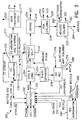
- Ethane/Ethylene To VCM Oxydehydro-chlorination Reactor 202 catalytically reacts together ethane, ethylene, hydrogen chloride, oxygen, and chlorine along with at least one recycle stream to yield Reactor Effluent Stream 232; and it is of special note that the molar ratio of ethane to ethylene derived from all feeds to Ethane/Ethylene To VCM Oxydehydro-chlorination Reactor 202 is between 0.02 and 50 (note that the particular operational ratio at any moment is determined by issues in operational process status) without long- term detriment to catalyst functionality.
- ethylene is added to Reactor 202 via Ethylene Stream 289.
- a more preferred molar ratio of ethane to ethylene derived from all feeds to Ethane/Ethylene To VCM Oxydehydro-chlorination Reactor 202 is between 0.1 and 10.
- Ethylene Stream 289 When market and operational conditions (at a particular moment of manufacture) permit, the most preferred mode is for Ethylene Stream 289 to have a flow of zero and for the molar ratio of ethane to ethylene derived from all feeds to Ethane/Ethylene To VCM Oxydehydro-chlorination Reactor 202 to be between 0.3 and 4, with variance therein dependent upon local process conditions and catalyst life-cycle considerations.
- Cooling Condenser 204 treats Reactor Effluent Stream 232 to provide (a) a raw product (vapor) stream having a first portion of hydrogen chloride and (b) a raw cooled (aqueous) hydrogen chloride stream having the remainder of the hydrogen chloride which exited Reactor 202; the raw product (vapor) stream is Stream 240.
- Phase Separation Subsystem 206 for removal of residual organic compounds from the raw cooled HCl.
- Phase Separation Subsystem 206 is, in alternative embodiments, a decanter, a stripper, or a combination of a decanter and stripper. From Phase Separation Subsystem 206 the removed organic materials (essentially in liquid phase) are conveyed to Lights Column 210 via Stream 242, and the separated raw cooled (essentially aqueous liquid) HCl is conveyed as Stream 236 to Anhydrous HCl Recovery Subsystem 208.
- Anhydrous HCl Recovery Subsystem 208 receives (aqueous) Stream 274 from Vent Oxidation Unit (a thermal oxidation or other oxidation unit useful for vent stream purification to acceptable environmental compositions) 214, Stream 278 (aqueous) from Lights HCl Absorption Unit 276, and (aqueous) Stream 236 and generates output stream Stream 266 as anhydrous HCl recycle to Ethane/Ethylene To VCM Oxydehydro-chlorination Reactor 202.
- Stream 268 outputs water from Anhydrous HCl Recovery Subsystem 208 for subsequent use or to waste recovery.
- Anhydrous HCl Recovery Subsystem 208 provides functionality to recover an anhydrous hydrogen chloride stream from the raw cooled hydrogen chloride stream and other aqueous HCl streams of Process 200. Anhydrous HCl Recovery Subsystem 208 also recycles the anhydrous hydrogen chloride (vapor) stream to the reactor. As should be apparent to those of skill, there are other methodologies for separating anhydrous HCl from mixtures of water and HCl.
- Cooling Condenser 204 also outputs Stream 240 (vapor) to Lights Column 210 where a lights stream (vapor Stream 244) containing ethylene is further removed from the reactor effluent product stream. Note that, in contrast to the system discussed in Figure 1, the ethylene from Lights Column 210 is mostly returned as recycle to Ethane/Ethylene To VCM Oxydehydro-chlorination Reactor 202 without conversion to EDC.
- Lights Column 210 forwards Stream 252 for separation of a water product stream, a vinyl chloride monomer product stream (Stream 254), an ethyl chloride stream (Stream 230), a cis -1,2-dichloroethylene and trans -1,2-dichloroethylene blended stream (Stream 260), a 1,2-dichloroethane stream (Stream 262), and a heavies stream (Stream 264).
- the manner of effecting these final separations is apparent to those of skill, and a substantial number of classically-utilized process units can be deployed in various configurations to achieve these separations.
- Stream 244 is divided into a first stream portion forwarded directly in Stream 248 to Ethane/Ethylene To VCM Oxydehydro-chlorination Reactor 202 and into a second stream which forwards first to Lights HCl Absorption Unit 276 and then to C2 Absorption and Stripping Columns 212.
- Lights HCl Absorption Unit 276 outputs aqueous HCl as Stream 278 to Anhydrous HCl Recovery Subsystem 208.
- C2 Absorption and Stripping Columns 212 absorb and strip C2 materials (ethane and ethylene) from the forwarded second stream portion of Stream 244 and insure the recycle of the C2 materials to Reactor 202 via C2 Recycle Stream 246 which, in combination the first stream portion from Stream 244, forms Stream 248.
- C2 Absorption and Stripping Columns 212 also outputs a purge stream to Vent Oxidation Unit 214 which outputs Vent Stream 250 to the atmosphere and also (aqueous) Stream 274 to Anhydrous HCl Recovery Subsystem 208.
- CO (carbon monoxide) composition instrumentation provides a measurement (not shown) for use in a control system's (not shown) determination of an appropriate portion of the remaining lights gas for processing via C2 Absorption and Stripping Columns 212 and Vent Oxidation Unit 214 to generate Vent Stream 250 so that CO does not accumulate to unacceptable levels in the process.
- Simulated relative stream flows and stream compositions for Ethane to VCM Oxydehydro-chlorination Process 200 are appreciated from a consideration of Table 1.
- Table 1 (mass unit/time unit) data uses laboratory-derived catalyst performance measurements for lanthanum oxychloride at 400 degrees Celsius and essentially ambient pressure; further details on the preferred catalyst are appreciated from a study of "A PROCESS FOR THE CONVERSION OF ETHYLENE TO VINYL CHLORIDE, AND NOVEL CATALYST COMPOSITIONS USEFUL FOR SUCH PROCESS".
- Table 1 shows some flows as a zero in the context of the simulation generating the data, but such a numeric value is not intended to mean a total absence of flow or absence of need for a stream.
- Table 1 does not show Ethylene Feed Stream 289; in this regard, and divulging an earlier point, when market and operational conditions at a particular moment of manufacture permit, the most preferred mode is for Ethylene Stream 289 to have a flow of zero. However, under certain conditions, Ethylene Stream 289 does contribute an economically beneficial flow.
- Ethane to VCM Oxydehydro-chlorination With Cis / Trans Recycle Process 300 modifies Ethane to VCM Oxydehydro-chlorination Process 200 with DCE (dichloroethylene) Hydrogenation Unit 280 for (a) hydrogenating cis -1,2-dichloroethylene and trans -1,2-dichloroethylene from Cis / trans -1,2-dichloroethylene Stream 260 and (b) recycling the output stream to Reactor 202.
- Streams 230, 260, and 262 are separated as one single blended stream in Heavies Column 220 and the single blended stream is recycled to DCE Hydrogenation Unit 280.
- Table 2 presents further detail in components identified in the Figures.
- Component detail Drawing Element Name Description 102 Reactor Fluid bed ethane reactor. Vertically oriented reactor system with gas feed at bottom and outlet at top. Vertical cooling tubes in bed and internal cyclones (up to 3 in series) located at the top. Typical diameters up to 20 feet Height of fluid bed 30 to 50 feet, with total height of 80 feet The reactor temperature of> 400°C requires that a high nickel alloy be used for construction.
- Cool and Scrub Product gas from the reactor is cooled and the condensate separated from the vapor.
- the condensate has both a concentrated HCl aqueous phase and an organic phase.
- 108 Phase Separate Gravity separation of the aqueous and organic phases from Cooler 106 is preferably achieved with a horizontal tank provided with internal baffles to allow the heavy phase (most likely the aqueous/acid phase, but the nature of the phases depend on the exact composition of organics in the phases) to be removed from one end of the vessel.
- the lighter phase flows over the baffle into the second half of the vessel for removal.
- the aqueous phase is then, in some embodiments, stripped of organics.
- HCl Recovery The aqueous HCl stream from the separator is recovered as anhydrous HCl for recycle to the reactor using traditionally deployed approaches which are apparent to those of skill.
- 112 Direct Chlorination Reactor for the chlorination of ethylene. This is typically accomplished by injecting the chlorine and ethylene into the bottom of a vessel containing EDC. The reactants form EDC; the net product removed as an overhead vapor. The heat of reaction provides the driving force for the vaporization.
- Vent Treatment is achieved with an incinerator for the oxidation of organics (including chlorinated organics) to water vapor, carbon dioxide, and hydrogen chloride.
- the vent gas is scrubbed with water to recover HCl as a relatively dilute (10 to 20% HCl stream) for other uses. This unit is typical of those found throughout the chemical industry and should be apparent to those of skill.
- a fluid bed version (preferred) of the reactor is a vertically oriented reactor system with gas feed at bottom and with the outlet at the top. Vertical cooling tubes are positioned in the bed, and internal cyclones (up to 3 in series) are located at the top. Typical diameter of the reactor is less than 20 feet. Height of fluid bed is between 30 feet and 50 feet, with a total height of 80 feet for the reactor.
- the fixed bed version of the reactor is a vertical exchanger type catalytic reactor with tubes from 1 to 1.5 inches diameter.
- the reactor temperature of > 400°C requires that a high nickel alloy be used for construction.
- Cool and Condense Effluent gas from the reactor is cooled with a graphite block or graphite tube heat exchanger.
- the condensate has both a concentrated HCl aqueous phase and an organic phase.
- Phase Separate Gravity separation of the aqueous and organic phases from Step 204 is preferably achieved with a horizontal tank provided with internal baffles to allow the heavy phase (most likely the aqueous/acid phase, but the nature of the phases depend on the exact composition of organics in the phases) to be removed from one end of the vessel.
- the lighter phase flows over the baffle into the second half of the vessel for removal.
- the aqueous phase is then, in some embodiments, stripped of organics.
- HCl Recovery The aqueous HCl stream from the separator is recovered as anhydrous HCl for recycle to the reactor using traditionally deployed approaches which are apparent to those of skill.
- C2 Absorption and Stripper Recovery of ethane and ethylene in the purge stream is achieved by absorption into a hydrocarbon or other absorbing liquid in an absorber, with a stripping operation in a second column.
- Vent Treatment is achieved with an incinerator for the oxidation of organics (including chlorinated organics) to water vapor, carbon dioxide, and hydrogen chloride.
- the vent gas is scrubbed with water to recover HCl as a relatively dilute (10 to 20% HCl stream) for other uses. This unit is typical of those found throughout the chemical industry and should be apparent to those of skill.
- Drying Prior to the final separation of the VCM from the other products in the raw product stream after lights have been stripped, water is removed in a drying column. The pressure and temperature are preferably adjusted such that the water is removed from the bottom of the column and the dry product is removed from the top.
- VCM Columns VCM is purified by methods as practiced in industry and apparent to those of skill.
- 220 Heavies Column Heavies are separated using a distillation column effecting the separation of (a) the cis and trans 1,2 dichloroethylenes and (b) EDC from heavier (higher molecular weight) components.
- 276 HCl Absorption HCl absorption is achieved with a scrubber column removing HCl from the gas stream into an aqueous solution.
- Hydrogenation Hydrogenation is achieved in a reactor for converting the unsaturated compounds (most being chlorinated, such as cis or trans 1,2 dichloroethylenes) to their saturated derivatives for recycle to the reactor.
- a porous, refractory composition comprising lanthanum was prepared.
- a solution of LaCl 3 in water was prepared by dissolving one part of commercially available hydrated lanthanum chloride (obtained from J.T. Baker Chemical Company) in 8 parts of deionized water.
- Dropwise addition with stirring of ammonium hydroxide (obtained from Fisher Scientific, certified ACS specification) to neutral pH (by universal test paper) caused the formation of a gel.
- the mixture was centrifuged, and the solution decanted away from the solid. Approximately 150 ml of deionized water was added and the gel was stirred vigorously to disperse the solid.
- the particles were placed in a pure nickel (alloy 200) reactor.
- the reactor was configured such that ethylene, ethane, HCl, O 2 and inert gas (He and Ar mixture) could be fed to the reactor.
- the function of the argon was as an internal standard for the analysis of the reactor feed and effluent by gas chromatography. Space time is calculated as the volume of catalyst divided by the flow rate at standard conditions. Feed rates are molar ratios.
- the reactor system was immediately fed an ethane-containing stream with the stoichiometry of one ethane, one HCl and one oxygen. This provides balanced stoichiometry for the production ofVCM from ethylene.
- a solution of LaCl 3 in water was prepared by dissolving one part of commercially available hydrated lanthanum chloride (purchased from Avocado Research Chemicals Ltd.) in 6.67 parts of deionized water. Rapid addition with stirring of 6 M ammonium hydroxide in water (diluted certified ACS reagent, obtained from Fisher Scientific) caused the formation of a gel and yielded a final pH of 8.85. The mixture was filtered to collect the solid. The collected material was calcined in air at 550 deg C for four hours. The resulting solid was crushed and sieved. The sieved particles were placed in a pure nickel (alloy 200) reactor. The reactor was configured such that ethylene, ethane, HCl, oxygen, and inert (helium and argon mixture) could be fed to the reactor.
- Table 4 shows data wherein the reactor feeds were adjusted such that the flux of ethylene (moles/minute) entering the reactor and the flux of ethylene exiting the reactor were substantially equal.
- Reactor feeds were similarly adjusted such that the fluxes of HCl entering and exiting the reactor were substantially equaL Oxygen conversion was set at slightly less than complete conversion to enable the monitoring of catalyst activity.
- the consumed feeds are ethane, oxygen, and chlorine. Both ethylene and HCl give the appearance of neither being created nor consumed.
- Space time is calculated as the volume of catalyst divided by the'flow rate at standard temperature and pressure.
- the example further illustrates the use of chlorine gas as a chlorine source in the production of vinyl chloride.
- VCM signifies vinyl chloride.
- C 2 H 4 Cl 2 is solely 1,2-dichloroethane.
- CO x is the combination of CO and CO 2 .
Landscapes
- Chemical & Material Sciences (AREA)
- Organic Chemistry (AREA)
- Engineering & Computer Science (AREA)
- Materials Engineering (AREA)
- Chemical Kinetics & Catalysis (AREA)
- Organic Low-Molecular-Weight Compounds And Preparation Thereof (AREA)
- Catalysts (AREA)
- Low-Molecular Organic Synthesis Reactions Using Catalysts (AREA)
Description
an anhydrous hydrogen chloride stream is recovered from said raw cooled hydrogen chloride stream; and recycled
to said reactor as said hydrogen chloride reactant.

| Component detail | |||
| Drawing | Name | Description | |
| 102 | Reactor | Fluid bed ethane reactor. Vertically oriented reactor system with gas feed at bottom and outlet at top. Vertical cooling tubes in bed and internal cyclones (up to 3 in series) located at the top. Typical diameters up to 20 feet Height of fluid bed 30 to 50 feet, with total height of 80 feet The reactor temperature of> 400°C requires that a high nickel alloy be used for construction. | |
| 104 | RCL Hydrogenation | Hydrogenation reactor for converting the unsaturated compounds (most are chlorinated, such as cis-1,2 dichloroethylene or trans-1,2 dichloroethylene) to their saturated derivatives for recycle to the reactor. | |
| 106 | Cool and Scrub | Product gas from the reactor is cooled and the condensate separated from the vapor. The condensate has both a concentrated HCl aqueous phase and an organic phase. | |
| 108 | Phase Separate | Gravity separation of the aqueous and organic phases from | |
| 110 | HCl Recovery | The aqueous HCl stream from the separator is recovered as anhydrous HCl for recycle to the reactor using traditionally deployed approaches which are apparent to those of skill. | |
| 112 | Direct Chlorination | Reactor for the chlorination of ethylene. This is typically accomplished by injecting the chlorine and ethylene into the bottom of a vessel containing EDC. The reactants form EDC; the net product removed as an overhead vapor. The heat of reaction provides the driving force for the vaporization. | |
| 114 | Product Split | Separation column, with refrigerated condensers at the top to allow separation of the lights for recycle from the chlorinated organics. | |
| 116 | EDC Recovery | Standard distillation columns for the purification of EDC. | |
| 118 | Vent Treatment (TOX) | Vent treatment is achieved with an incinerator for the oxidation of organics (including chlorinated organics) to water vapor, carbon dioxide, and hydrogen chloride. The vent gas is scrubbed with water to recover HCl as a relatively dilute (10 to 20% HCl stream) for other uses. This unit is typical of those found throughout the chemical industry and should be apparent to those of skill. | |
| 120 | Drying | Prior to the final separation of the VCM from the other products, water is removed in a drying column. The pressure and temperature are adjusted such that the water is removed from the bottom of the column and the dry product is removed from the top. | |
| 122 | VCM Columns | Final purification of the VCM product as practiced in industry. | |
| 124 | Recycle Products Column | A distillation column to effect the separation of the cis and trans 1,2 dichloroethylenes and EDC from the heavier (higher molecular weight) components. The recovered components are sent to the hydrogenation reactor prior to recycling to the reactor. | |
| 202 | Reactor | Ethylene/ethane oxydehydro-chlorination reactor. A fluid bed version (preferred) of the reactor is a vertically oriented reactor system with gas feed at bottom and with the outlet at the top. Vertical cooling tubes are positioned in the bed, and internal cyclones (up to 3 in series) are located at the top. Typical diameter of the reactor is less than 20 feet. Height of fluid bed is between 30 feet and 50 feet, with a total height of 80 feet for the reactor. The fixed bed version of the reactor is a vertical exchanger type catalytic reactor with tubes from 1 to 1.5 inches diameter. The reactor temperature of > 400°C requires that a high nickel alloy be used for construction. | |
| 204 | Cool and Condense | Effluent gas from the reactor is cooled with a graphite block or graphite tube heat exchanger. The condensate has both a concentrated HCl aqueous phase and an organic phase. | |
| 206 | Phase Separate | Gravity separation of the aqueous and organic phases from | |
| 208 | HCl Recovery | The aqueous HCl stream from the separator is recovered as anhydrous HCl for recycle to the reactor using traditionally deployed approaches which are apparent to those of skill. | |
| 210 | Product Split | A separation column, with refrigerated condensers at the top to allow separation of the lights for recycle from the chlorinated organics, is preferably used for this splitting operation. | |
| 212 | C2 Absorption and Stripper | Recovery of ethane and ethylene in the purge stream is achieved by absorption into a hydrocarbon or other absorbing liquid in an absorber, with a stripping operation in a second column. The recovered hydrocarbons are then recycled "back" to the main recycle stream and further to the reactor. | |
| 214 | Vent Treatment (TOX) | Vent treatment is achieved with an incinerator for the oxidation of organics (including chlorinated organics) to water vapor, carbon dioxide, and hydrogen chloride. The vent gas is scrubbed with water to recover HCl as a relatively dilute (10 to 20% HCl stream) for other uses. This unit is typical of those found throughout the chemical industry and should be apparent to those of skill. | |
| 216 | Drying | Prior to the final separation of the VCM from the other products in the raw product stream after lights have been stripped, water is removed in a drying column. The pressure and temperature are preferably adjusted such that the water is removed from the bottom of the column and the dry product is removed from the top. | |
| 218 | VCM Columns | VCM is purified by methods as practiced in industry and apparent to those of skill. | |
| 220 | Heavies Column | Heavies are separated using a distillation column effecting the separation of (a) the cis and trans 1,2 dichloroethylenes and (b) EDC from heavier (higher molecular weight) components. | |
| 276 | HCl Absorption | HCl absorption is achieved with a scrubber column removing HCl from the gas stream into an aqueous solution. | |
| 280 | Hydrogenation | Hydrogenation is achieved in a reactor for converting the unsaturated compounds (most being chlorinated, such as cis or trans 1,2 dichloroethylenes) to their saturated derivatives for recycle to the reactor. |
Approximately 150 ml of deionized water was added and the gel was stirred vigorously to disperse the solid. The resulting solution was centrifuged and the solution decanted away. This washing step was repeated two additional times. The collected, washed gel was dried for two hours at 120 degrees Celsius and subsequently calcined at 550 deg. C. for four hours in air. The resulting solid was crushed and sieved to yield particles suitable for additional testing. This procedure produced a solid matching the X-ray powder diffraction pattern of LaOCl.
| Feed Mole Ratios | ||||
| C2H4 | 2 | 3.7 | 0 | 3 |
| C2H6 | 0 | 0 | 1 | 2 |
| HCl | 2 | 2 | 1 | 2.5 |
| O2 | 1 | 1 | 1 | 1 |
| Inerts | 6.8 | 0 | 4 | 0 |
| T (deg. C) | 401 | 400 | 401 | 419 |
| Space time (s) | 12.3 | 5.0 | 21.8 | 12.4 |
| O2 conv. (pct) | 47.3 | 53.7 | 54.8 | 93.9 |
| Selectivities (Percent) | ||||
| C2H4 | -- | - | 44.7 | - |
| C2H4Cl2 | 10.7 | 14.0 | 0.1 | 12.8 |
| VCM | 76.6 | 78.1 | 34.5 | 68.5 |
| Feed mole ratios | |
| C2H4 | 2.1 |
| C2H6 | 4.5 |
| Cl2 | 0.5 |
| HCl | 2.4 |
| O2 | 1.0 |
| He+Ar | 7.4 |
| T (°C) | 400 |
| Space time (s) | 9.4 |
| Fractional conversions (Pct.) | |
| C2H4 | 1.8 |
| C2H6 | 27.3 |
| Cl2 | 99.8 |
| HCl | -1.4 |
| O2 | 96.4 |
| Selectivities (Pct) | |
| VCM | 79.0 |
| C2H4Cl2 | 7.2 |
| C2H5Cl | 1.7 |
| COx | 5.1 |
| C2H4 | 0.5 |
Claims (12)
- A method of manufacturing vinyl chloride, comprising the steps of:(a) generating a reactor effluent stream by catalytically reacting together ethane, ethylene, oxygen, and at least one chlorine source of hydrogen chloride, chlorine, or a chlorohydrocarbon, wherein the molar ratio of said ethane to said ethylene is between 0.02 and 50;(b) cooling and condensing said reactor effluent stream to provide a raw product stream having a first portion of said hydrogen chloride and a raw cooled hydrogen chloride stream having a second portion of said hydrogen chloride;(c) separating said raw product stream into a vinyl chloride monomer product stream and into a lights stream having said first portion of said hydrogen chloride; and(d) recycling said lights stream to catalytically react together with said ethane, said ethylene, said oxygen, and said chlorine source in said generating step.
- The method of claim 1, whereinin step (c) said raw product stream is separated into, a water product stream, a vinyl chloride monomer product stream, an ethyl chloride stream, a cis-1,2-dichloroethylene and trans-1,2-dichloroethylene blended stream, a 1.2-dichloroethane stream, a heavies stream; and a lights stream having said first portion of said hydrogen chloride;an anhydrous hydrogen chloride stream from said raw cooled hydrogen chloride stream is recovered and recycled to said reactor as said hydrogen chloride reactant.
- A method of manufacturirg vinyl chloride, comprising the steps of:generating a reactor effluent stream in a reactor by catalytically reacting together ethane, ethylene, oxygen, and at least one chlorine source of hydrogen chloride, chlorine, or a chlorohydrocarbon, wherein the molar ratio of said ethane to said ethylene is between 0.02 and 50;cooling and condensing said reactor effluent stream to provide a raw product stream having a first portion of said hydrogen chloride and a raw cooled hydrogen chloride stream having a second portion of said hydrogen chloride;separating said raw product stream into, a water product stream, a vinyl chloride monomer product stream, an ethyl chloride stream, a cis-1,2-dichloroethylene and trans-1,2-dichloroethylene blended stream, a 1,2-dichloroethane stream, a heavies stream: and a lights stream having said first portion of said hydrogen chloride;recovering an anhydrous hydrogen chloride stream from said raw cooled hydrogen chloride stream;recycling said anhydrous hydrogen chloride stream to said reactor as said hydrogen chloride reactant;dividing said lights stream into a purge stream and a recycle gas stream;absorbing hydrogen chloride from said purge stream to separate an aqueous hydrogen chloride stream;combining said aqueous hydrogen chloride stream with said raw cooled hydrogen chloride stream;absorbing and recycling to said reactor a C2 stream from said purge stream: andrecycling said recycle gas stream to said reactor.
- The method of claim 3, further comprising the step of:hydrogenating said cis-1,2-dichloroethylene and trans-1,2-dichlorethylene blended stream to provide recycle feed to said reactor.
- The method of any of Claims 1-4 wherein said catalytically reacting step uses a catalyst comprising a rare earth material component, with the proviso that the catalyst is substantially free of iron and copper and with the further proviso that when the rare earth material component is cerium the catalyst further comprises at least one more rare earth material component other than cerium.
- The method of Claim 5 wherein the rare earth material component is selected from lanthanum, neodymium, praseodymium, and mixtures thereof.
- The method of Claim 6 wherein the rare earth material component is lanthanum.
- The method of any of Claims 1-4 wherein said molar ratio is between 0.1 and 10.
- The method of any of Claims 1-4 wherein said molar ratio is between 0.3 and 4.
- The method of any of Claims 1-4 wherein one said chlorine source is selected from at least one of a chlorinated methane and a chlorinated ethane.
- The method of any of Claims 1-4 wherein one said chlorine source is selected from at least one of the chlorinated organic compounds consisting of carbon tetrachloride, 1,2-dichloroethane, ethyl chloride, 1,1-dichloroethane, and 1,1,2-trichloroethane.
- The method of any of Claims 1-4 wherein 1.2-dichloroethane generated in said reacting step is purified.
Applications Claiming Priority (6)
| Application Number | Priority Date | Filing Date | Title |
|---|---|---|---|
| US16689799P | 1999-11-22 | 1999-11-22 | |
| US166897P | 1999-11-22 | ||
| PCT/US2000/027272 WO2001038273A1 (en) | 1999-11-22 | 2000-10-03 | A process for the conversion of ethylene to vinyl chloride, and novel catalyst compositions useful for such process |
| WOPCT/US27/27200 | 2000-10-03 | ||
| WOPCT/US00/27272 | 2000-10-03 | ||
| PCT/US2000/027701 WO2001038274A1 (en) | 1999-11-22 | 2000-10-06 | Process for vinyl chloride manufacture from ethane and ethylene with partial hc1 recovery from reactor effluent |
Publications (2)
| Publication Number | Publication Date |
|---|---|
| EP1235773A1 EP1235773A1 (en) | 2002-09-04 |
| EP1235773B1 true EP1235773B1 (en) | 2005-05-25 |
Family
ID=22605129
Family Applications (4)
| Application Number | Title | Priority Date | Filing Date |
|---|---|---|---|
| EP00968627A Expired - Lifetime EP1235772B1 (en) | 1999-11-22 | 2000-10-03 | A process for the conversion of ethylene to vinyl chloride, and novel catalyst compositions useful for such process |
| EP00976557A Expired - Lifetime EP1235773B1 (en) | 1999-11-22 | 2000-10-06 | Process for vinyl chloride manufacture from ethane and ethylene with partial hcl recovery from reactor effluent |
| EP00978721A Expired - Lifetime EP1235769B1 (en) | 1999-11-22 | 2000-11-16 | Oxyhalogenation process using catalyst having porous rare earth halide support |
| EP00980431A Withdrawn EP1235774A1 (en) | 1999-11-22 | 2000-11-16 | Dehydrohalogenation of halogenated alkanes using rare earth halide or oxyhalide catalyst |
Family Applications Before (1)
| Application Number | Title | Priority Date | Filing Date |
|---|---|---|---|
| EP00968627A Expired - Lifetime EP1235772B1 (en) | 1999-11-22 | 2000-10-03 | A process for the conversion of ethylene to vinyl chloride, and novel catalyst compositions useful for such process |
Family Applications After (2)
| Application Number | Title | Priority Date | Filing Date |
|---|---|---|---|
| EP00978721A Expired - Lifetime EP1235769B1 (en) | 1999-11-22 | 2000-11-16 | Oxyhalogenation process using catalyst having porous rare earth halide support |
| EP00980431A Withdrawn EP1235774A1 (en) | 1999-11-22 | 2000-11-16 | Dehydrohalogenation of halogenated alkanes using rare earth halide or oxyhalide catalyst |
Country Status (23)
| Country | Link |
|---|---|
| EP (4) | EP1235772B1 (en) |
| JP (3) | JP5053493B2 (en) |
| KR (3) | KR100780562B1 (en) |
| CN (8) | CN1208294C (en) |
| AR (6) | AR026559A1 (en) |
| AT (4) | ATE287386T1 (en) |
| AU (3) | AU779286B2 (en) |
| BG (3) | BG106724A (en) |
| BR (3) | BR0015921B1 (en) |
| CA (3) | CA2391582C (en) |
| DE (2) | DE60017590T2 (en) |
| DK (2) | DK1235772T3 (en) |
| GC (2) | GC0000145A (en) |
| HU (3) | HUP0204181A2 (en) |
| IL (6) | IL149742A0 (en) |
| MA (6) | MA25625A1 (en) |
| MX (3) | MXPA02005142A (en) |
| MY (1) | MY125504A (en) |
| NO (6) | NO20022401L (en) |
| PL (6) | PL354730A1 (en) |
| RU (4) | RU2265006C2 (en) |
| TW (2) | TW581752B (en) |
| WO (4) | WO2001038273A1 (en) |
Families Citing this family (76)
| Publication number | Priority date | Publication date | Assignee | Title |
|---|---|---|---|---|
| US6909024B1 (en) | 1999-11-22 | 2005-06-21 | The Dow Chemical Company | Process for the conversion of ethylene to vinyl chloride and novel catalyst compositions useful for such process |
| US6933417B1 (en) | 1999-11-22 | 2005-08-23 | Dow Global Technologies Inc. | Process for vinyl chloride manufacture from ethane and ethylene with partial CHl recovery from reactor effluent |
| US6452058B1 (en) | 2001-05-21 | 2002-09-17 | Dow Global Technologies Inc. | Oxidative halogenation of C1 hydrocarbons to halogenated C1 hydrocarbons and integrated processes related thereto |
| WO2002094750A1 (en) | 2001-05-23 | 2002-11-28 | Dow Global Technologies Inc. | Oxidative halogenation and optional dehydrogenation of c3+ hydrocarbons |
| CN1649808A (en) * | 2001-05-23 | 2005-08-03 | 陶氏环球技术公司 | Production of vinyl halides from single-carbon feedstocks |
| US7838708B2 (en) | 2001-06-20 | 2010-11-23 | Grt, Inc. | Hydrocarbon conversion process improvements |
| WO2005021468A1 (en) | 2003-07-15 | 2005-03-10 | Grt, Inc. | Hydrocarbon synthesis |
| US20050171393A1 (en) | 2003-07-15 | 2005-08-04 | Lorkovic Ivan M. | Hydrocarbon synthesis |
| US6951830B2 (en) * | 2003-08-05 | 2005-10-04 | Exxonmobil Chemical Patents Inc. | Molecular sieve catalyst compositions, their production and use in conversion processes |
| US8642822B2 (en) | 2004-04-16 | 2014-02-04 | Marathon Gtf Technology, Ltd. | Processes for converting gaseous alkanes to liquid hydrocarbons using microchannel reactor |
| US8173851B2 (en) | 2004-04-16 | 2012-05-08 | Marathon Gtf Technology, Ltd. | Processes for converting gaseous alkanes to liquid hydrocarbons |
| US7244867B2 (en) | 2004-04-16 | 2007-07-17 | Marathon Oil Company | Process for converting gaseous alkanes to liquid hydrocarbons |
| US7674941B2 (en) | 2004-04-16 | 2010-03-09 | Marathon Gtf Technology, Ltd. | Processes for converting gaseous alkanes to liquid hydrocarbons |
| US20080275284A1 (en) | 2004-04-16 | 2008-11-06 | Marathon Oil Company | Process for converting gaseous alkanes to liquid hydrocarbons |
| US20060100469A1 (en) | 2004-04-16 | 2006-05-11 | Waycuilis John J | Process for converting gaseous alkanes to olefins and liquid hydrocarbons |
| EP1753737B1 (en) * | 2004-05-21 | 2008-07-16 | Dow Gloval Technologies Inc. | Process for preparing epichlorohydrin from ethane |
| JP4987253B2 (en) * | 2005-06-16 | 2012-07-25 | 鹿島ケミカル株式会社 | Catalyst for synthesizing isopropyl chloride and method for synthesizing isopropyl chloride using the catalyst |
| KR100744478B1 (en) | 2005-11-15 | 2007-08-01 | 주식회사 엘지화학 | Method for preparing vinyl chloride using ethane and 1,2-dichloroethane, and the apparatus therefor |
| US7579510B2 (en) | 2006-02-03 | 2009-08-25 | Grt, Inc. | Continuous process for converting natural gas to liquid hydrocarbons |
| AU2007212493B2 (en) | 2006-02-03 | 2012-09-27 | Grt, Inc. | Separation of light gases from halogens |
| KR100843606B1 (en) * | 2006-02-04 | 2008-07-03 | 주식회사 엘지화학 | Method for producing vinyl chloride from methane |
| JP4867474B2 (en) * | 2006-05-31 | 2012-02-01 | 日本ゼオン株式会社 | Method for producing perfluoroalkyne compound |
| CN101235160B (en) * | 2006-12-30 | 2011-04-27 | 仇晓丰 | Hydrogen chloride whole reclaiming zero discharging technique and device for PVC producing process |
| KR20100027141A (en) | 2007-05-24 | 2010-03-10 | 지알티, 인코포레이티드 | Zone reactor incorporating reversible hydrogen halide capture and release |
| US8258355B2 (en) * | 2007-07-25 | 2012-09-04 | Honeywell International Inc. | Processes for preparing 1,1,2,3-tetrachloropropene |
| US8282810B2 (en) | 2008-06-13 | 2012-10-09 | Marathon Gtf Technology, Ltd. | Bromine-based method and system for converting gaseous alkanes to liquid hydrocarbons using electrolysis for bromine recovery |
| SG192538A1 (en) | 2008-07-18 | 2013-08-30 | Grt Inc | Continuous process for converting natural gas to liquid hydrocarbons |
| WO2010045104A2 (en) | 2008-10-13 | 2010-04-22 | Dow Global Technologies, Inc. | Process for the production of chlorinated and/or fluorinated propenes |
| JP5495676B2 (en) * | 2009-08-27 | 2014-05-21 | 株式会社トクヤマ | Method for producing chloroalkane |
| KR20120091192A (en) | 2009-10-09 | 2012-08-17 | 다우 글로벌 테크놀로지스 엘엘씨 | Isothermal multitube reactors and processes incorporating the same |
| CN102686544B (en) | 2009-10-09 | 2017-02-15 | 蓝立方知识产权公司 | Process for the production of chlorinated and/or fluorinated propenes and higher olefins |
| US8367884B2 (en) | 2010-03-02 | 2013-02-05 | Marathon Gtf Technology, Ltd. | Processes and systems for the staged synthesis of alkyl bromides |
| US8198495B2 (en) | 2010-03-02 | 2012-06-12 | Marathon Gtf Technology, Ltd. | Processes and systems for the staged synthesis of alkyl bromides |
| FI122828B (en) * | 2010-06-02 | 2012-07-31 | Kemira Oyj | Catalyst recovery process |
| RU2446877C2 (en) * | 2010-07-16 | 2012-04-10 | Учреждение Российской Академии наук Институт катализа им. Г.К. Борескова Сибирского отделения Российской Академии наук | Catalyst system for heterogeneous reactions |
| RU2446881C2 (en) * | 2010-07-16 | 2012-04-10 | Учреждение Российской Академии наук Институт катализа им. Г.К. Борескова Сибирского отделения Российской Академии наук | Method of selective catalytic oxychlorination of methane to methyl chloride |
| US8815050B2 (en) | 2011-03-22 | 2014-08-26 | Marathon Gtf Technology, Ltd. | Processes and systems for drying liquid bromine |
| JP6212035B2 (en) | 2011-05-31 | 2017-10-11 | ブルー キューブ アイピー エルエルシー | Method for producing chlorinated propene |
| JP5918358B2 (en) | 2011-05-31 | 2016-05-18 | ブルー キューブ アイピー エルエルシー | Method for producing chlorinated propene |
| KR102007722B1 (en) | 2011-06-08 | 2019-08-07 | 다우 글로벌 테크놀로지스 엘엘씨 | Process for the production of chlorinated and/or fluorinated propenes |
| US8436220B2 (en) | 2011-06-10 | 2013-05-07 | Marathon Gtf Technology, Ltd. | Processes and systems for demethanization of brominated hydrocarbons |
| US8829256B2 (en) | 2011-06-30 | 2014-09-09 | Gtc Technology Us, Llc | Processes and systems for fractionation of brominated hydrocarbons in the conversion of natural gas to liquid hydrocarbons |
| CN103717557A (en) | 2011-08-07 | 2014-04-09 | 陶氏环球技术有限责任公司 | Process for producing chlorinated propylene |
| CN103717559A (en) | 2011-08-07 | 2014-04-09 | 陶氏环球技术有限责任公司 | Process for producing chlorinated propylene |
| US8802908B2 (en) | 2011-10-21 | 2014-08-12 | Marathon Gtf Technology, Ltd. | Processes and systems for separate, parallel methane and higher alkanes' bromination |
| CA2856271A1 (en) | 2011-11-21 | 2013-05-30 | Dow Global Technologies Llc | Process for the production of chlorinated alkanes |
| EP2785671B1 (en) | 2011-12-02 | 2017-03-01 | Blue Cube IP LLC | Process for the production of chlorinated propanes |
| JP6059246B2 (en) | 2011-12-02 | 2017-01-11 | ブルー キューブ アイピー エルエルシー | Method for producing chlorinated alkane |
| JP6170068B2 (en) | 2011-12-13 | 2017-07-26 | ブルー キューブ アイピー エルエルシー | Method for producing chlorinated propane and propene |
| US9193641B2 (en) | 2011-12-16 | 2015-11-24 | Gtc Technology Us, Llc | Processes and systems for conversion of alkyl bromides to higher molecular weight hydrocarbons in circulating catalyst reactor-regenerator systems |
| CN104011000A (en) | 2011-12-22 | 2014-08-27 | 陶氏环球技术有限责任公司 | Method for producing tetrachloromethane |
| US9512049B2 (en) | 2011-12-23 | 2016-12-06 | Dow Global Technologies Llc | Process for the production of alkenes and/or aromatic compounds |
| CN102580768B (en) * | 2012-01-17 | 2015-03-11 | 内蒙古大学 | Novel catalyst for preparing ethylene by low-temperature oxidative dehydrogenation of ethane and using method thereof |
| US9175407B2 (en) | 2012-07-26 | 2015-11-03 | Liquid Light, Inc. | Integrated process for producing carboxylic acids from carbon dioxide |
| US8641885B2 (en) | 2012-07-26 | 2014-02-04 | Liquid Light, Inc. | Multiphase electrochemical reduction of CO2 |
| US20130105304A1 (en) | 2012-07-26 | 2013-05-02 | Liquid Light, Inc. | System and High Surface Area Electrodes for the Electrochemical Reduction of Carbon Dioxide |
| US10329676B2 (en) | 2012-07-26 | 2019-06-25 | Avantium Knowledge Centre B.V. | Method and system for electrochemical reduction of carbon dioxide employing a gas diffusion electrode |
| US9303324B2 (en) | 2012-07-26 | 2016-04-05 | Liquid Light, Inc. | Electrochemical co-production of chemicals with sulfur-based reactant feeds to anode |
| US9598334B2 (en) | 2012-09-20 | 2017-03-21 | Blue Cube Ip Llc | Process for the production of chlorinated propenes |
| WO2014046970A1 (en) | 2012-09-20 | 2014-03-27 | Dow Global Technologies, Llc | Process for the production of chlorinated propenes |
| WO2014052945A2 (en) | 2012-09-30 | 2014-04-03 | Dow Global Technologies, Llc | Weir quench and processes incorporating the same |
| WO2014066083A1 (en) | 2012-10-26 | 2014-05-01 | Dow Global Technologies, Llc | Mixer and reactor and process incorporating the same |
| CN104870411B (en) | 2012-12-18 | 2018-10-02 | 蓝立方知识产权有限责任公司 | Method for producing propylene dichloride |
| CA2894168C (en) | 2012-12-19 | 2018-04-24 | Dow Global Technologies Llc | Process for the production of chlorinated propenes |
| CA2901450A1 (en) | 2013-02-27 | 2014-09-04 | Blue Cube Ip Llc | Process for the production of chlorinated propenes |
| WO2014164368A1 (en) | 2013-03-09 | 2014-10-09 | Dow Global Technologies Llc | Process for the production of chlorinated alkanes |
| CN104209128A (en) * | 2013-05-29 | 2014-12-17 | 上海氯碱化工股份有限公司 | Composite catalyst for direct chlorination reaction to prepare dichloroethane |
| CN105658605A (en) * | 2013-11-11 | 2016-06-08 | 沙特基础工业公司 | Process for converting methane to C2+ hydrocarbons |
| CN103664504B (en) * | 2013-12-14 | 2015-10-28 | 济南开发区星火科学技术研究院 | A kind of technique being prepared vinylchlorid by ethane |
| TWI683803B (en) * | 2014-11-11 | 2020-02-01 | 美商陶氏全球科技責任有限公司 | Process for the production of ethylene, vinylidene, and hydrogen chloride from ethane |
| TWI561299B (en) * | 2015-04-02 | 2016-12-11 | Formosa Plastics Corp | A catalyst for preparing vinyl chloride and a method for preparing vinyl chloride |
| CN105402742B (en) * | 2015-12-01 | 2017-10-17 | 中国天辰工程有限公司 | A kind of incinerator charging danger wastes diluent facilities and its method |
| CN107311835B (en) * | 2017-06-02 | 2020-10-27 | 青海盐湖工业股份有限公司 | Treatment system and treatment method for rectifying high-boiling residual liquid in production of chloroethylene by calcium carbide method |
| CN107759441B (en) * | 2017-11-22 | 2021-03-23 | 中国科学院兰州化学物理研究所 | A kind of method for preparing 1-chloropropene by catalytic dehydrochlorination of 1,2-dichloropropane |
| CN117658766A (en) * | 2022-08-25 | 2024-03-08 | 中国科学院大连化学物理研究所 | Moving bed process for catalytic cracking of 1,2-dichloroethane to produce vinyl chloride |
| CN119059675B (en) * | 2024-09-02 | 2025-11-04 | 万华化学(福建)异氰酸酯有限公司 | Methods and equipment for producing vinyl chloride |
Family Cites Families (26)
| Publication number | Priority date | Publication date | Assignee | Title |
|---|---|---|---|---|
| US3488398A (en) * | 1964-04-23 | 1970-01-06 | Goodrich Co B F | Method of preparing 1,2-dichloroethane |
| NL130969C (en) * | 1964-06-01 | 1900-01-01 | ||
| GB1039369A (en) * | 1964-07-22 | 1966-08-17 | Princeton Chemical Res Inc | Catalytic conversion of ethane to vinyl chloride |
| JPS4813085B1 (en) * | 1967-02-06 | 1973-04-25 | ||
| GB1213202A (en) * | 1967-02-06 | 1970-11-25 | Lummus Co | Process for the production of vinyl chloride |
| DE1805698A1 (en) * | 1967-11-01 | 1969-08-07 | Toa Gosei Chem Ind | Improved oxychlorination process |
| US4046821A (en) * | 1969-12-31 | 1977-09-06 | Petro-Tex Chemical Corporation | Oxychlorination of hydrocarbons in the presence of non-halide copper containing catalysts |
| US3968200A (en) * | 1972-03-27 | 1976-07-06 | The Lummus Company | Reactor effluent quench system |
| DE2440864C2 (en) * | 1973-08-29 | 1983-12-15 | The Dow Chemical Co., 48640 Midland, Mich. | Process for the production of saturated polychlorinated aliphatic hydrocarbons by oxychlorination |
| US3927131A (en) * | 1974-06-10 | 1975-12-16 | Dow Chemical Co | Dehydrohalogenation of halogenated hydrocarbons |
| GB1492945A (en) * | 1974-09-20 | 1977-11-23 | British Petroleum Co | Process for producing vinyl chloride |
| US4042640A (en) * | 1975-11-06 | 1977-08-16 | The Lummus Company | Oxychlorination of hydrocarbons |
| CA1244481A (en) * | 1984-05-24 | 1988-11-08 | Angelo J. Magistro | Catalytic dehydrohalogenation process |
| US5008225A (en) * | 1984-05-24 | 1991-04-16 | The B. F. Goodrich Company | Catalytic dehydrohalogenation catalyst |
| US5034566A (en) * | 1988-12-07 | 1991-07-23 | Sumitomo Chemical Company, Limited | Process for the production of 2,3-dimethylbutenes |
| JPH03170456A (en) * | 1989-11-30 | 1991-07-24 | Sumitomo Seika Chem Co Ltd | Production of aromatic thiol |
| US5113027A (en) * | 1989-12-15 | 1992-05-12 | Vulcan Materials Company | Oxychlorination process using a catalyst which comprises copper chloride supported on rare-earth modified alumina |
| US5179215A (en) * | 1991-02-27 | 1993-01-12 | The Boc Group, Inc. | Process for the production of petrochemicals |
| JPH06239807A (en) * | 1992-07-31 | 1994-08-30 | Ube Ind Ltd | Production of carbonate ester |
| RU2072976C1 (en) * | 1993-05-18 | 1997-02-10 | Научно-исследовательский институт "Синтез" с конструкторским бюро | Method of synthesis of vinyl chloride |
| GB9318497D0 (en) * | 1993-09-07 | 1993-10-20 | Evc Tech Ag | Oxychlorination process |
| JPH09143132A (en) * | 1995-11-21 | 1997-06-03 | Fuji Photo Film Co Ltd | Production of adduct of amine to alpha, beta-unsaturated compound |
| JP3724046B2 (en) * | 1996-03-19 | 2005-12-07 | チッソ株式会社 | Preparation method of asymmetric synthesis catalyst |
| US5945573A (en) * | 1997-01-31 | 1999-08-31 | E. I. Du Pont De Nemours And Company | Process for the manufacture of 1,1,1,3,3-pentafluoropropane |
| JPH10265468A (en) * | 1997-03-24 | 1998-10-06 | Fukuoka Pref Gov | Production of 5hydroxymethyl2-furfural |
| JPH10291941A (en) * | 1997-04-22 | 1998-11-04 | Mitsubishi Chem Corp | Method for producing ethylene |
-
2000
- 2000-10-03 KR KR1020027006499A patent/KR100780562B1/en not_active Expired - Fee Related
- 2000-10-03 DE DE60017590T patent/DE60017590T2/en not_active Expired - Lifetime
- 2000-10-03 JP JP2001539830A patent/JP5053493B2/en not_active Expired - Fee Related
- 2000-10-03 CN CNB008159696A patent/CN1208294C/en not_active Expired - Fee Related
- 2000-10-03 RU RU2002116663/04A patent/RU2265006C2/en not_active IP Right Cessation
- 2000-10-03 MX MXPA02005142A patent/MXPA02005142A/en active IP Right Grant
- 2000-10-03 EP EP00968627A patent/EP1235772B1/en not_active Expired - Lifetime
- 2000-10-03 CN CNA2007101281197A patent/CN101104147A/en active Pending
- 2000-10-03 WO PCT/US2000/027272 patent/WO2001038273A1/en not_active Ceased
- 2000-10-03 BR BRPI0015921-2A patent/BR0015921B1/en not_active IP Right Cessation
- 2000-10-03 AT AT00968627T patent/ATE287386T1/en not_active IP Right Cessation
- 2000-10-03 CN CN2004100885764A patent/CN1623659B/en not_active Expired - Fee Related
- 2000-10-03 DK DK00968627T patent/DK1235772T3/en active
- 2000-10-03 AU AU78511/00A patent/AU779286B2/en not_active Ceased
- 2000-10-03 HU HU0204181A patent/HUP0204181A2/en unknown
- 2000-10-03 PL PL00354730A patent/PL354730A1/en not_active Application Discontinuation
- 2000-10-03 CA CA002391582A patent/CA2391582C/en not_active Expired - Fee Related
- 2000-10-03 IL IL14974200A patent/IL149742A0/en unknown
- 2000-10-06 EP EP00976557A patent/EP1235773B1/en not_active Expired - Lifetime
- 2000-10-06 CN CN00815909A patent/CN1391544A/en active Pending
- 2000-10-06 AT AT00976557T patent/ATE296275T1/en not_active IP Right Cessation
- 2000-10-06 RU RU2002116665/04A patent/RU2002116665A/en not_active Application Discontinuation
- 2000-10-06 CN CN00815970A patent/CN1391547A/en active Pending
- 2000-10-06 IL IL14973600A patent/IL149736A0/en unknown
- 2000-10-06 IL IL14974000A patent/IL149740A0/en unknown
- 2000-10-06 DK DK00976557T patent/DK1235773T3/en active
- 2000-10-06 RU RU2002116664/04A patent/RU2259989C2/en not_active IP Right Cessation
- 2000-10-06 IL IL14974100A patent/IL149741A0/en unknown
- 2000-10-06 AT AT00976556T patent/ATE317377T1/en not_active IP Right Cessation
- 2000-10-06 CN CN00816026A patent/CN1391545A/en active Pending
- 2000-10-06 WO PCT/US2000/027700 patent/WO2001042176A1/en not_active Ceased
- 2000-10-06 PL PL00364911A patent/PL364911A1/en unknown
- 2000-10-06 PL PL00364882A patent/PL364882A1/en unknown
- 2000-10-06 RU RU2002116666/04A patent/RU2259990C2/en not_active IP Right Cessation
- 2000-10-06 PL PL00364913A patent/PL364913A1/en unknown
- 2000-10-17 TW TW089121712A patent/TW581752B/en not_active IP Right Cessation
- 2000-11-04 GC GCP2000990 patent/GC0000145A/en active
- 2000-11-16 KR KR1020027006493A patent/KR20020056933A/en not_active Withdrawn
- 2000-11-16 AT AT00978721T patent/ATE267789T1/en not_active IP Right Cessation
- 2000-11-16 KR KR1020027006485A patent/KR20020056932A/en not_active Withdrawn
- 2000-11-16 EP EP00978721A patent/EP1235769B1/en not_active Expired - Lifetime
- 2000-11-16 BR BR0015919-0A patent/BR0015919A/en not_active Application Discontinuation
- 2000-11-16 JP JP2001539832A patent/JP2003514881A/en active Pending
- 2000-11-16 HU HU0203302A patent/HUP0203302A2/en unknown
- 2000-11-16 PL PL00354731A patent/PL354731A1/en not_active Application Discontinuation
- 2000-11-16 HU HU0203274A patent/HUP0203274A3/en unknown
- 2000-11-16 WO PCT/US2000/031490 patent/WO2001038271A1/en not_active Ceased
- 2000-11-16 AU AU17694/01A patent/AU1769401A/en not_active Abandoned
- 2000-11-16 EP EP00980431A patent/EP1235774A1/en not_active Withdrawn
- 2000-11-16 PL PL00355169A patent/PL355169A1/en unknown
- 2000-11-16 MX MXPA02005151A patent/MXPA02005151A/en unknown
- 2000-11-16 AU AU16151/01A patent/AU1615101A/en not_active Abandoned
- 2000-11-16 CA CA002391321A patent/CA2391321A1/en not_active Abandoned
- 2000-11-16 CN CN00816025A patent/CN1391548A/en active Pending
- 2000-11-16 CN CNB008160244A patent/CN1206196C/en not_active Expired - Fee Related
- 2000-11-16 BR BR0015922-0A patent/BR0015922A/en not_active Application Discontinuation
- 2000-11-16 MX MXPA02005147A patent/MXPA02005147A/en unknown
- 2000-11-16 WO PCT/US2000/031488 patent/WO2001038275A1/en not_active Ceased
- 2000-11-16 IL IL14973700A patent/IL149737A0/en unknown
- 2000-11-16 CA CA002391938A patent/CA2391938A1/en not_active Abandoned
- 2000-11-16 DE DE60011131T patent/DE60011131T2/en not_active Expired - Fee Related
- 2000-11-16 JP JP2001539828A patent/JP2003514879A/en active Pending
- 2000-11-16 IL IL14973900A patent/IL149739A0/en unknown
- 2000-11-20 AR ARP000106138A patent/AR026559A1/en not_active Application Discontinuation
- 2000-11-21 AR ARP000106137A patent/AR026558A1/en not_active Application Discontinuation
- 2000-11-21 AR ARP000106135A patent/AR026556A1/en active IP Right Grant
- 2000-11-21 TW TW089124674A patent/TW524791B/en active
- 2000-11-21 AR ARP000106134A patent/AR026555A1/en unknown
- 2000-11-21 AR ARP000106133A patent/AR026554A1/en unknown
- 2000-11-21 AR ARP000106136A patent/AR026557A1/en not_active Application Discontinuation
- 2000-11-21 MY MYPI20005450A patent/MY125504A/en unknown
- 2000-11-22 GC GCP20001039 patent/GC0000148A/en active
-
2002
- 2002-05-20 MA MA26646A patent/MA25625A1/en unknown
- 2002-05-20 BG BG106724A patent/BG106724A/en unknown
- 2002-05-20 MA MA26641A patent/MA25623A1/en unknown
- 2002-05-20 BG BG106720A patent/BG106720A/en unknown
- 2002-05-20 MA MA26644A patent/MA25568A1/en unknown
- 2002-05-20 BG BG106725A patent/BG106725A/en unknown
- 2002-05-20 MA MA26645A patent/MA25624A1/en unknown
- 2002-05-20 MA MA26642A patent/MA25691A1/en unknown
- 2002-05-20 MA MA26643A patent/MA25692A1/en unknown
- 2002-05-21 NO NO20022401A patent/NO20022401L/en not_active Application Discontinuation
- 2002-05-21 NO NO20022398A patent/NO20022398L/en not_active Application Discontinuation
- 2002-05-21 NO NO20022397A patent/NO20022397L/en not_active Application Discontinuation
- 2002-05-21 NO NO20022400A patent/NO20022400L/en not_active Application Discontinuation
- 2002-05-21 NO NO20022399A patent/NO20022399L/en unknown
- 2002-05-21 NO NO20022402A patent/NO20022402L/en unknown
Also Published As
Similar Documents
| Publication | Publication Date | Title |
|---|---|---|
| US6797845B1 (en) | Process for vinyl chloride manufacture from ethane and ethylene with immediate HCl recovery from reactor effluent | |
| US6933417B1 (en) | Process for vinyl chloride manufacture from ethane and ethylene with partial CHl recovery from reactor effluent | |
| RU2259990C2 (en) | Method for producing vinyl chloride from ethane and ethylene (variants) | |
| AU778118B2 (en) | Process for vinyl chloride manufacture from ethane and ethylene with partial HC1 recovery from reactor effluent | |
| US20040152929A1 (en) | Process for vinyl chloride manufacture from ethane and ethylene with air feed and alternative hcl processing methods | |
| US6909024B1 (en) | Process for the conversion of ethylene to vinyl chloride and novel catalyst compositions useful for such process | |
| US20050027084A1 (en) | Production of vinyl halide from single carbon feedstocks | |
| US6680415B1 (en) | Oxyhalogenation process using catalyst having porous rare earth halide support | |
| JP2004534770A (en) | Method for producing vinyl chloride from ethane and ethylene using air supply and alternative HCl treatment method | |
| JP2003514880A5 (en) |
Legal Events
| Date | Code | Title | Description |
|---|---|---|---|
| PUAI | Public reference made under article 153(3) epc to a published international application that has entered the european phase |
Free format text: ORIGINAL CODE: 0009012 |
|
| 17P | Request for examination filed |
Effective date: 20020624 |
|
| AK | Designated contracting states |
Kind code of ref document: A1 Designated state(s): AT BE CH CY DE DK ES FI FR GB GR IE IT LI LU MC NL PT SE |
|
| AX | Request for extension of the european patent |
Free format text: AL;LT;LV;MK;RO;SI |
|
| RAP1 | Party data changed (applicant data changed or rights of an application transferred) |
Owner name: DOW GLOBAL TECHNOLOGIES, INC. |
|
| 17Q | First examination report despatched |
Effective date: 20030507 |
|
| GRAP | Despatch of communication of intention to grant a patent |
Free format text: ORIGINAL CODE: EPIDOSNIGR1 |
|
| GRAS | Grant fee paid |
Free format text: ORIGINAL CODE: EPIDOSNIGR3 |
|
| GRAA | (expected) grant |
Free format text: ORIGINAL CODE: 0009210 |
|
| AK | Designated contracting states |
Kind code of ref document: B1 Designated state(s): AT BE CH CY DE DK ES FI FR GB GR IE IT LI LU MC NL PT SE |
|
| PG25 | Lapsed in a contracting state [announced via postgrant information from national office to epo] |
Ref country code: LI Free format text: LAPSE BECAUSE OF FAILURE TO SUBMIT A TRANSLATION OF THE DESCRIPTION OR TO PAY THE FEE WITHIN THE PRESCRIBED TIME-LIMIT Effective date: 20050525 Ref country code: CH Free format text: LAPSE BECAUSE OF FAILURE TO SUBMIT A TRANSLATION OF THE DESCRIPTION OR TO PAY THE FEE WITHIN THE PRESCRIBED TIME-LIMIT Effective date: 20050525 Ref country code: AT Free format text: LAPSE BECAUSE OF FAILURE TO SUBMIT A TRANSLATION OF THE DESCRIPTION OR TO PAY THE FEE WITHIN THE PRESCRIBED TIME-LIMIT Effective date: 20050525 |
|
| REG | Reference to a national code |
Ref country code: GB Ref legal event code: FG4D |
|
| REG | Reference to a national code |
Ref country code: CH Ref legal event code: EP |
|
| REG | Reference to a national code |
Ref country code: IE Ref legal event code: FG4D |
|
| REF | Corresponds to: |
Ref document number: 60020390 Country of ref document: DE Date of ref document: 20050630 Kind code of ref document: P |
|
| RAP2 | Party data changed (patent owner data changed or rights of a patent transferred) |
Owner name: DOW GLOBAL TECHNOLOGIES INC. |
|
| PG25 | Lapsed in a contracting state [announced via postgrant information from national office to epo] |
Ref country code: GR Free format text: LAPSE BECAUSE OF FAILURE TO SUBMIT A TRANSLATION OF THE DESCRIPTION OR TO PAY THE FEE WITHIN THE PRESCRIBED TIME-LIMIT Effective date: 20050825 |
|
| PGFP | Annual fee paid to national office [announced via postgrant information from national office to epo] |
Ref country code: NL Payment date: 20050831 Year of fee payment: 6 |
|
| REG | Reference to a national code |
Ref country code: SE Ref legal event code: TRGR |
|
| PG25 | Lapsed in a contracting state [announced via postgrant information from national office to epo] |
Ref country code: ES Free format text: LAPSE BECAUSE OF FAILURE TO SUBMIT A TRANSLATION OF THE DESCRIPTION OR TO PAY THE FEE WITHIN THE PRESCRIBED TIME-LIMIT Effective date: 20050905 |
|
| PGFP | Annual fee paid to national office [announced via postgrant information from national office to epo] |
Ref country code: DK Payment date: 20050908 Year of fee payment: 6 Ref country code: SE Payment date: 20050908 Year of fee payment: 6 |
|
| PGFP | Annual fee paid to national office [announced via postgrant information from national office to epo] |
Ref country code: DE Payment date: 20050916 Year of fee payment: 6 |
|
| PGFP | Annual fee paid to national office [announced via postgrant information from national office to epo] |
Ref country code: IE Payment date: 20050927 Year of fee payment: 6 |
|
| NLT2 | Nl: modifications (of names), taken from the european patent patent bulletin |
Owner name: DOW GLOBAL TECHNOLOGIES INC. Effective date: 20050727 |
|
| REG | Reference to a national code |
Ref country code: DK Ref legal event code: T3 |
|
| PGFP | Annual fee paid to national office [announced via postgrant information from national office to epo] |
Ref country code: FI Payment date: 20051005 Year of fee payment: 6 Ref country code: LU Payment date: 20051005 Year of fee payment: 6 |
|
| PG25 | Lapsed in a contracting state [announced via postgrant information from national office to epo] |
Ref country code: GB Free format text: LAPSE BECAUSE OF NON-PAYMENT OF DUE FEES Effective date: 20051006 Ref country code: CY Free format text: LAPSE BECAUSE OF FAILURE TO SUBMIT A TRANSLATION OF THE DESCRIPTION OR TO PAY THE FEE WITHIN THE PRESCRIBED TIME-LIMIT Effective date: 20051006 |
|
| PGFP | Annual fee paid to national office [announced via postgrant information from national office to epo] |
Ref country code: BE Payment date: 20051012 Year of fee payment: 6 |
|
| PG25 | Lapsed in a contracting state [announced via postgrant information from national office to epo] |
Ref country code: PT Free format text: LAPSE BECAUSE OF FAILURE TO SUBMIT A TRANSLATION OF THE DESCRIPTION OR TO PAY THE FEE WITHIN THE PRESCRIBED TIME-LIMIT Effective date: 20051027 |
|
| PG25 | Lapsed in a contracting state [announced via postgrant information from national office to epo] |
Ref country code: MC Free format text: LAPSE BECAUSE OF NON-PAYMENT OF DUE FEES Effective date: 20051031 |
|
| REG | Reference to a national code |
Ref country code: CH Ref legal event code: PL |
|
| PLBE | No opposition filed within time limit |
Free format text: ORIGINAL CODE: 0009261 |
|
| STAA | Information on the status of an ep patent application or granted ep patent |
Free format text: STATUS: NO OPPOSITION FILED WITHIN TIME LIMIT |
|
| 26N | No opposition filed |
Effective date: 20060228 |
|
| GBPC | Gb: european patent ceased through non-payment of renewal fee |
Effective date: 20051006 |
|
| EN | Fr: translation not filed | ||
| PG25 | Lapsed in a contracting state [announced via postgrant information from national office to epo] |
Ref country code: IE Free format text: LAPSE BECAUSE OF NON-PAYMENT OF DUE FEES Effective date: 20061006 Ref country code: FI Free format text: LAPSE BECAUSE OF NON-PAYMENT OF DUE FEES Effective date: 20061006 |
|
| PG25 | Lapsed in a contracting state [announced via postgrant information from national office to epo] |
Ref country code: SE Free format text: LAPSE BECAUSE OF NON-PAYMENT OF DUE FEES Effective date: 20061007 |
|
| PG25 | Lapsed in a contracting state [announced via postgrant information from national office to epo] |
Ref country code: DK Free format text: LAPSE BECAUSE OF NON-PAYMENT OF DUE FEES Effective date: 20061031 |
|
| PGFP | Annual fee paid to national office [announced via postgrant information from national office to epo] |
Ref country code: IT Payment date: 20061031 Year of fee payment: 7 |
|
| PG25 | Lapsed in a contracting state [announced via postgrant information from national office to epo] |
Ref country code: NL Free format text: LAPSE BECAUSE OF NON-PAYMENT OF DUE FEES Effective date: 20070501 Ref country code: DE Free format text: LAPSE BECAUSE OF NON-PAYMENT OF DUE FEES Effective date: 20070501 |
|
| EUG | Se: european patent has lapsed | ||
| NLV4 | Nl: lapsed or anulled due to non-payment of the annual fee |
Effective date: 20070501 |
|
| REG | Reference to a national code |
Ref country code: IE Ref legal event code: MM4A |
|
| BERE | Be: lapsed |
Owner name: *DOW GLOBAL TECHNOLOGIES INC. Effective date: 20061031 |
|
| PG25 | Lapsed in a contracting state [announced via postgrant information from national office to epo] |
Ref country code: LU Free format text: LAPSE BECAUSE OF NON-PAYMENT OF DUE FEES Effective date: 20061006 |
|
| PG25 | Lapsed in a contracting state [announced via postgrant information from national office to epo] |
Ref country code: FR Free format text: LAPSE BECAUSE OF NON-PAYMENT OF DUE FEES Effective date: 20051031 |
|
| PG25 | Lapsed in a contracting state [announced via postgrant information from national office to epo] |
Ref country code: FR Free format text: LAPSE BECAUSE OF NON-PAYMENT OF DUE FEES Effective date: 20050525 |
|
| PG25 | Lapsed in a contracting state [announced via postgrant information from national office to epo] |
Ref country code: IT Free format text: LAPSE BECAUSE OF NON-PAYMENT OF DUE FEES Effective date: 20071006 Ref country code: BE Free format text: LAPSE BECAUSE OF FAILURE TO SUBMIT A TRANSLATION OF THE DESCRIPTION OR TO PAY THE FEE WITHIN THE PRESCRIBED TIME-LIMIT Effective date: 20061031 |