Technical Field
The present invention relates to pharmaceutical
compositions, drinks or foods for treating or preventing
diseases caused through estrogen receptor.
Background Art
Estrogen is an endogenous hormone which has a
wide variety of important functions in human physiology.
This hormone mainly influences the reproduction systems in
both male and female individuals. For example, estrogen is
indispensable for the processes of pregnancy and lactation
in adult female individuals. It reduces the risks of heart
stroke and osteoporosis. Furthermore, the ratio of
estrogen to androgen before and early after birth regulates
sexual differentiation and appropriate formation of proper
genital organs. Estrogen also has connection with
proliferation (i.e., cancer) of mammary and uterine cells.
Estrogen-dependent breast cancer is one known disease state
in this regard. Other known estrogen-dependent disease
states include metrofibroma, endometritis, and
proliferation of smooth muscle cells. Estrogen regulates
sperm production in male individuals. Abnormality of
estrogen results in decrease in sperm number per unit
volume (oligospermia). Since androgen is known to have
connection with prostatomegaly, treatment of prostatomegaly
by administration of an antiandrogenic agent has been
examined. Recently, existence of estrogen receptor on some
of prostatic cells was confirmed. Then, use of mepartricin,
a substance that suppresses the expression of estrogen
receptor, as an agent for suppressing prostatomegaly has
been examined (The Prostate, 38:17-27, 1999). However, no
substance that competes with estrogen for binding to
estrogen receptor has been reported to suppress
prostatomegaly.
Recent studies have shown that estrogen has many
homeostatic functions in addition to those connected with
functions of genital or sexual tissues in female
individuals. In fact, it is known that estrogen receptor
in male individuals has a receptor site and a DNA
recognition site, and has abilities to form many tissues
participating in estrogen and the cardiovascular system.
However, the exactly essential functions of estrogen in
male and female individuals other than those in the aspects
of formation are currently almost unknown because such
studies have been just begun.
Biologically active estrogen exerts its
properties upon binding to the intracellular receptor. The
receptor and the ligand bound thereto are transferred into
the nucleus in the cell. The complex binds to the DNA at a
specific recognition site to allow specific gene(s) to
express, thereby exhibiting the activities. However,
almost nothing is known about the binding to the receptor
and the regulation.
On the other hand, hormone-like activities or
antihormonal activities have been recently observed for
some chemical substances released into the environment.
Such substances are collectively called endocrine
disruptors (or environmental hormones). For example,
chlorine pesticides, health products for animals, plastics,
by-products generated upon incineration, antimicrobial
agents, herbicides, industrial chemical substances such as
bisphenol-A and nonylphenol, and the like are known to
influence organisms. Altered reproductive potential (in
particular, conversion of male into female), decreased
reproductive potential, decreased hatchability, decreased
survival rate of offspring, abnormal reproductive behavior
and the like have been reported to be resulted from the
influences of such substances on the ecosystem of wild
animals. Decrease in sperm number, endometriosis,
infertility, ovarian cancer, uterine cancer, prostatic
cancer and the like have been suspected to be resulted from
the influences of the substances on the human health.
It has been reported that some of the endocrine
disruptors in the environment bind to the receptor for
estrogen (a sexual hormone) to exhibit estrogenic
activities (or to act as an agonist). For example, with
respect to the reduced reproductive potential including
reduced quality of human semen, it was reported that sperm
number had been reduced almost by half during the past 50
years (BMJ, 305: 609-613, 1992).
The uterotrophic assay using juvenile rats is one
of general animal tests for determining the endocrine-disrupting
activities (or so-called environmental-hormonal
activities) of suspected substances. This assay utilizes
the fact that growth of a uterus is controlled by estrogen.
Specifically, the blood concentration of endogenous
estrogen, 17β-estradiol, is kept low in prepubertal
juvenile animals, and a uterus is enlarged in response to
exogenous estrogen in a dose-dependent manner (T. Inoue
(ed.), "Naibunpitsu kakuran kagaku busshitsu no seibutsu
shiken kenkyuuhou" (Biological assays for endocrine-disrupting
chemical substances) (2000) Springer-Verlag
Tokyo). Accordingly, this assay is conducted during a
limited period from 18 days after birth, when rats can be
weaned, to 25 days after birth, i.e., prior to puberty.
Nevertheless, OECD recommends this assay for the following
reasons: the period is short; no special technique is
required; and reproducible results are obtained (OECD
VALIDATION WORK ON IN-VIVO UTEROTROPHIC SCREENING ASSAY,
Protocol for demonstration of dose-response of the
uterotrophic assay using the reference oestrogen ethinyl
oestradiol (1999)). Using this assay, administration of
bisphenol-A or 4-nonylphenol, which had been suspected to
have endocrine-disrupting activities, to juvenile rats was
reported to increase uterine weight (Environ Health
Perspect, 106:719-720, 1998; Toxicological Sciences,
54:154-167, 2000).
On the other hand, it has been considered that
use of a substance that binds to estrogen receptor in a
manner antagonistic against the substances that bind to
estrogen receptor and exhibit endocrine-disrupting
activities would be effective in avoiding the influences of
the endocrine disruptors. For example, isoflavone from
soybeans is known to bind to estrogen receptor so strongly
as endocrine disruptors do. When isoflavone is orally
taken, it competes with endocrine disruptors in the living
body, and exhibits estrogenic activities, resulting in
influences similar to those of the endocrine disruptors
(Environ Health Perspect, 106:369-373, 1998).
It is described that fatty acids, catechins,
gallic acid derivatives and the like inhibit the activity
of 5α-reductase, and are effective for the treatment of
prostatic cancer and prostatomegaly in a patent and patent
applications by Shutsung Liao et al. (Arch Development
Corp., USA; US 5605929, WO 99/22728, JP-A 11-507022). None
of these publications contain disclosure of treatment
experiments including a study using an animal model, and
only presume the effects based on prior art literatures
(e.g., P. K. Siiteri et al. (1970) J. Clin. Invest.,
49:1737-1745, P. C. Walsh et al. (1983) J. Clin. Invest.,
72:1772-1777, E. Stoner et al. (1992) J. Urol. 147:1298-1302,
G. J. Gormley et al. (1992) N. Eng. J. Med.,
327:1185-1191, N. Bruchovsky et al. (1988) J. Clin.
Endocrinol. Metab., 67:806-816).
The distributions of two known isozymes of 5α-reductase
are quite different among animal species or
tissues (A. E. Thigpen et al. (1993) J. Clin. Invest.,
92:903-910; David W. Russell & Jean D. Wilson (1994) Annu.
Rev. Biochem., 63:25-61). The type 2 5α-reductase has
connection with prostatic cancer and prostatomegaly in
humans, whereas Liao et al. observed the inhibition of the
type 1 5α-reductase by catechins or gallic acid derivatives.
Thus, the effectiveness of catechins or gallic acid
derivatives on prostatic cancer or prostatomegaly in humans
is not shown based on the data of Liao et al. Furthermore,
it is described in JP-A 11-507022 that the gallate groups
in gallic acid derivatives or catechins do not have
connection with the inhibition of 5α-reductase and that
structures of portions in catechins other than the gallate
groups are important.
In addition, Liao et al. reported, with respect
to the activities of inhibiting 5α-reductase of gallic acid
derivatives or catechins, that structures of portions in
catechins other than the gallate groups are important for
the activities, and gallic acid derivatives do not have an
activity of inhibiting 5α-reductase (US 5605929). Liao et
al. also reported that the 5α-reductase activity is not
inhibited under whole cell assay conditions (WO 99/22728).
As described above, to date, catechins or gallic
acid derivatives are not known to control signals through
estrogen receptor by selectively blocking estrogen receptor.
Objects of Invention
The main object of the present invention is to
provide highly safe pharmaceutical compositions, drinks or
foods for preventing the influences of endocrine disruptors.
Summary of Invention
The present inventors have established a
screening system for substances that antagonize and block
endocrine disruptors in a living body upon oral intake. As
a result of intensive studies, the present inventors have
surprisingly found that some substances that bind to
estrogen receptor in vivo do not exhibit an estrogenic
activity. Thus, the present invention has been completed.
The present invention is outlined as follows. The first
aspect of the present invention relates to a pharmaceutical
composition for treating or preventing a disease caused by
binding of an agonist to estrogen receptor, which contains,
as an active ingredient, a substance having an antagonistic
activity against an estrogen receptor agonist.
The second aspect of the present invention
relates to a drink or food for ameliorating a disease state
of or preventing a disease caused by binding of an agonist
to estrogen receptor, which contains, which is produced by
adding thereto, and/or which is produced by diluting a
substance having an antagonistic activity against an
estrogen receptor agonist.
A compound, which is an antagonist that does not
exhibit an estrogenic activity, selected from the group
consisting of:
wherein R
1 and R
2 represent -H, -OH or -O-R
4; R
3 represents
-H or -OH; R
4 represents a compound of formula II:
a derivative thereof or a salt thereof;
gallic acid;
a derivative thereof; and
a pharmacologically acceptable salt thereof,
is preferably used as the substance having an antagonistic
activity against an estrogen receptor agonist in the first
or second aspect.
The compound of formula I is exemplified by a
substance belonging to catechins. For example, epicatechin,
epigallocatechin, epigallocatechin gallate, epicatechin
gallate, gallocatechin gallate, catechin gallate, catechin
and gallocatechin can be preferably used. The derivative
of gallic acid is exemplified by an ester of gallic acid.
In particular, an ester of gallic acid with an alcohol
having eight or more carbons is preferable according to the
present invention.
The agonist according to the present invention is
exemplified by an endocrine disruptor. For example,
dioxins, organochlorine compounds, phenols, phthalate
esters, aromatic hydrocarbons, pesticides, organotin
compounds, estrogens, mirex, toxaphene, aldicarb and kepone
are exemplified. More specifically, zeranol, genistein,
coumestrol, o,p-DDT, kepone, methoxychlor, zearaalenone,
dioxin, p-octylphenol, nonylphenol, dieldrin,
butylbenzylphtalate and/or bisphenol-A are exemplified.
The third aspect of the present invention relates
to an alcoholic drink containing a substance belonging to
catechins, which is produced by adding thereto a substance
belonging to catechins. Epigallocatechin gallate is
preferably used as the substance belonging to catechins in
the third aspect. The content of epigallocatechin gallate
preferably ranges from 0.002 to 0. 75%(w/w). The alcoholic
drink of the present invention may contain a tea extract in
addition to the substance belonging to catechins. The
ratio of epigallocatechin gallate to caffeine in the
alcoholic drink of the present invention is preferably 0.9
or more. According to the present invention, it is now
possible to provide an alcoholic drink in which the
epigallocatechin gallate content is increased and the
caffeine content is decreased. The alcoholic drink of the
present invention has a thick feeling of tea, good
amplitude and balance of taste, enhanced sweet taste of
alcohol, taste tightened by bitter taste, and stimulant
taste as a result of synergistic effects of the substance
belonging to catechins, the tea extract and alcohol.
The fourth aspect of the present invention
relates to a tea drink, which is produced by a method
comprising a step of sterilization, which contains
epigallocatechin gallate at a concentration of 0.01 to
0.5%(w/w), wherein the ratio of epigallocatechin gallate to
caffeine is 0.9 or more. For example, the tea drink of the
fourth aspect is a canned or bottled tea drink produced by
a method comprising a step of sterilization. For example
it is a green tea drink, a black tea drink, an oolong tea
drink, a barley tea drink or a banaba tea drink.
Brief Description of Drawings
Figure 1 illustrates activities of gallic acid
derivatives to bind to estrogen receptor.
Detailed Description of the Invention
As used herein, an agonist refers to a substance
that binds to estrogen receptor and exhibits an estrogenic
activity. The substance that exhibits an estrogenic
activity is exemplified by an endocrine disruptor or
estrogen.
As used herein, an endocrine disruptor (also
called an exogenous endocrine disruptor or an environmental
hormone) means an exogenous substance that influences upon
incorporation into a living body of an animal the normal
activity of a hormone naturally exhibited in the living
body. The endocrine disruptors include ones that maintain,
promote or suppress the normal activity of a hormone.
Substances that potentially influence the normal activity
of a hormone are also included. As used herein, estrogen
refers to endogenous estrogen which is normally produced in
a living body, or synthetically produced estrogen.
Estrogen receptor to which an agonist binds may be either
of the α-type or of the β-type. Preferably, it is of the
α-type.
Currently, about 70 substances (or groups of
substances) are suspected to have endocrine-disrupting
activities. These substances are classified in the
materials for the abstract of 24th Meeting of the Japan
Society for Environmental Chemistry (1998) as follows
according to the analysis methods applicable to the
substances: (1) Category 1: organochlorine compounds (e.g.,
general organochlorine compounds, polychlorinated biphenyl
(PCB)); (2) Category 2: phenols (e.g., general phenols,
bisphenol-A, 2,4-dichlorophenol, pentachlorophenol), (3)
Category 3: phthalate esters (e.g., general phthalate
esters); (4) Category 4: aromatic hydrocarbons (e.g.,
benzo(a)pyrene, di-2-ethylhexyl adipate (DEHA),
benzophenone, 4-nitrotoluene, stylene dimer and trimer,
1,2-dibromo-3-chloropropane, styrene, n-butylbenzene); (5)
Category 5: pesticides (e.g., general pesticides, 2,4,5-T
(trichlorophenoxyacetic acid), 2,4-D (dichlorophenoxyacetic
acid), benomyl, amitrole, methomyl); (6) Category 6:
organotin compounds; (7) Category 7: estrogens; dioxins
which are not classified into the above-mentioned
categories; as well as mirex, toxaphene, aldicarb and
kepone which are excluded from the categories. These
categories and the substances are shown in Tables 1, 2 and
3.
| Category/Substance |
| CATEGORY 1 | Methoxychlor |
| Polychlorinated biphenyl (PCB) | Octachlorostyrene |
| Polybrominated biphenyl (PBB) |
| Hexachlorobenzene (HCB) | CATEGORY 2 |
| Hexachlorocyclohexane | Pentachlorophenol (PCP) |
| Chlordane | Alkylphenol (C5-C9) |
| Oxychlordane | Bisphenol-A |
| trans-Nonachlor | 2,4-dichlorophenol |
| DDT |
| DDE, DDD | CATEGORY 3 |
| Kelthane | Di-2-ethylhexyl phthalate |
| Aldrin | Butylbenzyl phtalate |
| Endrin | Di-n-butyl phthalate |
| Dieldrin | Dicyclohexyl phthalate |
| Endosulfan (benzoepin) | Diethyl phthalate |
| Heptachlor | Dipentyl phthalate |
| Heptachlor epoxide | Dihexyl phthalate |
| (continued to the right uppermost column in this table) | Dipropyl phthalate |
| Category/Substance |
| CATEGORY 4 | Carbaryl |
| 1,2-Dibromo-3-chloropropane | Malathion |
| Benzo(a)pyrene | Methomyl |
| Di-2-ethylhexyl adipate | Nitrophene |
| Benzophenone | Trifluralin |
| 4-Nitrotoluene | Benomyl |
| Stylene dimer and trimer | Manzeb (mancozeb) |
| Styrene | Maneb |
| n-Butylbenzene | Metiram |
| | Metribuzin |
| CATEGORY 5 | Cypermethrin |
| 2,4,5-Trichlorophenoxyacetic acid | Esfenvalerate |
| 2,4-Dichlorophenoxyacetic acid | Fenvalerate |
| Amitrole | Permethrin |
| Atrazine | Vinclozolin |
| Alachlor | Zineb |
| Simazine | Ziram |
| Ethylparathion |
| (continued to the right uppermost column in this table) |
| Category/Substance |
| CATEGORY 6 | NOT CLASSIFIED INTO THE CATEGORIES |
| Tributyltin | Dioxin |
| Triphenyltin |
| | ENVIRONMENTAL HORMONES EXCLUDED FROM THE CATEGORIES |
| CATEGORY 7 | Mirex |
| Estradiol | Toxaphene |
| | Aldicarb |
| | Kepone (chlordecone) |
The endocrine disruptors are not limited to those
listed above. For example, zeranol, genistein, coumestrol,
o,p-DDT, kepone, methoxychlor, zearaalenone, dioxin, p-octylphenol,
nonylphenol, dieldrin, butylbenzylphtalate
and/or bisphenol-A are exemplified.
Any substance that binds to estrogen receptor,
does not exhibit an estrogenic activity, and exhibits an
antagonistic activity against an agonist in vivo can be
preferably used as a substance having an antagonistic
activity against an estrogen receptor agonist (hereinafter
also referred to as an antagonist) according to the present
invention. Although it is not intended to limit the
present invention, for example, catechins, gallic acid
and/or derivatives thereof can be preferably used.
Methods for screening agonists or antagonists are
not specifically limited. For example, an in vitro
screening method comprised the following steps. In the
first step, candidate substances can be screened for their
activities of binding to estrogen receptor according to a
known method such as the method as described in Example 7.
Specifically, the antagonistic activities of the candidate
substances with a fluorescence-labeled ligand for binding
to estrogen receptor are measured. In a second step, it is
judged whether a candidate substance which has been
confirmed to have an activity of binding to estrogen
receptor is an agonist or an antagonist. The judgement can
be conducted by determining if the substance has an
estrogenic activity according to a known method. An
exemplary method is the E-SCREEN assay as described in
Environ. Health Perspect., 103:113-122 (1995). In the
assay, a candidate substance is added to a culture of one
of human breast cancer-derived cells, MCF-7, and its
activity of proliferating MCF-7 is determined.
Furthermore, although it is not intended to limit
the present invention, an antagonist can be effectively
screened in vivo, for example, according to the method as
described in Example 1. Specifically, an estrogen receptor
agonist is administered, a candidate substance is further
orally administered, and change in uterine weight is then
determined. In this case, the determination may be carried
out after increasing the absorptivity of the candidate
substance upon administration by dissolving it in ethanol.
Catechins are exemplified by epicatechin,
epigallocatechin, epigallocatechin gallate, epicatechin
gallate, gallocatechin gallate, catechin gallate, catechin,
gallocatechin and/or derivatives thereof.
Derivatives of catechins according to the present
invention are not specifically limited as long as they have
antagonistic activities against an estrogen receptor
agonist.
Derivatives of gallic acid that can be used in
the present invention include, but are not limited to,
compounds each having the structure of gallic acid in the
molecule. A compound such as an ester, an ether or an
amide produced as a result of a reaction between the
hydroxyl or carboxyl group in gallic acid and a functional
group in another molecule is exemplified. In particular,
an ester of the carboxyl group in gallic acid with a
compound having a hydroxyl group is preferably used in the
present invention.
The esters include those of gallic acid with
compounds having alcoholic or phenolic hydroxyl groups.
Pentyl gallate, hexyl gallate, heptyl gallate, octyl
gallate, nonyl gallate, decyl gallate, undecyl gallate,
dodecyl gallate tridecyl gallate, tetradecyl gallate,
pentadecyl gallate, cetyl gallate, heptadecyl gallate and
octadecyl gallate are exemplified. An ester of gallic acid
with an aliphatic alcohol having eight or more carbons such
as an ester of gallic acid with octyl alcohol, dodecyl
alcohol or cetyl alcohol is particularly preferable
according to the present invention. The aliphatic alcohol
may have a side chain or an unsaturated hydrocarbon chain
as long as the activity of antagonizing with an agonist for
binding to estrogen receptor is retained. Furthermore, the
hydrogen atom in the hydrocarbon chain may be substituted
with halogen or a functional group such as a hydroxyl,
carboxyl, amino or oxo group.
Diseases caused by binding of an agonist to
estrogen receptor according to the present invention are
exemplified by diseases which have been reported to be
caused by abnormal response to estrogen such as decrease in
sperm number, estrogen-dependent cancer, metrofibroma,
endometritis, proliferation of smooth muscle cells and
oligospermia. Diseases to be treated or prevented using
the pharmaceutical composition of the present invention
include prostatomegaly for which suppression of the
functions of estrogen is expected to be therapeutically
effective.
As used herein, a substance having an
antagonistic activity against an estrogen receptor agonist
refers to a substance that binds to estrogen receptor and
exhibits an activity of antagonizing with an agonist (such
as an endocrine disruptor or estrogen) binding to estrogen
receptor.
According to the present invention, estrogen is
exemplified by a steroid compound having an estrogenic
activity such as 17β-estradiol, estrone, conjugated
estrogen (Premarin (a registered trademark)), equine
estrogen or 17β-ethinylestradiol.
According to the present invention, a substance
having an antagonistic activity against an estrogen
receptor agonist is exemplified by a compound selected from
the group consisting of a compound of formula I, gallic
acid, a derivative thereof and a pharmacologically
acceptable salt thereof. The substances having
antagonistic activities against an estrogen receptor
agonist according to the present invention also include
polymers and oligomers each having the structure of formula
I as its basic backbone.
The derivatives are exemplified by procyanidin B-2
3,3'-digallate, procyanidin B-3, prodelphinidin B-4 3'-gallate,
oolonghomobisflavan A, assamicadin A, theogallin
and strictine.
Furthermore, theaflavin, theaflavin gallate,
theaflavin gallate B or theaflavin digallate may be used as
an active ingredient according to the present invention.
Catechins that can be used according to the
present invention are exemplified by tea catechins.
Catechins are a group of pigment components generically
called flavonoids. Tea is known to contain eight types of
catechins. Catechins to be used may be commercially
available ones. Alternatively, they may be prepared
according to known methods. For example, those prepared
from green tea may be used. According to the present
invention, methods for preparing catechins are not
specifically limited. For example, they may be prepared by
chemical synthesis or extraction and purification from
natural products. Exemplary catechins mainly used as
active ingredients according to the present invention are
tea catechins. Although it is not intended to limit the
present invention, they can be extracted and purified from
natural products such as fermented tea (e.g., black tea),
semifermented tea (e.g., oolong tea), or nonfermented tea
(e.g., green tea). A tea extract can be preferably used as
a substance having an antagonistic activity against an
estrogen receptor agonist according to the present
invention.
For example, although it is not intended to limit
the present invention, an extract containing
epigallocatechin gallate (hereinafter also referred to as
EGCG) may be used if it is extracted from an edible
material. Preferably, the EGCG content of the material is
high. The EGCG-containing extracts are exemplified by tea
extracts obtained using water or an organic solvent such as
Sunphenon 100S, Sunphenon DCF-1, Sunphenon LA-50 and
Sunphenon BG (all from Taiyo Kagaku). The EGCG contents of
the above-mentioned extracts are 50, 53, 18 and 50%(w/w),
respectively. The caffeine contents are 10%(w/w), below
detection limit, 5%(w/w) and 3%(w/w), respectively. Intake
of an excess amount of caffeine is known to lead to
toxicity, carcinogenesis, elevated cholesterol level,
calciuria or the like. Thus, a tea extract containing
reduced amounts of impurities such as caffeine can be
preferably used for drinks or foods. Furthermore, the
sensory evaluation (of taste) may be improved by reducing
the caffeine content.
As used herein, "tea" means a raw or dried
product, with or without partial or full fermentation, of
the whole plant or parts thereof (e.g., leaf, xylem, root,
seed, etc.) of tea (Cammellia sinensis, (L) O. Kuntze).
Each part may be used alone or any plural parts may be used
in combination. Several forms of tea leaves may be used as
raw materials to be extracted. For example, such forms
include ones from any steps of a conventional tea
production procedure such as raw tea leaves and finished
tea (dried tea). In addition, the degree of fermentation
is not limited. For example, grain tea such as barley tea,
roasted rice tea or buckwheat tea, or leaf tea such as
green tea, black tea, roasted green tea, powdered green tea,
oolong tea or banaba tea may be used.
A tea extract may be used as a substance having
an antagonistic activity against an estrogen receptor
agonist according to the present invention if it contains a
substance belonging to the tea catechins. Thus, a crude
tea extract can be used. Such a crude tea extract can be
obtained by extracting tea with warm (preferably hot) water
or an organic solvent. For example, a lower alcohol such
as methyl alcohol, ethyl alcohol, n-propyl alcohol,
isopropyl alcohol or butyl alcohol, a lower ester such as
methyl acetate, ethyl acetate, propyl acetate or butyl
acetate, or a ketone such as acetone or methyl isobutyl
ketone can be used as an organic solvent. Each organic
solvent may be used alone or any plural organic solvents
may be used appropriately in combination. They may be
anhydrous or preferably hydrous.
A method conventionally used for extraction of a
crude drug can be preferably used for the extraction with
water or an organic solvent. For example, it is preferable
to heat-reflux a mixture of one part by weight of (dried)
tea leaves and 5 to 20 parts by weight of water or an
organic solvent while stirring at a temperature of the
boiling point or below. The extraction step is usually
carried out for 5 minutes to 7 days, preferably 10 minutes
to 24 hours. Optionally, the extraction period can be
shortened by supplementary means such as stirring.
Insoluble substances can be separated from the water- or
organic solvent-extract by appropriate means such as
filtration or centrifugation. In addition to such hot
water- or organic solvent-extracts prepared according to
conventional methods, products obtained by further treating
the extracts with various organic solvents, adsorbents or
the like are also included in the tea extracts that can be
used as active ingredients for the synthesis inhibitors of
the present invention. Optionally, the tea extracts may be
concentrated or dried and powdered, or purified by
crystallization from cold water.
The tea extract obtained as described above
contains a mixture of catechins contained in tea (in
particular tea leaves), i.e., tea catechins, such as
epicatechin, epigallocatechin, epigallocatechin gallate,
epicatechin gallate, gallocatechin gallate, catechin
gallate, catechin, gallocatechin. It may additionally
contain impurities derived from the raw material tea.
The pharmaceutical composition of the present
invention for treating or preventing a disease caused by
binding of an agonist to estrogen receptor can be produced
using, as an active ingredient, a substance having an
antagonistic activity against an estrogen receptor agonist.
The pharmaceutical composition for treatment or
prevention of the present invention can be formulated by
using a substance having an antagonistic activity against
an estrogen receptor agonist to be used in the present
invention as its active ingredient, and formulating it with
a known pharmaceutical carrier. For the production of the
composition, the substance is generally mixed with a
pharmaceutically acceptable liquid or solid carrier and,
optionally, solvent, dispersing agent, emulsifier,
buffering agent, stabilizer, excipient, binder,
disintegrant, lubricant and the like to formulate it. The
formulation may be in a form of a solid preparation such as
tablet, granule, powder, epipastic and capsule, or a liquid
preparation such as normal solution, suspension and
emulsion. In addition, it may be formulated into a dried
preparation, which can be reconstituted as a liquid
preparation by adding an appropriate carrier before use.
The pharmaceutical carrier can be selected
according to the above-mentioned particular administration
route and dosage form. For an oral preparation, starch,
lactose, sucrose, mannit, carboxymethylcellulose,
cornstarch, inorganic salts and the like are utilized, for
example. Binder, disintegrant, surfactant, lubricant,
fluidity-promoting agent, tasting agent, coloring agent,
flavoring agent and the like can also be included in oral
preparations. In addition, the absorptivity of a substance
belonging to catechins contained in a liquid oral
preparation can be made excellent, for example, by
including ethanol at a concentration from 0.2 to 40%(w/w).
A parenteral preparation can be prepared
according to conventional methods by dissolving or
suspending a compound selected from the group consisting of
a substance having an antagonistic activity against an
estrogen receptor agonist, a derivative thereof and a salt
thereof as an active ingredient of the pharmaceutical
composition of the present invention in a diluent. The
diluents include injectable distilled water, physiological
saline, aqueous glucose solution, injectable vegetable oil,
sesame oil, peanut oil, soybean oil, corn oil, propylene
glycol and polyethylene glycol. Optionally, sterilizer,
stabilizer, osmotic regulator, smoothing agent and the like
may be added to the solution or suspension.
The pharmaceutical composition for treatment or
prevention of the present invention is administered through
a suitable route for the dosage form of the composition.
The administration route is not limited to a specific one.
The composition can be administered internally or
externally (or topically) or by injection. The injectable
preparation can be administrated intravenously,
intramuscularly, subcutaneously, intradermally and the like,
for example. External preparations include a suppository.
A dosage of the pharmaceutical composition for
treatment or prevention of the present invention is
appropriately determined and varies depending on the
particular dosage form, administration route and purpose as
well as age, weight and conditions of a patient to be
treated. In general, a daily dosage contained in the
formulation of the substance having an antagonistic
activity against an estrogen receptor agonist to be used in
the present invention is, based on the nontoxic
administration level, from about 0.001 g to about 100 g,
preferably from about 0.001 g to about 10 g, more
preferably from about 0.001 g to about 5 g. Of course, the
dosage can vary depending on various factors. Therefore,
in some cases, a less dosage than the above may be
sufficient but, in other cases, a dosage more than the
above may be required. The pharmaceutical composition of
the present invention can be administrated orally as it is,
or it can be taken daily by adding to selected foods or
drinks such as alcoholic drinks or tea drinks. The
substance having an antagonistic activity against an
estrogen receptor agonist to be used in the present
invention may be used as a raw material for a drink or food
for ameliorating a disease state of or preventing a disease
caused by binding of an agonist to estrogen receptor.
The substance having an antagonistic activity
against an estrogen receptor agonist according to the
present invention to be added to a drink or food may be in
any form such as liquid, paste, powder, flake or granule.
It is preferably dried and in a form of powder, flake or
granule in view of easy handling or mixing with other
additives. Drying can be carried out according to a
conventional drying method such as spray drying, drum
drying, tray drying, vacuum drying or freeze drying.
The drink or food of the present invention
contains a substance having an antagonistic activity
against an estrogen receptor agonist. It contains, is
produced by diluting, and/or is produced by adding thereto
the substance.
The content of the substance having an
antagonistic activity against an estrogen receptor agonist
in the drink or food of the present invention is not
specifically limited. A drink or food that contains the
substance at a concentration from 0.0005 to 90%(w/w) is
exemplified.
The foods or drinks of the present invention are
not limited to specific ones and examples thereof include
the following: products of processed cereal (e.g., wheat
flour product, starch product, premixed product, noodle,
macaroni, bread, bean jam, buckwheat noodle, wheat-gluten
bread, rice noodle, gelatin noodle and packed rice cake),
products of processed fat and oil (e.g., plastic fat and
oil, tempura oil, salad oil, mayonnaise and dressing),
products of processed soybeans (e.g., tofu, miso and
fermented soybean), products of processed meat (e.g., ham,
bacon, pressed ham and sausage), processed marine products
(e.g., frozen ground fish, boiled fish paste, tubular roll
of boiled fish paste, cake of ground fish, deep-fried patty
of fish paste, fish ball, sinew, fish meat ham or sausage,
dried bonito, product of processed fish egg, canned marine
product and fish boiled in sweetened soy sauce), dairy
products (e.g., raw milk, cream, yogurt, butter, cheese,
condensed milk, powdered milk and ice cream), products of
processed vegetables and fruits (e.g., paste, jam, pickle,
fruit juice, vegetable drink and mixed drink),
confectioneries (e.g., chocolate, biscuit, sweet bun, cake,
rice-cake sweet and rice sweet), alcohol drinks (e.g., sake,
Chinese liquor, wine, whisky, shochu, vodka, brandy, gin,
rum, beer, soft alcohol drink, fruit liquor and liqueur),
luxury drinks (e.g., green tea, black tea, oolong tea,
coffee, soft drink and lactic acid drink), seasonings (e.g.,
soy sauce, sauce, vinegar and sweet sake), canned, bottled
or bagged foods (e.g., various cooked foods such as rice
topped with cooked beef and vegetables, rice boiled
together with meat and vegetables in a small pot, steamed
rice with red beans, and curry), semi-dried or condensed
foods (e.g., liver paste, other spreads, soup for buckwheat
noodle or udon and condensed soup), dried foods (e.g.,
instant noodle, instant curry, instant coffee, powdered
juice, powdered soup, instant miso soup, cooked food,
cooked drink and cooked soup), frozen foods (e.g., sukiyaki,
chawan-mushi, grilled eel, hamburger steak, shao-mai,
dumpling stuffed with minced pork, various stick-shaped
foods and fruit cocktail), solid or liquid foods (e.g.,
soup), processed agricultural or forest products (e.g.,
spice), processed livestock products, processed marine
products and the like.
There is no particular limitation for the method
for producing a drink or food of the present invention.
Any processes including cooking, processing and other
generally employed processes for producing drinks or foods
can be used as long as the resultant drink or food contains,
is produced by adding thereto, and/or is produced by
diluting the substance having an antagonistic activity
against an estrogen receptor agonist as an active
ingredient. For example, a functional drink or food having
a novel flavor and a high EGCG content can be produced by
mixing EGCG-containing powder (Sunphenon 100S) with green
tea at an appropriate ratio. The concentration of tea is
usually 0.05 to 4, preferably 0.1 to 2 in view of flavor
defining the concentration used for drinking as 1
(standard). A sweetener, an acidulant, a flavor and the
like can be optionally added to the resultant EGCG-containing
drink or food. A reducing agent may be added.
For example, ethanol at a concentration of 0.5 to
20%(w/w) may be added to the drink to prepare an alcoholic
drink containing EGCG. Carbon dioxide may be further
introduced to prepare a carbonated alcoholic drink
containing EGCG.
The present invention provides a drink or food in
which the EGCG content is increased. The EGCG content in
such a drink or food is preferably from 0.002 to 5%(w/w),
more preferably from 0.01 to 0.5%(w/w). EGCG may be added
in a tea extract or an extract containing catechins.
Alternatively, purified EGCG may be added.
An EGCG-containing drink or food in which
caffeine is decreased or from which caffeine is removed and
which does not result in intake of an excess amount of
caffeine is provided by adding EGCG to a drink or food to
increase the EGCG content.
The present invention provides an alcoholic drink
which is produced by adding thereto a substance belonging
to catechins. As used herein, an alcoholic drink refers to
a drink that contains ethanol. The content of ethanol in
an alcoholic drink is, for example, from 0.2 to 40%(w/w).
The alcohol drink is not specifically limited as
long as it contains a substance belonging to catechins
being added. Sake, Chinese liquor, wine, whisky, shochu,
vodka, brandy, gin, rum, beer, soft alcohol drink, fruit
liquor and liqueur each containing a substance belonging to
catechins being added are exemplified. The content of the
substance belonging to catechins is increased, and the
amount of caffeine relative to the substance is decreased
in such an alcoholic drink as compared with the
corresponding alcoholic drink containing a tea extract.
The absorptivity of a substance belonging to
catechins is increased in the presence of alcohol.
Therefore, the absorptivity of the substance belonging to
catechins in the alcoholic drink of the present invention
is very high. Since it is now possible to increase only
the content of a substance belonging to catechins,
selective intake of the substance is possible. If a large
amount of a tea extract is taken, a large amount of
caffeine is also taken. However, if a substance belonging
to catechins is taken in the alcoholic drink of the present
invention, the intake of a large amount of caffeine is
avoided. Thus, the alcoholic drink of the present
invention is an excellently safe alcoholic drink for
selective intake of a substance belonging to catechins,
which is useful for improving health.
The content of a substance belonging to catechins
in the alcoholic drink of the present invention is
preferably from 0.004 to 1.5%(w/w), more preferably from
0.02 to 1%(w/w) in view of sensory evaluation. The content
of EGCG in the alcoholic drink of the present invention is
preferably from 0.002 to 0.75%(w/w), more preferably from
0.01 to 0.5%(w/w) in view of sensory evaluation.
A tea drink (e.g., a black tea drink, a green tea
drink, an oolong tea drink or a barley tea drink) that
contains EGCG at a concentration of 0.01 to 0.5%(w/w),
wherein the ratio of EGCG to caffeine is 0.9 or more is a
tea drink having a novel flavor in which the flavor of tea
extract is enhanced and the caffeine content is decreased.
As used herein, a tea drink refers to a drink that is
produced using tea as the principal raw material. It is
produced by a method comprising a step of sterilization.
The tea drink is sterilized, for example, by heating.
A substance having an antagonistic activity
against an estrogen receptor agonist may be added before,
during or after the cooking or processing. The substance
may be diluted by adding thereto a cooked or processed
product, or a material for the cooked or processed product.
The substance may be added during any one of steps of
production of drinks or foods. The substance may be
diluted by adding thereto a drink or food, or a material
therefor, to include it into the drink or food. The
substance may be added once or several times. Then, a
novel drink or food can be conveniently produced. Such a
drink or food contains an effective amount of a substance
having an antagonistic activity against an estrogen
receptor agonist. Regardless of the production steps
selected, a drink or food which contains, which is produced
by adding thereto, and/or which is produced by diluting a
substance having an antagonistic activity against an
estrogen receptor agonist, is defined as the food or drink
of the present invention.
The drink or food of the present invention
contains, is produced by adding thereto, and/or is produced
by diluting a substance having an antagonistic activity
against an estrogen receptor agonist. Such a drink or food
may be concentrated. The form of the drink or food is not
specifically limited as long as a substance having an
antagonistic activity against an estrogen receptor agonist
is contained in an amount necessary for exhibiting its
physiological function. The food or drink of the present
invention may be in an edible form such as tablet, granule
and capsule.
A concentrated drink or food which is provides as
a concentrated product and used after appropriate dilution
before intake is included in the drinks or foods (including
alcoholic drinks and tea drinks) of the present invention.
When the pharmaceutical composition for treatment
or prevention of the present invention is administered, the
antagonist contained in the pharmaceutical composition
antagonizes with a substance having an endocrine-disrupting
activity for its binding. Thus, the harmful influence of
the substance on a living body can be treated or prevented.
The pharmaceutical composition of the present invention can
be used to ameliorate or prevent an inappropriate
physiological disease state due to estrogen by antagonism
of estrogen. Furthermore, as demonstrated in Examples
below, enlargement of uterine caused by a substance having
an endocrine-disrupting activity can be prevented according
to the present invention. Thus, the pharmaceutical
composition for treatment or prevention of the present
invention is useful for the treatment or the prevention of
various disorders or diseases due to abnormal biological
control involving estrogen.
When the drink or food of the present invention
is taken, the antagonist contained in the drink or food
antagonizes with a substance having an endocrine-disrupting
activity. Then, the harmful influence of the substance on
a living body can be treated or prevented. Furthermore, an
inappropriate physiological disease state due to estrogen
can be ameliorated or prevented by antagonism of estrogen
by the drink or food of the present invention.
Examples
The following examples further illustrate the
present invention in detail but are not to be construed to
limit the scope thereof.
Example 1
Examination of anti-estrogenic activity of EGCG
against bisphenol-A
(1) Influence of EGCG on immature rat uterine
weight
A 17-days old female SD rat (purchased from Japan
SLC) was received together with its mother, weaned at 20
days of age, and subjected to experiments from the next day.
Five ml per kg body weight of EGCG (Sigma) or bisphenol-A
(hereinafter referred to as BisA, Tokyo Kasei Kogyo)
suspended in peanut oil (Nacalai Tesque) was administered
orally and forcibly. Peanut oil was administered to a
control rat in a similar manner. Administration was
carried out once a day for three successive days. The
uterine removed 24 hours after the last administration was
weighed.
(2) Examination of agonistic (estrogenic)
activity
BisA or EGCG (80 or 800 mg/kg) was administered.
The results are shown in Table 4. When 800 mg/kg of BisA
was administered, the uterine weight was increased to 137%
of that of the control group. On the other hand,
Administration of EGCG did not result in increased uterine
weight.
| Group | (n) | Uterine weight (mg) | Ratio (%) |
| Control | 7 | 40.4±2.8 | 100 |
| BisA 800 mg/kg | 7 | 55.2±2.3 | 137 |
| EGCG 80 mg/kg | 7 | 42.2±1.7 | 104 |
| 800 mg/kg | 6 | 39.3±3.2 | 97 |
BisA (800 mg/kg) and EGCG (800 mg/kg) were
administered at the same time. The results are shown in
Table 5.
When 800 mg/kg of BisA was administered, the
uterine weight was increased to 147% of that of the control
group (100%). On the other hand, when EGCG was
additionally administered, the increase was suppressed to
116%.
| Group | (n) | Uterine weight (mg) | Ratio (%) |
| Control | 5 | 37.2±2.4 | 100 |
| BisA 800 mg/kg | 4 | 54.7±5.5 | 147 |
| BisA + EGCG 800 mg/kg | 6 | 43.0±2.7 | 116 |
A 17-days old female SD rat (purchased from Japan
SLC) was received together with its mother, weaned at 20
days of age, and subjected to experiments from the next day.
BisA was weighed such that it would be administered at 200
or 40 mg/kg and dissolved in a small volume of ethanol.
Peanut oil was added thereto to result in a final ethanol
concentration of 5%. The resulting mixture was orally
administered for three successive days. The uterine
removed on the next day was weighed. EGCG was dissolved by
adding ethanol and water was then added thereto to adjust
the final ethanol concentration to 10%. The solution was
orally administered on the day before the administration of
BisA and 30 minutes before each of the successive
administrations of BisA. The results are shown in Table 6.
| Group | (n) | Uterine weight (mg) | Ratio (%) |
| Control | 5 | 43.4±2.7 | 100 |
| BisA 200 mg/kg | 6 | 57.7±5.2 | 133 |
| BisA 200 mg/kg + EGCG 100 mg/kg | 5 | 47.4±2.6 | 109 |
| BisA 200 mg/kg + EGCG 200 mg/kg | 5 | 39.8±4.5 | 92 |
| BisA 40 mg/kg | 4 | 64.5±9.2 | 149 |
| BisA 40 mg/kg + EGCG 100 mg/kg | 5 | 41.2±2.2 | 95 |
When 200 mg/kg of BisA was administered, the
uterine weight was increased to 133% of that of the control
group (100%). On the other hand, when 100 mg/kg or 200
mg/kg of EGCG was additionally administered, the increase
was suppressed to 109% or 92%, respectively. Furthermore,
when 40 mg/kg of BisA was administered, the uterine weight
was increased to 149% of that of the control group (100%).
On the other hand, when 100 mg/kg of EGCG was additionally
administered, the increase was suppressed to 95%.
It was demonstrated that when EGCG was orally
administered, it did not exhibit an estrogenic activity
(i.e., it did not act as an agonist), but acted as an
antagonist against BisA. Furthermore, it was demonstrated
that EGCG dissolved with the addition of an appropriate
amount of ethanol suppressed the increase in uterine weight
even if a relatively small amount was administered. A
pharmaceutical composition, a drink or a food for
preventing or ameliorating the disease state in an
individual suffering from an inappropriate physiological
disease state due to an endocrine disruptor (e.g., decrease
in sperm number or prostatomegaly), or deteriorated tumor,
endometritis or metrofibroma due to an abnormal estrogenic
activity can be provided using EGCG as an antagonist
against estrogen.
Example 3
Examination of anti-estrogenic activity of
solution of EGCG in ethanol against 4-nonylphenol
A 16-days old female SD rat (Japan SLC) was
purchased together with its mother, weaned at 19 days of
age, and subjected to experiments from the next day.
4-Nonylphenol (hereinafter referred to as NP) was
weighed such that it would be administered at 50 mg/kg and
diluted by adding peanut oil thereto. The resulting
mixture was orally administered for three successive days.
The uterine removed on the day after the third
administration day was weighed. EGCG was dissolved by
adding ethanol and water was then added thereto to adjust
the final ethanol concentration to 10%. The solution was
orally administered 90 minutes before the administration of
NP. The results are shown in Table 7.
| Group | (n) | Uterine weight (mg) | Ratio (%) |
| Control | 7 | 30.9±2.1 | 100 |
| NP 50 mg/kg | 7 | 44.4±3.2 | 144 |
| NP 50 mg/kg + EGCG 200 mg/kg | 7 | 33.7±1.9 | 109 |
As a result, when 50 mg/kg of NP was administered,
the uterine weight was increased to 144% of that of the
control group (100%). On the other hand, when 200 mg/kg of
EGCG was additionally administered, the increase was
suppressed to 109%.
Example 4
Examination of effect of ethanol concentration on
anti-estrogenic activity of EGCG
A 16-days old female SD rat (Japan SLC) was
purchased together with its mother, weaned at 19 days of
age, and subjected to experiments from the next day.
BisA was weighed such that it would be
administered at 40 mg/kg and dissolved in a small volume of
ethanol. Peanut oil was added thereto to result in a final
ethanol concentration of 5%. The resulting mixture was
subcutaneously administered for three successive days. The
uterine removed on the day after the third administration
day was weighed. EGCG (200 mg/kg) was dissolved by adding
ethanol and water was then added thereto to adjust the
final ethanol concentration to 10, 5, 1, 0.5 or 0%. The
solution was orally administered 90 minutes before the
administration of BisA. The results are shown in Table 8.
When 40 mg/kg of BisA was administered, the
uterine weight was increased to 186% of that of the control
group (100%). When 200 mg/kg of EGCG was additionally
administered without ethanol, the increase was suppressed
only to 161%. On the other hand, when ethanol was included
at a concentration of 5% or 10%, the increase was
suppressed to 140% or 138%, respectively. Thus, the
increase in uterine weight was significantly suppressed as
compared with the case where ethanol was not included.
| Group | (n) | Uterine weight (mg) | Ratio (%) |
| Control | 7 | 26.9 ± 2.3 | 100 |
| BisA 40 mg/kg | 7 | 49.9 ± 2.1 | 186 |
| BisA + EGCG in 10 % ethanol | 7 | 37.0 ± 1.3 | 138 |
| BisA + EGCG in 5 % ethanol | 7 | 37.6 ± 1.8 | 140 |
| BisA + EGCG in 1 % ethanol | 7 | 40.1 ± 2.0 | 149 |
| BisA + EGCG in 0.5% ethanol | 7 | 40.9 ± 1.8 | 152 |
| BisA + EGCG in 0 % ethanol | 7 | 43.3 ± 1.8 | 161 |
According to the results, it is expected that,
also in case of subcutaneous administration of BisA,
administration of EGCG in ethanol at a concentration of 5%
or more would result in a stronger anti-estrogenic activity
than that observed for EGCG administration without ethanol.
Example 5
Examination of anti-estrogenic activity of
solution of EGCG in ethanol
A 16-days old female SD rat (Japan SLC) was
purchased together with its mother, weaned at 19 days of
age, and subjected to experiments from the next day.
BisA was weighed such that it would be
administered at 40 mg/kg and dissolved in a small volume of
ethanol. Peanut oil was added thereto to result in a final
ethanol concentration of 5%. The resulting mixture was
subcutaneously administered for three successive days. The
uterine removed on the day after the third administration
day was weighed. EGCG (200 mg/kg) was dissolved by adding
ethanol and water was then added thereto to adjust the
final ethanol concentration to 10 or 0%. The solution was
orally administered 30 minutes before the administration of
BisA. The results are shown in Table 9.
When 40 mg/kg of BisA was administered, the
uterine weight was increased to 162% of that of the control
group (100%). When 200 mg/kg of EGCG was additionally
administered without ethanol, the increase was not
suppressed. On the other hand, when EGCG was administered
in 10% ethanol solution, the increase was suppressed to
118%.
| Group | (n) | Uterine weight (mg) | Ratio (%) |
| Control | 6 | 30.8 ± 3.1 | 100 |
| BisA 40mg/kg | 6 | 50.0 ± 2.7 | 162 |
| BisA + EGCG in 10% ethanol | 7 | 36.4 ± 1.4 | 118 |
| BisA + EGCG in 0% ethanol | 7 | 50.9 ± 2.2 | 165 |
Dose dependency of anti-estrogenic activity of
solution of EGCG in ethanol
A 16-days old female SD rat (Japan SLC) was
purchased together with its mother, weaned at 19 days of
age, and subjected to experiments from the next day. BisA
was weighed such that it would be administered at 40 mg/kg
and dissolved in a small volume of ethanol. Peanut oil was
added thereto to result in a final ethanol concentration of
5%. The resulting mixture was subcutaneously or orally
administered for three successive days. The uterine
removed on the day after the third administration day was
weighed. EGCG was dissolved by adding ethanol and water
was then added thereto to adjust the final ethanol
concentration to 10%. The solution was orally administered
30 minutes before the administration of BisA. The results
are shown in Table 10.
When 40 mg/kg of BisA was orally administered,
the uterine weight was increased to 140% of that of the
control group (100%). On the other hand, when EGCG was
additionally administered in a solution containing 10%
ethanol, the increase was suppressed to 106% even if as
little as 40 mg/kg of EGCG was administered. Furthermore,
when 40 mg/kg of BisA was subcutaneously administered, the
uterine weight was increased to 160% of that of the control
group. On the other hand, the increase was suppressed to
136% by the administration of the EGCG solution (40 mg/kg).
| Group | (n) | Urine weight (mg) | Ratio (%) |
| Control | 6 | 32.7 ± 1.0 | 100 |
| BisA 40 mg/kg, oral | 6 45.7 ± 2.3 | 140 |
| BisA + EGCG 40 mg/kg | 6 | 34.8 ± 2.8 | 106 |
| BisA + EGCG 100 mg/kg | 5 | 33.0 ± 4.4 | 101 |
| BisA 40 mg/kg, subcutaneous | 5 | 52.2 ± 2.9 | 160 |
| BisA + EGCG 40 mg/kg | 5 | 44.4 ± 1.5 | 136 |
| BisA + EGCG 100 mg/kg | 5 | 39.6 ± 1.0 | 121 |
Bindings of various gallic acid derivatives to
estrogen receptor were tested using FP Screen-for-Competitors
kit, ER-α, high sensitivity kit (V2577:
PanVera). The tests were carried out basically according
to the procedure as described in the manual attached to the
kit. One of various gallic acid derivatives (n-octyl
gallate (gallic acid n-octyl ester), n-dodecyl gallate
(gallic acid n-dodecyl ester) and n-cetyl gallate (gallic
acid n-hexadecyl ester)) was dissolved in DMSO and serially
diluted to prepare diluted samples (0.5 M - 0.0000000005 M).
49 µL of Screening buffer attached to the kit was added to
1 µL of one of the diluted samples and stirred thoroughly.
50 µL of 10 nM-15 nM:ES1-ER(α) complex (a complex of ES1 (a
fluorescent ligand that binds to ER) and ER(α) (estrogen
receptor α)) attached to the kit was added thereto,
resulting in the total volume of 100 µL. After allowing to
stand for 1 hour at room temperature, fluorescence
polarization was measured at an excitation wavelength of
360 nm and an emission wavelength of 535 nm using Full-Range
BEACON 2000 (PanVera).
The results are shown in Figure 1 and Table 11.
In the figure, squares ( ▪ ), triangles ( ▾ ) and diamonds
( ◆ ) represent the results for n-cetyl gallate, n-octyl
gallate and n-dodecyl gallate, respectively. The strength
of binding of each gallic acid derivative to estrogen
receptor was expressed as the concentration at which the
derivative exhibited an activity of inhibiting 50% of the
binding of the ES1-ER(α) complex by competing with ES1 in
the complex (IC
50). It was demonstrated that the gallic
acid derivatives (n-octyl gallate, n-dodecyl gallate and n-cetyl
gallate) had activities of binding to estrogen
receptor although the strength of binding varied.
| Sample | IC50 (M) |
| n-Octyl gallate | 3.38 x 10⁻⁶ |
| n-Dodecyl gallate | 3.11 x 10⁻⁷ |
| n-Cetyl gallate | 4.76 x 10⁻⁸ |
A test for proliferation of cultured cells was
carried out according to a method called the E-SCREEN assay
as described in Ana M. Soto et al. (Environ. Health
Perspect. 103:113-122(1995)). Briefly, 4.0 x 10³ of human
breast cancer-derived MCF-7 cells in a volume of 100 µL
were seeded into each well of a 96-well plate. The plate
was incubated overnight. BisA or a combination of BisA and
n-octyl gallate was then added thereto. A well without the
addition was used as a control. The cells were further
cultured for 4 days in a medium, Dulbecco's modified Eagle
medium without Phenol Red supplemented with 5% FCS treated
with activated carbon-dextran. The MTT method was used to
measured the cell numbers.
The results are shown in Table 12. The number of
the cells proliferated in the presence of BisA was 1.8-fold
more than that observed for the control. On the other hand,
it was demonstrated that when BisA and n-octyl gallate were
added, the proliferation of the cells was suppressed to a
degree almost the same as that of the control.
| Additive | Relative rate of increase
in cell number (%) |
| No addition (control) | 100 |
| BisA | 180 |
| BisA + n-octyl gallate | 91 |
A 16-days old female SD rat (Japan SLC) was
purchased together with its mother, weaned at 19 days of
age, and subjected to experiments from the next day. n-Octyl
gallate (Tokyo Kasei Kogyo) was dissolved in a small
volume of ethanol. Peanut oil was added thereto to result
in a final ethanol concentration of 5%. The resulting
mixture was orally administered to the 20-days old female
SD rat for three successive days. The uterine removed on
the day after the last administration day was weighed.
Peanut oil containing 5% ethanol was used for a vehicle
administration group. BisA was dissolved in a small volume
of ethanol. Peanut oil was added thereto to result in a
final ethanol concentration of 5%. It was orally
administered 1.5 hours after the administration of n-octyl
gallate. The results are shown in Table 13.
When 40 mg/kg of BisA was administered, the
uterine weight was increased to 161% of that of the control
group (100%). On the other hand, when 126 or 25 mg/kg of
n-octyl gallate was additionally administered, the increase
was significantly suppressed to 108%, i.e., equivalent to
the control.
| Group | (n) | Uterine weight (mg) | Ratio (%) |
| Control | 5 | 30.4 ± 0.7 | 100 |
| BisA 40 mg/kg + vehicle | 7 | 48.9 ± 2.1 | 161 |
| BisA + n-octyl gallate 25 mg/kg | 6 | 32.7 ± 3.5 | 108 |
| BisA + n-octyl gallate 126 mg/kg | 7 | 32.9 ± 3.6 | 108 |
n-Octyl gallate exhibited an anti-estrogenic
activity against BisA. The effect was equivalent to or
stronger than that of EGCG when compared taking the dosage
into consideration.
Example 10
Anti-estrogenic activity of n-octyl gallate
against NP
A 16-days old female SD rat (Japan SLC) was
purchased together with its mother, weaned at 19 days of
age, and subjected to experiments from the next day. n-Octyl
gallate (Tokyo Kasei Kogyo) was dissolved in a small
volume of ethanol. Peanut oil was added thereto to result
in a final ethanol concentration of 5%. The resulting
mixture was orally administered to the 20-days old female
SD rat for three successive days. The uterine removed on
the day after the last administration day was weighed.
Peanut oil containing 5% ethanol was used for a vehicle
administration group. NP weighed such that it would be
administered at 50 mg/kg was diluted by adding peanut oil.
It was orally administered 1.5 hours after the
administration of n-octyl gallate. The results are shown
in Table 14.
When 50 mg/kg of NP was administered, the uterine
weight was increased to 144% of that of the control group
(100%). On the other hand, when 126 mg/kg of n-octyl
gallate was additionally administered, the increase was
significantly suppressed to 117%.
| Group | (n) | Uterine weight (mg) | Ratio (%) |
| Control | 7 | 33.1 ± 1.2 | 100 |
| NP 50 mg/kg + vehicle | 7 | 47.6 ± 2.3 | 144 |
| NP + n-octyl gallate 25 mg/kg | 5 | 40.4 ± 3.6 | 122 |
| NP + n-octyl gallate 126 mg/kg | 5 | 38.6 ± 2.4 | 117 |
n-Octyl gallate exhibited an anti-estrogenic
activity also against NP. The activity was equivalent to
or stronger than that of EGCG when compared taking the
dosage into consideration.
Example 11
Anti-estrogenic activity of n-octyl gallate or n-cetyl
gallate against subcutaneously administered BisA
A 17-days old female SD rat (Japan SLC) was
purchased together with its mother, weaned at 20 days of
age, and subjected to experiments from the next day. n-Octyl
gallate or n-cetyl gallate (both from Tokyo Kasei
Kogyo) was dissolved in a small volume of ethanol. Peanut
oil was added thereto to result in a final ethanol
concentration of 5%. The resulting mixture was orally
administered to the 21-days old female SD rat for three
successive days. The uterine removed on the day after the
last administration day was weighed. Peanut oil containing
5% ethanol was used for a vehicle administration group.
BisA was dissolved in a small volume of ethanol. Peanut
oil was added thereto to result in a final ethanol
concentration of 5%. The mixture was subcutaneously
administered. The results are shown in Table 15.
When 40 mg/kg of BisA was administered, the
uterine weight was increased to 145% of that of the control
group (100%). On the other hand, when 5 or 25 mg/kg of n-octyl
gallate was additionally administered, the increase
was significantly suppressed to 117 or 102%, respectively.
Furthermore, when 1 or 5 mg/kg of n-cetyl gallate was
additionally administered, the increase was significantly
suppressed to 109 or 104%, respectively, i.e., equivalent
to the control in each case.
| Group | (n) | Uterine weight (mg) | Ratio (%) |
| Control | 7 | 41.3 ± 3.7 | 100 |
| BisA 40 mg/kg + vehicle | 7 | 59.7 ± 2.7 | 145 |
| BisA + n-octyl gallate 5 mg/kg | 7 | 48.3 ± 1.5 | 117 |
| BisA + n-octyl gallate 25 mg/kg | 7 | 42.1 ± 1.9 | 102 |
| BisA + n-cetyl gallate 1 mg/kg | 7 | 45.1 ± 2.3 | 109 |
| BisA + n-cetyl gallate 5 mg/kg | 7 | 43.1 ± 2.0 | 104 |
n-Octyl gallate and n-cetyl gallate exhibited
anti-estrogenic activities against BisA.
Example 12
Sunphenon DCF-1 as an EGCG-containing extract was
added to commercially available barley tea at a
concentration of 0.001, 0.01, 0.05, 0.1, 0.5, 1.0 or 1.5%.
The resulting products were subjected to sensory evaluation.
The panel consisted of 10 members. Sensory evaluation for
taste, flavor, color and total evaluation was conducted by
comparing the barley tea drink of the present invention
which contains the EGCG-containing extract being added and
a control barley tea without the addition. Five grades
were used for the sensory evaluation (1: good; 5: bad).
The results were expressed using mean values. The results
are shown in Table 16.
| Effect of addition of EGCG-containing extract |
| EGCG-containing extract (%) | Sensory evaluation |
| | Taste | Flavor | Color | Total | Evaluation |
| 0 (control) | 4.0 | 3.5 | 2.8 | 3.8 | Normal |
| 0.001 | 3.6 | 3.3 | 2.8 | 3.5 | Slightly good balance of taste
Weak effect of tightening taste |
| 0.004 | 3.3 | 3.2 | 2.8 | 3.3 | Amplitude of taste
Effect of tightening taste
Balance of taste |
| 0.02 | 3.2 | 3.0 | 2.8 | 3.1 | Amplitude of taste
Effect of tightening taste
Good balance of taste |
| 0.05 | 3.2 | 3.0 | 2.8 | 3.1 | Slight stimulant taste
Thick feeling |
| 0.1 | 3.0 | 3.0 | 2.8 | 3.0 | Stimulant taste
Thick feeling |
| 0.5 | 3.1 | 3.0 | 2.8 | 3.0 | Stimulant taste
Thick feeling |
| 1.0 | 3.2 | 3.0 | 2.8 | 3.1 | Strong stimulant taste
Good amplitude and balance
Thick feeling |
| 1.5 | 3.4 | 3.0 | 2.8 | 3.3 | Strong stimulant taste
Good amplitude and balance
Thick feeling |
| 2.0 | 3.6 | 3.2 | 2.8 | 3.5 | Balance of taste spoiled by stimulant taste
Thick feeling |
As shown in Table 16, the products containing the
EGCG-containing extract at concentrations ranging from 0.02
to 1.0%(w/w) were evaluated to have good thick feeling,
amplitude and balance of taste and to be preferable. The
total evaluation score for each of the products containing
the EGCG-containing extract at concentrations ranging from
0.004 to 1.5%(w/w) was 3.3 or less, indicating that these
products were evaluated to be preferable.
Example 13
Ethanol was added to the barley tea drink
prepared in Example 12 (containing Sunphenon DCF-1 as an
EGCG-containing extract at a concentration of 0.05%(w/v))
at a final concentration of 1, 2, 4, 8, 16, 20 or 35%(v/v)
to prepare a tea drink that contained ethanol and the EGCG-containing
extract. Sensory evaluation was conducted as
described in Example 12. The results are shown in Table 17.
| Effect of addition of EGCG-containing extract |
Alcohol
(%, v/v) | Sensory evaluation | Total | Evaluation |
| | Taste | Flavor | Color |
| 0 | 3.2 | 3.0 | 3.0 | 3.1 | Amplitude |
| | | | | | Good balance of taste |
| 2 | 2.8 | 2.7 | 2.6 | 2.7 | Mild flavor and taste |
| | | | | | Enhanced bitter taste |
| 4 | 2.5 | 2.6 | 2.5 | 2.5 | Mild flavor and taste |
| | | | | | Enhanced flavor |
| | | | | | Enhanced bitter taste |
| 8 | 2.2 | 2.6 | 2.5 | 2.4 | Same as the above |
| 16 | 2.6 | 2.7 | 2.6 | 2.6 | Same as the above |
| 20 | 3.0 | 2.7 | 2.7 | 2.7 | Slightly noticeable alcoholic smell |
| | | | | | Depth of taste |
| 35 | 3.0 | 2.8 | 2.7 | 2.8 | Noticeable alcoholic smell |
| | | | | | Depth of taste |
As shown in Table 17, the tea drinks each
containing ethanol at a concentration of 2 to 35%(v/v) and
EGCG were generally evaluated to have mild flavor and taste,
smooth texture, enhanced bitter taste and prominent tea
flavor as compared with the product without alcohol. Thus,
a synergistic effect of improving flavor and taste by the
combination of EGCG and alcohol was observed. The total
evaluation score for each of the products containing
ethanol at concentrations ranging from 2 to 35%(v/v) was
2.8 or less, indicating that these products were evaluated
to be preferable.
The present invention provides a tasty alcoholic
drink with a high EGCG content having a synergistic effect
of improving flavor and taste by the combination of EGCG
and alcohol.
Example 14
(1) Tea drinks each containing an EGCG-containing
extract and having the composition as shown in Table 18
were prepared using Sunphenon DCF-1 as an EGCG-containing
extract. Commercially available banaba tea, green tea,
oolong tea or buckwheat tea prepared according to a
conventional method was used as tea. The products of the
present invention contained the EGCG-containing extract at
a concentration of 0.1%(w/v) whereas the control did not.
Sensory evaluation was conducted as described in Example 12.
The results are shown in Table 19.
| | Banaba | tea | Green | tea | Oolong | tea | Buckwheat | tea |
| | P | C | P | C | P | C | P | C |
| Amount of EGCG added (%, w/v) | 0.1 | 0 | 0.1 | 0 | 0.1 | 0 | 0.1 | 0 |
| P: the product of the present invention; C: the control. |
| Sensory evaluation |
| EGCG-containing drink | Item | Total |
| | Taste | Flavor | Color |
| Banaba | P | 2.9 | 2.7 | 3.4 | 3.1 |
| tea | C | 3.4 | 3.6 | 3.8 | 3.6 |
| Green | P | 2.7 | 3.1 | 3.2 | 3.0 |
| tea | C | 3.5 | 3.7 | 3.4 | 3.6 |
| Oolong | P | 3.0 | 3.0 | 3.1 | 3.0 |
| tea | C | 3.5 | 3.7 | 3.5 | 3.6 |
| Buckwheat | P | 3.1 | 3.2 | 3.2 | 3.1 |
| tea | C | 3.7 | 3.6 | 3.6 | 3.6 |
| P: the product of the present invention; C: the control. |
As shown in Table 19, the drinks of the present
invention prepared by combining tea with the EGCG-containing
extract were evaluated as novel drinks each
having harmonized flavor and taste of tea with good balance,
novel amplitude which cannot be provided by tea alone,
fulfilled balance of flavor and taste, and bitter taste
with stimulant feeling.
The EGCG contents and the caffeine contents of
the banaba tea drink, the green tea drink, the oolong tea
drink and the buckwheat tea drink of the present invention
were 0.05%(w/v) and below detection limit, 0.06%(w/v) and
0.015%(w/v), 0.05%(w/v) and 0.004%(w/v), and 0.05%(w/v) and
below detection limit, respectively.
An alcoholic drink prepared by adding ethanol to
each of the tea drinks of the present invention at a final
concentration of 4%(v/v) exhibited good flavor.
The EGCG content of a commercially available
alcoholic drink containing oolong tea was 0.001%(w/v).
(2) Tea drinks each having the composition as
shown in Table 20 were prepared. Each drink contained an
EGCG-containing extract (Sunphenon BG) at a concentration
of 0.05%(w/v) and contained, or did not contain, ethanol at
a concentration of 4%(v/v). Specifically, 500 ml of
twofold strengthened extract of commercially available
black tea was obtained. The components indicated in Table
20 were added to the extract to prepare 1000 ml of lemon
tea drink with or without alcohol. The products of the
present invention contained the EGCG-containing extract
(Sunphenon BG) whereas the control did not. The products
were filled into 200-ml cans and sterilized at 83°C for 1
minute to prepare canned products. Sensory evaluation was
conducted as described in Example 12. The panel consisted
of 10 members. Five grades were used for the sensory
evaluation (1: good; 5: bad). The results were expressed
using the mean values. The results are shown in Table 21.
| | With alcohol (%) | Without alcohol (%) |
| Tea | 50 | 50 |
| 1/5 lemon juice | 0.1 | 0.1 |
| Citric acid or Na citrate | | |
| Vitamin C | 0.02 | 0.02 |
| Sugar (cane) | 4.5 | 4.5 |
| Sunphenon BG | 0.05 | 0.05 |
| Alcohol content (v/v) | 4.0 | 0 |
| pH | 3.7 | 3.7 |
| Lemon tea | Item | Total |
| | Taste | Flavor | Color |
| Lemon tea with alcohol |
| Product of the invention | 2.8 | 2.9 | 3.2 | 2.9 |
| Control | 3.3 | 3.6 | 3.5 | 3.4 |
| Lemon tea without alcohol |
| Product of the invention | 2.9 | 3.1 | 3.2 | 3.0 |
| Control | 3.5 | 3.7 | 3.5 | 3.6 |
As shown in Table 21, the lemon tea drinks of the
preset invention containing the EGCG-containing extract
with or without alcohol were evaluated as novel drinks each
having moderately stimulant taste and tightened taste, and
having better total balance of taste, flavor and color than
the control.
Furthermore, various tea drinks were produced by
preparing a green tea drink, an oolong tea drink, a barley
tea drink and a black tea drink in which the ratios of EGCG
to caffeine were 0.9 or more and the EGCG contents were
from 0.01 to 0.2%(w/v), and sterilizing them.
Each tea drink was a green tea drink, an oolong
tea drink, a barley tea drink or a black tea drink having a
moderately stimulant feeling in which the flavor of EGCG
was added to the flavor of the tea extract.
The ratios of EGCG to caffeine of commercially
available sterile green tea drinks ranged from 0.7 to 0.8.
The EGCG contents were less than 0.01%(w/w).
The ratio of EGCG to caffeine of a commercially
available sterile black tea drink was 0.6. The EGCG
content was 0.004%(w/w).
Example 15
Soup was prepared using Sunphenon LA-10 as an
EGCG-containing extract. The product of the present
invention contained the extract whereas the control did not.
The composition of the soup containing the EGCG-containing
extract is shown in Table 22. Soup was prepared to have
the composition, filled into 200-ml cans, and sterilized by
heating at 120°C for 15 minutes to prepare canned products.
Sensory evaluation was conducted as described in Example 12.
The panel consisted of 10 members. Five grades were used
for the sensory evaluation (1: good; 5: bad). The results
were expressed using the mean values. The results are
shown in Table 23.
| Composition of soup containing EGCG-containing extract |
| | Product of the invention (%, w/v) | Control (%, w/v) |
| EGCG-containing extract | 0.15 | 0 |
| Low strength agar | 0.25 | 0.25 |
| Whey mineral | 0.60 | 0.60 |
| Pork extract | 0.13 | 0.13 |
| Sugar | 0.10 | 0.10 |
| Pepper | 0.0005 | 0.0005 |
| Vitamin C | 0.02 | 0.02 |
| | 5.0 |
| Brix | 1.1 |
| Acidity (corresponding citric acid) | 0.025 |
| Sensory evaluation |
| Soup | Item | Total |
| | Taste | Flavor | Color |
| Product of the invention | 2.6 | 2.8 | 3.1 | 2.8 |
| Control | 3.2 | 3.6 | 3.5 | 3.4 |
As described in Table 23, the product of the
present invention was evaluated, as compared with the
control, to have amplitude and thick feeling, the flavor
and taste of the EGCG-containing extract matched well with
pork extract, novel taste which cannot be provided by pork
extract alone, and mild flavors in which flavors of
vegetable and meat are harmonized each other. The EGCG-containing
extract was effective as a hidden flavor in
adjusting the flavor and taste. The control tended to lose
its balance of flavor and taste. As described above, it
was demonstrated that the EGCG-containing extract of the
present invention is excellent as a seasoning to be used
for cooking based on its properties flavor and taste.
Example 16
A "furikake" (tastily seasoned dried food for
sprinkling on rice) was prepared by mixing 2.4 kg of fish
meal, 0.5 kg of salt and 0.3 kg of sodium glutamate (3.2 kg
in total) with (the product of the present invention) or
without (a control) the addition of a freeze-dried EGCG-containing
extract at a ratio of 3 g per kg of the mixture
and granulating the resulting mixture according to a
conventional method. 0.4 kg of laver and 1.2 kg of sesame
were mixed thoroughly with about 3.2 kg of the granulated
product. The furikake was sprinkled on boiled rice and
sensory evaluation was conducted as described in Example 12.
As a result, the product of the present invention was
evaluated to have suppressed fish smell derived from fish
meal, total amplitude of taste and tightened taste as
compare with the control. It was demonstrated to have
spice-like functions as a hidden flavor. Thus, the total
quality of furikake of the present invention was
demonstrated to be improved.
Example 17
The product of the present invention was prepared
by adding 0.02 g of the EGCG-containing extract (Sunphenon
100S) to 100 ml of sake prepared according to a
conventional method. Sake without the addition of EGCG was
used as a control. Sensory evaluation was conducted as
described in Example 12. The results are shown in Table 24.
| Sensory evaluation |
| | The product of the present invention | Control |
| Taste |
| Balance | 2.8 | 3.5 |
| Amplitude | 2.7 | 3.6 |
| Aftertaste | 3.0 | 3.6 |
| Flavor | 2.9 | 3.2 |
| Total | 2.8 | 3.4 |
As described in Table 24, the product of the
present invention was evaluated to be a luxury product
having improved flavor and taste, well balanced taste,
tightened taste and excellent amplitude as compared with
the control.
Example 18
The products of the present invention were
prepared by adding 0.05 g of the EGCG-containing extract
(Sunphenon 100S) to 100 ml of sweet sake or a fermented
seasoning prepared according to conventional methods.
Products without the addition of EGCG were used as controls.
Sensory evaluation was conducted as described in Example 12.
The results are shown in Table 25.
| Sensory evaluation |
| | Sweet sake | Fermented seasoning |
| | P | C | P | C |
| Balance | 2.9 | 3.0 | 2.9 | 3.2 |
| Flavor | 2.7 | 3.0 | 3.0 | 3.4 |
| Color | 2.7 | 3.0 | 3.1 | 3.5 |
| Total | 2.8 | 3.0 | 2.9 | 3.3 |
| P: the product of the present invention; C: the control. |
As described in Table 25, the products of the
present invention were evaluated to be novel sweet sake and
fermented seasoning which have stimulant feeling, totally
improved balance of taste, enhanced sweet taste in
particular, and improved flavor and taste as compared with
the controls.
Industrial Applicability
As described above in detail, a substance having
an antagonistic activity against an estrogen receptor
agonist, as well as a food or a drink containing the same
can effectively ameliorate or prevent an inappropriate
physiological disease state due to an excess amount of
estrogen or an endocrine disruptor, i.e., a malignant tumor
having estrogen receptor, metrofibroma, endometritis,
decrease in sperm number, prostatomegaly or the like.
Furthermore, the present invention provides a
food or drink in which a substance belonging to catechins
is increased, which has bitter taste with a stimulant
feeling, tightened taste, and well balanced taste.
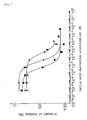


 a derivative thereof or a salt thereof;
 a derivative thereof or a salt thereof;