EP1229517A1 - Method for recognizing speech with noise-dependent variance normalization - Google Patents
Method for recognizing speech with noise-dependent variance normalization Download PDFInfo
- Publication number
- EP1229517A1 EP1229517A1 EP01102582A EP01102582A EP1229517A1 EP 1229517 A1 EP1229517 A1 EP 1229517A1 EP 01102582 A EP01102582 A EP 01102582A EP 01102582 A EP01102582 A EP 01102582A EP 1229517 A1 EP1229517 A1 EP 1229517A1
- Authority
- EP
- European Patent Office
- Prior art keywords
- normalization
- data
- anyone
- variance
- normalization degree
- Prior art date
- Legal status (The legal status is an assumption and is not a legal conclusion. Google has not performed a legal analysis and makes no representation as to the accuracy of the status listed.)
- Granted
Links
- 238000010606 normalization Methods 0.000 title claims abstract description 91
- 238000000034 method Methods 0.000 title claims abstract description 51
- 230000001419 dependent effect Effects 0.000 title claims description 16
- 238000010972 statistical evaluation Methods 0.000 claims description 18
- 238000007781 pre-processing Methods 0.000 claims description 15
- 238000007619 statistical method Methods 0.000 claims description 10
- 238000012546 transfer Methods 0.000 claims description 9
- 230000009467 reduction Effects 0.000 claims description 4
- 230000002123 temporal effect Effects 0.000 claims description 2
- 238000011156 evaluation Methods 0.000 claims 2
- 230000008569 process Effects 0.000 abstract description 9
- 230000008901 benefit Effects 0.000 description 6
- 238000010586 diagram Methods 0.000 description 4
- 238000000354 decomposition reaction Methods 0.000 description 2
- 230000007704 transition Effects 0.000 description 2
- 238000007796 conventional method Methods 0.000 description 1
- 238000001914 filtration Methods 0.000 description 1
- 238000005259 measurement Methods 0.000 description 1
- 230000003595 spectral effect Effects 0.000 description 1
Images

Classifications
-
- G—PHYSICS
- G10—MUSICAL INSTRUMENTS; ACOUSTICS
- G10L—SPEECH ANALYSIS TECHNIQUES OR SPEECH SYNTHESIS; SPEECH RECOGNITION; SPEECH OR VOICE PROCESSING TECHNIQUES; SPEECH OR AUDIO CODING OR DECODING
- G10L15/00—Speech recognition
- G10L15/20—Speech recognition techniques specially adapted for robustness in adverse environments, e.g. in noise, of stress induced speech
-
- G—PHYSICS
- G10—MUSICAL INSTRUMENTS; ACOUSTICS
- G10L—SPEECH ANALYSIS TECHNIQUES OR SPEECH SYNTHESIS; SPEECH RECOGNITION; SPEECH OR VOICE PROCESSING TECHNIQUES; SPEECH OR AUDIO CODING OR DECODING
- G10L15/00—Speech recognition
- G10L15/08—Speech classification or search
- G10L15/10—Speech classification or search using distance or distortion measures between unknown speech and reference templates
Definitions
- the present invention relates to a method for recognizing speech and more particularly to a method for recognizing speech which uses noise-dependent variance normalization.
- Methods for recognizing speech can generally be subdivided into the sections of inputting or receiving a speech signal, preprocessing said speech signal, a process of recognition and a section of outputting a recognized result.
- Said preprocessing section comprises for instance a step of digitizing an incoming analogue speech signal, a step of filtering and/or the like.
- a derivative and/or a component thereof can in some cases increase the recognition rate in the following recognition section, but not in all cases.
- the proposed method for recognizing speech comprises a preprocessing section in which a step of performing variance normalization is applicable to a given or received speech signal, derivative and/or to a component thereof.
- the preprocessing section of the proposed method for recognizing speech comprises a step of performing a statistical analysis of said speech signal, a derivative and/or of a component thereof, thereby generating and/or providing statistical evaluation data. From the so derived statistical evaluation data the inventive method generates and/or provides normalization degree data.
- the inventive method for recognizing speech comprises in its preprocessing section a step of performing a variance normalization on said speech signal, a derivative and/or on a component thereof in accordance with said normalization degree data - in particular with a normalization strength corresponding to said normalization degree data - with normalization degree data having a value or values in the neighbourhood of 0 indicating that no variance normalization has to be performed.
- normalization degree data are derived from said statistical evaluation data coming out from the statistical analysis, wherein normalization degree data being zero or lying in the vicinity of zero implying that no variance normalization has to be performed.
- the inventive method for recognizing speech uses a variance normalization, the extent of which is dependent on the quality of the received or input speech signal or the like. By this measure disadvantages of prior art methods can be avoided. Variance normalization is applied to an extent which is advantageous for the recognition rate. Therefore, variance normalization is adapted with respect to the noise level being represented by the statistical evaluation data and being converted into the variance normalization degree data.
- said statistical analysis can be carried out on the speech signal and/or on the derivative or component thereof in its entirety.
- the received and/or input speech signal and/or the derivative or component thereof may be subdivided in frequency space in certain frequency intervals.
- Each frequency component or frequency interval of the speech signal and/or of its derivative or component may independently be subjected to the process of statistical analysis yielding different statistical evaluation data for the different and distinct frequency components or intervals.
- Said statistical analysis may preferably include a step of determining signal-to-noise ratio data or the like. This may be done again in particular in a frequency-dependent manner.
- a set of discrete normalization degree values is used as said normalization degree data.
- each of said discrete normalization degree values is assigned to a certain frequency interval, and said frequency intervals may preferably have no overlap.
- a normalization degree value in the neighbourhood of 0 and/or being identical to 0 indicates that the process of variance normalization has to be skipped for the respective assigned frequency interval. That means, that the respective speech signal and/or the derivative or component thereof is an almost undisturbed signal for which a variance normalization would be disadvantageous with respect to the following recognition process.
- These transfer functions may include the class of piecewise continuous, continuous or continuous-differentiable functions or the like, in particular so as to achieve a smooth and/or differentiable transition between said statistical evaluation data and said normalization degree data and/or said normalization degree values.
- Preferred examples for said transfer functions are theta-functions, sigmoidal functions, or the like.
- a preferred embodiment for carrying out said variance normalization per se is a multiplication of said speech signal and/or of a derivative or component thereof with a so-called reduction factor R which is a function of the signal noise and/or of the normalization degree data or normalization degree values. Again, this may include the frequency dependence with respect to certain frequency values and/or certain frequency intervals.
- R 1/(1 + ( ⁇ - 1) D) with ⁇ denoting the temporal standard deviation of the speech signal, its derivative or component, and/or its feature.
- D denotes the normalization degree value, which again may also be frequency-dependent.
- the preprocessing step with respect to the input speech data is of crucial importance in order to achieve low word error rates and high robustness against background noise, in particular with respect to the following recognition process.
- the invention therefore manages the situation that variance normalization works well when applied to noisy data but deteriorates the recognition rate when applied to undisturbed input data.
- the proposed method - and in particular the preprocessing section of the method - may be realized in a two-step procedure with a first step carrying out the determination or measurement of the noise within the input data, in particular of the signal-to-noise ratio (SNR), and the second step comprising the application of a SNR-dependent variance normalization to the input data.
- SNR signal-to-noise ratio
- the second step namely the application of SNR-dependent variance normalization - the degree of variance normalization D, which may range from 0 to 1 - is determined by employing for instance a transfer function between the SNR-estimate and D.
- a transfer function between the SNR-estimate and D.
- natural choices may be included for said determination, in particular the theta-function which effectively switches variance normalization off in the case of clean or undisturbed data and which switches variance normalization to its maximum for distorted input may be used.
- Another choice may be the class of sigmoidal function which provides the smooth and differentiable transition or interpolation between the case of no variance normalization and the maximum variance normalization.
- the variance normalization itself can easily be computed by dividing the input data by (1 + ( ⁇ - 1) ⁇ D).
- ⁇ denotes the standard deviation of the input features over time.
- conventional method simply divide the input features by ⁇ without taking into account the normalization degree D.
- the input data can have an arbitrary representation for example short-time spectral or cepstral parameters.
- the standard deviation of the input features can be computed in an arbitrary way, for example using the current speech recording. It has been observed that standard variance normalization is more effective if the standard deviation estimate ⁇ is computed on more than one utterances of speech from a given speaker.
- the proposed method is independent from the way of deriving 6 and hence the method can be used even in the case where ⁇ has to be iteratively adapted, whenever new speech is input into the system.
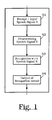
- the inventive method for recognizing speech is generally composed by a first step S1 of inputting and/or receiving a speech signal S.
- said speech signal S and/ or derivatives S' or components thereof are preprocessed.
- the output of the preprocessing section S2 is subjected to a recognition process S3.
- FIG. 2 The schematical block diagram of Fig. 2 elucidates in more detail the steps of the preprocessing section S2 of the embodiment shown in Fig. 1.
- the received or input speech signal S is of analogue form. Therefore, in step S10 of the preprocessing section S2 said analogue speech signal S is digitized.
- step S10 the speech signal S and/or derivatives S' or components thereof are subjected to a statistical evaluation in step S11 so as to provide and generate statistical evaluation data ED.
- normalization degree data ND and/or normalization degree values Dj are derived in step S12 as a function of said statistical evaluation data ED.
- step S14 with substeps 14a and 14b a process of variance normalization VN is applied to said speech signal S and/or to derivatives S' and components thereof.
- the degree and/or the strength of the variation normalization VN is dependent on and/or a function of the normalization degree data ND and/or of the normalization degree values Dj being generated in step S12.
- the variance normalization VN is performed in step 14b if according to the condition of step 14a the value or values for said normalization degree data ND, Dj are not in a neighbourhood of 0.
Landscapes
- Engineering & Computer Science (AREA)
- Computational Linguistics (AREA)
- Health & Medical Sciences (AREA)
- Audiology, Speech & Language Pathology (AREA)
- Human Computer Interaction (AREA)
- Physics & Mathematics (AREA)
- Acoustics & Sound (AREA)
- Multimedia (AREA)
- Telephonic Communication Services (AREA)
- Compression, Expansion, Code Conversion, And Decoders (AREA)
Abstract
Description
- Fig. 1
- is a schematical block diagram giving an overview over the inventive method for recognizing speech according to the present invention.
- Fig. 2
- is a schematical block diagram describing in more detail the preprocessing section of the embodiment of the inventive method shown in Fig. 1.
Claims (13)
- Method for recognizing speech,
wherein in a preprocessing section (S2) a step of performing a variance normalization (VN) is applicable to a given or received speech signal (S) and/or to a derivative (S') thereof, said preprocessing section comprising the steps of:performing a statistical analysis (S11) of said speech signal (S) and/or of a derivative (S') thereof, thereby generating and/or providing stastistical evaluation data (ED),generating and/or providing normalization degree data (ND) from said statistical evaluation data (ED), andperforming a variance normalization (VN) on said speech signal (S), a derivative (S') and/or on a component thereof in accordance with said normalization degree data (ND) - in particular with a normalization strength corresponding to said normalization degree data (ND) - with normalization degree data having a value or values in a neighbourhood of 0 indicating that no variance normalization (VN) has to be performed. - Method according to claim 1,
wherein said statistical analysis (S11) is performed in an at least piecewise or partial frequency-dependent manner. - Method according to anyone of the preceding claims,
wherein said evaluation data (ED) and/or said normalization data (ND) are generated so as to reflect at least a piecewise frequency dependency. - Method according to anyone of the preceding claims,
wherein said statistical analysis (S11) includes a step of determining signal-to-noise ratio data (SNR) or the like, in particular in a frequency-dependent manner. - Method according to anyone of the preceding claims,
wherein a set of discrete normalization degree values (Dj) is used as said normalization degree data (ND), in particular each of which being assigned to a certain frequency interval (fj, Δfj), said intervals (fj, Δfj) having essentially no overlap. - Method according to claim 5,
wherein each of said discrete normalization degree values (Dj) has a value within the interval of 0 and 1. - Method according to anyone of the preceding claims,
wherein in each case a normalization degree value (Dj) in the neighbourhood of 0 indicates to skip any variance normalization (VN) for the respective assigned frequency interval (fj, Δfj). - Method according to anyone of the preceding claims,
wherein in each case a normalization degree value (Dj) in the neighbourhood of 1 indicates to perform a maximum variance normalization (VN) for the respective assigned frequency interval (fj, Δfj). - Method according to anyone of the preceding claims,
wherein a transfer function between said statistical evaluation data (ED) and said normalization degree data (ND) is used for generating said normalization degree data (ND) from said statistical evaluation data (ED). - Method according to claim 9,
wherein a piecewise continuous, continuous or continuous differentiable function or the like is used as said transfer function, so as to particularly achieve a smooth and/or differentiable transfer between said statistical evaluation data (ED) and said normalization degree data (ND). - Method according to anyone of claims 9 or 10,
wherein a theta-function, a sigmoidal function or the like is employed as said transfer function. - Method according to anyone of the preceding claims,
wherein said variance normalization (S14) is carried out by multiplying said speech signal (S), a derivative (S') and/or a component thereof with a reduction factor (R) being a function of said statistical evaluation data (ED), in particular of the signal noise, and the normalization degree data (ND), in particular of the normalization degree values (Dj) and/or in particular in a frequency-dependent manner. - Method according to anyone of the preceding claims,
wherein a reduction factor (R) is used having the - in partiuclar frequency-dependent - form
Priority Applications (4)
| Application Number | Priority Date | Filing Date | Title |
|---|---|---|---|
| EP01102582A EP1229517B1 (en) | 2001-02-06 | 2001-02-06 | Method for recognizing speech with noise-dependent variance normalization |
| DE60110541T DE60110541T2 (en) | 2001-02-06 | 2001-02-06 | Method for speech recognition with noise-dependent normalization of the variance |
| US10/066,993 US7292974B2 (en) | 2001-02-06 | 2002-02-04 | Method for recognizing speech with noise-dependent variance normalization |
| JP2002027179A JP2002278586A (en) | 2001-02-06 | 2002-02-04 | Speech recognition method |
Applications Claiming Priority (1)
| Application Number | Priority Date | Filing Date | Title |
|---|---|---|---|
| EP01102582A EP1229517B1 (en) | 2001-02-06 | 2001-02-06 | Method for recognizing speech with noise-dependent variance normalization |
Publications (2)
| Publication Number | Publication Date |
|---|---|
| EP1229517A1 true EP1229517A1 (en) | 2002-08-07 |
| EP1229517B1 EP1229517B1 (en) | 2005-05-04 |
Family
ID=8176401
Family Applications (1)
| Application Number | Title | Priority Date | Filing Date |
|---|---|---|---|
| EP01102582A Expired - Lifetime EP1229517B1 (en) | 2001-02-06 | 2001-02-06 | Method for recognizing speech with noise-dependent variance normalization |
Country Status (4)
| Country | Link |
|---|---|
| US (1) | US7292974B2 (en) |
| EP (1) | EP1229517B1 (en) |
| JP (1) | JP2002278586A (en) |
| DE (1) | DE60110541T2 (en) |
Cited By (1)
| Publication number | Priority date | Publication date | Assignee | Title |
|---|---|---|---|---|
| WO2014080156A1 (en) * | 2012-11-21 | 2014-05-30 | The Secretary Of State For Defence | Method for determining whether a measured signal matches a model signal |
Families Citing this family (8)
| Publication number | Priority date | Publication date | Assignee | Title |
|---|---|---|---|---|
| DE602005026949D1 (en) * | 2004-01-12 | 2011-04-28 | Voice Signal Technologies Inc | Standardization of cepstral features for speech recognition |
| US7877255B2 (en) * | 2006-03-31 | 2011-01-25 | Voice Signal Technologies, Inc. | Speech recognition using channel verification |
| US8046218B2 (en) * | 2006-09-19 | 2011-10-25 | The Board Of Trustees Of The University Of Illinois | Speech and method for identifying perceptual features |
| WO2010003068A1 (en) * | 2008-07-03 | 2010-01-07 | The Board Of Trustees Of The University Of Illinois | Systems and methods for identifying speech sound features |
| WO2010011963A1 (en) * | 2008-07-25 | 2010-01-28 | The Board Of Trustees Of The University Of Illinois | Methods and systems for identifying speech sounds using multi-dimensional analysis |
| US8965756B2 (en) * | 2011-03-14 | 2015-02-24 | Adobe Systems Incorporated | Automatic equalization of coloration in speech recordings |
| EP3271700A4 (en) * | 2015-03-20 | 2019-03-27 | Inspirata Inc. | SYSTEMS, METHODS AND APPARATUS FOR HISTOPATHOLOGICAL IMAGING TO DETECT CANCER AND OTHER ANOMALIES THROUGH PRE-ANALYSIS |
| WO2019241608A1 (en) * | 2018-06-14 | 2019-12-19 | Pindrop Security, Inc. | Deep neural network based speech enhancement |
Family Cites Families (5)
| Publication number | Priority date | Publication date | Assignee | Title |
|---|---|---|---|---|
| JP2797949B2 (en) * | 1994-01-31 | 1998-09-17 | 日本電気株式会社 | Voice recognition device |
| US5604839A (en) * | 1994-07-29 | 1997-02-18 | Microsoft Corporation | Method and system for improving speech recognition through front-end normalization of feature vectors |
| US6173258B1 (en) * | 1998-09-09 | 2001-01-09 | Sony Corporation | Method for reducing noise distortions in a speech recognition system |
| US6768979B1 (en) * | 1998-10-22 | 2004-07-27 | Sony Corporation | Apparatus and method for noise attenuation in a speech recognition system |
| US6308155B1 (en) * | 1999-01-20 | 2001-10-23 | International Computer Science Institute | Feature extraction for automatic speech recognition |
-
2001
- 2001-02-06 DE DE60110541T patent/DE60110541T2/en not_active Expired - Lifetime
- 2001-02-06 EP EP01102582A patent/EP1229517B1/en not_active Expired - Lifetime
-
2002
- 2002-02-04 US US10/066,993 patent/US7292974B2/en not_active Expired - Fee Related
- 2002-02-04 JP JP2002027179A patent/JP2002278586A/en not_active Withdrawn
Non-Patent Citations (4)
| Title |
|---|
| KOBATAKE H ET AL: "DEGRADED WORD RECOGNITION BASED ON SEGMENTAL SIGNAL-TO-NOISE RATIO WEIGHTING", PROCEEDINGS OF THE INTERNATIONAL CONFERENCE ON ACOUSTICS, SPEECH, ANDSIGNAL PROCESSING. (ICASSP),US,NEW YORK, IEEE, 19 April 1994 (1994-04-19), pages I - 425-I-428, XP000529414, ISBN: 0-7803-1775-9 * |
| LJOLJE ET AL: "The AT&T LVCSR-2000 System", NIST SPEECH TRANSCRIPTION WORKSHOP 2000, 16 May 2000 (2000-05-16) - 19 May 2000 (2000-05-19), Univ. of Maryland, XP002171363 * |
| STOLCKE ET AL: "The SRI march 2000 hub-5 conversational speech transcription system", NIST SPEECH TRANSCRIPTION WORKSHOP 2000, 16 May 2000 (2000-05-16) - 19 May 2000 (2000-05-19), Univ. of Maryland, XP002171362 * |
| WOODLAND ET AL: "Improvements in accuracy and speed in the HTK broadcast news transcription system", EUROSPEECH'99, vol. 3, 5 September 1999 (1999-09-05) - 9 September 1999 (1999-09-09), Budapest, pages 1043 - 1046, XP002171361 * |
Cited By (1)
| Publication number | Priority date | Publication date | Assignee | Title |
|---|---|---|---|---|
| WO2014080156A1 (en) * | 2012-11-21 | 2014-05-30 | The Secretary Of State For Defence | Method for determining whether a measured signal matches a model signal |
Also Published As
| Publication number | Publication date |
|---|---|
| US7292974B2 (en) | 2007-11-06 |
| US20020107687A1 (en) | 2002-08-08 |
| JP2002278586A (en) | 2002-09-27 |
| DE60110541T2 (en) | 2006-02-23 |
| EP1229517B1 (en) | 2005-05-04 |
| DE60110541D1 (en) | 2005-06-09 |
Similar Documents
| Publication | Publication Date | Title |
|---|---|---|
| RU2145737C1 (en) | Method for noise reduction by means of spectral subtraction | |
| US6314396B1 (en) | Automatic gain control in a speech recognition system | |
| JP3321156B2 (en) | Voice operation characteristics detection | |
| EP1208563B1 (en) | Noisy acoustic signal enhancement | |
| EP1141948B1 (en) | Method and apparatus for adaptively suppressing noise | |
| JP2962732B2 (en) | Hearing aid signal processing system | |
| US20070232257A1 (en) | Noise suppressor | |
| JP2012506073A (en) | Method and apparatus for noise estimation in audio signals | |
| Prego et al. | A blind algorithm for reverberation-time estimation using subband decomposition of speech signals | |
| JP3105465B2 (en) | Voice section detection method | |
| EP1229517B1 (en) | Method for recognizing speech with noise-dependent variance normalization | |
| CN101053016B (en) | Method and system for constructing a first frequency compensation input spacing power density function | |
| US8559656B2 (en) | System and method for automatic microphone volume setting | |
| US6965860B1 (en) | Speech processing apparatus and method measuring signal to noise ratio and scaling speech and noise | |
| GB2380644A (en) | Speech detection | |
| US6629049B2 (en) | Method for non-harmonic analysis of waveforms for synthesis, interpolation and extrapolation | |
| US6490552B1 (en) | Methods and apparatus for silence quality measurement | |
| US6539350B1 (en) | Method and circuit arrangement for speech level measurement in a speech signal processing system | |
| US20020064288A1 (en) | Adaptive noise level estimator | |
| JP2000276200A (en) | Voice quality converting system | |
| JP3279254B2 (en) | Spectral noise removal device | |
| JP2011053557A (en) | Scream detector and scream detecting method | |
| JP2010026323A (en) | Speech speed detection device | |
| US7046792B2 (en) | Transmit/receive arbitrator | |
| EP1729287A1 (en) | Method and apparatus for adaptively suppressing noise |
Legal Events
| Date | Code | Title | Description |
|---|---|---|---|
| PUAI | Public reference made under article 153(3) epc to a published international application that has entered the european phase |
Free format text: ORIGINAL CODE: 0009012 |
|
| AK | Designated contracting states |
Kind code of ref document: A1 Designated state(s): AT BE CH CY DE DK ES FI FR GB GR IE IT LI LU MC NL PT SE TR |
|
| AX | Request for extension of the european patent |
Free format text: AL;LT;LV;MK;RO;SI |
|
| 17P | Request for examination filed |
Effective date: 20030107 |
|
| AKX | Designation fees paid |
Designated state(s): DE FI FR GB IT |
|
| 17Q | First examination report despatched |
Effective date: 20040514 |
|
| GRAP | Despatch of communication of intention to grant a patent |
Free format text: ORIGINAL CODE: EPIDOSNIGR1 |
|
| GRAS | Grant fee paid |
Free format text: ORIGINAL CODE: EPIDOSNIGR3 |
|
| GRAA | (expected) grant |
Free format text: ORIGINAL CODE: 0009210 |
|
| AK | Designated contracting states |
Kind code of ref document: B1 Designated state(s): DE FI FR GB IT |
|
| PG25 | Lapsed in a contracting state [announced via postgrant information from national office to epo] |
Ref country code: IT Free format text: LAPSE BECAUSE OF FAILURE TO SUBMIT A TRANSLATION OF THE DESCRIPTION OR TO PAY THE FEE WITHIN THE PRESCRIBED TIME-LIMIT;WARNING: LAPSES OF ITALIAN PATENTS WITH EFFECTIVE DATE BEFORE 2007 MAY HAVE OCCURRED AT ANY TIME BEFORE 2007. THE CORRECT EFFECTIVE DATE MAY BE DIFFERENT FROM THE ONE RECORDED. Effective date: 20050504 Ref country code: FI Free format text: LAPSE BECAUSE OF FAILURE TO SUBMIT A TRANSLATION OF THE DESCRIPTION OR TO PAY THE FEE WITHIN THE PRESCRIBED TIME-LIMIT Effective date: 20050504 |
|
| REG | Reference to a national code |
Ref country code: GB Ref legal event code: FG4D |
|
| REG | Reference to a national code |
Ref country code: IE Ref legal event code: FG4D |
|
| REF | Corresponds to: |
Ref document number: 60110541 Country of ref document: DE Date of ref document: 20050609 Kind code of ref document: P |
|
| RAP2 | Party data changed (patent owner data changed or rights of a patent transferred) |
Owner name: SONY DEUTSCHLAND GMBH |
|
| PLBE | No opposition filed within time limit |
Free format text: ORIGINAL CODE: 0009261 |
|
| STAA | Information on the status of an ep patent application or granted ep patent |
Free format text: STATUS: NO OPPOSITION FILED WITHIN TIME LIMIT |
|
| REG | Reference to a national code |
Ref country code: FR Ref legal event code: TP |
|
| ET | Fr: translation filed | ||
| 26N | No opposition filed |
Effective date: 20060207 |
|
| REG | Reference to a national code |
Ref country code: GB Ref legal event code: 732E |
|
| PGFP | Annual fee paid to national office [announced via postgrant information from national office to epo] |
Ref country code: FR Payment date: 20130301 Year of fee payment: 13 |
|
| PGFP | Annual fee paid to national office [announced via postgrant information from national office to epo] |
Ref country code: DE Payment date: 20140219 Year of fee payment: 14 |
|
| PGFP | Annual fee paid to national office [announced via postgrant information from national office to epo] |
Ref country code: GB Payment date: 20140218 Year of fee payment: 14 |
|
| REG | Reference to a national code |
Ref country code: FR Ref legal event code: ST Effective date: 20141031 |
|
| PG25 | Lapsed in a contracting state [announced via postgrant information from national office to epo] |
Ref country code: FR Free format text: LAPSE BECAUSE OF NON-PAYMENT OF DUE FEES Effective date: 20140228 |
|
| REG | Reference to a national code |
Ref country code: DE Ref legal event code: R119 Ref document number: 60110541 Country of ref document: DE |
|
| GBPC | Gb: european patent ceased through non-payment of renewal fee |
Effective date: 20150206 |
|
| PG25 | Lapsed in a contracting state [announced via postgrant information from national office to epo] |
Ref country code: DE Free format text: LAPSE BECAUSE OF NON-PAYMENT OF DUE FEES Effective date: 20150901 Ref country code: GB Free format text: LAPSE BECAUSE OF NON-PAYMENT OF DUE FEES Effective date: 20150206 |