EP1227829B1 - Novel chimeric analgesic peptides - Google Patents
Novel chimeric analgesic peptides Download PDFInfo
- Publication number
- EP1227829B1 EP1227829B1 EP00973993A EP00973993A EP1227829B1 EP 1227829 B1 EP1227829 B1 EP 1227829B1 EP 00973993 A EP00973993 A EP 00973993A EP 00973993 A EP00973993 A EP 00973993A EP 1227829 B1 EP1227829 B1 EP 1227829B1
- Authority
- EP
- European Patent Office
- Prior art keywords
- peptide
- phe
- pro
- receptor
- peptides
- Prior art date
- Legal status (The legal status is an assumption and is not a legal conclusion. Google has not performed a legal analysis and makes no representation as to the accuracy of the status listed.)
- Expired - Lifetime
Links
- 101500007657 Crotalus durissus terrificus Crotoxin chain gamma Proteins 0.000 title description 2
- 108090000765 processed proteins & peptides Proteins 0.000 claims abstract description 95
- 108091006116 chimeric peptides Proteins 0.000 claims abstract description 48
- 230000036592 analgesia Effects 0.000 claims abstract description 29
- 208000002193 Pain Diseases 0.000 claims description 20
- 230000036407 pain Effects 0.000 claims description 15
- 239000003814 drug Substances 0.000 claims description 9
- 239000008194 pharmaceutical composition Substances 0.000 claims description 9
- 239000002904 solvent Substances 0.000 claims description 8
- 125000003275 alpha amino acid group Chemical group 0.000 claims description 6
- 238000004519 manufacturing process Methods 0.000 claims description 5
- 239000003085 diluting agent Substances 0.000 claims description 3
- 241000124008 Mammalia Species 0.000 claims description 2
- 239000002671 adjuvant Substances 0.000 claims description 2
- 230000003040 nociceptive effect Effects 0.000 abstract description 13
- 108010093625 Opioid Peptides Proteins 0.000 abstract description 5
- 102000001490 Opioid Peptides Human genes 0.000 abstract description 5
- 239000003399 opiate peptide Substances 0.000 abstract description 5
- 241000700159 Rattus Species 0.000 description 38
- 238000000034 method Methods 0.000 description 33
- 102000004196 processed proteins & peptides Human genes 0.000 description 33
- 150000007523 nucleic acids Chemical class 0.000 description 30
- 102000005962 receptors Human genes 0.000 description 28
- 108020003175 receptors Proteins 0.000 description 28
- 108020004707 nucleic acids Proteins 0.000 description 24
- 102000039446 nucleic acids Human genes 0.000 description 24
- 210000004027 cell Anatomy 0.000 description 21
- 108090000623 proteins and genes Proteins 0.000 description 21
- 150000001875 compounds Chemical class 0.000 description 19
- 239000000203 mixture Substances 0.000 description 18
- 235000001014 amino acid Nutrition 0.000 description 17
- 229940024606 amino acid Drugs 0.000 description 17
- 150000001413 amino acids Chemical class 0.000 description 17
- 102000051367 mu Opioid Receptors Human genes 0.000 description 16
- 239000000243 solution Substances 0.000 description 16
- 108020001612 μ-opioid receptors Proteins 0.000 description 16
- 108020004414 DNA Proteins 0.000 description 14
- 230000000694 effects Effects 0.000 description 14
- 238000002360 preparation method Methods 0.000 description 14
- 230000000202 analgesic effect Effects 0.000 description 13
- 235000018102 proteins Nutrition 0.000 description 13
- 102000004169 proteins and genes Human genes 0.000 description 13
- 230000027455 binding Effects 0.000 description 12
- FAPWRFPIFSIZLT-UHFFFAOYSA-M Sodium chloride Chemical compound [Na+].[Cl-] FAPWRFPIFSIZLT-UHFFFAOYSA-M 0.000 description 11
- DQCKKXVULJGBQN-XFWGSAIBSA-N naltrexone Chemical compound N1([C@@H]2CC3=CC=C(C=4O[C@@H]5[C@](C3=4)([C@]2(CCC5=O)O)CC1)O)CC1CC1 DQCKKXVULJGBQN-XFWGSAIBSA-N 0.000 description 11
- 229960003086 naltrexone Drugs 0.000 description 11
- 239000013598 vector Substances 0.000 description 11
- 239000000126 substance Substances 0.000 description 10
- 238000012360 testing method Methods 0.000 description 10
- 239000000835 fiber Substances 0.000 description 9
- 238000007913 intrathecal administration Methods 0.000 description 9
- 238000003786 synthesis reaction Methods 0.000 description 9
- 210000004556 brain Anatomy 0.000 description 8
- 239000012707 chemical precursor Substances 0.000 description 8
- 108091028043 Nucleic acid sequence Proteins 0.000 description 7
- 102000003840 Opioid Receptors Human genes 0.000 description 7
- 108090000137 Opioid Receptors Proteins 0.000 description 7
- 101100244562 Pseudomonas aeruginosa (strain ATCC 15692 / DSM 22644 / CIP 104116 / JCM 14847 / LMG 12228 / 1C / PRS 101 / PAO1) oprD gene Proteins 0.000 description 7
- 239000000872 buffer Substances 0.000 description 7
- 108700023159 delta Opioid Receptors Proteins 0.000 description 7
- 102000048124 delta Opioid Receptors Human genes 0.000 description 7
- 239000013604 expression vector Substances 0.000 description 7
- 239000000463 material Substances 0.000 description 7
- 230000004048 modification Effects 0.000 description 7
- 238000012986 modification Methods 0.000 description 7
- 229940005483 opioid analgesics Drugs 0.000 description 7
- DNIAPMSPPWPWGF-UHFFFAOYSA-N Propylene glycol Chemical compound CC(O)CO DNIAPMSPPWPWGF-UHFFFAOYSA-N 0.000 description 6
- 230000000295 complement effect Effects 0.000 description 6
- 239000003937 drug carrier Substances 0.000 description 6
- -1 i.e. Proteins 0.000 description 6
- 102000048260 kappa Opioid Receptors Human genes 0.000 description 6
- 239000011780 sodium chloride Substances 0.000 description 6
- XLYOFNOQVPJJNP-UHFFFAOYSA-N water Chemical compound O XLYOFNOQVPJJNP-UHFFFAOYSA-N 0.000 description 6
- 108020001588 κ-opioid receptors Proteins 0.000 description 6
- HPZJMUBDEAMBFI-WTNAPCKOSA-N (D-Ala(2)-mephe(4)-gly-ol(5))enkephalin Chemical compound C([C@H](N)C(=O)N[C@H](C)C(=O)NCC(=O)N(C)[C@@H](CC=1C=CC=CC=1)C(=O)NCCO)C1=CC=C(O)C=C1 HPZJMUBDEAMBFI-WTNAPCKOSA-N 0.000 description 5
- QKNYBSVHEMOAJP-UHFFFAOYSA-N 2-amino-2-(hydroxymethyl)propane-1,3-diol;hydron;chloride Chemical compound Cl.OCC(N)(CO)CO QKNYBSVHEMOAJP-UHFFFAOYSA-N 0.000 description 5
- 241000972773 Aulopiformes Species 0.000 description 5
- 150000008574 D-amino acids Chemical class 0.000 description 5
- 108010065372 Dynorphins Proteins 0.000 description 5
- KCXVZYZYPLLWCC-UHFFFAOYSA-N EDTA Chemical compound OC(=O)CN(CC(O)=O)CCN(CC(O)=O)CC(O)=O KCXVZYZYPLLWCC-UHFFFAOYSA-N 0.000 description 5
- PEDCQBHIVMGVHV-UHFFFAOYSA-N Glycerine Chemical compound OCC(O)CO PEDCQBHIVMGVHV-UHFFFAOYSA-N 0.000 description 5
- 108091034117 Oligonucleotide Proteins 0.000 description 5
- 102400000096 Substance P Human genes 0.000 description 5
- 101800003906 Substance P Proteins 0.000 description 5
- 239000000556 agonist Substances 0.000 description 5
- 239000005557 antagonist Substances 0.000 description 5
- 230000015572 biosynthetic process Effects 0.000 description 5
- 230000001413 cellular effect Effects 0.000 description 5
- 239000003795 chemical substances by application Substances 0.000 description 5
- 125000004122 cyclic group Chemical group 0.000 description 5
- 229940079593 drug Drugs 0.000 description 5
- 238000005259 measurement Methods 0.000 description 5
- 238000000159 protein binding assay Methods 0.000 description 5
- 235000019515 salmon Nutrition 0.000 description 5
- 210000000278 spinal cord Anatomy 0.000 description 5
- 238000001356 surgical procedure Methods 0.000 description 5
- QDZOEBFLNHCSSF-PFFBOGFISA-N (2S)-2-[[(2R)-2-[[(2S)-1-[(2S)-6-amino-2-[[(2S)-1-[(2R)-2-amino-5-carbamimidamidopentanoyl]pyrrolidine-2-carbonyl]amino]hexanoyl]pyrrolidine-2-carbonyl]amino]-3-(1H-indol-3-yl)propanoyl]amino]-N-[(2R)-1-[[(2S)-1-[[(2R)-1-[[(2S)-1-[[(2S)-1-amino-4-methyl-1-oxopentan-2-yl]amino]-4-methyl-1-oxopentan-2-yl]amino]-3-(1H-indol-3-yl)-1-oxopropan-2-yl]amino]-1-oxo-3-phenylpropan-2-yl]amino]-3-(1H-indol-3-yl)-1-oxopropan-2-yl]pentanediamide Chemical compound C([C@@H](C(=O)N[C@H](CC=1C2=CC=CC=C2NC=1)C(=O)N[C@@H](CC(C)C)C(=O)N[C@@H](CC(C)C)C(N)=O)NC(=O)[C@@H](CC=1C2=CC=CC=C2NC=1)NC(=O)[C@H](CCC(N)=O)NC(=O)[C@@H](CC=1C2=CC=CC=C2NC=1)NC(=O)[C@H]1N(CCC1)C(=O)[C@H](CCCCN)NC(=O)[C@H]1N(CCC1)C(=O)[C@H](N)CCCNC(N)=N)C1=CC=CC=C1 QDZOEBFLNHCSSF-PFFBOGFISA-N 0.000 description 4
- 108700022183 Ala(2)-MePhe(4)-Gly(5)- Enkephalin Proteins 0.000 description 4
- CIWBSHSKHKDKBQ-JLAZNSOCSA-N Ascorbic acid Chemical compound OC[C@H](O)[C@H]1OC(=O)C(O)=C1O CIWBSHSKHKDKBQ-JLAZNSOCSA-N 0.000 description 4
- 208000000094 Chronic Pain Diseases 0.000 description 4
- 229920000858 Cyclodextrin Polymers 0.000 description 4
- 229920001917 Ficoll Polymers 0.000 description 4
- 239000004471 Glycine Substances 0.000 description 4
- 208000004454 Hyperalgesia Diseases 0.000 description 4
- 208000035154 Hyperesthesia Diseases 0.000 description 4
- TWRXJAOTZQYOKJ-UHFFFAOYSA-L Magnesium chloride Chemical compound [Mg+2].[Cl-].[Cl-] TWRXJAOTZQYOKJ-UHFFFAOYSA-L 0.000 description 4
- 108700026244 Open Reading Frames Proteins 0.000 description 4
- 102100024622 Proenkephalin-B Human genes 0.000 description 4
- 230000009471 action Effects 0.000 description 4
- 230000004075 alteration Effects 0.000 description 4
- 238000003556 assay Methods 0.000 description 4
- 238000011161 development Methods 0.000 description 4
- 239000006185 dispersion Substances 0.000 description 4
- XIJHWXXXIMEHKW-LJWNLINESA-N endomorphin-2 Chemical compound C([C@H](N)C(=O)N1[C@@H](CCC1)C(=O)N[C@@H](CC=1C=CC=CC=1)C(=O)N[C@@H](CC=1C=CC=CC=1)C(N)=O)C1=CC=C(O)C=C1 XIJHWXXXIMEHKW-LJWNLINESA-N 0.000 description 4
- 239000012530 fluid Substances 0.000 description 4
- 238000001415 gene therapy Methods 0.000 description 4
- 238000010348 incorporation Methods 0.000 description 4
- 239000004615 ingredient Substances 0.000 description 4
- BQJCRHHNABKAKU-KBQPJGBKSA-N morphine Chemical compound O([C@H]1[C@H](C=C[C@H]23)O)C4=C5[C@@]12CCN(C)[C@@H]3CC5=CC=C4O BQJCRHHNABKAKU-KBQPJGBKSA-N 0.000 description 4
- 229920001184 polypeptide Polymers 0.000 description 4
- 230000004044 response Effects 0.000 description 4
- 239000000523 sample Substances 0.000 description 4
- 230000001225 therapeutic effect Effects 0.000 description 4
- UEVAHGMTRWGMTB-JBXUNAHCSA-N (2s)-6-amino-2-[[(2s)-2-[[(2r)-2-[[(2s)-2-amino-3-(4-hydroxyphenyl)propanoyl]amino]-5-(diaminomethylideneamino)pentanoyl]amino]-3-phenylpropanoyl]amino]hexanamide Chemical compound C([C@@H](C(=O)N[C@@H](CCCCN)C(N)=O)NC(=O)[C@@H](CCCN=C(N)N)NC(=O)[C@@H](N)CC=1C=CC(O)=CC=1)C1=CC=CC=C1 UEVAHGMTRWGMTB-JBXUNAHCSA-N 0.000 description 3
- WVDDGKGOMKODPV-UHFFFAOYSA-N Benzyl alcohol Chemical compound OCC1=CC=CC=C1 WVDDGKGOMKODPV-UHFFFAOYSA-N 0.000 description 3
- 241000283690 Bos taurus Species 0.000 description 3
- LFQSCWFLJHTTHZ-UHFFFAOYSA-N Ethanol Chemical compound CCO LFQSCWFLJHTTHZ-UHFFFAOYSA-N 0.000 description 3
- 241000233866 Fungi Species 0.000 description 3
- DHMQDGOQFOQNFH-UHFFFAOYSA-N Glycine Chemical compound NCC(O)=O DHMQDGOQFOQNFH-UHFFFAOYSA-N 0.000 description 3
- ZEXLJFNSKAHNFH-SYKYGTKKSA-N L-Phenylalaninamide, L-tyrosyl-L-prolyl-L-tryptophyl- Chemical compound C([C@H](N)C(=O)N1[C@@H](CCC1)C(=O)N[C@@H](CC=1C2=CC=CC=C2NC=1)C(=O)N[C@@H](CC=1C=CC=CC=1)C(N)=O)C1=CC=C(O)C=C1 ZEXLJFNSKAHNFH-SYKYGTKKSA-N 0.000 description 3
- WHUUTDBJXJRKMK-VKHMYHEASA-N L-glutamic acid Chemical compound OC(=O)[C@@H](N)CCC(O)=O WHUUTDBJXJRKMK-VKHMYHEASA-N 0.000 description 3
- KZSNJWFQEVHDMF-BYPYZUCNSA-N L-valine Chemical compound CC(C)[C@H](N)C(O)=O KZSNJWFQEVHDMF-BYPYZUCNSA-N 0.000 description 3
- 241001465754 Metazoa Species 0.000 description 3
- LSQXZIUREIDSHZ-ZJZGAYNASA-N Morphiceptin Chemical compound C([C@H](N)C(=O)N1[C@@H](CCC1)C(=O)N[C@@H](CC=1C=CC=CC=1)C(=O)N1[C@@H](CCC1)C(N)=O)C1=CC=C(O)C=C1 LSQXZIUREIDSHZ-ZJZGAYNASA-N 0.000 description 3
- HEMHJVSKTPXQMS-UHFFFAOYSA-M Sodium hydroxide Chemical compound [OH-].[Na+] HEMHJVSKTPXQMS-UHFFFAOYSA-M 0.000 description 3
- KZSNJWFQEVHDMF-UHFFFAOYSA-N Valine Natural products CC(C)C(N)C(O)=O KZSNJWFQEVHDMF-UHFFFAOYSA-N 0.000 description 3
- JLCPHMBAVCMARE-UHFFFAOYSA-N [3-[[3-[[3-[[3-[[3-[[3-[[3-[[3-[[3-[[3-[[3-[[5-(2-amino-6-oxo-1H-purin-9-yl)-3-[[3-[[3-[[3-[[3-[[3-[[5-(2-amino-6-oxo-1H-purin-9-yl)-3-[[5-(2-amino-6-oxo-1H-purin-9-yl)-3-hydroxyoxolan-2-yl]methoxy-hydroxyphosphoryl]oxyoxolan-2-yl]methoxy-hydroxyphosphoryl]oxy-5-(5-methyl-2,4-dioxopyrimidin-1-yl)oxolan-2-yl]methoxy-hydroxyphosphoryl]oxy-5-(6-aminopurin-9-yl)oxolan-2-yl]methoxy-hydroxyphosphoryl]oxy-5-(6-aminopurin-9-yl)oxolan-2-yl]methoxy-hydroxyphosphoryl]oxy-5-(6-aminopurin-9-yl)oxolan-2-yl]methoxy-hydroxyphosphoryl]oxy-5-(6-aminopurin-9-yl)oxolan-2-yl]methoxy-hydroxyphosphoryl]oxyoxolan-2-yl]methoxy-hydroxyphosphoryl]oxy-5-(5-methyl-2,4-dioxopyrimidin-1-yl)oxolan-2-yl]methoxy-hydroxyphosphoryl]oxy-5-(4-amino-2-oxopyrimidin-1-yl)oxolan-2-yl]methoxy-hydroxyphosphoryl]oxy-5-(5-methyl-2,4-dioxopyrimidin-1-yl)oxolan-2-yl]methoxy-hydroxyphosphoryl]oxy-5-(5-methyl-2,4-dioxopyrimidin-1-yl)oxolan-2-yl]methoxy-hydroxyphosphoryl]oxy-5-(6-aminopurin-9-yl)oxolan-2-yl]methoxy-hydroxyphosphoryl]oxy-5-(6-aminopurin-9-yl)oxolan-2-yl]methoxy-hydroxyphosphoryl]oxy-5-(4-amino-2-oxopyrimidin-1-yl)oxolan-2-yl]methoxy-hydroxyphosphoryl]oxy-5-(4-amino-2-oxopyrimidin-1-yl)oxolan-2-yl]methoxy-hydroxyphosphoryl]oxy-5-(4-amino-2-oxopyrimidin-1-yl)oxolan-2-yl]methoxy-hydroxyphosphoryl]oxy-5-(6-aminopurin-9-yl)oxolan-2-yl]methoxy-hydroxyphosphoryl]oxy-5-(4-amino-2-oxopyrimidin-1-yl)oxolan-2-yl]methyl [5-(6-aminopurin-9-yl)-2-(hydroxymethyl)oxolan-3-yl] hydrogen phosphate Polymers Cc1cn(C2CC(OP(O)(=O)OCC3OC(CC3OP(O)(=O)OCC3OC(CC3O)n3cnc4c3nc(N)[nH]c4=O)n3cnc4c3nc(N)[nH]c4=O)C(COP(O)(=O)OC3CC(OC3COP(O)(=O)OC3CC(OC3COP(O)(=O)OC3CC(OC3COP(O)(=O)OC3CC(OC3COP(O)(=O)OC3CC(OC3COP(O)(=O)OC3CC(OC3COP(O)(=O)OC3CC(OC3COP(O)(=O)OC3CC(OC3COP(O)(=O)OC3CC(OC3COP(O)(=O)OC3CC(OC3COP(O)(=O)OC3CC(OC3COP(O)(=O)OC3CC(OC3COP(O)(=O)OC3CC(OC3COP(O)(=O)OC3CC(OC3COP(O)(=O)OC3CC(OC3COP(O)(=O)OC3CC(OC3COP(O)(=O)OC3CC(OC3CO)n3cnc4c(N)ncnc34)n3ccc(N)nc3=O)n3cnc4c(N)ncnc34)n3ccc(N)nc3=O)n3ccc(N)nc3=O)n3ccc(N)nc3=O)n3cnc4c(N)ncnc34)n3cnc4c(N)ncnc34)n3cc(C)c(=O)[nH]c3=O)n3cc(C)c(=O)[nH]c3=O)n3ccc(N)nc3=O)n3cc(C)c(=O)[nH]c3=O)n3cnc4c3nc(N)[nH]c4=O)n3cnc4c(N)ncnc34)n3cnc4c(N)ncnc34)n3cnc4c(N)ncnc34)n3cnc4c(N)ncnc34)O2)c(=O)[nH]c1=O JLCPHMBAVCMARE-UHFFFAOYSA-N 0.000 description 3
- 239000002253 acid Substances 0.000 description 3
- 230000004913 activation Effects 0.000 description 3
- 239000003242 anti bacterial agent Substances 0.000 description 3
- 108010065875 beta-casomorphins Proteins 0.000 description 3
- 230000004071 biological effect Effects 0.000 description 3
- 229920001222 biopolymer Polymers 0.000 description 3
- 238000010367 cloning Methods 0.000 description 3
- 239000002612 dispersion medium Substances 0.000 description 3
- 108010015198 endomorphin 2 Proteins 0.000 description 3
- 238000009472 formulation Methods 0.000 description 3
- 239000012634 fragment Substances 0.000 description 3
- 230000006870 function Effects 0.000 description 3
- 238000001476 gene delivery Methods 0.000 description 3
- 238000009396 hybridization Methods 0.000 description 3
- 238000002513 implantation Methods 0.000 description 3
- 238000001727 in vivo Methods 0.000 description 3
- 238000011534 incubation Methods 0.000 description 3
- 239000003446 ligand Substances 0.000 description 3
- 239000012528 membrane Substances 0.000 description 3
- 239000002742 neurokinin 1 receptor antagonist Substances 0.000 description 3
- 102000040430 polynucleotide Human genes 0.000 description 3
- 108091033319 polynucleotide Proteins 0.000 description 3
- 239000002157 polynucleotide Substances 0.000 description 3
- 239000000843 powder Substances 0.000 description 3
- 238000000746 purification Methods 0.000 description 3
- 239000000018 receptor agonist Substances 0.000 description 3
- 229940044601 receptor agonist Drugs 0.000 description 3
- 230000002441 reversible effect Effects 0.000 description 3
- HFHDHCJBZVLPGP-UHFFFAOYSA-N schardinger α-dextrin Chemical compound O1C(C(C2O)O)C(CO)OC2OC(C(C2O)O)C(CO)OC2OC(C(C2O)O)C(CO)OC2OC(C(O)C2O)C(CO)OC2OC(C(C2O)O)C(CO)OC2OC2C(O)C(O)C1OC2CO HFHDHCJBZVLPGP-UHFFFAOYSA-N 0.000 description 3
- 238000006467 substitution reaction Methods 0.000 description 3
- 239000003826 tablet Substances 0.000 description 3
- 230000000451 tissue damage Effects 0.000 description 3
- 231100000827 tissue damage Toxicity 0.000 description 3
- 238000001890 transfection Methods 0.000 description 3
- 108010094098 tyrosyl-arginyl-phenylalanyl-lysinamide Proteins 0.000 description 3
- 239000004474 valine Substances 0.000 description 3
- ZHUJMSMQIPIPTF-IBURTVSXSA-N (2r)-2-[[(2s)-2-[[2-[[(2r)-2-[[(2s)-2-amino-3-(4-hydroxyphenyl)propanoyl]amino]propanoyl]amino]acetyl]amino]-3-phenylpropanoyl]amino]-4-methylpentanoic acid Chemical compound C([C@@H](C(=O)N[C@H](CC(C)C)C(O)=O)NC(=O)CNC(=O)[C@@H](C)NC(=O)[C@@H](N)CC=1C=CC(O)=CC=1)C1=CC=CC=C1 ZHUJMSMQIPIPTF-IBURTVSXSA-N 0.000 description 2
- LJRDOKAZOAKLDU-UDXJMMFXSA-N (2s,3s,4r,5r,6r)-5-amino-2-(aminomethyl)-6-[(2r,3s,4r,5s)-5-[(1r,2r,3s,5r,6s)-3,5-diamino-2-[(2s,3r,4r,5s,6r)-3-amino-4,5-dihydroxy-6-(hydroxymethyl)oxan-2-yl]oxy-6-hydroxycyclohexyl]oxy-4-hydroxy-2-(hydroxymethyl)oxolan-3-yl]oxyoxane-3,4-diol;sulfuric ac Chemical compound OS(O)(=O)=O.N[C@@H]1[C@@H](O)[C@H](O)[C@H](CN)O[C@@H]1O[C@H]1[C@@H](O)[C@H](O[C@H]2[C@@H]([C@@H](N)C[C@@H](N)[C@@H]2O)O[C@@H]2[C@@H]([C@@H](O)[C@H](O)[C@@H](CO)O2)N)O[C@@H]1CO LJRDOKAZOAKLDU-UDXJMMFXSA-N 0.000 description 2
- 239000004475 Arginine Substances 0.000 description 2
- CURLTUGMZLYLDI-UHFFFAOYSA-N Carbon dioxide Chemical compound O=C=O CURLTUGMZLYLDI-UHFFFAOYSA-N 0.000 description 2
- 108700022182 D-Penicillamine (2,5)- Enkephalin Proteins 0.000 description 2
- 102000053602 DNA Human genes 0.000 description 2
- MCMMCRYPQBNCPH-WMIMKTLMSA-N DPDPE Chemical compound C([C@H](N)C(=O)N[C@@H]1C(C)(C)SSC([C@@H](NC(=O)[C@H](CC=2C=CC=CC=2)NC(=O)CNC1=O)C(O)=O)(C)C)C1=CC=C(O)C=C1 MCMMCRYPQBNCPH-WMIMKTLMSA-N 0.000 description 2
- PKSODCLCMBUCPW-LVNBQDLPSA-N DSLET Chemical compound C([C@@H](C(=O)N[C@@H](CC(C)C)C(=O)N[C@@H]([C@@H](C)O)C(O)=O)NC(=O)CNC(=O)[C@@H](CO)NC(=O)[C@@H](N)CC=1C=CC(O)=CC=1)C1=CC=CC=C1 PKSODCLCMBUCPW-LVNBQDLPSA-N 0.000 description 2
- 101800002242 Dermorphin Proteins 0.000 description 2
- FHZPGIUBXYVUOY-VWGYHWLBSA-N Dermorphin Chemical compound C([C@H](N)C(=O)N[C@H](C)C(=O)N[C@@H](CC=1C=CC=CC=1)C(=O)NCC(=O)N[C@@H](CC=1C=CC(O)=CC=1)C(=O)N1[C@@H](CCC1)C(=O)N[C@@H](CO)C(N)=O)C1=CC=C(O)C=C1 FHZPGIUBXYVUOY-VWGYHWLBSA-N 0.000 description 2
- 102400000242 Dynorphin A(1-17) Human genes 0.000 description 2
- ZHNUHDYFZUAESO-UHFFFAOYSA-N Formamide Chemical compound NC=O ZHNUHDYFZUAESO-UHFFFAOYSA-N 0.000 description 2
- 108010010803 Gelatin Proteins 0.000 description 2
- WHUUTDBJXJRKMK-UHFFFAOYSA-N Glutamic acid Natural products OC(=O)C(N)CCC(O)=O WHUUTDBJXJRKMK-UHFFFAOYSA-N 0.000 description 2
- 241000238631 Hexapoda Species 0.000 description 2
- VEXZGXHMUGYJMC-UHFFFAOYSA-N Hydrochloric acid Chemical compound Cl VEXZGXHMUGYJMC-UHFFFAOYSA-N 0.000 description 2
- AGPKZVBTJJNPAG-WHFBIAKZSA-N L-isoleucine Chemical compound CC[C@H](C)[C@H](N)C(O)=O AGPKZVBTJJNPAG-WHFBIAKZSA-N 0.000 description 2
- ROHFNLRQFUQHCH-YFKPBYRVSA-N L-leucine Chemical compound CC(C)C[C@H](N)C(O)=O ROHFNLRQFUQHCH-YFKPBYRVSA-N 0.000 description 2
- URLZCHNOLZSCCA-VABKMULXSA-N Leu-enkephalin Chemical compound C([C@@H](C(=O)N[C@@H](CC(C)C)C(O)=O)NC(=O)CNC(=O)CNC(=O)[C@@H](N)CC=1C=CC(O)=CC=1)C1=CC=CC=C1 URLZCHNOLZSCCA-VABKMULXSA-N 0.000 description 2
- 108010022337 Leucine Enkephalin Proteins 0.000 description 2
- 108010004028 Leucine-2-Alanine Enkephalin Proteins 0.000 description 2
- 239000004472 Lysine Substances 0.000 description 2
- 108010042237 Methionine Enkephalin Proteins 0.000 description 2
- 102000002002 Neurokinin-1 Receptors Human genes 0.000 description 2
- 108010040718 Neurokinin-1 Receptors Proteins 0.000 description 2
- ISWSIDIOOBJBQZ-UHFFFAOYSA-N Phenol Chemical compound OC1=CC=CC=C1 ISWSIDIOOBJBQZ-UHFFFAOYSA-N 0.000 description 2
- 108700019895 Thr(6)- Leu(5) Ser(2) enkephalin Proteins 0.000 description 2
- 241000251539 Vertebrata <Metazoa> Species 0.000 description 2
- 238000010521 absorption reaction Methods 0.000 description 2
- 230000021736 acetylation Effects 0.000 description 2
- 238000006640 acetylation reaction Methods 0.000 description 2
- 238000007792 addition Methods 0.000 description 2
- 108010041395 alpha-Endorphin Proteins 0.000 description 2
- 230000009435 amidation Effects 0.000 description 2
- 238000007112 amidation reaction Methods 0.000 description 2
- 150000001408 amides Chemical class 0.000 description 2
- 230000000844 anti-bacterial effect Effects 0.000 description 2
- 229940121375 antifungal agent Drugs 0.000 description 2
- 239000003429 antifungal agent Substances 0.000 description 2
- 239000007864 aqueous solution Substances 0.000 description 2
- 235000010323 ascorbic acid Nutrition 0.000 description 2
- 229960005070 ascorbic acid Drugs 0.000 description 2
- 239000011668 ascorbic acid Substances 0.000 description 2
- 238000000376 autoradiography Methods 0.000 description 2
- 230000008901 benefit Effects 0.000 description 2
- 239000011230 binding agent Substances 0.000 description 2
- 230000005540 biological transmission Effects 0.000 description 2
- 239000002775 capsule Substances 0.000 description 2
- 125000003178 carboxy group Chemical group [H]OC(*)=O 0.000 description 2
- 239000000969 carrier Substances 0.000 description 2
- 210000003169 central nervous system Anatomy 0.000 description 2
- 239000003153 chemical reaction reagent Substances 0.000 description 2
- 210000004978 chinese hamster ovary cell Anatomy 0.000 description 2
- OSASVXMJTNOKOY-UHFFFAOYSA-N chlorobutanol Chemical compound CC(C)(O)C(Cl)(Cl)Cl OSASVXMJTNOKOY-UHFFFAOYSA-N 0.000 description 2
- 238000000576 coating method Methods 0.000 description 2
- 235000018417 cysteine Nutrition 0.000 description 2
- 125000000151 cysteine group Chemical group N[C@@H](CS)C(=O)* 0.000 description 2
- 238000013461 design Methods 0.000 description 2
- LOKCTEFSRHRXRJ-UHFFFAOYSA-I dipotassium trisodium dihydrogen phosphate hydrogen phosphate dichloride Chemical compound P(=O)(O)(O)[O-].[K+].P(=O)(O)([O-])[O-].[Na+].[Na+].[Cl-].[K+].[Cl-].[Na+] LOKCTEFSRHRXRJ-UHFFFAOYSA-I 0.000 description 2
- JMNJYGMAUMANNW-FIXZTSJVSA-N dynorphin a Chemical compound C([C@@H](C(=O)N[C@@H](CC(C)C)C(=O)N[C@@H](CCCNC(N)=N)C(=O)N[C@@H](CCCNC(N)=N)C(=O)N[C@@H]([C@@H](C)CC)C(=O)N[C@@H](CCCNC(N)=N)C(=O)N1[C@@H](CCC1)C(=O)N[C@@H](CCCCN)C(=O)N[C@@H](CC(C)C)C(=O)N[C@@H](CCCCN)C(=O)N[C@@H](CC=1C2=CC=CC=C2NC=1)C(=O)N[C@@H](CC(O)=O)C(=O)N[C@@H](CC(N)=O)C(=O)N[C@@H](CCC(N)=O)C(O)=O)NC(=O)CNC(=O)CNC(=O)[C@@H](N)CC=1C=CC(O)=CC=1)C1=CC=CC=C1 JMNJYGMAUMANNW-FIXZTSJVSA-N 0.000 description 2
- 108010015205 endomorphin 1 Proteins 0.000 description 2
- 230000032050 esterification Effects 0.000 description 2
- 238000005886 esterification reaction Methods 0.000 description 2
- 210000003527 eukaryotic cell Anatomy 0.000 description 2
- 235000013305 food Nutrition 0.000 description 2
- 239000008273 gelatin Substances 0.000 description 2
- 229920000159 gelatin Polymers 0.000 description 2
- 235000019322 gelatine Nutrition 0.000 description 2
- 235000011852 gelatine desserts Nutrition 0.000 description 2
- 235000011187 glycerol Nutrition 0.000 description 2
- 239000001963 growth medium Substances 0.000 description 2
- 238000000338 in vitro Methods 0.000 description 2
- 230000003993 interaction Effects 0.000 description 2
- 238000000185 intracerebroventricular administration Methods 0.000 description 2
- 238000007912 intraperitoneal administration Methods 0.000 description 2
- 238000001990 intravenous administration Methods 0.000 description 2
- 239000007951 isotonicity adjuster Substances 0.000 description 2
- 230000000670 limiting effect Effects 0.000 description 2
- 229910001629 magnesium chloride Inorganic materials 0.000 description 2
- HQKMJHAJHXVSDF-UHFFFAOYSA-L magnesium stearate Chemical compound [Mg+2].CCCCCCCCCCCCCCCCCC([O-])=O.CCCCCCCCCCCCCCCCCC([O-])=O HQKMJHAJHXVSDF-UHFFFAOYSA-L 0.000 description 2
- 238000012423 maintenance Methods 0.000 description 2
- 210000004962 mammalian cell Anatomy 0.000 description 2
- 230000001404 mediated effect Effects 0.000 description 2
- 239000002609 medium Substances 0.000 description 2
- OSWPMRLSEDHDFF-UHFFFAOYSA-N methyl salicylate Chemical compound COC(=O)C1=CC=CC=C1O OSWPMRLSEDHDFF-UHFFFAOYSA-N 0.000 description 2
- 244000005700 microbiome Species 0.000 description 2
- 238000010369 molecular cloning Methods 0.000 description 2
- 108010081351 morphiceptin Proteins 0.000 description 2
- 229960005181 morphine Drugs 0.000 description 2
- 210000000929 nociceptor Anatomy 0.000 description 2
- 230000009871 nonspecific binding Effects 0.000 description 2
- 239000002674 ointment Substances 0.000 description 2
- 229960001639 penicillamine Drugs 0.000 description 2
- 125000001151 peptidyl group Chemical group 0.000 description 2
- 239000000546 pharmaceutical excipient Substances 0.000 description 2
- 239000000825 pharmaceutical preparation Substances 0.000 description 2
- 239000002953 phosphate buffered saline Substances 0.000 description 2
- 229920001223 polyethylene glycol Polymers 0.000 description 2
- 210000001236 prokaryotic cell Anatomy 0.000 description 2
- 230000002035 prolonged effect Effects 0.000 description 2
- 230000001953 sensory effect Effects 0.000 description 2
- 241000894007 species Species 0.000 description 2
- 238000013222 sprague-dawley male rat Methods 0.000 description 2
- 230000000638 stimulation Effects 0.000 description 2
- 238000007920 subcutaneous administration Methods 0.000 description 2
- 239000000725 suspension Substances 0.000 description 2
- 210000001519 tissue Anatomy 0.000 description 2
- 238000012546 transfer Methods 0.000 description 2
- 230000009466 transformation Effects 0.000 description 2
- 230000014616 translation Effects 0.000 description 2
- 210000001170 unmyelinated nerve fiber Anatomy 0.000 description 2
- 239000003981 vehicle Substances 0.000 description 2
- NXSIJWJXMWBCBX-NWKQFZAZSA-N α-endorphin Chemical compound C([C@@H](C(=O)N[C@@H](CCSC)C(=O)N[C@@H]([C@@H](C)O)C(=O)N[C@@H](CO)C(=O)N[C@@H](CCC(O)=O)C(=O)N[C@@H](CCCCN)C(=O)N[C@@H](CO)C(=O)N[C@@H](CCC(N)=O)C(=O)N[C@@H]([C@@H](C)O)C(=O)N1[C@@H](CCC1)C(=O)N[C@@H](CC(C)C)C(=O)N[C@@H](C(C)C)C(=O)N[C@@H]([C@@H](C)O)C(O)=O)NC(=O)CNC(=O)CNC(=O)[C@@H](N)CC=1C=CC(O)=CC=1)C1=CC=CC=C1 NXSIJWJXMWBCBX-NWKQFZAZSA-N 0.000 description 2
- YFGBQHOOROIVKG-BHDDXSALSA-N (2R)-2-[[(2R)-2-[[2-[[2-[[(2S)-2-amino-3-(4-hydroxyphenyl)propanoyl]amino]acetyl]amino]acetyl]amino]-3-phenylpropanoyl]amino]-4-methylsulfanylbutanoic acid Chemical compound C([C@H](C(=O)N[C@H](CCSC)C(O)=O)NC(=O)CNC(=O)CNC(=O)[C@@H](N)CC=1C=CC(O)=CC=1)C1=CC=CC=C1 YFGBQHOOROIVKG-BHDDXSALSA-N 0.000 description 1
- MTCFGRXMJLQNBG-REOHCLBHSA-N (2S)-2-Amino-3-hydroxypropansäure Chemical compound OC[C@H](N)C(O)=O MTCFGRXMJLQNBG-REOHCLBHSA-N 0.000 description 1
- MRXDGVXSWIXTQL-HYHFHBMOSA-N (2s)-2-[[(1s)-1-(2-amino-1,4,5,6-tetrahydropyrimidin-6-yl)-2-[[(2s)-4-methyl-1-oxo-1-[[(2s)-1-oxo-3-phenylpropan-2-yl]amino]pentan-2-yl]amino]-2-oxoethyl]carbamoylamino]-3-phenylpropanoic acid Chemical compound C([C@H](NC(=O)N[C@H](C(=O)N[C@@H](CC(C)C)C(=O)N[C@@H](CC=1C=CC=CC=1)C=O)C1NC(N)=NCC1)C(O)=O)C1=CC=CC=C1 MRXDGVXSWIXTQL-HYHFHBMOSA-N 0.000 description 1
- JYOUATXRHWNDDW-YRCZKMHPSA-N (2s)-2-[[(2s)-2-[[(3s)-2-[(2s)-2-amino-3-(4-hydroxyphenyl)propanoyl]-3,4-dihydro-1h-isoquinoline-3-carbonyl]amino]-3-phenylpropanoyl]amino]-3-phenylpropanoic acid Chemical compound C([C@H](N)C(=O)N1[C@@H](CC2=CC=CC=C2C1)C(=O)N[C@@H](CC=1C=CC=CC=1)C(=O)N[C@@H](CC=1C=CC=CC=1)C(O)=O)C1=CC=C(O)C=C1 JYOUATXRHWNDDW-YRCZKMHPSA-N 0.000 description 1
- OVVIBUHLQIYUEU-IWIISZHXSA-N (2s)-6-amino-2-[[(2s)-2-[[(2s)-6-amino-2-[[(2s)-1-[(2s)-2-[[(2s,3s)-2-[[(2s)-2-[[(2s)-2-[[(2s)-2-[[(2s)-2-[[2-[[2-[[(2s)-2-amino-3-(4-hydroxyphenyl)propanoyl]amino]acetyl]amino]acetyl]amino]-3-phenylpropanoyl]amino]-4-methylpentanoyl]amino]-5-(diaminometh Chemical compound C([C@@H](C(=O)N[C@@H](CC(C)C)C(=O)N[C@@H](CCCN=C(N)N)C(=O)N[C@@H](CCCN=C(N)N)C(=O)N[C@@H]([C@@H](C)CC)C(=O)N[C@@H](CCCN=C(N)N)C(=O)N1[C@@H](CCC1)C(=O)N[C@@H](CCCCN)C(=O)N[C@@H](CC(C)C)C(=O)N[C@@H](CCCCN)C(O)=O)NC(=O)CNC(=O)CNC(=O)[C@@H](N)CC=1C=CC(O)=CC=1)C1=CC=CC=C1 OVVIBUHLQIYUEU-IWIISZHXSA-N 0.000 description 1
- UUZURPUIMYJOIL-JNRWAQIZSA-N (2s)-n-[(2s)-1-[[(2s)-1-[(2s)-2-[[(2s)-1-[[(2s)-1-amino-4-methylsulfanyl-1-oxobutan-2-yl]amino]-4-methyl-1-oxopentan-2-yl]carbamoyl]pyrrolidin-1-yl]-1-oxo-3-phenylpropan-2-yl]amino]-1-oxo-3-phenylpropan-2-yl]-5-oxopyrrolidine-2-carboxamide Chemical compound CSCC[C@@H](C(N)=O)NC(=O)[C@H](CC(C)C)NC(=O)[C@@H]1CCCN1C(=O)[C@@H](NC(=O)[C@H](CC=1C=CC=CC=1)NC(=O)[C@H]1NC(=O)CC1)CC1=CC=CC=C1 UUZURPUIMYJOIL-JNRWAQIZSA-N 0.000 description 1
- RKYJTDSQXOMDAD-JKXTZXEVSA-N (2s,3s)-2-[[(2s)-1-[2-[[(2s)-1-[(2s)-2-[[(2s)-1-[(2s)-2-amino-3-(4-hydroxyphenyl)propanoyl]pyrrolidine-2-carbonyl]amino]-3-phenylpropanoyl]pyrrolidine-2-carbonyl]amino]acetyl]pyrrolidine-2-carbonyl]amino]-3-methylpentanoic acid Chemical compound CC[C@H](C)[C@@H](C(O)=O)NC(=O)[C@@H]1CCCN1C(=O)CNC(=O)[C@H]1N(C(=O)[C@H](CC=2C=CC=CC=2)NC(=O)[C@H]2N(CCC2)C(=O)[C@@H](N)CC=2C=CC(O)=CC=2)CCC1 RKYJTDSQXOMDAD-JKXTZXEVSA-N 0.000 description 1
- WRPLGMBDXVBPEG-ZFBBIHQWSA-N (2s,3s)-2-[[2-[[(2s)-2-[[(2s)-2-[[(2s)-2-[[2-[[2-[[(2s)-2-amino-3-(4-hydroxyphenyl)propanoyl]amino]acetyl]amino]acetyl]amino]-3-phenylpropanoyl]amino]-4-methylpentanoyl]amino]-5-(diaminomethylideneamino)pentanoyl]amino]-5-(diaminomethylideneamino)pentanoy Chemical compound C([C@@H](C(=O)N[C@@H](CC(C)C)C(=O)N[C@@H](CCCN=C(N)N)C(=O)NC(CCCN=C(N)N)C(=O)N[C@@H]([C@@H](C)CC)C(O)=O)NC(=O)CNC(=O)CNC(=O)[C@@H](N)CC=1C=CC(O)=CC=1)C1=CC=CC=C1 WRPLGMBDXVBPEG-ZFBBIHQWSA-N 0.000 description 1
- WGJXGVYVKODORR-JNRWAQIZSA-N (4s)-4-amino-5-[[(2s)-1-[[(2s)-1-[(2s)-2-[[(2s)-1-[[(2s)-1-amino-4-methylsulfanyl-1-oxobutan-2-yl]amino]-4-methyl-1-oxopentan-2-yl]carbamoyl]pyrrolidin-1-yl]-1-oxo-3-phenylpropan-2-yl]amino]-1-oxo-3-phenylpropan-2-yl]amino]-5-oxopentanoic acid Chemical compound CSCC[C@@H](C(N)=O)NC(=O)[C@H](CC(C)C)NC(=O)[C@@H]1CCCN1C(=O)[C@@H](NC(=O)[C@H](CC=1C=CC=CC=1)NC(=O)[C@@H](N)CCC(O)=O)CC1=CC=CC=C1 WGJXGVYVKODORR-JNRWAQIZSA-N 0.000 description 1
- 108091032973 (ribonucleotides)n+m Proteins 0.000 description 1
- FUVZDXDCPRQZSQ-UHFFFAOYSA-N 1,5,6,7-tetrahydroindazol-4-one Chemical compound O=C1CCCC2=C1C=NN2 FUVZDXDCPRQZSQ-UHFFFAOYSA-N 0.000 description 1
- IIZPXYDJLKNOIY-JXPKJXOSSA-N 1-palmitoyl-2-arachidonoyl-sn-glycero-3-phosphocholine Chemical compound CCCCCCCCCCCCCCCC(=O)OC[C@H](COP([O-])(=O)OCC[N+](C)(C)C)OC(=O)CCC\C=C/C\C=C/C\C=C/C\C=C/CCCCC IIZPXYDJLKNOIY-JXPKJXOSSA-N 0.000 description 1
- IJJWOSAXNHWBPR-HUBLWGQQSA-N 5-[(3as,4s,6ar)-2-oxo-1,3,3a,4,6,6a-hexahydrothieno[3,4-d]imidazol-4-yl]-n-(6-hydrazinyl-6-oxohexyl)pentanamide Chemical compound N1C(=O)N[C@@H]2[C@H](CCCCC(=O)NCCCCCC(=O)NN)SC[C@@H]21 IJJWOSAXNHWBPR-HUBLWGQQSA-N 0.000 description 1
- 108700040992 Ala(2)- deltorphin I Proteins 0.000 description 1
- 108700040991 Ala(2)- deltorphin II Proteins 0.000 description 1
- 208000019901 Anxiety disease Diseases 0.000 description 1
- DCXYFEDJOCDNAF-UHFFFAOYSA-N Asparagine Natural products OC(=O)C(N)CC(N)=O DCXYFEDJOCDNAF-UHFFFAOYSA-N 0.000 description 1
- 241000416162 Astragalus gummifer Species 0.000 description 1
- 108010001478 Bacitracin Proteins 0.000 description 1
- 241000894006 Bacteria Species 0.000 description 1
- VGGGPCQERPFHOB-MCIONIFRSA-N Bestatin Chemical compound CC(C)C[C@H](C(O)=O)NC(=O)[C@@H](O)[C@H](N)CC1=CC=CC=C1 VGGGPCQERPFHOB-MCIONIFRSA-N 0.000 description 1
- VGGGPCQERPFHOB-UHFFFAOYSA-N Bestatin Natural products CC(C)CC(C(O)=O)NC(=O)C(O)C(N)CC1=CC=CC=C1 VGGGPCQERPFHOB-UHFFFAOYSA-N 0.000 description 1
- UXVMQQNJUSDDNG-UHFFFAOYSA-L Calcium chloride Chemical compound [Cl-].[Cl-].[Ca+2] UXVMQQNJUSDDNG-UHFFFAOYSA-L 0.000 description 1
- 241000282693 Cercopithecidae Species 0.000 description 1
- OLVPQBGMUGIKIW-UHFFFAOYSA-N Chymostatin Natural products C=1C=CC=CC=1CC(C=O)NC(=O)C(C(C)CC)NC(=O)C(C1NC(N)=NCC1)NC(=O)NC(C(O)=O)CC1=CC=CC=C1 OLVPQBGMUGIKIW-UHFFFAOYSA-N 0.000 description 1
- 108090000317 Chymotrypsin Proteins 0.000 description 1
- 108700010070 Codon Usage Proteins 0.000 description 1
- 102000008186 Collagen Human genes 0.000 description 1
- 108010035532 Collagen Proteins 0.000 description 1
- 229920002261 Corn starch Polymers 0.000 description 1
- 102000001189 Cyclic Peptides Human genes 0.000 description 1
- 108010069514 Cyclic Peptides Proteins 0.000 description 1
- OABOXRPGTFRBFZ-IMJSIDKUSA-N Cys-Cys Chemical compound SC[C@H](N)C(=O)N[C@@H](CS)C(O)=O OABOXRPGTFRBFZ-IMJSIDKUSA-N 0.000 description 1
- FBPFZTCFMRRESA-FSIIMWSLSA-N D-Glucitol Natural products OC[C@H](O)[C@H](O)[C@@H](O)[C@H](O)CO FBPFZTCFMRRESA-FSIIMWSLSA-N 0.000 description 1
- FBPFZTCFMRRESA-KVTDHHQDSA-N D-Mannitol Chemical compound OC[C@@H](O)[C@@H](O)[C@H](O)[C@H](O)CO FBPFZTCFMRRESA-KVTDHHQDSA-N 0.000 description 1
- FBPFZTCFMRRESA-JGWLITMVSA-N D-glucitol Chemical compound OC[C@H](O)[C@@H](O)[C@H](O)[C@H](O)CO FBPFZTCFMRRESA-JGWLITMVSA-N 0.000 description 1
- 101800005209 Deltorphin Proteins 0.000 description 1
- BHSURCCZOBVHJJ-NWOHMYAQSA-N Deltorphin A Chemical compound C([C@H](N)C(=O)N[C@H](CCSC)C(=O)N[C@@H](CC=1C=CC=CC=1)C(=O)N[C@@H](CC=1NC=NC=1)C(=O)N[C@@H](CC(C)C)C(=O)N[C@@H](CCSC)C(=O)N[C@@H](CC(O)=O)C(N)=O)C1=CC=C(O)C=C1 BHSURCCZOBVHJJ-NWOHMYAQSA-N 0.000 description 1
- NUNBRHVOPFWRRG-RCEFDBTISA-N Deltorphin B Chemical compound C([C@@H](C(=O)N[C@@H](CCC(O)=O)C(=O)N[C@H](C(=O)N[C@@H](C(C)C)C(=O)NCC(N)=O)C(C)C)NC(=O)[C@@H](C)NC(=O)[C@@H](N)CC=1C=CC(O)=CC=1)C1=CC=CC=C1 NUNBRHVOPFWRRG-RCEFDBTISA-N 0.000 description 1
- CJAORFIPPWIGPG-QXYJMILXSA-N Deltorphin C Chemical compound C([C@@H](C(=O)N[C@@H](CC(O)=O)C(=O)N[C@H](C(=O)N[C@@H](C(C)C)C(=O)NCC(N)=O)C(C)C)NC(=O)[C@@H](C)NC(=O)[C@@H](N)CC=1C=CC(O)=CC=1)C1=CC=CC=C1 CJAORFIPPWIGPG-QXYJMILXSA-N 0.000 description 1
- 229920002307 Dextran Polymers 0.000 description 1
- 206010012735 Diarrhoea Diseases 0.000 description 1
- 241000196324 Embryophyta Species 0.000 description 1
- 241000792859 Enema Species 0.000 description 1
- 108010092674 Enkephalins Proteins 0.000 description 1
- 241000588724 Escherichia coli Species 0.000 description 1
- 102000011392 Galanin receptor Human genes 0.000 description 1
- 108050001605 Galanin receptor Proteins 0.000 description 1
- 108700028146 Genetic Enhancer Elements Proteins 0.000 description 1
- WQZGKKKJIJFFOK-GASJEMHNSA-N Glucose Natural products OC[C@H]1OC(O)[C@H](O)[C@@H](O)[C@@H]1O WQZGKKKJIJFFOK-GASJEMHNSA-N 0.000 description 1
- 108010051815 Glutamyl endopeptidase Proteins 0.000 description 1
- 208000008454 Hyperhidrosis Diseases 0.000 description 1
- PIWKPBJCKXDKJR-UHFFFAOYSA-N Isoflurane Chemical compound FC(F)OC(Cl)C(F)(F)F PIWKPBJCKXDKJR-UHFFFAOYSA-N 0.000 description 1
- YQEZLKZALYSWHR-UHFFFAOYSA-N Ketamine Chemical compound C=1C=CC=C(Cl)C=1C1(NC)CCCCC1=O YQEZLKZALYSWHR-UHFFFAOYSA-N 0.000 description 1
- XUJNEKJLAYXESH-REOHCLBHSA-N L-Cysteine Chemical compound SC[C@H](N)C(O)=O XUJNEKJLAYXESH-REOHCLBHSA-N 0.000 description 1
- JIJRURCWBONLPN-BZSNNMDCSA-N L-Phe-Gly-L-Leu-L-Met-NH2 Chemical compound CSCC[C@@H](C(N)=O)NC(=O)[C@H](CC(C)C)NC(=O)CNC(=O)[C@@H](N)CC1=CC=CC=C1 JIJRURCWBONLPN-BZSNNMDCSA-N 0.000 description 1
- ONIBWKKTOPOVIA-BYPYZUCNSA-N L-Proline Chemical compound OC(=O)[C@@H]1CCCN1 ONIBWKKTOPOVIA-BYPYZUCNSA-N 0.000 description 1
- QNAYBMKLOCPYGJ-REOHCLBHSA-N L-alanine Chemical compound C[C@H](N)C(O)=O QNAYBMKLOCPYGJ-REOHCLBHSA-N 0.000 description 1
- 150000008575 L-amino acids Chemical class 0.000 description 1
- ODKSFYDXXFIFQN-BYPYZUCNSA-P L-argininium(2+) Chemical compound NC(=[NH2+])NCCC[C@H]([NH3+])C(O)=O ODKSFYDXXFIFQN-BYPYZUCNSA-P 0.000 description 1
- DCXYFEDJOCDNAF-REOHCLBHSA-N L-asparagine Chemical compound OC(=O)[C@@H](N)CC(N)=O DCXYFEDJOCDNAF-REOHCLBHSA-N 0.000 description 1
- CKLJMWTZIZZHCS-REOHCLBHSA-N L-aspartic acid Chemical compound OC(=O)[C@@H](N)CC(O)=O CKLJMWTZIZZHCS-REOHCLBHSA-N 0.000 description 1
- ZDXPYRJPNDTMRX-VKHMYHEASA-N L-glutamine Chemical compound OC(=O)[C@@H](N)CCC(N)=O ZDXPYRJPNDTMRX-VKHMYHEASA-N 0.000 description 1
- HNDVDQJCIGZPNO-YFKPBYRVSA-N L-histidine Chemical compound OC(=O)[C@@H](N)CC1=CN=CN1 HNDVDQJCIGZPNO-YFKPBYRVSA-N 0.000 description 1
- KDXKERNSBIXSRK-YFKPBYRVSA-N L-lysine Chemical compound NCCCC[C@H](N)C(O)=O KDXKERNSBIXSRK-YFKPBYRVSA-N 0.000 description 1
- FFEARJCKVFRZRR-BYPYZUCNSA-N L-methionine Chemical compound CSCC[C@H](N)C(O)=O FFEARJCKVFRZRR-BYPYZUCNSA-N 0.000 description 1
- COLNVLDHVKWLRT-QMMMGPOBSA-N L-phenylalanine Chemical compound OC(=O)[C@@H](N)CC1=CC=CC=C1 COLNVLDHVKWLRT-QMMMGPOBSA-N 0.000 description 1
- AYFVYJQAPQTCCC-GBXIJSLDSA-N L-threonine Chemical compound C[C@@H](O)[C@H](N)C(O)=O AYFVYJQAPQTCCC-GBXIJSLDSA-N 0.000 description 1
- QIVBCDIJIAJPQS-VIFPVBQESA-N L-tryptophane Chemical compound C1=CC=C2C(C[C@H](N)C(O)=O)=CNC2=C1 QIVBCDIJIAJPQS-VIFPVBQESA-N 0.000 description 1
- OUYCCCASQSFEME-QMMMGPOBSA-N L-tyrosine Chemical compound OC(=O)[C@@H](N)CC1=CC=C(O)C=C1 OUYCCCASQSFEME-QMMMGPOBSA-N 0.000 description 1
- GUBGYTABKSRVRQ-QKKXKWKRSA-N Lactose Natural products OC[C@H]1O[C@@H](O[C@H]2[C@H](O)[C@@H](O)C(O)O[C@@H]2CO)[C@H](O)[C@@H](O)[C@H]1O GUBGYTABKSRVRQ-QKKXKWKRSA-N 0.000 description 1
- 102400000243 Leu-enkephalin Human genes 0.000 description 1
- ROHFNLRQFUQHCH-UHFFFAOYSA-N Leucine Natural products CC(C)CC(N)C(O)=O ROHFNLRQFUQHCH-UHFFFAOYSA-N 0.000 description 1
- GDBQQVLCIARPGH-UHFFFAOYSA-N Leupeptin Natural products CC(C)CC(NC(C)=O)C(=O)NC(CC(C)C)C(=O)NC(C=O)CCCN=C(N)N GDBQQVLCIARPGH-UHFFFAOYSA-N 0.000 description 1
- KDXKERNSBIXSRK-UHFFFAOYSA-N Lysine Natural products NCCCCC(N)C(O)=O KDXKERNSBIXSRK-UHFFFAOYSA-N 0.000 description 1
- 229910021380 Manganese Chloride Inorganic materials 0.000 description 1
- GLFNIEUTAYBVOC-UHFFFAOYSA-L Manganese chloride Chemical compound Cl[Mn]Cl GLFNIEUTAYBVOC-UHFFFAOYSA-L 0.000 description 1
- 244000246386 Mentha pulegium Species 0.000 description 1
- 235000016257 Mentha pulegium Nutrition 0.000 description 1
- 235000004357 Mentha x piperita Nutrition 0.000 description 1
- 102400000988 Met-enkephalin Human genes 0.000 description 1
- 229920000168 Microcrystalline cellulose Polymers 0.000 description 1
- 241000699666 Mus <mouse, genus> Species 0.000 description 1
- 208000012902 Nervous system disease Diseases 0.000 description 1
- 108090000189 Neuropeptides Proteins 0.000 description 1
- 102000003797 Neuropeptides Human genes 0.000 description 1
- 101100386053 Neurospora crassa (strain ATCC 24698 / 74-OR23-1A / CBS 708.71 / DSM 1257 / FGSC 987) cys-3 gene Proteins 0.000 description 1
- 230000010631 Opioid Receptor Interactions Effects 0.000 description 1
- 238000012408 PCR amplification Methods 0.000 description 1
- 229910019142 PO4 Inorganic materials 0.000 description 1
- 108090000526 Papain Proteins 0.000 description 1
- 229940122985 Peptide agonist Drugs 0.000 description 1
- 229940083963 Peptide antagonist Drugs 0.000 description 1
- 241000009328 Perro Species 0.000 description 1
- 229920002732 Polyanhydride Polymers 0.000 description 1
- 239000004698 Polyethylene Substances 0.000 description 1
- 239000002202 Polyethylene glycol Substances 0.000 description 1
- 229920000954 Polyglycolide Polymers 0.000 description 1
- 229920001710 Polyorthoester Polymers 0.000 description 1
- 244000028344 Primula vulgaris Species 0.000 description 1
- 235000016311 Primula vulgaris Nutrition 0.000 description 1
- ONIBWKKTOPOVIA-UHFFFAOYSA-N Proline Natural products OC(=O)C1CCCN1 ONIBWKKTOPOVIA-UHFFFAOYSA-N 0.000 description 1
- 239000004365 Protease Substances 0.000 description 1
- 108010029485 Protein Isoforms Proteins 0.000 description 1
- 102000001708 Protein Isoforms Human genes 0.000 description 1
- 208000003251 Pruritus Diseases 0.000 description 1
- 206010037660 Pyrexia Diseases 0.000 description 1
- 108020004511 Recombinant DNA Proteins 0.000 description 1
- 208000004756 Respiratory Insufficiency Diseases 0.000 description 1
- 206010038678 Respiratory depression Diseases 0.000 description 1
- 206010039897 Sedation Diseases 0.000 description 1
- MTCFGRXMJLQNBG-UHFFFAOYSA-N Serine Natural products OCC(N)C(O)=O MTCFGRXMJLQNBG-UHFFFAOYSA-N 0.000 description 1
- VYPSYNLAJGMNEJ-UHFFFAOYSA-N Silicium dioxide Chemical compound O=[Si]=O VYPSYNLAJGMNEJ-UHFFFAOYSA-N 0.000 description 1
- DWAQJAXMDSEUJJ-UHFFFAOYSA-M Sodium bisulfite Chemical compound [Na+].OS([O-])=O DWAQJAXMDSEUJJ-UHFFFAOYSA-M 0.000 description 1
- 229920002472 Starch Polymers 0.000 description 1
- 208000007271 Substance Withdrawal Syndrome Diseases 0.000 description 1
- 229930006000 Sucrose Natural products 0.000 description 1
- CZMRCDWAGMRECN-UGDNZRGBSA-N Sucrose Chemical compound O[C@H]1[C@H](O)[C@@H](CO)O[C@@]1(CO)O[C@@H]1[C@H](O)[C@@H](O)[C@H](O)[C@@H](CO)O1 CZMRCDWAGMRECN-UGDNZRGBSA-N 0.000 description 1
- 241000282898 Sus scrofa Species 0.000 description 1
- 108700005078 Synthetic Genes Proteins 0.000 description 1
- 102000003141 Tachykinin Human genes 0.000 description 1
- AYFVYJQAPQTCCC-UHFFFAOYSA-N Threonine Natural products CC(O)C(N)C(O)=O AYFVYJQAPQTCCC-UHFFFAOYSA-N 0.000 description 1
- 239000004473 Threonine Substances 0.000 description 1
- 229920001615 Tragacanth Polymers 0.000 description 1
- 206010044565 Tremor Diseases 0.000 description 1
- 239000007983 Tris buffer Substances 0.000 description 1
- 108090000631 Trypsin Proteins 0.000 description 1
- 102000004142 Trypsin Human genes 0.000 description 1
- QIVBCDIJIAJPQS-UHFFFAOYSA-N Tryptophan Natural products C1=CC=C2C(CC(N)C(O)=O)=CNC2=C1 QIVBCDIJIAJPQS-UHFFFAOYSA-N 0.000 description 1
- YJQCOFNZVFGCAF-UHFFFAOYSA-N Tunicamycin II Natural products O1C(CC(O)C2C(C(O)C(O2)N2C(NC(=O)C=C2)=O)O)C(O)C(O)C(NC(=O)C=CCCCCCCCCC(C)C)C1OC1OC(CO)C(O)C(O)C1NC(C)=O YJQCOFNZVFGCAF-UHFFFAOYSA-N 0.000 description 1
- 206010046555 Urinary retention Diseases 0.000 description 1
- 206010047700 Vomiting Diseases 0.000 description 1
- 239000003070 absorption delaying agent Substances 0.000 description 1
- 150000001242 acetic acid derivatives Chemical class 0.000 description 1
- 230000002378 acidificating effect Effects 0.000 description 1
- 150000007513 acids Chemical class 0.000 description 1
- 239000004480 active ingredient Substances 0.000 description 1
- 239000013543 active substance Substances 0.000 description 1
- 230000001154 acute effect Effects 0.000 description 1
- 208000005298 acute pain Diseases 0.000 description 1
- 125000002015 acyclic group Chemical group 0.000 description 1
- 239000000443 aerosol Substances 0.000 description 1
- 235000004279 alanine Nutrition 0.000 description 1
- 239000000783 alginic acid Substances 0.000 description 1
- 235000010443 alginic acid Nutrition 0.000 description 1
- 229920000615 alginic acid Polymers 0.000 description 1
- 229960001126 alginic acid Drugs 0.000 description 1
- 150000004781 alginic acids Chemical class 0.000 description 1
- 230000029936 alkylation Effects 0.000 description 1
- 238000005804 alkylation reaction Methods 0.000 description 1
- 125000000539 amino acid group Chemical group 0.000 description 1
- 229940035676 analgesics Drugs 0.000 description 1
- 239000000730 antalgic agent Substances 0.000 description 1
- 230000003502 anti-nociceptive effect Effects 0.000 description 1
- 230000000692 anti-sense effect Effects 0.000 description 1
- 239000000427 antigen Substances 0.000 description 1
- 108091007433 antigens Proteins 0.000 description 1
- 102000036639 antigens Human genes 0.000 description 1
- 239000003963 antioxidant agent Substances 0.000 description 1
- 235000006708 antioxidants Nutrition 0.000 description 1
- 230000036506 anxiety Effects 0.000 description 1
- ODKSFYDXXFIFQN-UHFFFAOYSA-N arginine Natural products OC(=O)C(N)CCCNC(N)=N ODKSFYDXXFIFQN-UHFFFAOYSA-N 0.000 description 1
- 235000009582 asparagine Nutrition 0.000 description 1
- 229960001230 asparagine Drugs 0.000 description 1
- 235000003704 aspartic acid Nutrition 0.000 description 1
- 229960003071 bacitracin Drugs 0.000 description 1
- 229930184125 bacitracin Natural products 0.000 description 1
- CLKOFPXJLQSYAH-ABRJDSQDSA-N bacitracin A Chemical compound C1SC([C@@H](N)[C@@H](C)CC)=N[C@@H]1C(=O)N[C@@H](CC(C)C)C(=O)N[C@H](CCC(O)=O)C(=O)N[C@@H]([C@@H](C)CC)C(=O)N[C@@H]1C(=O)N[C@H](CCCN)C(=O)N[C@@H]([C@@H](C)CC)C(=O)N[C@H](CC=2C=CC=CC=2)C(=O)N[C@@H](CC=2N=CNC=2)C(=O)N[C@H](CC(O)=O)C(=O)N[C@@H](CC(N)=O)C(=O)NCCCC1 CLKOFPXJLQSYAH-ABRJDSQDSA-N 0.000 description 1
- 230000001580 bacterial effect Effects 0.000 description 1
- 230000003385 bacteriostatic effect Effects 0.000 description 1
- 230000004888 barrier function Effects 0.000 description 1
- 235000019445 benzyl alcohol Nutrition 0.000 description 1
- WQZGKKKJIJFFOK-VFUOTHLCSA-N beta-D-glucose Chemical compound OC[C@H]1O[C@@H](O)[C@H](O)[C@@H](O)[C@@H]1O WQZGKKKJIJFFOK-VFUOTHLCSA-N 0.000 description 1
- OQFSQFPPLPISGP-UHFFFAOYSA-N beta-carboxyaspartic acid Natural products OC(=O)C(N)C(C(O)=O)C(O)=O OQFSQFPPLPISGP-UHFFFAOYSA-N 0.000 description 1
- 108010020546 beta-casomorphin 7 Proteins 0.000 description 1
- ADBHAJDGVKLXHK-LMXUZNBISA-N beta-casomorphin-7 (human) Chemical compound CC[C@H](C)[C@@H](C(O)=O)NC(=O)[C@@H]1CCCN1C(=O)[C@H](CCC(O)=O)NC(=O)[C@H](C(C)C)NC(=O)[C@@H](NC(=O)[C@H]1N(CCC1)C(=O)[C@@H](N)CC=1C=CC(O)=CC=1)CC1=CC=CC=C1 ADBHAJDGVKLXHK-LMXUZNBISA-N 0.000 description 1
- 239000003833 bile salt Substances 0.000 description 1
- 229940093761 bile salts Drugs 0.000 description 1
- 229920000249 biocompatible polymer Polymers 0.000 description 1
- 230000000903 blocking effect Effects 0.000 description 1
- DQXBYHZEEUGOBF-UHFFFAOYSA-N but-3-enoic acid;ethene Chemical compound C=C.OC(=O)CC=C DQXBYHZEEUGOBF-UHFFFAOYSA-N 0.000 description 1
- 239000001110 calcium chloride Substances 0.000 description 1
- 229910001628 calcium chloride Inorganic materials 0.000 description 1
- 239000001506 calcium phosphate Substances 0.000 description 1
- 229910000389 calcium phosphate Inorganic materials 0.000 description 1
- 235000011010 calcium phosphates Nutrition 0.000 description 1
- 229910052799 carbon Inorganic materials 0.000 description 1
- 239000001569 carbon dioxide Substances 0.000 description 1
- 229910002092 carbon dioxide Inorganic materials 0.000 description 1
- 210000000170 cell membrane Anatomy 0.000 description 1
- 238000005119 centrifugation Methods 0.000 description 1
- 230000008859 change Effects 0.000 description 1
- 238000012512 characterization method Methods 0.000 description 1
- 239000002738 chelating agent Substances 0.000 description 1
- 238000007385 chemical modification Methods 0.000 description 1
- 229960004926 chlorobutanol Drugs 0.000 description 1
- 230000001684 chronic effect Effects 0.000 description 1
- 108010086192 chymostatin Proteins 0.000 description 1
- 229960002376 chymotrypsin Drugs 0.000 description 1
- 150000001860 citric acid derivatives Chemical class 0.000 description 1
- 238000003776 cleavage reaction Methods 0.000 description 1
- 239000013599 cloning vector Substances 0.000 description 1
- 238000000975 co-precipitation Methods 0.000 description 1
- 239000011248 coating agent Substances 0.000 description 1
- 229940110456 cocoa butter Drugs 0.000 description 1
- 235000019868 cocoa butter Nutrition 0.000 description 1
- 229920001436 collagen Polymers 0.000 description 1
- 229940075614 colloidal silicon dioxide Drugs 0.000 description 1
- 239000002299 complementary DNA Substances 0.000 description 1
- 238000013329 compounding Methods 0.000 description 1
- 230000037020 contractile activity Effects 0.000 description 1
- 238000013270 controlled release Methods 0.000 description 1
- 239000008120 corn starch Substances 0.000 description 1
- 239000006071 cream Substances 0.000 description 1
- 230000009260 cross reactivity Effects 0.000 description 1
- 238000012258 culturing Methods 0.000 description 1
- ATDGTVJJHBUTRL-UHFFFAOYSA-N cyanogen bromide Chemical compound BrC#N ATDGTVJJHBUTRL-UHFFFAOYSA-N 0.000 description 1
- XUJNEKJLAYXESH-UHFFFAOYSA-N cysteine Natural products SCC(N)C(O)=O XUJNEKJLAYXESH-UHFFFAOYSA-N 0.000 description 1
- 108010004073 cysteinylcysteine Proteins 0.000 description 1
- 230000003247 decreasing effect Effects 0.000 description 1
- 230000001934 delay Effects 0.000 description 1
- 238000012217 deletion Methods 0.000 description 1
- 230000037430 deletion Effects 0.000 description 1
- 239000003479 dental cement Substances 0.000 description 1
- 230000001419 dependent effect Effects 0.000 description 1
- 238000001212 derivatisation Methods 0.000 description 1
- 239000003599 detergent Substances 0.000 description 1
- 229960002086 dextran Drugs 0.000 description 1
- 229960000633 dextran sulfate Drugs 0.000 description 1
- 239000008121 dextrose Substances 0.000 description 1
- UGMCXQCYOVCMTB-UHFFFAOYSA-K dihydroxy(stearato)aluminium Chemical compound CCCCCCCCCCCCCCCCCC(=O)O[Al](O)O UGMCXQCYOVCMTB-UHFFFAOYSA-K 0.000 description 1
- 238000002224 dissection Methods 0.000 description 1
- 230000009977 dual effect Effects 0.000 description 1
- 108010012970 dynorphin (1-8) Proteins 0.000 description 1
- 238000004520 electroporation Methods 0.000 description 1
- 230000008030 elimination Effects 0.000 description 1
- 238000003379 elimination reaction Methods 0.000 description 1
- 239000006274 endogenous ligand Substances 0.000 description 1
- 239000007920 enema Substances 0.000 description 1
- 229940079360 enema for constipation Drugs 0.000 description 1
- 230000007515 enzymatic degradation Effects 0.000 description 1
- 230000007071 enzymatic hydrolysis Effects 0.000 description 1
- 238000006047 enzymatic hydrolysis reaction Methods 0.000 description 1
- 150000002148 esters Chemical class 0.000 description 1
- 239000005038 ethylene vinyl acetate Substances 0.000 description 1
- 238000002474 experimental method Methods 0.000 description 1
- 230000002349 favourable effect Effects 0.000 description 1
- 238000001914 filtration Methods 0.000 description 1
- 239000000796 flavoring agent Substances 0.000 description 1
- 235000013355 food flavoring agent Nutrition 0.000 description 1
- 235000003599 food sweetener Nutrition 0.000 description 1
- 230000022244 formylation Effects 0.000 description 1
- 238000006170 formylation reaction Methods 0.000 description 1
- 108091008708 free nerve endings Proteins 0.000 description 1
- IECPWNUMDGFDKC-MZJAQBGESA-N fusidic acid Chemical class O[C@@H]([C@@H]12)C[C@H]3\C(=C(/CCC=C(C)C)C(O)=O)[C@@H](OC(C)=O)C[C@]3(C)[C@@]2(C)CC[C@@H]2[C@]1(C)CC[C@@H](O)[C@H]2C IECPWNUMDGFDKC-MZJAQBGESA-N 0.000 description 1
- 108020001507 fusion proteins Proteins 0.000 description 1
- 102000037865 fusion proteins Human genes 0.000 description 1
- 239000000499 gel Substances 0.000 description 1
- 239000007903 gelatin capsule Substances 0.000 description 1
- 239000011521 glass Substances 0.000 description 1
- 229930195712 glutamate Natural products 0.000 description 1
- 235000013922 glutamic acid Nutrition 0.000 description 1
- 239000004220 glutamic acid Substances 0.000 description 1
- ZDXPYRJPNDTMRX-UHFFFAOYSA-N glutamine Natural products OC(=O)C(N)CCC(N)=O ZDXPYRJPNDTMRX-UHFFFAOYSA-N 0.000 description 1
- 125000005456 glyceride group Chemical group 0.000 description 1
- 230000013595 glycosylation Effects 0.000 description 1
- 238000006206 glycosylation reaction Methods 0.000 description 1
- HNDVDQJCIGZPNO-UHFFFAOYSA-N histidine Natural products OC(=O)C(N)CC1=CN=CN1 HNDVDQJCIGZPNO-UHFFFAOYSA-N 0.000 description 1
- 235000001050 hortel pimenta Nutrition 0.000 description 1
- 230000002209 hydrophobic effect Effects 0.000 description 1
- 230000000917 hyperalgesic effect Effects 0.000 description 1
- 239000007943 implant Substances 0.000 description 1
- 239000003701 inert diluent Substances 0.000 description 1
- 239000007972 injectable composition Substances 0.000 description 1
- 238000002347 injection Methods 0.000 description 1
- 239000007924 injection Substances 0.000 description 1
- 238000003780 insertion Methods 0.000 description 1
- 230000037431 insertion Effects 0.000 description 1
- 210000000936 intestine Anatomy 0.000 description 1
- 238000010253 intravenous injection Methods 0.000 description 1
- 229960002725 isoflurane Drugs 0.000 description 1
- AGPKZVBTJJNPAG-UHFFFAOYSA-N isoleucine Natural products CCC(C)C(N)C(O)=O AGPKZVBTJJNPAG-UHFFFAOYSA-N 0.000 description 1
- 229960000310 isoleucine Drugs 0.000 description 1
- 229960003299 ketamine Drugs 0.000 description 1
- 239000008101 lactose Substances 0.000 description 1
- 210000003140 lateral ventricle Anatomy 0.000 description 1
- 235000010445 lecithin Nutrition 0.000 description 1
- 239000000787 lecithin Substances 0.000 description 1
- 229940067606 lecithin Drugs 0.000 description 1
- URLZCHNOLZSCCA-UHFFFAOYSA-N leu-enkephalin Chemical compound C=1C=C(O)C=CC=1CC(N)C(=O)NCC(=O)NCC(=O)NC(C(=O)NC(CC(C)C)C(O)=O)CC1=CC=CC=C1 URLZCHNOLZSCCA-UHFFFAOYSA-N 0.000 description 1
- GDBQQVLCIARPGH-ULQDDVLXSA-N leupeptin Chemical compound CC(C)C[C@H](NC(C)=O)C(=O)N[C@@H](CC(C)C)C(=O)N[C@H](C=O)CCCN=C(N)N GDBQQVLCIARPGH-ULQDDVLXSA-N 0.000 description 1
- 108010052968 leupeptin Proteins 0.000 description 1
- 238000001638 lipofection Methods 0.000 description 1
- 150000002634 lipophilic molecules Chemical class 0.000 description 1
- 239000002502 liposome Substances 0.000 description 1
- 239000007788 liquid Substances 0.000 description 1
- 230000005923 long-lasting effect Effects 0.000 description 1
- 239000000314 lubricant Substances 0.000 description 1
- 238000005710 macrocyclization reaction Methods 0.000 description 1
- 235000019359 magnesium stearate Nutrition 0.000 description 1
- 230000014759 maintenance of location Effects 0.000 description 1
- 239000011565 manganese chloride Substances 0.000 description 1
- 239000011159 matrix material Substances 0.000 description 1
- 230000002503 metabolic effect Effects 0.000 description 1
- 229930182817 methionine Natural products 0.000 description 1
- STZCRXQWRGQSJD-GEEYTBSJSA-M methyl orange Chemical compound [Na+].C1=CC(N(C)C)=CC=C1\N=N\C1=CC=C(S([O-])(=O)=O)C=C1 STZCRXQWRGQSJD-GEEYTBSJSA-M 0.000 description 1
- 229940012189 methyl orange Drugs 0.000 description 1
- 235000010270 methyl p-hydroxybenzoate Nutrition 0.000 description 1
- 229960001047 methyl salicylate Drugs 0.000 description 1
- 235000019813 microcrystalline cellulose Nutrition 0.000 description 1
- 239000008108 microcrystalline cellulose Substances 0.000 description 1
- 229940016286 microcrystalline cellulose Drugs 0.000 description 1
- 108091005601 modified peptides Proteins 0.000 description 1
- 239000002324 mouth wash Substances 0.000 description 1
- 229940051866 mouthwash Drugs 0.000 description 1
- 239000002756 mu opiate receptor agonist Substances 0.000 description 1
- 238000002703 mutagenesis Methods 0.000 description 1
- 231100000350 mutagenesis Toxicity 0.000 description 1
- 230000035772 mutation Effects 0.000 description 1
- 239000003887 narcotic antagonist Substances 0.000 description 1
- 239000007922 nasal spray Substances 0.000 description 1
- 239000006218 nasal suppository Substances 0.000 description 1
- 239000006199 nebulizer Substances 0.000 description 1
- 230000000926 neurological effect Effects 0.000 description 1
- 239000002858 neurotransmitter agent Substances 0.000 description 1
- 230000007935 neutral effect Effects 0.000 description 1
- 108091008700 nociceptors Proteins 0.000 description 1
- 239000000346 nonvolatile oil Substances 0.000 description 1
- 230000001473 noxious effect Effects 0.000 description 1
- 238000007899 nucleic acid hybridization Methods 0.000 description 1
- 239000003401 opiate antagonist Substances 0.000 description 1
- 229940124636 opioid drug Drugs 0.000 description 1
- 230000003647 oxidation Effects 0.000 description 1
- 238000007254 oxidation reaction Methods 0.000 description 1
- 230000008058 pain sensation Effects 0.000 description 1
- 230000008050 pain signaling Effects 0.000 description 1
- 229940055729 papain Drugs 0.000 description 1
- 235000019834 papain Nutrition 0.000 description 1
- 230000036961 partial effect Effects 0.000 description 1
- 239000002245 particle Substances 0.000 description 1
- 230000008447 perception Effects 0.000 description 1
- 230000002093 peripheral effect Effects 0.000 description 1
- 238000002823 phage display Methods 0.000 description 1
- 229960003742 phenol Drugs 0.000 description 1
- COLNVLDHVKWLRT-UHFFFAOYSA-N phenylalanine Natural products OC(=O)C(N)CC1=CC=CC=C1 COLNVLDHVKWLRT-UHFFFAOYSA-N 0.000 description 1
- 235000021317 phosphate Nutrition 0.000 description 1
- 150000003013 phosphoric acid derivatives Chemical class 0.000 description 1
- 230000026731 phosphorylation Effects 0.000 description 1
- 238000006366 phosphorylation reaction Methods 0.000 description 1
- 239000002504 physiological saline solution Substances 0.000 description 1
- 239000006187 pill Substances 0.000 description 1
- 239000013612 plasmid Substances 0.000 description 1
- 239000004033 plastic Substances 0.000 description 1
- 229920003023 plastic Polymers 0.000 description 1
- 229920001200 poly(ethylene-vinyl acetate) Polymers 0.000 description 1
- 229920000747 poly(lactic acid) Polymers 0.000 description 1
- 239000008389 polyethoxylated castor oil Substances 0.000 description 1
- 229920000573 polyethylene Polymers 0.000 description 1
- 239000004633 polyglycolic acid Substances 0.000 description 1
- 239000004626 polylactic acid Substances 0.000 description 1
- 229920005862 polyol Polymers 0.000 description 1
- 150000003077 polyols Chemical class 0.000 description 1
- 108010074732 preproenkephalin Proteins 0.000 description 1
- 230000002265 prevention Effects 0.000 description 1
- 125000002924 primary amino group Chemical group [H]N([H])* 0.000 description 1
- 239000003380 propellant Substances 0.000 description 1
- 238000001742 protein purification Methods 0.000 description 1
- 238000001243 protein synthesis Methods 0.000 description 1
- 238000003259 recombinant expression Methods 0.000 description 1
- 238000011084 recovery Methods 0.000 description 1
- 230000009467 reduction Effects 0.000 description 1
- 238000006722 reduction reaction Methods 0.000 description 1
- 230000002829 reductive effect Effects 0.000 description 1
- 230000001105 regulatory effect Effects 0.000 description 1
- 238000011160 research Methods 0.000 description 1
- 230000000284 resting effect Effects 0.000 description 1
- 108091008146 restriction endonucleases Proteins 0.000 description 1
- 230000001177 retroviral effect Effects 0.000 description 1
- 238000012552 review Methods 0.000 description 1
- CVHZOJJKTDOEJC-UHFFFAOYSA-N saccharin Chemical compound C1=CC=C2C(=O)NS(=O)(=O)C2=C1 CVHZOJJKTDOEJC-UHFFFAOYSA-N 0.000 description 1
- 229940081974 saccharin Drugs 0.000 description 1
- 235000019204 saccharin Nutrition 0.000 description 1
- 239000000901 saccharin and its Na,K and Ca salt Substances 0.000 description 1
- 230000007017 scission Effects 0.000 description 1
- 238000012216 screening Methods 0.000 description 1
- 230000036280 sedation Effects 0.000 description 1
- 230000035807 sensation Effects 0.000 description 1
- 230000035945 sensitivity Effects 0.000 description 1
- 108010052031 septide Proteins 0.000 description 1
- 229920000260 silastic Polymers 0.000 description 1
- 210000002460 smooth muscle Anatomy 0.000 description 1
- 239000012279 sodium borohydride Substances 0.000 description 1
- 229910000033 sodium borohydride Inorganic materials 0.000 description 1
- 235000010267 sodium hydrogen sulphite Nutrition 0.000 description 1
- 239000000600 sorbitol Substances 0.000 description 1
- 210000003594 spinal ganglia Anatomy 0.000 description 1
- 239000007921 spray Substances 0.000 description 1
- 239000008107 starch Substances 0.000 description 1
- 235000019698 starch Nutrition 0.000 description 1
- 230000001954 sterilising effect Effects 0.000 description 1
- 238000004659 sterilization and disinfection Methods 0.000 description 1
- 238000003860 storage Methods 0.000 description 1
- ADNPLDHMAVUMIW-CUZNLEPHSA-N substance P Chemical compound C([C@@H](C(=O)NCC(=O)N[C@@H](CC(C)C)C(=O)N[C@@H](CCSC)C(N)=O)NC(=O)[C@H](CC=1C=CC=CC=1)NC(=O)[C@H](CCC(N)=O)NC(=O)[C@H](CCC(N)=O)NC(=O)[C@H]1N(CCC1)C(=O)[C@H](CCCCN)NC(=O)[C@H]1N(CCC1)C(=O)[C@@H](N)CCCN=C(N)N)C1=CC=CC=C1 ADNPLDHMAVUMIW-CUZNLEPHSA-N 0.000 description 1
- 239000005720 sucrose Substances 0.000 description 1
- 235000000346 sugar Nutrition 0.000 description 1
- 150000005846 sugar alcohols Polymers 0.000 description 1
- 150000008163 sugars Chemical class 0.000 description 1
- 239000000829 suppository Substances 0.000 description 1
- 239000002511 suppository base Substances 0.000 description 1
- 239000004094 surface-active agent Substances 0.000 description 1
- 230000035900 sweating Effects 0.000 description 1
- 239000003765 sweetening agent Substances 0.000 description 1
- 210000000225 synapse Anatomy 0.000 description 1
- 230000002194 synthesizing effect Effects 0.000 description 1
- 238000007910 systemic administration Methods 0.000 description 1
- 108060008037 tachykinin Proteins 0.000 description 1
- RTKIYNMVFMVABJ-UHFFFAOYSA-L thimerosal Chemical compound [Na+].CC[Hg]SC1=CC=CC=C1C([O-])=O RTKIYNMVFMVABJ-UHFFFAOYSA-L 0.000 description 1
- 229940033663 thimerosal Drugs 0.000 description 1
- 230000000699 topical effect Effects 0.000 description 1
- 230000002103 transcriptional effect Effects 0.000 description 1
- 230000001131 transforming effect Effects 0.000 description 1
- 230000009261 transgenic effect Effects 0.000 description 1
- 238000013519 translation Methods 0.000 description 1
- 238000002054 transplantation Methods 0.000 description 1
- QORWJWZARLRLPR-UHFFFAOYSA-H tricalcium bis(phosphate) Chemical compound [Ca+2].[Ca+2].[Ca+2].[O-]P([O-])([O-])=O.[O-]P([O-])([O-])=O QORWJWZARLRLPR-UHFFFAOYSA-H 0.000 description 1
- LENZDBCJOHFCAS-UHFFFAOYSA-N tris Chemical compound OCC(N)(CO)CO LENZDBCJOHFCAS-UHFFFAOYSA-N 0.000 description 1
- 239000012588 trypsin Substances 0.000 description 1
- 229960001322 trypsin Drugs 0.000 description 1
- ZHSGGJXRNHWHRS-VIDYELAYSA-N tunicamycin Chemical compound O([C@H]1[C@@H]([C@H]([C@@H](O)[C@@H](CC(O)[C@@H]2[C@H]([C@@H](O)[C@@H](O2)N2C(NC(=O)C=C2)=O)O)O1)O)NC(=O)/C=C/CC(C)C)[C@H]1O[C@H](CO)[C@@H](O)[C@H](O)[C@H]1NC(C)=O ZHSGGJXRNHWHRS-VIDYELAYSA-N 0.000 description 1
- MEYZYGMYMLNUHJ-UHFFFAOYSA-N tunicamycin Natural products CC(C)CCCCCCCCCC=CC(=O)NC1C(O)C(O)C(CC(O)C2OC(C(O)C2O)N3C=CC(=O)NC3=O)OC1OC4OC(CO)C(O)C(O)C4NC(=O)C MEYZYGMYMLNUHJ-UHFFFAOYSA-N 0.000 description 1
- OUYCCCASQSFEME-UHFFFAOYSA-N tyrosine Natural products OC(=O)C(N)CC1=CC=C(O)C=C1 OUYCCCASQSFEME-UHFFFAOYSA-N 0.000 description 1
- 229950009811 ubenimex Drugs 0.000 description 1
- 238000001291 vacuum drying Methods 0.000 description 1
- 238000009777 vacuum freeze-drying Methods 0.000 description 1
- 230000003612 virological effect Effects 0.000 description 1
- 239000008215 water for injection Substances 0.000 description 1
- 238000005303 weighing Methods 0.000 description 1
- 229960001600 xylazine Drugs 0.000 description 1
- BPICBUSOMSTKRF-UHFFFAOYSA-N xylazine Chemical compound CC1=CC=CC(C)=C1NC1=NCCCS1 BPICBUSOMSTKRF-UHFFFAOYSA-N 0.000 description 1
Images



Classifications
-
- C—CHEMISTRY; METALLURGY
- C07—ORGANIC CHEMISTRY
- C07K—PEPTIDES
- C07K19/00—Hybrid peptides, i.e. peptides covalently bound to nucleic acids, or non-covalently bound protein-protein complexes
-
- A—HUMAN NECESSITIES
- A61—MEDICAL OR VETERINARY SCIENCE; HYGIENE
- A61P—SPECIFIC THERAPEUTIC ACTIVITY OF CHEMICAL COMPOUNDS OR MEDICINAL PREPARATIONS
- A61P25/00—Drugs for disorders of the nervous system
-
- C—CHEMISTRY; METALLURGY
- C07—ORGANIC CHEMISTRY
- C07K—PEPTIDES
- C07K7/00—Peptides having 5 to 20 amino acids in a fully defined sequence; Derivatives thereof
- C07K7/04—Linear peptides containing only normal peptide links
- C07K7/22—Tachykinins, e.g. Eledoisins, Substance P; Related peptides
-
- A—HUMAN NECESSITIES
- A61—MEDICAL OR VETERINARY SCIENCE; HYGIENE
- A61K—PREPARATIONS FOR MEDICAL, DENTAL OR TOILETRY PURPOSES
- A61K38/00—Medicinal preparations containing peptides
Definitions
- the present invention relates generally to methods and compositions for the treatment of pain. More specifically, the present invention relates to novel chimeric peptides for the treatment of pain.
- a ⁇ fibers are small diameter, thinly myelinated fibers that transmit sharp, prickling pain.
- C fibers are unmyelinated and conduct more slowly and transmit dull, aching pain. Repeated stimulation of pain fibers can lead to hyperalgesia, or a lowering of the threshold for activation of nociceptors.
- SP glutamate and substance P
- tachykinins a family of related peptides
- SP is present in small-diameter sensory fibers that mediate nociceptive inputs in the spinal cord, and it specifically excites nociceptive neurons in this region. SP is released in the spinal cord in vivo , upon activation of nociceptive primary sensory fibers. Direct application of microgram doses of SP into the lumbar spinal subarachnoid produces hyperalgesia, i . e ., an increased sensitivity to pain. The release of SP can be blocked by administration of morphine and opioid peptides in vivo and in vitro. For example, intrathecal administration of morphine blocks the hyperalgesic effects of exogenously administered SP. See, Hyden and Wilcox, Eur. J. Pharacol., 86: 95-98 (1983 ); and J. Pharmacol. Exp. Ther. 226: 398-404 (1983 ).
- opioids can be effective for the treatment of chronic pain, they frequently have side effects, including respiratory depression, urinary retention, nausea and vomiting, pruritis, and sedation. Moreover, repeated daily administration of opioids eventually produces tolerance, whereby the dose of the drug must be increased in order to maintain adequate analgesia, and may also initiate physical dependence. If tolerance develops and the level of opioids is insufficient, withdrawal symptoms such as diarrhea, sweating, tremors, anxiety, and fever may result. These concerns have prompted a search for new analgesics with limited side effects and that show decreased susceptibility to tolerance.
- Anaesthesiology Vol. 91, No. 3A, 1999, page A944 , describes a chimeric peptide that binds to opioid and Substance P receptors for the treatment of acute and chronic pain.
- Analgesia Vol. 3, 1998, pages 259-268 , describes the dual functional interactions of Substance P and opioids in nociceptive transmission.
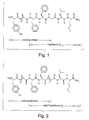
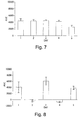
- the present invention provides a chimeric peptide consisting of the amino acid sequence of SEQ ID NO. 42 or SEQ ID NO:43, wherein said peptide induces analgesia.
- the present invention thus provides a novel chimeric peptide having an opioid moiety that binds to an opioid receptor and a nociceptive moiety that binds to the NK 1 nociceptive receptor.
- the opioid moiety is directed to the ⁇ -opioid receptor.
- the chimeric peptide includes an ⁇ -receptor binding opioid moiety and an NK 1 -binding SP moiety.
- this chimeric peptide has the sequence: Tyr-Pro-Phe-Phe-Gly-Leu-Met-NH 2 (SEQ ID NO:42).
- Chimeric peptides may be designed to have a plurality of SP moieties and a plurality of opioid moieties.
- the plurality of opioid moieties may be directed to the same receptor type, or, alternatively, the plurality of opioid moieties may be directed to different opioid receptor types.
- the invention provides pharmaceutical compositions including chimeric peptides and a pharmaceutically acceptable carrier useful for the treatment of pain.
- the invention also provides the use of the above-mentionned chimeric peptides of invention for the manufacture of a medicament for treating pain.
- the chimeric peptide may be admixed with a pharmaceutically acceptable carrier, such as pharmaceutical sterile saline.
- the peptide may be for administration intrathecally (IT), intracerebrovertricularlly (ICV) or systemically, for example, intraperitoneally (IP). Solubility of the chimeric peptides may be enhanced by admixture with a solubilizing agent, for example, cyclodextran.
- a chimeric peptide is for administration in conjunction with one or more non-chimeric opioid drugs.
- the chimeric peptides produce effective analgesia yet inhibit the development of tolerance.
- the present invention provides a chimeric peptide having an opioid receptor binding moiety and a nociceptive receptor binding moiety (ie. Substance P).
- the chimeric peptide molecules are designed to bind to the ⁇ -opioid receptors known to be involved in pain mediation. See review in Lipkowski and Carr, Peptides: Synthesis, Structures, and Applications, Gutte, ed., Academic Press pp. 287-320 (1995 ).
- opioid peptides While the opioid peptides frequently exhibit some cross reactivity with the different receptor types, they can be generally characterized by the degree of affinity for a particular receptor type. These receptors include the ⁇ receptor, the ⁇ receptor and the ⁇ receptor.
- the separate moieties may be chemically synthesized and purified or isolated from natural sources and then chemically cross-linked to form the chimeric peptide.
- the chimera can be chemically synthesized as one molecule.
- chimeric peptides are produced by recombinant DNA techniques and isolated from cells or tissue sources by an appropriate purification scheme using standard protein purification techniques.
- Chimeric peptides, and individual moieties or analogs and derivatives thereof, can be chemically synthesized.
- a variety of protein synthesis methods are common in the art, including synthesis using a peptide synthesizer. See, e.g., Peptide Chemistry, A Practical Textbook, Bodasnsky, Ed. Springer-Verlag, 1988 ; Merrifield, Science 232: 241-247 (1986 ); Barany, et al, Intl. J. Peptide Protein Res. 30: 705-739 (1987 ); Kent, Ann. Rev. Biochem. 57:957-989 (1988 ), and Kaiser, et al, Science 243: 187-198 (1989 ).
- the peptides are purified so that they are substantially free of chemical precursors or other chemicals using standard peptide purification techniques.
- the language "substantially free of chemical precursors or other chemicals” includes preparations of peptide in which the peptide is separated from chemical precursors or other chemicals that are involved in the synthesis of the peptide.
- the language “substantially free of chemical precursors or other chemicals” includes preparations of peptide having less than about 30% (by dry weight) of chemical precursors or non-peptide chemicals, more preferably less than about 20% chemical precursors or non-peptide chemicals, still more preferably less than about 10% chemical precursors or non-peptide chemicals, and most preferably less than about 5% chemical precursors or non-peptide chemicals.
- the peptides may be obtained by methods well-known in the art for recombinant peptide expression and purification.
- a DNA molecule encoding a chimeric peptide can be generated. The DNA sequence is deduced from the protein sequence based on known codon usage. See, e.g., Old and Primrose, Principles of Gene Manipulation 3rd ed., Blackwell Scientific Publications, 1985 ; Wada et al., Nucleic Acids Res. 20: 2111-2118(1992 ).
- the DNA molecule includes additional sequence, e . g ., recognition sites for restriction enzymes which facilitate its cloning into a suitable cloning vector, such as a plasmid.
- the invention provides the nucleic acids comprising the coding regions, non-coding regions, or both, either alone or cloned in a recombinant vector, as well as oligonucleotides and related primer and primer pairs corresponding thereto.
- Nucleic acids may be DNA, RNA, or a combination thereof.
- Vectors of the invention may be expression vectors.
- Nucleic acids encoding chimeric peptides may be obtained by any method known within the art ( e . g ., by PCR amplification using synthetic primers hybridizable to the 3'- and 5'-termini of the sequence and/or by cloning from a cDNA or genomic library using an oligonucleotide sequence specific for the given gene sequence, or the like).
- Nucleic acids can also be generated by chemical synthesis.
- Nucleic acids are hybridizable or complementary- to the nucleic acids encoding the chimeric peptides.
- the inverse complement to nucleic acids hybridizable to the encoding nucleic acids i . e ., the inverse complement of a nucleic acid strand has the complementary sequence running in reverse orientation to the strand so that the inverse complement would hybridize with few or no mismatches to the nucleic acid strand).
- Nucleic acid molecules can encode derivatives and analogs of a chimeric peptide, or antisense nucleic acids to the same
- nucleic acid fragments into a vector may be used to construct expression vectors that contain a chimeric gene comprised of the appropriate transcriptional/translation control signals and peptide-coding sequences.
- Promoter/enhancer sequences within expression vectors may use plant, animal, insect, or fungus regulatory sequences.
- a host cell can be any prokaryotic or eukaryotic cell.
- the peptide can be expressed in bacterial cells such as E . coli , insect cells, fungi or mammalian cells (such as Chinese hamster ovary cells (CHO) or COS cells). Other suitable host cells are known to those skilled in the art.
- a nucleic acid encoding the peptide can be expressed in mammalian cells using a mammalian expression vector. Examples of mammalian expression vectors include pCDM8 ( Seed (1987) Nature 329:840 ) and pMT2PC ( Kaufman et al. (1987) EMBO J 6: 187-195 ).
- transgenic animals containing nucleic acids that encode a chimeric peptide may also be used to express peptides.
- Vector DNA can be introduced into prokaryotic or eukaryotic cells via conventional transformation or transfection techniques.
- transformation and “transfection” are intended to refer to a variety of art-recognized techniques for introducing foreign nucleic acid (e.g., DNA) into a host cell, including calcium phosphate or calcium chloride co-precipitation, DEAE-dextran-mediated transfection, lipofection, or electroporation. Suitable methods for transforming or transfecting host cells can be found in Sambrook, et al. (Molecular Cloning: A Laboratory Manual. 2nd ed., Cold Spring Harbor Laboratory, Cold Spring Harbor Laboratory Press, Cold Spring Harbor, N.Y., 1989 ), and other laboratory manuals.
- the host cells can be used to produce (i . e ., over-express) peptide in culture.
- methods are provided for producing a peptide using host cells.
- a method can comprise culturing the host cell (into which a recombinant expression vector encoding the peptide has been introduced) in a suitable medium such that peptide is produced. The method further involves isolating peptide from the medium or the host cell.
- an “isolated” or “purified” recombinant peptide or biologically active portion thereof is substantially free of cellular material or other contaminating proteins from the cell or tissue source from which the peptide of interest is derived.
- the language “substantially free of cellular material” includes preparations in which the peptide is separated from cellular components of the cells from which it is isolated or recombinantly produced.
- the language "substantially free of cellular material” includes preparations of peptide having less than about 30% (by dry weight) of peptide other than the desired peptide (also referred to herein as a "contaminating protein"), more preferably less than about 20% of contaminating protein, still more preferably less than about 10% of contaminating protein, and most preferably less than about 5% contaminating protein.
- a contaminating protein also referred to herein as a "contaminating protein”
- the peptide or biologically active portion thereof is recombinantly produced, it is also preferably substantially free of culture medium, i . e ., culture medium represents less than about 20%, more preferably less than about 10%, and most preferably less than about 5% of the volume of the peptide preparation.
- Cells engineered to over-express a chimeric peptide can also be introduced in vivo for therapeutic purposes by any method known in the art, including, but not limited to, implantation or transplantation of cells into a host subject, wherein the cells may be "naked” or encapsulated prior to implantation. Cells may be screened prior to implantation for various characteristics including, but not limited to, the level of peptide secreted, stability of expression, and the like.
- Variants of the peptides function as either agonists (mimetics) or as antagonists.
- Variants of a parent peptides can be generated by mutagenesis, e . g ., discrete point mutation.
- An agonist of a parent peptide can retain substantially the same, or a subset of, the biological activities of the naturally occurring form of the parent peptide.
- An antagonist of the peptide can inhibit one or more of the activities of the naturally occurring form of the parent peptide by, for example, competitively binding to the receptor.
- specific biological effects can be elicited by treatment with a variant with a limited function. Treatment of a subject with a variant having a subset of the biological activities of the naturally occurring form of the peptide may have fewer side effects in a subject relative to treatment with the naturally occurring form of the parent peptide.
- Analogs variants or derivative peptides may be functionally active.
- the term “functionally active” refers to species displaying one or more known functional attributes of a full-length peptide.
- “Variant” refers to a polynucleotide or polypeptide differing from a polynucleotide or polypeptide, but retaining essential properties thereof. Generally, variants are overall closely similar, and in many regions, identical to the polynucleotide or polypeptide. Variants may contain alterations in the coding regions, non-coding regions, or both.
- Variants of the peptides that function as either agonists (mimetics) or as antagonists can be identified by screening combinatorial libraries of mutants of the parent peptide for peptide agonist or antagonist activity.
- a variegated library of variants can be generated by combinatorial mutageriesis at the nucleic acid level and is encoded by a variegated gene library.
- a variegated library of variants can be produced by, for example, enzymatically ligating a mixture of synthetic oligonucleotides into gene sequences such that a degenerate set of potential sequences is expressible as individual peptides, or alternatively, as a set of larger fusion proteins ( e .
- chimeric peptides or individual moieties can be produced by various methods known within the art.
- the polypeptide sequences may be modified by any of numerous methods known within the art. See e.g., Sambrook, et al., 1990. Molecular Cloning: A Laboratory Manual, 2nd ed., (Cold Spring Harbor Laboratory Press; Cold Spring Harbor, NY ). Manipulations can include by glycosylation, acetylation, phosphorylation, amidation, derivatization by known protecting/blocking groups, linkage to an antibody molecule or other cellular ligand, and the like.
- a peptide may be modified by the incorporation of a heterofunctional reagent, wherein such heterofunctional reagents may be used to connect the opioid moiety to the nociceptive moiety.
- Derivatives, fragments, and analogs are defined as sequences of at least 6 (contiguous) nucleic acids or at least 4 (contiguous) amino acids, a length sufficient to allow for specific hybridization in the case of nucleic acids or for specific recognition of an epitope in the case of amino acids, respectively. Fragments are, at most, one nucleic acid-less or one amino acid-less than the wild type full length sequence. Derivatives and analogs may be full length or other than full length, if said derivative or analog contains a modified nucleic acid or amino acid, as described infra .
- Derivatives or analogs of the chimeric peptides include, but are not limited to, molecules comprising regions that are substantially homologous in various embodiments, of at least 30%, 40%, 50%, 60%, 70%, 80%, 90% or preferably 95% amino acid identity when: ( i ) compared to an amino acid sequence of identical size; ( ii ) compared to an aligned sequence in that the alignment is done by a computer homology program known within the art (e . g ., Wisconsin GCG software) or ( iii ) the encoding nucleic acid is capable of hybridizing to a sequence encoding the aforementioned peptides under stringent (preferred), moderately stringent, or non-stringent conditions. See, e.g., Ausubel, et al., Current Protocols in Molecular Biology, John Wiley and Sons, New York, NY, 1993 .
- chimeric peptides may be produced by alteration of their sequences by substitutions, additions or deletions that result in functionally-equivalent molecules.
- DNA sequences may encode substantially the same amino acid sequence.
- One or more amino acid residues within the sequence of interest may be substituted by another amino acid of a similar polarity and net charged, thus resulting in a silent alteration.
- Substitutes for an amino acid within the sequence may be selected from other members of the class to which the amino acid belongs.
- nonpolar (hydrophobic) amino acids include alanine, leucine, isoleucine, valine, proline, phenylalanine, tryptophan and methionine.
- Polar neutral amino acids include glycine, serine, threonine, cysteine, tyrosine, asparagine, and glutamine.
- Positively charged (basic) amino acids include arginine, lysine and histidine.
- Negatively charged (acidic) amino acids include aspartic acid and glutamic acid.
- the chimeric peptides are related to animals (e.g., mouse, rat, pig, cow, dog, monkey, frog), or human opioids.
- Homologs i . e ., nucleic acids encoding peptides derived from species other than human
- other related sequences e . g ., paralogs
- a nucleic acid sequence is hybridizable to a nucleic acid sequence (or a complement of the foregoing) encoding the chimeric peptides under conditions of high stringency :
- Step 1 Filters containing DNA are pretreated for 8 hours to overnight at 65°C in buffer composed of 6X SSC, 50 mM Tris-HCl (pH 7.5), 1 mM EDTA, 0.02% PVP, 0.02% Ficoll, 0.02% BSA, and 500 ⁇ g/ml denatured salmon sperm DNA.
- Step 2 Filters are hybridized for 48 hours at 65°C in the above prehybridization mixture to which is added 100 mg/ml denatured salmon sperm DNA and 5-20 x 10 6 cpm of 32 P-labeled probe.
- Step 3 Filters are washed for 1 hour at 37°C in a solution containing 2X SSC, 0.01% PVP, 0.01% Ficoll, and 0.01% BSA. This is followed by a wash in 0.1X SSC at 50°C for 45 minutes.
- Step 4 Filters are autoradiographed. Other conditions of high stringency that may be used are well known in the art.
- a nucleic acid sequence is hybridizable to a nucleic acid sequence (or a complement thereof) encoding the chimeric peptides under conditions of moderate stringency :
- Step 1 Filters containing DNA are pretreated for 6 hours at 55°C in a solution containing 6X SSC, 5X Denhardt's solution, 0.5% SDS and 100 mg/ml denatured salmon sperm DNA.
- Step 2 Filters are hybridized for 18-20 hours at 55°C in the same solution with 5-20 x 106 cpm 32 P-labeled probe added.
- Step 3 Filters are washed at 37°C for I hour in a solution containing 2X SSC, 0.1% SDS, then washed twice for 30 minutes at 60°C in a solution containing 1X SSC and 0.1% SDS.
- Step 4 Filters are blotted dry and exposed for autoradiography. Other conditions of moderate stringency that may be used are well-known in the art.
- a nucleic acid is hybridizable to a nucleic acid sequence encoding a the aforementioned under conditions of low stringency: Step 1: Filters containing DNA are pretreated for 6 hours at 40°C in a solution containing 35% formamide, 5X SSC, 50 mM Tris-HCl (pH 7.5), 5 mM EDTA, 0.1% PVP, 0.1% Ficoll, 1% BSA, and 500 ⁇ g/ml denatured salmon sperm DNA.
- Step 2 Filters are hybridized for 18-20 hours at 40°C in the same solution with the addition of 0.02% PVP, 0.02% Ficoll, 0.2% BSA, 100 ⁇ g/ml salmon sperm DNA, 10% (wt/vol) dextran sulfate, and 5-20 x 106 cpm 32 P-labeled probe.
- Step 3 Filters are washed for 1.5 hours at 55°C in a solution containing 2X SSC. 25 mM Tris-HCl (pH 7.4), 5 mM EDTA, and 0.1% SDS. The wash solution is replaced with fresh solution and incubated an additional 1.5 hours at 60°C.
- Step 4 Filters are blotted dry and exposed for autoradiography.
- filters are washed for a third time at 65-68°C and re-exposed to film.
- Other conditions of low stringency that may be used are well known in the art ( e . g ., as employed for cross-species hybridizations). See also Shilo and Weinberg. Proc Natl Acad Sci USA 78: 6789-6792 (1981 ).
- exogenous opioid peptides agonists for the ⁇ receptor type include those listed in Table 1: ⁇ -endorphin, endomorphin-1, endomorphin-2, dermorphin, ⁇ -casomorphin (bovine or human), Morphiceptin, Leu-enkephalin, Met-enkephalin, DALDA, and PL107.
- Modifications of the peptides have resulted in very selective ⁇ receptor ligands. These modifications can include amidation of the carboxyl terminus (-NH 2 ), the use of (D) amino acids in the peptide ( e . g . DALDA), incorporation of small non-peptidyl moieties, as well as the modification of the amino acids themselves ( e . g .
- the compound DAMGO Tyr-(D)Ala-Gly-Phe-NHCH 2 CH 2 OH.
- Table 1 SEQ ID NO: ⁇ receptor agonist Sequence 1 ⁇ -endorphin Tyr-Gly-Gly-Phe-Met-Thr-Ser-Glu-Ser-Gln-Thr-Pro-Leu-Val-Thr-NH 2 2 endomorphin-1 Tyr-Pro-Trp-Phe-NH 2 3 endomorphin-2 Tyr-Pro-Phe-Phe-NH 2 4 dermorphin Tyr-(D)Ala-Phe-Gly-Tyr-Pro-Ser-NH 2 5 ⁇ -casomorphin (bovine) Tyr-Pro-Phe-Pro-Gly-Pro-Ile 6 ⁇ -casomorphin (human) Tyr-Pro-Phe-Val-Glu-Pro-Ile 7 Morphiceptin Tyr-Pro-Phe-Pro-NH 2 8 Leu-enkephalin
- opioid peptide moieties include the ⁇ receptor agonists listed in Table 2. Those with the highest receptor selectivity generally are enkephalin-derived peptides. For example, DADLE has a three to ten fold higher selectivity for the ⁇ receptor than the ⁇ receptor. Modifications of the parent enkephalin sequence results in two groups of peptide analogs. The first group is a series of linear analogs, for example, DSLET. The second group, all rigid cyclic analogs, includes DPDPE (where Pen is penicillamine, or 3-mercapto-(D)Valine).
- DPDPE where Pen is penicillamine, or 3-mercapto-(D)Valine
- these analogs show an 100-fold affinity for the ⁇ receptor over the ⁇ -receptor and a 1000-fold increase over the ⁇ -receptor.
- Additional pseudopeptide analogs either linear or cyclic, also display high selectivity to the ⁇ receptor, for example Tyr-Tic-Phe-Phe, where Tic is L-1,2,3,4-tetrahydroisoquinoline -3-carboxylic acid. Schiller, et al., J Med. Chem. 36: 3182-3187 (1993 ).
- Opioid moieties also include Dynorphin ("DYN”) related peptides, which are endogenous peptide agonists for the ⁇ receptor. Some representative peptides are shown in Table 3. The propeptide, pro-dynorphin, is processed into peptides of different lengths and with different receptor selectivities. Several of these peptides, including Dynorphin A, DYN(1-8), and DYN(1-13) are found in the CNS of vertebrates in physiologically significant concentrations. Several dynorphin analogs have been generated by substitution of D-amino acids at position 8 (Ile) or 10 (Pro).
- cyclic dynorphin analogs with high ⁇ receptor selectivity have been generated: e.g., Tyr-Gly-Gly-Phe-Leu-Arg-Arg-Cys-Arg-Pro-Lys-Leu-Cys-NH 2 (SEQ ID NO: 44), where the two Cysteines are engaged in a disulfide bond, to create a six amino acid ring.
- the SP moiety of the chimeric peptide is designed to bind to the NK 1 receptor.
- SP is an 11 amino acid peptide, which has a number of different natural and synthetic analogs. A representative group is shown in Table 4, below.
- a number of SP amino-terminal fragments and modified peptides have a high degree of specificity for the NK 1 receptor relative to NK 2 and NK 3 receptors. This specificity can be increased by esterification of the carboxy terminal amide.
- Other modifications include the generation of cyclic molecules (e . g . via Cys-Cys disulfide bridges), the incorporation of non-peptidyl moieties (e.g. spirolactones as discussed by Ward in J. Med. Chem.
- SP and SP analogs can be made more stable by using D-amino acids.
- Table 4 SEQ ID NO: Compound Sequence 21 SP Arg-Pro-Lys-Pro-Gln-Gln-Phe-Phe-Gly-Leu-Met--NH 2 22 SP-Glycine Arg-Pro-Lys-Pro-Gln-Gln-Phe-Phe-Gly-Leu-Met-Gly-NH 2 23 SP-Glycine-Lysine Arg-Pro-Lys-Pro-Gln-Gln-Phe-Phe-Gly-Leu-Met-Gly-Lys-NH 2 24 SP-Glycine-Lysine-Arginine Arg-Pro-Lys-Pro-Gln-Gln-Phe-Phe-Gly-Leu-Met-Gly-Lys-Arg-NH 2
- the target of the chimeric peptides of the present invention is the ⁇ receptor.
- Chimeric peptides may be synthesized to have a plurality of opioid moieties. These opioid moieties may be directed to any combination of the opioid receptors or may be directed to the same receptor type.
- a chimera may be synthesized to contain a plurality of SP moieties per each opioid moiety.
- the novel chimeric peptide is ESP7, SEQ ID NO:42 ( FIG. 1 ). Because it includes endomorphin-2 at the N-terminus and SP (7-11) at the C-terminus, ESP7 is designed to bind to the ⁇ receptor and the NK 1 receptor.
- One ESP7 derivative is ESP6, or Pro 5 ESP7: Tyr-Pro-Phe-Phe-Pro-Leu-Met-NH 2 ( FIG 2 , SEQ ID NO:43).
- compositions suitable for administration typically comprise the peptide and a pharmaceutically acceptable carrier.
- pharmaceutically acceptable carrier is intended to include any and all solvents, dispersion media, coatings, antibacterial and antifungal agents, isotonic and absorption delaying agents, and the like, compatible with pharmaceutical administration.
- the use of such media and agents for pharmaceutically active substances is well known in the art. Except insofar as any conventional media or agent is incompatible with the active compound, use thereof in the compositions is contemplated.
- Supplementary active compounds can also be incorporated into the compositions. Modifications can be made to the peptide of the present invention to affect solubility or clearance of the peptide. These molecules may also be synthesized with D-amino acids to increase resistance to enzymatic degradation. If necessary, the chimeric peptides can be co-administered with a solubilizing agent, such as cyclodextran.
- a pharmaceutical composition of the invention is formulated to be compatible with its intended route of administration.
- routes of administration include parenteral, e . g ., intravenous, intradermal, subcutaneous, oral ( e . g ., inhalation), transdermal (topical), transmucosal, and rectal administration.
- Solutions or suspensions used for parenteral, intradermal, or subcutaneous application can include the following components: a sterile diluent such as water for injection, saline solution, fixed oils, polyethylene glycols, glycerine, propylene glycol or other synthetic solvents; antibacterial agents such as benzyl alcohol or methyl parabens; antioxidants such as ascorbic acid or sodium bisulfite; chelating agents such as ethylenediaminetetraacetic acid; buffers such as acetates, citrates or phosphates, and agents for the adjustment of tonicity such as sodium chloride or dextrose.
- the pH can be adjusted with acids or bases, such as hydrochloric acid or sodium hydroxide.
- the parenteral preparation can be enclosed in ampoules, disposable syringes or multiple dose vials made of glass or plastic.
- compositions suitable for injectable use include sterile aqueous solutions (where water soluble) or dispersions and sterile powders for the extemporaneous preparation of sterile injectable solutions or dispersion.
- suitable carriers include physiological saline, bacteriostatic water, Cremophor ELTM (BASF, Parsippany, N.J.) or phosphate buffered saline (PBS).
- the composition must be sterile and should be fluid to the extent that easy syringability exists. It must be stable under the conditions of manufacture and storage and must be preserved against the contaminating action of microorganisms such as bacteria and fungi.
- the carrier can be a solvent or dispersion medium containing, for example, water, ethanol, polyol (for example, glycerol, propylene glycol, and liquid polyethylene glycol, and the like), and suitable mixtures thereof.
- the proper fluidity can be maintained, for example, by the use of a coating such as lecithin, by the maintenance of the required particle size in the case of dispersion and by the use of surfactants.
- Prevention of the action of microorganisms can be achieved by various antibacterial and antifungal agents, for example, parabens, chlorobutanol, phenol, ascorbic acid, thimerosal, and the like.
- isotonic agents for example, sugars, polyalcohols such as manitol, sorbitol, sodium chloride in the composition.
- Prolonged absorption of the injectable compositions can be brought about by including in the composition an agent which delays absorption, for example, aluminum monostearate and gelatin.
- Sterile injectable solutions can be prepared by incorporating the active compound (e . g ., chimeric peptide) in the required amount in an appropriate solvent with one or a combination of ingredients enumerated above, as required, followed by filtered sterilization.
- dispersions are prepared by incorporating the active compound into a sterile vehicle that contains a basic dispersion medium and the required other ingredients from those enumerated above.
- methods of preparation are vacuum drying and freeze-drying that yields a powder of the active ingredient plus any additional desired ingredient from a previously sterile-filtered solution thereof.
- Oral compositions generally include an inert diluent or an edible carrier. They can be enclosed in gelatin capsules or compressed into tablets. For the purpose of oral therapeutic administration, the active compound can be incorporated with excipients and used in the form of tablets, troches, or capsules. Oral compositions can also be prepared using a fluid carrier for use as a mouthwash, wherein the compound in the fluid carrier is applied orally and swished and expectorated or swallowed. Pharmaceutically compatible binding agents, and/or adjuvant materials can be included as part of the composition.
- the tablets, pills, capsules, troches and the like can contain any of the following ingredients, or compounds of a similar nature: a binder such as microcrystalline cellulose, gum tragacanth or gelatin; an excipient such as starch or lactose, a disintegrating agent such as alginic acid, Primogel, or corn starch; a lubricant such as magnesium stearate or Sterotes; a glidant such as colloidal silicon dioxide; a sweetening agent such as sucrose or saccharin; or a flavoring agent such as peppermint, methyl salicylate, or orange flavoring.
- a binder such as microcrystalline cellulose, gum tragacanth or gelatin
- an excipient such as starch or lactose, a disintegrating agent such as alginic acid, Primogel, or corn starch
- a lubricant such as magnesium stearate or Sterotes
- a glidant such as colloidal silicon dioxide
- the compounds are delivered in the form of an aerosol spray from pressured container or dispenser which contains a suitable propellant, e . g ., a gas such as carbon dioxide, or a nebulizer.
- a suitable propellant e . g ., a gas such as carbon dioxide, or a nebulizer.
- Systemic administration can also be by transmucosal or transdermal means.
- penetrants appropriate to the barrier to be permeated are used in the formulation.
- penetrants are generally known in the art, and include, for example, for transmucosal administration, detergents, bile salts, and fusidic acid derivatives.
- Transmucosal administration can be accomplished through the use of nasal sprays or suppositories.
- the active compounds are formulated into ointments, salves, gels, or creams as generally known in the art.
- the compounds can also be prepared in the form of suppositories ( e . g ., with conventional suppository bases such as cocoa butter and other glycerides) or retention enemas for rectal delivery.
- suppositories e . g ., with conventional suppository bases such as cocoa butter and other glycerides
- retention enemas for rectal delivery.
- the active compounds are prepared with carriers that will protect the compound against rapid elimination from the body, such as a controlled release formulation, including implants and microencapsulated delivery systems.
- a controlled release formulation including implants and microencapsulated delivery systems.
- Biodegradable, biocompatible polymers can be used, such as ethylene vinyl acetate, polyanhydrides, polyglycolic acid, collagen, polyorthoesters, and polylactic acid. Methods for preparation of such formulations will be apparent to those skilled in the art.
- the materials can also be obtained commercially from Alza Corporation and Nova Pharmaceuticals, Inc.
- Liposomal suspensions (including liposomes targeted to infected cells with monoclonal antibodies to viral antigens) can also be used as pharmaceutically acceptable carriers. These can be prepared according to methods known to those skilled in the art, for example, as described in U.S. Pat. No. 4,522,811 .
- Dosage unit form refers to physically discrete units suited as unitary dosages for the subject to be treated; each unit containing a predetermined quantity of active compound calculated to produce the desired therapeutic effect in association with the required pharmaceutical carrier.
- the specification for the dosage unit forms of the invention are dictated by and directly dependent on the unique characteristics of the active compound and the particular therapeutic effect to be achieved, and the limitations inherent in the art of compounding such an active compound for the treatment of individuals.
- Nucleic acid molecules encoding the chimeric peptides of the invention can be inserted into vectors and used as gene therapy vectors.
- Gene therapy vectors can be delivered to a subject by, for example, intravenous injection, local administration (see U.S. Pat. No. 5,328,470 ) or by stereotactic injection (see e . g ., Chen et al. (1994) PNAS 91:3054-3057 ).
- the pharmaceutical preparation of the gene therapy vector can include the gene therapy vector in an acceptable diluent, or can comprise a slow release matrix in which the gene delivery vehicle is imbedded.
- the pharmaceutical preparation can include one or more cells that produce the gene delivery system.
- compositions can be included in a container, pack, or dispenser together with instructions for administration.
- the invention further provides uses for the manufacture of a medicament treating pain in a mammal in order to produce analgesia in the patient.
- One method to assess the analgesic properties of the chimeric peptides is the tail flick test, which is administered to rats following intrathecal, intracerebroventricular, and intraperitoneal administration.
- opioid antagonists e . g ., naltrexone
- NK 1 antagonists e . g ., RP67580
- binding assays to opioid and SP receptors were performed with crude rat brain plasma membranes prepared using a modified procedure of Zadina. Zadina et al., Life Sci, 55: 461-466 (1994 ). These assays showed that ESP7 has a strong affinity for both the ⁇ receptor and the NK 1 receptor in rat brain.
- frozen rat brains (-80 °C) were homogenized in 40 volumes of standard Tris buffer (50 mM Tris HCl (pH 7.4), 0.2 mg/ml BSA, 2.5 mM EDTA, 40 ⁇ g/ml bacitracin, 30 ⁇ g/ml bestatin and 5 mM MgCl 2 ) and centrifuged at 15,000 x g for 20 minutes. 100 mM NaCl was added to the buffer, in order to remove endogenous ligands, and the centrifugation was repeated.
- Tris buffer 50 mM Tris HCl (pH 7.4), 0.2 mg/ml BSA, 2.5 mM EDTA, 40 ⁇ g/ml bacitracin, 30 ⁇ g/ml bestatin and 5 mM MgCl 2
- the membrane preparation was finally resuspended in 10 volumes of incubation buffer (standard buffer with 4 ⁇ g/ml leupeptin and 2 ⁇ g/ml chymostatin). The same procedure was followed for the SP receptor except the wash with NaCl was eliminated and 5 mM MgCl 2 was replaced with 3 mM MnCl 2 . The brain homogenates were used on the day of preparation.
- Binding assays for the ⁇ receptor were performed at 4 °C for 90 minutes, as described in Zadina et al., Life Sci, 55: 461-466 (1994 ). A final volume of 0.35 mL was used which contained incubation buffer (described above), brain homogenate, and 1.85 nM [ 3 H]DAMGO with or without competing peptide (DAMGO or ESP7). Nonspecific binding was determined with 10 ⁇ M DAMGO. After incubation the samples were filtered on a Brandell-Harvester using an appropriate GF/B filter soaked in 50 mM Tris HCl (pH 7.4) and 0.5% PEI. Scintillation fluid was added to the filters in order to solubilize the membranes, and a beta-counter was used to quantify radioactivity.
- DAMGO had a K d of approximately 3 nM ( FIG. 8 ).
- ESP7 had a K d of approximately 300 nM, illustrating that ESP7 possesses significant affinity for the ⁇ receptor.
- SP had a K d of approximately 0.03 nM, while ESP7 had a K d of approximately 200 nM.
- ESP7 has significant affinity for the NK 1 receptor, and, as expected, ESP7 bound specifically to and had significant binding affinity for both the ⁇ receptor and the NK 1 receptor.
- ESP7 was tested clinically in rats to determine analgesic effect and tolerance.
- the classical tail flick test was used to measure pain response and thermal pain was mimicked using a heat source. This system was controlled using standard opioids.
- the drug was administered with cyclodextran to increase solubility of the peptide in an aqueous solution.
- Intrathecal administration of ESP7 produced long-lasting analgesia without any significant development of tolerance.
- the opioid antagonist naltrexone blocked this analgesia, indicating that the analgesia was opioid in nature.
- the SP portion was antagonized with RP67580, an NK 1 antagonist, tolerance to the drug developed within three days.
- Rats were allowed to recover from surgery for 3-4 days and any rats with neurological impairment were not used for analgesic measurements. Rats were housed separately in a 12 hr light-dark cycle with free access to food and water. During their recovery from surgery, rats were habituated to the laboratory environment and analgesic testing apparatus.
- Rats were given doses of 1.0 ⁇ g ( FIG. 5 ), 0.2 ⁇ g ( FIG. 6 ), and 0.05 ⁇ g ( FIG. 7 ) of ESP7.
- the desired concentration of the compound (in 10 ⁇ l) was injected into the catheter followed by 10 ⁇ l saline flush to fill the dead volume.
- ESP7 was combined with two molecules of cyclodextrin (ESP7+2CD) to increase solubility.
- cyclodextrin can form reversible complexes with lipophilic compounds such as ESP7 to increase their solubility, decrease their clearance from the spinal cord and enhance their duration of action.
- naltrexone was administered 10 min prior to ESP7+2CD.
- Naltrexone actually produced some hyperalgesia when given with both doses of ESP7+2CD, unmasking the nociceptive activity of SP.
- the naltrexone blockade was reversible once the drug had been removed.
- a control experiment illustrated that naltrexone alone produced no change in analgesia (p>0.05)(data not shown).
- NK 1 receptor was antagonized with RP67580, a specific NK 1 antagonist with high affinity for the rat NK 1 receptor.
- RP67580 250 pmol
- ESP7+2CD produced significant analgesia on Day 1, but tolerance developed to this analgesia within three days (p ⁇ 0.0001). Slight hyperalgesia was present on Day 4.
- the NK 1 antagonist was removed and a partial rescue of the analgesia occurred.
- the level of analgesia on Day 5 reached a level similar to Day 2 (p>0.05).
- RP67580 alone had no effect on the level of analgesia (p>0.05). Therefore, ESP7 administered intrathecally was able to induce analgesia while minimizing the development of tolerance.
- Rats were positioned in a stereotaxic apparatus and the bregma was located. To reach the lateral ventricle, a hole was drilled 0.8 mm caudal and 1.4-1.5 mm left or right of the bregma. The catheter was inserted 4.5 mm deep into the brain and 4.0 cm of polyethylene tubing was connected to the end to the catheter. Screws and dental cement were used to secure the catheter in place. After suturing the skin, the rats were allowed to recover from surgery for 4-5 days. Each rat was housed separately in a 12 hr light-dark cycle with free access to food and water. Rats with any neurological problems were not used in the analgesic testing.
- MPE % maximum possible effect
- ESP7+2CD produced a low level of analgesia that dissipated after one hour.
- ESP7 (1.0 ⁇ g) also produced analgesia (data not shown).
- ESP7 was administered intraperitoneally in order to assess the effectiveness of ESP7 systemically.
- mg of ESP7 produced analgesia as seen with intrathecal administration.
- 3 mg of ESP7+2CD also produced analgesia similar to that seen with intrathecal administration (data not shown).
- a dose of 1 mg of ESP7+2CD was ineffective, thus a dose of 3 mg was chosen to account for the presence of two molecules of cyclodextrin (data not shown).
Landscapes
- Chemical & Material Sciences (AREA)
- Organic Chemistry (AREA)
- Health & Medical Sciences (AREA)
- Life Sciences & Earth Sciences (AREA)
- Biochemistry (AREA)
- Medicinal Chemistry (AREA)
- General Health & Medical Sciences (AREA)
- Genetics & Genomics (AREA)
- Biophysics (AREA)
- Proteomics, Peptides & Aminoacids (AREA)
- Molecular Biology (AREA)
- Public Health (AREA)
- Engineering & Computer Science (AREA)
- Bioinformatics & Cheminformatics (AREA)
- Animal Behavior & Ethology (AREA)
- Neurology (AREA)
- General Chemical & Material Sciences (AREA)
- Veterinary Medicine (AREA)
- Pharmacology & Pharmacy (AREA)
- Biomedical Technology (AREA)
- Neurosurgery (AREA)
- Nuclear Medicine, Radiotherapy & Molecular Imaging (AREA)
- Chemical Kinetics & Catalysis (AREA)
- Peptides Or Proteins (AREA)
- Medicines That Contain Protein Lipid Enzymes And Other Medicines (AREA)
Abstract
Description
- The present invention relates generally to methods and compositions for the treatment of pain. More specifically, the present invention relates to novel chimeric peptides for the treatment of pain.
- Two million people in the United States suffer from chronic pain. Pain is caused by a highly complex perception of an aversive or unpleasant sensation. The sensation of pain begins with noxious stimulation of free nerve endings, which leads to activation of different types of nociceptive afferent fibers. These fibers include Aδ fibers and C fibers. Aδ fibers are small diameter, thinly myelinated fibers that transmit sharp, prickling pain. C fibers are unmyelinated and conduct more slowly and transmit dull, aching pain. Repeated stimulation of pain fibers can lead to hyperalgesia, or a lowering of the threshold for activation of nociceptors.
- Primary afferent fibers Aδ or C from the damaged periphery synapse release a variety of chemical mediators. These mediators include glutamate and substance P ("SP"), a nociceptive peptide. SP has long been recognized and identified as a neurotransmitter intimately associated with the transfer of painful or nociceptive stimuli from peripheral receptive fields into the CNS. This neuropeptide is involved in pain signaling and the maintenance of the chronic pain state. SP is the prototypic member of a family of related peptides named tachykinins, all of which were initially characterized by contractile activity on isolated smooth muscle preparations. SP is also found in the brain, spinal cord, spinal ganglia, and intestine of all vertebrates, including man.
- SP is present in small-diameter sensory fibers that mediate nociceptive inputs in the spinal cord, and it specifically excites nociceptive neurons in this region. SP is released in the spinal cord in vivo, upon activation of nociceptive primary sensory fibers. Direct application of microgram doses of SP into the lumbar spinal subarachnoid produces hyperalgesia, i.e., an increased sensitivity to pain. The release of SP can be blocked by administration of morphine and opioid peptides in vivo and in vitro. For example, intrathecal administration of morphine blocks the hyperalgesic effects of exogenously administered SP. See, Hyden and Wilcox, Eur. J. Pharacol., 86: 95-98 (1983); and J. Pharmacol. Exp. Ther. 226: 398-404 (1983).
- While opioids can be effective for the treatment of chronic pain, they frequently have side effects, including respiratory depression, urinary retention, nausea and vomiting, pruritis, and sedation. Moreover, repeated daily administration of opioids eventually produces tolerance, whereby the dose of the drug must be increased in order to maintain adequate analgesia, and may also initiate physical dependence. If tolerance develops and the level of opioids is insufficient, withdrawal symptoms such as diarrhea, sweating, tremors, anxiety, and fever may result. These concerns have prompted a search for new analgesics with limited side effects and that show decreased susceptibility to tolerance.
- International Journal of Peptide and Protein Research, Vol. 39, No. 6, 1 June 1991, pages 516-522, describes the design of chimeric peptide ligands to galanin receptors and Substance P receptors.
- Anaesthesiology, Vol. 91, No. 3A, 1999, page A944, describes a chimeric peptide that binds to opioid and Substance P receptors for the treatment of acute and chronic pain.
- Analgesia, Vol. 3, 1998, pages 259-268, describes the dual functional interactions of Substance P and opioids in nociceptive transmission.
- Letters in Peptide Science, Vol. 5, No. 5-6, October 1998, pages 395-398, describes alternative forms of interaction of Substance P and opioids in nociceptive transmission.
- The present invention provides a chimeric peptide consisting of the amino acid sequence of SEQ ID NO. 42 or SEQ ID NO:43, wherein said peptide induces analgesia.
- The present invention thus provides a novel chimeric peptide having an opioid moiety that binds to an opioid receptor and a nociceptive moiety that binds to the NK1 nociceptive receptor. The opioid moiety is directed to the µ-opioid receptor.
- The chimeric peptide includes an µ-receptor binding opioid moiety and an NK1-binding SP moiety. In one embodiment this chimeric peptide has the sequence: Tyr-Pro-Phe-Phe-Gly-Leu-Met-NH2 (SEQ ID NO:42).
- Chimeric peptides may be designed to have a plurality of SP moieties and a plurality of opioid moieties. The plurality of opioid moieties may be directed to the same receptor type, or, alternatively, the plurality of opioid moieties may be directed to different opioid receptor types.
- The invention provides pharmaceutical compositions including chimeric peptides and a pharmaceutically acceptable carrier useful for the treatment of pain.
- The invention also provides the use of the above-mentionned chimeric peptides of invention for the manufacture of a medicament for treating pain. The chimeric peptide may be admixed with a pharmaceutically acceptable carrier, such as pharmaceutical sterile saline. The peptide may be for administration intrathecally (IT), intracerebrovertricularlly (ICV) or systemically, for example, intraperitoneally (IP). Solubility of the chimeric peptides may be enhanced by admixture with a solubilizing agent, for example, cyclodextran. Alternatively, a chimeric peptide is for administration in conjunction with one or more non-chimeric opioid drugs.
- Among the advantages of the invention is that the chimeric peptides produce effective analgesia yet inhibit the development of tolerance.
- The details of one or more embodiments of the invention are set forth in the accompanying description below. Although any methods and materials similar or equivalent to those described herein can be used in the practice or testing of the present invention, the preferred methods and materials are now described. Other features, objects, and advantages of the invention will be apparent from the description and from the claims. In the specification and the appended claims, the singular forms include plural referents unless the context clearly dictates otherwise. Unless defined otherwise, all technical and scientific terms used herein have the same meaning as commonly understood by one of ordinary skill in the art to which this invention belongs. Unless expressly stated otherwise, the techniques employed or contemplated herein are standard methodologies well known to one of ordinary skill in the art. The examples of embodiments are for illustration purposes only.
-
-
FIG. 1 is a schematic representation of the chimeric peptide ESP7. -
FIG. 2 is a schematic representation of the chimeric peptide ESP6. -
FIG. 3 is a graph illustrating the binding affinity of ESP7 to the µ receptor. -
FIG. 4 is a graph illustrating the binding affinity of ESP7 to the NK1 receptor. -
FIG. 5 is a graph illustrating the analgesic effect in rats over time of 1.0 µg of ESP7 administered intrathecally. -
FIG. 6 is a graph illustrating the analgesic effect in rats over time of 0.2 µg of ESP7 administered intrathecally. -
FIG. 7 is a graph illustrating the analgesic effect in rats of 0.05 µg of ESP7 administered intrathecally. -
FIG. 8 is a graph illustrating the analgesic effect in rats over time of 0.2 µg of ESP7 antagonized with ondays -
FIG. 9 is a graph illustrating the analgesic effect in rats over time of 1.0 µg of ESP7 antagonized with RP67580 on days 1-4. -
FIG. 10 is a graph illustrating the analgesic effect in rats over time of 0.1 µg of ESP7 administered intracerebroventricularly. -
FIG. 11 is a graph illustrating the analgesic effect in rats over time of 1 mg of ESP7 administered intraperitoneally. - The present invention provides a chimeric peptide having an opioid receptor binding moiety and a nociceptive receptor binding moiety (ie. Substance P). The chimeric peptide molecules are designed to bind to the µ-opioid receptors known to be involved in pain mediation. See review in Lipkowski and Carr, Peptides: Synthesis, Structures, and Applications, Gutte, ed., Academic Press pp. 287-320 (1995).
- While the opioid peptides frequently exhibit some cross reactivity with the different receptor types, they can be generally characterized by the degree of affinity for a particular receptor type. These receptors include the µ receptor, the δ receptor and the κ receptor.
- The separate moieties may be chemically synthesized and purified or isolated from natural sources and then chemically cross-linked to form the chimeric peptide. Alternatively, the chimera can be chemically synthesized as one molecule. In another embodiment, chimeric peptides are produced by recombinant DNA techniques and isolated from cells or tissue sources by an appropriate purification scheme using standard protein purification techniques.
- Chimeric peptides, and individual moieties or analogs and derivatives thereof, can be chemically synthesized. A variety of protein synthesis methods are common in the art, including synthesis using a peptide synthesizer. See, e.g., Peptide Chemistry, A Practical Textbook, Bodasnsky, Ed. Springer-Verlag, 1988; Merrifield, Science 232: 241-247 (1986); Barany, et al, Intl. J. Peptide Protein Res. 30: 705-739 (1987); Kent, Ann. Rev. Biochem. 57:957-989 (1988), and Kaiser, et al, Science 243: 187-198 (1989). The peptides are purified so that they are substantially free of chemical precursors or other chemicals using standard peptide purification techniques. The language "substantially free of chemical precursors or other chemicals" includes preparations of peptide in which the peptide is separated from chemical precursors or other chemicals that are involved in the synthesis of the peptide. In one embodiment, the language "substantially free of chemical precursors or other chemicals" includes preparations of peptide having less than about 30% (by dry weight) of chemical precursors or non-peptide chemicals, more preferably less than about 20% chemical precursors or non-peptide chemicals, still more preferably less than about 10% chemical precursors or non-peptide chemicals, and most preferably less than about 5% chemical precursors or non-peptide chemicals.
- Chemical synthesis of peptides facilitates the incorporation of modified or unnatural amino acids, including D-amino acids and other small organic molecules. Replacement of one or more L-amino acids in a peptide with the corresponding D-amino acid isoforms can be used to increase the resistance of peptides to enzymatic hydrolysis, and to enhance one or more properties of biologically active peptides, i.e., receptor binding, functional potency or duration of action. See, e.g., Doherty, et al., 1993. J. Med. Chem. 36: 2585-2594; Kirby, et al., 1993. J. Med. Chem. 36:3802-3808; Morita, et al., 1994. FEBS Lett. 353: 84-88; Wang, et al., 1993. Int. J. Pept. Protein Res. 42: 392-399; Fauchere and Thiunieau, 1992. Adv. Drug Res. 23: 127-159.
- Introduction of covalent cross-links into a peptide sequence can conformationally and topographically constrain the peptide backbone. This strategy can be used to develop peptide analogs of the chimeric peptides with increased potency, selectivity and stability. Because the conformational entropy of a cyclic peptide is lower than its linear counterpart, adoption of a specific conformation may occur with a smaller decrease in entropy for a cyclic analog than for an acyclic analog, thereby making the free energy for binding more favorable. Macrocyclization is often accomplished by forming an amide bond between the peptide N-and C-termini, between a side chain and the N- or C-terminus [e.g., with K3Fe(CN)6 at pH 8.5] (Samson et al., Endocrinology, 137: 5182-5185 (1996)), or between two amino acid side chains. See, e.g., DeGrado, Adv Protein Chem, 39: 51-124 (1988). Disulfide bridges are also introduced into linear sequences to reduce their flexibility. See, e.g., Rose, et al., Adv Protein Chem, 37: 1-109 (1985 ); Mosberg et al., Biochem Biophys Res Commun, 106: 505-512 (1982). Furthermore, the replacement of cysteine residues with penicillamine (Pen, 3-mercapto-(D) valine) has been used to increase the selectivity of some opioid-receptor interactions. Lipkowski and Carr, Peptides: Synthesis, Structures, and Applications, Gutte, ed., Academic Press pp. 287-320 (1995).
- A number of other methods have been used successfully to introduce conformational constraints into peptide sequences in order to improve their potency, receptor selectivity and biological half-life. These include the use of (i) Cα-methylamino acids (see, e.g., Rose, et al., Adv Protein Chem, 37: 1-109 (1985); Prasad and Balaram, CRC Crit Rev Biochem, 16: 307-348 (1984)); (ii) Nα-methylamino acids (see, e.g., Aubry, et al., Int J Pept Protein Res, 18: 195-202 (1981); Manavalan and Momany, Biopolymers, 19: 1943-1973 (1980)); and (iii) α,β-unsaturated amino acids (see, e.g., Bach and Gierasch, Biopolymers, 25: 5175-S192 (1986); Singh, et al., Biopolymers, 26: 819-829 (1987)). These and many other amino acid analogs are commercially available, or can be easily prepared. Additionally, replacement of the C- terminal acid with an amide can be used to enhance the solubility and clearance of a peptide.
- Alternatively, the peptides may be obtained by methods well-known in the art for recombinant peptide expression and purification. A DNA molecule encoding a chimeric peptide can be generated. The DNA sequence is deduced from the protein sequence based on known codon usage. See, e.g., Old and Primrose, Principles of Gene Manipulation 3rd ed., Blackwell Scientific Publications, 1985; Wada et al., Nucleic Acids Res. 20: 2111-2118(1992). Preferably, the DNA molecule includes additional sequence, e.g., recognition sites for restriction enzymes which facilitate its cloning into a suitable cloning vector, such as a plasmid. The invention provides the nucleic acids comprising the coding regions, non-coding regions, or both, either alone or cloned in a recombinant vector, as well as oligonucleotides and related primer and primer pairs corresponding thereto. Nucleic acids may be DNA, RNA, or a combination thereof. Vectors of the invention may be expression vectors. Nucleic acids encoding chimeric peptides may be obtained by any method known within the art (e.g., by PCR amplification using synthetic primers hybridizable to the 3'- and 5'-termini of the sequence and/or by cloning from a cDNA or genomic library using an oligonucleotide sequence specific for the given gene sequence, or the like). Nucleic acids can also be generated by chemical synthesis.
- Nucleic acids are hybridizable or complementary- to the nucleic acids encoding the chimeric peptides. The inverse complement to nucleic acids hybridizable to the encoding nucleic acids (i.e., the inverse complement of a nucleic acid strand has the complementary sequence running in reverse orientation to the strand so that the inverse complement would hybridize with few or no mismatches to the nucleic acid strand). Nucleic acid molecules can encode derivatives and analogs of a chimeric peptide, or antisense nucleic acids to the same
- Any of the methodologies known within the relevant art regarding the insertion of nucleic acid fragments into a vector may be used to construct expression vectors that contain a chimeric gene comprised of the appropriate transcriptional/translation control signals and peptide-coding sequences. Promoter/enhancer sequences within expression vectors may use plant, animal, insect, or fungus regulatory sequences.
- A host cell can be any prokaryotic or eukaryotic cell. For example, the peptide can be expressed in bacterial cells such as E. coli, insect cells, fungi or mammalian cells (such as Chinese hamster ovary cells (CHO) or COS cells). Other suitable host cells are known to those skilled in the art. A nucleic acid encoding the peptide can be expressed in mammalian cells using a mammalian expression vector. Examples of mammalian expression vectors include pCDM8 (Seed (1987) Nature 329:840) and pMT2PC (Kaufman et al. (1987) EMBO J 6: 187-195). Furthermore, transgenic animals containing nucleic acids that encode a chimeric peptide may also be used to express peptides.
- Vector DNA can be introduced into prokaryotic or eukaryotic cells via conventional transformation or transfection techniques. As used herein, the terms "transformation" and "transfection" are intended to refer to a variety of art-recognized techniques for introducing foreign nucleic acid (e.g., DNA) into a host cell, including calcium phosphate or calcium chloride co-precipitation, DEAE-dextran-mediated transfection, lipofection, or electroporation. Suitable methods for transforming or transfecting host cells can be found in Sambrook, et al. (Molecular Cloning: A Laboratory Manual. 2nd ed., Cold Spring Harbor Laboratory, Cold Spring Harbor Laboratory Press, Cold Spring Harbor, N.Y., 1989), and other laboratory manuals.
- More commonly, the host cells, can be used to produce (i.e., over-express) peptide in culture. Accordingly, methods are provided for producing a peptide using host cells. A method can comprise culturing the host cell (into which a recombinant expression vector encoding the peptide has been introduced) in a suitable medium such that peptide is produced. The method further involves isolating peptide from the medium or the host cell. Ausubel et al., (Eds). In: Current Protocols in Molecular Biology. J. Wiley and Sons, New York, NY. 1998.
- An "isolated" or "purified" recombinant peptide or biologically active portion thereof is substantially free of cellular material or other contaminating proteins from the cell or tissue source from which the peptide of interest is derived. The language "substantially free of cellular material" includes preparations in which the peptide is separated from cellular components of the cells from which it is isolated or recombinantly produced. In one embodiment, the language "substantially free of cellular material" includes preparations of peptide having less than about 30% (by dry weight) of peptide other than the desired peptide (also referred to herein as a "contaminating protein"), more preferably less than about 20% of contaminating protein, still more preferably less than about 10% of contaminating protein, and most preferably less than about 5% contaminating protein. When the peptide or biologically active portion thereof is recombinantly produced, it is also preferably substantially free of culture medium, i.e., culture medium represents less than about 20%, more preferably less than about 10%, and most preferably less than about 5% of the volume of the peptide preparation.
- Cells engineered to over-express a chimeric peptide can also be introduced in vivo for therapeutic purposes by any method known in the art, including, but not limited to, implantation or transplantation of cells into a host subject, wherein the cells may be "naked" or encapsulated prior to implantation. Cells may be screened prior to implantation for various characteristics including, but not limited to, the level of peptide secreted, stability of expression, and the like.
- Variants of the peptides function as either agonists (mimetics) or as antagonists. Variants of a parent peptides can be generated by mutagenesis, e.g., discrete point mutation. An agonist of a parent peptide can retain substantially the same, or a subset of, the biological activities of the naturally occurring form of the parent peptide. An antagonist of the peptide can inhibit one or more of the activities of the naturally occurring form of the parent peptide by, for example, competitively binding to the receptor. Thus, specific biological effects can be elicited by treatment with a variant with a limited function. Treatment of a subject with a variant having a subset of the biological activities of the naturally occurring form of the peptide may have fewer side effects in a subject relative to treatment with the naturally occurring form of the parent peptide.
- Analogs variants or derivative peptides may be functionally active. As utilized herein, the term "functionally active" refers to species displaying one or more known functional attributes of a full-length peptide. "Variant" refers to a polynucleotide or polypeptide differing from a polynucleotide or polypeptide, but retaining essential properties thereof. Generally, variants are overall closely similar, and in many regions, identical to the polynucleotide or polypeptide.
Variants may contain alterations in the coding regions, non-coding regions, or both. - Variants of the peptides that function as either agonists (mimetics) or as antagonists can be identified by screening combinatorial libraries of mutants of the parent peptide for peptide agonist or antagonist activity. A variegated library of variants can be generated by combinatorial mutageriesis at the nucleic acid level and is encoded by a variegated gene library. A variegated library of variants can be produced by, for example, enzymatically ligating a mixture of synthetic oligonucleotides into gene sequences such that a degenerate set of potential sequences is expressible as individual peptides, or alternatively, as a set of larger fusion proteins (e.g., for phage display) containing the set of sequences therein. There are a variety of methods which can be used to produce libraries of potential variants from a degenerate oligonucleotide sequence. Chemical synthesis of a degenerate gene sequence can be performed in an automatic DNA synthesizer, and the synthetic gene then ligated into an appropriate expression vector. Use of a degenerate set of genes allows for the provision, in one mixture, of all of the sequences encoding the desired set of potential sequences. Methods for synthesizing degenerate oligonucleotides are known in the art (see, e.g., Narang (1983) Tetrahedron 39:3; Itakura et al. (1984) Annu Rev Biochem 53:323; Itakura et al. (1984) Science 198:1056; Ike et al. (1983) Nucl Acid Res 11:477.
- Derivatives and analogs of chimeric peptides or individual moieties can be produced by various methods known within the art. For example, the polypeptide sequences may be modified by any of numerous methods known within the art. See e.g., Sambrook, et al., 1990. Molecular Cloning: A Laboratory Manual, 2nd ed., (Cold Spring Harbor Laboratory Press; Cold Spring Harbor, NY). Manipulations can include by glycosylation, acetylation, phosphorylation, amidation, derivatization by known protecting/blocking groups, linkage to an antibody molecule or other cellular ligand, and the like. Any of the numerous chemical modification methodologies known within the art may be utilized including, but not limited to, specific chemical cleavage by cyanogen bromide, trypsin, chymotrypsin, papain, V8 protease, NaBH4, acetylation, formylation, oxidation, reduction, metabolic synthesis in the presence of tunicamycin, etc. A peptide may be modified by the incorporation of a heterofunctional reagent, wherein such heterofunctional reagents may be used to connect the opioid moiety to the nociceptive moiety.
- Derivatives, fragments, and analogs are defined as sequences of at least 6 (contiguous) nucleic acids or at least 4 (contiguous) amino acids, a length sufficient to allow for specific hybridization in the case of nucleic acids or for specific recognition of an epitope in the case of amino acids, respectively. Fragments are, at most, one nucleic acid-less or one amino acid-less than the wild type full length sequence. Derivatives and analogs may be full length or other than full length, if said derivative or analog contains a modified nucleic acid or amino acid, as described infra. Derivatives or analogs of the chimeric peptides include, but are not limited to, molecules comprising regions that are substantially homologous in various embodiments, of at least 30%, 40%, 50%, 60%, 70%, 80%, 90% or preferably 95% amino acid identity when: (i) compared to an amino acid sequence of identical size; (ii) compared to an aligned sequence in that the alignment is done by a computer homology program known within the art (e.g., Wisconsin GCG software) or (iii) the encoding nucleic acid is capable of hybridizing to a sequence encoding the aforementioned peptides under stringent (preferred), moderately stringent, or non-stringent conditions. See, e.g., Ausubel, et al., Current Protocols in Molecular Biology, John Wiley and Sons, New York, NY, 1993.
- Derivatives of chimeric peptides may be produced by alteration of their sequences by substitutions, additions or deletions that result in functionally-equivalent molecules.
DNA sequences may encode substantially the same amino acid sequence. One or more amino acid residues within the sequence of interest may be substituted by another amino acid of a similar polarity and net charged, thus resulting in a silent alteration. Substitutes for an amino acid within the sequence may be selected from other members of the class to which the amino acid belongs. For example, nonpolar (hydrophobic) amino acids include alanine, leucine, isoleucine, valine, proline, phenylalanine, tryptophan and methionine. Polar neutral amino acids include glycine, serine, threonine, cysteine, tyrosine, asparagine, and glutamine. Positively charged (basic) amino acids include arginine, lysine and histidine. Negatively charged (acidic) amino acids include aspartic acid and glutamic acid. - The chimeric peptides are related to animals (e.g., mouse, rat, pig, cow, dog, monkey, frog), or human opioids. Homologs (i.e., nucleic acids encoding peptides derived from species other than human) or other related sequences (e.g., paralogs) can also be obtained by low, moderate or high stringency hybridization with all or a portion of the particular human sequence as a probe using methods well known in the art for nucleic acid hybridization and cloning. See, e.g., Ausubel et al., (eds.), 1993, Current Protocols in Molecular Biology, John Wiley and Sons, NY; and Kriegler, 1990, Gene Transfer and Expression, A Laboratory Manual, Stockton Press, NY.
- A nucleic acid sequence is hybridizable to a nucleic acid sequence (or a complement of the foregoing) encoding the chimeric peptides under conditions of high stringency : Step 1: Filters containing DNA are pretreated for 8 hours to overnight at 65°C in buffer composed of 6X SSC, 50 mM Tris-HCl (pH 7.5), 1 mM EDTA, 0.02% PVP, 0.02% Ficoll, 0.02% BSA, and 500 µg/ml denatured salmon sperm DNA. Step 2: Filters are hybridized for 48 hours at 65°C in the above prehybridization mixture to which is added 100 mg/ml denatured salmon sperm DNA and 5-20 x 106 cpm of 32P-labeled probe. Step 3: Filters are washed for 1 hour at 37°C in a solution containing 2X SSC, 0.01% PVP, 0.01% Ficoll, and 0.01% BSA. This is followed by a wash in 0.1X SSC at 50°C for 45 minutes. Step 4: Filters are autoradiographed. Other conditions of high stringency that may be used are well known in the art.
- A nucleic acid sequence is hybridizable to a nucleic acid sequence (or a complement thereof) encoding the chimeric peptides under conditions of moderate stringency : Step 1: Filters containing DNA are pretreated for 6 hours at 55°C in a solution containing 6X SSC, 5X Denhardt's solution, 0.5% SDS and 100 mg/ml denatured salmon sperm DNA. Step 2: Filters are hybridized for 18-20 hours at 55°C in the same solution with 5-20 x 106 cpm 32P-labeled probe added. Step 3: Filters are washed at 37°C for I hour in a solution containing 2X SSC, 0.1% SDS, then washed twice for 30 minutes at 60°C in a solution containing 1X SSC and 0.1% SDS. Step 4: Filters are blotted dry and exposed for autoradiography. Other conditions of moderate stringency that may be used are well-known in the art.
- A nucleic acid is hybridizable to a nucleic acid sequence encoding a the aforementioned under conditions of low stringency: Step 1: Filters containing DNA are pretreated for 6 hours at 40°C in a solution containing 35% formamide, 5X SSC, 50 mM Tris-HCl (pH 7.5), 5 mM EDTA, 0.1% PVP, 0.1% Ficoll, 1% BSA, and 500 µg/ml denatured salmon sperm DNA. Step 2: Filters are hybridized for 18-20 hours at 40°C in the same solution with the addition of 0.02% PVP, 0.02% Ficoll, 0.2% BSA, 100 µg/ml salmon sperm DNA, 10% (wt/vol) dextran sulfate, and 5-20 x 106 cpm 32P-labeled probe. Step 3: Filters are washed for 1.5 hours at 55°C in a solution containing 2X SSC. 25 mM Tris-HCl (pH 7.4), 5 mM EDTA, and 0.1% SDS. The wash solution is replaced with fresh solution and incubated an additional 1.5 hours at 60°C. Step 4: Filters are blotted dry and exposed for autoradiography. If necessary, filters are washed for a third time at 65-68°C and re-exposed to film. Other conditions of low stringency that may be used are well known in the art (e.g., as employed for cross-species hybridizations). See also Shilo and Weinberg. Proc Natl Acad Sci USA 78: 6789-6792 (1981).
- The exogenous opioid peptides agonists for the µ receptor type include those listed in Table 1: α-endorphin, endomorphin-1, endomorphin-2, dermorphin, β-casomorphin (bovine or human), Morphiceptin, Leu-enkephalin, Met-enkephalin, DALDA, and PL107.
Modifications of the peptides have resulted in very selective µ receptor ligands. These modifications can include amidation of the carboxyl terminus (-NH2), the use of (D) amino acids in the peptide (e.g. DALDA), incorporation of small non-peptidyl moieties, as well as the modification of the amino acids themselves (e.g. alkylation or esterification of side chain R-groups). As in, for example, the compound DAMGO: Tyr-(D)Ala-Gly-Phe-NHCH2CH2OH.Table 1 SEQ ID NO: µ receptor agonist Sequence 1 α-endorphin Tyr-Gly-Gly-Phe-Met-Thr-Ser-Glu-Ser-Gln-Thr-Pro-Leu-Val-Thr- NH 22 endomorphin-1 Tyr-Pro-Trp-Phe- NH 23 endomorphin-2 Tyr-Pro-Phe-Phe- NH 24 dermorphin Tyr-(D)Ala-Phe-Gly-Tyr-Pro-Ser- NH 25 β-casomorphin (bovine) Tyr-Pro-Phe-Pro-Gly- Pro-Ile 6 β-casomorphin (human) Tyr-Pro-Phe-Val-Glu- Pro-Ile 7 Morphiceptin Tyr-Pro-Phe- Pro-NH 28 Leu-enkephalin Tyr-Gly-Gly-Phe- Leu 9 Met-enkephalin Tyr-Gly-Gly-Phe- Met 10 DALDA Tyr-(D)Arg-Phe-Lys-NH2 11 PL017 Tyr-Pro-(N-Me)Ph3-(D)Pro-NH2 - Other opioid peptide moieties include the δ receptor agonists listed in Table 2. Those with the highest receptor selectivity generally are enkephalin-derived peptides. For example, DADLE has a three to ten fold higher selectivity for the δ receptor than the µ receptor. Modifications of the parent enkephalin sequence results in two groups of peptide analogs. The first group is a series of linear analogs, for example, DSLET. The second group, all rigid cyclic analogs, includes DPDPE (where Pen is penicillamine, or 3-mercapto-(D)Valine). In binding assays, these analogs show an 100-fold affinity for the δ receptor over the µ-receptor and a 1000-fold increase over the κ-receptor. Additional pseudopeptide analogs, either linear or cyclic, also display high selectivity to the δ receptor, for example Tyr-Tic-Phe-Phe, where Tic is L-1,2,3,4-tetrahydroisoquinoline -3-carboxylic acid. Schiller, et al., J Med. Chem. 36: 3182-3187 (1993).
Table 2 SEQ ID NO: δ receptor agonists Sequence 12 DADLE Tyr-(D)Ala-Gly-Phe-(D)Leu 13 DSLET Tyr-(D)Ser-Gly-Phe-Leu- Thr 14 DPDPE 
15 deltorphin I Tyr-(D)Ala-Phe-Asp-Val-Val-Gly-NH2 16 deltorphin II Tyr-(D)Ala-Phe-Glu-Val-Val-Gly-NH2 17 dermenkephalin Tyr-(D)Met-Phe-His-Leu-Met-Asp-NH2 - Opioid moieties also include Dynorphin ("DYN") related peptides, which are endogenous peptide agonists for the κ receptor. Some representative peptides are shown in Table 3. The propeptide, pro-dynorphin, is processed into peptides of different lengths and with different receptor selectivities. Several of these peptides, including Dynorphin A, DYN(1-8), and DYN(1-13) are found in the CNS of vertebrates in physiologically significant concentrations. Several dynorphin analogs have been generated by substitution of D-amino acids at position 8 (Ile) or 10 (Pro). Additionally cyclic dynorphin analogs with high κ receptor selectivity have been generated: e.g., Tyr-Gly-Gly-Phe-Leu-Arg-Arg-Cys-Arg-Pro-Lys-Leu-Cys-NH2 (SEQ ID NO: 44), where the two Cysteines are engaged in a disulfide bond, to create a six amino acid ring.
Table 3 SEQ ID NO: κ receptor agonists Sequence 18 Dynorphin A Tyr-Gly-Gly-Phe-Leu-Arg-Arg-Ile-Arg-Pro-Lys-Leu-Lys-Trp-Asp-Asn-Gln 19 DYN (1-8) Tyr-Gly-Gly-Phe-Leu-Arg-Arg- Ile 20 DYN (1-13) Tyr-Gly-Gly-Phe-Leu-Arg-Arg-Ile-Arg-Pro-Lys-Leu-Lys - The SP moiety of the chimeric peptide is designed to bind to the NK1 receptor. SP is an 11 amino acid peptide, which has a number of different natural and synthetic analogs. A representative group is shown in Table 4, below. A number of SP amino-terminal fragments and modified peptides have a high degree of specificity for the NK1 receptor relative to NK2 and NK3 receptors. This specificity can be increased by esterification of the carboxy terminal amide. Other modifications include the generation of cyclic molecules (e.g. via Cys-Cys disulfide bridges), the incorporation of non-peptidyl moieties (e.g. spirolactones as discussed by Ward in J. Med. Chem. 33: 1848-1851 (1990)). Additionally, SP and SP analogs can be made more stable by using D-amino acids. A representative listing of SP and its related family of compounds is provided in Table 4 below.
Table 4 SEQ ID NO: Compound Sequence 21 SP Arg-Pro-Lys-Pro-Gln-Gln-Phe-Phe-Gly-Leu-Met--NH2 22 SP-Glycine Arg-Pro-Lys-Pro-Gln-Gln-Phe-Phe-Gly-Leu-Met-Gly-NH2 23 SP-Glycine-Lysine Arg-Pro-Lys-Pro-Gln-Gln-Phe-Phe-Gly-Leu-Met-Gly-Lys-NH2 24 SP-Glycine-Lysine-Arginine Arg-Pro-Lys-Pro-Gln-Gln-Phe-Phe-Gly-Leu-Met-Gly-Lys-Arg-NH2 25 SP-Glycine Methyl Ester Arg-Pro-Lys-Pro-Gln-Gln-Phe-Phe-Gly-Leu-Met-Gly-Ome 26 SP-Glycine-Lycine-Methyl Ester Arg-Pro-Lys-Pro-Gln-Gln-Phe-Phe-Gly-Leu-Met-Gly-Lys-Ome 27 SP-Glycine-Lysine-Arginine Methyl Ester Arg-Pro-Lys-Pro-Gln-Gln-Phe-Phe-Gly-Leu-Met-Gly-Lys-Arg-Ome 28 SP-Glycine-Elthyl Ester Arg-Pro-Lys-Pro-Gln-Gln-Phe-Phe-Gly-Leu-Met-Gly-Oeth 29 SP-Glycine-Lysine Ethyl Ester Arg-Pro-Lys-Pro-Gln-Gln-Phe-Phe-Gly-Leu-Met-Gly-Lys-Oeth 30 SP-Glycine-Lysine-Arginine Ethyl Ester Arg-Pro-Lys-Pro-Gln-Gln-Phe-Phe-Gly-Leu-Met-Gly-Lys-Arg-Oeth 31 SP/1-4# Arg-Pro-Lys-Pro-NH2 32 SP/1-7# Arg-Pro-Lys-Pro-Gln-Gln-Phe-NH2 33 SP/1-9# Arg-Pro-Lys-Pro-Gln-Gln-Phe-Phe-Gly-NH2 34 [D-Pro2, D-Phe7, D-Trp9]-SP Arg-(D)Pro-Lys-Pro-Gln-Gln-(D)Phe-Phe-(D)Trp-Leu-Met-NH2 35 [D-Pro2, D-Phe7, D-Trp9]- Arg-(D)Pro-Lys-Pro-Gln-Gln-(D)Phe-Phe- SP-(Glycine) (D)Trp-Leu-Met-Gly-NH2 36 [D-Pro2, D-Trp7, D-Trp9]-SP Arg-(D)Pro-Lys-Pro-Gln-Gln-(D)Trp-Phe-(D)Trp-Leu-Met-NH2 37 [D-Pro2, D-Trp7, D-Trp9]-SP-Glycine Arg-(D)Pro-Lys-Pro-Gln-Gln-(D)Trp-Phe-(D)Trp-Leu-Met-Gly-NH2 38 [Cys3, Cys6, Tyr8, Pro10]-SP Arg-Pro-Cys-Pro-Gln-Cys-Phe-Tyr-Gly-Pro-Met-NH2 39 [Glu 6]-SP/6-11 Glu-Phe-Phe-Gly-Leu-Met-NN2 40 Septide Glu-Phe-Phe-Pro-Leu-Met-NH2 41 Sanktide HOOC-CH2-CH2-CO-Asp-Phe-(N-Me)Phe-Gly-Leu-Met-NH2 - The target of the chimeric peptides of the present invention is the µ receptor. Chimeric peptides may be synthesized to have a plurality of opioid moieties. These opioid moieties may be directed to any combination of the opioid receptors or may be directed to the same receptor type. Furthermore, a chimera may be synthesized to contain a plurality of SP moieties per each opioid moiety. In one embodiment, the novel chimeric peptide is ESP7, SEQ ID NO:42 (
FIG. 1 ). Because it includes endomorphin-2 at the N-terminus and SP (7-11) at the C-terminus, ESP7 is designed to bind to the µ receptor and the NK1 receptor. One ESP7 derivative is ESP6, orPro 5 ESP7: Tyr-Pro-Phe-Phe-Pro-Leu-Met-NH2 (FIG 2 , SEQ ID NO:43). - The chimeric peptides of the invention can be incorporated into pharmaceutical compositions suitable for administration. Such compositions typically comprise the peptide and a pharmaceutically acceptable carrier. As used herein, "pharmaceutically acceptable carrier" is intended to include any and all solvents, dispersion media, coatings, antibacterial and antifungal agents, isotonic and absorption delaying agents, and the like, compatible with pharmaceutical administration. The use of such media and agents for pharmaceutically active substances is well known in the art. Except insofar as any conventional media or agent is incompatible with the active compound, use thereof in the compositions is contemplated. Supplementary active compounds can also be incorporated into the compositions. Modifications can be made to the peptide of the present invention to affect solubility or clearance of the peptide. These molecules may also be synthesized with D-amino acids to increase resistance to enzymatic degradation. If necessary, the chimeric peptides can be co-administered with a solubilizing agent, such as cyclodextran.
- A pharmaceutical composition of the invention is formulated to be compatible with its intended route of administration. Examples of routes of administration include parenteral, e.g., intravenous, intradermal, subcutaneous, oral (e.g., inhalation), transdermal (topical), transmucosal, and rectal administration. Solutions or suspensions used for parenteral, intradermal, or subcutaneous application can include the following components: a sterile diluent such as water for injection, saline solution, fixed oils, polyethylene glycols, glycerine, propylene glycol or other synthetic solvents; antibacterial agents such as benzyl alcohol or methyl parabens; antioxidants such as ascorbic acid or sodium bisulfite; chelating agents such as ethylenediaminetetraacetic acid; buffers such as acetates, citrates or phosphates, and agents for the adjustment of tonicity such as sodium chloride or dextrose. The pH can be adjusted with acids or bases, such as hydrochloric acid or sodium hydroxide. The parenteral preparation can be enclosed in ampoules, disposable syringes or multiple dose vials made of glass or plastic.
- Pharmaceutical compositions suitable for injectable use include sterile aqueous solutions (where water soluble) or dispersions and sterile powders for the extemporaneous preparation of sterile injectable solutions or dispersion. For intravenous administration, suitable carriers include physiological saline, bacteriostatic water, Cremophor EL™ (BASF, Parsippany, N.J.) or phosphate buffered saline (PBS). In all cases, the composition must be sterile and should be fluid to the extent that easy syringability exists. It must be stable under the conditions of manufacture and storage and must be preserved against the contaminating action of microorganisms such as bacteria and fungi. The carrier can be a solvent or dispersion medium containing, for example, water, ethanol, polyol (for example, glycerol, propylene glycol, and liquid polyethylene glycol, and the like), and suitable mixtures thereof. The proper fluidity can be maintained, for example, by the use of a coating such as lecithin, by the maintenance of the required particle size in the case of dispersion and by the use of surfactants. Prevention of the action of microorganisms can be achieved by various antibacterial and antifungal agents, for example, parabens, chlorobutanol, phenol, ascorbic acid, thimerosal, and the like. In many cases, it will be preferable to include isotonic agents, for example, sugars, polyalcohols such as manitol, sorbitol, sodium chloride in the composition. Prolonged absorption of the injectable compositions can be brought about by including in the composition an agent which delays absorption, for example, aluminum monostearate and gelatin.
- Sterile injectable solutions can be prepared by incorporating the active compound (e.g., chimeric peptide) in the required amount in an appropriate solvent with one or a combination of ingredients enumerated above, as required, followed by filtered sterilization. Generally, dispersions are prepared by incorporating the active compound into a sterile vehicle that contains a basic dispersion medium and the required other ingredients from those enumerated above. In the case of sterile powders for the preparation of sterile injectable solutions, methods of preparation are vacuum drying and freeze-drying that yields a powder of the active ingredient plus any additional desired ingredient from a previously sterile-filtered solution thereof.
- Oral compositions generally include an inert diluent or an edible carrier. They can be enclosed in gelatin capsules or compressed into tablets. For the purpose of oral therapeutic administration, the active compound can be incorporated with excipients and used in the form of tablets, troches, or capsules. Oral compositions can also be prepared using a fluid carrier for use as a mouthwash, wherein the compound in the fluid carrier is applied orally and swished and expectorated or swallowed. Pharmaceutically compatible binding agents, and/or adjuvant materials can be included as part of the composition. The tablets, pills, capsules, troches and the like can contain any of the following ingredients, or compounds of a similar nature: a binder such as microcrystalline cellulose, gum tragacanth or gelatin; an excipient such as starch or lactose, a disintegrating agent such as alginic acid, Primogel, or corn starch; a lubricant such as magnesium stearate or Sterotes; a glidant such as colloidal silicon dioxide; a sweetening agent such as sucrose or saccharin; or a flavoring agent such as peppermint, methyl salicylate, or orange flavoring.
- For administration by inhalation, the compounds are delivered in the form of an aerosol spray from pressured container or dispenser which contains a suitable propellant, e.g., a gas such as carbon dioxide, or a nebulizer.
- Systemic administration can also be by transmucosal or transdermal means. For transmucosal or transdermal administration, penetrants appropriate to the barrier to be permeated are used in the formulation. Such penetrants are generally known in the art, and include, for example, for transmucosal administration, detergents, bile salts, and fusidic acid derivatives. Transmucosal administration can be accomplished through the use of nasal sprays or suppositories. For transdermal administration, the active compounds are formulated into ointments, salves, gels, or creams as generally known in the art.
- The compounds can also be prepared in the form of suppositories (e.g., with conventional suppository bases such as cocoa butter and other glycerides) or retention enemas for rectal delivery.
- In one embodiment, the active compounds are prepared with carriers that will protect the compound against rapid elimination from the body, such as a controlled release formulation, including implants and microencapsulated delivery systems. Biodegradable, biocompatible polymers can be used, such as ethylene vinyl acetate, polyanhydrides, polyglycolic acid, collagen, polyorthoesters, and polylactic acid. Methods for preparation of such formulations will be apparent to those skilled in the art. The materials can also be obtained commercially from Alza Corporation and Nova Pharmaceuticals, Inc. Liposomal suspensions (including liposomes targeted to infected cells with monoclonal antibodies to viral antigens) can also be used as pharmaceutically acceptable carriers. These can be prepared according to methods known to those skilled in the art, for example, as described in
U.S. Pat. No. 4,522,811 . - It is especially advantageous to formulate oral or parenteral compositions in dosage unit form for ease of administration and uniformity of dosage. Dosage unit form as used herein refers to physically discrete units suited as unitary dosages for the subject to be treated; each unit containing a predetermined quantity of active compound calculated to produce the desired therapeutic effect in association with the required pharmaceutical carrier. The specification for the dosage unit forms of the invention are dictated by and directly dependent on the unique characteristics of the active compound and the particular therapeutic effect to be achieved, and the limitations inherent in the art of compounding such an active compound for the treatment of individuals.
- Nucleic acid molecules encoding the chimeric peptides of the invention can be inserted into vectors and used as gene therapy vectors. Gene therapy vectors can be delivered to a subject by, for example, intravenous injection, local administration (see
U.S. Pat. No. 5,328,470 ) or by stereotactic injection (see e.g., Chen et al. (1994) PNAS 91:3054-3057). The pharmaceutical preparation of the gene therapy vector can include the gene therapy vector in an acceptable diluent, or can comprise a slow release matrix in which the gene delivery vehicle is imbedded. Alternatively, where the complete gene delivery vector can be produced intact from recombinant cells, e.g., retroviral vectors, the pharmaceutical preparation can include one or more cells that produce the gene delivery system. - The pharmaceutical compositions can be included in a container, pack, or dispenser together with instructions for administration.
- The invention further provides uses for the manufacture of a medicament treating pain in a mammal in order to produce analgesia in the patient. One method to assess the analgesic properties of the chimeric peptides is the tail flick test, which is administered to rats following intrathecal, intracerebroventricular, and intraperitoneal administration. The effects of opioid antagonists (e.g., naltrexone) and NK1 antagonists (e.g., RP67580) on the activity of the peptides can be assessed according to methods common in the art.
- In order that this invention may be better understood, the following examples are set forth. These examples are for the purposes of illustration only and are not to be construed as limiting the scope of this invention in any manner.
- In order to assess the binding affinity of ESP7 to opioid and SP receptor, binding assays to opioid and SP receptors were performed with crude rat brain plasma membranes prepared using a modified procedure of Zadina. Zadina et al., Life Sci, 55: 461-466 (1994). These assays showed that ESP7 has a strong affinity for both the µ receptor and the NK1 receptor in rat brain.
- For binding assays to opioid receptors, frozen rat brains (-80 °C) were homogenized in 40 volumes of standard Tris buffer (50 mM Tris HCl (pH 7.4), 0.2 mg/ml BSA, 2.5 mM EDTA, 40 µg/ml bacitracin, 30 µg/ml bestatin and 5 mM MgCl2) and centrifuged at 15,000 x g for 20 minutes. 100 mM NaCl was added to the buffer, in order to remove endogenous ligands, and the centrifugation was repeated. After a wash with standard buffer, the membrane preparation was finally resuspended in 10 volumes of incubation buffer (standard buffer with 4 µg/ml leupeptin and 2 µg/ml chymostatin). The same procedure was followed for the SP receptor except the wash with NaCl was eliminated and 5 mM MgCl2 was replaced with 3 mM MnCl2. The brain homogenates were used on the day of preparation.
- Binding assays for the µ receptor were performed at 4 °C for 90 minutes, as described in Zadina et al., Life Sci, 55: 461-466 (1994). A final volume of 0.35 mL was used which contained incubation buffer (described above), brain homogenate, and 1.85 nM [3H]DAMGO with or without competing peptide (DAMGO or ESP7). Nonspecific binding was determined with 10 µM DAMGO. After incubation the samples were filtered on a Brandell-Harvester using an appropriate GF/B filter soaked in 50 mM Tris HCl (pH 7.4) and 0.5% PEI. Scintillation fluid was added to the filters in order to solubilize the membranes, and a beta-counter was used to quantify radioactivity.
- A procedure similar to the opioid binding assay was followed for the SP receptor except the SP assays were performed at room temperature for 75 minutes using 23 fmol of [125I]BH-SP. 10 µM SP defined the non-specific binding. After filtration, the radioactivity was determined on a gamma-counter.
- As seen in the
FIG. 3 , DAMGO had a Kd of approximately 3 nM (FIG. 8 ). ESP7 had a Kd of approximately 300 nM, illustrating that ESP7 possesses significant affinity for the µ receptor. As seen inFIG. 4 , SP had a Kd of approximately 0.03 nM, while ESP7 had a Kd of approximately 200 nM. Thus, ESP7 has significant affinity for the NK1 receptor, and, as expected, ESP7 bound specifically to and had significant binding affinity for both the µ receptor and the NK1 receptor. - ESP7 was tested clinically in rats to determine analgesic effect and tolerance. The classical tail flick test was used to measure pain response and thermal pain was mimicked using a heat source. This system was controlled using standard opioids. The drug was administered with cyclodextran to increase solubility of the peptide in an aqueous solution.
- Intrathecal administration of ESP7 produced long-lasting analgesia without any significant development of tolerance. The opioid antagonist naltrexone blocked this analgesia, indicating that the analgesia was opioid in nature. Additionally, when the SP portion was antagonized with RP67580, an NK1 antagonist, tolerance to the drug developed within three days. These results indicate that the SP moiety of ESP7 does not contribute to the analgesia, but rather plays an integral role in preventing the development of tolerance.
- Adult male Sprague Dawley rats (200-250 g) were implanted with chronic indwelling intrathecal catheters using a modified protocol of Yaksh and Rudy, Physiol. Behav., 17: 1031-1036 (1976). Catheters were made of silastic tubing, had an inside diameter of 0.012" and an outside diameter of 0.025", and measured a total of 11.5 cm with 7.5 cm inserted into the intrathecal space to level T13-L1. The rats were anesthetized throughout the surgery with 5.0% isoflurane. The catheter was inserted through the alanto-occipital membrane and into the intrathecal space using a guide wire. Sutures were used to secure the placement of the catheter. The rats were allowed to recover from surgery for 3-4 days and any rats with neurological impairment were not used for analgesic measurements. Rats were housed separately in a 12 hr light-dark cycle with free access to food and water. During their recovery from surgery, rats were habituated to the laboratory environment and analgesic testing apparatus.
- For measurement of the thermal anti-nociceptive properties of the peptides of interest, the tail flick test was employed. Rats were first habituated to the tail flick chamber. During testing, the rats were placed in the chamber and a light source, which generated heat, was directed at their tail. The latency to remove the tail was recorded. The baseline latency was approximately 3.5 sec and the cutoff latency was 10 sec to avoid tissue damage. Three measurements were made at each pre- and post-treatment time point and the results were averaged. Responses were expressed as % maximum possible effect:

After testing, the rats were sacrificed and the correct placement of the catheter was verified by dissection of the spinal cord. - Rats were given doses of 1.0 µg (
FIG. 5 ), 0.2 µg (FIG. 6 ), and 0.05 µg (FIG. 7 ) of ESP7. The desired concentration of the compound (in 10 µl) was injected into the catheter followed by 10 µl saline flush to fill the dead volume. ESP7 was combined with two molecules of cyclodextrin (ESP7+2CD) to increase solubility. Ultimately, cyclodextrin can form reversible complexes with lipophilic compounds such as ESP7 to increase their solubility, decrease their clearance from the spinal cord and enhance their duration of action. - As shown in
FIG. 5 , the 1.0 µg dose produced a low level of prolonged analgesia for five days. More interestingly, no tolerance developed to the effects of ESP7+2CD (p>0.05). As shown inFIG. 6 , the analgesia produced by 0.2 µg remained at the same level for five days (p>0.05). As shown inFIG. 7 , however, some tolerance did appear to develop at the 0.05 µg dose on day 5 (p=0.014). As a control, 1.0 µg of 2-cyclodextrin was administered intrathecally with no significant effect (p>0.05) (data not shown). - To examine whether the analgesia produced was opioid in nature, the opioid receptor was antagonized with naltrexone. On the days indicated below, naltrexone, was administered 10 min prior to ESP7+2CD. As shown in
FIG. 8 , 0.2 µg ESP7+2CD produced analgesia onDays Days - To examine whether the reduced tolerance exhibited in rats treated with ESP7 was SP mediated, the NK1 receptor was antagonized with RP67580, a specific NK1 antagonist with high affinity for the rat NK1 receptor. RP67580 (250 pmol) was administered IT prior to 1.0 µg ESP7+2CD. As seen in
FIG. 9 , ESP7+2CD produced significant analgesia onDay 1, but tolerance developed to this analgesia within three days (p<0.0001). Slight hyperalgesia was present onDay 4. OnDay 5, the NK1 antagonist was removed and a partial rescue of the analgesia occurred. The level of analgesia onDay 5 reached a level similar to Day 2 (p>0.05). RP67580 alone had no effect on the level of analgesia (p>0.05). Therefore, ESP7 administered intrathecally was able to induce analgesia while minimizing the development of tolerance. - Adult male Sprague Dawley rats weighing 200-250g were used. Before surgery, the rats were anesthesized with 0.2-0.3 mL of xylazine (10%) and ketamine (90%). Rats were positioned in a stereotaxic apparatus and the bregma was located. To reach the lateral ventricle, a hole was drilled 0.8 mm caudal and 1.4-1.5 mm left or right of the bregma. The catheter was inserted 4.5 mm deep into the brain and 4.0 cm of polyethylene tubing was connected to the end to the catheter. Screws and dental cement were used to secure the catheter in place. After suturing the skin, the rats were allowed to recover from surgery for 4-5 days. Each rat was housed separately in a 12 hr light-dark cycle with free access to food and water. Rats with any neurological problems were not used in the analgesic testing.
- The tail flick assay was used to measure analgesia as described above in Example 2.1. Briefly, the rats were first habituated to the tail flick chamber. During testing, the rats were placed in the chamber and a light source, which generated heat, was directed at their tail. The latency to remove the tail was recorded. The baseline latency was approximately 3.5 sec and the cutoff latency was 10 sec to avoid tissue damage. Three measurements were made at each pre- and post-treatment time point and the results were averaged. Responses were expressed as % maximum possible effect (MPE):

After resting the rats were sacrificed and the correct placement of the catheter was verified. - As shown in
FIG. 10 , 0.1 µg ESP7+2CD produced a low level of analgesia that dissipated after one hour. ESP7 (1.0 µg) also produced analgesia (data not shown). - ESP7 was administered intraperitoneally in order to assess the effectiveness of ESP7 systemically. The tail flick assay was used to measure analgesia as described above in Example 2.1. Briefly, the rats were first habituated to the tail flick chamber. During testing, the rats were placed in the chamber and a light source, which generated heat, was directed at their tail. The latency to remove the tail was recorded. The baseline latency was approximately 3.5 sec and the cutoff latency was 10 sec to avoid tissue damage. Three measurements were made at each pre- and post-treatment time point and the results were averaged. Responses were expressed as % maximum possible effect (MPE):

- As seen in
FIG. 11 , mg of ESP7 produced analgesia as seen with intrathecal administration. In addition, 3 mg of ESP7+2CD also produced analgesia similar to that seen with intrathecal administration (data not shown). A dose of 1 mg of ESP7+2CD was ineffective, thus a dose of 3 mg was chosen to account for the presence of two molecules of cyclodextrin (data not shown). - From the foregoing detailed description of the specific embodiments of the invention, it should be apparent that unique chimeric analgesic peptides have been described. Although particular embodiments have been disclosed herein in detail, this has been done by way of example for purposes of illustration only, and is not intended to be limiting with respect to the scope of the appended claims which follow. In particular, it is contemplated by the inventor that various substitutions, alterations, and modifications may be made to the invention without departing from the scope of the invention as defined by the claims. For instance, the choice of the particular opioid moiety, or the particular SP moiety is believed to be a matter of routine for a person of ordinary skill in the art with knowledge of the embodiments described herein.
Claims (6)
- A chimeric peptide consisting of the amino acid sequence of SEQ ID NO: 42 or SEQ ID NO: 43, wherein said chimeric peptide induces analgesia.
- A pharmaceutical composition comprising a chimeric peptide according to Claim 1 and a pharmaceutically acceptable diluent.
- A pharmaceutical composition according to Claim 2, further comprising an adjuvant.
- Use of a peptide according to Claim 1, or a pharmaceutical composition according to Claim 2 or 3, for the manufacture of a medicament for trea ting pain in a mammal.
- Use according to Claim 4, wherein the peptide is administered with a solubilizing agent.
- Use according to Claim 5, wherein the solubilizing agent is cyclodextran.
Priority Applications (1)
| Application Number | Priority Date | Filing Date | Title |
|---|---|---|---|
| EP08162559A EP2045269A1 (en) | 1999-10-28 | 2000-10-27 | Novel chimeric analgesic peptides |
Applications Claiming Priority (3)
| Application Number | Priority Date | Filing Date | Title |
|---|---|---|---|
| US09/428,692 US6759520B1 (en) | 1999-10-28 | 1999-10-28 | Chimeric analgesic peptides |
| US428692 | 1999-10-28 | ||
| PCT/US2000/029789 WO2001030371A2 (en) | 1999-10-28 | 2000-10-27 | Novel chimeric analgesic peptides |
Related Child Applications (1)
| Application Number | Title | Priority Date | Filing Date |
|---|---|---|---|
| EP08162559A Division EP2045269A1 (en) | 1999-10-28 | 2000-10-27 | Novel chimeric analgesic peptides |
Publications (2)
| Publication Number | Publication Date |
|---|---|
| EP1227829A2 EP1227829A2 (en) | 2002-08-07 |
| EP1227829B1 true EP1227829B1 (en) | 2008-08-20 |
Family
ID=23699975
Family Applications (2)
| Application Number | Title | Priority Date | Filing Date |
|---|---|---|---|
| EP00973993A Expired - Lifetime EP1227829B1 (en) | 1999-10-28 | 2000-10-27 | Novel chimeric analgesic peptides |
| EP08162559A Withdrawn EP2045269A1 (en) | 1999-10-28 | 2000-10-27 | Novel chimeric analgesic peptides |
Family Applications After (1)
| Application Number | Title | Priority Date | Filing Date |
|---|---|---|---|
| EP08162559A Withdrawn EP2045269A1 (en) | 1999-10-28 | 2000-10-27 | Novel chimeric analgesic peptides |
Country Status (8)
| Country | Link |
|---|---|
| US (3) | US6759520B1 (en) |
| EP (2) | EP1227829B1 (en) |
| AT (1) | ATE405281T1 (en) |
| AU (1) | AU1243201A (en) |
| CA (1) | CA2390084A1 (en) |
| DE (1) | DE60040008D1 (en) |
| ES (1) | ES2312369T3 (en) |
| WO (1) | WO2001030371A2 (en) |
Families Citing this family (32)
| Publication number | Priority date | Publication date | Assignee | Title |
|---|---|---|---|---|
| US6881829B2 (en) * | 2002-04-26 | 2005-04-19 | Chimeracom, L.L.C. | Chimeric hybrid analgesics |
| ES2436011T3 (en) | 2003-02-04 | 2013-12-26 | Cornell Research Foundation, Inc. | Methods to prevent the transition of mitochondrial permeability |
| CN100506841C (en) | 2003-05-01 | 2009-07-01 | 科内尔研究基金会 | Method and carrier complex for delivering molecules to cells |
| WO2004110451A1 (en) * | 2003-06-10 | 2004-12-23 | Janssen Pharmaceutica N.V. | Combinations for opioid-based treatment of pain comprising 1-(1,2-disubstituted piperidinyl)-4-substituted piperazine derivatives |
| RU2376028C2 (en) * | 2004-01-23 | 2009-12-20 | Корнелл Рисеч Фаундейшн, Инк. | Method for reduction of oxidising injury (versions) |
| DE602006016244D1 (en) | 2005-03-08 | 2010-09-30 | Janssen Pharmaceutica Nv | DIAZASPIRO Ä4,4Ü NONANDERIVATES AS NEUROKININ (NK1) ANTAGONISTS |
| RU2290194C1 (en) * | 2005-04-21 | 2006-12-27 | Институт Молекулярной Генетики Российской Академии Наук (Имг Ран) | Anti-thrombosis, anti-coagulating, fibrin-depolymerizing and fibrinolytic agent |
| RU2290193C1 (en) * | 2005-04-21 | 2006-12-27 | Институт Молекулярной Генетики Российской Академии Наук (Имг Ран) | Anti-thrombosis, anti-coagulating, fifrin-depolymerizing and fibrinolytic agent for intranasal administration |
| RU2288737C1 (en) * | 2005-04-21 | 2006-12-10 | Институт Молекулярной Генетики Российской Академии Наук (Имг Ран) | Anti-thrombosis, anti-coagulant, fibrin-depolymerization, fibrinolytic agent for intramuscular administration |
| RU2286166C1 (en) * | 2005-04-21 | 2006-10-27 | Институт Молекулярной Генетики Российской Академии Наук (Имг Ран) | Peptides with anticoagulant, fibrinolytic, anti-platelet and anti-thrombosis activity |
| WO2006132925A2 (en) * | 2005-06-01 | 2006-12-14 | University Of Pittsburgh Of The Commonwealth System Of Higher Education | Method of amidated peptide biosynthesis and delivery in vivo: endomorphin-2 for pain therapy |
| CA2947330C (en) | 2005-09-16 | 2018-06-05 | Cornell Research Foundation, Inc. | Methods for reducing cd36 expression |
| US8026218B2 (en) * | 2006-04-26 | 2011-09-27 | The University Of Arizona | Bifunctional analgesic compounds for opioid receptor agonists and neurokinin-1 receptor antagonists |
| WO2009043441A1 (en) * | 2007-09-11 | 2009-04-09 | Mondobiotech Laboratories Ag | D-ala-gln-octadecyl ester as a therapeutic agent |
| US20100184698A1 (en) * | 2007-09-11 | 2010-07-22 | Dorian Bevec | Use of a deslorelin and mastoparan as a therapeutic agent |
| CA2713150C (en) | 2008-02-07 | 2016-01-05 | Cornell University | Methods for preventing or treating insulin resistance |
| DK2262520T3 (en) | 2008-02-26 | 2017-08-07 | Univ Cornell | COMPOSITIONS FOR PREVENTION AND TREATMENT OF Kidney Injury |
| US8551939B2 (en) * | 2008-06-03 | 2013-10-08 | Instytut Medycyny Doswiadczalnej I Klinicznej | Peptide analogues, particularly for the treatment of chronic pain |
| CN102202677A (en) | 2008-09-03 | 2011-09-28 | 阿尔伯维塔公司 | Agents and methods for treatment of pain |
| CN102573881A (en) * | 2009-03-20 | 2012-07-11 | 通用医疗公司以马萨诸塞州通用医疗公司名义经营 | Methods of preventing and treating burn injuries and secondary complications |
| DK2464371T3 (en) * | 2009-08-12 | 2016-06-27 | Univ Cornell | Methods for preventing or treating metabolic syndrome |
| WO2011025734A1 (en) * | 2009-08-24 | 2011-03-03 | Stealth Peptides International, Inc. | Methods and compositions for preventing or treating ophthalmic conditions |
| EP2764871A1 (en) | 2009-10-05 | 2014-08-13 | Cornell University | Methods for the prevention or treatment of heart failure |
| AU2010306718A1 (en) * | 2009-10-14 | 2012-05-24 | Aileron Therapeutics, Inc. | Improved peptidomimetic macrocycles |
| EP3246333B1 (en) * | 2010-07-09 | 2020-10-07 | The Administrators of The Tulane Educational Fund | Mu opioid receptor agonist analogs of the endomorphins |
| US20160176930A1 (en) | 2010-07-09 | 2016-06-23 | The Administrators Of The Tulane Educational Fund | Mu opioid receptor agonist analogs of the endomorphins |
| EP3134106A1 (en) | 2014-02-24 | 2017-03-01 | The Arizona Board Of Regents On Behalf Of The University Of Arizona | Multivalent/multifunctional ligands with agonist activities at opioid receptors and antagonist activities at nk1 receptor for relief of pain |
| CN110194785B (en) | 2016-04-21 | 2023-02-24 | 上海天慈生命科学发展有限公司 | Multi-target peptide molecule of opioid and neuropeptide FF receptor and preparation and application thereof |
| CN106967151B (en) * | 2017-02-07 | 2020-08-11 | 兰州大学 | Multi-site combinatorially modified endomorphin analogs and their synthesis and applications |
| PL422093A1 (en) * | 2017-07-03 | 2019-01-14 | Uniwersytet Warszawski | New hybrid peptidomimetics for applications in neuropathic pain |
| CN108101978B (en) * | 2017-12-18 | 2018-12-11 | 哈尔滨工业大学 | The Tyr-Pro-Trp-Phe-NH2 analog and its synthetic method of the esterification modification of C- terminal aromatic and application |
| US20240301023A1 (en) * | 2020-07-01 | 2024-09-12 | PreveCeutical Medical Inc. | Peptides and uses thereof |
Family Cites Families (6)
| Publication number | Priority date | Publication date | Assignee | Title |
|---|---|---|---|---|
| US4522811A (en) | 1982-07-08 | 1985-06-11 | Syntex (U.S.A.) Inc. | Serial injection of muramyldipeptides and liposomes enhances the anti-infective activity of muramyldipeptides |
| US5328470A (en) | 1989-03-31 | 1994-07-12 | The Regents Of The University Of Michigan | Treatment of diseases by site-specific instillation of cells or site-specific transformation of cells and kits therefor |
| US5891842A (en) | 1993-04-09 | 1999-04-06 | Trustees Of Tufts College | Methodology for eliciting an analgesic response in a living subject |
| AUPN603895A0 (en) * | 1995-10-19 | 1995-11-09 | University Of Queensland, The | Production of analgesic synergy by co-administration of sub-analgesic doses of two strong opioids |
| US6063758A (en) * | 1997-07-09 | 2000-05-16 | Advanced Targeting Systems, Inc. | Substance P-Saporin (SP-SAP) conjugates and methods of use thereof |
| JPH1160598A (en) | 1997-08-15 | 1999-03-02 | Asahi Glass Co Ltd | Opioid-like peptide |
-
1999
- 1999-10-28 US US09/428,692 patent/US6759520B1/en not_active Expired - Fee Related
-
2000
- 2000-10-27 EP EP00973993A patent/EP1227829B1/en not_active Expired - Lifetime
- 2000-10-27 WO PCT/US2000/029789 patent/WO2001030371A2/en not_active Ceased
- 2000-10-27 ES ES00973993T patent/ES2312369T3/en not_active Expired - Lifetime
- 2000-10-27 EP EP08162559A patent/EP2045269A1/en not_active Withdrawn
- 2000-10-27 AT AT00973993T patent/ATE405281T1/en not_active IP Right Cessation
- 2000-10-27 AU AU12432/01A patent/AU1243201A/en not_active Abandoned
- 2000-10-27 DE DE60040008T patent/DE60040008D1/en not_active Expired - Lifetime
- 2000-10-27 CA CA002390084A patent/CA2390084A1/en not_active Abandoned
-
2004
- 2004-04-21 US US10/828,623 patent/US20060105947A1/en not_active Abandoned
-
2007
- 2007-03-28 US US11/692,872 patent/US20090298755A1/en not_active Abandoned
Also Published As
| Publication number | Publication date |
|---|---|
| EP1227829A2 (en) | 2002-08-07 |
| EP2045269A1 (en) | 2009-04-08 |
| CA2390084A1 (en) | 2001-05-03 |
| WO2001030371A3 (en) | 2001-11-22 |
| ES2312369T3 (en) | 2009-03-01 |
| US20060105947A1 (en) | 2006-05-18 |
| DE60040008D1 (en) | 2008-10-02 |
| US20090298755A1 (en) | 2009-12-03 |
| US6759520B1 (en) | 2004-07-06 |
| WO2001030371A2 (en) | 2001-05-03 |
| ATE405281T1 (en) | 2008-09-15 |
| AU1243201A (en) | 2001-05-08 |
Similar Documents
| Publication | Publication Date | Title |
|---|---|---|
| US6759520B1 (en) | Chimeric analgesic peptides | |
| EP0335637A2 (en) | Nerve growth factor peptides | |
| US5716789A (en) | Method to determine ligands, agonist and antagonist of C140 receptor | |
| CN112041330A (en) | Compstatin analogs and their medical uses | |
| JP7711044B2 (en) | Compstatin Analogs and Their Medical Uses | |
| US5134121A (en) | Nerve growth factor peptides | |
| KR20230039718A (en) | Inhibitors of complement factor C3 and their medical uses | |
| AU772985B2 (en) | Previns as specific inhibitors and therapeutic agents for botulinum toxin B and tetanus neurotoxins | |
| KR20030074589A (en) | Urocortin proteins and uses thereof | |
| AU681264B2 (en) | Novel bombesin-related peptides | |
| US11141452B2 (en) | Bifunctional compounds for relief of pain comprising an opioid receptor agonist moiety and a NK1 receptor antagonist moiety and methods for treating pain | |
| Sasaki et al. | Novel Deltorphin Heptapeptide Analogs with Potent. delta. Agonist,. delta. Antagonist, or Mixed. mu. Antagonist/. delta. Agonist Properties | |
| AU2003302609A1 (en) | Novel chi-conotoxin peptides (-I) | |
| WO2002102835A2 (en) | Novel antimicrobial compounds | |
| HUP0100132A2 (en) | Betha-lipotropin and uses thereof | |
| JP4760377B2 (en) | Novel uses of ligands for GPR103-like receptor protein | |
| EP0948526A1 (en) | Contryphan peptides | |
| US6010876A (en) | Clavanins | |
| Negri et al. | Opioid peptides from frog skin and Bv8-related peptides | |
| Wooden | Synthesis of novel biologically active peptide analogues that are agonists at opioid receptors and antagonists at cholecystokinin receptors | |
| Solanas et al. | Synthesis and biological activity of gramicidin S analogues containing constrained phenylalanines | |
| HK1242610A1 (en) | Methods for reducing cd36 expression | |
| HK1197994A (en) | Methods for reducing cd36 expression | |
| HK1123992A1 (en) | Methods for reducing cd36 expression | |
| HK1197994B (en) | Methods for reducing cd36 expression |
Legal Events
| Date | Code | Title | Description |
|---|---|---|---|
| PUAI | Public reference made under article 153(3) epc to a published international application that has entered the european phase |
Free format text: ORIGINAL CODE: 0009012 |
|
| 17P | Request for examination filed |
Effective date: 20020528 |
|
| AK | Designated contracting states |
Kind code of ref document: A2 Designated state(s): AT BE CH CY DE DK ES FI FR GB GR IE IT LI LU MC NL PT |
|
| AX | Request for extension of the european patent |
Free format text: AL;LT;LV;MK;RO;SI |
|
| RIN1 | Information on inventor provided before grant (corrected) |
Inventor name: LIPKOWSKI, ANDRZEJ W.,MEDICAL RESEARCH CENTRE Inventor name: MISICKA-KESIK, ALEKSANDRA Inventor name: CARR, DANIEL, B. Inventor name: KREAM, RICHARD |
|
| GRAP | Despatch of communication of intention to grant a patent |
Free format text: ORIGINAL CODE: EPIDOSNIGR1 |
|
| GRAS | Grant fee paid |
Free format text: ORIGINAL CODE: EPIDOSNIGR3 |
|
| GRAA | (expected) grant |
Free format text: ORIGINAL CODE: 0009210 |
|
| AK | Designated contracting states |
Kind code of ref document: B1 Designated state(s): AT BE CH CY DE DK ES FI FR GB GR IE IT LI LU MC NL PT |
|
| REG | Reference to a national code |
Ref country code: GB Ref legal event code: FG4D |
|
| REG | Reference to a national code |
Ref country code: CH Ref legal event code: EP |
|
| REG | Reference to a national code |
Ref country code: IE Ref legal event code: FG4D |
|
| REF | Corresponds to: |
Ref document number: 60040008 Country of ref document: DE Date of ref document: 20081002 Kind code of ref document: P |
|
| PG25 | Lapsed in a contracting state [announced via postgrant information from national office to epo] |
Ref country code: NL Free format text: LAPSE BECAUSE OF FAILURE TO SUBMIT A TRANSLATION OF THE DESCRIPTION OR TO PAY THE FEE WITHIN THE PRESCRIBED TIME-LIMIT Effective date: 20080820 |
|
| PG25 | Lapsed in a contracting state [announced via postgrant information from national office to epo] |
Ref country code: FI Free format text: LAPSE BECAUSE OF FAILURE TO SUBMIT A TRANSLATION OF THE DESCRIPTION OR TO PAY THE FEE WITHIN THE PRESCRIBED TIME-LIMIT Effective date: 20080820 Ref country code: AT Free format text: LAPSE BECAUSE OF FAILURE TO SUBMIT A TRANSLATION OF THE DESCRIPTION OR TO PAY THE FEE WITHIN THE PRESCRIBED TIME-LIMIT Effective date: 20080820 |
|
| REG | Reference to a national code |
Ref country code: ES Ref legal event code: FG2A Ref document number: 2312369 Country of ref document: ES Kind code of ref document: T3 |
|
| PG25 | Lapsed in a contracting state [announced via postgrant information from national office to epo] |
Ref country code: BE Free format text: LAPSE BECAUSE OF FAILURE TO SUBMIT A TRANSLATION OF THE DESCRIPTION OR TO PAY THE FEE WITHIN THE PRESCRIBED TIME-LIMIT Effective date: 20080820 |
|
| PG25 | Lapsed in a contracting state [announced via postgrant information from national office to epo] |
Ref country code: DK Free format text: LAPSE BECAUSE OF FAILURE TO SUBMIT A TRANSLATION OF THE DESCRIPTION OR TO PAY THE FEE WITHIN THE PRESCRIBED TIME-LIMIT Effective date: 20080820 |
|
| PG25 | Lapsed in a contracting state [announced via postgrant information from national office to epo] |
Ref country code: PT Free format text: LAPSE BECAUSE OF FAILURE TO SUBMIT A TRANSLATION OF THE DESCRIPTION OR TO PAY THE FEE WITHIN THE PRESCRIBED TIME-LIMIT Effective date: 20090120 Ref country code: MC Free format text: LAPSE BECAUSE OF NON-PAYMENT OF DUE FEES Effective date: 20081031 |
|
| REG | Reference to a national code |
Ref country code: CH Ref legal event code: PL |
|
| PLBE | No opposition filed within time limit |
Free format text: ORIGINAL CODE: 0009261 |
|
| STAA | Information on the status of an ep patent application or granted ep patent |
Free format text: STATUS: NO OPPOSITION FILED WITHIN TIME LIMIT |
|
| 26N | No opposition filed |
Effective date: 20090525 |
|
| PG25 | Lapsed in a contracting state [announced via postgrant information from national office to epo] |
Ref country code: IE Free format text: LAPSE BECAUSE OF NON-PAYMENT OF DUE FEES Effective date: 20081027 Ref country code: CH Free format text: LAPSE BECAUSE OF NON-PAYMENT OF DUE FEES Effective date: 20081031 Ref country code: LI Free format text: LAPSE BECAUSE OF NON-PAYMENT OF DUE FEES Effective date: 20081031 |
|
| RBV | Designated contracting states (corrected) |
Designated state(s): AT BE CH CY DE DK ES FI FR GB GR IE IT LI LU MC NL PT SE |
|
| PG25 | Lapsed in a contracting state [announced via postgrant information from national office to epo] |
Ref country code: LU Free format text: LAPSE BECAUSE OF NON-PAYMENT OF DUE FEES Effective date: 20081027 Ref country code: CY Free format text: LAPSE BECAUSE OF FAILURE TO SUBMIT A TRANSLATION OF THE DESCRIPTION OR TO PAY THE FEE WITHIN THE PRESCRIBED TIME-LIMIT Effective date: 20080820 |
|
| PG25 | Lapsed in a contracting state [announced via postgrant information from national office to epo] |
Ref country code: GR Free format text: LAPSE BECAUSE OF FAILURE TO SUBMIT A TRANSLATION OF THE DESCRIPTION OR TO PAY THE FEE WITHIN THE PRESCRIBED TIME-LIMIT Effective date: 20081121 |
|
| PG25 | Lapsed in a contracting state [announced via postgrant information from national office to epo] |
Ref country code: SE Free format text: LAPSE BECAUSE OF FAILURE TO SUBMIT A TRANSLATION OF THE DESCRIPTION OR TO PAY THE FEE WITHIN THE PRESCRIBED TIME-LIMIT Effective date: 20080820 |
|
| PGFP | Annual fee paid to national office [announced via postgrant information from national office to epo] |
Ref country code: FR Payment date: 20101105 Year of fee payment: 11 |
|
| PGFP | Annual fee paid to national office [announced via postgrant information from national office to epo] |
Ref country code: DE Payment date: 20101027 Year of fee payment: 11 |
|
| PGFP | Annual fee paid to national office [announced via postgrant information from national office to epo] |
Ref country code: GB Payment date: 20101025 Year of fee payment: 11 Ref country code: IT Payment date: 20101027 Year of fee payment: 11 |
|
| PGFP | Annual fee paid to national office [announced via postgrant information from national office to epo] |
Ref country code: ES Payment date: 20101026 Year of fee payment: 11 |
|
| GBPC | Gb: european patent ceased through non-payment of renewal fee |
Effective date: 20111027 |
|
| REG | Reference to a national code |
Ref country code: FR Ref legal event code: ST Effective date: 20120629 |
|
| PG25 | Lapsed in a contracting state [announced via postgrant information from national office to epo] |
Ref country code: DE Free format text: LAPSE BECAUSE OF NON-PAYMENT OF DUE FEES Effective date: 20120501 |
|
| REG | Reference to a national code |
Ref country code: DE Ref legal event code: R119 Ref document number: 60040008 Country of ref document: DE Effective date: 20120501 |
|
| PG25 | Lapsed in a contracting state [announced via postgrant information from national office to epo] |
Ref country code: GB Free format text: LAPSE BECAUSE OF NON-PAYMENT OF DUE FEES Effective date: 20111027 Ref country code: FR Free format text: LAPSE BECAUSE OF NON-PAYMENT OF DUE FEES Effective date: 20111102 Ref country code: IT Free format text: LAPSE BECAUSE OF NON-PAYMENT OF DUE FEES Effective date: 20111027 |
|
| REG | Reference to a national code |
Ref country code: ES Ref legal event code: FD2A Effective date: 20131030 |
|
| PG25 | Lapsed in a contracting state [announced via postgrant information from national office to epo] |
Ref country code: ES Free format text: LAPSE BECAUSE OF NON-PAYMENT OF DUE FEES Effective date: 20111028 |