EP1227167A1 - Hot dip zinc plated steel sheet and method for producing the same - Google Patents
Hot dip zinc plated steel sheet and method for producing the same Download PDFInfo
- Publication number
- EP1227167A1 EP1227167A1 EP01942682A EP01942682A EP1227167A1 EP 1227167 A1 EP1227167 A1 EP 1227167A1 EP 01942682 A EP01942682 A EP 01942682A EP 01942682 A EP01942682 A EP 01942682A EP 1227167 A1 EP1227167 A1 EP 1227167A1
- Authority
- EP
- European Patent Office
- Prior art keywords
- less
- steel sheet
- hot
- strip
- temperature
- Prior art date
- Legal status (The legal status is an assumption and is not a legal conclusion. Google has not performed a legal analysis and makes no representation as to the accuracy of the status listed.)
- Granted
Links
Images

Classifications
-
- C—CHEMISTRY; METALLURGY
- C21—METALLURGY OF IRON
- C21D—MODIFYING THE PHYSICAL STRUCTURE OF FERROUS METALS; GENERAL DEVICES FOR HEAT TREATMENT OF FERROUS OR NON-FERROUS METALS OR ALLOYS; MAKING METAL MALLEABLE, e.g. BY DECARBURISATION OR TEMPERING
- C21D8/00—Modifying the physical properties of ferrous metals or ferrous alloys by deformation combined with, or followed by, heat treatment
- C21D8/02—Modifying the physical properties of ferrous metals or ferrous alloys by deformation combined with, or followed by, heat treatment during manufacturing of plates or strips
- C21D8/0247—Modifying the physical properties of ferrous metals or ferrous alloys by deformation combined with, or followed by, heat treatment during manufacturing of plates or strips characterised by the heat treatment
- C21D8/0263—Modifying the physical properties of ferrous metals or ferrous alloys by deformation combined with, or followed by, heat treatment during manufacturing of plates or strips characterised by the heat treatment following hot rolling
-
- C—CHEMISTRY; METALLURGY
- C21—METALLURGY OF IRON
- C21D—MODIFYING THE PHYSICAL STRUCTURE OF FERROUS METALS; GENERAL DEVICES FOR HEAT TREATMENT OF FERROUS OR NON-FERROUS METALS OR ALLOYS; MAKING METAL MALLEABLE, e.g. BY DECARBURISATION OR TEMPERING
- C21D8/00—Modifying the physical properties of ferrous metals or ferrous alloys by deformation combined with, or followed by, heat treatment
- C21D8/02—Modifying the physical properties of ferrous metals or ferrous alloys by deformation combined with, or followed by, heat treatment during manufacturing of plates or strips
- C21D8/0278—Modifying the physical properties of ferrous metals or ferrous alloys by deformation combined with, or followed by, heat treatment during manufacturing of plates or strips involving a particular surface treatment
-
- C—CHEMISTRY; METALLURGY
- C21—METALLURGY OF IRON
- C21D—MODIFYING THE PHYSICAL STRUCTURE OF FERROUS METALS; GENERAL DEVICES FOR HEAT TREATMENT OF FERROUS OR NON-FERROUS METALS OR ALLOYS; MAKING METAL MALLEABLE, e.g. BY DECARBURISATION OR TEMPERING
- C21D9/00—Heat treatment, e.g. annealing, hardening, quenching or tempering, adapted for particular articles; Furnaces therefor
- C21D9/52—Heat treatment, e.g. annealing, hardening, quenching or tempering, adapted for particular articles; Furnaces therefor for wires; for strips ; for rods of unlimited length
- C21D9/54—Furnaces for treating strips or wire
- C21D9/56—Continuous furnaces for strip or wire
-
- C—CHEMISTRY; METALLURGY
- C22—METALLURGY; FERROUS OR NON-FERROUS ALLOYS; TREATMENT OF ALLOYS OR NON-FERROUS METALS
- C22C—ALLOYS
- C22C38/00—Ferrous alloys, e.g. steel alloys
- C22C38/02—Ferrous alloys, e.g. steel alloys containing silicon
-
- C—CHEMISTRY; METALLURGY
- C22—METALLURGY; FERROUS OR NON-FERROUS ALLOYS; TREATMENT OF ALLOYS OR NON-FERROUS METALS
- C22C—ALLOYS
- C22C38/00—Ferrous alloys, e.g. steel alloys
- C22C38/04—Ferrous alloys, e.g. steel alloys containing manganese
-
- C—CHEMISTRY; METALLURGY
- C22—METALLURGY; FERROUS OR NON-FERROUS ALLOYS; TREATMENT OF ALLOYS OR NON-FERROUS METALS
- C22C—ALLOYS
- C22C38/00—Ferrous alloys, e.g. steel alloys
- C22C38/12—Ferrous alloys, e.g. steel alloys containing tungsten, tantalum, molybdenum, vanadium, or niobium
-
- C—CHEMISTRY; METALLURGY
- C22—METALLURGY; FERROUS OR NON-FERROUS ALLOYS; TREATMENT OF ALLOYS OR NON-FERROUS METALS
- C22C—ALLOYS
- C22C38/00—Ferrous alloys, e.g. steel alloys
- C22C38/18—Ferrous alloys, e.g. steel alloys containing chromium
- C22C38/24—Ferrous alloys, e.g. steel alloys containing chromium with vanadium
-
- C—CHEMISTRY; METALLURGY
- C22—METALLURGY; FERROUS OR NON-FERROUS ALLOYS; TREATMENT OF ALLOYS OR NON-FERROUS METALS
- C22C—ALLOYS
- C22C38/00—Ferrous alloys, e.g. steel alloys
- C22C38/18—Ferrous alloys, e.g. steel alloys containing chromium
- C22C38/38—Ferrous alloys, e.g. steel alloys containing chromium with more than 1.5% by weight of manganese
-
- C—CHEMISTRY; METALLURGY
- C23—COATING METALLIC MATERIAL; COATING MATERIAL WITH METALLIC MATERIAL; CHEMICAL SURFACE TREATMENT; DIFFUSION TREATMENT OF METALLIC MATERIAL; COATING BY VACUUM EVAPORATION, BY SPUTTERING, BY ION IMPLANTATION OR BY CHEMICAL VAPOUR DEPOSITION, IN GENERAL; INHIBITING CORROSION OF METALLIC MATERIAL OR INCRUSTATION IN GENERAL
- C23C—COATING METALLIC MATERIAL; COATING MATERIAL WITH METALLIC MATERIAL; SURFACE TREATMENT OF METALLIC MATERIAL BY DIFFUSION INTO THE SURFACE, BY CHEMICAL CONVERSION OR SUBSTITUTION; COATING BY VACUUM EVAPORATION, BY SPUTTERING, BY ION IMPLANTATION OR BY CHEMICAL VAPOUR DEPOSITION, IN GENERAL
- C23C2/00—Hot-dipping or immersion processes for applying the coating material in the molten state without affecting the shape; Apparatus therefor
- C23C2/02—Pretreatment of the material to be coated, e.g. for coating on selected surface areas
-
- C—CHEMISTRY; METALLURGY
- C23—COATING METALLIC MATERIAL; COATING MATERIAL WITH METALLIC MATERIAL; CHEMICAL SURFACE TREATMENT; DIFFUSION TREATMENT OF METALLIC MATERIAL; COATING BY VACUUM EVAPORATION, BY SPUTTERING, BY ION IMPLANTATION OR BY CHEMICAL VAPOUR DEPOSITION, IN GENERAL; INHIBITING CORROSION OF METALLIC MATERIAL OR INCRUSTATION IN GENERAL
- C23C—COATING METALLIC MATERIAL; COATING MATERIAL WITH METALLIC MATERIAL; SURFACE TREATMENT OF METALLIC MATERIAL BY DIFFUSION INTO THE SURFACE, BY CHEMICAL CONVERSION OR SUBSTITUTION; COATING BY VACUUM EVAPORATION, BY SPUTTERING, BY ION IMPLANTATION OR BY CHEMICAL VAPOUR DEPOSITION, IN GENERAL
- C23C2/00—Hot-dipping or immersion processes for applying the coating material in the molten state without affecting the shape; Apparatus therefor
- C23C2/02—Pretreatment of the material to be coated, e.g. for coating on selected surface areas
- C23C2/022—Pretreatment of the material to be coated, e.g. for coating on selected surface areas by heating
- C23C2/0224—Two or more thermal pretreatments
-
- C—CHEMISTRY; METALLURGY
- C23—COATING METALLIC MATERIAL; COATING MATERIAL WITH METALLIC MATERIAL; CHEMICAL SURFACE TREATMENT; DIFFUSION TREATMENT OF METALLIC MATERIAL; COATING BY VACUUM EVAPORATION, BY SPUTTERING, BY ION IMPLANTATION OR BY CHEMICAL VAPOUR DEPOSITION, IN GENERAL; INHIBITING CORROSION OF METALLIC MATERIAL OR INCRUSTATION IN GENERAL
- C23C—COATING METALLIC MATERIAL; COATING MATERIAL WITH METALLIC MATERIAL; SURFACE TREATMENT OF METALLIC MATERIAL BY DIFFUSION INTO THE SURFACE, BY CHEMICAL CONVERSION OR SUBSTITUTION; COATING BY VACUUM EVAPORATION, BY SPUTTERING, BY ION IMPLANTATION OR BY CHEMICAL VAPOUR DEPOSITION, IN GENERAL
- C23C2/00—Hot-dipping or immersion processes for applying the coating material in the molten state without affecting the shape; Apparatus therefor
- C23C2/02—Pretreatment of the material to be coated, e.g. for coating on selected surface areas
- C23C2/024—Pretreatment of the material to be coated, e.g. for coating on selected surface areas by cleaning or etching
-
- C—CHEMISTRY; METALLURGY
- C23—COATING METALLIC MATERIAL; COATING MATERIAL WITH METALLIC MATERIAL; CHEMICAL SURFACE TREATMENT; DIFFUSION TREATMENT OF METALLIC MATERIAL; COATING BY VACUUM EVAPORATION, BY SPUTTERING, BY ION IMPLANTATION OR BY CHEMICAL VAPOUR DEPOSITION, IN GENERAL; INHIBITING CORROSION OF METALLIC MATERIAL OR INCRUSTATION IN GENERAL
- C23C—COATING METALLIC MATERIAL; COATING MATERIAL WITH METALLIC MATERIAL; SURFACE TREATMENT OF METALLIC MATERIAL BY DIFFUSION INTO THE SURFACE, BY CHEMICAL CONVERSION OR SUBSTITUTION; COATING BY VACUUM EVAPORATION, BY SPUTTERING, BY ION IMPLANTATION OR BY CHEMICAL VAPOUR DEPOSITION, IN GENERAL
- C23C2/00—Hot-dipping or immersion processes for applying the coating material in the molten state without affecting the shape; Apparatus therefor
- C23C2/34—Hot-dipping or immersion processes for applying the coating material in the molten state without affecting the shape; Apparatus therefor characterised by the shape of the material to be treated
- C23C2/36—Elongated material
- C23C2/40—Plates; Strips
-
- C—CHEMISTRY; METALLURGY
- C21—METALLURGY OF IRON
- C21D—MODIFYING THE PHYSICAL STRUCTURE OF FERROUS METALS; GENERAL DEVICES FOR HEAT TREATMENT OF FERROUS OR NON-FERROUS METALS OR ALLOYS; MAKING METAL MALLEABLE, e.g. BY DECARBURISATION OR TEMPERING
- C21D2211/00—Microstructure comprising significant phases
- C21D2211/005—Ferrite
-
- C—CHEMISTRY; METALLURGY
- C21—METALLURGY OF IRON
- C21D—MODIFYING THE PHYSICAL STRUCTURE OF FERROUS METALS; GENERAL DEVICES FOR HEAT TREATMENT OF FERROUS OR NON-FERROUS METALS OR ALLOYS; MAKING METAL MALLEABLE, e.g. BY DECARBURISATION OR TEMPERING
- C21D2211/00—Microstructure comprising significant phases
- C21D2211/008—Martensite
-
- Y—GENERAL TAGGING OF NEW TECHNOLOGICAL DEVELOPMENTS; GENERAL TAGGING OF CROSS-SECTIONAL TECHNOLOGIES SPANNING OVER SEVERAL SECTIONS OF THE IPC; TECHNICAL SUBJECTS COVERED BY FORMER USPC CROSS-REFERENCE ART COLLECTIONS [XRACs] AND DIGESTS
- Y10—TECHNICAL SUBJECTS COVERED BY FORMER USPC
- Y10S—TECHNICAL SUBJECTS COVERED BY FORMER USPC CROSS-REFERENCE ART COLLECTIONS [XRACs] AND DIGESTS
- Y10S428/00—Stock material or miscellaneous articles
- Y10S428/922—Static electricity metal bleed-off metallic stock
- Y10S428/9335—Product by special process
- Y10S428/939—Molten or fused coating
-
- Y—GENERAL TAGGING OF NEW TECHNOLOGICAL DEVELOPMENTS; GENERAL TAGGING OF CROSS-SECTIONAL TECHNOLOGIES SPANNING OVER SEVERAL SECTIONS OF THE IPC; TECHNICAL SUBJECTS COVERED BY FORMER USPC CROSS-REFERENCE ART COLLECTIONS [XRACs] AND DIGESTS
- Y10—TECHNICAL SUBJECTS COVERED BY FORMER USPC
- Y10T—TECHNICAL SUBJECTS COVERED BY FORMER US CLASSIFICATION
- Y10T428/00—Stock material or miscellaneous articles
- Y10T428/12—All metal or with adjacent metals
- Y10T428/12493—Composite; i.e., plural, adjacent, spatially distinct metal components [e.g., layers, joint, etc.]
- Y10T428/12771—Transition metal-base component
- Y10T428/12785—Group IIB metal-base component
- Y10T428/12792—Zn-base component
- Y10T428/12799—Next to Fe-base component [e.g., galvanized]
Definitions
- the present invention relates to a hot-dip galvanized steel sheet used for automotive structural members, mechanical structural parts, and the like, and a method for producing the same.
- a high-tensile strength steel sheet has been demanded for vehicle body structural members and suspension members, and a high strength has been required since a long time ago.
- a hot rolled steel sheet used for vehicle body structural members and suspension members is required to have excellent press formability, especially high ductility, because it is subjected to severe forming consisting mainly of bulging.
- dual-phase structure type hot rolled steel sheets basically having a microstructure consisting of ferrite and martensite, have been developed.
- a steel sheet obtained by hot-dip galvanizing the dual-phase structure type hot rolled steel sheet having both high ductility and corrosion resistance has been demanded, and has been disclosed in Unexamined Japanese Patent Publication No. 56-142821.
- the steel sheet disclosed in this Publication is characterized in that a steel sheet containing 0.15% or less of C and 1.0 to 2.5% of Mn + Cr by weight % as basic components and the balance of Fe and unavoidable impurities is caused to have a dual-phase structure by a continuous hot-dip galvanizing line (hereinafter, referred to as CGL) on which a pre-plating heating temperature, cooling rate before plating bath, alloying temperature, and cooling rate after alloying are specified in detail.
- CGL continuous hot-dip galvanizing line
- the austenite phase is changed to a martensite phase by hardening on the CGL.
- a high-strength hot-dip galvanized steel sheet having a tensile strength exceeding 440 MPa which has advantages of excellent rust preventing property and high proof stress, has been used widely for construction members, mechanical structural parts, automotive structural parts, and the like. Therefore, a great number of inventions relating to the high-strength hot-dip galvanized steel sheet have been disclosed. In particular, since a need for workability has increased as the application range extends, many inventions relating to a high-strength hot-dip galvanized steel sheet having high workability have been disclosed, for example, in Unexamined Japanese Patent Publication Nos. 5-311244 and 7-54051.
- HAZ weld heat-affected zone
- the present invention provides a hot-dip galvanized steel sheet comprising:
- the steel sheet may be a hot rolled steel sheet or a cold rolled steel sheet.
- the present invention provides a method for producing for a hot-dip galvanized steel sheet, comprising the steps of:
- the present invention provides a hot-dip galvanized steel sheet comprising:
- the steel sheet may be a hot rolled steel sheet or a cold rolled steel sheet.
- the present invention provides a method for producing a hot-dip galvanized steel sheet, comprising the steps of:
- the inventors conducted a study on a composition for obtaining a dual-phase structure consisting mainly of ferrite and martensite that provides high hardenability even when the line speed of CGL is relatively low. As the result, we found that proper contents of C, Si, Mn, etc. and combined addition of Cr and V relax the restriction of line speed significantly.
- the present invention has been made by adding further studies to the above knowledge.
- the gist of the present invention is as follows:
- C is essential to producing martensite and securing a target strength, and the content thereof of 0.04% or more is needed. On the other hand, if the content of C exceeds 0.12%, the workability decreases. Therefore, the content of C should be 0.04% or more and 0.12% or less. Si: 0.5% or less
- the content of Si should be 0.5% or less.
- the content of Si should preferably 0.1% or less.
- Mn acts advantageously in forming the structure, and is added to improve strength by solid strengthening. To secure necessary strength, 1.0% or more of Mn is added. The content of Mn exceeding 2.0% decreases the workability such as press formability. Therefore, the content of Mn should be 1.0% or more and 2.0% or less. P: 0.05% or less
- P is an impurity element that decreases the weldability and press formability, so that the content is restricted to 0.05% or less. However, the content should preferably be reduced to the utmost in the range allowed in terms of economy. S: 0.005% or less
- S is an impurity element that produces A-series inclusion together with Mn and decreases the press formability, so that the content is restricted to 0.005% or less .
- the content should preferably be reduced to the utmost in the range allowed in terms of economy.
- Cr 0.05% or more and 1.0% or less
- V 0.005% or more and 0.2% or less
- the present invention is characterized by improving the hardenability of steel by the combined addition of Cr and V.
- Cr and V In order to significantly relax the restriction of line speed of CGL at which a dual-phase structure type steel sheet can be hardened, 0.05% or more of Cr and 0.005% or more of V are added combinedly.
- the contents of Cr and V should be 1.0% or less and 0.2% or less, respectively.
- the content of Cr should preferably be 0.05 to 0.2%, and the content of V should preferably be 0.002 to 0.1%.
- Sol. Al 0.01% or less
- Sol. Al is an essential element for deoxidization. However, if the content exceeds 0.01%, the effect saturates, and Al-series inclusion increases, so that the press formability decreases. Therefore, the content of sol. Al should be 0.10% or less. N: 0.01% or less
- N decreases the ductility. Therefore, the content of N should be 0.01% or less.
- the microstructure of steel consists essentially of ferrite and martensite. This structure can contain bainite in the range such that the operation and effects are not ruined.
- the hot rolling conditions will be described.
- dual-phases of ferrite and austenite are separated in the hot-dip galvanizing process after hot rolling, and hardening is performed.
- the finishing temperature in finish rolling and coiling temperature are specified so that a desirable structure can be obtained in the hot-dip galvanizing process.
- the finishing temperature should be the Ar3 transformation temperature or higher.
- Coiling temperature 700°C or lower
- the coiling temperature exceeds 700°C, carbides precipitated in the cooling process are coarsened, so that it takes much time to dissolve carbides necessary before plating. Therefore, the line speed of CGL must be decreased, which is disadvantageous in hardening the steel sheet and decreases the production efficiency. For this reason, the coiling temperature should be 700°C or lower. This tendency is strengthened when a steel sheet is charged in the CGL without being cold rolled.
- the hot rolling operation may be performed by a method using a slab manufactured by the ordinary ingot making process or continuous casting process, or may be performed by a method using direct hot rolling process without operation in a heating furnace.
- the method for hot rolling is not subject to any special restriction.
- the slab heating temperature may be any temperature such that a weight loss due to scale formation is proper, rough rolling and finish rolling can be performed, and a finish rolling temperature not lower than the Ar3 transformation temperature can be secured.
- the slab heating temperature is not subject to any special restriction.
- a semi-finished product may be heated before finish rolling in an atmosphere furnace or by high-frequency heating.
- the structure of steel sheet is controlled so as to be a dual-phase structure having necessary strength and workability in the hot-dip galvanizing process.
- the pre-plating heating condition is specified.
- Pre-plating heating condition The heating temperature should be Ac1 point or higher and Ac3 point or lower, and the holding time should be 5 seconds to 10 minutes.
- the steel sheet is heated to a temperature of Ac1 point or higher and Ac3 point or lower to effect tow-phase separation.
- hardening is performed, by which the structure consisting essentially of ferrite and martensite is formed.
- the holding time may be 5 seconds at the minimum. If the holding time is longer than 5 seconds, there is no problem from the viewpoint of structure control, but if the holding time is too long, the production efficiency decreases. Therefore, the holding time should be within 10 minutes.
- the combined addition of Cr and V eliminates the need for specially restricting the manufacturing conditions on the CGL, except the specification of pre-plating heating temperature. Even if the cooling rate after plating or during cooling to a temperature lower than the alloying temperature in the case where alloying is performed after plating is as low as 3.5 to 9.3°C per second, the structure consisting essentially of ferrite and martensite can be obtained.
- hot-dip galvanization In the case where the quality of hot-dip galvanization is further stabilized, it is preferable to perform pickling after hot rolling and before hot-dip galvanizing. Also, after hot-dip galvanizing, alloying can be carried out.
- a steel having a chemical composition given in Table 1 was made by a converter, and a slab was formed by continuous casting.
- the balance not given in Table 1 were Fe and unavoidable impurities.
- Steel types A and B are steels to which Cr and V are combinedly added, and have a composition in the range of the present invention.
- Steel type C is a steel to which neither Cr nor V is added, and steel types D to F are steels to which either Cr or V is added, these steel types having a composition outside the range of the present invention.
- the slab was finish rolled to a sheet thickness of 2.0 mm at a temperature of 860°C, which is higher than the Ar3 point, and the rolled sheet was coiled at 500°C.
- the steel sheet was heated to 800°C and held at that temperature for two minutes on the CGL. Thereafter, the steel sheet was hot-dip galvanized on both surfaces with a coating weight of 45 g/m 2 , and then was alloyed under the condition of 550°C x 10 sec. At this time, the line speed was increased from the coil head to the coil end for each coil.
- examples A1 to B3 of the present invention which are examples corresponding to the steel type A to which Cr and V are added, a dual-phase structure consisting essentially of ferrite and martensite can be obtained regardless of the line speed of CGL, and satisfactory ductility is provided while necessary strength is secured.
- comparative examples C1 to F3 are examples corresponding to steel types to which both Cr and V are not combinedly added, having a composition outside the range of the present invention.
- the hardenability is insufficient, and a dual-phase structure consisting essentially of ferrite and martensite cannot be obtained, so that the strength and ductility are insufficient, except for examples D3 and E3 in which the line speed of CGL is 165 mm.
- the steel type F a structure corresponding to a dual-phase structure is formed at any line speed, and a strength not lower than 590 MPa is secured.
- this steel type is a type to which Cr is singly added and therefore a large amount of Cr is added, the manufacturing cost is high.
- the line speed of 165 mpm is close to the upper limit in operation, so that this speed is undesirable because of high percent defective of alloying.
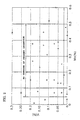
- FIG. 1 shows an influence of the content of Cr + V in a steel on a martensite volume percentage of a steel sheet manufactured under the conditions given in Table 2.
- Cr and V are combinedly added, a martensite volume percentage of 7% or higher can be obtained regardless of the line speed.
- a martensite volume percentage of 3% or higher can be obtained only at a line speed of 165 mpm. This fact reveals that the combined addition of Cr and V is effective.
- CT coiling temperature
- the coiling temperature is 700°C or lower, a dual-phase structure consisting of ferrite and martensite can be obtained at all line speeds, so that proper strength and satisfactory ductility are provided.
- the coiling temperature is as high as 750°C, being outside the range of the present invention.
- carbides precipitate as coarse carbides after hot rolling and coiling, and are not dissolved sufficiently even by heating before plating on the CGL.
- carbides partially consisting essentially of cementite in addition to ferrite and martensite are contained, so that a strength-ductility balance is insufficient although the strength is proper.
- Embodiment 2-1 is a hot-dip galvanized steel sheet characterized by containing 0.04 to 0.13% of C, 0.5% or less of Si, 1.0 to 2.0% of Mn, 0.05% or less of P, 0.01% or less (including 0%) of S, 0.05% or less of sol. Al, 0.007% or less (including 0%) of N, 0.05 to 0.5% of Mo, and 0.2% or less (including 0%) of Cr by weight %, the balance consisting essentially of Fe and unavoidable impurities, and having a structure consisting essentially of ferrite having an average grain size of 20 ⁇ m or smaller and martensite with a volume percentage of 5 to 40%.
- Embodiment 2-2 is a hot-dip galvanized steel sheet characterized by further containing 0.02 to 0.2% of V in addition of the components of the embodiment 2-1, and having a structure consisting essentially of ferrite having an average grain size of 20 ⁇ m or smaller and martensite with a volume percentage of 5 to 40%.
- Embodiment 2-3 for solving the before-mentioned problems is a manufacturing method for a hot-dip galvanized steel sheet described in Embodiment 2-1 or 2-2.
- This manufacturing method is characterized in that a steel having the components described in Embodiment 2-1 or 2-2 is cast and then hot rolled into a strip; after being pickled, the strip is cold rolled as necessary with a cold rolled reduction of 40% or more; on the succeeding continuous hot-dip galvanizing line, after the strip is soaked at a temperature of 750 to 850°C, it is cooled to a temperature range of 600°C or lower at a cooling rate of 1 to 50°C per second, and then is galvanized; as necessary, the strip is further alloyed; and thereafter, the strip is cooled in a state in which the residence time at 400 to 600°C is within 200 seconds.
- the balance consisting essentially of Fe and unavoidable impurities means that a steel sheet containing minute amounts of other elements including unavoidable impurities is embraced in the scope of the present invention unless the effects of the present invention are eliminated.
- the percentage % indicating the content of component of steel means weight % unless otherwise specified.
- structure consisting essentially of ferrite and martensite with a volume percentage of 5 to 40% means that a steel sheet containing a structure such as small amounts of cementite, bainite, or retained austenite is embraced in the scope of the present invention.
- Mo is an essential element in obtaining the effect of the present invention.
- the reason for this is that softening due to tempering of martensite phase caused by a temperature rise at HAZ at the time of welding is restrained by the precipitation of carbides of Mo. Therefore, the content of 0.05%, which achieves the effect, is set as the lower limit. If Mo is contained excessively, the hardness of HAZ increases greatly, and a change in hardness of HAZ increases. For this reason, the upper limit is specified at 0.5%.
- the content of Mo should preferably 0.15 to 0.4%.
- V preferably 0.02 to 0.2%
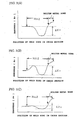
- FIGS. 3(a) to 3(c) schematically show a change in hardness of HAZ caused by an excessive and insufficient content of Mo, V and Cr.
- FIG. 3(a) shows a case where the contents of Mo and V are lower than the proper values, showing that a difference in hardness ⁇ Hv between the most softened portion of HAZ and the base metal is large.
- FIG. 3(b) shows a case where the contents of Mo, V and Cr exceed the proper values, showing that although the softening degree of HAZ is small, the base metal is also softened, so that the ⁇ Hv increases eventually.
- FIG. 3(c) shows a case where the contents of Mo, V and Cr are within the range of the present invention, showing that the ⁇ Hv is small.
- C is an essential element in securing a desired strength.
- the lower limit is specified at the minimum value for securing the strength
- the upper limit is specified as described above in order for the martensite volume percentage that greatly decreases the hardness of HAZ not to exceed 40%.
- Si is an essential element in stably obtaining a dual-phase structure of ferrite and martensite.
- the upper limit is specified at 0.5%.
- Mn like C
- the upper limit is specified at 2.0%.
- P like Si
- S 0.01% or less
- the upper limit is specified at 0.01%.
- the content of Sol. Al contained in the ordinary steel does not ruin the effects of the present invention, and 0.05% or less of sol. Al has no problem. Therefore, the upper limit is specified at 0.05%.
- the content of N contained in the ordinary steel does not ruin the effects of the present invention, and 0.007% or less of N has no problem. Therefore, the upper limit is specified at 0.007%.
- the composition of each component must be restricted as described above, and also the structure must be controlled so as to be a structure consisting essentially of ferrite having an average grain size of 20 ⁇ m or smaller and martensite with a volume percentage of 5 to 40%.
- a steel having a predetermined composition is cast, and then is hot rolled into a strip. After being pickled, the strip is further cold rolled with a cold rolled reduction of 40% or more as necessary to prepare a substrate for plating.
- the conditions for hot rolling are not specified. Unless the hot rolling method is such that the grain size of hot rolled sheet becomes remarkably large, for example, due to a finish rolling temperature lower than the Ar3 transformation point or a low cooling rate of 10°C/sec or lower after the finish of hot rolling, there does not especially arise any problem.
- the strip is soaked at a temperature of 750 to 850°C, it is cooled to a temperature range of 600°C or lower at a cooling rate of 1 to 50°C per second, and then is galvanized so that the residence time at 400 to 600°C is within 200 seconds.
- the strip is further alloyed.
- a soaking temperature not lower than 750°C is necessary for stably obtaining the austenite phase.
- the upper limit is specified at 850°C.
- the strip is cooled to a temperature range of 600°C or lower at a cooling rate of 1 to 50°C per second.
- the purpose for this is that pearlite is not produced and fine ferrite is precipitated with a desired volume percentage.
- the lower limit of cooling rate is specified because a cooling rate lower than this value produces pearlite and increases the grain size of ferrite.
- the upper limit of cooling rate is specified because if a cooling rate is higher than this value, not only ferrite does not precipitate sufficiently but also the martensite volume percentage increases to 40% or more.
- the pickled sheet or a cold rolled sheet is cooled to a temperature range of 600°C or lower and then is galvanized, and further is alloyed as necessary. Finally, the sheet is cooled to room temperature.
- the residence time at 400 to 600°C has a large influence on the formation of structure. Specifically, if the residence time is long, the precipitation of cementite from austenite is remarkable, and thus not only the volume percentage of martensite phase decreases so that the strength decreases but also the effect of resistance to softening of HAZ due to the precipitation of Mo and V carvide is not achieved.
- the upper limit of residence time is specified at 200 seconds.
- the structure is specified as a structure consisting essentially of ferrite and martensite with a volume percentage of 5 to 40%.
- the structure contains cementite, bainite, or retained austenite with a volume percentage within 5%, the effects of the present invention are not ruined.
- Steels A to X having a chemical composition in the range of the present invention as given in Table 5 and steels a to m of comparative examples having a chemical composition outside the range of the present invention were manufactured by a converter, and slabs were formed by continuous casting. These slabs were hot rolled to form strips at the heating temperature and coiling temperature given in Table 6. After being pickled, some of strips were cold rolled with a draft of 65% to prepare a substrate for plating. Succeedingly, on a continuous hot-dip galvanizing line, a hot-dip galvanized steel sheet or an alloyed hot-dip galvanized steel sheet was manufactured under the conditions given in Table 7. The heat cycle on the continuous hot-dip galvanizing line was set in the preferable range shown in the embodiment 2-3.
- Table 7 gives evaluation results for structure, tensile strength, and change in hardness ⁇ Hv of HAZ caused by laser welding of each of these steels.
- the steel number in Table 7 corresponds to that in Table 6.
- the laser welding conditions were an output of 5 kw and a welding speed of 2 m/min. The welding speed was especially decreased so that the HAZ is easily softened.
- FIG. 2 is a diagram in which ⁇ Hv of HAZ of the steel given in Table 7 is summarized by the contents of Mo and V.
- ⁇ Hv is evaluated by three grades of ⁇ ( ⁇ Hv ⁇ 10), ⁇ (10 ⁇ ⁇ Hv ⁇ 20), and ( ⁇ Hv > 20).
- ⁇ Hv ⁇ 10 by setting the contents of Mo and other elements in the range specified by the present invention, high resistance to softening of HAZ of ⁇ Hv ⁇ 20 can be obtained.
- the resistance of ⁇ Hv ⁇ 10 can be obtained.
- steels in which the content of C is outside the range of the present invention, like steel Nos.
- Table 8 gives the results of studies on a change in property, which were conducted by changing the heat cycle especially on a continuous hot-dip galvanizing line for steel H of an example of the present invention. Since the soaking temperature is improper for steel Nos. 1 and 5, the cooling rate is improper for steel Nos. 6 and 11, and the residence time at 400 to 600°C is too long for steel No. 16, the structure specified in the present invention is not obtained, and desired resistance to softening of HAZ is not obtained. Contrarily, for the steel of the present invention manufactured under the manufacturing conditions described in Embodiment 2-3, the structure described in Embodiment 2-1 is obtained, and high resistance to softening of HAZ of ⁇ Hv ⁇ 20 is obtained.
Landscapes
- Chemical & Material Sciences (AREA)
- Engineering & Computer Science (AREA)
- Materials Engineering (AREA)
- Mechanical Engineering (AREA)
- Metallurgy (AREA)
- Organic Chemistry (AREA)
- Physics & Mathematics (AREA)
- Thermal Sciences (AREA)
- Chemical Kinetics & Catalysis (AREA)
- Crystallography & Structural Chemistry (AREA)
- Heat Treatment Of Sheet Steel (AREA)
Abstract
Description
Si: 0.5% or less
Mn: 1.0% or more and 2.0% or less
P: 0.05% or less
S: 0.005% or less
Cr: 0.05% or more and 1.0% or less
V: 0.005% or more and 0.2% or less
N: 0.01% or less

| Reference character | Steel type symbol | CGL line speed (mpm) | Cooling rate (°C/s) | Tensile property | Microstructure | Classification | |||
| YS (MPa) | TS (MPa) | YR (%) | EI (%) | ||||||
| A1 | A | 30 | 3.5 | 419 | 592 | 71 | 27 | Ferrite + martensite + bainite | Present invention |
| A2 | 80 | 9.3 | 402 | 597 | 67 | 28 | Ferrite + martensite + bainite | present invention | |
| A3 | 165 | 19.1 | 391 | 605 | 65 | 27 | Ferrite + martensite | Present invention | |
| B1 | B | 30 | 3.5 | 499 | 690 | 72 | 24 | Ferrite + martensite + bainite | Present invention |
| B2 | 80 | 9.3 | 504 | 744 | 68 | 22 | Ferrite + martensite | Present invention | |
| B3 | 165 | 19.1 | 509 | 769 | 66 | 21 | Ferrite + martensite | Present invention | |
| C1 | C | 30 | 3.5 | 425 | 521 | 82 | 30 | Ferrite + fine pearlite | Comparative example |
| C2 | 80 | 9.3 | 420 | 528 | 80 | 29 | Ferrite + fine pearlite | Comparative example | |
| C3 | 165 | 19.1 | 418 | 543 | 77 | 29 | Ferrite + bainite + fine pearlite | Comparative example | |
| D1 | D | 30 | 3.5 | 420 | 519 | 81 | 30 | Ferrite + fine pearlite | Comparative example |
| D2 | 80 | 9.3 | 407 | 541 | 75 | 29 | Ferrite + bainite + fine pearlite | Comparative example | |
| D3 | 165 | 19.1 | 388 | 590 | 66 | 28 | Ferrite + martensite + bainite | Comparative example | |
| E1 | E | 30 | 3.5 | 445 | 565 | 79 | 27 | Ferrite + bainite | Comparative example |
| E2 | 80 | 9.3 | 438 | 574 | 76 | 27 | Ferrite + bainite | Comparative example | |
| E3 | 165 | 19.1 | 409 | 591 | 69 | 27 | Ferrite + martensite + bainite | Comparative example | |
| F1 | F | 30 | 3.5 | 499 | 620 | 80 | 25 | Ferrite + bainite + fine martensite | Comparative example |
| F2 | 80 | 9.3 | 500 | 651 | 77 | 24 | Ferrite + bainite + fine martensite | Comparative example | |
| F3 | 165 | 19.1 | 493 | 699 | 71 | 22 | Ferrite + martensite + bainite | Comparative example |
| Steel type symbol | Chemical composition (wt %) | ||||||||
| C | Si | Mn | P | S | Sol.Al | N | Cr | V | |
| G | 0.08 | 0.04 | 1.52 | 0.008 | 0.003 | 0.036 | 0.0046 | 0.45 | 0.08 |
| Reference character | CT (°C) | CGL line speed (mpm) | Cooling rate (°C/s) | Tensile property | Microstructure | Classification | |||
| YS (MPa) | TS (MPa) | YR (%) | EI (%) | ||||||
| 1 | 400 | 80 | 9.3 | 435 | 648 | 67 | 25 | Ferrite + martensite | Present invention |
| 2 | 600 | 80 | 9.3 | 413 | 641 | 64 | 26 | Ferrite + martensite | Present invention |
| 3 | 700 | 30 | 3.5 | 416 | 614 | 58 | 28 | Ferrite + martensite | Present invention |
| 4 | 700 | 80 | 9.3 | 422 | 628 | 67 | 27 | Ferrite + martensite | |
| 5 | 700 | 160 | 18.5 | 437 | 637 | 69 | 26 | Ferrite + martensite | Present invention |
| 6 | 750 | 30 | 3.5 | 509 | 769 | 66 | 21 | Ferrite + martensite + bainite | Comparative example |
| 7 | 750 | 80 | 9.3 | 445 | 602 | 74 | 26 | Ferrite + martensite + carbide | Comparative example |
| 8 | 750 | 160 | 18.5 | 438 | 596 | 73 | 26 | Ferrite + martensite + carbide | Comparative example |

| Steel No. | Steel type | Hot rolling condition | Reduction (%) | Substrate | Sheet thickness (mm) | Hot-dip galvanizing condition | ||||
| Heating temperature (°C) | Coiling temperature (°C) | Soaking temperature (°C) | Cooling rate (°C/sec) | Residence time at 400 to 600°C | Alloying | |||||
| 1 | A | 1220 | 580 | - | Pickled sheet | 2.3 | 800 | 7 | 120 | ○ |
| 2 | B | 1260 | 630 | - | Pickled sheet | 2.3 | 800 | 7 | 100 | × |
| 3 | C | 1230 | 600 | - | Pickled sheet | 2.3 | 780 | 12 | 120 | ○ |
| 4 | D | 1170 | 530 | - | Pickled sheet | 2.3 | 830 | 15 | 180 | ○ |
| 5 | E | 1220 | 620 | 65 | Cold rolled sheet | 1.2 | 800 | 3 | 70 | ○ |
| 6 | F | 1200 | 600 | - | Pickled sheet | 2.3 | 800 | 8 | 180 | ○ |
| 7 | G | 1200 | 580 | - | Pickled sheet | 2.3 | 850 | 20 | 140 | ○ |
| 8 | H | 1200 | 580 | - | Pickled sheet | 2.3 | 850 | 15 | 100 | × |
| 9 | I | 1200 | 580 | - | Pickled sheet | 2.3 | 820 | 10 | 120 | ○ |
| 10 | J | 1200 | 580 | 65 | Cold rolled sheet | 1.2 | 820 | 10 | 120 | ○ |
| 11 | K | 1200 | 580 | - | Pickled sheet | 2.3 | 800 | 2 | 100 | ○ |
| 12 | L | 1270 | 580 | - | Pickled sheet | 2.3 | 800 | 7 | 100 | ○ |
| 13 | M | 1230 | 580 | - | Pickled sheet | 2.3 | 800 | 25 | 140 | ○ |
| 14 | N | 1200 | 580 | - | Pickled sheet | 2.3 | 800 | 20 | 140 | ○ |
| 15 | O | 1200 | 550 | - | Pickled sheet | 2.3 | 820 | 10 | 45 | × |
| 16 | P | 1200 | 550 | - | Pickled sheet | 2.3 | 780 | 10 | 120 | × |
| 17 | Q | 1200 | 620 | - | Pickled sheet | 2.3 | 840 | 5 | 140 | ○ |
| 18 | R | 1200 | 620 | - | Pickled sheet | 2.3 | 800 | 7 | 120 | ○ |
| 19 | S | 1200 | 620 | - | Pickled sheet | 2.3 | 800 | 5 | 120 | ○ |
| 20 | T | 1200 | 580 | - | Pickled sheet | 2.3 | 800 | 28 | 120 | ○ |
| 21 | U | 1200 | 580 | 65 | Cold rolled sheet | 1.2 | 800 | 10 | 30 | × |
| 22 | V | 1200 | 580 | - | Pickled sheet | 2.3 | 800 | 13 | 120 | ○ |
| 23 | W | 1200 | 580 | - | Pickled sheet | 2.3 | 750 | 9 | 120 | ○ |
| 24 | X | 1280 | 600 | 65 | Cold rolled sheet | 1.2 | 780 | 5 | 120 | ○ |
| 25 | Y | 1200 | 600 | - | Pickled sheet | 2.3 | 800 | 27 | 120 | ○ |
| 26 | a | 1200 | 600 | - | Pickled sheet | 2.3 | 800 | 10 | 120 | ○ |
| 27 | b | 1200 | 600 | - | Pickled sheet | 2.3 | 800 | 10 | 120 | ○ |
| 28 | c | 1200 | 600 | - | Pickled sheet | 2.3 | 800 | 10 | 120 | ○ |
| 29 | d | 1200 | 600 | - | Pickled sheet | 2.3 | 800 | 10 | 120 | ○ |
| 30 | e | 1200 | 600 | - | Pickled sheet | 2.3 | 800 | 10 | 120 | ○ |
| 31 | f | 1200 | 600 | - | Pickled sheet | 2.3 | 800 | 10 | 120 | ○ |
| 32 | g | 1200 | 600 | - | Pickled sheet | 2.3 | 800 | 10 | 120 | ○ |
| 33 | h | 1200 | 600 | - | Pickled sheet | 2.3 | 800 | 10 | 120 | ○ |
| 34 | i | 1200 | 600 | - | Pickled sheet | 2.3 | 800 | 10 | 120 | ○ |
| 35 | j | 1200 | 600 | - | Pickled sheet | 2.3 | 800 | 10 | 120 | ○ |
| 36 | k | 1200 | 600 | - | Pickled sheet | 2.3 | 800 | 10 | 120 | ○ |
| 37 | l | 1200 | 600 | - | Pickled sheet | 2.3 | 800 | 10 | 120 | ○ |
| 38 | m | 1200 | 600 | - | Pickled sheet | 2.3 | 800 | 10 | 120 | ○ |


Claims (18)
- A hot-dip galvanized steel sheet comprising:a steel sheet containing 0.04 to 0.12% of C, 0.5% or less of Si, 1.0 to 2.0% of Mn, 0.05% or less of P, 0.005% or less of S, 0.05 to 1.0% of Cr, 0.005 to 0.2% of V, 0.1% or less of sol. Al, and 0.01% or less of N by weight %;said steel sheet having a structure consisting essentially of ferrite and martensite; anda hot-dip galvanizing layer formed on the steel sheet.
- The hot-dip galvanized steel sheet according to claim 1, wherein said steel sheet is a hot rolled steel sheet.
- The hot-dip galvanized steel sheet according to claim 1, wherein said steel sheet is a cold rolled steel sheet.
- The hot-dip galvanized steel sheet according to claim 1, wherein said steel sheet has a martensite volume percentage of at least 7%.
- The hot-dip galvanized steel sheet according to claim 1, wherein the content of Si is 0.1% or less.
- The hot-dip galvanized steel sheet according to claim 1, wherein the content of Cr is 0.05 to 0.2%.
- The hot-dip galvanized steel sheet according to claim 1, wherein the content of V is 0.02 to 0.1%.
- A method for producing a hot-dip galvanized steel sheet, comprising the steps of:rough rolling a steel containing 0.04 to 0.12% of C, 0.5% or less of Si, 1.0 to 2.0% of Mn, 0.05% or less of P, 0.005% or less of S, 0.05 to 1.0% of Cr, 0.005 to 0.2% of V, 0.1% or less of sol. Al, and 0.01% or less of N by weight %;finish rolling the rough rolled steel at a temperature of the Ar3 point or more;coiling the finish rolled steel at a temperature of 700°C or less; andhot-dip galvanizing the coiled steel at a pre-plating heating temperature of Ac1 to Ac3.
- The method according to claim 8, further comprising the step of alloying the hot-dip galvanized steel.
- The method according to claim 8, wherein the content of Si is 0.1% or less.
- A hot-dip galvanized steel sheet comprising:a steel sheet containing 0.04 to 0.13% of C, 0.5% or less of Si, 1.0 to 2.0% of Mn, 0.05% or less of P, 0.01% or less of S, 0.05% or less of sol. Al, 0.007% or less of N, 0.05 to 0.5% of Mo, and 0.2% or less of Cr by weight %;said steel sheet having a structure consisting essentially of ferrite having an average grain size of 20 µm or less and martensite with a volume percentage of 5 to 40%; anda hot-dip galvanizing layer formed on the steel sheet.
- The hot-dip galvanized steel sheet according to claim 11, wherein said steel sheet further contains 0.02 to 0.2% of V.
- The hot-dip galvanized steel sheet according to claim 11, wherein said steel sheet is a hot rolled steel sheet.
- The hot-dip galvanized steel sheet according to claim 11, wherein said steel sheet is a cold rolled steel sheet.
- A method for producing a hot-dip galvanized steel sheet, comprising the steps of:rolling a steel containing 0.04 to 0.13% of C, 0.5% or less of Si, 1.0 to 2.0% of Mn, 0.05% or less of P, 0.01% or less of S, 0.05% or less of sol. Al, 0.007% or less of N, 0.05 to 0.5% of Mo, and 0.2% or less of Cr by weight % to produce a strip;pickling said strip; andperforming a continuous hot-dip galvanizing, said continuous hot-dip galvanizing comprising the steps of:soaking the pickled strip at a temperature of 750 to 850°C;cooling the soaked strip to a temperature range of 600°C or lower at a cooling rate of 1 to 50°C per second;hot-dip galvanizing the cooled strip; andcooling the galvanized strip so that the residence time at 400 to 600°C is within 200 seconds.
- The method according to claim 15, wherein said strip is a hot rolled strip.
- The method according to claim 15, wherein said strip is a cold rolled strip obtained by cold rolling the hot rolled strip with a cold rolled reduction of 40% or more.
- The method according to claim 15, further comprising the step of alloying said galvanized strip after the step of hot-dip galvanizing.
Priority Applications (1)
| Application Number | Priority Date | Filing Date | Title |
|---|---|---|---|
| EP04006816A EP1443124B1 (en) | 2000-01-24 | 2001-01-23 | Hot-dip galvanized steel sheet and method for producing the same |
Applications Claiming Priority (5)
| Application Number | Priority Date | Filing Date | Title |
|---|---|---|---|
| JP2000014921 | 2000-01-24 | ||
| JP2000014921A JP3951537B2 (en) | 2000-01-24 | 2000-01-24 | Hot-rolled galvanized high-tensile steel sheet with excellent workability and method for producing the same |
| JP2000019616A JP3951282B2 (en) | 2000-01-28 | 2000-01-28 | Hot-dip galvanized steel sheet and manufacturing method thereof |
| JP2000019616 | 2000-01-28 | ||
| PCT/JP2001/000403 WO2001053554A1 (en) | 2000-01-24 | 2001-01-23 | Hot dip zinc plated steel sheet and method for producing the same |
Related Child Applications (1)
| Application Number | Title | Priority Date | Filing Date |
|---|---|---|---|
| EP04006816A Division EP1443124B1 (en) | 2000-01-24 | 2001-01-23 | Hot-dip galvanized steel sheet and method for producing the same |
Publications (3)
| Publication Number | Publication Date |
|---|---|
| EP1227167A1 true EP1227167A1 (en) | 2002-07-31 |
| EP1227167A4 EP1227167A4 (en) | 2003-03-19 |
| EP1227167B1 EP1227167B1 (en) | 2006-01-18 |
Family
ID=26584048
Family Applications (2)
| Application Number | Title | Priority Date | Filing Date |
|---|---|---|---|
| EP01942682A Expired - Lifetime EP1227167B1 (en) | 2000-01-24 | 2001-01-23 | Hot dip zinc plated steel sheet and method for producing the same |
| EP04006816A Expired - Lifetime EP1443124B1 (en) | 2000-01-24 | 2001-01-23 | Hot-dip galvanized steel sheet and method for producing the same |
Family Applications After (1)
| Application Number | Title | Priority Date | Filing Date |
|---|---|---|---|
| EP04006816A Expired - Lifetime EP1443124B1 (en) | 2000-01-24 | 2001-01-23 | Hot-dip galvanized steel sheet and method for producing the same |
Country Status (4)
| Country | Link |
|---|---|
| US (1) | US6440584B1 (en) |
| EP (2) | EP1227167B1 (en) |
| DE (2) | DE60133493T2 (en) |
| WO (1) | WO2001053554A1 (en) |
Cited By (3)
| Publication number | Priority date | Publication date | Assignee | Title |
|---|---|---|---|---|
| EP1559797A1 (en) * | 2004-01-29 | 2005-08-03 | JFE Steel Corporation | High strength steel sheet and method for manufacturing same |
| EP1669470A4 (en) * | 2003-09-05 | 2007-03-07 | Nippon Steel Corp | HOT ROLLED STEEL SHEET AND PROCESS FOR PRODUCING THE SAME |
| CN102899599A (en) * | 2011-07-29 | 2013-01-30 | 上海梅山钢铁股份有限公司 | Control method for reducing generation amount of strip steel zinc crust in starting up hot-dip galvanizing aluminum and zinc machine set |
Families Citing this family (29)
| Publication number | Priority date | Publication date | Assignee | Title |
|---|---|---|---|---|
| CN1295353C (en) * | 2000-04-07 | 2007-01-17 | 川崎制铁株式会社 | Production method of cold-rolled plate and hot-dip galvanized sheet steel with good strain-aged hardening characteristics |
| US6709535B2 (en) * | 2002-05-30 | 2004-03-23 | Kobe Steel, Ltd. | Superhigh-strength dual-phase steel sheet of excellent fatigue characteristic in a spot welded joint |
| US20040047756A1 (en) * | 2002-09-06 | 2004-03-11 | Rege Jayanta Shantaram | Cold rolled and galvanized or galvannealed dual phase high strength steel and method of its production |
| US7311789B2 (en) * | 2002-11-26 | 2007-12-25 | United States Steel Corporation | Dual phase steel strip suitable for galvanizing |
| US6811624B2 (en) * | 2002-11-26 | 2004-11-02 | United States Steel Corporation | Method for production of dual phase sheet steel |
| CN100471982C (en) * | 2002-11-26 | 2009-03-25 | Uec科技有限责任公司 | Method of manufacturing dual phase steel plate |
| US20050247382A1 (en) * | 2004-05-06 | 2005-11-10 | Sippola Pertti J | Process for producing a new high-strength dual-phase steel product from lightly alloyed steel |
| ES2530066T3 (en) * | 2003-11-04 | 2015-02-26 | Uec Technologies Llc | Dual phase steel strip for galvanizing |
| US7959747B2 (en) * | 2004-11-24 | 2011-06-14 | Nucor Corporation | Method of making cold rolled dual phase steel sheet |
| US7442268B2 (en) * | 2004-11-24 | 2008-10-28 | Nucor Corporation | Method of manufacturing cold rolled dual-phase steel sheet |
| US8337643B2 (en) | 2004-11-24 | 2012-12-25 | Nucor Corporation | Hot rolled dual phase steel sheet |
| US7608155B2 (en) * | 2006-09-27 | 2009-10-27 | Nucor Corporation | High strength, hot dip coated, dual phase, steel sheet and method of manufacturing same |
| US11155902B2 (en) | 2006-09-27 | 2021-10-26 | Nucor Corporation | High strength, hot dip coated, dual phase, steel sheet and method of manufacturing same |
| JP5332355B2 (en) * | 2007-07-11 | 2013-11-06 | Jfeスチール株式会社 | High-strength hot-dip galvanized steel sheet and manufacturing method thereof |
| CA2701903C (en) | 2007-10-10 | 2017-02-28 | Nucor Corporation | Complex metallographic structured steel and method of manufacturing same |
| CN102015155B (en) * | 2008-03-19 | 2013-11-27 | 纽科尔公司 | Strip casting apparatus with casting roll positioning |
| US20090236068A1 (en) | 2008-03-19 | 2009-09-24 | Nucor Corporation | Strip casting apparatus for rapid set and change of casting rolls |
| US20090288798A1 (en) * | 2008-05-23 | 2009-11-26 | Nucor Corporation | Method and apparatus for controlling temperature of thin cast strip |
| KR100981856B1 (en) * | 2010-02-26 | 2010-09-13 | 현대하이스코 주식회사 | Method of manufacturing high strength steel sheet with excellent coating characteristics |
| JP2011224584A (en) * | 2010-04-16 | 2011-11-10 | Jfe Steel Corp | Method of manufacturing hot-rolled steel sheet and method of manufacturing hot-dip galvanized steel sheet |
| JP4962594B2 (en) * | 2010-04-22 | 2012-06-27 | Jfeスチール株式会社 | High-strength hot-dip galvanized steel sheet excellent in workability and manufacturing method thereof |
| JP5365673B2 (en) * | 2011-09-29 | 2013-12-11 | Jfeスチール株式会社 | Hot rolled steel sheet with excellent material uniformity and method for producing the same |
| JP5578288B2 (en) | 2012-01-31 | 2014-08-27 | Jfeスチール株式会社 | Hot-rolled steel sheet for generator rim and manufacturing method thereof |
| ES2689230T3 (en) | 2012-12-11 | 2018-11-12 | Nippon Steel & Sumitomo Metal Corporation | Hot rolled steel sheet and its production method |
| KR101672102B1 (en) | 2014-12-22 | 2016-11-02 | 주식회사 포스코 | Hot rolled steel sheet for hot galvanized iron having high surface quality and high strength, and method for producing the same |
| KR101672103B1 (en) | 2014-12-22 | 2016-11-02 | 주식회사 포스코 | Hot rolled steel sheet for hot galvanized iron having high surface quality and high strength, and method for producing the same |
| DE102017130237A1 (en) * | 2017-12-15 | 2019-06-19 | Salzgitter Flachstahl Gmbh | High strength hot rolled flat steel product with high edge crack resistance and high bake hardening potential, a process for producing such a flat steel product |
| EP4534706A3 (en) * | 2018-05-31 | 2025-07-23 | POSCO Co., Ltd | Al-fe-alloy plated steel sheet for hot forming, having excellent twb welding characteristics and manufacturing methods therefor |
| CN115216688B (en) * | 2022-06-15 | 2023-09-15 | 首钢集团有限公司 | 800MPa grade hot-rolled low-alloy high-strength steel and its steel matrix and preparation method |
Family Cites Families (18)
| Publication number | Priority date | Publication date | Assignee | Title |
|---|---|---|---|---|
| JPS5524943A (en) * | 1978-08-09 | 1980-02-22 | Kawasaki Steel Corp | Manufacture of high tensile hot galvanized steel plate for press processing |
| US4196025A (en) * | 1978-11-02 | 1980-04-01 | Ford Motor Company | High strength dual-phase steel |
| JPS6049698B2 (en) * | 1979-03-16 | 1985-11-05 | 川崎製鉄株式会社 | Manufacturing method of alloyed hot-dip galvanized high-strength steel sheet with excellent workability |
| JPS5669359A (en) * | 1979-10-16 | 1981-06-10 | Kobe Steel Ltd | Composite structure type high strength cold rolled steel sheet |
| JPS56142821A (en) * | 1980-04-04 | 1981-11-07 | Nippon Steel Corp | Production of high-strength zinc-plated steel plate excellent in workability |
| JP2862186B2 (en) * | 1990-09-19 | 1999-02-24 | 株式会社神戸製鋼所 | Manufacturing method of hot-dip galvanized high-strength thin steel sheet with excellent elongation |
| JP2761096B2 (en) * | 1990-11-05 | 1998-06-04 | 株式会社神戸製鋼所 | Manufacturing method of high ductility and high strength alloyed hot-dip galvanized steel sheet |
| JP2761095B2 (en) * | 1990-11-05 | 1998-06-04 | 株式会社神戸製鋼所 | Method for producing high strength galvanized steel sheet with excellent bending workability |
| JP2512640B2 (en) * | 1991-03-25 | 1996-07-03 | 新日本製鐵株式会社 | Method for producing hot-dip galvanized cold-rolled steel sheet for folded sheet roofing material with excellent high temperature characteristics |
| JP3392154B2 (en) * | 1991-03-29 | 2003-03-31 | 日新製鋼株式会社 | Method for producing high-strength hot-dip Zn-A1 alloy coated steel sheet for fire resistance |
| JPH05105960A (en) * | 1991-10-16 | 1993-04-27 | Sumitomo Metal Ind Ltd | Production of high strength hot-dip galvanized steel sheet |
| JPH05311244A (en) * | 1992-05-01 | 1993-11-22 | Kobe Steel Ltd | Method for producing high-strength hot-rolled hot-dip galvannealed steel sheet with excellent stretch flangeability |
| EP0585843A3 (en) * | 1992-08-28 | 1996-06-26 | Toyota Motor Co Ltd | High-formability steel plate with a great potential for strength enhancement by high-density energy treatment |
| JP3455567B2 (en) | 1993-08-17 | 2003-10-14 | 日新製鋼株式会社 | Method for producing high-strength hot-dip galvanized steel sheet with excellent workability |
| JP3374644B2 (en) * | 1996-03-28 | 2003-02-10 | 株式会社神戸製鋼所 | High-strength hot-rolled steel sheet, high-strength galvanized steel sheet excellent in pitting corrosion resistance and workability, and methods for producing them |
| CA2283924C (en) * | 1997-03-17 | 2006-11-28 | Nippon Steel Corporation | Dual-phase type high-strength steel sheets having high impact energy absorption properties and a method of producing the same |
| JP3572894B2 (en) * | 1997-09-29 | 2004-10-06 | Jfeスチール株式会社 | Composite structure hot rolled steel sheet excellent in impact resistance and formability and method for producing the same |
| JPH11293396A (en) * | 1998-04-15 | 1999-10-26 | Nkk Corp | High-strength hot-dip galvanized steel sheet, alloyed hot-dip galvanized steel sheet, and manufacturing method thereof |
-
2001
- 2001-01-23 DE DE60133493T patent/DE60133493T2/en not_active Expired - Lifetime
- 2001-01-23 WO PCT/JP2001/000403 patent/WO2001053554A1/en not_active Ceased
- 2001-01-23 EP EP01942682A patent/EP1227167B1/en not_active Expired - Lifetime
- 2001-01-23 EP EP04006816A patent/EP1443124B1/en not_active Expired - Lifetime
- 2001-01-23 DE DE60116765T patent/DE60116765T2/en not_active Expired - Lifetime
- 2001-09-17 US US09/953,788 patent/US6440584B1/en not_active Expired - Lifetime
Cited By (6)
| Publication number | Priority date | Publication date | Assignee | Title |
|---|---|---|---|---|
| EP1669470A4 (en) * | 2003-09-05 | 2007-03-07 | Nippon Steel Corp | HOT ROLLED STEEL SHEET AND PROCESS FOR PRODUCING THE SAME |
| US7662243B2 (en) | 2003-09-05 | 2010-02-16 | Nippon Steel Corporation | Hot rolled steel sheet |
| EP1559797A1 (en) * | 2004-01-29 | 2005-08-03 | JFE Steel Corporation | High strength steel sheet and method for manufacturing same |
| CN100439542C (en) * | 2004-01-29 | 2008-12-03 | 杰富意钢铁株式会社 | High-strength thin steel plate and manufacturing method thereof |
| CN102899599A (en) * | 2011-07-29 | 2013-01-30 | 上海梅山钢铁股份有限公司 | Control method for reducing generation amount of strip steel zinc crust in starting up hot-dip galvanizing aluminum and zinc machine set |
| CN102899599B (en) * | 2011-07-29 | 2014-07-09 | 上海梅山钢铁股份有限公司 | Control method for reducing generation amount of strip steel zinc crust in starting up hot-dip galvanizing aluminum and zinc machine set |
Also Published As
| Publication number | Publication date |
|---|---|
| DE60133493D1 (en) | 2008-05-15 |
| DE60116765T2 (en) | 2006-11-02 |
| EP1443124B1 (en) | 2008-04-02 |
| US6440584B1 (en) | 2002-08-27 |
| EP1227167A4 (en) | 2003-03-19 |
| EP1443124A1 (en) | 2004-08-04 |
| DE60116765D1 (en) | 2006-04-06 |
| US20020088510A1 (en) | 2002-07-11 |
| DE60133493T2 (en) | 2009-05-07 |
| WO2001053554A1 (en) | 2001-07-26 |
| EP1227167B1 (en) | 2006-01-18 |
Similar Documents
| Publication | Publication Date | Title |
|---|---|---|
| US6440584B1 (en) | Hot-dip galvanized steel sheet and method for producing the same | |
| US11939640B2 (en) | Method for producing hot-rolled steel sheet, method for producing cold-rolled full-hard steel sheet, and method for producing heat-treated sheet | |
| KR102153194B1 (en) | Ultra high strength and high ductility cold rolled steel sheet with superior resistance to liquid metal embrittlment(lme) cracking, plated steel sheet and method for manufacturing the same | |
| EP3555336B1 (en) | High strength and high formability cold-rolled and heat-treated steel sheet, manufacturing method, and resistance spot welded joint | |
| US20240191329A1 (en) | Al-fe-alloy plated steel sheet for hot forming, having excellent twb welding characteristics, hot forming member, and manufacturing methods therefor | |
| EP1577412B1 (en) | High strength steel sheet exhibiting good burring workability and excellent resistance to softening in heat-affected zone and method for production thereof | |
| EP1367143B1 (en) | Hot dip zinc plated steel sheet having high strength and method for producing the same | |
| JP2019506530A (en) | High strength steel plate having excellent formability and method of manufacturing the same | |
| KR101445465B1 (en) | High-strength hot-dip galvanized steel sheet with excellent processability and spot weldability and process for producing same | |
| CN111936657B (en) | High-strength steel sheet and method for producing the same | |
| CN110809630A (en) | Hot-pressed member, method for manufacturing same, cold-rolled steel sheet for hot pressing, and method for manufacturing same | |
| WO2004104256A1 (en) | A cold-rolled steel sheet having a tensile strength of 780 mpa or more an excellent local formability and a suppressed increase in weld hardness | |
| CN118202081A (en) | High-strength steel sheet with excellent collision resistance and formability and method for manufacturing the same | |
| JP2003231941A (en) | High-strength hot-rolled steel sheet, high-strength cold-rolled steel sheet, and high-strength surface-treated steel sheet that have excellent formability after welding and have a tensile strength of 780 MPa or more that is difficult to soften the heat affected zone. | |
| JP7767433B2 (en) | Hot-forming steel material, method for manufacturing hot-forming steel material, and method for manufacturing hot-formed member | |
| CN116194606B (en) | Steel sheet excellent in formability and work hardening rate | |
| JP2004218077A (en) | Burring high strength steel sheet excellent in softening resistance of weld heat affected zone and method of manufacturing the same | |
| JP3358938B2 (en) | High-strength hot-rolled steel sheet with excellent chemical conversion and workability | |
| JP3125397B2 (en) | Manufacturing method of high tensile alloyed hot-dip galvanized steel sheet with excellent stretch flangeability | |
| US20220298596A1 (en) | Steel sheet having excellent uniform elongation and strain hardening rate, and method for producing same | |
| KR102904562B1 (en) | Cold rolled steel sheet and method of manufacturing the same | |
| JP2002003996A (en) | High tensile strength steel sheet with excellent impact resistance and manufacturing method | |
| JPH11193419A (en) | Method for producing alloyed hot-dip galvanized high-strength cold-rolled steel sheet with excellent formability | |
| JP2025533666A (en) | Steel plate with excellent bendability and manufacturing method thereof | |
| WO2026025523A1 (en) | 980-mpa-grade automotive galvanized steel sheet resistant to liquid metal embrittlement during spot welding, and manufacturing method therefor |
Legal Events
| Date | Code | Title | Description |
|---|---|---|---|
| PUAI | Public reference made under article 153(3) epc to a published international application that has entered the european phase |
Free format text: ORIGINAL CODE: 0009012 |
|
| 17P | Request for examination filed |
Effective date: 20011018 |
|
| AK | Designated contracting states |
Kind code of ref document: A1 Designated state(s): AT BE CH CY DE DK ES FI FR GB GR IE IT LI LU MC NL PT SE TR |
|
| RIC1 | Information provided on ipc code assigned before grant |
Free format text: 7C 22C 38/00 A, 7C 22C 38/24 B, 7C 21D 9/46 B, 7C 21D 8/02 B |
|
| A4 | Supplementary search report drawn up and despatched |
Effective date: 20030203 |
|
| 17Q | First examination report despatched |
Effective date: 20031125 |
|
| RAP1 | Party data changed (applicant data changed or rights of an application transferred) |
Owner name: JFE STEEL CORPORATION |
|
| RBV | Designated contracting states (corrected) |
Designated state(s): DE FR GB |
|
| GRAP | Despatch of communication of intention to grant a patent |
Free format text: ORIGINAL CODE: EPIDOSNIGR1 |
|
| GRAS | Grant fee paid |
Free format text: ORIGINAL CODE: EPIDOSNIGR3 |
|
| GRAA | (expected) grant |
Free format text: ORIGINAL CODE: 0009210 |
|
| AK | Designated contracting states |
Kind code of ref document: B1 Designated state(s): DE FR GB |
|
| REG | Reference to a national code |
Ref country code: GB Ref legal event code: FG4D |
|
| REF | Corresponds to: |
Ref document number: 60116765 Country of ref document: DE Date of ref document: 20060406 Kind code of ref document: P |
|
| ET | Fr: translation filed | ||
| PLBE | No opposition filed within time limit |
Free format text: ORIGINAL CODE: 0009261 |
|
| STAA | Information on the status of an ep patent application or granted ep patent |
Free format text: STATUS: NO OPPOSITION FILED WITHIN TIME LIMIT |
|
| 26N | No opposition filed |
Effective date: 20061019 |
|
| REG | Reference to a national code |
Ref country code: FR Ref legal event code: PLFP Year of fee payment: 15 |
|
| PGFP | Annual fee paid to national office [announced via postgrant information from national office to epo] |
Ref country code: GB Payment date: 20150121 Year of fee payment: 15 Ref country code: FR Payment date: 20150108 Year of fee payment: 15 |
|
| GBPC | Gb: european patent ceased through non-payment of renewal fee |
Effective date: 20160123 |
|
| REG | Reference to a national code |
Ref country code: FR Ref legal event code: ST Effective date: 20160930 |
|
| PG25 | Lapsed in a contracting state [announced via postgrant information from national office to epo] |
Ref country code: GB Free format text: LAPSE BECAUSE OF NON-PAYMENT OF DUE FEES Effective date: 20160123 |
|
| PG25 | Lapsed in a contracting state [announced via postgrant information from national office to epo] |
Ref country code: FR Free format text: LAPSE BECAUSE OF NON-PAYMENT OF DUE FEES Effective date: 20160201 |
|
| PGFP | Annual fee paid to national office [announced via postgrant information from national office to epo] |
Ref country code: DE Payment date: 20170117 Year of fee payment: 17 |
|
| REG | Reference to a national code |
Ref country code: DE Ref legal event code: R119 Ref document number: 60116765 Country of ref document: DE |
|
| PG25 | Lapsed in a contracting state [announced via postgrant information from national office to epo] |
Ref country code: DE Free format text: LAPSE BECAUSE OF NON-PAYMENT OF DUE FEES Effective date: 20180801 |