EP1226518B1 - Hyperlinksystem welches zeitabhängig von einem videoinhalt ist - Google Patents
Hyperlinksystem welches zeitabhängig von einem videoinhalt ist Download PDFInfo
- Publication number
- EP1226518B1 EP1226518B1 EP00958922A EP00958922A EP1226518B1 EP 1226518 B1 EP1226518 B1 EP 1226518B1 EP 00958922 A EP00958922 A EP 00958922A EP 00958922 A EP00958922 A EP 00958922A EP 1226518 B1 EP1226518 B1 EP 1226518B1
- Authority
- EP
- European Patent Office
- Prior art keywords
- hyperlink
- content
- video
- browser
- link
- Prior art date
- Legal status (The legal status is an assumption and is not a legal conclusion. Google has not performed a legal analysis and makes no representation as to the accuracy of the status listed.)
- Expired - Lifetime
Links
Images


Classifications
-
- H—ELECTRICITY
- H04—ELECTRIC COMMUNICATION TECHNIQUE
- H04N—PICTORIAL COMMUNICATION, e.g. TELEVISION
- H04N21/00—Selective content distribution, e.g. interactive television or video on demand [VOD]
- H04N21/80—Generation or processing of content or additional data by content creator independently of the distribution process; Content per se
- H04N21/85—Assembly of content; Generation of multimedia applications
- H04N21/858—Linking data to content, e.g. by linking an URL to a video object, by creating a hotspot
- H04N21/8583—Linking data to content, e.g. by linking an URL to a video object, by creating a hotspot by creating hot-spots
-
- G—PHYSICS
- G06—COMPUTING OR CALCULATING; COUNTING
- G06F—ELECTRIC DIGITAL DATA PROCESSING
- G06F16/00—Information retrieval; Database structures therefor; File system structures therefor
- G06F16/70—Information retrieval; Database structures therefor; File system structures therefor of video data
- G06F16/74—Browsing; Visualisation therefor
- G06F16/748—Hypervideo
-
- H—ELECTRICITY
- H04—ELECTRIC COMMUNICATION TECHNIQUE
- H04N—PICTORIAL COMMUNICATION, e.g. TELEVISION
- H04N21/00—Selective content distribution, e.g. interactive television or video on demand [VOD]
- H04N21/20—Servers specifically adapted for the distribution of content, e.g. VOD servers; Operations thereof
- H04N21/21—Server components or server architectures
- H04N21/222—Secondary servers, e.g. proxy server, cable television Head-end
- H04N21/2225—Local VOD servers
-
- H—ELECTRICITY
- H04—ELECTRIC COMMUNICATION TECHNIQUE
- H04N—PICTORIAL COMMUNICATION, e.g. TELEVISION
- H04N21/00—Selective content distribution, e.g. interactive television or video on demand [VOD]
- H04N21/20—Servers specifically adapted for the distribution of content, e.g. VOD servers; Operations thereof
- H04N21/23—Processing of content or additional data; Elementary server operations; Server middleware
- H04N21/234—Processing of video elementary streams, e.g. splicing of video streams or manipulating encoded video stream scene graphs
- H04N21/2343—Processing of video elementary streams, e.g. splicing of video streams or manipulating encoded video stream scene graphs involving reformatting operations of video signals for distribution or compliance with end-user requests or end-user device requirements
- H04N21/234318—Processing of video elementary streams, e.g. splicing of video streams or manipulating encoded video stream scene graphs involving reformatting operations of video signals for distribution or compliance with end-user requests or end-user device requirements by decomposing into objects, e.g. MPEG-4 objects
-
- H—ELECTRICITY
- H04—ELECTRIC COMMUNICATION TECHNIQUE
- H04N—PICTORIAL COMMUNICATION, e.g. TELEVISION
- H04N21/00—Selective content distribution, e.g. interactive television or video on demand [VOD]
- H04N21/20—Servers specifically adapted for the distribution of content, e.g. VOD servers; Operations thereof
- H04N21/23—Processing of content or additional data; Elementary server operations; Server middleware
- H04N21/235—Processing of additional data, e.g. scrambling of additional data or processing content descriptors
-
- H—ELECTRICITY
- H04—ELECTRIC COMMUNICATION TECHNIQUE
- H04N—PICTORIAL COMMUNICATION, e.g. TELEVISION
- H04N21/00—Selective content distribution, e.g. interactive television or video on demand [VOD]
- H04N21/20—Servers specifically adapted for the distribution of content, e.g. VOD servers; Operations thereof
- H04N21/23—Processing of content or additional data; Elementary server operations; Server middleware
- H04N21/24—Monitoring of processes or resources, e.g. monitoring of server load, available bandwidth, upstream requests
- H04N21/2405—Monitoring of the internal components or processes of the server, e.g. server load
-
- H—ELECTRICITY
- H04—ELECTRIC COMMUNICATION TECHNIQUE
- H04N—PICTORIAL COMMUNICATION, e.g. TELEVISION
- H04N21/00—Selective content distribution, e.g. interactive television or video on demand [VOD]
- H04N21/40—Client devices specifically adapted for the reception of or interaction with content, e.g. set-top-box [STB]; Operations thereof
- H04N21/43—Processing of content or additional data, e.g. demultiplexing additional data from a digital video stream; Elementary client operations, e.g. monitoring of home network or synchronising decoder's clock; Client middleware
- H04N21/435—Processing of additional data, e.g. decrypting of additional data, reconstructing software from modules extracted from the transport stream
-
- H—ELECTRICITY
- H04—ELECTRIC COMMUNICATION TECHNIQUE
- H04N—PICTORIAL COMMUNICATION, e.g. TELEVISION
- H04N21/00—Selective content distribution, e.g. interactive television or video on demand [VOD]
- H04N21/40—Client devices specifically adapted for the reception of or interaction with content, e.g. set-top-box [STB]; Operations thereof
- H04N21/47—End-user applications
- H04N21/472—End-user interface for requesting content, additional data or services; End-user interface for interacting with content, e.g. for content reservation or setting reminders, for requesting event notification, for manipulating displayed content
- H04N21/4722—End-user interface for requesting content, additional data or services; End-user interface for interacting with content, e.g. for content reservation or setting reminders, for requesting event notification, for manipulating displayed content for requesting additional data associated with the content
- H04N21/4725—End-user interface for requesting content, additional data or services; End-user interface for interacting with content, e.g. for content reservation or setting reminders, for requesting event notification, for manipulating displayed content for requesting additional data associated with the content using interactive regions of the image, e.g. hot spots
-
- H—ELECTRICITY
- H04—ELECTRIC COMMUNICATION TECHNIQUE
- H04N—PICTORIAL COMMUNICATION, e.g. TELEVISION
- H04N21/00—Selective content distribution, e.g. interactive television or video on demand [VOD]
- H04N21/40—Client devices specifically adapted for the reception of or interaction with content, e.g. set-top-box [STB]; Operations thereof
- H04N21/47—End-user applications
- H04N21/478—Supplemental services, e.g. displaying phone caller identification, shopping application
- H04N21/4782—Web browsing, e.g. WebTV
-
- H—ELECTRICITY
- H04—ELECTRIC COMMUNICATION TECHNIQUE
- H04N—PICTORIAL COMMUNICATION, e.g. TELEVISION
- H04N21/00—Selective content distribution, e.g. interactive television or video on demand [VOD]
- H04N21/60—Network structure or processes for video distribution between server and client or between remote clients; Control signalling between clients, server and network components; Transmission of management data between server and client, e.g. sending from server to client commands for recording incoming content stream; Communication details between server and client
- H04N21/61—Network physical structure; Signal processing
- H04N21/6106—Network physical structure; Signal processing specially adapted to the downstream path of the transmission network
- H04N21/6125—Network physical structure; Signal processing specially adapted to the downstream path of the transmission network involving transmission via Internet
-
- H—ELECTRICITY
- H04—ELECTRIC COMMUNICATION TECHNIQUE
- H04N—PICTORIAL COMMUNICATION, e.g. TELEVISION
- H04N21/00—Selective content distribution, e.g. interactive television or video on demand [VOD]
- H04N21/80—Generation or processing of content or additional data by content creator independently of the distribution process; Content per se
- H04N21/85—Assembly of content; Generation of multimedia applications
- H04N21/858—Linking data to content, e.g. by linking an URL to a video object, by creating a hotspot
Definitions
- the present invention relates to a hyperlink having a time dependency and related to a video.
- Hypertext systems such as the World Wide Web (WWW) contain objects, i.e. electronic documents, which are creatively linked to each other.
- WWW World Wide Web
- a user device is connected via a browser to a content server including an object and content is exchanged between the user device and the content server.
- the exchange of content occurs over the internet using, for example, a hypertext transport protocol (HTTP) for hypertext documents.
- HTTP protocol messages are carried in Transmission Control Protocol/Internet Protocol (TCP/IP) messages. It is also possible to transmit voice or video content over the internet.
- TCP/IP Transmission Control Protocol/Internet Protocol
- Multimedia sessions can be established via SIP by selecting links from HTTP hypertext documents, if the browser is equipped with multimedia capabilities.
- SIP is a client-server protocol in which requests are generated by one entity (the user or client) and sent to a receiving entity (the server). Contacting the server of the new object may be accomplished by looking up the domain name of the new server in a Domain Name Service (DNS) and determining the correct IP address.
- DNS Domain Name Service
- the DNS is actually its own network. If one DNS server does not know how to translate a domain name, it asks another, and so one, until the correct IP address is found.
- the request from the browser is sent to the IP address and may be redirected to where the actual object is connected.
- the object returns a response through the chain.
- DNS Domain Name Service
- Each object which the user device may access may include one or more hyperlinks that link to another place in the same document or to an entirely different object.
- the hyperlinks occur within a certain area in the object and may include a picture or phrase, a word, an icon, or any other visual representations.
- the hyperlinks in these objects may be selected by clicking when the cursor is within the area of the hyperlink.
- the browser of the user device switches over to a new object that is associated with the hyperlink.
- Prior art video content include hyperlinks and other WWW type content associated with video programs.
- the hyperlinks and WWW type content that are associated with prior art video content are transmitted in parallel to the video program without being associated directly to spatial objects within the video stream. Therefore, these hyperlinks are not bound to objects in the video. It is desireable to navigate in video/multimedia content using hyperlinks bound to the video content.
- the prior art does not define mechanisms for implementing a seamless switchover between video contents. In the prior art, there is always an observable delay when establishing a new session after a hyperlink has been selected from, e.g., a web page displayed by the side of a television picture.
- U.S. Patent No. 5,918,012 discloses a system which includes hyperlinks in full motion videos, wherein a user may select a portion of the full motion video by pointing and clicking on a viewer screen.
- the request for the hyperlink including the coordinates of the pointing and clicking is sent from a browser to the HTTP server, and the HTTF server searches a video map database to determine whether those coordinates correspond to a URL address. If they do, info is sent back to the HTTP server, which requests the data file associated with the hyperlink and sends it to the browser.
- U.S. Patent No. 5,708,845 discloses hyperlinking in media content, wherein objects are mapped in digital media presentation as "hot spot".
- N Data specifies display location coordinates of objects intended to be interactive and an IDM program includes a hyperlink tool for establishing linkages from the objects specified by the N Data.
- a server When a user requests an interactive media program for a movie from a service company, a server first transmits the IDM program data and the N Data to the user and these files are save in the user's set-top box before the interactive media program is initiated.
- a user of a video browser selects a link displayed with the video while viewing the video.
- the links may be represented by three dimensions including the x and y coordinate ranges of the link at a given moment in time in the video image with the last dimension in each case being time that the link appears during the playing of the video.
- the video may show a person walking from room to room and the hyperlinks may be associated with different furniture in each of the rooms. Therefore, the hyperlink for a chair in the kitchen is only selectable for the portion of time that the chair is displayed.
- the link may be to a site containing information about the history of the furniture (i.e. if the furniture is an antique) and/or information about how to buy the furniture.
- the hyperlink may be represented in three dimensional space with a fourth dimension being time if the video is in three dimensions.
- the link information is transmitted as a link stream to the video browser parallel to the video information so that the link information is available to the video browser when the link is in effect.
- the establishment of a connection to a new session is made by the video browser.
- the link information may be stored in the content server in a database with a mapping of time and coordinates to the link information.
- the establishment of a connection to a new session may be made by the content server for the video browser.
- a call processing server may be arranged between the content server and the browser.
- the call processing server may be used to initiate the establishment of a new session, thereby reducing bandwidth required to the browser.
- a media proxy arrangement may optionally be connected with the call processing server.
- Each of these embodiments may include the advance establishment of a connection to a new session of an approaching hyperlink to provide a smooth switchover to the new session should the approaching hyperlink be selected.
- a switchover application may be used to control the switchover from the original session and content stream to a new session and control stream to which a selected hyperlink in the original content stream points.
- the switchover application may be downloaded from the original content server to the browser, the call processing server, or a service control means associated with the call processing server.
- the switchover application may be adapted to the applications required by the content with which it is associated.
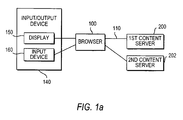
- a browser 100 is used with a user input/output device 140 including a display device 150 and an input device 160 such as, for example, a computer mouse and/or a keyboard.
- the browser 100 connects to a content server 200 to retrieve information from an electronic document in the content server 200 via a channel 110 and display the information to the user.
- the session between the browser 100 and the content server 200 is conducted over an IP network using a data transfer protocol such as, for example, a Real Time Transport Protocol (RTP) which separates the electronic document in media appropriate packets (i.e. a video frame) for transmission.
- RTP Real Time Transport Protocol
- the electronic document transmitted to the browser from the content server 200 may contain hyperlinks which link to other documents which may be in content server 200 or may be in other content servers.
- the link data is transmitted to the browser 100 using another protocol which includes more error checking, such as User Datagram Protocol/Internet Protocol (UDP/IP) or Transmission Control Protocol/Internet Protocol (TCP/IP).
- UDP/IP User Datagram Protocol/Internet Protocol
- TCP/IP Transmission Control Protocol/Internet Protocol
- the user operates the input device 160 to select the position in the electronic document at which the hyperlink is shown (i.e., the x, y coordinates on the user display).
- the electronic document in the content server 200 is a video and the hyperlinks are viewable objects in the video of the content server 200. Therefore, the position of the hyperlink also includes time as one of the coordinates.
- Content reference such as Uniform Resource Locator (URL) and/or session description information of the selected hyperlink is determined from the coordinates selected by the user.
- URL Uniform Resource Locator
- the browser initiates a connection to a new session the electronic document in content server 202.
- the new content server 202 must be contacted and a description of the session to be established and/or an identifier to specify the content requested (URL) must be delivered to the new content server 202.
- SIP Session Initiation Protocol
- the description of the new session to be established may be described in a Session Description Protocol (SDP).
- SDPs Session Description Protocol
- the SDPs may be multicast via a well-known multicast address. A more detailed description of the RTP is found in H. Schulzrinne, S. Casner, R. Fredrick, and V.
- RTP a transport protocol for real-time applications
- Request for Comments (Proposed Standard) 1889 Internet Engineering Task Force, Jan. 1996, the entire contents of which are incorporated herein by reference.
- a more detailed description of SIP is found in DRAFT-IETF-MMUSIC-SIP at www.itf.org, the entire contents of which are incorporated herein by reference.
- the present invention includes the association of hyperlinks with the video as three dimensional objects where the dimension include the location on the screen (x, y) at which the hyperlink appears in the video and the time (t) during the playing of the video at which the hyperlink appears. It is also conceivable that the video may be three dimensional wherein the hyperlink has x, y, z, and t coordinates.
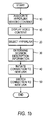
- the first step according to the invention is to associate the hyperlinks with a time and place in the video by coordinates, step 10. That is, each hyperlink is associated with coordinates indicating an area of a display and a time during the playing of a video at which the hyperlink appears at those coordinates.
- the user may select one of the hyperlinks associated with the video, step 20.
- a content reference for the selected hyperlink is determined based on the coordinates selected and the time of the selection, step 30.
- the content reference may include a Uniform Resource Locator (URL) to establish a session to the new content, session description information to reflect the characteristics of the new content, and the requirements for the browser.
- the URL may also include a time displacement from the start of the new content at which to start playing the new content.
- the hyperlink may point to a portion, such as a scene, of a video which is located in the middle of the video.
- the URL may also specify a limited area in the picture frames from the time displacement onward.
- the content server may focus the picture to display only this limited area.
- the showing of the limited area in the picture frames and the focussing as specified by the URL may be performed by the browser itself, provided that the video coding of the stream from the content server has sufficient precision.
- the time displacement may also be indicated otherwise.
- the content reference may further comprise an SIP Call Processing Language (CPL) script that is sent in the session establishment signalling and used by call processing servers (described later) to assist in finding the required content.
- the CPL script may comprise contact instructions to alternate locations to be contacted to reach the required content.
- the content reference may also comprise executable content that specifies how the selection of the hyperlink appears to the user.
- the content reference may include instructions to play a video clip at a hyperlink selection and control the establishment of the connection to the referred content. Finally, the content reference may specify whether a smooth switchover or immediate switchover is required and at which point in time the switchover should occur.
- connection to the new session is initiated, step 40.
- the browser 100 begins the new session and ends the previous session from which the new link was selected, i.e. the browser 100 switches over to the new session, step 50.
- the x-range and y-range of a hyperlink at a given time window may be provided explicitly in the link stream.
- an algorithm may be used by the browser that selects an area on the screen based on visual characteristics of the image on the screen.
- the algorithm may comprise adaptive learning characteristics to enable it to select objects of frequently occurring types of patterns or persons.
- An algorithm that tracks a moving object in the video stream for a specified time may also be provided in the browser. The starting coordinates, starting time, and duration that the tracking should be performed may be specified to the tracking algorithm.
- the algorithm may be built into the browser or may be downloaded to the browser when the browser initiates a session with the content that the algorithm is associated with. Similarly, the learning information may also be downloaded.
- the algorithm makes a decision whether an object has been pointed to by a pointer device based on pointing coordinates and time.
- the existence of a link may be indicated to a viewer of the video in various ways.
- the video content itself may contain information indicating visually to a user the existence of a hyperlink.
- the browser may display a visual object pointing to the video content having the object having the associated hyperlink.
- the browser may display the bounds of the object in accordance with the boundaries of the object provided explicitly in the link information contained in the link stream from the content server.
- FIG. 2a an embodiment of the invention is shown in which a user views the video using the video browser 100 connected to the content server 200 which contains the video to be played.
- the video and content reference information for the hyperlinks in the video are transmitted in two separate streams on respective first and second channels 110, 112.
- a link stream containing the content reference information for the hyperlinks is transmitted in parallel with the video to the video browser 100.
- the link stream includes the information required to establish the link, i.e., content reference and information sufficient to visualize the existence of the hyperlink.
- the link stream provides the content reference for the hyperlinks that are presently viewable and selectable in the video.
- the video may show a person walking from room to room and the hyperlinks may be associated with different furniture in each of the rooms. Therefore, the hyperlink for a chair in the kitchen is only selectable for the portion of time that the chair is displayed. Accordingly, the link stream contains content reference information for the hyperlink to the chair only for the duration of time that the chair is displayed.
- the video browser 100 When the user makes a selection in step 20 of Fig. 1b , the video browser 100 has all the information it needs to establish a connection, i.e. perform steps 30, 40, and 50 of Fig. 1b . Once the connection to the electronic document of the selected link is established, the browser 100 begins a session with the new link.
- the electronic document to which the hyperlink is linked may be any type of electronic document and does not have to be another video.
- the linked document could be a web page, a hypertext document, a video clip, and audio clip, or any other type of electronic document.
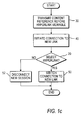
- the browser may initiate the establishment of a session towards the content pointed to by the link, i.e., the link session, before the user selects the hyperlink.
- the content reference such as the address (i.e., URL) towards the content pointed to by the link and the link visualization information (coordinates and time ranges) for a hyperlink is transmitted to the browser 100 before the hyperlink is viewable in the video, step 30.
- the browser then initiates the establishment of a connection to that hyperlink on a separate channel while the original content is still being viewed by the user, step 40.
- a smooth switchover is achievable in step 50 because a parallel connection and optionally the content stream is already established by the time the hyperlink appears in the video and can be selected by the user. If the hyperlink is not selected, the browser merely drops the newly made connection and maintains the current session, step 52.
- This embodiment is costly and wastes bandwidth.
- it provides a smooth switchover from the current session to the new session when the hyperlink to the new session is selected.
- the smooth switchover is possible because the session establishment delay and the content loading delay at the content server are eliminated.
- the delay of searching to the right position within the content e.g. in a CD-ROM device, is eliminated.
- the content reference information must be transmitted to the video browser 100 by the link stream in advance of the actual video which shows the hyperlink so that the advanced establishment of the link is possible.
- the advanced connection may be selectively made for those links which are likely to be selected, or other criteria.
- a smooth switchover can be used when returning to the original content from a selected content either when the content has reached its end or when a user explicitly decides to do so.
- the browser 100 starts the re-establishment of a session towards the original content from which the link was selected.
- the procedure for re-establishment of the original content is similar to the establishment of an upcoming link.
- the content reference indicates that the link content of a selected link is sufficiently short
- the session to the original content server may be maintained at link selection.
- a call processing server 300 is arranged between the browser 100 and the content server 200.
- the parallel first and second transmission channels 110', 112' are arranged between the content server 200 and the call processing server 300.
- the coordinates and time of the selection are transmitted to the call processing server 300 from the browser 100.
- the call processing server 300 performs the steps 30 and 40 of Fig. 1b , thereby selecting the content reference and establishing the session, i.e., setting up a connection to a new content server 202 based on the coordinates and the time of the selection and initiating the connection to the new content server 202 to which the new link is connected, over a new channel 118.
- the call processing server 300 also establishes the new session in step 50 of Fig. 1b by dropping the old session from the first content server 200 and connecting the new content server 202 to the browser 100, step 50 of Fig. 1 , when the connection to the new session is established.
- the call processing server 300 may establish this new session in advance of the selection of the new session by the user to enable a smooth transition.
- the benefit of using the call processing server 300 is that only one session is connected to the video browser 100 at the viewer terminal 140 at any one time, which may save bandwidth.
- a media proxy 400 may optionally be attached to the CPS 300.
- the control channels between the browser 100 and the content server 200 are connected via the CPS 300.
- the data channels carrying the individual media components are routed from the content server 200 to the browser 100 via the media proxy 400.
- the CPS 300 instructs the media proxy 400 to perform connections on the data channels.
- the data channels may comprises a media mix including audio, video, and data streams.
- the different media can be added, dropped, or replaced dynamically during a call via instructions from the CPS 300.
- the media proxy 400 identifies the different types of media components from the multimedia stream and perform switching of the individual media components separately.
- a service control means 500 may be connected with the CPS 300.
- control signals and the link stream are transmitted to the service control means 500 from the browser 100 and the content server 200.
- the data streams are transmitted via a media proxy 400. If the media proxy 400 is not used, the data stream is transmitted to the CPS 300 directly.
- Each of the embodiments shown in Figs. 2a-2d and discussed above may include the advanced connection of a link for a smooth switchover.
- a switchover application that performs the smooth switchover to a new session may optionally be used.
- the switchover application is a generic program for performing several tasks and may be responsible for one to many links associated with a video, i.e., the switchover application is associated with the video content and knows the links it is responsible for.
- the switchover application is stored in the content server with the video.
- the switchover application may be downloaded from the content server of the video to the browser 100 ( Fig. 2a ), the CPS 300 ( Fig. 2b and 2c ), or to the service control means 500 ( Fig. 2d ).
- the switchover application is executed by the browser 100, CPS 300, or service control means 500.
- the switchover application is responsible for receiving and interpreting the link stream information.
- the switchover application may establish the sessions toward links selectable by a viewer of the video.
- a link selection by a user is indicated to the switchover application from the browser 100, and the switchover application hands control over from the current session to a new session.
- a particular switchover application may include any one or more of the following steps:
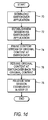
- the switchover application may remain in control and may decide not to release the session toward the original video from which the link was selected as shown in the flow diagram of Fig. 1d .
- the switchover application may further include the following steps, in addition to the previous steps:
- a hyperlink may point to more than one new content to be connected one after the other.
- the browser may first be connected to a first new content such as a video clip. After the first new content finishes, the browser may then be connected to a second new content, so that the browser is connected to both the first content and then the second content in response to the selection of one hyperlink.
- the above described procedure steps may also be performed in the previous embodiments where the downloading of a switchover application is not used, but instead the functions of a switchover application are resident on the browser or call processing server.
- switchover applications allow the procedures used prior to and after the link selection to vary from one link to another and therefore, can be tailored to the content they are associated with.
- the link streams includes one or more link content reference and switchover preparation schedules coupled with link visualization information.
- the switchover preparation schedules may be specified using simple ascii tag notation.
- the switchover application is arranged to interpret this notation.
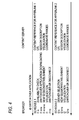
- An example of a link stream schedule transmitted in the link stream is shown in Fig. 4 .
- a switchover application is downloaded to a browser.
- the link stream is transmitted to the browser in addition to the switchover application.
- a first switchover preparation schedule includes:
- a second switchover preparation is transmitted after the first switchover preparation, the second switchover preparation including:
- the switchover preparation schedules are not necessarily fixed and can be adapted to specific environments by returning feedback information from the browsers to the content server pointed to by the selected link. While the new session to the content of the selected link is being established, the browser measures the time needed to establish the session. The time needed for session establishment may be may be calculated several ways. If the reply time from the sending of SIP invite message to receipt of an OK answer message from the content server includes the preparations for sending the content stream (i.e., loading of content from secondary storage from indicated time displacement onwards and memory allocation etc.), the reply time can be used to adjust the time in the switchover preparation schedule which indicates how much time before the visualization of the link, the link session must be established.
- the content stream preparation time must also be calculated and added to the session establishment time to determine the time indicating how much before the visualization of the link the link session must be established.
- the round trip delay from the browser to the content server may be measured to determine how much earlier the request to start transmitting the prepared content must be issued.
- the feedback information collected from the browsers can be used to adjust the times in the switchover preparation schedules presented in the link stream.
- the switchover preparation schedules associated with the switchover application may also be made specific to different receivers by determining the network address prefixes for different browsers.
- the browser may simply report failures to establish a link session and obtain the content requested.
- a difference between the session description information indicated in the content reference and the session description information indicated by the link content server may also be reported by the browser. This information may be used to correct the session description information in the original content server. Similarly any conflict between the attributes indicated in the content reference and attributes indicated by the new content server can be reported.
- the second switchover preparation schedule shown in Fig. 4 does not specify that a new switchover application downloading is not required. This scenario may occur when the content referred to by the link at t2 is under the same administration as the original content. In this embodiment, the preparations needed for switchovers are known to the existing switchover application.
- a switchover application may be downloaded to the browser 100, CPS 300, or service control means 500 either prior to the transmission of the link stream and actual content or at a given time displacement from the start of the video. If the switchover application is downloaded prior to the transmission of the link stream and actual video, it may itself establish the multimedia session and request the transmission of the link stream. If the switchover application is downloaded at a given time displacement from the start of the video, the need for downloading may be indicated by the content server or it may be pushed by the content server to the browser 100, CPS 300, or service control means 500.
- a given switchover application may be responsible for a limited set of links in the link stream. When a switchover application has processed all links in its responsibility, it may start downloading of another switchover application to take its place.
- links in the link stream may be assigned to different switchover applications.
- the several switchover applications may be active simultaneously at the browser 100, CPS 300, or service control means 500.
- Switchover applications may be specific to a link, a set of links within a content, a content or a set of contents. Similarly, different switchover applications may be used in the same content.
- switchover application is downloaded when navigating back to the original content.
- the original content server is contacted and provided with the time displacement from the beginning of the original content at which a link was selected.
- a link identifier is provided to the original content server.
- This information is used by the original content server to download a correct switchover application and to start playing video content stream at correct time displacements, i.e., return to the point in the original video content at which the selected link was selected.
- the content server includes a mapping from the time displacements and or indices to switchover applications.
- the currently connected content server 200 may optionally provide a string of video clips to be played while a connection to the new session is being established. These video clips play while the new session is being established so that the viewer screen displays a coherent video during the transition to the new session. As is apparent, this option is not required if the advanced establishment of the new session is made as described above.
- the video browser 100, the call processing server 300, or the service control means 500 may simply .check the availability of an upcoming link. If the check reveals that the link is unavailable, the visual representation of the link will not be displayed.
- the links displayed by the video may be dependent on prior criteria specified by the user. For example, only links which pertain to prior interest categories may be displayed. As another alternative, the display of links may be dependent on parental/employer blocking. The criteria may also include subscriber information, such as whether the user is a paid member for links which allow only subscribers to access the information, or other price information such that only sessions below a certain price are presented.
- the link data including the session description information may be stored in a data base 250 in the content server 200.
- Information to visualize the existence of the link may transmitted with the video to the browser 100 as the video is playing, i.e., being displayed.
- the database 250 provides a mapping of time and coordinates to the content reference (address e.g., URL, session description information) of the hyperlinks.
- the video browser 100 transmits the coordinates and time of the selection to the content server 200.
- the content server 200 retrieves the content reference from the database 250 based on these coordinates and time of the selection.
- the content server 200 may establish the session toward the new session itself (forwarding) or it can transmit the content reference for the selected link to the video browser 100 (redirection) so that the video browser 100 establishes the new session.
- a smooth transition may be established in this embodiment by the content server 200 as follows. As a link to another session becomes available, the content server 200 establishes a connection for the video browser 100 so that it is available for a smooth switchover if the hyperlink for that session is selected by the user in step 20. The connection to the new session may then be redirected to the browser 100 by the content server 200 by merely switching the output to the browser 100.
Landscapes
- Engineering & Computer Science (AREA)
- Multimedia (AREA)
- Signal Processing (AREA)
- Theoretical Computer Science (AREA)
- Human Computer Interaction (AREA)
- General Engineering & Computer Science (AREA)
- Databases & Information Systems (AREA)
- Data Mining & Analysis (AREA)
- Physics & Mathematics (AREA)
- General Physics & Mathematics (AREA)
- Two-Way Televisions, Distribution Of Moving Picture Or The Like (AREA)
- Computer And Data Communications (AREA)
- Information Transfer Between Computers (AREA)
- Television Systems (AREA)
- Indexing, Searching, Synchronizing, And The Amount Of Synchronization Travel Of Record Carriers (AREA)
Claims (17)
- Verfahren zum Verwenden eines zeitabhängigen Hyperlinks im Video, das die folgenden Schritte umfasst:(a) Verbinden von Inhaltsreferenz für wenigstens einen Hyperlink mit einem Video, indem die Inhaltsreferenz mit Koordinaten verbunden wird, an denen der Hyperlink in dem Video auftritt, wobei eine der Koordinaten Zeit enthält;(b) Übertragen eines Videostroms und eines parallelen Link-Stroms von einem ersten Inhaltsserver (200) zu einem Video-Browser (100) einer Benutzer-Anzeigevorrichtung, wobei der Link-Strom die Inhaltsreferenz für den wenigstens einen Hyperlink enthält;(c) Auswählen eines ausgewählten Hyperlinks in dem Video durch den Benutzer mittels Auswählen von Koordinaten, an denen der ausgewählte Hyperlink in dem Video auftritt;(d) Bestimmen der Inhaltsreferenz am Browser (100) für eine neue Sitzung des ausgewählten Hyperlinks basierend auf den ausgewählten Koordinaten und des Link-Stroms, der von dem Browser (100) empfangen wird;(e) Initiieren einer Verbindung des Browsers (100) auf die neue Sitzung des ausgewählten Hyperlinks; und(f) Umschalten der Verbindung des Browsers (100) von dem ersten Inhaltsserver (200) auf die neue Sitzung.
- Verfahren nach Anspruch 1, wobei in dem Schritt (b) der Link-Strom die Inhaltsreferenz für den wenigstens einen Hyperlink enthält, wenn der wenigstens eine Hyperlink angezeigt wird.
- Verfahren nach Anspruch 2, wobei der Schritt (d) das Bestimmen der Inhaltsreferenz durch den Browser (100) basierend auf den Informationen umfasst, die über den Link-Strom und die Koordinaten empfangen wurden, die in dem Schritt (c) ausgewählt wurden.
- Verfahren nach Anspruch 1, wobei der Schritt (d) das Nachschlagen der Inhaltsreferenz in einer Datenbank (250) in dem gegenwärtigen Inhaltsserver (200) basierend auf den Koordinaten umfasst, die in dem Schritt (c) ausgewählt wurden, wobei die Datenbank (250) die Inhaltsreferenz mit Querverweisen zu den Koordinaten enthält, an denen der wenigstens eine Hyperlink für die Inhaltsreferenz in dem Video auftritt.
- Verfahren nach Anspruch 1, das des Weiteren den Schritt des Herunterladens einer Datei aus dem gegenwärtigen Inhaltsserver (200) auf den Browser umfasst, bevor der Schritt (b) durchgeführt wird, wobei die Datei eine Datenbank (250) enthält, welche die Inhaltsreferenz mit Querverweisen zu den Koordinaten enthält, an denen der wenigstens eine Hyperlink für die Inhaltsreferenz in dem Video auftritt, und der Schritt (d) das Suchen der Inhaltsreferenz in der heruntergeladenen Datei basierend auf den Koordinaten umfasst, die in dem Schritt (c) ausgewählt wurden.
- Verfahren nach Anspruch 3, wobei die Schritte (d), (e) und (f) unter Verwendung einer Umschalte-Anwendung durchgeführt werden, die mit dem Video in dem ersten Inhaltsserver (200) verbunden ist, wobei der Schritt des Übertragens eines Link-Stroms das Übertragen eines Link-Stroms umfasst, der Link-Auswahl- und Umschaltevorbereitungs-Tabellen enthält, wobei die Umschaltevorbereitungs-Tabellen in ASCII-Tag-Schreibweise so angegeben sind, dass die Umschalte-Anwendung den Schritt des Interpretierens der ASCII-Tag-Schreibweise durchführt.
- Verfahren nach Anspruch 1, wobei der Schritt (d) das Verwenden eines Algorithmus umfasst, der die Speicherstelle eines Hyperlinks basierend auf visuellen Merkmalen in dem Video bestimmt.
- Verfahren nach Anspruch 1, das des Weiteren in Reaktion auf den ausgewählten Hyperlink den Schritt des Durchführens der Schritte (d), (e) und (f) für eine erste neue Sitzung und des Durchführens der Schritte (d), (e) und (f) für eine zweite neue Sitzung umfasst, nachdem die erste neue Sitzung ein Ende erreicht.
- System zum Verarbeiten eines zeitabhängigen Hyperlinks in einem Video, das umfasst:einen ersten Inhaltsserver (200), der ein Video umfasst;eine Benutzer-Eingabe/Ausgabe-Vorrichtung (140), die eine Anzeigevorrichtung (150) zum Anzeigen des Videos und eine Eingabe/Ausgabe-Vorrichtung (160) zum Auswählen einer Position auf der Anzeigevorrichtung (150) umfasst;einen Browser (100), der so ausgelegt ist, dass er die Benutzer-Eingabe/Ausgabe-Vorrichtung (140) mit dem ersten Inhaltsserver (200) verbindet;wenigstens ein Hyperlink und eine Inhaltsreferenz mit Querverweisen zu Koordinaten, die angeben, wo der wenigstens eine Hyperlink in dem Video auftritt, das in dem ersten Inhaltsserver (200) gespeichert ist, wobei die Koordinaten Anzeigeposition und Zeit während des Videos enthalten, und die Inhaltsreferenz einen zweiten Inhaltsserver (202) angibt, der ein elektronisches Dokument umfasst, mit dem der Hyperlink verlinkt ist;Mittel zum Übertragen eines Link-Stroms, der die Inhaltsreferenz und den wenigstens einen Hyperlink enthält, von dem ersten Inhaltsserver (200) zu dem Browser (100) auf einem ersten Kommunikationskanal (110), und parallel zu dem Link-Strom Übertragen des Videos von dem ersten Inhaltsserver (200) zu dem Browser (100) auf einem zweiten Kommunikationskanal;Mittel zum Bestimmen, wann der Hyperlink ausgewählt ist; undMittel zum Bestimmen der Inhaltsreferenz für eine neue Sitzung aus dem Link-Strom, der an dem Browser (100) empfangen wird, wenn bestimmt wird, dass der Hyperlink ausgewählt ist; undMittel zum Umschalten einer Verbindung des Browsers (100) von dem ersten Inhaltsserver (200) auf den zweiten Inhaltsserver (202) für den Benutzerzugriff auf das elektronische Dokument in dem zweiten Inhaltsserver (202), wenn das Mittel zum Bestimmen bestimmt, dass der Hyperlink ausgewählt worden ist.
- System nach Anspruch 9, wobei der Link-Strom die Inhaltsreferenz für den wenigstens einen Hyperlink enthält, wenn der wenigstens eine Hyperlink angezeigt wird.
- System nach Anspruch 10, wobei der Inhaltsserver eine Umschalte-Anwendung zum Durchführen eines problemlosen Umschaltens umfasst, und das Mittel zum Durchführen eines reibungslosen Umschaltens ein Mittel zum Verwenden der Umschalte-Anwendung umfasst, und der Link-Strom Link-Auswahl- und Umschaltevorbereitungs-Tabellen umfasst, die in ASCII-Tag-Schreibweise angegeben sind, die von der Umschalte-Arwendung interpretierbar ist.
- System nach Anspruch 9, wobei der Inhaltsserver (200) des Weiteren eine Link-Datenbank (250) umfasst.
- System nach Anspruch 12, das des Weiteren Mittel zum Herunterladen der Link-Datenbank (250) auf den Browser (100) umfasst.
- System nach Anspruch 12, wobei das Mittel zum Bestimmen, wann der Hyperlink ausgewählt ist, Mittel zum Abfragen der Link-Datenbank (250) umfasst.
- System nach Anspruch 10, wobei der Inhaltsserver (200) eine Umschalte-Anwendung umfasst, und das Mittel zum Durchführen eines reibungslosen Umschaltens ein Mittel zum Verwenden der Umschalte-Anwendung umfasst, und des Weiteren einen Verbindungsverarbeitungsserver (300) umfasst, der zwischen dem Browser (100) und dem ersten Inhaltsserver (200) angeordnet ist, wobei der Verbindungsverarbeitungsserver (300) das Mittel zum Umschalten einer Verbindung der Benutzer-Eingabe/Ausgabe-Vorrichtung (140) von dem ersten Inhaltsserver (200) zu dem zweiten Inhaltsserver (202) umfasst, wobei der Link-Strom Link-Auswahl- und Umschaltevorbereitungs-Tabellen umfasst, die in ASCII-Tag-Schreibweise angegeben sind, die von der Umschalte-Anwendung interpretierbar sind.
- System nach Anspruch 9, wobei das Mittel zum Bestimmen, wann ein Hyperlink ausgewählt ist, einen Algorithmus umfasst, der zum Bestimmen der Speicherstelle eines Hyperlinks basierend auf visuellen Merkmalen des Videos funktionsfähig ist.
- System nach Anspruch 9, wobei eine zweite Inhaltsreferenz und eine dritte Inhaltsreferenz beide mit dem wenigstens einen Hyperlink so verbunden sind, dass das Mittel zum Umschalten einer Verbindung des Weiteren Mittel zum Umschalten einer Verbindung des Browsers von der zweiten Inhaltsreferenz zu der dritten Inhaltsreferenz des wenigstens einen Hyperlinks umfasst, nachdem die Beendigung der zweiten Inhaltsreferenz abgeschlossen ist.
Applications Claiming Priority (3)
| Application Number | Priority Date | Filing Date | Title |
|---|---|---|---|
| US431753 | 1999-11-01 | ||
| US09/431,753 US7139813B1 (en) | 1999-11-01 | 1999-11-01 | Timedependent hyperlink system in videocontent |
| PCT/IB2000/001319 WO2001033418A2 (en) | 1999-11-01 | 2000-09-18 | Timedependent hyperlink system in videocontent |
Publications (2)
| Publication Number | Publication Date |
|---|---|
| EP1226518A2 EP1226518A2 (de) | 2002-07-31 |
| EP1226518B1 true EP1226518B1 (de) | 2008-07-16 |
Family
ID=23713277
Family Applications (1)
| Application Number | Title | Priority Date | Filing Date |
|---|---|---|---|
| EP00958922A Expired - Lifetime EP1226518B1 (de) | 1999-11-01 | 2000-09-18 | Hyperlinksystem welches zeitabhängig von einem videoinhalt ist |
Country Status (6)
| Country | Link |
|---|---|
| US (1) | US7139813B1 (de) |
| EP (1) | EP1226518B1 (de) |
| AT (1) | ATE401610T1 (de) |
| AU (1) | AU7032800A (de) |
| DE (1) | DE60039528D1 (de) |
| WO (1) | WO2001033418A2 (de) |
Cited By (1)
| Publication number | Priority date | Publication date | Assignee | Title |
|---|---|---|---|---|
| US10984065B1 (en) | 2019-09-30 | 2021-04-20 | International Business Machines Corporation | Accessing embedded web links in real-time |
Families Citing this family (51)
| Publication number | Priority date | Publication date | Assignee | Title |
|---|---|---|---|---|
| US7171473B1 (en) * | 1999-11-17 | 2007-01-30 | Planet Exchange, Inc. | System using HTTP protocol for maintaining and updating on-line presence information of new user in user table and group table |
| US7035896B1 (en) * | 1999-12-13 | 2006-04-25 | Eric Schneider | Homepage access method, product, and apparatus |
| EP1293088A2 (de) * | 2000-05-25 | 2003-03-19 | Nortel Networks Limited | Verarbeitung informationen einer anruf-session |
| US7269160B1 (en) * | 2000-05-26 | 2007-09-11 | Buffalo International, Inc. | Voice over internet call center integration |
| US20030182001A1 (en) * | 2000-08-25 | 2003-09-25 | Milena Radenkovic | Audio data processing |
| US20020065927A1 (en) * | 2000-09-05 | 2002-05-30 | Janik Craig M. | Webpad and method for using the same |
| US7870592B2 (en) * | 2000-12-14 | 2011-01-11 | Intertainer, Inc. | Method for interactive video content programming |
| US6925469B2 (en) | 2001-03-30 | 2005-08-02 | Intertainer, Inc. | Digital entertainment service platform |
| JP3920675B2 (ja) * | 2002-03-22 | 2007-05-30 | 株式会社リコー | データ通信方法、コンピュータ、プログラム及び記憶媒体 |
| US7574509B2 (en) * | 2002-11-25 | 2009-08-11 | Fisher-Rosemount Systems, Inc. | Interactive two-way collaboration in process control plants |
| CA2840432C (en) * | 2003-06-12 | 2017-08-29 | Camiant, Inc. | Dynamic service delivery with topology discovery for communication networks |
| WO2004112335A1 (en) * | 2003-06-12 | 2004-12-23 | Camiant, Inc. | Pcmm application manager |
| US7925557B1 (en) * | 2003-07-01 | 2011-04-12 | Accenture Global Services Limited | Cost analysis and reduction tool |
| WO2005072321A2 (en) * | 2004-01-23 | 2005-08-11 | Camiant, Inc. | Policy-based admission control and bandwidth reservation for future sessions |
| EP1705993B1 (de) * | 2004-01-23 | 2017-08-30 | Camiant, Inc. | Videopolicy-server |
| KR100611987B1 (ko) * | 2004-07-28 | 2006-08-11 | 삼성전자주식회사 | 컨텐츠 전환 방법, 소오스 장치 및 싱크 장치 |
| US7526566B2 (en) * | 2004-09-10 | 2009-04-28 | Sony Ericsson Mobile Communications Ab | Methods of operating radio communications devices including predefined streaming times and addresses and related devices |
| DE102004053597B4 (de) * | 2004-11-05 | 2008-05-29 | Infineon Technologies Ag | Verfahren zum automatischen Erzeugen und/oder Steuern einer Telekommunikations-Konferenz mit einer Vielzahl von Teilnehmern, Telekommunikations-Konferenz-Endgerät und Telekommunikations-Konferenz-Servereinrichtung |
| RU2004138685A (ru) * | 2004-12-29 | 2006-06-10 | Общество с ограниченной ответственностью "Активное Видео" (RU) | Способ (варианты) и система обработки мультимедийной информации и способ формирования назначаемой области (варианты) |
| US20060168549A1 (en) * | 2005-01-25 | 2006-07-27 | Eric Chan | User interfaces and methods for displaying attributes of objects and accessing content |
| US7870488B2 (en) * | 2005-02-10 | 2011-01-11 | Transcript Associates, Inc. | Media editing system |
| US20060253409A1 (en) * | 2005-03-04 | 2006-11-09 | Nokia Corporation | Method, apparatus and computer program product providing local service discovery with browser search |
| US20060218618A1 (en) * | 2005-03-22 | 2006-09-28 | Lorkovic Joseph E | Dual display interactive video |
| US20070038757A1 (en) * | 2005-08-12 | 2007-02-15 | Samsung Electronics Co., Ltd. | Client and presentation layer architecture for session initiation protocol-based applications |
| CN1859561B (zh) * | 2005-11-01 | 2010-05-12 | 华为技术有限公司 | 流媒体点播系统及方法 |
| US8849945B1 (en) * | 2006-03-28 | 2014-09-30 | Amazon Technologies, Inc. | Annotating content with interactive objects for transactions |
| US20070250775A1 (en) * | 2006-04-19 | 2007-10-25 | Peter Joseph Marsico | Methods, systems, and computer program products for providing hyperlinked video |
| US8145778B2 (en) * | 2006-07-28 | 2012-03-27 | Cisco Technology, Inc. | Method and system for transitioning streamed digital video content between stream servers in a digital video network |
| JP5279842B2 (ja) | 2008-01-11 | 2013-09-04 | テレフオンアクチーボラゲット エル エム エリクソン(パブル) | ストリーム化メディアセッションを確立するための方法および装置 |
| US9113334B2 (en) * | 2008-02-01 | 2015-08-18 | Tekelec, Inc. | Methods, systems, and computer readable media for controlling access to voice resources in mobile networks using mobility management signaling messages |
| US20100064220A1 (en) * | 2008-03-27 | 2010-03-11 | Verizon Data Services India Private Limited | Method and system for providing interactive hyperlinked video |
| US7877525B1 (en) | 2008-05-02 | 2011-01-25 | Sprint Communications Company L.P. | Resuming media objects delivered via progressive downloading services upon data loss events |
| US8112475B2 (en) * | 2008-06-27 | 2012-02-07 | Microsoft Corporation | Managing data delivery based on device state |
| US8090826B2 (en) * | 2008-06-27 | 2012-01-03 | Microsoft Corporation | Scheduling data delivery to manage device resources |
| US9413664B1 (en) * | 2008-09-23 | 2016-08-09 | Spring Communications Company L.P. | Resuming media objects delivered via streaming services upon data loss events |
| US8631453B2 (en) * | 2008-10-02 | 2014-01-14 | Sony Corporation | Video branching |
| US8423071B1 (en) * | 2008-11-25 | 2013-04-16 | Sprint Communications Company L.P. | Resuming media objects delivered via live streaming services upon data reduction events |
| US9106468B1 (en) * | 2009-01-30 | 2015-08-11 | Sprint Communications Company L.P. | Transferring media objects from one device to another device |
| US8433749B2 (en) | 2009-04-15 | 2013-04-30 | Accenture Global Services Limited | Method and system for client-side scaling of web server farm architectures in a cloud data center |
| CN102118419B (zh) | 2009-12-30 | 2014-07-16 | 华为技术有限公司 | 一种图片信息的传输方法、装置和通信系统 |
| CN103188574B (zh) * | 2011-12-28 | 2017-04-19 | 华为技术有限公司 | 传输网络视频的方法及系统 |
| US10506278B2 (en) | 2012-04-18 | 2019-12-10 | Scorpoast, LLC | Interactive video distribution system and video player utilizing a client server architecture |
| US8682809B2 (en) | 2012-04-18 | 2014-03-25 | Scorpcast, Llc | System and methods for providing user generated video reviews |
| US20140150029A1 (en) | 2012-04-18 | 2014-05-29 | Scorpcast, Llc | System and methods for providing user generated video reviews |
| US9832519B2 (en) | 2012-04-18 | 2017-11-28 | Scorpcast, Llc | Interactive video distribution system and video player utilizing a client server architecture |
| CN103650525B (zh) | 2012-06-19 | 2017-10-17 | 索尼公司 | 用于交互式电视的触发参数表的扩展的方法、系统以及设备 |
| US9560415B2 (en) | 2013-01-25 | 2017-01-31 | TapShop, LLC | Method and system for interactive selection of items for purchase from a video |
| US10645454B2 (en) * | 2016-06-22 | 2020-05-05 | Electronics And Telecommunications Research Institute | Apparatus for transmitting and receiving dynamic multi-mode service and method for providing the same |
| US11003713B1 (en) * | 2019-11-25 | 2021-05-11 | Sap Se | Automated updating of video content |
| CN113992949B (zh) * | 2021-10-28 | 2023-04-28 | 广州华多网络科技有限公司 | 混流服务切换方法及其装置、设备、介质、产品 |
| US12537028B2 (en) | 2024-05-15 | 2026-01-27 | Sap Se | Generative video data stories |
Family Cites Families (17)
| Publication number | Priority date | Publication date | Assignee | Title |
|---|---|---|---|---|
| US5572442A (en) * | 1994-07-21 | 1996-11-05 | Information Highway Media Corporation | System for distributing subscription and on-demand audio programming |
| US5708845A (en) | 1995-09-29 | 1998-01-13 | Wistendahl; Douglass A. | System for mapping hot spots in media content for interactive digital media program |
| US20020038383A1 (en) * | 1999-12-23 | 2002-03-28 | Craig Ullman | Enhanced video programming system and method for incorporating and displaying retrieved integrated internet information segments |
| US5774664A (en) * | 1996-03-08 | 1998-06-30 | Actv, Inc. | Enhanced video programming system and method for incorporating and displaying retrieved integrated internet information segments |
| US5918012A (en) | 1996-03-29 | 1999-06-29 | British Telecommunications Public Limited Company | Hyperlinking time-based data files |
| US5961603A (en) | 1996-04-10 | 1999-10-05 | Worldgate Communications, Inc. | Access system and method for providing interactive access to an information source through a networked distribution system |
| US6141693A (en) * | 1996-06-03 | 2000-10-31 | Webtv Networks, Inc. | Method and apparatus for extracting digital data from a video stream and using the digital data to configure the video stream for display on a television set |
| US6049831A (en) * | 1996-11-08 | 2000-04-11 | Gte Laboratories Incorporated | System for transmitting network-related information where requested network information is separately transmitted as definitions and display information |
| US6912726B1 (en) | 1997-04-02 | 2005-06-28 | International Business Machines Corporation | Method and apparatus for integrating hyperlinks in video |
| US5983262A (en) * | 1997-05-20 | 1999-11-09 | Intel Corporation | Method and apparatus for persisting browsing information |
| US6195692B1 (en) * | 1997-06-02 | 2001-02-27 | Sony Corporation | Television/internet system having multiple data stream connections |
| US6012086A (en) * | 1997-06-24 | 2000-01-04 | Sony Corporation | Internet event timer recording for video and/or audio |
| US6317795B1 (en) * | 1997-07-22 | 2001-11-13 | International Business Machines Corporation | Dynamic modification of multimedia content |
| US5996015A (en) * | 1997-10-31 | 1999-11-30 | International Business Machines Corporation | Method of delivering seamless and continuous presentation of multimedia data files to a target device by assembling and concatenating multimedia segments in memory |
| US6029200A (en) * | 1998-03-09 | 2000-02-22 | Microsoft Corporation | Automatic protocol rollover in streaming multimedia data delivery system |
| US6286139B1 (en) * | 1998-08-04 | 2001-09-04 | Teluve Corporation | Internet-based video ordering system and method |
| US6357042B2 (en) * | 1998-09-16 | 2002-03-12 | Anand Srinivasan | Method and apparatus for multiplexing separately-authored metadata for insertion into a video data stream |
-
1999
- 1999-11-01 US US09/431,753 patent/US7139813B1/en not_active Expired - Fee Related
-
2000
- 2000-09-18 DE DE60039528T patent/DE60039528D1/de not_active Expired - Lifetime
- 2000-09-18 AT AT00958922T patent/ATE401610T1/de not_active IP Right Cessation
- 2000-09-18 EP EP00958922A patent/EP1226518B1/de not_active Expired - Lifetime
- 2000-09-18 WO PCT/IB2000/001319 patent/WO2001033418A2/en not_active Ceased
- 2000-09-18 AU AU70328/00A patent/AU7032800A/en not_active Abandoned
Cited By (1)
| Publication number | Priority date | Publication date | Assignee | Title |
|---|---|---|---|---|
| US10984065B1 (en) | 2019-09-30 | 2021-04-20 | International Business Machines Corporation | Accessing embedded web links in real-time |
Also Published As
| Publication number | Publication date |
|---|---|
| WO2001033418A3 (en) | 2001-12-27 |
| ATE401610T1 (de) | 2008-08-15 |
| EP1226518A2 (de) | 2002-07-31 |
| DE60039528D1 (de) | 2008-08-28 |
| WO2001033418A2 (en) | 2001-05-10 |
| WO2001033418B1 (en) | 2002-01-24 |
| AU7032800A (en) | 2001-05-14 |
| US7139813B1 (en) | 2006-11-21 |
Similar Documents
| Publication | Publication Date | Title |
|---|---|---|
| EP1226518B1 (de) | Hyperlinksystem welches zeitabhängig von einem videoinhalt ist | |
| US7003793B2 (en) | System for providing video-on-demand services in wireless network environment and method therefor | |
| US6862607B1 (en) | Method to provide information in an internet telecommunication network | |
| JP4995730B2 (ja) | マルチメディアセッション管理 | |
| US10079760B2 (en) | Proximity routing for session based applications using anycast | |
| US7453993B2 (en) | Apparatus and method for a world wide web-based directory with automatic call capability | |
| US6249810B1 (en) | Method and system for implementing an internet radio device for receiving and/or transmitting media information | |
| JP3733218B2 (ja) | 中継装置及びその制御方法及び記憶媒体 | |
| US6442603B1 (en) | Methods for ordered delivery of electronic content | |
| US20030079020A1 (en) | Method, system and service provider for IP media program transfer-and-viewing-on-demand | |
| US20080005348A1 (en) | System and method for enabling playlist navigation of digital multimedia content | |
| US20030041108A1 (en) | Enhancement of communications by peer-to-peer collaborative web browsing | |
| US7934011B2 (en) | System and method for flow control in web-based video editing system | |
| JP2004518219A (ja) | ポータル構造におけるセッション管理に関する機構及び方法 | |
| KR100312786B1 (ko) | 인터넷 접속 무선 단말기의 오브젝트 수행방법 | |
| Parnes | mMOD: the multicast Media-on-Demand system | |
| JP5420863B2 (ja) | シンクライアントシステム、アプリケーションサーバ、端末制御サーバ、通信方法 | |
| US8018899B2 (en) | Handoff system and method between different kinds of devices, SIP server and operational method of SIP server | |
| EP2011317A1 (de) | Verfahren zum entdecken von und zum zugreifen auf webseiten | |
| Kawarasaki et al. | Metadata driven seamless content handover in ubiquitous environment | |
| KR20180050936A (ko) | Css를 이용하여 웹 콘텐츠에서 광고를 차단하는 방법, 웹 콘텐츠에서 광고를 차단하는 장치 및 웹 콘텐츠에서 광고를 차단하는 방법 | |
| KR100393634B1 (ko) | 세션 이니세이션 프로토콜을 이용한 웹브라우저상에서 음성 및 영상통신 시스템 | |
| KR101124204B1 (ko) | 멀티 스크린 및 프록시서버를 이용한 컨텐츠의 url정보제공을 위한 전송시스템 및 그 방법 | |
| KR100931356B1 (ko) | 콘텐츠를 전송하는 콘텐츠 전송장치, 방법 및 기록매체 | |
| JP2002314977A (ja) | 情報配信システムおよび情報配信方法 |
Legal Events
| Date | Code | Title | Description |
|---|---|---|---|
| PUAI | Public reference made under article 153(3) epc to a published international application that has entered the european phase |
Free format text: ORIGINAL CODE: 0009012 |
|
| 17P | Request for examination filed |
Effective date: 20020427 |
|
| AK | Designated contracting states |
Kind code of ref document: A2 Designated state(s): AT BE CH CY DE DK ES FI FR GB GR IE IT LI LU MC NL PT SE |
|
| AX | Request for extension of the european patent |
Free format text: AL;LT;LV;MK;RO;SI |
|
| 17Q | First examination report despatched |
Effective date: 20020918 |
|
| GRAP | Despatch of communication of intention to grant a patent |
Free format text: ORIGINAL CODE: EPIDOSNIGR1 |
|
| GRAS | Grant fee paid |
Free format text: ORIGINAL CODE: EPIDOSNIGR3 |
|
| GRAA | (expected) grant |
Free format text: ORIGINAL CODE: 0009210 |
|
| AK | Designated contracting states |
Kind code of ref document: B1 Designated state(s): AT BE CH CY DE DK ES FI FR GB GR IE IT LI LU MC NL PT SE |
|
| REG | Reference to a national code |
Ref country code: GB Ref legal event code: FG4D |
|
| REG | Reference to a national code |
Ref country code: CH Ref legal event code: EP |
|
| REF | Corresponds to: |
Ref document number: 60039528 Country of ref document: DE Date of ref document: 20080828 Kind code of ref document: P |
|
| REG | Reference to a national code |
Ref country code: IE Ref legal event code: FG4D |
|
| NLV1 | Nl: lapsed or annulled due to failure to fulfill the requirements of art. 29p and 29m of the patents act | ||
| PG25 | Lapsed in a contracting state [announced via postgrant information from national office to epo] |
Ref country code: ES Free format text: LAPSE BECAUSE OF FAILURE TO SUBMIT A TRANSLATION OF THE DESCRIPTION OR TO PAY THE FEE WITHIN THE PRESCRIBED TIME-LIMIT Effective date: 20081027 Ref country code: NL Free format text: LAPSE BECAUSE OF FAILURE TO SUBMIT A TRANSLATION OF THE DESCRIPTION OR TO PAY THE FEE WITHIN THE PRESCRIBED TIME-LIMIT Effective date: 20080716 Ref country code: PT Free format text: LAPSE BECAUSE OF FAILURE TO SUBMIT A TRANSLATION OF THE DESCRIPTION OR TO PAY THE FEE WITHIN THE PRESCRIBED TIME-LIMIT Effective date: 20081216 |
|
| PG25 | Lapsed in a contracting state [announced via postgrant information from national office to epo] |
Ref country code: AT Free format text: LAPSE BECAUSE OF FAILURE TO SUBMIT A TRANSLATION OF THE DESCRIPTION OR TO PAY THE FEE WITHIN THE PRESCRIBED TIME-LIMIT Effective date: 20080716 Ref country code: FI Free format text: LAPSE BECAUSE OF FAILURE TO SUBMIT A TRANSLATION OF THE DESCRIPTION OR TO PAY THE FEE WITHIN THE PRESCRIBED TIME-LIMIT Effective date: 20080716 |
|
| PG25 | Lapsed in a contracting state [announced via postgrant information from national office to epo] |
Ref country code: BE Free format text: LAPSE BECAUSE OF FAILURE TO SUBMIT A TRANSLATION OF THE DESCRIPTION OR TO PAY THE FEE WITHIN THE PRESCRIBED TIME-LIMIT Effective date: 20080716 |
|
| PG25 | Lapsed in a contracting state [announced via postgrant information from national office to epo] |
Ref country code: MC Free format text: LAPSE BECAUSE OF NON-PAYMENT OF DUE FEES Effective date: 20080930 Ref country code: DK Free format text: LAPSE BECAUSE OF FAILURE TO SUBMIT A TRANSLATION OF THE DESCRIPTION OR TO PAY THE FEE WITHIN THE PRESCRIBED TIME-LIMIT Effective date: 20080716 |
|
| REG | Reference to a national code |
Ref country code: CH Ref legal event code: PL |
|
| PLBE | No opposition filed within time limit |
Free format text: ORIGINAL CODE: 0009261 |
|
| STAA | Information on the status of an ep patent application or granted ep patent |
Free format text: STATUS: NO OPPOSITION FILED WITHIN TIME LIMIT |
|
| 26N | No opposition filed |
Effective date: 20090417 |
|
| PG25 | Lapsed in a contracting state [announced via postgrant information from national office to epo] |
Ref country code: IE Free format text: LAPSE BECAUSE OF NON-PAYMENT OF DUE FEES Effective date: 20080918 |
|
| PG25 | Lapsed in a contracting state [announced via postgrant information from national office to epo] |
Ref country code: IT Free format text: LAPSE BECAUSE OF FAILURE TO SUBMIT A TRANSLATION OF THE DESCRIPTION OR TO PAY THE FEE WITHIN THE PRESCRIBED TIME-LIMIT Effective date: 20080716 |
|
| PG25 | Lapsed in a contracting state [announced via postgrant information from national office to epo] |
Ref country code: CH Free format text: LAPSE BECAUSE OF NON-PAYMENT OF DUE FEES Effective date: 20080930 Ref country code: LI Free format text: LAPSE BECAUSE OF NON-PAYMENT OF DUE FEES Effective date: 20080930 |
|
| PG25 | Lapsed in a contracting state [announced via postgrant information from national office to epo] |
Ref country code: SE Free format text: LAPSE BECAUSE OF FAILURE TO SUBMIT A TRANSLATION OF THE DESCRIPTION OR TO PAY THE FEE WITHIN THE PRESCRIBED TIME-LIMIT Effective date: 20081016 |
|
| PG25 | Lapsed in a contracting state [announced via postgrant information from national office to epo] |
Ref country code: CY Free format text: LAPSE BECAUSE OF FAILURE TO SUBMIT A TRANSLATION OF THE DESCRIPTION OR TO PAY THE FEE WITHIN THE PRESCRIBED TIME-LIMIT Effective date: 20080716 Ref country code: LU Free format text: LAPSE BECAUSE OF NON-PAYMENT OF DUE FEES Effective date: 20080918 |
|
| PG25 | Lapsed in a contracting state [announced via postgrant information from national office to epo] |
Ref country code: GR Free format text: LAPSE BECAUSE OF FAILURE TO SUBMIT A TRANSLATION OF THE DESCRIPTION OR TO PAY THE FEE WITHIN THE PRESCRIBED TIME-LIMIT Effective date: 20081017 |
|
| PGFP | Annual fee paid to national office [announced via postgrant information from national office to epo] |
Ref country code: FR Payment date: 20100921 Year of fee payment: 11 |
|
| PGFP | Annual fee paid to national office [announced via postgrant information from national office to epo] |
Ref country code: GB Payment date: 20100916 Year of fee payment: 11 |
|
| PGFP | Annual fee paid to national office [announced via postgrant information from national office to epo] |
Ref country code: DE Payment date: 20100915 Year of fee payment: 11 |
|
| GBPC | Gb: european patent ceased through non-payment of renewal fee |
Effective date: 20110918 |
|
| REG | Reference to a national code |
Ref country code: FR Ref legal event code: ST Effective date: 20120531 |
|
| REG | Reference to a national code |
Ref country code: DE Ref legal event code: R119 Ref document number: 60039528 Country of ref document: DE Effective date: 20120403 |
|
| PG25 | Lapsed in a contracting state [announced via postgrant information from national office to epo] |
Ref country code: DE Free format text: LAPSE BECAUSE OF NON-PAYMENT OF DUE FEES Effective date: 20120403 |
|
| PG25 | Lapsed in a contracting state [announced via postgrant information from national office to epo] |
Ref country code: GB Free format text: LAPSE BECAUSE OF NON-PAYMENT OF DUE FEES Effective date: 20110918 Ref country code: FR Free format text: LAPSE BECAUSE OF NON-PAYMENT OF DUE FEES Effective date: 20110930 |