EP1225532A2 - Delivery of time significant advertising - Google Patents
Delivery of time significant advertising Download PDFInfo
- Publication number
- EP1225532A2 EP1225532A2 EP02250293A EP02250293A EP1225532A2 EP 1225532 A2 EP1225532 A2 EP 1225532A2 EP 02250293 A EP02250293 A EP 02250293A EP 02250293 A EP02250293 A EP 02250293A EP 1225532 A2 EP1225532 A2 EP 1225532A2
- Authority
- EP
- European Patent Office
- Prior art keywords
- time
- subscriber
- advertisement
- significance
- content
- Prior art date
- Legal status (The legal status is an assumption and is not a legal conclusion. Google has not performed a legal analysis and makes no representation as to the accuracy of the status listed.)
- Withdrawn
Links
Images


Classifications
-
- G—PHYSICS
- G06—COMPUTING OR CALCULATING; COUNTING
- G06Q—INFORMATION AND COMMUNICATION TECHNOLOGY [ICT] SPECIALLY ADAPTED FOR ADMINISTRATIVE, COMMERCIAL, FINANCIAL, MANAGERIAL OR SUPERVISORY PURPOSES; SYSTEMS OR METHODS SPECIALLY ADAPTED FOR ADMINISTRATIVE, COMMERCIAL, FINANCIAL, MANAGERIAL OR SUPERVISORY PURPOSES, NOT OTHERWISE PROVIDED FOR
- G06Q30/00—Commerce
- G06Q30/02—Marketing; Price estimation or determination; Fundraising
- G06Q30/0241—Advertisements
- G06Q30/0251—Targeted advertisements
- G06Q30/0257—User requested
- G06Q30/0258—Registration
-
- G—PHYSICS
- G06—COMPUTING OR CALCULATING; COUNTING
- G06Q—INFORMATION AND COMMUNICATION TECHNOLOGY [ICT] SPECIALLY ADAPTED FOR ADMINISTRATIVE, COMMERCIAL, FINANCIAL, MANAGERIAL OR SUPERVISORY PURPOSES; SYSTEMS OR METHODS SPECIALLY ADAPTED FOR ADMINISTRATIVE, COMMERCIAL, FINANCIAL, MANAGERIAL OR SUPERVISORY PURPOSES, NOT OTHERWISE PROVIDED FOR
- G06Q30/00—Commerce
- G06Q30/02—Marketing; Price estimation or determination; Fundraising
-
- G—PHYSICS
- G06—COMPUTING OR CALCULATING; COUNTING
- G06Q—INFORMATION AND COMMUNICATION TECHNOLOGY [ICT] SPECIALLY ADAPTED FOR ADMINISTRATIVE, COMMERCIAL, FINANCIAL, MANAGERIAL OR SUPERVISORY PURPOSES; SYSTEMS OR METHODS SPECIALLY ADAPTED FOR ADMINISTRATIVE, COMMERCIAL, FINANCIAL, MANAGERIAL OR SUPERVISORY PURPOSES, NOT OTHERWISE PROVIDED FOR
- G06Q30/00—Commerce
- G06Q30/02—Marketing; Price estimation or determination; Fundraising
- G06Q30/0241—Advertisements
- G06Q30/0251—Targeted advertisements
- G06Q30/0264—Targeted advertisements based upon schedule
Definitions
- the present invention generally relates to the method and apparatus that delivers time significant material to a user and more particularly relates to delivery of advertisements that have a time-of-day significance as well as a relationship to a user preference for the subject matter product or service of the advertisements.
- Information is being made available to people at an increasing rate. It has become commonplace for news, calendars, images, and other diverse content topics to be published to individuals by way of the Internet or similar networks.
- This publication can be distinguished from conventional broadcasting in that broadcasting is a widespread dissemination of identical information to a large number of people while network publication can be and is a more individualized delivery of information.
- a good example of the individualized delivery of information is that embodied in the "Instant Delivery" service offered by Hewlett-Packard Company (and found at the Internet website http://www.instant-delivery.com).
- Network publication need not be bound by a wired interface, as one would expect for personal computers and Internet devices, but have expanded to PDAs (Personal Digital Assistants) and digital cellular telephones capable of wireless interconnection to the Internet.
- Advertising offered to a nationwide audience has a disadvantage that the cross country (and international) time zones do not allow for a standard time; that is, a broadcast television program televised at 9:00 PM in the Eastern time zone would be simultaneously broadcast at 6:00 PM in the Pacific time zone, unless of course the television network (conventionally) introduced a delay in the Pacific time zone broadcast.
- an advertisement that had a time-critical component for a 9:00 PM Eastern time but delayed for a Pacific time zone broadcast would have a substantial amount of its value to the Pacific time zone audience lost.
- a simultaneous broadcast in the Pacific time zone would reach a different audience than that targeted for a 9:00PM broadcast.
- Delivering content and time significant advertising to a subscriber includes the determining of an attribute of and a time significance for an advertisement.
- a previously stored subscriber advertising profile is recalled and compared to the advertising attribute.
- a current time for the subscriber is determined and compared to the time significance of the advertising. When the current time matches the time significance and the subscriber advertising profile matches the attribute, the advertising is included with the content.
- FIG. 1 A block diagram of a communications arrangement that provides information delivery via a network is shown in FIG. 1.
- the network 101 in a preferred embodiment is the arrangement commonly known as the Internet but could be other implementations that provide two-way connectivity between communicating entities.
- Many users for example users 103 and 105, are coupled to the network 101 by communication links such as wire, optical fiber, electromagnetic propagation and the like.
- the usual user employs an interconnect device 107, such as a modem, to interface between a computer 109 or a similar computing device and the communications link to the network 101.
- a memory 111 coupled to the computer 109, stores the operating system and applications programs for the computer as well as information and data and the like which are presented to the computer.
- Human interfaces 113 are familiar items such as a keyboard, a video monitor, a mouse, a printer, and similar devices.
- Other types of users for example internet appliances, may have more or less complexity depending upon their purpose and capabilities.
- One set are content providers 115, 117 who provide information, images, and similar material for consumption by users.
- Another set are advertisers 119, 121 who provide advertisements for products and services that may be of interest to users.
- Users are accustomed to interconnect one-to-one with a content provider via the network (not shown) to obtain content.
- users are accustomed to interconnect one-to-one with an advertiser (or more correctly with a supplier of goods/services, a protoadvertiser) to obtain information about a product or service that the advertiser has.
- One-to-one interconnect can be time inefficient when a user routinely visits the site (the ultimately user-perceptible display of the content provider's and the advertiser's information) of one or more content providers and advertisers.
- a service provider 123 will offer a service of gathering content from one or many content providers for the user based upon a prearranged definition of user preferences and deliver the content to the user.
- One method of compensating the service provider is to accept advertising inserted into the content and accept free delivery of the content and the inserted advertising. This is the method of a preferred embodiment of the present invention.
- Apparatus used by a service provider can most simply be described as a server.
- the service provider includes interfaces 125 that interconnect with the network 101, a processor 127, a standard clock 129, and memory 131 that retains operating and applications programs as well as user profiles and other materials relevant to the content providers and advertisers.
- users sign-up or register with the service provider for the information delivery service. Such users will hereinafter be referred to as subscribers.
- a registration process is shown in the flowchart of FIG. 2.
- a user in a fashion well known to those who browse the Internet, accesses, at 201, the web page of the service provider.
- Located thereon is a link to the instruction set, the software, that mediates operative interaction between the soon-to-become subscriber and the service provider. Clicking on or otherwise accessing the link results in the download, at 203, of the software to the memory 111 of the subscriber's computer 109.
- the nature of the downloaded software is such that the subscriber must perform an operation, at 205, commonly known as an install to place the software in a condition for use by the subscriber's computer109.
- an install to place the software in a condition for use by the subscriber's computer109.
- the subscriber is asked to define individual profiles, at 207, to describe the type of content the subscriber wants to have delivered and the format in which the content is to be placed for delivery to the human interfaces 113 of the subscriber.
- the subscriber is requested to overtly provide other information such as name, e-mail address, interests and hobbies, and other similar characterizing information.
- the subscriber is requested to establish delivery characteristics, at 209, including a schedule of delivery times and days for the formatted content and a preferred template for the content and advertising.
- a covert collection of content preferences may be employed to better refine the preferences of the subscriber.
- the term covert collection should not be taken to imply an invasion of the privacy of the subscriber.
- the subscriber is notified of the collection of preferences and is assured that the preference information will not be shared.
- Covert preference collection can include the collection of the general type of content being delivered to the subscriber and whether and to which type of advertisements the subscriber responds.
- a subscriber advertising profile (a collection of one or more preferences of the subscriber) is generated for each subscriber and saved in the memory 131 of the service provider.
- a preferred embodiment of the present invention is utilized in a content delivery service similar to that used in the Instant Delivery service available at http://www.instant-delivery.com, although content delivery service providers with different operating characteristics can also advantageously employ the present invention.
- a determination of the time the delivery is to occur is extracted from the subscriber's profile or, by a request from the subscriber.
- the delivery publication is then assembled in a manner shown in the flowchart of FIG. 3.
- the layout preferred by the subscriber is recalled from the stored subscriber profiles in order to develop the delivered publication from a publication template, at 301.
- the subscriber can decide that the delivered publication will be, for example, landscape page format with four columns of text and images and banner advertising at the bottom of the page.
- many different types of template can be specified by the subscriber depending upon desired content or whim.
- the service provider will then begin to populate the template, at 303, with content currently available and accessed at a desired content provider's website. Since the subscriber may have specified content from several content providers, the population process will repeat, accessing content providers' websites for current content, until all the desired content has been obtained and placed in the template. A similar process is followed in obtaining advertising materials from advertisers' websites.
- the subscriber's advertising profile Since the subscriber's advertising profile have been stored at the service provider's memory 131, this profile are recalled and used to select advertisers who have services or products for which the subscriber has expressed and interest or for whom an interest profile has been developed based upon previous subscriber activities.
- the selected subscribers' websites are accessed and current advertising material is used to populate the delivery template, at 305, in the format specified by the subscriber.
- the completed delivery publication is then, at 307 delivered to the subscriber at the appointed time.
- the publication is delivered as a hard-copy printed medium, but alternative embodiments include viewable delivery to a video monitor, a palm-sized PDA, or the like.
- the advertising content is not permanently affixed to the publication but is variable and changeable with each viewing of the publication.
- the advertising added to the delivered publication be selected for, inter alia, time criticality of the advertising.
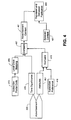
- a conceptual block diagram of advertisement selection is shown in FIG. 4.
- Selected content 401 which may be selected before, simultaneous with, or subsequent to the advertisement selection is used to populate the publication template for delivery 403 to the subscriber.
- Each advertisement for example advertisement 405, has the actual template-inserted content resident at the advertiser's website, so that the advertiser can change the advertising content at its convenience.
- Advertisement attributes 407 are stored at the service provider's memory 131, while advertisement time significance 409 is maintained at the advertiser's website. It is important that the time significance be compared 411 to the subscriber's local time so that advertisement placement in the delivered publication is accomplished at a time compatible with the time significance. A example can be found below.
- a preferred embodiment of the present invention requests and stores the postal code 413 (in the United States, the ZIP code) of the subscriber as part of the subscriber's profile. When the subscriber's local time is needed, the postal code is recalled from the subscriber's profile and mapped into the local time 415.
- a lookup table is maintained in memory 131 and associates for each postal code a time offset from Coordinated Universal Time (UTC) and a flag to change the offset for those postal codes in time zones that change for daylight savings time.
- Clock 129 provides a present UTC time signal, which is modified by the time offset associated with the postal code of the subscriber to yield a current local time. It is the current local time that is compared with the time significance of the advertisement and produces a positive result when the current local time falls within the window of time significance associated with the advertisement.
- advertisement attribute 407 associated with the advertisement
- a comparison 417 of the advertisement time significance 409 and a current local time is triggered.
- a positive time significance result causes advertisement content 421 is obtained from the selected advertiser's website and inserted into the publication 403 to be delivered to the subscriber along with the selected content 401.
- Jane's makes available the following attributes for her pancake house: 1) restaurant and 2) local address and ZIP code(s) (i.e., local market).
- Dick's makes available the attributes: 1) entertainment, 2) television, and 3) national market.
- Jane's makes available the requirement that her advertising content regarding service on Mother's Day be inserted into delivered publications and prominently displayed from the hours of 12:00 noon (local time) on Friday through 12:00 noon on Mother's Day Sunday.
- the service provider will charge an advertising premium for this service - not only does Jane's get a high priority for her advertising, but Jane's gets her message delivered during the hours she believes are most important to those wanting to know where Mother's Day breakfast is being served.
- Dick's time significance entries change often. Dick's wants to promote a television special being shown on a premium channel at 9:00 pm Eastern Standard Time on one satellite and at 9:00 pm Pacific Standard Time on another. Dick's wants a high priority given to his advertisement only in the one hour preceding the broadcast.
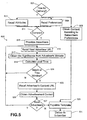
- a preferred embodiment employs the process of obtaining the desired advertising depicted in the flowchart of FIG. 5.
- the computer of the subscriber maintains the delivery schedule preferred by the human and automatically requests delivery from the service provider under the subscriber's computer's instruction.
- the human may request delivery in a single event request, or the predetermined delivery schedule may be maintained by the service provider or even an associated third party. Nevertheless, when it is determined, at 501, that a delivery of a publication is to be made to a subscriber, both the process of obtaining content according to the content preferences of the subscriber, at 503, and the process of obtaining advertisements that correspond to the subscriber profile, at 505 are activated at the service provider.
- priority of process is given to local, then regional, then national, then international advertisers.
- This priority is subject to change by the service provider, and can include priorities established by premium pricing to the advertisers and advertiser competitive advertisement positioning.
- both the stored attributes of the advertisers and the stored profiles of the subscriber are recalled by the service provider, at 507 and 509.
- the subscriber profiles are then compared, at 511, to the advertising attributes to detect matches between them.
- the vocabulary used in expressing preferences and attributes is limited so that matching need not be an extensive process. Thus, a subscriber having advertising preferences of "restaurant” and "television” will get matches for Jane's Pancake House (in Jane's ZIP code) and Dick's Satellite Television Broadcasting Company.
- a prioritization of advertisers is then made, at 513, in accordance with the service provider's policy (which may also include premium charges to the advertiser for higher priority).
- the Uniform Resource Locator (URL) of the first advertiser on the priority list is recalled from storage, at 515, and the URL is used to access the website of the advertiser to obtain, at 517, any time significance of the advertiser's advertisement, which is expressed as a period of time over a period of days.
- the subscriber's current local time is calculated, as previously described, at 519.
- an advertiser's content URL (which may be the same as that used in determining time significance) is recalled, at 523, from the service provider's storage.
- the advertiser's website is accessed using the recalled URL and advertising content is obtained, at 525.
- the testing of time significance and the obtaining of advertising content continues, at 527, until the priority list is exhausted.
- the subscriber predetermined publication template is populated with the information, at 529, and delivered to the subscriber, at 531.
- the significance of the time value of advertising as well as its relevance to the individual's preferences is employed to emplace advertising with time significance into a desired publication.
Landscapes
- Business, Economics & Management (AREA)
- Strategic Management (AREA)
- Engineering & Computer Science (AREA)
- Accounting & Taxation (AREA)
- Development Economics (AREA)
- Finance (AREA)
- Economics (AREA)
- Game Theory and Decision Science (AREA)
- Entrepreneurship & Innovation (AREA)
- Marketing (AREA)
- Physics & Mathematics (AREA)
- General Business, Economics & Management (AREA)
- General Physics & Mathematics (AREA)
- Theoretical Computer Science (AREA)
- Information Transfer Between Computers (AREA)
- Management, Administration, Business Operations System, And Electronic Commerce (AREA)
Abstract
Description
Claims (10)
- A service provider server (123) that delivers content and time significant advertising to a subscriber (103, 105) from a network (101), comprising:a memory (131) that stores a subscriber advertising profile;at least one network interface (125) that accesses the network to obtain an advertisement (405), an attribute (407) of said advertisement, and a time significance (409) for said advertisement;a clock that generates a current time associated with the subscriber; anda processor (127) coupled to said memory, said at least one network interface, and said clock and adapted to compare (411) said subscriber advertising profile to said attribute, to compare (417) said current time to said time significance, and to include (403) said advertisement with the content when said current time matches said time significance and when said subscriber advertising profile matches said attribute.
- A service provider server in accordance with claim 1 further comprising a postal code (413) stored in said memory and associated with the subscriber, and wherein said clock is adapted to map (415) a local time zone correction established by said postal code to a time standard to generate said current time.
- A service provider server in accordance with claim 1 wherein said time significance further comprises a time period associated with said advertisement and having time relevance to said advertisement.
- A service provider server in accordance with claim 3 wherein said processor further includes a comparator to compare said current time to said time period to determine whether said current time is within said time period, thereby matching said time significance.
- A service provider server in accordance with claim 1 wherein said processor is further adapted to obtain a request for delivery generated by a predetermined schedule of the subscriber, to generate said request for delivery from said predetermined schedule, and to deliver the content and said included advertisement to the user via a one of said at least one network interface in accordance with said delivery request of the subscriber, .
- A method of delivering content and time significant advertising from a server (123) to a subscriber (103, 105) comprising the steps of:determining an attribute of and a time significance for an advertisement;recalling (509) a previously stored subscriber advertising profile;comparing (411, 511) said subscriber advertising profile to said attribute;determining (519) a current time of the subscriber;comparing (417, 521) said current time to said time significance; andincluding (403, 529) said advertisement with the content when said current time matches said time significance and said subscriber advertising profile matches said attribute.
- A method in accordance with the method of claim 6 wherein said determining a current time further comprises the steps of:recalling a postal code (413) associated with the subscriber; andmapping (415) a local time zone correction established by said postal code to a time standard.
- A method in accordance with the method of claim 6 wherein said determining an attribute further comprises the step of recalling at least one previously stored attribute associated with said advertisement.
- A method in accordance with the method of claim 6 wherein said determining a time significance further comprises the step of recalling a previously stored time period associated with said advertisement and having time relevance to said advertisement, and wherein said comparing said current time to said time significance further comprises the step of determining whether said current time is within said time period, thereby matching said time significance.
- A method in accordance with the method of claim 6 further comprising the steps of obtaining a request for delivery generated by a predetermined schedule of the subscriber, generating said request for delivery from said predetermined schedule, and delivering the content and said included advertisement to the user in accordance with said request of the subscriber.
Applications Claiming Priority (2)
| Application Number | Priority Date | Filing Date | Title |
|---|---|---|---|
| US09/768,990 US20020111855A1 (en) | 2001-01-23 | 2001-01-23 | Delivery of time significant advertising |
| US768990 | 2001-01-23 |
Publications (2)
| Publication Number | Publication Date |
|---|---|
| EP1225532A2 true EP1225532A2 (en) | 2002-07-24 |
| EP1225532A3 EP1225532A3 (en) | 2003-01-15 |
Family
ID=25084079
Family Applications (1)
| Application Number | Title | Priority Date | Filing Date |
|---|---|---|---|
| EP02250293A Withdrawn EP1225532A3 (en) | 2001-01-23 | 2002-01-16 | Delivery of time significant advertising |
Country Status (3)
| Country | Link |
|---|---|
| US (1) | US20020111855A1 (en) |
| EP (1) | EP1225532A3 (en) |
| CA (1) | CA2363449A1 (en) |
Cited By (1)
| Publication number | Priority date | Publication date | Assignee | Title |
|---|---|---|---|---|
| EP1547380A4 (en) * | 2002-08-09 | 2005-12-21 | Richard J Bies | Internet-based submission of cable network content |
Families Citing this family (21)
| Publication number | Priority date | Publication date | Assignee | Title |
|---|---|---|---|---|
| US20020087594A1 (en) * | 2001-01-03 | 2002-07-04 | International Business Machines Corporation | Methods, systems and computer program products for subscriber customized generation of publications |
| US8868659B2 (en) * | 2001-05-15 | 2014-10-21 | Avaya Inc. | Method and apparatus for automatic notification and response |
| US7609829B2 (en) * | 2001-07-03 | 2009-10-27 | Apptera, Inc. | Multi-platform capable inference engine and universal grammar language adapter for intelligent voice application execution |
| US20030007609A1 (en) * | 2001-07-03 | 2003-01-09 | Yuen Michael S. | Method and apparatus for development, deployment, and maintenance of a voice software application for distribution to one or more consumers |
| US6996393B2 (en) * | 2001-08-31 | 2006-02-07 | Nokia Corporation | Mobile content delivery system |
| US7116995B2 (en) * | 2002-05-31 | 2006-10-03 | Nokia Corporation | System and method for operating intravendor and intervendor messaging systems |
| US20050149331A1 (en) * | 2002-06-14 | 2005-07-07 | Ehrilich Steven C. | Method and system for developing speech applications |
| US7697673B2 (en) | 2003-11-17 | 2010-04-13 | Apptera Inc. | System for advertisement selection, placement and delivery within a multiple-tenant voice interaction service system |
| US20050163136A1 (en) * | 2003-11-17 | 2005-07-28 | Leo Chiu | Multi-tenant self-service VXML portal |
| US20050234779A1 (en) * | 2003-11-17 | 2005-10-20 | Leo Chiu | System for dynamic AD selection and placement within a voice application accessed through an electronic information pace |
| FI118309B (en) * | 2003-12-29 | 2007-09-28 | Innoka Oy | Method and arrangement for real-time betting using an offline terminal |
| US7734731B2 (en) * | 2004-03-18 | 2010-06-08 | Avaya Inc. | Method and apparatus for a publish-subscribe system with third party subscription delivery |
| JP4383952B2 (en) * | 2004-04-27 | 2009-12-16 | 株式会社エヌ・ティ・ティ・ドコモ | Data distribution apparatus and data distribution time changing method |
| US20070153826A1 (en) * | 2005-12-30 | 2007-07-05 | Gady Studnitz | Method and apparatus for international media content delivery |
| US7584289B2 (en) * | 2006-07-14 | 2009-09-01 | Abroadcasting Company | System and method to efficiently broadcast television video and audio streams through the internet from a source in single leading time zone to multiple destinations in lagging time zones |
| US20080052166A1 (en) * | 2006-08-22 | 2008-02-28 | Warmus James L | System and method for placement of local advertisements in national publications |
| US20080183541A1 (en) * | 2007-01-26 | 2008-07-31 | Albert Wenger | Method of transmitting portions of media |
| US9754274B1 (en) * | 2009-06-09 | 2017-09-05 | Monetate, Inc. | Single tag method for webpage personal customization |
| DE112009004908T5 (en) * | 2009-06-10 | 2012-06-21 | Mitsubishi Electric Corporation | navigation device |
| US10687118B2 (en) | 2010-10-29 | 2020-06-16 | Nbcuniversal Media, Llc | Digital content and response processing system and method |
| CN104616176A (en) * | 2014-12-02 | 2015-05-13 | 刘森 | Method of realizing sending paid advertisements each other between IM (Instant Messaging) clients |
Family Cites Families (13)
| Publication number | Priority date | Publication date | Assignee | Title |
|---|---|---|---|---|
| US6047327A (en) * | 1996-02-16 | 2000-04-04 | Intel Corporation | System for distributing electronic information to a targeted group of users |
| US5848396A (en) * | 1996-04-26 | 1998-12-08 | Freedom Of Information, Inc. | Method and apparatus for determining behavioral profile of a computer user |
| US5931901A (en) * | 1996-12-09 | 1999-08-03 | Robert L. Wolfe | Programmed music on demand from the internet |
| US6285991B1 (en) * | 1996-12-13 | 2001-09-04 | Visa International Service Association | Secure interactive electronic account statement delivery system |
| US6647257B2 (en) * | 1998-01-21 | 2003-11-11 | Leap Wireless International, Inc. | System and method for providing targeted messages based on wireless mobile location |
| CA2355279A1 (en) * | 1999-01-08 | 2000-07-13 | Rstar Corporation | Micro-targeted advertising |
| US6332127B1 (en) * | 1999-01-28 | 2001-12-18 | International Business Machines Corporation | Systems, methods and computer program products for providing time and location specific advertising via the internet |
| US6334110B1 (en) * | 1999-03-10 | 2001-12-25 | Ncr Corporation | System and method for analyzing customer transactions and interactions |
| EP1192514A4 (en) * | 1999-05-03 | 2002-07-17 | Streetspace Inc | Method and system for providing personalized online services and advertisements in public spaces |
| TW492251B (en) * | 1999-07-09 | 2002-06-21 | Ibm | System for personal advertising |
| US6976090B2 (en) * | 2000-04-20 | 2005-12-13 | Actona Technologies Ltd. | Differentiated content and application delivery via internet |
| US20020029384A1 (en) * | 2000-07-20 | 2002-03-07 | Griggs Theodore L. | Mechanism for distributing content data |
| US20020082912A1 (en) * | 2000-12-22 | 2002-06-27 | Leon Batachia | Transactions between vendors and customers using push/pull model |
-
2001
- 2001-01-23 US US09/768,990 patent/US20020111855A1/en not_active Abandoned
- 2001-11-15 CA CA002363449A patent/CA2363449A1/en not_active Abandoned
-
2002
- 2002-01-16 EP EP02250293A patent/EP1225532A3/en not_active Withdrawn
Cited By (1)
| Publication number | Priority date | Publication date | Assignee | Title |
|---|---|---|---|---|
| EP1547380A4 (en) * | 2002-08-09 | 2005-12-21 | Richard J Bies | Internet-based submission of cable network content |
Also Published As
| Publication number | Publication date |
|---|---|
| US20020111855A1 (en) | 2002-08-15 |
| EP1225532A3 (en) | 2003-01-15 |
| CA2363449A1 (en) | 2002-07-23 |
Similar Documents
| Publication | Publication Date | Title |
|---|---|---|
| EP1225532A2 (en) | Delivery of time significant advertising | |
| EP1253542A2 (en) | Delivery of location significant advertising | |
| US7158942B2 (en) | Internet advertisement system | |
| US7028072B1 (en) | Method and apparatus for dynamically constructing customized advertisements | |
| US12526250B2 (en) | Dynamic content delivery | |
| Ranganathan et al. | Advertising in a pervasive computing environment | |
| US9369534B2 (en) | System and method of consistent internet web site banners that provide portal-like functionality | |
| US20060235938A1 (en) | System and method for delivery of information based on web page content | |
| US20030195801A1 (en) | System and method for providing advertisement data with conversation data to users | |
| US20030131095A1 (en) | System to prevent inappropriate display of advertisements on the internet and method therefor | |
| US20020099606A1 (en) | Radius advertising system and method | |
| US20090144385A1 (en) | Sequential Message Transmission System | |
| US20040117400A1 (en) | Method and apparatus for requesing information | |
| JP2002063095A (en) | System for transmitting/receiving information classified according time, area or the like | |
| US20110276650A1 (en) | System, method, apparatus, and program for distributing advertisement data | |
| JP5746904B2 (en) | Advertisement distribution apparatus and program | |
| US20030208369A1 (en) | Systems and methods for soliciting secondary information while maintaining access to primary information | |
| EP1230611A2 (en) | Dynamically constructing customized advertisements | |
| WO2008137564A1 (en) | Improved processes for automated digital distribution of content and products thereby | |
| KR100413244B1 (en) | System and method for providing introduction advertisement based on animated image suitable to user's order | |
| KR20020012872A (en) | A method for providing adjusting contents on a internet | |
| JP4045073B2 (en) | Advertisement delivery server system and advertisement delivery method | |
| JP2005122762A (en) | Advertisement delivery server system and advertisement delivery method | |
| JP3306419B2 (en) | Advertising system on the Internet | |
| TW482970B (en) | A system and method of advertising |
Legal Events
| Date | Code | Title | Description |
|---|---|---|---|
| PUAI | Public reference made under article 153(3) epc to a published international application that has entered the european phase |
Free format text: ORIGINAL CODE: 0009012 |
|
| AK | Designated contracting states |
Kind code of ref document: A2 Designated state(s): AT BE CH CY DE DK ES FI FR GB GR IE IT LI LU MC NL PT SE TR |
|
| AX | Request for extension of the european patent |
Free format text: AL;LT;LV;MK;RO;SI |
|
| PUAL | Search report despatched |
Free format text: ORIGINAL CODE: 0009013 |
|
| AK | Designated contracting states |
Kind code of ref document: A3 Designated state(s): AT BE CH CY DE DK ES FI FR GB GR IE IT LI LU MC NL PT SE TR |
|
| AX | Request for extension of the european patent |
Free format text: AL;LT;LV;MK;RO;SI |
|
| 17P | Request for examination filed |
Effective date: 20030625 |
|
| AKX | Designation fees paid |
Designated state(s): FR GB SE |
|
| 17Q | First examination report despatched |
Effective date: 20030923 |
|
| REG | Reference to a national code |
Ref country code: DE Ref legal event code: 8566 |
|
| STAA | Information on the status of an ep patent application or granted ep patent |
Free format text: STATUS: THE APPLICATION IS DEEMED TO BE WITHDRAWN |
|
| 18D | Application deemed to be withdrawn |
Effective date: 20040406 |