BACKGROUND OF THE INVENTION
1. Field of the Invention
The invention relates to a designing method, i.e., a method of
designing a product with the aid of a computer, and a design assist system that
assists a user in a design process.
2. Description of Related Art
Design work for development of a new vehicle is carried out by a
team including, for example, project staff, and members or engineers of a design
division, a manufacturing division, a test division, a parts manufacturer(s) that
supply parts, and the like. More specifically, the design division works out a
detailed design for each portion of the vehicle, and the manufacturing division
governs operations at an actual manufacturing site through, for example, plant and
production management. The test division carries out evaluation tests on the
designed vehicle or designed portion of the vehicle. The development of the new
vehicle proceeds from its start to the start of production, by going through the
stages as follows:
(I) Planning Stage:
In the initial planning stage, basic concepts, such as a design and required
performance or capabilities, of a new vehicle are determined, and a development
plan is established. Also, design specifications of each design part of the vehicle
are created based on the basic concepts. The design part is a portion of the vehicle
that is to be designed.
(II) Design Stage:
A design engineer of the design division determines details of design
according to the design specifications created in the planning stage, and creates a
design drawing or drawings of the design part.
(III) Evaluation Stage:
The design drawing created in the design stage is then evaluated by the
manufacturing division, the test division, or the like. In these divisions, it is
determined whether the design drawing created in the design stage satisfies the
design specifications, through analysis of the design drawing, prototype modeling,
evaluation test(s), or the like. In the case where an outside parts manufacturer, or
the like, is entrusted with supply or manufacture of the part in question, similar
evaluation is carried out by a relevant division of the parts manufacture. If any
problem is found in the design drawing in the evaluation stage, the design engineer
is requested to make a design change. Such design changes and evaluation of the
modified design drawing are repeated until the resulting design drawing
sufficiently meet the design specifications. In this manner, the design drawing is
completed.
(IV) Production Preparation Stage:
Once the design drawing is completed, production preparation is arranged,
and production is started according to the design drawing thus prepared.
With regard to the development of a new vehicle, or any product in
general, there is an increasing demand for reduction in the development time (i.e.,
the time required for the development) in accordance with reduction in the life cycle
of the product. Accordingly, it is desired to reduce design changes in the evaluation
stage as described above.
If the design drawing created in the design stage involves only few
problems, in other words, if the design drawing is created with a high degree of
perfection, the design changes in the evaluation stage can be naturally reduced. To
create a design drawing with a high degree of perfection, however, the design
engineer is required to have a wide range of technical knowledge, including
knowledge of manufacturing technology, and a high technical skill. With the
greatly improved level of technology and a tendency of upsizing of the development,
it becomes quite difficult for the design engineer or engineers to acquire a high
technical skill or a high level of knowledge in all aspects.
In the meantime, a design assist system as disclosed in, for
example, Japanese Patent Laid-open Publication No. 8-106494 is known as a
system for managing the progress of a design process associated with development
of a new product, with the aid of a computer. The development of a new product
may be achieved with improved efficiency within a reduced time, by utilizing the
design assist system in an appropriate manner and optimizing the distribution of
human resources, and the like. However, this system does not solve the problem as
described above.
SUMMARY OF THE INVENTION
It is therefore an object of the invention to provide a designing
method and a design assist system, which permit development of a product to be
accomplished with improved efficiency within a reduced development time.
To accomplish the above and/or other object(s), there is provided
according to a first aspect of the invention, which provides a method of designing a
product with the aid of a computer, comprising the steps of: (a) registering and
storing design-related requirement information in a server as an electronic file
created in a predetermined format, (b) preparing design specifications of the
product, (c) causing the server to automatically retrieve requirement information
relating to the prepared design specifications, from the design-related requirement
information stored in the server, (d) presenting a content of the automatically
retrieved requirement information to a designer via the server, and (e) allowing the
designer to check a content of the requirement information presented, and create
detailed design information based on the design specifications.
In the designing method as described above, the designer or design
engineer creates detailed design information, based on design specification
information. The "design specification information" used herein means
information relating to a design concept or concepts before specifying details, which
information may cover required performance and a design concept. The "detailed
design information" as indicated above means design information that specifies
design to such an extent that the product can be actually manufactured, with the
shapes and dimensions of detailed portions determined based on the design
specifications. For example, the detailed design information is in the form of a
design drawing used for manufacturing.
According to the designing method as described above, prior to
creation of the detailed design information, requirement information relating to the
design specifications is automatically retrieved by the server from the information
stored in the server, and the content of the retrieved information is presented to the
designer. The design-related requirement information mean information about
points to be considered during creation of the detailed design information, for
example, standards of respective elements or parts, restrictions, demands or
requests, and agreements associated with designing. The designer checks or
examines the content of the requirement information, and creates the detailed
design information, referring to the requirement information.
Accordingly, the designer is able to create the detailed design
information so that the created detailed design reflects the content of the
requirement information stored in the server. Since the design-related
requirement information is stored in the server such that the information can be
easily retrieved and recognized, it is possible for the designer and other members
involved in the design process to share technical knowledge and know-hows
necessary for designing. Therefore, the detailed design information can be
produced with a high level of perfection, requiring a reduced number of design
changes. Consequently, the overall design work can be accomplished with further
improved efficiency, and the time required for development of the product can be
thus reduced.
In the method according to the first aspect of the invention,
information about a problem in design and information about a solution to the
problem may be acquired as the requirement information, and the acquired
requirement information may be registered in the server as an electronic file
created in a predetermined format.
In the method as described just above, each time a problem arises
in detailed design, the information about the problem and information about a
solution(s) to the problem are stored in the server as the requirement information.
With this method, the designer is able to create detailed design information while
referring to or checking the design problems that occurred in the past and the
solutions to the problems. It is thus possible to effectively prevent similar design
problems from occurring again. Furthermore, the designer and other associated
members are able to share know-hows obtained through the problems as described
above.
In the method according to the first aspect of the invention, the
design specifications may be presented to at least one evaluating person in charge of
design evaluation, prior to creation of the detailed design information by the
designer. Then, information about design-related requests made by the evaluating
person(s) based on the design specifications presented may be acquired as the
requirement information, which is registered in the server as an electronic file
created in a predetermined format.
In the above case, the design specifications are presented in
advance to the evaluating person(s) who will evaluate the design information
created by the designer and who is/are selected from a manufacturing division, such
as a plant or a production management division, and/or a test division, for example.
The evaluating persons then present information relating to their requests made
based on the content of the design specifications presented, and register the
information in the server as the requirement information. Thus, prior to creation
of the detailed design information, the requests made by the evaluating persons are
presented to the designer for consideration.
Accordingly, the designer is able to create detailed design
information so that the resulting detailed design reflects the requests made by the
evaluation person(s). Namely, the request made by the evaluating person(s) can be
incorporated into design, and later design changes can be effectively reduced.
According to a second aspect of the invention, there is provided a
system for assisting creation of detailed design information based on design
specifications, which includes (a) a server that manages transmission of information
via a computer network, and (b) a database provided under control of the server for
containing design-related requirement information that is recorded as an electronic
file in a predetermined format. In this system, the server automatically retrieves
the design-related requirement information relating to the design specifications
from the database, and presents a content of the retrieved information to a user.
In the design assist system as described above, the design-related
requirement information is recorded in an electronic file of a predetermined format,
and is registered in the database under control of the server. On the basis of
design specifications information prepared as an electronic file of a certain format,
the server automatically retrieves requirement information relating to the design
specifications in question, from the information registered in the database, so that
the content of the retrieved information is presented to the user (e.g., designer).
With the above arrangement, the requirement information
registered in the database can be easily referred to and easily reflected by detailed
design information that is created based on the design specifications. Thus,
technical knowledge necessary for designing can be easily shared among the
designer and other members (e.g., engineers) involved in the design process.
Accordingly, the detailed design information can be created with an improved level
of perfection, requiring a reduced number of design changes. Consequently, the
overall design work can be accomplished with further improved efficiency, and the
time required for development of the product can be thus reduced.
In the design assist system according to the second aspect of the
invention, the requirement information may include information about a design-related
problem which is acquired upon occurrence of the problem, and information
about a solution to the design-related problem.
In the system as described just above, each time a problem arises
in design, the information about the problem and information about a solution(s) to
the problem are stored in the server as the requirement information. The
requirement information obtained in this manner can also be easily retrieved in
association with the design specifications. It is thus possible to effectively prevent
similar design problems from occurring again. Furthermore, the designer and
other associated members are able to share know-hows obtained through the
problems as described above.
In the design assist system according to the second aspect of the
invention, the requirement information may further include information about
design-related requests made by at least one evaluating person in charge of design
evaluation based on the design specifications presented to the at least one
evaluating person.
In the design assist system as described just above, the
information on the requests made by the evaluating person(s) with respect to the
design in question is registered, and is presented to the designer in association with
the design specifications. Accordingly, the designer can create detailed design
information so that the detailed design reflects the requests made by the evaluating
person(s), whereby design changes can be effectively reduced.
BRIEF DESCRIPTION OF THE DRAWINGS
The foregoing and/or further objects, features and advantages of
the invention will become more apparent from the following description of preferred
embodiments with reference to the accompanying drawings, in which like numerals
are used to represent like elements and wherein:
DETAILED DESCRIPTION OF PREFERRED EMBODIMENTS
An exemplary embodiment of the invention when applied to
designing for development of a new vehicle, such as an automobile, will be described
in detail with reference to the accompanying drawings.
Design work for the development of a new vehicle is carried out by
a team including, for example, project staff, and members or engineers of a design
division, a parts manufacturing division or manufacturing division, a test division,
and related divisions, such as parts manufacturers, which manufacture and supply
parts, and the like. More specifically, detailed design information, such as a design
drawing, for each part of the vehicle is created in the design division, and the part
thus designed, or the like, is tested and evaluated in the test division. The
manufacturing division may be in the form of a production management division or
a plant serving as an actual manufacturing site where parts are manufactured and
assembled together.
The above-indicated project staff plays a center role in the
development project, and performs overall management of the development project.
The project staff includes selected members from the respective divisions associated
with the development of the new vehicle. With the project staff thus constructed
by the selected members from the respective divisions, it becomes easier to reach
agreements and share information among the different divisions, in relation to the
development project.
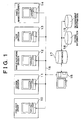
Fig. 1 shows the configuration of a design assist system for
assisting in design for development of a new vehicle. As shown in Fig. 1, the
system includes computer terminals 10, 11, 12, 13, 14 provided in a project staff
room and the respective divisions, and a server 15 that is in charge of management
of various types of information pertinent to the new vehicle development. The
terminals 10-14 and server 15 are connected to each other via a network 16.
The server 15 manages information transmitted between the
server 15 and the respective terminals 10-14 via the network 16, and is provided
with a database 17 in which various types of information relating to designing for
the new vehicle development is registered. The server 15 also functions as a mail
server, and manages transmission of electronic mails among the project staff
members and the members of the respective divisions.
The database 17 includes two databases, namely, a design
information database 18 and a requirement database 19. The design information
database 18 contains information in the form of a design drawing created by the
design division, and information in the form of evaluation test results obtained in
the test division.
The requirement database 19 contains information in the form of
design-related requirements, which are registered or stored as an electronic file in a
predetermined format. The "design-related requirements" mean information
about points to be considered in terms of design, for example, standards of
respective elements or parts, restrictions, demands or requests, and agreements
associated with designing. In the designing method according to this embodiment,
information about such requirements are added to and registered in the
requirement database 19 each time a development project is carried out, as
described later, so that the database 19 contains an increased amount of useful
information.
Each of the terminals 10-14 has a display function for displaying
various information registered in the respective databases 18, 19, and enables a
user to retrieve or acquire the information via the server 15 and confirm the content
of the retrieved information on the corresponding terminal 10-14. Thus, the
requirement file registered in the requirement database 19 can be displayed on each
of the terminals 10-14, so that the user can confirm the content of the information.
Next, a process of implementing the development project using the
design assist system constructed as described above will be explained with
reference of Fig. 2.
Fig. 2 is a time chart showing the process of implementing the
development project according to the present embodiment of the invention. As
shown in Fig. 2, the development project proceeds in the manner as described below.
(I) Planning Stage
In the planning stage, the project staff members and others carry out
planning and conception of a product (e.g., a new vehicle) to be developed.
Initially, the project staff lays out development concepts, such as
the overall performance and design of the product to be developed. On the basis of
the development concepts, the project staff cooperates with members of the design
division and manufacturing division to define design requirements for respective
portions of the vehicle, and determine design specifications for each portion of the
vehicle. Information on the thus determined design specifications is converted into
electronic information, which is recorded in an electronic file in a predetermined
format and is thus registered in the design information database 18.
The "information on the design specifications" means collective
information on general (i.e., non-detailed) design requirements, such as required
performance, and approximate shapes and dimensions of parts of the vehicle. On
the other hand, "detailed design information" as describer later means design
information, such as a design drawing, obtained by determining the dimensions and
shapes (profiles) of detailed portions of the vehicle. The vehicle may be actually
produced based on the detailed design information.
In the planning stage, the project staff makes a development plan,
such as assignment of development team members to each portion of the vehicle for
which design specifications are determined, and a detailed schedule of designing.
Here, the team members assigned to each portion of the vehicle (each design part)
for which the design specifications are determined are selected from the design
division, and are also selected from the manufacturing division, test division, and
the relevant parts manufacturer. Namely, each design part is designed by a design
team that consists of a member or members of the design division who actually
creates a design drawing, and members of the respective divisions that evaluate the
design drawing.
The above-described operations are performed in the planning
stage. The project staff mainly functions to manage the progress, or the like, of
development operations in the following stages.
(II) Design Stage
In the design stage, the detailed design information, i.e., the design
drawing, pertinent to each design part is created by the design team composed of
the members as described above, in the manner as described below.
Initially, each of the members of the design team checks the
content of the design specifications of the design part in question, which
specifications are provided as a specification file (electronic file). The information
recorded in the specification file can be displayed on the terminal 11-14 of each
member of the design team so that the content of the information can be checked by
the team member, as described above.
In this step, each of the team members studies or analyzes the
content of the design specifications recorded in the specification file, and lists
requirements relating to design of the design part in question. Then, a
requirement file is created by recording the requirements in an electronic file in a
predetermined format, and is registered in the requirement database 19. In this
manner, the information on the design-related requirements, which is newly
derived from the analysis of the design specifications, is formed into electronic
information, which is then added to and registered in the requirement database 19.
The information on the requirements thus registered includes
possible cases where problems are expected to occur, problems pertinent to the
design specifications, and information that lacks in the design specifications. The
requirement information also includes pieces of information based on technical
knowledge or experiences provided by engineers, such as those of the
manufacturing division, test division, and the parts manufacturers, other than
design engineers of the design division. These pieces of information are very
useful in creating a design drawing of the design part in question.
The requirement information also includes information that is
generally useful in terms of designing, as well as information specific to or pertinent
to each design part. Such general information is also registered and stored in the
requirement database 19, so that the information can be used again later.
Subsequently, the design engineer in charge of creation of detailed
design information, i.e., a design drawing, reads requirement information
associated with the design part to which the engineer is assigned, from the
requirement database 19, and checks the content of the information. The server 15
functions to extract or retrieve desired requirement information, in the manner as
described in detail below with reference to Fig. 3.
In step S10 of Fig. 3, the server 15 acquires a specification file
containing design specifications for which requirement information is to be
extracted, in accordance with designation of the file. In this embodiment, the
specification file can be designated on each of the terminals 10-14. The design
engineer normally designate a desired specification file on his/her own terminal 11.
In step S20, the server 15 acquires element items relating to the
content of the specification file, from the specification file acquired in step S10.
The element items may be selected from items that specify or characterize the
design part in question, for example, the name of the design part and/or the type of
vehicle in which the design part is employed.
Subsequently, the server 15 successively acquires requirement files
from the requirement database 19, and acquires element items from the
requirement files in step S30 in a similar manner. Then, the server 15 compares
the element items obtained from the requirement files with the element items
obtained from the specification file, and determines whether there is any correlation
between the element items in the specification file and those in the requirement
files in step S40. This process is carried out with respect to all of the files in the
database 19, and requirement files that have been judged as relating to the
designated specification file are picked up or retrieved in step S50. In this manner,
the process of retrieving desired requirement information is accomplished.
In the present embodiment as described above, the server 15
automatically acquires element items from the specification file, and retrieves or
picks up related requirement files based on the element items as retrieval
conditions. It is, however, possible for the design engineer, or the like, to designate
or select retrieval conditions so as to retrieve desired requirement information. In
any event, requirement information, which has been converted into electronic
information, is recorded in the form of electronic files of a predetermined format,
and the electronic files are stored in the database 19 so that the server 15 can easily
and appropriately carry out the retrieval process.
After the retrieval process as described above is performed, the
design engineer checks the content of the requirement information thus retrieved,
and creates the design drawing in view of the requirement information.
(III) Evaluation Stage
In the evaluation stage, the design drawing created in the design stage is
evaluated by the manufacturing division, the test division, and/or the parts
manufacturer. Here, the evaluation is carried out by checking if the design
drawing meets the design specifications, or checking if no problem will arise in the
manufacture of the design part according to the design drawing.
If any problem is recognized in the design drawing, the design
engineer modifies the design drawing so as to change the design. The modified
design drawing is then re-evaluated. Thus, design changes are repeated until no
problem is found in the design drawing. In this manner, the design drawing that
describes detailed design information useful for actual production of the design part
is completed.
It is to be noted that various design requirements can be derived
from the problems or undesirable situations that require design changes. It is thus
possible to avoid the same problems as experienced in the past, by utilizing the
design requirements thus derived.
For this purpose, the situations or cases in which any problem is
found in the design in the evaluation stage are analyzed, and information on the
problems and solutions to the problems is recorded in the form of a requirement file,
which is then added to and registered in the requirement database 19. The
registration operation for registering all of the problems found in one development
project may be performed at a time after the development project is finished.
(IV) Production Preparation Stage
Once the design drawing is completed, preparation for the production of the
design part is started mainly by the manufacturing division. Then, the production
of the design part is started at a point of time when the preparation is
accomplished.
The details of the design process for new-vehicle development
according to the present embodiment of the invention have been described above.
In the illustrated embodiment, as the development project
proceeds, the following information (a), (b) are registered as requirement
information in the
requirement database 19.
The above information includes various know-hows, technical
knowledge and other information relating to design, which are useful in creating a
design drawing for the design part in question. Thus, if the design drawing is
created with these pieces of information taken into consideration, the resulting
design drawing achieves an improved level of perfection, thus requiring reduced
design changes. With the information (a) taken into account, in particular, the
requirements made by the evaluation engineer with respect to the design part in
question can be incorporated in advance into the design drawing by the design
engineer, and therefore the possibility of design changes can be effectively reduced.
Also, by utilizing the information (b) as indicated above, the design drawing created
in the current development project can effectively reflect the know-hows that have
been developed through experiences in the past development projects.
Furthermore, in the illustrated embodiment, the above-described
information is extracted or picked up during the actual design process, and is
recorded into and accumulated in the requirement database 19. Thus, the
information stored in the requirement database 19 is increased as the number of
development projects increases.
The above-described embodiment of the invention yields
advantageous effects as follows.
The above-described embodiment may be modified in the manners
as follows:
In a method of designing a product with the aid of a computer, design-related
requirement information is registered and stored in a server (15) as an
electronic file created in a predetermined format, and design specifications of the
product is also stored in the server. The server automatically retrieves
requirement information relating to the design specifications, from the design-related
requirement information stored in the server, and the content of the
automatically retrieved requirement information is presented to a designer via the
server. The designer then creates detailed design information based on the design
specifications, while checking the content of the requirement information
presented.