EP1225232A2 - Detektion von Mutationen innerhalb einem IkappaB Kinase-Komplex-Verbunden kodierendes Gen, um familiäre Dysautonomia zu Diagnostizieren - Google Patents
Detektion von Mutationen innerhalb einem IkappaB Kinase-Komplex-Verbunden kodierendes Gen, um familiäre Dysautonomia zu Diagnostizieren Download PDFInfo
- Publication number
- EP1225232A2 EP1225232A2 EP02001232A EP02001232A EP1225232A2 EP 1225232 A2 EP1225232 A2 EP 1225232A2 EP 02001232 A EP02001232 A EP 02001232A EP 02001232 A EP02001232 A EP 02001232A EP 1225232 A2 EP1225232 A2 EP 1225232A2
- Authority
- EP
- European Patent Office
- Prior art keywords
- complex
- gene
- ikap
- associated protein
- detecting
- Prior art date
- Legal status (The legal status is an assumption and is not a legal conclusion. Google has not performed a legal analysis and makes no representation as to the accuracy of the status listed.)
- Withdrawn
Links
Images



Classifications
-
- C—CHEMISTRY; METALLURGY
- C12—BIOCHEMISTRY; BEER; SPIRITS; WINE; VINEGAR; MICROBIOLOGY; ENZYMOLOGY; MUTATION OR GENETIC ENGINEERING
- C12Q—MEASURING OR TESTING PROCESSES INVOLVING ENZYMES, NUCLEIC ACIDS OR MICROORGANISMS; COMPOSITIONS OR TEST PAPERS THEREFOR; PROCESSES OF PREPARING SUCH COMPOSITIONS; CONDITION-RESPONSIVE CONTROL IN MICROBIOLOGICAL OR ENZYMOLOGICAL PROCESSES
- C12Q1/00—Measuring or testing processes involving enzymes, nucleic acids or microorganisms; Compositions therefor; Processes of preparing such compositions
- C12Q1/68—Measuring or testing processes involving enzymes, nucleic acids or microorganisms; Compositions therefor; Processes of preparing such compositions involving nucleic acids
- C12Q1/6876—Nucleic acid products used in the analysis of nucleic acids, e.g. primers or probes
- C12Q1/6883—Nucleic acid products used in the analysis of nucleic acids, e.g. primers or probes for diseases caused by alterations of genetic material
-
- C—CHEMISTRY; METALLURGY
- C12—BIOCHEMISTRY; BEER; SPIRITS; WINE; VINEGAR; MICROBIOLOGY; ENZYMOLOGY; MUTATION OR GENETIC ENGINEERING
- C12Q—MEASURING OR TESTING PROCESSES INVOLVING ENZYMES, NUCLEIC ACIDS OR MICROORGANISMS; COMPOSITIONS OR TEST PAPERS THEREFOR; PROCESSES OF PREPARING SUCH COMPOSITIONS; CONDITION-RESPONSIVE CONTROL IN MICROBIOLOGICAL OR ENZYMOLOGICAL PROCESSES
- C12Q2600/00—Oligonucleotides characterized by their use
- C12Q2600/156—Polymorphic or mutational markers
Definitions
- This invention relates to a method for the diagnosis of Familial Dysautonomia, and for the identification of carriers of Familial Dysautonomia, and to a mutated gene and altered proteins associated therewith.
- Familial Dysautonomia also known as the Riley-Day syndrome or hereditary sensory neuropathy Type III (MIM 223900)
- FD Familial Dysautonomia
- MIM 223900 hereditary sensory neuropathy Type III
- FD Familial Dysautonomia
- Individuals with FD are affected with a variety of symptoms that include decreased sensitivity to pain and temperature, cardiovascular instability, recurrent pneumonias, vomiting crises, and gastrointestinal dysfunction ( 1-3 ). It has been suggested that these symptoms might be due to a deficiency in a neuronal growth factor pathway ( 4,5 ). This disorder is primarily confined to individuals of Ashkenazic Jewish descent ( 6 ).
- the predicted carrier frequency of this defective gene ( DYS ) is approximately 1 in 30 ( 7 ).
- Haplotype analysis using various polymorphic loci has enabled the localization of FD to chromosome 9q31 and the demonstration that there is a major haplotype representing >98% of the FD chromosomes ( 8 ).
- Several additional FD haplotypes represent the remaining 2% of FD chromosomes.
- the defective gene, DYS which has been mapped to a 0.5 cM region on chromosome 9q31, has eluded identification.
- Identification of the gene and/or altered protein associated with FD would be valuable, as knowledge of such gene and/or altered protein would allow more accurate screening of the entire at-risk population to identify carriers, and potentially to reduce the incidence of new cases.
- genetic testing would permit the identification of carriers of a disease gene, and also the evaluation of the condition of unborn children who may be affected with the disease or carriers of the disease gene.
- Knowledge of the gene and/or altered protein associated with FD might also facilitate the development of effective therapeutic approaches for individuals with FD.
- RNA sequence information available as a result of the Human Genome Project we determined the location of the polymorphic markers 164D1, D9S1677 and 157A3 that have been reported to be localized to the area of the DYS gene ( 8 ) and identified several mRNAs encoded in this region.
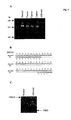
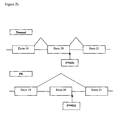
- RT-PCR analysis performed on these RNAs revealed that primers to the transcript reported to encode IKAP ( 9 ), which generated the predicted 218 bp product from RNA isolated from a control lymphoblast cell line, generated a 144 bp PCR product from RNA derived from a lymphoblast cell line generated from an individual homozygous for the major FD haplotype.
- the present invention thus, relates in a first aspect to the identification of the gene responsible for FD, and the pertinent mutations and altered proteins associated therewith.
- the present invention relates in a second aspect to a method for detecting the presence in a subject of a polymorphism linked to a gene associated with familial dysautonomia, said method comprising detecting a disruptive mutation in a gene of said subject encoding the I ⁇ B kinase-complex-associated protein.
- the present invention relates in a third aspect to novel primers useful in the diagnostic methods according to the teachings of the present invention.
- Immunoprecipitation of IKAP from 35 S-methionine or 32 P-orthophosphate-labeled cells derived from a normal individual and an individual heterozygous for R696P revealed comparable levels of synthesis of IKAP but a reduced level of phosphorylation of this protein in cells bearing the R696P mutation (Fig 3B).
- SSCP analysis capable of differentiating between the normal and the mutated sequences of IKAP can be used to diagnose FD.
- the technique of SSCP analysis is well known. We started with a published protocol (PCR Primer: A Laboratory Manual. 1995. C.W. Dieffenbach and G.S. Dveksler, eds. Cold Spring Harbor Laboratory Press. Pages 249-255), but modified it to work for our test.
- PCR Primer A Laboratory Manual. 1995. C.W. Dieffenbach and G.S. Dveksler, eds. Cold Spring Harbor Laboratory Press. Pages 249-255
- DNA is isolated from the blood or tissue of subjects to be tested.
- the SSCP analysis can then be done using the following or other conditions:
- PCR 1-10 ng of DNA amplified in the presence of radioisotope ( 33 P-dATP); initial denaturation for 5 min at 94°C, followed by 50 cycles of 94°C x 30 sec, 58°C x 30 sec, 72°C x 30 sec; final extension at 72°C x 7 min.
- radioisotope 33 P-dATP
- SSCP gel 1.5 ⁇ L of denatured PCR product loaded on 0.35 mm thick 5% nondenaturing acrylamide gel; run at 4°C x 3.75 hr @ 1100 volts.
- primer design can be varied significantly, and we contemplate the use of any primer sets capable of amplifying the gene regions under investigation.
- the primers indicated above in the description of Fig. 4 are the ones we used to do the genetic testing and therefore are the best ones to our present knowledge. However, if the primers were shortened or lengthened by one or even a few bases, the amplification should still work. Most PCR primers work best when they're 18-25 bases long, have about 50% G/C content and do not have self-complementary regions. Other sequences in the DNA nearby could probably also be used to design primers, keeping the above requirements in mind.
- SSCP analysis was performed on a multigenerational family with several FD-affected individuals bearing the major FD haplotype (Fig. 4A) and two pairs of apparently unrelated parents with probands that have alleles corresponding to both the major and minor 2 FD haplotypes (Fig. 4B).
- Fig. 4A major FD haplotype
- Fig. 4B two pairs of apparently unrelated parents with probands that have alleles corresponding to both the major and minor 2 FD haplotypes
- probands homozygous for the major haplotype
- all of the affected individuals were homoallelic for 2507+6T ⁇ C and all of the parents were heterozygous.
- probands heterozygous for the major and minor 2 FD haplotypes for both pairs of parents, one parent and the proband are heterozygous for the R696P and the other parent and the proband are heterozygous for 2507+6T ⁇ C (Fig. 4B).
- FD carrier frequency approximately 1 in 23 is slightly higher than the reported frequency ( 7 ) and may reflect either an under-estimation based on the birth frequency or the nature or size of the sample characterized in this study.
- Each of the individuals with the 2507+6T ⁇ C and R696P mutations was found to have the polymorphic DNA markers associated with the FD major and minor haplotypes, respectively ( 8 ).
- IKAP I ⁇ B kinases
- IKKs I ⁇ B kinases
- NIK NF- ⁇ B inhibitory subunit I ⁇ B- ⁇
- NIK NF- ⁇ B-inducing kinase
- IKAP Characterization of the amino acid sequence of IKAP reveals significant amino acid sequence homology with the Saccharomyces cerevisiae IKI3 ( 11 ) and ELP1 ( 12 ) proteins as well as similar proteins in Schizosaccharomyces pombe and Arabidopsis thaliana .
- the IKI3 gene product mediates, by a yet to be determined mechanism, sensitivity to the yeast killer toxin ( 11 ).
- ELP1 is a subunit of a multisubunit complex that is associated with RNA polymerase II and is required for the activation and transcriptional elongation of a large number of genes ( 12 ).
- IKAP like ELP1
- IKAP is a part of the RNA polymerase II elongation complex and plays a role in gene activation
- the absence of functional IKAP in FD-affected individuals may prevent gene activation events necessary for normal neuronal development and function.
- ARMS-PCR amplification refractory mutation system
- Detecting the mutations by ARMS-PCR will ultimately be easier and less expensive than SSCP analysis.
- ARMS-PCR is used to detect allele-specific mutations by using two primers, a first one that recognizes a normal region of the allele and a second one that contains the mutated nucleotide at or near the 3' end of the primer, thereby allowing only amplification of the mutant allele.
- primer design requires trial and error; also, the primer design should be such that four primers will work together in one PCR reaction to detect either one of the two mutations at the same time.
- the presence of amplified DNA would indicate the presence of a mutant allele in an individual and the size of the amplified product would indicate which of the mutations was present.
- Identification of the mutations responsible for FD will enable the identification of carriers of this genetic disorder and may result in the development of effective therapeutic approaches for individuals with FD.
Landscapes
- Chemical & Material Sciences (AREA)
- Life Sciences & Earth Sciences (AREA)
- Proteomics, Peptides & Aminoacids (AREA)
- Health & Medical Sciences (AREA)
- Organic Chemistry (AREA)
- Wood Science & Technology (AREA)
- Analytical Chemistry (AREA)
- Zoology (AREA)
- Genetics & Genomics (AREA)
- Engineering & Computer Science (AREA)
- Pathology (AREA)
- Immunology (AREA)
- Microbiology (AREA)
- Molecular Biology (AREA)
- Biotechnology (AREA)
- Biophysics (AREA)
- Physics & Mathematics (AREA)
- Biochemistry (AREA)
- Bioinformatics & Cheminformatics (AREA)
- General Engineering & Computer Science (AREA)
- General Health & Medical Sciences (AREA)
- Measuring Or Testing Involving Enzymes Or Micro-Organisms (AREA)
Applications Claiming Priority (2)
| Application Number | Priority Date | Filing Date | Title |
|---|---|---|---|
| US26228401P | 2001-01-17 | 2001-01-17 | |
| US262284P | 2001-01-17 |
Publications (2)
| Publication Number | Publication Date |
|---|---|
| EP1225232A2 true EP1225232A2 (de) | 2002-07-24 |
| EP1225232A3 EP1225232A3 (de) | 2003-04-16 |
Family
ID=22996904
Family Applications (1)
| Application Number | Title | Priority Date | Filing Date |
|---|---|---|---|
| EP02001232A Withdrawn EP1225232A3 (de) | 2001-01-17 | 2002-01-17 | Detektion von Mutationen innerhalb einem IkappaB Kinase-Komplex-Verbunden kodierendes Gen, um familiäre Dysautonomia zu Diagnostizieren |
Country Status (4)
| Country | Link |
|---|---|
| US (5) | US20020168656A1 (de) |
| EP (1) | EP1225232A3 (de) |
| CA (1) | CA2366046A1 (de) |
| IL (1) | IL142015A0 (de) |
Cited By (2)
| Publication number | Priority date | Publication date | Assignee | Title |
|---|---|---|---|---|
| WO2002059381A3 (en) * | 2001-01-06 | 2003-10-09 | Gen Hospital Corp | Gene for identifying individuals with familial dysautonomia |
| WO2013106770A1 (en) | 2012-01-11 | 2013-07-18 | Isis Pharmaceuticals, Inc. | Compositions and methods for modulation of ikbkap splicing |
Families Citing this family (1)
| Publication number | Priority date | Publication date | Assignee | Title |
|---|---|---|---|---|
| GB2282446B (en) * | 1992-05-29 | 1996-10-02 | Gen Hospital Corp | Use of genetic markers to diagnose familial dysautonomia |
Family Cites Families (5)
| Publication number | Priority date | Publication date | Assignee | Title |
|---|---|---|---|---|
| US5387506A (en) * | 1992-05-29 | 1995-02-07 | The General Hospital Corporation | Use of genetic markers to diagnose familial dysautonomia |
| GB2282446B (en) * | 1992-05-29 | 1996-10-02 | Gen Hospital Corp | Use of genetic markers to diagnose familial dysautonomia |
| FR2722295B1 (fr) * | 1994-07-07 | 1996-10-04 | Roussy Inst Gustave | Methode d'analyse d'adn dite sscp et gel d'electro-phorene |
| US5891719A (en) * | 1997-11-16 | 1999-04-06 | Tularik Inc. | IKAP nucleic acids |
| US7388093B2 (en) * | 2001-01-06 | 2008-06-17 | The General Hospital Corporation | Gene for identifying individuals with familial dysautonomia |
-
2001
- 2001-03-14 IL IL14201501A patent/IL142015A0/xx unknown
-
2002
- 2002-01-16 US US10/050,189 patent/US20020168656A1/en not_active Abandoned
- 2002-01-17 EP EP02001232A patent/EP1225232A3/de not_active Withdrawn
- 2002-01-17 CA CA002366046A patent/CA2366046A1/en not_active Abandoned
-
2008
- 2008-12-19 US US12/339,581 patent/US20100291552A1/en not_active Abandoned
-
2011
- 2011-04-19 US US13/090,028 patent/US20110229899A1/en not_active Abandoned
-
2012
- 2012-10-04 US US13/644,349 patent/US20130034855A1/en not_active Abandoned
-
2013
- 2013-08-19 US US13/969,999 patent/US20130344483A1/en not_active Abandoned
Cited By (8)
| Publication number | Priority date | Publication date | Assignee | Title |
|---|---|---|---|---|
| WO2002059381A3 (en) * | 2001-01-06 | 2003-10-09 | Gen Hospital Corp | Gene for identifying individuals with familial dysautonomia |
| US7388093B2 (en) | 2001-01-06 | 2008-06-17 | The General Hospital Corporation | Gene for identifying individuals with familial dysautonomia |
| US7407756B2 (en) | 2001-01-06 | 2008-08-05 | The General Hospital Corporation | Methods for detecting mutations associated with familial dysautonomia |
| WO2013106770A1 (en) | 2012-01-11 | 2013-07-18 | Isis Pharmaceuticals, Inc. | Compositions and methods for modulation of ikbkap splicing |
| EP2802674A4 (de) * | 2012-01-11 | 2015-10-07 | Isis Pharmaceuticals Inc | Zusammensetzungen und verfahren zur modulation der ikbkap-aufspaltung |
| US11066668B2 (en) | 2012-01-11 | 2021-07-20 | Ionis Pharmaceuticals, Inc. | Compositions and methods for modulation of IKBKAP splicing |
| IL266882B1 (en) * | 2012-01-11 | 2025-07-01 | Ionis Pharmaceuticals Inc | Compositions and methods for modulating splicing of ikbkap |
| IL266882B2 (en) * | 2012-01-11 | 2025-11-01 | Ionis Pharmaceuticals Inc | Compositions and methods for modulation of ikbkap splicing |
Also Published As
| Publication number | Publication date |
|---|---|
| EP1225232A3 (de) | 2003-04-16 |
| US20020168656A1 (en) | 2002-11-14 |
| US20100291552A1 (en) | 2010-11-18 |
| CA2366046A1 (en) | 2002-07-17 |
| US20110229899A1 (en) | 2011-09-22 |
| IL142015A0 (en) | 2002-03-10 |
| US20130344483A1 (en) | 2013-12-26 |
| US20130034855A1 (en) | 2013-02-07 |
Similar Documents
| Publication | Publication Date | Title |
|---|---|---|
| Jääskeläinen et al. | Mutations in the cardiac myosin-binding protein C gene are the predominant cause of familial hypertrophic cardiomyopathy in eastern Finland | |
| Tesson et al. | Epidemiology of desmin and cardiac actin gene mutations in a European population of dilated cardiomyopathy | |
| Yntema et al. | A novel ribosomal S6-kinase (RSK4; RPS6KA6) is commonly deleted in patients with complex X-linked mental retardation | |
| Heimer et al. | Mutations in the human ATP‐binding cassette transporters ABCG5 and ABCG8 in sitosterolemia | |
| Houten et al. | Organization of the mevalonate kinase (MVK) gene and identification of novel mutations causing mevalonic aciduria and hyperimmunoglobulinaemia D and periodic fever syndrome | |
| US20030092019A1 (en) | Methods and compositions for diagnosing and treating neuropsychiatric disorders such as schizophrenia | |
| WO2009059317A2 (en) | Predicting amd with snps within or near c2, factor b, plekha1, htra1, prelp, or loc387715 | |
| De Siervi et al. | Identification and characterization of hydroxymethylbilane synthase mutations causing acute intermittent porphyria: evidence for an ancestral founder of the common G111R mutation | |
| Vorřechovský et al. | Mutation pattern in the Bruton's tyrosine kinase gene in 26 unrelated patients with X‐linked agammaglobulinemia | |
| US20130344483A1 (en) | Detection of mutations in a gene encoding ikb kinase-complex-associated protein to diagnose familial dysautonomia | |
| EP1448587B1 (de) | Noonansyndromgen | |
| Harold et al. | Sequence variation in the CHAT locus shows no association with late-onset Alzheimer's disease | |
| Abidi et al. | Novel mutations in Rsk-2, the gene for Coffin-Lowry syndrome (CLS) | |
| Joutel et al. | A human homolog of bacterial acetolactate synthase genes maps within the CADASIL critical region | |
| US20090011414A1 (en) | Human autism susceptibility gene encoding a kinase and uses thereof | |
| Shibuta et al. | A new detection method for the K variant of butyrylcholinesterase based on PCR primer introduced restriction analysis (PCR-PIRA). | |
| US7364852B2 (en) | Short GCG expansions in the PAB II gene for oculopharyngeal muscular dystrophy and diagnostic thereof | |
| US6218524B1 (en) | Genetic polymorphisms in the microsomal triglyceride transfer protein promoter and uses thereof | |
| EP1627077B1 (de) | Suszeptibilitätsgen für die alzheimersche krankheit | |
| EP1863937B1 (de) | Ein transmembranprotein kodierendes humanes autismus-suszeptibilitätsgen und dessen verwendung | |
| EP1352092B1 (de) | Mutationen im mit ererbter hämochromatose assoziierten gen für ferroportin 1 | |
| WO2002054939A2 (en) | Methods and compositions for diagnosing and treating neuropsychiatric disorders such as schizophrenia | |
| US20120004266A1 (en) | Dopamine-beta-hydroxylase genetic polymorphism and migraine | |
| US20060057615A1 (en) | Risk prediction for hypertension, elevated plasma triglyceride and metabolic syndrome | |
| US20040018497A1 (en) | Human obesity LIPIN3 polynucleotide and polypeptide sequences and methods of use thereof |
Legal Events
| Date | Code | Title | Description |
|---|---|---|---|
| PUAI | Public reference made under article 153(3) epc to a published international application that has entered the european phase |
Free format text: ORIGINAL CODE: 0009012 |
|
| AK | Designated contracting states |
Kind code of ref document: A2 Designated state(s): AT BE CH CY DE DK ES FI FR GB GR IE IT LI LU MC NL PT SE TR |
|
| AX | Request for extension of the european patent |
Free format text: AL;LT;LV;MK;RO;SI |
|
| PUAL | Search report despatched |
Free format text: ORIGINAL CODE: 0009013 |
|
| AK | Designated contracting states |
Designated state(s): AT BE CH CY DE DK ES FI FR GB GR IE IT LI LU MC NL PT SE TR |
|
| AX | Request for extension of the european patent |
Extension state: AL LT LV MK RO SI |
|
| AKX | Designation fees paid | ||
| REG | Reference to a national code |
Ref country code: DE Ref legal event code: 8566 |
|
| STAA | Information on the status of an ep patent application or granted ep patent |
Free format text: STATUS: THE APPLICATION IS DEEMED TO BE WITHDRAWN |
|
| 18D | Application deemed to be withdrawn |
Effective date: 20031017 |