EP1224518B1 - Trusted computing platform with biometric authentication - Google Patents
Trusted computing platform with biometric authentication Download PDFInfo
- Publication number
- EP1224518B1 EP1224518B1 EP00964537A EP00964537A EP1224518B1 EP 1224518 B1 EP1224518 B1 EP 1224518B1 EP 00964537 A EP00964537 A EP 00964537A EP 00964537 A EP00964537 A EP 00964537A EP 1224518 B1 EP1224518 B1 EP 1224518B1
- Authority
- EP
- European Patent Office
- Prior art keywords
- trusted
- trusted component
- user
- biometric
- platform
- Prior art date
- Legal status (The legal status is an assumption and is not a legal conclusion. Google has not performed a legal analysis and makes no representation as to the accuracy of the status listed.)
- Expired - Lifetime
Links
Images


Classifications
-
- G—PHYSICS
- G07—CHECKING-DEVICES
- G07F—COIN-FREED OR LIKE APPARATUS
- G07F7/00—Mechanisms actuated by objects other than coins to free or to actuate vending, hiring, coin or paper currency dispensing or refunding apparatus
- G07F7/08—Mechanisms actuated by objects other than coins to free or to actuate vending, hiring, coin or paper currency dispensing or refunding apparatus by coded identity card or credit card or other personal identification means
- G07F7/10—Mechanisms actuated by objects other than coins to free or to actuate vending, hiring, coin or paper currency dispensing or refunding apparatus by coded identity card or credit card or other personal identification means together with a coded signal, e.g. in the form of personal identification information, like personal identification number [PIN] or biometric data
- G07F7/1008—Active credit-cards provided with means to personalise their use, e.g. with PIN-introduction/comparison system
-
- G—PHYSICS
- G06—COMPUTING OR CALCULATING; COUNTING
- G06F—ELECTRIC DIGITAL DATA PROCESSING
- G06F21/00—Security arrangements for protecting computers, components thereof, programs or data against unauthorised activity
- G06F21/30—Authentication, i.e. establishing the identity or authorisation of security principals
- G06F21/31—User authentication
- G06F21/32—User authentication using biometric data, e.g. fingerprints, iris scans or voiceprints
-
- G—PHYSICS
- G06—COMPUTING OR CALCULATING; COUNTING
- G06F—ELECTRIC DIGITAL DATA PROCESSING
- G06F21/00—Security arrangements for protecting computers, components thereof, programs or data against unauthorised activity
- G06F21/30—Authentication, i.e. establishing the identity or authorisation of security principals
- G06F21/31—User authentication
- G06F21/34—User authentication involving the use of external additional devices, e.g. dongles or smart cards
-
- G—PHYSICS
- G06—COMPUTING OR CALCULATING; COUNTING
- G06F—ELECTRIC DIGITAL DATA PROCESSING
- G06F21/00—Security arrangements for protecting computers, components thereof, programs or data against unauthorised activity
- G06F21/30—Authentication, i.e. establishing the identity or authorisation of security principals
- G06F21/44—Program or device authentication
- G06F21/445—Program or device authentication by mutual authentication, e.g. between devices or programs
-
- G—PHYSICS
- G06—COMPUTING OR CALCULATING; COUNTING
- G06Q—INFORMATION AND COMMUNICATION TECHNOLOGY [ICT] SPECIALLY ADAPTED FOR ADMINISTRATIVE, COMMERCIAL, FINANCIAL, MANAGERIAL OR SUPERVISORY PURPOSES; SYSTEMS OR METHODS SPECIALLY ADAPTED FOR ADMINISTRATIVE, COMMERCIAL, FINANCIAL, MANAGERIAL OR SUPERVISORY PURPOSES, NOT OTHERWISE PROVIDED FOR
- G06Q20/00—Payment architectures, schemes or protocols
- G06Q20/30—Payment architectures, schemes or protocols characterised by the use of specific devices or networks
- G06Q20/34—Payment architectures, schemes or protocols characterised by the use of specific devices or networks using cards, e.g. integrated circuit [IC] cards or magnetic cards
- G06Q20/341—Active cards, i.e. cards including their own processing means, e.g. including an IC or chip
-
- G—PHYSICS
- G06—COMPUTING OR CALCULATING; COUNTING
- G06Q—INFORMATION AND COMMUNICATION TECHNOLOGY [ICT] SPECIALLY ADAPTED FOR ADMINISTRATIVE, COMMERCIAL, FINANCIAL, MANAGERIAL OR SUPERVISORY PURPOSES; SYSTEMS OR METHODS SPECIALLY ADAPTED FOR ADMINISTRATIVE, COMMERCIAL, FINANCIAL, MANAGERIAL OR SUPERVISORY PURPOSES, NOT OTHERWISE PROVIDED FOR
- G06Q20/00—Payment architectures, schemes or protocols
- G06Q20/38—Payment protocols; Details thereof
- G06Q20/40—Authorisation, e.g. identification of payer or payee, verification of customer or shop credentials; Review and approval of payers, e.g. check credit lines or negative lists
- G06Q20/401—Transaction verification
- G06Q20/4014—Identity check for transactions
-
- G—PHYSICS
- G06—COMPUTING OR CALCULATING; COUNTING
- G06Q—INFORMATION AND COMMUNICATION TECHNOLOGY [ICT] SPECIALLY ADAPTED FOR ADMINISTRATIVE, COMMERCIAL, FINANCIAL, MANAGERIAL OR SUPERVISORY PURPOSES; SYSTEMS OR METHODS SPECIALLY ADAPTED FOR ADMINISTRATIVE, COMMERCIAL, FINANCIAL, MANAGERIAL OR SUPERVISORY PURPOSES, NOT OTHERWISE PROVIDED FOR
- G06Q20/00—Payment architectures, schemes or protocols
- G06Q20/38—Payment protocols; Details thereof
- G06Q20/40—Authorisation, e.g. identification of payer or payee, verification of customer or shop credentials; Review and approval of payers, e.g. check credit lines or negative lists
- G06Q20/401—Transaction verification
- G06Q20/4014—Identity check for transactions
- G06Q20/40145—Biometric identity checks
-
- G—PHYSICS
- G07—CHECKING-DEVICES
- G07C—TIME OR ATTENDANCE REGISTERS; REGISTERING OR INDICATING THE WORKING OF MACHINES; GENERATING RANDOM NUMBERS; VOTING OR LOTTERY APPARATUS; ARRANGEMENTS, SYSTEMS OR APPARATUS FOR CHECKING NOT PROVIDED FOR ELSEWHERE
- G07C9/00—Individual registration on entry or exit
- G07C9/20—Individual registration on entry or exit involving the use of a pass
- G07C9/22—Individual registration on entry or exit involving the use of a pass in combination with an identity check of the pass holder
- G07C9/25—Individual registration on entry or exit involving the use of a pass in combination with an identity check of the pass holder using biometric data, e.g. fingerprints, iris scans or voice recognition
- G07C9/257—Individual registration on entry or exit involving the use of a pass in combination with an identity check of the pass holder using biometric data, e.g. fingerprints, iris scans or voice recognition electronically
-
- G—PHYSICS
- G06—COMPUTING OR CALCULATING; COUNTING
- G06F—ELECTRIC DIGITAL DATA PROCESSING
- G06F2207/00—Indexing scheme relating to methods or arrangements for processing data by operating upon the order or content of the data handled
- G06F2207/72—Indexing scheme relating to groups G06F7/72 - G06F7/729
- G06F2207/7219—Countermeasures against side channel or fault attacks
-
- G—PHYSICS
- G06—COMPUTING OR CALCULATING; COUNTING
- G06F—ELECTRIC DIGITAL DATA PROCESSING
- G06F2211/00—Indexing scheme relating to details of data-processing equipment not covered by groups G06F3/00 - G06F13/00
- G06F2211/009—Trust
-
- G—PHYSICS
- G06—COMPUTING OR CALCULATING; COUNTING
- G06F—ELECTRIC DIGITAL DATA PROCESSING
- G06F2221/00—Indexing scheme relating to security arrangements for protecting computers, components thereof, programs or data against unauthorised activity
- G06F2221/21—Indexing scheme relating to G06F21/00 and subgroups addressing additional information or applications relating to security arrangements for protecting computers, components thereof, programs or data against unauthorised activity
- G06F2221/2103—Challenge-response
Definitions
- the invention provides a method for user authentication and a system, and components of a system, for providing such user authentication.
- Security tokens for example smart cards or cryptographic coprocessors
- a smart card storing confidential information accessible only to a relevant user can be used by the user to log on to a computer, to sign a document, or to provide credentials needed for electronic commerce.
- biometrics can also be used to enhance user authentication.
- Authentication poses particularly difficult problems in distributed environments, where a primary server may not be available and each individual host needs to be able to enforce access control decisions. It is important that a high degree of security is maintained (particularly in military or financial systems) while the functionality of the system must be acceptable to users. If biometrics is used to enhance authentication, any personal biometric information should be properly secured against unauthorised access or manipulation. Furthermore, attacks such as spoofing of users, unauthorised modification of readers, substitution of software or replay attacks need to be prevented.
- Bio code an individual's biometric information
- Bio data recently captured biometric information
- the matching process is further categorized into verification (one-to-one) or identification (one-to-many).
- biometric systems exist (fingerprint, retina, hand geometry%) and the actual choice for a system integrator depends on the characteristics of each technique (a signature may be excellent for finance but poor for access control).
- WO 96/36934 provides an example of a system for using biometric data for access control.
- a user's biometric data is sampled by a hardened biometric reader protected against unauthorised access or subversion. This biometric data is used to provide identification codes, which are provided to systems interacting with the biometric reader over appropriate network connections.
- US Patent No. 4993068 discloses a personal identification system for use in authenticating individuals for physical access control or for transactions.
- An individual bears a card which contains encrypted biometric data (there may be additional information encrypted, such as a password associated with the individual).
- the data is provided in encrypted form by the card issuer, who has a trust relationship with the controller of the access control or transaction site.
- the individual provides the card to a card reader associated with a secure computer at the access control or transaction site, and has his or her biometric data sampled by a biometric reading device associated with the same secure computer.
- the secure computer makes an authentication decision based upon comparison of the stored and sampled biometric data (augmented in one example by provision of a password by the individual through an input device provided for the purpose).
- One aspect of the present invention is an apparatus as defined in independent claim 1. Another aspect of the invention is a method as defined in independent claim 7. Further embodiments of the invention are specified in the respective appended dependent claims.
- a data processing system adapted to authenticate a user, the system comprising:
- a method of authenticating a user by a data processing system comprising a biometric reader, a token reader, and a computing platform containing a main processor and a trusted component, the trusted component comprising a further processor in the form of a secure processor protected from physical and logical interference, a non-volatile first memory for holding a private key and a certificate of the corresponding public key, and a second memory; the method comprising:
- a trusted component (described here below but also in the applicant's copending International Patent Application published under WO 00/48063 entitled "Trusted Computing Platform").
- a trusted component has the main purpose of reassuring a user or other interacting party that a platform is reliable and is not at risk of subversion.
- Other desirable functionality includes monitoring of the integrity of code and of providing a secure, reliable display to the user.
- a trusted component desirably contains a cryptographic processor and the capacity to communicate securely with other processing entities.
- a preferred embodiment of the present invention uses a tamper-proof trusted component (TC) in a computing platform (possibly public, or shared by several users) in conjuction with a secure token such as a smart card (SC) and a biometric reader (BR) (typically an independent machine) to authenticate the owner of the token securely. If mutual authentication succeeds, biometric data is obtained via the reader and compared within the trusted component with bio code pre-stored in the secure token.
- TC tamper-proof trusted component
- SC smart card
- BR biometric reader
- the TC is the main controller of the information flow, acting like a primary server.
- the SC carries Bio code and transfers it securely to the TC.
- the BR should also obtain and send the Bio data to the TC securely.
- authentication is as follows. SC and TC mutually authenticate - if successful, Bio code passes to the TC. (Alternatively Bio code could be held centrally under server control and accessed by a reference passed from the SC).
- the TC authenticates the BR (may not be necessary if the BR is integral with the TC's platform, or with the SC).
- the SC may also need to authenticate the BR (indirectly, via the TC).
- user data may be captured by the BR and sent to the TC, which compares Bio code and Bio data. The match result can be reported to the user by a trusted display (described below) or to the SC - reporting to the SC may be effective if certain data is only to be released by the SC after user authentication.
- the TC may then be used to obtain documents restricted to the owner of the SC. Either or both the TC and the SC can make a log of successful or failed authentication attempts, transfer of Bio code or data, and/or the results of the matching process (together with any data or applications used in consequence).
- SC authenticates the TC
- TC authenticates the BR and the TC
- SC and the TC work together to authenticate the user.
- the trusted relationships are as follows: SC, TC and BR know the public keys of a certification authority (CA) and believe that only the CA knows the corresponding private keys and that these key pairs are valid. SC, TC and BR each believe that the other entities will follow the correct protocol.
- CA certification authority
- a part of the system of this preferred embodiment is a client platform as will be described which contains a trusted component, the trusted component allowing secure and reliable interaction with the client platform by users or other parties communicating with the client platform.
- a trusted component is described below, but is more fully described in another patent publication of the applicant, WO 00/48063 .
- the trusted component in the client platform also controls the client platform display, so the user can be confident that what is seen on the display has not been subverted by an unauthorised process operating on the client platform.
- This aspect of the trusted component is also described below, but is more fully described in another patent publication of the applicant, WO 00/73879 .
- the system also employs in preferred embodiments a trusted token personal to a user - in the embodiment described in detail here, not only the client platform but also the server contains a trusted component (though this does not need to have trusted display functionality).
- trusted component including trusted display functionality, and the user smart card - will now be described in detail with reference to Figures 1 to 7 .
- trusted display functionality and the user smart card - will now be described in detail with reference to Figures 1 to 7 .
- the specific form of trusted computing platform (and trusted component), trusted display and smart card are not critical, and may be modified without departing from the scope of the invention as claimed.
- a physical trusted device whose function is to bind the identity of the platform to reliably measured data that provides an integrity metric of the platform.
- the trusted device may also (as is described below) act as a trusted display processor.
- the trusted display processor (or a device with similar properties) is associated with video data at a stage in the video processing beyond the point where data can be manipulated by standard host computer software. This allows the trusted display processor to display data on a display surface without interference or subversion by the host computer software. Thus, the trusted display processor can be certain what image is currently being displayed to the user.
- the identity and the integrity metric are compared with expected values provided by a trusted party (TP) that is prepared to vouch for the trustworthiness of the platform. If there is a match, the implication is that at least part of the platform is operating correctly, depending on the scope of the integrity metric.
- TP trusted party
- a user verifies the correct operation of the platform before exchanging other data with the platform. A user does this by requesting the trusted device to provide its identity and an integrity metric. (Optionally the trusted device will refuse to provide evidence of identity if it itself was unable to verify correct operation of the platform.) The user receives the proof of identity and the identity metric, and compares them against values which it believes to be true. Those proper values are provided by the TP or another entity that is trusted by the user. If data reported by the trusted device is the same as that provided by the TP, the user trusts the platform. This is because the user trusts the entity. The entity trusts the platform because it has previously validated the identity and determined the proper integrity metric of the platform.
- a user Once a user has established trusted operation of the platform, he exchanges other data with the platform. For a local user, the exchange might be by interacting with some software application running on the platform. For a remote user, the exchange might involve a secure transaction. In either case, the data exchanged is 'signed' by the trusted device. The user can then have greater confidence that data is being exchanged with a platform whose behaviour can be trusted.
- the trusted device uses cryptographic processes but does not necessarily provide an external interface to those cryptographic processes. Also, a most desirable implementation would be to make the trusted device tamperproof, to protect secrets by making them inaccessible to other platform functions and provide an environment that is substantially immune to unauthorised modification. Since tamper-proofing is impossible, the best approximation is a trusted device that is tamper-resistant, or tamper-detecting.
- the trusted device therefore, preferably consists of one physical component that is tamper-resistant.
- the trusted device is preferably a physical one because it must be difficult to forge. It is most preferably tamper-resistant because it must be hard to counterfeit. It typically has an engine capable of using cryptographic processes because it is required to prove identity, both locally and at a distance, and it contains at least one method of measuring some integrity metric of the platform with which it is associated.
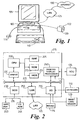
- FIG. 1 illustrates a host computer system in which the host computer is (for example) a Personal Computer, or PC, which operates under the Windows NTTM operating system.
- the host computer 100 is connected to a visual display unit (VDU) 105, a keyboard 110, a mouse 115 and a smartcard reader 120, and a local area network (LAN) 125, which in turn is connected to the Internet 130.
- VDU visual display unit
- LAN local area network
- the smartcard reader is an independent unit, although it may be an integral part of the keyboard.
- the VDU, keyboard, mouse, and trusted switch can be thought of as the human/computer interface (HCI) of the host computer. More specifically, the display, when operating under trusted control, as will be described, can be thought of as part of a 'trusted user interface'.
- Figure 1 also illustrates a smartcard 122 for use in the present embodiment as will be described.
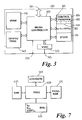
- Figure 2 shows a hardware architecture of the host computer of Figure 1 .
- the host computer 100 comprises a central processing unit (CPU) 200, or main processor, connected to main memory, which comprises RAM 205 and ROM 210, all of which are mounted on a motherboard 215 of the host computer 100.
- the CPU in this case is a PentiumTM processor.
- the CPU is connected via a PCI (Peripheral Component Interconnect) bridge 220 to a PCI bus 225, to which are attached the other main components of the host computer 100.
- the bus 225 comprises appropriate control, address and data portions, which will not be described in detail herein.
- the other main components of the host computer 100 attached to the PCI bus 225 include: a SCSI (small computer system interface) adaptor connected via a SCSI bus 235 to a hard disk drive 2600 and a CD-ROM drive 2605; a LAN (local area network) adaptor 250 for connecting the host computer 100 to a LAN 125, via which the host computer 100 can communicate with other host computers (not shown), such as file servers, print servers or email servers, and the Internet 130; an IO (input/output) device 225, for attaching the keyboard 110, mouse 115 and smartcard reader 120; and a trusted device 260 (which incorporates the trusted display processor function).
- the trusted display processor handles all standard display functions plus a number of further tasks, which will be described in detail below. 'Standard display functions' are those functions that one would normally expect to find in any standard host computer 100, for example a PC operating under the Windows NTTM operating system, for displaying an image associated with the operating system or application software.
- All the main components, in particular the trusted device 260, are preferably also integrated onto the motherboard 215 of the host computer 100, although, sometimes, LAN adapters 250 and SCSI adapters 230 can be of the plugin type.
- BIOS program is located in a special reserved memory area 215, the upper 64K of the first megabyte of the system memory (addresses F ⁇ h to FFFFh), and the main processor is arranged to look at this memory location first, in accordance with an industry wide standard.
- the significant difference between the platform and a conventional platform is that, after reset, the main processor is initially controlled by the trusted device, which then hands control over to the platform-specific BIOS program, which in turn initialises all input/output devices as normal. After the BIOS program has executed, control is handed over as normal by the BIOS program to an operating system program, such as Windows NT (TM), which is typically loaded into main memory from a hard disk drive.
- an operating system program such as Windows NT (TM)
- the main processor 200 is directed to address the trusted component (also described as trusted device) 260 to receive its first instructions.
- the trusted component also described as trusted device
- This change may be made simply by hard-coding a different address into the main processor 200.
- the trusted device 260 may be assigned the standard BIOS program address, in which case there is no need to modify the main processor configuration.
- BIOS boot block It is highly desirable for the BIOS boot block to be contained within the trusted device 260. This prevents subversion of the obtaining of the integrity metric (which could otherwise occur if rogue software processes are present) and prevents rogue software processes creating a situation in which the BIOS (even if correct) fails to build the proper environment for the operating system.
- the trusted device 260 is a single, discrete component, it is envisaged that the functions of the trusted device 260 may alternatively be split into multiple devices on the motherboard, or even integrated into one or more of the existing standard devices of the platform. For example, it is feasible to integrate one or more of the functions of the trusted device into the main processor itself, provided that the functions and their communications cannot be subverted. This, however, would probably require separate leads on the processor for sole use by the trusted functions.
- the trusted device is a hardware device that is adapted for integration into the motherboard 215, it is anticipated that a trusted device may be implemented as a 'removable' device, such as a dongle, which could be attached to a platform when required. Whether the trusted device is integrated or removable is a matter of design choice. However, where the trusted device is separable, a mechanism for providing a logical binding between the trusted device and the platform should be present.
- the trusted device 260 After system reset, the trusted device 260 performs a secure boot process to ensure that the operating system of the platform 100 (including the system clock and the display on the monitor) is running properly and in a secure manner. During the secure boot process, the trusted device 260 acquires an integrity metric of the computing platform 100. The trusted device 260 can also perform secure data transfer and, for example, authentication between it and a smart card via encryption/decryption and signature/verification. The trusted device 260 can also securely enforce various security control policies, such as locking of the user interface. Moreover, in this arrangement the trusted device 260 also acts as a trusted display processor, providing the standard display functions of a display processor and the extra, non-standard functions for providing a trusted user interface.
- the trusted device 260 comprises:
- a certificate typically contains such information, but not the public key of the CA. That public key is typically made available using a 'Public Key Infrastructure' (PKI). Operation of a PKI is well known to those skilled in the art of security.
- PKI Public Key Infrastructure
- the certificate Cert DP is used to supply the public key of the trusted device 260 to third parties in such a way that third parties are confident of the source of the public key and that the public key is a part of a valid public-private key pair. As such, it is unnecessary for a third party to have prior knowledge of, or to need to acquire, the public key of the trusted device 260.
- the certificate T P (or, optionally, a further certificate) contains not only the public key of the trusted device 260 but also an authenticated value of the platform integrity metric measured by the trusted party (TP).
- TP trusted party
- a user of the platform 100 can verify the integrity of the platform 100 by comparing the acquired integrity metric with the authentic integrity metric in the certificate. If there is a match, the user can be confident that the platform 10 has not been subverted. Knowledge of the TP's generally-available public key enables simple verification of the certificate.
- the trusted device 260 is equipped with at least one method of reliably measuring or acquiring the integrity metric of the computing platform 100 with which it is associated.
- the integrity metric is acquired by the measurement function 370 by generating a digest of the BIOS instructions in the BIOS memory.
- Such an acquired integrity metric if verified as described above, gives a potential user of the platform 100 a high level of confidence that the platform 100 has not been subverted at a hardware, or BIOS program, level.
- Other known processes for example virus checkers, will typically be in place to check that the operating system and application program code has not been subverted.
- the measurement function 370 has access to: non-volatile memory 305,345 for storing a hash program 390 and a private key S DP of the trusted device 260, and volatile memory 335 for storing acquired integrity metric in the form of a digest 361.
- the volatile memory 335 may also be used to store the public keys and associated ID labels 360a-360n of one or more authentic smart cards 122 that can be used to gain access to the platform 100.
- the integrity metric includes a Boolean value, which is stored in volatile memory 335 by the measurement function 370, for reasons that will become apparent.
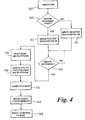
- step 500 at switch-on, the measurement function 370 monitors the activity of the main processor 200 on the PCI bus 225 to determine whether the trusted device 260 is the first memory accessed.
- a main processor would first be directed to the BIOS memory first in order to execute the BIOS program.
- the main processor 200 is directed to the trusted device 260, which acts as a memory.
- step 505 if the trusted device 260 is the first memory accessed, in step 510, the measurement function 370 writes to volatile memory 335 a Boolean value which indicates that the trusted device 260 was the first memory accessed. Otherwise, in step 515, the measurement function writes a Boolean value which indicates that the trusted device 260 was not the first memory accessed.
- the trusted device 260 In the event the trusted device 260 is not the first memory accessed, there is of course a chance that the trusted device 260 will not be accessed at all. This would be the case, for example, if the main processor 200 were manipulated to run the BIOS program first. Under these circumstances, the platform would operate, but would be unable to verify its integrity on demand, since the integrity metric would not be available. Further, if the trusted device 260 were accessed after the BIOS program had been accessed, the Boolean value would clearly indicate lack of integrity of the platform.
- step 520 when (or if) accessed as a memory by the main processor 200, the main processor 200 reads the stored native hash instructions 390 from the measurement function 370 in step 525.
- the hash instructions 390 are passed for processing by the main processor 200 over the data bus 225.
- main processor 200 executes the hash instructions 390 and uses them, in step 535, to compute a digest of the BIOS memory 215, by reading the contents of the BIOS memory 215 and processing those contents according to the hash program.
- step 540 the main processor 200 writes the computed digest 361 to the appropriate non-volatile memory location 335 in the trusted device 260.
- the measurement function 370 in step 545, then calls the BIOS program in the BIOS memory 215, and execution continues in a conventional manner.
- the integrity metric may be calculated, depending upon the scope of the trust required.
- the measurement of the BIOS program's integrity provides a fundamental check on the integrity of a platform's underlying processing environment.
- the integrity metric should be of such a form that it will enable reasoning about the validity of the boot process - the value of the integrity metric can be used to verify whether the platform booted using the correct BIOS.
- individual functional blocks within the BIOS could have their own digest values, with an ensemble BIOS digest being a digest of these individual digests. This enables a policy to state which parts of BIOS operation are critical for an intended purpose, and which are irrelevant (in which case the individual digests must be stored in such a manner that validity of operation under the policy can be established).
- Other integrity checks could involve establishing that various other devices, components or apparatus attached to the platform are present and in correct working order.
- the BIOS programs associated with a SCSI controller could be verified to ensure communications with peripheral equipment could be trusted.
- the integrity of other devices, for example memory devices or coprocessors, on the platform could be verified by enacting fixed challenge/response interactions to ensure consistent results.
- the trusted device 260 is a separable component, some such form of interaction is desirable to provide an appropriate logical binding between the trusted device 260 and the platform.
- the trusted device 260 utilises the data bus as its main means of communication with other parts of the platform, it is feasible to provide alternative communications paths, such as hard-wired paths or optical paths - such an arrangement is described in greater detail below with reference to Figures 8 and 9 . Further, although in the present embodiment the trusted device 260 instructs the main processor 200 to calculate the integrity metric in other embodiments, the trusted device itself is arranged to measure one or more integrity metrics.
- the BIOS boot process includes mechanisms to verify the integrity of the boot process itself.
- Such mechanisms are already known from, for example, Intel's draft "Wired for Management baseline specification v 2.0 - BOOT Integrity Service", and involve calculating digests of software or firmware before loading that software or firmware.
- Such a computed digest is compared with a value stored in a certificate provided by a trusted entity, whose public key is known to the BIOS.
- the software/firmware is then loaded only if the computed value matches the expected value from the certificate, and the certificate has been proven valid by use of the trusted entity's public key. Otherwise, an appropriate exception handling routine is invoked.
- the trusted device 260 may inspect the proper value of the BIOS digest in the certificate and not pass control to the BIOS if the computed digest does not match the proper value. Additionally, or alternatively, the trusted device 260 may inspect the Boolean value and not pass control back to the BIOS if the trusted device 260 was not the first memory accessed. In either of these cases, an appropriate exception handling routine may be invoked.
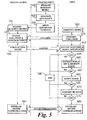
- Figure 5 illustrates the flow of actions by a TP, the trusted device 260 incorporated into a platform, and a user (of a remote platform) who wants to verify the integrity of the trusted platform. It will be appreciated that substantially the same steps as are depicted in Figure 5 are involved when the user is a local user. In either case, the user would typically rely on some form of software application to enact the verification. It would be possible to run the software application on the remote platform or the trusted platform. However, there is a chance that, even on the remote platform, the software application could be subverted in some way. Therefore, it is anticipated that, for a high level of integrity, the software application would reside on a smart card of the user, who would insert the smart card into an appropriate reader for the purposes of verification.
- Figure 5 illustrates the flow of actions for the general case - a more specific flow of actions for verification by a user smart card will be described with reference to Figure 6 further below.
- a TP which vouches for trusted platforms, will inspect the type of the platform to decide whether to vouch for it or not. This will be a matter of policy. If all is well, in step 600, the TP measures the value of integrity metric of the platform. Then, the TP generates a certificate, in step 605, for the platform.
- the certificate is generated by the TP by appending the trusted device's public key, and optionally its ID label, to the measured integrity metric, and signing the string with the TP's private key.
- the trusted device 260 can subsequently prove its identity by using its private key to process some input data received from the user and produce output data, such that the input/output pair is statistically impossible to produce without knowledge of the private key.
- knowledge of the private key forms the basis of identity in this case.
- the disadvantage of using symmetric encryption is that the user would need to share his secret with the trusted device. Further, as a result of the need to share the secret with the user, while symmetric encryption would in principle be sufficient to prove identity to the user, it would insufficient to prove identity to a third party, who could not be entirely sure the verification originated from the trusted device or the user.
- the trusted device 260 is initialised by writing the certificate into the appropriate non-volatile memory locations of the trusted device 260. This is done, preferably, by secure communication with the trusted device 260 after it is installed in the motherboard 215.
- the method of writing the certificate to the trusted device 260 is analogous to the method used to initialise smart cards by writing private keys thereto.
- the secure communications is supported by a 'master key', known only to the TP, that is written to the trusted device (or smart card) during manufacture, and used to enable the writing of data to the trusted device 260; writing of data to the trusted device 260 without knowledge of the master key is not possible.
- the trusted device 260 acquires and stores the integrity metric of the platform.
- a nonce such as a random number
- challenges the trusted device 260 the operating system of the platform, or an appropriate software application, is arranged to recognise the challenge and pass it to the trusted device 260, typically via a BIOS-type call, in an appropriate fashion.
- the nonce is used to protect the user from deception caused by replay of old but genuine signatures (called a 'replay attack') by untrustworthy platforms.
- the process of providing a nonce and verifying the response is an example of the well-known 'challenge/response' process.
- the trusted device 260 receives the challenge and creates an appropriate response. This may be a digest of the measured integrity metric and the nonce, and optionally its ID label. Then, in step 635, the trusted device 260 signs the digest, using its private key, and returns the signed digest, accompanied by the certificate Cert DP , to the user.
- step 640 the user receives the challenge response and verifies the certificate using the well known public key of the TP.
- the user then, in step 650, extracts the trusted device's 260 public key from the certificate and uses it to decrypt the signed digest from the challenge response.
- step 660 the user verifies the nonce inside the challenge response.
- step 670 the user compares the computed integrity metric, which it extracts from the challenge response, with the proper platform integrity metric, which it extracts from the certificate. If any of the foregoing verification steps fails, in steps 645, 655, 665 or 675, the whole process ends in step 680 with no further communications taking place.
- the user and the trusted platform use other protocols to set up secure communications for other data, where the data from the platform is preferably signed by the trusted device 260.
- the challenger becomes aware, through the challenge, both of the value of the platform integrity metric and also of the method by which it was obtained. Both these pieces of information are desirable to allow the challenger to make a proper decision about the integrity of the platform.
- the challenger also has many different options available - it may accept that the integrity metric is recognised as valid in the trusted device 260, or may alternatively only accept that the platform has the relevant level of integrity if the value of the integrity metric is equal to a value held by the challenger (or may hold there to be different levels of trust in these two cases).
- a user employs a smart card 122 to verify a trusted platform.
- the processing engine of a smartcard suitable for use in accordance with the preferred embodiment is illustrated in Figure 7 .
- the processing engine comprises a processor 400 for enacting standard encryption and decryption functions, to support verification of information received from elsewhere.
- the smartcard also comprises non-volatile memory 420, for example flash memory, containing an identifier I SC of the smartcard 122, a private key S SC , used for digitally signing data, and a certificate Cert SC , provided by a trusted third party certification agency, which binds the smartcard with public-private key pairs and includes the corresponding public keys of the smartcard 122 (the same in nature to the certificate Cert DP of the trusted device 260). Further, the smartcard contains 'seal' data SEAL in the non-volatile memory 420, which can be represented graphically by the trusted display processor 260 to indicate to the user that a process is operating securely with the user's smartcard, as will be described in detail below.
- non-volatile memory 420 for example flash memory, containing an identifier I SC of the smartcard 122, a private key S SC , used for digitally signing data, and a certificate Cert SC , provided by a trusted third party certification agency, which binds the smartcard with public-
- the seal data SEAL is in the form of an image pixmap, which was originally selected by the user as a unique identifier, for example an image of the user himself, and loaded into the smartcard 122 using well-known techniques.
- the processor 400 also has access to volatile memory 430, for example RAM, for storing state information (such as received keys) and providing a working area for the processor 400, and an interface 440, for example electrical contacts, for communicating with a smart card reader.
- Seal images can consume relatively large amounts of memory if stored as pixmaps. This may be a distinct disadvantage in circumstances where the image needs to be stored on a smartcard 122, where memory capacity is relatively limited. The memory requirement may be reduced by a number of different techniques.
- the seal image could comprise: a compressed image, which can be decompressed by the trusted device 260; a thumb-nail image that forms the primitive element of a repeating mosaic generated by the trusted device 260; a naturally compressed image, such as a set of alphanumeric characters, which can be displayed by the trusted device 260 as a single large image, or used as a thumb-nail image as above.
- the seal data itself may be in encrypted form and require the trusted device 260 to decrypt the data before it can be displayed.
- the seal data may be an encrypted index, which identifies one of a number of possible images stored by the host computer 100 or a network server. In this case, the index would be fetched by the trusted device 260 across a secure channel and decrypted in order to retrieve and display the correct image.
- the seal data could comprise instructions (for example PostScriptTM instructions) that could be interpreted by an appropriately programmed trusted device 260 to generate an image.
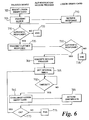
- Figure 6 shows the flow of actions in an example of verification of platform integrity by a user interacting with the trusted platform with a smart card 122.
- the process conveniently implements a challenge/response routine.
- the implementation of an authentication protocol used in the present embodiment is mutual (or 3-step) authentication, as described in ISO/IEC 9798-3, " Information technology - Security techniques - Entity authentication mechanisms; Part 3; Entity authentication using a public key algorithm", International Organization for Standardization, November 12293 .
- ISO/IEC 9798-3 " Information technology - Security techniques - Entity authentication mechanisms; Part 3; Entity authentication using a public key algorithm", International Organization for Standardization, November 12293 .
- 2-step or 4-step as also described in this reference.
- the user inserts their smart card 122 into the smart card reader 120 of the platform in step 700.
- a platform configured for use by users of in this way will typically be operating under the control of its standard operating system and executing the authentication process, which waits for a user to insert their smart card 122.
- the smart card reader 120 being active in this way, such a platform is typically rendered inaccessible to users by 'locking' the user interface (i.e. the screen, keyboard and mouse).
- the trusted device 260 is triggered to attempt mutual authentication in step by generating and transmitting a nonce A to the smart card 122 in step 705.
- a nonce such as a random number, is used to protect the originator from deception caused by replay of old but genuine responses (called a 'replay attack') by untrustworthy third parties.
- the smart card 122 In response, in step 710, the smart card 122 generates and returns a response comprising the concatenation of: the plain text of the nonce A, a new nonce B generated by the smart card 122, an ID of the trusted device 260 and some redundancy; the signature of the plain text, generated by signing the plain text with the private key of the smart card 122; and a certificate containing the ID and the public key of the smart card 122.
- the trusted device 260 authenticates the response by using the public key in the certificate to verify the signature of the plain text in step 715. If the response is not authentic, the process ends in step 720. If the response is authentic, in step 725 the trusted device 260 generates and sends a further response including the concatenation of: the plain text of the nonce A, the nonce B, an ID of the smart card 122 and the acquired integrity metric; the signature of the plain text, generated by signing the plain text using the private key of the trusted device 260; and the certificate comprising the public key of the trusted device 260 and the authentic integrity metric, both signed by the private key of the TP.
- the smart card 122 authenticates this response by using the public key of the TP and comparing the acquired integrity metric with the authentic integrity metric, where a match indicates successful verification, in step 730. If the further response is not authentic, the process ends in step 735.
- both the trusted device 260 has authenticated the smart card 122 and the smart card 122 has verified the integrity of the trusted platform and, in step 740, the authentication process executes the secure process for the user.
- the authentication process can end at this point. However, if a session is to be continued between the user and the trusted platform, it is desirable to ensure that the user remains authenticated to the platform.
- the authentication process sets an interval timer in step 745. Thereafter, using appropriate operating system interrupt routines, the authentication process services the interval timer periodically to detect when the timer meets or exceeds a pre-determined timeout period in step 750.
- the authentication process and the interval timer run in parallel with the secure process.
- the authentication process triggers the trusted device 260 to re-authenticate the smart card 122, by transmitting a challenge for the smart card 122 to identify itself in step 760.
- the smart card 122 returns a certificate including its ID and its public key in step 765.
- step 770 if there is no response (for example, as a result of the smart card 122 having been removed) or the certificate is no longer valid for some reason (for example, the smart card has been replaced with a different smart card), the session is terminated by the trusted device 260 in step 775. Otherwise, in step 770, the process from step 745 repeats by resetting the interval timer.
- the user profile is encrypted and signed to protect privacy and integrity. If so, a secure data transfer protocol may be needed between the trusted device 260 and the smart card 122.
- a secure data transfer protocol may be needed between the trusted device 260 and the smart card 122.
- a possible implementation, which may be used in the present embodiment, is secure key transport mechanisms from ISO/IEC DIS 11770-3, " Information technology - Security techniques - Key management - Part 3: Mechanisms using asymmetric techniques", International Organization for Standardization, March 1997 .
- the trusted device 260 lends its identity and trusted processes to the host computer and the trusted display processor has those properties by virtue of its tamper-resistance, resistance to forgery, and resistance to counterfeiting. Only selected entities with appropriate authentication mechanisms are able to influence the processes running inside the trusted device 260. Neither an ordinary user of the host computer, nor any ordinary user or any ordinary entity connected via a network to the host computer may access or interfere with the processes running inside the trusted device 260.
- the trusted device 260 has the property of being "inviolate”.
- the frame buffer memory 315 is only accessible by the trusted display processor 260 itself, and not by the CPU 200. This is an important feature of the preferred embodiment, since it is imperative that the CPU 200, or, more importantly, subversive application programs or viruses, cannot modify the pixmap during a trusted operation. Of course, it would be feasible to provide the same level of security even if the CPU 200 could directly access the frame buffer memory 315, as long as the trusted display processor 260 were arranged to have ultimate control over when the CPU 200 could access the frame buffer memory 315. Obviously, this latter scheme would be more difficult to implement.
- an application program which wishes to display a particular image, makes an appropriate call, via a graphical API (application programming interface), to the operating system.
- An API typically provides a standard interface for an application program to access specific underlying display functions, such as provided by Windows NTTM, for the purposes of displaying an image.
- the API call causes the operating system to make respective graphics driver library routine calls, which result in the generation of graphics primitives specific to a display processor, which in this case is the trusted display processor 260.
- These graphics primitives are finally passed by the CPU 200 to the trusted display processor 260.
- Example graphics primitives might be 'draw a line from point x to point y with thickness z' or 'fill an area bounded by points w, x, y and z with a colour a'.
- the control program of the microcontroller 300 controls the microcontroller to provide the standard display functions to process the received graphics primitives, specifically:
- control program includes a function to mix display image data deceived from the CPU 200 with trusted image data to form a single pixmap.
- the control program also manages interaction with the cryptographic processor.
- the trusted display processor 260 forms a part of the overall 'display system' of the host computer 100; the other parts typically being display functions of the operating system, which can be 'called' by application programs and which access the standard display functions of the graphics processor, and the VDU 105.
- the 'display system' of a host computer 100 comprises every piece of hardware or functionality which is concerned with displaying an image.
- FIG 8 illustrates the physical system.
- Trusted platform 800 has the elements of trusted platform 100 described in Figure 1 (and below). Only elements of specific relevance to the present invention are shown in Figure 8 .
- the system according to the invention has certain additional elements, as are described below.
- the trusted component (TC) 803 is in the path between normal computer CPU 804 and the display 801. This enables the TC 103 to write reliably to the display, without fear of subversion from normal software, including the operating system is the name described with reference to Figure 1 to 7 .
- the host computer is connected to a keyboard 805 that has a built-in smart card reader 808.
- a smart card (SC) 806 is plugged into the keyboard and can be accessed by the host CPU 804 and the TC 803.
- the smart card 806 is able to communicate securely with the TC 803.
- the biometric reader (BR 807 is connected to the keyboard and can be accessed by the host CPU 804 and the TC 803.
- the biometric reader may in alternative arrangements be incorporated physically into the smart card reader 808 or the smart card 806 or connected in some other way to the host CPU 804.
- biometric reader 808 must be capable of measuring a parameter individual to a user, and providing data which will allow the user to be identified, generally by matching against earlier recorded data measured for the same user.
- fingerprint readers iris pattern detectors
- signature readers iris pattern detectors
- voice print detectors and many others - the present invention can employ any of the above.
- the smart card 806 has a cryptographic identity (as shown in Figure 7 ). It is preferred also (though again not essential in all embodiments) that the biometric reader 807 has, in addition to its biometric functionality, the functionality of a secure token as shown in Figure 7 - that is, a cryptographic identity, functionality to allow it to authenticate a trusted platform or secure token, and each cryptographic functionality as needed to allow secure communication with another system element.
- FIG. 9 illustrates diagrammatically the transaction between TC, SC and BR.
- the TC Upon sign-on using the smart card 806, there is mutual authentication between the TC 803 and the smart card 901, 902 and certificates are exchanged, with the smart card checking that the integrity of the TC is satisfactory before proceeding further 908.
- the TC stores a unique identity for the smart card, which is preferably the certificate of the smart card public (verification) key.
- a bio code 1016 is transferred from SC to TC 903 encrypted with a symmetric session key set up for this purpose.
- comparison software is also sent from the SC to the TC 910.
- the TC authenticates to the BR and optionally BR authenticates to TC [904, 905] and certificates are exchanged.
- this can be combined with an integrity check by the TC on the BR 909 or vice versa.
- the biometric data is then sent from BR to TC, encrypted with a symmetric session key set up for this purpose 906.
- the TC then compares the biometric data with the bio code, using trusted biometric comparison software 1011.
- the TC sends the SC the result of the biometric match, signed using the TC's private signing key 907.
- the TC or the SC take a metering record of the transaction 1014, 1015.
- Steps of authentication are essentially as shown above with reference to Figures 5 and 6 .
- Communication using a symmetric key is well-known in the cryptographic art, and does not need to be described further here
- Figure 10 is a logical diagram of TC 803, SC 806 and BR 807,
- a certification authority (CA) issues certificates corresponding to public and private key pairs associated with the TC and SC 1005, 1006, 1007 and possibly the BR 1008.
- Each end user has a smart card 806 equipped with an RSA key pair for signature and verification 1003.
- the trusted component has two RSA key pairs respectively for signature-verification and encryption-decryption 1001,1002.
- the BR need not, in all embodiments, be trustworthy or secure (although this is preferable).
- the biometric reader does not itself implement the biometric algorithm but only reads the biometric data from the user.
- the reader is created by a trusted entity and this means it has been given a public/private key pair 1004 supported by a CA's certificate.
- the biometric reader can be of any kind (for example iris recognition, retina, or voice).
- a preferred protocol that allows the SC and TC to work together to authenticate the user is as follows (stages A - D):
Landscapes
- Engineering & Computer Science (AREA)
- Theoretical Computer Science (AREA)
- Physics & Mathematics (AREA)
- Computer Security & Cryptography (AREA)
- Business, Economics & Management (AREA)
- General Physics & Mathematics (AREA)
- Accounting & Taxation (AREA)
- Software Systems (AREA)
- General Business, Economics & Management (AREA)
- Strategic Management (AREA)
- Computer Hardware Design (AREA)
- General Engineering & Computer Science (AREA)
- Finance (AREA)
- Computer Networks & Wireless Communication (AREA)
- Human Computer Interaction (AREA)
- Microelectronics & Electronic Packaging (AREA)
- Storage Device Security (AREA)
Applications Claiming Priority (3)
| Application Number | Priority Date | Filing Date | Title |
|---|---|---|---|
| GBGB9923802.4A GB9923802D0 (en) | 1999-10-08 | 1999-10-08 | User authentication |
| GB9923802 | 1999-10-08 | ||
| PCT/GB2000/003850 WO2001027723A1 (en) | 1999-10-08 | 2000-10-06 | Trusted computing platform with biometric authentication |
Publications (2)
| Publication Number | Publication Date |
|---|---|
| EP1224518A1 EP1224518A1 (en) | 2002-07-24 |
| EP1224518B1 true EP1224518B1 (en) | 2009-07-15 |
Family
ID=10862343
Family Applications (1)
| Application Number | Title | Priority Date | Filing Date |
|---|---|---|---|
| EP00964537A Expired - Lifetime EP1224518B1 (en) | 1999-10-08 | 2000-10-06 | Trusted computing platform with biometric authentication |
Country Status (5)
| Country | Link |
|---|---|
| EP (1) | EP1224518B1 (enExample) |
| JP (1) | JP2003511784A (enExample) |
| DE (1) | DE60042557D1 (enExample) |
| GB (1) | GB9923802D0 (enExample) |
| WO (1) | WO2001027723A1 (enExample) |
Cited By (3)
| Publication number | Priority date | Publication date | Assignee | Title |
|---|---|---|---|---|
| US20140282945A1 (en) * | 2013-03-15 | 2014-09-18 | Intel Corporation | Technologies for secure storage and use of biometric authentication information |
| US9160730B2 (en) | 2013-03-15 | 2015-10-13 | Intel Corporation | Continuous authentication confidence module |
| US9590966B2 (en) | 2013-03-15 | 2017-03-07 | Intel Corporation | Reducing authentication confidence over time based on user history |
Families Citing this family (92)
| Publication number | Priority date | Publication date | Assignee | Title |
|---|---|---|---|---|
| US6633963B1 (en) | 2000-03-31 | 2003-10-14 | Intel Corporation | Controlling access to multiple memory zones in an isolated execution environment |
| US7194634B2 (en) | 2000-03-31 | 2007-03-20 | Intel Corporation | Attestation key memory device and bus |
| US6934817B2 (en) | 2000-03-31 | 2005-08-23 | Intel Corporation | Controlling access to multiple memory zones in an isolated execution environment |
| US7111176B1 (en) | 2000-03-31 | 2006-09-19 | Intel Corporation | Generating isolated bus cycles for isolated execution |
| US7089418B1 (en) | 2000-03-31 | 2006-08-08 | Intel Corporation | Managing accesses in a processor for isolated execution |
| US6795905B1 (en) | 2000-03-31 | 2004-09-21 | Intel Corporation | Controlling accesses to isolated memory using a memory controller for isolated execution |
| US7013484B1 (en) | 2000-03-31 | 2006-03-14 | Intel Corporation | Managing a secure environment using a chipset in isolated execution mode |
| US7013481B1 (en) | 2000-03-31 | 2006-03-14 | Intel Corporation | Attestation key memory device and bus |
| US6678825B1 (en) | 2000-03-31 | 2004-01-13 | Intel Corporation | Controlling access to multiple isolated memories in an isolated execution environment |
| US6976162B1 (en) | 2000-06-28 | 2005-12-13 | Intel Corporation | Platform and method for establishing provable identities while maintaining privacy |
| US6986052B1 (en) | 2000-06-30 | 2006-01-10 | Intel Corporation | Method and apparatus for secure execution using a secure memory partition |
| US7793111B1 (en) | 2000-09-28 | 2010-09-07 | Intel Corporation | Mechanism to handle events in a machine with isolated execution |
| US7389427B1 (en) | 2000-09-28 | 2008-06-17 | Intel Corporation | Mechanism to secure computer output from software attack using isolated execution |
| US7215781B2 (en) | 2000-12-22 | 2007-05-08 | Intel Corporation | Creation and distribution of a secret value between two devices |
| US7035963B2 (en) | 2000-12-27 | 2006-04-25 | Intel Corporation | Method for resolving address space conflicts between a virtual machine monitor and a guest operating system |
| US7117376B2 (en) | 2000-12-28 | 2006-10-03 | Intel Corporation | Platform and method of creating a secure boot that enforces proper user authentication and enforces hardware configurations |
| US7398549B2 (en) * | 2001-05-18 | 2008-07-08 | Imprivata, Inc. | Biometric authentication with security against eavesdropping |
| US7191440B2 (en) | 2001-08-15 | 2007-03-13 | Intel Corporation | Tracking operating system process and thread execution and virtual machine execution in hardware or in a virtual machine monitor |
| US7024555B2 (en) | 2001-11-01 | 2006-04-04 | Intel Corporation | Apparatus and method for unilaterally loading a secure operating system within a multiprocessor environment |
| US7003669B2 (en) * | 2001-12-17 | 2006-02-21 | Monk Bruce C | Document and bearer verification system |
| US7103771B2 (en) * | 2001-12-17 | 2006-09-05 | Intel Corporation | Connecting a virtual token to a physical token |
| AU2003219695A1 (en) * | 2002-01-30 | 2003-09-02 | Tecsec, Inc. | Access system utilizing multiple factor identification and authentication |
| US7480806B2 (en) * | 2002-02-22 | 2009-01-20 | Intel Corporation | Multi-token seal and unseal |
| GB2386803A (en) * | 2002-03-20 | 2003-09-24 | Nexus Ltd | Protecting a digital certificate stored on a physical token using biometric authentication |
| GB2386713B (en) * | 2002-03-22 | 2005-08-31 | Hewlett Packard Co | Apparatus for distributed access control |
| US7069442B2 (en) | 2002-03-29 | 2006-06-27 | Intel Corporation | System and method for execution of a secured environment initialization instruction |
| US7028149B2 (en) | 2002-03-29 | 2006-04-11 | Intel Corporation | System and method for resetting a platform configuration register |
| US7127548B2 (en) | 2002-04-16 | 2006-10-24 | Intel Corporation | Control register access virtualization performance improvement in the virtual-machine architecture |
| US7142674B2 (en) | 2002-06-18 | 2006-11-28 | Intel Corporation | Method of confirming a secure key exchange |
| US7124327B2 (en) | 2002-06-29 | 2006-10-17 | Intel Corporation | Control over faults occurring during the operation of guest software in the virtual-machine architecture |
| RU2343639C2 (ru) * | 2002-07-25 | 2009-01-10 | Байо-Ки Интернэшнл, Инк. | Высоконадежное биометрическое устройство |
| US20040034784A1 (en) * | 2002-08-15 | 2004-02-19 | Fedronic Dominique Louis Joseph | System and method to facilitate separate cardholder and system access to resources controlled by a smart card |
| EP1418483A1 (de) * | 2002-08-23 | 2004-05-12 | Siemens Aktiengesellschaft | Überprüfung und Einräumung von Nutzungsberechtigungen |
| US7165181B2 (en) | 2002-11-27 | 2007-01-16 | Intel Corporation | System and method for establishing trust without revealing identity |
| US7318141B2 (en) | 2002-12-17 | 2008-01-08 | Intel Corporation | Methods and systems to control virtual machines |
| US20040187029A1 (en) | 2003-03-21 | 2004-09-23 | Ting David M. T. | System and method for data and request filtering |
| US7941849B2 (en) | 2003-03-21 | 2011-05-10 | Imprivata, Inc. | System and method for audit tracking |
| US7660880B2 (en) | 2003-03-21 | 2010-02-09 | Imprivata, Inc. | System and method for automated login |
| WO2004092864A2 (en) * | 2003-04-14 | 2004-10-28 | Matsushita Electric Industrial Co., Ltd. | Client-server authentication using the challenge-response principle |
| GB0309182D0 (en) | 2003-04-23 | 2003-05-28 | Hewlett Packard Development Co | Security method and apparatus using biometric data |
| US20050004924A1 (en) * | 2003-04-29 | 2005-01-06 | Adrian Baldwin | Control of access to databases |
| US20040249765A1 (en) * | 2003-06-06 | 2004-12-09 | Neopost Inc. | Use of a kiosk to provide verifiable identification using cryptographic identifiers |
| DE20309254U1 (de) | 2003-06-16 | 2003-11-06 | SCM Microsystems GmbH, 85737 Ismaning | Zugangssystem |
| US7415708B2 (en) | 2003-06-26 | 2008-08-19 | Intel Corporation | Virtual machine management using processor state information |
| US7287197B2 (en) | 2003-09-15 | 2007-10-23 | Intel Corporation | Vectoring an interrupt or exception upon resuming operation of a virtual machine |
| US7424709B2 (en) | 2003-09-15 | 2008-09-09 | Intel Corporation | Use of multiple virtual machine monitors to handle privileged events |
| US7739521B2 (en) | 2003-09-18 | 2010-06-15 | Intel Corporation | Method of obscuring cryptographic computations |
| US7610611B2 (en) | 2003-09-19 | 2009-10-27 | Moran Douglas R | Prioritized address decoder |
| US7237051B2 (en) | 2003-09-30 | 2007-06-26 | Intel Corporation | Mechanism to control hardware interrupt acknowledgement in a virtual machine system |
| US7177967B2 (en) | 2003-09-30 | 2007-02-13 | Intel Corporation | Chipset support for managing hardware interrupts in a virtual machine system |
| US20050080934A1 (en) | 2003-09-30 | 2005-04-14 | Cota-Robles Erik C. | Invalidating translation lookaside buffer entries in a virtual machine (VM) system |
| EP1680768A1 (en) * | 2003-10-16 | 2006-07-19 | SCM Microsystems, Inc. | Access control system |
| US7636844B2 (en) | 2003-11-17 | 2009-12-22 | Intel Corporation | Method and system to provide a trusted channel within a computer system for a SIM device |
| US8156343B2 (en) | 2003-11-26 | 2012-04-10 | Intel Corporation | Accessing private data about the state of a data processing machine from storage that is publicly accessible |
| US8037314B2 (en) | 2003-12-22 | 2011-10-11 | Intel Corporation | Replacing blinded authentication authority |
| US20050149738A1 (en) * | 2004-01-02 | 2005-07-07 | Targosky David G. | Biometric authentication system and method for providing access to a KVM system |
| US7356735B2 (en) | 2004-03-30 | 2008-04-08 | Intel Corporation | Providing support for single stepping a virtual machine in a virtual machine environment |
| US7620949B2 (en) | 2004-03-31 | 2009-11-17 | Intel Corporation | Method and apparatus for facilitating recognition of an open event window during operation of guest software in a virtual machine environment |
| US9384338B2 (en) | 2004-06-09 | 2016-07-05 | Genkey Netherlands B.V. | Architectures for privacy protection of biometric templates |
| US7490070B2 (en) | 2004-06-10 | 2009-02-10 | Intel Corporation | Apparatus and method for proving the denial of a direct proof signature |
| US20050289343A1 (en) * | 2004-06-23 | 2005-12-29 | Sun Microsystems, Inc. | Systems and methods for binding a hardware component and a platform |
| US7305592B2 (en) | 2004-06-30 | 2007-12-04 | Intel Corporation | Support for nested fault in a virtual machine environment |
| JP4628722B2 (ja) * | 2004-08-19 | 2011-02-09 | 富士通株式会社 | 照合システム及び照合システムのプログラムチエック方法 |
| JP4664644B2 (ja) * | 2004-10-08 | 2011-04-06 | 富士通株式会社 | 生体認証装置及び端末 |
| JP4616611B2 (ja) * | 2004-10-08 | 2011-01-19 | 富士通株式会社 | 生体認証装置 |
| US8037318B2 (en) | 2004-11-17 | 2011-10-11 | Oracle America, Inc. | System and methods for dependent trust in a computer system |
| US8924728B2 (en) | 2004-11-30 | 2014-12-30 | Intel Corporation | Apparatus and method for establishing a secure session with a device without exposing privacy-sensitive information |
| US8533777B2 (en) | 2004-12-29 | 2013-09-10 | Intel Corporation | Mechanism to determine trust of out-of-band management agents |
| US7395405B2 (en) | 2005-01-28 | 2008-07-01 | Intel Corporation | Method and apparatus for supporting address translation in a virtual machine environment |
| FR2882878B1 (fr) | 2005-03-07 | 2007-04-27 | Christophe Richard | Dispositif, procede et systeme de securite pour transactions financieres, reposant sur l'identification d'un individu grace a son profil biometrique, et utilisant une carte a microprocesseur |
| FR2884377B1 (fr) * | 2005-04-06 | 2007-07-20 | Viaccess Sa | Procede d'authentification d'un utilisateur d'un contenu numerique |
| US7802111B1 (en) | 2005-04-27 | 2010-09-21 | Oracle America, Inc. | System and method for limiting exposure of cryptographic keys protected by a trusted platform module |
| JP4685532B2 (ja) * | 2005-07-14 | 2011-05-18 | 日立オムロンターミナルソリューションズ株式会社 | 生体認証システム |
| US7809957B2 (en) | 2005-09-29 | 2010-10-05 | Intel Corporation | Trusted platform module for generating sealed data |
| CN1859096B (zh) | 2005-10-22 | 2011-04-13 | 华为技术有限公司 | 一种安全认证系统及方法 |
| JP2008046906A (ja) * | 2006-08-17 | 2008-02-28 | Toppan Printing Co Ltd | Icカード、及び生体情報登録及び認証システム |
| US8914847B2 (en) | 2007-06-15 | 2014-12-16 | Microsoft Corporation | Multiple user authentications on a communications device |
| US20090070593A1 (en) * | 2007-09-07 | 2009-03-12 | Authentec, Inc. | Finger sensing apparatus using unique session key and associated methods |
| US8325989B2 (en) * | 2007-09-24 | 2012-12-04 | Accenture Global Services Limited | Smart identity system |
| JP5282477B2 (ja) | 2008-08-12 | 2013-09-04 | 富士通株式会社 | 認証方法、プログラム、及び認証装置 |
| JP2010067085A (ja) * | 2008-09-11 | 2010-03-25 | Ricoh Co Ltd | 情報処理システム、外付け機器、プラットフォーム起動方法、プログラム、および記憶媒体 |
| GB2465782B (en) | 2008-11-28 | 2016-04-13 | Univ Nottingham Trent | Biometric identity verification |
| US10257191B2 (en) | 2008-11-28 | 2019-04-09 | Nottingham Trent University | Biometric identity verification |
| JP2010140174A (ja) * | 2008-12-10 | 2010-06-24 | Kddi Corp | 生体認証方法、ユーザ識別モジュールカード及びプログラム |
| US8544092B2 (en) * | 2009-03-12 | 2013-09-24 | International Business Machines Corporation | Integrity verification using a peripheral device |
| EP2696306A1 (en) * | 2012-07-30 | 2014-02-12 | Eka A/S | System and device for authenticating a user |
| JP6096301B2 (ja) * | 2012-10-25 | 2017-03-15 | インテル コーポレイション | ファームウェアにおける盗難防止 |
| FR3033205B1 (fr) | 2015-02-27 | 2018-04-06 | C.E.S.A.M.E.S Groupe | Procede de transaction sans support physique d'un identifiant de securite et sans jeton, securise par decouplage structurel des identifiants personnels et de services. |
| JP6610289B2 (ja) * | 2016-01-26 | 2019-11-27 | 富士通コネクテッドテクノロジーズ株式会社 | 虹彩認証装置 |
| US10834589B2 (en) | 2017-10-27 | 2020-11-10 | International Business Machines Corporation | Digital data transfer between devices |
| US11232429B2 (en) | 2018-12-19 | 2022-01-25 | Paypal, Inc. | Automated data tokenization through networked sensors |
| FR3116132A1 (fr) | 2020-11-09 | 2022-05-13 | A3Bc Group | Procede de d’authentification securise par le decouplage structurel des identifiants personnels et de services |
Family Cites Families (6)
| Publication number | Priority date | Publication date | Assignee | Title |
|---|---|---|---|---|
| US4993068A (en) * | 1989-11-27 | 1991-02-12 | Motorola, Inc. | Unforgeable personal identification system |
| US5473692A (en) * | 1994-09-07 | 1995-12-05 | Intel Corporation | Roving software license for a hardware agent |
| US5613012A (en) * | 1994-11-28 | 1997-03-18 | Smarttouch, Llc. | Tokenless identification system for authorization of electronic transactions and electronic transmissions |
| US6003135A (en) * | 1997-06-04 | 1999-12-14 | Spyrus, Inc. | Modular security device |
| JPH1139158A (ja) * | 1997-07-18 | 1999-02-12 | Nippon Telegr & Teleph Corp <Ntt> | 実行プログラムの保護方法およびその装置 |
| IL140357A0 (en) * | 1998-06-27 | 2002-02-10 | Lci Smartpen Nv | Apparatus and method for end-to-end authentication using biometric data |
-
1999
- 1999-10-08 GB GBGB9923802.4A patent/GB9923802D0/en not_active Ceased
-
2000
- 2000-10-06 DE DE60042557T patent/DE60042557D1/de not_active Expired - Lifetime
- 2000-10-06 EP EP00964537A patent/EP1224518B1/en not_active Expired - Lifetime
- 2000-10-06 WO PCT/GB2000/003850 patent/WO2001027723A1/en not_active Ceased
- 2000-10-06 JP JP2001530671A patent/JP2003511784A/ja active Pending
Cited By (8)
| Publication number | Priority date | Publication date | Assignee | Title |
|---|---|---|---|---|
| US20140282945A1 (en) * | 2013-03-15 | 2014-09-18 | Intel Corporation | Technologies for secure storage and use of biometric authentication information |
| US9137247B2 (en) * | 2013-03-15 | 2015-09-15 | Intel Corporation | Technologies for secure storage and use of biometric authentication information |
| US9160730B2 (en) | 2013-03-15 | 2015-10-13 | Intel Corporation | Continuous authentication confidence module |
| US9590966B2 (en) | 2013-03-15 | 2017-03-07 | Intel Corporation | Reducing authentication confidence over time based on user history |
| US9628478B2 (en) | 2013-03-15 | 2017-04-18 | Intel Corporation | Technologies for secure storage and use of biometric authentication information |
| US9762566B2 (en) | 2013-03-15 | 2017-09-12 | Intel Corporation | Reducing authentication confidence over time based on user history |
| US9871779B2 (en) | 2013-03-15 | 2018-01-16 | Intel Corporation | Continuous authentication confidence module |
| US10009327B2 (en) | 2013-03-15 | 2018-06-26 | Intel Corporation | Technologies for secure storage and use of biometric authentication information |
Also Published As
| Publication number | Publication date |
|---|---|
| GB9923802D0 (en) | 1999-12-08 |
| JP2003511784A (ja) | 2003-03-25 |
| WO2001027723A1 (en) | 2001-04-19 |
| EP1224518A1 (en) | 2002-07-24 |
| DE60042557D1 (de) | 2009-08-27 |
Similar Documents
| Publication | Publication Date | Title |
|---|---|---|
| EP1224518B1 (en) | Trusted computing platform with biometric authentication | |
| JP4812168B2 (ja) | 信用コンピューティング・プラットフォーム | |
| US7779267B2 (en) | Method and apparatus for using a secret in a distributed computing system | |
| US7096204B1 (en) | Electronic commerce system | |
| US9940453B2 (en) | Method and system for securing user access, data at rest and sensitive transactions using biometrics for mobile devices with protected, local templates | |
| EP1224516B1 (en) | Trusted computing platform for restricting use of data | |
| JP4603167B2 (ja) | コンピューティング装置のモジュール間通信 | |
| US7069439B1 (en) | Computing apparatus and methods using secure authentication arrangements | |
| US7457951B1 (en) | Data integrity monitoring in trusted computing entity | |
| US7194623B1 (en) | Data event logging in computing platform | |
| EP1159662B2 (en) | Smartcard user interface for trusted computing platform | |
| US20040243801A1 (en) | Trusted device |
Legal Events
| Date | Code | Title | Description |
|---|---|---|---|
| PUAI | Public reference made under article 153(3) epc to a published international application that has entered the european phase |
Free format text: ORIGINAL CODE: 0009012 |
|
| 17P | Request for examination filed |
Effective date: 20020404 |
|
| AK | Designated contracting states |
Kind code of ref document: A1 Designated state(s): AT BE CH CY DE DK ES FI FR GB GR IE IT LI LU MC NL PT SE |
|
| AX | Request for extension of the european patent |
Free format text: AL;LT;LV;MK;RO;SI |
|
| RBV | Designated contracting states (corrected) |
Designated state(s): DE FR GB |
|
| 17Q | First examination report despatched |
Effective date: 20060817 |
|
| 17Q | First examination report despatched |
Effective date: 20060817 |
|
| RIC1 | Information provided on ipc code assigned before grant |
Ipc: G06F 21/20 20060101AFI20081217BHEP Ipc: G07C 9/00 20060101ALI20081217BHEP |
|
| GRAP | Despatch of communication of intention to grant a patent |
Free format text: ORIGINAL CODE: EPIDOSNIGR1 |
|
| GRAS | Grant fee paid |
Free format text: ORIGINAL CODE: EPIDOSNIGR3 |
|
| GRAA | (expected) grant |
Free format text: ORIGINAL CODE: 0009210 |
|
| AK | Designated contracting states |
Kind code of ref document: B1 Designated state(s): DE FR GB |
|
| REG | Reference to a national code |
Ref country code: GB Ref legal event code: FG4D |
|
| REF | Corresponds to: |
Ref document number: 60042557 Country of ref document: DE Date of ref document: 20090827 Kind code of ref document: P |
|
| PLBE | No opposition filed within time limit |
Free format text: ORIGINAL CODE: 0009261 |
|
| STAA | Information on the status of an ep patent application or granted ep patent |
Free format text: STATUS: NO OPPOSITION FILED WITHIN TIME LIMIT |
|
| 26N | No opposition filed |
Effective date: 20100416 |
|
| REG | Reference to a national code |
Ref country code: GB Ref legal event code: 732E Free format text: REGISTERED BETWEEN 20120329 AND 20120404 |
|
| PGFP | Annual fee paid to national office [announced via postgrant information from national office to epo] |
Ref country code: FR Payment date: 20121107 Year of fee payment: 13 Ref country code: DE Payment date: 20121029 Year of fee payment: 13 |
|
| PGFP | Annual fee paid to national office [announced via postgrant information from national office to epo] |
Ref country code: GB Payment date: 20121025 Year of fee payment: 13 |
|
| REG | Reference to a national code |
Ref country code: DE Ref legal event code: R119 Ref document number: 60042557 Country of ref document: DE |
|
| GBPC | Gb: european patent ceased through non-payment of renewal fee |
Effective date: 20131006 |
|
| REG | Reference to a national code |
Ref country code: DE Ref legal event code: R079 Ref document number: 60042557 Country of ref document: DE Free format text: PREVIOUS MAIN CLASS: G06F0021200000 Ipc: G06F0021000000 |
|
| PG25 | Lapsed in a contracting state [announced via postgrant information from national office to epo] |
Ref country code: GB Free format text: LAPSE BECAUSE OF NON-PAYMENT OF DUE FEES Effective date: 20131006 |
|
| REG | Reference to a national code |
Ref country code: FR Ref legal event code: ST Effective date: 20140630 |
|
| REG | Reference to a national code |
Ref country code: DE Ref legal event code: R079 Ref document number: 60042557 Country of ref document: DE Free format text: PREVIOUS MAIN CLASS: G06F0021200000 Ipc: G06F0021000000 Effective date: 20140718 Ref country code: DE Ref legal event code: R119 Ref document number: 60042557 Country of ref document: DE Effective date: 20140501 |
|
| PG25 | Lapsed in a contracting state [announced via postgrant information from national office to epo] |
Ref country code: FR Free format text: LAPSE BECAUSE OF NON-PAYMENT OF DUE FEES Effective date: 20131031 Ref country code: DE Free format text: LAPSE BECAUSE OF NON-PAYMENT OF DUE FEES Effective date: 20140501 |