EP1224324B1 - Two-hybrid screening method employing the bacterial transcriptional activator sigma-54 - Google Patents
Two-hybrid screening method employing the bacterial transcriptional activator sigma-54 Download PDFInfo
- Publication number
- EP1224324B1 EP1224324B1 EP00958835A EP00958835A EP1224324B1 EP 1224324 B1 EP1224324 B1 EP 1224324B1 EP 00958835 A EP00958835 A EP 00958835A EP 00958835 A EP00958835 A EP 00958835A EP 1224324 B1 EP1224324 B1 EP 1224324B1
- Authority
- EP
- European Patent Office
- Prior art keywords
- protein
- nucleic acid
- nifa
- hybrid
- activator
- Prior art date
- Legal status (The legal status is an assumption and is not a legal conclusion. Google has not performed a legal analysis and makes no representation as to the accuracy of the status listed.)
- Expired - Lifetime
Links
- 238000000034 method Methods 0.000 title claims description 42
- 108091006106 transcriptional activators Proteins 0.000 title claims description 20
- 230000001580 bacterial effect Effects 0.000 title claims description 19
- 238000010396 two-hybrid screening Methods 0.000 title description 7
- 108090000623 proteins and genes Proteins 0.000 claims abstract description 118
- 102000004169 proteins and genes Human genes 0.000 claims abstract description 86
- 230000027455 binding Effects 0.000 claims abstract description 55
- 238000012216 screening Methods 0.000 claims abstract description 14
- 108091006088 activator proteins Proteins 0.000 claims abstract description 13
- 238000013518 transcription Methods 0.000 claims description 72
- 230000035897 transcription Effects 0.000 claims description 72
- 150000007523 nucleic acids Chemical class 0.000 claims description 68
- 108090000765 processed proteins & peptides Proteins 0.000 claims description 57
- 102000039446 nucleic acids Human genes 0.000 claims description 56
- 108020004707 nucleic acids Proteins 0.000 claims description 56
- 230000004913 activation Effects 0.000 claims description 54
- 229920001184 polypeptide Polymers 0.000 claims description 52
- 102000004196 processed proteins & peptides Human genes 0.000 claims description 52
- 239000012190 activator Substances 0.000 claims description 38
- 108020004414 DNA Proteins 0.000 claims description 34
- 108700008625 Reporter Genes Proteins 0.000 claims description 34
- 230000014509 gene expression Effects 0.000 claims description 31
- 102000004163 DNA-directed RNA polymerases Human genes 0.000 claims description 30
- 108090000626 DNA-directed RNA polymerases Proteins 0.000 claims description 29
- 108091007494 Nucleic acid- binding domains Proteins 0.000 claims description 26
- 101710154050 Nif-specific regulatory protein Proteins 0.000 claims description 24
- 230000003993 interaction Effects 0.000 claims description 24
- 239000013598 vector Substances 0.000 claims description 24
- 230000001419 dependent effect Effects 0.000 claims description 20
- 230000003213 activating effect Effects 0.000 claims description 19
- 241000894006 Bacteria Species 0.000 claims description 18
- 230000004044 response Effects 0.000 claims description 17
- 238000005452 bending Methods 0.000 claims description 16
- 241000588724 Escherichia coli Species 0.000 claims description 14
- 238000001727 in vivo Methods 0.000 claims description 14
- 101000709520 Chlamydia trachomatis serovar L2 (strain 434/Bu / ATCC VR-902B) Atypical response regulator protein ChxR Proteins 0.000 claims description 11
- 230000029279 positive regulation of transcription, DNA-dependent Effects 0.000 claims description 11
- 108010015268 Integration Host Factors Proteins 0.000 claims description 10
- 102000034356 gene-regulatory proteins Human genes 0.000 claims description 10
- 108091006104 gene-regulatory proteins Proteins 0.000 claims description 10
- 108091028043 Nucleic acid sequence Proteins 0.000 claims description 9
- 238000012360 testing method Methods 0.000 claims description 9
- 241000893512 Aquifex aeolicus Species 0.000 claims description 8
- 241000607626 Vibrio cholerae Species 0.000 claims description 8
- 230000002103 transcriptional effect Effects 0.000 claims description 8
- 229940118696 vibrio cholerae Drugs 0.000 claims description 8
- 230000002503 metabolic effect Effects 0.000 claims description 7
- 230000004850 protein–protein interaction Effects 0.000 claims description 7
- 241000191023 Rhodobacter capsulatus Species 0.000 claims description 6
- 230000003115 biocidal effect Effects 0.000 claims description 6
- 238000000338 in vitro Methods 0.000 claims description 6
- 101150066555 lacZ gene Proteins 0.000 claims description 6
- 230000003827 upregulation Effects 0.000 claims description 6
- 241000589149 Azotobacter vinelandii Species 0.000 claims description 5
- 239000012634 fragment Substances 0.000 claims description 5
- 244000063299 Bacillus subtilis Species 0.000 claims description 4
- 235000014469 Bacillus subtilis Nutrition 0.000 claims description 4
- 108091029795 Intergenic region Proteins 0.000 claims description 4
- 241000589517 Pseudomonas aeruginosa Species 0.000 claims description 4
- 101710147865 DNA-binding transcriptional regulator NtrC Proteins 0.000 claims description 3
- 101000701136 Escherichia coli (strain K12) Regulatory protein AtoC Proteins 0.000 claims description 3
- 101710151665 Formate hydrogenlyase transcriptional activator Proteins 0.000 claims description 3
- 241000588747 Klebsiella pneumoniae Species 0.000 claims description 3
- AHLPHDHHMVZTML-BYPYZUCNSA-N L-Ornithine Chemical compound NCCC[C@H](N)C(O)=O AHLPHDHHMVZTML-BYPYZUCNSA-N 0.000 claims description 3
- 101710200288 Nitrogen fixation protein VnfA Proteins 0.000 claims description 3
- AHLPHDHHMVZTML-UHFFFAOYSA-N Orn-delta-NH2 Natural products NCCCC(N)C(O)=O AHLPHDHHMVZTML-UHFFFAOYSA-N 0.000 claims description 3
- UTJLXEIPEHZYQJ-UHFFFAOYSA-N Ornithine Natural products OC(=O)C(C)CCCN UTJLXEIPEHZYQJ-UHFFFAOYSA-N 0.000 claims description 3
- 229940122060 Ornithine decarboxylase inhibitor Drugs 0.000 claims description 3
- 108010002945 Acetoin dehydrogenase Proteins 0.000 claims description 2
- 241000588624 Acinetobacter calcoaceticus Species 0.000 claims description 2
- 241000589155 Agrobacterium tumefaciens Species 0.000 claims description 2
- 241000588813 Alcaligenes faecalis Species 0.000 claims description 2
- 239000004475 Arginine Substances 0.000 claims description 2
- 241000589938 Azospirillum brasilense Species 0.000 claims description 2
- 241000589939 Azospirillum lipoferum Species 0.000 claims description 2
- 101100325906 Bacillus subtilis (strain 168) ganA gene Proteins 0.000 claims description 2
- 241000010804 Caulobacter vibrioides Species 0.000 claims description 2
- 241000863422 Myxococcus xanthus Species 0.000 claims description 2
- 101710096620 Nitrogen regulatory protein Proteins 0.000 claims description 2
- 241000186402 Peptoclostridium acidaminophilum Species 0.000 claims description 2
- 101710155159 Phosphotransferase enzyme IIA component Proteins 0.000 claims description 2
- 241000589614 Pseudomonas stutzeri Species 0.000 claims description 2
- 241000589187 Rhizobium sp. Species 0.000 claims description 2
- 241000190984 Rhodospirillum rubrum Species 0.000 claims description 2
- 241000293869 Salmonella enterica subsp. enterica serovar Typhimurium Species 0.000 claims description 2
- 101100111413 Thermoanaerobacter pseudethanolicus (strain ATCC 33223 / 39E) lacZ gene Proteins 0.000 claims description 2
- 101710150695 Transcriptional regulatory protein RtcR Proteins 0.000 claims description 2
- 241000607272 Vibrio parahaemolyticus Species 0.000 claims description 2
- 241000204362 Xylella fastidiosa Species 0.000 claims description 2
- 229940005347 alcaligenes faecalis Drugs 0.000 claims description 2
- ODKSFYDXXFIFQN-UHFFFAOYSA-N arginine Natural products OC(=O)C(N)CCCNC(N)=N ODKSFYDXXFIFQN-UHFFFAOYSA-N 0.000 claims description 2
- 101150086432 lacA gene Proteins 0.000 claims description 2
- 101150001899 lacY gene Proteins 0.000 claims description 2
- 229960003104 ornithine Drugs 0.000 claims description 2
- 239000002818 ornithine decarboxylase inhibitor Substances 0.000 claims description 2
- 238000001514 detection method Methods 0.000 abstract description 3
- 101100273253 Rhizopus niveus RNAP gene Proteins 0.000 abstract 1
- 238000012248 genetic selection Methods 0.000 abstract 1
- 230000004568 DNA-binding Effects 0.000 description 37
- 210000004027 cell Anatomy 0.000 description 31
- 230000000694 effects Effects 0.000 description 20
- 239000003623 enhancer Substances 0.000 description 11
- 101100107610 Arabidopsis thaliana ABCF4 gene Proteins 0.000 description 10
- 101100068078 Saccharomyces cerevisiae (strain ATCC 204508 / S288c) GCN4 gene Proteins 0.000 description 10
- 239000013612 plasmid Substances 0.000 description 10
- 101150038013 PIR gene Proteins 0.000 description 9
- 108091006047 fluorescent proteins Proteins 0.000 description 8
- 102000034287 fluorescent proteins Human genes 0.000 description 8
- 239000005090 green fluorescent protein Substances 0.000 description 8
- 108010043121 Green Fluorescent Proteins Proteins 0.000 description 7
- 102000004144 Green Fluorescent Proteins Human genes 0.000 description 7
- 239000002609 medium Substances 0.000 description 7
- 230000008901 benefit Effects 0.000 description 6
- 238000001943 fluorescence-activated cell sorting Methods 0.000 description 6
- 239000008101 lactose Substances 0.000 description 6
- 241000243290 Aequorea Species 0.000 description 5
- 102000052510 DNA-Binding Proteins Human genes 0.000 description 5
- 108010025076 Holoenzymes Proteins 0.000 description 5
- GUBGYTABKSRVRQ-QKKXKWKRSA-N Lactose Natural products OC[C@H]1O[C@@H](O[C@H]2[C@H](O)[C@@H](O)C(O)O[C@@H]2CO)[C@H](O)[C@@H](O)[C@H]1O GUBGYTABKSRVRQ-QKKXKWKRSA-N 0.000 description 5
- 108090000951 RNA polymerase sigma 70 Proteins 0.000 description 5
- 240000004808 Saccharomyces cerevisiae Species 0.000 description 5
- 235000014680 Saccharomyces cerevisiae Nutrition 0.000 description 5
- 150000001413 amino acids Chemical class 0.000 description 5
- 230000003081 coactivator Effects 0.000 description 5
- 230000006870 function Effects 0.000 description 5
- 108010015857 nitrogenase reductase Proteins 0.000 description 5
- IJGRMHOSHXDMSA-UHFFFAOYSA-N Atomic nitrogen Chemical compound N#N IJGRMHOSHXDMSA-UHFFFAOYSA-N 0.000 description 4
- 102000005636 Cyclic AMP Response Element-Binding Protein Human genes 0.000 description 4
- 108010045171 Cyclic AMP Response Element-Binding Protein Proteins 0.000 description 4
- 108700020911 DNA-Binding Proteins Proteins 0.000 description 4
- CSNNHWWHGAXBCP-UHFFFAOYSA-L Magnesium sulfate Chemical compound [Mg+2].[O-][S+2]([O-])([O-])[O-] CSNNHWWHGAXBCP-UHFFFAOYSA-L 0.000 description 4
- 101100007970 Mus musculus Ctdspl gene Proteins 0.000 description 4
- IQFYYKKMVGJFEH-XLPZGREQSA-N Thymidine Chemical compound O=C1NC(=O)C(C)=CN1[C@@H]1O[C@H](CO)[C@@H](O)C1 IQFYYKKMVGJFEH-XLPZGREQSA-N 0.000 description 4
- 102000040945 Transcription factor Human genes 0.000 description 4
- 108091023040 Transcription factor Proteins 0.000 description 4
- 239000003242 anti bacterial agent Substances 0.000 description 4
- 238000013459 approach Methods 0.000 description 4
- 238000003556 assay Methods 0.000 description 4
- 108010005774 beta-Galactosidase Proteins 0.000 description 4
- 230000006690 co-activation Effects 0.000 description 4
- 230000004927 fusion Effects 0.000 description 4
- 230000007246 mechanism Effects 0.000 description 4
- 231100000350 mutagenesis Toxicity 0.000 description 4
- 230000001105 regulatory effect Effects 0.000 description 4
- UCSJYZPVAKXKNQ-HZYVHMACSA-N streptomycin Chemical compound CN[C@H]1[C@H](O)[C@@H](O)[C@H](CO)O[C@H]1O[C@@H]1[C@](C=O)(O)[C@H](C)O[C@H]1O[C@@H]1[C@@H](NC(N)=N)[C@H](O)[C@@H](NC(N)=N)[C@H](O)[C@H]1O UCSJYZPVAKXKNQ-HZYVHMACSA-N 0.000 description 4
- 235000000346 sugar Nutrition 0.000 description 4
- KUWPCJHYPSUOFW-YBXAARCKSA-N 2-nitrophenyl beta-D-galactoside Chemical compound O[C@@H]1[C@@H](O)[C@@H](O)[C@@H](CO)O[C@H]1OC1=CC=CC=C1[N+]([O-])=O KUWPCJHYPSUOFW-YBXAARCKSA-N 0.000 description 3
- ROHFNLRQFUQHCH-YFKPBYRVSA-N L-leucine Chemical compound CC(C)C[C@H](N)C(O)=O ROHFNLRQFUQHCH-YFKPBYRVSA-N 0.000 description 3
- ROHFNLRQFUQHCH-UHFFFAOYSA-N Leucine Natural products CC(C)CC(N)C(O)=O ROHFNLRQFUQHCH-UHFFFAOYSA-N 0.000 description 3
- 229940088710 antibiotic agent Drugs 0.000 description 3
- WQZGKKKJIJFFOK-FPRJBGLDSA-N beta-D-galactose Chemical compound OC[C@H]1O[C@@H](O)[C@H](O)[C@@H](O)[C@H]1O WQZGKKKJIJFFOK-FPRJBGLDSA-N 0.000 description 3
- 230000008827 biological function Effects 0.000 description 3
- 210000004899 c-terminal region Anatomy 0.000 description 3
- 239000002299 complementary DNA Substances 0.000 description 3
- 150000001875 compounds Chemical class 0.000 description 3
- 239000000203 mixture Substances 0.000 description 3
- 238000012986 modification Methods 0.000 description 3
- 230000004048 modification Effects 0.000 description 3
- 238000002703 mutagenesis Methods 0.000 description 3
- 230000035772 mutation Effects 0.000 description 3
- 238000007747 plating Methods 0.000 description 3
- 241000894007 species Species 0.000 description 3
- 238000011144 upstream manufacturing Methods 0.000 description 3
- 238000001086 yeast two-hybrid system Methods 0.000 description 3
- 241000242764 Aequorea victoria Species 0.000 description 2
- QGZKDVFQNNGYKY-UHFFFAOYSA-N Ammonia Chemical compound N QGZKDVFQNNGYKY-UHFFFAOYSA-N 0.000 description 2
- 102100026189 Beta-galactosidase Human genes 0.000 description 2
- OKTJSMMVPCPJKN-UHFFFAOYSA-N Carbon Chemical compound [C] OKTJSMMVPCPJKN-UHFFFAOYSA-N 0.000 description 2
- HEDRZPFGACZZDS-UHFFFAOYSA-N Chloroform Chemical compound ClC(Cl)Cl HEDRZPFGACZZDS-UHFFFAOYSA-N 0.000 description 2
- 108091026890 Coding region Proteins 0.000 description 2
- 102000004190 Enzymes Human genes 0.000 description 2
- 108090000790 Enzymes Proteins 0.000 description 2
- 101100520153 Escherichia coli pir gene Proteins 0.000 description 2
- 108090000079 Glucocorticoid Receptors Proteins 0.000 description 2
- 102100033417 Glucocorticoid receptor Human genes 0.000 description 2
- WQZGKKKJIJFFOK-GASJEMHNSA-N Glucose Natural products OC[C@H]1OC(O)[C@H](O)[C@@H](O)[C@@H]1O WQZGKKKJIJFFOK-GASJEMHNSA-N 0.000 description 2
- 101000882584 Homo sapiens Estrogen receptor Proteins 0.000 description 2
- 101710142046 Hydrogenase transcriptional regulatory protein HoxA Proteins 0.000 description 2
- 108010020943 Nitrogenase Proteins 0.000 description 2
- 108010002747 Pfu DNA polymerase Proteins 0.000 description 2
- 241001417958 Phialidium Species 0.000 description 2
- 241000242743 Renilla reniformis Species 0.000 description 2
- 241000589180 Rhizobium Species 0.000 description 2
- 101150067314 aadA gene Proteins 0.000 description 2
- 230000015572 biosynthetic process Effects 0.000 description 2
- 229910052799 carbon Inorganic materials 0.000 description 2
- 230000001413 cellular effect Effects 0.000 description 2
- 239000003153 chemical reaction reagent Substances 0.000 description 2
- 239000000470 constituent Substances 0.000 description 2
- 238000012217 deletion Methods 0.000 description 2
- 230000037430 deletion Effects 0.000 description 2
- 238000001952 enzyme assay Methods 0.000 description 2
- 238000002474 experimental method Methods 0.000 description 2
- 239000013604 expression vector Substances 0.000 description 2
- 238000000684 flow cytometry Methods 0.000 description 2
- 230000002068 genetic effect Effects 0.000 description 2
- 239000008103 glucose Substances 0.000 description 2
- 230000012010 growth Effects 0.000 description 2
- 125000000623 heterocyclic group Chemical group 0.000 description 2
- 230000007062 hydrolysis Effects 0.000 description 2
- 238000006460 hydrolysis reaction Methods 0.000 description 2
- 208000015181 infectious disease Diseases 0.000 description 2
- 230000010354 integration Effects 0.000 description 2
- 238000006317 isomerization reaction Methods 0.000 description 2
- 229910052943 magnesium sulfate Inorganic materials 0.000 description 2
- 238000010369 molecular cloning Methods 0.000 description 2
- 229910052757 nitrogen Inorganic materials 0.000 description 2
- 238000010397 one-hybrid screening Methods 0.000 description 2
- 230000003287 optical effect Effects 0.000 description 2
- 108010083127 phage repressor proteins Proteins 0.000 description 2
- 150000004713 phosphodiesters Chemical group 0.000 description 2
- 230000003389 potentiating effect Effects 0.000 description 2
- 108020001580 protein domains Proteins 0.000 description 2
- 230000010076 replication Effects 0.000 description 2
- 229960005322 streptomycin Drugs 0.000 description 2
- 238000003786 synthesis reaction Methods 0.000 description 2
- 230000005030 transcription termination Effects 0.000 description 2
- HFJMJLXCBVKXNY-IVZWLZJFSA-N 1-[(2r,4s,5r)-4-hydroxy-5-(hydroxymethyl)oxolan-2-yl]-5-prop-1-ynylpyrimidine-2,4-dione Chemical compound O=C1NC(=O)C(C#CC)=CN1[C@@H]1O[C@H](CO)[C@@H](O)C1 HFJMJLXCBVKXNY-IVZWLZJFSA-N 0.000 description 1
- MXHRCPNRJAMMIM-SHYZEUOFSA-N 2'-deoxyuridine Chemical compound C1[C@H](O)[C@@H](CO)O[C@H]1N1C(=O)NC(=O)C=C1 MXHRCPNRJAMMIM-SHYZEUOFSA-N 0.000 description 1
- CKTSBUTUHBMZGZ-SHYZEUOFSA-N 2'‐deoxycytidine Chemical compound O=C1N=C(N)C=CN1[C@@H]1O[C@H](CO)[C@@H](O)C1 CKTSBUTUHBMZGZ-SHYZEUOFSA-N 0.000 description 1
- ASJSAQIRZKANQN-CRCLSJGQSA-N 2-deoxy-D-ribose Chemical compound OC[C@@H](O)[C@@H](O)CC=O ASJSAQIRZKANQN-CRCLSJGQSA-N 0.000 description 1
- ZRFXOICDDKDRNA-IVZWLZJFSA-N 4-amino-1-[(2r,4s,5r)-4-hydroxy-5-(hydroxymethyl)oxolan-2-yl]-5-prop-1-ynylpyrimidin-2-one Chemical compound O=C1N=C(N)C(C#CC)=CN1[C@@H]1O[C@H](CO)[C@@H](O)C1 ZRFXOICDDKDRNA-IVZWLZJFSA-N 0.000 description 1
- CKTSBUTUHBMZGZ-ULQXZJNLSA-N 4-amino-1-[(2r,4s,5r)-4-hydroxy-5-(hydroxymethyl)oxolan-2-yl]-5-tritiopyrimidin-2-one Chemical compound O=C1N=C(N)C([3H])=CN1[C@@H]1O[C@H](CO)[C@@H](O)C1 CKTSBUTUHBMZGZ-ULQXZJNLSA-N 0.000 description 1
- KISUPFXQEHWGAR-RRKCRQDMSA-N 4-amino-5-bromo-1-[(2r,4s,5r)-4-hydroxy-5-(hydroxymethyl)oxolan-2-yl]pyrimidin-2-one Chemical compound C1=C(Br)C(N)=NC(=O)N1[C@@H]1O[C@H](CO)[C@@H](O)C1 KISUPFXQEHWGAR-RRKCRQDMSA-N 0.000 description 1
- OPIFSICVWOWJMJ-AEOCFKNESA-N 5-bromo-4-chloro-3-indolyl beta-D-galactoside Chemical compound O[C@@H]1[C@@H](O)[C@@H](O)[C@@H](CO)O[C@H]1OC1=CNC2=CC=C(Br)C(Cl)=C12 OPIFSICVWOWJMJ-AEOCFKNESA-N 0.000 description 1
- LUCHPKXVUGJYGU-XLPZGREQSA-N 5-methyl-2'-deoxycytidine Chemical compound O=C1N=C(N)C(C)=CN1[C@@H]1O[C@H](CO)[C@@H](O)C1 LUCHPKXVUGJYGU-XLPZGREQSA-N 0.000 description 1
- 101150022075 ADR1 gene Proteins 0.000 description 1
- 101710180329 Acetoin catabolism regulatory protein Proteins 0.000 description 1
- 241000589291 Acinetobacter Species 0.000 description 1
- 101100068321 Aequorea victoria GFP gene Proteins 0.000 description 1
- 101000997963 Aequorea victoria Green fluorescent protein Proteins 0.000 description 1
- 241000589158 Agrobacterium Species 0.000 description 1
- 241000588986 Alcaligenes Species 0.000 description 1
- 101710178021 Alginate biosynthesis transcriptional regulatory protein AlgB Proteins 0.000 description 1
- 241000207208 Aquifex Species 0.000 description 1
- 229940123810 Arginine decarboxylase inhibitor Drugs 0.000 description 1
- 241000589941 Azospirillum Species 0.000 description 1
- 101100269818 Azotobacter vinelandii anfA gene Proteins 0.000 description 1
- 241000193830 Bacillus <bacterium> Species 0.000 description 1
- 101000729526 Bacillus subtilis (strain 168) Transcriptional activator RocR Proteins 0.000 description 1
- 108020004513 Bacterial RNA Proteins 0.000 description 1
- 108010001572 Basic-Leucine Zipper Transcription Factors Proteins 0.000 description 1
- 102000000806 Basic-Leucine Zipper Transcription Factors Human genes 0.000 description 1
- 101710101745 C4-dicarboxylate transport transcriptional regulatory protein DctD Proteins 0.000 description 1
- 101100268670 Caenorhabditis elegans acc-3 gene Proteins 0.000 description 1
- 101100098985 Caenorhabditis elegans cct-3 gene Proteins 0.000 description 1
- UXVMQQNJUSDDNG-UHFFFAOYSA-L Calcium chloride Chemical compound [Cl-].[Cl-].[Ca+2] UXVMQQNJUSDDNG-UHFFFAOYSA-L 0.000 description 1
- 101000841393 Candida albicans Probable NADPH dehydrogenase Proteins 0.000 description 1
- 102000014914 Carrier Proteins Human genes 0.000 description 1
- 241000863012 Caulobacter Species 0.000 description 1
- 241000243321 Cnidaria Species 0.000 description 1
- 108091035707 Consensus sequence Proteins 0.000 description 1
- HMFHBZSHGGEWLO-SOOFDHNKSA-N D-ribofuranose Chemical compound OC[C@H]1OC(O)[C@H](O)[C@@H]1O HMFHBZSHGGEWLO-SOOFDHNKSA-N 0.000 description 1
- 101710096438 DNA-binding protein Proteins 0.000 description 1
- CKTSBUTUHBMZGZ-UHFFFAOYSA-N Deoxycytidine Natural products O=C1N=C(N)C=CN1C1OC(CO)C(O)C1 CKTSBUTUHBMZGZ-UHFFFAOYSA-N 0.000 description 1
- 101100364969 Dictyostelium discoideum scai gene Proteins 0.000 description 1
- 238000002965 ELISA Methods 0.000 description 1
- 241000196324 Embryophyta Species 0.000 description 1
- 241000588722 Escherichia Species 0.000 description 1
- 241000206602 Eukaryota Species 0.000 description 1
- 241000724791 Filamentous phage Species 0.000 description 1
- 102220566687 GDNF family receptor alpha-1_F64L_mutation Human genes 0.000 description 1
- 102220566469 GDNF family receptor alpha-1_S65T_mutation Human genes 0.000 description 1
- 102220566479 GDNF family receptor alpha-1_S72A_mutation Human genes 0.000 description 1
- 102100039556 Galectin-4 Human genes 0.000 description 1
- 101710200516 Glycerol metabolism operon regulatory protein Proteins 0.000 description 1
- 101100175482 Glycine max CG-3 gene Proteins 0.000 description 1
- 241000251188 Holocephali Species 0.000 description 1
- 102000009331 Homeodomain Proteins Human genes 0.000 description 1
- 108010048671 Homeodomain Proteins Proteins 0.000 description 1
- 101000866618 Homo sapiens 3-beta-hydroxysteroid-Delta(8),Delta(7)-isomerase Proteins 0.000 description 1
- 101000765010 Homo sapiens Beta-galactosidase Proteins 0.000 description 1
- 101000608765 Homo sapiens Galectin-4 Proteins 0.000 description 1
- 101000616556 Homo sapiens SH3 domain-containing protein 19 Proteins 0.000 description 1
- 241000714260 Human T-lymphotropic virus 1 Species 0.000 description 1
- 241000701044 Human gammaherpesvirus 4 Species 0.000 description 1
- 101710179821 Hydrogenase transcriptional regulatory protein HupR1 Proteins 0.000 description 1
- 102100034343 Integrase Human genes 0.000 description 1
- 108010061833 Integrases Proteins 0.000 description 1
- 241000588748 Klebsiella Species 0.000 description 1
- QIVBCDIJIAJPQS-VIFPVBQESA-N L-tryptophane Chemical compound C1=CC=C2C(C[C@H](N)C(O)=O)=CNC2=C1 QIVBCDIJIAJPQS-VIFPVBQESA-N 0.000 description 1
- 239000006154 MacConkey agar Substances 0.000 description 1
- 241001465754 Metazoa Species 0.000 description 1
- 101100364971 Mus musculus Scai gene Proteins 0.000 description 1
- 241000863420 Myxococcus Species 0.000 description 1
- 101710200479 Nitrogen assimilation regulatory protein NtrX Proteins 0.000 description 1
- 101710151309 Nitrogen fixation protein AnfA Proteins 0.000 description 1
- 108091005461 Nucleic proteins Proteins 0.000 description 1
- 238000012408 PCR amplification Methods 0.000 description 1
- 101710177697 Pathogenicity locus probable regulatory protein HrpR Proteins 0.000 description 1
- 101710177716 Pathogenicity locus probable regulatory protein HrpS Proteins 0.000 description 1
- 101710124055 Pathogenicity locus probable regulatory protein WtsA Proteins 0.000 description 1
- 108091093037 Peptide nucleic acid Proteins 0.000 description 1
- 101710112200 Phosphoglycerate transport system transcriptional regulatory protein PgtA Proteins 0.000 description 1
- 102220549525 Polyubiquitin-C_S65E_mutation Human genes 0.000 description 1
- 241000589516 Pseudomonas Species 0.000 description 1
- 108010032060 RNA polymerase alpha subunit Proteins 0.000 description 1
- 241000242739 Renilla Species 0.000 description 1
- 241000191025 Rhodobacter Species 0.000 description 1
- 241000190967 Rhodospirillum Species 0.000 description 1
- PYMYPHUHKUWMLA-LMVFSUKVSA-N Ribose Natural products OC[C@@H](O)[C@@H](O)[C@@H](O)C=O PYMYPHUHKUWMLA-LMVFSUKVSA-N 0.000 description 1
- 241000607142 Salmonella Species 0.000 description 1
- 241000242583 Scyphozoa Species 0.000 description 1
- 101710082491 Signal-transduction and transcriptional-control protein Proteins 0.000 description 1
- NINIDFKCEFEMDL-UHFFFAOYSA-N Sulfur Chemical group [S] NINIDFKCEFEMDL-UHFFFAOYSA-N 0.000 description 1
- 239000005864 Sulphur Substances 0.000 description 1
- ODMZDQKUHYGKKN-UHFFFAOYSA-N TCA C Natural products CC(CCCC(C)C1=CCC2(C)OC3=C(CC12)C(=O)C(O)CC3)C(=O)O ODMZDQKUHYGKKN-UHFFFAOYSA-N 0.000 description 1
- JZRWCGZRTZMZEH-UHFFFAOYSA-N Thiamine Natural products CC1=C(CCO)SC=[N+]1CC1=CN=C(C)N=C1N JZRWCGZRTZMZEH-UHFFFAOYSA-N 0.000 description 1
- RYYWUUFWQRZTIU-UHFFFAOYSA-N Thiophosphoric acid Chemical class OP(O)(S)=O RYYWUUFWQRZTIU-UHFFFAOYSA-N 0.000 description 1
- 101710167454 Transcriptional regulatory protein FlbD Proteins 0.000 description 1
- 101710172968 Transcriptional regulatory protein XylR Proteins 0.000 description 1
- 241000607598 Vibrio Species 0.000 description 1
- 241000700605 Viruses Species 0.000 description 1
- 241000204366 Xylella Species 0.000 description 1
- HCHKCACWOHOZIP-UHFFFAOYSA-N Zinc Chemical compound [Zn] HCHKCACWOHOZIP-UHFFFAOYSA-N 0.000 description 1
- 239000000370 acceptor Substances 0.000 description 1
- 239000002253 acid Substances 0.000 description 1
- 150000007513 acids Chemical class 0.000 description 1
- 230000003044 adaptive effect Effects 0.000 description 1
- 230000002776 aggregation Effects 0.000 description 1
- 238000004220 aggregation Methods 0.000 description 1
- 125000000217 alkyl group Chemical group 0.000 description 1
- HMFHBZSHGGEWLO-UHFFFAOYSA-N alpha-D-Furanose-Ribose Natural products OCC1OC(O)C(O)C1O HMFHBZSHGGEWLO-UHFFFAOYSA-N 0.000 description 1
- 229910021529 ammonia Inorganic materials 0.000 description 1
- 229960000723 ampicillin Drugs 0.000 description 1
- AVKUERGKIZMTKX-NJBDSQKTSA-N ampicillin Chemical compound C1([C@@H](N)C(=O)N[C@H]2[C@H]3SC([C@@H](N3C2=O)C(O)=O)(C)C)=CC=CC=C1 AVKUERGKIZMTKX-NJBDSQKTSA-N 0.000 description 1
- 230000003321 amplification Effects 0.000 description 1
- 230000000692 anti-sense effect Effects 0.000 description 1
- QVGXLLKOCUKJST-UHFFFAOYSA-N atomic oxygen Chemical compound [O] QVGXLLKOCUKJST-UHFFFAOYSA-N 0.000 description 1
- 108091008324 binding proteins Proteins 0.000 description 1
- 238000002306 biochemical method Methods 0.000 description 1
- 230000004071 biological effect Effects 0.000 description 1
- 230000033228 biological regulation Effects 0.000 description 1
- 230000029918 bioluminescence Effects 0.000 description 1
- 238000005415 bioluminescence Methods 0.000 description 1
- 101150049515 bla gene Proteins 0.000 description 1
- 108091005948 blue fluorescent proteins Proteins 0.000 description 1
- 239000001110 calcium chloride Substances 0.000 description 1
- 229910001628 calcium chloride Inorganic materials 0.000 description 1
- 230000015556 catabolic process Effects 0.000 description 1
- 230000003197 catalytic effect Effects 0.000 description 1
- 238000004113 cell culture Methods 0.000 description 1
- 230000003915 cell function Effects 0.000 description 1
- 238000006243 chemical reaction Methods 0.000 description 1
- 229960005091 chloramphenicol Drugs 0.000 description 1
- WIIZWVCIJKGZOK-RKDXNWHRSA-N chloramphenicol Chemical compound ClC(Cl)C(=O)N[C@H](CO)[C@H](O)C1=CC=C([N+]([O-])=O)C=C1 WIIZWVCIJKGZOK-RKDXNWHRSA-N 0.000 description 1
- 239000013611 chromosomal DNA Substances 0.000 description 1
- 230000002759 chromosomal effect Effects 0.000 description 1
- 210000000349 chromosome Anatomy 0.000 description 1
- 230000000295 complement effect Effects 0.000 description 1
- 230000006552 constitutive activation Effects 0.000 description 1
- 230000008878 coupling Effects 0.000 description 1
- 238000010168 coupling process Methods 0.000 description 1
- 238000005859 coupling reaction Methods 0.000 description 1
- 238000005520 cutting process Methods 0.000 description 1
- 238000006731 degradation reaction Methods 0.000 description 1
- MXHRCPNRJAMMIM-UHFFFAOYSA-N desoxyuridine Natural products C1C(O)C(CO)OC1N1C(=O)NC(=O)C=C1 MXHRCPNRJAMMIM-UHFFFAOYSA-N 0.000 description 1
- 238000011161 development Methods 0.000 description 1
- 238000003745 diagnosis Methods 0.000 description 1
- 230000029087 digestion Effects 0.000 description 1
- 238000010790 dilution Methods 0.000 description 1
- 239000012895 dilution Substances 0.000 description 1
- 238000009826 distribution Methods 0.000 description 1
- NAGJZTKCGNOGPW-UHFFFAOYSA-N dithiophosphoric acid Chemical class OP(O)(S)=S NAGJZTKCGNOGPW-UHFFFAOYSA-N 0.000 description 1
- 239000003814 drug Substances 0.000 description 1
- 229940079593 drug Drugs 0.000 description 1
- 238000004520 electroporation Methods 0.000 description 1
- 238000000295 emission spectrum Methods 0.000 description 1
- 108010048367 enhanced green fluorescent protein Proteins 0.000 description 1
- 210000003527 eukaryotic cell Anatomy 0.000 description 1
- 230000005284 excitation Effects 0.000 description 1
- 238000000695 excitation spectrum Methods 0.000 description 1
- 238000010237 hybrid technique Methods 0.000 description 1
- 238000012750 in vivo screening Methods 0.000 description 1
- 230000002401 inhibitory effect Effects 0.000 description 1
- 230000000977 initiatory effect Effects 0.000 description 1
- 238000003780 insertion Methods 0.000 description 1
- 230000037431 insertion Effects 0.000 description 1
- 238000002955 isolation Methods 0.000 description 1
- 229960000318 kanamycin Drugs 0.000 description 1
- 229930027917 kanamycin Natural products 0.000 description 1
- SBUJHOSQTJFQJX-NOAMYHISSA-N kanamycin Chemical compound O[C@@H]1[C@@H](O)[C@H](O)[C@@H](CN)O[C@@H]1O[C@H]1[C@H](O)[C@@H](O[C@@H]2[C@@H]([C@@H](N)[C@H](O)[C@@H](CO)O2)O)[C@H](N)C[C@@H]1N SBUJHOSQTJFQJX-NOAMYHISSA-N 0.000 description 1
- 229930182823 kanamycin A Natural products 0.000 description 1
- 238000004519 manufacturing process Methods 0.000 description 1
- 239000003550 marker Substances 0.000 description 1
- 239000000463 material Substances 0.000 description 1
- 230000035800 maturation Effects 0.000 description 1
- 239000000178 monomer Substances 0.000 description 1
- 239000003471 mutagenic agent Substances 0.000 description 1
- 238000003199 nucleic acid amplification method Methods 0.000 description 1
- 102000044158 nucleic acid binding protein Human genes 0.000 description 1
- 108700020942 nucleic acid binding protein Proteins 0.000 description 1
- 239000002773 nucleotide Substances 0.000 description 1
- 125000003729 nucleotide group Chemical group 0.000 description 1
- 108090000903 ornithine decarboxylase antizyme Proteins 0.000 description 1
- 102000004340 ornithine decarboxylase antizyme Human genes 0.000 description 1
- 229910052760 oxygen Inorganic materials 0.000 description 1
- 239000001301 oxygen Substances 0.000 description 1
- 238000004806 packaging method and process Methods 0.000 description 1
- 239000002245 particle Substances 0.000 description 1
- 239000008194 pharmaceutical composition Substances 0.000 description 1
- 101150068006 phoB gene Proteins 0.000 description 1
- SXADIBFZNXBEGI-UHFFFAOYSA-N phosphoramidous acid Chemical group NP(O)O SXADIBFZNXBEGI-UHFFFAOYSA-N 0.000 description 1
- 150000003013 phosphoric acid derivatives Chemical class 0.000 description 1
- 229920000642 polymer Polymers 0.000 description 1
- 102000040430 polynucleotide Human genes 0.000 description 1
- 108091033319 polynucleotide Proteins 0.000 description 1
- 239000002157 polynucleotide Substances 0.000 description 1
- 230000008569 process Effects 0.000 description 1
- 210000001236 prokaryotic cell Anatomy 0.000 description 1
- 230000002035 prolonged effect Effects 0.000 description 1
- 230000006916 protein interaction Effects 0.000 description 1
- 230000007115 recruitment Effects 0.000 description 1
- 230000009711 regulatory function Effects 0.000 description 1
- 238000011160 research Methods 0.000 description 1
- 230000002441 reversible effect Effects 0.000 description 1
- 238000012552 review Methods 0.000 description 1
- 229920006395 saturated elastomer Polymers 0.000 description 1
- 238000002741 site-directed mutagenesis Methods 0.000 description 1
- IFGCUJZIWBUILZ-UHFFFAOYSA-N sodium 2-[[2-[[hydroxy-(3,4,5-trihydroxy-6-methyloxan-2-yl)oxyphosphoryl]amino]-4-methylpentanoyl]amino]-3-(1H-indol-3-yl)propanoic acid Chemical compound [Na+].C=1NC2=CC=CC=C2C=1CC(C(O)=O)NC(=O)C(CC(C)C)NP(O)(=O)OC1OC(C)C(O)C(O)C1O IFGCUJZIWBUILZ-UHFFFAOYSA-N 0.000 description 1
- 238000010561 standard procedure Methods 0.000 description 1
- 239000000126 substance Substances 0.000 description 1
- 238000006467 substitution reaction Methods 0.000 description 1
- 150000008163 sugars Chemical class 0.000 description 1
- 230000008685 targeting Effects 0.000 description 1
- KYMBYSLLVAOCFI-UHFFFAOYSA-N thiamine Chemical compound CC1=C(CCO)SCN1CC1=CN=C(C)N=C1N KYMBYSLLVAOCFI-UHFFFAOYSA-N 0.000 description 1
- 229960003495 thiamine Drugs 0.000 description 1
- 235000019157 thiamine Nutrition 0.000 description 1
- 239000011721 thiamine Substances 0.000 description 1
- 231100000331 toxic Toxicity 0.000 description 1
- 230000002588 toxic effect Effects 0.000 description 1
- 238000012546 transfer Methods 0.000 description 1
- 230000009466 transformation Effects 0.000 description 1
- 238000003158 yeast two-hybrid assay Methods 0.000 description 1
- 239000011701 zinc Substances 0.000 description 1
- 229910052725 zinc Inorganic materials 0.000 description 1
- DGVVWUTYPXICAM-UHFFFAOYSA-N β‐Mercaptoethanol Chemical compound OCCS DGVVWUTYPXICAM-UHFFFAOYSA-N 0.000 description 1
Images


Classifications
-
- C—CHEMISTRY; METALLURGY
- C12—BIOCHEMISTRY; BEER; SPIRITS; WINE; VINEGAR; MICROBIOLOGY; ENZYMOLOGY; MUTATION OR GENETIC ENGINEERING
- C12N—MICROORGANISMS OR ENZYMES; COMPOSITIONS THEREOF; PROPAGATING, PRESERVING, OR MAINTAINING MICROORGANISMS; MUTATION OR GENETIC ENGINEERING; CULTURE MEDIA
- C12N15/00—Mutation or genetic engineering; DNA or RNA concerning genetic engineering, vectors, e.g. plasmids, or their isolation, preparation or purification; Use of hosts therefor
- C12N15/09—Recombinant DNA-technology
- C12N15/10—Processes for the isolation, preparation or purification of DNA or RNA
- C12N15/1034—Isolating an individual clone by screening libraries
- C12N15/1055—Protein x Protein interaction, e.g. two hybrid selection
-
- C—CHEMISTRY; METALLURGY
- C12—BIOCHEMISTRY; BEER; SPIRITS; WINE; VINEGAR; MICROBIOLOGY; ENZYMOLOGY; MUTATION OR GENETIC ENGINEERING
- C12Q—MEASURING OR TESTING PROCESSES INVOLVING ENZYMES, NUCLEIC ACIDS OR MICROORGANISMS; COMPOSITIONS OR TEST PAPERS THEREFOR; PROCESSES OF PREPARING SUCH COMPOSITIONS; CONDITION-RESPONSIVE CONTROL IN MICROBIOLOGICAL OR ENZYMOLOGICAL PROCESSES
- C12Q1/00—Measuring or testing processes involving enzymes, nucleic acids or microorganisms; Compositions therefor; Processes of preparing such compositions
- C12Q1/68—Measuring or testing processes involving enzymes, nucleic acids or microorganisms; Compositions therefor; Processes of preparing such compositions involving nucleic acids
- C12Q1/6897—Measuring or testing processes involving enzymes, nucleic acids or microorganisms; Compositions therefor; Processes of preparing such compositions involving nucleic acids involving reporter genes operably linked to promoters
Definitions
- the present invention relates to a screening system useful for screening repertoires of DNA binding domains.
- the invention relates to a screening system based on transcriptional activators of bacterial ⁇ 54-dependent promoters.
- Another ⁇ 70-based system utilises recruitment of the polymerase to the promoter by way of a protein-protein interaction between a protein domain fused to the RNA polymerase ⁇ subunit and another fused to the lambda repressor bound immediately upstream of the RNA polymerase promoter binding site (Dove S.L.. Joung J.K.. Hochschild A. (1997), Nature 386, 627).
- a repressor DNA binding domain By replacing the lambda repressor DNA binding domain with a library of Zn-finger domains, specific DNA binding Zn-finger domains were selected (Joung J.K., Ramm E.I.. Pabo C.O. (2000) Proc Natl Acad Sci U S A , 97, 7382)
- RNAP bacterial RNA polymerase
- ⁇ 54-RNAP ⁇ 54 factor
- this polymerase in most cases, forms a closed complex with the promoter.
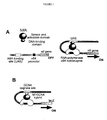
- the ⁇ 54 RNA polymerase holoenzyme is transcriptionally incompetent and is unable to initiate transcription by itself. Initiation of transcription requires the presence of a transcriptional activator that catalyses the isomerisation of the closed promoter complex to an open one.
- activator proteins bind to a specific upstream activation sequence (UAS) located 80 to 200 bp upstream of the ⁇ 54 core promoter.
- UAS upstream activation sequence
- the function of the UAS is to tether the activator in the right position and to bring it in the vicinity of the promoter in order to increase the efficiency of interaction between the ⁇ 54 RNAP and the activator.
- Transcriptional activators of ⁇ 54 dependent promoters have been called bacterial enhancers because their mechanism of activation is superficially similar to the activation of transcription by enhancer proteins in eukaryotes (Kustu S. et al (1991) Trends Biochem Sci 16, 397).
- ⁇ 54 RNAP Conversion of the ⁇ 54 RNAP into an active form is catalysed by the binding of an enhancer protein coupled to hydrolysis of ATP. This unusual mechanism accounts for the low level of background transcription and the enormous difference (10 4 -10 5 ) between on and off states in the strongest ⁇ 54 promoters effected by a single factor. In comparison, activators of ⁇ 70 promoters such as CAP or ⁇ cI increase transcription levels usually by less than 10-fold.
- Transcriptional activators of ⁇ 54 promoters also known as enhancer-binding proteins or EBPs
- ⁇ 54 promoters share a common structure (see Morrett and Segovia. (1993) J. Bacteriol. 6067-6074) comprising a non-conserved N-terminal domain which has a putative regulatory function, a central domain which is responsible for transcriptional activation, and a C-terminal DNA binding domain which binds the relevant UAS in the target gene.
- the domains are modular: the central and N-terminal domains together are capable of constitutive activation of ⁇ 54 RNAP when overexpressed. At least in some cases, the isolated DNA binding domain is capable of specifically binding its DNA recognition site.
- interaction between ⁇ 54 RNAP and the activator is enhanced by a cellular factor which promotes DNA bending between the UAS and the ⁇ 54 promoter (Freurium et al ., (1992) Mol. Microbiol. 6:2557-2563).
- This factor known as integration host factor (IHF) acts to promote transcription from ⁇ 54 promoters.
- a method for detecting a protein-nucleic acid interaction between a nucleic acid molecule and a protein molecule, in vitro or in vivo in bacteria comprising the steps of:
- the invention provides a reporter system which is characterised by very low levels of background expression, since the ⁇ 54 polymerase is transcriptionally incompetent in the absence of a ⁇ 54 transcriptional activator. Since, at physiological concentrations, the binding of the transcriptional activator to the nucleic acid is required in order to activate transcription by ⁇ 54 RNAP, the system of the invention may be used as a tool for investigating and/or screening protein/nucleic acid interactions exploiting the reporter gene read-out.
- either the nucleic acid binding protein or the nucleic acid molecule may be provided in the form of a repertoire of molecules.
- Repertoires of hybrid ⁇ 54 activator proteins preferably are partially or completely randomised at least in the heterologous nucleic acid binding domain. This allows selection from the library of molecules having desired nucleic acid binding characteristics.
- Repertoires of nucleic acid molecules advantageously are partially or completely randomised in the binding site for the nucleic acid binding domain of the ⁇ 54 activator protein. This allows selection of nucleic acid molecules having desired binding sites for the chimeric activators.
- a system for selecting protein-protein interactions based on the constitutively active hybrid ⁇ 54 activators described above is provided.
- the system according to the invention is conceptually similar to the yeast two-hybrid system.
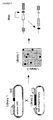
- a method for detecting a protein-protein interaction in vitro or vivo in bacteria comprising the steps of:
- binding site for the nucleic acid binding domain includes the provision of several appropriately spaced binding sites in the nucleic acid molecule.
- the association of the nucleic acid binding domain and the ⁇ 54 transcription activating domain through the bait/prey interaction allows the detection of, and screening for, protein-protein binding interactions in vivo and in vitro.
- the bait and/or prey polypeptide sequences are provided in the form of repertoires, which may be partially or completely randomised. This allows selection of prey polypeptides based on their ability to form interactions with a desired bait (or vice versa).
- the assay may be conducted in vivo , in a bacterium, the invention permits the detection of in vivo binding interactions between polypeptides in bacteria.
- the hybrid proteins useful in the methods of the invention are advantageously provided in the form of nucleic acid vectors or libraries thereof capable of expressing said proteins in a host bacterium.
- the vector(s) include first and second chimeric genes which encode the hybrid proteins of the invention.
- the vectors also include means for replication in bacteria.
- Also included may be one or more marker genes, the expression of which in the bacterium permits selection of cells containing the vector(s) from cells that do not contain the vector(s).
- the vector(s) are plasmid(s).
- the invention provides a method for screening a repertoire of candidate DNA-bending polypeptides in vivo in bacteria, comprising the steps of:
- activation by ⁇ 54 activators may be regulated by factors which induce DNA bending in the target gene.
- the host factor IHF is known to potentiate ⁇ 54 activation; moreover, it may be replaced by alternative DNA bending polypeptides, or by intrinsically bent DNA.
- the invention moreover provides methods for development of improved ⁇ 54 activator-based tools.
- the first chimeric gene includes a nucleic acid sequence that encodes a nucleic acid-binding domain and a first (bait) test protein or protein fragment in such a manner that the first test protein is expressed as part of a hybrid protein with the nucleic acid-binding domain.
- the second chimeric gene also includes a promoter and a transcription termination signal to direct transcription.
- the second chimeric gene moreover includes a nucleic acid sequence that encodes a ⁇ 54 transcriptional activation domain and a second (prey) test protein or protein fragment into the vector, in such a manner that the second test protein is capable of being expressed as part of a hybrid protein with the transcriptional activation domain.
- kits for practising the invention as defined by the appended claims, which kits advantageously comprise a container, two vectors, and a host cell.
- the first vector contains a promoter and may include a transcription termination signal functionally associated with the first chimeric gene in order to direct the transcription of the first chimeric gene.
- the chimeric gene advantageously comprises one or more unique restriction site(s) to insert a nucleic acid sequence encoding a test bait polypeptide.
- the kit also may also include a second vector which contains a second chimeric gene, optionally comprising one or more unique restriction site(s) to insert a nucleic acid sequence encoding the prey polypeptide; alternatively, the second chimeric gene may be present on the same vector as the first chimeric gene.
- nucleic acid refers to any natural nucleic acid, including RNA and DNA as well as synthetic nucleic acid comprising modified or synthetic bases, and mixtures of modified or synthetic bases with natural bases. Such modified and/or synthetic bases may be referred to as derivatives of DNA or RNA.
- nucleic acid refers to DNA.
- the invention includes the use of modified and/or artificial "nucleic acids". A number of modifications have been described that alter the chemistry of the phosphodiester backbone, sugars or heterocyclic base components of nucleic acids.
- phosphorothioates Among useful changes in the backbone chemistry are phosphorothioates; phosphorodithioates, where both of the non-bridging oxygens are substituted with sulphur; phosphoroamidites: alkyl phosphotriesters and boranophosphates.
- Achiral phosphate derivatives include 3'-O'-5'-S-phosphorothioate, 3'-S-5'-O-phosphorothioate, 3'-CH2-5'-O-phosphonate and 3'-NH-5'-O-phosphoroamidate.
- Peptide nucleic acids replace the entire phosphodiester backbone with a peptide linkage.
- Sugar modifications are also known.
- the ⁇ -anomer of deoxyribose may be used, where the base is inverted with respect to the natural ⁇ -anomer.
- the 2'-OH of the ribose sugar may be altered to form 2'-O-methyl or 2'-O-allyl sugars, which provides resistance to degradation without comprising affinity.
- Modification of the heterocyclic bases must maintain proper base pairing.
- Some useful substitutions include deoxyuridine for deoxythymidine; 5-methyl-2'-deoxycytidine and 5-bromo-2'-deoxycytidine for deoxycytidine.
- 5-propynyl-2'-deoxyuridine and 5-propynyl-2'-deoxycytidine have been shown maintain biological activity when substituted for deoxythymidine and deoxycytidine, respectively.
- protein includes single-chain polypeptide molecules as well as multiple-polypeptide complexes where individual constituent polypeptides are linked by covalent or non-covalent means.
- polypeptide and peptide refer to a polymer in which the monomers are amino acids and are joined together through peptide or disulphide bonds.
- domain also refers to polypeptides and peptides having biological function.
- a peptide useful in the invention will have a binding or transcription activating capability, i.e., with respect to binding to nucleic acids, other proteins or polypeptides, and activation of ⁇ 54 RNAP transcription. It also may have another biological function that is a biological function of a protein or domain from which the peptide sequence is derived.
- a hybrid protein is a protein or polypeptide which comprises constituent parts derived from at least two naturally-occurring or artiticial proteins.
- it may comprise the DNA-binding domain of one protein and the protein-binding or transcription activating domain of a second protein.
- Activators of ⁇ 54 transcription are well known and have been reviewed, for example, by Buck et al ., J Bacteriol. 2000 Aug;182(15):4129-36; Studholme and Buck, FEMS Microbiol Lett. 2000 May 1;186(1):1-9; Shingler, Mol Microbiol, 1996 Feb;19(3):409-16; Goosen and van der Putte, Mol Microbiol. 1995 Apr;16(1):1-7; Merrick, Mol Microbiol. 1993 Dec:10(5):903-9; and others.
- a family of such activator proteins has been defined, and its members found to share homology in the central (catalytic) domain which is responsible for ⁇ 54 RNAP activation.
- NifA gene product (aa 1-484) [Klebsiella pneumoniae] emb
- polypeptides belonging to the ⁇ 54 activator family have been described whose 3D structures are known. These include: 113161 acetoin catabolism regulatory protein; 113629 alginate biosynthesis transcriptional regulatory protein ALGB; 266789 type 4 fimbriae expression regulatory protein PILR; 113833 nitrogen fixation protein ANFA; 138884 nitrogen fixation protein VNFA; 128219 nif-specific regulatory protein; 3024194 nif-specific regulatory protein; acetoacetate metabolism regulatory protein ATOC 1168553 (ornithine/arginine decarboxylase inhibitor) (ornithine decarboxylase antizyme); 417166 transcriptional regulatory protein HYGD; 266622 nif-specific regulatory protein; 1352500 nif-specific regulatory protein; 128224 nif-specific regulatory protein; 128225 nif-specific regulatory protein; 128221 nif-specific regulatory protein; 128226 nif-specific regulatory protein; 1346014 transcriptional regulatory protein FL
- the hybrid ⁇ 54 activator is based on the NifA activator.
- the Nif family of bacterial enhancers regulate expression of nitrogenase components from ⁇ S4 promoters in nitrogen-fixing bacteria, and are inhibited by NifL (Austin S. et al (1994) J. Bacteriol . 176, 3460).
- NifA is constitutively active.
- NifA is modular in architecture and it is shown herein that this allows for the swapping of the natural DNA-binding domain (DBD) for heterologous DBDs.
- DBD DNA-binding domain
- Such NifA-DBD chimaeras are inactive on the wild type promoter, but activate transcription from hybrid promoters bearing their cognate target sequences.
- the hybrid ⁇ 54 activator may be based on E. coli PspF (see Jovanovic et al ., (1996) J. Bacteriol. 178:1936-1945).
- PspF lacks the N-terminal regulatory domain typical of ⁇ 54 activators, and is constitutively active but negatively regulated by PspA. Thus, in bacteria lacking PspA, PspF is constitutively active.
- ⁇ 54 activators may be rendered constitutively active by removal of the N-terminal regulatory domain or by appropriate mutation.
- Nucleic acid binding sequences or domains are known in the art and may be derived from ⁇ 54 activator proteins or any other DNA binding proteins, whether naturally-occurring or synthetic. Moreover, DNA-binding domains may be synthesised by partial or complete randomisation. Many naturally-occurring DNA-binding proteins contain independently folded domains for the recognition of DNA. and these domains in turn belong to a large number of structural families, such as the leucine zipper, the homeodomain. the "helix-turn-helix", the zinc finger and various other transcription factor families.
- library refers to a mixture of heterogeneous polypeptides or nucleic acids.
- the library is composed of members, which have a unique polypeptide or nucleic acid sequence.
- library is synonymous with repertoire , although in general the term "library” is used herein to denote the source of the repertoire - e.g. a library of nucleic acid molecules which encodes a repertoire of polypeptides. Sequence differences between library members are responsible for the diversity present in the library.
- the library may take the form of a simple mixture of polypeptides or nucleic acids, or may be in the form organisms or cells, for example bacteria, viruses, animal or plant cells and the like, transformed with a library of nucleic acids.
- a library may take the form of a population of host organisms, each organism containing one or more copies of an expression vector containing a single member of the library in nucleic acid form which can be expressed to produce its corresponding polypeptide member.
- the population of host organisms has the potential to encode a large repertoire of genetically diverse polypeptide variants.
- Hybrid proteins may be prepared and selected together with libraries of hybrid nucleic acids. "Crossing" of hybrid libraries is performed by combinatorial infection, which has been employed successfully to generate very large antibody libraries (Griffiths et al (1994) EMBO J. 13,3245).
- libraries for use in the present invention may be phage libraries, as is known in the art, it is possible to use alternative libraries which are constructed using other vectors, such as plasmids.
- the present invention does not require the library to be capable of "display" of the gene product at the bacterial surface, as with phage libraries; rather, the gene product is preferable expressed intracellularly, and is advantageously not expressed as a fusion with a vector gene product.
- DNA binding domain libraries are preferably based on a known DNA binding domain architectures (e.g. basic leucine zipper, bZIP) and may be derived using PCR amplification with "family-specific" primers. Such libraries may be crossed with hybrid-promoters bearing defined target sequences or libraries of target sequences. In addition to providing information on the distribution of members of the family in a given genome, such libraries may be used to identify and study proteins or molecular compounds that modify DNA interaction within a family of DNA binding domains, for example Tax (from HTLV-1) in the case of bZIP proteins.
- Tax from HTLV-1 in the case of bZIP proteins.
- they may also be used to select DNA binding domains which conditionally bind their target sequence only in the presence of other factors such as protein cofactors or small molecular compounds, for example drugs that intercalate into DNA or alter the degree of supercoiling or recognise DNA sequences which have been modified chemically (e.g. methylated).
- the system can also be used "in reverse” i.e. to select proteins or molecular compounds that disrupt a particular DNA-protein interaction or to select DNA binding domains that do not bind a particular target sequence or library thereof.
- More advanced libraries are preferably derived directly from genomic DNA. or cDNA libraries and selected on hybrid promoters bearing a repertoire of target sequences, comprising either a stretch of randomised sequence or a library of inserts derived from fragmented genomic DNA. Data obtained in this way allows the compilation of a genomic directory of DNA binding domains and the building of a promoter-DNA binding domain interaction map.
- hybrid polypeptides by domain fusion is well known in the art and may be effected by fusing polypeptides or, preferably, by fusing nucleic acids which, encode the polypeptides. It has been known since 1976 that DNA binding and transcriptional activator domains are separable, and can be swapped between proteins: see Ma and Ptashne, who reported (Cell, (1987) 51, 113-119; Cell. (1988)55, 443-446) that when both the GAL4 N-terminal domain and C-terminal domain are fused together in the same protein, transcriptional activity is induced. Other proteins are also known function as transcriptional activators via the same mechanism.
- the present invention may be carried out using techniques which are known to those skilled in the art, particularly as applied to 2-hybrid techniques in eukaryotic cells.
- Synthesis of chimeric genes for the purposes of the present invention may be carried out by any desired means, including polynucleotide synthesis and mutagenesis approaches.
- a number of methods for site-directed mutagenesis are known in the art, from methods employing single-stranded phage such as M13 to PCR-based techniques (see “PCR Protocols: A guide to methods and applications", M.A. Innis, D.H. Gelfand, J.J. Sninsky, T.J. White (eds.). Academic Press, New York, 1990).
- the commercially available Altered Site II Mutagenesis System may be employed, according to the directions given by the manufacturer.
- Host cells useful in conjunction with the present invention are prokaryotic cells, advantageously bacterial cells.
- E. coli is the preferred host; however, host cells may belong to any species or genus in which ⁇ 54 RNAP-driven transcription is possible, such as Klebsiella, Rhodobacter, Rhizobium, Acinetobacter, Pseudomonas, Escherichia , Bacillus, Caulobacter, Vibrio, Rhodospirillum, Alcaligenes, Salmonella, Myxococcus, Xylella, Azospirillum, Aquifex, Agrobacterium and other organisms.
- the preferred configuration is a modified strain, in which a truncated form of Nif (or another activator) is coexpressed to boost specific activation (see Methods).
- the host cells lack repressors of the ⁇ 54 activator being used, such that the transcription activating domain is constitutively active.
- Repressors may be deleted by genetic mutation and/or selection, or inhibited by expression of antisense constructs, or the like. In general, due to the accessibility of bacterial genetics, especially in E. coli , deletion of repressor genes is straightforward to those skilled in the art.
- Reporter genes of various types are known in the art and may be used in conjunction with the present invention.
- a "reporter gene”, as referred to herein, may be the coding sequence which encodes a detectable gene product, or the coding sequence including the necessary control sequences for its expression in accordance with the invention, as appropriate.
- the reporter gene is selected from the group consisting of metabolic markers such as the lac operon (lacZ, lacY and lacA); proteins conferring a fluorescent phenotype, such as GFP; proteins conferring antibiotic resistance, such as Zeo.
- GFPs green fluorescent proteins
- a green fluorescent protein is a protein that fluoresces green light
- a blue fluorescent protein is a protein that fluoresces blue light.
- GFPs have been isolated from the Pacific Northwest jellyfish, Aequorea victoria, from the sea pansy, Renilla reniformis , and from Phialidium gregarium . (Ward et al., 1982, Photochem. Photobiol ., 35: 803-808; Levine et al., 1982, Comp. Biochem. Physiol .,72B: 77-85).
- a variety of Aequorea -related GFPs having useful excitation and emission spectra have been engineered by modifying the amino acid sequence of a naturally-occurring GFP from Aequorea victoria. (Prasher et al., 1992, Gene , 111: 229-233; Heim et al., 1994, Proc. Natl. Acad. Sci. U.S.A. , 91: 12501-12504; PCT/US95/14692).
- a fluorescent protein is an Aequorea-related fluorescent protein if any contiguous sequence of 150 amino acids of the fluorescent protein has at least 85% sequence identity with an amino acid sequence.
- the fluorescent protein may be related to Renilla or Phialidium wild-type fluorescent proteins using the same standards.
- Aequorea -related fluorescent proteins include, for example, wild-type (native) Aequorea victoria GFP, whose nucleotide and deduced amino acid sequences are presented in GenBank Accession Nos. L29345, M62654, M62653 and others Aequorea -related engineered versions of Green Fluorescent Protein, of which some are listed above.
- P4, P4-3, W7 and W2 fluoresce at a distinctly shorter wavelength than wild type.
- fluorescent proteins facilitate FACS sorting of cells in a manner dependent on reporter gene expression (Norman, S.O. (1980). Flow cytometry. Med Phys. 7 , 609-615; Mackenzie, N.M. & Pinder, A.C. (1986). The application of flow microfluorimetry to biomedical research and diagnosis: a review. Dev. Biol. Stand 64, 181-193).
- reporter genes may complement auxotrophic mutations. confer antibiotic resistance or other selectable characteristics to the host bacteria. Reporter genes may be wholly or partly heterologous to the host cell, and introduced by mutagenesis and/or transformation with appropriate vectors. Alternatively, endogenous ⁇ 54-responsive genes may be used as reporter genes.
- the reporter gene also contains a binding site for ⁇ 54 RNAP.
- the consensus sequence for ⁇ 54 RNAP binding is 5' T GG CAC-N5-TT GC a/t 3'. This sequence is located at -12 to -24 with respect to the start of transcription. whilst the more common sigma 70 recognition sequence is situated at -10 to/ -35. Both the GG & GC must be on the same face of the DNA helix.
- combinations of two or more reporter genes may be used.
- the spacing between the ⁇ 54 RNAP binding site and the nucleic acid binding sequence binding site is preferably conserved with respect to the natural gene from which the ⁇ 54 RNAP binding site is taken.
- the spacing is at least calculated such that the spatial relationship of the elements on respective faces of the nucleic acid helix is maintained.
- Reporter genes advantageously comprise a binding site for a further activation factor, such as IHF. These factors are believed to induce bending of the DNA, thus potentiating activation of ⁇ 54 RNAP-driven transcription by ⁇ 54 activators. Alternatively, the DNA itself may be intrinsically bent, thus providing constitutive potentiation of ⁇ 54-specific activation.
- a further activation factor such as IHF.
- the present invention may be configured in three basic ways: a first configuration, in which reporter gene activation is dependent on the interaction between the nucleic acid and a nucleic acid binding domain on the hybrid protein; a second configuration, in which reporter gene activation is dependent on interaction between bait and prey polypeptides which serves to bring together two or more components of the hybrid protein; and a third configuration, in which reporter gene activation by a ⁇ 54 activator is dependent on the presence of DNA-bending polypeptides.
- an interaction is advantageously a binding interaction.
- libraries of proteins and/or nucleic acids may be prepared as described above. Proteins having improved nucleic acid binding, or nucleic acid sequences having improved affinity for protein domains, may be developed by mutagenesis and selection of candidate sequences. Alternatively, protein and/or nucleic acid sequences may be used to identify, in vivo, cognate binding partners.
- Chimeric ⁇ 54 activators also offer the opportunity to better understand aspects of the process of transcriptional activation at ⁇ 54 promoters.
- NifA t is known that binding of the target sequence together with ATP binding promotes oligomerisation of NifA. It is believed that it is the oligomer which contacts the polymerase and catalyses the ATP-driven isomerisation of the polymerase holoenzyme. Taking advantage of the superactivation effect described above it may be possible to address questions such as which components of the oligomer (e.g. the DNA-bound NifA vs. NifA ⁇ C, i.e.
- NifA with the DNA binding domain removed which are contacting the polymerase and/or coupling ATP hydrolysis to transcriptional activation etc.
- usage of NifA ⁇ C cofactors from different species allows identification of the sequence regions critical for transcriptional activation and a "maturation" of the NifA ⁇ C coactivator.
- the NifA from K. pneumoniae to be a superior cofactor to A. vinelandii NifA.
- the invention to detect protein-protein interactions follows the general scheme of the yeast two-hybrid assay, and the reagents used in the invention may be set up accordingly.
- the invention will comprise a nucleic acid binding domain-bait fusion, and a prey- ⁇ 54 activator domain fusion.
- bait refers to a known polypeptide and "prey” to an unknown polypeptide, the terms may be used interchangeably.
- the invention comprises configurations in which both bait and prey are known, or both are unknown.
- Binding between the bait and the prey result in constitution of a hybrid protein which comprises both a nucleic acid binding domain and a ⁇ 54 activator domain.
- the hybrid protein is able to activate transcription from a reporter gene, thus providing a bait:prey binding-dependent signal.
- Protein-protein interactions may be selected using the preferred NifA system, in which the hybrid ⁇ 54 transcriptional activator includes the NifA activation domain.
- the NifA bacterial two-hybrid system may be used for the generation of interaction matrices between cDNA libraries. Ultimately such interaction matrices may yield an interaction map of the proteins of an organism.
- the invention provides an alternative to the yeast two hybrid system.
- Systems based on ⁇ 54 have a number of advantages over the other systems that are available, e.g. the conceptually similar yeast one and two-hybrid system.
- a bacterial host allows substantially larger repertoires to be obtained and thus a much larger molecular diversity to be screened.
- the system of the invention allows the "crossing" of both ⁇ 54-chimera repertoires with libraries of hybrid reporter constructs, thus permitting coevolution of DNA binding domains, and recognition sites, or coselection of DNA binding domains and target sites from genomic libraries.
- selection in the ⁇ 54-based system is based on a positive readout, i.e. activation of transcription, it is less prone to false positives than other approaches relying on the inhibitory effect of the expressed DNA binding domains, like the transcription interference assay (Elledge S.J. et al (1989) Proc. Nat. Acad. Sci USA 86, 3689).
- In vivo selection in general may result in the selection of novel DNA binding domains that are more attuned to working under realistic conditions, including supercoiling of the recognition site, presence of a large excess of chromosomal DNA and high protein concentration.
- Another advantage of the system of the invention is that extremely low levels of the hybrid protein appear to be sufficient to affect maximum activation of transcription. This is particularly helpful in the case of DNA binding domains that are prone to aggregation.
- the ⁇ 54-based systems of the present invention may be further adapted to take into account potential disadvantages of bacterial expression.
- E. coli expression may be suboptimal for large eukaryotic transcription factors.
- large eukaryotic proteins can often be split into smaller domains which retain function and are usually readily expressed in E. coli.
- a constitutively active ⁇ 54 activator may be used to screen a library of candidate DNA-bending polypeptides, preferably in a HIF negative host. Since the degree of activation by the ⁇ 54 activator may be dependent on DNA bending by additional factors, the levels of expression of the reporter gene will be modulated by the DNA-bending activity of the candidate DNA-bending polypeptides.
- NifA from A. vinelandii is a well-studied member of the family of bacterial enhancers and it is a positive regulator of the expression of nitrogenase components in diazotrophs. It is inhibited by NifL in response to the presence of oxygen or ammonia. When expressed in E. coli, which lacks endogenous NifL or an equivalent, NifA is constitutively active. Because of the highly conserved nature of the activation mechanism of ⁇ 54 RNA polymerase, NifA is a very strong activator of transcription in E. coli.
- NifA is modular in architecture, both structurally and functionally, comprising 3 domains. a N-terminal sensor domain , a central activation domain (AD), and a C-terminal DNA binding domain (DBD).
- the central activation domain (AD) can activate transcription independent of DNA binding if overexpressed.
- DBDs function appears to be primarily to increase the Activator domain's concentration in the promoter proximity.
- NifA DNA binding domain DBD
- TG1 ⁇ K was derived from TG1 (Gibson T. J. (1984) Studies on the Epstein-Barr virus genome, University of Cambridge) using the genome integration strategy of Haldimann A. et al ., (1996) Proc. Nat. Acad Sci USA 93, 14361. Briefly, NifA ( K.
- Chimeric constructs were based on pDB737 (Austin S. et al (1994) J. Bacteriol . 176, 3460 Buck M. et al (1986) Nature 320, 374) encoding NifA ( A. vinelandii ) under the control of the T7 promoter in the plasmid pT7-7 (Tabor S. & Richardson C.C. (1985) Proc Natl Acad Sci USA 82, 1074). Expression was by leakiness of the T7 promoter. Chimeras were constructed taking advantage of an unique BanII cutting site, in the linker region between the central domain of NifA and the DBD.
- GCN4 was amplified using Pfu polymerase (Stratagene) and primers 3 (5'- GCT GCC AGC GAG AGC CCG CCG CTC GCC GCG ATT GTG CCC GAA TCC AGT GAT CCT -3') and 4 (5'- GAG CTA AAG CTT TTA TTA GCG TTC GCC AAC TAA TTT CTT TAA TCT GGC -3') cut with BanII and Hind3 and ligated into pDB737 cut with BanII and Hind3.
- ERDBD was amplified using primers 5 (5'- GTC GAC AAC GAG AGC CCG CCG CTC GCC GCG GAA ACG CGT TAC TGC GCT GTT -3') TGC and 6 (5'- GGT CAG CGC GTG GAT CCT TAA CCA CCA CGA CGG TCT TTA CG-3') cut with BanII and BamHI and ligated into pDB737 cut with BanII and BamHI.
- the vector p737S1 is derived from pDB737 by replacing the bla gene with aadA conferring streptomycin resistance and the insertion of a f1 phage origin for packaging of the vector into filamentous phage particles.
- aadA was, amplified using primers 7 (5'- TCA GCG CAC GCT GAC GTC GTG GAA ACG GAT GAA GGC ACG AAC -3'), 8 (5'-CCG CCT GGA GGT GGC CAT TAT TTG CCG ACT ACC TTG GTG ATC TCG CC -3') and cut with AatII and MscI and ligated with pDB737 cut with AatII and ScaI. The resulting vector p737S was cut with AatII, ClaI.
- the f1 ori was amplified using primers 9 (5'- GCT GCC GAC TCG ATC GAT GAA TGG CGA ATG GCG CCT GAT GCG G -3'), 10 (5'-CCG GGT CGT GAC GTC AGT GTT GGC GGG TGT CGG GGC TGG C -3') cut with AatII, ClaI and cloned into the cut p737S to give p737S1.
- NifA-X chimera were transferred from pDB737 to p737S1 by digestion with NdeI. Hind3 (BamHI for NifA-ERDBD).
- Reporter constructs were derived from pACYC184 and the vector pMB1 (Buck M. et al . (1986) Nature 320, 374). Briefly the lac-operon (lacZYA) was amplified with primers 11 (5'- GAG TCA ATT CGG GGA TCC CGT CGT TTT ACA ACG TCG TGA CTG G-3'). 12 (5'- GAG TCA TTC TGG CCA GTC GAC CGC TCT GCC GGT GGT TAC -3') and cut with BamHI and MscI.
- the nifH promoter segment from pMB1 was amplified with primers 13 (5'- GAG TCA TTC AAG CTT GCG TGG AAT AAG ACA CAG GGG GCG-3'), 14 (5'- GAG TCA TTC GGG ATC CCC GGA TTT ACC GAT ACC GCC TTT ACC -3') and cut with Hind3, BamHI and the 2 fragments simultaneously ligated with pACYC184 cut with Hind3 and BsaAI to give pMB3.
- the f1 ori was amplified with primers 15 (5'- GCT GCC GAC TCG GCT AGC GAA TGG CGA ATG GCG CCT GAT GCG G -3'), 16 (GCC GGG TCG CTT TAA AGT GTT GGC GGG TGT CGG GGC TGG C -3') and cut with NheI and DraI and ligated into pMB3 cut with both NheI, XmnI to give pMB31.
- ONPG assays used to measure ⁇ -gal activity were essentially as described by Kolmar H. et al. (1995) EMBO J 14, 3895. Briefly, 20 ⁇ l of an overnight culture is transferred to a microtitre well and 100 ⁇ l of chloroform saturated Z-buffer (100mM NaHPO 4 , 1mM KCL, 1mM MgSO 4 , 50mM ⁇ -mercaptoethanol, pH 7.0 (Miller J.H. (1972) Experiments in molecular genetics , Cold Spring Harbour, NY) was added and the optical density at 600nm determined using an ELISA reader.
- chloroform saturated Z-buffer 100mM NaHPO 4 , 1mM KCL, 1mM MgSO 4 , 50mM ⁇ -mercaptoethanol, pH 7.0 (Miller J.H. (1972) Experiments in molecular genetics , Cold Spring Harbour, NY
- Example 1 NifA chimera with heterologous DNA binding domains activate transcription but only from promoters with a cognate recognition site
- NifA DNA binding domain DBD
- DBD NifA DNA binding domain
- DBDs which, like the NifA wild type (wt) DBD bind to symmetrical DNA recognition sequences such as the basic leucine zipper (bZIP) DBD of the yeast transcription factor GCN4, the Zn-finger domain of the human estrogen receptor DNA binding domain (ERDBD) and determined their capacity to activate transcription of a lacZ reporter gene in vivo from a hybrid nifH promoter, in which the NifA UAS had been deleted and replaced by recognition sites for the heterologous DBDs.
- bZIP basic leucine zipper
- GCN4 yeast transcription factor 4
- ERDBD human estrogen receptor DNA binding domain
- NifA-chimeras Transcription activation by NifA-chimeras was specific in that they only activated lacZ expression from hybrid-promoters bearing their cognate recognition sequences but not from control reporter constructs bearing wild type UAS or a non-cognate site (Fig. 3). In analogy to wt NifA the presence of two or more recognition sites (in phase, see below) did not increase activation by the Nif-GCN4 chimera.
- Activity was also dependent on the phasing of the recognition site with respect to the promoter: when the symmetric ATF/CREB recognition site for GCN4 was offset in increments of 1 bp, optimal activity was observed when the ATF/CREB was centred on the same bp as the symmetric wt UAS. Presumably efficient contact with the RNA Pol holoenzyme requires that the activator be bound on the right face of the DNA.
- NifA-chimeras Transcription activation by NifA-chimeras appears to preserve fine specificity of isolated DBDs. Wild-type GCN4 binds with equal affinity to the symmetric ATF/CREB site as well as to the pseudo-symmetric AP-1 site. Indeed, the NifA-GCN4 chimera showed identical levels of transcription activation in reporter constructs with either of these sites (Fig. 3). A NifA-ERDBD chimera showed strong activity on a reporter with its cognate ERE site but no activity above background levels with reporters bearing the similar GRE recognition site for the closely related glucocorticoid receptor DBD (Fig. 4).
- Example 2 Coexpression of wild-type NifA with NifA-chimeras boosts specific transcription activation by NifA chimeras in a specific and DNA independent manner
- the level of transcription activation by the NifA-GCN4 and NifA-ERDBD chimeras was lower (ca. 10%) than for wt NifA.
- near wt levels of activity were reached when wt NifA was coexpressed within the same cell as a "coactivator".
- NifA variants in which the DBD had been deleted were found to be just as active as wt NifA.
- NifA ⁇ C was found to be just as active as wt NifA.
- NifA ⁇ NC N-terminal sensor domain deleted
- NifA derived from different species showed greatly variable efficiencies as coactivators.
- NifA variants from K. pneumoniae were almost three times as effective as NifA, while NifA variants from Rhizobium (NifA Rh1, NifA Rh2) were poorly active as coactivators (Fig. 5).
- the coactivation effect has analogies in eukaryotic transcription, for example the enhancer Sp1, in which isolated Sp1 activation domains can stimulate transcriptional activation by the DNA binding-form of Sp1, a phenomenon termed "superactivation”.
- Example 3 Tethering of NifA chimera at the UAS is sufficient for activation, but strong activation requires correct positioning
- NifA-Zif268 and NifA-p53 chimeras activated transcription but only at low levels (2 - 5-fold above the background). However, when the Zif recognition site was duplicated, to give a symmetric palindromic site transcription activation increased substantially. Non-palindromic duplication of the recognition site in tandem did not increase activation.
- tethering only leads to an approximate positioning of the activation domain with respect to the RNA polymerase holoenzyme, thereby reducing the likelihood of a productive interaction.
- lacZYA lac operon
- Example 5 Selection of active NifA-chimeras by flow cytometry.
- ⁇ -galactosidase as the read-out of transcription activation allows the selection of active NifA-chimera on the basis of metabolic complementation of a ⁇ lac strain, grown on lactose as the only carbon source.
- metabolic selection predisposes the system to the generation of false positives. Presumably, the prolonged growth under metabolic selection selects for mutant promoters, active in the absence of a cognate enhancer.
- FACS Fluorescence Mofo, 488 nm Laser, FL-1 530/40 filter
- an 1 ml aliquot was diluted 10X in NFM and the top 1% fluorescent cell population was sorted into a 96 well plate at 1 cell per well, and grown up overnight at 34°C.
- Cell fluorescence of the grown up clones was measured by using a SPEGTRAmax R GEMINI Dual-Scanning Microplate Spectrofluorometer (Molecular Devices), ex480, em520, (cut-off 515 nm). Plasmids from fluorescent wells were sequenced afterwards. Pre- and post selection populations were also scored by PCR screening as well as by plating on min glu (M9 Minimal medium + glucose) plates and visualised using fluorescence microscope.
Landscapes
- Chemical & Material Sciences (AREA)
- Life Sciences & Earth Sciences (AREA)
- Health & Medical Sciences (AREA)
- Genetics & Genomics (AREA)
- Organic Chemistry (AREA)
- Engineering & Computer Science (AREA)
- Zoology (AREA)
- Wood Science & Technology (AREA)
- Bioinformatics & Cheminformatics (AREA)
- Biotechnology (AREA)
- General Engineering & Computer Science (AREA)
- Biomedical Technology (AREA)
- General Health & Medical Sciences (AREA)
- Proteomics, Peptides & Aminoacids (AREA)
- Biophysics (AREA)
- Microbiology (AREA)
- Physics & Mathematics (AREA)
- Molecular Biology (AREA)
- Biochemistry (AREA)
- Bioinformatics & Computational Biology (AREA)
- Crystallography & Structural Chemistry (AREA)
- Analytical Chemistry (AREA)
- Plant Pathology (AREA)
- Immunology (AREA)
- Measuring Or Testing Involving Enzymes Or Micro-Organisms (AREA)
- Peptides Or Proteins (AREA)
- Micro-Organisms Or Cultivation Processes Thereof (AREA)
- Vehicle Body Suspensions (AREA)
- Circuits Of Receivers In General (AREA)
- Preparation Of Compounds By Using Micro-Organisms (AREA)
- Investigating Or Analysing Biological Materials (AREA)
Abstract
Description
dbj|BAA16379.1| (D90877) FORMATE HYDROGENLYASE TRANSCRIPTIONAL ACTIVATOR.
emb|C.AA26472-1| (X02616) pot. NifA gene product (aa 1-484) [Klebsiella pneumoniae]
emb|CAA53584.1| (X75972) anfA [Rhodobacter capsulatus]
emb|CAA92413.1| (Z68203) NifA homologue [Rhizobium sp.]
emb|CAA93242.1| (Z69251) MopR [Acinetobacter calcoaceticus]
emb|CAB53157.1| (X07567) NifA1 [Rhodobacter capsulatus]
emb|CAB56537.1| (AJ249642) response regulator [Pseudomonas stutzeri]
gb|AAA58220.1| (U 18997) ORF_o532 [Escherichia coli]
gb|AAA99303.1| (L43064) regulatory protein [Pseudomonas aeruginosa]
gb|AAB91397.1| (AF033203) NifAII protein [Rhodobacter capsulatus]
gb|AAC05586.1| (AF006075) regulatory protein [Bacillus subtilis]
gb|AAC37124.1| (L81176) FleQ [Pseudomonas aeruginosa]
gb|AAC45640.1|(AF010585) putative sigma 54 activator [Caulobacter crescentus]
gb|AAC46367.1|(AF014113) two-component response regulator [Vibrio cholerae]
gb|AAD34591.1|AF145956_1 (AF145956) transcriptional activator NifA [Rhodospirillum rubrum]
gb|AAD38416.1|(AF155934) NifA [Alcaligenes faecalis]
gb|AAF28395.1|(AF069392) FlaM [Vibrio parahaemolyticus]
gb|AAF33506.1|(AF170176) Salmonella typhimurium transcriptional regulatory protein gb|AAF61932.1|(AF230804) sigma-54 activator protein Act1 [Myxococcus xanthus]
gb|AAF85342.1|AE004061_7(AE004061) two-component system, regulatory protein [Xylella fastidiosa]
gb|AAF94676.1|(AE004230) sigma-54 dependent response regulator [Vibrio cholerae]
gb|AAF95280.1|(AE004286) sigma-54 dependent response regulator [Vibrio cholerae]
gb|AAF96095.1|(AE004358) sigma-54 dependent transcriptional regulator [Vibrio cholerae]
gb|AAG01527.1|AF288483_1 (AF288483) NifA [Azospirillum brasilense]
pir∥A48291 ornithine decarboxylase inhibitor - Escherichia coli
pir∥B49940 nitrogen regulator I homolog - Escherichia coli
pir∥C70320 transcription regulator NifA family - Aquifex aeolicus
pir∥C70396 transcription regulator NtrC family - Aquifex aeolicus
pir∥C70454 transcription regulator NtrC family - Aquifex aeolicus
pir∥D70315 transcription regulator NtrC family - Aquifex aeolicus
pir∥H69581 transcription activator of acetoin dehydrogenase operon acoR - Bacillus subtilis
pir∥I39719 nitrogen regulatory protein - Agrobacterium tumefaciens
pir∥JC5471 regulatory protein NifA - Azospirillum lipoferum
pir∥T08624 probable NtrC-type response regulator - Eubacterium acidaminophilum
sp|P03027|NIFA_KLEPN NIF-SPECIFIC REGULATORY PROTEIN
sp|P09570|NIFA_AZOVI NIF-SPECIFIC REGULATORY PROTEIN
sp|P12627|VNFA_AZOVI NITROGEN FIXATION PROTEIN VNFA
sp|P14375|HYDG_ECOLI TRANSCRIPTIONAL REGULATORY PROTEIN HYDG
sp|P21712|YFHA_ECOLI HYPOTHETICAL 49.1 KD PROTEIN IN GLNB-PURL INTERGENIC REGION (ORFXB)
sp|P24426|NIFA_RHILT NIF-SPECIFIC REGULATORY PROTEIN
sp|P25852|HYDG_SALTY TRANSCRIPTIONAL REGULATORY PROTEIN HYDG
sp|P27713|NIFA_HERSE NIF-SPECIFIC REGULATORY PROTEIN
sp|P30667|NIFA_AZOBR NIF-SPECIFIC REGULATORY PROTEIN
sp|P38035|RTCR_ECOLI TRANSCRIPTIONAL REGULATORY PROTEIN RTCR
sp|P54929|NIFA_AZOLI NIF-SPECIFIC REGULATORY PROTEIN
sp|P56266|NIFA_KLEOX NIF-SPECIFIC REGULATORY PROTEIN
sp|Q06065|ATOC_ECOLI ACETOACETATE METABOLISM REGULATORY
PROTEIN ATOC (ORNITHINE/ARGININE
sp|Q46802|YGEV_ECOLI HYPOTHETICAL SIGMA-54-DEPENDENT
TRANSCRIPTIONAL REGULATOR IN
sp|Q53206|NIFA_RHISN NIF-SPECIFIC REGULATORY PROTEIN
sp|Q9ZIB7|TYRR_ERWHE TRANSCRIPTIONAL REGULATORY PROTEIN TYRR
| Selection factors for Nif selection by lac complementation | ||
| NifGCN4/ | Selection factor | |
| 1/104 | 40 | |
| 1/105 | 40 | |
| 1/106 | 200 | |
| 1/107 | 4000 fold |
Claims (25)
- A method for detecting a protein-nucleic acid interaction between a nucleic acid molecule and a protein molecule in vitro or in vivo in bacteria, comprising the steps of:a) providing one or more hybrid σ54 activator proteins comprising a heterologous nucleic acid binding domain and a constitutively active σ54 transcription activating domain;b) providing one or more nucleic acid molecules comprising a binding site for the nucleic acid binding domain and a binding site for σ54 RNA polymerase (RNAP), which directs the expression of a reporter gene and leads to upregulation thereof in response to activation by the σ54 transcription activating domain; andc) detecting expression of the reporter gene.
- A method according to claim 1, comprising providing a repertoire of hybrid σ54 activator proteins, said repertoire comprising a plurality of different nucleic acid binding domain.
- A method according to claim 1, comprising providing a repertoire of hybrid nucleic acid molecules, said repertoire comprising a plurality of different binding sites for the nucleic acid binding domain.
- A method according to claim 1, comprising providing both a repertoire according to claim 2 and a repertoire according to claim 3.
- A method for detecting a protein-protein interaction in vitro or in vivo in bacteria, comprising the steps of:a) providing a first hybrid protein comprising a nucleic acid binding domain and a first polypeptide sequence bait;b) providing a second hybrid protein comprising a prey polypeptide sequence and constitutively active σ54 transcription activating domain;c) providing a nucleic acid molecule comprising a binding site for the nucleic acid binding domain and binding site for σ54 RNAP which directs the expression of a reporter gene and leads to upregulation thereof in response to activation by the σ54 transcription activating domain;d) incubating the first and second hybrid proteins together with the nucleic acid molecule such that the prey and bait polypeptide sequences may bind; thereby forming a hybrid protein comprising both a nucleic acid binding domain and a σ54 transcription activating domain; ande) detecting expression of the reporter gene.
- A method according to claim 5, comprising providing a repertoire of first hybrid proteins, said repertoire comprising a plurality of bait polypeptides.
- A method according to claim 5, comprising providing a repertoire of second hybrid proteins, said repertoire comprising a plurality of prey polypeptides.
- A method according to claim 5, comprising providing a repertoire of first hybrid proteins and a repertoire of second hybrid proteins, said repertoires comprising a plurality of bait and prey polypeptides.
- A method for screening a repertoire of candidate DNA-bending polypeptides in vivo in bacteria; comprising the steps of:a) providing a repertoire of candidate polypeptide factors with potential to induce bending of DNA;b) providing a σ54 activator protein comprising a nucleic acid binding domain and a σ54 transcription activating domain;c) providing a nucleic acid molecule comprising a binding site for the nucleic acid binding domain and binding site for σ54 RNAP which directs the expression of a reporter gene and leads to upregulation thereof in response to activation by the σ54 transcription activating domain;d) incubating the repertoire and σ54 activator together with the nucleic acid molecule in a integration host factor (IHF) host cell, such that σ54 activator and the nucleic acid molecule may interact, and transcription activated from the σ54 RNAP binding site in a manner dependent on DNA bending by the polypeptide factors; ande) detecting expression of the reporter gene.
- A method according to claims 1 to 8, wherein the polypeptides are obtainable by expression within a bacterial host cell.
- A method according to claim 10, wherein the polypeptides are encoded in one or more libraries of nucleic acid vectors.
- A method according to claim 11, wherein a first library of nucleic acid.vectors encodes a first chimeric gene, said gene comprising a nucleic acid sequence that encodes a nucleic acid-binding domain and a nucleic acid sequence encoding a first (bait) test protein or protein fragment in such a manner that the first test protein is expressed as part of a hybrid protein with the nucleic acid-binding domain.
- A method according to claim 11, wherein a second library of nucleic acid vectors encodes a second chimeric gene; said gene comprising a nucleic acid sequence that encodes a σ54 transcriptional activation domain and a second (prey) test protein or protein fragment into the vector, in such a manner that the second test protein is capable of being expressed as part of a hybrid protein with the transcriptional activation domain.
- A method according to any preceding claim, wherein the o54 transcriptional activator is selected from the group consisting of:dbj|BAA16379.1| (D90877) FORMATE HYDROGENLYASE TRANSCRIPTIONAL ACTIVATOR;emb|CAA26472.1| (X02616) pot. Nifa gene product (aa 1-484) [Klebsiella pneumoniae];emb|CAA53584.1| (X75972) anfa [Rhodobacter capsulatus];emb|CAA92413.1| (Z68203) nifa homologue [Rhizobium sp.];emb|CAA93242.1| (Z69251) mopr [Acinetobacter calcoaceticus];emb|CAB53157.1| (X07567) nifa1 [Rhodobacter capsulatus];emb|CAB56537.1| (AJ249642) response regulator [Pseudomonas stutzeri];gb|AAA58220.1| (U18997) ORF_o532 [Escherichia coli];gb|AAA99303.1| (L43064) regulatory protein [Pseudomonas aeruginosa];gb|AAB91397.1| (AF033203) nifaii protein [Rhodobacter capsulatus];gb|AAC05586.1| (AF006075) regulatory protein [Bacillus subtilis];gb|AAC37124.1| (L81176) fleq [Pseudomonas aeruginosa];gb|AAC45640.1| (AF010585) putative sigma 54 activator [Caulobacter crescentus];gb|AAC46367.1| (AF014113) two-component response regulator [Vibrio cholerae];gb|AAD34591.1|AF145956_1 (AF145956) transcriptional activator nifa [Rhodospirillum rubrum];gb|AAD38416.1| (AF155934) nifa [Alcaligenes faecalis];gb|AAF28395.1| (AF069392) flam [Vibrio parahaemolyticus];gb|AAF33506.1| (AF170176) Salmonella typhimurium transcriptional regulatory protein;gb|AAF61932.1| (AF230804) sigma-54 activator protein ActI [Myxococcus xanthus];gb|AAF85342.1|AE004061_7 (AE004061) two-component system, regulatory protein [Xylella fastidiosa];gb|AAF94676.1| (AE004230) sigma-54 dependent response regulator [Vibrio cholerae];gb|AAF95280.1| (AE004286) sigma-54 dependent response regulator [Vibrio cholerae];gb|AAF96095.1| (AE004358) sigma-54 dependent transcriptional regulator [Vibrio cholerae];gb|AAG01527.1|AF288483_1 (AF288483) nifa [Azospirillum brasilense];pir∥A48291 ornithine decarboxylase inhibitor - Escherichia coli;pir∥B49940 nitrogen regulator I homolog - Escherichia coli;pir∥C70320 transcription regulator nifa family - Aquifex aeolicus;pir∥C70396 transcription regulator ntrc family - Aquifex aeolicus;pir∥C70454 transcription regulator ntrc family - Aquifex aeolicus;pir∥D70315 transcription regulator ntrc family - Aquifex aeolicus;pir∥H69581 transcription activator of acetoin dehydrogenase operon acor - Bacillus subtilis;pir∥139719 nitrogen regulatory protein - Agrobacterium tumefaciens;pir∥JC5471 regulatory protein nifa - Azospirillum lipoferum;pir∥T08624 probable ntrc-type response regulator - Eubacterium acidaminophilum;sp|P03027|NIFA_KLEPN NIF-SPECIFIC REGULATORY PROTEIN;sp|P09570|NIFA_AZOVI NIF-SPECIFIC REGULATORY PROTEIN;sp|P12627|VNFA_AZOVI NITROGEN FIXATION PROTEIN VNFA;sp|P14375|HYDG_ECOLI TRANSCRIPTIONAL REGULATORY PROTEIN HYDG;sp|P21712|YFHA_ECOLI HYPOTHETICAL 49.1 KD PROTEIN IN GLNB-PURL INTERGENIC REGION (ORFXB);sp|P24426|NIFA_RHILT NIF-SPECIFIC REGULATORY PROTEIN;sp|P25852|HYDG_SALTY TRANSCRIPTIONAL REGULATORY PROTEIN HYDG;sp|P27713|NIFA_HERSE NIF-SPECIFIC REGULATORY PROTEIN;sp|P30667|NIFA_AZOBR NIF-SPECIFIC REGULATORY PROTEIN;sp|P38035|RTCR_ECOLI TRANSCRIPTIONAL REGULATORY PROTEIN RTCR;sp|P54929|NIFA_AZOLI NIF-SPECIFIC REGULATORY PROTEIN;sp|P56266|NIFA_KLEOX NIF-SPECIFIC REGULATORY PROTEIN;sp|Q06065|ATOC_ECOLI ACETOACETATE METABOLISM REGULATORY PROTEIN ATOC (ORNITHINE/ARGININE;sp|Q46802|YGEV_ECOLI HYPOTHETICAL SIGMA-54-DEPENDENT TRANSCRIPTIONAL REGULATOR IN;sp|QS3206|NIFA_RHISN NIF-SPECIFIC REGULATORY PROTEIN; andsp|Q9ZIB7|TYRR_ER WHE TRANSCRIPTIONAL REGULATORY PROTEIN TYRR.
- A method according to any one of claims I to 14, wherein the σ54 transcriptional activator is the NifA transcriptional activator or the PspF transcriptional activator.
- A method according to any one of claims 1 to 14, wherein the hybrid σ54 transcriptional activator is NifA and activation resulting from NifA-oS4 RNAP interaction is enhanced by the coexpression of wild-type or mutant NifA.
- A method according to claim 16, wherein the hybrid σ54 transcriptional activator is NifA from Azotobacter vinelandii, and the wild-type or mutant NifA is NifA from Klebsiella pneumoniae.
- A method according to any preceding claim, wherein the nucleic acid molecule comprises a binding site for a factor which induces DNA bending.
- A method according to claim 18, wherein the factor is integration host factor (IHF).
- A method according to any one of claims 1 to 17, wherein the nucleic acid molecule comprises DNA that is intrinsically bent.
- A method according to any preceding claim, wherein the nucleic acid molecule comprises a NifH promoter from A.vinelandii driving a reporter gene.
- A method according to any preceding claim, wherein the reporter gene is selected from the group consisting of a metabolic markers such as the lac operon (lacZ, lacY and lacA); proteins conferring a fluorescent phenotype, such as GFP; proteins conferring antibiotic resistance, such as Zeo.
- A method according to any preceding claim, which is carried out in vivo in bacteria.
- A method according to claim 23, wherein the in vivo host is E.coli.
- A method according to any one of claims 1 to 24, which is carried out in vitro.
Applications Claiming Priority (3)
| Application Number | Priority Date | Filing Date | Title |
|---|---|---|---|
| GBGB9921155.9A GB9921155D0 (en) | 1999-09-08 | 1999-09-08 | Selection system |
| GB9921155 | 1999-09-08 | ||
| PCT/GB2000/003450 WO2001018244A2 (en) | 1999-09-08 | 2000-09-08 | Selection system |
Publications (2)
| Publication Number | Publication Date |
|---|---|
| EP1224324A2 EP1224324A2 (en) | 2002-07-24 |
| EP1224324B1 true EP1224324B1 (en) | 2005-05-11 |
Family
ID=10860529
Family Applications (1)
| Application Number | Title | Priority Date | Filing Date |
|---|---|---|---|
| EP00958835A Expired - Lifetime EP1224324B1 (en) | 1999-09-08 | 2000-09-08 | Two-hybrid screening method employing the bacterial transcriptional activator sigma-54 |
Country Status (6)
| Country | Link |
|---|---|
| EP (1) | EP1224324B1 (en) |
| AT (1) | ATE295429T1 (en) |
| AU (1) | AU7025100A (en) |
| DE (1) | DE60020146T2 (en) |
| GB (1) | GB9921155D0 (en) |
| WO (1) | WO2001018244A2 (en) |
Cited By (1)
| Publication number | Priority date | Publication date | Assignee | Title |
|---|---|---|---|---|
| US7772368B2 (en) | 2005-01-25 | 2010-08-10 | Ewha University-Industry Collaboration Foundation | Deletion forms of IGE-dependent histamine releasing factor having histamine releasing activity, HRF-binding peptides and the uses thereof |
Families Citing this family (36)
| Publication number | Priority date | Publication date | Assignee | Title |
|---|---|---|---|---|
| ES2283936T3 (en) | 1997-07-07 | 2007-11-01 | Medical Research Council | IN VITRO CLASSIFICATION PROCEDURE. |
| GB0127564D0 (en) | 2001-11-16 | 2002-01-09 | Medical Res Council | Emulsion compositions |
| US7575865B2 (en) | 2003-01-29 | 2009-08-18 | 454 Life Sciences Corporation | Methods of amplifying and sequencing nucleic acids |
| CA2513889A1 (en) | 2003-01-29 | 2004-08-19 | 454 Corporation | Double ended sequencing |
| GB0307428D0 (en) | 2003-03-31 | 2003-05-07 | Medical Res Council | Compartmentalised combinatorial chemistry |
| US20060078893A1 (en) | 2004-10-12 | 2006-04-13 | Medical Research Council | Compartmentalised combinatorial chemistry by microfluidic control |
| GB0307403D0 (en) | 2003-03-31 | 2003-05-07 | Medical Res Council | Selection by compartmentalised screening |
| CA2531105C (en) | 2003-07-05 | 2015-03-17 | The Johns Hopkins University | Method and compositions for detection and enumeration of genetic variations |
| ES2432040T3 (en) | 2004-01-28 | 2013-11-29 | 454 Life Sciences Corporation | Nucleic acid amplification with continuous flow emulsion |
| US20050221339A1 (en) | 2004-03-31 | 2005-10-06 | Medical Research Council Harvard University | Compartmentalised screening by microfluidic control |
| US7968287B2 (en) | 2004-10-08 | 2011-06-28 | Medical Research Council Harvard University | In vitro evolution in microfluidic systems |
| EP2363205A3 (en) | 2006-01-11 | 2014-06-04 | Raindance Technologies, Inc. | Microfluidic Devices And Methods Of Use In The Formation And Control Of Nanoreactors |
| US9562837B2 (en) | 2006-05-11 | 2017-02-07 | Raindance Technologies, Inc. | Systems for handling microfludic droplets |
| EP2530168B1 (en) | 2006-05-11 | 2015-09-16 | Raindance Technologies, Inc. | Microfluidic Devices |
| EP2077912B1 (en) | 2006-08-07 | 2019-03-27 | The President and Fellows of Harvard College | Fluorocarbon emulsion stabilizing surfactants |
| US8772046B2 (en) | 2007-02-06 | 2014-07-08 | Brandeis University | Manipulation of fluids and reactions in microfluidic systems |
| WO2008130623A1 (en) | 2007-04-19 | 2008-10-30 | Brandeis University | Manipulation of fluids, fluid components and reactions in microfluidic systems |
| US12038438B2 (en) | 2008-07-18 | 2024-07-16 | Bio-Rad Laboratories, Inc. | Enzyme quantification |
| WO2010009365A1 (en) | 2008-07-18 | 2010-01-21 | Raindance Technologies, Inc. | Droplet libraries |
| US8528589B2 (en) | 2009-03-23 | 2013-09-10 | Raindance Technologies, Inc. | Manipulation of microfluidic droplets |
| US10520500B2 (en) | 2009-10-09 | 2019-12-31 | Abdeslam El Harrak | Labelled silica-based nanomaterial with enhanced properties and uses thereof |
| EP2517025B1 (en) | 2009-12-23 | 2019-11-27 | Bio-Rad Laboratories, Inc. | Methods for reducing the exchange of molecules between droplets |
| JP5934657B2 (en) | 2010-02-12 | 2016-06-15 | レインダンス テクノロジーズ, インコーポレイテッド | Digital specimen analysis |
| US10351905B2 (en) | 2010-02-12 | 2019-07-16 | Bio-Rad Laboratories, Inc. | Digital analyte analysis |
| US9399797B2 (en) | 2010-02-12 | 2016-07-26 | Raindance Technologies, Inc. | Digital analyte analysis |
| US9366632B2 (en) | 2010-02-12 | 2016-06-14 | Raindance Technologies, Inc. | Digital analyte analysis |
| WO2012045012A2 (en) | 2010-09-30 | 2012-04-05 | Raindance Technologies, Inc. | Sandwich assays in droplets |
| EP3859011A1 (en) | 2011-02-11 | 2021-08-04 | Bio-Rad Laboratories, Inc. | Methods for forming mixed droplets |
| EP2675819B1 (en) | 2011-02-18 | 2020-04-08 | Bio-Rad Laboratories, Inc. | Compositions and methods for molecular labeling |
| DE202012013668U1 (en) | 2011-06-02 | 2019-04-18 | Raindance Technologies, Inc. | enzyme quantification |
| US8841071B2 (en) | 2011-06-02 | 2014-09-23 | Raindance Technologies, Inc. | Sample multiplexing |
| US8658430B2 (en) | 2011-07-20 | 2014-02-25 | Raindance Technologies, Inc. | Manipulating droplet size |
| US11901041B2 (en) | 2013-10-04 | 2024-02-13 | Bio-Rad Laboratories, Inc. | Digital analysis of nucleic acid modification |
| US9944977B2 (en) | 2013-12-12 | 2018-04-17 | Raindance Technologies, Inc. | Distinguishing rare variations in a nucleic acid sequence from a sample |
| US11193176B2 (en) | 2013-12-31 | 2021-12-07 | Bio-Rad Laboratories, Inc. | Method for detecting and quantifying latent retroviral RNA species |
| US10647981B1 (en) | 2015-09-08 | 2020-05-12 | Bio-Rad Laboratories, Inc. | Nucleic acid library generation methods and compositions |
Family Cites Families (2)
| Publication number | Priority date | Publication date | Assignee | Title |
|---|---|---|---|---|
| AU721549B2 (en) * | 1996-12-11 | 2000-07-06 | Bristol-Myers Squibb Company | Prokaryotic two-hybrid system |
| US6333154B1 (en) * | 1997-12-04 | 2001-12-25 | Institut Pasteur | Bacterial multi-hybrid system and applications thereof |
-
1999
- 1999-09-08 GB GBGB9921155.9A patent/GB9921155D0/en not_active Ceased
-
2000
- 2000-09-08 EP EP00958835A patent/EP1224324B1/en not_active Expired - Lifetime
- 2000-09-08 WO PCT/GB2000/003450 patent/WO2001018244A2/en not_active Ceased
- 2000-09-08 AT AT00958835T patent/ATE295429T1/en not_active IP Right Cessation
- 2000-09-08 AU AU70251/00A patent/AU7025100A/en not_active Abandoned
- 2000-09-08 DE DE60020146T patent/DE60020146T2/en not_active Expired - Fee Related
Cited By (1)
| Publication number | Priority date | Publication date | Assignee | Title |
|---|---|---|---|---|
| US7772368B2 (en) | 2005-01-25 | 2010-08-10 | Ewha University-Industry Collaboration Foundation | Deletion forms of IGE-dependent histamine releasing factor having histamine releasing activity, HRF-binding peptides and the uses thereof |
Also Published As
| Publication number | Publication date |
|---|---|
| ATE295429T1 (en) | 2005-05-15 |
| DE60020146T2 (en) | 2005-10-06 |
| GB9921155D0 (en) | 1999-11-10 |
| WO2001018244A3 (en) | 2001-11-15 |
| WO2001018244A2 (en) | 2001-03-15 |
| DE60020146D1 (en) | 2005-06-16 |
| EP1224324A2 (en) | 2002-07-24 |
| AU7025100A (en) | 2001-04-10 |
Similar Documents
| Publication | Publication Date | Title |
|---|---|---|
| EP1224324A2 (en) | Selection system | |
| CN112410377B (en) | VI-E type and VI-F type CRISPR-Cas system and application | |
| Hu et al. | Escherichia coli one-and two-hybrid systems for the analysis and identification of protein–protein interactions | |
| Missiakas et al. | Modulation of the Escherichia coliσE (RpoE) heat‐shock transcription‐factor activity by the RseA, RseB and RseC proteins | |
| EP0927258B1 (en) | System for in vitro transposition using modified tn5 transposase | |
| US5925523A (en) | Intraction trap assay, reagents and uses thereof | |
| EP0934406B1 (en) | Artificial promoter libraries for selected organisms and promoters derived from such libraries | |
| US7416847B1 (en) | In vitro peptide or protein expression library | |
| CA2274608C (en) | Prokaryotic two-hybrid system | |
| WO2001088197A2 (en) | Methods and compositions for interaction trap assays | |
| WO2021233975A1 (en) | In-cell continuous target-gene evolution, screening and selection | |
| WO1999028746A1 (en) | A bacterial multi-hybrid system and applications | |
| WO2006040154A2 (en) | Prokaryotic two hybrid system | |
| WO2013148867A1 (en) | Artificial sigma factors based on bisected t7 rna polymerase | |
| Durai et al. | A bacterial one-hybrid selection system for interrogating zinc finger-DNA interactions | |
| Bernardo et al. | σ54-promoter discrimination and regulation by ppGpp and DksA | |
| US20040247620A1 (en) | Transformation system based on the integrase gene and attachment site for Myxococcus xanthus bacteriophage Mx9 | |
| US20210047633A1 (en) | Selection methods | |
| JP5757608B2 (en) | Method of selecting gene switch and gene circuit | |
| Clarke et al. | Novel mobilizable prokaryotic two-hybrid system vectors for high-throughput protein interaction mapping in Escherichia coli by bacterial conjugation | |
| WO1998007845A9 (en) | Interaction trap assay, reagents and uses thereof | |
| WO1998007845A1 (en) | Interaction trap assay, reagents and uses thereof | |
| WO1998049284A1 (en) | Methods for detecting and isolating nuclear transport proteins | |
| Gillman et al. | A single step three-strain in vivo Gateway reaction | |
| WO2001073108A2 (en) | A bacterial two-hybrid system for protein interaction screening |
Legal Events
| Date | Code | Title | Description |
|---|---|---|---|
| PUAI | Public reference made under article 153(3) epc to a published international application that has entered the european phase |
Free format text: ORIGINAL CODE: 0009012 |
|
| 17P | Request for examination filed |
Effective date: 20020322 |
|
| AK | Designated contracting states |
Kind code of ref document: A2 Designated state(s): AT BE CH CY DE DK ES FI FR GB GR IE IT LI LU MC NL PT SE |
|
| AX | Request for extension of the european patent |
Free format text: AL;LT;LV;MK;RO;SI |
|
| RIN1 | Information on inventor provided before grant (corrected) |
Inventor name: HOLLIGER, PHILIPP Inventor name: SEPP, TIINA |
|
| 17Q | First examination report despatched |
Effective date: 20030721 |
|
| GRAP | Despatch of communication of intention to grant a patent |
Free format text: ORIGINAL CODE: EPIDOSNIGR1 |
|
| RTI1 | Title (correction) |
Free format text: TWO-HYBRID SCREENING METHOD EMPLOYING THE BACTERIAL TRANSCRIPTIONAL ACTIVATOR SIGMA-54 |
|
| GRAS | Grant fee paid |
Free format text: ORIGINAL CODE: EPIDOSNIGR3 |
|
| GRAA | (expected) grant |
Free format text: ORIGINAL CODE: 0009210 |
|
| AK | Designated contracting states |
Kind code of ref document: B1 Designated state(s): AT BE CH CY DE DK ES FI FR GB GR IE IT LI LU MC NL PT SE |
|
| PG25 | Lapsed in a contracting state [announced via postgrant information from national office to epo] |
Ref country code: BE Free format text: LAPSE BECAUSE OF FAILURE TO SUBMIT A TRANSLATION OF THE DESCRIPTION OR TO PAY THE FEE WITHIN THE PRESCRIBED TIME-LIMIT Effective date: 20050511 Ref country code: IT Free format text: LAPSE BECAUSE OF FAILURE TO SUBMIT A TRANSLATION OF THE DESCRIPTION OR TO PAY THE FEE WITHIN THE PRESCRIBED TIME-LIMIT;WARNING: LAPSES OF ITALIAN PATENTS WITH EFFECTIVE DATE BEFORE 2007 MAY HAVE OCCURRED AT ANY TIME BEFORE 2007. THE CORRECT EFFECTIVE DATE MAY BE DIFFERENT FROM THE ONE RECORDED. Effective date: 20050511 Ref country code: ES Free format text: LAPSE BECAUSE OF FAILURE TO SUBMIT A TRANSLATION OF THE DESCRIPTION OR TO PAY THE FEE WITHIN THE PRESCRIBED TIME-LIMIT Effective date: 20050511 Ref country code: AT Free format text: LAPSE BECAUSE OF FAILURE TO SUBMIT A TRANSLATION OF THE DESCRIPTION OR TO PAY THE FEE WITHIN THE PRESCRIBED TIME-LIMIT Effective date: 20050511 Ref country code: FI Free format text: LAPSE BECAUSE OF FAILURE TO SUBMIT A TRANSLATION OF THE DESCRIPTION OR TO PAY THE FEE WITHIN THE PRESCRIBED TIME-LIMIT Effective date: 20050511 Ref country code: NL Free format text: LAPSE BECAUSE OF FAILURE TO SUBMIT A TRANSLATION OF THE DESCRIPTION OR TO PAY THE FEE WITHIN THE PRESCRIBED TIME-LIMIT Effective date: 20050511 |
|
| REG | Reference to a national code |
Ref country code: GB Ref legal event code: FG4D |
|
| REG | Reference to a national code |
Ref country code: CH Ref legal event code: EP |
|
| REG | Reference to a national code |
Ref country code: IE Ref legal event code: FG4D |
|
| REF | Corresponds to: |
Ref document number: 60020146 Country of ref document: DE Date of ref document: 20050616 Kind code of ref document: P |
|
| REG | Reference to a national code |
Ref country code: CH Ref legal event code: NV Representative=s name: MICHELI & CIE INGENIEURS-CONSEILS |
|
| PG25 | Lapsed in a contracting state [announced via postgrant information from national office to epo] |
Ref country code: SE Free format text: LAPSE BECAUSE OF FAILURE TO SUBMIT A TRANSLATION OF THE DESCRIPTION OR TO PAY THE FEE WITHIN THE PRESCRIBED TIME-LIMIT Effective date: 20050811 Ref country code: DK Free format text: LAPSE BECAUSE OF FAILURE TO SUBMIT A TRANSLATION OF THE DESCRIPTION OR TO PAY THE FEE WITHIN THE PRESCRIBED TIME-LIMIT Effective date: 20050811 Ref country code: GR Free format text: LAPSE BECAUSE OF FAILURE TO SUBMIT A TRANSLATION OF THE DESCRIPTION OR TO PAY THE FEE WITHIN THE PRESCRIBED TIME-LIMIT Effective date: 20050811 |
|
| PGFP | Annual fee paid to national office [announced via postgrant information from national office to epo] |
Ref country code: GB Payment date: 20050907 Year of fee payment: 6 |
|
| PG25 | Lapsed in a contracting state [announced via postgrant information from national office to epo] |
Ref country code: CY Free format text: LAPSE BECAUSE OF FAILURE TO SUBMIT A TRANSLATION OF THE DESCRIPTION OR TO PAY THE FEE WITHIN THE PRESCRIBED TIME-LIMIT Effective date: 20050908 Ref country code: IE Free format text: LAPSE BECAUSE OF NON-PAYMENT OF DUE FEES Effective date: 20050908 |
|
| PG25 | Lapsed in a contracting state [announced via postgrant information from national office to epo] |
Ref country code: MC Free format text: LAPSE BECAUSE OF NON-PAYMENT OF DUE FEES Effective date: 20050930 Ref country code: LU Free format text: LAPSE BECAUSE OF NON-PAYMENT OF DUE FEES Effective date: 20050930 |
|
| PGFP | Annual fee paid to national office [announced via postgrant information from national office to epo] |
Ref country code: CH Payment date: 20051010 Year of fee payment: 6 |
|
| RAP2 | Party data changed (patent owner data changed or rights of a patent transferred) |
Owner name: MEDICAL RESEARCH COUNCIL |
|
| PG25 | Lapsed in a contracting state [announced via postgrant information from national office to epo] |
Ref country code: PT Free format text: LAPSE BECAUSE OF FAILURE TO SUBMIT A TRANSLATION OF THE DESCRIPTION OR TO PAY THE FEE WITHIN THE PRESCRIBED TIME-LIMIT Effective date: 20051019 |
|
| REG | Reference to a national code |
Ref country code: CH Ref legal event code: PFA Owner name: MEDICAL RESEARCH COUNCIL Free format text: MEDICAL RESEARCH COUNCIL#20 PARK CRESCENT#LONDON W1N 4AL (GB) -TRANSFER TO- MEDICAL RESEARCH COUNCIL#20 PARK CRESCENT#LONDON W1B 1AL (GB) |
|
| NLV1 | Nl: lapsed or annulled due to failure to fulfill the requirements of art. 29p and 29m of the patents act | ||
| PGFP | Annual fee paid to national office [announced via postgrant information from national office to epo] |
Ref country code: DE Payment date: 20051119 Year of fee payment: 6 |
|
| PLBE | No opposition filed within time limit |
Free format text: ORIGINAL CODE: 0009261 |
|
| STAA | Information on the status of an ep patent application or granted ep patent |
Free format text: STATUS: NO OPPOSITION FILED WITHIN TIME LIMIT |
|
| 26N | No opposition filed |
Effective date: 20060214 |
|
| REG | Reference to a national code |
Ref country code: IE Ref legal event code: MM4A |
|
| EN | Fr: translation not filed | ||
| PG25 | Lapsed in a contracting state [announced via postgrant information from national office to epo] |
Ref country code: CH Free format text: LAPSE BECAUSE OF NON-PAYMENT OF DUE FEES Effective date: 20060930 Ref country code: LI Free format text: LAPSE BECAUSE OF NON-PAYMENT OF DUE FEES Effective date: 20060930 |
|
| PG25 | Lapsed in a contracting state [announced via postgrant information from national office to epo] |
Ref country code: DE Free format text: LAPSE BECAUSE OF NON-PAYMENT OF DUE FEES Effective date: 20070403 |
|
| REG | Reference to a national code |
Ref country code: CH Ref legal event code: PL |
|
| GBPC | Gb: european patent ceased through non-payment of renewal fee |
Effective date: 20060908 |
|
| PG25 | Lapsed in a contracting state [announced via postgrant information from national office to epo] |
Ref country code: GB Free format text: LAPSE BECAUSE OF NON-PAYMENT OF DUE FEES Effective date: 20060908 |
|
| PG25 | Lapsed in a contracting state [announced via postgrant information from national office to epo] |
Ref country code: FR Free format text: LAPSE BECAUSE OF NON-PAYMENT OF DUE FEES Effective date: 20050930 |
|
| PG25 | Lapsed in a contracting state [announced via postgrant information from national office to epo] |
Ref country code: FR Free format text: LAPSE BECAUSE OF NON-PAYMENT OF DUE FEES Effective date: 20050511 |