EP1223798B1 - Verfahren zum erzeugen eines bestands oder einer sammlung von mutanten und dessen verwendungen - Google Patents
Verfahren zum erzeugen eines bestands oder einer sammlung von mutanten und dessen verwendungen Download PDFInfo
- Publication number
- EP1223798B1 EP1223798B1 EP00974579A EP00974579A EP1223798B1 EP 1223798 B1 EP1223798 B1 EP 1223798B1 EP 00974579 A EP00974579 A EP 00974579A EP 00974579 A EP00974579 A EP 00974579A EP 1223798 B1 EP1223798 B1 EP 1223798B1
- Authority
- EP
- European Patent Office
- Prior art keywords
- seeds
- gene
- plant
- mutations
- dna
- Prior art date
- Legal status (The legal status is an assumption and is not a legal conclusion. Google has not performed a legal analysis and makes no representation as to the accuracy of the status listed.)
- Expired - Lifetime
Links
- 238000004519 manufacturing process Methods 0.000 title claims abstract description 7
- 108090000623 proteins and genes Proteins 0.000 claims abstract description 74
- 230000035772 mutation Effects 0.000 claims description 88
- 238000012217 deletion Methods 0.000 claims description 38
- 230000037430 deletion Effects 0.000 claims description 38
- 238000000034 method Methods 0.000 claims description 33
- 230000008707 rearrangement Effects 0.000 claims description 18
- 230000008569 process Effects 0.000 claims description 12
- 230000003321 amplification Effects 0.000 claims description 11
- 230000035784 germination Effects 0.000 claims description 11
- 231100000350 mutagenesis Toxicity 0.000 claims description 11
- 238000003199 nucleic acid amplification method Methods 0.000 claims description 11
- 238000001514 detection method Methods 0.000 claims description 9
- 230000002068 genetic effect Effects 0.000 claims description 9
- 238000002703 mutagenesis Methods 0.000 claims description 9
- 230000005855 radiation Effects 0.000 claims description 8
- 238000012216 screening Methods 0.000 claims description 8
- 238000000605 extraction Methods 0.000 claims description 7
- 230000036438 mutation frequency Effects 0.000 claims description 6
- 238000003306 harvesting Methods 0.000 claims description 5
- 238000009396 hybridization Methods 0.000 claims description 5
- 230000004807 localization Effects 0.000 claims description 4
- 239000011159 matrix material Substances 0.000 claims description 4
- 230000002269 spontaneous effect Effects 0.000 claims description 4
- 108091034117 Oligonucleotide Proteins 0.000 claims description 3
- 230000003247 decreasing effect Effects 0.000 claims description 3
- 238000003753 real-time PCR Methods 0.000 claims description 3
- 238000003205 genotyping method Methods 0.000 claims description 2
- 238000002372 labelling Methods 0.000 claims description 2
- JLCPHMBAVCMARE-UHFFFAOYSA-N [3-[[3-[[3-[[3-[[3-[[3-[[3-[[3-[[3-[[3-[[3-[[5-(2-amino-6-oxo-1H-purin-9-yl)-3-[[3-[[3-[[3-[[3-[[3-[[5-(2-amino-6-oxo-1H-purin-9-yl)-3-[[5-(2-amino-6-oxo-1H-purin-9-yl)-3-hydroxyoxolan-2-yl]methoxy-hydroxyphosphoryl]oxyoxolan-2-yl]methoxy-hydroxyphosphoryl]oxy-5-(5-methyl-2,4-dioxopyrimidin-1-yl)oxolan-2-yl]methoxy-hydroxyphosphoryl]oxy-5-(6-aminopurin-9-yl)oxolan-2-yl]methoxy-hydroxyphosphoryl]oxy-5-(6-aminopurin-9-yl)oxolan-2-yl]methoxy-hydroxyphosphoryl]oxy-5-(6-aminopurin-9-yl)oxolan-2-yl]methoxy-hydroxyphosphoryl]oxy-5-(6-aminopurin-9-yl)oxolan-2-yl]methoxy-hydroxyphosphoryl]oxyoxolan-2-yl]methoxy-hydroxyphosphoryl]oxy-5-(5-methyl-2,4-dioxopyrimidin-1-yl)oxolan-2-yl]methoxy-hydroxyphosphoryl]oxy-5-(4-amino-2-oxopyrimidin-1-yl)oxolan-2-yl]methoxy-hydroxyphosphoryl]oxy-5-(5-methyl-2,4-dioxopyrimidin-1-yl)oxolan-2-yl]methoxy-hydroxyphosphoryl]oxy-5-(5-methyl-2,4-dioxopyrimidin-1-yl)oxolan-2-yl]methoxy-hydroxyphosphoryl]oxy-5-(6-aminopurin-9-yl)oxolan-2-yl]methoxy-hydroxyphosphoryl]oxy-5-(6-aminopurin-9-yl)oxolan-2-yl]methoxy-hydroxyphosphoryl]oxy-5-(4-amino-2-oxopyrimidin-1-yl)oxolan-2-yl]methoxy-hydroxyphosphoryl]oxy-5-(4-amino-2-oxopyrimidin-1-yl)oxolan-2-yl]methoxy-hydroxyphosphoryl]oxy-5-(4-amino-2-oxopyrimidin-1-yl)oxolan-2-yl]methoxy-hydroxyphosphoryl]oxy-5-(6-aminopurin-9-yl)oxolan-2-yl]methoxy-hydroxyphosphoryl]oxy-5-(4-amino-2-oxopyrimidin-1-yl)oxolan-2-yl]methyl [5-(6-aminopurin-9-yl)-2-(hydroxymethyl)oxolan-3-yl] hydrogen phosphate Polymers Cc1cn(C2CC(OP(O)(=O)OCC3OC(CC3OP(O)(=O)OCC3OC(CC3O)n3cnc4c3nc(N)[nH]c4=O)n3cnc4c3nc(N)[nH]c4=O)C(COP(O)(=O)OC3CC(OC3COP(O)(=O)OC3CC(OC3COP(O)(=O)OC3CC(OC3COP(O)(=O)OC3CC(OC3COP(O)(=O)OC3CC(OC3COP(O)(=O)OC3CC(OC3COP(O)(=O)OC3CC(OC3COP(O)(=O)OC3CC(OC3COP(O)(=O)OC3CC(OC3COP(O)(=O)OC3CC(OC3COP(O)(=O)OC3CC(OC3COP(O)(=O)OC3CC(OC3COP(O)(=O)OC3CC(OC3COP(O)(=O)OC3CC(OC3COP(O)(=O)OC3CC(OC3COP(O)(=O)OC3CC(OC3COP(O)(=O)OC3CC(OC3CO)n3cnc4c(N)ncnc34)n3ccc(N)nc3=O)n3cnc4c(N)ncnc34)n3ccc(N)nc3=O)n3ccc(N)nc3=O)n3ccc(N)nc3=O)n3cnc4c(N)ncnc34)n3cnc4c(N)ncnc34)n3cc(C)c(=O)[nH]c3=O)n3cc(C)c(=O)[nH]c3=O)n3ccc(N)nc3=O)n3cc(C)c(=O)[nH]c3=O)n3cnc4c3nc(N)[nH]c4=O)n3cnc4c(N)ncnc34)n3cnc4c(N)ncnc34)n3cnc4c(N)ncnc34)n3cnc4c(N)ncnc34)O2)c(=O)[nH]c1=O JLCPHMBAVCMARE-UHFFFAOYSA-N 0.000 claims 1
- 241000196324 Embryophyta Species 0.000 abstract description 78
- 239000012634 fragment Substances 0.000 abstract description 6
- 108020004414 DNA Proteins 0.000 description 31
- 241000894007 species Species 0.000 description 12
- 239000003471 mutagenic agent Substances 0.000 description 10
- 108700028369 Alleles Proteins 0.000 description 9
- 241000219195 Arabidopsis thaliana Species 0.000 description 9
- 230000005865 ionizing radiation Effects 0.000 description 8
- 231100000707 mutagenic chemical Toxicity 0.000 description 8
- 241000219194 Arabidopsis Species 0.000 description 6
- 239000000203 mixture Substances 0.000 description 6
- 241000244203 Caenorhabditis elegans Species 0.000 description 5
- 241001465754 Metazoa Species 0.000 description 5
- 230000003505 mutagenic effect Effects 0.000 description 5
- KFZMGEQAYNKOFK-UHFFFAOYSA-N Isopropanol Chemical compound CC(C)O KFZMGEQAYNKOFK-UHFFFAOYSA-N 0.000 description 4
- VMHLLURERBWHNL-UHFFFAOYSA-M Sodium acetate Chemical compound [Na+].CC([O-])=O VMHLLURERBWHNL-UHFFFAOYSA-M 0.000 description 4
- 108010006785 Taq Polymerase Proteins 0.000 description 4
- 238000004458 analytical method Methods 0.000 description 4
- 238000012512 characterization method Methods 0.000 description 4
- 239000007788 liquid Substances 0.000 description 4
- 238000003752 polymerase chain reaction Methods 0.000 description 4
- 239000000243 solution Substances 0.000 description 4
- QKNYBSVHEMOAJP-UHFFFAOYSA-N 2-amino-2-(hydroxymethyl)propane-1,3-diol;hydron;chloride Chemical compound Cl.OCC(N)(CO)CO QKNYBSVHEMOAJP-UHFFFAOYSA-N 0.000 description 3
- IJGRMHOSHXDMSA-UHFFFAOYSA-N Atomic nitrogen Chemical compound N#N IJGRMHOSHXDMSA-UHFFFAOYSA-N 0.000 description 3
- 238000000018 DNA microarray Methods 0.000 description 3
- 241000252212 Danio rerio Species 0.000 description 3
- 241000209094 Oryza Species 0.000 description 3
- 235000007164 Oryza sativa Nutrition 0.000 description 3
- 238000013459 approach Methods 0.000 description 3
- 238000006243 chemical reaction Methods 0.000 description 3
- 239000003795 chemical substances by application Substances 0.000 description 3
- 238000010230 functional analysis Methods 0.000 description 3
- 235000003869 genetically modified organism Nutrition 0.000 description 3
- 230000010196 hermaphroditism Effects 0.000 description 3
- 238000003780 insertion Methods 0.000 description 3
- 230000037431 insertion Effects 0.000 description 3
- 239000000047 product Substances 0.000 description 3
- 235000009566 rice Nutrition 0.000 description 3
- 238000003756 stirring Methods 0.000 description 3
- 230000009897 systematic effect Effects 0.000 description 3
- 210000001519 tissue Anatomy 0.000 description 3
- 241000255581 Drosophila <fruit fly, genus> Species 0.000 description 2
- KCXVZYZYPLLWCC-UHFFFAOYSA-N EDTA Chemical compound OC(=O)CN(CC(O)=O)CCN(CC(O)=O)CC(O)=O KCXVZYZYPLLWCC-UHFFFAOYSA-N 0.000 description 2
- LFQSCWFLJHTTHZ-UHFFFAOYSA-N Ethanol Chemical compound CCO LFQSCWFLJHTTHZ-UHFFFAOYSA-N 0.000 description 2
- 241000282412 Homo Species 0.000 description 2
- 241000244206 Nematoda Species 0.000 description 2
- 238000011529 RT qPCR Methods 0.000 description 2
- 229920000297 Rayon Polymers 0.000 description 2
- 240000004808 Saccharomyces cerevisiae Species 0.000 description 2
- 241000897276 Termes Species 0.000 description 2
- 239000007983 Tris buffer Substances 0.000 description 2
- 240000008042 Zea mays Species 0.000 description 2
- 230000002759 chromosomal effect Effects 0.000 description 2
- 238000010367 cloning Methods 0.000 description 2
- 238000004925 denaturation Methods 0.000 description 2
- 230000036425 denaturation Effects 0.000 description 2
- 238000011161 development Methods 0.000 description 2
- 230000018109 developmental process Effects 0.000 description 2
- 238000001962 electrophoresis Methods 0.000 description 2
- 150000002500 ions Chemical class 0.000 description 2
- 239000008188 pellet Substances 0.000 description 2
- 239000002964 rayon Substances 0.000 description 2
- 235000017281 sodium acetate Nutrition 0.000 description 2
- 239000001632 sodium acetate Substances 0.000 description 2
- 239000002689 soil Substances 0.000 description 2
- 239000007787 solid Substances 0.000 description 2
- 238000001228 spectrum Methods 0.000 description 2
- 239000000126 substance Substances 0.000 description 2
- 239000006228 supernatant Substances 0.000 description 2
- 238000012546 transfer Methods 0.000 description 2
- 230000005945 translocation Effects 0.000 description 2
- LENZDBCJOHFCAS-UHFFFAOYSA-N tris Chemical compound OCC(N)(CO)CO LENZDBCJOHFCAS-UHFFFAOYSA-N 0.000 description 2
- 102000000872 ATM Human genes 0.000 description 1
- 229920001817 Agar Polymers 0.000 description 1
- 238000006677 Appel reaction Methods 0.000 description 1
- 101100497362 Arabidopsis thaliana CRY1 gene Proteins 0.000 description 1
- 241000894006 Bacteria Species 0.000 description 1
- 206010061764 Chromosomal deletion Diseases 0.000 description 1
- 241000699800 Cricetinae Species 0.000 description 1
- 241000255582 Drosophilidae Species 0.000 description 1
- 108010010803 Gelatin Proteins 0.000 description 1
- 101100057233 Homo sapiens ATM gene Proteins 0.000 description 1
- 101000785063 Homo sapiens Serine-protein kinase ATM Proteins 0.000 description 1
- 241000861223 Issus Species 0.000 description 1
- 241000219828 Medicago truncatula Species 0.000 description 1
- 108091092724 Noncoding DNA Proteins 0.000 description 1
- 241000276569 Oryzias latipes Species 0.000 description 1
- 241000287107 Passer Species 0.000 description 1
- ISWSIDIOOBJBQZ-UHFFFAOYSA-N Phenol Chemical compound OC1=CC=CC=C1 ISWSIDIOOBJBQZ-UHFFFAOYSA-N 0.000 description 1
- 108010026552 Proteome Proteins 0.000 description 1
- 108010019653 Pwo polymerase Proteins 0.000 description 1
- 241001080024 Telles Species 0.000 description 1
- 239000007984 Tris EDTA buffer Substances 0.000 description 1
- 235000005824 Zea mays ssp. parviglumis Nutrition 0.000 description 1
- 235000002017 Zea mays subsp mays Nutrition 0.000 description 1
- 239000008272 agar Substances 0.000 description 1
- 230000009418 agronomic effect Effects 0.000 description 1
- 230000004075 alteration Effects 0.000 description 1
- 239000008346 aqueous phase Substances 0.000 description 1
- 239000000872 buffer Substances 0.000 description 1
- ZYWFEOZQIUMEGL-UHFFFAOYSA-N chloroform;3-methylbutan-1-ol;phenol Chemical compound ClC(Cl)Cl.CC(C)CCO.OC1=CC=CC=C1 ZYWFEOZQIUMEGL-UHFFFAOYSA-N 0.000 description 1
- 235000005822 corn Nutrition 0.000 description 1
- SUYVUBYJARFZHO-RRKCRQDMSA-N dATP Chemical compound C1=NC=2C(N)=NC=NC=2N1[C@H]1C[C@H](O)[C@@H](COP(O)(=O)OP(O)(=O)OP(O)(O)=O)O1 SUYVUBYJARFZHO-RRKCRQDMSA-N 0.000 description 1
- SUYVUBYJARFZHO-UHFFFAOYSA-N dATP Natural products C1=NC=2C(N)=NC=NC=2N1C1CC(O)C(COP(O)(=O)OP(O)(=O)OP(O)(O)=O)O1 SUYVUBYJARFZHO-UHFFFAOYSA-N 0.000 description 1
- RGWHQCVHVJXOKC-SHYZEUOFSA-J dCTP(4-) Chemical compound O=C1N=C(N)C=CN1[C@@H]1O[C@H](COP([O-])(=O)OP([O-])(=O)OP([O-])([O-])=O)[C@@H](O)C1 RGWHQCVHVJXOKC-SHYZEUOFSA-J 0.000 description 1
- HAAZLUGHYHWQIW-KVQBGUIXSA-N dGTP Chemical compound C1=NC=2C(=O)NC(N)=NC=2N1[C@H]1C[C@H](O)[C@@H](COP(O)(=O)OP(O)(=O)OP(O)(O)=O)O1 HAAZLUGHYHWQIW-KVQBGUIXSA-N 0.000 description 1
- NHVNXKFIZYSCEB-XLPZGREQSA-N dTTP Chemical compound O=C1NC(=O)C(C)=CN1[C@@H]1O[C@H](COP(O)(=O)OP(O)(=O)OP(O)(O)=O)[C@@H](O)C1 NHVNXKFIZYSCEB-XLPZGREQSA-N 0.000 description 1
- 238000010586 diagram Methods 0.000 description 1
- 230000000694 effects Effects 0.000 description 1
- 229940082150 encore Drugs 0.000 description 1
- 239000011536 extraction buffer Substances 0.000 description 1
- 239000008273 gelatin Substances 0.000 description 1
- 229920000159 gelatin Polymers 0.000 description 1
- 235000019322 gelatine Nutrition 0.000 description 1
- 235000011852 gelatine desserts Nutrition 0.000 description 1
- 238000002744 homologous recombination Methods 0.000 description 1
- 230000006801 homologous recombination Effects 0.000 description 1
- 210000005260 human cell Anatomy 0.000 description 1
- 230000006872 improvement Effects 0.000 description 1
- 238000002743 insertional mutagenesis Methods 0.000 description 1
- 230000001678 irradiating effect Effects 0.000 description 1
- 235000021374 legumes Nutrition 0.000 description 1
- 239000000463 material Substances 0.000 description 1
- 238000002156 mixing Methods 0.000 description 1
- 229910052757 nitrogen Inorganic materials 0.000 description 1
- 239000002773 nucleotide Substances 0.000 description 1
- 125000003729 nucleotide group Chemical group 0.000 description 1
- 230000001776 parthenogenetic effect Effects 0.000 description 1
- 230000007170 pathology Effects 0.000 description 1
- 239000012071 phase Substances 0.000 description 1
- 230000035479 physiological effects, processes and functions Effects 0.000 description 1
- 238000004382 potting Methods 0.000 description 1
- 230000001869 rapid Effects 0.000 description 1
- 230000001105 regulatory effect Effects 0.000 description 1
- 238000009738 saturating Methods 0.000 description 1
- 230000007226 seed germination Effects 0.000 description 1
- 238000012163 sequencing technique Methods 0.000 description 1
- 239000000758 substrate Substances 0.000 description 1
- 101150065190 term gene Proteins 0.000 description 1
- 238000002560 therapeutic procedure Methods 0.000 description 1
Images
Classifications
-
- C—CHEMISTRY; METALLURGY
- C12—BIOCHEMISTRY; BEER; SPIRITS; WINE; VINEGAR; MICROBIOLOGY; ENZYMOLOGY; MUTATION OR GENETIC ENGINEERING
- C12N—MICROORGANISMS OR ENZYMES; COMPOSITIONS THEREOF; PROPAGATING, PRESERVING, OR MAINTAINING MICROORGANISMS; MUTATION OR GENETIC ENGINEERING; CULTURE MEDIA
- C12N15/00—Mutation or genetic engineering; DNA or RNA concerning genetic engineering, vectors, e.g. plasmids, or their isolation, preparation or purification; Use of hosts therefor
- C12N15/09—Recombinant DNA-technology
- C12N15/10—Processes for the isolation, preparation or purification of DNA or RNA
- C12N15/1034—Isolating an individual clone by screening libraries
- C12N15/1072—Differential gene expression library synthesis, e.g. subtracted libraries, differential screening
-
- A—HUMAN NECESSITIES
- A01—AGRICULTURE; FORESTRY; ANIMAL HUSBANDRY; HUNTING; TRAPPING; FISHING
- A01H—NEW PLANTS OR NON-TRANSGENIC PROCESSES FOR OBTAINING THEM; PLANT REPRODUCTION BY TISSUE CULTURE TECHNIQUES
- A01H1/00—Processes for modifying genotypes ; Plants characterised by associated natural traits
- A01H1/06—Processes for producing mutations, e.g. treatment with chemicals or with radiation
Definitions
- the present invention relates to a method for producing a bank or collection of mutants capable of allowing the study of the function of each gene, DNA fragment or defined sequence of a given plant species and its applications: mutant libraries and method of selecting a mutant of a gene.
- model species humans, bacteria, yeast, Caenorhabditis elegans, Arabidopsis thaliana, rice
- the systematic sequencing of the genomes of model species provides a quantity of information which, beyond the fundamental aspect, allows the identification in humans and some animals, genes involved in pathologies and may lead to new therapies, while in plants, the characterization of genes responsible for agronomic traits will accelerate the improvement of cultivated species.
- genome expression transcription and proteome
- the other essential axis to develop in biology is the systematic functional analysis of the genome. It is in this case to have for each gene mutant alleles (null or partial), so as to evaluate the role in the development and physiology of the body.
- the inventors have now developed a process that meets better to the needs of the practice, in particular in that it uses radiation ionizing and in that it is suitable for the functional study of the whole of the genome of a plant.
- Ionizing radiation (X-rays, gamma rays, fast neutrons, heavy ions) are powerful mutagens that mainly induce major rearrangements, mainly deletions (> 75%). They have been used in a number of animal organisms including Drosophila (Kelley et al., 1985), medaka fish (Kubota et al., 1995), zebrafish (Chakrabarti et al, 1983), mouse ( Cattanach et al., 1993, Turker et al., 1997), hamster or human cells (Schwartz et al., 1991, Giver et al., 1995), and also in many plants, including corn (Fujii, 1978), rice (Purushothaman, 1969), the legume Medicago truncatula (Sagan et al., 1995) and the model plant Arabidopsis thaliana (Redei, 1974, Shirley et al., 1992, Sun et al
- the molecular nature of the mutations induced by the IRs was analyzed in some of these organisms primarily by the study of mutants obtained for previously known genes (Bruggemann et al., 1996, Fuscoe et al., 1992). Types of observed mutations are: deletions, translocations, inversions, insertions and point mutations. These types are not necessarily exclusive. Through example, a deletion may be accompanied by an insertion, or an inversion (Shirley et al., 1992).
- deletions are the type dominant with frequencies around 70% (Fuscoe et al., 1992, Bruggeman et al. 1996; Cecchini et al., 1998).
- the size of the deletions is variable but the deletions total gene represent the majority (about 50%) of mutations and deletions partial from 10 to 25%.
- the HY4 gene of Arabidopsis thaliana covers about 4 kb. Of the 20 isolated hy4 mutants, 11 (55%) have a total deletion exceeding 8 kb, 1 (5%) a total deletion of less than 8 kb, 3 (15%) deletions with one terminal in the gene and the other outside the gene, 2 (10%) deletions at the boundaries contained in the gene. The remainder, 3 (15%), does not show detectable alterations by genomic hybridization.
- the DNAs of M2 seed batches originating from M1 plants are themselves grouped into super prizes.
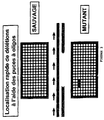
- said detection step (e 2 ) is carried out on DNA chips: the use of DNA chips on mutants induced by ionizing radiation considerably facilitates the implementation of the method according to the invention. invention. Indeed, since most of the mutations induced by ionizing radiation are deletions, the hybridization of the DNA of a mutant generation Mi (i ⁇ 2) on a DNA chip covering the entire genome leads to a loss or decrease in signal to wild-type DNA on the domains of the chip corresponding to the deletion. Thus, a single hybridization makes it possible to precisely determine the location of the mutations present and detected in the mutant in question.
- the screening step (e 2 ) of the genetic rearrangements is carried out by a quantitative PCR technique, preferably by real-time quantitative PCR.
- Quantitative PCR in real time advantageously makes it possible to distinguish a heterozygous individual for a deletion, a homozygous individual, and a fortiori a homozygous individual for the deletion of a wild homozygote.
- the individuals carrying a deletion in the chosen gene are identified directly and the effects of the mutation can be evaluated in the offspring of these individuals.
- gene includes both coding sequences as noncoding sequences.
- mutants by rearrangement genetics are deletion, inversion, insertion or translocation mutants ; however, deletion mutants are the most common.
- gamma rays and fast neutrons will be used preferentially as mutagenic agents.
- Other physical agents, such as heavy ions, causing Most deletions may also be used as mutagens.
- the average number of mutations per gene y x present in the collection is advantageously at least equal to 2, in order to have a sufficient number of alleles for each gene.
- the above method is particularly applicable to Arabidopsis whose number of genes estimated at 20 000 (Bouchez and Hofte, 1998); in this case, it takes about 60,000 mutations for a probability of 0.95 to have a mutation in a given gene.
- the method to be implemented is the same as that explained above, with the exception of the irradiation dose which depends on the size of the genome, expressed in number of genes and the frequency of mutations induced for a gene given. This frequency is evaluated according to the same protocol as that described above. If the species is self-incompatible, the plants of generation M1 are crossed with compatible plants of the same species, to produce M2 seeds. This operation will be repeated to obtain the seeds of subsequent generations.
- the present invention also relates to a collection of mutants, derived from a plant A, characterized in that each mutant constituting comprises at least one deletion mutation in a genome gene of said plant A, all of said mutants forming a population of which each element comprises at least one mutation for a gene of the genome of said plant A, said collection (seeds or DNA) representing at least once and preferably 5 to 10 times the genome.
- Said collection is likely to be obtained by means of a process for the production of a collection of mutants as defined above.
- Said collection consists of M2 generation seeds and / or the DNA extracted from these seeds, from a representative fraction of said seeds.
- the DNA is extracted from a representative fraction seeds of this family.
- EXAMPLE 1 Curve dose / number of mutations induced per plant.
- the PCR conditions are as follows: the reactions are carried out in a volume of 25 to 50 ⁇ l containing 1 to 2 units of Taq polymerase, 10 mM Tris HCl pH 8.3, 50 mM KCl, 1.5 mM MgCl 2 , 0.001 gelatin, 0.2 mM of each nucleotide (dATP, dGTP, dCTP, dTTP), 0.2 ⁇ M of each primer and 10 to 20 ng of template DNA. After an initial denaturation of 2 min at 94 ° C., 30 cycles followed each with a denaturation step of 30 s at 94 ° C., a primer pairing step of 30 s at a temperature ranging from 45 ° C. to 65 ° C.
- the Taq polymerase is replaced by a mixture of Pwo polymerase and Taq polymerase in a ratio of 1: 100 in units.
- the elongation temperature is 68 ° C. and the time is increased to 5 minutes or more if necessary.
- Example 1 For Arabidopsis thaliana, Example 1 makes it possible to select, as irradiation dose x , 300 Gy by a source of 60 Co (CIGAL irradiator).
- mutagenic agents In order to ensure the widest possible spectrum of deletions, fast gamma and neutron radiations will be used preferentially as mutagenic agents.
- the size of the library (corresponding to the total number of mutations n ) must be such (see formulas 1, 2 and 3) that each region of the genome is mutated several times. Indeed, the characterization of a mutant phenotype is all the more valuable as it is confirmed by independent alleles. A collection representing 5 to 10 times the genome is therefore to achieve to have a sufficient diversity of alleles.
- Arabidopsis for example, the total number of genes being estimated at 20-25 000 and the average number of mutations in a seed irradiated at 300 Gy (gamma) being about 100, the collection of mutants will have 5-10 000 plants. .
- p n 0.95 and 20 000 ⁇ N ⁇ 25 000.
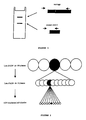
- M2 seeds are organized in 10x10 matrix where each box of the matrix corresponds to the seeds M2 coming from a plant M1 and the DNA are extracted for both dimensions (columns and rows) of these matrices.
- the lots 10M2i.ADN correspond to a column or a line of these matrices and 100M2i.ADN super-lots correspond to the ensemole of a matrix.
- sow 50-100 seeds M2i extract DNA from plants individually and perform the PCR with the same primers.
- a screen was performed on an Arabidopsis thaliana gene homologous to the human ATM gene (Ataxia telangiectasia mutated); the gene is included in the sequence of the clone BAC T24C20 No. EMBL AL096856.
- the collection used is based on 5,000 M1 lines, obtained under the conditions described according to Example 2.
- the primers used have the following sequences:
- the amplification reactions were carried out under the conditions described above, with the mixture of Taq polymerases and Pwo, at a temperature primer pairing of 55 ° C, an elongation time of 5 min and over 30 cycles.
- the size of the fragment amplified from wild-type genomic DNA is 5714 bp. Two deletions of 2,300 and 1,600 bp respectively could be detected in two different batches, and the plants bearing these deletions were isolated.
Landscapes
- Life Sciences & Earth Sciences (AREA)
- Genetics & Genomics (AREA)
- Health & Medical Sciences (AREA)
- Chemical & Material Sciences (AREA)
- Engineering & Computer Science (AREA)
- Bioinformatics & Cheminformatics (AREA)
- Zoology (AREA)
- Organic Chemistry (AREA)
- Wood Science & Technology (AREA)
- General Engineering & Computer Science (AREA)
- Biotechnology (AREA)
- Biomedical Technology (AREA)
- General Health & Medical Sciences (AREA)
- Molecular Biology (AREA)
- Crystallography & Structural Chemistry (AREA)
- Biophysics (AREA)
- Plant Pathology (AREA)
- Physics & Mathematics (AREA)
- Microbiology (AREA)
- Bioinformatics & Computational Biology (AREA)
- Biochemistry (AREA)
- Botany (AREA)
- Developmental Biology & Embryology (AREA)
- Environmental Sciences (AREA)
- Breeding Of Plants And Reproduction By Means Of Culturing (AREA)
- Preparation Of Compounds By Using Micro-Organisms (AREA)
- Measuring Or Testing Involving Enzymes Or Micro-Organisms (AREA)
Claims (6)
- Verfahren zum Erzeugen einer Sammlung oder Mutantenbank zum Studium der Funktion eines jeden Gens einer ausgewählten Pflanze A, dadurch gekennzeichnet, daß das Verfahren folgende Schritte umfaßt:(a) theoretisches Abschätzen der Anzahl n der durch ionosierende Strahlung induzierten Mutationen, welche notwendig und ausreichend ist für jedes Gen der genannten Pflanze A, wobei wenigstens eine unter ihnen betroffen ist, ausgehend von der Formel :pn die Wahrscheinlichkeit wiedergibt, daß ein bestimmtes Gen mutiert ist, undN die geschätzte Gesamtzahl der Gene eines bestimmten Organismus wiedergibt,(b) Bestrahlen der wilden Körner mit einer Strahlendosis x, welche so gewählt ist, daß eine gewünschte Mutationsdichte pro Pflanze m und eine Mutationsfrequenz in einem Gen yx erhalten wird, wobei das Verhältnis zwischen x, m und y durch die nachfolgenden Formeln 2 und 3 wiedergegeben wird:a der Mutagenesefaktor ist und fs die Frequenz der spontanen Mutation und der erhaltenen mutierten Körner der mutierten Generation M1;(c) Gewinnen von Pflanzen der Generation M1, die aus mutierten Körnern der Generation M1 stammen, durch Keimen und Kultivieren;(d1) Ernten der Schwesterkömer M2 für jede Pflanze M1, Extrahieren der DNA, ausgehend von den Schwesterkeimlingen M2 und Umgruppieren dieser DNA in Chargen entsprechend mehreren Familien M2, die als Matrix zur Suche von genetischen Neuordnungen dienen; und(e1) Detektieren von Familien M2, welche eine Mutation in einem bestimmten Gen tragen, die auf der in (d1) durch ein auf PCR-Techniken beruhendes Screening erhaltenen DNA bewirkt wurde, wobei die PCR-Techniken zur Detektion von genetischen Neuordnungen geeignet sind, welche in Chargen von in der Grösse abnehmender DNA realisiert sind.
- Verfahren zum Erzeugen einer Sammlung oder Mutantenbank zum Studium der Funktion eines jeden Gens einer ausgewählten Pflanze A, dadurch gekennzeichnet, daß das Verfahren folgende Schritte umfaßt:(a) theoretisches Abschätzen der Anzahl n der durch ionisierende Strahlung induzierten Mutationen, welche notwendig und ausreichend ist für jedes Gen der genannten Pflanze A, wobei wenigstens eine unter ihnen betroffen ist, ausgehend von der Formel :Pn die Wahrscheinlichkeit wiedergibt, daß ein bestimmtes Gen mutiert ist, undN die geschätzte Gesamtzahl der Gene eines bestimmten Organismus wiedergibt,(b) Bestrahlen der wilden Kömer mit einer Strahlendosis x, welche so gewählt ist, daß eine gewünschte Mutationsdichte pro Pflanze m und eine Mutationsfrequenz in einem Gen yx erhalten wird, wobei das Verhältnis zwischen x, m und y durch die nachfolgenden Formeln 2 und 3 wiedergegeben wird:a der Mutagenesefaktor ist und fs die Frequenz der spontanen Mutation und der erhaltenen mutierten Körner der mutierten Generation M1;(c) Beschaffen von Pflanzen der Generation M1, die aus mutierten Körnern der Generation M1 stammen, durch Keimen und Kultivieren;(d2) Ernten der Schwesterkörner M2 für jede Pflanze M1, Gewinnen von Pflanzen der Generation M2 durch Keimen und Kultivieren und Extraktion der DNA der einzelnen Pflanzen M2; und(e2) Detektieren und Lokalisieren der von den Pflanzen getragenen Neuordnungen, sei es mittels Markieren und Hybridisieren von jeder in (d2) erhaltenen DNA mit einem Oligonucleotid-Chip zur Bestimmung des Genotyps, sei es mittels quantitativer PCR.
- Verfahren gemäß Anspruch 1 oder Anspruch 2, dadurch gekennzeichnet, daß vor der Stufe (b) die Auswahl der Strahlungsdosis x umfaßt:Bestrahlen einer Probe von Körnern M1 mit einer Dosis zwischen 0,05 Gy und 2 kGy, wobei die angewendete Dosis vom Typ des Mutagens und der betrachteten Spezies abhängt;Keimen der genannten Körner in einem geeigneten Milieu;Extrahieren der DNA ausgehend von Pflanzen, die in Chargen von mindestens 50 Pflanzen zusammengefaßt sind, und Ernten der Körner M2 der genannten Pflanzen in Chargen, die den Chargen der DNA entsprechen;Amplifikation der genannten DNA unter den in Stufe (e) dargelegten Bedingungen und Detektieren der amplifizierten Sequenzen zum Identifizieren des Vorliegens von Mutationen in einem Gen und Wiederholen der Stufen der Amplifikation und des Detektierens für mehrere Gene;Bestimmen der mittleren Zahl der Mutationen m pro Pflanze, ausgehend von der Zahl der erhaltenen Mutationen für die nachgewiesenen Gene unter Verwendung der Formeln 1, 2 und 3 undoptional Gewinnen einer Kurve Dosis/Zahl der Mutationen m pro Pflanze.
- Verfahren gemäß Anspruch 1 oder Anspruch 2, dadurch gekennzeichnet, daß die in Übereinstimmung mit den Stufen (a) und (b) des genannten Verfahrens berechnete mittlere Zahl der Mutationen pro Gen yx, die in der Sammlung vorliegen, vorteilhafterweise wenigstens gleich 2 ist.
- Verfahren gemäß Anspruch 1, dadurch gekennzeichnet, daß zur Verminderung der Zahl der durchzuführenden PCR in der Stufe (e1) des Screenings der genetischen Neuordnungen die DNA der von den Pflanzen stammenden Körner M2 selbst in Super-Chargen zusammengefaßt sind.
- Sammlung von Mutanten, die von einer Pflanze A stammen, dadurch gekennzeichnet, daß sie mit Hilfe eines Verfahrens zur Herstellung einer Sammlung von Mutanten gemäß einem der Ansprüche 1 bis 5 erhältlich ist und daß jede der die Sammlung bildenden Mutanten wenigstens eine Deletionsmutation in einem Gen des Genoms der genannten Pflanze A umfaßt, wobei das Ensemble der genannten Mutanten eine Population bildet, von der jedes Element wenigstens eine Mutation für ein Gen des Genoms der genannten Pflanze A umfaßt, und die genannte Sammlung das Genom wenigstens ein Mal und bevorzugt 5 bis 10 Mal repräsentiert und die genannte Sammlung aus Körnern der Generation M2 und/oder von einem DNA-Extrakt dieser Körner, ausgehend von einer repräsentativen Fraktion der genannten Körner, gebildet ist.
Applications Claiming Priority (3)
| Application Number | Priority Date | Filing Date | Title |
|---|---|---|---|
| FR9913515A FR2800387B1 (fr) | 1999-10-28 | 1999-10-28 | Procede de production d'une bande ou collection de mutants et ses applications |
| FR9913515 | 1999-10-28 | ||
| PCT/FR2000/002997 WO2001030133A1 (fr) | 1999-10-28 | 2000-10-27 | Procede de production d'une banque ou collection de mutants et ses applications |
Publications (2)
| Publication Number | Publication Date |
|---|---|
| EP1223798A1 EP1223798A1 (de) | 2002-07-24 |
| EP1223798B1 true EP1223798B1 (de) | 2004-09-08 |
Family
ID=9551487
Family Applications (1)
| Application Number | Title | Priority Date | Filing Date |
|---|---|---|---|
| EP00974579A Expired - Lifetime EP1223798B1 (de) | 1999-10-28 | 2000-10-27 | Verfahren zum erzeugen eines bestands oder einer sammlung von mutanten und dessen verwendungen |
Country Status (9)
| Country | Link |
|---|---|
| EP (1) | EP1223798B1 (de) |
| JP (1) | JP2004506404A (de) |
| AT (1) | ATE275328T1 (de) |
| AU (1) | AU782666B2 (de) |
| CA (1) | CA2389187A1 (de) |
| DE (1) | DE60013625T2 (de) |
| FR (1) | FR2800387B1 (de) |
| IL (1) | IL149389A0 (de) |
| WO (1) | WO2001030133A1 (de) |
-
1999
- 1999-10-28 FR FR9913515A patent/FR2800387B1/fr not_active Expired - Fee Related
-
2000
- 2000-10-27 JP JP2001532573A patent/JP2004506404A/ja active Pending
- 2000-10-27 AT AT00974579T patent/ATE275328T1/de not_active IP Right Cessation
- 2000-10-27 WO PCT/FR2000/002997 patent/WO2001030133A1/fr not_active Ceased
- 2000-10-27 EP EP00974579A patent/EP1223798B1/de not_active Expired - Lifetime
- 2000-10-27 AU AU12829/01A patent/AU782666B2/en not_active Ceased
- 2000-10-27 DE DE60013625T patent/DE60013625T2/de not_active Expired - Fee Related
- 2000-10-27 CA CA002389187A patent/CA2389187A1/fr not_active Abandoned
- 2000-10-27 IL IL14938900A patent/IL149389A0/xx unknown
Also Published As
| Publication number | Publication date |
|---|---|
| DE60013625D1 (de) | 2004-10-14 |
| AU782666B2 (en) | 2005-08-18 |
| FR2800387A1 (fr) | 2001-05-04 |
| EP1223798A1 (de) | 2002-07-24 |
| ATE275328T1 (de) | 2004-09-15 |
| AU1282901A (en) | 2001-05-08 |
| CA2389187A1 (fr) | 2001-05-03 |
| JP2004506404A (ja) | 2004-03-04 |
| DE60013625T2 (de) | 2005-08-18 |
| WO2001030133A1 (fr) | 2001-05-03 |
| FR2800387B1 (fr) | 2002-01-04 |
| IL149389A0 (en) | 2002-11-10 |
Similar Documents
| Publication | Publication Date | Title |
|---|---|---|
| Micke et al. | Induced mutations for crop improvement | |
| Molosiwa et al. | SSR marker development, genetic diversity and population structure analysis of Bambara groundnut [Vigna subterranea (L.) Verdc.] landraces | |
| FR2593666A1 (fr) | Procede de production de mais hybride | |
| Zhao et al. | Design of a Brassica rapa core collection for association mapping studies | |
| US20190119698A1 (en) | Maize plants with improved disease resistance | |
| JP2023505138A (ja) | 物理的及び化学的突然変異誘発植物のm1世代突然変異を同定する方法、と突然変異体を取得する方法、及びイネの突然変異同定用のタイピングプライマー、突然変異遺伝子及び使用 | |
| Aljiboury et al. | Mating and fitness consequences of variation in male allocation in a wind-pollinated plant | |
| Stone et al. | Transmission advantage favors selfing allele in experimental populations of self-incompatible Witheringia solanacea (Solanaceae) | |
| CN102202492A (zh) | 诱导的杂种优势相关的突变 | |
| Kaczorowski et al. | Heritability and correlation structure of nectar and floral morphology traits in Nicotiana alata | |
| Piperno et al. | Experimenting with domestication: Understanding macro-and micro-phenotypes and developmental plasticity in teosinte in its ancestral pleistocene and early holocene environments | |
| Herbers et al. | Microsatellite DNA markers reveal details of social structure in forest ants | |
| Riday et al. | Increasing population hybridity by restricting self‐incompatibility alleles in red clover populations | |
| Christov et al. | Chemical mutagenesis, mutation breeding and quantitative genetic analyses of maize mutants: from theory to practice | |
| Kumar et al. | Validation of SCAR markers, diversity analysis of male sterile (S-) cytoplasms and isolation of an alloplasmic S-cytoplasm in Capsicum | |
| Kahler et al. | Maintaining food value of wild rice (Zizania palustris L.) using comparative genomics | |
| Durand et al. | Gene flow in a facultative apomictic Poacea, the savanna grass Hyparrhenia diplandra | |
| CN114525300A (zh) | 多核苷酸和蛋白质的应用及其单倍体诱导系 | |
| Chung et al. | Potential SNPs related to microspore culture in Raphanus sativus based on a single-marker analysis | |
| McCarty et al. | Functional Genomic Analysis of Transposon Insertion Mutant Maize Plants from the UniformMu National Public Resource | |
| Jubily et al. | Breeding and Biotechnology Approaches for Genetic Enhancement in Maize (Zea mays L.) | |
| EP1223798A1 (de) | Verfahren zum erzeugen eines bestands oder einer sammlung von mutanten und dessen verwendungen | |
| Sørensen et al. | The temporal development in a hybridizing population of wild and cultivated chicory (Cichorium intybus L.) | |
| Sideli et al. | Genome analysis and breeding | |
| Dini-Papanastasi et al. | Artificial hybridization between Robinia pseudoacacia L. and R. pseudoacacia var. monophylla Carr. |
Legal Events
| Date | Code | Title | Description |
|---|---|---|---|
| PUAI | Public reference made under article 153(3) epc to a published international application that has entered the european phase |
Free format text: ORIGINAL CODE: 0009012 |
|
| 17P | Request for examination filed |
Effective date: 20020527 |
|
| AK | Designated contracting states |
Kind code of ref document: A1 Designated state(s): AT BE CH CY DE DK ES FI FR GB GR IE IT LI LU MC NL PT SE |
|
| AX | Request for extension of the european patent |
Free format text: AL;LT;LV;MK;RO;SI |
|
| 17Q | First examination report despatched |
Effective date: 20021216 |
|
| GRAP | Despatch of communication of intention to grant a patent |
Free format text: ORIGINAL CODE: EPIDOSNIGR1 |
|
| GRAS | Grant fee paid |
Free format text: ORIGINAL CODE: EPIDOSNIGR3 |
|
| GRAA | (expected) grant |
Free format text: ORIGINAL CODE: 0009210 |
|
| AK | Designated contracting states |
Kind code of ref document: B1 Designated state(s): AT BE CH CY DE DK ES FI FR GB GR IE IT LI LU MC NL PT SE |
|
| PG25 | Lapsed in a contracting state [announced via postgrant information from national office to epo] |
Ref country code: FI Free format text: LAPSE BECAUSE OF FAILURE TO SUBMIT A TRANSLATION OF THE DESCRIPTION OR TO PAY THE FEE WITHIN THE PRESCRIBED TIME-LIMIT Effective date: 20040908 Ref country code: AT Free format text: LAPSE BECAUSE OF FAILURE TO SUBMIT A TRANSLATION OF THE DESCRIPTION OR TO PAY THE FEE WITHIN THE PRESCRIBED TIME-LIMIT Effective date: 20040908 Ref country code: IE Free format text: LAPSE BECAUSE OF FAILURE TO SUBMIT A TRANSLATION OF THE DESCRIPTION OR TO PAY THE FEE WITHIN THE PRESCRIBED TIME-LIMIT Effective date: 20040908 Ref country code: CY Free format text: LAPSE BECAUSE OF FAILURE TO SUBMIT A TRANSLATION OF THE DESCRIPTION OR TO PAY THE FEE WITHIN THE PRESCRIBED TIME-LIMIT Effective date: 20040908 |
|
| REG | Reference to a national code |
Ref country code: GB Ref legal event code: FG4D Free format text: NOT ENGLISH |
|
| REG | Reference to a national code |
Ref country code: CH Ref legal event code: EP |
|
| REG | Reference to a national code |
Ref country code: IE Ref legal event code: FG4D Free format text: FRENCH |
|
| REF | Corresponds to: |
Ref document number: 60013625 Country of ref document: DE Date of ref document: 20041014 Kind code of ref document: P |
|
| PG25 | Lapsed in a contracting state [announced via postgrant information from national office to epo] |
Ref country code: LU Free format text: LAPSE BECAUSE OF NON-PAYMENT OF DUE FEES Effective date: 20041027 |
|
| PG25 | Lapsed in a contracting state [announced via postgrant information from national office to epo] |
Ref country code: MC Free format text: LAPSE BECAUSE OF NON-PAYMENT OF DUE FEES Effective date: 20041031 |
|
| REG | Reference to a national code |
Ref country code: CH Ref legal event code: NV Representative=s name: ISLER & PEDRAZZINI AG |
|
| PG25 | Lapsed in a contracting state [announced via postgrant information from national office to epo] |
Ref country code: DK Free format text: LAPSE BECAUSE OF FAILURE TO SUBMIT A TRANSLATION OF THE DESCRIPTION OR TO PAY THE FEE WITHIN THE PRESCRIBED TIME-LIMIT Effective date: 20041208 Ref country code: GR Free format text: LAPSE BECAUSE OF FAILURE TO SUBMIT A TRANSLATION OF THE DESCRIPTION OR TO PAY THE FEE WITHIN THE PRESCRIBED TIME-LIMIT Effective date: 20041208 |
|
| PG25 | Lapsed in a contracting state [announced via postgrant information from national office to epo] |
Ref country code: ES Free format text: LAPSE BECAUSE OF FAILURE TO SUBMIT A TRANSLATION OF THE DESCRIPTION OR TO PAY THE FEE WITHIN THE PRESCRIBED TIME-LIMIT Effective date: 20041219 |
|
| REG | Reference to a national code |
Ref country code: SE Ref legal event code: TRGR |
|
| GBT | Gb: translation of ep patent filed (gb section 77(6)(a)/1977) |
Effective date: 20050117 |
|
| LTIE | Lt: invalidation of european patent or patent extension |
Effective date: 20040908 |
|
| REG | Reference to a national code |
Ref country code: IE Ref legal event code: FD4D |
|
| PLBE | No opposition filed within time limit |
Free format text: ORIGINAL CODE: 0009261 |
|
| STAA | Information on the status of an ep patent application or granted ep patent |
Free format text: STATUS: NO OPPOSITION FILED WITHIN TIME LIMIT |
|
| 26N | No opposition filed |
Effective date: 20050609 |
|
| PGFP | Annual fee paid to national office [announced via postgrant information from national office to epo] |
Ref country code: FR Payment date: 20050831 Year of fee payment: 6 |
|
| PGFP | Annual fee paid to national office [announced via postgrant information from national office to epo] |
Ref country code: SE Payment date: 20051005 Year of fee payment: 6 Ref country code: GB Payment date: 20051005 Year of fee payment: 6 |
|
| PGFP | Annual fee paid to national office [announced via postgrant information from national office to epo] |
Ref country code: NL Payment date: 20051013 Year of fee payment: 6 |
|
| PGFP | Annual fee paid to national office [announced via postgrant information from national office to epo] |
Ref country code: CH Payment date: 20051014 Year of fee payment: 6 |
|
| PGFP | Annual fee paid to national office [announced via postgrant information from national office to epo] |
Ref country code: DE Payment date: 20051019 Year of fee payment: 6 |
|
| PGFP | Annual fee paid to national office [announced via postgrant information from national office to epo] |
Ref country code: BE Payment date: 20051108 Year of fee payment: 6 |
|
| PG25 | Lapsed in a contracting state [announced via postgrant information from national office to epo] |
Ref country code: SE Free format text: LAPSE BECAUSE OF NON-PAYMENT OF DUE FEES Effective date: 20061028 |
|
| PG25 | Lapsed in a contracting state [announced via postgrant information from national office to epo] |
Ref country code: LI Free format text: LAPSE BECAUSE OF NON-PAYMENT OF DUE FEES Effective date: 20061031 Ref country code: CH Free format text: LAPSE BECAUSE OF NON-PAYMENT OF DUE FEES Effective date: 20061031 |
|
| PGFP | Annual fee paid to national office [announced via postgrant information from national office to epo] |
Ref country code: IT Payment date: 20061031 Year of fee payment: 7 |
|
| PG25 | Lapsed in a contracting state [announced via postgrant information from national office to epo] |
Ref country code: NL Free format text: LAPSE BECAUSE OF NON-PAYMENT OF DUE FEES Effective date: 20070501 Ref country code: DE Free format text: LAPSE BECAUSE OF NON-PAYMENT OF DUE FEES Effective date: 20070501 |
|
| REG | Reference to a national code |
Ref country code: CH Ref legal event code: PL |
|
| EUG | Se: european patent has lapsed | ||
| GBPC | Gb: european patent ceased through non-payment of renewal fee |
Effective date: 20061027 |
|
| NLV4 | Nl: lapsed or anulled due to non-payment of the annual fee |
Effective date: 20070501 |
|
| REG | Reference to a national code |
Ref country code: FR Ref legal event code: ST Effective date: 20070629 |
|
| PG25 | Lapsed in a contracting state [announced via postgrant information from national office to epo] |
Ref country code: GB Free format text: LAPSE BECAUSE OF NON-PAYMENT OF DUE FEES Effective date: 20061027 |
|
| BERE | Be: lapsed |
Owner name: COMMISSARIAT A L'ENERGIE *ATOMIQUE Effective date: 20061031 |
|
| PG25 | Lapsed in a contracting state [announced via postgrant information from national office to epo] |
Ref country code: PT Free format text: LAPSE BECAUSE OF NON-PAYMENT OF DUE FEES Effective date: 20050208 |
|
| PG25 | Lapsed in a contracting state [announced via postgrant information from national office to epo] |
Ref country code: FR Free format text: LAPSE BECAUSE OF NON-PAYMENT OF DUE FEES Effective date: 20061031 |
|
| PG25 | Lapsed in a contracting state [announced via postgrant information from national office to epo] |
Ref country code: IT Free format text: LAPSE BECAUSE OF NON-PAYMENT OF DUE FEES Effective date: 20071027 Ref country code: BE Free format text: LAPSE BECAUSE OF FAILURE TO SUBMIT A TRANSLATION OF THE DESCRIPTION OR TO PAY THE FEE WITHIN THE PRESCRIBED TIME-LIMIT Effective date: 20061031 |