EP1223507A1 - Re-order buffer managing method and processor - Google Patents
Re-order buffer managing method and processor Download PDFInfo
- Publication number
- EP1223507A1 EP1223507A1 EP02000139A EP02000139A EP1223507A1 EP 1223507 A1 EP1223507 A1 EP 1223507A1 EP 02000139 A EP02000139 A EP 02000139A EP 02000139 A EP02000139 A EP 02000139A EP 1223507 A1 EP1223507 A1 EP 1223507A1
- Authority
- EP
- European Patent Office
- Prior art keywords
- instruction
- load
- branching
- branch
- unit
- Prior art date
- Legal status (The legal status is an assumption and is not a legal conclusion. Google has not performed a legal analysis and makes no representation as to the accuracy of the status listed.)
- Withdrawn
Links
Images




Classifications
-
- G—PHYSICS
- G06—COMPUTING OR CALCULATING; COUNTING
- G06F—ELECTRIC DIGITAL DATA PROCESSING
- G06F9/00—Arrangements for program control, e.g. control units
- G06F9/06—Arrangements for program control, e.g. control units using stored programs, i.e. using an internal store of processing equipment to receive or retain programs
- G06F9/30—Arrangements for executing machine instructions, e.g. instruction decode
- G06F9/38—Concurrent instruction execution, e.g. pipeline or look ahead
- G06F9/3836—Instruction issuing, e.g. dynamic instruction scheduling or out of order instruction execution
-
- G—PHYSICS
- G06—COMPUTING OR CALCULATING; COUNTING
- G06F—ELECTRIC DIGITAL DATA PROCESSING
- G06F9/00—Arrangements for program control, e.g. control units
- G06F9/06—Arrangements for program control, e.g. control units using stored programs, i.e. using an internal store of processing equipment to receive or retain programs
- G06F9/30—Arrangements for executing machine instructions, e.g. instruction decode
- G06F9/38—Concurrent instruction execution, e.g. pipeline or look ahead
- G06F9/3836—Instruction issuing, e.g. dynamic instruction scheduling or out of order instruction execution
- G06F9/3838—Dependency mechanisms, e.g. register scoreboarding
-
- G—PHYSICS
- G06—COMPUTING OR CALCULATING; COUNTING
- G06F—ELECTRIC DIGITAL DATA PROCESSING
- G06F9/00—Arrangements for program control, e.g. control units
- G06F9/06—Arrangements for program control, e.g. control units using stored programs, i.e. using an internal store of processing equipment to receive or retain programs
- G06F9/30—Arrangements for executing machine instructions, e.g. instruction decode
- G06F9/38—Concurrent instruction execution, e.g. pipeline or look ahead
- G06F9/3836—Instruction issuing, e.g. dynamic instruction scheduling or out of order instruction execution
- G06F9/3838—Dependency mechanisms, e.g. register scoreboarding
- G06F9/384—Register renaming
-
- G—PHYSICS
- G06—COMPUTING OR CALCULATING; COUNTING
- G06F—ELECTRIC DIGITAL DATA PROCESSING
- G06F9/00—Arrangements for program control, e.g. control units
- G06F9/06—Arrangements for program control, e.g. control units using stored programs, i.e. using an internal store of processing equipment to receive or retain programs
- G06F9/30—Arrangements for executing machine instructions, e.g. instruction decode
- G06F9/38—Concurrent instruction execution, e.g. pipeline or look ahead
- G06F9/3836—Instruction issuing, e.g. dynamic instruction scheduling or out of order instruction execution
- G06F9/3842—Speculative instruction execution
-
- G—PHYSICS
- G06—COMPUTING OR CALCULATING; COUNTING
- G06F—ELECTRIC DIGITAL DATA PROCESSING
- G06F9/00—Arrangements for program control, e.g. control units
- G06F9/06—Arrangements for program control, e.g. control units using stored programs, i.e. using an internal store of processing equipment to receive or retain programs
- G06F9/30—Arrangements for executing machine instructions, e.g. instruction decode
- G06F9/38—Concurrent instruction execution, e.g. pipeline or look ahead
- G06F9/3854—Instruction completion, e.g. retiring, committing or graduating
- G06F9/3856—Reordering of instructions, e.g. using queues or age tags
-
- G—PHYSICS
- G06—COMPUTING OR CALCULATING; COUNTING
- G06F—ELECTRIC DIGITAL DATA PROCESSING
- G06F9/00—Arrangements for program control, e.g. control units
- G06F9/06—Arrangements for program control, e.g. control units using stored programs, i.e. using an internal store of processing equipment to receive or retain programs
- G06F9/30—Arrangements for executing machine instructions, e.g. instruction decode
- G06F9/38—Concurrent instruction execution, e.g. pipeline or look ahead
- G06F9/3861—Recovery, e.g. branch miss-prediction, exception handling
Definitions
- the present invention relates to a processor for performing out-of-order execution by using a re-order buffer or the like and to a re-order buffer managing method that can efficiently use the re-order buffer.
- data dependence relationships such as inverse-dependence and output-dependence are detected, and these are solved to perform the out-of-order execution.
- the inverse-dependence occurs when a destination register of a subsequent instruction is coincident with a source register of a precedent instruction.
- the output-dependence occurs when the destination register is coincident between the subsequent instruction and the preceding instruction.
- These can be solved by holding the execution result of the subsequent instruction in a temporary register and writing data in an original register according to a program order.
- the execution of a instruction using the execution result of the subsequent instruction can be started by reading out data from the temporary register even before the data are stored in the original register. This is called as "registry naming", and a temporary register used therefor is called as "remaining register”.
- a buffer for holding execution start (issue) waiting instructions such as a skipped instruction is called as "reservation station", and a buffer for carrying out the rewriting of the execution result in program order is called as "re-order buffer”.
- re-order buffer As the size of the buffer is large, the range of a instruction string for which the out-of-order execution can be performed can be broadened.
- a branch destination is predicted and instruction execution is speculatively performed, whereby the parallel execution is enabled.
- the cancel of the speculative execution and the processing when an exception occurs are generally implemented as a function of the re-order buffer.
- the present invention has an object to enhance the using efficiency of a re-order.
- an out-of-order execution processor for predicting the flow of a program by a branch prediction, finding out a next executable instruction from a instruction string in the program and speculatively executing the instruction on the basis of dependence relationship between the prediction and the instruction, in which a re-order buffer in the processor rewrites an execution result according to a program order and the end of the instruction is notified from each of function units containing a branching unit and a load unit to the re-order buffer by using WRB number corresponding to an entry number of the re-order buffer, which comprises: managing means for managing the latest speculation state of a load instruction issued to the load unit on the basis of a branch prediction success/failure signal output from the branching unit and suppressing notification to the re-order buffer, as to a subsequent load instruction of a branch instruction for which the branching prediction has failed, on the basis of the WRB number of the subsequent load instruction even when the processing of the load instruction concerned is finished, the managing means being contained
- the latest speculation state of the load instruction issued to the self unit is managed on the basis of the branch-prediction success/failure signal output from the branching unit, and with respect to the subsequent load instruction of a branching instruction for which the branching prediction fails, the notification to the re-order buffer on the basis of the WRB number of the load instruction concerned is suppressed even when the processing thereof is finished, so that the WRB number of the load instruction concerned can be prevented from being afterwards notified from the load unit even when a non-completed load instruction exists in the subsequent instruction string cancelled.
- Fig. 1 is a block diagram showing the construction of a processor to which the present invention is applied.
- the process shown in Fig. 1 is an out-of-order execution processor for predicting the flow of a program by branching prediction, searching a next executable instruction from a instruction string in the program and speculatively executing a instruction on the basis of dependence relationship between prediction and instruction, and it includes, as main parts, instruction fetch/decode unit 1, some function units, that is, branching unit 2, operation unit 3, store unit 4 and load unit 5, settling unit 7, and reservation station 8 provided at the front stage of the respective units.
- the settling unit 7 has re-order buffer 6 having plural entries 61.
- the load unit 5 has managing part 51 having plural entries 52 for holding and managing load instructions issued.
- the store unit 4 and the load unit 5 are designed as separate units, however, they may be designed as the same unit (load/store unit). Further, one reservation station 8 which is commonly used to the respective function units is provided. However, a reservation station may be provided to each function unit, or a common reservation station may be provided to each group of some function units.
- the instruction fetch/decode unit 1 fetches a instruction from a instruction cache and decodes the instruction, and controls the registry naming processing to overcome the instruction dependence relationship and the speculative execution in the branching direction predicted by branching prediction.
- the instruction fetch/decode unit 1 refers to a preceding instruction which has been already stored in the re-order buffer 6. Further, the instruction fetch/decode unit 1 also controls a pointer for indicating empty entry 61 of the re-order buffer 6 to be next used, and registers instruction information 63 such as the operation code of a instruction and register information, a instruction branching level 64, etc. into the empty entry 61.
- the branching level 64 is a control signal for discriminating non-speculative execution/speculation execution every instruction.
- the branching level 64 is set to zero, and when the instruction concerned is a instruction for the speculative-execution, the branching level 64 is set to a value which is equal to or more than 1 and determined by the number of branch instructions interposed between the instruction for the non-speculative execution and the instruction for the speculative execution.
- the entry 61 of the re-order buffer 6 is provided with V bit 62 indicating whether the entry concerned is in use or not, and DONE bit 65 for indicating whether execution of the instruction of the entry concerned is finished or not. At the instruction registration time, the V bit 62 is turned on to "1" to thereby indicate "in use", and the DONE bit 65 is turned out to "0" to thereby indicate "no finish”.
- the instruction fetch/decode unit 1 registers into the reservation station 8 the decode result of each instruction together with the branching level of the instruction and the WRB number of the entry 61 of the re-order buffer 6 in which the instruction is registered.
- the reservation station 8 issues the instruction to the corresponding function units of the branching unit 2, the operation unit 3, the store unit 4 and the load unit 5. At this time, the branching level and the WRB number are added to the instruction to be issued.
- the branching unit 2 executes the branch instruction thus issued, and outputs the a branch-prediction success/failure signal specifying the WRB number appendant to the branch instruction concerned to the instruction fetch/decode unit 1, the reservation station 8, the re-order buffer 7 and the load unit 5.
- a branch record is renewed on the basis of the branch-prediction success/failure signal.
- the reservation station 8 when the branch prediction succeeds, the branch level of each instruction held is decremented by 1, and when the branch prediction fails, all the instructions for which the branch level is equal to 1 or more are cancelled.
- the branch level 64 of each instruction held in the entry 61 is decremented by 1, and when the branch prediction fails, all the instructions for which the branch level is equal to 1 or more are cancelled and the V bit 62 of the entry 61 which is held is set to "0" to allow re-use.
- the processing of the load unit 5 receiving the branch prediction success/failure signal will be described later.
- the operation unit 3 executes an issued operation instruction, and at the time when the operation instruction is finished, it specifies the WRB number appendant to the operation instruction and transmits an end notification to the re-order buffer 6.
- the re-order buffer 6 turns on the DONE bit 65 of the entry 61 of the WRB number thus specified to "1" (indicating the end of the instruction).
- the store unit 4 transmits a store request to the main memory according to an issued store instruction, specifies the WRB number appendant to the store instruction concerned when the store instruction is finished, and transmits an end notification to the re-order buffer 6.
- the re-order buffer 6 turns on the DONE bit 65 of the entry 61 of the WRB number thus specified to "1" (indicating the end of the instruction).
- the load unit 5 is equipped with managing part 51 having plural entries 52 each of which holds a load instruction 53 issued to the self unit 5 together with the branch level 54 and WRB number 55 appendant thereto.
- the managing part 51 Upon receiving the branch prediction success/failure signal from the branch unit 2, the managing part 51 decrements the branch level 54 of the load instruction held in the entry 52 by 1 when the branch prediction succeeds, thereby managing the latest speculation state of each load instruction.
- the managing part 51 sets the entries 52 having the branch level 54 of 1 or more to the cancel state.
- the load instructions registered in the respective entries 52 of the managing part 51 are processed in issuance order thereof, and the processing for transmission of cache data from a data cache (not shown), transmission of a load request to the main memory in the case of a mis-hit, writing of the replay data to the load request into the data cache are executed.
- the entry 52 for storing a load instruction is not set to the cancel state at the execution end time of the load instruction concerned, the WRB number 55 stored in the entry 52 is specified and the end notification is transmitted to the re-order buffer 6.
- the re-order buffer 6 turns on the DONE bit 65 of the entry 61 of the specified WRB number to "1" (indicating the instruction end).
- the entry 52 for storing a load instruction for which the execution is finished is set to the cancel state, the end notification to the re-order buffer 6 on the basis of the WRB number 55 is suppressed.
- the settling unit 7 records all the non-completed instructions into the entries 61 of the re-order buffer 6, and receives the end notification specifying the WRB number from the respective function units 2 to 5 to turn on the DONE bit 65 of the corresponding entry 61 to "1", thereby managing the presence or absence of the execution end of each instruction.
- Many entries 61 for holding non-completed instructions are provided in re-order buffer 6, and a physical number is given to each entry 61 to thereby enable each entry to be uniquely identified. The number given to each entry 61 is called as "WRB number".
- each entry 61 is registered instruction information 63 containing the operation code of a instruction decoded by a instruction fetch/decode unit 1, register information and registered also bit 65 indicating whether execution of a instruction registered in each entry 61 is finished or not. This bit is called as "DONE bit".
- the DONE bit 65 is turned on at the time when the instruction concerned is finished. With respect to a instruction for which the DONE bit 65 is turned on because the instruction operation in the corresponding function unit is completed, the branch related with the instruction is settled and all the previously-issued instructions are settled, the settling unit 7 carries out the processing of writing the execution result of the instruction concerned into a software-visible register or the like.
- the settling unit 7 decrements the branch level 64 of each instruction held in the entry 61 by 1 when the branch prediction success is notified from the branch unit 2, thereby managing the latest speculation state of each instruction. Accordingly, when receiving the branch prediction failure signal from the branch unit 2, instructions having the branch level of 1 or more are speculation instructions at the present time, and all the speculation instructions are cancelled. In addition, the V bits 62 of the entries 61 holding these speculation instructions are set to "0", thereby enabling re-use thereof.
- Fig. 2 is a block diagram showing an embodiment of a processor to which the present invention is applied.
- the processor of this embodiment includes instruction cache 100, decoder 101, load/store controller 102, branch controller 103, re-order buffer (ROB) 104, reservation stations (RS) 105-1 and 105-2, cache controller 106, data cache 107, bypass controller 108, operator 109, request/reply controller 110, renaming register (RR) 111, scalar register (SR) 112, instruction address counter 113, branch prediction part 114 and managing part 115 as main parts, and perform parallel execution of instructions through a instruction pipeline, particularly out-of-order execution.
- ROB re-order buffer
- RS reservation stations
- RR renaming register
- SR scalar register
- the instruction address counter 113, the instruction cache 100, the decoder 101 and the branch prediction part 114 correspond to the instruction fetch/decode unit 1 of Fig. 1
- the reservation stations 105-1 and 105-2 correspond to the reservation station 8 of Fig. 1
- the load/store controller 102, the cache controller 106, the data cache 107, the request/reply controller 110 and the managing part 115 correspond to the store unit 4 and the load unit 5 of Fig. 1
- the branch controller 103 corresponds to the branch unit 2 of Fig.
- the re-order buffer 104 corresponds to the settling unit 7 having the re-order buffer 6 of Fig. 1
- the bypass controller 108 and the operator 109 correspond to the operation unit 3 of Fig. 1.
- the renaming register 111 and the store register 112 which are not shown in Fig. 1 are illustrated in Fig. 2.
- the renaming register 111 contains a register which is in one-to-one correspondence to the entry of the re-order buffer 104, and the result of an operating instruction, a load instruction or the like stored in an entry having WRB number i of the re-order buffer 104 is stored in the register corresponding to the WRB number i in the renaming register 111. Thereafter, when the instruction stored in the entry of the WRB number i of the re-order buffer 104 is settled, the scalar register number stored in the entry concerned is output to a path 133, and the register corresponding to the WRB number i in the renaming register 111 is written into the register specified by the scalar register number in the scalar register 112 through a path 134.
- the instruction address specified by the instruction address counter 113 is given through path 137 to the instruction cache 100 and the branch prediction part 114.
- the branch prediction part 114 receives a instruction address specified by the instruction address counter 113 to judge whether the branch record of a branch instruction indicated by the instruction address concerned is registered or not. If it is registered, success/failure of branching is predicted on the basis of a past branch record registered. If the branch success is predicted, a branch destination address is transmitted to the instruction address counter 113 through path 138 to renew the instruction address counter 113. In the case where the branch fails and in the case where the instruction is out of the branch instruction, the counter value of the instruction address counter 112 is incremented by every amount of one instruction.
- the decoder 101 decodes a instruction fetched from the instruction cache 100 through path 120, carries out the processing to suppress hazards caused by a register number while devising allocation of the renaming register 111 in consideration of preceding instructions accumulated in the re-order buffer 104, and registers information of decoded instructions or the like into the re-order buffer 104 in instruction order of the program.
- the decoder 101 registers the decoded data into the reservation station 105-1 of the operation system.
- the decoder 101 registers the decoded data into the reservation station 105-2.
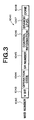
- Fig. 3 shows the construction of the entry of the re-order buffer 104.
- WRB number 1042 for uniquely identifying the entry thereof is physically given to each entry 1041.
- V bit 1043 for indicating whether the entry concerned is in use or non-use
- instruction operation code 1044 for indicating whether the entry concerned is in use or non-use
- SR number scalar register number
- control information 1046 branch level 1047
- DONE bit 1048 for indicating whether the instruction concerned is finished or not.
- the contents of the entries of the reservation stations 105-1 and 105-2 are substantially the same as the entries of the re-order buffer 104.
- the branch level 1047 is generated in such a manner as shown in Fig. 4A in the decoder 101.
- the decoder 101 has branch level counter 1011, and the initial value thereof is set to zero. Under this state, instructions are successively decoded, and the current count value 0 of the branch level counter 1011 is allocated to each instruction as branch level 0.
- the branch level counter 1011 is incremented by 1, and the branch level "1" is allocated to the subsequent instructions of the branch instruction concerned. Further, when another one branch instruction is decoded, the branch level counter 1011 is incremented by 1 again.
- the decoder 101 decrements the branch level counter 1011 by 1 when the branch prediction succeeds. On the other hand, when the branch prediction fails, the decoder 101 clears the branch level counter 1011 to 0.
- the decoder 101 allocates the branching levels as shown in Fig. 4B to the respective instructions, and registers the instructions into the re-order buffer 104 through path 121.
- the operation instructions out of these instructions are also registered in the reservation station 105-1, and the load instructions, the store instructions and the branch instructions are also registered in the reservation station 105-2.
- the control information 1046 of Fig. 3 is mainly information related with operands.
- the WRB number of an entry of the reorder buffer 104 in which the preceding instruction is stored is put in the control information 1046.
- the load/store controller 102 Upon receiving a load instruction and a store instruction from the reservation station 105-2 through path 140, the load/store controller 102 transmits the instructions through path 122 to the cache controller 106 and the data cache 107, and transmits the data to the managing part 115.
- the managing part 115 has plural entries for holding issued load instructions and store instructions until the processing of the instructions is completed, and registers into empty entries load instructions and store instructions transmitted from the load/store controller 102 through the path 122 to manage these instructions.
- Fig. 5 shows the construction of entry 1151 provided to the managing part 115.
- Tag 1152 is an identifier attached when the load instruction or store instruction registered in the entry concerned is transmitted to the main memory, and it is preset. Since the same tag is returned when a reply is returned from the main memory, the tag 1152 is used to discriminate which instruction the reply corresponds to.
- V bit 1153 indicates whether the entry concerned is in use or non-use, and it is turned on to "1" when it is used, and it is turned off to "0" when it is not used.
- An operation code 1154, branch level 1155 and WRB number 1156 are the operation code of the load instruction or store instruction thus issued, and the branch level and WRB number appendant to the instruction, respectively.
- Request bit 1157 is a bit for managing whether the request of the load instruction or store instruction concerned is output to the main memory or not, and it is turned on to "1" at the time when the request is transmitted to the main memory. Cancel bit 1158 is turned on to "1" when the load instruction or store instruction concerned is cancelled.
- the data cache 107 makes an judgement on hit/mistake, and in the case of "hit", the data cache 107 transmits the cache data through the path 127 to the bypass controller 108, and notifies the fact through a path 142 to the managing part 115 while specifying the WRB number appendant to the load instruction concerned. If the cancel bit 1158 of the entry 1151 having the same WRB number is set to "0", the managing part 115 transmits an end notification specifying the WRB number through path 128 to the reorder buffer 104 and the reservation station 105-1 and 105-2. If the cancel bit 1158 is set to "1", no such an end notification is transmitted.
- the data cache 107 transmits a mistake-signal through path 139 to the cache controller 106 when it makes a cache-mistake.
- the cache controller 106 transmits a cache-mistake request through path 125 to the request/reply controller 110 while specifying the WRB number. If the cancel bit 1158 of the entry 1151 having the specified WRB number in the managing part 115 is not set to "1", the request/reply controller 110 transmits a load request through path 135 to the main memory (not shown) with appending tag 1152.
- the request /reply controller 110 refers to the cancel bit 1158 of the entry 1151 having the same tag appended thereto in the managing part 115 through path 144. If it is not set to "1", the data are written into the data cache 107 through the path 126, and also transmitted out to the bypass controller 108 and the renaming register 111 through the path 127. If the cancel bit 1158 is set to "0", no such an operation is carried out. In any case, the tag is specified to the managing part 115, and the end of the load instruction is notified.
- the managing part 115 transmits the end notification specifying the WRB number 1156 of the entry concerned through path 128 to the re-order buffer 104 and reservation stations 105-1 and 105-2. However, if the cancel bit 1158 is set to "1", no such an end notification is transmitted.
- the cache controller 106 transmits a store request through the path 125 to the request/reply controller 110 with specifying the WRB number irrespective of hit/mistake of the data cache 107.
- the request/rely controller 110 refers to the entry 1151 having the specified WRB number from the managing part 115 through the path 144, and makes a store request through the path 135 to the main memory with the tag 1152 thereof being attached thereto.
- the completion of the store instruction is notified to the managing part 115 while specifying the tag.
- the managing part 115 transmits the end notification specifying the WRB number 1156 of the entry concerned through the path 128 to the re-order buffer 104 and the reservation stations 105-1 and 105-2. However, if the cancel bit 1158 is set to "1", no such an end notification is transmitted.
- the bypass controller 108 transmits an operating instruction issued from the reservation station 105-1 through path 131 to the operator 109 to perform an operation by using data transmitted from the renaming register 111 through path 129, data transmitted from the scalar register 112 through path 130 and data transmitted from the data cache 107 through path 127.
- the operation result achieved by the operator 109 is registered in accordance with the WRB number appended to the operation instruction concerned in the renaming register 111 through path 132.
- the reservation station 105-1 of the operating system itself manages how many cycles are needed to finish the instruction after issuance of the operation instruction, and it transmits the end notification to the re-order buffer 104 and the reservation station 105-2 through path 145 while specifying the WRB number every time the instruction is finished.
- the branching controller 103 Upon receiving a branch instruction from the reservation station 105-2 through path 141, the branching controller 103 makes a branch judgment of the branch instruction concerned, and transmits a branch prediction success/failure signal having WRB number appended thereto through the path 123 to the branch prediction part 114, the decoder 101, the reorder buffer 104, the reservation stations 105-1, 105-2 and the managing part 115.
- the branch prediction part 114 renews the branch record on the basis of the branch prediction success/failure signal.
- the branch level of each instruction held in the entry thereof is decremented by 1 when the branch prediction succeeds, and all the instructions having the branch level of 1 or more are cancelled when the branch prediction fails.
- the managing part 115 decrements the branch level 1155 of the instruction held in the entry 1151 thereof by 1, and when the branch prediction fails, the managing part 115 sets the cancel bits 1158 of the entries 1151 holding the instructions having the branch level of 1 or more to "0", thereby setting the entries concerned to the cancel state.
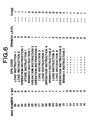
- Fig. 6 is a diagram showing the reorder buffer 104 at the time when the execution is finished until the store instruction 1 of the instruction string shown in Fig. 4B. Thereafter, the branch instruction 1 is executed, and the operation instruction 2, the operation instruction 3, the load instruction 3, the load instruction 4, the operation instruction 4, etc. of the subsequent instructions are speculatively executed while the branch judgment is made in the branch controller 103. If the branch prediction failure of the branch instruction 1 is settled, all the instructions having the branch level of 1 or more are cancelled, and all the entries used therefor are re-used by the subsequent instructions in the branch direction determined by the branch instruction 1. In the prior art, the entries of the load instruction 3, the load instruction 4, etc. are not usable until the end notification indicating the WRB numbers of the entries comes.
- the entries of the reorder buffer in which the subsequent instructions of a branch-prediction failed branch instruction are stored can be re-used for storage of new instructions without waiting the end notification based on the WRB numbers of the entries concerned. Therefore, the entries of the reorder buffer can be effectively used, and thus the range of an out-of-order executable instruction string can be enlarged.
Landscapes
- Engineering & Computer Science (AREA)
- Software Systems (AREA)
- Theoretical Computer Science (AREA)
- Physics & Mathematics (AREA)
- General Engineering & Computer Science (AREA)
- General Physics & Mathematics (AREA)
- Advance Control (AREA)
Abstract
Description
- The present invention relates to a processor for performing out-of-order execution by using a re-order buffer or the like and to a re-order buffer managing method that can efficiently use the re-order buffer.
- A system of executing instructions in parallel while skipping over the order of the instructions in a program is called as "out-of-order execution", and it can enhance the practical parallel degree more than "in-order execution". Therefore, this system is indispensable to high-performance processors.
- In an out-of-order execution processor, data dependence relationships such as inverse-dependence and output-dependence are detected, and these are solved to perform the out-of-order execution. The inverse-dependence occurs when a destination register of a subsequent instruction is coincident with a source register of a precedent instruction. The output-dependence occurs when the destination register is coincident between the subsequent instruction and the preceding instruction. These can be solved by holding the execution result of the subsequent instruction in a temporary register and writing data in an original register according to a program order. The execution of a instruction using the execution result of the subsequent instruction can be started by reading out data from the temporary register even before the data are stored in the original register. This is called as "registry naming", and a temporary register used therefor is called as "remaining register".
- In the out-of-order execution processor, a buffer for holding execution start (issue) waiting instructions such as a skipped instruction is called as "reservation station", and a buffer for carrying out the rewriting of the execution result in program order is called as "re-order buffer". As the size of the buffer is large, the range of a instruction string for which the out-of-order execution can be performed can be broadened. Further, with respect to the control dependence, a branch destination is predicted and instruction execution is speculatively performed, whereby the parallel execution is enabled. The cancel of the speculative execution and the processing when an exception occurs are generally implemented as a function of the re-order buffer.
- As described above, in order to broad the range of the instruction string for which the out-of-order execution can be performed, a re-order buffer having a large size is needed. A technological restriction is imposed on the upper limit of the size, and thus it is important how efficiently the re-order buffer having the restricted size is used. However, there has been hitherto such a disadvantage that even when an speculative instruction string in a re-order buffer is cancelled because of failure of a branch prediction, an entry used for a non-completed load instruction which is contained in entries used for the speculative instruction string thus cancelled cannot be immediately used for a subsequent instruction.
- The present invention has an object to enhance the using efficiency of a re-order.
- In order to attain the above object, according to the present invention, there is provided a managing method for an re-order buffer in an out-of-order execution processor for predicting the flow of a program by a branch prediction, finding out a next executable instruction from a instruction string in the program and speculatively executing the instruction on the basis of dependence relationship between the prediction and the instruction, in which the re-order buffer rewrites an execution result according to a program order and the end of the instruction is notified from each of function units containing a branching unit and a load unit to the re-order buffer by using WRB number corresponding to an entry number of the re-order buffer, which comprises the steps of: managing the latest speculation state of a load instruction issued to the load unit by the load unit on the basis of a branch prediction success/failure signal output from the branching unit and suppressing notification to the re-order buffer by the load unit, as to a subsequent load instruction of a branch instruction for which the branching prediction has failed, on the basis of the WRB number of the subsequent load instruction even when the processing of the load instruction concerned is finished, and re-using an entry stored with the subsequent instruction of the branching-prediction failed branching instruction by the re-order to store a new instruction before the end notification based on the WRB number of the entry concerned is received.
- Further, according to the present invention, there is provided an out-of-order execution processor for predicting the flow of a program by a branch prediction, finding out a next executable instruction from a instruction string in the program and speculatively executing the instruction on the basis of dependence relationship between the prediction and the instruction, in which a re-order buffer in the processor rewrites an execution result according to a program order and the end of the instruction is notified from each of function units containing a branching unit and a load unit to the re-order buffer by using WRB number corresponding to an entry number of the re-order buffer, which comprises: managing means for managing the latest speculation state of a load instruction issued to the load unit on the basis of a branch prediction success/failure signal output from the branching unit and suppressing notification to the re-order buffer, as to a subsequent load instruction of a branch instruction for which the branching prediction has failed, on the basis of the WRB number of the subsequent load instruction even when the processing of the load instruction concerned is finished, the managing means being contained in the load unit, wherein the re-order re-uses an entry stored with the subsequent instruction of the branching-prediction failed branching instruction to store a new instruction before the end notification based on the WRB number of the entry concerned is received.
- According to the present invention, in the load unit, the latest speculation state of the load instruction issued to the self unit is managed on the basis of the branch-prediction success/failure signal output from the branching unit, and with respect to the subsequent load instruction of a branching instruction for which the branching prediction fails, the notification to the re-order buffer on the basis of the WRB number of the load instruction concerned is suppressed even when the processing thereof is finished, so that the WRB number of the load instruction concerned can be prevented from being afterwards notified from the load unit even when a non-completed load instruction exists in the subsequent instruction string cancelled. Therefore, even when a cancelled entry of the re-order buffer is re-used for another new instruction, the DONE bit of the another new instruction is prevented from being erroneously turned on, and the entry of the re-order buffer in which the subsequent instruction of the branching-prediction failed branching instruction is stored can be quickly re-used for storage of a new instruction without waiting an end notification based on the WRB number of the entry concerned.
- Fig. 1 is a block diagram showing the construction of a processor to which the present invention is applied;
- Fig. 2 is a block diagram showing an embodiment of the processor to which the present invention is applied;
- Fig. 3 is a diagram showing the construction of an entry of a re-order buffer;
- Figs. 4A and 4B are diagrams showing a method of generating branch level in a decoder;
- Fig. 5 is a diagram showing the construction of an entry provided to a managing part of a load system; and
- Fig. 6 is a diagram showing an example of contents of a re-order buffer at some time.
-
- Preferred embodiments according to the present invention will be described hereunder with reference to the accompanying drawings.
- Fig. 1 is a block diagram showing the construction of a processor to which the present invention is applied.
- The process shown in Fig. 1 is an out-of-order execution processor for predicting the flow of a program by branching prediction, searching a next executable instruction from a instruction string in the program and speculatively executing a instruction on the basis of dependence relationship between prediction and instruction, and it includes, as main parts, instruction fetch/
decode unit 1, some function units, that is,branching unit 2,operation unit 3,store unit 4 andload unit 5, settling unit 7, and reservation station 8 provided at the front stage of the respective units. The settling unit 7 hasre-order buffer 6 havingplural entries 61. Theload unit 5 has managingpart 51 havingplural entries 52 for holding and managing load instructions issued. - In the embodiment of Fig. 1, the
store unit 4 and theload unit 5 are designed as separate units, however, they may be designed as the same unit (load/store unit). Further, one reservation station 8 which is commonly used to the respective function units is provided. However, a reservation station may be provided to each function unit, or a common reservation station may be provided to each group of some function units. - The instruction fetch/
decode unit 1 fetches a instruction from a instruction cache and decodes the instruction, and controls the registry naming processing to overcome the instruction dependence relationship and the speculative execution in the branching direction predicted by branching prediction. In order to investigate the instruction dependence relationship, the instruction fetch/decode unit 1 refers to a preceding instruction which has been already stored in there-order buffer 6. Further, the instruction fetch/decode unit 1 also controls a pointer for indicatingempty entry 61 of there-order buffer 6 to be next used, and registersinstruction information 63 such as the operation code of a instruction and register information, ainstruction branching level 64, etc. into theempty entry 61. The branchinglevel 64 is a control signal for discriminating non-speculative execution/speculation execution every instruction. When the instruction concerned is a instruction for the non-speculative execution, the branchinglevel 64 is set to zero, and when the instruction concerned is a instruction for the speculative-execution, the branchinglevel 64 is set to a value which is equal to or more than 1 and determined by the number of branch instructions interposed between the instruction for the non-speculative execution and the instruction for the speculative execution. Theentry 61 of there-order buffer 6 is provided withV bit 62 indicating whether the entry concerned is in use or not, andDONE bit 65 for indicating whether execution of the instruction of the entry concerned is finished or not. At the instruction registration time, theV bit 62 is turned on to "1" to thereby indicate "in use", and theDONE bit 65 is turned out to "0" to thereby indicate "no finish". - Further, the instruction fetch/
decode unit 1 registers into the reservation station 8 the decode result of each instruction together with the branching level of the instruction and the WRB number of theentry 61 of there-order buffer 6 in which the instruction is registered. When all the function units corresponding to the operand of the instruction registered are allowed to be used, the reservation station 8 issues the instruction to the corresponding function units of thebranching unit 2, theoperation unit 3, thestore unit 4 and theload unit 5. At this time, the branching level and the WRB number are added to the instruction to be issued. - The
branching unit 2 executes the branch instruction thus issued, and outputs the a branch-prediction success/failure signal specifying the WRB number appendant to the branch instruction concerned to the instruction fetch/decode unit 1, the reservation station 8, the re-order buffer 7 and theload unit 5. In the instruction fetch/decode unit 1, a branch record is renewed on the basis of the branch-prediction success/failure signal. In the reservation station 8, when the branch prediction succeeds, the branch level of each instruction held is decremented by 1, and when the branch prediction fails, all the instructions for which the branch level is equal to 1 or more are cancelled. In there-order buffer 6, when the branch prediction succeeds, thebranch level 64 of each instruction held in theentry 61 is decremented by 1, and when the branch prediction fails, all the instructions for which the branch level is equal to 1 or more are cancelled and theV bit 62 of theentry 61 which is held is set to "0" to allow re-use. The processing of theload unit 5 receiving the branch prediction success/failure signal will be described later. - The
operation unit 3 executes an issued operation instruction, and at the time when the operation instruction is finished, it specifies the WRB number appendant to the operation instruction and transmits an end notification to there-order buffer 6. There-order buffer 6 turns on theDONE bit 65 of theentry 61 of the WRB number thus specified to "1" (indicating the end of the instruction). - The
store unit 4 transmits a store request to the main memory according to an issued store instruction, specifies the WRB number appendant to the store instruction concerned when the store instruction is finished, and transmits an end notification to there-order buffer 6. There-order buffer 6 turns on theDONE bit 65 of theentry 61 of the WRB number thus specified to "1" (indicating the end of the instruction). - The
load unit 5 is equipped with managingpart 51 havingplural entries 52 each of which holds aload instruction 53 issued to theself unit 5 together with thebranch level 54 andWRB number 55 appendant thereto. Upon receiving the branch prediction success/failure signal from thebranch unit 2, the managingpart 51 decrements thebranch level 54 of the load instruction held in theentry 52 by 1 when the branch prediction succeeds, thereby managing the latest speculation state of each load instruction. When the branch prediction fails, the managingpart 51 sets theentries 52 having thebranch level 54 of 1 or more to the cancel state. The load instructions registered in therespective entries 52 of the managingpart 51 are processed in issuance order thereof, and the processing for transmission of cache data from a data cache (not shown), transmission of a load request to the main memory in the case of a mis-hit, writing of the replay data to the load request into the data cache are executed. If theentry 52 for storing a load instruction is not set to the cancel state at the execution end time of the load instruction concerned, theWRB number 55 stored in theentry 52 is specified and the end notification is transmitted to there-order buffer 6. There-order buffer 6 turns on theDONE bit 65 of theentry 61 of the specified WRB number to "1" (indicating the instruction end). On the other hand, if theentry 52 for storing a load instruction for which the execution is finished is set to the cancel state, the end notification to there-order buffer 6 on the basis of theWRB number 55 is suppressed. - The settling unit 7 records all the non-completed instructions into the
entries 61 of there-order buffer 6, and receives the end notification specifying the WRB number from therespective function units 2 to 5 to turn on theDONE bit 65 of thecorresponding entry 61 to "1", thereby managing the presence or absence of the execution end of each instruction.Many entries 61 for holding non-completed instructions are provided inre-order buffer 6, and a physical number is given to eachentry 61 to thereby enable each entry to be uniquely identified. The number given to eachentry 61 is called as "WRB number". In eachentry 61 is registeredinstruction information 63 containing the operation code of a instruction decoded by a instruction fetch/decode unit 1, register information and registered also bit 65 indicating whether execution of a instruction registered in eachentry 61 is finished or not. This bit is called as "DONE bit". The DONEbit 65 is turned on at the time when the instruction concerned is finished. With respect to a instruction for which the DONEbit 65 is turned on because the instruction operation in the corresponding function unit is completed, the branch related with the instruction is settled and all the previously-issued instructions are settled, the settling unit 7 carries out the processing of writing the execution result of the instruction concerned into a software-visible register or the like. When the branch prediction fails, all the results of the subsequent instructions of the branch concerned are invalidated, and all the instructions under the speculation state at the present time are cancelled from there-order buffer 6. In order to manage which instruction the speculation instruction at the present time corresponds to, the settling unit 7 decrements thebranch level 64 of each instruction held in theentry 61 by 1 when the branch prediction success is notified from thebranch unit 2, thereby managing the latest speculation state of each instruction. Accordingly, when receiving the branch prediction failure signal from thebranch unit 2, instructions having the branch level of 1 or more are speculation instructions at the present time, and all the speculation instructions are cancelled. In addition, theV bits 62 of theentries 61 holding these speculation instructions are set to "0", thereby enabling re-use thereof. - Fig. 2 is a block diagram showing an embodiment of a processor to which the present invention is applied. The processor of this embodiment includes
instruction cache 100,decoder 101, load/store controller 102,branch controller 103, re-order buffer (ROB) 104, reservation stations (RS) 105-1 and 105-2,cache controller 106,data cache 107,bypass controller 108,operator 109, request/reply controller 110, renaming register (RR) 111, scalar register (SR) 112,instruction address counter 113,branch prediction part 114 and managingpart 115 as main parts, and perform parallel execution of instructions through a instruction pipeline, particularly out-of-order execution. - In the relationship of Fig. 1, the
instruction address counter 113, theinstruction cache 100, thedecoder 101 and thebranch prediction part 114 correspond to the instruction fetch/decode unit 1 of Fig. 1, the reservation stations 105-1 and 105-2 correspond to the reservation station 8 of Fig. 1, the load/store controller 102, thecache controller 106, thedata cache 107, the request/reply controller 110 and the managingpart 115 correspond to thestore unit 4 and theload unit 5 of Fig. 1, thebranch controller 103 corresponds to thebranch unit 2 of Fig. 1, there-order buffer 104 corresponds to the settling unit 7 having there-order buffer 6 of Fig. 1, and thebypass controller 108 and theoperator 109 correspond to theoperation unit 3 of Fig. 1. Therenaming register 111 and thestore register 112 which are not shown in Fig. 1 are illustrated in Fig. 2. - The
renaming register 111 contains a register which is in one-to-one correspondence to the entry of there-order buffer 104, and the result of an operating instruction, a load instruction or the like stored in an entry having WRB number i of there-order buffer 104 is stored in the register corresponding to the WRB number i in therenaming register 111. Thereafter, when the instruction stored in the entry of the WRB number i of there-order buffer 104 is settled, the scalar register number stored in the entry concerned is output to apath 133, and the register corresponding to the WRB number i in therenaming register 111 is written into the register specified by the scalar register number in thescalar register 112 through apath 134. - The construction and operation of this embodiment will be described in detail.
- The instruction address specified by the
instruction address counter 113 is given throughpath 137 to theinstruction cache 100 and thebranch prediction part 114. Thebranch prediction part 114 receives a instruction address specified by theinstruction address counter 113 to judge whether the branch record of a branch instruction indicated by the instruction address concerned is registered or not. If it is registered, success/failure of branching is predicted on the basis of a past branch record registered. If the branch success is predicted, a branch destination address is transmitted to theinstruction address counter 113 throughpath 138 to renew theinstruction address counter 113. In the case where the branch fails and in the case where the instruction is out of the branch instruction, the counter value of theinstruction address counter 112 is incremented by every amount of one instruction. - The
decoder 101 decodes a instruction fetched from theinstruction cache 100 throughpath 120, carries out the processing to suppress hazards caused by a register number while devising allocation of therenaming register 111 in consideration of preceding instructions accumulated in there-order buffer 104, and registers information of decoded instructions or the like into there-order buffer 104 in instruction order of the program. In the case of an operation instruction, thedecoder 101 registers the decoded data into the reservation station 105-1 of the operation system. In the case of a branch instruction or a load/store instruction, thedecoder 101 registers the decoded data into the reservation station 105-2. - Fig. 3 shows the construction of the entry of the
re-order buffer 104.WRB number 1042 for uniquely identifying the entry thereof is physically given to eachentry 1041. In eachentry 1041 are storedV bit 1043 for indicating whether the entry concerned is in use or non-use,instruction operation code 1044, scalar register number (SR number) 1045 for storing the result of the instruction concerned, controlinformation 1046,branch level 1047 and DONEbit 1048 for indicating whether the instruction concerned is finished or not. The contents of the entries of the reservation stations 105-1 and 105-2 are substantially the same as the entries of there-order buffer 104. - The
branch level 1047 is generated in such a manner as shown in Fig. 4A in thedecoder 101. Thedecoder 101 hasbranch level counter 1011, and the initial value thereof is set to zero. Under this state, instructions are successively decoded, and thecurrent count value 0 of thebranch level counter 1011 is allocated to each instruction asbranch level 0. When one branch instruction is decoded, thebranch level counter 1011 is incremented by 1, and the branch level "1" is allocated to the subsequent instructions of the branch instruction concerned. Further, when another one branch instruction is decoded, thebranch level counter 1011 is incremented by 1 again. When the branch instruction thus decoded is executed in thebranch controller 103 and the branch prediction success/failure signal associated with the branch instruction concerned is output to thepath 123, thedecoder 101 decrements thebranch level counter 1011 by 1 when the branch prediction succeeds. On the other hand, when the branch prediction fails, thedecoder 101 clears thebranch level counter 1011 to 0. - When plural instructions from
load instruction 1 untilbranch instruction 3 as shown in Fig. 4B are fetched from theinstruction cache 100, thedecoder 101 allocates the branching levels as shown in Fig. 4B to the respective instructions, and registers the instructions into there-order buffer 104 throughpath 121. The operation instructions out of these instructions are also registered in the reservation station 105-1, and the load instructions, the store instructions and the branch instructions are also registered in the reservation station 105-2. In there-order buffer 104 and the reservation stations 105-1 and 105-2, when the branch prediction success/failure signal are output from the branch controller to thepath 123, all the branch levels of entries having the branch level of 1 or more are decremented by 1 when the branch prediction succeeds, and all the instructions of entries having the branch level of 1 or more are cancelled when the branch prediction fails. - The
control information 1046 of Fig. 3 is mainly information related with operands. In the case of a instruction having a dependence relationship with a preceding instruction, the WRB number of an entry of thereorder buffer 104 in which the preceding instruction is stored is put in thecontrol information 1046. For example, in the case of a subsequent instruction having as a source the execution result of a instruction stored in an entry having WRB number = 10 of thereorder buffer 104, WRB number = 10 is put in thecontrol information 1046. When all the execution results of the instructions stored in the entries having WRB numbers described in thecontrol information 1046 are allowed to be used, preparation of the operands of the instructions of the entries concerned is completed. Therefore, if there are empty resources of the corresponding function units, the instructions are issued from the reservation stations 105-1 and 105-2. - Next, the construction and operation of this embodiment will be described while dividing into a load/store system, an operation system and a branching system.
- Upon receiving a load instruction and a store instruction from the reservation station 105-2 through
path 140, the load/store controller 102 transmits the instructions throughpath 122 to thecache controller 106 and thedata cache 107, and transmits the data to the managingpart 115. - The managing
part 115 has plural entries for holding issued load instructions and store instructions until the processing of the instructions is completed, and registers into empty entries load instructions and store instructions transmitted from the load/store controller 102 through thepath 122 to manage these instructions. - Fig. 5 shows the construction of
entry 1151 provided to the managingpart 115.Tag 1152 is an identifier attached when the load instruction or store instruction registered in the entry concerned is transmitted to the main memory, and it is preset. Since the same tag is returned when a reply is returned from the main memory, thetag 1152 is used to discriminate which instruction the reply corresponds to.V bit 1153 indicates whether the entry concerned is in use or non-use, and it is turned on to "1" when it is used, and it is turned off to "0" when it is not used. Anoperation code 1154,branch level 1155 andWRB number 1156 are the operation code of the load instruction or store instruction thus issued, and the branch level and WRB number appendant to the instruction, respectively.Request bit 1157 is a bit for managing whether the request of the load instruction or store instruction concerned is output to the main memory or not, and it is turned on to "1" at the time when the request is transmitted to the main memory. Cancelbit 1158 is turned on to "1" when the load instruction or store instruction concerned is cancelled. - In the case of the load instruction, the
data cache 107 makes an judgement on hit/mistake, and in the case of "hit", thedata cache 107 transmits the cache data through thepath 127 to thebypass controller 108, and notifies the fact through apath 142 to the managingpart 115 while specifying the WRB number appendant to the load instruction concerned. If the cancelbit 1158 of theentry 1151 having the same WRB number is set to "0", the managingpart 115 transmits an end notification specifying the WRB number throughpath 128 to thereorder buffer 104 and the reservation station 105-1 and 105-2. If the cancelbit 1158 is set to "1", no such an end notification is transmitted. - The
data cache 107 transmits a mistake-signal throughpath 139 to thecache controller 106 when it makes a cache-mistake. Thecache controller 106 transmits a cache-mistake request throughpath 125 to the request/reply controller 110 while specifying the WRB number. If the cancelbit 1158 of theentry 1151 having the specified WRB number in the managingpart 115 is not set to "1", the request/reply controller 110 transmits a load request throughpath 135 to the main memory (not shown) with appendingtag 1152. When reply data having the tag appended thereto is returned from the main memory through thepath 136, the request /reply controller 110 refers to the cancelbit 1158 of theentry 1151 having the same tag appended thereto in the managingpart 115 throughpath 144. If it is not set to "1", the data are written into thedata cache 107 through thepath 126, and also transmitted out to thebypass controller 108 and therenaming register 111 through thepath 127. If the cancelbit 1158 is set to "0", no such an operation is carried out. In any case, the tag is specified to the managingpart 115, and the end of the load instruction is notified. If the cancelbit 1158 of theentry 1151 having the same tag appended thereto is set to "0", the managingpart 115 transmits the end notification specifying theWRB number 1156 of the entry concerned throughpath 128 to there-order buffer 104 and reservation stations 105-1 and 105-2. However, if the cancelbit 1158 is set to "1", no such an end notification is transmitted. - In the case of the store instruction, the
cache controller 106 transmits a store request through thepath 125 to the request/reply controller 110 with specifying the WRB number irrespective of hit/mistake of thedata cache 107. The request/relycontroller 110 refers to theentry 1151 having the specified WRB number from the managingpart 115 through thepath 144, and makes a store request through thepath 135 to the main memory with thetag 1152 thereof being attached thereto. When a reply is returned from the main memory, the completion of the store instruction is notified to the managingpart 115 while specifying the tag. If the cancelbit 1158 of theentry 1151 having the same tag appended thereto is set to "0", the managingpart 115 transmits the end notification specifying theWRB number 1156 of the entry concerned through thepath 128 to there-order buffer 104 and the reservation stations 105-1 and 105-2. However, if the cancelbit 1158 is set to "1", no such an end notification is transmitted. - When an operating instruction is issued from the reservation station 105-1 through the
path 124, thebypass controller 108 transmits an operating instruction issued from the reservation station 105-1 throughpath 131 to theoperator 109 to perform an operation by using data transmitted from therenaming register 111 throughpath 129, data transmitted from thescalar register 112 throughpath 130 and data transmitted from thedata cache 107 throughpath 127. The operation result achieved by theoperator 109 is registered in accordance with the WRB number appended to the operation instruction concerned in therenaming register 111 throughpath 132. - The reservation station 105-1 of the operating system itself manages how many cycles are needed to finish the instruction after issuance of the operation instruction, and it transmits the end notification to the
re-order buffer 104 and the reservation station 105-2 throughpath 145 while specifying the WRB number every time the instruction is finished. - Upon receiving a branch instruction from the reservation station 105-2 through path 141, the branching
controller 103 makes a branch judgment of the branch instruction concerned, and transmits a branch prediction success/failure signal having WRB number appended thereto through thepath 123 to thebranch prediction part 114, thedecoder 101, thereorder buffer 104, the reservation stations 105-1, 105-2 and the managingpart 115. Thebranch prediction part 114 renews the branch record on the basis of the branch prediction success/failure signal. In each of thereorder buffer 104 and the reservation stations 105-1 and 105-2, the branch level of each instruction held in the entry thereof is decremented by 1 when the branch prediction succeeds, and all the instructions having the branch level of 1 or more are cancelled when the branch prediction fails. When the branch prediction succeeds, the managingpart 115 decrements thebranch level 1155 of the instruction held in theentry 1151 thereof by 1, and when the branch prediction fails, the managingpart 115 sets the cancelbits 1158 of theentries 1151 holding the instructions having the branch level of 1 or more to "0", thereby setting the entries concerned to the cancel state. - Fig. 6 is a diagram showing the
reorder buffer 104 at the time when the execution is finished until thestore instruction 1 of the instruction string shown in Fig. 4B. Thereafter, thebranch instruction 1 is executed, and theoperation instruction 2, theoperation instruction 3, theload instruction 3, theload instruction 4, theoperation instruction 4, etc. of the subsequent instructions are speculatively executed while the branch judgment is made in thebranch controller 103. If the branch prediction failure of thebranch instruction 1 is settled, all the instructions having the branch level of 1 or more are cancelled, and all the entries used therefor are re-used by the subsequent instructions in the branch direction determined by thebranch instruction 1. In the prior art, the entries of theload instruction 3, theload instruction 4, etc. are not usable until the end notification indicating the WRB numbers of the entries comes. - As described above, according to the present invention, the entries of the reorder buffer in which the subsequent instructions of a branch-prediction failed branch instruction are stored can be re-used for storage of new instructions without waiting the end notification based on the WRB numbers of the entries concerned. Therefore, the entries of the reorder buffer can be effectively used, and thus the range of an out-of-order executable instruction string can be enlarged.
Claims (6)
- A managing method for an re-order buffer in an out-of-order execution processor for predicting the flow of a program by a branch prediction, finding out a next executable instruction from a instruction string in the program and speculatively executing the instruction on the basis of dependence relationship between the prediction and the instruction, in which said re-order buffer rewrites an execution result according to a program order and the end of the instruction is notified from each of function units containing a branching unit and a load unit to said re-order buffer by using WRB number corresponding to an entry number of said reorder buffer, which comprises the steps of:managing the latest speculation state of a load instruction issued to said load unit by said load unit on the basis of a branch prediction success/failure signal output from said branching unit and suppressing notification to said re-order buffer by said load unit, as to a subsequent load instruction of a branch instruction for which the branching prediction has failed, on the basis of the WRB number of the subsequent load instruction even when the processing of the load instruction concerned is finished, andre-using an entry stored with the subsequent instruction of the branching-prediction failed branching instruction by the re-order to store a new instruction before the end notification based on the WRB number of the entry concerned is received.
- The managing method as claim in claim 1, wherein a control signal for discriminating non-speculative execution/speculative execution every instruction, which corresponds to a branching level, is generated in a instruction fetch/decode unit, the branching level being set to zero when the instruction concerned is a instruction for non-speculative execution, and the branching level being set to a value of being 1 or more which is determined by the number of branching instructions interposed between the instruction for the non-speculative execution and the instruction for the speculative execution when the instruction concerned is a instruction for speculative execution, the control signal thus generated is held in said re-order buffer and said load unit, and the branching level is decremented by 1 in said reorder buffer and said load unit every time when a branch-prediction failure signal is output from said branching unit, thereby managing the latest instruction speculation state.
- The managing method as claimed in claim 2, wherein said load unit has plural entries each of which holds a load instruction issued to said load unit together with the branching level and the WRB number thereof, the entries having the branching level of 1 or more set to a cancel state when a branch-prediction failure signal is output from said branching unit, and with respect to load instructions held in the entries under the cancel state, a notification to the re-order on the basis of the WRB numbers of the load instructions concerned is suppressed even when the processing of the load instructions is finished.
- An out-of-order execution processor for predicting the flow of a program by a branch prediction, finding out a next executable instruction from a instruction string in the program and speculatively executing the instruction on the basis of dependence relationship between the prediction and the instruction, in which a re-order buffer in said processor rewrites an execution result according to a program order and the end of the instruction is notified from each of function units containing a branching unit and a load unit to said re-order buffer by using WRB number corresponding to an entry number of said re-order buffer, which comprises:managing means for managing the latest speculation state of a load instruction issued to said load unit on the basis of a branch prediction success/failure signal output from said branching unit and suppressing notification to said re-order buffer, as to a subsequent load instruction of a branch instruction for which the branching prediction has failed, on the basis of the WRB number of the subsequent load instruction even when the processing of the load instruction concerned is finished, said managing means being contained in said load unit, wherein the re-order re-uses an entry stored with the subsequent instruction of the branching-prediction failed branching instruction to store a new instruction before the end notification based on the WRB number of the entry concerned is received.
- The processor as claim in claim 4, wherein a control signal for discriminating non-speculative execution/speculative execution every instruction, which corresponds to a branching level, is generated in a instruction fetch/decode unit, the branching level being set to zero when the instruction concerned is a instruction for non-speculative execution, and the branching level being set to a value of being 1 or more which is determined by the number of branching instructions interposed between the instruction for the non-speculative execution and the instruction for the speculative execution when the instruction concerned is a instruction for speculative execution, the control signal thus generated is held in said re-order buffer and said managing means, and the branching level is decremented by 1 in said re-order buffer and said managing means every time when a branch-prediction failure signal is output from said branching unit, thereby managing the latest instruction speculation state.
- The processor as claimed in claim 5, wherein said managing means has plural entries each of which holds a load instruction issued to said load unit together with the branching level and the WRB number thereof, the entries having the branching level of 1 or more set to a cancel state when a branch prediction failure signal is output from said branching unit, and with respect to load instructions held in the entries under the cancel state, a notification to the re-order on the basis of the WRB numbers of the load instructions concerned is suppressed even when the processing of the load instructions is finished.
Applications Claiming Priority (2)
| Application Number | Priority Date | Filing Date | Title |
|---|---|---|---|
| JP2001002141A JP3518510B2 (en) | 2001-01-10 | 2001-01-10 | Reorder buffer management method and processor |
| JP2001002141 | 2001-01-10 |
Publications (1)
| Publication Number | Publication Date |
|---|---|
| EP1223507A1 true EP1223507A1 (en) | 2002-07-17 |
Family
ID=18870690
Family Applications (1)
| Application Number | Title | Priority Date | Filing Date |
|---|---|---|---|
| EP02000139A Withdrawn EP1223507A1 (en) | 2001-01-10 | 2002-01-04 | Re-order buffer managing method and processor |
Country Status (4)
| Country | Link |
|---|---|
| US (1) | US6938150B2 (en) |
| EP (1) | EP1223507A1 (en) |
| JP (1) | JP3518510B2 (en) |
| CA (1) | CA2367324C (en) |
Families Citing this family (15)
| Publication number | Priority date | Publication date | Assignee | Title |
|---|---|---|---|---|
| US7633861B2 (en) * | 2003-04-25 | 2009-12-15 | Alcatel-Lucent Usa Inc. | Fabric access integrated circuit configured to bound cell reorder depth |
| JP4952580B2 (en) | 2005-04-21 | 2012-06-13 | 富士通株式会社 | Processor device |
| JP4814653B2 (en) * | 2006-02-27 | 2011-11-16 | 富士通株式会社 | Reordering device |
| US9026769B1 (en) * | 2011-01-31 | 2015-05-05 | Marvell International Ltd. | Detecting and reissuing of loop instructions in reorder structure |
| JP5949327B2 (en) * | 2012-08-24 | 2016-07-06 | 富士通株式会社 | Arithmetic processing device and control method of arithmetic processing device |
| JP2015118638A (en) * | 2013-12-19 | 2015-06-25 | キヤノン株式会社 | Information processing apparatus, control method therefor, and program |
| US10241789B2 (en) * | 2016-12-27 | 2019-03-26 | Intel Corporation | Method to do control speculation on loads in a high performance strand-based loop accelerator |
| JP7053998B2 (en) * | 2018-06-06 | 2022-04-13 | 富士通株式会社 | Arithmetic processing unit and control method of arithmetic processing unit |
| US20200034152A1 (en) * | 2018-07-30 | 2020-01-30 | Cavium, Llc | Preventing Information Leakage In Out-Of-Order Machines Due To Misspeculation |
| US10956168B2 (en) | 2019-03-08 | 2021-03-23 | International Business Machines Corporation | Post completion execution in an out-of-order processor design |
| WO2023003533A1 (en) * | 2021-07-19 | 2023-01-26 | Google Llc | Low-latency bridge to support out-of-order execution |
| CN114217859A (en) * | 2021-11-16 | 2022-03-22 | 广东赛昉科技有限公司 | Device and method for submitting instructions out of order |
| CN114116015B (en) * | 2022-01-21 | 2022-06-07 | 上海登临科技有限公司 | Method and system for managing hardware command queue |
| US12229556B2 (en) * | 2023-07-17 | 2025-02-18 | Arm Limited | Predicting a load value for a subsequent load operation |
| CN118626150B (en) * | 2024-08-12 | 2024-10-29 | 北京微核芯科技有限公司 | Branch prediction method and device based on coverage branch predictor |
Citations (3)
| Publication number | Priority date | Publication date | Assignee | Title |
|---|---|---|---|---|
| US5933618A (en) * | 1995-10-30 | 1999-08-03 | Advanced Micro Devices, Inc. | Speculative register storage for storing speculative results corresponding to register updated by a plurality of concurrently recorded instruction |
| US5983342A (en) * | 1996-09-12 | 1999-11-09 | Advanced Micro Devices, Inc. | Superscalar microprocessor employing a future file for storing results into multiportion registers |
| WO2000042500A1 (en) * | 1999-01-11 | 2000-07-20 | Telefonaktiebolaget Lm Ericsson | Not reported jump buffer |
Family Cites Families (9)
| Publication number | Priority date | Publication date | Assignee | Title |
|---|---|---|---|---|
| JPH04242431A (en) | 1991-01-16 | 1992-08-31 | Koufu Nippon Denki Kk | Information processor |
| JPH05173785A (en) | 1991-12-25 | 1993-07-13 | Koufu Nippon Denki Kk | Instruction prefetching device |
| JPH07306785A (en) | 1994-05-11 | 1995-11-21 | Toshiba Corp | Processor having branch instruction execution function and branch instruction control method |
| US5611063A (en) * | 1996-02-06 | 1997-03-11 | International Business Machines Corporation | Method for executing speculative load instructions in high-performance processors |
| JP3473249B2 (en) | 1996-03-08 | 2003-12-02 | 株式会社日立製作所 | Central processing unit |
| US5870579A (en) * | 1996-11-18 | 1999-02-09 | Advanced Micro Devices, Inc. | Reorder buffer including a circuit for selecting a designated mask corresponding to an instruction that results in an exception |
| JP2933560B2 (en) | 1997-03-24 | 1999-08-16 | 甲府日本電気株式会社 | Information processing device having multiple pipelines |
| JP2910848B1 (en) | 1997-12-29 | 1999-06-23 | 日本電気株式会社 | Speculative execution instruction count device |
| US6289442B1 (en) * | 1998-10-05 | 2001-09-11 | Advanced Micro Devices, Inc. | Circuit and method for tagging and invalidating speculatively executed instructions |
-
2001
- 2001-01-10 JP JP2001002141A patent/JP3518510B2/en not_active Expired - Lifetime
-
2002
- 2002-01-04 EP EP02000139A patent/EP1223507A1/en not_active Withdrawn
- 2002-01-08 CA CA002367324A patent/CA2367324C/en not_active Expired - Fee Related
- 2002-01-09 US US10/040,392 patent/US6938150B2/en not_active Expired - Lifetime
Patent Citations (3)
| Publication number | Priority date | Publication date | Assignee | Title |
|---|---|---|---|---|
| US5933618A (en) * | 1995-10-30 | 1999-08-03 | Advanced Micro Devices, Inc. | Speculative register storage for storing speculative results corresponding to register updated by a plurality of concurrently recorded instruction |
| US5983342A (en) * | 1996-09-12 | 1999-11-09 | Advanced Micro Devices, Inc. | Superscalar microprocessor employing a future file for storing results into multiportion registers |
| WO2000042500A1 (en) * | 1999-01-11 | 2000-07-20 | Telefonaktiebolaget Lm Ericsson | Not reported jump buffer |
Also Published As
| Publication number | Publication date |
|---|---|
| CA2367324C (en) | 2006-08-08 |
| CA2367324A1 (en) | 2002-07-10 |
| US20020091913A1 (en) | 2002-07-11 |
| JP2002207595A (en) | 2002-07-26 |
| JP3518510B2 (en) | 2004-04-12 |
| US6938150B2 (en) | 2005-08-30 |
Similar Documents
| Publication | Publication Date | Title |
|---|---|---|
| US6938150B2 (en) | Processor for managing latest speculation states and efficiently reusing reorder buffer entries | |
| US6079014A (en) | Processor that redirects an instruction fetch pipeline immediately upon detection of a mispredicted branch while committing prior instructions to an architectural state | |
| JP5635701B2 (en) | State update execution instruction, apparatus, method, and system at commit time | |
| US6625723B1 (en) | Unified renaming scheme for load and store instructions | |
| JP5865920B2 (en) | Data processor trace | |
| US10198267B2 (en) | Register renaming using snapshot buffers | |
| US7624253B2 (en) | Determining register availability for register renaming | |
| US20160350115A1 (en) | Register renaming | |
| US9454371B2 (en) | Micro-architecture for eliminating MOV operations | |
| US6772317B2 (en) | Method and apparatus for optimizing load memory accesses | |
| US20050149702A1 (en) | Method and system for memory renaming | |
| JP3854624B2 (en) | Hardware device and computer system | |
| KR20160031503A (en) | Method and apparatus for selective renaming in a microprocessor | |
| US6003126A (en) | Special instruction register including allocation field utilized for temporary designation of physical registers as general registers | |
| US20030065909A1 (en) | Deferral of dependent loads until after execution of colliding stores | |
| CN117492844B (en) | Register renaming method, device and storage medium | |
| US7051191B2 (en) | Resource management using multiply pendent registers | |
| US7711934B2 (en) | Processor core and method for managing branch misprediction in an out-of-order processor pipeline | |
| KR0122527B1 (en) | Method and system for nonsequential instruction dispatch and execution a superscalar processor system | |
| US9841974B2 (en) | Renaming with generation numbers | |
| US6026477A (en) | Branch recovery mechanism to reduce processor front end stall time by providing path information for both correct and incorrect instructions mixed in the instruction pool | |
| US20100306513A1 (en) | Processor Core and Method for Managing Program Counter Redirection in an Out-of-Order Processor Pipeline | |
| TWI483184B (en) | Micro-architecture for eliminating mov operations | |
| US5784606A (en) | Method and system in a superscalar data processing system for the efficient handling of exceptions | |
| US7590827B2 (en) | Processor and instruction control method having a storage of latest register for updating data of source operands, and instruction control |
Legal Events
| Date | Code | Title | Description |
|---|---|---|---|
| PUAI | Public reference made under article 153(3) epc to a published international application that has entered the european phase |
Free format text: ORIGINAL CODE: 0009012 |
|
| AK | Designated contracting states |
Kind code of ref document: A1 Designated state(s): AT BE CH CY DE DK ES FI FR GB GR IE IT LI LU MC NL PT SE TR |
|
| AX | Request for extension of the european patent |
Free format text: AL;LT;LV;MK;RO;SI |
|
| 17P | Request for examination filed |
Effective date: 20020529 |
|
| AKX | Designation fees paid |
Designated state(s): DE FR GB |
|
| 17Q | First examination report despatched |
Effective date: 20020304 |
|
| GRAP | Despatch of communication of intention to grant a patent |
Free format text: ORIGINAL CODE: EPIDOSNIGR1 |
|
| STAA | Information on the status of an ep patent application or granted ep patent |
Free format text: STATUS: THE APPLICATION IS DEEMED TO BE WITHDRAWN |
|
| 18D | Application deemed to be withdrawn |
Effective date: 20070301 |