EP1220102A1 - Concentrateur USB avec sélection douce des ports - Google Patents
Concentrateur USB avec sélection douce des ports Download PDFInfo
- Publication number
- EP1220102A1 EP1220102A1 EP01650122A EP01650122A EP1220102A1 EP 1220102 A1 EP1220102 A1 EP 1220102A1 EP 01650122 A EP01650122 A EP 01650122A EP 01650122 A EP01650122 A EP 01650122A EP 1220102 A1 EP1220102 A1 EP 1220102A1
- Authority
- EP
- European Patent Office
- Prior art keywords
- usb
- universal serial
- serial bus
- hub
- ports
- Prior art date
- Legal status (The legal status is an assumption and is not a legal conclusion. Google has not performed a legal analysis and makes no representation as to the accuracy of the status listed.)
- Withdrawn
Links
Images



Classifications
-
- G—PHYSICS
- G06—COMPUTING OR CALCULATING; COUNTING
- G06F—ELECTRIC DIGITAL DATA PROCESSING
- G06F13/00—Interconnection of, or transfer of information or other signals between, memories, input/output devices or central processing units
- G06F13/38—Information transfer, e.g. on bus
- G06F13/40—Bus structure
- G06F13/4004—Coupling between buses
- G06F13/4022—Coupling between buses using switching circuits, e.g. switching matrix, connection or expansion network
Definitions
- the present invention generally relates to the field of information handling systems, and particularly to a USB hub with soft select ports.
- USB Universal Serial Bus
- USB Universal Serial Bus
- manufacturers incorporated a USB hub capable of supporting more ports than were actually included on the information handling system.
- the information handling system may report a greater number of ports than were actually available on the system, resulting in consumer confusion.
- the manufacturer had to use specific USB hubs for specific applications. Therefore, a large number of hubs were required for various applications, resulting in inefficiencies in both the manufacture and assembly of the hubs.
- USB hub capable of supporting a variety of ports as desired by a user and also capable of being changed without extensive hardware modifications.
- a Universal Serial Bus (USB) hub suitable for indicating a user-selectable number of ports includes a Universal Serial Bus (USB) hub suitable for facilitating Universal Serial Bus (USB) communication between a host and a device, and a register for storing an actual port value indicating a number of Universal Serial Bus (USB) ports connected to the Universal Serial Bus (USB) hub, the actual port value suitable for being changed by a user.
- USB Universal Serial Bus
- a Universal Serial Bus (USB) hub suitable for indicating a user-selectable number of ports includes a Universal Serial Bus (USB) hub suitable for facilitating Universal Serial Bus (USB) communication between a host and a device.
- a software component suitable for storing an actual port value is included for indicating number of Universal Serial Bus (USB) ports connected to the Universal Serial Bus (USB) hub, the actual port value suitable for being changed by a user.
- a method of indicating a number of actual Universal Serial Bus (USB) ports on an information handling system includes receiving a query for a Universal Serial Bus (USB) hub port value.
- a Universal Serial Bus (USB) hub port value is returned suitable for being changed by a user.
- a method of setting an actual port value of an information handling system having a Universal Serial Bus (USB) hub includes accessing a Universal Serial Bus (USB) hub.
- the Universal Serial Bus (USB) hub is programmed with an actual port value, wherein the actual port value corresponds to the actual number of ports included on the information handling system.
- a method of manufacturing an information handling system includes a Universal Serial Bus (USB) hub, includes receiving an order for an information handling system including a Universal Serial Bus (USB) hub.
- the Universal Serial Bus (USB) hub is programmed with an actual port value, wherein the actual port value corresponds to the actual number of ports included on the information handling system.
- a USB interconnect supports data traffic between a host, such as an information handling system, including typical desktop computers, laptops, personal digital assistants, digital information appliances, convergence systems, and the like, and a USB device.
- a host interface may be utilized to facilitate USB communication between a software client, resident on the host, and a function implemented on a device.
- the following description is provided as an example to illustrate host system behavior expected by a USB device. However, a variety of host system behaviors are contemplated by the present invention without departing from the spirit and scope thereof.
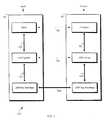
- FIG. 1 an exemplary embodiment 100 of the present invention is shown wherein an interrelationship of a USB communication model is shown.
- a host and a device may be divided into distinct layers.
- Solid arrows 102, 104, 106, 108 and 110 indicate the path taken during actual communications between the host 112 and the device 114.
- Dashed arrows 116 and 118 indicate logical host 112 to device 114 interfaces between each respective horizontal layer.
- Such communication between client software resident on the host and the function provided by the device, may be accomplished based on needs of an application currently using the device and the capabilities provided by the device. For example, communication may be accomplished through different logical layers as required by the device and/or information handing system.
- USB bus interface 204 handles interactions for electrical and protocol layers.
- SIE Serial Interface Engine
- a similar USB bus interface may be provided by both the USB device and the host, as exemplified by a Serial Interface Engine (SIE) 210 from an interconnect point of view.
- SIE Serial Interface Engine
- the USB bus interface may include additional functions due to the role of the host on the USB. These additional functions may be implemented as the Host Controller 212.
- the Host Controller 212 may include an integrated root hub for providing attachment points to a USB wire.
- the Host Controller 212 may be utilized by the USB System 206 to control the transfer of data between the Host 202 and USB devices.
- a hardware definition of the Host Controller 212 is utilized to define an interface between the USB System 206 and the Host Controller 212.
- the USB System 206 and Host Controller 212 perform translations between data transfers, from the client's point of view, and USB transaction appearing on the interconnect, which may include an addition of USB feature support, such as protocol wrappers and the like.
- the USB System 206 may also be utilized for managing USB resources, such as bandwidth, bus power, and the like.
- a USB System 206 may be described as including three components, a host controller driver 214, a USB driver 216 and host software 218.
- a Host Controller Driver (HCD) 214 enables a client to interact with a device without knowing to which Host Controller 212 the device is connected.
- a Host Controller Driver (HCD) 214 may enable a client to interact with a device by mapping various Host controller implementations into the USB System 206.
- the USB Driver (USBD) 216 may provide a basic host interface (USBDI) for clients to USB devices.
- the interface between the HCD 214 and the USBD 216 is known as the Host Controller Driver Interface (HCDI).
- HCDI Host Controller Driver Interface
- this interface is not available directly to a client, however, a particular HCDI may be defined by each operating system that supports various Host Controller 212 implementations.
- the USB Driver (USBD) 216 provides a data transfer mechanism in the form of I/O Request Packets (IRPs) 220.
- IRP I/O Request Packet
- An I/O Request Packet (IRP) 220 may include a request to transport data across a specific pipe.
- a pipe 222 and 224 represents a connection abstraction between two horizontal layers, as shown in FIGS. 1 and 2.
- the USB Driver (USBD) 216 may also be responsible for presenting to a client an abstraction of a USB device that may be manipulated for configuration and state management. It may be preferable that the USBD "owns" the default pipe 222 through which all USB devices may be accessed for the purposes of standard USB control.
- a default pipe 222 may represent a logical communication between the USBD and the abstraction of a USB device, an example of which is shown in FIG. 2.
- Additional non-USB System Software may be made available in some operating systems that provides configuration and loading mechanisms to device drivers.
- the device driver may use the provided interface instead of directly accessing the USBDI mechanism.
- the client layer 208 describes the software entities that are responsible for directly interacting with USB devices. When a device is attached to the system, clients may interact directly with the peripheral hardware. The shared characteristics of the USB place USB System Software between the client and its device. In other words, a client cannot directly access the device's hardware.
- Host layers typically provide the following capabilities: (1) detecting the attachment and removal of USB devices; (2) managing USB standard control flow between the host and USB devices; (3) Managing data flow between the host and USB devices; (4) collecting status and activity statistics; and (5) controlling the electrical interface between the Host Controller and USB devices, including the provision of a limited amount of power.
- a hub may report internal status changes and port change status via a status change pipe. For example, this may include a notification of when a USB device is attached to or removed from one of their ports.
- a USBD client generically known as the hub driver receives these notifications as owner of the hub's Status Change pipe. For device attachments, the hub driver then initiates the device configuration process. In some systems, this hub driver is a part of the host software provided by the operating system for managing devices.
- Hubs provide the interface between USB devices and the host, such as an information handling system or the like.
- hubs are responsible for supporting USB functions that make them more desirable over previous connection systems. These functions and aspects include power management, "hot" device connection and disconnection detection, bus fault detection and recovery, support for multiple speeds of devices, and the like.
- a hub includes three components, a hub repeater 310, a hub controller 320, and a transaction translator 330.
- the hub repeater 310 supports a variety of functions, including connectivity setup, exception handling (such as bus fault detection and recovery) and connect/disconnect detect and the like.
- the hub repeater 310 controls connectivity between ports, which are operating at the same speed.
- the hub controller 320 provides host-to-hub communication, such as status and control, and permits host access to the hub. Control commands specific to the hub status permit the host to configure a hub and control ports included on the hub.
- the transaction translator 330 translates highspeed split transaction to full/low speed transactions for compatibility with full/low speed devices attached to ports on the hub.
- a USB hub includes a registry suitable for being changed by a user to report the number of actual ports included by the hub.
- the number of ports supported by a USB hub had to be set up through an external hardware change, such as by selecting the number of ports by an Input Pin.
- the USB hub may report the number of ports actually included on the present configuration. In this way, consumer confusion may be greatly reduced. Further, the USB hub may be used in a greater number of applications without external hardware changes, resulting in a savings of both time and money.
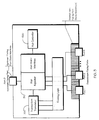
- a USB hub 402 may be connected to a motherboard 404 of an information handling system.
- the USB hub 402 may be capable of supporting a first port 406, second port 408, third port 410, fourth port 412, fifth port 414, sixth port 416 and a seventh port 418.
- seven ports are described, it should be appreciated that a variety of ports are contemplated by the present invention without departing from the spirit and scope thereof.
- a desired configuration of the information handling system may include only four actual ports.
- a registry 420 may be included on the USB hub 402 for indicating the number of ports as desired by the information handling system. In this way, the ports may be programmed to report or not to report by internal settings.
- the registry 420 may be set during manufacture of the information handling system in memory, such as electrically erasable programmable read only memory (EEPROM), and other semiconductor and non-semiconductor based memories and the like. Therefore, a manufacturer desiring to include only four ports 422, 424, 426 and 428 may utilize a USB hub of the present invention without causing consumer confusion. It may be desirable to enable the internal settings to be accessed by an external bus, such as the Universal Serial Bus itself. Thus a USB hub may be provided that is suitable for use on a variety of information handling systems regardless of the number of ports included on the information handling system, yet still return correct information regarding the actual number of ports on the information handling system and without requiring extensive hardware modifications.
- EEPROM electrically erasable programmable read only memory
- FIG. 5 an exemplary embodiment 500 of the present invention is shown wherein a USB hub is configured upon manufacture to report the number of actual ports included on a corresponding information handling system.
- a manufacturer may offer a variety of information handling systems, each with a different number of ports. Previously, the provision of these disparate information handling systems required different hardware configurations to support the different number of ports, namely the provision of different USB hubs corresponding to the number of ports desired. Failure to provide these different hubs may result in a hub reporting a different number of ports than are actually included on the information handling system. However, by utilizing the present invention, a manufacture may receive orders for a plurality of information handling systems 502, 504 and 506 including different amounts of ports 508.
- a USB hub of the present invention may still be utilized by each of the information handling systems by having the USB hub programmed to return a value corresponding to the number of actual ports on the system 510, and may be accomplished in a manner similar to programming an EEPROM or the like included with the USB hub.
- a plurality of information handling systems may be produced utilizing similar USB hubs, yet still have the USB hub return the actual number of ports included in the information handling system 512.
- the USB hub may return the value as programmed during manufacture.
- a software component is utilized to supply the actual number of ports included on an information handling system.
- a hub 602 may contain support for more ports than are actually included on an information handling system.
- a query performed on a previous information handling system to determine the number of ports would indicate a greater number ports than are actually contained on the system.
- a software component 604 may be utilized to return the actual number of ports contained on the system.
- the actual number of ports may be indicated.
- the software component 604 may include an operating system driver, interface, host software, portion of the BIOS, Host Controller Driver (HCD), USB Driver (USBD), USB Driver Interface (USBDI), Host Controller Driver Interface (HCDI) and the like as contemplated by a person of ordinary skill in the art without departing from the spirit and scope thereof. It may be preferable to program the software component 604 during manufacture of the information handling system to return a value corresponding to the number of actual ports included on the information handling system. In this way, the present invention may utilize a variety of preexisting USB to supply the actual number of ports included on an information handling system.
- the BIOS test may be added a step to the BIOS test to determine if it the amount of ports indicated by the port value correspond to the actual number of ports included on the information handling system. For example, when an information handling system is booted, as part of the boot-up procedure, the actual number of ports included on the information handling system may be compared with the actual port value to verify its accuracy.
- the methods disclosed may be implemented as sets of instructions or software readable by a device. Further, it is understood that the specific order or hierarchy of steps in the methods disclosed are examples of exemplary approaches. Based upon design preferences, it is understood that the specific order or hierarchy of steps in the method can be rearranged while remaining within the scope of the present invention.
- the accompanying method claims present elements of the various steps in a sample order, and are not meant to be limited to the specific order or hierarchy presented.
- USB hub with soft select ports of the present invention and many of its attendant advantages will be understood by the forgoing description. It is also believed that it will be apparent that various changes may be made in the form, construction and arrangement of the components thereof without departing from the scope and spirit of the invention or without sacrificing all of its material advantages. The form herein before described being merely an explanatory embodiment thereof. It is the intention of the following claims to encompass and include such changes.
Landscapes
- Engineering & Computer Science (AREA)
- Physics & Mathematics (AREA)
- General Engineering & Computer Science (AREA)
- Theoretical Computer Science (AREA)
- Mathematical Physics (AREA)
- Computer Hardware Design (AREA)
- General Physics & Mathematics (AREA)
- Information Transfer Systems (AREA)
Applications Claiming Priority (2)
| Application Number | Priority Date | Filing Date | Title |
|---|---|---|---|
| US752322 | 2000-12-29 | ||
| US09/752,322 US6718423B2 (en) | 2000-12-29 | 2000-12-29 | Bus hub with a selectable number of ports |
Publications (1)
| Publication Number | Publication Date |
|---|---|
| EP1220102A1 true EP1220102A1 (fr) | 2002-07-03 |
Family
ID=25025805
Family Applications (1)
| Application Number | Title | Priority Date | Filing Date |
|---|---|---|---|
| EP01650122A Withdrawn EP1220102A1 (fr) | 2000-12-29 | 2001-10-12 | Concentrateur USB avec sélection douce des ports |
Country Status (3)
| Country | Link |
|---|---|
| US (2) | US6718423B2 (fr) |
| EP (1) | EP1220102A1 (fr) |
| JP (1) | JP2002229928A (fr) |
Families Citing this family (31)
| Publication number | Priority date | Publication date | Assignee | Title |
|---|---|---|---|---|
| US6901471B2 (en) * | 2001-03-01 | 2005-05-31 | Synopsys, Inc. | Transceiver macrocell architecture allowing upstream and downstream operation |
| JP2002288112A (ja) * | 2001-03-27 | 2002-10-04 | Hitachi Ltd | 通信制御用半導体装置およびインタフェースシステム |
| JP3497834B2 (ja) * | 2001-03-30 | 2004-02-16 | 株式会社東芝 | ルートリピータ、usb通信システム、usb通信制御方法 |
| TW518502B (en) * | 2001-07-13 | 2003-01-21 | Prolific Technology Inc | USB compound device and the realization method thereof |
| US7043587B2 (en) * | 2001-09-20 | 2006-05-09 | Lenovo (Singapore) Pte. Ltd. | System and method for connecting a universal serial bus device to a host computer system |
| TW536900B (en) * | 2001-10-09 | 2003-06-11 | Prolific Technology Inc | Local area network in compliance with universal serial bus standard |
| JP3609051B2 (ja) * | 2001-11-21 | 2005-01-12 | Necエレクトロニクス株式会社 | Usb−hubデバイスおよびその制御方法 |
| US6959355B2 (en) * | 2003-02-24 | 2005-10-25 | Standard Microsystems Corporation | Universal serial bus hub with shared high speed handler |
| TWI225988B (en) * | 2003-03-11 | 2005-01-01 | Prolific Technology Inc | Apparatus provided with USB host/hub and method for controlling the same |
| US20040181601A1 (en) * | 2003-03-14 | 2004-09-16 | Palsamy Sakthikumar | Peripheral device sharing |
| US7413129B2 (en) * | 2004-09-30 | 2008-08-19 | Stmicroelectronics, Inc. | USB device with secondary USB on-the-go function |
| US7707348B2 (en) * | 2005-07-13 | 2010-04-27 | Cisco Technology, Inc. | Multi-use USB host to Ethernet adapter |
| US20070124895A1 (en) * | 2005-11-22 | 2007-06-07 | Brown Michael E | Cord management systems |
| US20080276302A1 (en) * | 2005-12-13 | 2008-11-06 | Yoggie Security Systems Ltd. | System and Method for Providing Data and Device Security Between External and Host Devices |
| US8869270B2 (en) | 2008-03-26 | 2014-10-21 | Cupp Computing As | System and method for implementing content and network security inside a chip |
| US8381297B2 (en) | 2005-12-13 | 2013-02-19 | Yoggie Security Systems Ltd. | System and method for providing network security to mobile devices |
| WO2008134743A1 (fr) * | 2007-04-30 | 2008-11-06 | Hewlett-Packard Development Company, L.P. | Procédé et système de réseau reconfigurable |
| US8365272B2 (en) | 2007-05-30 | 2013-01-29 | Yoggie Security Systems Ltd. | System and method for providing network and computer firewall protection with dynamic address isolation to a device |
| US7849251B2 (en) * | 2007-12-07 | 2010-12-07 | Intel Corporation | Hardware assisted endpoint idleness detection for USB host controllers |
| US8631488B2 (en) | 2008-08-04 | 2014-01-14 | Cupp Computing As | Systems and methods for providing security services during power management mode |
| US8789202B2 (en) | 2008-11-19 | 2014-07-22 | Cupp Computing As | Systems and methods for providing real time access monitoring of a removable media device |
| US8175104B2 (en) * | 2010-03-15 | 2012-05-08 | Comcast Cable Communications, Llc | Home gateway expansion |
| US8423906B2 (en) * | 2010-08-25 | 2013-04-16 | Lockheed Martin Corporation | Cross-component bus channel communication and selection |
| FR2969788B1 (fr) * | 2010-12-27 | 2013-02-08 | Electricite De France | Procede et dispositif de controle d'acces a un systeme informatique |
| EP2907043B1 (fr) | 2012-10-09 | 2018-09-12 | Cupp Computing As | Systèmes et procédés de sécurité de transactions |
| US20140149609A1 (en) * | 2012-11-29 | 2014-05-29 | Kok Hong Chan | Detecting device disconnect in a repeater |
| US11157976B2 (en) | 2013-07-08 | 2021-10-26 | Cupp Computing As | Systems and methods for providing digital content marketplace security |
| WO2015123611A2 (fr) | 2014-02-13 | 2015-08-20 | Cupp Computing As | Systèmes et procédés de fourniture de sécurité de réseau utilisant un dispositif numérique sécurisé |
| US10203964B2 (en) * | 2016-11-14 | 2019-02-12 | Raytheon Company | Mobile device external controller module |
| US20200285602A1 (en) * | 2019-03-05 | 2020-09-10 | Texas Instruments Incorporated | eUSB2 to USB 2.0 Data Transmission with Surplus Sync Bits |
| EP4318252B1 (fr) * | 2021-09-29 | 2025-10-01 | Samsung Electronics Co., Ltd. | Dispositif électronique permettant de communiquer avec un dispositif externe par le biais d'une interface usb et son procédé de fonctionnement |
Citations (2)
| Publication number | Priority date | Publication date | Assignee | Title |
|---|---|---|---|---|
| US6067628A (en) * | 1998-04-09 | 2000-05-23 | Intel Corporation | Method to monitor universal serial bus hub overcurrent |
| EP1031931A2 (fr) * | 1999-01-19 | 2000-08-30 | Sun Microsystems, Inc. | Interpreteur pour "Universal serial bus" |
Family Cites Families (12)
| Publication number | Priority date | Publication date | Assignee | Title |
|---|---|---|---|---|
| US5933611A (en) * | 1997-06-23 | 1999-08-03 | Opti Inc. | Dynamic scheduler for time multiplexed serial bus |
| JP3045985B2 (ja) * | 1997-08-07 | 2000-05-29 | インターナショナル・ビジネス・マシーンズ・コーポレイション | 接続確立方法、通信方法、状態変化伝達方法、状態変化実行方法、無線装置、無線デバイス、及びコンピュータ |
| US5903777A (en) * | 1997-10-02 | 1999-05-11 | National Semiconductor Corp. | Increasing the availability of the universal serial bus interconnects |
| KR100315679B1 (ko) * | 1998-01-16 | 2002-02-28 | 윤종용 | 유에스비허브의전원회로 |
| US6058441A (en) * | 1998-02-19 | 2000-05-02 | Shu; Han | USB multi-function connecting device |
| US6145029A (en) * | 1998-03-13 | 2000-11-07 | Compaq Computer Corporation | Computer system with enhanced docking support |
| US6567875B1 (en) * | 1999-04-05 | 2003-05-20 | Opti, Inc. | USB data serializer |
| US6557050B1 (en) * | 1999-09-02 | 2003-04-29 | International Business Machines Corporation | Display computer with on-screen identifiers for multiple serial ports for avoiding physical mislabelling of ports |
| US6553446B1 (en) * | 1999-09-29 | 2003-04-22 | Silicon Graphics Inc. | Modular input/output controller capable of routing packets over busses operating at different speeds |
| US6484219B1 (en) * | 2000-02-04 | 2002-11-19 | Microsoft Corporation | Host-specified USB device requests |
| US6535947B1 (en) * | 2000-05-30 | 2003-03-18 | International Business Machines Corporation | Methods, systems and computer program products for logically segmenting devices on a universal serial bus |
| US6735720B1 (en) * | 2000-05-31 | 2004-05-11 | Microsoft Corporation | Method and system for recovering a failed device on a master-slave bus |
-
2000
- 2000-12-29 US US09/752,322 patent/US6718423B2/en not_active Expired - Lifetime
-
2001
- 2001-10-12 EP EP01650122A patent/EP1220102A1/fr not_active Withdrawn
- 2001-12-10 JP JP2001376316A patent/JP2002229928A/ja active Pending
-
2004
- 2004-02-20 US US10/783,660 patent/US6918000B2/en not_active Expired - Lifetime
Patent Citations (2)
| Publication number | Priority date | Publication date | Assignee | Title |
|---|---|---|---|---|
| US6067628A (en) * | 1998-04-09 | 2000-05-23 | Intel Corporation | Method to monitor universal serial bus hub overcurrent |
| EP1031931A2 (fr) * | 1999-01-19 | 2000-08-30 | Sun Microsystems, Inc. | Interpreteur pour "Universal serial bus" |
Non-Patent Citations (1)
| Title |
|---|
| USB-IF - COMPAQ COMPUTER CORP., INTEL CORP., MICROSOFT CORP., NEC CORP.: "Universal Serial Bus Specification, Revision 1.1", 23 September 1998, UNIVERSAL SERIAL BUS IMPLEMENTERS FORUM, XP002186029 * |
Also Published As
| Publication number | Publication date |
|---|---|
| US6718423B2 (en) | 2004-04-06 |
| US20020095540A1 (en) | 2002-07-18 |
| US6918000B2 (en) | 2005-07-12 |
| JP2002229928A (ja) | 2002-08-16 |
| US20040162929A1 (en) | 2004-08-19 |
Similar Documents
| Publication | Publication Date | Title |
|---|---|---|
| US6718423B2 (en) | Bus hub with a selectable number of ports | |
| US5920709A (en) | Bus interface for IDE device | |
| CN106598480B (zh) | 具有接口控制机制的电子系统及其操作方法 | |
| US8321722B2 (en) | Storage device, and data path failover method of internal network of storage controller | |
| US6973658B2 (en) | Reconfigurable communication interface and method therefor | |
| US5761458A (en) | Intelligent bus bridge for input/output subsystems in a computer system | |
| EP3761168A1 (fr) | Procédé et système de sélection de dispositif de démarrage à distance | |
| CN101981554B (zh) | 用于将pcie sr-iov功能转换成表现为传统功能的系统和方法 | |
| US7023869B2 (en) | Data storage system with one or more integrated server-like behaviors | |
| US20050198596A1 (en) | Dynamically configuring resources for cycle translation in a computer system | |
| US20040225764A1 (en) | Method and apparatus for identifying multiple paths to SCSI device | |
| US8379541B2 (en) | Information platform and configuration method of multiple information processing systems thereof | |
| US20020188786A1 (en) | Data storage system with integrated switching | |
| US20250265217A1 (en) | Apparatuses, systems, and methods for providing communication between memory cards and host devices | |
| US20040148329A1 (en) | Storage device system and storage device system activating method | |
| US20030074431A1 (en) | Automatically switching shared remote devices in a dense server environment thereby allowing the remote devices to function as a local device | |
| US5948076A (en) | Method and system for changing peripheral component interconnect configuration registers | |
| EP1372069A2 (fr) | Méthode, système et logiciel pour configurer un mode de communication de traitement graphique | |
| EP3812895B1 (fr) | Configuration d'adaptateur de réseau à l'aide de rom en option dans des dispositifs multi-cpu | |
| US5550990A (en) | Physical partitioning of logically continuous bus | |
| US7752429B2 (en) | Computer system and boot code accessing method thereof | |
| US20040225875A1 (en) | System and method of device information management | |
| JP2005531085A (ja) | ハードウェア互換性の特定及び安定的なソフトウェア画像の実現方法及び装置 | |
| CN117950919A (zh) | 一种PCIe拓扑的切换方法及服务器 | |
| US20040064828A1 (en) | Supplanting first device objects with second device objects |
Legal Events
| Date | Code | Title | Description |
|---|---|---|---|
| PUAI | Public reference made under article 153(3) epc to a published international application that has entered the european phase |
Free format text: ORIGINAL CODE: 0009012 |
|
| AK | Designated contracting states |
Kind code of ref document: A1 Designated state(s): AT BE CH CY DE DK ES FI FR GB GR IE IT LI LU MC NL PT SE TR |
|
| AX | Request for extension of the european patent |
Free format text: AL;LT;LV;MK;RO;SI |
|
| 17P | Request for examination filed |
Effective date: 20020828 |
|
| AKX | Designation fees paid |
Designated state(s): DE GB |
|
| STAA | Information on the status of an ep patent application or granted ep patent |
Free format text: STATUS: THE APPLICATION IS DEEMED TO BE WITHDRAWN |
|
| 18D | Application deemed to be withdrawn |
Effective date: 20060313 |