EP1219704A2 - High production method of prenyl alcohol by microorganisms - Google Patents
High production method of prenyl alcohol by microorganisms Download PDFInfo
- Publication number
- EP1219704A2 EP1219704A2 EP01130425A EP01130425A EP1219704A2 EP 1219704 A2 EP1219704 A2 EP 1219704A2 EP 01130425 A EP01130425 A EP 01130425A EP 01130425 A EP01130425 A EP 01130425A EP 1219704 A2 EP1219704 A2 EP 1219704A2
- Authority
- EP
- European Patent Office
- Prior art keywords
- ifo
- strain
- medium
- farnesol
- cells
- Prior art date
- Legal status (The legal status is an assumption and is not a legal conclusion. Google has not performed a legal analysis and makes no representation as to the accuracy of the status listed.)
- Granted
Links
Images






Classifications
-
- C—CHEMISTRY; METALLURGY
- C12—BIOCHEMISTRY; BEER; SPIRITS; WINE; VINEGAR; MICROBIOLOGY; ENZYMOLOGY; MUTATION OR GENETIC ENGINEERING
- C12N—MICROORGANISMS OR ENZYMES; COMPOSITIONS THEREOF; PROPAGATING, PRESERVING, OR MAINTAINING MICROORGANISMS; MUTATION OR GENETIC ENGINEERING; CULTURE MEDIA
- C12N1/00—Microorganisms; Compositions thereof; Processes of propagating, maintaining or preserving microorganisms or compositions thereof; Processes of preparing or isolating a composition containing a microorganism; Culture media therefor
- C12N1/38—Chemical stimulation of growth or activity by addition of chemical compounds which are not essential growth factors; Stimulation of growth by removal of a chemical compound
-
- C—CHEMISTRY; METALLURGY
- C12—BIOCHEMISTRY; BEER; SPIRITS; WINE; VINEGAR; MICROBIOLOGY; ENZYMOLOGY; MUTATION OR GENETIC ENGINEERING
- C12P—FERMENTATION OR ENZYME-USING PROCESSES TO SYNTHESISE A DESIRED CHEMICAL COMPOUND OR COMPOSITION OR TO SEPARATE OPTICAL ISOMERS FROM A RACEMIC MIXTURE
- C12P7/00—Preparation of oxygen-containing organic compounds
- C12P7/02—Preparation of oxygen-containing organic compounds containing a hydroxy group
- C12P7/04—Preparation of oxygen-containing organic compounds containing a hydroxy group acyclic
Definitions
- the present invention relates to a high production method of prenyl alcohol using microorganisms.
- Geranylgeraniol and farnesol typical members of prenyl alcohol, are believed to be produced in organisms through hydrolysis of geranylgeranyl pyrophosphate and farnesyl pyrophosphate with a phosphatase.
- Geranylgeranyl pyrophosphate is a pyrophosphate ester of geranylgeraniol, which is yielded by condensation between isopentenyl pyrophosphate and farnesyl pyrophosphate or condensation between three molecules of isopentenyl pyrophosphate and dimethyl aryl pyrophosphate.
- Geranylgeranyl pyrophosphate is metabolized into a diterpene compound (e.g., gibberellin) by cyclization, into a carotenoid compound via phytoene formed by tail-to-tail condensation, or into polyprenylpyrophosphate by head-to-tail condensation with isopentenyl pyrophosphate.
- farnesyl pyrophosphate is yielded by condensation between isopentenyl pyrophosphate and geranyl pyrophosphate or condensation between two molecules of isopentenyl pyrophosphate and dimethyl aryl pyrophosphate.
- Farnesyl pyrophosphate is metabolized into a sesquiterpene compound by cyclization, into steroid and triterpene compounds via squalene formed by tail-to-tail condensation, or into polyprenylpyrophosphate or dolichol by head-to-tail condensation with isopentenyl pyrophosphate. It is also metabolized into a prenylated protein when linked to a cysteine residue of a specific protein such as Ras protein or G protein.
- geranylgeraniol derivatives including geranylgeraniol, geranylgeranyl pyrophosphate and precursors thereof, i.e., farnesyl pyrophosphate, farnesol, geranyl pyrophosphate or geraniol
- farnesyl pyrophosphate farnesol
- geranyl pyrophosphate or geraniol are dominant compounds as biosynthetic intermediates of terpenes, carotenoids or steroids.
- geranylgeraniol and analogous compounds thereof are important for use in the production of perfume, a taxane compound having an anti-tumor activity (Japanese Patent Application No. 8-227481), a hair tonic (Japanese Patent Application No. 8-180449), a therapeutic agent for osteoporosis (Japanese Patent Application No. 9-294089) and the like.
- an oily substance is to be produced under an increased sugar concentration, since it has poor permeability through a cell membrane, the oily substance accumulates in cells, thereby inducing product inhibition. In such a case, the oily substance is not expected to be produced at a high yield.
- the object of the present invention is to provide a method for effective secretory production of prenyl alcohol using a microorganism capable of producing prenyl alcohol, which involves allowing prenyl alcohol accumulated in the microorganism to be secreted into an extracellular environment.
- the present invention provides a high production method of prenyl alcohol, which comprises culturing prenyl alcohol-producing cells belonging to any one of the following genera:
- a microorganism fermentation method is used to produce prenyl alcohol, typically geranylgeraniol and analogous compounds thereof.
- an analogous compound of geranylgeraniol refers to geranylgeranyl pyrophosphate and compounds produced in association with the synthesis thereof, i.e., farnesyl pyrophosphate, farnesyl monophosphate, farnesol, geranyl pyrophosphate, geranyl monophosphate, geraniol, nerolidol, geranyllinanol, linalool and the like.
- any microorganism may be used for geranylgeraniol production, so long as it has a potential ability to produce geranylgeraniol.
- any microorganism may be used for farnesol production, so long as it has a potential ability to produce farnesol.
- any microorganism may be used for nerolidol production, so long as it has a potential ability to produce nerolidol.
- yeast strains belonging to Saccharomyces or Candida include yeast strains belonging to Saccharomyces or Candida; filamentous fungus strains belonging to Mucor; or microbial strains belonging to any one of Cystofilobasidium, Rhodotorula, Willopsis, Zygoascus and Haloferax.
- microorganisms capable of producing prenyl alcohol such as geranylgeraniol, farnesol and/or nerolidol
- microorganisms used in the present invention also encompass recombinant microorganisms modified by gene transfer into the naturally occurring microorganisms listed above.
- any medium may be used to culture the microorganisms, so long as it allows the growth of these microorganisms.
- Specific examples include YM medium, KY medium and F101 medium for culture of yeast cells (ascomycetes and deuteromycetes); and KB medium for culture of bacterial cells, actinomycete cells and filamentous fungus cells.
- Any carbon compound may be used as a carbon source, so long as the microorganisms can assimilate it for growth.
- a nitrogen source for example, an inorganic nitrogen source including ammonium sulfate, ammonium chloride or ammonium nitrate, or an organic nitrogen source including yeast extract, peptone or meat extract may be used.
- a medium may further contain minerals, metal salts, and/or vitamins, if necessary.
- Culture conditions will vary depending on the types of microorganisms.
- the culture may preferably be performed at a temperature of 20°C to 40°C, more preferably 25°C to 35°C, and at a pH of 5 to 9.
- the culture may also be performed under anaerobic or aerobic conditions according to the types of microorganisms, preferably performed under aerobic conditions with shaking or rotating because aerobic conditions permit a higher growth speed than anaerobic conditions.
- the prenyl alcohol-producing cells are cultured in a medium with an increased sugar content in the presence of at least one member selected from the group consisting of a surfactant, a fat or oil, and a terpene in order to improve prenyl alcohol production and stimulate product secretion from the cells.
- a "medium with an increased sugar content” means a medium having a sugar content of 2% to 7%.
- sugars include glucose, sucrose and the like.
- the percentage (%) used to express a sugar content etc. is based on w/v (%).
- Examples of a fat or oil used in the present invention include soybean oil, fish oil, almond oil, olive oil and the like.
- it may be added to a medium at a concentration of 0.01% or more, preferably 1% or more. Since a concentration exceeding 3% gives no further effect, it is desirable to add a fat or oil at a concentration of 0.01% to 3% in view of cost.
- a preferred surfactant is a non-ionic surfactant including polyethylene glycol-type surfactants (e.g., an ethylene oxide adduct of a higher alcohol, an ethylene oxide adduct of an alkylphenol, an ethylene oxide adduct of a fatty acid, an ethylene oxide adduct of a polyhydric alcohol fatty acid ester, an ethylene oxide adduct of a higher alkylamine, an ethylene oxide adduct of a fatty amide, an ethylene oxide adduct of polypropylene ethylene glycol), polyhydric alcohol-type surfactants (e.g., a fatty acid ester of sucrose, an alkylether of a polyhydric alcohol), or a silicone oil (e.g., dimethyl silicone, a polyether-modified silicone oil).
- polyethylene glycol-type surfactants e.g., an ethylene oxide adduct of a higher alcohol, an ethylene oxide adduct of an al
- the following commercially available surfactants can be used in the present invention: Tergitol NP-40 (Nacalai), cholic acid (Nacalai), deoxycholic acid (Nacalai), N-lauryl sarcosine (Nacalai), sucrose monolaurate (Nacalai), Triton X-100 (Nacalai), Triton X-305 (Nacalai), Nonidet P-40 (Iwai Chemicals Company), Tween 20 (Nacalai), Tween 80 (Nacalai), Span 20 (Nacalai), Span 85 (Nacalai), CTAB (Nacalai), nonyl- ⁇ -D-glucose (Sigma), Adekapluronic L-61 (Asahi Denka Kogyo K.K.; PPG with attached ethylene oxide), Adekanol LG-109 (Asahi Denka Kogyo K.K.; PPG
- a surfactant without anti-foaming activity may be added to a medium at a concentration of 0.005% to 1%, preferably 0.05% to 0.5%. A concentration exceeding 1% is not preferred because such a concentration causes foaming. In contrast, a surfactant with anti-foaming activity can be added at a concentration exceeding 1 %.
- examples of a terpene include squalene, tocopherol and the like.
- it may be added to a medium at a concentration of 0.01% or more, preferably 1% or more. Since a concentration exceeding 3% gives no further effect, it is desirable to add a terpene at a concentration of 0.01% to 3% in view of cost.
- a fat or oil more preferably in combination with a surfactant (particularly, an anti-foaming surfactant), in order to improve prenyl alcohol production and stimulate product secretion from the cells.
- a surfactant particularly, an anti-foaming surfactant
- prenyl alcohol may be produced in a batch manner or in a continuous manner using a bioreactor.
- Microorganism cells may be provided as such for prenyl alcohol production or may be pre-treated to give crushed cells, a culture solution, a crude enzyme, or a purified enzyme. Cultured cells or these pre-treated products may also be immobilized by an immobilization technique. The cells or pre-treated products are cultured to produce and accumulate prenyl alcohol in the cells or culture supernatant, which is then collected.
- a supernatant from which cells have been removed by centrifugation is treated with alkaline phosphatase in a buffer containing magnesium chloride, and then extracted with a solvent such as pentane or methanol.
- the cells collected by centrifugation are crushed, treated with alkaline phosphatase in a buffer containing magnesium chloride, and then extracted with a solvent such as pentane or methanol.
- the above solvent extraction step may be performed in combination with a known purification technique such as chromatography, as needed.
- alkaline phosphatase in the extraction step is effective in improving farnesol and geranylgeraniol production because it allows hydrolysis of farnesyl pyrophosphate and geranylgeranyl pyrophosphate present as precursors for farnesol and geranylgeraniol in the cells or culture solution.
- a preferred phosphatase is alkaline phosphatase derived from E. coli, but other phosphatases including potato-derived acid phosphatase or calf intestine phosphatase may also be used. Since most microorganisms possess an endogenous phosphatase, the organic solvent extraction step may also be performed without phosphatase treatment, although a slight decrease in production is observed.
- prenyl alcohol is detected by gas chromatography / mass spectrometry (GC/MS) using a commercially available column and then quantified from the ratio of peak area between prenyl alcohol and 1-undecanol as an internal standard.
- GC/MS gas chromatography / mass spectrometry
- yeast cells were cultured in YM medium (Difco) or KY medium prepared as presented below.
- squalene synthase-defective yeast cells were cultured in YM medium supplemented with ergosterol.
- Bacterial cells or actinomycete cells were cultured in KB medium.
- a plate was prepared from the same medium by addition of Bactoagar (Difco) at a final concentration of 2%.
- ergosterol 20 mg was suspended in an ethanol solution containing 50% Tergitol (Nacalai) and completely dissolved by heating in a boiling water bath. The resulting solution was added to 1 L of YM broth (Difco), followed by autoclaving.
- the treated supernatant was mixed well with 2 ml of pentane and 1 ml of methanol, and centrifuged in a Beckman centrifuge GP at 1000 rpm for 5 minutes to give the supernatant, which was then transferred to another new test tube. After evaporation of pentane and methanol in a draft chamber, the resulting residue was re-dissolved in 300 ml of pentane and filled into a vial for GC/MS.
- the crushed cells were transferred into a test tube ( ⁇ 18 mm ⁇ 125 mm) and mixed with 0.5 ml of Tris-HCl buffer (pH 8.0) containing 6 mM magnesium chloride, followed by phosphatase treatment and extraction as in (2) above.
- Tris-HCl buffer pH 8.0
- Colony selection was performed on squalene synthase-defective yeast strain ATCC#64031 (purchased from ATCC) to select a colony giving an increased farnesol production, which was used in this example.
- the above YM medium supplemented with ergosterol was mixed individually with the following surfactants and then autoclaved.
- a loopful of the colony was inoculated from the slant into a 300 ml Erlenmeyer flask containing 50 ml of YM medium supplemented with ergosterol and then cultured at 26°C while rotating at 150 rpm. After culturing for two days, 50 ⁇ l of the culture was added to 5 ml of the medium prepared in (2) above, followed by shaking culture in a test tube ( ⁇ 18 mm x 150 mm) at 26°C for two days.
- 100 ⁇ l of the culture solution was diluted with physiological saline to determine its O.D. at 660 nm with a spectrophotometer.
- Figure 1 shows effects of Tergitol on the secretory production of geranylgeraniol and farnesol.
- Tergitol provides an increased farnesol secretion when used at a concentration greater than a normal concentration (0.05%) for dispersing ergosterol in YM medium.
- Farnesol secretion per cell O.D. at 660 nm
- Tergitol also provides an increased geranylgeraniol secretion, but gives little change in productivity per se.
- FIG. 2 shows a comparison between Triton X-100 or Tween 20 and Tergitol. These surfactants also yield similar results.
- Triton X-100 has a good ability to dissolve ergosterol, thereby resulting in a significantly increased farnesol production.
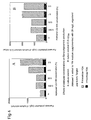
- Figure 3 shows effects of different anti-foaming agents on farnesol secretion.
- Several types of anti-forming agents which had been selected as surfactants enabling jar culture with less foaming and imparting little influence on yeast growth, were used for fermentation and examined for their effects on farnesol secretion in the same manner. With minor differences, all of the examined anti-foaming agents provide almost the same secretion-stimulating effect as Tergitol. These agents are very practical for use because they are safer than non-ionic surfactants commonly used in laboratories, such as Triton X-100, and also have an anti-foaming activity.
- Figure 4 shows the test results obtained at various concentrations of Adekanol LG-109, which yielded a good result in Figure 3.
- Adekanol LG-109 When used at a concentration of 0% to 0.5%, Adekanol LG-109 provided an increased farnesol secretion as its concentration was increased.
- a medium prepared by adding a fat or oil (almond oil, fish oil, soybean oil, or olive oil; each commercially available from Sigma), at a final concentration of 0.1%, to the YM medium supplemented with ergosterol stated above was used for culture of the squalene synthase-defective yeast strain (ATCC#64031) to examine an effect of the fat or oil on farnesol secretory production in the same manner as described in Example 1.
- Figure 5 shows the results of culture in a medium containing almond oil, fish oil or soybean oil.
- Each system contains 0.05% Tergitol as a dispersant for the purpose of incorporating ergosterol required for culture of the strain into the medium. For this reason, even a system without a fat or oil allows about two-thirds secretion of farnesol from the cells. In contrast, each system containing a fat or oil results in 98% or more farnesol secretion.
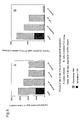
- Figure 6 shows the results of similar tests performed under increasing concentrations of soybean oil and olive oil.
- Each system containing the above fat or oil provides not only an increased farnesol secretion, but also an increased farnesol production as the concentration of fat or oil is increased.
- a medium prepared by adding a sugar (glucose or sucrose; each commercially available from Nacalai) to the YM medium supplemented with ergosterol stated above was used for culture of the squalene synthase-defective yeast strain (ATCC#64031) to examine an effect of the sugar on farnesol secretory production in the same manner as described in Example 1.
- YM medium originally contains 1% glucose
- the final sugar concentration is expressed as 1% glucose plus additional glucose or sucrose (0% to 5%).
- Figure 7 shows the results of culture in a medium containing glucose or sucrose at different concentrations. This figure indicates that a higher sugar concentration tends to give a higher production of farnesol. A higher production results in an increased amount of farnesol accumulated in the cells, but farnesol secretion is not significantly increased, thereby suggesting that secretion speed is not as fast as production speed.
- Farnesol secretory production per cell (O.D. at 660 nm) also shows a similar tendency, and therefore an increased sugar concentration in the medium results in an increased farnesol production per cell.
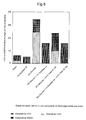
- a medium prepared by adding 6% glucose as a sugar, 1% soybean oil as a fat or oil, and/or 0.1% Triton X-100 as a surfactant, alone or in combination, to the YM medium supplemented with ergosterol stated above was used for culture of the squalene synthase-defective yeast strain (ATCC#64031) to examine effects of these ingredients on geranylgeraniol and farnesol secretory production in the same manner as described in Example 1.
- Figure 8 shows the results obtained.
- 1 % soybean oil is added, farnesol in the cells is significantly decreased, and farnesol secretion is increased.
- 6% glucose is added, farnesol production in the cells is primarily increased.
- farnesol secretion is increased and the cells are therefore found to contain little farnesol.
- Triton X-100 has a minor effect on farnesol secretion as compared with soybean oil.
- a system containing 6% glucose, 1% soybean oil and 0.1% Triton X-100 shows almost the same secretion effect and production as the system containing glucose and soybean oil.
- geranylgeraniol is not detected in a cell fraction at all. Only the system containing glucose and soybean oil or Triton X-100 allows geranylgeraniol to be secreted from the cells. This indicates that the addition of these ingredients also stimulates geranylgeraniol secretion, thereby resulting in an increased production.
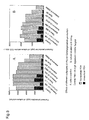
- Figure 9 shows effects of soybean oil on farnesol secretion in jar-fermenter culture.
- Figure 9(A) shows a culture profile of a system containing 5% glucose. This figure indicates a stage where a maximum concentration of farnesol accumulated in the medium is observed, thereby suggesting that farnesol is predominantly accumulated in the cells. This is because farnesol present in the cells is metabolized when glucose is depleted.
- Figure 9(B) shows a culture profile of a system containing 5% glucose and 1% soybean oil. This system shows an increased farnesol production as compared with the system containing 5% glucose alone, and hence allows 95% or more farnesol to be secreted from the cells.
- a medium prepared by adding tocopherol or squalene at a concentration shown in Tables 1 and 2 to the YM medium supplemented with ergosterol stated above was used for culture of Saccharomyces cerevisiae strains ATCC 64031 and IFO 0538 to examine an effect of tocopherol or squalene on prenyl alcohol secretory production. Tables 1 and 2 also show the results obtained. Saccharomyces cerevisiae strain IFO 0538 is found to produce no prenyl alcohol in YM medium commonly used for yeast culture.
- the results, including days of culture, medium composition, and changes in production with or without phosphatase treatment, are shown in Table 3 (supernatant fraction) and Table 4 (cell fraction). Each strain produces more farnesol and geranylgeraniol over the course of time. The addition of 5% glucose to the medium permits an increased production in the cells.
- the use of the medium supplemented with 5% glucose and 1% soybean oil enables more farnesol and geranylgeraniol to be produced in both the cell fraction and the supernatant fraction (i.e., to be secreted from the cells).
- the supernatant fraction tends to contain more farnesol and geranylgeraniol in the absence of phosphatase treatment, whereas the cell fraction tends to contain more farnesol and geranylgeraniol when treated with phosphatase, thereby suggesting that farnesyl pyrophosphate and geranyl pyrophosphate are present in the cell fraction.
- Supernatant fraction ( ⁇ g/L of culture solution) Phosphatase-untreated Phosphatase-treated Medium composition cultivation period Strain No.
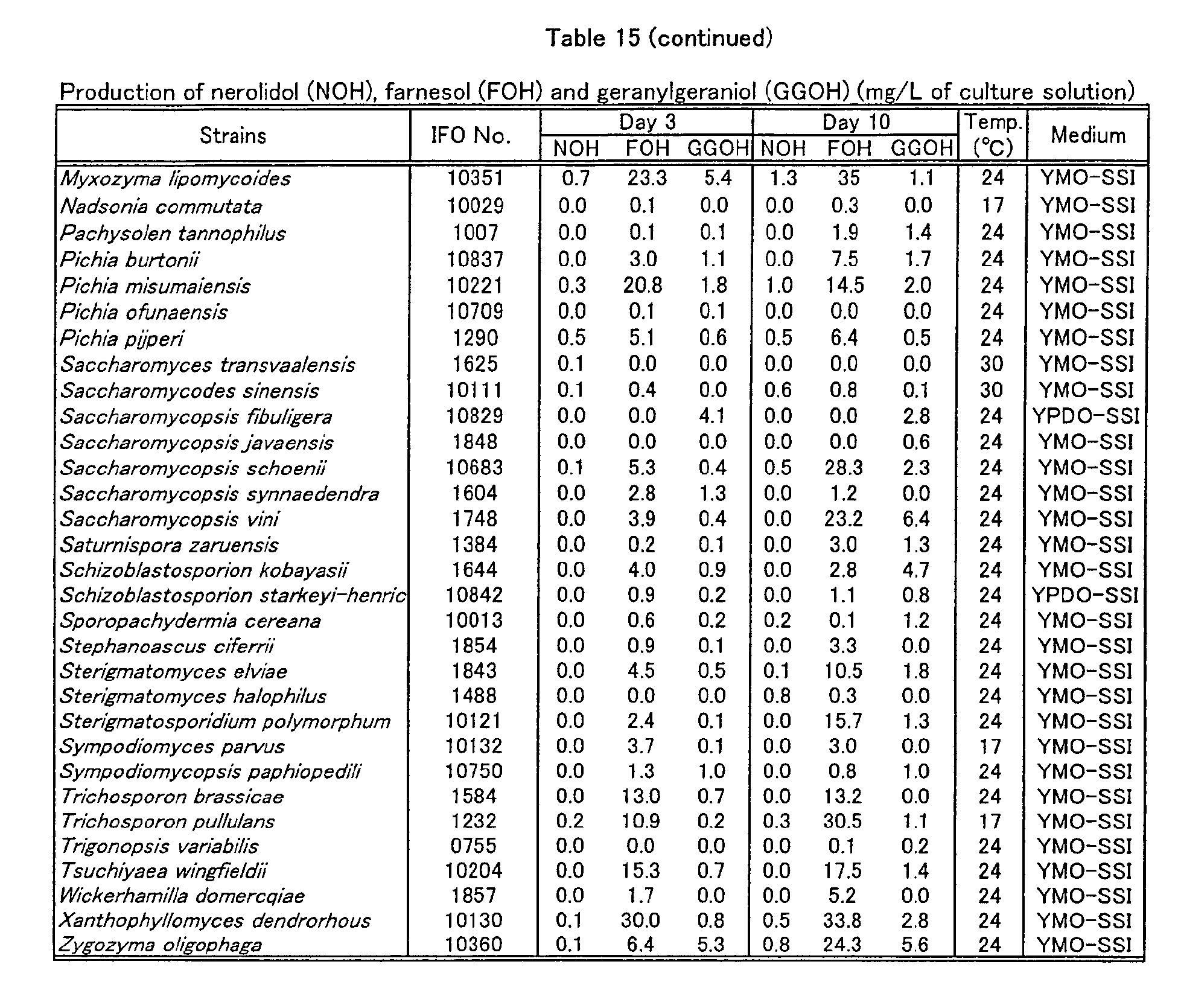
- strains shown in Table 5 were test-tube cultured in YM medium alone and in YM medium supplemented with 5% glucose and 1% soybean oil to examine farnesol and geranylgeraniol production. Tables 5 and 6 show the results obtained.
- the medium supplemented with 5% glucose and 1% soybean oil effected a significantly increased production in both the cell fraction and the supernatant fraction (i.e., a significantly increased secretion from the cells).
- Medium composition YM medium (Difco) Strains Supernatant fraction Cell fraction ( ⁇ g/L of culture solution) Strain No.
- strains shown in Tables 7 and 8 below were test-tube cultured in (i) YM medium supplemented with 4 mg/L ergosterol and 0-20 mg/L squalene synthesis inhibitor (SQAD : Japanese Patent Application No.8-508245) or (ii) YM medium supplemented with 5% glucose and 1% soybean oil along with 4 mg/L ergosterol and 0-20 mg/L squalene synthesis inhibitor (SQAD) to examine the respective production of nerolidol, geranylgeraniol and farnesol in the same manner as stated above. Tables 7 and 8 also show the results obtained.
- nerolidol FOH farnesol
- GGOH geranylgeraniol
- SQAD squalene synthesis inhibitor 0; none 1; 1 mg/L 20; 20 mg/L
- each strain was cultured in YM medium without the above supplemental ingredients to examine the respective production of nerolidol, geranylgeraniol and farnesol in the same manner as stated above.
- Table 11 shows the results obtained.
- NE nerolidol FOH: farnesol
- GGOH geranylgeraniol
- SQAD squalene synthesis inhibitor 0; none 20; 20 mg/L Treated with phosphatase Medium composition: YM or KB or KY medium + 1% soybean oil + 6% glucose + 4 mg/L ergosterol Cell fraction ( ⁇ g/L)
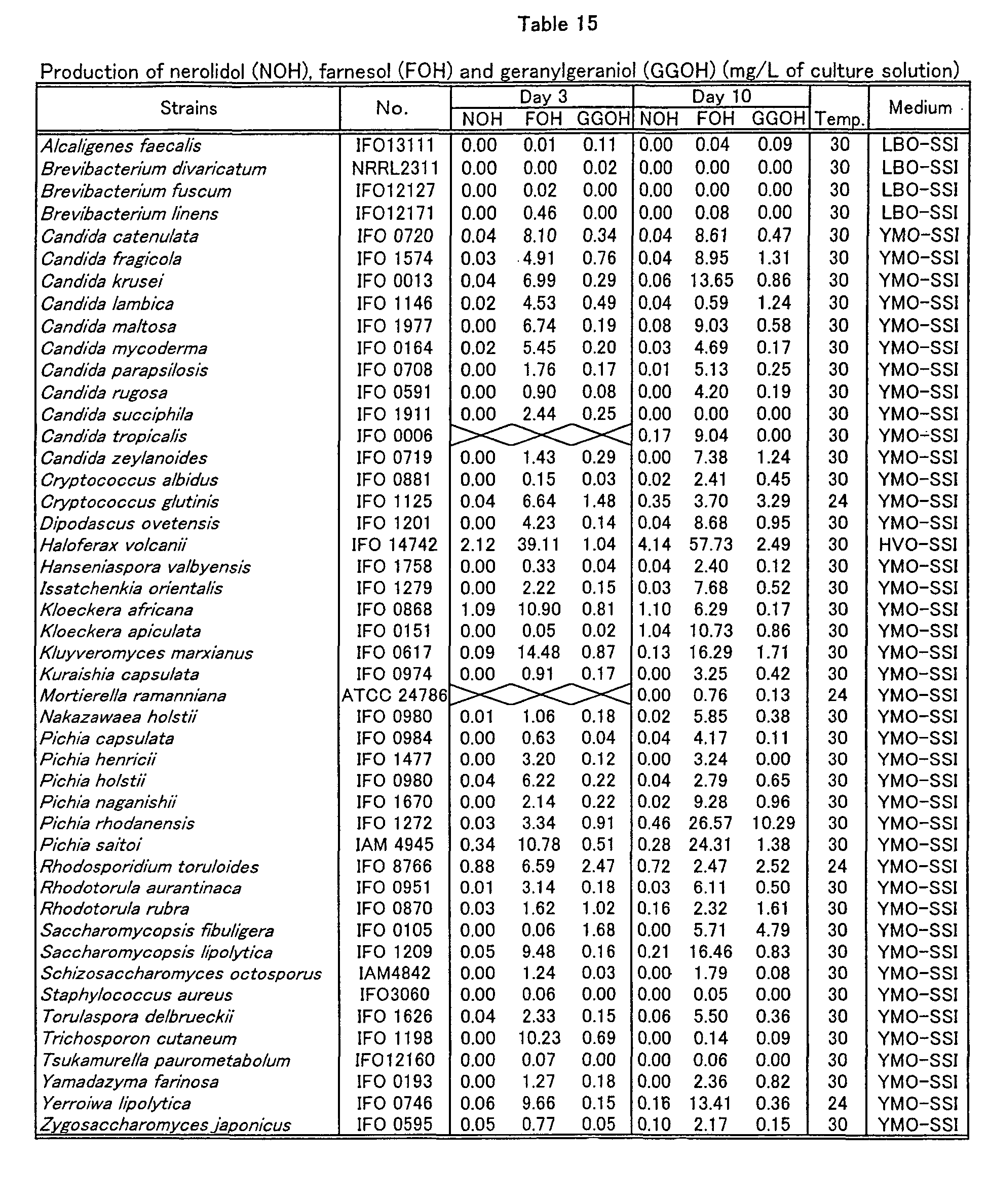
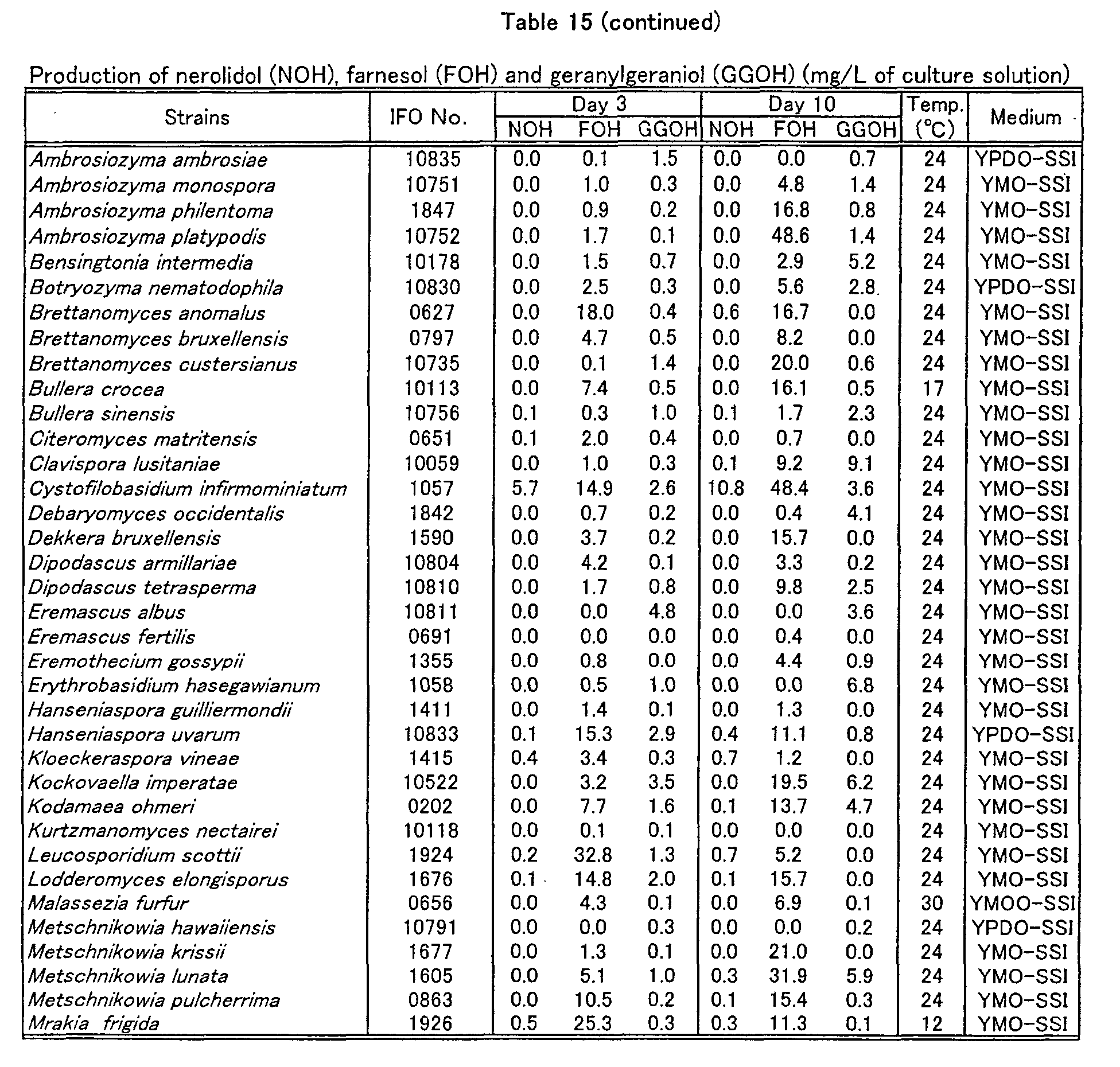
- Each of the strains shown in Table 12 below was cultured in Medium A (YM medium supplemented with 0.1% Adekanol and 4 mg/L ergosterol) or Medium B (YM medium supplemented with 0.1% Adekanol, 4 mg/L ergosterol, 5% glucose and 3% soybean oil) at 30°C for 4 or 10 days to examine the respective production of nerolidol, geranylgeraniol and farnesol in the same manner as stated above. Table 12 also shows the results obtained (supernatant and cell fractions).
- Each bacterial strain detected to produce farnesol was cultured in KB medium supplemented with 1% soybean oil, 4 mg/L ergosterol, and 0 mg/L or 20 mg/L squalene synthesis inhibitor (SQAD) to examine the respective production of nerolidol, geranylgeraniol and farnesol in the same manner as stated above.
- SQAD squalene synthesis inhibitor
- each strain was cultured in KB medium without the above supplemental ingredients to examine the respective production of nerolidol, geranylgeraniol and farnesol in the same manner as stated above.
- Table 14 shows the results obtained.
- Saccharomyces cerevisiae strain pRS435GGF/pRS434GAP-HMG1/YPH499#1 was prepared and cultured in a 5 L jar fermenter in the following manner. This strain allows high level expression of the HMG CoA reductase gene and a fusion gene comprising the geranylgeranyl pyrophosphate synthase gene and the farnesyl pyrophosphate synthase gene.
- GenBank information of S. cerevisiae-derived GGPS (A.N.U 31632) and HMG-CoAR1 (A.N.M 22002) genes the following primers matching N- and C-termini of these genes were prepared and then used for PCR along with a yeast cDNA library (TOYOBO No. CL7220-1) as a template under the following conditions. PCR of the HMG-CoAR1 gene was performed using Perfect match (Stratagene).
- PCR fragments were confirmed at positions of interest (about 1.0 kbp and 3.2 kbp, respectively). These gene fragments were then cloned into a TA-clonable pT7Blue-T vector to determine the full nucleotide sequence of GGPS and about 40% nucleotide sequence of HMG-CoAR1. The resulting sequences were completely matched with the GenBank sequences and therefore confirmed as genes derived from S. cerevisiae.
- the resulting vector carrying the HMG-CoAR1 gene cloned into the pT7Blue-T vector was designated pT7HMG1.
- pYES2 (Invitrogen) is a shuttle vector for extraction in yeast cells, which carries yeast 2 ⁇ m DNA ori as a replication origin and GAL1 promoter inducible with galactose.
- pT7Blue-T vector carrying the cloned GGPS gene was treated with BamHI and Sail to collect the GGPS gene, which was then introduced into a BamHI-XhoI site of pYES2 to give a vector designated pYES-GGPS6.
- the FPP synthase gene ERG20 was cloned from Saccharomyces cerevisiae YPH499 (Stratagene) cDNA by PCR:
- CYC1 transcription terminator CYC1t fragments were prepared by PCR using the following primer sets.
- the DNA fragments amplified with the above primer sets (i) and (ii) were cleaved with XhoI plus KpnI and XhoI plus ApaI, respectively, and then electrophoresed on agarose gels to give purified 260 bp DNA fragments designated CYC1t-XK and CYC1tXA.
- CYC1t-XK and CYC1tXA were inserted into a XhoI-KpnI site of pRS405 (Stratagene) and a XhoI-ApaI site of pRS404 (Stratagene), respectively, to give plasmids designated pRS405Tcyc and pRS404Tcyc.
- Saccharomyces cerevisiae YPH499 (Stratagene) genomic DNA was prepared using a yeast genomic DNA preparation kit "Gen TLE” (Takara Shuzo, Co., Ltd.), and then used as a PCR template to prepare a DNA fragment containing TDH3p (PGK) promoter.
- Gen TLE yeast genomic DNA preparation kit
- PGK TDH3p
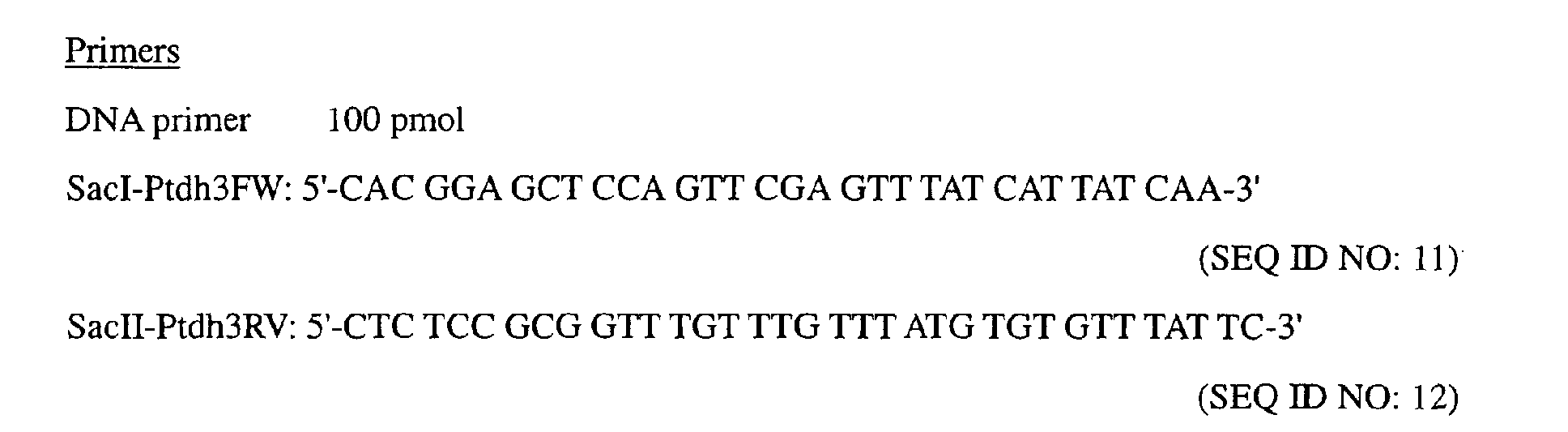
- the amplified DNA fragment was cleaved with SacI and SacII, and then electrophoresed on an agarose gel to give a purified 680 bp DNA fragment designated TDH3p.
- pYES2 (Invitrogen) was cleaved with SspI and NheI, and then electrophoresed on an agarose gel to give a purified 1.5 kbp fragment containing the 2 ⁇ DNA replication origin (2 ⁇ ori). The resulting fragment was blunt-ended with Klenow enzyme and designated 2 ⁇ OriSN.
- 2 ⁇ OriSN was inserted into a NaeI site of pRS404Tcyc or pRS405Tcyc treated with BAP (bacterial alkaline phosphatase, TaKaRa), and then transformed into E. coli SURE2 to prepare plasmid DNA.
- the resulting plasmid DNA was cleaved with DraIII plus EcoRI, HpaI, or PstI plus PvuII, and then electrophoresed on an agarose gel to confirm the insertion and orientation of 2 ⁇ ori.
- pRS404Tcyc and pRS405Tcyc carrying 2 ⁇ ori inserted in the same orientation as pYES2 were designated pRS434Tcyc2 ⁇ Ori and pRS435Tcyc2 ⁇ Ori, respectively.
- the fragment TDH3p containing the transcription promoter was inserted into SacI-SacII sites of these two plasmids pRS434Tcyc2 ⁇ Ori and pRS435Tcyc2 ⁇ Ori to give plasmids designated pRS434GAP and pRS435GAP, respectively.
- pYES-GGPS6 carrying the inserted GGPS gene BTS1 and pT7-ERG20 carrying the inserted FPS gene ERG20 were used as templates to perform PCR under the following conditions.
- the reaction products obtained by (i) and (ii) above were designated #9 and #11, respectively.
- #9 and #11 were ligated to each other and then used as a PCR template to perform a second round of PCR using the above SacII-BTS1 and -21 as primers under the same conditions, thereby obtaining DNA fragment #9-#11.
- the second PCR product #9-#11 was cleaved with SacII and BamHI, and then inserted into a SacII-BamHI site of pRS435GAP to obtain pRS435GGF.
- pRS435GAP-BTS1, pRS445GAP-BTS1, pRS435GAP-ERG20 and pRS445GAP-ERG20 were used as expression vectors for non-fusion genes BTS1 and ERG20.
- pRS434TEF-HMG1 and pRS434GAP-HMG1 were used for HMG1 expression.
- pT7HMG1 was cleaved with SmaI and SalI and then electrophoresed on an agarose gel to give a purified 3.2 kbp HMG1 gene fragment. This fragment was inserted into a SmaI-SalI site of pRS434GAP to obtain pRS434GAP-HMG1.
- pRS435GGF and pRS434GAP-HMG1 were introduced into Saccharomyces cerevisiae strain YPH499 (Stratagene) using the lithium acetate method described in "Introduction of DNA into Yeast Cells” Current Protocols in Molecular Biology, John Wiley & Sons, Inc., pp. 13.7.1-13.7.2 (contributed by Daniel M. Becher and Victoria Lundblad) or a Frozen-EZ Yeast Transformation II technique (Zymo Research, Orange, CA).
- the transformant was cultured on SD (-URA) medium to select a colony growing at 30°C on a SD (-URA) agar plate (DOB+CSM (-URA), BIO 101, Vista, CA), thereby obtaining pRS435GGF/pRS434GAP-HMG1/YPH499#1
- a loopful of the colony was inoculated from the slant into a 500 ml baffled Erlenmeyer flask containing 200 ml of SD-Leu-Trp medium (BIO 101 Inc.) supplemented with 40 mg/L adenine (Sigma). After culturing at 130 rpm and at 30°C for 2 days, centrifugation (1500 ⁇ g, 5 minutes, 4°C) and washing with sterilized physiological saline were repeated three times to completely remove glucose contained in the culture solution. An aliquot of the culture solution (50 ml; 1%) was then inoculated into a fermenter.
- Farnesol-producing recombinant yeast strain pYHMG044/AURGG101 was prepared and cultured in the following manner.
- pT7HMG1 prepared in Example 12 was used as a template to prepare a fragment containing the vector backbone and a partially deleted HMG1 coding region by PCR.
- the resulting fragment was blunt-ended with Klenow enzyme, re-cyclized through self-ligation, and then transformed into E. coli JM109 to prepare plasmid DNA pYHMG044.
- the synthetic DNA sequences used as a primer set are presented below.
- the resulting DNA plasmid was confirmed to show no shift in reading frame for amino acids located upstream and downstream of HMG1 and to contain no PCR error-based amino acid replacement in the neighborhood of its binding site.
- pAUR101 (TaKaRa, Japan) was linearized with EcoO65I and then introduced into Saccharomyces cerevisiae strain A451 (ATCC 200598) according to the lithium acetate method described in "Introduction of DNA into Yeast Cells" Current Protocols in Molecular Biology, John Wiley & Sons, Inc., pp.13.7.1-13.7.2 (contributed by Daniel M. Becher and Victoria Lundblad).
- the transformant was cultured on an YPD agar plate (1 % yeast extract, 2% peptone, 2% dextrose, 2% agar) containing 1 ⁇ g/ml Aureobasidin to select a colony growing thereon at 30°C.
- pYHMG044 was introduced into AURGG101 according to the lithium acetate method described in "Introduction of DNA into Yeast Cells" Current Protocols in Molecular Biology, John Wiley & Sons, Inc., pp.13.7.1-13.7.2 (contributed by Daniel M. Becher and Victoria Lundblad).
- the transformant was cultured on SD (-URA) medium to select a colony growing at 30°C on an SD (-URA) agar plate (DOB+CSM (-URA), BIO 101, Vista, CA), thereby obtaining pYHMG044/AURGG101.
- a loopful of the recombinant yeast strain pYHMG044/AURGG101 was inoculated from the slant into 200 ml of CSM-URA (BIO 101 Inc.) and DOB (BIO 101 Inc.) medium in a 500 ml baffled Erlenmeyer flask. After culturing at 130 rpm and at 30°C for 2 days, centrifugation (1500 ⁇ g, 5 minutes, 4°C) and washing with sterilized physiological saline were repeated three times to completely remove glucose contained in the culture solution. An aliquot of the culture solution (50 ml; 1%) was then inoculated into a fermenter.
- Soybean oil stimulated the secretory production of farnesol in recombinant yeast cells. It allowed farnesol to be secreted from the cells in an amount of approximately 150 mg/L over 150 hours (Figure 11).
- Yeast Extract 10g Bactopeptone (Difco) 20g Glucose (Nacalai) 50g Soybean oil (Nacalai) 10ml Ergosterol solution 200 ⁇ l (200 ⁇ l of 20mg/ml solution in 50% EtOH-50% Tergitol)
- YM medium (Difco), adjusted to 1 L with deionized water and then autoclaved. After the autoclaved medium was fully cooled, a filter-sterilized aqueous solution of squalene synthase inhibitor SQAD (2.5 mg/ml; Eisai Co., Ltd.) was added to the medium to give a final concentration of 1 to 20 mg/L.
- SQAD squalene synthase inhibitor
- This medium was prepared by adding 10 ml of olive oil (Nacalai) to YMO medium in the same manner as used for YMO-SSI preparation.
- the present invention enables prenyl alcohol to be highly produced in and effectively secreted from prenyl alcohol-producing cells by culturing the cells in a medium with an increased sugar content in the presence of at least one member selected from the group consisting of a surfactant, a fat or oil, and a terpene.
- the present invention provides a high production method of prenyl alcohol, which comprises culturing prenyl alcohol-producing cells in a medium with an increased sugar content in the presence of at least one member selected from the group consisting of a surfactant, a fat or oil, and a terpene to produce and accumulate prenyl alcohol in the cells; allowing the accumulated prenyl alcohol to be secreted from the cells; and then collecting prenyl alcohol.
- the present invention enables prenyl alcohol to be highly produced in and effectively secreted from prenyl alcohol-producing cells by culturing the cells in a medium with an increased sugar content in the presence of at least one member selected from the group consisting of a surfactant, a fat or oil, and a terpene.
Landscapes
- Chemical & Material Sciences (AREA)
- Organic Chemistry (AREA)
- Life Sciences & Earth Sciences (AREA)
- Engineering & Computer Science (AREA)
- Health & Medical Sciences (AREA)
- Zoology (AREA)
- Wood Science & Technology (AREA)
- Genetics & Genomics (AREA)
- Biotechnology (AREA)
- Bioinformatics & Cheminformatics (AREA)
- Biochemistry (AREA)
- Microbiology (AREA)
- General Engineering & Computer Science (AREA)
- General Health & Medical Sciences (AREA)
- General Chemical & Material Sciences (AREA)
- Biomedical Technology (AREA)
- Virology (AREA)
- Tropical Medicine & Parasitology (AREA)
- Medicinal Chemistry (AREA)
- Chemical Kinetics & Catalysis (AREA)
- Preparation Of Compounds By Using Micro-Organisms (AREA)
- Micro-Organisms Or Cultivation Processes Thereof (AREA)
Abstract
Description
Saccharomyces cerevisiae strains ATCC 12341, IFO 0565, IFO 0222,
Saccharomycopsis fibuligera strain IFO 0106;
Saccharomycodes ludwigii strain IFO 0339;
Schizosaccharomyces octosporus strain IAM 4842, and Schizosaccharomyces pombe strains IFO 0346 and IFO 0638;
Wickerhamia fluorescens stain IFO 1116;
Debaryomyces hansenii var. fabryi strain IFO 0794, Debaryomyces castellii strain IFO 1359, and Debaryomyces vanrijiae var. vanrijiae strain JCM 2169;
Hansenula valbyensis, Hansenula saturnus, Hansenula beijerinckii, Hansenula matritensis, Hansenula capsulata, Hansenula polymorpha, Hansenula polymopla;
Hanseniaspora valbyensis strain IFO 0115;
Pichia membranaefaciens strain IFO 0128, Pichia aganobii, Pichia naganishii strain IFO 1670, Pichia silvicola strain IFO 0807, Pichia anomala strains IFO 0118, IFO 0569 and IFO 0707, and Pichia pastoris strain ATCC 20864;
Kloeckera japonica strain IFO 0151;
Candida krusei strain IFO 0013, Candida kefyr strain IFO 0706, Candida tenuis strain IFO 0716, Candida solani strain IFO 0762, Candida glabrata strains IFO 0005 and IFO 0622, Candida albicans strain IFO 1060, Candida zeylanoides strain IFO 0719, Candida catenulata strain IFO 0720, Candida cariosilignicola strain IFO 1910, Candida stellata strain IFO 0701, and Candida utilis strain IFO 0619;
Zygosaccharomyces rouxii strains IFO 0487 and IFO 0686, and Zygosaccharomyces japanicus strain IFO 0595;
Ogataea glucozyma strain IFO 1472, and Ogataea polymorpha strain IFO 1475;
Kuraishia capsulata strain IFO 0974;
Komagataella pastoris strain IFO 0948;
Yarrowia lopolytica strain IFO 0717;
Williopsis saturnus var. saturnus strains IFO 0125 and IFO 0941, and Williopsis saturnus strain IFO 0895;
Nakazawaea holstii strain IFO 0980;
Kluyveromyces marxianus strains IFO 0617 and IFO 0288, Kluyveromyces thermotolerans strain IFO 0662, and Kluyveromyces lactis strain IFO 0648;
Torulaspora delbrueckii strain IFO 0422;
Cryptococcus humicolus strain IFO 1527;
Mucor javanicus strain IFO 4570;
Bullera pseudoalba strain IFO 10179;
Rhodotorula minuta strain IFO 0715, and Rhodotorula rubra strain IFO 0870;
Sporobolomyces salmonicolor strain IFO 0374;
Haloferax volcanii strain IFO 14742; and
Alcaligenes faecalis strain IFO 13111.
Saccharomyces cerevisiae strains IFO 1346, ATCC 204660, IFO 0258, IFO 0565,
Saccharomycodes ludwigii strain IFO 0339;
Schizosaccharomyces pombe strains IFO 0346, IFO 0638 and IFO 0358, and Schizosaccharomyces octosporus strain IAM 4842;
Hanseniaspora valbyensis strain IFO 0115;
Debaryomyces hansenii strain IFO 0023, Debaryomyces hansenii var. fabryi strain IFO 0749, Debaryomyces castellii strain IFO 1359, and Debaryomyces vanrijiae var. vanrijiae strain JCM 2169;
Lypomyces starkeyi strain IFO 0678;
Pichia aganobii strain 4261 (Kyoto Univ.), Pichia naganishii strain IFO 1670, Pichia anomala strains IFO 0118, IFO 0569, IFO 0963, IFO 707 and IFO 0146, and Pichia pastoris strain ATCC 20864;
Candida utilis strains IFO 0626 and IFO 0619, Candida albicans strains IFO 0579 and IFO 1060, Candida zeylanoides strain IFO 0719, Candida glabrata strains IFO 0005, IFO 0622 and IFO 0741, Candida cariosilignicola strain IFO 1910, Candida stellata strain IFO 0701, Candida solani strain IFO 0762, Candida intermedia strain IFO 0761, Candida krusei strain IFO 0941 and Candida tenuis strain IFO 0716;
Wickerhamia fluoresces strain IFO 1116;
Kuraishia capsulata strain IFO 0974;
Komagataella pastoris strain IFO 0948;
Ogataea glucozyma strain IFO 1472, Ogataea polymorpha strain IFO 1475;
Yarrowia lopolytica strain IFO 0717;
Kluyveromyces marxianus strains IFO 0288 and IFO 0617, Kluyveromyces thermotolerans strain IFO 0662, and Kluyveromyces lactis strain IFO 0648;
Torulaspora delbrueckii strain IFO 0422;
Zygosaccharomyces rouxii strains IFO 0487 and IFO 0686, Zygosaccharomyces japanicus strain IFO 0595, and Zygosaccharomyces fermentati strain IFO 0021;
Williopsis saturnus var. saturnus strain IFO 0941, Williopsis californica strain IFO 0800 and Willopsis saturnus strain IFO 0895;
Citeromyces matritensis strain IFO 0954;
Waltomyces lipoder strain IFO 0673;
Cryptococcus humicolus strain IFO 1527;
Bacillus amyloliquefaciens strain IFO 3022, and Bacillus pumilus strain IFO 3030;
Staphylococcus epidermidis strain IFO 3762;
Pseudomonas sp. strain 876 (Kyoto Univ.);
Micrococcus luteus strain IFO 3067;
Exiguobacterium acetylicum strain IFO 12146;
Nocardia asteroides strain 2103 (Kyoto Univ.);
Mucor Javanicus strain IFO 4570;
Ambrosiozyma platypodis strain IFO 10752;
Cystofilobasidium infirmominiatum strain IFO 1057;
Leucosporidium scottii strain IFO 1924;
Metschnikowia lunata strain IFO 1605;
Myxozyma lipomycoides strain IFO 10351;
Trichosporon pullulans strain IFO 1232;
Xanthophyllomyces dendrorhous strain IFO 10130;
Bullera pseudoalba strain IFO 10179;
Fellomyces penicillatus strain IFO 10119;
Filobasidium capsuligenum strain IFO 1185, and Filobasidium uniguttulatum strain IFO 0699;
Kloeckera corticis strain IFO 0633;
Holtermannia corniformis strain IFO 10742;
Phaffia rhodozyma strain ATCC 66270;
Saccharomycopsis fermentans strain IFO 10772;
Sporidiobolus samonicolar strain IFO 1035;
Sporobolomyces salmonicolor strain IFO 0374;
Trichosporiella flavificans strain IFO 1573;
Zygoascus hellenicus strain IFO 10184;
Haloferax volcanii strain IFO 14742; and
Brevibacterium linens strain IFO 12171.
Saccharomyces unisporus strain IFO 0215, Saccharomyces cerevisiae strains 4045 (Kyoto Univ.), 4103 (Kyoto Univ.), 4104 (Kyoto Univ.), IFO 0210 and
Candida grabrata strains IFO 0622, IFO 0005 and IFO 0741, Candida solani strain IFO 0762, Candida cariosilignicola strain IFO 1910, and Candida krusei strain IFO 0941;
Mucor Javanicus strain IFO 4570;
Cystofilobasidium infirmominiatum strain IFO 1057;
Rhodotorula minuta strain IFO 0715, and Rhodotorula rubra strain IFO 0870;
Williopsis californica strain IFO 0800; and
Haloferax volcanii strain IFO 14742.
| Malt Extract (Difco) | 5g |
| Yeast Extract (Difco) | 5g |
| Bactotryptone (Difco) | 5g |
| Yeast Extract (Difco) | 5g |
| Glucose (Nacalai) | 1g |
| KH2PO4 (Nacalai) | 0.7g |
| K2HPO4 (Nacalai) | 0.3g |
- MS Quad:
- 150°C
- MS Source:
- 230°C
- Low Mass:
- 35
- High Mass:
- 200
- Threshold:
- 40
- Mode:
- automatic injection
- Sample volume:
- 2 µl
- Washing:
- 3 times with methanol and twice with hexane
- Split ratio:
- 1:20
- Column:
- Agilent HP-5MS
(0.25 mm x 30 m; film thickness of 0.25 µm) - Carrier gas:
- helium at 1.0 ml/min
- Solvent delay:
- 2 minutes
- Oven conditions:
- holding at 115°C for 1.5 minutes
heating to 250°C at 70°C/min, holding for 2 minutes
heating to 300°C at 70°C/min, holding for 7 minutes
post time = 0 - Internal standard:
- 1-undecanol/ethanol solution (1 µl/ml), added to each vial in an amount of 10 µl
- Inlet liner:
- split/splitless liners
- Analysis:
- After incorporation of TIC, 69 mass was selected to integrate the peak area for each of 1-undecanol (RT = 3.39 min), nerolidol (RT = 3.86 min), farnesol (RT = 4.23 min) and geranylgeraniol (RT = 5.78 min). Each substance was quantified from the ratio of peak area between the substance and undecanol as an internal standard.
| Tocopherol concentration (µM) | Supernatant fraction | Cell fraction | |||||
| (µg/L of culture solution) | |||||||
| DHFOH | FAL | FOH | | FAL | FOH | ||
| 0 | 1238 | 84 | 3102 | 4630 | 217 | 7034 | |
| 20 | 1573 | 84 | 3819 | 3622 | 179 | 5469 | |
| 200 | 3527 | 120 | 6741 | 2206 | 127 | 2695 | |
| Strain used: Saccharomyces | |||||||
| DHFOH: dehydrofarnesol | |||||||
| FOH: farnesol | |||||||
| FAL: farnesal |
| Squalene (%) | Soybean oil (%) | Days | Supernatant fraction | Cell fraction | |||||
| (µg/L of culture solution) | |||||||||
| NE | FOH | GGOH | | FOH | GGOH | ||||
| 0 | 0 | 3 | 0.0 | 0.0 | 0.0 | 0.0 | 0.0 | 0.0 | |
| 7 | 0.0 | 0.0 | 0.0 | 0.0 | 0.0 | 0.0 | |||
| 0 | 1 | 3 | 0.0 | 71.5 | 22.8 | 0.0 | 17.1 | 21.0 | |
| 7 | 0.0 | 56.2 | 67.6 | 0.0 | 9.2 | 27.9 | |||
| 1 | 0 | 3 | 0.0 | 204.8 | 0.0 | 0.0 | 30.4 | 120.2 | |
| 7 | 0.0 | 109.8 | 133.9 | 0.0 | 4.7 | 0.0 | |||
| 0.5 | 0.5 | 3 | 0.0 | 150.5 | 90.4 | 0.0 | 19.4 | 264.6 | |
| 7 | 0.0 | 58. 1 | 287.8 | 0.0 | 0.0 | 179. 1 | |||
| Strain used: Saccharomyces cerevisiae strain IFO 0538 | |||||||||
| NE: nerolidol | |||||||||
| FOH: farnesol | |||||||||
| GGOH: geranylgeraniol |
| Supernatant fraction (µg/L of culture solution) | |||||||
| Phosphatase-untreated | Phosphatase-treated | ||||||
| Medium composition cultivation period | |||||||
| Strain No. | (day(s)) | FOH | GGOH | FOH | GGOH | ||
| IFO 0005 Candida glabrata | | 1 | 0.0 | 0.0 | 1.5 | 0.0 | |
| 2 | 0.0 | 0.0 | 0.0 | 0.0 | |||
| 3 | 0.0 | 0.0 | 0.0 | 0.0 | |||
| YM+ | 1 | 0.0 | 0.0 | 6.1 | 0.0 | ||
| 2 | 0.0 | 0.0 | 9.5 | 0.0 | |||
| 3 | 29.4 | 2.3 | 13.9 | 0.0 | |||
| YM+Glc+ | 1 | 0.0 | 0.0 | 0. 0 | 0.0 | ||
| 2 | 135.6 | 92.0 | 69.9 | 31.5 | |||
| 3 | 850.7 | 416.5 | 116.6 | 40.0 | |||
| IFO 0115 | YM | 1 | 0.0 | 0.0 | 0.0 | 0.0 | |
| 2 | 0.0 | 0.0 | 0.0 | 0.0 | |||
| 3 | 34.0 | 0.0 | 0.0 | 0.0 | |||
| YM+ | 1 | 0.0 | 0.0 | 0. 0 | 0.0 | ||
| 2 | 11.3 | 0.0 | 0.0 | 0.0 | |||
| 3 | 36.4 | 0.0 | 18.0 | 0.0 | |||
| YM+Glc+SBO | 1 | 0.0 | 0.0 | 0.0 | 0.0 | ||
| 2 | 24.0 | 0.0 | 5.1 | 0.0 | |||
| 3 | 30.3 | 26.5 | 7.9 | 0.0 | |||
| IFO 0339 Saccharomycodes ludwigii | YM | 1 | 0.0 | 0.0 | 0.0 | 0.0 | |
| 2 | 8.7 | 0.0 | 0.0 | 0.0 | |||
| 3 | 0.0 | 0.0 | 0.0 | 0.0 | |||
| YM+Glc | 1 | 0.0 | 0.0 | 0.0 0 | 0.0 | ||
| 2 | 16.8 | 0.0 | 17.7 | 0.0 | |||
| 3 | 67.1 | 0.0 | 20.8 | 0.0 | |||
| YM+Glc+SBO | 1 | 0.0 | 0.0 | 0.0 | 0.0 | ||
| 2 | 11.7 | 5.3 | 0.0 | 0.0 | |||
| 3 | 85.6 | 7.3 | 6.5 | 0.0 | |||
| FOH: farnesol GGOH: geranylgeraniol | |||||||
| YM: YM medium (Difco) YM+Glc: YM medium (Difco) + 5% glucose | |||||||
| YM+Glc+SBO: YM medium (Difco) + 5% glucose + 1% soybean oil |
| Cell fraction (µg/L of culture solution) | ||||||
| Phosphatase-untreated | Phosphatase-treated | |||||
| Medium composition cultivation period | ||||||
| Strain No. | (day(s)) | FOH | GGOH | FOH | GGOH | |
| IFO 0005 Candida glabrata | YM | 1 | 39.4 | 0.0 | 0.0 | 0.0 |
| 2 | 14.8 | 37.3 | 0.0 | 0.0 | ||
| 3 | 11.4 | 41.7 | 51.2 | 0.0 | ||
| YM+Glc | 1 | 8.4 | 0.0 | 0.0 | 0.0 | |
| 2 | 44.1 | 134.4 | 86.8 | 304.8 | ||
| 3 | 104.4 | 323.9 | 202.4 | 772.6 | ||
| YM+Glc+SBO | 1 | 5.8 | 0.0 | 0.0 | 0.0 | |
| 2 | 427.4 | 178.9 | 248.0 | 239.6 | ||
| 3 | 835.3 | 363.7 | 1321.6 | 1176.2 | ||
| IFO 0115 Hanseniaspora valbyensis | YM | 1 | 0.0 | 0.0 | 0.0 | 0.0 |
| 2 | 34.0 | 5.1 | 0.0 | 0.0 | ||
| 3 | 21.1 | 45.6 | 0.0 | 63.7 | ||
| YM+Glc | 1 | 0.0 | 0.0 | 0.0 | 0.0 | |
| 2 | 46.6 | 26.1 | 23.9 | 0.0 | ||
| 3 | 54.2 | 108.5 | 78.0 | 491.8 | ||
| YM+Glc+SBO | 1 | 0.0 | 0.0 | 0.0 | 0.0 | |
| 2 | 0.0 | 0.0 | 9.7 | 0.0 | ||
| 3 | 61.3 | 122.0 | 69.2 | 286.1 | ||
| IFO 0339 Saccharomycodes ludwigii | YM | 1 | 18.0 | 0.0 | 0.0 | 0.0 |
| 2 | 16.6 | 0.0 | 0.0 | 0.0 | ||
| 3 | 19.5 | 48.3 | 0.0 | 71.0 | ||
| YM+Glc | 1 | 0.0 | 0.0 | 0.0 | 0.0 | |
| 2 | 58.6 | 34.1 | 12.0 | 0.0 | ||
| 3 | 62.3 | 173.8 | 67.8 | 464.8 | ||
| YM+Glc+SBO | 1 | 0.0 | 0.0 | 0.0 | 0.0 | |
| 2 | 96.4 | 10.3 | 9.3 | 0.0 | ||
| 3 | 61.6 | 103.7 | 27.9 | 135.6 | ||
| FOH: farnesol GGOH: geranylgeraniol | ||||||
| YM: YM medium (Difco) YM+Glc: YM medium (Difco) + 5% glucose | ||||||
| YM+Glc+SBO: YM medium (Difco) + 5% glucose + 1% soybean oil |
| Medium composition: YM medium (Difco) | |||||
| Strains | Supernatant fraction | Cell fraction | |||
| (µg/L of culture solution) | |||||
| Strain No. | Genus | FOH | GGOH | FOH | GGOH |
| K 4104 | Saccharomyces cerevisiae | 0.0 | 0.0 | 15.8 | 31.7 |
| IFO 0252 | Saccharomyces rosei | 0.0 | 0.0 | 28.5 | 39.0 |
| IFO 0565 | Saccharomyces cerevisiae | 0.0 | 0.0 | 0.0 | 54.7 |
| IFO 0941 | Williopsis saturnus var. saturnus | 4.7 | 0.0 | 69.8 | 78.7 |
| IFO 1475 | Ogataea polymorpha | 0.0 | 0.0 | 13.5 | 36.1 |
| IFO 0648 | Kluyveromyces lactis | 6.0 | 0.0 | 6.3 | 72.9 |
| K: strain maintained by Kyoto University | |||||
| FOH: farnesol | |||||
| GGOH: geranylgeraniol |
| Medium composition: YM medium (Difco) + 5% glucose + 1% soybean oil | ||||||
| Strains | Cultivation days | Supernatant fraction | Cell fraction | |||
| (µg/L of culture solution) | ||||||
| Strain No. | Genus | FOH | GGOH | FOH | GGOH | |
| K 4104 | | 3 | 281.0 | 127.7 | 241. 1 | 161.6 |
| 6 | 338.2 | 186.9 | 155.3 | 132.2 | ||
| IFO 2052 | Saccharomyces rosei | 3 | 220.0 | 98.0 | 305.9 | 140.2 |
| 6 | 381.2 | 176.6 | 193. 1 | 122.5 | ||
| IFO 0565 | | 3 | 49.3 | 16.0 | 88.0 | 78.2 |
| 6 | 51.9 | 34.1 | 248.5 | 214.2 | ||
| IFO 0941 | Williopsis saturnus var. | 3 | 54.8 | 22.6 | 255.3 | 169.3 |
| 6 | 88.3 | 33. 1 | 363.2 | 220.9 | ||
| IFO 1475 | Ogataea polymorpha | 3 | 60.9 | 69.1 | 113.5 | 127.2 |
| 6 | 19.8 | 14.4 | 60.8 | 95.9 | ||
| IFO 0648 | | 3 | 28.5 | 37.8 | 61.8 | 91.1 |
| 6 | 120.3 | 124.5 | 159.8 | 211.5 | ||
| K: strain maintained by Kyoto University | ||||||
| FOH: farnesol | ||||||
| GGOH: geranylgeraniol |
| Medium composition: YM medium (Difco) + 4 mg/L ergosterol + 0-20 mg/L SQAD | ||||||||
| Supernatant fraction | Cell fraction | |||||||
| (µg/L of culture solution) | ||||||||
| Strain No. | SQAD | Days | NE | FOH | GGOH | NE | FOH | GGOH |
| IFO 0215 Saccharomyces unisporus | 0 | 3 | 0.0 | 0.0 | 0.0 | 0.0 | 0.0 | 0.0 |
| 1 | 0.0 | 0.0 | 0.0 | 0.0 | 0.0 | 0.0 | ||
| 20 | 0.0 | 3.2 | 0.0 | 0.0 | 0.0 | 0.0 | ||
| 0 | 7 | 0.0 | 0.0 | 0.0 | 0.0 | 0.0 | 0.0 | |
| 1 | 0.0 | 0.0 | 0.0 | 0.0 | 0.0 | 0.0 | ||
| 20 | 0.0 | 0.0 | 0.0 | 0.0 | 0.0 | 0.0 | ||
| IFO 0538 | 0 | 3 | 0.0 | 0.0 | 0.0 | 0.0 | 0.0 | 0.0 |
| 1 | 0.0 | 0.0 | 0.0 | 0.0 | 0.0 | 0.0 | ||
| 20 | 0.0 | 0.0 | 0.0 | 0.0 | 8.1 | 0.0 | ||
| 0 | 7 | 0.0 | 0.0 | 0.0 | 0.0 | 0.0 | 0.0 | |
| 1 | 0.0 | 0.0 | 0.0 | 0.0 | 0.0 | 0.0 | ||
| 20 | 0.0 | 0.0 | 0.0 | 0.0 | 0.0 | 0.0 | ||
| IFO 0622 Candida glabrata | 0 | 3 | 0.0 | 3. 1 | 0.0 | 0.0 | 1.9 | 30.4 |
| 1 | 0.0 | 3.5 | 0.0 | 0.0 | 1.4 | 24.3 | ||
| 20 | 0.0 | 243.5 | 0.0 | 0.0 | 212.0 | 57.0 | ||
| 0 | 7 | 0.0 | 0.0 | 0.0 | 0.0 | 0.0 | 0.0 | |
| 1 | 0.0 | 0.0 | 0.0 | 0.0 | 0.0 | 0.0 | ||
| 20 | 0.0 | 0.0 | 0.0 | 0.0 | 5.5 | 40.5 | ||
| IFO 0717 | 0 | 3 | 0.0 | 0.0 | 0.0 | 0.0 | 0.0 | 0.0 |
| 1 | 0.0 | 1.3 | 0.0 | 0.0 | 0.0 | 0.0 | ||
| 20 | 0.0 | 39.7 | 66.5 | 0.0 | 39.7 | 63.5 | ||
| 0 | 7 | 0.0 | 0.0 | 0.0 | 0.0 | 0.0 | 0.0 | |
| 1 | 0.0 | 2. 1 | 0.0 | 0.0 | 1.5 | 0.0 | ||
| 20 | 0.0 | 10.6 | 0.0 | 0.0 | 10.6 | 0.0 | ||
| IFO 0948 | 0 | 3 | 0.0 | 0.0 | 0.0 | 0.0 | 0.0 | 0.0 |
| 1 | 0.0 | 0.0 | 0.0 | 0.0 | 0.0 | 0.0 | ||
| 20 | 0.0 | 3.4 | 2.3 | 0.0 | 3.4 | 1.8 | ||
| 0 | 7 | 0.0 | 0.0 | 0.0 | 0.0 | 0.0 | 0.0 | |
| 1 | 0.0 | 0.0 | 0.0 | 0.0 | 0.0 | 0.0 | ||
| 20 | 0.0 | 0.0 | 0.0 | 0.0 | 0.0 | 0.0 | ||
| IFO 0974 | 0 | 3 | 0.0 | 0.0 | 0.0 | 0.0 | 0.0 | 0.0 |
| 1 | 0.0 | 0.0 | 0.0 | 0.0 | 0.0 | 0.0 | ||
| 20 | 0.0 | 0.0 | 0.0 | 0.0 | 0.0 | 0.0 | ||
| 0 | 7 | 0.0 | 0.0 | 0.0 | 0.0 | 0.0 | 0.0 | |
| 1 | 0.0 | 0.0 | 0.0 | 0.0 | 0.0 | 0.0 | ||
| 20 | 0.0 | 0.0 | 0.0 | 0.0 | 0.0 | 0.0 | ||
| IFO 1472 | 0 | 3 | 0.0 | 0.0 | 0.0 | 0.0 | 0.0 | 0.0 |
| 1 | 0.0 | 0.0 | 0.0 | 0.0 | 0.0 | 0.0 | ||
| 20 | 0.0 | 0.0 | 18.3 | 0.0 | 0.0 | 17.5 | ||
| 0 | 7 | 0.0 | 0.0 | 0.0 | 0.0 | 0.0 | 0.0 | |
| 1 | 0.0 | 0.0 | 0.0 | 0.0 | 0.0 | 0.0 | ||
| 20 | 0.0 | 0.0 | 0.0 | 0.0 | 0.0 | 6.8 | ||
| IFO 1892 Saccharomyces kluyeri | 0 | 3 | 0.0 | 0.0 | 0.0 | 0.0 | 0.0 | 8.9 |
| 1 | 0.0 | 0.0 | 0.0 | 0.0 | 0.0 | 16.7 | ||
| 20 | 0.0 | 0.0 | 0.0 | 0.0 | 0.0 | 38.5 | ||
| 0 | 7 | 0.0 | 0.0 | 0.0 | 0.0 | 0.0 | 0.0 | |
| 1 | 0. 0 | 0.0 | 0.0 | 0.0 | 0.0 | 0.0 | ||
| 20 | 0.0 | 0.0 | 0.0 | 0.0 | 0.0 | 0.0 | ||
| IFO 1910 | 0 | 3 | 0.0 | 0.0 | 0.0 | 0.0 | 0.0 | 0.0 |
| 1 | 0.0 | 0.0 | 0.0 | 0.0 | 0.0 | 0.0 | ||
| 20 | 0.0 | 0.0 | 0.0 | 0.0 | 0.0 | 5.5 | ||
| 0 | 7 | 0.0 | 0.0 | 0.0 | 0.0 | 0.0 | 0.0 | |
| 1 | 0.0 | 0.0 | 0.0 | 0.0 | 0.0 | 0.0 | ||
| 20 | 0.0 | 0.0 | 0.0 | 0.0 | 0.0 | 0.0 | ||
| IFO 0005 Candia glabrata | 0 | 3 | 0.0 | 0.0 | 0.0 | 0.0 | 0.0 | 12.0 |
| 1 | 0.0 | 0.0 | 0.0 | 0.0 | 0.0 | 4.3 | ||
| 20 | 0.0 | 33.8 | 2.7 | 0.0 | 0.0 | 53.7 | ||
| 0 | 7 | 0.0 | 0.0 | 0.0 | 0.0 | 20.5 | 0.0 | |
| 1 | 0.0 | 0.0 | 0.0 | 0.0 | 0.0 | 0.0 | ||
| 20 | 0.0 | 0.0 | 0.0 | 0.0 | 0.0 | 0.0 | ||
| NE: nerolidol | ||||||||
| FOH: farnesol | ||||||||
| GGOH: geranylgeraniol | ||||||||
| SQAD: |
| Medium composition: YM medium (Difco) + 5% glucose + 1 | ||||||||
| Supernatant fraction | Cell fraction | |||||||
| (µg/L of culture solution) | ||||||||
| Strain No. | SQAD | Days | NE | FOH | GGOH | NE | FOH | GGOH |
| IFO 0215 Saccharomyces unisporus | 0 | 3 | 16.3 | 8.2 | 0.0 | 0.0 | 0.0 | 0.0 |
| 1 | 12.2 | 5.2 | 0.0 | 0.0 | 0.0 | 0.0 | ||
| 20 | 67.4 | 68.4 | 0.0 | 0.0 | 16.9 | 0.0 | ||
| 0 | 7 | 19.6 | 14.8 | 0.0 | 0.0 | 0.0 | 0.0 | |
| 1 | 27.3 | 17.5 | 0.0 | 0.0 | 0.0 | 0.0 | ||
| 20 | 466.6 | 433.7 | 21.6 | 8.6 | 255.6 | 0.0 | ||
| IFO 0538 | 0 | 3 | 0.0 | 139. 3 | 59.8 | 0.0 | 0.0 | 0.0 |
| 1 | 0.0 | 102.9 | 46.2 | 0.0 | 15.5 | 0.0 | ||
| 20 | 65.9 | 9087.5 | 331.6 | 0.0 | 1465.9 | 51.0 | ||
| 0 | 7 | 0.0 | 426.4 | 246.7 | 0.0 | 38.0 | 0.0 | |
| 1 | 0.0 | 319.5 | 241.0 | 0.0 | 188.8 | 85.6 | ||
| 20 | 216.2 | 34241.4 | 1568.8 | 18.4 | 5812. 1 | 266.2 | ||
| IFO 0622 Candida glabrata | 0 | 3 | 0.0 | 106. 1 | 112.3 | 0.0 | 28.8 | 33.6 |
| 1 | 9.4 | 149.2 | 119.7 | 0.0 | 9.7 | 0.0 | ||
| 20 | 422.2 | 12186.9 | 327.2 | 0.0 | 331.6 | 9.3 | ||
| 0 | 7 | 11.6 | 378.3 | 408.5 | 0.0 | 43.7 | 59.2 | |
| 1 | 17.2 | 530.0 | 231.5 | 0.0 | 133.3 | 58.5 | ||
| 20 | 1256.9 | 22147. 1 | 862.7 | 138.0 | 2750.6 | 170.5 | ||
| IFO 0717 | 0 | 3 | 0.0 | 8.7 | 0.0 | 0.0 | 6.7 | 0.0 |
| 1 | 2.4 | 100. 1 | 19. 1 | 0.0 | 165.3 | 0.0 | ||
| 20 | 19.0 | 983.3 | 17.8 | 0.0 | 882. 1 | 0.0 | ||
| 0 | 7 | 0.0 | 95.3 | 608.0 | 0.0 | 0.0 | 38.4 | |
| 1 | 19.0 | 405.4 | 546.8 | 0.0 | 0.0 | 0.0 | ||
| 20 | 156.7 | 6812.9 | 76.2 | 0.0 | 1025.1 | 41.8 | ||
| IFO 0948 | 0 | 3 | 0.0 | 73.5 | 78.9 | 0.0 | 13.8 | 42.3 |
| 1 | 0.0 | 82.2 | 71.5 | 0.0 | 22.9 | 28.4 | ||
| 20 | 17.2 | 2956.2 | 132.5 | 0.0 | 608.4 | 80. 1 | ||
| 0 | 7 | 0.0 | 101.6 | 83.5 | 0.0 | 4.3 | 11.0 | |
| 1 | 0.0 | 569.8 | 235.7 | 0.0 | 53.4 | 28.2 | ||
| 20 | 34.2 | 5513.3 | 360.4 | 0.0 | 537.5 | 84.5 | ||
| IFO 0974 | 0 | 3 | 0.0 | 24.8 | 11. 1 | 0.0 | 3.3 | 0.0 |
| 1 | 0.0 | 1061.9 | 46.1 | 0.0 | 16.1 | 7.5 | ||
| 20 | 0.0 | 2022.7 | 262.0 | 0.0 | 149.2 | 34.8 | ||
| 0 | 7 | 0.0 | 167.5 | 236.3 | 0.0 | 3.2 | 8.5 | |
| 1 | 0.0 | 713.7 | 275.7 | 0.0 | 24.8 | 21.2 | ||
| 20 | 35.9 | 8268.5 | 680.4 | 0.0 | 362.1 | 59.7 | ||
| IFO 1472 | 0 | 3 | 0.0 | 34.8 | 79.8 | 0.0 | 7.4 | 20.4 |
| 1 | 0.0 | 40.5 | 86.0 | 0.0 | 3.7 | 9.5 | ||
| 20 | 0.0 | 808.8 | 278.7 | 0.0 | 41.1 | 37.5 | ||
| 0 | 7 | 0.0 | 63.2 | 138.8 | 0.0 | 0.0 | 0.0 | |
| 1 | 0.0 | 93.8 | 114.7 | 0.0 | 0.0 | 0.0 | ||
| 20 | 0.0 | 1832.0 | 513.0 | 0.0 | 73.7 | 52.6 | ||
| IFO 1892 Saccharomyces kluyeri | 0 | 3 | 0.0 | 70.4 | 46.1 | 0.0 | 3.7 | 0.0 |
| 1 | 0.0 | 51.4 | 23.0 | 0.0 | 2.3 | 0.0 | ||
| 20 | 0.0 | 62.9 | 30.7 | 0.0 | 16.5 | 0.0 | ||
| 0 | 7 | 0.0 | 158.5 | 71.4 | 0.0 | 0.0 | 0.0 | |
| 1 | 23.5 | 188.3 | 101.7 | 0.0 | 5.0 | 0.0 | ||
| 20 | 44. 1 | 935.3 | 126.4 | 0.0 | 227.8 | 27.8 | ||
| IFO 1910 | 0 | 3 | 0.0 | 11.0 | 44.7 | 0.0 | 0.0 | 0.0 |
| 1 | 0.0 | 20.9 | 69.3 | 0.0 | 0.0 | 0.0 | ||
| 20 | 0.0 | 124.9 | 127.1 | 0.0 | 8. 1 | 19.6 | ||
| 0 | 7 | 0.0 | 51.7 | 152.9 | 0.0 | 0.0 | 0.0 | |
| 1 | 0.0 | 257.7 | 367.3 | 0.0 | 10.3 | 37.4 | ||
| 20 | 0.0 | 14378.1 | 2997.2 | 0.0 | 845.5 | 205.0 | ||
| IFO 0005 Candia glabrata | 0 | 3 | 22.9 | 552.1 | 496.1 | 0.0 | 50.5 | 75.2 |
| 1 | 260.0 | 6784.9 | 818.5 | 8.6 | 462.0 | 86.5 | ||
| 20 | 2384.0 | 37513.9 | 1022.9 | 423.9 | 9405.0 | 306.5 | ||
| 0 | 7 | 77.1 | 1676. 1 | 1434.6 | 0.0 | 41.2 | 51.2 | |
| 1 | 546.0 | 11219.5 | 1377.8 | 9.2 | 331.7 | 77.1 | ||
| 20 | 6208.9 | 68495.6 | 3228. 1 | 139.2 | 2682.5 | 217.6 | ||
| NE: nerolidol | ||||||||
| FOH: farnesol | ||||||||
| GGOH: geranylgeraniol | ||||||||
| SQAD: |
| Medium composition: YM or KB or KY medium + 1% soybean oil + 6% glucose + 4 mg/L ergosterol | |||||
| Supernatant fraction (µg/L) | |||||
| Medium | Strain No. | SQAD | NE | FOH | GGOH |
| YM | IFO 0107 | 0 | 0.0 | 10.8 | 155.2 |
| | 20 | 0.0 | 9.7 | 386.5 | |
| KB | K 0876 | 0 | 0.0 | 29.0 | 0.0 |
| Psendomonas sp. | 20 | 0.0 | 7.8 | 0.0 | |
| YM | IFO 1665 | 0 | 0.0 | 4.7 | 211.5 |
| | 20 | 0.0 | 94.5 | 4214.9 | |
| YM | IFO 1744 | 0 | 0.0 | 0.0 | 155.5 |
| | 20 | 0.0 | 41. 1 | 3870. 1 | |
| KB | K 2103 | 0 | 0.0 | 10.9 | 0.0 |
| Norcadia asteroides | 20 | 0.0 | 0.0 | 0.0 | |
| KY | K 3009 | 0 | 0.0 | 0.0 | 36.5 |
| | 20 | 0.0 | 38.8 | 343.6 | |
| KY | K 4003 | 0 | 30.1 | 511.9 | 694.7 |
| Saccharomyces Hafe | 20 | 4980.0 | 56541.1 | 3603.4 | |
| KY | K 4045 | 0 | 148. 1 | 870.4 | 766. 8 |
| | 20 | 24606.3 | 37772.7 | 2590.6 | |
| KY | K 4102 | 0 | 17.5 | 541. 1 | 711.3 |
| Saccharomyces ellipsoideus | 20 | 18160.8 | 50245.8 | 3207.1 | |
| KY | K 4103 | 0 | 56.4 | 753. 1 | 1072. 8 |
| | 20 | 20930.8 | 53814.6 | 4589. 9 | |
| KY | K 4104 | 0 | 19.5 | 569.2 | 546.0 |
| | 20 | 23620.7 | 54713.2 | 2654.4 | |
| KY | IFO 0565 | 0 | 0.0 | 411.7 | 535.2 |
| | 20 | 839.9 | 45723.6 | 2216.6 | |
| KY | IFO 0210 | 0 | 37.5 | 685.5 | 362.8 |
| | 20 | 25251.0 | 48795.6 | 1627.2 | |
| KY | IFO 0346 | 0 | 0.0 | 196.2 | 278.9 |
| | 20 | 757.6 | 45282. 1 | 1153.6 | |
| KY | IFO 1475 | 0 | 0.0 | 236.9 | 462.7 |
| Ogataea polymorpha | 20 | 0.0 | 5643.0 | 1195. 1 | |
| KY | JCM 2169 | 0 | 0.0 | 809.8 | 241.2 |
| Debaryomyces | 20 | 129.5 | 20359.5 | 2236.0 | |
| KY | IFO 0339 | 0 | 0.0 | 164.4 | 364.3 |
| Saccharomycodes ludwigii | 20 | 131.0 | 28498.6 | 1483.8 | |
| KY | IFO 0115 | 0 | 0.0 | 254.9 | 493.6 |
| Hanseniaspora valbyensis valbyensis | 20 | 182.6 | 26807. 1 | 1217.7 | |
| KY | IFO 0648 | 0 | 0.0 | 136.4 | 433.8 |
| Kluyveromyces lactis | 20 | 348.6 | 31785.7 | 3343.8 | |
| KY | IFO 0005 | 0 | 192.8 | 861.5 | 909.0 |
| Candida glabrata | 20 | 15504. 1 | 44573.8 | 2237.1 | |
| KY | IFO 0762 | 0 | 37.0 | 274.7 | 384.4 |
| Candida solani | 20 | 1702.8 | 6574.7 | 619. 1 | |
| KY | IFO 1527 | 0 | 0.0 | 16.6 | 24.7 |
| | 20 | 0.0 | 49.6 | 33.4 | |
| KY | IFO 1116 | 0 | 0.0 | 199.3 | 315.7 |
| | 20 | 73.2 | 12200. 1 | 1181.6 | |
| NE: nerolidol | |||||
| FOH: farnesol | |||||
| GGOH: geranylgeraniol | |||||
| SQAD: | |||||
| Treated with phosphatase |
| Medium composition: YM or KB or KY medium + 1% soybean oil + 6% glucose + 4 mg/L ergosterol | ||||
| Cell fraction (µg/L) | ||||
| Strain No. | SQAD | NE | FOH | GGOH |
| IFO 0107 | 0 | 0.0 | 8. 1 | 24.6 |
| Saccharomycopsis fibuligera | 20 | 0.0 | 4.8 | 79.9 |
| K 0876 | 0 | 0.0 | 0.0 | 0.0 |
| Psendomonas sp. | 20 | 0.0 | 0.0 | 0.0 |
| IFO 1665 | 0 | 0.0 | 8.2 | 21.7 |
| Saccharomycopsis fibuligera | 20 | 0.0 | 20.8 | 228.9 |
| IFO 1744 | 0 | 0.0 | 0.0 | 42.2 |
| | 0 | 0.0 | 29.8 | 819.1 |
| K 2103 | 0 | |||
| Norcadia asteroides | 20 | |||
| K 3009 | 0 | 13.4 | 22.7 | 17.5 |
| | 20 | 0.0 | 15.6 | 61.7 |
| K 4003 | 0 | 0.0 | 36.9 | 52.4 |
| Saccharomyces Hafe | 20 | 291.8 | 7433.0 | 710.6 |
| K 4045 | 0 | 0.0 | 69.3 | 65.8 |
| | 20 | 3022.6 | 7893.0 | 534.5 |
| K 4102 | 0 | 0.0 | 36.4 | 76.3 |
| Saccharomyces ellipsoideus | 20 | 1350.0 | 6358.2 | 396.5 |
| K 4103 | 0 | 0.0 | 591.7 | 39.4 |
| | 20 | 1073.6 | 5528.9 | 369.6 |
| K 4104 | 0 | 0.0 | 51.6 | 79.2 |
| | 20 | 2409.9 | 11464.9 | 656.2 |
| IFO 0565 | 0 | 0.0 | 40.2 | 54.7 |
| | 20 | 57.3 | 5071.6 | 333.5 |
| IFO 0210 | 0 | 0.0 | 119.4 | 89.6 |
| | 20 | 1698.7 | 4355.2 | 183.2 |
| IFO 0346 | 0 | 0.0 | 29.7 | 82.6 |
| | 20 | 83. 1 | 4826.5 | 159.4 |
| IFO 1475 | 0 | 0.0 | 31.4 | 126.0 |
| Ogataea polymorpha | 20 | 19.8 | 1196.1 | 402.7 |
| JCM 2169 | 0 | 0.0 | 67.2 | 54.3 |
| Debaryomyces | 20 | 23.9 | 2807.0 | 492.6 |
| IFO 0339 | 0 | 0.0 | 41.6 | 114.7 |
| Saccharomycodes ludwigii | 20 | 0.0 | 3217.2 | 199.4 |
| IFO 0115 | 0 | 0.0 | 25.2 | 76.6 |
| Hanseniaspora valbyensis valbyensis | 20 | 15.1 | 2823.5 | 185.8 |
| IFO 0648 | 0 | 0.0 | 20.9 | 84.6 |
| | 20 | 14.5 | 1128.6 | 225.8 |
| IFO 0005 | 0 | 0.0 | 34.9 | 51.7 |
| Candida glabrata | 20 | 1193.0 | 4710.9 | 279.6 |
| IFO 0762 | 0 | 16.2 | 90.5 | 126.0 |
| Candida solani | 20 | 231.3 | 962.5 | 350.0 |
| IFO 1527 | 0 | 7.8 | 16.0 | 0.0 |
| | 20 | 21.2 | 160.9 | 51.9 |
| IFO 1116 | 0 | 0.0 | 15.0 | 86.5 |
| | 20 | 32.6 | 4262.8 | 500.7 |
| NE: nerolidol | ||||
| FOH: farnesol | ||||
| GGOH: geranylgeraniol | ||||
| SQAD: | ||||
| Treated with phosphatase |
| Medium composition: YM medium (Difco) | ||||||
| Supernatant fraction | Cell fraction | |||||
| (µg/L of culture solution) | ||||||
| Strain No. | NE | FOH | GGOH | NE | FOH | GGOH |
| KB K 0876 Psendomonas sp. | 0 | 18.6 | 0 | 0 | 0 | 0 |
| KB K 2103 Norcadia asteroides | 14.2 | 0 | 0 | 0 | 0 | 0 |
| KY K 3009 | 0 | 0 | 0 | 0 | 0 | 0 |
| KY K 4003 Saccharomyces Hafe | 0 | 5.0 | 0 | 0 | 19.3 | 0 |
| KY K 4045 | 0 | 0 | 0 | 0 | 44.9 | 18.6 |
| KY K 4102 Saccharomyces ellipsoideus | 0 | 0 | 0 | 0 | 22.9 | 7.2 |
| KY K 4103 | 0 | 0 | 0 | 0 | 22.6 | 8.6 |
| KY K 4104 | 0 | 0 | 0 | 0 | 15.8 | 31.7 |
| KY IFO 0565 | 0 | 0 | 0 | 0 | 0 | 54.7 |
| KY IFO 0210 | 0 | 0 | 0 | 0 | 0 | 0 |
| KY IFO 0346 | 0 | 4.4 | 0 | 0 | 16.8 | 0 |
| KY IFO 1475 Ogataea polymorpha | 0 | 0 | 0 | 0 | 13.5 | 36.1 |
| KY JCM 2169 Debaryomyces | 0 | 73.7 | 0 | 0 | 14.3 | 6.2 |
| KY IFO 0339 | 0 | 15.3 | 0 | 0 | 6.0 | 80.9 |
| KY IFO 0115 Hanseniaspora valbyensis valbyensis | 0 | 13.6 | 0 | 0 | 7.4 | 103.5 |
| KY IFO 0648 | 0 | 6.0 | 0 | 0 | 6.3 | 72.9 |
| KY IFO 0005 Candida glabrata | 0 | 35.7 | 5.4 | 0 | 4.5 | 28.3 |
| KY IFO 0762 Candida solani | 0 | 0 | 0 | 0 | 0 | 29.0 |
| KY IFO 1527 | 0 | 0 | 0 | 0 | 0 | 0 |
| KY IFO 1116 | 0 | 18.7 | 0 | 0 | 4.2 | 23.0 |
| NE: nerolidol | ||||||
| FOH: farnesol | ||||||
| GGOH: geranylgeraniol | ||||||
| Treated with phosphatase |
| Medium composition: Medium A: YM medium + 0.1% Adekanol + 4 mg/L ergosterol Medium B: YM medium + 0.1% Adekanol + 4 mg/L ergosterol + 5% glucose + 3% soybean oil | |||||||
| Cultivation days | Medium A | Medium B | |||||
| (µg/L of culture solution) | |||||||
| Strain No. | NE | FOH | GGOH | NE | FOH | GGOH | |
| ATCC 20864 | 4 | 0.0 | 0.0 | 0.0 | 0.0 | 62.8 | 64.7 |
| Pichia pastorias | 10 | 0.0 | 0.0 | 0.0 | 0.0 | 0.0 | 134.1 |
| IFO 0638 | 4 | 0.0 | 0.0 | 0.0 | 0.0 | 66.4 | 16.7 |
| | 10 | 0.0 | 0.0 | 0.0 | 0.0 | 52.8 | 22. 1 |
| ATCC 76625 | 4 | 0.0 | 0. 0 | 0.0 | 0.0 | 34.2 | 0.0 |
| | 10 | 0.0 | 0.0 | 0.0 | 0.0 | 48.9 | 27.8 |
| FOH: farnesol | |||||||
| GGOH: geranylgeraniol | |||||||
| NE: nerolidol |
| Medium composition: KB medium + 1% soybean oil + ergosterol | |||||||
| Supernatant fraction | Cell fraction | ||||||
| (µg/L of culture solution) | |||||||
| Strain No. | SQAD | NE | FOH | GGOH | NE | FOH | GGOH |
| IFO 3032 | 0 | 0.0 | 11. 6 | 0.0 | 0.0 | 0.0 | 0.0 |
| Baccilus amyloliquefaciens | 20 | 0.0 | 22.4 | 0.0 | 0.0 | 0.0 | 0.0 |
| IFO 3030 | 0 | 0.0 | 21.9 | 0.0 | 0.0 | 0.0 | 0.0 |
| | 20 | 0.0 | 36.6 | 0.0 | 0.0 | 6.0 | 0.0 |
| IFO 3762 | 0 | 0.0 | 6.8 | 0.0 | 0.0 | 11. 2 | 0.0 |
| | 20 | 0.0 | 121.4 | 0.0 | 0.0 | 292.4 | 0.0 |
| IFO 3067 | 0 | 0.0 | 5. 1 | 0.0 | 0.0 | 0.0 | 0.0 |
| | 20 | 0.0 | 57.3 | 0.0 | 0.0 | 11.8 | 0.0 |
| IFO 12146 | 0 | 0.0 | 0.0 | 0.0 | 0.0 | 0.0 | 0.0 |
| | 20 | 0.0 | 115.7 | 0.0 | 0.0 | 10.4 | 0.0 |
| NE: nerolidol | |||||||
| FOH: farnesol | |||||||
| GGOH: geranylgeraniol | |||||||
| SQAD: | |||||||
| Treated with phosphatase |
| Medium composition: KB medium | ||||||
| Supernatant fraction | Cell fraction | |||||
| (µg/L of culture solution) | ||||||
| Strain No. | NE | FOH | GGOH | NE | FOH | GGOH |
| IFO 3032 Baccilus amyloliquefaciens | 0.0 | 4.1 | 0.0 | 0.0 | 0.0 | 0.0 |
| IFO 3030 Baccilus pumilus | 0.0 | 6.0 | 0.0 | 0.0 | 0.0 | 0.0 |
| IFO 3762 Staphylococcus epidermidis | 0.0 | 6.1 | 0.0 | 0.0 | 0.0 | 0.0 |
| IFO 3067 Micrococcus lutenus | 0.0 | 0.0 | 0.0 | 0.0 | 0.0 | 0.0 |
| NE: nerolidol | ||||||
| FOH: farnesol | ||||||
| GGOH: geranylgeraniol | ||||||
| Treated with phosphatase |

- Denaturation
- 94°C for 45 seconds
- Annealing
- 55°C for 1 minute
- Extension
- 72°C for 2 minutes


- Template:
- pYES2 (Invitrogen) 0.1 µg
- Primer:
- 50 pmol primer DNA
- PCR solution:
- 50 µl reaction cocktail containing:
1 × pfu buffer with MgSO4 (Promega, Madison, WI), 10 nmol dNTP,
1.5 u Pfu DNA polymerase (Promega), and
1 µl perfect match polymerase enhancer (Stratagene) - Reaction:
- 95°C for 2 minutes, (95°C for 45 seconds, 60°C for 30 seconds, 72°C for 1 minute) × 30 cycles, 72°C for 5 minutes, stored at 4°C
- Template:
- Saccharomyces cerevisiae YPH499 (Stratagene) genomic DNA 0.46 µg
- PCR solution:
- 100 µl reaction cocktail containing:
1 × ExTaq buffer (TaKaRa), 20 nmol dNTP,
0.5 u ExTaq DNA polymerase (TaKaRa), and
1 µl perfect match polymerase enhancer - Reaction:
- 95°C for 2 minutes, (95°C for 45 seconds, 60°C for 1 minute, 72°C for 2 minutes) × 30 cycles, 72°C for 4 minutes, stored at 4°C


- PCR solution:
- 50 µl reaction cocktail containing:
1 × KOD-Plus buffer (Toyobo, Osaka, Japan),
0.2 mM dNTPs,
0.25 mM MgSO4,
15pmol primer 1,
15pmol primer 2,
0.01-0.1µg template DNA, and
1u KOD-Plus DNA polymerase (Toyobo)
(KOD-Plus contains 1.6 µg/µl KOD antibody) - Reaction:
- 94°C for 2 minutes, (94°C for 15 seconds, 55°C for 30 seconds, 68°C for 1 minute) × 30 cycles, held at 68°C for 2 minutes
| Proportional Band | 1.00 |
| Non Sensitive Band | 0.15 |
| Control Period | 16 |
| Full Stroke | |
| 1 | |
| Minimum Stroke | |
| 0 sec |

| Proportional Band | 1.00 |
| Non Sensitive Band | 0.15 |
| Control Period | 16 |
| Full Stroke | |
| 1 | |
| Minimum Stroke | |
| 0 sec |
| Yeast Extract (Difco) | 5g |
| Bactopeptone (Difco) | 10g |
| NaCI (Nacalai) | 5g |
| Glucose (Nacalai) | 50g |
| Soybean oil (Nacalai) | 10ml |
| Ergosterol solution | 200µl (200µl of 20mg/ml solution in 50% EtOH-50% Tergitol) |
| Yeast Extract (Difco) | 10g |
| Bactopeptone (Difco) | 20g |
| Glucose (Nacalai) | 50g |
| Soybean oil (Nacalai) | 10ml |
| Ergosterol solution | 200µl (200µl of 20mg/ml solution in 50% EtOH-50% Tergitol) |
| Glucose (Nacalai) | 50g |
| Soybean oil (Nacalai) | 10ml |
| Ergosterol (Nacalai) | 4mg (200µl of 20mg/ml solution in 50% EtOH-50% Tergitol) |
| NaCl (Nacalai) | 156g |
| MgCl2 · 6H2O (Nacalai) | 13g |
| MgSO4 · 7H2O (Nacalai) | 20g |
| CaCl2 · 2H2O (Nacalai) | 1g |
| KCl (Nacalai) | 4g |
| NaHCO3 (Nacalai) | 0.2g |
| KBr (Nacalai) | 0.5g |
| Yeast Extract (Difco) | 5g |
| Glucose (Nacalai) | 50g |
| Soybean oil (Nacalai) | 10ml |
| Ergosterol solution | 200µl (200µl of 20mg/ml solution in 50% EtOH-50% Tergitol) |



Claims (3)
- A high production method of prenyl alcohol, which comprises culturing prenyl alcohol-producing cells belonging to any one of the following genera:in a medium with an increased sugar content in the presence of at least one member selected from the group consisting of a surfactant, a fat or oil, and a terpene to produce and accumulate prenyl alcohol in the cells; allowing prenyl alcohol to be secreted from the cells; and then collecting prenyl alcohol.Saccharomyces,Saccharomycopsis,Saccharomycodes,Schizosaccharomyces,Wickerhamia,Debaryomyces,Hansenula,Hanseniaspora,Lypomyces,Pichia,Kloeckera,Candida,Zygosaccharomyces,Ogataea,Kuraishia,Komagataella,Yarrowia,Williopsis,Nakazawaea,Kluyveromyces,Torulaspora,Citeromyces,Waltomyces,Cryptococcus,Bacillus,Staphylococcus,Pseudomonas,Micrococcus,Exiguobacterium,Nocardia,Mucor,Ambrosiozyma,Cystofilobasidium,Metschnikowia,Trichosporon,Xanthophyllomyces,Bullera,Fellomyces,Filobasidium,Holtermannia,Phaffia,Rhodotorula,Sporidiobolus,Sporobolomyces,Willopsis,Zygoascus,Haloferax,Brevibacterium,Leucosporidium,Myxozyma,Trichosporiella, andAlcaligenes
- The method according to claim 1, wherein prenyl alcohol is at least one member selected from the group consisting of geranylgeraniol, farnesol and nerolidol.
- The method according to claim 1 or 2, wherein the medium has a sugar content of 2% to 7%.
Applications Claiming Priority (4)
| Application Number | Priority Date | Filing Date | Title |
|---|---|---|---|
| JP2000401951 | 2000-12-28 | ||
| JP2000401951 | 2000-12-28 | ||
| JP2001375842 | 2001-12-10 | ||
| JP2001375842A JP4013535B2 (en) | 2000-12-28 | 2001-12-10 | High production method of prenyl alcohol by microorganisms |
Publications (3)
| Publication Number | Publication Date |
|---|---|
| EP1219704A2 true EP1219704A2 (en) | 2002-07-03 |
| EP1219704A3 EP1219704A3 (en) | 2003-01-02 |
| EP1219704B1 EP1219704B1 (en) | 2004-08-11 |
Family
ID=26607131
Family Applications (1)
| Application Number | Title | Priority Date | Filing Date |
|---|---|---|---|
| EP01130425A Expired - Lifetime EP1219704B1 (en) | 2000-12-28 | 2001-12-20 | High production method of prenyl alcohol by microorganisms |
Country Status (5)
| Country | Link |
|---|---|
| US (1) | US6974685B2 (en) |
| EP (1) | EP1219704B1 (en) |
| JP (1) | JP4013535B2 (en) |
| CA (1) | CA2365626C (en) |
| DE (1) | DE60104807T2 (en) |
Cited By (6)
| Publication number | Priority date | Publication date | Assignee | Title |
|---|---|---|---|---|
| EP1354954A4 (en) * | 2000-12-28 | 2004-10-27 | Toyota Motor Co Ltd | PROCESS FOR MANUFACTURING PRENYL ALCOHOL |
| EP1354955A4 (en) * | 2000-12-28 | 2005-01-05 | Toyota Motor Co Ltd | PROCESS FOR THE PRODUCTION OF ALCOHOL PR NYLE |
| US8691555B2 (en) | 2006-09-28 | 2014-04-08 | Dsm Ip Assests B.V. | Production of carotenoids in oleaginous yeast and fungi |
| US8759046B2 (en) | 2000-12-28 | 2014-06-24 | Toyota Jidosha Kabushiki Kaisha | Process for producing prenyl alcohols |
| US9909130B2 (en) | 2005-03-18 | 2018-03-06 | Dsm Ip Assets B.V. | Production of carotenoids in oleaginous yeast and fungi |
| EP3591061A4 (en) * | 2017-03-01 | 2020-12-16 | Sanyo Chemical Industries, Ltd. | Production method for useful substance |
Families Citing this family (7)
| Publication number | Priority date | Publication date | Assignee | Title |
|---|---|---|---|---|
| BRPI0711999A2 (en) * | 2006-06-16 | 2012-02-14 | Polymer Ventures Inc | method of increasing the production of an organic non-terpene compound and composition of increasing the rate of production and / or yield of a non-terpene organic compound |
| US8507234B2 (en) * | 2006-06-16 | 2013-08-13 | Polymer Ventures, Inc. | Composition and methods for improving the production of fermentation operations |
| US8173405B2 (en) * | 2006-12-13 | 2012-05-08 | William Marsh Rice University | Nerolidol, terpene, and terpene deriviative synthesis |
| US20080146444A1 (en) * | 2006-12-19 | 2008-06-19 | Polymer Ventures, Inc. | Method and compositions for improving plant growth |
| JP5275313B2 (en) * | 2009-09-30 | 2013-08-28 | 三洋化成工業株式会社 | Bacteria for production of useful substances and methods for producing useful substances |
| JP2018023356A (en) * | 2016-08-04 | 2018-02-15 | 三洋化成工業株式会社 | Method for producing useful substance |
| JP2018143238A (en) * | 2017-03-01 | 2018-09-20 | 三洋化成工業株式会社 | Method for producing useful material |
Family Cites Families (5)
| Publication number | Priority date | Publication date | Assignee | Title |
|---|---|---|---|---|
| JP4579415B2 (en) * | 1998-07-06 | 2010-11-10 | ディーシーブイ・インコーポレイテッド・ドゥーイング・ビジネス・アズ・バイオ−テクニカル・リソーシィズ | Vitamin production method |
| US6410755B1 (en) * | 1998-07-06 | 2002-06-25 | Dcv, Inc. | Method of vitamin production |
| CN1315947A (en) | 1998-07-06 | 2001-10-03 | 伊斯曼化学公司 | Preparation of tocopherols |
| JP2000069987A (en) | 1998-08-28 | 2000-03-07 | Suntory Ltd | Method for producing arachidonic acid-containing lipid and dihomo-γ-linolenic acid-containing lipid |
| DE19843644B4 (en) | 1998-09-23 | 2004-03-25 | Wacker Construction Equipment Ag | Pipe impact mechanism with return air spring |
-
2001
- 2001-12-10 JP JP2001375842A patent/JP4013535B2/en not_active Expired - Fee Related
- 2001-12-20 DE DE60104807T patent/DE60104807T2/en not_active Expired - Fee Related
- 2001-12-20 CA CA002365626A patent/CA2365626C/en not_active Expired - Fee Related
- 2001-12-20 EP EP01130425A patent/EP1219704B1/en not_active Expired - Lifetime
- 2001-12-20 US US10/022,434 patent/US6974685B2/en not_active Expired - Fee Related
Cited By (8)
| Publication number | Priority date | Publication date | Assignee | Title |
|---|---|---|---|---|
| EP1354954A4 (en) * | 2000-12-28 | 2004-10-27 | Toyota Motor Co Ltd | PROCESS FOR MANUFACTURING PRENYL ALCOHOL |
| EP1354955A4 (en) * | 2000-12-28 | 2005-01-05 | Toyota Motor Co Ltd | PROCESS FOR THE PRODUCTION OF ALCOHOL PR NYLE |
| US7501268B2 (en) | 2000-12-28 | 2009-03-10 | Toyota Jidosha Kabushiki Kaisha | Methods of producing prenyl alcohols |
| US8759046B2 (en) | 2000-12-28 | 2014-06-24 | Toyota Jidosha Kabushiki Kaisha | Process for producing prenyl alcohols |
| US9909130B2 (en) | 2005-03-18 | 2018-03-06 | Dsm Ip Assets B.V. | Production of carotenoids in oleaginous yeast and fungi |
| US8691555B2 (en) | 2006-09-28 | 2014-04-08 | Dsm Ip Assests B.V. | Production of carotenoids in oleaginous yeast and fungi |
| US9297031B2 (en) | 2006-09-28 | 2016-03-29 | Dsm Ip Assets B.V. | Production of carotenoids in oleaginous yeast and fungi |
| EP3591061A4 (en) * | 2017-03-01 | 2020-12-16 | Sanyo Chemical Industries, Ltd. | Production method for useful substance |
Also Published As
| Publication number | Publication date |
|---|---|
| US6974685B2 (en) | 2005-12-13 |
| DE60104807D1 (en) | 2004-09-16 |
| DE60104807T2 (en) | 2005-09-01 |
| EP1219704B1 (en) | 2004-08-11 |
| EP1219704A3 (en) | 2003-01-02 |
| JP2002291494A (en) | 2002-10-08 |
| CA2365626C (en) | 2006-10-03 |
| JP4013535B2 (en) | 2007-11-28 |
| US20030096385A1 (en) | 2003-05-22 |
| CA2365626A1 (en) | 2002-06-28 |
Similar Documents
| Publication | Publication Date | Title |
|---|---|---|
| EP1219704B1 (en) | High production method of prenyl alcohol by microorganisms | |
| JP7443656B2 (en) | Production of retinyl esters | |
| Spencer et al. | Non-conventional yeasts | |
| EP2459711B1 (en) | Mutant YqhD enzyme for the production of a biochemical by fermentation | |
| US20080171359A1 (en) | Recombinant Yeasts for Synthesizing Epoxide Hydrolases | |
| WO2017014176A1 (en) | Mutant strain having high sophorolipid productivity | |
| CN112608936B (en) | Promoter for regulating and controlling expression of exogenous gene of yeast, regulating and controlling method and application thereof | |
| JP2021529512A (en) | Methods for recovering water-insoluble isoprenoid compounds from microbial biomass | |
| EP3205728B1 (en) | Process for producing 7-dehydrocholesterol and vitamin d3 | |
| US20240368640A1 (en) | Methods of purifying cannabinoids | |
| US6972191B2 (en) | Method for production of geranylgeraniol and analogous compounds thereof by microorganisms | |
| US20220213513A1 (en) | Production of cannabinoids | |
| WO2020190763A1 (en) | Microbial production of compounds | |
| JP4059295B2 (en) | High production method of prenyl alcohol by microorganisms | |
| JP2007190030A (en) | High production method of prenyl alcohol by microorganisms | |
| JP4379087B2 (en) | Geranylgeranyl diphosphate synthase and method for producing geranylgeraniol | |
| US20210230640A1 (en) | Methods for controlling fermentation feed rates | |
| JP4288862B2 (en) | Method for producing prenyl alcohol | |
| NL2024578B1 (en) | Recombinant fungal cell | |
| US20250215388A1 (en) | HIGH pH METHODS AND COMPOSITIONS FOR CULTURING GENETICALLY MODIFIED HOST CELLS | |
| JP4059294B2 (en) | Method for producing geranylgeraniol and related compounds by microorganisms | |
| JP7050528B2 (en) | Production method of useful substances | |
| WO2024254488A1 (en) | Improved overlays for cannabinoid production | |
| JP2007252378A (en) | Method for producing geranylgeraniol and related compounds by microorganisms |
Legal Events
| Date | Code | Title | Description |
|---|---|---|---|
| PUAI | Public reference made under article 153(3) epc to a published international application that has entered the european phase |
Free format text: ORIGINAL CODE: 0009012 |
|
| 17P | Request for examination filed |
Effective date: 20011220 |
|
| AK | Designated contracting states |
Kind code of ref document: A2 Designated state(s): AT BE CH CY DE DK ES FI FR GB GR IE IT LI LU MC NL PT SE TR |
|
| AX | Request for extension of the european patent |
Free format text: AL;LT;LV;MK;RO;SI |
|
| PUAL | Search report despatched |
Free format text: ORIGINAL CODE: 0009013 |
|
| AK | Designated contracting states |
Kind code of ref document: A3 Designated state(s): AT BE CH CY DE DK ES FI FR GB GR IE IT LI LU MC NL PT SE TR |
|
| AX | Request for extension of the european patent |
Free format text: AL;LT;LV;MK;RO;SI |
|
| 17Q | First examination report despatched |
Effective date: 20030417 |
|
| AKX | Designation fees paid | ||
| REG | Reference to a national code |
Ref country code: DE Ref legal event code: 8566 |
|
| RBV | Designated contracting states (corrected) |
Designated state(s): DE FR GB |
|
| GRAP | Despatch of communication of intention to grant a patent |
Free format text: ORIGINAL CODE: EPIDOSNIGR1 |
|
| GRAS | Grant fee paid |
Free format text: ORIGINAL CODE: EPIDOSNIGR3 |
|
| GRAA | (expected) grant |
Free format text: ORIGINAL CODE: 0009210 |
|
| AK | Designated contracting states |
Kind code of ref document: B1 Designated state(s): DE FR GB |
|
| REG | Reference to a national code |
Ref country code: GB Ref legal event code: FG4D |
|
| REG | Reference to a national code |
Ref country code: IE Ref legal event code: FG4D |
|
| REF | Corresponds to: |
Ref document number: 60104807 Country of ref document: DE Date of ref document: 20040916 Kind code of ref document: P |
|
| PGFP | Annual fee paid to national office [announced via postgrant information from national office to epo] |
Ref country code: DE Payment date: 20041216 Year of fee payment: 4 |
|
| ET | Fr: translation filed | ||
| PLBE | No opposition filed within time limit |
Free format text: ORIGINAL CODE: 0009261 |
|
| STAA | Information on the status of an ep patent application or granted ep patent |
Free format text: STATUS: NO OPPOSITION FILED WITHIN TIME LIMIT |
|
| 26N | No opposition filed |
Effective date: 20050512 |
|
| PG25 | Lapsed in a contracting state [announced via postgrant information from national office to epo] |
Ref country code: GB Free format text: LAPSE BECAUSE OF NON-PAYMENT OF DUE FEES Effective date: 20051220 |
|
| PG25 | Lapsed in a contracting state [announced via postgrant information from national office to epo] |
Ref country code: DE Free format text: LAPSE BECAUSE OF NON-PAYMENT OF DUE FEES Effective date: 20060701 |
|
| GBPC | Gb: european patent ceased through non-payment of renewal fee |
Effective date: 20051220 |
|
| PGFP | Annual fee paid to national office [announced via postgrant information from national office to epo] |
Ref country code: FR Payment date: 20130107 Year of fee payment: 12 |
|
| REG | Reference to a national code |
Ref country code: FR Ref legal event code: ST Effective date: 20140829 |
|
| PG25 | Lapsed in a contracting state [announced via postgrant information from national office to epo] |
Ref country code: FR Free format text: LAPSE BECAUSE OF NON-PAYMENT OF DUE FEES Effective date: 20131231 |