EP1219609B1 - Aromatic nitrogenous six-membered ring compounds - Google Patents
Aromatic nitrogenous six-membered ring compounds Download PDFInfo
- Publication number
- EP1219609B1 EP1219609B1 EP00960979A EP00960979A EP1219609B1 EP 1219609 B1 EP1219609 B1 EP 1219609B1 EP 00960979 A EP00960979 A EP 00960979A EP 00960979 A EP00960979 A EP 00960979A EP 1219609 B1 EP1219609 B1 EP 1219609B1
- Authority
- EP
- European Patent Office
- Prior art keywords
- chloro
- methoxybenzylamino
- compound
- carbamoyl
- pyrimidine
- Prior art date
- Legal status (The legal status is an assumption and is not a legal conclusion. Google has not performed a legal analysis and makes no representation as to the accuracy of the status listed.)
- Expired - Lifetime
Links
- 0 C*C(N=C(**1)NCCCCC(C)C)=C1C(*)=O Chemical compound C*C(N=C(**1)NCCCCC(C)C)=C1C(*)=O 0.000 description 8
- VCOJPHPOVDIRJK-LURJTMIESA-N CN1[C@H](CO)CCC1 Chemical compound CN1[C@H](CO)CCC1 VCOJPHPOVDIRJK-LURJTMIESA-N 0.000 description 6
- SJRJJKPEHAURKC-UHFFFAOYSA-N CN1CCOCC1 Chemical compound CN1CCOCC1 SJRJJKPEHAURKC-UHFFFAOYSA-N 0.000 description 3
- CFAPHOLBVIDQAZ-UHFFFAOYSA-N CN1Cc2ncc[n]2CC1 Chemical compound CN1Cc2ncc[n]2CC1 CFAPHOLBVIDQAZ-UHFFFAOYSA-N 0.000 description 3
- LVILGAOSPDLNRM-UHFFFAOYSA-N Cc1ccncn1 Chemical compound Cc1ccncn1 LVILGAOSPDLNRM-UHFFFAOYSA-N 0.000 description 3
- LNJMHEJAYSYZKK-UHFFFAOYSA-N Cc1ncccn1 Chemical compound Cc1ncccn1 LNJMHEJAYSYZKK-UHFFFAOYSA-N 0.000 description 3
- RYUNPOCFXODOBT-UHFFFAOYSA-N CN(C1)Cc2c1cccn2 Chemical compound CN(C1)Cc2c1cccn2 RYUNPOCFXODOBT-UHFFFAOYSA-N 0.000 description 2
- NFTWWHSKWXOTLL-UHFFFAOYSA-N CN(CCN1C)CC1=O Chemical compound CN(CCN1C)CC1=O NFTWWHSKWXOTLL-UHFFFAOYSA-N 0.000 description 2
- VCOJPHPOVDIRJK-UHFFFAOYSA-N CN1C(CO)CCC1 Chemical compound CN1C(CO)CCC1 VCOJPHPOVDIRJK-UHFFFAOYSA-N 0.000 description 2
- PVOAHINGSUIXLS-UHFFFAOYSA-N CN1CCNCC1 Chemical compound CN1CCNCC1 PVOAHINGSUIXLS-UHFFFAOYSA-N 0.000 description 2
- IIZBRUSPEBQBFD-UHFFFAOYSA-N CN1Cc2ncccc2CC1 Chemical compound CN1Cc2ncccc2CC1 IIZBRUSPEBQBFD-UHFFFAOYSA-N 0.000 description 2
- OOTKJPZEEVPWCR-UHFFFAOYSA-N CNCc1ncccc1 Chemical compound CNCc1ncccc1 OOTKJPZEEVPWCR-UHFFFAOYSA-N 0.000 description 2
- TWGNOYAGHYUFFR-UHFFFAOYSA-N Cc1cncnc1 Chemical compound Cc1cncnc1 TWGNOYAGHYUFFR-UHFFFAOYSA-N 0.000 description 2
- JJORCXGBWIYVCK-UHFFFAOYSA-N CC1(CO)N(C)CCC1 Chemical compound CC1(CO)N(C)CCC1 JJORCXGBWIYVCK-UHFFFAOYSA-N 0.000 description 1
- LQMMFVPUIVBYII-UHFFFAOYSA-N CC1OCCNC1 Chemical compound CC1OCCNC1 LQMMFVPUIVBYII-UHFFFAOYSA-N 0.000 description 1
- LAGWZWJDSQHXQZ-UHFFFAOYSA-N CCc(cc1Cl)ccc1Cl Chemical compound CCc(cc1Cl)ccc1Cl LAGWZWJDSQHXQZ-UHFFFAOYSA-N 0.000 description 1
- RFOLHBSBICDYBN-UHFFFAOYSA-N CCc(cc1F)ccc1OC Chemical compound CCc(cc1F)ccc1OC RFOLHBSBICDYBN-UHFFFAOYSA-N 0.000 description 1
- YORQXGNCKXCQTL-UHFFFAOYSA-N CN(CC1)CC(C(N)=O)=C1N Chemical compound CN(CC1)CC(C(N)=O)=C1N YORQXGNCKXCQTL-UHFFFAOYSA-N 0.000 description 1
- PNAGXPVXHBMZHS-UHFFFAOYSA-N CN1C(CO)CCC1CO Chemical compound CN1C(CO)CCC1CO PNAGXPVXHBMZHS-UHFFFAOYSA-N 0.000 description 1
- UGXQXVDTGJCQHR-UHFFFAOYSA-N CN1CC(CO)CCC1 Chemical compound CN1CC(CO)CCC1 UGXQXVDTGJCQHR-UHFFFAOYSA-N 0.000 description 1
- KXHFJYHSZDIYAR-UHFFFAOYSA-N CNC(CC1)CCN1C(COC)=O Chemical compound CNC(CC1)CCN1C(COC)=O KXHFJYHSZDIYAR-UHFFFAOYSA-N 0.000 description 1
- VHMRROGPEPBRQI-UHFFFAOYSA-N CNCc1ccnnc1 Chemical compound CNCc1ccnnc1 VHMRROGPEPBRQI-UHFFFAOYSA-N 0.000 description 1
- VUZBRBKYGIQXMP-UHFFFAOYSA-N Cc(cc1)cc(Cl)c1OC Chemical compound Cc(cc1)cc(Cl)c1OC VUZBRBKYGIQXMP-UHFFFAOYSA-N 0.000 description 1
- FKVWWDIXADPDGU-UHFFFAOYSA-N Cc1c(-c2cnncc2C)[nH]nc1 Chemical compound Cc1c(-c2cnncc2C)[nH]nc1 FKVWWDIXADPDGU-UHFFFAOYSA-N 0.000 description 1
- DUAZFYUNWBILMU-UHFFFAOYSA-N Cc1c(C)[n](C)nc1C Chemical compound Cc1c(C)[n](C)nc1C DUAZFYUNWBILMU-UHFFFAOYSA-N 0.000 description 1
- GMVYJUKSDIHVJY-UHFFFAOYSA-N Cc1c(CNC)cccn1 Chemical compound Cc1c(CNC)cccn1 GMVYJUKSDIHVJY-UHFFFAOYSA-N 0.000 description 1
- AIKUBOPKWKZULG-UHFFFAOYSA-N Cc1ccnnc1 Chemical compound Cc1ccnnc1 AIKUBOPKWKZULG-UHFFFAOYSA-N 0.000 description 1
- CGCYUVUZGBGNKJ-UHFFFAOYSA-N Cc1n[n](C)cc1NC Chemical compound Cc1n[n](C)cc1NC CGCYUVUZGBGNKJ-UHFFFAOYSA-N 0.000 description 1
- XSZFWBVQKRBPEX-UHFFFAOYSA-N IN1Cc2ncccc2CC1 Chemical compound IN1Cc2ncccc2CC1 XSZFWBVQKRBPEX-UHFFFAOYSA-N 0.000 description 1
- QUKGLNCXGVWCJX-UHFFFAOYSA-N Nc1nnc[s]1 Chemical compound Nc1nnc[s]1 QUKGLNCXGVWCJX-UHFFFAOYSA-N 0.000 description 1
Classifications
-
- C—CHEMISTRY; METALLURGY
- C07—ORGANIC CHEMISTRY
- C07D—HETEROCYCLIC COMPOUNDS
- C07D239/00—Heterocyclic compounds containing 1,3-diazine or hydrogenated 1,3-diazine rings
- C07D239/02—Heterocyclic compounds containing 1,3-diazine or hydrogenated 1,3-diazine rings not condensed with other rings
- C07D239/24—Heterocyclic compounds containing 1,3-diazine or hydrogenated 1,3-diazine rings not condensed with other rings having three or more double bonds between ring members or between ring members and non-ring members
- C07D239/28—Heterocyclic compounds containing 1,3-diazine or hydrogenated 1,3-diazine rings not condensed with other rings having three or more double bonds between ring members or between ring members and non-ring members with hetero atoms or with carbon atoms having three bonds to hetero atoms with at the most one bond to halogen, directly attached to ring carbon atoms
- C07D239/46—Two or more oxygen, sulphur or nitrogen atoms
- C07D239/48—Two nitrogen atoms
-
- A—HUMAN NECESSITIES
- A61—MEDICAL OR VETERINARY SCIENCE; HYGIENE
- A61P—SPECIFIC THERAPEUTIC ACTIVITY OF CHEMICAL COMPOUNDS OR MEDICINAL PREPARATIONS
- A61P1/00—Drugs for disorders of the alimentary tract or the digestive system
-
- A—HUMAN NECESSITIES
- A61—MEDICAL OR VETERINARY SCIENCE; HYGIENE
- A61P—SPECIFIC THERAPEUTIC ACTIVITY OF CHEMICAL COMPOUNDS OR MEDICINAL PREPARATIONS
- A61P1/00—Drugs for disorders of the alimentary tract or the digestive system
- A61P1/04—Drugs for disorders of the alimentary tract or the digestive system for ulcers, gastritis or reflux esophagitis, e.g. antacids, inhibitors of acid secretion, mucosal protectants
-
- A—HUMAN NECESSITIES
- A61—MEDICAL OR VETERINARY SCIENCE; HYGIENE
- A61P—SPECIFIC THERAPEUTIC ACTIVITY OF CHEMICAL COMPOUNDS OR MEDICINAL PREPARATIONS
- A61P11/00—Drugs for disorders of the respiratory system
-
- A—HUMAN NECESSITIES
- A61—MEDICAL OR VETERINARY SCIENCE; HYGIENE
- A61P—SPECIFIC THERAPEUTIC ACTIVITY OF CHEMICAL COMPOUNDS OR MEDICINAL PREPARATIONS
- A61P15/00—Drugs for genital or sexual disorders; Contraceptives
- A61P15/10—Drugs for genital or sexual disorders; Contraceptives for impotence
-
- A—HUMAN NECESSITIES
- A61—MEDICAL OR VETERINARY SCIENCE; HYGIENE
- A61P—SPECIFIC THERAPEUTIC ACTIVITY OF CHEMICAL COMPOUNDS OR MEDICINAL PREPARATIONS
- A61P3/00—Drugs for disorders of the metabolism
- A61P3/08—Drugs for disorders of the metabolism for glucose homeostasis
- A61P3/10—Drugs for disorders of the metabolism for glucose homeostasis for hyperglycaemia, e.g. antidiabetics
-
- A—HUMAN NECESSITIES
- A61—MEDICAL OR VETERINARY SCIENCE; HYGIENE
- A61P—SPECIFIC THERAPEUTIC ACTIVITY OF CHEMICAL COMPOUNDS OR MEDICINAL PREPARATIONS
- A61P9/00—Drugs for disorders of the cardiovascular system
- A61P9/10—Drugs for disorders of the cardiovascular system for treating ischaemic or atherosclerotic diseases, e.g. antianginal drugs, coronary vasodilators, drugs for myocardial infarction, retinopathy, cerebrovascula insufficiency, renal arteriosclerosis
-
- A—HUMAN NECESSITIES
- A61—MEDICAL OR VETERINARY SCIENCE; HYGIENE
- A61P—SPECIFIC THERAPEUTIC ACTIVITY OF CHEMICAL COMPOUNDS OR MEDICINAL PREPARATIONS
- A61P9/00—Drugs for disorders of the cardiovascular system
- A61P9/12—Antihypertensives
-
- C—CHEMISTRY; METALLURGY
- C07—ORGANIC CHEMISTRY
- C07D—HETEROCYCLIC COMPOUNDS
- C07D213/00—Heterocyclic compounds containing six-membered rings, not condensed with other rings, with one nitrogen atom as the only ring hetero atom and three or more double bonds between ring members or between ring members and non-ring members
- C07D213/02—Heterocyclic compounds containing six-membered rings, not condensed with other rings, with one nitrogen atom as the only ring hetero atom and three or more double bonds between ring members or between ring members and non-ring members having three double bonds between ring members or between ring members and non-ring members
- C07D213/04—Heterocyclic compounds containing six-membered rings, not condensed with other rings, with one nitrogen atom as the only ring hetero atom and three or more double bonds between ring members or between ring members and non-ring members having three double bonds between ring members or between ring members and non-ring members having no bond between the ring nitrogen atom and a non-ring member or having only hydrogen or carbon atoms directly attached to the ring nitrogen atom
- C07D213/24—Heterocyclic compounds containing six-membered rings, not condensed with other rings, with one nitrogen atom as the only ring hetero atom and three or more double bonds between ring members or between ring members and non-ring members having three double bonds between ring members or between ring members and non-ring members having no bond between the ring nitrogen atom and a non-ring member or having only hydrogen or carbon atoms directly attached to the ring nitrogen atom with substituted hydrocarbon radicals attached to ring carbon atoms
- C07D213/36—Radicals substituted by singly-bound nitrogen atoms
- C07D213/40—Acylated substituent nitrogen atom
-
- C—CHEMISTRY; METALLURGY
- C07—ORGANIC CHEMISTRY
- C07D—HETEROCYCLIC COMPOUNDS
- C07D295/00—Heterocyclic compounds containing polymethylene-imine rings with at least five ring members, 3-azabicyclo [3.2.2] nonane, piperazine, morpholine or thiomorpholine rings, having only hydrogen atoms directly attached to the ring carbon atoms
- C07D295/04—Heterocyclic compounds containing polymethylene-imine rings with at least five ring members, 3-azabicyclo [3.2.2] nonane, piperazine, morpholine or thiomorpholine rings, having only hydrogen atoms directly attached to the ring carbon atoms with substituted hydrocarbon radicals attached to ring nitrogen atoms
- C07D295/12—Heterocyclic compounds containing polymethylene-imine rings with at least five ring members, 3-azabicyclo [3.2.2] nonane, piperazine, morpholine or thiomorpholine rings, having only hydrogen atoms directly attached to the ring carbon atoms with substituted hydrocarbon radicals attached to ring nitrogen atoms substituted by singly or doubly bound nitrogen atoms
- C07D295/125—Heterocyclic compounds containing polymethylene-imine rings with at least five ring members, 3-azabicyclo [3.2.2] nonane, piperazine, morpholine or thiomorpholine rings, having only hydrogen atoms directly attached to the ring carbon atoms with substituted hydrocarbon radicals attached to ring nitrogen atoms substituted by singly or doubly bound nitrogen atoms with the ring nitrogen atoms and the substituent nitrogen atoms attached to the same carbon chain, which is not interrupted by carbocyclic rings
- C07D295/13—Heterocyclic compounds containing polymethylene-imine rings with at least five ring members, 3-azabicyclo [3.2.2] nonane, piperazine, morpholine or thiomorpholine rings, having only hydrogen atoms directly attached to the ring carbon atoms with substituted hydrocarbon radicals attached to ring nitrogen atoms substituted by singly or doubly bound nitrogen atoms with the ring nitrogen atoms and the substituent nitrogen atoms attached to the same carbon chain, which is not interrupted by carbocyclic rings to an acyclic saturated chain
-
- C—CHEMISTRY; METALLURGY
- C07—ORGANIC CHEMISTRY
- C07D—HETEROCYCLIC COMPOUNDS
- C07D401/00—Heterocyclic compounds containing two or more hetero rings, having nitrogen atoms as the only ring hetero atoms, at least one ring being a six-membered ring with only one nitrogen atom
- C07D401/02—Heterocyclic compounds containing two or more hetero rings, having nitrogen atoms as the only ring hetero atoms, at least one ring being a six-membered ring with only one nitrogen atom containing two hetero rings
- C07D401/04—Heterocyclic compounds containing two or more hetero rings, having nitrogen atoms as the only ring hetero atoms, at least one ring being a six-membered ring with only one nitrogen atom containing two hetero rings directly linked by a ring-member-to-ring-member bond
-
- C—CHEMISTRY; METALLURGY
- C07—ORGANIC CHEMISTRY
- C07D—HETEROCYCLIC COMPOUNDS
- C07D401/00—Heterocyclic compounds containing two or more hetero rings, having nitrogen atoms as the only ring hetero atoms, at least one ring being a six-membered ring with only one nitrogen atom
- C07D401/02—Heterocyclic compounds containing two or more hetero rings, having nitrogen atoms as the only ring hetero atoms, at least one ring being a six-membered ring with only one nitrogen atom containing two hetero rings
- C07D401/12—Heterocyclic compounds containing two or more hetero rings, having nitrogen atoms as the only ring hetero atoms, at least one ring being a six-membered ring with only one nitrogen atom containing two hetero rings linked by a chain containing hetero atoms as chain links
-
- C—CHEMISTRY; METALLURGY
- C07—ORGANIC CHEMISTRY
- C07D—HETEROCYCLIC COMPOUNDS
- C07D401/00—Heterocyclic compounds containing two or more hetero rings, having nitrogen atoms as the only ring hetero atoms, at least one ring being a six-membered ring with only one nitrogen atom
- C07D401/14—Heterocyclic compounds containing two or more hetero rings, having nitrogen atoms as the only ring hetero atoms, at least one ring being a six-membered ring with only one nitrogen atom containing three or more hetero rings
-
- C—CHEMISTRY; METALLURGY
- C07—ORGANIC CHEMISTRY
- C07D—HETEROCYCLIC COMPOUNDS
- C07D403/00—Heterocyclic compounds containing two or more hetero rings, having nitrogen atoms as the only ring hetero atoms, not provided for by group C07D401/00
- C07D403/02—Heterocyclic compounds containing two or more hetero rings, having nitrogen atoms as the only ring hetero atoms, not provided for by group C07D401/00 containing two hetero rings
- C07D403/04—Heterocyclic compounds containing two or more hetero rings, having nitrogen atoms as the only ring hetero atoms, not provided for by group C07D401/00 containing two hetero rings directly linked by a ring-member-to-ring-member bond
-
- C—CHEMISTRY; METALLURGY
- C07—ORGANIC CHEMISTRY
- C07D—HETEROCYCLIC COMPOUNDS
- C07D403/00—Heterocyclic compounds containing two or more hetero rings, having nitrogen atoms as the only ring hetero atoms, not provided for by group C07D401/00
- C07D403/14—Heterocyclic compounds containing two or more hetero rings, having nitrogen atoms as the only ring hetero atoms, not provided for by group C07D401/00 containing three or more hetero rings
-
- C—CHEMISTRY; METALLURGY
- C07—ORGANIC CHEMISTRY
- C07D—HETEROCYCLIC COMPOUNDS
- C07D413/00—Heterocyclic compounds containing two or more hetero rings, at least one ring having nitrogen and oxygen atoms as the only ring hetero atoms
- C07D413/02—Heterocyclic compounds containing two or more hetero rings, at least one ring having nitrogen and oxygen atoms as the only ring hetero atoms containing two hetero rings
- C07D413/04—Heterocyclic compounds containing two or more hetero rings, at least one ring having nitrogen and oxygen atoms as the only ring hetero atoms containing two hetero rings directly linked by a ring-member-to-ring-member bond
-
- C—CHEMISTRY; METALLURGY
- C07—ORGANIC CHEMISTRY
- C07D—HETEROCYCLIC COMPOUNDS
- C07D413/00—Heterocyclic compounds containing two or more hetero rings, at least one ring having nitrogen and oxygen atoms as the only ring hetero atoms
- C07D413/02—Heterocyclic compounds containing two or more hetero rings, at least one ring having nitrogen and oxygen atoms as the only ring hetero atoms containing two hetero rings
- C07D413/12—Heterocyclic compounds containing two or more hetero rings, at least one ring having nitrogen and oxygen atoms as the only ring hetero atoms containing two hetero rings linked by a chain containing hetero atoms as chain links
-
- C—CHEMISTRY; METALLURGY
- C07—ORGANIC CHEMISTRY
- C07D—HETEROCYCLIC COMPOUNDS
- C07D413/00—Heterocyclic compounds containing two or more hetero rings, at least one ring having nitrogen and oxygen atoms as the only ring hetero atoms
- C07D413/14—Heterocyclic compounds containing two or more hetero rings, at least one ring having nitrogen and oxygen atoms as the only ring hetero atoms containing three or more hetero rings
-
- C—CHEMISTRY; METALLURGY
- C07—ORGANIC CHEMISTRY
- C07D—HETEROCYCLIC COMPOUNDS
- C07D417/00—Heterocyclic compounds containing two or more hetero rings, at least one ring having nitrogen and sulfur atoms as the only ring hetero atoms, not provided for by group C07D415/00
- C07D417/14—Heterocyclic compounds containing two or more hetero rings, at least one ring having nitrogen and sulfur atoms as the only ring hetero atoms, not provided for by group C07D415/00 containing three or more hetero rings
-
- C—CHEMISTRY; METALLURGY
- C07—ORGANIC CHEMISTRY
- C07D—HETEROCYCLIC COMPOUNDS
- C07D471/00—Heterocyclic compounds containing nitrogen atoms as the only ring hetero atoms in the condensed system, at least one ring being a six-membered ring with one nitrogen atom, not provided for by groups C07D451/00 - C07D463/00
- C07D471/02—Heterocyclic compounds containing nitrogen atoms as the only ring hetero atoms in the condensed system, at least one ring being a six-membered ring with one nitrogen atom, not provided for by groups C07D451/00 - C07D463/00 in which the condensed system contains two hetero rings
- C07D471/04—Ortho-condensed systems
-
- C—CHEMISTRY; METALLURGY
- C07—ORGANIC CHEMISTRY
- C07D—HETEROCYCLIC COMPOUNDS
- C07D487/00—Heterocyclic compounds containing nitrogen atoms as the only ring hetero atoms in the condensed system, not provided for by groups C07D451/00 - C07D477/00
- C07D487/02—Heterocyclic compounds containing nitrogen atoms as the only ring hetero atoms in the condensed system, not provided for by groups C07D451/00 - C07D477/00 in which the condensed system contains two hetero rings
- C07D487/04—Ortho-condensed systems
-
- C—CHEMISTRY; METALLURGY
- C07—ORGANIC CHEMISTRY
- C07D—HETEROCYCLIC COMPOUNDS
- C07D513/00—Heterocyclic compounds containing in the condensed system at least one hetero ring having nitrogen and sulfur atoms as the only ring hetero atoms, not provided for in groups C07D463/00, C07D477/00 or C07D499/00 - C07D507/00
- C07D513/02—Heterocyclic compounds containing in the condensed system at least one hetero ring having nitrogen and sulfur atoms as the only ring hetero atoms, not provided for in groups C07D463/00, C07D477/00 or C07D499/00 - C07D507/00 in which the condensed system contains two hetero rings
- C07D513/04—Ortho-condensed systems
-
- C—CHEMISTRY; METALLURGY
- C07—ORGANIC CHEMISTRY
- C07F—ACYCLIC, CARBOCYCLIC OR HETEROCYCLIC COMPOUNDS CONTAINING ELEMENTS OTHER THAN CARBON, HYDROGEN, HALOGEN, OXYGEN, NITROGEN, SULFUR, SELENIUM OR TELLURIUM
- C07F9/00—Compounds containing elements of Groups 5 or 15 of the Periodic Table
- C07F9/02—Phosphorus compounds
- C07F9/547—Heterocyclic compounds, e.g. containing phosphorus as a ring hetero atom
- C07F9/645—Heterocyclic compounds, e.g. containing phosphorus as a ring hetero atom having two nitrogen atoms as the only ring hetero atoms
- C07F9/6509—Six-membered rings
- C07F9/6512—Six-membered rings having the nitrogen atoms in positions 1 and 3
-
- C—CHEMISTRY; METALLURGY
- C07—ORGANIC CHEMISTRY
- C07F—ACYCLIC, CARBOCYCLIC OR HETEROCYCLIC COMPOUNDS CONTAINING ELEMENTS OTHER THAN CARBON, HYDROGEN, HALOGEN, OXYGEN, NITROGEN, SULFUR, SELENIUM OR TELLURIUM
- C07F9/00—Compounds containing elements of Groups 5 or 15 of the Periodic Table
- C07F9/02—Phosphorus compounds
- C07F9/547—Heterocyclic compounds, e.g. containing phosphorus as a ring hetero atom
- C07F9/6558—Heterocyclic compounds, e.g. containing phosphorus as a ring hetero atom containing at least two different or differently substituted hetero rings neither condensed among themselves nor condensed with a common carbocyclic ring or ring system
- C07F9/65583—Heterocyclic compounds, e.g. containing phosphorus as a ring hetero atom containing at least two different or differently substituted hetero rings neither condensed among themselves nor condensed with a common carbocyclic ring or ring system each of the hetero rings containing nitrogen as ring hetero atom
Definitions
- the present invention relates to a novel aromatic nitrogen-containing 6-membered cyclic compound exhibiting a cGMP specific phosphodiesterase (PDE) inhibitory activity (PDE V inhibitory activity) and being useful as a medicament, and a process for preparing the same.
- PDE cGMP specific phosphodiesterase
- cGMP which is an intracellular second messenger
- phosphodiesterase which widely distributes in many cell types and tissues of the living body
- various pharmacological activities for example, relaxation of vascular smooth muscle, relaxation of bronchial smooth muscle, and inhibition of platelet aggregation are exhibited.
- PDE V inhibitors are useful in the treatment of diseases caused by a functional disorder of cGMP-signaling, including hypertension, angina pectoris, myocardial infarction, chronic or acute heart failure and pulmonary hypertension (cf., PCT Patent Publication WO 96/05176), and prostatic hyperplasia (Australian Patent Publication No. 9955977). It has also been reported that PDE V inhibitors may be useful in the treatment of female sexual dysfunction (Vemulapalli et al., Life Sciences, 67, 23-29 (2000)), diabetic gastroparesis (Watkins et al., J. Clin. Invest.
- sildenafil has been reported to have side effects such as headache, facial suffusion, gut disorder, rhinitis, color sense disorder, and penile erectile continuance (Irwin et al., The New England Journal of Medicine, vol. 338, no. 20, p. 1397-1404 (1998); Morales et al., International Journal of Impotence Research, vol. 10, no. 2, p. 69-73 (1998); and Goldenberg, Clinical Therapeutics, vol. 20, no. 6, p. 1033-1048 (1998)).
- sildenafil has also been reported that the effects of sildenafil on light response of retina tissues and its PDE VI inhibitory activity correlate each other in the experiments on dogs (Morales et al., International Journal of Impotence Research, vol. 10, no. 2, p. 69-73 (1998)), while it has been reported that PDE VI on retina plays an importance role in the sensation of light (Morrales et al., International Journal of Impotence Research, vol. 10, no. 2, p. 69-73 (1998); Estrade et al., European Journal of Pharmacology, vol. 352, p. 157-163 (1998)).
- the present invention relates to an aromatic nitrogen-containing 6-membered cyclic compound of the formula (I): wherein
- Ring A is a 5-to 10-membered monocyclic or bicyclic nitrogen-containing heterocyclic group, more particularly, a 5- or 6-membered nitrogen-containing heteromonocyclic group and a 8- to 10-membered nitrogen-containing heterobicyclic group, and most particularly, a 5- or 6-membered non-aromatic nitrogen-containing heteromonocyclic group such as pyrrolidinyl, piperazinyl, piperidyl or morpholino, a 5- or 6-membered aromatic nitrogen-containing heteromono-cyclic group such as imidazolyl or pyrrolyl, and a nitrogen-containing heterobicyclic group such as 6,7-dihydro-5H-pyrrolo[3,4-b]pyridin-6-yl, 5,6,7,8-tetrahydroimidazo[1,2-a]-pyrazin-7-yl, 5,6,7,8-tetrahydro-1,7-naphthyridin-7
- R 3 is a 5- or 6-membered nitrogen-containing heteromonocyclic group or a 8- to 10-membered nitrogen-containing heterobicyclic group, for example, a 5- or 6-membered non-aromatic nitrogen-containing heteromonocyclic group such as morpholinyl, piperazinyl, piperidyl, thiadiazolyl, dihydropyrimidinyl or dihydropyrazolyl, a 5- or 6-membered aromatic nitrogen-containing heteromonocyclic group such as pyrimidinyl, pyridazinyl, pyridyl, pyrazolyl, imidazolyl, oxazolyl, thiazolyl or pyrazinyl, and a 8- to 10-membered nitrogen-containing heterobicyclic group such as benzothiazolyl, quinolyl or dihydrobenzoxazolyl.
- a 5- or 6-membered non-aromatic nitrogen-containing heteromonocyclic group such as morph
- R 2 is a 5- to 10-membered monocyclic or bicyclic aromatic hydrocarbon group such as phenyl or naphthyl.
- R 2 The optional substituent of R 2 is as defined above.
- the C 1-6 -alkyl group means a straight chain or branched chain alkyl group having 1 to 6 carbon atoms, such as methyl, ethyl, propyl, isopropyl, butyl, isobutyl or tert-butyl.
- the "C 1-6 -alkoxy group” means a straight chain or branched chain alkoxy group having 1 to 6 carbon atoms, such as methoxy, ethoxy, propoxy, isopropyloxy, butyloxy, isobutyloxy or tert-butyloxy.
- the "C 3-8 -cycloalkyl group” means a cycloalkyl having 3 to 8 carbon atoms, such as cyclopropyl, cyclobutyl, cyclopentyl, cyclohexyl or cycloheptyl.
- the "C 1-6 -alkylene group” means a straight chain or branched chain alkylene group having 1 to 6 carbon atoms, such as methylene, ethylene or trimethylene.
- halogen atom means a fluorine atom, a chlorine atom, a bromine atom, or an iodine atom.
- compound (I) of the present invention or a pharmaceutically acceptable salt thereof in the following term "compound (I) will be used for the same of brevity. It includes the present compounds (I) and pharmaceutically acceptable salts, where applicable) has an asymmetric carbon atom at Ring A , R 1 and/or R 2 , it may exist in the form of an optically active isomer thereof owing to said asymmetric carbon atom thereof, and the present invention also includes these optical isomers and a mixture thereof.
- the compound (I) exhibits an excellent selective PDE V inhibitory activity but substantially shows few side effects such as color sense disorder, and hence, it can be used in the prophylaxis or treatment of penile erectile dysfunction.
- the present compound (I) can clinically be used either in the free form or in the form of a pharmaceutically acceptable salt thereof.
- the pharmaceutically acceptable salt of the compound (I) includes a salt with an inorganic acid such as hydrochloride, sulfate, nitrate or hydrobromide, or a salt with an organic acid such as acetate, fumarate, oxalate, citrate, methanesulfonate, benzenesulfonate, tosylate, or maleate.
- the present compound (I) or a salt thereof includes either intramolecular salt or an additive thereof, and solvates or hydrates thereof.
- the present compound (I) can be administered either orally or parenterally, and can be formulated into a conventional pharmaceutical preparation such as tablets, granules, fine granules, pills, capsules, powders, injections, inhalants, buccal preparation, sublingual tablets, syrups, dry syrups, jellys, suppositories, ointments, elixirs, liniments, lotions, drinks, nasal drops, percutaneous preparations, and rapidly-disintegrating tablets in oral cavity.
- a pharmaceutically acceptable additive such as excipient, binder, wetting agent, disintegrator or thickening agent, by a conventional method.
- the dose of the compound (I) may vary in accordance with the administration routes, and the ages, weights and conditions of the patients.
- it when administered in an injection preparation, it is usually in the range of about 0.001-100 mg/kg/day, preferably in the range of about 0.1-10 mg/kg/day.
- When administered in an oral preparation it is usually in the range of about 0.1-200 mg/kg/day, preferably in the range of about 0.1-80 mg/kg/day.
- the compound (I) since the compound (I) exhibits an excellent selective PDE V inhibitory activity, it also may be useful in the prophylaxis or treatment of diseases caused by a functional disorder of cGMP-signaling, such as pulmonary hypertension, diabetic gastroparesis, hypertension, angina pectoris, myocardial infarction, chronic or acute heart failure, female sexual dysfunction, prostatic hyperplasia, asthma, diarrhea, constipation and achalasia in addition to the above-mentioned erectrile dysfunction.
- a functional disorder of cGMP-signaling such as pulmonary hypertension, diabetic gastroparesis, hypertension, angina pectoris, myocardial infarction, chronic or acute heart failure, female sexual dysfunction, prostatic hyperplasia, asthma, diarrhea, constipation and achalasia in addition to the above-mentioned erectrile dysfunction.
- the compounds (I) may be prepared by the following Processes A to F. Therein, the substituents R 1 -R 4 , Y, Z and ring A one as defined in formula (I) if not indicated otherwise. Also, in the reaction schemes identical symbols have identical meanings if not indicated otherwise.
- the compound of the formula (I-a): (wherein R 11 is -NH-Q-R 3 or -NH-R 4 ) can be prepared by reacting a compound of the formula (II): wherein X 1 is a halogen atom, R 5 is a protecting group for carboxyl group, R 9 is substituted or unsubstituted C 1-6 -alkyl group or a substituted or unsubstituted aryl group, with a compound of the formula (III): R 2 -CH 2 -NH 2 (III) oxidizing the resulting compound of the formula (IV): to give a sulfonyl (or sulfinyl) compound of the formula (V): wherein n is 1 or 2, reacting the compound (V) with a compound of the formula (VI): or a salt thereof
- the compound (I-a) can also be prepared by subjecting the compound (VIII) to halogenation to give a compound of the formula (X): wherein X 2 is a halogen atom, and followed by reacting the compound (X) with the compound (IX-a).
- the above compound (VII) can also be prepared by treating a dihalogeno compound of the formula (XI): wherein X 3 and X 4 are a halogen atom, with carbon dioxide, protecting the carboxyl group of the resulting compound of the formula (XII): to give a compound of the formula (XIII): reacting the compound (XIII) with the compound (III) to give a compound of the formula (XIV): and followed by reacting the compound (XIV) with the compound (VI).
- the compound of the formula (I-b): (wherein R 12 is a substituted or unsubstituted C 1-6 -alkyl group) can be prepared by oxidizing a compound of the formula (XVI): which is obtained by reduction of the compound (IV), to give a compound of the formula (XVII): further oxidizing the compound (XVII) to give a compound of the formula (XVIII): wherein the symbols are as defined above, reacting the compound (XVIII) with the compound (VI) to give a compound of the formula (XIX): reacting the compound (XIX) with a metal salt of a compound of the formula (IX-b): R 12 -H (IX-b) to give a compound of the formula (XX): followed by oxidizing the compound (XX).
- R 1 is a C 1-6 -alkoxy-substituted ethyl group, a morpholino-substituted ethyl group, a 4-(C 1-6 -alkyl)piperazinyl group-substituted ethyl group, a 3-pyridylamino-substituted ethyl group, a 2-pyridyl-(C 1-6 -alkyl)amino group-substituted ethyl group, a di-(C 1-6 -alkyl)aminoethyl group or a hydroxyethyl group, i.e., the compound of the formula (I-c): wherein R 6 is a (C 1-6 -alkoxy group, a morpholino group, a 4-(C 1-6 -alkyl)piperazinyl group, a 3-pyrid
- the compound (I-a) can be prepared by reacting a compound of the formula (XXV): which is obtained by removing the carboxyl protecting group R 5 of the compound (IV), with the compound (IX-a) to give a compound of the formula (XXVI-a) : oxidizing the compound (XXVI-a) to give a compound of the formula (XXVII-a): followed by reacting the compound (XXVII-a) with the compound (VI).
- the compound (I-b) can be prepared by oxidizing a compound of the formula (XXVIII): which is obtained by reacting the compound (XVII) with a metal salt of the compound (IX-b), to give a compound of the formula (XXVI-b): further oxidizing the compound (XXVI-b) to give a compound of the formula (XXVII-b): followed by reacting the compound (XXVII-b) with the compound (VI).
- the compound (I-b) can be prepared by oxidizing a compound of the formula (XXX): which is obtained by reacting the dihalogeno compound (XI) with a compound of the formula (XXIX): R 12 -CHO (XXIX) to give a compound of the formula (XXXI): reacting the compound (XXXI) with the compound (III) to give a compound of the formula (XXXII): followed by reacting the compound (XXXII) with the compound (VI).
- the above compound (XXXII) can also be prepared by reacting the compound (XXX) with the compound (III) to give a compound of the formula (XXXIII): followed by oxidizing the compound (XXXIII).
- the compound (I-a) can be prepared by reacting the compound (XIII) with a compound of the formula (XXXIV): RSH (XXXIV) wherein R is a substituted or unsubstituted C 1-6 -alkyl group or a substituted or unsubstituted aryl group, to give a compound of the formula (XXXV): reacting the compound (XXXV) with the compound (VI) or a salt thereof to give a compound of the formula (XXXVI): removing the carboxyl protecting group R 5 to give a compound of the formula (XXXVII): reacting the compound (XXXVII) with the compound (IX-a) to give a compound of the formula (XXXIX): subjecting the compound (XXXIX) to oxidation to give a sulfonyl or sulfinyl compound, followed by reacting the resultant with the compound (III).
- RSH XXXIV
- the reaction of the compound (II) with the compound (III) is carried out in the presence or absence of an acid scavenger in a solvent.
- the acid scavenger includes, for example, an organic base such as N,N-diisopropylethylamine, N-methylmorpholine, triethylamine, and pyridine, and an inorganic base such as sodium hydride, sodium carbonate, potassium carbonate and sodium hydrogen carbonate.
- the solvent may be any solvents which do not disturb the reaction, for example, dimethylsulfoxide, tetrahydrofuran, toluene, ethyl acetate, chloroform, dimethoxyethane, xylene or N,N-dimethylformamide.
- the reaction is carried out at a temperature of -10°C to room temperature, preferably 0°C to room temperature.
- the reaction of oxidizing the compound (IV) to give the sulfonyl (or sulfinyl) compound (V) is carried out in the presence of an oxidizing agent in a solvent.
- the oxidizing agent includes, for example, peracids such as m-chloroperbenzoic acid and peracetic acid, and an inorganic oxidizing agent such as manganese dioxide, sodium periodate, hydrogen peroxide, dinitrogen tetroxide, halogen, hydroperoxide, iodobenzene acetate, t-butyl hypochlorite, sulfuryl chloride and potassium peroxymonosulfate.
- the solvent may be any solvent which does not disturb the reaction, for example, chloroform, methylene chloride, dichloroethane or acetic acid.
- the reaction is carried out at a temperature of -78°C to 50°C, preferably -10°C to 10°C.
- the reaction of the compound (V) with the compound (VI) or a salt thereof can be carried out in the presence or absence of an acid scavenger in a solvent.
- the acid scavenger includes, for example, an organic base such as N,N-diisopropylethylamine, N-methylmorpholine, triethylamine and pyridine, and an inorganic base such as sodium hydride, sodium carbonate, potassium carbonate and sodium hydrogen carbonate.
- the salt of the compound (VI) is preferably an alkali metal salt such as sodium salt or potassium salt.
- the solvent may be any solvent which does not disturb the reaction, for example, N,N-dimethylformamide, tetrahydrofuran, dimethoxyethane or dimethylsulfoxide.
- the reaction is carried out at a temperature of 0°C to 150°C, preferably room temperature to 60°C.
- the reaction of removing the protecting group R 5 for a carboxyl group of the compound (VII) to give the compound (VIII) can be carried out by a conventional method such as hydrolysis, catalytic reduction, etc. which is selected according to the types of the protecting group for a carboxyl group to be removed.
- a protecting group for a carboxyl group is removed by hydrolysis, the hydrolysis is carried out, for example, in the presence of a base in a solvent.
- the base is preferably, for example, an alkali metal hydroxide such as sodium hydroxide, potassium hydroxide or lithium hydroxide, or an alkali metal carbonate such as sodium carbonate or potassium carbonate.
- the solvent may be water or a mixture of water and methanol, ethanol, tetrahydrofuran, dioxane, N,N-dimethyformamide, dimethylsulfoxide, etc.
- the reaction is carried out at a temperature of 0 to 80°C, preferably 5°C to 60°C.
- the protecting group for a carboxyl group represented by R 5 may be any conventional protecting group for a carboxyl group, such as a C 1-6 -alkyl group or benzyl group.
- the reaction of the compound (VIII) with the compound (IX-a) can be carried out in the presence or absence of a condensing agent, a base or an activating agent in a suitable solvent.
- the condensing agent includes, for example, dicyclohexylcarbodiimide, 1-ethyl-3-(3-dimethylaminopropyl)carbodiimide, diphenylphosphoryl azide and diethylcyanophosphonate, which is usually used in the peptide synthesis.
- the base includes, for example, an organic base such as triethylamine and N-methymorpholine
- the activating agent includes, for example, 1-hydroxybenzotriazole.
- the solvent may be any solvent which does not disturb the reaction, for example, methylene chloride, tetrahydrofuran, N,N-dimethylformamide, acetonitrile, N,N-dimethylacetamide or ethyl acetate.
- the reaction is carried out at a temperature of -30°C to 50°C, preferably -10°C to 10°C.
- the alternative process of converting the compound (VIII) into the compound (X), which is further reacted with the compound (IX-a) can be carried out by firstly reacting the compound (VIII) with a halogenating agent in the presence or absence of an activating agent by a conventional method, and reacting the resulting compound (X) with the compound (IX-a).
- the reaction of the compound (VIII) with a halogenating agent is carried out in a solvent.
- the halogenating agent is preferably thionyl chloride, oxalyl chloride, phosphorus pentachloride, etc.
- the activating agent is preferably an amide compound such as N,N-dimethylformamide, etc.
- the solvent may be any solvent which does not disturb the reaction, for example, methylene chloride, chloroform, tetrahydrofuran, benzene, toluene, dioxane, etc.
- the reaction is carried out at a temperature of -30°C to 100°C, preferably -5°C to 10°C.
- the subsequent reaction with the compound (IX-a) is carried out in the presence of an acid scavenger in a solvent.
- the acid scavenger includes, for example, an organic base such as N,N-diisopropylethylamine, N-methylmorpholine, triethylamine, pyridine, dimethylaminopyridine, etc., and an inorganic base such as sodium hydride, sodium carbonate, potassium carbonate, sodium hydrogen carbonate, etc.
- the solvent may be any solvent which does not disturb the reaction, for example, tetrahydrofuran, methylene chloride, chloroform, toluene, benzene, dioxane or ethyl acetate.
- the reaction is carried out at a temperature of -30°C to 100°C, preferably -5°C to 10°C.
- the reaction of treating the dihalogeno compound (XI) with carbon dioxide to give the compound (XII) can be carried out in the presence of a base in a solvent.
- the base includes, for example, an alkali metal salt of an organic base such as lithium diisopropylamide or lithium 2,2,6,6-tetramethylpiperidide.
- the solvent may be any solvent which does not disturb the reaction, for example, tetrahydrofuran, 1,2-dimethoxyethane or diethyl ether.
- the reaction is carried out at a temperature of -100°C to -30°C, preferably -100°C to -70°C.
- the reaction of protecting the carboxyl group of the compound (XII) to give the compound (XIII) can be carried out by a conventional method, for example, by reacting with an alkylating agent in the presence of a base in a solvent, when the protecting group is a C 1-6 -alkyl group.
- the alkylating agent is preferably a C 1-6 -alkyl halide such as methyl iodide.
- the base is preferably an alkali metal hydrogen carbonate such as sodium hydrogen carbonate, and the solvent may be any solvent which does not disturb the reaction, for example, N,N-dimethylformamide or tetrahydrofuran.
- the reaction is carried out at a temperature of 0°C to 100°C, preferably room temperature to 70°C.
- reaction of the compound (XIII) with the compound (III) to give the compound (XIV) can be carried out in the same manner as in the reaction of the compound (II) with the compound (III).
- reaction of the compound (XIV) with the compound (VI) to give the compound (VII) can be carried out in the same manner as in the reaction of the compound (V) with the compound (VI).
- the hydrolysis reaction of the compound (V) to give the compound (XV) can be carried out in the presence of a base in a solvent.
- the base includes, for example, an alkali metal hydroxide such as sodium hydroxide, potassium hydroxide and lithium hydroxide, and an alkali metal carbonate such as sodium carbonate and potassium carbonate.
- the solvent is preferably water, or a mixture of water and methanol, ethanol, tetrahydrofuran, dioxane, N,N-dimethylformamide, dimethylsulfoxide, etc.
- the reaction is carried out at a temperature of -20°C to 80°C, preferably -5°C to 60°C.
- reaction of halogenating the compound (XV) to give the compound (XIV) can be carried out in the same manner as in the reaction of obtaining the compound (X) by halogenating the compound (XIII) by a halogenating agent.
- the reduction reaction of the compound (IV) to give the compound (XVI) can be carried out in the presence of a reducing agent in a suitable solvent.
- the reducing agent is preferably an alkali metal aluminum hydride such as lithium aluminum hydride, and an alkali metal borohydride such as lithium borohydride.
- the solvent may be any solvent which does not disturb the reaction, for example, tetrahydrofuran, dioxane, diethyl ether or dimethoxyethane.
- the reaction is carried out at a temperature of -78°C to the boiling point of the solvent to be used, preferably -10°C to room temperature.
- the oxidation reaction of the compound (XVI) to give the compound (XVII) can be carried out in the presence of an oxidizing agent in a solvent.
- the oxidizing agent may be any one which can convert an alcohol into a carbonyl compound, for example, manganese dioxide, barium permanganate, potassium permanganate, 2,3-dichloro-5,6-dicyano-1,4-benzoquinone, pyridinium chlorochromate or pyridinium dichloromate.
- the solvent may be any solvent which does not disturb the reaction, for example, chloroform; toluene, ethyl acetate, 1,2-dichloroethane, methylene chloride or tetrahydrofuran.
- the reaction is carried out at a temperature of 0°C to 100°C, preferably room temperature to 70°C.
- the oxidation reaction of the compound (XVII) to give the compound (XVIII) is carried out in the same manner as in the reaction of obtaining the compound (V) by oxidizing the compound (IV).
- reaction of the compound (XVIII) with the compound (VI) to give the compound (XIX) is carried out in the same manner as in the reaction of the compound (V) with the compound (IV).
- the reaction of the compound (XIX) with a metal salt of the compound (IX-b) to give the compound (XX) may be carried out in a suitable solvent.
- the metal salt of the compound (IX-b) is preferably lithium salt.
- the solvent may be any solvent which does not disturb the reaction, for example, tetrahydrofuran, dioxane, diethyl ether or dimethoxyethane.
- the reaction may preferably proceed at a temperature of -78°C to room temperature.
- the oxidation reaction of the compound (XX) to give the compound (I-b) may be carried out in the same manner as in the reaction of obtaining (XVII) by oxidizing the compound (XVI).
- the reaction of the compound (XIX) with the Grignard compound can be carried out in a suitable solvent.
- the solvent is preferably tetrahydrofuran, dioxane or diethyl ether.
- the reaction may preferably proceed at a temperature of -78°C to 60°C, preferably -78°C to room temperature.
- the oxidation reaction of the compound (XXII) to give the compound (XXIII) is carried out in the same manner as in the reaction of obtaining the compound (XVII) by oxidizing the compound (XVI).
- the base includes, for example, an organic base such as N,N-diisopropylethylamine, N-methylmorpholine, triethylamine and pyridine, and an inorganic base such as sodium hydroxide, sodium carbonate, potassium carbonate and sodium hydrogen carbonate,
- the solvent may preferably be ethanol, N,N-dimethylformamide, tetrahydrofuran, dimethoxyethane or dimethylsulfoxide.
- the reaction may preferably proceed at a temperature of 0°C to 150°C, preferably room temperature to 60°C.
- the reaction of the compound (XXIII) with the compound (XXIV) wherein R 6 is a hydroxy group or a C 1-6 -alkoxy group to give the compound (XXI) wherein R 6 is a hydroxy group or a C 1-6 -alkoxy group can be carried in the presence of an acid in a solvent or without a solvent.
- the acid includes, for example, an inorganic acid such as sulfuric acid, or an organic acid such as methanesulfonic acid, camphorsulfonic acid, toluenesulfonic acid and benzenesulfonic acid.
- the solvent may preferably be diethyl ether, toluene, benzene, N,N-dimethylformamide, dimethoxyethane or dimethylsulfoxide,
- the reaction may preferably proceed at a temperature of 0°C to 150°C, preferably room temperature to 60°C.
- reaction of removing the protecting group R 5 for a carboxyl group of the compound (IV) to give the compound (XXV) can be carried out in the same manner as in the reaction of obtaining the compound (VIII) by removing the protecting group R 5 for a carboxyl group of the compound (VII).
- reaction of the compound (XXV) with the compound (IX-a) to give the compound (XXVI-a) can be carried out in the same manner as in the reaction of the compound (VIII) with the compound (IX-a).
- reaction of oxidizing the compound (XXVI-a) to give the compound (XXVII-1) can be carried out in the same manner as in the reaction of obtaining the compound (V) by oxidizing the above compound (IV).
- reaction of the compound (XXVII-a) with the compound (VI) to give the compound (I-a) of the present invention can be carried out in the same manner as in the reaction of the compound (V) with the compound (VI).
- reaction of the compound (XVII) with a metal salt of the compound (IX-b) to give the compound (XXVIII) can be carried out in the same manner as in the reaction of the compound (XIX) with a metal salt of the compound (IX-b).
- reaction of oxidizing the compound (XXVIII) to give the compound (XXVI-b) can be carried out in the same manner as in the reaction of obtaining the compound (XVII) by oxidizing the compound (XVI).
- the process wherein the compound (XXVI-b) is oxidized to give the compound (XXVII-b) which is further converted into the compound (I-b) of the present invention can be carried out in the same manner as in the process wherein the compound (XXVI-a) is oxidized to give the compound (XXVII-a) which is further converted into the compound (I-a) of the present invention.
- the reaction of the compound (XI) with the compound (XXIX) to give the compound (XXX) is carried out in the presence of a base in a suitable solvent.
- the base includes, for example, an alkali metal salt of an organic base such as lithium diisopropylamide and lithium 2,2,6,6-tetramethylpiperidide.
- the solvent may be any solvent which does not disturb the reaction, for example, tetrahydrofuran, 1,2-dimethoxyethane or diethyl ether.
- the reaction is carried out at a temperature of -100°C to -30°C, preferably -100°C to -70°C.
- reaction of oxidizing the compound (XXX) to give the compound (XXXI) can be carried out in the same manner as in the reaction of oxidizing the compound (XVI) to give the compound (XVII).
- reaction of the compound (XXXI) with the compound (III) to give the compound (XXXII) can be carried out in the same manner as in the reaction of the compound (II) with the compound (III).
- reaction of the compound (XXXII) with the compound (VI) or a salt thereof to give the compound (I-b) of the present invention can be carried out in the same manner as in the reaction of the compound (V) with the compound (VI).
- reaction of the compound (XXX) with the compound (III) to give the compound (XXXIII) can be carried out in the same manner as in the reaction of the compound (II) with the compound (III).
- reaction of oxidizing the compound (XXXIII) to give the compound (XXXII) can be carried out in the same manner as in the reaction of oxidizing the compound (XVI) to give the compound (XVII).
- the reaction of the compound (XIII) with the compound (XXXIV) can be carried out in the presence or absence of an acid scavenger in a solvent.
- the acid scavenger includes, for example, an organic base such as N,N-diisopropylethylamine, N-methylmorpholine, triethylamine and pyridine, or an inorganic base such as sodium hydride, sodium carbonate, potassium carbonate and sodium hydrogen carbonate.
- the solvent may be any solvent which does not disturb the reaction, for example, N,N-dimethylformamide, tetrahydrofuran, toluene, ethyl acetate, chloroform, dimethoxyethane, xylene or dimethylformamide.
- the reaction is carried out at a temperature of -10°C to room temperature, preferably 0°C to room temperature.
- reaction of the compound (XXXV) with the compound (VI) or a salt thereof can be carried out in the same manner as in the reaction of the compound (V) with the compound (VI).
- reaction of removing the protecting group R 5 for a carboxyl group of the compound (XXXVI) to give the compound (XXXVII) can be carried out in the same manner as in the reaction of removing the protecting group R 5 for a carboxyl group of the compound (VII) to give the compound (VIII).
- reaction of the compound (XXXVII) with the compound (IX-a) can be carried out in the same manner as in the reaction of the compound (VIII) with the compound (IX-a).
- the oxidation reaction of the compound (XXXIX) can be carried out in the same manner as the reaction of the compound (IV) to give the compound (V).
- the oxidating agent is preferably m-chloroperbenzoic acid.
- the solvent may be any solvent which does not disturb the reaction, for example, chloroform, methylene chloride, dichloroethane or acetic acid.
- the reaction is carried out at a temperature of -78°C to 50°C, preferably -10°C to 10°C.
- the subsequent reaction with the compound (III) can be carried out in the same manner as in the reaction of the compound (II) and the compound (III).
- the compound (I) thus obtained can be converted into a pharmaceutically acceptable salt thereof.
- the starting compound (II) can be prepared, for example, according to the method disclosed in Journal of American Chemical Society, p. 350, vol. 65, 1943.
- the mixture is extracted with a mixture of ethyl acetate and tetrahydrofuran, and the organic layer is washed successively with water and brine.
- the mixture is dried over sodium sulfate, and concentrated under reduced pressure to give a slightly brown amorphous (227 mg).
- the resultant is suspended in chloroform, and the resulting insoluble materials are removed by filtration.
- the compound (I) of the present invention and a pharmaceutically acceptable salt thereof exhibit excellent PDE V inhibitory activities, and they are useful pharmaceutical compounds for the prophylaxis or treatment of penile erectile dysfunction.
Landscapes
- Chemical & Material Sciences (AREA)
- Organic Chemistry (AREA)
- Health & Medical Sciences (AREA)
- Life Sciences & Earth Sciences (AREA)
- General Health & Medical Sciences (AREA)
- Engineering & Computer Science (AREA)
- Bioinformatics & Cheminformatics (AREA)
- Nuclear Medicine, Radiotherapy & Molecular Imaging (AREA)
- Chemical Kinetics & Catalysis (AREA)
- General Chemical & Material Sciences (AREA)
- Medicinal Chemistry (AREA)
- Pharmacology & Pharmacy (AREA)
- Animal Behavior & Ethology (AREA)
- Public Health (AREA)
- Veterinary Medicine (AREA)
- Molecular Biology (AREA)
- Biochemistry (AREA)
- Diabetes (AREA)
- Cardiology (AREA)
- Endocrinology (AREA)
- Heart & Thoracic Surgery (AREA)
- Pulmonology (AREA)
- Reproductive Health (AREA)
- Hematology (AREA)
- Obesity (AREA)
- Urology & Nephrology (AREA)
- Vascular Medicine (AREA)
- Gynecology & Obstetrics (AREA)
- Emergency Medicine (AREA)
- Pharmaceuticals Containing Other Organic And Inorganic Compounds (AREA)
- Nitrogen Condensed Heterocyclic Rings (AREA)
- Plural Heterocyclic Compounds (AREA)
- Pyridine Compounds (AREA)
- Compositions Of Macromolecular Compounds (AREA)
- Nitrogen And Oxygen Or Sulfur-Condensed Heterocyclic Ring Systems (AREA)
- Hydrogenated Pyridines (AREA)
Abstract
Description
- The present invention relates to a novel aromatic nitrogen-containing 6-membered cyclic compound exhibiting a cGMP specific phosphodiesterase (PDE) inhibitory activity (PDE V inhibitory activity) and being useful as a medicament, and a process for preparing the same.
- In general, it is known that cGMP, which is an intracellular second messenger, is decomposed and inactivated by phosphodiesterase which widely distributes in many cell types and tissues of the living body, and when said PDE activity is inactivated, the level of cGMP in cells is increased, and as a result, various pharmacological activities, for example, relaxation of vascular smooth muscle, relaxation of bronchial smooth muscle, and inhibition of platelet aggregation are exhibited.
- Moreover, it has been reported that such cGMP specific PDE inhibitors (i.e., PDE V inhibitors) are useful in the treatment of diseases caused by a functional disorder of cGMP-signaling, including hypertension, angina pectoris, myocardial infarction, chronic or acute heart failure and pulmonary hypertension (cf., PCT Patent Publication WO 96/05176), and prostatic hyperplasia (Australian Patent Publication No. 9955977). It has also been reported that PDE V inhibitors may be useful in the treatment of female sexual dysfunction (Vemulapalli et al., Life Sciences, 67, 23-29 (2000)), diabetic gastroparesis (Watkins et al., J. Clin. Invest. 106: 373-384 (2000)), achalasia (Bortolotti et al., Gastroenterology; 118: 253-257 (2000)), diarrhea (Mule et al., Br. J. Pharmacol., 127, 514-520 (1999)), constipation (Bakre et al., J. Cell. Biochem. 77: 159-167 (2000)) and asthma (Turner et al., Br. J. Pharmacol., 111, 1198-1204 (1994)).
- Furthermore, it has been also reported that 1-[4-ethoxy-3-(6,7-dihydro-1-methyl-7-oxo-3-propyl-1H-pyrazolo[4,3-d]pyrimidin-5-yl)-phenylsulfonyl]-4-methylpiperazine [general name: Sildenafil] having PDE V inhibitory activity is useful in the treatment of diseases such as penile erectile dysfunction (copulative impotence), (cf., Boolell et al., The Journal of Urology, Supplement, vol. 155, no. 5, p. 495A739 (1996); Terrett et al., Bioorganic & Medicinal Chemistry Letters, vol. 6, no. 15, p. 1819 (1996); and Ballard et al., British Journal of Pharmacology, Proceeding Supplement, vol. 118, p. 153 (1996)).
- However, sildenafil has been reported to have side effects such as headache, facial suffusion, gut disorder, rhinitis, color sense disorder, and penile erectile continuance (Irwin et al., The New England Journal of Medicine, vol. 338, no. 20, p. 1397-1404 (1998); Morales et al., International Journal of Impotence Research, vol. 10, no. 2, p. 69-73 (1998); and Goldenberg, Clinical Therapeutics, vol. 20, no. 6, p. 1033-1048 (1998)).
- In addition, sildenafil has also been reported that the effects of sildenafil on light response of retina tissues and its PDE VI inhibitory activity correlate each other in the experiments on dogs (Morales et al., International Journal of Impotence Research, vol. 10, no. 2, p. 69-73 (1998)), while it has been reported that PDE VI on retina plays an importance role in the sensation of light (Morrales et al., International Journal of Impotence Research, vol. 10, no. 2, p. 69-73 (1998); Estrade et al., European Journal of Pharmacology, vol. 352, p. 157-163 (1998)).
- The present invention relates to an aromatic nitrogen-containing 6-membered cyclic compound of the formula (I):

- Ring A
- is a 5- to 10-membered mono- or bicyclic nitrogen-containing heterocycle optionally substituted with C1-6-alkyl optionally substituted with hydroxy or cyano, formyl, oxo, amino, di(C1-6-alkyl)amino, hydroxy, C1-6-alkoxy, C1-6-alkoxycarbonyl, optionally (C1-6-alkoxy)-substituted C1-6-alkanoyl, or pyrimidinyl substituted with (i) benzylamino substituted with a halogen atom and C1-6-alkoxy and (ii) hydroxy-substituted cycloalkylcarbamoyl,
- R1
- is selected from
C1-6-alkyl optionally substituted with C1-6-alkoxy, hydroxy, morpholinyl, C1-6-alkylsulfonyl, di(C1-6-alkyl)phosphino, di(C1-6-alkyl)amino, pyrimidinyl-(C1-6-alkyl)amino, pyridyl, pyridylamino, (C1-6-alkyl)piperazinyl or pyrimidinyloxy;
-NH-Q-R3, wherein Q is C1-6-alkylene or a single bond, and R3 is a 5- or 6-membered monocyclic or 8- to 10-membered bicyclic nitrogen-containing heterocycle optionally substituted with C1-6-alkyl optionally substituted with hydroxy or cyano, formyl, oxo, amino, di(C1-6-alkyl)amino, hydroxy, C1-6-alkoxy, C1-6-alkoxycarbonyl, optionally (C1-6-alkoxy)-substituted C1-6-alkanoyl, or pyrimidinyl substituted with (i) benzylamino substituted with a halogen atom and C1-6-alkoxy and (ii) hydroxy-substituted cycloalkylcarbamoyl; and
-NH-R4, wherein R4 is C3-8-cycloalkyl optionally substituted with C1-6-alkoxy, hydroxy, morpholinyl, C1-6-alkylsulfonyl, di(C1-6-alkyl)phosphino, di(C1-6-alkyl)amino, pyrimidinyl-(C1-6-alkyl)amino, pyridyl, pyridylamino, (C1-6-alkyl)piperazinyl or pyrimidinyloxy; - R2
- is 5- to 10-membered mono- or bicyclic aryl optionally substituted with C1-6-alkoxy, halogen, cyano, nitro, hydroxy or C1-6-alkyl; and
- In the compounds (I) of the present invention, Ring A is a 5-to 10-membered monocyclic or bicyclic nitrogen-containing heterocyclic group, more particularly, a 5- or 6-membered nitrogen-containing heteromonocyclic group and a 8- to 10-membered nitrogen-containing heterobicyclic group, and most particularly, a 5- or 6-membered non-aromatic nitrogen-containing heteromonocyclic group such as pyrrolidinyl, piperazinyl, piperidyl or morpholino, a 5- or 6-membered aromatic nitrogen-containing heteromono-cyclic group such as imidazolyl or pyrrolyl, and a nitrogen-containing heterobicyclic group such as 6,7-dihydro-5H-pyrrolo[3,4-b]pyridin-6-yl, 5,6,7,8-tetrahydroimidazo[1,2-a]-pyrazin-7-yl, 5,6,7,8-tetrahydro-1,7-naphthyridin-7-yl, 1,2,3,4-tetrahydro-2-isoquinolinyl, 1H-2,3,4,5,6,7-hexahydro-pyrazolo[4,3-c]pyridin-5-yl, 4,5,6,7-tetrahydrothiazolo[5,4-c]-pyridin-6-yl, 5,6,7,8-tetrahydropyrido[4,3-d]pyrimidin-6-yl, or 4,5,6,7-tetrahydro-3H-imidazo[4,5-c]pyndin-3-yl.
- R3 is a 5- or 6-membered nitrogen-containing heteromonocyclic group or a 8- to 10-membered nitrogen-containing heterobicyclic group, for example, a 5- or 6-membered non-aromatic nitrogen-containing heteromonocyclic group such as morpholinyl, piperazinyl, piperidyl, thiadiazolyl, dihydropyrimidinyl or dihydropyrazolyl, a 5- or 6-membered aromatic nitrogen-containing heteromonocyclic group such as pyrimidinyl, pyridazinyl, pyridyl, pyrazolyl, imidazolyl, oxazolyl, thiazolyl or pyrazinyl, and a 8- to 10-membered nitrogen-containing heterobicyclic group such as benzothiazolyl, quinolyl or dihydrobenzoxazolyl.
- The optional substituent of Ring A and R3 is as defined above.
- R2 is a 5- to 10-membered monocyclic or bicyclic aromatic hydrocarbon group such as phenyl or naphthyl.
- The optional substituent of R2 is as defined above.
- The optional substituent of R1 and the optional substituent of R4 are as defined above.
- Throughout the present description and the claims, the C1-6-alkyl group" means a straight chain or branched chain alkyl group having 1 to 6 carbon atoms, such as methyl, ethyl, propyl, isopropyl, butyl, isobutyl or tert-butyl. The "C1-6-alkoxy group" means a straight chain or branched chain alkoxy group having 1 to 6 carbon atoms, such as methoxy, ethoxy, propoxy, isopropyloxy, butyloxy, isobutyloxy or tert-butyloxy.
- The "C3-8-cycloalkyl group" means a cycloalkyl having 3 to 8 carbon atoms, such as cyclopropyl, cyclobutyl, cyclopentyl, cyclohexyl or cycloheptyl. The "C1-6-alkylene group" means a straight chain or branched chain alkylene group having 1 to 6 carbon atoms, such as methylene, ethylene or trimethylene.
- The "halogen atom" means a fluorine atom, a chlorine atom, a bromine atom, or an iodine atom.
- Among the compounds (I) of the present invention, preferable, more preferable and especially preferred are the following : compounds of the formula (I):
- (1) The compounds of formula (I), wherein ring A is a nitrogen-containing 5- or 6-membered heteromonocycle or a 8- to 10-membered heterobicycle, each optionally substituted with C1-6-alkyl optionally substituted with hydroxy, formyl, oxo, amino, hydroxy, C1-6-alkoxycarbonyl, or pyrimidinyl substituted with (i) benzylamino substituted with a halogen atom and C1-6-alkoxy and (ii) hydroxy-substituted cycloalkylcarbamoyl,
R1 is selected from C1-6-alkyl optionally substituted with C1-6-alkoxy, hydroxy, morpholinyl, C1-6-alkylsulfonyl, di(C1-6-alkyl)phosphino, di(C1-6-alkyl)amino, pyrimidinyl-(C1-6-alkyl)amino, pyridyl, pyridylamino, or (C1-6-alkyl)piperazinyl; -NH-Q-R3, wherein Q is as defined in claim 1, and R3 is a nitrogen-containing 5- or 6-membered heteromonocycle or a 8- to 10-membered heterobicycle, each optionally substituted with C1-6-alkyl optionally substituted with hydroxy or cyano, oxo, amino, di(C1-6-alkyl)amino, or C1-6-alkanoyl; and -NH-R4, wherein R4 is C3-8-cycloalkyl optionally substituted with C1-6-alkoxy, hydroxy, or pyrimidinyloxy; and
R2 is phenyl substituted with C1-6-alkoxy, halogen, cyano, nitro, hydroxy or C1-6-alkyl. - (2) The compounds as in item (1), wherein ring A is an optionally substituted heterocycle selected from


- (3) The compounds as in item (1), wherein the optional substituent of ring A is selected from C1-6-alkyl optionally substituted with hydroxy, formyl, and oxo;
R1 is selected from C1-6-alkyl optionally substituted with C1-6-alkoxy or morpholinyl; -NH-Q-R3, wherein R3 is a nitrogen-containing 5- or 6-membered heteromonocycle optionally substituted with C1-6-alkyl; and -NH-R4, wherein R4 is cycloalkyl optionally substituted with C1-6-alkoxy or hydroxy; and
R2 is phenyl substituted with C1-6-alkoxy, halogen or cyano. - (4) The compounds as in item (3), wherein ring A is an optionally substituted heterocycle selected from


- (5) The compounds of formula (I), wherein ring A is selected from


- (6) The compounds as in item (3), wherein R1 is selected from (C1-6-alkoxy)C1-6-alkyl, -NH-Q-R3, wherein R3 is a nitrogen-containing 5- or 6-membered heteromonocycle optionally substituted with C1-6-alkyl, and -NH-R4, wherein R4 is hydroxy-substituted cycloalkyl; and R2 is phenyl substituted with C1-6-alkoxy or halogen.
- (7) The compounds as in item (6), wherein ring A is an optionally substituted heterocycle selected from:

and R3 is an optionally substituted heterocycle selected from:
- (8) The compounds as in item (5), wherein ring A is selected from:

and R1 is (C1-6-alkoxy)C1-6-alkyl, -NH-Q-R3, or -NH-R4, wherein R3 is selected from

- (9) The compounds as in item (3), wherein the optional substituent of Ring A is hydroxy-substituted C1-6-alkyl;
R1 is -NH-Q-R3; and R2 is phenyl substituted with C1-6-alkoxy or halogen. - (10) The compounds as in item (9), wherein Ring A is an optionally substituted heterocycle selected from


- (11) The compounds as in item (8), wherein Ring A is selected from:

R1 is -NH-Q-R3 wherein R3 is selected from
R2 is 3-chloro-4-methoxyphenyl. - (12) The compounds as in any one of items (1)-(11), wherein Y is =N-, and Z is =CH-.
- (13) The following compounds of formula (I) or pharmaceutically acceptable salts thereof:
- (S)-2-(2-Hydroxymethyl-1-pyrrolidinyl)-4-(3-chloro-4-methoxybenzylamino)-5-[N-(2-pyrimidinylmethyl)carbamoyl] pyrimidine;
- 2-(6,7-dihydro-5H-pyrrolo[3,4-b]pyridin-6-yl)-4-(3-cyano-4methoxybenzylamino)-5-[N-(2-pyrimidinylmethyl) carbamoyl]pyrimidine;
- 2-(5,6,7,8-tetrahydroimidazo[1,2-a]pyrazin-7-yl)-4-(3-chloro-4methoxybenzylamino)-5-[N-(trans-4-methoxycyclohexyl)carbamoyl]pyrimidine;
- 2-(6,7-dihydro-5H-pyrrolo[3,4-b]pyridin-6-yl)-4-(3-cyano-4methoxybenzylamino)-5-[N-(trans-4-hydroxycyclohexyl)carbamoyl]pyrimidine;
- 2-(6,7-dihydro-5H-pyrrolo[3,4-b]pyridin-6-yl)-4-(3-cyano-4methoxybenzylamino)-5-[N-(2-morpholinoethyl) carbamoyl]pyrimidine;
- (S)-2-(2-hydroxymethyl-1-pyrrolidinyl)-4-(3-chloro-4-methoxybenzylamino)-5-[N-(2-morpholinoethyl)carbamoyl] pyrimidine;
- 2-[(2S)-2-hydroxymethyl-1-pyrrolidinyl)-4-(3-chloro-4-methoxybenzylamino)-5-[N-[[(2R)-4-methyl-2-morpholinyl] methyl]carbamoyl]pyrimidine;
- 2-[(2S)-2-hydroxymethyl-1-pyrrolidinyl)-4-(3-chloro-4-methoxybenzylamino)-5-[N-[[(2S)-4-methyl-2-morpholinyl] methyl]carbamoyl]pyrimidine;
- (S)-2-(2-hydroxymethyl-1-pyrrolidinyl)-4-(3-chloro-4-methoxybenzylamino)-5-[N-(4-pyrimidinylmethyl) carbamoyl]pyrimidine;
- 2-(4-methyl-3-oxo-1-piperazinyl)-4-(3-chloro-4-methoxybenzylamino)-5-[N-(trans-4-hydroxycyclohexyl) carbamoyl]pyrimidine;
- 2-(4-formyl-1-piperazinyl)-4-(3-chloro-4-methoxybenzylamino)-5-[N-(trans-4-hydroxycyclohexyl) carbamoyl]pyrimidine;
- 2-(5,6,7,8-tetrahydroimidazo[1,2-a]pyrazin-7-yl)-4-(3-chloro-4-methoxybenzylamino)-5-[N-(trans-4-hydroxycyclohexyl)carbamoyl]pyrimidine;
- 2-[cis-2,5-bis(hydroxymethyl)-1-pyrrolidinyl]-4-(3-chloro-4-methoxybenzylamino)-5-[N-(2-pyrimidinylmethyl) carbamoyl]pyrimidine;
- 2-(5,6,7,8-tetrahydroimidazo[1,2-a]pyrazin-7-yl)-4-(3-chloro-4-methoxybenzylamino)-5-[N-(2-pyrimidinylmethyl) carbamoyl]pyrimidine;
- 2-(5,6,7,8-tetrahydroimidazo[1,2-a]pyrazin-7-yl)-4-(3-chloro-4-methoxybenzylamino)-5-[N-(2-morpholinoethyl) carbamoyl]pyrimidine;
- 2-(5,6,7,8-tetrahydro-1,7-naphthyridin-7-yl)-4-(3-chloro-4-methoxybenzylamino)-5-[N-(2-morpholinoethyl) carbamoyl] pyrimidine;
- (S)-2-(2-hydroxymethyl-1-pyrrolidinyl)-4-(3-chloro-4-methoxybenzylamino)-5-acethylpyrimidine;
- (S)-2-(2-hydroxymethyl-1-pyrrolidinyl)-4-(3-chloro-4-methoxybenzylamino)-5-[N-(4-pyridazinylmethyl)carbamoyl] pyrimidine;
- (S)-2-(2-hydroxymethyl-1-pyrrolidinyl)-4-(3-chloro-4-methoxybenzylamino)-5-[N-(5-pyrimidinylmethyl)carbamoyl] pyrimidine;
- (S)-2-(2-hydroxymethyl-1-pyrrolidinyl)-4-(3-chloro-4-methoxybenzylamino)-5-[N-(2-pyridylmethyl)carbamoyl] pyrimidine;
- (S)-2-[N-(2-pyrimidinylmethyl)carbamoyl]-3-(3-chloro-4-methoxybenzylamino)-5-[2-hydroxymethyl-1-pyrrolidinyl] pyrazine;
- (S)-2-(2-hydroxymethyl-1-pyrrolidinyl)-4-(3-chloro-4-methoxybenzylamino)-5-[(2-morpholinoethyl)carbonyl] pyrimidine;
- 2-(5,6,7,8-tetrahydroimidazo[1,2-a]pyrazin-7-yl)-4-(3-chloro-4-methoxybenzylamino)-5-[N-[(4-methyl-2-morpholinyl)methyl]carbamoyl]pyrimidine;
- (S)-2-[N-(2-morpholinoethyl)carbamoyl]-3-(3-chloro-4-methoxybenzylamino)-5-(2-hydroxymethyl-1-pyrrolidinyl) pyrazine;
- 2-[N-(2-pyrimidinylmethyl)carbamoyl]-3-(3-chloro-4-methoxybenzylamino)-5-(5,6,7,8-tetrahydroimidazo[1,2-a]pyrazin-7-yl)pyrazine;
- (S)-2-(2-hydroxymethyl- 1-pyrrolidinyl)-4-(3-chloro-4-methoxybenzylamino)-5-[(2-methoxyethyl)carbonyl] pyrimidine; and
- (S)-2-(2-hydroxymethyl-1-pyrrolidinyl)-4-(3-chloro-4-methoxybenzylamino)-5-[N-(1,3,5-trimethyl-4-pyrazolyl) carbamoyl]pyrimidine.
- (14) The following compounds of formula (I) or pharmaceutically acceptable salts thereof:
- (S)-2-(2-Hydroxymethyl-1-pyrrolidinyl)-4-(3-chloro-4-methoxybenzylamino)-5-[N-(2-pyrimidinylmethyl)carbamoyl] pyrimidine;
- (S)-2-(2-hydroxymethyl-1-pyrrolidinyl)-4-(3-chloro-4-methoxybenzylamino)-5-[N-(4-pyrimidinylmethyl)carbamoyl] pyrimidine;
- 2-(4-methyl-3-oxo-1-piperazinyl)-4-(3-chloro-4-methoxybenzylamino)-5-[N-(trans-4-hydroxycyclohexyl) carbamoyl]pyrimidine;
- 2-(4-formyl-1-piperazinyl)-4--(3-chloro=4-methoxybenzylamino)-5-[N-(trans-4-hydroxycyclohexyl) carbamoyl]pyrimidine;
- 2-(5,6,7,8-tetrahydroimidazo[ 1,2-a]pyrazin-7-yl)-4-(3-chloro-4-methoxybenzylamino)-5-[N-(2-pyrimidinylmethyl) carbamoyl]pyrimidine;
- 2-(5,6,7,8-tetrahydroimidazo[1,2-a]pyrazin-7-yl)-4-(3-chloro-4-methoxybenzylamino)-5-[N-(2-morpholinoethyl) carbamoyl] pyrimidine;
- 2-(5,6,7,8-tetrahydro-1,7-naphthyridin-7-yl)-4-(3-chloro-4-methoxybenzylamino)-5-[N-(2-morpholinoethyl) carbamoyl] pyrimidine;
- (S)-2-(2-hydroxymethyl-1-pyrrolidinyl)-4-(3-chloro-4-methoxybenzylamino)-5-[N-(5-pyrimidinylmethyl) carbamoyl]pyrimidine;
- (S)-2-[N-(2-pyrimidinylmethyl)carbamoyl]-3-(3-chloro-4-methoxybenzylamino)-5-[2-hydroxymethyl-1-pyrrolidinyl] pyrazine;
- (S)-2-(2-hydroxymethyl-1-pyrrolidinyl)-4-(3-chloro-4-methoxybenzylamino)-5-[(2-methoxyethyl)carbonyl] pyrimidine; and
- (S)-2-(2-hydroxymethyl-1-pyrrolidinyl)-4-(3-chloro-4-methoxybenzylamino)-5-[N-(1,3, 5-trimethyl-4-pyrazolyl) carbamoyl]pyrimidine.
- (15) The following compounds of formula (I) or pharmaceutically acceptable salts thereof:
- (S)-2-(2-Hydroxymethyl-1-pyrrolidinyl)-4-(3-chloro-4-methoxybenzylamino)-5-[N-(2-pyrimidinylmethyl) carbamoyl]pyrimidine;
- (S)-2-(2-hydroxymethyl-1-pyrrolidinyl)-4-(3-chloro-4-methoxybenzylamino)-5-[N-(2-morpholinoethyl)carbamoyl] pyrimidine;
- 2-(5,6,7,8-tetrahydroimidazo[1,2-a]pyrazin-7-yl)-4-(3-chloro-4-methoxybenzylamino)-5-[N-(2-pyrimidinylmethyl) carbamoyl]pyrimidine;
- 2-(5,6,7,8-tetrahydro-1,7-naphthyridin-7-yl)-4-(3-chloro-4-methoxybenzylamino)-5-[N-(2-morpholinoethyl) carbamoyl]pyrimidine;
- (S)-2-(2-hydroxymethyl-1-pyrrolidinyl)-4-(3-chloro-4-methoxybenzylamino)-5-[N-(5-pyrimidinylmethyl)carbamoyl] pyrimidine;
- (S)-2-[N-(2-pyrimidinylmethyl)carbamoyl]-3-(3-chloro-4-methoxybenzylamino)-5-[2-hydroxymethyl-1-pyrrolidinyl] pyrazine;
- (S)-2-[N-(2-morpholinoethyl)carbamoyl]-3-(3-chloro-4-methoxybenzylamino)-5-[2-hydroxymethyl-1-pyrrolidinyl] pyrazine; and
- (S)-2-(2-hydroxymethyl-1-pyrrolidinyl)-4-(3-chloro-4-methoxybenzylamino)-5-[N-(1,3,5-trimethyl-4-pyrazolyl) carbamoyl]pyrimidine.
- (16) (S)-2-(2-Hydroxymethyl-1-pyrrolidinyl)-4-(3-chloro-4-methoxybenzylamino)-5-[N-(2-pyrimidinylmethyl) carbamoyl]pyrimidine or a pharmaceutically acceptable salt thereof.
- (17) 2-(5,6,7,8-Tetrahydro-1,7-naphthyridin-7-yl)-4-(3chloro-4-methoxybenzylamino)-5-(N-(2-morpholinoethyl)carbamoyl) pyrimidine, or a pharmaceutically acceptable salt thereof.
- (18) (S)-2-(2-Hydroxymethyl-1-pyrrolidinyl)-4-(3-chloro-4-methoxybenzylamino)-5-[N-(1,3,5-trimethyl-4-pyrazolyl) carbamoyl]pyrimidine, or a pharmaceutically acceptable salt thereof.
- When the compound (I) of the present invention or a pharmaceutically acceptable salt thereof (in the following term "compound (I) will be used for the same of brevity. It includes the present compounds (I) and pharmaceutically acceptable salts, where applicable) has an asymmetric carbon atom at Ring A , R1 and/or R2, it may exist in the form of an optically active isomer thereof owing to said asymmetric carbon atom thereof, and the present invention also includes these optical isomers and a mixture thereof.
- The compound (I) exhibits an excellent selective PDE V inhibitory activity but substantially shows few side effects such as color sense disorder, and hence, it can be used in the prophylaxis or treatment of penile erectile dysfunction.
- The present compound (I) can clinically be used either in the free form or in the form of a pharmaceutically acceptable salt thereof. The pharmaceutically acceptable salt of the compound (I) includes a salt with an inorganic acid such as hydrochloride, sulfate, nitrate or hydrobromide, or a salt with an organic acid such as acetate, fumarate, oxalate, citrate, methanesulfonate, benzenesulfonate, tosylate, or maleate.
- The present compound (I) or a salt thereof includes either intramolecular salt or an additive thereof, and solvates or hydrates thereof.
- The present compound (I) can be administered either orally or parenterally, and can be formulated into a conventional pharmaceutical preparation such as tablets, granules, fine granules, pills, capsules, powders, injections, inhalants, buccal preparation, sublingual tablets, syrups, dry syrups, jellys, suppositories, ointments, elixirs, liniments, lotions, drinks, nasal drops, percutaneous preparations, and rapidly-disintegrating tablets in oral cavity. These pharmaceutical preparations may be prepared by formulating with a pharmaceutically acceptable additive such as excipient, binder, wetting agent, disintegrator or thickening agent, by a conventional method.
- The dose of the compound (I) may vary in accordance with the administration routes, and the ages, weights and conditions of the patients. For example, when administered in an injection preparation, it is usually in the range of about 0.001-100 mg/kg/day, preferably in the range of about 0.1-10 mg/kg/day. When administered in an oral preparation, it is usually in the range of about 0.1-200 mg/kg/day, preferably in the range of about 0.1-80 mg/kg/day.
- Concomitantly, since the compound (I) exhibits an excellent selective PDE V inhibitory activity, it also may be useful in the prophylaxis or treatment of diseases caused by a functional disorder of cGMP-signaling, such as pulmonary hypertension, diabetic gastroparesis, hypertension, angina pectoris, myocardial infarction, chronic or acute heart failure, female sexual dysfunction, prostatic hyperplasia, asthma, diarrhea, constipation and achalasia in addition to the above-mentioned erectrile dysfunction.
- The compounds (I) may be prepared by the following Processes A to F. Therein, the substituents R1-R4, Y, Z and ring A one as defined in formula (I) if not indicated otherwise. Also, in the reaction schemes identical symbols have identical meanings if not indicated otherwise.
- Among the compounds (I) of the formula (I) wherein R1 is -NH-Q-R3 or -NH-R4, i.e., the compound of the formula (I-a):


with a compound of the formula (III):
R2-CH2-NH2 (III)
oxidizing the resulting compound of the formula (IV):

reacting the compound (V) with a compound of the formula (VI):

to give a compound of the formula (VIII):
followed by reacting the compound (VIII) with a compound of the formula (IX-a):
R11-H (IX-a)
- The compound (I-a) can also be prepared by subjecting the compound (VIII) to halogenation to give a compound of the formula (X):

- In addition, the above compound (VII) can also be prepared by treating a dihalogeno compound of the formula (XI):

with carbon dioxide,
protecting the carboxyl group of the resulting compound of the formula (XII):


- Further, the above compound (XIV) can also be prepared by subjecting the compound (V) to hydrolysis, followed by halogenating the resulting compound of the formula (XV):

- Among the compounds (I) of the formula (I) wherein R1 is a substituted or unsubstituted C1-6-alkyl group, i.e., the compound of the formula (I-b):

oxidizing a compound of the formula (XVI):


reacting the compound (XVIII) with the compound (VI) to give a compound of the formula (XIX):
R12-H (IX-b)
to give a compound of the formula (XX):
- In addition, among the compounds of the formula (I) wherein a group R1 is a C1-6-alkoxy-substituted ethyl group, a morpholino-substituted ethyl group, a 4-(C1-6-alkyl)piperazinyl group-substituted ethyl group, a 3-pyridylamino-substituted ethyl group, a 2-pyridyl-(C1-6-alkyl)amino group-substituted ethyl group, a di-(C1-6-alkyl)aminoethyl group or a hydroxyethyl group, i.e., the compound of the formula (I-c):

can be prepared by reacting the compound (XIX) with a Grignard compound of the formula:
CH2=CHMgBr (XXI)
to give a compound of the formula (XXII):

R6-H (XXIV)
- The compound (I-a) can be prepared by
reacting a compound of the formula (XXV):


- The compound (I-b) can be prepared by
oxidizing a compound of the formula (XXVIII):


- The compound (I-b) can be prepared by
oxidizing a compound of the formula (XXX):
R12-CHO (XXIX)
to give a compound of the formula (XXXI):

- The above compound (XXXII) can also be prepared by reacting the compound (XXX) with the compound (III) to give a compound of the formula (XXXIII):

- The compound (I-a) can be prepared by
reacting the compound (XIII) with a compound of the formula (XXXIV):
RSH (XXXIV)
wherein R is a substituted or unsubstituted C1-6-alkyl group or a substituted or unsubstituted aryl group, to give a compound of the formula (XXXV):


followed by reacting the resultant with the compound (III). - The above Processes A to F can be carried out as follows.
- The reaction of the compound (II) with the compound (III) is carried out in the presence or absence of an acid scavenger in a solvent. The acid scavenger includes, for example, an organic base such as N,N-diisopropylethylamine, N-methylmorpholine, triethylamine, and pyridine, and an inorganic base such as sodium hydride, sodium carbonate, potassium carbonate and sodium hydrogen carbonate. The solvent may be any solvents which do not disturb the reaction, for example, dimethylsulfoxide, tetrahydrofuran, toluene, ethyl acetate, chloroform, dimethoxyethane, xylene or N,N-dimethylformamide. The reaction is carried out at a temperature of -10°C to room temperature, preferably 0°C to room temperature.
- The reaction of oxidizing the compound (IV) to give the sulfonyl (or sulfinyl) compound (V) is carried out in the presence of an oxidizing agent in a solvent. The oxidizing agent includes, for example, peracids such as m-chloroperbenzoic acid and peracetic acid, and an inorganic oxidizing agent such as manganese dioxide, sodium periodate, hydrogen peroxide, dinitrogen tetroxide, halogen, hydroperoxide, iodobenzene acetate, t-butyl hypochlorite, sulfuryl chloride and potassium peroxymonosulfate. The solvent may be any solvent which does not disturb the reaction, for example, chloroform, methylene chloride, dichloroethane or acetic acid. The reaction is carried out at a temperature of -78°C to 50°C, preferably -10°C to 10°C.
- The reaction of the compound (V) with the compound (VI) or a salt thereof can be carried out in the presence or absence of an acid scavenger in a solvent. The acid scavenger includes, for example, an organic base such as N,N-diisopropylethylamine, N-methylmorpholine, triethylamine and pyridine, and an inorganic base such as sodium hydride, sodium carbonate, potassium carbonate and sodium hydrogen carbonate. The salt of the compound (VI) is preferably an alkali metal salt such as sodium salt or potassium salt. The solvent may be any solvent which does not disturb the reaction, for example, N,N-dimethylformamide, tetrahydrofuran, dimethoxyethane or dimethylsulfoxide. The reaction is carried out at a temperature of 0°C to 150°C, preferably room temperature to 60°C.
- The reaction of removing the protecting group R5 for a carboxyl group of the compound (VII) to give the compound (VIII) can be carried out by a conventional method such as hydrolysis, catalytic reduction, etc. which is selected according to the types of the protecting group for a carboxyl group to be removed. When a protecting group for a carboxyl group is removed by hydrolysis, the hydrolysis is carried out, for example, in the presence of a base in a solvent. The base is preferably, for example, an alkali metal hydroxide such as sodium hydroxide, potassium hydroxide or lithium hydroxide, or an alkali metal carbonate such as sodium carbonate or potassium carbonate. The solvent may be water or a mixture of water and methanol, ethanol, tetrahydrofuran, dioxane, N,N-dimethyformamide, dimethylsulfoxide, etc. The reaction is carried out at a temperature of 0 to 80°C, preferably 5°C to 60°C. The protecting group for a carboxyl group represented by R5 may be any conventional protecting group for a carboxyl group, such as a C1-6-alkyl group or benzyl group.
- The reaction of the compound (VIII) with the compound (IX-a) can be carried out in the presence or absence of a condensing agent, a base or an activating agent in a suitable solvent. The condensing agent includes, for example, dicyclohexylcarbodiimide, 1-ethyl-3-(3-dimethylaminopropyl)carbodiimide, diphenylphosphoryl azide and diethylcyanophosphonate, which is usually used in the peptide synthesis. The base includes, for example, an organic base such as triethylamine and N-methymorpholine, and the activating agent includes, for example, 1-hydroxybenzotriazole. The solvent may be any solvent which does not disturb the reaction, for example, methylene chloride, tetrahydrofuran, N,N-dimethylformamide, acetonitrile, N,N-dimethylacetamide or ethyl acetate. The reaction is carried out at a temperature of -30°C to 50°C, preferably -10°C to 10°C.
- The alternative process of converting the compound (VIII) into the compound (X), which is further reacted with the compound (IX-a) can be carried out by firstly reacting the compound (VIII) with a halogenating agent in the presence or absence of an activating agent by a conventional method, and reacting the resulting compound (X) with the compound (IX-a). The reaction of the compound (VIII) with a halogenating agent is carried out in a solvent. The halogenating agent is preferably thionyl chloride, oxalyl chloride, phosphorus pentachloride, etc. The activating agent is preferably an amide compound such as N,N-dimethylformamide, etc. The solvent may be any solvent which does not disturb the reaction, for example, methylene chloride, chloroform, tetrahydrofuran, benzene, toluene, dioxane, etc. The reaction is carried out at a temperature of -30°C to 100°C, preferably -5°C to 10°C.
- The subsequent reaction with the compound (IX-a) is carried out in the presence of an acid scavenger in a solvent. The acid scavenger includes, for example, an organic base such as N,N-diisopropylethylamine, N-methylmorpholine, triethylamine, pyridine, dimethylaminopyridine, etc., and an inorganic base such as sodium hydride, sodium carbonate, potassium carbonate, sodium hydrogen carbonate, etc. The solvent may be any solvent which does not disturb the reaction, for example, tetrahydrofuran, methylene chloride, chloroform, toluene, benzene, dioxane or ethyl acetate. The reaction is carried out at a temperature of -30°C to 100°C, preferably -5°C to 10°C.
- The reaction of treating the dihalogeno compound (XI) with carbon dioxide to give the compound (XII) can be carried out in the presence of a base in a solvent. The base includes, for example, an alkali metal salt of an organic base such as lithium diisopropylamide or lithium 2,2,6,6-tetramethylpiperidide. The solvent may be any solvent which does not disturb the reaction, for example, tetrahydrofuran, 1,2-dimethoxyethane or diethyl ether. The reaction is carried out at a temperature of -100°C to -30°C, preferably -100°C to -70°C.
- The reaction of protecting the carboxyl group of the compound (XII) to give the compound (XIII) can be carried out by a conventional method, for example, by reacting with an alkylating agent in the presence of a base in a solvent, when the protecting group is a C1-6-alkyl group. The alkylating agent is preferably a C1-6-alkyl halide such as methyl iodide. The base is preferably an alkali metal hydrogen carbonate such as sodium hydrogen carbonate, and the solvent may be any solvent which does not disturb the reaction, for example, N,N-dimethylformamide or tetrahydrofuran. The reaction is carried out at a temperature of 0°C to 100°C, preferably room temperature to 70°C.
- The reaction of the compound (XIII) with the compound (III) to give the compound (XIV) can be carried out in the same manner as in the reaction of the compound (II) with the compound (III).
- The reaction of the compound (XIV) with the compound (VI) to give the compound (VII) can be carried out in the same manner as in the reaction of the compound (V) with the compound (VI).
- The hydrolysis reaction of the compound (V) to give the compound (XV) can be carried out in the presence of a base in a solvent. The base includes, for example, an alkali metal hydroxide such as sodium hydroxide, potassium hydroxide and lithium hydroxide, and an alkali metal carbonate such as sodium carbonate and potassium carbonate. The solvent is preferably water, or a mixture of water and methanol, ethanol, tetrahydrofuran, dioxane, N,N-dimethylformamide, dimethylsulfoxide, etc. The reaction is carried out at a temperature of -20°C to 80°C, preferably -5°C to 60°C.
- The reaction of halogenating the compound (XV) to give the compound (XIV) can be carried out in the same manner as in the reaction of obtaining the compound (X) by halogenating the compound (XIII) by a halogenating agent.
- The reduction reaction of the compound (IV) to give the compound (XVI) can be carried out in the presence of a reducing agent in a suitable solvent. The reducing agent is preferably an alkali metal aluminum hydride such as lithium aluminum hydride, and an alkali metal borohydride such as lithium borohydride. The solvent may be any solvent which does not disturb the reaction, for example, tetrahydrofuran, dioxane, diethyl ether or dimethoxyethane. The reaction is carried out at a temperature of -78°C to the boiling point of the solvent to be used, preferably -10°C to room temperature.
- The oxidation reaction of the compound (XVI) to give the compound (XVII) can be carried out in the presence of an oxidizing agent in a solvent. The oxidizing agent may be any one which can convert an alcohol into a carbonyl compound, for example, manganese dioxide, barium permanganate, potassium permanganate, 2,3-dichloro-5,6-dicyano-1,4-benzoquinone, pyridinium chlorochromate or pyridinium dichloromate. The solvent may be any solvent which does not disturb the reaction, for example, chloroform; toluene, ethyl acetate, 1,2-dichloroethane, methylene chloride or tetrahydrofuran. The reaction is carried out at a temperature of 0°C to 100°C, preferably room temperature to 70°C.
- The oxidation reaction of the compound (XVII) to give the compound (XVIII) is carried out in the same manner as in the reaction of obtaining the compound (V) by oxidizing the compound (IV).
- The reaction of the compound (XVIII) with the compound (VI) to give the compound (XIX) is carried out in the same manner as in the reaction of the compound (V) with the compound (IV).
- The reaction of the compound (XIX) with a metal salt of the compound (IX-b) to give the compound (XX) may be carried out in a suitable solvent. The metal salt of the compound (IX-b) is preferably lithium salt. The solvent may be any solvent which does not disturb the reaction, for example, tetrahydrofuran, dioxane, diethyl ether or dimethoxyethane. The reaction may preferably proceed at a temperature of -78°C to room temperature.
- The oxidation reaction of the compound (XX) to give the compound (I-b) may be carried out in the same manner as in the reaction of obtaining (XVII) by oxidizing the compound (XVI).
- The reaction of the compound (XIX) with the Grignard compound can be carried out in a suitable solvent. The solvent is preferably tetrahydrofuran, dioxane or diethyl ether. The reaction may preferably proceed at a temperature of -78°C to 60°C, preferably -78°C to room temperature.
- The oxidation reaction of the compound (XXII) to give the compound (XXIII) is carried out in the same manner as in the reaction of obtaining the compound (XVII) by oxidizing the compound (XVI).
- The reaction of the compound (XXIII) with the compound (XXIV) wherein R6 is a morpholino group, a 4-(C1-6-alkyl)piperazinyl group, a 3-pyridylamino group, a 2-pyrimidyl-(C1-6alkyl)amino group, or a di-(C1-6-alkyl)amino group to give the compound (I-c) wherein R6 is a morpholino group, a 4-(C1-6-alkyl)piperazinyl group, a 3-pyridylamino group, a 2-pyrimidinyl-(C1-6-alkyl)amino group, or a di-(C1-6-alkyl)amino group can be carried out in the presence or absence of a base in a suitable solvent. The base includes, for example, an organic base such as N,N-diisopropylethylamine, N-methylmorpholine, triethylamine and pyridine, and an inorganic base such as sodium hydroxide, sodium carbonate, potassium carbonate and sodium hydrogen carbonate, The solvent may preferably be ethanol, N,N-dimethylformamide, tetrahydrofuran, dimethoxyethane or dimethylsulfoxide. The reaction may preferably proceed at a temperature of 0°C to 150°C, preferably room temperature to 60°C.
- On the other hand, the reaction of the compound (XXIII) with the compound (XXIV) wherein R6 is a hydroxy group or a C1-6-alkoxy group to give the compound (XXI) wherein R6 is a hydroxy group or a C1-6-alkoxy group can be carried in the presence of an acid in a solvent or without a solvent. The acid includes, for example, an inorganic acid such as sulfuric acid, or an organic acid such as methanesulfonic acid, camphorsulfonic acid, toluenesulfonic acid and benzenesulfonic acid.
- The solvent may preferably be diethyl ether, toluene, benzene, N,N-dimethylformamide, dimethoxyethane or dimethylsulfoxide, The reaction may preferably proceed at a temperature of 0°C to 150°C, preferably room temperature to 60°C.
- The reaction of removing the protecting group R5 for a carboxyl group of the compound (IV) to give the compound (XXV) can be carried out in the same manner as in the reaction of obtaining the compound (VIII) by removing the protecting group R5 for a carboxyl group of the compound (VII).
- The reaction of the compound (XXV) with the compound (IX-a) to give the compound (XXVI-a) can be carried out in the same manner as in the reaction of the compound (VIII) with the compound (IX-a).
- The reaction of oxidizing the compound (XXVI-a) to give the compound (XXVII-1) can be carried out in the same manner as in the reaction of obtaining the compound (V) by oxidizing the above compound (IV).
- The reaction of the compound (XXVII-a) with the compound (VI) to give the compound (I-a) of the present invention can be carried out in the same manner as in the reaction of the compound (V) with the compound (VI).
- The reaction of the compound (XVII) with a metal salt of the compound (IX-b) to give the compound (XXVIII) can be carried out in the same manner as in the reaction of the compound (XIX) with a metal salt of the compound (IX-b).
- The reaction of oxidizing the compound (XXVIII) to give the compound (XXVI-b) can be carried out in the same manner as in the reaction of obtaining the compound (XVII) by oxidizing the compound (XVI).
- The process wherein the compound (XXVI-b) is oxidized to give the compound (XXVII-b) which is further converted into the compound (I-b) of the present invention can be carried out in the same manner as in the process wherein the compound (XXVI-a) is oxidized to give the compound (XXVII-a) which is further converted into the compound (I-a) of the present invention.
- The reaction of the compound (XI) with the compound (XXIX) to give the compound (XXX) is carried out in the presence of a base in a suitable solvent. The base includes, for example, an alkali metal salt of an organic base such as lithium diisopropylamide and lithium 2,2,6,6-tetramethylpiperidide. The solvent may be any solvent which does not disturb the reaction, for example, tetrahydrofuran, 1,2-dimethoxyethane or diethyl ether. The reaction is carried out at a temperature of -100°C to -30°C, preferably -100°C to -70°C.
- The reaction of oxidizing the compound (XXX) to give the compound (XXXI) can be carried out in the same manner as in the reaction of oxidizing the compound (XVI) to give the compound (XVII).
- The reaction of the compound (XXXI) with the compound (III) to give the compound (XXXII) can be carried out in the same manner as in the reaction of the compound (II) with the compound (III).
- The reaction of the compound (XXXII) with the compound (VI) or a salt thereof to give the compound (I-b) of the present invention can be carried out in the same manner as in the reaction of the compound (V) with the compound (VI).
- The reaction of the compound (XXX) with the compound (III) to give the compound (XXXIII) can be carried out in the same manner as in the reaction of the compound (II) with the compound (III). Besides, the reaction of oxidizing the compound (XXXIII) to give the compound (XXXII) can be carried out in the same manner as in the reaction of oxidizing the compound (XVI) to give the compound (XVII).
- The reaction of the compound (XIII) with the compound (XXXIV) can be carried out in the presence or absence of an acid scavenger in a solvent. The acid scavenger includes, for example, an organic base such as N,N-diisopropylethylamine, N-methylmorpholine, triethylamine and pyridine, or an inorganic base such as sodium hydride, sodium carbonate, potassium carbonate and sodium hydrogen carbonate. The solvent may be any solvent which does not disturb the reaction, for example, N,N-dimethylformamide, tetrahydrofuran, toluene, ethyl acetate, chloroform, dimethoxyethane, xylene or dimethylformamide.
- The reaction is carried out at a temperature of -10°C to room temperature, preferably 0°C to room temperature.
- The reaction of the compound (XXXV) with the compound (VI) or a salt thereof can be carried out in the same manner as in the reaction of the compound (V) with the compound (VI).
- The reaction of removing the protecting group R5 for a carboxyl group of the compound (XXXVI) to give the compound (XXXVII) can be carried out in the same manner as in the reaction of removing the protecting group R5 for a carboxyl group of the compound (VII) to give the compound (VIII).
- The reaction of the compound (XXXVII) with the compound (IX-a) can be carried out in the same manner as in the reaction of the compound (VIII) with the compound (IX-a).
- The oxidation reaction of the compound (XXXIX) can be carried out in the same manner as the reaction of the compound (IV) to give the compound (V). The oxidating agent is preferably m-chloroperbenzoic acid. The solvent may be any solvent which does not disturb the reaction, for example, chloroform, methylene chloride, dichloroethane or acetic acid. The reaction is carried out at a temperature of -78°C to 50°C, preferably -10°C to 10°C.
- The subsequent reaction with the compound (III) can be carried out in the same manner as in the reaction of the compound (II) and the compound (III).
- The compound (I) thus obtained can be converted into a pharmaceutically acceptable salt thereof.
- The starting compound (II) can be prepared, for example, according to the method disclosed in Journal of American Chemical Society, p. 350, vol. 65, 1943.
- Examples of the compound (I) of the present invention which can be prepared by the above exemplified methods are illustrated below, but the present invention should not be construed to be limited thereto.
-
- (1) To a solution of 4-chloro-5-ethoxycarbonyl-2-methylthiopyrimidine (25.33 g) in N,N-dimethylformamide (85 ml) are added a solution of 3-chloro-4-methoxybenzylamine (19.62 g) in N,N-dimethylformamide (15 ml) and triethylamine (16.7 ml) under ice-cooling. The mixture is stirred at room temperature for 20 minutes, and thereto is added 3-chloro-4-methoxybenzylamine (940 mg), and the mixture is further stirred for 15 minutes. To the mixture is further added said amine (940 mg), and the mixture is stirred for 15 minutes. The reaction mixture is poured into a mixture of ice water and citric acid, and the mixture is extracted with ethyl acetate. The extract is washed successively with a 10 % aqueous citric acid solution, water and brine, and dried over anhydrous sodium sulfate. The solvent is evaporated under reduced pressure, and the residue is washed with n-hexane to give 4-(3-chloro-4-methoxybenzylamino)-5-ethoxycarbonyl-2-methylthiopyrimidine (38.34 g), m.p. 86°C.
- (2) To a solution of the compound (5.00 g) obtained in the above (1) in chloroform (50 ml) is added a solution of m-chloroperbenzoic acid (4.00 g) in chloroform (50 ml) under ice-cooling, and the mixture is stirred for 2 hours. The reaction mixture is washed with a saturated aqueous sodium hydrogen carbonate solution and brine, and the organic layer is dried over anhydrous sodium sulfate, and the solvent is evaporated under reduced pressure to give crude 4-(3-chloro-4-methoxybenzylamino)-5-ethoxycarbonyl-2-methylsulfinylpyrimidine, MS (m/z): 447 (MH+).
- (3) The crude product obtained in the above (2) is dissolved in tetrahydrofuran (40 ml), and thereto is added a solution of L-prolinol (1.50 g) and triethylamine (1.60 g) in tetrahydrofuran (10 ml) at room temperature. The mixture is stirred overnight, and the reaction mixture is diluted with ethyl acetate, and washed with aqueous sodium hydrogen carbonate solution and brine. The organic layer is dried over anhydrous sodium sulfate, and the solvent is evaporated under reduced pressure. The residue is purified by silica gel column chromatography (solvent; chloroform) and crystallized from a mixture of ether and n-hexane to give (S)-4-(3-chloro-4-methoxybenzylamino)-5-ethoxycarbonyl-2-(2-hydroxymethyl-1-pyrrolidinyl)pyrimidine (4.72 g), m.p. 88-90°C, MS (m/z): 421 (MH+).
- (4) A mixture of the compound (3.4 g) obtained in the above (3), a 10 % aqueous sodium hydroxide solution (23 ml), and dimethylsulfoxide (34 ml) is stirred at room temperature for 15 hours. The reaction mixture is poured into a 10 % aqueous citric acid solution, and the precipitates are crystallized from a mixture of tetrahydrofuran and ether to give (S)-4-(3-chloro-4-methoxybenzylamino)-5-carboxy-2-(2-hydroxymethyl-1-pyrrolidinyl)pyrimidine (2.52 g), m.p. 205-208°C, MS (m/z): 391 (M-H).
- (5) A mixture of the compound (600 mg) obtained in the above (4), 2-aminomethylpyrimidine (217 mg), 1-(3-dimethylaminopropyl)-3-ethylcarbodiimide hydrochloride (323 mg), 1-hydroxybenzotriazole monohydrate (227 mg) and N,N-dimethylformamide (12 ml) is stirred at room temperature for 8 hours, and the reaction mixture is poured into aqueous sodium hydrogen carbonate solution. The mixture is extracted with ethyl acetate, washed with brine, and dried over anhydrous sodium sulfate. The solvent is evaporated under reduced pressure, and the residue is purified by silica gel column chromatography (solvent; chloroform:methanol = 50:1) to give (S)-2-(2-hydroxymethyl-1-pyrrolidinyl)-4-(3-chloro-4-methoxybenzylamino)-5-[N-(2-pyrimidylmethyl)carbamoyl]pyrimidine (610 mg), m.p. 160-163°C.
-
- (1) To a suspension of lithium aluminum hydride (4.15 g) in tetrahydrofuran (150 ml) is added a solution of 2-methylthio-4-(3-chloro-4-methoxybenzylamino)-5-ethoxycarbonylpyrimidine (38.32 g) in tetrahydrofuran (100 ml) under ice-cooling at 5°C to 10°C over a period of one hour. After the addition, the ice bath is removed, and the reaction mixture is stirred at room temperature for one hour. To the reaction mixture is added water (4:15 ml) under ice-cooling, and thereto is further added 3N aqueous sodium hydroxide solution (4.15 ml). To the mixture is added water (4.15 ml) three times, and the mixture is stirred at room temperature for one hour. The reaction mixture is treated with magnesium sulfate, and the solid precipitates obtained are filtered. The precipitates are washed with tetrahydrofuran. The filtrate and the washings are combined, and concentrated under reduced pressure, and triturated with a mixture of ethyl acetate and isopropyl ether. The resulting crystals are collected by filtration, and washed well with isopropyl ether to give 2-methylthio-4-(3-chloro-4-methoxybenzylamino)-5-hydroxymethylpyrimidine as pale yellow crystalline powder.
- First production: yield; 25.10 g, m.p. 162-163°C
- Second production: yield; 2.32 g, m.p. 159-160°C
In addition, the above solid precipitates are washed again with isopropyl ether, and the filtrate is concentrated under reduced pressure to give colorless crystals. The resulting solid is suspended in isopropyl ether, filtered, and the precipitates are washed well with isopropyl ether and hexane to give 2-methylthio-4-(3-chloro-4-methoxybenzylamino)-5-hydroxymethylpyrimidine (4.26 g) as colorless crystals, m.p. 161-162°C. - (2) To a suspension of 2-methylthio-4-(3-chloro-4-methoxybenzylamino)-5-hydroxymethylpyrimidine (25.10 g) obtained in the above (1) in chloroform (150 ml) is added manganese dioxide powder (37.6 g), and the mixture is vigorously stirred at room temperature for one day. To the mixture is further added manganese dioxide powder (12.6 g, 0.5 time amount of the starting compound), and the mixture is stirred for three days. The insoluble materials are quickly removed by filtration on celite, and the filtrate is concentrated under reduced pressure. The residue is suspended in a mixture of ethyl acetate and isopropyl ether. The precipitates are filtered, and washed successively with isopropyl ether and hexane to give 2-methylthio-4-(3-chloro-4-methoxybenzylamino)-5-formylpyrimidine (22.43 g) as colorless crystals, m.p. 124-125°C.
- (3) A solution of 2-methylthio-4-(3-chloro-4-methoxybenzylamino)-5-formylpyrimidine (2.057 g) in chloroform (20 ml) is treated with m-chloroperbenzoic acid (80 %, 1.468 g) at 0°C for 30 minutes. To the reaction mixture are is added L-prolinol (0.901 g), and then triethylamine (1.33 ml), and the mixture is reacted at 0°C for one hour. The reaction mixture is warmed to room temperature, and diluted with ethyl acetate. The mixture is washed successively with a saturated aqueous sodium hydrogen carbonate solution, water and a saturated sodium chloride solution, and dried over anhydrous sodium sulfate. The precipitates are removed by filtration through a silica plug. The filtrate is concentrated under reduced pressure to give (S)-2-(2-hydroxymethyl-1-pyrrolidinyl)-4-(3-chloro-4-methoxybenzylamino)-5-formylpyrimidine (1.9990 g) as colorless amorphous, MS (m/z): 377 (MH+).
- (4) To a solution of (S)-2-(2-hydroxymethyl-1-pyrrolidinyl)-4-(3-chloro-4-methoxybenzylamino)-5-formylpyrimidine (91.0 mg) in tetrahydrofuran (20 ml) is added 1.10 M solution of methyl lithium in ether (1.1 ml) at -78°C, and the mixture is reacted for 10 minutes, and thereto is added aqueous sodium hydrogen carbonate solution. The reaction mixture is extracted with ethyl acetate to give crude (S)-2-(2-hydroxymethyl-1-pyrrolidinyl)-4-(3-chloro-4-methoxybenzylamino)-5-(1-hydroxyethyl)pyrimidine, MS (m/z): 393 (MH+).
- (5) The crude product obtained in the above (4) is treated with manganese dioxide (0.5 g) at room temperature, and the mixture is stirred overnight. The reaction mixture is heated under reflux for 5 hours, and the insoluble materials are removed by filtration. The filtrate is concentrated under reduced pressure, and purified by silica gel column chromatography (solvent; chloroform:ethyl acetate = 3: 1) to give (S)-(2-hydroxymethyl-1-pyrrolidinyl)-4-(3-chloro-4-methoxybenzylamino)-5-acetylpyrimidine (56.7 mg) as colorless oil, MS (m/z): 391 (MH+).
-
- (1) To a solution of (S)-2-(2-hydroxymethyl-1-pyrrolidinyl)-4-(3-chloro-4-methoxybenzylamino)-5-formylpyrimidine (84 mg) in tetrahydrofuran (about 1 ml) is added dropwise a 1.0M solution of vinyl magnesium bromide in tetrahydrofuran in a dry ice-acetone bath. The reaction mixture is stirred at -78°C for 10 minutes, and stirred at room temperature for 10 minutes. The reaction mixture is poured into a mixture of ice and a saturated aqueous sodium hydrogen carbonate solution, and the mixture is extracted with ethyl acetate. The organic layer is washed successively with water and brine, dried over anhydrous sodium sulfate, and concentrated under reduced pressure.
The obtained crude product is subjected to preparative thin layer chromatography (solvent; ethyl acetate:methanol = 20:1) to give (S)-2-(2-hydroxymethyl-1-pyrrolidinyl)-4-(3-chloro-4-methoxybenzylamino)-5-(1-hydroxy-2-propen-1-yl)pyrimidine (30 mg) as colorless oil, MS (m/z): 405 (MH+). - (2) To a solution of (S)-2-(2-hydroxymethyl-1-pyrrolidinyl)-4-(3-chloro-4-methoxybenzylamino)-5-(1-hydroxy-2-propen-1-yl)pyrimidine (144 mg) in chloroform (2.5 ml) is added manganese dioxide (432 mg), and the mixture is vigorously stirred at room temperature for three days. The insoluble materials are removed by filtration on celite, and the filtrate is concentrated under reduced pressure to give pale yellow oil (124 mg). The resulting crude product is purified by silica gel column chromatography (silica gel 20 g, solvent; chloroform:ethyl acetate = 2:1) to give (S)-2-(2-hydroxymethyl-1-pyrrolidinyl)-4-(3-chloro-4-methoxybenzylamino)-5-(acryloyl)pyrimidine (90 mg) as colorless crystals, m.p. 113-115°C, MS (m/z): 403 (MH+).
- (3) To a solution of (S)-2-(2-hydroxymethyl-1-pyrrolidinyl)-4-(3-chloro-4-methoxybenzylamino)-5-(acryloyl)pyrimidine (72 mg) in ethanol (2 ml) is added morpholine (78 µl) at room temperature, and the mixture is stirred at room temperature for 40 minutes. The reaction mixture is concentrated under reduced pressure, and the residue is poured into water, and the mixture is extracted with ethyl acetate. The organic layer is washed successively with water and brine, dried over anhydrous magnesium sulfate, and concentrated to dryness under reduced pressure to give (S)-2-(2-hydroxymethyl-1-pyrrolidinyl)-4-(3-chloro-4-methoxybenzylamino)-5-[(2-morpholinoethyl)carbonyl]-pyrimidine (91 mg).
- The obtained crude product is dissolved in ethyl acetate (10 ml), and the solution is treated with a saturated solution of hydrochloric acid in methanol (5 ml), and concentrated under reduced pressure. To the residue is added ethyl acetate, and the mixture is filtered. The resulting solid is washed well with hexane to give (S)-2-(2-hydroxymethyl-1-pyrrolidinyl)-4-(3-chloro-4-methoxybenzylamino)-5-[(2-morpholinoethyl)carbonyl]pyrimidine dihydrochloride (65 mg), MS (m/z): 490 (MH+).
-
- (1) To a solution of 4-(3-chloro-4-methoxybenzylamino)-5-ethoxycarbonyl-2-methylthiopyrimidine (972 mg) obtained in the above Example 1-(1) in chloroform (8 ml) is added a solution of m-chloroperbenzoic acid (80 %, 598 mg) in chloroform (10 ml) under ice-cooling over a period of 30 minutes. The reaction mixture is stirred under ice-cooling for one hour. The reaction mixture is diluted with a saturated aqueous sodium hydrogen carbonate solution, and the chloroform layer is collected, washed successively with a saturated aqueous sodium hydrogen carbonate solution, water and a saturated aqueous sodium chloride solution, dried over anhydrous sodium sulfate, and concentrated under reduced pressure to quantitatively give 2-methylsulfinyl-4-(3-chloro-4-methoxybenzylamino)-5-ethoxycarbonyl-pyrimidine as colorless caramels, MS (m/z): 384 (MH+).
- (2) To a solution of 2-methylsulfinyl-4-(3-chloro-4-methoxybenzylamino)-5-ethoxycarbonylpyrimidine (whole amount) obtained in the above (1) in tetrahydrofuran (6 ml) is added dropwise a 2N aqueous sodium hydroxide solution (1.32 ml) under ice-cooling over a period of 2 minutes. The reaction mixture is stirred under ice-cooling for 30 minutes, and thereto are added tetrahydrofuran (8 ml) and N,N-dimethylacetamide (6 ml). The reaction mixture is stirred under ice-cooling for 30 minutes, and thereto are added water (5 ml) and N,N-dimethylacetamide (2 ml), and stirred under ice-cooling for one hour. The reaction mixture is acidified with a 10 % aqueous citric acid solution, diluted with water, and extracted twice with ethyl acetate. The extracts are combined, washed with water and a saturated aqueous sodium chloride solution, dried over anhydrous sodium sulfate, and concentrated under reduced pressure. The residue is separated by silica gel column chromatography (silica gel: 20 g, solvent; chloroform: ethyl acetate = 5:1 → chloroform:isopropanol = 30:1) to give 2-hydroxy-4-(3-chloro-4-methoxybenzylamino)-5-ethoxycarbonylpyrimidine (618 mg) as slightly yellow crystalline powder, m.p. 195-197°C.
- (3) A mixture of 2-hydroxy-4-(3-chloro-4-methoxybenzylamino)-5-ethoxycarbonylpyrimidine (500 mg) obtained in the above (2), diethylaminobenzene (2 ml) and phosphorus oxychloride (4 ml) is stirred at 80°C for 30 minutes, and stirred at 100°C for 5 hours. After cooling, the reaction solution is poured into ice-water, and the mixture is stirred at room temperature for 30 minutes. The resulting mixture is extracted with ethyl acetate, and the organic layer is washed with water and a saturated aqueous sodium chloride solution, dried over anhydrous sodium sulfate, and concentrated under reduced pressure. The residue is purified by silica gel column chromatography (silica gel: 7 g, solvent; chloroform) to give 2-chloro-4-(3-chloro-4-methoxybenzylamino)-5-ethoxycarbonylpyrimidine (375 mg) as slightly yellow crystalline powder, m.p. 114-115°, MS (m/z): 356 (MH+).
- (4) A mixture of 2-chloro-4-(3-chloro-4-methoxybenzylamino)-5-ethoxycarbonylpyrimidine (285 mg) obtained in the above (3), 5,6,7,8-tetrahydroimidazo[1,2-a]pyrazine (197 mg), triethylamine (0.22 ml) and chloroform (3 ml) is stirred at room temperature for 2.5 hours, and stirred at 60°C for 2.5 hours. The reaction mixture is diluted with ethyl acetate, and washed with water. The aqueous layer is extracted with ethyl acetate, and the organic layer is washed with water and a saturated aqueous sodium chloride solution, dried over anhydrous sodium sulfate, and concentrated under reduced pressure. The residue is purified by silica gel column chromatography (silica gel: 10 g, solvent; chloroform:methanol = 50:1), and concentrated under reduced pressure. The resultant is triturated with isopropyl ether to give 2-(5,6,7,8-tetrahydroimidazo[1,2-a]pyrazin-7-yl)-4-(3-chloro-4-methoxybenzylamino)-5-ethoxycarbonylpyrimidine (290 mg) as colorless crystalline powder, m.p. 179-182°C, MS (m/z): 443 (MH+).
- (5) A suspension of 2-(5,6,7,8-tetrahydroimidazo[1,2-a]pyrazin-7-yl)-4-(3-chloro-4-methoxybenzylamino)-5-ethoxycarbonylpyrimidine (290 mg) obtained in the above (4) and 2N aqueous sodium hydroxide solution (1.64 ml) in a mixture of dimethylsulfoxide (5 ml) and water (1 ml) is stirred at room temperature for one hour. To the mixture is added tetrahydrofuran (5 ml), and the mixture is stirred at room temperature for 13 hours. Tetrahydrofuran is evaporated under reduced pressure, and the resulting solution is diluted with water, and neutralized with a 10 % aqueous citric acid solution. The precipitates are collected by filtration, washed with water, methanol and isopropyl ether to give 2-(5,6,7,8-tetrahydroimidazo[1,2-a]pyrazin-7-yl)-4-(3-chloro-4-methoxybenzylamino)-5-carboxypyrimidine (187 mg) as colorless crystalline powder, m.p. 223-226°C (decomposed), MS (m/z): 413 (M-H)-.
- (6) A mixture of 2-(5,6,7,8-tetrahydroimidazo[1,2-a]pyrazin-7-yl)-4-(3-chloro-4-methoxybenzylamino)-5-carboxypyrimidine (60 mg), 4-methyl-2-aminomethylmorpholine (22.7 mg), 1-(3-dimethylaminopropyl)-3-ethylcarbodiimide hydrochloride (30.6 mg), 1-hydroxybenzotriazole (21.6 mg) and N,N-dimethylformamide (3 ml) is stirred at room temperature for 22 hours. Water is poured into the reaction mixture, and the mixture is extracted with ethyl acetate. The organic layer is washed successively with water, a saturated aqueous sodium hydrogen carbonate solution, water and brine, dried over anhydrous sodium sulfate, and concentrated under reduced pressure to give the colorless crystals (70.0 mg), which are further recrystallized from a mixture of chloroform and hexane to give 2-(5,6,7,8-tetrahydroimidazo[1,2-a]-pyrazin-7-yl)-4-(3-chloro-4-methoxybenzylamino)-5-[N-[(4-methyl-2-morpholinyl)methyl]carbamoyl]pyrimidine (51.7 mg) as colorless needles, m.p. 132-134°C, MS (m/z): 527 (MH+).
- The corresponding starting materials are treated in a similar manner as in Example 4-(6) to give the compounds as listed in the following Table 1.

Table 1 Ex. No. R1 Physiochemical properties 5 
Powder MS(m/z):506 (MH+) 6 
Powder MS(m/z):512 (MH+) - The corresponding starting materials are treated in a similar manner to give the compounds as listed in the following Table 2.

Table 2 (No. 1) Ex. No. 
R0 R1 Physiochemical properties 7 
Cl 
Amorphous MS(m/z):538(MH+) 8 
Cl 
Amorphous MS(m/z):526(MH+) 9 
CN 
M.p.243-245°C 10 
CN 
Amorphous MS(m/z):500(MH+) 11 
CN 
M.p.129-132°C 12 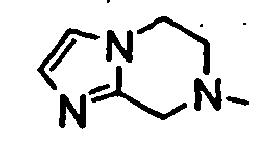
Cl 
M.p.150-152°C 13 
Cl 
Powder (HCl) MS(m/z):483(MH+) 14 
Cl 
Amorphous MS(m/z):484(MH+) 15 
Cl 
Caramel MS(m/z):505(MH+) 16 
Cl 
Amorphous MS(m/z):503(MH+) 17 
Cl 
Amorphous MS(m/z):484(MH+) 18 
Cl 
Amorphous MS(m/z):484(MH+) 19 
Cl 
Amorphous MS(m/z):505(MH+) 20 
Cl 
Foam MS(m/z):503(MH+) 21 
Cl 
Amorphous MS(m/z):514(MH+) -
- (1) To a solution of diisopropylamine (0.78 g) in tetrahydrofuran (40 ml) is added dropwise a 1.6M solution of n-butyl lithium in hexane (4.82 ml) in a dry ice-acetone bath over a period of 3 minutes. The mixture is stirred in the same bath for 30 minutes. To the mixture is added dropwise a solution of 2,6-dichloropyrazine (0.50 g) in tetrahydrofuran (5 ml) at the same temperature over a period of 15 minutes, and the mixture is stirred for one hour. The reaction mixture is poured into dry ice, and the mixture is stirred at room temperature for one hour. The reaction mixture is diluted with a 10 % aqueous hydrochloric acid solution in order to adjust the pH value thereof to about 2, and then extracted with ethyl acetate. The combined organic layers are extracted with a saturated aqueous sodium hydrogen carbonate solution, and the aqueous extract is washed with ethyl acetate, acidified with a 10 % aqueous hydrochloric acid, and extracted with ethyl acetate. The combined organic layer is washed with water and a saturated aqueous sodium chloride solution, dried over anhydrous sodium sulfate, and concentrated under reduced pressure. The residue is triturated with a mixture of chloroform and hexane (1:1) to give 2-carboxy-3,5-dichloropyrazine (234 mg) as a slightly brown crystalline powder, m.p. 139-141°C, MS (m/z): 191 (M-H) .
- (2) A mixture of 2-carboxy-3,5-dichloropyrazine (226 mg) obtained in the above (1), sodium hydrogen carbonate (118 mg), methyl iodide (0.5 ml) and N,N-dimethylformamide (1.8 ml) is stirred at room temperature for 14 hours. The mixture is diluted with a 10 % aqueous citric acid solution, and extracted with ethyl acetate. The combined organic layer is washed with water and a saturated aqueous sodium chloride solution, dried over anhydrous sodium sulfate, and concentrated under reduced pressure to give 2-methoxycarbonyl-3,5-dichloropyrazine (245 mg) as pale brown crystalline powder, m.p. 60-63°C, MS (m/z): 206 (M+).
- (3) A mixture of 2-methoxycarbonyl-3,5-dichloropyrazine (234 mg) obtained in the above (2), 3-chloro-4-methoxybenzylamine (204 mg), triethylamine (0.17 ml) and dry toluene (3 ml) is stirred at room temperature for 7 hours. The reaction mixture is diluted with a 10 % aqueous citric acid solution, and extracted with ethyl acetate. The extract is washed with water and a saturated aqueous sodium chloride solution, dried over sodium sulfate, and concentrated under reduced pressure. The residue is separated and purified by silica gel column chromatography (silica gel: 5 g, solvent; hexane:chloroform = 1:1), and the desired fractions are concentrated under reduced pressure to give 2-methoxycarbonyl-3-(3-chloro-4-methoxybenzylamino)-5-chloropyrazine (102 mg) as pale yellow crystalline powder, m.p. 149-151°C, MS (m/z): 342 (MH+).
- (4) A mixture of 2-methoxycarbonyl-3-(3-chloro-4-methoxybenzylamino)-5-chloropyrazine (150 mg), 2-hydroxymethylpyrrolidine (88.6 mg), and triethylamine (0.12 ml) in tetrahydrofuran (5 ml) is stirred at room temperature for 4 hours, and the mixture is heated at 50°C for 2 hours. To the mixture is added 2-hydroxymethylpyrrolidine (44.3 mg), and the mixture is stirred at 50°C for one hour. After cooling, water is added to the reaction mixture, and the mixture is extracted with ethyl acetate. The extract is washed with water and brine, dried over anhydrous sodium sulfate, and concentrated under reduced pressure. The resulting yellow oil is purified by silica gel column chromatography (solvent; chloroform:hexane = 1:1) to give (S)-2-methoxycarbonyl-3-(3-chloro-4-methoxybenzylamino)-5-(2-hydroxymethyl-1-pyrrolidinyl)-pyrazine (123 mg) as pale yellow powder, MS (m/z): 407 (MH+).
- (5) To a solution of (S)-2-methoxycarbonyl-3-(3-chloro-4-methoxybenzylamino)-5-(2-hydroxymethyl-1-pyrrolidinyl)pyrazine (775 mg) obtained in the above (4) in ethanol (8 ml) is added a 4N aqueous sodium hydroxide solution (1.43 ml), and the mixture is stirred at room temperature for 24 hours. The reaction mixture is acidified with 10 % aqueous hydrochloric acid solution, and extracted with ethyl acetate. The organic layer is washed with water and brine, dried over anhydrous sodium sulfate, concentrated under reduced pressure, and washed with diisopropyl alcohol to give (S)-2-carboxy-3-(3-chloro-4-methoxybenzylamino)-5-(2-hydroxymethyl-1-pyrrolidinyl)pyrazine (537 mg) as yellow crystals, m.p. 169-171°C, MS (m/z): 391 (M-H)-.
- (6) A mixture of (S)-2-carboxy-3-(3-chloro-4-methoxybenzylamino)-5-(2-hydroxymethyl-1-pyrrolidinyl)pyrazine (80 mg) obtained in the above (5), 2-aminomethylpyrimidine (26.7 mg), 1,2-dichloroethane (43 mg), 1-hydroxybenzotriazole (30.3 mg) in N,N-dimethylformamide (3 ml) is stirred at room temperature for 18 hours. Water is poured into the reaction mixture, and extracted with ethyl acetate. The extract is washed with water, a saturated aqueous sodium hydrogen carbonate solution, and brine, dried over anhydrous sodium sulfate, and concentrated under reduced pressure. The residue is purified by silica gel column chromatography (solvent; ethyl acetate) to give (S)-2-[N-(2-pyrimidinylmethyl)carbamoyl]-3-(3-chloro-4-methoxybenzylamino)-5-(2-hydroxymethyl-1-pyrrolidinyl)pyrazine (87.6 mg), MS (m/z): 484 (MH+).
- The corresponding starting materials are treated in a similar manner as in Example 22 to give the compounds as listed in the following Table 3.

Table 3 Ex. No. 
R1 Physicochemical properties 23 

Amorphous
MS(m/z):506(MH+)24 

Amorphous
MS(m/z):505(MH+) - A mixture of (S)-2-(2-hydroxymethyl-1-pyrrolidinyl)-4-(3-chloro-4-methoxybenzylamino)-5-(acryloyl)pyrimidine (31 mg), methanol (1 ml) and conc. sulfuric acid (one drop) is heated under reflux for 2 days. After the reaction is complete, the solvent is evaporated under reduced pressure, and the residue is separated by silica gel thin layer chromatography (solvent; chloroform:methanol = 30:1) to give (S)-2-(2-hydroxymethyl-1-pyrrolidinyl)-4-(3-chloro-4-methoxybenzylamino)-5-[(2-methoxyethyl)carbonyl]pyrimidine (27 mg) as colorless oil, MS (m/z): 435 (MH+).
- A solution of (S)-2-(2-hydroxymethyl-1-pyrrolidinyl)-4-(3-chloro-4-methoxybenzylamino)-5-[N-(2-pyrimidinylmethyl)carbamoyl]-pyrimidine (82.48 g) and benzenesulfonic acid monohydrate (60.06 g) in methanol (1000 ml) is concentrated, and recrystallized from a mixture of methanol and acetone to give (S)-2-(2-hydroxymethyl-1-pyrrolidinyl)-4-(3-chloro-4-methoxybenzylamino)-5-[N-(2-pyrimidinylmethyl)-carbamoyl]pyrimidine dibenzenesulfonate (121.8 g) as colorless crystals, m.p. 158.5-161.5°C.
- A mixture of (S)-4-(3-chloro-4-methoxybenzylamino)-5-carboxy-2-(2-hydroxymethyl-1-pyrrolidinyl)pyrimidine (100 mg) obtained in Example 1-(4), 4-amino-1,3,5-trimethylpyrazole (47.9 mg), 1-(3-dimethylaminopropyl)-3-ethylcarbodiimide hydrochloride (58.7 mg), 1-hydroxybenzotriazole monohydrate (41.3 mg), and N,N-dimethylformamide (3 ml) is stirred at room temperature for 8 hours, and poured into aqueous sodium hydrogen carbonate solution. The mixture is extracted with ethyl acetate, and the organic layer is washed with water and saturated brine, and dried over anhydrous sodium sulfate. The solvent is evaporated under reduced pressure, and the residue is purified by silica gel column chromatography (solvent; chloroform:methanol = 5:1) to give (S)-2-(2-hydroxymethyl-1-pyrrolidinyl)-4-(3-chloro-4-methoxybenzylamino)-5-[N-(1,3,5-trimethyl-4-pyrazolyl)carbamoyl]pyrimidine (115 mg), MS (m/z): 500 (MH+).
-
- (1) A solution of 4-chloro-5-ethoxycarbonyl-2-methylthiopyrimidine (5.0 g) in sulfuryl chloride (20 ml) is heated at 50°C for one hour. The reaction mixture is concentrated, and thereto is poured a saturated aqueous sodium hydrogen carbonate solution. The mixture is extracted with ethyl acetate, and the organic layer is washed with water and brine, dried over sodium sulfate, and concentrated. The residue is purified by silica gel flash column chromatography (solvent; ethyl acetate = hexane = 1:10) to quantitatively give 2,4-dichloro-5-ethoxycarbonylpyrimidine (4.87 g) as yellow oil, MS (m/z): 220 (M+).
- (2) To a solution of 2,4-dichloro-5-ethoxycarbonylpyrimidine (4.2 g) obtained in the above (1) and mercaptobenzene (2.30 g) in toluene (40 ml) is added potassium carbonate (3.94 g) at 0°C, and the mixture is stirred at room temperature for one hour, stirred at 50°C for one hour, and further stirred at 100°C for 10 minutes. To the mixture is poured water, and the mixture is extracted with ethyl acetate. The organic layer is washed with brine, dried over sodium sulfate, and concentrated. The residue is purified by silica gel flash column chromatography (solvent; ethyl acetate:hexane = 1:20 → ethyl acetate: hexane = 1:10) to give 2-chloro-4-phenylthio-5-ethoxycarbonylpyrimidine (4.16 g) as colorless crystals, MS (m/z): 295 (MH+).
- (3) To a solution of 2-chloro-4-phenylthio-5-ethoxycarbonylpyrimidine (4.05 g) obtained in the above (2) in tetrahydrofuran (40 ml) are added L-prolinol (1.66 g) and triethylamine (2.77 g), and the mixture is stirred at room temperature for 20 hours. Water is poured into the reaction mixture, and the mixture is extracted with ethyl acetate. The organic layer is washed with brine, dried over sodium sulfate, and concentrated under reduced pressure. The residue is purified by silica gel flash column chromatography (solvent; ethyl acetate:hexane = 1:2) to give (S)-2-(2-hydroxymethyl-1-pyrrolidinyl)-4-phenylthio-5-ethoxycarbonylpyrimidine (4.16 g) as colorless viscous oil, MS (m/z): 360 (MH+) .
- (4) To a solution of (S)-2-(2-hydroxymethyl-1-pyrrolidinyl)-4-phenylthio-5-ethoxycarbonylpyrimidine (4.10 g) obtained in the above (3) in ethanol (50 ml) is added a 4N aqueous sodium hydroxide solution (8.6 ml), and the mixture is stirred at room temperature for 15 hours. To the reaction solution is added a 10 % aqueous citric acid solution (30 ml) until the solution becomes weak acidic, and the mixture is extracted with ethyl acetate. The organic layer is washed with water and brine, dried over sodium sulfate, and concentrated to give (S)-2-(2-hydroxymethyl-1-pyrrolidinyl)-4-phenylthio-5-carboxypyrimidine (3.65 g) as colorless crystals, MS (m/z): 330 (M-H)-.
- (5) A mixture of (S)-2-(2-hydroxymethyl-1-pyrrolidinyl)-4-phenylthio-5-carboxypyrimidine (2.55 g) obtained in the above (4), 2-aminomethylpyrimidine (1.09 g), 1,2-dichloroethane (1.77 g) and 1-hydroxybenzotriazole (1.25 g) in N,N-dimethylformamide (40 ml) is stirred at room temperature for 16 hours. To the mixture is poured water, and the mixture is extracted with ethyl acetate. The organic layer is washed with water, a saturated aqueous sodium hydrogen carbonate solution and brine, dried over sodium sulfate, and concentrated to give pale yellow crystals (4.05 g), which is further purified by silica gel flash column chromatography (solvent; ethyl acetate) to give 2-(2-hydroxymethyl-1-pyrrolidinyl)-4-phenylthio-5-[N-(2-pyrimidylmethyl)carbamoyl]pyrimidine (2.39 g) as colorless crystals, m.p., 154-156°C, IR (Nujol): 1633 cm-1, MS (m/z): 423 (MH+).
- (6) To a solution of (S)-2-(2-hydroxymethyl-1-pyrrolidinyl)-4-phenylthio-5-[N-(2-pyrimidylmethyl)carbamoyl]pyrimidine (100 mg) obtained in the above (5) in chloroform (3 ml) is added m-chloroperbenzoic acid (70.1 mg) at 0°C, and the mixture is stirred at 0°C for 30 minutes. To the mixture are added 3-chlorobenzylamine (50.3 mg) and triethylamine (48.0 mg) at 0°C, and the mixture is stirred at room temperature for 17 hours. To the mixture is poured water, and the mixture is extracted with chloroform. The organic layer is washed with brine, dried over sodium sulfate, and concentrated under reduced pressure to give yellow oil (169 mg), which is purified by silica gel flash column chromatography (solvent; ethyl acetate), and triturated with a mixture of ethyl acetate and hexane to give (S)-2-(2-hydroxymethyl-1-pyrrolidinyl)-4-(3-chlorobenzylamino)-5-[N-(2-pyrimidylmethyl)-carbamoyl]pyrimidine (95.3 mg) as colorless powder, m.p. 153-156°C, IR (Nujol): 3241, 1637 cm-1, MS (m/z): 454 (MH+).
- (7) To a solution of (S)-2-(2-hydroxymethyl-1-pyrrolidinyl)-4-phenylthio-5-[N-(2-pyrimidylmethyl)carbamoyl]pyrimidine (100 mg) obtained in the above (5) in chloroform (3 ml) is added m-chloroperbenzoic acid (70 %, 70.1 mg) at 0°C, and the mixture is stirred at 0°C for 30 minutes. To the mixture are added 4-methoxybenzylamine (48.8 mg) and triethylamine (48.0 mg) at 0°C, and the mixture is stirred at room temperature for 20 minutes. To the mixture is poured water, and the mixture is extracted with chloroform, and the organic layer is washed with brine, dried over sodium sulfate, and concentrated to give a yellow oil (143 mg), which is purified by silica gel flash column chromatography (solvent; ethyl acetate) to give (S)-2-(2-hydroxymethyl-1-pyrrolidinyl)-4-(4-methoxybenzylamino)-5-[N-(2-pyrimidylmethyl)-carbamoyl]pyrimidine (88.2 mg) as colorless powder, IR (Neat): 3296, 1633 cm-1, MS (m/z): 450 (MH+).
-
- (1) A solution of (S)-2-(2-hydroxymethyl-1-pyrrolidinyl)-4-(3-chloro-4-methoxybenzylamino)-5-formylpyrimidine (10.0 mg) in tetrahydrofuran (1.0 ml) obtained in Example 2 (3) is treated with a 1.6M solution of n-butyl lithium in hexane (83 µl) at -78°C for 3 minutes, and thereto is added an aqueous sodium hydrogen carbonate solution. The reaction mixture is extracted with ethyl acetate to give (S)-2-(2-hydroxymethyl-1-pyrrolidinyl)-4-(3-chloro-4-methoxybenzylamino)-5-(1-hydroxypentyl)pyrimidine (13.7 mg) as oil.
- (2) (S)-2-(2-Hydroxymethyl-1-pyrrolidinyl)-4-(3-chloro-4-methoxybenzylamino)-5-(1-hydroxypentyl)pyrimidine obtained in the above is treated with manganese dioxide (25 mg) at room temperature, and thereto is added gradually additional manganese dioxide (100 mg), and the mixture is stirred overnight. The reaction mixture is heated under reflux for 5 hours, and the insoluble materials are removed by filtration. The filtrate is concentrated under reduced pressure, and separated with preparative thin layer chromatography to give (S)-2-(2-hydroxymethyl-1-pyrrolidinyl)-4-(3-chloro-4-methoxybenzylamino)-5-pentanoylpyrimidine (5.8 mg) as colorless oil, MS (m/z): 433 (MH+).
- The corresponding starting compounds are treated in a similar manner to give the compounds as listed in the following Table 4.

Table 4 (No. 1) Ex. No. 
R0 R1 Physicochemical properties 30 
Cl 
M.p.210-214°C 31 
Cl 
Amorphous MS(m/z):517(MH+) 32 
Cl 
Amorphous MS(m/z):503(MH+) 33 
Cl 
Amorphous MS(m/z):538(MH+) 34 
Cl 
HCl salt M.p.223-226°C 35 
Cl 
Amorphous MS(m/z):513(MH+) 36 
Cl 
Amorphous MS(m/z):504(MH+) 37 
Cl 
MS(m/z):524(MH+) 38 
Cl 
Amorphous MS(m/z):524(MH+) 39 
Cl 
Foam MS(m/z):490(MH+) 40 
Cl 
Amorphous MS(m/z):539(MH+) 41 
Cl 
Amorphous MS(m/z):528(MH+) 42 
Cl 
Amorphous MS(m/z):500(MH+) 43 
Cl 
Amorphous MS(m/z):527(MH+) 44 
Cl 
Amorphous MS(m/z):468(MH+) 45 
Cl 
M.p.220-222°C 46 
NO2 
Amorphous MS(m/z):523(MH+) 47 
NO2 
M.p.188-190°C 48 
Cl 
Amorphous MS(m/z):518(MH+) 49 
Cl 
Amorphous MS(m/z):532(MH+) 50 
Cl 
M.p.179-183°C 51 
Cl 
Amorphous MS(m/z):518(MH+) 52 
Cl 
Powder (HCl) MS(m/z):545(MH+) 53 
Cl 
Amorphous MS(m/z):520(MH+) 54 
Cl 
Powder (HCl) MS(m/z):537(MH+) 55 
Cl 
Amorphous MS(m/z):543(MH+) 56 
Cl 
M.p.181-183°C 57 
Cl 
Powder (HCl) MS(m/z):496(MH+) 58 
Cl 
M.p.199-200°C 59 
NO2 
M.p.209.5- 211.5°C 60 
Cl 
M.p.228-230.5°C 61 
Cl 
Amorphous MS(m/z):524(MH+) 62 
Cl 
Amorphous MS(m/z):522(MH+) 63 
Cl 
Amorphous MS(m/z):563(MH+) 64 
Cl 
Amorphous MS(m/z) :489(MH+) 65 
Cl 
Amorphous MS(m/z):520(MH+) 66 
Cl 
M.p. 176-180°C 67 
CN 
Powder (HCl) MS(m/z):543(MH+) 68 
Cl 
M.p. 143-145°C 69 
Cl 
Powder (HCl) MS(m/z):504(MH+) 70 
Cl 
M.p. 130°C 71 
CN 
Powder (HCl) MS(m/z):474(MH+) 72 
Cl 
Amorphous MS(m/z):519(MH+) 73 
CN 
Powder (HCl) MS(m/z):481(MH+) 74 
Cl 
M.p.116-119°C 75 
Cl 
M.p.159-161°C 76 
Cl 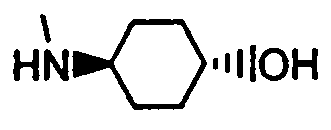
Powder (HCl) MS(m/z):506(MH+) 77 
Cl 
Amorphous MS(m/z):563(MH+) 78 
Cl 
Powder (HCl) MS(m/z):497(MH+) 79 
Cl 
M.p.210-214°C 80 
Cl 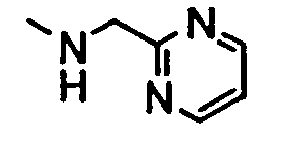
M.p.149-151.5°C 81 
NO2 
Amorphous MS(m/z):495(MH+) 82 
Cl 
M.p.215°C 83 
Cl 
M.p.151-152°C - The corresponding starting compounds are treated in a similar manner to give the compounds as listed in the following Table 5.

Table 5 Ex. No. R8 R1 Physicochemical properties 84 

Foam MS(m/z):470(MH+) 85 

Powder MS(m/z):488(MH+) 86 

Powder MS(m/z):468(MH+) - A mixture of (S)-2-carboxy-3-(3-chloro-4-methoxybenzylamino)-5-(2-hydroxymethyl-1-pyrrolidinyl)pyrazine (80 mg) obtained in Example 22 (5), 2-aminomethyl-4-methylmorpholine (31.9 mg), 1-ethyl-3-(3-dimethylaminopropyl)carbodiimide hydrochloride (43 mg), 1-hydroxybenzotriazole (30.3 mg) in N,N-dimethylformamide (3 ml) is stirred at room temperature for 18 hours. To the reaction mixture is poured water, and the mixture is extracted with ethyl acetate. The extract is washed with water, a saturated aqueous sodium hydrogen carbonate solution and brine, dried over anhydrous sodium sulfate, and concentrated under reduced pressure. The residue is purified by silica gel flash column chromatography (solvent; ethyl acetate) to give (S)-2-[N-(4-methyl-2-morpholinyl)methylcarbamoyl]-3-(3-chloro-4-methoxybenzylamino)-5-(2-hydroxymethyl-1-pyrrolidinyl)pyrazine (80.5 mg), MS (m/z): 505 (MH+), IR (Nujol): 3295, 1635 cm-1.
- The corresponding starting compounds are treated in a similar manner to give the compounds as listed in the following Table 6.

Table 6 Ex. No. 
R1 Physicochemical properties 88 

M.p.177-179°C MS(m/z):490(MH+) 89 

M.p.167-169°C MS(m/z):512(MH+) 90 

M.p.140.5-141.5°C 91 

Amorphous MS(m/z):527(MH+) - The corresponding starting compounds are treated in a similar manner to give the compounds as listed in the following Table 7.

Table 7 (No. 1) Ex. No. 
R1 Physicochemical properties 92 

Powder MS(m/z):475(MH+) 93 

Powder MS(m/z):509(MH+) 94 

Amorphous MS(m/z):512(MH+) 95 

M.p.150-152°C 96 

M.p.162-163°C 97 

Amorphous MS(m/z):486(MH+) 98 

Amorphous MS(m/z):484(MH+) 99 

Amorphous MS(m/z):483(MH+) 100 

Amorphous MS(m/z):497(MH+) 101 

M.p.148-150°C 102 

Amorphous MS(m/z):512(MH+) 103 

M.p.210-213°C 104 

M.p.195-198°C 105 

Amorphous MS(m/z):498(MH+) 106 

M.p.232-235°C 107 

M.p.207-208°C 108 

Amorphous MS(m/z):547(MH+) 109 

Amorphous MS(m/z):501(MH+) 110 

M.p.172-173°C 111 

M.p.145-147°C 112 

Amorphous MS(m/z):497(MH+) 113 

M.p.148-150°C 114 

M.p.217-219°C 115 

Amorphous MS(m/z):484(MH+) 116 

Amorphous MS(m/z):514(MH+) 117 

Amorphous MS(m/z):568(MH+) 118 

M.p.217-220°C 119 

M.p.212-214°C 120 

Amorphous MS(m/z):514(MH+) 121 

Amorphous MS(m/z):488(MH+) 122 

M.p.142-144°C 123 

Amorphous MS(m/z):472(MH+) 124 

Amorphous MS(m/z):497(MH+) 125 

M.p.143-146°C 126 

Amorphous MS(m/z):514(MH+) 127 

Amorphous MS(m/z):498(MH+) 128 

Amorphous MS(m/z):513(MH+) 129 

M.p. 101-103°C 130 

M.p.215-217°C 131 

M.p.180-183°C 132 

Oil MS(m/z):482(MH+) 133 

M.p.176-179°C 134 

M.p.224-227°C 135 

Amorphous MS(m/z):500(MH+) 136 

M.p.177-180°C 137 

Powder MS(m/z):486(MH+) 138 

Powder MS(m/z):486(MH+) 139 

Powder MS(m/z):500(MH+) 140 

Amorphous MS(m/z):499(MH+) 141 

Amorphous MS(m/z):448(MH+) 142 

Amorphous MS(m/z):503(MH+) 143 

M.p.112-114°C 144 

Amorphous MS(m/z):512(MH+) 145 
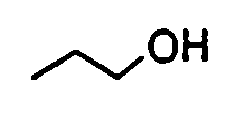
M.p.123-125°C - The corresponding starting compounds are treated in a similar manner to give the compound of the following formula as foam, MS (m/z): 464 (MH+).

- The corresponding starting compounds are treated in a similar manner to give the compound of the following formula, m.p. 140-144°C.

- To a solution of (S)-2-(2-hydroxymethyl-1-pyrrolidinyl)-4-(3-chloro-4-methoxybenzylamino)-5-[N-(2-pyrimidylmethyl)carbamoyl]-pyrimidine (307 mg) obtained in Example 1-(5) in methylene chloride (6 ml) is added dropwise boron bromide (300 µl) under ice-cooling. The reaction mixture is stirred at 0°C for 4 hours, and thereto is added methanol, and then a saturated aqueous sodium hydrogen carbonate solution under ice-cooling. The mixture is extracted with a mixture of ethyl acetate and tetrahydrofuran, and the organic layer is washed successively with water and brine. The mixture is dried over sodium sulfate, and concentrated under reduced pressure to give a slightly brown amorphous (227 mg). The resultant is suspended in chloroform, and the resulting insoluble materials are removed by filtration. The filtrate is subjected to silica gel column chromatography, and further purified by NH-silica gel column chromatography to give (S)-2-(2-hydroxymethyl-1-pyrrolidinyl)-4-(3-chloro-4-hydroxybenzylamino)-5-[N-(2-pyrimidylmethyl)carbamoyl]pyrimidine (129 mg) as a colorless foam, MS (m/z): 470 (MH+), IR (Nujol): 3279, 1632, 1593, 1569, 1518, 1463 cm-1.
-
- (1) A suspension of 2-methylthio-4-(3-chloro-4-methoxybenzylamino)-5-ethoxycarbonylpyrimidine (2:00 g) obtained in Example 1 (1) in dimethylsulfoxide (10 ml) is treated with 10 % aqueous sodium hydroxide solution (10 ml) at room temperature. To the reaction mixture is added dimethylsulfoxide (5 ml), and the mixture is stirred at room temperature overnight. To the resulting colorless solution is added citric acid until the solution becomes acidic. To the solution is added an excess amount of water (about 50 ml), and the resulting precipitates are collected by filtration. The precipitates are washed with isopropyl alcohol and isopropyl ether successively, and dried under reduced pressure to give 2-methylthio-4-(3-chloro-4-methoxybenzylamino)-5-carboxypyrimidine (1.864 g) as pale yellow impalpable powder, m.p. 238-240°C (dec.).
- (2) To a suspension of 4-(3-chloro-4-methoxybenzylamino)-5-carboxy-2-methylthiopyrimidine (200 mg) in methylene chloride (5 ml) are added oxalyl chloride (150 mg) and N,N-dimethylformamide, and the mixture is stirred at room temperature for 30 minutes, and concentrated. To a suspension of the resulting acid chloride compound and 5-aminopyrimidine (84.0 mg) in methylene chloride (5 ml) is added dimethylaminopyridine (144 mg) at room temperature, and the mixture is stirred at room temperature. To the mixture is poured water, and the mixture is extracted with ethyl acetate. The extract is washed with a saturated aqueous sodium hydrogen carbonate solution, water and brine, dried over sodium sulfate, and concentrated. The residue is triturated with a mixture of ethyl acetate and n-hexane to give 4-(3-chloro-4-methoxybenzylamino)-5-(5-pyrimidinylaminocarbonyl)-2-methylthiopyrimidine (216 mg) as pale yellow needles, m.p. 238-240°C, IR (Nujol): 3251, 1666 cm-1, MS (m/z): 416 (M+).
- (3) To a suspension of the compound (150 mg) obtained in the above (2) in chloroform (10 ml) is added m-chloroperbenzoic acid (107 mg) at 0°C, and the mixture is stirred at 0°C for one hour, and stirred at room temperature for one hour. To the mixture is added m-chloroperbenzoic acid (53 mg) at 0°C, and the mixture is stirred at 0°C for 30 minutes. To the mixture are added L-prolinol (43.7 mg) and triethylamine (72.9 mg) at 0°C, and the mixture is stirred at room temperature for 20 hours. To the mixture is poured water, and the mixture is extracted with chloroform. The organic layer is washed with brine, dried over sodium sulfate, and concentrated under reduced pressure to give yellow viscous oil (201 mg), which is purified by NH-silica gel flash column chromatography (solvent; ethyl acetate), washed with a mixture of ethyl acetate and hexane to give (S)-4-(3-chloro-4-methoxybenzylamino)-5-(5-pyrimidinylaminocarbonyl)-2-(hydroxymethyl-1-pyrrolidinyl)pyrimidine (81 mg) as colorless needles, m.p. 192-195°C, IR (Nujol): 3279, 1669 cm-1, MS (m/z): 470 (MH+).
- The corresponding starting compounds are treated in a similar manner as in Example 149 to give the compounds as listed in the following Table 8.

Table 8 Ex. No. 
R1 Physicochemical properties 150 

Powder MS(m/z):469(MH+) 151 

Powder MS(m/z):470(MH+) 152 

M.p.182-185°C 153 

M.p. 176-178°C 154 

Powder MS(m/z):487(MH+) 155 

M.p.161-163°C 156 

Powder MS(m/z):513(MH+) 157 

Powder MS(m/z):498(MH+) -
- (1) A suspension of 4-(3-chloro-4-methoxybenzylamino)-5-carboxy-2-methylthiopyrimidine (154.0 mg) obtained in Example 149 (1) in methylene chloride (5 ml) is treated with oxalyl chloride (119 µl) at room temperature, and thereto is added N,N-dimethylformamide. The mixture is stirred for one hour, and the solvent is evaporated under reduced pressure. The residue is treated with ether, and kept in a refrigerator overnight. The volatile materials are removed under reduced pressure, and the residue is treated with an excess amount of diazomethane at 0°C, and kept in a refrigerator overnight. The reaction is quenched with methanol, and the mixture is purified by silica gel chromatography (solvent; hexane:ethyl acetate = 2:1) to give 4-(3-chloro-4-methoxybenzylamino)-5-(diazomethylcarbonyl)-2-methylthiopyrimidine (21.5 mg) as pale yellow solid, IR (Nujol): 3277, 2115, 1607, 1567, 1461, 1377, 1357, 1141 cm-1, MS (m/z): 364 (MH+), m.p. 162-165°C (dec.).
- (2) A suspension of the compound obtained in the above (1) (16.5 mg) in methanol (3 ml) is treated with toluenesulfonic acid monohydrate (16.5 mg) at room temperature. The solvent is evaporated under reduced pressure, and the residue is purified by preparative TLC (solvent; hexane:ethyl acetate = 2:1) to give 4-(3-chloro-4-methoxybenzylamino)-5-(methoxymethylcarbonyl)-2-methylthiopyrimidine (11.0 mg) as colorless oil.
- (3) A solution of the compound (11.0 mg) obtained in the above (2) in chloroform (1 ml) is treated with m-chloroperbenzoic acid (7.4 mg) at 0°C. The mixture is treated with triethylamine (8.3 µl) and L-prolinol (36 mg) at room temperature, and the reaction mixture is stirred overnight. The reaction mixture is diluted with ethyl acetate, washed with a saturated aqueous sodium hydrogen carbonate solution and a saturated aqueous sodium chloride solution, and dried over sodium sulfate. The residue is purified by preparative TLC (solvent; chloroform:ethyl acetate = 1:1) to give (S)-4-(3-chloro-4-methoxybenzylamino)-5-(methoxymethylcarbonyl)-2-(2-hydroxymethyl-1-pyrrolidinyl)-pyrimidine (8.5 mg) as colorless oil, MS (m/z): 421 (MH+).
- The compound (I) of the present invention and a pharmaceutically acceptable salt thereof exhibit excellent PDE V inhibitory activities, and they are useful pharmaceutical compounds for the prophylaxis or treatment of penile erectile dysfunction.
or a pharmaceutically acceptable salt thereof.
Claims (23)
- A compound of the formula (I):
 Ring A is a 5- to 10-membered mono- or bicyclic nitrogen-containing heterocycle optionally substituted with C1-6-alkyl optionally substituted with hydroxy or cyano, formyl, oxo, amino, di(C1-6-alkyl)amino, hydroxy, C1-6-alkoxy, C1-6-alkoxycarbonyl, optionally (C1-6-alkoxy)-substituted C1-6-alkanoyl, or pyrimidinyl substituted with (i) benzylamino substituted with a halogen atom and C1-6-alkoxy and (ii) hydroxy-substituted cycloalkylcarbamoyl,R1 is selected from
C1-6-alkyl optionally substituted with C1-6-alkoxy, hydroxy, morpholinyl, C1-6-alkylsulfonyl, di(C1-6-alkyl)phosphino, di(C1-6-alkyl)amino, pyrimidinyl-(C1-6-alkyl)amino, pyridyl, pyridylamino, (C1-6-alkyl)piperazinyl or pyrimidinyloxy;
-NH-Q-R3, wherein Q is C1-6-alkylene or a single bond, and R3 is a 5- or 6-membered monocyclic or 8- to 10-membered bicyclic nitrogen-containing heterocycle optionally substituted with C1-6-alkyl optionally substituted with hydroxy or cyano, formyl, oxo, amino, di(C1-6-alkyl)amino, hydroxy, C1-6-alkoxy, C1-6-alkoxycarbonyl, optionally (C1-6-alkoxy)-substituted C1-6-alkanoyl, or pyrimidinyl substituted with (i) benzylamino substituted with a halogen atom and C1-6-alkoxy and (ii) hydroxy-substituted cycloalkylcarbamoyl; and
-NH-R4, wherein R4 is C3-8-cycloalkyl optionally substituted with C1-6-alkoxy, hydroxy, morpholinyl, C1-6-alkylsulfonyl, di(C1-6-alkyl)phosphino, di(C1-6-alkyl)amino, pyrimidinyl-(C1-6-alkyl)amino, pyridyl, pyridylamino, (C1-6-alkyl)piperazinyl or pyrimidinyloxy;R2 is 5- to 10-membered mono- or bicyclic aryl optionally substituted with C1-6-alkoxy, halogen, cyano, nitro, hydroxy or C1-6-alkyl; andone of Y and Z is =CH- and the other is =N-;
or a pharmaceutically acceptable salt thereof. - The compound of claim 1, whereinRing A is a nitrogen-containing 5- or 6-membered heteromonocycle or a 8- to 10-membered heterobicycle, each optionally substituted with C1-6-alkyl optionally substituted with hydroxy, formyl, oxo, amino, hydroxy, C1-6-alkoxycarbonyl, or pyrimidinyl substituted with (i) benzylamino substituted with a halogen atom and C1-6-alkoxy and (ii) hydroxy-substituted cycloalkylcarbamoyl,R1 is selected from
C1-6-alkyl optionally substituted with C1-6-alkoxy, hydroxy, morpholinyl, C1-6-alkylsulfonyl, di(C1-6-alkyl)phosphino, di(C1-6-alkyl)amino, pyrimidinyl-(C1-6-alkyl)amino, pyridyl, pyridylamino, or (C1-6-alkyl)piperazinyl;
-NH-Q-R3, wherein Q is as defined in claim 1, and R3 is a nitrogen-containing 5- or 6-membered heteromonocycle or a 8- to 10-membered heterobicycle, each optionally substituted with C1-6-alkyl optionally substituted with hydroxy or cyano, oxo, amino, di(C1-6-alkyl)amino, or C1-6-alkanoyl; and
-NH-R4, wherein R4 is C3-8-cycloalkyl optionally substituted with C1-6-alkoxy, hydroxy, or pyrimidinyloxy; andR2 is phenyl substituted with C1-6-alkoxy, halogen, cyano, nitro, hydroxy or C1-6-alkyl. - The compound of claim 2, whereinRing A is an optionally substituted heterocycle selected from
 R3 is an optionally substituted heterocycle selected from

- The compound of claim 2, wherein
the optional substituent of Ring A is selected from C1-6-alkyl optionally substituted with hydroxy, formyl, and oxo;R1 is selected from
C1-6-alkyl optionally substituted with C1-6-alkoxy or morpholinyl;
-NH-Q-R3, wherein R3 is a nitrogen-containing 5- or 6-membered heteromonocycle optionally substituted with C1-6-alkyl; and
-NH-R4, wherein R4 is cycloalkyl optionally substituted with C1-6-alkoxy or hydroxy; andR2 is phenyl substituted with C1-6-alkoxy, halogen or cyano. - The compound of claim 4, whereinRing A is an optionally substituted heterocycle selected from
 R3 is an optionally substituted heterocycle selected from
- The compound of claim 1, whereinRing A is selected from
 R1 is C1-6-alkyl, (C1-6-alkoxy)C1-6-alkyl, morpholinyl-C1-6-alkyl, a group -NH-Q-R3, wherein R3 is selected from
 R2 is
R2 is
- The compound of claim 4, whereinR1 is selected from
(C1-6-alkoxy)C1-6-alkyl,
-NH-Q-R3, wherein R3 is a nitrogen-containing 5- or 6-membered heteromonocycle optionally substituted with C1-6-alkyl, and
-NH-R4, wherein R4 is hydroxy-substituted cycloalkyl; andR2 is phenyl substituted with C1-6-alkoxy or halogen. - The compound of claim 7, whereinRing A is an optionally substituted heterocycle selected from:
 R3 is an optionally substituted heterocycle selected from:
- The compound of claim 6, whereinRing A is selected from:

 R1 is (C1-6-alkoxy)C1-6-alkyl, -NH-Q-R3, or -NH-R4, whereinR3 is selected from
 R4 is
R4 is R2 is
R2 is
- The compound of claim 4, wherein
the optional substituent of Ring A is hydroxy-substituted C1-6-alkyl ;R1 is -NH-Q-R3; andR2 is phenyl substituted with C1-6-alkoxy or halogen. - The compound of claim 10, whereinRing A is an optionally substituted heterocycle selected from
 R3 is an optionally substituted heterocycle selected from
- The compound of claim 9, whereinRing A is selected from:
 R1 is -NH-Q-R3 wherein R3 is selected from
 R2 is
R2 is
- The compound according to any one of claims 1-12, wherein Y is =N-, and Z is =CH-.
- A compound of claim 1, which is selected from(S)-2-(2-Hydroxymethyl-1-pyrrolidinyl)-4-(3-chloro-4-methoxybenzylamino)-5-[N-(2-pyrimidinylmethyl)carbamoyl] pyrimidine;2-(6,7-dihydro-5H-pyrrolo[3,4-b]pyridin-6-yl)-4-(3-cyano-4methoxybenzylamino)-5-[N-(2-pyrimidinylmethyl) carbamoyl]pyrimidine;2-(5,6,7,8-tetrahydroimidazo[1,2-a]pyrazin-7-yl)-4-(3-chloro-4methoxybenzylamino)-5-[N-(trans-4-methoxycyclohexyl)carbamoyl]pyrimidine;2-(6,7-dihydro-5H-pyrrolo[3,4-b]pyridin-6-yl)-4-(3-cyano-4methoxybenzylamino)-5-[N-(trans-4-hydroxycyclohexyl)carbamoyl]pyrimidine ;2-(6,7-dihydro-5H-pyrrolo[3,4-b]pyridin-6-yl)-4-(3-cyano-4methoxybenzylamino)-5-[N-(2-morpholinoethyl) carbamoyl]pyrimidine;(S)-2-(2-hydroxymethyl-1-pyrrolidinyl)-4-(3-chloro-4-methoxybenzylamino)-5-[N-(2-morpholinoethyl)carbamoyl] pyrimidine;2-[(2S)-2-hydroxymethyl-1-pyrrolidinyl)-4-(3-chloro-4-methoxybenzylamino)-5-[N-[[(2R)-4-methyl-2-morpholinyl] methyl]carbamoyl]pyrimidine;2-[(2S)-2-hydroxymethyl-1-pyrrolidinyl)-4-(3-chloro-4-methoxybenzylamino)-5-[N-[[(2S)-4-methyl-2-morpholinyl] methyl]carbamoyl]pyrimidine;(S)-2-(2-hydroxymethyl-1-pyrrolidinyl)-4-(3-chloro-4-methoxybenzylamino)-5-[N-(4-pyrimidinylmethyl) carbamoyl]pyrimidine;2-(4-methyl-3-oxo-1-piperazinyl)-4-(3-chloro-4-methoxybenzylamino)-5-[N- (trans-4-hydroxycyclohexyl) carbamoyl]pyrimidine;2-(4-formyl-1-piperazinyl)-4-(3-chloro-4-methoxybenzylamino)-5-[N-(trans-4-hydroxycyclohexyl) carbamoyl]pyrimidine;2-(5,6,7,8-tetrahydroimidazo[1,2-a]pyrazin-7-yl)-4-(3-chloro-4-methoxybenzylamino)-5-[N-(trans-4-hydroxycyclohexyl)carbamoyl]pyrimidine;2-[cis-2,5-bis(hydroxymethyl)-1-pyrrolidinyl]-4-(3-chloro-4-methoxybenzylamino)-5-[N-(2-pyrimidinylmethyl) carbamoyl]pyrimidine;2-(5,6,7,8-tetrahydroimidazo[1,2-a]pyrazin-7-yl)-4-(3-chloro-4-methoxybenzylamino)-5-[N-(2-pyrimidinylmethyl) carbamoyl]pyrimidine;2-(5,6,7,8-tetrahydroimidazo[1,2-a]pyrazin-7-yl)-4-(3-chloro-4-methoxybenzylamino)-5-[N-(2-morpholinoethyl) carbamoyl]pyrimidine;2-(5,6,7,8-tetrahydro-1,7-naphthyridin-7-yl)-4-(3-chloro-4-methoxybenzylamino)-5-[N-(2-morpholinoethyl) carbamoyl] pyrimidine;(S)-2-(2-hydroxymethyl-1-pyrrolidinyl)-4-(3-chloro-4-methoxybenzylamino)-5-acethylpyrimidine;(S)-2-(2-hydroxymethyl-1-pyrrolidinyl)-4-(3-chloro-4-methoxybenzylamino)-5-[N-(4-pyridazinylmethyl)carbamoyl] pyrimidine;(S)-2-(2-hydroxymethyl-1-pyrrolidinyl)-4-(3-chloro-4-methoxybenzylamino)-5-[N-(5-pyrimidinylmethyl)carbamoyl] pyrimidine;(S)-2-(2-hydroxymethyl-1-pyrrolidinyl)-4-(3-chloro-4-methoxybenzylamino)-5-[N-(2-pyridylmethyl)carbamoyl] pyrimidine;(S)-2-[N-(2-pyrimidinylmethyl)carbamoyl]-3-(3-chloro-4-methoxybenzylamino)-5-[2-hydroxymethyl-1-pyrrolidinyl] pyrazine;(S)-2-(2-hydroxymethyl-1-pyrrolidinyl)-4-(3-chloro-4-methoxybenzylamino)-5-[(2-morpholinoethyl)carbonyl] pyrimidine;2-(5,6,7,8-tetrahydroimidazo[1,2-a]pyrazin-7-yl)-4-(3-chloro-4-methoxybenzylamino)-5-[N-[(4-methyl-2-morpholinyl)methyl]carbamoyl]pyrimidine;(S)-2-[N-(2-morpholinoethyl)carbamoyl]-3-(3-chloro-4-methoxybenzylamino)-5-(2-hydroxymethyl-1-pyrrolidinyl) pyrazine;2-[N-(2-pyrimidinylmethyl)carbamoyl]-3-(3-chloro-4-methoxybenzylamino)-5-(5,6,7,8-tetrahydroimidazo[1,2-a]pyrazin-7-yl)pyrazine;(S)-2-(2-hydroxymethyl- 1-pyrrolidinyl)-4-(3-chloro-4-methoxybenzylamino)-5-[(2-methoxyethyl)carbonyl] pyrimidine;(S)-2-(2-hydroxymethyl-1-pyrrolidinyl)-4-(3-chloro-4-methoxybenzylamino)-5-[N-(1,3,5-trimethyl-4-pyrazolyl) carbamoyl]pyrimidine,or a pharmaceutically acceptable salt thereof.
- A compound of claim 1, which is selected from(S)-2-(2-Hydroxymethyl-1-pyrrolidinyl)-4-(3-chloro-4-methoxybenzylamino)-5-[N-(2-pyrimidinylmethyl)carbamoyl] pyrimidine;(S)-2-(2-hydroxymethyl-1-pyrrolidinyl)-4-(3-chloro-4-methoxybenzylamino)-5-[N-(4-pyrimidinylmethyl)carbamoyl] pyrimidine;2-(4-methyl-3-oxo-1-piperazinyl)-4-(3-chloro-4-methoxybenzylamino)-5-[N-(trans-4-hydroxycyclohexyl) carbamoyl]pyrimidine;2-(4-formyl-1-piperazinyl)-4-(3-chloro=4-methoxybenzylamino)-5-[N-(trans-4-hydroxycyclohexyl) carbamoyl]pyrimidine;2-(5,6,7,8-tetrahydroimidazo[ 1,2-a]pyrazin-7-yl)-4-(3-chloro-4-methoxybenzylamino)-5-[N-(2-pyrimidinylmethyl) carbamoyl]pyrimidine;2-(5,6,7,8-tetrahydroimidazo[1,2-a]pyrazin-7-yl)-4-(3-chloro-4-methoxybenzylamino)-5-[N-(2-morpholinoethyl) carbamoyl] pyrimidine;2-(5,6,7,8-tetrahydro-1,7-naphthyridin-7-yl)-4-(3-chloro-4-methoxybenzylamino)-5-[N-(2-morpholinoethyl) carbamoyl] pyrimidine;(S)-2-(2-hydroxymethyl-1-pyrrolidinyl)-4-(3-chloro-4-methoxybenzylamino)-5-[N-(5-pyrimidinylmethyl) carbamoyl]pyrimidine;(S)-2-[N-(2-pyrimidinylmethyl)carbamoyl]-3-(3-chloro-4-methoxybenzylamino)-5-[2-hydroxymethyl-1-pyrrolidinyl] pyrazine;(S)-2-(2-hydroxymethyl-1-pyrrolidinyl)-4-(3-chloro-4-methoxybenzylamino)-5-[(2-methoxyethyl)carbonyl] pyrimidine;(S)-2-(2-hydroxymethyl-1-pyrrolidinyl)-4-(3-chloro-4-methoxybenzylamino)-5-[N-(1,3, 5-trimethyl-4-pyrazolyl) carbamoyl]pyrimidine,or a pharmaceutically acceptable salt thereof.
- A compound of claim 1, which is selected from(S)-2-(2-Hydroxymethyl-1-pyrrolidinyl)-4-(3-chloro-4-methoxybenzylamino)-5-[N-(2-pyrimidinylmethyl) carbamoyl]pyrimidine;(S)-2-(2-hydroxymethyl-1-pyrrolidinyl)-4-(3-chloro-4-methoxybenzylamino)-5-[N-(2-morpholinoethyl)carbamoyl] pyrimidine;2-(5,6,7,8-tetrahydroimidazo[1,2-a]pyrazin-7-yl)-4-(3-chloro-4-methoxybenzylamino)-5-[N-(2-pyrimidinylmethyl) carbamoyl]pyrimidine;2-(5,6,7,8-tetrahydro-1,7-naphthyridin-7-yl)-4-(3-chloro-4-methoxybenzylamino)-5-[N-(2-morpholinoethyl) carbamoyl]pyrimidine;(S)-2-(2-hydroxymethyl-1-pyrrolidinyl)-4-(3-chloro-4-methoxybenzylamino)-5-[N-(5-pyrimidinylmethyl)carbamoyl] pyrimidine;(S)-2-[N-(2-pyrimidinylmethyl)carbamoyl]-3-(3-chloro-4-methoxybenzylamino)-5-[2-hydroxymethyl-1-pyrrolidinyl] pyrazine;(S)-2-[N-(2-morpholinoethyl)carbamoyl]-3-(3-chloro-4-methoxybenzylamino)-5-[2-hydroxymethyl-1-pyrrolidinyl] pyrazine;(S)-2-(2-hydroxymethyl-1-pyrrolidinyl)-4-(3-chloro-4-methoxybenzylamino)-5-[N-(1,3,5-trimethyl-4-pyrazolyl) carbamoyl]pyrimidine,or a pharmaceutically acceptable salt thereof.
- A compound of claim 1, which is selected from(S)-2-(2-Hydroxymethyl-1-pyrrolidinyl)-4-(3-chloro-4-methoxybenzylamino)-5-[N-(2-pyrimidinylmethyl) carbamoyl]pyrimidine,or a pharmaceutically acceptable salt thereof.
- A compound of claim 1, which is selected from2-(5,6,7,8-Tetrahydro-1,7-naphthyridin-7-yl)-4-(3chloro-4-methoxybenzylamino)-5-[N-(2-morpholinoethyl)carbamoyl] pyrimidine,or a pharmaceutically acceptable salt thereof.
- A compound of claim 1, which is selected from(S)-2-(2-Hydroxymethyl-1-pyrrolidinyl)-4-(3-chloro-4-methoxybenzylamino)-5-[N-(1,3,5-trimethyl-4-pyrazolyl) carbamoyl]pyrimidine,or a pharmaceutically acceptable salt thereof.
- Pharmaceutical composition comprising as an active ingredient the compound of any of claims 1-19, or a pharmaceutically acceptable salt thereof.
- Use of a compound of one of claims 1-19 or a pharmaceutically acceptable salt thereof for the manufacture of a medicament for the treatment of penile erectile dysfunction.
- Use of a compound of one of claims 1-19 or a pharmaceutically acceptable salt thereof for the manufacture of a medicament for the treatment of pulmonary hypertension.
- Use of a compound of one of claims 1-19 or a pharmaceutically acceptable salt thereof for the manufacture of a medicament for the treatment of diabetic gastroparesis.
Priority Applications (1)
| Application Number | Priority Date | Filing Date | Title |
|---|---|---|---|
| BE2013C051C BE2013C051I2 (en) | 1999-09-16 | 2013-07-22 |
Applications Claiming Priority (5)
| Application Number | Priority Date | Filing Date | Title |
|---|---|---|---|
| JP26185299 | 1999-09-16 | ||
| JP26185299 | 1999-09-16 | ||
| JP2000130371 | 2000-04-28 | ||
| JP2000130371 | 2000-04-28 | ||
| PCT/JP2000/006258 WO2001019802A1 (en) | 1999-09-16 | 2000-09-13 | Aromatic nitrogenous six-membered ring compounds |
Publications (3)
| Publication Number | Publication Date |
|---|---|
| EP1219609A1 EP1219609A1 (en) | 2002-07-03 |
| EP1219609A4 EP1219609A4 (en) | 2002-11-06 |
| EP1219609B1 true EP1219609B1 (en) | 2007-04-04 |
Family
ID=26545273
Family Applications (1)
| Application Number | Title | Priority Date | Filing Date |
|---|---|---|---|
| EP00960979A Expired - Lifetime EP1219609B1 (en) | 1999-09-16 | 2000-09-13 | Aromatic nitrogenous six-membered ring compounds |
Country Status (26)
| Country | Link |
|---|---|
| US (2) | US6656935B2 (en) |
| EP (1) | EP1219609B1 (en) |
| KR (1) | KR100532546B1 (en) |
| CN (2) | CN102584799A (en) |
| AR (1) | AR025668A1 (en) |
| AT (1) | ATE358670T1 (en) |
| AU (1) | AU767558B2 (en) |
| BE (1) | BE2013C051I2 (en) |
| BG (1) | BG65453B1 (en) |
| BR (1) | BRPI0014526C1 (en) |
| CA (1) | CA2383466C (en) |
| CY (2) | CY1106534T1 (en) |
| DE (1) | DE60034239T2 (en) |
| DK (1) | DK1219609T3 (en) |
| ES (1) | ES2283315T3 (en) |
| FR (1) | FR13C0050I2 (en) |
| HU (1) | HU225917B1 (en) |
| IL (2) | IL148291A0 (en) |
| LU (1) | LU92249I2 (en) |
| MY (1) | MY123528A (en) |
| NO (2) | NO322038B1 (en) |
| PT (1) | PT1219609E (en) |
| RU (1) | RU2233273C3 (en) |
| TR (1) | TR200200701T2 (en) |
| TW (1) | TWI258471B (en) |
| WO (1) | WO2001019802A1 (en) |
Families Citing this family (99)
| Publication number | Priority date | Publication date | Assignee | Title |
|---|---|---|---|---|
| US6403597B1 (en) * | 1997-10-28 | 2002-06-11 | Vivus, Inc. | Administration of phosphodiesterase inhibitors for the treatment of premature ejaculation |
| KR100711042B1 (en) * | 2000-04-28 | 2007-04-24 | 다나베 세이야꾸 가부시키가이샤 | Cyclic compound |
| US20080027037A1 (en) * | 2000-04-28 | 2008-01-31 | Tanabe Seiyaku Co., Ltd. | Cyclic compounds |
| US7273868B2 (en) * | 2000-04-28 | 2007-09-25 | Tanabe Seiyaku Co., Ltd. | Pyrazine derivatives |
| ATE552013T1 (en) * | 2000-09-06 | 2012-04-15 | Mitsubishi Tanabe Pharma Corp | PREPARATIONS FOR ORAL USE |
| AU9458401A (en) * | 2000-09-20 | 2002-04-02 | Ortho Mcneil Pharm Inc | Pyrazine derivatives as modulators of tyrosine kinases |
| US20020147198A1 (en) * | 2001-01-12 | 2002-10-10 | Guoqing Chen | Substituted arylamine derivatives and methods of use |
| US20030134836A1 (en) | 2001-01-12 | 2003-07-17 | Amgen Inc. | Substituted arylamine derivatives and methods of use |
| US6995162B2 (en) | 2001-01-12 | 2006-02-07 | Amgen Inc. | Substituted alkylamine derivatives and methods of use |
| US6878714B2 (en) * | 2001-01-12 | 2005-04-12 | Amgen Inc. | Substituted alkylamine derivatives and methods of use |
| EP1366760B1 (en) * | 2001-02-15 | 2010-06-30 | Mitsubishi Tanabe Pharma Corporation | Tablets quickly disintegrated in oral cavity |
| AR036375A1 (en) * | 2001-08-30 | 2004-09-01 | Novartis Ag | PIRROLO [2,3-D] PIRIMIDINE -2- CARBONITRILE COMPOUNDS, A PROCESS FOR THEIR PREPARATION, A PHARMACEUTICAL COMPOSITION AND THE USE OF SUCH COMPOUNDS FOR THE PREPARATION OF MEDICINES |
| DK1438053T3 (en) * | 2001-10-17 | 2008-12-08 | Boehringer Ingelheim Pharma | Pyrimidine derivatives, drug containing these compounds, their use and methods for their preparation |
| EP1453516A2 (en) | 2001-10-17 | 2004-09-08 | Boehringer Ingelheim Pharma GmbH & Co.KG | Novel tri-substituted pyrimidines, method for production and use thereof as medicament |
| US6936629B2 (en) * | 2001-12-21 | 2005-08-30 | Virochem Pharma Inc. | Compounds and methods for the treatment or prevention of flavivirus infections |
| US6924290B2 (en) * | 2002-01-23 | 2005-08-02 | Bayer Pharmaceuticals Corporation | Rho-kinase inhibitors |
| US7176310B1 (en) | 2002-04-09 | 2007-02-13 | Ucb Sa | Pyrimidinecarboxamide derivatives and their use as anti-inflammatory agents |
| EP1503993A4 (en) * | 2002-05-09 | 2006-05-03 | Cytokinetics Inc | Compounds, methods and compositions |
| WO2003101994A1 (en) * | 2002-05-29 | 2003-12-11 | Abbott Laboratories | Fused bicyclic aromatic compounds that are useful in treating sexual dysfunction |
| US7057042B2 (en) | 2002-05-29 | 2006-06-06 | Abbott Laboratories | Fused bicyclic aromatic compounds that are useful in treating sexual dysfunction |
| AU2003250482A1 (en) * | 2002-08-13 | 2004-02-25 | Warner-Lambert Company Llc | Phthalimide derivatives as matrix metalloproteinase inhibitors |
| WO2004050610A2 (en) * | 2002-12-04 | 2004-06-17 | Gene Logic Inc. | Modulators of melanocortin receptor |
| AU2005238296A1 (en) * | 2004-04-30 | 2005-11-10 | Warner-Lambert Company Llc | Substituted morpholine compounds for the treatment of central nervous system disorders |
| GB0409744D0 (en) * | 2004-04-30 | 2004-06-09 | Pfizer Ltd | Novel compounds |
| GB0425758D0 (en) | 2004-11-23 | 2004-12-22 | Vectura Ltd | Preparation of pharmaceutical compositions |
| BRPI0610498A2 (en) | 2005-04-19 | 2010-06-22 | Nycomed Gmbh | roflumilast, pharmaceutical composition, combination product and kit for the treatment of pulmonary hypertension |
| EP2258359A3 (en) | 2005-08-26 | 2011-04-06 | Braincells, Inc. | Neurogenesis by muscarinic receptor modulation with sabcomelin |
| JP2009506069A (en) | 2005-08-26 | 2009-02-12 | ブレインセルス,インコーポレイティド | Neurogenesis through modulation of muscarinic receptors |
| US8247556B2 (en) | 2005-10-21 | 2012-08-21 | Amgen Inc. | Method for preparing 6-substituted-7-aza-indoles |
| US7985756B2 (en) | 2005-10-21 | 2011-07-26 | Braincells Inc. | Modulation of neurogenesis by PDE inhibition |
| WO2007053596A1 (en) | 2005-10-31 | 2007-05-10 | Braincells, Inc. | Gaba receptor mediated modulation of neurogenesis |
| US20100216734A1 (en) | 2006-03-08 | 2010-08-26 | Braincells, Inc. | Modulation of neurogenesis by nootropic agents |
| WO2007134136A2 (en) | 2006-05-09 | 2007-11-22 | Braincells, Inc. | Neurogenesis by modulating angiotensin |
| US20080051413A1 (en) * | 2006-08-25 | 2008-02-28 | Kaohsiung Medical University | Nitrophenylpiperazine derivative of xanthine which relaxes tracheal airway and increases respiratory performance |
| UA100497C2 (en) | 2006-09-07 | 2013-01-10 | Никомед Гмбх | Combination treatment for diabetes mellitus |
| US20100184806A1 (en) | 2006-09-19 | 2010-07-22 | Braincells, Inc. | Modulation of neurogenesis by ppar agents |
| TW200827346A (en) | 2006-11-03 | 2008-07-01 | Astrazeneca Ab | Chemical compounds |
| TW200836719A (en) | 2007-02-12 | 2008-09-16 | Astrazeneca Ab | Chemical compounds |
| TW200914457A (en) * | 2007-05-31 | 2009-04-01 | Kyowa Hakko Kogyo Kk | Pyrimidodiazepinone derivative |
| KR101560844B1 (en) | 2007-06-04 | 2015-10-15 | 벤-구리온 유니버시티 오브 더 네게브 리서치 앤드 디벨럽먼트 어쏘러티 | - tri-aryl compounds and compositions comprising the same |
| US8071557B2 (en) * | 2007-06-13 | 2011-12-06 | Vivus, Inc. | Treatment of pulmonary hypertension with carbonic anhydrase inhibitors |
| WO2009013286A1 (en) * | 2007-07-24 | 2009-01-29 | Novartis Ag | Organic compounds |
| JP5441705B2 (en) * | 2007-10-15 | 2014-03-12 | 武田薬品工業株式会社 | Amide compounds and uses thereof |
| EP2082771A1 (en) | 2008-01-24 | 2009-07-29 | Vectura Delivery Devices Limited | Inhaler |
| EP2082767A1 (en) | 2008-01-24 | 2009-07-29 | Vectura Delivery Devices Limited | Inhaler |
| EP2082772A1 (en) | 2008-01-24 | 2009-07-29 | Vectura Delivery Devices Limited | Inhaler |
| EP2082766A1 (en) | 2008-01-24 | 2009-07-29 | Vectura Delivery Devices Limited | Blister Strip Coil Forming |
| EP2082768A1 (en) | 2008-01-24 | 2009-07-29 | Vectura Delivery Devices Limited | Inhaler |
| JP5557832B2 (en) * | 2008-03-18 | 2014-07-23 | メルク・シャープ・アンド・ドーム・コーポレーション | Substituted 4-hydroxypyridine-5-carboxamide |
| WO2010099217A1 (en) | 2009-02-25 | 2010-09-02 | Braincells, Inc. | Modulation of neurogenesis using d-cycloserine combinations |
| JP2012529535A (en) | 2009-06-12 | 2012-11-22 | ブリストル−マイヤーズ スクイブ カンパニー | Nicotinamide compounds useful as kinase modulators |
| US8354593B2 (en) * | 2009-07-10 | 2013-01-15 | Nanocomp Technologies, Inc. | Hybrid conductors and method of making same |
| GB0921481D0 (en) | 2009-12-08 | 2010-01-20 | Vectura Ltd | Process and product |
| EP2361912A1 (en) * | 2010-02-18 | 2011-08-31 | GenKyoTex SA | Pyrazolo piperidine derivatives as NADPH oxidase inhibitors |
| EP2361911A1 (en) * | 2010-02-18 | 2011-08-31 | GenKyoTex SA | Pyrazolo piperidine derivatives as NADPH oxidase inhibitors |
| JP2013523809A (en) | 2010-04-05 | 2013-06-17 | エスケー ケミカルズ カンパニー リミテッド | Composition for improving skin wrinkle containing PDE5 inhibitor |
| CN101798301A (en) * | 2010-04-13 | 2010-08-11 | 漆又毛 | Pyrrolidyl pyrimidine methanesulfonamide derivatives and preparation method thereof |
| TW201210584A (en) | 2010-08-18 | 2012-03-16 | Alcon Res Ltd | Bradykinin receptor agonists and uses thereof to treat ocular hypertension and glaucoma |
| CN102372697A (en) * | 2010-08-19 | 2012-03-14 | 山东轩竹医药科技有限公司 | Substituted miazines compound |
| US8980904B2 (en) * | 2011-07-21 | 2015-03-17 | Xuanzhu Pharma Co., Ltd. | Heterocyclic substituted pyrimidine compound |
| WO2013067309A1 (en) | 2011-11-04 | 2013-05-10 | Xion Pharmaceutical Corporation | Methods and compositions for oral administration of melanocortin receptor agonist compounds |
| EP2804603A1 (en) | 2012-01-10 | 2014-11-26 | President and Fellows of Harvard College | Beta-cell replication promoting compounds and methods of their use |
| US9359371B2 (en) | 2012-08-14 | 2016-06-07 | Xuanzhu Pharma Co., Ltd. | Bicyclic substituted pyrimidine compounds |
| WO2014082739A1 (en) * | 2012-11-28 | 2014-06-05 | Grünenthal GmbH | Substituted amino-arylcarboxamides as kcnq2/3 modulators |
| US9284286B2 (en) | 2012-11-28 | 2016-03-15 | Grünenthal GmbH | Specific carboxamides as KCNQ2/3 modulators |
| US9248122B2 (en) | 2012-11-28 | 2016-02-02 | Grünenthal GmbH | Heteroquinoline-3-carboxamides as KCNQ2/3 modulators |
| CN104059025B (en) * | 2013-03-20 | 2017-07-04 | 广州朗圣药业有限公司 | A kind of intermediate for preparing avanaphil and preparation method thereof |
| EP2980087B1 (en) * | 2013-03-29 | 2018-06-06 | Xuanzhu Pharma Co., Ltd. | Prodrugs of bicyclic substituted pyrimidine type pde-5 inhibitors |
| WO2014174529A2 (en) * | 2013-04-23 | 2014-10-30 | Hetero Research Foundation | Polymorphs of avanafil |
| CN103254180B (en) * | 2013-05-23 | 2014-07-23 | 苏州明锐医药科技有限公司 | Preparation method of Avanafil |
| CN103254179B (en) * | 2013-05-23 | 2014-09-10 | 苏州明锐医药科技有限公司 | Preparation method of Avanafil |
| WO2014187273A1 (en) * | 2013-05-23 | 2014-11-27 | 苏州明锐医药科技有限公司 | Avanafil preparation method |
| CN103265534B (en) * | 2013-05-23 | 2014-07-23 | 苏州明锐医药科技有限公司 | Method for preparing avanafil |
| WO2015001567A1 (en) * | 2013-07-01 | 2015-01-08 | Msn Laboratories Private Limited | Process for the preparation of (s)-4-[(3-chloro-4-methoxybenzyl)amino]-2-[2- (hydroxymethyl)-1-pyrrolidinyl]-n-(2-pyrimidinyl methyl-5-pyrimidine carboxamide |
| CN104557877B (en) * | 2013-10-28 | 2016-08-17 | 重庆安格龙翔医药科技有限公司 | A kind of avanaphil intermediate and its preparation method and application |
| EA201690938A1 (en) | 2013-11-05 | 2016-11-30 | Бен-Гурион Юниверсити Оф Дзе Негев Рисерч Энд Дивелопмент Оторити | COMPOUNDS FOR THE TREATMENT OF DIABETES AND COMPLICATIONS ARISING OUT OF THIS DISEASE |
| CN104628707A (en) * | 2013-11-13 | 2015-05-20 | 北大方正集团有限公司 | Amorphous form of avanafil, preparation method of, application and medicine composition of amorphous form of avanafil |
| CN104628708A (en) * | 2013-11-13 | 2015-05-20 | 北大方正集团有限公司 | Avanaphil crystal form as well as preparation method, application and pharmaceutical composition thereof |
| CN104650045B (en) * | 2013-11-19 | 2017-04-19 | 苏州旺山旺水生物医药有限公司 | Preparation method of avanafil |
| GB201321748D0 (en) * | 2013-12-09 | 2014-01-22 | Ucb Pharma Sa | Therapeutic agents |
| CN103833736A (en) * | 2014-03-04 | 2014-06-04 | 北京澳合药物研究院有限公司 | Method for preparing avanafil |
| WO2015177807A1 (en) * | 2014-05-22 | 2015-11-26 | Wanbury Ltd. | A process for the preparation of avanafil and its novel intermediates |
| CN104003981A (en) * | 2014-05-28 | 2014-08-27 | 河北康泰药业有限公司 | Synthesis method of avanafil |
| CN104151299B (en) * | 2014-08-22 | 2017-03-08 | 北京科莱博医药开发有限责任公司 | Compound, crystal-form compound and preparation method thereof |
| CN104356115B (en) * | 2014-11-21 | 2016-08-24 | 齐鲁天和惠世制药有限公司 | A kind of preparation method of 4-[(3-chloro-4-methoxy benzyl) amino]-2-[2-(methylol)-1-pyrrolidinyl] pyrimidine-5-carboxylic acid's ethyl ester |
| CN104530015B (en) * | 2014-12-10 | 2017-01-04 | 齐鲁天和惠世制药有限公司 | A kind of preparation method of avanaphil |
| WO2017168174A1 (en) | 2016-04-02 | 2017-10-05 | N4 Pharma Uk Limited | New pharmaceutical forms of sildenafil |
| CN105924402A (en) * | 2016-05-06 | 2016-09-07 | 蚌埠中实化学技术有限公司 | Preparation method of 2-amido methylpyrimidine hydrochloride |
| MX2019000536A (en) | 2016-07-14 | 2019-04-01 | Pfizer | Novel pyrimidine carboxamides as inhibitors of vanin-1 enzyme. |
| CN106496201A (en) * | 2016-10-31 | 2017-03-15 | 昆药集团股份有限公司 | A kind of preparation method of avanaphil crude drug |
| EP4620525A3 (en) | 2016-12-14 | 2025-12-03 | Respira Therapeutics, Inc. | Methods and compositions for treatment of pulmonary hypertension and other lung disorders |
| CN107879986A (en) * | 2017-12-20 | 2018-04-06 | 重庆英斯凯化工有限公司 | A kind of synthetic method of avanaphil impurity |
| CN108658872B (en) * | 2018-05-03 | 2021-06-22 | 无锡富泽药业有限公司 | Preparation method of avanafil intermediate |
| EP3833395A1 (en) * | 2018-08-06 | 2021-06-16 | Nicox S.A. | Nitric oxide releasing phosphodiesterase type 5 inhibitor |
| CN109280049B (en) * | 2018-09-25 | 2021-02-02 | 重庆奥舍生物化工有限公司 | Synthetic method of medical compound avanafil |
| CN109776505B (en) * | 2019-03-14 | 2021-07-27 | 扬州市三药制药有限公司 | Preparation method of avanafil |
| CN110078713B (en) * | 2019-04-10 | 2021-06-04 | 北京精华耀邦医药科技有限公司 | Compound for treating male erectile dysfunction |
| CN110117274A (en) * | 2019-05-08 | 2019-08-13 | 梯尔希(南京)药物研发有限公司 | A kind of preparation method of avanaphil impurity |
| CN117430591A (en) * | 2023-10-31 | 2024-01-23 | 康普药业股份有限公司 | A kind of synthetic method of avanafil |
Family Cites Families (17)
| Publication number | Priority date | Publication date | Assignee | Title |
|---|---|---|---|---|
| GB1229413A (en) * | 1967-06-14 | 1971-04-21 | ||
| JPS5481299A (en) * | 1977-12-09 | 1979-06-28 | Daito Koeki Kk | Preparation of 2,8-disubstituted-6-formyl-5,8-dihydro-5- oxopyrido 2,3-d pyrimidine derivative |
| AT392789B (en) * | 1985-01-23 | 1991-06-10 | Toyama Chemical Co Ltd | METHOD FOR PRODUCING 1-SUBSTITUTED ARYL-1,4-DIHYDRO-4-OXONAPHTHYRIDINE DERIVATIVES |
| EP0799617A3 (en) * | 1986-02-24 | 1997-11-12 | Mitsui Petrochemical Industries, Ltd. | Therapeutic agent for neurological diseases |
| DE69115126T2 (en) | 1990-05-16 | 1996-05-09 | Tomoegawa Paper Mfg Co Ltd | Conductive substrate and its use in print media. |
| GB9012316D0 (en) | 1990-06-01 | 1990-07-18 | Wellcome Found | Pharmacologically active cns compounds |
| CA2115426C (en) * | 1991-08-14 | 2001-09-11 | Stanford Salvatore Pelosi Jr. | Novel cyclic ureas useful as antiarrhythmic and antifibrillatory agents |
| US5252604A (en) | 1992-07-10 | 1993-10-12 | Hoffmann-La Roche Inc. | Compositions of retinoic acids and tocopherol for prevention of dermatitis |
| GB9301192D0 (en) | 1993-06-09 | 1993-06-09 | Trott Francis W | Flower shaped mechanised table |
| ATE163647T1 (en) * | 1993-08-26 | 1998-03-15 | Ono Pharmaceutical Co | 4-AMINOPYRIMIDINE DERIVATIVES |
| US5491253A (en) * | 1993-10-22 | 1996-02-13 | Abbott Laboratories | Process for the preparation of a substituted 2,5-diamino-3-hydroxyhexane |
| NZ277556A (en) | 1993-12-27 | 1997-06-24 | Eisai Co Ltd | N-phenyl(alkyl)- and n-pyridyl(alkyl)anthranilic acid derivatives; intermediates |
| CA2173493C (en) | 1994-08-09 | 2008-03-25 | Nobuhisa Watanabe | Fused pyridazine compounds |
| KR100239800B1 (en) | 1996-11-28 | 2000-03-02 | 손경식 | 4,5-diaminopyrimidine derivatives and its preparation |
| JP2000072751A (en) * | 1998-08-26 | 2000-03-07 | Tanabe Seiyaku Co Ltd | Isoquinolinone derivative |
| IL132406A0 (en) | 1998-10-21 | 2001-03-19 | Pfizer Prod Inc | Treatment of bph with cgmp elevators |
| GB9823101D0 (en) * | 1998-10-23 | 1998-12-16 | Pfizer Ltd | Pharmaceutically active compounds |
-
2000
- 2000-09-13 ES ES00960979T patent/ES2283315T3/en not_active Expired - Lifetime
- 2000-09-13 WO PCT/JP2000/006258 patent/WO2001019802A1/en not_active Ceased
- 2000-09-13 CN CN2012100068594A patent/CN102584799A/en active Pending
- 2000-09-13 AT AT00960979T patent/ATE358670T1/en active
- 2000-09-13 EP EP00960979A patent/EP1219609B1/en not_active Expired - Lifetime
- 2000-09-13 IL IL14829100A patent/IL148291A0/en active IP Right Grant
- 2000-09-13 RU RU2002109792A patent/RU2233273C3/en active Protection Beyond IP Right Term
- 2000-09-13 BR BRPI0014526A patent/BRPI0014526C1/en not_active IP Right Cessation
- 2000-09-13 KR KR10-2002-7003536A patent/KR100532546B1/en not_active Expired - Lifetime
- 2000-09-13 CA CA002383466A patent/CA2383466C/en not_active Expired - Lifetime
- 2000-09-13 DE DE60034239T patent/DE60034239T2/en not_active Expired - Lifetime
- 2000-09-13 MY MYPI20004248 patent/MY123528A/en unknown
- 2000-09-13 CN CN00812968A patent/CN1374953A/en active Pending
- 2000-09-13 HU HU0202795A patent/HU225917B1/en active Protection Beyond IP Right Term
- 2000-09-13 PT PT00960979T patent/PT1219609E/en unknown
- 2000-09-13 TR TR2002/00701T patent/TR200200701T2/en unknown
- 2000-09-13 AU AU73118/00A patent/AU767558B2/en not_active Expired
- 2000-09-13 TW TW089118673A patent/TWI258471B/en not_active IP Right Cessation
- 2000-09-13 DK DK00960979T patent/DK1219609T3/en active
- 2000-09-14 AR ARP000104829A patent/AR025668A1/en active IP Right Grant
-
2001
- 2001-08-10 US US09/925,892 patent/US6656935B2/en not_active Expired - Lifetime
-
2002
- 2002-02-21 IL IL148291A patent/IL148291A/en unknown
- 2002-03-15 NO NO20021308A patent/NO322038B1/en not_active IP Right Cessation
- 2002-04-02 BG BG106566A patent/BG65453B1/en unknown
-
2003
- 2003-05-01 US US10/426,884 patent/US6797709B2/en not_active Expired - Lifetime
-
2007
- 2007-04-20 CY CY20071100542T patent/CY1106534T1/en unknown
-
2013
- 2013-07-10 LU LU92249C patent/LU92249I2/en unknown
- 2013-07-22 BE BE2013C051C patent/BE2013C051I2/fr unknown
- 2013-08-13 FR FR13C0050C patent/FR13C0050I2/en active Active
- 2013-09-04 CY CY2013034C patent/CY2013034I2/en unknown
- 2013-12-10 NO NO2013018C patent/NO2013018I2/en unknown
Also Published As
Similar Documents
| Publication | Publication Date | Title |
|---|---|---|
| US6656935B2 (en) | Aromatic nitrogen-containing 6-membered cyclic compounds | |
| KR100711042B1 (en) | Cyclic compound | |
| EP2231641B1 (en) | Quinoxaline and quinoline derivatives as kinase inhibitors | |
| EP1812439B1 (en) | Kinase inhibitors | |
| EP3079700B1 (en) | Soluble guanylate cyclase activators | |
| JP4178816B2 (en) | Pharmaceutical composition | |
| US20040142930A1 (en) | Cyclic compounds | |
| HUP0300565A2 (en) | 8-quinolinxanthine and 8-isoquinolinxanthine derivatives as pde 5 inhibitors, their use, process for their preparation and pharmaceutical compositions containing them | |
| EP0758653A1 (en) | Imidazoquinazoline derivatives | |
| AU2002233706B2 (en) | Pyridopyrimidine or naphthyridine derivative | |
| HUP0302226A2 (en) | Substituted pyrrolopyridinone dervatives useful as phosphodiesterse inhibitors, their intermediates and pharmaceutical compositions containing the compounds | |
| EP3458063A1 (en) | Methods for using triazolo-pyrazinyl soluble guanylate cyclase activators in fibrotic disorders | |
| WO2011058478A1 (en) | Substituted triazolopyrimidines as pde8 inhibitors | |
| HUP0401949A2 (en) | 4-imidazolin-2-one derivatives | |
| JP3637961B2 (en) | Aromatic nitrogen-containing six-membered ring compounds | |
| US20080096929A1 (en) | Novel Use | |
| HK1044535B (en) | Aromatic nitrogenous six-membered ring compounds | |
| HK1057893A (en) | Pyridopyrimidine or naphthyridine derivative | |
| JPWO2001083460A1 (en) | cyclic compounds | |
| JPWO2000076980A1 (en) | Novel nitrogen-containing heterocyclic derivatives or salts thereof |
Legal Events
| Date | Code | Title | Description |
|---|---|---|---|
| PUAI | Public reference made under article 153(3) epc to a published international application that has entered the european phase |
Free format text: ORIGINAL CODE: 0009012 |
|
| 17P | Request for examination filed |
Effective date: 20020404 |
|
| AK | Designated contracting states |
Kind code of ref document: A1 Designated state(s): AT BE CH CY DE DK ES FI FR GB GR IE IT LI LU MC NL PT SE |
|
| AX | Request for extension of the european patent |
Free format text: AL;LT;LV;MK;RO;SI |
|
| RIC1 | Information provided on ipc code assigned before grant |
Free format text: 7C 07D 239/48 A, 7C 07D 403/04 B, 7C 07D 401/04 B, 7C 07D 401/14 B, 7C 07D 471/04 B, 7A 61K 31/506 B, 7A 61P 15/10 B, 7C 07D 513/04 B |
|
| A4 | Supplementary search report drawn up and despatched |
Effective date: 20020920 |
|
| AK | Designated contracting states |
Kind code of ref document: A4 Designated state(s): AT BE CH CY DE DK ES FI FR GB GR IE IT LI LU MC NL PT SE |
|
| 17Q | First examination report despatched |
Effective date: 20041007 |
|
| GRAP | Despatch of communication of intention to grant a patent |
Free format text: ORIGINAL CODE: EPIDOSNIGR1 |
|
| GRAS | Grant fee paid |
Free format text: ORIGINAL CODE: EPIDOSNIGR3 |
|
| GRAA | (expected) grant |
Free format text: ORIGINAL CODE: 0009210 |
|
| AK | Designated contracting states |
Kind code of ref document: B1 Designated state(s): AT BE CH CY DE DK ES FI FR GB GR IE IT LI LU MC NL PT SE |
|
| REG | Reference to a national code |
Ref country code: GB Ref legal event code: FG4D |
|
| REG | Reference to a national code |
Ref country code: CH Ref legal event code: EP |
|
| REF | Corresponds to: |
Ref document number: 60034239 Country of ref document: DE Date of ref document: 20070516 Kind code of ref document: P |
|
| REG | Reference to a national code |
Ref country code: IE Ref legal event code: FG4D |
|
| REG | Reference to a national code |
Ref country code: DK Ref legal event code: T3 |
|
| REG | Reference to a national code |
Ref country code: GR Ref legal event code: EP Ref document number: 20070401264 Country of ref document: GR |
|
| REG | Reference to a national code |
Ref country code: PT Ref legal event code: SC4A Free format text: AVAILABILITY OF NATIONAL TRANSLATION Effective date: 20070606 |
|
| REG | Reference to a national code |
Ref country code: HK Ref legal event code: GR Ref document number: 1044535 Country of ref document: HK Ref country code: CH Ref legal event code: NV Representative=s name: BOVARD AG PATENTANWAELTE |
|
| REG | Reference to a national code |
Ref country code: SE Ref legal event code: TRGR |
|
| ET | Fr: translation filed | ||
| REG | Reference to a national code |
Ref country code: ES Ref legal event code: FG2A Ref document number: 2283315 Country of ref document: ES Kind code of ref document: T3 |
|
| PLBE | No opposition filed within time limit |
Free format text: ORIGINAL CODE: 0009261 |
|
| STAA | Information on the status of an ep patent application or granted ep patent |
Free format text: STATUS: NO OPPOSITION FILED WITHIN TIME LIMIT |
|
| 26N | No opposition filed |
Effective date: 20080107 |
|
| REG | Reference to a national code |
Ref country code: DE Ref legal event code: 8364 Ref document number: 60034239 Country of ref document: DE Kind code of ref document: T |
|
| REG | Reference to a national code |
Ref country code: CH Ref legal event code: PFA Owner name: TANABE SEIYAKU CO., LTD. Free format text: TANABE SEIYAKU CO., LTD.#2-10, DOSHO-MACHI 3-CHOME#CHUO-KU, OSAKA-SHI, OSAKA 541-8505 (JP) -TRANSFER TO- TANABE SEIYAKU CO., LTD.#2-10, DOSHO-MACHI 3-CHOME#CHUO-KU, OSAKA-SHI, OSAKA 541-8505 (JP) |
|
| REG | Reference to a national code |
Ref country code: CH Ref legal event code: PFA Owner name: MISUBISHI TANABE PHARMA CORPORATION Free format text: TANABE SEIYAKU CO., LTD.#2-10, DOSHO-MACHI 3-CHOME#CHUO-KU, OSAKA-SHI, OSAKA 541-8505 (JP) -TRANSFER TO- MISUBISHI TANABE PHARMA CORPORATION#2-6-18, KITAHAMA, CHUO-KU, OSAKA-SHI,#OSAKA 541-8505 (JP) |
|
| REG | Reference to a national code |
Ref country code: NL Ref legal event code: SD Effective date: 20120508 |
|
| REG | Reference to a national code |
Ref country code: ES Ref legal event code: PC2A Owner name: MITSUBISHI TANABE PHARMA CORPORATION Effective date: 20120625 |
|
| REG | Reference to a national code |
Ref country code: FR Ref legal event code: CA Effective date: 20120611 Ref country code: FR Ref legal event code: CD Owner name: MITSUBISHI TANABE PHARMA CORPORATION, JP Effective date: 20120611 |
|
| REG | Reference to a national code |
Ref country code: DE Ref legal event code: R082 Ref document number: 60034239 Country of ref document: DE Kind code of ref document: T Representative=s name: HOFFMANN - EITLE, DE |
|
| REG | Reference to a national code |
Ref country code: DE Ref legal event code: R081 Ref document number: 60034239 Country of ref document: DE Owner name: MITSUBISHI TANABE PHARMA CORPORATION, 541-8505, JP Free format text: FORMER OWNER: TANABE SEIYAKU CO., LTD., OSAKA, JP Effective date: 20120725 Ref country code: DE Ref legal event code: R082 Ref document number: 60034239 Country of ref document: DE Representative=s name: HOFFMANN - EITLE, DE Effective date: 20120725 Ref country code: DE Ref legal event code: R082 Ref document number: 60034239 Country of ref document: DE Representative=s name: HOFFMANN - EITLE PATENT- UND RECHTSANWAELTE PA, DE Effective date: 20120725 |
|
| REG | Reference to a national code |
Ref country code: AT Ref legal event code: PC Ref document number: 358670 Country of ref document: AT Kind code of ref document: T Owner name: MITSUBISHI TANABE PHARMA CORPORATION, JP Effective date: 20120813 |
|
| REG | Reference to a national code |
Ref country code: FR Ref legal event code: CP Free format text: PRODUCT NAME: AVANAFIL; REGISTRATION NO/DATE: EU/1/13/841 20130621 Spc suppl protection certif: 13C0050 Filing date: 20130813 |
|
| REG | Reference to a national code |
Ref country code: LU Ref legal event code: CCP Free format text: PRODUCT NAME: AVANAFIL Spc suppl protection certif: 92249 Filing date: 20130710 Expiry date: 20250913 |
|
| REG | Reference to a national code |
Ref country code: IE Ref legal event code: SPCF Spc suppl protection certif: 2013/041 Filing date: 20130819 |
|
| REG | Reference to a national code |
Ref country code: DK Ref legal event code: CTFG Spc suppl protection certif: CA 2013 00040 Filing date: 20130712 Expiry date: 20250913 Ref country code: DK Ref legal event code: CTFF Spc suppl protection certif: CA 2013 00040 Filing date: 20130712 Expiry date: 20250913 |
|
| REG | Reference to a national code |
Ref country code: FR Ref legal event code: CP Free format text: PRODUCT NAME: AVANAFIL; REGISTRATION NO/DATE: EU/1/13/841 20130621 Spc suppl protection certif: 13C0050 Filing date: 20130813 |
|
| REG | Reference to a national code |
Ref country code: NL Ref legal event code: SPCF Free format text: PRODUCT NAME: AVANAFIL; REGISTRATION NO/DATE: EU/1/13/841 20130621 Spc suppl protection certif: C300618 Filing date: 20131004 Extension date: 20250912 |
|
| REG | Reference to a national code |
Ref country code: SE Ref legal event code: SPCF Free format text: PRODUCT NAME: AVANAFIL; REG. NO/DATE: EU/1/13/841 20130613 Spc suppl protection certif: 1390047-7 |
|
| REG | Reference to a national code |
Ref country code: NL Ref legal event code: KC1 Free format text: PRODUCT NAME: AVANAFIL; REGISTRATION NO/DATE: EU/1/13/841 20130621 Spc suppl protection certif: C300618 Filing date: 20131004 Extension date: 20250912 |
|
| REG | Reference to a national code |
Ref country code: IT Ref legal event code: SPCF Ref document number: 502007901531535 Country of ref document: IT Free format text: PRODUCT NAME: AVANAFIL(SPEDRA); AUTHORISATION NUMBER(S) AND DATE(S): EU/1/13/841, 20130621 Spc suppl protection certif: 132013902210301 |
|
| REG | Reference to a national code |
Ref country code: FI Ref legal event code: SPCF Spc suppl protection certif: C20130057 |
|
| REG | Reference to a national code |
Ref country code: GB Ref legal event code: CTFF Free format text: PRODUCT NAME: AVANAFIL; REGISTERED: UK EU/1/13/841 20130621 Spc suppl protection certif: SPC/GB13/071 Filing date: 20131126 |
|
| REG | Reference to a national code |
Ref country code: IT Ref legal event code: SPCG Ref document number: 502007901531535 Country of ref document: IT Free format text: PRODUCT NAME: AVANAFIL(SPEDRA); AUTHORISATION NUMBER(S) AND DATE(S): EU/1/13/841, 20130621 Spc suppl protection certif: 132013902210301 Extension date: 20250913 |
|
| REG | Reference to a national code |
Ref country code: DE Ref legal event code: R065 Ref document number: 60034239 Country of ref document: DE Kind code of ref document: T Free format text: PRODUCT NAME: AVANAFIL UND SEINE PHARMAZEUTISCH ANNEHMBAREN SALZE; REGISTRATION NO/DATE: EU/1/13/841 20130621 Spc suppl protection certif: 122013000096 Filing date: 20131203 Expiry date: 20200914 Effective date: 20140124 Ref country code: DE Free format text: PRODUCT NAME: AVANAFIL UND SEINE PHARMAZEUTISCH ANNEHMBAREN SALZE; REGISTRATION NO/DATE: EU/1/13/841 20130621 Spc suppl protection certif: 122013000096 Expiry date: 20200914 Extension date: 20250913 Ref country code: DE Ref legal event code: R065 Ref document number: 60034239 Country of ref document: DE Free format text: PRODUCT NAME: AVANAFIL UND SEINE PHARMAZEUTISCH ANNEHMBAREN SALZE; REGISTRATION NO/DATE: EU/1/13/841 20130621 Spc suppl protection certif: 122013000096 Filing date: 20131203 Expiry date: 20200914 Extension date: 20250913 Effective date: 20140124 |
|
| REG | Reference to a national code |
Ref country code: FR Ref legal event code: CT Free format text: PRODUCT NAME: AVANAFIL; REGISTRATION NO/DATE: EU/1/13/841 20130621 Spc suppl protection certif: 13C0050 Filing date: 20130813 Extension date: 20250912 |
|
| REG | Reference to a national code |
Ref country code: FR Ref legal event code: AV Effective date: 20140313 |
|
| REG | Reference to a national code |
Ref country code: SE Ref legal event code: SPCG Free format text: PRODUCT NAME: AVANAFIL; REG. NO/DATE: EU/1/13/841 20130621 Spc suppl protection certif: 1390047-7 Expiry date: 20200914 Extension date: 20250913 |
|
| REG | Reference to a national code |
Ref country code: IE Ref legal event code: SPCG Free format text: PRODUCT NAME: AVANAFIL OR A PHARMACEUTICALLY ACCEPTABLE SALT THEREOF; REGISTRATION NO/DATE: EU/1/13/841 20130613 Spc suppl protection certif: 2013/041 Extension date: 20200912 Effective date: 20140918 |
|
| REG | Reference to a national code |
Ref country code: IE Ref legal event code: ERR Free format text: CORRECTION: IN JOURNAL N. 2265, PUBLISHED ON 20141008, THE DATE OF THE EXPIRY OF SUPPLEMENTARY PROTECTION CERTIFICATE (SPC) NO. 2013/041 WAS INCORRECTLY RECORDED AS 20200912. THE CORRECT EXPIRY DATE FOR THIS SPC IS 20250912. |
|
| REG | Reference to a national code |
Ref country code: CH Ref legal event code: PK Free format text: RECTIFICATION TITULAIRE Ref country code: CH Ref legal event code: PCOW Free format text: NEW ADDRESS: 3-2-10, DOSHO-MACHI, CHUO-KU OSAKA-SHI, OSAKA 541-8505 (JP) |
|
| REG | Reference to a national code |
Ref country code: FR Ref legal event code: PLFP Year of fee payment: 16 |
|
| REG | Reference to a national code |
Ref country code: FR Ref legal event code: SPCC Owner name: MITSUBISHI TANABE PHARMA CORPORATION, JP Free format text: PRODUCT NAME: AVANAFIL; REGISTRATION NO/DATE: EU/1/13/841 20130621 Spc suppl protection certif: 13C0050 Filing date: 20130813 Extension date: 20250912 |
|
| REG | Reference to a national code |
Ref country code: FR Ref legal event code: CA Effective date: 20150925 |
|
| REG | Reference to a national code |
Ref country code: CH Ref legal event code: SPCF Free format text: PRODUCT NAME: AVANAFIL; REGISTRATION NO/DATE: SWISSMEDIC 65275 22.01.2016 Filing date: 20160304 |
|
| REG | Reference to a national code |
Ref country code: FR Ref legal event code: PLFP Year of fee payment: 17 |
|
| REG | Reference to a national code |
Ref country code: FI Ref legal event code: SPCG Spc suppl protection certif: 476 Extension date: 20250913 |
|
| REG | Reference to a national code |
Ref country code: DE Ref legal event code: R067 Ref document number: 60034239 Country of ref document: DE Free format text: PRODUCT NAME: AVANAFIL UND SEINE PHARMAZEUTISCH ANNEHMBAREN SALZE; REGISTRATION NO/DATE: EU/1/13/841 20130621 Spc suppl protection certif: 122013000096 Filing date: 20131203 Expiry date: 20200914 Extension date: 20250913 |
|
| REG | Reference to a national code |
Ref country code: FR Ref legal event code: PLFP Year of fee payment: 18 |
|
| REG | Reference to a national code |
Ref country code: DE Ref legal event code: R067 Ref document number: 60034239 Country of ref document: DE Free format text: PRODUCT NAME: AVANAFIL UND SEINE PHARMAZEUTISCH ANNEHMBAREN SALZE; REGISTRATION NO/DATE: EU/1/13/841 20130621 Spc suppl protection certif: 122013000096 Filing date: 20131203 Expiry date: 20200914 Extension date: 20250913 |
|
| REG | Reference to a national code |
Ref country code: DE Ref legal event code: R069 Ref document number: 60034239 Country of ref document: DE Free format text: PRODUCT NAME: AVANAFIL UND SEINE PHARMAZEUTISCH ANNEHMBAREN SALZE; REGISTRATION NO/DATE: EU/1/13/841 20130621 Spc suppl protection certif: 122013000096 Filing date: 20131203 Expiry date: 20200914 Extension date: 20250913 |
|
| REG | Reference to a national code |
Ref country code: CH Ref legal event code: SPCG Free format text: PRODUCT NAME: AVANAFIL; REGISTRATION NO/DATE: SWISSMEDIC 65275 22.01.2016 Spc suppl protection certif: C01219609/01 Filing date: 20160304 Extension date: 20250912 |
|
| REG | Reference to a national code |
Ref country code: FR Ref legal event code: PLFP Year of fee payment: 19 |
|
| REG | Reference to a national code |
Ref country code: BE Ref legal event code: SPCF Free format text: PRODUCT NAME: AVANAFIL; AUTHORISATION NUMBER AND DATE: EU/1/13/841 20130624 Spc suppl protection certif: 2013C/051 Filing date: 20130722 Expiry date: 20200913 Extension date: 20250913 |
|
| REG | Reference to a national code |
Ref country code: GB Ref legal event code: CTFG Free format text: PRODUCT NAME: AVANAFIL; REGISTERED: UK EU/1/13/841 20130621 Spc suppl protection certif: SPC/GB13/071 Filing date: 20131126 Extension date: 20250912 Effective date: 20181005 |
|
| PGFP | Annual fee paid to national office [announced via postgrant information from national office to epo] |
Ref country code: NL Payment date: 20190814 Year of fee payment: 20 Ref country code: LU Payment date: 20190827 Year of fee payment: 20 |
|
| PGFP | Annual fee paid to national office [announced via postgrant information from national office to epo] |
Ref country code: IE Payment date: 20190910 Year of fee payment: 20 Ref country code: DK Payment date: 20190910 Year of fee payment: 20 Ref country code: FR Payment date: 20190815 Year of fee payment: 20 Ref country code: IT Payment date: 20190917 Year of fee payment: 20 Ref country code: MC Payment date: 20190828 Year of fee payment: 20 Ref country code: DE Payment date: 20190903 Year of fee payment: 20 Ref country code: CY Payment date: 20190830 Year of fee payment: 20 Ref country code: FI Payment date: 20190909 Year of fee payment: 20 Ref country code: PT Payment date: 20190912 Year of fee payment: 20 Ref country code: SE Payment date: 20190910 Year of fee payment: 20 |
|
| REG | Reference to a national code |
Ref country code: BE Ref legal event code: SPCG Free format text: PRODUCT NAME: AVANAFIL; AUTHORISATION NUMBER AND DATE: EU/1/13/841 20130624 Spc suppl protection certif: 2013C/051 Filing date: 20130722 Expiry date: 20200913 Extension date: 20250913 Effective date: 20191016 |
|
| PGFP | Annual fee paid to national office [announced via postgrant information from national office to epo] |
Ref country code: BE Payment date: 20190815 Year of fee payment: 20 Ref country code: GR Payment date: 20190814 Year of fee payment: 20 |
|
| PGFP | Annual fee paid to national office [announced via postgrant information from national office to epo] |
Ref country code: AT Payment date: 20190827 Year of fee payment: 20 Ref country code: GB Payment date: 20190912 Year of fee payment: 20 |
|
| PGFP | Annual fee paid to national office [announced via postgrant information from national office to epo] |
Ref country code: CH Payment date: 20190913 Year of fee payment: 20 |
|
| PGFP | Annual fee paid to national office [announced via postgrant information from national office to epo] |
Ref country code: ES Payment date: 20191002 Year of fee payment: 20 |
|
| REG | Reference to a national code |
Ref country code: FR Ref legal event code: SPAY Free format text: PRODUCT NAME: AVANAFIL; REGISTRATION NO/DATE: EU/1/13/841 20130621 Spc suppl protection certif: 13C0050 Filing date: 20130813 Year of fee payment: 1 Extension date: 20250912 |
|
| REG | Reference to a national code |
Ref country code: DE Ref legal event code: R071 Ref document number: 60034239 Country of ref document: DE |
|
| REG | Reference to a national code |
Ref country code: DK Ref legal event code: EUP Expiry date: 20200913 |
|
| REG | Reference to a national code |
Ref country code: CH Ref legal event code: PL |
|
| REG | Reference to a national code |
Ref country code: NL Ref legal event code: MK Effective date: 20200912 |
|
| REG | Reference to a national code |
Ref country code: GB Ref legal event code: CTFE Free format text: PRODUCT NAME: AVANAFIL; REGISTERED: UK EU/1/13/841 20130621 Spc suppl protection certif: SPC/GB13/071 Filing date: 20131126 Expiry date: 20200913 Extension date: 20250912 Ref country code: GB Ref legal event code: PE20 Expiry date: 20200912 |
|
| REG | Reference to a national code |
Ref country code: FI Ref legal event code: MAE |
|
| REG | Reference to a national code |
Ref country code: BE Ref legal event code: MK Effective date: 20200913 |
|
| REG | Reference to a national code |
Ref country code: IE Ref legal event code: MK9A |
|
| PG25 | Lapsed in a contracting state [announced via postgrant information from national office to epo] |
Ref country code: PT Free format text: LAPSE BECAUSE OF EXPIRATION OF PROTECTION Effective date: 20200923 Ref country code: GB Free format text: LAPSE BECAUSE OF EXPIRATION OF PROTECTION Effective date: 20200912 |
|
| REG | Reference to a national code |
Ref country code: AT Ref legal event code: MK07 Ref document number: 358670 Country of ref document: AT Kind code of ref document: T Effective date: 20200913 |
|
| PG25 | Lapsed in a contracting state [announced via postgrant information from national office to epo] |
Ref country code: IE Free format text: LAPSE BECAUSE OF EXPIRATION OF PROTECTION Effective date: 20200913 |
|
| REG | Reference to a national code |
Ref country code: FR Ref legal event code: SPAY Free format text: PRODUCT NAME: AVANAFIL; REGISTRATION NO/DATE: EU/1/13/841 20130621 Spc suppl protection certif: 13C0050 Filing date: 20130813 Year of fee payment: 2 Extension date: 20250912 |
|
| REG | Reference to a national code |
Ref country code: ES Ref legal event code: FD2A Effective date: 20220127 |
|
| PG25 | Lapsed in a contracting state [announced via postgrant information from national office to epo] |
Ref country code: ES Free format text: LAPSE BECAUSE OF EXPIRATION OF PROTECTION Effective date: 20200914 |
|
| REG | Reference to a national code |
Ref country code: FR Ref legal event code: SPAY Free format text: PRODUCT NAME: AVANAFIL; REGISTRATION NO/DATE: EU/1/13/841 20130621 Spc suppl protection certif: 13C0050 Filing date: 20130813 Year of fee payment: 3 Extension date: 20250912 |
|
| P01 | Opt-out of the competence of the unified patent court (upc) registered |
Effective date: 20230510 |
|
| REG | Reference to a national code |
Ref country code: FR Ref legal event code: SPAY Free format text: PRODUCT NAME: AVANAFIL; REGISTRATION NO/DATE: EU/1/13/841 20130621 Spc suppl protection certif: 13C0050 Filing date: 20130813 Year of fee payment: 4 Extension date: 20250912 |
|
| REG | Reference to a national code |
Ref country code: FR Ref legal event code: SPAY Free format text: PRODUCT NAME: AVANAFIL; REGISTRATION NO/DATE: EU/1/13/841 20130621 Spc suppl protection certif: 13C0050 Filing date: 20130813 Year of fee payment: 5 Extension date: 20250912 |
|
| REG | Reference to a national code |
Ref country code: DE Ref legal event code: R071 Ref document number: 60034239 Country of ref document: DE Free format text: PRODUCT NAME: AVANAFIL UND SEINE PHARMAZEUTISCH ANNEHMBAREN SALZE; REGISTRATION NO/DATE: EU/1/13/841 20130621 Spc suppl protection certif: 122013000096 Filing date: 20131203 Expiry date: 20200914 Extension date: 20250913 |
|
| REG | Reference to a national code |
Ref country code: CH Ref legal event code: SPCL Spc suppl protection certif: C01219609/01 |
|
| REG | Reference to a national code |
Ref country code: NL Ref legal event code: SPCX Free format text: PRODUCT NAME: AVANAFIL; REGISTRATION NO/DATE: EU/1/13/841 20130621 Spc suppl protection certif: 300618 Filing date: 20131004 Expiry date: 20200912 Extension date: 20250912 |
|
| REG | Reference to a national code |
Ref country code: GB Ref legal event code: SPCE Free format text: PRODUCT NAME: AVANAFIL; REGISTERED: UK EU/1/13/841 20130621 Spc suppl protection certif: SPC/GB13/071 Filing date: 20131126 Expiry date: 20200913 Extension date: 20250912 |
|
| REG | Reference to a national code |
Ref country code: BE Ref legal event code: SPCX Free format text: PRODUCT NAME: AVANAFIL; AUTHORISATION NUMBER AND DATE: EU/1/13/841 20130624 Spc suppl protection certif: 2013C/051 Extension date: 20250913 |
|
| REG | Reference to a national code |
Ref country code: AT Ref legal event code: SPCX Ref document number: 358670 Country of ref document: AT Kind code of ref document: T Free format text: PRODUCT NAME: AVANAFIL; REGISTRATION NO/DATE: EU/1/13/841 20130621 Spc suppl protection certif: 51/2013 Filing date: 20130920 Expiry date: 20200913 Extension date: 20250913 Effective date: 20250913 |